• Skip to primary navigation
  • Skip to main content
  • Skip to footer

Fish Eagle Safaris

Fish Eagle safaris

Contact

Logo
  • About
  • Destinations
  • Blogs
  • Newsletter
  • FAQS
  • Team
  • search
  • Contact
  • About
  • Destinations
  • Blogs
  • FAQS
  • Team
  • Contact

Kenya

Exploring Tsavo East & West

15th January 2021

Exploring Tsavo East & West


Image

Exploring Tsavo East & West

The Tsavo region of Kenya is often associated with a dreadful series of events immortalized in a book by John Henry Patterson (The Man-eaters of Tsavo),  about two maneless man-eating lions which terrorized the workers constructing a bridge over the Tsavo river, in the late 1880’s.   The screenplay for a  popular movie from the late 1990’s – The Ghost and the Darkness with Michael Douglas and Val Kilmer – is very loosely based on the same unfortunate chapter in the history of the area.


Image

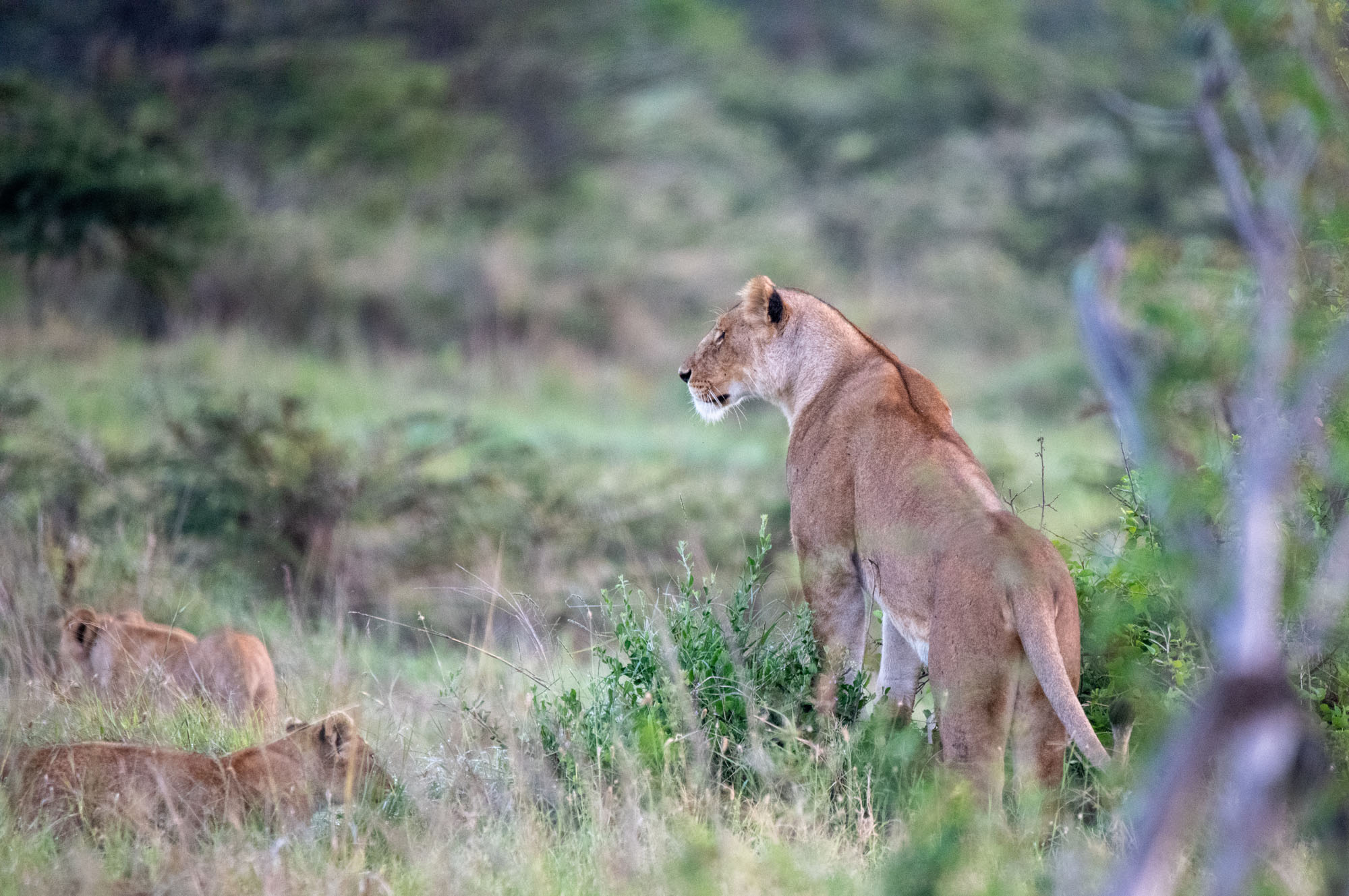
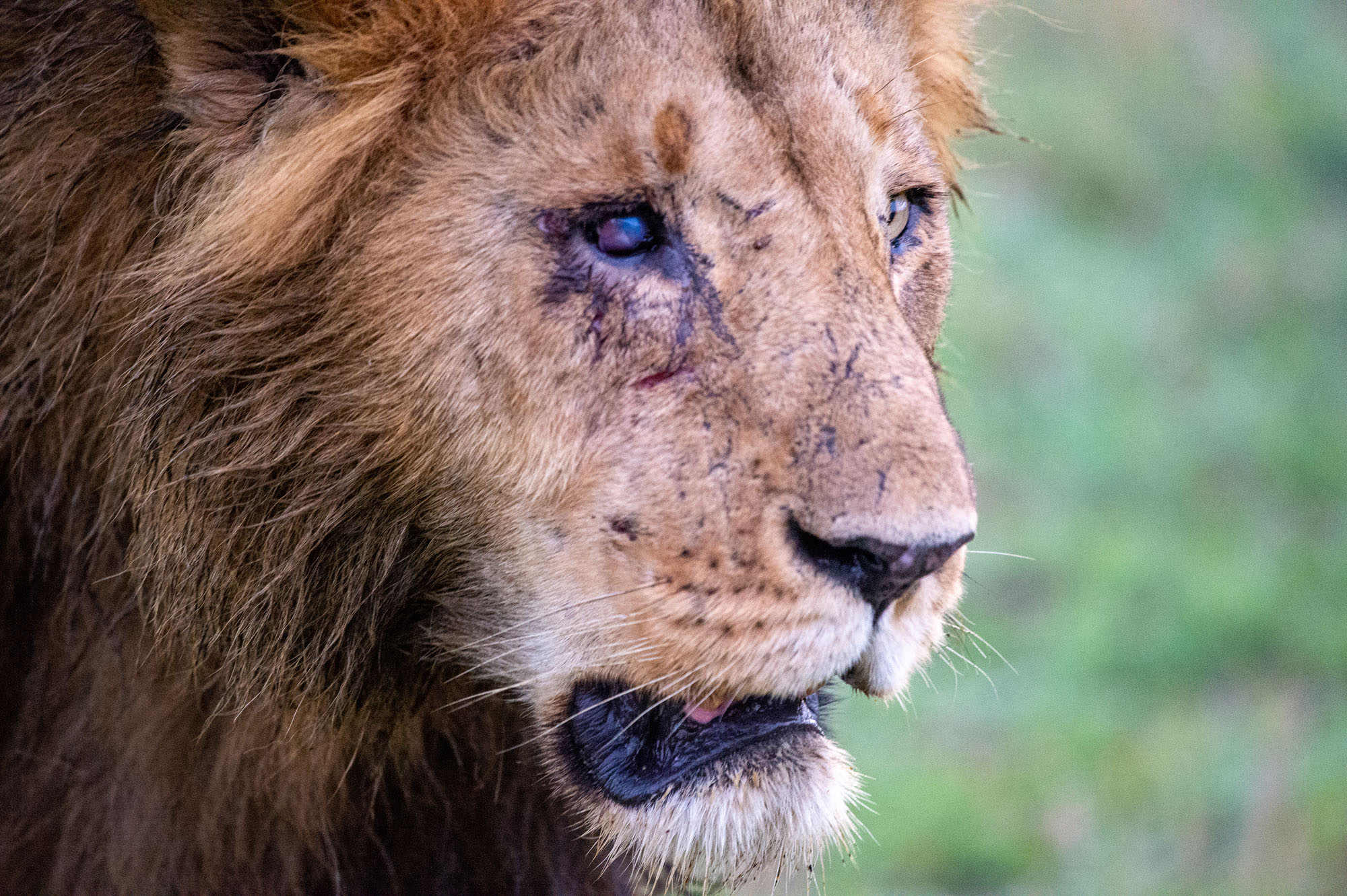
A modern-day visitor to Tsavo need not be fearful or apprehensive, except maybe about the possibility of being bitten by a tsetse fly.  There are still maneless lions around in Tsavo, but nowadays they are safely observed from safari jeeps.  In the unlikely event that you’d come across one on foot, it is likely to give you a brief glance and then disappear into the bush.


Image

What may surprise and delight you is the biodiversity of Tsavo.  It has amazing geological and scenic beauty and its wildlife is arguably the most varied of any of Kenya’s national parks, as it is located where the northern and southern forms of Kenya’s fauna meet.


Image

The thick bush of Ithumba, the wide open plains around Satao in southern Tsavo East, the dramatic drop-off from the Yatta Plateau to the Galana River.  The beautiful Chyulu Hills, glimpses of Mt. Kilimanjaro, the crystal clear water of Mzima Springs, the atmospheric – even ominous – Shetani Lava Flow.  There was something new and exciting to see and experience every day, sometimes every few hours.  While the game viewing was challenging under the worst possible conditions (we got there literally just days after heavy rainfall), we still saw all of the big mammals usually associated with a safari:  elephants, buffaloes, lions, leopards, giraffes, zebras and more.


Image

Taking off from Ithumba after our last morning activity with the orphan elephants, our pilot Peter White set a course to the south, at a cruising altitude of about 5,000 feet above sea level.  Soon enough, the habitat started to change as the bush opened up into more sparsely vegetated terrain, the further south we flew.  Off to our right, we saw the Chyulu Hills slide by slowly, while underneath us was the Yatta Plateau, the world’s longest lava flow, measuring about 290 km (180 miles) and stretching along the western boundary of Tsavo East National Park.


Image

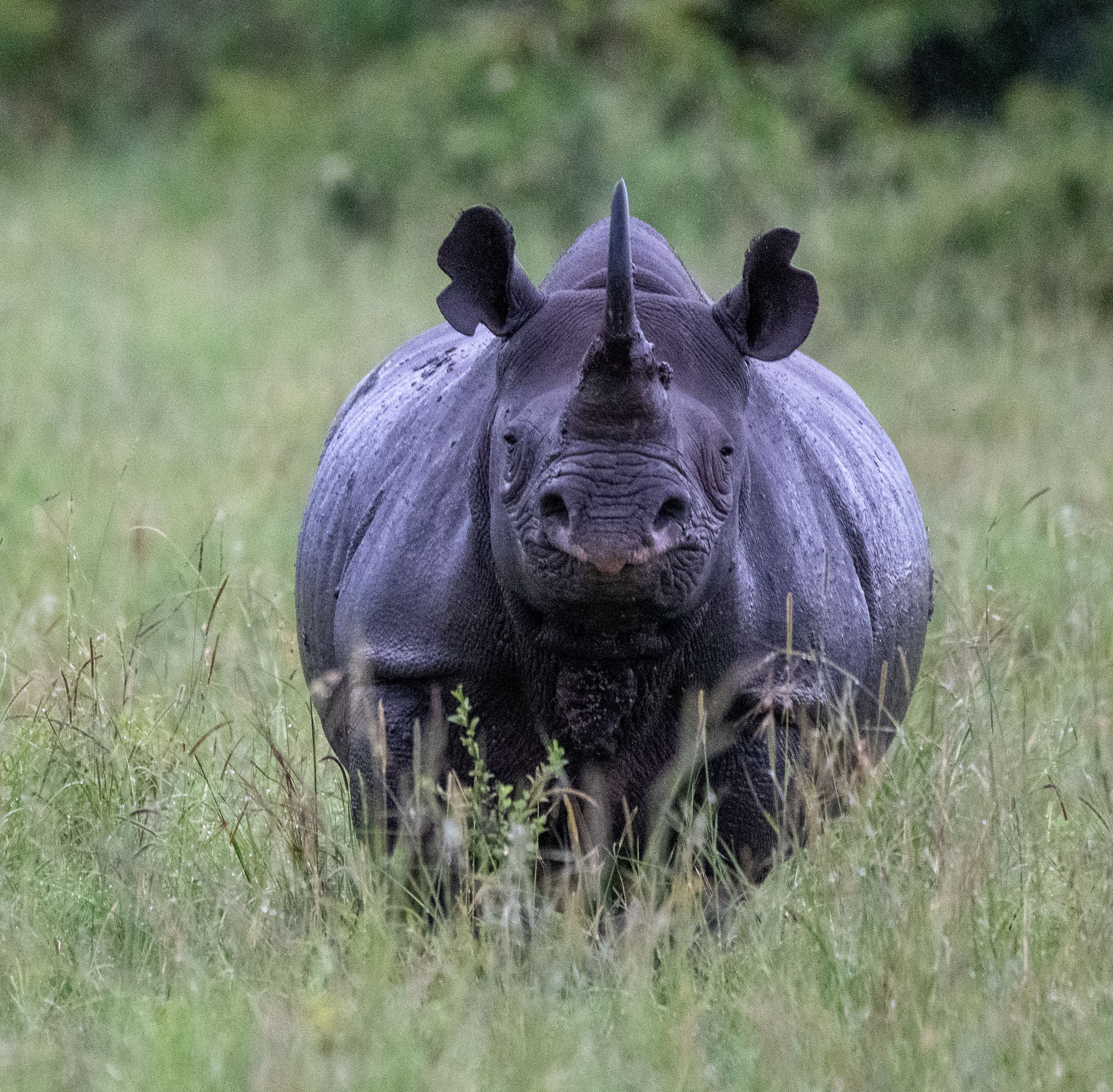
Tsavo National Park consists of mostly semi-arid grasslands and savanna. It is considered one of the world’s biodiversity strongholds, and its popularity is mostly due to its diverse wildlife, notably its healthy elephant population.  Animals found in Tsavo include cheetah, leopard, African painted dogs, antelopes, buffalo, black rhinos, hippos, zebra, hyenas, lesser kudu, klipspringers, gerenuk, mongoose, nocturnal porcupine, fringe-eared Oryx, giraffe, and crocodiles.


Image

Tsavo East National Park is generally flat, with dry plains bisected by the Galana River, running at the base of the Yatta plateau.  Tsavo West National Park is more mountainous and wetter, with a more diverse array of habitats including some swamps and lakes.  There are numerous rocky outcrops and ridges, as well as some recent lava flows emanating from the Chyulu Hills.


Image

SATAO CAMP

Landing near Satao Camp, we almost immediately started to see more wildlife than was the case at Ithumba.  Even before we were on the ground, we saw several adult male elephant bulls as well as breeding herds of elephants from the aircraft and there was a herd of oryx right on the airstrip.  They were clumped together about halfway down the runway but it was not an issue for Peter, who is an accomplished pilot.   He does aerial spraying when he’s not flying people around Kenya, so we landed quite safely and easily, using barely the first third of the strip.


Image

On our drive to Satao Camp for lunch, we observed many more elephants around water holes, wallowing in the mud, as well as kongoni, zebra, and Grant’s Gazelles.  We also notched up several bird species, notably some secretary birds and a small flock of striking vulturine guineafowl at Satao Camp.  On an outing with three scientists from the Tsavo Trust, we tried to locate one of the remaining ‘super tuskers’ known to be present in the area.  While we fell short on that objective, we did see several amazing elephants, two of which were ‘emerging’ super tuskers, each with massive tusks.


Image

Historically, elephants with tusks weighing more than 100 lbs per side were known as “hundred pounders” and were much in demand by hunters and poachers and of course tourists to the area.  Hunting has been banned in Kenya for decades and poaching has been reduced significantly, over the last few years. There are still about 8 of the super tuskers in Tsavo.  The Tsavo Trust, working together with Kenya Wildlife Services, have launched a Big Tusker Project in order to protect these behemoths and about 26 or so emerging bulls that will be the  “hundred pounders” of the future. The greater Tsavo area is home to the last remaining sustainable population of large super tuskers in all of Africa.


Image

Finch Hattons Camp

From Satao, we flew on to Finch Hatton’s Camp in Tsavo West, where we met up with our friend and frequent traveling companion, one of Origins Safaris’ most accomplished guides – Edwin Selempo.  One of East Africa’s top birders, Edwin also has an encyclopedic knowledge of all other aspects of natural history and his keen sense of humor, enthusiasm and strong conservation ethic make him a ‘guide extraordinaire’.


Image

With Edwin alongside to fill in the details, we made the most of our two full days in Tsavo West, enjoying exceptionally good game-viewing which included two different leopards, lions, an abundance of giraffes, zebras, waterbuck, lesser kudu,  klipspringers, eland, gazelles, and some excellent birds.


Image

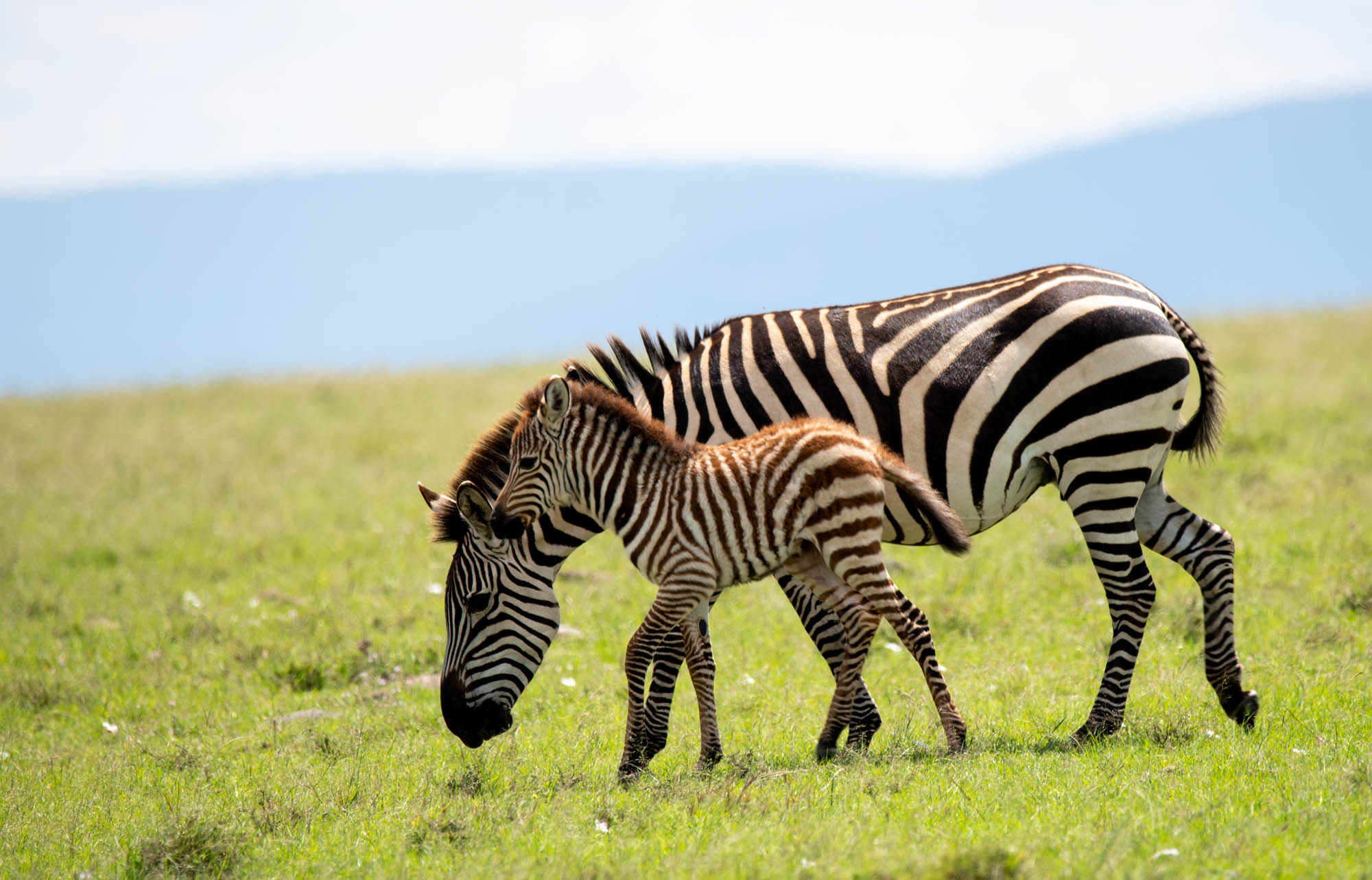
On a half day drive to Rhino Valley, we observed several zebras rolling in the red Tsavo dust, turning their white stripes into a shade of ochre.  Apparently they do this to get rid of external parasites like ticks and fleas and other biting insects.  Edwin mentioned that this part of the park is home to hundreds of elephants in the dry season.  I was happy to get a nice photo of a Lesser Kudu, an animal which we have only seen a couple of times on all our Africa trips.


Image

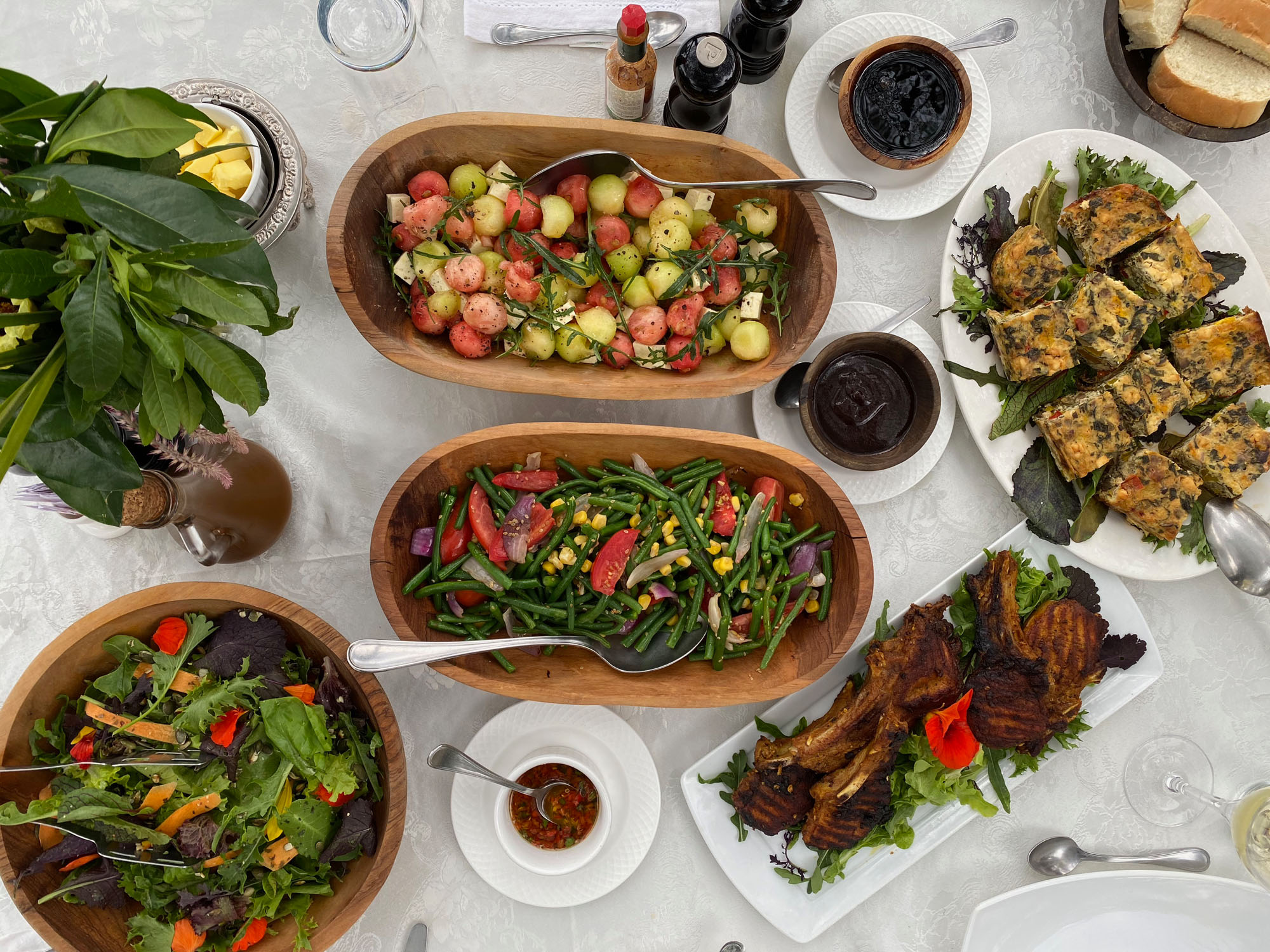
Finch Hatton Camp in Tsavo West has everything that even the most demanding health and fitness enthusiast may desire:  a pool, spa, gym, lap pool and yoga deck complete with free yoga instruction.  It has a superb pool deck, well-stocked shop and a couple of inviting bars, both indoor and outdoor.  It’s a luxury camp where we enjoyed several imaginative dishes,  ranging well beyond the scope of run-of-the-mill safari fare, such as Asian flavored stir fry pork, an exceptionally tasty vegetarian Pad Thai, or on another occasion fennel soup, Caprese salad, a perfectly prepared fillet of beef and crepes Suzette.  On the last evening we had an expertly prepared rack of lamb, with a delightful starter consisting of polenta ‘fingers’ with a mildly spicy dipping sauce. 


Image

The main lodge overlooks a large spring-fed water hole with lily pads, hippos, crocodiles, and a profusion of birds including various egrets, weavers and kingfishers.  At night over dinner, a chorus of painted reed frogs clinked  away, providing a romantic natural soundtrack.


Image

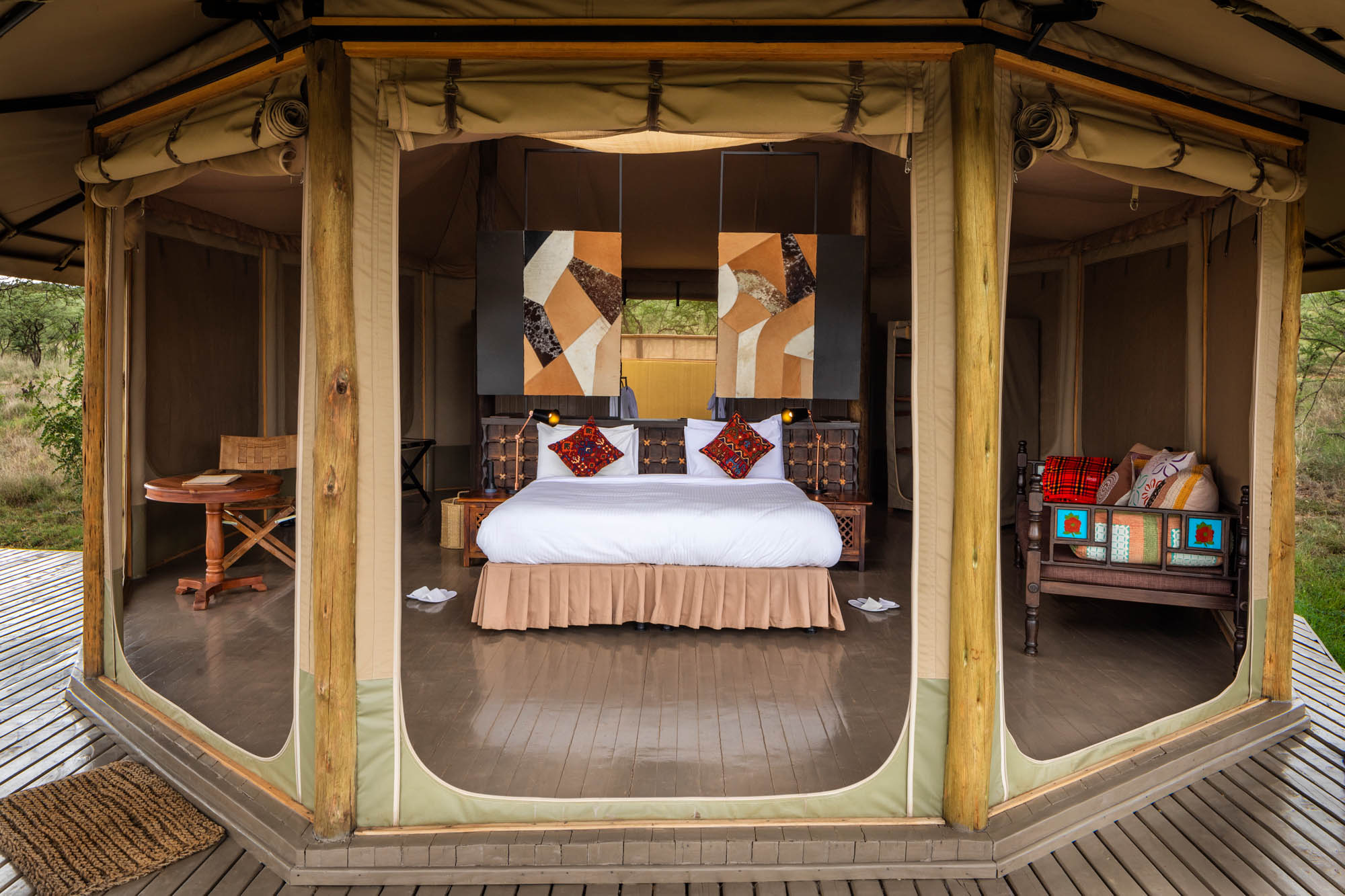
The luxury tented suites at Finch Hattons are scattered along a crushed lava rock path which meanders along the edge of the lily-covered pond. Each luxury tented suite is elevated and has unobstructed views of the hippo pools from the outdoor sitting deck.  The spacious tents are exquisitely furnished with a lavish en-suite bathroom, two outdoor showers, complimentary wi-fi, and a mini-bar with home made snacks. On a clear day you can see Mt. Kilimanjaro when leaving your room for breakfast and the morning game drive.


Image

On our last night at Finch Hatton’s, we were treated to a surprise sundowner event, watching the sunset over Mt. Kilimanjaro.  It was fantastic.  After a bit of coaching from a Masai warrior, we tried our hand – with mixed success – at a couple of Masai Olympics events including archery and club throwing.


Image

Shetani Lava Flow

Having first noticed it on our approach into Finch Hatton’s from the air, I was astonished and intrigued to closely observe the Shetani Lava Flow, dating back only 400 years,  an instant in geological time.  The massive amount of crumbled black lava rock visible in the area has an almost visceral impact.  Shetani means ‘devil’ in Swahili and it is easy to see why this relatively recent event would have been regarded with superstition and fear.  At the time it must have been cataclysmic, with thousands of gallons per second of magma erupting from the Chyulu Hills and leaving a  flaming path of destruction and devastation in its way.  Even now, it looks like it might just have happened a few weeks ago, the weirdly shaped pitch black crusty protrusions spread out over the area like freaky waves in a frozen pond.


Image

For something like 30 years, travelers had to be escorted by an armed patrol while passing through the Shetani Lava Flow, as a result of a single attack by Somali bandits decades ago.  Fortunately this requirement is no longer in place, so we could drive to a lookout point one day, enjoying a picnic breakfast while watching a couple of klipspringers clambering on the nearby lava rocks.


Image

Mzima Springs

On our second day in Tsavo West, we ventured out to Mzima Springs.  In this lush, beautiful spot 230,000 liters per minute of sparkling clean water pour out of the lava rocks, having been filtered underground over a distance of nearly 60 km (40 miles), all the way from the Chyulu Hills.  The water spreads out into a large pond full of what appears to be blue fish.  Apparently the fish only look blue due to the reflection of the blue sky in the clean water.  The series of picturesque pools are fringed by an abundance of tropical African palm trees and date palms.


Image

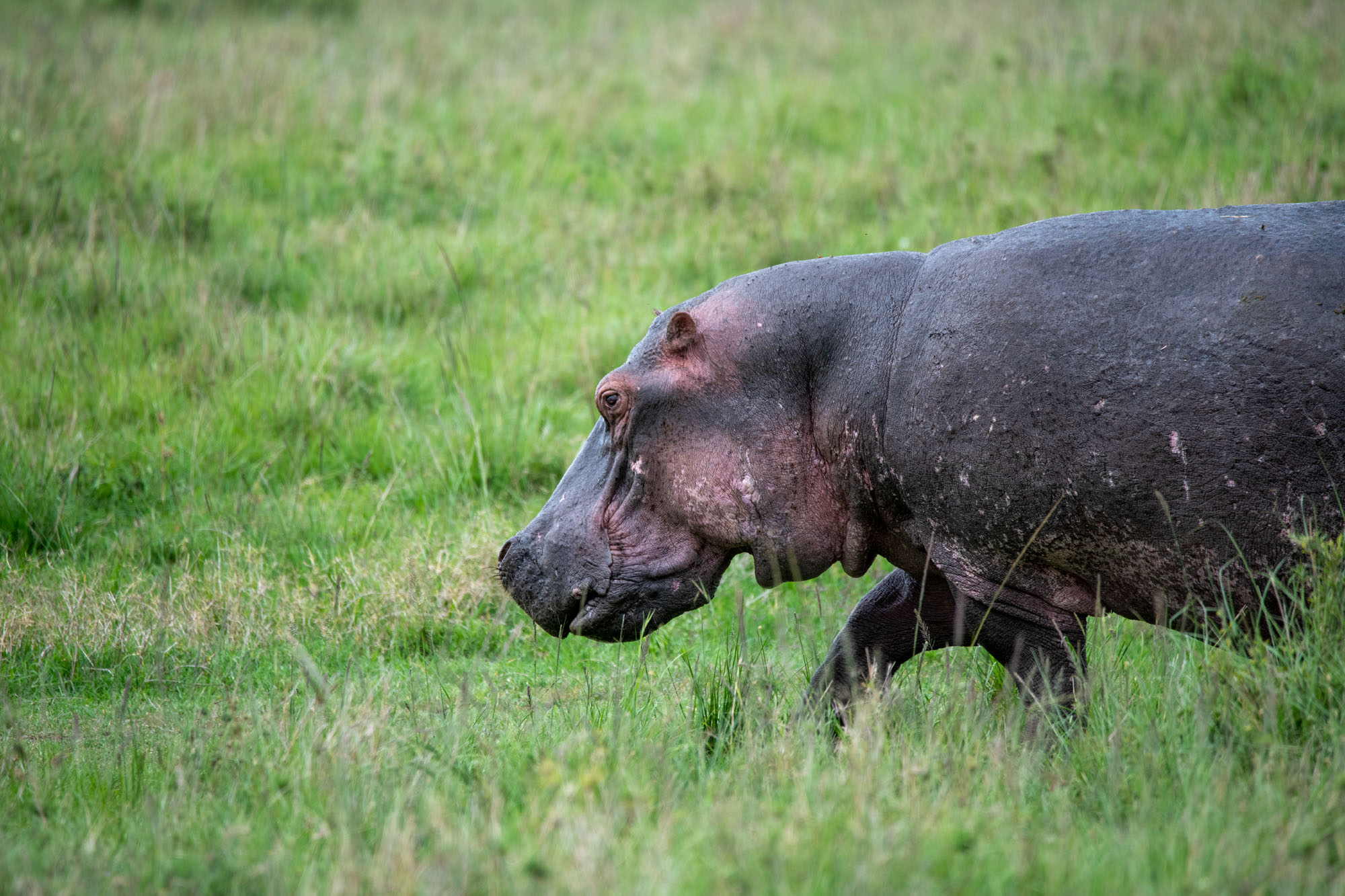
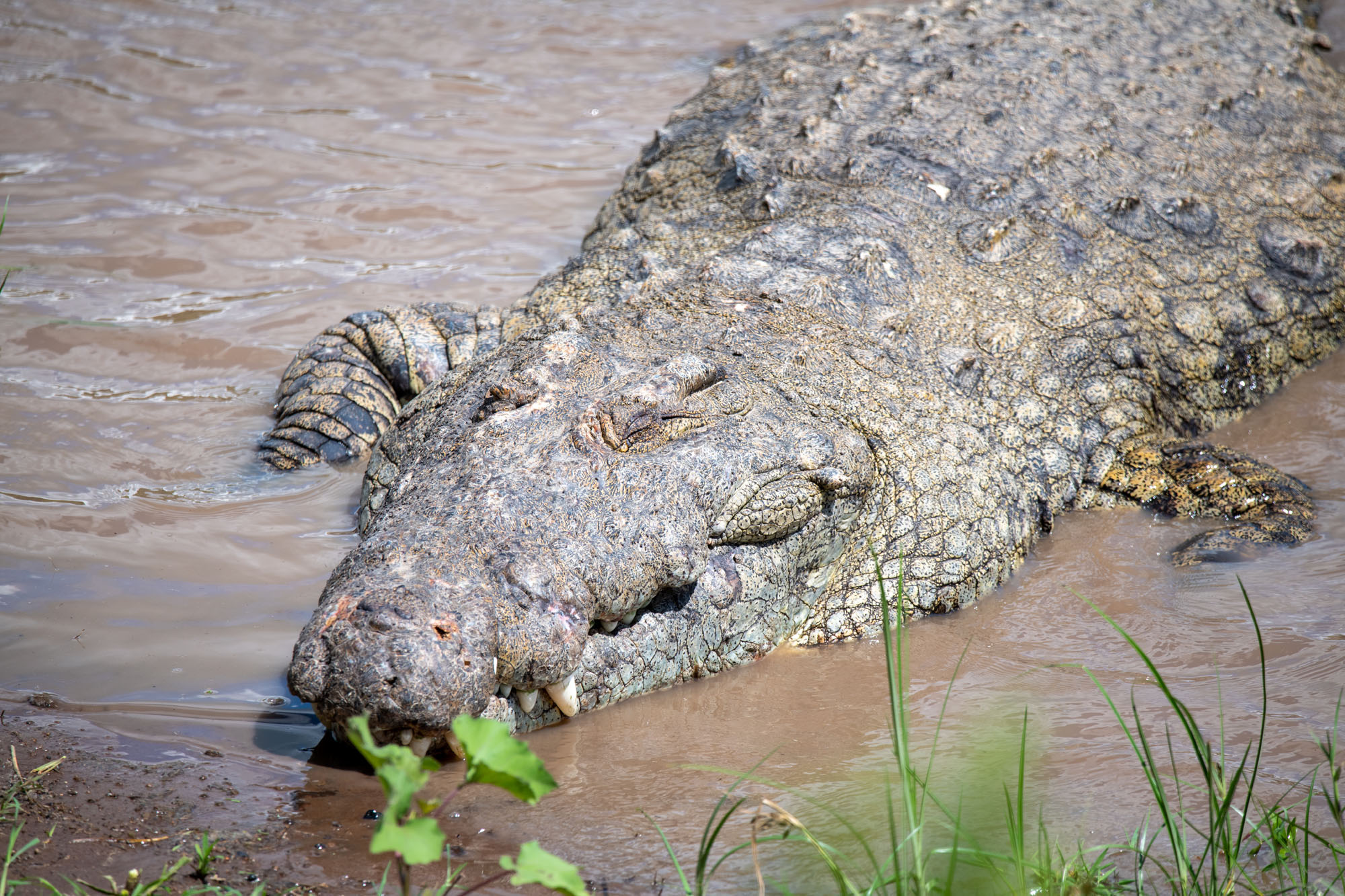
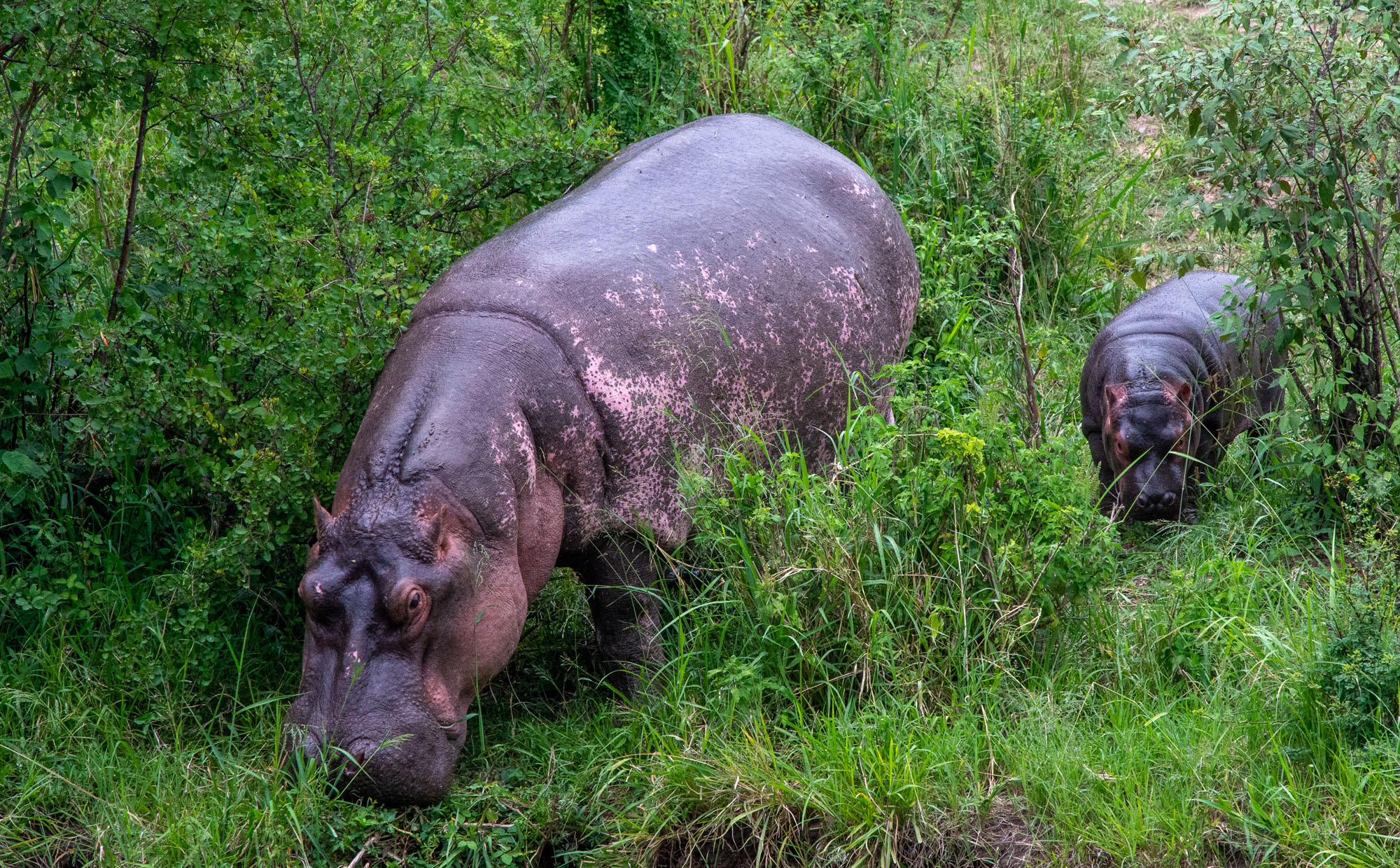
Making our way along the edge of the pool, with an armed guard as escort (in the event of an issue with elephants or buffaloes), we observed a couple of good sized crocodiles, a pod of hippopotamus, and various bird species including egrets, herons, ducks and kingfishers.  

Some 20,000 liters per minute of the water flowing out of the hills is diverted into a pipeline which runs all the way to Mombasa on the Kenya coast, serving as the city’s drinking water.


Image

A note for first time visitors

Tsavo in the rainy season is not Africa for beginners.  That’s when you may be surprised by the abundance of flying insects and emerging termite alates.  The Tsavo we experienced last November was hot and muggy, with surprisingly few mosquitoes but more than enough tsetse flies to make up for that ‘deficiency’.  In defense of the tsetse flies of Tsavo, I can vouch that their bite – while annoying – is far less potent than others I have experienced such as in Zambia and the Congo.  A little bit of an itch and it’s all over…

For all but die-hard Africa aficionados, Tsavo would be a better bet in the dry (cool) season from about June through September or so.  This is also the best time of the year to observe the many elephants in the area, which are drawn to remaining sources of permanent water, in the dry season.


Image

Our blog post next Friday takes a look at a remote area of the Masai Mara, right on the border of Tanzania, the Olderkesi Conservancy, with the focus being on one of the most successful and progressive Kenya safari camps, Cottar’s 1920 Safari Camp.  

More Info

Email bert@fisheaglesafaris.com

Email jason@fisheaglesafaris.com

@fisheaglesafarishouston

#FishEagleSafaris

YOU MIGHT ALSO BE INTERESTED IN

Botswana
Destinations
Okavango Delta

10th August 2021

Xakanaxa Camp, Botswana

What is there to be said upon one’s return from a trip to Botswana? That it was fun?

Read more
Botswana
Destinations
Okavango Delta

3rd October 2022

Camp Okavango, Botswana

Camp Okavango is in the heart of the permanent part of the Delta. In this idyllic setting there are no vehicles, and it is just a short walk

Read more
Destinations
Zambia

10th September 2021

Chindeni and the Bushcamp Company, Zambia

By late July we found ourselves at Chindeni, a small Bushcamp Company property
Read more

SUBSCRIBE TO OUR NEWSLETTER

READERS FAVOURITES

Botswana
Destinations
Kenya
Serengeti Plains
Tanzania
Uganda
Zambia
Zanzibar
Zimbabwe

19th November 2021

Where to go on safari in 2022-23

As the Covid pandemic retreats worldwide, thoughts turn to resuming life the way

Read more
Botswana
Destinations

4th August 2022

On Safari At Belmond Eagle Island Lodge, Okavango Delta

What is the ‘secret sauce’ for an unforgettable few days on safari in Botswana? It starts with the animals, of course. The elephants, lions, giraffes, hippos

Read more
Destinations
India

27th May 2023

India

India’s tiger, mammals and birds.

Read more

The orphan elephants of Ithumba, Kenya

30th December 2020

The orphan elephants of Ithumba, Kenya


Image

The orphan elephants of Ithumba, Kenya

At the foot of the Ithumba Hills in the thick green bush of Tsavo East, live 33 of the most fortunate, unfortunate young elephants in Africa. Most fortunate because they are now being cared for like royalty of the animal kingdom, honored guests of the Sheldrick Wildlife Trust.  Unfortunate because they were once the victims of misfortune, greed and human cruelty, all starting out their young lives as orphans of the elephant world.  They ended up abandoned, alone and in need of rescue as a result of drought, human-wildlife conflict, being trapped in a well, stuck in mud or because of poaching (illegal hunting).


Image

Tsavo East

We started our recent Kenya trip in the rugged landscapes of northern Tsavo East, specifically to interact with the orphan elephants at Ithumba.  I had always wondered what happened to the baby orphan elephants when they ‘graduate’ out of the Sheldrick nursery in Nairobi, and are sent to Ithumba.  We were soon to find out.  At the time of our visit in late November 2020, there were 33 young elephants at Ithumba, being readied for release back into the wild.  To say that it was a moving experience to get a glimpse into the life of the happy inhabitants of Ithumba, is a huge understatement.


Image

Flying from Wilson Airport in Nairobi on a Cessna 206, it took us just about an hour to make our way to Tsavo East, enjoying distant views of Mt. Kilimanjaro and the Chyulu Hills, en route.  After being met by Steve and Richard Turner of Origins Safaris who were already on the ground in Tsavo, we took a short drive to Ithumba Hill camp, where we would spend the night.  Ithumba Hill is a beautifully located tented camp with fantastic views over the reserve.  The surrounding bush was thick, dense and green after significant recent rainfall.  


Image

Tsavo East in the rainy season is not without its challenges and just maybe, not the ideal place for first time visitors to Africa.  At least not at that time of the year; the dry season is fine.  In summer, after the rains, the tsetse flies can be pesky.  It can be hot and muggy.  The rest of the world may be experiencing a significant decrease in flying insects, but that is not the case in Tsavo East.  There were more than enough insects, particularly at night, attracted to any source of light.  On the night we were there we experienced an irruption of flying termite alates which might startle someone used to life in a bug-free environment.


Image

Getting up close with the orphan elephants

Once we had our first introduction to the elephants, all thoughts of flying termites and the temporary discomfort of a tsetse fly bite quickly faded.  This is what we came for.  Having been driven out to a small dam (filled to the brim with water after recent rain), we stood in the shade of a small tree, in an open area right in the bush, not quite sure what to expect.  And then it started.  One after the other, sometimes two or three together, and group by small group, the young elephants emerged from the bush, briskly bearing down on their handlers who were standing ready with their big plastic bottles of milk formula.


Image

There we were, just the two of us and Richard, enjoying this amazing spectacle as the elephants downed the formula with gusto, some of them holding up the bottles by themselves, wrapping their trunks around it.  Once they had drained it to the last drop, they stepped away and started to huddle together, waiting for the other small groups to finish up their feeding.


Image

When they were all done, the elephants waded into a dam and in typical young elephant fashion, played and splashed with abandon, slowly making their way from one part of the dam to another where they enjoyed a mud bath of sorts, rolling around on the edge of the dam, as happy as larks.  When they finally started to emerge from the water, a few of them playfully pushed one another around, before they almost reluctantly started to head back out into the bush.


Image

Later that afternoon we were in position at the elephants’ comfortable stockade – where they sleep at night in separate enclosures as peer groups –  waiting for them to return from a day of being out, browsing the vegetation in the wilderness.  Together with their bunkmates, they were ready for another bottle feeding.  Seeing them anticipate it and accelerate up to the feeding station was so much fun to observe.  We felt fortunate and happy to be part of the proceedings, just about brushing up to the youngsters, several of whom reached out a trunk to touch us, clearly curious about our presence.


Image

At 5 am the next morning we were up on a cloudy, steamy day.  A quick cup of coffee or tea later, we drove back out to the stockade, this time to be with the elephants as they woke up.  Once more, we observed the different dormitory groups being fed, leaving  the stockade and then enjoying some bales of hay.  Once they all had enough to eat and drink from a nearby water point, they started to disperse into the bush for more browsing.  By this stage, our third interaction with the elephants, we were starting to notice their individuality and seeing which ones interacted more with each other.


Image

One little elephant – Ambo – stood out as he seemed to be the most subdued one, walking around with his big little elephant ears tightly clamped to his body, as if he didn’t really want to stick out too much.  We were told that he was being given some special treatment (more time to eat and pellets for extra nutrition) due to having been bullied by some of the other orphans.  We immediately developed a soft spot for Ambo and we were happy to see him later on being comforted by a couple of the older elephants.   I subsequently learned that Ambo was brought to Ithumba from Sheldrick Nairobi in June 2019, together with Jotto.   Three of their Nairobi nursery bunkmates had arrived in Ithumba just ten days earlier, so they quickly re-united and Ambo and Jotto adjusted to their new surroundings seamlessly.


Image

I asked Emanuel, the head keeper, about releasing the young elephants back into the wild.  Is there a schedule or time-table?  How do they know when the elephants are ready for the next step?   Mostly, he said, the elephants will demonstrate themselves, when they are ready.  Once they reach that point, they show a reluctance to go back into the stockade at night, they stop taking their milk, and they become more headstrong.  If there are one or two in a group that are ready to be released, they have to wait a while until their peer group members are ready, and they are then released together, as a small herd.


Image

Wild elephant presence at Ithumba

One experience that we missed which apparently is the best of all, is being at Ithumba in the dry season.  During the dry season when the natural water pans have dried out,  the stockade water trough is a magnet, and seldom without big wild bulls as well as breeding herds who venture in with their babies. The wild elephants interact and mingle with previously released and now wild orphans and their babies, as well as the current orphans themselves.  They are tolerant of and at ease with the keepers and foster parents visiting the unit.    It is not uncommon to find as many as thirty wild elephants intermingling with the  orphans at the stockade water.   A good reason to return to Ithumba at another time!


Image

‘Sole use’ accommodation facilities in Tsavo

At Ithumba, and elsewhere in Tsavo, there are several mid range, sole use facilities which are ideal for families or other small groups of travelers.  It can be an expensive undertaking for just one or two persons, but very affordable for a family of 4-6 or more.  The Sheldrick Wildlife Trust operates several sole use properties in Tsavo.  There are three camps in Ithumba:  Ithumba Camp, Ithumba Hill and Ithumba Private.  Then there is Umani Springs in the Chyulu Hills, nestled in Kibwezi Forest, the most luxurious homestay of them all, as well as Galdessa, on the Galana River, overlooking the Yatta plateau.  Galdessa is similar to Ithumba Hill Lodge in terms of level of luxury, but it is larger with 10 tents, and it is likely the best choice for visitors who are keen to experience good game-viewing.


Image

From Galdessa visitors only see the orphans twice daily, not three times.  Due to the distance to be covered, the “morning wake up” is not possible at Galdessa. However from Galdessa it is only about an hour’s drive to Satao Camp, where visitors can spend time with one or two of the big ‘super tuskers’ of Tsavo, on an outing with the Tsavo Trust.


Image

Notes about Ithumba Hill camp

Ithumba has three camps:  Ithumba Camp (a more rustic option), Ithumba Private and Ithumba Hill, the ‘luxury’ option.  It has only four chalets on a boardwalk,  a pool and lounge area, and pretty much from anywhere in camp there are fantastic views over the surrounding bush.  Our tent had 2 ¾ size beds, a wrap-around patio, 2 lounge chairs, and outdoor sink, toilet and shower.  Once inside the tent there were no worries about pesky bugs…


Image

Ithumba Hill has an attractive pool with equally good views.  On the day we were there, the nice cool water was the perfect antidote for the heat and the tsetse fly bites.  If we’d had more time, we definitely would have spent some of it relaxing on the deck chairs and perhaps enjoying an al fresco meal at one of the picnic tables.  The main lounge at Ithumba Hill is like a comfortable living room,  with a lower deck – with a table and 6 chairs – serving as the venue for dinner.


Image

From there we could see a male hornbill fly back and forth to its nest in a nearby baobab, where the female and babies were temporarily holed up.  Meals at Ithumba Hill were splendid; Kathy and I both enjoyed the mixed salads and a superb chicken curry for dinner.  The camps are self-catering so visitors bring their own food which is prepared by a resident chef.  Our clients contemplating a visit to Ithumba wouldn’t have to worry about anything though; our Kenya partners Origins Safaris take care of all of this.  The only prerequisite for a visit to Ithumba is to adopt one or more of the orphan elephants, easily done online at the Sheldrick website.  


Image

The Sheldrick Wildlife Trust

The Sheldrick Wildlife Trust and its counterparts elsewhere in Kenya – such as the Reteti Elephant Sanctuary in northern Kenya – have a well-functioning organization and procedures in place to rescue orphaned elephants and other big mammals, all over Kenya.  At the heart of their conservation activities is the Orphans’ Project, which has achieved world-wide acclaim through its hugely successful elephant and rhino rescue and rehabilitation program.  To date, more than 260 orphan elephants have been raised; 17 rhinos have been successfully hand-reared and there have been 38 babies born to wild living orphan elephants.

The Trust is involved with many other projects, including the operation of several mobile veterinary units and a rapid response sky vet team.  It funds and operates several de-snaring teams with the Kenya Wildlife Services, provides water in drought-prone areas by drilling wells, erects fences where necessary and conducts aerial surveillance.  Sheldrick Wildlife Trust also deploys a canine unit as well as anti-poaching teams to protect elephants, rhinos and other wild species.  Focusing mostly on the youth of Kenya, the Trust works to change attitudes towards wildlife through their Community Outreach Programs, the objective being to improve livelihoods and engage communities living alongside wildlife.  


Image

In our blog post next Friday, we will take a virtual trip up to the summit – the flat part – of Table Mountain.  Not the easy way by cable car though:  on foot, along one of the ravines which hikers use to climb the 1,000 feet or so from around the base of the cable car operation, to the top.  We’ll also discuss some other hiking options on Table Mountain and elsewhere in the Cape Peninsula, specifically for families and persons who may not be up to the rigors of a strenuous ascent.

More Info

Email bert@fisheaglesafaris.com

Email jason@fisheaglesafaris.com

@fisheaglesafarishouston

#FishEagleSafaris

YOU MIGHT ALSO BE INTERESTED IN

Destinations
Kenya
Lower Zambezi
Zambia
Zimbabwe

30th April 2020

“Only in Africa”: How to improve your chances to summit Kilimanjaro

Having successfully reached the summit of Kilimanjaro twice in three years, most recently

Read more
Destinations
Kenya
Lower Zambezi
Zambia
Zimbabwe

30th April 2020

“Only in Africa”: How to improve your chances to summit Kilimanjaro

Having successfully reached the summit of Kilimanjaro twice in three years, most recently

Read more
Botswana
Destinations

14th April 2020

Botswana’s Okavango Delta, Then & Now

My first trip to the Okavango Delta – like all the subsequent ones – was quite unforgettable. 

Read more

SUBSCRIBE TO OUR NEWSLETTER

READERS FAVOURITES

Botswana
Destinations

4th August 2022

On Safari At Belmond Eagle Island Lodge, Okavango Delta

What is the ‘secret sauce’ for an unforgettable few days on safari in Botswana? It starts with the animals, of course. The elephants, lions, giraffes, hippos

Read more
Destinations
Zambia

20th April 2020

“Only in Africa”: Tiger Fishing

I believe the core activity on any great safari is the game drive.  The animals are, of course, the main attraction and there is no better

Read more
Destinations
India

27th May 2023

India

India’s tiger, mammals and birds.

Read more

Elephants: Everybody’s Favorite

23rd October 2020

Elephants: Everybody’s Favorite


Image

Elephants: Everybody’s Favorite

As a native of South Africa and someone who was fortunate enough to start going on safari as a child, I probably saw my first elephant in the wild before I was even 5 years old.  As kids in the back of the VW Bus driving in the Kruger Park in South Africa, my sister and my brothers and I would literally shriek with delight when we came across a herd of elephants.  We would stare at their giant tusks in awe, comment on their amazing ears, marvel at their versatile trunks, laugh at their antics, coo over the little ones, and just generally be delighted to be in their company.


Image

Having seen literally thousands of them since then all over Africa, one thing remains the same.  Every elephant sighting remains special.  It is never ‘just another elephant’, or’ more elephants’, no matter how abundant they may be where I find myself.  Elephants are fascinating creatures on so many levels and they have an almost visceral impact when you see them in the wild, especially close up.


Image

Of course, there’s the sheer size of them, their massive bodies making an unequivocal statement as to who is the real king of the African wilderness.  Hint:  it is not the lion.  I’ve seen enraged, trumpeting – sometimes even shrieking – elephants scare off lions many a time.  Given a certain set of circumstances elephants are afraid of nothing and very little will stop them.


Image

Mostly though elephants are adorable, much loved creatures who are always busy doing something.  Mostly eating.  The leaves on trees, shrubs, grass, bark, fruit, seed pods –  pretty much any edible plant material.  Another favorite elephant pastime:  drinking.  It is endlessly entertaining to watch elephants drink.  They cannot go without water for extended periods of time and are almost always to be found within striking distance of a known (to them) source of water.  Which means that on safari in Africa, one of the best places to find them – particularly in the dry season – is at a water hole, along a river, in a dam, a swamp or marsh.


Image

Over the years, we have experienced many particularly interesting or satisfying elephant viewings, and every now and then have gotten lucky with a photograph.  Here are a few of them with some of our notes and recollections.


Image

Chyulu Hills, Kenya

One of my personal favorite elephant photographs is this one, taken of several elephant bulls at a small water hole right below Ol Donyo Lodge in Kenya’s Chyulu Hills.  What made it special to me at the time – and what I tried to capture – was the seemingly invisible turf battle going on.  These big bulls were in fact barely tolerating each other’s presence.  Their ‘togetherness’ was simply the result of none of them being substantially bigger or more powerful than the others.  Reluctantly, by the looks of it, they granted each other just enough room to get some water, and then move on.  Nobody dominated, and everybody benefited.


Image

Amboseli Swamps, Kenya

Amboseli is one of the best places in Africa to see elephants.  Amboseli is a small national park which is famous for its elephants and its perfect view (cloud cover permitting) of Mt. Kilimanjaro.  The Amboseli elephants are special because of the size of their tusks, their approachability, and their daily pattern of walking out of the woodlands to the swamps and then back.  It is an arid area so they almost always kick up some dust which makes for atmospheric photos and awesome views.  It happened to take me three visits to Amboseli to get some really good photographs of elephants with Kili in the background, but it’s mostly a matter of luck.  Good or bad.  On my third (successful) visit there were several first-time visitors in the vehicle with me…  You just never know.  This photo of a herd of elephants walking toward the swamps early in the morning, was made special by a relatively small but critical element:  the one big elephant looking back.  Just that.  Without it, it’s a nicely lit and atmospheric shot of elephant walking, kicking up some dust.  With the one elephant looking in the other direction?  You can judge for yourself.


Image

Hoanib Skeleton Coast Camp, Namibia

Photography is all about light.  Many professional wildlife photographers rarely attempt capturing anything beyond the morning and afternoon ‘golden hour’ window, when near horizontal light beams cast a flattering glow on practically everything it illuminates.  Including elephants.  Digital photography – which allows considerable manipulation of exposure levels in post-processing – has opened up a somewhat bigger photography window.  Even so, few serious photographers expect a good outcome for photos taken in bright light in the middle of the day.  The exaggerated shadows and washed out colors associated with harsh midday light, make it a poor choice.  This photo of a desert-adapted elephant taken on a game drive from Wilderness Safaris’ Hoanib Skeleton Coast camp, is a good example.  The soft morning light adds depth and drama and makes the photo ‘pop’.   Take this same shot at noon and all the warmth is gone.  It may in fact work better as a black and white image, then.


Image

Hwange National Park, Zimbabwe

Hwange’s 30,000-plus elephants are wonderful photographic subjects, particularly in the dry season when hundreds and sometimes thousands of them congregate around the many artificially pumped water holes scattered throughout the park.  I will never tire of watching a herd of elephants approach a water hole, particularly after a long and dusty, thirsty walk out of the woodland.  As they emerge from the trees, they start to walk faster and faster still.  The young ones run ahead, excitedly, to get to the water first.  Then, almost solemnly, and with serious intent, they all start to drink, practically simultaneously.  They fill their trunks with one deliberate deep draft of water after another, squirting several gallons of water forcefully into their mouths.  Again and again.  Not until their thirst is quenched, do the elephants start to relax, look around at the other herd members, and begin to interact.  Elephants lined up at a water source make fantastic photo subjects, as did these three at the Little Makalolo water hole in Hwange.  As is the case  with giraffe necks and heads, there are often patterns or symmetry – or for that matter asymmetry – to be observed and captured.  Look for it and incorporate it into your shots to tell a story and add drama.


Image

Odzala Kokoua National Park, Republic of Congo

By the time I made it to Odzala-Kokoua National Park in the Republic of Congo, I had seen and photographed many an African elephant in dozens of places in Southern and East Africa.  I had never seen or photographed a Forest elephant though.  As it happened, we had fantastic luck with seeing and photographing Western Lowland Gorillas at Odzala.  But not much luck with Forest elephants.  A few glimpses and some far-off sightings, but nothing worth capturing with the big camera. Until we went on a walk down a small tributary of the Congo River.  As we were approaching a clearing, a solitary Forest elephant emerged abruptly from the thick bush to our left.  As startled as we were, it gave us a side-long glance and hurried across the opening, splashing through the water and disappearing into the thick bush on the other side, moments later. It’s for ‘can’t miss’ moments like these that wildlife photographers have to be ready for anything, with a camera set to freeze motion.  Not ending up with a blurry photo is the overarching objective.  With wildlife, there is often very little advance warning before things happen.  And sometimes just moments to capture an instant in time which you may never experience again.  I’m unlikely to ever again see a Forest elephant dash across a clearing in the Congo, but this image will forever be proof that it actually happened.


Image

Madikwe Game Reserve, South Africa

It is easy to believe that elephants are afraid of nothing and indeed they are – most of the time.  Under certain circumstances though, they can easily be spooked, with sometimes unpredictable results.  These photographs, taken in South Africa’s  Madikwe Game Reserve, illustrate such an event.  These three young elephants were slowly walking towards a water hole when a solitary running wildebeest set them off.


Image

They wheeled on the spot and rushed off in the direction they came from, kicking up a cloud of dust.   I’ve seen similar behavior elsewhere such as when a herd of elephants (in the Okavango Delta) started stampeding for no apparent reason.  Ordinarily, this is not an issue to a casual observer, when you are in a vehicle.  When you are on foot though, it can be most worrisome; you’d want to get away from the elephants as fast as possible and seek shelter.


Image

Chobe-Linyanti, Botswana

Elephants love water and habitually enter rivers, lakes and ponds to cool off, play and seemingly just enjoy being submerged.


Image

They are natural-born swimmers and can stay afloat for hours if need be.  We’ve seen them swimming – with youngsters in the herd – clear across the Zambezi River.


Image

This sequence of photographs shows elephants close to the Linyanti River in northern Botswana, walking in the river and also ‘snorkelling’ as they make their way through deeper water.


Image

Mashatu, Botswana

Mashatu Game Reserve in southeastern Botswana is one of our favorite big cat destinations, but it also has great elephants.  The Mashatu ellies are among the most approachable of any and will literally walk right by the game drive vehicles, just a few meters beyond touching distance.  Which is awesome to experience – every time.  Mashatu also has a specially constructed sunken elephant hide where photographers can get the most amazing shots of elephants coming to drink.  This photo was taken of a herd of elephants approaching the sunken hide at Mashatu.  They were moving towards the water in an almost businesslike fashion at a good clip, intent on getting there quickly and efficiently.  We did manage to capture some great shots on the day and Mashatu’s resident professional photographer helped us improve our photo skills, regardless of our level of expertise.  For any dry-season visit to Mashatu, a morning or afternoon spent in the hide is a most worthwhile addition to one’s program there.


Image

Sheldrick Elephant Sanctuary, Nairobi

Since 1977, the David Sheldrick Elephant Orphanage in Nairobi has cared for and fostered hundreds of elephant calves from all over Kenya.  Every morning at 11:00 a.m. there is a public feeding, where visitors can observe the elephants being fed, and learn a bit more about the challenges facing elephants all over Africa.  Assistants help to dispense a special milk formula for the babies, and there’s some leaves and shrubs for the older ones.  And sometimes a mud-bath on a warm day.  The young elephants are housed in a safe stable environment until they are able to survive in the wilderness, when they are moved to Tsavo National Park for possible reintroduction with wild herds of elephants.  This photograph of a tiny baby elephant happily drinking its milk formula encapsulates to me, just how vulnerable they are and how dependent they are on us – humans – for assistance.  We cannot change the past but we can help to undo some of the negative fallout of poaching and human-animal conflict.  Visitors or interested persons who adopt a baby elephant have the option of scheduling a more private afternoon visit, for foster parents only.  

Next week’s blog post will focus on the most elusive of the ‘Big Five’ African mammals – the leopard.  Much more common than one might think, but rarely seen due to their mostly nocturnal existence.  We will look at a handful of places where leopards can be seen and photographed relatively easily and consistently.

More Info

Email bert@fisheaglesafaris.com

Email jason@fisheaglesafaris.com

@fisheaglesafarishouston

#FishEagleSafaris

YOU MIGHT ALSO BE INTERESTED IN

Destinations
Zambia

10th September 2021

Chindeni and the Bushcamp Company, Zambia

By late July we found ourselves at Chindeni, a small Bushcamp Company property

Read more
Botswana
Destinations
Okavango Delta

3rd October 2022

Camp Okavango, Botswana

Camp Okavango is in the heart of the permanent part of the Delta. In this idyllic setting there are no vehicles, and it is just a short walk
Read more
Area
Destinations
Nyerere National Park
Ruaha
Tanzania

14th October 2023

From My Safari Notebook: Wildlife Photography

Birds in flight and wildlife photographers have an uneasy relationship. Things go wrong as often as they go right. Getting focus-lock on a moving subject

Read more

SUBSCRIBE TO OUR NEWSLETTER

READERS FAVOURITES

Destinations
Zambia

10th September 2021

Chindeni and the Bushcamp Company, Zambia

By late July we found ourselves at Chindeni, a small Bushcamp Company property
Read more
Botswana
Destinations

4th August 2022

On Safari At Belmond Eagle Island Lodge, Okavango Delta

What is the ‘secret sauce’ for an unforgettable few days on safari in Botswana? It starts with the animals, of course. The elephants, lions, giraffes, hippos
Read more
Destinations
India

27th May 2023

India

India’s tiger, mammals and birds.

Read more

Cheetahs, cheetahs, cheetahs

9th October 2020

Cheetahs, cheetahs, cheetahs


Image

Cheetahs, cheetahs, cheetahs

For many visitors to Africa, seeing the big cats is #1 on their wish list.  Nobody wants to go home only to have to say ‘no’ to the inevitable question about having seen lions.  Even though the total number of lions in Africa have dropped alarmingly over the last few decades – largely due to habitat loss – they are still relatively easily seen in most wilderness areas.  Lions are also prolific breeders under the right conditions – with enough prey animals around – so they bounce back quickly and predictably after setbacks such as prolonged droughts.  Which means that on your next – or first – trip to Africa, you will almost definitely bump into lions if you spend a few days in practically any major game reserve or national park.  In Southern or East Africa.  So, did you see lions?  Yes.


Image

Other big cats are less frequently seen.  Leopards are supremely adaptable creatures and they are common in almost any non-urban African habitat except true deserts.  What makes them difficult to find and observe is their naturally elusive, shy and mostly nocturnal nature.  They are mostly solitary and stealthy creatures of the night. That is when they are out and about in search of prey such as unsuspecting smaller antelope, monkeys, baboons and the like.  Consequently, visitors see them mostly very early in the mornings or in the late afternoon, when they start to get active after resting up.  In areas where they are habituated to the presence of vehicles, such as the Sabi Sand reserve in South Africa, in parts of the Masai Mara and the Serengeti, in private concessions in Northern Botswana and at Mashatu in south-eastern Botswana, they are more readily seen as they don’t conceal themselves at the first sign of vehicles, movement or humans.  


Image

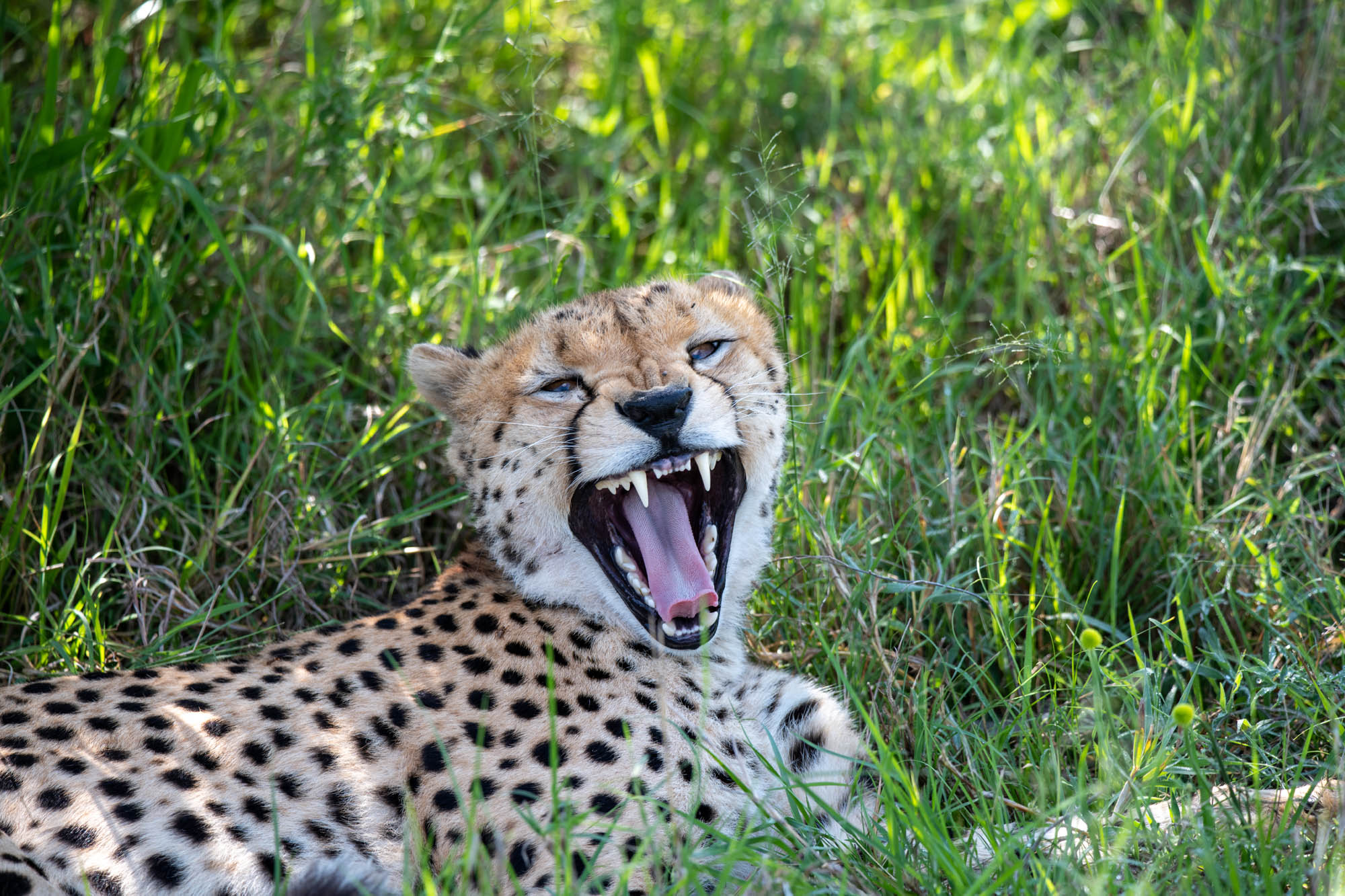
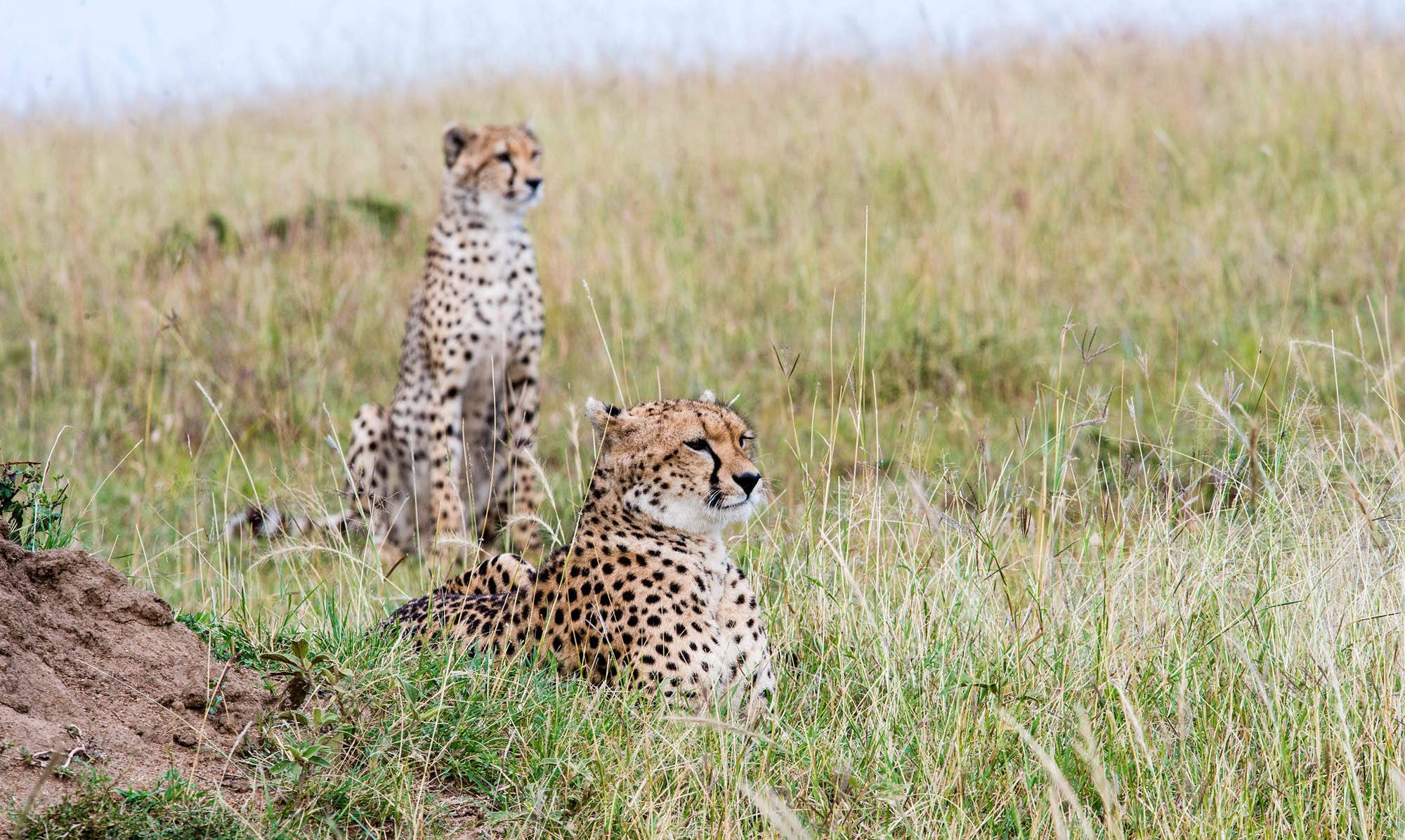
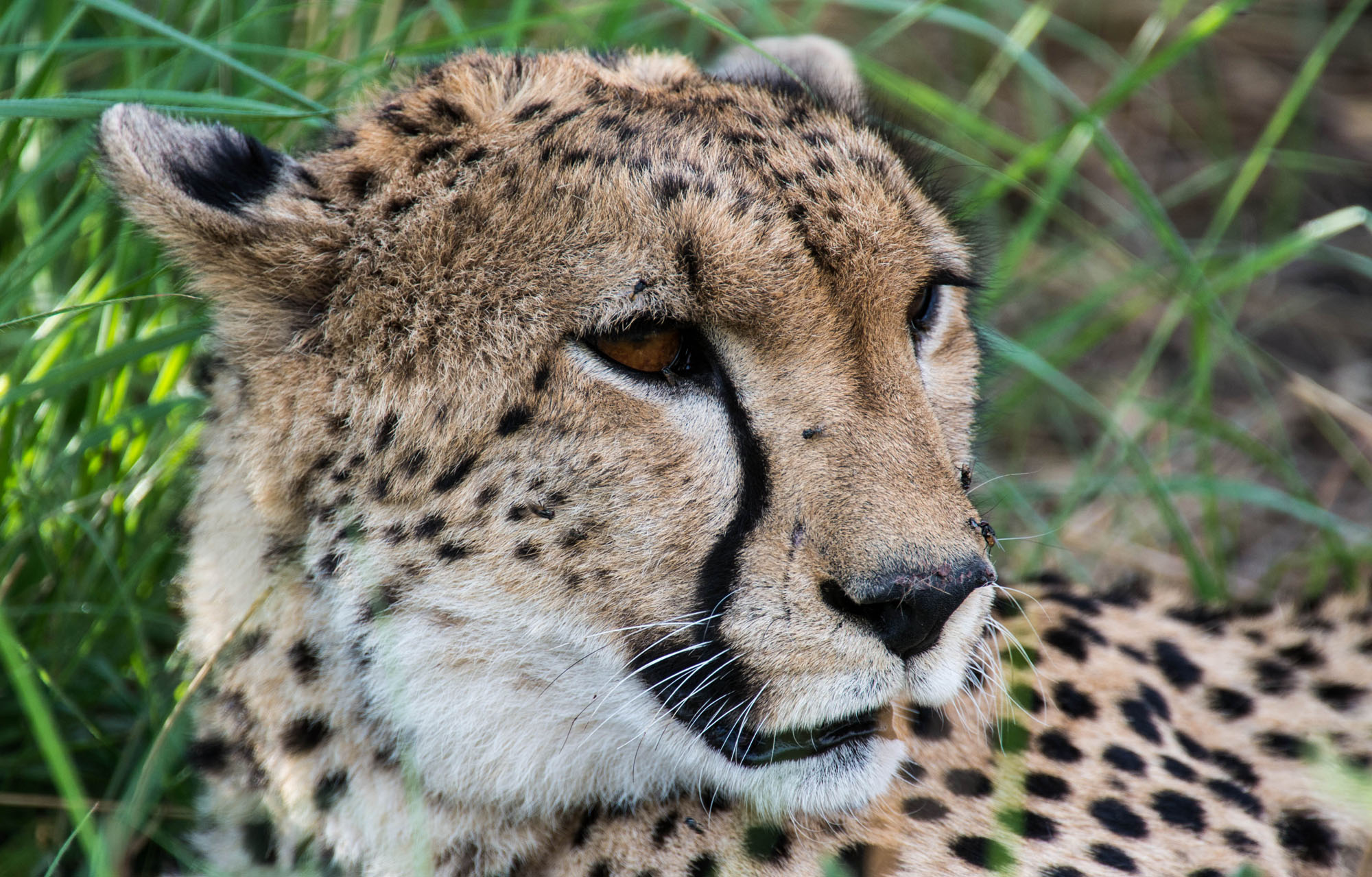
The other big African cat – the cheetah – is in a different league altogether.  It has a relatively tiny total population of about 7,000 in comparison with lions (approximately 25,000) and leopards (approximately 700,000).  Despite being as sparsely distributed as they are, cheetahs are quite visible where present, due to their diurnal nature and preferred habitat.  Cheetahs are adapted to hunt during the day which reduces competition from the nocturnal big cats, notably lions.  Cheetahs also prefer open terrain where they can use their amazing speed to its best advantage.  And they will often clamber onto anthills or stumps or other elevated spots to check out the area for potential prey – or danger.  Open terrain, broad daylight, a spotted cat perched on top of an anthill?  Bingo!  For me personally, a cheetah sighting is a highlight of any Africa trip.  They are just so rare, so beautiful and so special that even a brief glimpse of one of them will make your day.  

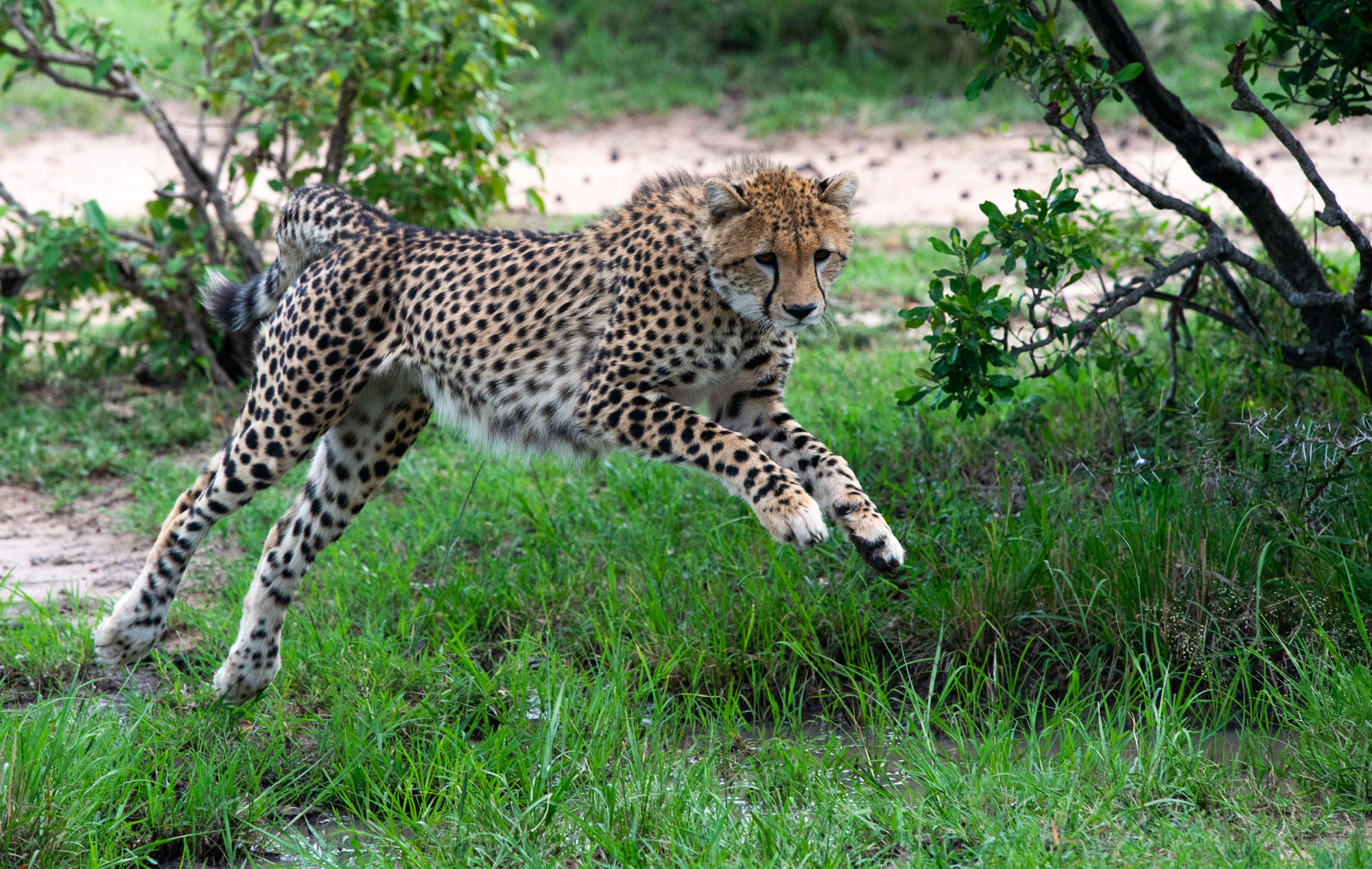
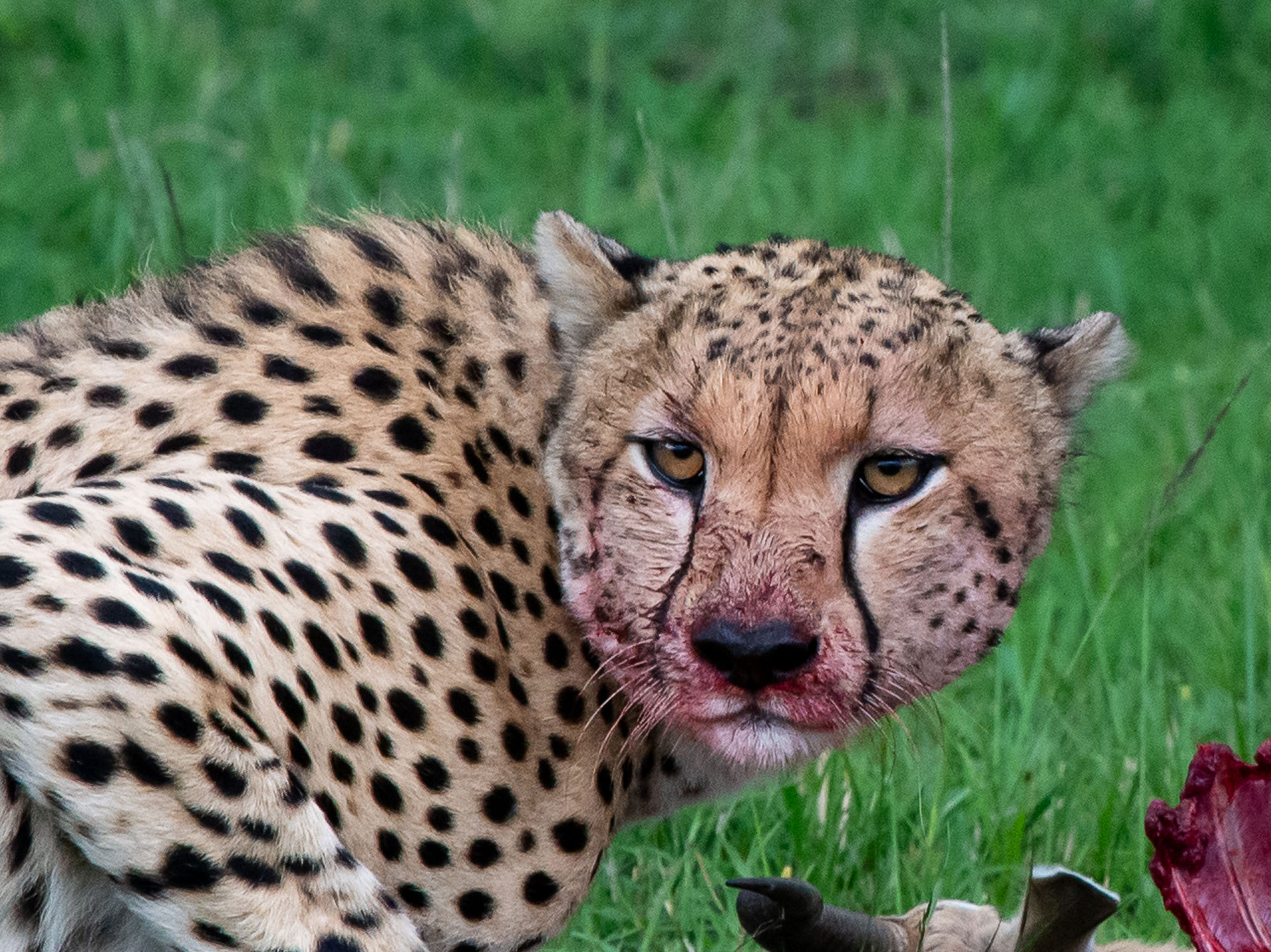
Here are some photos we took of cheetahs in six different areas in Southern and East Africa where they are regularly seen.  The captions summarize the back story about each photo and how it came to be.


Image

Selinda, Northern Botswana

This cheetah was part of a coalition of two brothers which used to move up and down along the Linyanti River in northern Botswana, spending weeks or sometimes months in an area.  For no apparent reason, they would then move along to a neighboring concession.  Less competition from lions or hyenas, more prey animals?  Who knows.  The reasons are hardly ever readily apparent.  The day on which we bumped into this particular cheetah and his brother, marked the first sighting of cheetahs on a game drive from Selinda, in several weeks.  So essentially, we got lucky. Being in the right habitat and spending enough time scanning open terrain along the Linyanti floodplain, just improved our luck somewhat.  We would get even luckier later that day, when we saw the cheetah coalition hunt and bring down an impala.  My advice to anyone wanting to see a cheetah kill?  Bring your best patience game as cheetahs take their time sizing up the area, the conditions and whatever their instinct dictates.  It took the brothers the better part of four hours to finally attempt a charge.  They were successful though.  Cheetahs are the most efficient of the big cats in terms of hunting success, bringing down about 40% to 50% of prey, as a percentage of total attempts.  By comparison leopards are successful about 30% to 40% of the time.  Lions bring up the rear in a significant way, being successful less than 20% of the time.  


Image

Tswalu, South Africa

Tswalu in the northern Cape Kalahari in South Africa is better known as one of the best places in Africa to see pangolins and aardvarks, but it is no slouch for some of the big cats, notably lions and cheetahs.  On our most recent visit to Tswalu (we will be returning this November) Kathy had set aside one afternoon to do some horseback riding.  We were at the stables and she was just about to set off into the veld with one of Tswalu’s beautiful steeds, when word came on the radio that a couple of cheetahs had been spotted.  Kathy and I looked at each other and there was no disagreement:  the horses would have to wait for another day.  It was a longish drive to get to the cheetahs, with the light fading fast by the time we pulled up to them.  Even so, the decision was the right one.  Looking in our direction in the gathering gloom, the cheetah’s ordinarily yellow eyes shone almost red.  The sighting would be brief but eminently memorable. 


Image

Masai Mara, Kenya

When I first saw these cheetahs on a game drive out of Mara Explorer Camp, one of the cheetahs had jumped on top of a game drive vehicle from Mara Intrepids.  I do not like to see behavior like that: it should have been prevented by the Mara Intrepids driver-guide.  The guides in the area are all aware of the propensity of some of the cheetahs to try to use the vehicle as an observation post.  And the guides know to avoid an incident, by staying clear of ‘known perpetrators’.  It is potentially dangerous for the guests and for the cheetahs.  Getting bitten or getting run over, respectively.  Too risky all round.  We left the scene, deciding to rather return early the next morning.  It made all the difference.  We had the cheetahs to ourselves for the better part of an hour, observing them walking around and getting onto anthills – not vehicles.  The way it should be.  


Image

Serengeti Plains, Tanzania

Tanzania’s Serengeti Plains and its northernmost extension, the Masai Mara in Kenya, are likely Africa’s single best repository of cheetahs.  This is their habitat par excellence.  Open, rolling grassy plains with rocky outcrops, patches of woodland and riverine thickets, and plenty of prey in the form of Thomson’s gazelles and impala.  Irrespective of the status of the annual wildebeest migration, the Serengeti and the Mara are great for the big cats, who have territories to defend and who do not move around with the wildebeest and the zebras.  In fact, on the day we saw this cheetah on a game drive out of Nomad Tanzania’s Lamai Serengeti Camp, we experienced a rare big cat trifecta:  lions, leopards and a cheetah.  All in one game drive, not during the migration season.  Other parts of the Serengeti where we have experienced above-average cheetah sightings include the southern Serengeti (Kusini camp) and the western Seronera area (Namiri Plains camp). 


Image

Hwange, Zimbabwe

Since we regularly started visiting Hwange National Park in north-western Zimbabwe in the 1990’s, we’ve come to recognize it as a good and reliable area for cheetah sightings.  Just like elsewhere in Africa, the Hwange cheetahs move around and can’t always be seen in the same spots.  So if you’re keen on seeing cheetahs on a trip to Zimbabwe, we would suggest including two different camps, such as Somalisa or The Hide or Khulu Bush Camp, combined with Little Makalolo or Linkwasha or Camelthorn.  And give yourself plenty of time to find the cheetahs; five to six nights in the area would be ideal.  This trio of young cheetahs were following their mother around and getting a lesson in patience.  She wanted them to stay back and stay low while she approached some antelope.  It was not to be.  They kept showing themselves and following too closely behind her.  Which naturally spooked the antelope. All in a day of growing up.  


Image

Mashatu, Botswana

Mashatu Game Reserve in far south-eastern Botswana is currently one of the best big cat destinations in Southern Africa.   Spend three or better yet four nights there and you will most likely get to see lions, leopards and cheetahs.  And not furtive ‘drive-by’ sightings either.  On a recent September visit to the area, we had multiple good sightings of both lions and leopards, and notched up two different cheetah sightings in the course of a 3-night stay at Mashatu Tented Camp.  What makes Mashatu a particularly good bet for cheetahs – and other big cats – is the fact that off-road driving is allowed which means that you can get quite close to these magnificent cats.  For photographers this is a major advantage over many other areas where vehicles are not permitted off-road.  Also, compared with most other good big-cat destinations, the Mashatu properties namely Mashatu Lodge, Mashatu Tented Camp and Euphorbia are moderately priced – at about half the cost of camps of similar quality in northern Botswana.  We recommend combining a 3-night WalkMashatu foot safari with a few days at one of the Mashatu camps, to make the most of the area.  


Image

In our blog post next Friday, we will focus on one of the most popular and also instantly recognizable African mammals, the Giraffe.  There will be photographs, of course, as well as some information about places where they can be seen.  We will also review the various species you are likely to encounter in Southern and East Africa, and their conservation status.  

More Info

Email bert@fisheaglesafaris.com

Email jason@fisheaglesafaris.com

@fisheaglesafarishouston

#FishEagleSafaris

YOU MIGHT ALSO BE INTERESTED IN

Destinations
Zambia

10th September 2021

Chindeni and the Bushcamp Company, Zambia

By late July we found ourselves at Chindeni, a small Bushcamp Company property

Read more
Botswana
Destinations
Okavango Delta

3rd October 2022

Camp Okavango, Botswana

Camp Okavango is in the heart of the permanent part of the Delta. In this idyllic setting there are no vehicles, and it is just a short walk

Read more
Area
Destinations
Nyerere National Park
Ruaha
Tanzania

14th October 2023

From My Safari Notebook: Wildlife Photography

Birds in flight and wildlife photographers have an uneasy relationship. Things go wrong as often as they go right. Getting focus-lock on a moving subject

Read more

SUBSCRIBE TO OUR NEWSLETTER

READERS FAVOURITES

Destinations
Zambia

10th September 2021

Chindeni and the Bushcamp Company, Zambia

By late July we found ourselves at Chindeni, a small Bushcamp Company property

Read more
Botswana
Destinations

4th August 2022

On Safari At Belmond Eagle Island Lodge, Okavango Delta

What is the ‘secret sauce’ for an unforgettable few days on safari in Botswana? It starts with the animals, of course. The elephants, lions, giraffes, hippos
Read more
Destinations
India

27th May 2023

India

India’s tiger, mammals and birds.

Read more

KENYA TRIP REPORT PART 2: LEWA WILDLIFE CONSERVANCY

5th July 2020

KENYA TRIP REPORT PART 2:
LEWA WILDLIFE CONSERVANCY


Image

KENYA TRIP REPORT PART 2:
LEWA WILDLIFE CONSERVANCY

Every once in a while on my African travels, I discover a place that almost immediately appeals to me and which I soon realize, our guests will come to enjoy and appreciate as well.  The Lewa Wildlife Conservancy is one of those places.  Lewa is special on many levels.  Back when I first visited it in the late 1990’s, it struck me as being almost sublimely ‘out of Africa’.   On my most recent visit last June, I felt just the same way.  Mostly, the place just shouts ‘Africa’.  Standing there, on a clear day, you can see the jagged peaks of Mt. Kenya to the south.  If you turn around 180 degrees, on the horizon to the north, looms the sacred mountain of the Samburu – Mt. Ololokwe.  Mountains, valleys, vast open plains and amazing vistas of blue foothills disappearing into the void.  We cannot all have a farm in Africa like Karen Blixen once did, but we can visit one – and there’s none better than Lewa.


Image

Other ways in which Lewa is special?  It harbors and actively protects more rhinos (white and black) than any other conservancy in East Africa.  Lewa’s rhino population has grown from an initial 15 rhinos to around 170 rhinos currently, nearly 15% of all rhinos in Kenya.  Lewa also has a great mix of endemic species including Grevy’s Zebra, Beisa Oryx and Reticulated Giraffe.  Some of these animals – like the Grevy’s Zebras – are rare and endangered and they are all spectacularly beautiful.


Image

The Reticulated Giraffe I consider to be the ‘oil painting’ of giraffes, compared with the somewhat washed out ‘watercolor’ version seen elsewhere – the Plains or Masai Giraffe.  The Reticulated Giraffe is almost a dark orange with vividly demarcated lines between the color blocks.  Never to be forgotten, once seen.

Likewise the Grevy’s Zebra.  Its finely striped black and white skin pattern – without the shadow effect visible on the Burchell’s Zebra – and its white belly make it quite a handsome equine.  Its looks are marred only somewhat by the ridiculously large, mule-like ears.


Image

Beisa Oryx are amazing animals and while their status is also ‘endangered’, they are fairly common in Lewa. Strikingly beautiful with both males and females sporting long, thin ringed horns.  They are quite unmistakable when seen with mostly blue-grey bodies, offset by a white underside and distinctive black stripes along the side, the neck and on the face.

Finally, Lewa is special because of its remarkable achievements over the years in the field of wildlife conservation (notably rhinos and Grevy’s Zebra), and its pioneering work in community-centric conservation.  Lewa has invested heavily in both the protection of endangered species and development of its neighbouring communities to create a future where both people and wildlife can flourish.


Image

TUSK MARATHON – LEWA WILDLIFE CONSERVANCY

Late in the morning after my overnight stay in Nairobi, I was on a flight from Wilson Airport to the beautiful and very successful Lewa Wildlife Conservancy.  Having been established in 1995, Lewa/Borana is arguably Kenya’s premier example of a wildlife sanctuary where wildlife conservation, community welfare, cattle farming and hosting guests from 9 tourism properties are successfully integrated and managed by a permanent staff.

For the next 3 nights my accommodation was a rustic tented camp – Maridadi – erected close to the Lewa Headquarters, for the annual running of the Tusk Half and Full Marathon.


Image

Late on the first afternoon, we did a short 3 km ‘warm up’ run and afterwards enjoyed sundowners on a beautiful hill.  A few of us went on a late afternoon game drive, which turned out to be surprisingly good.  In practically no time at all, we ticked off most of the Lewa specials like Grevy’s Zebra, Reticulated Giraffe, Beisa Oryx and Somali Ostrich.  As well as Buffalo, Eland, and Burchell’s Zebra.


Image

On the second day we visited several projects supported by the Lewa Wildlife Conservancy, through donations from charities such as the Tusk Foundation.  Among others, we visited a school and the Lewa Clinic. The Lewa Education Program works to provide access to quality education that improves students’ economic opportunities, in the hope that it creates a new generation of environmental stewards. I was impressed by the degree to which electronics had been incorporated into the classroom we visited.  The electronic ‘blackboard’ and the presence of so many electronic tablets would be the envy of many a school district anywhere in the world.


Image

On the Saturday, some 1,500 runners lined up for the start of the 20th annual Tusk Lewa Marathon and Half Marathon, one of Lewa’s major fundraising events.  The race is well organized and is a taxing, yet fun event.  It helps to be well prepared and at least somewhat acclimated to the mile-high altitude.  Add to that the heat – it was nearly 80 Fahrenheit at the start – the hills (plenty of them) and the uneven footing along rough trails, and all in all it makes for a super-tough race.


Image

LEWA WILDERNESS

Late in the morning after the run, I was off to Lewa Wilderness on the north-eastern edge of the conservancy.  Lewa Wilderness, which is owned and operated by the Craig family, is a jewel of a lodge with gorgeous rooms, a stunningly beautiful setting in a lush garden, views over the valley below, and simply first-class all-round hospitality.

My room – #7 – had an expansive view, tons of space, a double bed with mosquito netting, adequate lighting (but difficult to find the right on and off switches), a shower and separate toilet, and a mini-bar with soft drinks, beer and ice.  Simply a splendid place to be on safari, as one of the English guests remarked over dinner later.


Image

The food was excellent: I was introduced to all the other guests already in camp over a buffet lunch (curried chicken and curried vegetable dishes) with quiche, green salad, fresh bread and more.  The meal was served family style.

Dinner was roast beef with veggies, a potato dish and dessert, all delicious and perfectly prepared. Most dietary needs can be accommodated.


Image

I experienced a couple of game drives from Lewa Wilderness and much to my surprise saw a cheetah on both outings.  One rather skittish young male (a newcomer to the area) and another older, much more relaxed male which was stretched out on a fallen tree stump, enjoying the morning sunlight.  Another sighting of note was a few gerenuk antelope, which are more abundant in arid areas to the north, like Samburu.


Image

BORANA LODGE

The following couple of nights I stayed at Borana Lodge, a 9-roomed property set in the stunningly beautiful foothills of Mt. Kenya, in the Borana Conservancy, adjacent to the west of Lewa.  In 2014 the fence between the two conservancies came down, which opened up even more of a corridor for wildlife – notably elephant – for movement between Samburu in the north and Mt. Kenya in the south.  Over the last 30 years or so, elephants have impacted Lewa Wildlife Conservancy significantly, mostly by destroying huge numbers of acacia and other trees, effectively turning large tracts of mixed woodland into savanna grassland.


Image

Opening up adjacent areas like Borana and in future hopefully the nearby Il Nguesi area, will help to alleviate the pressure on the habitat and reverse this habitat-changing effect.  Given time, trees like the yellow barked acacia and whistling thorn acacia will bounce back and forests will naturally re-emerge.  But only if the saplings are not constantly being hammered by the elephants.

Already – during my visit – the number of elephants in the Borana Conservancy appear to be increasing relative to Lewa.  Borana being much more heavily wooded will definitely relieve the pressure on Lewa.


Image

The Borana Conservancy is higher, hillier and greener than Lewa.  It also has even fewer cars and people around so if solitude, splendid views and montane scenery is your thing, Borana is your spot.  While I did see a black rhino in Lewa (after several days there), I saw several in Borana, starting with my very first game drive there.  My knowledgeable and enthusiastic guide Peter soon had a female and juvenile pair of black rhinos in sight and with some deft maneuvering, I got several good shots of them, without displacing or unnecessarily alarming them.

My experience at Borana Lodge for the two nights there was most enjoyable and fun, with a mix of game drives, sundowners in scenic spots, a fun bush dinner, and spending time over lunch and breakfast with the owner, Michael Dyer.


Image

The lodge itself is perched on a slope of with beautiful views over blue-grey hills and verdant valleys.  Out of Africa, no doubt.  Plus the original ‘Pride Rock’ from the Lion King movie is just around the corner!  My room – #3 – was spacious with all the amenities including a bath, shower, fireplace, and two outdoor relaxation areas.

The room interior and soft finishings are due for a major ‘freshening up’: some paint, new tiles in the bathroom, new window drapes, a new color scheme – there are quite a few things which can be done to give the room a fresh look.

It is a minor point of criticism though.  The overall experience at Borana was most enjoyable with great food, friendly staff, management and expert guiding.

It appears that Borana’s cattle management and rotation scheme is quite successful at keeping the vegetation vibrant and full of life.  There are practically no areas of moribund vegetation, but this may have had something to do with the abundant recent rainfall, at the time I was there.


Image

LEWA SAFARI CAMP

The penultimate stop of my mega familiarization trip was the popular and highly rated Lewa Safari Camp, also operated by Elewana, located inside the Lewa Wildlife Conservancy.  We do and will continue to use Lewa Safari Camp on future Kenya itineraries for many of our clients.  This visit made it clear to me why the camp works so well.  A lot of it has to do with the managing couple Sacha and Tamlyn.  During my all too brief overnight and one day there, Sacha devoted a lot of time to spend with me over lunch and dinner, talking about the area and what it has to offer to guests.  With such enthusiasm and energy as demonstrated by Sacha, it is clear to see why Lewa Safari Camp is so popular with guests.  My tented room #3 was spotlessly clean and well organized from lighting (easy on off switches), to having the best charging outlet of any camp on the trip, including no less than 4 USB charging points.  Lewa Safari Camp has an attractive pool with a view over the valley, and well-marked pathways.


Image

Exercise note:  It is possible to jog inside the camp perimeter on gravel pathways, along a loop totaling about 1 kilometer in distance.

En route to my final destination, I did a site inspection at Kifaru, Elewana’s luxury 5-roomed lodge.  Compact and intimate, with camp manager Andrew giving me a concise yet thorough overview of the camp.  Kifaru has a great location on top of a hill, with large and well-appointed rooms, a beautiful central area and dining room.  Room #5 appears to be the choice spot to be.


Image

SIRIKOI LODGE

I had long looked forward to visiting Sirikoi, my planned 2017 visit having been derailed by Hurricane Harvey.  Sirikoi turned out to be worth waiting for!  It is an oasis like few others, from location to accommodation and management.  The tented rooms, main lounge and dining room areas are stylish and immaculately maintained, and the food and beverage service is of an exemplary quality.  While at Sirikoi, I took some time off from the game-viewing to scout out the property and surroundings a bit better.


Image

With its mix of four luxury tents and two exclusive use houses (with 2 and 3 bedrooms respectively), Sirikoi caters for discerning guests who like and enjoy comfort and luxury, but in an elegant, understated fashion.  There is nothing over the top or extravagant about Sirikoi.  It strikes a perfect balance between being luxurious and stylish, yet retaining the essence of a true Kenyan retreat.


Image

Sirikoi’s location right alongside the Sirikoi stream, on the edge of a large swamp, results in wildlife often entering the property and being visible from the open dining deck in front of camp.  In the late afternoon and early evening, as the birds settle down and nocturnal creatures like bush babies start to get active, enjoying a sundowner at Sirikoi is as good as it gets on safari.  I experienced just that on my last night there.  One by one a family of seven Striped Kingfishers disappeared into a communal hole in a tree where they were to sleep for the night.  Guinea fowls started to gather high in a nearby tree, as did baboons (not without some squabbling), vervet monkeys and even crowned cranes which flew out of the swamp to the protection of an elevated roost.


Image

It became quiet as the sun set over the low hills to the west, the pinkish light remaining for a long time, with the trees perfectly reflected in the glassy surface of the pool.

I had the most fascinating conversation with the co-owner Sue Roberts over sundowners, finding out just how the Sirikoi property came to be in their possession.  Acquiring Sirikoi ended up being a pivotal piece in making Lewa Wildlife Conservancy the vibrant and successful model of co-operative conservation that it is.  Land-owners, local government, and most importantly the community, all working together to achieve shared objectives.

More Info

Email bert@fisheaglesafaris.com

Email jason@fisheaglesafaris.com

@fisheaglesafarishouston

#FishEagleSafaris

YOU MIGHT ALSO BE INTERESTED IN

Area
Destinations
Nyerere National Park
Ruaha
Tanzania

14th October 2023

From My Safari Notebook: Wildlife Photography

Birds in flight and wildlife photographers have an uneasy relationship. Things go wrong as often as they go right. Getting focus-lock on a moving subject

Read more
Botswana
Destinations
Okavango Delta

3rd October 2022

Camp Okavango, Botswana

Camp Okavango is in the heart of the permanent part of the Delta. In this idyllic setting there are no vehicles, and it is just a short walk

Read more
Destinations
Zambia

10th September 2021

Chindeni and the Bushcamp Company, Zambia

By late July we found ourselves at Chindeni, a small Bushcamp Company property

Read more

SUBSCRIBE TO OUR NEWSLETTER

READERS FAVOURITES

Destinations
Zambia

10th September 2021

Chindeni and the Bushcamp Company, Zambia

By late July we found ourselves at Chindeni, a small Bushcamp Company property

Read more
Botswana
Destinations

17th June 2020

A Visit to Northern Botswana

If going on safari in Africa is your idea of heaven, then Botswana is nirvana. A few days there

Read more
Botswana
Destinations
Okavango Delta

30th July 2021

Duba Explorers & Duba Plains Camp, Botswana DUBA EXPLORERS CAMP

Great Plains’ Duba Explorers Camp is located in the northern part of the Okavango

Read more

KENYA TRIP REPORT PART 1: THE MASAI MARA

1st July 2020

KENYA TRIP REPORT PART 1:
THE MASAI MARA


Image

KENYA TRIP REPORT PART 1:
THE MASAI MARA

Since I first started traveling to Kenya in the 1990’s, I have grown increasingly fond of this beautiful and incredibly diverse country and its friendly, easy-going people.  With every return visit, my previous perceptions about Kenya as a safari destination have been re-validated, notably that it is an ideal destination for a first African safari.  No doubt about that.  Kenya has lots of animals which are easy to see, it has remarkable diversity in terms of habitats, wildlife, scenery and activities along with a well-functioning tourism infrastructure.


Image

Culturally, Kenya is rich and diverse, it has excellent accommodation options in each area, great guiding and – like I said – friendly people who are genuinely interested in your well-being and happiness.  So learn a few Swahili phrases, get your E-visa online, and get ready for a fantastic experience!  Of course, if you’ve already been, you know most of this. But do keep on reading as there’s lots of information here about some places you might not have been to yet, like the Lewa Wildlife Conservancy, or the Olare Motorogi Conservancy in the Masai Mara.


Image

On my most recent trip, last June, I arrived at Nairobi’s Jomo Kenyatta International Airport on South African Airways after an on-time, uneventful flight.  Getting a visa was a cinch – it literally took less than 10 minutes.  Then a gremlin appeared in the way of a long and disorganized, scrum-like line to get one’s luggage scanned in an industrial-sized luggage scanner.  Of which there really should be more than one, clearly. To compound matters, traffic congestion caused a lengthy delay getting out of the airport and on to the road to downtown.


Image

Even so, I remained in a good mood, just happy to be back in Kenya.  Here’s a tip for African travel in general and specific to Nairobi and Kenya:  be prepared for a little bit of chaos mixed in with smiles from people who are genuinely pleased that you have decided to make your way there.  


Image

NAIROBI SERENA HOTEL

The security check on arrival at the Nairobi Serena Hotel was thorough, but not brusque.  I never felt rushed or intimidated.  A little bit of courtesy goes a long way.  Reception at the hotel was smooth and professional, as was my in-room briefing.  The room was luxuriously appointed, with the usual amenities including tea and coffee-making facilities, multi-channel TV, air conditioning, and thoughtfully designed charging facilities with a phone-ready cable for your iphone, and enough USB and universal plugs capable of accepting a US type plug without an adaptor.

I tried both the Asian fusion and traditional restaurants at the hotel for dinner and breakfast respectively, and they were both good.  Serena has a well-deserved reputation for their breakfast spread and the Nairobi Serena Hotel was no exception.


Image

LOLDIA HOUSE, LAKE NAIVASHA

From this point on and for the duration of my trip to the Masai Mara, I was accompanied by Zachary Methu, an affable, extremely capable and hugely knowledgeable Origins Safaris guide.  What a difference a good guide makes!  It took about 3 hours by road to get to Lake Naivasha, where I would spend a couple of nights at Loldia House.  I had been looking forward to a return visit to this lovely old home which was built by Italian prisoners-of-war during WWII. Just like the last time, I spent a peaceful night in Room #1.  Being inside the main house, it is convenient, large, and has beautiful views over the garden and the lake.  The bathroom has been upgraded.


Image

I enjoyed some bird photography and a delicious lunch, and went for a 5K run later in the afternoon in the cultivated (farm) portion of the estate.  That evening, we enjoyed a delightful dinner – table d’hote style – with 8 other guests and the manager.  The 3-course, plated meal was expertly prepared and served.  Breakfast the next morning was equally good, particularly the pancakes.

Loldia is the perfect place to spend one’s first couple of nights in Kenya, prior to going on safari.  It’s a great introduction to Kenya’s wildlife with a good variety of game to be seen including buffalo, hippo, impala, gazelles and giraffe. On night drives hyenas, owls, and bush pigs may be seen.  


Image

Included activities at Loldia are an afternoon game drive with sundowner drinks,  a boat cruise on Lake Naivasha early in the morning and a night game drive after dinner.  Beyond those,  Loldia offers a host of optional activities (at additional cost), such as guided trips to Lake Nakuru, Crescent Island, Hell’s Gate, Crater Lake, Lake Ol Odien, Eburru Forest, Aberdare National Park, Lake Elementaita, and Lake Bogoria.   There’s also golf available at the nearby Great Rift Valley Lodge, horse-riding and a tour of the nearby rose farm.

Room 1 at Loldia is in the main house; rooms 2, 3 and 4 (all upgraded) are in the garden.  Room 6 and 7 (thatched roofs) are also in the garden.  Room 8 and 9 are in the Top Cottage and room 10 is in the Top Cottage loft and has a separate/outside bathroom.


Image

MARA BUSHTOPS, MASAI MARA

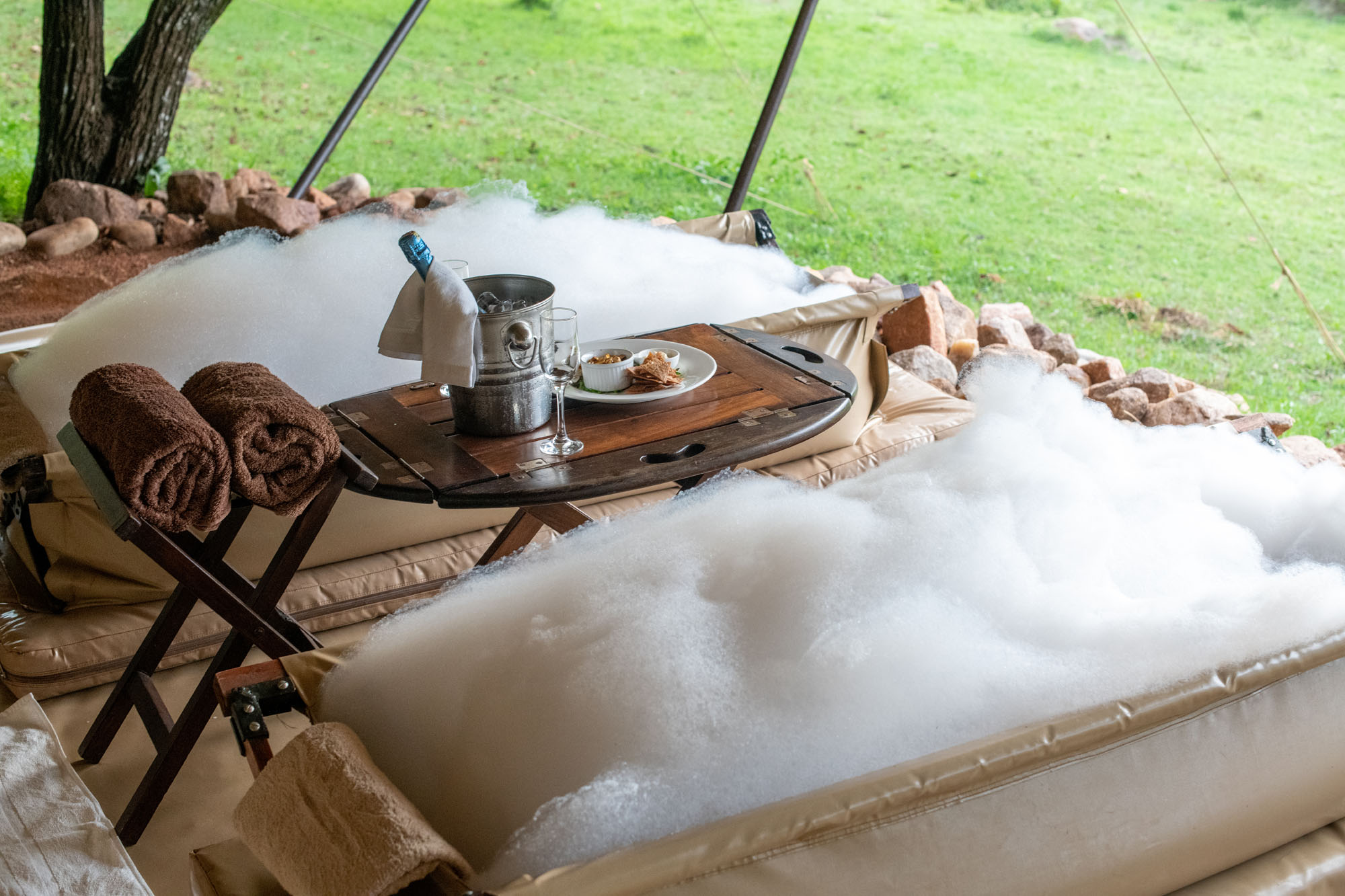
Fom Naivasha it was a solid 5 hour 30 minutes drive to Mara Bushtops, situated in a game-rich conservancy just to the north of the Masai Mara National Park.  The impressive tented rooms are solidly in the deluxe category with beautiful wrap around views over the surrounding bush.  There was an indoor and outdoor shower, Wi-Fi and an outdoor jacuzzi which can be filled in advance.  The room has a buzzer to summon your personal butler.  The room lighting wasn’t quite up to my ‘bright, clear, and easy to operate’ expectations. 


Image

A two-hour afternoon game drive on the Isaaten Conservancy illustrated once again why Kenya is such a good choice for a first – or any – safari.  Without too much driving at all we notched up good views of elephants (lots of them!), giraffes all over the place, many zebras, scattered groups of wildebeest, impala, Thompson’s gazelle, topi, eland, Kirk’s dik-dik, vervet monkeys, warthogs and bat-eared foxes. Guests who spend three nights or more at Mara Bushtops will usually spend a half or full day inside the Masai Mara National Park; the lodge is only about 30 minutes from the Sekenani gate.  Dinner was first class in every way in what was essentially a full-blown restaurant with multiple starters, main courses and dessert options. No set hours:  you dine when you want to.


Image

Exercise note:  Mara Bushtops caters for health enthusiasts more than most other camps.  They have a large pool with adjacent heated jacuzzi, a sauna, a small gym with weights and a treadmill.  The Amani Spa at Mara Bushtops has a wide range of beauty treatments and massage and rejuvenation treatment options, several of which cater for couples.


Image

ASILIA NABOISHO CAMP, NABOISHO CONSERVANCY

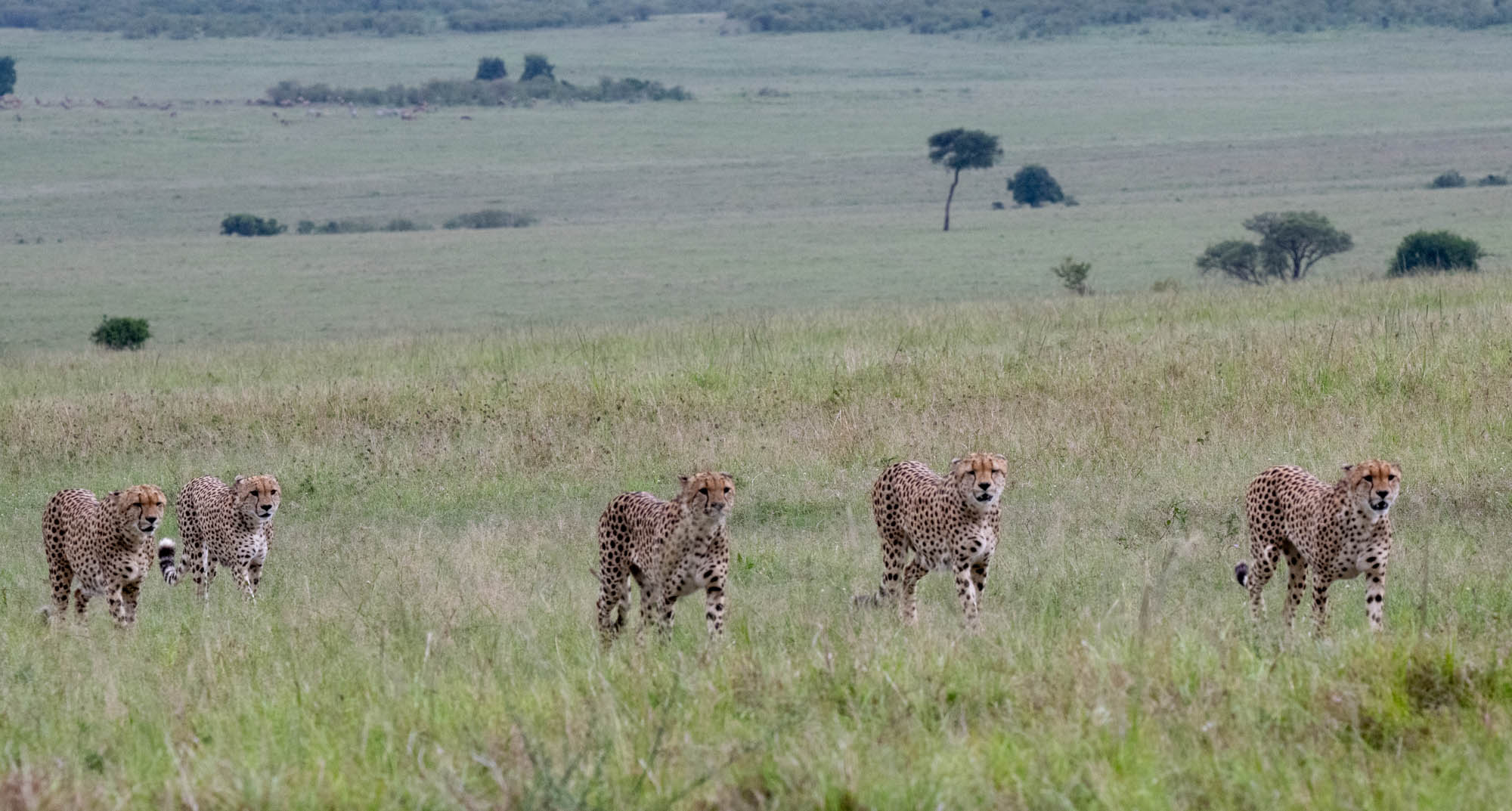
It was a relatively short drive today to the Naboisho Conservancy where I spent the night at Asilia’s Naboisho camp.  Naboisho is a well organized camp with friendly and attentive management and staff, superior guiding by Dickson Kaleku, and abundant wildlife.  I also did a site inspection at nearby Mara Encounter and liked what I saw, particularly the adventurous walk through a small, dense forest on the way into camp.   I can recommend both of these camps and the Naboisho area without any reservation.  The game viewing was as good as I’ve experienced anywhere – ever – with huge numbers of wildebeest around.  It  felt like the migration season, even though we knew it was not.  We saw many lions and enjoyed an exceptionally good cheetah sighting with three sub-adult cubs.  Plus elephants, eland, topi, gazelles, impala, zebra, giraffe and more.

Exercise note:   Not an ideal spot for exercise, but you can go on an extended walk of a few hours duration with an armed professional guide.


Image

MARA PLAINS CAMP, OLARE MOTOROGI CONSERVANCY

The next day, it was on to Mara Plains Camp in the Olare Motorogi Conservancy.  This conservancy is a model of how local landowners and conservation-minded safari operators can work together for a greater goal, being the preservation of Kenya’s wildlife heritage for generations to come.  In this huge area –  which otherwise would have been dotted with homesteads and overrun with cattle, sheep and goats –  wildlife is thriving and the local communities benefit with employment and cash income.  Mara Plains Camp is a Relais & Chateaux property and it shows on many levels from the impeccable quality of the food and beverage offerings to the attentive and competent management and staff.  I was wowed from beginning to end.  The massive rooms are dramatically set on the edge of a seasonal creek.


Image

For the few days that you may spend at Mara Plains you will be in a cocoon of unadulterated luxury.  While guests no doubt appreciate the luxury touches and the property’s high level of sophistication, the lasting impression is of a team of people with a clearly defined mission to be a force for good in both conservation and community.  The wildlife experience at Mara Plains on this trip was just as good as it was on a previous visit to the area, a few years ago.  At that time I recall seeing as many as seven different mammal species all at the same time. 


Image

It would not be unreasonable to expect to see three big cat species – leopard, lion and cheetah – on a 3 night stay at Mara Plains; in fact we saw all three on one game drive, on this trip!  Most memorably, I photographed a cheetah crossing a small road within the conservancy, while a local resident on a motorbike (here known as a boda-boda) paused for a few minutes, to give the cheetah the space to do so without pressure.  Only in Kenya!  We also saw various prides of lions, some with cubs of varying ages, and a host of other mammals and birds.  My Mara Plains hosts Rich and Lorna – as well as Kyra – went out of their way to make me feel at home.

Exercise note:  Clearly not a good place to go jogging, but each room has a yoga mat and a  jump rope.


Image

ASILIA REKERO CAMP, MASAI MARA

My next stop was Rekero – another Asilia property – located in an ideal spot on the Talek River with a great view down-river, inside the Masai Mara National Park. The huge deck is a perfect place to discover the coming and going of numerous birds including the rather stunning blue fly catcher which I tried to photograph with some success.  Rekero is so well hidden in the thick riverine forest along the Talek River that it remains completely hidden until you walk into camp, from the parking area.  There are nine tented rooms, two of which are family rooms; the tents are quite spacious with a separate en suite bathroom with plenty of hot water, a separate vestibuli with a day-bed and adequate lighting.  I slept soundly by the sound of water rushing over the rocks in the Talek River.  The food at Rekero was excellent and we enjoyed a wonderful dinner with a mix of South Africans, Texans and Kenyans and a couple from San Francisco.


Image

We enjoyed yet another superb day of game-viewing in the Masai Mara spotting a leopard with an impala kill in a tree, four different groups of lions, two prides with cubs (from literally 1.5 weeks to several months old) some handsome full-maned male lions, powerful females, sub adults and more.


Image

INTREPIDS CAMP, MASAI MARA

Intrepids camp, my accommodation for the following day, is quite large with 32 tents but with the rooms strategically spread out along the edge of the Talek River in thick vegetation, the camp does not have a ‘crowded’ feel.

The rooms are quite smart and nicely equipped with decent lighting, mosquito nets, a separate shower and toilet with door, a deluxe wash basin and ample mirrors. There is Wi-Fi everywhere in the camp. Each room has a small desk and ample storage and clothes hanging space. The bathroom area and particularly the shower of my room number 14 was starting to look a bit tired and is definitely in need of refurbishment.


Image

Hot water – provided by wood burning boilers – is available from 5 to 9 a.m. and 5 to 9 p.m. Lunch was served buffet-style with multiple choices and options including a wide variety of vegetarian items.  For dinner meals are plated with a substantial number of options for starters, main course and even for dessert.

What makes Intrepids a good choice though is the location.  It is ideally located in the heart of the Masai Mara right where the action is during the migration season.  From here your guide can take you towards the Musiara area if needs be, or to the main or Serena crossing over the Mara River, or even further afield to the southern section of the Mara in search of whatever is out there, including of course potential wildebeest crossings.

Exercise note:  Mara Intrepids has an extensive trail/walkway winding through the camp and past the vehicle maintenance area, so this is a property where you can plan on getting a few miles under the belt.


Image

MARA EXPLORER CAMP, MASAI MARA

The next day my journey would take me on to Mara Explorer camp, Intrepids’ smaller and more luxurious sister tented camp. Mara Explorer has just 10 quite elegant tented rooms, most with good views over the Talek River which was flowing quite strongly on the day.  The rooms are spacious with a separate indoor shower (shower head needed replacement), a  toilet with a door and an outside bath with a view.  Hot water available from 5 – 9 a.m. and from 5 – 9 p.m.


Image

The rooms are on the edge of the Talek River and some of them, like mine (#4), are very close to a sizable number of hippos hanging out in a hippo pool in a bend of the river.  So if you really like hippos and don’t mind them waking you up at around 5 a.m. when they go back in the water then this is just the room for you.  Our game drive today produced a sighting of an acclaimed coalition of four cheetahs, as well as some good views of lions and buffaloes.  The day was rounded off nicely with a surprise bush dinner.
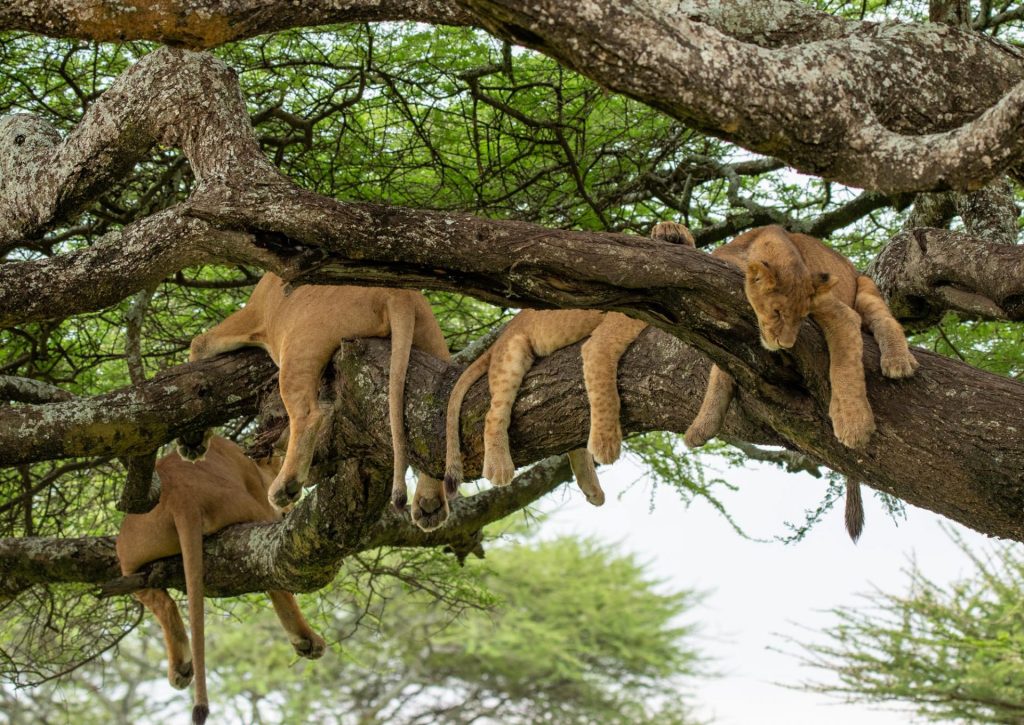
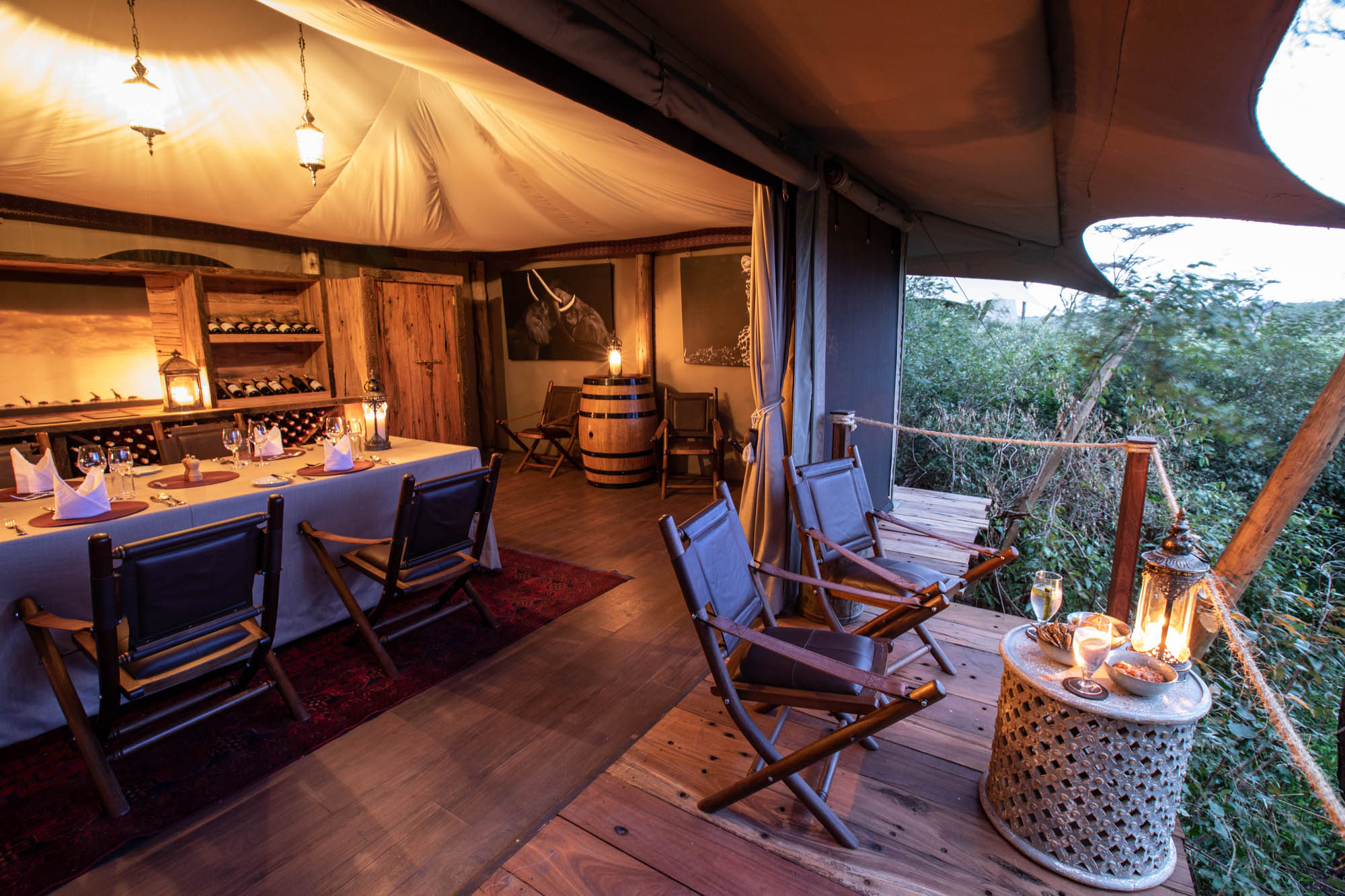

Image

MARA NGENCHE CAMP, MASAI MARA

It was a shortish drive this day to Mara Ngenche, sister camp to Samburu’s Elephant Bedroom camp.  The property is located in a prime spot at the confluence of the Talek and Mara Rivers with the rooms having views over either of the river beds.  My room was large with a comfortable king bed, decent lighting, indoor shower and bath and outside shower.  It also had a private plunge pool, lounge chairs and hammock.  The staff was friendly and attentive and obliged with a special local meal with items such as ugali and sukuma wiki.

The dining room, lounge and bar tents were likewise quite well done; food was superb and varied with several choices of starters, mains and desserts.  Game drives in the area were productive and we had a good morning with several sightings of leopards, among others.


Image

ELEPHANT PEPPER CAMP, MARA NORTH CONSERVANCY

It was a slightly longer drive today, leaving the Masai Mara National Park at Musiara gate into Mara North Conservancy.  I was initially somewhat put off by the presence of a large village not far from the gate, with several herds of cattle around.  However, by the time we got to our next stop, Elephant Pepper Camp, everything had changed.  It turned out to be a lovely and clearly well-run camp with energetic and friendly management, who made me feel welcome right away.  I liked everything I saw about Elephant Pepper from the camp layout, the nice rooms with good lighting, to the fun meal-times.  We arrived in the middle of a leopard sighting and that pretty much set the tone for the remainder of my stay.  It turned out that the game viewing at Elephant Pepper – particularly for the big cats – was terrific.  Zachary and I had some of the best views of the entire trip of cheetahs and lions on what was to be our last proper game drive in the Mara. A short spell of rain did nothing to dampen our spirits – in fact it set up an opportunity to get a photo of a wet lion shaking its mane.


Image

KAREN BLIXEN COTTAGES – NAIROBI

It took just over 5 hours to drive back from Elephant Pepper to the suburb of Karen on the west side of Nairobi. We encountered heavy traffic in spots with lots of 16-wheeler trucks, the road being the main artery from the port of Mombasa to the East African interior.  I was happy to have someone as experienced and patient as Zachary behind the steering wheel.  This evening, I spent the night at Karen Blixen Coffee Garden & Cottages.  Located in one of the oldest formal gardens in Kenya (with lots of great birds around), the hotel is convenient to the Karen Blixen Museum, Wilson Airport, Sheldrick elephant orphanage and Nairobi National Park.  In contrast to the historic main building, the individual cottage suites are quite modern and spacious with high-beam ceilings, fireplaces, verandahs, a bath, shower, and TV.  I enjoyed lunch and dinner at the adjacent Tamarind restaurant and could not fault the excellent ostrich burger and grilled tuna fillet, or the swift and friendly service.  I  took a cab to the nearby Karen Mall for some shopping at the Kikoy store and the well-stocked aisles of Carrefour grocery store (candy stop!).  The next morning I would be on my way to Lewa in the northern part of Kenya.

More Info

Email bert@fisheaglesafaris.com

Email jason@fisheaglesafaris.com

@fisheaglesafarishouston

#FishEagleSafaris

YOU MIGHT ALSO BE INTERESTED IN

Area
Destinations
Kenya
Lewa
Samburu

19th April 2026

A Fresh Perspective on Lewa and Samburu

We’ve been sending our guests to the northern and north-central region of Kenya for many years, and fortunately most

Read more
Area
Destinations
Kenya
Lewa
Samburu

19th April 2026

A Fresh Perspective on Lewa and Samburu

We’ve been sending our guests to the northern and north-central region of Kenya for many years, and fortunately most

Read more
Area
Destinations
Kenya
Lewa
Samburu

19th April 2026

A Fresh Perspective on Lewa and Samburu

We’ve been sending our guests to the northern and north-central region of Kenya for many years, and fortunately most

Read more

SUBSCRIBE TO OUR NEWSLETTER

READERS FAVOURITES

Area
Destinations
Kenya
Lewa
Samburu

19th April 2026

A Fresh Perspective on Lewa and Samburu

We’ve been sending our guests to the northern and north-central region of Kenya for many years, and fortunately most

Read more
Destinations
Zambia

20th April 2020

“Only in Africa”: Tiger Fishing

I believe the core activity on any great safari is the game drive.  The animals are, of course, the main attraction and there is no better

Read more
Botswana
Destinations
Kenya
Serengeti Plains
Tanzania
Uganda
Zambia
Zanzibar
Zimbabwe

19th November 2021

Where to go on safari in 2022-23

As the Covid pandemic retreats worldwide, thoughts turn to resuming life the way

Read more
  • « Go to Previous Page
  • Page 1
  • Interim pages omitted …
  • Page 3
  • Page 4
  • Page 5
  • Page 6
  • Go to Next Page »

Footer

Design

  • About
  • Destinations
  • Blogs
  • FAQS
  • Team
  • Contact
All Rights Reserved ©Fish Eagle Safaris 2022 | Terms & Conditions | Privacy Policy
Designed & Developed by B Online

SUBSCRIBE TO OUR NEWSLETTER

SIGN-UP TO OUR NEWSLETTER

Subscribe Form

Footer Widget Header

Related Blogs