• Skip to primary navigation
  • Skip to main content
  • Skip to footer

Fish Eagle Safaris

Fish Eagle safaris

Contact

Logo
  • About
  • Destinations
  • Blogs
  • Newsletter
  • FAQS
  • Team
  • search
  • Contact
  • About
  • Destinations
  • Blogs
  • FAQS
  • Team
  • Contact

Kenya

Where in Africa to Go Next In 2024-2025

21st June 2024

Where in Africa to Go Next In 2024-2025

For me the most fun part of our business is designing itineraries. That’s where our 50 plus years of African experience and our team’s regular inspection and educational visits come into play. Rarely do we include a property which we haven’t been to ourselves and never is how often we include a property where guests may be forced into a middle seat on safari. 

Over the years we have gotten better at customizing itineraries to match a particular party’s interests and objectives. Without simply opting for the most expensive properties. 

So where would we go ourselves if we had to book an Africa trip this very minute, using mostly the properties which our Fish Eagle Safaris team checked out over the last couple of months? I asked the members of our Fish Eagle Safaris team to chime in.  

Here is what they had to say:

Lyndon: “I’d opt for a combination of Victoria Falls and Botswana and the trip would ideally include several days at Wilderness’ new Mababe concession camp, Mokete. On just one day there in late May we saw more animals in total, more different species and more rarities (how about aardvark, African wild cat and bat eared fox) than most visitors would see in a week on safari elsewhere.  

Consider taking a business class flight into Vic Falls, if only to get to the front of the line for the visa/immigration process which has lately proven to be quite challenging in terms of duration. Victoria Falls is a good starting point to shake off some jet lag and it acts as a buffer in case of any flight delays. It has many attractive accommodation options including Ilala Lodge, Pioneers, Palm River Hotel, The Victoria Falls Hotel and Stanley & Livingstone Hotel. Be sure to include a guided tour of the falls and a jet boat sundowner cruise.  

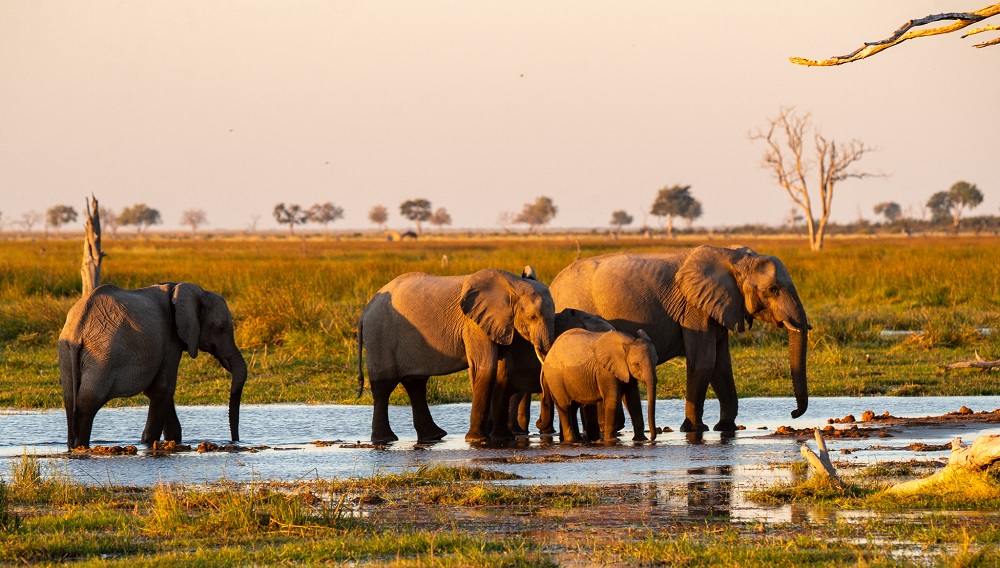
From there I’d head to Hwange for three or ideally four nights at one of the Imvelo or Wilderness properties such as Camelthorn, Bomani, Linkwasha, Little Makalolo, or Davison’s, depending on budget. I have a soft spot for Hwange and to date this year it has been producing some great game viewing. We’ve previously mentioned that the country is facing what could end up being a serious drought. Game viewing should continue to be good but young and weak, older elephants will be facing an uphill battle towards the end of the dry season.  

Ideally, end your safari with at least six nights in Botswana split between two camps. 

I would put Mokete right at the top of the list for the remainder of this season and likely into the future. It’s a unique Botswana property; on my recent visit there it felt a lot like visiting the Serengeti, somehow relocated to southern Africa. Mokete is really a  ‘must visit’ from now until probably November – and will likely be excellent until then.

With Mokete, I would add a few days at perhaps Karangoma and – for a true Okavango Delta experience at an affordable price point – two nights at a water camp like Setari.    

Our group had a fabulous time during our all too short 2-night stay at the brand new Karangoma. It is an intimate camp with only 6 tents, each one with just the right amount of luxury. The scenery in the north-eastern Okavango Delta is idyllic and the remoteness is unparalleled with a 10-minute helicopter flight required to reach camp.

Setari is also remote and requires a boat ride of about 45 minutes from the airstrip to reach camp. Located in the main artery of the Okavango Delta it has permanent water year-round and is a different, more laid back experience than many other Botswana camps. The perfect way to end a successful trip.

Jason: “One of our most successful offerings has always been a combination of South Africa, Victoria Falls and either Zimbabwe or Botswana. If I could book a trip for a client right now, that’s where I would try to focus my efforts.

With a night in Johannesburg, or a few in Cape Town at the start of the trip to try and mitigate jet lag, the trip would kick off with four nights in Sabi Sand at one of our favorite properties. Mala Mala, Savanna, Sabi Sabi, Leopard Hills and Cheetah Plains all make for excellent choices with varying degrees of luxury and price points. The Sabi Sand is a game-rich Big 5 location and has always produced for our guests.

Next, a light air flight to Kruger’s MQP international airport would connect with a commercial flight to Victoria Falls. Ideally, spend two nights here at properties like The Victoria Falls Hotel, Ilala Lodge or Batonka Guest Lodge. We typically recommend a tour of the falls, a sunset cruise and some free time to explore Victoria Falls Town. You could also fill time with adventure activities like scenic helicopter flights, gorge swings, swimming in Devil’s Pool right on the edge of the falls (time of year dependent) or cultural activities in nearby villages.

The last three to six nights on this type of itinerary would be in Botswana’s Okavango Delta where things can slow down a little bit. With a huge number of amazing safari camp offerings, it’s difficult to decide just where to go. But you can count on our knowledge of the camps and areas to select a combination that would work best for your needs. 

Want to see the highest concentration of wildlife? In that case you’d definitely want to spend some time at Wilderness’ Chitabe/Chitabe Lediba camps. It’s been delivering simply brilliant game viewing with guests treated to mesmerizing experiences involving leopards, cheetahs, lions and African painted dogs, day after day.

Want to relax on the water in a boat or mokoro? Stick with some of the Okavango Delta camps (in flood season) like Wilderness’ Kwetsani, Little Tubu or Jao or Great Plains’ Okavango Explorers Camp. 

Want a combination of land and water activities? Machaba’s Gomoti Plains might be the answer. Even during droughts the Gomoti area has water year-round for mokoro rides and typically there is enough for boating as well. Plus it has plenty of open plains to explore on a traditional vehicle safari. On my recent trip, we found ourselves joining a hunt – bounding through the bush in an attempt to keep up with the effortlessly fast pace of a pack of painted dogs. Later that same morning we were on a mokoro attempting to photograph malachite kingfishers, African jacanas and red lechwe antelopes.

Bert:  We’ve always advised prospective travelers to Africa to  spend more time in fewer areas. Based on my experiences on our most recent trip I think visitors would do well to extend that principle into their day-to-day activities on safari. Ideally by including the services of a private guide and vehicle on at least part of their trip. 

This makes it possible to slow down game drives in order to spend less time actually driving, and more time experiencing. More time to observe, to record, and to learn.  Focusing on the details of specific sightings and not just bouncing around from animal to animal. 

Not trying to check everything off your list often results in unexpected but welcome developments. Mostly in the way of seeing something much more interesting than what you started off with.

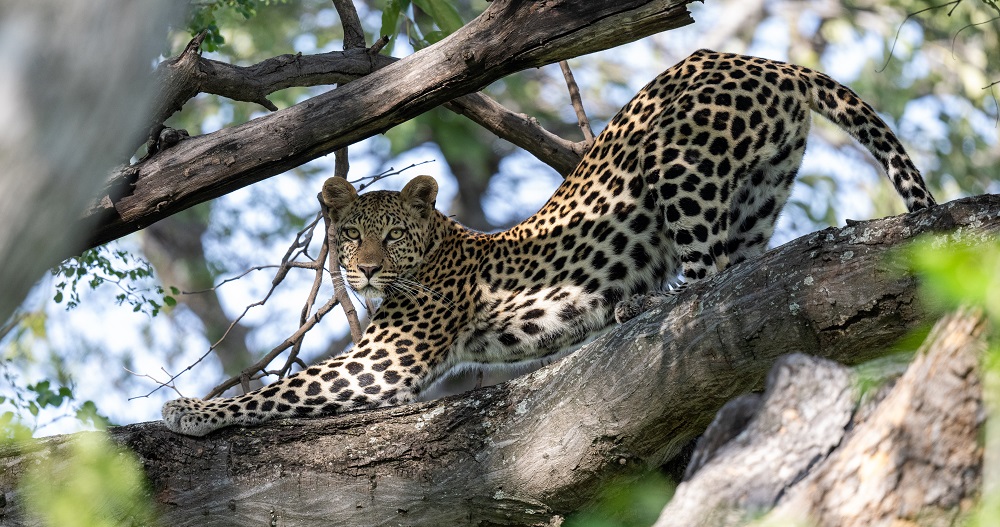
Patience and perseverance almost always pays off in the wilderness. We’ve had painted dogs walk into an otherwise blah sighting, we’ve seen ‘stationary cheetah’ turn into ‘running cheetah on the hunt,’ and we’ve experienced baby leopards suddenly and unexpectedly join their mom, right in front of us.   

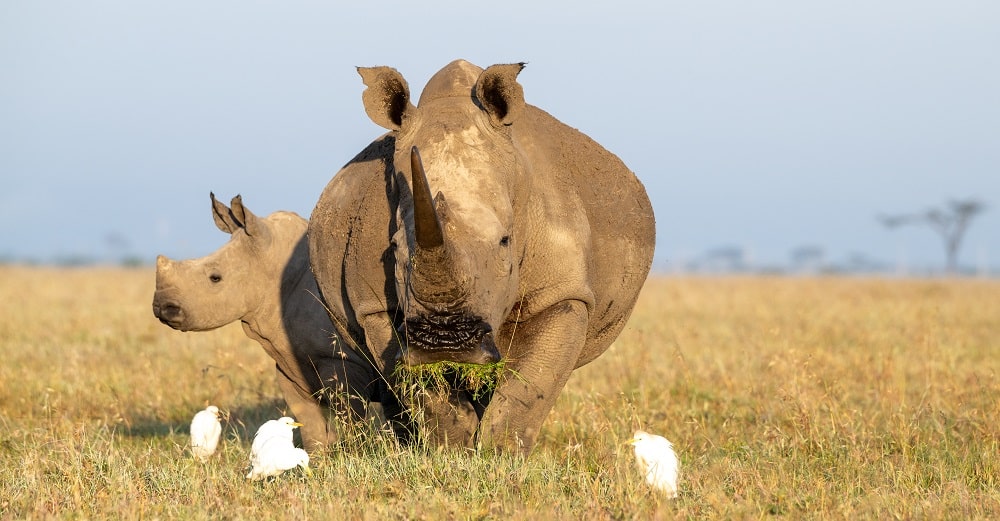
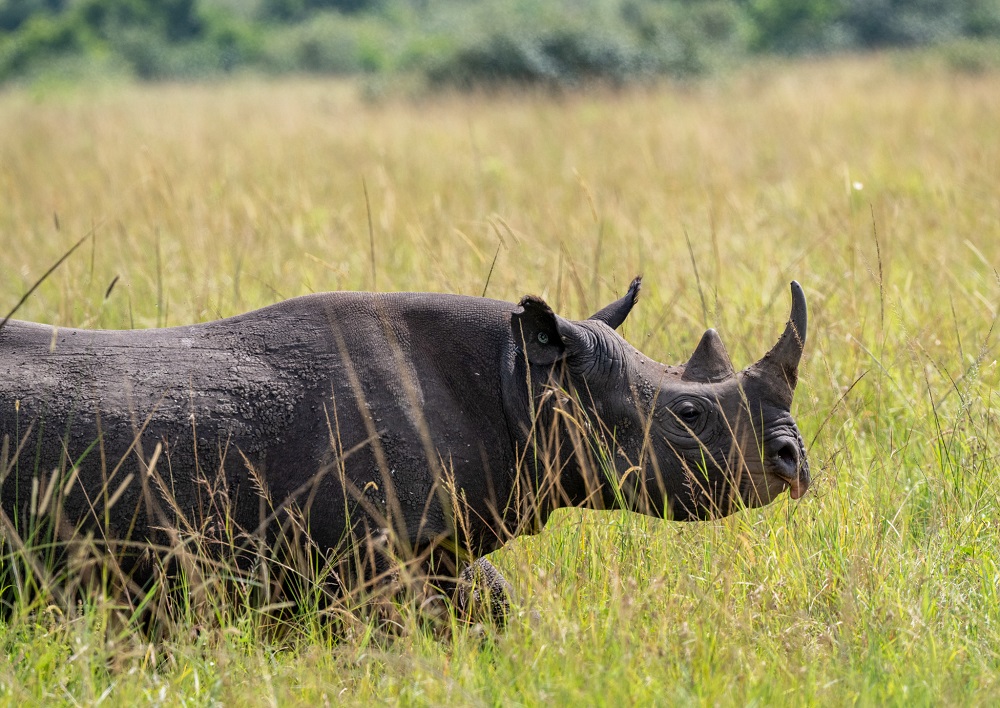
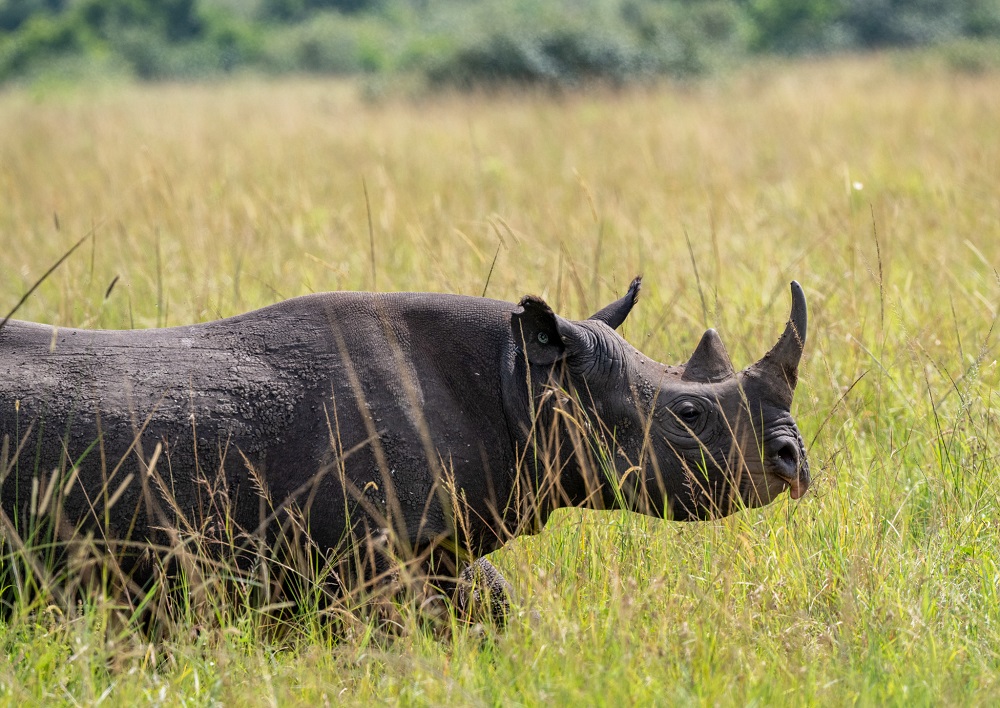
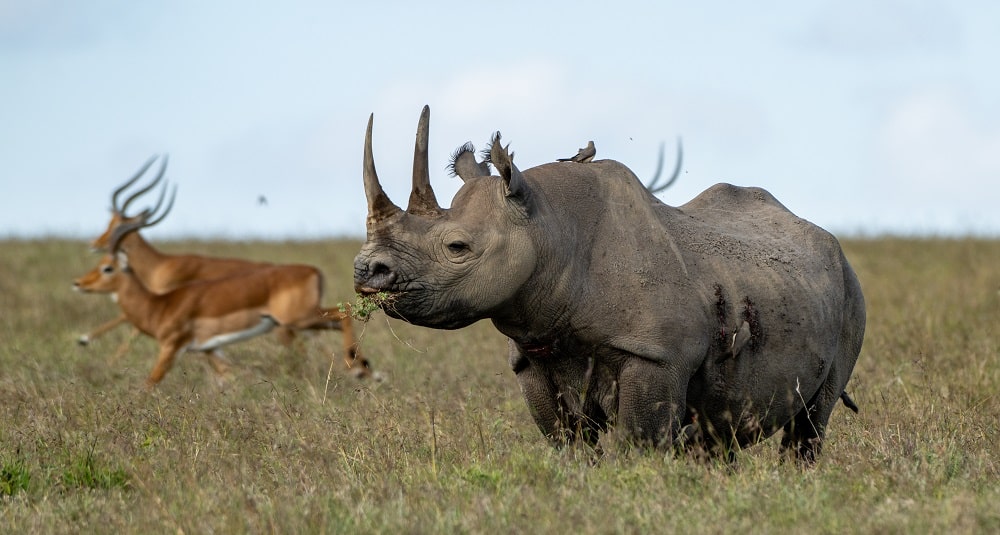
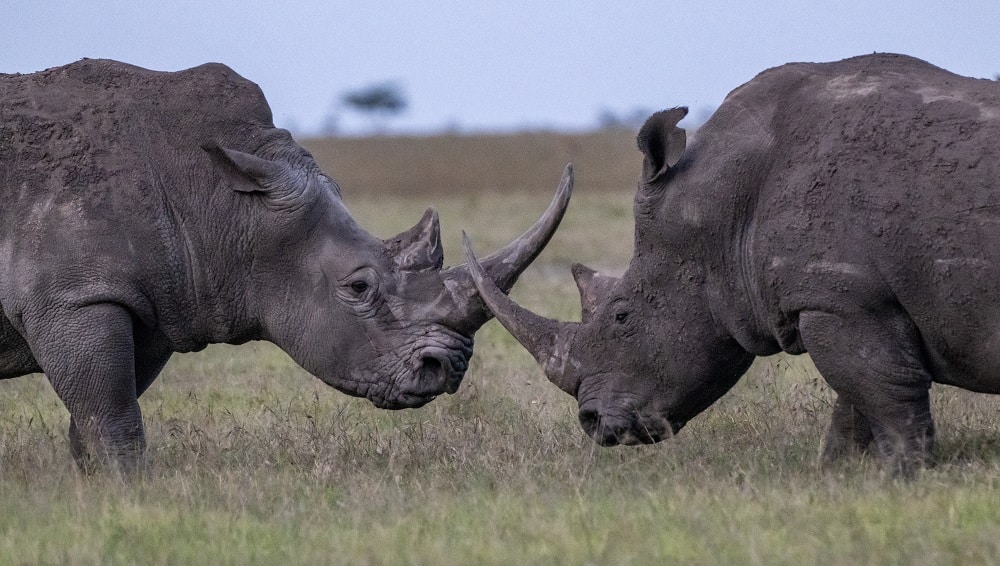
Where would I go right now, looking mostly at the properties which Kathy and I recently visited in East Africa? I would book my Kenya Airways non-stop flight from JFK to Nairobi, spend a couple of days in Nairobi (for a morning game drive in Nairobi National Park and a visit to the Sheldrick Elephant Orphanage) and then head to either Lewa or Laikipia for 4 nights. Few other places in East Africa or the rest of the continent for that matter, can match properties like Lewa Wilderness or Kicheche Laikipia in terms of diversity. They have all the usual plains game and the big cats, and on top of that a trio of superb near-endemics in the way of Grevy’s Zebra, reticulated giraffe and beisa oryx.  Plus healthy numbers of both black and white rhinos with their horns intact. 

And then I’d head straight to the Masai Mara, splitting my time there between a property in one of the conservancies to the north of the Mara, and ending with a few days in the Mara Triangle, in the north of the park. These two areas make a great combination, melding the freedom to go off-road inside the conservancy and the ability to drive at night, with the amazing grandeur and spectacle of the Mara Triangle. Inch for inch it is about as fascinating and rewarding an area as one could visit anywhere in Africa. The Mara Triangle is also one of Kenya’s most reliable areas to experience the great migration, within striking distance of several known crossing points. 

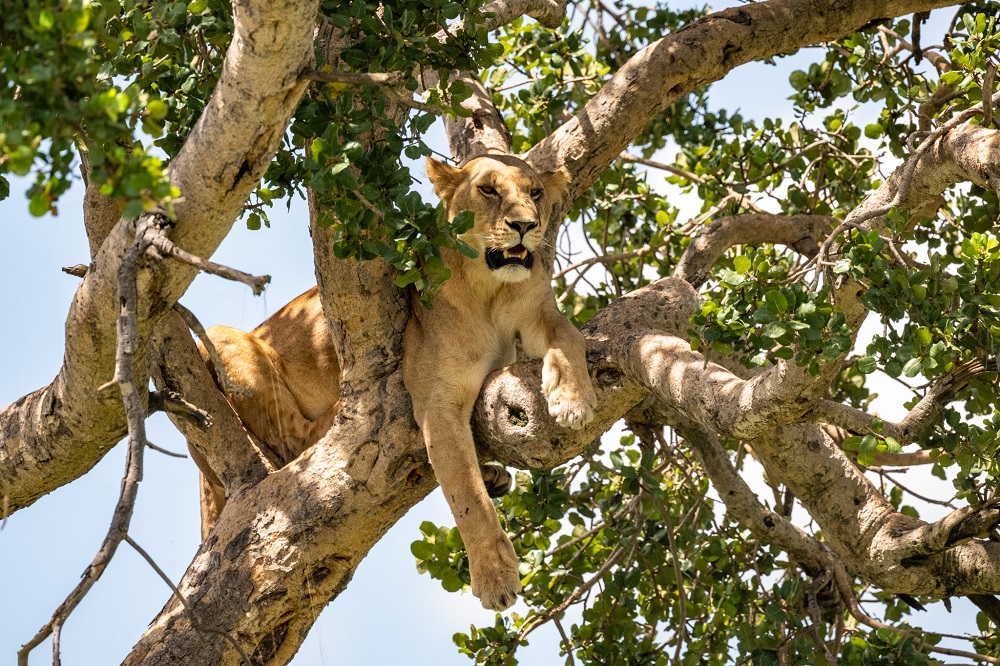
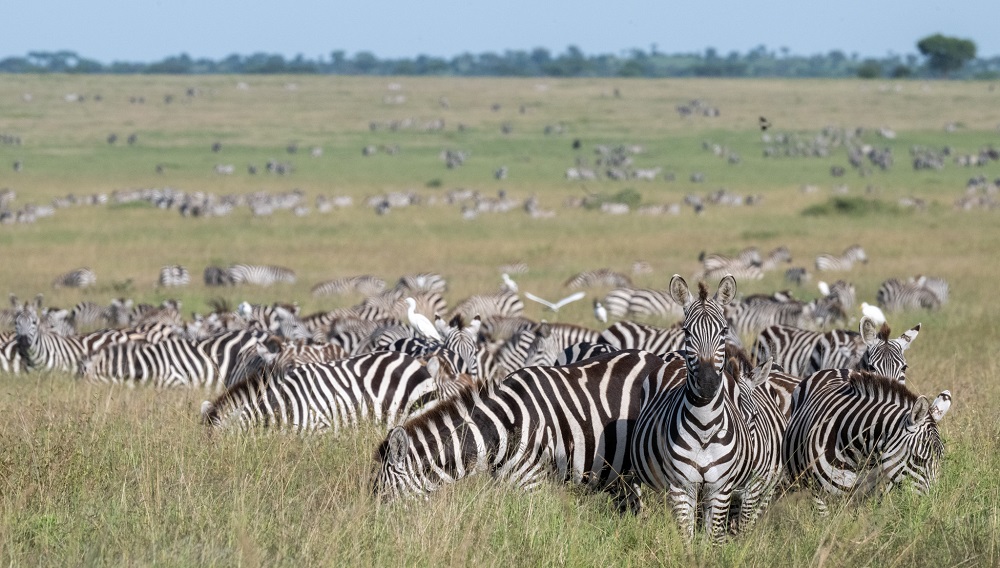
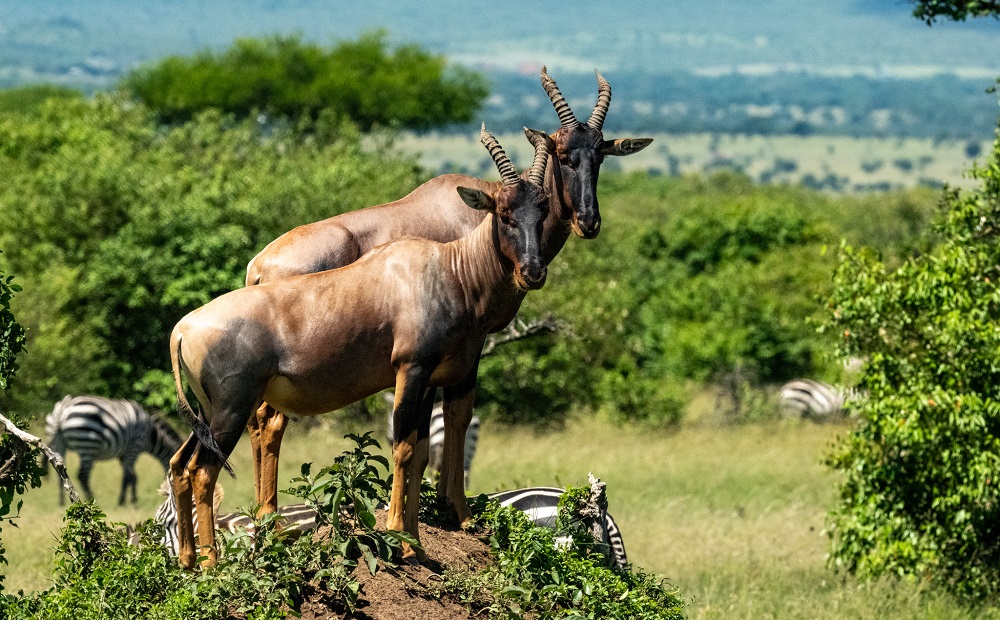
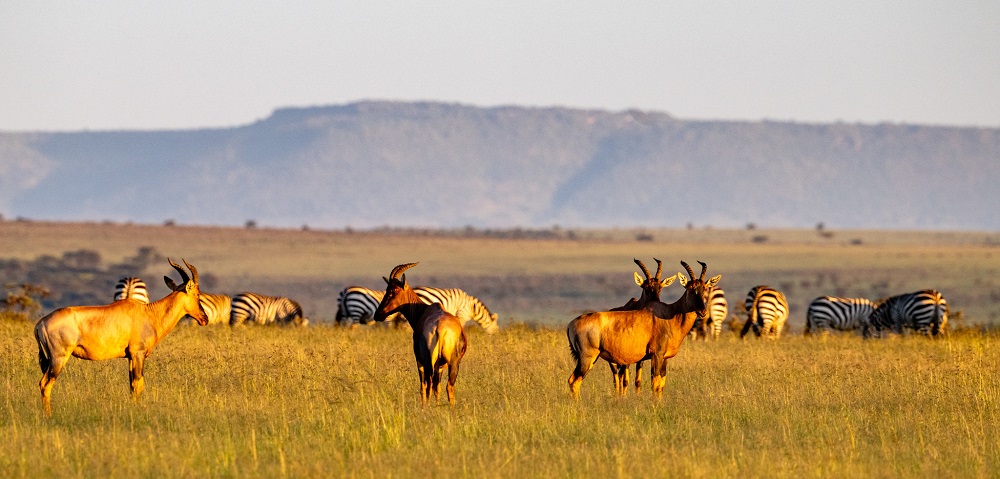
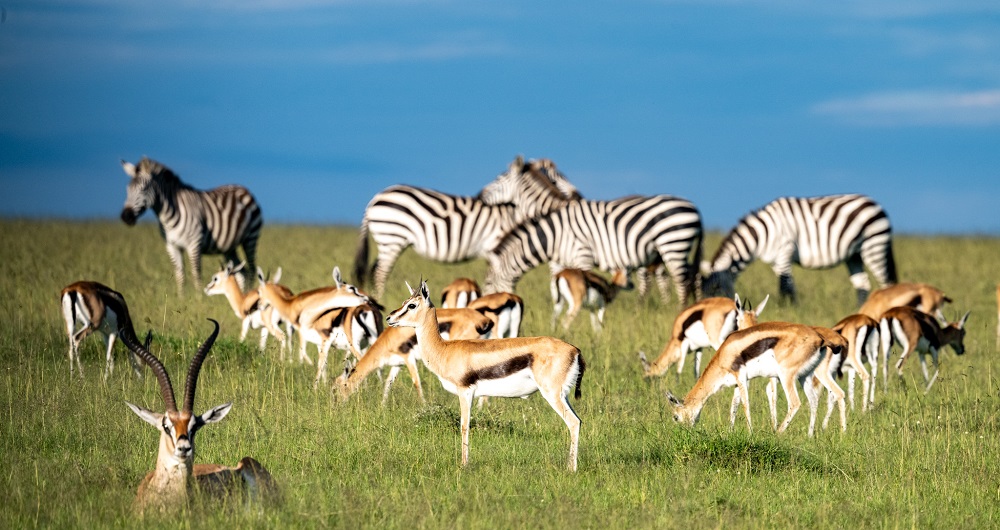
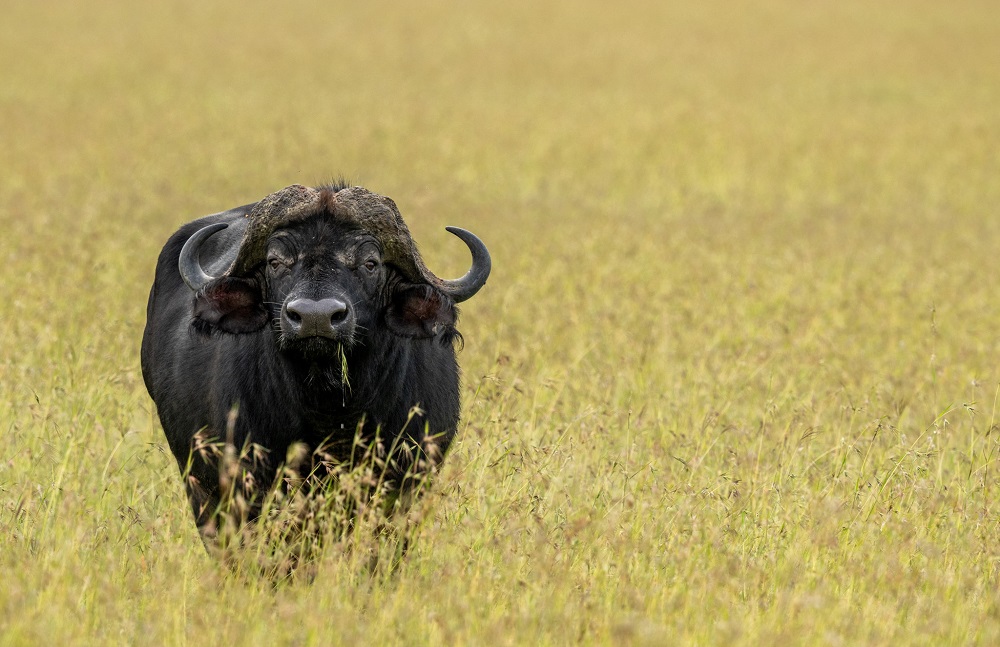
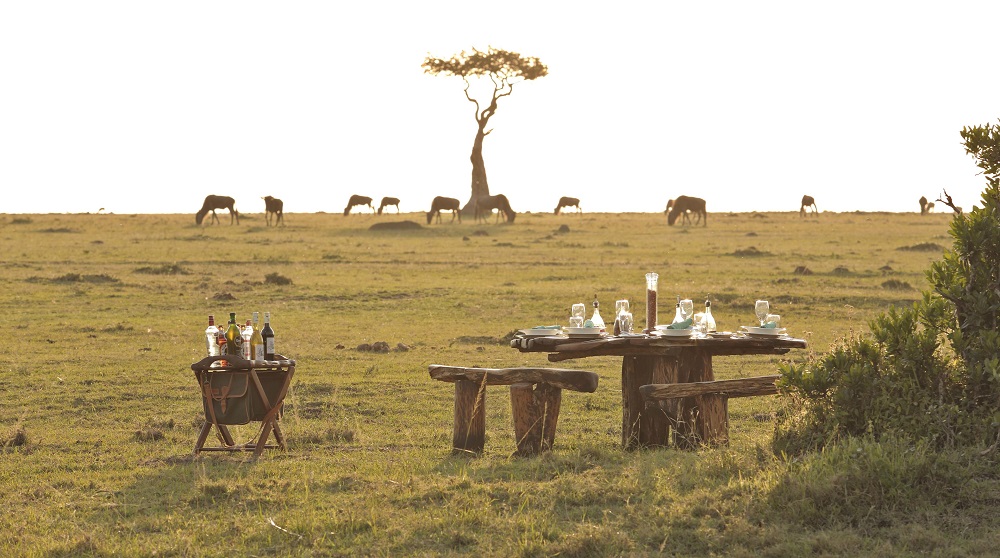
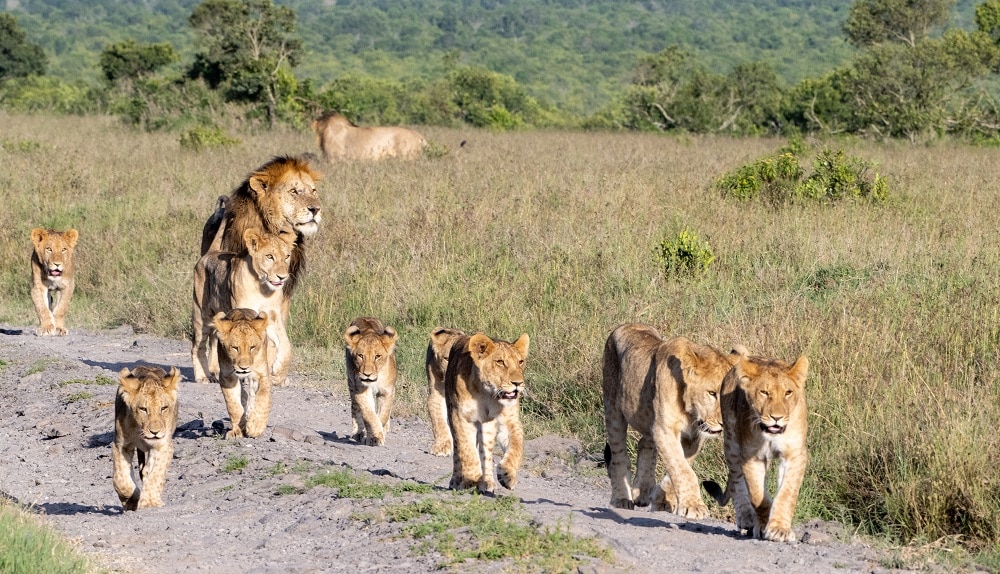
Kathy: On our recent visit to Kenya, I was amazed by the abundance of wildlife in three of the private conservancies to the north of the Masai Mara, namely Naboisho, Mara North and Lemek. Almost everywhere we looked, there were zebras in their hundreds. Plus masses of Thomson’s and Grant’s gazelles, topis, eland, buffaloes (some huge herds!), giraffes (so many!), tons of wildebeest, hippos wherever there was water,  elephants – and several prides of lions.  

I would recommend to prospective travelers to Africa to spend up to a week or so in the Masai Mara, split between two of the conservancies or by including an additional few days in a camp which does its game drives in the Mara Triangle, such as Olonana, Little Governors, or AndBeyond Bateleur Camp.   

In addition to the Mara, Kenya has several other superb safari destinations; call or email us and a member of the team will be happy to talk to you about Tsavo or Amboseli, Lewa, Meru or Samburu. We know them all really well and can give you just the right advice as to how they can fit in with a trip to the Mara.  

For now, I will concentrate on the three properties which we visited in the conservancies. Any one of these would be an ideal ‘anchor’ property for a Kenya safari. 

Saruni Leopard Hill – Mara Naboisho Conservancy

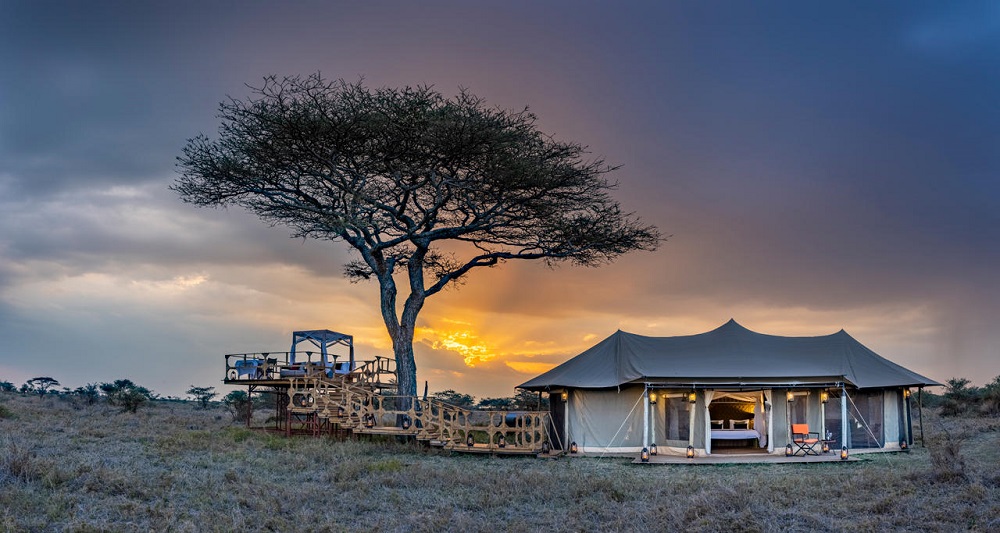
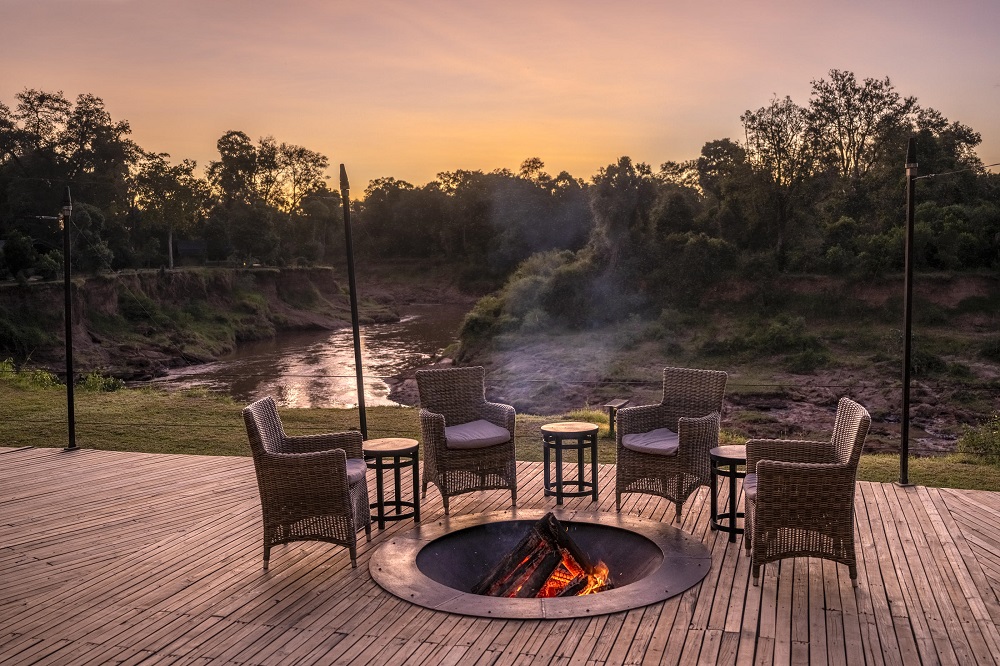
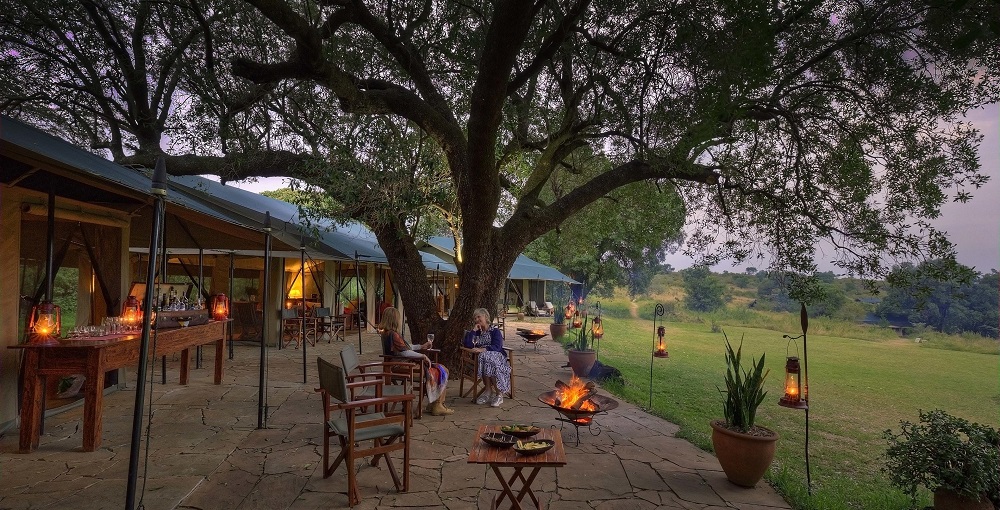
The female management team at Leopard Hill is very accommodating and they want to insure your comfort and enjoyment at their lovely little camp. The communal area is attached to the dining area and you will enjoy the view – beautiful fig trees surrounded by 3 waterholes. The dining/communal area is on a platform and there are steps leading to a small area where guests congregate around a small bonfire in the evenings.  

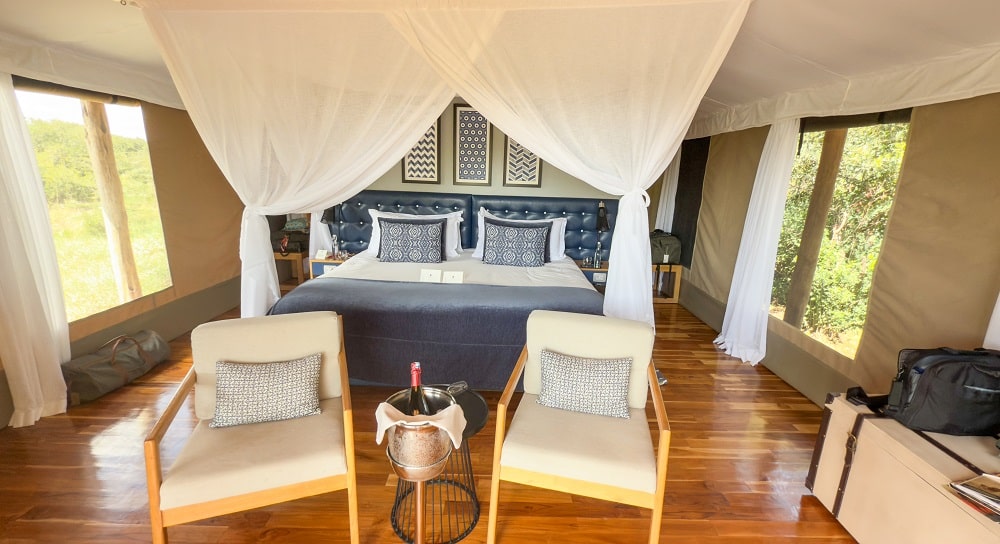
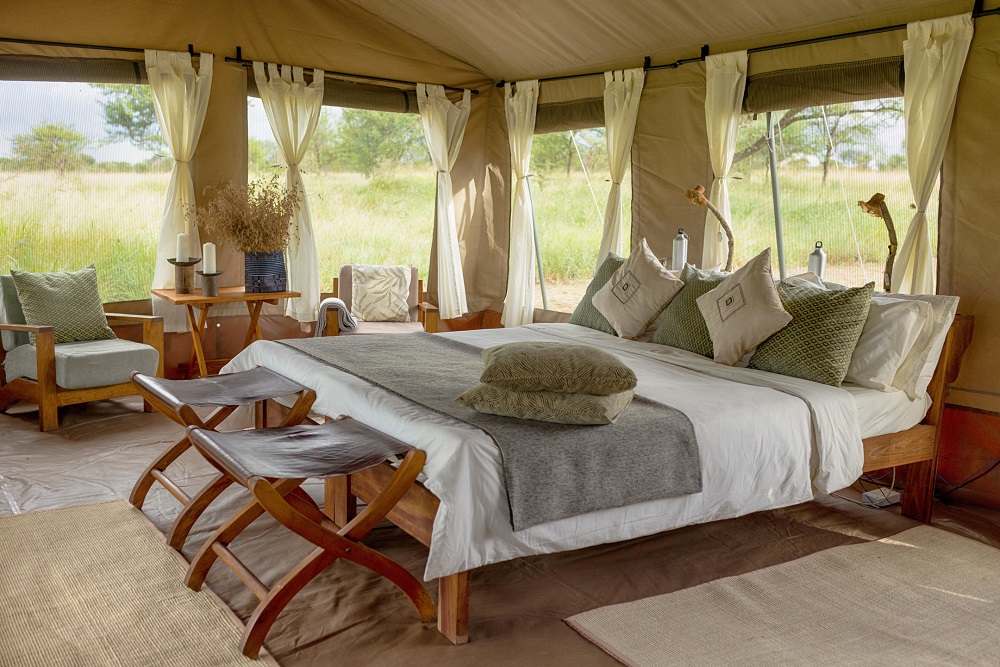
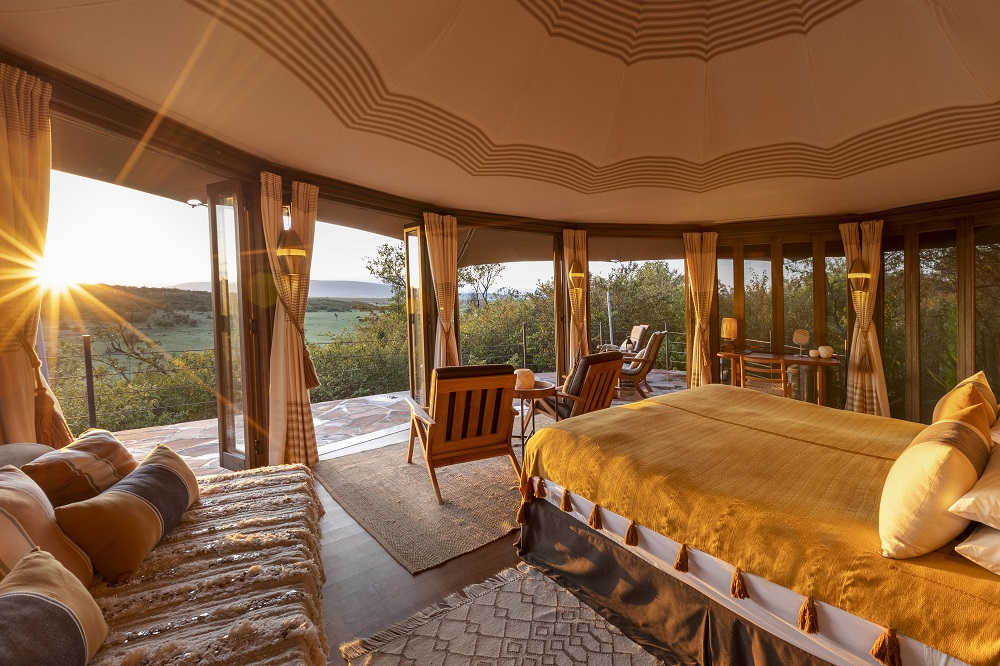
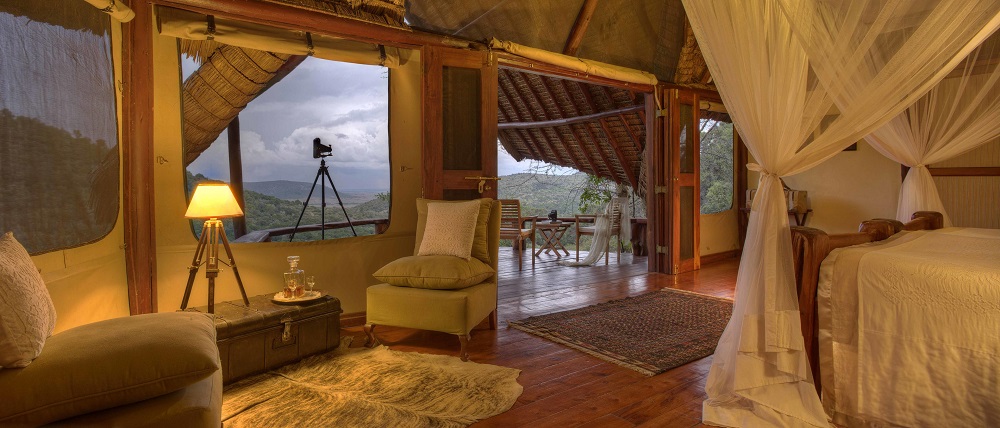
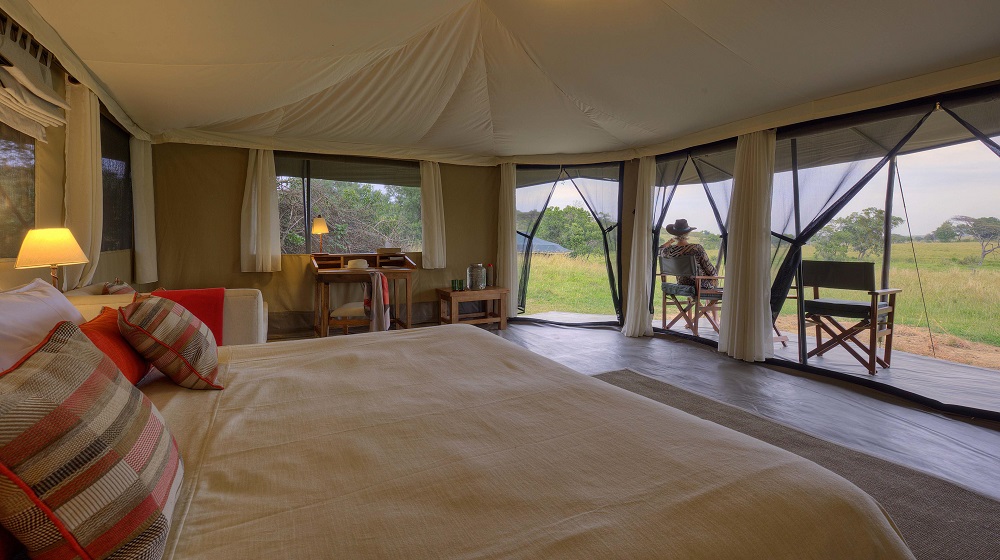
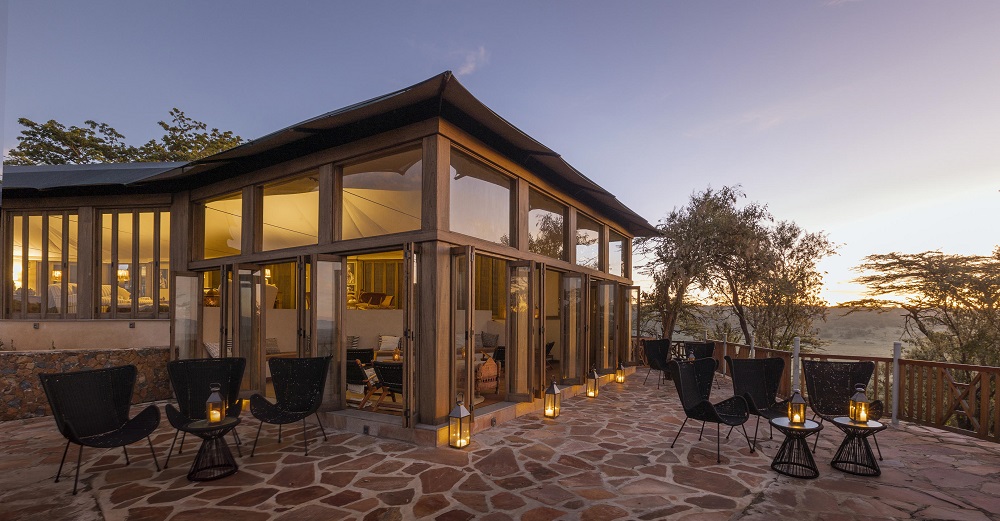
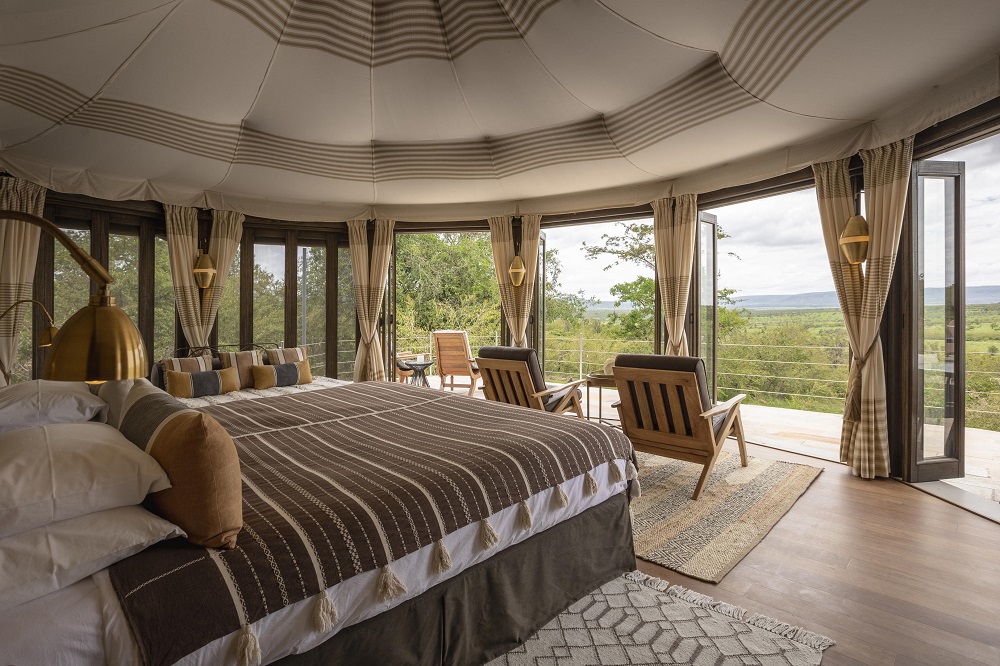
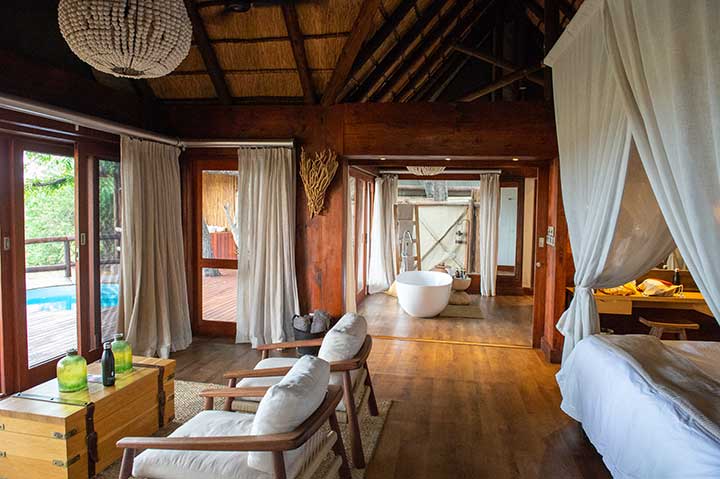
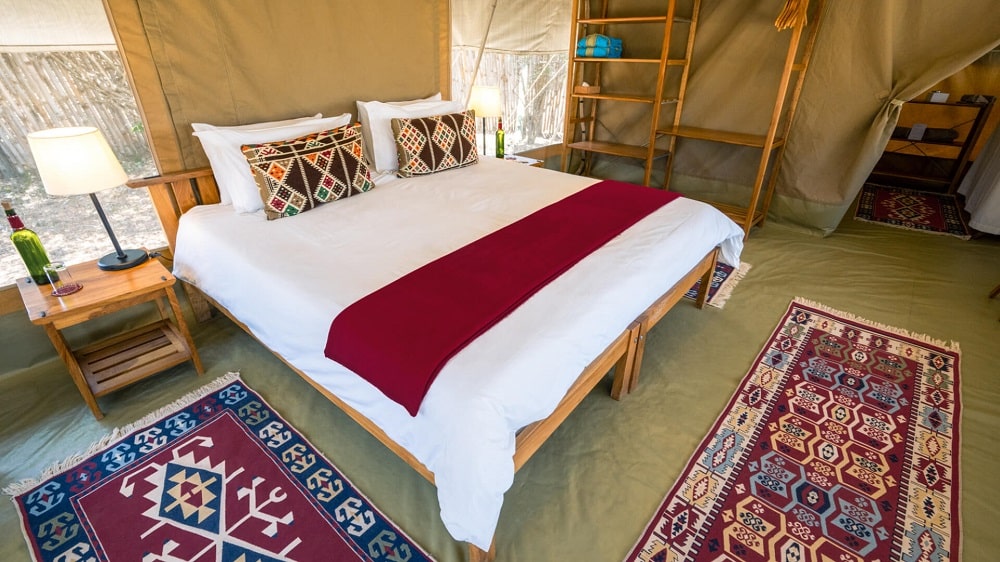
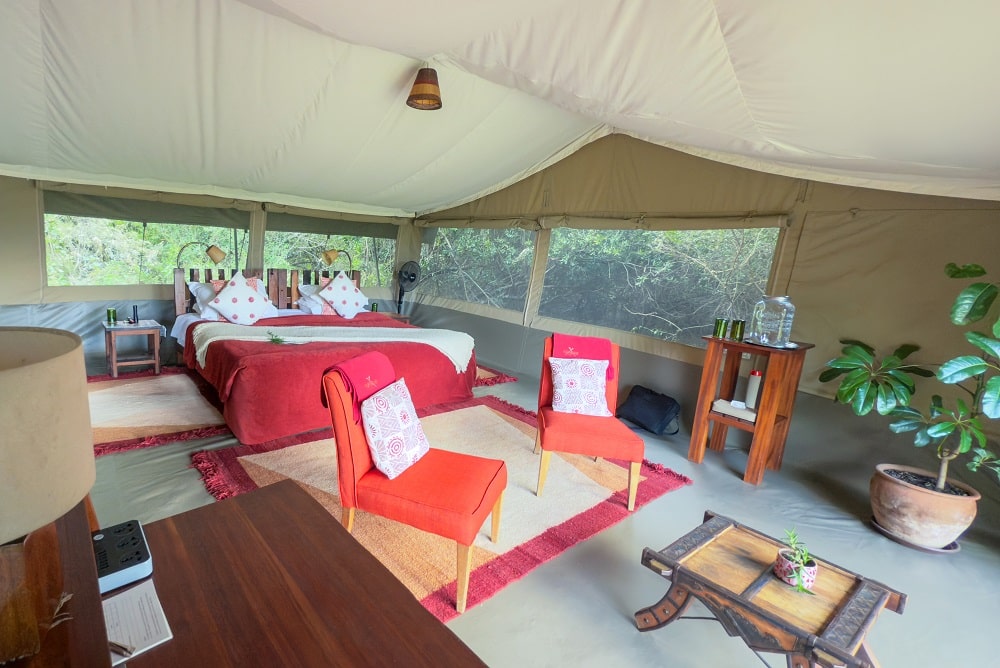
This camp has 6 tents. We were in tent #3. I really liked the generous size and layout of the tents. The rooms also have a skylight which you can open up at night to ‘sleep under the stars.’ Not advisable during the rainy season though. The rooms have a king-size bed, great pillows, desk, daybed/couch, double sinks and separate shower and toilet as well as an outdoor shower. Plenty of room for your gear and a great patio overlooking the game reserve. The rooms are spaced far enough apart for privacy. They also have a honeymoon tent with a nice lounge and a family tent – two tents next to each other with doors (instead of zippers) suitable for a family of 4 

A bonus at Leopard Hill is a complimentary 30-minute back and neck massage – don’t pass this up! The spa tent is in a nice, quiet area and the masseur is a man named Viki Geel who has 18 years’ experience. He is excellent! Viki also offers yoga and stretching. I am so glad I took advantage of this and if I had more time, I certainly would have spent more time at the Leopard Hill Spa!

We had a ‘surprise’ romantic dinner on our patio the second night – very well done.

Wake up – coffee/tea are brought to your room.

We had great game viewing and a bonus here – and in the other conservancies – is the off-roading which makes a big difference if you want to pull up close to a lioness with her cubs hidden in the bushes. As we did.  

Kicheche Camp:  Mara North Conservancy, Masai Mara

Andrew Obaga is the manager at Kicheche Mara and he and his very competent staff know how to make you feel comfortable and right at home. One is introduced to the camp after walking over a small bridge and up a short hill. At the top of the hill is an amazing and unexpected sight – a beautiful and well-maintained mowed lawn with communal dining and photography tents. Early the next morning there was a little family of three tiny dik-dik antelope on the edge of the lawn; humans are not the only ones who find it appealing. 

The camp: the first communal tent is a photographer’s dream tent offering the photographer access to WIFI, computers and more. The photographer’s tent has just about everything needed for safari photographers – a real bonus in the bush! Right next door is a restroom. Walk a few more feet and you will find the dining tent with a lovely patio – indoor/outdoor dining. Two more communal tents with nice lounges, bars and two more tented restrooms complete the communal area.

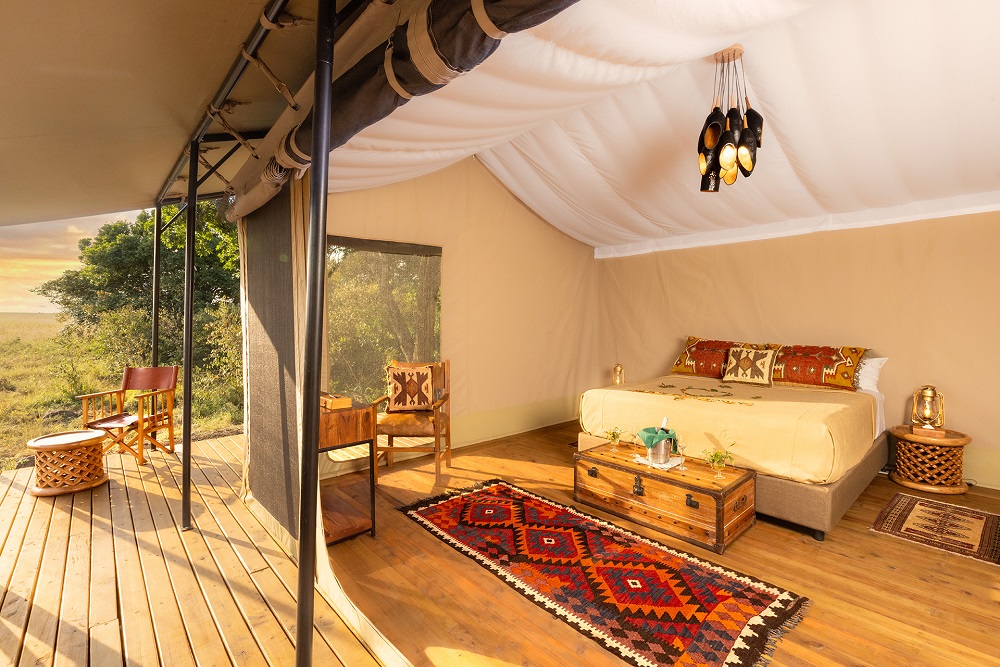
Kicheche Mara has a total of 10 guest tents including a family tent. They can make any of the tents into a triple. For example if you want to travel with your mom and sister – they would be happy to put 3 adults in one tent – no problem! The pathway to each tent is clearly labeled using Swahili animal names for the tents. We were in Punda Milia (zebra). Arriving at our tent, the main power switch is a handy pull-string at the front of the tent opening. The tents are very spacious and well-appointed with a daybed, a king-sized bed, desk, open closet for all your items, a bathroom with a separate toilet, two sinks and a nice shower. We had a comfy patio with chairs and a small table so we could watch for any activity at the river. 

Kicheche is a fabulous camp and well worth a 3-night visit. Tents on our side were:  Kiboko, Punda Milia, Topi, and Kanga. They are all a short walk to the main area. Andrew told us the ‘honeymoon tent’ is located quite a bit further from the main area. Wake up – coffee/tea is brought to your room.

The food was excellent at Kicheche. After each meal the chef checked on us to make sure we were satisfied.

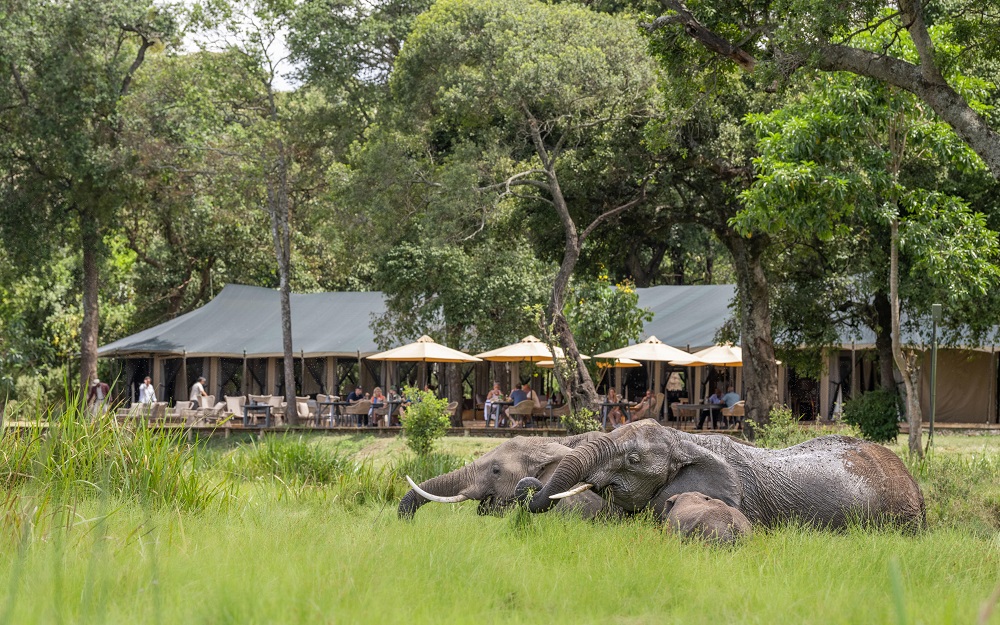
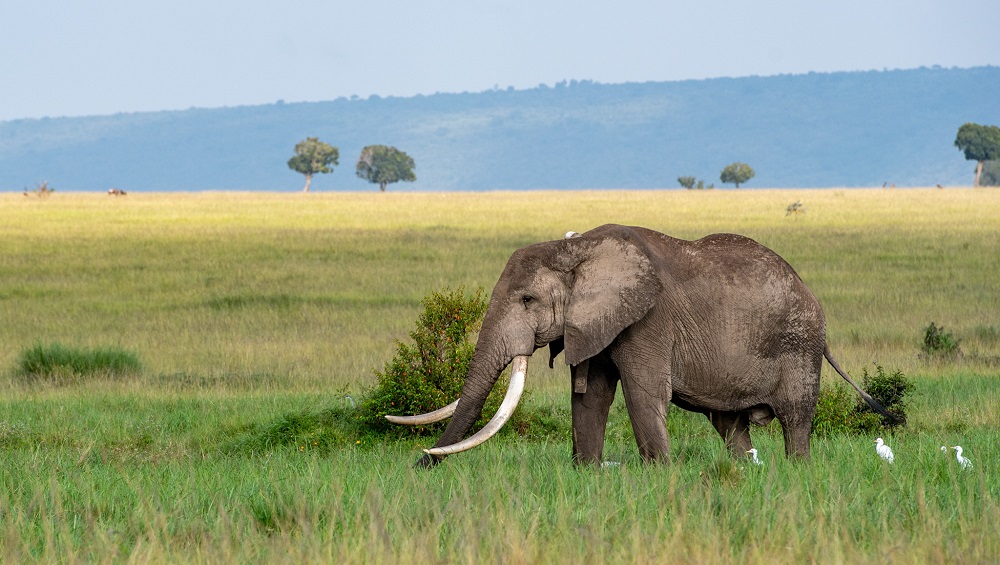
As was the case at the other camps in the conservancies, game viewing at Kicheche Mara commenced right out of camp. Twice, driving into and out of the camp, there were three elephant bulls with huge tusks to be seen hanging out in a marshy area close to camp; apparently they spend much of the dry season in that spot.  

Hemingways Ol Seki Mara:  Naboisho Conservancy, Masai Mara

Hemingway’s Ol Seki camp in the Naboisho Conservancy in the Masai Mara represents complete luxury on safari. The highly accomplished manager, Debbie Paul, gave us a very warm welcome – she had clearly read the guest information form – and we felt like old friends right away. Debbie took us to our room, #5, which was the closest to the lodge. The rooms are equipped with everything you will need including an indoor and outdoor shower, a gorgeous bathtub – quite a luxury on safari – and a separate/private toilet. The room has a king-size bed, a day bed and desk and a spacious wrap around patio perfect for game viewing from your room. I really liked their early morning wake-up – complete with coffee/tea and a to-go insulated mug to take on your morning game drive. You don’t want to waste any time in the mornings, and this was an added bonus.

The dining area has views of the water hole and game viewing area which can be great entertainment while dining or enjoying the communal area. The lounge and bar are attached to the dining area and they overlook a tempting pool and deck with lounge chairs and umbrellas – it’s really hard to beat this view. Relaxing in the dining area or pool area and game viewing at the same time – don’t forget your binoculars.

If you are traveling with your family, you may want to consider the Simba or Chui Suites. Ideal for parties of around 4 to 6, they are exclusive use with a private vehicle and chef, a pool and in a beautiful setting.

At Ol Seki we enjoyed great food and service and a great spa – reasonable treatment prices too. Facials and massages are offered – a wonderful way to relax during the siesta time before the afternoon game drive. 

You won’t want to leave Ol Seki!

Saruni Wild – Lemek Conservancy, Masai Mara

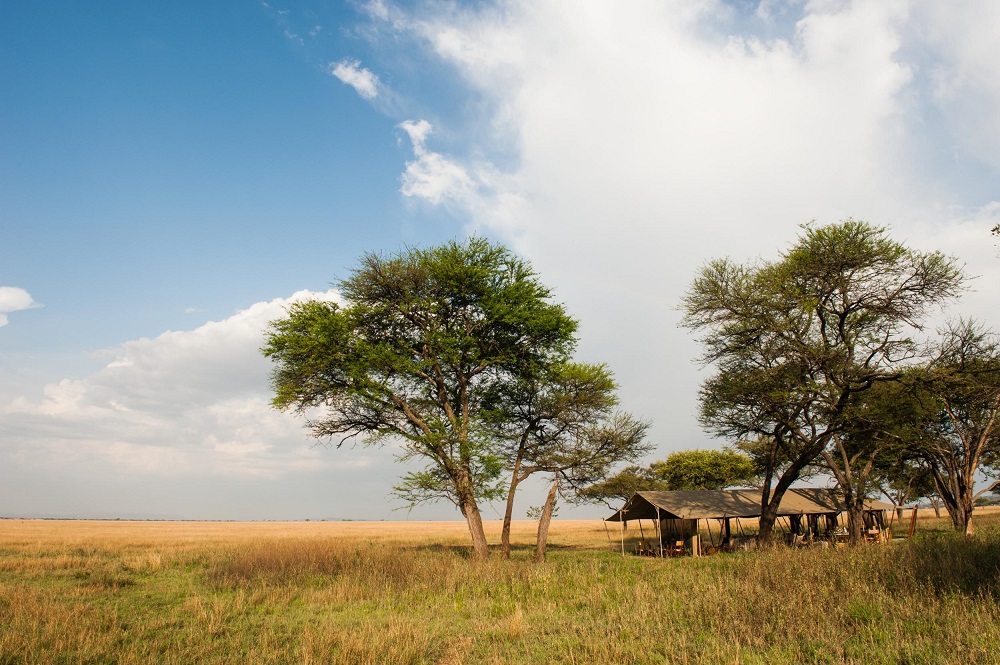
One more Mara property which we checked out but did not overnight at, was Saruni Wild in the Lemek Conservancy. Saruni Wild is a beautiful and welcoming classic African bush camp. This small, tented camp has a great location in the Lemek Conservancy, right on the edge of the Mara North Conservancy, with access to both for game drives. What we both liked was the instant access to several excellent game viewing areas in the Mara. On our drive from Saruni Wild, we found a female cheetah and we were told that lions had been spotted in the area just the previous day.  

Saruni Wild has an ideal mix of features which will make it easy to send our guests there in future. Effective, hands-on management, friendly staff and well-designed, well-maintained common areas and tents. All tents have the same basic layout – a king-sized bed, desk, open closet, double sinks, separate toilet and shower area.  Tents are placed far enough away for great privacy. There is no age limit for this camp.

Contact us for more information

Our Fish Eagle Safaris Inc. team has visited various Zimbabwe, Zambia, Botswana, South Africa, Kenya and Tanzania properties over the last couple of months. Coming up soon: educational trips to Madagascar and Mozambique. We’d love to help you arrange your first or next trip to Africa to one of these or several other African destinations. We can be reached at 800-513-5222 in Houston, or email jason@fisheaglesafaris.com or lyndon@fisheaglesafaris.com

YOU MIGHT ALSO BE INTERESTED IN

Destinations
Zambia

10th September 2021

Chindeni and the Bushcamp Company, Zambia

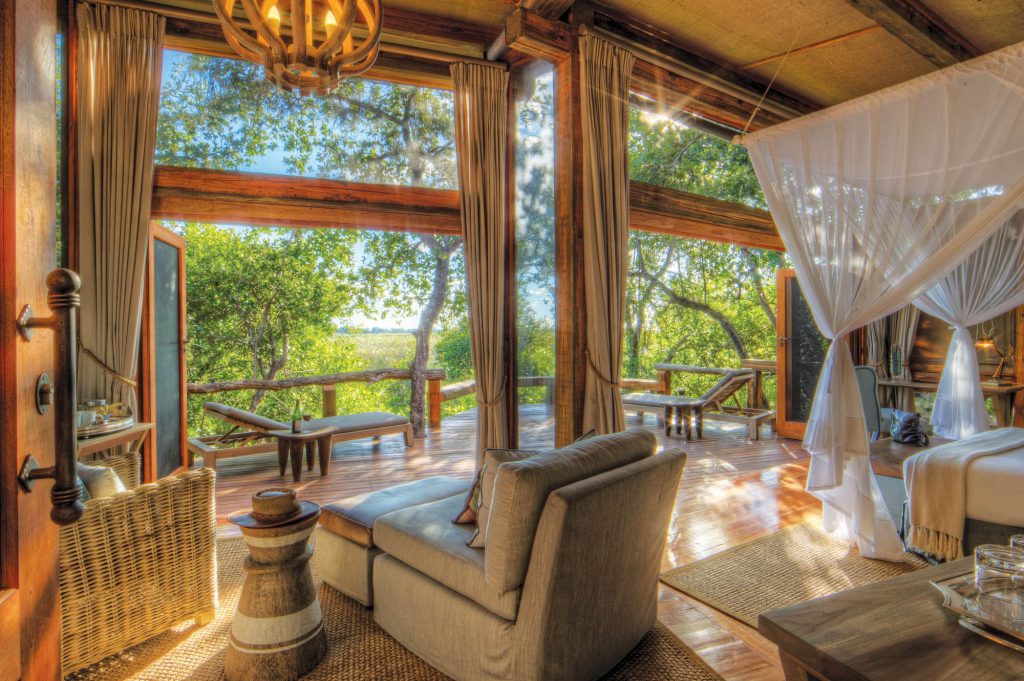
By late July we found ourselves at Chindeni, a small Bushcamp Company property
Read more
Botswana
Destinations
Okavango Delta

3rd October 2022

Camp Okavango, Botswana

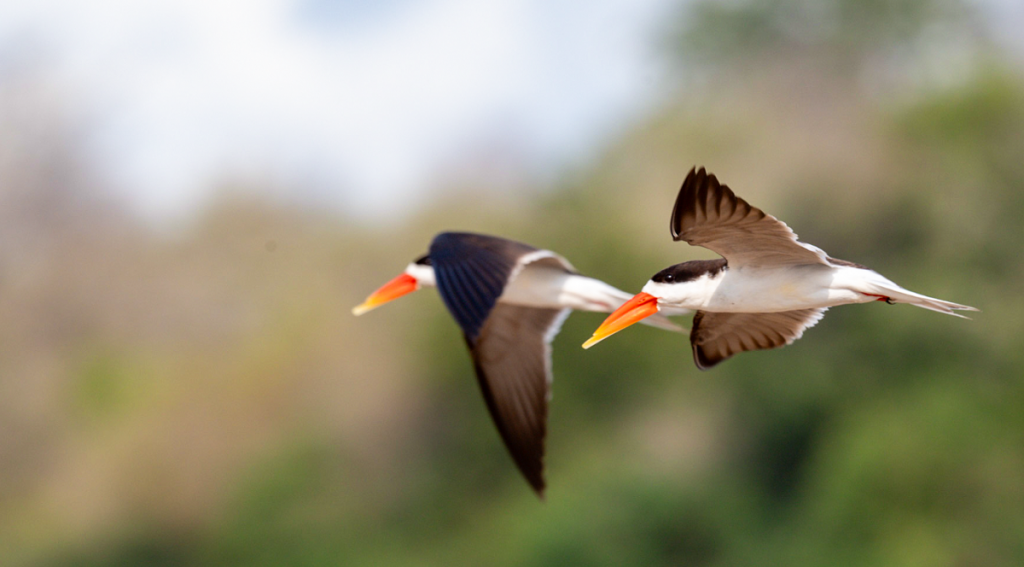
Camp Okavango is in the heart of the permanent part of the Delta. In this idyllic setting there are no vehicles, and it is just a short walk
Read more
Area
Destinations
Nyerere National Park
Ruaha
Tanzania

14th October 2023

From My Safari Notebook: Wildlife Photography

Birds in flight and wildlife photographers have an uneasy relationship. Things go wrong as often as they go right. Getting focus-lock on a moving subject

Read more

SUBSCRIBE TO OUR NEWSLETTER

READERS FAVOURITES
Destinations
India

27th May 2023

India

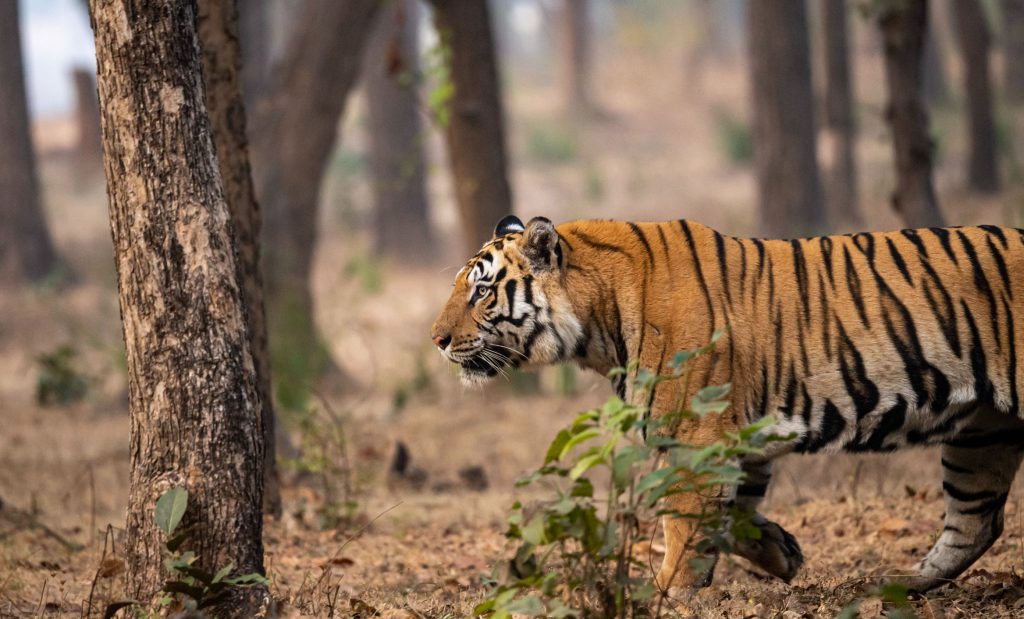
India’s tiger, mammals and birds.

Read more
Botswana
Destinations

4th August 2022

On Safari At Belmond Eagle Island Lodge, Okavango Delta

What is the ‘secret sauce’ for an unforgettable few days on safari in Botswana? It starts with the animals, of course. The elephants, lions, giraffes, hippos

Read more
Destinations
Zambia

10th September 2021

Chindeni and the Bushcamp Company, Zambia

By late July we found ourselves at Chindeni, a small Bushcamp Company property

Read more

Groundhog Day Properties – 2024

23rd February 2024

Groundhog Day Properties – 2024

We’re well into 2024 and all we can say is wow! The year started with a bang and it hasn’t stopped. We are fielding more inquiries for African travel than we probably ever have in 30+ plus years and so are our colleagues in the Safari Professionals of the Americas. It appears that international travel is fast getting back to pre-pandemic levels and then some. Thank you for your business!

Where is everybody going? If I pull up the next few trips which our guests will be embarking on, I see southern Tanzania (Serengeti and Ngorongoro Crater), Botswana’s Okavango Delta, Zimbabwe and South Africa. Actually, quite a few guests are heading to Botswana, mostly on itineraries combining it with Hwange National Park, Victoria Falls and even Lake Kariba. Also on the list? Madagascar and Namibia. A little later in the year Kenya starts to pop up, as well as Zambia, Uganda and Rwanda. Many of the Southern Africa trips include Cape Town, South Africa’s ‘mother city’.

If I dig down a little deeper into the itineraries, I notice several of our ‘Groundhog Day’ properties there. These are places where we’d personally be happy to wake up every day for the rest of our lives.

In no particular order, here are a few:

MalaMala Game Reserve, Sabi Sand

MalaMala is the 800-lb gorilla of the safari properties in the Sabi Sand reserve. Stay three or four nights here and you will see the ‘Big Five’ mammals and a lot more. Perhaps even the ‘Magnificent Seven:’ lion, leopard, elephant, rhino, buffalo, African painted dog and cheetah. Few places in Africa present such a splendid buffet of wildlife photography moments. You really, really want to see leopards walking around in broad daylight? MalaMala’s the spot.

Jabulani Safari

Jabulani is about as multifaceted as it gets in the luxury safari lodge category. It starts with reliably good game-viewing – of course. Mix in an extraordinary elephant experience, with a chance to interact with (hand-feed and touch) two or three of the older bulls of the Jabulani herd, being Jabulani, Sebakwe or Somopane. And top it off with the amazing conservation story attached to the property. It dates back to 1997 when the original co-owner, Lente Roode, saved a young elephant orphan (Jabulani) who had been abandoned in a mud pit. That tradition has been carried on to the present, with Jabulani Safari now owned and managed by Lente’s daughter Adine Roode. Layered on top of all of this, is Jabulani’s status as a Relais & Chateaux property. No matter how demanding your palate or your penchant for good wines – the chefs and the sommelier will be happy to see you.

Olonana Camp, Masai Mara

In a blog post following up on our short stay at Olonana a couple of years ago, I was highly complimentary about the overall experience. One thing I did forget to mention? The hippos in the Mara River can be noisy when they greet each other early in the morning upon returning from their nightly feeding forays. So be sure to pack some earplugs. Something else which I could have made more clear: game drives from Olonana head into the Mara Triangle which is currently the best area in the entire Mara, also the best monitored in terms of vehicles per sighting. Driving through the Triangle in Nov. 2023 we were simply astonished at its beauty and abundant wildlife. A pride of lions right by the road, a martial eagle on its prey, a journey of giraffes in near perfect light – none of us could have scripted it any better.

Lewa Wilderness, Kenya

Is there a more ideal combination of place, people, experiences and hospitality than Lewa Wilderness in Kenya – or anywhere Africa – right now? Maybe one or two, but it is a super short list. The rooms, the wildlife, the activities – it’s superlatives piled on superlatives. It even extends to the wildlife. There are zebras and giraffes in many parts of Africa, but they’re not Grevy’s zebras or reticulated giraffes. Or beisa oryx. These superb – and in some cases endangered – regional endemics are easily seen on game drives from Lewa Wilderness. Lewa is also one of the best places in East Africa to see both white and black rhinos in their natural state with their horns intact.

Take a 48-hour virtual safari with us at Lewa.

Chitabe Camp, Botswana

Absolutely the best game viewing likely anywhere in Africa is happening at Chitabe in northern Botswana, day after day, right now – and for the foreseeable future. I receive a daily WhatsApp ‘Chitabe Frame a Day’ message from the camp with the latest game viewing photographs and it is a stream of leopards, cheetahs, lions, painted dogs, hyenas, and quite often, interaction between some of these. Lots of action. And all with not having to drive very far; the concession is one of the smaller ones in Botswana, so you could be on to something special within 15 minutes or so out of camp.

The Belmond Mt. Nelson Hotel, Cape Town

The ‘Nellie’ or the ‘Pink Lady’ as it is affectionately known, is a Cape Town institution. Its beautiful palm-lined entrance way and light salmon pink exterior are timeless, dating back more than 100 years. The rooms and suites have all been updated as have the common areas. Spend at least three nights because there’s a lot to see and do beyond exploring the city and the Cape peninsula. The high tea at the Nellie is as good as it gets; it has a great pool (two of them) and gym, and be sure to ask the concierge to book a table at the Nelson’s Eye restaurant one night. It’s an experience. What really sets Mt. Nelson apart from any other Cape Town city hotel are its grounds and the gardens. It’s like staying in a not-so-small private park right in the middle of Cape Town – which makes it an ideal companion to a safari trip, either before or after.

Check out all of our favorite hotels in Cape Town here.

If any of these properties look like spots you too would wake up happy in, call us in Houston at 1 800 513-5222 or send an email to bert@fisheaglesafaris.com. 

YOU MIGHT ALSO BE INTERESTED IN

Destinations
Zambia

10th September 2021

Chindeni and the Bushcamp Company, Zambia

By late July we found ourselves at Chindeni, a small Bushcamp Company property

Read more
Botswana
Destinations
Okavango Delta

3rd October 2022

Camp Okavango, Botswana

Camp Okavango is in the heart of the permanent part of the Delta. In this idyllic setting there are no vehicles, and it is just a short walk

Read more
Area
Destinations
Nyerere National Park
Ruaha
Tanzania

14th October 2023

From My Safari Notebook: Wildlife Photography

Birds in flight and wildlife photographers have an uneasy relationship. Things go wrong as often as they go right. Getting focus-lock on a moving subject

Read more

SUBSCRIBE TO OUR NEWSLETTER

READERS FAVOURITES
Destinations
India

27th May 2023

India

India’s tiger, mammals and birds.

Read more
Botswana
Destinations

4th August 2022

On Safari At Belmond Eagle Island Lodge, Okavango Delta

What is the ‘secret sauce’ for an unforgettable few days on safari in Botswana? It starts with the animals, of course. The elephants, lions, giraffes, hippos

Read more
Destinations
Zambia

10th September 2021

Chindeni and the Bushcamp Company, Zambia

By late July we found ourselves at Chindeni, a small Bushcamp Company property
Read more

48 Hours on Safari at Lewa Wilderness

14th September 2023

48 Hours on Safari at Lewa Wilderness

Usually around a month or so before our guests depart to various destinations in Africa – and now also India – we get them on a pre-departure Zoom call. We walk them through their itinerary on a day-by-day basis; review logistics; discuss activities at the various properties; and check on passport validity, visas and health requirements. 

One of the questions which comes up quite frequently from first time visitors concerns the daily routine. What exactly does a day on safari look like? When do you have to be up in the morning, how long are the game drives and what type of food is served? 

We thought we’d take a blow-by-blow look at a recent 2-night stay at Lewa Wilderness to give our readers a first-hand look at what may await them on their own trip. 

Lewa Wilderness is an imposing 9-roomed lodge located on a ridge in the Lewa Wildlife Conservancy in the north central Kenyan highlands at an altitude of just over 1,500 meters above sea level. That makes it a mile high, so pack appropriately for the cool nights. Lewa is a proverbial stone’s throw from the equator, so winter and summer days are not unlike each other. Mostly balmy with maximum temperatures ranging from the mid-80’s Fahrenheit from May through August and increasing to the mid-90’s by December and January. Average lows are in the upper 60’s to low 70’s. 

Over the course of our recent 3-month plus African sojourn, we visited more than 16 properties in 5 countries.  Our two nights at Lewa Wilderness in early June was a standout. Simply a wonderful experience all round: excellent game viewing with our guide Francis Mayetu (how about a cheetah kill!), amazing food as always and fantastic hospitality thanks to camp manager Karmushu and his entire team.

There were so many highlights, starting with being uber comfortable in our gorgeous room. An unexpected fun activity: a guided visit to the massive camp vegetable and fruit garden known as the Shamba. We think everyone should do it. See where much of the ingredients for your delicious Lewa Wilderness meals come from! Making us feel ever more ‘at home’ was meeting the owners Will and Emma Craig and – a bonus – bumping into their daughter Sacha, visiting for the weekend with some friends. And babies! What a pleasant surprise. We had met Sacha previously when she was traveling in the USA.  

Will and Emma Craig Lewa by tcunniffe

Getting there

We arrived at Lewa airstrip on a 12-seater Cessna 208 (Caravan), the workhorse of the safari industry in Kenya and elsewhere in Africa. Operated by Safarilink, our flight was  one of approximately 500 or so scheduled charter flight legs taking place in Kenya on an average day. Safarilink, which has an impeccable safety record, has a fleet of 12 aircraft including eight Caravans and four twin-engined Dehavilland Dash-8’s. Lewa can be reached by air from Nairobi, direct from the Masai Mara and also from nearby Nanyuki town. The property is also driving distance – about four hours – from Nairobi. 

The Cessna 208 Caravan

The Cessna 208 is admirably suited for sightseeing from the air, as it has large windows and the wings are attached to the top of the fuselage. For a clear, unobstructed view try to find a seat closer to the front or behind the wheels. The aircraft’s rugged fixed under-carriage is ideal for landing on the dirt airstrips common in the game parks. The seating is one on the left of the narrow aisle, and two to the right. The luggage weight limit is usually 20kg (44 lbs) per person, which can be split between three items: a medium-sized duffel bag (which Fish Eagle Safaris provides), a small backpack and a hand item like a handbag or a camera bag. After boarding – one at a time on the fold-out steps and mind your head – you can leave your backpack in the rear of the aircraft, which is usually cordoned off with netting or canvas.

Guiding team at Lewa Wilderness 

Upon arrival at the Lewa airstrip, we met our driver guide Francis Mayetu, with whom we would be spending a good chunk of time over the next couple of days. Francis has been guiding at Lewa Wilderness for more than 10 years. At well over 6 feet, Francis cuts an impressive figure in his traditional Maasai gear, complete with a feathered mohawk which bumped up against the roof of the safari vehicle as we drove. 

Francis is one of the ten members of the Lewa Wilderness guiding corps, an exceptionally talented and highly experienced group, some of whom have been guiding either at Lewa Wilderness or in the surrounding area for more than twenty years. Their expertise covers the entire spectrum of activities available at Lewa Wilderness, ranging from walking to camelback safaris to photographic outings and horseback riding.  

It took us about 40 minutes to get to the lodge, making several stops en route to observe some of the northern Kenya endemics for which Lewa is famous, including the reticulated giraffes, Grevy’s zebras and Beisa oryx. These spectacular mammals are mostly found just in north-central Kenya.  

On arrival at Lewa Wilderness we were presented with a cool beverage and warm towels to freshen up. After being welcomed by manager Karmushu Kiama and riding manager Miranda Simpson, we sat down in the comfortable lounge for a camp briefing. We tried our hardest to pay attention to the all too predictable information about meal times, activities, safety procedures and the like. Our dietary preferences were reconfirmed and eventually we were escorted to our room.

Lewa hillside king room credit tcunnliffe

Accommodation 

To say that we were exceedingly comfortable in our room at Lewa would be an understatement. The rooms are amazing. Huge, with lots of space and natural light. The rooms at Lewa Wilderness are all large and imposing, six of them with excellent views over the surrounding Eastern Marania valley. The three cozy garden cottages  open up to a beautiful lawn. It took a few minutes for our room steward to run us through the light switches (complicated), instructions to open and close the safe, what to do in case of an emergency and so on. 

Activities 

Twice daily game drives are the primary activities at Lewa Wilderness but the property has a stellar range of additional activities. One which we mentioned earlier on is a guided walk through the camp’s organic vegetable and fruit garden, the shamba. The others include foot safaris, horseback riding and a camelback safari. A range of activities beyond the property itself are also available such as various community-related outings (such as school and clinic visits), watching the Lewa anti-poaching canine team in action and visiting the Ngare Ndare Forest for a tree canopy walk. Some of these activities are best booked in advance, something we can help with, naturally.   

Camelback safari 

Fancy getting better acquainted with the ins and outs of camelback safaris? Lewa Wilderness has you covered. You can either hike alongside them or go all out and ride. Just be sure to remember this: once the camel feels your weight on its back, it ‘wakes up’ from its prone position by suddenly, and sometimes rather forcefully, lifting its hindquarters. Not a problem if you already know this…. So brace yourself and avoid any chance of an ignominious tumble forwards. The same at the end of the ride. Except this time the camel will drop down its head and tuck in its front legs first. Be ready to avoid another possible faceplant! Once you are underway, the ride will be a bit bumpy and the camel is not likely to be influenced by your tugging on the reins. At least not much. It will simply obey its handler or follow the camel in front of it. Do I make it sound like fun? You’ll just have to try for yourself. 

Supporting conservation and community 

As a guest of Lewa Wilderness, you are automatically supporting the Lewa Wildlife Conservancy, renowned for its pioneering conservation initiatives as well as community and education programs. Before you leave, be sure to check out the various gift bag options in the curio shop. It’s a tangible way to further support the local community and specifically the school children. An education is key to their future prospects. If you visit Lewa as a guest of Fish Eagle Safaris, Lewa Wilderness will contribute $25 towards the cost of a local child’s school fees. 

Game drives at Lewa Wilderness

Around 4:30 or so, it was time for our first game drive at Lewa Wilderness. After some light refreshments and a cup of tea, we headed out in the open sided vehicle, cameras and binoculars in hand. It is imperative to have your own pair of binocs on safari. It may very well be the difference between getting a memorable look at something small and beautiful – like a serval cat – or practically not seeing it at all 

Our steed for the next couple of days was a 6 seater Toyota Land Cruiser. Open sided, it is ideal for what we came to do: find, observe and photograph some of Africa’s signature mammals. And birds. Over the next three hours we came across a variety of mammals and birds, the highlight being a trio of white rhinos, our first ones on this trip to Kenya. 

In addition to the northern Kenyan endemics (Grevy’s zebra, reticulated giraffe, Beisa oryx and Somali ostrich), Lewa is renowned for its healthy population of both white and black rhinos. What is more, rhinos at Lewa are unaltered, with their often magnificent horns on full display, just the way nature intended them to be. Regrettably, that is mostly not the case in much of Southern Africa where most safari properties – in a desperate attempt to prevent poaching – are dehorning their rhinos on a regular basis.  

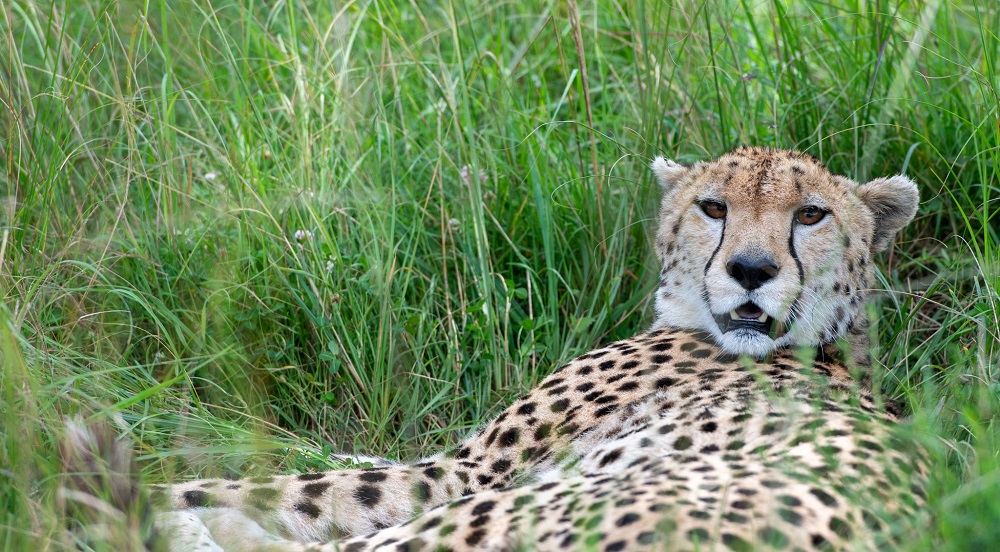
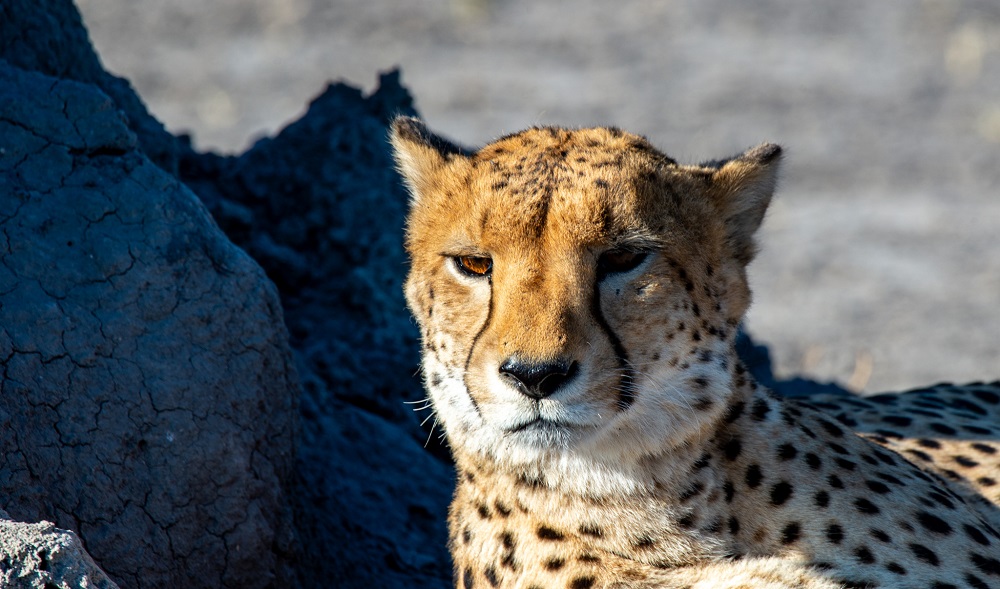
Over the course of our two-day stay at Lewa Wilderness we cleaned up on the northern endemics and we witnessed a cheetah kill when a female cheetah took down a Grant’s gazelle right in front of us. We watched the whole thing from stalking to wild, tail-swerving chase right up to the take-down. A bit later on we also had a sighting of a male lion laying up along a perennial stream. Add both black and white rhinos (quite a few of both), buffaloes, elephants and zebras and it all amounted to a most satisfying experience.  

The food at Lewa Wilderness  

By the time dinner rolled around on our first day at Lewa Wilderness, we had an inkling of what to expect. It all starts with the freshest possible produce, right out of Lewa Wilderness’ own small farm, originally started by Will Craig’s mother, Delia. Every meal at the lodge includes fresh organic produce from the large vegetable garden. The chefs at Lewa Wilderness also get their eggs, milk and goat’s cheese from the farm and source other ingredients and foodstuffs from the surrounding community.   

Breakfast and lunch are served casually. Guests can pick what they’re craving from a full spread of fresh and delicious options. Dinner is presented more formally, with guests being served a three-course set menu to the backdrop of a crackling fireplace and a  star-filled sky. 

Kathy and I took our seats for dinner at just about  8: 00 pm, joining several other guests around a long, communal table. Having been briefly back to our room, we had exchanged our safari gear for casual clothing. There was a slight chill in the air and like us, most of the other guests had donned a fleece or light jacket. 

Dinners at Lewa Wilderness are communal (unless otherwise requested) and we enjoyed meeting some of the other guests. One of them was finishing up preparations for her first ascent of Mt Kilimanjaro. I was only too happy to share some of the experience I had gained in the course of my own previous Kili climbs. On the day, we enjoyed a minestrone soup, a delicious beef bourguignon with potatoes, carrots and courgettes, and an excellent dessert.  

Here are a few of the dishes currently in the Lewa Wilderness chef’s rotation:

Breakfast Special 

Rare Breed Black Aisberg tomatoes – a dark beefsteak variety grown in the greenhouse – on homemade sourdough toast with good olive oil and salt. The key thing here is simplicity and focusing on the superb quality of the produce. 

Lunchtime salads 

Garden charred sweet corn, broad bean, avocado and coriander salsa. Lewa Wilderness grows three out of the four ingredients, with just the avocado being brought in from a farm five miles away. Lewa Wilderness recently planted several avocado trees but it will take a few years before they can harvest the fruit. 

Roasted Beetroot and Goat Cheese Salad 

Lewa Wilderness grows their beetroot and makes their own goat cheese from their resident goat herd. Simply boil and then thinly slice the beetroot with a mandoline, sprinkle with crumbled goat cheese, top with a classic vinaigrette and garden herbs and voila!

Sesame French Bean Salad 

This Asian french bean salad is super simple but delicious. Vibrant colors and Lewa Wilderness’ homegrown beans make it a fun side dish. 

Courgetti with homemade pesto 

The chefs at Lewa Wilderness spiralise their own greenhouse grown courgettes and mix them with a freshly made pesto using their own basil. Raw food at lunch is great for everyone’s digestion and brings freshness to the meal. 

The daily routine at Lewa Wilderness

Routine is not a word that sits well in the safari lexicon. No two days are ever alike. Even so, there is a certain pattern to how most days unfold. Safari days start early. On our first full day at Lewa Wilderness we were up and ready to roll at around 6am when the room attendant showed up with tea and coffee. We grabbed our stuff and headed to the lounge for a light breakfast. There was toast and marmalade or honey. Some fresh fruit which tasted like the real thing. Freshly baked bread. And porridge. 

During high season Lewa Wilderness keeps a similar schedule in terms of activities and meal times. Guests head off early and come back for a big breakfast after their activity. Lunch is a buffet around 1pm and the lodge plans on having guests sit down for supper at 8pm, once they are all back from their afternoon adventures. Flexibility is key, and Lewa Wilderness always do their best to fit in with their guests’ plans. It is not a problem to arrange private dining for guests if they prefer a meal away from the communal table. With more guests comes the potential for more night drives. For families with young children, Lewa Wilderness suggests earlier dinners between 7pm and 7.30pm.

For more information about safaris including Lewa Wilderness, please contact us at 1-800-513-5222 or email jason@fisheaglesafaris.com

YOU MIGHT ALSO BE INTERESTED IN

Destinations
Zambia

10th September 2021

Chindeni and the Bushcamp Company, Zambia

By late July we found ourselves at Chindeni, a small Bushcamp Company property
Read more
Botswana
Destinations
Okavango Delta

3rd October 2022

Camp Okavango, Botswana

Camp Okavango is in the heart of the permanent part of the Delta. In this idyllic setting there are no vehicles, and it is just a short walk

Read more
Area
Destinations
Nyerere National Park
Ruaha
Tanzania

14th October 2023

From My Safari Notebook: Wildlife Photography

Birds in flight and wildlife photographers have an uneasy relationship. Things go wrong as often as they go right. Getting focus-lock on a moving subject

Read more

SUBSCRIBE TO OUR NEWSLETTER

READERS FAVOURITES

Destinations
India

27th May 2023

India

India’s tiger, mammals and birds.

Read more
Botswana
Destinations

4th August 2022

On Safari At Belmond Eagle Island Lodge, Okavango Delta

What is the ‘secret sauce’ for an unforgettable few days on safari in Botswana? It starts with the animals, of course. The elephants, lions, giraffes, hippos

Read more
Destinations
Zambia

10th September 2021

Chindeni and the Bushcamp Company, Zambia

By late July we found ourselves at Chindeni, a small Bushcamp Company property
Read more

Letter from Kenya

1st June 2023

Letter from Kenya

The best destination for a first safari? The ideal country for a ‘one and done’ safari? The classic of all classic safari areas in Africa? Kenya, Kenya and Kenya. 

For the last 10 days, Kathy and I have been revisiting four areas in Kenya which help make it what it is: an astonishingly diverse, breathtakingly beautiful country. A country which lives up to even the most elevated of expectations for a safari. Lots of animals which are easy to see. The friendliest of people. And a well functioning tourism infrastructure with accommodation choices to suit everyone’s taste and budget. 

Early on, at Elewana’s Tortilis Camp in Amboseli, we rediscovered the feelings and emotions which go hand in hand with being on safari. The feeling of being in the right place. The pervasive sense of being connected with your surroundings. Almost as if Africa is where you belong and where you’re meant to be.

It is not unusual to experience deja vu while on safari in Kenya. On just our second night at Amboseli with Mt. Kilimanjaro slowly disappearing as the last light faded to black, I felt oddly at home. Or maybe I never really left the last time. The distinct feeling of having lived that precise moment already – of having the same experience again – was as palpable as the evening breeze on my skin. As many times as this has happened to me and other people I know, I’ve almost come to expect it in Africa. Maybe it is just a memory of a dream. Or something buried deep in our subconscious mind, hearkening back to our progenitors who spread out into the world from this very area. Africa. It’s good to be back.  

All an Africa aficionado has to do is to enunciate four words out loud and something magical happens… Amboseli. Meru. Samburu. Lewa. The mind lights up with visions of elephants wallowing in an idyllic swamp setting. With images of one of East Africa’s best safari lodges, its rooms carefully tucked in among giant granite boulders. With pictures of a Samburu warrior – dressed to the hilt in ceremonial garb – straddling a boda-boda noisily taking its owner to the weekly market. With recollections of conservation work encompassing habitat, wildlife and the local community – rivaled by none. 

Traveling within Kenya in the typical ‘safari cocoon’ – where everything is taken care of and you literally just have to show up each morning – we were once again wowed by the country’s dazzling diversity of animals, landscapes and experiences. All without setting foot in the Masai Mara, its crown jewel.  

In just 9 nights on safari – with quite a bit of time taken up with site inspections – we tallied 36 mammal species and 145 bird species. The numbers – even as impressive as they are – become almost meaningless in the light of specific experiences. Here are a few:

Incredibly, two cheetah kills on the same day. Both kills made by female cheetahs taking down young Grant’s gazelles. One in Samburu, practically within sight of Elephant Bedroom Camp and the other one in Lewa on a game drive from Lewa Wilderness Lodge. We watched, spellbound, awestruck by the cheetahs’ amazing turn of speed as they ran down the overmatched gazelles.

Several hundred strikingly beautiful lesser flamingos reflected in the glassy surface of Lake Amboseli, superimposed with the reflection of Mt Kilimanjaro. An abundance of riches.

A powerful tawny eagle striking a cattle egret midair and downing it. Upon our approach, the eagle took off right in front of us. With the unfortunate egret gripped tightly in its talons, the eagle made its way to a distant copse of trees. Ironically, the dead egret’s immaculate white plumage shone like a beacon against the eagle’s chocolate brown feathers.

Two female lions walking along a track in Samburu, their ultra-lean appearance telling a story of hardship among plenty. Tall grasses creating ideal cover for herbivores whose numbers had plunged due to a long and only recently broken drought. The result? Hard times for lions.

A kaleidoscope of vividly colored reticulated giraffes, their rich orange-brown pattern creating the most stunning of natural tapestries. Converging and separating, their extraordinarily long necks jutting out in every direction – they were nothing short of Daliesque.

All of these extraordinary sightings came courtesy of our outstanding guides – John Njoroge in Amboseli, Joel Gachora in Meru and Francis Mayetu at Lewa. We also reconnected with our long-time friend Edwin Selempo, head guide of Origins Safaris, our Kenya destination management company for the last 20-plus years. In his usual inimitable way, Edwin capably guided us in Samburu. As always, he wowed us with his amazing birding skills, the easy and almost unobtrusive way in which he imparts information and his sunny disposition. Witty repartee? Better have it ready when traveling with Edwin.

AMBOSELI

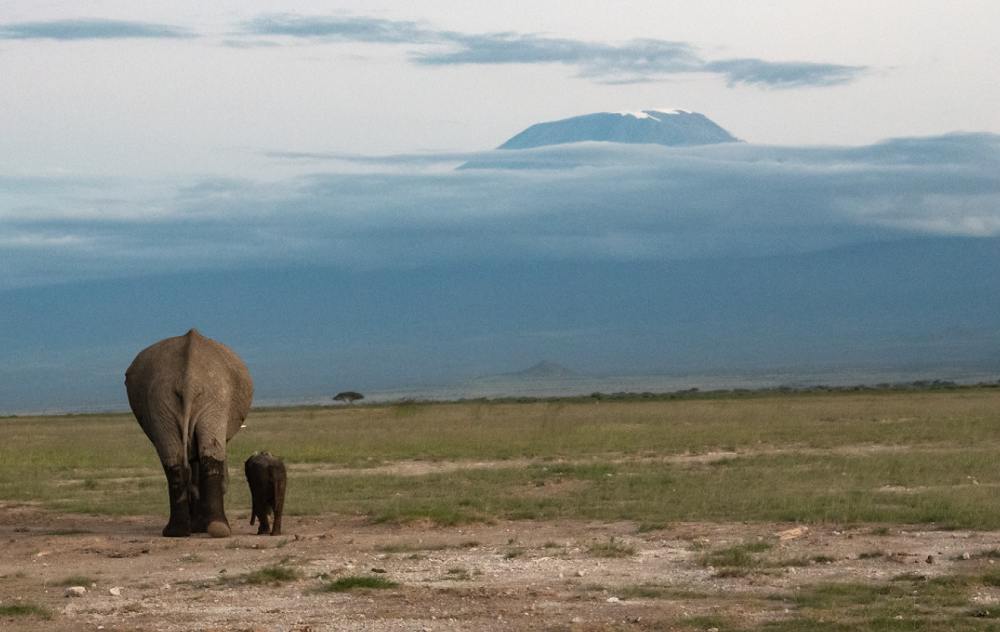
Tanzania has the mountain and Kenya has the view.  All too true when said about Kilimanjaro when viewed from Amboseli National Park. Amboseli is the spot from where you can see Kilimanjaro like you’ve always imagined it: a great big looming mountain abruptly jutting out of the open plains, surrounded by nothing. Which makes it, as the guidebooks say, the world’s highest freestanding mountain.  

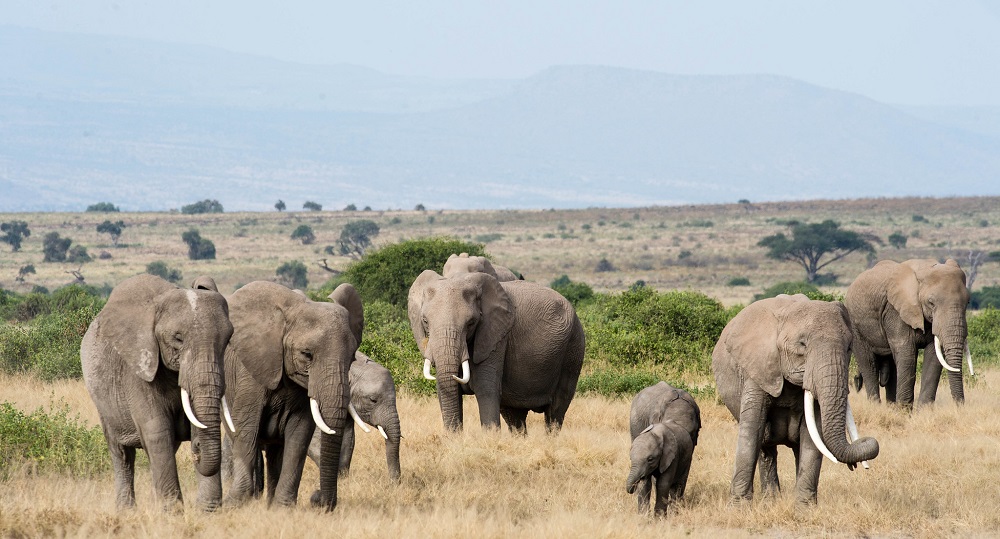
The perfect Amboseli photo opportunity? Having a few of Amboseli’s strikingly white-tusked elephants in between you and the mountain… Beyond needing a bit of luck for that, you’ll need a competent guide who understands the movements of the elephants into and out of the swamps and who can anticipate where they will be at specific times of the day. Plus of course the mountain has to be visible, which is not always the case. 

As massive as it is, Kilimanjaro is as evanescent as an image on an Etch-A-Sketch. One minute there, the next minute – gone. Your best chance to see it is usually early in the morning or late in the afternoon during the wetter part of the year, from about November through May. During the dry season from June through October, the mountain often disappears completely, hidden behind a hazy curtain of clouds, fog, dust and smoke.  

Did we see the mountain? Did we ever! Kili was out from our arrival to our departure, morning until night. If we never see Kilimanjaro again, that amazingly evocative picture will be emblazoned in our memories forever. The incredible snow-capped bulk of it, its overwhelming presence transforming a nice corner of Africa into a place you simply have to see and experience.

MERU

Meru National Park is Kenya’s forgotten secret. The park gained a measure of fame – and lots of visitors – in the late 1960’s after the release of  ‘Born Free,’ a movie about Elsa, an orphaned lion cub. Elsa was hand-raised by Joy Adamson and her game-warden husband George, right in Meru. Ironically – and often omitted from the tale – George had to shoot Elsa’s mother in self-defense when the lioness attacked him while trying to protect her cubs. Elsa, one of three surviving cubs, was successfully released back into the Meru wilderness a couple of years later. After being away in England for more than a year, the Adamsons returned to Meru and found Elsa – who still remembered them – with three cubs of her own.

Then the story of Meru took a turn for the worse. Invading bandits and poachers from Somalia decimated the wildlife for much of the late 1980’s and 90’s. Visitors stopped coming and the park fell into neglect. It wasn’t until 2000 when the Kenya Wildlife Service, under the leadership of Richard Leakey and with the financial support of private conservation groups, was able to invest substantial amounts of money into combating poaching and restoring the park to its former glory.

Current day Meru is once again a showcase park, famous for its striking African savanna landscapes and its diversity, with the park containing an extraordinarily high number of different mammals and birds. Even so, the park is still lightly visited compared with most of Kenya’s others. On one occasion we spent the better part of 40 minutes observing a lone female lion beneath a tree on the edge of a stream without so much as one other vehicle driving by. Some 13 perennial streams flow through Meru from west to east, defining the landscape of the park. The rivers – which are part of the Tana River basin – act as magnets for wildlife, particularly in the dry season which stretches from June through September.  

We simply love Elsa’s Kopje where we rested our weary heads for a couple of nights in Meru. This stunning property is considered by many to be one of the most spectacular locations and lodge designs in Africa. In addition to its splendid location, with its individually designed rooms artfully obscured by vegetation and rocks on the slope of an inselberg, Elsa’s has a charming central area overlooking an infinity pool, and a solid reputation for good food, great hospitality and top-notch management. 

SAMBURU

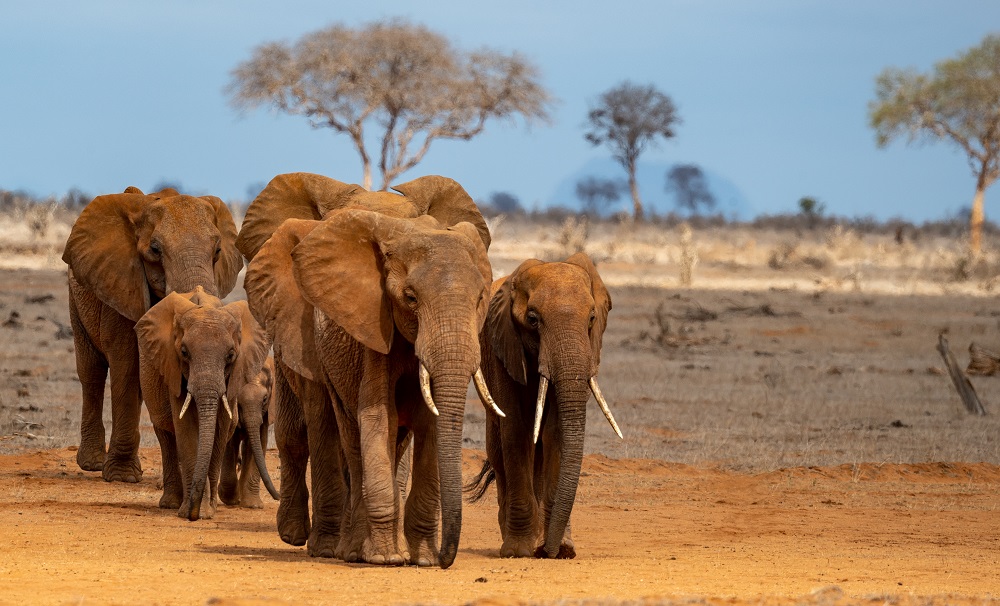
Samburu is Africa right down to its ubiquitous red dust which gives its many elephants their telltale cinnamon brown appearance. It can be a harsh and unforgiving place, particularly in times of drought which can last for months, even years. Dry or not, Samburu is always dramatic. If it’s not the striking vegetation – dominated by massive stands of doum palms – it’s the glimpses of far-off mountains like Ololokwe, the sacred mountain of the Samburu.

Be on the lookout for the unique gerenuk antelope in this area; it is easily recognized by its long thin neck, its tendency to stand on its hind legs to browse and its peculiar ‘ET’-like facial features. While visiting Samburu we recommend taking some time to visit a local manyatta. Squeeze into one of the smoky, bare-bones huts and observe the near total absence of so many material things we take for granted. 

Elephant Bedroom Camp, where we spent two nights, is a small camp hidden among the riverine forest on the banks of the Ewaso Nyiro River. The camp is right in the heart of the best game viewing area of Samburu and guests don’t have to drive miles and miles (as is the case from some other camps) to see the wildlife. Guests from other camps drive here. Over the course of our 3-night stay there were lions, leopards, cheetahs and African painted dogs seen within a mile from the camp. Also an aardwolf.

LEWA

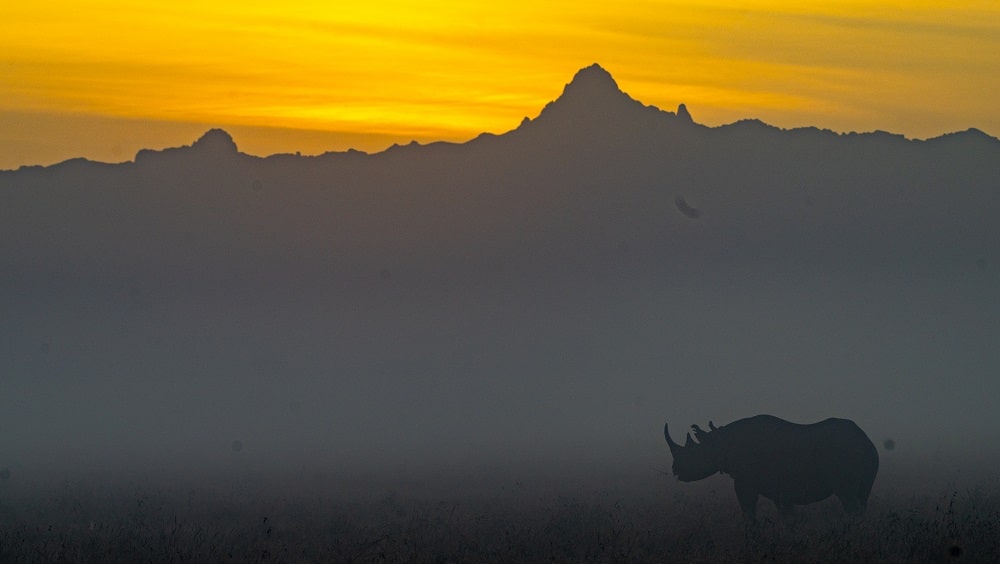
Every once in a while on my African travels I discover a place which immediately appeals to me. Bonus? When I realize that our guests will enjoy and appreciate it as well. The Lewa Wildlife Conservancy is one of those places. Lewa is special on many levels. Back when I first visited in the late 1990’s, it struck me as being almost sublimely ‘Out of Africa.’ It was no different this time around. Mostly, the place just shouts ‘Africa.’ Standing there on a clear day on an elevated spot, you can see the jagged peaks of Mt. Kenya to the south. If you turn around 180 degrees, on the horizon to the north looms the sacred mountain of the Samburu – Mt. Ololokwe. Mountains, valleys, vast open grassy plains and the gray-blue horizon seemingly reaching up to the clouds.

Other ways in which Lewa is special? It harbors and actively protects more rhinos (white and black) than any other conservancy in East Africa. Lewa’s rhino population has grown from an initial 15 rhinos to around 255 rhinos currently, a significant percentage of all rhinos in Kenya. Lewa also has a great mix of endemic species including Grevy’s zebra, beisa oryx and reticulated giraffe. Some of these animals – like the Grevy’s zebras – are rare and endangered and they are all spectacularly beautiful. Lewa has an enviable record as a hugely successful wildlife conservation entity and for effectively involving the surrounding community and mobilizing their support. 

So what is a keen safari enthusiast to do? If you’ve never been to Kenya, give us a call at 1 800 513-5222 or email me (bert@fisheaglesafaris.com) to discuss some options and let’s get you on a flight to Nairobi. With the possible exception of April and May, Kenya is a true year-round destination. For the wildebeest & zebra migration, July through October are the best months but there’s much to be said for November through March as well. Been to Kenya before? No reason not to go back. Kenya is the most diverse safari destination of all and there is always somewhere new to explore, or a different time of the year to visit. Take a few friends and book one of the exclusive use properties at Ithumba or Galdessa for the most amazing orphan elephant experience of a lifetime!

YOU MIGHT ALSO BE INTERESTED IN

Destinations
Zambia

10th September 2021

Chindeni and the Bushcamp Company, Zambia

By late July we found ourselves at Chindeni, a small Bushcamp Company property
Read more
Botswana
Destinations
Okavango Delta

3rd October 2022

Camp Okavango, Botswana

Camp Okavango is in the heart of the permanent part of the Delta. In this idyllic setting there are no vehicles, and it is just a short walk

Read more
Area
Destinations
Nyerere National Park
Ruaha
Tanzania

14th October 2023

From My Safari Notebook: Wildlife Photography

Birds in flight and wildlife photographers have an uneasy relationship. Things go wrong as often as they go right. Getting focus-lock on a moving subject

Read more

SUBSCRIBE TO OUR NEWSLETTER

READERS FAVOURITES

Destinations
India

27th May 2023

India

India’s tiger, mammals and birds.

Read more
Botswana
Destinations

4th August 2022

On Safari At Belmond Eagle Island Lodge, Okavango Delta

What is the ‘secret sauce’ for an unforgettable few days on safari in Botswana? It starts with the animals, of course. The elephants, lions, giraffes, hippos

Read more
Destinations
Zambia

10th September 2021

Chindeni and the Bushcamp Company, Zambia

By late July we found ourselves at Chindeni, a small Bushcamp Company property
Read more

Secrets of Tsavo, Kenya

3rd May 2023

Secrets of Tsavo, Kenya

On my last visit to Tsavo, I fell in love with Africa all over again. It was one thing after another, starting and ending of course, with elephants. Elephants at the waterhole just outside Kilaguni Serena Lodge, big tuskers at a water trough just inside the entrance to Tsavo East, a trio of cheeky elephants taking doum palm nuts out of our hands at Galdessa Camp on the Galana River, multiple small herds of elephants – all thirsty and hungry and dusty – around the water holes between Satao and Aruba Lodge. We could see them kicking up Tsavo’s signature red dust as they made their way through the parched landscape, headed for water. Surprisingly, given the extent and duration of the drought, the elephants were still doing well with lots of youngsters around.  

We spent an absorbing couple of hours or so with the orphan elephants at the Sheldrick Voi Unit. Observing their joyful exuberance at feeding time and getting to be up close and personal with them is one of East Africa’s most enriching wildlife experiences. Positioning ourselves in partial shade under a large tree, we waited about 20 minutes or so until the first small group of orphans rushed up to their handlers, who were standing just meters away from us, each one holding a large bottle of elephant formula. 

Drinking with gusto, the young elephants drained the bottles in what felt like barely a couple of minutes, their faces quickly taking on what could only be a look of utter contentment. Most of the young elephants consume two bottles of formula before they amble off to drink some water or dip into a pool, only to cover themselves with the red Tsavo dust immediately afterwards.

Small group after small group, the elephants kept coming, about 30 or so in total. By the time the youngsters had all been fed, a group of about 10 to 12 totally wild elephants had walked up to the water trough specially prepared for the orphans. Clearly used to each other’s presence, the two groups shared the water without any signs of rancor or strife. 

We watched the unfolding scene for a good 30 minutes or so, with various members of our party interacting with some of the orphans. One young female elephant was particularly agreeable and she had her little trunk all over us, literally inhaling our scent and breath. On the way back to our camp at Galdessa we could not stop talking about what an amazing experience this was, and we were already thinking about returning to Ithumba or Galdessa in the future. 

Also in Tsavo – at Ithumba Hill – visitors can expect an even more immersive orphan elephant experience due to the proximity of the stockade (where the young elephants sleep at night) to the safari lodge where the guests reside. It’s barely 10 minutes from one to the other so you can be around the elephants multiple times per day:  when they are being bottle-fed and enjoying a mud bath in the veld, prior to going to sleep after another feeding including some hay and again early in the morning as they wake up to the prospect of another day of being pampered by the Sheldrick crew. 

DRIVING FROM TSAVO WEST TO TSAVO EAST

To experience Tsavo is to experience Africa in a pure, unadulterated setting. Not too many other vehicles or people around, just a few interesting safari camps and lodges, and lots of diversity. This was my second time driving from Kilaguni in Tsavo West all the way to the Galana River in Tsavo East. Just like the first time, it was an absorbing and fascinating journey, marveling at some of the most spectacular scenery of any in Kenya. The game-viewing en route was nothing short of phenomenal with elephants and buffaloes seemingly everywhere, plenty of giraffes and several of the scarce and elusive Lesser Kudu. Other vehicles? Just one in more than three hours.  

Beyond the elephants, the diversity, the scenery and its ‘old Africa’ appeal, Tsavo is where you will come across the spectacular Shetani Lava Flow and cool, beautiful Mzima Springs. We wrote about those two extraordinary places in an earlier blog post about Tsavo. On our most recent trip to Tsavo, we had the opportunity to get a closer look at the Yatta Plateau and the Galana River, two more of Tsavo’s hidden secrets.

THE YATTA PLATEAU AND THE GALANA RIVER

The Yatta Plateau is fascinatingly odd with an uncannily flat top and abrupt ‘end.’ Park yourself a few miles to the south of the plateau and it looks every bit like a lake which seemingly froze in its tracks. Which is of course  exactly what it is. A massive river of igneous rock, the world’s longest lava flow, stretching almost 300 km from its origin near Ol Doinyo Sabuk, northeast of Nairobi.  

At the base of the Yatta plateau runs the Galana River – the second longest river in Kenya after the Tana River. The Sheldrick Wildlife Trust’s Galdessa camps are perched on high ground, hidden in a huge grove of doum palms right on the banks of the Galana where it flows through a shallow valley with stands of trees and thick vegetation on both sides. Remarkably – considering that the area was in the throes of a severe, sustained drought at the time of our visit – the Galana was still flowing strongly, its wide expanse of clear, cool water acting as a life-sustaining magnet for a myriad of life forms. For much of its nearly 400 km (250 mile) long course, the Galana flows through a harsh, semi-arid landscape where its water is literally the difference between life and death. At the intriguing Lugard Falls, a few miles down-river from Galdessa, the Galana narrows into a series of rapids, waterfalls and weirdly shaped pools, the result of millions of years of erosion. The jaggedly eroded volcanic rock creates a scene of  stunning natural beauty. It’s tempting to want to clamber around and over the rocks to get the perfect view, but visitors beware:  danger lurks in the form of crocodiles and hippos. 

YOU MIGHT ALSO BE INTERESTED IN

Destinations
Zambia

10th September 2021

Chindeni and the Bushcamp Company, Zambia

By late July we found ourselves at Chindeni, a small Bushcamp Company property
Read more
Botswana
Destinations
Okavango Delta

3rd October 2022

Camp Okavango, Botswana

Camp Okavango is in the heart of the permanent part of the Delta. In this idyllic setting there are no vehicles, and it is just a short walk

Read more
Area
Destinations
Nyerere National Park
Ruaha
Tanzania

14th October 2023

From My Safari Notebook: Wildlife Photography

Birds in flight and wildlife photographers have an uneasy relationship. Things go wrong as often as they go right. Getting focus-lock on a moving subject

Read more

SUBSCRIBE TO OUR NEWSLETTER

READERS FAVOURITES

Destinations
India

27th May 2023

India

India’s tiger, mammals and birds.

Read more
Botswana
Destinations

4th August 2022

On Safari At Belmond Eagle Island Lodge, Okavango Delta

What is the ‘secret sauce’ for an unforgettable few days on safari in Botswana? It starts with the animals, of course. The elephants, lions, giraffes, hippos

Read more
Destinations
Zambia

10th September 2021

Chindeni and the Bushcamp Company, Zambia

By late July we found ourselves at Chindeni, a small Bushcamp Company property
Read more

Where to go on safari in 2022-23

19th November 2021

Where to go on safari in 2022-23

As the Covid pandemic retreats worldwide, thoughts turn to resuming life the way we once did, filled with family, friends, togetherness – and travel.

Picking up where we left off around March of 2020, we can once again dream and plan on visiting foreign shores.

As and when travelers resume planning trips to Africa, they soon find out that there are dozens of safari destinations and hundreds of combinations of camps and activities.

Fortunately, there are just a few golden rules for a happy and successful safari trip:

* Spend more time in fewer locations. Now more than ever it makes sense to take a single country trip with fewer, longer stops.

* If you have a good guide you can have a great safari almost anywhere, anytime.

* Smaller is always better than bigger when it comes to group size and camp size.

* You almost always get what you pay for; in the case of a good safari it is prime location, small camp, good guiding, privacy (private concessions, private guide & vehicle), all-inclusive pricing and an all-round quality experience with no unpleasant surprises.

Here are a few destinations we visited recently and which we think hold great appeal for the next couple of years, for a variety of reasons. Most importantly, all of these destinations are suitable for a single country trip, reducing the number of potential Covid tests and lessening the burden of entry formalities and hassles associated with border crossings.

ZIMBABWE
Zimbabwe’s three prime game-viewing areas namely Hwange, Matusadona (Lake Kariba) and Mana Pools make a truly unbeatable safari combination with as much diversity as just about any other safari destination. You’d have to fly between some areas but even with the inclusion of flights, 10 days split between these three areas in the high season is still going to be 50% less than comparable camps in Botswana.

Start your trip in Victoria Falls for the views and an extraordinary range of adventure activities and consider including the Matobos for rhino viewing, terrific scenery, culture and history.

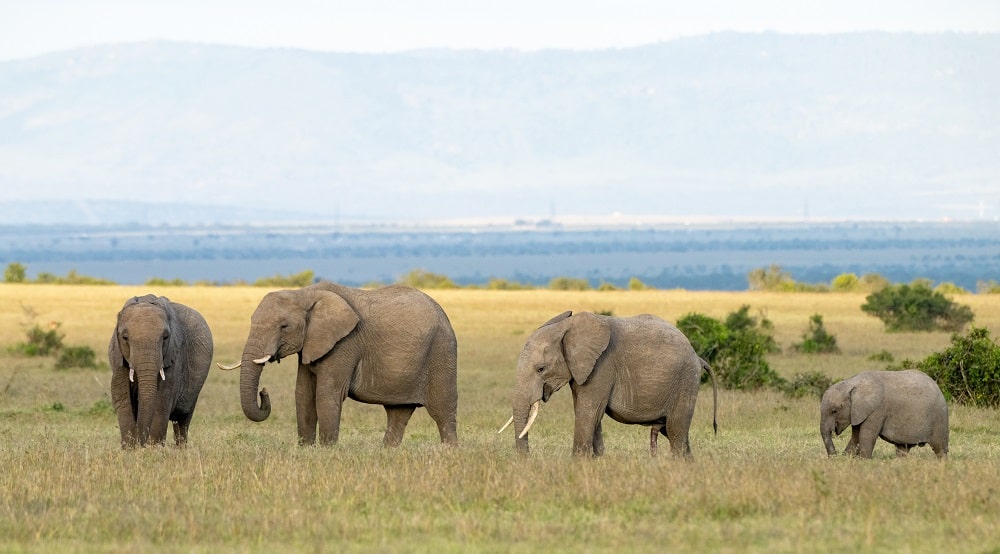
Zimbabwe is a classic African safari destination with excellent game-viewing, headlined by the presence of thousands of elephants in all of the major national parks, most notably Hwange which has in excess of 30,000 elephants. Add to that buffaloes, eland, plenty of giraffe, zebra, wildebeest, special antelopes such as roan and sable and a good variety of cats and you end up with a first-class game-viewing destination.

KENYA
There is simply nowhere better for a first safari than Kenya. Why? Diversity of habitats, abundance of animals and wide-open plains making game-viewing relatively easy and rewarding. Add to that a well-functioning tourism infrastructure, super-friendly people and a wide range of accommodations catering to every taste and budget. Kenya is easy to get to from the USA via Europe or the Middle East, or on a non-stop flight from JFK to Nairobi on Kenya Airways, currently operating several days per week.

I would be very hard pressed to think of a 10-day safari that offers nearly as much to see and experience as a combination of Amboseli (no place better for elephants & views of Kilimanjaro); Lewa or Samburu (spectacular endemics such as Reticulated Giraffe and Grevy’s Zebra & beautiful ‘out of Africa’ views) and the Masai Mara, for simply the best game-viewing in Africa. This can be done on a fly-in basis with any start date. Shoulder months such as June and November offer excellent value for money.

WESTERN TANZANIA AND THE SERENGETI
Prefer to be away from the ‘maddening crowds’ and able to handle some long flights and the occasional bit of discomfort in pursuit of authenticity and excitement? If so, then Tanzania and specifically a combination of the Serengeti, Tarangire and Katavi National Park in far western Tanzania would be ideal.

What to expect? Mostly small, remote camps with few other people, excellent game-viewing and superb birding plus simply the best chimpanzee treks in all of Africa, at Mahale Mountains National Park. The addition of a few days in Katavi National Park elevates this from a great trip to an outstanding one. This remote park is an unvarnished slice of African wilderness where the dry season pushes its large hippo population to the limits of endurance. Big herds of buffalo, elephant, plenty of predators – Katavi has it all and there’s few other people around.

The ideal itinerary for this combination would have 4 or 5 nights in the Serengeti (which can be split between the northern and central region), 3 nights at Greystoke Camp in the Mahale Mountains National Park and 4 nights at Chada Katavi. Stay a little longer by adding a couple of nights at Ngorongoro Crater at the start of the trip.

SOUTHERN TANZANIA & ZANZIBAR
For another remote and very private Africa experience, I would recommend a combination of 4 nights in the Ruaha National Park in south-central Tanzania (Nomad’s Kigelia, Asilia’s Kwihala or Jabala Ridge or Mwagusi Camp) plus one or two camps in the Selous Game Reserve (Sand Rivers – sublime) and perhaps Beho-Beho (on our Groundhog Day list). And then add a few days in Zanzibar at the end, a combination of Stone Town and one of the beach resorts. If pressed for time, a couple of nights in Stone Town would suffice as long as you include a half day walking tour of Stone Town (must do) and possibly an outing to Jozani Forest Reserve to see the Red Colobus monkeys and the Mangroves. The Spice Tour is a bit touristy but highly entertaining and educational.

ZAMBIA
Zambia is huge and with three premier safari areas – South Luangwa, Lower Zambezi and Kafue – it has an amazing diversity of scenery, habitat and activities. Walking is central to the experience everywhere yet it isn’t forced or mandatory. They do the walking excursions mostly early in the morning as it can and does get hot later in the day.

Some of the best areas in Zambia like the Kafue and Lower Zambezi are considerably better later in the dry season, so my recommendation would be to travel there from July through October. It does get hot and dry then but definitely worth it for the concentration of elephants and other wildlife, close to water.

In terms of game-viewing, the highlights in the Kafue National Park include lions and leopards. The latter are well represented at Musekese Camp (which we highly recommend visiting) where there are 17 leopards in the area just around the camp. On a visit earlier this year, we saw two females interacting which is highly unusual. All the leopards have individual designations and their behavior and distribution and relationships are intensively studied.

The South Luangwa National Park is also known for an abundance of leopards plus good elephant numbers, giraffe, zebra and of course hundreds of hippos along the Luangwa river. There are multiple thousands of hippos on the Luangwa so you are almost never quite out of hearing distance of their booming snorts and honking. We are partial to the Shenton camps (Kaingo and Mwamba) as well as the Bushcamp Company and Time & Tide properties. They all offer a slightly different experience – depending on location and season – but all are excellent.

The Lower Zambezi National Park offers a distinctively different experience and setting, with most of the camps located on the banks of the Zambezi. So in addition to game drives (day and early evening), you can also do boating and canoeing, as well as walking. From August onwards the seeds of the Winterthorn trees start to drop, which attracts dozens of elephants day and night. The pods are like candy to them. This is best seen and experienced at the camps west of Jeki Airstrip, being Old Mondoro, the Tusk & Mane camps and Anabezi.

The area around Tusk & Mane in Lower Zambezi is impossibly atmospheric and there is just nowhere else like it. Tusk and Mane’s Kutali and Chula camps are rustic with bucket showers (having proper flush toilets) but the experience is as ‘classic safari’ as it gets.

The canoeing experience on the Lower Zambezi is amazing as well. We saw about 50 hippos on a three hour canoe outing and elephants crossed the channel in front of us and behind us. All in all an action packed outing with a few jolts of adrenaline here and there, yet I felt quite safe due to the expert guiding. Boating on the Kafue and the Zambezi rivers adds yet another facet to the Zambia experience. The two rivers are so different yet I found both of them to be fascinating given the immense flow of water and the importance they have to the wildlife areas in Zambia.

At any time of the year, the vehicle density in Zambia – except in the Mfuwe area – is lower than anywhere else. The camps are really small, mostly with just 4 or 5 tents. In areas like the Lower Zambezi and Kafue the experience is like being on your own private African safari.

BOTSWANA
I have not changed my mind about Botswana being among the very best safari destinations of any. On a recent trip which included Chief’s Island in the Moremi, the Okavango Delta and the Kalahari, we again experienced Botswana’s abundance of wildlife, beautiful scenery and friendly people.

On our very first game drive out of Chief’s Camp we saw African painted dogs, lions and cheetahs. That set the pace for the entire trip, with buffaloes on our arrival at Eagle Island Lodge, a couple of baby leopards there, interaction between two sets of male lions at Xigera Safari Camp and ending with a mother and baby pair of white rhinos at Dinaka, in the Kalahari. And of course all the plains game including plentiful giraffes, zebras, wildebeest, lechwes, gemsbok, springbok, tsessebe, steenbok, a myriad of hippos and more.

Botswana has gotten quite pricey – especially from June through the end of October (high season), but you don’t have to spend weeks here to have a fantastic time on safari. Seven to nine nights total on safari is more than adequate. For a longer trip, add on a few days in Zimbabwe or South Africa. To keep the price manageable, consider going in the low-demand season, from November through the end of March. If you spend a bit more time in fewer areas (to give yourself a little more time and opportunity to find some of the elusive species like leopards and cheetahs), it can be every bit as good as the high season.

Some visitors – notably photographers – consider the low season to be the best time of the year, bar none. Why? There are lots of baby animals around (notably hundreds of baby impalas) which stimulates predator activity. Just about every day, you will experience gorgeous sunrises and sunsets due to the presence of some clouds. There are many bird species in breeding plumage, and lots of summer migrant bird species present, including the strident woodland kingfisher, several species of shrikes, bee-eaters, orioles, wading birds, birds of prey and many more. The animals are generally in good condition at this time of the year due to abundant food sources, and the green vegetation creates beautiful backdrops. The bottom line? Travel to Botswana in the low demand season and enjoy superb game-viewing and exceptionally good photography conditions at much lower prices, with far fewer other visitors around. Call or email us for information about several superb low-demand season trip itineraries and cost estimates.

YOU MIGHT ALSO BE INTERESTED IN

Destinations
Zambia

10th September 2021

Chindeni and the Bushcamp Company, Zambia

By late July we found ourselves at Chindeni, a small Bushcamp Company property
Read more
Botswana
Destinations

4th August 2022

On Safari At Belmond Eagle Island Lodge, Okavango Delta

What is the ‘secret sauce’ for an unforgettable few days on safari in Botswana? It starts with the animals, of course. The elephants, lions, giraffes, hippos

Read more
Destinations
India

27th May 2023

India

India’s tiger, mammals and birds.

Read more

SUBSCRIBE TO OUR NEWSLETTER

READERS FAVOURITES

Area
Destinations
Nyerere National Park
Ruaha
Tanzania

14th October 2023

From My Safari Notebook: Wildlife Photography

Birds in flight and wildlife photographers have an uneasy relationship. Things go wrong as often as they go right. Getting focus-lock on a moving subject

Read more
Botswana
Destinations
Okavango Delta

3rd October 2022

Camp Okavango, Botswana

Camp Okavango is in the heart of the permanent part of the Delta. In this idyllic setting there are no vehicles, and it is just a short walk

Read more
Destinations
Zambia

10th September 2021

Chindeni and the Bushcamp Company, Zambia

By late July we found ourselves at Chindeni, a small Bushcamp Company property
Read more
  • « Go to Previous Page
  • Page 1
  • Page 2
  • Page 3
  • Page 4
  • Page 5
  • Page 6
  • Go to Next Page »

Footer

Design

  • About
  • Destinations
  • Blogs
  • FAQS
  • Team
  • Contact
All Rights Reserved ©Fish Eagle Safaris 2022 | Terms & Conditions | Privacy Policy
Designed & Developed by B Online

SUBSCRIBE TO OUR NEWSLETTER

SIGN-UP TO OUR NEWSLETTER

Subscribe Form

Footer Widget Header

Related Blogs