• Skip to primary navigation
  • Skip to main content
  • Skip to footer

Fish Eagle Safaris

Fish Eagle safaris

Contact

Logo
  • About
  • Destinations
  • Blogs
  • Newsletter
  • FAQS
  • Team
  • search
  • Contact
  • About
  • Destinations
  • Blogs
  • FAQS
  • Team
  • Contact

Destinations

Sanctuary Olonana Camp, Masai Mara ACT 1: THE SETTING

19th January 2021

Sanctuary Olonana Camp, Masai Mara
ACT 1: THE SETTING


Image

Sanctuary Retreats

Sanctuary Olonana Camp, Masai Mara

Act 1: The Setting

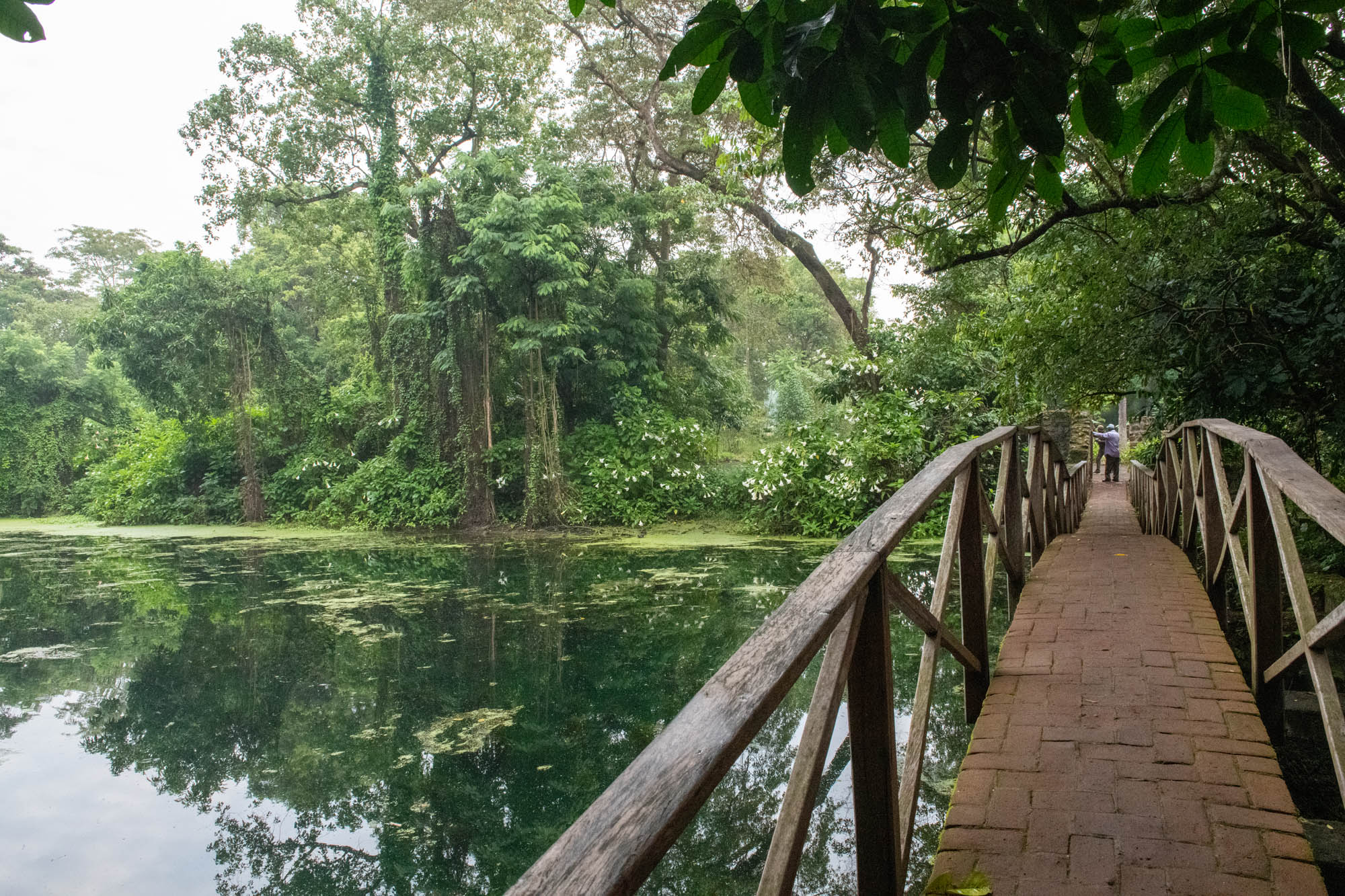
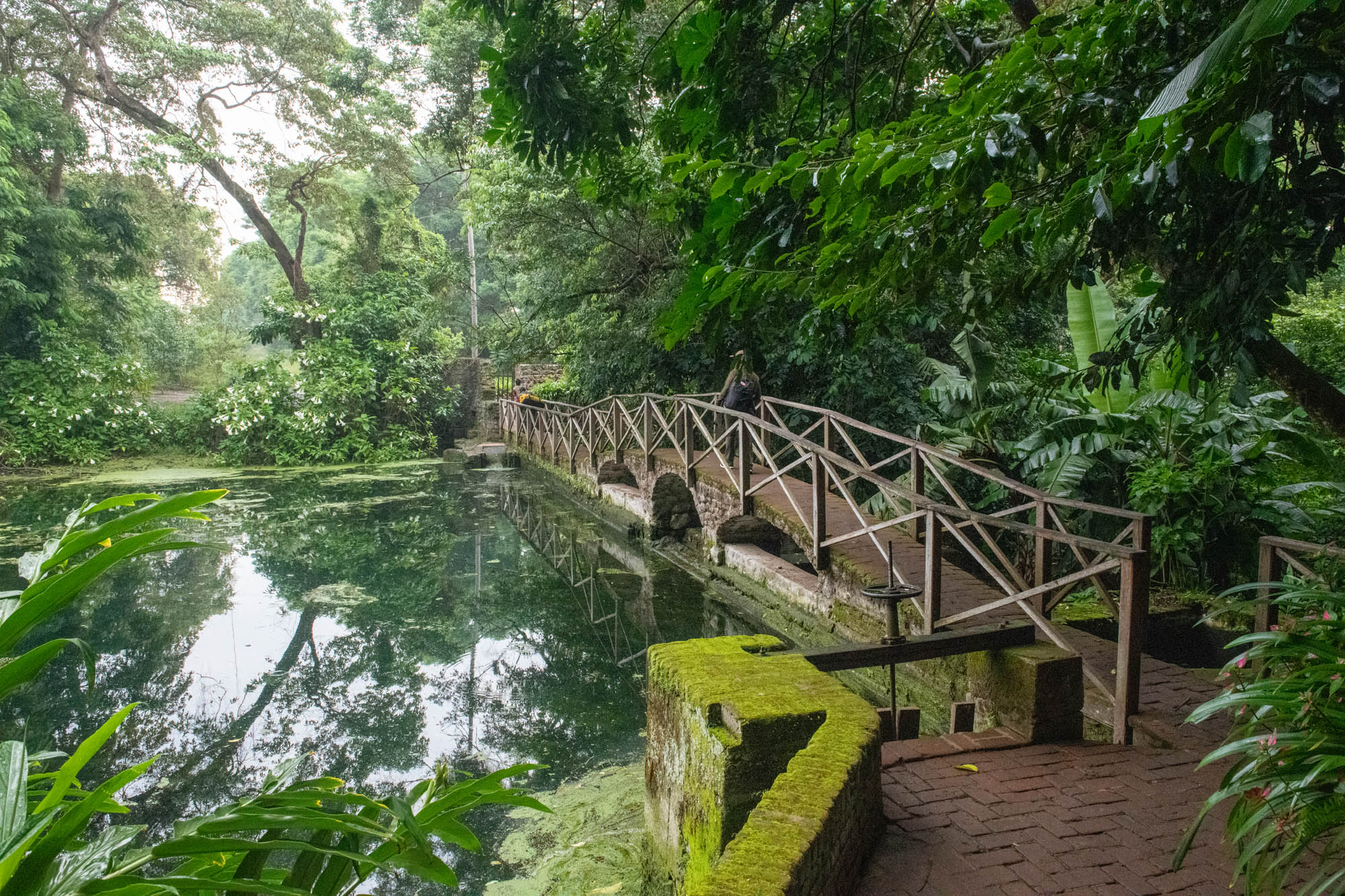
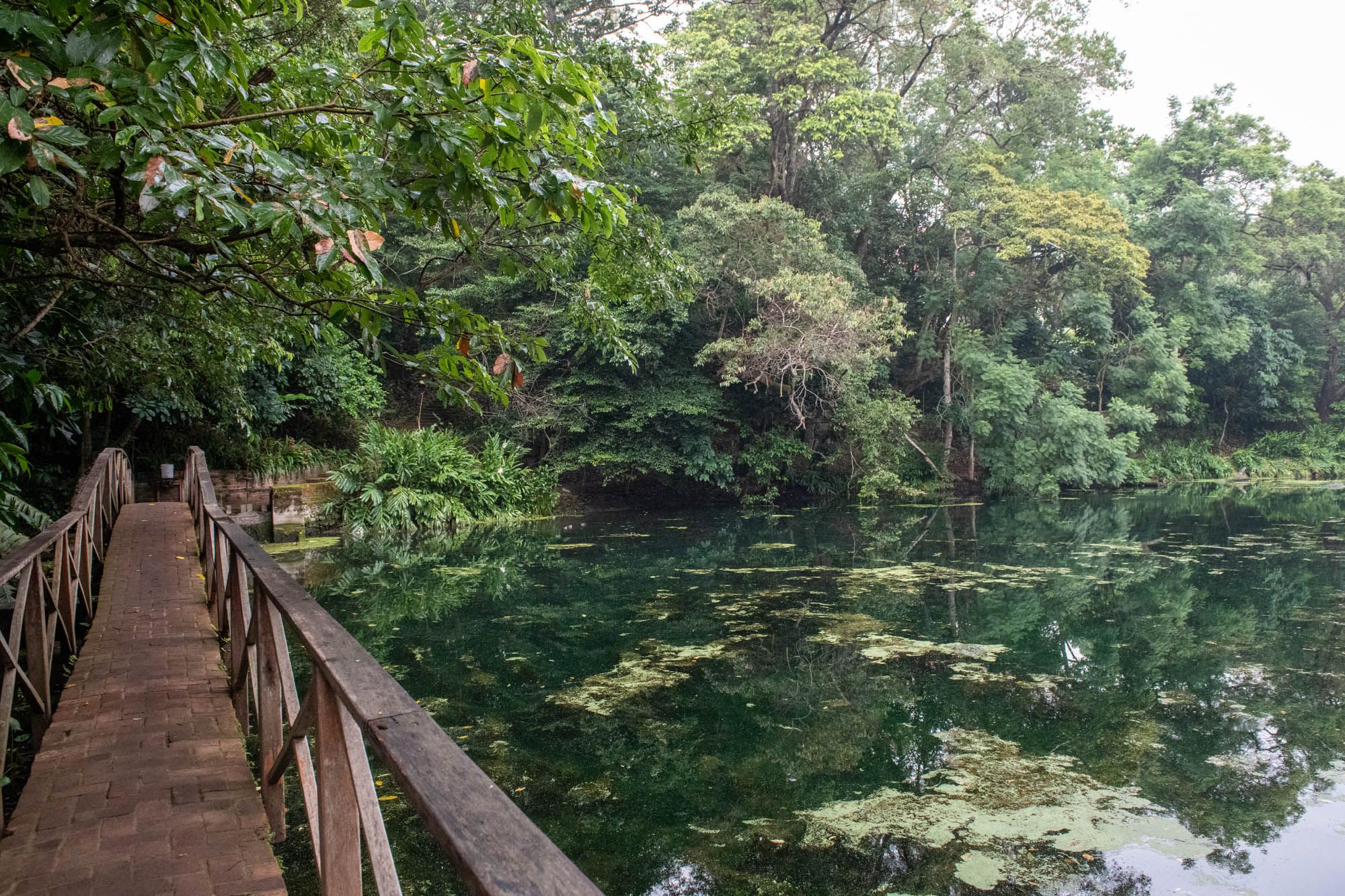
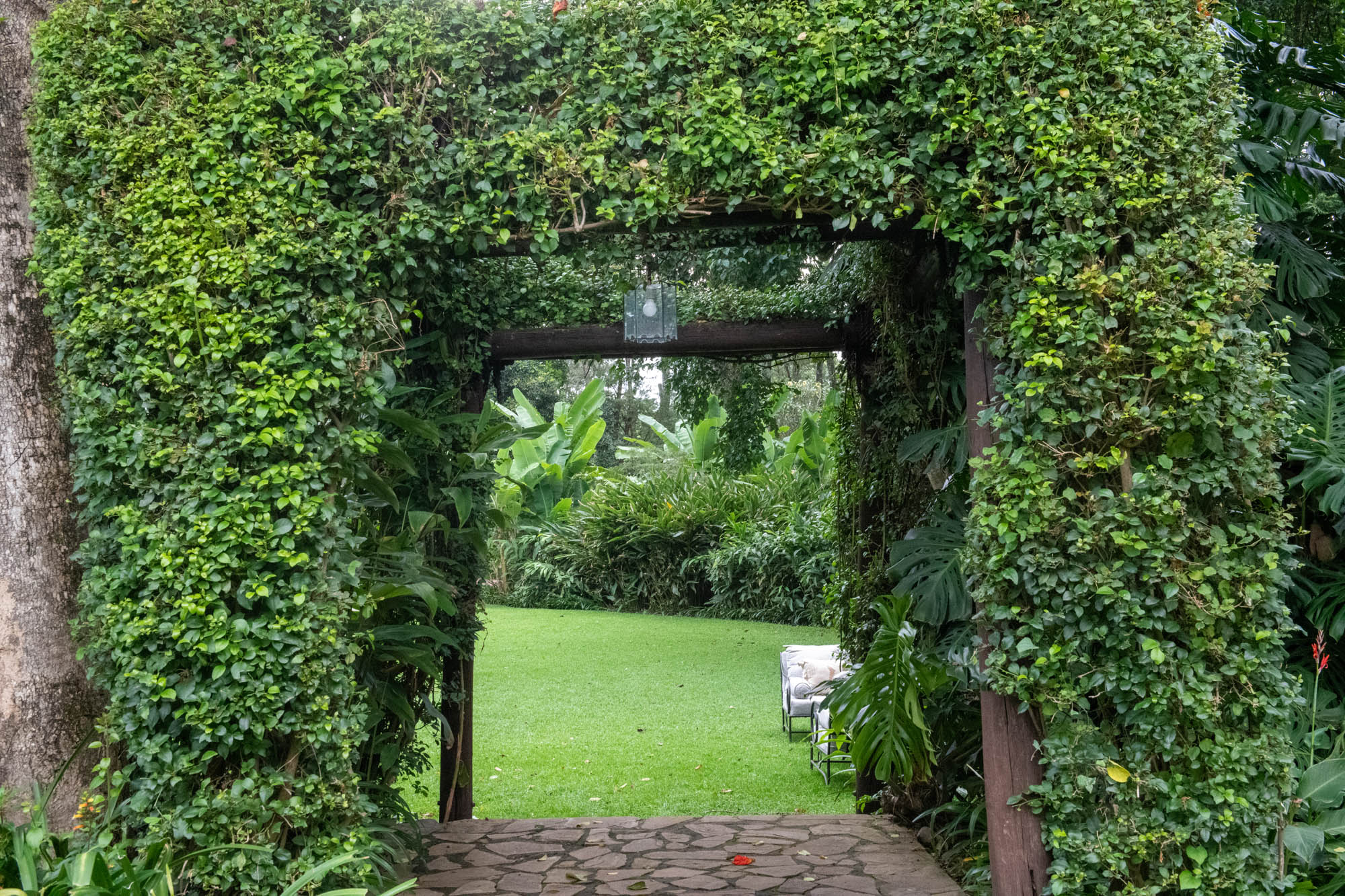
Like the prelude to an opera, walking into Sanctuary’s Olonana Camp in the far northern part of Kenya’s Masai Mara, provides you with a glimpse of what’s to come. You hear and see, maybe for the first time, whispers and fragments of what would later develop into beautiful melodies, and romantic arias. The makings of the orchestra is all around you:  birdsong follows your muted footsteps along a forested path, with the low rumble of rushing water adding a note of drama and tension.


Image

Sanctuary Retreats

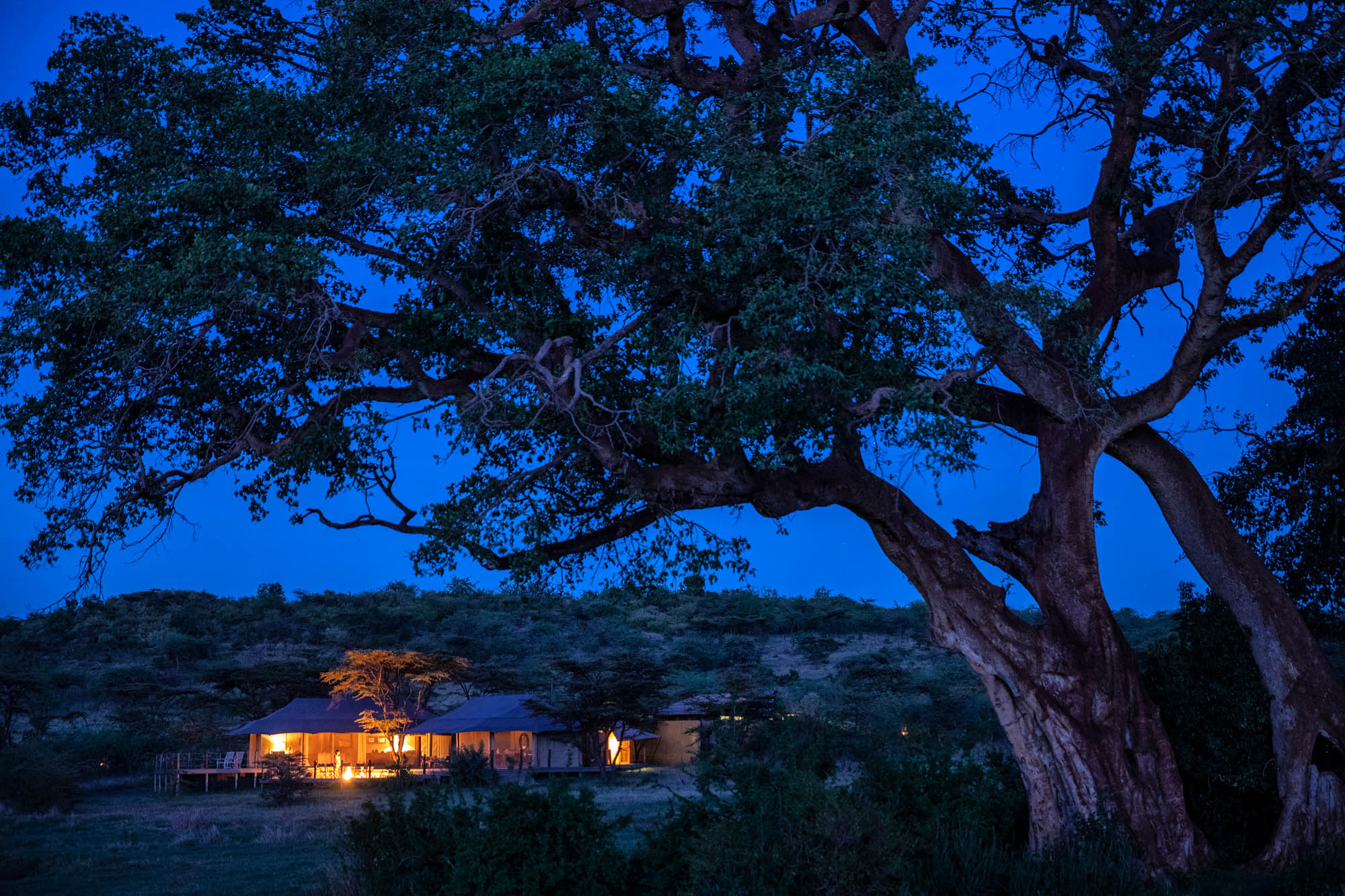
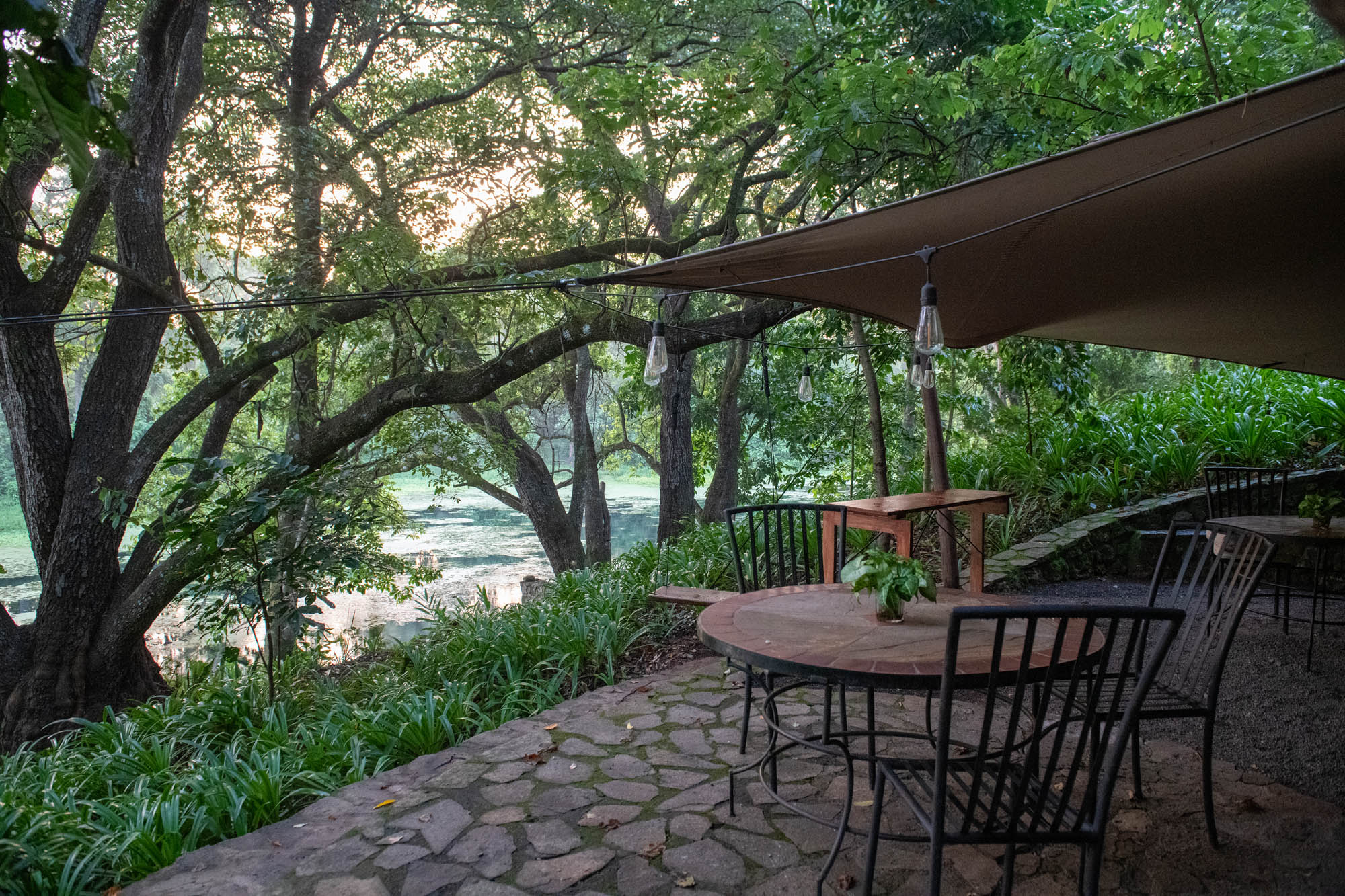
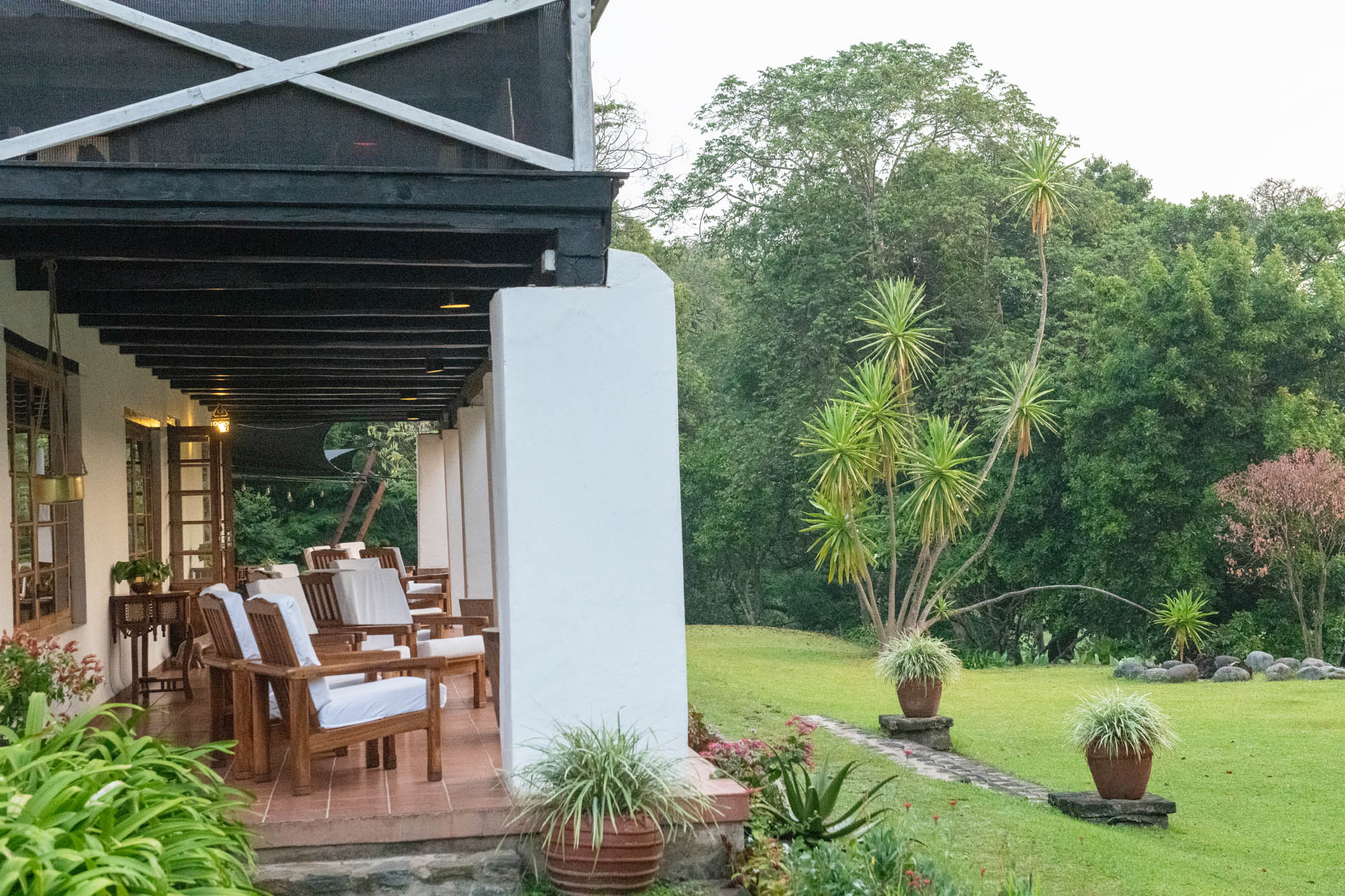
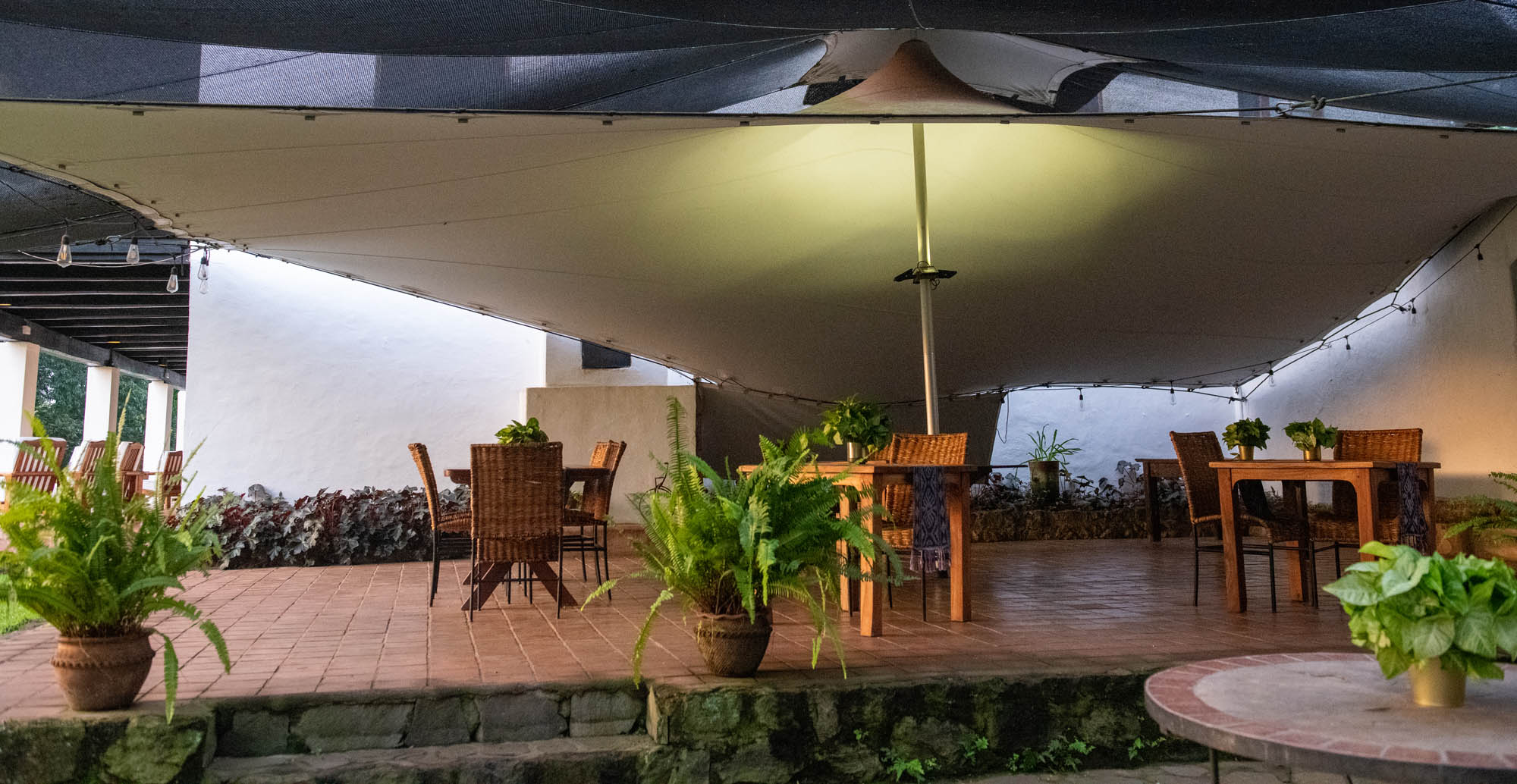
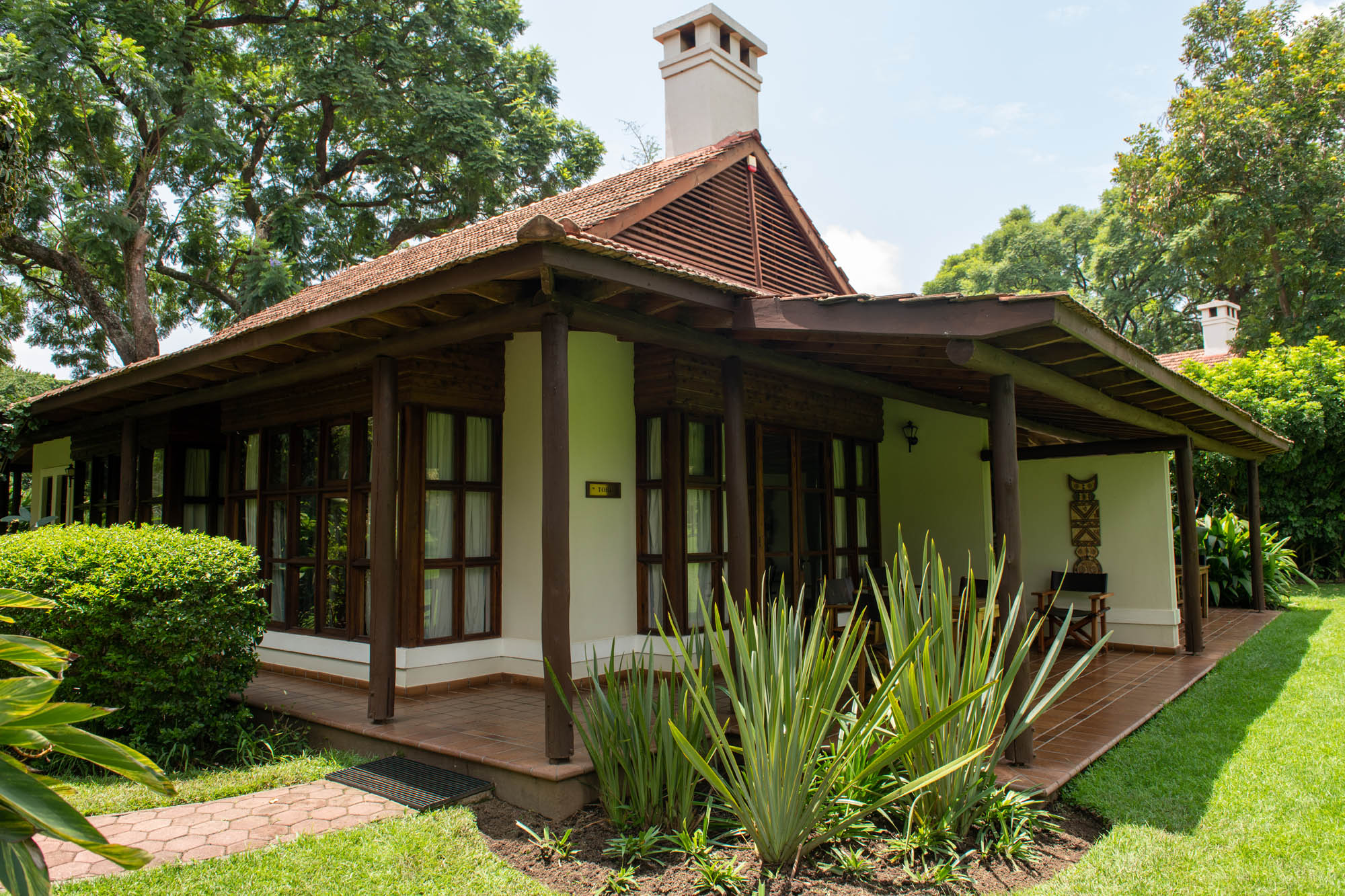
Olonana is tucked into a dense riverine forest along the edge of the Mara River, and while there are 14 rooms in total, you’d never know it, at first glance.  The walkway takes you first to the impressive main lounge and dining room, and then it winds past signs pointing the way to the pool and spa, with the entrances to the suites visible on your right.


Image

Sanctuary Retreats

Act 2: The Suites

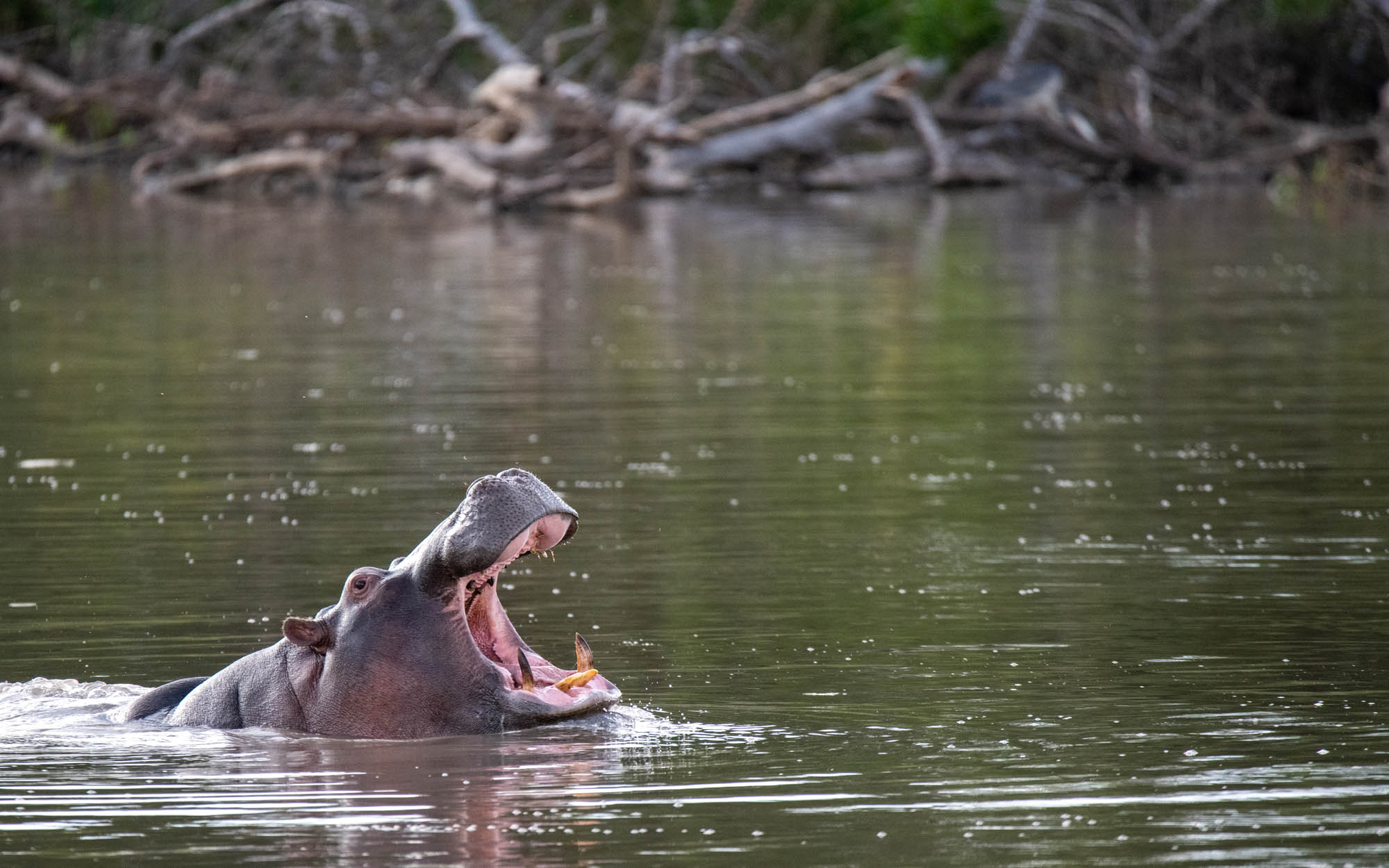
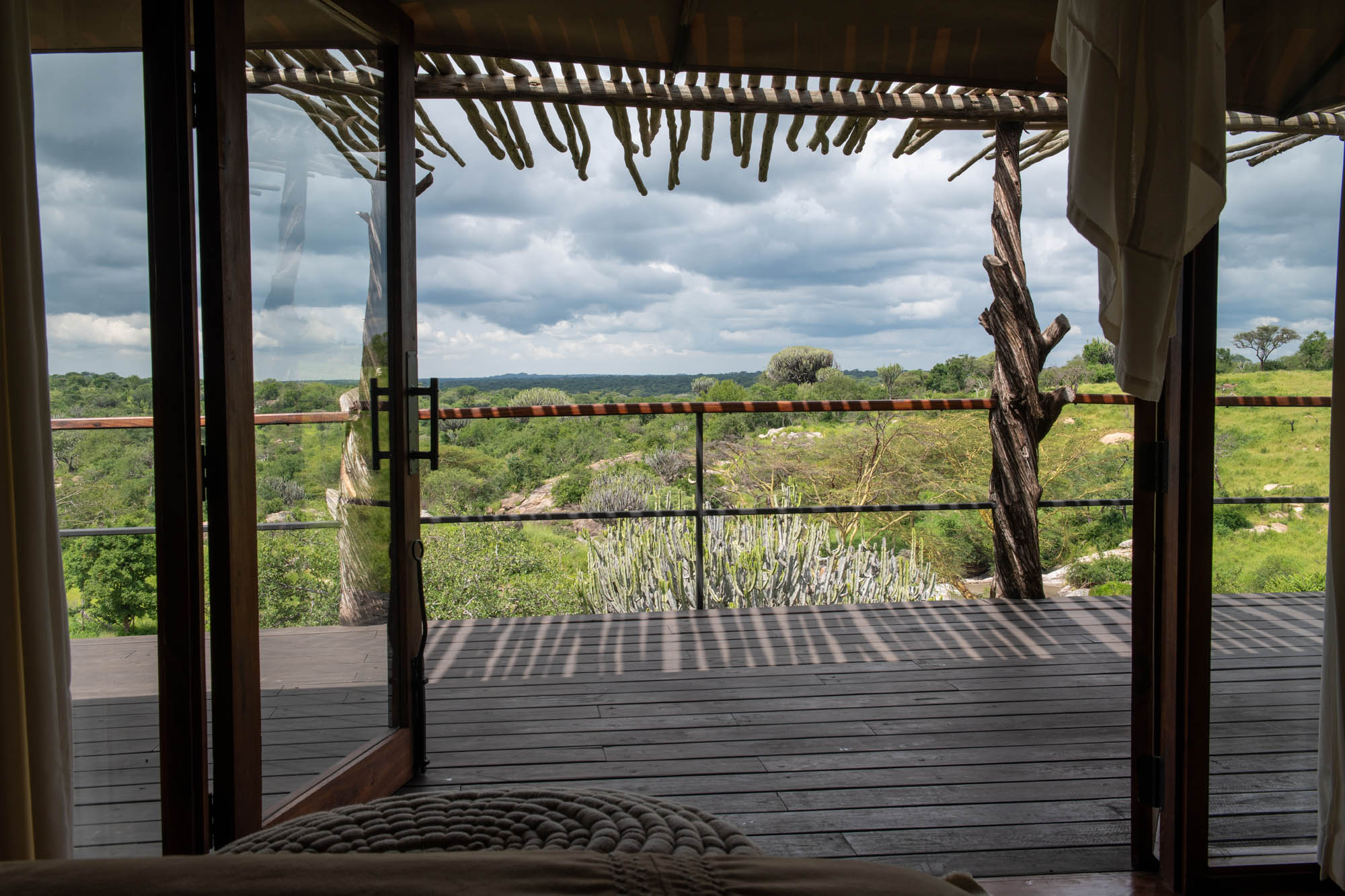
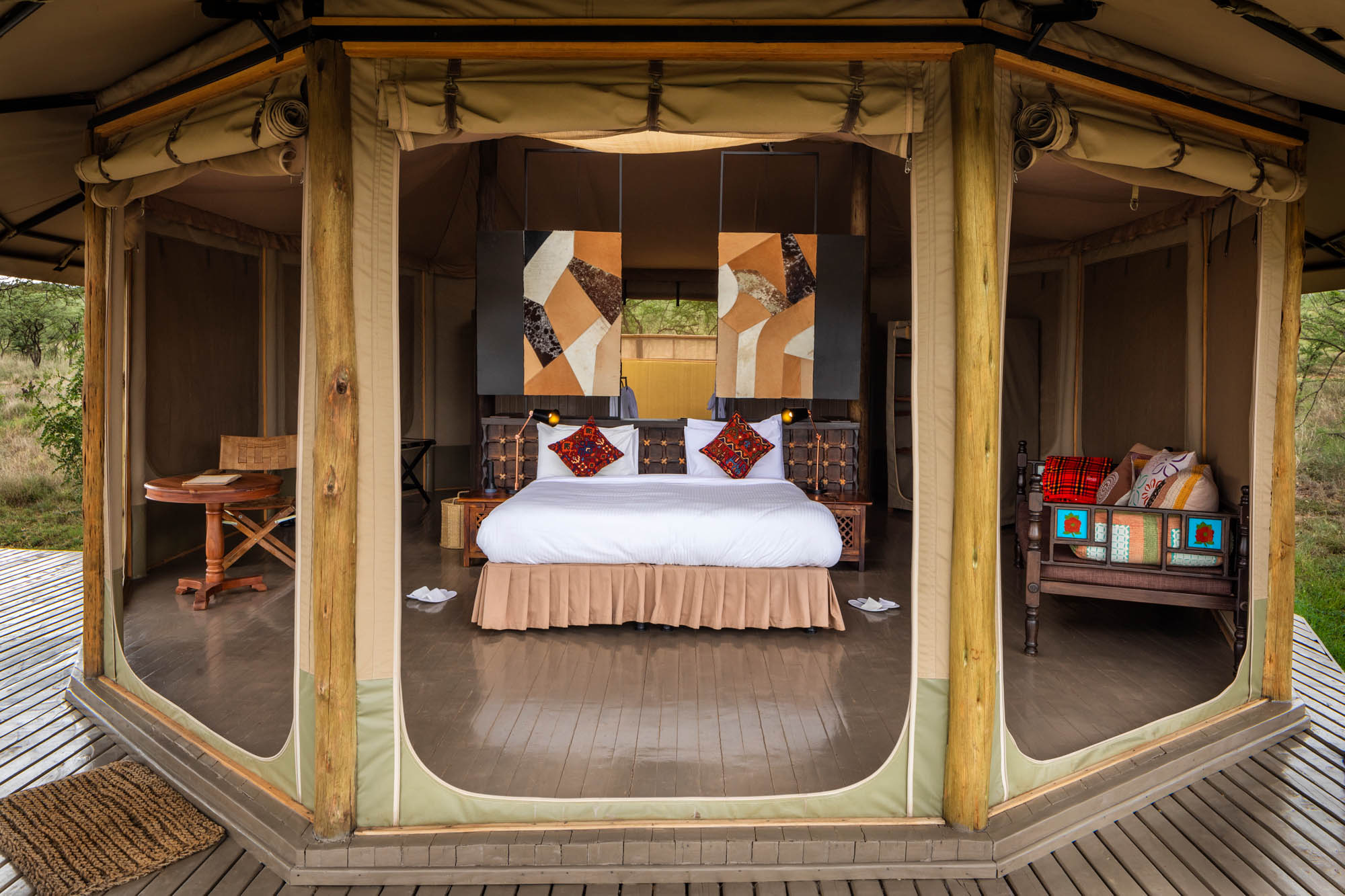
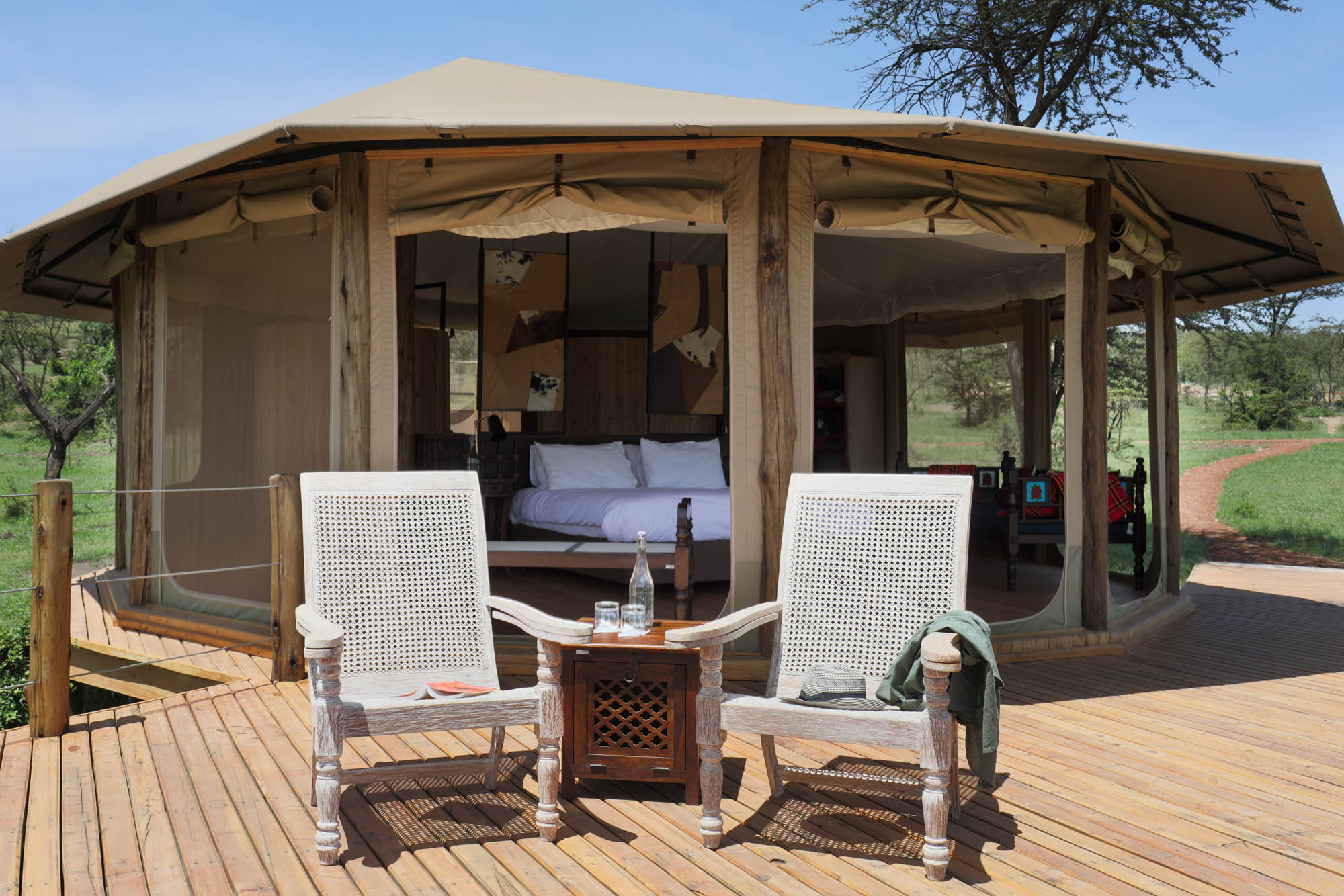
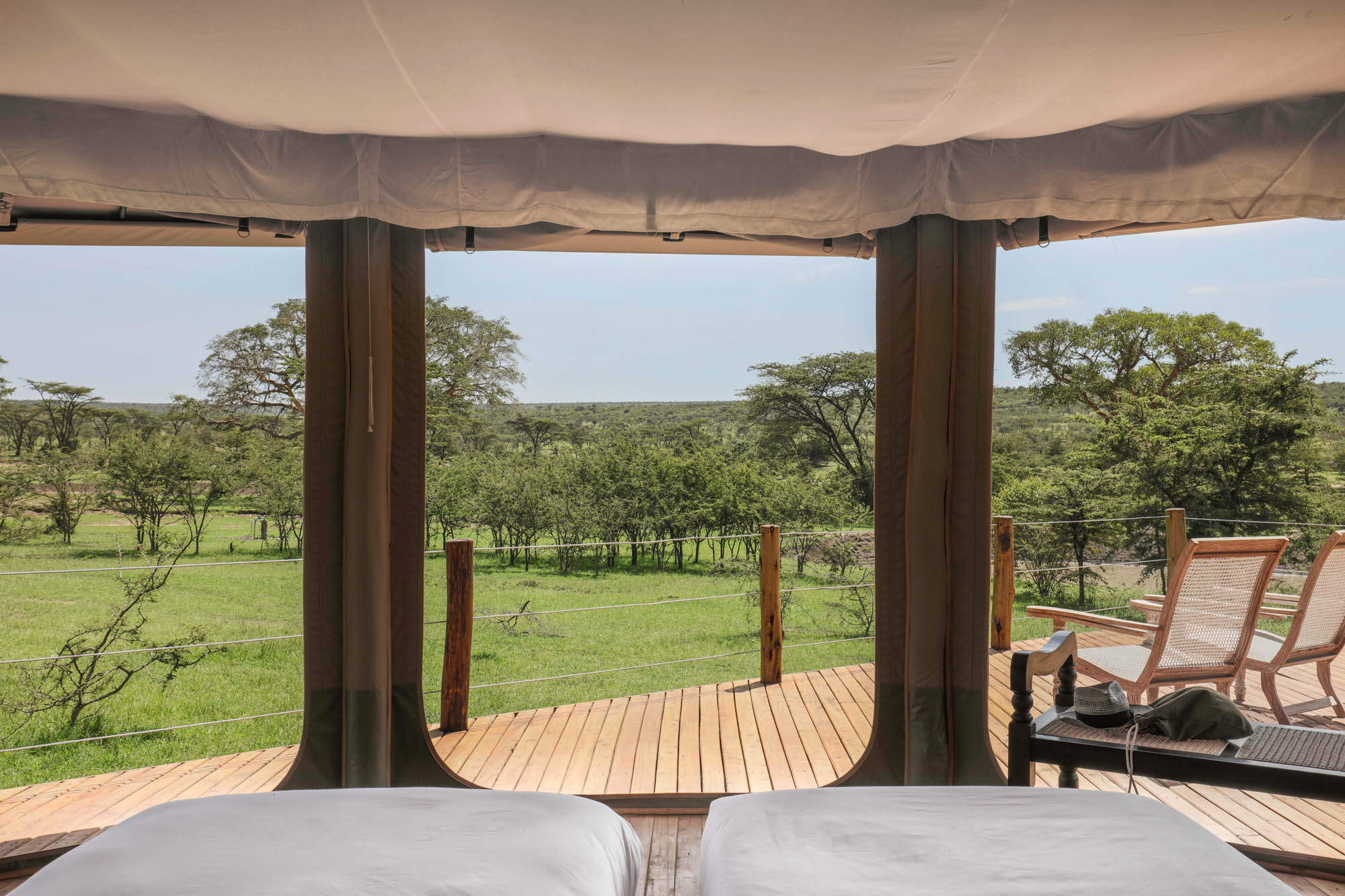
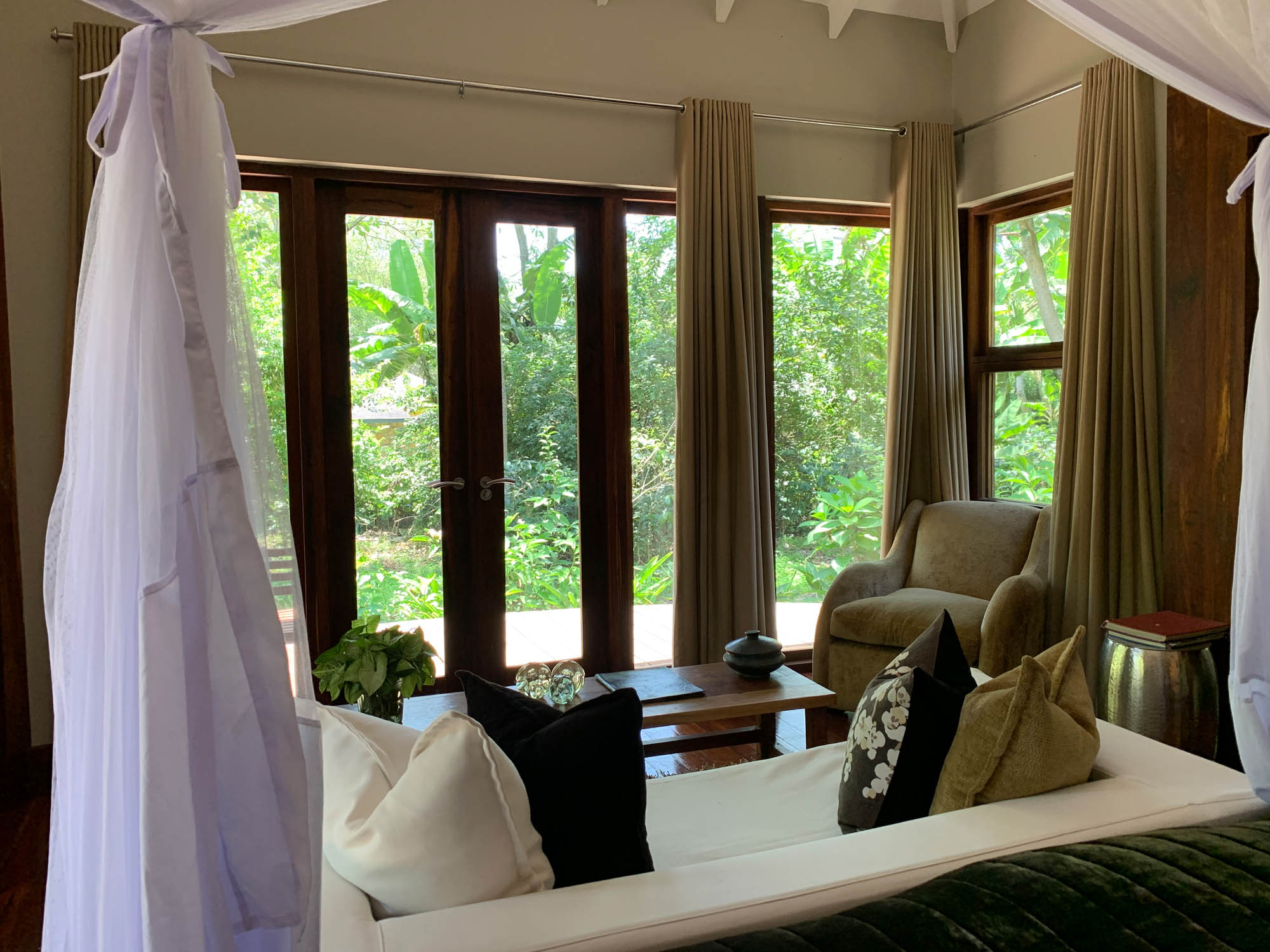
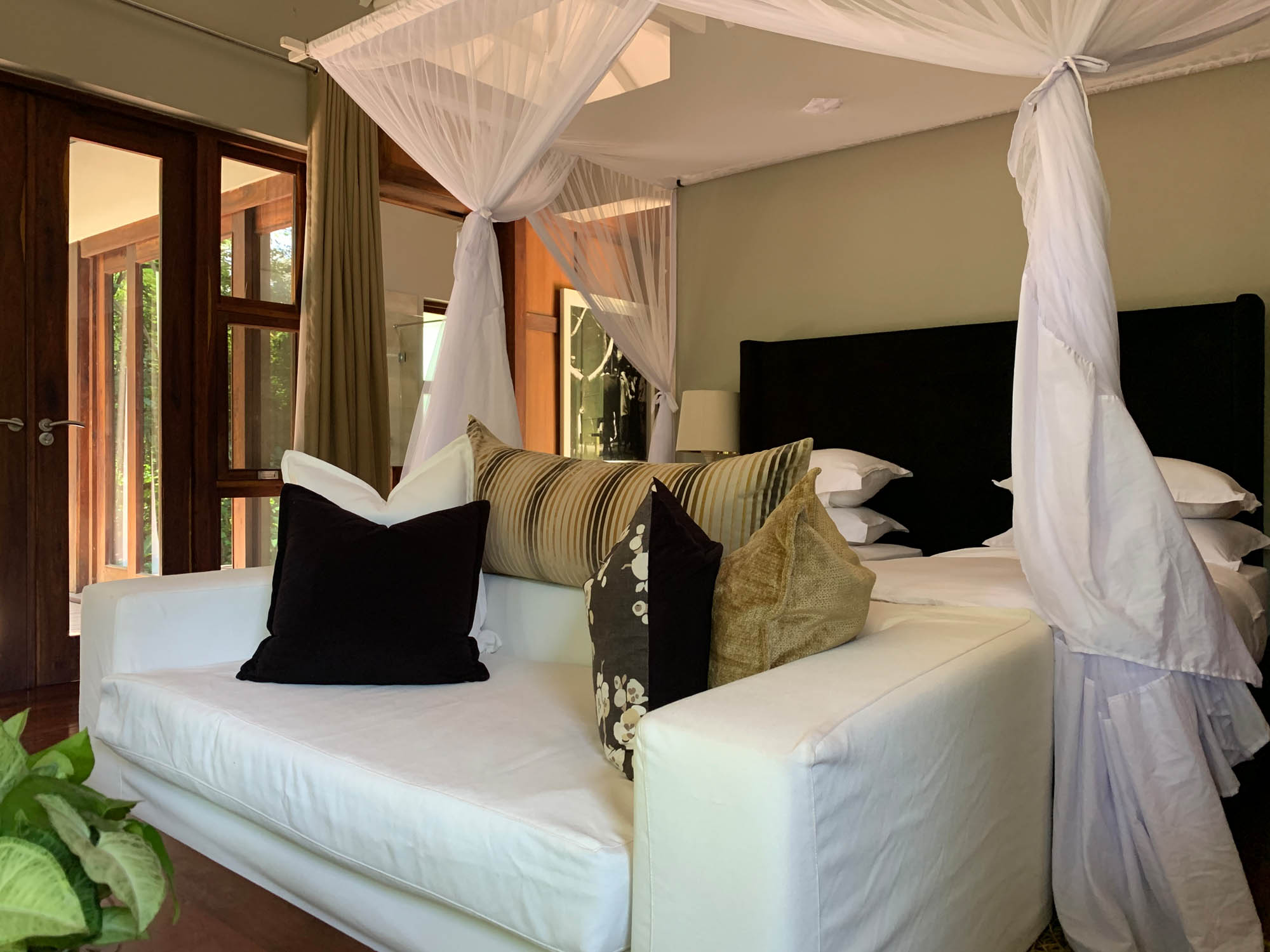
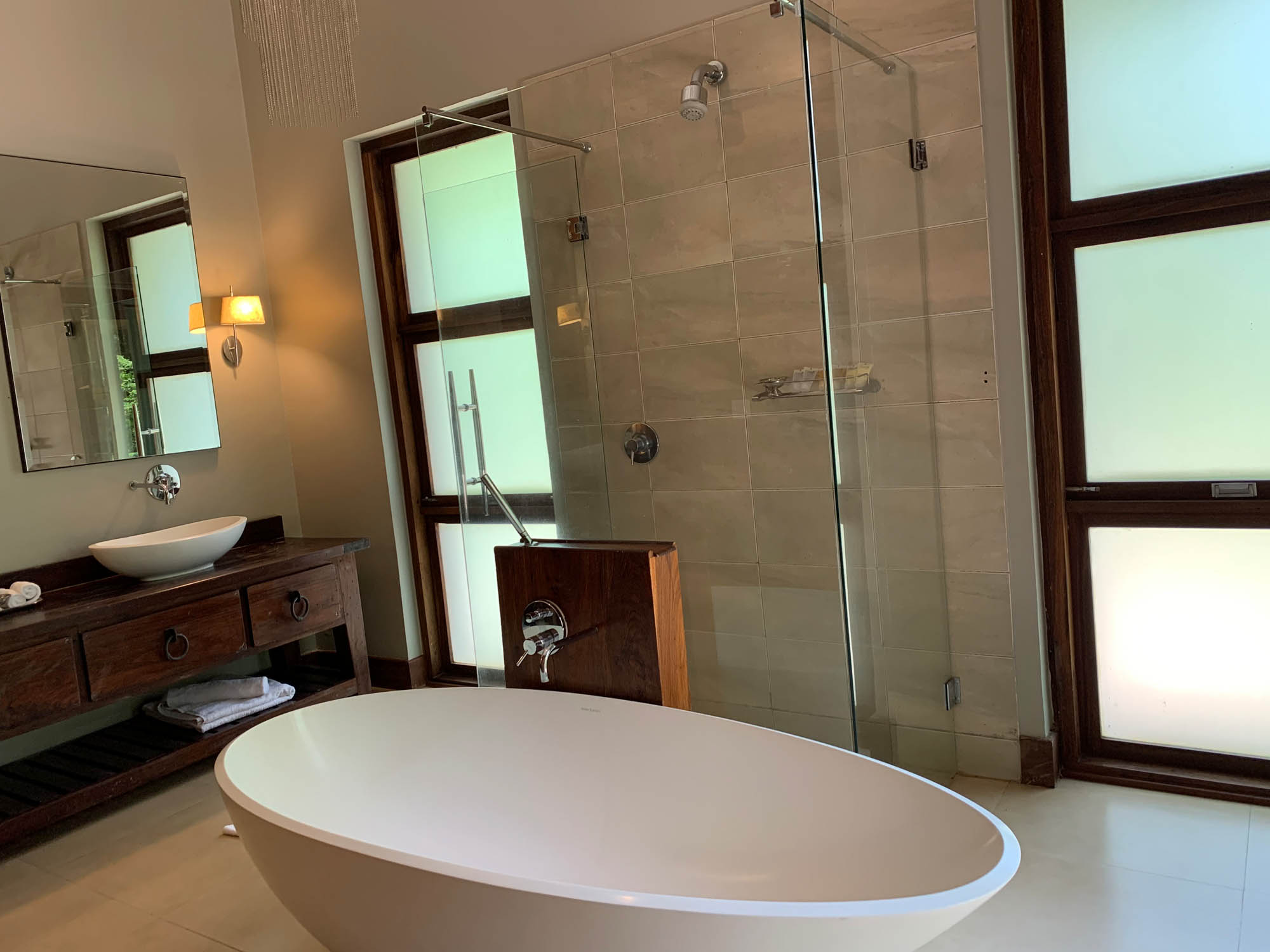
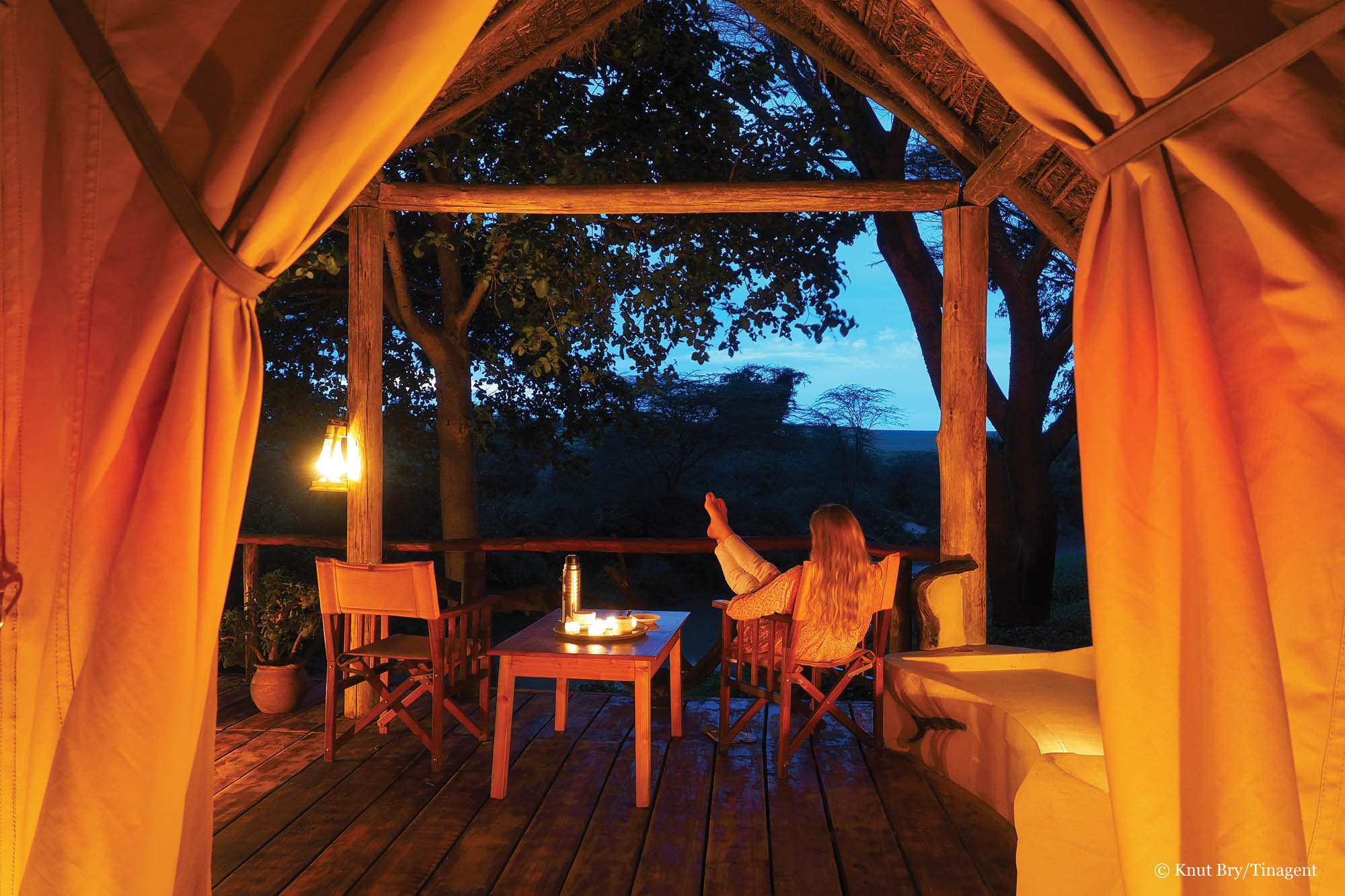
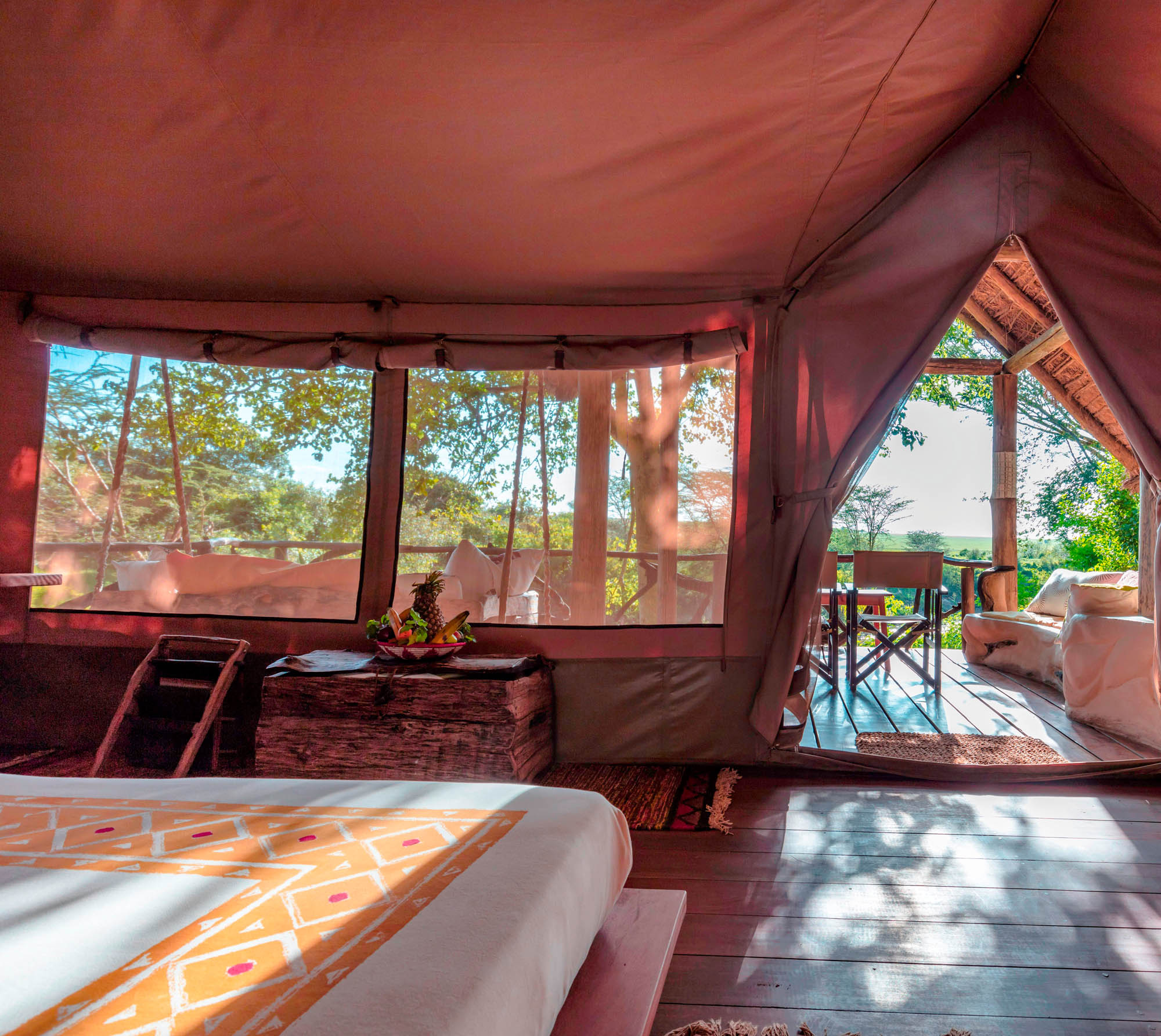
Enter your room and suddenly you’re center stage  with a striking view over the strongly flowing Mara River, its murky, swirling water obscuring two villains in the cast:  hippos and crocodiles. To be sure, Olonana is not an operetta or musical theater.  No.  The room says it all.  This is a grand opera with no expenses spared.  We were in suite #6.  It is fantastic, with a huge king size bed, two small but functional desks on opposite sides, a sunken lounge, a good-sized bathtub, a rain shower with triple shower-head, a wrap-around front patio and a double bed in an outside sala.


Image

Sanctuary Retreats

For those dreamy afternoon siestas when it is just you and the music of the river and the forest.  The front of the rooms is all glass, with lovely views over the river and landscapes beyond.  Everything is bathed in gorgeous natural light, creating a sense of being connected to the wilderness outside.

Three of the suites at Sanctuary Olonana have an extra bedroom, which make them ideal for families. The attention to detail extends to fully stocked mini-fridges and specially commissioned African art.


Image

Act 3: The people and the place

Over the next couple of days or so, you meet all the other artists involved in the production. Starting with the camp manager and his staff. On the day we arrived Jackson Keiwua was in charge.   He was most charming and all his staff members we interacted with were caring, welcoming and provided exceptional service.  A lot of what the culinary team does, takes place offstage but the results speak for themselves.  The meals were consistently delicious with ample but realistic portions.


Image

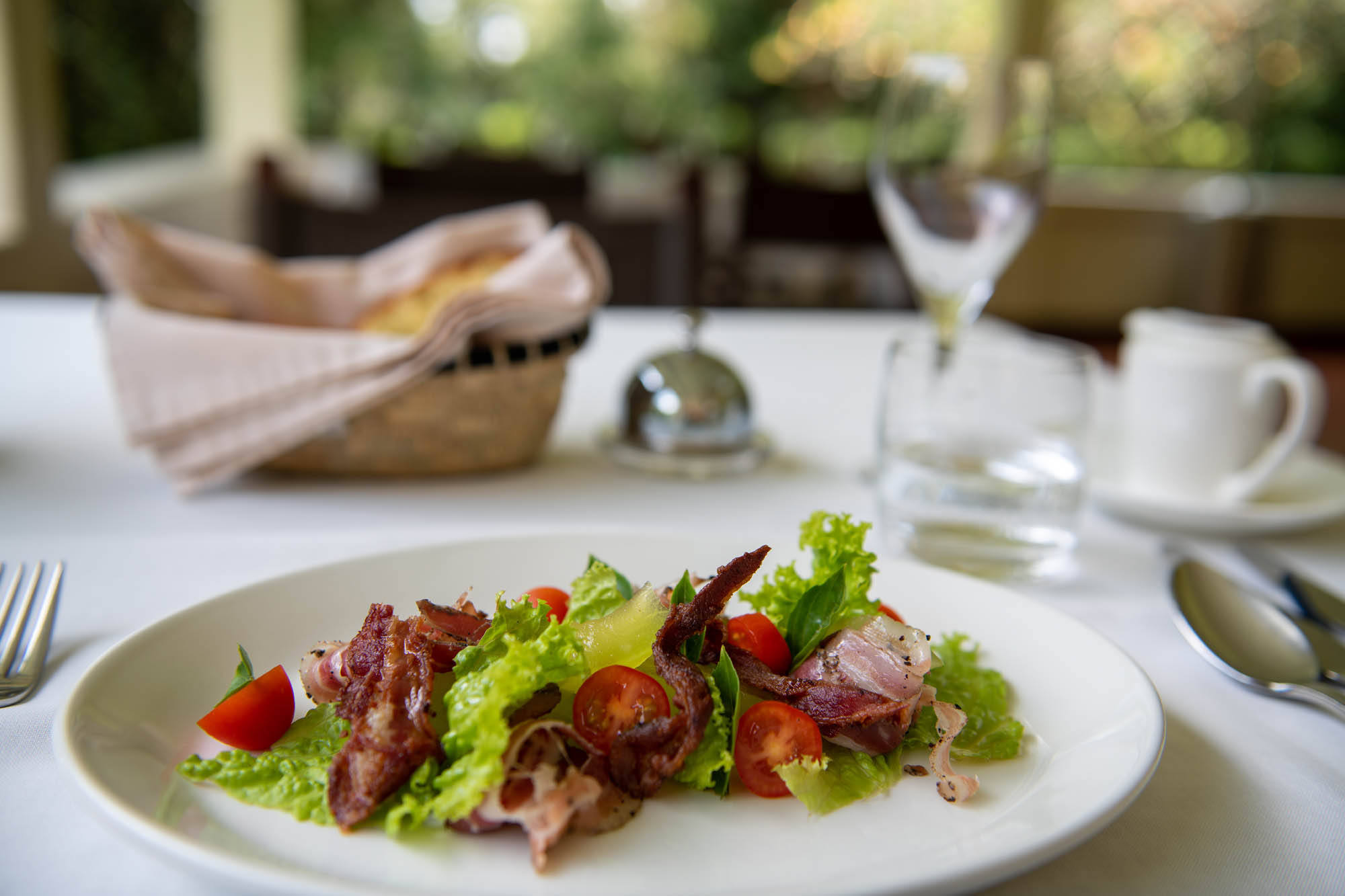
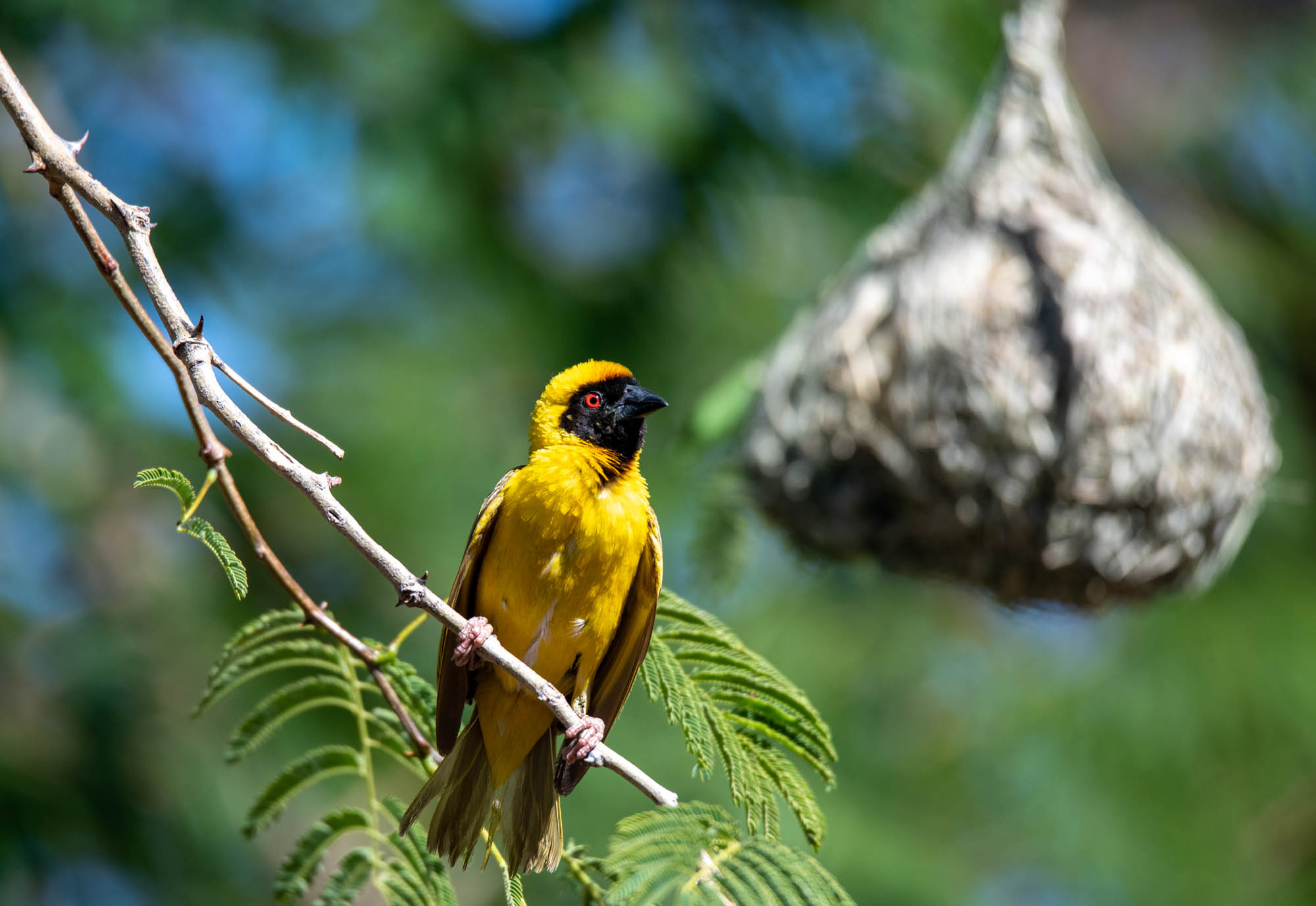
For a late lunch on arrival we could choose between chicken kabobs and a vegetarian dish, on another occasion we enjoyed a triple cheese ravioli, and a superb dessert:  pavlova with fruit.   A veritable chorus of yellow weavers were entertaining us during the meal, flitting to and from their nests, or building new ones. Singing and warbling non-stop. Dinner on our second night had two options as always:    beef fillet or red snapper, finished off with a ginger snap and chocolate ice cream.  Sweet music.


Image

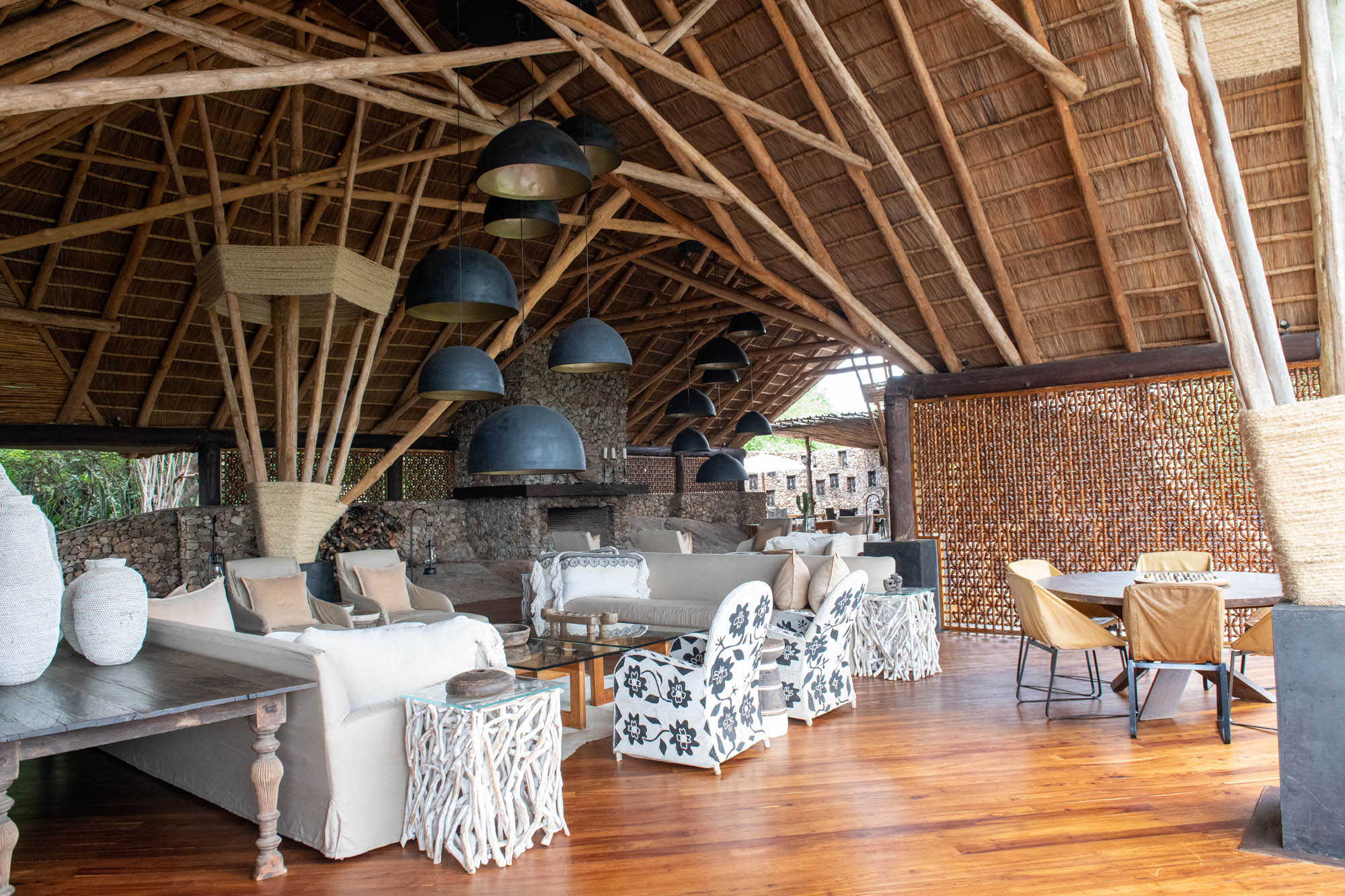
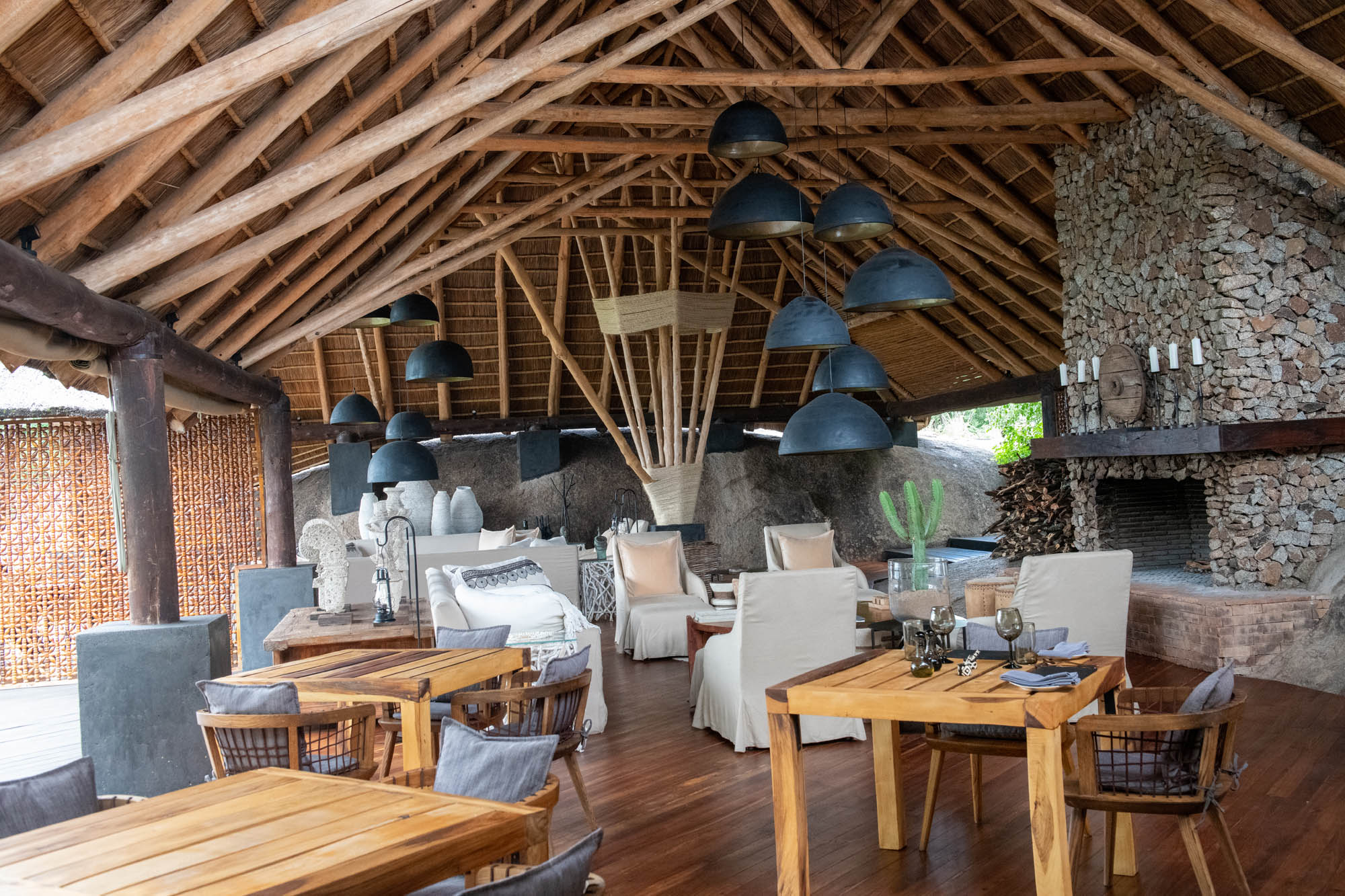
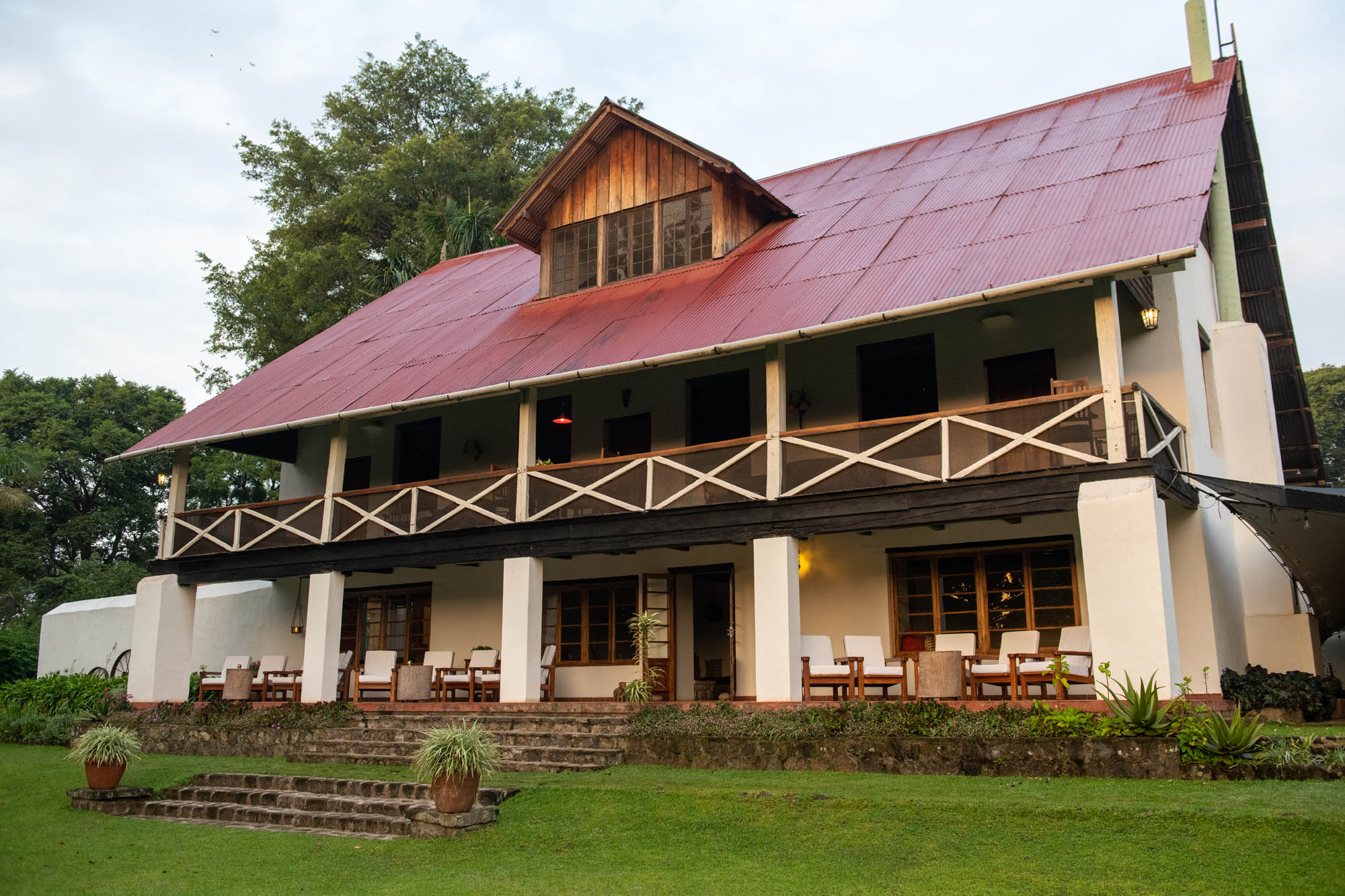
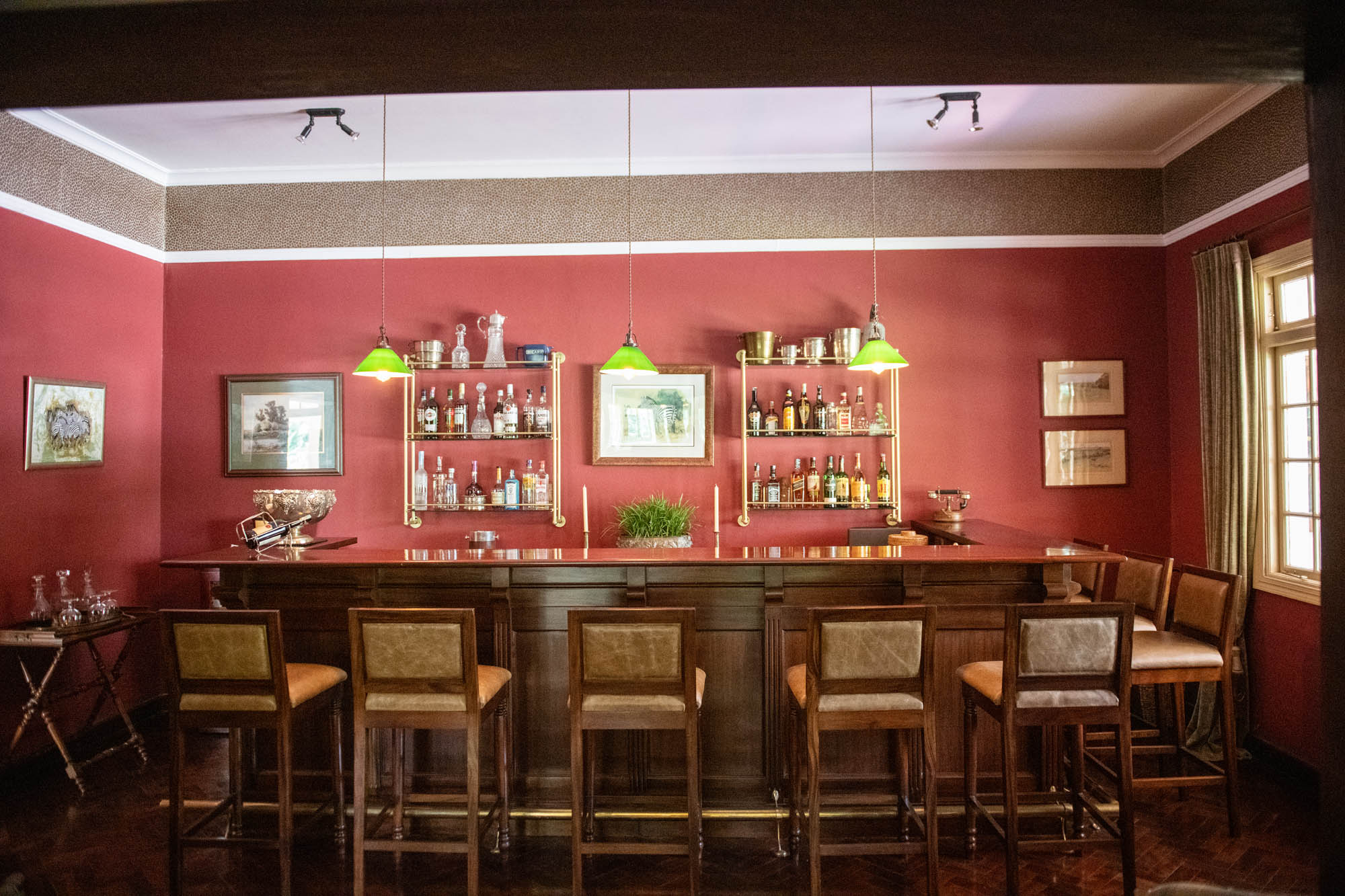
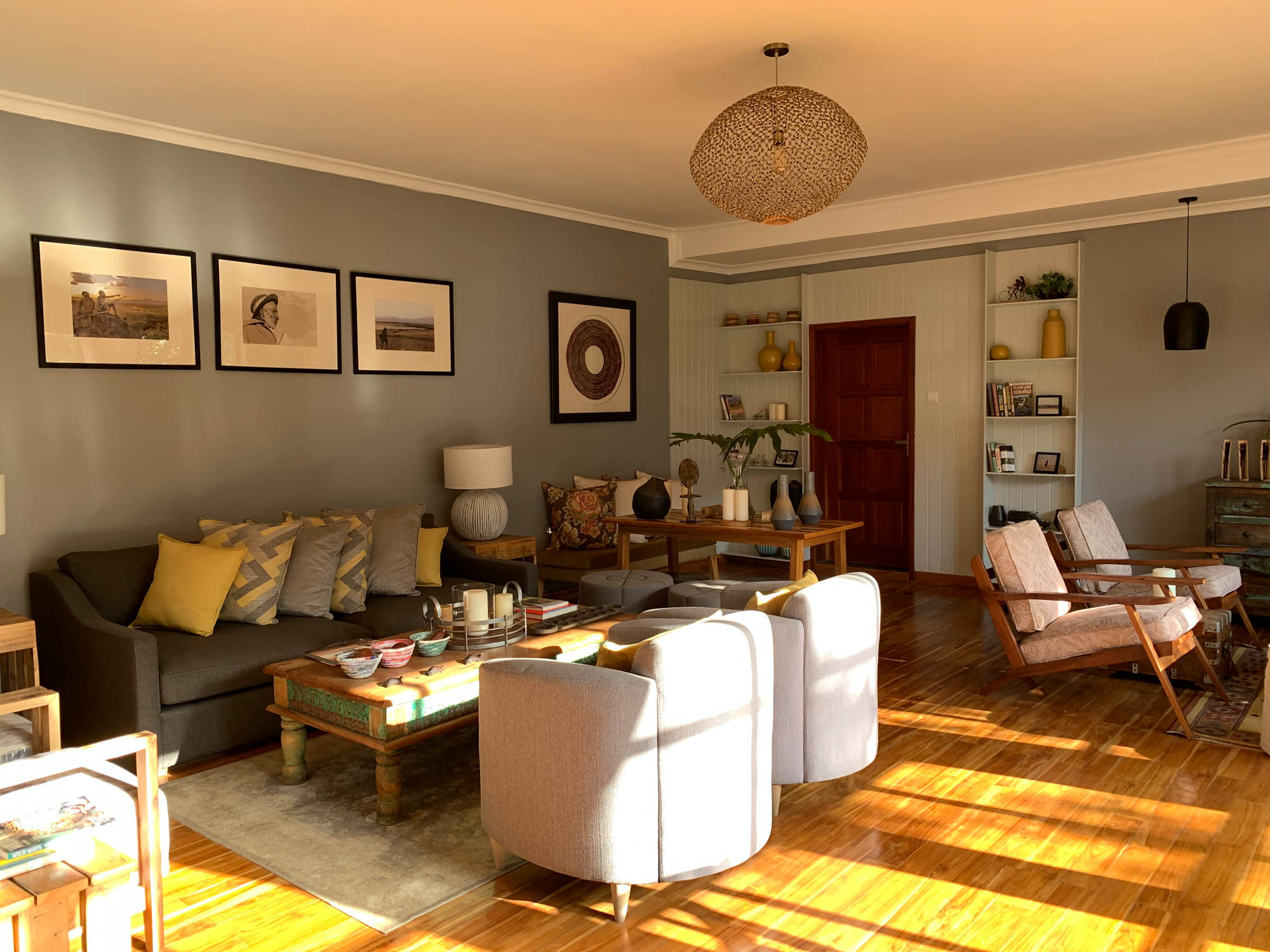
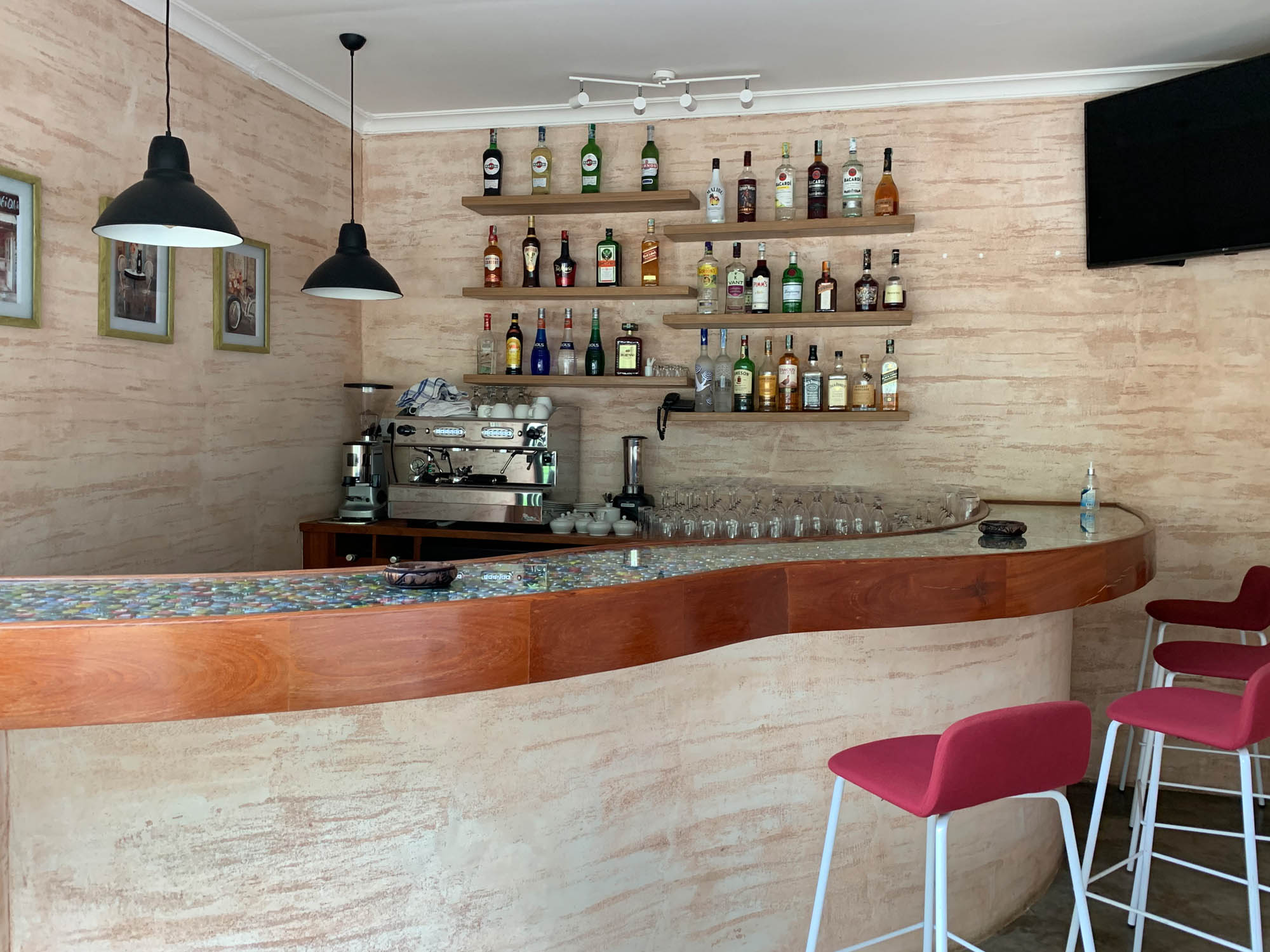
The main lodge interior serves as an extension of the surrounding wilderness with dramatic glass doors and windows letting in ample natural light.   Ornamentation includes hand-crafted Maasai spears on the walls and patterned prints, with a pleasing, low-key mix of African elements and  contemporary touches.      Fulfilling a dual role as a dining and recreation area, there is a bar, fire pit, a separate library room (sometimes used for private dining) and balconies that hang over the rushing waters below.


Image

Act 4: The game-viewing

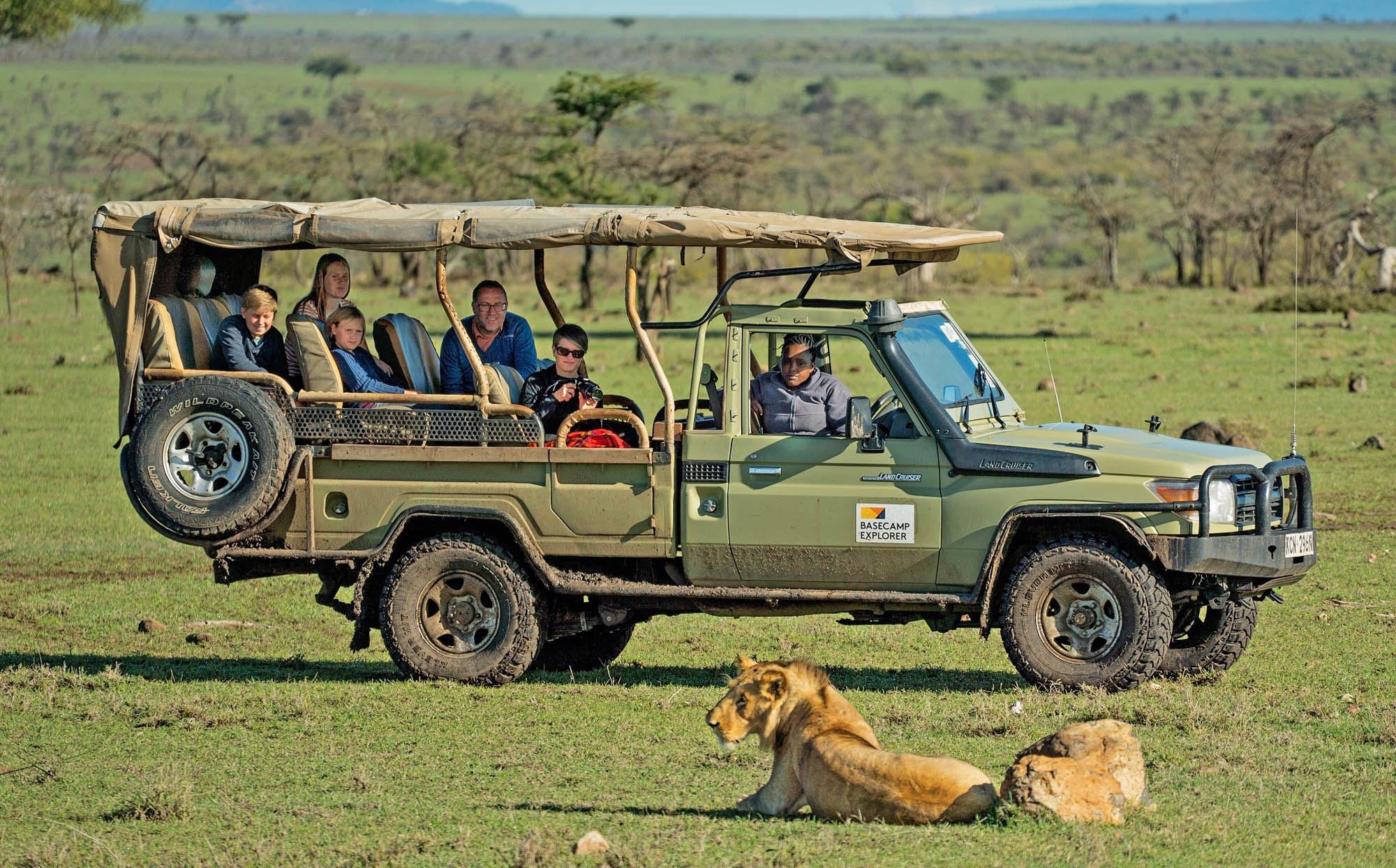
A well written opera has drama, conflict, sometimes death and of course a good measure of deception, flirtation and romance. And where do we find all this on a safari in Kenya?  In the grand theater of the Masai Mara of course. The star role in the performance was reserved for our guide Benson.   Our journey to Olonana was a long one.  Starting off from Cottar’s 1920s Camp, we drove clear across the Masai Mara from south to north.  From the Sand River entrance to the park via Mara River Bridge – where Benson took over – all the way to the Oloololo Gate and another 20 minutes or so to the camp.


Image

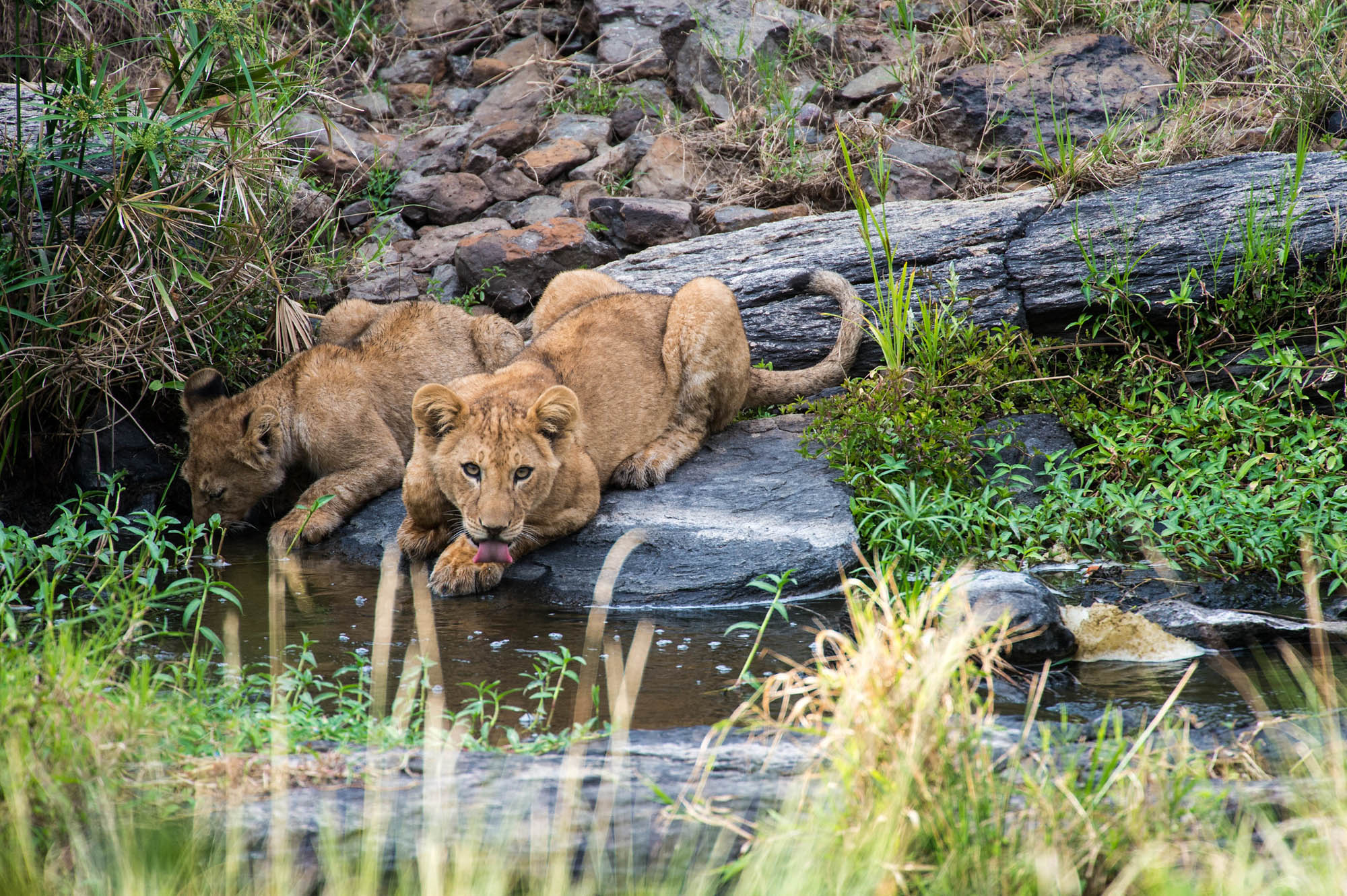
Along the way, we observed lots of wildlife including two different lion stalking events.  The first one was a solitary female lion targeting a small group of zebra along the Sand River.  Unfortunately for us but happily for them, the zebras were spooked by a few jittery red hartebeest and noisy guinea fowl alarm calls.  It was not to be.


Image

Around noon, we stopped to observe a group of three lions stalking a small group of waterbuck.  Ending with a half-hearted charge, the attempt was ultimately unsuccessful but intriguing to watch, nonetheless.  We had some superb views of elephants against the most amazing backdrops, sometimes just the big sky expanse of the Mara, other times the looming ‘wall’ of the Oloololo escarpment.  We saw  zebras on the move, gazelles and antelopes, warthogs seemingly everywhere, and even a hippo out of the water.


Image

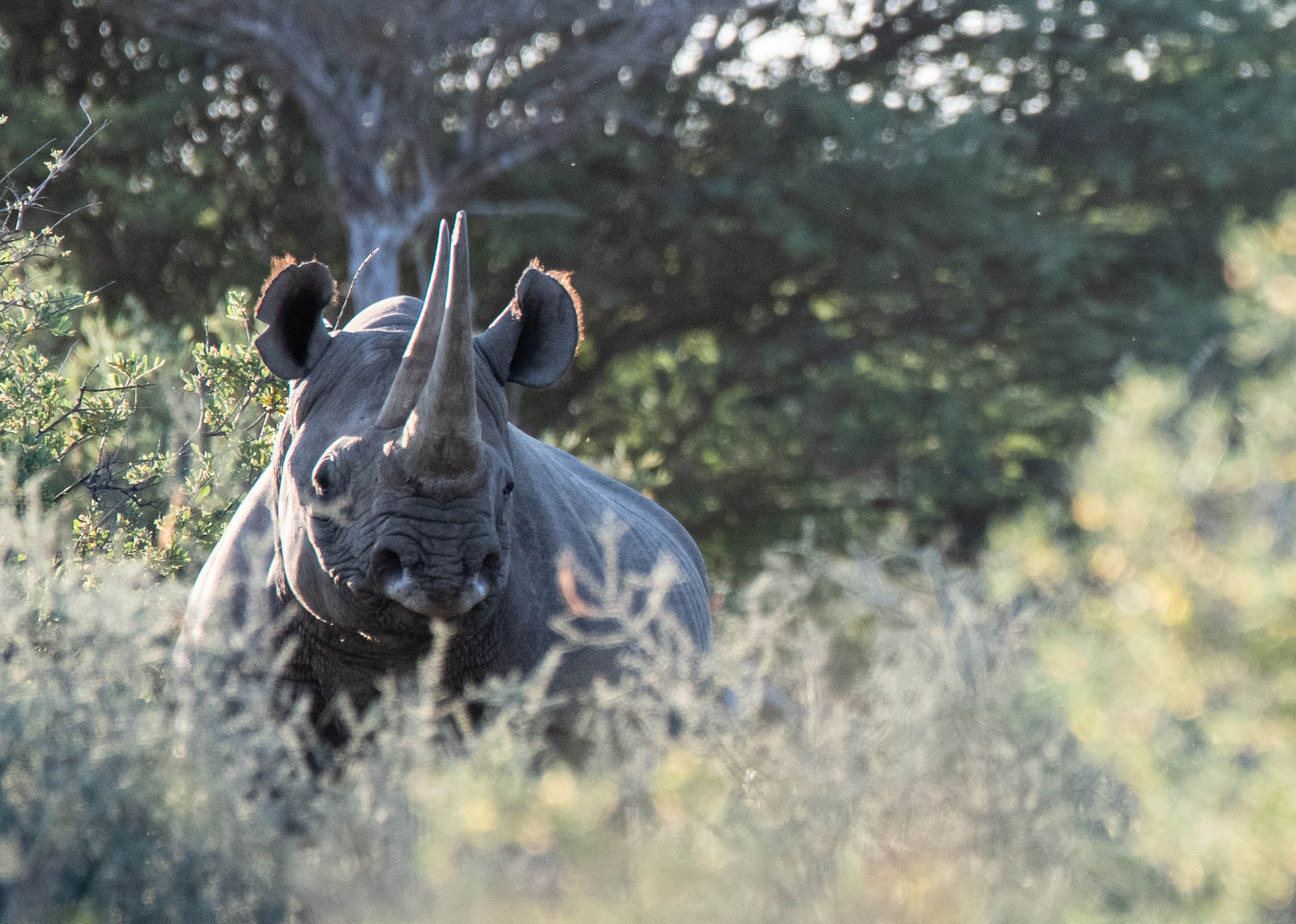
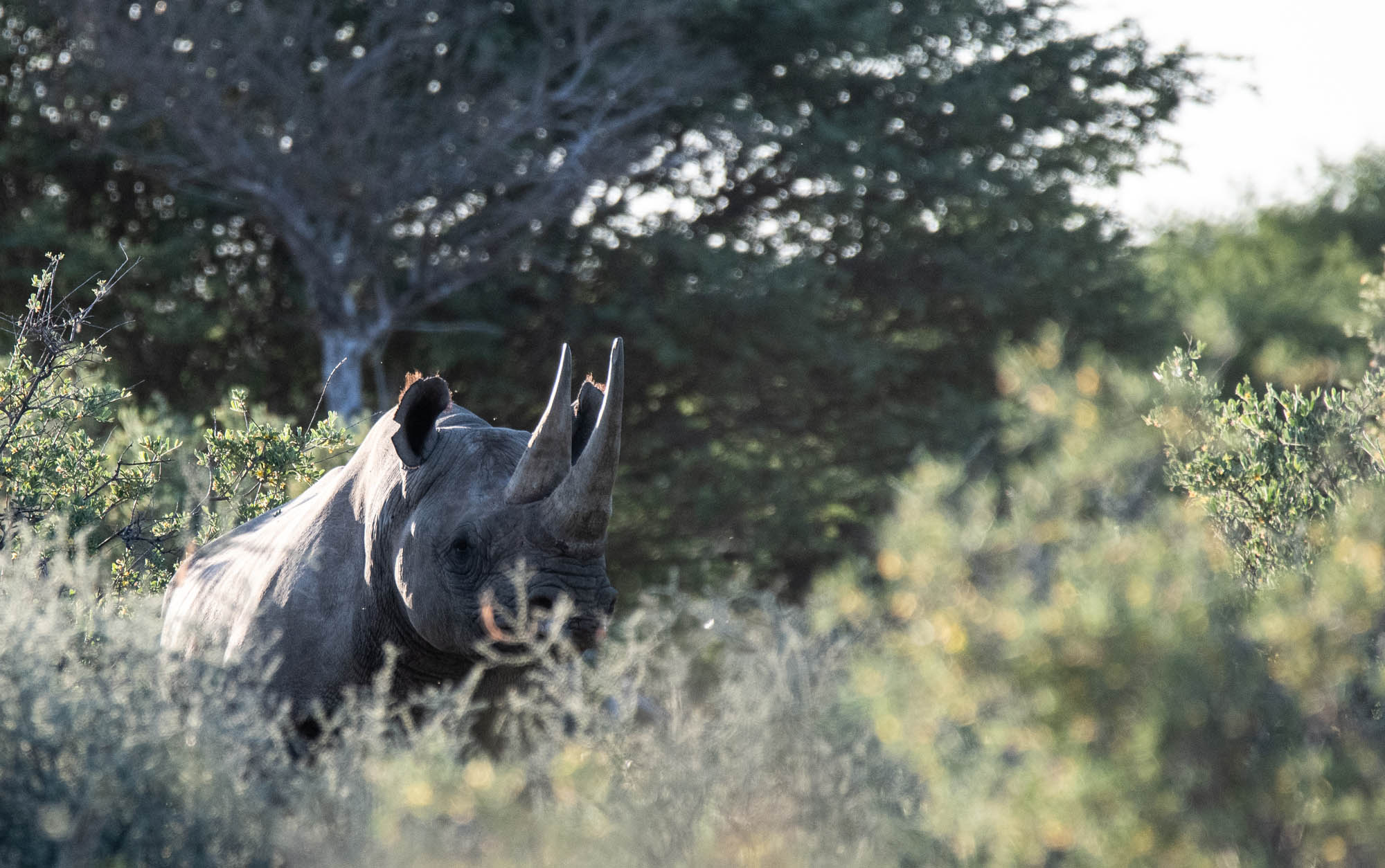
Like a good conductor, Benson knew the score intimately and timed everything perfectly.  The game-viewing highlight of our stay at Olonana was unquestionably seeing a solitary black rhino, just after a heavy thunderstorm accompanied by a significant downpour.  Even though visibility was poor,  we were thrilled to see one of the handful of rhinos still to be found in this part of the Masai Mara National Park.


Image

Conditions were not suitable for photography and I was ready to throw in the towel after 20 minutes of peering at the rhino from a distance, in either heavy rain or thick mist.  Benson had other ideas.   He stuck around an additional 20 minutes or so, even after the rhino seemed to have disappeared.  It turned out that the animal was simply lying down.  When it finally got back up – the rain had stopped falling by now and the fog had mostly dissipated – it started to walk almost directly towards us.  We ended up with a bunch of good views and great photos of the black rhino.  Seemingly staring right into the lens.  Bravissimo!


Image

The following day we embarked on a near full day drive with a picnic lunch.  The area had experienced abundant rainfall and the Mara never looked better.  Beautiful green scenery stretched to the horizon in every direction.  We drove all the way to the border of Tanzania,  observing some big herds of elephant, buffalo and topi along the way.  Benson’s driving skills were pushed to the limit as he successfully negotiated several waterlogged, beyond muddy, downright treacherous spots.  En route, we stopped at the main Serena crossing and saw six or so fierce-looking, old, gnarly crocodiles.  Massive and truly prehistoric in appearance, they were death incarnate.  Repulsive yet fascinating.


Image

Planning ahead for the next performance

As the curtain fell on our Olonana experience, we were on our feet in a standing ovation.  It was a marvelous performance and we were already thinking about tickets for the next time.  For visitors contemplating a trip to Kenya and to the Masai Mara, what we can say is that Olonana will be a perfect first experience, an ideal introduction to what is special and unique about the Masai Mara.  And even if you think you’ve seen and experienced it all before, this particular area of the Mara and this specific lodge have many advantages and accolades:


Image

  • During the annual Wildebeest Migration, the action happens less than 40 minutes from the camp’s doorstep
  • The camp is easily accessible, only a 45 minute flight from Nairobi
  • The luxury Geoffrey Kent Suite features 2 ensuite bedrooms, private dining, an infinity pool and private vehicle and guide
  • In addition to game drives, there are cultural visits, bush dinners, sundowners, balloon flights and scenic flights
  • Olonana is Gold Eco-Rated by Ecotourism Kenya and the winner of “Africa’s Leading Eco-Lodge” in World Travel Awards 2015
  • Olonana is In the TripAdvisor Certificate of Excellence Hall of Fame. This accolade is granted only to properties that have won the Certificate of Excellence for five years in a row.
  • There is Wi-Fi (no extra cost) available in each room.


Image

When you’re not out on a game drive, you can swim lengths in the pool, enjoy an outdoor massage at the spa or walk through camp along the shaded forest path which runs from the main area to the suites. 

From your private day bed you can observe the squabbles of the hippos in the river below, or follow the adventures of the golden weavers darting in and out of nests constructed directly over the water.


Image

Next Friday’s blog takes a look at a different part of the Masai Mara, the private Naboisho Conservancy, and specifically at a superb new property in the area, Great Plains’ Mara Nyika Camp.

More Info

Email bert@fisheaglesafaris.com

Email jason@fisheaglesafaris.com

@fisheaglesafarishouston

#FishEagleSafaris

YOU MIGHT ALSO BE INTERESTED IN

Destinations
Zambia

10th September 2021

Chindeni and the Bushcamp Company, Zambia

By late July we found ourselves at Chindeni, a small Bushcamp Company property
Read more
Botswana
Destinations
Okavango Delta

3rd October 2022

Camp Okavango, Botswana

Camp Okavango is in the heart of the permanent part of the Delta. In this idyllic setting there are no vehicles, and it is just a short walk
Read more
Area
Destinations
Nyerere National Park
Ruaha
Tanzania

14th October 2023

From My Safari Notebook: Wildlife Photography

Birds in flight and wildlife photographers have an uneasy relationship. Things go wrong as often as they go right. Getting focus-lock on a moving subject

Read more

SUBSCRIBE TO OUR NEWSLETTER

READERS FAVOURITES

Destinations
Zambia

10th September 2021

Chindeni and the Bushcamp Company, Zambia

By late July we found ourselves at Chindeni, a small Bushcamp Company property
Read more
Botswana
Destinations

4th August 2022

On Safari At Belmond Eagle Island Lodge, Okavango Delta

What is the ‘secret sauce’ for an unforgettable few days on safari in Botswana? It starts with the animals, of course. The elephants, lions, giraffes, hippos
Read more
Destinations
India

27th May 2023

India

India’s tiger, mammals and birds.

Read more

Exploring Tsavo East & West

15th January 2021

Exploring Tsavo East & West


Image

Exploring Tsavo East & West

The Tsavo region of Kenya is often associated with a dreadful series of events immortalized in a book by John Henry Patterson (The Man-eaters of Tsavo),  about two maneless man-eating lions which terrorized the workers constructing a bridge over the Tsavo river, in the late 1880’s.   The screenplay for a  popular movie from the late 1990’s – The Ghost and the Darkness with Michael Douglas and Val Kilmer – is very loosely based on the same unfortunate chapter in the history of the area.


Image

A modern-day visitor to Tsavo need not be fearful or apprehensive, except maybe about the possibility of being bitten by a tsetse fly.  There are still maneless lions around in Tsavo, but nowadays they are safely observed from safari jeeps.  In the unlikely event that you’d come across one on foot, it is likely to give you a brief glance and then disappear into the bush.


Image

What may surprise and delight you is the biodiversity of Tsavo.  It has amazing geological and scenic beauty and its wildlife is arguably the most varied of any of Kenya’s national parks, as it is located where the northern and southern forms of Kenya’s fauna meet.


Image

The thick bush of Ithumba, the wide open plains around Satao in southern Tsavo East, the dramatic drop-off from the Yatta Plateau to the Galana River.  The beautiful Chyulu Hills, glimpses of Mt. Kilimanjaro, the crystal clear water of Mzima Springs, the atmospheric – even ominous – Shetani Lava Flow.  There was something new and exciting to see and experience every day, sometimes every few hours.  While the game viewing was challenging under the worst possible conditions (we got there literally just days after heavy rainfall), we still saw all of the big mammals usually associated with a safari:  elephants, buffaloes, lions, leopards, giraffes, zebras and more.


Image

Taking off from Ithumba after our last morning activity with the orphan elephants, our pilot Peter White set a course to the south, at a cruising altitude of about 5,000 feet above sea level.  Soon enough, the habitat started to change as the bush opened up into more sparsely vegetated terrain, the further south we flew.  Off to our right, we saw the Chyulu Hills slide by slowly, while underneath us was the Yatta Plateau, the world’s longest lava flow, measuring about 290 km (180 miles) and stretching along the western boundary of Tsavo East National Park.


Image

Tsavo National Park consists of mostly semi-arid grasslands and savanna. It is considered one of the world’s biodiversity strongholds, and its popularity is mostly due to its diverse wildlife, notably its healthy elephant population.  Animals found in Tsavo include cheetah, leopard, African painted dogs, antelopes, buffalo, black rhinos, hippos, zebra, hyenas, lesser kudu, klipspringers, gerenuk, mongoose, nocturnal porcupine, fringe-eared Oryx, giraffe, and crocodiles.


Image

Tsavo East National Park is generally flat, with dry plains bisected by the Galana River, running at the base of the Yatta plateau.  Tsavo West National Park is more mountainous and wetter, with a more diverse array of habitats including some swamps and lakes.  There are numerous rocky outcrops and ridges, as well as some recent lava flows emanating from the Chyulu Hills.


Image

SATAO CAMP

Landing near Satao Camp, we almost immediately started to see more wildlife than was the case at Ithumba.  Even before we were on the ground, we saw several adult male elephant bulls as well as breeding herds of elephants from the aircraft and there was a herd of oryx right on the airstrip.  They were clumped together about halfway down the runway but it was not an issue for Peter, who is an accomplished pilot.   He does aerial spraying when he’s not flying people around Kenya, so we landed quite safely and easily, using barely the first third of the strip.


Image

On our drive to Satao Camp for lunch, we observed many more elephants around water holes, wallowing in the mud, as well as kongoni, zebra, and Grant’s Gazelles.  We also notched up several bird species, notably some secretary birds and a small flock of striking vulturine guineafowl at Satao Camp.  On an outing with three scientists from the Tsavo Trust, we tried to locate one of the remaining ‘super tuskers’ known to be present in the area.  While we fell short on that objective, we did see several amazing elephants, two of which were ‘emerging’ super tuskers, each with massive tusks.


Image

Historically, elephants with tusks weighing more than 100 lbs per side were known as “hundred pounders” and were much in demand by hunters and poachers and of course tourists to the area.  Hunting has been banned in Kenya for decades and poaching has been reduced significantly, over the last few years. There are still about 8 of the super tuskers in Tsavo.  The Tsavo Trust, working together with Kenya Wildlife Services, have launched a Big Tusker Project in order to protect these behemoths and about 26 or so emerging bulls that will be the  “hundred pounders” of the future. The greater Tsavo area is home to the last remaining sustainable population of large super tuskers in all of Africa.


Image

Finch Hattons Camp

From Satao, we flew on to Finch Hatton’s Camp in Tsavo West, where we met up with our friend and frequent traveling companion, one of Origins Safaris’ most accomplished guides – Edwin Selempo.  One of East Africa’s top birders, Edwin also has an encyclopedic knowledge of all other aspects of natural history and his keen sense of humor, enthusiasm and strong conservation ethic make him a ‘guide extraordinaire’.


Image

With Edwin alongside to fill in the details, we made the most of our two full days in Tsavo West, enjoying exceptionally good game-viewing which included two different leopards, lions, an abundance of giraffes, zebras, waterbuck, lesser kudu,  klipspringers, eland, gazelles, and some excellent birds.


Image

On a half day drive to Rhino Valley, we observed several zebras rolling in the red Tsavo dust, turning their white stripes into a shade of ochre.  Apparently they do this to get rid of external parasites like ticks and fleas and other biting insects.  Edwin mentioned that this part of the park is home to hundreds of elephants in the dry season.  I was happy to get a nice photo of a Lesser Kudu, an animal which we have only seen a couple of times on all our Africa trips.


Image

Finch Hatton Camp in Tsavo West has everything that even the most demanding health and fitness enthusiast may desire:  a pool, spa, gym, lap pool and yoga deck complete with free yoga instruction.  It has a superb pool deck, well-stocked shop and a couple of inviting bars, both indoor and outdoor.  It’s a luxury camp where we enjoyed several imaginative dishes,  ranging well beyond the scope of run-of-the-mill safari fare, such as Asian flavored stir fry pork, an exceptionally tasty vegetarian Pad Thai, or on another occasion fennel soup, Caprese salad, a perfectly prepared fillet of beef and crepes Suzette.  On the last evening we had an expertly prepared rack of lamb, with a delightful starter consisting of polenta ‘fingers’ with a mildly spicy dipping sauce. 


Image

The main lodge overlooks a large spring-fed water hole with lily pads, hippos, crocodiles, and a profusion of birds including various egrets, weavers and kingfishers.  At night over dinner, a chorus of painted reed frogs clinked  away, providing a romantic natural soundtrack.


Image

The luxury tented suites at Finch Hattons are scattered along a crushed lava rock path which meanders along the edge of the lily-covered pond. Each luxury tented suite is elevated and has unobstructed views of the hippo pools from the outdoor sitting deck.  The spacious tents are exquisitely furnished with a lavish en-suite bathroom, two outdoor showers, complimentary wi-fi, and a mini-bar with home made snacks. On a clear day you can see Mt. Kilimanjaro when leaving your room for breakfast and the morning game drive.


Image

On our last night at Finch Hatton’s, we were treated to a surprise sundowner event, watching the sunset over Mt. Kilimanjaro.  It was fantastic.  After a bit of coaching from a Masai warrior, we tried our hand – with mixed success – at a couple of Masai Olympics events including archery and club throwing.


Image

Shetani Lava Flow

Having first noticed it on our approach into Finch Hatton’s from the air, I was astonished and intrigued to closely observe the Shetani Lava Flow, dating back only 400 years,  an instant in geological time.  The massive amount of crumbled black lava rock visible in the area has an almost visceral impact.  Shetani means ‘devil’ in Swahili and it is easy to see why this relatively recent event would have been regarded with superstition and fear.  At the time it must have been cataclysmic, with thousands of gallons per second of magma erupting from the Chyulu Hills and leaving a  flaming path of destruction and devastation in its way.  Even now, it looks like it might just have happened a few weeks ago, the weirdly shaped pitch black crusty protrusions spread out over the area like freaky waves in a frozen pond.


Image

For something like 30 years, travelers had to be escorted by an armed patrol while passing through the Shetani Lava Flow, as a result of a single attack by Somali bandits decades ago.  Fortunately this requirement is no longer in place, so we could drive to a lookout point one day, enjoying a picnic breakfast while watching a couple of klipspringers clambering on the nearby lava rocks.


Image

Mzima Springs

On our second day in Tsavo West, we ventured out to Mzima Springs.  In this lush, beautiful spot 230,000 liters per minute of sparkling clean water pour out of the lava rocks, having been filtered underground over a distance of nearly 60 km (40 miles), all the way from the Chyulu Hills.  The water spreads out into a large pond full of what appears to be blue fish.  Apparently the fish only look blue due to the reflection of the blue sky in the clean water.  The series of picturesque pools are fringed by an abundance of tropical African palm trees and date palms.


Image

Making our way along the edge of the pool, with an armed guard as escort (in the event of an issue with elephants or buffaloes), we observed a couple of good sized crocodiles, a pod of hippopotamus, and various bird species including egrets, herons, ducks and kingfishers.  

Some 20,000 liters per minute of the water flowing out of the hills is diverted into a pipeline which runs all the way to Mombasa on the Kenya coast, serving as the city’s drinking water.


Image

A note for first time visitors

Tsavo in the rainy season is not Africa for beginners.  That’s when you may be surprised by the abundance of flying insects and emerging termite alates.  The Tsavo we experienced last November was hot and muggy, with surprisingly few mosquitoes but more than enough tsetse flies to make up for that ‘deficiency’.  In defense of the tsetse flies of Tsavo, I can vouch that their bite – while annoying – is far less potent than others I have experienced such as in Zambia and the Congo.  A little bit of an itch and it’s all over…

For all but die-hard Africa aficionados, Tsavo would be a better bet in the dry (cool) season from about June through September or so.  This is also the best time of the year to observe the many elephants in the area, which are drawn to remaining sources of permanent water, in the dry season.


Image

Our blog post next Friday takes a look at a remote area of the Masai Mara, right on the border of Tanzania, the Olderkesi Conservancy, with the focus being on one of the most successful and progressive Kenya safari camps, Cottar’s 1920 Safari Camp.  

More Info

Email bert@fisheaglesafaris.com

Email jason@fisheaglesafaris.com

@fisheaglesafarishouston

#FishEagleSafaris

YOU MIGHT ALSO BE INTERESTED IN

Botswana
Destinations
Okavango Delta

10th August 2021

Xakanaxa Camp, Botswana

What is there to be said upon one’s return from a trip to Botswana? That it was fun?

Read more
Botswana
Destinations
Okavango Delta

3rd October 2022

Camp Okavango, Botswana

Camp Okavango is in the heart of the permanent part of the Delta. In this idyllic setting there are no vehicles, and it is just a short walk

Read more
Destinations
Zambia

10th September 2021

Chindeni and the Bushcamp Company, Zambia

By late July we found ourselves at Chindeni, a small Bushcamp Company property

Read more

SUBSCRIBE TO OUR NEWSLETTER

READERS FAVOURITES

Botswana
Destinations
Kenya
Serengeti Plains
Tanzania
Uganda
Zambia
Zanzibar
Zimbabwe

19th November 2021

Where to go on safari in 2022-23

As the Covid pandemic retreats worldwide, thoughts turn to resuming life the way

Read more
Botswana
Destinations

4th August 2022

On Safari At Belmond Eagle Island Lodge, Okavango Delta

What is the ‘secret sauce’ for an unforgettable few days on safari in Botswana? It starts with the animals, of course. The elephants, lions, giraffes, hippos
Read more
Destinations
India

27th May 2023

India

India’s tiger, mammals and birds.

Read more

Hiking Table Mountain, Cape Town

8th January 2021

Hiking Table Mountain, Cape Town


Image

Hiking Table Mountain, Cape Town

Starting as a child with my family and later with my wife and our two young boys, I spent many a summer holiday in Cape Town.  For us up-country visitors, a cable car ride to the summit of Table Mountain was something we did on every visit to Cape Town, an annual pilgrimage of sorts.  It was never a question of if, just when.  We’d try to pick a good day with not too much wind or cloud cover, park close to the base station and fall in line for tickets.


Image

Somehow, despite all those trips up and down, it never occurred to us to hike up the mountain.  Sure, we’d walk around once we reached the top, explore a few of the trails and peer down some scary looking cliffs, or stare out at Robben Island in the distance.   In hindsight, I do recall looking down from the cable car a few times and seeing hikers making their way up one of the trails.  Specifically the one which I now know to be India Venster.   I do remember being somewhat bemused by seeing people climbing Table Mountain.   The cable car was convenient, safe and fast.  Why walk when you can ride…


Image

Fast forward four decades, and I’m the one on the trail, slowly making my way, one step at a time,  to the top.  Of course, the only thing hiking the mountain and taking the cable car have in common is that they both get you to the summit, or the base.  Nothing else.  Hiking up the mountain takes a little longer,  but not so much – lately.  The combined waiting time for tickets (one line) and the actual ride (another line) often exceeds two to three hours.  More than enough time for a reasonably fit person to hike up Platteklip Gorge which is the fastest route up the mountain.


Image

Hiking the mountain has many other rewards, beyond just making it to the top.  Number one being the views.  Weather permitting, all of the hikes have amazing views – some more so than others.  I have yet to hike India Venster but I am told that its views of the city bowl, Lion’s Head, Signal Hill, and the ocean in the background, are among the best of any of the routes.


Image

That should be reason enough.  But there’s more.  It is only when you’re out there on foot that you discover the full extent of the biodiversity of the mountain.  On some of the routes like Skeleton Gorge you’ll be walking within a typical afro-montane forest, seemingly in a different world, yet just a stone’s throw from the heart of the city.  Pretty much anywhere on the mountain you’ll discover plants or flowers you’ve never seen before.


Image

Chances are that they will be endemic to the area,  simply because more than  1,500 of the 2,200 or so plants found in the greater Table Mountain complex do not occur anywhere else in the world.    On my first Table Mountain hike the most notable plant I became acquainted with was the blister bush, or mountain celery.  Stay clear!  If you brush up against its leaves (particularly bruised ones) and then get exposed to sunlight, you will likely develop some painful blisters in a day or two. Our guide Lauren Medcalf has a particular interest in botany and she was keen  to point out some fascinating fynbos species ranging from delicate daisies and ericas to lilies, proteas in abundance and many more.

One more benefit of hiking the mountain:  bragging rights.  Climb Table Mountain and you’ve conquered one of the world’s seven official new wonders of nature, the only one to be located in an urban area.


Image

Do not underestimate the mountain though.  It is notorious for rapid, unexpected and sometimes dramatic changes in weather.  So go prepared with some warm clothing and extra water, and go with a qualified, experienced mountain guide.  None of the routes up to the summit are easy and they require a decent level of fitness. With some preparation and the right frame of mind most people should be able to hike Platteklip Gorge; it is pretty much the equivalent of an hour and a half or so of climbing steps; some a little bit irregular but nothing much more than that.  I found Skeleton Gorge to be more strenuous, due to the considerable distance and elevation gain.


Image

My most recent hike (in Dec. 2020) was in fact the Platteklip Gorge route, guided by Lauren Medcalf of Mother City Hikers.  During the summer months much of the hike is in direct sunlight so it is advisable to get an early start to avoid the heat of the day.  We were fortunate to be able to climb on a foggy, misty day, which turned what might otherwise have been a bit of a slog into a mystical, magical experience.


Image

From the parking lot, we walked up on the western side of the trail, ascending briefly to a scenic cliff overlook (we had to imagine the view, due to the fog…) and then traversed some flat terrain until we got to the ‘official’ start of the trail.

Platteklip Gorge is the most popular hike on the front side of Table Mountain, and it can be done by most people who are reasonably fit and mobile.  No special skills or climbing ability needed.  It takes a while to find your rhythm but soon enough, you’ll feel your pulse rate increase, you’ll start to perspire and before you know it, you’re halfway there.


Image

The hike follows a well laid out switchback path with mostly rock steps and it winds its way ever upwards, increasing in elevation by about 1,000 feet or so.  The gorge narrows towards the top, where there are some prominent rocks for a photograph or two.  At the summit, you’re barely 15 minutes from the cable car terminus building.


Image

Other than a few runners and other hikers passing us, there were very few people on the summit of Table Mountain that day.  This was partially due to the foggy conditions, but mostly because of the Covid situation.   We took a quick ride down on the cable car; for the first time ever in my experience we were given the choice to have the car rotate or not.  Must be as a result of the three of us being the only passengers in the car which ordinarily takes as many as 60 persons.


Image

Lauren was also the guide on my previous Table Mountain hike (in March 2020) when we made the climb up Skeleton Gorge and down Nursery Ravine.  That time, we started the hike in the beautiful Kirstenbosch National Botanical Gardens, having paid the regular entry fee.  From there the climb goes up the back of Table Mountain. The first half is shaded and much of it is inside a forested ravine, with shrub and moss-covered slopes, shrouded mostly in shadows.  Along the way, there are a few moderately challenging rock scrambles and a couple of conveniently placed ladders to negotiate.  Take it easy and it’s all doable.


Image

As we got closer to the top, we started to experience some spectacular views over the city and Table Bay – and then we were there.  At the top of the mountain, standing on a rock, experiencing the joy and sense of achievement that come with completing a strenuous hike.  All in all, it was a tough climb, made less so by stopping a couple of times for some snacks and drinks.  Eventually, we enjoyed a light lunch break on the sandy “beach” at the (then empty) Hely-Hutchinson water reservoir. It’s one of five reservoirs on the mountain which supplies the city of Cape Town with fresh drinking water.


Image

I consider myself fortunate to have been introduced to Lauren Medcalf by a mutual acquaintance, Terry MacBean of Wilro Cape.  Lauren is the owner and founder of Mother City Hikers, the company which we and several of our Safari Pros colleagues recommend for our guests who want to climb the mountain, or just do some hiking in Cape Town.  Lauren has all the attributes of a great mountain hiking guide:  passion, competence, experience and the people skills to make the outing fun and exciting for hikers of any skill level.   She is knowledgeable, well-prepared, authoritative when needed, yet friendly and caring at the same time.


Image

Here are some extracts from an interview with Lauren from December 2020:

How and when did Mother City Hikers come about?  What was the impetus/inspiration that led to it?  What was it that got you personally interested in hiking and exploring nature in the first place? 

Mother City Hikers started almost 11 years ago! I was often out on Table Mountain (TM) exploring and enjoying my days as when I first arrived from the USA I worked in a restaurant in the evening so I had my days free. I had a wonderful hiking buddy who knew so many of the trails, and he loved all the different fynbos species. His name was Brian Georgeson – a ship’s captain. He passed away a year ago at the age of 75 but we hiked together for the last 10 years of his life. Brian took me on many of the lesser known routes and we would often see people on any/all of the trails who needed some guidance, assistance, food/water/sunscreen, etc. We would help them in whatever way we could and be on our way. I really felt the need to get people off the most common routes with loads of others and get them on the lesser known and more peaceful paths. I wanted to take the guesswork out of it all for others. There is so much you need to know in order to ‘do’ TM right. I wanted to be the one with the knowledge and have the others relax and enjoy it all.

What was it that got you personally interested in hiking and exploring nature in the first place? 

I grew up in the flatlands of America so there wasn’t much hiking. But I can remember hiking a few times with my family and my Grandfather. Those memories of exploring and enjoying nature have stayed with me for life. I met my South African husband in Colorado where we lived in the mountains of Aspen. Living there for 4 years before coming to South Africa really cemented my love for nature and wilderness areas.

What would you suggest for a first time hiker of average ability, maybe on a one time ever visit to Cape Town?  

This is a tricky one as it depends on what they are looking for. There are so many routes to choose from. I would say that most people want to get to the ‘top’ or ‘flat’ part of TM so that lessens the amount of routes to choose from if you are going near the Cableway area. There are no ‘easy’ ways to get to the top so the person really has to want to hike up. If they are up for a less strenuous hike just to get out into nature and learn about the mountain more I would highly recommend our walk on the Pipe Track which goes about 1/3 of the way to the top on the 12 Apostles side of TM. This is a +/-3 hour, out and back route that really shows the beauty of our mountain and there are hardly any others out there!

Or for someone looking for a more challenging hike?  

India Venster is a really excellent and varied hike with some good challenge to it. Although it is short-distance wise, it’s our most technical hike we guide our clients on. If that kind of adventure isn’t your thing and you’re looking for a challenge I would suggest hiking Tranquility Cracks. This is a super scenic and quiet route hiking up and down the 12 Apostles side of TM.

What is your most commonly requested hike and why do you think it is popular?  

Lions Head! It is so nice but oh so busy with many, many hikers on it. The reasons people choose it is because someone they know that has been here has told them about it. Also it was included in ‘top 20 short hikes in the world’ by National Geographic in 2014 and 2015 so has gained a lot of notoriety through that.

Any hiking options that are not too strenuous and would be enjoyed by people with limited physical ability? 

See Pipe Track blurb above. OR the Maclears Beacon walk which goes from the upper Cableway Station (you take cableway up and down mountain and hike at the top) all the way over the the actual highest point on TM (5km/3 mile round trip)

Do you have any personal favorite spots in and around Table Mountain or elsewhere on the Peninsula? 

I absolutely adore a hike up Woody Ravine and down Kasteelspoort on the 12 Apostles side of TM. The views and hike are just gorgeous. A special trip every now and again into Orange Kloof which is a restricted area (need a permit which is not super easy to get-needs to be done in advance as there are only 12 permits per day). I LOVE hiking in Cape Point Nature Reserve as the hiking is gentle and there are some beautiful rock pools and tidal pools to swim in after the hikes too. The opportunity to see more wildlife here is greater than anywhere else on the Cape Peninsula too. The other spot I love to hike is in Jonkershoek in Stellenbosch which has something for all ability levels and also waterfalls and rock pools to enjoy.

What about families with children? 

I recommend the Pipe Track for families, Silvermine Nature Reserve (which is just past Constantia/half way over to Noordhoek), and Newlands Forest. I think allowing kids to be kids and allowing them to have fun along the way is key. It depends on their age and ability level but there really is something for everyone here.


Image

In our blog next week, we will take a look at the remarkable bio-diversity and landscapes of Tsavo, including the tuskers of southern Tsavo East and a couple of outstanding natural features of Tsavo West, the Shetani Lava Flow and Mzima Springs.

More Info

Email bert@fisheaglesafaris.com

Email jason@fisheaglesafaris.com

@fisheaglesafarishouston

#FishEagleSafaris

YOU MIGHT ALSO BE INTERESTED IN

Destinations
Zambia

10th September 2021

Chindeni and the Bushcamp Company, Zambia

By late July we found ourselves at Chindeni, a small Bushcamp Company property

Read more
Botswana
Destinations
Okavango Delta

3rd October 2022

Camp Okavango, Botswana

Camp Okavango is in the heart of the permanent part of the Delta. In this idyllic setting there are no vehicles, and it is just a short walk

Read more
Area
Destinations
Nyerere National Park
Ruaha
Tanzania

14th October 2023

From My Safari Notebook: Wildlife Photography

Birds in flight and wildlife photographers have an uneasy relationship. Things go wrong as often as they go right. Getting focus-lock on a moving subject

Read more

SUBSCRIBE TO OUR NEWSLETTER

READERS FAVOURITES

Destinations
Zambia

10th September 2021

Chindeni and the Bushcamp Company, Zambia

By late July we found ourselves at Chindeni, a small Bushcamp Company property

Read more
Botswana
Destinations

4th August 2022

On Safari At Belmond Eagle Island Lodge, Okavango Delta

What is the ‘secret sauce’ for an unforgettable few days on safari in Botswana? It starts with the animals, of course. The elephants, lions, giraffes, hippos
Read more
Destinations
India

27th May 2023

India

India’s tiger, mammals and birds.

Read more

The orphan elephants of Ithumba, Kenya

30th December 2020

The orphan elephants of Ithumba, Kenya


Image

The orphan elephants of Ithumba, Kenya

At the foot of the Ithumba Hills in the thick green bush of Tsavo East, live 33 of the most fortunate, unfortunate young elephants in Africa. Most fortunate because they are now being cared for like royalty of the animal kingdom, honored guests of the Sheldrick Wildlife Trust.  Unfortunate because they were once the victims of misfortune, greed and human cruelty, all starting out their young lives as orphans of the elephant world.  They ended up abandoned, alone and in need of rescue as a result of drought, human-wildlife conflict, being trapped in a well, stuck in mud or because of poaching (illegal hunting).


Image

Tsavo East

We started our recent Kenya trip in the rugged landscapes of northern Tsavo East, specifically to interact with the orphan elephants at Ithumba.  I had always wondered what happened to the baby orphan elephants when they ‘graduate’ out of the Sheldrick nursery in Nairobi, and are sent to Ithumba.  We were soon to find out.  At the time of our visit in late November 2020, there were 33 young elephants at Ithumba, being readied for release back into the wild.  To say that it was a moving experience to get a glimpse into the life of the happy inhabitants of Ithumba, is a huge understatement.


Image

Flying from Wilson Airport in Nairobi on a Cessna 206, it took us just about an hour to make our way to Tsavo East, enjoying distant views of Mt. Kilimanjaro and the Chyulu Hills, en route.  After being met by Steve and Richard Turner of Origins Safaris who were already on the ground in Tsavo, we took a short drive to Ithumba Hill camp, where we would spend the night.  Ithumba Hill is a beautifully located tented camp with fantastic views over the reserve.  The surrounding bush was thick, dense and green after significant recent rainfall.  


Image

Tsavo East in the rainy season is not without its challenges and just maybe, not the ideal place for first time visitors to Africa.  At least not at that time of the year; the dry season is fine.  In summer, after the rains, the tsetse flies can be pesky.  It can be hot and muggy.  The rest of the world may be experiencing a significant decrease in flying insects, but that is not the case in Tsavo East.  There were more than enough insects, particularly at night, attracted to any source of light.  On the night we were there we experienced an irruption of flying termite alates which might startle someone used to life in a bug-free environment.


Image

Getting up close with the orphan elephants

Once we had our first introduction to the elephants, all thoughts of flying termites and the temporary discomfort of a tsetse fly bite quickly faded.  This is what we came for.  Having been driven out to a small dam (filled to the brim with water after recent rain), we stood in the shade of a small tree, in an open area right in the bush, not quite sure what to expect.  And then it started.  One after the other, sometimes two or three together, and group by small group, the young elephants emerged from the bush, briskly bearing down on their handlers who were standing ready with their big plastic bottles of milk formula.


Image

There we were, just the two of us and Richard, enjoying this amazing spectacle as the elephants downed the formula with gusto, some of them holding up the bottles by themselves, wrapping their trunks around it.  Once they had drained it to the last drop, they stepped away and started to huddle together, waiting for the other small groups to finish up their feeding.


Image

When they were all done, the elephants waded into a dam and in typical young elephant fashion, played and splashed with abandon, slowly making their way from one part of the dam to another where they enjoyed a mud bath of sorts, rolling around on the edge of the dam, as happy as larks.  When they finally started to emerge from the water, a few of them playfully pushed one another around, before they almost reluctantly started to head back out into the bush.


Image

Later that afternoon we were in position at the elephants’ comfortable stockade – where they sleep at night in separate enclosures as peer groups –  waiting for them to return from a day of being out, browsing the vegetation in the wilderness.  Together with their bunkmates, they were ready for another bottle feeding.  Seeing them anticipate it and accelerate up to the feeding station was so much fun to observe.  We felt fortunate and happy to be part of the proceedings, just about brushing up to the youngsters, several of whom reached out a trunk to touch us, clearly curious about our presence.


Image

At 5 am the next morning we were up on a cloudy, steamy day.  A quick cup of coffee or tea later, we drove back out to the stockade, this time to be with the elephants as they woke up.  Once more, we observed the different dormitory groups being fed, leaving  the stockade and then enjoying some bales of hay.  Once they all had enough to eat and drink from a nearby water point, they started to disperse into the bush for more browsing.  By this stage, our third interaction with the elephants, we were starting to notice their individuality and seeing which ones interacted more with each other.


Image

One little elephant – Ambo – stood out as he seemed to be the most subdued one, walking around with his big little elephant ears tightly clamped to his body, as if he didn’t really want to stick out too much.  We were told that he was being given some special treatment (more time to eat and pellets for extra nutrition) due to having been bullied by some of the other orphans.  We immediately developed a soft spot for Ambo and we were happy to see him later on being comforted by a couple of the older elephants.   I subsequently learned that Ambo was brought to Ithumba from Sheldrick Nairobi in June 2019, together with Jotto.   Three of their Nairobi nursery bunkmates had arrived in Ithumba just ten days earlier, so they quickly re-united and Ambo and Jotto adjusted to their new surroundings seamlessly.


Image

I asked Emanuel, the head keeper, about releasing the young elephants back into the wild.  Is there a schedule or time-table?  How do they know when the elephants are ready for the next step?   Mostly, he said, the elephants will demonstrate themselves, when they are ready.  Once they reach that point, they show a reluctance to go back into the stockade at night, they stop taking their milk, and they become more headstrong.  If there are one or two in a group that are ready to be released, they have to wait a while until their peer group members are ready, and they are then released together, as a small herd.


Image

Wild elephant presence at Ithumba

One experience that we missed which apparently is the best of all, is being at Ithumba in the dry season.  During the dry season when the natural water pans have dried out,  the stockade water trough is a magnet, and seldom without big wild bulls as well as breeding herds who venture in with their babies. The wild elephants interact and mingle with previously released and now wild orphans and their babies, as well as the current orphans themselves.  They are tolerant of and at ease with the keepers and foster parents visiting the unit.    It is not uncommon to find as many as thirty wild elephants intermingling with the  orphans at the stockade water.   A good reason to return to Ithumba at another time!


Image

‘Sole use’ accommodation facilities in Tsavo

At Ithumba, and elsewhere in Tsavo, there are several mid range, sole use facilities which are ideal for families or other small groups of travelers.  It can be an expensive undertaking for just one or two persons, but very affordable for a family of 4-6 or more.  The Sheldrick Wildlife Trust operates several sole use properties in Tsavo.  There are three camps in Ithumba:  Ithumba Camp, Ithumba Hill and Ithumba Private.  Then there is Umani Springs in the Chyulu Hills, nestled in Kibwezi Forest, the most luxurious homestay of them all, as well as Galdessa, on the Galana River, overlooking the Yatta plateau.  Galdessa is similar to Ithumba Hill Lodge in terms of level of luxury, but it is larger with 10 tents, and it is likely the best choice for visitors who are keen to experience good game-viewing.


Image

From Galdessa visitors only see the orphans twice daily, not three times.  Due to the distance to be covered, the “morning wake up” is not possible at Galdessa. However from Galdessa it is only about an hour’s drive to Satao Camp, where visitors can spend time with one or two of the big ‘super tuskers’ of Tsavo, on an outing with the Tsavo Trust.


Image

Notes about Ithumba Hill camp

Ithumba has three camps:  Ithumba Camp (a more rustic option), Ithumba Private and Ithumba Hill, the ‘luxury’ option.  It has only four chalets on a boardwalk,  a pool and lounge area, and pretty much from anywhere in camp there are fantastic views over the surrounding bush.  Our tent had 2 ¾ size beds, a wrap-around patio, 2 lounge chairs, and outdoor sink, toilet and shower.  Once inside the tent there were no worries about pesky bugs…


Image

Ithumba Hill has an attractive pool with equally good views.  On the day we were there, the nice cool water was the perfect antidote for the heat and the tsetse fly bites.  If we’d had more time, we definitely would have spent some of it relaxing on the deck chairs and perhaps enjoying an al fresco meal at one of the picnic tables.  The main lounge at Ithumba Hill is like a comfortable living room,  with a lower deck – with a table and 6 chairs – serving as the venue for dinner.


Image

From there we could see a male hornbill fly back and forth to its nest in a nearby baobab, where the female and babies were temporarily holed up.  Meals at Ithumba Hill were splendid; Kathy and I both enjoyed the mixed salads and a superb chicken curry for dinner.  The camps are self-catering so visitors bring their own food which is prepared by a resident chef.  Our clients contemplating a visit to Ithumba wouldn’t have to worry about anything though; our Kenya partners Origins Safaris take care of all of this.  The only prerequisite for a visit to Ithumba is to adopt one or more of the orphan elephants, easily done online at the Sheldrick website.  


Image

The Sheldrick Wildlife Trust

The Sheldrick Wildlife Trust and its counterparts elsewhere in Kenya – such as the Reteti Elephant Sanctuary in northern Kenya – have a well-functioning organization and procedures in place to rescue orphaned elephants and other big mammals, all over Kenya.  At the heart of their conservation activities is the Orphans’ Project, which has achieved world-wide acclaim through its hugely successful elephant and rhino rescue and rehabilitation program.  To date, more than 260 orphan elephants have been raised; 17 rhinos have been successfully hand-reared and there have been 38 babies born to wild living orphan elephants.

The Trust is involved with many other projects, including the operation of several mobile veterinary units and a rapid response sky vet team.  It funds and operates several de-snaring teams with the Kenya Wildlife Services, provides water in drought-prone areas by drilling wells, erects fences where necessary and conducts aerial surveillance.  Sheldrick Wildlife Trust also deploys a canine unit as well as anti-poaching teams to protect elephants, rhinos and other wild species.  Focusing mostly on the youth of Kenya, the Trust works to change attitudes towards wildlife through their Community Outreach Programs, the objective being to improve livelihoods and engage communities living alongside wildlife.  


Image

In our blog post next Friday, we will take a virtual trip up to the summit – the flat part – of Table Mountain.  Not the easy way by cable car though:  on foot, along one of the ravines which hikers use to climb the 1,000 feet or so from around the base of the cable car operation, to the top.  We’ll also discuss some other hiking options on Table Mountain and elsewhere in the Cape Peninsula, specifically for families and persons who may not be up to the rigors of a strenuous ascent.

More Info

Email bert@fisheaglesafaris.com

Email jason@fisheaglesafaris.com

@fisheaglesafarishouston

#FishEagleSafaris

YOU MIGHT ALSO BE INTERESTED IN

Destinations
Kenya
Lower Zambezi
Zambia
Zimbabwe

30th April 2020

“Only in Africa”: How to improve your chances to summit Kilimanjaro

Having successfully reached the summit of Kilimanjaro twice in three years, most recently

Read more
Destinations
Kenya
Lower Zambezi
Zambia
Zimbabwe

30th April 2020

“Only in Africa”: How to improve your chances to summit Kilimanjaro

Having successfully reached the summit of Kilimanjaro twice in three years, most recently

Read more
Botswana
Destinations

14th April 2020

Botswana’s Okavango Delta, Then & Now

My first trip to the Okavango Delta – like all the subsequent ones – was quite unforgettable. 

Read more

SUBSCRIBE TO OUR NEWSLETTER

READERS FAVOURITES

Botswana
Destinations

4th August 2022

On Safari At Belmond Eagle Island Lodge, Okavango Delta

What is the ‘secret sauce’ for an unforgettable few days on safari in Botswana? It starts with the animals, of course. The elephants, lions, giraffes, hippos
Read more
Destinations
Zambia

20th April 2020

“Only in Africa”: Tiger Fishing

I believe the core activity on any great safari is the game drive.  The animals are, of course, the main attraction and there is no better

Read more
Destinations
India

27th May 2023

India

India’s tiger, mammals and birds.

Read more

Strange, wonderful Madagascar – Part 1

18th December 2020

Strange, wonderful Madagascar – Part 1


Image

Strange, wonderful Madagascar – Part 1

After a couple of visits to Madagascar  I’d have to say I found it to be a truly strange and wonderful yet mildly maddening country, that is definitely not for everybody.


Image

A very strange place

Strange? Absolutely. Madagascar is often associated with Africa, having split off the African mainland some 165 million years ago, yet it is very unlike Africa in almost every way. It is not for nothing that Madagascar is often referred to as the Eighth Continent.  Strange trees, strange plants, even stranger animals, and almost everything you see found only in Madagascar.  So different on so many levels.


Image

Not even once did I feel like I was in Africa, while in Madagascar. To the contrary, I might as well have been in an Asian country, judging by the features of the people and the many rice paddies which are tucked away into the valleys and hillsides. Or perhaps it could have been some hidden corner of France, where time had stood still, the roads had not been worked on for 20 years, and many people still drive aging Peugeots and Renaults.   Now fast being replaced by Chinese cars.  A sign of the times.  Another not so great relic of Madagascar’s French colonial history?  The dense layers of bureaucracy which most visitors thankfully only encounter upon entering and leaving.


Image

Wonderful Madagascar

Wonderful? Undoubtedly. I am not a great monkey fan, and I generally consider the few African monkey species which I have seen, especially the cheeky Vervet monkeys, to be a bit obnoxious. By contrast, Madagascar’s lemurs are stunning. It took me all of 15 seconds to fall in love with the first species of lemur I had a good look at, namely the Ring-tailed Lemur, at Berenty.  Subsequently I have seen many other lemur species, some quite rare and difficult to find but even the most common of these animals are exceptional.  They are mostly arboreal, so be sure to take a pair of quality binoculars with good light-gathering properties as you will often be observing animals in the gloom of a forest interior.  The pay-off?  Great views of unique, fascinating creatures.


Image

The same was true of the birds. On my last two visits to Botswana I had to work really hard to come up with even one new ‘life’ bird. So what an absolute pleasure it was to be in a country where I was seeing not just new birds all the time, but several entirely new families of birds, most of which are found only in Madagascar! 

It is not fair to have them at the bottom of my ‘wonderful’ list, but the Malagasy people – especially the children – were equally fascinating. We just simply did not have enough time to enjoy the many cultural offerings which Madagascar no doubt has in abundance.


Image

Maddening Madagascar

Mildly maddening? Most assuredly. On the day of our departure from Ivato Airport in Tana, by way of example, we had checked our luggage and received our boarding passes for the flight back to Johannesburg. Some 20 minutes after the flight was supposed to have departed, a blunt announcement was made in French and Malagasy that the flight would be delayed, because – ”L’aéroport est fermé”. The airport is closed. Down came the shutters on the coffee kiosk, a split second before the blinds dropped in front of the duty free shop. In the time it took to utter a four-letter word, every single airport employee had decamped. We were stuck in a dingy departure lounge with nowhere to go, for the next 90 minutes.  Missed our connection in Johannesburg?  Of course.


Image

Madagascar can be a frustrating place to visit because of the lack of infrastructure and a pervasive sense of laissez faire.  On almost every level, it is the antithesis of our rushed, over-scheduled and convenience-seeking existence.   Things happen when they happen which is not always according to schedule.  In cities and towns the roads are often congested, the traffic sometimes chaotic.  In some areas the accommodation options leave much to be desired and things we take for granted like hot water and decent lighting are not reliable.  The language barrier doesn’t make it any easier – it definitely helps to have some French. Be patient, smile and re-orient yourself to not be as hyper-critical as you would be in a more developed, more sophisticated environment.  You will be amply rewarded.


Image

Hope for the future

There are encouraging signs, though.  For one thing, there is – nowadays – more understanding of the plight of the country’s endemic animals and over the last 20 years, the number of national parks and the size of areas under conservation have grown significantly.  So there is definitely hope for the future! Put Madagascar on your list of places to visit soon and you can be a part of a brighter future for this much-maligned and very much side-lined country.  Madagascar needs responsible eco-tourism probably more than any other country in the world.


Image

My memories of my very first trip to the Red Island remain strong and vibrant.  Seeing my first lemur – a Ringtail at Berenty.  First hearing the haunting call of an Indri at Andasibe.  My first tentative steps into a real spiny forest.  It might as well have happened last week.  Madagascar is so different, so unique and so impactful a place to visit, that the memories are etched very vividly.

Madagascar is also one of those places which improve with the passage of time.  As the months and years slip by, one’s recollections of a trip there change for the better.  Gone are the memories of the bad roads, long distances, stuff that doesn’t work. And in sharper relief are the impressions of lemurs, endemic birds, reptiles, truly magical forests and of course the amazing people.


Image

Antananarivo

Few things can prepare one adequately for the dusty, spare look of poverty which typifies much of Tana. Parts of the road from the airport into town reminded me of Oljoro Road in Arusha, the only other place I had been to that exhibited the same kind of mind-boggling amalgam of pedestrians, young and old, dodging all forms of transportation ranging from pushcarts to bicycles to Range Rovers to the ubiquitous taxis and mini-buses, with dogs, zebu cattle and donkeys thrown into the mix just to make it exciting. If anything, the array of streetside shops and stands in Tana was even more amazing than in Arusha.


Image

There were primitive butcheries, with chunks of raw meat spread out on a counter or strung up on hooks, dozens of colorful fruit and vegetable stalls, almost as many rice, grain and dried bean merchants, auto parts, bikes and pieces of bikes, and junk stands defying any description. On every block, someone was cooking kabobs on a charcoal-fired brazier, or deep-frying some local version of donuts, which I was tempted to try once or twice. Maybe next time.


Image

The road to Andasibe-Mantadia (Perinet)

It takes about 2.5 to 3 hours from Tana east to Perinet, on a good but rather narrow, winding road, designed and built by the Chinese.  The drive from Tana to Andasibe seemed shorter and less daunting the second time around. Our Boogie Pilgrim driver was competent and careful and I never once felt uncomfortable about speeding or inattentiveness or anything else. Always cautious and defensive.

We made a couple of stops en route, the most interesting one being at an old, rather dilapidated but still fully functional iron bridge over the Mangoro River. It was everything you’d expect from a bridge in Madagascar. Rusting away quietly, narrow with no space for pedestrians, and a narrow-gauge railroad track right next to the auto roadway. We were fortunate to see an old and rather antiquated train set roll by, while we were scouting around for some special birds.


Image

Andasibe-Mantadia

The Andasibe-Mantadia forest complex is likely Madagascar’s most popular forest destination, for several reasons.  It is relatively easily reached from Tana on a good road; there are several accommodation options to fit every budget, good restaurants and some wonderful forests with well-maintained trails to explore.   But mostly it is about the lemurs.  The most impressive of all of them – the Indri Indri – can be seen here quite easily.  They are noisy – the call of the Indri is near unforgettable – and conspicuous due to their size and black and white coloration.  But never easy to photograph due to the pesky back-lit conditions.  Better to put the camera away, pick up the binoculars and observe the stunning athleticism of these powerful animals as they jump gracefully from one branch to the next or from one tree to another.


Image

Our first sighting of them consisted of a family of very relaxed Indris, foraging and moving around in the lower reaches of the trees. Peering at them through our binoculars, we could see why they are described as looking like cuddly teddy bears.  Our next find was a grey bamboo lemur, which looked more like a weasel or a squirrel, clambering about quite high up in the trees. Later on, we heard the haunting contact call of the Indris and we had another excellent sighting of a female Indri with its 2-month old baby. Isolating them in the telescope, we watched the baby, which was all black with large green eyes, move around on its mother’s belly.


Image

There is of course a lot more to Andasibe-Mantadia than the Indri.   There are several other lemur species including the stunning Sifaka.  Also tenrecs (a type of hedgehog), chameleons including Parsons, the biggest of its kind in Madagascar, superb birds, beautiful scenery, orchids and water-lilies, fascinating insects, reptiles.  I could go on.  Definitely plan on spending three or four nights here to do the area even a modicum of justice.  The walks – particularly in nearby Mantadia Forest – are time-consuming and if you are looking for some of the rare bird species rushing around is not going to do it.  Also it takes an hour or so to get from Andasibe to the trailhead at Mantadia; it is about 10km along a pretty dreadful road.


Image

For keen bird-watchers there are many highly sought-after birds to be found and seen at Andasibe-Mantadia including the blue coua, Madagascar wood rail, various vangas, the velvet asity, sunbirds, the quite superb pitta-like ground roller, short-legged ground roller and many others.  We did not miss many of the local specials due to the skills of our Boogie Pilgrim birding guide, with the assistance of an excellent local guide.  We were treated to great views of Hookbilled Vanga in the ‘scope, found the pretty Blue Vanga, several types of sunbirds,  Madagascar Cuckooshrike, Madagascar Paradise Flycatcher, Madagascar Malachite Kingfisher, Ward’s Flycatcher, Madagascar Little Grebe and several other waterbirds. The bird of the forest at Andasibe was definitely the unique Nuthatch Vanga, climbing up a tree-trunk in nuthatch-like fashion. Unlike true nuthatches, these birds do not climb downwards.


Image

Our accommodation for the three nights there, the hotel Feon’ny Ala is quite basic but what it lacks in charm it makes up for in location.  Right where you want to be, close to the Andasibe park entrance.  The restaurant was good and popular and the local beer like the Three Horse brand tasty and inexpensive.  A couple of the menu items we enjoyed were an excellent chicken curry and chicken with fresh ginger, both served with mounds of rice as is customary in Madagascar. Fresh crepes with local preserves and some very good coffee with sweetened condensed milk completed a memorable dinner. 


Image

In summary Andasibe-Mantadia simply cannot be omitted from a Madagascar trip.  The primary forest of Mantadia is gorgeous to behold and the thought that so little of this habitat remains in Madagascar is depressing.  One morning, in search of a couple of endemic water birds, we came upon a small, pristine lake tucked into a quiet glade, right at the edge of the forest.  Not a major landmark or well-known sight, yet so striking that we all stopped talking.  We simply stood there and looked at the beautiful reflection of the trees and sky in the crystal clear water, with some ducks dabbling in the background, realizing that we were sharing a special moment in an extraordinary place.


Image

Ranomafana National Park

What Ranomafana does not have in the way of good quality accommodation options, it makes up for by the spade-full in atmosphere, setting and bio-diversity.  The primary protected forest area is gorgeous, green and lush but also quite challenging with major changes in elevation.  So be prepared for some long hikes along fairly steep uphills and downhills, fortunately with well-maintained stone steps pretty much everywhere.  If you go stomping around in the forest interior you may pick up a few leeches.  They are icky but harmless and easily removed.   None of our party of 4 visitors – who stayed mainly on the trails – got any on us.


Image

Our private guide Bruno Raveloson and two expert forest guides worked quite hard and over the course of two days at Ranomafana we saw some fantastic birds, several new (for the trip) lemur species and a few fascinating insects and reptiles such as a Giraffe-necked weevil, more chameleons including exceedingly tiny ones and a couple of cryptic-colored geckos.


Image

If you are intent on exploring all aspects of its natural history Ranomafana is a most rewarding place.  For people simply rushing from one lemur sighting to another it may be disappointing as the lemurs are spread out and often high in the trees.  In the high season there are many other visitors around, particularly on the shorter trails.  So get a good guide, take your time and walk well beyond the 2 or 3-hour circuit to make the most of it.


Image

We did just that and were amply rewarded with some of the best lemurs of the trip.  Ranomafana is well-known for its bamboo lemurs including the Great Bamboo lemur and the recently discovered Golden Bamboo lemur.  Red-bellied lemurs and Milne-Edwards Sifaka can also be seen.


Image

In next Friday’s blog post we continue our look at the weird and wonderful ‘Red Island’, the ‘Eighth Continent’, Madagascar.  Our focus will shift to Berenty and its Ring-tailed lemurs,  the bizarre spiny forest of Ifaty and Anakao, a relaxing beach resort, perfect for your last few days in this most amazing of countries.

More Info

Email bert@fisheaglesafaris.com

Email jason@fisheaglesafaris.com

@fisheaglesafarishouston

#FishEagleSafaris

YOU MIGHT ALSO BE INTERESTED IN

Destinations
Zambia

10th September 2021

Chindeni and the Bushcamp Company, Zambia

By late July we found ourselves at Chindeni, a small Bushcamp Company property

Read more
Botswana
Destinations
Okavango Delta

3rd October 2022

Camp Okavango, Botswana

Camp Okavango is in the heart of the permanent part of the Delta. In this idyllic setting there are no vehicles, and it is just a short walk

Read more
Area
Destinations
Nyerere National Park
Ruaha
Tanzania

14th October 2023

From My Safari Notebook: Wildlife Photography

Birds in flight and wildlife photographers have an uneasy relationship. Things go wrong as often as they go right. Getting focus-lock on a moving subject

Read more

SUBSCRIBE TO OUR NEWSLETTER

READERS FAVOURITES

Destinations
Zambia

10th September 2021

Chindeni and the Bushcamp Company, Zambia

By late July we found ourselves at Chindeni, a small Bushcamp Company property

Read more
Botswana
Destinations

4th August 2022

On Safari At Belmond Eagle Island Lodge, Okavango Delta

What is the ‘secret sauce’ for an unforgettable few days on safari in Botswana? It starts with the animals, of course. The elephants, lions, giraffes, hippos
Read more
Destinations
India

27th May 2023

India

India’s tiger, mammals and birds.

Read more

Strange, wonderful Madagascar – Part 2

18th December 2020

Strange, wonderful Madagascar – Part 2


Image

Strange, wonderful Madagascar – Part 2

Berenty Private Reserve

At Berenty, in the south of Madagascar, the moment you step outside your room, you come face to face with the many reasons to visit Madagascar, and to shrug off its many imperfections. Early on our first morning at Berenty, we made our way to the open-sided breakfast area, a little ways down a sandy track.  The breakfast wasn’t great but it did  not matter. The morning lemur show more than compensated for the food. I had hardly taken my seat, when I spotted a small group of Ring-tailed Lemurs ambling over and gracefully leaping onto some empty chairs, so close that I couldn’t get their distinctive tails into a photograph.


Image

For a minute or so several lemurs looked straight at me, their intent little faces and piercing red eyes practically imploring me to share my rations. In earlier years, lemurs at Berenty had been fed, and I guess some of them still fondly recall their free-loading days. They were never pushy though. Unlike monkeys or baboons, which can act like real rogues when they become habituated, the lemurs politely kept their distance.


Image

I had many other opportunities to observe various species of lemurs over the next few days. Following a group of Ring-tailed Lemurs at Berenty early one evening, I sometimes almost felt as if I were part of the troop.  They completely ignored my presence and carried on feeding, picking and chewing away at choice bits of flowers on the edge of the forest, sometimes just a couple of feet from me.  Seeingly unperturbed, they slowly made their way on the ground from one spot to the next, the little ones giving me a wary look every now and then.


Image

Nice as the Ringtails were, my favorites at Berenty were definitely the Verreaux’s Sifaka, arguably the most handsome of all the lemurs. I will never forget their apparently effortless, yet prodigiously acrobatic leaps from branch to branch. As powerful and athletic as they appeared when making these leaps, they were graceful and almost dainty when crossing an open space in weird sideways ballet-like dance steps.


Image

Berenty is one of Madagascar’s best known reserves, because its large populations of sub-desert lemurs (Ring-tailed, Verreaux’ sifaka and brown lemur) have been the focus of many television documentaries and books. The brown lemurs are very common at Berenty, and their unmistakable pig-like grunting contact calls can be heard just about everywhere. I was very impressed with the gallery forest and the beautiful trees of Berenty, as well as with the great views over the Mandrare River.


Image

The wide roads and well-maintained trails made getting around easy and effortless. Late one morning our guide  took us to the noisy colony of ‘flying foxes’, some 400 to 500 large fruit bats roosting in a tall Tamarind tree. Seemingly constantly embroiled in territorial disputes, they are never quiet during the day, one or two taking to the air every few minutes, showing their huge 4-foot wingspan.


Image

The birding at Berenty was slow, but almost everything was new to me. Although the island does not have anything like the rich birdlife of most African countries, the diversity is stunning. Had Charles Darwin gone to Madagascar instead of the Galapagos, the peculiar bill shapes of the 22 species of vangas might have underpinned his theory of evolution, rather than those now famous finches.


Image

Be sure to take a good field guide to the birds of Madagascar with you. I consulted Sinclair and Langrand’s excellent ‘Chamberlain’s Birds of the Indian Ocean Islands: Madagascar, Mauritius, Reunion, Rodrigues, Seychelles and the Comores’, which contains descriptions and superb illustrations of more than 300 regularly encountered birds of Madagascar, the Seychelles, the Comoros, Mauritius, Reunion and Rodrigues.


Image

Berenty is also a good place to observe the southern region’s peculiar flora, notably the Euphorbia- Didieraceae bush. This includes baobabs and various bloated Pachypodium species and the baobab-like Moringas. Walking in the so-called spiny forest, we marveled at the almost surrealistic shapes of the various cactus-like plants. We might as well have been in the Sonoran desert region of Arizona, except there were no Cactus Wrens to be seen anywhere… There were Grey Mouse Lemurs though, and we enjoyed several sightings of the diminutive White-fronted Sportive Lemur. There were not many birds in the spiny forest, but we did spot a couple of African hoopoes, and a white-headed Vanga.


Image

The main dining room and lounge complex at Berenty was very pleasant and the meals which we enjoyed there (lunch & dinner) were more than adequate. A typical dinner consisted of very tasty sauteed shrimp for a starter, a hearty beef stew with potatoes, carrots and green peppers served over rice, and fresh papaya for dessert. The coffee was excellent. On another occasion we had sliced roast pork with gravy, accompanied by peas and cabbage. Dessert was a delicious fruit salad of papaya, banana, pineapple and granadilla (‘passion fruit’) juice. Here, as everywhere else we went in Madagascar, the nice crusty French bread was excellent and plentiful.


Image

Ifaty

On my most recent trip to Madagascar, I included the Ifaty area specifically to experience the small Reniala Reserve.  This is what Madagascar is all about. This simply bizarre spiny forest is definitely unlike anything you have seen before.  Stunted baobabs, sinister looking didiereas and various other weird, knobby, spiny plants and trees simply saturate the flat sandy terrain. You literally have to duck and dive your way around some positively dangerous-looking specimens.  In all there are about 2,000 plant species here, many of them endemic.


Image

Reniala Reserve is a paradise for bird-watchers and ably assisted by the local guides who ran ahead to find the local specials, we were soon marveling over some rarely seen endemic species, such as the long-tailed ground roller, the sub-desert mesite, the red-capped coua and the blue vanga. There are about 65  bird species in total within  the reserve. I have been interested in birds for more than 30 years and have birded widely in Africa and the USA.  My first glimpse of the long-tailed ground roller will remain as one of my most memorable sightings ever.  In this strangest of settings this ethereal ground-dwelling bird with a diagnostic sky blue patch on its wing looks like a dainty version of North America’s desert-dwelling Roadrunner.  Superb, fantastic.  It is easy to run out of superlatives when talking about any of Madagascar’s four ground-rollers but this one takes the cake.


Image

A boat ride to Anakao

Our last few days in Madagascar were spent at Prince Anakao Resort, which in many ways typified and encapsulated the entire Madagascar experience. Different, striking, even exhilarating in measure but often with minor blemishes and unexpected ‘left field’ moments. Unquestionably memorable.

Anakao is a fishing village stretching along a pretty white sand beach about 40 kilometers south of Tulear.  The relative isolation of the village and the fact that it is sparsely visited has helped to preserve the traditional lifestyle of its estimated 3,000 Vezo inhabitants.


Image

Getting there was worth the price of admission.  After enjoying some coffee and the ubiquitous  French breakfast cake at a dock-side restaurant in Tulear, we were told to walk down to the edge of the bay.  This is where an ‘only in Madagascar’ scenario unfolded.  Our large and powerful motor boat could be seen anchored in the shallow waters of the bay, about 300 meters or so from the wooden jetty.  How to get from the edge of the water into the boat?  By oxcart of course.   Indeed.


Image

Much to our astonishment first one and then another oxcart approached the jetty, pulled along by two very wet but seemingly relaxed oxen. We were unceremoniously bundled into the back of the carts, looking at each other in disbelief as we tightly gripped the edges.  A crack of the whip and we were off, the oxen rippling their way through the calm waves of Tulear harbor.  Our nervous laughter blended in  with the sounds of the oxen splashing their way through the surf amid exhortations from the wranglers who somehow managed to keep them going in the right direction.

The almost hour-long speed boat ride to Anakao was almost anti-climactic.   The disembarkation there involved removing one’s shoes, rolling up trousers and splashing through the shallow water onto the beach.  All in a day’s fun.


Image

Anakao

Prince Anakao Resort is one of a few hotels strung out along the coastline of Anakao beyond both ends of the village. Consisting mostly of simple beach huts, the Anakao hotels provide a low-key beach experience for visiting tourists. In the early morning hours, many pirogues can be seen sailing into the open ocean for fishing trips, returning with their catch during the afternoon in ones and two or sometimes small clusters.


Image

Living up to its Malagasy heritage, the Prince Anakao excelled beautifully in some ways and fell totally flat in others.  The cooking was nothing short of sublime.  The owner-chef turned out some ridiculously fantastic seafood dishes, no doubt making use of fresh locally caught fare.  The desserts were no slouch either.  Alas, the property never could get hot water going in my room over the space of two days.  Even moving to a different room didn’t fix the problem.  We also had major issues with WIFI availability which was sporadic at best with electricity issues seemingly pervasive.  Did it matter in the long run?  Not at all.  This is Madagascar…


Image

Over the course of two wonderful days at Anakoa we enjoyed the food and wine, walked or ran along the beach and some of us went scuba diving.  Apparently quite successfully so.  All of us also piled into a boat one morning for a visit to nearby Nosy Ve Island, specifically to see the breeding colony of red-tailed tropic birds.  These elegant tern-like birds could be seen perched and flying at close range; we stood on one high spot for a good 15 minutes or so as one after another came flying by, sometimes seeming to hover before letting the wind sweep them away, the conspicuous red tail-feather putting them squarely in the unmistakable category.  We looked for but did not find the enigmatic Crab Plover which apparently likes the small deserted sandy islands around Nosy Ve.


Image

On our last afternoon in Anakoa I took the camera and spent an enjoyable couple of hours or so photographing the children of Anakoa, one of its best attractions.  Slender and healthy looking with beautiful skin tones, they were happy to pose for the camera, scampering for a prime spot and keen to stand in front of a fishing boat or with the village in the background.  Even a few passing family groups stopped momentarily for their portraits to be taken.  Despite their sometimes threadbare clothing and lack of material things, they looked content and happy and the closeness of familial bonds was easy to discern.


Image

Three things you should know before you go

Poverty. Traffic. Tipping. If you are going to be traveling to Madagascar, better get ready to deal with them.

Poverty is impossible to ignore or avoid. It is visible in the eyes of the street children of Tana, in the shacks you see along the Great South Road, in the threadbare clothing of the kids at Anakao.  Madagascar is likely the world’s poorest country if you exclude the ones involved in on-going conflict.  What to do about it?  Go and visit the place.  Tourism is one of the few bright prospects in Madagascar’s otherwise bleak economic future.  Your presence there creates jobs, feeds and educates children and helps safeguard the country’s dwindling natural areas and wildlife.  Yes, the thought of other people suffering is unpleasant but don’t let it dissuade you from visiting the country.  Many of the kids are not dressed like their counterparts elsewhere in the world but they do not lack for joie de vivre and they will benefit a lot more by having tourists visit their country than not.


Image

Traffic can be maddening and persistent, and always unpredictable.  Just like in Nairobi or Dar-Es-Salaam you might run into a traffic jam at any time of the day or night.  There are few rules of the road & traffic lights and stop signs are scarce and routinely ignored.  I would certainly never attempt to self-drive in Madagascar under any circumstances.  On the positive side heavy traffic inhibits speeding so while road trips can be frustrating, the pace is fairly sedate.  As anywhere, we recommend spending more time in fewer areas so you won’t find yourself on the road every day.


Image

Tipping?  Confusing and anxiety-inducing.  Not because the amounts required for tips are excessive.  They are anything but.  The issue with tipping is knowing who to tip and having the correct small-denomination bills to use as tips.  So be sure to get some smaller bills when you exchange money at the airport on arrival.  Who to tip?  Your tour guide of course: about US$10 per traveler per day; about US$5 per traveler per day for the driver.  Also tip at restaurants (10% of the bill is fine, but leave a bit more on a small check), porters (the equivalent of a dollar is ok), and housekeepers. It is not necessary to tip taxi drivers.


Image

Initially, the big discrepancy in the value of the local currency versus the US Dollar or Euro leads to under-tipping.  It is not considered OK to leave a 10%  tip for a bar bill or any other minor expense.  Better to tip the equivalent in Ariary what you ordinarily would tip in US Dollars.  So for a couple of beers leave A3,000 (about US$1) as a tip, not 10% or even 20% of the bill which would be the equivalent of about 10 or 20 cents.


Image

Food and beverages are cheap in Madagascar – we rarely paid more than US$7.00 for a dinner entree; a local beer is less than a dollar, about the same price as a liter of water.

It is mandatory to make use of the services of local guides in the national parks.  Their services can be pre-booked (which will be the case on a trip organized by us) or they can be hired on the spot.  The fees vary depending on the circuits chosen in each park.  If the guide stays with you the entire day – which we would recommend – you can work on his/her fee being about US$50.00 per day.  This amount is split by the number of participants in your group.


Image

Three things you should know before you go

There are no mega-fauna such as in Africa so naturalistic pursuits in Madagascar are safely – and best – done on foot. Take your best walking shoes – or better yet a decent pair of boots – a walking stick and get ready for the most fascinating trip you may ever take. No chance of being charged by a buffalo so you can totally relax on foot and take it all in. I would rate many of the trails inside the national parks such as Mantadia and Ranomafana as moderately strenuous. You don’t have to be super-fit to enjoy Madagascar. Even so, it would not be a good destination choice for someone with mobility issues or a person who is not capable of walking up and down steps or willing to undertake an occasional scramble along an uneven trail.


Image

Best Time to Visit Madagascar

When to go? Any time from about April through December would be good; the two best months are likely September and October; the latter particularly for birders as many birds are getting into breeding plumage then. Birds are more likely to perform territorial and courtship displays and are more vocal then. Hence easier to identify than in the winter months. In the late fall & summer months from about October onward you will be dealing with some heat and humidity in lower-lying areas, and mosquitoes where there is water around. From January through the end of March is cyclone (aka hurricane) season so don’t plan a trip then.


Image

Going back

Will I be going back to Madagascar? Without a doubt. I simply have to explore more of this utterly fascinating island and its wonderful people and wildlife. The next time, I will spend a few days more so that I can start to relax and enjoy a country that just cannot be rushed. What would I say to people thinking about visiting Madagascar? Do it soon, before the charcoalers burn down the entire place and before the prices reach the level of African safari destinations. But before you pack your bags, work your way through a beginner’s course of French on Rosetta Stone or Babbel.  Having a bit of French – beyond just oui and merci – will make your time in Madagascar immeasurably more enjoyable. Had I not been able to understand the language, I might have missed some real jewels, such as the comment by the Malagasy taxi driver who drove us from the airport to Tana on our arrival. Summing up the Madagascar experience very succinctly, he said, ‘My country is rich, but the people are poor’.

Our blog post next week will be some first impressions from the Fish Eagle Safaris team currently visiting Kenya and South Africa.  What is it like to travel internationally in the midst of the pandemic?  Is it safe to fly – and how are the African destination countries and properties keeping visitors safe?  Your questions will be answered.

More Info

Email bert@fisheaglesafaris.com

Email jason@fisheaglesafaris.com

@fisheaglesafarishouston

#FishEagleSafaris

YOU MIGHT ALSO BE INTERESTED IN

Destinations
Zambia

10th September 2021

Chindeni and the Bushcamp Company, Zambia

By late July we found ourselves at Chindeni, a small Bushcamp Company property

Read more
Botswana
Destinations
Okavango Delta

3rd October 2022

Camp Okavango, Botswana

Camp Okavango is in the heart of the permanent part of the Delta. In this idyllic setting there are no vehicles, and it is just a short walk

Read more
Area
Destinations
Nyerere National Park
Ruaha
Tanzania

14th October 2023

From My Safari Notebook: Wildlife Photography

Birds in flight and wildlife photographers have an uneasy relationship. Things go wrong as often as they go right. Getting focus-lock on a moving subject

Read more

SUBSCRIBE TO OUR NEWSLETTER

READERS FAVOURITES

Destinations
Zambia

10th September 2021

Chindeni and the Bushcamp Company, Zambia

By late July we found ourselves at Chindeni, a small Bushcamp Company property

Read more
Botswana
Destinations

4th August 2022

On Safari At Belmond Eagle Island Lodge, Okavango Delta

What is the ‘secret sauce’ for an unforgettable few days on safari in Botswana? It starts with the animals, of course. The elephants, lions, giraffes, hippos
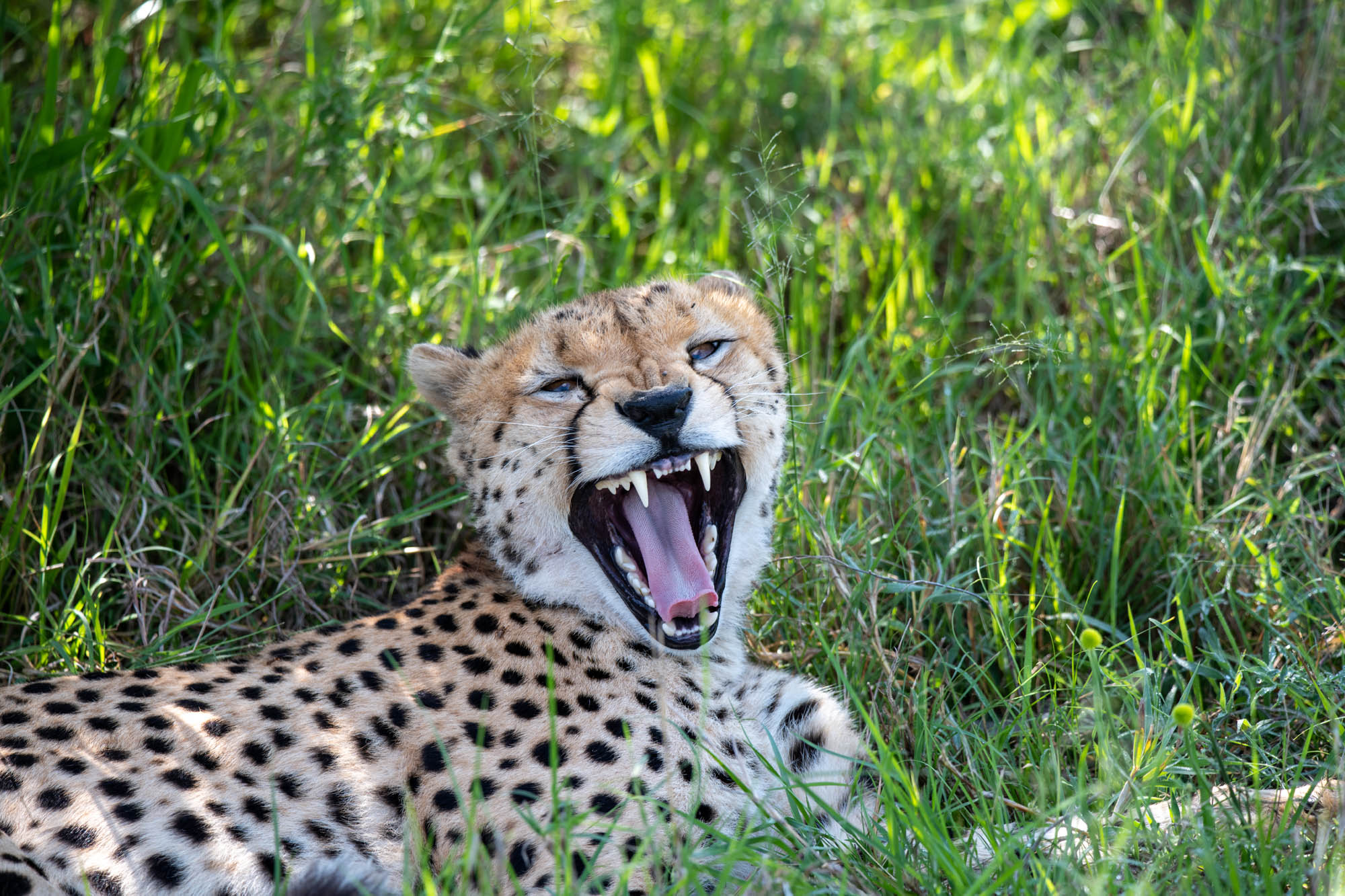
Read more
Destinations
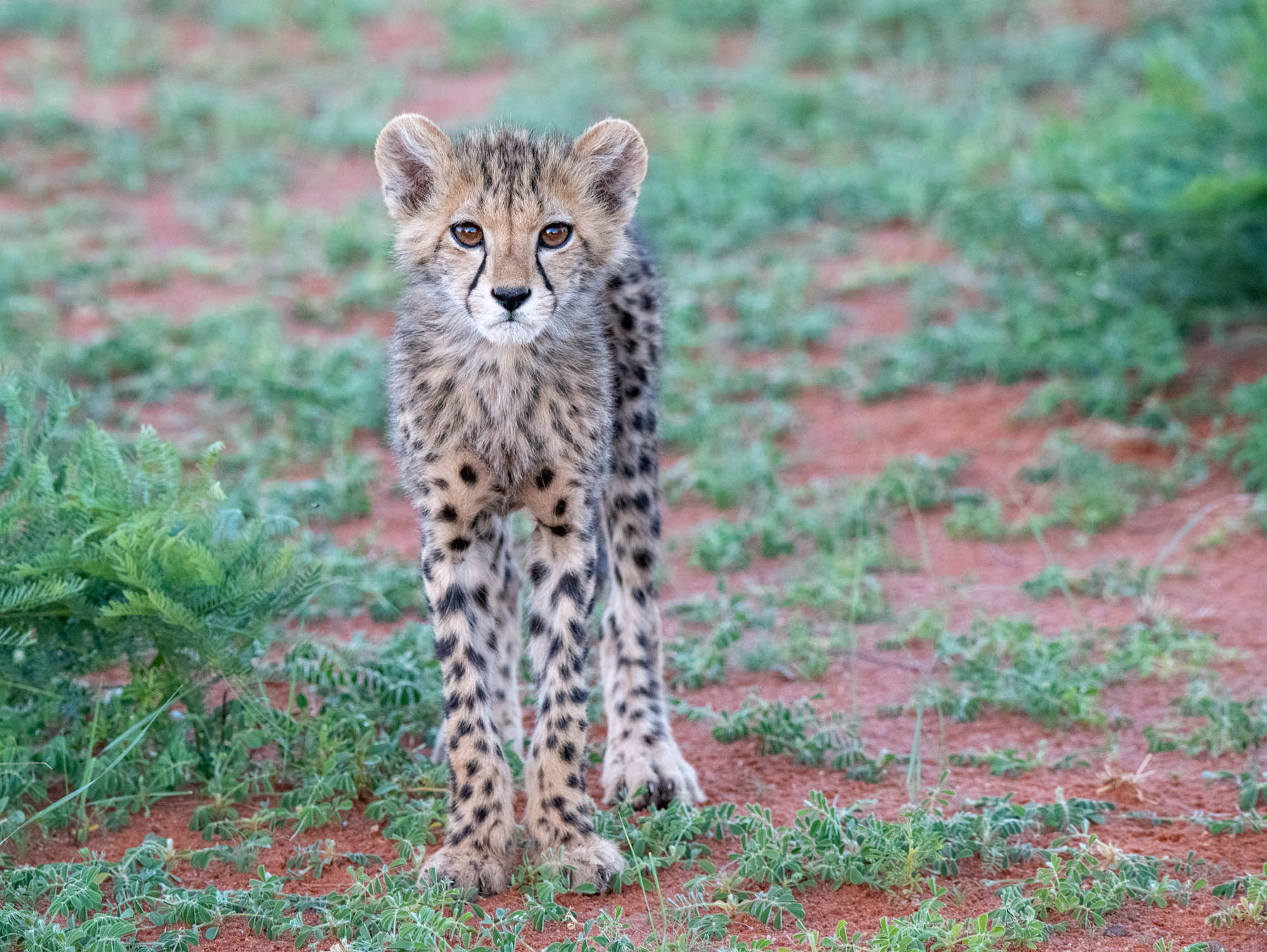
India

27th May 2023

India

India’s tiger, mammals and birds.

Read more
  • « Go to Previous Page
  • Page 1
  • Interim pages omitted …
  • Page 20
  • Page 21
  • Page 22
  • Page 23
  • Page 24
  • Interim pages omitted …
  • Page 28
  • Go to Next Page »

Footer

Design

  • About
  • Destinations
  • Blogs
  • FAQS
  • Team
  • Contact
All Rights Reserved ©Fish Eagle Safaris 2022 | Terms & Conditions | Privacy Policy
Designed & Developed by B Online

SUBSCRIBE TO OUR NEWSLETTER

SIGN-UP TO OUR NEWSLETTER

Subscribe Form

Footer Widget Header

Related Blogs