• Skip to primary navigation
  • Skip to main content
  • Skip to footer

Fish Eagle Safaris

Fish Eagle safaris

Contact

Logo
  • About
  • Destinations
  • Blogs
  • Newsletter
  • FAQS
  • Team
  • search
  • Contact
  • About
  • Destinations
  • Blogs
  • FAQS
  • Team
  • Contact

Destinations

Uganda: People, Primates And The ‘Old Africa’ Vibe

28th July 2022

Uganda: People, Primates And The ‘Old Africa’ Vibe

My one-word review of Uganda? Vivid. Just like it says in the dictionary: Intensely deep and bright and producing powerful feelings and strong, clear images. There’s nothing standard, neutral or monochrome about Uganda. It is larger than life, bursting with energy, color and vitality, with simply spectacular diversity on every level: the people, the countryside, the animals and birds and of course the primates.

On my Uganda trip in March this year, I was particularly blown away by the beautiful scenery, the chimpanzees (at both Kibale and Kyaninga), and – no surprise – the gorillas of Bwindi Impenetrable Forest. Most of all though, the friendliness and spontaneity of the people shone through, just like on my first visit, some ten years ago. Some things never change. Something that was different? The roads were much better – what a relief!

The ‘old Africa’ vibe
I was pleased to still experience the ‘old Africa’ vibe in Uganda on this trip, just like the first time. While change and progress are no doubt underway, Uganda still feels like Africa of 30 years ago. It is gracious and slower paced, with none of the frenetic feeling of some African safari destinations where game drives have taken on the tenor of a competitive sport.

In Uganda you can still expect to show up at a small coastal property only to find out that the gate is locked and the only person with a key is nowhere to be found. What to do? Nothing, really. Just cool your heels, get your binoculars and do a bit of birding while you wait. In Uganda, a situation like this is handled without rancor, without finger-pointing and without recrimination. Twenty minutes later, the key is located and you are welcomed to the property as if nothing had happened.

Uganda’s old Africa vibe extends into the most unlikely of places. On a hike to see the chimpanzees of Kyaninga Gorge, we came across what was the most rickety pedestrian bridge I have ever seen. The prospect of using it to cross a river was downright scary with big gaps between some cross-slats and others clearly not securely nailed down. The repairs should have been attended to months earlier. We asked about it, but never received a satisfactory reply. Apparently, even a relatively simple task that should take no more than a few hours – like that one – can turn into a bureaucratic marathon in Uganda. Particularly if the matter to be dealt with is inside a national park, in this case Queen Elizabeth National Park. In the Africa of old, nothing happens quickly when there is one or more government departments involved.

In the main and regardless of minor inconveniences like these, encountering the old Africa vibe is a good thing. It goes hand in hand with the country being largely undiscovered by hordes of travelers. In more than two weeks of traveling across Uganda and visiting several national parks, we could count the number of other tourist vehicles we observed on one hand. Admittedly, it was the low season but even in peak season, the visitor density remains extraordinarily low by any standard.

Stray even a little bit off the main routes in Uganda, and you slip into a world where foreign visitors become the focus of attention simply because of the novelty factor. American and other visitors are so rarely seen in many rural areas of Uganda that a passing ‘tourist vehicle’ – usually a Toyota Landcruiser – will bring smiling kids running down the hills and towards the road, waving wildly and exuberantly shouting words of welcome. “Msungu, Msungu!” No, it doesn’t exactly translate to ‘welcome’ but it’s close… While visiting a small village in Kidepo – Karamoja – in search of an authentic cultural experience, the tables were turned. It was us – the visitors from abroad – who turned out to be scrutinized more than anything else. I was worried about feeling awkward and being intrusive visiting their village and observing them, but as it turned out we were the ones on display.

Of course, we did learn more about the people and their lifestyle and it was altogether fascinating. A remote Uganda village like this one is as real as it gets. There is not an ounce of artifice or pretense. Entering one of the homes of the Karamoja families was a powerful experience for people like us, coming from such an unthinkably privileged background, in comparison with their reality. The home was a rough clay hut which contained a rudimentary kitchen (essentially a wood-burning fire pit), an in-home granary and a hand-cranked grinding mill for flour. The bedroom was little more than a patch of floor with a couple of roughly tanned cow-leather hides. The hut was claustrophobic and smoky to the point of distraction. Almost unimaginably basic for visitors who spend their days in air conditioned comfort and who complain about having 4G signal rather than 5G.

The chimps of Kibale and Kyaninga
So many places and experiences vie for the ‘best of the best’ award on a Uganda trip. I think for me, this time, it was undoubtedly the chimpanzees. On my first trip to Uganda some 10 years ago, I struggled mightily to see them well. In Kibale Forest we were literally running after them and they were mostly just dark blobs high up against the tree canopy. This time around? Totally the opposite. We could not have asked for better sightings of the chimps at Kibale and also – unexpectedly – at Kyaninga Gorge. I came away from this trip with literally dozens of good chimpanzee photographs. Any visitor – particularly one keen on photography – would have been thrilled with the experience. My advice? Spend 3 nights in the Kibale Forest area and do back to back chimp treks. At ‘just’ $200 the chimpanzee trekking permit is the best primate viewing deal going. And with two treks you’ll have a bit of insurance if one of the two outings don’t live up to expectations because of uncooperative chimps or bad weather.

The mountain gorillas of Bwindi Impenetrable Forest
A close second for ‘best of the best’ honors? The gorillas of Bwindi Impenetrable Forest. We trekked the Habinyanja family group in the Buhoma sector of the park, from Gorilla Forest Camp. I rated the hike as tough but doable by most people with good mobility and a degree of stamina. Certainly the effort was worth the results which were superb views – in a small clearing in broad daylight – of about 10 or so members of the family of just over 20 in total. Most extraordinarily, we were witnesses to the silverback gorilla mating with one of the female members of the troop. Right in front of us. I later spoke to Phil Ward, a long-time director of Uganda-based Classic Africa Safaris who said that he had never witnessed anything like this in the many dozens of gorilla treks which he’s been part of over the years in both Rwanda and Uganda. Special indeed.

Hiking the Ivy Trail from Buhoma to Nkuringo
Another memorable activity was the 4-hour Ivy Trail hike within Bwindi impenetrable forest, from Buhoma to the southern Nkuringo sector. As I remarked to Classic Africa Safaris’ Lyndsay Harshman, who accompanied us for much of the trip, a walk through a gorgeous primary forest like this one, is a tonic for the soul. Although it was muddy – good boots essential – the first part of the trail was really more of a stroll through a beautiful forest than a serious hike. The environment was spectacular with giant trees shielding us from direct light, creating the typical interior forest gloom. The soft light with few shadows is perfect for photography. Towards the end of the hike the trail goes steadily uphill and at that altitude, in excess of 6,000 feet above sea level, you will be huffing and puffing, no doubt. But all good, as the next stop – for us – was the simply divine Cloud’s Lodge. Which has one of the most stupendous views of any property in Africa.

Outing to the top of Murchison Falls
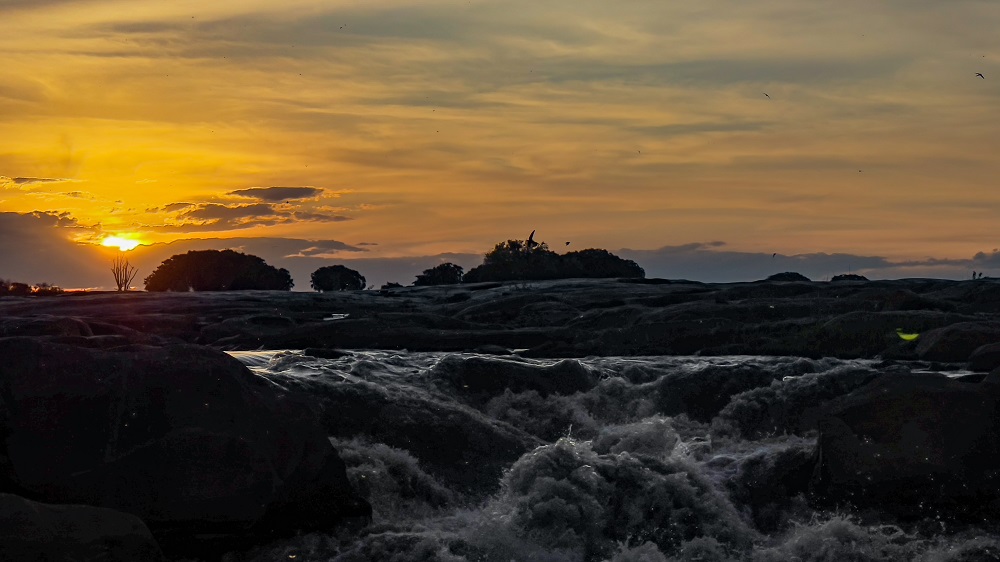
Visiting the top of Murchison Falls is probably one of the most underrated experiences in Uganda. This was my second time seeing it, and it was no less impressive. Being this close to the fury of the entire Nile River exploding through a narrow gap in a rocky gorge is just flat-out amazing! I marveled at the fantastic power of nature in this raw and 100% unspoiled display of force and violence. It gets better and better as you get closer to the top – observing mountains of water crashing downwards with a thunderous roar is mesmerizing. One viewpoint is better than the next; there are some overlook points with superb views over the adjacent Uhuru Falls as well. I really rate this experience to be every bit as impressive as Victoria Falls. It is very different though as there is no huge curtain of water and the drop itself is not that high. However it is the proximity and the unbelievable force that practically shakes the rocks you are standing on, that does it for me. Emerging at the top, after a quick drenching from the spray at the Devil’s Cauldron overlook, we were greeted by a couple of rangers. There was almost nobody else around. No curio sellers, no soft-drink dispensers, just the powerful sound of the water behind and below you.

Boat ride to the Nile River Delta
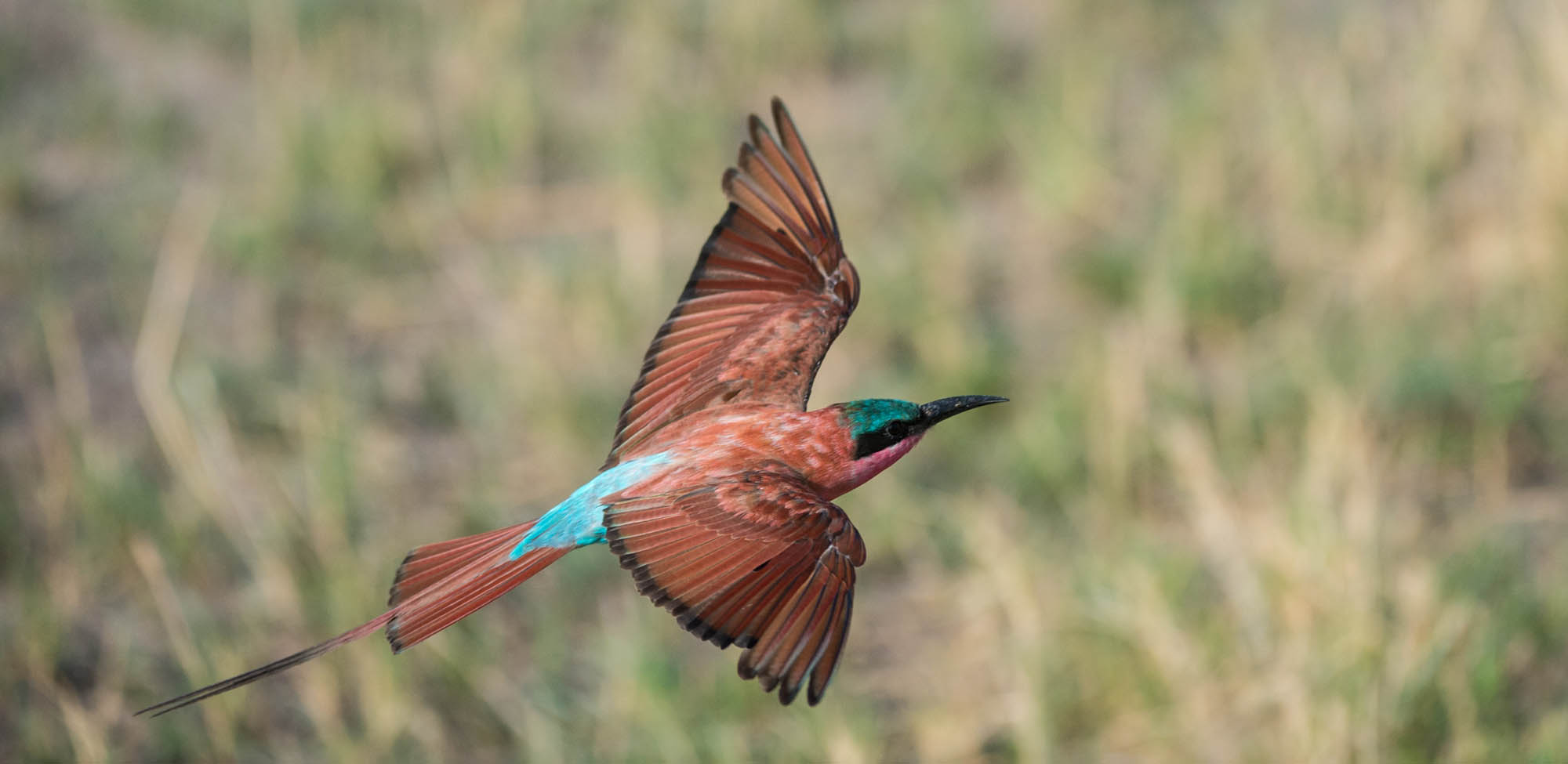
I had previously done an outing on the Nile River following pretty much the same route which we did this time. I had forgotten just how fascinating and amazing an outing it was. This time around, we missed seeing a Shoebill Stork due to the water in the river being too high, displacing the Shoebill habitat which is essentially small islands of floating vegetation. Did it matter? Hardly. If you have a camera in your hand, a love of nature and particularly if you are keen to see some of Africa’s most spectacular birds, the two hours or so on the Nile River cruise fly by like minutes. It is hands down one of the best bird-watching experiences in East Africa with a stellar array of species to be seen, a highlight being the spectacular kingfishers. Sometimes one may see as many as four different kingfishers on the outing, including the Giant, Pied, Malachite and Grey-headed Kingfishers. There’s herons, egrets, lapwings, weavers, bee-eaters, jacanas – to mention but a few. Finding a majestic African Fish Eagle is very much on the cards here, maybe even an osprey. With a skilled skipper which we had on the boat operated by Wild Frontiers, we had multiple opportunities to get really close to most of the birds and you don’t have to have a telephoto lens to make some beautiful images.

Kidepo National Park
Kidepo National Park is a singularly beautiful part of Uganda, tucked into the far north-eastern corner of the country, in a hilly region where the borders of Uganda, South Sudan and Kenya intersect. Kidepo’s Narus Valley may very well be the prettiest place I’ve ever been to in Africa. Great big blue skies, craggy mountains and well-defined hills rolling towards the north. A vast open expanse of grassland with thorny acacias, sausage trees and others scattered all over, turn the Narus valley into a picture perfect African savannah. Seeking the grandeur of Africa? Look no further. This is it.

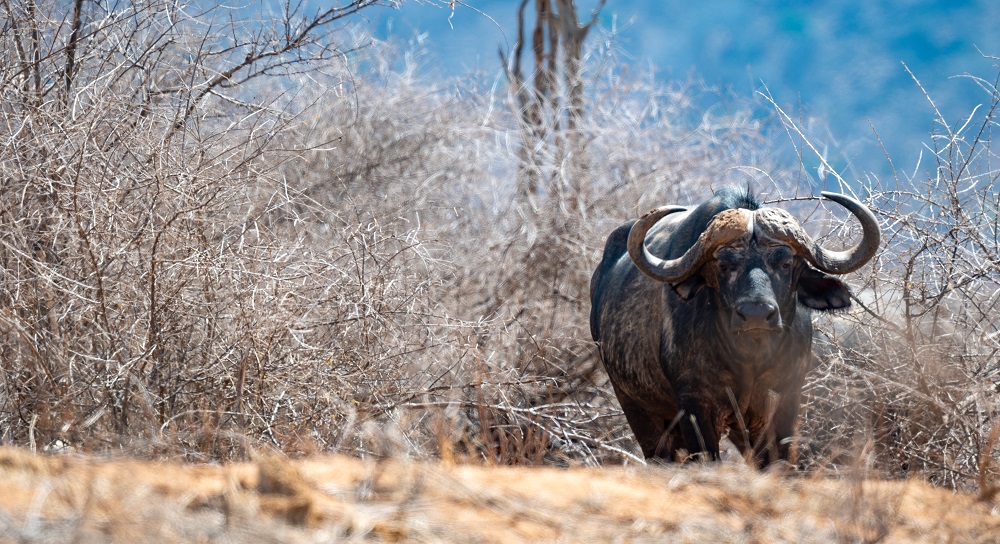
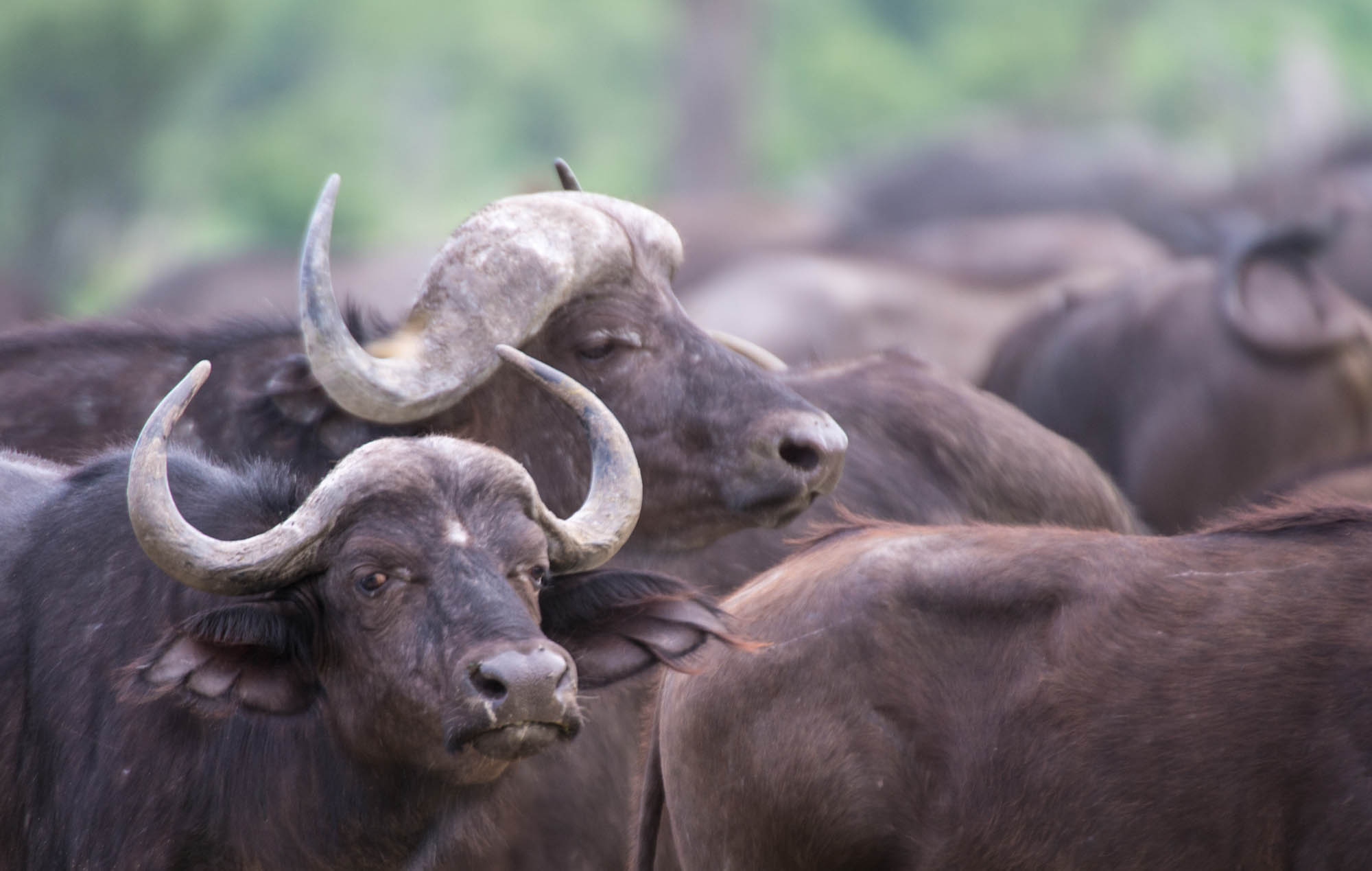
Even more so than elsewhere in Uganda, Kidepo is the Africa of old with few people and lots of animals, all essentially yours to find and admire in a landscape which could not be more striking. Every day, every outing unveiled more and better views. Noticeably, the concentration of wildlife was markedly higher in the Narus Valley than elsewhere in Kidepo. There were literally thousands of buffalo around, practically anywhere we drove – or walked. It was easy to see why. Located at the bottom of the valley, the Narus River annually floods much of the area and during the long dry season it is a lifeline for much of the wildlife of the area, being the only source of permanent water in the valley.

Unlike much of the Karamoja region which has sandy soils, the Narus valley soils are loamy and retain water well into the dry season, particularly in the extensive swamps and pools along the river. As a result, there is an abundance of wildlife to be seen. On our game drives in the area we were hardly ever out of sight of buffaloes, and a good variety of other plains game such as zebras, hartebeest, waterbuck, oribi and giraffes. We also enjoyed a few great sightings of the rare Pata’s monkeys, a primate adapted to life in a savannah environment.

YOU MIGHT ALSO BE INTERESTED IN
Destinations
Zambia

10th September 2021

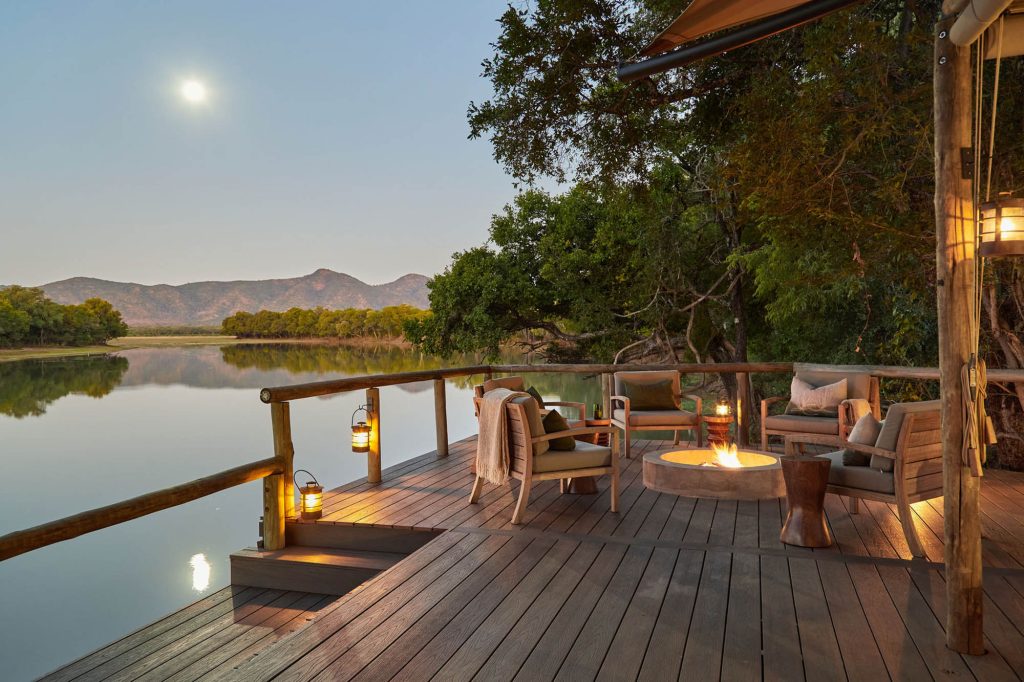
Chindeni and the Bushcamp Company, Zambia

By late July we found ourselves at Chindeni, a small Bushcamp Company property
Read more
Botswana
Destinations
Okavango Delta

3rd October 2022

Camp Okavango, Botswana

Camp Okavango is in the heart of the permanent part of the Delta. In this idyllic setting there are no vehicles, and it is just a short walk
Read more
Area
Destinations
Nyerere National Park
Ruaha
Tanzania

14th October 2023

From My Safari Notebook: Wildlife Photography

Birds in flight and wildlife photographers have an uneasy relationship. Things go wrong as often as they go right. Getting focus-lock on a moving subject

Read more

SUBSCRIBE TO OUR NEWSLETTER

READERS FAVOURITES
Destinations
India

27th May 2023

India

India’s tiger, mammals and birds.

Read more
Botswana
Destinations

4th August 2022

On Safari At Belmond Eagle Island Lodge, Okavango Delta

What is the ‘secret sauce’ for an unforgettable few days on safari in Botswana? It starts with the animals, of course. The elephants, lions, giraffes, hippos

Read more
Destinations
Zambia

10th September 2021

Chindeni and the Bushcamp Company, Zambia

By late July we found ourselves at Chindeni, a small Bushcamp Company property
Read more

Sanctuary Chief’s Camp

15th February 2022

Sanctuary Chief’s Camp

What is it like to spend a day on safari in Botswana? Mostly it is fun, involving and exciting. You’re always seeing new things, even if you’ve been on many safaris before. It may be new or different mammals and birds, animal behavior, or unusual interaction such as between crocodiles and hyenas, or between eagles and herons. Even the most common of antelopes like the impalas and the gazelles of East Africa look different when seen in ideal light conditions, or when they are rutting or reacting to the proximity of a predator. No two African sunsets are ever the same and invariably visitors to the continent will experience a particularly gorgeous start or end to one of their days.

A day on safari in Botswana

What is it like to spend a day on safari in Botswana? Mostly it is fun, involving and exciting. You’re always seeing new things, even if you’ve been on many safaris before. It may be new or different mammals and birds, animal behavior, or unusual interaction such as between crocodiles and hyenas, or between eagles and herons. Even the most common of antelopes like the impalas and the gazelles of East Africa look different when seen in ideal light conditions, or when they are rutting or reacting to the proximity of a predator. No two African sunsets are ever the same and invariably visitors to the continent will experience a particularly gorgeous start or end to one of their days. Occasionally there will be a ‘slow’ day. This is a euphemism for not seeing much at all. A great guide – one of the elements of a successful safari to which we pay special attention – can make even a slow game-drive interesting. They can liven it up with their insight about the environment or about the connectedness of it all. Sometimes they will focus on the lesser known aspects of the bush, like the medicinal plants, notable insects like the dung beetles or quirky reptiles like chameleons. Incidentally, if things like these start cropping up on a game drive, it is also a pretty good clue that the guide is having a tough time. Be sympathetic. Sometimes you have to simply appreciate the great outdoors, and be thankful for the privilege of being in one of the world’s most amazing places, the African bush. Most of the time though, there’s plenty of action, never-ending opportunities for photographs and a blizzard of new information, facts, trivia, and bushcraft (trails and tracks, animal droppings, bones etc.) to be experienced and savored

Activities on Safari

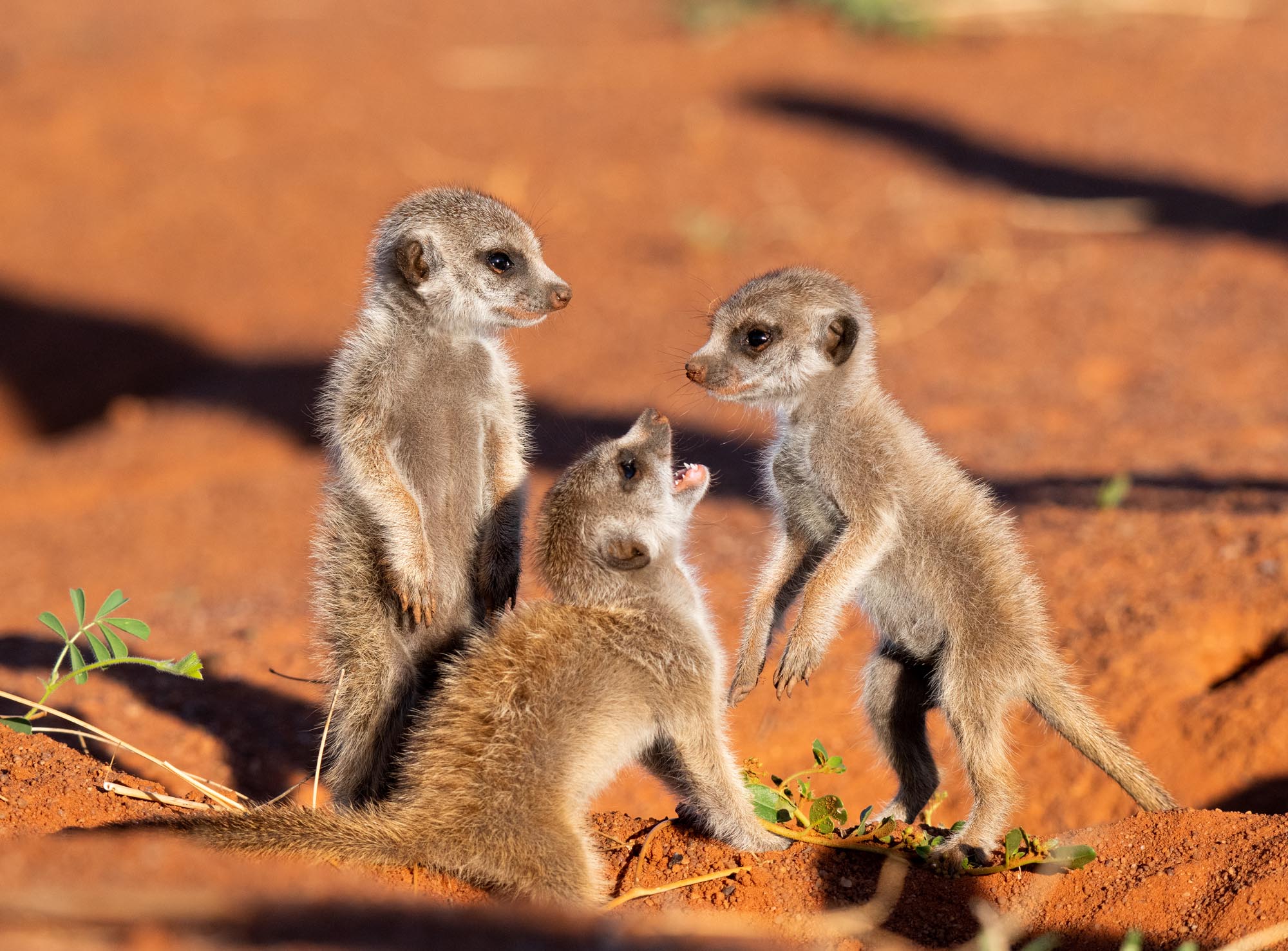
To be sure, each day is different – of course. What you will do, see and experience depends largely on where you are. If you’re in northern Botswana‘s Okavango Delta, your day might include a mokoro outing (the local version of a dugout canoe), or a boating trip to explore some of the quiet waterways and lagoons of the Delta. In the Moremi or Savute, game drives would likely be at the top of the list of activities, but walking or simply observing wildlife from a blind or hide may also be possible. Chobe is famous for its boating safaris. This is where visitors observe elephants congregating on the banks of the Chobe river or standing or swimming in the river. Elephants are remarkably good swimmers and it is an amazing spectacle to see them chug along with not much more than trunk-tips showing, the adults giving the babies a bit of assistance every now and then. A boat outing provides a nice, steady platform for photography and just like a land vehicle, the animals see it as an inanimate object so its presence does not alarm them. Two other animals seen at their best on boating safaris are giant Nile crocodiles and of course, hippos. There are several other activities available at various camps in Botswana, including catch and release fishing (for bream or tigerfish mostly) and interacting with habituated meerkats at their den. At several properties, you will be invited to explore the culture of the San hunter-gatherer people, observing them making fire from scratch, demonstrating the amazing water-retention capacity of various plants with large subterranean roots or showing off their prowess with a bow and arrow. The main event of the day is the game drive which comes in two installments. The morning drive is from first light to around 10 am and the afternoon game drive, from around 4 pm to sunset and often beyond, in areas where night drives are allowed. For a ‘blow by blow’ description of what to expect on a typical game drive, scroll down to the end of the blog.

An early start

One thing that all days on safari have in common is that they start early. Often before first light when you are likely to be woken up – gently. No harsh alarms or startling phone calls here in the bush. Rather, a gentle voice calling out a greeting and often delivering a steaming hot cup of tea or coffee.

Once you’re up and ready to roll, the custom is to take everything you will need on your morning outing with you. So that would be your water bottle which you can refill at the lodge, your hat, suntan lotion, a jacket if it’s cold, your binoculars and all your photographic equipment. Whether it’s an iPhone or a professional full-frame DSLR camera and several lenses. Or something in-between. Most Botswana camps offer a light breakfast before the morning activity. It may be as simple as a cup of coffee or tea and a rusk. Rusks are distant cousins of biscotti but just better, less dense, not as sweet, more dunkable and without the heavy dose of aniseed flavoring. Freshly baked muffins are often available, as is toast grilled over the coals. Most properties will also have some fresh fruit, fruit juice, some kind of porridge (like oats) or a couple of cereals. Muesli is a popular item. Depending on the season (earlier in summer, later in winter) your guide will pull away from camp anytime from about 5:30 am. Don’t be late – it is a cardinal sin to keep the other people in the vehicle waiting while you make a dash back to your room for a left-behind item.

Safari etiquette and ‘rules’

Once you settle down in the safari vehicle – which may be totally open or have a roof with struts – you will notice that there are three rows (for the passengers), with two persons per row. Many of the latest model game-viewers have a ‘box’ with a lid in the middle, between the seats. For all your stuff other than your binocs and camera which you need to keep handy. The unspoken rule is that guests rotate seats at the start of each subsequent game drive. Last row moves to the first row. First row moves to the middle row, middle to back. And repeat. Any other rules on game drives? Nothing too onerous, just common sense. The single most important one is not to stand up in the vehicle as it may draw unwanted attention from predators. If you stay seated they won’t recognize you as a separate entity. In which case the vehicle is just one inanimate, non-threatening (if somewhat noisy) object. Which most of the animals tolerate quite well and all but ignore completely.

Other ‘rules’ are to keep the sound level down, don’t get on your phone, don’t make any clicking or lip-smacking or other silly noises to attract an animal or bird’s attention, and that’s about it. If you need to make a comfort stop, say something and the guide will find a safe spot. The guides will often have their own colorful ‘code’ phrases for this that you can feel free to use such as needing to ‘get out and check the tires’. There’s usually at least one mid-morning stop for tea and coffee and to stretch the legs. The afternoon game drive often ends with sundowners when guests exit the vehicle in a scenic spot, such as on a hill or overlooking a water hole, to enjoy a beverage and some snacks. The ride back to camp will be in the form of a night drive, with the guide using a spotlight to check for nocturnal mammals and birds

In-camp relaxation and meals

When you’re not out driving or participating in a different safari activity, there are lots else to do and experience. During the siesta period over the warmest hours of the day, between 11 am and 3 to 4 pm, you may rest up in your room or in the public areas, take a dip in the pool, enjoy a spa treatment or work out in the gym. Currently, not many safari camps have properly equipped gyms, but it is a growing trend. Meals and drinks? A day on safari in Botswana is not complete without several opportunities to partake of what is usually an array of delicious foods and beverages, served over brunch (some camps have a proper lunch instead), afternoon tea, sundowners and dinner. Add in the light early morning breakfast and a stop for tea (with scones or something) during the morning game drive, and you have what we often refer to as the ‘eating safari’. Return to the USA five pounds or so heavier? Almost guaranteed. All dietary requirements and preferences are catered to, whether it’s gluten-free, vegan or keto. Evenings are fun and entertaining. Over pre-dinner cocktails or a local beer, the events of the day including of course memorable sightings are discussed, and new arrivals announce themselves. A multi-course dinner – often al fresco – is served from around 7:30 to 8:00 pm. Plated dinners are becoming a standard offering, but a few camps still serve only the starter and dessert, with the main course items being available in a buffet format. A handful of guests may linger around the campfire, enjoying a beverage such as Amarula, a sweet liquor in the style of Bailey’s Irish cream, but flavored with the fruit of the marula tree.

Best ever days on Safari

I asked the members of the Fish Eagle Safaris team about their recollections of special days or sightings on safari in Botswana and here are some of their fondest memories:

Lyndon: “One of the most memorable safari experiences I ever experienced in Botswana occurred on my first official trip for Fish Eagle Safaris after graduating from college. My brother and I visited multiple camps in Zimbabwe, South Africa, and Botswana. While in the Linyanti area of northern Botswana we came across a couple of big male lions very early one morning. Our guide had heard them roaring from quite some distance before they went silent for a period of time. As we sat there in the early morning silence the lion closest to the vehicle (and he was quite close) suddenly started roaring. Since then I have heard lions roaring close up multiple times but none of them will have the same effect on me. This sound was so loud, different than I imagined in its guttural glory and you could feel it in your bones. I will always remember thinking to myself then and there that people need to come to Africa and experience this for themselves because there is nothing else like it”.

Jason: “In 2014 I was at Duba Plains in the Okavango Delta. We had already seen some great lion interaction with buffalo and impala, but I was very interested in how the lions handle being in such a wet ecosystem. We managed to find a lioness with her three male cubs, two of which were nearly full grown. The two older cubs were playfully fighting with each other, as brothers do. Within a few minutes the mother stood up and started towards the floodwaters, all three cubs followed closely behind. She waded in with water just to her feet, then to her mid leg, then belly deep. The cubs were a bit more timid but eventually followed. Carefully they made it deeper into the water towards where our vehicle was parked on the opposite bank. This was a dangerous spot for them, out of their element and vulnerable to crocodiles. Luckily I took one of my favorite photographs while on safari with the whole family scanning in different directions for threats. A moment I’ll always remember and a photographic souvenir to show off”.

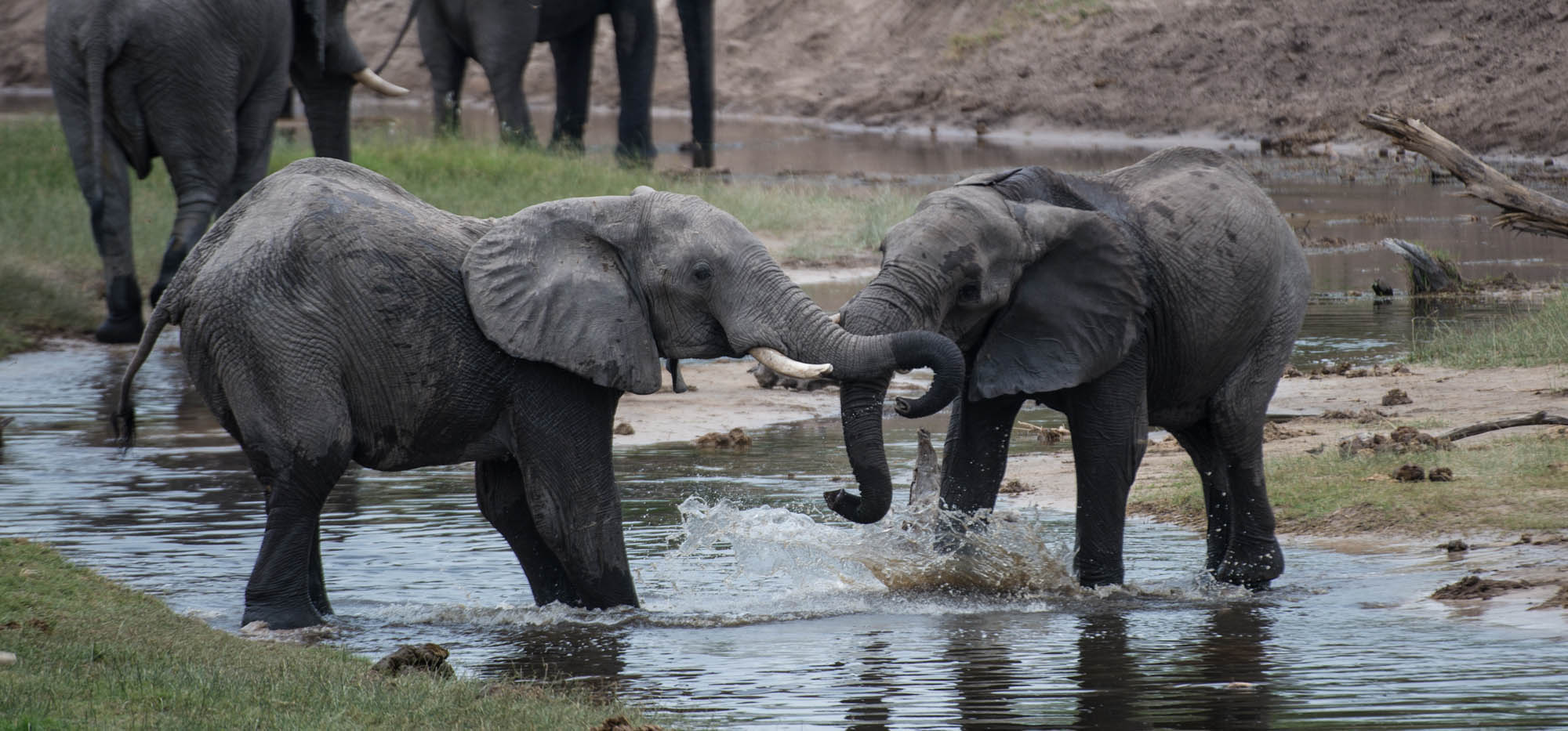
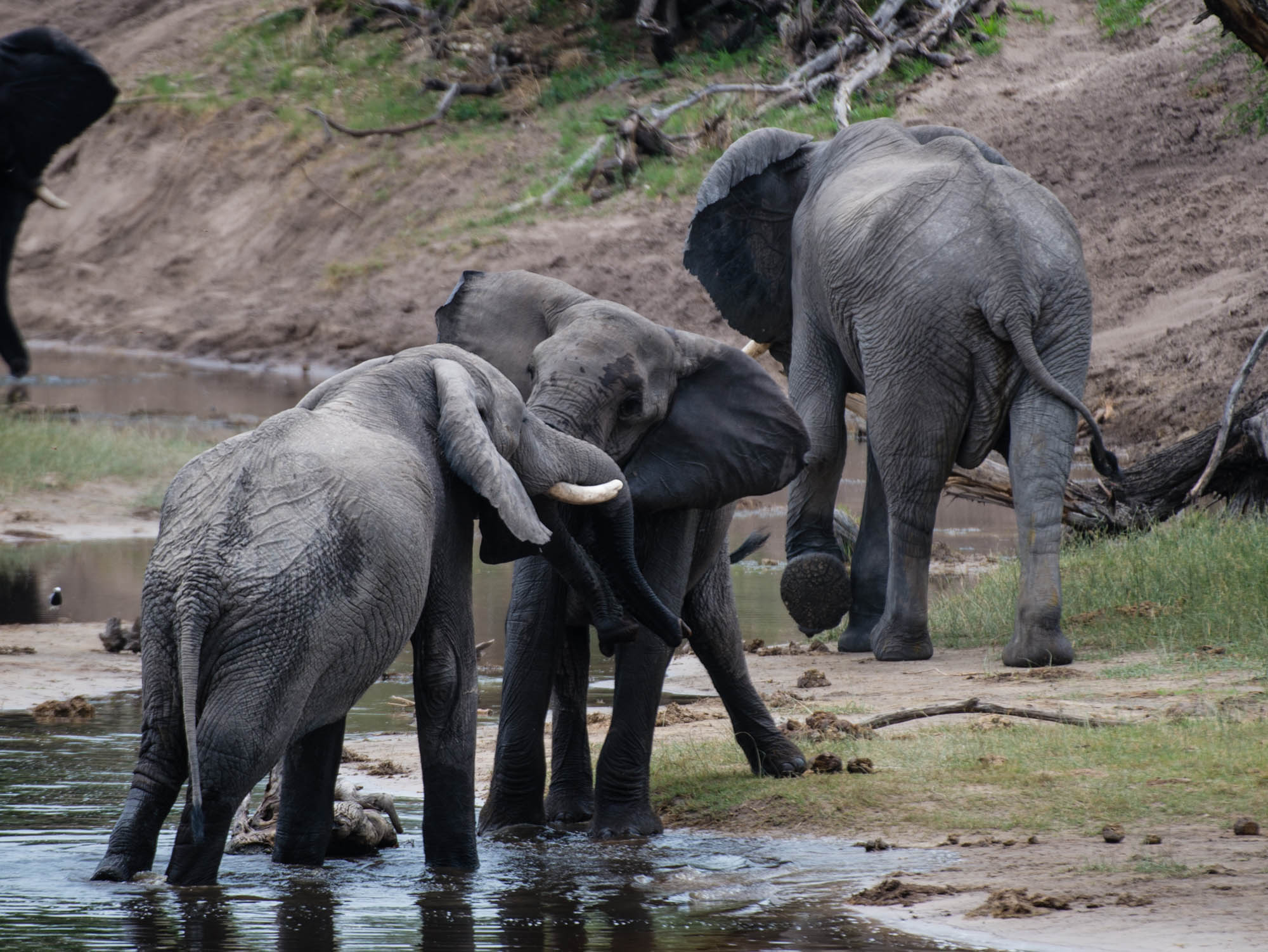
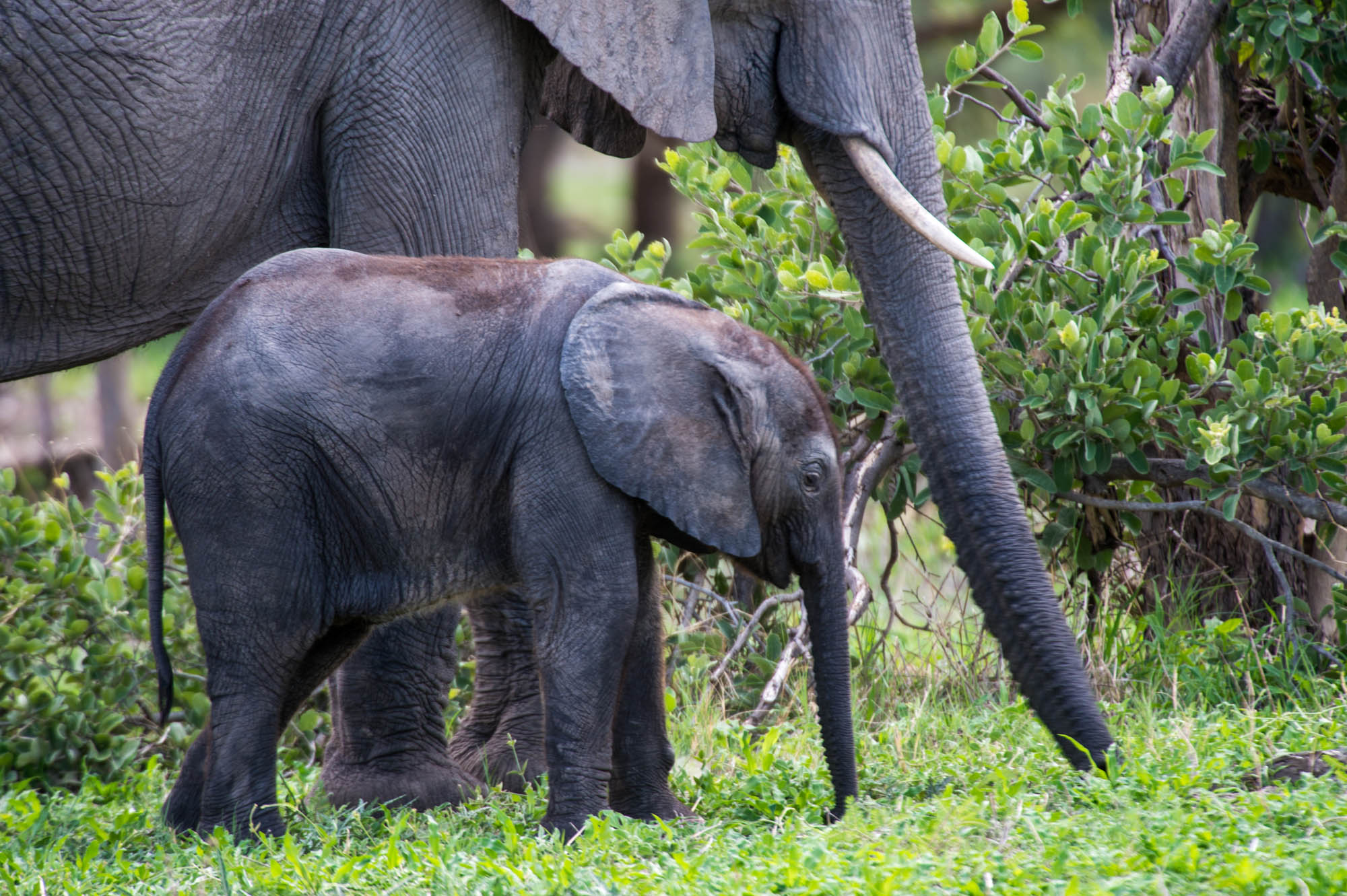
Kathy: “Elephants, the African gentle giants. I can spend all day in Botswana at a water hole watching elephants. This is especially rewarding in the winter during the dry season. Get your camera ready because here they come! A breeding herd with their young calves racing in front of the herd and always first to reach the water. After a long day of walking and foraging for food their excitement is on full display, as they approach the water hole. The young calves often run ahead, eager to start drinking and frolicking, followed by the matriarch and her family. Baby elephants can be seen shadowing underneath or behind their mothers and dipping their trunks in the water, splashing around and trying to learn to control their trunks which have around 150,000 muscle units. Young calves often seem to use them as toys, swirling them around and splashing them in the water. They look like they are having so much fun. When it’s time to drink they kneel down and drink the water through their mouths. The big bulls come to the water slowly and with dignity. Sometimes, if you are lucky, you will see them approach other bulls. You’d almost think a fight is imminent, but that’s quickly dispelled as they stretch out their massive trunks and gently twist them together. An elephant handshake is always special and a very intimate sight to behold. Might this be their brother, relative or an old friend they have not seen in a while?

Some of the water holes have freshly pumped spring water from a borehole beneath the ground. The elephants love to put their trunks over the source of freshwater and drink it in. The bigger elephants hog the freshest water and the less dominant ones have to wait their turn.

Elephant herds leaving the water hole are refreshed and the young continue to frolic. My fondest memory is of two young calves walking downhill, one behind the other with one putting his front legs on the other’s backside. It honestly looked like a circus performance. They were
having so much fun!”

A typical game drive – minute by minute

On a recent Botswana trip, I randomly picked one day for a ‘minute by minute’ account of a typical game drive. It ended up not being quite typical – due to the wild dog sighting – but otherwise it is representative of a good morning game drive. Some will be quieter than this and some might be a bit more exciting, maybe with another predator species thrown in.

We started off from Lebala Camp right at 0600. It was a cloudless morning, cool until about 0900A and then a scorcher until about 1500 when a large thunderstorm rolled through the area. In the vehicle were our guide Spencer, our tracker P.D., Kathy and myself and two Danish guests

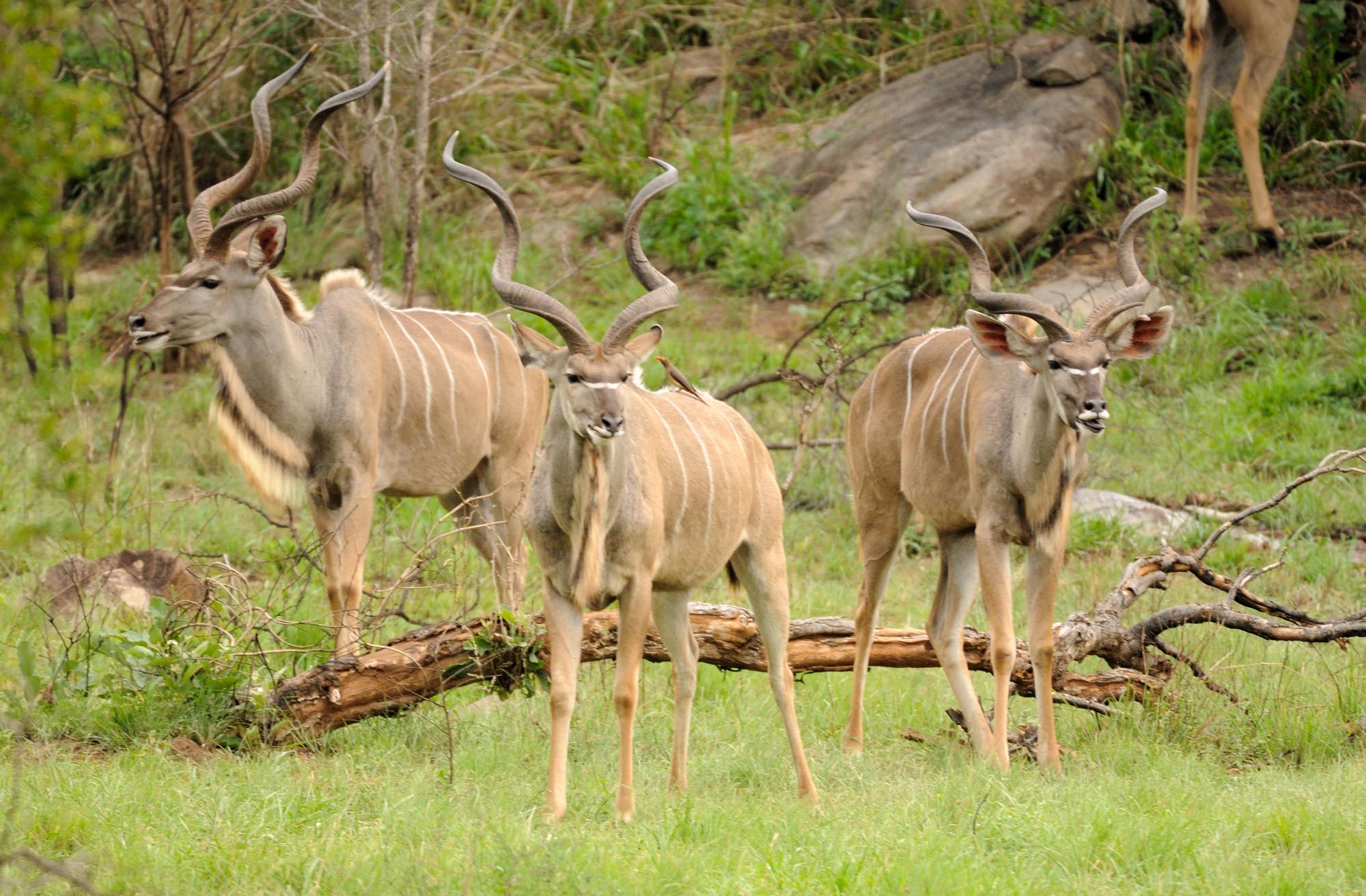
  • 00:1:00 A juvenile kudu chewing on a wild cucumber, rolling it in its mouth, the white ‘lip gloss’ and white chin clearly visible. What massive ears! We spent several minutes with the kudus (several more emerged from the bush).
  • 00:5:43: A Black-shouldered Kite.
  • 00:8:00: Six Egyptian Geese at a water hole; we witness a very intense squabble between two males, with lots of wing-flapping and chest-bumping, and even more noise. Soon enough one of them gave way and the victor strutted around for a bit to show everyone who’s the boss.
  • 00:10:00: Three Wattled Crane including one sub-adult, very close. Magnificent birds with elegant tails.
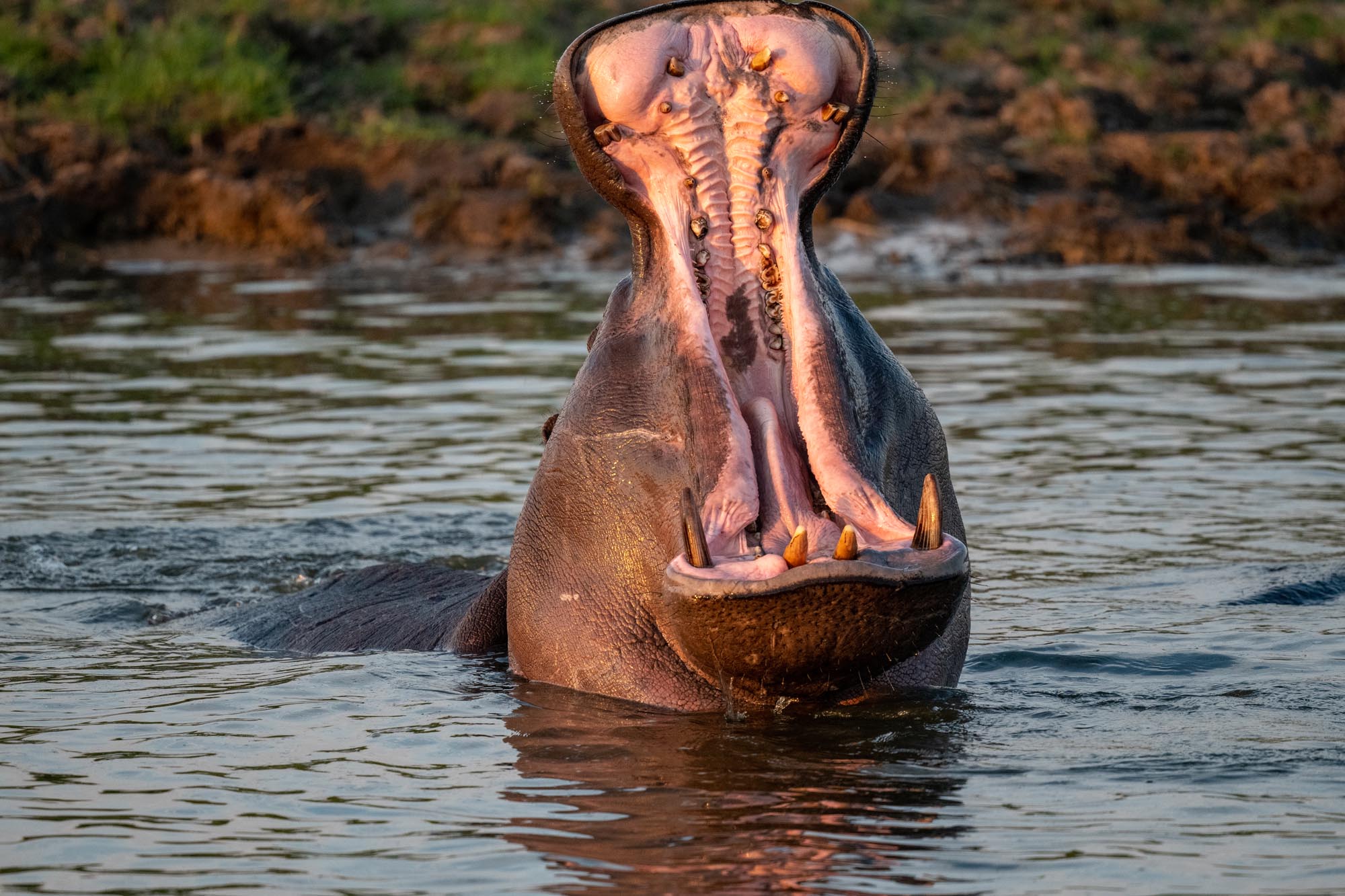
  • 00:14:30: A massive hippo re-entering a waterhole. A family of Egyptian Geese with 8 ducklings.
  • 00:16:00: Yellow-billed Storks and a pair of Namaqua Doves.
  • 00:18:00: A solitary Hooded Vulture right at the top of a tree. Several Red-billed and Yellow-billed Hornbills, a flock of Helmeted Guineafowl.
  • 00:19:49: A Red-crested Korhaan fly-by.
  • 00:25:00: Ten Impala antelope and some warthogs.
  • 00:26:19: Four giraffes at a distance.
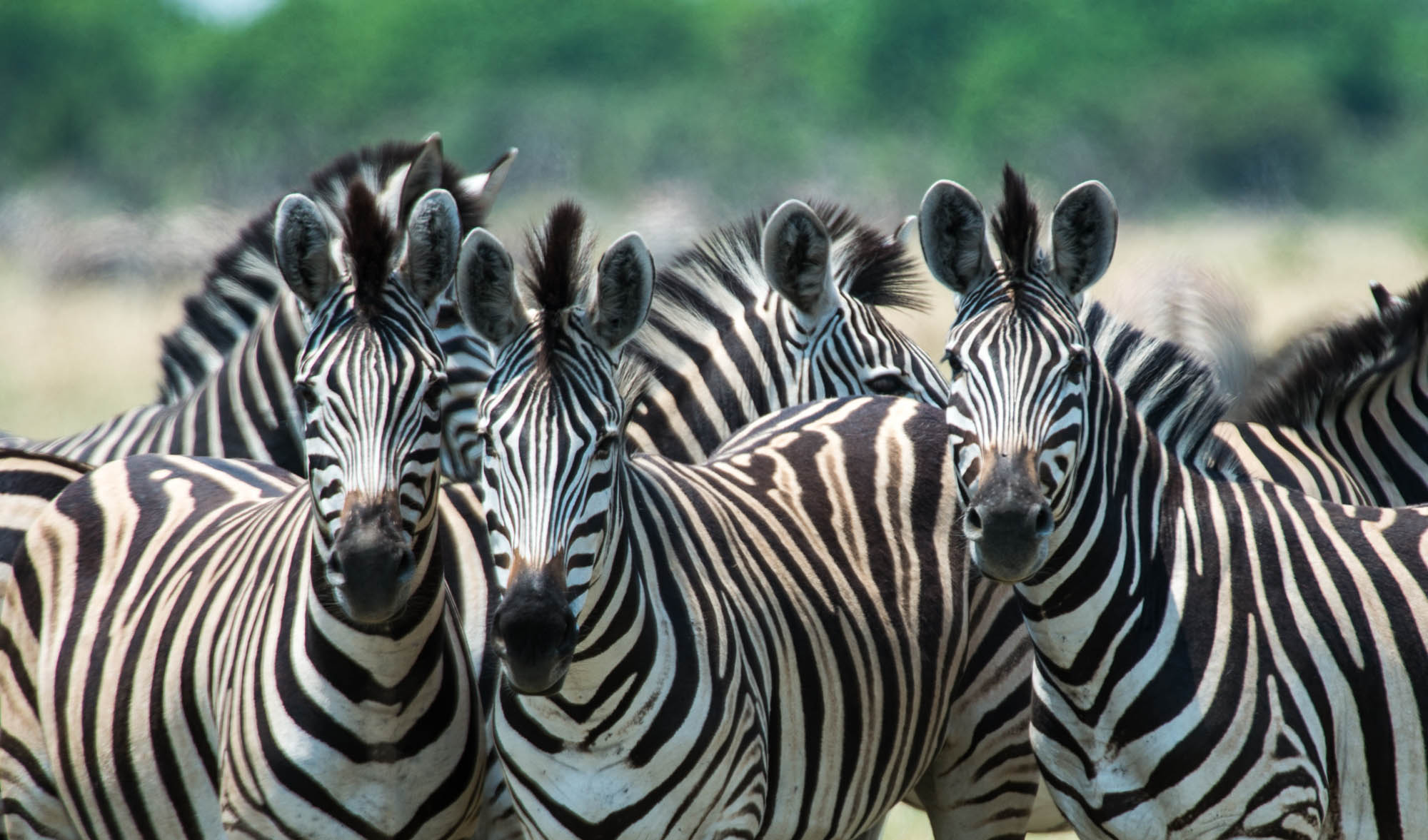
  • 00:27:00: A small group of Burchell’s Zebra.
  • 00:28:41: An impressive Kori Bustard, the world’s largest flying bird.
  • 00:41:15: A juvenile Bateleur Eagle impersonating an owl, turning its head 360 degrees to look back at us.
  • 00:46:00: A couple of Temmincks’ Coursers, a new bird for the trip list.
  • 00:50:26: A Tawny Eagle, first of many for the day.
  • 00:56:00: 20 adult and 11 young Blue Wildebeest grazing with lots of Cattle Egrets following them around. A peaceful, almost pastoral setting.
  • 01:00:00: Three ground hornbills in a tree. Massive birds.
  • 01:03:00: A dainty Steenbok female in the grass close to the vehicle; a first for the trip.
  • 01:07:00: An African Fish Eagle, Hamerkop, and a Little Egret.
  • 01:16:00: A solitary hippo in a small waterhole, with a Hamerkop using the hippo as a mobile fishing platform.
  • 01:17:00: A Giant Eagle Owl in a tree, at a distance.
  • 01:22:00: A very nice mature kudu bull with massive spiraled horns.
  • 01:29:00: A Sacred Ibis.
  • 01:30:00: We make a comfort stop, aka a bush break, pit stop, or checking the tires.
  • 01:38:00: Two breeding herds; one of about 20 Blue Wildebeest and the other about 30 Impala. Both herds sport several youngsters, small but already firmly implanted with what makes up their species characteristics. Tiny impala darting off and making elegant leaps just like the adults. Tiny wildebeest just slightly less homely looking than their parents.
  • 01:40:00: A duo of Wahlberg’s Eagle, adults feeding young.
  • 1:45:00: Green-backed Heron at a pond.
  • 01:48:00: A pair of Pygmy Geese in the same pond, first just one and then 5 altogether. Once seen, these compact, colorful ducks are unmistakable.
  • 01:57:00: African Fish Eagle and Saddle-billed Stork, one of the most striking birds in Africa.
  • 02:09:00: Three young Kudu bulls.
  • 02:16:00: Two secretary birds on a nest in the distance.
  • 02:30:00: Two large adult Kudu bulls close up.
  • 02:32:00: We stop for morning tea. Redbilled teal at the waterhole. A solitary Wattled Crane. Tea, coffee and some snacks (rusks and cookies) are served.
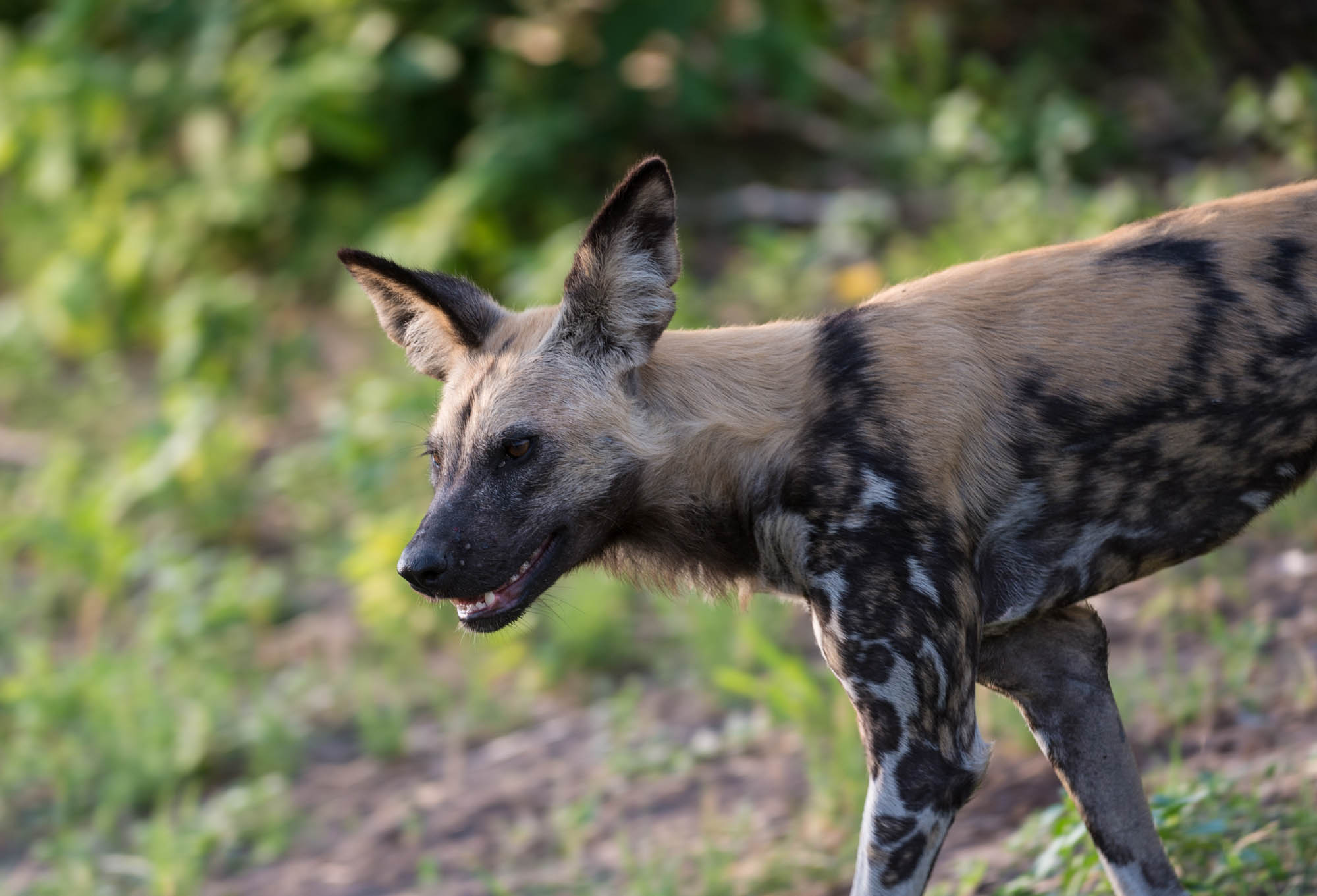
  • 02:40:00: During the tea break, I notice one and then several African painted dogs running out of the woodland towards the water. The dogs have found us! We spend the next hour in their company. There are six in total.
  • 03:40:00: Still following the six African painted dogs, now resting up in a grove of Kalahari Appleleaf trees. There are 2 females and 4 males. Very handsome animals, quite oblivious to our presence. They engage in some horseplay, or perhaps more correctly canine capers. I manage to take about 200 mediocre photographs of African wild dogs. A couple or so turn out ok.
  • 4:01:00: We say goodbye to the dogs and head off in the direction of camp. I spot a woodpecker back at the waterhole where the dogs found us.
  • 4:06:00: Bateleur Eagle, Tawny Eagle. We would have repeated sightings of both of these birds of prey during our stay at Lebala.
  • 4:09:00: Breeding herd of about 30 wildebeest with 15 young. Also five Burchell’s Zebra, one of which (a youngster) has three pretty bad lacerations on its flanks, apparently caused by a lion.
  • 4:20:00: Breeding herd of about 60 elephants. We watch as they emerge from the woodland, feeding as they go. A very relaxed, peaceful scene. The elephants continue to feed as they move past us from our left to our right. We stay with the elephants for about 10 to 12 minutes, then head off back to camp for brunch.
  • 4: 45:00: Burchell’s Sandgrouse, a new bird species for the trip list.
  • 4:48:00: Leopard Tortoise, our ‘reptile of the day’ and one of the ‘small five’. The others being the rhinoceros beetle, the ant-lion, the elephant shrew and the buffalo weaver.

YOU MIGHT ALSO BE INTERESTED IN

Destinations
Kruger Park
Sabi Sand Reserve
South Africa

17th September 2020

Kruger Park & Sabi Sand Reserve South Africa (Continued)

I wrapped up an extensive educational trip in Kruger Park and in the northern, western and southern

Read more
  • All
  • Destinations
  • Zambia
Destinations
Zambia

10th September 2021

Chindeni and the Bushcamp Company, Zambia

By late July we found ourselves at Chindeni, a small Bushcamp Company property
Read more
  • All
  • Destinations
Botswana
Destinations

4th August 2022

On Safari At Belmond Eagle Island Lodge, Okavango Delta

What is the ‘secret sauce’ for an unforgettable few days on safari in Botswana? It starts with the animals, of course. The elephants, lions, giraffes, hippos

Read more

SUBSCRIBE TO OUR NEWSLETTER

READERS FAVOURITES

Botswana
Destinations

4th August 2022

On Safari At Belmond Eagle Island Lodge, Okavango Delta

What is the ‘secret sauce’ for an unforgettable few days on safari in Botswana? It starts with the animals, of course. The elephants, lions, giraffes, hippos

Read more
Destinations
India

27th May 2023

India

India’s tiger, mammals and birds.

Read more
  • All
  • Area
  • Destinations
  • Nyerere National Park
  • Ruaha
  • Tanzania
Area
Destinations
Nyerere National Park
Ruaha
Tanzania

14th October 2023

From My Safari Notebook: Wildlife Photography

Birds in flight and wildlife photographers have an uneasy relationship. Things go wrong as often as they go right. Getting focus-lock on a moving subject

Read more

A day on safari in Botswana

30th December 2021

A DAY ON SAFARI IN BOTSWANA

What is it like to spend a day on safari in Botswana? Mostly it is fun, involving and exciting. You’re always seeing new things, even if you’ve been on many safaris before. It may be new or different mammals and birds, animal behavior, or unusual interaction such as between crocodiles and hyenas, or between eagles and herons. Even the most common of antelopes like the impalas and the gazelles of East Africa look different when seen in ideal light conditions, or when they are rutting or reacting to the proximity of a predator. No two African sunsets are ever the same and invariably visitors to the continent will experience a particularly gorgeous start or end to one of their days.

A day on safari in Botswana

What is it like to spend a day on safari in Botswana? Mostly it is fun, involving and exciting. You’re always seeing new things, even if you’ve been on many safaris before. It may be new or different mammals and birds, animal behavior, or unusual interaction such as between crocodiles and hyenas, or between eagles and herons. Even the most common of antelopes like the impalas and the gazelles of East Africa look different when seen in ideal light conditions, or when they are rutting or reacting to the proximity of a predator. No two African sunsets are ever the same and invariably visitors to the continent will experience a particularly gorgeous start or end to one of their days. Occasionally there will be a ‘slow’ day. This is a euphemism for not seeing much at all. A great guide – one of the elements of a successful safari to which we pay special attention – can make even a slow game-drive interesting. They can liven it up with their insight about the environment or about the connectedness of it all. Sometimes they will focus on the lesser known aspects of the bush, like the medicinal plants, notable insects like the dung beetles or quirky reptiles like chameleons. Incidentally, if things like these start cropping up on a game drive, it is also a pretty good clue that the guide is having a tough time. Be sympathetic. Sometimes you have to simply appreciate the great outdoors, and be thankful for the privilege of being in one of the world’s most amazing places, the African bush. Most of the time though, there’s plenty of action, never-ending opportunities for photographs and a blizzard of new information, facts, trivia, and bushcraft (trails and tracks, animal droppings, bones etc.) to be experienced and savored

Activities on Safari

To be sure, each day is different – of course. What you will do, see and experience depends largely on where you are. If you’re in northern Botswana‘s Okavango Delta, your day might include a mokoro outing (the local version of a dugout canoe), or a boating trip to explore some of the quiet waterways and lagoons of the Delta. In the Moremi or Savute, game drives would likely be at the top of the list of activities, but walking or simply observing wildlife from a blind or hide may also be possible. Chobe is famous for its boating safaris. This is where visitors observe elephants congregating on the banks of the Chobe river or standing or swimming in the river. Elephants are remarkably good swimmers and it is an amazing spectacle to see them chug along with not much more than trunk-tips showing, the adults giving the babies a bit of assistance every now and then. A boat outing provides a nice, steady platform for photography and just like a land vehicle, the animals see it as an inanimate object so its presence does not alarm them. Two other animals seen at their best on boating safaris are giant Nile crocodiles and of course, hippos. There are several other activities available at various camps in Botswana, including catch and release fishing (for bream or tigerfish mostly) and interacting with habituated meerkats at their den. At several properties, you will be invited to explore the culture of the San hunter-gatherer people, observing them making fire from scratch, demonstrating the amazing water-retention capacity of various plants with large subterranean roots or showing off their prowess with a bow and arrow. The main event of the day is the game drive which comes in two installments. The morning drive is from first light to around 10 am and the afternoon game drive, from around 4 pm to sunset and often beyond, in areas where night drives are allowed. For a ‘blow by blow’ description of what to expect on a typical game drive, scroll down to the end of the blog.

An early start

One thing that all days on safari have in common is that they start early. Often before first light when you are likely to be woken up – gently. No harsh alarms or startling phone calls here in the bush. Rather, a gentle voice calling out a greeting and often delivering a steaming hot cup of tea or coffee.

Once you’re up and ready to roll, the custom is to take everything you will need on your morning outing with you. So that would be your water bottle which you can refill at the lodge, your hat, suntan lotion, a jacket if it’s cold, your binoculars and all your photographic equipment. Whether it’s an iPhone or a professional full-frame DSLR camera and several lenses. Or something in-between. Most Botswana camps offer a light breakfast before the morning activity. It may be as simple as a cup of coffee or tea and a rusk. Rusks are distant cousins of biscotti but just better, less dense, not as sweet, more dunkable and without the heavy dose of aniseed flavoring. Freshly baked muffins are often available, as is toast grilled over the coals. Most properties will also have some fresh fruit, fruit juice, some kind of porridge (like oats) or a couple of cereals. Muesli is a popular item. Depending on the season (earlier in summer, later in winter) your guide will pull away from camp anytime from about 5:30 am. Don’t be late – it is a cardinal sin to keep the other people in the vehicle waiting while you make a dash back to your room for a left-behind item.

Safari etiquette and ‘rules’

Once you settle down in the safari vehicle – which may be totally open or have a roof with struts – you will notice that there are three rows (for the passengers), with two persons per row. Many of the latest model game-viewers have a ‘box’ with a lid in the middle, between the seats. For all your stuff other than your binocs and camera which you need to keep handy. The unspoken rule is that guests rotate seats at the start of each subsequent game drive. Last row moves to the first row. First row moves to the middle row, middle to back. And repeat. Any other rules on game drives? Nothing too onerous, just common sense. The single most important one is not to stand up in the vehicle as it may draw unwanted attention from predators. If you stay seated they won’t recognize you as a separate entity. In which case the vehicle is just one inanimate, non-threatening (if somewhat noisy) object. Which most of the animals tolerate quite well and all but ignore completely.

Other ‘rules’ are to keep the sound level down, don’t get on your phone, don’t make any clicking or lip-smacking or other silly noises to attract an animal or bird’s attention, and that’s about it. If you need to make a comfort stop, say something and the guide will find a safe spot. The guides will often have their own colorful ‘code’ phrases for this that you can feel free to use such as needing to ‘get out and check the tires’. There’s usually at least one mid-morning stop for tea and coffee and to stretch the legs. The afternoon game drive often ends with sundowners when guests exit the vehicle in a scenic spot, such as on a hill or overlooking a water hole, to enjoy a beverage and some snacks. The ride back to camp will be in the form of a night drive, with the guide using a spotlight to check for nocturnal mammals and birds

In-camp relaxation and meals

When you’re not out driving or participating in a different safari activity, there are lots else to do and experience. During the siesta period over the warmest hours of the day, between 11 am and 3 to 4 pm, you may rest up in your room or in the public areas, take a dip in the pool, enjoy a spa treatment or work out in the gym. Currently, not many safari camps have properly equipped gyms, but it is a growing trend. Meals and drinks? A day on safari in Botswana is not complete without several opportunities to partake of what is usually an array of delicious foods and beverages, served over brunch (some camps have a proper lunch instead), afternoon tea, sundowners and dinner. Add in the light early morning breakfast and a stop for tea (with scones or something) during the morning game drive, and you have what we often refer to as the ‘eating safari’. Return to the USA five pounds or so heavier? Almost guaranteed. All dietary requirements and preferences are catered to, whether it’s gluten-free, vegan or keto. Evenings are fun and entertaining. Over pre-dinner cocktails or a local beer, the events of the day including of course memorable sightings are discussed, and new arrivals announce themselves. A multi-course dinner – often al fresco – is served from around 7:30 to 8:00 pm. Plated dinners are becoming a standard offering, but a few camps still serve only the starter and dessert, with the main course items being available in a buffet format. A handful of guests may linger around the campfire, enjoying a beverage such as Amarula, a sweet liquor in the style of Bailey’s Irish cream, but flavored with the fruit of the marula tree.

Best ever days on Safari

I asked the members of the Fish Eagle Safaris team about their recollections of special days or sightings on safari in Botswana and here are some of their fondest memories:

Lyndon: “One of the most memorable safari experiences I ever experienced in Botswana occurred on my first official trip for Fish Eagle Safaris after graduating from college. My brother and I visited multiple camps in Zimbabwe, South Africa, and Botswana. While in the Linyanti area of northern Botswana we came across a couple of big male lions very early one morning. Our guide had heard them roaring from quite some distance before they went silent for a period of time. As we sat there in the early morning silence the lion closest to the vehicle (and he was quite close) suddenly started roaring. Since then I have heard lions roaring close up multiple times but none of them will have the same effect on me. This sound was so loud, different than I imagined in its guttural glory and you could feel it in your bones. I will always remember thinking to myself then and there that people need to come to Africa and experience this for themselves because there is nothing else like it”.

Jason: “In 2014 I was at Duba Plains in the Okavango Delta. We had already seen some great lion interaction with buffalo and impala, but I was very interested in how the lions handle being in such a wet ecosystem. We managed to find a lioness with her three male cubs, two of which were nearly full grown. The two older cubs were playfully fighting with each other, as brothers do. Within a few minutes the mother stood up and started towards the floodwaters, all three cubs followed closely behind. She waded in with water just to her feet, then to her mid leg, then belly deep. The cubs were a bit more timid but eventually followed. Carefully they made it deeper into the water towards where our vehicle was parked on the opposite bank. This was a dangerous spot for them, out of their element and vulnerable to crocodiles. Luckily I took one of my favorite photographs while on safari with the whole family scanning in different directions for threats. A moment I’ll always remember and a photographic souvenir to show off”.

Kathy: “Elephants, the African gentle giants. I can spend all day in Botswana at a water hole watching elephants. This is especially rewarding in the winter during the dry season. Get your camera ready because here they come! A breeding herd with their young calves racing in front of the herd and always first to reach the water. After a long day of walking and foraging for food their excitement is on full display, as they approach the water hole. The young calves often run ahead, eager to start drinking and frolicking, followed by the matriarch and her family. Baby elephants can be seen shadowing underneath or behind their mothers and dipping their trunks in the water, splashing around and trying to learn to control their trunks which have around 150,000 muscle units. Young calves often seem to use them as toys, swirling them around and splashing them in the water. They look like they are having so much fun. When it’s time to drink they kneel down and drink the water through their mouths. The big bulls come to the water slowly and with dignity. Sometimes, if you are lucky, you will see them approach other bulls. You’d almost think a fight is imminent, but that’s quickly dispelled as they stretch out their massive trunks and gently twist them together. An elephant handshake is always special and a very intimate sight to behold. Might this be their brother, relative or an old friend they have not seen in a while?

Some of the water holes have freshly pumped spring water from a borehole beneath the ground. The elephants love to put their trunks over the source of freshwater and drink it in. The bigger elephants hog the freshest water and the less dominant ones have to wait their turn.

Elephant herds leaving the water hole are refreshed and the young continue to frolic. My fondest memory is of two young calves walking downhill, one behind the other with one putting his front legs on the other’s backside. It honestly looked like a circus performance. They were
having so much fun!”

A typical game drive – minute by minute

On a recent Botswana trip, I randomly picked one day for a ‘minute by minute’ account of a typical game drive. It ended up not being quite typical – due to the wild dog sighting – but otherwise it is representative of a good morning game drive. Some will be quieter than this and some might be a bit more exciting, maybe with another predator species thrown in.

We started off from Lebala Camp right at 0600. It was a cloudless morning, cool until about 0900A and then a scorcher until about 1500 when a large thunderstorm rolled through the area. In the vehicle were our guide Spencer, our tracker P.D., Kathy and myself and two Danish guests

  • 00:1:00 A juvenile kudu chewing on a wild cucumber, rolling it in its mouth, the white ‘lip gloss’ and white chin clearly visible. What massive ears! We spent several minutes with the kudus (several more emerged from the bush).
  • 00:5:43: A Black-shouldered Kite.
  • 00:8:00: Six Egyptian Geese at a water hole; we witness a very intense squabble between two males, with lots of wing-flapping and chest-bumping, and even more noise. Soon enough one of them gave way and the victor strutted around for a bit to show everyone who’s the boss.
  • 00:10:00: Three Wattled Crane including one sub-adult, very close. Magnificent birds with elegant tails.
  • 00:14:30: A massive hippo re-entering a waterhole. A family of Egyptian Geese with 8 ducklings.
  • 00:16:00: Yellow-billed Storks and a pair of Namaqua Doves.
  • 00:18:00: A solitary Hooded Vulture right at the top of a tree. Several Red-billed and Yellow-billed Hornbills, a flock of Helmeted Guineafowl.
  • 00:19:49: A Red-crested Korhaan fly-by.
  • 00:25:00: Ten Impala antelope and some warthogs.
  • 00:26:19: Four giraffes at a distance.
  • 00:27:00: A small group of Burchell’s Zebra.
  • 00:28:41: An impressive Kori Bustard, the world’s largest flying bird.
  • 00:41:15: A juvenile Bateleur Eagle impersonating an owl, turning its head 360 degrees to look back at us.
  • 00:46:00: A couple of Temmincks’ Coursers, a new bird for the trip list.
  • 00:50:26: A Tawny Eagle, first of many for the day.
  • 00:56:00: 20 adult and 11 young Blue Wildebeest grazing with lots of Cattle Egrets following them around. A peaceful, almost pastoral setting.
  • 01:00:00: Three ground hornbills in a tree. Massive birds.
  • 01:03:00: A dainty Steenbok female in the grass close to the vehicle; a first for the trip.
  • 01:07:00: An African Fish Eagle, Hamerkop, and a Little Egret.
  • 01:16:00: A solitary hippo in a small waterhole, with a Hamerkop using the hippo as a mobile fishing platform.
  • 01:17:00: A Giant Eagle Owl in a tree, at a distance.
  • 01:22:00: A very nice mature kudu bull with massive spiraled horns.
  • 01:29:00: A Sacred Ibis.
  • 01:30:00: We make a comfort stop, aka a bush break, pit stop, or checking the tires.
  • 01:38:00: Two breeding herds; one of about 20 Blue Wildebeest and the other about 30 Impala. Both herds sport several youngsters, small but already firmly implanted with what makes up their species characteristics. Tiny impala darting off and making elegant leaps just like the adults. Tiny wildebeest just slightly less homely looking than their parents.
  • 01:40:00: A duo of Wahlberg’s Eagle, adults feeding young.
  • 1:45:00: Green-backed Heron at a pond.
  • 01:48:00: A pair of Pygmy Geese in the same pond, first just one and then 5 altogether. Once seen, these compact, colorful ducks are unmistakable.
  • 01:57:00: African Fish Eagle and Saddle-billed Stork, one of the most striking birds in Africa.
  • 02:09:00: Three young Kudu bulls.
  • 02:16:00: Two secretary birds on a nest in the distance.
  • 02:30:00: Two large adult Kudu bulls close up.
  • 02:32:00: We stop for morning tea. Redbilled teal at the waterhole. A solitary Wattled Crane. Tea, coffee and some snacks (rusks and cookies) are served.
  • 02:40:00: During the tea break, I notice one and then several African painted dogs running out of the woodland towards the water. The dogs have found us! We spend the next hour in their company. There are six in total.
  • 03:40:00: Still following the six African painted dogs, now resting up in a grove of Kalahari Appleleaf trees. There are 2 females and 4 males. Very handsome animals, quite oblivious to our presence. They engage in some horseplay, or perhaps more correctly canine capers. I manage to take about 200 mediocre photographs of African wild dogs. A couple or so turn out ok.
  • 4:01:00: We say goodbye to the dogs and head off in the direction of camp. I spot a woodpecker back at the waterhole where the dogs found us.
  • 4:06:00: Bateleur Eagle, Tawny Eagle. We would have repeated sightings of both of these birds of prey during our stay at Lebala.
  • 4:09:00: Breeding herd of about 30 wildebeest with 15 young. Also five Burchell’s Zebra, one of which (a youngster) has three pretty bad lacerations on its flanks, apparently caused by a lion.
  • 4:20:00: Breeding herd of about 60 elephants. We watch as they emerge from the woodland, feeding as they go. A very relaxed, peaceful scene. The elephants continue to feed as they move past us from our left to our right. We stay with the elephants for about 10 to 12 minutes, then head off back to camp for brunch.
  • 4: 45:00: Burchell’s Sandgrouse, a new bird species for the trip list.
  • 4:48:00: Leopard Tortoise, our ‘reptile of the day’ and one of the ‘small five’. The others being the rhinoceros beetle, the ant-lion, the elephant shrew and the buffalo weaver.

YOU MIGHT ALSO BE INTERESTED IN

Destinations
Zambia

10th September 2021

Chindeni and the Bushcamp Company, Zambia

By late July we found ourselves at Chindeni, a small Bushcamp Company property
Read more
Botswana
Destinations
Okavango Delta

3rd October 2022

Camp Okavango, Botswana

Camp Okavango is in the heart of the permanent part of the Delta. In this idyllic setting there are no vehicles, and it is just a short walk

Read more
Area
Destinations
Nyerere National Park
Ruaha
Tanzania

14th October 2023

From My Safari Notebook: Wildlife Photography

Birds in flight and wildlife photographers have an uneasy relationship. Things go wrong as often as they go right. Getting focus-lock on a moving subject

Read more

SUBSCRIBE TO OUR NEWSLETTER

READERS FAVOURITES

Destinations
India

27th May 2023

India

India’s tiger, mammals and birds.

Read more
Botswana
Destinations

4th August 2022

On Safari At Belmond Eagle Island Lodge, Okavango Delta

What is the ‘secret sauce’ for an unforgettable few days on safari in Botswana? It starts with the animals, of course. The elephants, lions, giraffes, hippos

Read more
Destinations
Zambia

10th September 2021

Chindeni and the Bushcamp Company, Zambia

By late July we found ourselves at Chindeni, a small Bushcamp Company property
Read more

Where to go on safari in 2022-23

19th November 2021

Where to go on safari in 2022-23

As the Covid pandemic retreats worldwide, thoughts turn to resuming life the way we once did, filled with family, friends, togetherness – and travel.

Picking up where we left off around March of 2020, we can once again dream and plan on visiting foreign shores.

As and when travelers resume planning trips to Africa, they soon find out that there are dozens of safari destinations and hundreds of combinations of camps and activities.

Fortunately, there are just a few golden rules for a happy and successful safari trip:

* Spend more time in fewer locations. Now more than ever it makes sense to take a single country trip with fewer, longer stops.

* If you have a good guide you can have a great safari almost anywhere, anytime.

* Smaller is always better than bigger when it comes to group size and camp size.

* You almost always get what you pay for; in the case of a good safari it is prime location, small camp, good guiding, privacy (private concessions, private guide & vehicle), all-inclusive pricing and an all-round quality experience with no unpleasant surprises.

Here are a few destinations we visited recently and which we think hold great appeal for the next couple of years, for a variety of reasons. Most importantly, all of these destinations are suitable for a single country trip, reducing the number of potential Covid tests and lessening the burden of entry formalities and hassles associated with border crossings.

ZIMBABWE
Zimbabwe’s three prime game-viewing areas namely Hwange, Matusadona (Lake Kariba) and Mana Pools make a truly unbeatable safari combination with as much diversity as just about any other safari destination. You’d have to fly between some areas but even with the inclusion of flights, 10 days split between these three areas in the high season is still going to be 50% less than comparable camps in Botswana.

Start your trip in Victoria Falls for the views and an extraordinary range of adventure activities and consider including the Matobos for rhino viewing, terrific scenery, culture and history.

Zimbabwe is a classic African safari destination with excellent game-viewing, headlined by the presence of thousands of elephants in all of the major national parks, most notably Hwange which has in excess of 30,000 elephants. Add to that buffaloes, eland, plenty of giraffe, zebra, wildebeest, special antelopes such as roan and sable and a good variety of cats and you end up with a first-class game-viewing destination.

KENYA
There is simply nowhere better for a first safari than Kenya. Why? Diversity of habitats, abundance of animals and wide-open plains making game-viewing relatively easy and rewarding. Add to that a well-functioning tourism infrastructure, super-friendly people and a wide range of accommodations catering to every taste and budget. Kenya is easy to get to from the USA via Europe or the Middle East, or on a non-stop flight from JFK to Nairobi on Kenya Airways, currently operating several days per week.

I would be very hard pressed to think of a 10-day safari that offers nearly as much to see and experience as a combination of Amboseli (no place better for elephants & views of Kilimanjaro); Lewa or Samburu (spectacular endemics such as Reticulated Giraffe and Grevy’s Zebra & beautiful ‘out of Africa’ views) and the Masai Mara, for simply the best game-viewing in Africa. This can be done on a fly-in basis with any start date. Shoulder months such as June and November offer excellent value for money.

WESTERN TANZANIA AND THE SERENGETI
Prefer to be away from the ‘maddening crowds’ and able to handle some long flights and the occasional bit of discomfort in pursuit of authenticity and excitement? If so, then Tanzania and specifically a combination of the Serengeti, Tarangire and Katavi National Park in far western Tanzania would be ideal.

What to expect? Mostly small, remote camps with few other people, excellent game-viewing and superb birding plus simply the best chimpanzee treks in all of Africa, at Mahale Mountains National Park. The addition of a few days in Katavi National Park elevates this from a great trip to an outstanding one. This remote park is an unvarnished slice of African wilderness where the dry season pushes its large hippo population to the limits of endurance. Big herds of buffalo, elephant, plenty of predators – Katavi has it all and there’s few other people around.

The ideal itinerary for this combination would have 4 or 5 nights in the Serengeti (which can be split between the northern and central region), 3 nights at Greystoke Camp in the Mahale Mountains National Park and 4 nights at Chada Katavi. Stay a little longer by adding a couple of nights at Ngorongoro Crater at the start of the trip.

SOUTHERN TANZANIA & ZANZIBAR
For another remote and very private Africa experience, I would recommend a combination of 4 nights in the Ruaha National Park in south-central Tanzania (Nomad’s Kigelia, Asilia’s Kwihala or Jabala Ridge or Mwagusi Camp) plus one or two camps in the Selous Game Reserve (Sand Rivers – sublime) and perhaps Beho-Beho (on our Groundhog Day list). And then add a few days in Zanzibar at the end, a combination of Stone Town and one of the beach resorts. If pressed for time, a couple of nights in Stone Town would suffice as long as you include a half day walking tour of Stone Town (must do) and possibly an outing to Jozani Forest Reserve to see the Red Colobus monkeys and the Mangroves. The Spice Tour is a bit touristy but highly entertaining and educational.

ZAMBIA
Zambia is huge and with three premier safari areas – South Luangwa, Lower Zambezi and Kafue – it has an amazing diversity of scenery, habitat and activities. Walking is central to the experience everywhere yet it isn’t forced or mandatory. They do the walking excursions mostly early in the morning as it can and does get hot later in the day.

Some of the best areas in Zambia like the Kafue and Lower Zambezi are considerably better later in the dry season, so my recommendation would be to travel there from July through October. It does get hot and dry then but definitely worth it for the concentration of elephants and other wildlife, close to water.

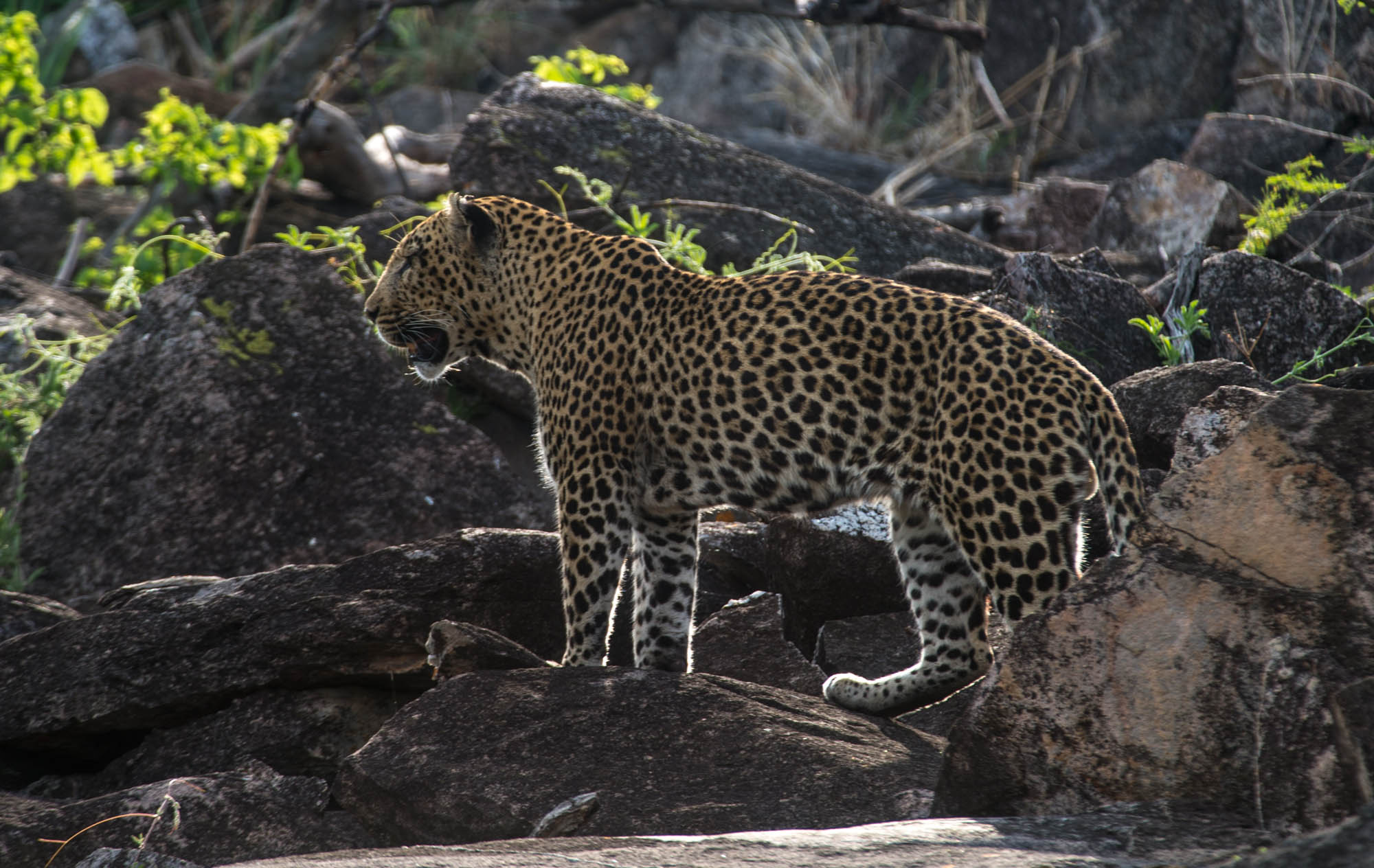
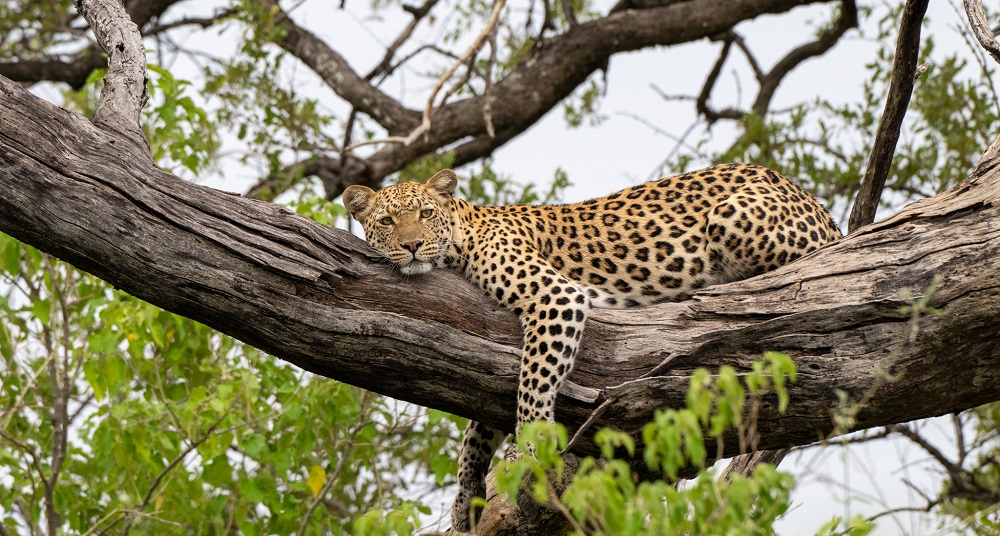
In terms of game-viewing, the highlights in the Kafue National Park include lions and leopards. The latter are well represented at Musekese Camp (which we highly recommend visiting) where there are 17 leopards in the area just around the camp. On a visit earlier this year, we saw two females interacting which is highly unusual. All the leopards have individual designations and their behavior and distribution and relationships are intensively studied.

The South Luangwa National Park is also known for an abundance of leopards plus good elephant numbers, giraffe, zebra and of course hundreds of hippos along the Luangwa river. There are multiple thousands of hippos on the Luangwa so you are almost never quite out of hearing distance of their booming snorts and honking. We are partial to the Shenton camps (Kaingo and Mwamba) as well as the Bushcamp Company and Time & Tide properties. They all offer a slightly different experience – depending on location and season – but all are excellent.

The Lower Zambezi National Park offers a distinctively different experience and setting, with most of the camps located on the banks of the Zambezi. So in addition to game drives (day and early evening), you can also do boating and canoeing, as well as walking. From August onwards the seeds of the Winterthorn trees start to drop, which attracts dozens of elephants day and night. The pods are like candy to them. This is best seen and experienced at the camps west of Jeki Airstrip, being Old Mondoro, the Tusk & Mane camps and Anabezi.

The area around Tusk & Mane in Lower Zambezi is impossibly atmospheric and there is just nowhere else like it. Tusk and Mane’s Kutali and Chula camps are rustic with bucket showers (having proper flush toilets) but the experience is as ‘classic safari’ as it gets.

The canoeing experience on the Lower Zambezi is amazing as well. We saw about 50 hippos on a three hour canoe outing and elephants crossed the channel in front of us and behind us. All in all an action packed outing with a few jolts of adrenaline here and there, yet I felt quite safe due to the expert guiding. Boating on the Kafue and the Zambezi rivers adds yet another facet to the Zambia experience. The two rivers are so different yet I found both of them to be fascinating given the immense flow of water and the importance they have to the wildlife areas in Zambia.

At any time of the year, the vehicle density in Zambia – except in the Mfuwe area – is lower than anywhere else. The camps are really small, mostly with just 4 or 5 tents. In areas like the Lower Zambezi and Kafue the experience is like being on your own private African safari.

BOTSWANA
I have not changed my mind about Botswana being among the very best safari destinations of any. On a recent trip which included Chief’s Island in the Moremi, the Okavango Delta and the Kalahari, we again experienced Botswana’s abundance of wildlife, beautiful scenery and friendly people.

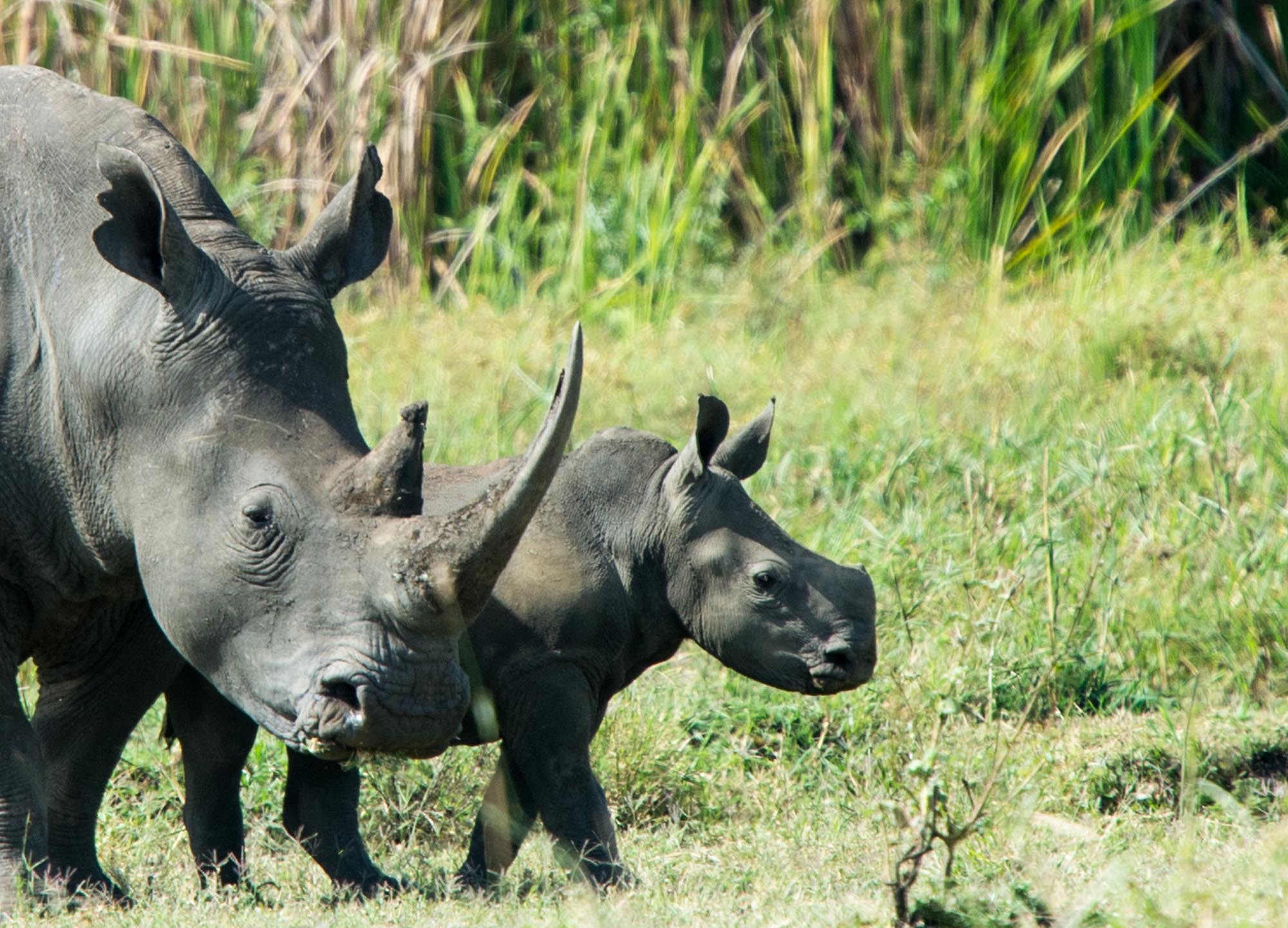
On our very first game drive out of Chief’s Camp we saw African painted dogs, lions and cheetahs. That set the pace for the entire trip, with buffaloes on our arrival at Eagle Island Lodge, a couple of baby leopards there, interaction between two sets of male lions at Xigera Safari Camp and ending with a mother and baby pair of white rhinos at Dinaka, in the Kalahari. And of course all the plains game including plentiful giraffes, zebras, wildebeest, lechwes, gemsbok, springbok, tsessebe, steenbok, a myriad of hippos and more.

Botswana has gotten quite pricey – especially from June through the end of October (high season), but you don’t have to spend weeks here to have a fantastic time on safari. Seven to nine nights total on safari is more than adequate. For a longer trip, add on a few days in Zimbabwe or South Africa. To keep the price manageable, consider going in the low-demand season, from November through the end of March. If you spend a bit more time in fewer areas (to give yourself a little more time and opportunity to find some of the elusive species like leopards and cheetahs), it can be every bit as good as the high season.

Some visitors – notably photographers – consider the low season to be the best time of the year, bar none. Why? There are lots of baby animals around (notably hundreds of baby impalas) which stimulates predator activity. Just about every day, you will experience gorgeous sunrises and sunsets due to the presence of some clouds. There are many bird species in breeding plumage, and lots of summer migrant bird species present, including the strident woodland kingfisher, several species of shrikes, bee-eaters, orioles, wading birds, birds of prey and many more. The animals are generally in good condition at this time of the year due to abundant food sources, and the green vegetation creates beautiful backdrops. The bottom line? Travel to Botswana in the low demand season and enjoy superb game-viewing and exceptionally good photography conditions at much lower prices, with far fewer other visitors around. Call or email us for information about several superb low-demand season trip itineraries and cost estimates.

YOU MIGHT ALSO BE INTERESTED IN

Destinations
Zambia

10th September 2021

Chindeni and the Bushcamp Company, Zambia

By late July we found ourselves at Chindeni, a small Bushcamp Company property
Read more
Botswana
Destinations

4th August 2022

On Safari At Belmond Eagle Island Lodge, Okavango Delta

What is the ‘secret sauce’ for an unforgettable few days on safari in Botswana? It starts with the animals, of course. The elephants, lions, giraffes, hippos

Read more
Destinations
India

27th May 2023

India

India’s tiger, mammals and birds.

Read more

SUBSCRIBE TO OUR NEWSLETTER

READERS FAVOURITES

Area
Destinations
Nyerere National Park
Ruaha
Tanzania

14th October 2023

From My Safari Notebook: Wildlife Photography

Birds in flight and wildlife photographers have an uneasy relationship. Things go wrong as often as they go right. Getting focus-lock on a moving subject

Read more
Botswana
Destinations
Okavango Delta

3rd October 2022

Camp Okavango, Botswana

Camp Okavango is in the heart of the permanent part of the Delta. In this idyllic setting there are no vehicles, and it is just a short walk

Read more
Destinations
Zambia

10th September 2021

Chindeni and the Bushcamp Company, Zambia

By late July we found ourselves at Chindeni, a small Bushcamp Company property
Read more

How to book a better safari

11th November 2021

How to book a better safari

Fish Eagle Safaris’ owner Bert Duplessis and his team at Fish Eagle Safaris Inc. have been helping people plan their African safari trips for more than 30 years, since 1990. Based on all those years of experience and having travelled to practically every major safari destination in Africa themselves – repeatedly – here are their suggestions for making your first – or next – trip as good as it can be.

SPEND MORE TIME IN FEWER AREAS
Making just one change to your African safari itinerary is almost guaranteed to improve it. Spending more days in fewer places. Trying to do too much and cover too much ground on a single Africa trip is a rookie mistake and one you don ‘t have to make. Rushing around from one area to the next is frustrating from a logistical perspective (packing, unpacking, living out of a suitcase), and it costs more on a ‘per diem’ basis due to additional flights, transfers, visas and other expenses. Many properties offer long-stay discounts where they will include one free night if you stay for four, or variations on that theme. Slow down to save money – and enjoy the ride.

Africa is at heart a slow continent, best suited for exploring at a leisurely pace, in keeping with the ambiance of the wilderness which is anything but frenetic. Things happen when they happen. The animals do not have set schedules and they move around in real time. Allow yourself plenty of time to find and see them. Soon enough, you will start understanding and even anticipating behavior and gain insight into how different species interact, both within their own group and towards others. Few things in the wilderness are as fascinating as watching animal interaction such as when one elephant herd encounters another one. It can be amiable – if they have familiar bonds – or tense, if they don’t.

Of course, I soon found out that they were experienced safari aficionados who had traveled all over Africa. They knew exactly what they were up to. They took a day trip up the Rufiji River to Stiegler’s Gorge (still one of my all-time favorite African experiences), spent one night out on a fly-camping expedition, spent a half day fishing, and did not feel compelled to go out on every game drive. When the mood struck them, they’d rather take some time to enjoy the unique pleasure of simply watching the Rufiji River rushing by on its way to the Indian Ocean. With perhaps a cocktail or an icy cold Kilimanjaro lager in hand.

With several full days in any given area, many good things happen. For one thing, you develop a better understanding of the location of a property, where it is relative to other places, what it is close to and hopefully what makes it special. With enough time (or at least more than the usual 2 or 3 nights), you can explore and try out most of the available activities, sometimes even more than once. Enjoy the meerkat interaction at Jack’s Camp in the Kalahari? Well then do it again the next day. And the next – if you’re still there.

Perhaps more importantly still, you will connect with the local guides and camp staff and management, beyond the superficial pleasantries associated with a too-short stay. You’ll get a glimpse into their lives beyond hosting people in camp; learn something about their children, spouse, friends or family. Find out what they are passionate about, their frustrations, and you’re likely to get some invaluable advice about other safari destinations, or help with your photography skills, maybe even learn how to steer a mokoro.

IT’S ALL ABOUT THE GUIDING
Traveling on safari with an experienced, qualified guide can be a revelation. A good guide can be supremely knowledgeable about practically everything you see and experience – from butterflies to celestial objects. They can also be funny, helpful, entertaining, protective, and diplomatic. Often all of those. They will usually be keen to help you master a little bit of the local language – Swahili, Setswana, Afrikaans or French, all depending on where you find yourself. They will run interference for you when needed, help you out of a tight spot, lend you some local currency, and may even become a friend for life. They will show you what conservation is really all about and open your eyes to the complexities and challenges of their world.

To become a professional Zimbabwean guide can take from 5 to 7 years and it is an arduous undertaking filled with weeks & months of acquiring and honing skills as diverse as hospitality, mammal and bird identification, safety, firearms proficiency, animal tracking, botany, and much more. You can go out into the wilderness with a professional Zimbabwe guide with full confidence in their ability to keep you safe and to provide you with remarkable insight into what you see and experience, even what to anticipate. The same can be said about proficient guides in other parts of Africa – they are in a class of their own.

A driver who rushes around the Masai Mara, racing from one Big Five sighting to another, is not a guide. A driver who habitually drives right in front of lions or other big cats walking in a specific direction, forcing them to walk around his or her vehicle, is not a guide. A driver who takes unnecessary risks, who is unethical, who routinely positions his or her vehicle in the direct line of sight of other cars, is not a guide. A driver who takes shortcuts and trespasses on ecologically sensitive terrain, in the process leaving marks which may be visible for decades to come, is not a guide.

So, before you sign up for your next trip, make doubly sure that you will be guided by a proper, well-qualified and responsible guide. Not a driver.

MAKE YOUR TRIP YOUR OWN
Finding ‘the best’ African safari for you can be a daunting task, considering the multitude of areas, countries, and types of trips available. The solution? Consult an Africa destination specialist to make your trip your own. At about the same price as the many recycled cookie-cutter trips out there, you can have your own customized itinerary. Designed just for you. As unique as you are, reflecting your interests, your style and what you want to get out of the trip. Want to focus on big cats? Crazy about elephants, or giraffes, or keen on seeing the wildebeest migration? Special interest in birds or photography? A good advisor can help you with any of these, and more. So don’t settle for someone else’s trip, or a paint-by-numbers itinerary which is as predictable as the commute to your office. Talk to an African safari expert and you’re likely to be pleasantly surprised with their creativity and the way in which they can effectively incorporate your preferences and your interests in a sensible yet fun and exciting trip – at a price point of your choice.

GET OUT OF THE VEHICLE – SOMETIMES
A photographic safari is closely associated with game drives. Twice daily, morning and afternoon. Animals become habituated to the presence of the vehicles – meaning they don’t run away when they see one – so most people get their best views and their best photographs or videos, from a vehicle. All very well. It is comfortable, safe, and efficient. Done often enough, it can also become a bit predictable and maybe not quite as exciting as the first time. So what do you do? Get out of the vehicle, naturally. It doesn’t mean going out on a taxing route march, not at all. There are many ways to experience the wilderness and the wildlife from beyond the confines of the trusty Landcruiser.

Do make sure that at least a few ‘out-of-the-vehicle’ options are available on your trip or better yet, that they are already included and specified in your itinerary. Look for activities such as walking, boating, canoe or mokoro excursions, opportunities to observe wildlife from a blind or hide, a forest canopy walk, white-water rafting, perhaps a sundowner cruise on the Zambezi or a helicopter flight over the Okavango Delta. Doing and experiencing things beyond just game drives keep things interesting, add perspective, give you something to do in-between scheduled activities, and the more active pursuits provide a form of exercise. Not many safari properties have gyms or terrain suitable for jogging or running, so any time spent on your own two feet, will help counteract the inevitable weight gain associated with all the food, snacks and beverages constantly on offer.

If you’re keen, and physically capable, you can up the ante a bit with a two- or three-day walking safari in areas like Mashatu in Botswana or in the greater Kruger National Park. With the right guide and at the right time of the year, a foot safari opens a whole new world of experiences, and for many African travelers it ends up being the most memorable part of their stay. It’s quiet – just like the wilderness – and suddenly you will be hearing and seeing things which are quite beyond the scope of a vehicle-based safari. Starting with animal and bird tracks which tell a story of their own and which a skilled guide can weave into a fascinating account. You must be on the ground to experience it close-up. Likewise, the experience of approaching a large breeding herd of buffalo on foot, or tip-toeing to the edge of a dry river-bed to quietly observe elephants digging for water, or rooting around for mineral deposits. The sounds, smells and textures of the bush are out there just waiting to be explored – out of the vehicle.

BE WARY OF LARGE GROUP TRIPS
For me personally, the African safari experience is a very private and personal one. You and the wilderness. Just you – seeing the flat, dispassionate glare in the big yellow eyes of a lion. Just you – watching the dust fly off the leathery hide of an elephant as it cools itself with its gigantic ears. Africa is not someone droning on about a painting, an architectural masterpiece or a moment in history. Yes, there is a place and time for a well-qualified guide to enhance the experience with some judiciously timed interpretative comments. Mostly though, Africa speaks to you directly and quietly. Upon hearing the alarm calls of baboons, the contact calls between wildebeest babies and their mothers, an African Fish Eagle calling, or that most iconic of night-time sounds, the hauntingly evocative braying of zebras. A private moment on your verandah in the fading light of the African day, experiencing a strong sense of deja vu, an inexplicable yet powerful feeling about being part of the environment. Much of what makes an African safari experience unique and memorable is antithetical to having a large group of people around.

Of course, you can experience this with a few family members or friends and in fact having safari companions around can enhance the experience. The anticipation of a morning game drive, the thrill of seeing something special, and the pleasure of going over it again that evening, sharing photos and video clips, having a drink and sharing a meal – all part of the fun of being on safari. Just not a big group.

While some group trips can go well, I would be extremely wary of being bundled into a vehicle with a bunch of strangers, hoping that everyone will still be on speaking terms by the end of Day 5. Unless it is a private group, with a strong and experienced leader, there’s a lot of potential downside traveling with a big bunch of people. Logistical issues, the inertia associated with getting some individuals moving, chronic late-comers, and conflicting demands and expectations. So while group trips can be relatively cheap by African safari standards, as always you get what you pay for.

We’ve seen some sub-standard group itineraries from well-known, successful operators. Inexplicable, even baffling destination & property choices. Visiting areas at completely the wrong time of the year. Spending too much time traveling, or too much time in marginal areas. Some are almost laughably bad. Do your due diligence!

TAKE YOURSELF ON SAFARI, GO ON
An African safari – particularly a customized itinerary designed for a solo traveler – can be a great experience for a single traveler. You will find yourself in a beautiful setting, enjoying game drives and other activities with a few other people who share your interests and who will usually be quite keen to talk about their safari to date, or what lies ahead. Where have you been? Where are you going next? What have you seen? There’s no better icebreaker than a common interest or passion, and the African wilderness is no exception.

We wouldn’t advise singles to book on just any program, however. Make sure that your itinerary is designed around your preferences. A typical safari is filled with opportunities to meet and interact with other people such as sundowners, when everyone gets out of the vehicle for drinks and snacks at a nice spot somewhere, as the sun sets. Singles fit in everywhere: on walks, village visits, boating outings, canoeing, or simply waiting in a hide or blind for something interesting to show up. You’re never on your own – unless of course you want to be.

ManaMeadows Tusk & Mane

Plus, it is safe with minimal time spent in cities or areas where a single person may attract unwanted attention. You will be in a private, protected environment most of the time and where necessary – such as on arrival at airports, we include personalized meet and assists.

DON’T LEAVE THE KIDS AT HOME

Children love being on safari so by all means bring them along.   The vast majority of safari camps do a fantastic job to make it a fun and involving experience for all ages.  Children respond well to the genuine warmth of the local staff and guides in the camps.  With almost everything the children see and experience being new or different and outside of their existing frame of reference, it is a wonderful experience for them on many levels.  They have fun, they explore, and they learn.  A lot.

The experience of traveling in Africa on safari is even more meaningful because of its interface with conservation of wildlife and habitat. Even the youngest ones realize that it is a special responsibility which we all share, to safeguard the environment so that future generations might enjoy the same privilege. There are several superb safari regions such as Madikwe, the Eastern Cape and the Waterberg region of South Africa which are malaria-free so that even the youngest ones can go along.

BE SURE TO GET GOOD ADVICE FROM THE RIGHT SOURCE
Is your neighbor who has been on one trip to Africa an expert on African travel? Of course not. And neither are most of the individuals who air their grievances about a travel experience or who seem effusive in their praise for a particular property. Online forums are rife with information and opinions which are biased or even totally untrue.

On the other hand, any one of the 30 members of the Safari Pros Association of North America – of which we are a founding member – can give you a balanced and even-handed appraisal of what to expect, where the real value lies, what to avoid, and what the best places are at certain times of the year. Several Safari Pros members have – like us – spent a lifetime crisscrossing African safari destinations and continually updating their knowledge and experience.

THINK CONSERVATION AND COMMUNITY
From its very inception, Fish Eagle Safaris Inc. has aligned itself with partners such as Wilderness Safaris, Origins Safaris, Nomad Tanzania and others who are 100% committed to sustainable travel practices. Their commitment to conservation is all-encompassing, all the way from decreasing their use of fossil fuels to improving the well-being of the local communities where they operate with funding, research projects, education and employment opportunities. Community involvement and support being vital to reduce poaching & illegal hunting, to preserve and rehabilitate wildlife habitat and to gain local governmental sanction.

In addition to supporting the conservation and community work being undertaken by our African partners – by booking our guests with them – we also consider the conservation practices of individual properties. We are more likely to include camps and lodges which reduce their carbon footprint by switching from fossil fuels to renewable sources of energy such as solar heating, use battery-operated game drive vehicles and boats, recycle waste, practice composting, reduce their water usage, grow their own vegetables and fruit, promote reforestation and habitat restoration and encourage their guests to be green.

As a member of Safari Pros of North America, we work only with partners who strive to conserve the beauty and well-being of the continent and understand the vital role tourism plays in conserving Africa’s wilderness and the livelihood of its people.

By planning your trip with us, you are also supporting numerous (and highly vetted) philanthropic organizations. Our members support (financial and in-kind) a wide range of conservation and community organizations. Your travel choice matters a great deal to Africa’s people and wildlife.

THE LAST WORD
Recently, when writing to us about how much she enjoyed her first trip to Africa, a client of ours added this: “On our last flight (from Vic Falls to Jo’burg), I was seated next to a woman who had been on a trip that she found endlessly disappointing.” Don’t end up being that person. Look at our suggestions, give us a call or send us an e-mail. We can and will help you book a better safari.

Destinations
Zambia

10th September 2021

Chindeni and the Bushcamp Company, Zambia

By late July we found ourselves at Chindeni, a small Bushcamp Company property
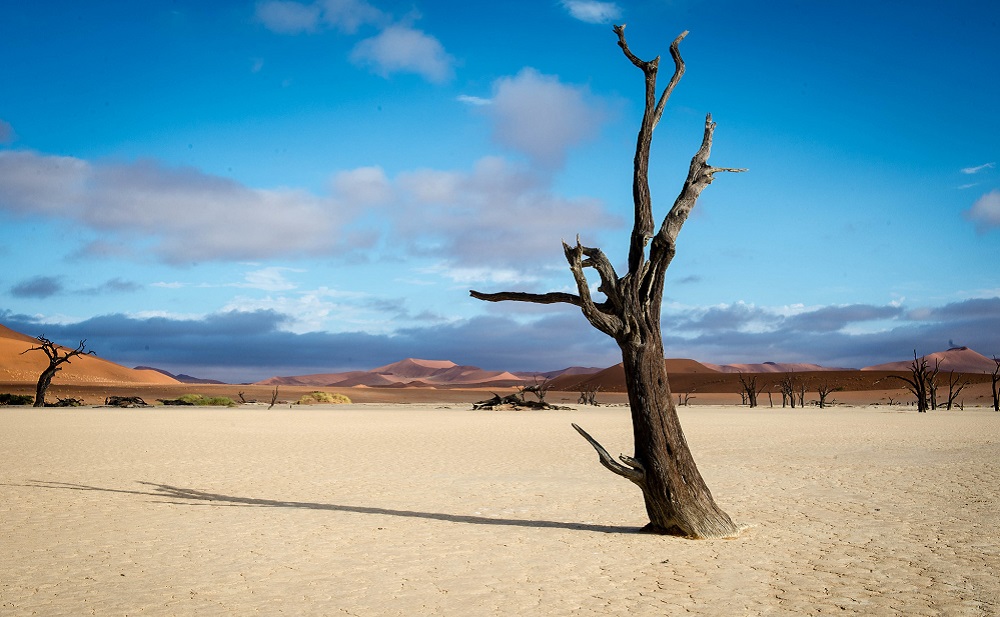
Read more
Botswana
Destinations

4th August 2022

On Safari At Belmond Eagle Island Lodge, Okavango Delta

What is the ‘secret sauce’ for an unforgettable few days on safari in Botswana? It starts with the animals, of course. The elephants, lions, giraffes, hippos

Read more
Destinations
India

27th May 2023

India

India’s tiger, mammals and birds.

Read more

YOU MIGHT ALSO BE INTERESTED IN

SUBSCRIBE TO OUR NEWSLETTER

READERS FAVOURITES

Area
Destinations
Nyerere National Park
Ruaha
Tanzania

14th October 2023

From My Safari Notebook: Wildlife Photography

Birds in flight and wildlife photographers have an uneasy relationship. Things go wrong as often as they go right. Getting focus-lock on a moving subject

Read more
Botswana
Destinations
Okavango Delta

3rd October 2022

Camp Okavango, Botswana

Camp Okavango is in the heart of the permanent part of the Delta. In this idyllic setting there are no vehicles, and it is just a short walk

Read more
Destinations
Zambia

10th September 2021

Chindeni and the Bushcamp Company, Zambia

By late July we found ourselves at Chindeni, a small Bushcamp Company property
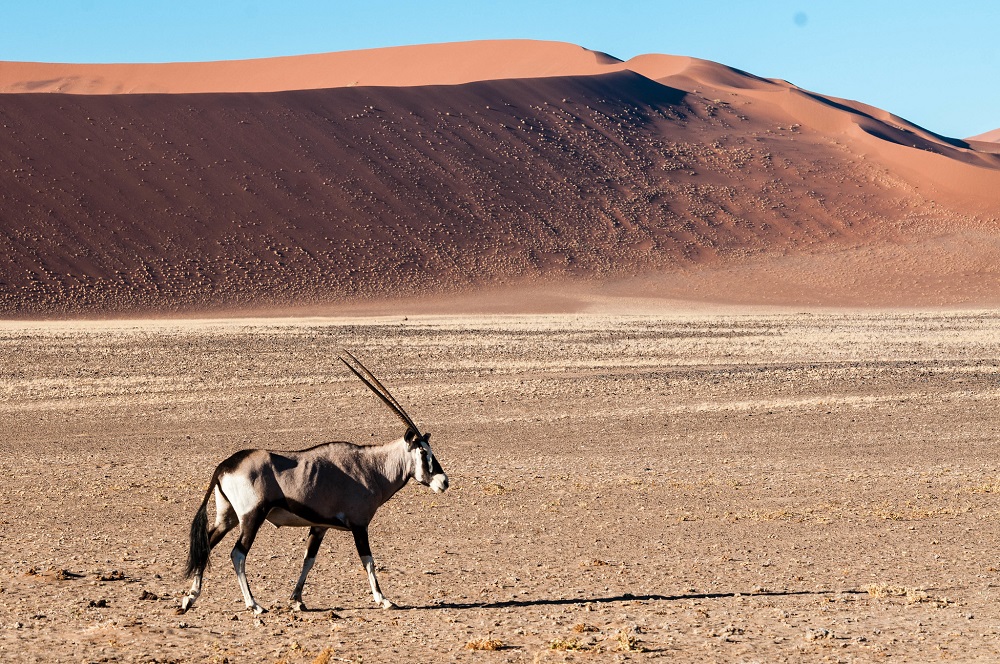
Read more

Cape Town area sightseeing

3rd November 2021

Cape Town area sightseeing

It’s hard to find fault with Cape Town, South Africa’s ‘Mother City’. After all, it is one of the prettiest cities in the world. It starts with Table Mountain as the perfect backdrop, Table Bay in the foreground, the Atlantic Ocean, Lion’s Head, Signal Hill, the captivating Victoria & Alfred Waterfront with its working harbor and yacht basin – and builds from there. In every direction, there is something interesting to see and to experience, from penguins to pedigree wines, endemic fynbos plant species to fantastic restaurants.

Cape Town is diverse, it’s exciting and it’s different.  Read most of the street signs in the downtown area and you could easily imagine being in Amsterdam.  Many buildings, statues and monuments harken back to the city’s earlier days under first Dutch and then English rule.  Cape Town appeals to any and every traveler, no matter what their specific interests or passions may be.  Wine aficionados, foodies, ‘culture vultures’, exercise and adventure junkies, gardening enthusiasts,  amateur naturalists, photographers at any level, birdwatchers, hikers and climbers, sailing enthusiasts, beach people, artistic types, history buffs, artists – there is something of interest for the  entire spectrum of visitors.  That applies to residents as well, naturally.

Listen to the people around you in Cape Town and you’ll begin to appreciate the diversity and complexity of the city’s make-up: you’ll hear a lot of Afrikaans spoken – and much of that in a distinctive local dialect. English is widely spoken too, and a visitor can rely on getting around and finding assistance and answers to questions, in English. In communities like Langa and Nyanga, the predominantly African inhabitants speak mostly Xhosa. Beyond that, you will hear smatterings of European languages like German, Dutch and French in places like Sea Point, Hout Bay and elsewhere. English with a distinctive American accent? At any of the V & A Waterfront hotels.

Did I mention that it is difficult to find negatives about the city? To be sure, there are a few. The winter months, notably June, July & August can be dismal as the city has a winter rainfall climate, unlike practically the entire rest of South Africa. Where the winters can be cold, but dry. So only and mostly in the Southwestern Cape can it be cold, rainy and windy – often simultaneously – in the winter months. Winter storms can be intense with high winds and sometimes heavy rain, but mostly temperatures are moderate (with highs barely in the 50’s F) with light rain and mist.

Cape Town’s traffic issues are nowadays just as bad as those in the much larger metropolis of Johannesburg. Driving out of the city in rush hour – particularly on Fridays – can be a total bear. Of course, being a visitor, you can mostly avoid traveling during peak traffic hours. Unless your flight to your next destination departs in the early evening. In that case, allow yourself plenty of time to get to the airport. Cape Town’s formerly excellent local rail service has fallen on hard times and in general the public transport services are negatively affected by crime, vandalism and protests. Fortunately Uber is ubiquitous and cheap so by all means use it to get around town. Your hotel or guest house can also assist you in arranging a permitted taxi if you prefer that option.

Cape Town can get rather too busy for some people, from about mid-December through early January. During the high holiday season it is jam-packed with up-country visitors (look for the telltale Gauteng license plates) and with international visitors from all over the world and the rest of Africa. It can be tough to get into the better restaurants, there is a huge line at the lower cable car station, getting in and out of the Waterfront area can be a mission, and popular tourist sites like the Cape of Good Hope Nature Reserve, Kirstenbosch and the Boulders Beach penguin colony and many of the wineries, are crowded. If you are able to travel either before or after the holiday season, do it.

So what are our recommendations for visitors for things to do and see in the space of a few days in Cape Town? Here are some of them:

IN AND AROUND THE CITY
Take the revolving cable car ride to the summit of Table Mountain. Do this at the first best opportunity, whenever the mountain is ‘open’ and the cable car is operating. Don’t wait until your last day as conditions sometimes change within hours and the cable car operation shuts down when the wind velocity is too high or because of poor visibility. Weather-related shutdowns can sometimes stretch into a couple of days, so drop whatever else you have planned, and go up the mountain if and when it is open. Early mornings are best to avoid the crowds. Definitely consider hiking either up or down – more about that later in the blog.

Visit Kirstenbosch National Botanical Garden – it is a jewel. Don’t miss the Boomslang canopy walk, the Cycad amphitheatre with dinosaur sculptures, and the Protea garden. If you have half a day for this, that would be ideal, but if all you have are two or three hours, it would still be worth it.

Take a guided Peninsula tour including Hout Bay, Chapman’s Peak Drive, Kommetjie, the Cape of Good Hope Nature Reserve (take the funicular to the lookout point), and the African Penguins at Boulders. If you have time, a guided half day City Tour is also most enjoyable. You may prefer to take a tour on the ‘Hop on Hop off’ City sightseeing bus.

Visit the Victoria & Alfred Waterfront for some interesting walks along the breakwater, shopping (of course), visiting one or more of the huge variety of restaurants and pubs, and check out the Two Oceans Aquarium.

Set aside an hour or two for a stroll – or better yet a run – along the Sea Point Promenade. There’s beautiful vistas over the ocean, the people-watching is equally intriguing and you’ll get some exercise. You can start from the V & A Waterfront and make your way up as far as Bantry Bay, if you are not pressed for time.

Make some time for Cape Town’s beautiful beaches such as Clifton, Muizenberg and Camps Bay, particularly in the warmer summer months from October through April.

Stroll the Company’s Garden area where there are several worthwhile museums; the ‘top’ entrance is just across the street from the Mt. Nelson Hotel. Which – incidentally – has the best high tea in Southern Africa, if you’re feeling peckish.

Get your cultural card stamped with a visit to the Zeitz MOCAA Museum (Silo Hotel); Irma Stern Museum, Iziko South African (Natural History) Museum, SA National Gallery, SA Jewish Museum, or District Six Museum.

Visit Robben Island by ferry boat. While this is ordinarily a worthwhile trip, we have misgivings about recommending it due to perennial management problems. Ferries are known to run late, are canceled last minute and the like. So best to gather some local (up to date) intel on the status of the operation, before you buy your ticket.

In search of a bargain or a local curiosity? Browse the Long Street and GreenMarket Square markets – this can be done in conjunction with visiting the Company’s Garden.

Visit the Castle of Good Hope Museum; be sure to take in the ‘changing of the guard’ and visit the William Fehr art exhibit inside the building, as well as the Cape Military Museum.

Take a guided walking tour of the The Bo-Kaap area  for colorful homes and Cape Malay cooking.

OUTSIDE OF CAPE TOWN:
By all means embark on a guided Cape winelands tour. Franschhoek, about a 45 minute drive from Cape Town, is the most interesting of the winelands towns but Stellenbosch and Paarl have their own appeal and there are superb wineries everywhere. Enjoy lunch with a view at Delaire Graff Estate between Stellenbosch and Franschhoek. The Cape Fold mountains – which dominate much of the winelands – together with the vineyards and signature Cape Dutch architecture make this a picturesque area well worth visiting even for visitors who are not at all into wines.

Take an uber or taxi ride from Cape Town to Kalk Bay village for lunch at the Brass Bell; or include it in your touring arrangements.

Visit Constantia Valley near Cape Town for some of the oldest wineries in the area, such as the imposing Groot Constantia; be sure to leave some time for the Norval Foundation Art Gallery, opposite the US Embassy.

Take a trip to the 12 Apostles Hotel for sunset drinks – it’s the perfect spot to see the sun settle over the Atlantic Ocean.

SOUTHERN CAPE (HERMANUS AREA)
Travel to Gansbaai for shark diving. Presently, the great white sharks are not around in big numbers, but there are several other resident shark species to be seen. The nearby town of Hermanus is known for the ‘marine big five’ which include the South African Fur Seal, the Southern Right Whale, African Penguin, Great White Shark and Bottle-nosed Dolphin. The town of Hermanus becomes a mecca of whale-watching when the Southern Right Whales are around, from about June through November. October is whale month so schedule your visit then, if you want to be sure of seeing these giant creatures – and their little ones – breach or simply frolic around.

TABLE MOUNTAIN AND OTHER HIKING OPTIONS
Table Mountain dominates Cape Town in every way; it is the city’s signature natural feature and no visit to Cape Town is truly complete without involving the mountain in some way or other. While it is perfectly ok to travel to the summit of Table Mountain on the Cable Car, we would recommend adding at least one activity involving a hike on the lower slopes of the mountain – or all the way to the top.

We work with a simply fantastic hiking guide in Cape Town – Lauren Medcalf of Mother City Hikers – for Table Mountain hiking and nature walks.

Lauren recommends doing a hike as one of the first things, after arriving in Cape Town. It really helps to ground you, it gets the cobwebs out after the long flights and helps you feel awake, alive and ready for the rest of your Cape Town stay. Lauren says that many guests who hike with her at the end of their trip tell her how they wish they’d done it at the beginning as they learned so much that was useful for the rest of their stay.

If you arrive sometime in the morning into Cape Town you could do an afternoon hike, or alternatively the next morning or afternoon. If you want to incorporate Kirstenbosch National Botanical Gardens, Lauren could take you around the gardens for an easy walk of 45 minutes to an hour to see the highlights. From there, you would then hike up to the contour path and over and back down to the gardens. This hike only goes one third to one quarter of the way up that (Eastern) side of the mountain so it is not intense but you would get an idea and feeling of the mountain and nature around. This generally takes 3-4 hours to complete.

Other options are:

Pipe Track:
A truly beautiful +/- 3 hour route (also only going one third of the way to the top of Table Mountain), very quiet and peaceful and with lots of interesting plants to see, touch & even taste along the way. The turn-around point is at a cave-like ‘Overhang’ where hikers spend a few minutes just taking in the views and enjoying a snack and drinks.

Lions Head:
An amazing +/- 3 hour route, adventurous and beautiful. The only drawback is that it can be busy with lots of people on it, particularly on Saturday and Sunday. On either of those days, be prepared to be picked up from your hotel really early (5:00 am) in order to avoid the foot traffic.

If you want to do something a bit more challenging, then the Platteklip Gorge hike is the least challenging of the hikes which take you all the way to the top of the mountain. Anybody who is moderately fit and without major mobility or other medical issues can do it. About 3 to 4 hours, from the base of the mountain to the summit. Platteklip is not the most scenic of the various hiking options, but a great hike nonetheless. Once it opens up (last third of the hike) there are some fabulous views. This hike is also extremely popular so again, an early start is advisable. It is mostly exposed to the sun so be prepared for that.

Experienced hikers may want to tackle Nursery Ravine or Skeleton Gorge (from Kirstenbosch) or India Venster. Skeleton Gorge is beautiful with many small ‘box ravine’ pockets, seemingly with their own micro-climate. The hike is well-protected from the elements including the sun, with long stretches through Afro-montane forest. It is a long hike, particularly if your final destination is the upper cable car station. India Venster demands a bit more in the way of strength and agility, and I probably wouldn’t advise it for first-timers. A fear of heights would be a disqualifier as well. Otherwise it is an absorbing, fun hike and you will look back on it with a great sense of achievement. I have personally done all of these hikes so feel free to call me or email me if you have any questions.

YOU MIGHT ALSO BE INTERESTED IN

Destinations
Zambia

10th September 2021

Chindeni and the Bushcamp Company, Zambia

By late July we found ourselves at Chindeni, a small Bushcamp Company property
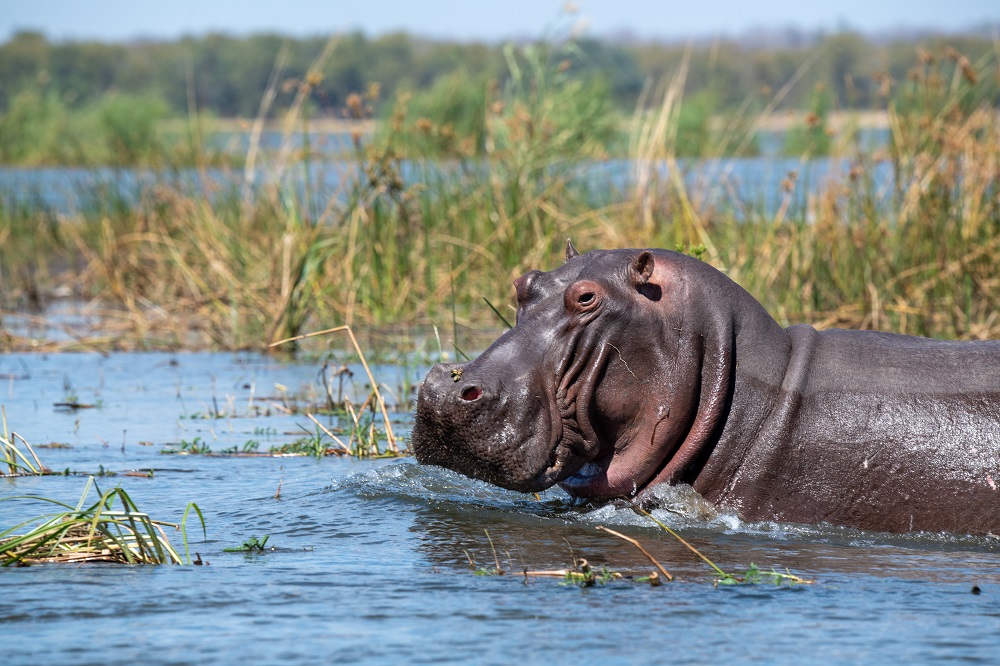
Read more
Botswana
Destinations
Okavango Delta

3rd October 2022

Camp Okavango, Botswana

Camp Okavango is in the heart of the permanent part of the Delta. In this idyllic setting there are no vehicles, and it is just a short walk

Read more
Area
Destinations
Nyerere National Park
Ruaha
Tanzania

14th October 2023

From My Safari Notebook: Wildlife Photography

Birds in flight and wildlife photographers have an uneasy relationship. Things go wrong as often as they go right. Getting focus-lock on a moving subject

Read more

SUBSCRIBE TO OUR NEWSLETTER

READERS FAVOURITES

Destinations
Zambia

10th September 2021

Chindeni and the Bushcamp Company, Zambia

By late July we found ourselves at Chindeni, a small Bushcamp Company property
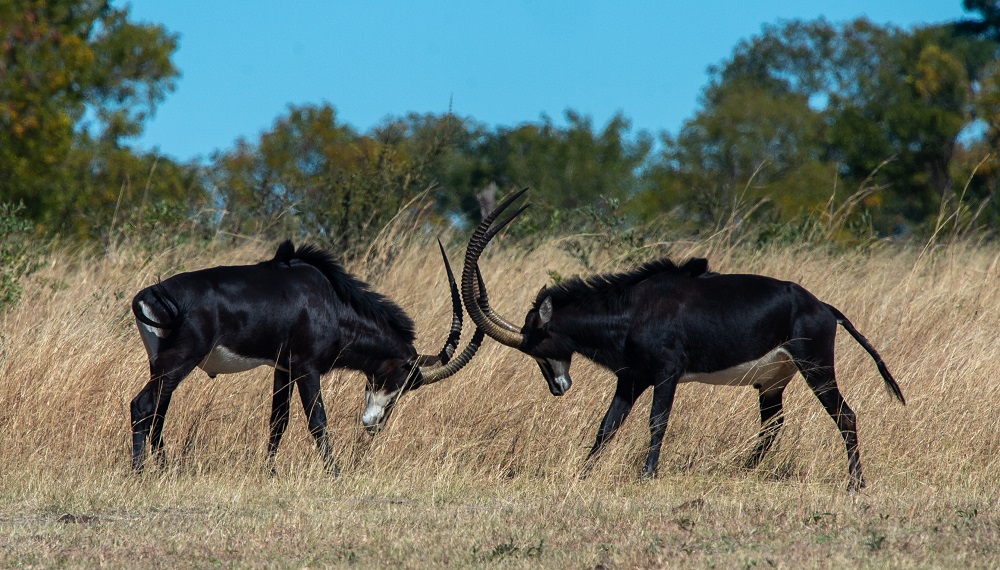
Read more
Botswana
Destinations

4th August 2022

On Safari At Belmond Eagle Island Lodge, Okavango Delta

What is the ‘secret sauce’ for an unforgettable few days on safari in Botswana? It starts with the animals, of course. The elephants, lions, giraffes, hippos

Read more
Destinations
India

27th May 2023
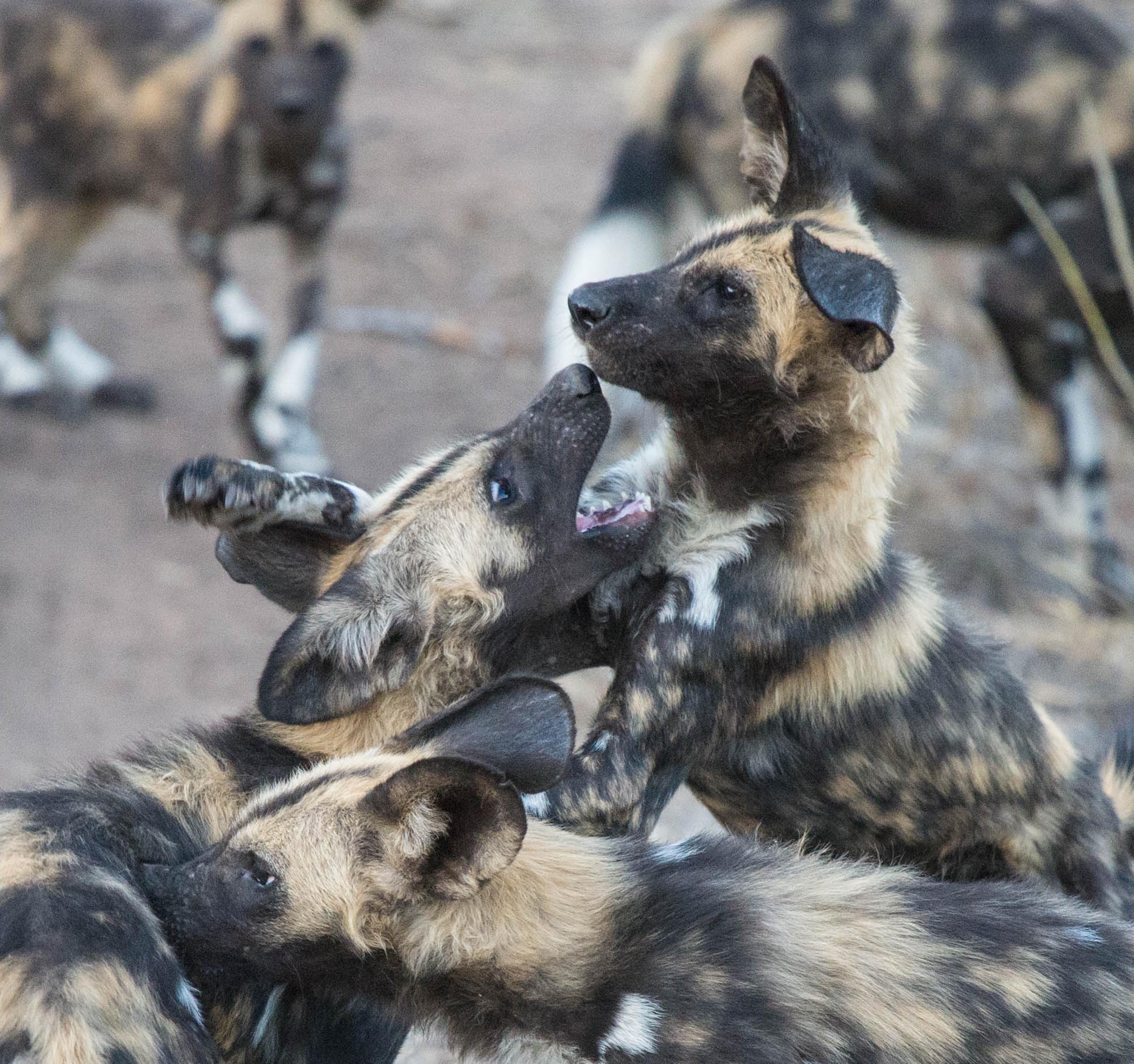
India

India’s tiger, mammals and birds.

Read more
  • « Go to Previous Page
  • Page 1
  • Interim pages omitted …
  • Page 13
  • Page 14
  • Page 15
  • Page 16
  • Page 17
  • Interim pages omitted …
  • Page 28
  • Go to Next Page »

Footer

Design

  • About
  • Destinations
  • Blogs
  • FAQS
  • Team
  • Contact
All Rights Reserved ©Fish Eagle Safaris 2022 | Terms & Conditions | Privacy Policy
Designed & Developed by B Online

SUBSCRIBE TO OUR NEWSLETTER

SIGN-UP TO OUR NEWSLETTER

Subscribe Form

Footer Widget Header

Related Blogs