• Skip to primary navigation
  • Skip to main content
  • Skip to footer

Fish Eagle Safaris

Fish Eagle safaris

Contact

Logo
  • About
  • Destinations
  • Blogs
  • Newsletter
  • FAQS
  • Team
  • search
  • Contact
  • About
  • Destinations
  • Blogs
  • FAQS
  • Team
  • Contact

Destinations

Photography on safari

26th March 2023

Photography on safari

Fish Eagle Safaris was an early adopter of digital photography. Company founder Bert somewhat fondly recalls using a first generation Sony Mavica on a trip to Madagascar in 1998. It was slow and primitive measured against the standards of current digital cameras, but it did the job. Having the capability of taking a photograph and being able to see it just seconds later (rather than waiting to have film developed and printed) seemed like the future at the time. The reaction of the Madagascar kids who crowded around Bert to look at themselves in the photos, just seconds after an exposure, was priceless.
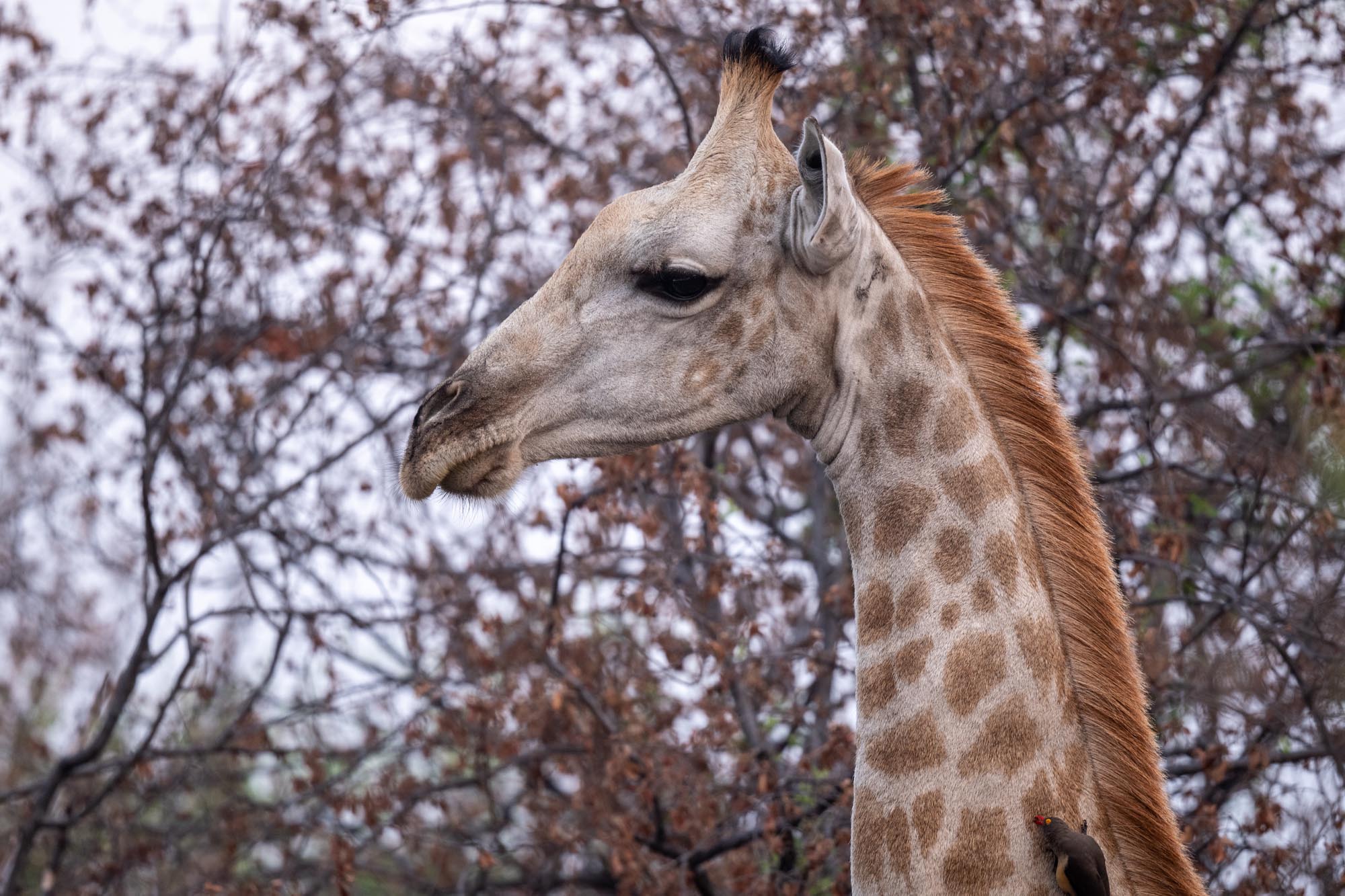
Since then, the Fish Eagle Safaris team has gained considerable experience and a measure of expertise in the field of wildlife photography. Particularly since 2008 when we purchased our first big camera and telephoto lens combination. At the time, it was a Nikon D300 and a Nikon 200-400 f/4 Zoom lens. We still use many of the images taken with the 200-400 zoom lens. At nearly 7 pounds it is hefty but few other lenses beat it for versatility and all-round excellence. The 200-400mm f/4 is still a great choice for a Nikon shooter who wants a long zoom lens that can let you keep your camera’s shutter speed high and ISO low in a variety of lighting conditions.
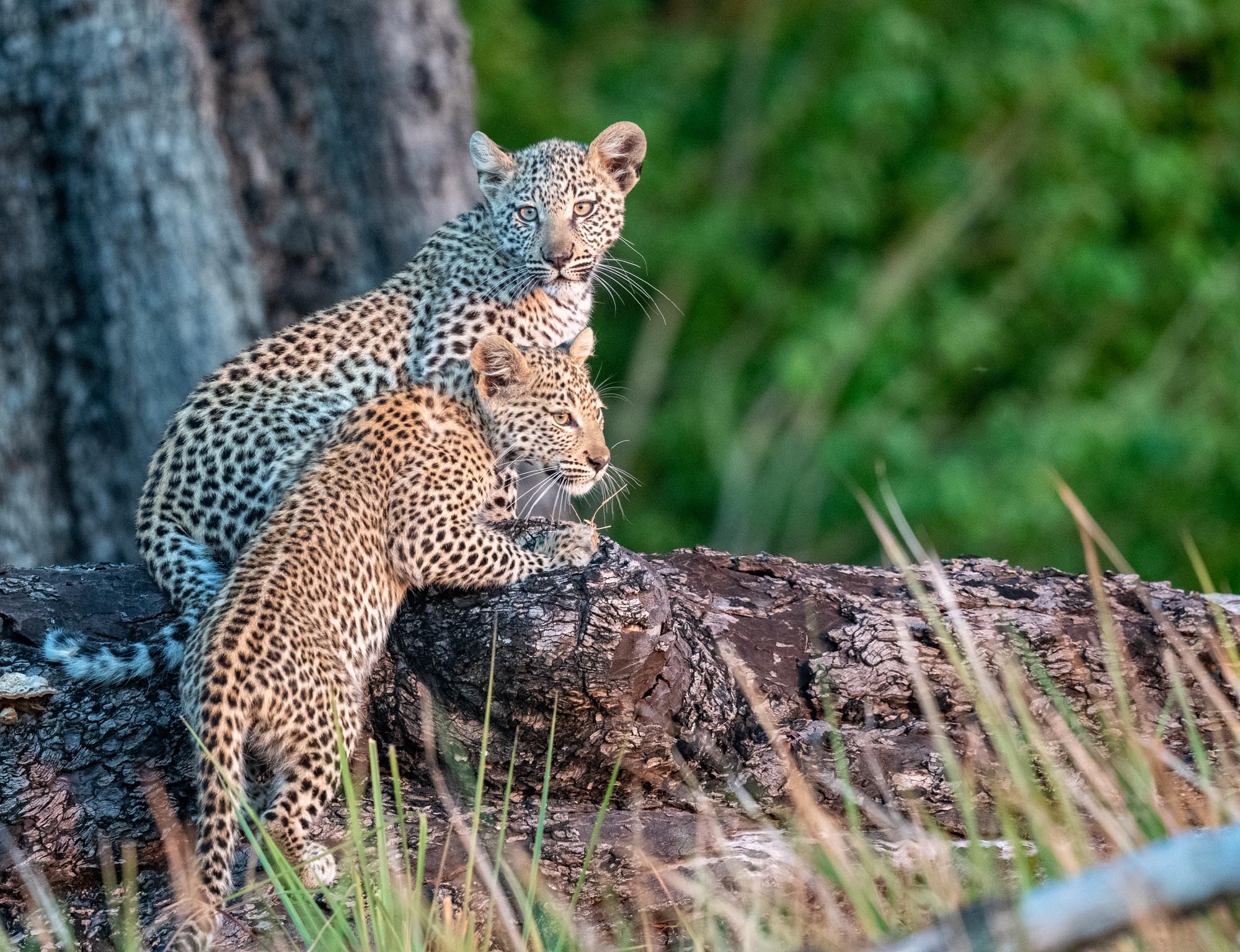
Some years later, we upgraded to a Nikon D-4 camera – which we still use. With an optional battery grip, it is fast (8 to 9 exposures per second) and it is a monster in poor light. A couple of Bert’s photos of a Zimbabwe lion Xander – unethically hunted and killed just like his much more famous father Cecil – ended up on ABC World News Tonight as well as in several other publications, websites and broadcast media around the world, a few years ago.
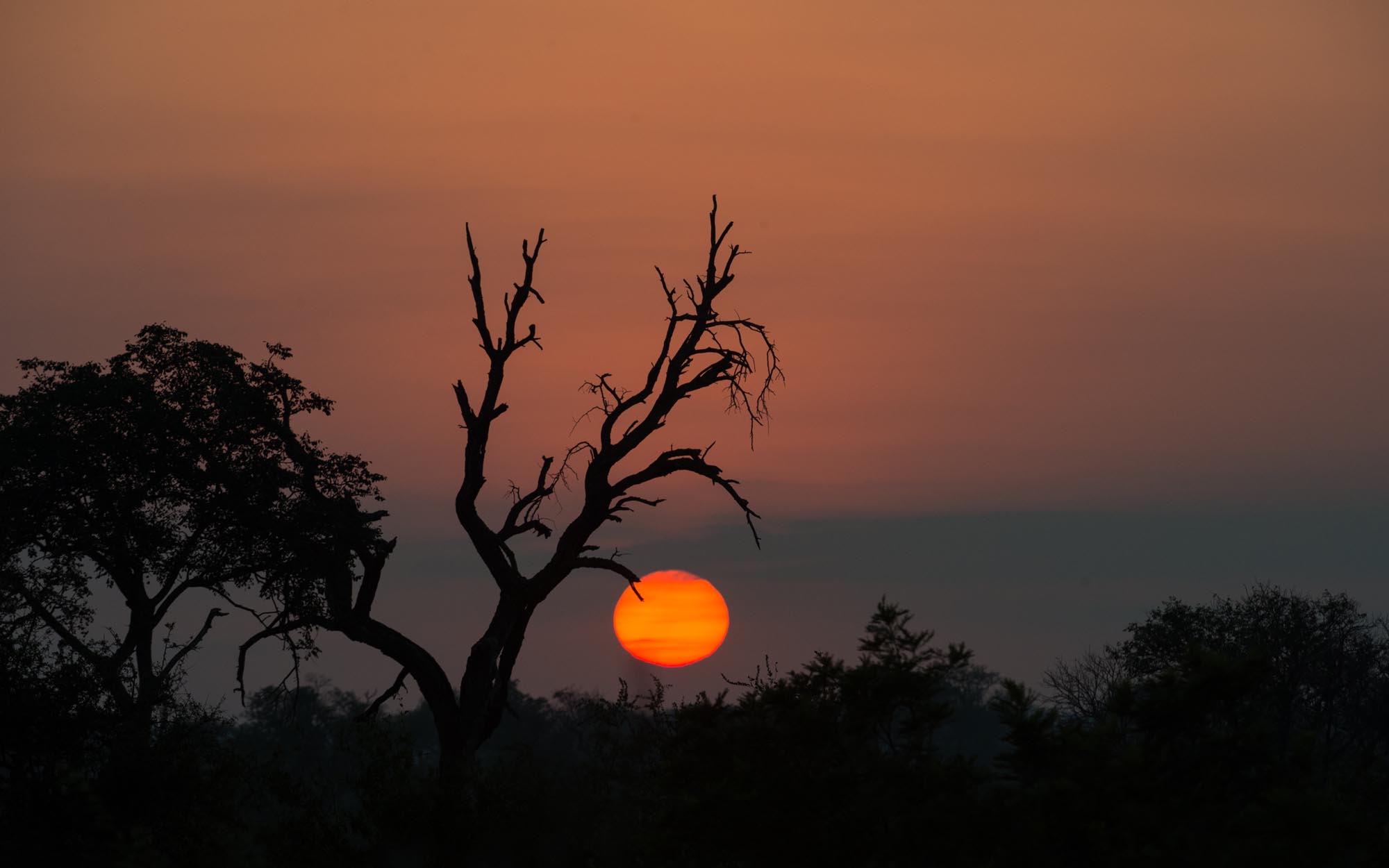
SET A REALISTIC OBJECTIVE
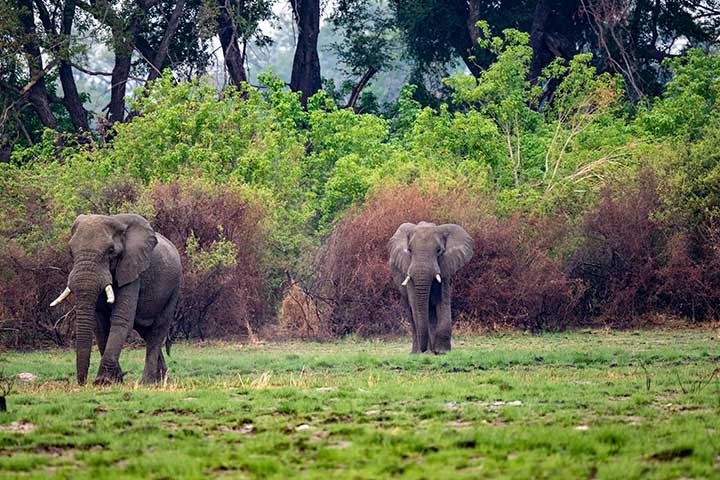
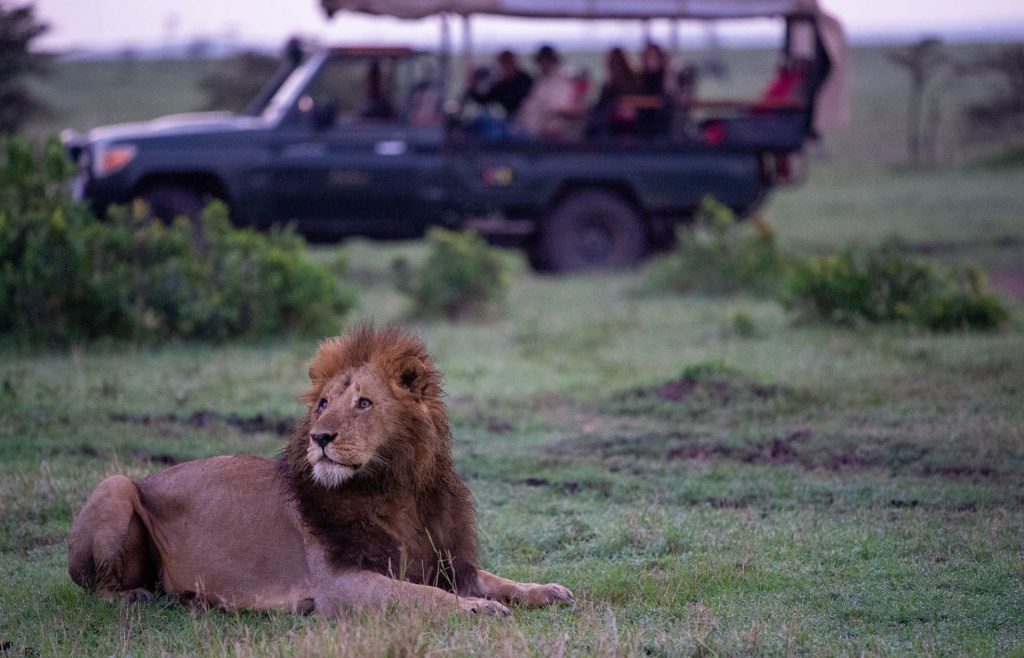
Before any trip, I like to think about the type of images I can expect to capture, depending on the places & activities on the itinerary. Predictably, the bulk of them will be shot from an open vehicle during a game drive. Sometimes, the object will be a long distance away, simply because it is wary or shy or regulations prohibit off-road driving. At other times the object will be huge like an elephant or giraffe, and very close to the vehicle. I would also plan on shooting some birds in flight on boating outings such as on the Kafue and Zambezi, or from a mokoro or a skiff in the Okavango Delta. Plus some close ups of mammals and birds from blinds. Other than pure wildlife photos, I would usually include a smattering of images of guide and visitor interaction on a walking safari or other activity, a few sunrises, sunsets, and some room and camp shots. Depending on the itinerary, there may be some candid photos on a cultural activity such as when walking with descendants of traditional hunter-gatherers in the Kalahari.
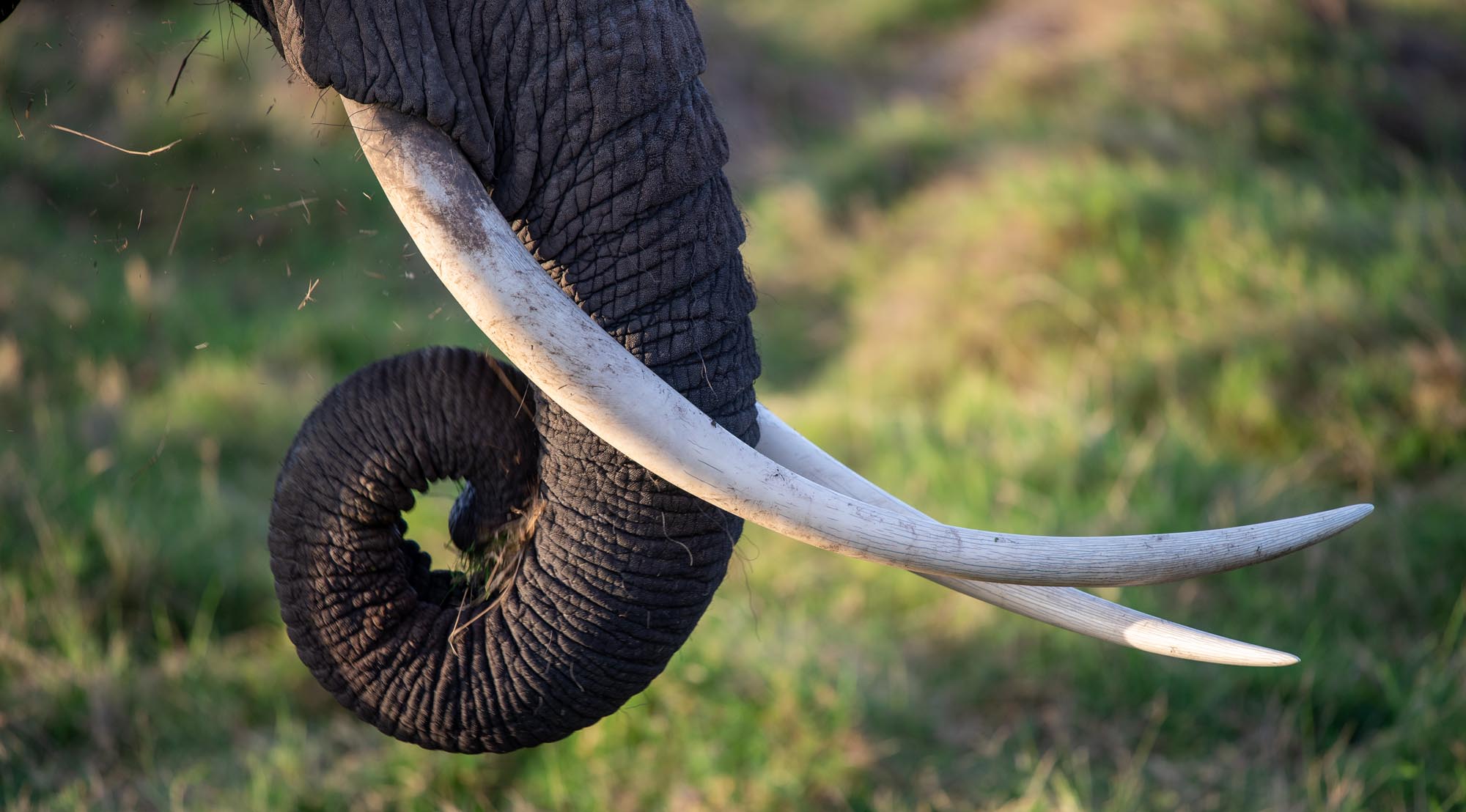
It is a useful exercise to jot down a few notes about the type and variety of images you are likely to capture, which helps inform the choice of equipment and eventually with the planning and execution of the day to day activities and outings. If you already have an idea of the kind of photos you’re after, it really makes life a lot easier for your professional guide. They will know what to concentrate on and they will get you into better positions with more opportunities to capture exactly the type of images which you had in mind. Which of course makes for a fun and enjoyable experience.
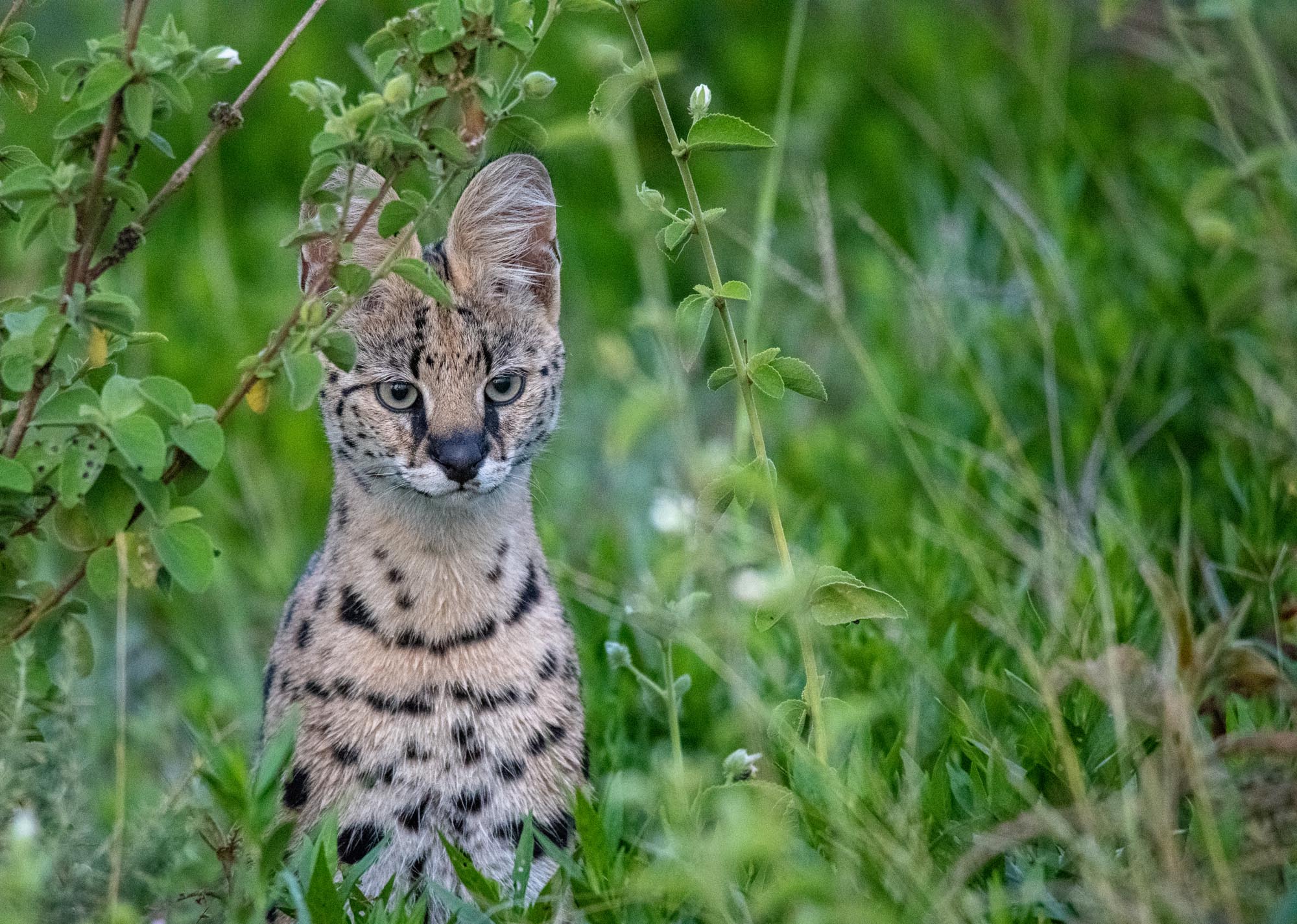
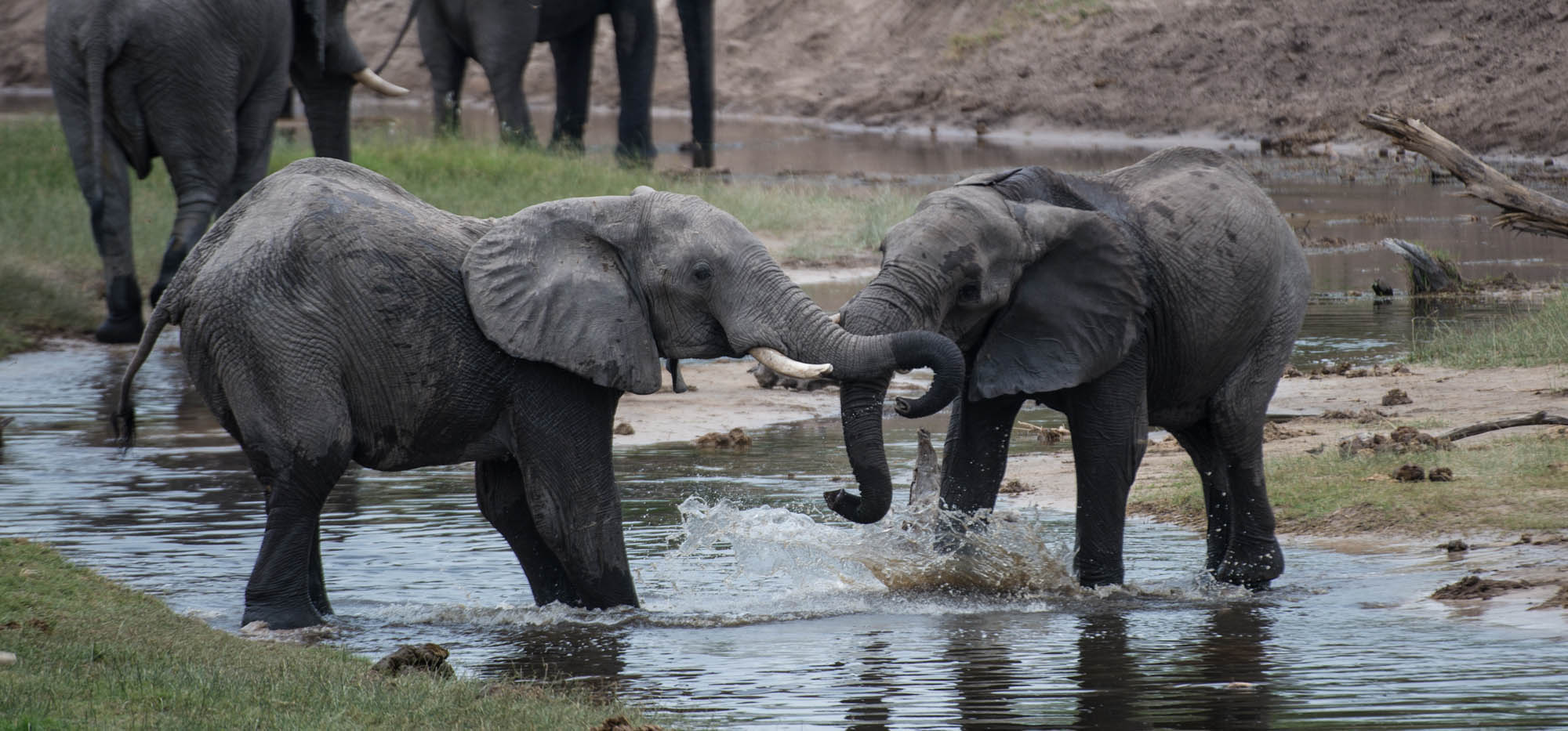
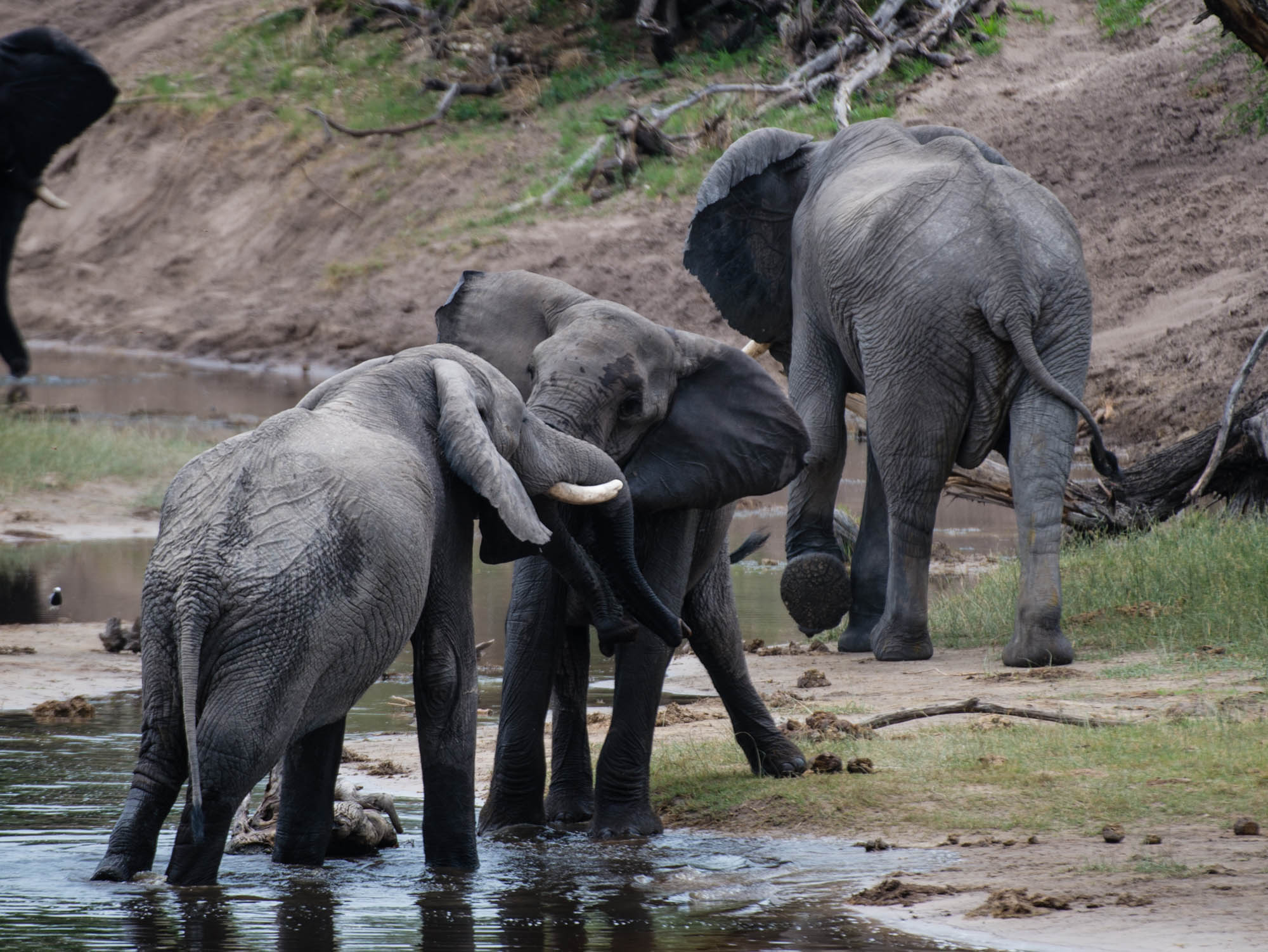
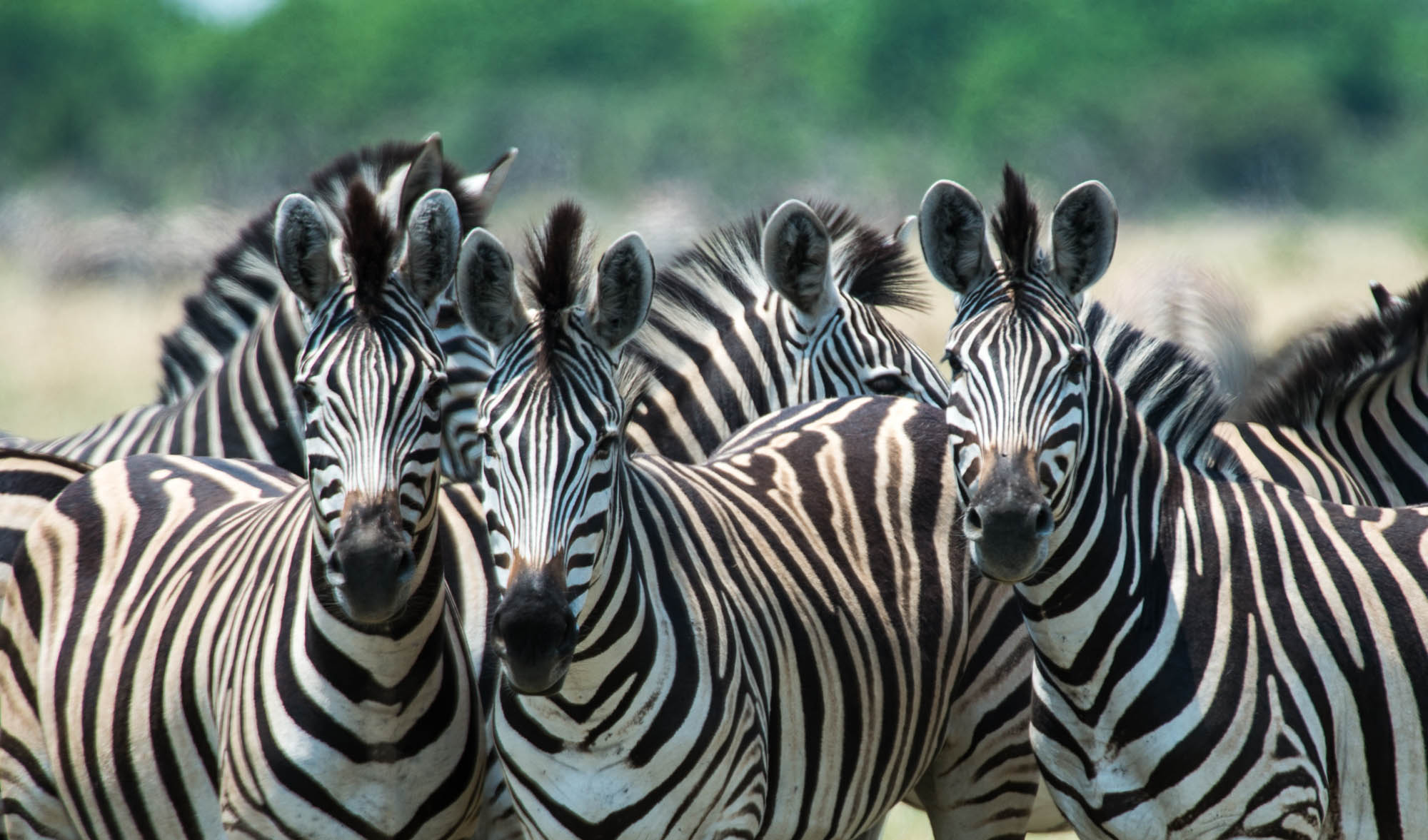
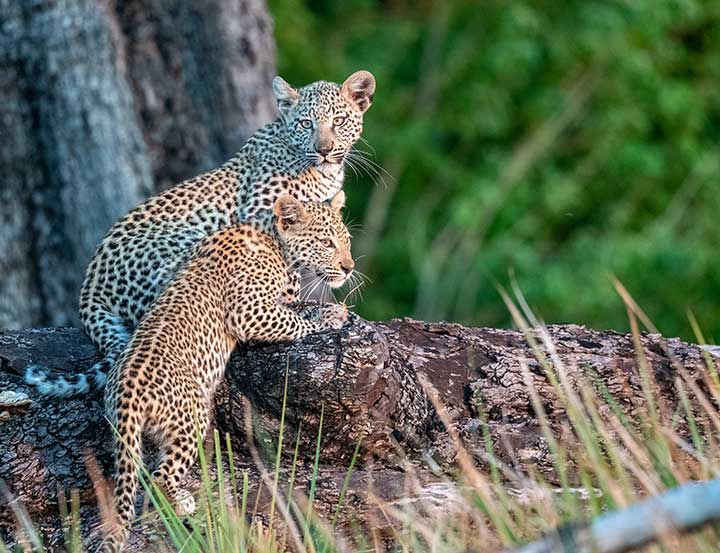
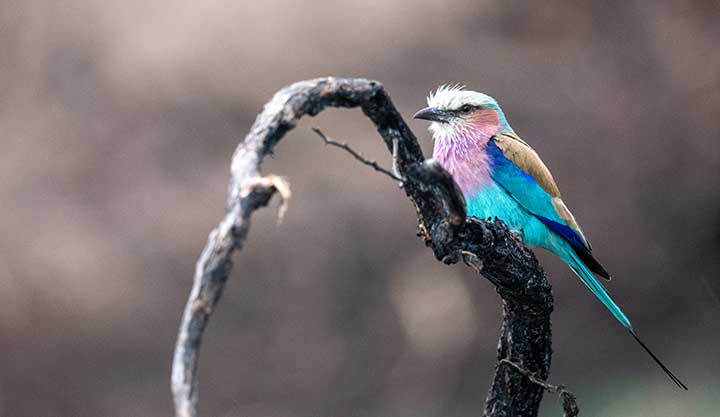
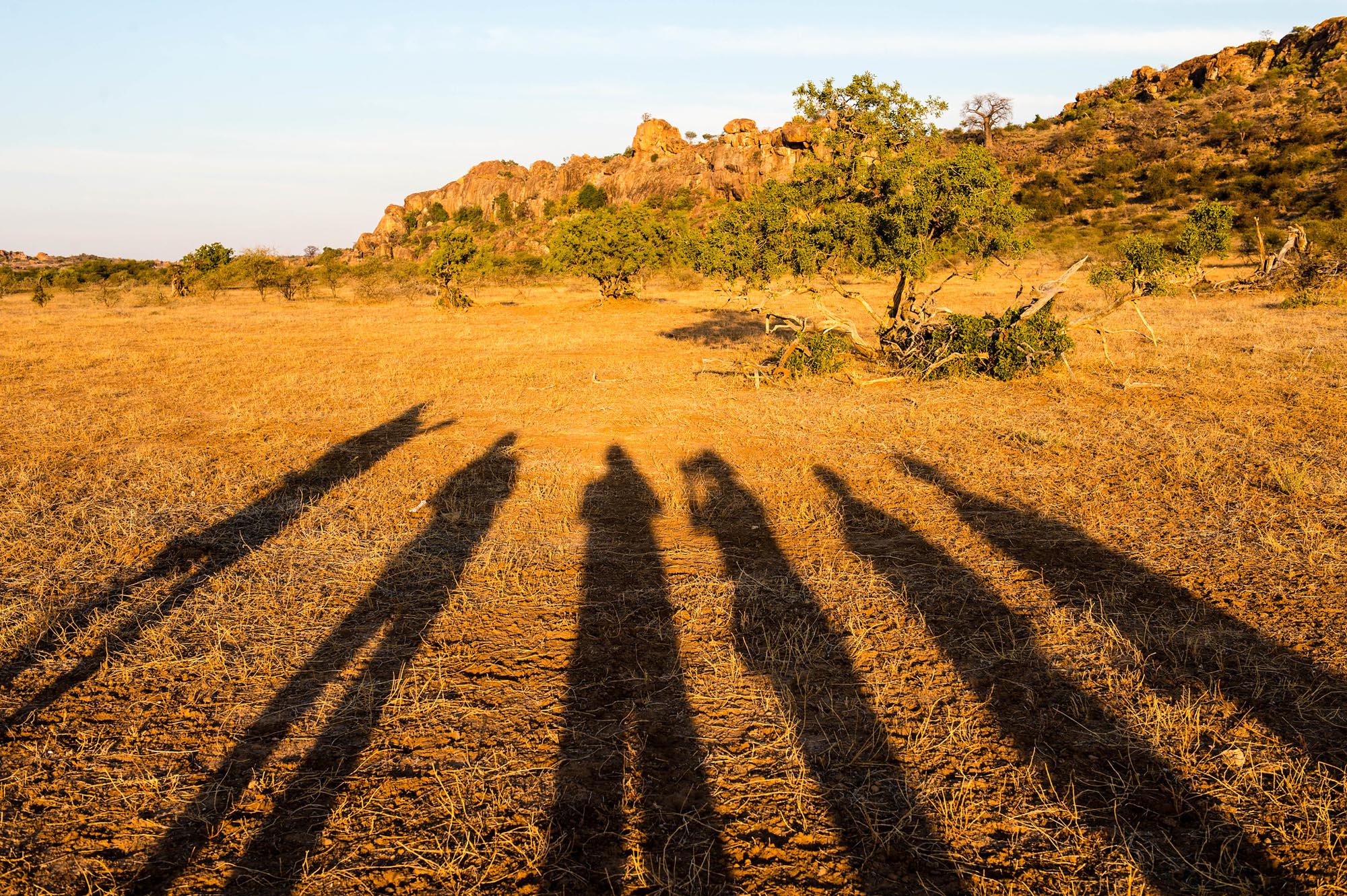
Like many other wildlife photographers our aim is to capture the essence of what makes wildlife viewing special. Often it is just a moment in time, such as when two Hartmann’s zebras pause in near perfect light in front of a succulent plant in Damaraland in Namibia – and both lift their heads, staring straight at the camera. A second earlier their heads were down – no photo there. A second later, they were gone. Successful wildlife photography is all about capturing those moments. Those special moments will present themselves in many different ways. Sometimes it is literally just a second or two such as an animal briefly pausing, a bird taking off from a perched position or a leopard descending from a tree. At other times it may be painted dogs hunting, lion cubs playing, elephants walking with Mt. Kilimanjaro in the background, young elephant bulls jousting in a pond, or habituated meerkats emerging from their den. The list is endless and limited only by one’s imagination.

Good wildlife photography is much more than a collection of point and shoot images of any animal or bird which gets into range. The captures should be engaging, or at least interesting and always as technically correct as possible. Only if the subject is something extraordinary like a pangolin or an aardvark will we even consider publishing a photo which may be slightly blurred or not 100% tack sharp.

Over the years we have refined and tightened our objectives. We don’t just take wildlife photos to record the presence of an animal or bird or other living organism. We try to create context and background, tell a story, create some drama, make it exciting and appealing.
CREATING THE RIGHT SCENARIO
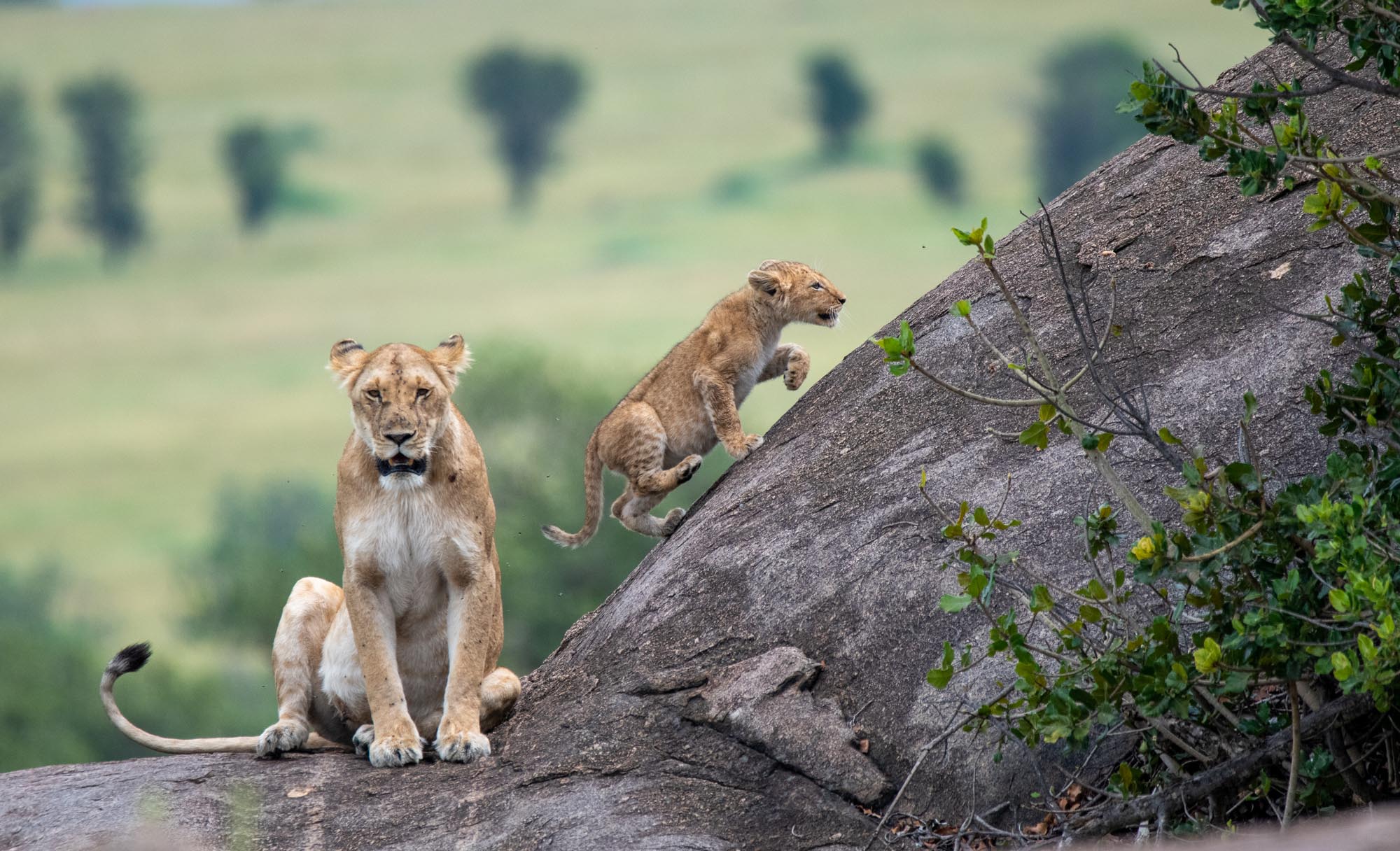
How do we make our photographs special? First of all by creating the best possible scenario for our photography, by having the right equipment, by spending enough time in a location and by being patient.

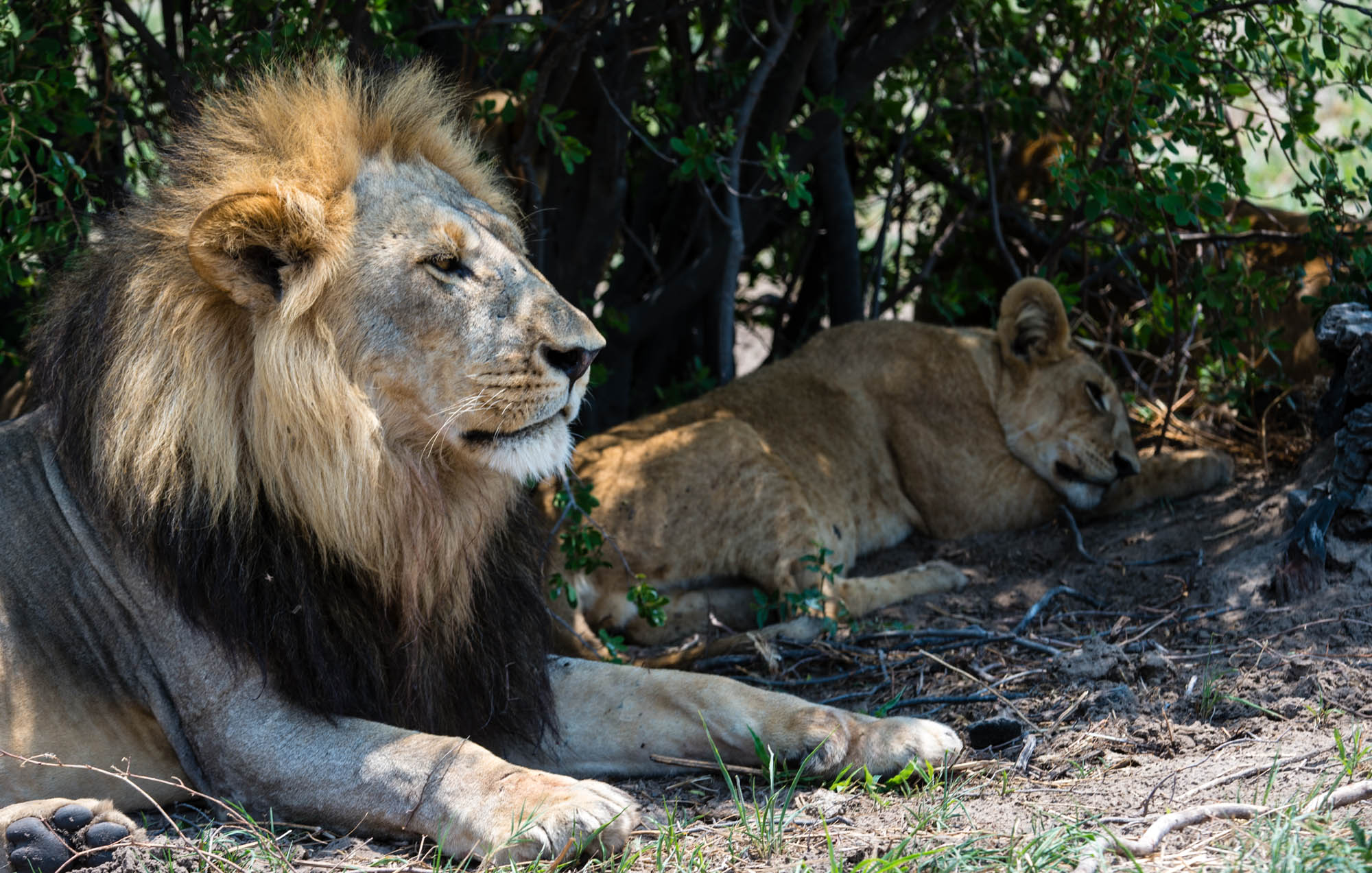
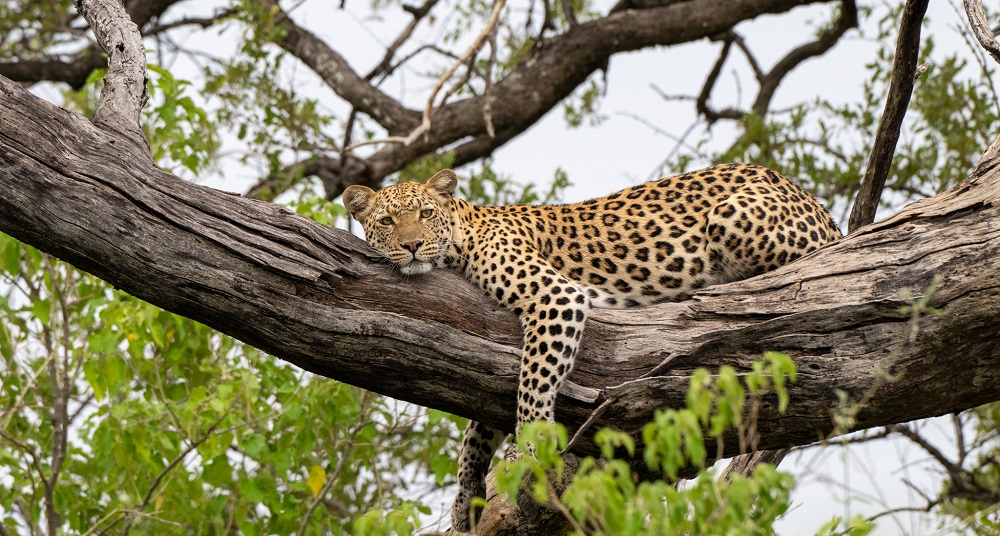
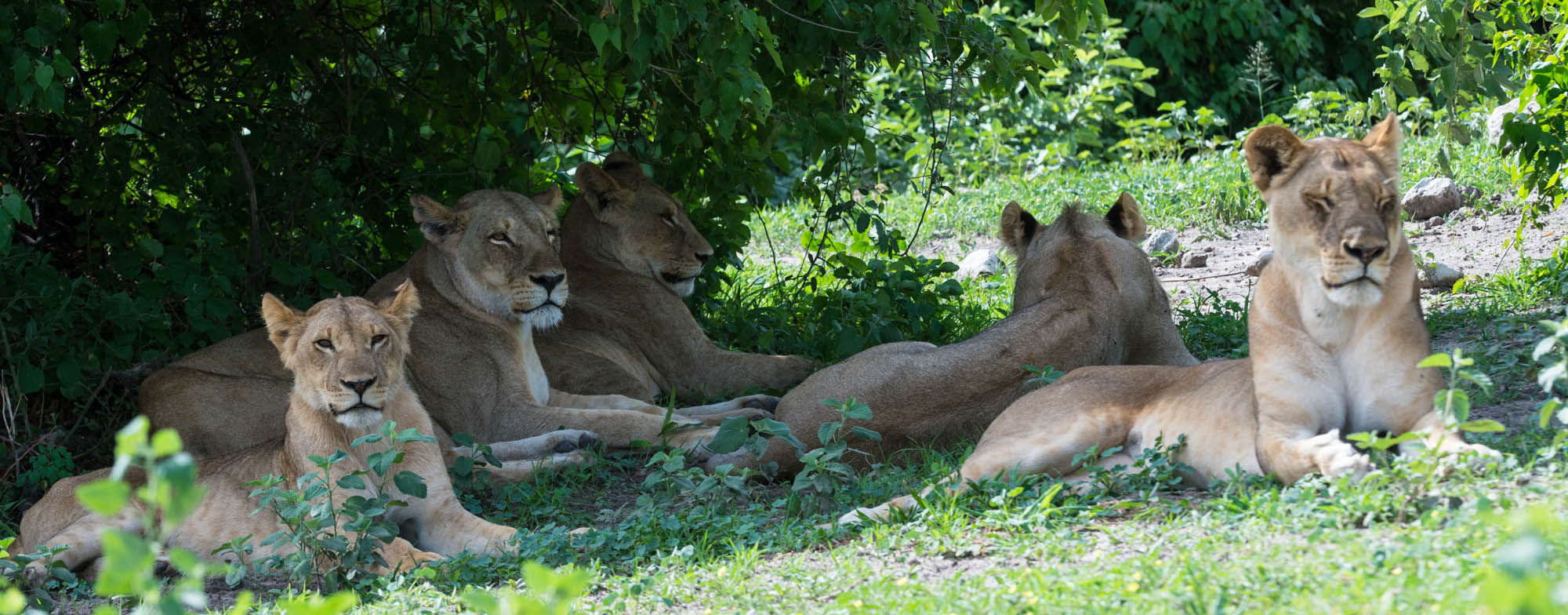
The right scenario could be many things. It starts with being in the right place at the right time. Looking for leopards? Then visit the areas and the camps where they are likely to be seen and be out in the bush right around first light and again in the late afternoon. There are always exceptions but mostly nocturnal animals like leopards and lions are best photographed early and late in the day. Observing sleeping lions is standard fare on practically any African safari and there is really no less interesting an object than that. The secret is to be out and ready to capture your first image well before the sun rises. Recently in Botswana, we again realized how critical it is to be out early in the warmer months. If you’re not ready to leave camp right around 5:30 a.m. in summer, you are almost definitely going to miss out on seeing some of the predator activity. In some areas – where it gets really cold at night – even the animals tend to hunker down in the early mornings until it gets a bit warmer. So this is not an all-encompassing ‘rule’. At Tswalu in the Cape Kalahari for example, some of the nocturnal creatures like the aardvark and pangolin adjust their usual night-time feeding activity by being out during the day, to avoid the worst cold.
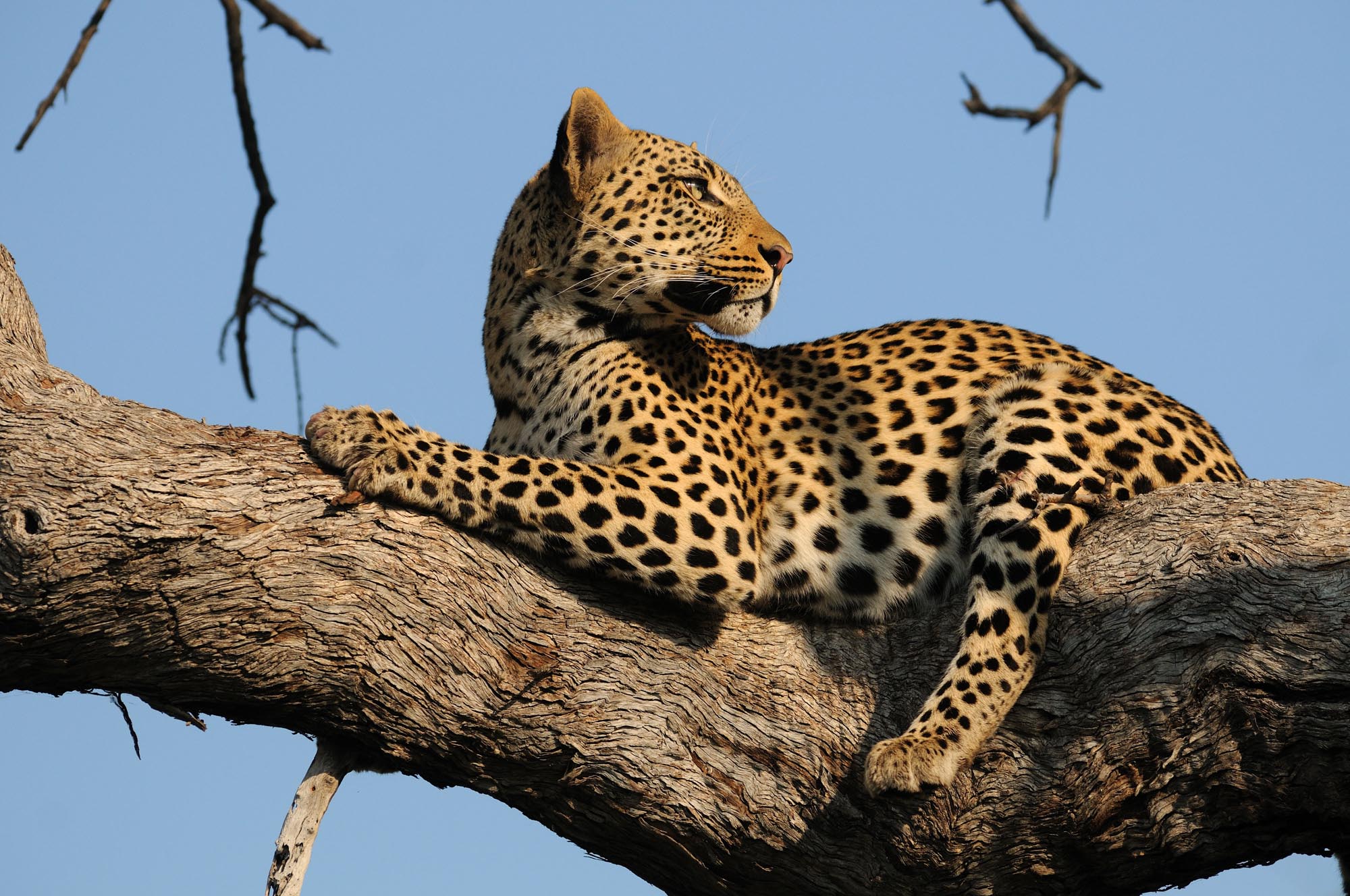
You can stay out as long as you want but don’t expect to find active leopards or lions in the middle of a warm or hot day. They will be sleeping or resting up in shade deep inside a bush, or – in the case of leopards – maybe hidden within the tree canopy on a branch. There are always exceptions. We saw a leopard stalk and kill a blackbacked jackal in Etosha National Park, Namibia at 2 pm one day, not long ago.

For the purpose of this discussion we will avoid discussing night photography simply because we don’t really do it. We’ll try to get some captures of an aardvark, an owl or other nocturnal creature we happen to stumble upon on a night drive, but it’s purely incidental.
SHOOTING DURING THE GOLDEN HOURS
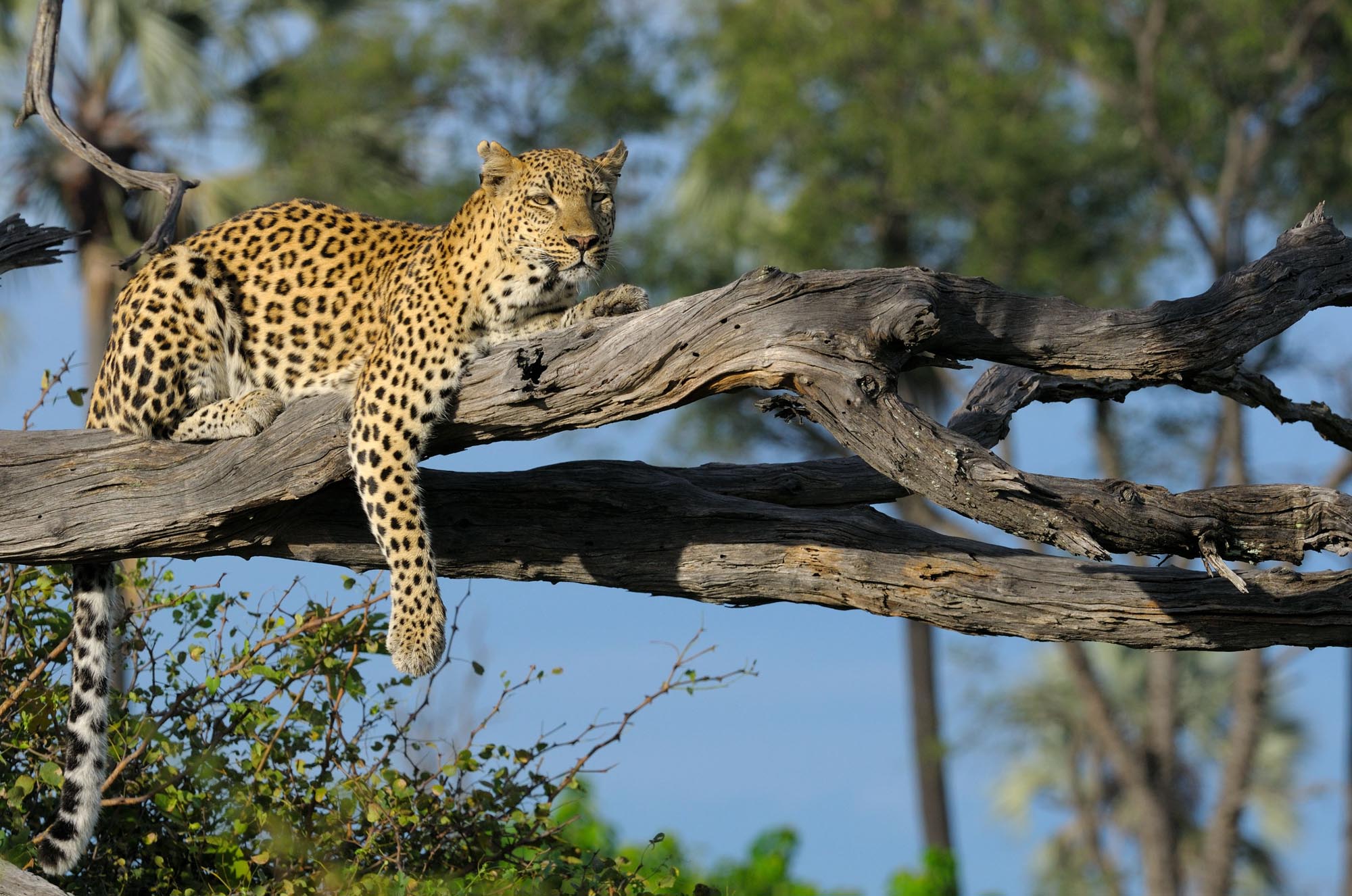
We try to maximize natural light to its best advantage in the couple of ‘golden hours’ just after sunrise and before sunset. This is when practically any subject comes alive – even the most ubiquitous of antelopes like impalas and the East African gazelles look good in the soft, forgiving light associated with the golden hours.
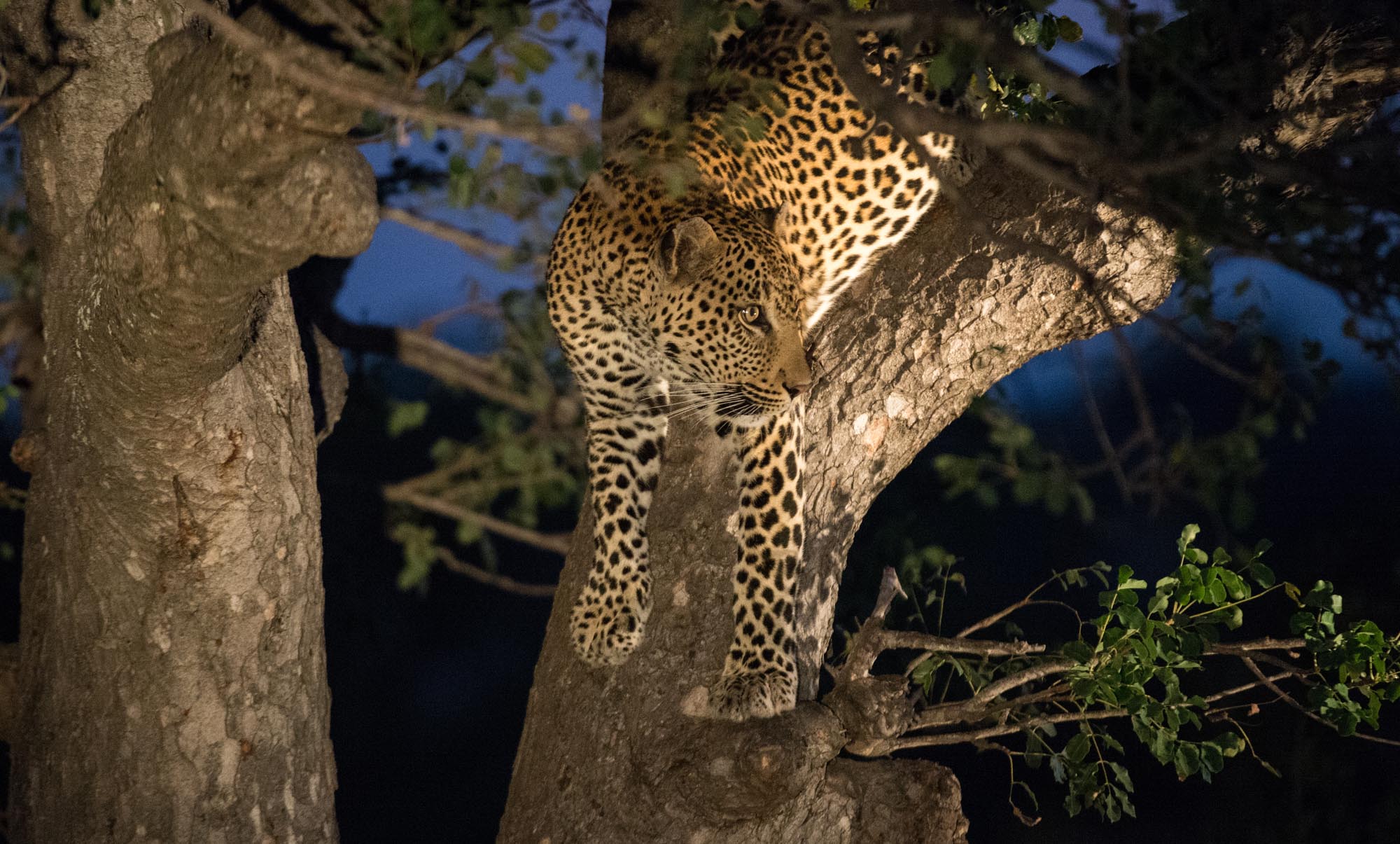
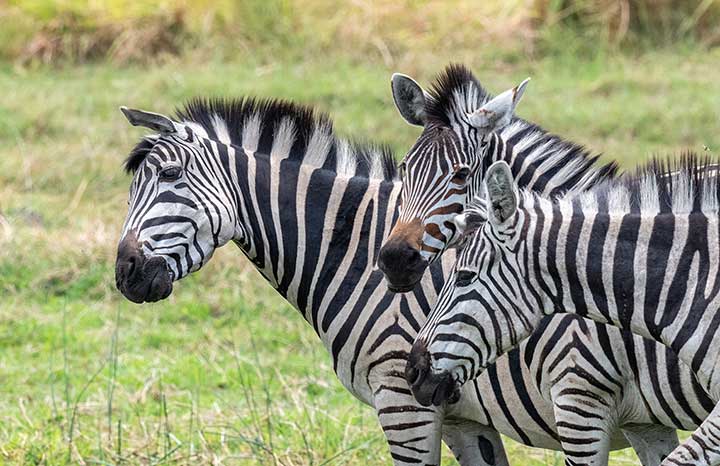
Which brings me to one of my few pet peeves about wildlife photography. I do not like to be driving around excessively during the morning and afternoon ‘good light’ window. My request to guides is always to find a suitable object soon and to stay with it for a considerable length of time, while the light is good. Find a nice group of zebras at 7 in the morning? Stay with them, wait for them to line up in an interesting way or for two of the young stallions to start play-fighting. Or some such scenario. Don’t snap off a couple of quick shots, only to start driving again almost immediately. During the good light period in the morning and afternoon you want your guide to be more patient than ever.
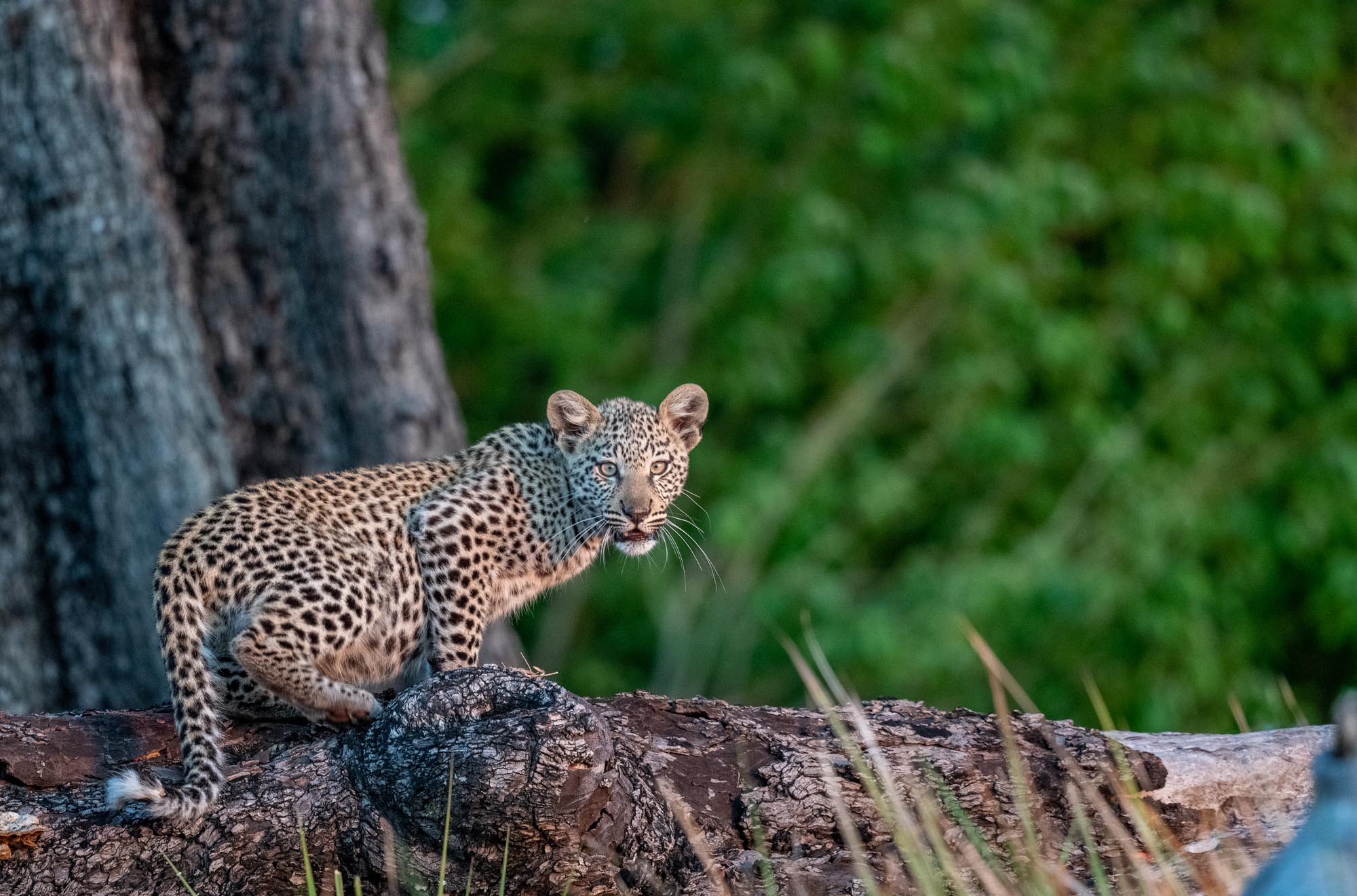
Digital photography – and specifically the image alterations and corrections which can be made in the processing phase – has somewhat reduced the ‘golden hour’ fixation of the film era. It is now relatively easy to ameliorate the harsh shadows caused by overly bright midday conditions, for example. Also, on overcast days you may be able to capture some great images well beyond the early morning and late afternoon hours. Which is great but does not detract from the importance of capturing as many images as you can, during the golden hours. The warm, golden light adds a certain elegance to exposures which is just about impossible to achieve at any other time of the day.

TAKE YOUR TIME
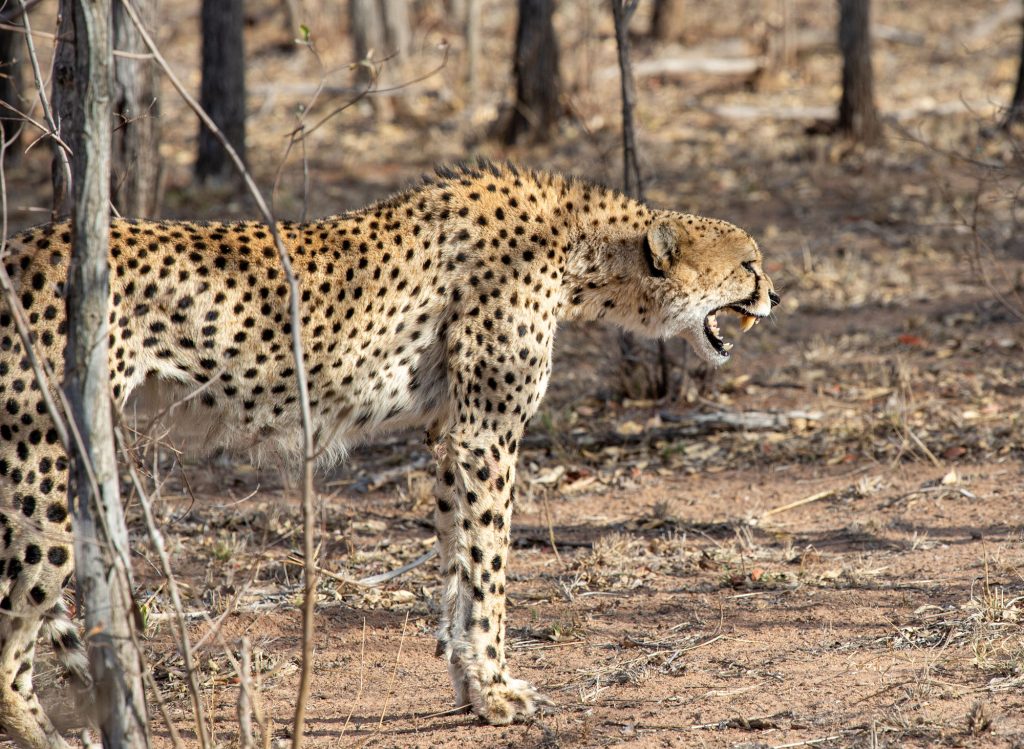
Patience and perseverance go hand in hand with wildlife and nature photography. Stick around long enough and interesting things are bound to happen. This is particularly true around water holes in the dry season but not exclusively so. Patience and perseverance can take many forms with wildlife photography. It can involve spending several hours with a coalition of cheetahs, waiting for them to initiate a chase and hopefully a kill. Or hanging out in the proximity of a pack of African painted dogs, likewise waiting for them to adopt a hunting mode or for the youngsters to start playing.
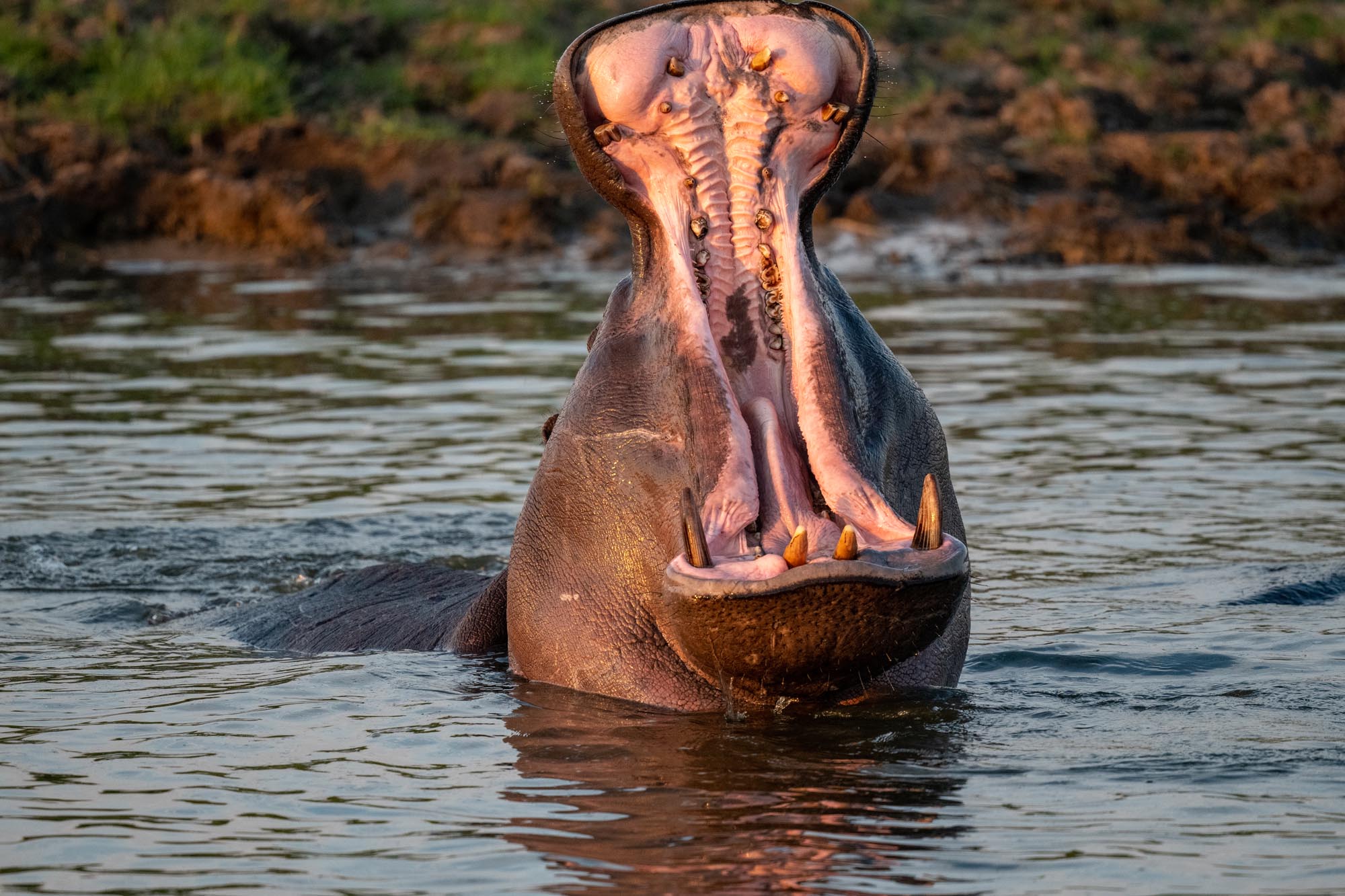
Parking yourself at a hippo pool for an extended period of time almost invariably will produce a decent ‘wide open mouth with impressive tusks’ shot. If you’re lucky, there will be a territorial spat between two competing males, when things can get really exciting. One or more of the animals may leave or enter the pool, or you can get lucky with capturing a tender mother and baby moment. When hippos get ready to leave the water for their grazing grounds – usually by nightfall – some of them will make a spin move when they do a 360-degree roll, momentarily exposing their pink bellies. I’ve seen it happen several times. Do I have a great photo of it yet? No. But I haven’t given up and will be spending more time at a hippo pool, just waiting for the moment…
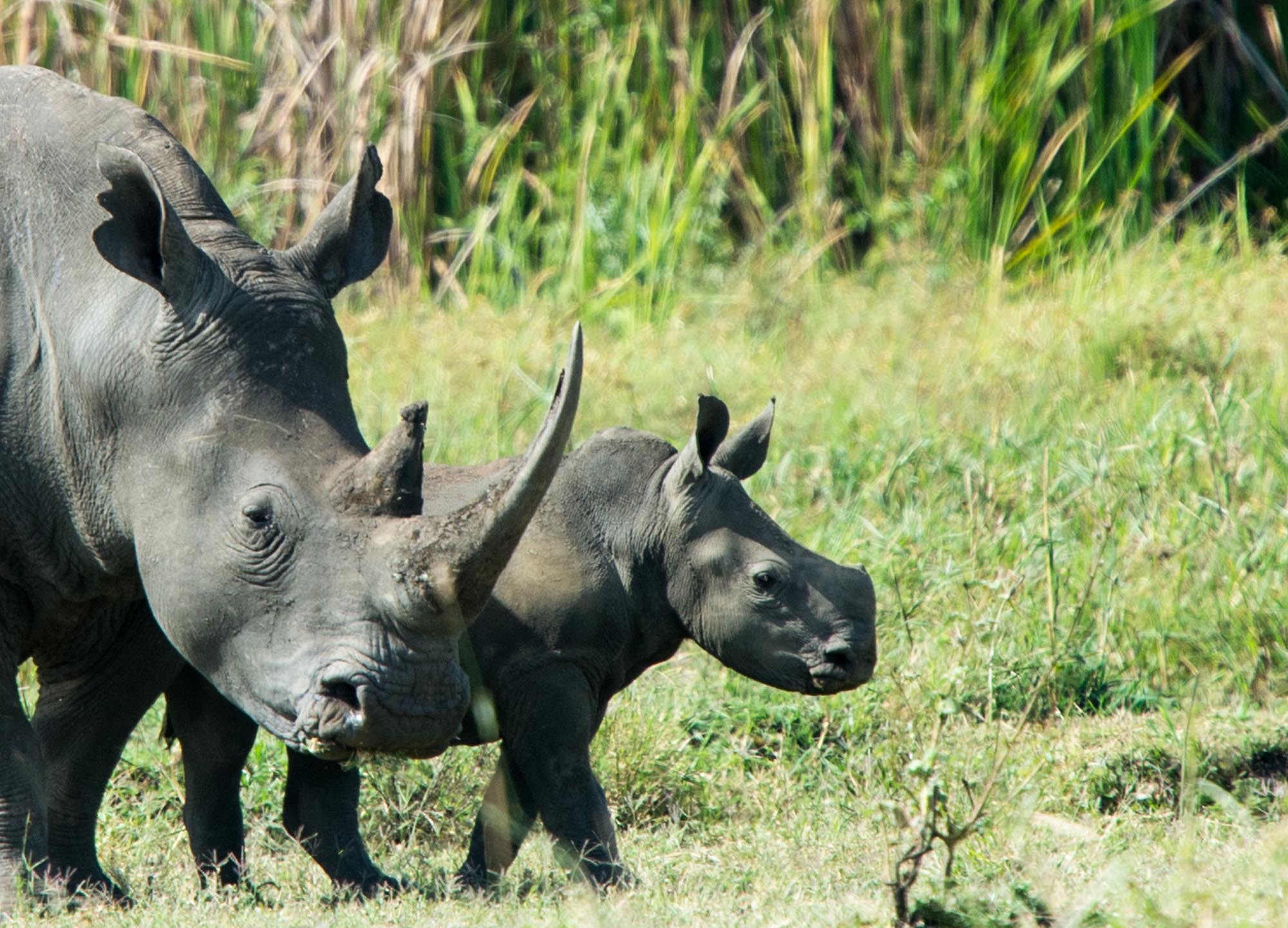
Spending enough time in an area is crucial. You will see and experience more, the entire experience will be more enjoyable and your photography will benefit immeasurably. Animals move around in real time and you simply have to give yourself enough time to find them and to photograph them under optimal conditions. If there are cheetahs in an area you are not likely to see them in just a day, in one or two game drives. Over the course of three or four days you very well might. Time and a bit of luck creates opportunity for more than just a quick snapshot.
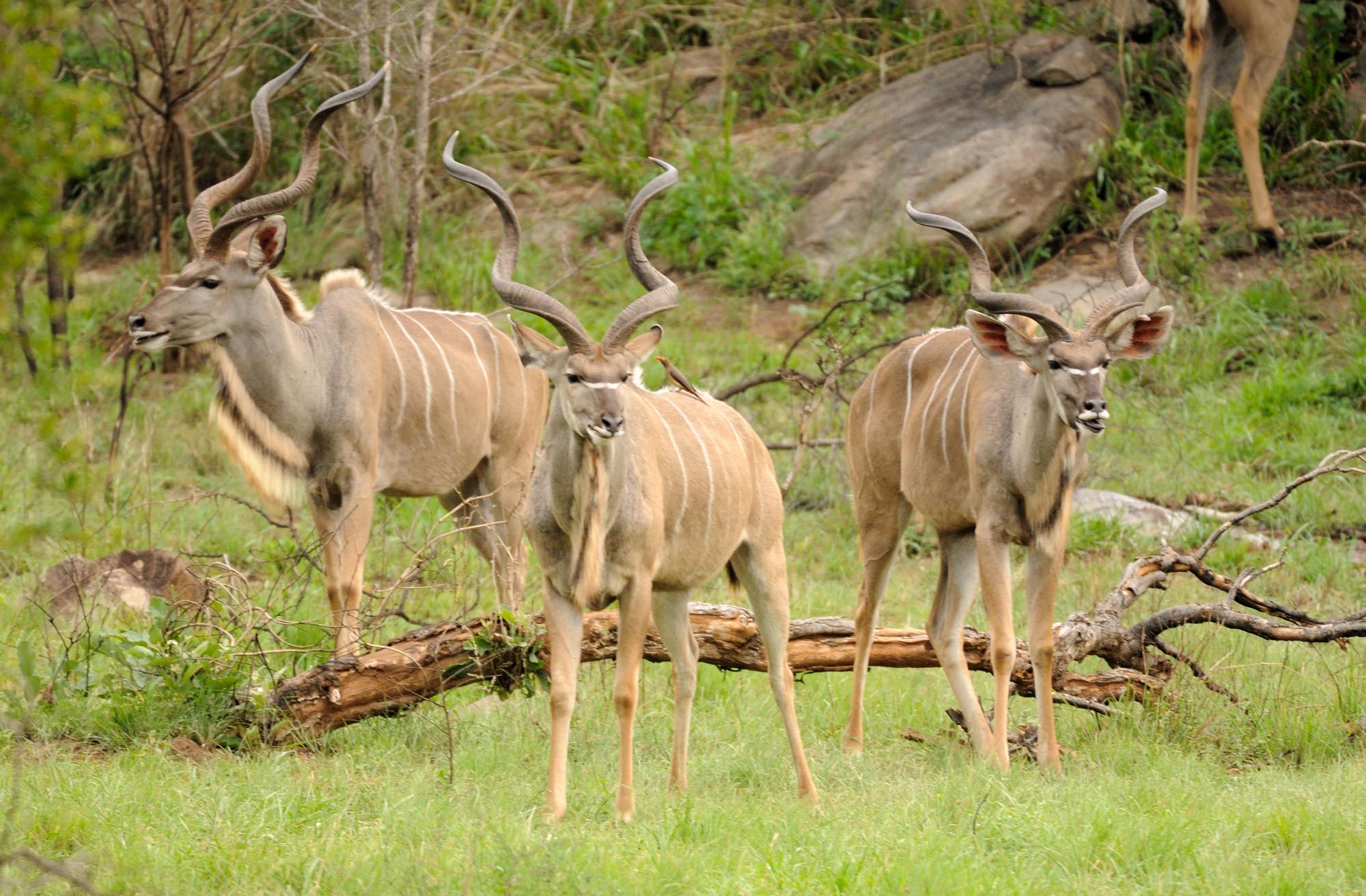
EQUIPMENT CHOICES
Whenever members of the Fish Eagle Safaris team get ready for a trip to Africa – or Madagascar – they will usually have most of these pieces of equipment in their bag:

  • An iPhone for general landscapes, closeups of animals, low-light photography, rooms and lodge interiors and exteriors and for shooting videos (making use of an Osmo stabilizing device).
  • A Sony A-6300 camera with a couple of lenses (a short 16-70mm zoom and a medium 55-210mm zoom). A compact mirrorless camera is handy when portability is an issue, such as on a Kilimanjaro trek or any longer hike, or on a boating or mokoro outing where a DSLR is just too heavy and there is a risk of getting wet.
  • One or two full-frame cameras such as the Nikon D-4 and Nikon D-850. On his most recent outing to Botswana, Bert had both of these cameras in the vehicle, using a long telephoto lens on the one and a shorter 70-200 zoom lens on the other.
  • Depending on the location, several lenses such as:
    A 50-mm f/1.4 for low-light and food photography,
    A short zoom 28-70 f/2.8 as an all-purpose walking around lens, for room interiors and lodge shots, as well as people photography,
    A medium range 70-200 f/2.8 zoom lens for closer up and larger animals such as elephants and giraffes or for capturing more of the background and habitat with animals in the foreground,
    A longer zoom lens such as the Nikon 200-400 f/4 or the Tamron 150-600/f5.6 for more remote objects, birds in flight, and the like.
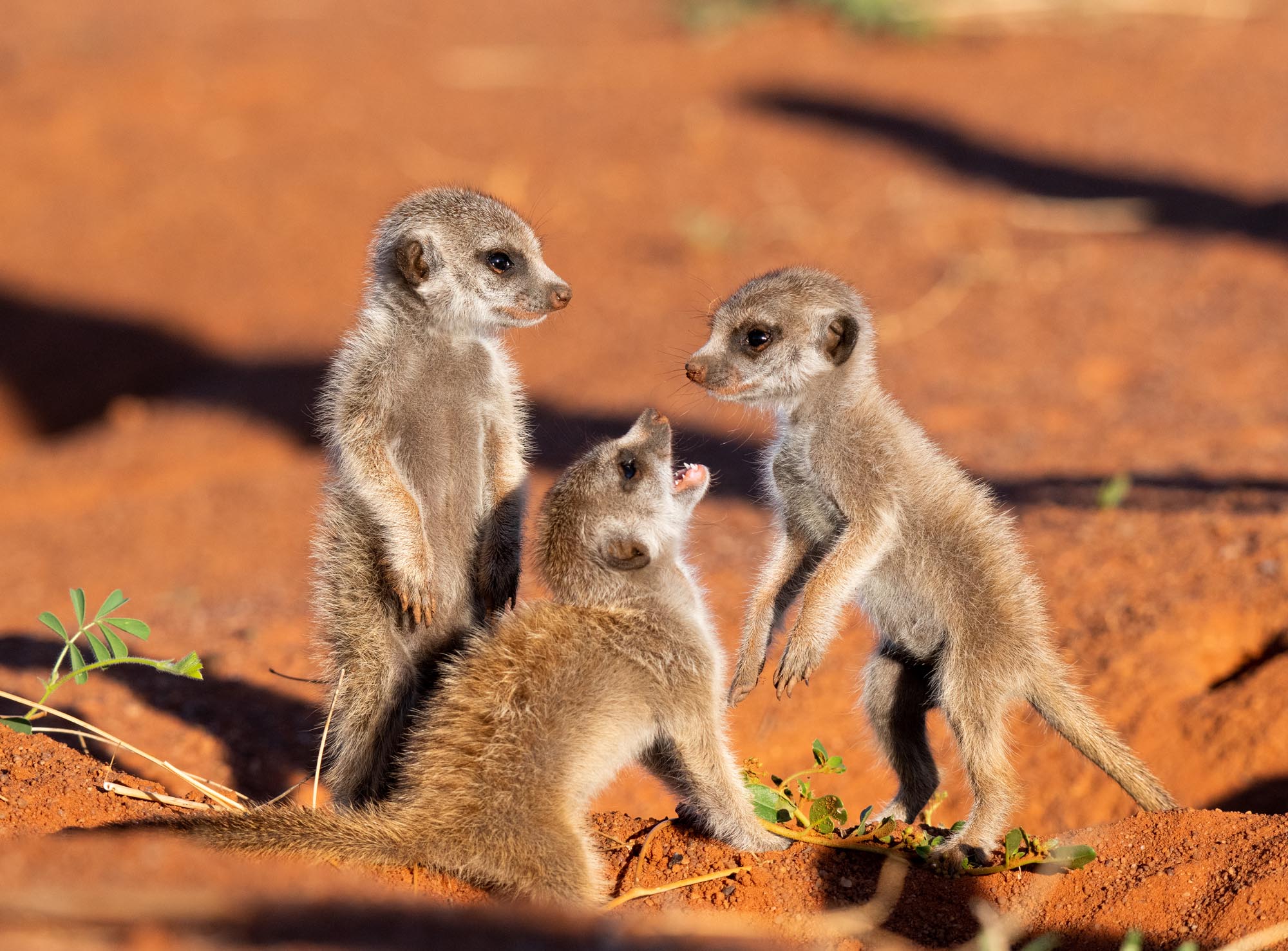
Generally speaking, we think that a zoom lens in the 100-400 mm range or perhaps 150-600 mm covers a good spectrum. For eye-popping close-ups and for decent bird photography, it would be advisable to spring for a 500mm or even a 600mm prime lens. Nikon’s 500 f/5.6 Phase Fresnel lens is the smallest, lightest full-frame 500mm prime lens ever at just over 9 inches long and just over 3 lbs in weight.
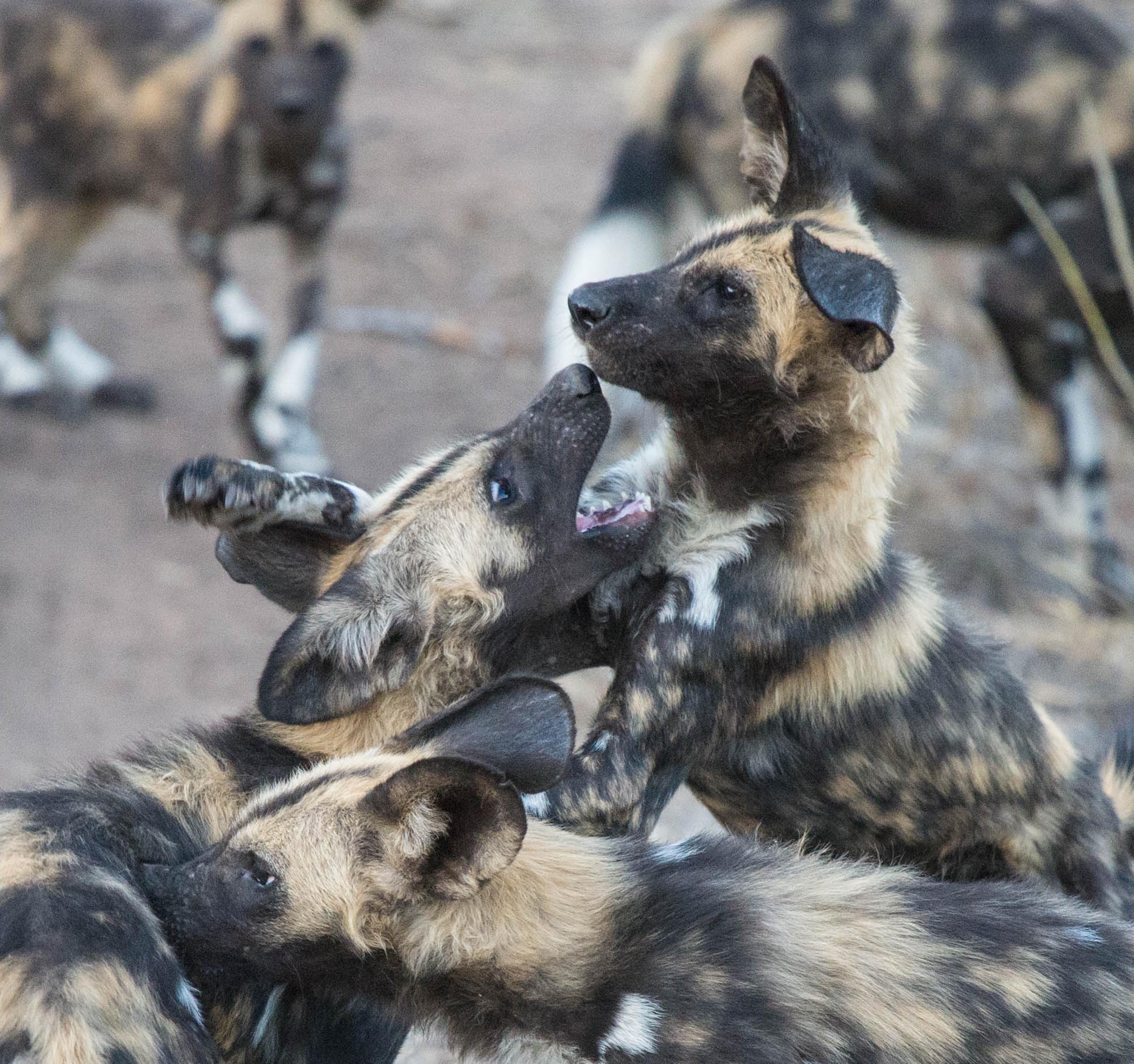
We shoot in RAW only which is really the way to go. The RAW files are much bigger than JPEG files but memory cards and hard drives are not nearly as expensive as they used to be. Most importantly, a RAW file captures uncompressed data from your camera sensor and gives you much more information to work with in the post-processing phase, than a compressed JPEG.

We recommend taking an external hard drive such as a Western Digital Passport (available in 1 or 2 Terabyte sizes at reasonable cost) to download and store your images. Best practice is to do this on a daily basis, so that you will have your images protected in at least two places (the memory card and external hard drive).
YOU MIGHT ALSO BE INTERESTED IN
Destinations
Zambia

10th September 2021

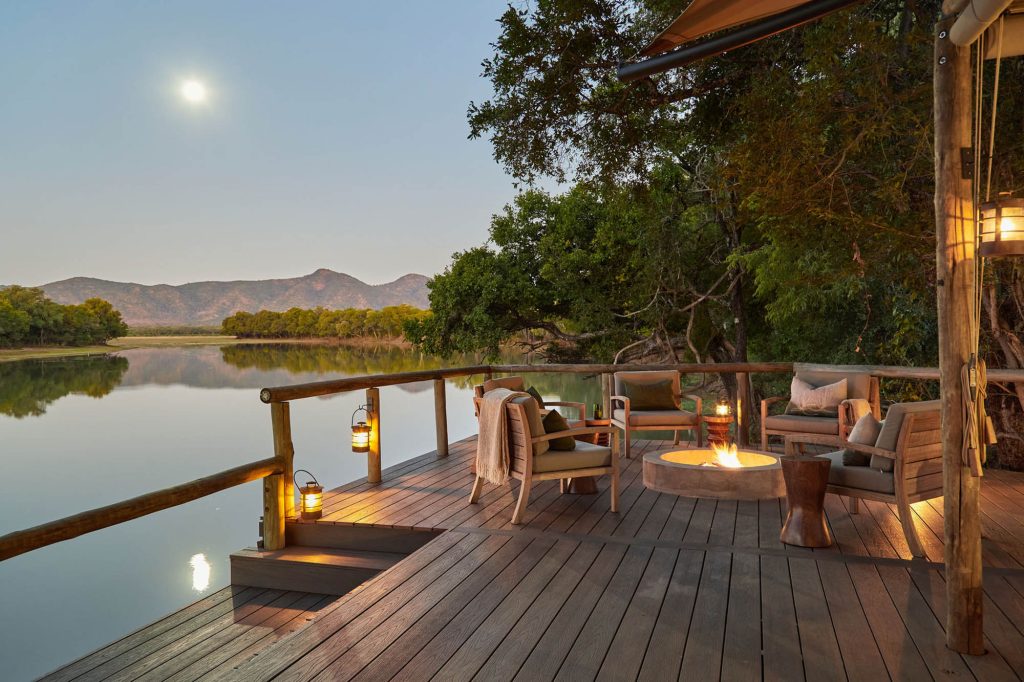
Chindeni and the Bushcamp Company, Zambia

By late July we found ourselves at Chindeni, a small Bushcamp Company property
Read more
Botswana
Destinations
Okavango Delta

3rd October 2022

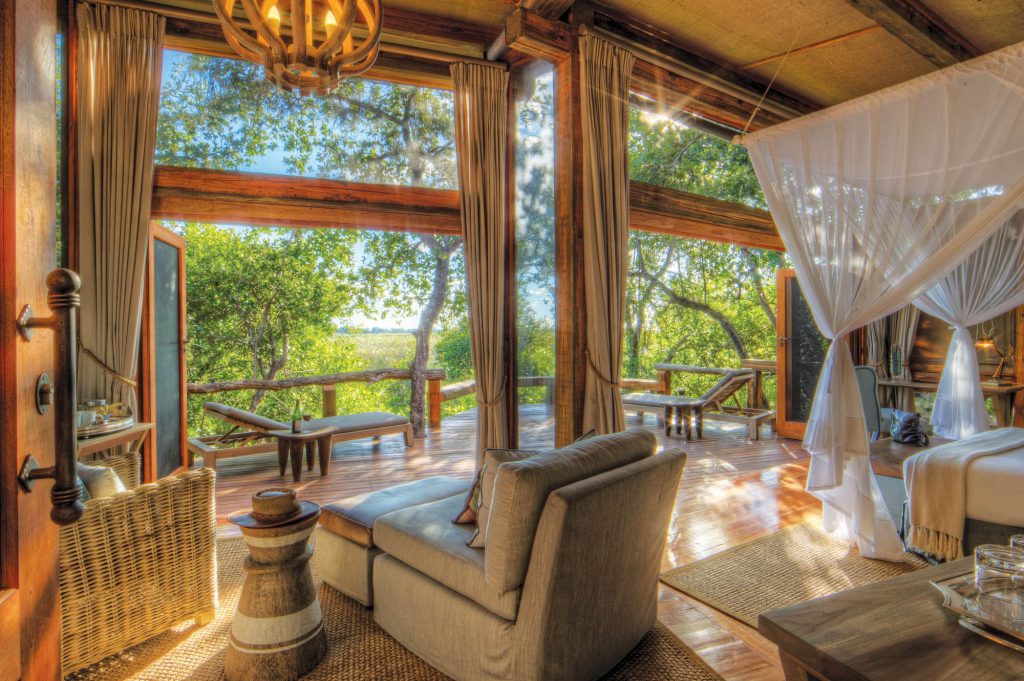
Camp Okavango, Botswana

Camp Okavango is in the heart of the permanent part of the Delta. In this idyllic setting there are no vehicles, and it is just a short walk
Read more
Area
Destinations
Nyerere National Park
Ruaha
Tanzania

14th October 2023

From My Safari Notebook: Wildlife Photography

Birds in flight and wildlife photographers have an uneasy relationship. Things go wrong as often as they go right. Getting focus-lock on a moving subject

Read more

SUBSCRIBE TO OUR NEWSLETTER

READERS FAVOURITES
Destinations
India

27th May 2023

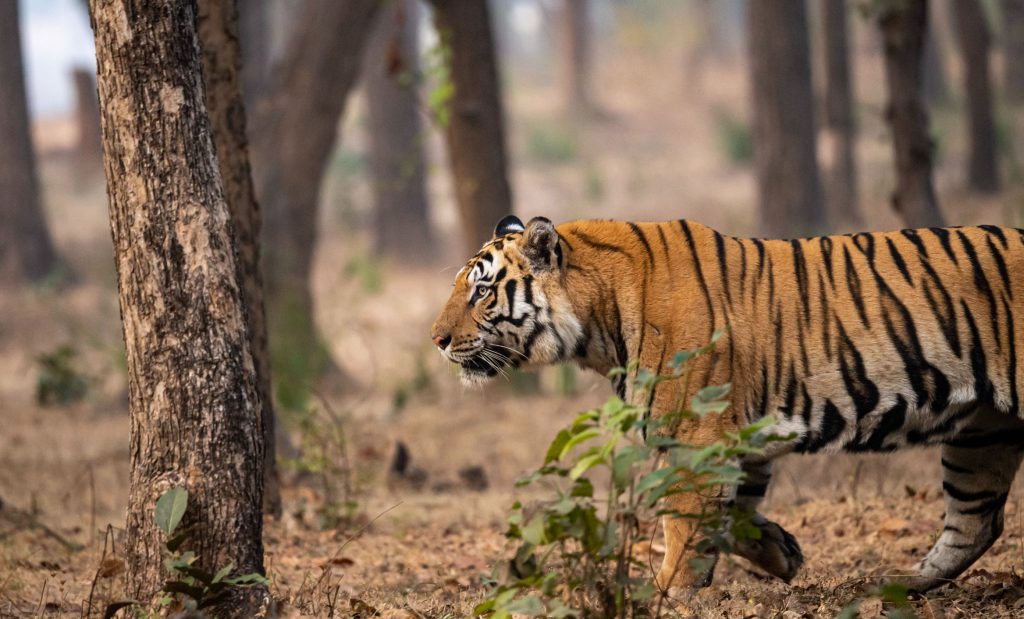
India

India’s tiger, mammals and birds.

Read more
Botswana
Destinations

4th August 2022

On Safari At Belmond Eagle Island Lodge, Okavango Delta

What is the ‘secret sauce’ for an unforgettable few days on safari in Botswana? It starts with the animals, of course. The elephants, lions, giraffes, hippos

Read more
Destinations
Zambia

10th September 2021

Chindeni and the Bushcamp Company, Zambia

By late July we found ourselves at Chindeni, a small Bushcamp Company property

Read more

Camp Okavango, Botswana

3rd October 2022

Camp Okavango,
Botswana


Image

Photo: Desert & Delta Safaris

Camp Okavango, Botswana

Camp Okavango is in the heart of the permanent part of the Delta. In this idyllic setting there are no vehicles, and it is just a short walk from the airstrip right into camp.  My colleague Lyndon, who just returned from a visit to Camp Okavango, described it as “a flooded, flat and lush paradise.”  Camp O made a great first impression on me, too, when I first arrived there.


Image

Photo: Desert & Delta Safaris

Starting with the well-maintained and manicured airstrip and the campgrounds,  heavily vegetated with some massive trees right in front of the  dining, lounge and patio complex. The huge garden harbors tons of birds, but unfortunately I did not have enough time to do it justice with some ‘serious’ birding. We did see a Paradise Flycatcher flitting about; it had a nest just off the boma (fireplace) area.


Image

Photo: Desert & Delta Safaris

One of the other guests and I took off with our guide on a short fishing excursion in an aluminum skiff. Even if we never reached the area which we did (for fishing) the journey itself would have been worth it. What an amazing experience it was to glide through this narrow waterway, with high ‘walls’ of papyrus and reeds on either side, avoiding shallow sandy spots, and observing many birds, as well as a few small crocodiles, and water monitors en route.


Image

Photo: Desert & Delta Safaris

Then suddenly, there was a hippo, completely out of the water, right in our way. Our boatsman was fortunately properly trained for such an event. Instead of slowing down or stopping, which could have led to a nasty confrontation, he barreled on. The hippo submerged and dove out of our way, and we pretty much went right over the spot which it had occupied just seconds earlier.


Image

Photo: Desert & Delta Safaris

Looking back we saw that the hippo had resurfaced and was giving us the hippo version of the upturned middle finger in the form of a belligerent posture and stare. That was almost too exciting. And it happened much too quickly for photographs! As for the fishing, I’m afraid despite our best efforts we were unsuccessful.


Image

Photo: Desert & Delta Safaris

In the afternoon we observed a basket-weaving demonstration by some of the local staff who do their weaving after hours and in their spare time, with the items being sold at the camp curio shop.  At around 4:00p, our group went out on a dugout canoe/mokoro outing to an area not far from the airstrip, for our afternoon activity.


Image

Photo: Desert & Delta Safaris

It was a fun and relaxing outing with sundowners being served on a small island, complete with an ‘island bar’ setup. During the outing we saw many different types of birds, including the rare and highly endangered Wattled Crane, as well as some water-adapted mammals and many of the spectacular plants found in the Okavango Delta, such as the beautiful water lilies.


Image

Photo: Desert & Delta Safaris

The following morning,  we were up early for a walking excursion from Camp Okavango. Before we got underway by boat, there was time for a healthy breakfast consisting of muesli with rice milk, a fresh fruit salad and some toast, with rooibos tea on the side. All the camps also serve eggs to order, usually with beef or pork sausage, bacon and other side dishes.


Image

Photo: Desert & Delta Safaris

Refreshed and energized, we enjoyed yet another exhilarating boat ride (same route as on the previous day’s fishing excursion) to an island about 30 minutes away. This time around, we had our cameras ready but there was no hippopotamus barring the way.  We did make a small detour into a backwater area where we observed a pod of hippos, though. And inquisitive they were too, coming closer and closer to the boat until our skipper decided it was time to move on.

Legendary Lodge


Image

Photo: Desert & Delta Safaris

The island where we walked – I believe it is called Lopis Island – has some very diverse habitat consisting of open floodplain, with patches of woodland, and a nice strip of fairly dense riverine forest with sausage trees and large mangosteen trees amongst others. We saw a few elephants at a distance and walked towards a group of giraffes who no doubt saw us coming a long distance away. To make the walk even more interesting, the guides drew our attention to several interesting plant species and talked about their medicinal and other uses.


Image

Photo: Desert & Delta Safaris

Back in camp, it was time for — lunch! As always, the vegan & vegetarian members of the group were more than adequately catered for with salads, an excellent and flavorful lentil dish with rice, a fruit salad and a vegetarian tart.


Image

Photo: Desert & Delta Safaris

Lyndon’s recent stay at Camp Okavango was quite similar to mine.  Here is what he had to say:  “Camp Okavango is a typical Delta camp with water activities such as mekoro outings and boating, plus walking.  The rooms are spacious, and the property has an exceptionally large main area.  It is rather a long walk to the rooms at the end of the boardwalk on either side of the camp.


Image

Photo: Desert & Delta Safaris

We did a mekoro outing in the afternoon, utilizing a lovely area just adjacent to the camp.  Even though it was mid-winter it was hot and sunny.  Seeing some painted reed frogs close up was a highlight, otherwise the outing was quiet.  

For dinner we had a surprise bush dinner.  A very elaborate setup with lanterns, the lot.  We were entertained with some energetic singing and dancing – great fun.  The barbecued pork and beef were both excellent.  The sticky toffee pudding was better than at Savute.


Image

Photo: Desert & Delta Safaris

In the morning we did about a two hour game walk.  Although we heard lions roaring in the distance we did not encounter them.  We did see a side-striped jackal though, and plenty of pretty birds.  As a surprise the night after the mokoro outing Andrea Hugo (who represents Desert & Delta Safaris in the USA), arranged for Helicopter Horizons to take us up for a flight-seeing excursion by chopper. 


Image

Photo: Desert & Delta Safaris

They took the doors off a 4-seater helo and flew us around three at a time, for about 15 to 20 minutes.  Such a great perspective from the air, over the Okavango Delta mosaic of islands, channels, lagoons and floodplains.  A helicopter flight is included free of charge with any 10-night Desert & Delta safari.”

More Info

Email bert@fisheaglesafaris.com

Email jason@fisheaglesafaris.com

@fisheaglesafarishouston

#FishEagleSafaris

YOU MIGHT ALSO BE INTERESTED IN

Botswana
Destinations
Kenya
South Africa
Tanzania
Zimbabwe

2nd November 2025

Bert’s Top 5 Africa Trips

Having spent many winter vacations as a young boy on safari with my family in South Africa’s Kruger Park, I look back

Read more
Botswana
Destinations

4th August 2022

On Safari At Belmond Eagle Island Lodge, Okavango Delta

What is the ‘secret sauce’ for an unforgettable few days on safari in Botswana? It starts with the animals, of course. The elephants, lions, giraffes, hippos

Read more
Area
Destinations
Nyerere National Park
Ruaha
Tanzania

14th October 2023

From My Safari Notebook: Wildlife Photography

Birds in flight and wildlife photographers have an uneasy relationship. Things go wrong as often as they go right. Getting focus-lock on a moving subject

Read more

SUBSCRIBE TO OUR NEWSLETTER

READERS FAVOURITES
Destinations
Kruger Park
Sabi Sand Reserve
South Africa

17th September 2020

Kruger Park & Sabi Sand Reserve South Africa (Continued)

I wrapped up an extensive educational trip in Kruger Park and in the northern, western and southern

Read more
Botswana
Destinations

4th August 2022

On Safari At Belmond Eagle Island Lodge, Okavango Delta

What is the ‘secret sauce’ for an unforgettable few days on safari in Botswana? It starts with the animals, of course. The elephants, lions, giraffes, hippos

Read more
Botswana
Destinations
Okavango Delta

30th July 2021

Duba Explorers & Duba Plains Camp, Botswana DUBA EXPLORERS CAMP

Great Plains’ Duba Explorers Camp is located in the northern part of the Okavango

Read more

Savute Safari Lodge, Botswana

3rd October 2022

Savute Safari Lodge, Botswana


Image

Photo: Desert & Delta Safaris

Savute Safari Lodge, Botswana

If you were to look at a time-lapse photography sequence taken from Savute Safari Lodge between 2008 and the present, the one thing that will stand out – other than the passing parade of animals, day and night – will be the state of the Savuti Channel, a natural spillway which starts at the Zibadianja Lagoon and ends in the Savute Marsh.


Image

Photo: Desert & Delta Safaris

Back in 2008 there was an artificially maintained waterhole in front of the camp and nothing else.  At the time the Savuti Channel had reverted to being an ephemeral river or linear oasis – the kind of river which occasionally collects some water from local runoff with a few pools here and there, and some spots where elephants could get their trunks into clean water just below the surface of the sand.  The water hole in front of camp was a hive of activity, particularly in the dry season.


Image

Photo: Desert & Delta Safaris

By 2009 – for reasons that are still not entirely clear but likely the result of a heavier rainfall pattern over several years – also known as a wet cycle – the Savute Channel had started to flow strongly again and at least for a while the presence or absence of waterholes such as the one at Savute Lodge did not matter one way or another.  There was water all along the channel from its source close to the Zibadianja Lagoon, all the way to the Savuti Marsh.


Image

At least initially this made game-viewing in the area more challenging because it created more dispersal of big game species such as elephants and buffalo who did not ‘have’ to come to the few remaining waterholes in the dry season – they had access to water pretty much anywhere.

By the time we got back to Savute late in 2014, the Savute Channel was still flowing but not very strongly – and the elephants were back at the original waterhole in big numbers, trying to get to the source of the fresh water which they prefer to the muddy stuff available elsewhere in the channel.


Image

Photo: Desert & Delta Safaris

Right now – as our colleague Lyndon saw on a visit to Savute Safari Camp about 10 days ago – the Savute Channel is dry again with no water flowing at all.  There are pumped waterholes, but other than that no permanent water. Which means it has come full circle, all the way back to what it was like,  13 years ago.  The elephants frequenting the water hole in front of the camp on a daily basis are also back to stay, with the water hole being one of the few permanent and reliable sources of water in a huge area.


Image

Photo: Desert & Delta Safaris

Savute Safari Camp had seen other changes as well over the last few years.  Extensive refurbishments had been undertaken in the main public areas.  The objective was  to make the best use of the space in front of the Savute channel and the active waterhole. The new facilities include a relocated swimming pool – now more private than before – new walkways, multiple dining locations and new deck areas with a live cooking area for brunches and dinner.


Image

Photo: Desert & Delta Safaris

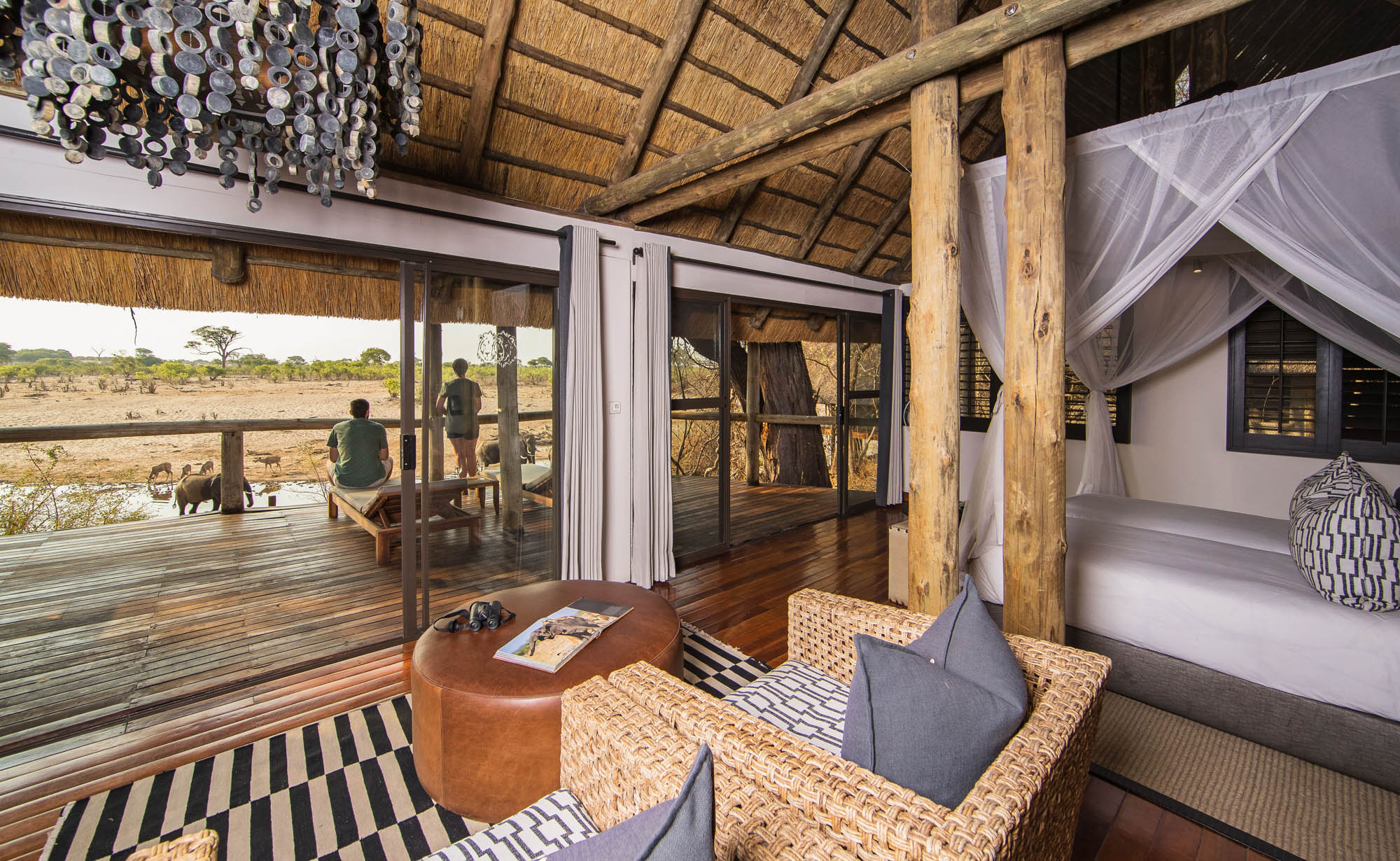
The camp now has multiple leveled viewing decks connected by walkways, providing different vantage points over the waterhole so that guests can find their own space to enjoy bar service and admire the remarkable animal encounters that take place around the channel and water hole. The rooms/chalets at Savute Safari Lodge have been significantly upgraded as well.


Image

Photo: Desert & Delta Safaris

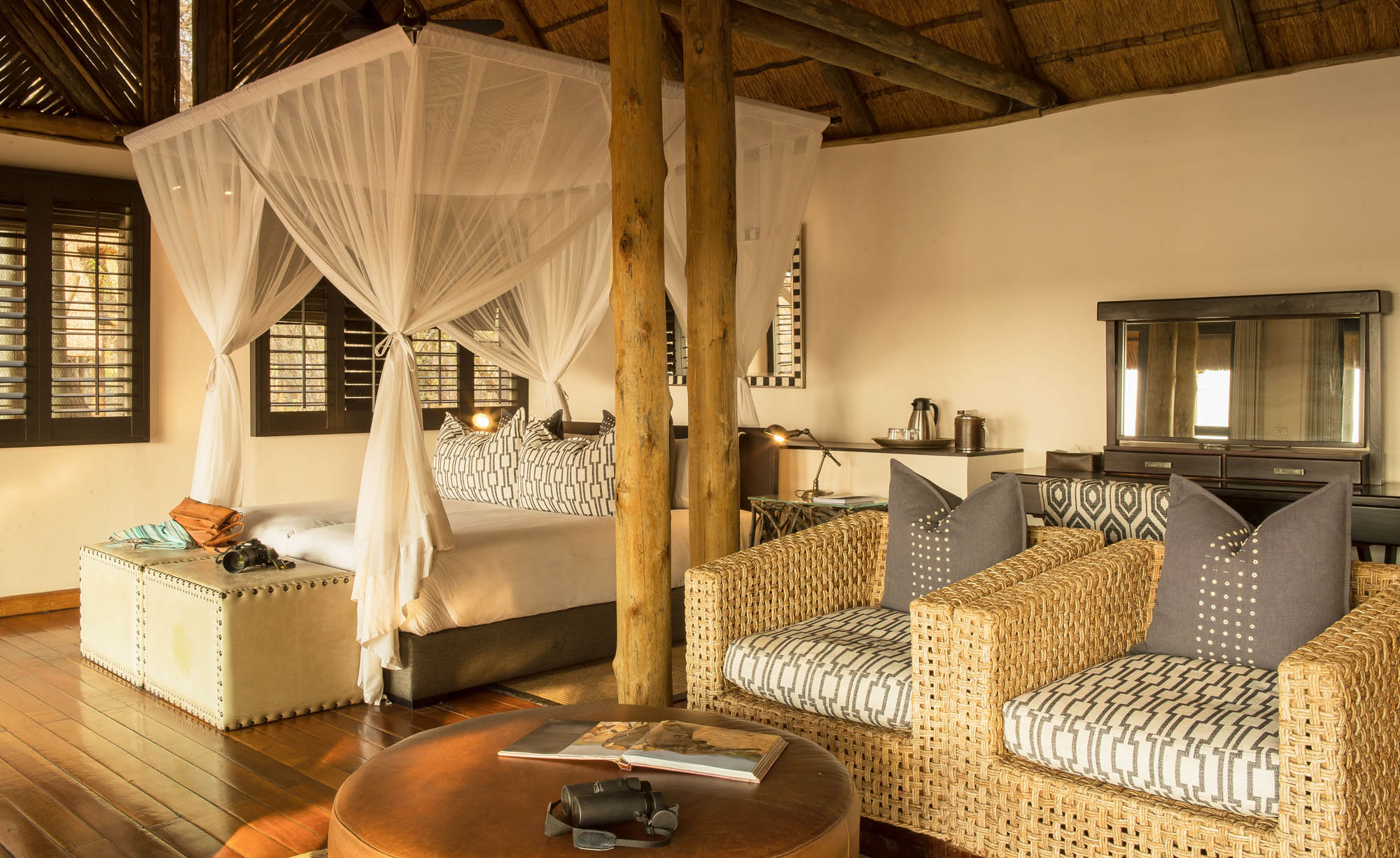
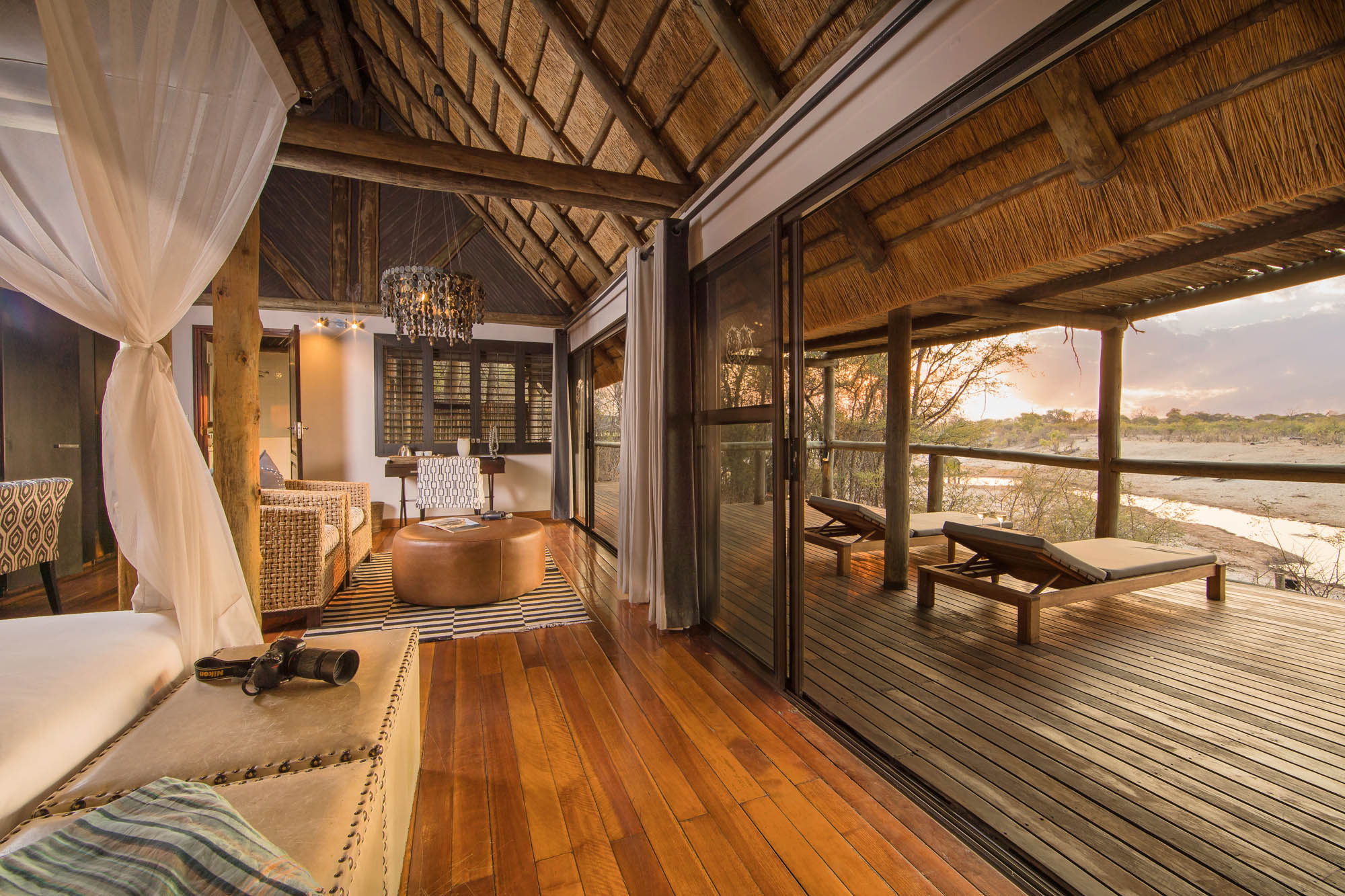
The chalets are elegantly furnished in neutral tones to blend with the natural environment, feature expansive private decks, a combined bedroom and lounge area and en suite facilities.  The lodge can accommodate twenty four guests in eleven thatched chalets built of local timber and one family room which consists of two double bedrooms.


Image

Photo: Desert & Delta Safaris

Savute Safari Lodge offers an exceedingly comfortable stay at a reasonable price, and the management and staff are most welcoming and helpful.  On my most recent visit, everyone made a point of introducing him or herself and maintained a high degree of interaction with all the guests for the duration of their stay. 

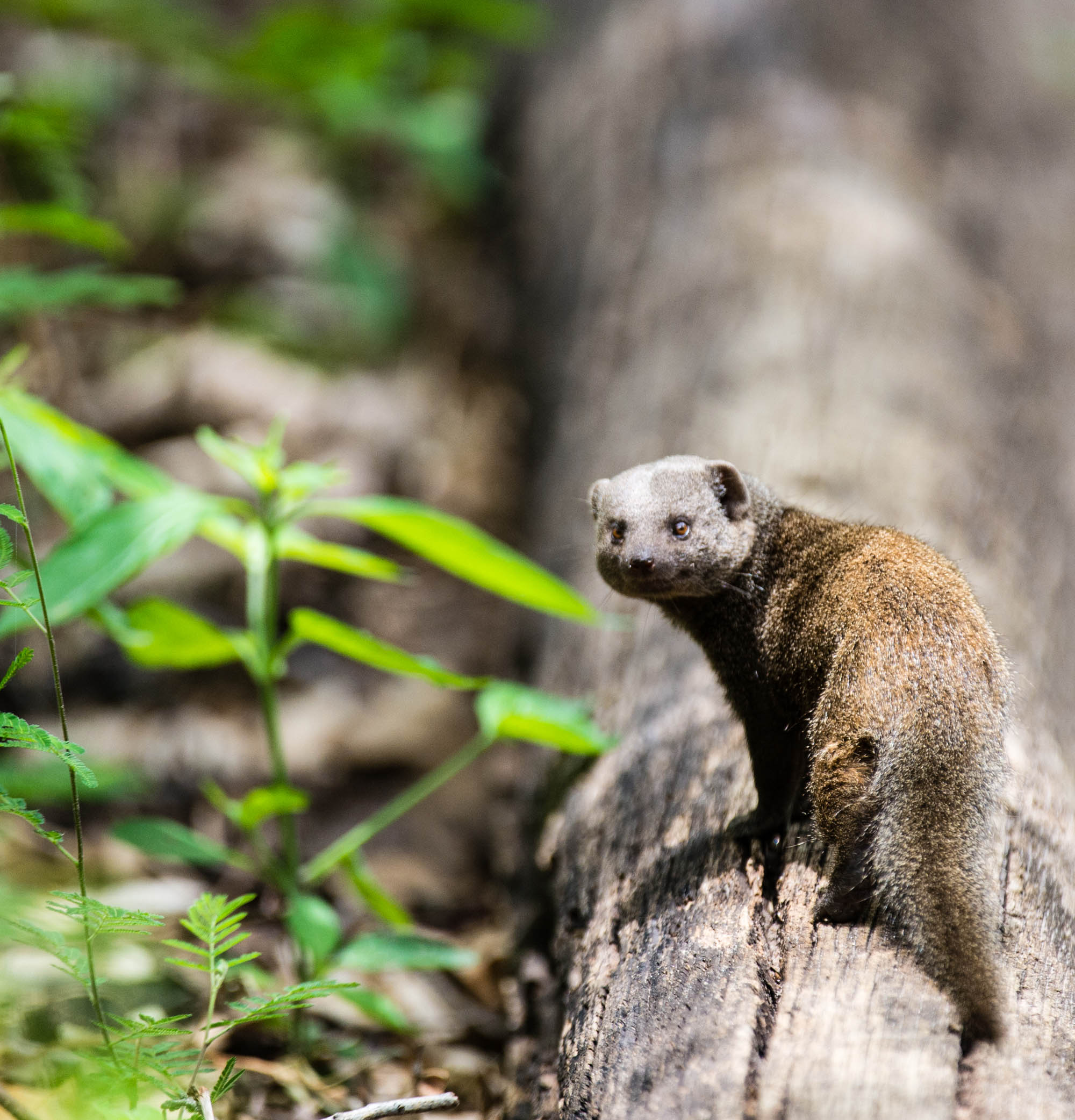
The grounds of Savute Safari Lodge are well maintained with good walkways and borders and several natural patches, resulting in an abundance of birdlife and small mammals such as dwarf and slender tailed mongoose and tree squirrels.

Legendary Lodge


Image

Here is what Lyndon had to say at the conclusion of his recent (July 2021) stay at Savute Safari Lodge:

“Shortly after a buffet brunch we headed out in search of the Marsh Pride (lions) with our guides Metal and Isaac.  Although the drive was quiet on the way out, we were amply rewarded with a sighting of almost 20 lions lying in the shade of a tree.  This pride has been dominated by a couple of huge brothers for the past 12 years, longer than most wild lions’ lifespan.  Several wildlife documentaries have featured them and their hunting prowess.  They had recently taken down a wildebeest and were still resting up; it was not yet time to venture out again.  Even so, it was a rewarding experience to see such an abundance of lions in one place!


Image

Photo: Desert & Delta Safaris

Dinner was on the deck overlooking the channel, where the water hole is lit up at night.  We enjoyed a meal with some delicious mashed sweet potato, broccoli, assorted vegetables and kudu steak as well as sticky toffee pudding for dessert.  It is shocking how quickly it can cool down in the evening and after dinner it became properly cold, right away.  Our group enjoyed some drinks around a bonfire before heading to bed.  

Our final morning drive was frigid but I actually prefer it that way.  Nothing better than to wake you up after a deep African slumber than a cold, cold wind blowing in your face as you set out on a game drive.  Layer up, grab a blanket and perhaps a heated water bottle like the ones they provide at Savute and enjoy!


Image

We took a small detour to a rocky outcropping which is home to an old San/bushman cave.  There are some beautiful rock paintings just outside the cave.  Visitors need to take note that the path is steep and rocky in some parts, albeit quite short.  Our game drive was successful again with us witnessing a brilliant roaring display by a striking male lion.


Image

One thing that I have noticed that has changed during Covid is that you no longer get the large spread of snacks as was traditional at a point during your morning game drive (tea/coffee break) or in the late afternoon for sundowners.  Instead each guest is given their portion in a small paper sack.  It typically includes all the ingredients you would need to make your own tea, coffee or chocolate milk and often includes some snacks.  I do miss the old way of doing this and I am hopeful that someday we will be able to return to that.  In the meantime I think everyone is now used to these small sacrifices and it shouldnt detract from the overall experience.


Image

Photo: Desert & Delta Safaris

While I am on the subject, the mask protocol, for the most part, is as follows:  In camp I wear a mask in public/main areas unless I am eating or having a drink.  In your room and on a game drive it is fine to go without.  On light air transfers and inside any airport terminals, I wear it.”

On my own most recent trip to Savute Safari Lodge, it soon became evident that we had happened upon a once-in-a-life time wilderness experience where the game-viewing was elevated to an almost surreal, hyper level.  Never before had we seen such a high density of elephants spread out in such a large area.   Not at Amboseli, not at Hwange, not at Chobe and not at Kruger Park.  The number of large bull elephants roaming around the Savute Marsh on this trip was simply astonishing, and there were dozens of large breeding herds around every corner.


Image

This was on an early December trip, just after the first rains had fallen.  Our driver-guide had to take evasive action all the time, either driving off road to avoid the lumbering animals, or stopping and waiting for them to cross.  In 30 years of going on safari, this still ranks in the ‘top three’ of our ultimate elephant experiences, the other two being at Little Makalolo in early November one year and at Amboseli in June.   It was a confluence of factors which we realize is unlikely to happen again.  Possibly there was inadequate vegetation available in the Linyanti area with earlier rain creating ideal grazing conditions in and around the marsh itself.  For whatever reason it seemed like every last elephant in Northern Botswana was in Savute that week.


Image

What made the entire experience even more special, was the presence of so many other animals.  There were zebras moving into the fringes of the marsh in their tens and hundreds, kudu of all sizes and ages around everywhere, hundreds of impala with multiple hundreds of babies, many giraffes, plus good numbers of wildebeest and even a few roan antelope.


Image

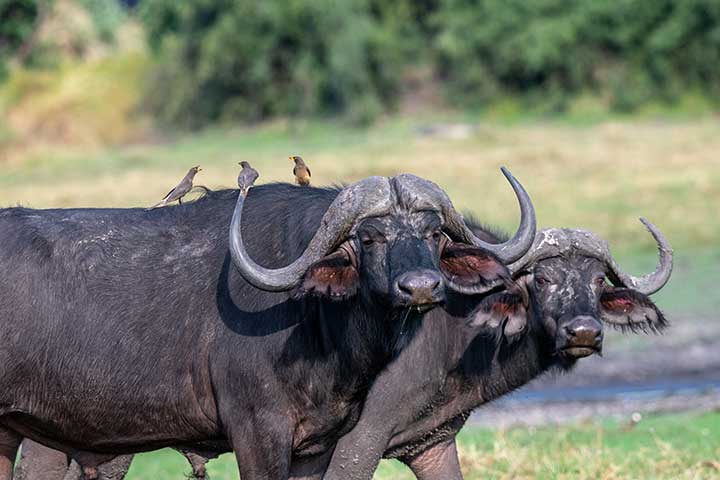
On top of that we also found ourselves right in the middle of a massive herd of buffalo on the final afternoon, moving in the direction of a watering hole.  A while later, we relocated to a different spot where two lionesses were watching the approaching buffalo herd, seemingly weighing up the odds of making a successful attempt at bringing one down.  Ultimately they decided not to, which was a wise decision as they were totally outnumbered and would have been no match for the many large, powerful buffalo bulls at the waterhole.


Image

The game-viewing at Savute Safari Lodge did not stop at hundreds of elephant, zebra and other plains game.  We had previously – on an all-day trip from Ghoha Hills – seen the Marsh Pride on the edge of the marsh.  On the day of our arrival at Savute Safari Lodge we went back to take a look at them and they were still in the same spot in the marsh, about 20 meters or so off the road.


Image

The following morning we were on our way back to the marsh when our guide received word of the presence of a pack of African Painted Dogs near the Rock Painting site.  We promptly drove there, missed them on the first attempt and then enjoyed a very good – albeit brief – view of 5 or so of the animals moving from our right to left and eventually disappearing into the thick bush.


Image

Just minutes later we were looking at a trio of mating leopards.  Usually leopards are found either by themselves or in a mating pair.  Or sometimes a female with youngsters.  This was an exception as an older male leopard was vying for the attention of a female who had paired up with a younger, more energetic male.  At first the older leopard was just resting up on a rock ledge but eventually he got into the action as well, displacing the young male towards the latter stages of the encounter.


Image

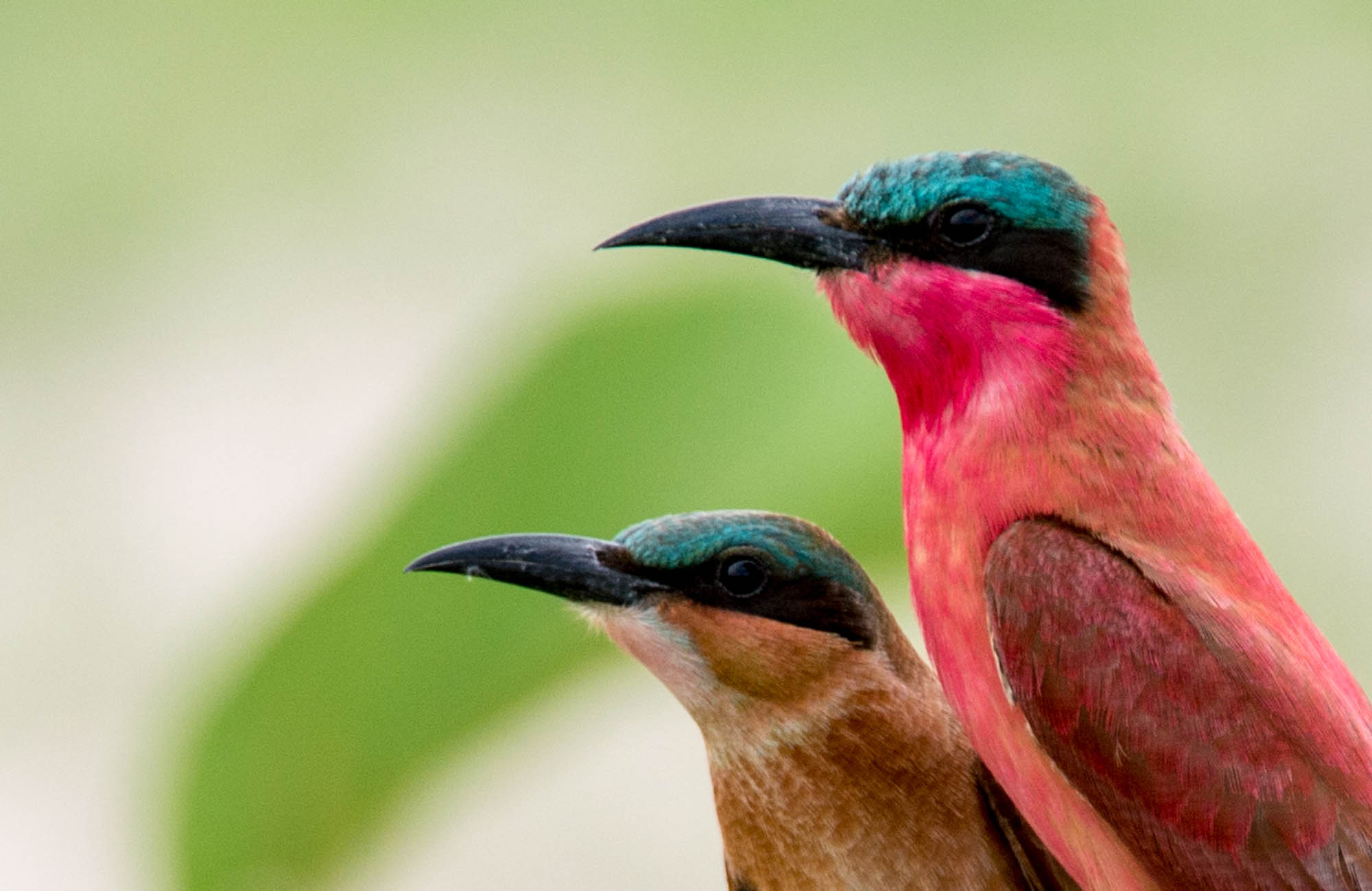
Driving around the edges of the marsh, our vehicle was followed by several carmine bee-eaters, intent on catching the insects stirred up by our activities.  In the process I managed a few decent pics of these colorful birds in flight – always something to behold. Beautiful birds in flight, something to look forward to when planning a visit to Savute Safari Lodge – and the Savute Marsh.

Photo: Desert & Delta Safaris

More Info

Email bert@fisheaglesafaris.com

Email jason@fisheaglesafaris.com

@fisheaglesafarishouston

#FishEagleSafaris

YOU MIGHT ALSO BE INTERESTED IN

Botswana
Destinations
Kenya
South Africa
Tanzania
Zimbabwe

2nd November 2025

Bert’s Top 5 Africa Trips

Having spent many winter vacations as a young boy on safari with my family in South Africa’s Kruger Park, I look back

Read more
Area
Botswana
Botswana
Destinations
Selinda

18th January 2025

A Grand Finale: Great Plains Conservation’s Selinda Explorers and Zarafa Camps

Big cats high on your list of animals to see on your next or first safari? Then I might suggest that you include the massive Selinda

Read more
Botswana
Destinations
Okavango Delta

10th August 2021

Xakanaxa Camp, Botswana

What is there to be said upon one’s return from a trip to Botswana? That it was fun?

Read more

SUBSCRIBE TO OUR NEWSLETTER

READERS FAVOURITES

Botswana
Destinations

12th November 2020

The Big Cats of Mashatu, Botswana

Where in Africa can you go on safari and over the course of three or four days be practically

Read more
Destinations
Zambia

20th April 2020

“Only in Africa”: Tiger Fishing

I believe the core activity on any great safari is the game drive.  The animals are, of course, the main attraction and there is no better

Read more
Botswana
Destinations
Okavango Delta

30th July 2021

Duba Explorers & Duba Plains Camp, Botswana DUBA EXPLORERS CAMP

Great Plains’ Duba Explorers Camp is located in the northern part of the Okavango

Read more

Chobe Game Lodge, Botswana

3rd October 2022

Chobe Game Lodge, Botswana’


Image

Photo: Desert & Delta Safaris

Chobe Game Lodge, Botswana

I’ve always been a Chobe Game Lodge ‘fan’ and my most recent experience there just underscored the many positives of staying there.  It is the only lodge inside the Chobe National Park and it has an ideal location right on the Chobe River.  There are some restrictions being inside the reserve (no off-roading and no night drives) and at times there can be too many vehicles in one area or at one sighting.  But these issues can be managed (for example with an early game drive start) and there is a very good road network so it is really not critical to be able to drive off-road.  In a park environment like this it will cause chaos and ruin the place in no time.


Image

Photo: Desert & Delta Safaris

The main reason to visit Chobe Game Lodge is to enjoy its proximity to the water and the much greater degree of exclusivity which you can get doing a boat cruise on the river, as opposed to a game drive.  Being on the river is a fantastic safari experience and lends itself to some of the best wildlife photographs of all, with animals inside or on the edge of the water, and a nice green backdrop to boot.  There are few – if any – places in Africa where you will enjoy better views of giant Nile crocodiles and hippopotamus, both in and out of the water, than at Chobe Game Lodge.


Image

Photo: Desert & Delta Safaris

Year-round but more so in the dry season the boat safaris are ideal for observing the famous Chobe elephants in and around the river.  At times there are huge herds of them congregating on the banks of the Chobe River.  Sometimes just slaking their thirst, more often than not getting totally submerged and even swimming to some of the islands.  Ideally observed and photographed from one of the CGL safari boats.


Image

Photo: Desert & Delta Safaris

A couple of nights at Chobe Game Lodge will improve almost any Botswana itinerary.  Just don’t go there thinking it will be like spending time in a small tented safari camp.  Quite the opposite:  CGL is a hotel in the bush but a very special one with superb atmosphere, game galore, a very long list of things to do, great for kids and just flat-out fun and entertaining.


Image

Photo: Desert & Delta Safaris

My colleague Lyndon spent a couple of nights at Chobe Game Lodge barely a week ago (early July 2021) and had this to say:  “This is my second stay at Chobe Game Lodge and it has really cemented why it is a favorite of ours in Chobe.  Even though it is a proper lodge and on the larger side of things compared to many of the small, intimate camps in Botswana, the staff and guides always make sure it has the feel of a smaller camp.  Plus it has an enviable position inside Chobe National Park, farther west than the myriad of lodges in Kasane.  This makes the boat cruises feel almost as if you are in a private concession.


Image

Photo: Desert & Delta Safaris

After arrival into Kasane it is a 10-minute drive to get to the national park border, followed by a 45-minute slow-moving transfer to the lodge.  We had time to get settled in our rooms before heading out on a sunset cruise.  All the boats are electric, another unique CGL advantage.  Highlights included plentiful elephants, a gorgeous sunset and witnessing an African fish eagle pull a massive tiger fish from the river not 30 feet from our boat.  It actually landed in the water partially submerged before taking flight with the prize in its talons.  Fantastic!


Image

Photo: Desert & Delta Safaris

Meals are served a la carte and are quite good.  For dinner I had onion & leek soup, steak and creme brulee.  The first two were excellent; the creme brulee could have  done with a slightly more delicate sugar crust.

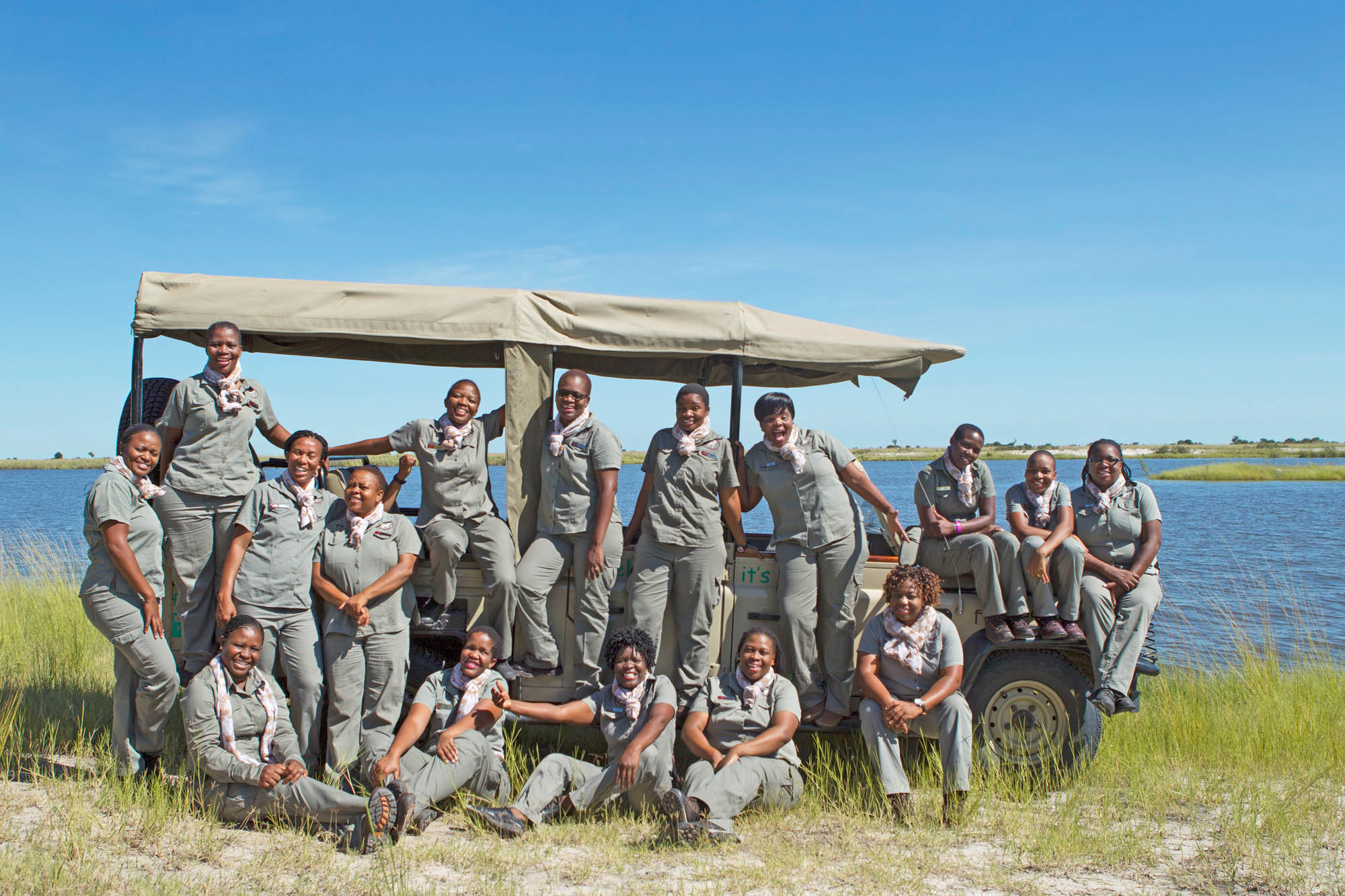
Temperatures during the afternoon and evening were quite mild, which made it surprising how chilly the start of the morning game drive turned out to be.  Visitors need to be prepared to layer their clothing in late June and July.  After a slow start we spotted a lion off in the distance and made our way over to it.  There were two females heading back to the bush after having an early morning drink in the river.  At Chobe Game Lodge the vehicles are all electric and seating is 4 X 3 – the guiding crew is all female.


Image

Photo: Desert & Delta Safaris

Another good dinner on my second night there, with tomato and carrot soup, lamb and a delicious, traditional malva pudding to end things off.  The following morning we took a sunrise cruise.  If you spend at least two nights here, this is a good option.  There were lots of birds around, good general game and we experienced a gorgeous sunrise.”

Over the course of several visits to the property over the years,  the interior part of the lodge including the reception, bar/lounge, verandah and restaurant have remained very much the same.  The rooms have undergone some significant upgrading, with noticeably bigger bathrooms.


Image

Photo: Desert & Delta Safaris

Something which I noticed on arrival on my last visit – for a late lunch – was the addition of an 800-meter long raised walkway which hugs the edge of the Chobe River and makes the most of the fantastic views over the water and grassy plains beyond. 

The walkway has several nooks where private dinners or other activities can be enjoyed and it is large enough – at the eastern-most point – to host an outdoor dinner for the entire camp.  Subsequently, the owners of CGL extended the western portion of the boardwalk as well, all the way to the current boat jetty.

Legendary Lodge


Image

Photo: Desert & Delta Safaris

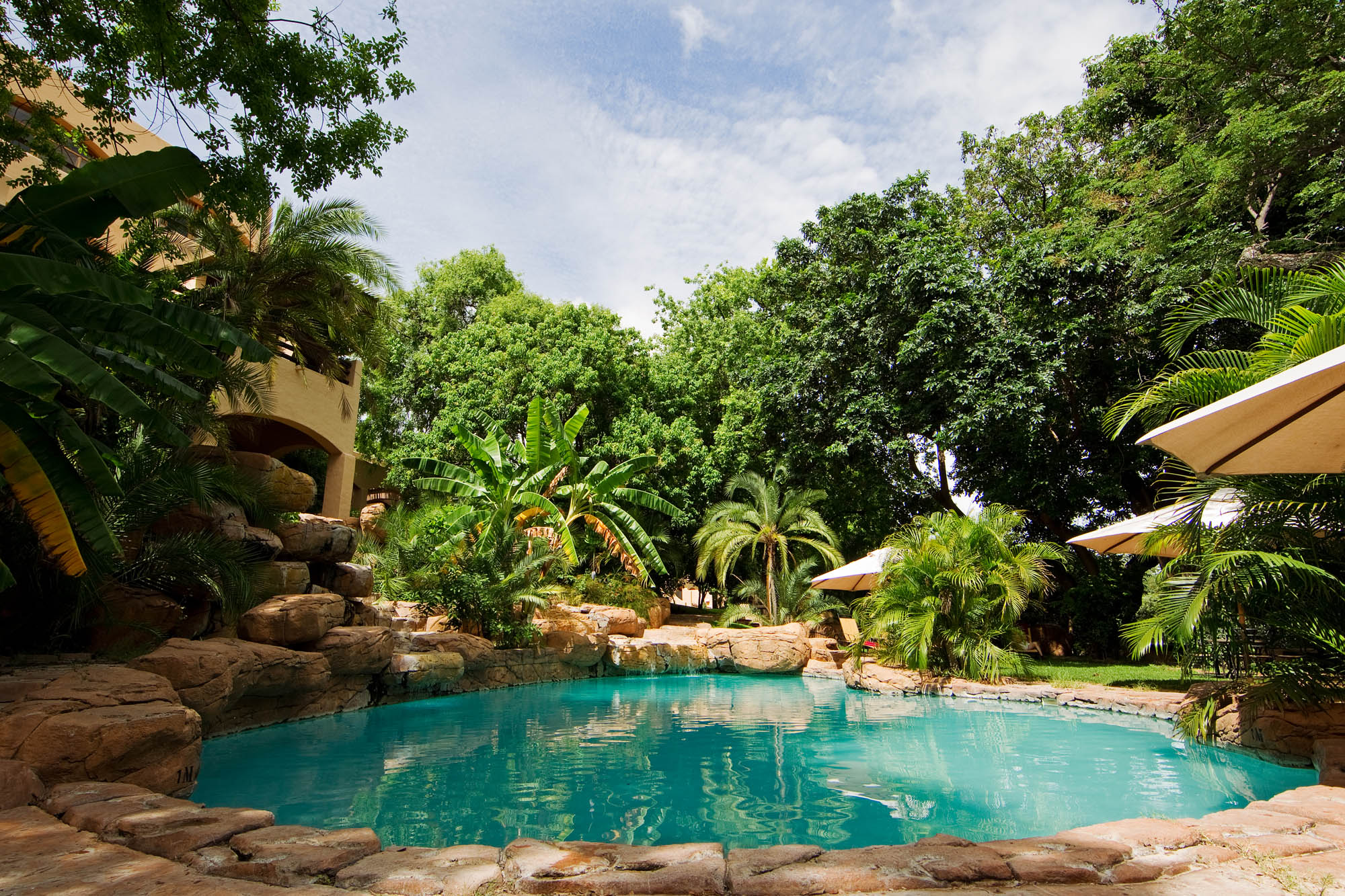
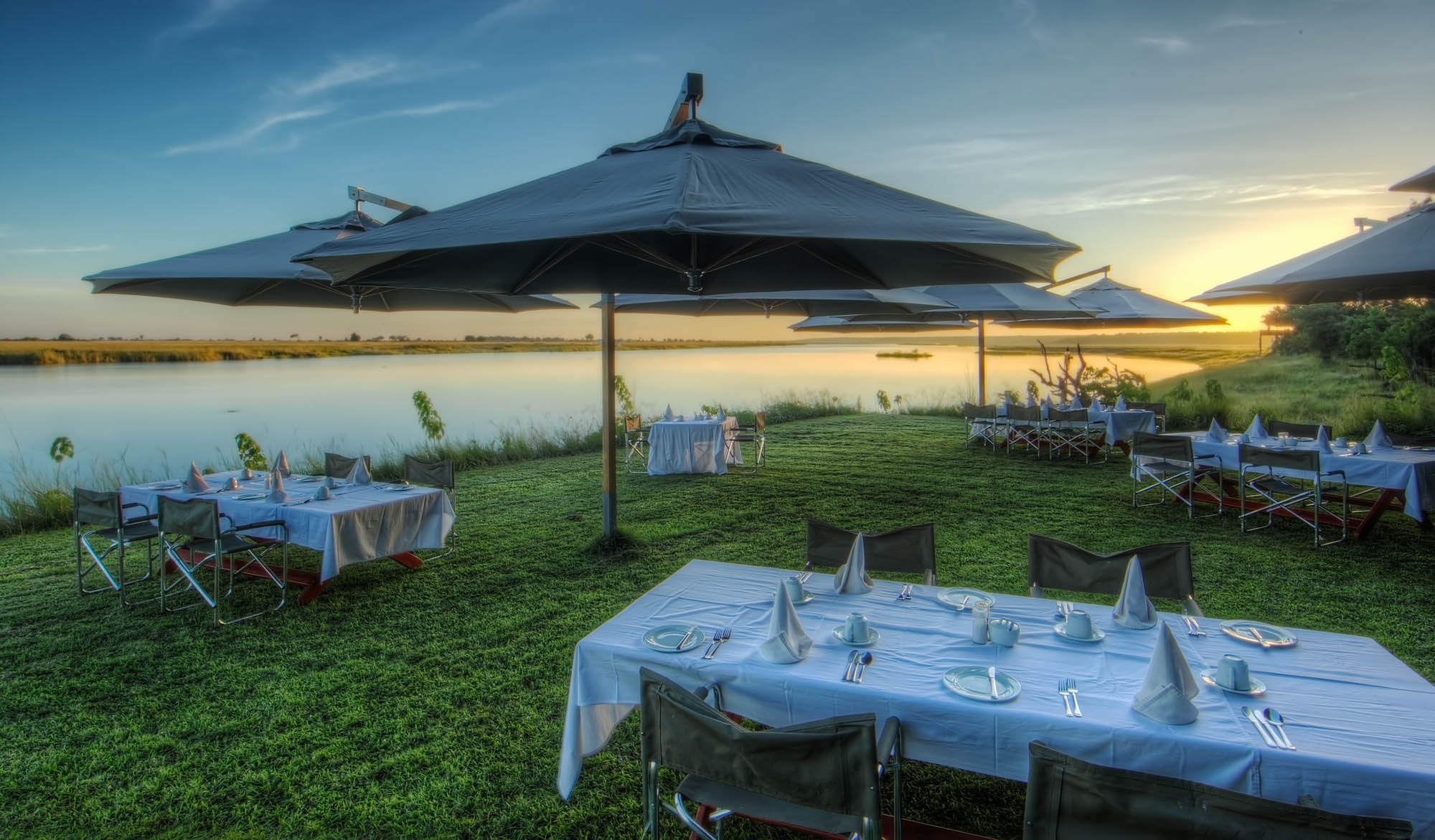
Another relatively new addition was a large outdoor dining/boma venue, with oversized umbrella stands capable of providing shade for 30+ people if required. The pool at CGL is still in an ideal semi-shaded spot, blending into the natural scenery.

From a previous visit to CGL, I recalled the wide choice and nice presentation of food dishes.  If anything, the food selection and choice was even better on my last visit.  Invariably there were multiple choices of starters, main course and desserts for dinner and lunch, and an array of hot and cold items for breakfast.  Coffee lovers take note:  CGL has an espresso machine which produces some fantastic coffee!


Image

Photo: Desert & Delta Safaris

In summer (Nov to Feb), morning game drives at CGL start early – at 0530A – which requires a wake-up call as early as 0430A to 0500A – depending on how quickly you can get ready.  Most guests show up at the restaurant at just after 0500A for a cup of coffee or tea and a rusk or freshly baked muffin.

Then it is off on a game drive of about 3 hours duration.  The very early departure has two main benefits:  you get to enjoy the cool morning temperatures before it starts to get really hot around 10:00 am, and you mostly beat the crowd by being able to enjoy game viewing west of CGL for a good amount of time – as much as 2 hours – before other vehicles & day trippers from Kasane start to show up.


Image

Photo: Desert & Delta Safaris

My first two ‘green season’ outings at CGL – a boat trip on the day of arrival and a game drive the next morning – were quite slow.  No elephants were seen and other than some hippo in the Chobe River, the only large mammals we saw were a good group of about 50 buffaloes.  Plus hundreds of impala and all of their babies.

By the time a family of three Americans including their Peace Corps volunteer daughter joined us on the afternoon game drive on December 15 we were starting to get a bit anxious.  Would they see something on their first ever game drive in Africa?  Where were the elephants?  There was no reason to be worried.


Image

We were hardly out of camp when we started to see the first of what ended up being dozens if not quite hundreds of elephants.  Some were coming back from the Chobe River and others were on their way there – at one stage we saw two large breeding herds cross paths while a third – smaller – group was observing from nearby. 

It didn’t stop with elephants.  We also saw giraffes (many!), kudu, buffalo, and enjoyed a long-awaited sighting of a handsome pride of Chobe lions.  There were about 7 or 8 individuals altogether, one young male on one side of the road and a group of about 6 females all lying more or less on top of one another.


Image

Photo: Desert & Delta Safaris

We watched them for quite a while, with two sisters entertaining us with some playful jostling and display of affection.

Back in camp I had a rare chance to get some exercise, spending 30 minutes on the treadmill.  My stay at Chobe Game Lodge was concluded with a ‘behind the scenes’ tour of the property’s green initiatives which are significant and laudable.  The property is very serious about recycling everything from plastic and paper right down to glass bottles which get crushed and mixed into bricks – in fact as much as 95% of all of the lodge’s trash is sorted and recycled.  CGL has a very effective grey water recycling program and it also generates a substantial amount of bio-gas on the property.


Image

Photo: Desert & Delta Safaris

CGL has been moving forward on other fronts as well:  the lodge is now operating a fleet of all-electric game drive vehicles as well as electric pontoon boats.   As I can attest from personal experience, it is a novel and exciting experience to approach the wildlife on the electrically operated game drive vehicles as there is no noise to scare them off or make them apprehensive.  Even the tiny impala babies, normally very skittish around regular game drive vehicles, let us approach very close.  Clearly it will improve the game-viewing experience as the guide is able to hear ‘clues’ like alarm calls which might otherwise have been drowned out by the noise of the engine.  There is nothing wrong with the vehicle’s ability to get into and out of ‘real’ 4-wheel terrain either!


Image

Photo: Desert & Delta Safaris

In summary:  For visitors who would like to experience a safari, but who are not quite ready for a tented camp or for the expense of flying into the Delta or elsewhere, Chobe Game Lodge is a great option. Yes, with 44 rooms it is much larger than other lodges, but it offers a lot of activities and services that are not available in the bush. It offers game drives as well as boat excursions on the Chobe River for some great looks at hippo, crocodiles and elephants along the shoreline.  Resident professional guides also offer stargazing and guided walks, there is a beautiful swimming pool, a riverside boma area where traditional dancers perform, fast wifi and a workout room complete with a treadmill. There is even a pizza oven!

More Info

Email bert@fisheaglesafaris.com

Email jason@fisheaglesafaris.com

@fisheaglesafarishouston

#FishEagleSafaris

YOU MIGHT ALSO BE INTERESTED IN

Destinations
Zambia

10th September 2021

Chindeni and the Bushcamp Company, Zambia

By late July we found ourselves at Chindeni, a small Bushcamp Company property
Read more
Destinations
Uganda

28th July 2022

Uganda: People, Primates And The ‘Old Africa’ Vibe

My one-word review of Uganda? Vivid. Just like it says in the dictionary: Intensely deep and bright and producing powerful feelings

Read more
Area
Destinations
Nyerere National Park
Ruaha
Tanzania

14th October 2023

From My Safari Notebook: Wildlife Photography

Birds in flight and wildlife photographers have an uneasy relationship. Things go wrong as often as they go right. Getting focus-lock on a moving subject

Read more

SUBSCRIBE TO OUR NEWSLETTER

READERS FAVOURITES

Destinations
Zambia

10th September 2021

Chindeni and the Bushcamp Company, Zambia

By late July we found ourselves at Chindeni, a small Bushcamp Company property
Read more
Botswana
Destinations

4th August 2022

On Safari At Belmond Eagle Island Lodge, Okavango Delta

What is the ‘secret sauce’ for an unforgettable few days on safari in Botswana? It starts with the animals, of course. The elephants, lions, giraffes, hippos

Read more
Destinations
India

27th May 2023

India

India’s tiger, mammals and birds.

Read more

On Safari At Belmond Eagle Island Lodge, Okavango Delta

4th August 2022

On Safari At Belmond Eagle Island Lodge, Okavango Delta

What is the ‘secret sauce’ for an unforgettable few days on safari in Botswana? It starts with the animals, of course. The elephants, lions, giraffes, hippos – all of them. Add a beautiful, romantic setting. And finish it off with first-class accommodation, food and drinks and an expert guide to help you understand and appreciate the nuances and little-known secrets of the bush. Magnificent starlit night skies? Why not.

Belmond’s Eagle Island Lodge in Botswana’s Okavango Delta had all of that – and more – on a recent visit. The lodge made a great first impression, starting with the proximity of the airstrip to the lodge, the strikingly designed main area, lounge and dining room and the enthusiastic welcome we received from the lodge team, arriving there in early November. The only thing lacking? Water in the lagoon in front of the camp. Clearly the lodge comes into its own when the annual flood is well into the Delta and the view from camp is one over water, not a grassy expanse. Not that this bothered us much at the time. The lack of water in front of the camp was largely compensated for by the presence of several old buffalo bulls who had made it their territory.

Just in front of the lodge, about 70 meters along a berm pathway, is the Fish Eagle Bar, which I’ve seen described as one of the most romantic bars in Africa. Perhaps when the annual flood is in; it was closed at the time of our visit. The main lodge has a fireplace, a mostly open dining room and a separate (private) bar and lounge. The entire structure is dramatically accented by a sweeping dark gray wall and covered by a gigantic thatched roof, artfully blended with several large trees which pre-date the construction of the lodge.

Belmond Eagle Island Lodge has 12 rooms (sleeping a maximum 24 guests) with six rooms to the left and and six rooms to the right of the main lodge. All with good views over the floodplain.

The first thing we noticed when we stepped into our room (#6) was the air conditioning. This was not an evaporative cooler above the bed. This was proper full-on AC which will keep the room interior quite chilly if that’s what you want, no matter the ambient temperature.

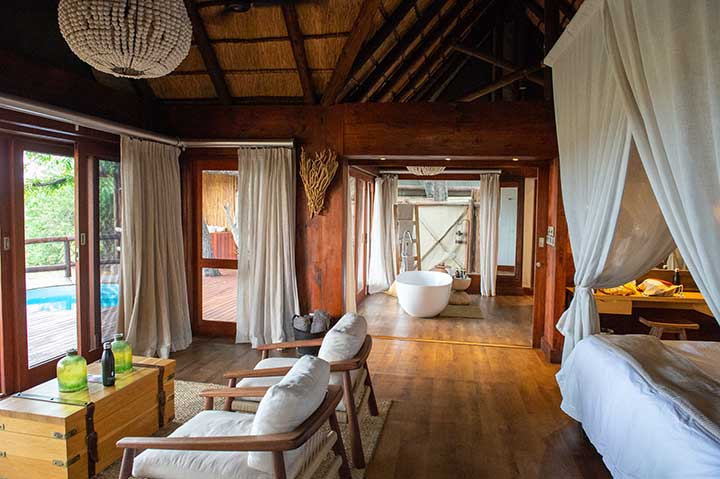
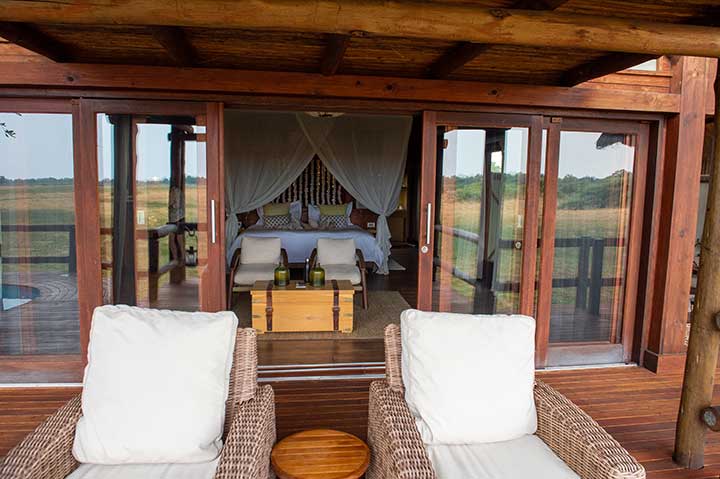
For the hot months of the year which stretch from October to March, Belmond Eagle Island is a great choice from the perspective of being totally comfortable at night and during the early afternoon siesta time. The room also had plenty of storage space, a large tub, indoor and outdoor shower, a minibar, hair dryer, a plunge pool and more. We were not the only ones enjoying the plunge pool – Kathy had a thirsty elephant come by for a drink of nice, clean water one afternoon.

Clearly, there was not enough water in the area to do boating. We were not super enthusiastic about the prospect of an abbreviated mokoro outing but in the end, none of that mattered. Instead of fretting about the typical Okavango Delta water activities not being available, we pivoted to game drives and on several outings with our capable and enthusiastic guide OT (Oteng Tlale) we enjoyed some wonderful sightings.

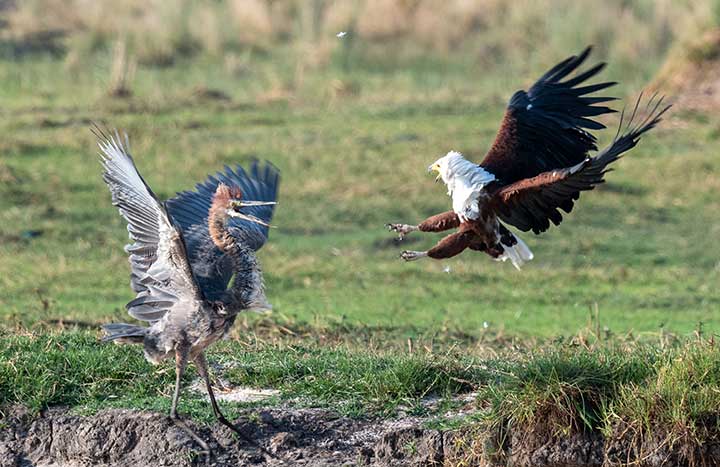
On our first afternoon outing along the Boro River floodplain we observed large numbers of red lechwe, zebra, some elephants, and hundreds of birds of different species. We witnessed unusual interaction between a goliath heron and a pair of African fish eagles, with the heron lunging at the eagles in an apparent territorial dispute.

On two different occasions we spent time at a hippo pool on the Boro river, with at least 30 or 40 hippos jammed together. Both times we were the center of attraction as every single hippo eye was fixed on us. Once we surprised a few hippos who found themselves in shallow water upon our approach. Their helter-skelter dash for the safety of deeper water made things interesting for all of us. It appeared that they were young bulls who had been displaced from the main group of hippos, by the dominant, older hippo bull. Yet there they were, rushing back towards the deep water from which none other than the self-same dominant bull was watching their approach with growing interest.

Late one afternoon we enjoyed sundowners with the hippos, complete with a trio of snacks (dried beef biltong, cheese and sausage brochettes and dried mango) and our drinks of choice which included a gin & tonic, a Diet Coke and a Stoney Ginger Beer. The hippos looked cool and relaxed in the water but I think they would have traded places gladly.

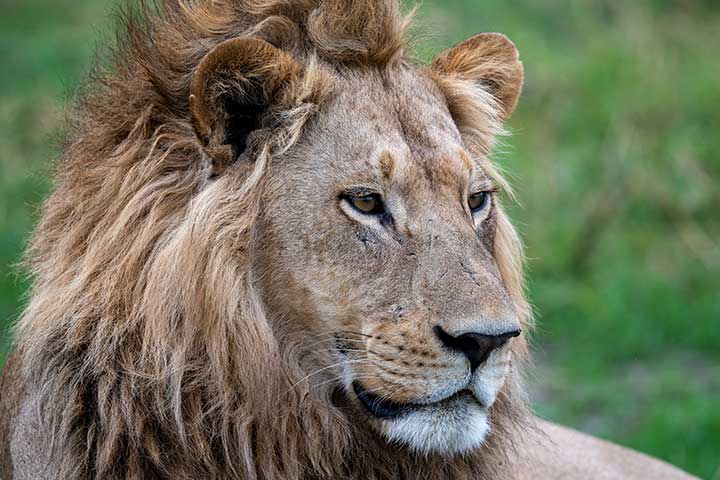
On our second outing along the Boro River we saw noticeably fewer red lechwe around and the reason soon became apparent. Comfortably stretched out on a soft carpet of green grass, there was as handsome a young male lion as we had ever seen. He was lightly dozing but became alert and picked up his head, as we drove closer. The beautifully maned lion was about four to five years old, just approaching his prime.

On our last game drive we hit the jackpot when we caught up with a female leopard and her two young cubs. The two babies – around 4 months old – peered at us curiously for a few seconds before they disappeared into the thick bush. It was a magical, never to be forgotten moment.

We loved the area around Belmond Eagle Island Lodge, which was simply stunningly beautiful. The large grassy plains sometimes took on the appearance of a manicured golf course, as a result of freshly emerging grass shoots. There was a profusion of large impressive trees including mangosteen, lead wood, jackal berry and rain trees. Very ‘Botswana’.

The meals and catering at Belmond Eagle Island Lodge were consistently good. One evening the staff set up a table just for the two of us in the private lounge, serving a delicious vegan sweet potato curry. We enjoyed a multi-course traditional ‘braai’ (barbecue) on another night when there was a large party of French guests in camp. Not surprisingly, there was an extraordinary variety of meats to choose from, including lamb chops, chicken, beef steak, and traditional sausages. Side dishes included pap (the local version of polenta), corn, potatoes, and a nice variety of salads. There’s nothing quite like biting into a juicy piece of boerewors (the traditional South African sausage accented with coriander), while listening to animated conversation – in French – at the next table, with the iconic sound of braying zebras in the far distance adding some color. Only in Africa.

BOTSWANA TRIP IDEAS
Classic Botswana Safari

The ‘classic’ Botswana mix is to combine three properties, one each in the Chobe/Linyanti area, the Okavango Delta and the Moremi Game Reserve. There are several variations on the theme, some of which come into play depending on the season. In the wet season (roughly December through March) it is always a good idea to include a few days in the Kalahari and omit Chobe. For more diversity and a more active trip overall, consider splitting your time between Mashatu in south-eastern Botswana, and northern Botswana. Mashatu is perfect for a 3-night walking safari followed by a few nights in a lodge or tented camp in the area. Return to Jo’burg for a night and continue to Maun the following morning. Alternatively, you can do a private charter to your northern Botswana camp, which becomes economically feasible for a group of 6 plus.

South Africa, Victoria Falls & Botswana
Botswana combines very well with several of its neighboring countries. For example, you can fly into Cape Town in South Africa for the first few days of your trip. The weather in the Cape isn’t great from June through August – often approximating a bad day in San Francisco – but there’s so much to see and experience that the weather can be overlooked. If you do want to experience South Africa’s Mother City at its best, go from September to November, or early in the year, from mid-January through April and May. We tend to avoid the Cape in the holiday season; too crowded with up-country and other visitors. From Cape Town, fly non-stop to Victoria Falls for a couple of nights. The Falls are at their best from about March through June, but worth seeing (Main Falls from Zimbabwe side), any time of the year. Plenty of adventure activities on offer ranging from white-water rafting to bungee jumping, gorge swing, zip-lining, and several others. Our favorite property? Probably the venerable Victoria Falls Hotel (stable deluxe rooms), but there are many other good ones including Stanley and Livingstone Hotel, the Ilala Lodge, Batonka Lodge, and Old Drift Lodge.

From Vic Falls it is just 90 minutes by road (we prefer to do this transfer by road rather than fly; less hassles) to the Chobe area. Spend a few days at Chobe Chilwero or Chobe Game Lodge (both excellent in the dry season!) and then continue on to the Delta.

Zimbabwe and Botswana
Zimbabwe and Botswana make a great combo as well. We would suggest starting in Victoria Falls, then spending several days at one or two camps in Hwange National Park (nowhere better for elephants!) and continuing on to the Chobe area and elsewhere in Botswana. Ideally, travel should be in the dry season from about June through October as Hwange really gets into its stride when elephants and other wildlife congregate around the water holes. Even though off-road driving is not allowed inside the park it is rarely, if ever, a factor as so much of the viewing there is done from hides and blinds, or around water holes where the animals come to you, and not the other way around.

Best Time to go?
Northern Botswana including the Okavango Delta, Moremi & Chobe is at its best from June through October, the dry season. This is when animals are drawn to remaining sources of water and thus easily seen. Plus the vegetation is sparse making for better visibility. All parts of Botswana heat up significantly from September onwards, with October and November being the two hottest months. Until the first thunderstorms roll in, the humidity is low (rarely much above the 20 percentile), so comfortable despite the high mid-afternoon maximum temperatures. Typical of a semi-desert climate, the evenings cool off rapidly as soon as the sun sets.

During the shoulder and low-demand season from November through March, prices are lower, there are fewer other visitors around, lots of baby animals, and the Kalahari is at its best. South-eastern Botswana (Mashatu) is an excellent value option and is at its best from about April through October; this is also one of the best places for a foot safari in Southern Africa.

YOU MIGHT ALSO BE INTERESTED IN

Destinations
Zambia

10th September 2021

Chindeni and the Bushcamp Company, Zambia

By late July we found ourselves at Chindeni, a small Bushcamp Company property
Read more
Destinations
Uganda

28th July 2022

Uganda: People, Primates And The ‘Old Africa’ Vibe

My one-word review of Uganda? Vivid. Just like it says in the dictionary: Intensely deep and bright and producing powerful feelings

Read more
Area
Destinations
Nyerere National Park
Ruaha
Tanzania

14th October 2023

From My Safari Notebook: Wildlife Photography

Birds in flight and wildlife photographers have an uneasy relationship. Things go wrong as often as they go right. Getting focus-lock on a moving subject

Read more

SUBSCRIBE TO OUR NEWSLETTER

READERS FAVOURITES

Destinations
India

27th May 2023

India

India’s tiger, mammals and birds.

Read more
Botswana
Destinations

11th November 2021

How to book a better safari

Fish Eagle Safaris’ owner Bert Duplessis and his team at Fish Eagle Safaris Inc.

Read more
Destinations
Zambia

10th September 2021

Chindeni and the Bushcamp Company, Zambia

By late July we found ourselves at Chindeni, a small Bushcamp Company property
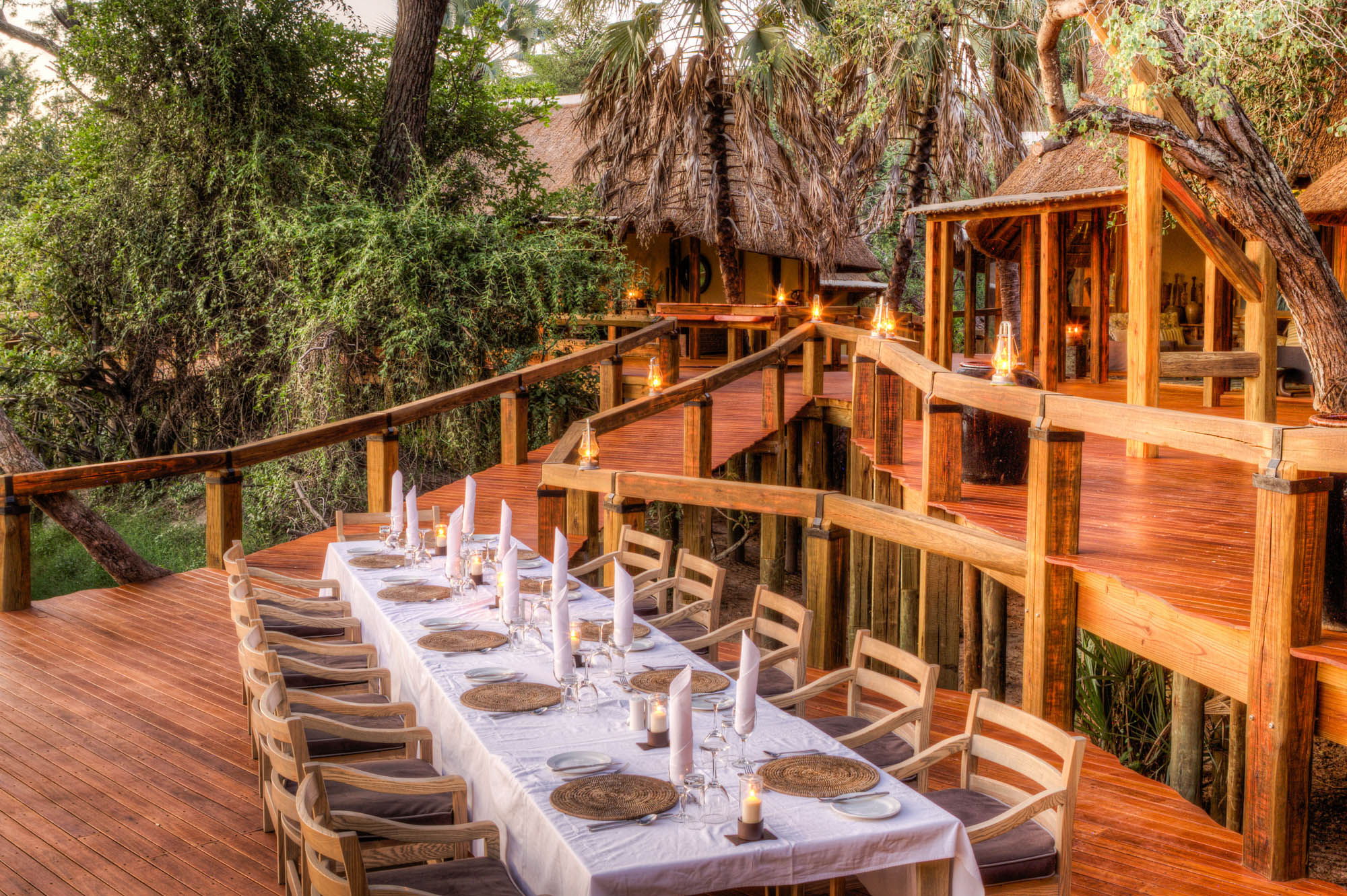
Read more

Uganda: People, Primates And The ‘Old Africa’ Vibe

28th July 2022

Uganda: People, Primates And The ‘Old Africa’ Vibe

My one-word review of Uganda? Vivid. Just like it says in the dictionary: Intensely deep and bright and producing powerful feelings and strong, clear images. There’s nothing standard, neutral or monochrome about Uganda. It is larger than life, bursting with energy, color and vitality, with simply spectacular diversity on every level: the people, the countryside, the animals and birds and of course the primates.

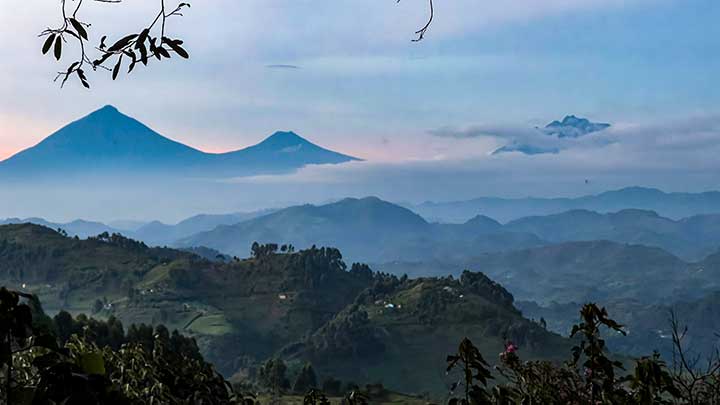
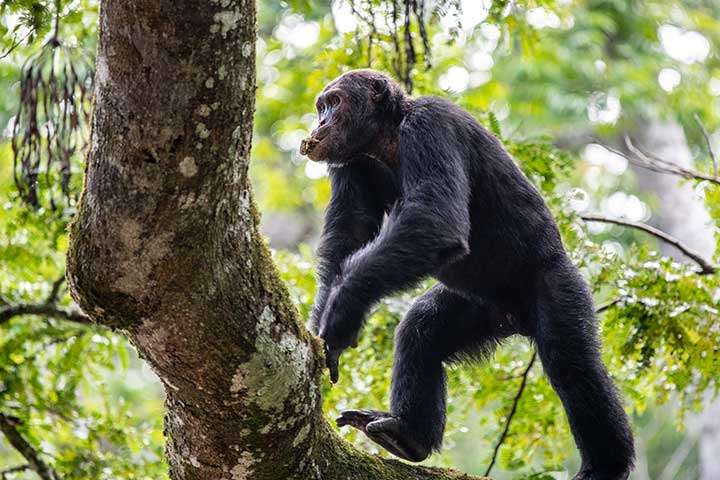
On my Uganda trip in March this year, I was particularly blown away by the beautiful scenery, the chimpanzees (at both Kibale and Kyaninga), and – no surprise – the gorillas of Bwindi Impenetrable Forest. Most of all though, the friendliness and spontaneity of the people shone through, just like on my first visit, some ten years ago. Some things never change. Something that was different? The roads were much better – what a relief!

The ‘old Africa’ vibe
I was pleased to still experience the ‘old Africa’ vibe in Uganda on this trip, just like the first time. While change and progress are no doubt underway, Uganda still feels like Africa of 30 years ago. It is gracious and slower paced, with none of the frenetic feeling of some African safari destinations where game drives have taken on the tenor of a competitive sport.

In Uganda you can still expect to show up at a small coastal property only to find out that the gate is locked and the only person with a key is nowhere to be found. What to do? Nothing, really. Just cool your heels, get your binoculars and do a bit of birding while you wait. In Uganda, a situation like this is handled without rancor, without finger-pointing and without recrimination. Twenty minutes later, the key is located and you are welcomed to the property as if nothing had happened.

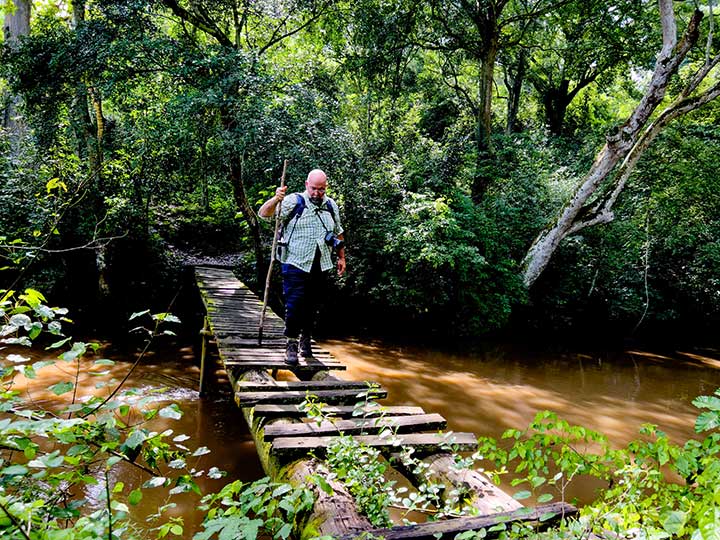
Uganda’s old Africa vibe extends into the most unlikely of places. On a hike to see the chimpanzees of Kyaninga Gorge, we came across what was the most rickety pedestrian bridge I have ever seen. The prospect of using it to cross a river was downright scary with big gaps between some cross-slats and others clearly not securely nailed down. The repairs should have been attended to months earlier. We asked about it, but never received a satisfactory reply. Apparently, even a relatively simple task that should take no more than a few hours – like that one – can turn into a bureaucratic marathon in Uganda. Particularly if the matter to be dealt with is inside a national park, in this case Queen Elizabeth National Park. In the Africa of old, nothing happens quickly when there is one or more government departments involved.

In the main and regardless of minor inconveniences like these, encountering the old Africa vibe is a good thing. It goes hand in hand with the country being largely undiscovered by hordes of travelers. In more than two weeks of traveling across Uganda and visiting several national parks, we could count the number of other tourist vehicles we observed on one hand. Admittedly, it was the low season but even in peak season, the visitor density remains extraordinarily low by any standard.

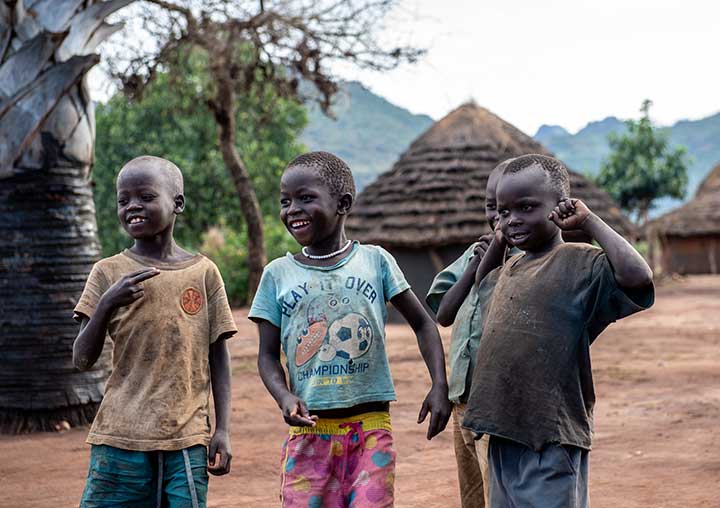
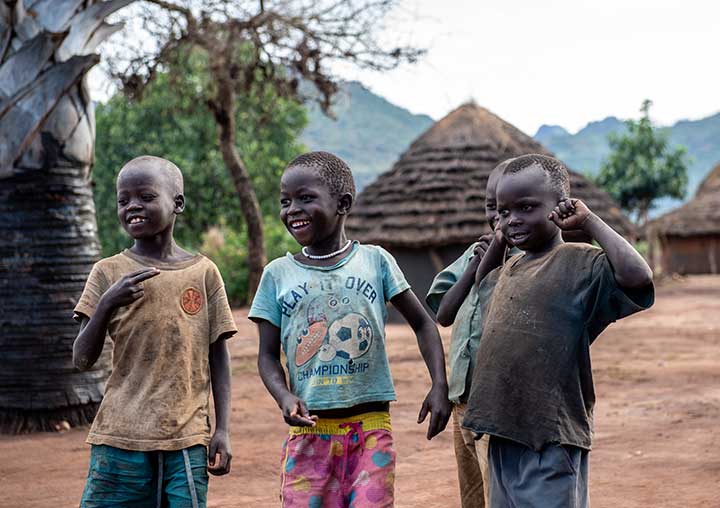
Stray even a little bit off the main routes in Uganda, and you slip into a world where foreign visitors become the focus of attention simply because of the novelty factor. American and other visitors are so rarely seen in many rural areas of Uganda that a passing ‘tourist vehicle’ – usually a Toyota Landcruiser – will bring smiling kids running down the hills and towards the road, waving wildly and exuberantly shouting words of welcome. “Msungu, Msungu!” No, it doesn’t exactly translate to ‘welcome’ but it’s close… While visiting a small village in Kidepo – Karamoja – in search of an authentic cultural experience, the tables were turned. It was us – the visitors from abroad – who turned out to be scrutinized more than anything else. I was worried about feeling awkward and being intrusive visiting their village and observing them, but as it turned out we were the ones on display.

Of course, we did learn more about the people and their lifestyle and it was altogether fascinating. A remote Uganda village like this one is as real as it gets. There is not an ounce of artifice or pretense. Entering one of the homes of the Karamoja families was a powerful experience for people like us, coming from such an unthinkably privileged background, in comparison with their reality. The home was a rough clay hut which contained a rudimentary kitchen (essentially a wood-burning fire pit), an in-home granary and a hand-cranked grinding mill for flour. The bedroom was little more than a patch of floor with a couple of roughly tanned cow-leather hides. The hut was claustrophobic and smoky to the point of distraction. Almost unimaginably basic for visitors who spend their days in air conditioned comfort and who complain about having 4G signal rather than 5G.

The chimps of Kibale and Kyaninga
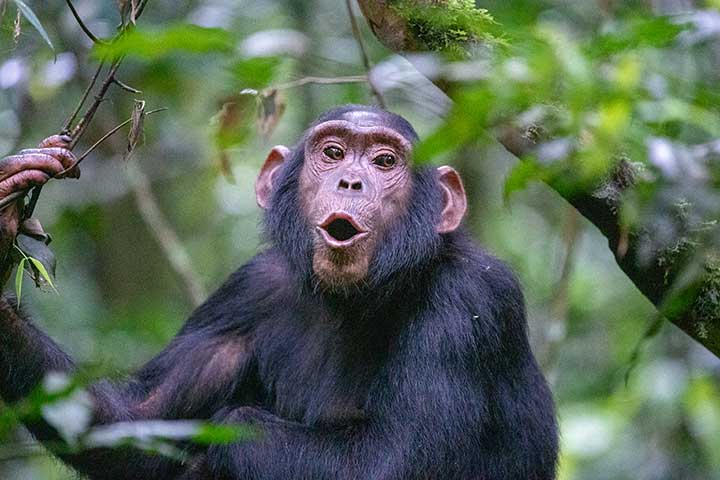
So many places and experiences vie for the ‘best of the best’ award on a Uganda trip. I think for me, this time, it was undoubtedly the chimpanzees. On my first trip to Uganda some 10 years ago, I struggled mightily to see them well. In Kibale Forest we were literally running after them and they were mostly just dark blobs high up against the tree canopy. This time around? Totally the opposite. We could not have asked for better sightings of the chimps at Kibale and also – unexpectedly – at Kyaninga Gorge. I came away from this trip with literally dozens of good chimpanzee photographs. Any visitor – particularly one keen on photography – would have been thrilled with the experience. My advice? Spend 3 nights in the Kibale Forest area and do back to back chimp treks. At ‘just’ $200 the chimpanzee trekking permit is the best primate viewing deal going. And with two treks you’ll have a bit of insurance if one of the two outings don’t live up to expectations because of uncooperative chimps or bad weather.

The mountain gorillas of Bwindi Impenetrable Forest
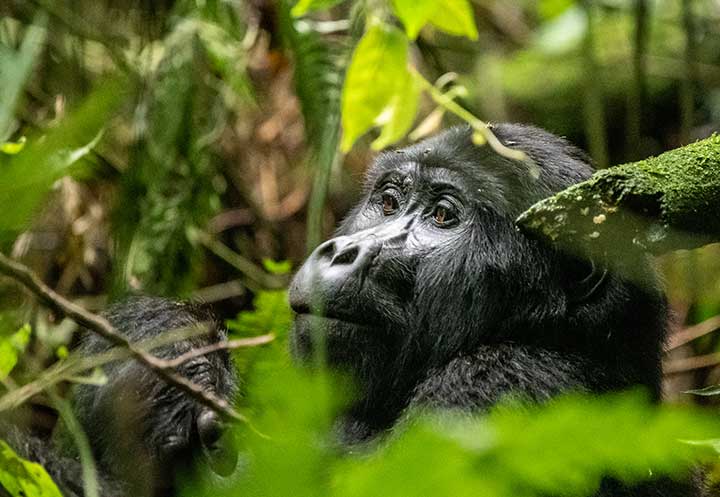
A close second for ‘best of the best’ honors? The gorillas of Bwindi Impenetrable Forest. We trekked the Habinyanja family group in the Buhoma sector of the park, from Gorilla Forest Camp. I rated the hike as tough but doable by most people with good mobility and a degree of stamina. Certainly the effort was worth the results which were superb views – in a small clearing in broad daylight – of about 10 or so members of the family of just over 20 in total. Most extraordinarily, we were witnesses to the silverback gorilla mating with one of the female members of the troop. Right in front of us. I later spoke to Phil Ward, a long-time director of Uganda-based Classic Africa Safaris who said that he had never witnessed anything like this in the many dozens of gorilla treks which he’s been part of over the years in both Rwanda and Uganda. Special indeed.

Hiking the Ivy Trail from Buhoma to Nkuringo
Another memorable activity was the 4-hour Ivy Trail hike within Bwindi impenetrable forest, from Buhoma to the southern Nkuringo sector. As I remarked to Classic Africa Safaris’ Lyndsay Harshman, who accompanied us for much of the trip, a walk through a gorgeous primary forest like this one, is a tonic for the soul. Although it was muddy – good boots essential – the first part of the trail was really more of a stroll through a beautiful forest than a serious hike. The environment was spectacular with giant trees shielding us from direct light, creating the typical interior forest gloom. The soft light with few shadows is perfect for photography. Towards the end of the hike the trail goes steadily uphill and at that altitude, in excess of 6,000 feet above sea level, you will be huffing and puffing, no doubt. But all good, as the next stop – for us – was the simply divine Cloud’s Lodge. Which has one of the most stupendous views of any property in Africa.

Outing to the top of Murchison Falls
Visiting the top of Murchison Falls is probably one of the most underrated experiences in Uganda. This was my second time seeing it, and it was no less impressive. Being this close to the fury of the entire Nile River exploding through a narrow gap in a rocky gorge is just flat-out amazing! I marveled at the fantastic power of nature in this raw and 100% unspoiled display of force and violence. It gets better and better as you get closer to the top – observing mountains of water crashing downwards with a thunderous roar is mesmerizing. One viewpoint is better than the next; there are some overlook points with superb views over the adjacent Uhuru Falls as well. I really rate this experience to be every bit as impressive as Victoria Falls. It is very different though as there is no huge curtain of water and the drop itself is not that high. However it is the proximity and the unbelievable force that practically shakes the rocks you are standing on, that does it for me. Emerging at the top, after a quick drenching from the spray at the Devil’s Cauldron overlook, we were greeted by a couple of rangers. There was almost nobody else around. No curio sellers, no soft-drink dispensers, just the powerful sound of the water behind and below you.

Boat ride to the Nile River Delta
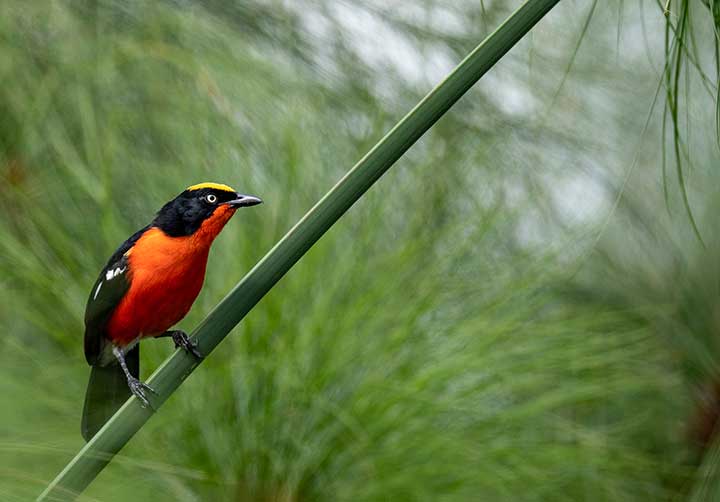
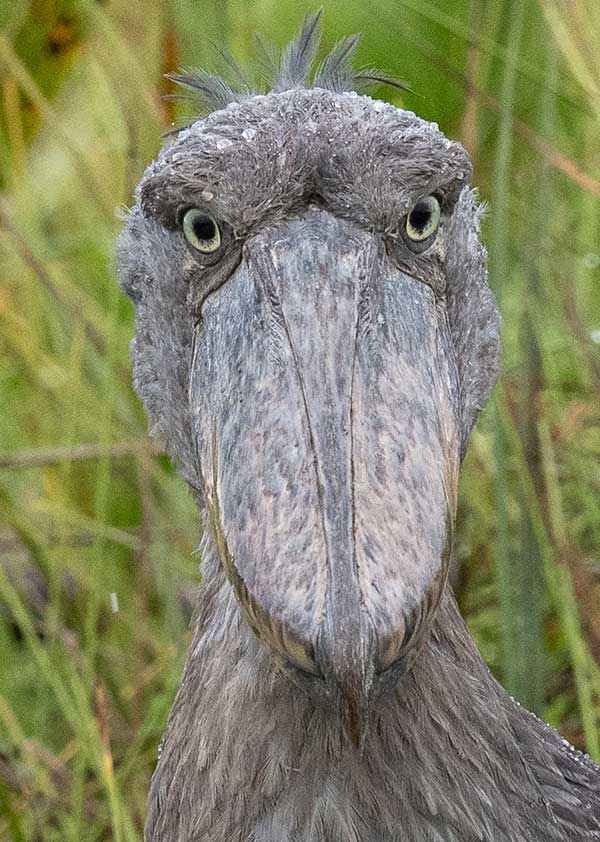
I had previously done an outing on the Nile River following pretty much the same route which we did this time. I had forgotten just how fascinating and amazing an outing it was. This time around, we missed seeing a Shoebill Stork due to the water in the river being too high, displacing the Shoebill habitat which is essentially small islands of floating vegetation. Did it matter? Hardly. If you have a camera in your hand, a love of nature and particularly if you are keen to see some of Africa’s most spectacular birds, the two hours or so on the Nile River cruise fly by like minutes. It is hands down one of the best bird-watching experiences in East Africa with a stellar array of species to be seen, a highlight being the spectacular kingfishers. Sometimes one may see as many as four different kingfishers on the outing, including the Giant, Pied, Malachite and Grey-headed Kingfishers. There’s herons, egrets, lapwings, weavers, bee-eaters, jacanas – to mention but a few. Finding a majestic African Fish Eagle is very much on the cards here, maybe even an osprey. With a skilled skipper which we had on the boat operated by Wild Frontiers, we had multiple opportunities to get really close to most of the birds and you don’t have to have a telephoto lens to make some beautiful images.

Kidepo National Park
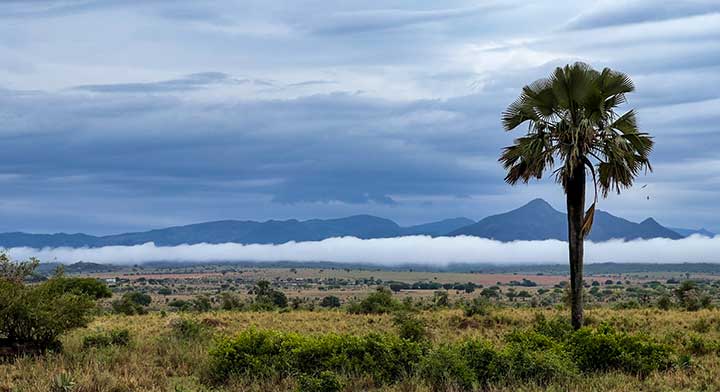
Kidepo National Park is a singularly beautiful part of Uganda, tucked into the far north-eastern corner of the country, in a hilly region where the borders of Uganda, South Sudan and Kenya intersect. Kidepo’s Narus Valley may very well be the prettiest place I’ve ever been to in Africa. Great big blue skies, craggy mountains and well-defined hills rolling towards the north. A vast open expanse of grassland with thorny acacias, sausage trees and others scattered all over, turn the Narus valley into a picture perfect African savannah. Seeking the grandeur of Africa? Look no further. This is it.

Even more so than elsewhere in Uganda, Kidepo is the Africa of old with few people and lots of animals, all essentially yours to find and admire in a landscape which could not be more striking. Every day, every outing unveiled more and better views. Noticeably, the concentration of wildlife was markedly higher in the Narus Valley than elsewhere in Kidepo. There were literally thousands of buffalo around, practically anywhere we drove – or walked. It was easy to see why. Located at the bottom of the valley, the Narus River annually floods much of the area and during the long dry season it is a lifeline for much of the wildlife of the area, being the only source of permanent water in the valley.

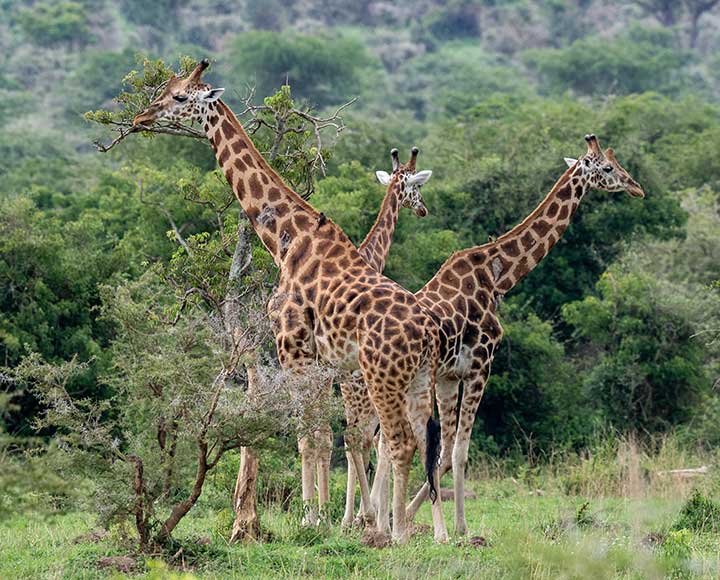
Unlike much of the Karamoja region which has sandy soils, the Narus valley soils are loamy and retain water well into the dry season, particularly in the extensive swamps and pools along the river. As a result, there is an abundance of wildlife to be seen. On our game drives in the area we were hardly ever out of sight of buffaloes, and a good variety of other plains game such as zebras, hartebeest, waterbuck, oribi and giraffes. We also enjoyed a few great sightings of the rare Pata’s monkeys, a primate adapted to life in a savannah environment.

YOU MIGHT ALSO BE INTERESTED IN

Destinations
Zambia

10th September 2021

Chindeni and the Bushcamp Company, Zambia

By late July we found ourselves at Chindeni, a small Bushcamp Company property
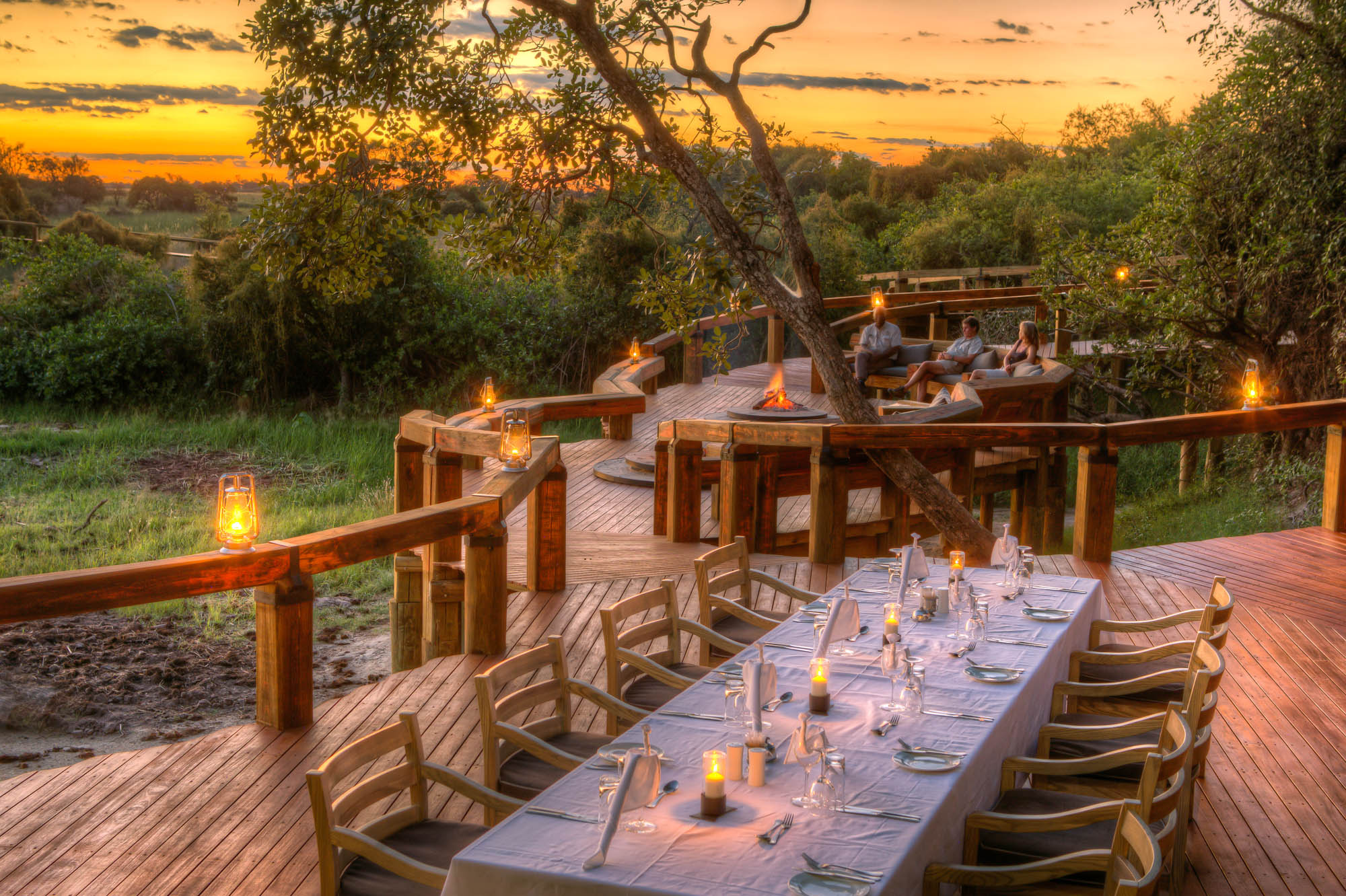
Read more
Botswana
Destinations
Linyanti
Savuti
Savuti Channel

28th October 2021

Dumatau Camp, Linyanti Concession, Botswana

Over the years we have enjoyed some of our best game-viewing and most memorable

Read more
Area
Destinations
Nyerere National Park
Ruaha
Tanzania

14th October 2023

From My Safari Notebook: Wildlife Photography

Birds in flight and wildlife photographers have an uneasy relationship. Things go wrong as often as they go right. Getting focus-lock on a moving subject

Read more

SUBSCRIBE TO OUR NEWSLETTER

READERS FAVOURITES

Destinations
India

27th May 2023

India

India’s tiger, mammals and birds.

Read more
Botswana
Destinations

11th November 2021

How to book a better safari

Fish Eagle Safaris’ owner Bert Duplessis and his team at Fish Eagle Safaris Inc.

Read more
Destinations
Zambia

10th September 2021

Chindeni and the Bushcamp Company, Zambia

By late July we found ourselves at Chindeni, a small Bushcamp Company property
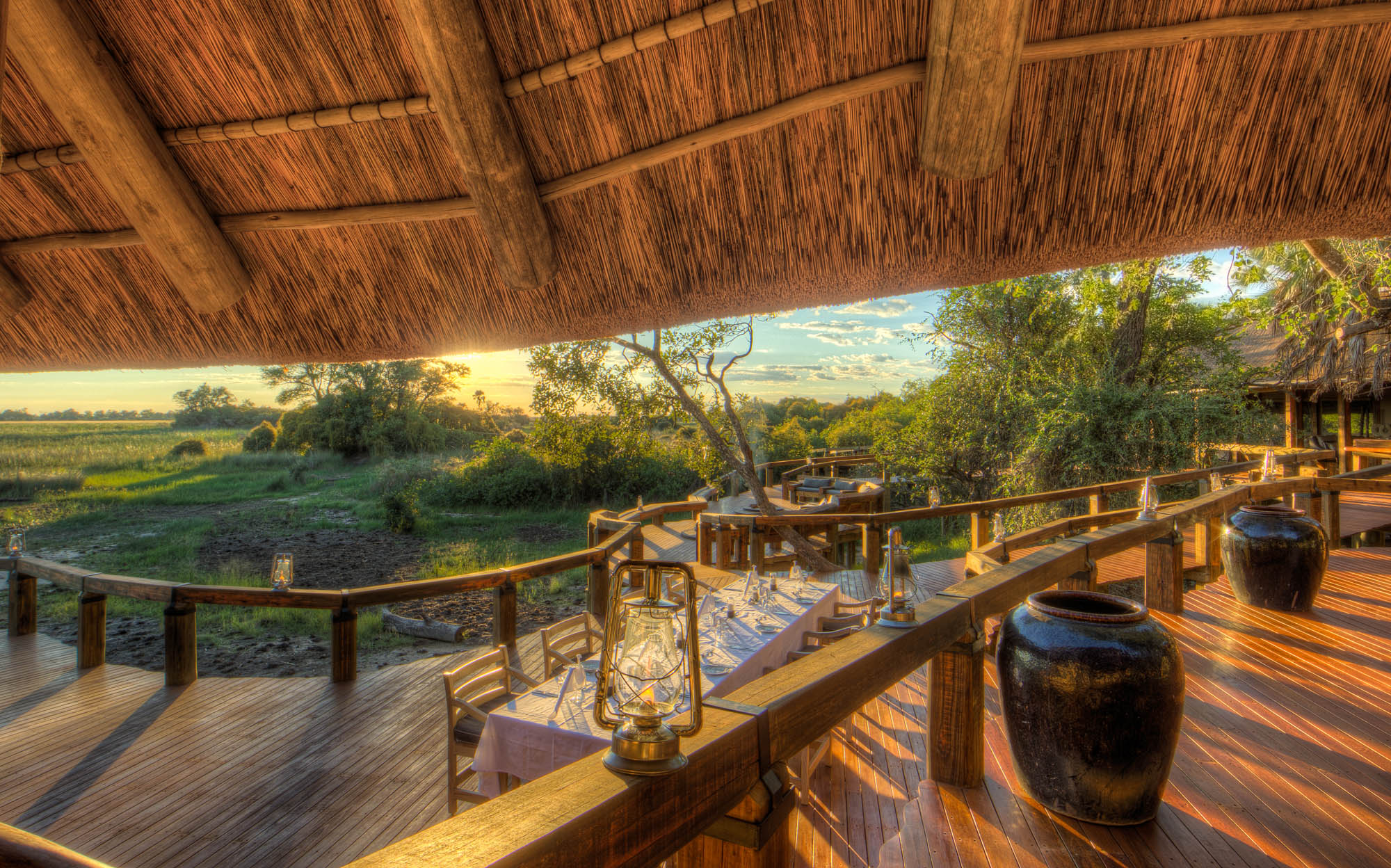
Read more
  • « Go to Previous Page
  • Page 1
  • Interim pages omitted …
  • Page 11
  • Page 12
  • Page 13
  • Page 14
  • Page 15
  • Interim pages omitted …
  • Page 27
  • Go to Next Page »

Footer

Design

  • About
  • Destinations
  • Blogs
  • FAQS
  • Team
  • Contact
All Rights Reserved ©Fish Eagle Safaris 2022 | Terms & Conditions | Privacy Policy
Designed & Developed by B Online

SUBSCRIBE TO OUR NEWSLETTER

SIGN-UP TO OUR NEWSLETTER

Subscribe Form

Footer Widget Header

Related Blogs