• Skip to primary navigation
  • Skip to main content
  • Skip to footer

Fish Eagle Safaris

Fish Eagle safaris

Contact

Logo
  • About
  • Destinations
  • Blogs
  • Newsletter
  • FAQS
  • Team
  • search
  • Contact
  • About
  • Destinations
  • Blogs
  • FAQS
  • Team
  • Contact

Area

A visit to Kruger National Park & Sabi Sand Reserve, South Africa

10th September 2020

A visit to Kruger National Park & Sabi Sand Reserve, South Africa


Image

A visit to Kruger National Park & Sabi Sand Reserve, South Africa

Over the course of a week or so in the Kruger Park area I discovered a couple of superb new camps and revisited an old favorite, saw lots of animals – including many big cats and African painted dogs – benefited from expert guiding and was served some of the best food I’ve ever had on safari.

Image

SINGITA LEBOMBO

On a recent September visit to South Africa,  I traveled by road from the southern Sabi Sand area for about three hours to Singita Lebombo, on the eastern edge of the park.  

This was my first visit to Singita Lebombo, and it did not disappoint.  Singita sets an exceedingly high standard for the safari experience, at all of their Southern and East African properties.   As I was to see for myself at Singita Lebombo as well as at Singita Ebony and Singita Boulders – which I were to visit later on – the properties excel at every facet of the guest experience.  You might think that the food at Singita is out of this world – and it is – or that the lodges have simply the best stocked wine cellars, which is also true.  But it doesn’t stop there.  The same attention to quality and detail extends throughout the operation, from the selection and training of guides, to the front of house staff, property management, as well as the planning, design and execution of the lodges.  Even more important is how successful the company has been in mobilizing its resources to create programs that benefit the people, wildlife and the areas in which it operates, all to safeguard Africa’s most vulnerable species and natural habitats.

Image

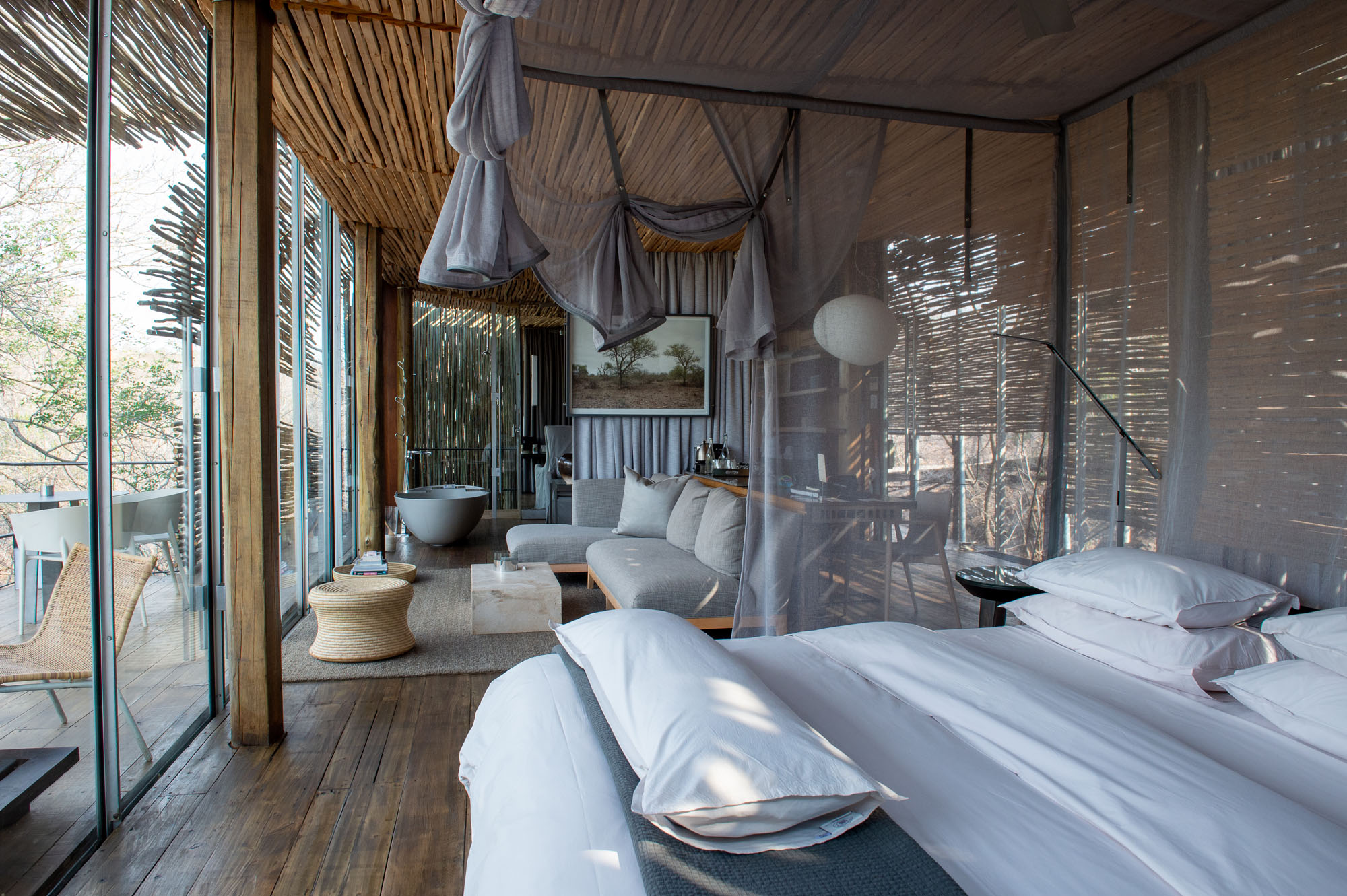
Singita Lebombo is an architecturally striking lodge with clean modern design, lots of glass and plenty of natural light.  The main dining room, bar and lounge have beautiful views over the foothills of the Lebombo mountains and Mozambique in the distance. The expansive kitchen turns out simply fantastic food. It takes confidence to attempt dishes of this quality and then to actually live up to advance billing is an achievement anywhere. All the more so here, in such a remote area. 

The evening’s entertainment started with drinks in the Boma, by the fireside. It was a festive affair with a range of splendid South African wines and other beverages on offer.  Guests had the choice of four white and four red wines including a Chardonnay, Chenic Blanc, Rose, Pinotage, Cabernet Sauvignon and Shiraz. 

Image

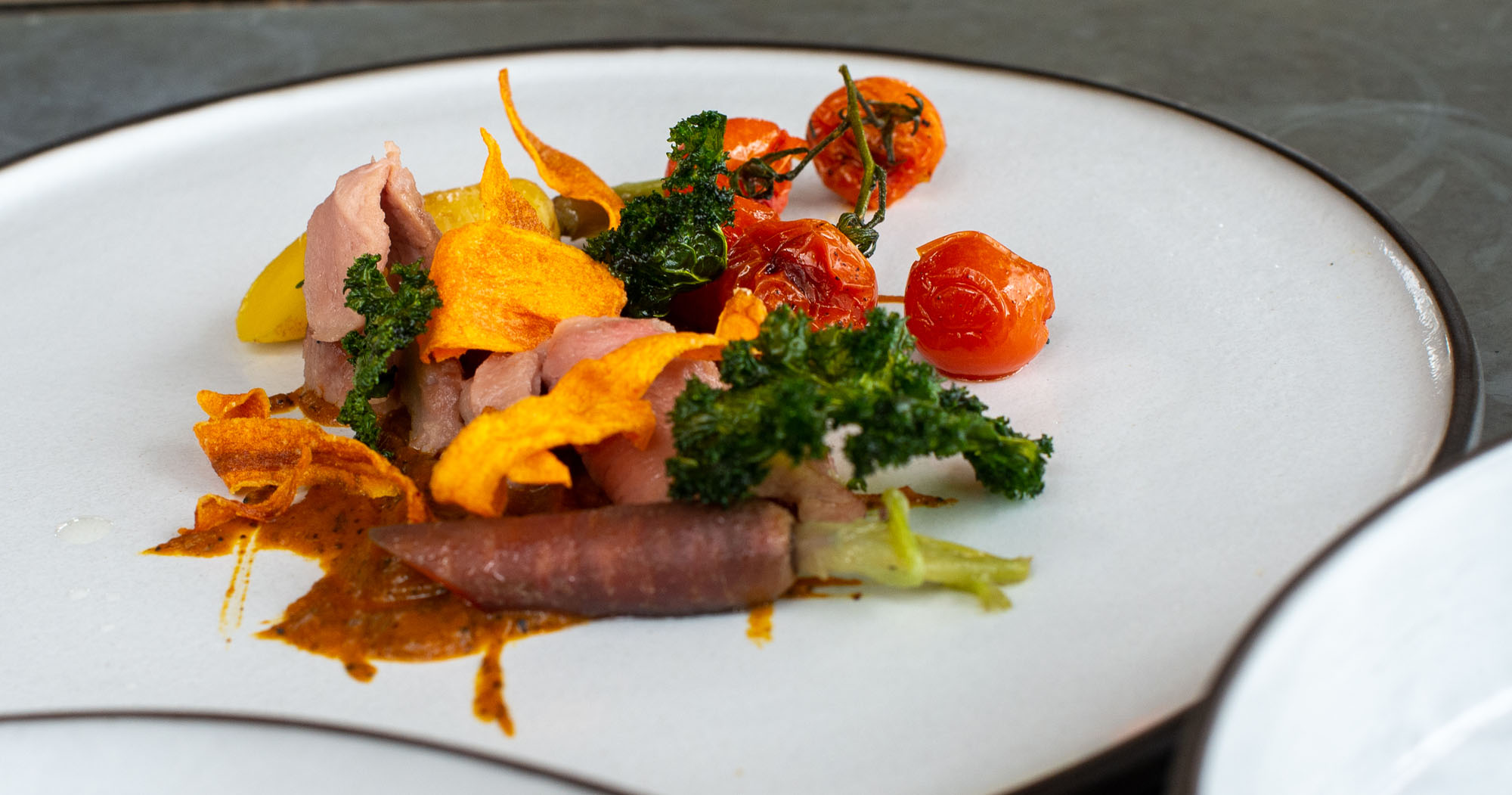
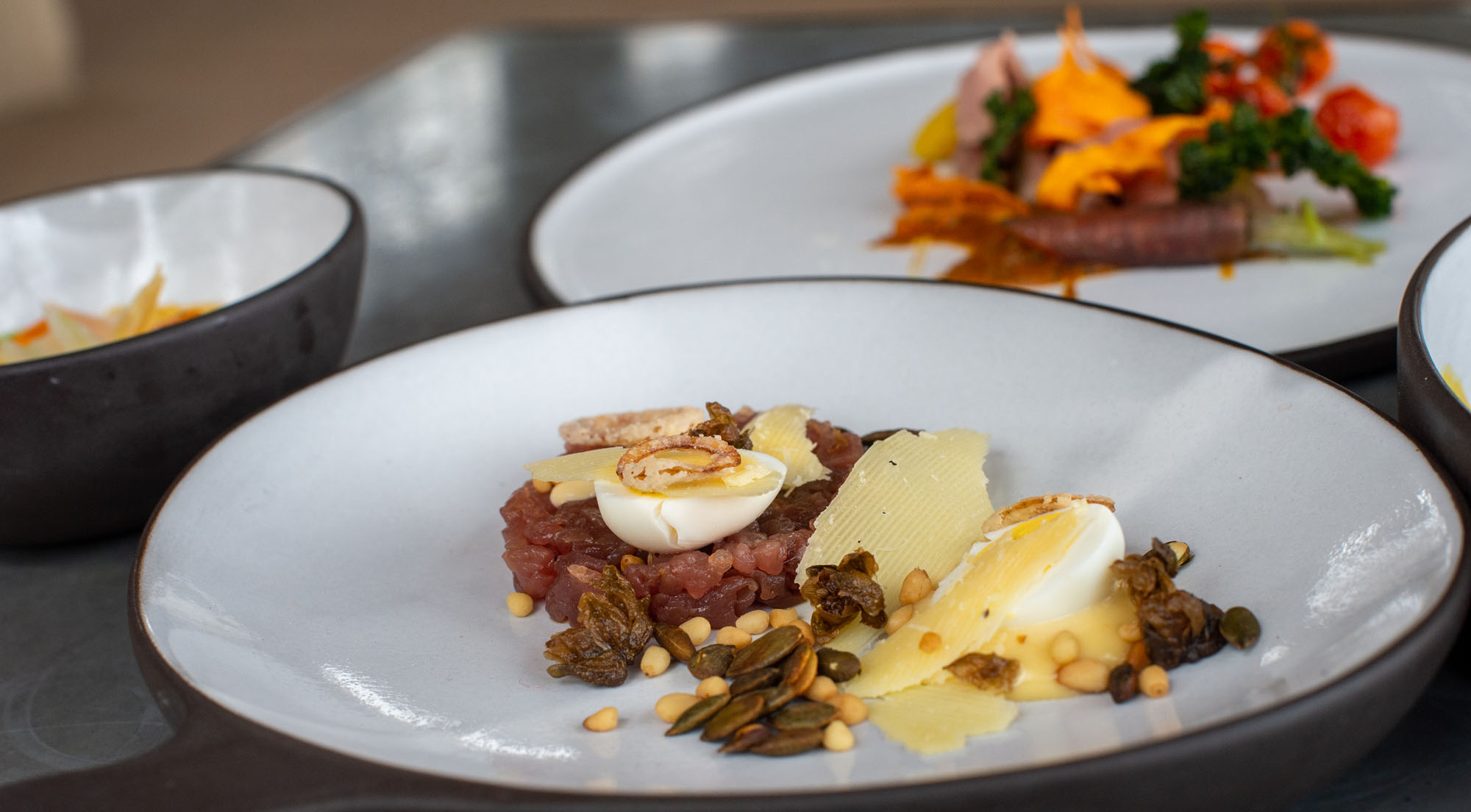
The food was bountiful too.  The main offering was a range of charcoal grilled meats including beef, springbok, eland, lamb and beef ribs, pork ribs, and boerewors, the traditional South African ‘farmer’s sausage’, usually made with ground beef, sometimes a mix of beef and either pork or lamb.  The starters were fantastic including snook pâté and chicken liver pâté, sweet corn fritters, Moroccan quinoa salad, citrus beetroot salad, ostrich sausage with bread pockets, sourdough bread, hummus, and marinated olives.  If all that didn’t quite do it for you, you could also opt for fish fillets, grilled chicken, and oxtail stew. Side dishes included lentil bobotie, traditional ‘pap’ (a version of polenta), cabbage, shish kabobs with peanut sauce, sweet potatoes with a citrus reduction, broccoli and cauliflower, corn on the cob, and fruit skewers with ginger sauce.  For dessert the chefs prepared a couple of South African traditional favorites, namely malva pudding and milk tart, and a peppermint crisp mousse.  In recounting this menu, it occurred to me that I need to go back to this property immediately.

Image

The morning game drive at Singita with our guide Margo started just after 6 am on a cloudy, rather blustery day. Margo succeeded admirably in making it a fun experience for the couple of safari veterans she had on board, as well as for a honeymooning couple from the USA, for whom it was game drive #1.

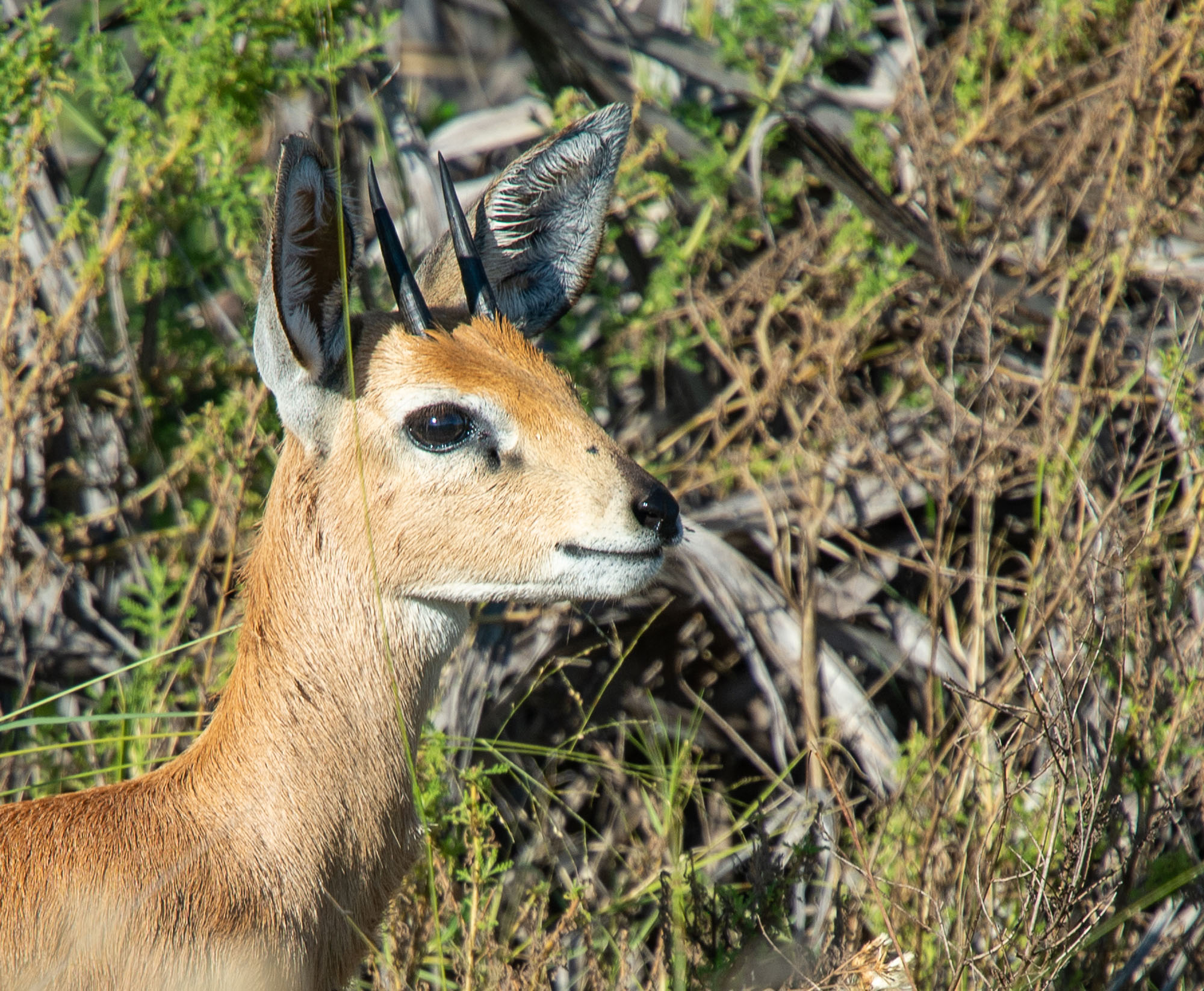
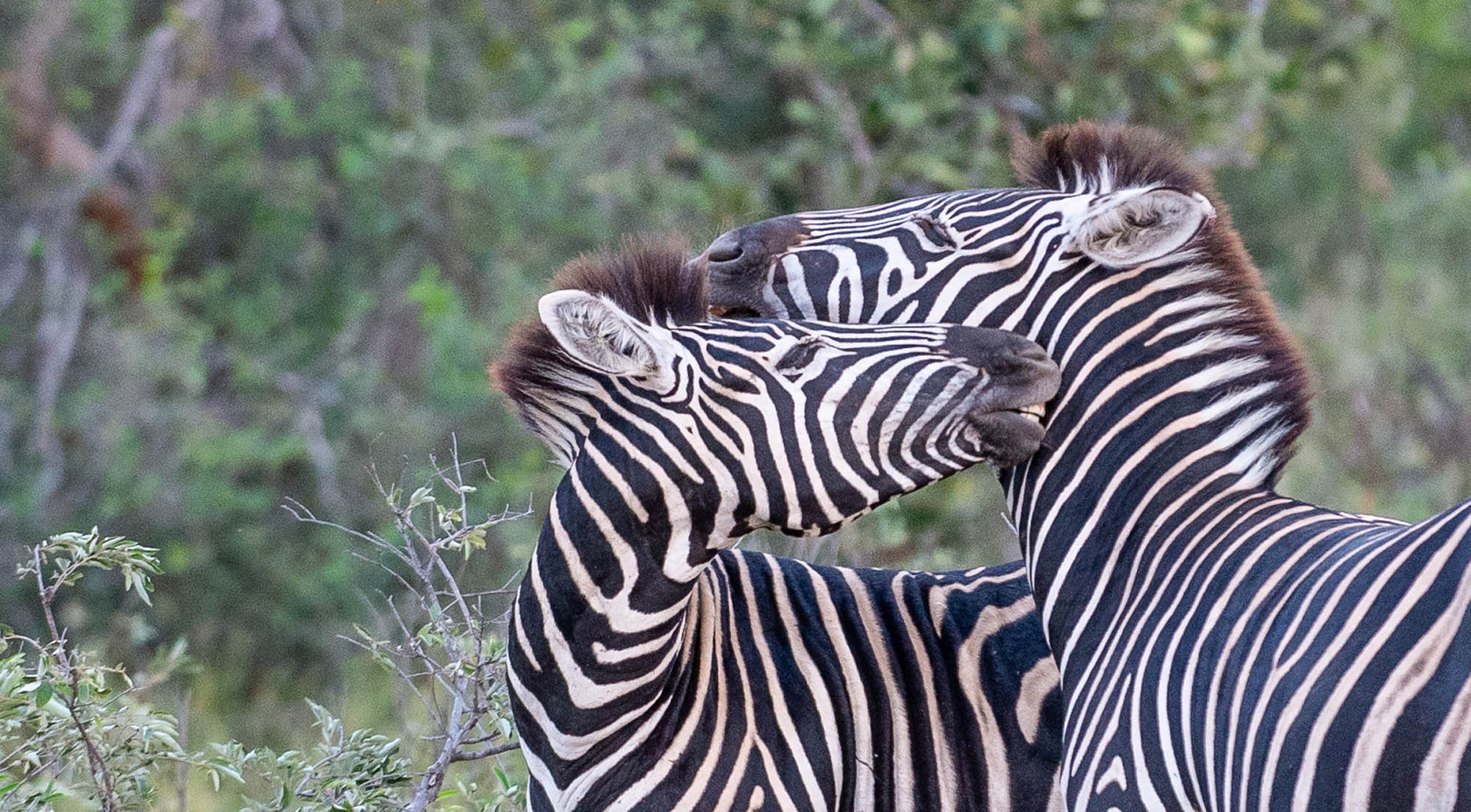
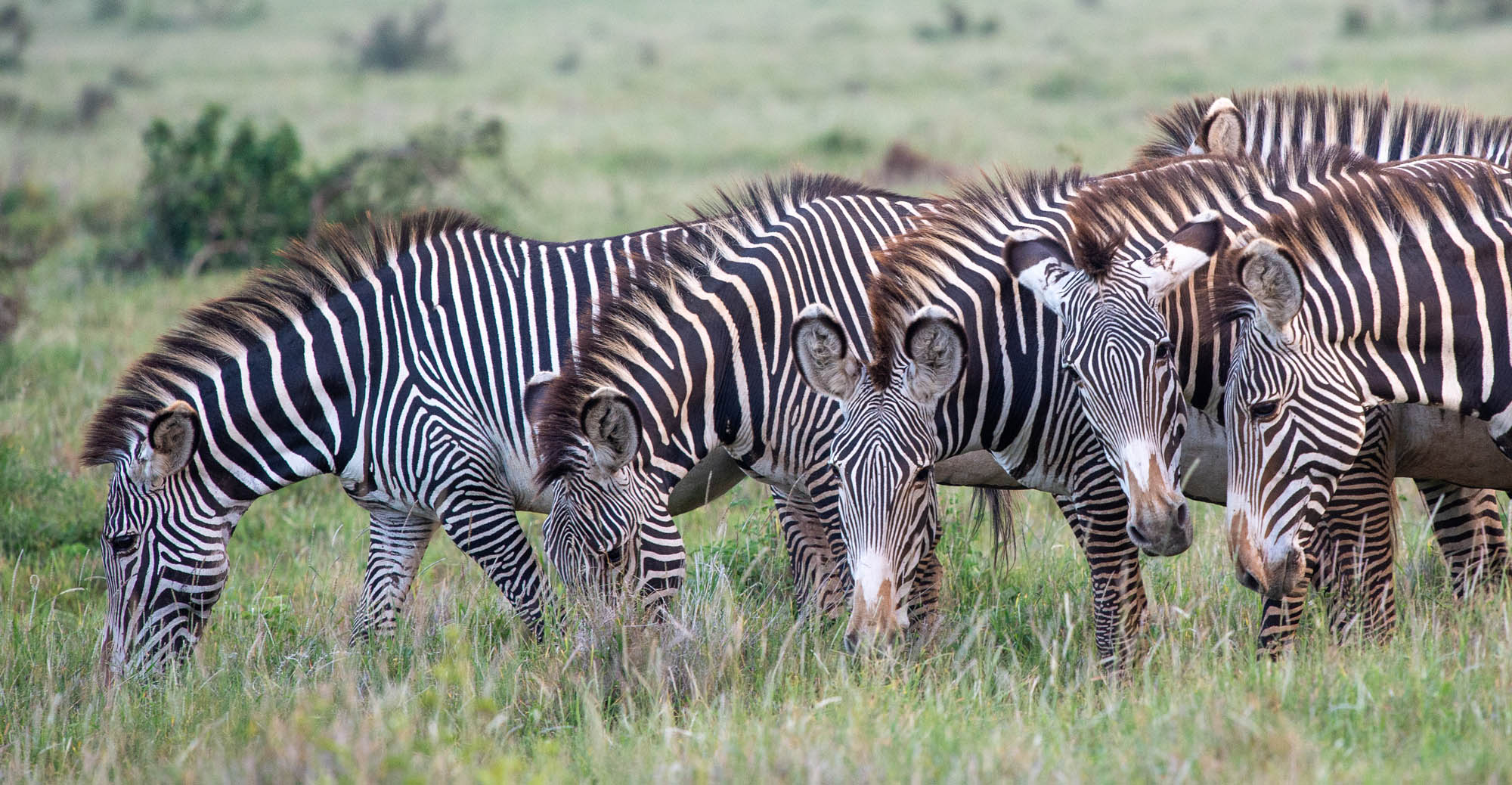
Although there were not large numbers of general plains game around, we did see a good variety of animals including plenty of giraffes, lots of Impala, some waterbuck, steenbok, several zebras here and there and a few wildebeest.

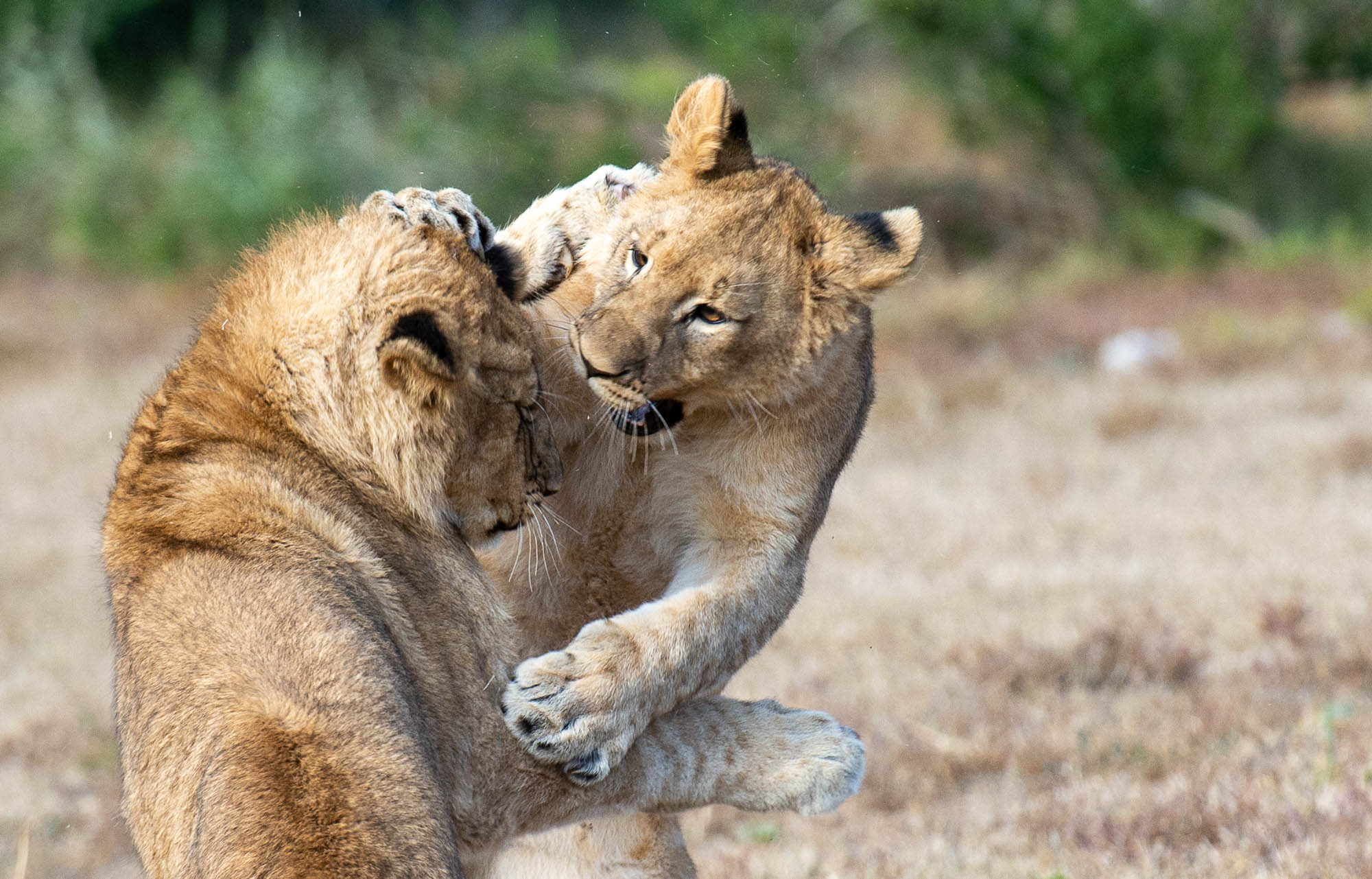
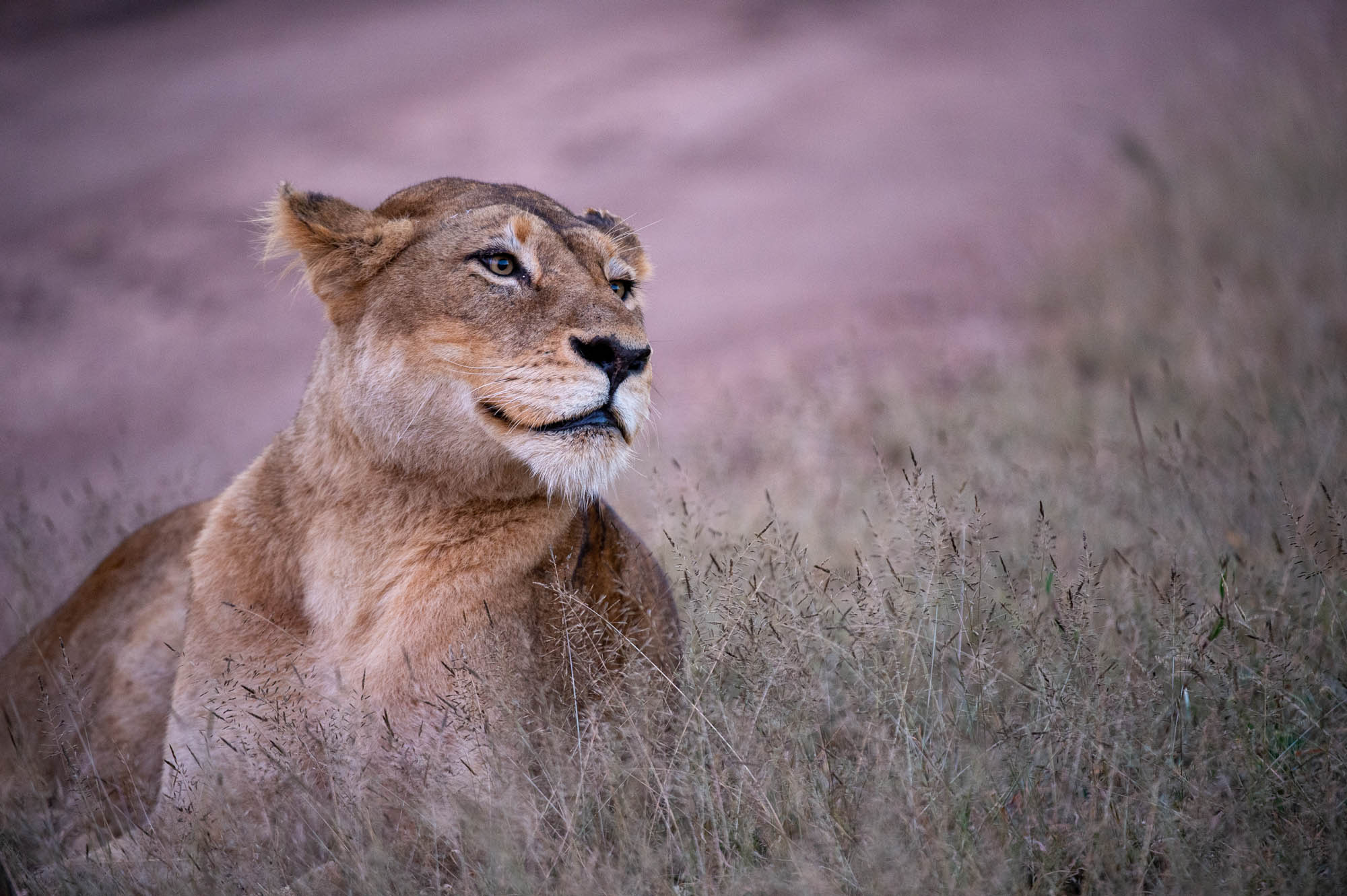
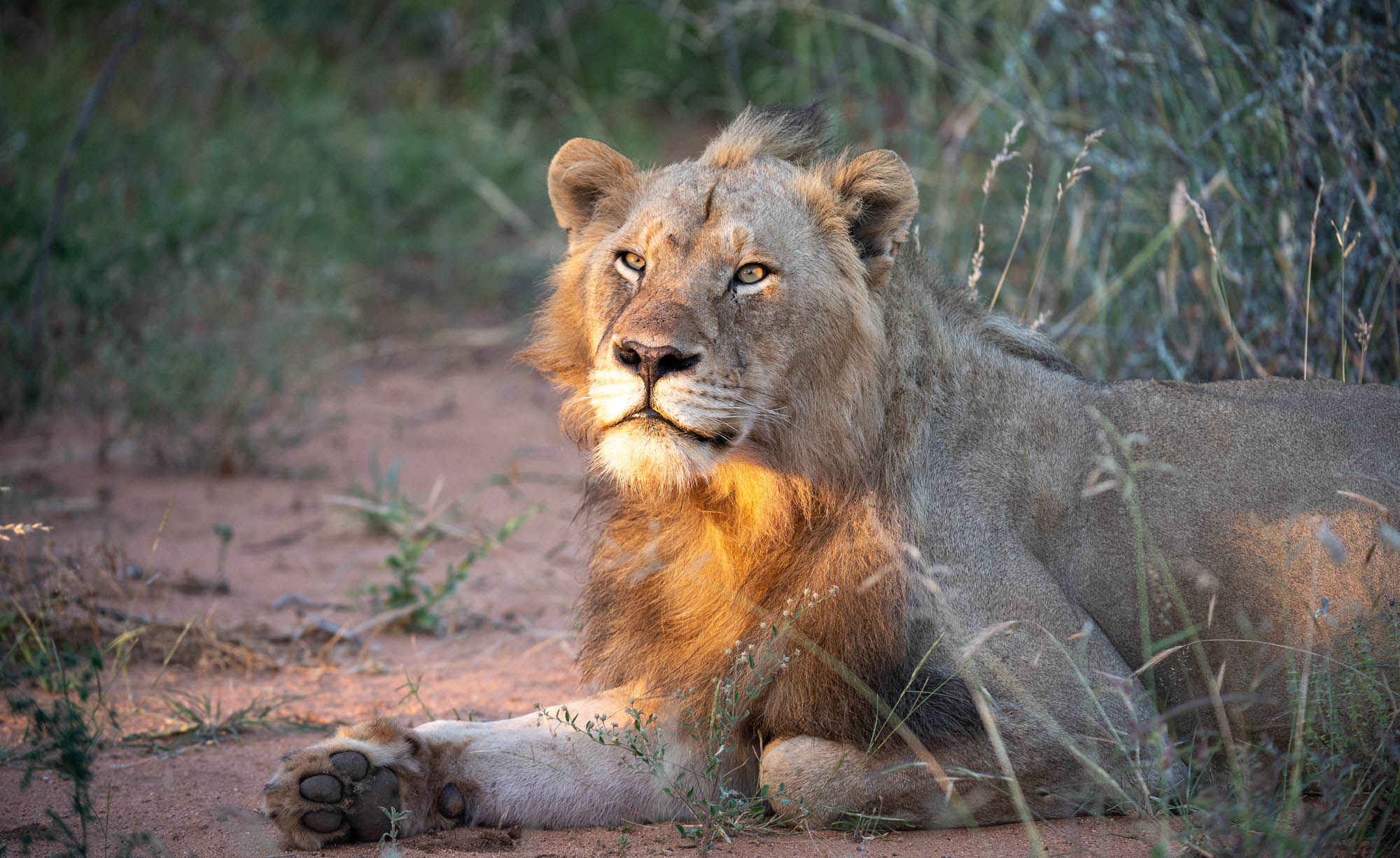
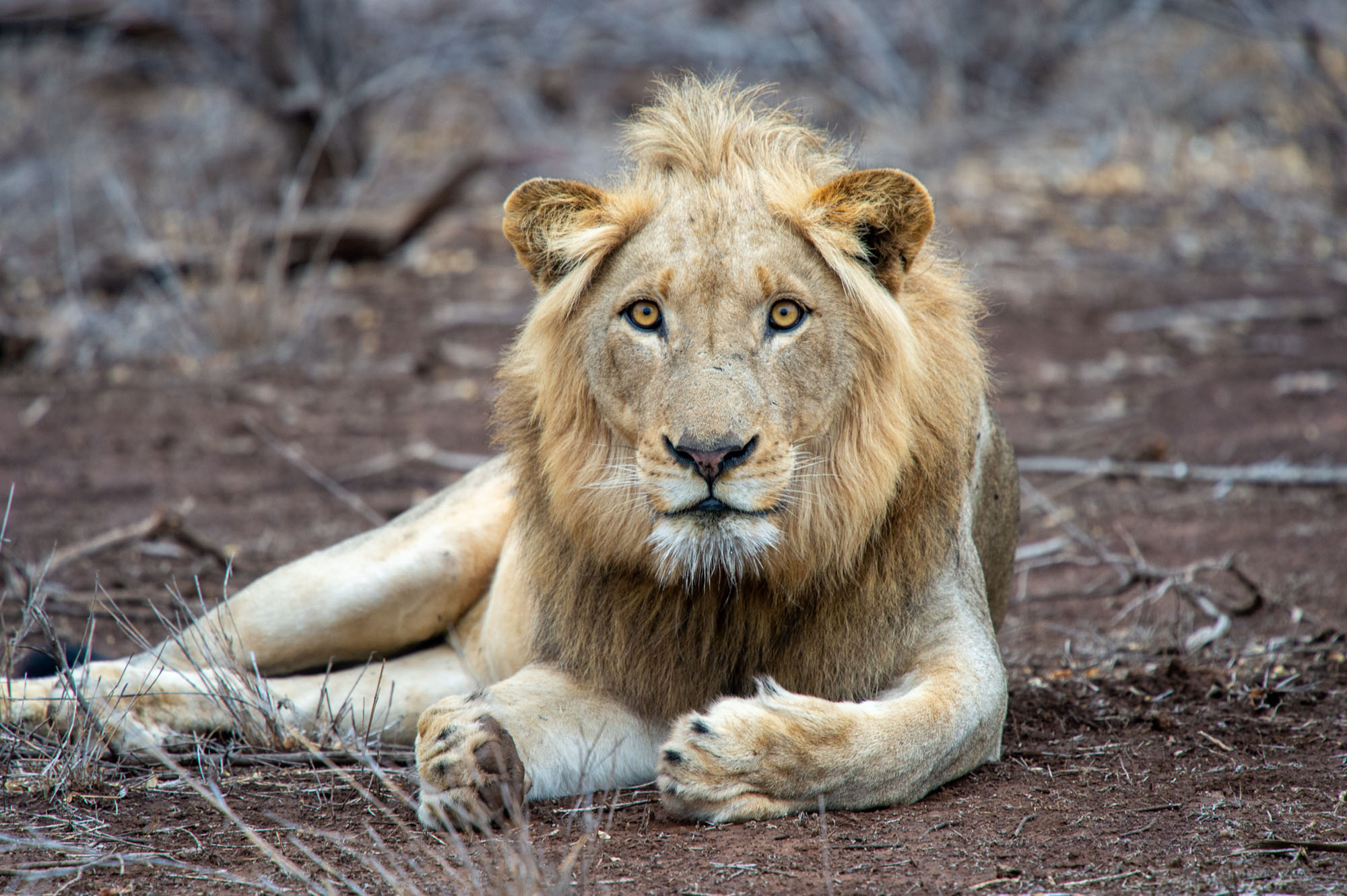
Of the bigger game species, sightings of note included two different male lions.  One young intruder into the area just under four years old, the other a fully mature black maned individual,  one of the dominant males in the local pride.

Image

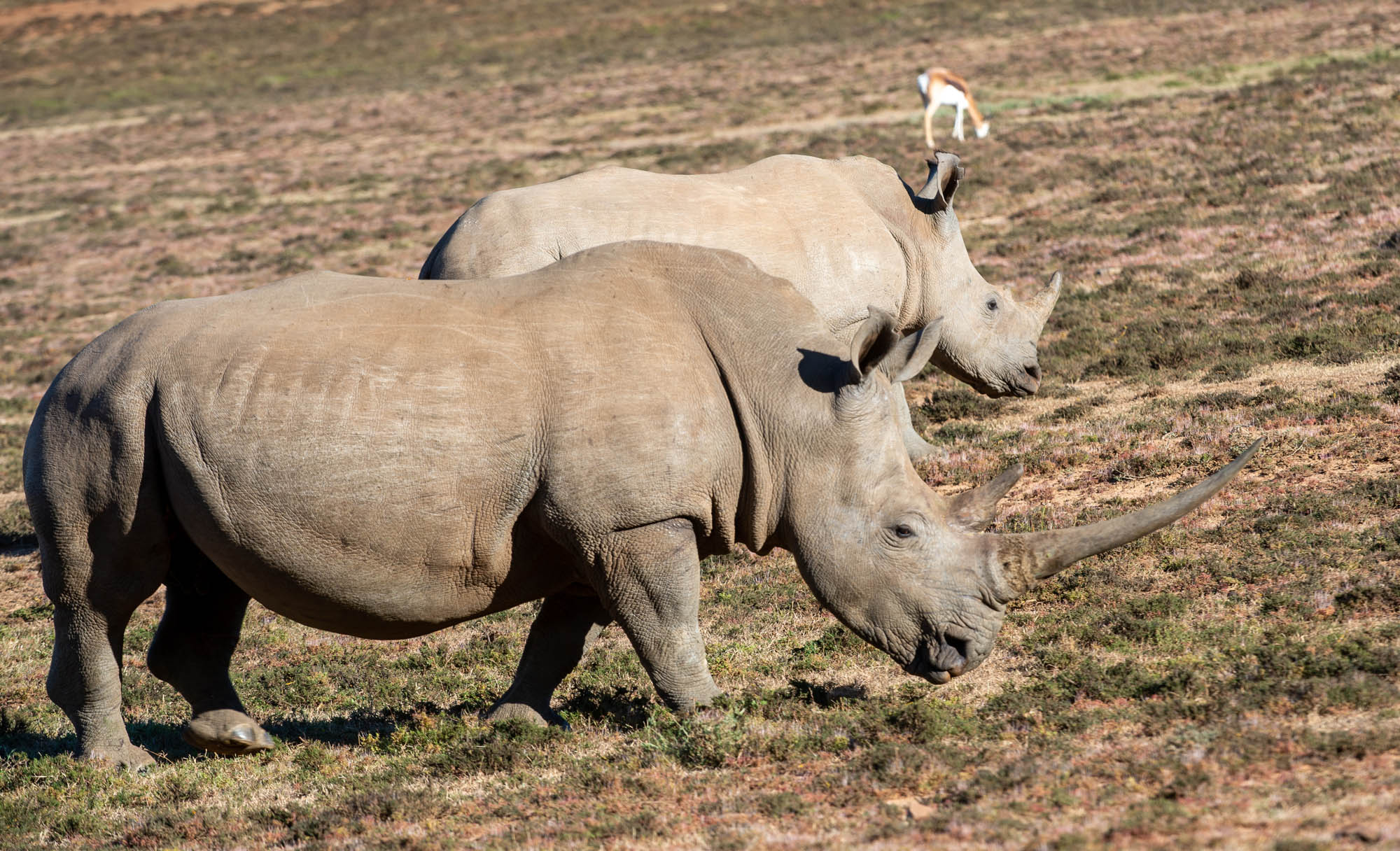
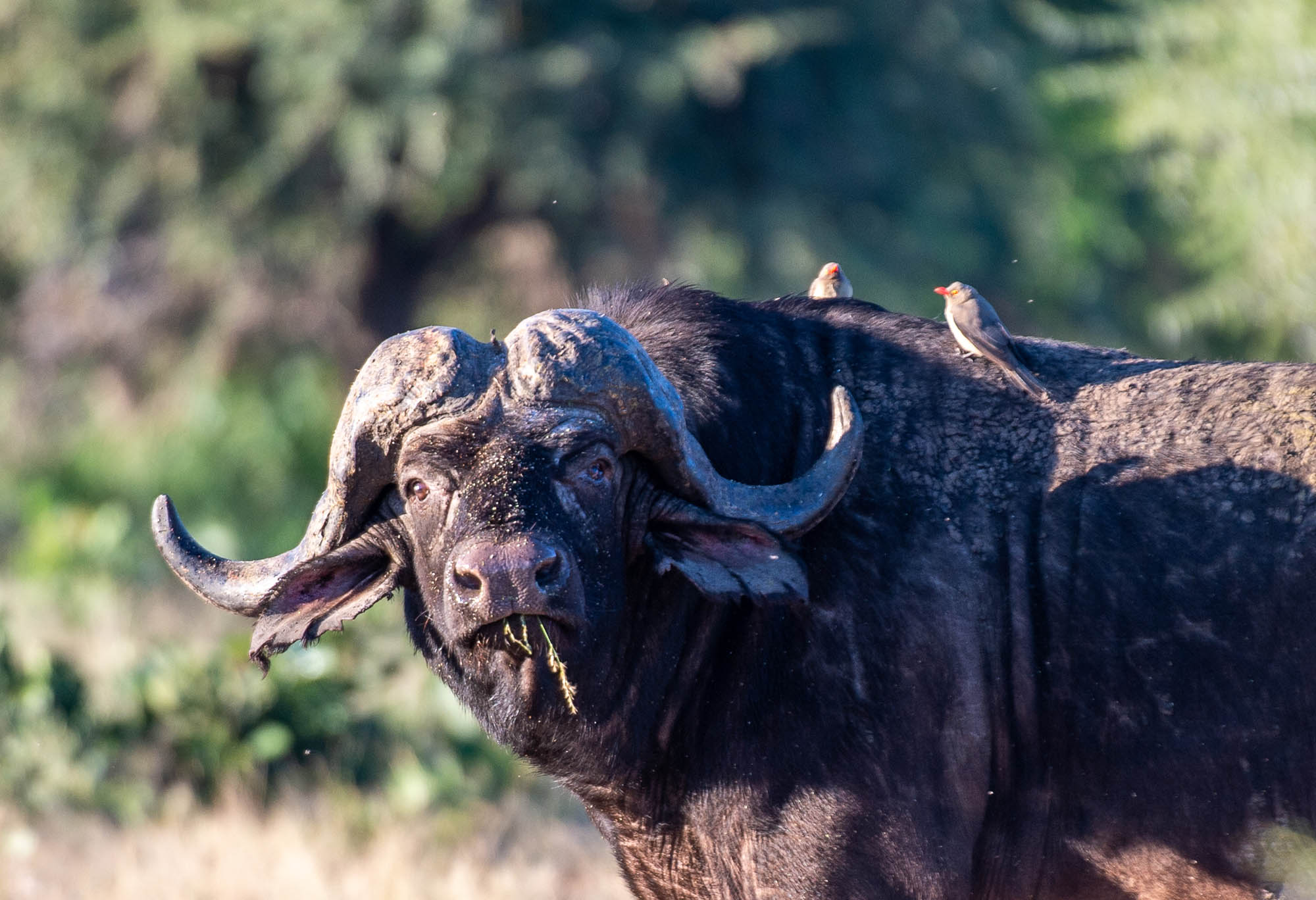
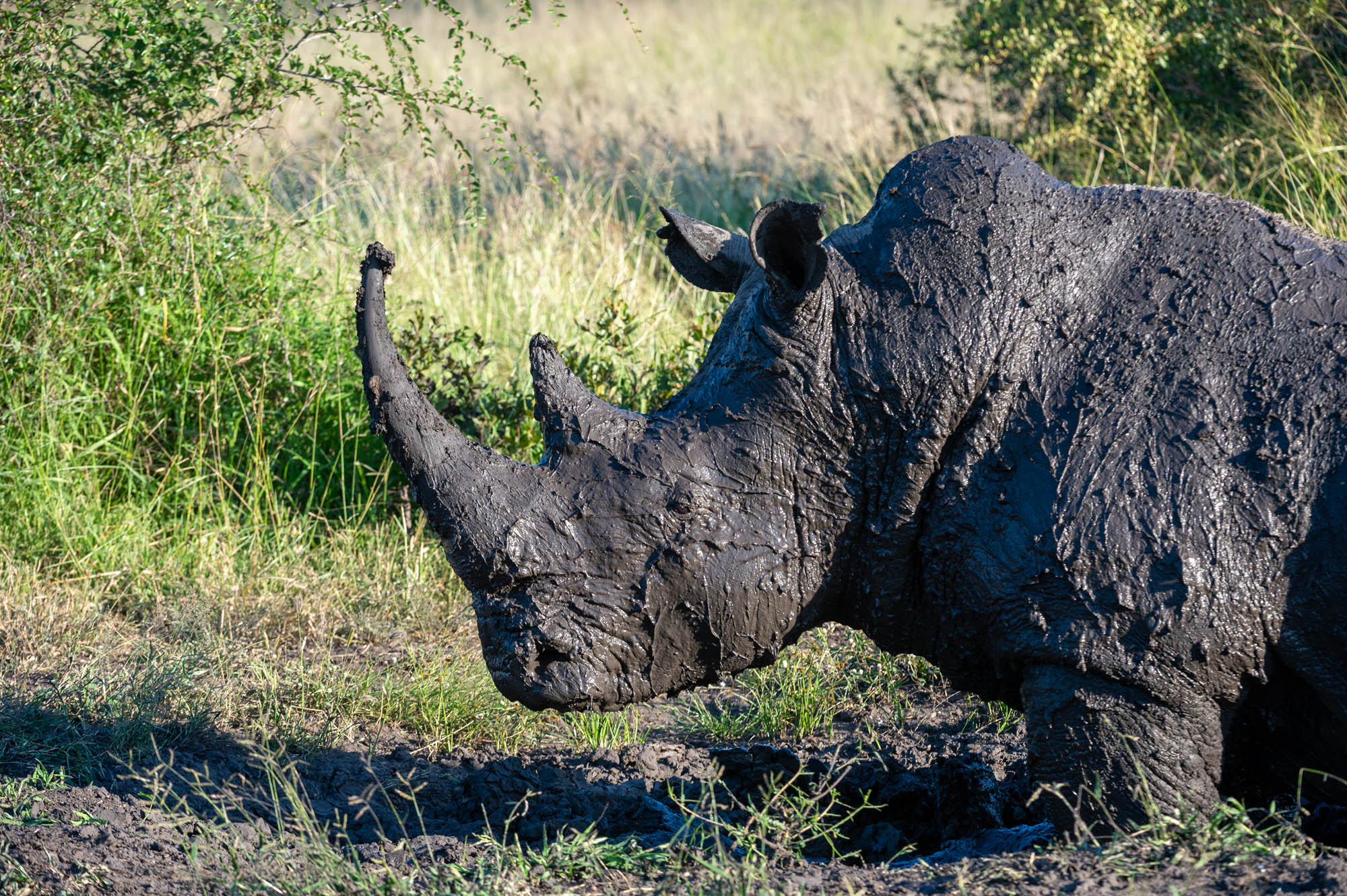
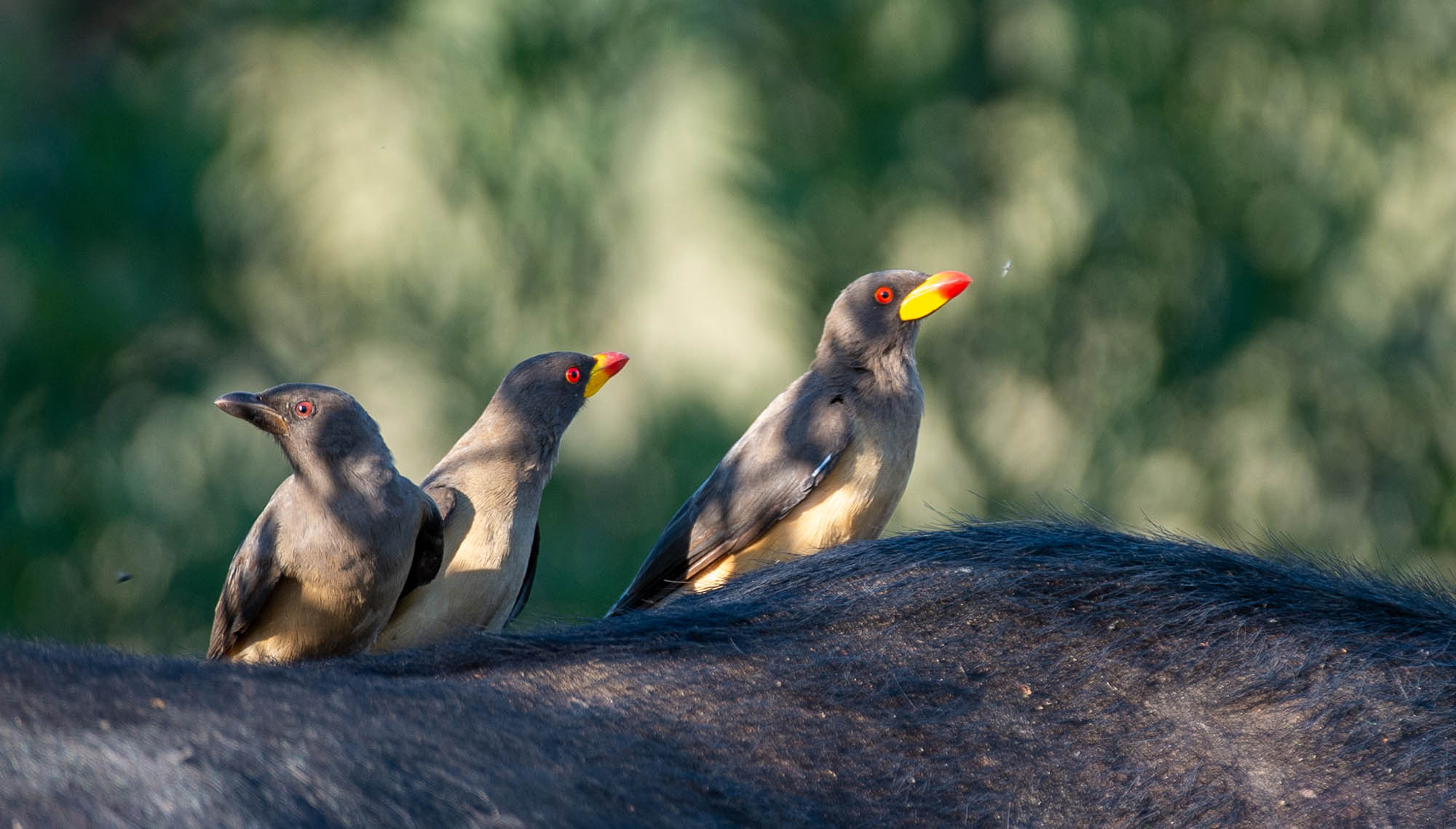
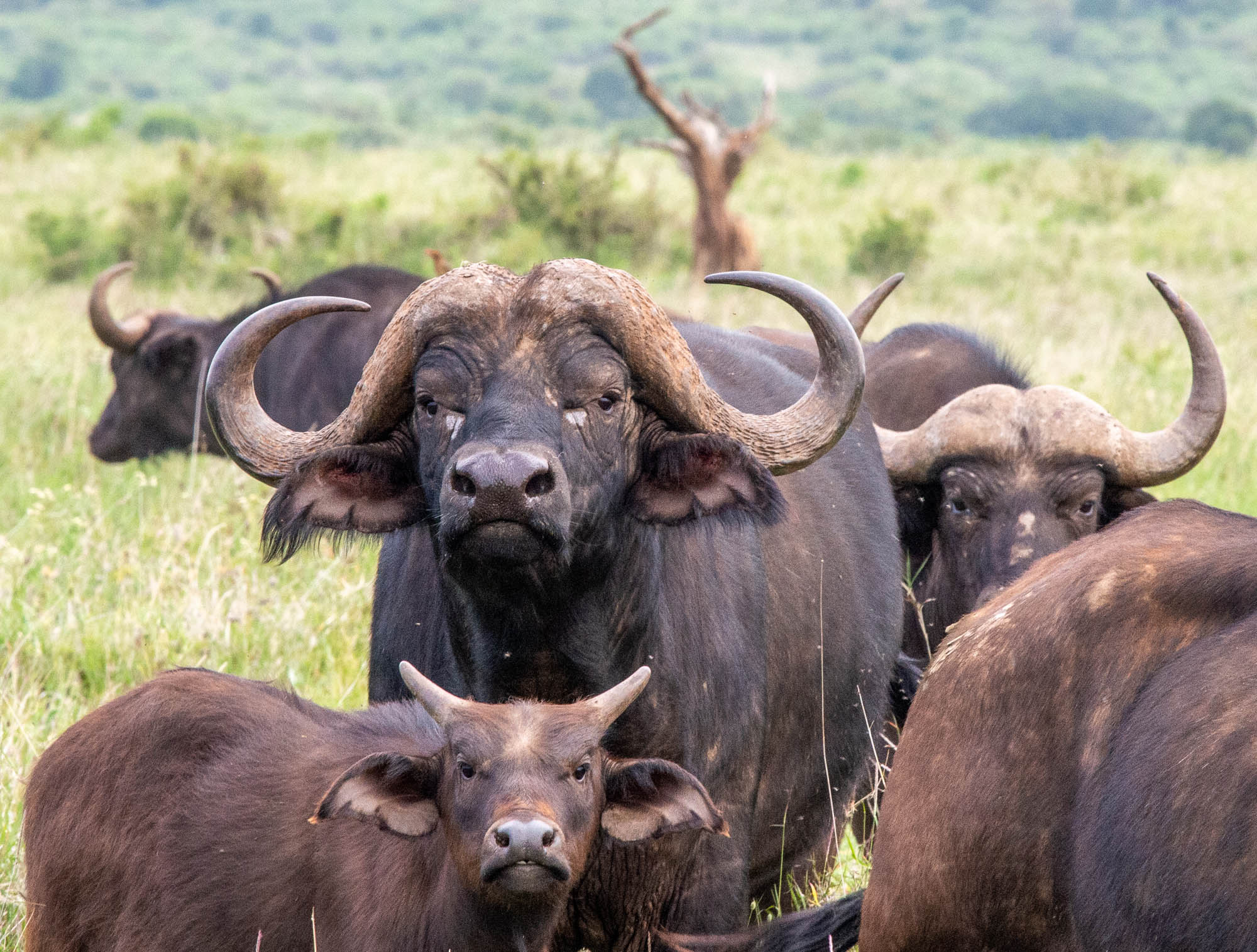
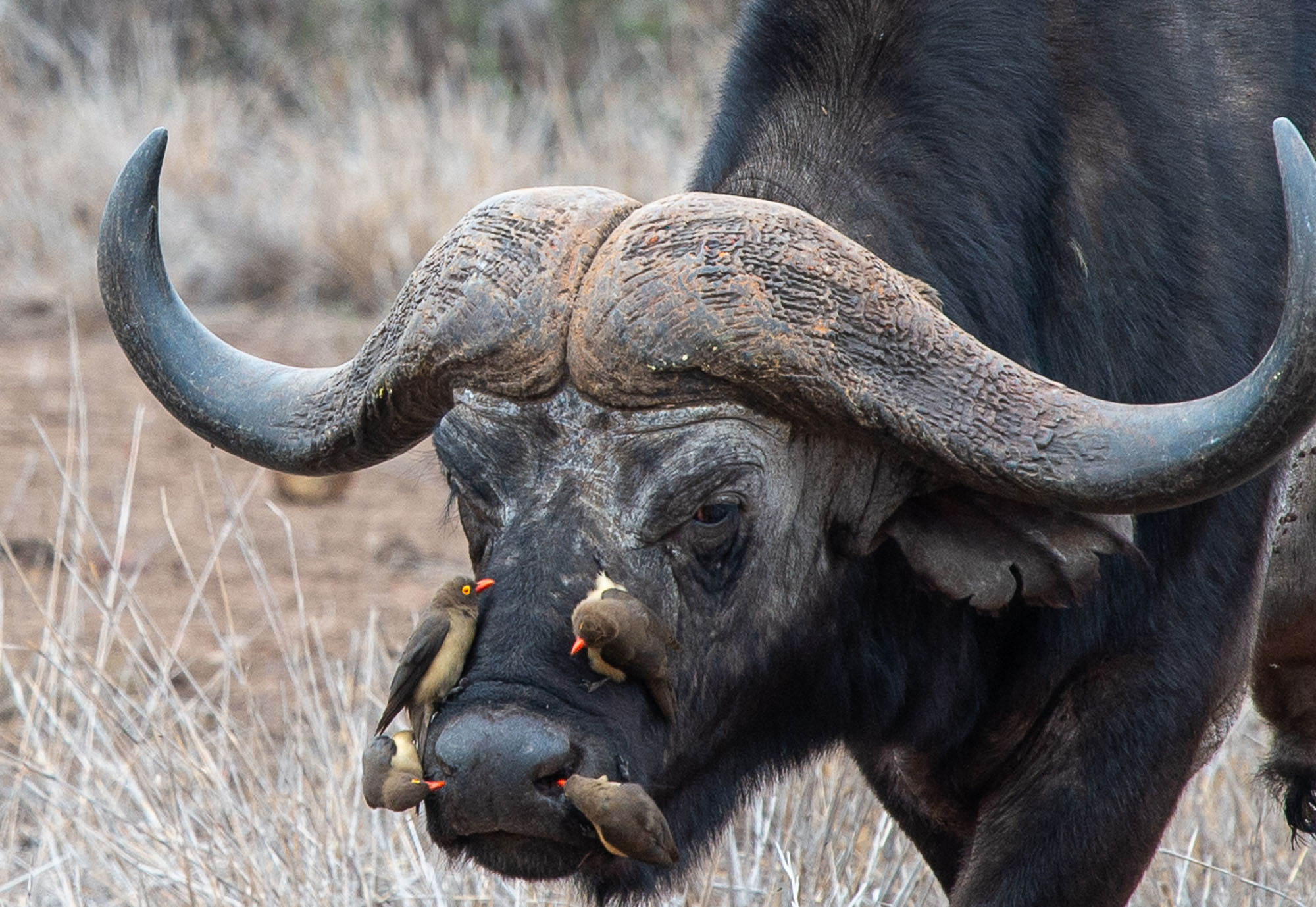
We also had good looks at a solitary old Buffalo whose face was often almost covered with several red billed oxpeckers and a large, handsome white rhino.  Rhinos are apparently not easily seen in this area.

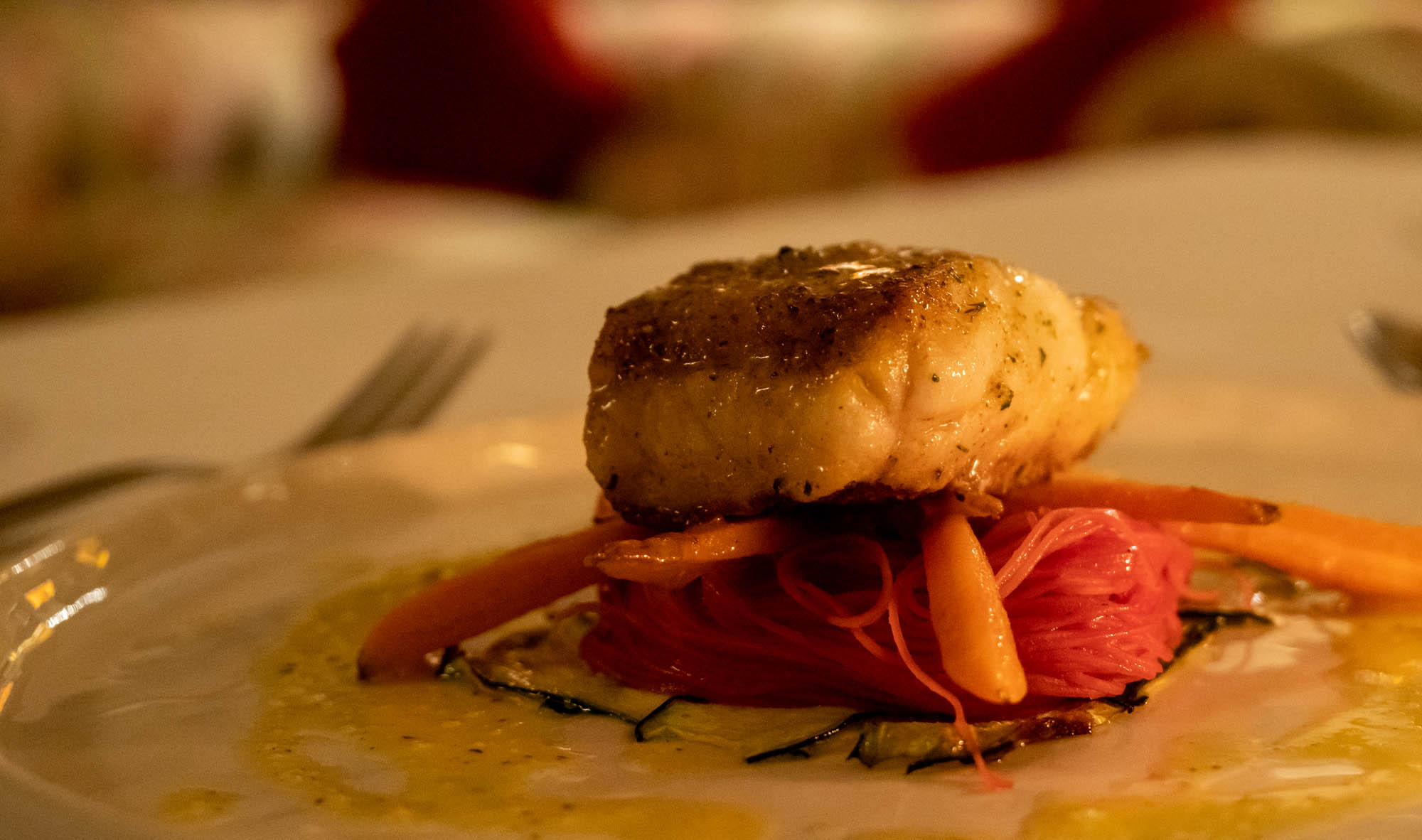
Lunch was started off with a flavorful focaccia bread with olive oil and fresh feta cheese.  The tapas menu included carrot and coconut soup, apple walnut grape salad, beetroot polenta with white wine reduction,  shimeji mushrooms, a butternut risotto, salmon tartare and  carpaccio of kudu.  All interesting, all expertly prepared and delicious.

The afternoon game drive at Singita  was as good as any I had experienced on the trip thus far. Early on we observed a female leopard snoozing close to a recent kill, an unfortunate impala strung up in a tree just a few meters from where the leopard was resting.  The leopard was the most relaxed of any of the Lebombo leopards and she paid not a whit of attention to our vehicle or to the two others which came and went. From there we proceeded to a different area where another leopard had killed an impala, close to the overhang of a cliff, alongside the Nuanetsi river.  There was no sign of the leopard and the carcass seemed to have been abandoned. Later that afternoon we watched a black backed jackal sniffing around the area.

Image

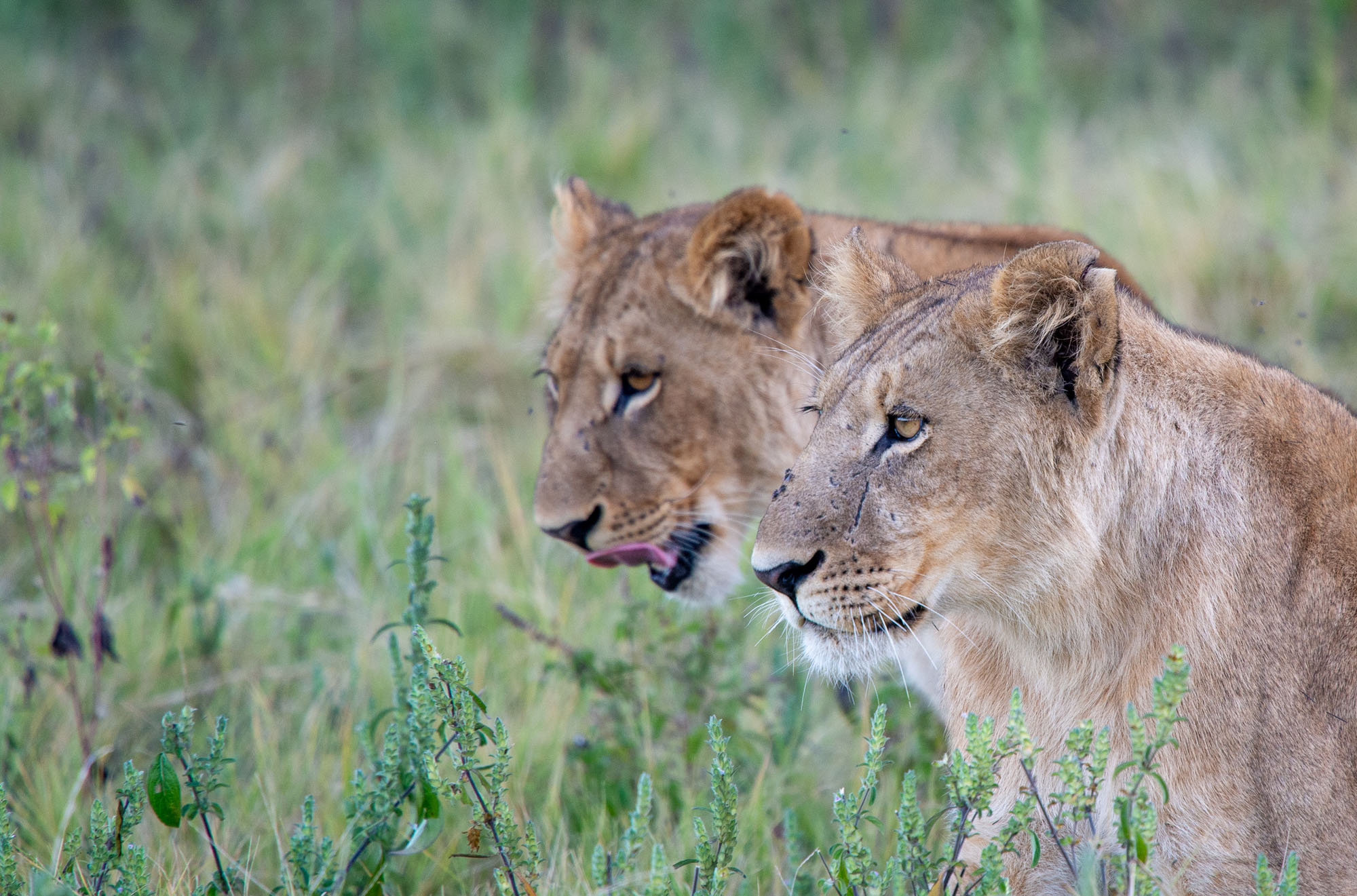
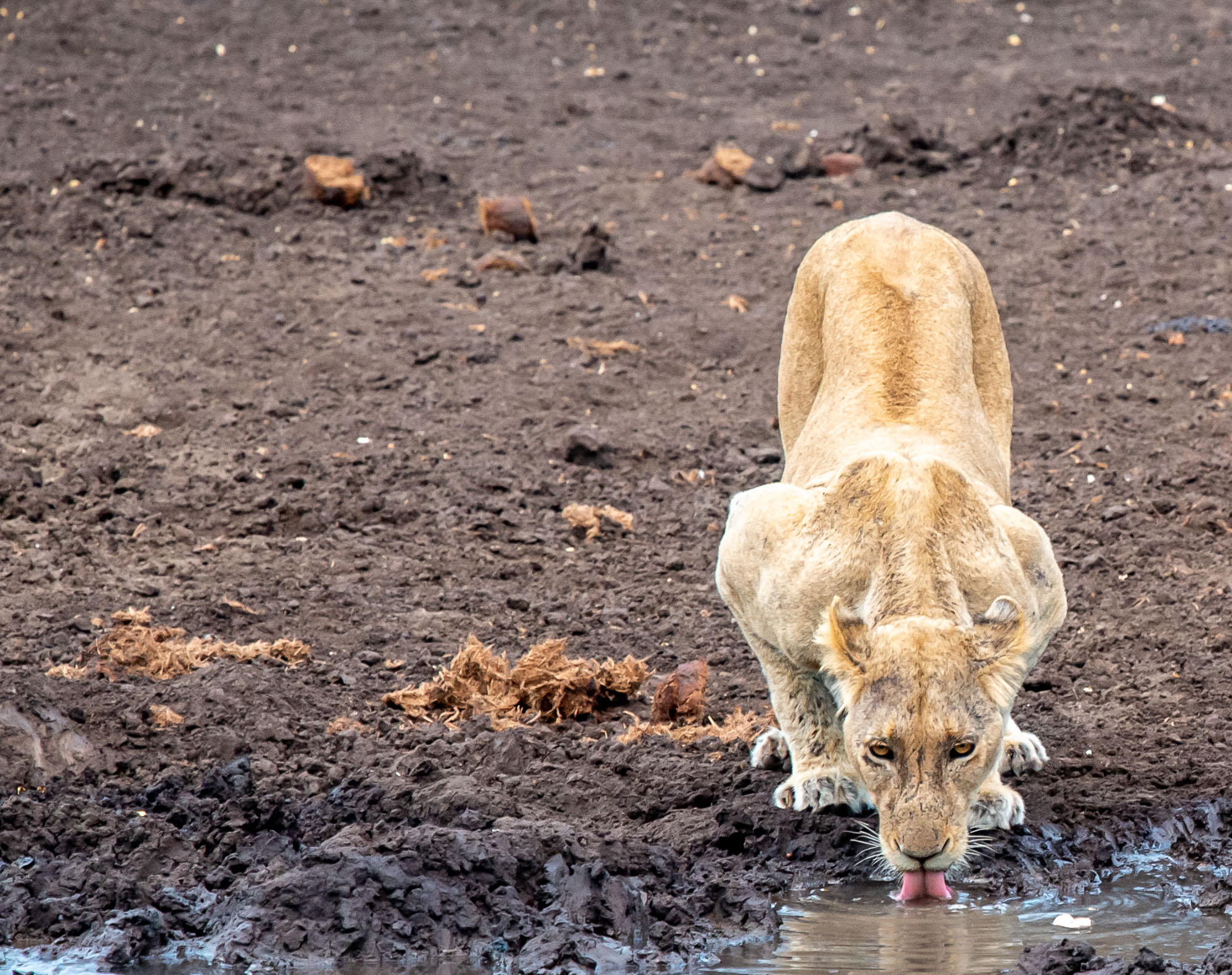
Shortly afterwards, having picked up our tracker Lawrence again – he had to do some remedial work on tracks our vehicle had left in the riverbed – we went on to our second lion sighting at Singita Lebombo. This time around there were two female lions belonging to the Mountain pride, walking away from a pan where they had been drinking. One of them crossed the road in front of us and it was painfully obvious that she had a bad case of mange. No doubt brought on by the stressful conditions of the drought. We were told that the cubs in this pride were currently malnourished due to an injured free-loading male lion who was hogging much of the food supply. One of the lionesses turned around and went back to the water where we had a chance to see her drink. And then almost as an added bonus we enjoyed our second leopard sighting of the day. This time it was a female lying on the road. She got up as we approached and slunk off towards the bushes, in the gathering darkness. Not alarmed or spooked, but somewhat more apprehensive than some of the more habituated individuals we had seen. There was not enough light to focus for photography but it definitely didn’t matter – the experience was firmly embedded in our personal memory banks. Dinner was superb again with a starter of seafood and ostrich fillet main course.

Image

KIRKMAN’S KAMP, SABI SAND RESERVE

In somewhat of a departure from the usual early morning game drive, I did a site inspection at the nearby Singita Sweni Lodge, and the adjacent African village shopping area.  Both impeccable.  Singita Sweni Lodge’s seven spacious, open-plan suites are tucked into the banks of the Sweni River. The rich and vibrant interiors add to the dramatic look and feel of the lodge. The suites  feature sweeping views through floor-to-ceiling glass, there are daybeds for sleeping under the stars and private decks that seem to float above the river. 

At 11:00 I departed on a 3 hour drive to Kirkman’s Kamp, in the Sabi Sand Reserve.  We first visited Kirkmans when it was still in the MalaMala stable, many years ago.  We liked it then and nothing material has changed.  The game-viewing is still as good as it gets, with all of the ‘Big Five’ mammals being seen practically every day, week in and week out.   From the first time we saw it, we were drawn to Kirkman’s classic safari ambience.  Built in the style of an original 1920’s homestead, the property is elevated on a high ridge with spectacular views over the landscape sloping down to the Sand River.

Image

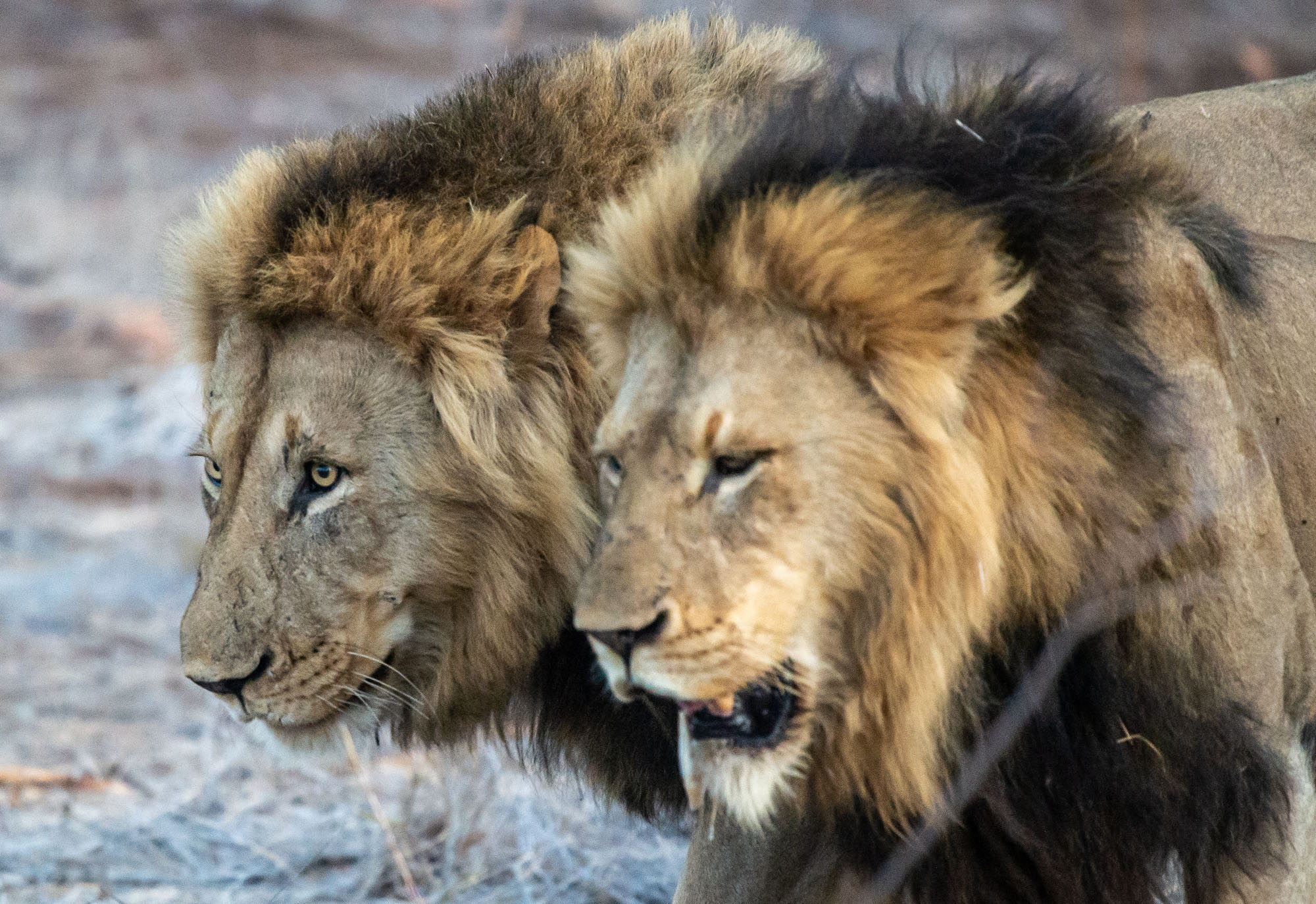
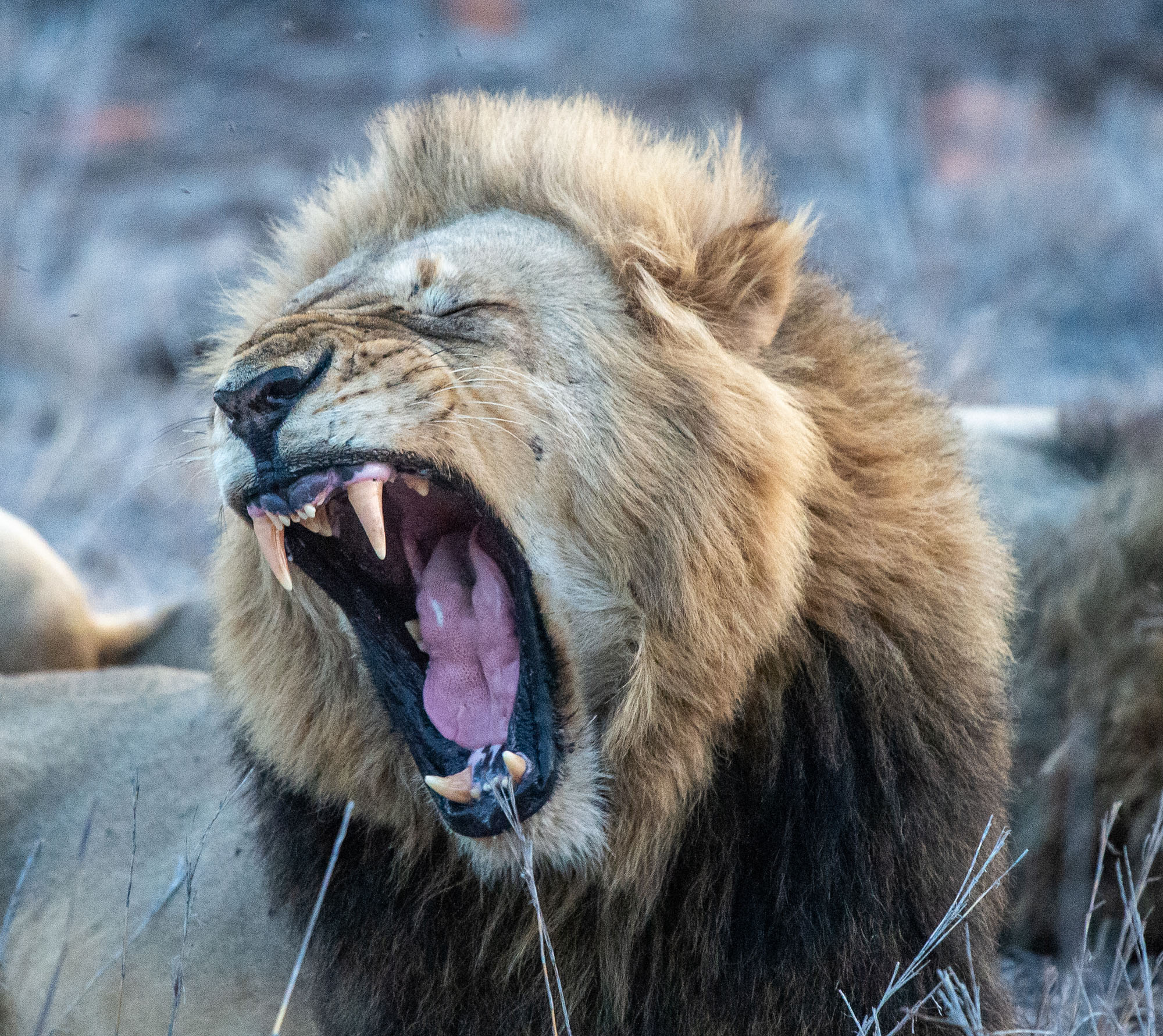
After a delicious al fresco lunch, it was time for the afternoon game drive departing at 3:20.  Having received a very proper briefing, we trundled out of camp, the main objective being to locate a male lion coalition of two.  We did that in short order, initially observing them in a rather sleepy, resting posture and then walking through the bush. Both lions sported beautiful black manes – and one of them had a prominent dislodged right lower incisor dangling from his lip. It didn’t seem to faze him at the time; the tooth was expected to fall off by itself soon enough. 

That evening, we enjoyed a boma dinner, a rather elaborate affair capped with a lively singing and dancing performance by staff members. The menu included corn soup or asparagus as a starter; mains of chicken Cordon Bleu or grilled fillet of kudu and the grand finale was either an orange panna cotta or sticky toffee pudding.

Image

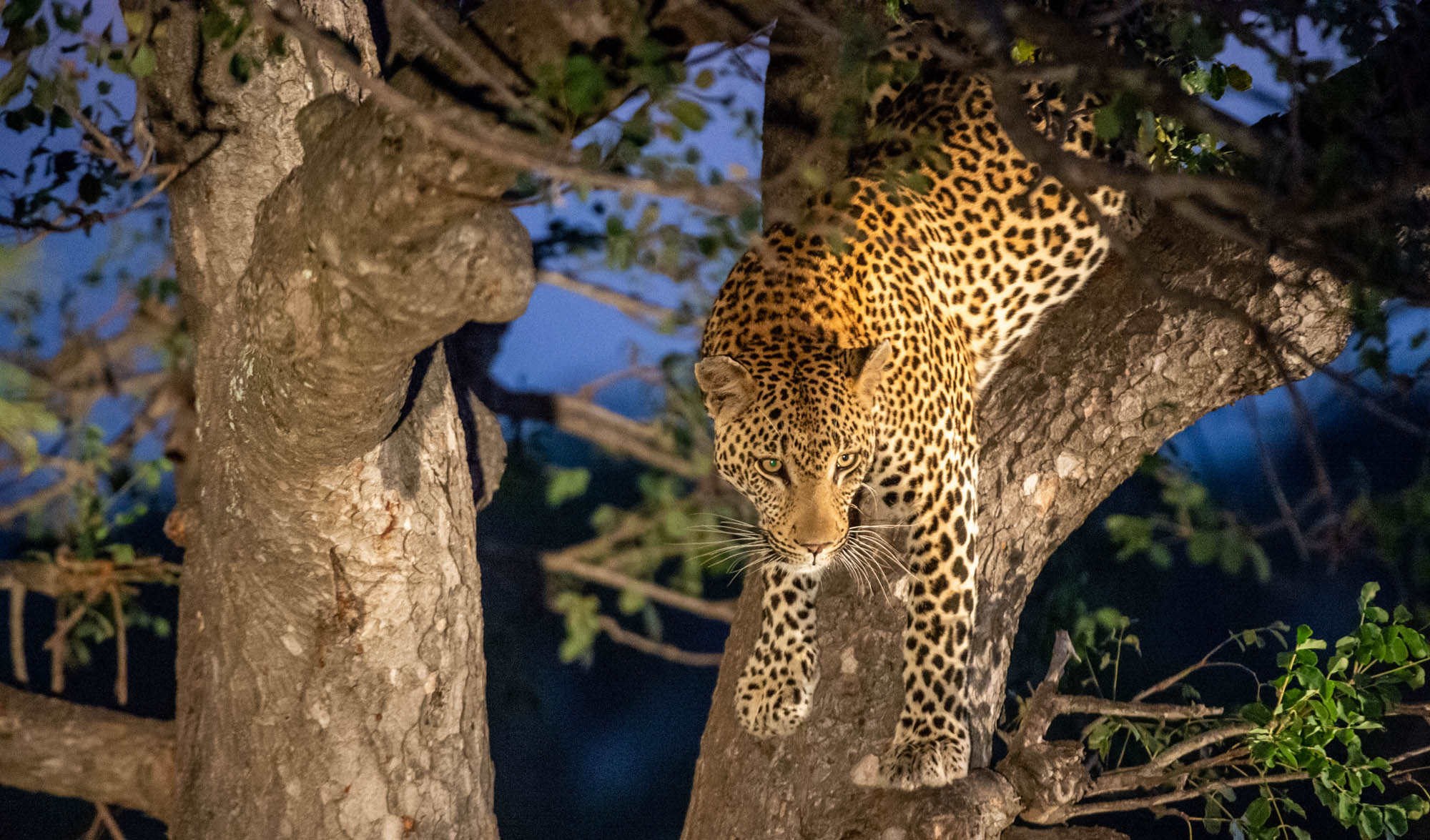
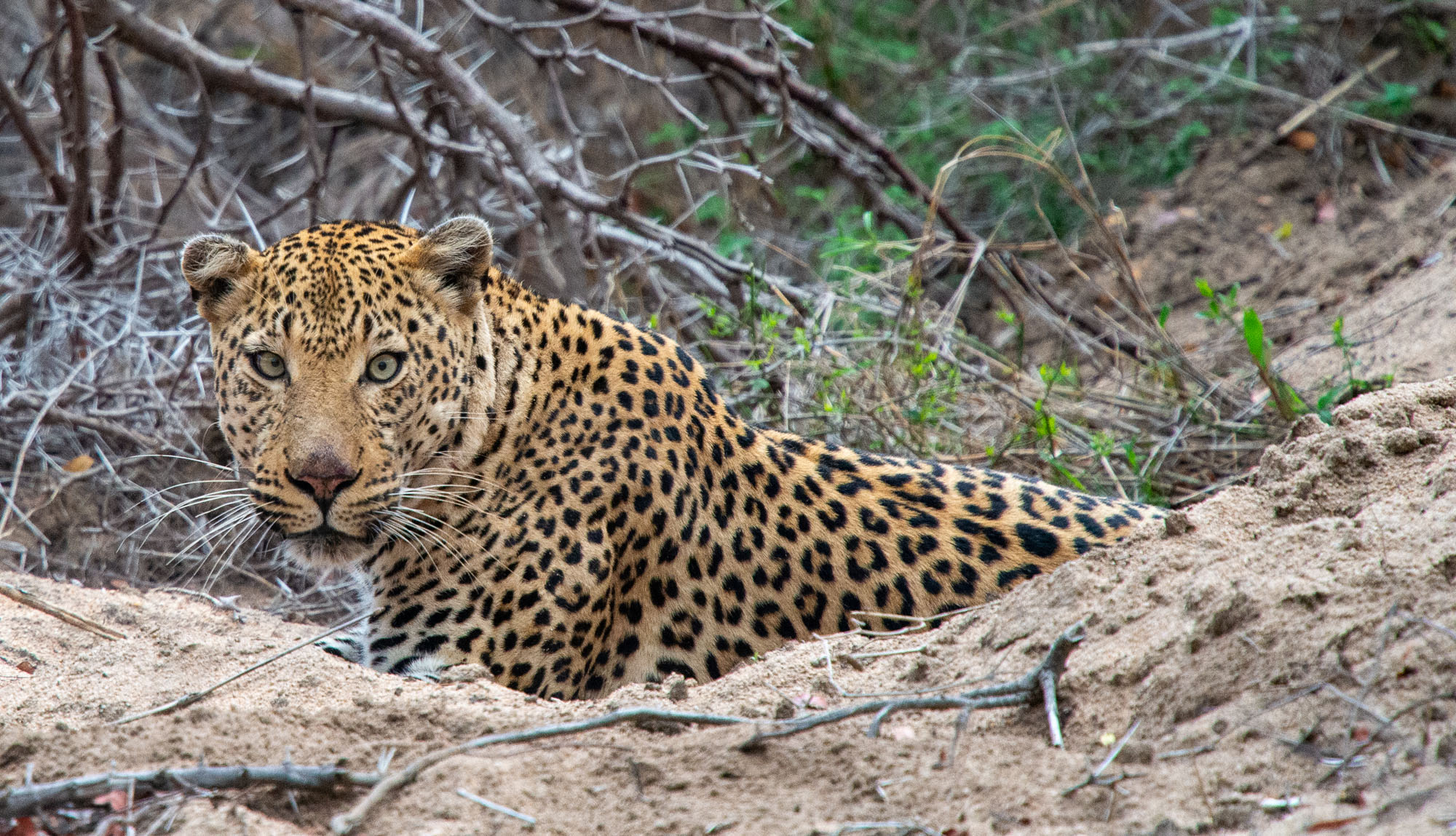
The following morning’s activity started with a call to my room, prompting me to remain indoors for the next 20 minutes due to the presence of a leopard in the path in front of room number 10 and 11.  I was in room number 13. Once the coast was clear, I made it to the reception area deck for a cup of coffee and a rusk, and then – naturally – we were off to find the ‘camp-exploring’ leopard. It didn’t take long. About 30 minutes later we were making our way through some pretty thick bush to where the leopard had been seen walking. It eventually got into a tree, where we were able to photograph it fairly well. Not ideal – due to a backlit situation –  which wildlife photographers know is a problem without a real solution. You make the most of it with exposure variation, increasing the exposure by a few increments, trying to correct the exposure on the darker animal, without blowing out the lighter background.  Somewhat unexpectedly the leopard snarled at our vehicle a couple of times –  it was clearly not entirely happy with the situation.

Eventually the animal climbed down the tree and walked to a nearby ridge from where it observed the surroundings from its elevated position.

Image

Unbeknownst to us the male lions which we had observed the previous night had made a kill only 300 meters down the ridge from where the leopard was sitting. In fact, we could see the lions from there. We made our way back to the road,  drove around the corner and there they were: both of the boys literally sprawled out in the middle of the bush track.  Just 20 meters or so away, was their thoroughly mauled buffalo victim.  Its massive head had been bent backwards and sideways in an unnatural, clearly violent manner when it met its demise sometime the previous night.

The lions were not actively feeding, just lying there and resting up before going back to the buffalo carcass again.  It would probably last them for a couple of days or more.

We then drove off to the bank of the Sand River where we stopped for a bush break and enjoyed a cup of coffee.

Image

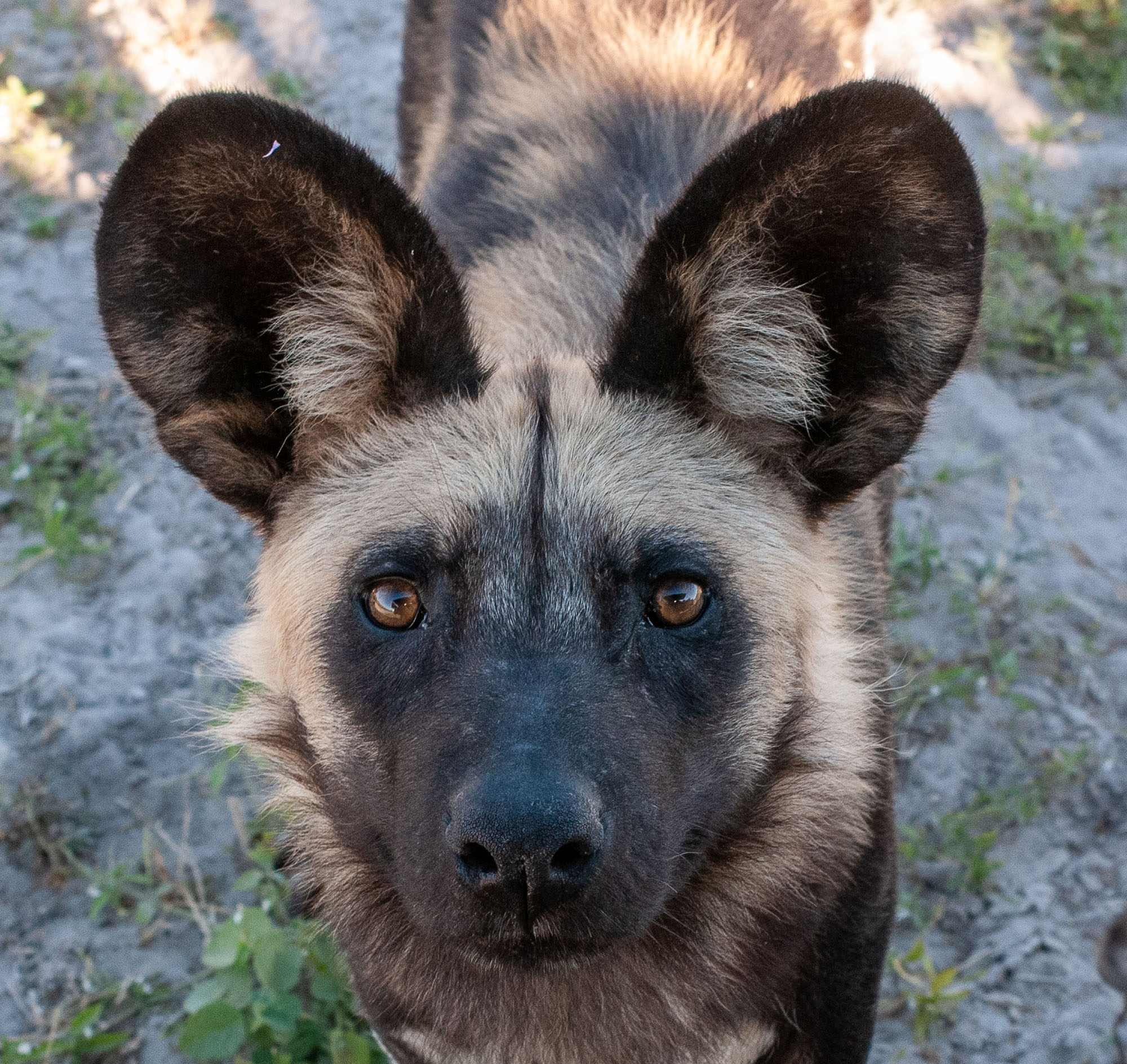
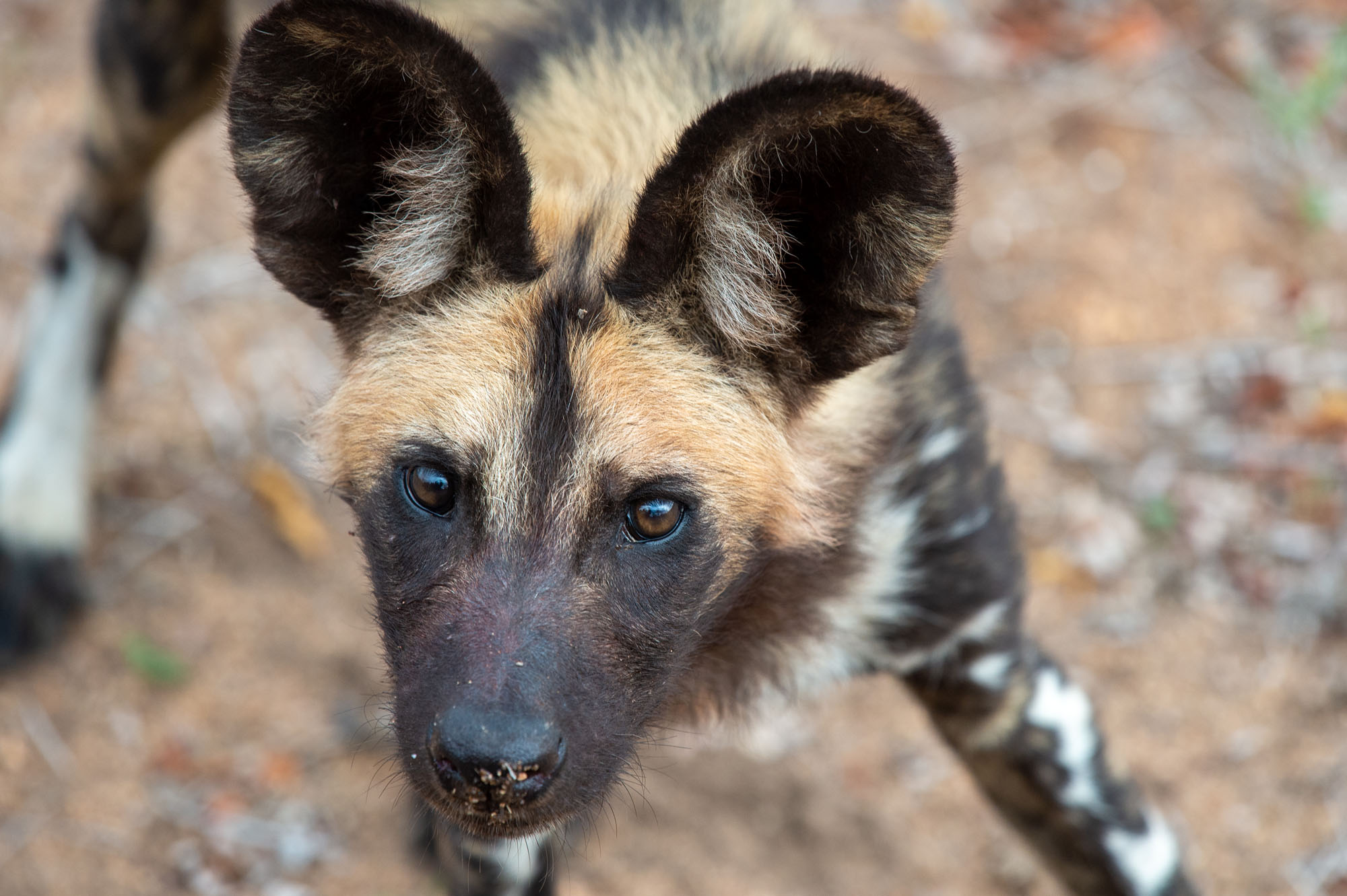
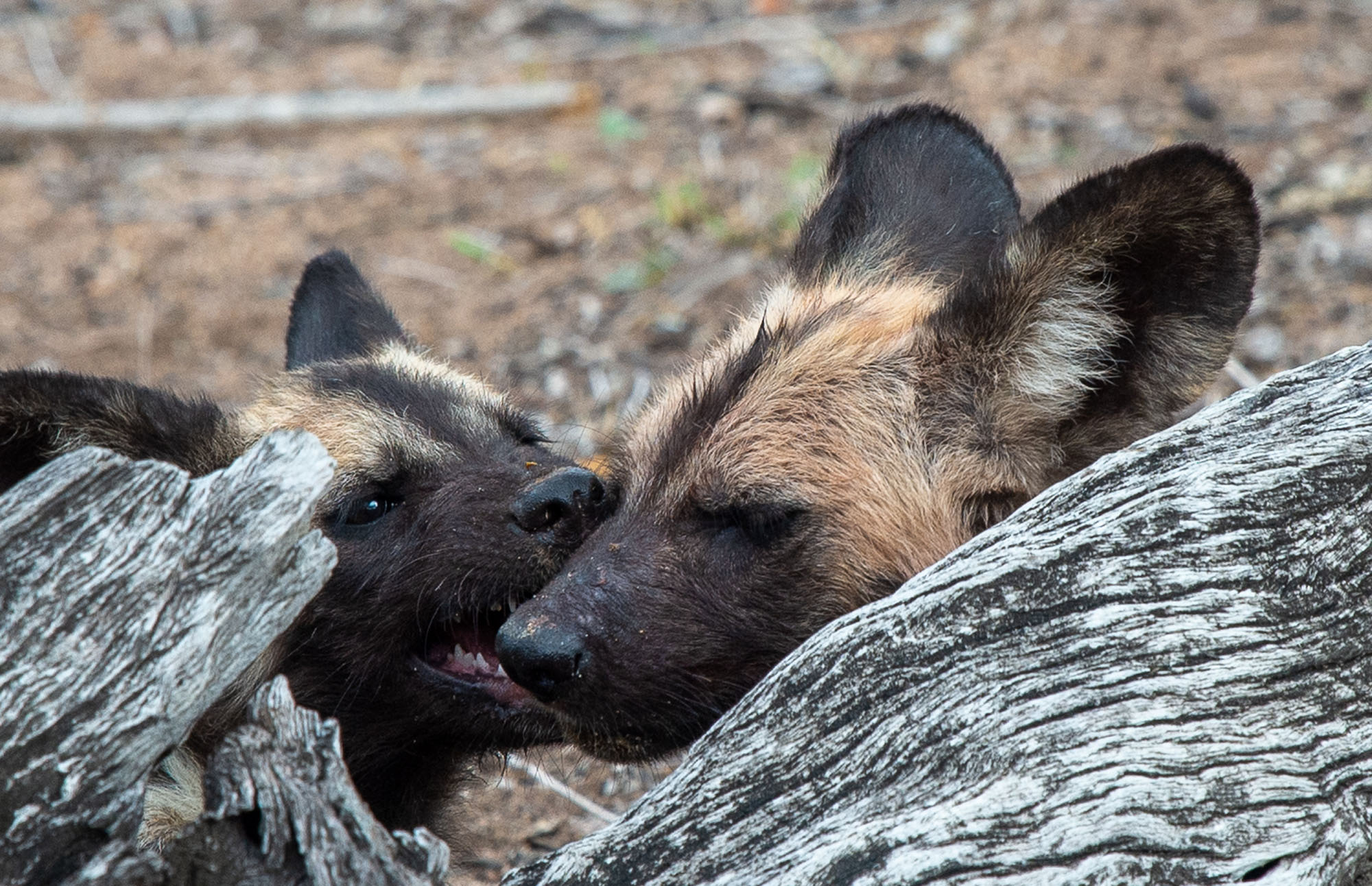
Just as we were finishing up, the radio came alive with news that a group of African painted dogs had been spotted in the Charleston sector of adjacent Malamala game reserve where Kirkman’s has traversing rights.  Off we went to go and find them. After 10 minutes or so of steady but not overly fast or aggressive driving, we spotted the first of what would prove to be about 20 dogs in total. 

We followed the painted dogs through the woodland, into the riverbed where they paused for a while, some of them drinking water from a depression, and then we picked them up again as they exited the river on the other side.

All the while the youngsters were sniffing at everything and clearly finding new and exciting things along the way. They stopped to inspect a buffalo skull and horns, ducked behind stumps, poked into bushes and generally followed the lead of the adult painted dogs who were running ahead of the pack, seemingly in hunting mode. By the time the pack started to disperse and move into thicker bush, it was time for us to return to camp for breakfast.

Image

HAMILTON’S CAMP KRUGER PARK

A little later that morning I was on my way to Hamilton’s tented camp, a six-roomed property inside the Kruger Park about a two hour drive from Skukuza  airport and about 2.5 hours from Kruger gate.

The camp can also be reached by road from Hoedspruit airport; this would entail a road transfer closer to 3 to 3 1/2 hours.

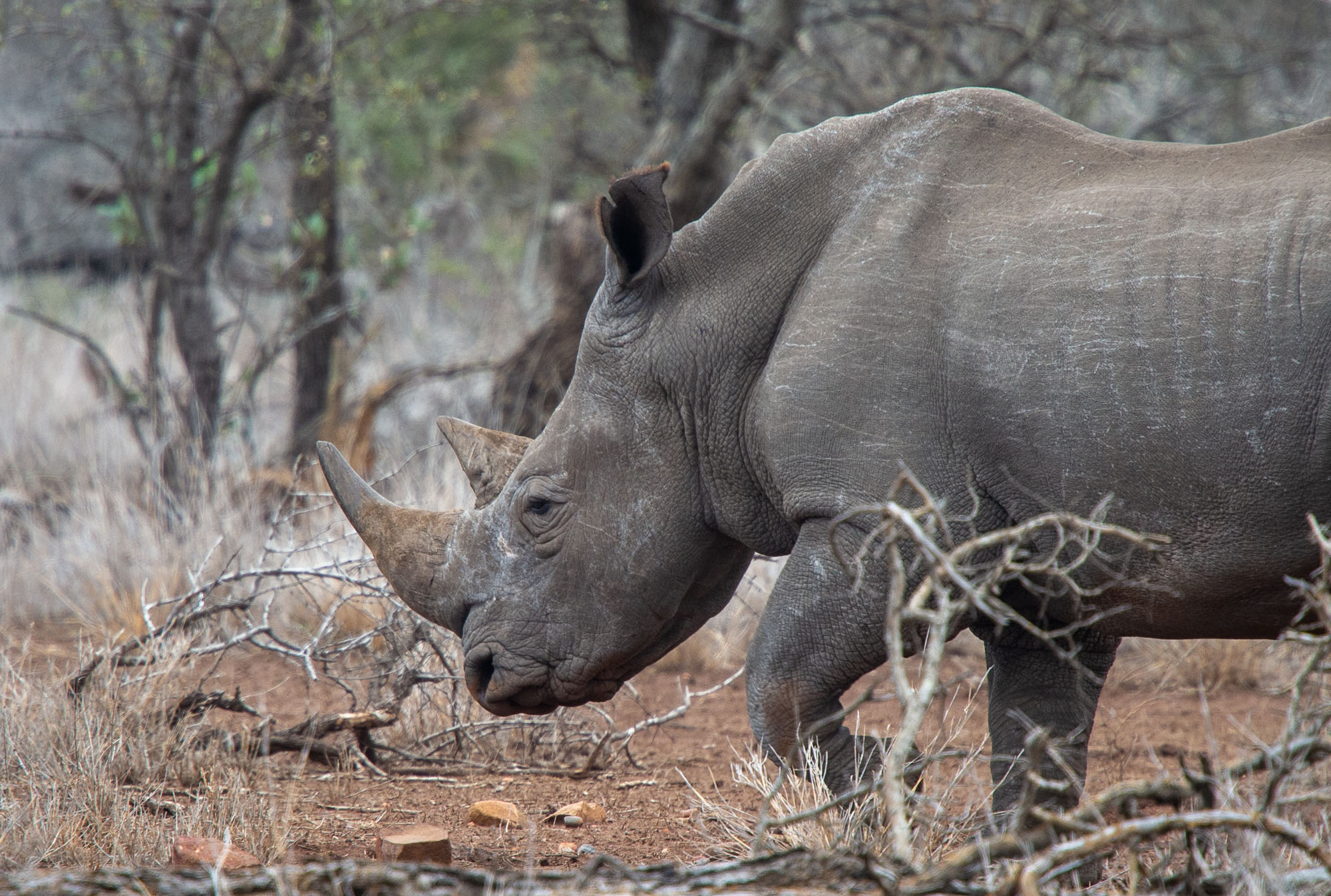
The drive from Skukuza to Hamilton’s was not unpleasant with good numbers of general plains game to be seen including zebra, buffalo and giraffe. I also spotted two white rhinos grazing around a depression where recent rainfall had resulted in a bit of green emerging vegetation. 

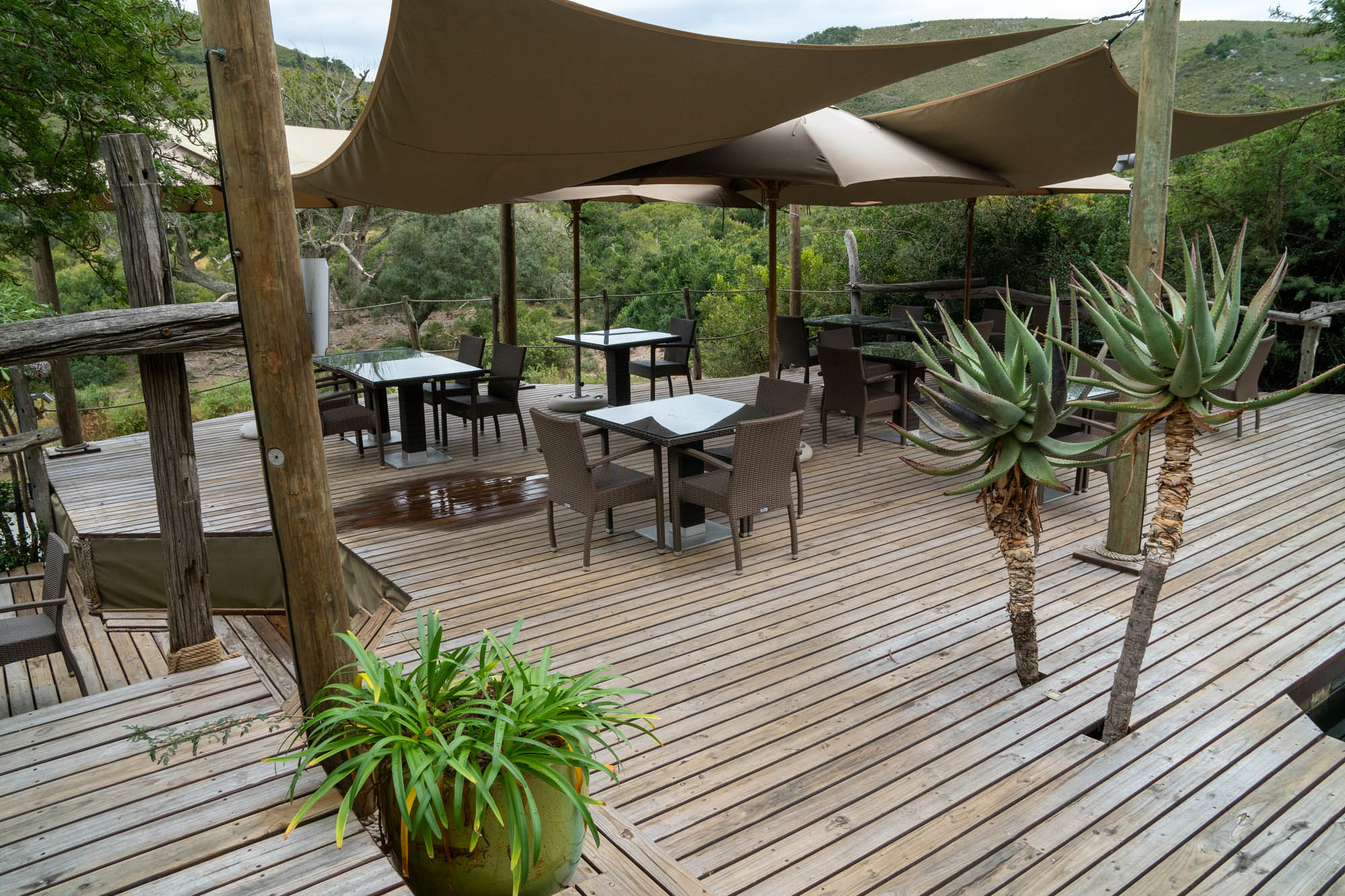
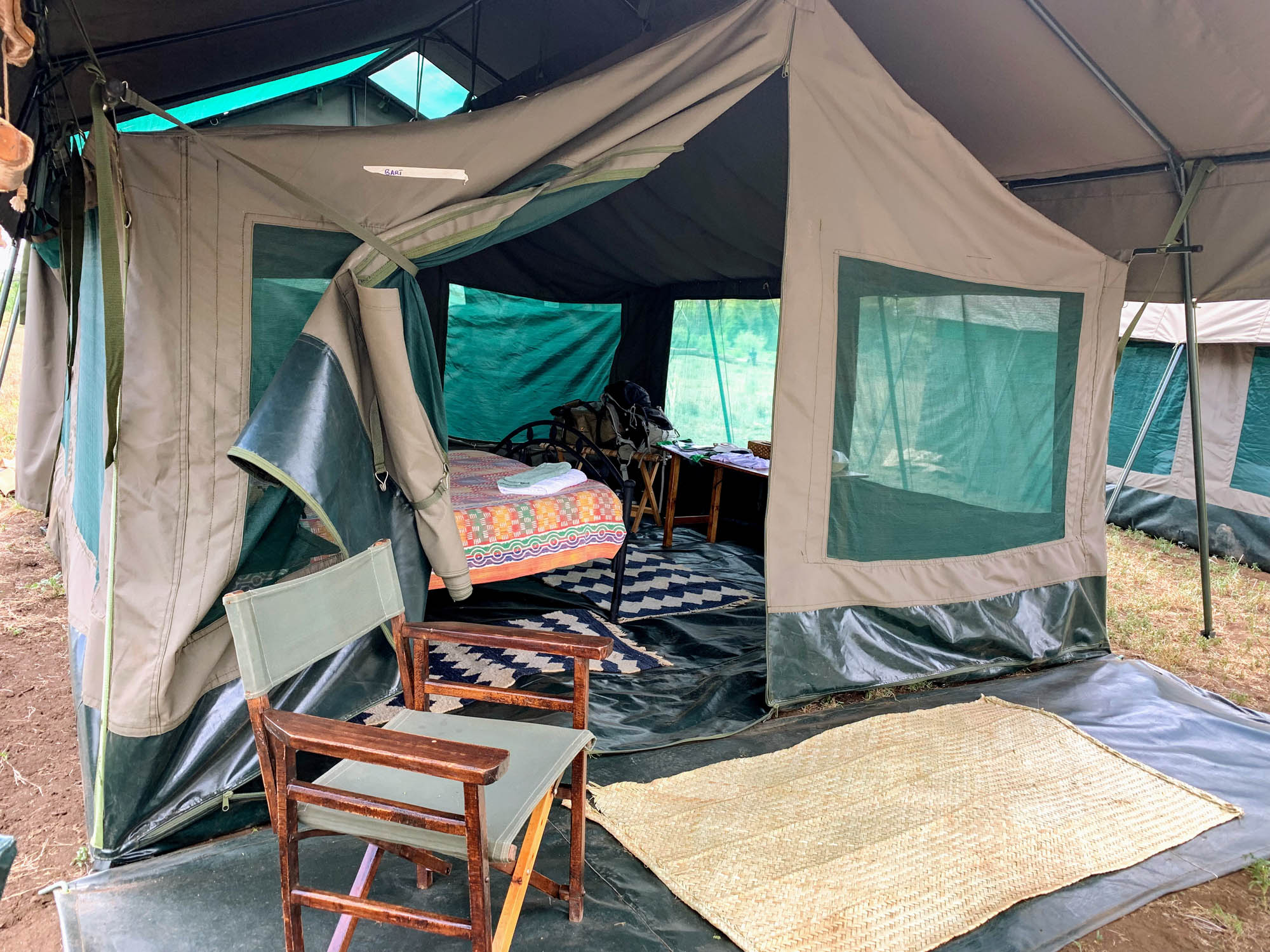
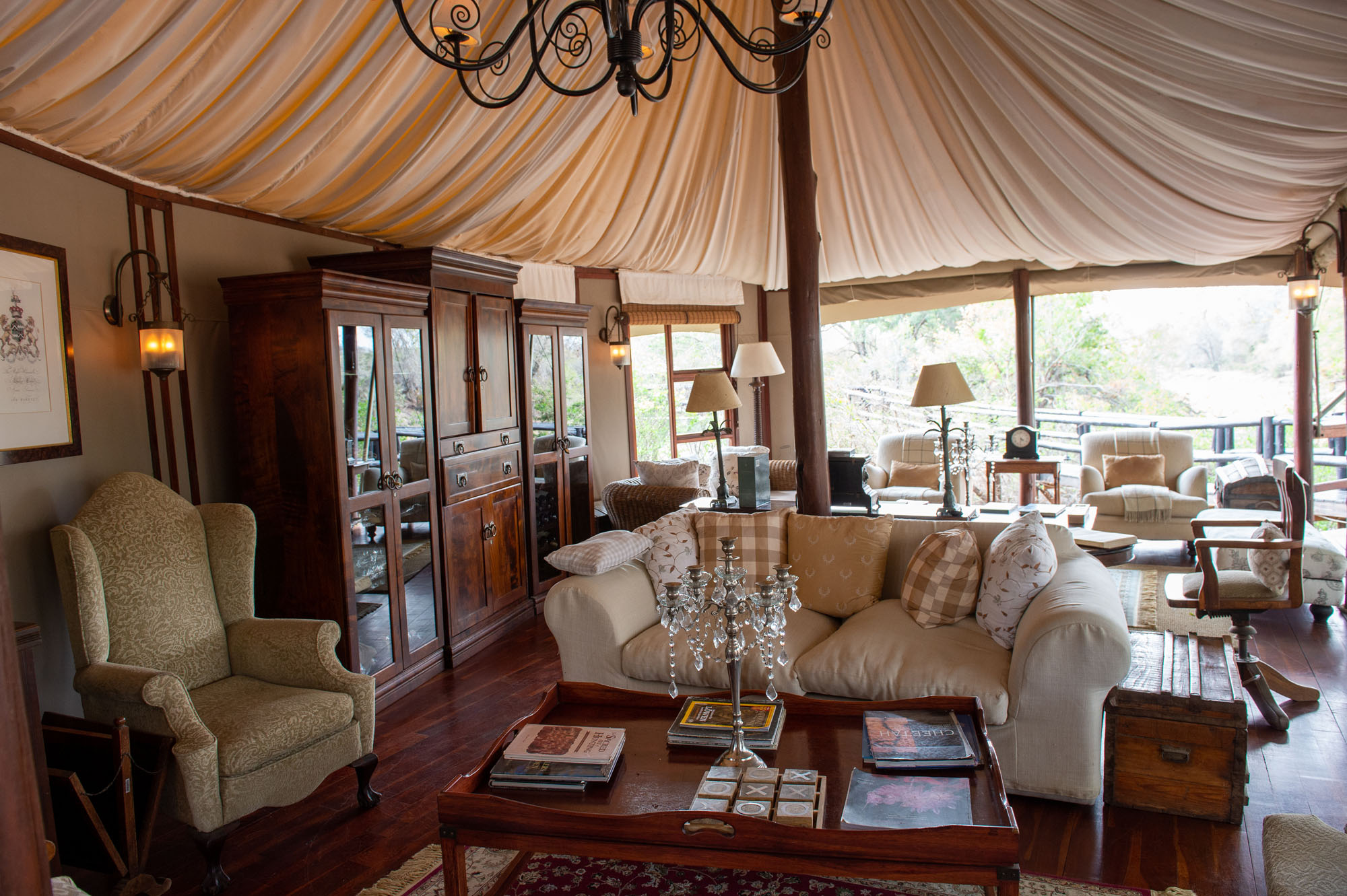
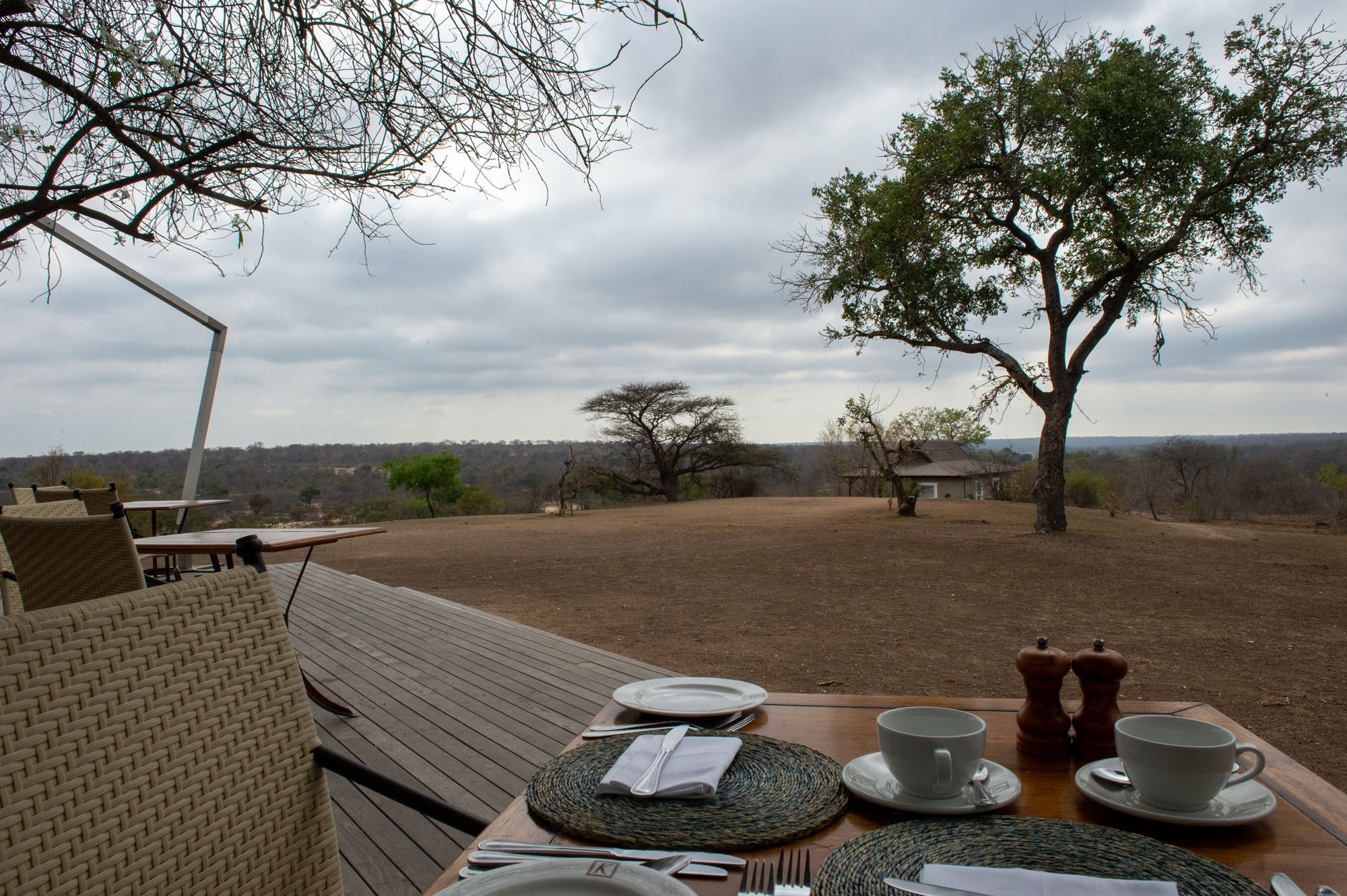
I liked what I saw on arrival at Hamilton’s:   it had an attractive lounge and dining room area located on the banks of a river, with beautiful tented rooms with air conditioning, a bath and outdoor shower, mosquito nets, ample storage space plus adequate lighting.

Image

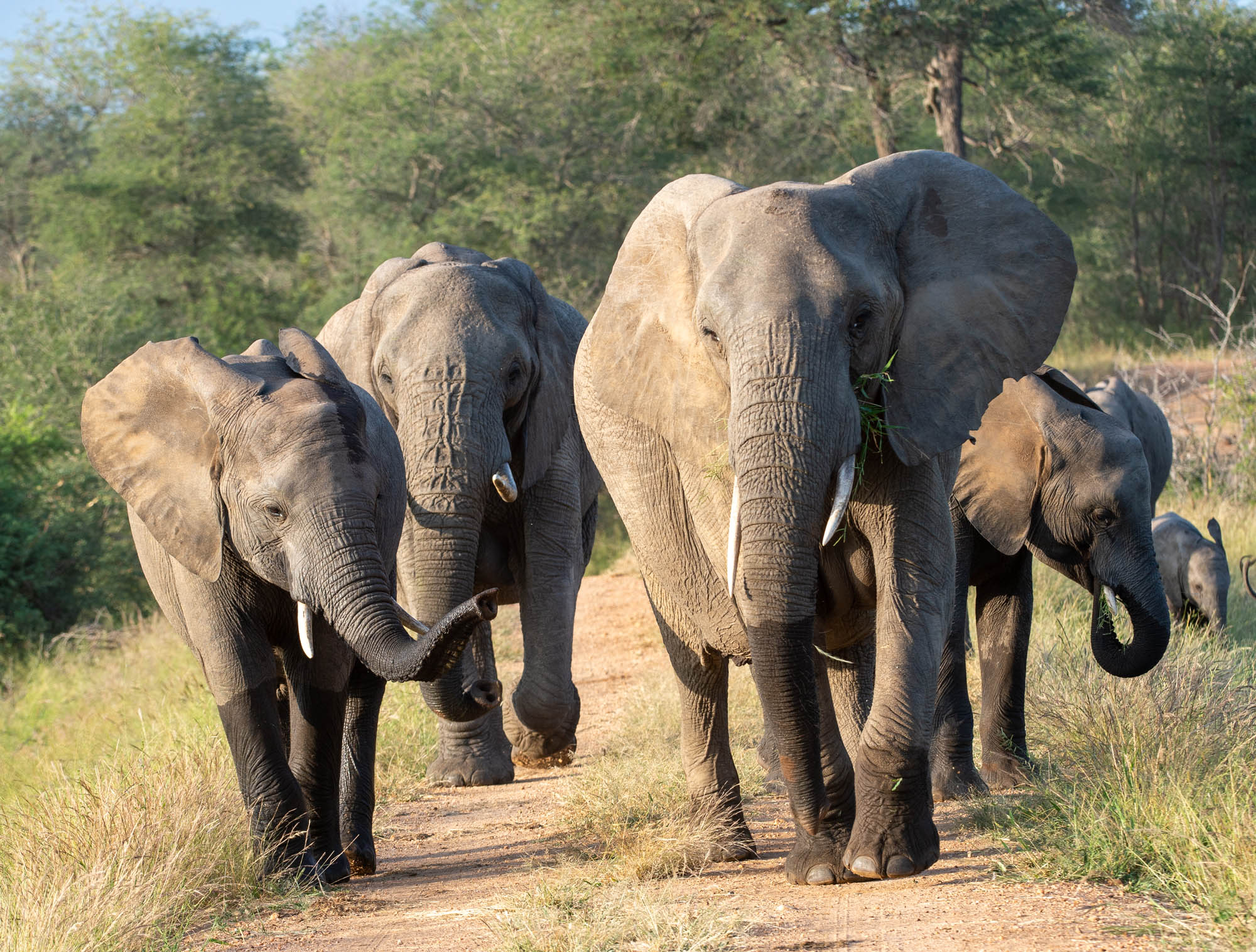
The afternoon game drive started slowly but it soon became apparent that there were lots of animals around. We were almost never not in sight of something: giraffe, kudu, zebra, elephant, buffalo, warthog, impala, there were animals everywhere. The afternoon ended on a high note with an excellent leopard sighing, being a solitary male lying up in the open on a sandy bank along a drainage line. He was apparently very full from just having fed on an impala, so not very active. It suited me just fine for a few photographs.

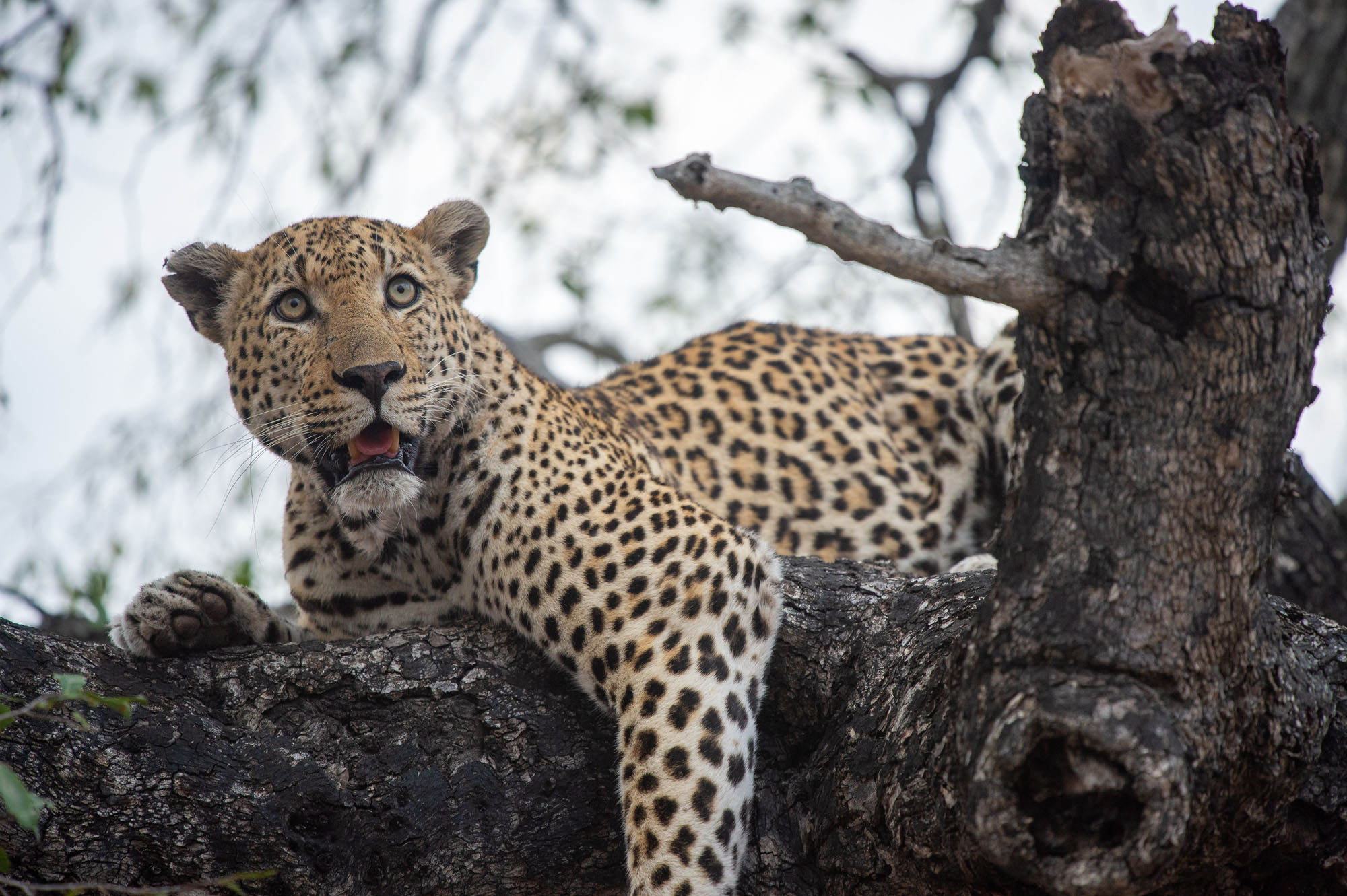
Our last day in the Kruger Park was not an ideal day to be on safari. It was blustery and downright cold at times with a strong wind whipping around camp, and right through the passengers in the semi open game drive vehicles. And of course the animals were not immune to the impact of the weather. My capable guide Gareth and I gave it a good shot and he did manage to find and show me the young male leopard in the marula tree, which we had briefly spotted earlier.   The leopard was finishing up the last of the impala kill which was by now reduced to mostly skin, ribs and leg bones. After about 10 minutes or so the leopard dropped down from the tree and disappeared into the low bushes.

Image

With the wind becoming even stronger and some rain making things decidedly unpleasant, we called it a day and returned to camp.

In next week’s blog:  I travel to the northern and then western part of the Sabi Sand reserve in search of more special places and experiences.

More Info

Email bert@fisheaglesafaris.com

Email jason@fisheaglesafaris.com

@fisheaglesafarishouston

#FishEagleSafaris

YOU MIGHT ALSO BE INTERESTED IN

Destinations
Zambia

10th September 2021

Chindeni and the Bushcamp Company, Zambia

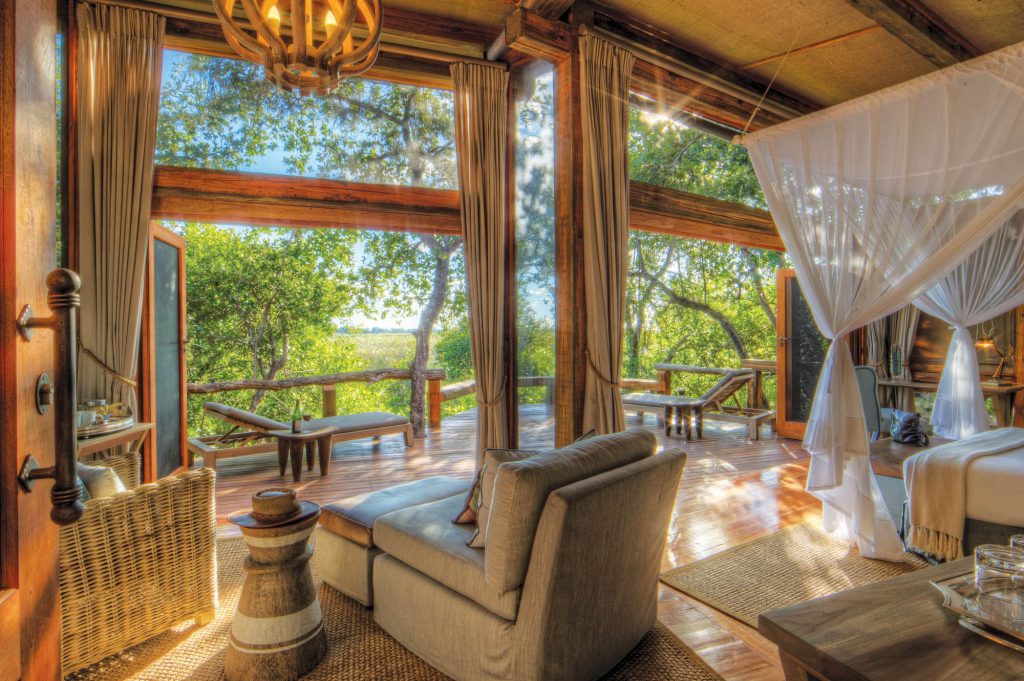
By late July we found ourselves at Chindeni, a small Bushcamp Company property
Read more
Botswana
Destinations
Okavango Delta

3rd October 2022

Camp Okavango, Botswana

Camp Okavango is in the heart of the permanent part of the Delta. In this idyllic setting there are no vehicles, and it is just a short walk
Read more
Area
Destinations
Nyerere National Park
Ruaha
Tanzania

14th October 2023

From My Safari Notebook: Wildlife Photography

Birds in flight and wildlife photographers have an uneasy relationship. Things go wrong as often as they go right. Getting focus-lock on a moving subject

Read more

SUBSCRIBE TO OUR NEWSLETTER

READERS FAVOURITES

Destinations
Zambia

10th September 2021

Chindeni and the Bushcamp Company, Zambia

By late July we found ourselves at Chindeni, a small Bushcamp Company property
Read more
Botswana
Destinations

4th August 2022

On Safari At Belmond Eagle Island Lodge, Okavango Delta

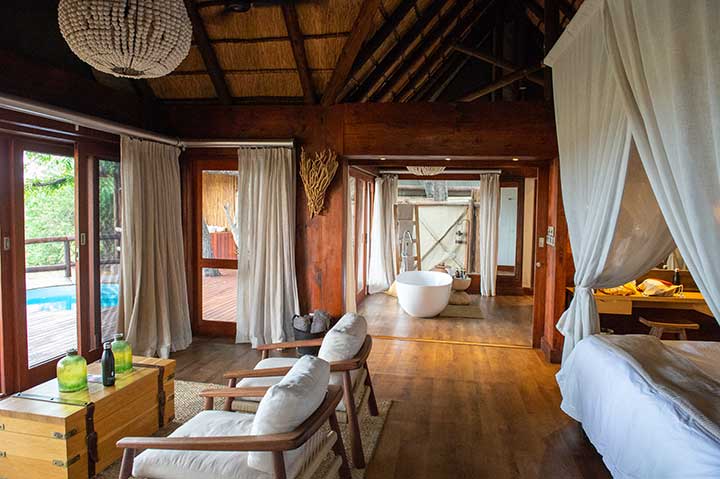
What is the ‘secret sauce’ for an unforgettable few days on safari in Botswana? It starts with the animals, of course. The elephants, lions, giraffes, hippos
Read more
Destinations
India

27th May 2023

India

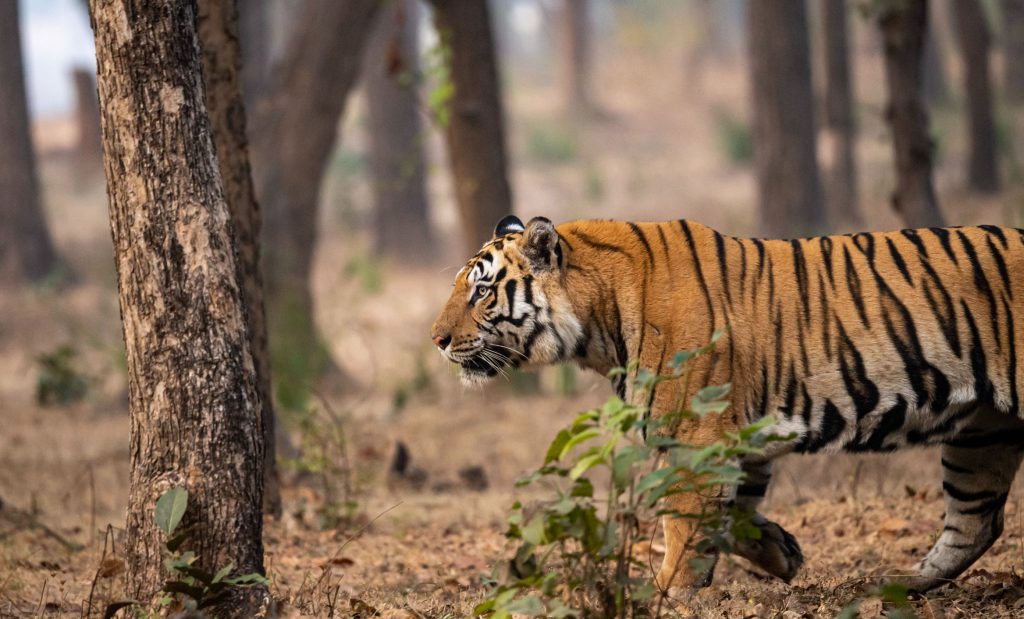
India’s tiger, mammals and birds.

Read more

A Visit to Northern Botswana Continued

3rd September 2020

A Visit to Northern Botswana Continued


Image

A Visit to Northern Botswana Continued

JAO CAMP, OKAVANGO DELTA

Having taken my farewell of the Kalahari for a while, I was driven back to Maun where I got back on a small plane for the half hour flight or so, to Jao in the western part of the Okavango Delta.   What more is there to be said about Jao other than that it is perfect. Since way back to when we first visited it in 2000, not long after it was opened, Jao has been on our ‘Groundhog Day’ list – a place where you can wake up every morning for the rest of your life and be happy.

The rooms are gorgeous: massive, romantic, dramatic, the stuff of dreams.  The same adjectives can be applied to the rest of the property:  the main lounge and bar area, the outside seating areas, the library, and extending right out to the gym and spa.   Even the dingiest of camps can look romantic at night, but Jao passes the daylight test with flying colors. Does it still look good in the unflattering glare of the midday sun? Definitely yes. Which puts it in very select company.


Image

Dinner was predictably excellent on the night I was there.  Even the most jaded of travelers will long remember nightfall at Jao.  The sensational views of the sun setting over the Delta, the soft pink glow lasting for what seems to be hours as the birds go silent, the reed frogs start up to their metallic clinks, and the last few baboon noises dying away as they settle down in the trees.

On an afternoon boating outing I caught (and released) a decent-sized tiger fish, much to my surprise and much to the delight of the guide, who was even happier about it than me.  Even if I hadn’t caught a thing, it would have been a great afternoon.  Being in a small aluminum skiff exploring the bywaters and lagoons of the Okavango Delta can easily push you into a Walter Mitty moment.  There you are, expertly piloting the craft along the deceptively serene-looking waterways, taking just the right line to smoothly glide around a tight corner.   Fortunately, the imaginary helmsman doesn’t have to concern himself with the myriad of unseen obstacles lurking below the surface.  Shallow sand-banks, hidden tree stumps and sometimes – a misplaced hippopotamus.  Those ones that are supposed to be in deeper water…


Image

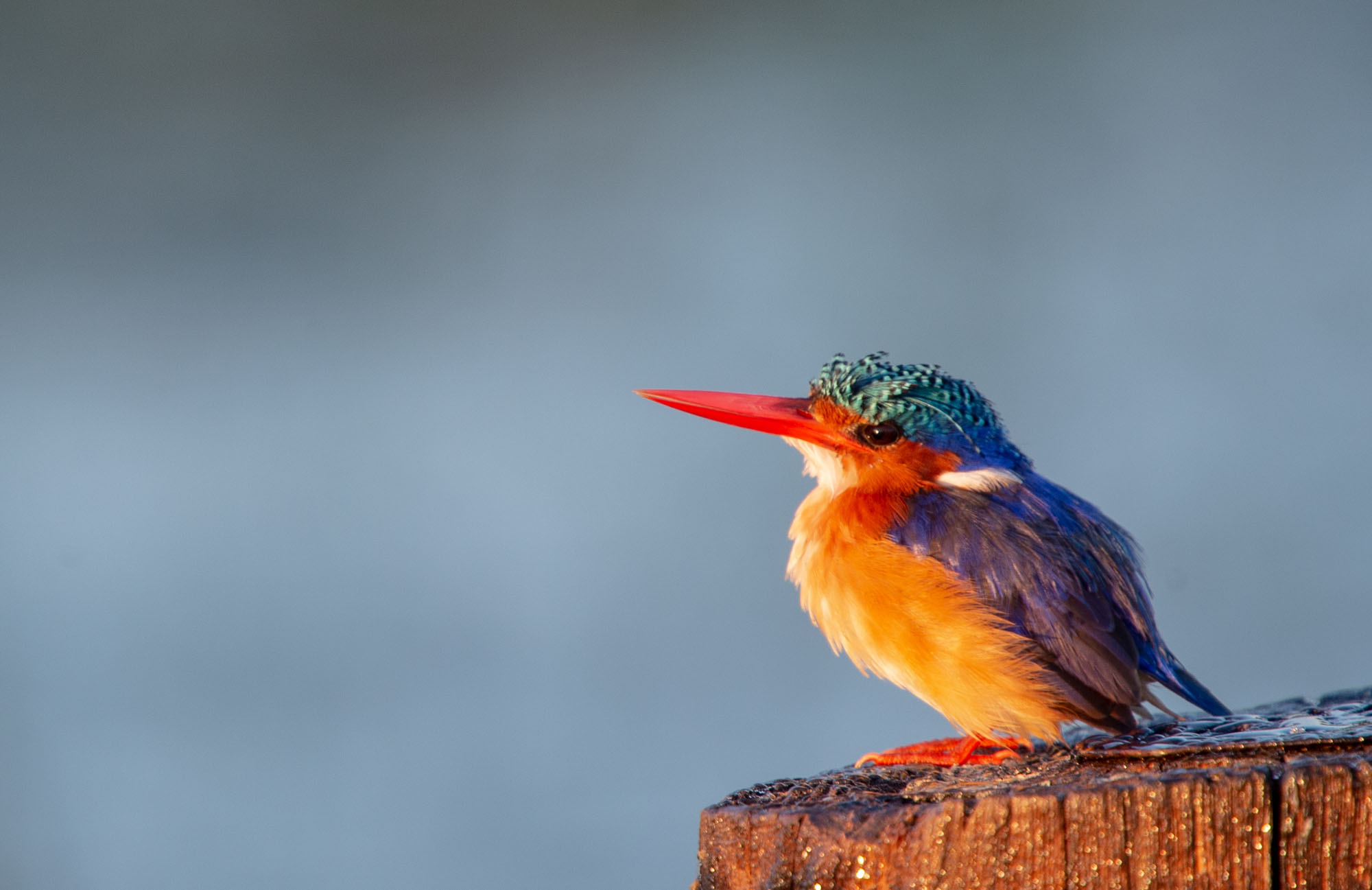
Our morning game drive at Jao  was fairly uneventful except that I got a couple of  nice bird photos including a Plainbacked Pipit and a Malachite Kingfisher in superb morning light.  To be sure, there were lots of elephants around and some general plains game.  Ordinarily, we’d advise guests at Jao to take a day outing to nearby Hunda Island, if they are keen to see predators such as leopards and lions, among others. 

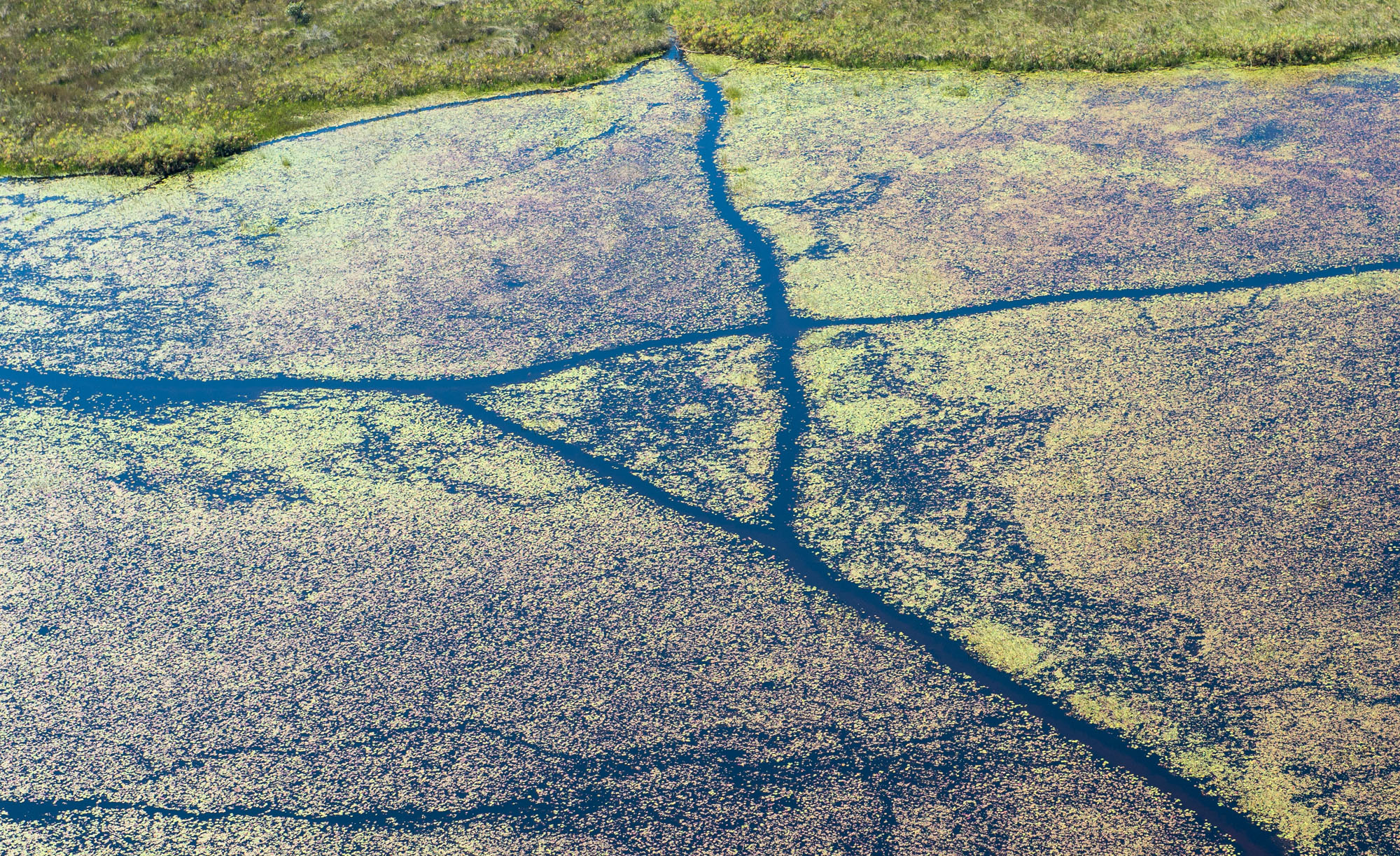
Upon my return to Jao, there was a surprise waiting for me: a 20-minute helicopter flight over the Delta with Helicopter Horizons, courtesy of Wilderness Safaris.  What a treat and what a special experience!  This was fast turning into the ‘helicopter trip’.  Great to start working on a new skill, aerial photography.


Image

PELO CAMP, OKAVANGO DELTA

En route to Pelo Camp – which would be a new property for me – I did a site inspection at Kwetsani which is now even more impressive than before. Pretty much the ideal – classic – Okavango Delta experience with rooms that are well beyond the standard of a normal, run-of-the-mill classic camp. One thing which will always be the same at Kwetsani is the time tested views over the large floodplain in front of camp, where there’s almost always some birds and animals around. Then it was on to Pelo which I liked right away.  Quite small, with only 5 rooms, tucked away on a well-vegetated island right in the heart of the Delta, Pelo is all about experiencing a typical Okavango Delta water camp with boating, mokoro outings and walking on the islands.  Pelo has a particularly nice communal area, intimate and inviting. The afternoon boat trip was rather quiet but the other boat saw a breeding herd of 50-plus elephants.  As always it’s a matter of time and place. 


Image

We enjoyed a boma dinner outside with an entertaining singing and dancing performance from the staff.  Great memories!

On my last morning at Pelo, I took my best photos yet of a Pel’s Fishing Owl, a rarely seen nocturnal bird.  Prior to my visit, I had been alerted to the fact that there was a female Pel’s raising a chick outside tent number four.   Emerging from tent #4 that morning, there it was:  staring me down as it was bringing some food (it looked like a piece of fish) for the baby.  I managed quite a few exposures in good light. Simply an amazing bird!  Later that morning I enjoyed yet another enjoyable and interesting boat ride.  There were lots of colorful birds to be seen, with African Fish Eagles being visible practically every few hundred meters.  We also had great looks at a few decent sized Nile crocodiles.


Image

SABLE ALLEY CAMP, KHWAI

After a good breakfast it was back to the airstrip for a flight to the Khwai area, where I would  spend the next two nights at Sable Alley.  The main area is about as good as it gets in Botswana, with a huge open-design deck and dining room, overlooking a pond.  The camp also has a beautiful pool.   The tented rooms – spread out along a boardwalk in a wetland habitat, were well planned and executed.  Spacious, with a large veranda and a usable bench, excellent ventilation, and superior indoor lighting – the best of any camps I’ve been to lately.  Add to that a comfortable bed and bedding, separate toilet, ample storage space, an effective waterfall shower head as well as scaldingly hot water, and an outdoor shower on a raised wooden deck.


Image

Our afternoon game drive with guide Tony and trainee Teenage turned out to be surprisingly good despite conditions not being ideal. There were several small groups of elephant, some seen quite close up, and we had some good views of kudu and impala. The most notable sighting was a couple of sub adult African Painted Dogs at a suspected denning site. We watched them for a while before they loped into the bush. According to our guide Tony the alpha female had already given birth to a litter of pups; it remained to be seen how many pups there were, and if the pack would raise them in that location.

We returned to camp for a quick shower, drinks and excellent dinner.


Image

Our Sunday morning game drive was on the quiet side although first time visitors to Africa would’ve been quite happy to see as many elephants as we did. It was noticeable that the elephants in the concession have a lot of ‘attitude’ compared with elephants in most other areas. Likely a holdover from the days in which hunting was allowed in the area, resulting in the elephants being a bit wary and giving  vehicles and people a wider berth than one might anticipate. We came across several small groups of up to 10 or so elephants with several young ones including a couple of tiny babies.  Clearly the elephants are doing well.

Later on during the drive we came across zebra, kudu, some giraffe, and plenty of impala. Fantastic birds.  In line with my previous experiences in this area, it is best visited in the dry season from July through October.


Image

That afternoon I relocated to Hyena Pan, which looked like quite an interesting spot, again likely to be a much better bet in the dry season than when we were there.  Located on the edge of a water hole, the camp is rustic but perfectly comfortable, with a cozy common area and large dining room. Our guide there – Daniel – was one of the best to date on the trip:  energetic and enthusiastic. We drove about 40 minutes in the Khwai village direction, mostly through non-productive mopane forest.  Once we reached the more open area and riverine bush strips of the NG 18 concession, we started to see plenty of game.  Initially a mating pair of lions and then a group of four painted dogs which we followed for a while.  They kept moving so photography was hit and miss; lots of excitement though.  The evening was rounded off with a  good buffet meal with beef stroganoff as the main attraction.


Image

CHITABE CAMP, MOREMI

Late this morning I was on a flight to Chitabe, a Wilderness Safaris classic property in the far south-eastern part of the Okavango Delta. Almost immediately I started seeing giraffes, zebras and  elephants –  clearly there was an abundance of general game all over the area.  Since my visit the main area at Chitabe has been rebuilt.  The rooms were superb:  plenty of space, good lighting, huge mosquito nets, hot water bottles at night, a tea and coffee station, sufficient charging points.

On the afternoon game drive we had yet more views of elephants, zebras, giraffes and a large pride of lions.  We enjoyed sundowners at a small, peaceful lake.  The excellent dinner that evening was served family style.


Image

I was up at 05:30 am the next morning for a light breakfast, embarking on the game drive just after six.  The drive presented our best views yet of spotted hyenas at their den, producing a few nice shots in good morning light. Then we got word about a pack of African painted dogs, and found 20 of them resting up and snoozing in the shade of a vehicle on the edge of the Chitabe airstrip. The light and vantage point was not great but I managed a few photographs.

Then it was back to camp where a huge elephant bull was barring the front entrance, at least for a while. Following on a tasty brunch, we enjoyed an impromptu drumming performance by one of the staff members.  By 2:30 pm I was back at the airport,  with multiple elephant,  zebra, kudu, impala and giraffe sightings en route.  Indicative of the wealth of game in the Chitabe area, I had to assist the guide in chasing impala, warthogs and giraffe from the airstrip to make it safe for the incoming aircraft, who would take us on to our next camp.

Chitabe certainly lived up to expectations and indeed exceeded them. The rooms are great and now that the rebuild of the main area has been completed it will likely rival just about any other northern Botswana camp for supremacy in delivering a big game experience.


Image

VUMBURA PLAINS, OKAVANGO DELTA

Just after 3:00 pm I was on the way to Vumbura Plains in the northern part of the Okavango Delta. A bit later than planned, due to an unexplained flight delay.  Once in camp – it is a rather lengthy and bumpy drive from the airstrip to the camp – I spent the next hour or so looking around the recently rebuilt main building.  It was quite impressive with clean, elegant lines, open to the environment and awash in natural light, with ample seating options in an expansive dining area.  Even if you spend several days at Vumbura Plains, you would rarely enjoy a meal in the same spot twice.


Image

After a quick introduction, we walked down the boardwalk to room number one. There were no apparent changes to the room which I had seen for the first time some years previously. Spacious, lots of natural light, decent interior lighting, an impressive indoor shower with a view as well as outdoor shower. A bathtub was oddly lacking – one would expect to see it in a deluxe property like Vumbura Plains; in fact an outdoor tub would be a nice touch.  After a delightful dinner with the camp manager it was off to bed, early.

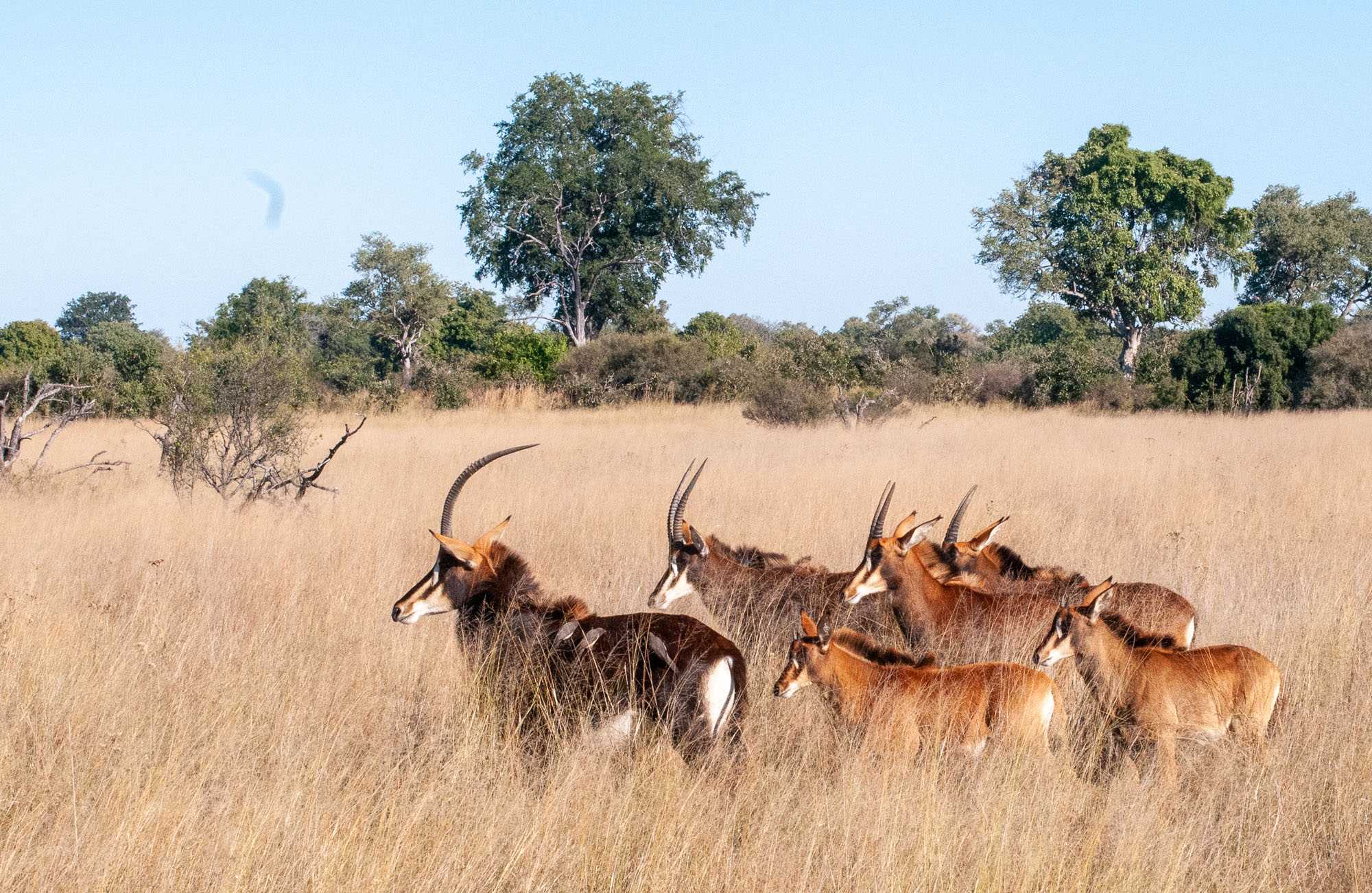
After an early breakfast it was time to saddle up for the morning game drive with my guide Ron. Initially it was slow but after about an hour we found four beautiful young male lions, not quite into their prime but not far from it either. Next was a herd of about nine or so sable antelope.  These rarely seen and sparsely distributed antelope are fond of fairly tall grass, often seen in relatively thickly vegetated woodland such as in Hwange National Park in Zimbabwe.


Image

This particular group was as approachable as any Sable I’ve ever encountered, the two females allowing us to approach them quite closely. The light was still fairly good and I captured a few decent images. The dominant male sable was not at all cooperative. It was as if he knew that he was the one that we ‘really’ wanted to see, playing hide and seek with us for 30 minutes.  He proceeded to deliberately and seemingly determinedly walk from one thicket to another without as much as stopping even once, to give us a good look.  The sighting was a big plus in my book as Sable antelope was the one species I had specifically mentioned when asked by Ron – at the outset of the game drive – whether there was something particular I wanted to see. Being able to deliver on a very tricky animal such as this one counts a lot.


Image

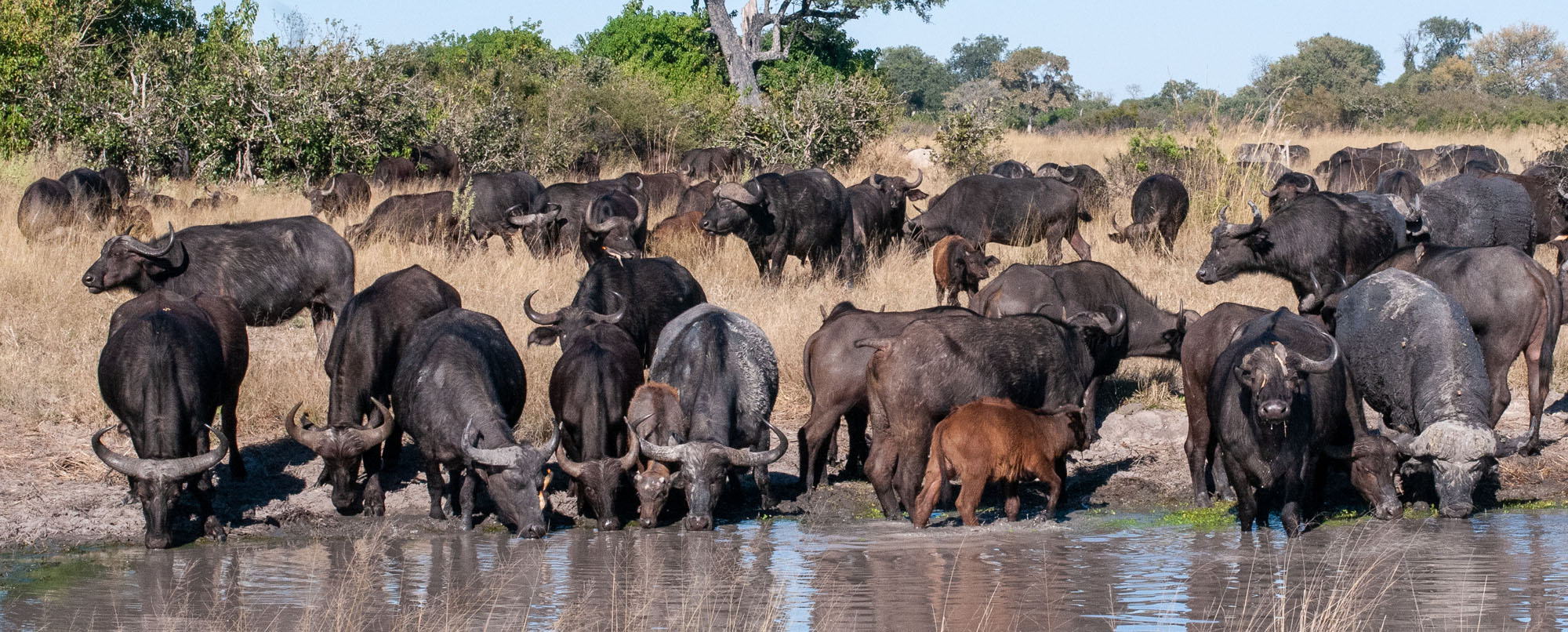
The game drive got even better with sightings of a large herd of buffalo at the waterhole and then an equally large herd of fifty plus elephants stampeding through the woodland. Their irate trumpeting and a dust cloud announcing their whereabouts, from afar. They were apparently entering a new or dangerous area and all of the older females were trumpeting and running around.  Towards the final stage of the stampede, three of the females – including what appeared to be the matriarch female – started to approach the vehicle in somewhat of a threatening pose.  We were ready to decamp at a moment’s notice, but in the end it was not necessary.  Plenty of adrenalin though.  


Image

CAPTURE AFRICA, KHWAI REGION

Due to a flying mix up my planned 11:25 a.m. departure from Vumbura did not take place, but it was deftly replaced by a helicopter flight of about 20 minutes or so direct to Khwai River Lodge, where I was picked up by Brian Gibson of Capture Africa. An hour or so later we were at Capture Africa‘s private campsite on the Khwai River

Capture Africa specializes in high-quality private mobile tented safaris mostly in the Khwai, Moremi and Okavango Delta areas, but they can set up private mobile campsites and provide support services literally anywhere in Botswana.

Adding a few days of “real“ camping to a mostly lodge-based itinerary adds an extra layer of authenticity and adventure to a trip; for many people this is as close as they may ever come to the bush.


Image

That afternoon, from our exceedingly comfortable camping site we saw an elephant walk along the floodplain, splashing its way through the shallow water and down the river. It was a pleasant change to what I had been doing seemingly nonstop the preceding few days, which was finding the wildlife out on game drives.  Having them come to you is infinitely more rewarding and relaxing.  

Brian Gibson – who heads up Capture Africa – is clearly passionate about the wilderness.  He is a highly experienced guide himself and it was quite a revelation spending a day or so in his company, trying to absorb his pithy advice and in-depth knowledge of the area and its wildlife as well as its people. On a drive with Brian the next day we got lucky with African painted dogs on the move – the thrill of the chase! – and we enjoyed a great lion sighting as well.  The Khwai region is clearly a productive game-viewing environment, however the number of vehicles per sighting was notably higher than most of the other areas we visited on this trip.


Image

Our party of four people enjoyed a particularly splendid meal at Capture Africa’s mobile tented camp that night, spending another hour or so around the campfire afterwards.  It was just us, a  brilliant sky, and what must have been close to 4,500 stars above.   That being the maximum number visible to the human eye, which can only detect stars brighter than magnitude 6 to 6.5.  Just as noticeably, there was practically no man-made ambient light, no noises and no disturbances.  Not that it was totally quiet.   If you knew what you were listening to, there was what sounded like a lost – or lonely – jackal, a few hungry hyenas  and a couple of African scops owls advertising their presence with their chirp-like calls.  The African bush at night.


Image

EBONY CAMP, LINYANTI

This morning I flew from Khwai to the Linyanti floodplain for an overnight at Ebony camp, African Bush Camps’ family option, adjacent  to the similar but slightly larger Linyanti Bush camp.  Room number 10 at Ebony Camp is the designated family room.

Either camp would be an ideal safari choice for visitors, particularly from about June/July through October and early November, in the dry season. At that time of the year the floodplain attracts good numbers of elephant, buffalo and other big game species including predators.

At the time of our visit in mid-May the surrounding bush was still quite thick which made game viewing challenging. Even so, we saw several small herds of elephants, hippos in the river and a coalition of three male lions. As well as some giraffe, waterbuck, impala and exceptionally good birdlife.


Image

The camp is clearly well-managed and I found the staff to be friendly and approachable. It would be nice to have the tent door zippers replaced with regular doors. Only two of the rooms (honeymoon room and family room) have bathtubs. The other rooms have showers with hot water available at all times.

The grand finale of my Botswana trip was yet another helicopter ride, this time to check out the Linyanti River and its denizens which included several pods of hippopotamus, giraffes drinking, a few crocodiles.  From the air, there was a dearth of any signs of human encroachment.  There are so few places left in the wilderness which are truly remote and this is one of them.

My next stop would be South Africa, for a return visit to the Kruger Park and Sabi Sand reserve.  Details to follow in our blog post to be published next Friday.

More Info

Email bert@fisheaglesafaris.com

Email jason@fisheaglesafaris.com

@fisheaglesafarishouston

#FishEagleSafaris

YOU MIGHT ALSO BE INTERESTED IN

Destinations
Zambia

10th September 2021

Chindeni and the Bushcamp Company, Zambia

By late July we found ourselves at Chindeni, a small Bushcamp Company property

Read more
Botswana
Destinations
Okavango Delta

3rd October 2022

Camp Okavango, Botswana

Camp Okavango is in the heart of the permanent part of the Delta. In this idyllic setting there are no vehicles, and it is just a short walk

Read more
Area
Destinations
Nyerere National Park
Ruaha
Tanzania

14th October 2023

From My Safari Notebook: Wildlife Photography

Birds in flight and wildlife photographers have an uneasy relationship. Things go wrong as often as they go right. Getting focus-lock on a moving subject

Read more

SUBSCRIBE TO OUR NEWSLETTER

READERS FAVOURITES

Destinations
Zambia

10th September 2021

Chindeni and the Bushcamp Company, Zambia

By late July we found ourselves at Chindeni, a small Bushcamp Company property

Read more
Botswana
Destinations

4th August 2022

On Safari At Belmond Eagle Island Lodge, Okavango Delta

What is the ‘secret sauce’ for an unforgettable few days on safari in Botswana? It starts with the animals, of course. The elephants, lions, giraffes, hippos
Read more
Destinations
India

27th May 2023

India

India’s tiger, mammals and birds.

Read more

A Visit to Victoria Falls & Hwange Zimbabwe

14th August 2020

A Visit to Victoria Falls & Hwange Zimbabwe

A Visit to Victoria Falls & Hwange Zimbabwe

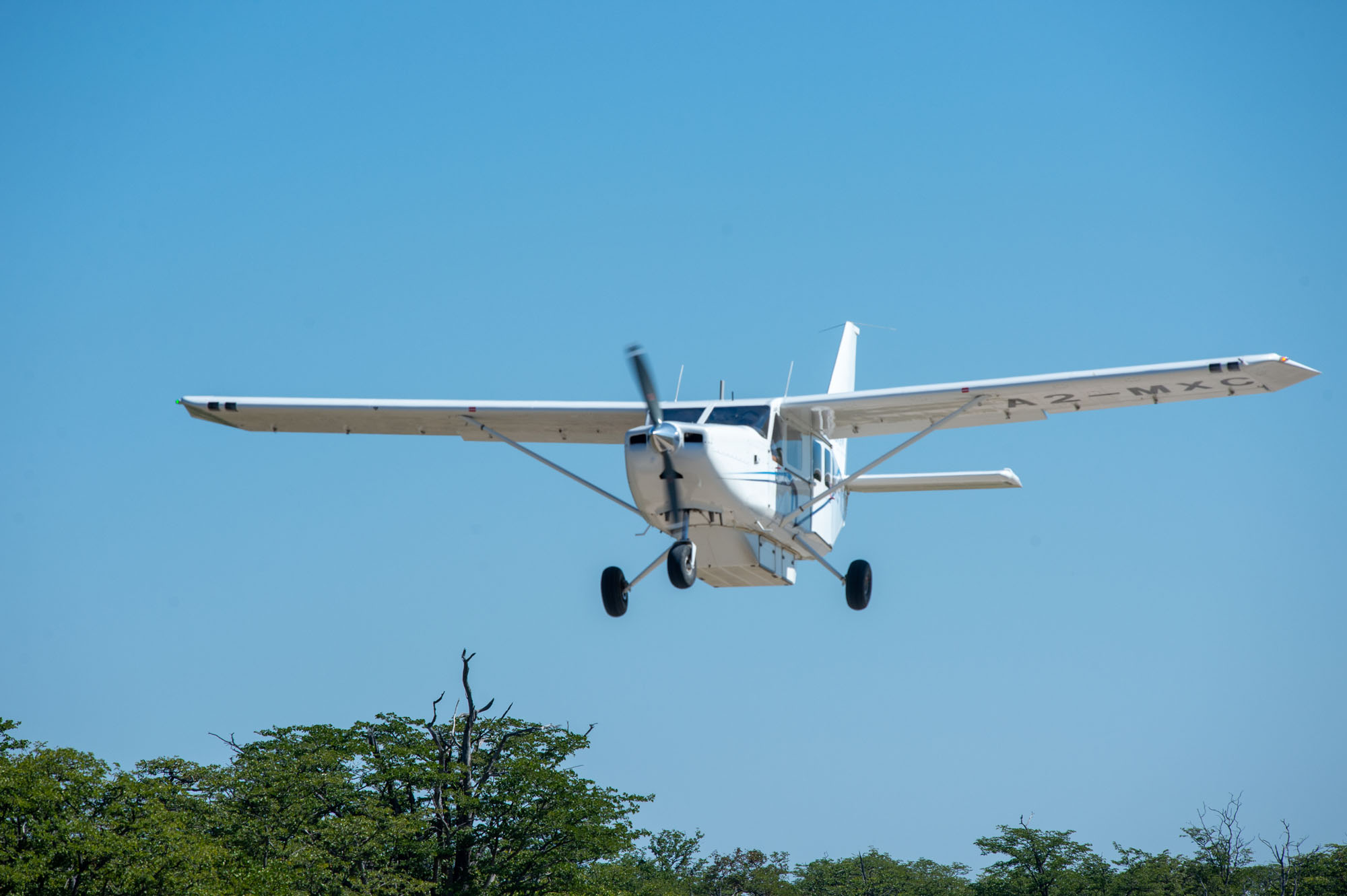
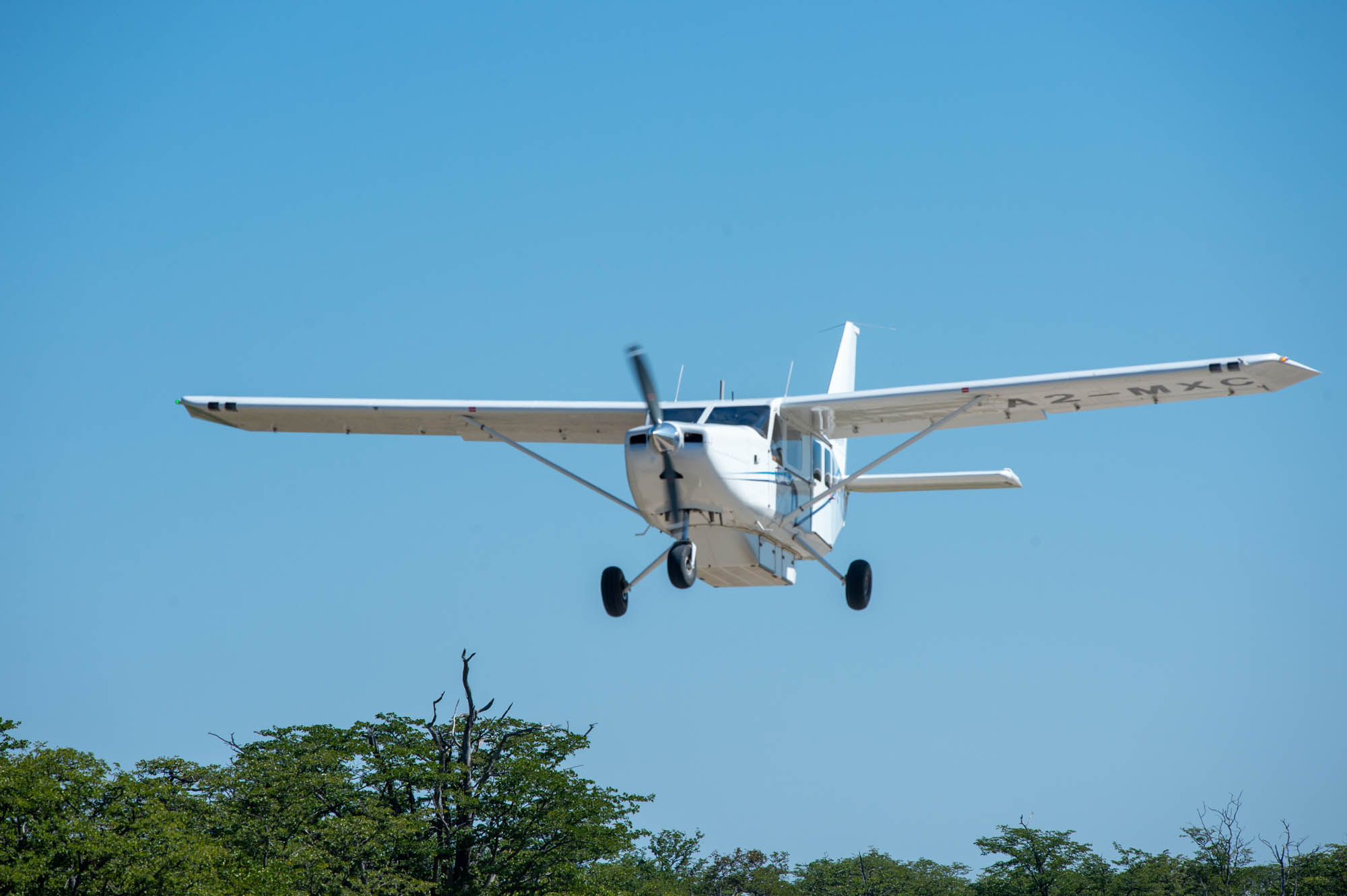
In late May last year, just after noon on what was a Tuesday, I stepped into a seven seater Mahindra Airvan at Saile Airstrip on the edge of the Linyanti floodplain in Northern Botswana. A click of a seatbelt and a short safety briefing later, it was time to go. The young pilot pushed the power throttle to its fully forward position, released the brakes and in less than a minute we went hurtling into the blue Botswana sky.

For me, bush flying will never get old.  With the passage of time, I have come to enjoy and appreciate it more and more, since my first ‘white-knuckle’ flight in a Cessna 206 – also in Botswana – in 1990. Over the last almost 30 years the pilots have become younger and more diverse in terms of gender and nationality, new types of aircraft have arrived on the scene, and operation and safety standards have improved.  The fun and excitement never went away.


Image

Bush flying has always been different. This is ‘real’ flying with a sense of immediacy, noise, speed and a tinge of danger.  All lacking from commercial flying. Even so, if you have yet to strap yourself into the seat of a single prop aircraft in which you can make eye contact with the pilot as he or she looks back right before takeoff, there is no need to be nervous. These young persons have acquired excellent flying skills, are totally safety conscious and have to be exceptionally skilled to have snagged a flying job in Botswana.  It’s a plum position.

Just over 30 minutes later we were in Kasane.  And 20 minutes later I was in a boat crossing the Chobe river into Zambia. The landing in Zambia is a bit jarring, having to negotiate one’s way along a somewhat rickety gangplank, amid industrial debris and the grimy, smelly environment of a working dockside. Thankfully the immigration process was quick and painless, taken care of by my Wilderness Safaris driver Angel.  I paid $50 for a univisa, which allows unlimited entries into Zimbabwe and Zambia for several months.


Image

TONGABEZI LODGE, ZAMBIA

By 2:30 p.m. I arrived at Tongabezi where the affable and efficient general manager Mark showed me around and helped me with a quick check in, almost immediately afterwards followed by a delightful lunch overlooking the Zambezi.  Which was flowing strongly.

About an hour or so later – my last mode of transport for the day being a small aluminum skiff which deposited me on a small island in the middle of the Zambezi – I had made it to my final destination of the day, Sindabezi.  Here, I would spend the night.  Sindabezi Island is remote, private and the ideal spot for someone open to new adventures.  After a peaceful night’s sleep, I woke up not to sunlight, but to a moonbeam.  I had been sleeping within sight and sound of one of Africa‘s mightiest rivers, right in front and below me.  A nearby set of rapids stirring up the most soothing white noise of all. Sleeping virtually outside with just a few light curtains between you and the great African outdoors. There’s more.  You’re attended to personally by several friendly and efficient staff members, enjoying delicious food from a varied and creative menu with lots of local options, and choosing from a huge list of included and optional activities. Being severely time limited, I opted for an afternoon sundowner cruise which was relaxing and fun, ending at a drinks stop where I met many of the guests staying at Tongabezi Lodge.  It was a most agreeable conclusion to a busy day.


Image

One final plus point about Sindabezi Island: good fast Wi-Fi on an island which runs on solar power.   All the lodges out there with feeble excuses about sub-par Wi-Fi service.  Take note. It can be done.

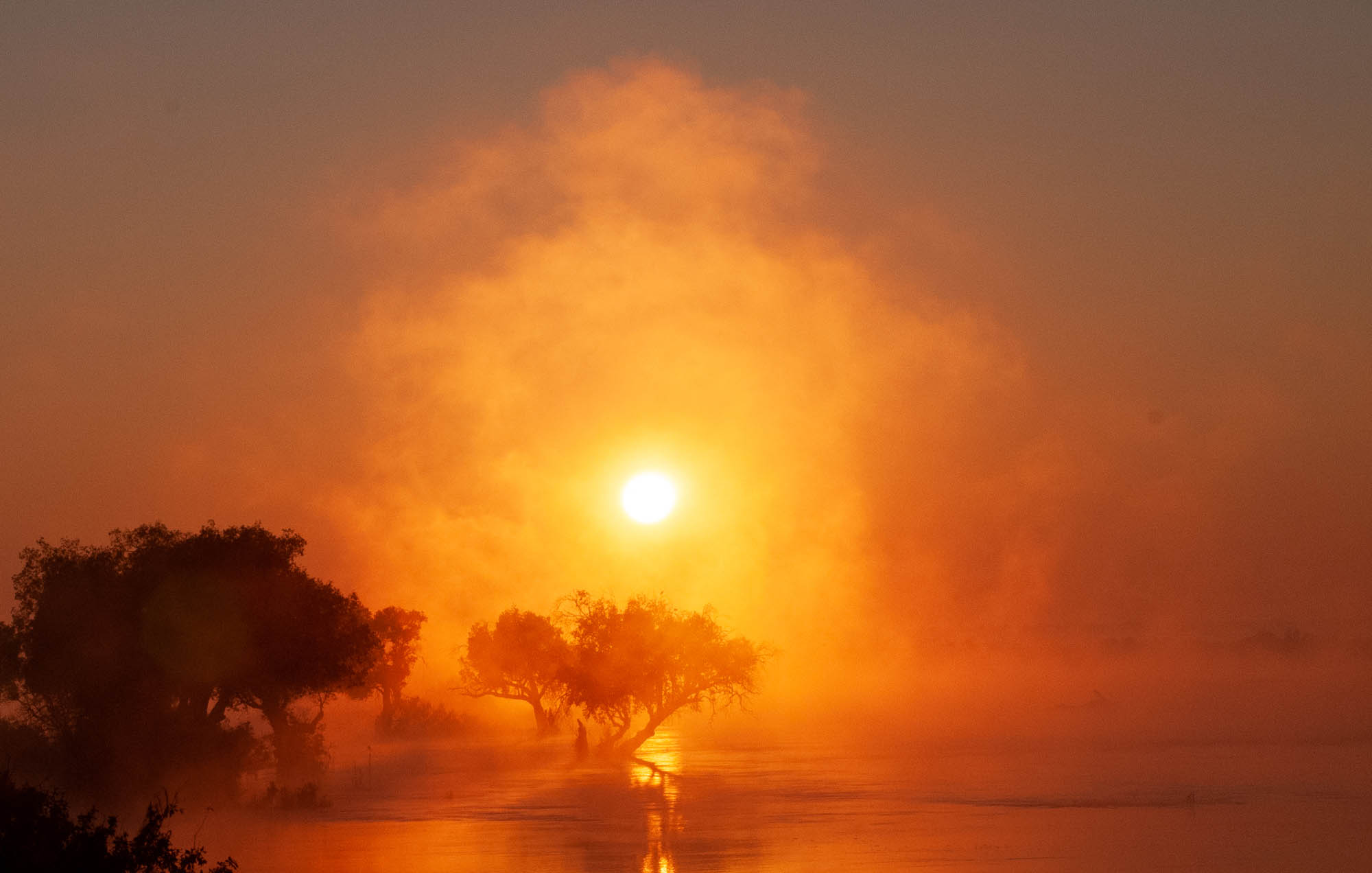
The next morning I woke up to an unusual sight. A bank of fog had formed over the surface of the Zambezi resulting in a spectacular if somewhat spooky sunrise, the sun itself and its light reflected, refracted and obscured by the fog. The photographs hardly do it justice but I took a few nonetheless.

After a super breakfast and catching up on a few emails I went back to Tongabezi Lodge for a site inspection. I was really pleased to see that both the houses and cottages at Tongabezi were fantastic and I would highly recommend the property for a Victoria Falls stay.


Image

Tongabezi has the most magnificent trees and gardens including an extensive vegetable and herb garden, both featuring heavily in the planning and execution of meals and drinks.

As previously alluded to, the list of included and optional activities is exhaustive, ranging from sundowner cruises to village visits to micro light flights over the falls. Tongabezi was then in the final stages of an extensive upgrade, and their large bar and lounge had been completed, with a new reception landing area.  With a new office already in place Tongabezi was looking great.  By all means go there.


Image

THORNTREE LODGE, VICTORIA FALLS

By late morning I was dropped off at African Bush Camps’ Thorntree Lodge, on the banks of the Zambezi, inside the Zambezi National Park. This property has been setting a new high standard for deluxe boutique accommodation in the fully inclusive lodge category, with 10 beautifully designed villas, each with a large deck and private plunge pool, looking out over the Zambezi. The rooms have every feature one could wish for: air conditioning, Wi-Fi, striking glass and screens, and adequate lighting.  Each villa has a mini bar, tea and coffee making facilities, indoor and outdoor showers and an indoor tub, a large bathroom with separate enclosed toilet, a personal safe and mosquito netting.

The main area is an impressive – mostly glass enclosed – structure and there’s also a spa and gym on the large grounds.  The lodge offers a full range of activities.  The standard of hospitality which I experienced at Thorntree was exceptionally high.  My day started with a peaceful and rather quiet Zimbabwe river cruise with the Thorntree activities manager – a pleasant change of pace from the hectic pace of the previous day.


Image

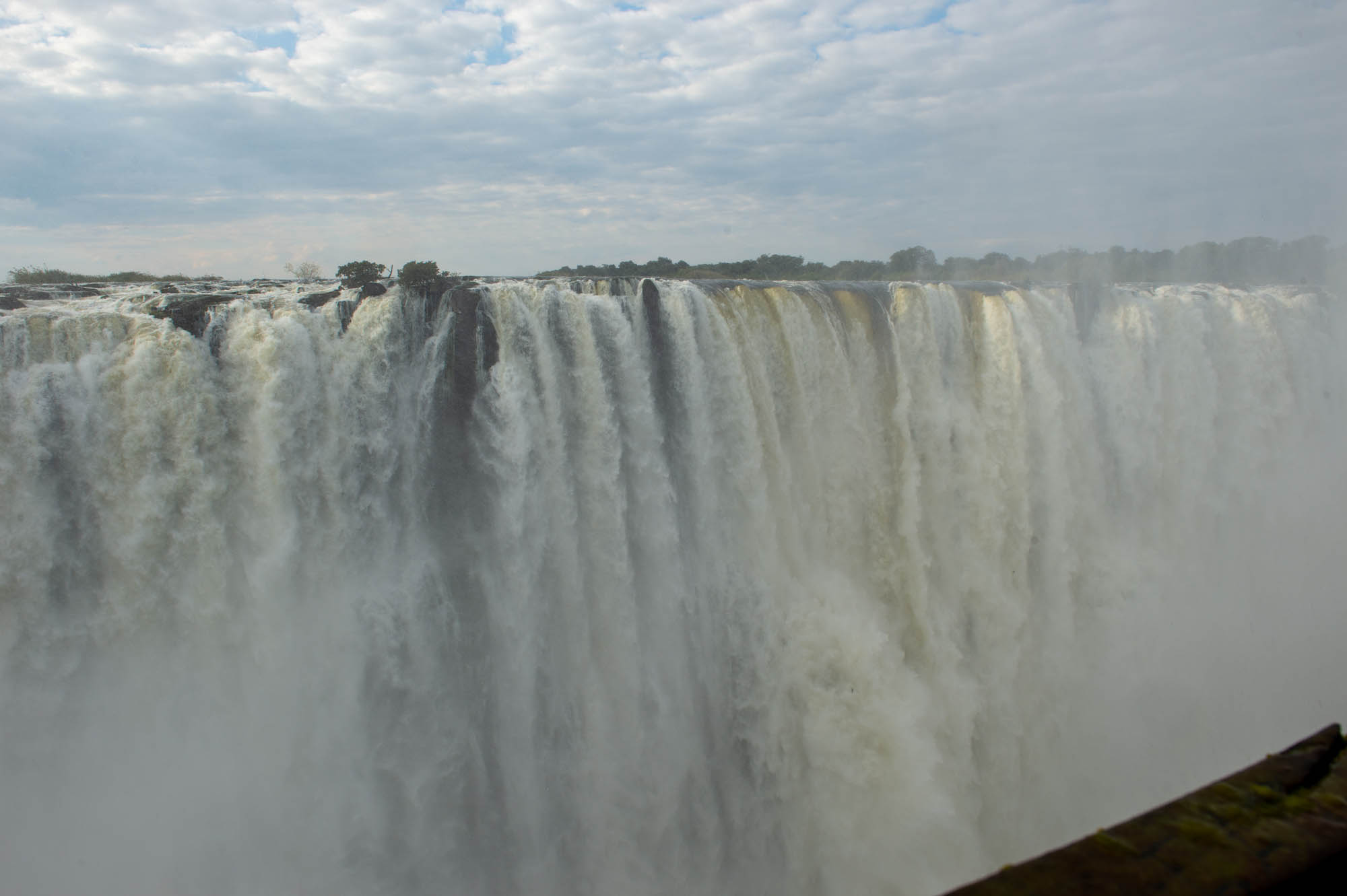
En route to Zimbabwe that afternoon, I made an hour-long stop to observe the Victoria Falls from the Zambia side. I had done this outing approximately a year ago so I knew what to expect, with the Zambezi being in flood stage. Again it was an awesome sight to behold. While the view of the Victoria Falls from the Zambia side is not the best when the river is low – from September to about December or so – it is quite satisfactory and even spectacular when the Zambezi is running at flood or near flood stage.

In fact the closest one can get to the actual flow of the water – to experience an effect much like that of seeing Niagara Falls from the Canadian side – is a spot close to the entrance to the falls reserve, on the Zambia side. Powerful and mesmerizing. You inadvertently stop to think about the survival chances of someone going down there in a barrel. Only to conclude that the prospect of the person surviving to tell the tale is a big fat zero.

Crossing the wet and slippery Devil’s footpath bridge across a side gorge, you reach some more good view points over the eastern portion of the falls, observing the Angels’ armchair and the famous Devil’s pool, popular attractions for breathtakingly close approaches to the abyss.  Only doable when the water in the Zambezi is low.


Image

BATONKA GUEST LODGE

Having been driven across the Zambezi and into Zimbabwe, my first stop was the Batonka Lodge, an all-around delightful property with 16 well-equipped rooms, less than a mile away from the falls, in the residential portion of Victoria Falls town.

The rooms are spacious, effectively air-conditioned, there is Wi-Fi and even television with 10 channels. The meals were excellent. I overheard a guest complimenting the chef on a main course of pork medallions served with a caper sauce.  I concurred.  They were expertly prepared and deftly served and not unreasonably pricey by Victoria Falls standards.


Image

Batonka Lodge has a nice pool in a sunny spot, there are both indoor and outdoor dining options as well as some comfortable inside and outside lounge areas, and a cozy bar.

Particularly for someone who already has a couple of scheduled Vic Falls activities planned – and who does not “have“ to be within walking distance from the falls – it is a good and affordable option with no high season premium.


Image

GORGES LODGE, VICTORIA FALLS

After lunch that day, and a road transfer of about 35 minutes, I checked into one of the excellent tented rooms at Little Gorges, a five room tented addition to the well-established Gorges Lodge.

Gorges and Little Gorges are ideal for guests who prefer to be away from the helicopter noise and hustle and bustle of Victoria Falls town, and are keen to experience a more peaceful environment with great black eagle viewing, as well as experiencing an authentic local village and school experience.   Included in the rate is a daily round-trip transfer to Victoria Falls town for a guided tour of the falls or some other Victoria Falls activity.

My afternoon black eagle activity did not have the desired outcome which was a good photo of a black eagle in flight.  As is often the case with wildlife, it was circumstantial. A male black eagle did in fact fly right over us but I had too much lens and there were some trees in the way.  Photography issues.  I did manage to get a half decent pic of a black eagle sitting in a tree close to one of the tented rooms. Plus I had a great chat with co manager Chris, enjoyed the superb sundowners snacks and watched as the sun slowly set over Batoka gorge.  A worthwhile experience unto itself.


Image

Dinner at Gorges was quite enjoyable.  As before it was a tasty home style meal with a grilled steak, grilled potato and two veg plus an excellent malva pudding for dessert.

Tent number one at Little Gorges is right on the edge of the Batoka gorge with the sound of the Zambezi rushing over some rapids, creating a soothing backdrop, making it a perfectly splendid place to fall asleep. Which I promptly did after dinner. There is nothing like a solid eight hours in likely some of the cleanest air in Africa to recharge the batteries.

Breakfast at Gorges Lodge could have benefited from a little work in the way of presentation and ‘wow’ factor; and perhaps a French press instead of drip brewed coffee. Even so, the cooked breakfast was perfectly fine – no issues with that.


Image

VICTORIA FALLS RIVER LODGE

Rather earlier than was necessary – which caused me to forgo an activity at Gorges – I was transferred back to Victoria Falls and from there by boat from the Shearwater jetty for a pleasant 10 minute or so river trip to the Victoria Falls River Lodge.

Although brief, my stay at the Victoria Falls River Lodge was pleasant. I particularly liked the main lodge dining room area with great views over the Zambezi. The room was spacious and well equipped with an outdoor shower, indoor bathtub and plenty of space. I always appreciate adequate lighting. The food – both lunch and dinner – was a notch above the usual lodge fare.


Image

My afternoon activity was a Bushtracks jet-boat sundowner cruise on the Zambezi, advertised as getting to within 800 meters of the falls. While I enjoyed the activity a lot, I don’t think we got closer than 1600 meter to the falls. The biggest advantage was the fact that closer to the falls, in shallower water, there were no other boats around to spoil the serenity of the area. It was only us and one other jet-boat – also from Bushtracks – in the area. We spotted quite a bit of wildlife including hippo and elephant. Plus points for Victoria Falls River Lodge were the proximity to the Zambezi, the quality of the hospitality and guiding, and also – somewhat surprisingly to me – the game-viewing in the Zambezi National Park within which the lodge is located. We had some excellent views of elephants, giraffes, zebras, waterbuck and a couple other species.  Game-viewing in the park improves as the dry season progresses.

Next stop:  Hwange National Park.  To be featured in our blog post next Friday.

More Info

Email bert@fisheaglesafaris.com

Email jason@fisheaglesafaris.com

@fisheaglesafarishouston

#FishEagleSafaris

YOU MIGHT ALSO BE INTERESTED IN

Destinations
Zambia

10th September 2021

Chindeni and the Bushcamp Company, Zambia

By late July we found ourselves at Chindeni, a small Bushcamp Company property

Read more
Botswana
Destinations
Okavango Delta

3rd October 2022

Camp Okavango, Botswana

Camp Okavango is in the heart of the permanent part of the Delta. In this idyllic setting there are no vehicles, and it is just a short walk

Read more
Area
Destinations
Nyerere National Park
Ruaha
Tanzania

14th October 2023

From My Safari Notebook: Wildlife Photography

Birds in flight and wildlife photographers have an uneasy relationship. Things go wrong as often as they go right. Getting focus-lock on a moving subject

Read more

SUBSCRIBE TO OUR NEWSLETTER

READERS FAVOURITES

Destinations
Zambia

10th September 2021

Chindeni and the Bushcamp Company, Zambia

By late July we found ourselves at Chindeni, a small Bushcamp Company property

Read more
Botswana
Destinations

4th August 2022

On Safari At Belmond Eagle Island Lodge, Okavango Delta

What is the ‘secret sauce’ for an unforgettable few days on safari in Botswana? It starts with the animals, of course. The elephants, lions, giraffes, hippos
Read more
Destinations
India

27th May 2023

India

India’s tiger, mammals and birds.

Read more

A Visit to South Africa’s Eastern Cape Province

28th July 2020

A Visit to South Africa’s Eastern Cape Province


Image

A Visit to South Africa’s Eastern Cape Province

On what was my second trip to South Africa’s eastern Cape Province in two years, I learnt more about the area and what makes it special.  There are several good reasons to consider the Eastern Cape for a safari trip:

  • It has lots of animals and birds and more diversity than anywhere else in South Africa.  Readily seen animals include elephants, buffaloes, rhinos, lions, giraffes, zebras, kudus, impala and even cheetah, springbok, eland and gemsbok in some reserves like Shamwari.
  • The eastern Cape is one of the best places in South Africa to see both black and white rhinos.
  • The scenery is spectacular, with sometimes amazing views of hills, valleys and ravines. The vegetation ranges from Karoo scrubland to dense montane forest, Cape fynbos, dense thickets, and areas of open savannah and grasslands.  
  • The entire area is malaria-free which makes it ideal for families with children, pregnant women and for anybody who does not want to take antimalarial drugs.
  • The eastern Cape reserves are easy to get to, just over an hour from either Johannesburg or Cape Town, by air.  Also within drivable distance from Cape Town, along the Garden Route.
  • Compared with destinations like Botswana and the private reserves along the Kruger National Park, the Eastern Cape reserves offer considerably better value for money, particularly in the cooler winter months from May through August and September.
  • The area is quite unlike anything you’d see in Botswana, Zimbabwe, Namibia or the ‘bushveld’ region of South Africa, notably the Kruger Park.  It is mostly undulating, often with patches of thick bush which provide cover for animals such as leopard and black rhino.


Image

RIVERBEND LODGE

My first stop on the Eastern Cape educational trip was Riverbend Lodge which we had used several times in the past – always with good results – for the Addo Elephant Park area.  Riverbend Lodge is just outside the main Addo National Park, but the lodge has direct access – a few kilometers away – to its own private area of the park. The accommodation, dining (fantastic!) and general hospitality and guiding at Riverbend were impeccable.  With its special focus on the needs of families with young children, Riverbend is an ideal family safari spot.  Be sure to spend no less than three nights here as some of the mammals like the rhinos can be tricky to see, because of the thick vegetation.  In fact this is true of most of the eastern Cape reserves.  If you spend as many as 4 nights in a camp you will see ‘everything’ and have a fun and relaxing time in the process.


Image

The water hole close to the lodge can be surprisingly good and while I did not happen to see any rhino there during my stay, it does happen.  More often than not, there are elephants coming around to drink, and we also saw some zebras and warthogs take their turn.  


Image

KARIEGA

Kariega’s Settlers Lodge was all-round one of the best lodges I had seen in a long time, with beautifully designed, huge rooms and an unusually impactful main lodge building with glass, stone and canvas beautifully melded.

An added bonus here is the option of doing some boat trips along the Sunday’s River, a nice change of pace with time to relax and take in the natural beauty of the area.  Kariega’s Homestead Lodge would be perfect for a family or friends group of up to 12 or so, with 2 vehicles and guides and a staff catering to the needs of young and old.

River Lodge is yet another good option at Kariega with the same mix of activities as at Settlers.  It has a bit more of a ‘traditional safari’ or classic African safari lodge feel.  A nice value add here is that guests who spend 3 nights or more at Kariega River Lodge have the option to take an included boat trip (open aluminum skiff with sun canopy) of about 40 minutes or so, to the Sunday’s River mouth on the Indian Ocean.  


Image

The guiding at Kariega Settlers was great and importantly, they do not take more than 6 or 7 persons in a vehicle, meaning nobody ends up in a middle seat.  

Overall I thought that the game-viewing at Kariega was very good; highlights were the abundance of giraffes, wide variety of antelopes, plenty of zebra, a good lion sighting and some great views of elephants.  

As elsewhere in the Eastern Cape, it would be advisable to spend no less than 3 or 4 nights in the area.  There is a lot of thick bush and to have a decent shot at seeing rarities like black rhinos, it is imperative to give yourself enough time and to do several game drives.  So stay 4 nights and include the beach excursion to the mouth of the Sundays River.


Image

SHAMWARI

My last two nights in the Eastern Cape were spent at Shamwari, a private game reserve which recently celebrated its 25th year as a pioneer of wildlife management and eco-tourism in the Greater Addo area.

Shamwari’s current range of properties include Bayethe Tented Camp, Sarili Private Lodge (ideal for family travel), Lobengula Lodge and its flagship classic lodge – Long Lee Manor, extensively rebuilt in 2019.  Two other properties – Riverdene and Eagle’s Crag – have also recently been rebuilt/renovated.  

Clearly Shamwari is making a very substantial investment in its future, re-asserting its position as the pre-eminent photo safari property in the Eastern Cape.

Here’s what surprised me about Shamwari: the abundance of wildlife (easily seen), the simply amazing natural beauty of the area and its diversity.


Image

I was fortunate to have Morne Hamlyn as my guide in Shamwari, operating out of the compact classic Lobengula Lodge.  More about the guiding later.  It was a welcome change of pace to be in a room just steps away from a pool, and not much further away from the dining room.  No long hikes to dinner, no armed escorts, just wait for the sounds of drums and off you go…

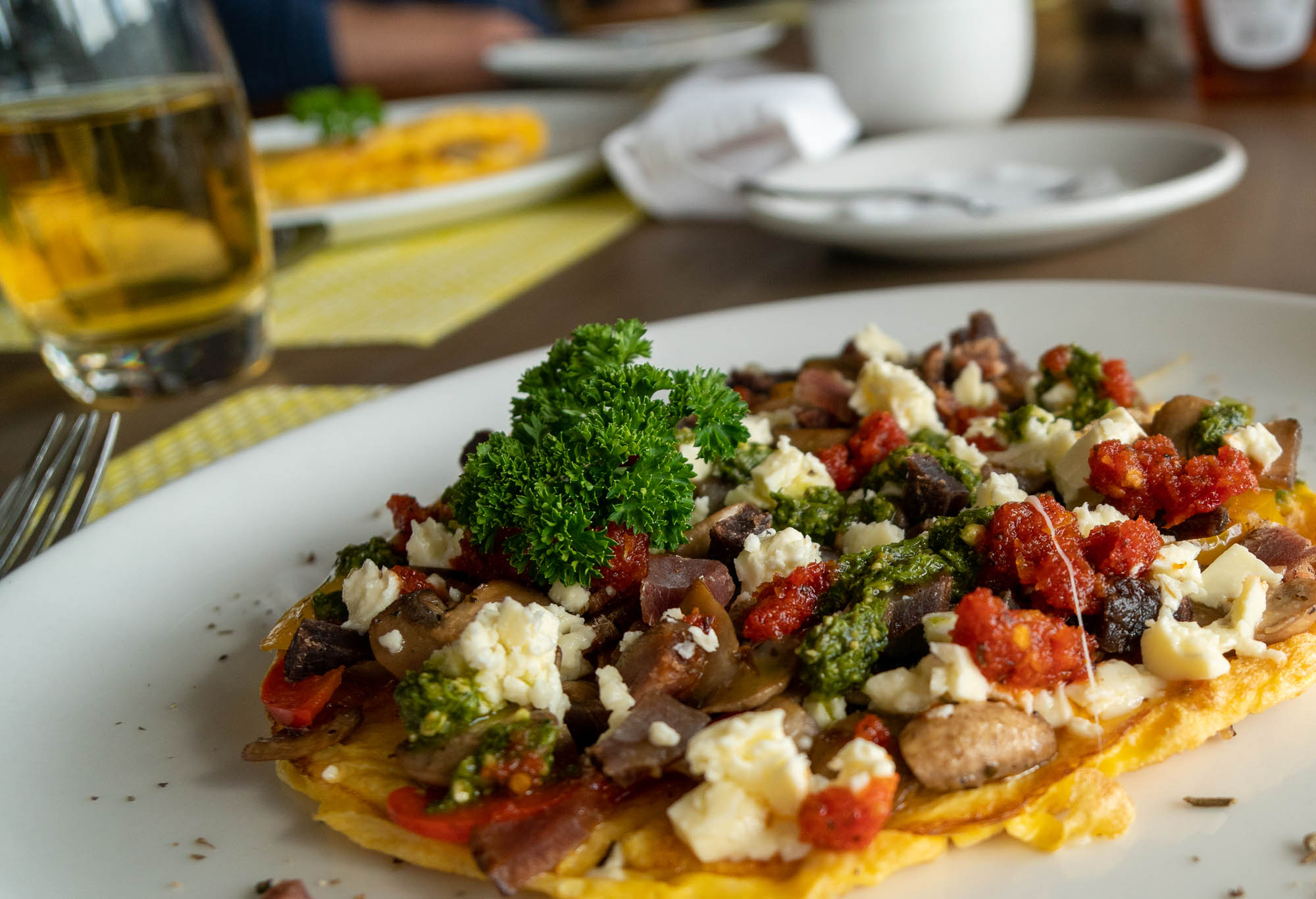
Breakfast at Lobengula was excellent; I tried a local take on Eggs Benedict one morning and it absolutely hit the spot; an omelette the second day was equally good.  Dinner results were mixed.  The meat for the charcoal grill (braai) on my first night there was presented in advance on a platter – you pick your portion and cut – and it was then prepared to order.  I selected a couple of lamb chops and asked for them to be done medium-rare.  I got them back well done and tough.  The side dishes were great, as was the dessert.  In fact the dessert (malva pudding) was excellent.


Image

The following night I decided to take a small gamble and ordered lamb again – this time a rack of lamb.  It paid off handsomely.  The chops were tender and succulent with that typical South African Dorper sheep taste:  a nice herbaceous undertone but quite subtle, and not at all mutton-like.  Dessert was again splendid.  

The ‘lamb chop experience’ at Lobengula underscored my experience of many years on safari.   Almost never have I found the meat prepared on a ‘bush dinner’ or outside grill/barbecue – a ‘braai’ as the South African refers to it – to be anywhere close as good as similar cuts prepared in a proper kitchen setting.  Just too many unknowns and variables with grilling outside, particularly when the chefs are cooking for a whole camp-full of people.  Visibility is bad in the dark, the charcoal temperature is difficult to regulate, it is hard to get the timing right, and so on.   Boerewors sausage and chicken (other than breast portions) are generally the best choices for bush dinners.  

Throughout my stay at Lobengula I could not have received better service or friendlier attention than I did.  Irreproachable in every respect.


Image

Back to guiding:  Morne had guided me some years previously in the Timbavati at Kings Camp, where he worked as the head guide at the time.  Right now, Morne is at the apex of his guiding career and any visitor to Shamwari should thank their lucky stars to be in his vehicle.

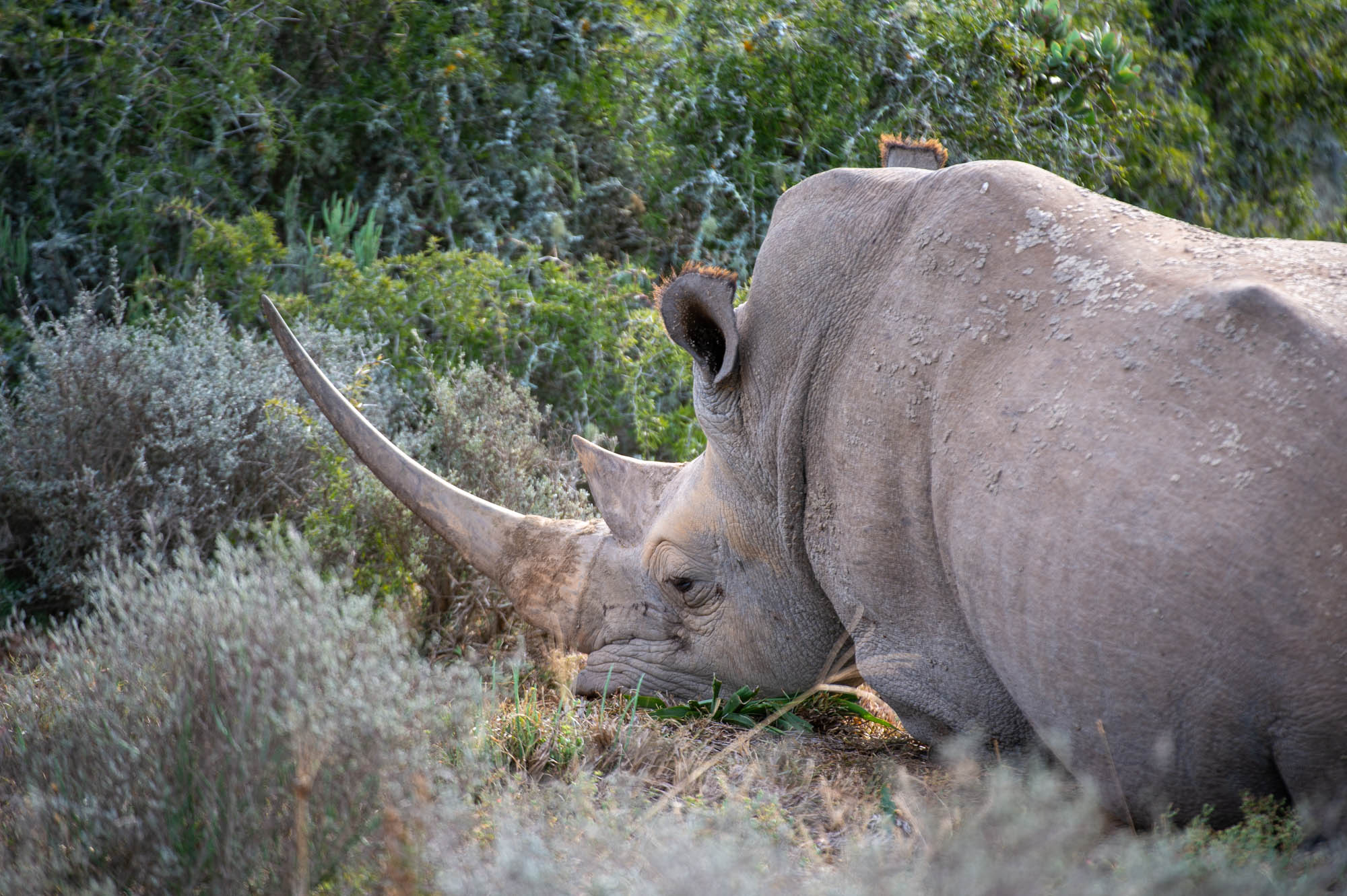
Morne has all the attributes of a good guide:  personable, highly knowledgeable, friendly and enthusiastic, and he wants you to have fun and experience everything the area has to offer.  He will also make every attempt to find a ‘special’ animal or bird for you.  In my case it was black rhino, the only large mammal I had not seen previously on this Southern Africa trip.  Given the bushy habitat preferred by these rare animals, I knew it was a tall order but I need not have been concerned.  We found a striking black rhino female with a young calf, probably not even 40 minutes into our afternoon drive at Shamwari.  Initially motionless behind a bush with just the tip of her long horn giving away her location, she was in no hurry to relocate despite our proximity.  She then walked slowly to the next thicket, calf in tow, turned sideways to give us a look and then she disappeared.  Just like any animal can, in the eastern Cape thickets.


Image

Over the course of two days at Shamwari I must have seen as many as 15 different species ranging from elephants (lots!) to Cape buffalo, lions, the aforementioned black and several groups of white rhinos, multiple giraffes, impala, kudu, Burchell’s Zebra, black wildebeest, springbok, waterbuck, gemsbok, warthog and hippo.  

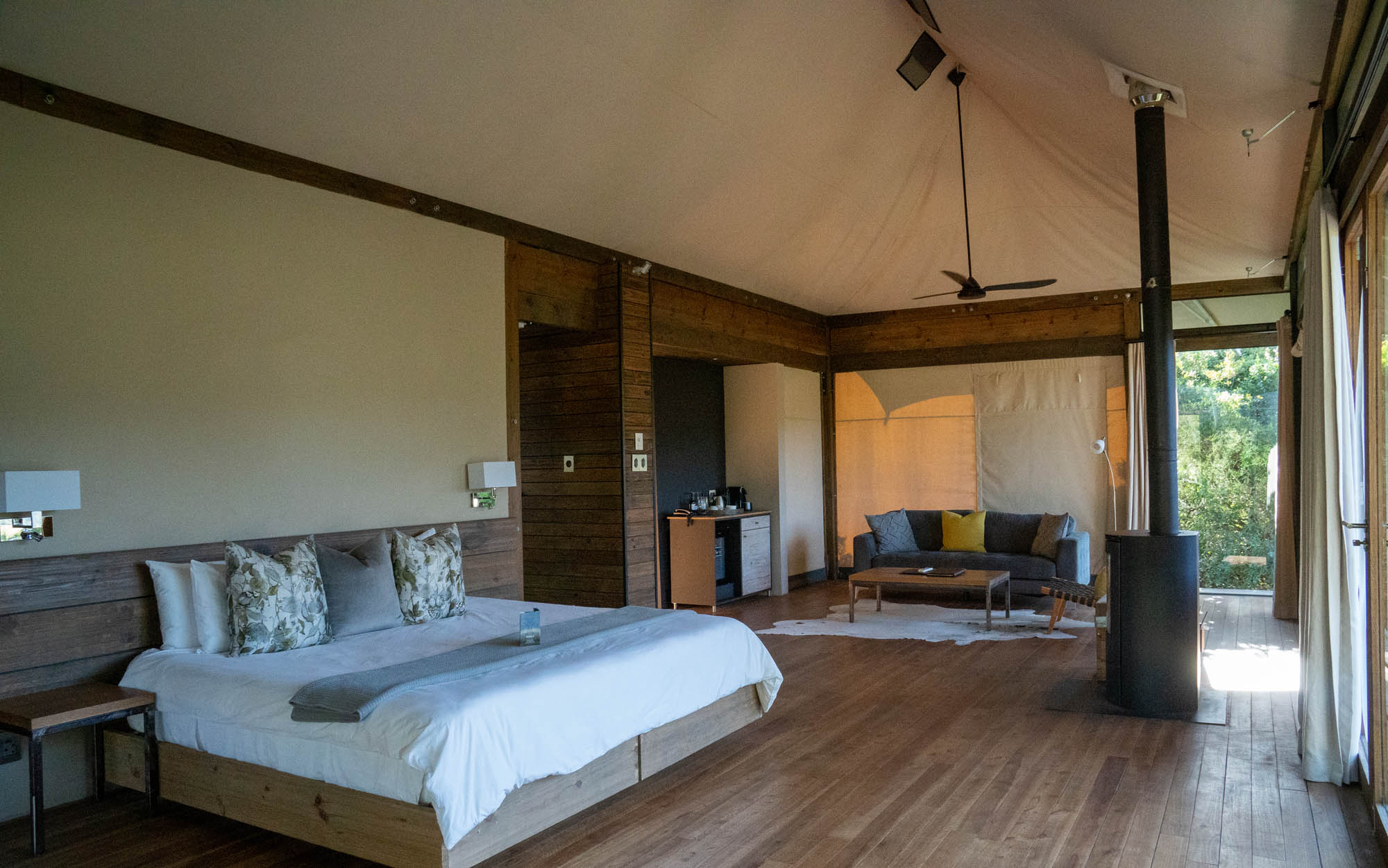
Morne and I also checked out a few other properties at Shamwari including the beautiful Long Lee Manor (where we had lunch) Sarili (where we saw lions from the deck), and Bayethe Tented Camp which I think would be ideal for many north American visitors, with well-equipped and spacious tented rooms.  

In closing, a few words about fences.  Shamwari and in fact all of the Eastern Cape reserves operate in a mixed-use setting, where  fences  are an unavoidable reality and necessity.     Shamwari is huge and the presence of a fence was never an issue or hindrance on my particular visit.  At worst it is a reminder that wildlife thrive in areas which are rich in resources such as water and palatable vegetation.  Which means land that can usually be occupied by people as well.  So when you do see a fence in the eastern Cape, think survival and co-habitation – without a few strategically placed fences it would be near impossible to safely contain and conserve wildlife species in this area.  

Up next:  a return trip to Namibia including our first visit to Hoanib Skeleton Coast Camp.

More Info

Email bert@fisheaglesafaris.com

Email jason@fisheaglesafaris.com

@fisheaglesafarishouston

#FishEagleSafaris

YOU MIGHT ALSO BE INTERESTED IN

Destinations
Zambia

10th September 2021

Chindeni and the Bushcamp Company, Zambia

By late July we found ourselves at Chindeni, a small Bushcamp Company property

Read more
Botswana
Destinations
Okavango Delta

3rd October 2022

Camp Okavango, Botswana

Camp Okavango is in the heart of the permanent part of the Delta. In this idyllic setting there are no vehicles, and it is just a short walk

Read more
Area
Destinations
Nyerere National Park
Ruaha
Tanzania

14th October 2023

From My Safari Notebook: Wildlife Photography

Birds in flight and wildlife photographers have an uneasy relationship. Things go wrong as often as they go right. Getting focus-lock on a moving subject

Read more

SUBSCRIBE TO OUR NEWSLETTER

READERS FAVOURITES

Destinations
Zambia

10th September 2021

Chindeni and the Bushcamp Company, Zambia

By late July we found ourselves at Chindeni, a small Bushcamp Company property

Read more
Botswana
Destinations

4th August 2022

On Safari At Belmond Eagle Island Lodge, Okavango Delta

What is the ‘secret sauce’ for an unforgettable few days on safari in Botswana? It starts with the animals, of course. The elephants, lions, giraffes, hippos
Read more
Destinations
India

27th May 2023

India

India’s tiger, mammals and birds.

Read more

Timbavati Game Reserve, Kruger Park

23rd July 2020

Timbavati Game Reserve, Kruger Park


Image

Timbavati Game Reserve, Kruger Park

The Timbavati Game Reserve, a massive privately operated game sanctuary adjacent to the west of the central portion of Kruger Park, is sometimes overshadowed by its better known neighbor to the south, the Sabi Sand Reserve.

In reality, there’s not much to choose between the two reserves, in terms of the overall safari experience.  In short, they are both excellent.  In some ways the Timbavati in fact outshines its more popular rival to the south.  It is more remote, the vehicle density is less, and the prices are on average a good bit less than the Sabi Sand, making Timbavati the best value option of the private reserves.  The guiding is good to excellent in both reserves.  Guiding proficiency is usually more closely associated with a specific lodge than with a reserve.


Image

All in all, the Timbavati is about as ‘bushveld’ as it gets, with a typical mix of acacia thickets, patches of riverine bush, open savannah and large swathes of mature woodland.  Its average altitude above sea level is barely 500 meters, which makes for balmy, dry winter months from about May through August and September, which is also the ideal time to visit.  Like the Sabi Sands, the Timbavati is also completely open to the Kruger Park on its eastern boundary, allowing for free and unfettered movement of animals from the national park.


Image

KAMBAKU RIVER SANDS

On a return visit to the Timbavati last May, I spent several days at four different camps, and re-discovered the appeal of this attractive slice of African wilderness.  My first stop was Kambaku River Sands.  Kambaku River Sands is a well-managed property in a game-rich area of the Timbavati.  Right from the word go I sensed that they had their act together and everything I experienced over the course of my short stay validated the first impression.  Starting with the 10 luxury suites.  They are huge and super comfortable, with a large mosquito net enclosed bed, air-conditioning, a sitting area with chairs and a table, ample lighting, tea and coffee making facilities and a spacious separate bathroom with indoor and outdoor shower and good-sized ball and claw bath.


Image

The food offerings were excellent throughout, from lunch on arrival, dinner and brunch the next morning.  Nicely prepared and imaginatively presented, and extremely tasty.  Clearly a lot of thought goes into menu planning and food & beverage service.  I did not have much time to spend at the expansive and beautifully wood-crafted bar, but it looked most inviting.  As a unit the lounge and dining room complex is attractive and functional with lots of space and spots where couples and small groups can get together before or after meals, or around the outdoor pool. Elephants come to drink from the pool from time to time, and there is a separate waterhole within sight of the deck as well.


Image

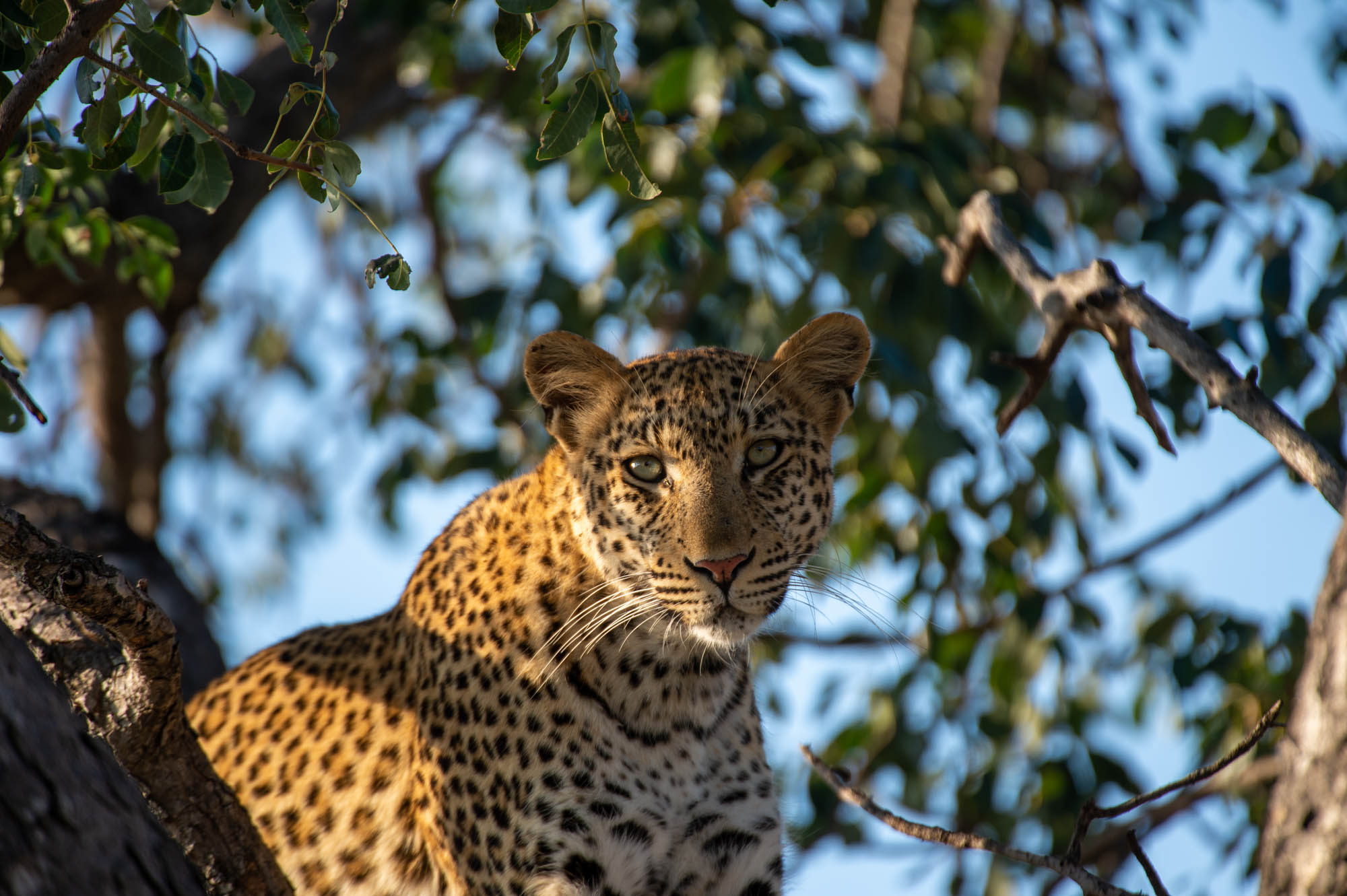
In just two game drives out of Kambaku I saw a ton of stuff, including a fantastic sighting of a young female leopard in a tree.  We also saw some lions at night, there were lots of elephants, and all the usual plains game species including zebra, impala, wildebeest, giraffe and kudu.  The bush was still quite thick (early May) so clearly game-viewing will be even better as the dry season advances.

The following morning’s game drives out of Kambaku produced an elephant sighting which was just as spectacular as the ‘leopard in a tree’ of the previous day.  Being early May, there was not a great abundance of animals.  The area is densely wooded and after the rains game viewing can be challenging.  However when you do come up on something good, there are few, if any  other vehicles around.


Image

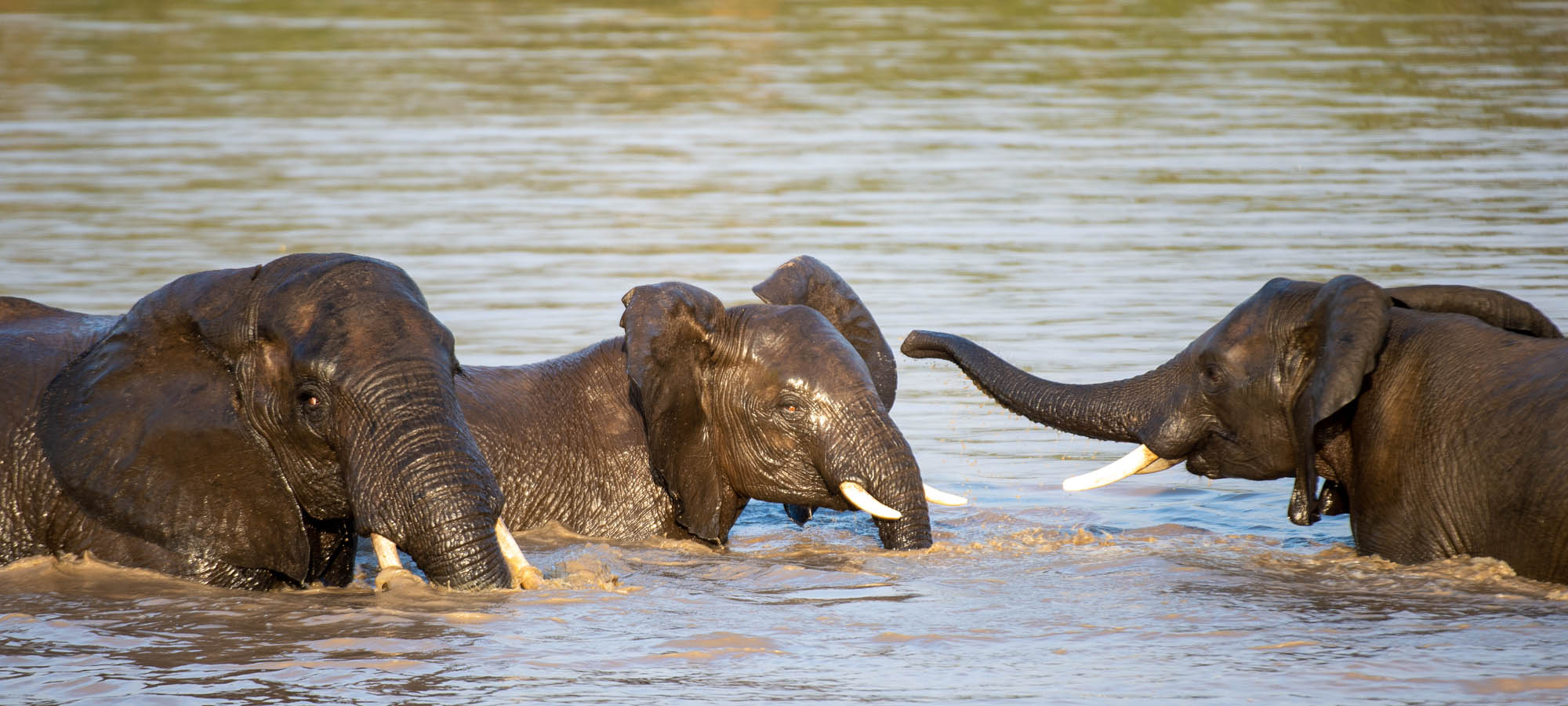
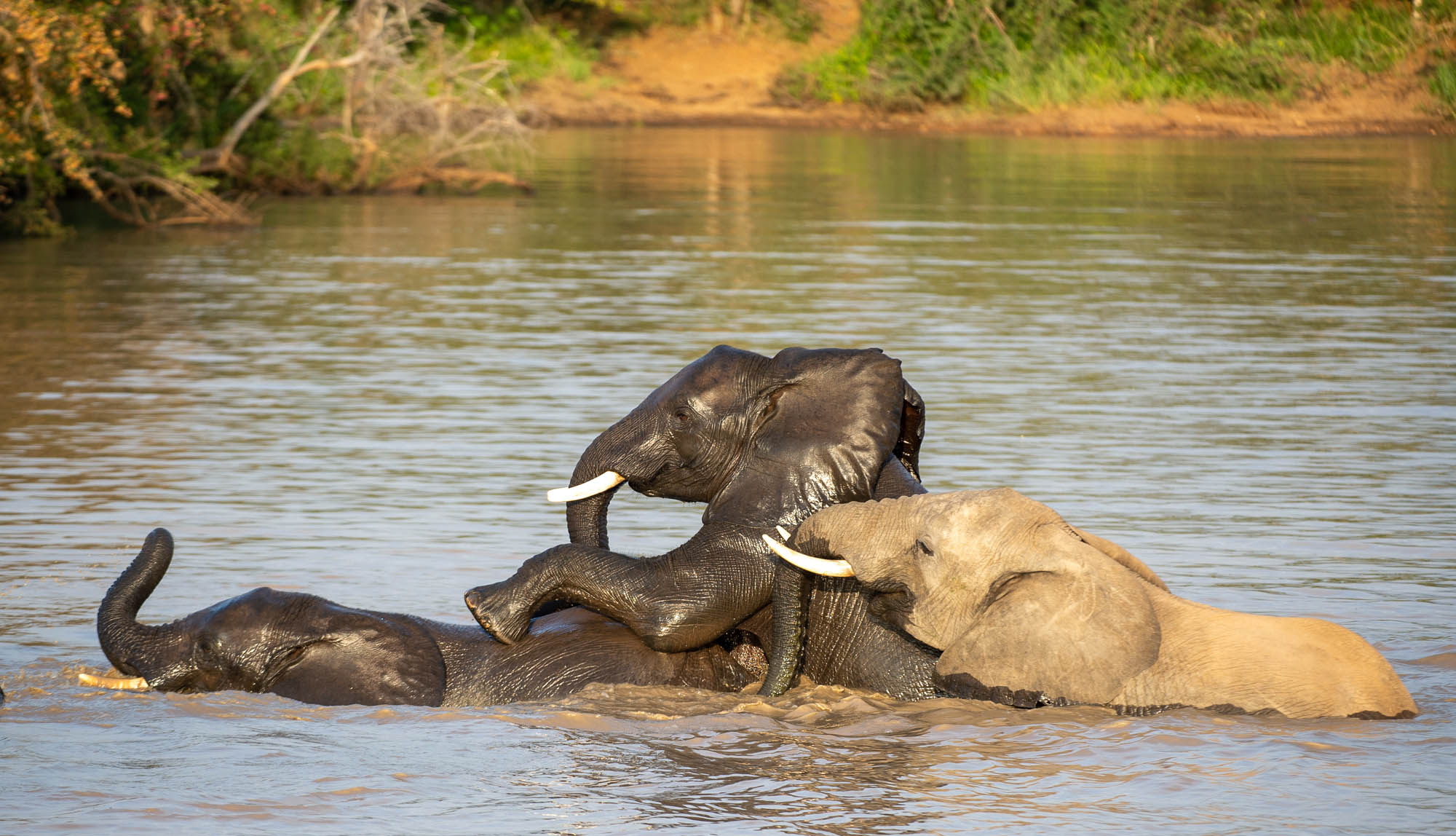
A spectacular elephant sighting on this drive had just two vehicles witnessing it. Which is almost too bad because it was a ‘once in 20 years’ type of sighting: an amazing spectacle with about 20 young elephant bulls testing their strength in a quasi-serious jousting contest, half-submerged in a lake.  Right in front of us.  In near perfect light.  If you visit Africa maybe one time only and experienced only this, you’d understand why a photo safari is such a satisfying experience on so many levels.

There’s the sheer visual appeal of it, naturally.  A hankering to see big mammals alive and kicking in their natural habitat is just skin-deep in most people, I suspect.

There’s the sense of discovery and of seeing new things, all while completely escaping the daily grind of our overscheduled, overly busy lives.


Image

There is an underlying sense of apprehension and a tinge of danger, in the proximity of particularly the big cats but also elephants.  Return visitors will recall that very first time their guide drove them right up to a pride of lions. You know it is safe and you are told that the big cats don’t pay attention to people sitting still in the vehicle.  But what if…

The sense of anticipation and the surprise element.  Don’t we all thrive on being pleasantly surprised?  On safari it happens often and sometimes when you least expect it.  Just like the following day’s events would reinforce, a game drive isn’t over until it is over.  Anything can happen and often does, sometimes in the last few minutes of a drive.

Of course, you also get to stay in some wonderful places, hosted by people whose only mission is to keep you happy and content.


Image

KINGS CAMP

Returning to Kings Camp after an absence of several years, it was reassuring not to have to work too hard to remember the first time.  Other than a few small changes (a new spa area, new decking, more outdoor spaces) it had remained essentially the same.  A timeless classic where all your African safari expectations are met and exceeded.  The near palatial rooms with mosquito net enclosed king bed, an inviting clawfoot bathtub, inside and outside shower and plunge pool (in the honeymoon suites), will wow just about anybody. 


Image

Both meals I enjoyed at Kings Camp were exemplary: a delicious breakfast on my day of departure and a multi-course boma dinner the night before. The array of menu items was quite impressive and enticing, ranging from lots of fresh veggies to a deconstructed mixed salad, pork belly, roast chicken, braised oxtail stew, and a stir fry station.  With several other side dishes and finished off with a lovely malva pudding for dessert.

The two game drives from Kings Camp with my guide Remember were fun and memorable.  Remember is a caring, careful and highly experienced guide who knows the area intimately and takes his time to impart some interesting facts and observations about the various animals, birds, plants, and trees seen.


Image

The afternoon game drive started out being quite slow but that changed – right towards the end of the drive – with another ‘leopard in a tree’ encounter.  Add to the mix some scavenging hyenas as well as an interloper young male leopard, and things become fascinating in a flash.

We watched spellbound as the younger male got wind of the smell of a carcass in the tree, from which he eventually displaced the older and much heavier male.  In the gathering darkness I managed to capture a few arresting images of the older male exiting the tree, his demeanour and body language reflecting caution and maybe even apprehension.  He was in no mood for a fight in which he stood to lose everything.

The next morning we enjoyed a similarly entertaining and meaningful episode, watching a coalition of two male lions re-connecting early that morning.  Greeting each other like brothers with big grins and some head rubbing, they settled down for a siesta while we went off on a successful search for a female leopard.  Great stuff!


Image

NGALA TENTED CAMP

By midday in early May, I was enjoying an impeccable lunch at Ngala Tented Camp, a deluxe property on the border of Kruger National Park.  With nine elegant tented rooms – operated by the redoubtable AndBeyond company – Ngala Tented Camp is one of very few properties which we’ve booked for our clients in the past, sight unseen.  It’s always turned out well and now that we’ve been there ourselves, I daresay we will be recommending this place for a lot more guests.

Ngala Tented Camp is intriguing and pleasing visually and artistically, with a blend of old and new, wood and stone, glass and canvas, creating a one-of-a-kind look and feel which is hard to pin down, but easy to like and appreciate.


Image

The Ngala Tented Camp rooms likewise hit all the right notes.  Not huge but with plenty of space, an exceedingly comfortable bed, a separate bathroom with a big tub (and lots of water with good pressure), a separate enclosed toilet and a particularly nice outdoor shower enclosed in a rock/stone wall.

The room is air conditioned, quiet and private with a range of excellent camp snacks (nuts and fudge), wine, beer and several types of spirits and mixers.  There’s even a recipe for Ngala Tented Camp gin fizz.


Image

It soon became evident that Ngala Tented Camp is located in a superb game-viewing area.  Over the space of two game drives, afternoon and morning, we managed to find and observe the so-called Big Five mammals without much drama at all.  Notably, three of the five we saw no more than one kilometer or so outside the camp.  In many African safari camps you have to drive for 30 or 40 minutes or more, just to get to where the game is.  Not so at Ngala Tented Camp.  The game is right there.

Our guide Scott was enthusiastic, had a great sense of humor and managed the most difficult of guiding feats (first timers and veteran safari goers on the same drive) with the greatest of aplomb.  Clearly Scott and tracker Ernest are a formidable team, providing their guests with lots of wow moments.

A nice change of pace moment was when Scott got us all out of the vehicle to walk through the bush, making a close approach to a giraffe.  Which turned out to be the most relaxed giraffe ever!


Image

TANDA TULA CAMP

My last Timbavati camp on this trip was the well-known and perennially popular and well-established Tanda Tula Camp.  Located in the heart of the Timbavati along the Nlharalumi River, Tanda Tula has gained its excellent reputation by doing everything right, consistently.  Good accommodation, great food, pleasing camp ambiance and superb guiding make it a great choice for first timers and safari veterans alike.


Image

On a couple of game drives with guide Luke and master tracker Jack, I think I gained just as much from the experience as the two young couples from San Francisco for whom it was their first two game drives ever.  Yes, we saw the Big Five but it ended up being much more than that, with Luke imparting some witty and well-informed bits of information and background without being pedantic or repetitive.  Good, fresh information, not the hackneyed ‘Mcdonalds of the bush’ drivel.  For example, I never knew just how short the ‘reign’ of a dominant male Impala was.  Turns out that he has perhaps as few as eight days as the dominant male in charge of his harem of females, before he is supplanted by a challenger.  Guides like Luke take delight in debunking old bush myths and pseudo facts.  All the more reason to have a well qualified guide leading you.  Likewise Jack, who is one of only 25 master trackers working in this field in South Africa.


Image

Back at the lodge chef Ryan prepared a couple of the best meals I had enjoyed on the trip to date.  A lunch with braised barbecued pork ribs and a delightful dinner with lamb loin chops or braised guinea fowl.  The side of sweet potato croquettes and the kingklip (fish) starter were equally tasty and beautifully presented.  Camp manager Antony and his staff were friendly and caring and I think all the guests enjoyed the good humor and general sense of well-being which suffused the place.  It is not stuffy or serious, just good fun and a great time.  Plus the WiFi works well.


Image

JOHANNESBURG INTERLUDE

I had not spent a night in downtown Johannesburg in a very long time.  Having lived in the city in a previous life, I am no stranger to it but this was a new experience.  Home for the night was a small boutique hotel – the Hallmark House – chic and ultra modern, located right on the edge of Maboneng, with a mix of accommodation, galleries, retail shops, restaurants and clubs.

Wandering around the place in the late afternoon, I was very much a stranger in his own country, but it was nonetheless interesting to observe from a very different perspective.  I was relieved to find an informal dinner spot, a small hole-in-the-wall with every table taken, which is always a good sign.  The food was simple but exactly what I wanted, and at least for twenty minutes or so, it re-connected me with a place and time long gone.  A traditional ensemble of pap (a rustic version of polenta) with a tomato and onion sauce, a side of spinach and a ‘boerewors’ sausage, South Africa’s celebrated traditional version of bratwurst, characterized by the addition of coriander in the spice mix. Tasted like home.


Image

The following morning I had time to capture a few photographs of the Maboneng precinct, particularly some of its ubiquitous examples of street art and graffiti. The graffiti were colorful, brash and ephemeral, with many illustrations already starting to peel away and decay.  One hopes that this does not happen to Maboneng itself.  That the promise, the sense of renewal and rebirth visible in so much of it, is not dashed by the harsh realities of commerce and circumstances beyond the control of the locals.  It remains to be seen.

If you’re keen to experience an authentic modern African city environment then definitely yes, spend a couple of nights at the Hallmark House or the nearby CityLodge on the edge of Newtown.  Johannesburg has a vibrant arts and music scene – which I hope to explore on my next visit.  In the way of a true big city with all of its energy, creativity and fascinating people, there are few better than Egoli, South Africa’s city of gold.  What makes Johannesburg doubly interesting is the process of renewal that is taking place.  Blight and decay are making place for hope and aspiration, innovation and ingenuity.  Maboneng being the most visible but hardly the only example.  Newtown and Braamfontein have undergone a similar process of renewal and rejuvenation and are now worthwhile stops on your exploration of Joeys.


Image

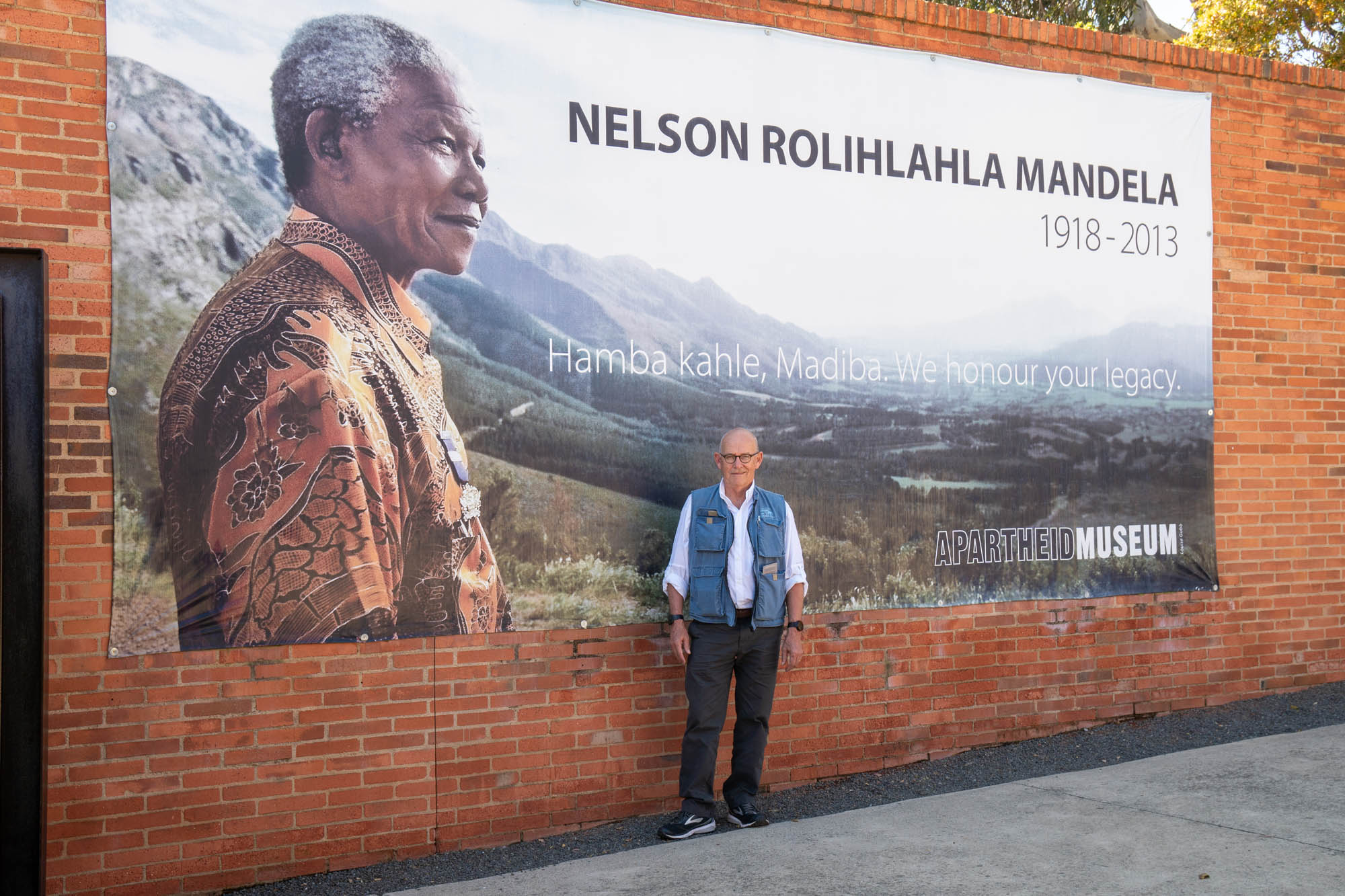
APARTHEID MUSEUM

The young French girl – part of a tour group of some thirty or so students visiting the Apartheid Museum in Johannesburg last May – probably didn’t know what to make of the older man she saw crying, just outside the museum exit.  The man was leaning against a planter, his head down, tears streaming down his face, clearly emotionally devastated by what he had just seen and experienced.  What was he crying about, she might have thought.  If she had stopped and asked, the man would have told her that he was crying for his country of birth, for lives ruined, families destroyed, and hopes dashed.  He was crying because of regret and guilt, with the realization that the failed system of apartheid was a colossal waste of the human spirit, of lives, time, resources and energy.  The French girl saw sadness and pain on his face; what she didn’t see was the unresolved inner conflict, the scars left by living through the worst of the apartheid era.  Even though the man was lucky not to be one of the oppressed, the double-edged sword of racism wounded him just as deeply.  All South Africans were diminished by the system, they just did not all realize it at the time.  Being confronted so vividly and strikingly by the harsh reality of the grave injustice done to millions of people, a lot of old, suppressed feelings and memories were brought to the surface.  Until then, the man thought that he had made his peace with all of this. Clearly he was mistaken.


Image

I have always had something else or something better and more pressing to do in Johannesburg than visiting the Apartheid Museum.  Until this time.  I now regret not doing it sooner.  For those of us who lived through it all, it is a bitter pill to swallow.  For visitors from abroad, it will be no less impactful and just as shocking to come eye to eye with man’s inhumanity to man.  The Apartheid Museum is important and powerful.  It is also substantial and altogether loaded with information, displays, facts, maps, movies, names, history, interpretation and memorabilia.  At a minimum, it takes a solid two hours to make your way around it, and I could see someone easily spending three or maybe even four hours there, if you wanted to get into the details of all the exhibits.  Don’t rush it.

In part 2 of this South Africa trip report, I make my way to the malaria-free Eastern Cape region.  Coming soon.

More Info

Email bert@fisheaglesafaris.com

Email jason@fisheaglesafaris.com

@fisheaglesafarishouston

#FishEagleSafaris

YOU MIGHT ALSO BE INTERESTED IN

Destinations
Zambia

10th September 2021

Chindeni and the Bushcamp Company, Zambia

By late July we found ourselves at Chindeni, a small Bushcamp Company property

Read more
Botswana
Destinations
Okavango Delta

3rd October 2022

Camp Okavango, Botswana

Camp Okavango is in the heart of the permanent part of the Delta. In this idyllic setting there are no vehicles, and it is just a short walk

Read more
Area
Destinations
Nyerere National Park
Ruaha
Tanzania

14th October 2023

From My Safari Notebook: Wildlife Photography

Birds in flight and wildlife photographers have an uneasy relationship. Things go wrong as often as they go right. Getting focus-lock on a moving subject

Read more

SUBSCRIBE TO OUR NEWSLETTER

READERS FAVOURITES

Destinations
Zambia

10th September 2021

Chindeni and the Bushcamp Company, Zambia

By late July we found ourselves at Chindeni, a small Bushcamp Company property

Read more
Botswana
Destinations

4th August 2022

On Safari At Belmond Eagle Island Lodge, Okavango Delta

What is the ‘secret sauce’ for an unforgettable few days on safari in Botswana? It starts with the animals, of course. The elephants, lions, giraffes, hippos
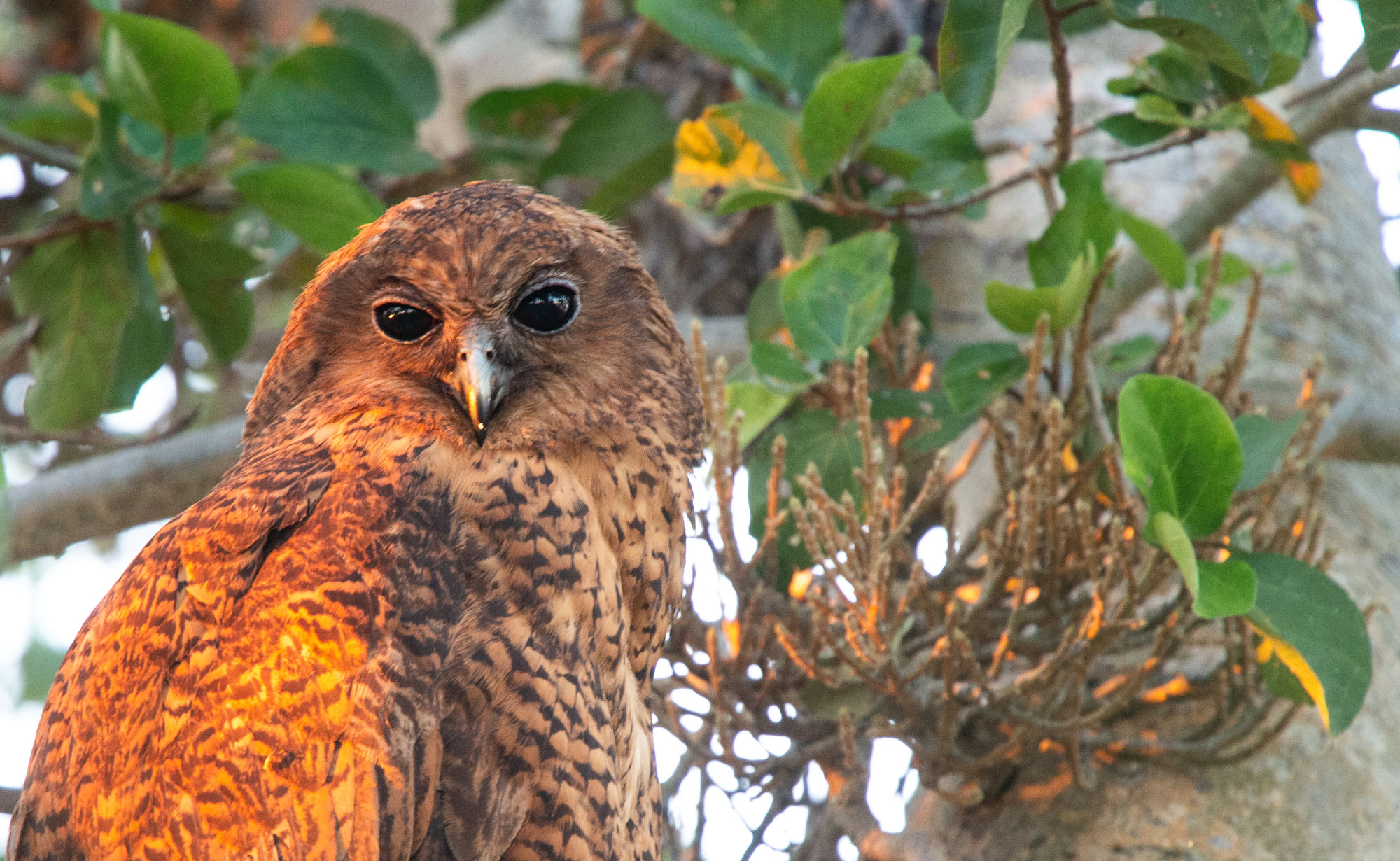
Read more
Destinations
India

27th May 2023

India

India’s tiger, mammals and birds.

Read more

KENYA TRIP REPORT PART 2: LEWA WILDLIFE CONSERVANCY

5th July 2020

KENYA TRIP REPORT PART 2:
LEWA WILDLIFE CONSERVANCY


Image

KENYA TRIP REPORT PART 2:
LEWA WILDLIFE CONSERVANCY

Every once in a while on my African travels, I discover a place that almost immediately appeals to me and which I soon realize, our guests will come to enjoy and appreciate as well.  The Lewa Wildlife Conservancy is one of those places.  Lewa is special on many levels.  Back when I first visited it in the late 1990’s, it struck me as being almost sublimely ‘out of Africa’.   On my most recent visit last June, I felt just the same way.  Mostly, the place just shouts ‘Africa’.  Standing there, on a clear day, you can see the jagged peaks of Mt. Kenya to the south.  If you turn around 180 degrees, on the horizon to the north, looms the sacred mountain of the Samburu – Mt. Ololokwe.  Mountains, valleys, vast open plains and amazing vistas of blue foothills disappearing into the void.  We cannot all have a farm in Africa like Karen Blixen once did, but we can visit one – and there’s none better than Lewa.


Image

Other ways in which Lewa is special?  It harbors and actively protects more rhinos (white and black) than any other conservancy in East Africa.  Lewa’s rhino population has grown from an initial 15 rhinos to around 170 rhinos currently, nearly 15% of all rhinos in Kenya.  Lewa also has a great mix of endemic species including Grevy’s Zebra, Beisa Oryx and Reticulated Giraffe.  Some of these animals – like the Grevy’s Zebras – are rare and endangered and they are all spectacularly beautiful.
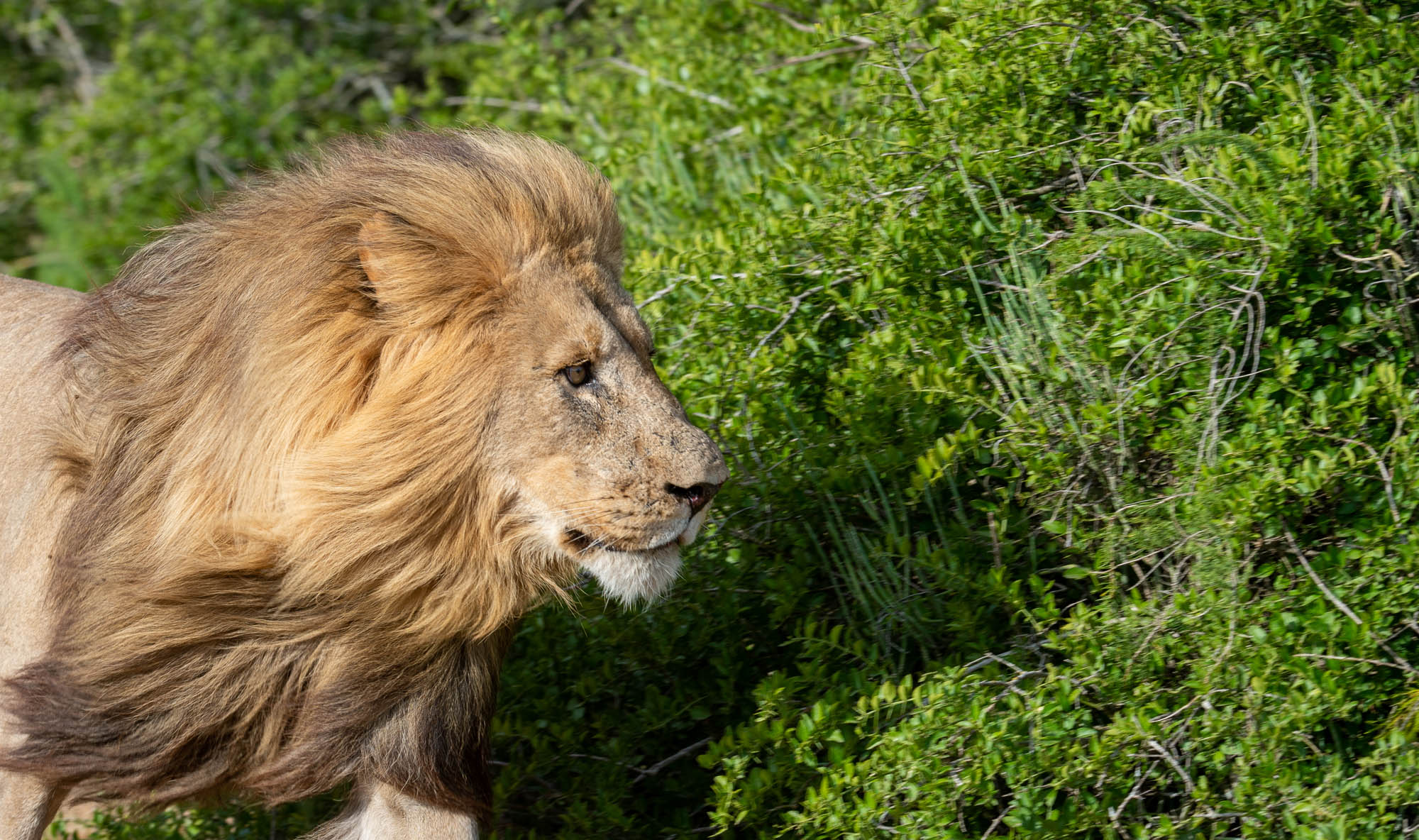
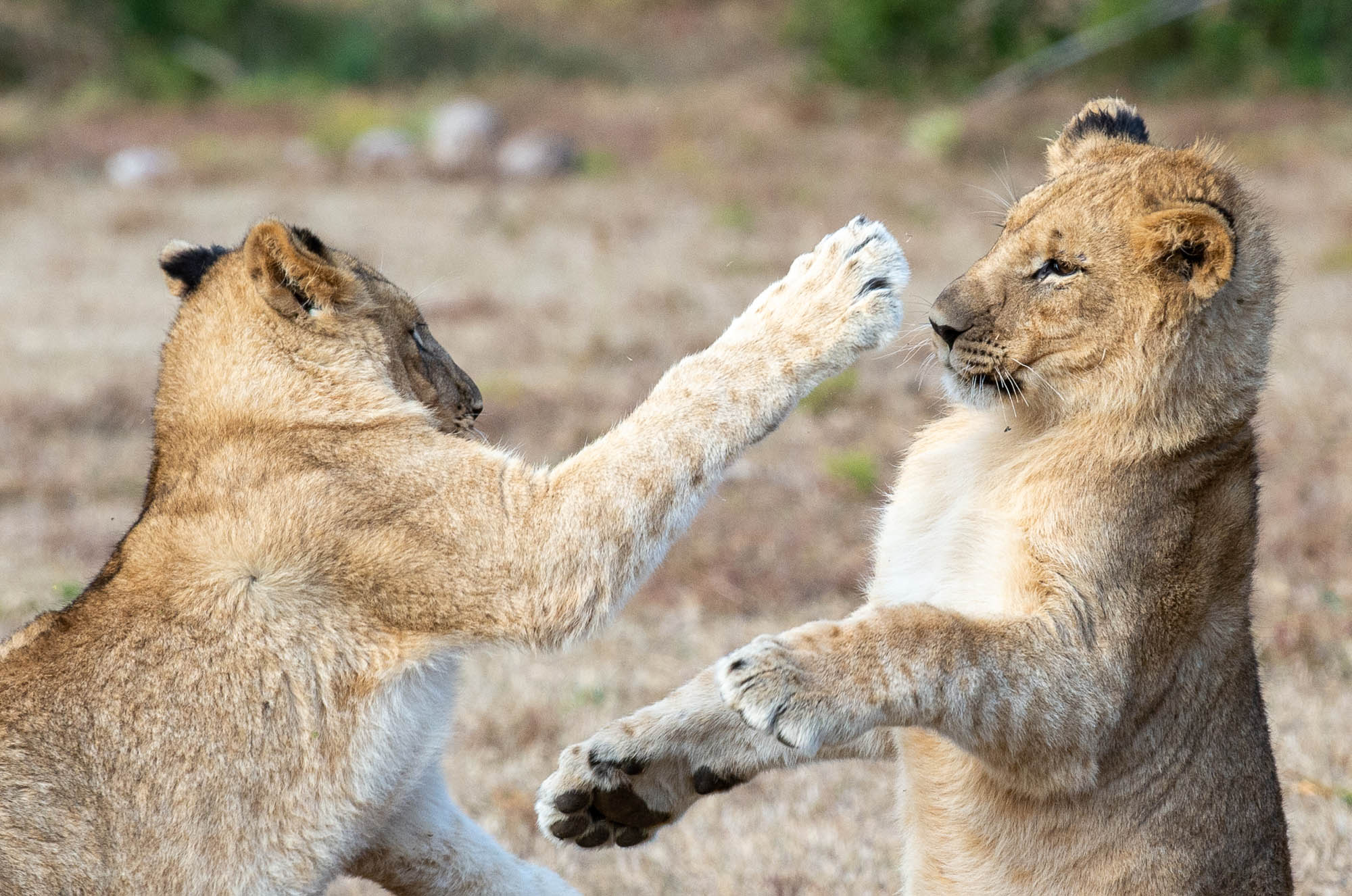

Image

The Reticulated Giraffe I consider to be the ‘oil painting’ of giraffes, compared with the somewhat washed out ‘watercolor’ version seen elsewhere – the Plains or Masai Giraffe.  The Reticulated Giraffe is almost a dark orange with vividly demarcated lines between the color blocks.  Never to be forgotten, once seen.

Likewise the Grevy’s Zebra.  Its finely striped black and white skin pattern – without the shadow effect visible on the Burchell’s Zebra – and its white belly make it quite a handsome equine.  Its looks are marred only somewhat by the ridiculously large, mule-like ears.


Image

Beisa Oryx are amazing animals and while their status is also ‘endangered’, they are fairly common in Lewa. Strikingly beautiful with both males and females sporting long, thin ringed horns.  They are quite unmistakable when seen with mostly blue-grey bodies, offset by a white underside and distinctive black stripes along the side, the neck and on the face.

Finally, Lewa is special because of its remarkable achievements over the years in the field of wildlife conservation (notably rhinos and Grevy’s Zebra), and its pioneering work in community-centric conservation.  Lewa has invested heavily in both the protection of endangered species and development of its neighbouring communities to create a future where both people and wildlife can flourish.


Image

TUSK MARATHON – LEWA WILDLIFE CONSERVANCY

Late in the morning after my overnight stay in Nairobi, I was on a flight from Wilson Airport to the beautiful and very successful Lewa Wildlife Conservancy.  Having been established in 1995, Lewa/Borana is arguably Kenya’s premier example of a wildlife sanctuary where wildlife conservation, community welfare, cattle farming and hosting guests from 9 tourism properties are successfully integrated and managed by a permanent staff.

For the next 3 nights my accommodation was a rustic tented camp – Maridadi – erected close to the Lewa Headquarters, for the annual running of the Tusk Half and Full Marathon.


Image

Late on the first afternoon, we did a short 3 km ‘warm up’ run and afterwards enjoyed sundowners on a beautiful hill.  A few of us went on a late afternoon game drive, which turned out to be surprisingly good.  In practically no time at all, we ticked off most of the Lewa specials like Grevy’s Zebra, Reticulated Giraffe, Beisa Oryx and Somali Ostrich.  As well as Buffalo, Eland, and Burchell’s Zebra.


Image

On the second day we visited several projects supported by the Lewa Wildlife Conservancy, through donations from charities such as the Tusk Foundation.  Among others, we visited a school and the Lewa Clinic. The Lewa Education Program works to provide access to quality education that improves students’ economic opportunities, in the hope that it creates a new generation of environmental stewards. I was impressed by the degree to which electronics had been incorporated into the classroom we visited.  The electronic ‘blackboard’ and the presence of so many electronic tablets would be the envy of many a school district anywhere in the world.


Image

On the Saturday, some 1,500 runners lined up for the start of the 20th annual Tusk Lewa Marathon and Half Marathon, one of Lewa’s major fundraising events.  The race is well organized and is a taxing, yet fun event.  It helps to be well prepared and at least somewhat acclimated to the mile-high altitude.  Add to that the heat – it was nearly 80 Fahrenheit at the start – the hills (plenty of them) and the uneven footing along rough trails, and all in all it makes for a super-tough race.


Image

LEWA WILDERNESS

Late in the morning after the run, I was off to Lewa Wilderness on the north-eastern edge of the conservancy.  Lewa Wilderness, which is owned and operated by the Craig family, is a jewel of a lodge with gorgeous rooms, a stunningly beautiful setting in a lush garden, views over the valley below, and simply first-class all-round hospitality.

My room – #7 – had an expansive view, tons of space, a double bed with mosquito netting, adequate lighting (but difficult to find the right on and off switches), a shower and separate toilet, and a mini-bar with soft drinks, beer and ice.  Simply a splendid place to be on safari, as one of the English guests remarked over dinner later.


Image

The food was excellent: I was introduced to all the other guests already in camp over a buffet lunch (curried chicken and curried vegetable dishes) with quiche, green salad, fresh bread and more.  The meal was served family style.

Dinner was roast beef with veggies, a potato dish and dessert, all delicious and perfectly prepared. Most dietary needs can be accommodated.


Image

I experienced a couple of game drives from Lewa Wilderness and much to my surprise saw a cheetah on both outings.  One rather skittish young male (a newcomer to the area) and another older, much more relaxed male which was stretched out on a fallen tree stump, enjoying the morning sunlight.  Another sighting of note was a few gerenuk antelope, which are more abundant in arid areas to the north, like Samburu.


Image

BORANA LODGE

The following couple of nights I stayed at Borana Lodge, a 9-roomed property set in the stunningly beautiful foothills of Mt. Kenya, in the Borana Conservancy, adjacent to the west of Lewa.  In 2014 the fence between the two conservancies came down, which opened up even more of a corridor for wildlife – notably elephant – for movement between Samburu in the north and Mt. Kenya in the south.  Over the last 30 years or so, elephants have impacted Lewa Wildlife Conservancy significantly, mostly by destroying huge numbers of acacia and other trees, effectively turning large tracts of mixed woodland into savanna grassland.


Image

Opening up adjacent areas like Borana and in future hopefully the nearby Il Nguesi area, will help to alleviate the pressure on the habitat and reverse this habitat-changing effect.  Given time, trees like the yellow barked acacia and whistling thorn acacia will bounce back and forests will naturally re-emerge.  But only if the saplings are not constantly being hammered by the elephants.

Already – during my visit – the number of elephants in the Borana Conservancy appear to be increasing relative to Lewa.  Borana being much more heavily wooded will definitely relieve the pressure on Lewa.


Image

The Borana Conservancy is higher, hillier and greener than Lewa.  It also has even fewer cars and people around so if solitude, splendid views and montane scenery is your thing, Borana is your spot.  While I did see a black rhino in Lewa (after several days there), I saw several in Borana, starting with my very first game drive there.  My knowledgeable and enthusiastic guide Peter soon had a female and juvenile pair of black rhinos in sight and with some deft maneuvering, I got several good shots of them, without displacing or unnecessarily alarming them.

My experience at Borana Lodge for the two nights there was most enjoyable and fun, with a mix of game drives, sundowners in scenic spots, a fun bush dinner, and spending time over lunch and breakfast with the owner, Michael Dyer.


Image

The lodge itself is perched on a slope of with beautiful views over blue-grey hills and verdant valleys.  Out of Africa, no doubt.  Plus the original ‘Pride Rock’ from the Lion King movie is just around the corner!  My room – #3 – was spacious with all the amenities including a bath, shower, fireplace, and two outdoor relaxation areas.

The room interior and soft finishings are due for a major ‘freshening up’: some paint, new tiles in the bathroom, new window drapes, a new color scheme – there are quite a few things which can be done to give the room a fresh look.

It is a minor point of criticism though.  The overall experience at Borana was most enjoyable with great food, friendly staff, management and expert guiding.

It appears that Borana’s cattle management and rotation scheme is quite successful at keeping the vegetation vibrant and full of life.  There are practically no areas of moribund vegetation, but this may have had something to do with the abundant recent rainfall, at the time I was there.


Image

LEWA SAFARI CAMP

The penultimate stop of my mega familiarization trip was the popular and highly rated Lewa Safari Camp, also operated by Elewana, located inside the Lewa Wildlife Conservancy.  We do and will continue to use Lewa Safari Camp on future Kenya itineraries for many of our clients.  This visit made it clear to me why the camp works so well.  A lot of it has to do with the managing couple Sacha and Tamlyn.  During my all too brief overnight and one day there, Sacha devoted a lot of time to spend with me over lunch and dinner, talking about the area and what it has to offer to guests.  With such enthusiasm and energy as demonstrated by Sacha, it is clear to see why Lewa Safari Camp is so popular with guests.  My tented room #3 was spotlessly clean and well organized from lighting (easy on off switches), to having the best charging outlet of any camp on the trip, including no less than 4 USB charging points.  Lewa Safari Camp has an attractive pool with a view over the valley, and well-marked pathways.


Image

Exercise note:  It is possible to jog inside the camp perimeter on gravel pathways, along a loop totaling about 1 kilometer in distance.

En route to my final destination, I did a site inspection at Kifaru, Elewana’s luxury 5-roomed lodge.  Compact and intimate, with camp manager Andrew giving me a concise yet thorough overview of the camp.  Kifaru has a great location on top of a hill, with large and well-appointed rooms, a beautiful central area and dining room.  Room #5 appears to be the choice spot to be.


Image

SIRIKOI LODGE

I had long looked forward to visiting Sirikoi, my planned 2017 visit having been derailed by Hurricane Harvey.  Sirikoi turned out to be worth waiting for!  It is an oasis like few others, from location to accommodation and management.  The tented rooms, main lounge and dining room areas are stylish and immaculately maintained, and the food and beverage service is of an exemplary quality.  While at Sirikoi, I took some time off from the game-viewing to scout out the property and surroundings a bit better.


Image

With its mix of four luxury tents and two exclusive use houses (with 2 and 3 bedrooms respectively), Sirikoi caters for discerning guests who like and enjoy comfort and luxury, but in an elegant, understated fashion.  There is nothing over the top or extravagant about Sirikoi.  It strikes a perfect balance between being luxurious and stylish, yet retaining the essence of a true Kenyan retreat.


Image

Sirikoi’s location right alongside the Sirikoi stream, on the edge of a large swamp, results in wildlife often entering the property and being visible from the open dining deck in front of camp.  In the late afternoon and early evening, as the birds settle down and nocturnal creatures like bush babies start to get active, enjoying a sundowner at Sirikoi is as good as it gets on safari.  I experienced just that on my last night there.  One by one a family of seven Striped Kingfishers disappeared into a communal hole in a tree where they were to sleep for the night.  Guinea fowls started to gather high in a nearby tree, as did baboons (not without some squabbling), vervet monkeys and even crowned cranes which flew out of the swamp to the protection of an elevated roost.


Image

It became quiet as the sun set over the low hills to the west, the pinkish light remaining for a long time, with the trees perfectly reflected in the glassy surface of the pool.

I had the most fascinating conversation with the co-owner Sue Roberts over sundowners, finding out just how the Sirikoi property came to be in their possession.  Acquiring Sirikoi ended up being a pivotal piece in making Lewa Wildlife Conservancy the vibrant and successful model of co-operative conservation that it is.  Land-owners, local government, and most importantly the community, all working together to achieve shared objectives.

More Info

Email bert@fisheaglesafaris.com

Email jason@fisheaglesafaris.com

@fisheaglesafarishouston

#FishEagleSafaris

YOU MIGHT ALSO BE INTERESTED IN

Area
Destinations
Nyerere National Park
Ruaha
Tanzania

14th October 2023

From My Safari Notebook: Wildlife Photography

Birds in flight and wildlife photographers have an uneasy relationship. Things go wrong as often as they go right. Getting focus-lock on a moving subject

Read more
Botswana
Destinations
Okavango Delta

3rd October 2022

Camp Okavango, Botswana

Camp Okavango is in the heart of the permanent part of the Delta. In this idyllic setting there are no vehicles, and it is just a short walk

Read more
Destinations
Zambia

10th September 2021

Chindeni and the Bushcamp Company, Zambia

By late July we found ourselves at Chindeni, a small Bushcamp Company property

Read more

SUBSCRIBE TO OUR NEWSLETTER

READERS FAVOURITES

Botswana
Destinations
Hwange
Kenya
Masai Mara
Mashatu
Serengeti Plains
South Africa
Tanzania
Tswalu
Zimbabwe

9th October 2020

Cheetahs, cheetahs, cheetahs

For many visitors to Africa, seeing the big cats is #1 on their wish list. Nobody wants to go home

Read more
Botswana
Destinations

17th June 2020

A Visit to Northern Botswana

If going on safari in Africa is your idea of heaven, then Botswana is nirvana. A few days there

Read more
Botswana
Destinations
Okavango Delta

30th July 2021

Duba Explorers & Duba Plains Camp, Botswana DUBA EXPLORERS CAMP

Great Plains’ Duba Explorers Camp is located in the northern part of the Okavango

Read more
  • « Go to Previous Page
  • Page 1
  • Interim pages omitted …
  • Page 15
  • Page 16
  • Page 17
  • Page 18
  • Page 19
  • Go to Next Page »

Footer

Design

  • About
  • Destinations
  • Blogs
  • FAQS
  • Team
  • Contact
All Rights Reserved ©Fish Eagle Safaris 2022 | Terms & Conditions | Privacy Policy
Designed & Developed by B Online

SUBSCRIBE TO OUR NEWSLETTER

SIGN-UP TO OUR NEWSLETTER

Subscribe Form

Footer Widget Header

Related Blogs