• Skip to primary navigation
  • Skip to main content
  • Skip to footer

Fish Eagle Safaris

Fish Eagle safaris

Contact

Logo
  • About
  • Destinations
  • Blogs
  • Newsletter
  • FAQS
  • Team
  • search
  • Contact
  • About
  • Destinations
  • Blogs
  • FAQS
  • Team
  • Contact

Area

A Fresh Perspective on Lewa and Samburu

19th April 2026

A Fresh Perspective on Lewa and Samburu

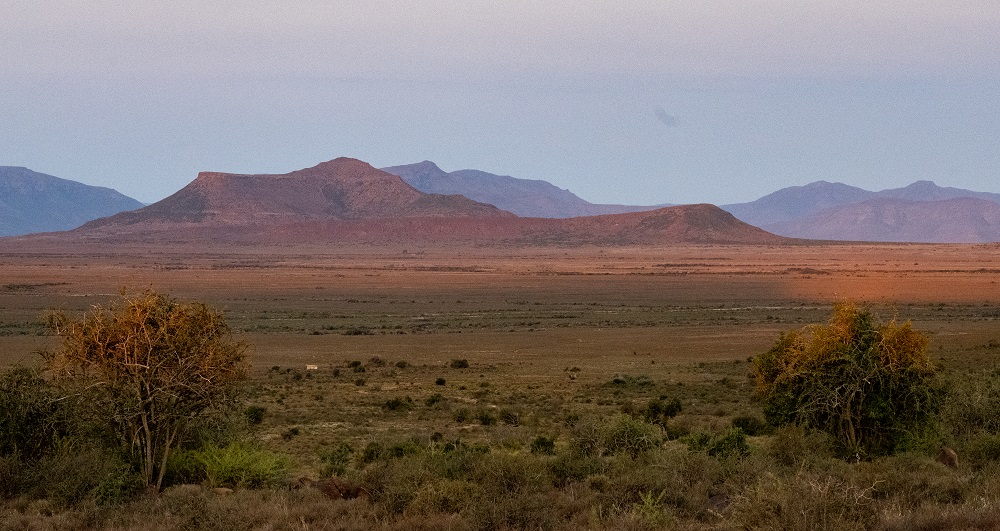
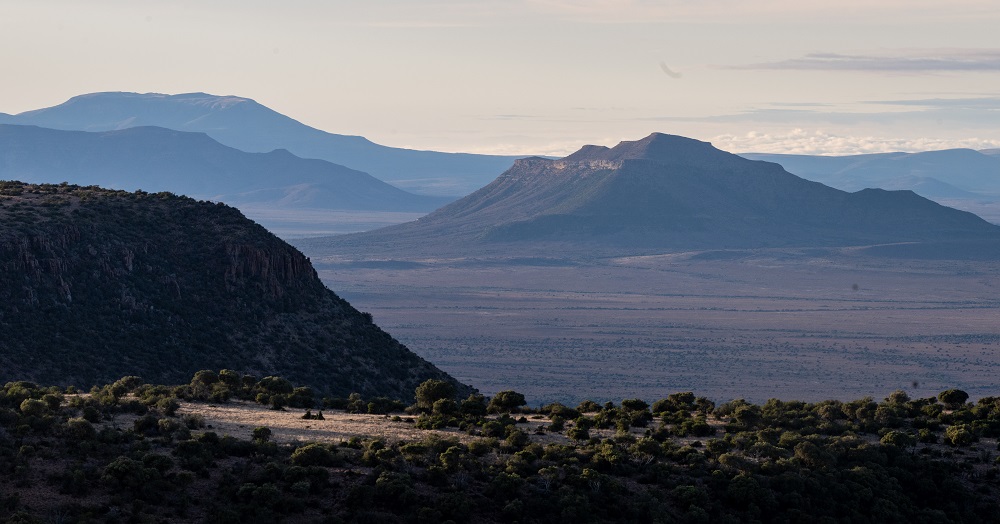
We’ve been sending our guests to the northern and north-central region of Kenya for many years, and fortunately most of them have enjoyed the area and what it offers as much as we do. Depending on exactly where you find yourself in the area, the views hardly ever disappoint. If it’s not the striking sight of Ololokwe, the sacred mountain of the Samburu, it could be the craggy ridge of Mt. Kenya or just blue hills fading into nothingness. Distinctively ‘out of Africa’, unquestionably romantic, and often quite mesmerizing in the early morning and late afternoon golden light. This huge swath of northern Kenya has a lot else to offer visitors, notably fascinating people and culture, some extraordinary endemic mammals and birds, and an all-round safari experience that often exceeds expectations. 

Lewa Wilderness

Our long-time friend and expert Origins guide Edwin Selempo picked us up after we flew from Nairobi to Lewa. Having spent some time with him already in the Mara (more about that in our June newsletter), we jumped right into a new area with his invaluable assistance. Edwin knew what we had already experienced and helped show us something new whenever possible. We stopped by Lewa Wilderness for an inspection and lunch. The property is right near the top of the options in Lewa. Great location including being the hub for horse and camel activities in the area.

The property itself is well hidden in a small protected forested area (protected from elephants). Part of the main area still serves as a private home to the owners, and each cottage has its own beautiful view of the surrounding area. During our inspection we saw elephants and rhino on the nearby hillside, so game viewing can be done without setting foot in a safari vehicle.

Lunches are mostly served family style at Lewa Wilderness, so group dining is somewhat typical. Private dining is possible if requested but it’s typically quite nice to get to know other guests at the camp. We bumped into some guests that saw some of the same things we saw while we were in the Mara as they stayed at a neighboring safari camp in Naboisho. Small world!

Lewa House

Slightly more centrally located within Lewa, Lewa House is also family owned and operated. Calum and his wife Sophie have owned the property since 2012 and essentially all guests are hosted by one or both of them. Previously there were two-bedroom cottages and one-bedroom ‘Earth Pods’, but the cottages are being removed and turned into two-bedroom Earth Pods which will no doubt be wildly popular. They make sense for couples traveling together or families of 4 or slightly more. Plenty of room and tons of comfort. The pods themselves aren’t the best for Wi-Fi connectivity, so the best (and sometimes only) signal is available in the central living area of the two-bedroom units or the main bedroom for one bedroom units.

The quality of the wildlife viewing in Lewa is its major attraction, particularly because of the presence of several superb endemic mammals which include the stunning reticulated giraffe, the distinctive – and endangered – Grevy’s zebra as well as Beisa oryx and Somali ostrich. Lewa is also one of several private conservancies in Kenya where both black and white rhinos are thriving and where they can be seen with their horns intact.  

If Lewa is the first location for a safari, guests will see more giraffes, zebras, elephants and rhinos than they can imagine. There are a couple prides of lions, quite a few leopards and a healthy population of cheetahs as well. During our 2-night stay in Lewa we managed to see several lions and we had one fleeting viewing of a single leopard.  

Beyond traditional game drives, visitors to Lewa can explore the landscape on guided walking safaris, horseback riding, or unique camel treks. Adventurous guests may enjoy scenic flights or visits to the Ngare Ndare Forest for a canopy walk and waterfall swim. Cultural immersion includes Maasai village tours, while conservation enthusiasts can meet tracker dogs or visit local schools and healthcare clinics.

Sirikoi

During a site inspection of Sirikoi we were wildly impressed by both the camp itself and the back of house tour. We fully recommend a tour to see their workshop and garden to get an idea of just how much goes into running a safari camp like Sirikoi. They are fully self-sufficient. They recycle everything: from food leftovers to wine bottles. Sirikoi also has  one of the largest avocado trees we’ve ever seen – absolutely loaded with fruit.

On a previous visit, we found Sirikoi to be an oasis like few others, from location to accommodation and management. The tented rooms, main lounge and dining room areas are stylish and immaculately maintained, and the food and beverage service is of an exemplary quality. With its mix of four luxury tents and two exclusive use houses (with 2 and 3 bedrooms, respectively), Sirikoi caters for discerning guests who like and enjoy comfort and luxury, but in an elegant, understated fashion. There is nothing over the top or extravagant about Sirikoi. It strikes a perfect balance between being luxurious and stylish, yet retaining the essence of a true Kenyan retreat. Sirikoi’s location right alongside the Sirikoi stream, on the edge of a large swamp, results in wildlife often entering the property and being visible from the open dining deck in front of the camp.

For any slightly larger groups, we’d recommend one of their family cottages or the private house.

Kifaru House

Kifaru House is a lovely, purposefully ‘old school’ safari property in Lewa. Each of the cottages are built with wood and stone with a king sized bed plus a sitting room and extra twin bed. Even with the extra furniture, there is plenty of room to move around. The restroom is also quite large with fantastic water pressure. Entry into the room is through double doors, although we only ever opened one of the doors. With just one door open, the entry way was quite narrow. You’ll also be asked to use a key to lock the door anytime you aren’t in the room as the property has a few naughty monkeys around who have learned how to open doors.

During breakfast and lunch for guests, some extra bread and seeds are put out in front of the dining area where dozens of birds and small animals come to eat. A bit of a meal and a show. The food from Elewana continued to impress, with some of our favorite meals on the trip being served at Elephant Pepper in the Mara and Kifaru House.

Basecamp Samburu

We were pleasantly surprised with every part of our experience at the new Basecamp Samburu. Saruni/Basecamp have a winning combination of a great view, amazing staff, delicious food, slightly spartan accommodations with the most comfortable mattress on our trip, and good game viewing between their private conservancy and Samburu National Park which is about an hour away. Guests can leave early in the morning to arrive in Samburu by sunrise to enjoy the wildlife viewing along the Ewaso Nyiro River. Heading back by late morning, they can then spend the afternoon in the Kalama Conservancy itself. Within Kalama, Basecamp and Saruni have a sunken hide near a waterhole which can be an interesting spot for game viewing during the dry season.

Saruni Samburu

Unlike the many riverside lodges in the region, Saruni Samburu is perched high atop a volcanic rocky outcrop within the Kalama Conservancy, offering breathtaking, panoramic views of the Northern Frontier District. Its dramatic architecture and eco-chic luxury appeal to travelers seeking total privacy and isolation. The lodge’s dramatic cliffside setting requires steep, strenuous uphill walks between villas and the main area and in the sometimes intense Samburu heat it can be a challenge. A  long, bumpy drive of 45 minutes to an hour is required to reach the prime riverside game-viewing areas in the main Samburu Reserve. Even so, many guests find the spectacular views and exclusivity of Saruni Samburu well worth the longer transit into the park.  

We liked the location as much as Basecamp Samburu, but prospective visitors need to be aware of the many steps and long walks between your rooms and the main area and to the upper infinity pool which has unbelievable views of Ololokwe and Samburu. Saruni Samburu is shortly undergoing some minor renovations with new paint and new furniture.

Elephant Bedroom Camp

Like a few other properties, EBC is planning some renovations including a rebuild of their main area. We’ll see how that turns out, but at the moment it works quite well with great views of the Ewaso Nyiro River. The Elephant Bedroom tents are spacious and comfortable, although you will need an escort to and from your room both day and night because of frequent  elephant activity within the camp. There are at least 6 named male elephants that regularly visit, including Obama (a docile elephant) and Mang’ati who is quite the opposite.

The area near Elephant Bedroom Camp is also consistently one of the hot spots for all of the wildlife in Samburu. So even though you might not be driving too far if you stay somewhere else, you’ll probably end up somewhere near this camp during a game drive. On a previous visit a couple of years ago, Bert and Kathy witnessed a female cheetah taking down a young Grant’s gazelle less than half a mile from the entrance to the camp. The female cheetah had some hungry cubs to feed. On that same day leopards, lions and African painted dogs were all seen at one time or another in the same area. 

Samburu Intrepids

Samburu Intrepids, very similar in terms of style and size to its sister property Mara Intrepids, could be an option for guests and groups that are looking for a safari experience at a lower price point. Even though the property is larger than most with 28 rooms strung out along the Ewaso Nyiro, guests generally rate it favorably in terms of  offering an authentic wilderness experience. Guests frequently praise the attentive, “above and beyond” staff and the camp’s pretty riverside location, which allows for wildlife viewing from one’s own private deck. On previous visits, we’ve noticed consistently good management, generally excellent food offerings and highly experienced safari guides.

Soroi Larsens Camp Samburu

The new Soroi Larsens Camp is well located along the Ewaso Nyiro River in Samburu. It is quite central in the park with quick access to the west or the east depending on where wildlife is spotted. The western area has a ridge where leopards are often seen and the eastern area has some slightly more open areas with more lion and cheetah sightings. During our short stay, we managed to see lions, cheetah (mother and cubs with a kill), and a striped hyena along with all of the traditional plains game.

The camp itself is quite uniquely laid out compared with others along the same river. Winding concrete pathways lead you to all of the different areas and tents. The spa and pool are set back a bit, away from the river. The main dining area and most of the rooms are set a bit closer to the river. We were upgraded to the deluxe rooms all the way at the end of the property which has its own car park in case guests don’t want to walk all the way. The walkway to the last two units is also no longer in the shade of the large trees along the river. In Samburu things can get quite hot, so staying in the shade is important when possible.

Food, comfort, and staff at Larsens were all excellent. The standard rooms are significantly larger than most tented rooms we’ve seen during the trip. This would make a perfect option for all guests visiting Samburu – families, couples, and small groups.  

For some fresh, up-to-date information and advice about traveling to Lewa and Samburu, reach out to Jason at jason@fisheaglesafaris.com or leave a message with our answering service any time – day or night – at 1-800-513-5222 or 713-467-5222 and one of us will call you back.  

All photos provided by their respective properties unless otherwise noted.

YOU MIGHT ALSO BE INTERESTED IN

Destinations
Zambia

10th September 2021

Chindeni and the Bushcamp Company, Zambia

By late July we found ourselves at Chindeni, a small Bushcamp Company property
Read more
Botswana
Destinations
Okavango Delta

3rd October 2022

Camp Okavango, Botswana

Camp Okavango is in the heart of the permanent part of the Delta. In this idyllic setting there are no vehicles, and it is just a short walk
Read more
Area
Destinations
Nyerere National Park
Ruaha
Tanzania

14th October 2023

From My Safari Notebook: Wildlife Photography

Birds in flight and wildlife photographers have an uneasy relationship. Things go wrong as often as they go right. Getting focus-lock on a moving subject

Read more

SUBSCRIBE TO OUR NEWSLETTER

READERS FAVOURITES
Destinations
India

27th May 2023

India

India’s tiger, mammals and birds.

Read more
Botswana
Destinations

4th August 2022

On Safari At Belmond Eagle Island Lodge, Okavango Delta

What is the ‘secret sauce’ for an unforgettable few days on safari in Botswana? It starts with the animals, of course. The elephants, lions, giraffes, hippos

Read more
Destinations
Zambia

10th September 2021

Chindeni and the Bushcamp Company, Zambia

By late July we found ourselves at Chindeni, a small Bushcamp Company property

Read more

Nairobi Revisited – March 2026

19th April 2026

Nairobi Revisited – March 2026

Members of the Fish Eagle Safaris team have been traveling to Nairobi regularly over the years: most recently Jason and Katie in March this year, for a 3-week Kenya familiarization visit. Dealing with entry and exit formalities and procedures at Nairobi’s Jomo Kenyatta International Airport can sometimes be vexing, but with the dependable meet and assist services of Tradewinds – we book it for all guests – our arrivals into Nairobi are usually quick and pleasant. It was no different for Jason and Katie this time, making it through immigration, baggage claim and customs in well under an hour. And then it was off to The Emakoko where they spent the night.  

Most of our regular guests are transferred to their Karen area hotel on the relatively new cross-town expressway; it hardly ever takes more than 30 minutes or so. For departing guests, Nairobi Airport can be a bigger pill to swallow and this is where the Menzies airport assistance really comes in handy. For one thing, there’s a security check right at the entrance of the airport, followed by checking in, immigration and then another security check before proceeding to a business lounge or the gate, as the case may be.  

Manzili House

Our first stop was Manzili House for lunch. This boutique-style property has a unique atmosphere, reminiscent of Lamu and Shela on the Swahili coast. The rooms directly off the main lobby area might have slightly less privacy than some guests may be used to. For families with children, the villa in the back is ideal. The property can coordinate additional touring and activities based on guests needs – particularly artistic or cultural activities. They can bring in a musician to perform or have an art exhibition and the like. 

After the long flight we needed a bit of energy. A hot latte from their espresso machine was just the ticket, simply amazing. Lunch was extremely fresh and fantastic. The French-born owner of Manzilil House – Mina Gaillard, is often to be seen around the property as she lives next door with her family. Combining her passion for interior design and African aesthetics, Mina built the house as a private sanctuary before opening it to guests in late 2021. 

House of Waine

The family-owned House of Waine was slightly larger but not too big of a property, with a total of 11 individually styled bedrooms and a 2-bedroom cottage. Originally a private residence before being converted into a boutique hotel in 2004, House of Waine has a very lush garden in the front and the back. Not surprisingly, staying there feels like being a guest at a grand private home, rather than a hotel. Their little villa was a bit further in the back with a slightly odd entry right next to an electric fence but the unit itself was nice enough. We don’t consider it to be a significant upgrade compared to being in the main house. Small groups or families should make use of one of their adjoining rooms instead.

The main house rooms are large and comfortable. Each has a tub except one. Meals can be taken essentially anywhere on the property. House of Waine has a good, quiet location just minutes from Sheldrick Wildlife Trust and the Giraffe Center, and it is reasonably priced. 

Karen Blixen Cottages

Karen Blixen Cottages are also in a good location and for the most part guests enjoy its peaceful garden setting. Once in a while a loud vehicle would drive by on the main road and we were advised that the property can get very busy when they have an event. Nonetheless, it remains a good option for guests to have a relaxing couple of nights in Nairobi to start their trip. Many guests notice the hotel’s exceptionally friendly service and they enjoy the cozy atmosphere provided by the fireplaces in each room. Likely the most compelling reason to opt for Karen Blixen Cottages is its historical authenticity, being situated on the author’s original 1906 coffee estate. The hotel offers a “step back in time” atmosphere and it is within walking distance of the Karen Blixen Museum and the wildlife attractions in the area such as the Sheldrick Elephant Orphanage and the Rothschild’s Giraffe Center. 

The Emakoko

The Emakoko is ideal for guests who want to hit the ground running with their safari or those that have limited time in Kenya and want to maximize their safari experience. The Emakoko is within Nairobi National Park, about 16 miles (25 km) from the airport, a drive of about 45 minutes which isn’t significantly longer than transfers to hotels in the Karen suburbs. In the mornings, guests can have a game drive in NNP and then head straight to the Sheldrick Elephant Orphanage and Giraffe Centre before returning to the property. Food and service were excellent. There are a couple of rooms on the ‘ground level’ and a few up higher on the hill that are accessed by a funicular which is an interesting and fun experience. There are lots of bush hyrax around the property, but fortunately not many tree hyrax which are known to be a bit loud through the night.

A bush baby joined us for dinner but apparently doesn’t come by every night. The staff nursed an injured bush baby a few years ago and she became habituated. Her daughter is now semi-habituated but the property doesn’t make it a focus or selling event for guests. If you’re lucky, she might make a surprise visit during your stay. With the right clients, we think this is a homerun property.

Hemingways Eden

For guests desiring a more sophisticated boutique option in Nairobi, we think Hemingway’s Eden with its artistic, “living museum” atmosphere will absolutely work. Formerly a private home, the property has just nine uniquely styled rooms, providing an intimate, residential feel. Guests enjoy 24-hour private butler service, a gourmet restaurant overlooking a lagoon, and direct access to the Giraffe Centre. We liked the lush gardens and indigenous forest bordering a small lake. Walking from place to place can be a bit daunting in the evenings when there isn’t much light. The pathways are relatively flat but slightly uneven stones make things interesting so guests should exercise caution.

We inspected the lofts and the main house and ended up staying a night in the master bedroom of the main house. The lofts were set off to the side and would work well for those wanting to be a bit more on their own in a slightly newer room but with a bit less space. The main house is certainly older and not built for efficiency but everything essentially works how it should.

If you’re considering a first or return trip to Kenya, we can help with all the arrangements inclusive of a couple of nights in Nairobi on the front end; please email Jason at jason@fisheaglesafaris.com or Bert at bert@fisheaglesafaris.com to get the process started. A good first step is a 30-minute Zoom call, so schedule a meeting for a time which suits you – we’re generally available during regular business hours, Monday to Friday, Central Time.  

Property photos courtesy Manzili House, House of Waine, Karen Blixen Cottages, The Emakoko (including NNP lions and rhino) and Hemingways Eden.

YOU MIGHT ALSO BE INTERESTED IN

Destinations
Zambia

10th September 2021

Chindeni and the Bushcamp Company, Zambia

By late July we found ourselves at Chindeni, a small Bushcamp Company property

Read more
Botswana
Destinations
Okavango Delta

3rd October 2022

Camp Okavango, Botswana

Camp Okavango is in the heart of the permanent part of the Delta. In this idyllic setting there are no vehicles, and it is just a short walk

Read more
Area
Destinations
Nyerere National Park
Ruaha
Tanzania

14th October 2023

From My Safari Notebook: Wildlife Photography

Birds in flight and wildlife photographers have an uneasy relationship. Things go wrong as often as they go right. Getting focus-lock on a moving subject

Read more

SUBSCRIBE TO OUR NEWSLETTER

READERS FAVOURITES
Destinations
India

27th May 2023

India

India’s tiger, mammals and birds.

Read more
Botswana
Destinations

4th August 2022

On Safari At Belmond Eagle Island Lodge, Okavango Delta

What is the ‘secret sauce’ for an unforgettable few days on safari in Botswana? It starts with the animals, of course. The elephants, lions, giraffes, hippos

Read more
Destinations
Zambia

10th September 2021

Chindeni and the Bushcamp Company, Zambia

By late July we found ourselves at Chindeni, a small Bushcamp Company property

Read more

Malawi – the Warm Heart of Africa

18th April 2026

Malawi – the Warm Heart of Africa

You may agree with my notion that there’s roughly three categories of countries to choose from when you start thinking about a foreign trip. If, of course, you’re considering single countries and without specific activities in mind, such as downhill skiing or mountaineering or some esoteric pursuit. Just countries. In the blindingly obvious category there’s France, Spain, Italy and the United States (if you’re not from here). More or less in the middle, call it the second tier, might be Morocco, Egypt, South Korea and Vietnam. In a much lower tier – with total annual visitors in most cases well below 1 million –  you’ll find countries like Madagascar, Nepal and Malawi.  

Beyond just not being marketed properly or really at all, Malawi isn’t easy to get to, accommodation options are limited, it’s overshadowed by its neighbors as a safari destination, and it has some seasonality issues with gravel roads being impassable in the rainy season from about December to March.

Even if you already know that it is one of  53 countries on the African continent, finding Malawi on a map is not easy. A hint? It’s in south central Africa, with its southern and central region more or less enveloped by Mozambique. Malawi has a short border with Tanzania in the far north and a much longer border along the western edge of the country with Zambia. 

Technically Malawi is landlocked and indeed it has no direct access to the ocean. Even so, Malawians are not deprived of a big body of water. Lake Malawi – it was Lake Nyasa until 1965, a year after Malawi became independent – dominates the country after which it was named. Lake Malawi is one of the oldest and deepest freshwater lakes in the world and it has more different species of fish than any other lake. In fact, the lake is home to a whopping 850 to 1,000 cichlid fish species, with around 90 percent of them not found anywhere else. At least not in nature. Over the years many cichlids have made it to freshwater aquariums around the world. Some of the most popular ones being Electric Yellow Lab, Red Shouldered and Lemon Jake Peacocks,  Ngara Flametail and Malawi Hawk. If you detect more than just a little bit of hyperbole in these names you would not be incorrect. The naming conventions for aquarium fish are notorious for their flamboyance.  

Not surprisingly, the preconceived ideas I had about Malawi’s shortcomings as a safari destination turned out to be largely inconsequential. By the time I boarded my Airlink flight back to Johannesburg from Blantyre’s dismal Chileka International Airport, at the end of the trip, I was thinking that Malawi deserved another look. Now, in hindsight and having done some additional reading and research, I’m ready to book another trip. With two other members of our team already having visited Malawi previously, we’re ready to assist you with planning your own trip to the warm heart of Africa.  

To be sure, my short visit to Malawi had many highlights, a few surprises and a reality check or two.  

The warmth of the people 

In a blog post in our last (April) newsletter we reported on a Conde Nast poll where readers voted Kenya as the friendliest country in the world. Maybe not enough Conde Nast readers have made it to Malawi. Truly the genuine friendliness of the Malawian people is on display everywhere. I experienced it from the word go – with a perfunctory wave-through upon entering the country in Lilongwe – and it never stopped. When asked about the safety of hiking alone in the forests, the owner of a lodge on the Zomba plateau remarked that the worst that could happen is someone saying hi to you. Probably to some degree this is attributable to a dearth of visitors. Anywhere in Malawi is the direct opposite of Barcelona. Add them up and on a given day there’s probably twice as many pickpockets in Paris as there are foreign tourists in all of Malawi. So if you don’t mind the occasional local striking up a sincere conversation, and if you can handle more than just a few gratuitous smiles, head on over to Malawi. Maybe you’ll just have to write in ‘Malawi’ on the next Conde Nast readers poll, even if it’s not one of the choices for friendliest country.

The aquarium that is Lake Malawi 

I’m no water baby and hence often the last one to say yes to any activity which involves sticking your head under the water. Blame an upbringing in a small town which had maybe five pools. Total. Yet when I found myself in the perfectly warm and crystal clear water surrounding Mumbo island in Lake Malawi, my foibles about breathing through a short pipe with dodgy valves came to an abrupt if temporary end, the moment I saw my first cichlid, a Blue Zebra.  

A Blue Zebra – as I was soon to find out – is not the Malawi equivalent of what you and I may know as a pink elephant, aka the price of extreme overindulgence. It is in fact a tiny, beautiful blue fish with about seven or eight black stripes (thus ‘zebra’) and it feeds on algae often found on submerged rock faces in Lake Malawi. My first Blue Zebra was among the close to 40 or so different tiny fish I observed on that single ‘dive’. Not all were in the exquisite category, to be sure. There were many unassuming, garden variety cichlids to be seen as well, but all were quite fascinating and many exhibited no fear or apprehension despite my hulking presence. 

The hour or so I spent semi-submerged in the balmy near-80F water surrounding Mumbo Island easily matched my three other memorable snorkeling experiences.   

  • The very first was at the gorgeous Waialea Bay, just south of Hapuna Beach in Kona on the Big Island of Hawaii. This small beach is celebrated for its reliable snorkeling because the crescent-shaped bay is protected from heavy swells.  
  • My best Africa snorkeling outing was in a deep-water gully running right along the edge of Magaruque Island in the Mozambique channel, on a boat trip from Santorini in Vilanculos. You can drift with the current over a sheer dropoff teeming with reef fish and rays.  
  • A third very memorable snorkeling experience was at Nosy Tanikely in Madagascar. So many species, so much color, a truly amazing spot.  

The variety and size of fish and other organisms such as turtles, moray eels and coral reefs off the beaches of Kona, at Magaruque Island and at Nosy Tanikely have the edge on what I saw in Lake Malawi, to be sure. Even so, the visibility in the water around Mumbo Island was simply astonishing. Describing water as ‘crystal clear’ in the context of diving is not without risk as conditions can easily change from one month or one season to the next. However, you would have to be swimming inside a giant bottle of Fiji water to match the clarity of the water around Mumbo Island that afternoon in early November.   

The quality of wildlife viewing

My expectations for the safari portion of the Malawi trip were low. Big game viewing – or so I thought – is not a Malawi thing. Just be happy with the elephants, hippos, impala, waterbuck, zebras and the birds. That was me before the trip. Ask me now and the answer is yes, absolutely you can expect to see some big cats and other ‘Big Five’ mammals in Malawian parks like Liwonde National Park and Majete Wildlife Reserve. This is largely attributable to concerted, long-term conservation initiatives implemented by African Parks, which has been operating Majete since 2003 and Liwonde since 2015. Both are now adequately protected and thriving. Also, the Malawi parks offer an intimate, uncrowded safari experience. If you want to be sure of having some good African painted dog and leopard photo opportunities, then I would strongly recommend incorporating a few days in Zambia’s South Luangwa National Park at the start or end of your Malawi trip.  

Striking landscapes

Even the best prepared traveler to southern Malawi might be surprised by the sheer beauty and diversity of the landscapes. One of the highlights of my Malawi trip last year was a brief stay at Huntingdon House on the Satemwa Tea Estates in the Shire highlands of southern Malawi. The cool, misty climate had a distinctly Scottish highlands feel to it, and the patches of montane evergreen forests felt a world away from the hot dry lowlands along the Shire River. 

Likewise, the stark contrast between the Shire rift valley and the ‘sky island’ of Mount Mulanje which reaches to 3,000 meters high. Add the unique table top mountain effect of the Zomba Plateau and there’s never anything ‘boring’ on the horizon. Around the turn of the century,  when he was one of the most popular writers in the English-speaking world, Rudyard Kipling famously referred to a particularly featureless stretch of bush and woodland in Southern Africa as ‘miles and miles of bloody Africa’. It was not southern Malawi.  

Reality check: Deforestation, poverty and infrastructure challenges

While interest in travel to Malawi has lately increased significantly, it is still very much an off-the-beaten-track, ‘best kept secret’ type of destination. The presence of too many other visitors is not going to bother you in Malawi, but there are a few other things which may. Poverty is one of them.  

Despite its scenic beauty, Malawi consistently ranks among the world’s ten poorest nations, with 75% of the population living below the poverty line. This economic hardship manifests as chronic food insecurity, severe childhood malnutrition, and limited educational opportunities, creating a cycle that is difficult to break.

In rural areas, subsistence farmers struggle with erratic weather lately manifesting in longer, more severe droughts and unprecedented floods. Urban residents lack basic utilities, relying almost exclusively on wood and charcoal for fuel. This dependence on biofuel has sparked a critical environmental crisis: Malawi’s forest cover has plummeted from 50% in 1975 to under 30% today.

The illegal charcoal industry, though a vital economic lifeline for many, has triggered a devastating ecological cascade:

  • Water scarcity: Soil erosion prevents groundwater recharge, drying up wells and reducing stream and river flows.
  • Climate vulnerability: Stripped landscapes are defenseless against intensifying floods and droughts.
  • Economic disruption: Siltation in rivers hampers hydroelectric power, causing national blackouts.

Visible scars – red, eroded landscapes and clear-cut hills – are all too common along the country’s major roads. While the government has deployed military patrols and announced ambitious reforestation programs, the crisis persists. Until Malawi can transition to sustainable energy and diversified livelihoods, its environment and people remain in a precarious state.

How you can help

First and foremost you can help by looking past those two other tiers of countries to visit and pick Malawi as your next destination. Ecotourism injects cash into poverty stricken areas from the very moment of your arrival in the way of tourist dollars spent on accommodation, food, beverages, guiding fees, tips, shopping and transportation and dozens of secondary suppliers. Tea growers, cattle owners, fruit, vegetable and herb producers and curio artists and dealers all benefit in one form or another. As do many others. 

Property and activity notes

Makokolo Retreat, Lake Malawi

Our Malawi trip started on a spectacular note with a festive lakeside dinner under canvas, hosted by Benedetto Calvani, the genial owner of the family-run Makokolo Retreat on Lake Malawi. The Calvani family and their capable management team  have built Makokolo Retreat into a showpiece family-oriented resort. Even if you don’t care for lakes, pretty views or beautiful gardens, Makokolo (formerly known as Club Mak) is worth visiting just for the Rome-style pizza. Rome-style pizza being round, oil-enriched, and rolled extra-thin for a cracker-like snap. Ideally baked at very high temperatures around 700F and using minimal, high-quality toppings like San Marzano tomatoes and mozzarella di bufala. 

Makokolo Retreat made an excellent first impression, starting with its gardens which were in great shape, despite the prevailing drought conditions at the time of our visit. My large garden suite room was clean and it had a good shower (water pressure to spare) and a separate toilet enclosure.  

You can hardly visit Malawi without including a short stay on Lake Malawi. For just a day or two – without having to go out of your way – Makokolo Retreat is ideal. A bonus? The small international airport at Makokolo Retreat has direct flights to Mfuwe in Zambia. So no need to travel all the way by road to Lilongwe and fly to Zambia from there. 

Makokolo Retreat has a long list of activities, starting with kayaking, sailing, and waterskiing on the lake. There’s also a scenic 9-hole golf course surrounded by baobabs and speedboat trips to Boadzulu (or ‘Bird’) Island for snorkeling and observing feeding fish eagles. Also on the activities list: sunset cruises or day trips on the MV Sunbird and guided walks to nearby fishing villages and historic missions.

Mumbo Island, Lake Malawi

Mumbo Island is marketed as a rustic, Robinson Crusoe-esque, barefoot paradise experience. It has a superb location with reed chalets perched among giant boulders on a small island in the middle of Lake Malawi. Surrounded by beautiful clean water filled with dozens of species of cichlids and other small freshwater fish. At the time of our visit there were several pretty birds around with the flashy paradise flycatcher being quite prominent. On a snorkeling outing around a rocky point on the south east side of the island, it is easy to spot as many as 50 different species of cichlids when the water is clear, as it was during our early November visit. 

Unfortunately the lodge itself and the rooms were well below par. Not of a standard which we would use for our guests. In short, Mumbo Island is beyond tired and poorly maintained. My negative impressions didn’t stop with failing, chronically neglected infrastructure. I was equally unimpressed with the food and sadly, the general hospitality and staff involvement and enthusiasm. Lunch was uninspired at best: a ham and egg quiche with plain potatoes and eggplant. My substitute vegetarian patty was inedible. Dinner was not much better. Until the lodge is totally renovated or rebuilt I see no reason for it to be included in any visit to Malawi.  

Kefi Hotel, Zomba Plateau

The Kefi Hotel Cafe was everything that Mumbo Island wasn’t. It was fresh, clean and professionally managed by what appeared to be a very ‘hands-on’ team. Set in a beautiful garden, this former colonial house has been converted into a charming hotel, within walking distance from the sights, scenes, and shopping areas in Zomba.  

Even before we made it to our rooms, we had to try the local Malawian coffees and teas, and freshly baked-in-house pastries. Breakfast the following morning was particularly good with simply the best locally made yoghurt! Service was friendly and efficient throughout. I would go back to the Kefi Hotel and Cafe in a heartbeat.  

We  set out on a successful and fun birding outing with an expert local guide, driving up to the Sunbird Kuchawe Hotel and setting out on foot from there. The species diversity is amazing and even avid, experienced southern African birders can count on adding more than just a handful of new life birds to their list.  

Unfortunately our time in Zomba was limited and we spent what little time we had remaining on a short walk through the Zomba central market. Beyond the mounds of dried fish and smoked catfish, there were some pretty fresh-cut flowers and some unusual fresh produce like strawberries, plums and radishes. Together with the usual tropical staples like mangoes and cassava.  

Zomba, at one time the capital of Malawi (and recognized more than once for being the prettiest capital in British Colonial Africa) has lost some of its grandeur, but it’s still worth including in your Malawi travel plans.  

Liwonde National Park

We visited two safari camps in Liwonde National Park, the best wildlife viewing area in Malawi. These were Mvuu Lodge and Camp, which date back to the mid 1990’s and a relative upstart – Robin Pope’s Kuthengo camp which hosted its first guests in 2018. 

African Parks has operated and managed Liwonde National Park since 2015, improving biodiversity by reintroducing various species including cheetahs, black rhinos, African painted dogs and lions, and translocating elephants. This has led to a surge in predator sightings with lions and cheetahs now encountered regularly. 

The Shire River (along which both camps are situated) takes center stage, and boat safaris remain the undisputed highlight. The open-sided aluminum skiff-type boats operate in a delta-like environment, with the edge of the boats often just meters from elephants, waterbuck and other species wading through aquatic plants. We saw incredible numbers of hippos right alongside the rivers, sometimes literally dozens of them at the same time. 

Two other surprisingly good activities were night drives and observing animals coming to the water hole at the Mvuu woodland hide. Notably elephants, but we had a total species count of eight: elephant, buffalo, impala, zebra, warthog, kudu, waterbuck, vervet monkeys and baboons.

With only three lodges inside Liwonde National Park, guests can look forward to exploring the wilderness up close, without too many other vehicles and people being around. Most importantly I think, it’s not just game drive after game drive. You could opt for tracking a black rhino in the morning and watch the sun go down in the late afternoon from a boat – surrounded by hundreds of hippos.

Kuthengo camp

Kuthengo Camp made a good first impression and it was sustained. All-round the camp delivered an excellent, if all too brief experience: friendly and obliging staff and management, exceptionally tasty and attractively presented food and first class guiding. The appeal of Kuthengo starts with its setting, overlooking the banks of the Shire River, with some stately fever trees and baobabs providing contrast and cover. With just five spacious safari tents (one being a family unit), a Kuthengo stay is very much an intimate, personalized experience. A boating safari on the Shire River is always a good choice at Kuthengo, and later on that day a night drive exceeded all of our expectations when we reeled off one after another exciting sighting of nocturnal mammals.  

Sleep came quite easily that evening despite the early summer heat, courtesy of the eco-friendly “Evening Breeze” air-conditioner built into the bed’s canopy. Kuthengo’s rooms are spacious and beyond comfortable, with en suite facilities, complete with a bathtub and outdoor shower.  

Mvuu Lodge and Camp

The wildlife viewing at Mvuu exceeded my expectations. Over the course of just two days we saw a wide range of mammals from impala to waterbuck, kudu, zebra, buffalo, warthogs, eland, hippos, elephants and lions. Other species to be seen in the area include the stunning sable antelope, Lichtenstein’s hartebeest, roan, eland and reintroduced  black rhino. The birdlife in Liwonde is prolific with as many as 400 of Malawi’s total of around 650 species, either resident or seasonal migrants. A sighting of Pel’s fishing owl and the pretty Bohm’s bee eater (a life bird!) created some special moments for us.    

Another highlight was a 2-hour stint (from 7 to 9 am) in Mvuu’s woodland hide/blind. I daresay most of us would have been happy to spend at least half a day there. The large pond had lots of impalas and baboons on its edge the entire time, with several other species including kudu, buffalo, elephants and zebra moving to the edge of the water at different times. Very entertaining!  

While we didn’t have the time for it, it’s clear that Mvuu has all the ingredients for a more than satisfactory ‘armchair safari” experience, with elephants, hippos, and crocodiles to be seen directly from the deck and the dining area. The food at Mvuu was perfectly fine, ranging from their ‘Full Safari’ English breakfast option to the signature fresh chambo (locally sourced tilapia) for lunch, and dinner main courses such grilled beef, or a traditional curry buffet. The rooms are more than comfortable with teak furniture, twin or king-sized beds with crisp linens, and small writing desks. The layout is open and airy, making use of solar power for lighting and fans. The bathroom had a shower with adequate water pressure.  

Activities at Mvuu Lodge include early morning bush walks, boating on the Shire, game drives, sundowner safaris, bush dining, spending time in the photographic hides, and community engagement. 

Mkulumadzi Camp,  Majete National Park

Robin Pope’s Mkulumadzi is a pretty safari camp right at the confluence of the Mkulumadzi and Shire rivers. Even in the teeth of the dry season when we were there, the water in the Shire was flowing strongly along a rocky stretch in front of the camp, creating a pleasing white noise effect. 

We were keenly anticipating the late dry season game viewing but it was not to be. In fact the wildlife viewing was – to put it mildly – challenging within the thickly wooded park, with few open areas and narrow banks along the Shire river. We did see a few sable antelope, some handsome nyala antelopes and came upon a pride of lions feeding beneath a tree, but they were not visible from the road. There were a few elephants around as well. In aggregate, the area just did not produce the numbers and diversity of wildlife which we would ideally want our guests to experience. We think that Majete deserves a second chance as the severe drought at the time likely caused most of the animals to temporarily move into nearby areas with better access to grazing. 

The rooms at Mkulamadzi were large and comfortable with excellent views over the  Shire river. As  always I was happy to see a large tub in the bathroom; there was also an outdoor shower. The large king size bed was fitted with a proficient mosquito net and it had an effective over-the-bed cooling unit. 

The food at Makulumadzi was excellent with several main course options for lunch and dinner. Guests walk into camp across a suspension bridge over the Mkulumadzi River. For most guests it’s a thrilling experience but anyone with a fear of heights might have a tough time repeating the walk multiple times during their stay. Something else which stood out about Mkulumadzi: the wonderful managing couple and friendly staff; it felt like a member of the team was around at all times and it made for a convivial, fun experience.  

The lodge has eight chalets, each with spacious living quarters and a private viewing deck. Guests can swim in the pool, dine under the stars, go on game drives and walking safaris, and even sleep under the stars on the star-deck which can be booked for overnight stays.

Majete National Park is known as Malawi’s only “Big Five” reserve, and it is truly a conservation landmark. Once depleted by poaching, it now counts lions, rhinos, and cheetahs among its impressive mammal list. Majete feels very much undiscovered and uncrowded compared to other major parks in the region.  

Huntingdon House, Satemwa tea estate 

Of all the places we visited in Malawi, the one I am looking forward the most to revisit is Huntingdon House on the Satemwa tea estate. Guests describe Huntingdon House as a refined “step back in time,” and that it is. The owner-managers and their team have created a warm and welcoming sense of hospitality and warmth in a setting which exudes colonial elegance and old world romance. 

Is Huntingdon House the place where you can seamlessly disappear into your own mini-Bridgerton experience? Absolutely. Indulge in some daydreaming, have a cup of the locally grown Satemwe black tea, play a bit of croquet on the lawn, enjoy a fine three-course meal. Doze off to the sounds of birds or maybe browse around the library and stumble on the story of the original owner. And repeat.  

A stay at Huntingdon House could easily lull you into a somnolescent state, but not for long. The tranquil, emerald-green surroundings are filled with things to do and see. Bird-watcher or not, by all means do the birding walk in the garden and from there down the hill towards the beautiful tea plantations, and eventually into a patch of local forest. In about 90 minutes or so you’ll see more than just a few interesting and beautiful species of birds and feel a lot better about the prospect of a generous slice of cake over high tea later in the day.  

Come to think of it, the food at Huntingdon House was excellent to a fault. Breakfast, lunch and dinner. If I absolutely had to choose, my favorite was a delicious vegetarian lunch: a spinach quiche with fresh salad with a delightful mustard vinaigrette. With a lovely chocolate cake to finish.  

Two other activities that helped burn off a few of those excess calories were a tea plantation walk and educational talk by a local guide – Lamek. Great information and several good photo opportunities. One of the friendly Huntingdon waitresses – Veronica – gave me some hints for a run around the estate and it turned out to be every bit as nice as I had anticipated. For many guests, the tea and coffee tastings and factory tours are major highlights, alongside walks through the manicured tea fields at sunrise.

The old-world charm of Huntingdon House is very much reflected in the individually themed rooms like The Chapel and Mother’s Room, featuring claw-foot tubs and four-poster beds. Not quite as charming were the water issues in my room: The Chapel. At one time absolutely nothing would come out of the faucet, just a hiss and groan which matched my own feelings about the situation. The water did eventually come back but it was sporadic at best and not nearly as hot as I prefer it. So clearly there are some infrastructure issues, hardly a surprise given the antiquity of the pipes and heating system and everything associated with that. In retrospect it was a minor issue but prospective guests should know not to expect all the usual bells & whistles of a modern hotel. 

Getting in and out and around

Flying into Lilongwe from Zambia was easy and uneventful.

U.S. citizens currently require a visa to enter Malawi for tourism. The most efficient method to obtain a visa is to apply online in advance for an e-Visa, at this site:  Malawi e-Visa.   The e-Visa costs US$50 and typically takes 3 to 5 days to process. While visas on arrival are available, the online portal is preferred. Your passport must be valid for six months and have two blank pages. Be sure to carry proof of accommodation and your return flight itinerary for immigration.

Getting to Zambia from the US typically involves a one-stop connection. Major carriers like Qatar Airways, Emirates, Ethiopian Airlines, and Kenya Airways provide reliable access into Lusaka (LUN). For those heading straight to Victoria Falls, Livingstone (LVI) is well-served by regional connections from Johannesburg (Airlink) and Nairobi.

Once on the ground, major arteries like the Great North and Great East Roads are generally paved and functional but suffer from deep potholes and stray livestock. If your safari includes some road transfers between cities & areas – and most of them do – don’t expect an average speed of much more than 40 to perhaps 50 mph. During the rainy season (December–March), secondary roads often become impassable, making internal bush flights essential for reaching remote safari camps.

Both Bert and Lyndon have been in Malawi recently so reach out to either of them to start a discussion about traveling to Malawi – maybe in conjunction with Zambia – sometime soon.  Bert at bert@fisheaglesafaris.com and Lyndon at lyndon@fisheaglesafaris.com.  Or call and leave a message with our answering service at 1-800-513-5222. 

Mkulumadzi property photos courtesy Robin Pope Safaris except for room deck view and tub. Huntingdon misty tea fields credit Huntingdon House.

YOU MIGHT ALSO BE INTERESTED IN

Destinations
Zambia

10th September 2021

Chindeni and the Bushcamp Company, Zambia

By late July we found ourselves at Chindeni, a small Bushcamp Company property

Read more
Botswana
Destinations
Okavango Delta

3rd October 2022

Camp Okavango, Botswana

Camp Okavango is in the heart of the permanent part of the Delta. In this idyllic setting there are no vehicles, and it is just a short walk

Read more
Area
Destinations
Nyerere National Park
Ruaha
Tanzania

14th October 2023

From My Safari Notebook: Wildlife Photography

Birds in flight and wildlife photographers have an uneasy relationship. Things go wrong as often as they go right. Getting focus-lock on a moving subject

Read more

SUBSCRIBE TO OUR NEWSLETTER

READERS FAVOURITES

Destinations
India

27th May 2023

India

India’s tiger, mammals and birds.

Read more
Botswana
Destinations

4th August 2022

On Safari At Belmond Eagle Island Lodge, Okavango Delta

What is the ‘secret sauce’ for an unforgettable few days on safari in Botswana? It starts with the animals, of course. The elephants, lions, giraffes, hippos

Read more
Destinations
Zambia

10th September 2021

Chindeni and the Bushcamp Company, Zambia

By late July we found ourselves at Chindeni, a small Bushcamp Company property

Read more

Exceptionally Good Botswana Green Season Game Viewing

3rd April 2026

Exceptionally Good Botswana Green Season Game Viewing

This year, just like in 2025 and the years before that, a handful of intrepid travelers followed our recommendation to embark on a green (low) season trip to Northern Botswana. There’s more than just one good reason for it. Right at the top – taking advantage of the considerably lower rates which can be as much as 50% below high season pricing. Beyond that, having fewer other travelers and vehicles around, observing lots of baby animals with predators on the prowl and a wealth of colorful birds in breeding plumage. Not enough? How about experiencing the most gorgeous of sunsets, with clouds adding an extra layer of complexity and drama to what is already a pretty spectacular daily event.  

Irrespective of the time of the year, a visit to Northern Botswana will take you right into the remote African bush, far from the rush and stress of daily life. A place where you can connect with nature at its most primal level, in a calm and safe setting. About as far away as you can get from our media-saturated, hyper-connected daily existence. 

This season, to be sure, we were a little apprehensive about what lay ahead for our guests. Much of Southern Africa and notably northern Botswana had been receiving consistently good and well above average rainfall, resulting in some localized flooding such as in the Khwai area of Botswana. From the Makgadikgadi pans in the Kalahari to the floodplains of the Okavango Delta, the landscapes had turned green and lush, with stronger than usual inflow of water into the Delta expanding marshes and creating high water conditions resulting in re-opening and re-channeling waterways in sometimes unpredictable ways.  

While abundant rainfall is hugely beneficial in the long-term in the way of improving wildlife survival rates for the seasons to come, it is not always convenient for guests. Airstrips, roads and bridges are impacted, the size of  game drive areas temporarily shrink and some of the larger mammals like elephants and buffalo disperse. More predictably, vehicles get stuck or game drives have to be cut short in the event of a heavy downpour.

As it turned out, we need not have worried. There was seemingly little if any impact on the guest experience in Botswana. This became abundantly clear as we started getting the first reports back about guest experiences in March. Here are a few from Fish Eagle Safaris guests for whom we had designed trips making use of Kwando, Natural Selection and Brave Africa properties. 

A Kwando Safaris trip

The guests started their trip at Lagoon Camp where they participated in game drives and a walking safari. They mentioned that they were hosted by Mr. T, who they described as very knowledgeable and passionate about his work. During their activities they saw hippos, a lioness with cubs, African painted dogs, elephants and giraffes. They were especially pleased to see a cheetah that had killed an impala and was feeding on it. They also commented that the staff were very friendly and that they thoroughly enjoyed the food and overall hospitality at the camp.

At Mma Dinare their guide and tracker were Skills and TT. The guests had an incredible sighting where they witnessed nine lions bringing down a buffalo. In addition to this highlight, they also saw leopards, giraffes, elephants and various antelope species during their game drives and mokoro excursions. They mentioned that the food was great and that Mma Dinare ended up being their favorite camp of the trip.

At 4 Rivers the guests said they had a great stay. During their time there they witnessed lions feeding on an impala and also saw hyenas, elephants and a variety of birdlife including an owl. They once again mentioned that the staff were very friendly, the food was excellent, and they thoroughly enjoyed their time at the camp.

A Natural Selection Safaris experience

The guests had a wonderful stay at Duke’s Camp, where they enjoyed both game drives and mokoro excursions. They were fortunate to see an impressive range of wildlife including lions, red lechwe, kudu, impala, giraffe, elephants and African painted dogs. They described the camp as very beautiful, with great food and exceptionally friendly and accommodating staff, making their stay very enjoyable.

At Mokolwane Camp, they found the camp to be calm and more basic in style, however they were highly impressed with the quality of game viewing, noting it as the strongest of all three properties visited. During their drives, they witnessed a pack of ten African painted dogs hunting and successfully killing an impala, as well as lions playing with their cubs, a leopard in a tree, and sightings of giraffes, elephants, antelope, birds and buffalo. They also praised the delicious food and attentive care from the staff.

At Little Sable, they experienced a water-rich environment and enjoyed both game drives and a boat cruise. During these activities, they saw hippos, zebras, and a variety of birdlife. They spoke positively about the camp overall, highlighting the good staff, food, and service. They also particularly enjoyed the Khwai Ranger experience, mentioning that it was well positioned within their itinerary and added great value to their trip.

On safari with Brave Africa

The guests shared that they spent six nights with Brave Africa Safaris, which they described as a truly lovely experience. They participated in game drives and were fortunate to witness a pack of 17 African painted dogs bringing down an impala, followed by four hyenas attempting unsuccessfully to steal the kill. Additional sightings included cheetahs, leopards, buffalo, elephants, antelopes and approximately 120 bird species, which they found very impressive. They particularly enjoyed their final evening, where they sang and danced with the staff during a delightful soirée. The clients praised the food, accommodation and overall experience, noting that everything was excellent. They also expressed appreciation for arranging a helicopter transfer instead of flying with Mack Air, highlighting it as a smooth and enjoyable experience. Overall, they thoroughly enjoyed their safari.

For visitors looking for absolutely the best value, a Botswana green season safari has that and much more:  

  • Coming right after the short calving season when thousands of new impala lambs see the light of day for the first time, the months of January through March are all about “babies and predators” with vulnerable young animals attracting attention from lions, leopards, and cheetahs. On the bench – African painted dogs, spotted hyenas and blackbacked jackals. Even chacma baboons will occasionally grab a hapless baby impala. 
  • The zebra migration: while the Okavango Delta is lush and green in the late summer months, Kalahari areas like Nxai Pan and Makgadikgadi experience an influx of thousands of zebras, offering spectacular sightings away from the usual crowds.
  • Optimal photography: the Green Season is synonymous with epically dramatic sunsets, with afternoon thunderstorms creating drama and stunning ‘storm’ light conditions. Even when the skies are clear the vibrant emerald backdrops make colors pop in a way the desiccated, brown dry season cannot match.

So dust off your lenses, send in the big camera for service – or upgrade your smartphone for the one with the most advanced new photography features. And then call us at 1-800-513-5222 or email me at bert@fisheaglesafaris.com or Lyndon at lyndon@fisheaglesafaris.com, to help you arrange your first or your next trip to Botswana.  

YOU MIGHT ALSO BE INTERESTED IN

Destinations
Zambia

10th September 2021

Chindeni and the Bushcamp Company, Zambia

By late July we found ourselves at Chindeni, a small Bushcamp Company property

Read more
Botswana
Destinations
Okavango Delta

3rd October 2022

Camp Okavango, Botswana

Camp Okavango is in the heart of the permanent part of the Delta. In this idyllic setting there are no vehicles, and it is just a short walk

Read more
Area
Destinations
Nyerere National Park
Ruaha
Tanzania

14th October 2023

From My Safari Notebook: Wildlife Photography

Birds in flight and wildlife photographers have an uneasy relationship. Things go wrong as often as they go right. Getting focus-lock on a moving subject

Read more

SUBSCRIBE TO OUR NEWSLETTER

READERS FAVOURITES

Destinations
India

27th May 2023

India

India’s tiger, mammals and birds.

Read more
Botswana
Destinations

4th August 2022

On Safari At Belmond Eagle Island Lodge, Okavango Delta

What is the ‘secret sauce’ for an unforgettable few days on safari in Botswana? It starts with the animals, of course. The elephants, lions, giraffes, hippos

Read more
Destinations
Zambia

10th September 2021

Chindeni and the Bushcamp Company, Zambia

By late July we found ourselves at Chindeni, a small Bushcamp Company property

Read more

Kenya: What a Difference the Equator Makes

3rd April 2026

Kenya: What a Difference the Equator Makes

If you’ve read some of my older blog posts about Kenya, you’ll know that I am a big fan – for many reasons – but mostly because of the country’s incredible diversity. From the point of view of a photographer of any level of competency and experience – or anyone who wants to light up social media with a great image – Kenya is the shutter that keeps on clicking. 

Thinking back over many Kenya trips starting 30 years ago, these are some of the reasons which keep me going back again and again and recommending Kenya as the #1 option for a first, an only and a repeat safari.

The elephants

We’ve long been firm believers that any really good African safari itinerary should have at least one signature elephant experience. One day, one game drive, one elephant experience, one photograph which you will remember forever. To be sure, Kenya has more than just one area where the elephant experience will blow your socks off. 

Amboseli is one. It’s where I took what might still be my most liked elephant photo. One morning on a game drive from Tortilis Camp we were watching a herd of elephants move through the woodland. A herd of elephants moving down to the swamps, kicking up some dust, is always worth watching so we stopped. I soon had a 400mm lens pointed in their direction. 100 different photos of elephants walking in good light in Amboseli would all be nice shots, but none would have stood out.

Nothing would have distinguished any one of them from a 1,000 similar photos taken at Amboseli every day of the year. Except this time, something clicked. The matriarch paused for barely a second, and turned her massive head to check on the herd. It changed everything. When I later checked the images on the computer, this one and only this one stood out. It was not ‘just’ elephants walking. The one turned head created an arresting moment, an artfully captured scene. A scene which speaks volumes about elephants. About their herd behavior, how they instinctively protect their young and above all: who’s in charge.  

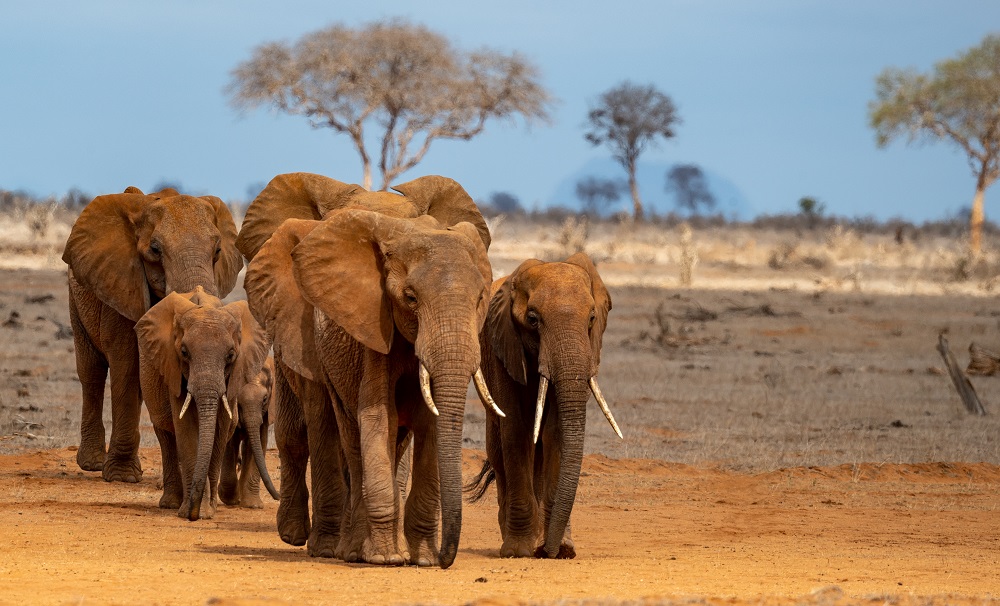
Another great Kenya elephant experience awaits visitors to Tsavo East, particularly in the dry season when small breeding herds kick up the telltale red Tsavo dust, creating drama and pathos. Even the most dispassionate of observers, analyzing the scene purely in terms of its photographic potential, cannot help but to be moved by the experience. It becomes impossible not to sense and empathize with the elephants’ barely suppressed distress. You cannot look away when their struggle for survival in this harsh environment is as  clear as if it were written in the Tsavo dust.  

Ideally I think everyone who comes back from a Kenya trip should have  a dozen or so of those once-in-a-lifetime elephant images locked away in memory. The baby orphan elephants being bottle-fed at Sheldrick in Nairobi. The startlingly white tusks of Amboseli’s swamp-feeding elephants – and their daily, dusty marches back into the woodlands. The unmistakable red clay colored elephants of Samburu, and their equally dusty Tsavo cousins. The joie de vivre of the young elephants being readied for reintroduction into the wilderness at the Sheldrick reintegration units at Ithumba and Galdessa. They’re all special, all precious and infinitely fascinating and you could spend a lifetime observing and admiring them and never tire of it. 

The mammal and bird diversity

In a single Kenya trip, you can observe and photograph as many as 45 different species of mammals and over 100 different kinds of birds. Among these, some standouts are three type of giraffes (Rothchilds, plains and reticulated giraffes), two species of zebras (Burchells and Grevy’s zebra), two different ostriches (common and Somali ostriches) and both white and black rhinos with their horns intact. Even if you spend just a week in Kenya, you’ll also see at least two, likely three different big cats – lions, cheetahs and leopards. Plus several other predators including spotted hyenas, black-backed jackals, and with a bit of good fortune, a sighting of bat-eared foxes, servals or caracals.  

Kenya’s mammals and birds are generally easy to see, often present in large numbers in open terrain such as the grassy plains of the Masai Mara. Where it is not unusual to see as many as six or seven different large mammals all at the same time. 

I personally look forward to every return trip to Kenya knowing that so much of what I will be seeing and experiencing will be new and exciting. Every time. It’s a slightly different recipe, but still your favorite dish. Your most beloved opera with a particularly callous Pinkerton. All the same glorious notes and melodies but fresh like newborn gazelles finding their feet. 

Is there a best and definitive cheetah sighting? Can you ever see enough giraffes in one tower? Is one super tusker very much like another one? No, no and no. There’s no magic potion for reverse aging but seeing Origins Safaris’ Lydia Mwangi’s big, warm smile upon exiting Nairobi Airport after a long transatlantic flight makes me feel a lot younger every time. Which is why Kathy and I will be returning to Kenya again – soon. And why I think everyone should consider traveling there.

The people and an efficient tourism infrastructure 

In a world where crossing international borders has become more than just a nuisance factor, Kenya is the ‘easy button’ option for a safari. You arrive on one international flight on day 1 and leave on another one on day 12 or whatever. Visiting three very different areas, north and south of the equator, all without having to take even one additional commercial flight with all its attendant irritations and inconveniences.

A well functioning tourism infrastructure may not be the sexiest reason to pick one safari destination over another but it may be the savviest. Losing hours and even days because of delayed or cancelled flights or having to spend hours on horrendously bad roads is not a feature of Kenyan safaris. Where it makes sense to drive (on transfers of not more than three hours or so) there are serviceable main asphalt roads. Where it doesn’t –  you fly. Safely and at a reasonable cost with first class charter operators like Safarilink.

In the 2025 Conde Nast Traveller Readers’ Choice Awards, Kenya was named the world’s friendliest country, scoring an impressive 98%. Voters highlighted Kenyan safari guides’ warmth, its welcoming culture and all-round hospitality. The poll confirmed what we’ve known all along. From the cabin crew on Kenya Airways to the chef at your safari camp, Kenyans positively, actively want you to have a great time in their country. Learn a few words and phrases of Swahili (start by rewatching the Lion King) and you will be making lifelong friends.

The equator 

Because of its  proximity to the equator, there’s not much difference in the duration of summer versus winter days in Kenya. Their longest summer day is only 9 minutes longer than their shortest winter day. Which results in no great swings between summer and winter temperatures. Also, many of the safari areas such as the Masai Mara, the Mt. Kenya area, the Aberdares and Laikipia/Lewa are at generally higher elevation with a reliable cooling effect. So it comes as no surprise that over the course of many trips to Kenya, we’ve rarely experienced any dreadfully hot or exceedingly cold days. Which makes it a  true year-round destination – outside of maybe a couple of months during the ‘long rains’ in March and April.  Just don’t be looking forward to even one long summer night on your Kenya trip. It’s not going to happen. It’s dark right around 7 pm – every day of the year. And it takes barely 25 minutes to go from broad daylight to dark night. 

In sharp contrast, Southern Africa’s higher latitude leads to distinct seasonal shifts. With extremely cold winters and scorching summers. Spend a few days in Zambia’s South Luangwa National Park in late October and you’ll know exactly what I’m talking about.  

Even so, Kenyan safari areas to the north or ‘above’ the equator, and in lower lying areas such as Tsavo East can be harsh, hot and dry at certain times of the year. Paradoxically, for photographers and visitors in general, this just adds to the appeal of the country. The invisible equatorial line creates a north and a south which can hardly be more different. North of the equator areas such as Samburu feature arid, rugged landscapes where several special endemic mammals such as  the reticulated giraffe and Grevy’s zebra can be observed, together with other arid-area specialties such as the peculiar gerenuk and the ubiquitous Kirk’s dikdik.  

By contrast, the predator-rich Masai Mara south of the equator offers iconic, vast grasslands which are  seasonally overrun by massive herds of wildebeest and zebra. The Great Migration. Sitting at the northern edge of the Serengeti plains, the Mara offers consistently good viewing of lions, leopards, and cheetahs. One of the reasons why we almost always schedule guests’ last few days on safari in the Mara. 

The wildebeest and zebra migration

Any seasoned East Africa tour operator or advisor knows better than to promise guests a migration experience. Even with the best laid plans the migration is a natural phenomenon which is largely weather-driven and as a result devilishly difficult to predict. In broad strokes we all know where the migration is likely to be at any specific time of the year but there’s just too many factors which can and does throw it off by weeks, or stop it in its tracks.   

When fortune smiles on you and you find yourself witnessing thousands of wildebeest and zebras spread out around you in a 360-degree arc, it can be magical. Even more so when you’re witnessing hundreds or even thousands of them plunging into a swollen river, risking life and limb just to get to the other side.  

As magical as the July–October migration can be, we’ve taken some of our best photographs around the time of the short rains in November. The Mara becomes green, textured, and alive and mornings can bring the most exquisite of photographic opportunities such as a rhino or a journey of giraffes emerging from a dense fog bank. From January through March, it’s the calving season – yet another gift for photographers.  

Jason and Katie are  just back from a long Kenya trip so send Jason an email at jason@fisheaglesafaris.com for fresh news and updates about conditions there, and for assistance planning your next trip there or elsewhere in East Africa.  

YOU MIGHT ALSO BE INTERESTED IN

Destinations
Zambia

10th September 2021

Chindeni and the Bushcamp Company, Zambia

By late July we found ourselves at Chindeni, a small Bushcamp Company property

Read more
Botswana
Destinations
Okavango Delta

3rd October 2022

Camp Okavango, Botswana

Camp Okavango is in the heart of the permanent part of the Delta. In this idyllic setting there are no vehicles, and it is just a short walk

Read more
Area
Destinations
Nyerere National Park
Ruaha
Tanzania

14th October 2023

From My Safari Notebook: Wildlife Photography

Birds in flight and wildlife photographers have an uneasy relationship. Things go wrong as often as they go right. Getting focus-lock on a moving subject

Read more

SUBSCRIBE TO OUR NEWSLETTER

READERS FAVOURITES

Destinations
India

27th May 2023

India

India’s tiger, mammals and birds.

Read more
Botswana
Destinations

4th August 2022

On Safari At Belmond Eagle Island Lodge, Okavango Delta

What is the ‘secret sauce’ for an unforgettable few days on safari in Botswana? It starts with the animals, of course. The elephants, lions, giraffes, hippos

Read more
Destinations
Zambia

10th September 2021

Chindeni and the Bushcamp Company, Zambia

By late July we found ourselves at Chindeni, a small Bushcamp Company property

Read more

East or Southern Africa: your choice

8th February 2026

East or Southern Africa:  your choice

Choosing between East and Southern Africa for a safari is hardly ever an open and shut case, or a definitive ‘yes or no’ for one or the other. Time of the year is the best place to start. The best time for a southern Africa trip is from about April-May through September. From October onwards it can get uncomfortably hot in countries like Botswana and Zimbabwe, and the summer rains (what there is of it) start to fall around November onwards, peaking in Jan/Feb/March. 

On the topic of high temperatures, fortunately more and more Botswana, Zimbabwe and Zambia operators are beginning to acknowledge that heat is an issue and are installing eco-friendly ‘Evening Breeze’ evaporative coolers which cool down tent interiors to the point where guests can look forward to a good night’s sleep.

Likewise for East Africa (Kenya & Tanzania), the best time to travel is from June through October (roughly speaking the migration months), with the long rains falling from March through May and the short rains in November. January and February are also worth considering as they are both relatively dry months with a lot less visitor traffic than during the traditional migration season. January and February are also the best months for visiting the southern Serengeti in Tanzania, where the wildebeest herds are congregated for the calving season. In my opinion, this is one of the best times of any to visit Tanzania, combining the central and southern Serengeti.  

The choice between traveling to East Africa versus Southern Africa often comes down to the responses to a few of these questions:  

Wildebeest migration, yes or no?

If you definitely want to witness or at least put yourself in an ideal spot for the annual zebra and wildebeest migration, then Tanzania’s northern Serengeti or Kenya’s Masai Mara are the best bets, from about July through October. That being said, we are not huge fans of the traditional high season ‘migration madness’ which often results in overcrowded conditions in the northern Serengeti and parts of the Masai Mara. A much better option is to travel to Tanzania in February-March, when the wildebeest herds are massed together in the southern Serengeti’s short grass plains in the greater Ndutu area for the calving season. Not nearly as many other vehicles around as in the north during the migration season, and awesome game viewing with the mixed herds of zebras and wildebeest often massing together and providing spectacular photographic opportunities. Predators are as active as they can be and it is not unusual at all to see more than one cat in a tree (both lions and leopards) on a single game drive.  

First safari?

If yes then my top suggestions are Kenya or South Africa. Simply because both of these countries have so much diversity of wildlife, scenery, activities and cultural experiences. Also, the tourism infrastructure in Kenya and South Africa are second to none. There are easy flight or road connections to just about every major area. Primarily though, it is about the abundance of wildlife in areas such as the greater Kruger Park in South Africa and the Masai Mara in Kenya. On a 10-day safari in Kenya you will see as many as 40+ different species of mammals, including the ‘Big Five’ – and in several places there it is not unusual to see as many as six or seven different large mammals at the same time. In South Africa various private game reserves like the Sabi Sands and Timbavati are renowned for their big cat sightings – notably leopards – and they are likewise Big Five destinations. Which means that over the course of a 3-night stay you are likely to see lions, leopards, buffalos, elephants and rhinos. Together with the other signature African plains game species like giraffes, zebra, various antelope and others. 

Active safari?

If yes then Southern Africa is the best choice as it has a much wider range of ‘out of the vehicle’ activities compared with most of East Africa. These range from walking to hiking and even canoeing and horseback riding just to name a few. Nothing beats a Zimbabwean ‘full pro’ guide pulling over the vehicle mid game drive to take you on foot and up close to some of these large mammals. Something like this happens organically in areas like Hwange National Park or in the Mana Pools all the time. Likewise in Zambia where the concept of ‘foot safaris’ first took hold and was popularized. This doesn’t imply that there are no active safari options in East Africa. Incorporating them into an East Africa trip just takes a bit more forethought and planning and they are rarely spontaneous events. 

Interaction with primates?

If you want to see gorillas and chimpanzees then Rwanda and Uganda are the ticket and a visit to either of these countries can quite easily combine with a more traditional East African safari. For a ‘primate specific’ trip Uganda is head and shoulders the best single destination, as visitors can combine chimp treks in Kibale with gorilla trekking in Bwindi Impenetrable Park. Over the years, we have personally observed the Kibale chimpanzee experience improve from being a ‘hit and miss’ event to now being much more reliable. We are hearing the same thing from other tour operators. 

A dark horse for chimpanzees is Greystoke Mahale Camp in the remote Mahale Mountains National Park in western Tanzania. The Mahale Mountains chimpanzees have been studied by Japanese scientists for more than 50 years now and a visit to Greystoke opens up an entire new world of chimpanzee behavior to guests. Some of it is simply astonishing, such as the fact that a propensity towards ‘evil,’ as we would describe it, seems to be an inborn trait in some of the chimps. Not learned behavior. We’re talking lethal aggression, murder, infanticide and gang-warfare. The fact that Greystoke Camp sits right on one of Africa’s most amazing lakes – Lake Tanganyika – adds another entire dimension to a trip to that spot. Greystoke and the Mahale Mountains can and should ideally be combined with a few days at another western Tanzania park – Katavi – for wildlife viewing. In the dry season it is superb and the wildlife sightings there can reach epic levels, such as when hundreds of hippos are jammed together in relatively small muddy pools, awaiting the first rains.  

If you’re considering either Southern or East Africa and are having a hard time deciding which it should be, by all means give us a call and leave a message with our service any time – you will get a call back. 713-467-5222 or 1-800-513-5222. Or contact Jason by email at jason@fisheaglesafaris.com.  

YOU MIGHT ALSO BE INTERESTED IN

Destinations
Zambia

10th September 2021

Chindeni and the Bushcamp Company, Zambia

By late July we found ourselves at Chindeni, a small Bushcamp Company property

Read more
Botswana
Destinations
Okavango Delta

3rd October 2022

Camp Okavango, Botswana

Camp Okavango is in the heart of the permanent part of the Delta. In this idyllic setting there are no vehicles, and it is just a short walk

Read more
Area
Destinations
Nyerere National Park
Ruaha
Tanzania

14th October 2023

From My Safari Notebook: Wildlife Photography

Birds in flight and wildlife photographers have an uneasy relationship. Things go wrong as often as they go right. Getting focus-lock on a moving subject

Read more

SUBSCRIBE TO OUR NEWSLETTER

READERS FAVOURITES

Destinations
India

27th May 2023

India

India’s tiger, mammals and birds.

Read more
Botswana
Destinations

4th August 2022

On Safari At Belmond Eagle Island Lodge, Okavango Delta

What is the ‘secret sauce’ for an unforgettable few days on safari in Botswana? It starts with the animals, of course. The elephants, lions, giraffes, hippos

Read more
Destinations
Zambia

10th September 2021

Chindeni and the Bushcamp Company, Zambia

By late July we found ourselves at Chindeni, a small Bushcamp Company property

Read more
  • Page 1
  • Page 2
  • Page 3
  • Interim pages omitted …
  • Page 20
  • Go to Next Page »

Footer

Design

  • About
  • Destinations
  • Blogs
  • FAQS
  • Team
  • Contact
All Rights Reserved ©Fish Eagle Safaris 2022 | Terms & Conditions | Privacy Policy
Designed & Developed by B Online

SUBSCRIBE TO OUR NEWSLETTER

SIGN-UP TO OUR NEWSLETTER

Subscribe Form

Footer Widget Header

Related Blogs