• Skip to primary navigation
  • Skip to main content
  • Skip to footer

Fish Eagle Safaris

Fish Eagle safaris

Contact

Logo
  • About
  • Destinations
  • Blogs
  • Newsletter
  • FAQS
  • Team
  • search
  • Contact
  • About
  • Destinations
  • Blogs
  • FAQS
  • Team
  • Contact

Masai Mara

Cheetahs, cheetahs, cheetahs

9th October 2020

Cheetahs, cheetahs, cheetahs


Image

Cheetahs, cheetahs, cheetahs

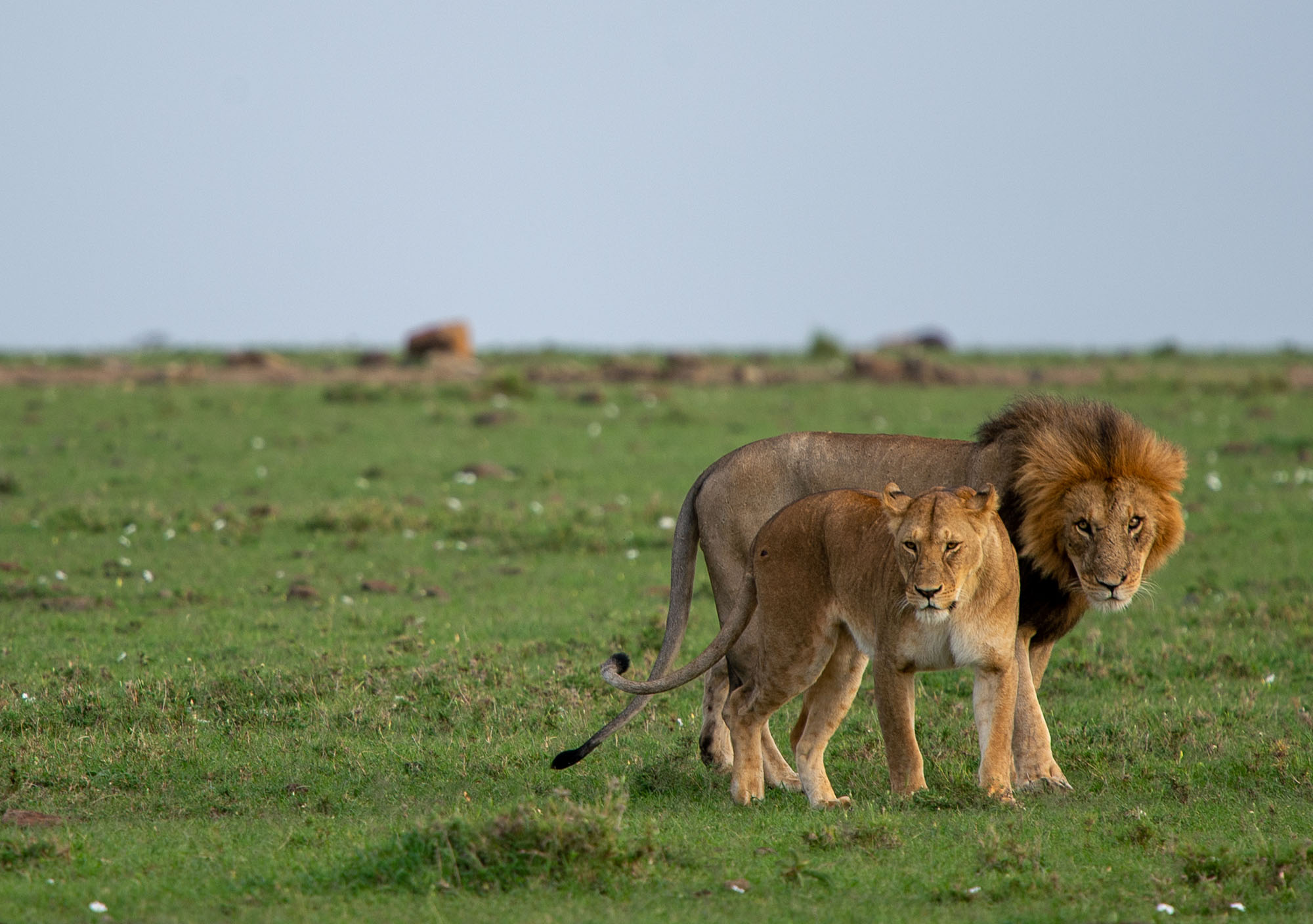
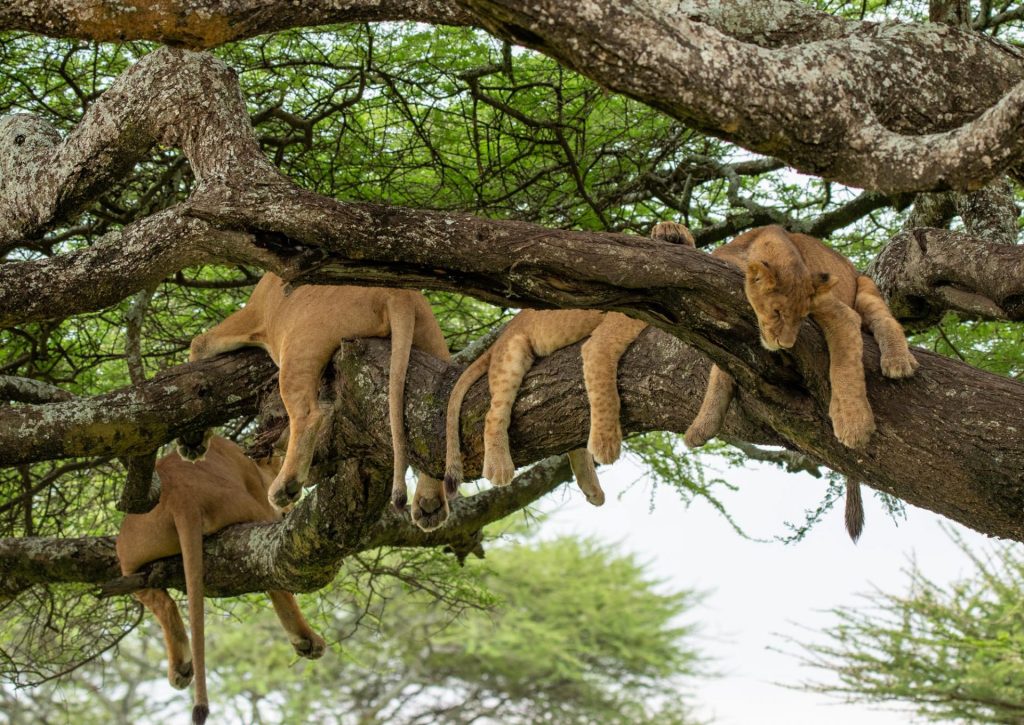
For many visitors to Africa, seeing the big cats is #1 on their wish list.  Nobody wants to go home only to have to say ‘no’ to the inevitable question about having seen lions.  Even though the total number of lions in Africa have dropped alarmingly over the last few decades – largely due to habitat loss – they are still relatively easily seen in most wilderness areas.  Lions are also prolific breeders under the right conditions – with enough prey animals around – so they bounce back quickly and predictably after setbacks such as prolonged droughts.  Which means that on your next – or first – trip to Africa, you will almost definitely bump into lions if you spend a few days in practically any major game reserve or national park.  In Southern or East Africa.  So, did you see lions?  Yes.


Image

Other big cats are less frequently seen.  Leopards are supremely adaptable creatures and they are common in almost any non-urban African habitat except true deserts.  What makes them difficult to find and observe is their naturally elusive, shy and mostly nocturnal nature.  They are mostly solitary and stealthy creatures of the night. That is when they are out and about in search of prey such as unsuspecting smaller antelope, monkeys, baboons and the like.  Consequently, visitors see them mostly very early in the mornings or in the late afternoon, when they start to get active after resting up.  In areas where they are habituated to the presence of vehicles, such as the Sabi Sand reserve in South Africa, in parts of the Masai Mara and the Serengeti, in private concessions in Northern Botswana and at Mashatu in south-eastern Botswana, they are more readily seen as they don’t conceal themselves at the first sign of vehicles, movement or humans.  


Image

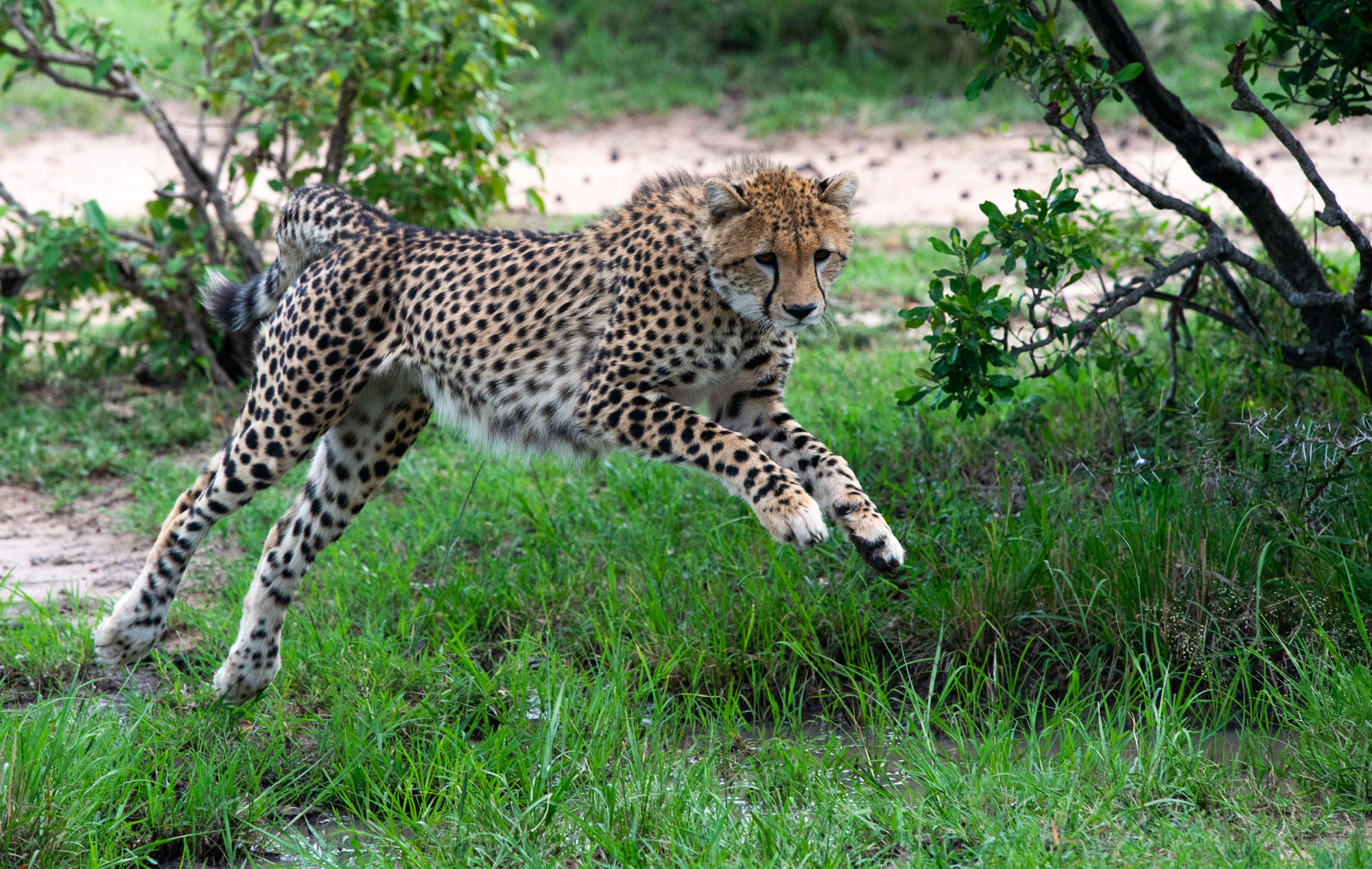
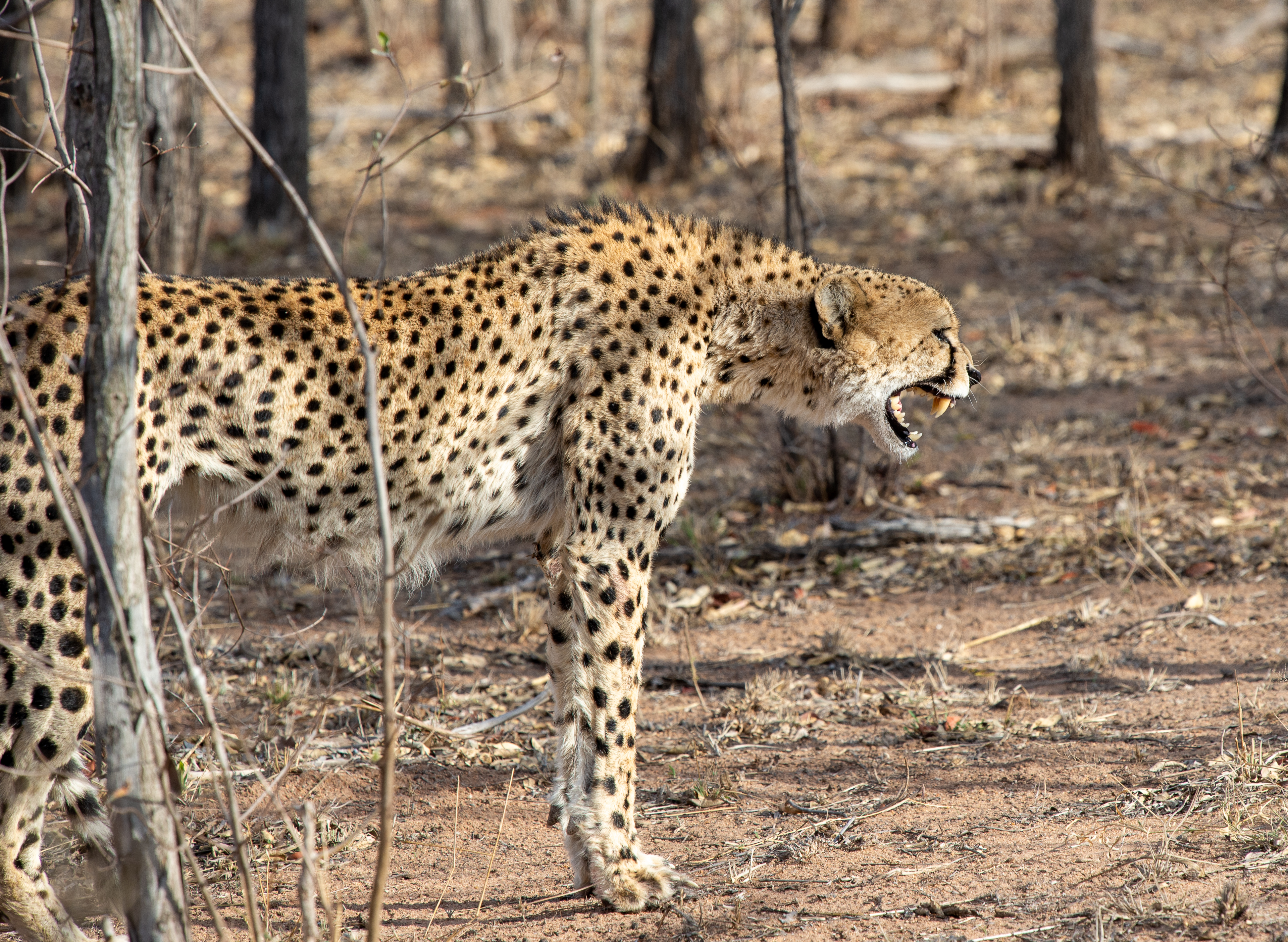
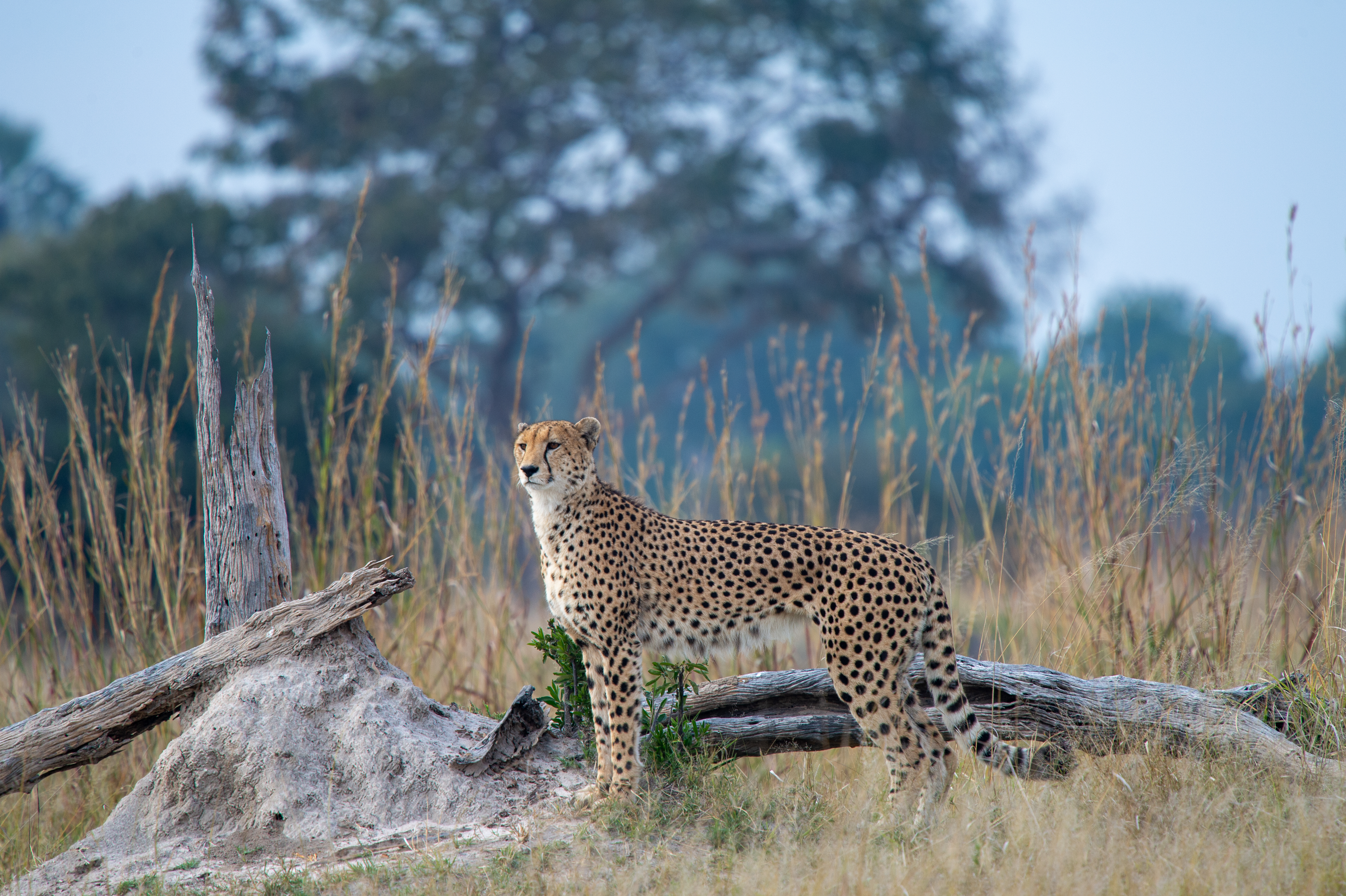
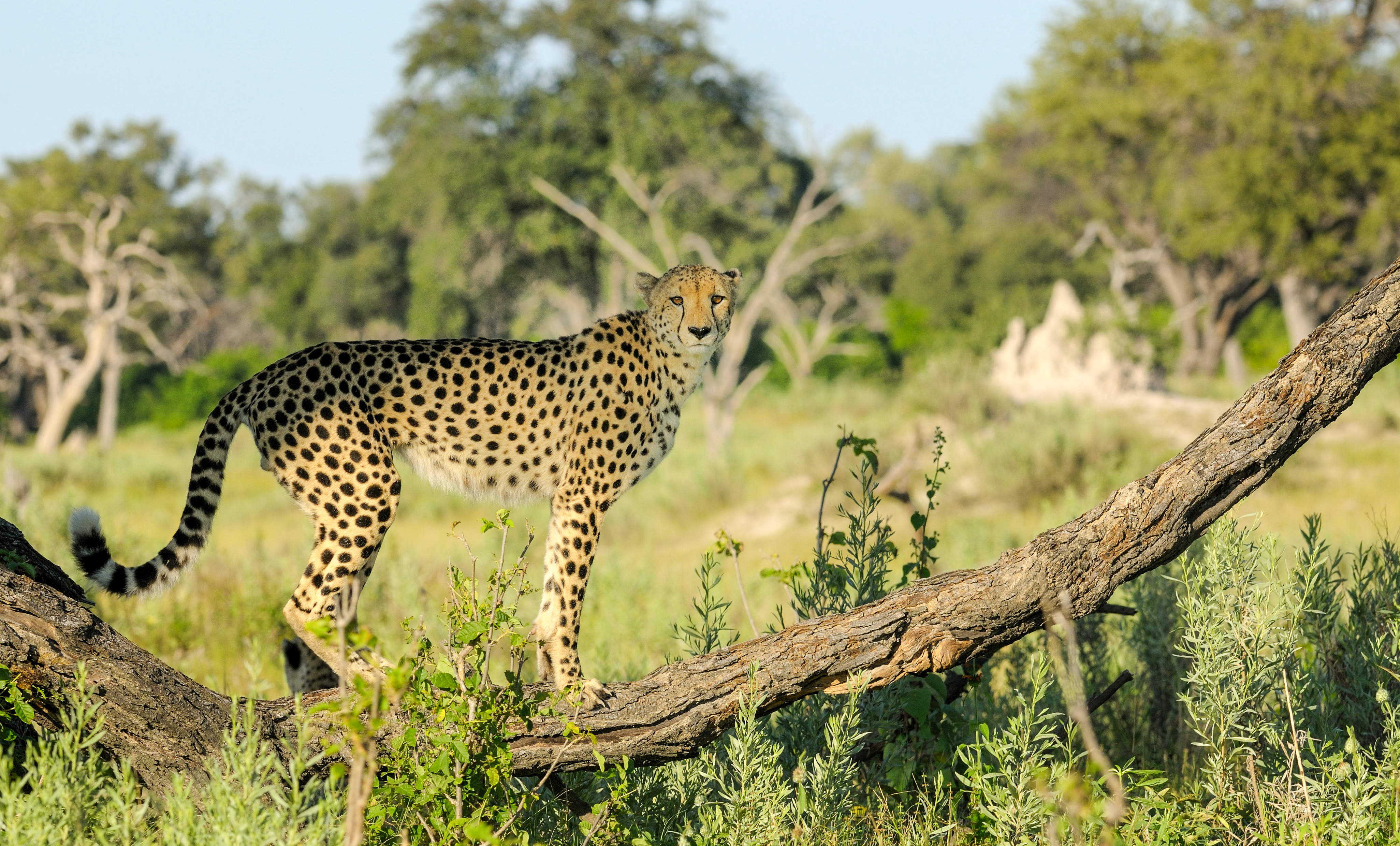
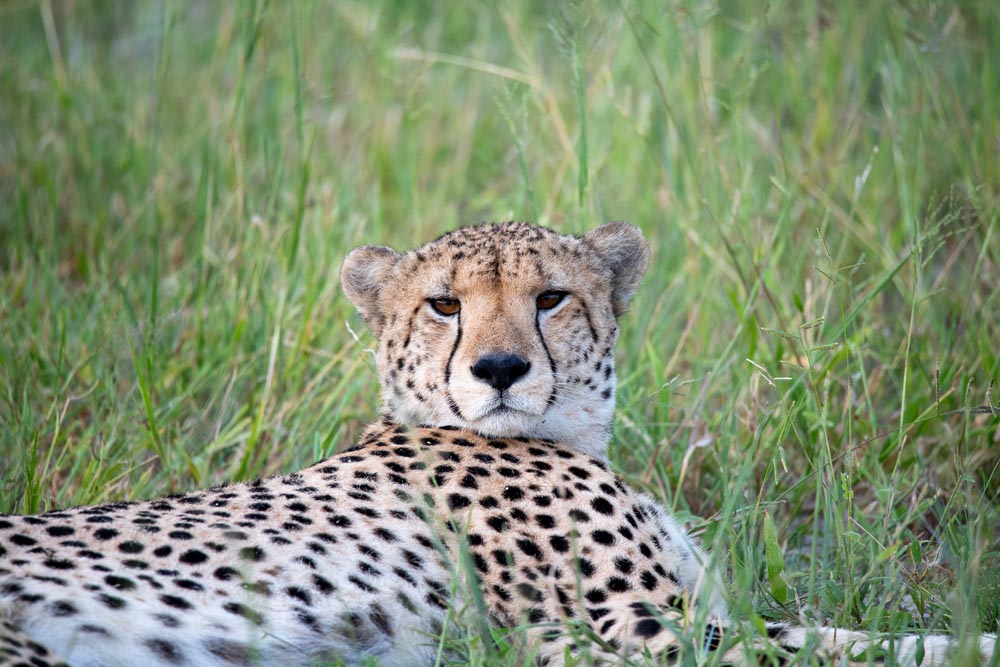
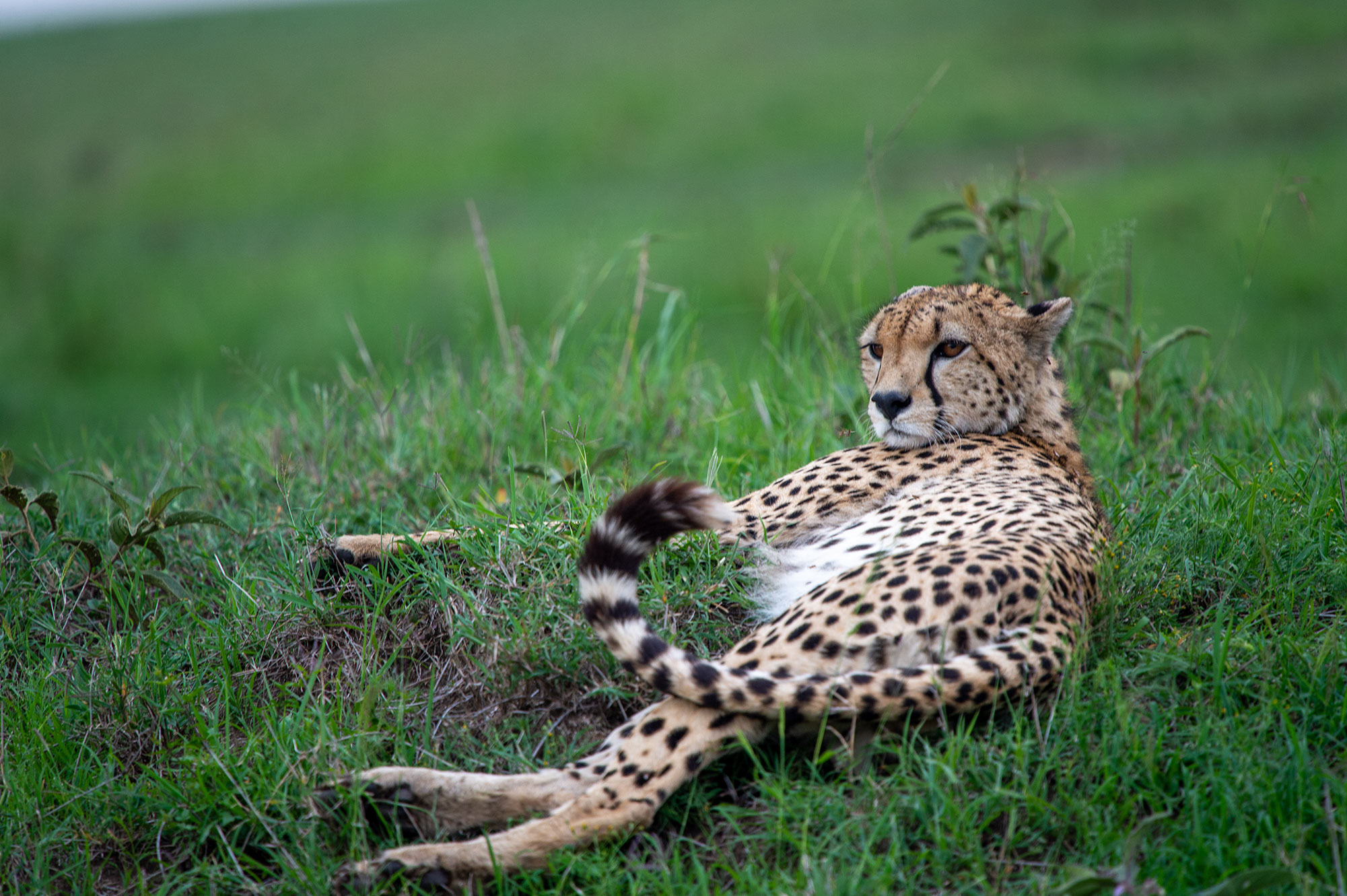
The other big African cat – the cheetah – is in a different league altogether.  It has a relatively tiny total population of about 7,000 in comparison with lions (approximately 25,000) and leopards (approximately 700,000).  Despite being as sparsely distributed as they are, cheetahs are quite visible where present, due to their diurnal nature and preferred habitat.  Cheetahs are adapted to hunt during the day which reduces competition from the nocturnal big cats, notably lions.  Cheetahs also prefer open terrain where they can use their amazing speed to its best advantage.  And they will often clamber onto anthills or stumps or other elevated spots to check out the area for potential prey – or danger.  Open terrain, broad daylight, a spotted cat perched on top of an anthill?  Bingo!  For me personally, a cheetah sighting is a highlight of any Africa trip.  They are just so rare, so beautiful and so special that even a brief glimpse of one of them will make your day.  

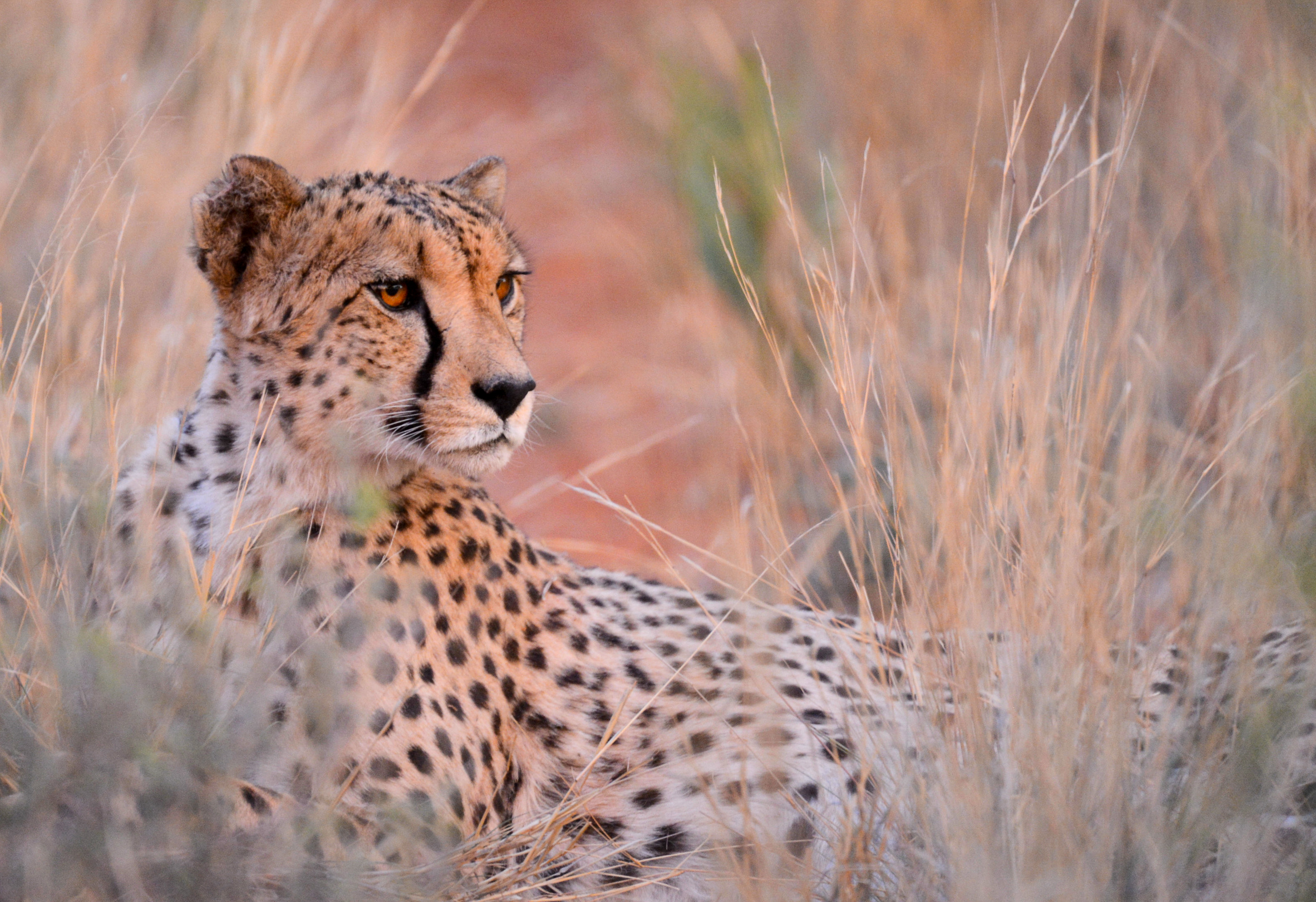
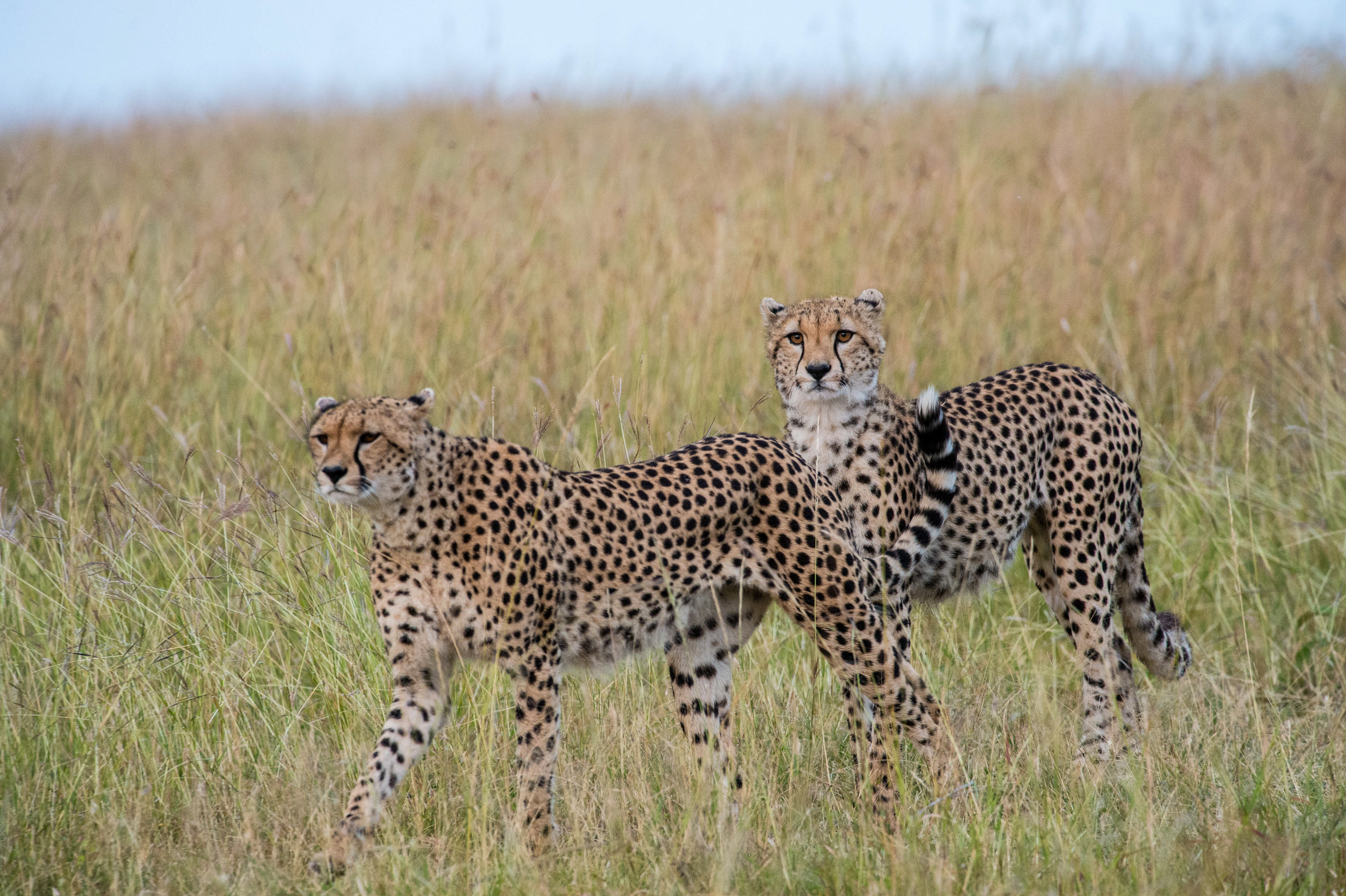
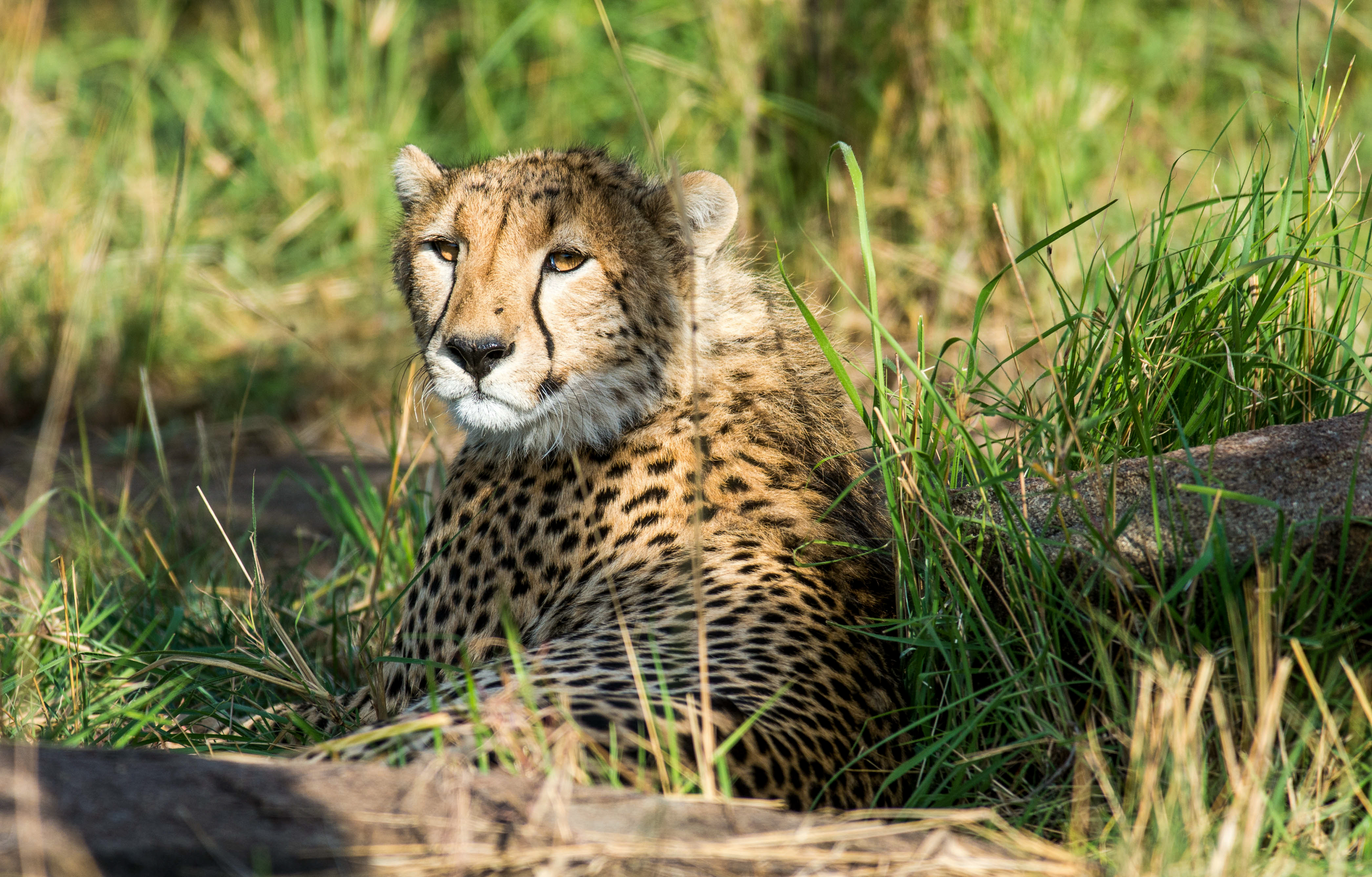
Here are some photos we took of cheetahs in six different areas in Southern and East Africa where they are regularly seen.  The captions summarize the back story about each photo and how it came to be.


Image

Selinda, Northern Botswana

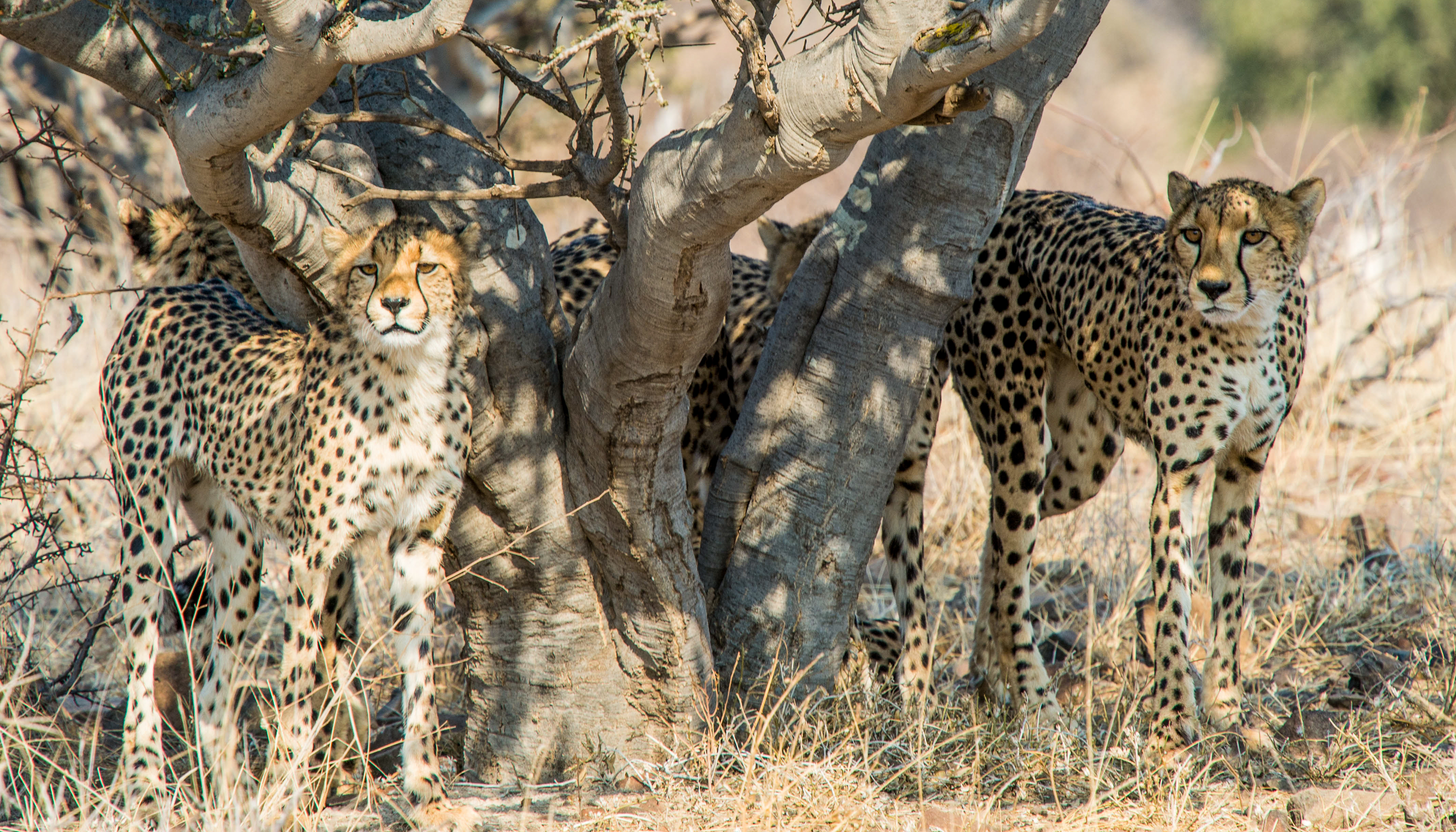
This cheetah was part of a coalition of two brothers which used to move up and down along the Linyanti River in northern Botswana, spending weeks or sometimes months in an area.  For no apparent reason, they would then move along to a neighboring concession.  Less competition from lions or hyenas, more prey animals?  Who knows.  The reasons are hardly ever readily apparent.  The day on which we bumped into this particular cheetah and his brother, marked the first sighting of cheetahs on a game drive from Selinda, in several weeks.  So essentially, we got lucky. Being in the right habitat and spending enough time scanning open terrain along the Linyanti floodplain, just improved our luck somewhat.  We would get even luckier later that day, when we saw the cheetah coalition hunt and bring down an impala.  My advice to anyone wanting to see a cheetah kill?  Bring your best patience game as cheetahs take their time sizing up the area, the conditions and whatever their instinct dictates.  It took the brothers the better part of four hours to finally attempt a charge.  They were successful though.  Cheetahs are the most efficient of the big cats in terms of hunting success, bringing down about 40% to 50% of prey, as a percentage of total attempts.  By comparison leopards are successful about 30% to 40% of the time.  Lions bring up the rear in a significant way, being successful less than 20% of the time.  


Image

Tswalu, South Africa

Tswalu in the northern Cape Kalahari in South Africa is better known as one of the best places in Africa to see pangolins and aardvarks, but it is no slouch for some of the big cats, notably lions and cheetahs.  On our most recent visit to Tswalu (we will be returning this November) Kathy had set aside one afternoon to do some horseback riding.  We were at the stables and she was just about to set off into the veld with one of Tswalu’s beautiful steeds, when word came on the radio that a couple of cheetahs had been spotted.  Kathy and I looked at each other and there was no disagreement:  the horses would have to wait for another day.  It was a longish drive to get to the cheetahs, with the light fading fast by the time we pulled up to them.  Even so, the decision was the right one.  Looking in our direction in the gathering gloom, the cheetah’s ordinarily yellow eyes shone almost red.  The sighting would be brief but eminently memorable. 


Image

Masai Mara, Kenya

When I first saw these cheetahs on a game drive out of Mara Explorer Camp, one of the cheetahs had jumped on top of a game drive vehicle from Mara Intrepids.  I do not like to see behavior like that: it should have been prevented by the Mara Intrepids driver-guide.  The guides in the area are all aware of the propensity of some of the cheetahs to try to use the vehicle as an observation post.  And the guides know to avoid an incident, by staying clear of ‘known perpetrators’.  It is potentially dangerous for the guests and for the cheetahs.  Getting bitten or getting run over, respectively.  Too risky all round.  We left the scene, deciding to rather return early the next morning.  It made all the difference.  We had the cheetahs to ourselves for the better part of an hour, observing them walking around and getting onto anthills – not vehicles.  The way it should be.  


Image

Serengeti Plains, Tanzania

Tanzania’s Serengeti Plains and its northernmost extension, the Masai Mara in Kenya, are likely Africa’s single best repository of cheetahs.  This is their habitat par excellence.  Open, rolling grassy plains with rocky outcrops, patches of woodland and riverine thickets, and plenty of prey in the form of Thomson’s gazelles and impala.  Irrespective of the status of the annual wildebeest migration, the Serengeti and the Mara are great for the big cats, who have territories to defend and who do not move around with the wildebeest and the zebras.  In fact, on the day we saw this cheetah on a game drive out of Nomad Tanzania’s Lamai Serengeti Camp, we experienced a rare big cat trifecta:  lions, leopards and a cheetah.  All in one game drive, not during the migration season.  Other parts of the Serengeti where we have experienced above-average cheetah sightings include the southern Serengeti (Kusini camp) and the western Seronera area (Namiri Plains camp). 


Image

Hwange, Zimbabwe

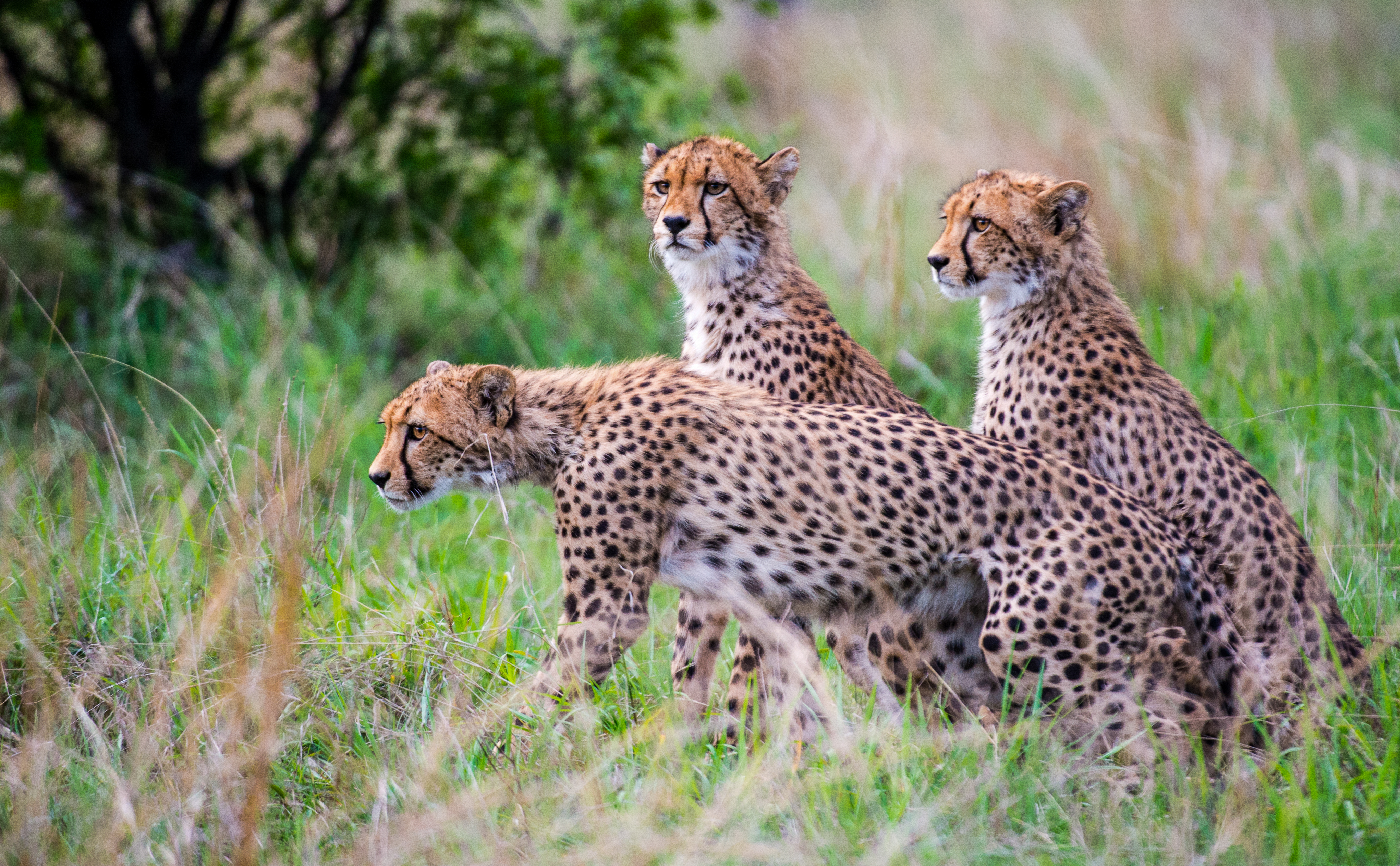
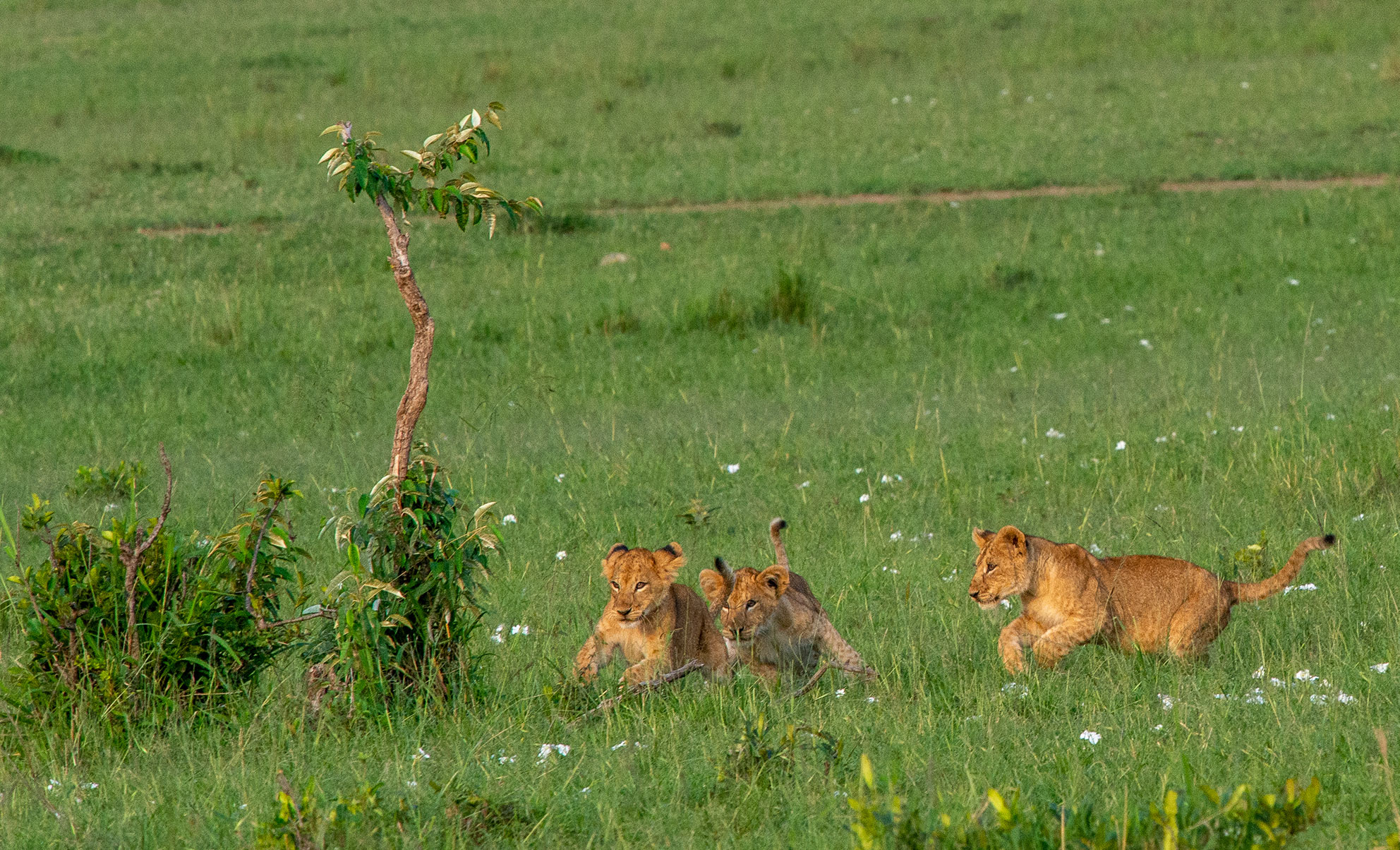
Since we regularly started visiting Hwange National Park in north-western Zimbabwe in the 1990’s, we’ve come to recognize it as a good and reliable area for cheetah sightings.  Just like elsewhere in Africa, the Hwange cheetahs move around and can’t always be seen in the same spots.  So if you’re keen on seeing cheetahs on a trip to Zimbabwe, we would suggest including two different camps, such as Somalisa or The Hide or Khulu Bush Camp, combined with Little Makalolo or Linkwasha or Camelthorn.  And give yourself plenty of time to find the cheetahs; five to six nights in the area would be ideal.  This trio of young cheetahs were following their mother around and getting a lesson in patience.  She wanted them to stay back and stay low while she approached some antelope.  It was not to be.  They kept showing themselves and following too closely behind her.  Which naturally spooked the antelope. All in a day of growing up.  


Image

Mashatu, Botswana

Mashatu Game Reserve in far south-eastern Botswana is currently one of the best big cat destinations in Southern Africa.   Spend three or better yet four nights there and you will most likely get to see lions, leopards and cheetahs.  And not furtive ‘drive-by’ sightings either.  On a recent September visit to the area, we had multiple good sightings of both lions and leopards, and notched up two different cheetah sightings in the course of a 3-night stay at Mashatu Tented Camp.  What makes Mashatu a particularly good bet for cheetahs – and other big cats – is the fact that off-road driving is allowed which means that you can get quite close to these magnificent cats.  For photographers this is a major advantage over many other areas where vehicles are not permitted off-road.  Also, compared with most other good big-cat destinations, the Mashatu properties namely Mashatu Lodge, Mashatu Tented Camp and Euphorbia are moderately priced – at about half the cost of camps of similar quality in northern Botswana.  We recommend combining a 3-night WalkMashatu foot safari with a few days at one of the Mashatu camps, to make the most of the area.  


Image

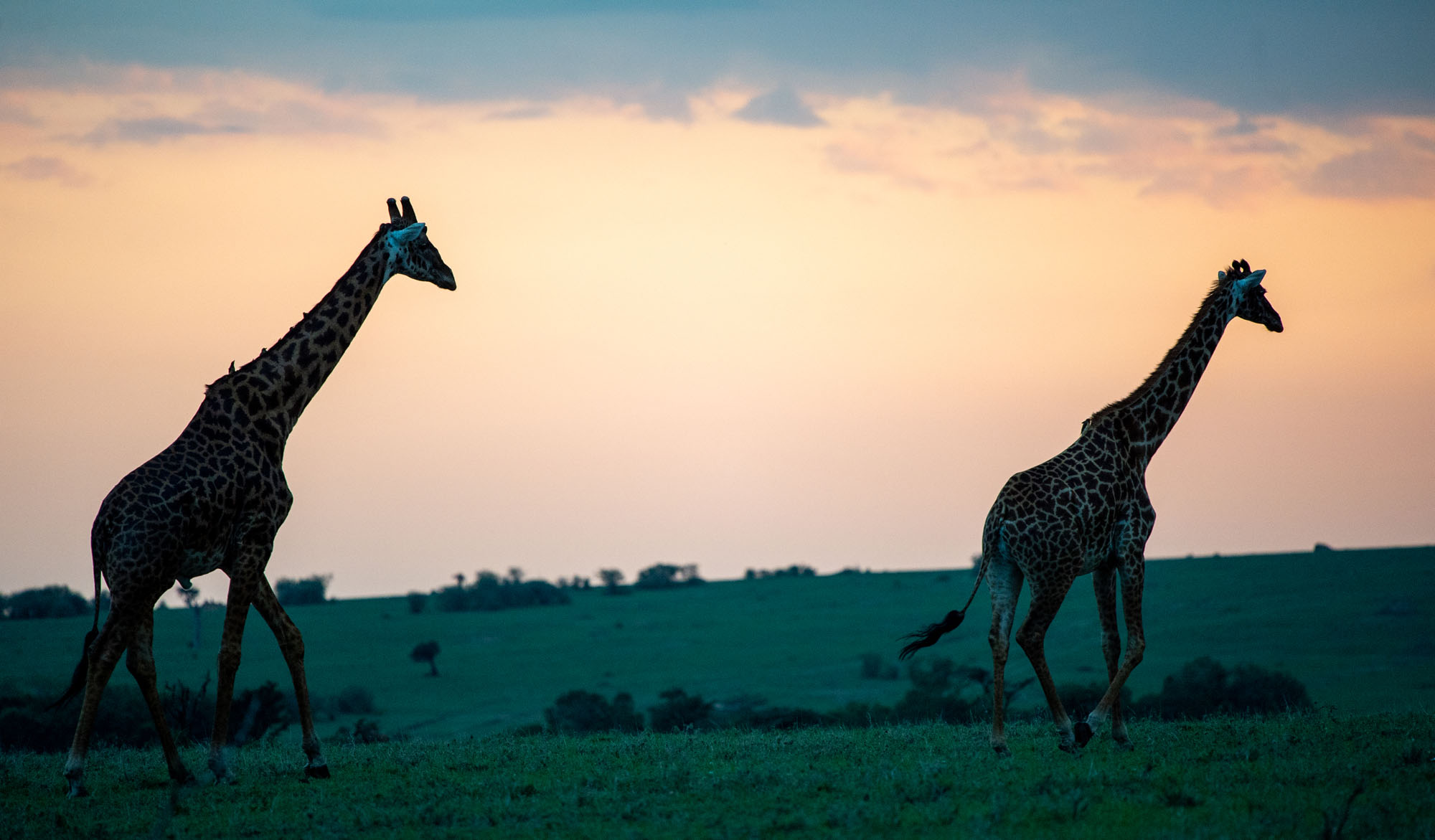
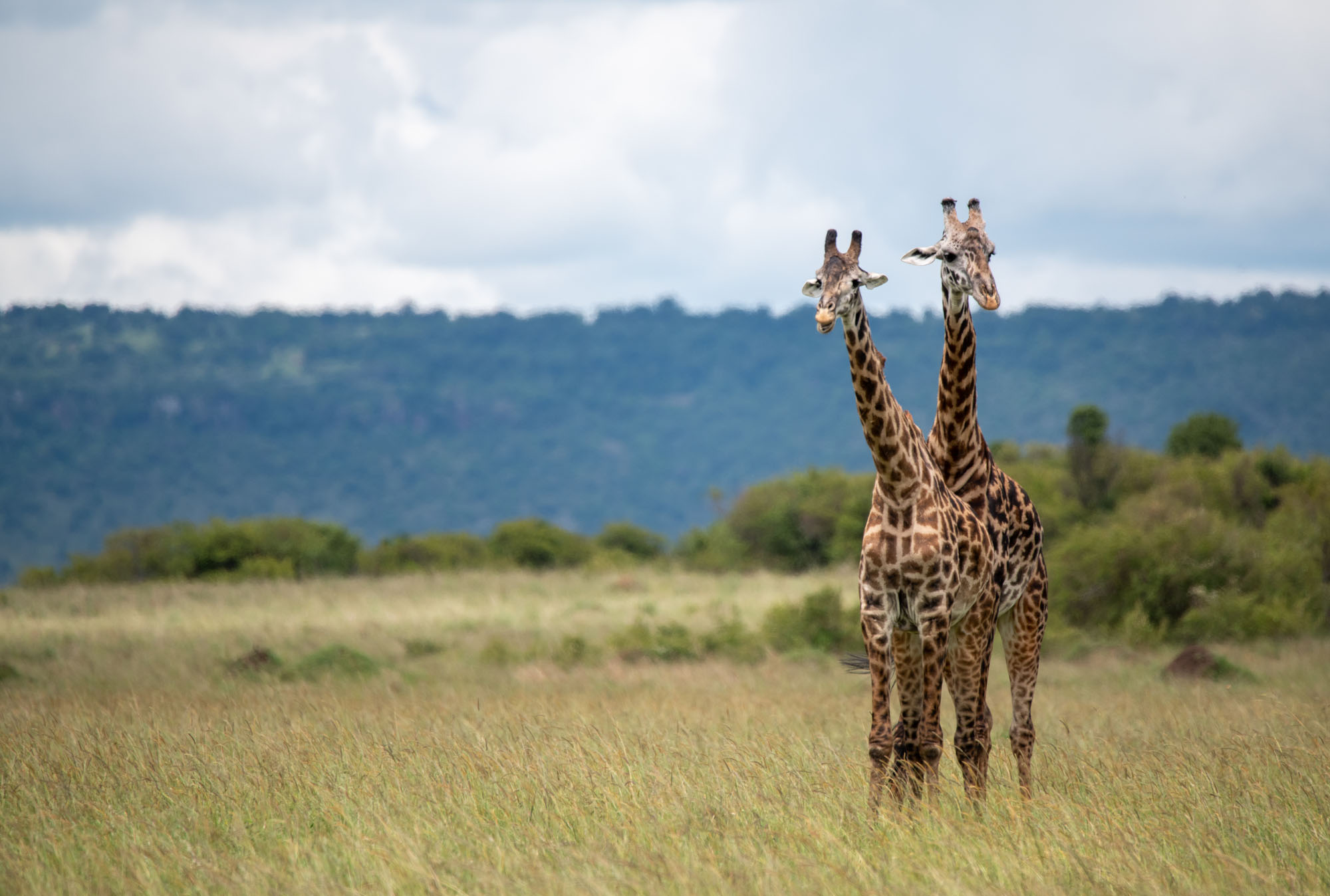
In our blog post next Friday, we will focus on one of the most popular and also instantly recognizable African mammals, the Giraffe.  There will be photographs, of course, as well as some information about places where they can be seen.  We will also review the various species you are likely to encounter in Southern and East Africa, and their conservation status.  

More Info

Email bert@fisheaglesafaris.com

Email jason@fisheaglesafaris.com

@fisheaglesafarishouston

#FishEagleSafaris

YOU MIGHT ALSO BE INTERESTED IN

Destinations
Zambia

10th September 2021

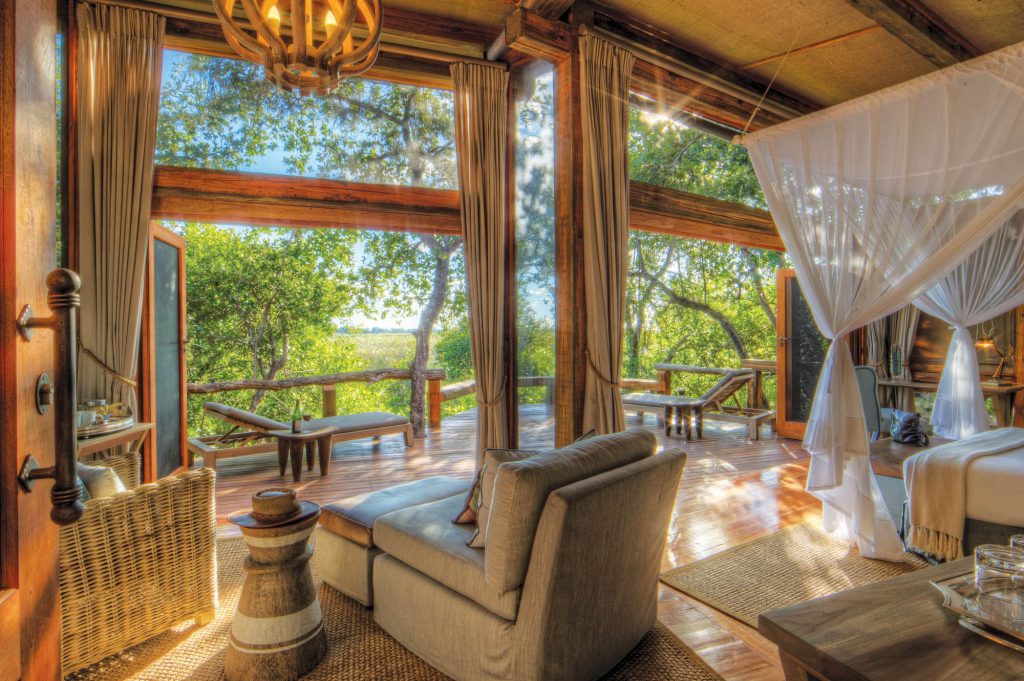
Chindeni and the Bushcamp Company, Zambia

By late July we found ourselves at Chindeni, a small Bushcamp Company property
Read more
Botswana
Destinations
Okavango Delta

3rd October 2022

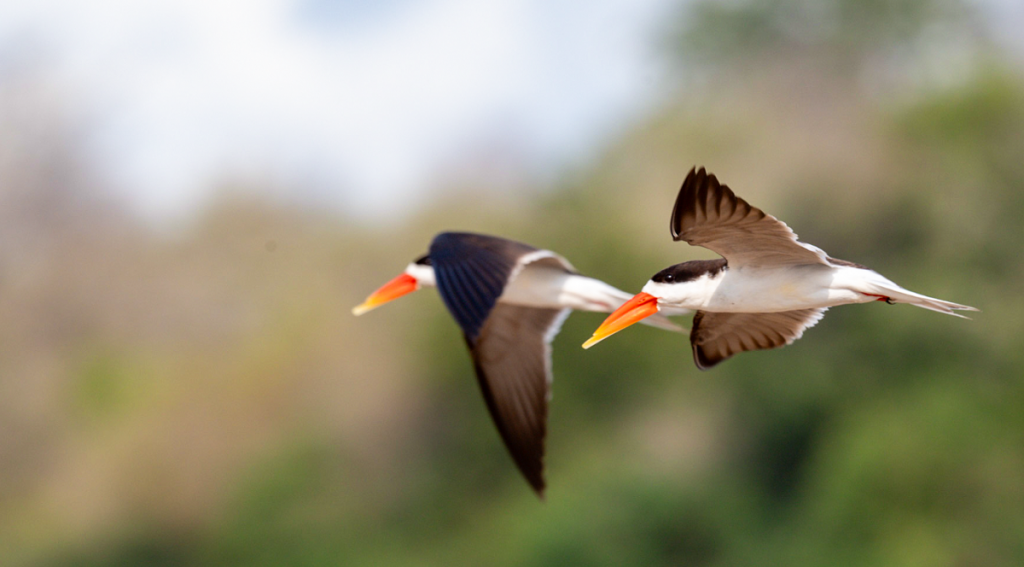
Camp Okavango, Botswana

Camp Okavango is in the heart of the permanent part of the Delta. In this idyllic setting there are no vehicles, and it is just a short walk
Read more
Area
Destinations
Nyerere National Park
Ruaha
Tanzania

14th October 2023

From My Safari Notebook: Wildlife Photography

Birds in flight and wildlife photographers have an uneasy relationship. Things go wrong as often as they go right. Getting focus-lock on a moving subject

Read more

SUBSCRIBE TO OUR NEWSLETTER

READERS FAVOURITES

Destinations
Zambia

10th September 2021

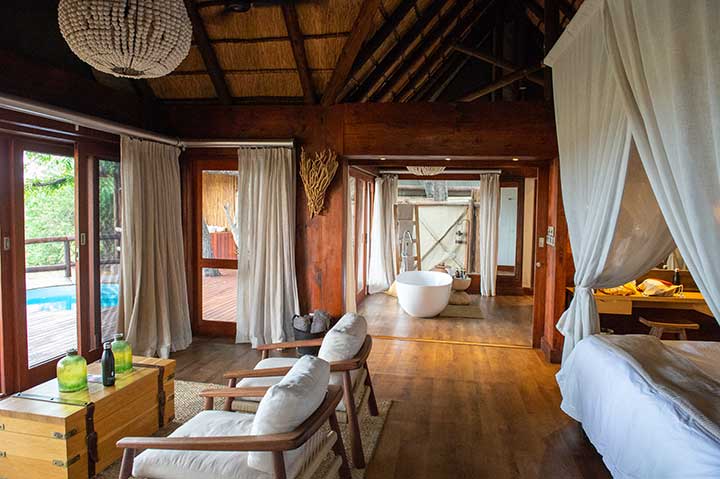
Chindeni and the Bushcamp Company, Zambia

By late July we found ourselves at Chindeni, a small Bushcamp Company property
Read more
Botswana
Destinations

4th August 2022

On Safari At Belmond Eagle Island Lodge, Okavango Delta

What is the ‘secret sauce’ for an unforgettable few days on safari in Botswana? It starts with the animals, of course. The elephants, lions, giraffes, hippos
Read more
Destinations
India

27th May 2023

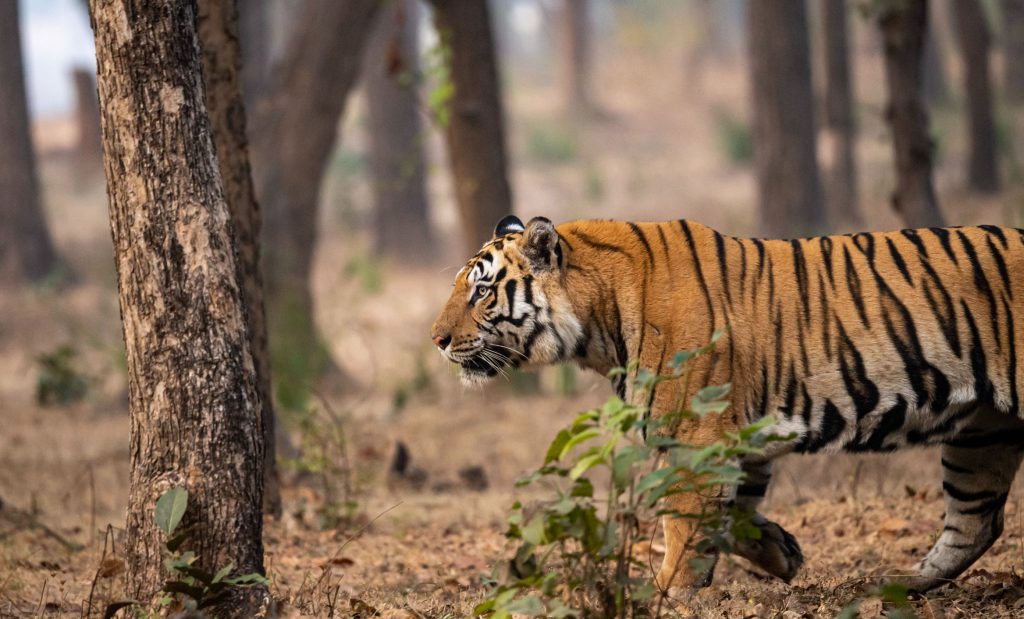
India

India’s tiger, mammals and birds.

Read more

KENYA TRIP REPORT PART 1: THE MASAI MARA

1st July 2020

KENYA TRIP REPORT PART 1:
THE MASAI MARA


Image

KENYA TRIP REPORT PART 1:
THE MASAI MARA

Since I first started traveling to Kenya in the 1990’s, I have grown increasingly fond of this beautiful and incredibly diverse country and its friendly, easy-going people.  With every return visit, my previous perceptions about Kenya as a safari destination have been re-validated, notably that it is an ideal destination for a first African safari.  No doubt about that.  Kenya has lots of animals which are easy to see, it has remarkable diversity in terms of habitats, wildlife, scenery and activities along with a well-functioning tourism infrastructure.


Image

Culturally, Kenya is rich and diverse, it has excellent accommodation options in each area, great guiding and – like I said – friendly people who are genuinely interested in your well-being and happiness.  So learn a few Swahili phrases, get your E-visa online, and get ready for a fantastic experience!  Of course, if you’ve already been, you know most of this. But do keep on reading as there’s lots of information here about some places you might not have been to yet, like the Lewa Wildlife Conservancy, or the Olare Motorogi Conservancy in the Masai Mara.


Image

On my most recent trip, last June, I arrived at Nairobi’s Jomo Kenyatta International Airport on South African Airways after an on-time, uneventful flight.  Getting a visa was a cinch – it literally took less than 10 minutes.  Then a gremlin appeared in the way of a long and disorganized, scrum-like line to get one’s luggage scanned in an industrial-sized luggage scanner.  Of which there really should be more than one, clearly. To compound matters, traffic congestion caused a lengthy delay getting out of the airport and on to the road to downtown.


Image

Even so, I remained in a good mood, just happy to be back in Kenya.  Here’s a tip for African travel in general and specific to Nairobi and Kenya:  be prepared for a little bit of chaos mixed in with smiles from people who are genuinely pleased that you have decided to make your way there.  


Image

NAIROBI SERENA HOTEL

The security check on arrival at the Nairobi Serena Hotel was thorough, but not brusque.  I never felt rushed or intimidated.  A little bit of courtesy goes a long way.  Reception at the hotel was smooth and professional, as was my in-room briefing.  The room was luxuriously appointed, with the usual amenities including tea and coffee-making facilities, multi-channel TV, air conditioning, and thoughtfully designed charging facilities with a phone-ready cable for your iphone, and enough USB and universal plugs capable of accepting a US type plug without an adaptor.

I tried both the Asian fusion and traditional restaurants at the hotel for dinner and breakfast respectively, and they were both good.  Serena has a well-deserved reputation for their breakfast spread and the Nairobi Serena Hotel was no exception.


Image

LOLDIA HOUSE, LAKE NAIVASHA

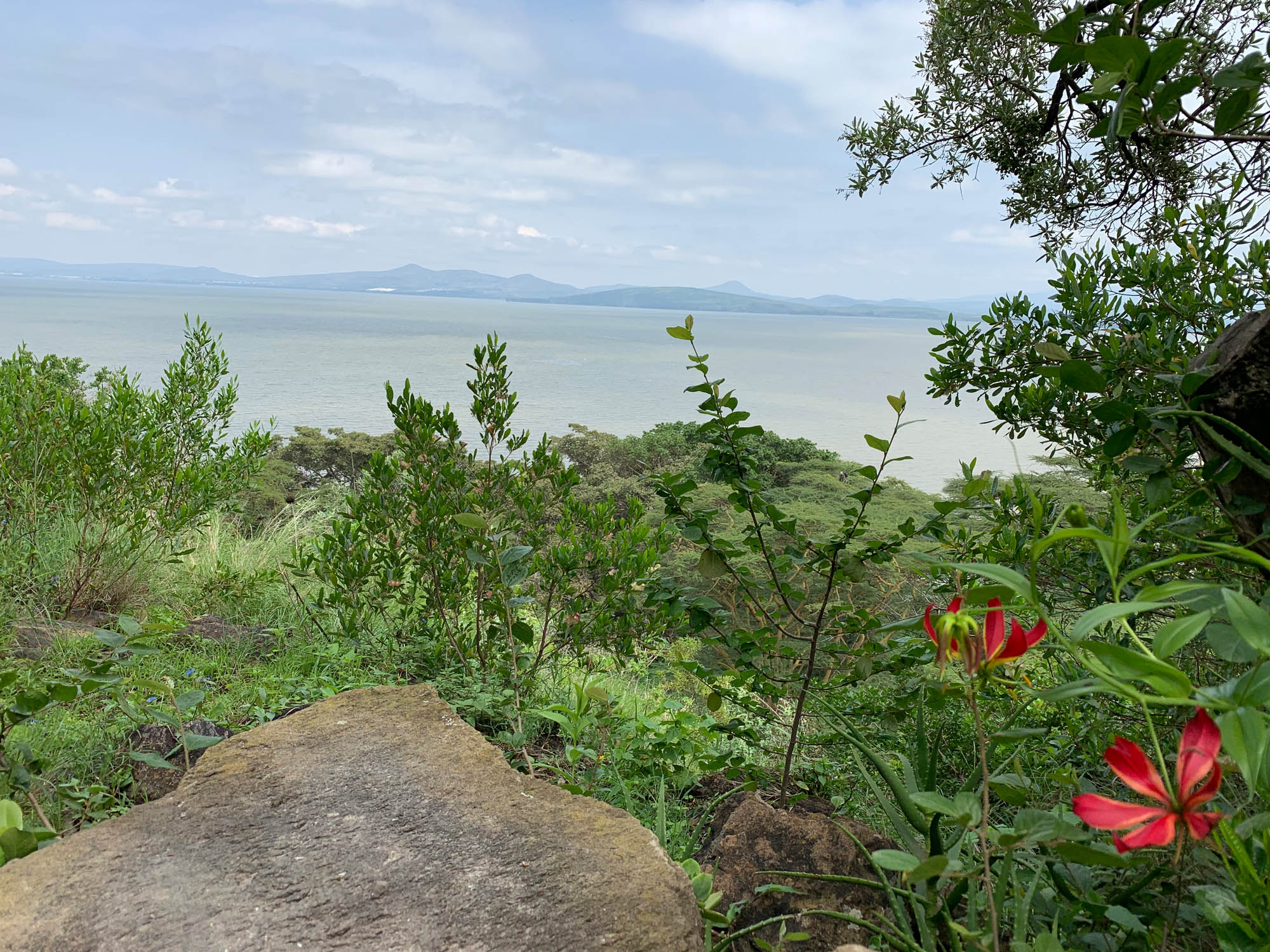
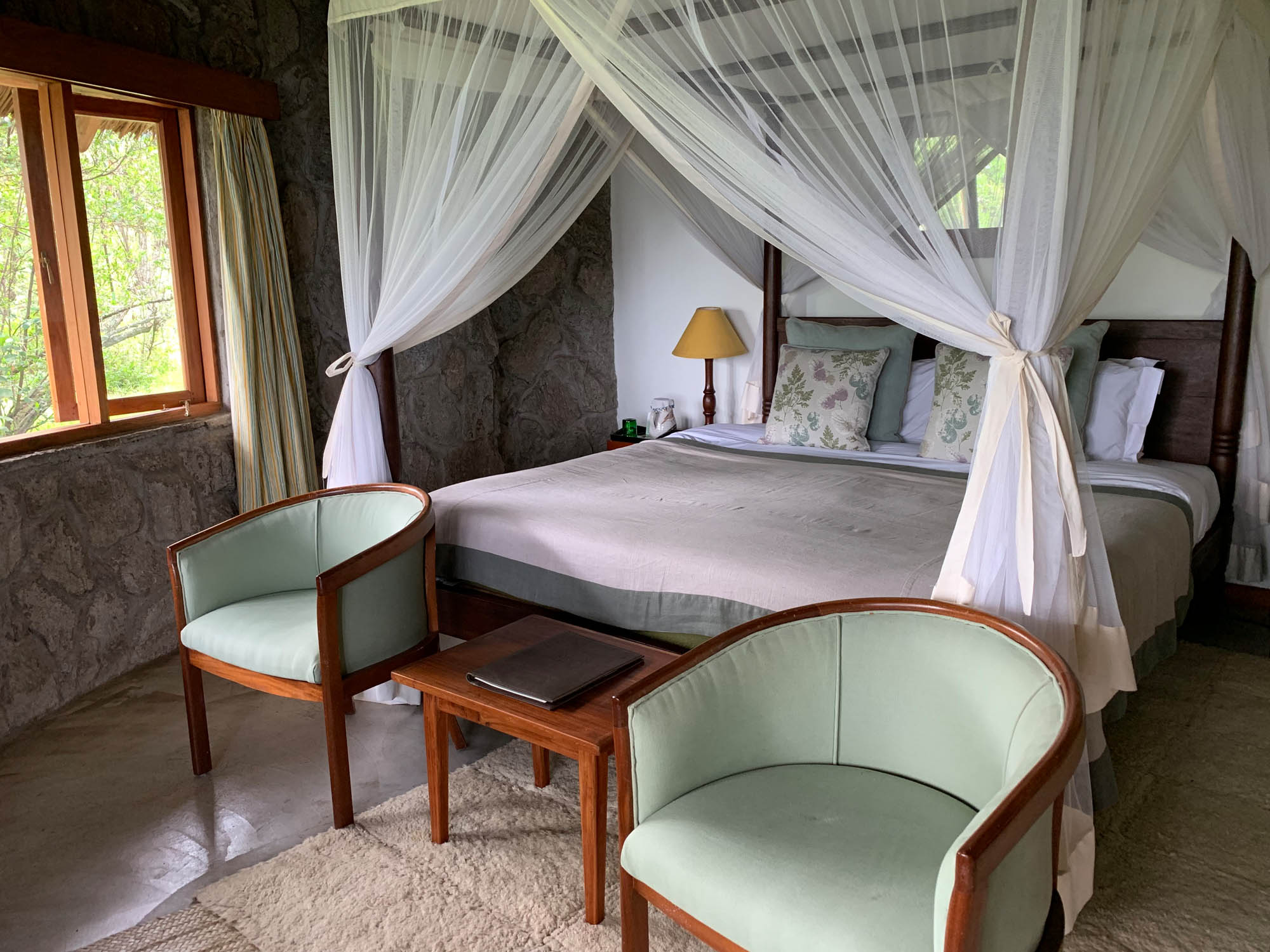
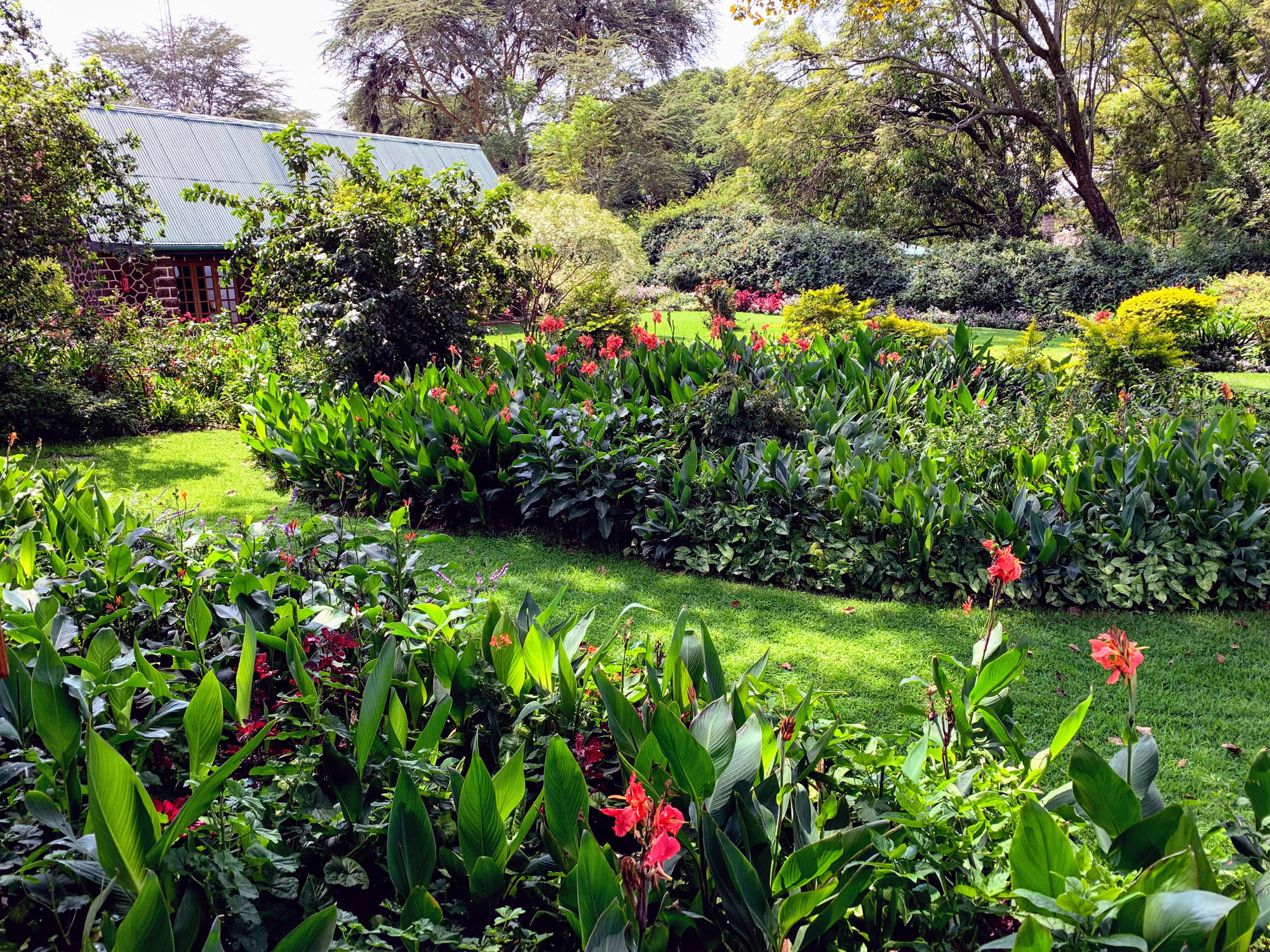
From this point on and for the duration of my trip to the Masai Mara, I was accompanied by Zachary Methu, an affable, extremely capable and hugely knowledgeable Origins Safaris guide.  What a difference a good guide makes!  It took about 3 hours by road to get to Lake Naivasha, where I would spend a couple of nights at Loldia House.  I had been looking forward to a return visit to this lovely old home which was built by Italian prisoners-of-war during WWII. Just like the last time, I spent a peaceful night in Room #1.  Being inside the main house, it is convenient, large, and has beautiful views over the garden and the lake.  The bathroom has been upgraded.


Image

I enjoyed some bird photography and a delicious lunch, and went for a 5K run later in the afternoon in the cultivated (farm) portion of the estate.  That evening, we enjoyed a delightful dinner – table d’hote style – with 8 other guests and the manager.  The 3-course, plated meal was expertly prepared and served.  Breakfast the next morning was equally good, particularly the pancakes.

Loldia is the perfect place to spend one’s first couple of nights in Kenya, prior to going on safari.  It’s a great introduction to Kenya’s wildlife with a good variety of game to be seen including buffalo, hippo, impala, gazelles and giraffe. On night drives hyenas, owls, and bush pigs may be seen.  


Image

Included activities at Loldia are an afternoon game drive with sundowner drinks,  a boat cruise on Lake Naivasha early in the morning and a night game drive after dinner.  Beyond those,  Loldia offers a host of optional activities (at additional cost), such as guided trips to Lake Nakuru, Crescent Island, Hell’s Gate, Crater Lake, Lake Ol Odien, Eburru Forest, Aberdare National Park, Lake Elementaita, and Lake Bogoria.   There’s also golf available at the nearby Great Rift Valley Lodge, horse-riding and a tour of the nearby rose farm.

Room 1 at Loldia is in the main house; rooms 2, 3 and 4 (all upgraded) are in the garden.  Room 6 and 7 (thatched roofs) are also in the garden.  Room 8 and 9 are in the Top Cottage and room 10 is in the Top Cottage loft and has a separate/outside bathroom.


Image

MARA BUSHTOPS, MASAI MARA

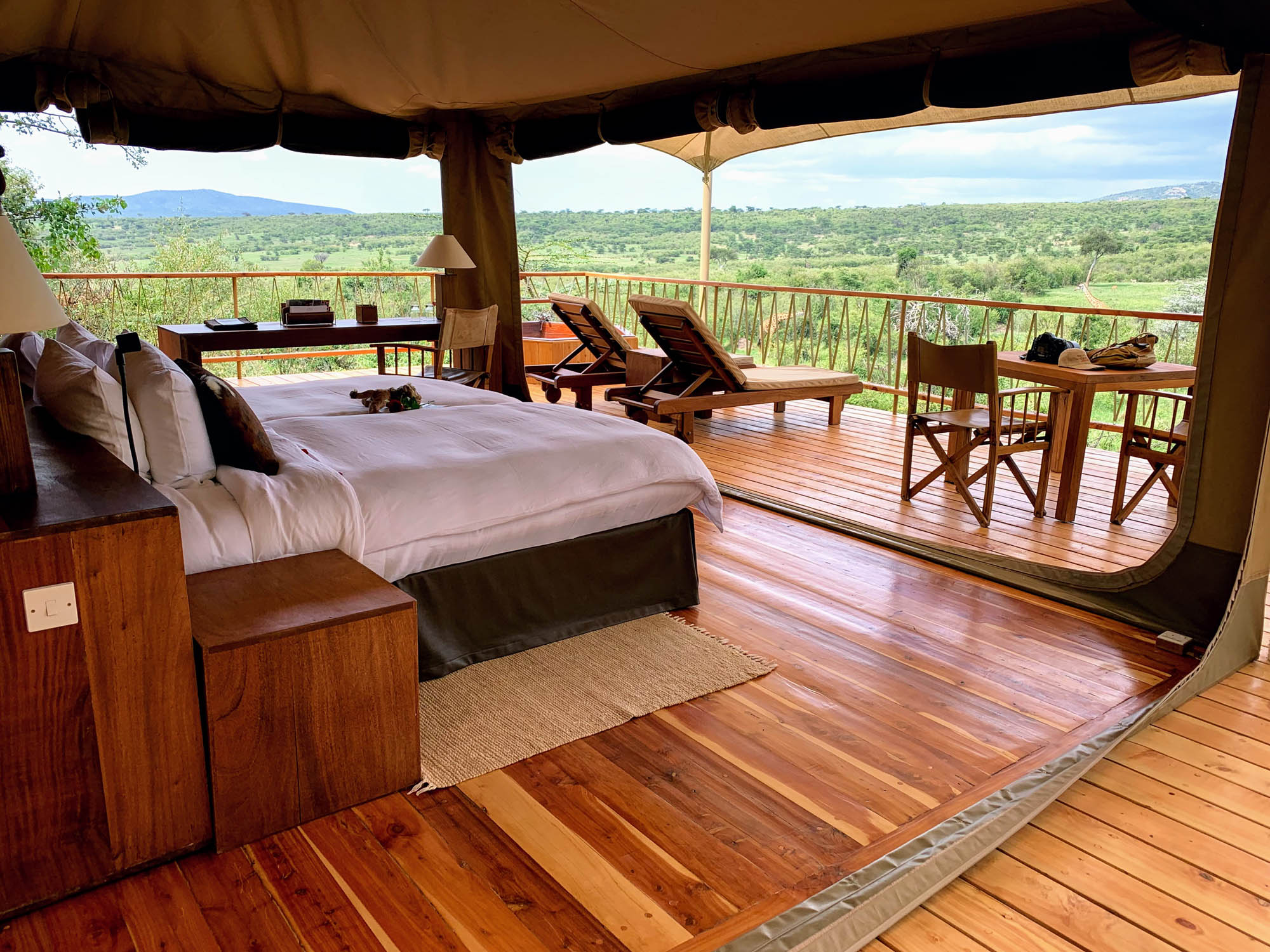
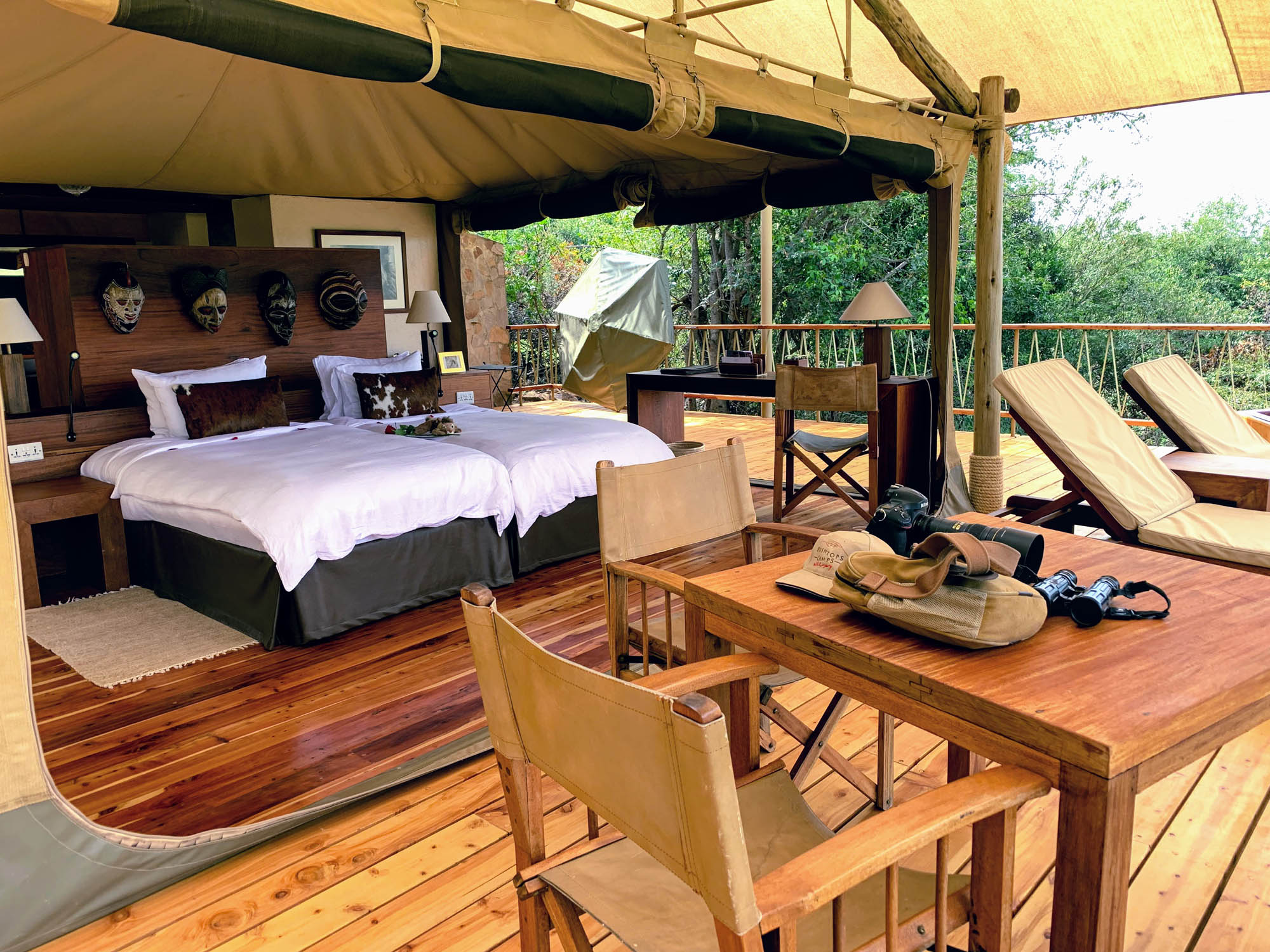
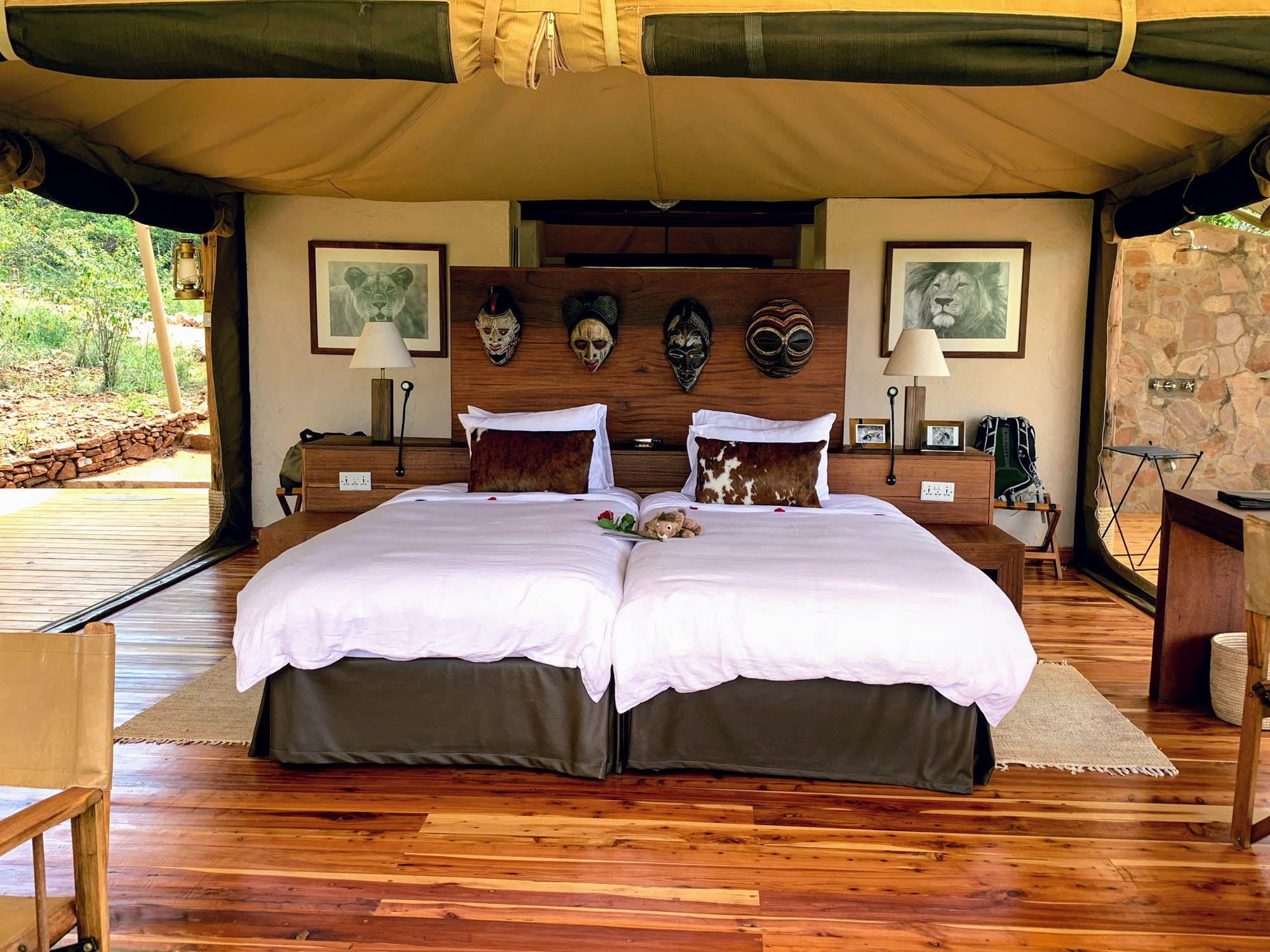
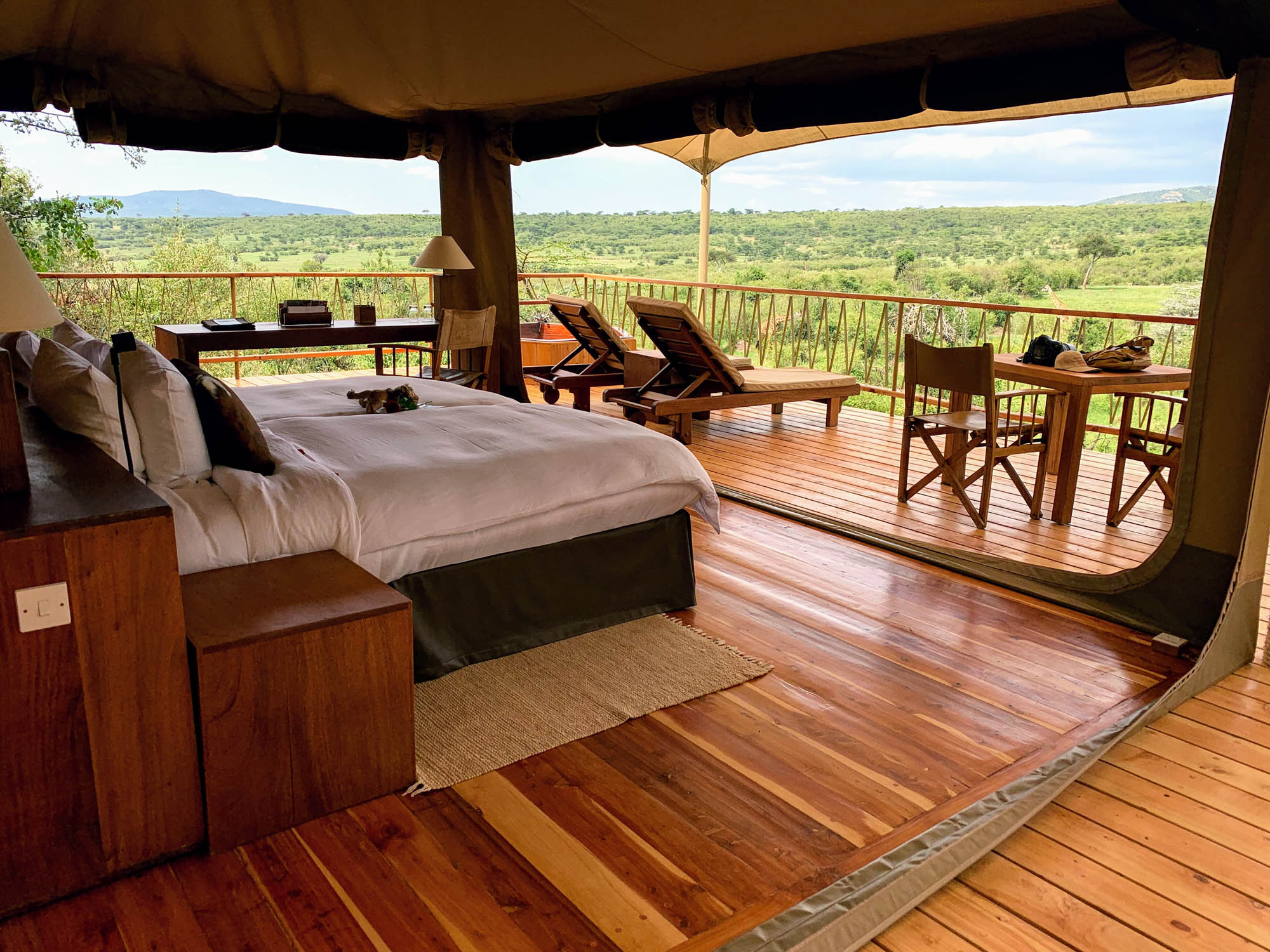
Fom Naivasha it was a solid 5 hour 30 minutes drive to Mara Bushtops, situated in a game-rich conservancy just to the north of the Masai Mara National Park.  The impressive tented rooms are solidly in the deluxe category with beautiful wrap around views over the surrounding bush.  There was an indoor and outdoor shower, Wi-Fi and an outdoor jacuzzi which can be filled in advance.  The room has a buzzer to summon your personal butler.  The room lighting wasn’t quite up to my ‘bright, clear, and easy to operate’ expectations. 


Image

A two-hour afternoon game drive on the Isaaten Conservancy illustrated once again why Kenya is such a good choice for a first – or any – safari.  Without too much driving at all we notched up good views of elephants (lots of them!), giraffes all over the place, many zebras, scattered groups of wildebeest, impala, Thompson’s gazelle, topi, eland, Kirk’s dik-dik, vervet monkeys, warthogs and bat-eared foxes. Guests who spend three nights or more at Mara Bushtops will usually spend a half or full day inside the Masai Mara National Park; the lodge is only about 30 minutes from the Sekenani gate.  Dinner was first class in every way in what was essentially a full-blown restaurant with multiple starters, main courses and dessert options. No set hours:  you dine when you want to.


Image

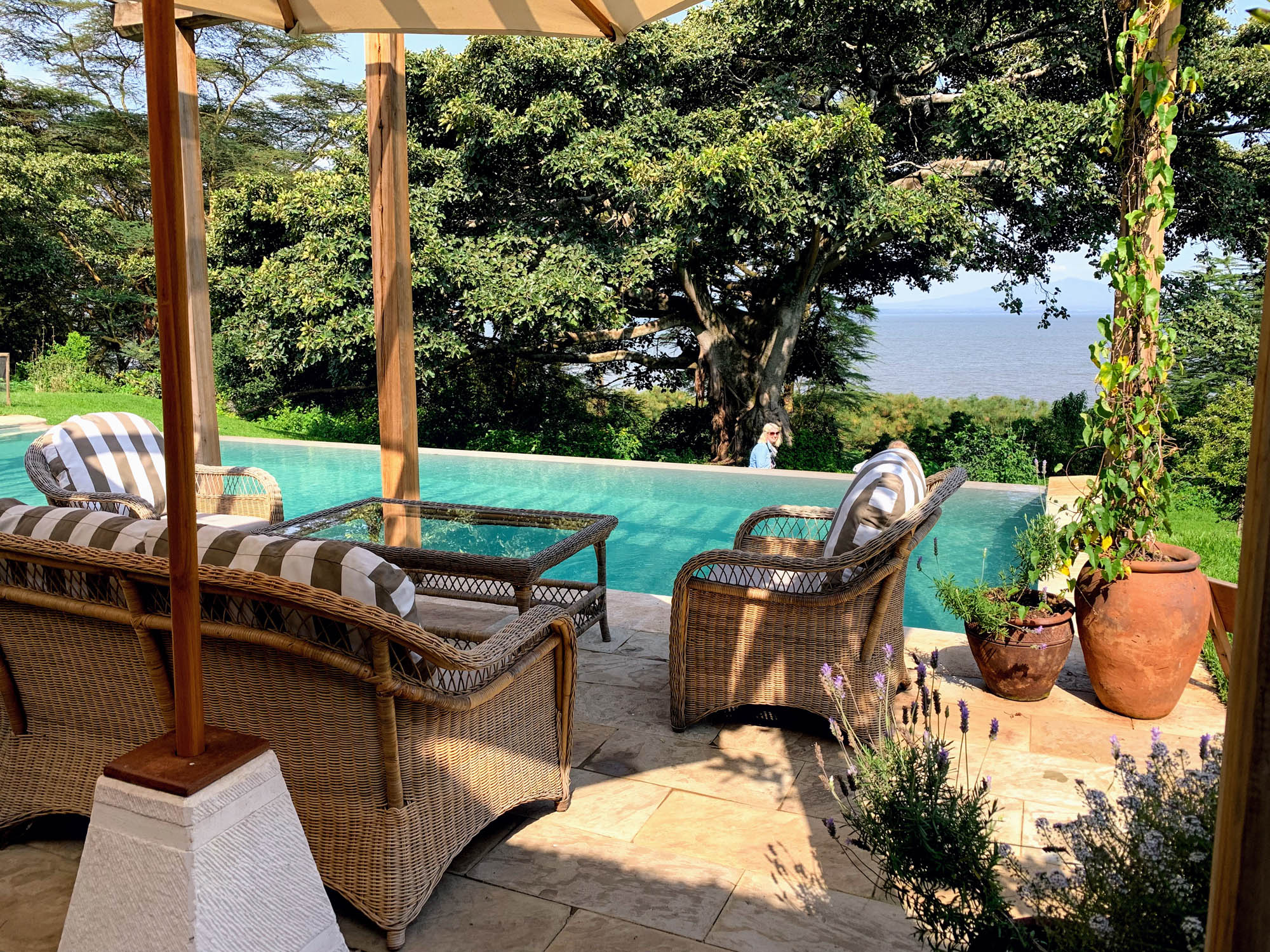
Exercise note:  Mara Bushtops caters for health enthusiasts more than most other camps.  They have a large pool with adjacent heated jacuzzi, a sauna, a small gym with weights and a treadmill.  The Amani Spa at Mara Bushtops has a wide range of beauty treatments and massage and rejuvenation treatment options, several of which cater for couples.


Image

ASILIA NABOISHO CAMP, NABOISHO CONSERVANCY

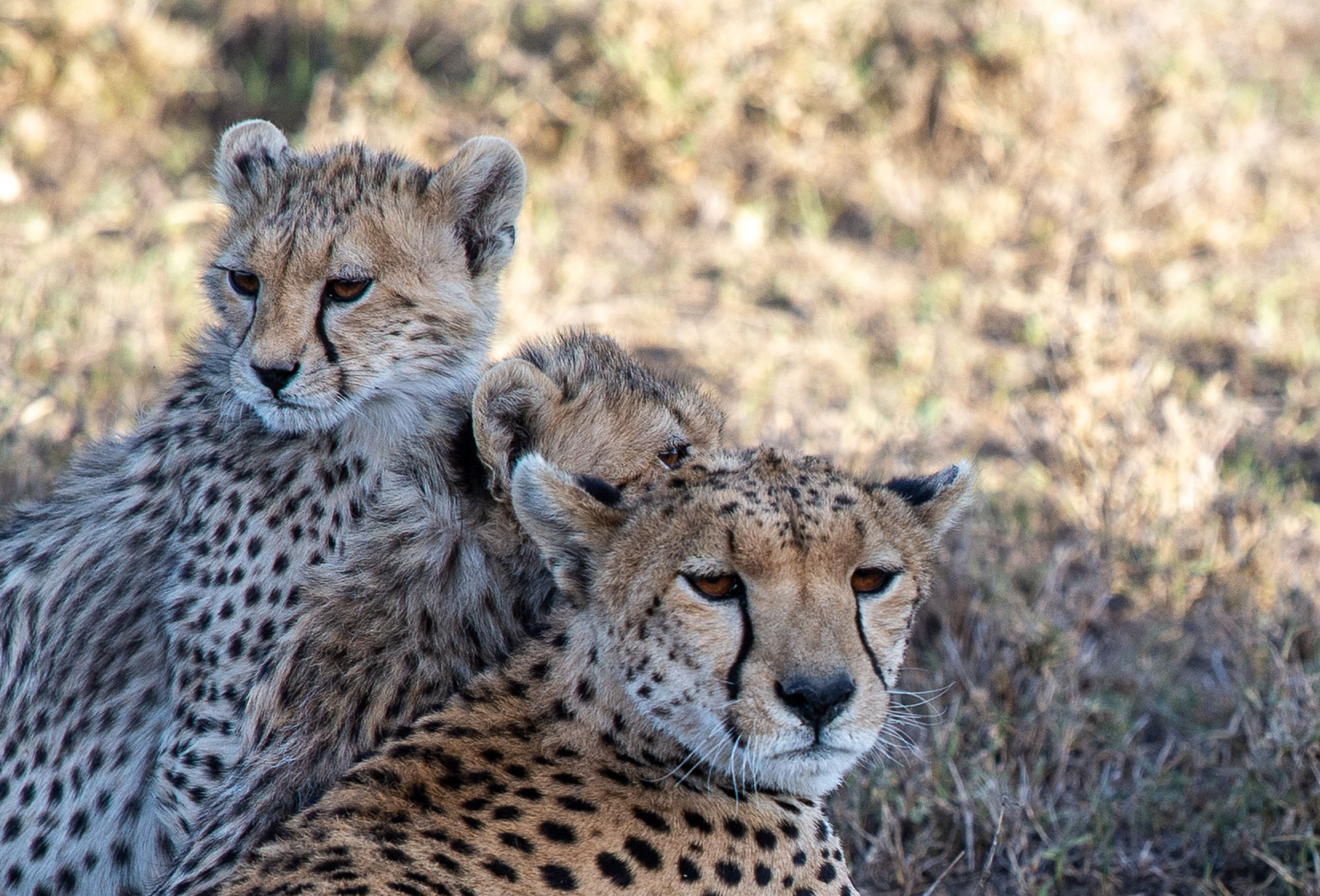
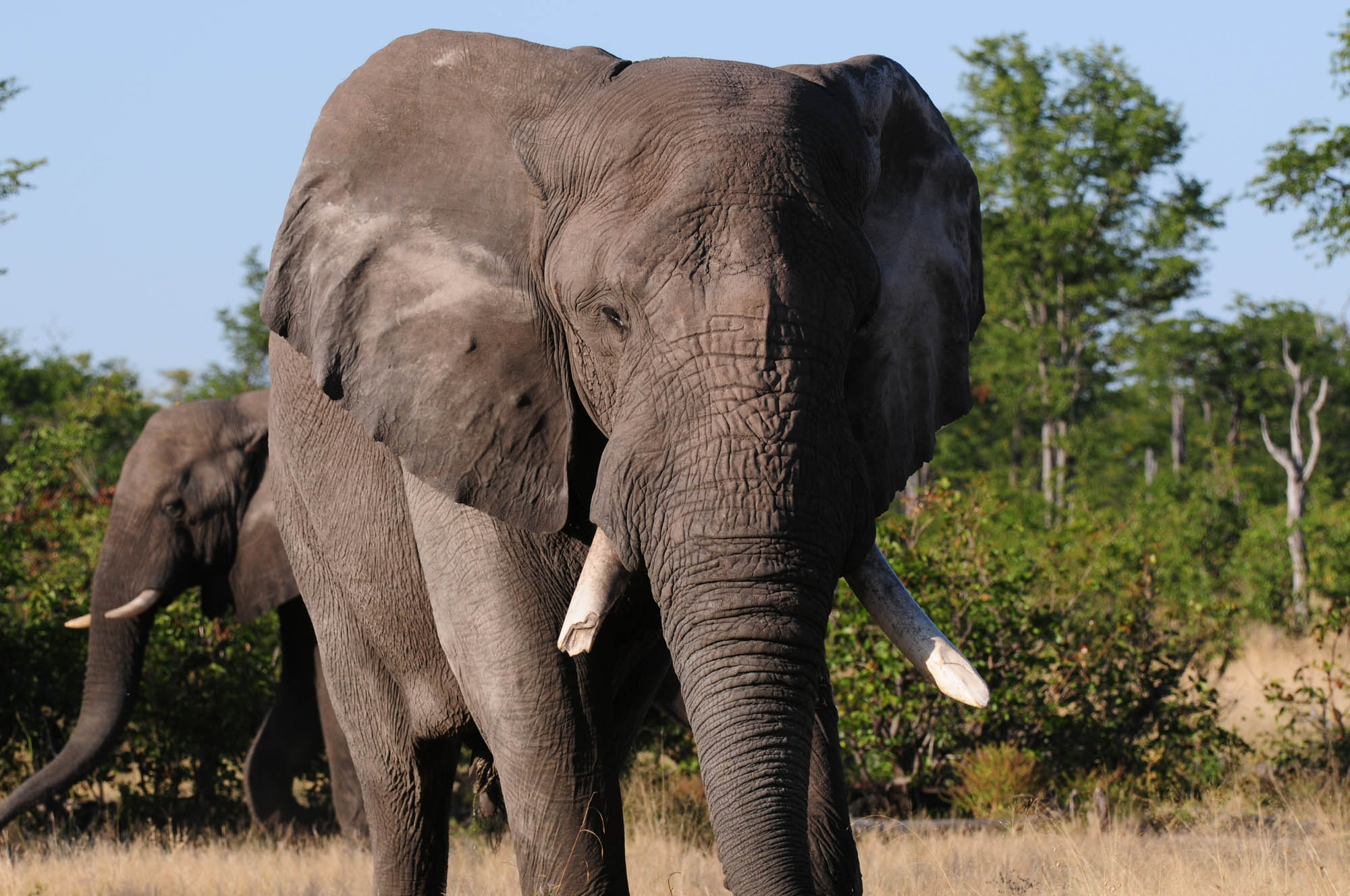
It was a relatively short drive today to the Naboisho Conservancy where I spent the night at Asilia’s Naboisho camp.  Naboisho is a well organized camp with friendly and attentive management and staff, superior guiding by Dickson Kaleku, and abundant wildlife.  I also did a site inspection at nearby Mara Encounter and liked what I saw, particularly the adventurous walk through a small, dense forest on the way into camp.   I can recommend both of these camps and the Naboisho area without any reservation.  The game viewing was as good as I’ve experienced anywhere – ever – with huge numbers of wildebeest around.  It  felt like the migration season, even though we knew it was not.  We saw many lions and enjoyed an exceptionally good cheetah sighting with three sub-adult cubs.  Plus elephants, eland, topi, gazelles, impala, zebra, giraffe and more.

Exercise note:   Not an ideal spot for exercise, but you can go on an extended walk of a few hours duration with an armed professional guide.


Image

MARA PLAINS CAMP, OLARE MOTOROGI CONSERVANCY

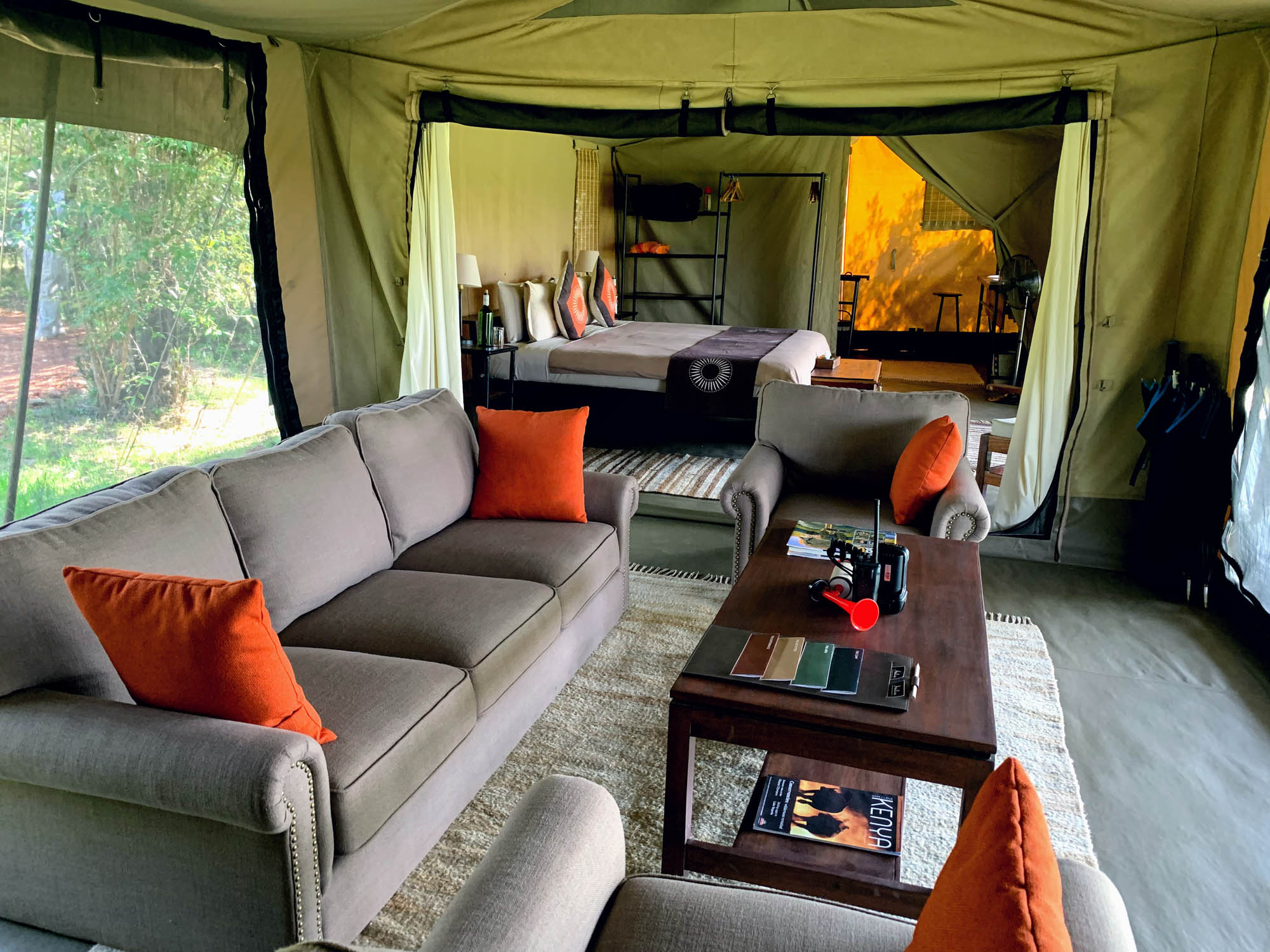
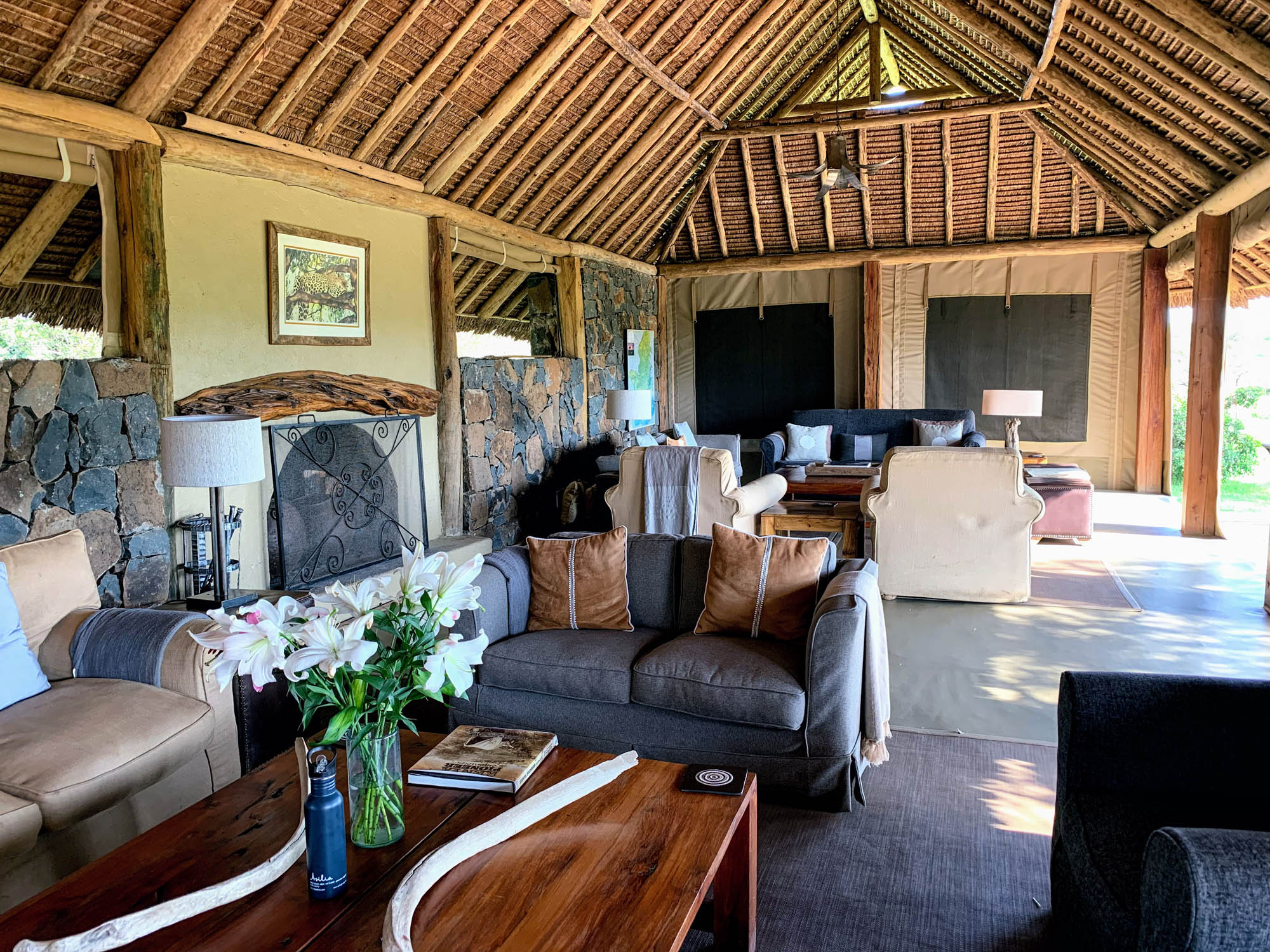
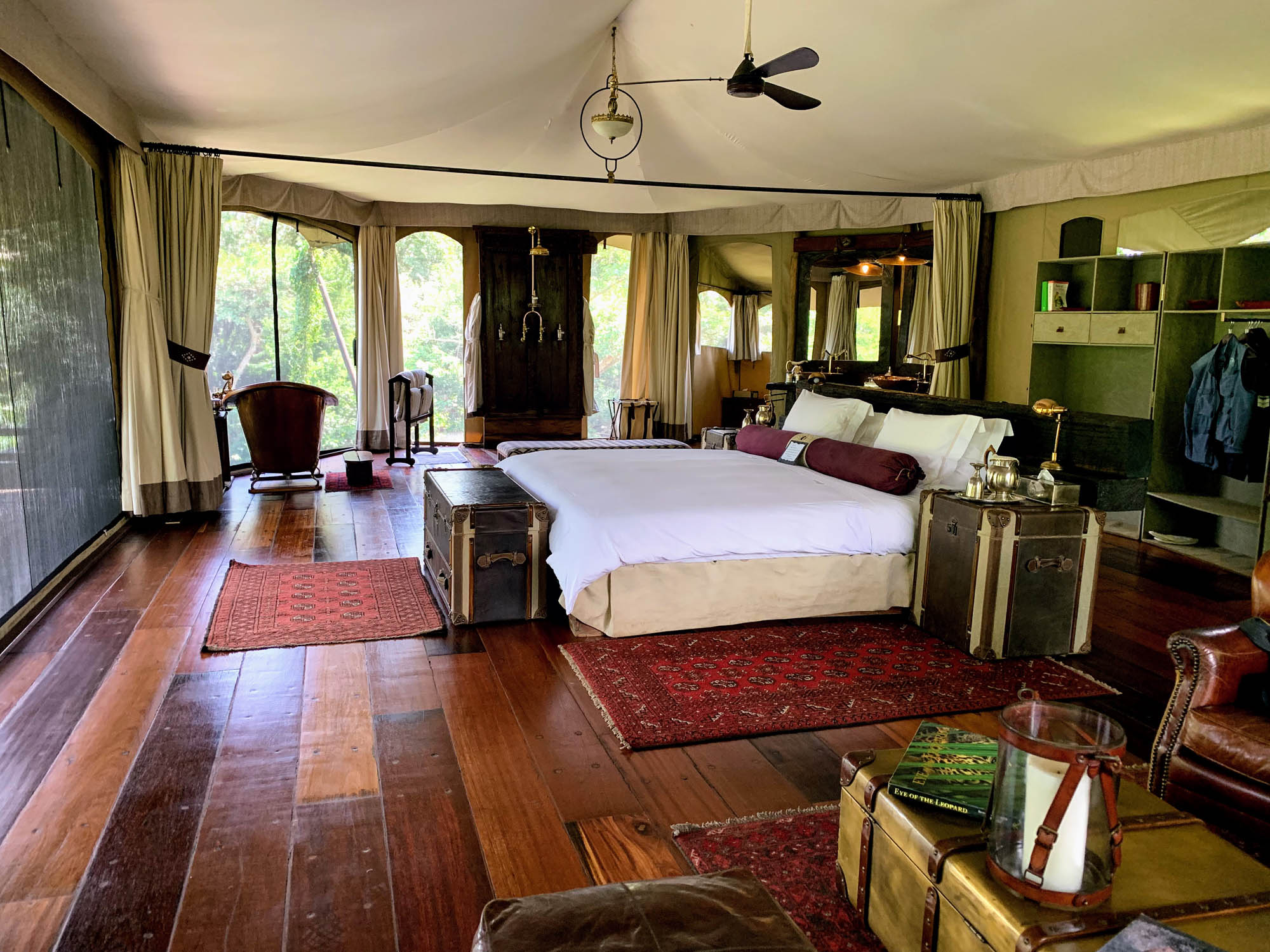
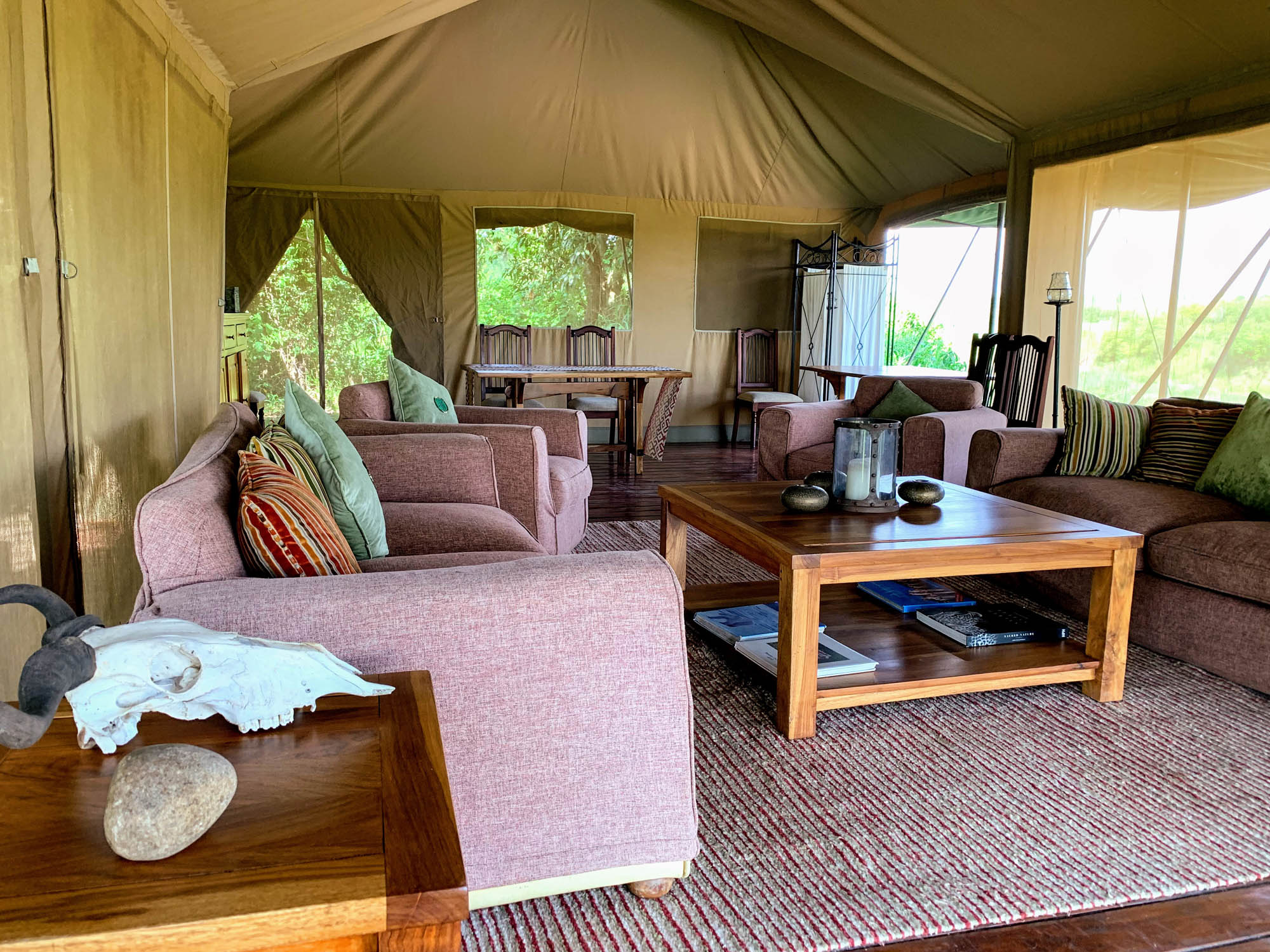
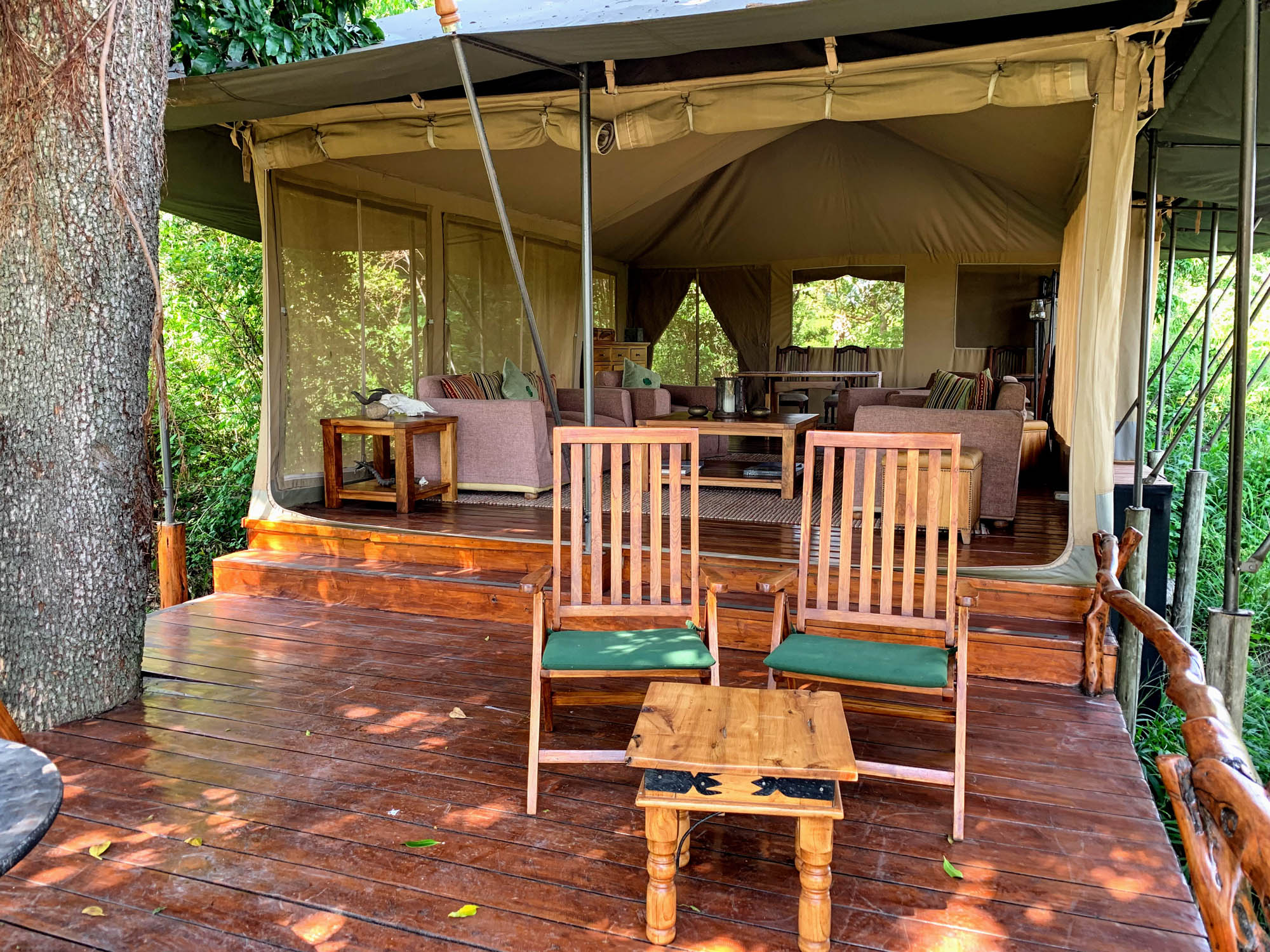
The next day, it was on to Mara Plains Camp in the Olare Motorogi Conservancy.  This conservancy is a model of how local landowners and conservation-minded safari operators can work together for a greater goal, being the preservation of Kenya’s wildlife heritage for generations to come.  In this huge area –  which otherwise would have been dotted with homesteads and overrun with cattle, sheep and goats –  wildlife is thriving and the local communities benefit with employment and cash income.  Mara Plains Camp is a Relais & Chateaux property and it shows on many levels from the impeccable quality of the food and beverage offerings to the attentive and competent management and staff.  I was wowed from beginning to end.  The massive rooms are dramatically set on the edge of a seasonal creek.


Image

For the few days that you may spend at Mara Plains you will be in a cocoon of unadulterated luxury.  While guests no doubt appreciate the luxury touches and the property’s high level of sophistication, the lasting impression is of a team of people with a clearly defined mission to be a force for good in both conservation and community.  The wildlife experience at Mara Plains on this trip was just as good as it was on a previous visit to the area, a few years ago.  At that time I recall seeing as many as seven different mammal species all at the same time. 


Image

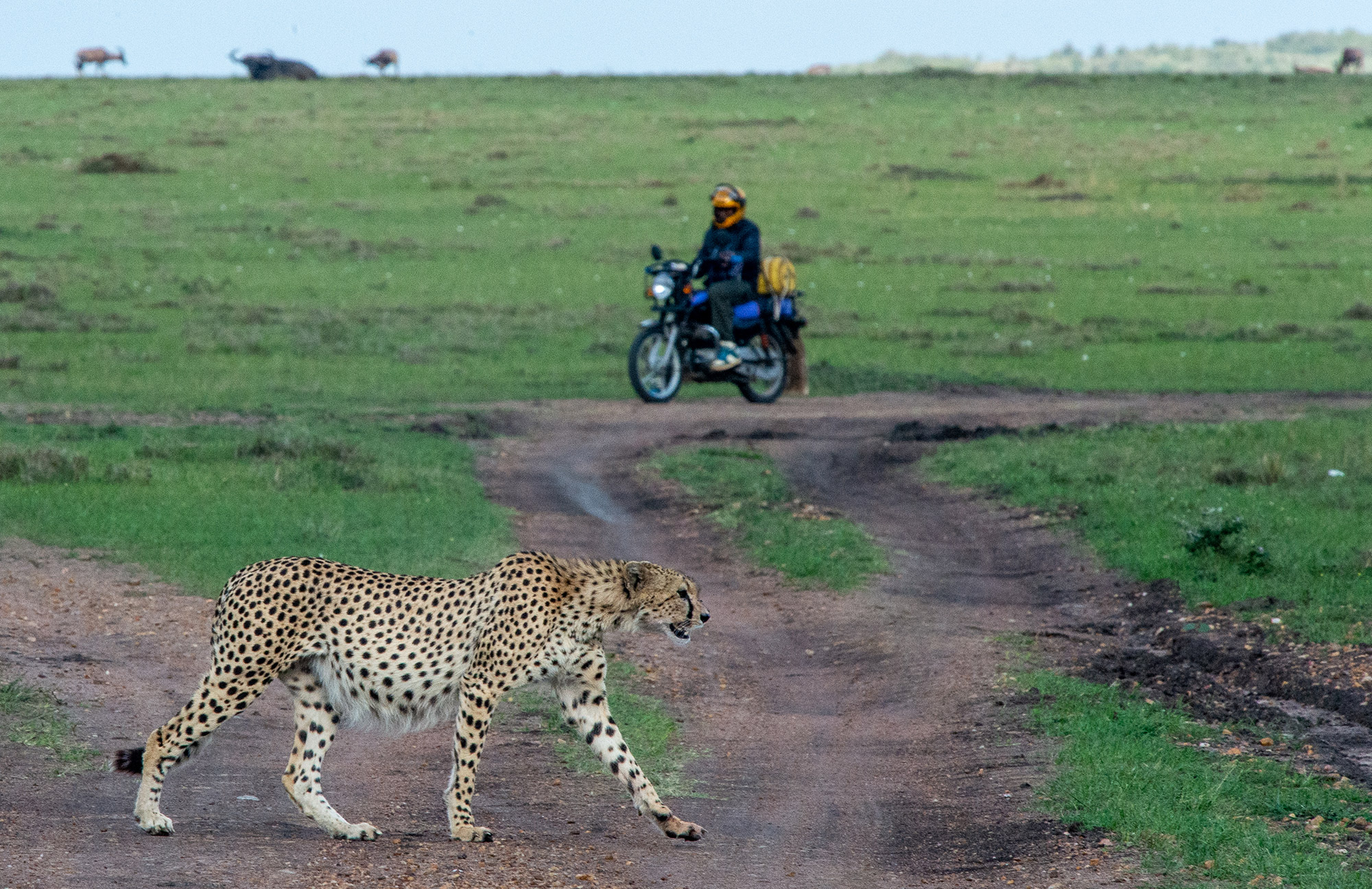
It would not be unreasonable to expect to see three big cat species – leopard, lion and cheetah – on a 3 night stay at Mara Plains; in fact we saw all three on one game drive, on this trip!  Most memorably, I photographed a cheetah crossing a small road within the conservancy, while a local resident on a motorbike (here known as a boda-boda) paused for a few minutes, to give the cheetah the space to do so without pressure.  Only in Kenya!  We also saw various prides of lions, some with cubs of varying ages, and a host of other mammals and birds.  My Mara Plains hosts Rich and Lorna – as well as Kyra – went out of their way to make me feel at home.

Exercise note:  Clearly not a good place to go jogging, but each room has a yoga mat and a  jump rope.


Image

ASILIA REKERO CAMP, MASAI MARA

My next stop was Rekero – another Asilia property – located in an ideal spot on the Talek River with a great view down-river, inside the Masai Mara National Park. The huge deck is a perfect place to discover the coming and going of numerous birds including the rather stunning blue fly catcher which I tried to photograph with some success.  Rekero is so well hidden in the thick riverine forest along the Talek River that it remains completely hidden until you walk into camp, from the parking area.  There are nine tented rooms, two of which are family rooms; the tents are quite spacious with a separate en suite bathroom with plenty of hot water, a separate vestibuli with a day-bed and adequate lighting.  I slept soundly by the sound of water rushing over the rocks in the Talek River.  The food at Rekero was excellent and we enjoyed a wonderful dinner with a mix of South Africans, Texans and Kenyans and a couple from San Francisco.


Image

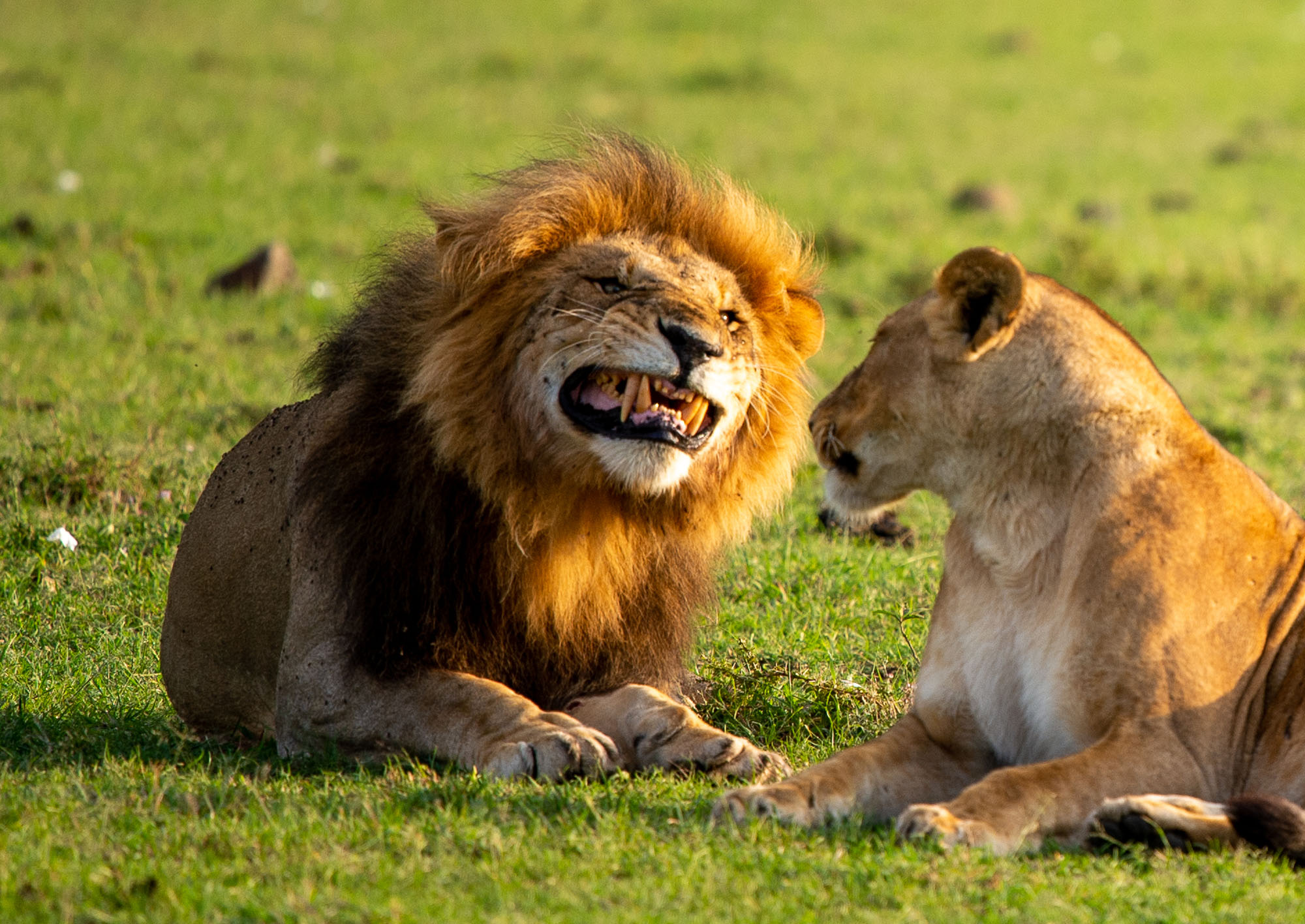
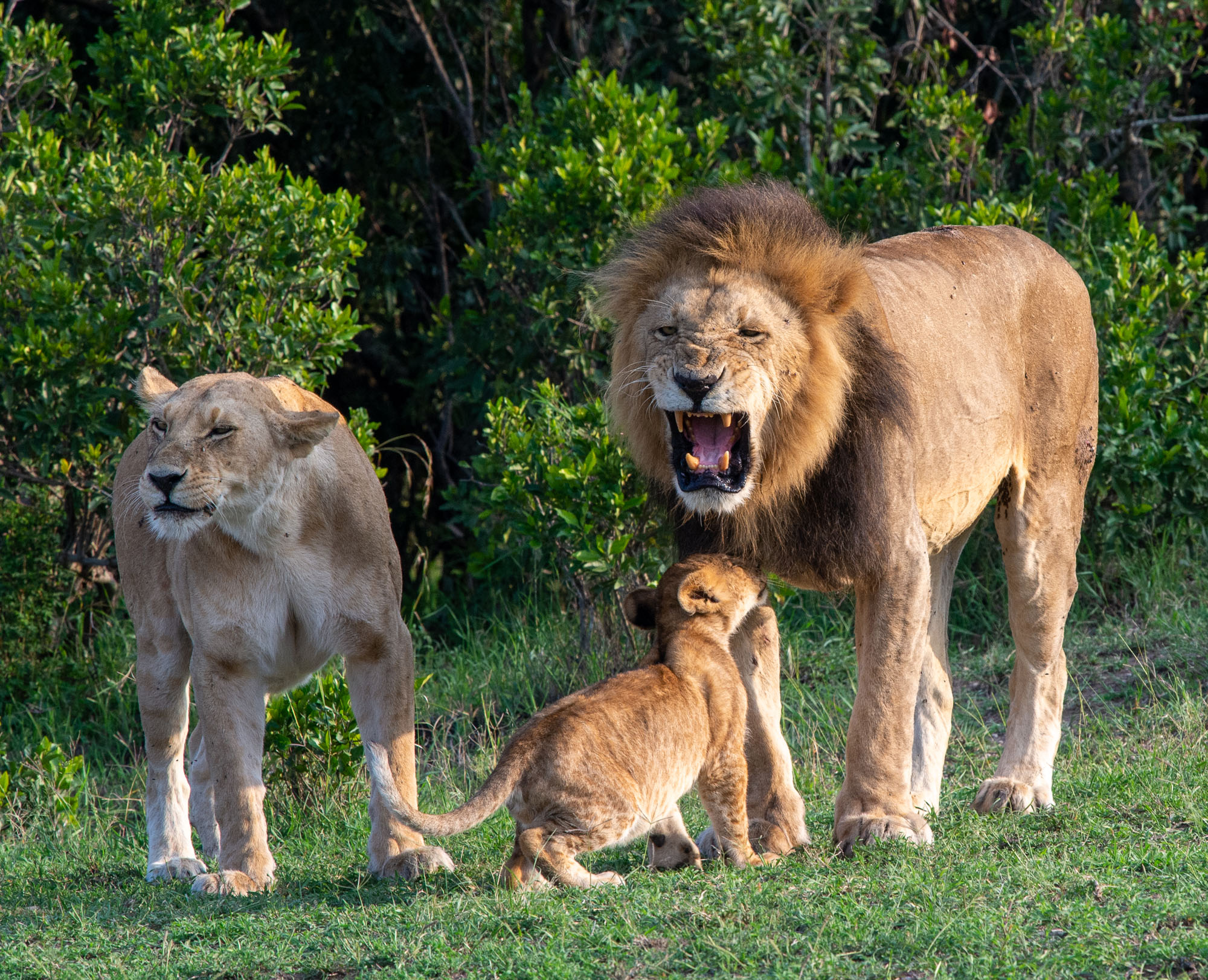
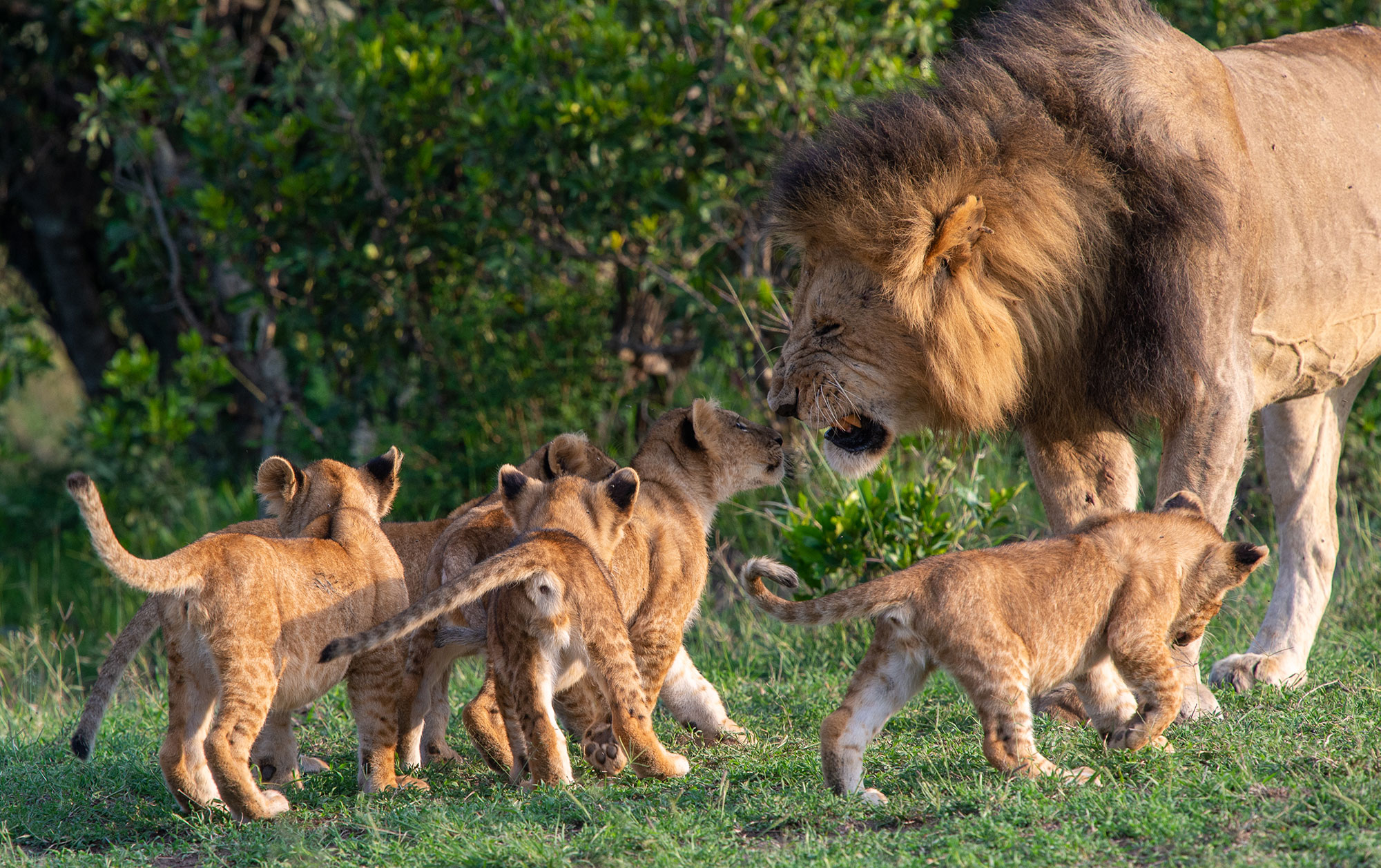
We enjoyed yet another superb day of game-viewing in the Masai Mara spotting a leopard with an impala kill in a tree, four different groups of lions, two prides with cubs (from literally 1.5 weeks to several months old) some handsome full-maned male lions, powerful females, sub adults and more.


Image

INTREPIDS CAMP, MASAI MARA

Intrepids camp, my accommodation for the following day, is quite large with 32 tents but with the rooms strategically spread out along the edge of the Talek River in thick vegetation, the camp does not have a ‘crowded’ feel.

The rooms are quite smart and nicely equipped with decent lighting, mosquito nets, a separate shower and toilet with door, a deluxe wash basin and ample mirrors. There is Wi-Fi everywhere in the camp. Each room has a small desk and ample storage and clothes hanging space. The bathroom area and particularly the shower of my room number 14 was starting to look a bit tired and is definitely in need of refurbishment.


Image

Hot water – provided by wood burning boilers – is available from 5 to 9 a.m. and 5 to 9 p.m. Lunch was served buffet-style with multiple choices and options including a wide variety of vegetarian items.  For dinner meals are plated with a substantial number of options for starters, main course and even for dessert.

What makes Intrepids a good choice though is the location.  It is ideally located in the heart of the Masai Mara right where the action is during the migration season.  From here your guide can take you towards the Musiara area if needs be, or to the main or Serena crossing over the Mara River, or even further afield to the southern section of the Mara in search of whatever is out there, including of course potential wildebeest crossings.

Exercise note:  Mara Intrepids has an extensive trail/walkway winding through the camp and past the vehicle maintenance area, so this is a property where you can plan on getting a few miles under the belt.


Image

MARA EXPLORER CAMP, MASAI MARA

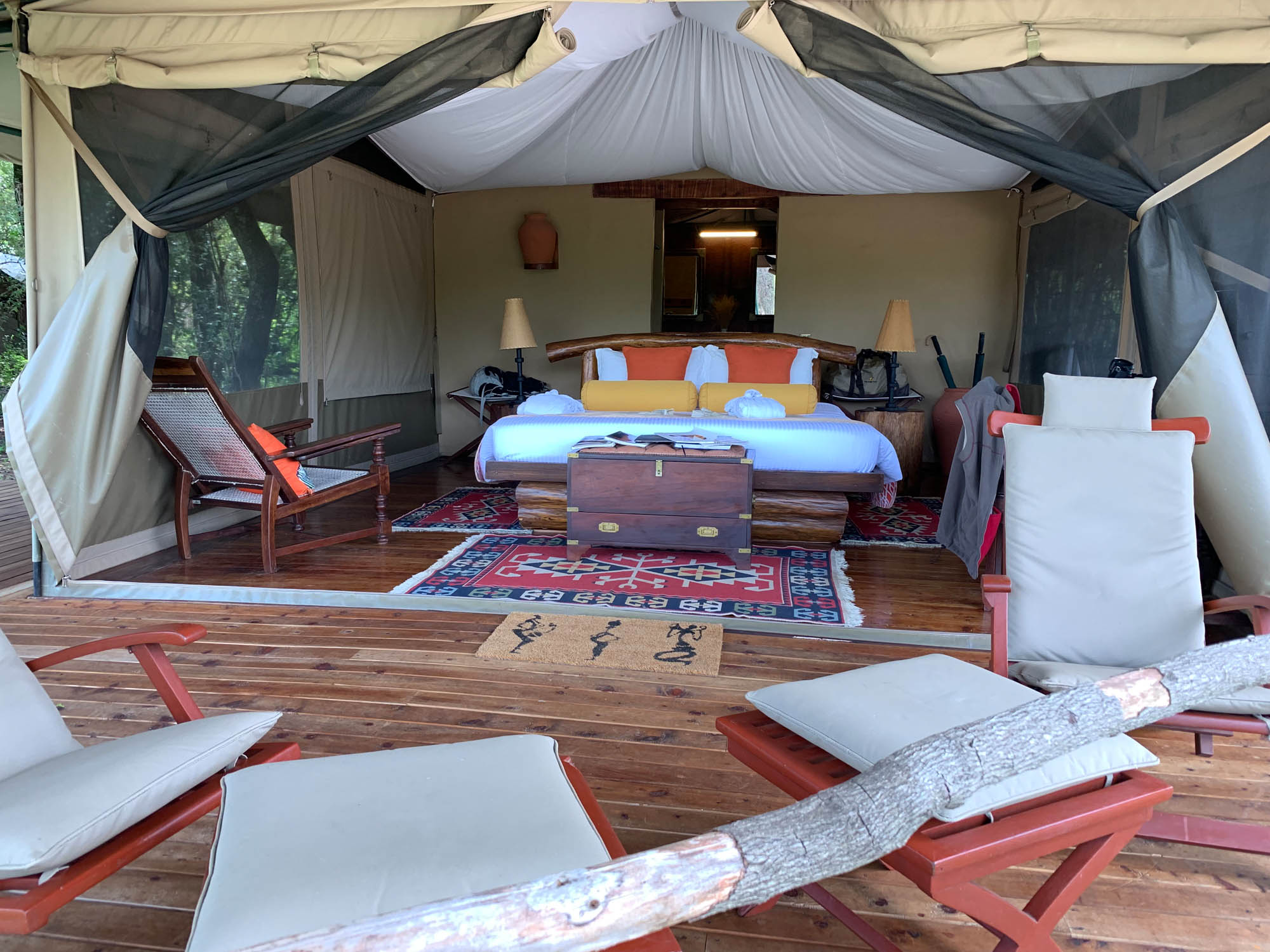
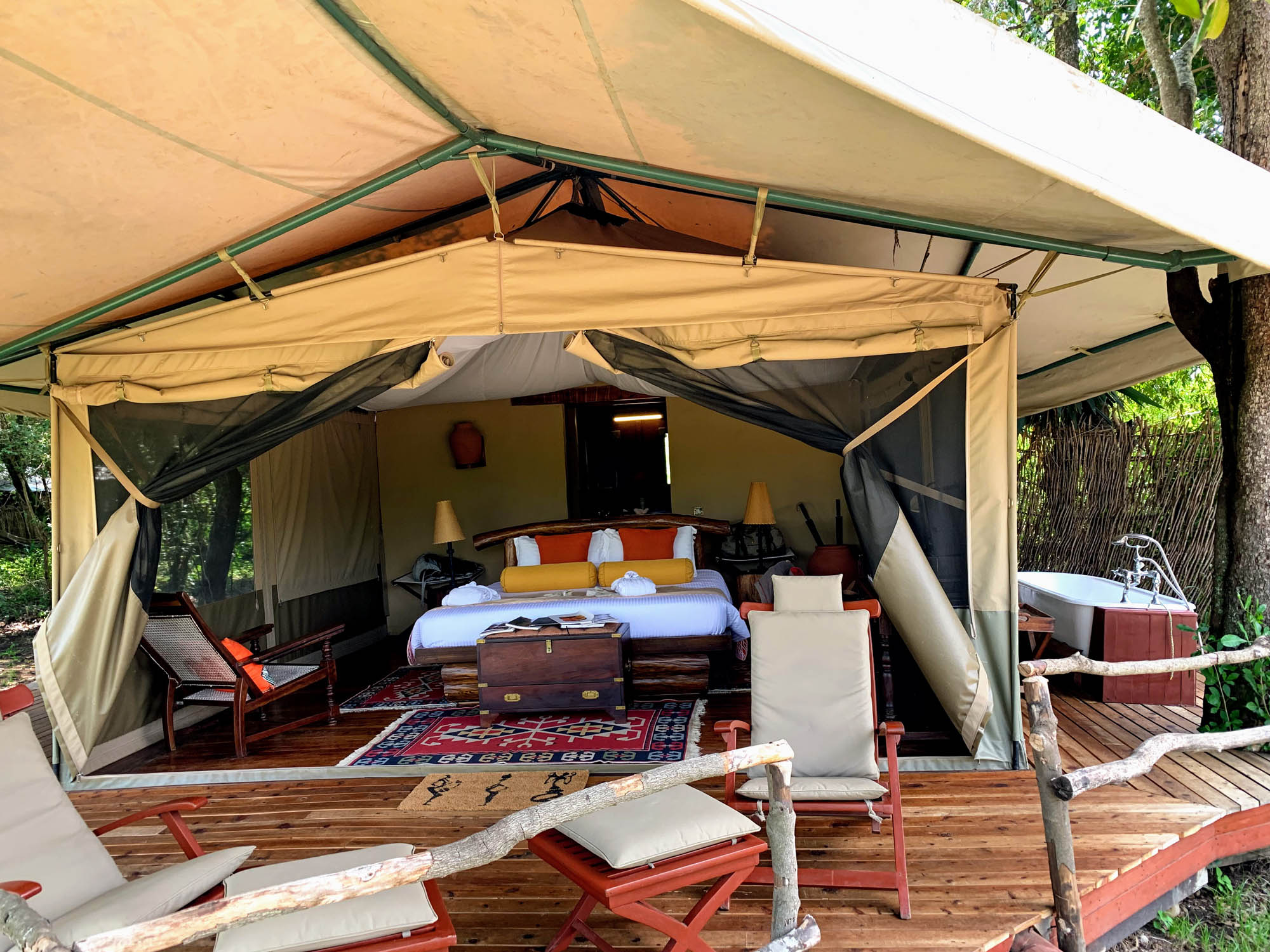
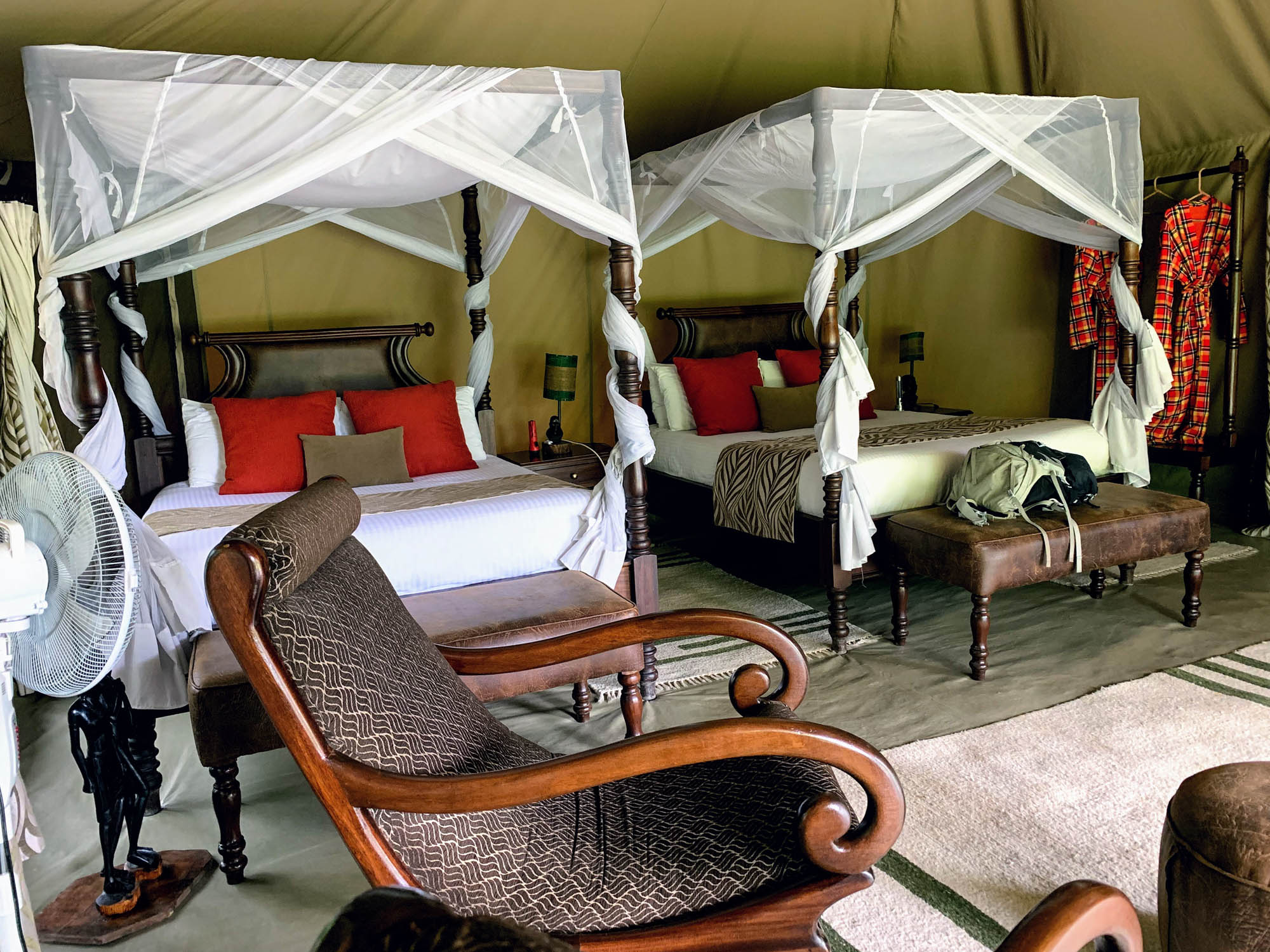
The next day my journey would take me on to Mara Explorer camp, Intrepids’ smaller and more luxurious sister tented camp. Mara Explorer has just 10 quite elegant tented rooms, most with good views over the Talek River which was flowing quite strongly on the day.  The rooms are spacious with a separate indoor shower (shower head needed replacement), a  toilet with a door and an outside bath with a view.  Hot water available from 5 – 9 a.m. and from 5 – 9 p.m.


Image

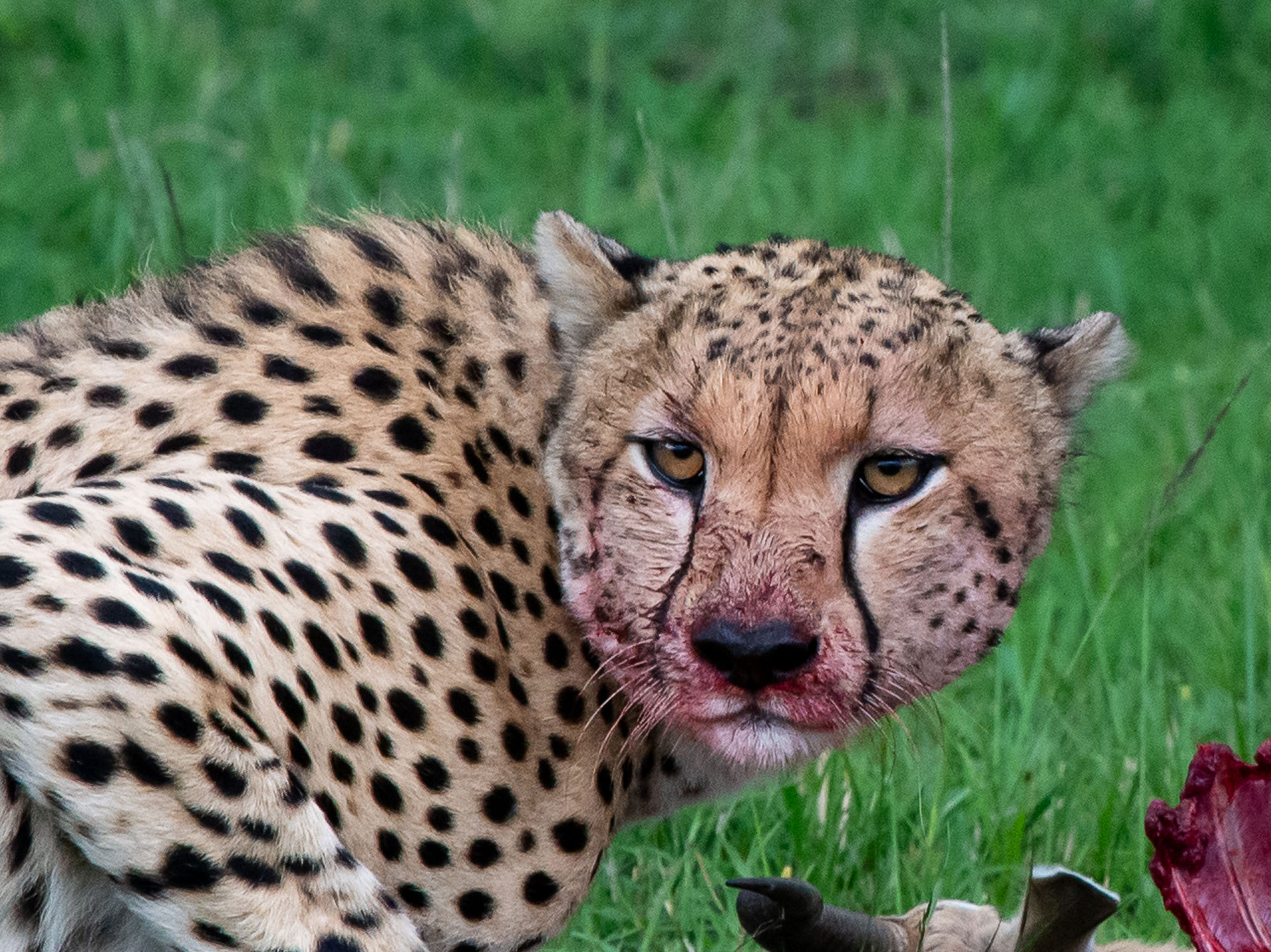
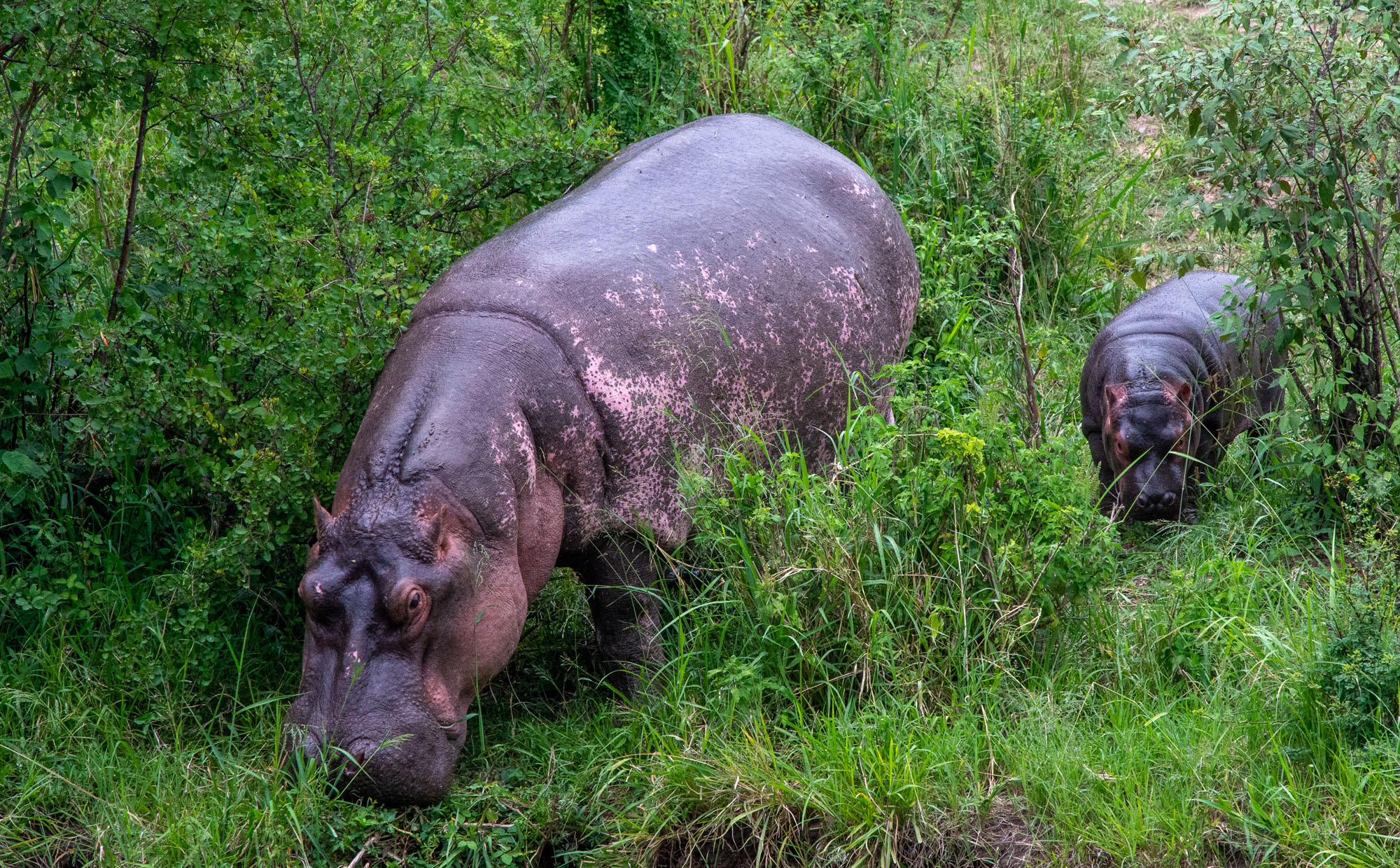
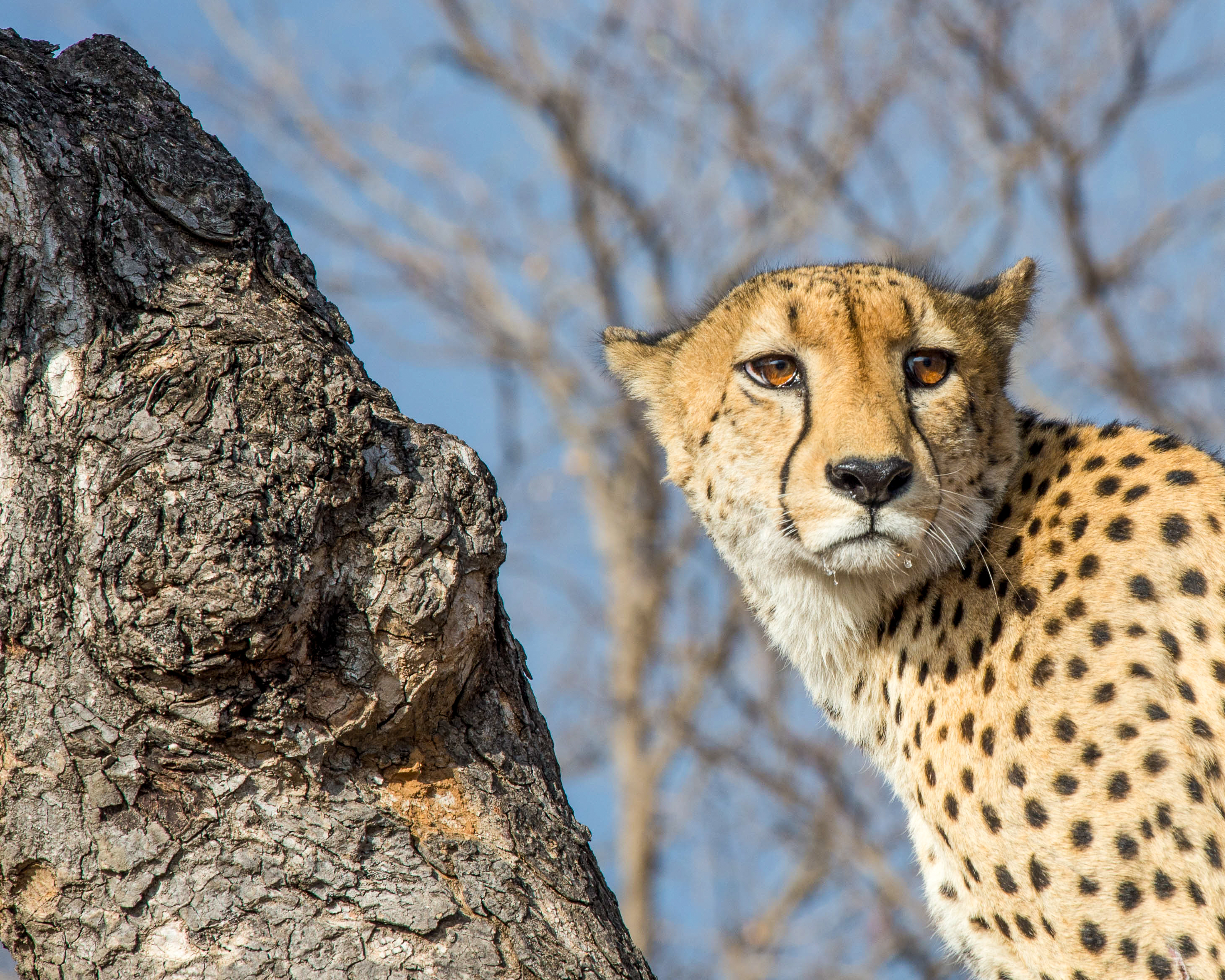
The rooms are on the edge of the Talek River and some of them, like mine (#4), are very close to a sizable number of hippos hanging out in a hippo pool in a bend of the river.  So if you really like hippos and don’t mind them waking you up at around 5 a.m. when they go back in the water then this is just the room for you.  Our game drive today produced a sighting of an acclaimed coalition of four cheetahs, as well as some good views of lions and buffaloes.  The day was rounded off nicely with a surprise bush dinner.


Image

MARA NGENCHE CAMP, MASAI MARA

It was a shortish drive this day to Mara Ngenche, sister camp to Samburu’s Elephant Bedroom camp.  The property is located in a prime spot at the confluence of the Talek and Mara Rivers with the rooms having views over either of the river beds.  My room was large with a comfortable king bed, decent lighting, indoor shower and bath and outside shower.  It also had a private plunge pool, lounge chairs and hammock.  The staff was friendly and attentive and obliged with a special local meal with items such as ugali and sukuma wiki.

The dining room, lounge and bar tents were likewise quite well done; food was superb and varied with several choices of starters, mains and desserts.  Game drives in the area were productive and we had a good morning with several sightings of leopards, among others.


Image

ELEPHANT PEPPER CAMP, MARA NORTH CONSERVANCY

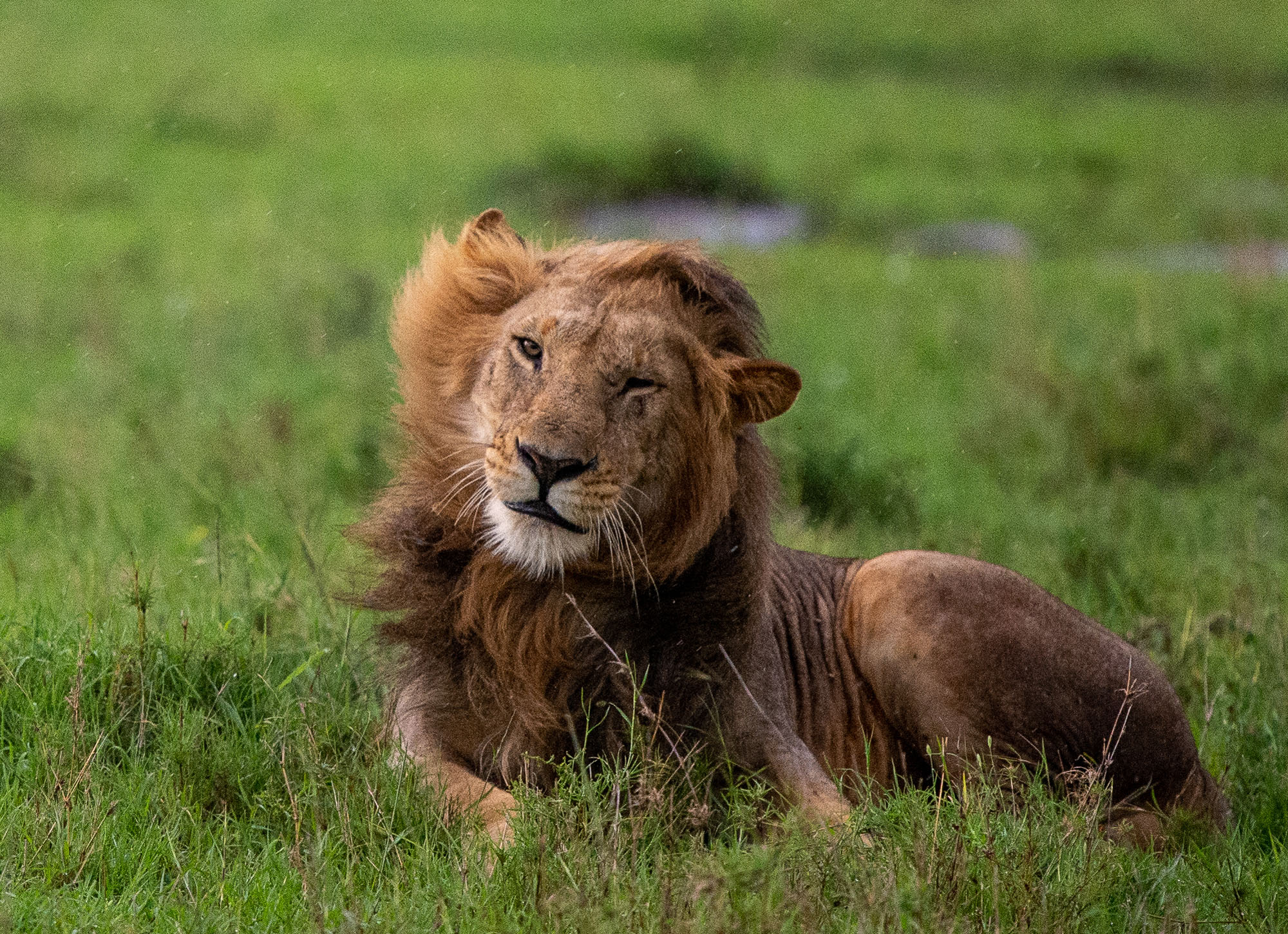
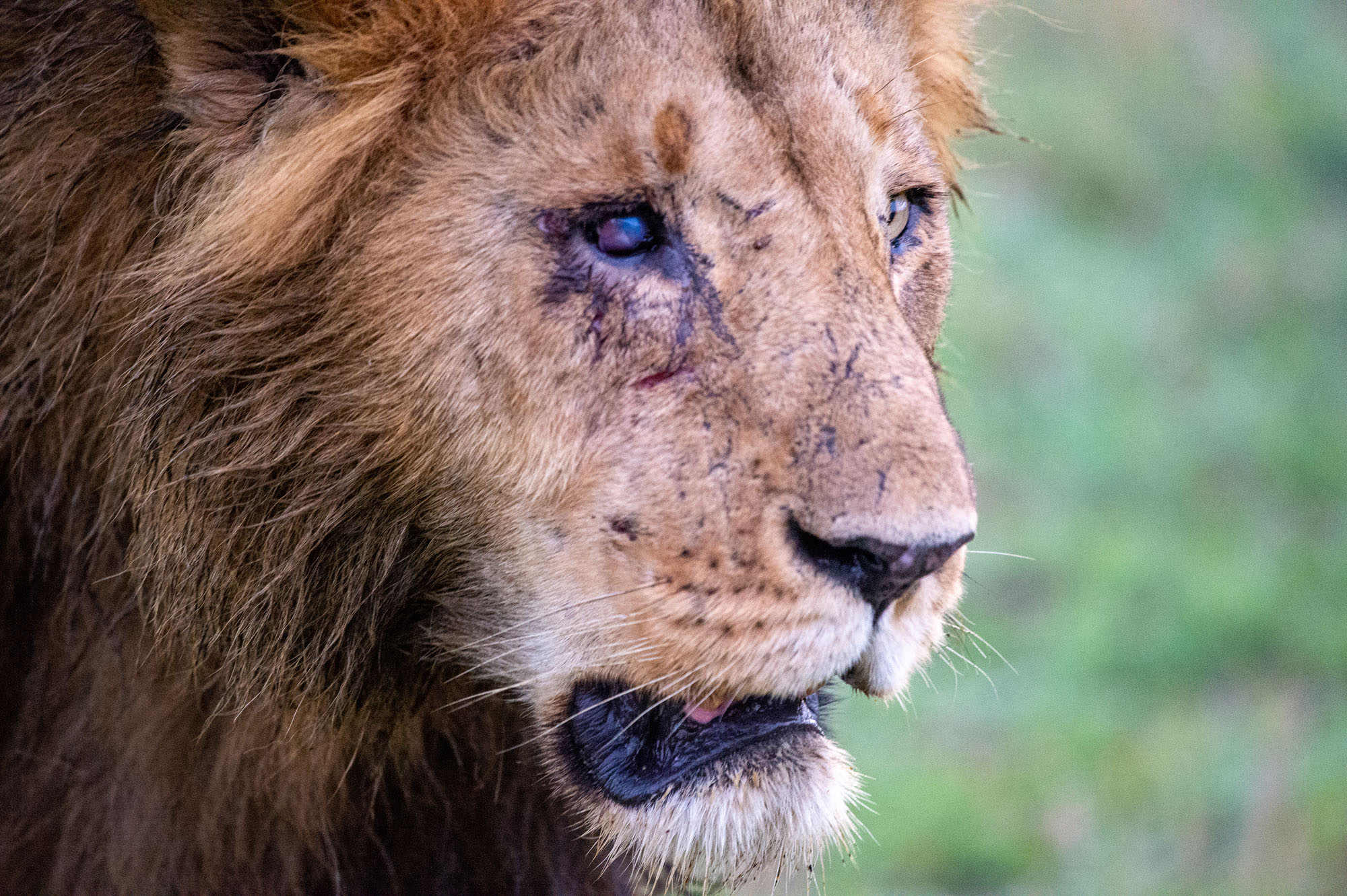
It was a slightly longer drive today, leaving the Masai Mara National Park at Musiara gate into Mara North Conservancy.  I was initially somewhat put off by the presence of a large village not far from the gate, with several herds of cattle around.  However, by the time we got to our next stop, Elephant Pepper Camp, everything had changed.  It turned out to be a lovely and clearly well-run camp with energetic and friendly management, who made me feel welcome right away.  I liked everything I saw about Elephant Pepper from the camp layout, the nice rooms with good lighting, to the fun meal-times.  We arrived in the middle of a leopard sighting and that pretty much set the tone for the remainder of my stay.  It turned out that the game viewing at Elephant Pepper – particularly for the big cats – was terrific.  Zachary and I had some of the best views of the entire trip of cheetahs and lions on what was to be our last proper game drive in the Mara. A short spell of rain did nothing to dampen our spirits – in fact it set up an opportunity to get a photo of a wet lion shaking its mane.


Image

KAREN BLIXEN COTTAGES – NAIROBI

It took just over 5 hours to drive back from Elephant Pepper to the suburb of Karen on the west side of Nairobi. We encountered heavy traffic in spots with lots of 16-wheeler trucks, the road being the main artery from the port of Mombasa to the East African interior.  I was happy to have someone as experienced and patient as Zachary behind the steering wheel.  This evening, I spent the night at Karen Blixen Coffee Garden & Cottages.  Located in one of the oldest formal gardens in Kenya (with lots of great birds around), the hotel is convenient to the Karen Blixen Museum, Wilson Airport, Sheldrick elephant orphanage and Nairobi National Park.  In contrast to the historic main building, the individual cottage suites are quite modern and spacious with high-beam ceilings, fireplaces, verandahs, a bath, shower, and TV.  I enjoyed lunch and dinner at the adjacent Tamarind restaurant and could not fault the excellent ostrich burger and grilled tuna fillet, or the swift and friendly service.  I  took a cab to the nearby Karen Mall for some shopping at the Kikoy store and the well-stocked aisles of Carrefour grocery store (candy stop!).  The next morning I would be on my way to Lewa in the northern part of Kenya.

More Info

Email bert@fisheaglesafaris.com

Email jason@fisheaglesafaris.com

@fisheaglesafarishouston

#FishEagleSafaris

YOU MIGHT ALSO BE INTERESTED IN

Area
Destinations
Kenya
Masai Mara

14th June 2026

Exploring Kenya’s Masai Mara and Watamu: Part 1

For many first time safari travelers, Wilson Airport in Nairobi is where the safari experience gets real. It’s where they

Read more
Area
Destinations
Kenya
Masai Mara

14th June 2026

Exploring Kenya’s Masai Mara and Watamu: Part 1

For many first time safari travelers, Wilson Airport in Nairobi is where the safari experience gets real. It’s where they

Read more
Area
Destinations
Kenya
Masai Mara

14th June 2026

Exploring Kenya’s Masai Mara and Watamu: Part 1

For many first time safari travelers, Wilson Airport in Nairobi is where the safari experience gets real. It’s where they

Read more

SUBSCRIBE TO OUR NEWSLETTER

READERS FAVOURITES

Area
Destinations
Kenya
Masai Mara

14th June 2026

Exploring Kenya’s Masai Mara and Watamu: Part 1

For many first time safari travelers, Wilson Airport in Nairobi is where the safari experience gets real. It’s where they

Read more
Destinations
Zambia

20th April 2020

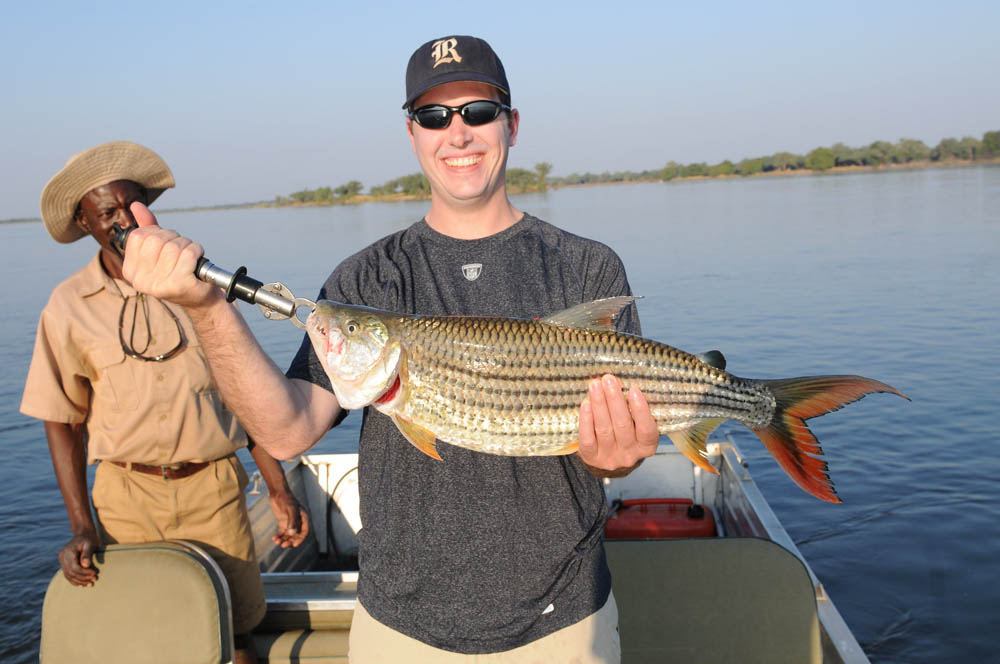
“Only in Africa”: Tiger Fishing

I believe the core activity on any great safari is the game drive.  The animals are, of course, the main attraction and there is no better

Read more
Botswana
Destinations
Kenya
Serengeti Plains
Tanzania
Uganda
Zambia
Zanzibar
Zimbabwe

19th November 2021

Where to go on safari in 2022-23

As the Covid pandemic retreats worldwide, thoughts turn to resuming life the way

Read more
  • « Go to Previous Page
  • Page 1
  • Page 2

Footer

Design

  • About
  • Destinations
  • Blogs
  • FAQS
  • Team
  • Contact
All Rights Reserved ©Fish Eagle Safaris 2022 | Terms & Conditions | Privacy Policy
Designed & Developed by B Online

SUBSCRIBE TO OUR NEWSLETTER

SIGN-UP TO OUR NEWSLETTER

Subscribe Form

Footer Widget Header

Related Blogs