• Skip to primary navigation
  • Skip to main content
  • Skip to footer

Fish Eagle Safaris

Fish Eagle safaris

Contact

Logo
  • About
  • Destinations
  • Blogs
  • Newsletter
  • FAQS
  • Team
  • search
  • Contact
  • About
  • Destinations
  • Blogs
  • FAQS
  • Team
  • Contact

Botswana

48 Hours at Great Plains Duba Explorer and Okavango Explorer Camps

13th October 2024

48 Hours at Great Plains Duba Explorer and Okavango Explorer Camps

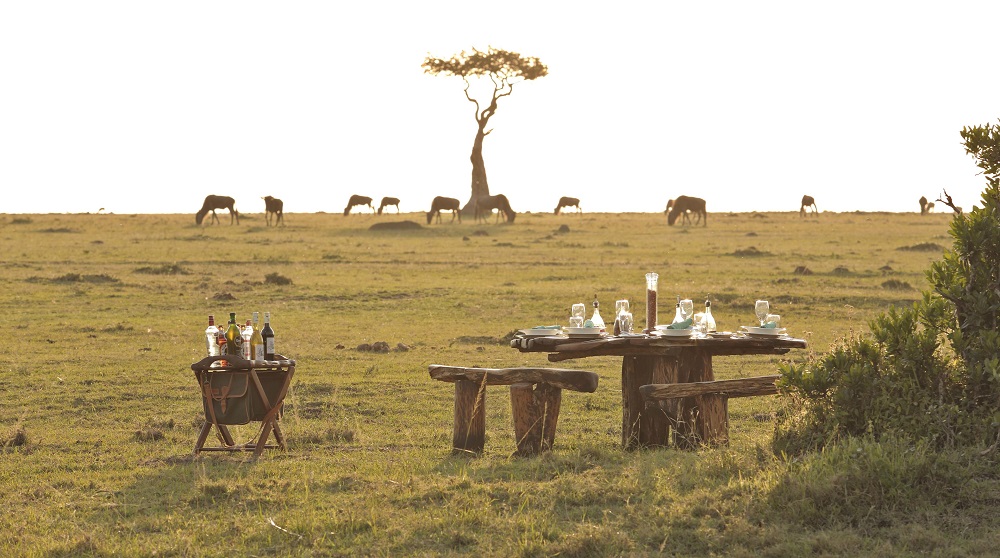
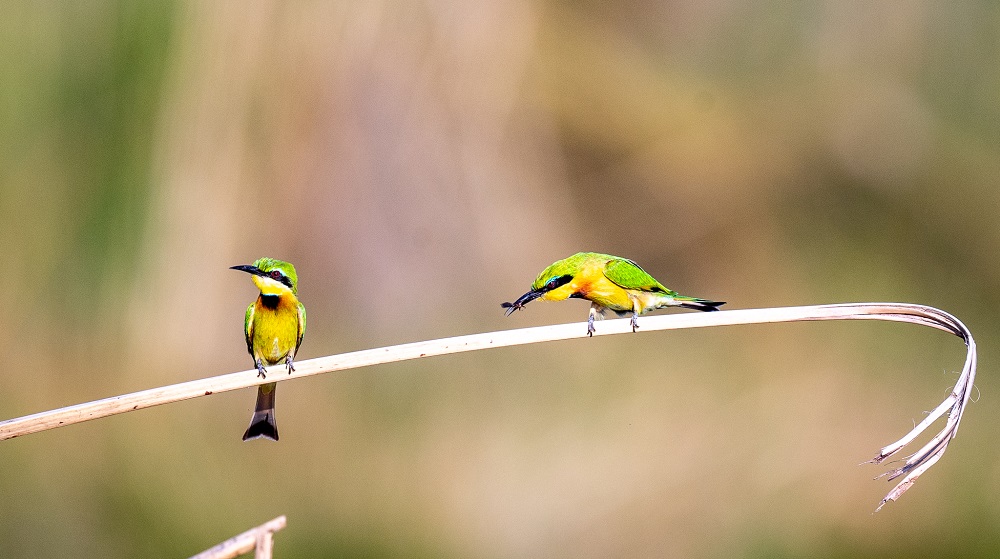
The most unexpected experience at both Great Plains’ Duba Explorer and Okavango Explorer tented camps, located in remote corners of the Okavango Delta in Northern Botswana, was not the warmth and friendliness of the staff and management. Or the expertise of the professional guides – Paul and Chillie B – which between them helped us find 111 different bird species in 48 hours. Neither was it the quality of the food, particularly the two tasty bush breakfasts. The most unexpected experience at the two classic tented camps was the showers. No kidding. Not just the size of the shower head or the temperature of the water (as hot as you can handle) but the water pressure. Astonishingly high for anywhere. I’m an inveterate bath person but even I enjoyed that deluge of Okavango Delta water washing away the dust and sand. 
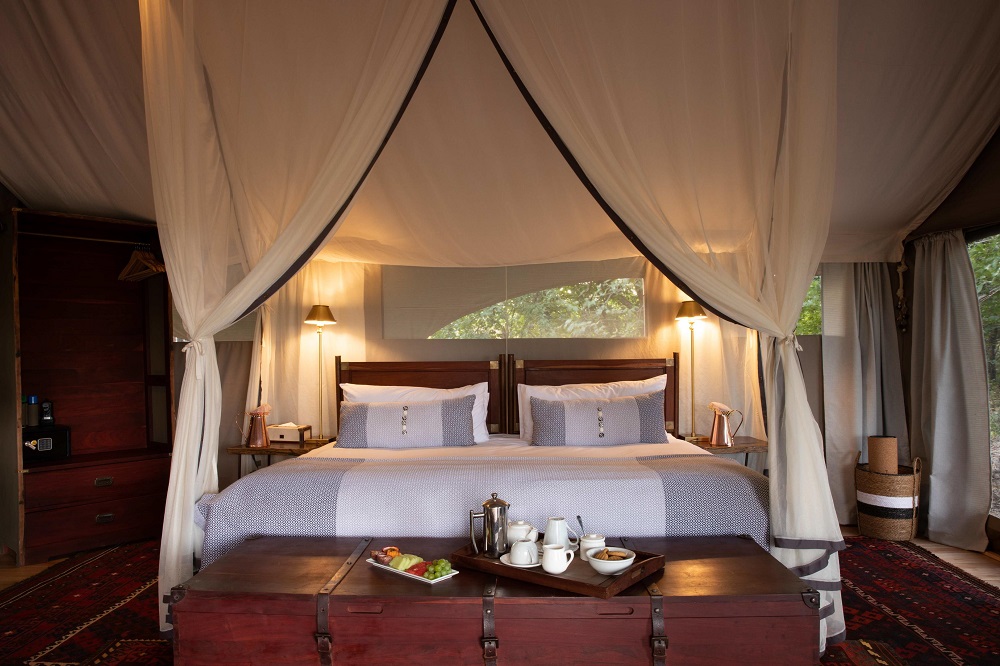
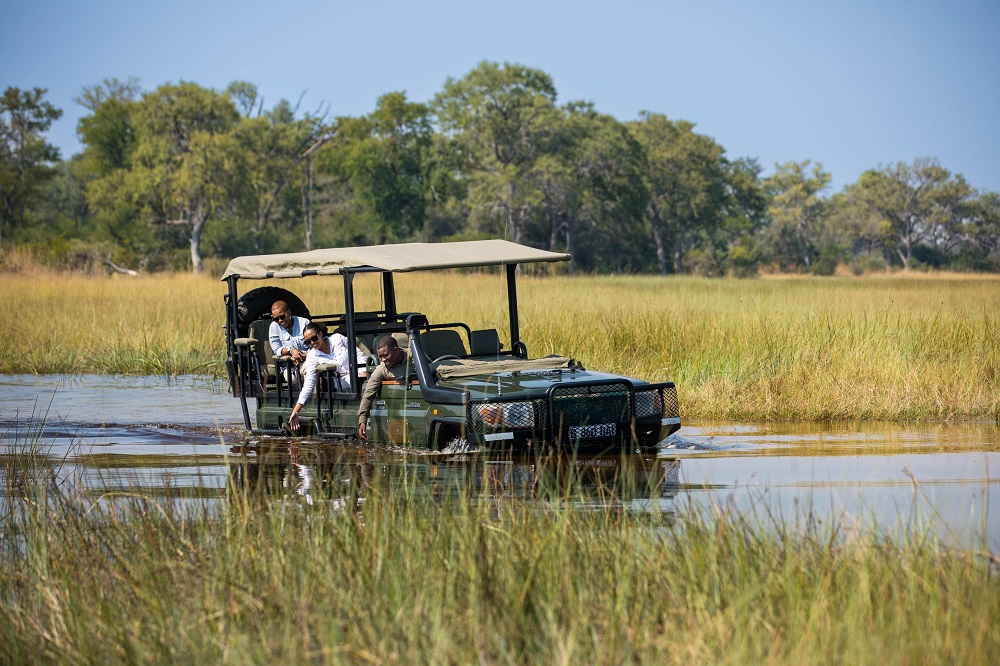
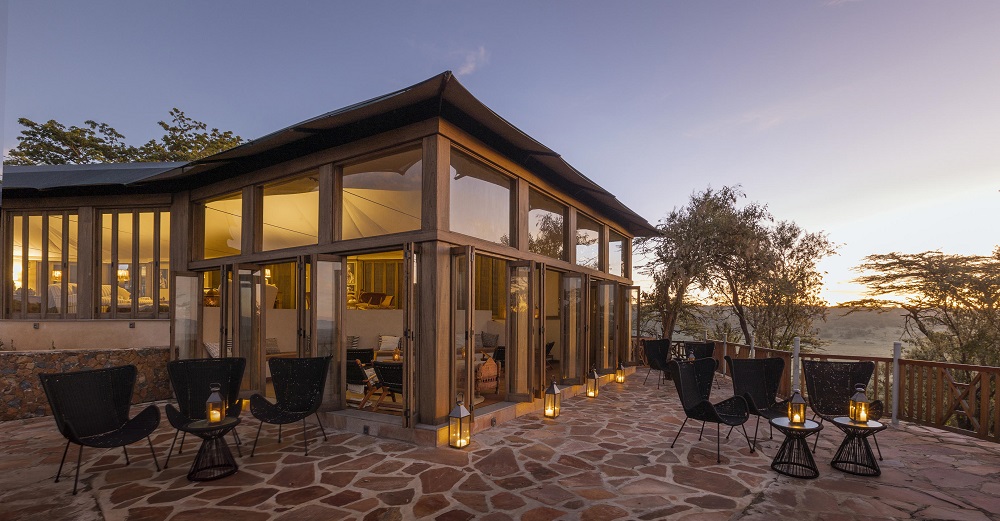
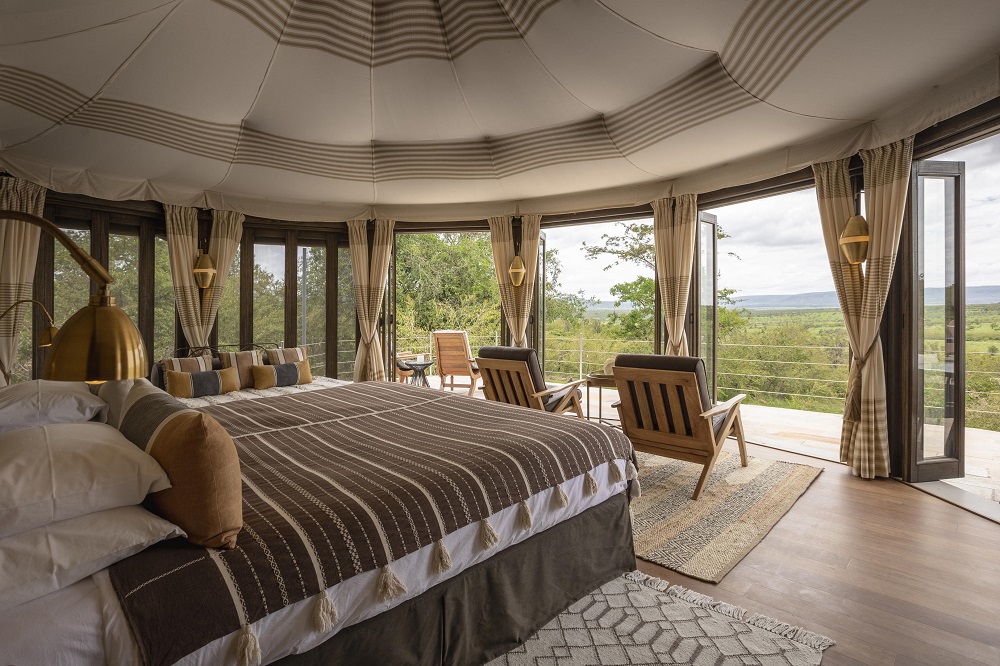
Of course, Great Plains Conservation does a lot of other things well. The interiors of the tent were tastefully furnished with a collection of campaign style chests, desks and chairs, and they had proper reading lights, plenty of storage space, a most comfortable king size bed and soft pillows. The vehicles had ample space with three rows each with two seats, separated by a lidded box for electronic gear and other stuff. There were soft blankets for the crisp mornings, cup holders for your morning coffee to go and a sturdy sun cover to provide some shade. 

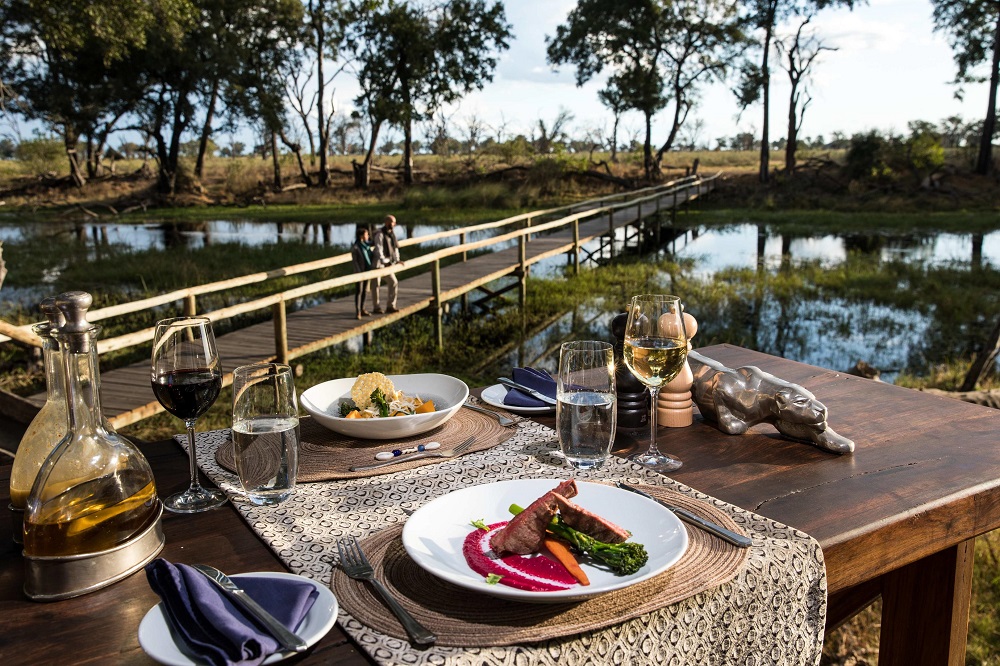
The dining experience was a solid step up from some of the buffet offerings we had enjoyed earlier. Particularly at Duba Explorer where chef Beauty treated us to a wonderfully romantic poolside dinner with an Italian style panna cotta of tomato starter with a choice of trout or duck (both superb) or a vegetarian main course. The meal was rounded off with a delectable dessert – a chocolate brownie with caramelized sugar and homemade ice cream.  
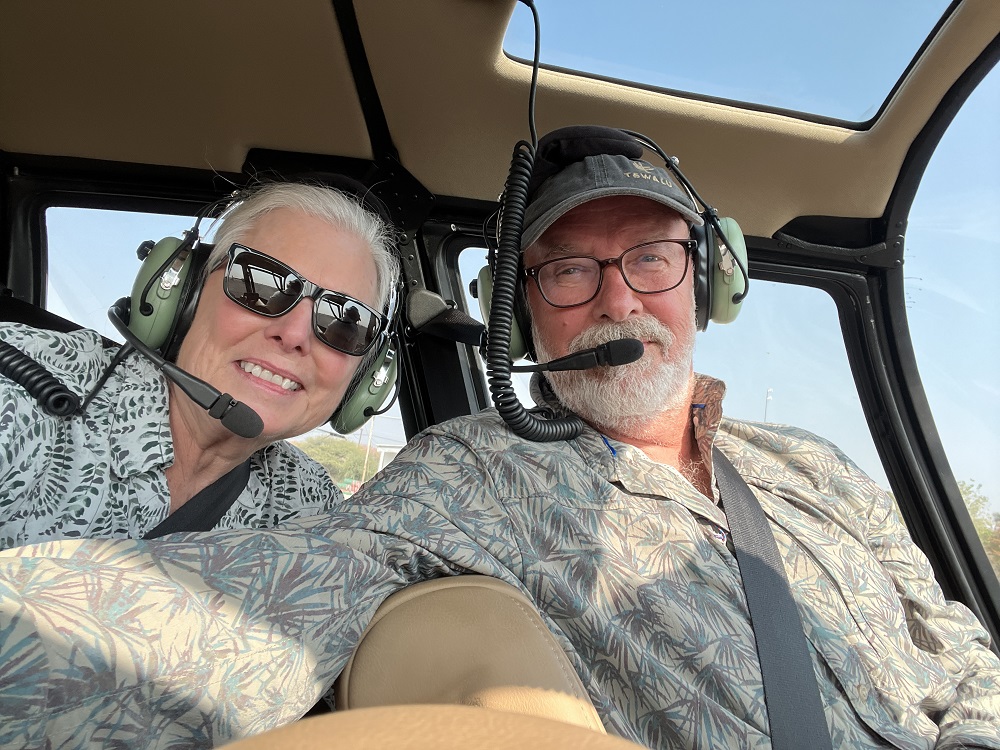
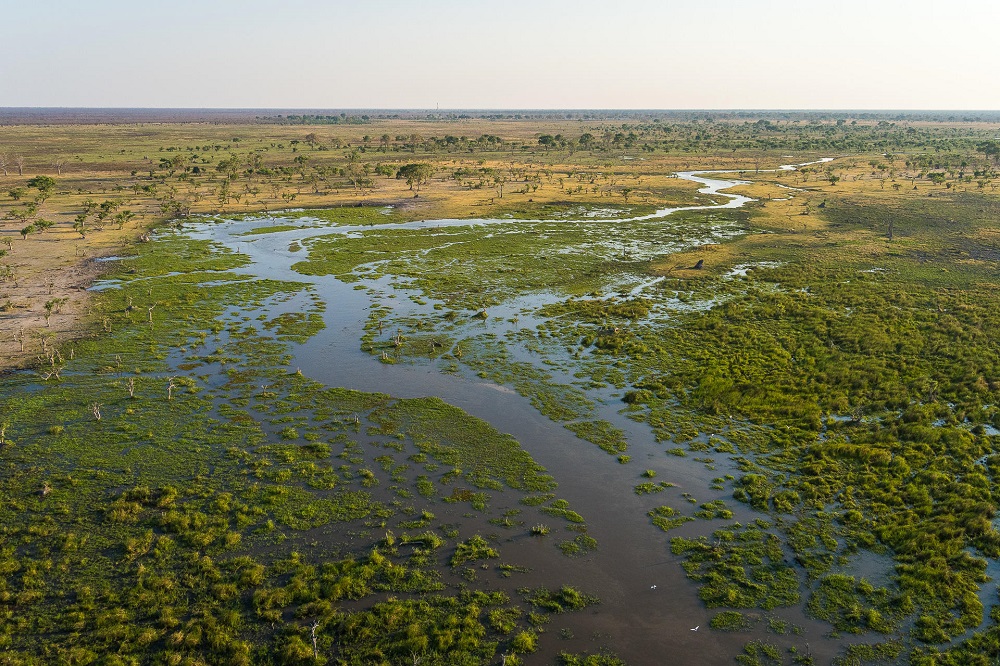
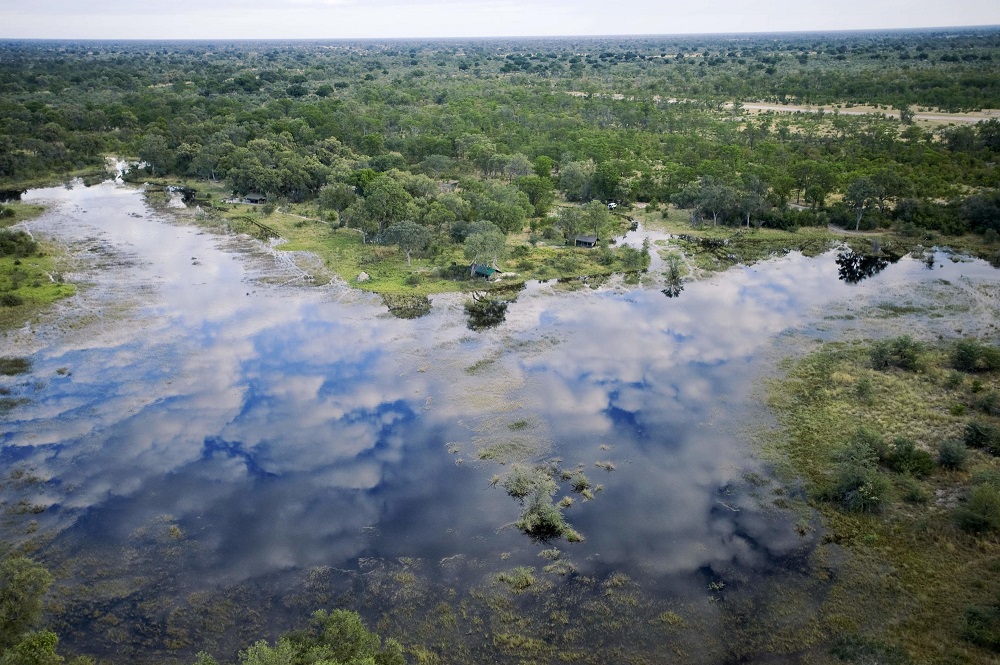
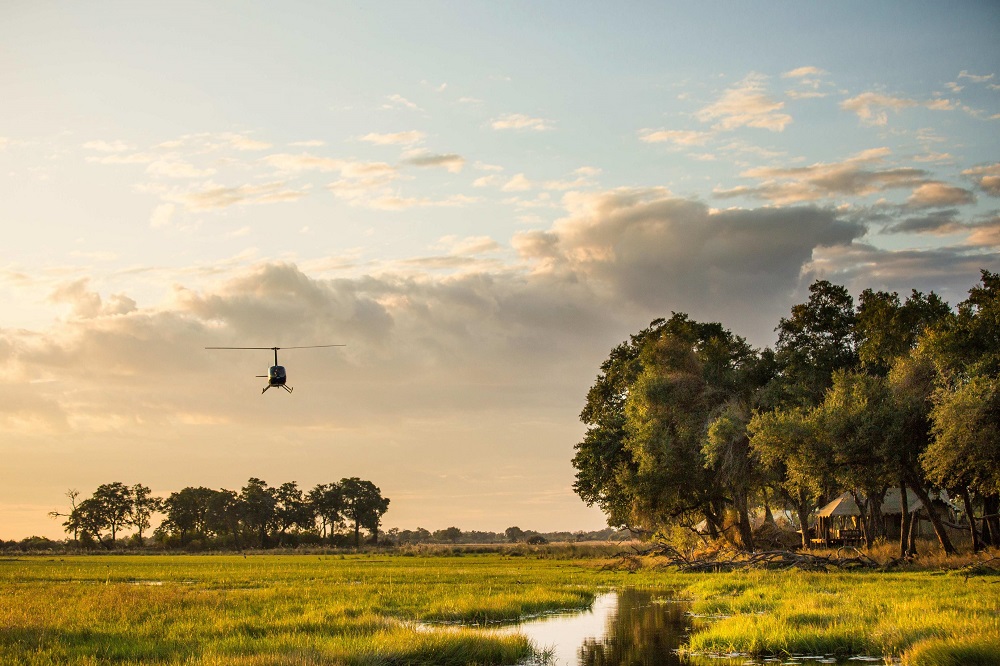
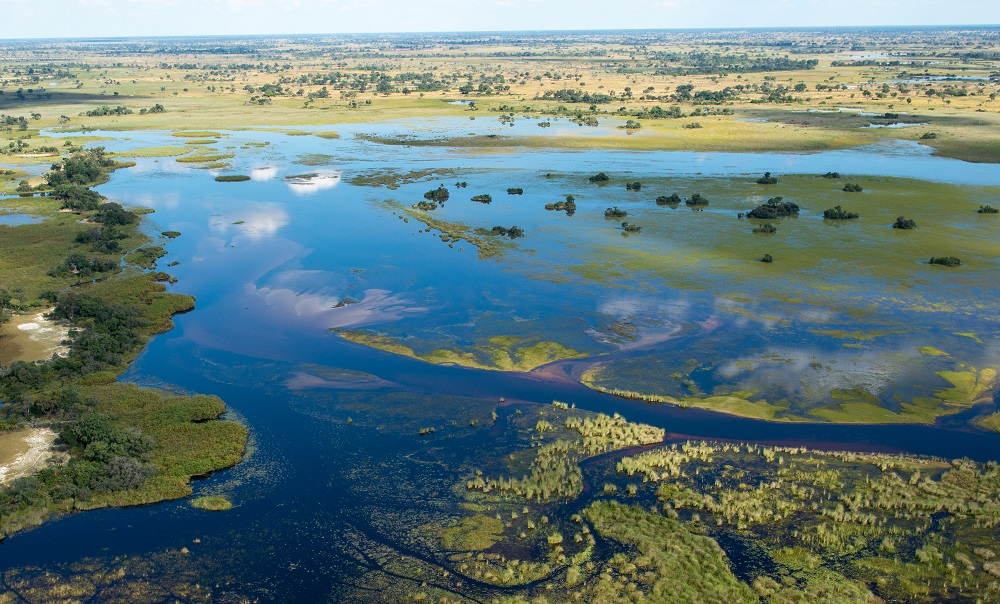
Yet another exciting helicopter flight with Helicopter Horizons took us directly from Mokete to Duba Explorer with some fantastic sight-seeing en route, flying within sight of several airstrips and safari camps. Every few kilometers there would be new and different vistas over the Okavango Delta with water in every direction. A veritable kaleidoscope of colors, textures and patterns ranging from blue-green to bright green vegetation, almost black sandy spots and swirls, white bleached sand and grey burn patches with the ashy outline of tree trunks demarcating the direction of the fire.
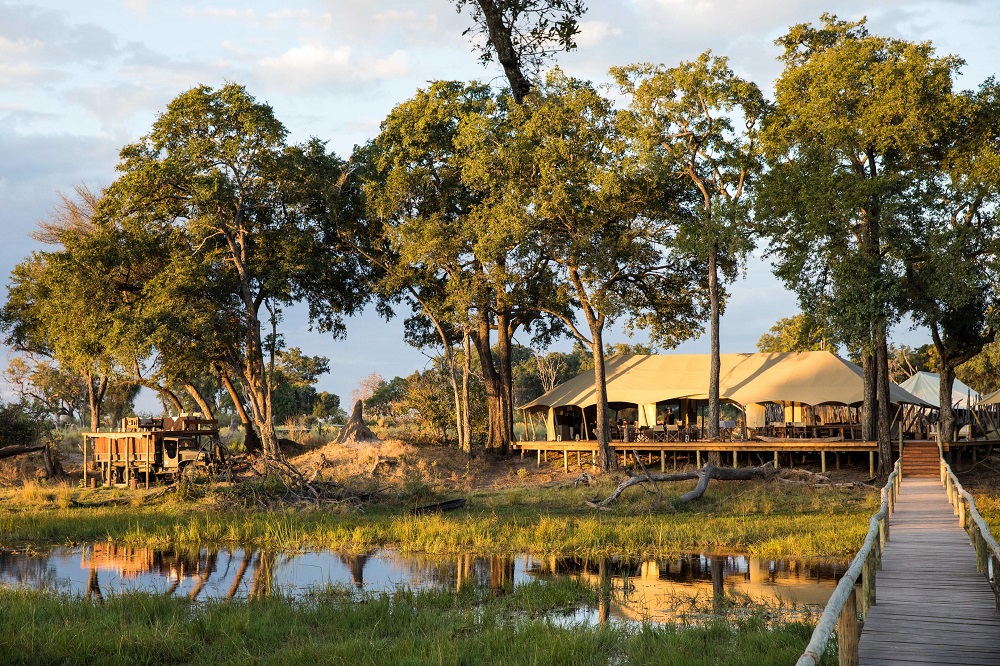
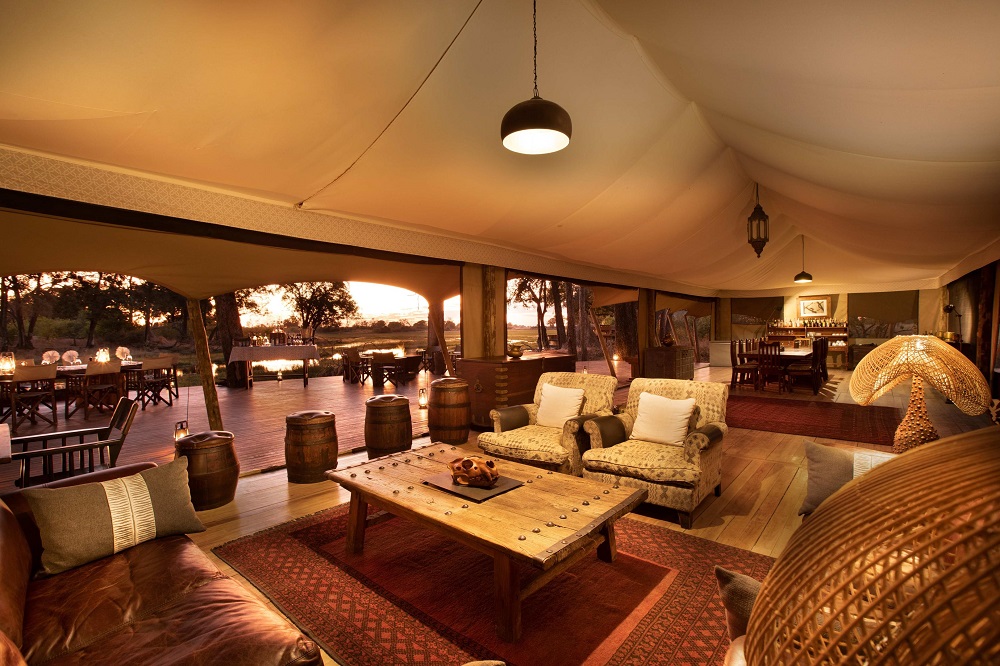
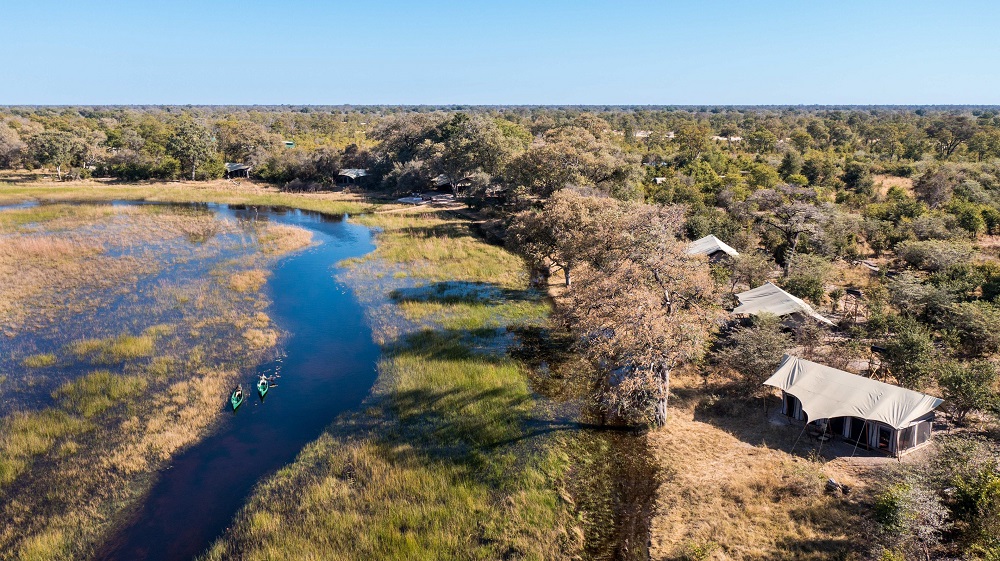
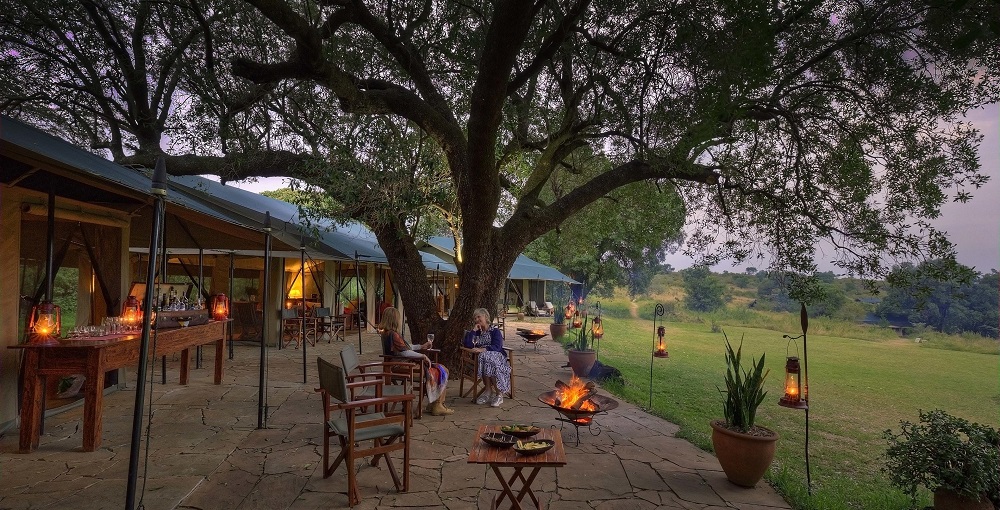
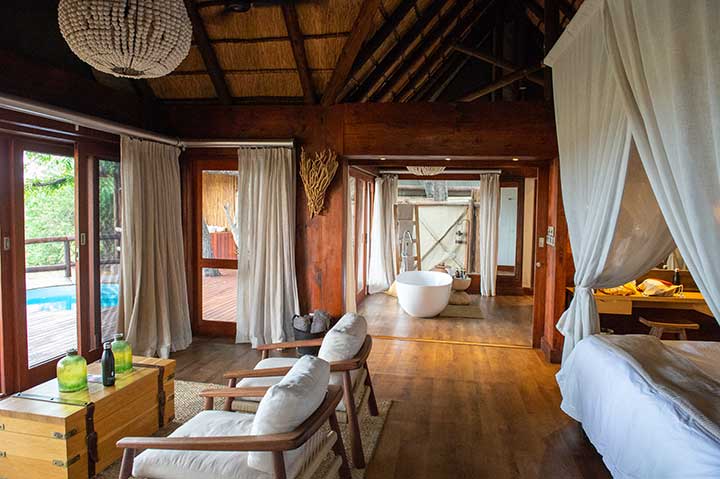
Landing quite close to the camp in a small clearing, our guide Paul (whom we had first met at Mashatu in 2023) drove us the short distance into camp. Duba Explorer has a grand entrance, with every new arrival walking into camp across a sizable bridge over a perennial Okavango Delta waterway. After completing the routine arrival formalities (receiving a camp briefing and signing the indemnity form) we were escorted to our room, one of six tented classic expedition style tents. With ultra comfortable beds, a mosquito net, separate shower and toilet compartments, decent lighting and enough power points. The lounge at Duba Explorer is a fun place to spend a bit of time, with a spacious indoor/outdoor seating area for meals. Just off to the right, there is a small plunge pool built into an antique military style vehicle.   
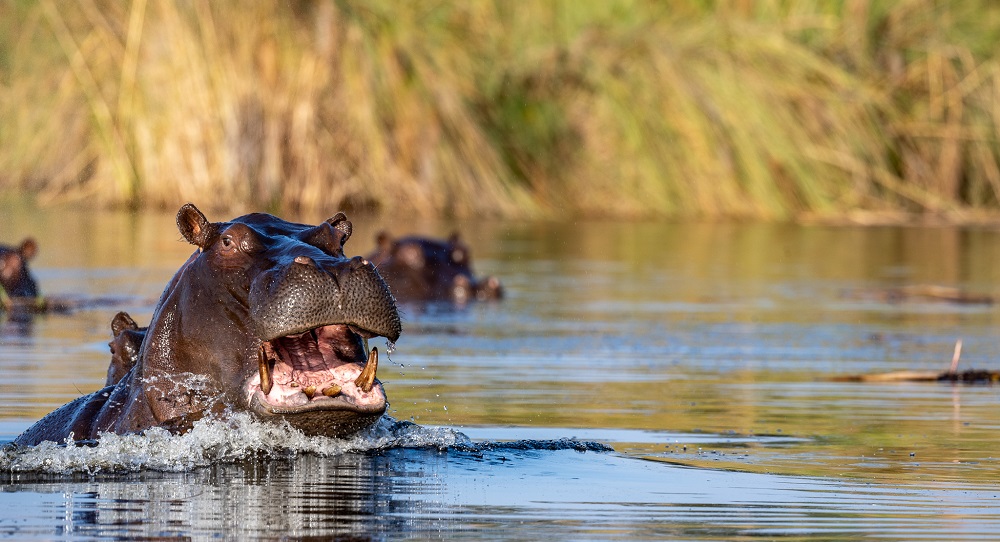
Our afternoon outing from Duba Explorer was a boating safari along the Okavango River and it reminded me of what we had been missing on the last several game drives in Northern Botswana. Navigable water. The entire two and a half to three hour outing felt like being inside a painting waiting for a canvas and an artist. Simply gorgeous, particularly as the sun started to sink lower and everything was bathed in the golden afternoon sun. Just a few minutes out of Duba Explorer, we took a left turn from a large lagoon into a waterway which seemed to be cordoned off by a sizable raft of uneasy hippos. I had just resigned myself to the fact that the only way forward was going to involve a perilous dash along the far left edge of the stream, when Paul did a 180 degree turn and we headed back in the direction we came from.  

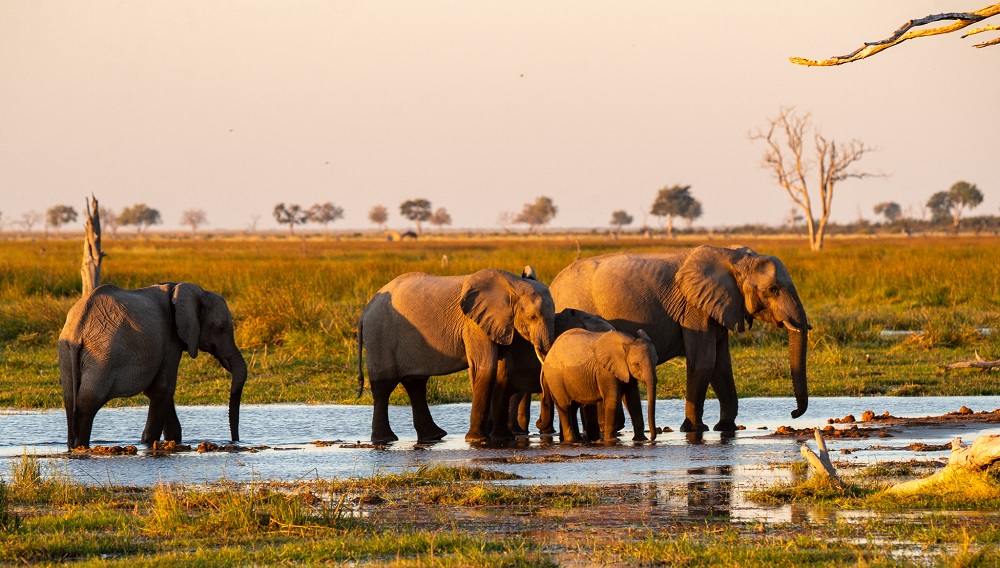
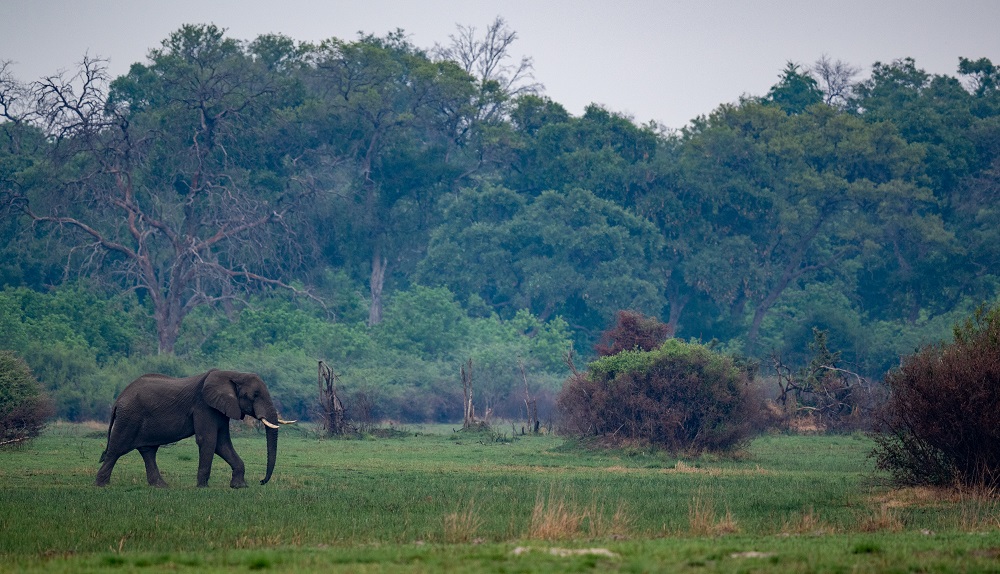
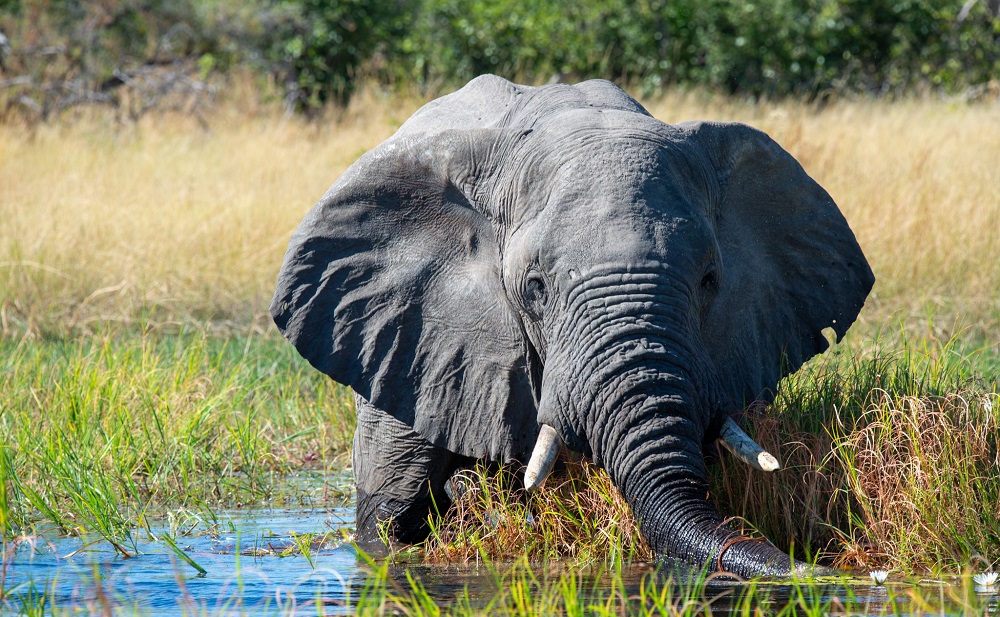
Another left turn got us into a spectacular channel in the direction of Duba Plains. It was one of the best outings of the entire trip, with elephants crossing ahead of us, lechwe giving us the side-eye, kudu visible everywhere and even the usually elusive bushbuck putting in an appearance. We were on a quest to snag one of Great Plains’ special 111 Club caps, given to guests who can spot that many birds over the course of their stay at one or more Great Plains camps. With four pairs of eyes on the boat (Paul, me, Kathy and Kay, a community representative ) we were spotting birds left right and center and by the end of the afternoon our list reached the low 80’s. In hindsight, I think a boating activity in the Okavango Delta – water levels permitting – should be right at the top of anyone’s list of things to do in Northern Botswana. This is what the Okavango Delta is all about and it can only be appreciated and experienced to its full, amazing effect from a boat.  
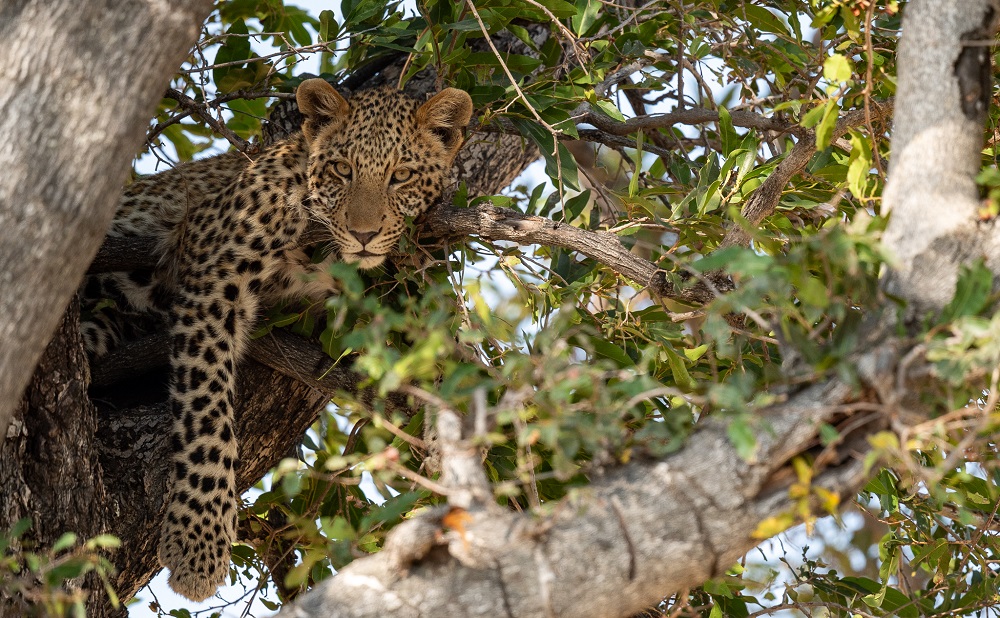
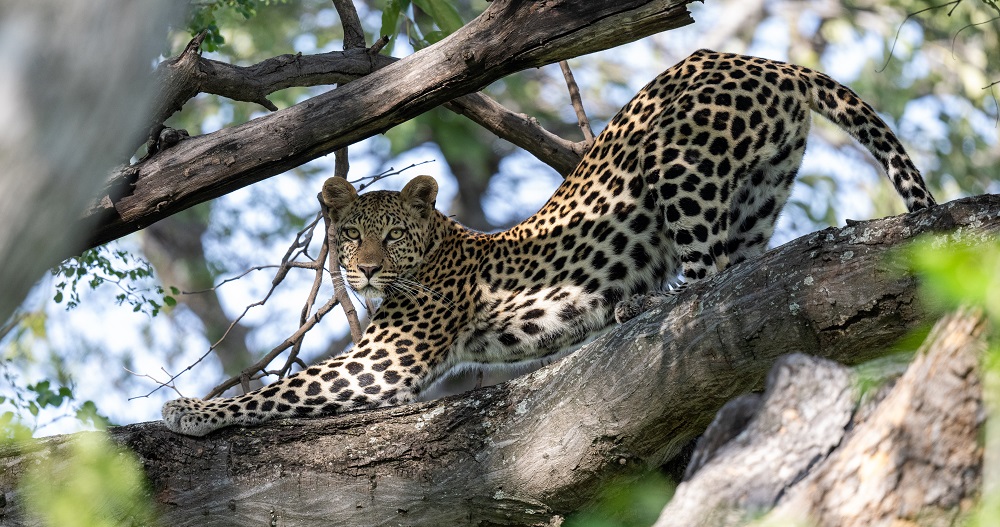
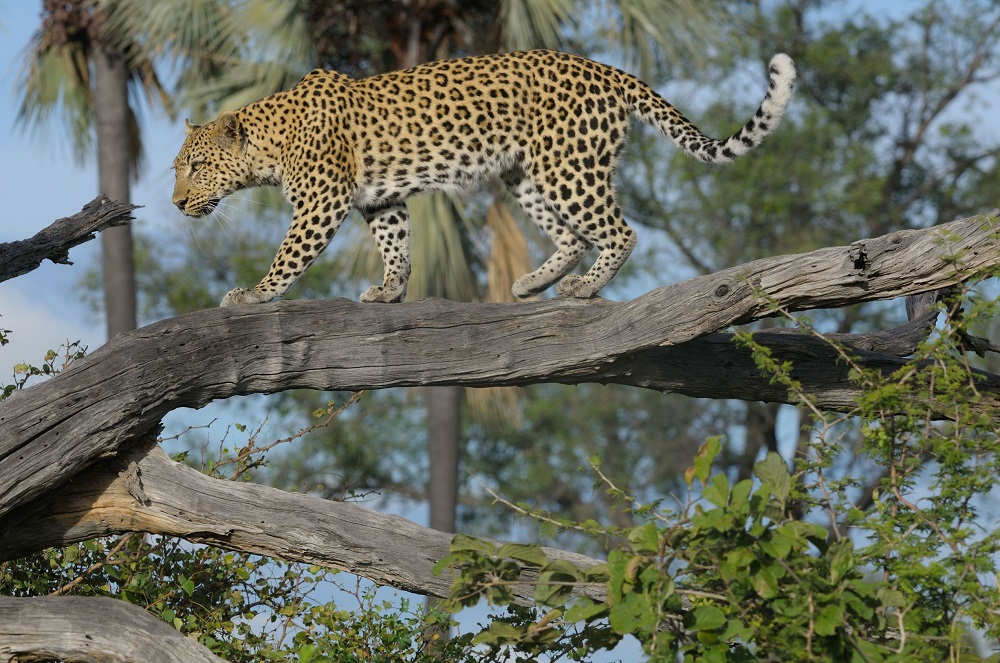
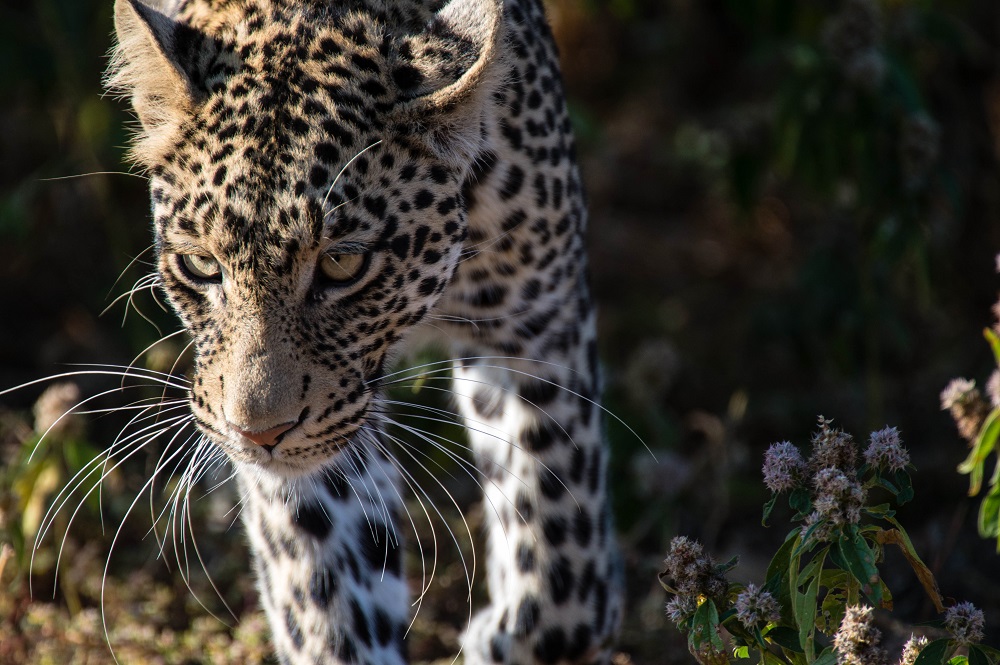
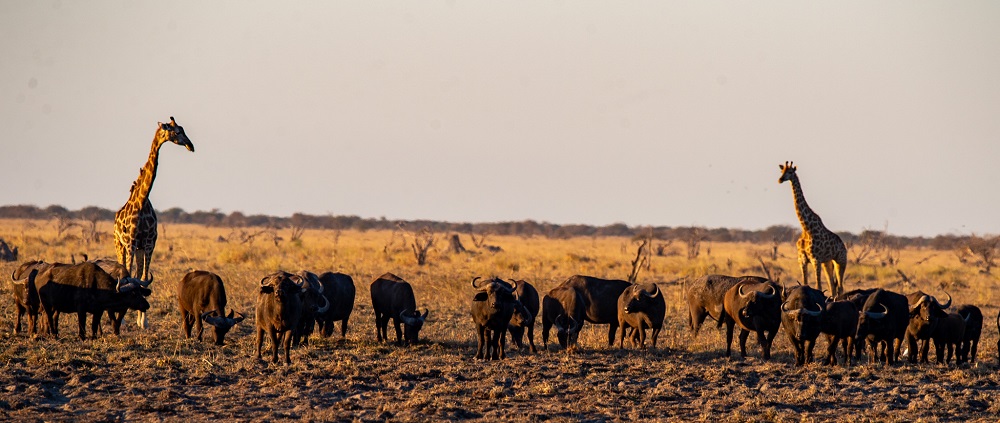
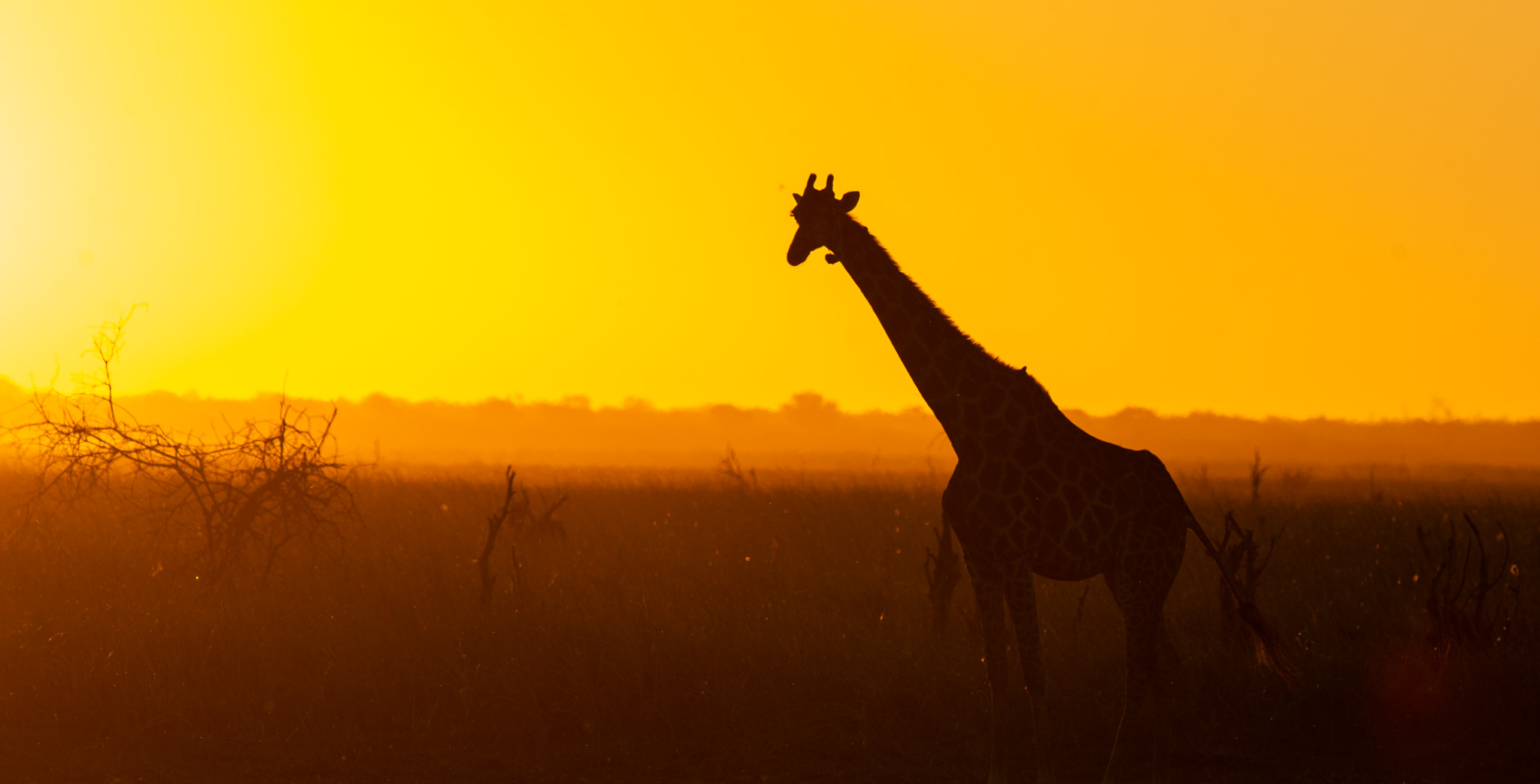
Our game drive at Duba  Explorer the following morning was initially quiet. We simply could not locate the lions which had been roaring right outside of the camp the previous night. For a while there we had to be content with simply driving through the spectacular grassland scenery. And then, as so often happens on game drives, everything changed. We started to rack up one good sighting after another –  initially a large herd of buffalo, then a large journey of giraffes and eventually a young male leopard about halfway up a tree. The leopard had clearly been observing us enjoying our morning coffee and muffins. Paul had pulled into a spot less than 100 meters away from and in direct line of sight of the leopard.
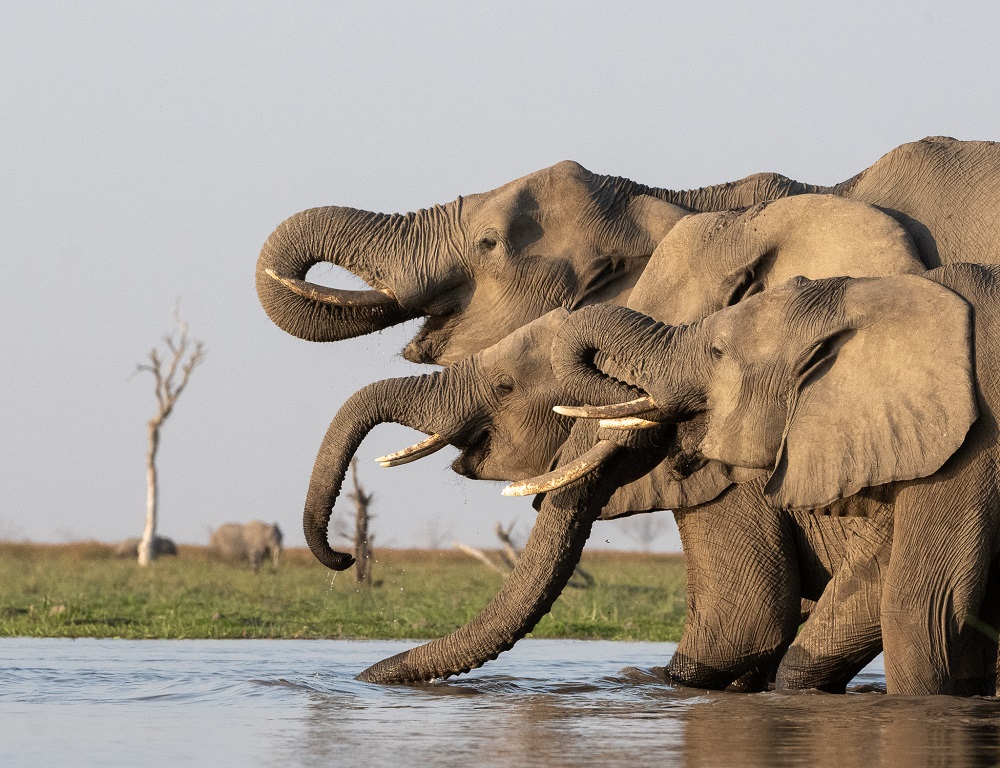
A short 15-minute helicopter ride took us across some beautiful expanses of Okavango Delta floodplains to the far southern edge of the Selinda Concession to Great Plains’ Okavango Explorer camp. It was in many ways similar to Duba Explorers, just with fewer touches (no plunge pool, scaled down lounge and dining area) and a different, less than ideal bathroom layout with the shower and the screened toilet in the same room. On the plus side, the location right on the edge of the Selinda Spillway is perfect and the camp is in an ecotone with remarkable habitat diversity. This is prime elephant and predator terrain, with lions, leopards and African painted dogs being seen regularly. In addition, as we were to see for ourselves, there are good densities of giraffes and some rare antelopes like roan, sable and eland. All three of which we saw in good numbers.  

Our two game drives at Okavango Explorer with our guide Chillie B, delivered plenty of plains game but were light on predators. This is of course exactly why we recommend that guests spend a minimum of three nights in any one area. Animals move around in real time, they come and go, appear and disappear. You’ve just got to give yourself – and your guides – enough time to make it all happen. And yes, you will almost certainly have a slow morning or afternoon or two somewhere. Sooner or later. As it turned out, we saw a solitary painted dog but the animal was in distress, having been injured or otherwise harmed without any obvious, visible clues.  
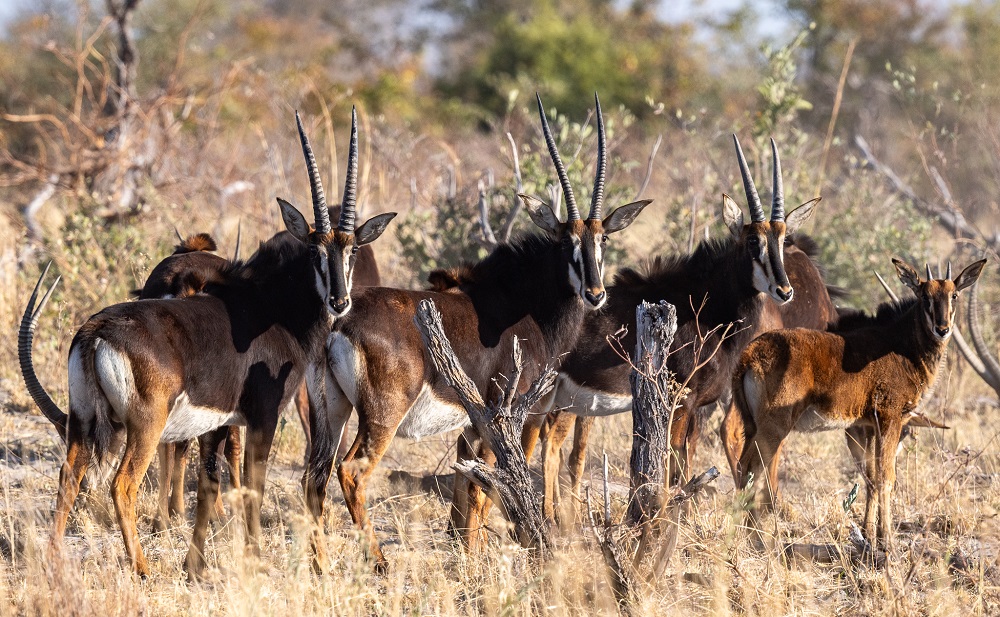
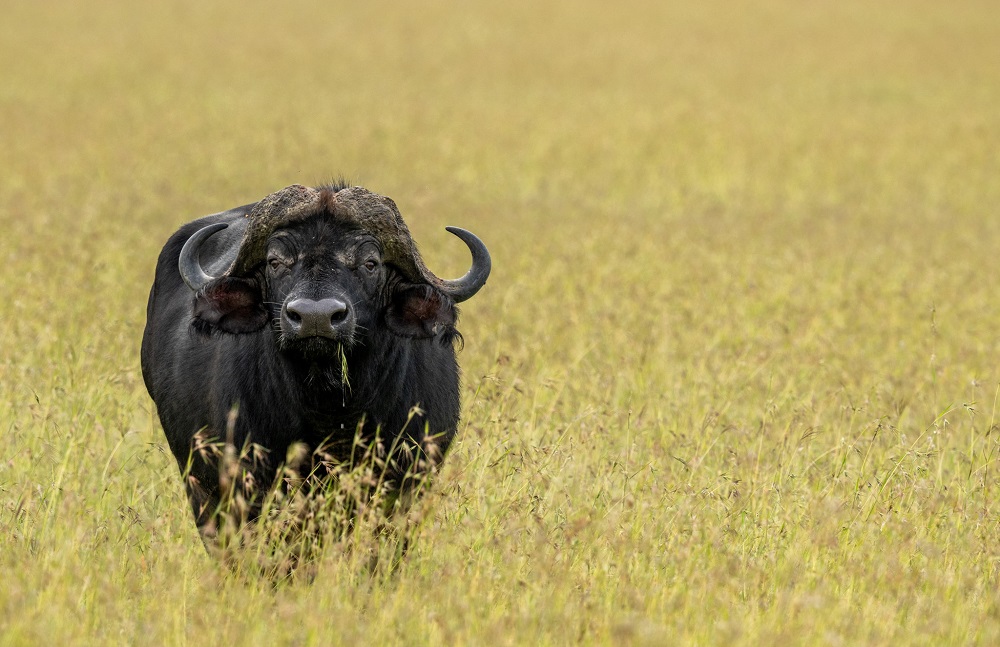
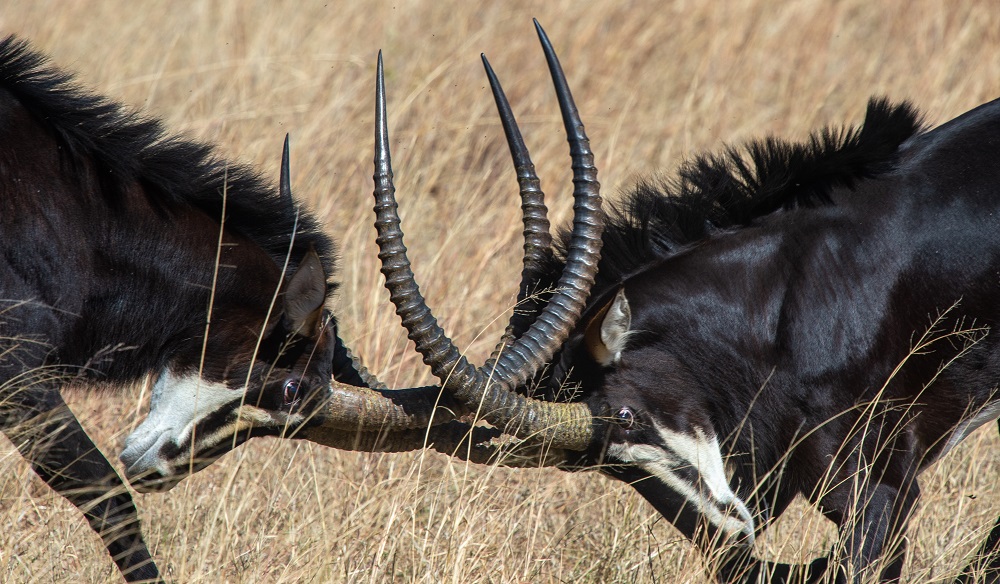
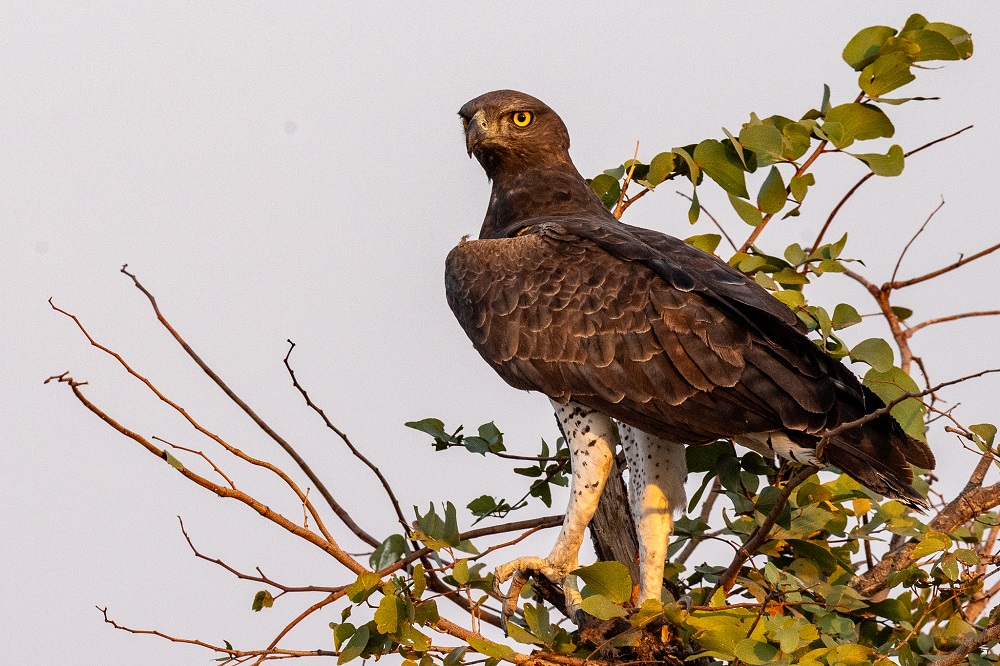
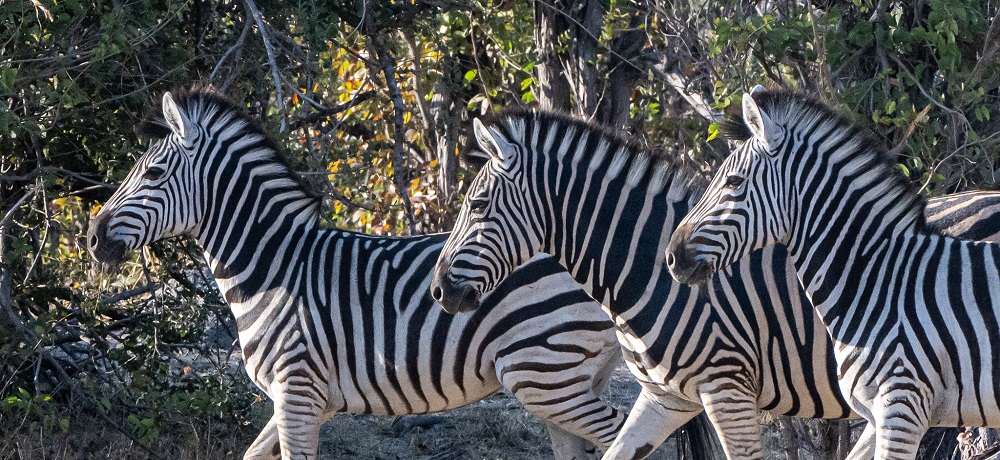
On our final morning game drive  we racked up a series of sightings starting with a huge herd of buffalo kicking up a plume of dust as they moved across an island. A bit later we saw some shy zebras, a small group of the superb roan antelope, several herds of eland, elephants, giraffes, more not-so-shy zebras, a hippo out of the water and the highlight of the morning: a nice sized breeding herd of the magnificent sable antelopes. With Chillie B’s help, we reached the mark of 111 bird species in 48 hours in just four outings (three game drives and a boating excursion in the Okavango Delta) at the two Great Plains Conservation Explorers camps. In addition to being fun – and we learnt a lot – it livened up the not so exciting stretches of the outings and incentivized our guides.  
We’re looking forward to spending several days at another Great Plains Conservation Explorers Camp – Selinda – in early December this year. This time, we’ll have 72 hours to reach the 111 bird tally! 

For more information about the Great Plains properties, including some attractive long-stay options for this year and next, please email Lyndon at lyndon@fisheaglesafaris.com or call us at 713-467-5222 at any time, to leave a message with the answering service. We will get back to you right away.
YOU MIGHT ALSO BE INTERESTED IN
Destinations
Zambia

10th September 2021

Chindeni and the Bushcamp Company, Zambia

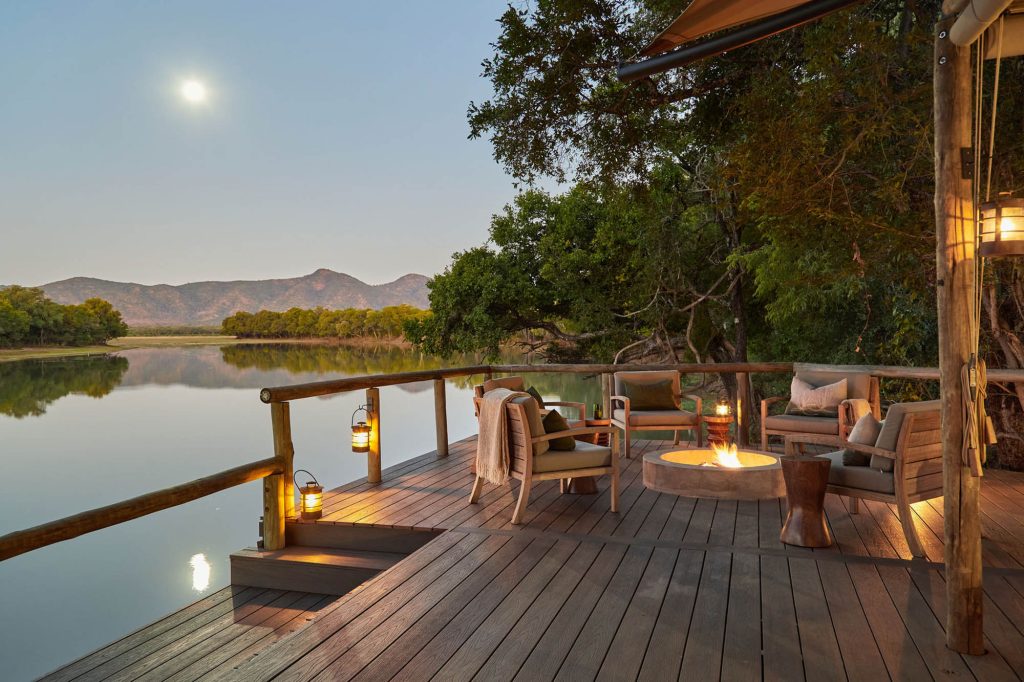
By late July we found ourselves at Chindeni, a small Bushcamp Company property
Read more
Botswana
Destinations
Okavango Delta

3rd October 2022

Camp Okavango, Botswana

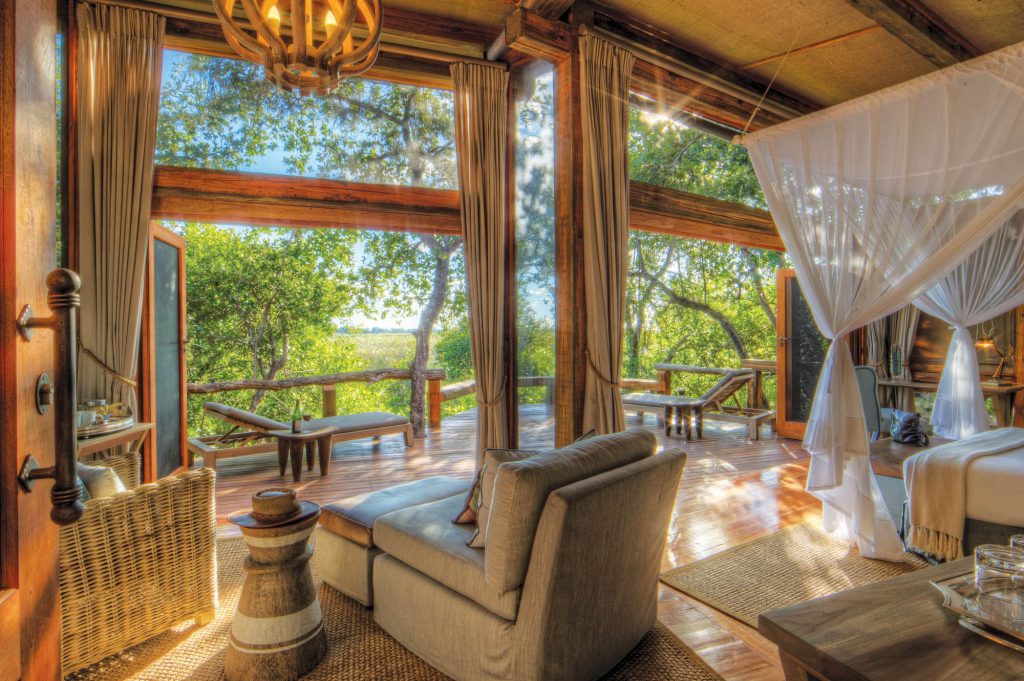
Camp Okavango is in the heart of the permanent part of the Delta. In this idyllic setting there are no vehicles, and it is just a short walk
Read more
Area
Destinations
Nyerere National Park
Ruaha
Tanzania

14th October 2023

From My Safari Notebook: Wildlife Photography

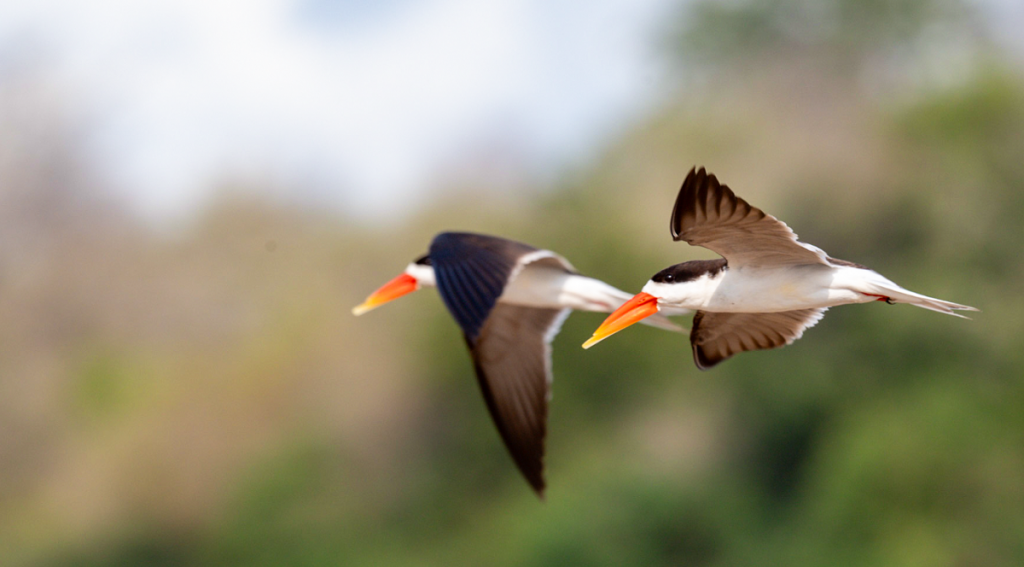
Birds in flight and wildlife photographers have an uneasy relationship. Things go wrong as often as they go right. Getting focus-lock on a moving subject

Read more

SUBSCRIBE TO OUR NEWSLETTER

READERS FAVOURITES
Destinations
India

27th May 2023

India

India’s tiger, mammals and birds.

Read more
Botswana
Destinations

4th August 2022

On Safari At Belmond Eagle Island Lodge, Okavango Delta

What is the ‘secret sauce’ for an unforgettable few days on safari in Botswana? It starts with the animals, of course. The elephants, lions, giraffes, hippos

Read more
Destinations
Zambia

10th September 2021

Chindeni and the Bushcamp Company, Zambia

By late July we found ourselves at Chindeni, a small Bushcamp Company property

Read more

Safari Lodge of the Month: Wilderness Mokete, Mababe

22nd June 2024

Safari Lodge of the Month: Wilderness Mokete, Mababe

Wilderness’ recently opened Mababe-area tented camp – Mokete – has catapulted to the top of many safari aficionados’ must-visit lists.  

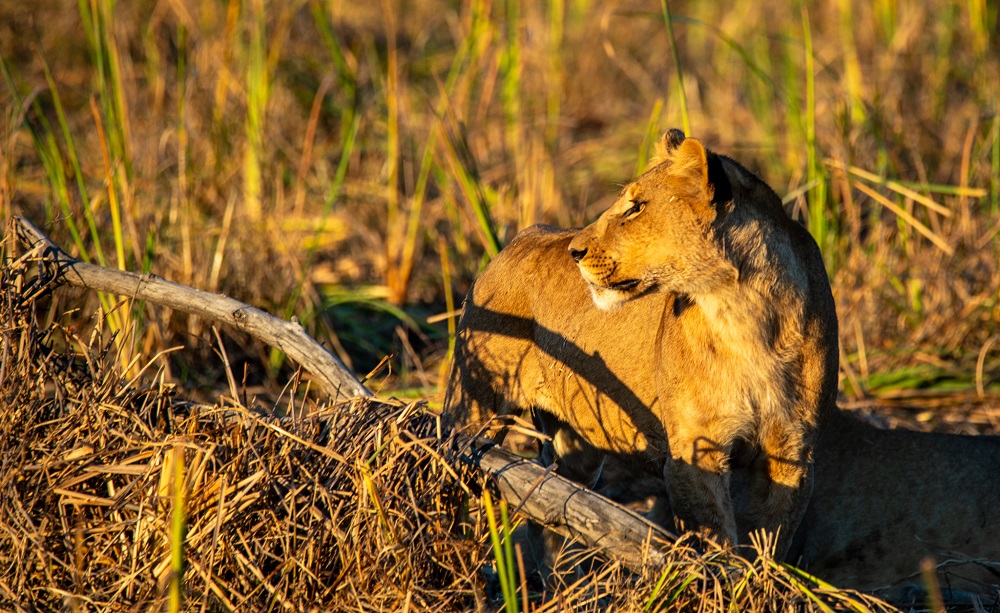
Game viewing at Wilderness Mokete is unmatched, renowned for the mega herds that make their way across this private wilderness with a constant supply of water, located on the eastern fringe of the Okavango Delta and the famed Moremi Game Reserve, to the south of Chobe National Park. With its three distinct habitats: grassland plains, mopane and acacia woodlands, and the marsh system fed by the Mababe River, Mokete is home to prides of lion, leopards, cheetahs, packs of wild dogs, bat-eared foxes, jackals, African wild cats and servals. All of which makes for an immersive, exclusive and thrilling safari. There are often huge herds of buffalo in the area, and there can also be huge herds of zebras. Also worth mentioning: two pretty special antelope, sable and roan. They have been seen around Mokete in the dozens if not hundreds. Unlike anywhere else.

The camp offers unconventional safari adventures, where time is dictated by nature, not the clock. In this part of Botswana, it’s not uncommon to see lions on the hunt on the plains during the day, which makes for exceptional photographic opportunities. Guests can choose to stay on a game drive as long as they please, or stop for a lazy bush picnic – or stay out with the predators late at night if they wish. Guided walks can be arranged, or guests may be tempted to spend an afternoon in the sunken hide, eye-to-toe with the elephants.

With only canvas between guests and nature, a stay at Mokete is an immersive feast for the senses. Due to the open layout and high density of wildlife, only guests 16 and older are permitted to stay. There is a swimming pool for warm afternoons and a star bed for cool evenings under the sky.

Fish Eagle Safaris’ Lyndon recently spent a couple of nights at Mokete. Here are some of his observations and his recommendations to make your stay at Mokete even more rewarding than it may otherwise be:

At Mokete there are a number of things that you will definitely want to do during your stay:

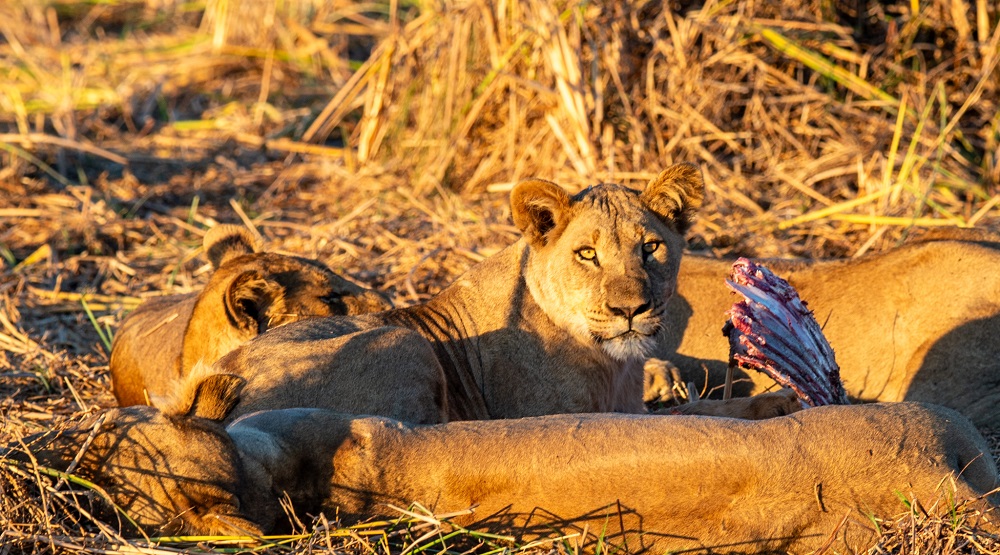
  1. Take some time to focus on the lion and buffalo interaction. The large lion prides have got a great setup and pretty much plant themselves between the buffalo herds and the water. Our guide told us they can easily feed a couple of times per day. We did not witness a hunt but every time I saw the lions they were eating something. We took a helicopter ride to the camp and en route we saw the recent aftermath of a hunt with about 12-13 lions feeding on the carcass of a buffalo.

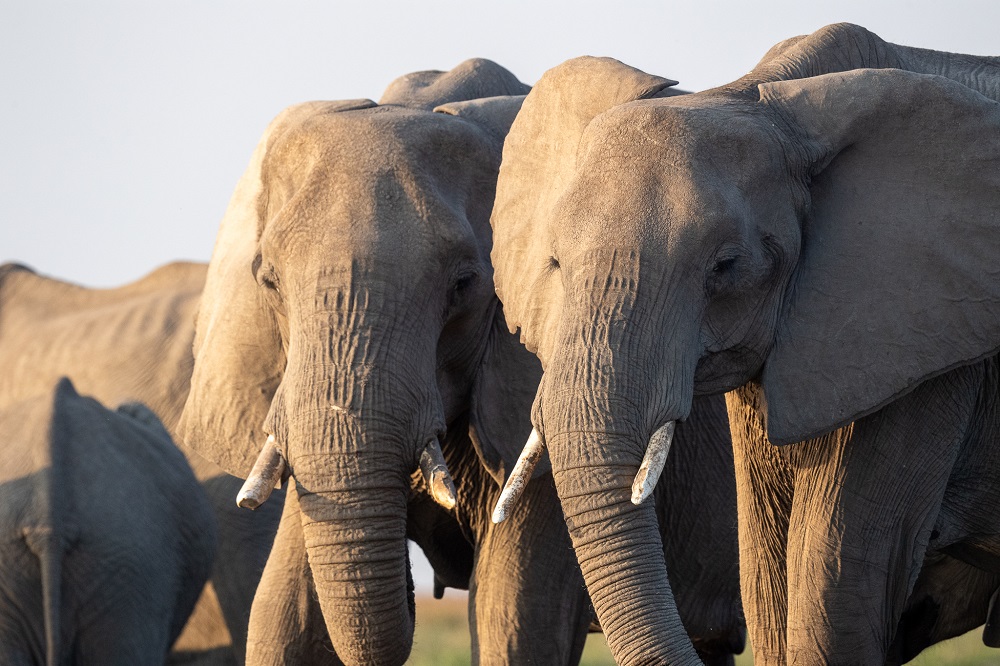
  1. Visit the elephant hide. There is an area that is known as ‘elephant paradise’ and it attracts huge numbers of elephants, especially in the evenings when they come for water. The camp has a hide overlooking the water and we got to spend an evening there. It was fantastic and the number and sheer tonnage of elephants cycling in to drink before heading back into the wooded area was astounding. We went back to the area on our final night (not back to the hide) and it took a long time to drive through due to the high density of elephants. It was quite something combined with the sunset.

  1. Go on an after dinner night drive. I was told this can be requested upon arrival and we can also let the camp know in advance, if this is something you’d like to do. At the time of my visit there was a resident wildlife photographer/film-maker in camp. During one of our dinners he recommended we do this as a group because of all the amazing things he had been spotting during the night. It turned out even better than any of us could have hoped.

    Here’s what we know about night drives: they are very hit and miss. Nocturnal animals are difficult to find with a spotlight due to a narrow field of view and often the only thing you might see at a distance is the light’s reflection in the animal’s eyes. This leads to some premature excitement only to find out you are looking at and heading toward a herd of impala. Mokete is not immune to these annoyances but our night drive started with a bang right out of camp with a giant eagle owl flying and perching in a tree just next to the road. Not five minutes after this we had a splendid viewing of a porcupine. This would typically be a moderately successful night drive already but the real fun hadn’t yet begun.A few minutes later we caught a glimpse of the elusive aardvark. Actually, two. This was my first time seeing one so I experienced some elation as we sped over road and grass to get a better look. What a sighting! Shortly after this we saw a group of four bat eared foxes. Some time passed and we saw a third aardvark, this one alone and much less bothered by our presence than the previous two. We spent a good amount of time observing it as it jogged from one area to the next looking for a meal. They are so much more agile than I could have imagined, which makes sense having to survive in such an environment.

    Up ahead of this there was a large herd of buffalo. Seeing these at night is different because they were having trouble getting a good look at us. This caused them to stop moving completely and stand absolutely still before one gave the call to move and they ran off. Fascinating! Overall I still don’t know if this is what we can expect of a typical night drive at Mokete or if we had incredible luck. The way that the wildlife photographer spoke about what he would see at night leads me to believe that game drives like this might not be as lucky as they felt after all…

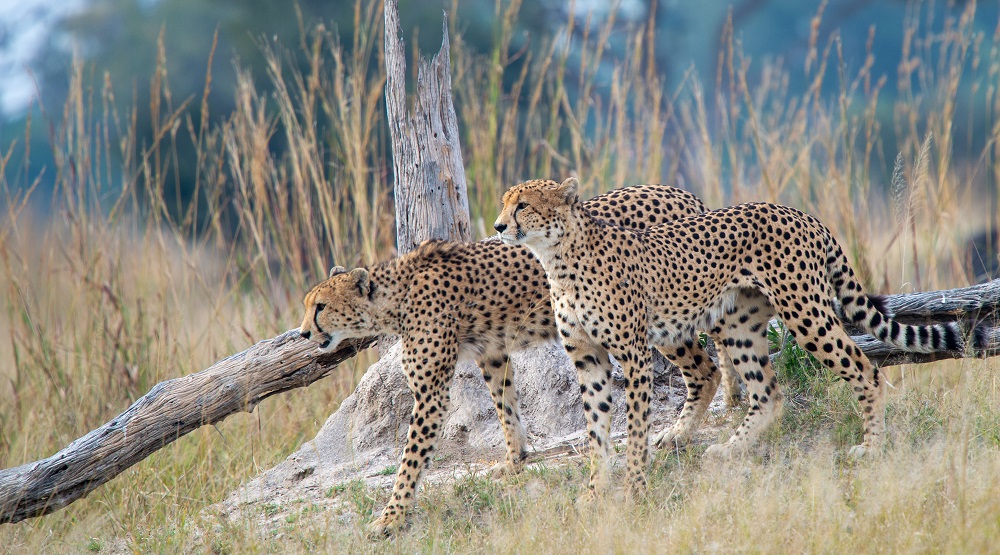
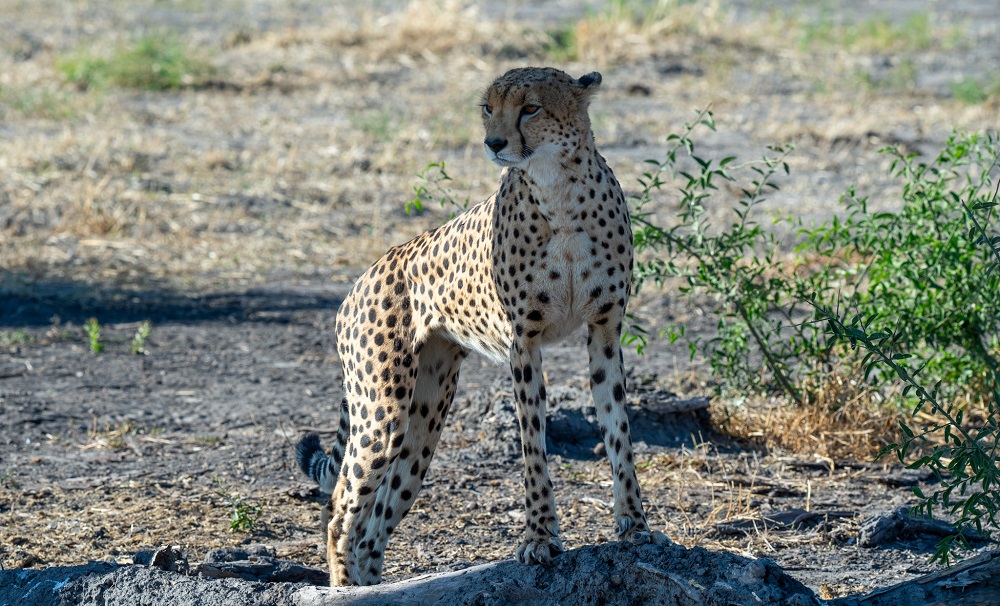
  1. Time permitting, visit the northern side of the park that borders the Chobe area. It takes a bit of time to get there but this is the area where we spotted two male cheetahs. The habitat is a bit different and there is enough of a distance from the main lion prides that cheetahs feel safe.

  1. Just general game drives exploring the different areas of the park. It is quite large so this would mainly be on the advice of the guides and what they have been noticing.I think a three or perhaps four night stay should be enough to accomplish most if not all of this.A couple extra notes. The sand there is fine and it can get very dusty. Later in the dry season (my visit was in early May) it  will be even more prominent I suspect. I would highly recommend at minimum bringing a buff or something to cover your mouth and nose (and something to protect camera equipment). The areas by the water where the lions camped out were very bumpy. The guides did not rush through so it wasn’t bad but it was slow going.  

Get in touch with us if you would like to visit Wilderness Mokete. We can be reached at 800-513-5222 in Houston, or email jason@fisheaglesafaris.com or lyndon@fisheaglesafaris.com

YOU MIGHT ALSO BE INTERESTED IN

Destinations
Zambia

10th September 2021

Chindeni and the Bushcamp Company, Zambia

By late July we found ourselves at Chindeni, a small Bushcamp Company property

Read more
Botswana
Destinations
Okavango Delta

3rd October 2022

Camp Okavango, Botswana

Camp Okavango is in the heart of the permanent part of the Delta. In this idyllic setting there are no vehicles, and it is just a short walk

Read more
Area
Destinations
Nyerere National Park
Ruaha
Tanzania

14th October 2023

From My Safari Notebook: Wildlife Photography

Birds in flight and wildlife photographers have an uneasy relationship. Things go wrong as often as they go right. Getting focus-lock on a moving subject

Read more

SUBSCRIBE TO OUR NEWSLETTER

READERS FAVOURITES
Destinations
India

27th May 2023

India

India’s tiger, mammals and birds.

Read more
Botswana
Destinations

4th August 2022

On Safari At Belmond Eagle Island Lodge, Okavango Delta

What is the ‘secret sauce’ for an unforgettable few days on safari in Botswana? It starts with the animals, of course. The elephants, lions, giraffes, hippos

Read more
Destinations
Zambia

10th September 2021

Chindeni and the Bushcamp Company, Zambia

By late July we found ourselves at Chindeni, a small Bushcamp Company property
Read more

Where in Africa to Go Next In 2024-2025

21st June 2024

Where in Africa to Go Next In 2024-2025

For me the most fun part of our business is designing itineraries. That’s where our 50 plus years of African experience and our team’s regular inspection and educational visits come into play. Rarely do we include a property which we haven’t been to ourselves and never is how often we include a property where guests may be forced into a middle seat on safari. 

Over the years we have gotten better at customizing itineraries to match a particular party’s interests and objectives. Without simply opting for the most expensive properties. 

So where would we go ourselves if we had to book an Africa trip this very minute, using mostly the properties which our Fish Eagle Safaris team checked out over the last couple of months? I asked the members of our Fish Eagle Safaris team to chime in.  

Here is what they had to say:

Lyndon: “I’d opt for a combination of Victoria Falls and Botswana and the trip would ideally include several days at Wilderness’ new Mababe concession camp, Mokete. On just one day there in late May we saw more animals in total, more different species and more rarities (how about aardvark, African wild cat and bat eared fox) than most visitors would see in a week on safari elsewhere.  

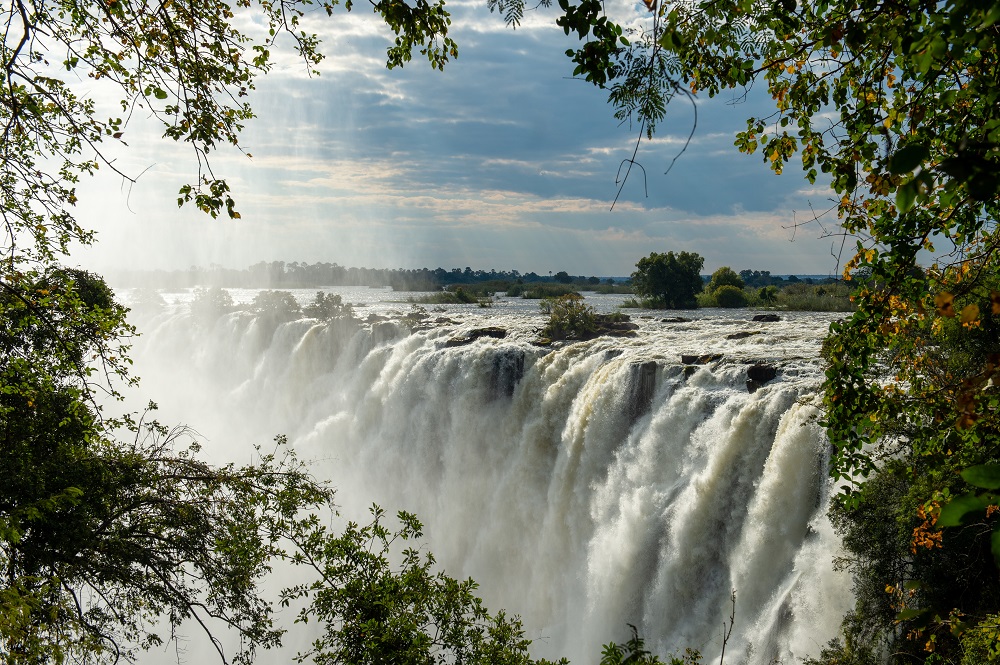
Consider taking a business class flight into Vic Falls, if only to get to the front of the line for the visa/immigration process which has lately proven to be quite challenging in terms of duration. Victoria Falls is a good starting point to shake off some jet lag and it acts as a buffer in case of any flight delays. It has many attractive accommodation options including Ilala Lodge, Pioneers, Palm River Hotel, The Victoria Falls Hotel and Stanley & Livingstone Hotel. Be sure to include a guided tour of the falls and a jet boat sundowner cruise.  

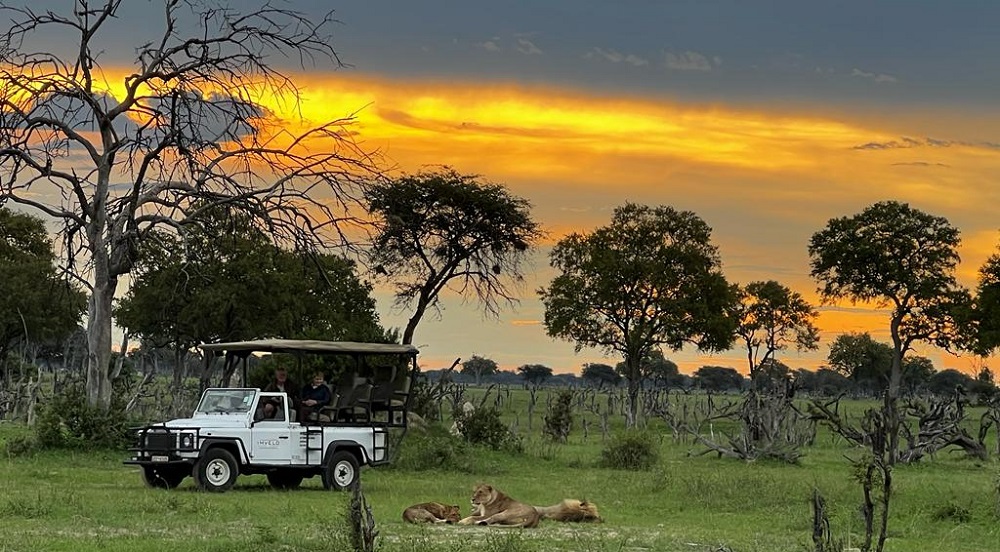
From there I’d head to Hwange for three or ideally four nights at one of the Imvelo or Wilderness properties such as Camelthorn, Bomani, Linkwasha, Little Makalolo, or Davison’s, depending on budget. I have a soft spot for Hwange and to date this year it has been producing some great game viewing. We’ve previously mentioned that the country is facing what could end up being a serious drought. Game viewing should continue to be good but young and weak, older elephants will be facing an uphill battle towards the end of the dry season.  

Ideally, end your safari with at least six nights in Botswana split between two camps. 

I would put Mokete right at the top of the list for the remainder of this season and likely into the future. It’s a unique Botswana property; on my recent visit there it felt a lot like visiting the Serengeti, somehow relocated to southern Africa. Mokete is really a  ‘must visit’ from now until probably November – and will likely be excellent until then.

With Mokete, I would add a few days at perhaps Karangoma and – for a true Okavango Delta experience at an affordable price point – two nights at a water camp like Setari.    

Our group had a fabulous time during our all too short 2-night stay at the brand new Karangoma. It is an intimate camp with only 6 tents, each one with just the right amount of luxury. The scenery in the north-eastern Okavango Delta is idyllic and the remoteness is unparalleled with a 10-minute helicopter flight required to reach camp.

Setari is also remote and requires a boat ride of about 45 minutes from the airstrip to reach camp. Located in the main artery of the Okavango Delta it has permanent water year-round and is a different, more laid back experience than many other Botswana camps. The perfect way to end a successful trip.

Jason: “One of our most successful offerings has always been a combination of South Africa, Victoria Falls and either Zimbabwe or Botswana. If I could book a trip for a client right now, that’s where I would try to focus my efforts.

With a night in Johannesburg, or a few in Cape Town at the start of the trip to try and mitigate jet lag, the trip would kick off with four nights in Sabi Sand at one of our favorite properties. Mala Mala, Savanna, Sabi Sabi, Leopard Hills and Cheetah Plains all make for excellent choices with varying degrees of luxury and price points. The Sabi Sand is a game-rich Big 5 location and has always produced for our guests.

Next, a light air flight to Kruger’s MQP international airport would connect with a commercial flight to Victoria Falls. Ideally, spend two nights here at properties like The Victoria Falls Hotel, Ilala Lodge or Batonka Guest Lodge. We typically recommend a tour of the falls, a sunset cruise and some free time to explore Victoria Falls Town. You could also fill time with adventure activities like scenic helicopter flights, gorge swings, swimming in Devil’s Pool right on the edge of the falls (time of year dependent) or cultural activities in nearby villages.

The last three to six nights on this type of itinerary would be in Botswana’s Okavango Delta where things can slow down a little bit. With a huge number of amazing safari camp offerings, it’s difficult to decide just where to go. But you can count on our knowledge of the camps and areas to select a combination that would work best for your needs. 

Want to see the highest concentration of wildlife? In that case you’d definitely want to spend some time at Wilderness’ Chitabe/Chitabe Lediba camps. It’s been delivering simply brilliant game viewing with guests treated to mesmerizing experiences involving leopards, cheetahs, lions and African painted dogs, day after day.

Want to relax on the water in a boat or mokoro? Stick with some of the Okavango Delta camps (in flood season) like Wilderness’ Kwetsani, Little Tubu or Jao or Great Plains’ Okavango Explorers Camp. 

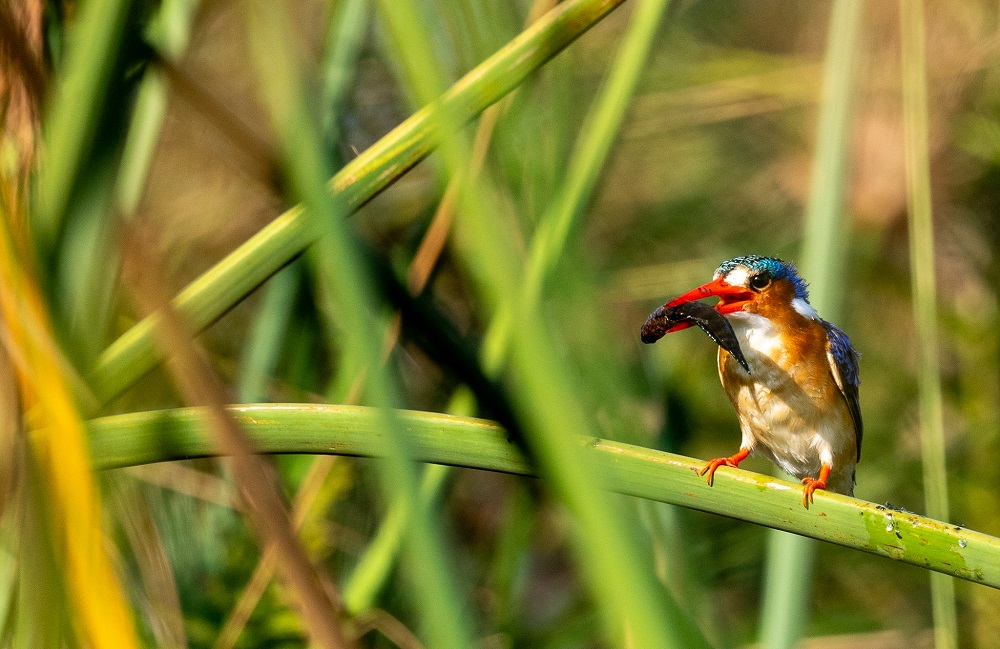
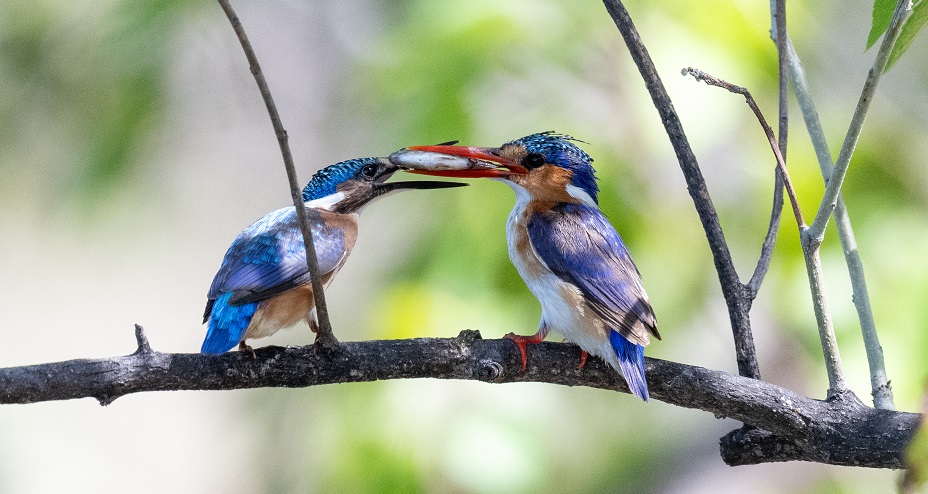
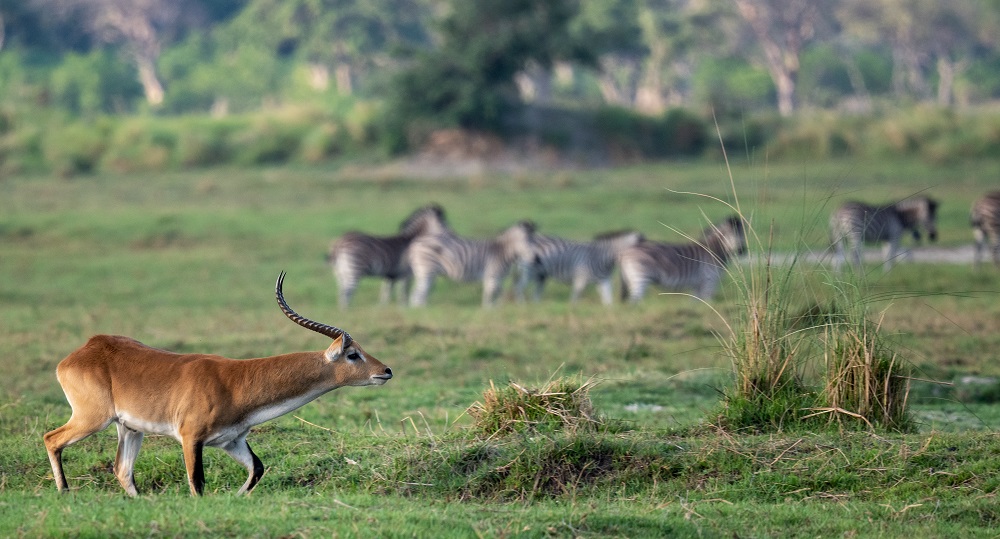
Want a combination of land and water activities? Machaba’s Gomoti Plains might be the answer. Even during droughts the Gomoti area has water year-round for mokoro rides and typically there is enough for boating as well. Plus it has plenty of open plains to explore on a traditional vehicle safari. On my recent trip, we found ourselves joining a hunt – bounding through the bush in an attempt to keep up with the effortlessly fast pace of a pack of painted dogs. Later that same morning we were on a mokoro attempting to photograph malachite kingfishers, African jacanas and red lechwe antelopes.

Bert:  We’ve always advised prospective travelers to Africa to  spend more time in fewer areas. Based on my experiences on our most recent trip I think visitors would do well to extend that principle into their day-to-day activities on safari. Ideally by including the services of a private guide and vehicle on at least part of their trip. 

This makes it possible to slow down game drives in order to spend less time actually driving, and more time experiencing. More time to observe, to record, and to learn.  Focusing on the details of specific sightings and not just bouncing around from animal to animal. 

Not trying to check everything off your list often results in unexpected but welcome developments. Mostly in the way of seeing something much more interesting than what you started off with.

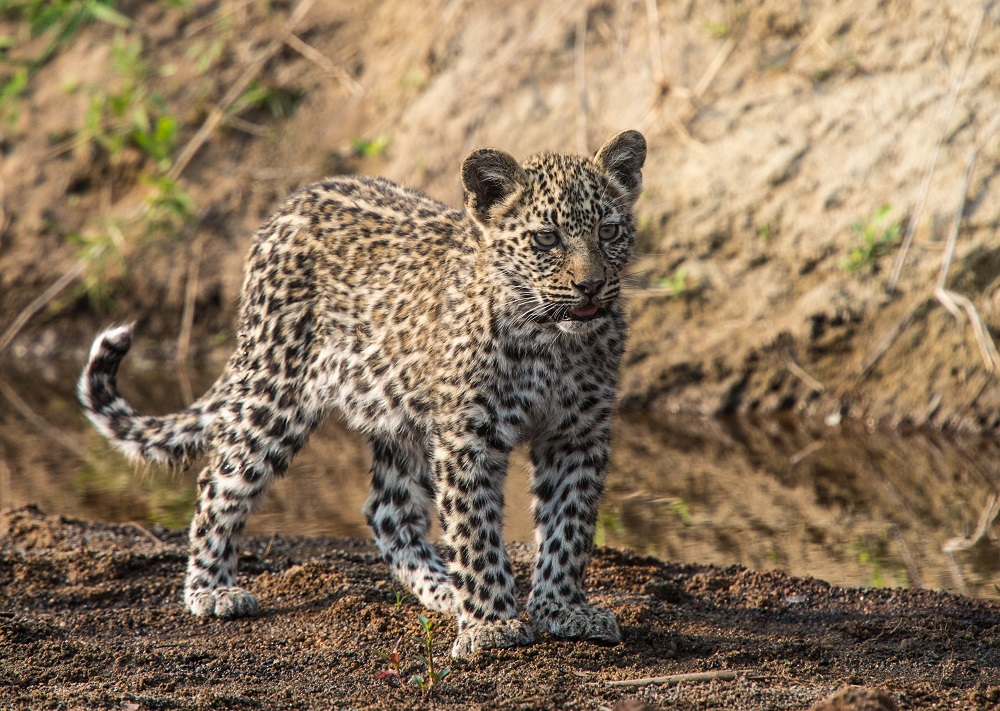
Patience and perseverance almost always pays off in the wilderness. We’ve had painted dogs walk into an otherwise blah sighting, we’ve seen ‘stationary cheetah’ turn into ‘running cheetah on the hunt,’ and we’ve experienced baby leopards suddenly and unexpectedly join their mom, right in front of us.   

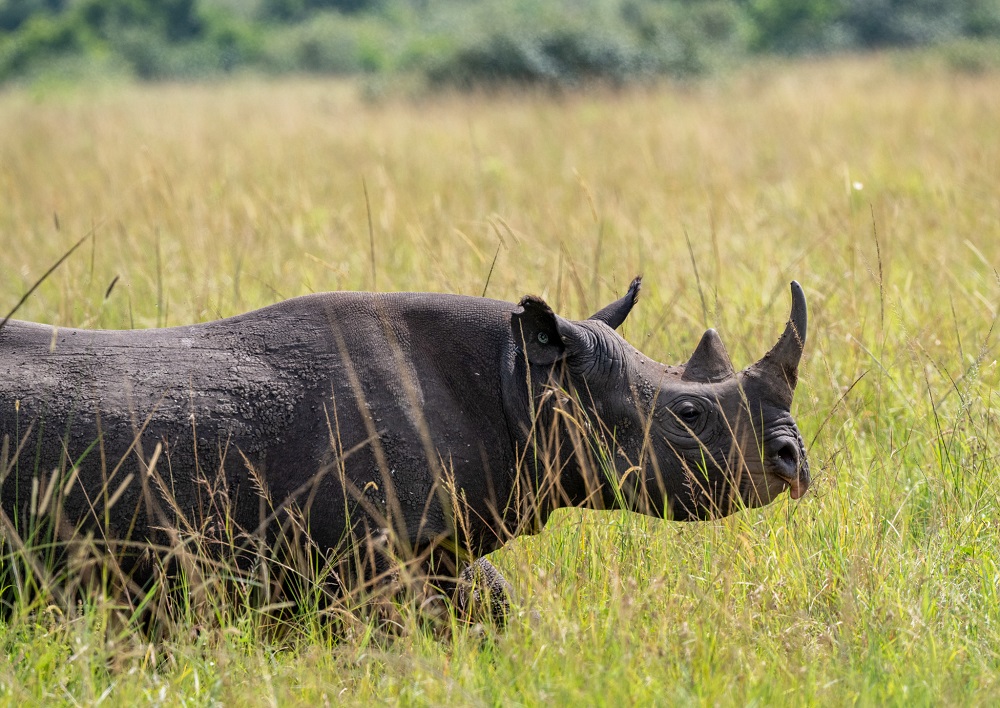
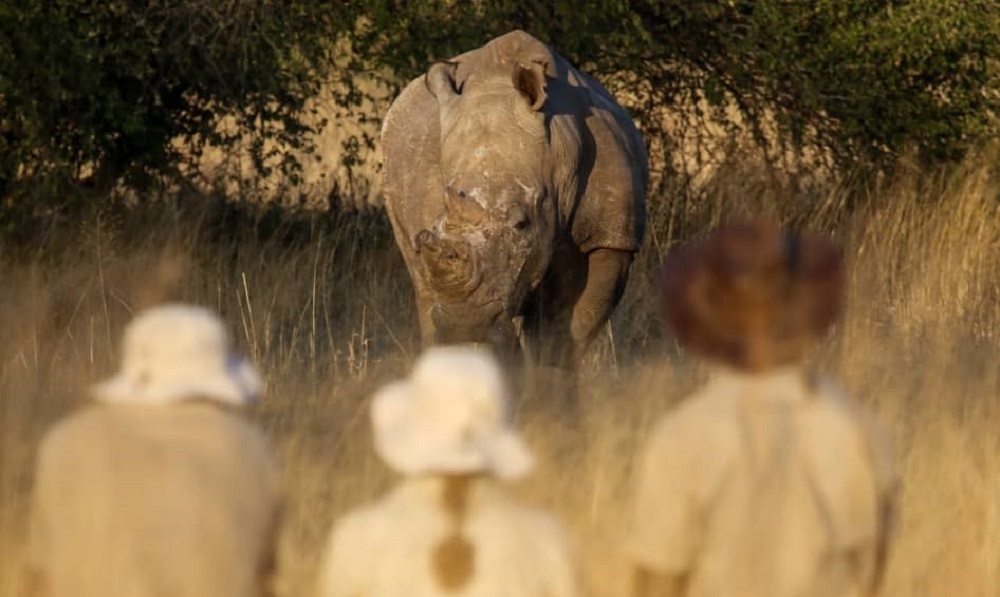
Where would I go right now, looking mostly at the properties which Kathy and I recently visited in East Africa? I would book my Kenya Airways non-stop flight from JFK to Nairobi, spend a couple of days in Nairobi (for a morning game drive in Nairobi National Park and a visit to the Sheldrick Elephant Orphanage) and then head to either Lewa or Laikipia for 4 nights. Few other places in East Africa or the rest of the continent for that matter, can match properties like Lewa Wilderness or Kicheche Laikipia in terms of diversity. They have all the usual plains game and the big cats, and on top of that a trio of superb near-endemics in the way of Grevy’s Zebra, reticulated giraffe and beisa oryx.  Plus healthy numbers of both black and white rhinos with their horns intact. 

And then I’d head straight to the Masai Mara, splitting my time there between a property in one of the conservancies to the north of the Mara, and ending with a few days in the Mara Triangle, in the north of the park. These two areas make a great combination, melding the freedom to go off-road inside the conservancy and the ability to drive at night, with the amazing grandeur and spectacle of the Mara Triangle. Inch for inch it is about as fascinating and rewarding an area as one could visit anywhere in Africa. The Mara Triangle is also one of Kenya’s most reliable areas to experience the great migration, within striking distance of several known crossing points. 

Kathy: On our recent visit to Kenya, I was amazed by the abundance of wildlife in three of the private conservancies to the north of the Masai Mara, namely Naboisho, Mara North and Lemek. Almost everywhere we looked, there were zebras in their hundreds. Plus masses of Thomson’s and Grant’s gazelles, topis, eland, buffaloes (some huge herds!), giraffes (so many!), tons of wildebeest, hippos wherever there was water,  elephants – and several prides of lions.  

I would recommend to prospective travelers to Africa to spend up to a week or so in the Masai Mara, split between two of the conservancies or by including an additional few days in a camp which does its game drives in the Mara Triangle, such as Olonana, Little Governors, or AndBeyond Bateleur Camp.   

In addition to the Mara, Kenya has several other superb safari destinations; call or email us and a member of the team will be happy to talk to you about Tsavo or Amboseli, Lewa, Meru or Samburu. We know them all really well and can give you just the right advice as to how they can fit in with a trip to the Mara.  

For now, I will concentrate on the three properties which we visited in the conservancies. Any one of these would be an ideal ‘anchor’ property for a Kenya safari. 

Saruni Leopard Hill – Mara Naboisho Conservancy

The female management team at Leopard Hill is very accommodating and they want to insure your comfort and enjoyment at their lovely little camp. The communal area is attached to the dining area and you will enjoy the view – beautiful fig trees surrounded by 3 waterholes. The dining/communal area is on a platform and there are steps leading to a small area where guests congregate around a small bonfire in the evenings.  

This camp has 6 tents. We were in tent #3. I really liked the generous size and layout of the tents. The rooms also have a skylight which you can open up at night to ‘sleep under the stars.’ Not advisable during the rainy season though. The rooms have a king-size bed, great pillows, desk, daybed/couch, double sinks and separate shower and toilet as well as an outdoor shower. Plenty of room for your gear and a great patio overlooking the game reserve. The rooms are spaced far enough apart for privacy. They also have a honeymoon tent with a nice lounge and a family tent – two tents next to each other with doors (instead of zippers) suitable for a family of 4 

A bonus at Leopard Hill is a complimentary 30-minute back and neck massage – don’t pass this up! The spa tent is in a nice, quiet area and the masseur is a man named Viki Geel who has 18 years’ experience. He is excellent! Viki also offers yoga and stretching. I am so glad I took advantage of this and if I had more time, I certainly would have spent more time at the Leopard Hill Spa!

We had a ‘surprise’ romantic dinner on our patio the second night – very well done.

Wake up – coffee/tea are brought to your room.

We had great game viewing and a bonus here – and in the other conservancies – is the off-roading which makes a big difference if you want to pull up close to a lioness with her cubs hidden in the bushes. As we did.  

Kicheche Camp:  Mara North Conservancy, Masai Mara

Andrew Obaga is the manager at Kicheche Mara and he and his very competent staff know how to make you feel comfortable and right at home. One is introduced to the camp after walking over a small bridge and up a short hill. At the top of the hill is an amazing and unexpected sight – a beautiful and well-maintained mowed lawn with communal dining and photography tents. Early the next morning there was a little family of three tiny dik-dik antelope on the edge of the lawn; humans are not the only ones who find it appealing. 

The camp: the first communal tent is a photographer’s dream tent offering the photographer access to WIFI, computers and more. The photographer’s tent has just about everything needed for safari photographers – a real bonus in the bush! Right next door is a restroom. Walk a few more feet and you will find the dining tent with a lovely patio – indoor/outdoor dining. Two more communal tents with nice lounges, bars and two more tented restrooms complete the communal area.

Kicheche Mara has a total of 10 guest tents including a family tent. They can make any of the tents into a triple. For example if you want to travel with your mom and sister – they would be happy to put 3 adults in one tent – no problem! The pathway to each tent is clearly labeled using Swahili animal names for the tents. We were in Punda Milia (zebra). Arriving at our tent, the main power switch is a handy pull-string at the front of the tent opening. The tents are very spacious and well-appointed with a daybed, a king-sized bed, desk, open closet for all your items, a bathroom with a separate toilet, two sinks and a nice shower. We had a comfy patio with chairs and a small table so we could watch for any activity at the river. 

Kicheche is a fabulous camp and well worth a 3-night visit. Tents on our side were:  Kiboko, Punda Milia, Topi, and Kanga. They are all a short walk to the main area. Andrew told us the ‘honeymoon tent’ is located quite a bit further from the main area. Wake up – coffee/tea is brought to your room.

The food was excellent at Kicheche. After each meal the chef checked on us to make sure we were satisfied.

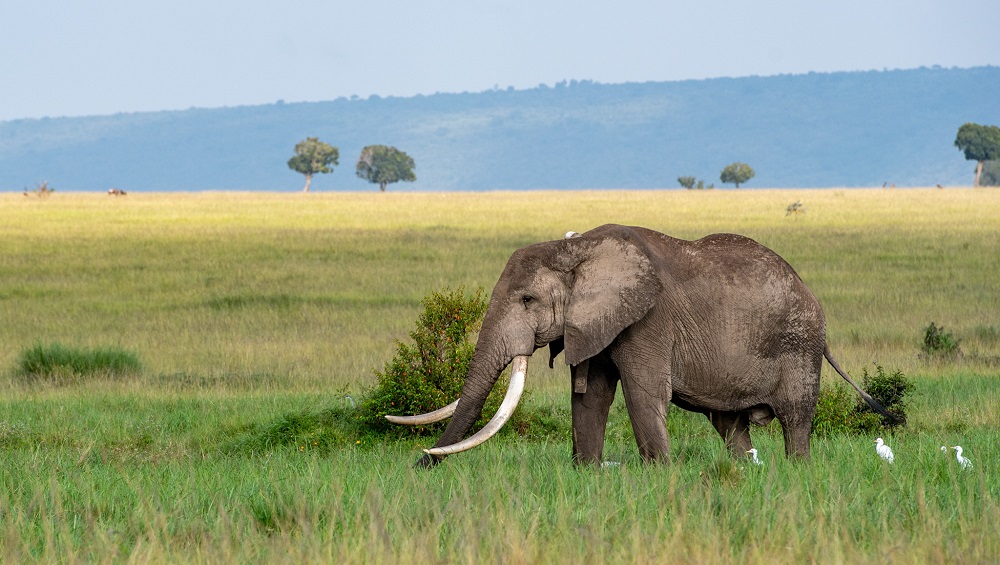
As was the case at the other camps in the conservancies, game viewing at Kicheche Mara commenced right out of camp. Twice, driving into and out of the camp, there were three elephant bulls with huge tusks to be seen hanging out in a marshy area close to camp; apparently they spend much of the dry season in that spot.  

Hemingways Ol Seki Mara:  Naboisho Conservancy, Masai Mara

Hemingway’s Ol Seki camp in the Naboisho Conservancy in the Masai Mara represents complete luxury on safari. The highly accomplished manager, Debbie Paul, gave us a very warm welcome – she had clearly read the guest information form – and we felt like old friends right away. Debbie took us to our room, #5, which was the closest to the lodge. The rooms are equipped with everything you will need including an indoor and outdoor shower, a gorgeous bathtub – quite a luxury on safari – and a separate/private toilet. The room has a king-size bed, a day bed and desk and a spacious wrap around patio perfect for game viewing from your room. I really liked their early morning wake-up – complete with coffee/tea and a to-go insulated mug to take on your morning game drive. You don’t want to waste any time in the mornings, and this was an added bonus.

The dining area has views of the water hole and game viewing area which can be great entertainment while dining or enjoying the communal area. The lounge and bar are attached to the dining area and they overlook a tempting pool and deck with lounge chairs and umbrellas – it’s really hard to beat this view. Relaxing in the dining area or pool area and game viewing at the same time – don’t forget your binoculars.

If you are traveling with your family, you may want to consider the Simba or Chui Suites. Ideal for parties of around 4 to 6, they are exclusive use with a private vehicle and chef, a pool and in a beautiful setting.

At Ol Seki we enjoyed great food and service and a great spa – reasonable treatment prices too. Facials and massages are offered – a wonderful way to relax during the siesta time before the afternoon game drive. 

You won’t want to leave Ol Seki!

Saruni Wild – Lemek Conservancy, Masai Mara

One more Mara property which we checked out but did not overnight at, was Saruni Wild in the Lemek Conservancy. Saruni Wild is a beautiful and welcoming classic African bush camp. This small, tented camp has a great location in the Lemek Conservancy, right on the edge of the Mara North Conservancy, with access to both for game drives. What we both liked was the instant access to several excellent game viewing areas in the Mara. On our drive from Saruni Wild, we found a female cheetah and we were told that lions had been spotted in the area just the previous day.  

Saruni Wild has an ideal mix of features which will make it easy to send our guests there in future. Effective, hands-on management, friendly staff and well-designed, well-maintained common areas and tents. All tents have the same basic layout – a king-sized bed, desk, open closet, double sinks, separate toilet and shower area.  Tents are placed far enough away for great privacy. There is no age limit for this camp.

Contact us for more information

Our Fish Eagle Safaris Inc. team has visited various Zimbabwe, Zambia, Botswana, South Africa, Kenya and Tanzania properties over the last couple of months. Coming up soon: educational trips to Madagascar and Mozambique. We’d love to help you arrange your first or next trip to Africa to one of these or several other African destinations. We can be reached at 800-513-5222 in Houston, or email jason@fisheaglesafaris.com or lyndon@fisheaglesafaris.com

YOU MIGHT ALSO BE INTERESTED IN

Destinations
Zambia

10th September 2021

Chindeni and the Bushcamp Company, Zambia

By late July we found ourselves at Chindeni, a small Bushcamp Company property
Read more
Botswana
Destinations
Okavango Delta

3rd October 2022

Camp Okavango, Botswana

Camp Okavango is in the heart of the permanent part of the Delta. In this idyllic setting there are no vehicles, and it is just a short walk

Read more
Area
Destinations
Nyerere National Park
Ruaha
Tanzania

14th October 2023

From My Safari Notebook: Wildlife Photography

Birds in flight and wildlife photographers have an uneasy relationship. Things go wrong as often as they go right. Getting focus-lock on a moving subject

Read more

SUBSCRIBE TO OUR NEWSLETTER

READERS FAVOURITES

Destinations
India

27th May 2023

India

India’s tiger, mammals and birds.

Read more
Botswana
Destinations

4th August 2022

On Safari At Belmond Eagle Island Lodge, Okavango Delta

What is the ‘secret sauce’ for an unforgettable few days on safari in Botswana? It starts with the animals, of course. The elephants, lions, giraffes, hippos

Read more
Destinations
Zambia

10th September 2021

Chindeni and the Bushcamp Company, Zambia

By late July we found ourselves at Chindeni, a small Bushcamp Company property
Read more

Take Yourself On Safari

7th April 2024

Take Yourself On Safari

It’s a little known fact that as many as 45% of U.S. adults over 20 are single, and many of them by choice. Whether they love to travel solo – or not – it is often their best, even their only option because of necessity or circumstance. Good news for solo travelers is that the African safari industry is starting to realize that there are millions of singles out there who want to travel but not necessarily as a ‘party of 2.’ Two of the major players in the safari business, Wilderness and &Beyond, are already on board. There will be no single supplement for solo travelers staying at any &Beyond lodges in Africa for travel before 20 December 2024 and Wilderness have waived single supplements except during the high season months of June through October. Several other African safari operators have similar offers in place. 

Is a trip to Africa a good idea or even a viable option for a single person? We like to think it is. An African safari – particularly a customized itinerary designed for a solo traveler – can be a rewarding experience on many levels. You will find yourself in a beautiful setting enjoying game drives and other activities with a few other people who share your interests and who will usually be quite keen to talk about their safari to date, or what lies ahead. Where have you been? Where are you going next? What have you seen? There’s no better icebreaker than a common interest or passion, and the African wilderness is no exception.  

We wouldn’t advise singles to book on just any program, however. Make sure that your itinerary is designed around your preferences. If you’re naturally gregarious or simply want to meet some new people, you will do well in properties where communal dining is the norm, as opposed to restaurant style with each party at its own table. A typical safari is filled with opportunities to meet and interact with other people such as during sundowners, when everyone gets out of the vehicle for drinks and snacks at a nice spot somewhere as the sun sets. Singles fit in everywhere: on walks, village visits, boating outings, canoeing, or simply waiting in a hide or blind for something interesting to show up. You’re never on your own – unless of course you want to be. 

On most wildlife-focused trips, minimal time is spent in cities or areas where a single person may attract unwanted attention. You will be in a private, protected environment most of the time and where necessary – such as on arrival at airports – any good operator includes personalized meet and assists.  

Yet another option to avoid most single room supplements in African safari destinations would be to travel in the low demand and shoulder season months, roughly from November through the end of May. Prices are much lower and there are fewer other visitors around. While there may be some rain showers and a few thunderstorms from time to time, we believe the advantages of low season African travel far outweigh the negatives. 

Many safari lodges and tour operators cater actively to solo adventurers, providing opportunities to join group excursions and meet like-minded individuals. Putting together your own itinerary means you can shape and plan it just the way you want, as active or as leisurely as you wish.  

Traveling single in Namibia

Namibia has always been considered an adventurous but safe destination for solo travelers, (male and female) and two trips that are particularly well suited for solo travelers are Ultimate Safaris’ two small-group safaris, the Ultimate Namibia and Namibia Under Canvas. They are guaranteed to depart with even just one person, so solo travelers can be sure that their trip will be a go. So they can book their flights and don’t have to wait for others to confirm. Ultimate’s Namibia trips generally operate with about five to six persons, all English-speaking but with a mix of nationalities (USA, Canadian, Australian, UK, Netherlands) and they are an affordable option for solo travelers to explore Namibia. Between their two options (10-day Ultimate Namibia and 10-day Namibia under Canvas Safari) Ultimate operates as many as 70 departures per year.

The Ultimate Namibia trips are mostly all-inclusive, with participants getting to experience Sossusvlei (staying inside the park), the Atlantic Ocean coast (with an option to sea kayak or participate in a motorized boat activity), Damaraland (Twyfelfontein rock art, desert-adapted elephants), Etosha (three nights on the southern side of the park, staying on the game-rich Ongava Game Reserve) and a day visit to the AfriCat Foundation, with an optional overnight extension at Okonjima on offer. 

The 10-day Namibia Under Canvas Safari makes use of largely Under Canvas-style accommodation, namely Ongava Tented Camp, Camp Doros and Camp Sossus, focusing on the experiential aspect of safaris. Ultimate has identified a strong desire in many guests to go back to the roots of ‘safari’, to touch, to smell, to feel and to experience the wild, with one’s feet firmly in the dust that covers Africa. The adventure is in taking guests to the most wild, remote and private places, and giving them access away from the beaten path. 

Solo travelers in Botswana

Botswana is likewise a great option for a solo traveler. As a general rule, the low-demand season in Botswana is the best time for single travelers as single supplements are waived in most cases. One of the tried and tested low-demand season programs – Kwando Safaris’ Five Rivers program – does not charge a single supplement on accommodation for the first two singles per group. With a choice of nine safari camps at rates under $700 per person per night (for the 2024-2025 green season), there are few better options for the solo traveler.  

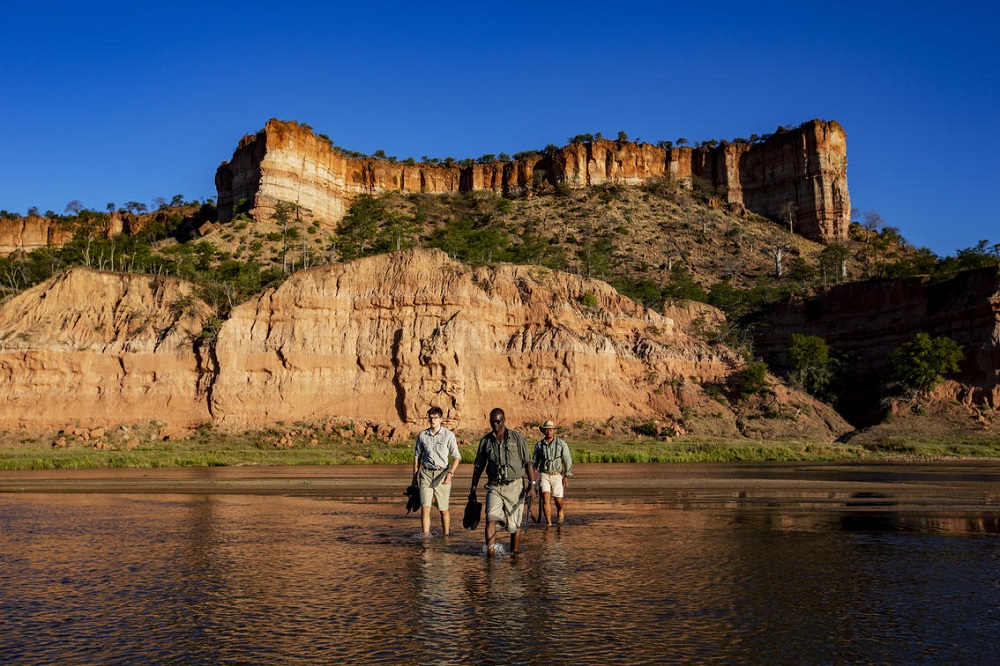
Photo courtesy Chilo Gorge Safari Lodge

A few more notable safari operators and properties which may appeal to solo travelers include Robin Pope Safaris (Zambia, Malawi & Zimbabwe), Chilo Safari Lodge (Zimbabwe) and Kambaku (South Africa) none of which charge a single supplement unless there are more than two singles in a party. Desert and Delta Safaris (Botswana) do not charge a single supplement in Green and Shoulder season. Another South Africa operator which waives the single supplement for the first two singles in a booking is Sabi Sabi Private Game Reserve. Lemala does not charge a single supplement over the low and shoulder season.

Ready to take yourself on safari? Call our Houston office at 1-800-513-5222 any time during business hours, Monday to Friday, CDT or email me at bert@fisheaglesafaris.com. 

YOU MIGHT ALSO BE INTERESTED IN

Destinations
Zambia

10th September 2021

Chindeni and the Bushcamp Company, Zambia

By late July we found ourselves at Chindeni, a small Bushcamp Company property
Read more
Botswana
Destinations
Okavango Delta

3rd October 2022

Camp Okavango, Botswana

Camp Okavango is in the heart of the permanent part of the Delta. In this idyllic setting there are no vehicles, and it is just a short walk

Read more
Area
Destinations
Nyerere National Park
Ruaha
Tanzania

14th October 2023

From My Safari Notebook: Wildlife Photography

Birds in flight and wildlife photographers have an uneasy relationship. Things go wrong as often as they go right. Getting focus-lock on a moving subject

Read more

SUBSCRIBE TO OUR NEWSLETTER

READERS FAVOURITES

Destinations
India

27th May 2023

India

India’s tiger, mammals and birds.

Read more
Botswana
Destinations

4th August 2022

On Safari At Belmond Eagle Island Lodge, Okavango Delta

What is the ‘secret sauce’ for an unforgettable few days on safari in Botswana? It starts with the animals, of course. The elephants, lions, giraffes, hippos

Read more
Destinations
Zambia

10th September 2021

Chindeni and the Bushcamp Company, Zambia

By late July we found ourselves at Chindeni, a small Bushcamp Company property
Read more

Groundhog Day Properties Part 2 – 2024

5th April 2024

Groundhog Day Properties Part 2 – 2024

Reviewing the trips which our Fish Eagle Safaris guests will be embarking on over the remainder of 2024, several more of our ‘Groundhog Day’ properties popped up. These are places where we would be happy to wake up every day for the rest of our lives. Eat your heart out, Bill Murray.

Jao Camp, Okavango Delta – Botswana

Imagine being dropped off – blindfolded – on a small island in the Okavango Delta. As the helicopter noise fades into the background, you take off the blindfold. Where are you? It could be one of dozens of spots in the Delta. All stunningly beautiful, but not distinctively unique. Not so the Jao Concession in the western part of the Delta. Here, the typical Delta mosaic of palm-fringed islands, crystal clear waterways, papyrus-fringed lagoons and lush reedbeds takes on an identity of its own. Practically unmistakeable. Even on just my second visit, it became clear that this part of Northern Botswana was special and unique.   

Photo credit Dana Allen

There are several superb safari camps in the concession, with Wilderness’ Jao Camp at the pinnacle of luxury, comfort and all-round excellence. There are pretty spots in the Delta, and gorgeous riverine forests, and then there’s the spot where Jao was built. When on safari I suffer from pretty intense FOMO and almost never miss a game drive. At Jao, the tables are turned. You could miss out by getting into a vehicle and leaving camp. This is where you want to spend an extra night or even two, to revel in the sybaritic splendor of the spacious and elegantly designed tents, to linger over an exquisite dinner in the museum room, or to just spend a few hours on the verandah, soaking in the atmosphere. The entire camp is elevated about 3 to 5 meters above ground level, enhancing the views and adding a tree-house like feel. Sooner or later you might actually feel like venturing out, and of course there’s plenty to do beyond R & R. The camp offers daily guided wildlife safaris, as well as boat trips and mokoro excursions (subject to water levels), allowing visitors to explore the rich biodiversity of the Okavango Delta.

Mashatu Euphorbia Lodge – South Africa

Mashatu Euphorbia Villas is about as close as a safari lodge gets to being a work of art. It all starts with a winding drive up a steep hill into the most enchanting euphorbia forest you’ve ever seen. These stark, foreboding cactus plants – sometimes referred to as candelabra trees – loom alongside the drive into camp, a harbinger of what is to come. Crest the hill and suddenly you’re looking at as dramatic an entrance as there is to any safari camp in Africa. The experience builds from there. A  stunning lounge and dining area – not to mention the outdoor space, the boma and the nest seating area, perched on the edge of a 30-meter high cliff. The view? You just have to see it in person. During our recent visit the same superlatives could be heaped on the suites and the food. Impeccable. 

The game viewing experience at Mashatu is exceptional, with three species of big cats – lions, leopards and cheetahs – being seen regularly. This alone makes Mashatu a desirable destination, but there’s a lot more. Mashatu’s elephants are known for being tolerant to the presence of vehicles and you are likely to get surprisingly close to them from time to time. Other notable species include giraffes, zebras, eland (Africa’s largest antelope) and brown hyenas. Expert guides will take you on game drives or walks through the reserve, and as there is no prohibition on driving off-road or at night, you will almost assuredly have multiple opportunities to get close up and personal with many of these special mammals and the superb birdlife. Done enough game-driving? There are many other (optional, at additional cost) activities to enjoy at Mashatu including horseback riding, mountain biking, observing the animals and birds from a hide/blind (subject to availability) and bird watching.

Sabyinyo Silverback Lodge – Rwanda

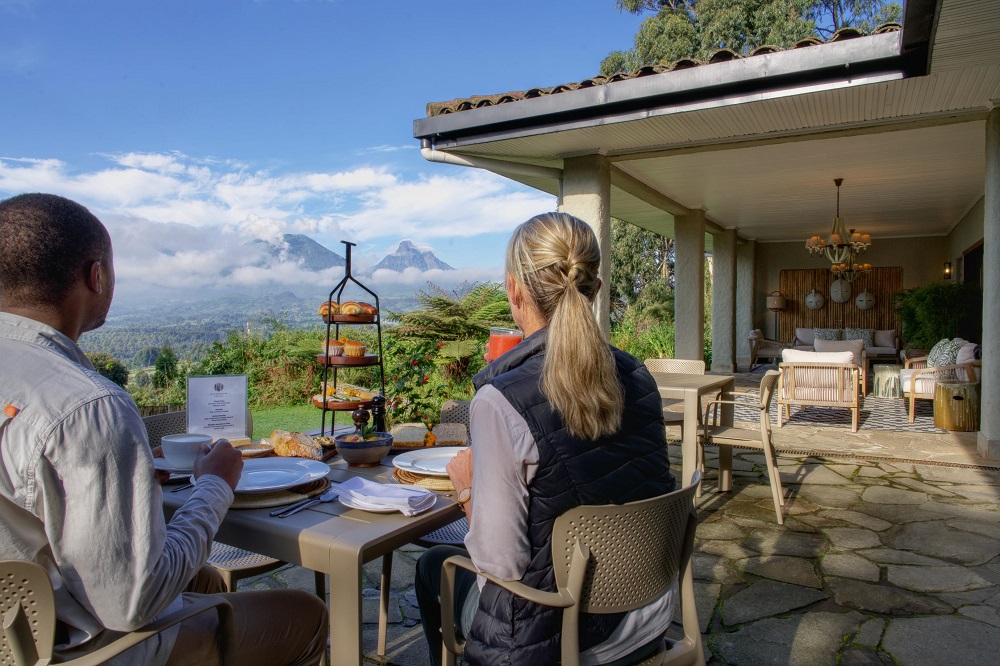
Wilderness Sabyinyo Lodge is hands down our favorite property in the Volcanoes National Park area. This beautiful lodge is located in a lush garden setting (the golden monkeys sometimes make a surprise visit) at the base of the Volcanoes National Park, with gorgeous views over the valley below and up towards several dormant volcanoes in the background. It is just minutes away from the Volcanoes National Park headquarters for the morning briefing before gorilla treks. The hospitality, food and rooms – and the main lodge – are all first class, and the lodge is 100% community-owned, with a sterling conservation ethos. There are several other lodges in the area with an even higher price tag (Sabyinyo is no slouch in that department) and bigger, fancier, rooms. We like Sabyinyo for providing an all-round stay which feels like spending time at someone’s private mountain lodge. Everything is to scale, it is relaxed yet with good attention to detail, and just feels like it fits into the environment without being jarring or out of place in any way.

Victoria Falls Hotel – Zimbabwe

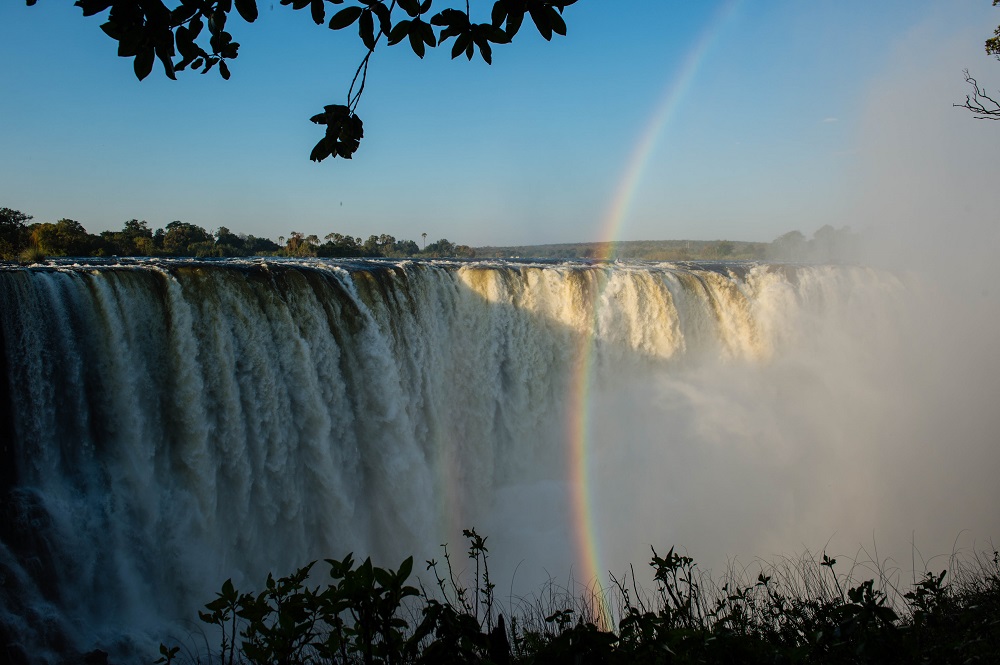
There’s really no more interesting or fascinating place to spend a couple of nights in Vic Falls, than the Victoria Falls Hotel. Despite having all of the modern conveniences and much improved food and beverage service (compared with a few years ago), the hotel has lost none of its old-world charm. Staying there feels every bit like being transported back to the early 1900’s. Beautiful gardens, a first-class curio shop, interesting restaurants (one of which puts on a traditional dancing performance nightly) and ideally located to venture out on activities. The Victoria Falls Hotel is not only the ‘grande dame’ of all the hotels in the village, it also occupies a prime spot with a superb view over the Batoka Gorge, with the bridge spanning the chasm between Zimbabwe and Zambia right in the line of sight. Truly a timeless classic which has been carefully nurtured and maintained over the years, with all the rooms now fitted with modern bathrooms, air-conditioning and Wi-Fi. The grounds and the public areas are worth exploring with a myriad of birds and smaller mammals around.

Tswalu Motse, Cape Kalahari –  South Africa

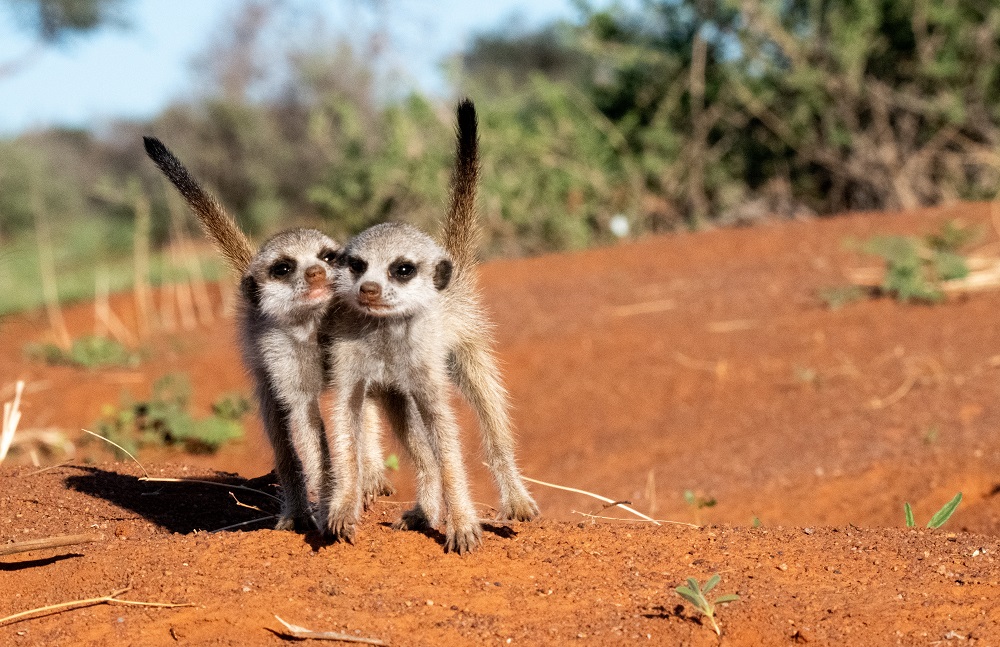
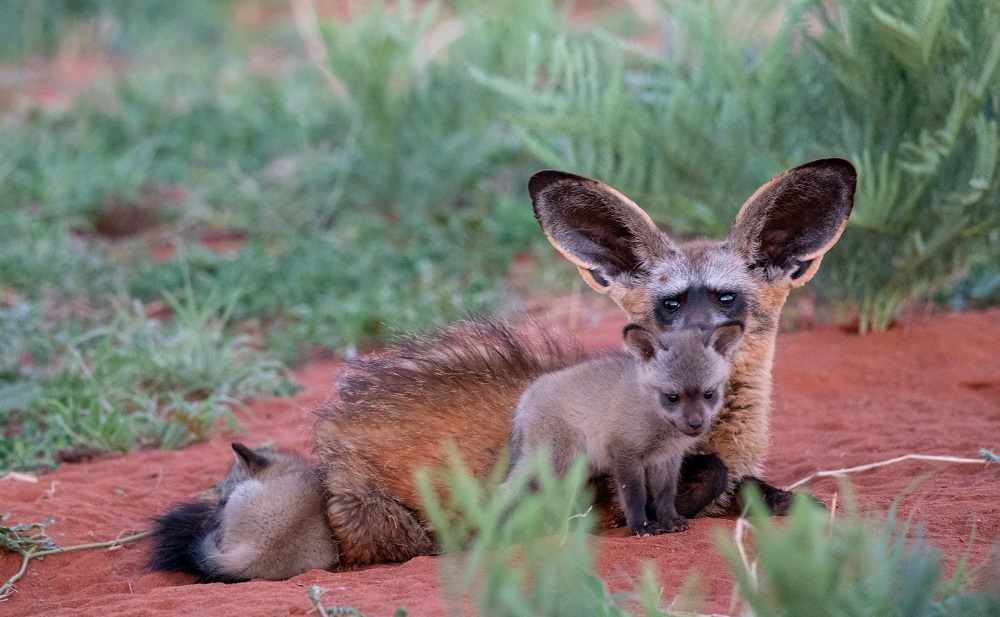
Tswalu is one of our favorite properties for many reasons, mostly because of the excellent game viewing and particularly the chance to see some special mammals such as habituated meerkats, black rhino and both pangolin and aardvark. It also has lots of desert-adapted animals like bat-eared foxes, gemsbok and springbok. Plus good predator numbers including cheetahs and lions. Tswalu includes a private guide and vehicle with all bookings and the guiding is superb. At Tswalu, you will also have the opportunity (included for all guests) to dine at Klein Jan, created by South Africa’s first Michelin Star chef Jan Hendrik van der Westhuizen, who owns Restaurant Jan in Nice, France. Klein Jan has become one of the world’s go-to restaurants despite its remote, isolated location in the Northern Cape’s Kalahari Desert. 

Thinking about including one or more of these stellar properties in your first or next trip to Africa? Call our Houston office at 1-800-513-5222 any time during business hours, Monday to Friday, CDT or email me at bert@fisheaglesafaris.com. 

YOU MIGHT ALSO BE INTERESTED IN

Destinations
Zambia

10th September 2021

Chindeni and the Bushcamp Company, Zambia

By late July we found ourselves at Chindeni, a small Bushcamp Company property
Read more
Botswana
Destinations
Okavango Delta

3rd October 2022

Camp Okavango, Botswana

Camp Okavango is in the heart of the permanent part of the Delta. In this idyllic setting there are no vehicles, and it is just a short walk

Read more
Area
Destinations
Nyerere National Park
Ruaha
Tanzania

14th October 2023

From My Safari Notebook: Wildlife Photography

Birds in flight and wildlife photographers have an uneasy relationship. Things go wrong as often as they go right. Getting focus-lock on a moving subject

Read more

SUBSCRIBE TO OUR NEWSLETTER

READERS FAVOURITES

Destinations
India

27th May 2023

India

India’s tiger, mammals and birds.

Read more
Botswana
Destinations

4th August 2022

On Safari At Belmond Eagle Island Lodge, Okavango Delta

What is the ‘secret sauce’ for an unforgettable few days on safari in Botswana? It starts with the animals, of course. The elephants, lions, giraffes, hippos

Read more
Destinations
Zambia

10th September 2021

Chindeni and the Bushcamp Company, Zambia

By late July we found ourselves at Chindeni, a small Bushcamp Company property
Read more

Zimbabwe & Botswana special offers – low-demand season 2023-2024

12th October 2023

Zimbabwe & Botswana low-demand season special offers – 2023/2024

We’ve got several special offers available for the coming low-demand season in both Zimbabwe and Botswana. The specials are available for a range of properties in both countries, from December (in some instances November 2023) through to March and April 2024. For a few camps the discounts extend right until the end of May. 

Zimbabwe

The best all around deals are available for the Imvelo Safaris camps in Hwange – namely Camelthorn, Bomani, Nehimba and Jozibanini. Here’s the lowdown:  

*Stay three nights/Pay two nights.
*Stay seven nights/Pay five nights.
*Children 18 and under stay free when sharing with an adult. Up to two children per adult. 
*No single supplement. 
*A free private vehicle will be included for groups of four or more.

Add a couple of nights in Victoria Falls, put it all together and you’re looking at a nine night/ten day fly-in safari at a price of around $5,200 per person sharing, with three nights at Nehimba and four at Bomani, and two nights at Pioneers Lodge in Victoria Falls.  

This price is valid for 1 January 2024 to 30 April 2024, and from 1 December 2024 to 31 December 2024. The rates will be extended to 31 May 2024 at Camelthorn and Nehimba, and to 31 July 2024 at Jozibanini.

What is included:

*2 nights in Victoria Falls on bed & breakfast basis
*7 nights on safari at two safari camps in central and southern Hwange
*All meals, soft drinks, beers, wines & local spirits on safari
*Bed & breakfast accommodation in Victoria Falls
*Laundry included at safari camps
*All road transfers and two scheduled light air transfers from and back to Victoria Falls  
*A sundowner cruise on the Zambezi
*A private guided tour of Victoria Falls
*Twice daily game viewing activities at both safari properties
*A Ngamo community experience, a Community Rhino Conservation Initiative (CRCI) talk and rhino viewing at Bomani and Camelthorn

Excluded:

*Gratuities
*Hwange National Park entry fee of $20.00 per person per day 
*Rhino Conservation and Community Levy – $150 per person
*Commercial flights from the USA to and back from VFA (Victoria Falls, Zimbabwe).

Safari notes:

*The CRCI rhino sanctuary has become an incredible guest experience at Bomani and Camelthorn and is available year-round.
*Mack Air has economical charter flight rates into and out of Hwange year-round (including the low demand season), which makes getting around a lot easier and more affordable than private charters.

About Hwange

Hwange National park is Zimbabwe’s premier wildlife destination. This huge national park is one of the most important elephant sanctuaries in Africa, with as many as 40,000 elephants resident in the greater Hwange area. We always include at least one Hwange property (mostly tented but not exclusively so) in an itinerary, often two. In addition to the elephants, Hwange has good populations of buffalo, giraffe, eland (largest antelope in Africa), zebra, wildebeest, and a variety of predators including lions, cheetahs, leopards and African painted dogs.

The safari experience in Hwange is very much like in South Africa, Botswana or for that matter Kenya. One difference: Zimbabwe has a couple of very special antelope not generally seen elsewhere, namely the majestic sable antelope and the equally attractive roan antelope. Plus literally thousands of impala and various other smaller mammals. The birdlife is superb with many birds of prey and colorful bee-eaters, rollers, shrikes, and dozens of other birds. Hwange is also an exceptionally good place for walking safaris, under the safe and capable supervision of a professional Zimbabwe guide.

Botswana in summer

There are few destinations in Southern Africa with quite the same appeal as Botswana in the low-demand season from December through the end of March. Even in years of good rainfall – not likely to be the case this coming summer – the precipitation is relatively low, hardly ever more than four inches average per month.  Most importantly, no part of the region is subject to the torrential rainfall which all too frequently affects the South African lowveld area (including much of the Kruger Park), from January through March, caused by tropical cyclones.  

With some rain – and the cooling effect of the cloudy weather – northern Botswana and the Kalahari (though still warm to hot in the afternoons) are much more pleasant than in the months of October and November. With even limited rainfall, the dry, dusty veld conditions seemingly change overnight, bursting with bright green vegetation, flowers and rich colors.

Conditions are ideal for photography. Beautifully soft morning and afternoon light. Crisp, clean air with minimal haze, and absolutely gorgeous sunrises and sunsets, almost always with some clouds around for added drama and color. I took some of my best ever leopard photographs in the Jao concession in Northern Botswana in March some years ago. Likewise in the Kwara area and at Duba in the northern Okavango Delta on two other February/March trips. Leopards, cheetahs, African painted dogs, giraffes, zebras – in perfect light, game drive after game drive.    

Include a few days in the Kalahari at Nxai Pan and discover an area simply teeming with life during the summer months when thousands of zebras migrate onto the open pans, in search of the fresh, emerging vegetation. Never too far behind? The impressive black-maned lions of the Kalahari and cheetahs clambering onto anthills or tree stumps on the lookout for springbok, steenbok or impala. In the summer months, there’s usually good numbers of big-tusked elephant bulls around, scattered groups of buffaloes and a variety of antelopes and abundant giraffes in the woodlands. On previous low-demand season trips to Northern Botswana we’ve gotten lucky with African painted dogs on several occasions, and there’s always a chance of seeing brown hyenas and African honey badgers.  

One of the best low-demand season offers for Botswana – available from January to March 2024 – is a “stay 8 nights, pay for 6 nights” deal from Desert & Delta at a price of less than $5,000 per person, including all internal charter flights from and back to Maun. The offer includes a 3-night stay at Leroo La Tau camp in the Kalahari. It is possible to include Chobe Game Lodge as well. This is what we would recommend:

*Two nights at Camp Okavango or Xugana Island Lodge. These typical Okavango Delta water camps offer the ultimate in relaxation in the heart of the Delta with unmatched walking, mokoro and boating activities.
*Three nights at Camp Moremi or Camp Xakanaxa. Here, on the edge of the Moremi Game reserve, guests can enjoy the perfect combination of prolific game viewing and motorized boat excursions into the Delta’s papyrus-choked channels exploring beautiful lagoons, small palm-fringed islands and patches of floodplain.
*Three nights at Leroo La Tau inclusive of a Nxai Pan day trip, a cultural experience and excellent photography opportunities along the Boteti River Valley.

This coming summer may be one of the best opportunities in many years to visit Botswana during the low demand season. With fewer travelers in the region, visitors will enjoy what is already a remote wilderness area, even more. For more details, please call our Houston office at 1-800-513-5222 during normal business hours, Monday to Friday, or email me at bert@fisheaglesafaris.com.

YOU MIGHT ALSO BE INTERESTED IN

Destinations
Zambia

10th September 2021

Chindeni and the Bushcamp Company, Zambia

By late July we found ourselves at Chindeni, a small Bushcamp Company property

Read more
Botswana
Destinations
Okavango Delta

3rd October 2022

Camp Okavango, Botswana

Camp Okavango is in the heart of the permanent part of the Delta. In this idyllic setting there are no vehicles, and it is just a short walk

Read more
Area
Destinations
Nyerere National Park
Ruaha
Tanzania

14th October 2023

From My Safari Notebook: Wildlife Photography

Birds in flight and wildlife photographers have an uneasy relationship. Things go wrong as often as they go right. Getting focus-lock on a moving subject

Read more

SUBSCRIBE TO OUR NEWSLETTER

READERS FAVOURITES

Destinations
India

27th May 2023

India

India’s tiger, mammals and birds.

Read more
Botswana
Destinations

4th August 2022

On Safari At Belmond Eagle Island Lodge, Okavango Delta

What is the ‘secret sauce’ for an unforgettable few days on safari in Botswana? It starts with the animals, of course. The elephants, lions, giraffes, hippos

Read more
Destinations
Zambia

10th September 2021

Chindeni and the Bushcamp Company, Zambia

By late July we found ourselves at Chindeni, a small Bushcamp Company property
Read more
  • « Go to Previous Page
  • Page 1
  • Page 2
  • Page 3
  • Page 4
  • Interim pages omitted …
  • Page 7
  • Go to Next Page »

Footer

Design

  • About
  • Destinations
  • Blogs
  • FAQS
  • Team
  • Contact
All Rights Reserved ©Fish Eagle Safaris 2022 | Terms & Conditions | Privacy Policy
Designed & Developed by B Online

SUBSCRIBE TO OUR NEWSLETTER

SIGN-UP TO OUR NEWSLETTER

Subscribe Form

Footer Widget Header

Related Blogs