• Skip to primary navigation
  • Skip to main content
  • Skip to footer

Fish Eagle Safaris

Fish Eagle safaris

Contact

Logo
  • About
  • Destinations
  • Blogs
  • Newsletter
  • FAQS
  • Team
  • search
  • Contact
  • About
  • Destinations
  • Blogs
  • FAQS
  • Team
  • Contact

Area

Northern Botswana Exploration

12th September 2025

Northern Botswana Exploration

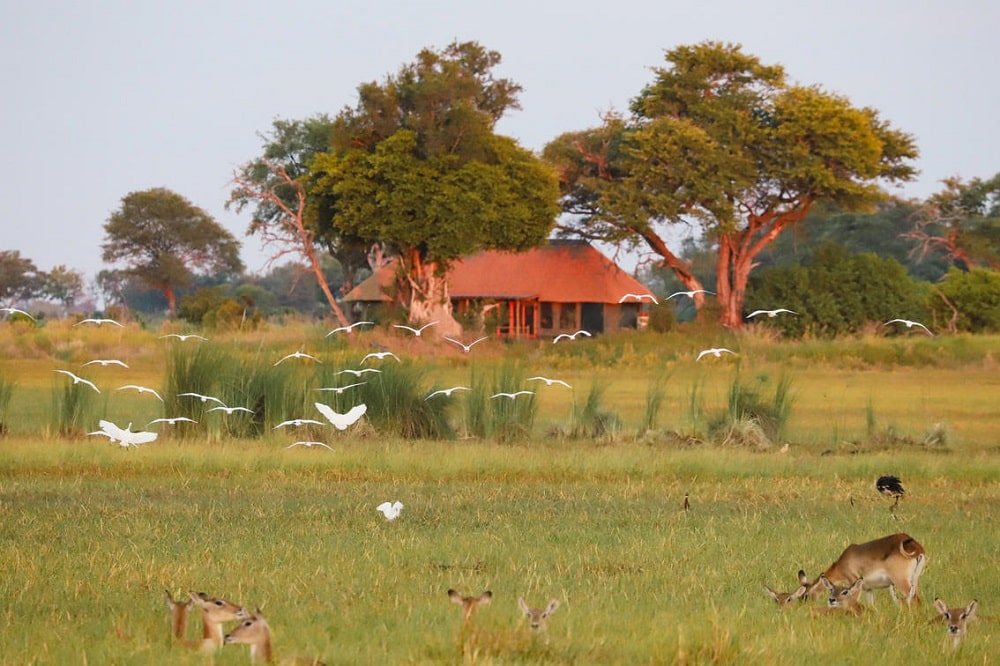
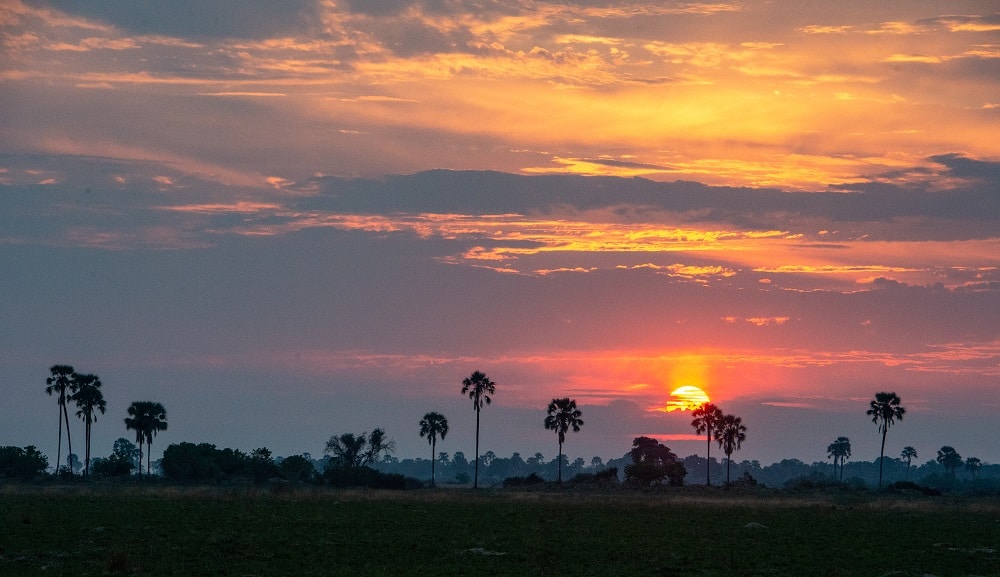
It has been several years since we’ve seen the Okavango Delta looking quite as pretty as it did in early July this year. Abundant rainfall earlier in the year had turned all of northern Botswana into a lush green paradise. 

While the copious amounts of water in the Delta resulted in some minor logistical headaches, such as the temporary closure of a couple of airstrips, the widespread rain ended a severe drought. The rain recharged the entire region and we expect wildlife viewing conditions in northern Botswana and the greater Hwange area in Zimbabwe to remain excellent well into 2026. 

On a weeklong familiarization trip in July Kathy and I visited a lodge in Chobe and three tented camps in the Okavango Delta. Overall the wildlife viewing exceeded our expectations and we enjoyed the guiding expertise, the remarkably good food and the spontaneity and warmth of the staff.

A & K Sanctuary Chobe Chilwero 

A & K Sanctuary are one of a select group of safari operators whom we rely on to deliver a consistently excellent guest experience all the time, every time. Their standards are exceedingly high and whether it’s the guiding, the food and beverage, the accommodation or the front of house experience, A & K gets it right year in and year out. 

It was no different on our recent visit to A & K Sanctuary’s Chobe Chilwero Camp which we include in many Botswana safaris, often as an extension from Victoria Falls. Right from the warm arrival experience, succinct new guest briefing through to a splendid private dinner on our patio to a couple of outstanding boating excursions in the Chobe River, our brief stay at Chobe Chilwero was impeccable. 

The imposing individual rooms are about as well appointed and comfortable as it gets in the luxury safari lodge category. Nothing is lacking, from a massive mosquito net clad king size bed to a huge standalone tub, indoor and outdoor shower, air conditioning and more. 

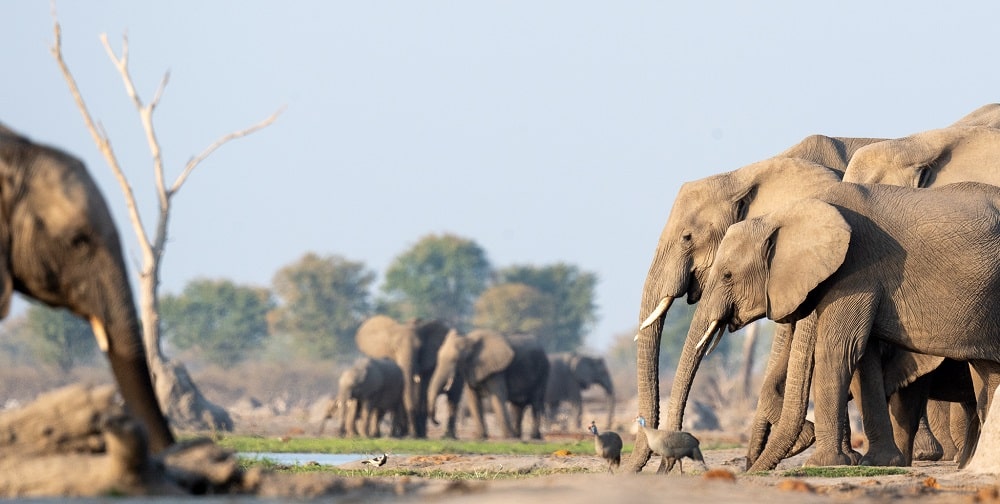
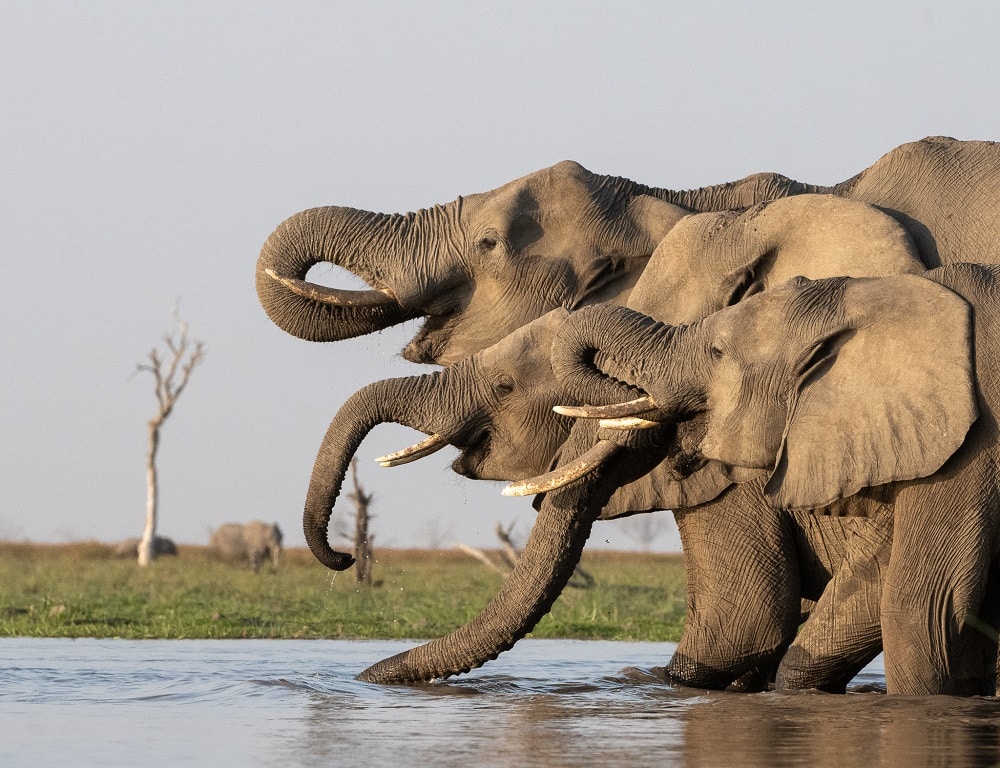
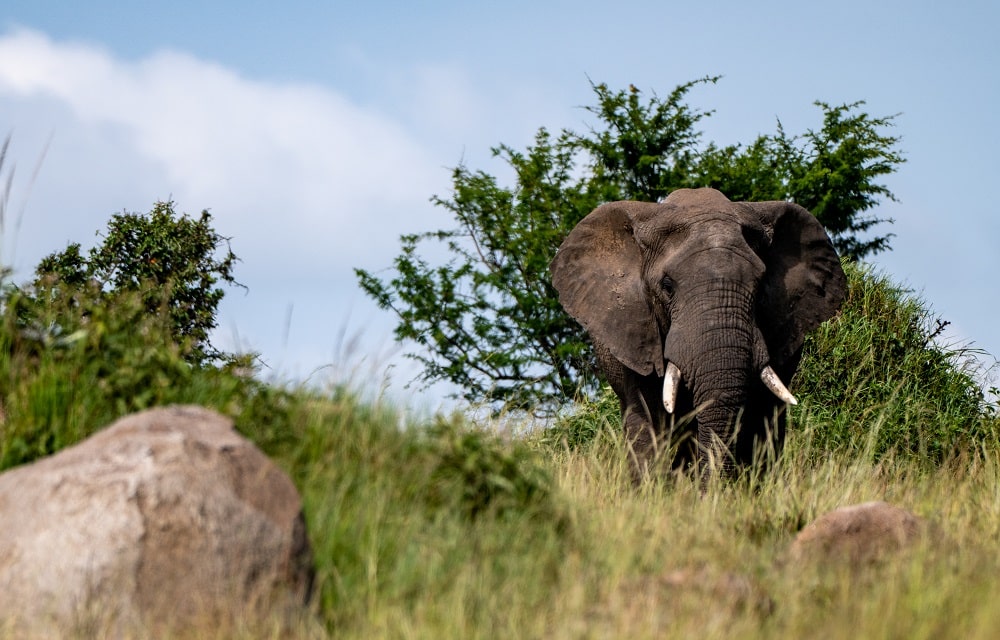
Activities include game drives into Chobe National Park and boating excursions on the Chobe River. Our advice to all Chobe visitors is to prioritize boating on the Chobe River as it provides a different and novel alternative to game drives. From a boat, you’ll have a unique perspective looking out from a stable platform towards the shoreline and the animals and birds usually congregating there. In the dry season you’re likely to see large numbers of elephants right at the water’s edge and often in the water, sometimes swimming to some of the islands between Botswana and Namibia. It was no different this time. We managed to fit in two boating trips while at Chobe Chilwero and both were entertaining and fun. We had some of our best views ever of elephants walking – and swimming – in the river and with the light at our backs the photographic results were stellar.   

Brave Africa 

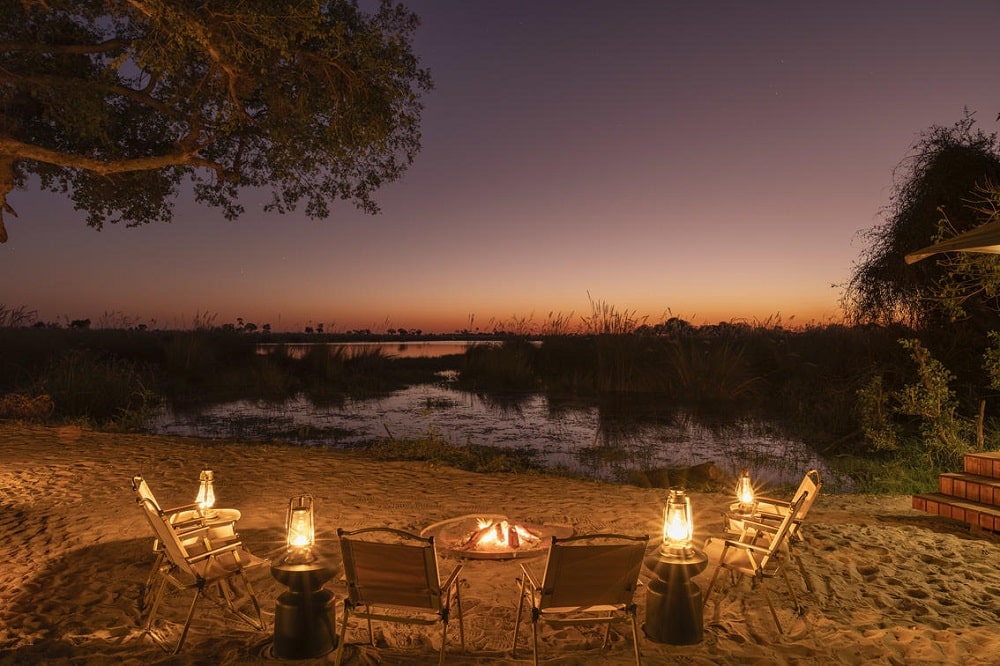
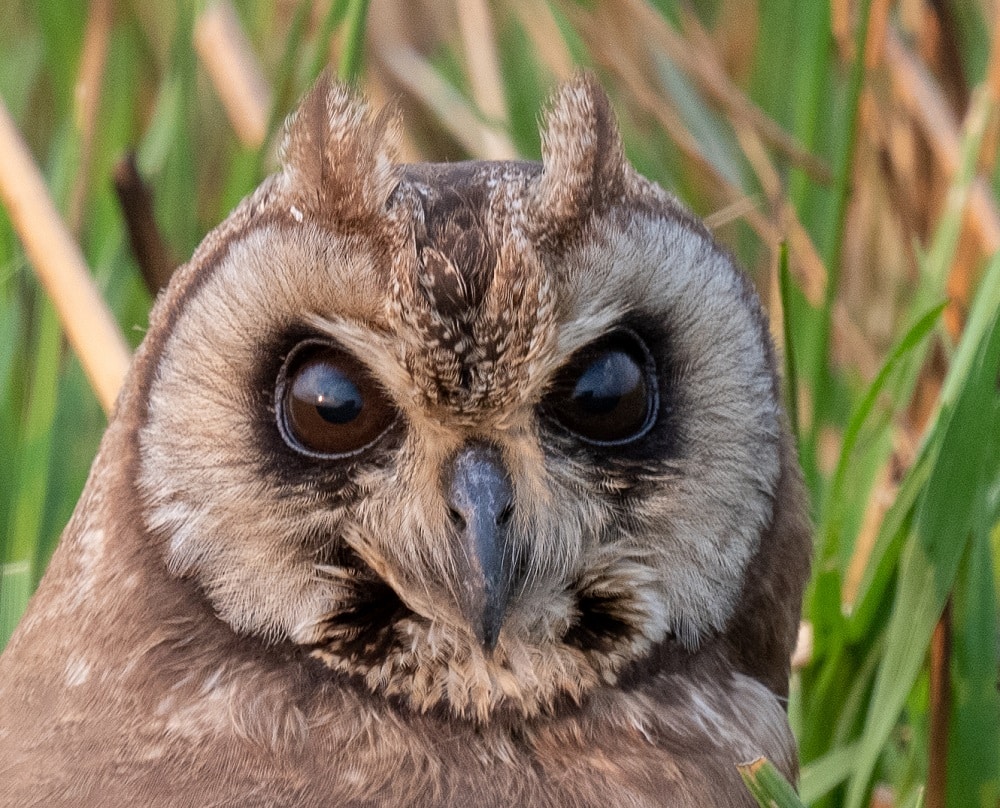
On our first night with Brave Africa on a mobile tent safari in the Khwai region of northern Botswana, we sat around the campfire prior to dinner and one after another we started to hear the old, familiar night sounds of Africa, rising above the crackling of the igniting mopane wood. The sharp clinking of several painted reed frogs emanating from the reeds lining a small stream right in front of camp. The call of a barred owlet announcing the start of its day. Two hippos honking. First just one and then two hyenas exchanging their whooping calls. And finally, from across the Khwai River in the Moremi Game Reserve, the unmistakable roar of a lion. Memories of past experiences came flooding back into our conscious minds and just like that we were on safari, without budging from our camp chairs. 

So often on safari nowadays the sounds of the wilderness are silenced by the hum of air conditioning or shut out by walls and window panes. Not so on a mobile tented expedition. Nothing more than canvas between you and whatever you can imagine is out there. Soft footsteps close by, shrill elephant arguments in the background – it’s a new script every night and you’re in it. 

It had been a while since Kathy and I experienced a proper camping safari. We enjoy a touch of luxury as much as anyone but we’ve never quite lost our affection for a more spare, back to basics experience. With less in the way of luxury trappings and more contact with the wilderness. A pure safari experience, some might say. 

Lately we’ve had several travelers ask us about low-cost/high-adventure safari options. Of the type where you spend a few nights in basic tents but with a flush toilet, a more than comfortable bed with proper cushions and most importantly – top notch guiding. 

We think we found just that in Brave Africa, a Botswana owned company headed up by head guide, president and owner Tabona Wina. ‘Just call me Wina’. Brave Africa’s mobile tented safaris range from 3 nights in one area such as Khwai to as many as 9 nights in three areas including Xakanaxa, Khwai and Savuti.

Praise from all of our guests who have spent time on safari with Brave Africa over the last few months has been effusive. 

“Brave Africa with its mobile tents and no wifi or electricity was exactly what we wanted for part of our trip. One night a fleeing animal ran head-long into my tent and another night lions made a kill about +/-50 yards from our campsite. The owner/guide Wina had a crew that he’d managed to keep through COVID and that was fiercely loyal to him. The entire setup was everything any guest could hope for including a chef that made bread that I still dream about.” 

***

“If you ever decide to go on safari, I highly recommend spending time in a remote, mobile camp, most specifically Brave Africa. Aside from the exhilaration of seeing very large, dangerous beasts in their natural environments, the tranquility, serenity, and pure joy you will experience off the grid is priceless.”

Wina is the Owner/Guide/Elephant Whisperer of Brave Africa. If I had only one word to describe Wina, it would be passionate. His affinity for elephants is palpable, even down to the sterling silver elephant charm he wears around his neck. However, his incredible knowledge of Botswana’s animals, reptiles, and birds does not stop there.”

We think that Brave Africa and a couple of other mobile camping operators in Botswana will appeal to guests who are keen to experience the wilderness under canvas in an authentic, classic manner. Where the focus is mostly on what happens outside the tent. 

Our two-night stay was certainly memorable and mostly so because of Wina and his crack staff. They keep things interesting by moving guests around for meals and pre dinner drinks; even the fireplace was in a different spot on day two. Wina is affable, witty and knows how to impart knowledge in an entertaining, non-pedantic manner. 

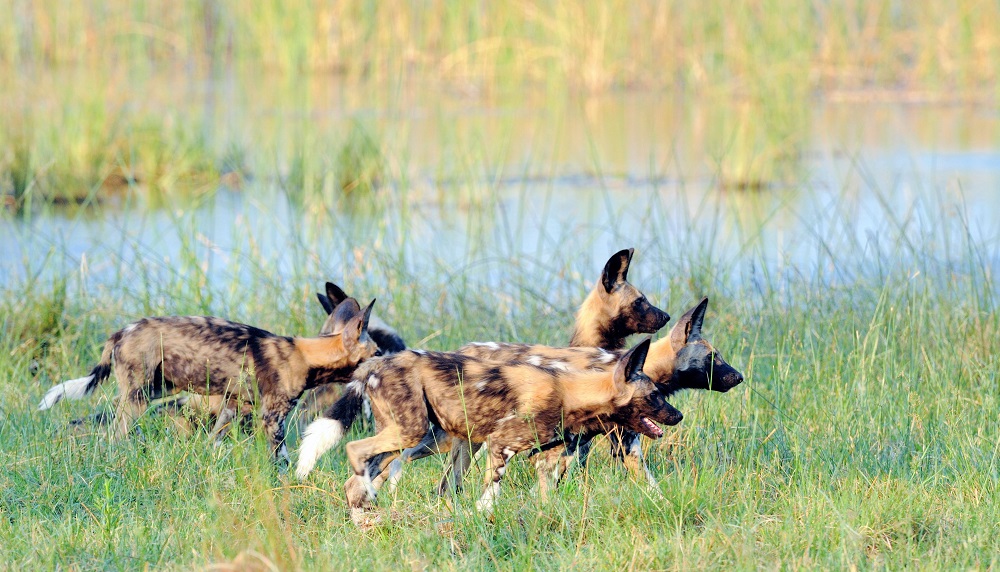
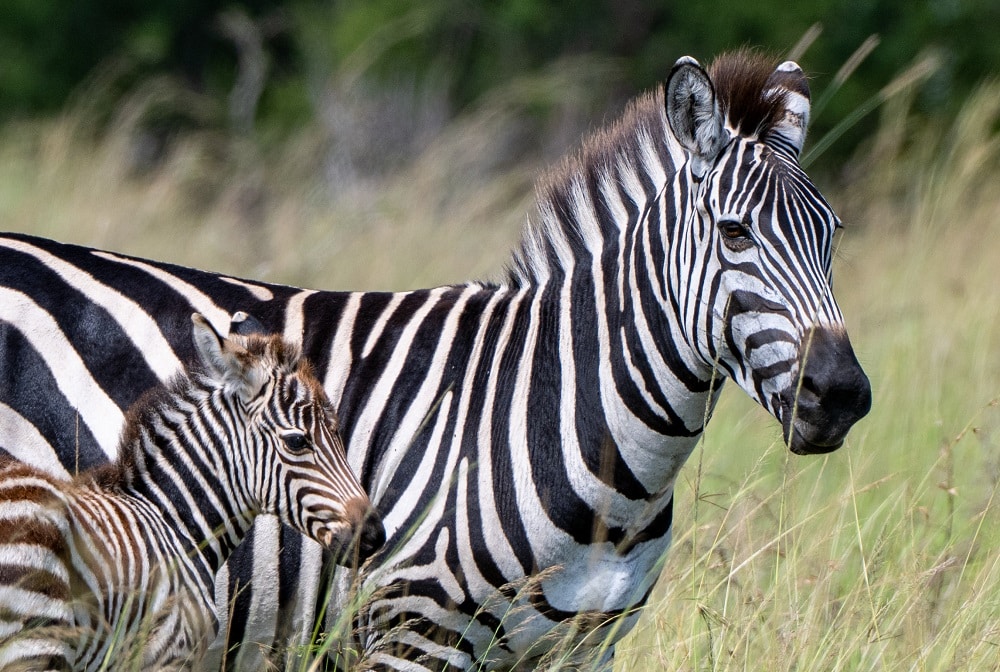
Game viewing in the Khwai community area is predictably good and the highlights were getting really close to many large bull elephants and several small breeding herds. There were pretty good numbers of zebras and wildebeest around and we were most fortunate to also see and photograph some African painted dog pups at their den. We also came upon the aftermath of a small group of the dogs taking down an impala. Some close up views of a young rock python in a tree livened up a quiet morning drive. 

Machaba Camp

Our first afternoon game drive from Machaba Camp into the Moremi Game Reserve was the stuff that safari dreams are made of. The experience that makes up for the slow days. That keeps you coming back for more. And makes you realize once again just how special northern Botswana is.   

The start of the drive was inauspicious at best, with the road passing right by the fairly busy Khwai village with pedestrians afoot and vehicles coming and going. We were not too concerned, knowing that the objective of the drive was to reach a large pride of lions; the ones we heard from camp the previous night. 

Once we had entered the Moremi Game Reserve, everything changed. For the next hour plus we drove through a simply stunningly beautiful area, a series of golden-hued grassy pans slowly filling up with water. Sticking close to the treeline,  one and then another and another huge expanse of untouched floodplain slid by. Each as beautiful as the one before. 

Quite remarkably, for just about the duration of the drive within the reserve, we were never beyond sight of wildlife. Most prominent were the elephants. Several large  herds of them, moving mostly out of the floodplain on our left and into the woodland on the right. At one point a recalcitrant matriarch blocked the path and we had to take five. Elephant delay.  

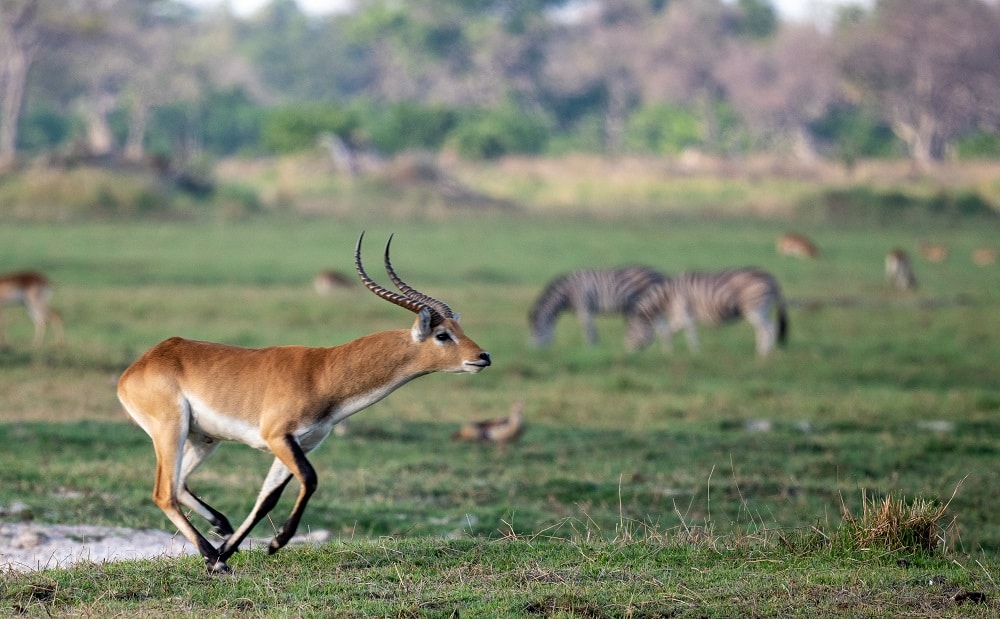
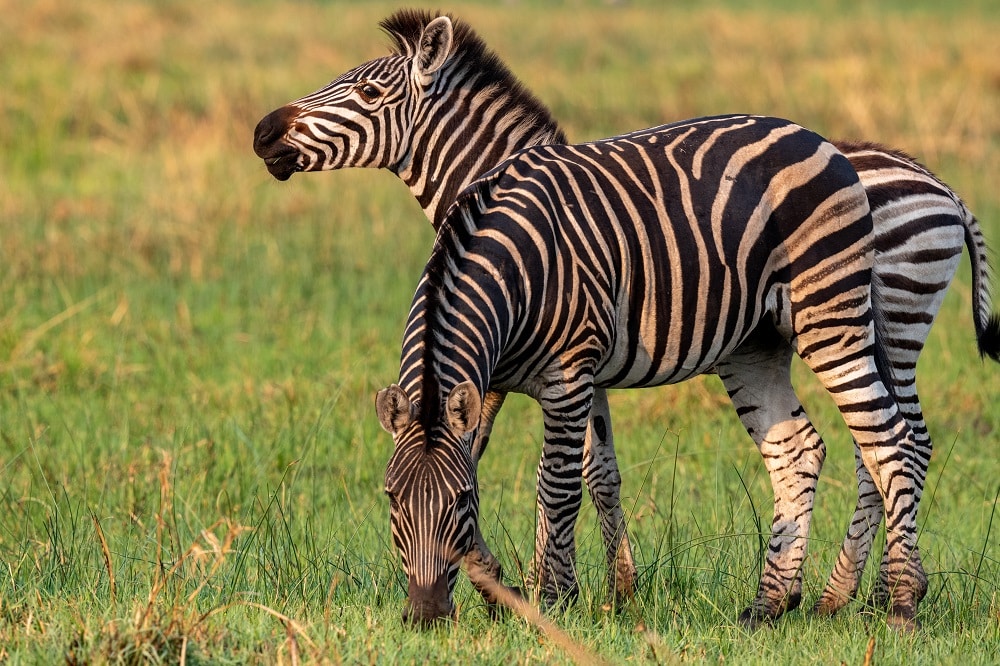
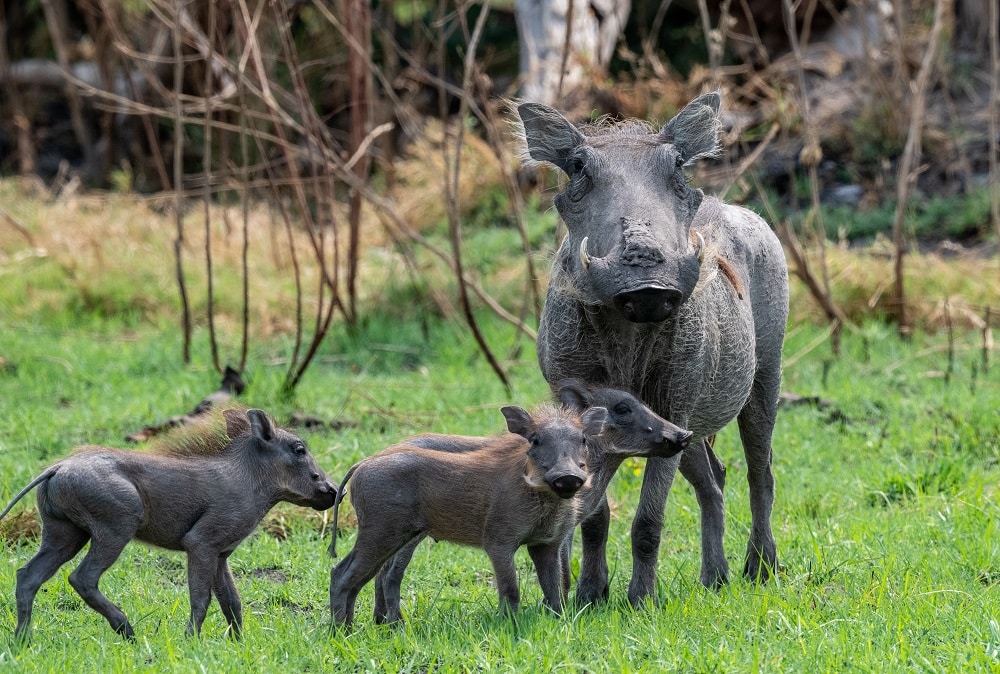
In addition to the elephants, an impressive array of plains game vied for our attention. Reedbuck. Lechwe. Zebra, wildebeest, warthogs, impala and waterbuck. Many of them perfectly lit in the soft afternoon light. Ground hornbills, hyenas and giraffes in the far background. We had a few Australian guests in the vehicle with us and they were as thrilled as we were. Not only with the abundance of animals and birds but even more so the grandeur of the Moremi landscape after a bumper rainy season. It was simply spectacular and reminded me a lot of driving through the Mara Triangle in Kenya a couple of years ago. 

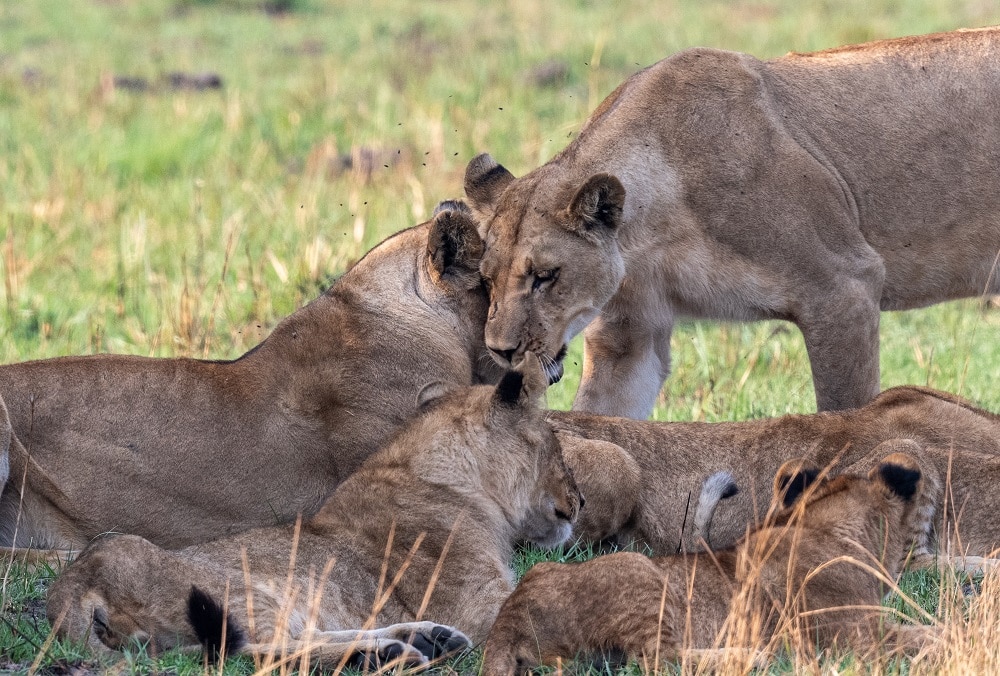
When we finally reached the pride of lions, the light was deteriorating rapidly but we managed some good exposures nonetheless, particularly of a young cub clambering on top of a termite mound. The adult lions were either obscured by bushes or facing the wrong way or just not in the right spot. Just as I was starting to think that a golden opportunity was slipping away, the truly unthinkable happened. 

As our guide was backing up the vehicle to turn around for the long drive back to camp, we saw a female lion biting down on what looked like a dark round object. “Stop!  Stop!,”we yelled. “It’s a pangolin!”!  Of all the clearings in all of Botswana, this hapless pangolin had emerged from a thicket and walked straight into a pride of 20-something lions. A female and then a male lion took turns,  giving it their best shot to pierce the pangolin’s hard scales. A pangolin rolled up in a tight defensive ball is all but impregnable, as we could clearly see. Despite one or two ominous cracking sounds, the pangolin withstood the onslaught. By the time we had to leave for camp it was still tightly rolled up and our guide predicted that it would survive the ordeal. The Australians had not only seen their first pangolin: they had seen it in the jaws of a lion. 

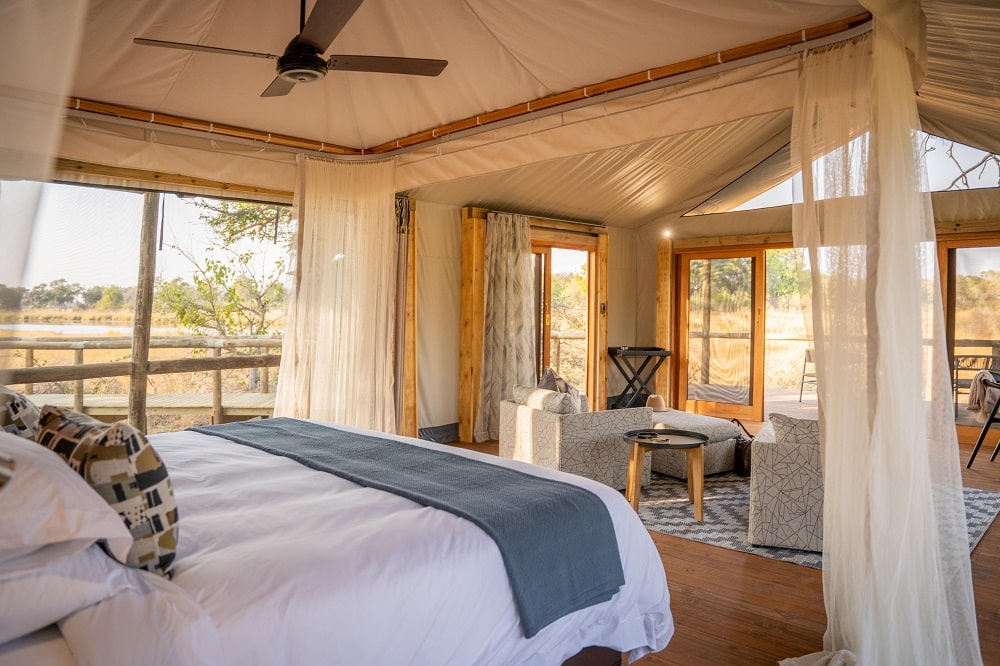
Machaba camp turned out to be right in our wheelhouse in terms of style and substance. It was a comfortable ‘classic plus’ category tented camp with a friendly, easy-going atmosphere and exceptionally helpful staff members. The food was excellent and varied for both lunch and dinner. The king size bed in the large tented room was super comfortable with soft pillows and the room had a separate shower and toilet. The water pressure was off the charts which scores any camp major bonus points in my book. There was a standing fan and a desk as well, and more than adequate lighting. 

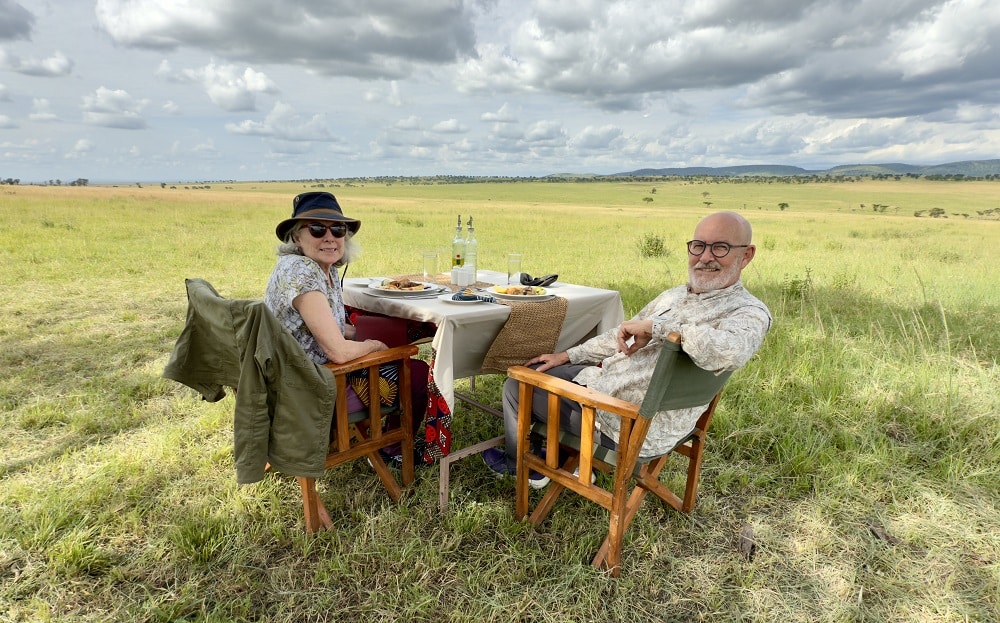
On our last morning Machaba surprised us with a delightful bush brunch complete with food laden tables and comfortable couches.  

Mokolwane camp

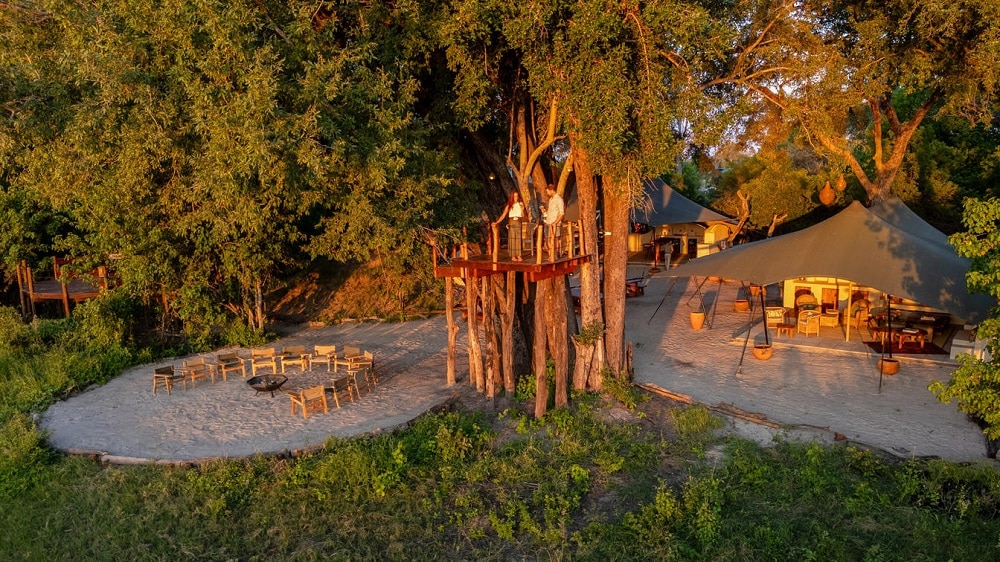
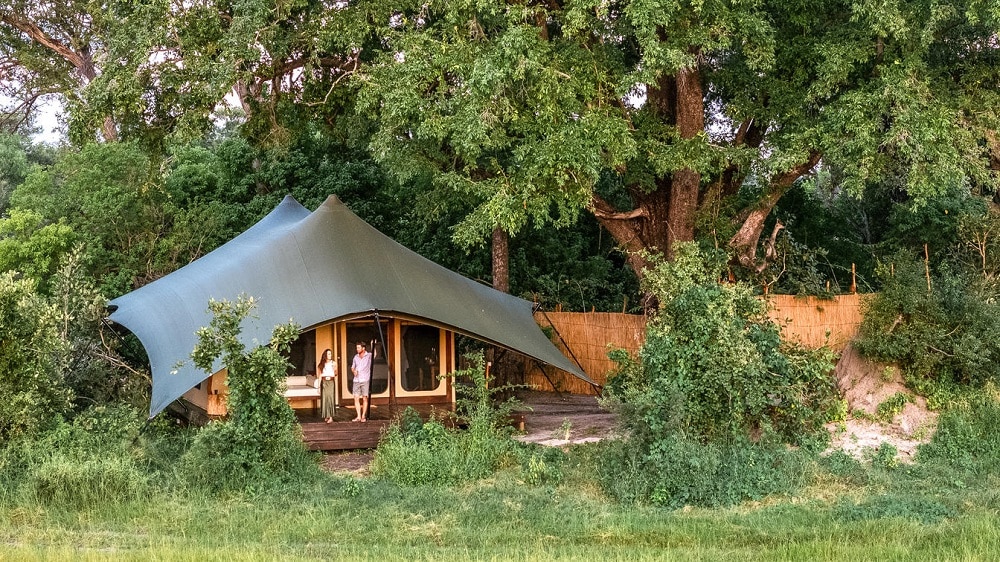
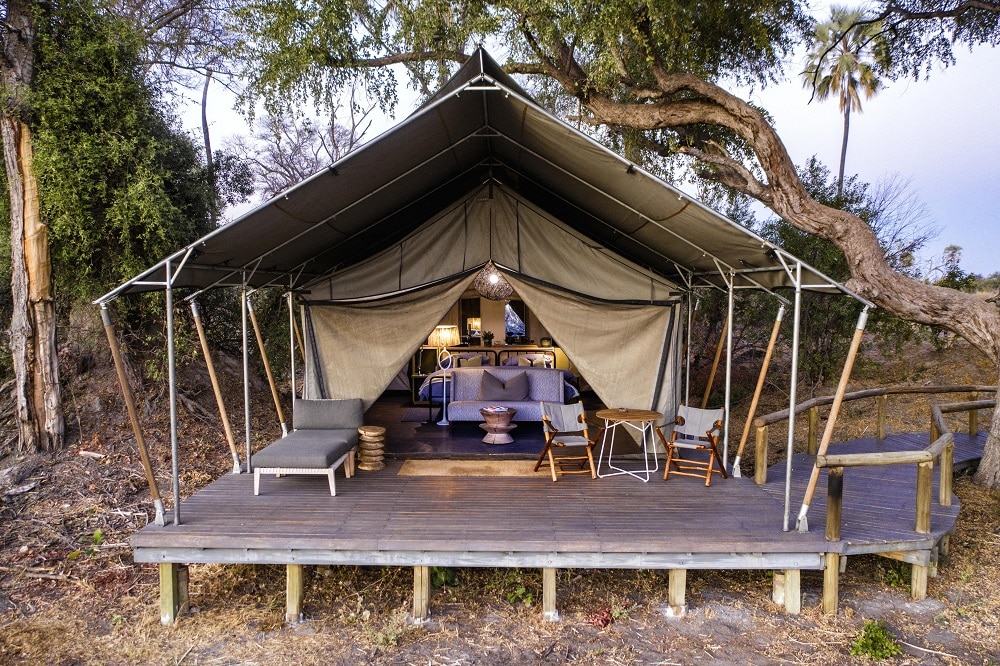
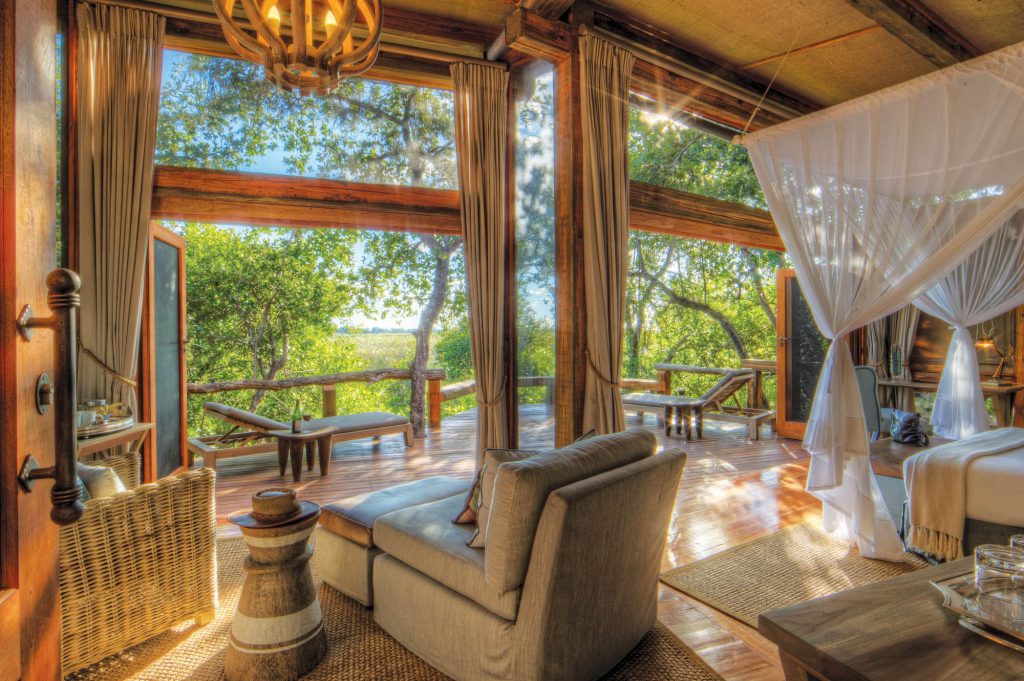
In search of a reasonably priced Botswana property with consistently good to excellent big cat viewing and a realistic chance to see African painted dogs? Look no further than Natural Selection’s Mokolwane Camp in the southwestern part of the Delta. Mokolwane is an adventure style, basic tented camp, essentially constructed of khaki-green canvas supported with sturdy round poles. In addition to a compact  main area split between a small lounge and dining room, there are 6 good sized rooms with en suite showers and separate toilets, as well as one family room. From our room (#7), which is the furthest one from the main area, we had a good view over the seasonally inundated floodplain in front of camp. A sturdy boardwalk connects the main area with the tents.

We thought the food at Mokolwane was excellent throughout, starting with some vegetarian quesadillas for afternoon tea on the day we arrived. 

Painted dogs on the hunt

On our first afternoon in camp, we set out for an African painted dog den after a short boat ride from the camp to where the game drive vehicles were parked. As always the painted dog experience did not disappoint. There were about 5 or 6 tiny two-and-a-half-month-old pups excitedly running around, trying to join the pack on a hunt. It wasn’t going to happen. Ever so gently but firmly they were herded back to the den to join their younger (one-and-a-half-month-old) siblings. 

A painted dog chase is the holy grail of wildlife viewing. Theater of nature. On this day the drama unfolded slowly at first. The pack of 17 dogs split up into groups, trotting and sometimes bounding through the floodplain, woodland and brush. Two of them pausing on a hillock, perfectly lit, looking left and right. Others circling back, employing every ounce of their instinct and razor sharp senses to locate their prey. We followed as best we could with our guide demonstrating remarkable skill as he somehow managed to stay within striking distance of the action. It was fast and furious with blurred blobs of black, white and gold often the only indication of the state of the hunt. The end came swiftly for one hapless impala. Fortunately we were just far enough away to be able to experience the thrill of the chase without having to be confronted with its harsh outcome.

The big cats of Mokolwane 

The big cats of the Mokolwane area of the southwestern Okavango Delta have been featured in a couple of highly acclaimed wildlife documentaries such as Big Cats 24/7 (BBC and PBS) and the Netflix documentary ‘Living with Leopards’ directed by Brad Bestelink. Bestelink and his team as well as a BBC wildlife documentary team are still filming in the area. 

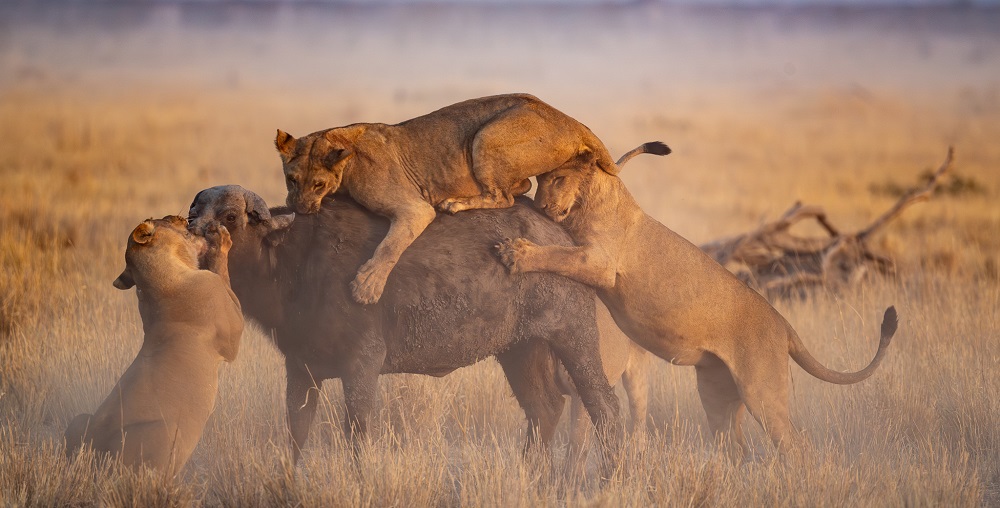
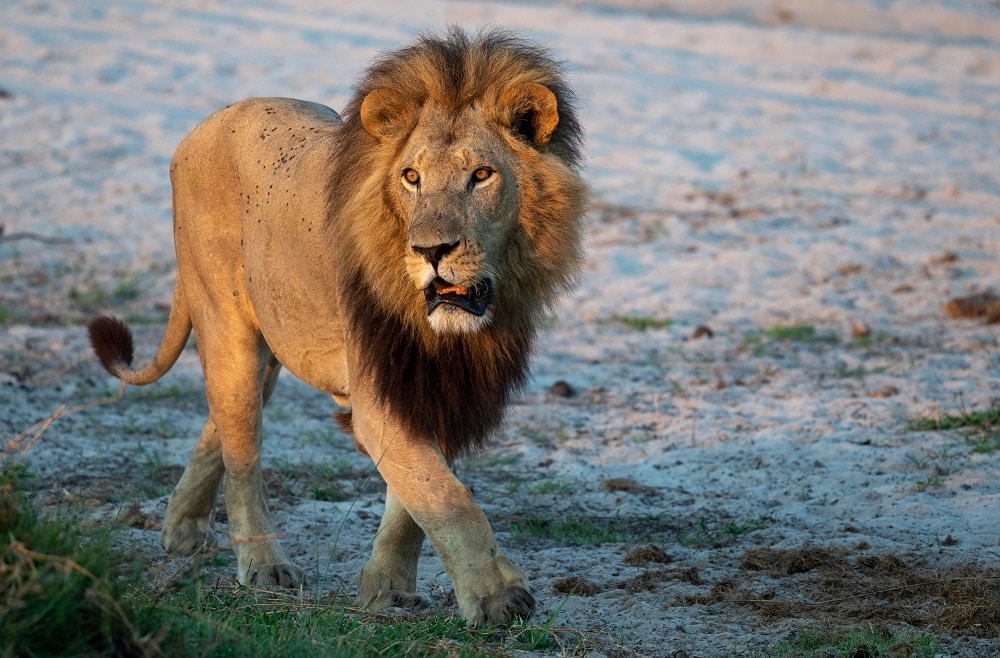
It took us a while to find them (the grass in the Mokolwane area being quite high after the bumper rainy season) but an hour or so into our first game drive I had the Z-9 pointed at two extraordinarily beautiful male lions in the prime of their lives. We ended up spending the better part of an hour with the two dominant males of the Xudum pride. Two of the adult females of the pride were not far away. In all that time, not another vehicle showed up for the sighting. This was very much representative of our experience at Mokolwane. Guests can look forward to having few other cars and people around in a vast and beautiful area of the Okavango Delta. 

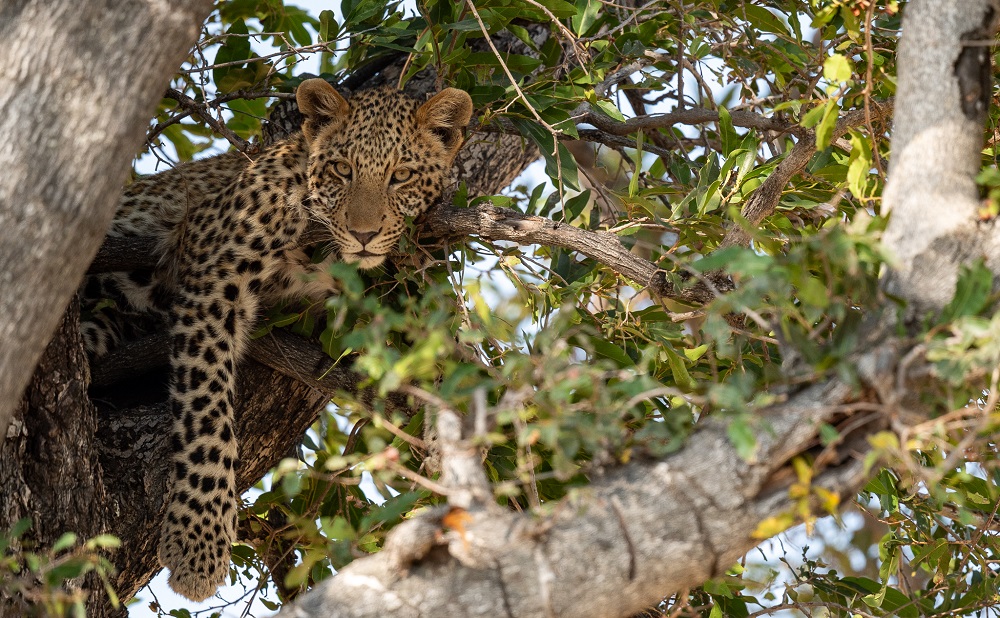
On our afternoon game drive we came across the slender Xudum female leopard emerging from a thicket where she had been concealing her 1.5 month old cub. The sleek leopard, clearly totally nonplussed by our presence (she’s a movie star after all),  calmly walked back to the tree where she had stashed an impala carcass the previous day. 

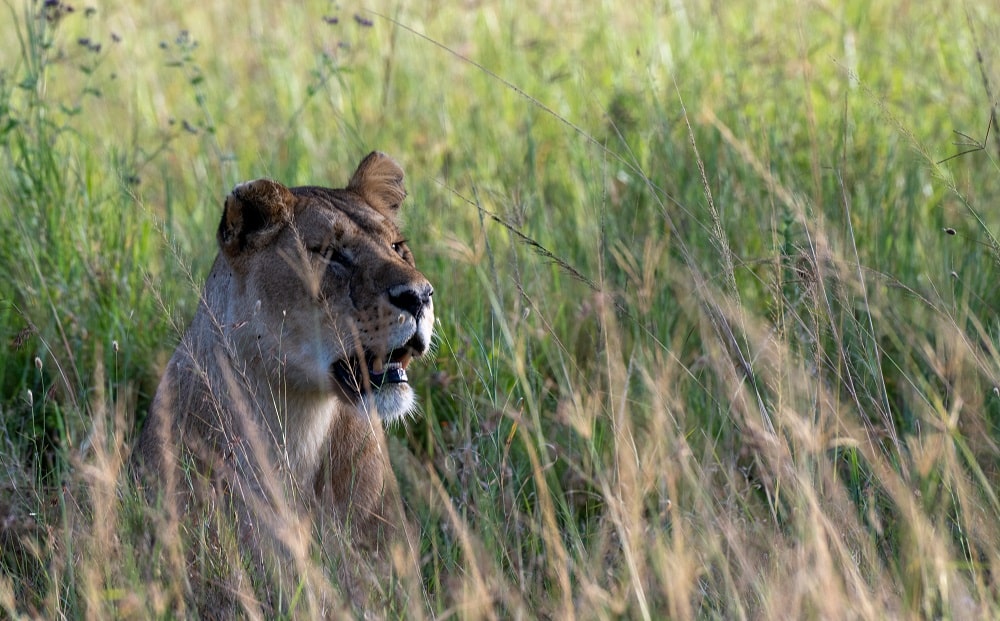
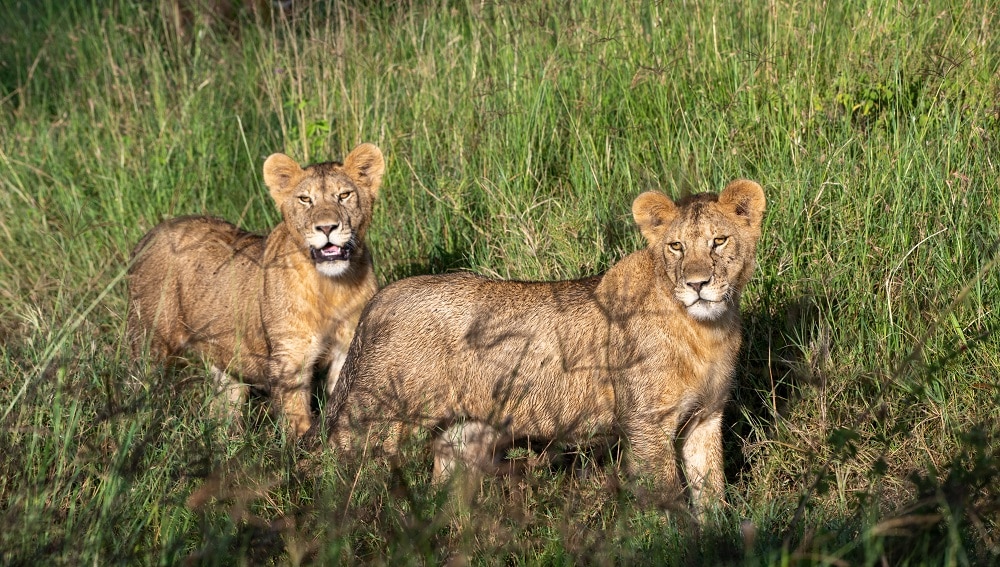
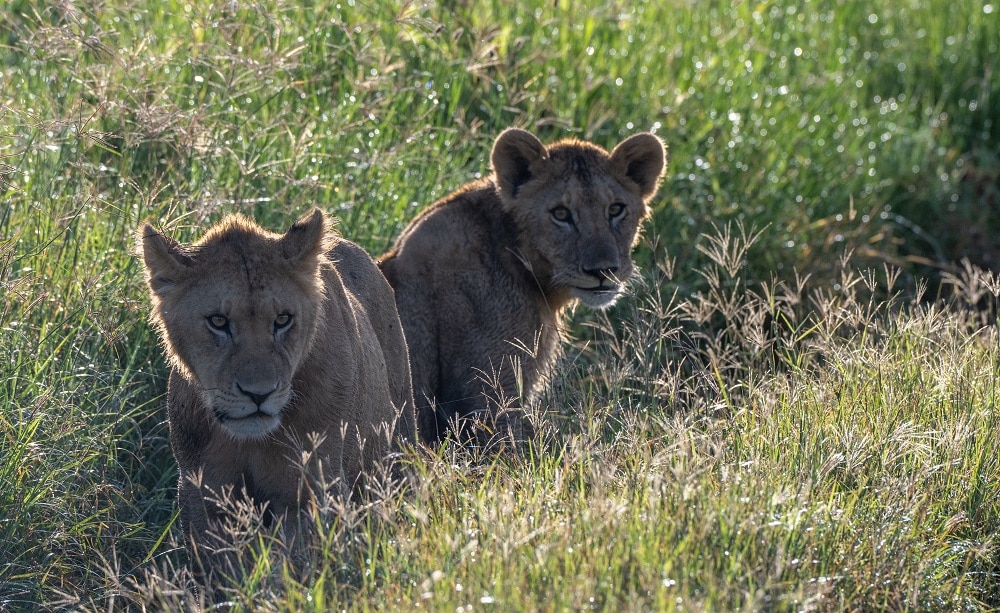
The following morning we went off in search of cheetahs but found the two dominant male lions again. Stealing the show, a powerful and very vocal female lion showed up, calling loudly several times while walking steadily through the bush, apparently on her way back to her cubs. We enjoyed yet another sighting of the famous female leopard on the way back to camp. 

Overall, and based only on our one brief 2-night early July stay, it seems that Mokolwane is a great choice for guests who want to maximize their chances of seeing lions, leopards and cheetahs. As well as painted dogs with at least one thriving pack of dogs being present in the area. 

We did see a fair number of elephants and general wildlife in the area but we think that the best reason to include Mokolwane on any itinerary is definitely its abundance of predator species. 

Monachira Camp

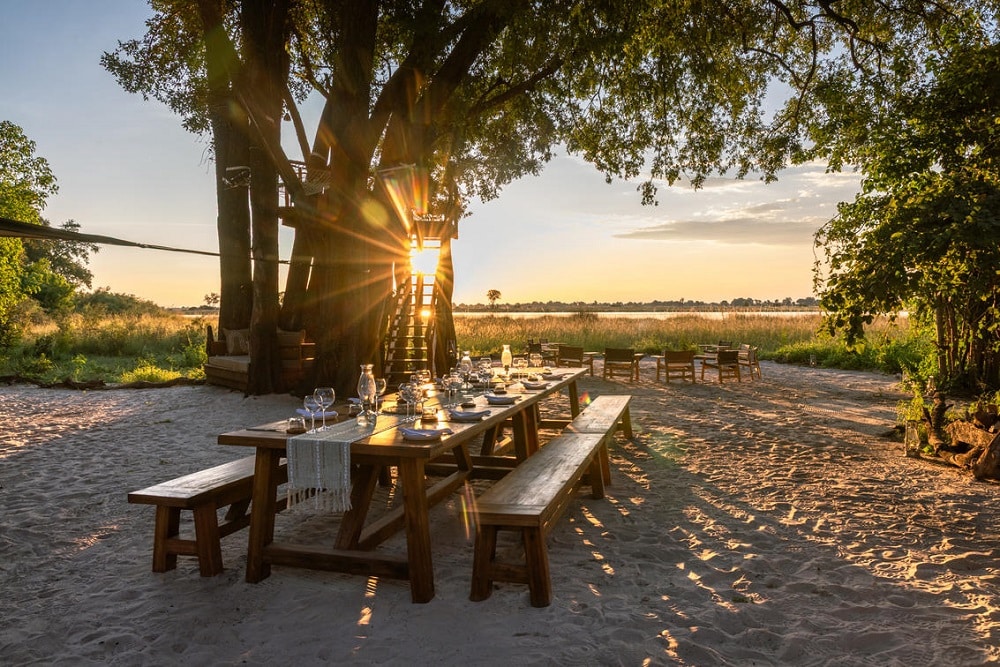
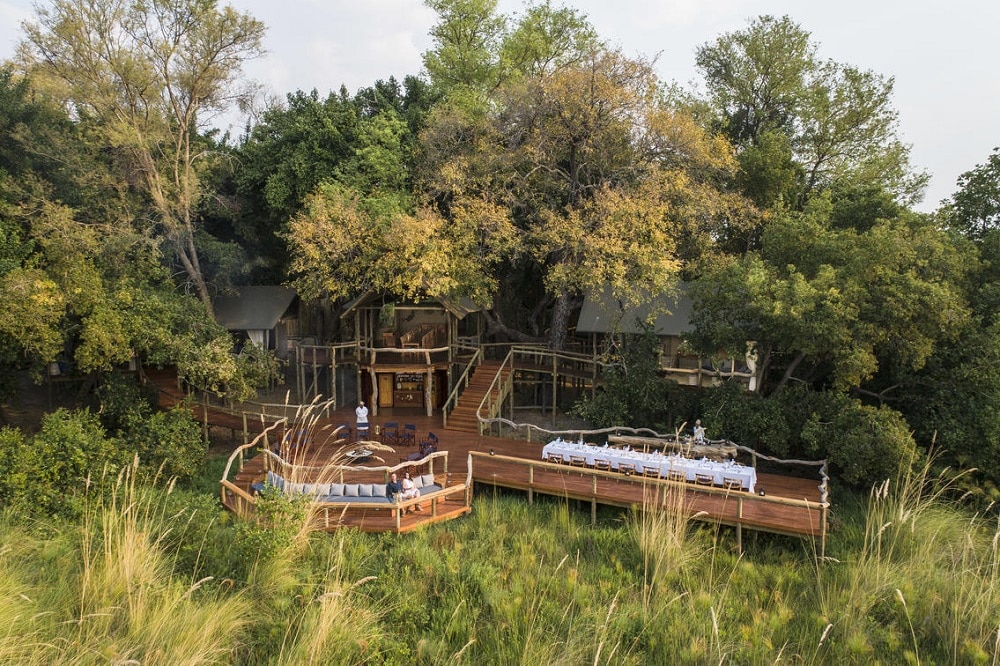
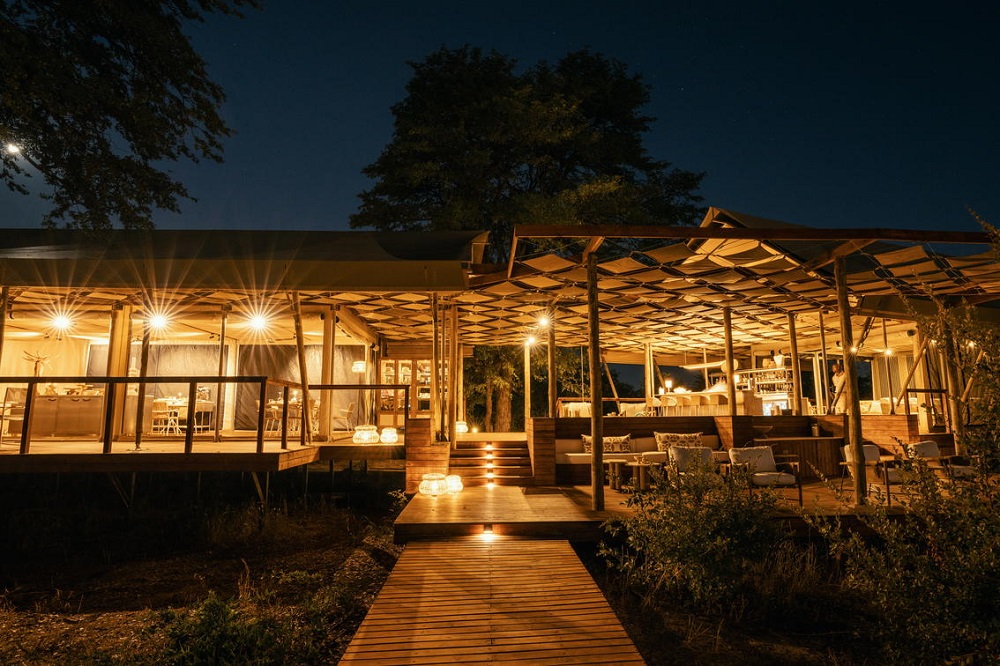
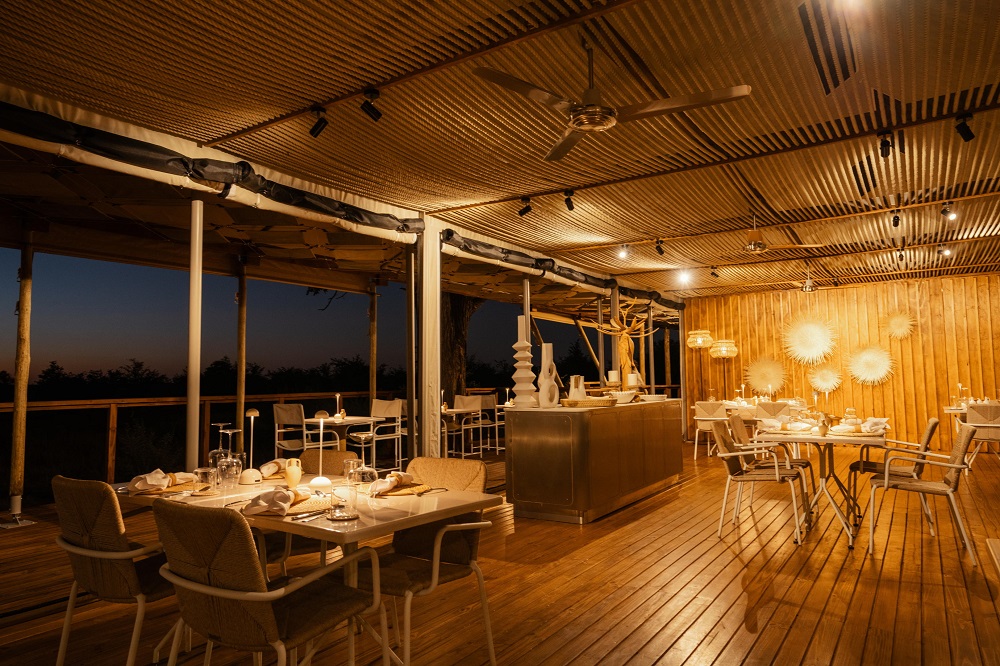
Say ‘Botswana safari’ and almost invariably ‘Okavango Delta’ comes to mind. Understably and predictably so as the Okavango Delta is the crown jewel of northern Botswana tourism. As it turned out our last stop on the July familiarization trip was Monachira, Machaba’s newest camp. Monachira is named after the Monachira channel which flows right by the camp, year round. Which makes Monachira a good choice if you want to experience typical water activities such as mokoro outings and boating, any time of the year. 

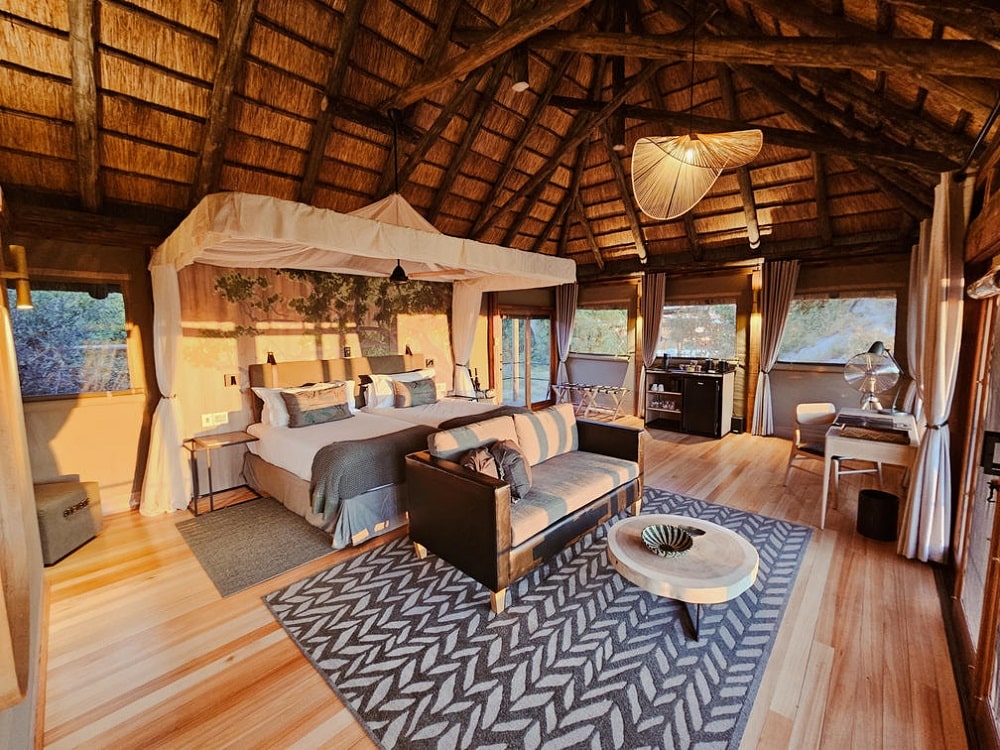
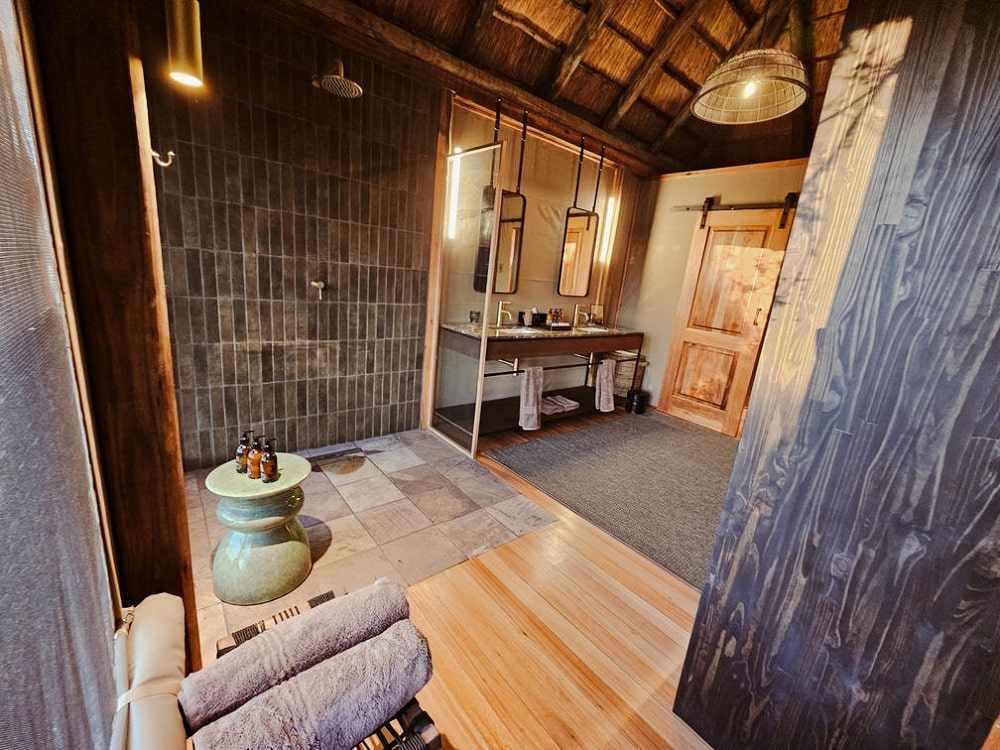
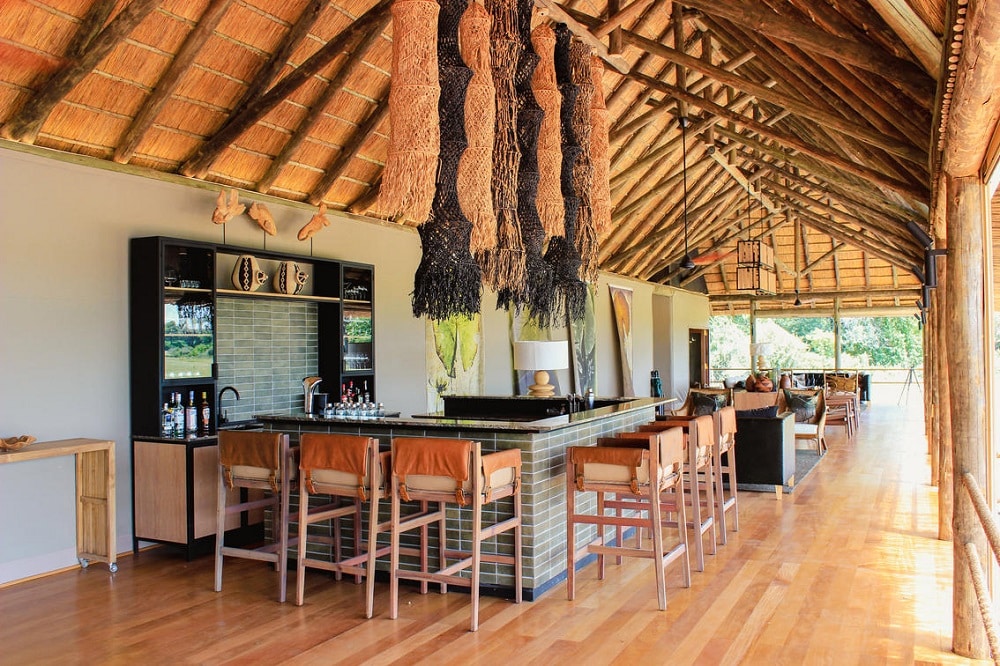
The rooms and common areas at Monachira were excellent and the staff were super friendly and accommodating. There’s a pool and camp guests can make use of the services of a massage therapist. While they don’t have air conditioning, the rooms are well ventilated with a large fan right over the bed.

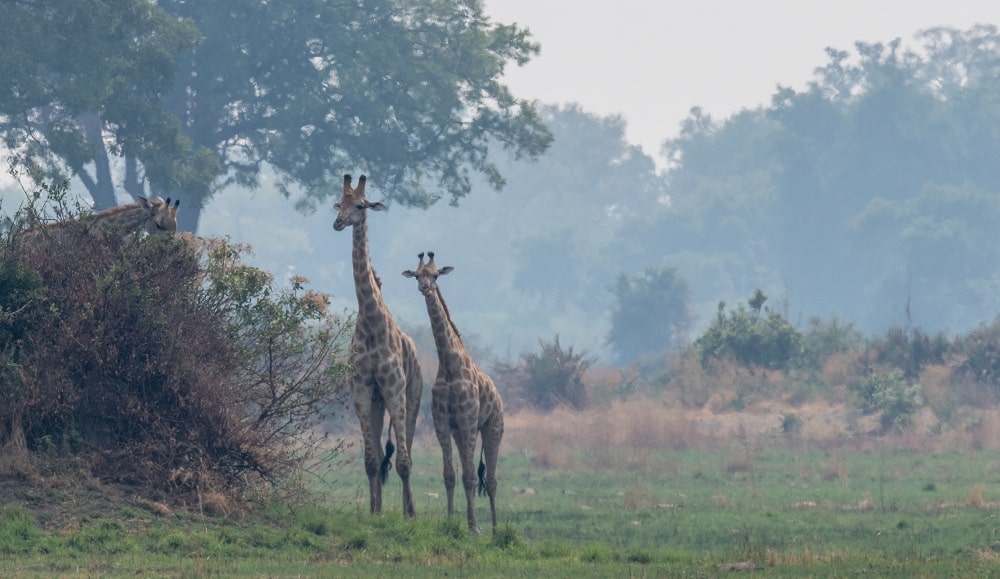
On our first afternoon, we enjoyed a quiet scenic boat ride along the strong flowing Monachira River. It was a quiet outing, with impressive stands of papyrus, reeds and pampas grass lining the edges of the channel. While we only saw some giraffes and red lechwe from the boat, other guests – who had spent several days at Monachira – were thrilled with the quality of the game viewing. The upper deck of the boat provides a good vantage point for bird photography, notably at a nearby heronry where we had some good views of marabou storks. The heronry is at its most active later in the dry season. Notably, there was only one other boat in the channel (also from Monachira) and there was no sign of human habitation or presence. With Monachira camp being inside the Moremi Game Reserve, fishing is not allowed. 

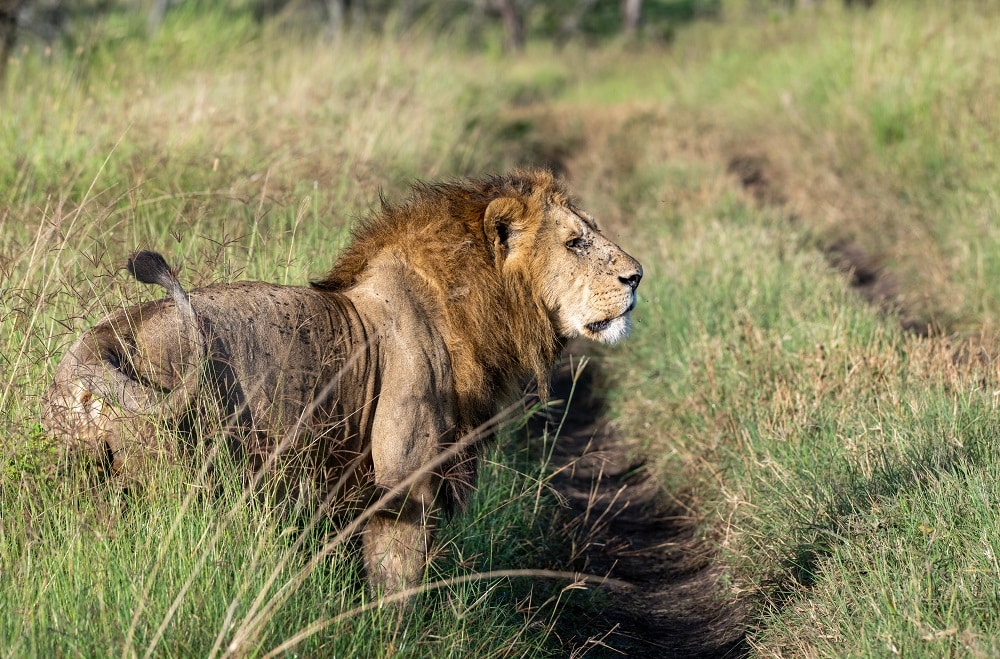
The following morning we came across a coalition of two male lions around 7 years old. The two handsome, black maned cats – the dominant lions in the area – were not in an ideal spot for photography, but I captured a couple of profile pics nonetheless. The area right around Monachira camp was quite productive that morning, with several giraffes, herds of wildebeest and tsessebe and small groups of zebras. We were happy to see a pair of side-striped jackals, not as commonly seen as the blackbacked jackals. While we missed them on our short stay, leopards are being seen in the Monachira area as well. So all in all Monachira is a good bet for a mixed activity experience in an area of the Okavango Delta where boating and canoeing are not affected by seasonal fluctuations in water levels.

For more information about traveling to Botswana, email Bert at bert@fisheaglesafaris.com or call and leave a message with our answering service at 1-800-513-5222 or 713-467-5222.

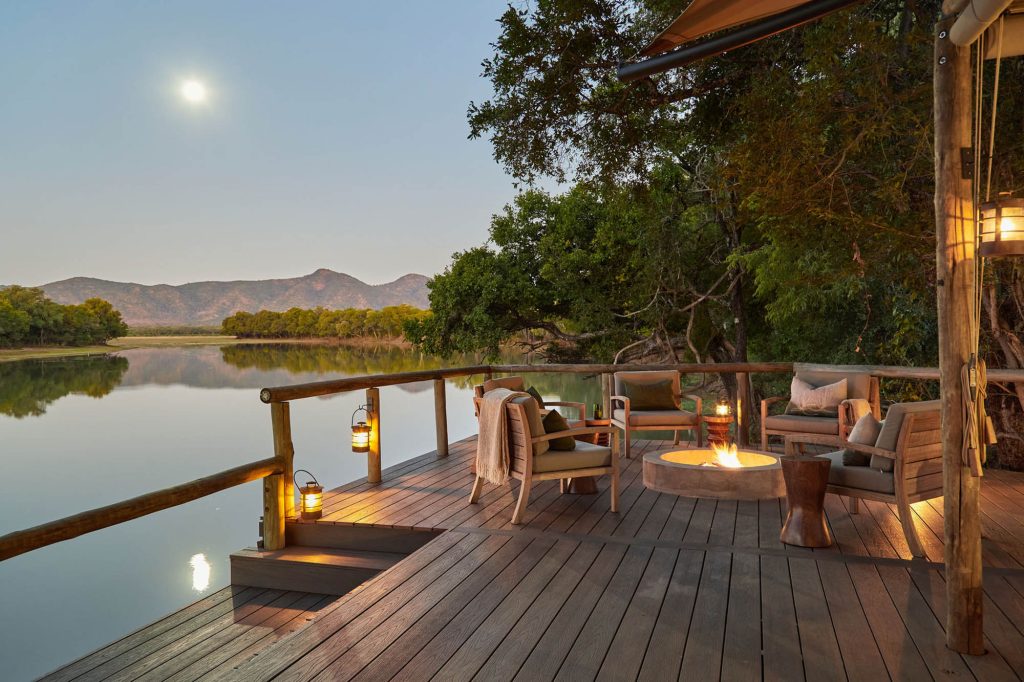
Molokwane camp photo courtesy Natural Selection, Machaba Camp photo courtesy Machaba

YOU MIGHT ALSO BE INTERESTED IN
Destinations
Zambia

10th September 2021

Chindeni and the Bushcamp Company, Zambia

By late July we found ourselves at Chindeni, a small Bushcamp Company property
Read more
Botswana
Destinations
Okavango Delta

3rd October 2022

Camp Okavango, Botswana

Camp Okavango is in the heart of the permanent part of the Delta. In this idyllic setting there are no vehicles, and it is just a short walk
Read more
Area
Destinations
Nyerere National Park
Ruaha
Tanzania

14th October 2023

From My Safari Notebook: Wildlife Photography

Birds in flight and wildlife photographers have an uneasy relationship. Things go wrong as often as they go right. Getting focus-lock on a moving subject

Read more

SUBSCRIBE TO OUR NEWSLETTER

READERS FAVOURITES
Destinations
India

27th May 2023

India

India’s tiger, mammals and birds.

Read more
Botswana
Destinations

4th August 2022

On Safari At Belmond Eagle Island Lodge, Okavango Delta

What is the ‘secret sauce’ for an unforgettable few days on safari in Botswana? It starts with the animals, of course. The elephants, lions, giraffes, hippos

Read more
Destinations
Zambia

10th September 2021

Chindeni and the Bushcamp Company, Zambia

By late July we found ourselves at Chindeni, a small Bushcamp Company property

Read more

A Safari Trifecta at Laba Laba Camp, Western Seronera

5th July 2025

A Safari Trifecta at Laba Laba Camp, Western Seronera

What is a safari trifecta, you might ask? Three desirable things, like any trifecta of course: an excellent guide, a great location off the beaten path and (cue the cymbals) lots of animals. Which is exactly what we found at the superb Laba Laba Migration camp, located in a quiet spot to the west of Seronera. Drivable distance to the Grumeti area, usually a wildlife hotspot.

What was it like driving from the southern part of Seronera to Laba Laba? Simply amazing. In this order we experienced several memorable sightings:

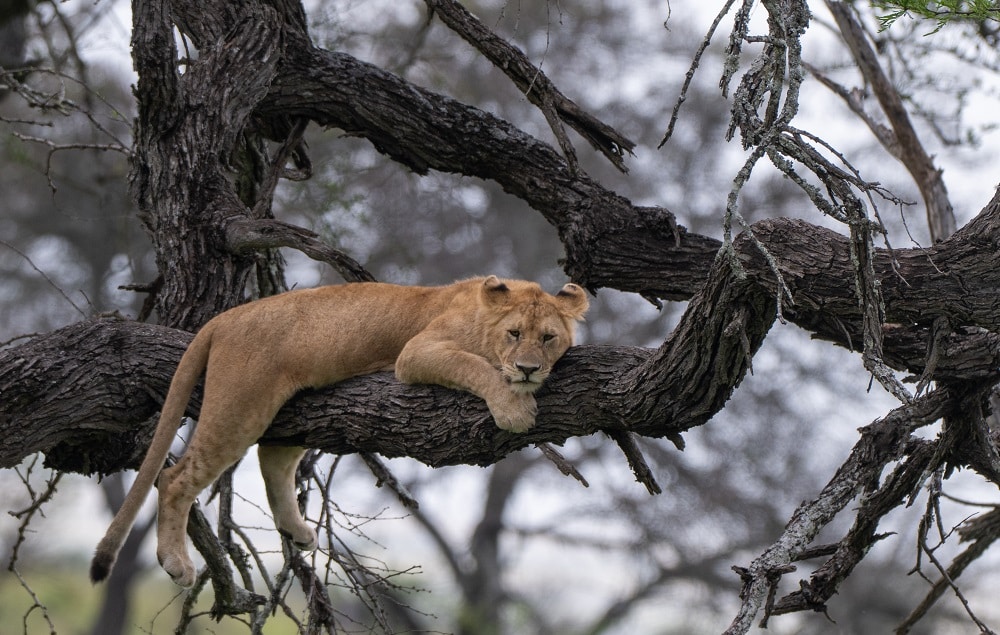
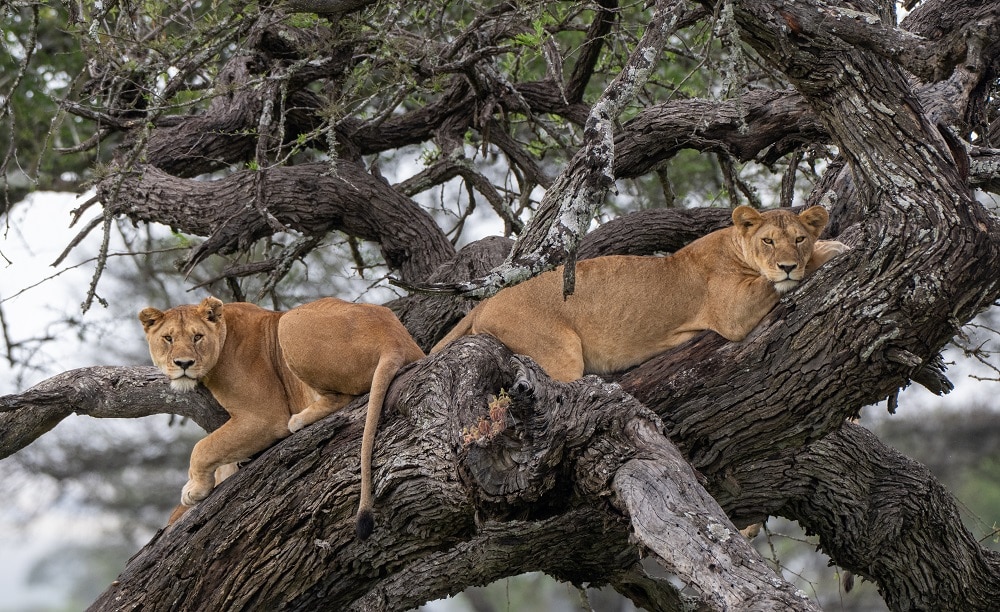
  • Five big cats in three trees close to the road, one with two leopards, two with lions. 
  • Two young male lions seen from a bridge. 
  • The wildebeest and zebra migration in full force, filling the plains below Laba Laba camp.
  • More lions on an afternoon drive: three young females and several cubs in the company of two older females. 

A lion – and cheetah – day

On our first full day at Laba Laba we experienced a simply phenomenal wildlife viewing day with one awesome sighting after another:

First up – 17 hyenas including several youngsters at their den. And then, right on each other’s heels, seven bat-eared foxes and three female lions with several cubs of different ages. As if we hadn’t had our quota of lions, walking by slowly came three different males, one moving right past us with hundreds of wildebeest staring him down. Not to be forgotten: two male cheetahs resting up in a shady spot. 

The afternoon game drive continued in the same vein with more bat-eared foxes, four more lions, three of them in their favorite tree and more great views of the migration.

Trouble in lion paradise

It is a known fact that in the world of lions, cubs lead a tenuous existence at best. If the pride – and particularly their mother- is thriving, so are they. If not, the cubs are usually the first ones to suffer from deprivation. Lion cubs face an uphill battle for survival, with a mortality rate of up to 80% before reaching the age of two. A devastating occurrence for young lion cubs is the death or displacement of the dominant male lion in a pride. When this happens, the cubs are often summarily killed by the new dominant male.

It’s not as if male lions are trying out for the role of Scarpia, the villainous police chief lusting after Tosca, in Verdi’s famous opera. While their behavior definitely reaches operatic intensity, there is no real malice intended. It’s simply instinctive behavior. When a lactating female lion loses her litter, she quickly goes back into oestrus, providing the new male with an opportunity to spread his genes. 

While this sounds pretty grim in theory, few of us ever witness something like it. Even after decades of going on safari all over Africa the phenomenon of infanticide among lions has hitherto remained a purely abstract construct in my and Kathy’s minds. Until this day. 

Rest assured, dear reader, that this is not going to end with dead baby lions. In which case – to be sure – this article would not have been written. So spoiler alert: the cubs got away. But not before the three of us (Kathy and myself and our fantastic guide Moses) had spent about an hour or so witnessing the most amazing scenes of conflict and aggression. A veritable window into the dark side of big cat behavior. 

We were rather blindsided about what was to follow, as the setting and the lion pride’s prospects painted an idyllic picture. The pride pretty much had the world – or at least this corner of the Serengeti – at their feet. An abundance of prey in the form of hundreds – even thousands – of migrating wildebeest and zebras. Plenty of water, trees to climb into to get away from the pesky insects and seemingly little in the way of imminent threats.  

Initially – once we had gotten into position alongside a tree-lined creek – everything was indeed lighthearted – all fun and games – and we spent a good 30 minutes watching the five young lion cubs playing. Mostly with each other and also with their mother. Running, jumping, biting, mock fighting and just generally having a whale of a time. If one can say that about lions.  

One enterprising young male cub kept trying to climb up a thick tree trunk. Digging his claws into the bark, he stood on his hind legs, pulled himself up, up and came tumbling down. More than once. This future leader had what it takes though, including persistence. After three failed attempts he tried again and voila  – success! Just like any young male of almost any species, he then proceeded to show off to all the other cubs and to whomever else was watching. Walking casually along several branches, imitating an adult male lording over the area, and clambering back down and up the tree more than once. In at least one of the photos I took while this was going on, a youngish adult male lion could be seen in the background. Unbeknownst to us – and the baby lions – this young male lion was going to end up being the villain of the piece. 

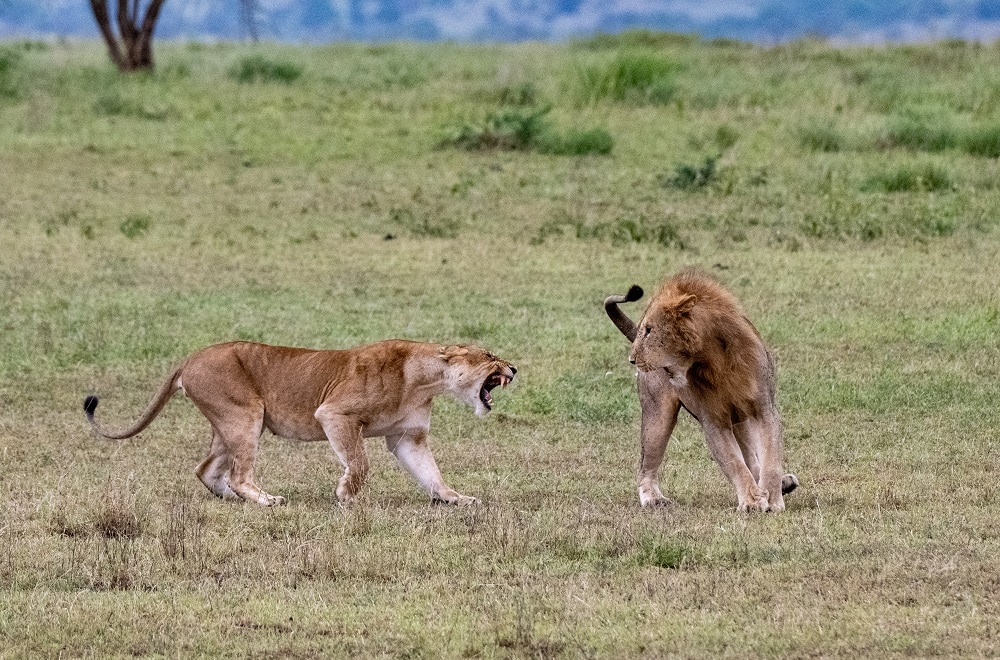
At first imperceptibly and then quite noticeably, the young male walked right up to the cubs. This precipitated instant conflict as the female lion rushed up to the scene, clearly anticipating an undesired outcome. She aggressively and repeatedly tried to drive him off. He would have none of it and stood his ground. Several times the enraged female snarled at the male, baring her fangs and clearly risking serious injury by trying to get him to leave.  

It was a chilling display of a mother trying to protect her offspring at almost any cost. Accompanied by much snarling and vocalizing. Momentarily one of the cubs ran right up to the male and we feared for the worst. Just about then the lioness must have somehow transmitted a warning sound to the cubs as initially four of them and then the last one darted off to our left, pausing a safe distance away. For now at least the cubs were safe. By this stage the other two lionesses had joined the fracas and were assisting the mother, having inserted themselves between the intruder and the cubs.

That is pretty much how we left it. It may be that the crisis was later averted, with the young male interloper being successfully driven off or at least realizing that his presence was not welcome. It may very well be that he did not have murderous intent and that he simply wanted to be accepted into the pride. Which is a possibility as he was apparently related in some way to the three dominant males. The rest of the story will play itself out without us being present or even knowing the end. Hopefully the final denouement was less tragic than the ending of Tosca where in true operatic tradition, of course, everybody dies.  

About the camp and our guide 

We knew right away that we were going to get along just fine with Moses, our Laba Laba guide with whom we’d be sharing a private vehicle for the next three days. For one thing, he listened to us, on the fly adjusting what had been planned as a full day outing to a considerably less ambitious activity. Also – he was enthusiastic, knowledgeable and struck just the right balance between being informative and entertaining. We know that requesting Moses as the guide for our guests yet to spend time at Laba Laba will be a good decision. 

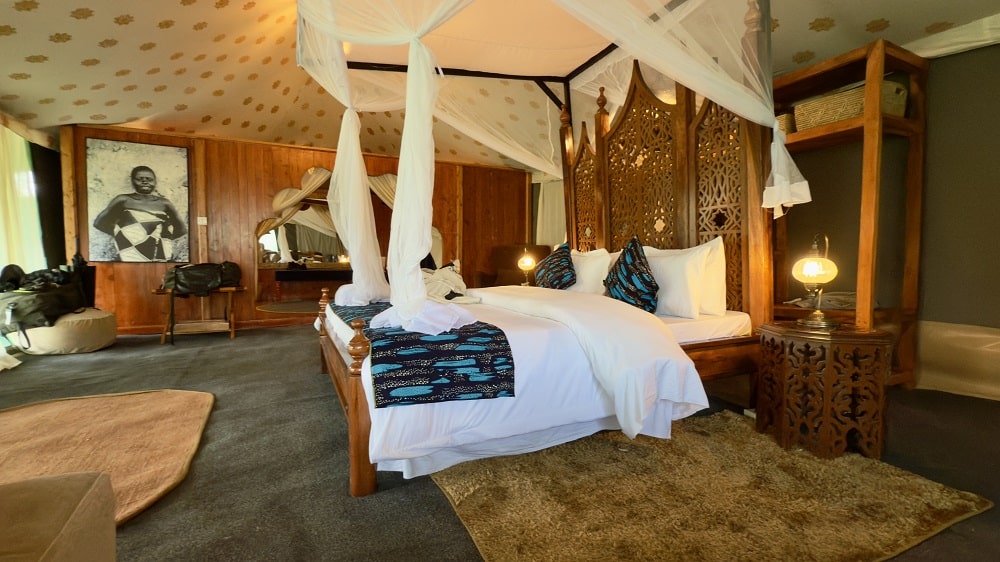
As for Laba Laba camp itself, we looked hard and couldn’t find anything lacking. Superbly designed and equipped rooms with ample lighting, enough power points, lots of space to unpack your stuff, an effective low pressure shower and an outdoor (enclosed) tub which we put to good use. The large king size bed was about as comfortable as they come and at night the outside tent flaps could remain up – or down. Dial in your own level of adventure. 

Even though Laba Laba is a migration camp which moves three times per year to stay within striking distance of the herds, it puts many a permanent camp to shame in terms of its common areas, facilities, and food and beverage offerings. The French-inspired cooking was delightful and the head chef talked to us before every meal. Vegan or plant-based and other dietary requirements are handled with aplomb. The quality and care extended into the wine list as well, with a fine selection of South African and French wines on offer. 

The lack of exercise facilities at the vast majority of safari camps anywhere is an issue to many visitors. Not so at Laba Laba where you’ll find a decently equipped gym tent with a rowing machine, a step master, some barbells, a Swiss ball and proper exercise mats. They may want to add a skipping rope or two. 

The camp’s lounge area and bar has a museum-quality collection of artifacts, fossils and semi-precious stones, complete with a reference guide.  

Finally, and likely as important as anything, the location of the camp was ideal. Not super far as the crow flies from the heart of Seronera, but likely three times the distance by road. This discourages casual day trippers from making the plains below the camp their picnic lunch destination, resulting in far fewer vehicles being around than what one may expect the case to be. 

Call us at 713-467-5222 any time and leave a message with our answering service, or email Bert at bert@fisheaglesafaris.com, for suggestions as to how and when one of the Laba Laba properties can be included with a Tanzania trip.  

Camp images courtesy Laba Migration Camp

YOU MIGHT ALSO BE INTERESTED IN

Destinations
Zambia

10th September 2021

Chindeni and the Bushcamp Company, Zambia

By late July we found ourselves at Chindeni, a small Bushcamp Company property

Read more
Botswana
Destinations
Okavango Delta

3rd October 2022

Camp Okavango, Botswana

Camp Okavango is in the heart of the permanent part of the Delta. In this idyllic setting there are no vehicles, and it is just a short walk

Read more
Area
Destinations
Nyerere National Park
Ruaha
Tanzania

14th October 2023

From My Safari Notebook: Wildlife Photography

Birds in flight and wildlife photographers have an uneasy relationship. Things go wrong as often as they go right. Getting focus-lock on a moving subject

Read more

SUBSCRIBE TO OUR NEWSLETTER

READERS FAVOURITES
Destinations
India

27th May 2023

India

India’s tiger, mammals and birds.

Read more
Botswana
Destinations

4th August 2022

On Safari At Belmond Eagle Island Lodge, Okavango Delta

What is the ‘secret sauce’ for an unforgettable few days on safari in Botswana? It starts with the animals, of course. The elephants, lions, giraffes, hippos

Read more
Destinations
Zambia

10th September 2021

Chindeni and the Bushcamp Company, Zambia

By late July we found ourselves at Chindeni, a small Bushcamp Company property

Read more

Botswana’s Okavango Delta & Central Kalahari – Part 2

13th June 2025

Botswana’s Okavango Delta & Central Kalahari – Part 2

Fish Eagle Safaris’ Lyndon Duplessis recently visited several Botswana properties on an educational trip; here is the second part of his report. Part one (reporting on Gomoti Plains, Kwando 4 Rivers and Dinaka), can be found HERE).

Maxa

We were the first group to visit the newly opened Maxa Camp located in the northeastern Okavango Delta. It has a brilliant location right next to the eponymous Maxa Lagoon. I was immediately struck by the simple beauty of the camp. There is almost a beach vibe being on the lagoon with sand pathways to get to all the rooms. In fact I was barefoot for quite a few portions of my stay.

This camp is the brainchild of three friends and business partners that have taken a very active hand in both the construction and the day-to-day operations of the camp. Our group was fortunate to meet two of the three at the camp, Michael and Danny, and the third, Shane, while we were in Maun. You can bet one or likely two of them will be there when you visit and it is a good thing because you can feel the enthusiasm for this camp whenever you speak with them. All three are also accomplished guides and are trying to run the camp slightly differently than the traditional ‘two-activity per day’ model. Such as by embarking on a long adventure that takes up the morning and goes into the afternoon and then maybe relax and enjoy the camp location and take in a sunset. We experienced this ourselves when we got to take an afternoon and sunset swim in the Okavango Delta which was truly a one-of-a-kind experience.

The wildlife was not as prevalent as some of the earlier or later camps but it is likely to improve over time as the animals become more accustomed to seeing vehicles and canoes/mokoros. This camp is more of an adventure camp right now so I would recommend taking that canoe trip, making a day of it, and then coming back to camp to enjoy some of the finest food I had while on safari.

Shinde

The first thing that popped out to me about Shinde was the location. The camp has been around for years so the trees in the immediate vicinity of the camp are all huge and create a great shady atmosphere. The camp sits right at the edge of a flowing portion of the Delta, making it really quite picturesque. The animals are some of the most calm you will ever see having grown accustomed to vehicles long, long ago. And there is plenty of wildlife. Here you have many of the various antelope species such as lechwe and impala, as well as zebras and all manner of plains game. With this come the predators that follow them. In particular, the area by the nearby airstrip was really good to us. We spotted the resident leopard and her cub on the first night and later on when we returned to head to Shinde Footsteps (more on that later), we witnessed the same leopard drag a recently killed lechwe quite some distance. Suffice it to say the game viewing was excellent.

Water activities are available here although since our time was somewhat limited we stuck to game drives. Again the Ker and Downey staff went above and beyond including a sunrise breakfast by 4 Pans, one of the very productive game areas near camp.

Kanana

This camp was originally in the itinerary for our trip but due to some unforeseen flooding in Maun earlier in the year, delays caused the reopening to be pushed back just beyond our scheduled arrival. Which is a real pity because this camp looks like it will soon become the crown jewel for Ker and Downey Botswana. The area is gorgeous, dotted with islands and floodplains as far as the eye can see. Even though the camp was not yet ready for guests we got to see a lot of the main area which had been completed, as well as a finished room. We even got to assist very slightly with some tiling on the bar in the main area. What an undertaking to get everything ready in time for the first guests to arrive! All in all it looks like it is going to be a fantastic combination of spacious and luxurious tents along with a beautiful main area all in a very game-rich and diverse location.

Shinde Footsteps

We returned to Shinde Airstrip to then make the drive (probably at least an hour) to Footsteps. Initially it was nice to see some of the wildlife areas we got to spend more time at when we stayed at Shinde but after a while it was very much a transfer. The rains have been strong this year so there were some areas where we needed to cross high water. It made the drive interesting but also a bit longer than you might think. Eventually helicopter transfers from Shinde airstrip might become preferable. Shinde Footsteps is very remote and very exclusive with only four tents in total. It is ideal for small groups of 6 to 8 who want exclusive use of a property. The amount of giraffes in the area was really stunning and the general wildlife viewing was quite good even though we only had a few game drives. The camp is right next to a body of water and it makes for an iconic Delta setting. If you are there early in the season do beware of the bugs and don’t forget to put on some repellent.

If you are up for a last-minute trip to Botswana or thinking ahead for 2026 or even 2027, by all means reach out to Lyndon at lyndon@fisheaglesafaris.com. He’d be happy to respond by email or arrange a Zoom meeting for you to be introduced to a couple of the members of our team. There’s nothing we like more than talking about Africa and finding out more about exactly what kind of a trip you might have in mind. We can also be reached by phone at 713-467-5222 or 1-800-513-5222 any time of the day and weekends. Please leave a message with the answering service and one of us will get back to you promptly. 

Ultimate big game safari: Mokete and Chitabe

For the ultimate big game safari in Botswana the combination of Mokete and Chitabe is unbeatable. The sheer volume of lion and buffalo at Mokete and the diversity of predators and general game at Chitabe make it the obvious choice for a six to eight night wildlife viewing safari that will exceed just about anybody’s expectations, particularly late in the dry season.  

We all know the wildlife in the late dry season is exceptional in Botswana, but we also know what the heat can be like in late September through October, and into early November. It can make things decidedly uncomfortable inside the tents in the afternoons and evenings. Which have led operators like ourselves to take much of northern Botswana completely out of consideration for trips from about mid-September onwards. At least until now.  

With the addition of an advanced evaporative cooler system at Chitabe and Chitabe Lediba, Wilderness now has a beautiful camp to match the extraordinary out of camp experience. Chitabe has the most advanced evap-cooler system in Botswana – even better than traditional basic airconditioning. The evap-cooler is much better than aircon for “tent” type structures. The cold air which the evap-cooler generates pushes the warm out, keeping it at the desired temp all day/night. Also there are vents everywhere – bedroom, lounge and bathroom, not just one vent, so this makes a massive difference to keeping the whole room cool. 

With effective in-room cooling systems now in place at Chitabe and at Mokete, guests can experience one of the best wildlife and camp experiences in Botswana, regardless of the heat at the end of the dry season. We have an attractive offer in place for an 8-night/9 day safari incorporating the two properties. The wildlife viewing and photography opportunities at the two camps are about as good as it gets:

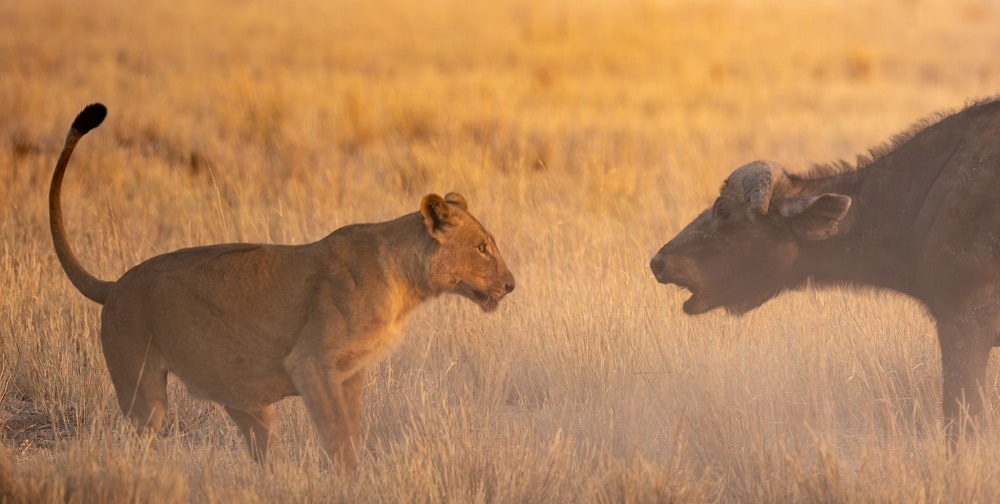
  • Mega herds of buffalo being constantly harassed by lions at Mokete. This is one of the few places in Africa where you stand a realistic chance of observing lion-buffalo interaction, rather than it being a completely ‘chance’ occurrence.
  • Observing large herds of elephants emerge from a mopane forest to slake their thirst at water holes on the edge of the Mababe depression from the comfort of a sunken hide which was built at the perfect spot for afternoon photography.  
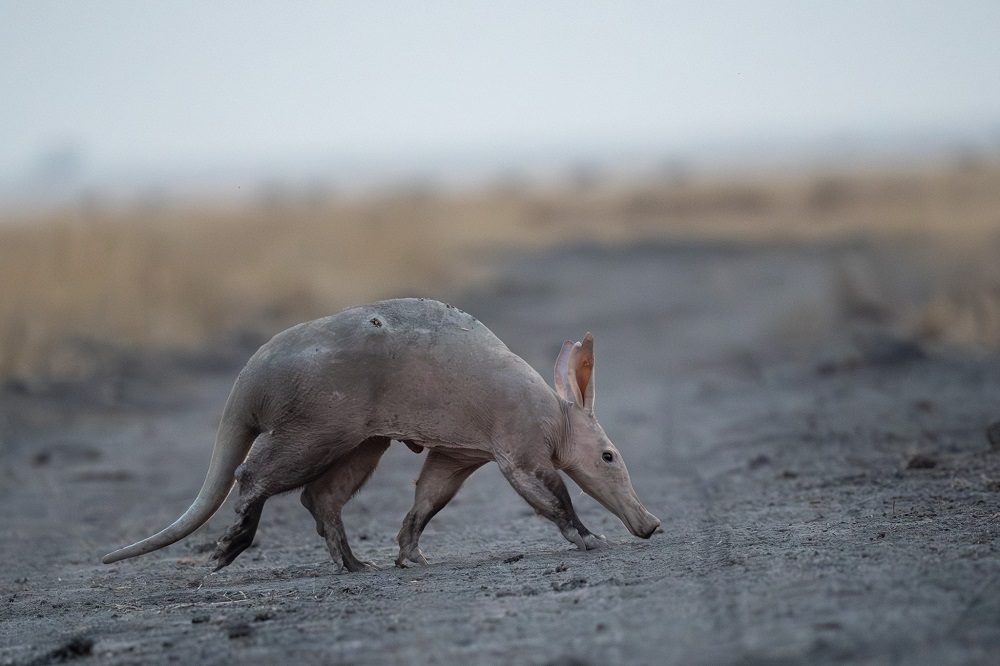
  • Walking with an aardvark in an open plain not far from Mokete Camp in the late afternoon, just before sunset. A unique opportunity to observe and photograph this rarely seen and altogether peculiar animal in decent light. 
  • Observe and photograph lions, cheetahs, leopards, African painted dogs and more at Chitabe, sometimes just minutes away from camp. No need for long, bumpy drives – the camp is in the epicenter of the best wildlife area. Chitabe is renowned for interaction between predator species – and no better time to see it than late in the dry season. 

For more information about traveling to Botswana from mid-September through mid-November, email Lyndon at lyndon@fisheaglesafaris.com or call and leave a message with our answering service at 1-800-513-5222 or 713-467-5222.

Camp photos courtesy Maxa, Shinde, Kanana, Shinde Footsteps and Wilderness Destinations

YOU MIGHT ALSO BE INTERESTED IN

Destinations
Zambia

10th September 2021

Chindeni and the Bushcamp Company, Zambia

By late July we found ourselves at Chindeni, a small Bushcamp Company property

Read more
Botswana
Destinations
Okavango Delta

3rd October 2022

Camp Okavango, Botswana

Camp Okavango is in the heart of the permanent part of the Delta. In this idyllic setting there are no vehicles, and it is just a short walk

Read more
Area
Destinations
Nyerere National Park
Ruaha
Tanzania

14th October 2023

From My Safari Notebook: Wildlife Photography

Birds in flight and wildlife photographers have an uneasy relationship. Things go wrong as often as they go right. Getting focus-lock on a moving subject

Read more

SUBSCRIBE TO OUR NEWSLETTER

READERS FAVOURITES

Destinations
India

27th May 2023

India

India’s tiger, mammals and birds.

Read more
Botswana
Destinations

4th August 2022

On Safari At Belmond Eagle Island Lodge, Okavango Delta

What is the ‘secret sauce’ for an unforgettable few days on safari in Botswana? It starts with the animals, of course. The elephants, lions, giraffes, hippos

Read more
Destinations
Zambia

10th September 2021

Chindeni and the Bushcamp Company, Zambia

By late July we found ourselves at Chindeni, a small Bushcamp Company property

Read more

In the Steps of Our Hominid Ancestors: A Guided Day Tour in the Cradle of Humankind

12th June 2025

In the Steps of Our Hominid Ancestors: A Guided Day Tour in the Cradle of Humankind

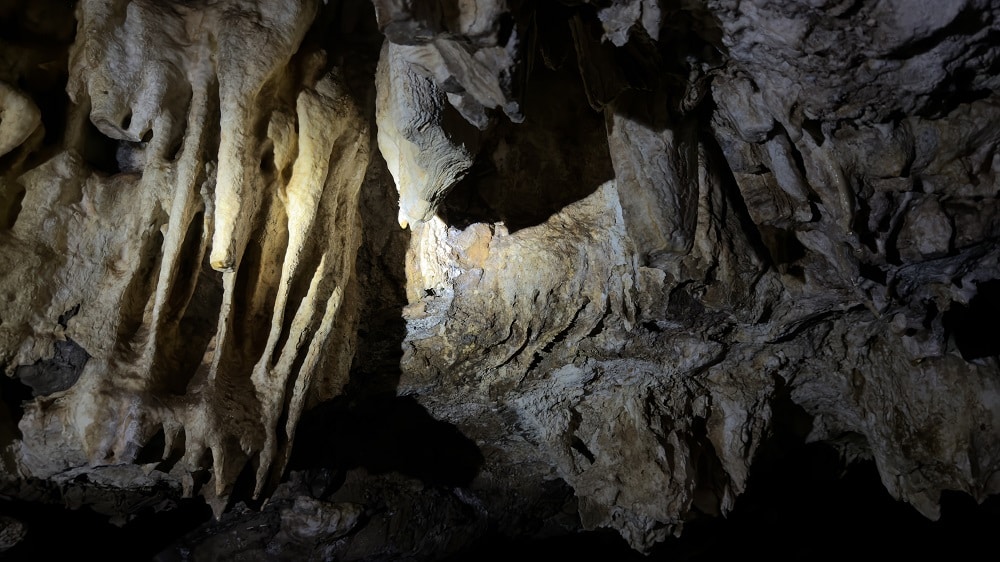
Less than 90 minutes northwest of the modern metropolis of Johannesburg in South Africa’s highveld region, hidden among some beautiful rolling hills lies a largely undiscovered treasure trove of paleontology. A vast area dotted with giant dolomitic  caverns, caves and natural sinkholes brought about by an event stretching back two billion years ago, when a giant meteorite hit earth at Vredefort, about 100 miles distant.  

The resulting upheaval and subsequent geological events led to a remarkable number of fossils being left behind in the mixture of limestone and other sediments (known as breccia) which characterize the area. 

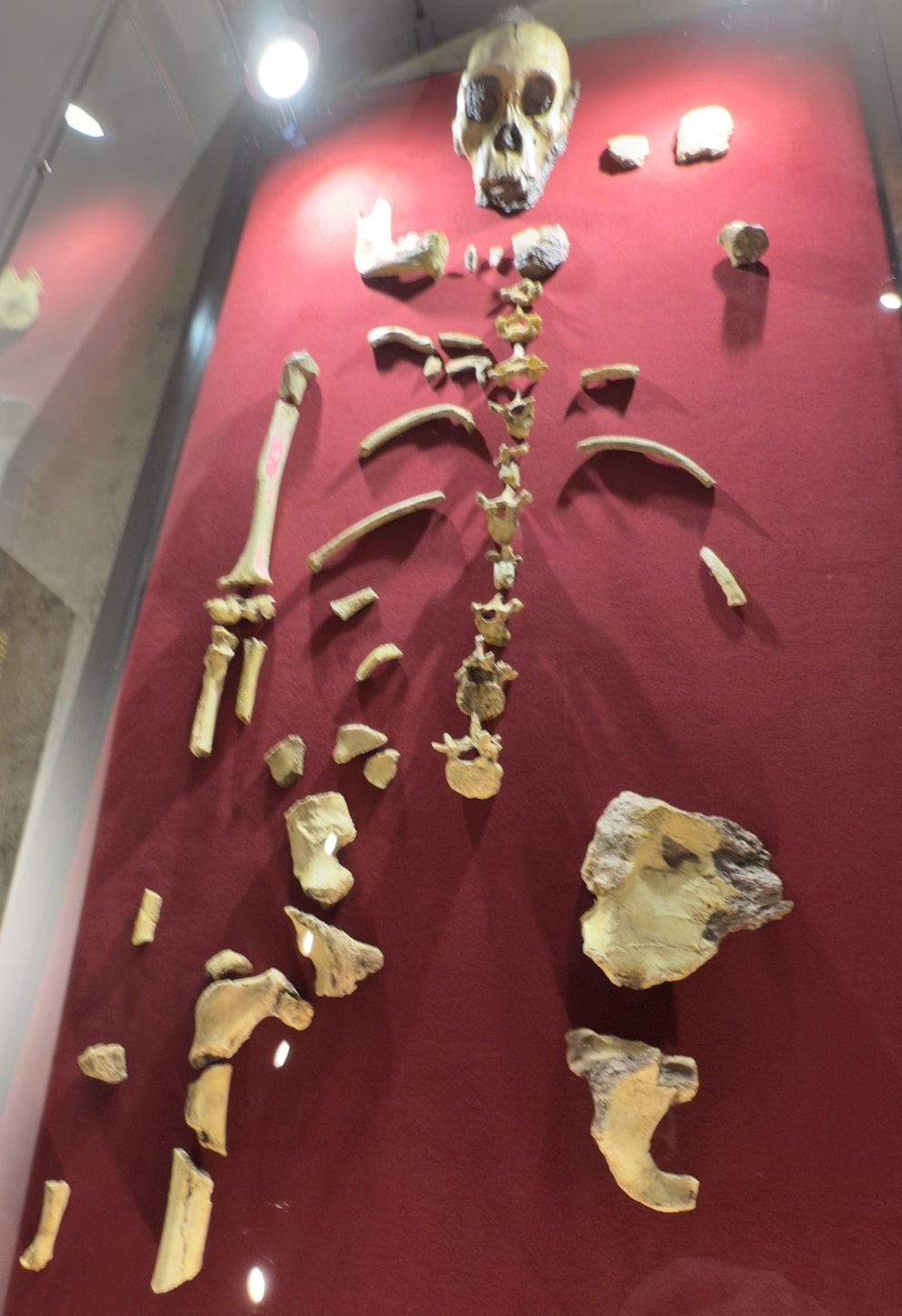
Were it not for some enterprising miners in search of limestone – a mineral much in demand in the gold rush which engulfed the city of Johannesburg in the 1880’s – all of this may have escaped notice altogether. But it was not to be. Blasting operations by limestone seekers exposed a wealth of animal and humanoid bones to curious eyes. Predictably this attracted attention from (now famed) scientists like Raymond Dart and Robert Broom. Prof Broom’s 1946 discovery of ‘Mrs Ples’ – the well preserved skull of a Australopithecus afarensis – caused a minor sensation and added the Sterkfontein caves to the pantheon of African paleontology, together with Taung, Olduvai and others. 

The hominin remains that fossilized over time at the Cradle of Humankind are found in dolomitic caves, and are often encased in breccia. Early hominids may have lived throughout Africa, but their remains are found only at sites where conditions allowed for the formation and preservation of fossils, as was the case here. 

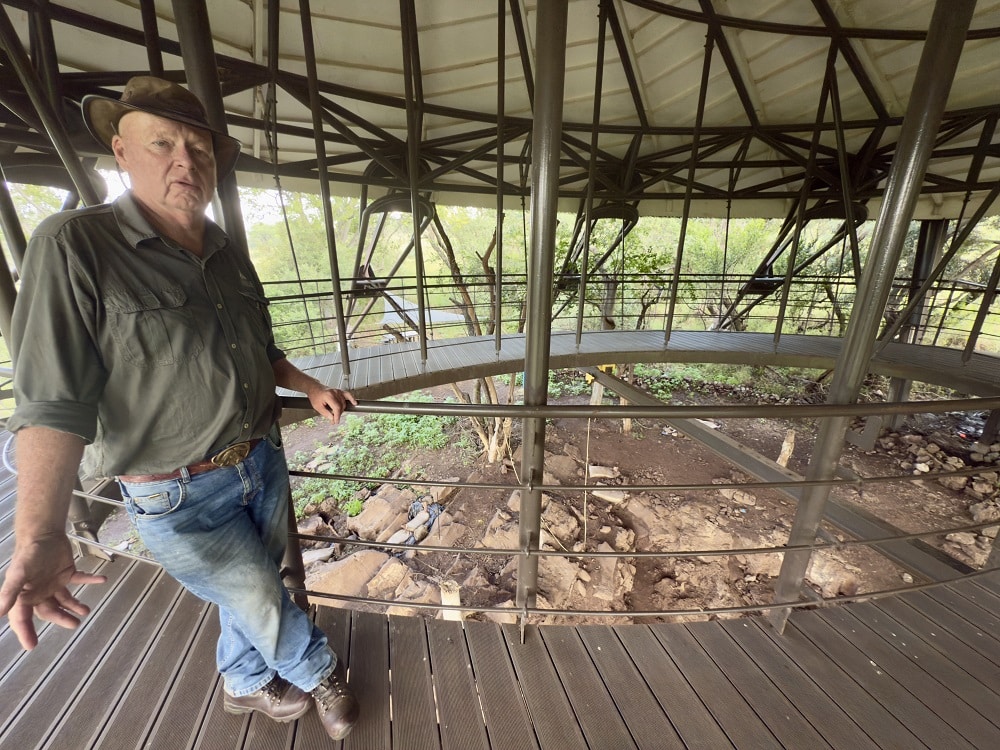
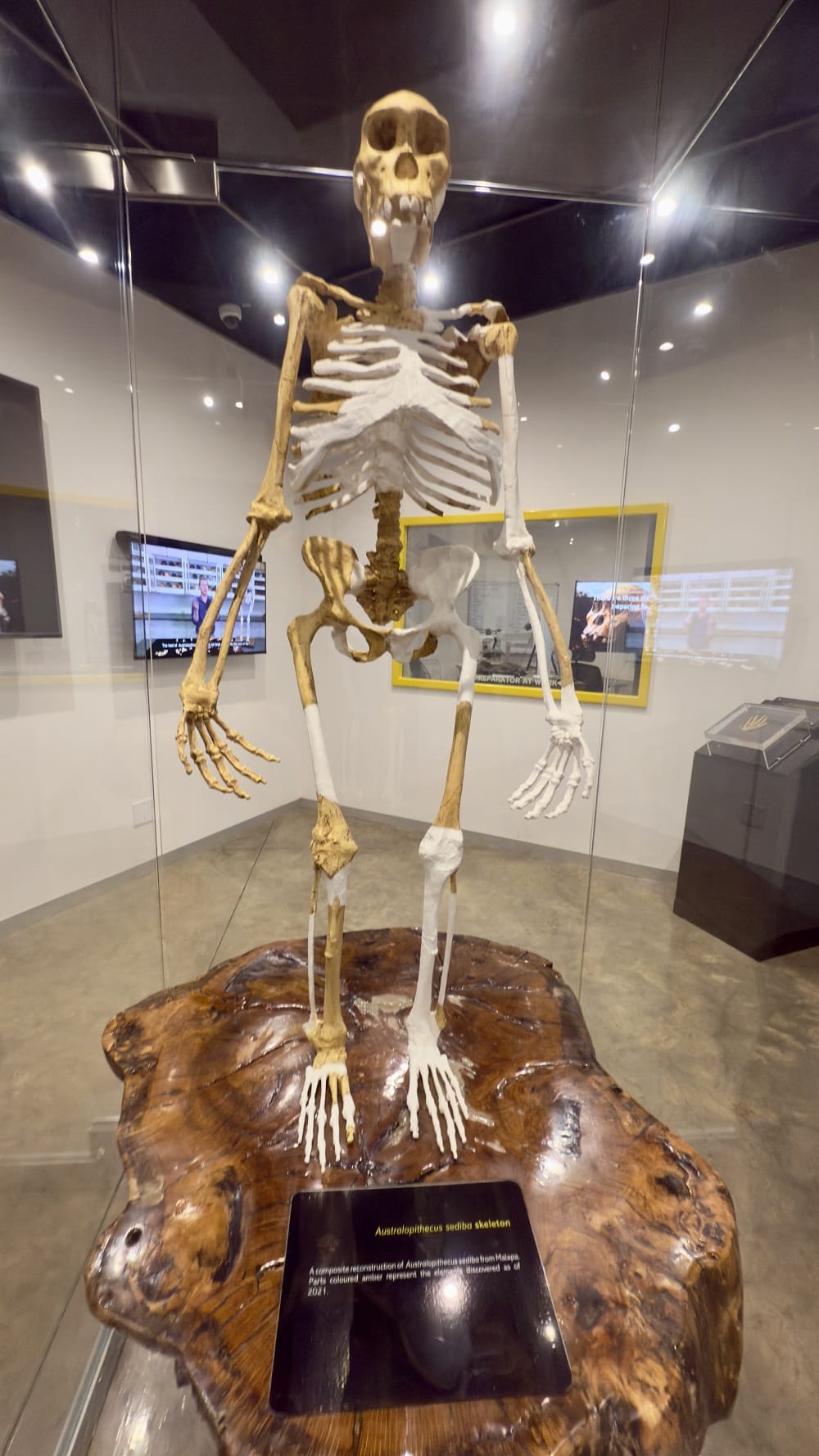
For a modern day visitor, there is much to be seen and learned here, particularly on a professionally guided discovery tour. Early this year Bert embarked on a half day ‘Human Origins’  tour which included visits to the Gladysvale cave and Malapa site, where ongoing active digging can be observed from an elevated spider-like metal platform. 

My driver and I were accompanied by professional guide Chris Green who displayed an encyclopedic knowledge of the area. Chris was able to provide crucial background information and insight into the sometimes complex story. 

The tour starts at the 30-room Cradle Boutique Hotel and can either be preceded or followed by a 30-minute or so audiovisual presentation, narrated mostly by American-born paleontologist Lee Berger. In addition to the videos there are several explanatory murals, maps, schematic renderings, fossil replicas and other artifacts. All telling a fascinating story of what transpired in the area over the eons.

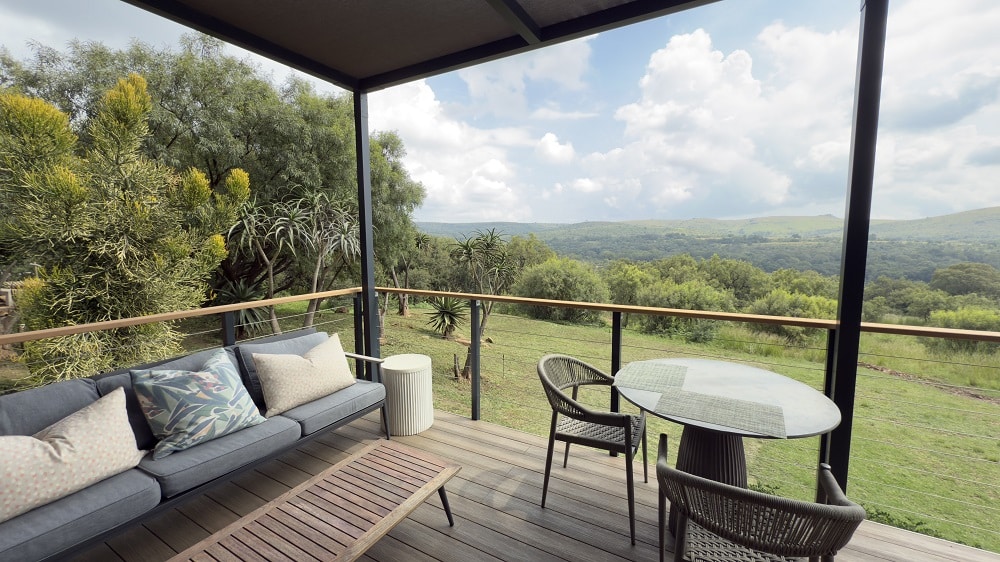
Participants then board a 4-wheel drive vehicle, proceeding down a  well maintained gravel road. Two world-famous active fossil digs – Gladysvale and Malapa – are the key attractions visited on this tour. They are located within the John Nash and Malapa Nature Reserves which comprise the core of the UNESCO designated Cradle of Humankind World Heritage Site.

The discoveries at Rising Star Cave [Homo naledi] and at Malapa [Australopithecus sediba] were rated by The Smithsonian Magazine in the top ten scientific breakthroughs in the last decade. The Human Origins Tour is the only privately guided tour to visit the two sites. 

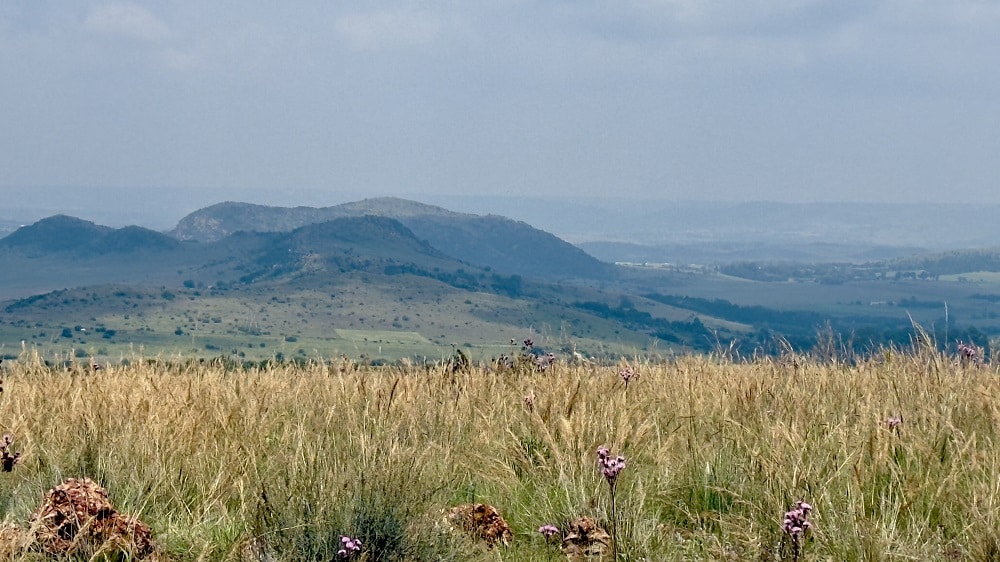
In addition to stops at Gladysvale cave and the Malapa dig site, we stopped along the way to observe the landscape from a high point. Both the Witwatersrand ridge to the south and the Magaliesberg range to the north could be seen.  

The high altitude dolomitic grasslands here are second only to the Cape Floral Kingdom (Fynbos) in terms of floral diversity. This protected area is also home to leopard, brown hyena and caracal. Antelope species like the magnificent eland, blesbok, kudu, blue wildebeest, zebra and red hartebeest are some of the other species to be seen. Amazingly, all within sight of the second largest urban area on the African continent. The two most memorable sightings we had were of giraffes and blesbok with their unmistakable white faces. On the day, there were good numbers of wildebeest, some impala, kudu, eland, warthogs and ostriches as well. 

What to expect on a typical tour::

  • 08:00 Pick-up from your Sandton or Johannesburg-area hotel. The drive to the Cradle Boutique Hotel will be around 90 minutes or so. 
  • 09:30 Transfer into open game drive vehicles. 
  • Visit the elevated viewpoint for an orientation talk which sets the scene and establishes a framework for what follows. 
  • Walk into the massive Gladysvale cave to visually observe what a fossil-rich environment looks like.
  • Snacks and soft beverages including water are provided
  • Walk up into the Malapa Beetle to observe an active dig site from an elevated spot. 
  • 13:30 Lunch at Cradle Boutique Hotel (for guests’ own account)
  • Visit the Malapa museum to check out the many displays and audiovisual presentations. The museum is closed on Monday and Tuesday. 
  • 16:00 Drop-off back at your hotel.

Fish Eagle Safaris will book the outing for you. Bert has done several local sightseeing outings in Johannesburg over the last few years, encompassing history, culture and art. Email him at bert@fisheaglesafaris.com for more information about touring options and for an updated Johannesburg sightseeing document.

YOU MIGHT ALSO BE INTERESTED IN

Destinations
Zambia

10th September 2021

Chindeni and the Bushcamp Company, Zambia

By late July we found ourselves at Chindeni, a small Bushcamp Company property

Read more
Botswana
Destinations
Okavango Delta

3rd October 2022

Camp Okavango, Botswana

Camp Okavango is in the heart of the permanent part of the Delta. In this idyllic setting there are no vehicles, and it is just a short walk

Read more
Area
Destinations
Nyerere National Park
Ruaha
Tanzania

14th October 2023

From My Safari Notebook: Wildlife Photography

Birds in flight and wildlife photographers have an uneasy relationship. Things go wrong as often as they go right. Getting focus-lock on a moving subject

Read more

SUBSCRIBE TO OUR NEWSLETTER

READERS FAVOURITES

Destinations
India

27th May 2023

India

India’s tiger, mammals and birds.

Read more
Botswana
Destinations

4th August 2022

On Safari At Belmond Eagle Island Lodge, Okavango Delta

What is the ‘secret sauce’ for an unforgettable few days on safari in Botswana? It starts with the animals, of course. The elephants, lions, giraffes, hippos

Read more
Destinations
Zambia

10th September 2021

Chindeni and the Bushcamp Company, Zambia

By late July we found ourselves at Chindeni, a small Bushcamp Company property

Read more

Late May Serengeti Sojourn

11th June 2025

Late May Serengeti Sojourn

The Serengeti is huge – immense even. And nowhere better to see that than from a window seat on a Cessna 208 ‘Caravan’ flying from Kilimanjaro/JRO to Kogatende in the far northern Serengeti. Twenty minutes from JRO to Kuro, Tarangire – our first stop. A solid hour from there to Grumeti in the western Serengeti. One more takeoff from a dirt airstrip and 35 minutes later we touched down in Kogatende.

Kaskaz Mara Camp

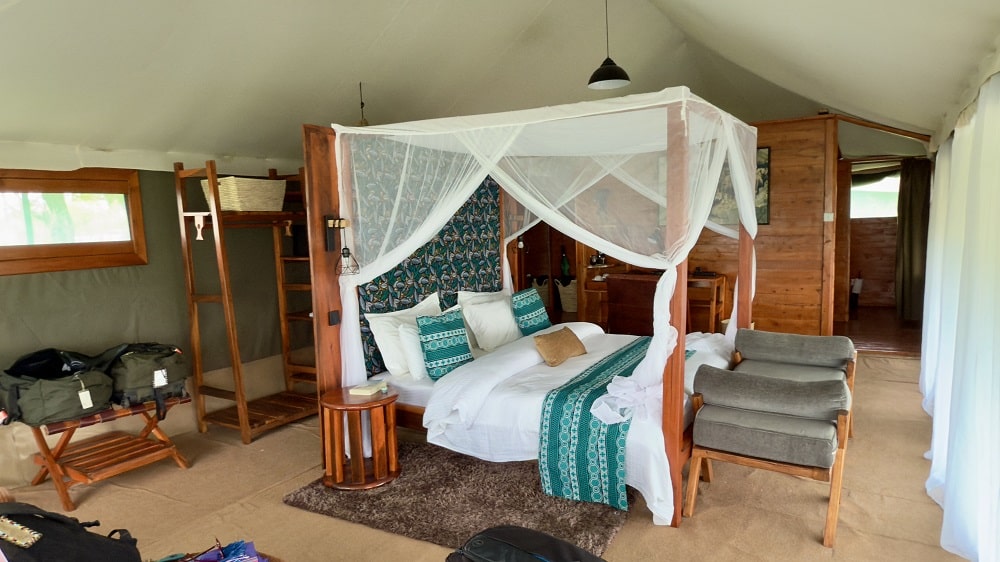
Our abode for the next two nights would be Nasikia’s Kaskaz Mara where camp manager John and his staff welcomed us about as warmly as it can be done. The camp is approximately 40 minutes by road from Kogatende airstrip. After the obligatory arrival briefing (don’t walk around unescorted at night, don’t drink the tap water), we were shown to our room. The classic tented room had tons of space with a separate shower and toilet. There was a king size bed with a mosquito net, decent lighting, and enough storage/packing space. The screened in patio/porch was a nice touch. The view from the room, over a massive plain stretching out in every direction with pretty hills in the far background, was next-level.

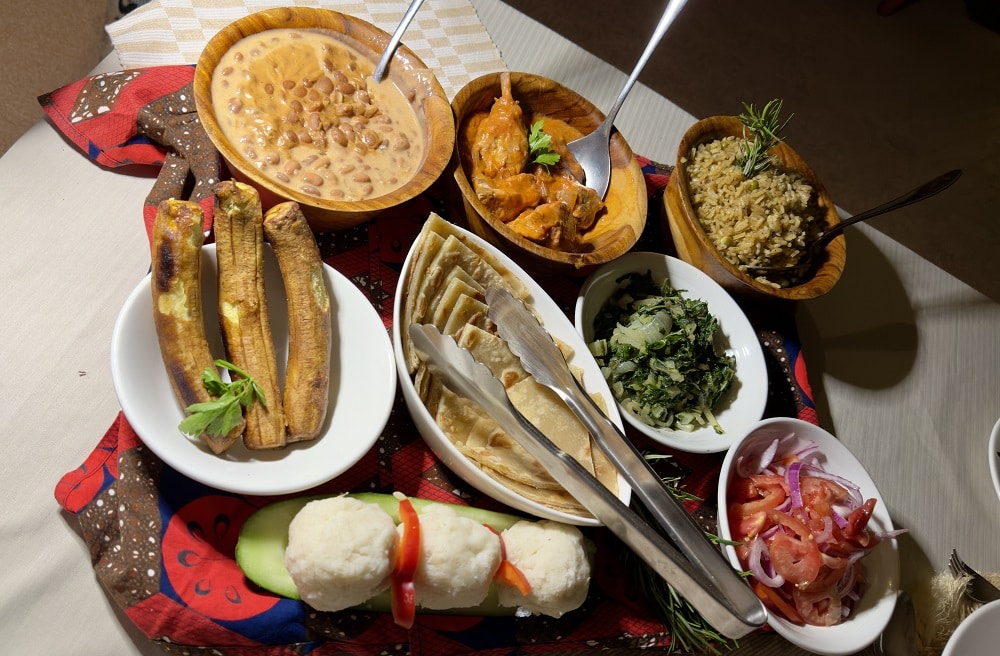
The food at Kaskaz was quite tasty and varied, and well-prepared. Not overly ambitious or gourmet but that’s not what Nasikia Safaris is all about. On our last night we had a lavish spread of really interesting local foods including chapati, ugali (a polenta-like white cornmeal mush), chicken stew, red bean stew, spicy rice, spinach and  plantains. All that and then a nicely decorated vanilla birthday cake. A special treat. Accompanied by some energetic singing and dancing. 

The remote bush lunch and al fresco lunch in the shade of a tree in front of camp were both fun and the staff were even more excited than we were! Our waiter Andrew was fun to talk to. I loved the spirited song and dance performance for my birthday on our last night there. The fresh fruit for breakfast and the late morning snacks for our first game drive were exceptionally good.

Our three game drives out of Kaskaz were mostly quiet with a mix of plains game, a few good sized herds of buffalo, elephants and right at the end of our last drive, a solitary black rhino. 

Wildlife viewing in the northern Serengeti in May and June is almost always challenging because of the long grass. On previous trips into the area we’ve gotten lucky on a couple of occasions, spotting lions, leopards and cheetahs on a single game drive. Not so much this time. On the plus side we had the area pretty much to ourselves and felt really spoiled not to see any other vehicles. 

The grounds at Kaskaz were well kept and paths mowed short. Unfortunately there were many tsetse flies in the area close to the camp, and a jarring absence of any tsetse fly eradication measures such as tsetse fly traps. 

Driving outside the park initially and then re-entering it at the Ikoma Gate, our game drive transfer from the far northern edge of the Serengeti to the central/Seronera area took a solid six hours, inclusive of a lunch stop. Our final destination was Nasikia’s Naona Moru Camp where we would be staying for the next couple of nights.

The Great Migration 

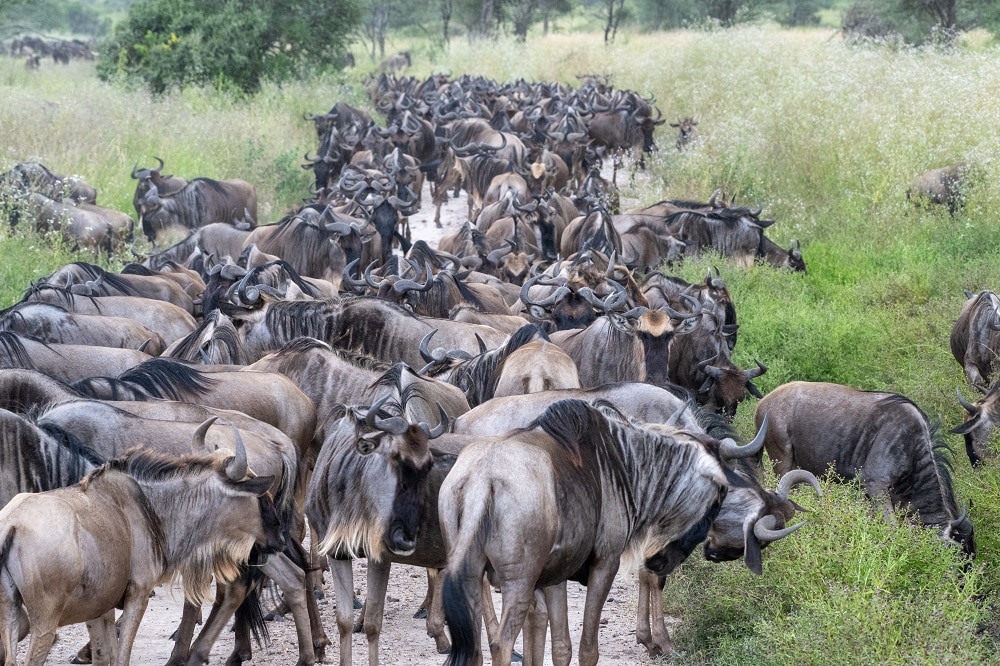
Just a few minutes inside the Serengeti National Park we encountered the first of many herds of wildebeest. We had bumped into the great migration! One large group of zebras suddenly bolted and massed together in the road and we quickly saw why: there was a female lion visible in the grass. She had clearly spooked the  wildebeest. 

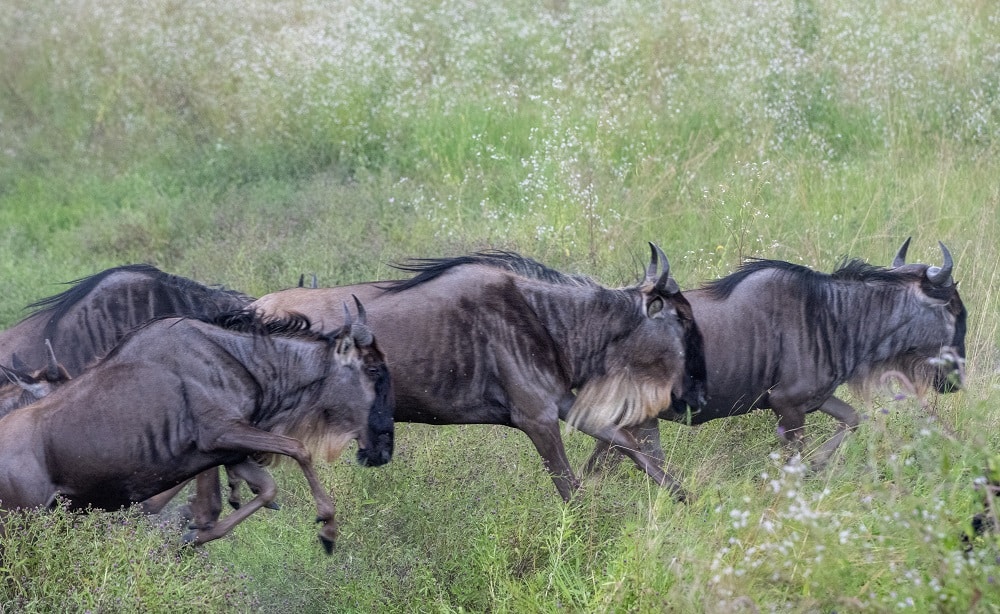
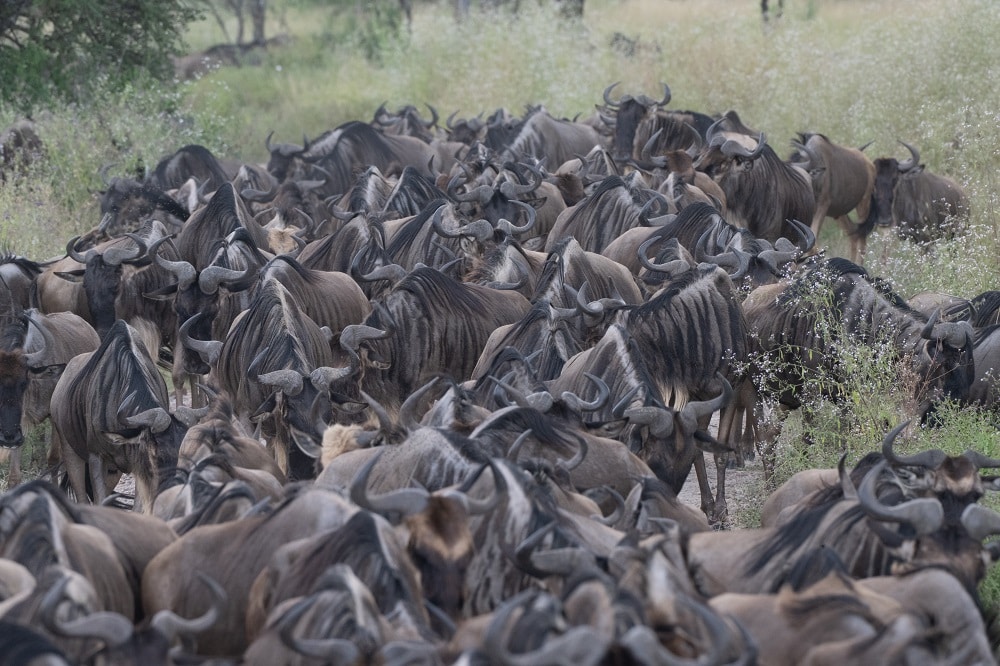
As we drove on we encountered more and more wildebeest. First hundreds and then thousands. Walking, calling, eating. running. Following their instincts which compel them to embark on a perilous annual trek of up to 500 miles. Hazards along the way include a full house of predators (lions, leopards, hyena, cheetahs), and crossing  crocodile-infested rivers. Nonetheless the wildebeest – followed around by thousands of three to four month old youngsters – keep following the rain, year after year. 

Pretending to know precisely where the herds will be at any given time is risky behavior. While there are ‘big picture’ guidelines, the day-to-day movement of the herds is erratic at best. 

December to March: Southern Serengeti

The wildebeest and zebra herds are generally in the southern Serengeti for the wildebeest calving season from about December through the end of March. Most of the babies are born within a couple of weeks or so, from late January through mid-February. 

April to June: Central Serengeti

By April they start moving north and west, reaching the central (Seronera) area around late May and the western Serengeti (Grumeti) by early June. More or less. Some herds may take a more direct route to the north, passing east of Seronera and into the Lobo and eventually the Klein’s camp & TAASA areas. 

July to October/November: Northern Serengeti & Masai Mara

From July through October the place to be is the northern Serengeti and its northernmost extension, the Masai Mara in Kenya. With the herds crossing and re-crossing the Mara and Sand Rivers, this is the epicenter of the migration. Not surprisingly, this is also where the highest number of vehicles and visitors congregate every year, in the hope of observing a dramatic river crossing. So buyer beware: you may experience some awesome wildlife behavior in the height of the migration season up north but you won’t be alone. Far from it. 

Trying to predict exactly where the herds will be (a specific camp for a specific few days), as much as a year in advance, is at best an educated guess. More art than science, more luck than wisdom. The reason being that the migration is largely driven by rainfall. The herds come and go (and may even return to the same area) depending on local rainfall patterns and the resulting emergence of fresh shoots. 

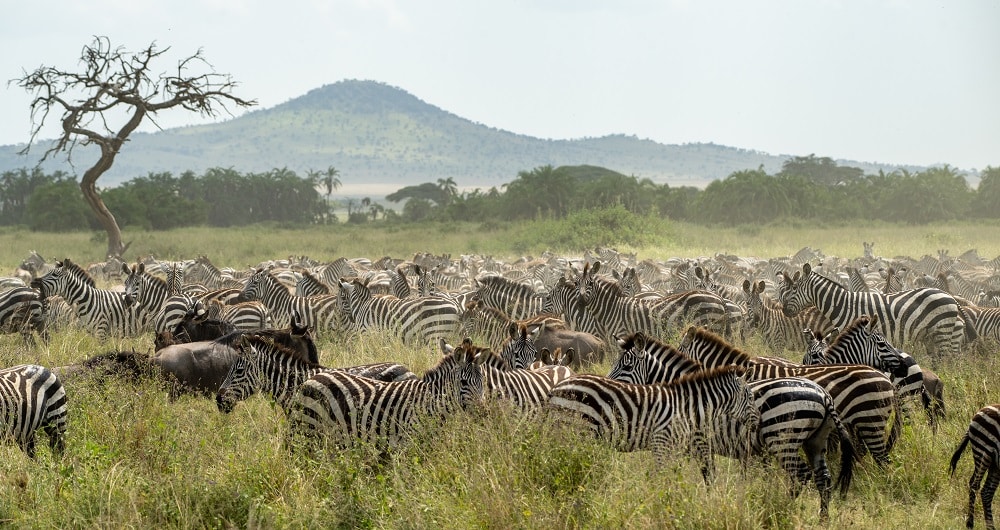
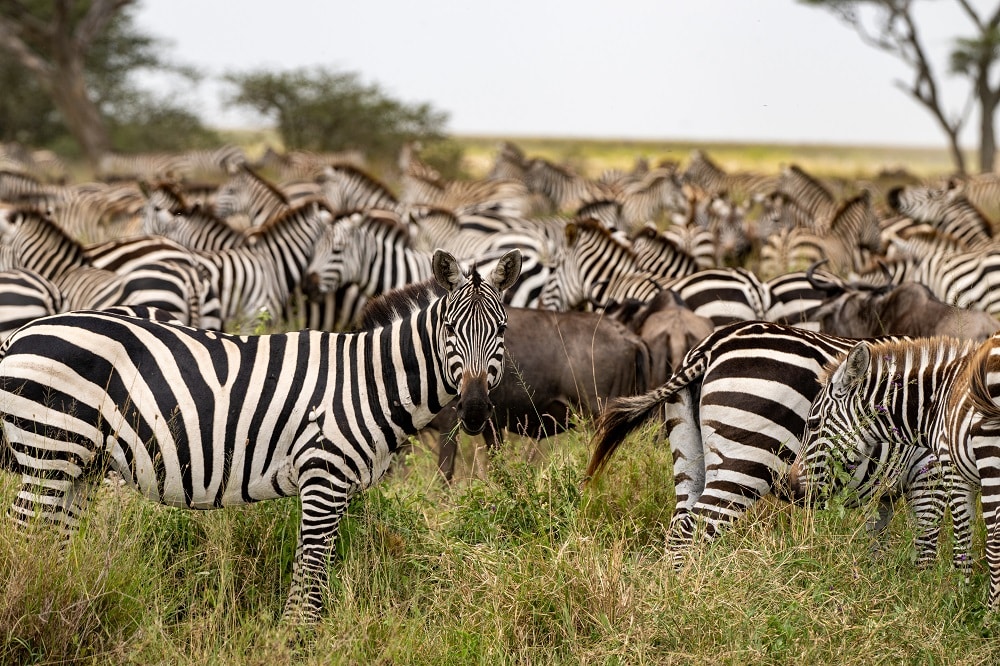
En route to Naona Moru we started encountering simply huge numbers of Burchell’s zebra, in addition to the wildebeest. Great big herds numbering several thousand, sometimes filling up our entire field of view. The zebras were as active and full of energy as I’ve ever encountered them. Running, wheeling, kicking and biting and calling nonstop in their odd but beautifully evocative braying manner. Hundreds of them literally swamped the road ahead of us with our vehicle slicing through the black and white waves. It was exhilarating, magical – truly a once in a lifetime experience. 

For the first time ever, I observed that the zebras were feeding mostly from the very top of the grass down. This partially explains the generally accepted theory that zebras ‘open up’ an area shortly to be followed by wildebeest.

Big cats in trees

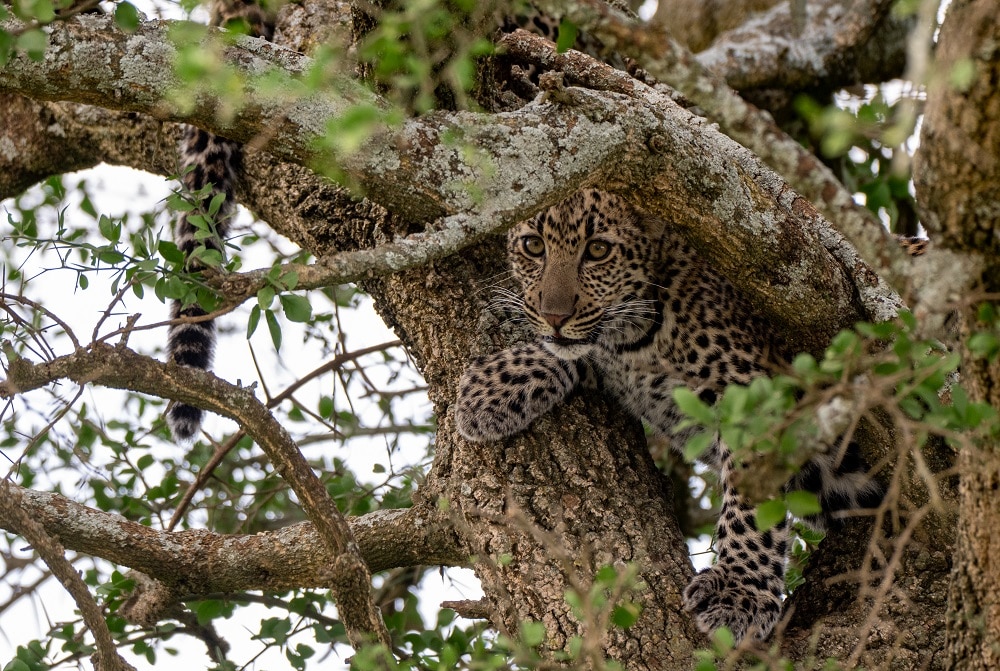
Already, it was a pretty good day on safari. And then we started seeing big cats in trees. First up were two  leopards – a female and a youngster – about midway up a tree, with the remains of a recent kill in a nearby tree. We watched them for quite a while as it was our first leopard sighting of the trip. The youngster was restless, moving up and down the branches and occasionally peering out and looking in our direction. A photo op? Tailor made. 

Not much further down the road – maybe a few hundred meters – we came upon a lion in a tree, some distance from the road. And then – another few hundred meters further on – two more lions in a tree. It wasn’t over yet. Just around the corner – yet another leopard in a tree. It was nothing short of phenomenal to see three different trees with six big cats in them so close together. 

Naona Moru Camp

There were several things which we liked a lot about Naona Moru Camp. The Seronera area has a reputation for getting quite busy due to its popularity as an area with abundant resident wildlife. With Naona Moru Camp being located in the much less busy southern part of Seronera, visitors can enjoy wildlife sightings without too many other vehicles around. We experienced that more than once. 

We also appreciated the friendliness of the staff, all of whom did their utmost to make our stay at Naona Moru as nice as possible. The room was just as large as at Kaskaz and similarly equipped. It would have been nice to have had more water pressure in the shower and more drinkable water in the room, and there were a couple of minor service delivery issues. It was a good reminder for us not to expect impeccable standards everywhere. And to not get too bothered by the occasional lapse. Expect enthusiastic but mostly unpolished waitstaff and all will be well. 

Full day game drive –  Naona Moru

A full day game drive out of Naona Moru was not quite as packed with sightings as we had hoped for. Initially it was really quiet with the only highlight being a couple of lions high up on a large boulder. Later that morning we came across four female lions on a kill. While we were a good distance away (bring your binoculars!) it was interesting seeing the various lions coming and going, with a tree full of vultures patiently waiting for them to leave. 

With our very knowledgeable guide Muba behind the wheel, we added a bunch of new trip birds to our fast growing tally which was in the 60’s by then. After lunch at a picnic spot, we got back into the middle of the migration. Lots more wildebeest and zebras. Our afternoon ended with a highlight, when Muba spotted four more lions in trees not far from our camp. The following morning, en route to Seronera airstrip, we ran into several more lions including as many as 9 youngsters and a young dominant male. 

By midday on May 28 we were off to Laba Laba, a newly opened mobile camp in the western edge of the Seronera area. More about that in our July newsletter.

For more information about Tanzania and other East African safari options and suggestions, please contact Jason at jason@fisheaglesafaris.com or leave a message with our answering service at 1 800 513 5222 or 713-467-5222 any time. 

YOU MIGHT ALSO BE INTERESTED IN

Destinations
Zambia

10th September 2021

Chindeni and the Bushcamp Company, Zambia

By late July we found ourselves at Chindeni, a small Bushcamp Company property

Read more
Botswana
Destinations
Okavango Delta

3rd October 2022

Camp Okavango, Botswana

Camp Okavango is in the heart of the permanent part of the Delta. In this idyllic setting there are no vehicles, and it is just a short walk

Read more
Area
Destinations
Nyerere National Park
Ruaha
Tanzania

14th October 2023

From My Safari Notebook: Wildlife Photography

Birds in flight and wildlife photographers have an uneasy relationship. Things go wrong as often as they go right. Getting focus-lock on a moving subject

Read more

SUBSCRIBE TO OUR NEWSLETTER

READERS FAVOURITES

Destinations
India

27th May 2023

India

India’s tiger, mammals and birds.

Read more
Botswana
Destinations

4th August 2022

On Safari At Belmond Eagle Island Lodge, Okavango Delta

What is the ‘secret sauce’ for an unforgettable few days on safari in Botswana? It starts with the animals, of course. The elephants, lions, giraffes, hippos

Read more
Destinations
Zambia

10th September 2021

Chindeni and the Bushcamp Company, Zambia

By late July we found ourselves at Chindeni, a small Bushcamp Company property

Read more

Botswana’s Okavango Delta & Central Kalahari – March 2025 – Part 1

24th May 2025

Botswana’s Okavango Delta & Central Kalahari – March 2025 – Part 1 

Fish Eagle Safaris’ Lyndon Duplessis recently visited several Botswana properties on an educational trip; here is his report:

“March is typically as early in the year as you can head to Botswana and still have a really good experience. The rainy season is just about over (but you’re still likely to experience a few thunderstorms and showers), the grass is green and the animals look healthy. That same grass, if the rains were particularly good, can be a bit on the tall side and that was definitely the case this year. Botswana received a copious amount of rain. Ask anyone in Botswana and they will say that is a good thing. Their currency, the Pula, literally means rain. And they say “pula,” their version of cheers, when they toast a drink. Having said that, it does present some challenges. That nice looking green grass can obscure some of the smaller mammals and make them more difficult to see. The abundance of water – everywhere – tends to disperse the animals who might otherwise have to gather around remaining sources during the dryer months. The good news? All the animals are still around, you just have to work a bit harder to see them and get a little bit lucky. During the course of a full length safari (6 to 9 nights), we like your odds and this trip backed up that sentiment.

Gomoti Plains

My first stop was Machaba Safaris’ Gomoti Plains Camp. I had heard a lot of good things about this camp and the area that it was in. The part of the Okavango Delta the camp is located in has become a hotbed for animal sightings and action in general. It did not disappoint during my all too brief 2-night stay. The camp itself is classic level with plenty of comfort and space but nothing over the top. The staff to guest ratio felt very high to me and everyone was friendly and helpful. Our guide Carl was excellent and the food was delicious.

At one point on a drive my allergies started acting up due to the grass but luckily I had some allergy medication I took which cleared them up in a timely manner. If you are headed to Botswana early in the year this is definitely something you should bring with you. As well as a buff and some eyewear to protect your face from any grass seeds the vehicle kicks up.

The wildlife viewing was a bit tough to come by but we did, thanks to our guide, get some good views of lions. Once during the day hiding under some thick bushes and then again during an after dinner night drive. In fact we saw a large pride of at least 10 lions on the move and hunting. We kept up briefly but they seemingly vanished into the tall grass. General plains game species such as giraffes, zebras and various antelopes were not hard to find.  

One interesting tidbit I overheard was that a couple of the guests were visiting this camp for the 5th time. I think that is no accident and a very good indicator of the quality of service and the amount of animals in the area. Our guide said as the year moves on the animals flock to the river and become very easy to observe.

Kwando 4 Rivers

If two nights at Gomoti were too short a stay then the one night I got to spend at Kwando 4 Rivers was really quite tragic. But it can be difficult to balance seeing new camps with a tight schedule, so in this case, I had to settle for what I could get. I really like the location of this camp with the large main area overlooking permanent water. There is no boating here but mokoro can be done year round. The rooms were impressive and very spacious.

The grass here was even taller than at Gomoti so when we heard that a lion had been spotted a little ways away – but we had to go off road most of the way to get there before sunset – we knew it was going to be an adventure. It was bumpy and the grass was flying everywhere. The occasional log or channel of water slowed us down from time to time but we got there and got to see two female lions with 6 cubs on a kill and then the cubs started suckling from the mothers. Just a fantastic sighting. The only bad news was that we had to make the whole trek back to camp before we ran out of daylight. Oh well – it was very much worth the effort.

A couple of things that Kwando does that not everyone else does; they have a guide and a spotter on their game drives and they have communal dinners. We like both and feel like they add to the safari experience.

Dinaka

It was now time for my trip with Ker and Downey Botswana to start. First up, after meeting all of my fellow travel companions at the airport, was Dinaka Camp, located just about a 25-minute flight from Maun on a large private conservancy north of the Central Kalahari Game Reserve. I was anxious to get a look.

Just like the rest of northern Botswana there had been good rains earlier in the year so the landscape was not what you might expect of the Kalahari. Trees, grass, plants and flowers were everywhere looking very healthy and vibrant. There was a great abundance of butterflies and the plains animals looked to be in great shape. We got to see some action right out of the gate on our evening game drive near the airstrip. As we approached there were lions chasing a small herd of zebras in a cloud of dust. No kill but great to experience that excitement so early in our stay.

That evening we drove to a stargazing deck for our sundowner. From there you can see how expansive the conservancy is as you are surrounded by it. The sunset from there was also superb and of course you have a mobile bar and all the snacks you can shake a stick at. Not a bad start. A bit of a curiosity on the night drive back to camp – our vehicle spotted a Kalahari mole rat. We were told it was an extremely rare sighting. Now you know.  

We stayed around the campfire after dinner taking advantage of the lit watering hole by the main area. Over the course of the night we saw a leopard, followed by a brown hyena, finally followed by a quick moving honey badger. Well worth a late night.

Some additional highlights at Dinaka include seeing the 4 or 5 white rhino which are located on the property. Our guides did a wonderful job tracking them through the tall grass. It actually looks like a motorcycle drove through the grass where they had been. The camp also has numerous hides located across the property which offer wonderful photographic opportunities. The second night we got to experience some lions roaring right next to our vehicle. And the staff was wonderful and quite talented as far as singing goes. I think this camp really jumped off the page for me and I would highly recommend you check it out.”

If you are up for a last-minute trip to Botswana or thinking ahead for 2026 or even 2027, by all means reach out to Lyndon at lyndon@fisheaglesafaris.com. He’d be happy to respond by email or arrange a Zoom meeting for you to be introduced to a couple of the members of our team. There’s nothing we like more than talking about Africa and finding out more about exactly what kind of a trip you might have in mind. We can also be reached by phone at 713-467-5222 or 1-800-513-5222 any time of the day and weekends. Please leave a message with the answering service and one of us will get back to you promptly. 

Lodge photos courtesy Gomoti Plains and Danaka

YOU MIGHT ALSO BE INTERESTED IN

Destinations
Zambia

10th September 2021

Chindeni and the Bushcamp Company, Zambia

By late July we found ourselves at Chindeni, a small Bushcamp Company property

Read more
Botswana
Destinations
Okavango Delta

3rd October 2022

Camp Okavango, Botswana

Camp Okavango is in the heart of the permanent part of the Delta. In this idyllic setting there are no vehicles, and it is just a short walk

Read more
Area
Destinations
Nyerere National Park
Ruaha
Tanzania

14th October 2023

From My Safari Notebook: Wildlife Photography

Birds in flight and wildlife photographers have an uneasy relationship. Things go wrong as often as they go right. Getting focus-lock on a moving subject

Read more

SUBSCRIBE TO OUR NEWSLETTER

READERS FAVOURITES

Destinations
India

27th May 2023

India

India’s tiger, mammals and birds.

Read more
Botswana
Destinations

4th August 2022

On Safari At Belmond Eagle Island Lodge, Okavango Delta

What is the ‘secret sauce’ for an unforgettable few days on safari in Botswana? It starts with the animals, of course. The elephants, lions, giraffes, hippos

Read more
Destinations
Zambia

10th September 2021

Chindeni and the Bushcamp Company, Zambia

By late July we found ourselves at Chindeni, a small Bushcamp Company property

Read more
  • « Go to Previous Page
  • Page 1
  • Interim pages omitted …
  • Page 3
  • Page 4
  • Page 5
  • Page 6
  • Page 7
  • Interim pages omitted …
  • Page 21
  • Go to Next Page »

Footer

Design

  • About
  • Destinations
  • Blogs
  • FAQS
  • Team
  • Contact
All Rights Reserved ©Fish Eagle Safaris 2022 | Terms & Conditions | Privacy Policy
Designed & Developed by B Online

SUBSCRIBE TO OUR NEWSLETTER

SIGN-UP TO OUR NEWSLETTER

Subscribe Form

Footer Widget Header

Related Blogs