• Skip to primary navigation
  • Skip to main content
  • Skip to footer

Fish Eagle Safaris

Fish Eagle safaris

Contact

Logo
  • About
  • Destinations
  • Blogs
  • Newsletter
  • FAQS
  • Team
  • search
  • Contact
  • About
  • Destinations
  • Blogs
  • FAQS
  • Team
  • Contact

Area

Giraffes in the Desert: Samara Karoo Reserve, South Africa

26th November 2024

Giraffes in the Desert: Samara Karoo Reserve, South Africa

Spending a couple of days at Samara Karoo Reserve in the heart of South Africa’s Great Karoo semi-desert is as close as one could ever get to being in a Pierneef landscape. Pierneef, arguably South Africa’s greatest and most celebrated painter, is famous for his hugely evocative landscape paintings, several of which depict  Karoo-like scenes in a highly stylized, impressionistic manner.

Drive around Samara reserve for a day or two and more than just one of the stunning Camdeboo mountain landscapes will surely remain etched in your mind, as impactful as any Pierneef. Each view, each sunset a masterpiece for the ages. 

Like so many South Africans by birth, my impressions of the Karoo have always been woefully short of the reality of this splendid area. Despite more than 30 years of driving through it, crossing it by train and flying over it, I could never see it for what it was. All I saw was open, featureless plains with a few drab koppies (inselbergs) in the distance. Mile after mile of nothing much, just trains sweeping by at night and glimpses of Karoo towns, deserted by 5 pm. Mentally, I had reduced the Karoo to a seemingly never-ending drive through a vast nothingness. A space that simply had to be endured, to get to where you really wanted to be. Which was invariably Cape Town to the south, or home, in the other direction. 

It was only when I saw the Great Karoo again this last summer with older but wiser eyes, stripped of many of the prejudices of my younger years, that I could appreciate it for what it really is. An achingly beautiful and infinitely charming landscape. A living, breathing semidesert area which was once – and now is again at least in part – home to an astonishing variety of large mammals. 

At one time the Great Karoo was synonymous with vast migrating herds of springbok, sometimes numbering into the hundreds of thousands, taking days to pass through an area. Historically, the wildlife of the Karoo included black-maned Cape lions, rhinos, cheetahs, the now extinct quagga (a species of zebra) and several unique mammals such as the Cape fox, eland, caracal, suricate and aardvark. Decades of non-sustainable agricultural practices – primarily overgrazing – resulted in erosion and even desertification, negatively impacting biodiversity. In time, it resulted in many of the larger mammals disappearing. The last Karoo lions were seen around 200 years ago.

Enter Mark and Sarah Tompkins – and other conservation-minded individuals and families – who are now turning back the clock on agricultural exploitation with an ambitious program of land rehabilitation and wildlife reintroduction. Since first acquiring the farm Apieskloof in 1997, the Tompkins family have amassed enough land to establish a self-sustaining ecosystem which supports wildlife – all the way from the herds of antelopes that used to inhabit the area to the predators to keep the balance which helps maintain these fragile ecosystems. 

It is a tedious, painstaking process to eradicate alien, invasive plant species, to tear down internal fencing and to simply rest the land for a sufficiently long period of time. All while rehabilitating the most eroded, degraded areas, planting indigenous vegetation and slowly reintroducing indigenous animals. 

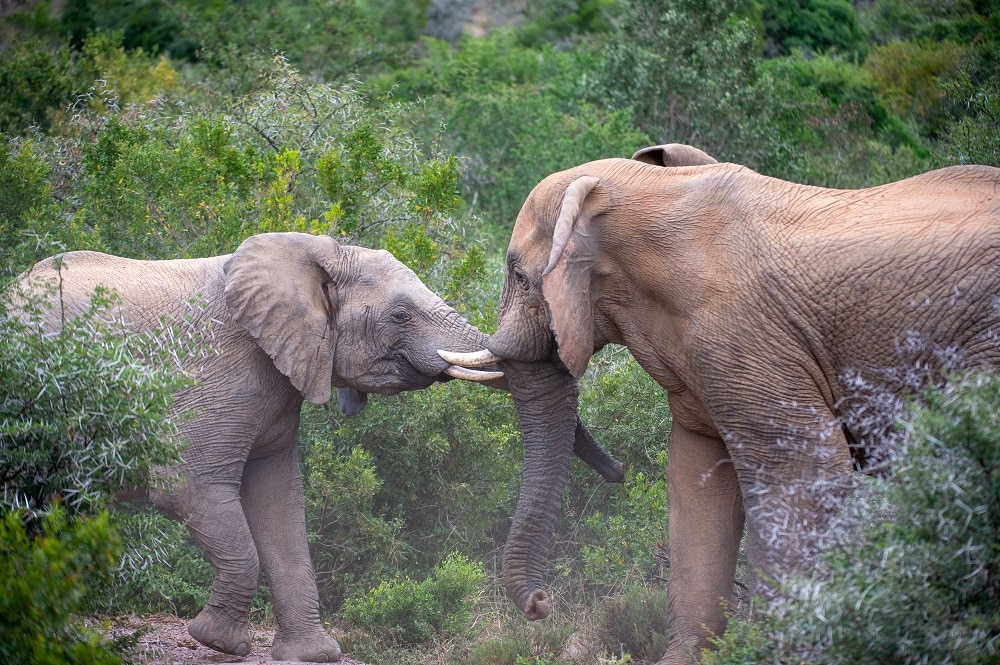
Getting Samara to what it is today started with a dream, involved years of hard work, unwavering dedication, substantial financial investment and the ongoing efforts of a team of people who are passionate about spreading the environmental message to everyone who set foot on the reserve. There were many rewilding milestones along the way: the first cheetahs in 130 years, the first elephants in 150 years, the first lions in 180 years. It is a remarkable conservation success story in an area which remains largely unknown even to South Africans, let alone international visitors.   

In search of cheetahs and more – activities at Samara

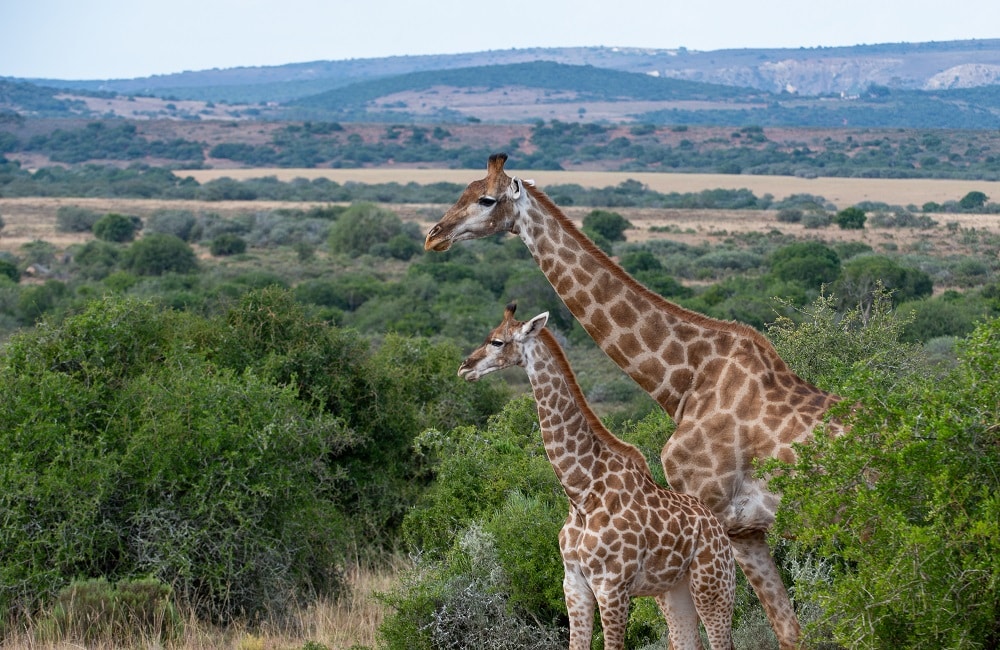
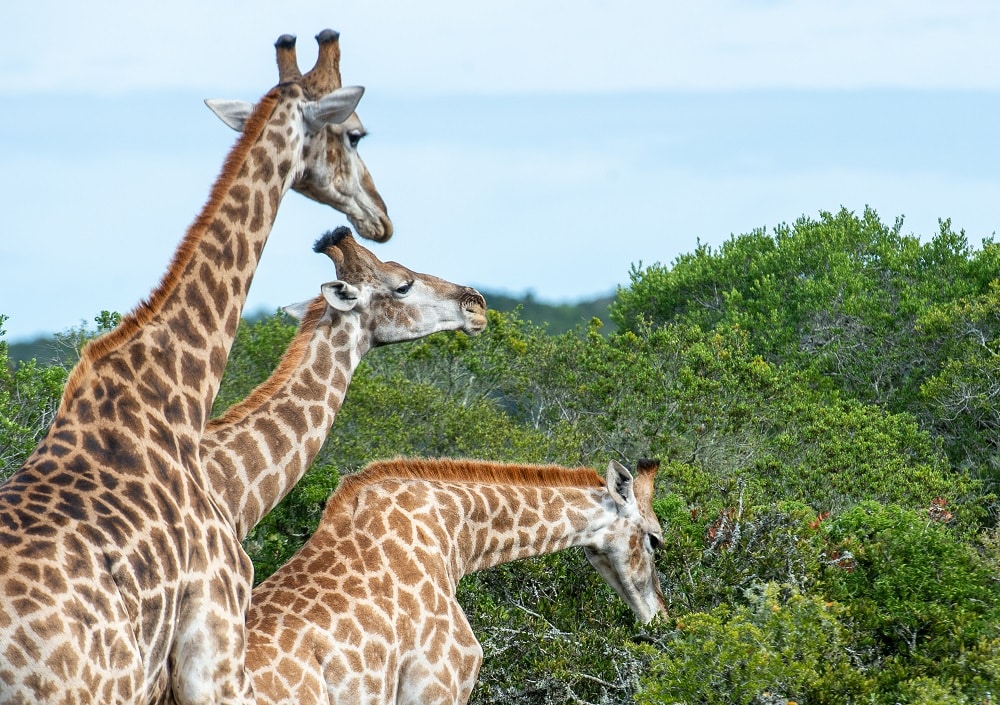
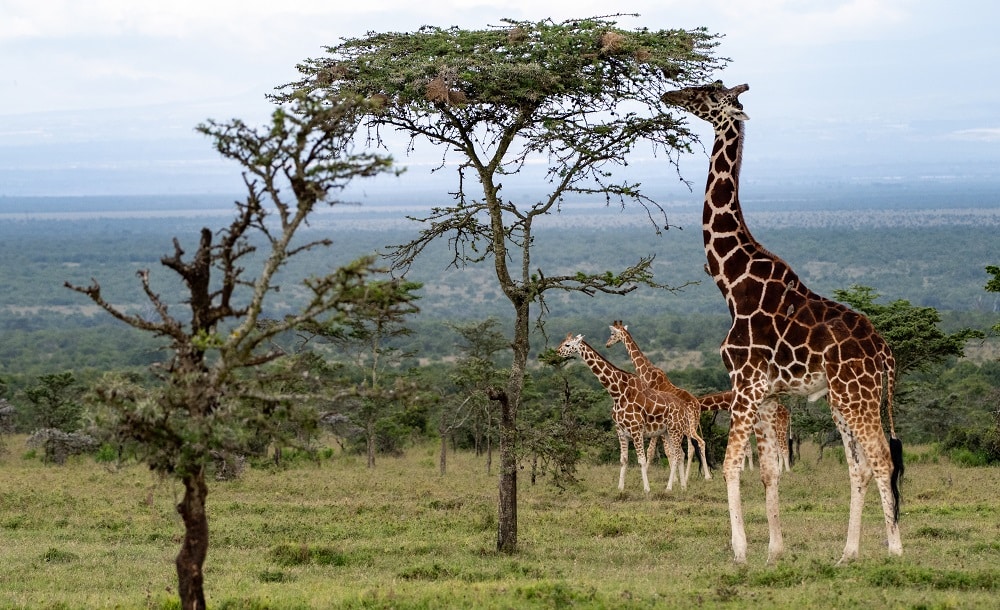
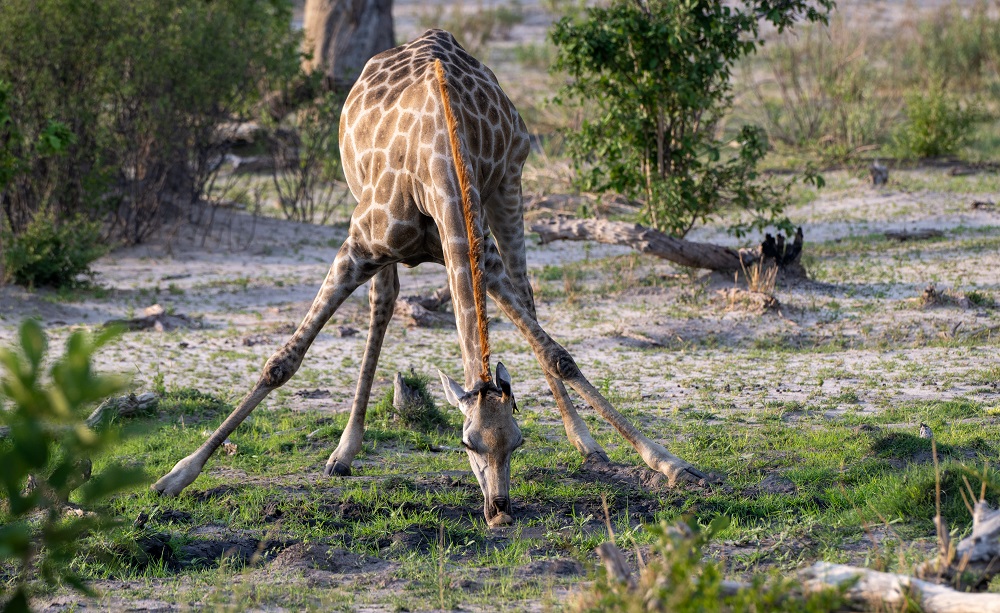
Kathy and I arrived at Samara in late August after a drive of about four hours from Sedgefield on South Africa’s Garden Route, our (US) summer base. As if on cue, just after we had negotiated a shallow drift crossing the small Milk River, just around the corner from the main lodge, a large tower of giraffes appeared among the trees on both sides of the road. Acting every bit like a welcoming committee, they slowly moved to the left and right, all while of course staring at us intently and without making a sound, in typical giraffe manner. Observing such a relaxed journey of giraffes so close to the main lodge – and clearly not fussed by the proximity of our vehicle – was a good omen.

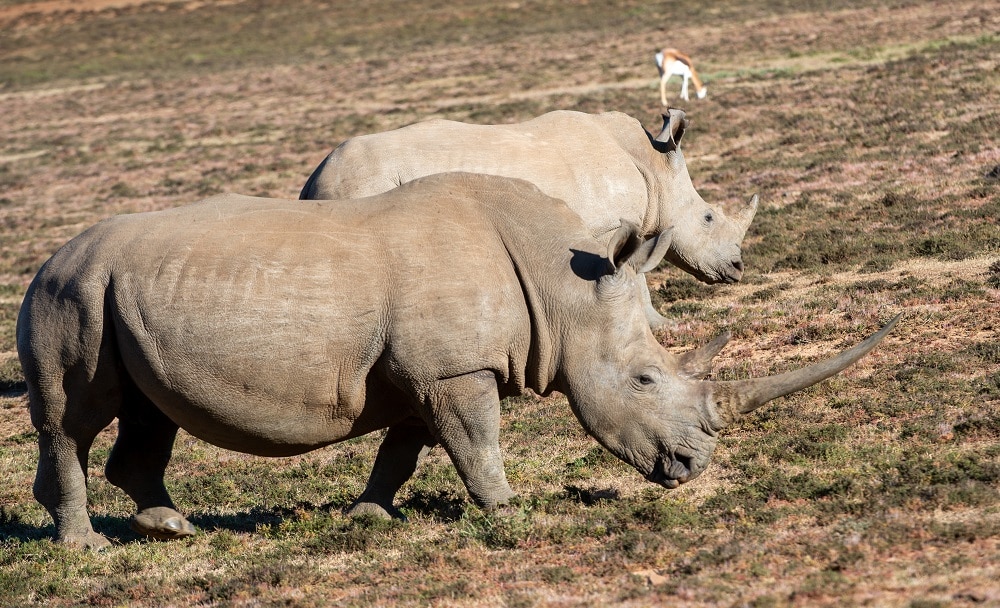
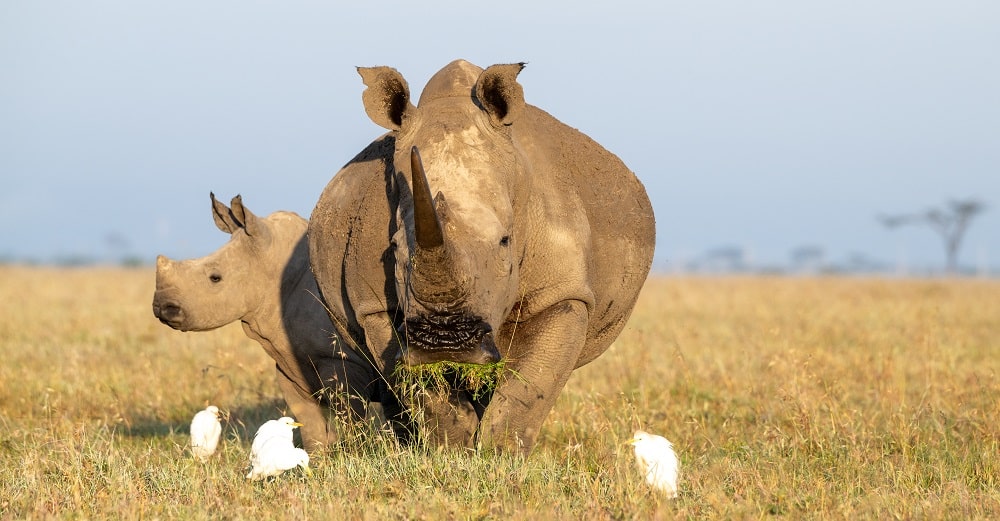
With one exception – being the Samara cheetahs evading us – every game drive exceeded our expectations. On our very first game drive, there were more groups of giraffes, then some handsome waterbuck and – not far from the lodge – a group of four white rhinos. An adult female with a youngster and two young males. We got out of the vehicle and approached the rhinos on foot – carefully and quietly – with our guide Roelof and tracker Kevin. 

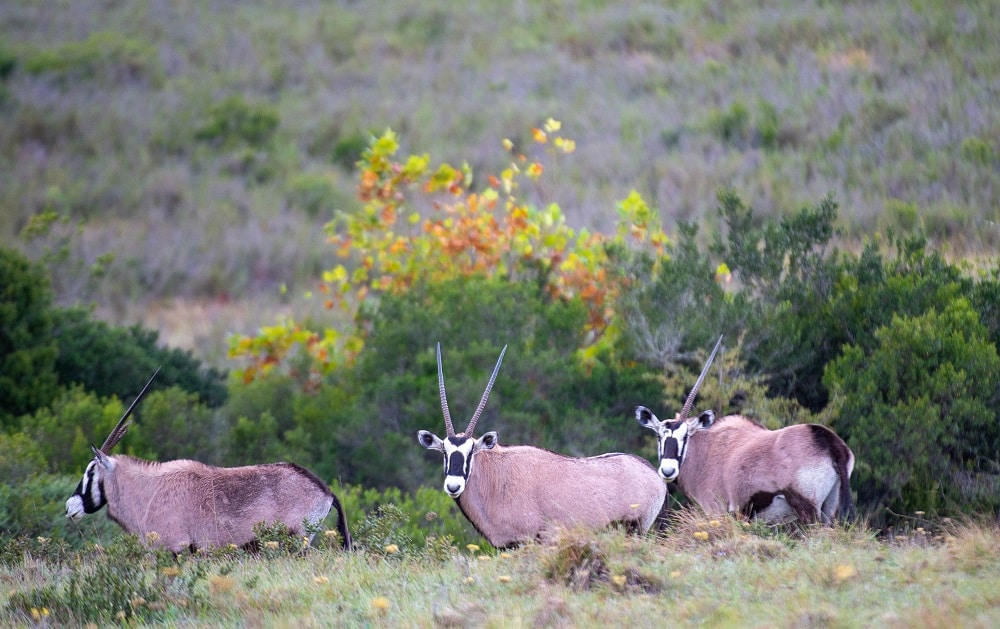
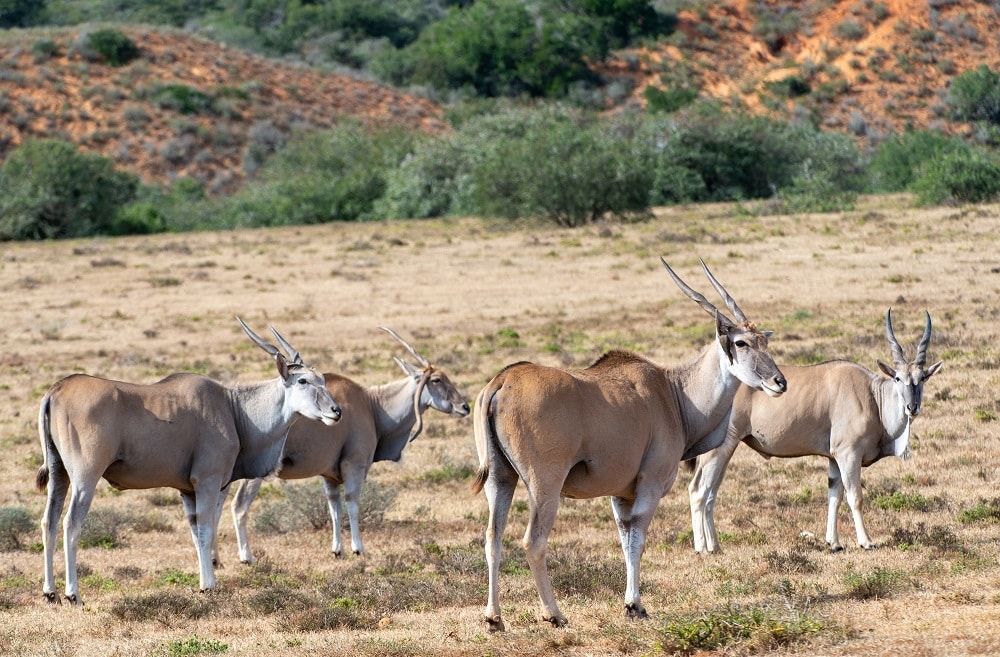
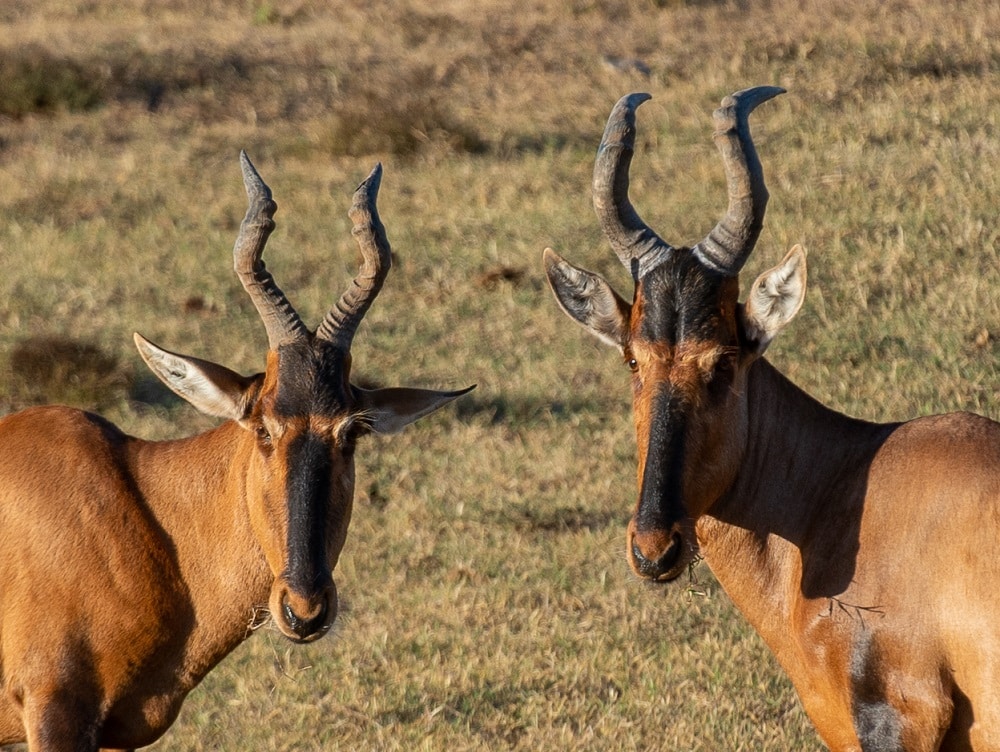
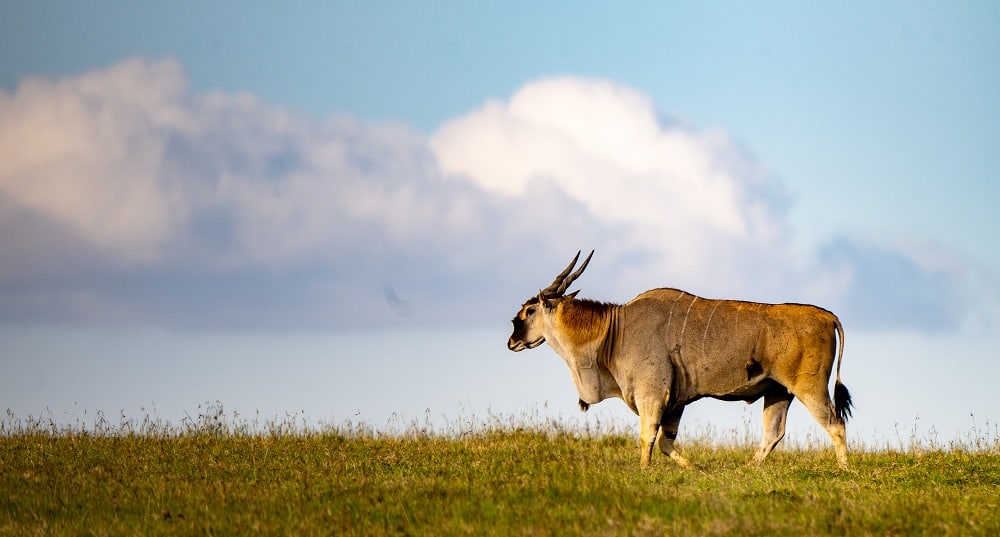
On every drive at Samara – we were only there for two nights – we saw a wealth of plains game including impressive numbers of eland (South Africa’s largest antelope), the striking gemsbok, red hartebeest, herds of springbok and warthog families running as if their lives depended on it. By morning’s end on day one, our growing mammal list topped 20 species with yellow mongoose, vervet monkey and chacma baboon added to it while driving through the thickets in the small valley adjoining the lodge. A high point was spotting a particularly large herd of eland which let us approach quite closely. This is uncharacteristic of eland which have the longest flight distance of any of the African antelope species. 

The following day, the plan was to go out in search of one or more of Samara’s healthy and growing number of cheetahs, several of which are collared for ongoing research projects. Which makes it relatively easy to find them, under normal circumstances. Most Samara guests who spend three nights or so in the area, do in fact get to approach the cheetahs on foot, observing them at ground level. A singular experience. The drive took us a very long distance to the southern open grassland area but despite our guides giving it their best, we did not catch a glimpse of them. It was a little disappointing as Samara prides itself on their ‘walking with cheetahs’ experience. Unfortunately weather conditions were unfavorable with a strong wind driving the cheetahs into a high hilly area which we could not reach on foot due to timing constraints. We plan on returning to Samara next summer so we’ll file this under ‘to be continued.’

On our last morning drive Roelof and Kevin took us all the way to the top of the high plateau area, a huge expanse of grass-covered savannah plains, sometimes referred to as the ‘Serengeti of the South.’ We reached it after an exciting and sometimes fairly steep but fascinating drive, with amazing views front, left and center. At around 1,500 meters above sea level (or as we would say in Texas – a mile high), the fresh mountain air was crisp and cool. Samara is beautiful but this particular area is uniquely beautiful, being perched high on a mountain saddle with 360 degree views, surrounded by purple mountains and massive valleys in seemingly every direction. Not surprisingly, we encountered several different species up there including Cape mountain zebra, mountain reedbuck, bat-eared fox and a couple sizable herds of black wildebeest in addition to lots of springbok and eland.

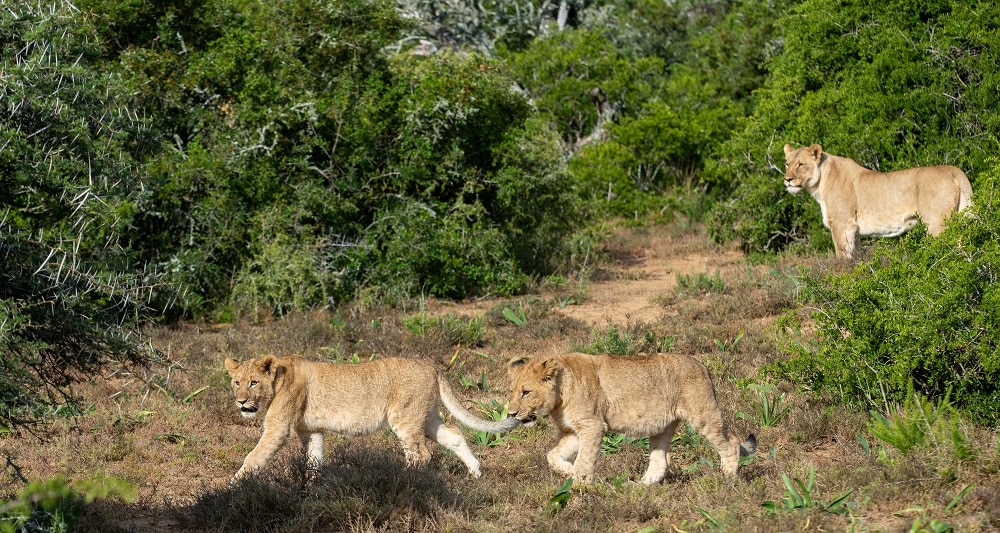
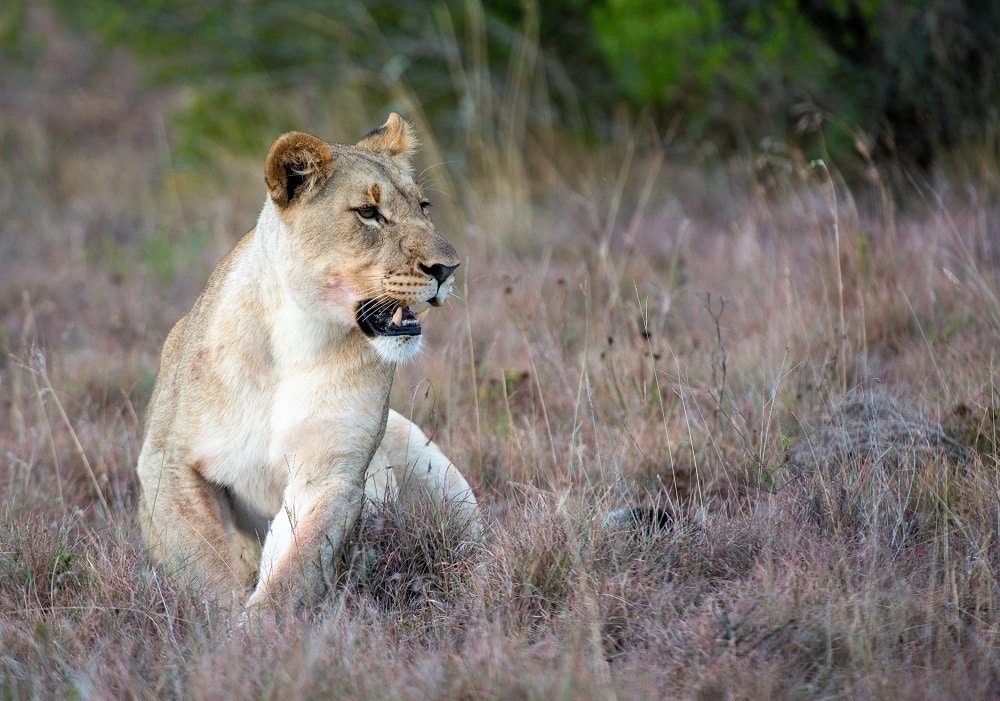
An unexpected bonus on the drive back down from the plateau was coming up on a fresh lion kill. And I mean fresh. Roelof and Kevin saw some fresh lion tracks crossing the path and got out of the vehicle to investigate. Not 30 seconds later, they were back into the vehicle, having spotted a male lion barely 10 meters off the track. Inching forward a little bit, we saw the lion looking in our direction, and through an opening in the bushes, there was a seemingly untouched but clearly dead eland bull. We had inadvertently interrupted the lion’s attempt to start feeding. I took a couple of photographs and we moved on; pleased to have seen one of the big cats in this environment but not wanting to insert ourselves into the aftermath of a kill.

Getting there

Samara is located in South Africa’s Eastern Cape Province, about 33 miles south-east of Graaff-Reinet, South Africa’s fourth oldest town, in the very heart of the Great Karoo. All along the drive up to Samara from the Garden Route coast, Kathy and I felt like we were in a misplaced movie set. Being residents of the flat and featureless Texas coastal plains, even the most mediocre of hills impress us but this drive was simply spectacular. It started with a bang, negotiating the stunningly beautiful Outeniqua Pass, not far out of the coastal town of George. Being stuck behind a slow-moving truck is not a hindrance or nuisance there. Quite the contrary. All the more time and opportunity to steal glances in every direction, even if you’re not supposed to, from behind the steering wheel.

Emerging from the pass we thought the landscape bonanza was at an end, but we were wrong. It went on and on literally all the way to Graaff-Reinet, and beyond, right up to and including, of course, Samara itself. One magical vista would fade away only for another to take its place.

The asphalt road was in excellent condition all the way from George and the traffic was light, to put it mildly. Inexplicably, certain stretches of the highway were conspicuously marked with large signs which read “High Accident Zone.” With so few other vehicles around, one has to assume this refers to single vehicle crashes. Very few Houstonians are likely to doze off in such spectacular surroundings but the rest of you – take it easy and stay alert.

I can’t speak to the condition or the visual attractions of the road from Gqeberha (formerly Port Elizabeth), but it is the shortest and most direct way to get to Samara from a major airport. The distance of about 170 miles can be covered in roughly 2.5 to 3 hours. Port Elizabeth Airport (PLZ) can be reached by commercial flights from Johannesburg, Cape Town and Durban. Of course, if you were to travel with Fish Eagle Safaris you would likely reach Samara on a pre-planned road transfer from Port Elizabeth Airport.

It’s also possible to drive to Samara from Cape Town, taking up to 8.5 hours along the scenic route 62, considered to be one of the top road trips in South Africa. It is advisable to make this a two-day trip – a journey which we are planning for the summer of 2025. From Samara it takes about 6.5 hours to drive to the Cape Winelands centers such as Stellenbosch or Franschoek along the fastest and most direct route, the N1.

There’s a private gravel airstrip at Samara and an asphalt airstrip in nearby Graaff-Reinet, so the area is reachable by private charter flight from anywhere in South Africa.

Understated elegance:  Accommodation, food & hospitality

General manager Marnus Ochse personally welcomed us at the front entrance of the main building at Samara’s Karoo Lodge, a beautifully reimagined Karoo farmhouse. Marnus’ presence and manner instill confidence and exude a sense that he and his team are on top of things. And so it was. Over the course of our two days my favorable first impressions were confirmed and exceeded. The accommodation certainly leaves nothing to be desired. When we were not busy exploring – which was most of the time – we were warmly and comfortably ensconced in the impressive room #7 at Karoo Lodge. Over the years we have seen and experienced dozens of deluxe lodges all over Africa and Samara’s Karoo Lodge does not have to take a back seat to any of them. To the contrary. By retaining the lodge’s quintessential Karoo character while embracing a modern approach to safari living, Samara’s owners have created something really special and unique. The expansive wraparound verandah abutting the main building is a good example of what makes Samara worth going out of your way for. On my next visit I am 100% going to schedule some time to simply enjoy the fresh, clean Karoo area right there. Taking my time over a cup of decaf Americano while my eyes wander over the craggy, mysterious landscapes in the far background.

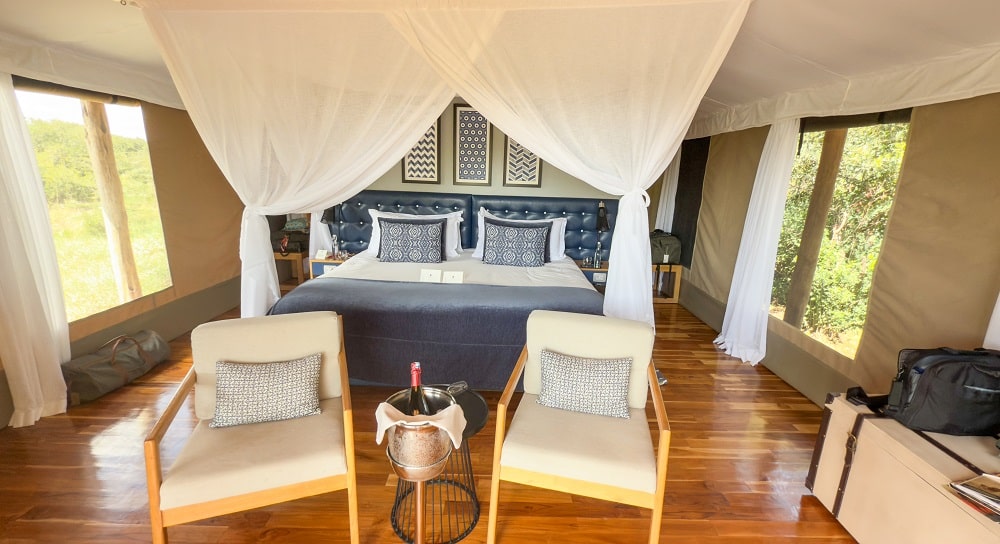
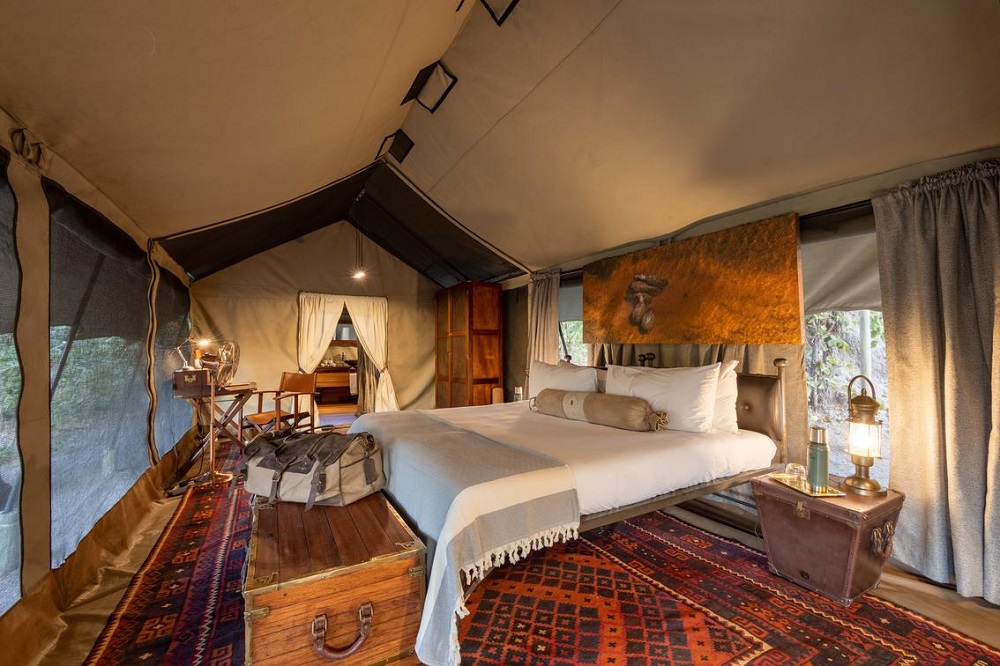
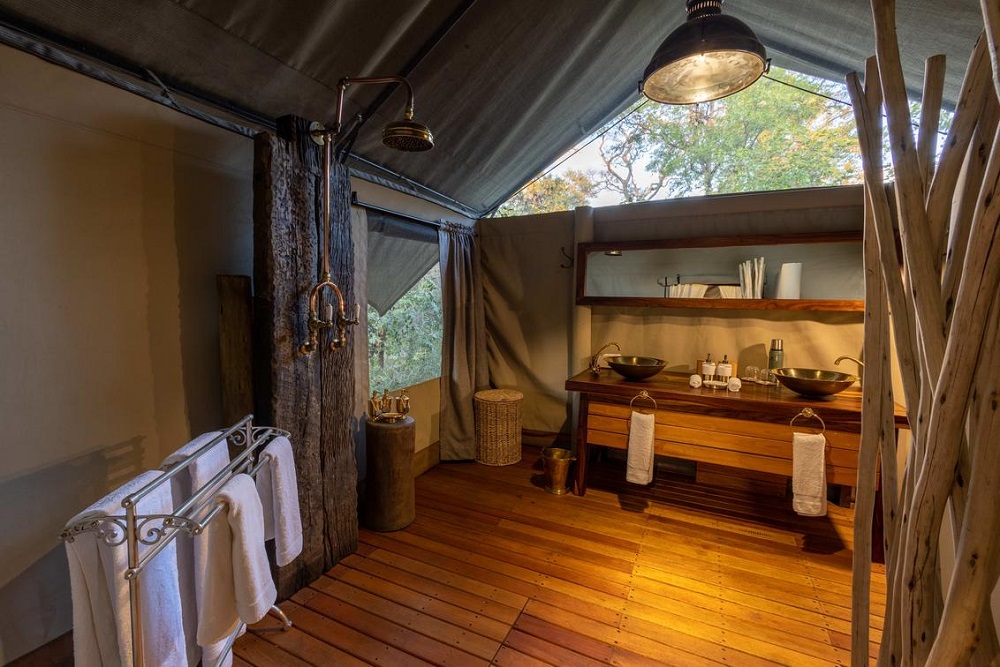
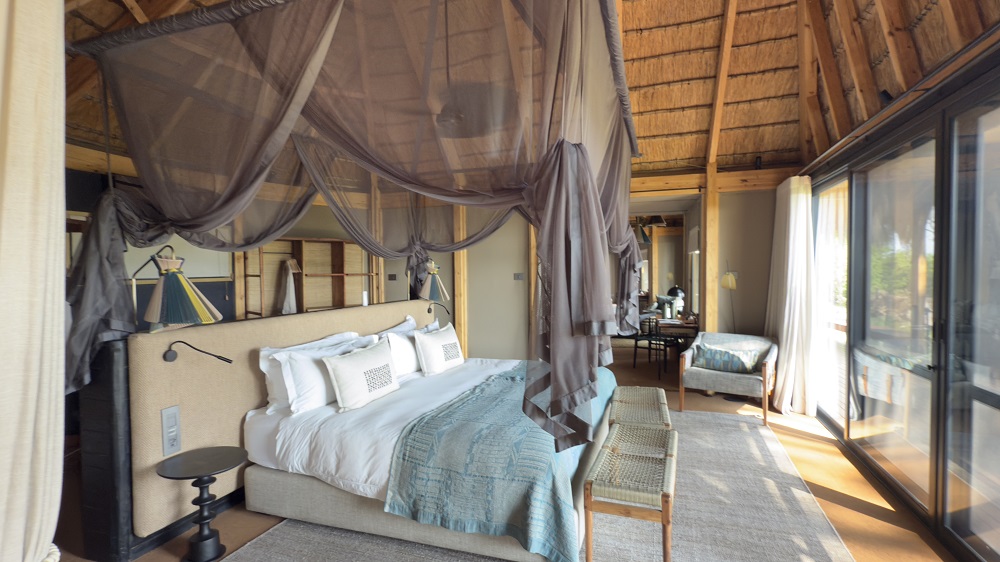
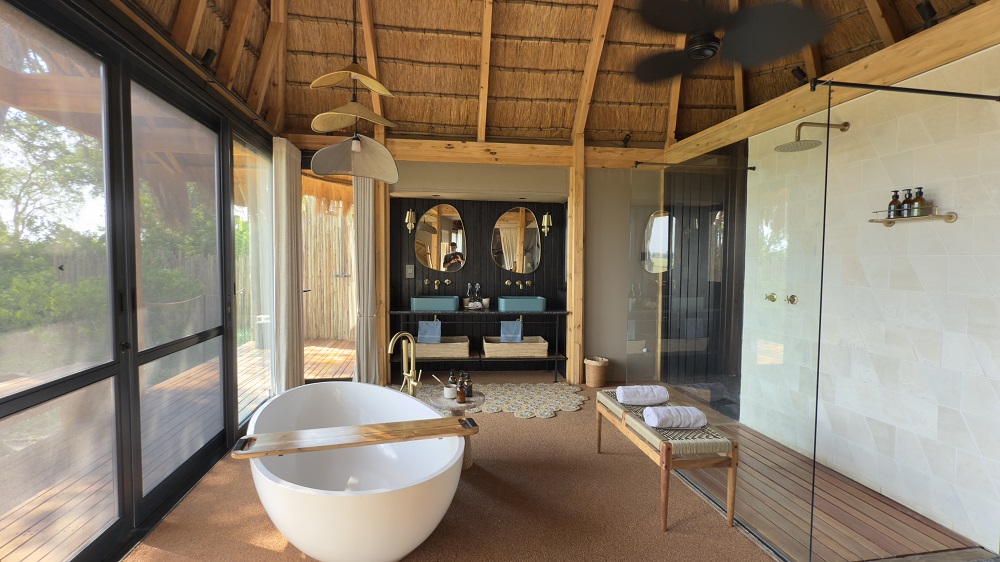
Having been extensively renovated in 2023, Karoo Lodge now has 10 suites, eight Karoo Suites and two Karoo Family Suites, sleeping up to 24 guests total. Our Karoo Suite #7 is ideal for a couple, complete with romantic four-poster bed, a fireplace (yes we used it), air-conditioning, a large separate bath, plus indoor and outdoor showers. Hopefully next time we will have a bit of time to spend in the covered patio overlooking the dramatic mountain landscapes, binoculars ready to spot a few birds and maybe a black rhino coming to drink at the waterhole.

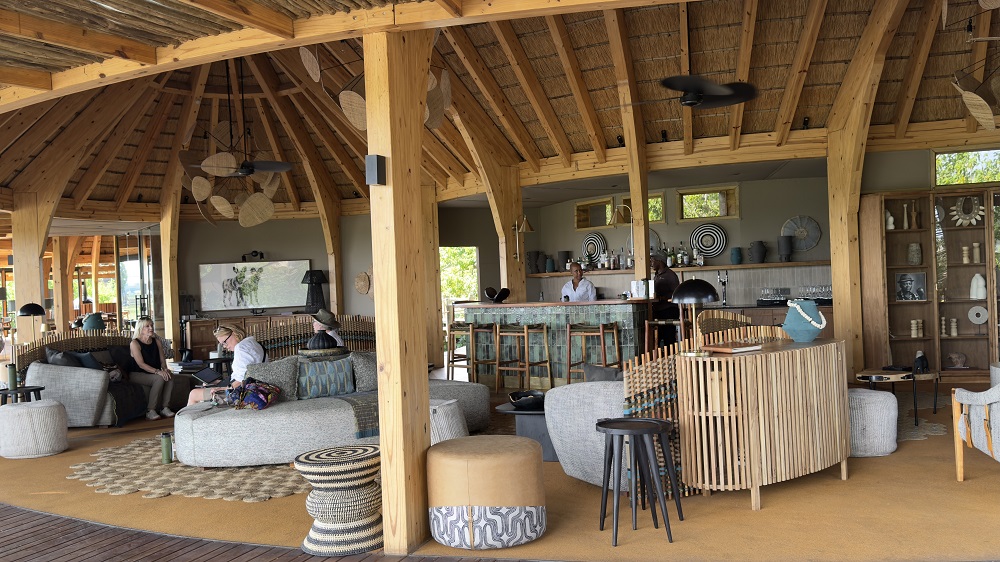
The main lodge – where we enjoyed our meals – was as welcoming and comfortable as it gets, with a pleasing blend of natural tones and fabrics creating a warm Karoo homestead setting. There’s certainly plenty of room and as much privacy as anyone could desire with two sitting rooms, a separate dining room, library, a farm-style kitchen, colorful plant-filled courtyard, wine cellar, a story room and of course the aforementioned verandah. Make yourself at home.

Kathy and I very much enjoyed the cooking at Samara. Probably a little too much. We have a penchant for Karoo lamb and there we were, finding ourselves smack in the middle of the Great Karoo in a place where lamb takes pride of place on the menu. So yes we tried their famous Karoo lamb burger and several other South African classics prepared with locally sourced ingredients. Breakfast – served in the crisp morning air outside on the verandah – was equally delicious and fun with a selection of fresh fruit, cold meats, yogurt and cheeses. Those being the precursor to an old-fashioned Karoo hot breakfast with eggs like you like them, lamb sausage (naturally), freshly grilled tomato and sauteed mushrooms. We also managed to squeeze in a pre-game drive afternoon tea-time snack, a superb baked cake.

To find out more about Samara and to learn how it can best be worked into a unique South African experience, email Bert at bert@fisheaglesafaris.com or leave a message with our answering service at 1-800-513-5222, any time.

Samara Karoo entrance/exterior photo and suite exterior photo courtesy Samara Karoo

YOU MIGHT ALSO BE INTERESTED IN

Destinations
Zambia

10th September 2021

Chindeni and the Bushcamp Company, Zambia

By late July we found ourselves at Chindeni, a small Bushcamp Company property

Read more
Botswana
Destinations
Okavango Delta

3rd October 2022

Camp Okavango, Botswana

Camp Okavango is in the heart of the permanent part of the Delta. In this idyllic setting there are no vehicles, and it is just a short walk

Read more
Area
Destinations
Nyerere National Park
Ruaha
Tanzania

14th October 2023

From My Safari Notebook: Wildlife Photography

Birds in flight and wildlife photographers have an uneasy relationship. Things go wrong as often as they go right. Getting focus-lock on a moving subject

Read more

SUBSCRIBE TO OUR NEWSLETTER

READERS FAVOURITES

Destinations
India

27th May 2023

India

India’s tiger, mammals and birds.

Read more
Botswana
Destinations

4th August 2022

On Safari At Belmond Eagle Island Lodge, Okavango Delta

What is the ‘secret sauce’ for an unforgettable few days on safari in Botswana? It starts with the animals, of course. The elephants, lions, giraffes, hippos

Read more
Destinations
Zambia

10th September 2021

Chindeni and the Bushcamp Company, Zambia

By late July we found ourselves at Chindeni, a small Bushcamp Company property

Read more

48 Hours at Great Plains Duba Explorer and Okavango Explorer Camps

13th October 2024

48 Hours at Great Plains Duba Explorer and Okavango Explorer Camps

The most unexpected experience at both Great Plains’ Duba Explorer and Okavango Explorer tented camps, located in remote corners of the Okavango Delta in Northern Botswana, was not the warmth and friendliness of the staff and management. Or the expertise of the professional guides – Paul and Chillie B – which between them helped us find 111 different bird species in 48 hours. Neither was it the quality of the food, particularly the two tasty bush breakfasts. The most unexpected experience at the two classic tented camps was the showers. No kidding. Not just the size of the shower head or the temperature of the water (as hot as you can handle) but the water pressure. Astonishingly high for anywhere. I’m an inveterate bath person but even I enjoyed that deluge of Okavango Delta water washing away the dust and sand. 

Of course, Great Plains Conservation does a lot of other things well. The interiors of the tent were tastefully furnished with a collection of campaign style chests, desks and chairs, and they had proper reading lights, plenty of storage space, a most comfortable king size bed and soft pillows. The vehicles had ample space with three rows each with two seats, separated by a lidded box for electronic gear and other stuff. There were soft blankets for the crisp mornings, cup holders for your morning coffee to go and a sturdy sun cover to provide some shade. 

The dining experience was a solid step up from some of the buffet offerings we had enjoyed earlier. Particularly at Duba Explorer where chef Beauty treated us to a wonderfully romantic poolside dinner with an Italian style panna cotta of tomato starter with a choice of trout or duck (both superb) or a vegetarian main course. The meal was rounded off with a delectable dessert – a chocolate brownie with caramelized sugar and homemade ice cream.  

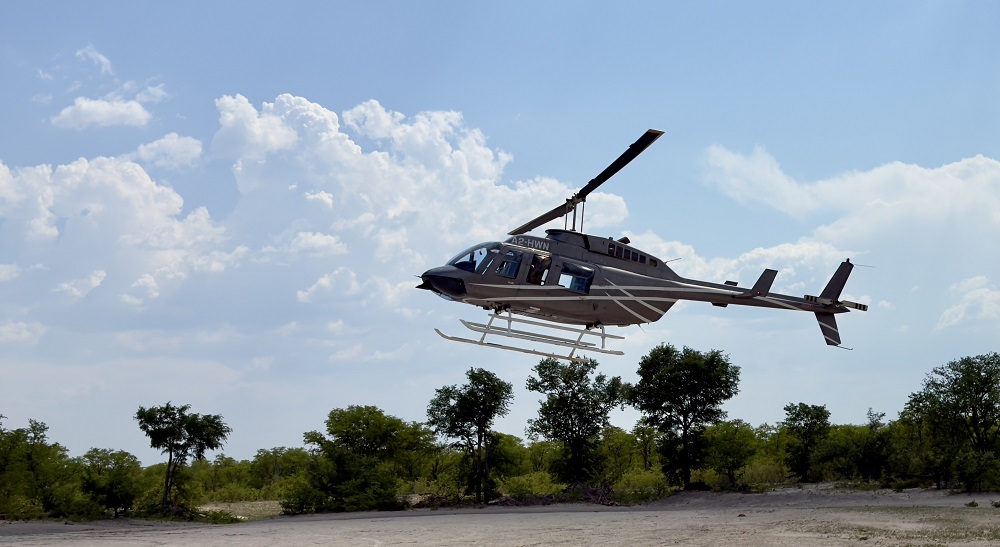
Yet another exciting helicopter flight with Helicopter Horizons took us directly from Mokete to Duba Explorer with some fantastic sight-seeing en route, flying within sight of several airstrips and safari camps. Every few kilometers there would be new and different vistas over the Okavango Delta with water in every direction. A veritable kaleidoscope of colors, textures and patterns ranging from blue-green to bright green vegetation, almost black sandy spots and swirls, white bleached sand and grey burn patches with the ashy outline of tree trunks demarcating the direction of the fire.

Landing quite close to the camp in a small clearing, our guide Paul (whom we had first met at Mashatu in 2023) drove us the short distance into camp. Duba Explorer has a grand entrance, with every new arrival walking into camp across a sizable bridge over a perennial Okavango Delta waterway. After completing the routine arrival formalities (receiving a camp briefing and signing the indemnity form) we were escorted to our room, one of six tented classic expedition style tents. With ultra comfortable beds, a mosquito net, separate shower and toilet compartments, decent lighting and enough power points. The lounge at Duba Explorer is a fun place to spend a bit of time, with a spacious indoor/outdoor seating area for meals. Just off to the right, there is a small plunge pool built into an antique military style vehicle.   

Our afternoon outing from Duba Explorer was a boating safari along the Okavango River and it reminded me of what we had been missing on the last several game drives in Northern Botswana. Navigable water. The entire two and a half to three hour outing felt like being inside a painting waiting for a canvas and an artist. Simply gorgeous, particularly as the sun started to sink lower and everything was bathed in the golden afternoon sun. Just a few minutes out of Duba Explorer, we took a left turn from a large lagoon into a waterway which seemed to be cordoned off by a sizable raft of uneasy hippos. I had just resigned myself to the fact that the only way forward was going to involve a perilous dash along the far left edge of the stream, when Paul did a 180 degree turn and we headed back in the direction we came from.  

Another left turn got us into a spectacular channel in the direction of Duba Plains. It was one of the best outings of the entire trip, with elephants crossing ahead of us, lechwe giving us the side-eye, kudu visible everywhere and even the usually elusive bushbuck putting in an appearance. We were on a quest to snag one of Great Plains’ special 111 Club caps, given to guests who can spot that many birds over the course of their stay at one or more Great Plains camps. With four pairs of eyes on the boat (Paul, me, Kathy and Kay, a community representative ) we were spotting birds left right and center and by the end of the afternoon our list reached the low 80’s. In hindsight, I think a boating activity in the Okavango Delta – water levels permitting – should be right at the top of anyone’s list of things to do in Northern Botswana. This is what the Okavango Delta is all about and it can only be appreciated and experienced to its full, amazing effect from a boat.  

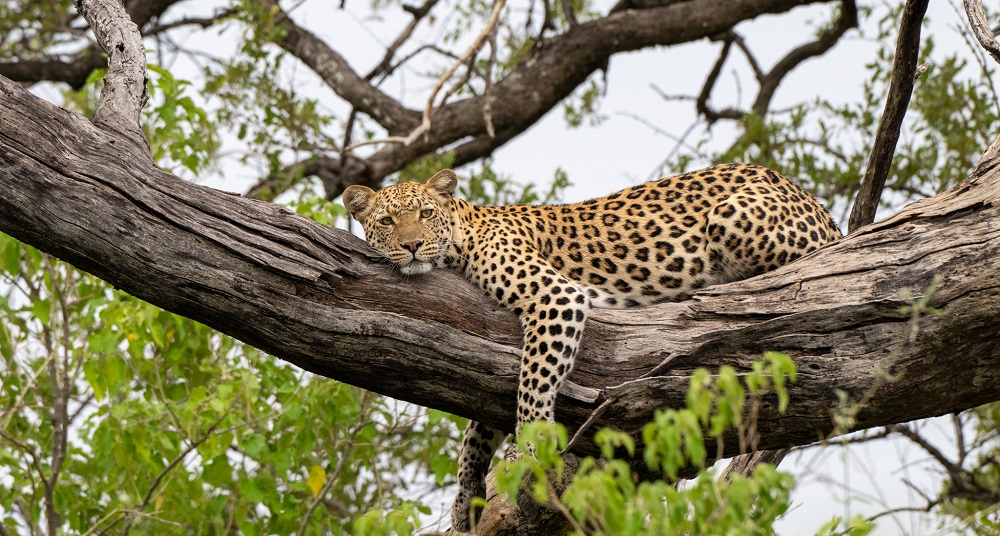
Our game drive at Duba  Explorer the following morning was initially quiet. We simply could not locate the lions which had been roaring right outside of the camp the previous night. For a while there we had to be content with simply driving through the spectacular grassland scenery. And then, as so often happens on game drives, everything changed. We started to rack up one good sighting after another –  initially a large herd of buffalo, then a large journey of giraffes and eventually a young male leopard about halfway up a tree. The leopard had clearly been observing us enjoying our morning coffee and muffins. Paul had pulled into a spot less than 100 meters away from and in direct line of sight of the leopard.

A short 15-minute helicopter ride took us across some beautiful expanses of Okavango Delta floodplains to the far southern edge of the Selinda Concession to Great Plains’ Okavango Explorer camp. It was in many ways similar to Duba Explorers, just with fewer touches (no plunge pool, scaled down lounge and dining area) and a different, less than ideal bathroom layout with the shower and the screened toilet in the same room. On the plus side, the location right on the edge of the Selinda Spillway is perfect and the camp is in an ecotone with remarkable habitat diversity. This is prime elephant and predator terrain, with lions, leopards and African painted dogs being seen regularly. In addition, as we were to see for ourselves, there are good densities of giraffes and some rare antelopes like roan, sable and eland. All three of which we saw in good numbers.  

Our two game drives at Okavango Explorer with our guide Chillie B, delivered plenty of plains game but were light on predators. This is of course exactly why we recommend that guests spend a minimum of three nights in any one area. Animals move around in real time, they come and go, appear and disappear. You’ve just got to give yourself – and your guides – enough time to make it all happen. And yes, you will almost certainly have a slow morning or afternoon or two somewhere. Sooner or later. As it turned out, we saw a solitary painted dog but the animal was in distress, having been injured or otherwise harmed without any obvious, visible clues.  

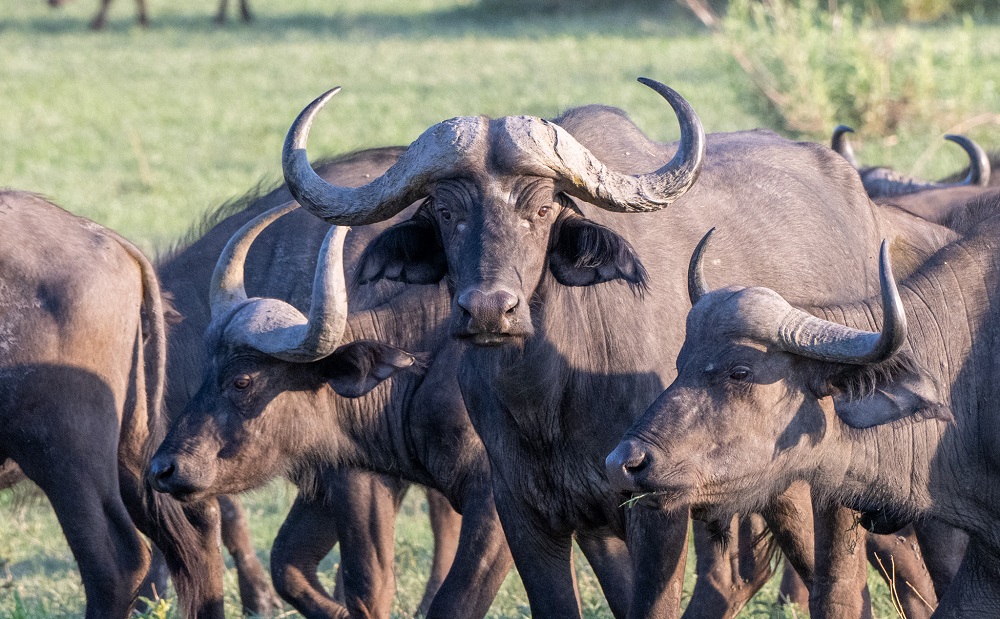
On our final morning game drive  we racked up a series of sightings starting with a huge herd of buffalo kicking up a plume of dust as they moved across an island. A bit later we saw some shy zebras, a small group of the superb roan antelope, several herds of eland, elephants, giraffes, more not-so-shy zebras, a hippo out of the water and the highlight of the morning: a nice sized breeding herd of the magnificent sable antelopes. With Chillie B’s help, we reached the mark of 111 bird species in 48 hours in just four outings (three game drives and a boating excursion in the Okavango Delta) at the two Great Plains Conservation Explorers camps. In addition to being fun – and we learnt a lot – it livened up the not so exciting stretches of the outings and incentivized our guides.  

We’re looking forward to spending several days at another Great Plains Conservation Explorers Camp – Selinda – in early December this year. This time, we’ll have 72 hours to reach the 111 bird tally! 

For more information about the Great Plains properties, including some attractive long-stay options for this year and next, please email Lyndon at lyndon@fisheaglesafaris.com or call us at 713-467-5222 at any time, to leave a message with the answering service. We will get back to you right away.

YOU MIGHT ALSO BE INTERESTED IN

Destinations
Zambia

10th September 2021

Chindeni and the Bushcamp Company, Zambia

By late July we found ourselves at Chindeni, a small Bushcamp Company property

Read more
Botswana
Destinations
Okavango Delta

3rd October 2022

Camp Okavango, Botswana

Camp Okavango is in the heart of the permanent part of the Delta. In this idyllic setting there are no vehicles, and it is just a short walk

Read more
Area
Destinations
Nyerere National Park
Ruaha
Tanzania

14th October 2023

From My Safari Notebook: Wildlife Photography

Birds in flight and wildlife photographers have an uneasy relationship. Things go wrong as often as they go right. Getting focus-lock on a moving subject

Read more

SUBSCRIBE TO OUR NEWSLETTER

READERS FAVOURITES

Destinations
India

27th May 2023

India

India’s tiger, mammals and birds.

Read more
Botswana
Destinations

4th August 2022

On Safari At Belmond Eagle Island Lodge, Okavango Delta

What is the ‘secret sauce’ for an unforgettable few days on safari in Botswana? It starts with the animals, of course. The elephants, lions, giraffes, hippos

Read more
Destinations
Zambia

10th September 2021

Chindeni and the Bushcamp Company, Zambia

By late July we found ourselves at Chindeni, a small Bushcamp Company property

Read more

Wilderness Mokete Camp Exceeds Expectations

12th October 2024

Wilderness Mokete Camp Exceeds Expectations

So did Mokete Camp in Northern Botswana’s Mababe area live up to advance billing? You bet it did! Our very first game drive with guide Jonah – on the afternoon we arrived in early August this year –  delivered our best aardvark sighting ever. I finally have some decent photos of one of these elusive beasts. And what a weird weird animal it is with its odd, thick tail, pig-like claws and elongated snout. 

We thought it was going to be tough sledding for Jonah to match a brilliant aardvark sighting but in less than an hour the following morning, he proved us wrong. Not long after first light, we experienced the jaw-droppingly awesome sight of six lions taking down an old, truly beaten up female buffalo right in front of our eyes. From beginning to end, chase to first contact to the embrace of death with two female lions literally suffocating the life out of the hapless buffalo. It almost appeared as if the old buffalo knew that its days were numbered not very long into the event. One or two feeble bellows early on and then a silent surrender to the inevitable end. 

As kills go – and we’ve witnessed a few over the years – this one was nearly bloodless as the lions were not at all hungry. We surmised that the group of young lions were just being their opportunistic selves and taking advantage of the abundance of buffaloes. This was at least the 4th buffalo they had taken down in less than 24 hours. 

Our four different drives turned up a wealth of other species as well including elephants, buffalo, more (different) lions, giraffe, impala, wildebeest, zebra, tsessebe, roan antelope, waterbuck, lechwe, sable antelope, warthogs and several good birds including ostrich, kori bustard, Bradfields hornbills, giant eagle owl and black korhaan. 

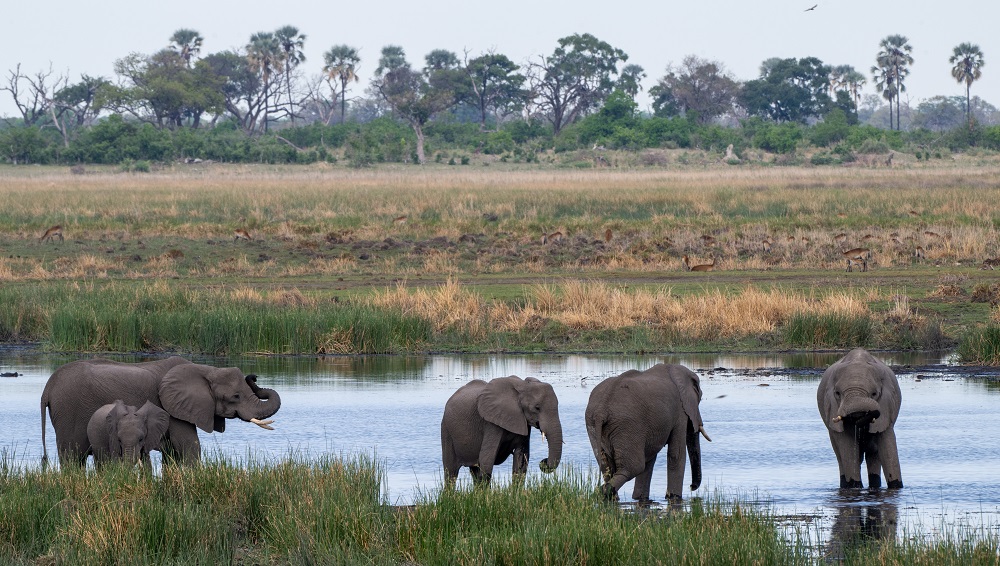
A session spent in an underground hide on the edge of the marsh produced a bonanza of elephant photos with group after group after group of elephants coming down to the water’s edge in the late afternoon. At one stage we had a triple layer of pachyderms in view: elephants in front of elephants in front of elephants. 

On an early evening night drive, following the elephant hide session, Jonah somehow spotted a pack of African painted dogs in the darkness and we observed the five young pups playing with an impala head as well as later on feeding on some impala ribs. 

On our final morning drive, departing camp at 6 am, we had two main objectives: number one to find the two ‘golden boys’ – a pair of particularly handsome lions – and, if possible, the rest of the pride which included five cubs. The second objective was to return to the area where we had seen a pack of African painted dogs – with five youngsters – early the previous evening. We cleaned up on both, going two for two with a home run of a drive. Our capable guide Jonah heard one of the males calling, and within 10 minutes or so, we had one of the two males in front of the vehicle in good morning light. Another 10 or 15 minutes later and we were looking at the other golden boy who had joined up with the rest of the pride; three females and the five youngsters. 

Eventually we made our way to the location where we had left the painted dogs the previous night. While they were not in exactly the same spot, they were nearby, and this time in broad daylight. For the next 15 minutes or so we watched as the young dogs gamboled and played and eventually flopped down to rest about 30 meters or so away from the anxious parents 

Overall the abundance and variety of wildlife at Mokete bordered on phenomenal, reminding both Kathy and me of some of our best experiences in the Serengeti and the Masai Mara, with as many as six or seven mammals to be seen at the same time or within a matter of minutes of each other. 

Getting there and some camp details

Our last-minute trip to Botswana – to check out Mokete and a couple of Great Plains Conservation Explorer camps – did not start well. For starters, our Airlink flight into Maun arrived a solid hour late, due to an air traffic control issue at JNB Airport. 

We thought that being second in the immigration line – once we got into Maun – would help to put us back on track. We were wrong. The one person ahead of us in the line ended up having a serious immigration issue. There went another half an hour. We did eventually make it through immigration and customs (a bit more about that below) and just minutes later we were getting strapped into a Robinson 33 helicopter. Ably piloted by a young New Zealander flying for Helicopter Horizons, the 40 minute chopper flight directly to Mokete ended up being a pretty good flight-seeing experience, particularly towards the latter part of the flight as we got closer to camp.

Kathy and I liked everything about our room at Mokete (we were in #9). It was spacious with lots of natural light, a huge king size plus bed with a sky light, super nice pillows and a cooling system over the headboard. While we did not need it (it was cool enough at night) it would be nice for an afternoon nap and for any time during the day in the warmer months. The lighting was great, there was enough storage space, a good shower, separate toilet and a nice sitting area with a bench and table. 

We asked for the skylight to be opened on both our nights there and it was awesome to be gazing up at a million stars from bed. Nights on safari are pretty special anyway and the skylight made them even more so. 

In line with Wilderness’ general style, the camp has lots of privacy with plenty of open space between rooms. Which makes for a healthy hike if you’re in the last room on the left side – room #9. The rooms have a generously sized plunge pool which we did not get to use during our trip but which we are sure future guests will enjoy during the warmer months. Kathy enjoyed a massage on the pool deck while I caught up with some writing. 

Dinner on our first night at Mokete was fine but nothing special; clearly we had been spoiled with the quality of the cooking on our recent trips to Mozambique and Madagascar. The buffet offerings at Mokete were tasty but the presentation was not the greatest and some of the dishes, like a spinach side dish,  did not look appetizing at all. Of course one can’t expect too much in a safari camp which has to prepare a multi-course meal for as many as 18 people all sitting down at the same time. Also, the buffet style presentation does not make it any easier to present food in its most appetizing form. 

Even so, our early lunch the following day was excellent with no room for criticism. It was another ample offering with a delicious quiche, perfectly grilled chicken wings, a beetroot salad, a cheese platter with cheddar and a blue cheese, all accompanied by freshly baked bread as always. 

Our second dinner at Mokete (a duck stew, salmon with a lemon butter sauce, a risotto, steamed vegetable and a green salad) was perfectly palatable but not overly exciting or accomplished. We think guests to this camp can look forward to well prepared, tasty meals with ample options and generous portions. Just don’t be expecting gourmet fare. Not the place for it. A final lunch on the day of departure did not disappoint. Beef stroganoff with noodles, a potato side dish, mixed green salad and a cheese platter as well as fresh fruit. 

The bottom line: Wilderness’ new Mokete camp in the Mababe area is by far the best game-viewing property we’ve visited in the last year or so. It was simply superb all-round, although the hospitality part of things was still a bit creaky with the coffee, sugar and milk not always arriving at the same time. They will figure that out. Having experienced amazing lion/buffalo interaction and walking with an aardvark trumps everything else and being served a cup of lukewarm decaf was small potatoes. At the price point – almost 50% lower than the 2025 rate for several of Wilderness’ other classic category Botswana camps – Mokete is a steal. So for serious photographers and ‘big game action’ aficionados considering a 2025 Botswana trip, my advice would be to plan everything else around at least 4 nights at Mokete. Wilderness Mokete’s ebullient camp manager Yompy Kennetseng and his team are waiting for you. 

Mokete is filling up fast for next summer (June through August & September) but email me at bert@fisheaglesafaris.com or call our Houston office any time at 713-467-5222 or 800-513-5222 if you are interested combining the camp with another Botswana camp – such as Chitabe – or to possibly add it as an extension to a South Africa, Zimbabwe, Zambia or Namibia safari. 

YOU MIGHT ALSO BE INTERESTED IN

Destinations
Zambia

10th September 2021

Chindeni and the Bushcamp Company, Zambia

By late July we found ourselves at Chindeni, a small Bushcamp Company property

Read more
Botswana
Destinations
Okavango Delta

3rd October 2022

Camp Okavango, Botswana

Camp Okavango is in the heart of the permanent part of the Delta. In this idyllic setting there are no vehicles, and it is just a short walk

Read more
Area
Destinations
Nyerere National Park
Ruaha
Tanzania

14th October 2023

From My Safari Notebook: Wildlife Photography

Birds in flight and wildlife photographers have an uneasy relationship. Things go wrong as often as they go right. Getting focus-lock on a moving subject

Read more

SUBSCRIBE TO OUR NEWSLETTER

READERS FAVOURITES

Destinations
India

27th May 2023

India

India’s tiger, mammals and birds.

Read more
Botswana
Destinations

4th August 2022

On Safari At Belmond Eagle Island Lodge, Okavango Delta

What is the ‘secret sauce’ for an unforgettable few days on safari in Botswana? It starts with the animals, of course. The elephants, lions, giraffes, hippos

Read more
Destinations
Zambia

10th September 2021

Chindeni and the Bushcamp Company, Zambia

By late July we found ourselves at Chindeni, a small Bushcamp Company property

Read more

Lyndon Revisits Mana Pools, Zimbabwe

25th August 2024

Lyndon Revisits Mana Pools, Zimbabwe

Mana Pools is a near-legendary national park which lies along the lower Zambezi River in far northeastern Zimbabwe. Renowned for its game viewing (elephants, big cats, buffalo, plains game & African painted dog), the area is highly atmospheric and for many seasoned safari goers, Mana Pools is the holy grail. Being on the Zambezi and with the Zambian escarpment visible in the background across the river, the setting is very special too. Over the years, all of our team members have traveled to Mana Pools, checking out several of the properties in the area including Ruckomechi and Little Ruckomechi, Chikwenya (in its former and current iteration), John’s Camp, Vundu, Kanga and Nyamatusi. On his recent May trip with Christine, Lyndon visited two relatively new properties in Mana Pools, namely Mana River Camp and Ingwe Pan Camp. He also revisited Ruckomechi.  

Ruckomechi Camp

We had an afternoon light air flight from Matusadona to Mana Pools and a short game drive on arrival. The flight was short, about 30 minutes, and scenic. The Kariba Dam was clearly visible from the air. Looking at it from 6,000 feet I couldn’t help but wonder how it has managed to keep all of that water at bay since 1959. Quite an engineering marvel. Our game drive was productive and after going multiple game drives without a cat sighting we spotted two lions not 10 minutes from the airstrip. It was a mating pair, a young male and female. They were exhausted and after observing them for a few minutes we let them be.

Just a bit later we found the brother of the male lion we had just seen. And he put on an absolute show giving us a roaring exhibition for the ages! If lions could be opera singers this guy was one of The Three Tenors. We heard him and his brothers roaring all night from the camp. Our sundowner was late due to our start time and our guide Faidon prepared it for us while we sat in the vehicle after the sun had already gone down. As he was preparing the drinks and snacks some elephants ran by us in a hurry responding to a call from one of their babies. Faidon is an impressive person having spent 42 years with African Parks before deciding to become a guide. 42 years! And he is so enthusiastic about wildlife.

Our activity ended with some spotlighting and we were very fortunate to see several genet cats and a serval, only the second one spotted by the camp so far this year. On our way back to camp we spotted the business end of a porcupine and also had to turn around and take a different route because the mating pair of lions had decided to take a nap in the middle of the road. Best not to disturb them…

Ruckomechi is perched very scenically on the river with the Zambezi escarpment in the background and surrounded by several very tall and shady trees. Hippos can be heard at night. During our dinner we had a couple of elephants walk right past the front of the camp. They tend to move around the area often, so escorts to and back from guest tents are mandatory when the sun is not up. Dinner was roasted chicken and garlic with rice and veggies served with rice. The soup was a tasty mixture of tomato, celery, and apple and dessert was a ginger tart. Everything was good.

As I discussed with my wife, the rooms are right out of goldilocks and the three bears. Just right. Just the right size, just the right amount of decoration and luxury, not too much and not too little. Everything that you need and maybe only a few things you don’t as well. It had been a very good start in Mana Pools.

The following day we did a couple more game drives and while they were not quite as productive as our initial one, they still delivered. Of course, we saw all the general plains game and a good amount of elephants and additionally we saw the lions a few more times. We were able to observe a small herd of eland and later a lone gigantic eland bull at a very close range, a rarity as they are usually shy and will run from vehicles. We briefly spotted the elusive honey badger as it ran across the road on its way somewhere in a hurry. During the afternoon we had a family of elephants walk through camp right by the tents, including ours.

*Camp photos courtesy Wilderness Ruckomechi

Mana River Camp

After our two nights at Ruckomechi we were scheduled to take a boat transfer down river to Mana River Camp. Pick up was 7 in the morning so we had a normal wake up routine and headed out to the beautiful main area to take in the views and enjoy some breakfast while we waited. After a short time we heard a boat engine and got ready to take the short drive to the ‘dock’ area. But then the sound disappeared, and we were left waiting for another half hour to 45 minutes. Eventually we saw a boat drifting downriver, powerless. The captain was actually rowing. Our transfer boat had broken down. Ruckomechi quickly reacted and sent a boat of their own to tow in the vessel and we were told another boat would come but it would not arrive for another 45 minutes. No big deal and our guide decided we had time to go for a quick game drive. Good thing we did because we managed to spot a couple big male lions! This kind of quick thinking is one of the reasons we love Africa. Things might go wrong but the people are resourceful and we can sleep better knowing that we and our clients are in good hands.

Once our new boat arrived we were radioed and headed over from our game drive to the dock. This boat was a bit smaller and had no roof but I think it must have been a bit quicker too. We zigzagged a bit down the river, the captain sticking to the deeper water as best he could. Soft drinks and bottled water were provided for us. It was quite an enjoyable voyage although we were heading directly into the sun and were moving too quickly to confidently wear hats. So we definitely received a little sun. In all, the transfer probably took an hour. We were dropped off and met our new guide, Richard, who was waiting for us at the designated pick up spot. After a quick trip to the National Parks office we were off on a drive in search of some lions that had just been spotted with a fresh kill.

En route we had a fantastic up-close viewing of a woodland kingfisher, quite a colorful and handsome bird. Richard said he had never been this close and was excited about the picture he was able to take. You know it’s good stuff when the guide takes out their personal camera.

The setting in Mana Pools could be described as quintessential Africa. It looks just like you picture it. Or at least how I do. Tall trees sprinkled in amongst open spaces and short grass. Sandy dirt roads that wind up and down and across dried up streams where you are thankful that the guide has a land cruiser. Green leaves and long dead and dried up stumps. A picturesque floodplain with a mountain range on the other side. In a setting like this it can be fun to simply be a passenger and be driven along for a while at times. Animals are present but there are quiet stretches that remain enjoyable.

After driving for a while, we arrived at the scene where the lions had taken down what looked like a big eland. The lions were as full as I have ever seen, the males comically so. There is a hierarchy when feeding and the large males eat first and can really gorge themselves. One in particular looked like if he had laid down on a hill he would have rolled to the bottom. It was around noon and hot outside and they were all panting heavily. I think we have all been out for dinner and had some regrets about eating too much… We spent some time observing them before heading back to camp.

Mana River Camp is an adventure level camp so it is rustic but has all the basics that you need in the bush. Electricity, check; running water, check; comfortable bed, check; good food, check; and most importantly friendly and thoughtful service, and high-level guiding. Check and check. The location is pretty special too with the camp about 12-15 feet up overlooking a nearby island right on the Zambezi. There are plenty of large trees here to help shade the tents and keep the temperature bearable. All the rooms have a standing fan as well. There is WiFi but it has been inconsistent so I wouldn’t count on joining any Zoom meetings from here. Not that you will want to.

Activities here and in Mana Pools generally include game drives, walking, canoeing, and fishing. Often game drives will be mixed with walking as the guides love to drive for a while and then either go for a walk where they know there will be animals or when they see for example an elephant in the distance or something of interest. The walks can be very rewarding and a welcomed change of pace from sitting in the vehicle. You will be given instructions about following in a single file line, watch your step, listen to the guide’s instructions at all times, and of course the golden rule of the bush – whatever happens, don’t run. The walking guides here are the best in the business. It takes a long time – as much as five to seven years – to become qualified. In fact you need to go on hundreds of walks with other pro guides before you can lead them. And before you do that you need to be fully certified and trained with a rifle which the lead guides carry with them on all walks.

Our evening game drive involved such an instance where we did a drive and got out of the vehicle multiple times. Once in order to get a closer and lower to the ground view of a bunch of vultures that were feeding on the remains of a dead hippo. We followed the guide and listened when he said to duck a bit here and there to try not to disturb the birds. Later we drove to one of the four actual Mana Pools for which the park received its name. In the distance a large male elephant was walking towards us. We got out and our guide expertly positioned us to see the elephant cross us and enter the water. And with the sun behind us as well. Hopefully I got a couple good photographs. Richard is very attuned with the needs of photographers and even though I would still consider myself a novice in this regard I am confident even seasoned photographers would be in good hands.

The following day we had a walk for the ages. In the morning we headed out to find the team members who monitor access to the painted dog den sites to prevent too much stress on the animals. When we caught up with them they were in their vehicle tracking the collared members of the pack. It was apparent the dogs were on the hunt and we followed the vehicle for some time before managing to spot one of them briefly at a bit of a distance. Afterwards we went for a walk of about an hour and a half during which we saw elephants, buffaloes, and finally four lions! I had never seen lions while on foot so that was quite the thrill. It can be very rewarding to see so many animals in that kind of setting. Even while on the vehicle we noticed that there are not too many other vehicles driving around. You do see the occasional car from another camp or even a self drive group but for the most part it feels very remote.

The season in Mana Pools generally begins at the start of May so at the time of our visit it was still early in the dry season. It will be slowly cooling down through June and July and much of the wildlife will be flocking to the floodplains as food and water run out further away from the river. This year is expected to be rough as there has been quite a severe drought. Conditions in May were already more like they are in June and July in most years due to the impending drought. It should be a dramatic scene as we move on through the dry season.

For our evening activity we chose to fish. Canoeing is a popular activity here and in Mana Pools in general as well. With the water level in the river being so low I didn’t think it would be as enjoyable. The fishing activity took place essentially in camp just at the other side and towards the back. We fished from a raised bank directly into the Zambezi about 12 feet below. We almost instantly received bites and before long we had both our first catch, mine a tiger fish and Christine a large catfish. Before it was all over I also managed to snag a large catfish. The activity was a blast and I would definitely recommend trying to mix in a fishing activity during your time here. It can be a relaxing way to enjoy the area in between game drives and walks.  

Editor’s note: the camp actually kept the tiger and Christine’s catfish. We assume they ate the catfish and prepared the tiger for us. My goodness was that thing bony.  That is what everyone says about them and I can now fully confirm. The camp manager, Shepherd, said that the usual preparation involves boiling it and letting the bones separate. Then they take the meat and fry them into meatballs. This way they don’t have to deal with all the bones.

Ingwe Pan Camp

The next morning we did a transfer/game drive to Ingwe Pan. Nothing too notable as far as animals en route but you can definitely tell the difference between the camps near the river and on the floodplain, such as Ingwe. As one moves further away from the river the forest becomes quite a bit thicker and the bushes cover up most of the gaps that you would typically find by the water. It is not usually until the end of June and July that a lot of the leaves on this vegetation will fall off making it much easier to spot animals.

Ingwe Pan camp is located in front of a pan with a constant supply of water so once all the other pans in the area dry up, it becomes  the only source of water around. Even by mid May –  with other sources of water still available – the pan was a productive location for game viewing. Elephants visited the water every day that we were there and actually walked directly in front of our tent on both days. Often you require a guide escort to get to your tent even during the middle of the day. Thrilling to witness the animals at such a close proximity! The main area has a really fantastic view of the entire pan and plenty of seats to take it all in. Meals are eaten here and the service staff is also super friendly so it is a nice area to spend some time in between activities. The rooms are spacious and well lit with indoor and outdoor showers and a fan above the bed for when it gets warm. I would rate them as quite comfortable, luxurious even.

*Images courtesy Ingwe Pan

Ingwe has a small concession but is unable to conduct night game drives with spotlights as of this writing. Our guide AB took us out for a game drive in the evening and we were able to see numerous elephants at the surrounding pans as well as a good amount of plains game. For our sundowner we went to a seasonal riverbed and enjoyed the view as well as the slightly cooler temperatures thanks to the sandy ground. AB is an excellent guide and made our experience with Ingwe two for two in that regard.  He is very engaging and I could listen to him talk about wildlife for hours.

The meals at Ingwe were the best we had on safari this trip. There had been some really good meals but by the end of our stay there was no doubt.

After our first game drive the following drives were unfortunately a bit quiet but as I mentioned earlier, I believe the game viewing will pick up significantly as we get further into the winter. One of the highlights was actually seeing the drag marks that a leopard had made after killing something near one of the pans. There were hyena tracks following and we did not get to track them to the end but can only imagine what occurred. When we had to leave for the airstrip and head back to Victoria Falls we did catch a pretty good glance at a big male leopard who came out of the bush on one side before crossing the airstrip and heading into the bush on the other side. All about five minutes before our plane arrived. What a stroke of luck!

Lyndon is ready to answer any questions you may have about visiting the Mana Pools area of Zimbabwe, as well as Hwange, Matusadona National Park and Victoria Falls. He can be reached at lyndon@fisheaglesafaris.com or by calling our office any time (irrespective of your time zone) at 1-800-513-5222. One of us will call you back.  

YOU MIGHT ALSO BE INTERESTED IN
Destinations
Zambia

10th September 2021

Chindeni and the Bushcamp Company, Zambia

By late July we found ourselves at Chindeni, a small Bushcamp Company property
Read more
Botswana
Destinations
Okavango Delta

3rd October 2022

Camp Okavango, Botswana

Camp Okavango is in the heart of the permanent part of the Delta. In this idyllic setting there are no vehicles, and it is just a short walk
Read more
Area
Destinations
Nyerere National Park
Ruaha
Tanzania

14th October 2023

From My Safari Notebook: Wildlife Photography

Birds in flight and wildlife photographers have an uneasy relationship. Things go wrong as often as they go right. Getting focus-lock on a moving subject

Read more

SUBSCRIBE TO OUR NEWSLETTER

READERS FAVOURITES
Destinations
India

27th May 2023

India

India’s tiger, mammals and birds.

Read more
Botswana
Destinations

4th August 2022

On Safari At Belmond Eagle Island Lodge, Okavango Delta

What is the ‘secret sauce’ for an unforgettable few days on safari in Botswana? It starts with the animals, of course. The elephants, lions, giraffes, hippos

Read more
Destinations
Zambia

10th September 2021

Chindeni and the Bushcamp Company, Zambia

By late July we found ourselves at Chindeni, a small Bushcamp Company property

Read more

Lyndon Visits Matusadona National Park, Lake Kariba

22nd July 2024

Lyndon Visits Matusadona National Park, Lake Kariba

Visitors from North America rarely make it to either Lake Kariba or Matusadona National Park in Zimbabwe, which is too bad. Combined with Victoria Falls and either Hwange or Mana Pools, Lake Kariba adds yet another layer of diversity to the already absorbing Zimbabwean experience. Boat safaris, tiger fishing, lake cruises, foot safaris, birdwatching and now even a sleepout on a luxury yacht will keep you occupied and will provide a nice change of pace from game drives. 

Bumi Hills Lodge

Leaving for Bumi Hills from Victoria Falls in May this year, we were in the smaller Cessna 206 which flies pretty low so we were able to get some good views of Kariba on the approach. From the Bumi Hills airstrip it is a very short distance to get to camp – maybe 10 minutes. We met our guide Max on arrival in camp. The lodge is gorgeous with spectacular views of the lake and the surrounding floodplains. You can see elephants from the main area –  they look tiny. 

Bumi Hills Lodge has numerous activities on offer including game drives and walks as well as a boat cruise or fishing – or most likely a combination. There is a spa  available as well as a 24/7 fitness center. A village visit was also mentioned if guests want to do it. We suggest that it be requested in advance. The main area at Bumi Hills has an infinity pool, likely the best one on the lake. Many a gaze has been directed over the lake from this elevated spot with the pool having been around for decades; the original Bumi Hills Safari Lodge opened in 1975.  

The rooms are as nice as you would expect. All with great views, plenty of space, complete with bath and outdoor shower. African Bush Camps offer essentially a room attendant as well as a personal host to take care of your every need. I really do feel like they work well together and enable you to get the most out of your stay.

Our evening game drive was productive. I did not expect to see the quantity of animals that we did, gathered in the open areas near the lake. Tons of impala as well as zebra, bushbuck, warthogs, and elephants, as well as bird species in high numbers. Sunset was beautiful – even beyond the normally enthralling African sunset. On the way back to camp with the spotlight, we saw a white-tailed mongoose and side-striped jackal. Porcupines live underneath the camp and the staff pointed them out to us just before dinner.

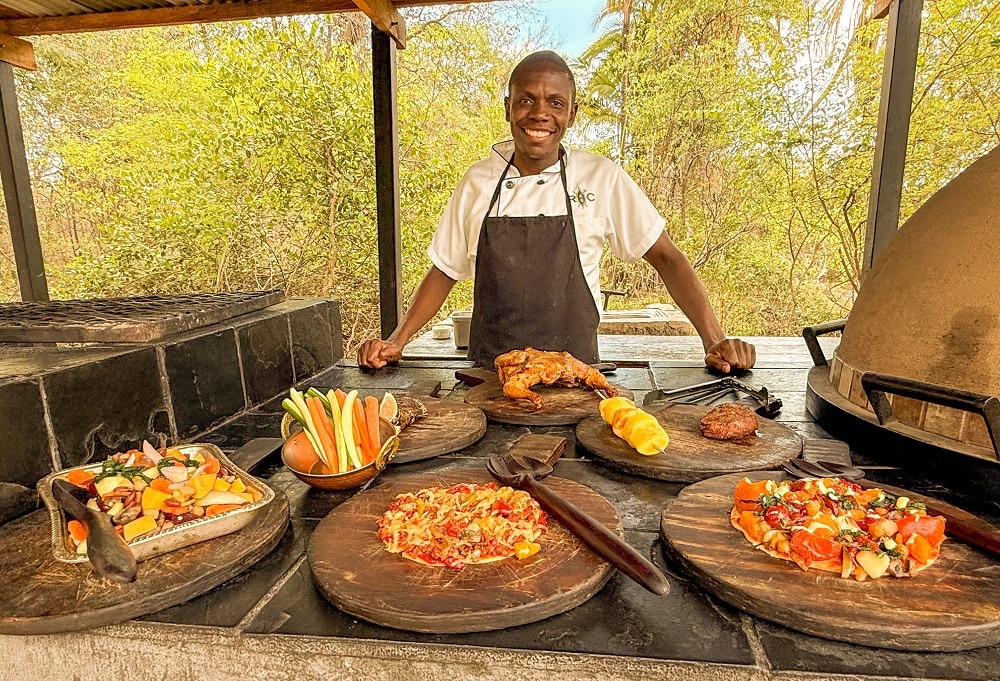
The food was good at Bumi Hills. Lunch was a ‘build your own pizza’ and for dinner we had the choice of lamb chops or stuffed chicken. Of course we both went with lamb. It was good; but Bert’s has it beat by a good margin.

For the morning activity we decided to go fishing. We were looking for bream and vundu (a large variety of catfish) because it is really not a great season for tiger fish. Our first spot was close to where the boat was docked. The area did not seem like it was very active and we quickly moved on. The second spot was another story and we started reeling in bream constantly. They are good fun and while we caught them our guide Max threw out a different line to see if he could snag a vundu. That line finally hit and Christine managed to pull in our first catfish. It was sizable but the species can grow much larger. We are hoping to take another shot at landing a whopper at Changa.

In the afternoon Christine had an hour massage scheduled and while she was busy with that I took a swim in the infinity pool. Simply spectacular views out onto the lake and the water was the perfect temperature. Great place to spend an afternoon!! After this we enjoyed a quick lunch before heading back to the room.

Our evening activity was a sundowner cruise. This time we went with four other people. We started quite late, around 4:00. It took us a little while but we sped out to a spot in the middle of a large number of long dead mopane trees, dating back to when the dam was built in the late 1950s. Around us all types of birds – but predominantly cormorants – were roosting for the night. No predators out here for them in the tall dead trees. The sunset was top notch but overall the activity felt a bit rushed and while it was nice I would only do it the one time.

Nights at Bumi are pretty because you get to see all the commercial boats out on the lake with their lights fishing for small sardine-like fish called kapenta. The boats do not move and use lights to attract the fish to their nets and then periodically lift them. They can do this a total of 4 times give or take during a night. They will then let the fish dry during the day and package them for sale. All the fishermen pay to obtain a license to fish in the lake and it seems like the populations of the different species of fish are being fairly well maintained. With all the lights it looks almost like a floating city and with the elevated views from the lodge it is quite a scene.

Dinner was two delicious curry options, beef or chicken. Dessert was a fabulous passionfruit panna cotta.

Changa Camp

The following morning our flight to Changa was quite early so we just had breakfast before being transferred to the airstrip. We then had a 15-to-20-minute flight to Changa’s airstrip followed by a 25–30-minute transfer to camp. We spotted two huge male buffalo mudbathing as we landed. We met our guide Crispen on arrival. Changa is located inside the Matusadona National Park, unlike Bumi Hills, which is adjacent to it on community land. It is right on the edge of the floodplain overlooking Lake Kariba. A similar variety of activities are offered at both camps.  

I spent a bit of the afternoon in the pool in the main area. The water temperature was cold but very refreshing. I was joined in the distance by a solitary elephant and a hippo that decided to get a head start on dinner. Christine spotted a snake near the restroom, but it slithered off before I could get a look at it. The camp manager had told us that snakes are around but that 99 percent were not venomous.

For our first evening we chose to go take a look at Sanyati Gorge (45 minute to an hour boat ride). It was worthwhile and I would recommend it. The gorge is scenic, very rocky with tall hills surrounding it and lush forests and plants surrounding you. You will see a lot of crocs so if that is something you are interested in this is just the ticket. We ended the activity with a sundowner at the lake before heading back to camp.

Changa is more rustic than Bumi for sure but has its own charm. The main area is a bit sparse but there is a pool and you have a good view of the lake. The rooms are nicer than I was imagining they would be. Outdoor bath and shower available.

For dinner we had pork belly and it was really good. Dessert was a caramel panna cotta. Activities are decided on during dinner the night before. So we decided at dinner that we would like to do an early morning game drive with a packed lunch.  

Morning wake up was at 5:30. Coffee was delivered to the room along with some breakfast rusks. We set off with a packed breakfast to make the most of the cooler morning temperatures. The drive started off slowly as we saw only the occasional antelope, warthog or baboon. Things started picking up as we got a bit further from camp and we started spotting elephants with some regularity as well as zebras which were recently semi-reintroduced by African Parks. Their numbers had been decimated before due to a large lion population and although they were still around their numbers had dwindled. African Parks took over Matusadona in 2019 and have started implementing new conservation practices such as strictly enforcing anti-poaching and reintroducing species that have previously been wiped out.  

Speaking of lions, their numbers have also fallen. When the lake floods many of the prey animals wind up starving to death which is a boon in the short term but long term it forces the lions to rely on hunting hippo or even crocodiles. Their numbers are increasing now though with the plentiful availability of prey species. In fact there is a pride of over 20 lions in the park that have a territory from Changa all the way to the border, the Tshinga River.

One of the highlights was spotting a leopard tortoise hastily making its way across the road. It turtled up when we approached but Crispen turned off the engine and after a little while you could see the head peeking out and sure enough the arms and legs followed. It started to move again but at a much slower pace than before. These guys can live between 250 to 300 years! Assuming they don’t run into the right predator, that is.

By late May the area was still green and there was plenty of food and even water dispersed in the thick bushy areas. This made game viewing tough but as the water dries up and the food gets eaten all of the animals will start to congregate around the lake which should make for a spectacular sight. Even before the dry season had properly set in, there were large herds of antelope and zebra as well as families of elephants at the shoreline or feeding in the floodplains. This year the later stages of the dry season will be especially tough because there was not a lot of rain. The water level of the whole lake is low and it has not been at full capacity since 2013. Hopefully they receive more rain in the coming years.

For our evening activity we tried our luck with some fishing. This activity gets started a little bit later than others so that the winds die down and the lake becomes still. We only had to travel a short while from the camp’s dock to get to our fishing spot. Things started slowly but picked up after the first fish. We wound up with a couple of good-sized bream as well as several ‘squeakers’ which seem to be an invasive species. They look like a type of small catfish with a vicious set of spines that can even be dangerous for crocodiles to eat. We enjoyed a sundowner before heading back to camp.

The following morning we woke up at 5:30am for a game drive. We were out of camp by around 6. Temperatures are cooler in the mornings but not exceptionally so. By midday it got up to the mid 80s. Again we had no luck with predators but enjoyed some marvelous landscapes and plenty of plains game and elephants. As the numbers of plains game continue to increase you can expect a slow increase in the predators as well. As the season continues and the availability of water becomes more scarce the animals will really start to congregate around the lake making for some epic scenes. June and July should bring more moderate temperatures but it will still be drying by September, October and November which could be extraordinary. Albeit possibly at the cost of your sanity with some real extreme heat. Such is life on safari. 

Lyndon is ready to answer any questions you may have about visiting the Matusadona National Park area in Zimbabwe, as well as Hwange and Victoria Falls. He can be reached at lyndon@fisheaglesafaris.com or by calling our office any time (irrespective of your time zone) at 1-800-513-5222. Lyndon or Jason will call you back. 

YOU MIGHT ALSO BE INTERESTED IN

Destinations
Zambia

10th September 2021

Chindeni and the Bushcamp Company, Zambia

By late July we found ourselves at Chindeni, a small Bushcamp Company property

Read more
Botswana
Destinations
Okavango Delta

3rd October 2022

Camp Okavango, Botswana

Camp Okavango is in the heart of the permanent part of the Delta. In this idyllic setting there are no vehicles, and it is just a short walk

Read more
Area
Destinations
Nyerere National Park
Ruaha
Tanzania

14th October 2023

From My Safari Notebook: Wildlife Photography

Birds in flight and wildlife photographers have an uneasy relationship. Things go wrong as often as they go right. Getting focus-lock on a moving subject

Read more

SUBSCRIBE TO OUR NEWSLETTER

READERS FAVOURITES
Destinations
India

27th May 2023

India

India’s tiger, mammals and birds.

Read more
Botswana
Destinations

4th August 2022

On Safari At Belmond Eagle Island Lodge, Okavango Delta

What is the ‘secret sauce’ for an unforgettable few days on safari in Botswana? It starts with the animals, of course. The elephants, lions, giraffes, hippos

Read more
Destinations
Zambia

10th September 2021

Chindeni and the Bushcamp Company, Zambia

By late July we found ourselves at Chindeni, a small Bushcamp Company property
Read more

Madagascar East, West & North: June-July 2024 – Part 1

20th July 2024

Madagascar East, West & North: June-July 2024

Where does one even start with Madagascar? If it were a perfect world, this Texas-size island in the Indian Ocean would be the perfect tourism destination. Fascinating beyond belief with an incredible array of endemic lemurs, baobabs, birds, chameleons, other plant species and more. Beguiling people with babies and young children to be seen literally everywhere. There are gorgeous beaches, world-class diving and snorkeling, some incredibly good food, bird-watching, hiking and an array of cultural experiences. The country is a photographer’s paradise. Also, Madagascar is inexpensive by almost any standard.  

Getting there

Lately, Madagascar has become not that difficult to reach from North America. My best suggestion is to spend a few days on safari in Southern or East Africa and then add 10 days or so in Madagascar. Or vice versa. It’s not an overly long flight (about 3 hours) from Johannesburg to TNR/Antananarivo on Africa’s best airline – Airlink. Just slightly longer on KQ (Kenya Airlines) from Nairobi. Other ways to get to Madagascar include a new non-stop service from the mid-east (on Emirates), with the option to continue on to the Seychelles. Madagascar first and then the Seychelles? Why not? Tana can also be reached on Ethiopian Airlines out of Addis Ababa and via Paris/CDG on Air France.     

Unrivaled endemicity

This was my third trip to Madagascar and the best one to date. Even for people with only a passing interest in the natural world, Madagascar is one of the most exciting destinations of any. It starts with the extraordinarily high percentage of endemicity of practically everything you see around you: in fact, almost 90 percent of all plant and animal species found in Madagascar are found only there. The 100-plus species of lemurs – Madagascar’s signature mammal species – being the most famous of all. Birds are another good example. Of Madagascar’s 250 or so bird species, almost 120 are endemic. No African country comes even close. Tanzania has a whopping 1,075 bird species but only 33 endemics.   

Other Madagascar endemics?  

  • More than 11,000 plant species, including seven species of baobabs. 
  • More than 230 reptile species including a fascinating variety of chameleons.
  • More than 100 different types of fish, many of which can be seen in easily accessible areas while snorkeling. 

Challenges and opportunities

Madagascar has been described as being a ‘charmingly chaotic’ country to visit and indeed, the red island faces innumerable challenges including – but not limited to – abysmally inadequate infrastructure and inexorable environmental degradation. Combine that with ‘elite capture’ of much of the country’s wealth, poor governance, pervasive corruption and the negative impact of natural disasters including several cyclones per year, and the future looks grim.  

Even so, increasing tourism is one of Madagascar’s brightest avenues for growth and for improving the prospects of the nearly 25 million Malagasy people who live in  poverty, getting by on the equivalent of about one US Dollar per day. Tragically, almost 10 million Malagasy children under 18 are caught up in the cycle of poverty, with as many as 40% suffering from chronic malnutrition and the vast majority being ‘learning poor’ as well. Which means that at age 10 they cannot read or comprehend a simple sentence. This lack of quality education is one of the most important factors in the country’s inability to  break the cycle of poverty.  

I think it is important for prospective visitors to Madagascar to be well prepared for what awaits them. A simply amazing natural experience but with a backdrop of  intractable poverty even though it is not always obvious in the tourism areas. It is only when driving – and passing through some of the villages in outlying areas – that one is confronted with the squalor which goes hand in hand with extreme poverty.  

By making a decision to go there, you will be making a positive impact. Just by being there and spending tourist dollars. If you love lemurs (and I have no doubt you will after your first trip to Madagascar) you may want to support the Duke University Lemur Center at lemur.duke.edu. They do a great job of supporting lemurs in Madagascar and lemur research at Duke University. As a company, Fish Eagle Safaris makes a contribution to their Madagascar Conservation program each year. They need all the help they can get.

Antananarivo

Like so many other visitors before us, we spent our first night back in Madagascar in Antananarivo, Madagascar’s near mile-high capital located in the central highlands. This time, we were fortunate to end up at the excellent Maison Gallieni, a boutique hotel on the edge of downtown. This imposing structure – with simply wonderful interior architecture – doubles as the official residence of Monaco’s Consul General to Madagascar. A discreet barrier at the lower end of a set of stairs separates the hotel (downstairs) from the home (upstairs). The Consul General was not in residence, we were told. Not that it would have made a difference, I am sure. Maybe the water would have been hot.  

We liked the large room with a bath and separate shower and very much enjoyed a good, homestyle dinner. Fortunately the management’s ill-advised idea to put us at the same table with a young couple from China came to nought when the young couple caught the flu (or something) and wisely decided to occupy a different part of the dining room. We nodded in their direction politely and pretended to ignore their sniffles. Breakfast the next morning (the young couple beat us to it) was even better. Great coffee – par for the course everywhere in Madagascar – fresh fruit, vanilla yogurt, delicious crepes, freshly made toast, honey and  jam. I could do that again.  

Not so great about Maison Gallieni? Exclusively French TV channels and some dogs barking well into the night. And a pet peeve of mine: lukewarm ‘hot’ water. 

Arriving in Tana

Earlier that day, we arrived at Ivato Airport (TNR) on a predictably on time flight from the ever-efficient Airlink. As always, in-flight service was brisk and the light meal/snack was as fresh and nicely prepared as one could hope for. This airline is setting an incredibly high standard for Southern African regional travel and it is the one to book for any of your local and regional flights in the area.  

Clearly Ivato Airport had undergone a major upgrade since my last visit which was in 2019. Its new arrivals terminal (opened in Dec. 2021), which serves both international and regional flights, was all glass and modern looking; a complete turnaround from the ghastly old airport, now used for domestic flights.  

Unlike the old days, when getting your Madagascar visa was a bit like being in a rugby scrum, the process is now properly structured, with several lines, one being specifically for holders of foreign passports. While the process was slow, we had our ‘free’ visas in under an hour at a cost of US$37 for a trip lasting 15 days or more; US$10 for a trip lasting up to 14 days total. You can pay in USD cash or Euros. 

Traffic, traffic, traffic

Ivato Airport is only 20 km (12 miles) from downtown Tana but distance is meaningless in Madagascar and even more so in Tana. Urban planning is an oxymoron in this city and the reality of driving in Madagascar hits you like a splash of cold water in the face at the very first turn. Don’t be looking for stoplights – there aren’t any. Only traffic circles and other junctions where forward motion has more to do with your driver’s style and mood (aggressive, indifferent, patient, creative – usually a mix of those) than with anything else. The traffic is almost always ‘heavy’, sometimes impossibly so. Getting angry and upset isn’t going to shorten the journey so anticipate delays, get your AirPods in and listen to Taylor Swift. Or look around and marvel at the bizarre mix of vehicles sharing the road. Wheelbarrows and oxcarts. Motor bikes, pousse-pousses (rickshaws), taxi brousses (minibusses), ancient Citroen 2CV’s, some dating back to the 1980’s. Massive trucks. Massively overloaded bicycles. Pedestrians everywhere, constantly executing seemingly life-threatening street crossings, evading disaster by just inches. Routinely and repeatedly. It is nothing short of theater for anyone who stops at stop signs and who respects the concept of right of way.   

For the next several days our driver-guide was Lalla. The nicest, most gentle and practically grandfatherly person and admirably suited for the job. He was fun to be around, knew everything (and everyone along the route), liked to discuss anything we brought up and had a fine, dry sense of humor. His nice 4-wheel drive Toyota Prada vehicle was clean and relatively new. We felt safe and secure with Lalla the entire time.  

Our objective for the day was to make it to Andasibe in the east, usually a drive of around 3.5 to 4 hours or so. Depending on the traffic of course. Departing from the hotel at 9:00 am we had a little time to kill waiting for the morning traffic to abate. Lalla took us on a mini guided tour, starting with the highest point of the city, known as  Haute-Ville. The main attraction here is the imposing Queens Palace which looms over the entire city from its highest point. The palace, which dates back to 1867, when it was reconstructed with an outer stone structure during the reign of Queen Ranavalona II, was largely destroyed by fire in 1995. Now almost fully restored, the compound can be visited. At a lookout point – with fine views over the city – we got out of the car for some photographs and Kathy supported the local economy, purchasing a small hand-made musical instrument.   

‘Heavy’ goes with traffic in Tana like ‘grave’ with danger in A Few Good Men. There is no other kind. As we experienced again that morning on the way to Andasibe, traveling due east. To be sure, it gradually lessened but by then we were miles out of the city. Overall, the road to the east is in good but not great condition with some very rough spots and big potholes. It is baffling as to why the local authorities neglect the maintenance on this vital corridor (for both tourism and commerce) to the extent that they do. We encountered lots of heavy vehicle traffic coming from the port city of Tamatave which lies at the easternmost terminal point of the road. There is a working railroad between Tamatave and Tana but it seems to be very much underutilized. If I had to take a wild guess, it probably has something to do with the distribution of revenue from road transportation. A topic for a different discussion.  

We made two stops en route to Andasibe. The first one for about 90 minutes at  Peyrieras, a small private reserve where a weird collection of animals including chameleons, frogs, snakes, and geckos are kept in captivity in large outdoor structures. Clearly not everyone’s cup of tea but a good opportunity for close up action shots of chameleons feeding. And to see some rare nocturnal creatures.

The second stop resulted in nothing more exotic than a couple of pizzas, but they were good too, and cheap.  

Andasibe-Mantadia – eastern rainforest 

With the initial traffic, chameleon photo delay and lunch stop, and getting some Madagascar Ariary out of an ATM en route, we did not actually make it to  Andasibe until about 5 pm. Our first two nights there were at a simply excellent lodge – Manjarano – which is in the same stable as Vakona Lodge. We liked our comfortable air-conditioned room, the beautiful grounds and the remote feeling of the area, well away from the hustle and bustle of Andasibe village. We were soon to experience the lodge’s secret weapon which is the food. It was beyond good, simply stellar. The meringue with passionfruit filling was one of the best desserts I’ve ever had. The main courses were pretty spectacular too. And for breakfast, the delicate ‘pain au raisin’ (raisin brioche) was the best of the entire trip. Excellent coffee and perfectly prepared red beans – we knew exactly what to order on the second morning there. 

Then we were off to find some lemurs at Analamazoatra Special Reserve. This was to be my third visit to this relatively small Andasibe forest reserve and yet again it did not disappoint. The two worst things that could happen to you there is to pick up a small leech in the process (both Kathy and I did) or to bump into a large group of overly boisterous visitors. It is hardly surprising that first time visitors get vocal upon witnessing the astonishing athleticism of indri and sifakas – especially when these spectacular animals move rapidly through the forest. It is an experience which ranks up there with seeing whales breaching or wild dogs on the hunt. Something so beyond one’s normal frame of reference that it is easy to forget that you are in a forest. Where decorum is important. About the leeches: they are harmless despite their icky appearance. Easy to remove.  

This morning, our local forest guide Bari led us on a walk of about four hours total, mostly inside and on the edge of this fairly thick secondary forest, mostly famous for being home to a couple or so families of  Madagascar’s signature lemur species, the indri. We found a total of about 15 indri in various spots in the forest, initially mostly quite high up in a severely backlit situation which made photography challenging, to put it mildly. We also had some nice views of diademed sifaka, eastern bamboo lemur, common brown lemur and wooly lemur. 

On a couple of occasions – twice with indris and once with the sifakas – the animals were against a reasonably neutral or mostly green background. Bingo! The result was a handful of quite pleasing exposures. Particularly a few showing a female with a baby. I happened to find a good angle and the family pair of indris – which are notoriously difficult to photograph – were just in the right spot for a few minutes. Everyone else had left but we stuck around and then it happened: a tiny baby stuck its head up and looked right at its mother.

Of course we also took the time to just lean back and enjoy the experience. The prodigious athleticism of these animals is flat out amazing. Seemingly effortlessly they hurl themselves – sometimes in what appears to be a near horizontal plane – from one branch to another covering several meters in split seconds. In a heavily wooded environment with lots of undergrowth. Even the most innocuous looking – some may even say  dumpy – common brown lemurs turn into hairy, featherlight bundles of explosive muscle when they are on the move. Easy. Free. And 100% controlled and accurate with no stumbling or hesitancy or halfheartedness. 

Down on the ground, the diademed sifakas may appear to be somewhat ungainly – maybe even a bit clumsy. In their element they’re anything but. In fact, they are  arrows when moving quickly through vegetation and rockets when scaling tall tree trunks. And just flat out gorgeous when they take a breather to feed, allowing the gawkers in the forest to fully appreciate their beauty and uniqueness. I think many people pick the diademed and other sifakas like Coquerel’s and Verreaux, as their favorite species of lemur because they are more approachable and not quite as distant as the magnificent indri. 

Vakona Island private reserve

Our second activity of the day was an early afternoon visit to Vakona Island Private Reserve. Essentially a collection of about five different species of lemurs confined to a small island where they are fed daily. It will take you all of two minutes to realize that the lemurs are habituated to the presence of guests so they do get very close. Sometimes too close. Vakona Island creates an opportunity for visitors to see common brown, black-and-white ruffed lemurs and others close up and to get some photos which would take days to obtain in a more natural environment. So while the setting is far from ideal, it serves an educational purpose as well as being a refuge for animals which may otherwise be in cages or vulnerable situations. Vakona Island Reserve gets very busy in the high season from July through November or so, so by all means go early. Even then you may run into some boisterous tour groups. 

From there we walked around a crocodile farm/lake which we’d suggest our guests could give a wide berth. It may be mildly interesting to people who have never seen a crocodile. 

A night walk from the parking area of Vakona Lodge was a dud. Mostly because it was already well into winter when there is less nocturnal activity. We saw a few small chameleons and a couple of sportive lemurs high up in trees. Night walks are something to consider for the warmer months. Be sure to bring a headlamp for the walk, it would be easy to misstep on this hike at night and there were several areas (slippery up and down spots and abrupt drop-offs) which presented a significantly hazardous situation. 

V.O.I.M.M.A. Community Reserve

The following morning we spent three hours on a walk with capable forest guide Claudia at V.O.I.M.M.A. Community Reserve.  This community-operated reserve is similar to the government-run Analamazoatra Park (they are separated by a small river); it is just smaller at 38 hectares. Even so, the reserve offers good habitat with indri, common brown and eastern gray lemurs, as well as many species of birds to be seen. Highlights on the day were sightings of common brown lemurs, an indri family moving through the forest and good views of a Madagascar pygmy kingfisher as well as Madagascar ibis and red-fronted coua.   

We enjoyed lunch at Marie’s Lodge, a popular spot known for its authentic local specials including a Malagasy soup with noodles and zebu (beef) with rice and tomato. Their pizza also gets pretty good reviews. We’re not talking gourmet food here, just a good value local spot to grab something after a hike.  

Andasibe village market

I have lately been better about getting out of my photographic comfort zone which is stalking birds and mammals with a long lens, with a few scenic shots thrown in every now and then. Candid and casually posed people shots are a different kettle of fish as they ‘talk back’ and take a little bit of negotiating to set up and execute. There were just so many opportunities in Madagascar to get out of the vehicle and mix it up with the locals that even I couldn’t resist. The first good opportunity was an afternoon village market which takes place every Saturday in the main street in Andasibe Village. Some heavy rain had threatened to spoil the fun but it cleared and by 3 pm or so, we were strolling down the still wet street. There were permanent and temporary stalls left and right, offering mostly foodstuffs like vegetables, fresh meats, eggs, cooked noodles, mushrooms, spices, rice and beans, but also toys, used and new clothing and nick nacks of every description. I think both Kathy and I enjoyed the proximity with the locals, making an instant connection with some kids, and rewarding them with a few bonbons. The spontaneity was refreshing, and the children were completely natural and unaffected.  

For the last two nights in the Andasibe area, we moved to Mantadia Lodge. We had a perfectly nice room which was climate controlled, had a good – hot – shower, and decent lighting in a pretty garden setting. The only negative was a weird bed with a base which was much bigger than the mattress, making for an awkward and even potentially dangerous situation (scraping your legs) when walking around the bed and getting into and out of it. With around 26 rooms, Mantadia is considerably larger than many of the lodges we usually recommend. All-round it is perfectly fine, with good food, friendly staff, and excellent location being closer to the entrance to the special reserve. 

Mantadia National Park

On our last full day in the Andasibe area, I took a somewhat quixotic trip – it was raining – into Mantadia National Park. It was my third visit to this remarkable forest. Mantadia overshadows the much smaller secondary forest of Analamazoatra in every way, being several times its size. With usually just a few other visitors around, Mantadia should be high on anyone’s list of places to explore in the Andasibe area. 

There’s a caveat. The forest is not easy to get to. It is about one hour from the town of Andasibe in a four wheel drive vehicle to the entrance of the park. And an additional hour from there to the parking area at the main trailhead. While the road is certainly bad by any standard, it is no worse than it has been in previous years. I would suggest departing from your Andasibe accommodation no later than 6:00 am in order to make it into the park at a reasonable time.  

Mantadia National Park is massive – measuring over 20,000 hectares – and it is a simply spectacular intact forest known for some special lemurs like the black-and-white ruffed. It also has diademed sifakas and indris. Botanists, too, will not be disappointed as the dense, humid forest contains lianas (climbing vines), moss, fern trees, precious woods such as palisander and ebony, and over 100 species of orchid.

Over 100 species of birds make the reserve their home, many of which are endemic such as the Madagascar green sunbird, Madagascar falcon, Madagascar long-eared owl and the Madagascar wagtail. Visiting birdwatchers will also be on the lookout for several very special ground rollers, being the scaly, rufous-headed, pitta-like and short-legged ground rollers. On a previous visit I was fortunate to get some great views – and not so great photos – of the pitta-like ground roller. Top of my wish list for the day was to get a crisp photo of this elusive bird. Alas, it was not to be. For much of the morning it rained lightly, visibility was poor and the birds were quiet. My photo date with the pitta-like ground roller will have to wait for another time. 

Incidentally, the following day dawned clear and sunny, and it would have been ideal for a visit to Mantadia. Keep your schedule flexible.  

Back to Tana

For once, and rather surprisingly, it ended up being a relatively easy drive back from Andasibe to Tana, where we arrived just after 1 pm. The city was gearing up for the impending Independence Day celebrations coming up in a couple of days’ time, on June 26. 

Photo by Brent Ninaber

Hotel Palissandre

Our digs for the night were the Hotel Palissandre. Having spent a couple of nights there many years ago, it felt like nothing much had changed beyond the expected in-room updates. Overall, the Palissandre retains a 1960’s ambience and appearance. Without trying to be ironic about it. The two things which we liked most about the hotel 20-plus years ago had not changed. It still has a good location overlooking the old market and a great view over the city, particularly in late afternoon light. 

The food was excellent too, notably a couple of lunch offerings – one a crab bisque and the other a potato-based soup with what looked like mini ham and cheese sandwich ‘croutons’. Who knew that a croque monsieur sandwich could show up in a bowl of soup? We weren’t quite as impressed with the much reduced number of choices on the ‘half board’ dinner menu compared with the regular a la carte menu. Not that the food was any less tasty – it’s just not a great feeling to get the ‘kids table at Thanksgiving’ treatment. 

Festivities associated with the coming Independence Day celebrations were quite audible that evening from our room. Fortunately the commotion (singing/dancing & loud rhythmic music) died down just before midnight, by which time even the barking of some unduly excited dogs could not deter us from sleep. 

Our tour operator underestimated the duration of the drive from the hotel to the airport the following morning. By quite a margin. Fortunately the scheduled charter flight to Anjajavy – a 10 seater Cessna Caravan – turned out to have only two passengers. Us. Which resulted in a departure delay of 40 minutes being no big deal. I would not want a redo on the harrowing drive to the airport though. Way too stressful an experience for Madagascar which ranks very high in the laidback category.   

The fact that we were the only two passengers on the aircraft did not dissuade the charter company from charging us a tidy sum for excess luggage (mostly in the form of camera equipment). With just two persons on a plane which can take 10 pax plus luggage, this bordered on extortion. Bureaucracy runs very deep in Madagascar; the Malagasy inherited it from the French who are of course the undisputed champions. So in Madagascar the rules are the rules (when it suits the enforcing authority) and common sense is often severely lacking. The rigorous security screening before a private charter flight was equally bizarre and uncalled for. 

Prospective visitors take note: if there are private or scheduled charter flights on your itinerary, chances are that sooner or later someone is going to actually weigh you, your main bag(s) and your hand luggage. If you’re overweight, there is no appeal and nowhere to go. Have some cash in the form of Euros or Ariary or your Visa card ready.

Our destination for the next couple of nights would be Anjajavy Le Lodge, a superb resort on Madagascar’s northwest coast. Read more about Anjajavy on this blog post.

Madagascar itineraries

We have developed a couple of new itineraries for Madagascar which will enable visitors to optimize their stay and not waste too much time on the road. The two itineraries are for the eastern montane rainforests (Andasibe-Mantadia area, mostly lemur-focused) and for the north (Montagne D’Ambre, Ankarana Forest and Nosy Komba) where the experience will be a mix of nature exploration and wildlife observation, with forest hiking, lemur observation, snorkeling and ending with several days at a premier beach resort.  

Either of the two itineraries can be extended with excursions to one of these areas:

  • Anjajavy Le Lodge on the northwestern coast in dry deciduous forest habitat
  • Tsara Komba resort, tucked away in a secluded spot on Nosy Komba island, in the northern Nosy Be Archipelago
  • The wild and exciting Masoala Peninsula on the north-eastern coast

Part 2 of the blog covering our onward journey in Madagascar to the north (Ankarana Forest, the Red Tsingy and Tsara Komba resort on the island of Nosy Komba) will be published in our August newsletter.  

For recommendations about visiting Madagascar, email Bert at bert@fisheaglesafaris.com or call our Houston office at 1-800 513-5222 any time.

YOU MIGHT ALSO BE INTERESTED IN

Destinations
Zambia

10th September 2021

Chindeni and the Bushcamp Company, Zambia

By late July we found ourselves at Chindeni, a small Bushcamp Company property
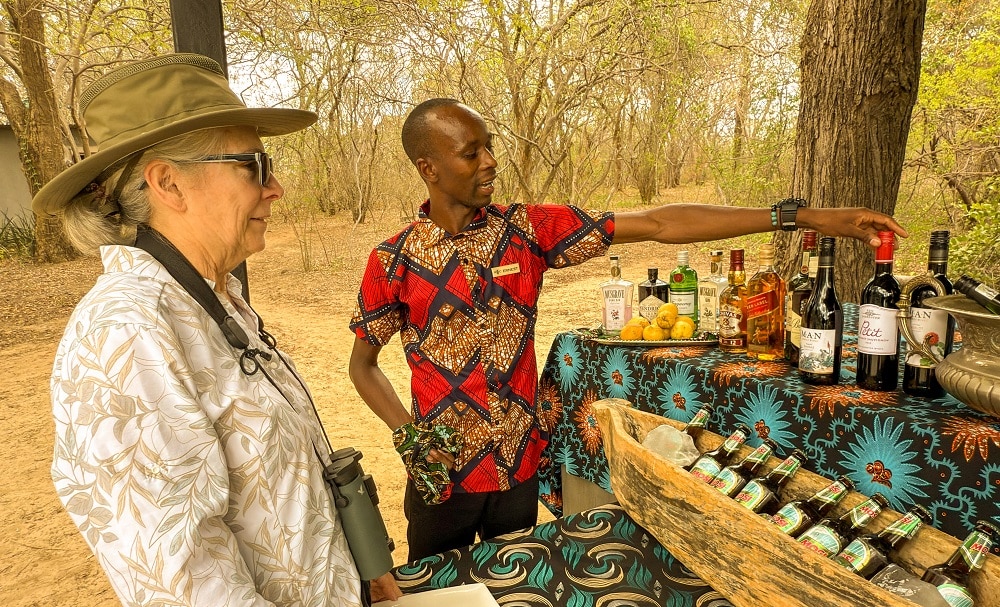
Read more
Botswana
Destinations
Okavango Delta

3rd October 2022

Camp Okavango, Botswana

Camp Okavango is in the heart of the permanent part of the Delta. In this idyllic setting there are no vehicles, and it is just a short walk

Read more
Area
Destinations
Nyerere National Park
Ruaha
Tanzania

14th October 2023

From My Safari Notebook: Wildlife Photography

Birds in flight and wildlife photographers have an uneasy relationship. Things go wrong as often as they go right. Getting focus-lock on a moving subject

Read more

SUBSCRIBE TO OUR NEWSLETTER

READERS FAVOURITES

Destinations
India

27th May 2023

India

India’s tiger, mammals and birds.

Read more
Botswana
Destinations

4th August 2022

On Safari At Belmond Eagle Island Lodge, Okavango Delta

What is the ‘secret sauce’ for an unforgettable few days on safari in Botswana? It starts with the animals, of course. The elephants, lions, giraffes, hippos

Read more
Destinations
Zambia

10th September 2021

Chindeni and the Bushcamp Company, Zambia

By late July we found ourselves at Chindeni, a small Bushcamp Company property
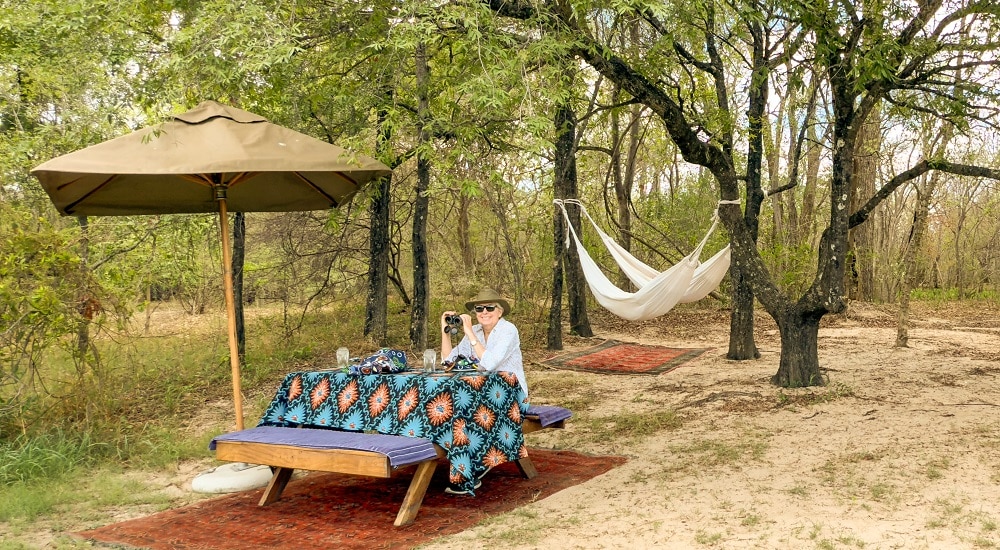
Read more
  • « Go to Previous Page
  • Page 1
  • Interim pages omitted …
  • Page 4
  • Page 5
  • Page 6
  • Page 7
  • Page 8
  • Interim pages omitted …
  • Page 20
  • Go to Next Page »

Footer

Design

  • About
  • Destinations
  • Blogs
  • FAQS
  • Team
  • Contact
All Rights Reserved ©Fish Eagle Safaris 2022 | Terms & Conditions | Privacy Policy
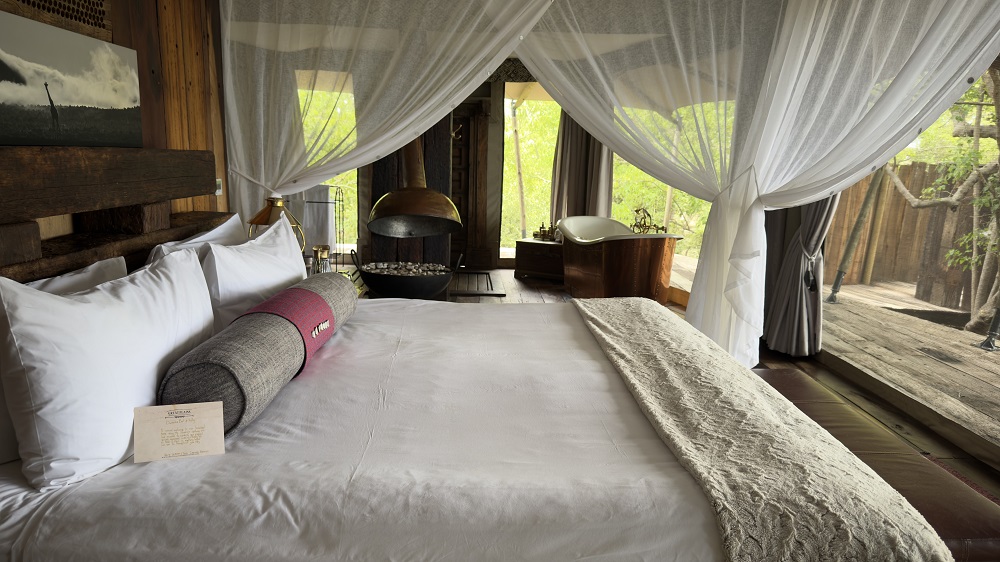
Designed & Developed by B Online

SUBSCRIBE TO OUR NEWSLETTER

SIGN-UP TO OUR NEWSLETTER

Subscribe Form

Footer Widget Header

Related Blogs