• Skip to primary navigation
  • Skip to main content
  • Skip to footer

Fish Eagle Safaris

Fish Eagle safaris

Contact

Logo
  • About
  • Destinations
  • Blogs
  • Newsletter
  • FAQS
  • Team
  • search
  • Contact
  • About
  • Destinations
  • Blogs
  • FAQS
  • Team
  • Contact

Area

Kilimanjaro Lemosho Route – Trip Report

7th April 2024

Kilimanjaro Lemosho Route – Trip Report

Is climbing Kilimanjaro easy? I had posed this question to myself once or twice before in the aftermath of previous Kili climbs, which included the Machame, Rongai and Marangu routes. My answer hasn’t changed. You might be lulled into thinking that it is so by day five on several of the major routes. By which time you’ve successfully negotiated a few steep and sometimes rocky uphill stretches, a couple of glacial valleys and notably, the Barranco Wall. And you’ve mastered some long, grinding hikes at altitude. All in all, you’re thinking,  this is not going to be as hard as you had imagined it might be. Provided of course, that  you’re not suffering too badly from the effects of altitude sickness, you’re sleeping ok and not overly fatigued.  

And then everything changes. Somewhere between leaving base camp around midnight on summit day and getting down to the camp where you will be spending your last night on the mountain it becomes decidedly ‘not easy’. This is when you find out that Kilimanjaro is not a stroll in the park. In fact, most climbers are stretched to the very extreme of their limits over the span of about 14 hours, starting around midnight on summit day, which lasts well into the afternoon of the following day.  
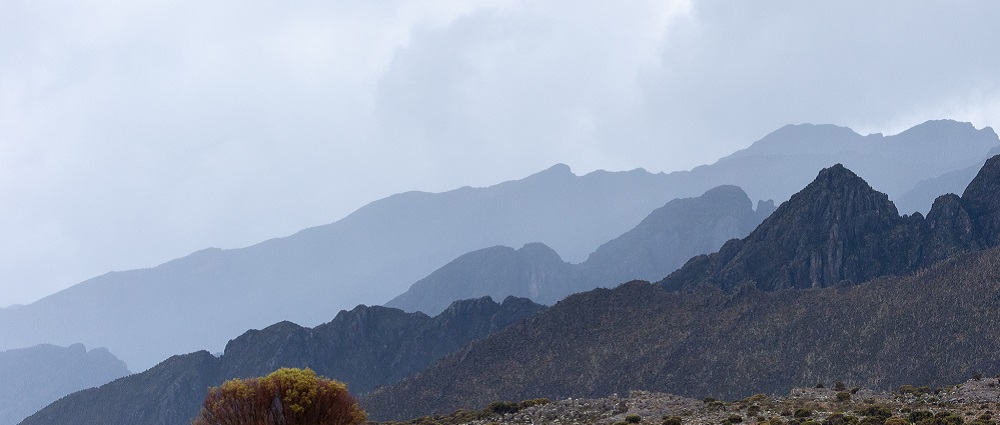
My most recent and likely penultimate attempt to hike Kili, with just Umbwe to go to make it a nice round ‘5’ number, was the Lemosho Route in February 2023. It is the longest of the popular tourist routes and the one with the highest success ratio. The reason being self-evident: more time spent on the mountain at altitude prior to summit day leads to better acclimatization which leads to a less fatigued, more energized summit attempt.    

Just like the previous three times I had set out on a Kilimanjaro climb, day one on the Lemosho Route started with a drive from your Moshe or Arusha hotel. From where we spent the night, it was a 3-hour drive to the Londorossi Gate of Kilimanjaro National Park. The previous afternoon we had completed some formalities with the help of our lead guide Joseph Majuto, which meant that on our first day on the mountain we mostly had to wait in a tourist shelter with a lunch box, eating cookies and drinking boxed fruit juices. All while eyeing the other small groups of climbers doing the same thing. It takes longer than you might think – to get the permits ready – but you’ve got all day to get to the first campsite so no huge rush. Have another cookie.  
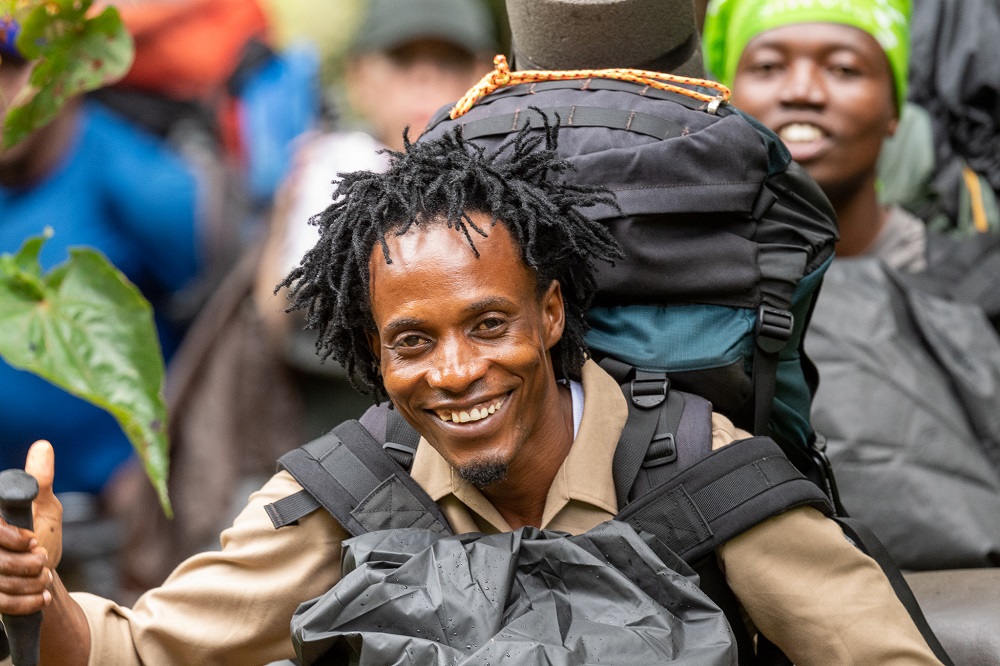
Thu 17 Feb:  Londorossi Gate to Big Tree – a rainforest stroll

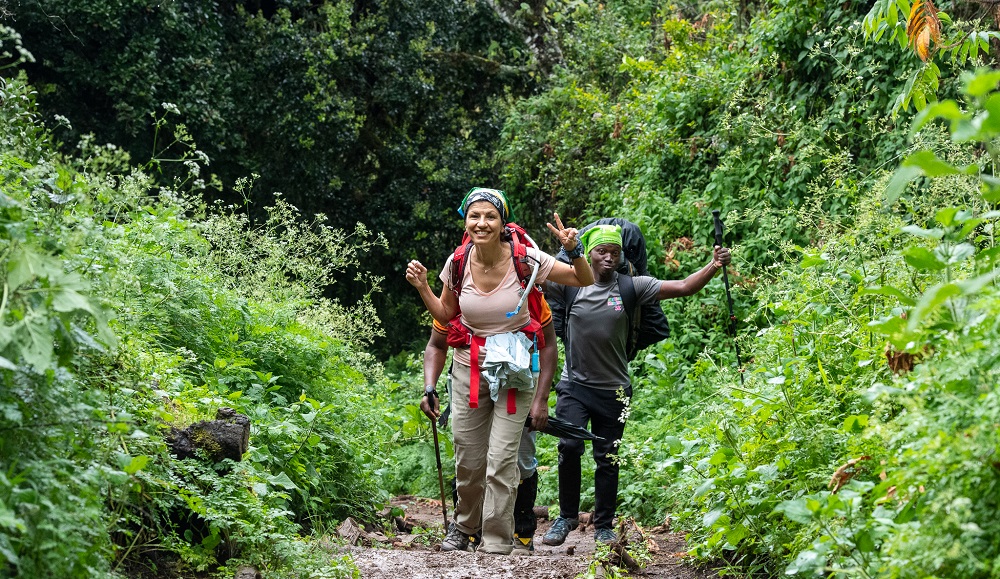
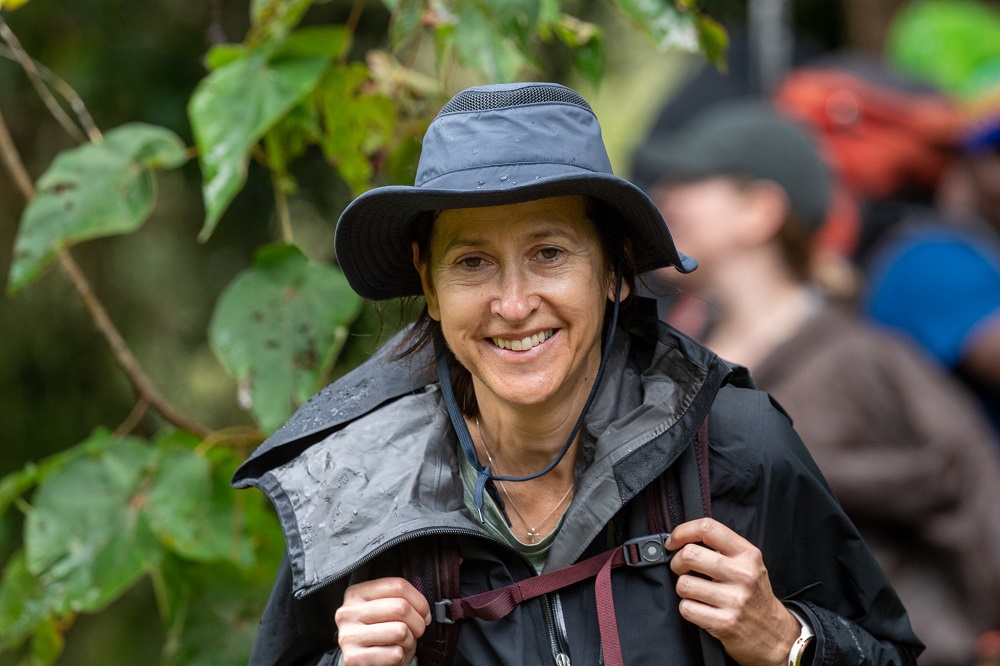
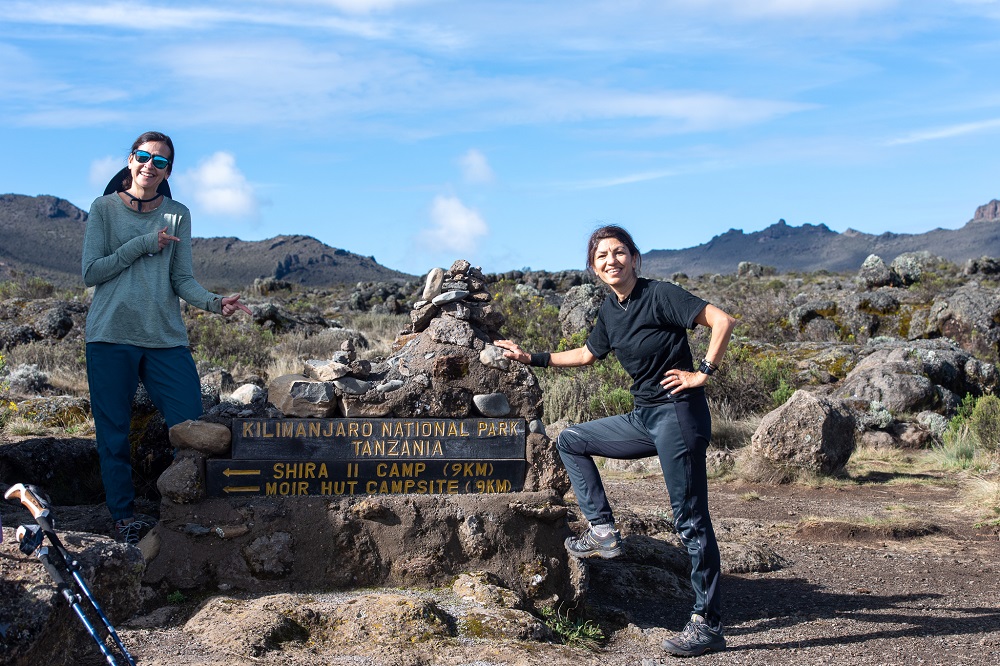
Just as we were setting off, even before we had emerged from the cover of the shelter, some light and then intermittently heavy rain started to fall. An early opportunity for our three team members to put our rain gear to the test. My new Arcteryx Atom AR  shell handled the moisture admirably, although it was warmer than I had anticipated, with a good head of steam developing inside the jacket as we walked steadily uphill in moderately warm temperatures. My two team members were uber fit marathon runners and despite having done this a few times previously, I knew that I would have to bring my A-game to hang with the two women. 

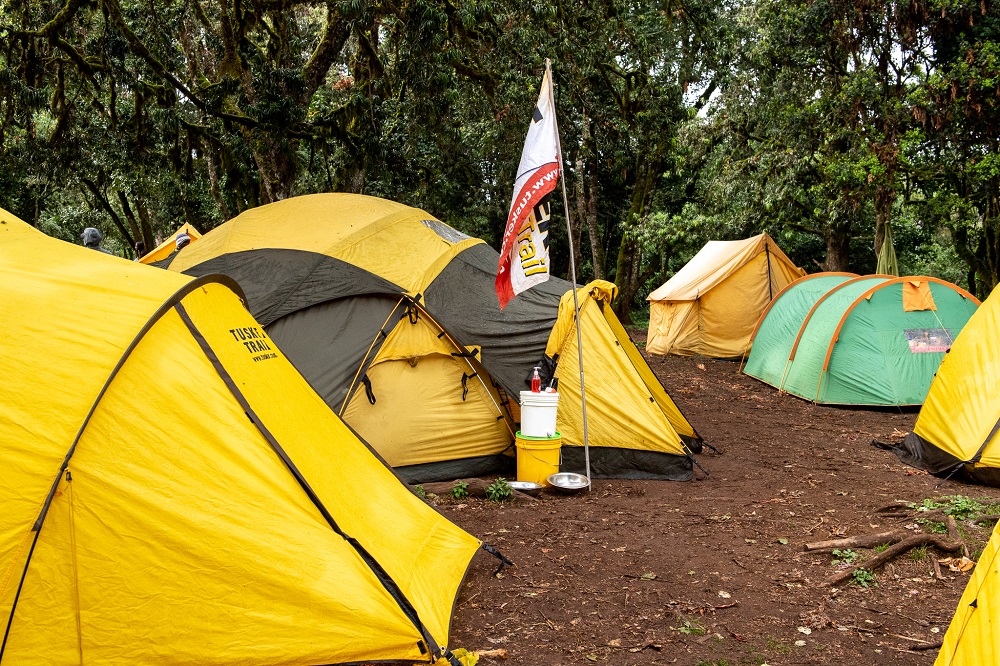
The 7 km (just over 4 miles) hike from Londorossi Gate to the Mti Mkubwa campsite – better known as Big Tree – traverses a beautiful, dense, rainforest with majestic trees towering over the dense undergrowth, consisting of a profusion of vines, shrubs and other leafy plants. On one of the previous climbs, this is where our party got absolutely drenched in a torrential rainfall storm. Which is why you need to be wearing proper, waterproof boots for any Kilimanjaro climb.  

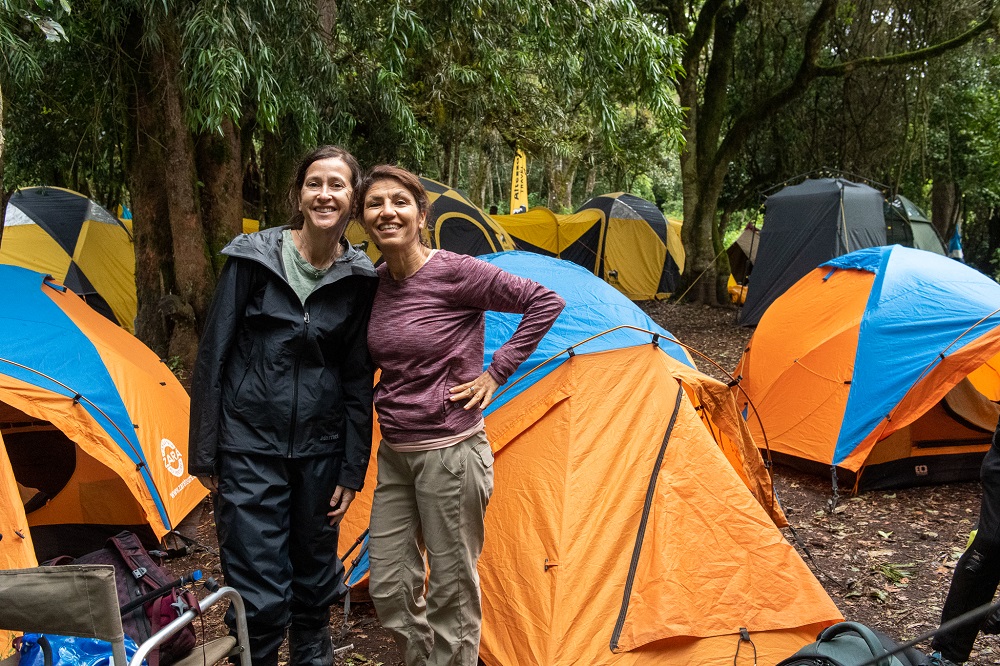
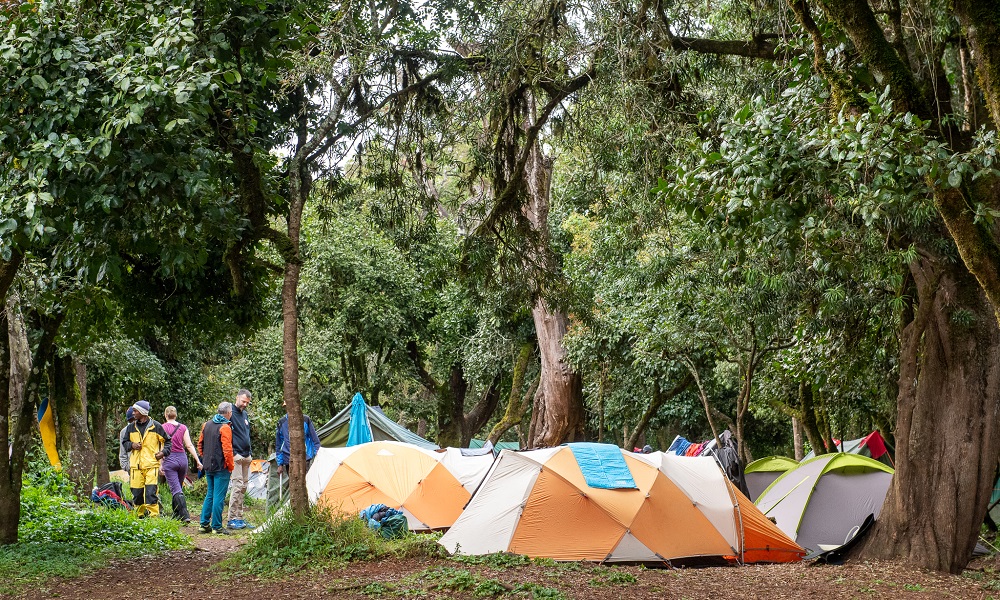
We arrived at the Big Tree campsite only to find that a surprisingly large number of tents had already been erected among the trees in a level area. I estimated that there were close to 50 tents spaced out in the woods. We dropped our stuff inside the tent and enjoyed some tea and popcorn while we waited for dinner. As if we hadn’t had enough of walking, we also took a stroll through the campsite. Then it was time for dinner: fish, potato croquettes, beans, a mixed salad and vegetable ‘sauce’. Pretty good. After doing the usual health questions (are you feeling dizzy, do you have a headache or difficulty breathing and a few others) and passing the pulse oximeter ‘test’ with flying colors, we called it a day. Nightlife? No such thing. Take your Kindle or a couple of books and rechargeable solar light.  
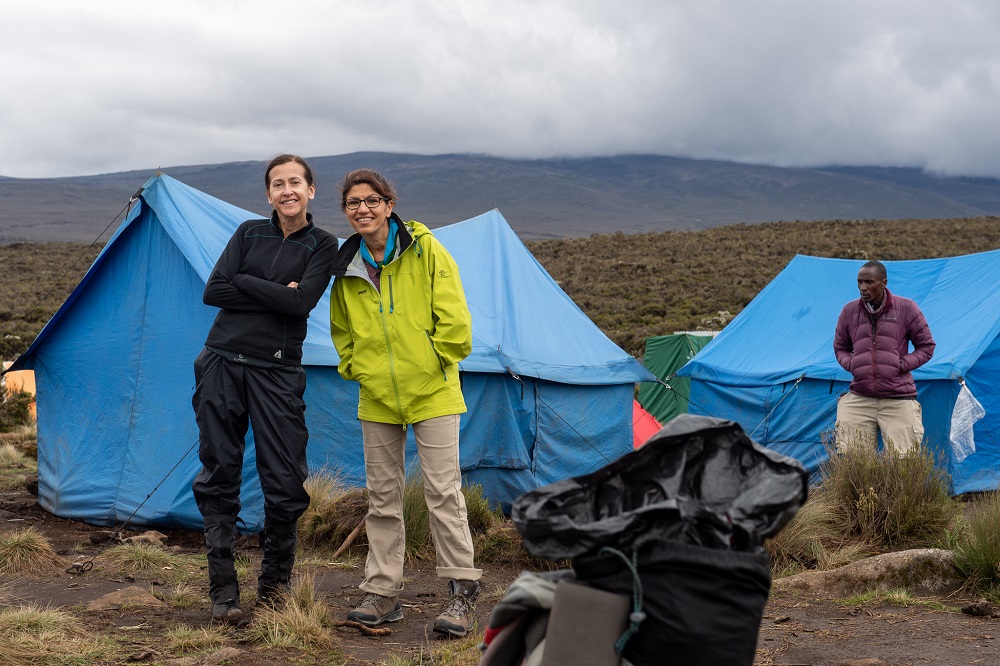
Fri 18 Feb:  Big Tree to Shira 1 – the hills get steep  and the rain intensifies 

We were up at 6:00 am for breakfast at 7:00 am, and departed just after 8:00 am. Even just three people can be slow getting ready, clearly. Right out of camp we encountered the first of two hills on the way. The first one was quite steep, followed by a fairly steep descent. The second hill seemed endless and presented us with the first real test on the hike. There wasn’t much in the way of switchbacks either, it was just up, up, up. Conditions were still quite warm and we were all sweating as we exited the rainforest, entering moorland habitat about an hour or so into the hike.  

From that point, it took at least another hour of steep uphill hiking over uneven terrain until we reached the crest of the ridge. From there the trail stretched along a relatively even area for the next 40 minutes or so.  

By now it had gotten really cold and a steady rain had started to come down. We had our rain gear on so we were ok but it was still pretty miserable and all three of us suffered from extremely cold hands.  

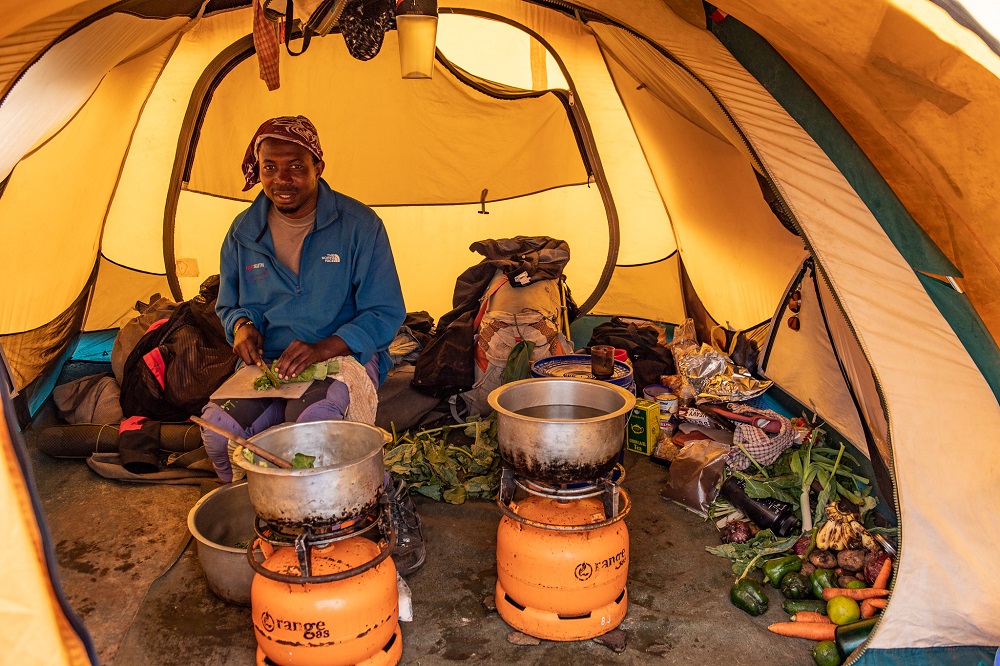
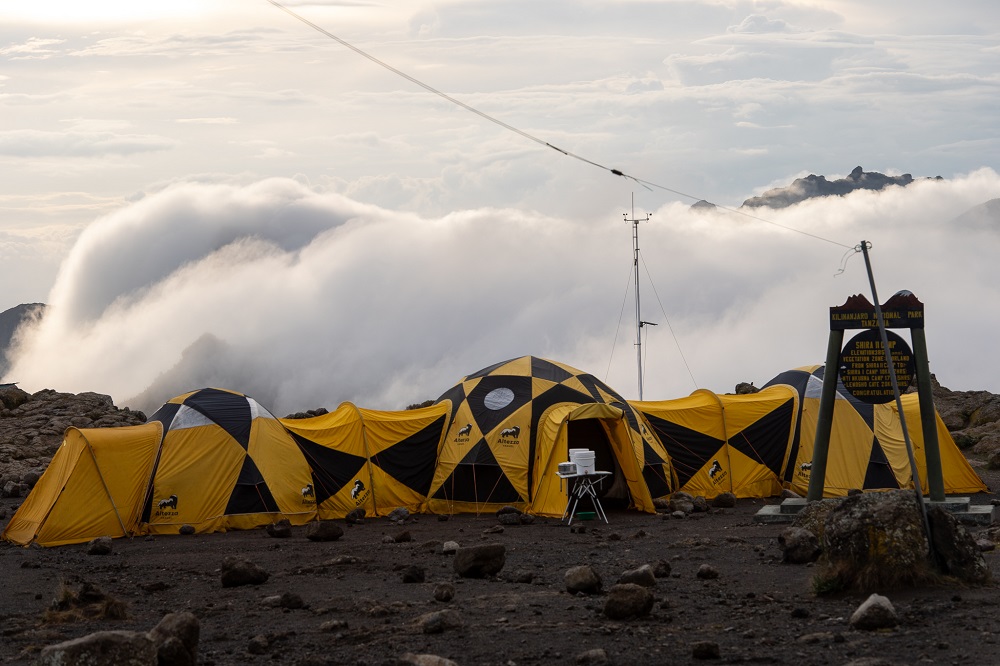
We reached Shira 1 campsite at just about 1:40 pm, cold and exhausted, and a cup of hot tea never tasted better. Ten minutes later, our assistant Davis served lunch, which consisted of spaghetti with a chicken sauce, fresh corn, and a pea, onion and tomato sauce. We tucked in and put a serious dent in the spaghetti. From there conditions improved considerably as the rain eventually abated and we enjoyed a couple of hours of partial sunshine.  

We spent some time in the mess tent where we warmed our frozen fingers. Taking a  walk through the campsite, we observed a Summits tent and met a couple of affable climbers from the UK, as well as a couple from Chapel Hill, NC. We took some photographs. Around 6:00 pm, hot water was delivered to the tent in a small basin for a sponge bath. Dinner was at 7:00 pm: rice, black beans and tomato sauce and fresh fruit. Again, it was early to bed, and I slept a solid 9 hours. That, in summary, is pretty much the nightly routine on a Kili climb, until summit day.
Sat 19 Feb – Shira 1 to Shira 2 – More rain, getting pelted in a sleet storm

To this point, this hike along the Lemosho Route was characterized by just one thing: rain. It rained every day without fail. Usually starting at around 11:00 am and invariably accompanied by heavy thunder. Fortunately, the thunder stayed high with no lighting bolts reaching the ground. At least not in our vicinity.  

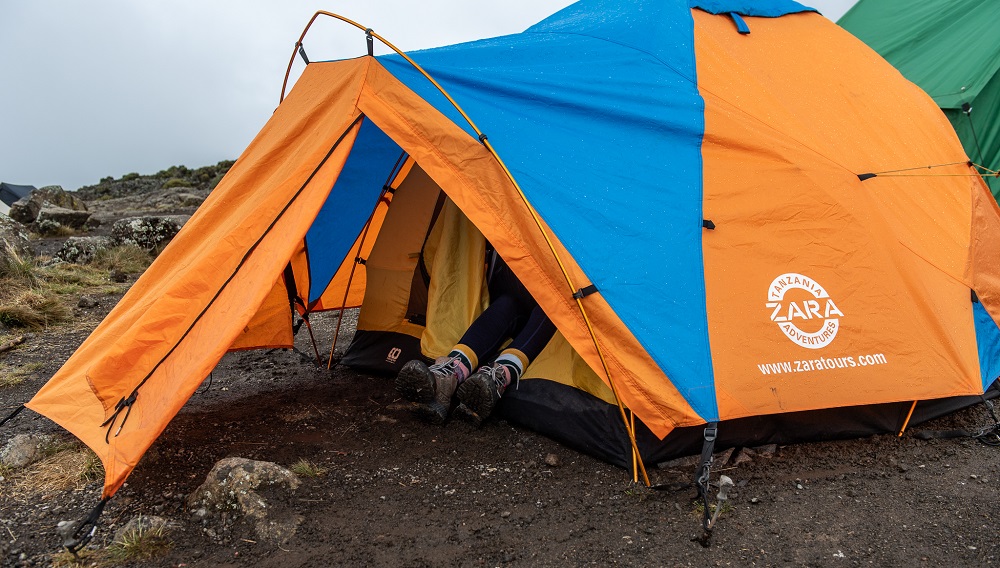
Rain, hiking and camping in the open are not a good mix. Over the course of several days the dampness gets into almost everything. By day three the base of our tents was damp and some of the Goretex clothing items were starting to fail to repel the moisture.

More than that, the rain and sleet also impacted our activities and the day to day routine. Everything becomes more difficult and tedious when it is wet and muddy. Starting with simple things like getting in and out of the tents. Crouching down to duck into and out of the low opening with mud everywhere is annoying at the best of times, and downright frustrating in the wet.

The hiking is also substantially impacted by long periods of rain and sleet. It slows everything down, from having to stop repeatedly to add rain gear, to slowing down over wet terrain, having to dodge puddles and muddy spots, and having to be even more deliberate than usual traversing over wet rock.   

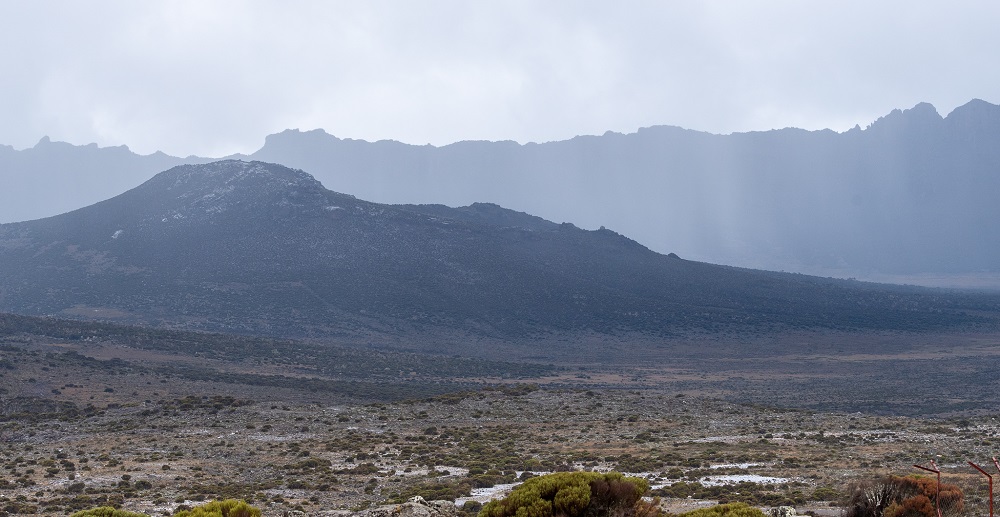
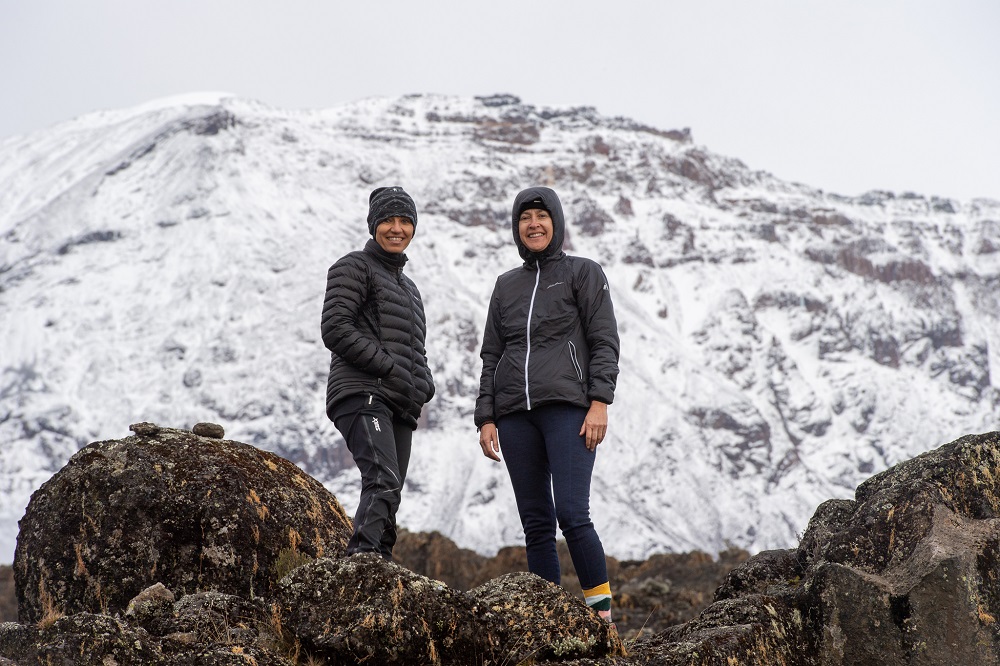
Another downside of chronically overcast weather: fewer opportunities to experience the scenery, which is one of the hallmarks of the Lemosho Route. We did have some good views of the Shira Plateau from Shira 1 camp, and great views of Kibo peak at the end of day 2 from Shira 1 and also from Shira 2. The second time around we could clearly see just how much more snow had accumulated in the previous 24 hours.

The hike from Shira 1 to 2 is about 10 km (6 miles) in distance and took us just about 4 hours, with a few rest stops, including one to don our rain gear.  

It didn’t only rain a lot. For the better part of 40 minutes plus we were in a heavy sleet storm, with icicles pelting us on the head. We were apprehensive about encountering a proper hail storm when good protection would have been impossible to find. Things are slightly grim when ‘just icicles’ is the good news.  

After an afternoon nap, we did a little walkabout, took a few more pictures and sat down for dinner at 6:30 pm. Homemade french fries, beef kabobs, and a bean stew, oranges and pineapple. And soup. We could not complain about the food. Earlier –  for lunch – we had veggie sandwiches, the Kili cook’s tasty take on pizza and a hot soup as a starter. Incidentally, despite all the 45 miles or so of hiking, I don’t think any one of us lost much weight. No surprise there.  

By nightfall – 8:oo pm – the sky had cleared and we could admire the starlit night sky, with the Milky Way and Orion being prominent.
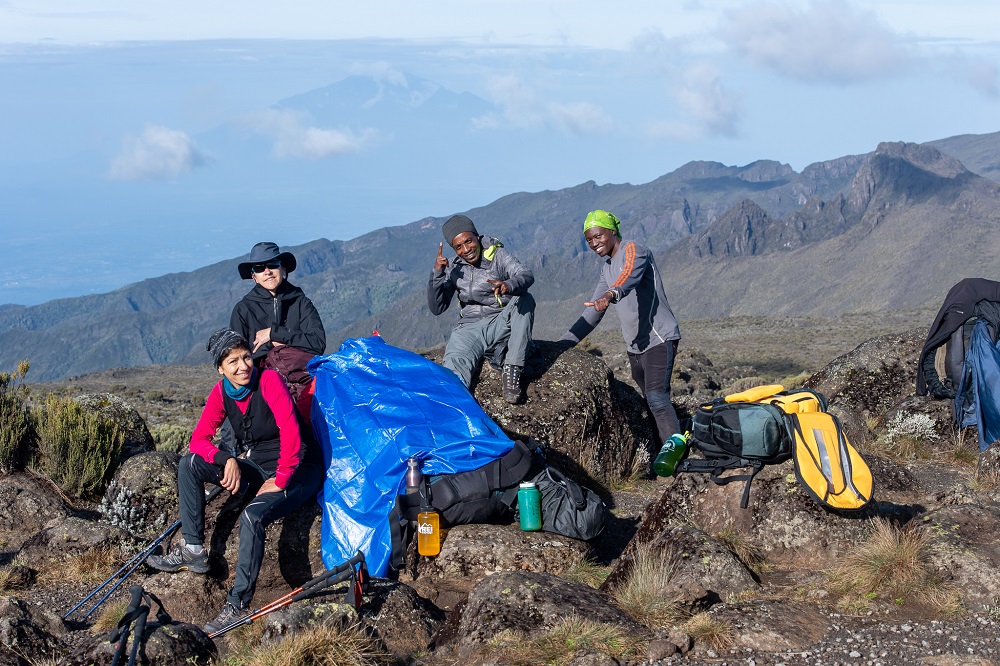
Sun 20 Feb:  Shira 2 to Barranco – via Lava Tower at 15,000 feet above sea level

This was the longest day of the route so far, all of 7 hours and 20 minutes or so, from Shira 2 camp to Barranco Camp. How long and how tough a day was it? Somewhat like doing one of Colorado’s 14,000 foot peaks, all the way up and all the way down in just one day. We started at just before 8:00 am, after an eventful night. At around 2:00 am a heavy rainstorm moved across our campsite. It wasn’t brief and it was quite intense, adding to our existing concerns about dampness getting into our ground mattresses and potentially into our sleeping bags. To some degree it did, but not as badly as we had feared.

At 6:30 am, the sun was shining and it would continue to do so intermittently until about 1:00 pm when we reached Lava Tower at 15,000 feet above sea level. This was a new altitude record for two of the three of us.  

From the Lava Tower – which was the high point on the day’s hike – it was mostly downhill all the way to Barranco. Downhill doesn’t always translate to easy. It was heavy going pretty much all the way with rocks and boulders and steps up and steps down all the way. The area was still soaked from the previous day’s heavy precipitation, which made the footing slippery at times, and unpredictable.
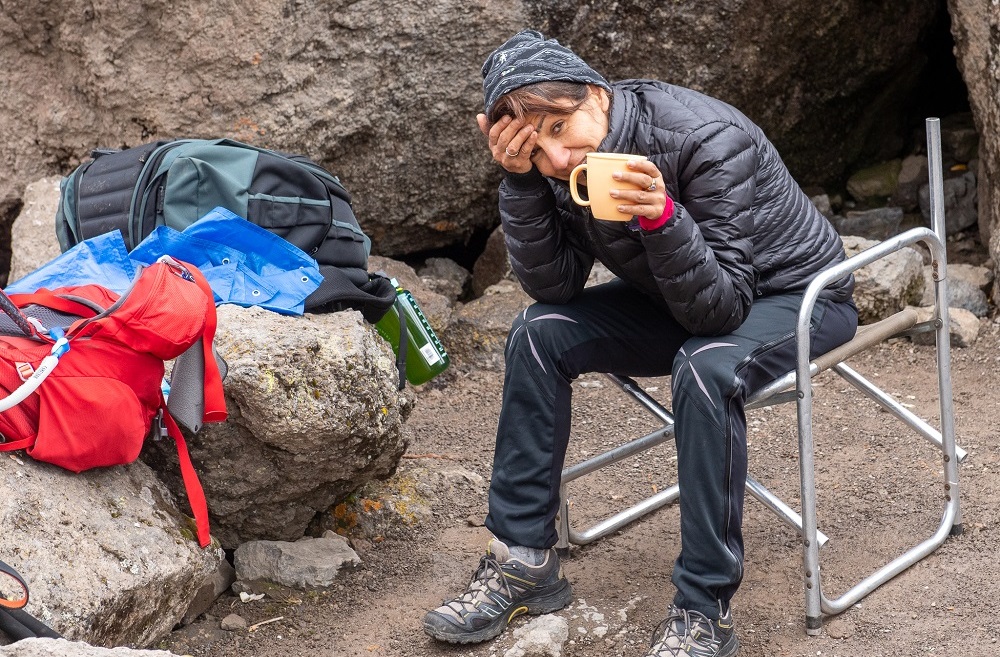
The hike from Shira 2 to Lava Tower was no walk in the park either. Practically just meters out of camp, the rocky path started heading up and for the next two hours we walked steadily uphill, gaining considerable altitude. This portion of the hike culminates in a short ravine where we crested the hill, only to be confronted with more uphill in front.

At the sign pointing to Meyer’s Hut to the west we took a break, as did a few other hikers from Shira 2 who were enjoying a sitdown cup of tea. From there the trail winds steadily upward, across a saddle of sorts, and then links up with the Machame Trail a little further on.

Once the huge Lava Tower rocky outcrops came fully into view, we became more energized, our strength and energy having started to wane quite a bit. Understandably so, as at 15,000 feet the thin air does not deliver nearly as much oxygen as at sea level.  

We enjoyed a packed lunch at Lava Tower, regained our strength and then set off for Barranco.

Dinner tonight: cheesy potatoes, elbow pasta and a white bean stew. Served with the Kili version of ‘vetkoek’ (deep fried fritters), and some fresh pineapple. As always, the guides do their best to urge you on to eat more – nutrition is all-important, as is hydration. 
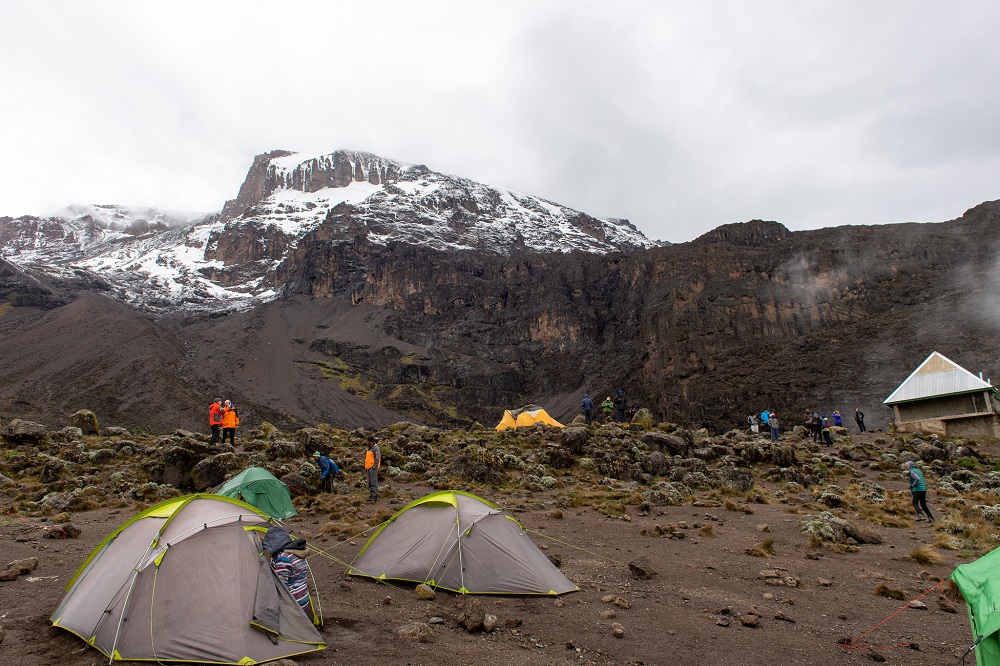
Mon 21 Feb:  Crossing the Barranco Wall to Karanga Camp

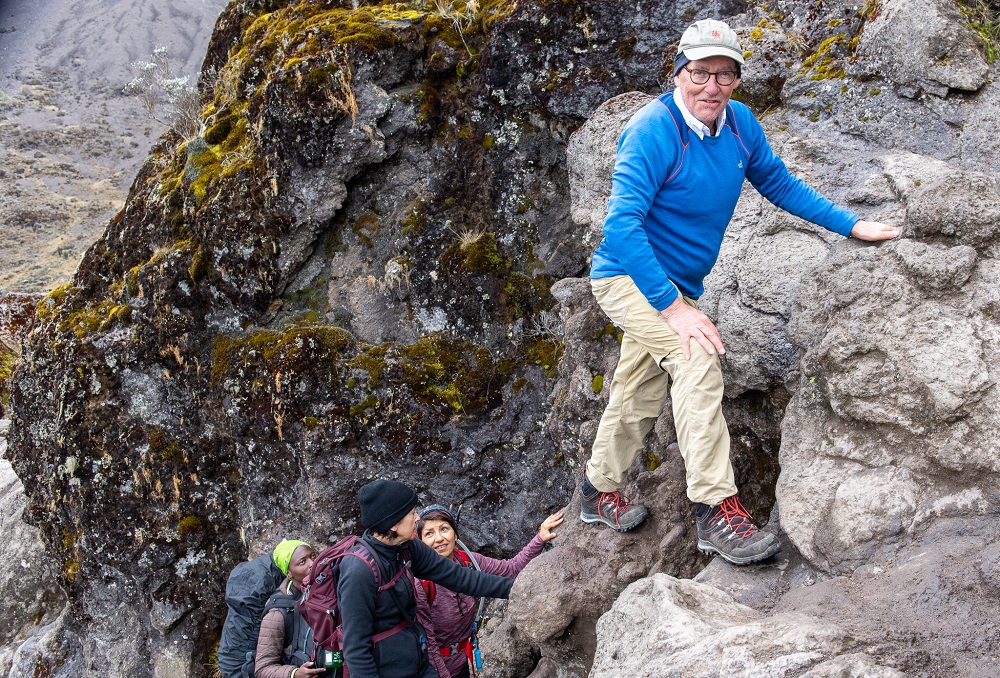
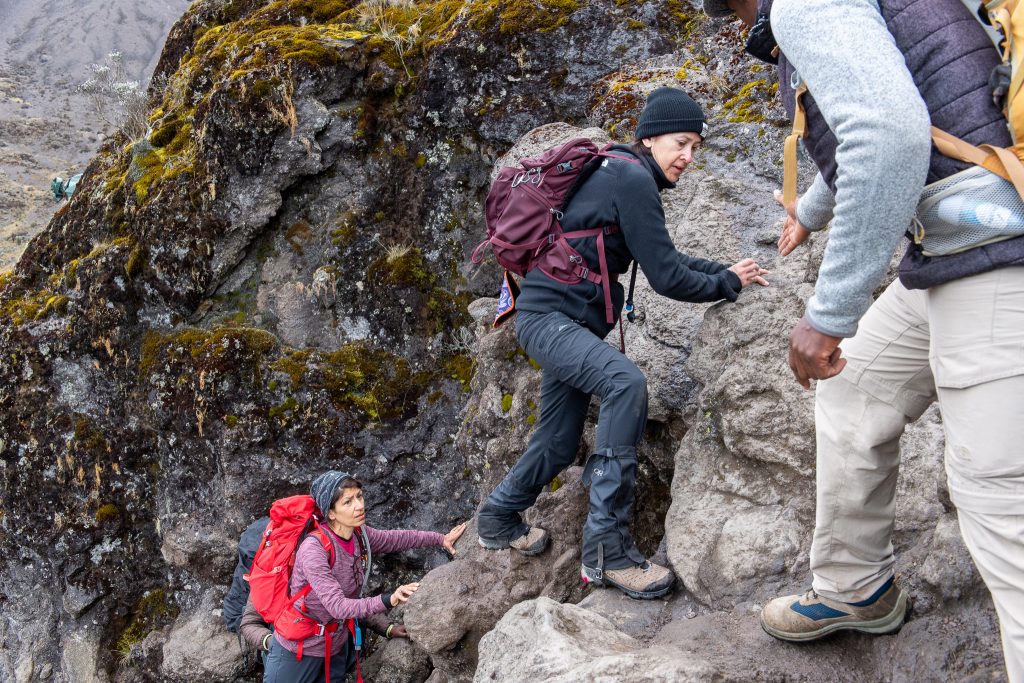
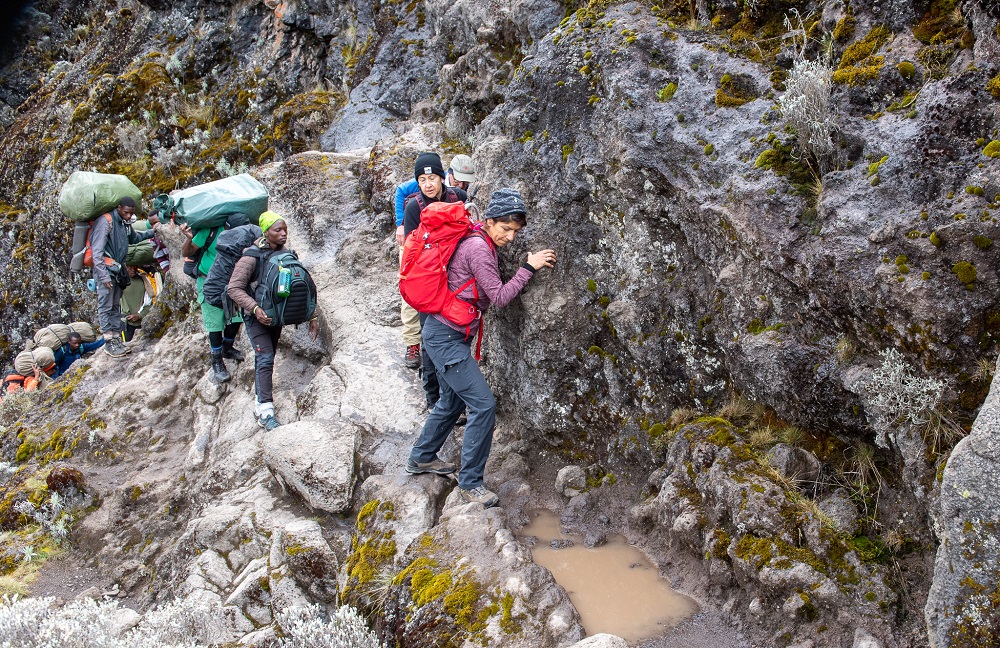
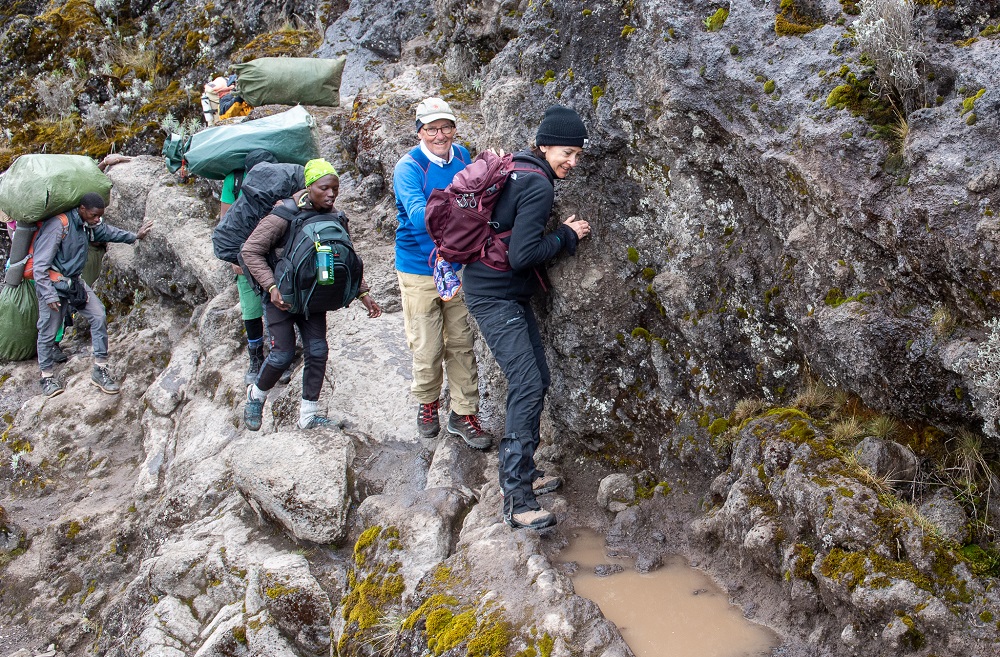
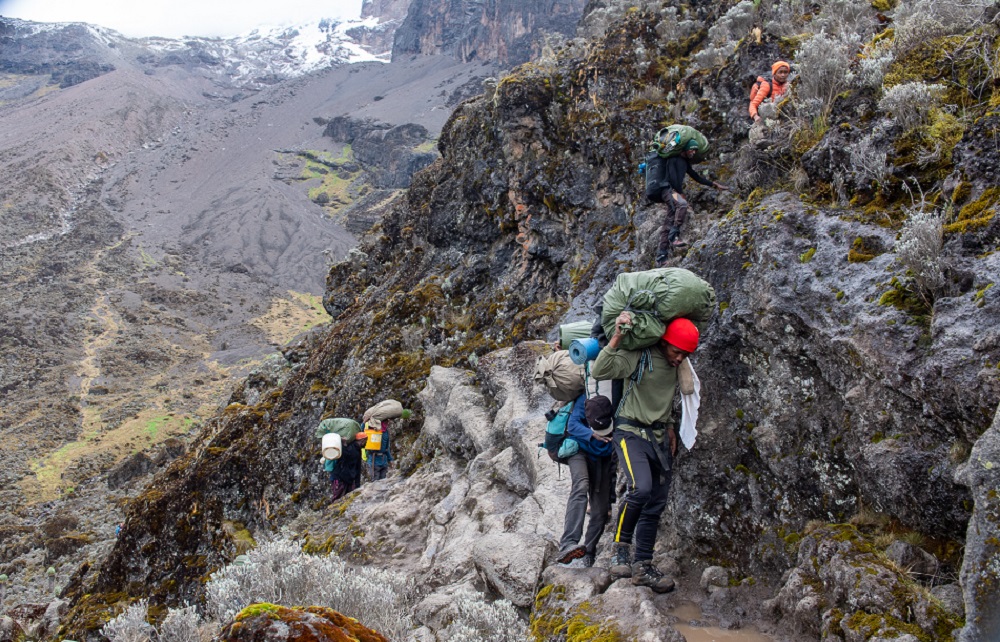
Late the previous day, we had looked across the campsite to the imposing, even somewhat intimidating Barranco Wall. If you take the Lemosho, Machame, or Umbwe route up Kilimanjaro, the only way to the top involves clambering up the Barranco Wall. The 900-foot cliff which towers over Barranco Camp, presents quite a challenge to the average hiker, with two particularly nerve-wracking spots. Fortunately, they are quite early in the ascent and within minutes of each other. The first one involves putting your weight on your left leg and swinging the right leg around to a rocky ledge. The other one is the well-known ‘kissing rock’ where you literally hug a big round rock as you try to stop yourself from toppling over backwards. Fortunately there’s always a guide close by to provide support.

From there on, the climb continues up steeply, with several spots where both hands and feet are needed to negotiate the rocks. Clambering in other words. With some stops for water and to let porters by, it took us a good two hours to make it to the top, where there were some nice views of Mt. Meru in the distance.  

From the top of the Barranco Wall it is another 2 hours to the next camp, Karanga, which overlooks a pretty valley.  
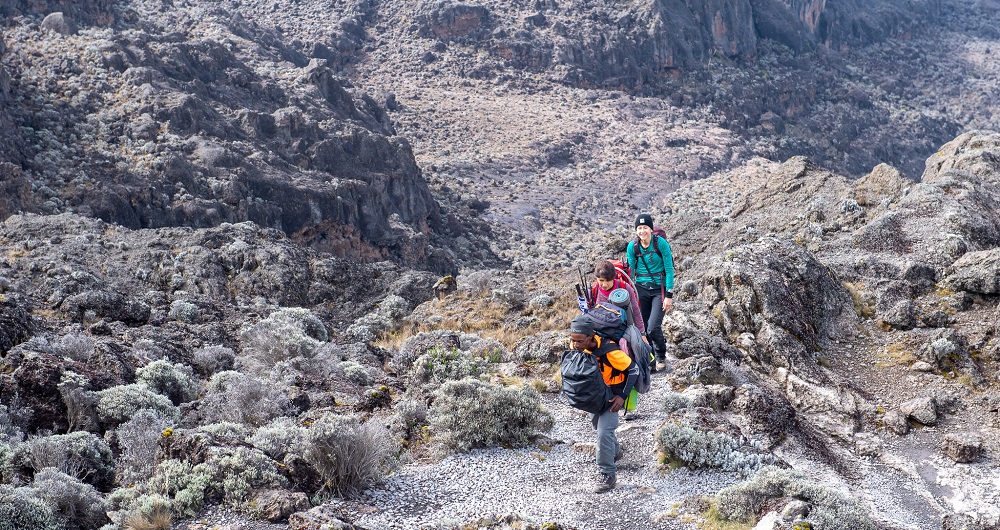
About an hour or so out of Karanga, when hikers first see the camp, it appears to be no more than a 20 minute hike away. Reality sets in when you advance another 200 meters or so, and the full picture becomes clear.  Before reaching camp, you have to hike down a steep, rocky, and in places, wet and muddy path, all the way down to a clear mountain stream, only to start up a steep, equally rocky path on the other side of the ravine. On the down side, there are many potentially dangerous spots where even a slight mistake, misjudgement, or a small lapse in concentration could have dire consequences. A fall could easily result in a serious injury, which would get you a one way ticket down the mountain in what would likely be an arduous and lengthy extraction process.

So my best advice is to prepare properly for the climb with significant attention to single leg strength and balance. Use your walking sticks, maintain a safe (slow) pace and pay close attention to where you plant your feet. Above all, never stray off the main trail for whatever reason. Short cuts or detours to get around slower hikes are to be avoided altogether. That is where accidents happen.  

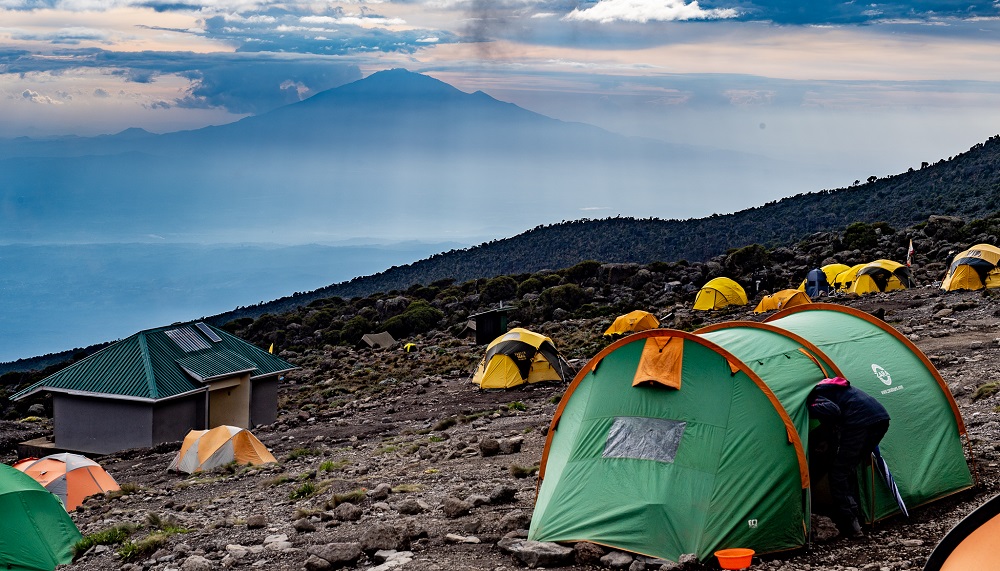
Karanga camp is set on a slope with Kibo prominent to the north. Some hikers bypass Karanga and continue on to Barafu – another 3 hours of hiking – only to make their summit attempt starting later on the same day. I don’t think that is a good idea at all, considering the time and energy expended to make it from Barranco up the Barranco Wall and through the several steep valleys en route to Karanga. Starting off summit day with a sleep deficit, on depleted leg muscles and at considerable altitude, is just not the smart move.

We made it to Karanga Camp around noon, just in time for a hot lunch. In the afternoon we did a Kilimanjaro version of Wordle, took a hike around the campsite, and made use of a couple of intermittent periods of sunlight to put out some solar charging devices.  

All the while Kibo loomed in the background, a silent but very powerful reminder of what lay ahead of us the following day. 
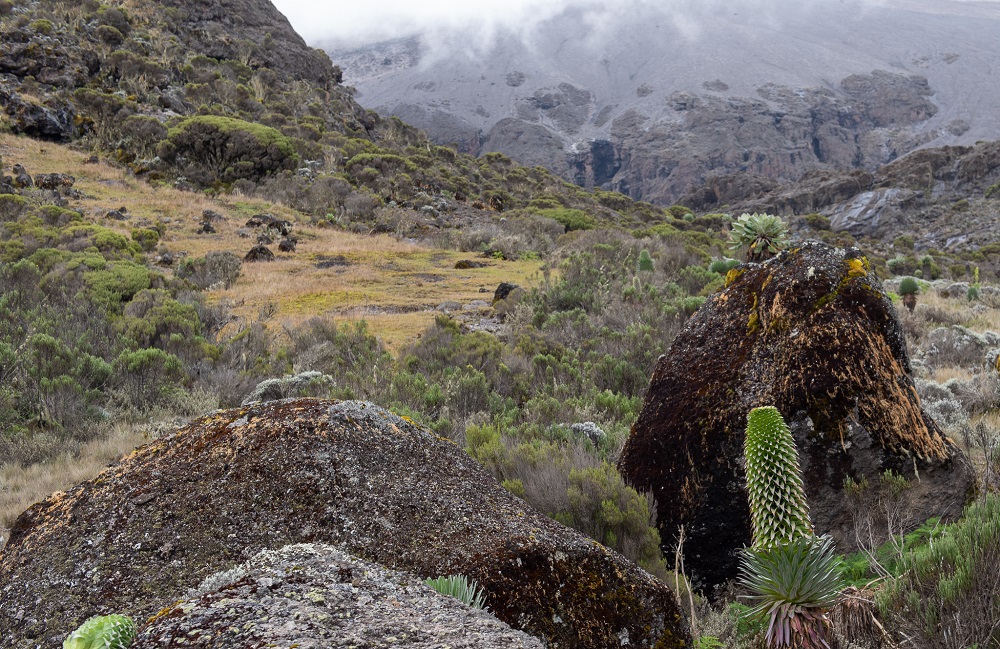
Tue 22 Feb:  Karanga Camp to Barafu – Preparing for the summit attempt

After another good night of sleep – at least for yours truly – we went through the usual morning routine of getting ready for another day of camping on Mt. Kilimanjaro.

It starts with storing your sleeping bag and mattress, getting dressed, setting aside the items for your day pack, and packing everything else into your duffel bag. There’s fluids to be prepared such as using Steri tablets or adding Nuun or Gatorade powder to the supplied boiled water. Apply sunscreen, including a high SPF product for your lips, make sure your camera or smartphone is charged, get your hat and sticks and off you go.

On this day we had a relatively short hike ahead of us, of about 3 hours, from Karanga to Barafu, which would be the base camp for the actual summit attempt. Which would start late on the evening of 22 February hopefully culminating with the three of us reaching Uhuru Peak around 8:00 to 9:00 am on Wed 23 February.  

The walk to Barafu was steadily uphill through noticeable rocky terrain. If the gods of antiquity were petulant children who tossed around large and small boulders in helter-skelter fashion, this is what the end result would be. Rocks and boulders in every direction, with precious little in the way of vegetation and almost nothing green. This was true Alpine desert. The only climate zone left? The snow cap at the summit. The last uphill into Barafu is steep and rocky and at an altitude of around 15,000 feet above sea level. It was a formidable test.  
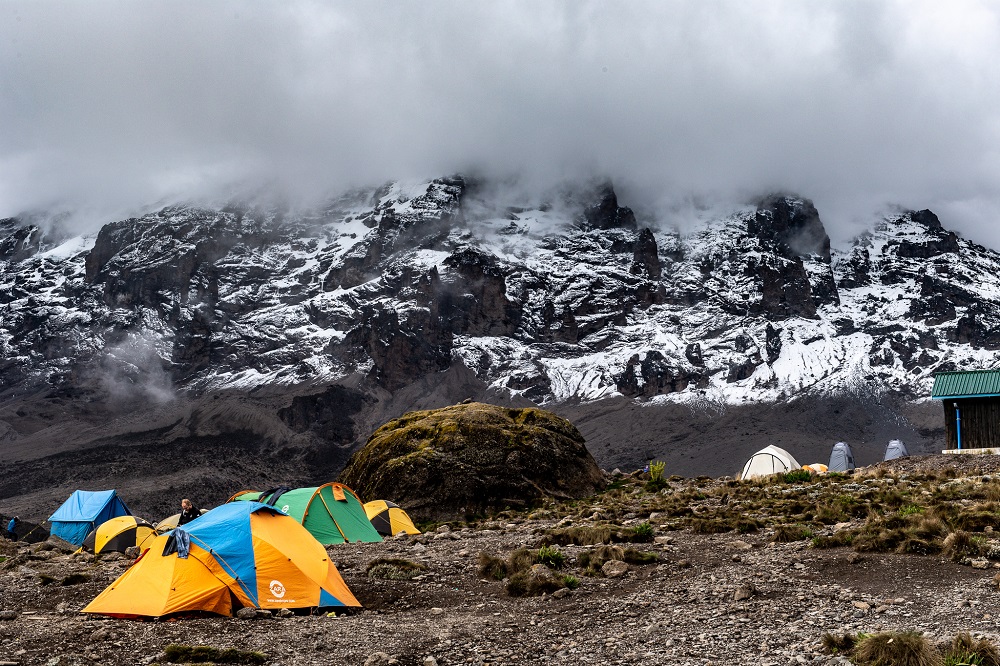
We reached Barafu fully ready for some food and a lot of rest. Which is exactly what we proceeded to do. We enjoyed probably one of the best lunches of the trip so far, a hearty and altogether delicious vegetable stew, with some white rice on the side. Just what the doctor ordered. By 2:00 pm we were ready to at least attempt to take a nap to recharge the batteries for the most demanding hike most of us would ever do. Eight or nine hours to go until we would set off on the climactic portion of our 9-day Kilimanjaro adventure. It was with a mix of anticipation, excitement and just a little nervousness that we retired to our tents that afternoon.  

By 6:00 pm (none of us actually having slept a wink), we were back in the mess tent for a light dinner. A light icy rain started to fall during dinner, perhaps not the best harbinger of things to come on summit day or rather night. Little did we know then how things would turn out.

Just like on my previous three successful climbs, I did not sleep at all, using the afternoon and early evening hours to rest and prepare. Getting ready for the summit attempt takes a lot of planning and selection of suitable gear. Other than one’s climbing boots, the choice of a waterproof shell is critical. This is the one garment without which a Kilimanjaro climb can quickly turn miserable if not unbearable. It is of paramount importance to stay warm and dry and for that you need a good shell.

I wore an Arcteryx Beta AR shell for the first time and it was the bomb. 100% waterproof, warm, and with tighteners at the sleeves to keep moisture out. Good pockets with zippers, a proper hood and lightweight to boot. The large size means it is roomy enough to fit comfortably over several other layers, including a heavy fleece.

A light breakfast was served just after 10:00 pm, and following that we made the usual final adjustments & preparations. Put on gaiters, checked on our water and Gatorade supply, made sure we had our sunglasses, suntan lotion and extra batteries for the headlamp. It turned out that my extra batteries had been left behind in a bag in Arusha. It would cost me dearly later the following day. Other important final checks? Have your liner and heavy gloves ready from the word go. Cold fingers and hands are no fun and can be distracting. My set of heavy REI skiing mittens worked well. In your backpack also include your camera and extra batteries (keep them warm) and a 30 + SPF lip balm. This is vital – so many people leave Kili with cracked, blistered lips – do not let it happen to you!
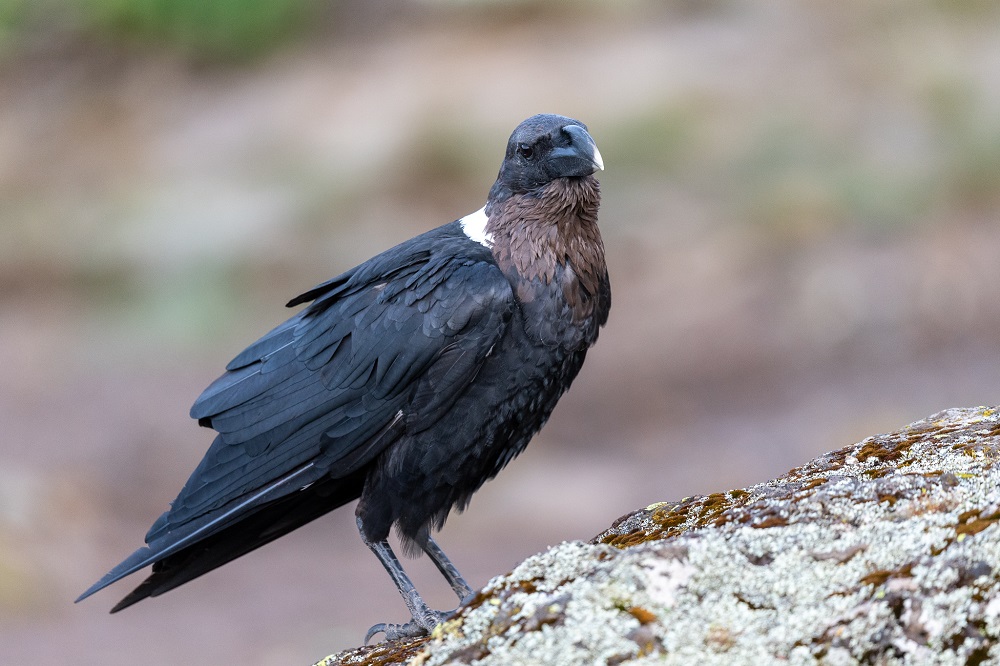
Wed 23 Feb:  Uhuru Summit attempt – Disaster strikes

Finally, around 11:00 pm, as a snow flurry came down, we started out of Barafu Camp. Having completed the Machame Route in 2016, I remembered that there was a rather nasty stretch of rocks and steep uphill right out of the gate leaving Barafu. Sure enough, we were huffing and puffing almost immediately. The treacherous, even dangerous uphill stretch was much worse than I had remembered. It was rough, with huge rock slabs to be negotiated under less than ideal (wet, icy, snowy) conditions.

If I were ever to climb this route again (which is unlikely), I would absolutely make Kosovo my final base camp, not Barafu. Kosovo is about an additional hour’s hike further up the mountain, past Barafu. Climbing out of Kosovo – which we did when we hiked the Machame Route – is the smart move. Of course, that means having to include the steep, hilly stretch (leading out of Barafu) as part of the hike from Karanga the previous day. Seeing as that hike is less than 3 hours, it makes eminently good sense. It makes your summit day attempt much less strenuous not having to contend with that awful, rocky hill first thing out of the gate.

Once we had negotiated the steep, nasty stretch, we made pretty good progress and I was starting to feel confident about summiting. Conditions were ideal with no wind or snow, and it wasn’t exceptionally cold. I was just thinking that we were well on our way, with the rocky stretch leading to Stella Point being the only really difficult portion ahead, when an event occurred which would change everything almost instantaneously.

One person in our party just said, “I’m feeling a little dizzy,” almost immediately started to wobble a bit and took a few steps to a large rock, where she lost consciousness. As it turned out, she would not be  able to recall any of the subsequent events until she reached about 12,000 feet elevation at Millenium Camp on the way back down.
Later on, we realized that our team mate was suffering from HACE – High Altitude Cerebral Edema. I was aware of HACE and its cousin HAPE – High Altitude Pulmonary Edema – having done extensive reading prior to my first Kili attempt. Unless and until one of them unfolds in front of your eyes these conditions remain theoretical constructs in your mind.  

It was scary experiencing it first-hand and seeing your friend go from walking normally to being completely out of it in a matter of less than two minutes. If untreated, HACE can be fatal. We all knew what had to be done: the climber had to get emergency oxygen and be rushed to a lower altitude.

That is exactly what happened. An oxygen tube was connected and the emergency descent was started practically immediately, with assistant guide Winford taking the lead and moving ahead of us downhill at a rapid pace, physically supporting the stricken hiker. The remaining two climbers followed – at a substantially slower pace – with head guide Joseph. We paused for a short while at Barafu where the decision was made to evacuate right out of the park, and to not overnight at Mweka which would ordinarily be the case.  

We still had not seen our friend but was told that she was feeling a lot better. The descent from Barafu to Mweka is a tough downhill slog of about 3 hours along an abysmally bad, substandard, rock-strewn track. Negotiating this dangerous descent after a successful summit – as I had done before – is tough, but doing it in the dark was crazy. It is pathetic that the Kilimanjaro authorities make that particular track the only option down for hikers completing the Machame, Lemosho or Umbwe summit attempts. Since 2016 – when I first hiked down along the road after a Machame climb – few if any improvements had been made. To make matters worse we were walking in near total darkness from 3:00 am until 6:30 am. Being without spare batteries, my headlamp petered out halfway down the track, which made every step more difficult than it should have been. Fortunately we made the hazardous trek without twisting an ankle or worse.

We were finally reunited with our friend at Mweka Campsite. She was feeling much better but clearly still the worse for wear,  groggy and fatigued. We had a long 10 km (6 mile) stretch of road ahead of us to the Mweka Gate. It took us the better part of 3 hours to complete the beautiful yet tiring walk through the rainforest. With dozens of porters passing us every mile or so, we took what felt like thousands of steps down to where the jeep track terminated. Relief was in sight! Minutes later we were bundled into a vintage ambulance and drove the last few miles to Mweka Gate.  

From there it was about 40 minutes back to our Moshi Hotel where we collected our valuables and left luggage, took a very mch overdue and welcome hot shower and handed over the gratuity to Joseph and Winford to be distributed among the team. It was time to say goodbye to our stalwart guides and to head back to Arusha for the night. The next day we said our own goodbyes and went on our way to Houston, San Antonio and Johannesburg, respectively. The trip didn’t end quite the way we would have liked it to, but it was a major achievement to have climbed as high as we did under really trying circumstances. 
Three common Kilimanjaro climb pitfalls to avoid

What are the three most common mistakes made in the planning and execution of a Kili climb?

#1: Not adding an additional acclimating day and opting for the minimum # of days on a climb

Unless you are a super-conditioned athlete – and even then – attempting the Lemosho route in just seven days instead of 8, the Machame Route in just six days or the Marangu Route in just five, is looking for trouble. Spending an additional day on the mountain at altitude makes a huge difference in the chance for a successful summit. So spend a bit more time in Tanzania and pay the extra money for one more day: it will be worth your while. This is even more important on the shorter routes like Marangu and Umbwe, both of which can theoretically be done in 5 days. Definitely add an extra night on these climbs; even then your body is going to have a tough time to adjust due to the short, rapid ascent.

#2: Flying into Kilimanjaro the night before starting your Kili climb

This is not a good idea, particularly if you live in a city close to sea level and you have to take one or more long flights crossing as many as 9 or 10 time zones to get to Tanzania. Departing from sea level, spending 30-plus hours on the journey, only getting to Tanzania the night before – and then setting out on the climb the very next day – is decidedly risky. Like asking your body to go from zero to 60 mph overnight.

On the other hand, spending 3 nights or so in Tanzania at around 1,500 meters above sea level, such as in the Arusha or Moshe area, can make a decisive difference for the better. You’ve already made a significant investment in time and money to get this far, so don’t risk it by starting up the mountain too soon. Spending a few nights at a lodge such as Ngare Sero, on the lower slopes of Mt. Meru just outside Arusha, will be hugely beneficial. There’s plenty of activities to keep you busy, including hiking on the lower slopes of Mt. Meru. Get over the jet lag, rest up a bit and give your body a chance to acclimate to the mile-high altitude before you pile on more altitude over the next few days. If you’re keen, we can even arrange a 3-day hike of Mt. Meru which would be the ideal fine-tuning of your Kilimanjaro preparation.

#3: Starting off at too fast a pace

You’ve done the training, you’re feeling fit and you want to get to the top. Fast. So off you go, charging up the mountain, right out of the gate. Big mistake. Kili is not a race and there is no special certificate for beating the pack. It takes 6 or 7 days or even more, and the real test only starts around midnight on summit day. That is when a Kili climb goes from relatively easy to sometimes super difficult, depending on the conditions. Not conserving your energy earlier on will cost you dearly then. Always mind your guide’s entreaties to go slowly. Pole pole.  

Of course, several other factors come into play including good physical preparation, proper equipment, picking the best time of the year for your climb, and having a competent head guide in charge.
  

How to improve your chances to summit Kilimanjaro: 

#1: Keep your feet happy and healthy

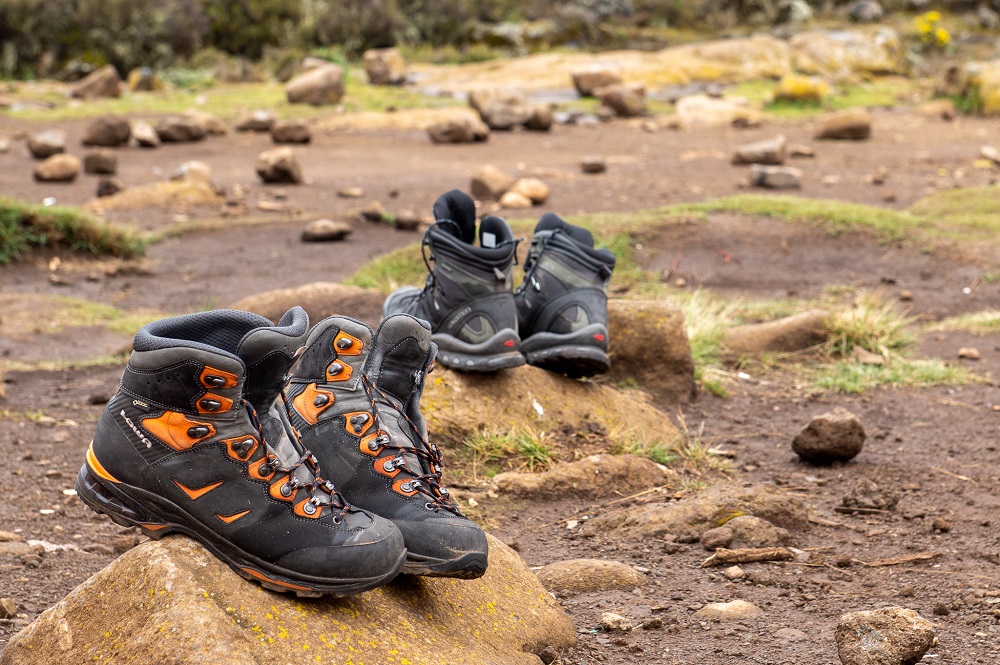
This starts with buying and wearing in a good pair of well-fitting waterproof boots. Do not scrimp on this purchase. The line between success and failure on Kilimanjaro is a thin one and developing debilitating blisters can easily tilt you in the wrong direction. Personal hygiene is a challenge on the mountain with no access to showers, except cold ones on the Marangu Route. Whatever you do or do not do in this arena, don’t neglect your feet. Take immediate and decisive action to treat a blister or hot spot right away, before it becomes problematic. Use an antifungal like Tinactin daily and apply a lubricant like Glide (get it from a running store) on and between your toes, on your heels and other potential problem areas, before every hike. Prevention is way more important than cure, particularly over the space of a few crucial days.

Proper socks are super important. I’ve had great results with a thin liner sock (like the REI store brand), together with a double-layered hiking sock such as the Wrightsock ‘Coolmesh’ type. Take enough socks to start with a clean pair (liner and regular socks) every day, plus 2 spare sets in case of unexpected heavy rain or other mishap.

#2: Follow your head guide’s instructions and requests

Your head guide has summited Kilimanjaro probably dozens and even hundreds of times. He knows what works, he can anticipate issues and pitfalls, help you avoid failure and inspire you to deliver your best. As long as you listen to him and let him lead. If the pace initially seems painfully slow, there is a reason. If the head guide wants you to do an afternoon climb to gain some more altitude after a long and perhaps punishing morning hike, do it. Don’t fret, don’t whine – you are paying good money for the chance to achieve something really special. So, shun all negativity from your mind and let your head guide help you realize your dream.

#3: Sleep when you can

Get some sleep at night or during the day, whenever the opportunity arises. Whether it’s a 15-minute nap or a 6-hour slumber, it all adds up and it is vital, in fact critical for success. Bring good earplugs, a comfy pillow, whatever it takes to get you in a sleep mode. Avoid caffeine and alcohol. A high quality sleeping bag which will keep you warm at temperatures as low as minus 20 degrees Fahrenheit is a good investment in more and better sleep. It means you can get into your sleeping bag with just a couple of layers of loose, comfortable sleepwear. To keep warm in a sleeping bag not designed for such low temperatures, you may end up having to wear multiple layers of clothing. This can be annoying, restrictive and not conducive at all to falling asleep easily and quickly. Plus of course being cold inside your sleeping is guaranteed to adversely affect your sleep duration and quality.
#4: Eat and drink regularly

The food on Kilimanjaro is typically bland and predictable: chicken and chips, a variety of stews, lots of vegetables and pasta. And soups. If you are lucky your cook will prepare some local foods like ugali (rustic polenta) and beans. Even the most creative of mountain cooks are stymied by the limited range and quantity of fresh ingredients which the porters can carry all the way up, so don’t expect something new and exciting every day. You must eat though, to replenish the thousands of calories burnt every day. So, while you may not always feel ravenously hungry, decent nourishment is vital. Be sure to bring some energy bars with you; on our last trek I tried the Luna brand Blueberry and Lemon Zest varieties and they both hit the spot! Be creative and experiment, just make sure that you get your calories in. It is ok to indulge in sugary treats for these few days so by all means tuck into candy bars, chocolates, snack food and trail mixes – anything you find palatable.

Your head guide will be checking regularly to make sure that you stay hydrated as that is of paramount importance. Whether you use a bladder system or individual Nalgene bottles – or both – make sure that you carry at least 3 to 4 liters of water on you; it is advisable to add some electrolytes to the bottled water.

#5: Take the Diamox

Don’t shy away from a twice daily dose of Diamox (Acetazolamide), a diuretic which helps to prevent and reduce the symptoms of altitude sickness. Most climbers take about 125 mg daily and up to 250 mg before summit day. Be sure to consult a physician before doing so. Taking Diamox is no guarantee of success, but it does help a lot of people. The most common side-effects include some tingling in the extremities and excessive urination. Not a bad trade-off for achieving your goal. Persons who have an allergy to Diamox or sulfa drugs should clearly not take this drug – again, be sure to consult a medical specialist before taking any prescription medication.

#6: Train, train, train

It is never too soon to start training for Kili but certainly you’d want to be on some kind of training regimen starting no less than 6 months prior to the summit date. Ideally of course, climb some mountains or hills with a backpack, with some weights. Start modestly and work your way up from a couple of days or so per week, increasing the distance and frequency as the climb approaches.

No hills? Find a levee wall or other decent sized hill or slope (steps if there is nothing else) and walk up and down with a weighted backpack for up to an hour or more, several times per week. Make this progressively harder and more challenging as the big day approaches. Be careful with weights on your back as too much can be dangerous, particularly if not carried high up and close to your upper torso. Even regular long hikes with your Kili boots and backpack (load it up progressively) will help with the preparation, hills or no hills.
  

In addition to, and in combination with hiking, I suggest a series of single leg exercises to increase your ability to handle the thousands of ‘up’ and then thousands of ‘down’ steps required to get to the top. And down again. The exercises which I personally do include these:

  • * Single leg step-ups 
  • * Single leg deadlifts 
  • * Single leg squats  
  • * Regular weighted squats
  • * Walking lunges       
  • * Calf lifts

It is a good idea to also include some aerobic distance exercises like running, biking or a rowing machine to build up endurance and good oxygen utilization. Maybe even some high intensity running like fartleks (speedplay) which can be done anywhere. Just warm up properly and don’t make any sudden or large increases in volume or intensity from one day or week to the next. Slowly slowly, just like the eventual ascent you are working towards!

There is no prohibition on including other training modalities and equipment like regular gym core and weight work, swiss ball, medicine ball, resistance bands or whatever you are already doing. And of course, if you already work with a personal trainer, that is your best-case scenario. A personal trainer will be able to customize your training program to get you into tip-top form for Kilimanjaro!
If you are ready to take on the challenge of Kilimanjaro, call our Houston office at 1-800-513-5222 any time during business hours, Monday to Friday, CDT or email me at bert@fisheaglesafaris.com. 

YOU MIGHT ALSO BE INTERESTED IN
Destinations
Zambia

10th September 2021

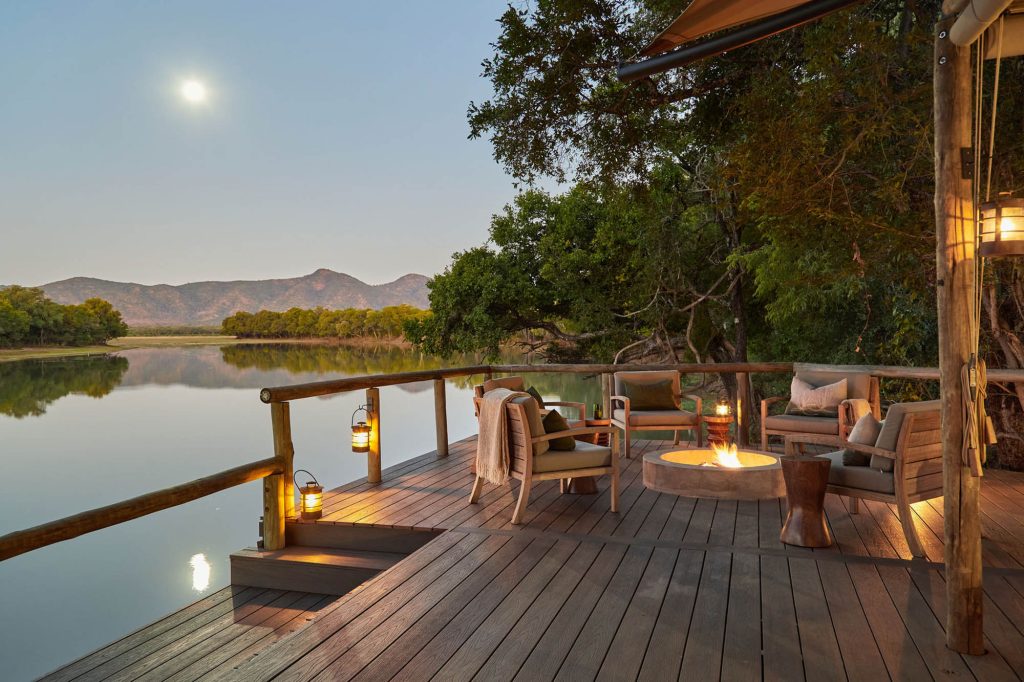
Chindeni and the Bushcamp Company, Zambia

By late July we found ourselves at Chindeni, a small Bushcamp Company property
Read more
Botswana
Destinations
Okavango Delta

3rd October 2022

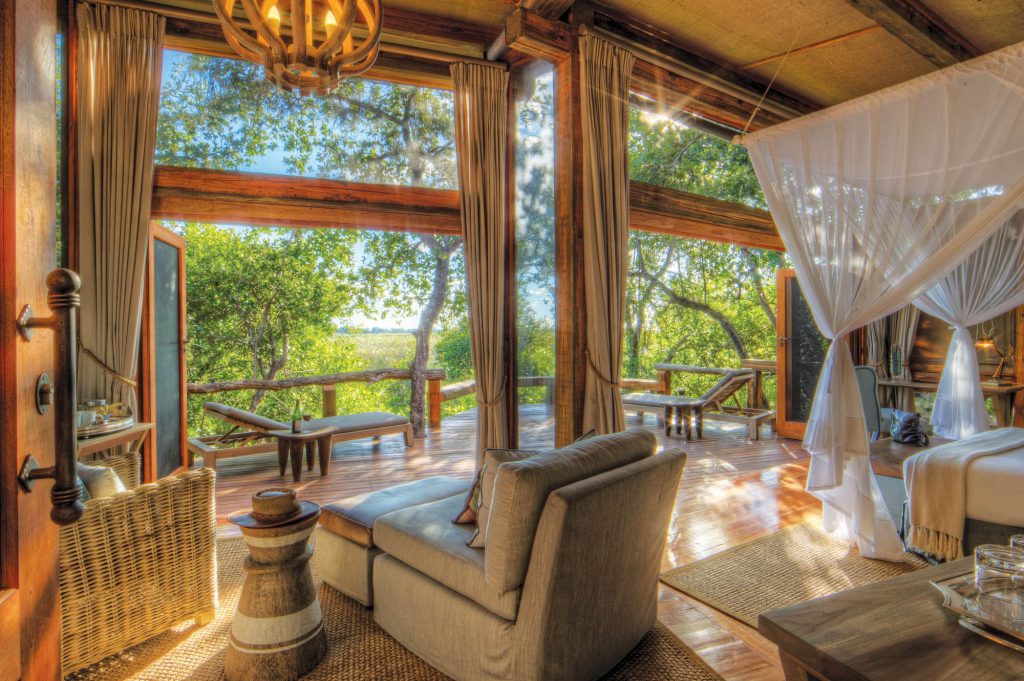
Camp Okavango, Botswana

Camp Okavango is in the heart of the permanent part of the Delta. In this idyllic setting there are no vehicles, and it is just a short walk
Read more
Area
Destinations
Nyerere National Park
Ruaha
Tanzania

14th October 2023

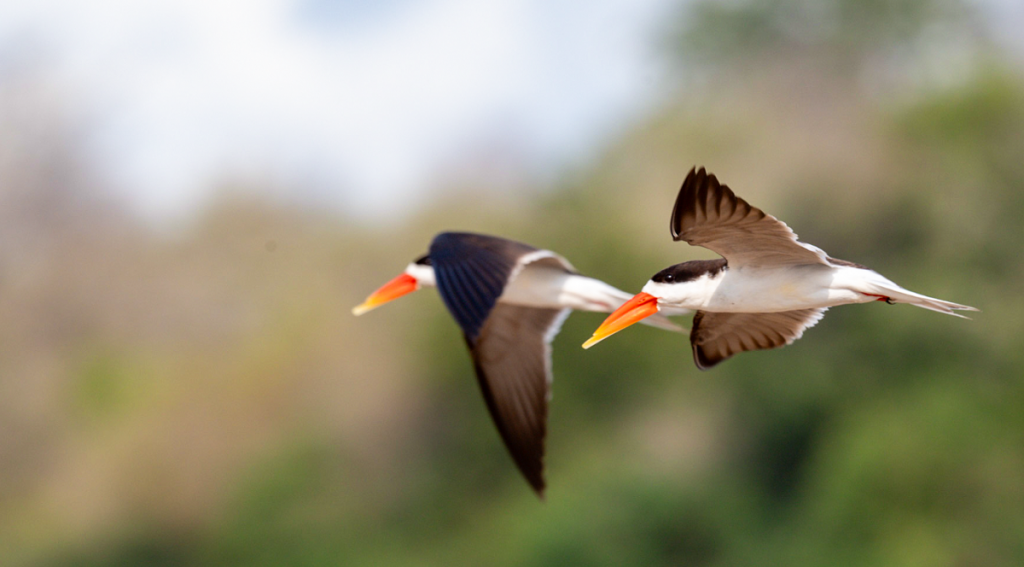
From My Safari Notebook: Wildlife Photography

Birds in flight and wildlife photographers have an uneasy relationship. Things go wrong as often as they go right. Getting focus-lock on a moving subject

Read more

SUBSCRIBE TO OUR NEWSLETTER

READERS FAVOURITES
Destinations
India

27th May 2023

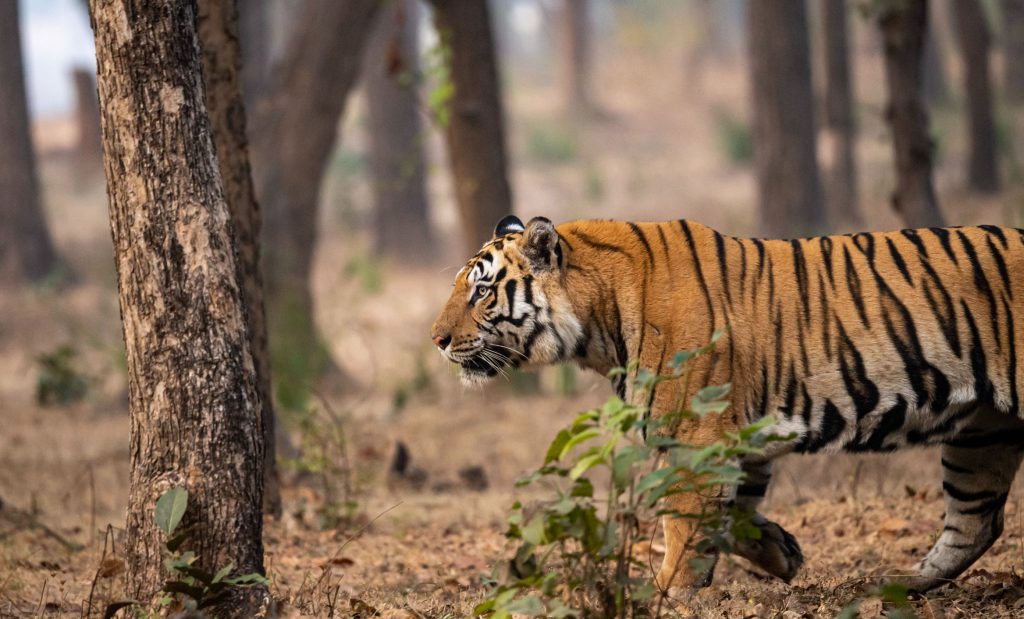
India

India’s tiger, mammals and birds.

Read more
Botswana
Destinations

4th August 2022

On Safari At Belmond Eagle Island Lodge, Okavango Delta

What is the ‘secret sauce’ for an unforgettable few days on safari in Botswana? It starts with the animals, of course. The elephants, lions, giraffes, hippos

Read more
Destinations
Zambia

10th September 2021

Chindeni and the Bushcamp Company, Zambia

By late July we found ourselves at Chindeni, a small Bushcamp Company property

Read more

Zimbabwe ‘Fly Free’ Offer – Now Until 15 Nov 2024

6th April 2024

Zimbabwe ‘Fly Free’ Offer – Now Until 15 Nov 2024

There are only a handful of places in Africa which rival Mana Pools National Park in far northeastern Zimbabwe for sheer safari star power. Starting with a near perfect setting with several camps overlooking the floodplain leading down to the massive Zambezi. In the dry season the floodplain acts like a magnet for wildlife and there’s almost always something to see. Pack your binoculars. In the background? The looming Zambian escarpment, a series of craggy hills which look impossibly appropriate to the scene. Almost as if a primeval techie had photoshopped nature. It doesn’t take first-time visitors long to realize that there is something wonderfully ethereal about Mana Pools’ winterthorn (Faidherbia albida) forests. The near magical blue light which suffuses the interior of the forests transforms an already spectacular setting into something totally next level.

There’s a lot more, starting with above average to sometimes scintillating game viewing, given the presence of elephants, lions, leopards, African painted dogs, eland, waterbuck and zebra. Plus of course rafts of hippo in the Zambezi and some fine specimens of Nile crocodiles. Trolling unseen below the surface, an abundance of tiger fish, ready to grab your spoon or lure, should you be up for the challenge to take on these notoriously difficult to catch fighting fish. A hint: the tigers can be closer to the shore than you think, particularly if there’s a nice current visible. A more important hint: don’t venture too close to the edge. The tigers won’t, but the crocs may consider you fair game. 

Mix in foot safaris (Mana Pools is practically synonymous with getting out of the vehicle) and the place is heaven on earth for visitors in search of a classic Africa experience. 

If you’re still considering a summer getaway to Africa this year, you may find that Kenya and Tanzania – and all of the best camps in the private game reserves adjacent to Kruger Park in South Africa – are pretty much ‘sold out.’ You may balk at the eye-wateringly high prices of some of the northern Botswana properties. Don’t give up. Spain is not the answer. There’s still plenty of space available in Mana Pools, so give us a call at 800-513-5222 or email me at bert@fisheaglesafaris.com to talk about a safari which is going to be excellent, and which will cost you half the price of a comparable Botswana trip. Mix in a few days in Hwange National Park (nowhere better for elephants) and you’ll come back with awesome photographs and even better memories and tales to tell. Upping the value even more? Free charter flights from Harare to Mana Pools, from Mana Pools to Hwange and from Hwange to Victoria Falls, provided you add on a couple of nights at Toka Leya, a superb lodge on the Zambezi, just far enough away – upstream – from Victoria Falls. This offer is available from now until 15 Nov 2024. Itineraries need to include a minimum of either six or eight nights in specific safari camps in Zimbabwe. Details available on request.  

Better game viewing earlier in the season 

The greater part of the prime game viewing area in Zimbabwe has experienced well below average rainfall this season which means that dry-season conditions have already set in. Mid- to late May will be like mid-July to early August in a ‘regular’ year. Less vegetation with more animals concentrated around remaining sources of water such as pumped water holes in Hwange and the floodplains of the Zambezi. The dry season is notorious for delivering the best predator activity, particularly with lions but also leopards making use of the opportunity to ambush herbivores when they come to drink. In Hwange and elsewhere there will be throngs of elephants and other mammals including buffalos, giraffes and some rarely seen antelopes like sable and roan, coming to the pumped water holes, pretty much day and night.  

Significant drought conditions later in the season 

Later in the dry season – as drought conditions worsen and food becomes scarce – some of the scenes around the water holes may be intense and even harrowing. Unless there is late rain, many of the large herbivores – notably the elephants – will start to struggle and the weaker ones will succumb as the daily trek between sources of food (woodland forest) and the water holes becomes just too much. In the long run, a reduction in the overall number of elephants in particular, will be beneficial for the environment. Regrettably, it will be a harsh and tough process to witness.   

The vital role played by safari visitors

Prospective visitors can take comfort in knowing that tourism dollars are hugely important in terms of sustaining the wildlife and the communities around the safari areas. As many as one out of every ten jobs in Africa is created and sustained by tourism. On average, one person employed in the Zimbabwe tourism industry supports as many as 10 dependents. The funds generated by tourism support vital wildlife safety nets like pumped water holes in Hwange. Right now, companies like Imvelo Safaris are going flat out re-drilling boreholes to maximize their efficiency and spending money on new pumps and equipment. Money which largely comes from American and other foreign visitors.   

Imvelo Safaris are also drilling three new boreholes at three villages specifically to sustain irrigated vegetable gardens to keep people fed during the coming months. They are also ramping up their school feeding program. Little or no corn in the fields means no fresh corn for breakfast, creating a need for more funds to provide the children with a square meal. In Zimbabwe, the second school term opens at the  beginning of May. Every additional visitor will make a difference. This year, more so than in a long time. Every dollar spent or donated in the Zimbabwe safari destinations this year will provide a vital, much needed boost to the local economy, the people and the wildlife.  

Two other ways in which the people of Zimbabwe can be supported is by making a microloan to a local entrepreneur on Kiva at kiva.org, or by directly supporting the conservation and community efforts of Mark Butcher and his team at Imvelo Safaris. Imvelo’s guests have sponsored a school meal program that has provided over 4 million school meals to dozens of schools in just the past 10 years. They’ve also built teacher cottages, constructed classroom blocks, established a health clinic at Ngamo and annually they arrange a massive ‘Smile and See’ project treating thousands of dental and optical patients free of charge, with the help of a visiting team of dentists and eye doctors. Donations to all Imvelo Trust projects may be made on this site: https://www.hwangecommunityrhino.com/how-to-donate.

Incredible value

A safari of equal quality, using a similar mix of classic category tented camps in Zimbabwe is roughly half the price of a northern Botswana trip of the same duration during high season. With hardly any dropoff in terms of game viewing and diversity of habitats and activities. Not to mention equal or better professional guiding in Zimbabwe and more varied scenery. Victoria Falls being at its best through the end of May and into June, when the river is in high flow stage. The setting of the Mana Pools camps on the southern edge of the Zambezi with the massive river in front and the pretty Zambian escarpment in the background? One of the best in all of Africa. Travel before the end of May and you can take advantage of low shoulder season pricing, with rates at some of the camps being as much as 50% lower than high season prices. Include three free flights (Harare to Mana Pools, Mana Pools to Hwange and Hwange to Victoria Falls) and you’re looking at a savings of up to $1,500 per person. 

YOU MIGHT ALSO BE INTERESTED IN

Destinations
Zambia

10th September 2021

Chindeni and the Bushcamp Company, Zambia

By late July we found ourselves at Chindeni, a small Bushcamp Company property

Read more
Botswana
Destinations
Okavango Delta

3rd October 2022

Camp Okavango, Botswana

Camp Okavango is in the heart of the permanent part of the Delta. In this idyllic setting there are no vehicles, and it is just a short walk

Read more
Area
Destinations
Nyerere National Park
Ruaha
Tanzania

14th October 2023

From My Safari Notebook: Wildlife Photography

Birds in flight and wildlife photographers have an uneasy relationship. Things go wrong as often as they go right. Getting focus-lock on a moving subject

Read more

SUBSCRIBE TO OUR NEWSLETTER

READERS FAVOURITES
Destinations
India

27th May 2023

India

India’s tiger, mammals and birds.

Read more
Botswana
Destinations

4th August 2022

On Safari At Belmond Eagle Island Lodge, Okavango Delta

What is the ‘secret sauce’ for an unforgettable few days on safari in Botswana? It starts with the animals, of course. The elephants, lions, giraffes, hippos

Read more
Destinations
Zambia

10th September 2021

Chindeni and the Bushcamp Company, Zambia

By late July we found ourselves at Chindeni, a small Bushcamp Company property
Read more

Revisiting Johannesburg: The City of Gold

27th December 2023

Revisiting Johannesburg: The City of Gold

South Africa’s ‘City of Gold’ – Johannesburg – is widely referred to as Joburg or sometimes Jozi for short. You can even use ‘Egoli’ which means ‘place of gold.’ For those in the know, the city has become more than simply an overnight stop between flights. Johannesburg has been described as ‘the new cool capital of the Southern Hemisphere.’ Done the right way, it is a destination which merits a minimum two night stay.

Joburg is the financial capital of Africa, a complex combination of first and third world cities, vibrant and alive with art, fashion and design. It is definitely ‘the’ city to explore to get real insight into the soul of South Africa. But the city is also vast and difficult to navigate, so it is best done with a professional guide.

Most visitors end up staying in Sandton or Rosebank or somewhere in the northern suburbs or close to the airport. That’s ok, as long as you don’t confuse business centers like Sandton and Rosebank – with their business hotels and shopping malls – with the city itself. Downtown and in the areas closer to the center of the city is where it all happens: the street life, the architecture, art installations, food & drinks, graffiti – the rough edges which make it alive and interesting.

Having lived and worked in Johannesburg for several years I will admit to having a soft spot for it. For one thing, the weather is pretty much perfect. Cool in the winter but hardly ever below freezing, and never too hot in summer, with maximums around 85F. The city has a somewhat undeserved reputation for being ‘dangerous’ but in reality it is not dissimilar to most large cities anywhere in Africa – and beyond. Potentially dangerous if you stray into the wrong place at the wrong time. Otherwise just like anywhere else.

In an attempt to stay somewhat up to date with conditions, trends, ‘new’ places to see and visit and to revisit some favorite spots, I periodically venture out in Johannesburg, accompanied by a professional driver-guide. Which is the proper way to do it, and which we recommend for our guests.

Constitution Hill

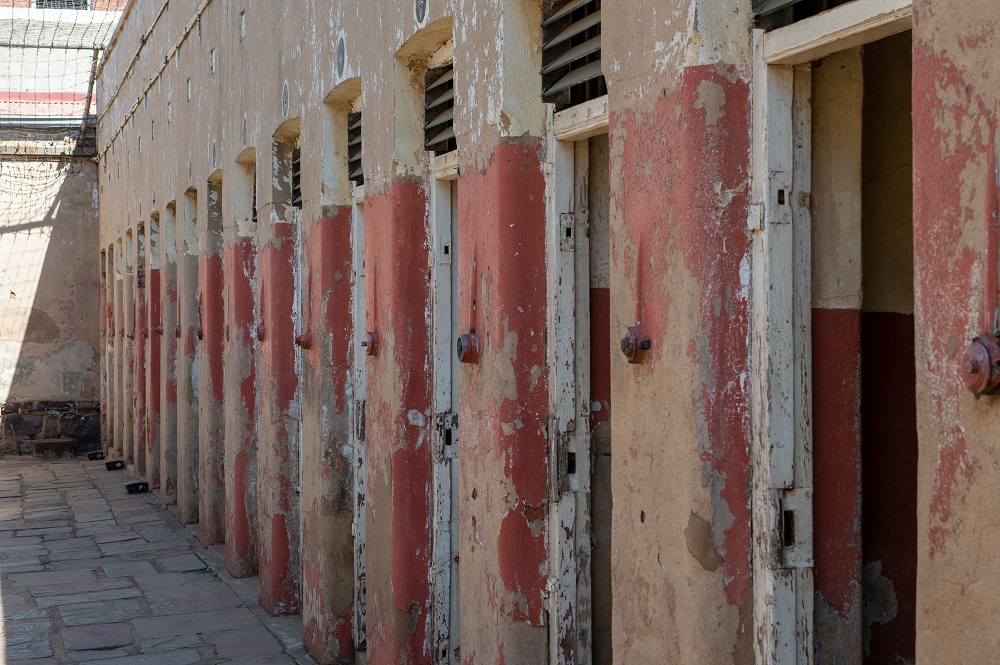
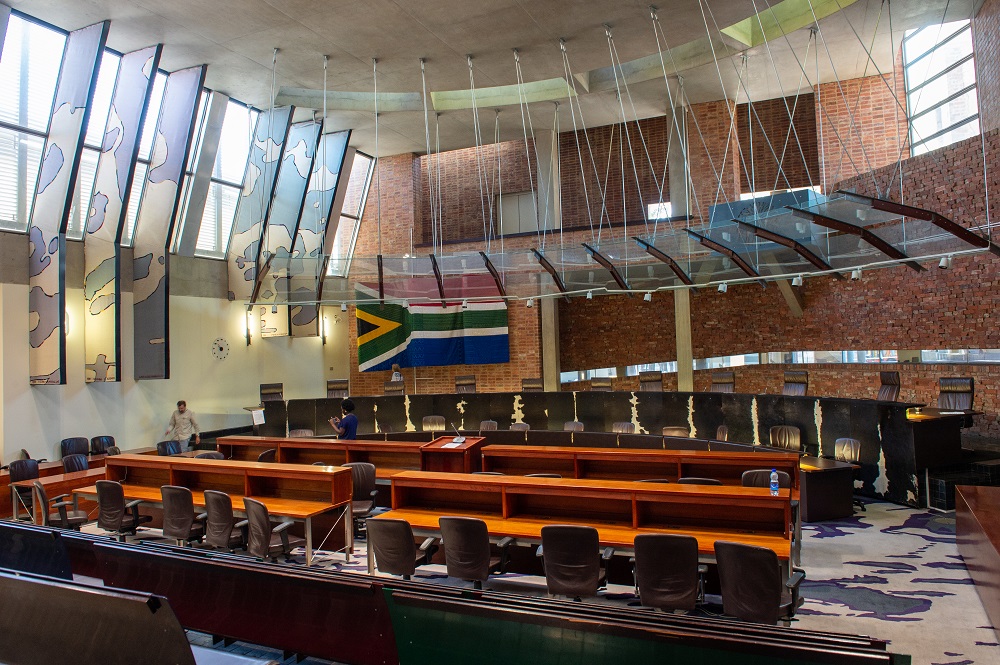
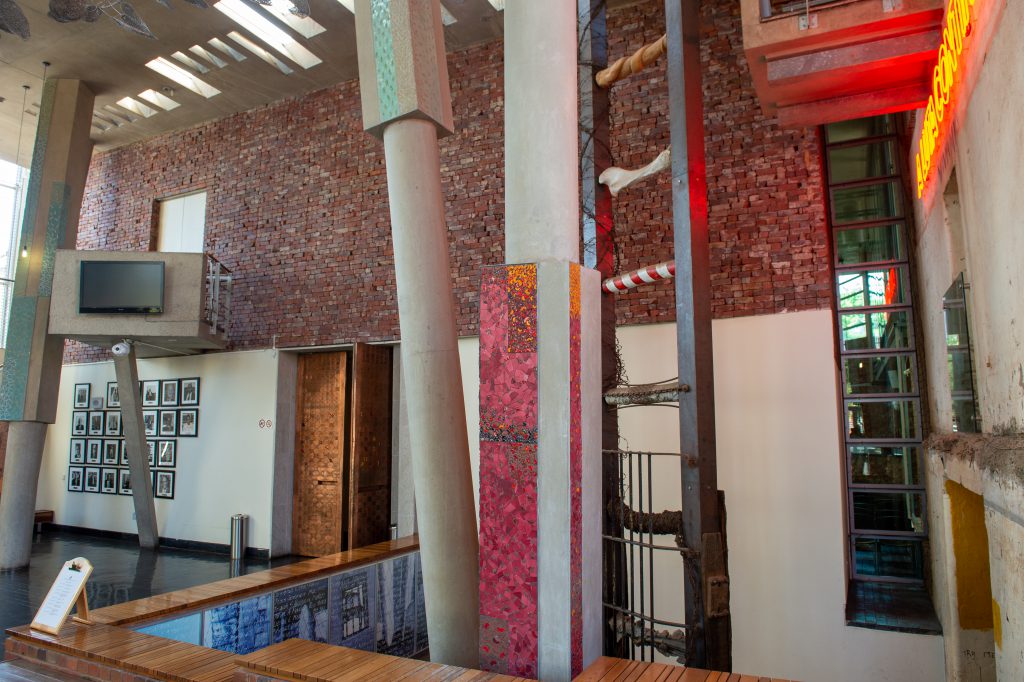
This last November, Kathy and I did a day tour with a driver-guide from Jarat Tours and a step-on guide – James Delaney from Jo’burg Gurus. We revisited Constitution Hill, where visitors can witness and learn about some of the harsh conditions and regulations which prisoners from the apartheid era had to endure. Many men and women were incarcerated within its walls during its 100-year history and it is sobering to reflect on the humiliations and injustices to which its inmates were subjected. Despite all that, there is an air of renewal and promise in the visit as well when you enter and look around the Constitutional Court (South Africa’s supreme court). Many of the bricks used in the construction of the highest court of the land came from the now-demolished Awaiting Trial Block, part of the old prison complex.    

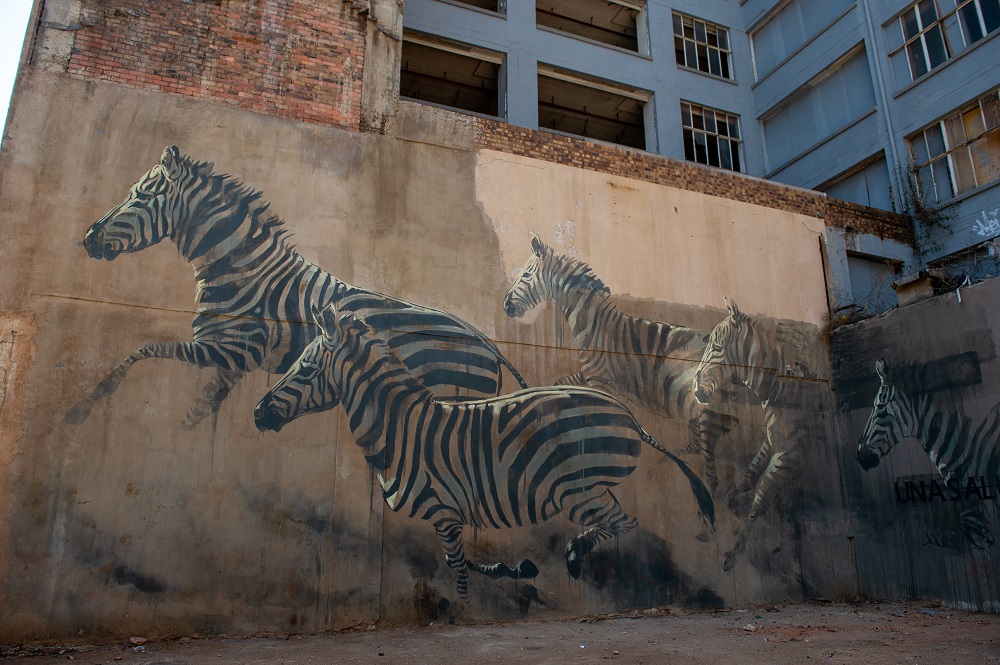
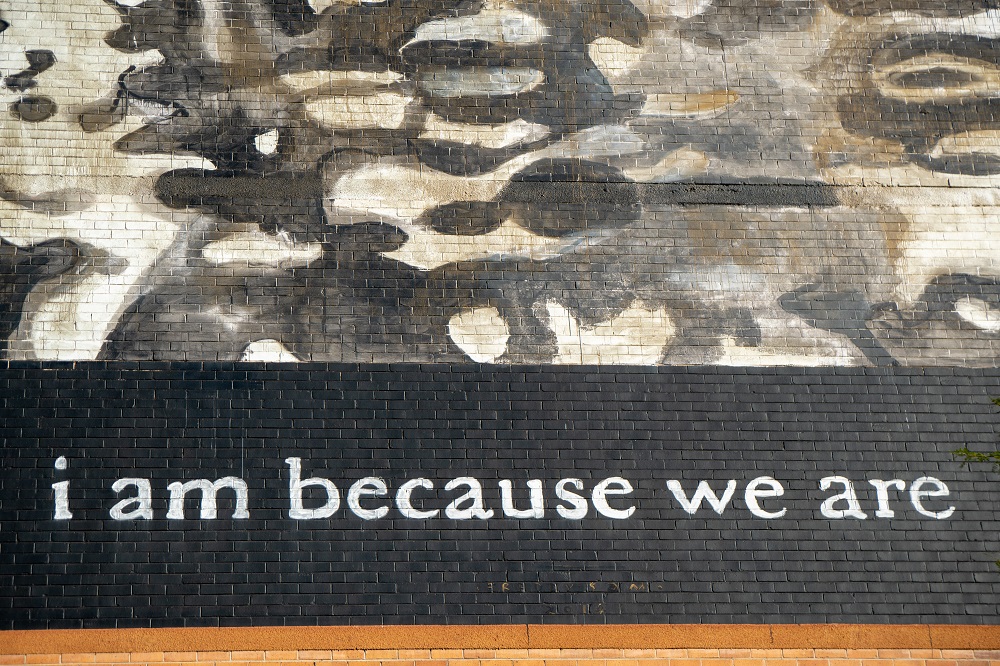
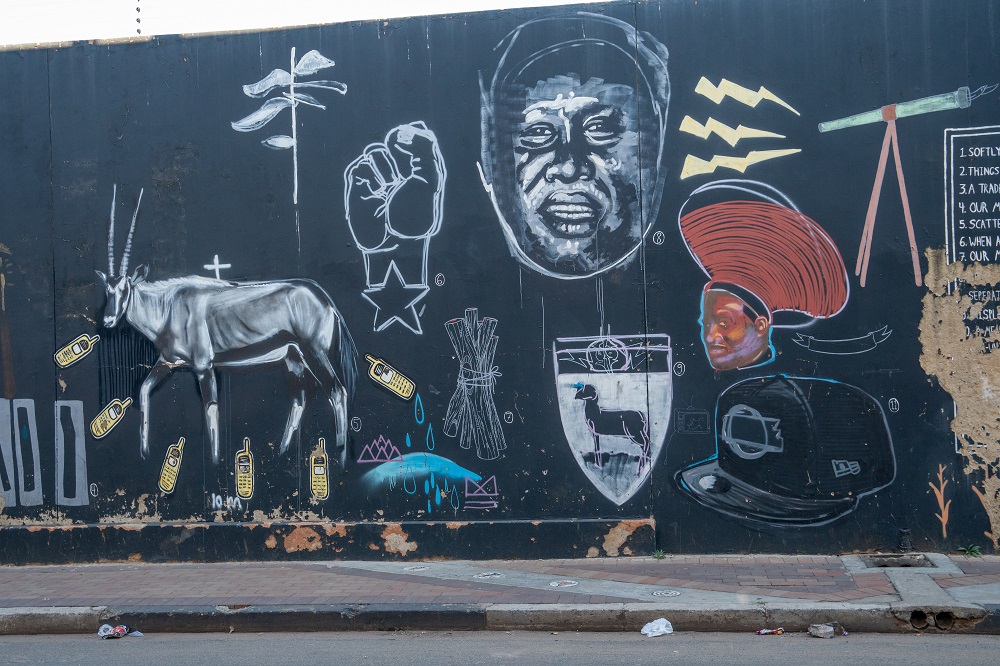
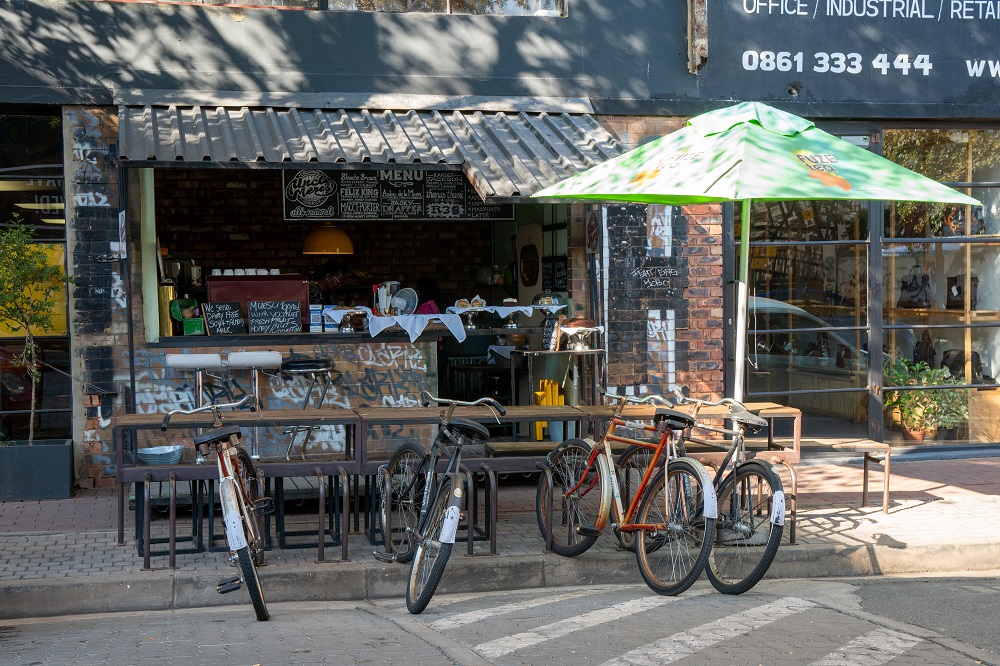
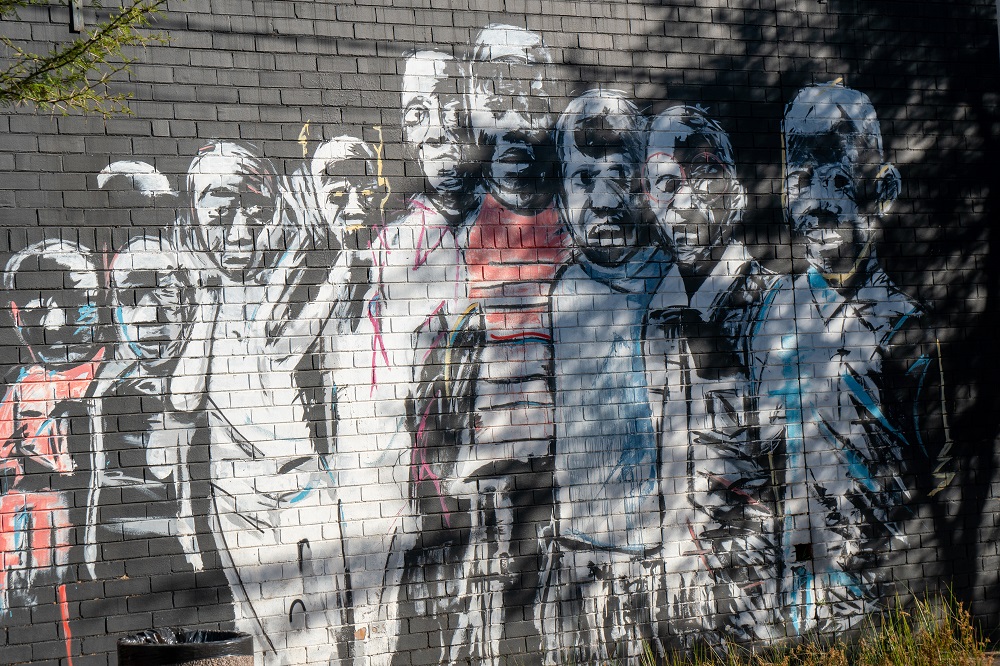
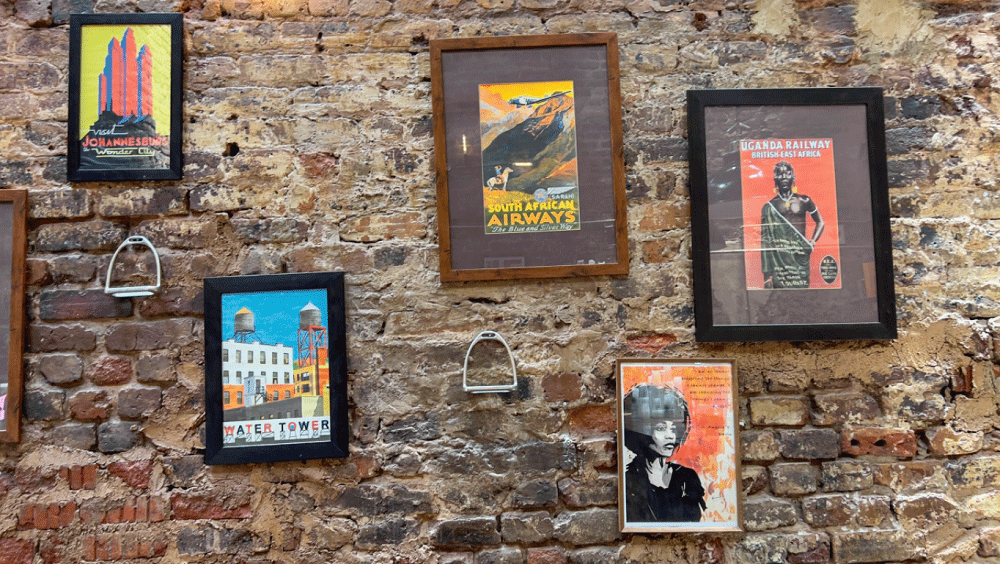
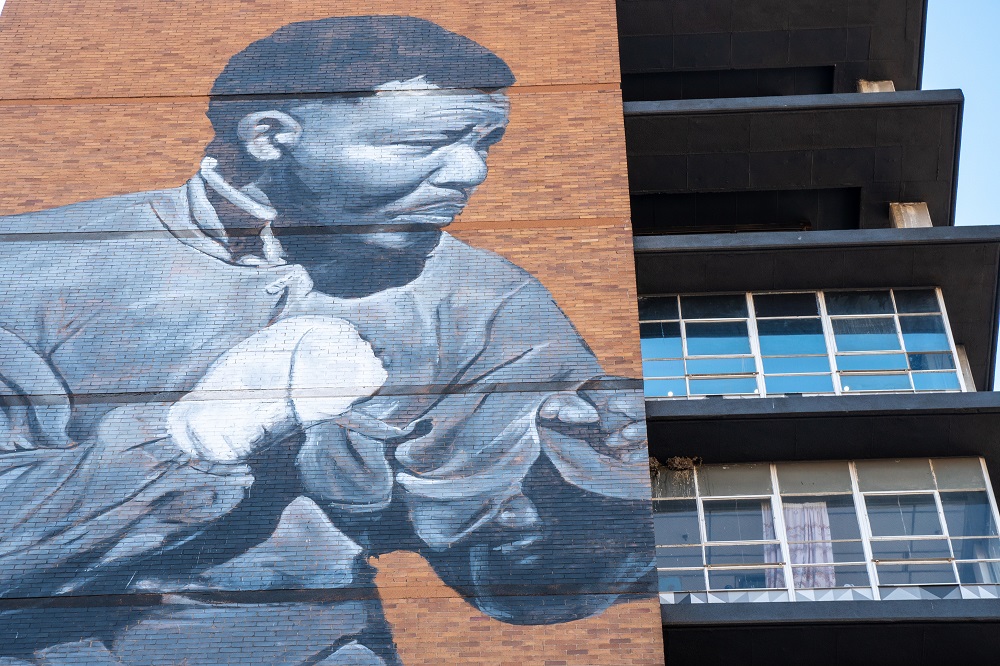
A bit later, we drove to Maboneng – a revitalized neighborhood – where we met our guide, James Delaney, over a cup of coffee. Maboneng, the adjacent Jewel City and nearby graffiti hotspots make for interesting observations of an African city in transition. Several areas have been creatively converted from abandoned warehouses or office blocks to vibrant districts with street art murals, African craft traders, good coffee and people watching.

We walked around the area for a bit, checking out a couple of studios, shops, and restaurants, before strolling over to the Jewel City area. We observed some interesting graffiti and wall art and enjoyed a brief chat with some of the locals. It was refreshing and insightful to be around ‘regular’ people in South Africa and to just be a bystander in an area where Joburg residents were going about their business.  This is of course not the case in the safari properties where guests meet and interact with mostly professional hospitality staff.

Victoria Yards

Our next stop was Victoria Yards where James Delaney has his art studio. Just 20 minutes from Johannesburg airport, this 100-year-old complex of Victorian-era industrial buildings (originally a steam laundry) has become home to a variety of artists, teachers, learners and other creative enterprises. I was immediately captivated by the red brick buildings contrasting with the bright green vegetable gardens and fruit trees. I soon realized that there’s quite a bit to see and do at Victoria Yards. Currently, Victoria Yards has more than 50 tenants which include artists, crafters, ceramicists, clothes makers, furniture designers and a jeweler – and on a tour you can meet the people making these inspiring African creations. Well-known artists including James Delaney and Blessing Ngobeni, and fashion designer Tshepo all have studios here.

Victoria Yards has a coffee shop with bakery, a sorbet shop, pizza, and a fish & chips restaurant which we will definitely try the next time we are there. Our advice? Take your time, support the local economy and pick up some gifts before your next flight. Kathy bought a couple of Shwe bags, a steal at about US$10 for a small bag, and up to US$25 for a bigger size. Otherwise just slow down and have a snack in this gentle setting. There’s a craft gin distillery and bar on the premises as well.

Victoria Yards is in an old suburb of Joburg (on the border of Bertrams and Lorentzville) close to downtown, on the edge of some rough neighborhoods, but it is a safe enclave. The surrounding disadvantaged community benefits directly from opportunities created there. Victoria Yards also has a school for local children on the premises and many community projects. We think it is ideal for American guests who have a few hours to kill either on their day of arrival or before their flight back. From Victoria Yards we went to 44 Stanley for lunch. It’s likewise a great spot, similar to Victoria Yards (same developer) but more retail focused. 44 Stanley – which is in Braamfontein Werf – is a collection of light industrial buildings set amid picturesque courtyards with pretty greenery. The mostly boutique stores offer unique goods, from local designer labels to ceramics, furniture and Joburg mementos.

The Wilds

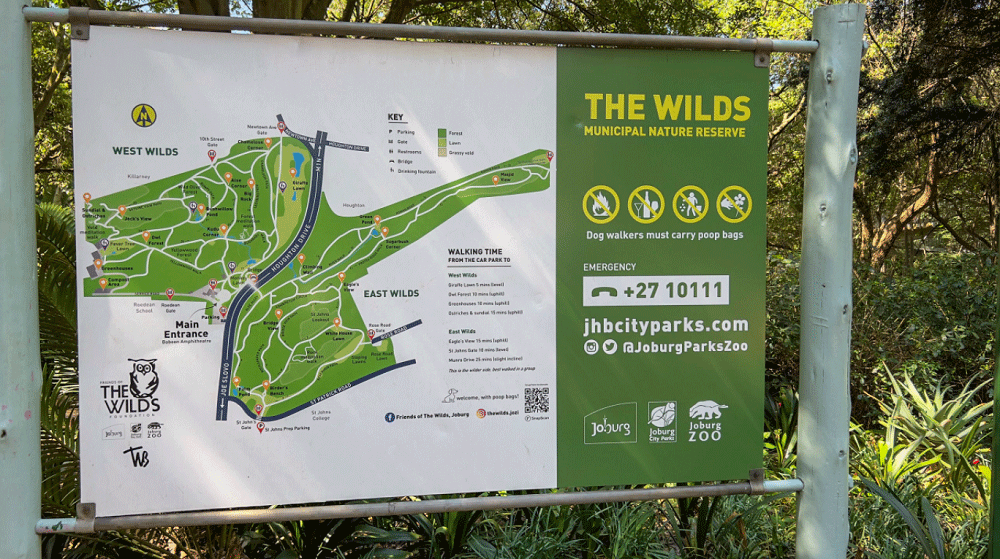
Facing the daunting prospect of a 16-hour flight commencing later that day,  a stroll in The Wilds – a pocket park right on the edge of downtown Johannesburg – was just what the doctor ordered. For many years The Wilds was a ‘no go,’ crime-ridden area. No more. All thanks to the effort of James Delaney and the thousands of Joburg volunteers inspired by him. The results of years of restoration and upkeep, including a huge sculpture installation which led to more and more public involvement, has turned The Wilds into a delightful spot to visit. The sizable area, mostly encompassing large hillsides planted with South African flora, is beautifully maintained and safe, with people enjoying picnics on a nice warm Jo’burg summer day. The Wilds nature reserve is just minutes from the inner city, but you’ll feel like you’re far away. There are many sculptures, great views of the Joburg city skyline – and walking is great for the body and mind, even if you don’t have a long flight scheduled. 

James Delaney is a contemporary painter and printmaker with a myriad of other interests, hobbies and passions. From designing parks and safari lodges to marketing and photography, among others. With his diverse interests and experience gained while traveling the world (more than 53 countries including regular annual visits to New York City), and his entertaining conversational style, James is the ideal guide on a spontaneous ‘let’s see what happens next’ tour incorporating some of his favorite spots in Jo’burg. You can find James Delaney’s art studio at Victoria Yards in Lorentzville, Space No: 8G2 (Victoria Yards is open 9am to 5pm on weekdays; 10am to 5pm on Saturdays; 10am to 4pm on Sundays). Follow him on Instagram @delaneyartist, or visit his website at delaney.co.za

James’ brother Simon Delaney – an attorney in Jo’burg – is also a part time guide with Jo’burg gurus and he is the person for guests who want to delve a bit deeper in the struggle against  apartheid and its aftermath, and specifically the Mandela experience.  

For more information about our custom trips to Southern Africa which often include a day or two in Johannesburg, call us in Houston at 1 800 513-5222 or send an email to bert@fisheaglesafaris.com. 

YOU MIGHT ALSO BE INTERESTED IN

Destinations
Zambia

10th September 2021

Chindeni and the Bushcamp Company, Zambia

By late July we found ourselves at Chindeni, a small Bushcamp Company property
Read more
Botswana
Destinations
Okavango Delta

3rd October 2022

Camp Okavango, Botswana

Camp Okavango is in the heart of the permanent part of the Delta. In this idyllic setting there are no vehicles, and it is just a short walk

Read more
Area
Destinations
Nyerere National Park
Ruaha
Tanzania

14th October 2023

From My Safari Notebook: Wildlife Photography

Birds in flight and wildlife photographers have an uneasy relationship. Things go wrong as often as they go right. Getting focus-lock on a moving subject

Read more

SUBSCRIBE TO OUR NEWSLETTER

READERS FAVOURITES

Destinations
India

27th May 2023

India

India’s tiger, mammals and birds.

Read more
Botswana
Destinations

4th August 2022

On Safari At Belmond Eagle Island Lodge, Okavango Delta

What is the ‘secret sauce’ for an unforgettable few days on safari in Botswana? It starts with the animals, of course. The elephants, lions, giraffes, hippos

Read more
Destinations
Zambia

10th September 2021

Chindeni and the Bushcamp Company, Zambia

By late July we found ourselves at Chindeni, a small Bushcamp Company property
Read more

Back to Namibia with Ultimate Safaris

26th December 2023

Back to Namibia with Ultimate Safaris

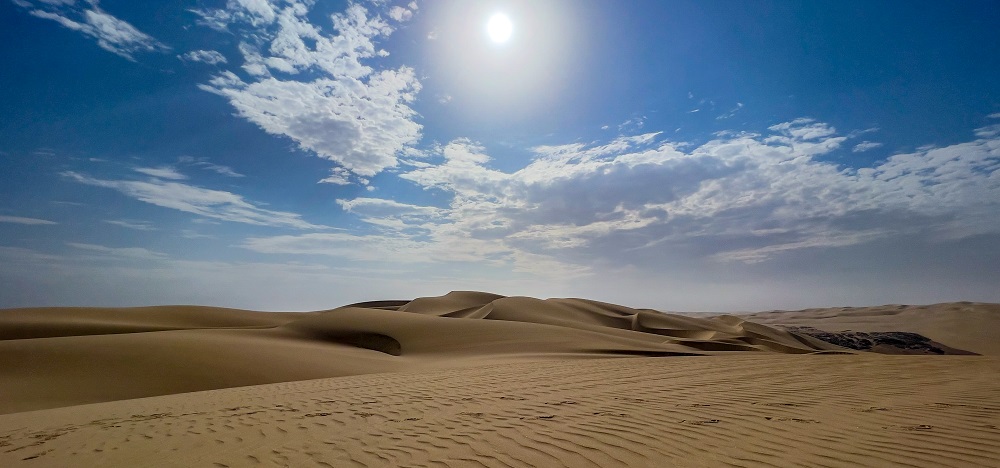
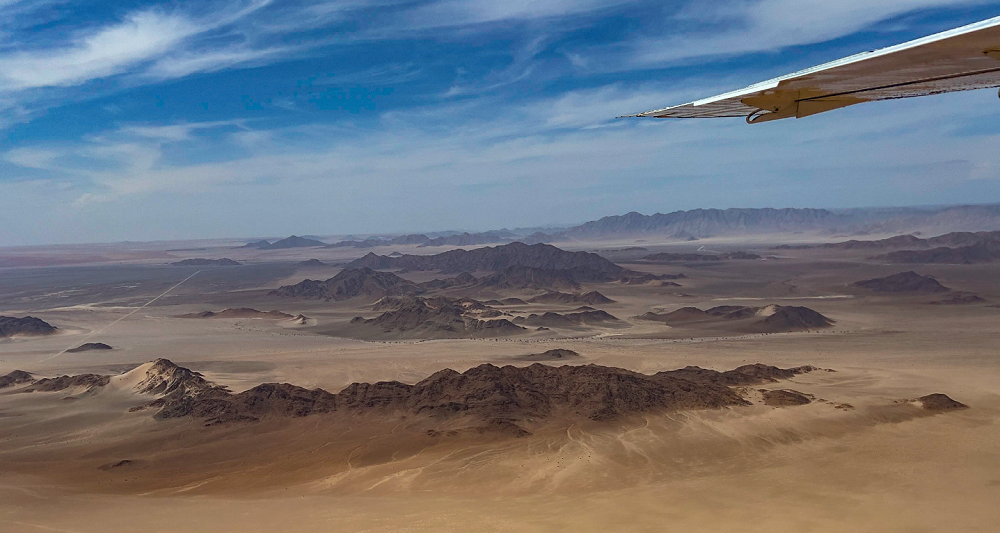
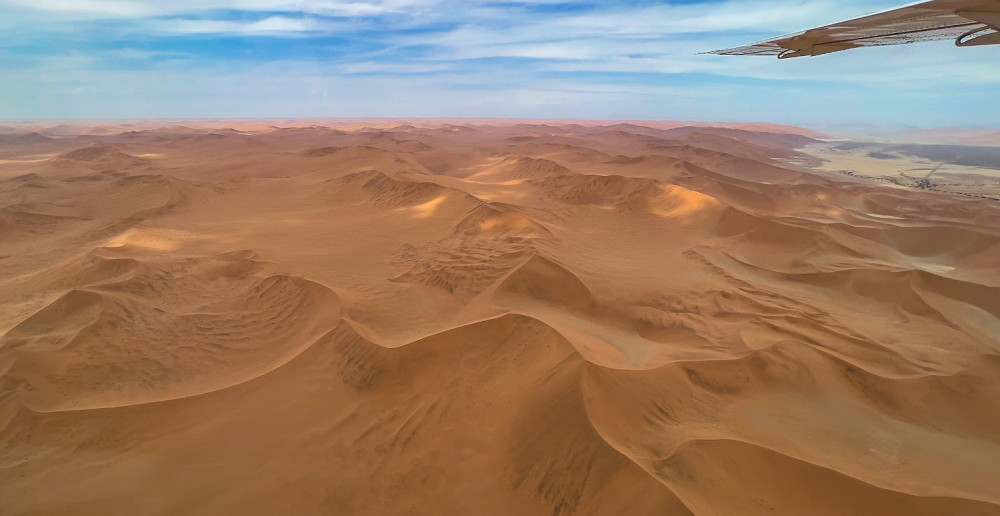
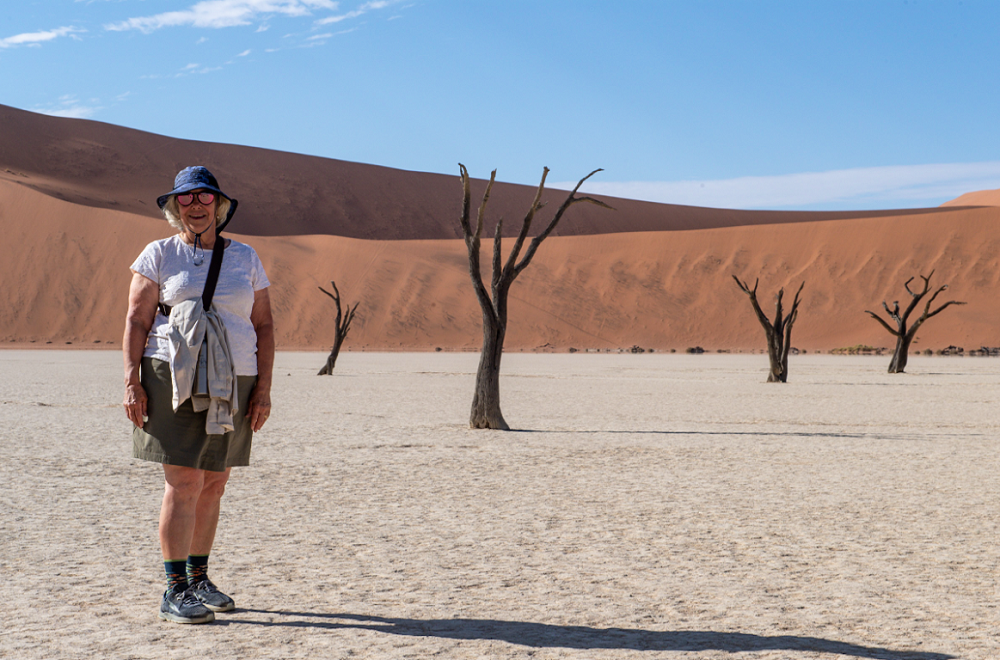
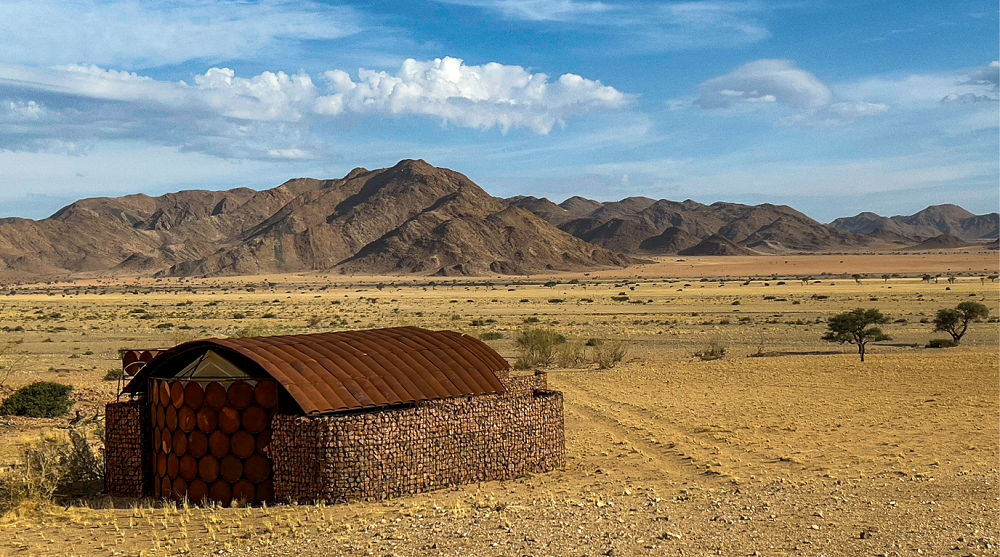
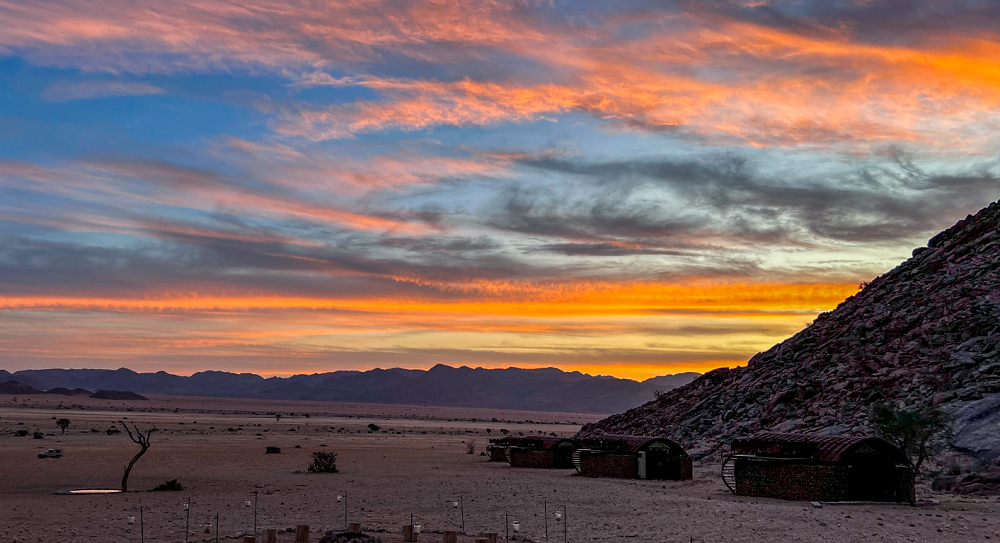
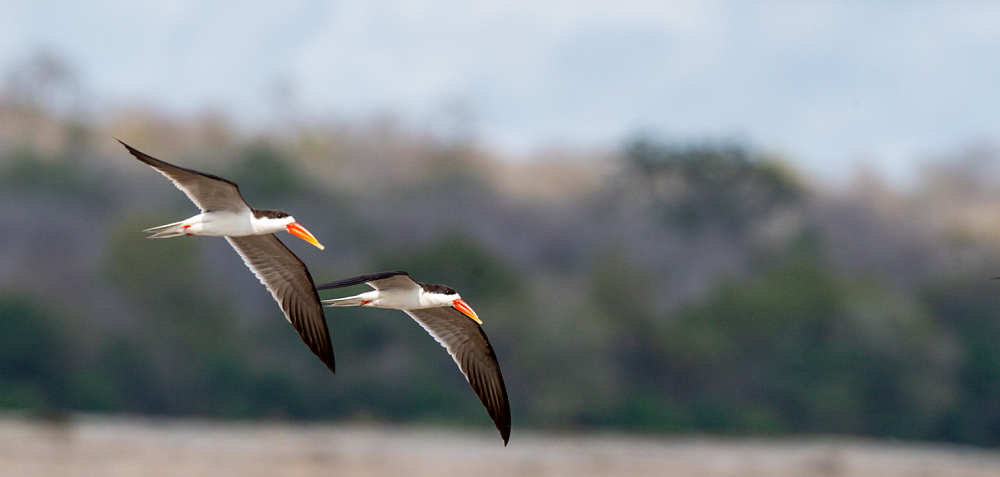
What is it that attracts us most to Namibia in southwestern Africa? Its astonishingly beautiful desert & dune landscapes? Its fascinating people? Its diverse wildlife? On a recent 16-day guided road trip with Ultimate Safaris we experienced all of those and came away with renewed passion for this vast, sparsely populated country. One lasting impression of this journey, which included the Etosha area, Damaraland, parts of the Kaokoveld, the Hoanib River Valley, Skeleton Coast National Park, Swakopmund and Sossusvlei? That the wildlife experience is underrated. We saw lots of animals, often in arid areas where you’d least expect them.  

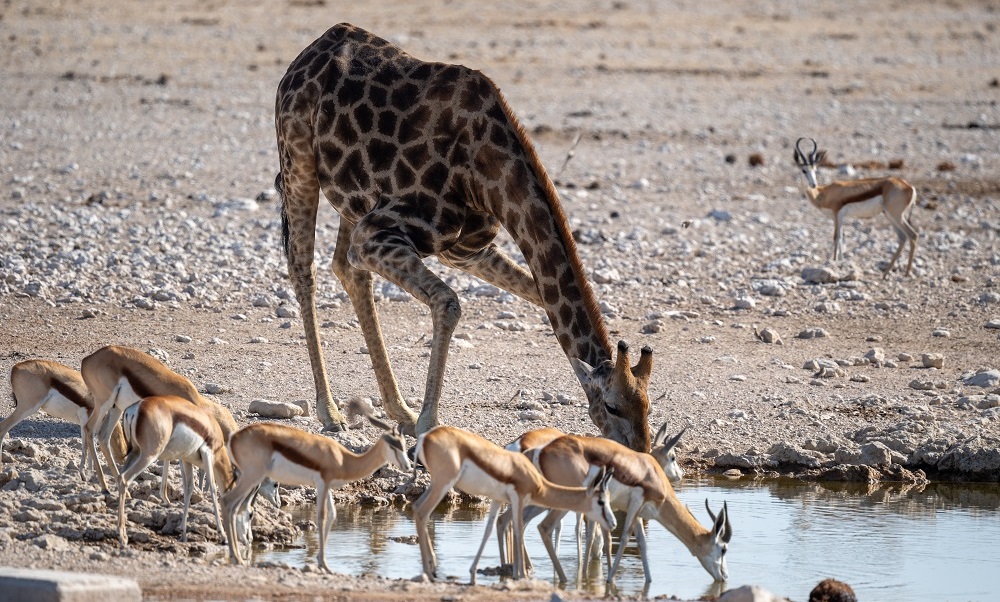
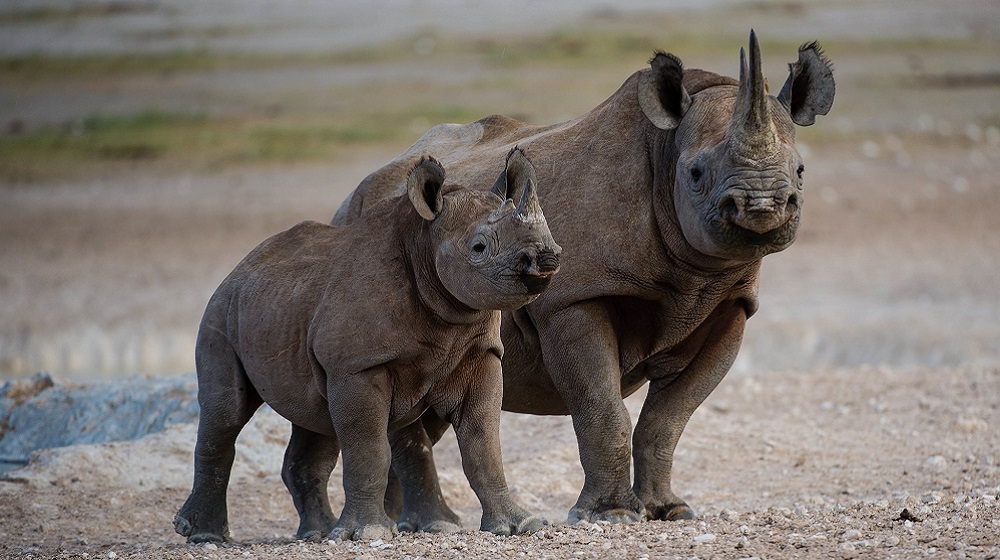
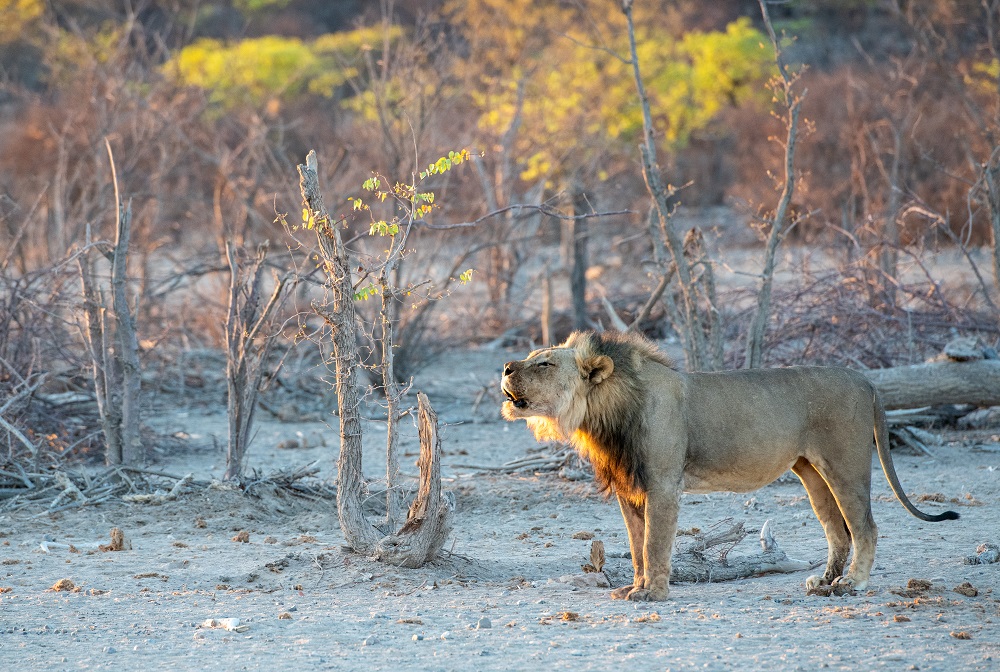
On our very first afternoon game drive out of Natural Selection Safaris’ Safarihoek Lodge on the western edge of Etosha National Park in Namibia, we saw our first two black rhinos, a mother and a youngster. Not twenty minutes later we saw another one. And shortly after that, two gorgeous black-maned lions. Soon to be followed with good numbers of springbok and giraffes, several elephants, eland, gemsbok, zebra, kudu, steenbok and red hartebeest. The game viewing in the Etosha area – as well as in the Hoanib River Valley – was exciting and fulfilling. As was the birdwatching, with our party of six persons seeing and identifying just over 100 species in less than two weeks – without turning the trip into a hard-core birding expedition. We were ably and professionally guided by Sebastiaan Meyer, a native of Namibia.

What did we not see? Other vehicles. The private Safarihoek reserve was just that. Private. We pretty much had the place to ourselves, sharing game sightings with no more than one other vehicle at any time. The same held true for the duration of the trip. Once we entered the Kaokoveld region and beyond, all the way into the far flung Hoanib River Valley and Skeleton Coast National Park, we were essentially on our own. Often, many hours would go by without seeing another vehicle or humans, other than in the camps where we stayed. Just the way we like our Africa trips to unfold.

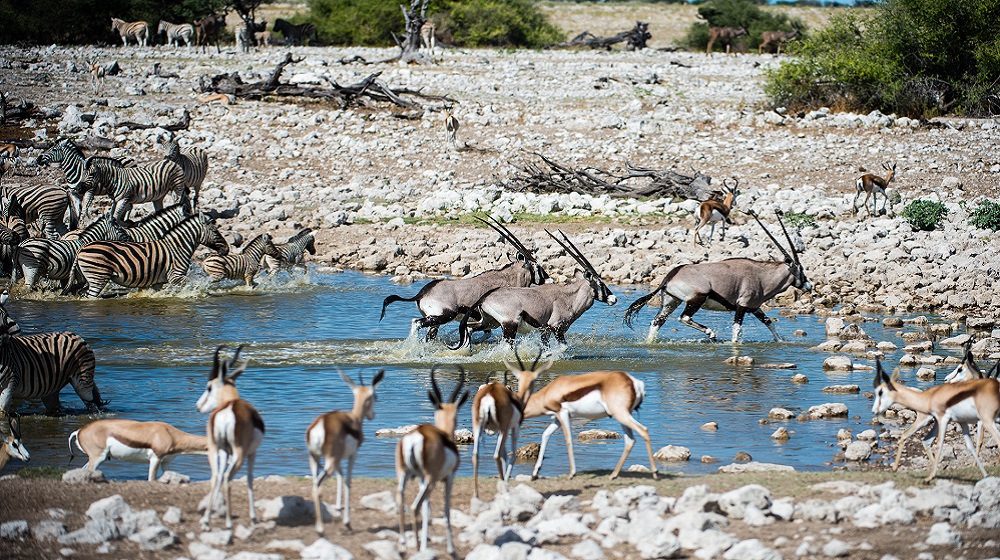
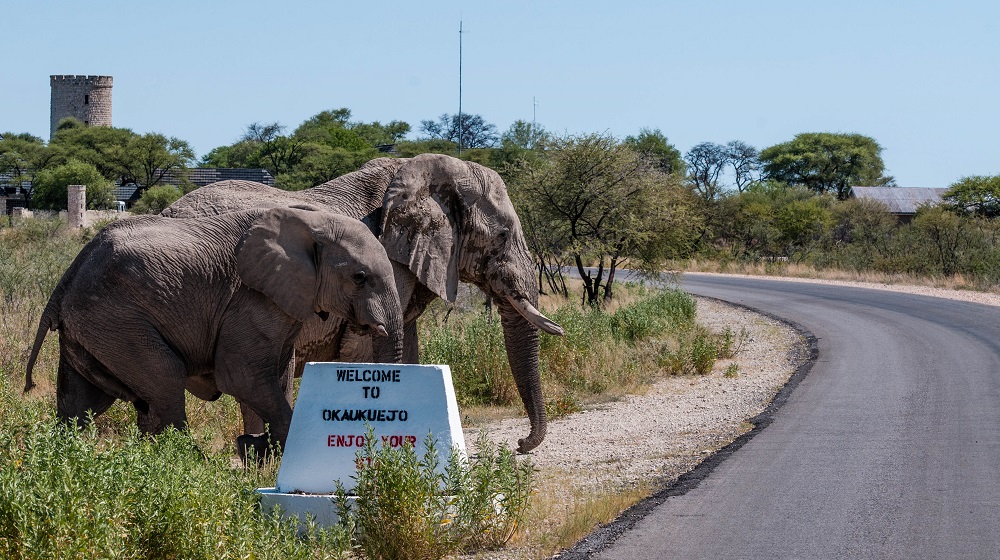
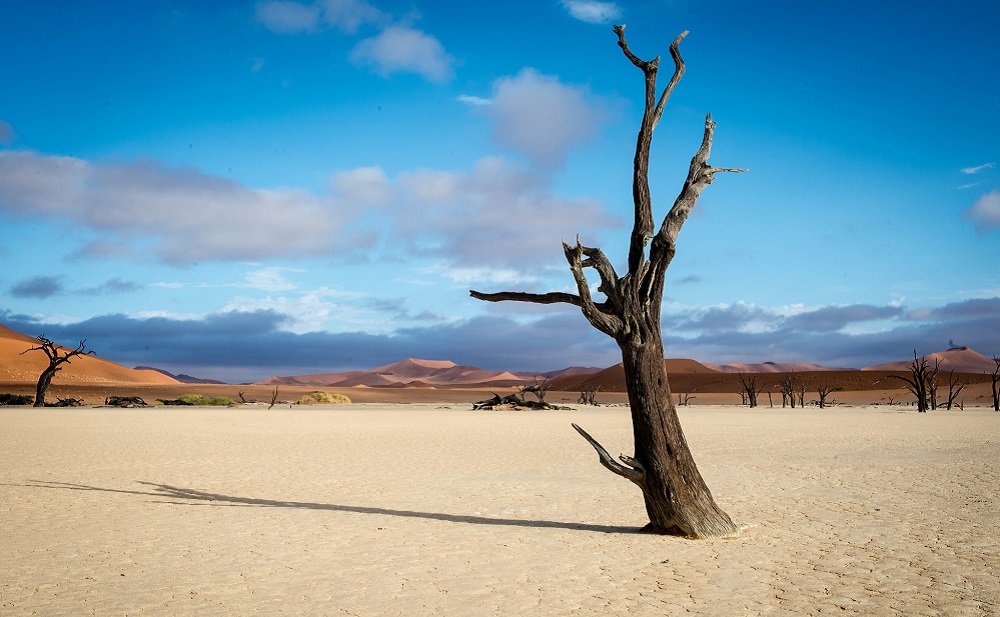
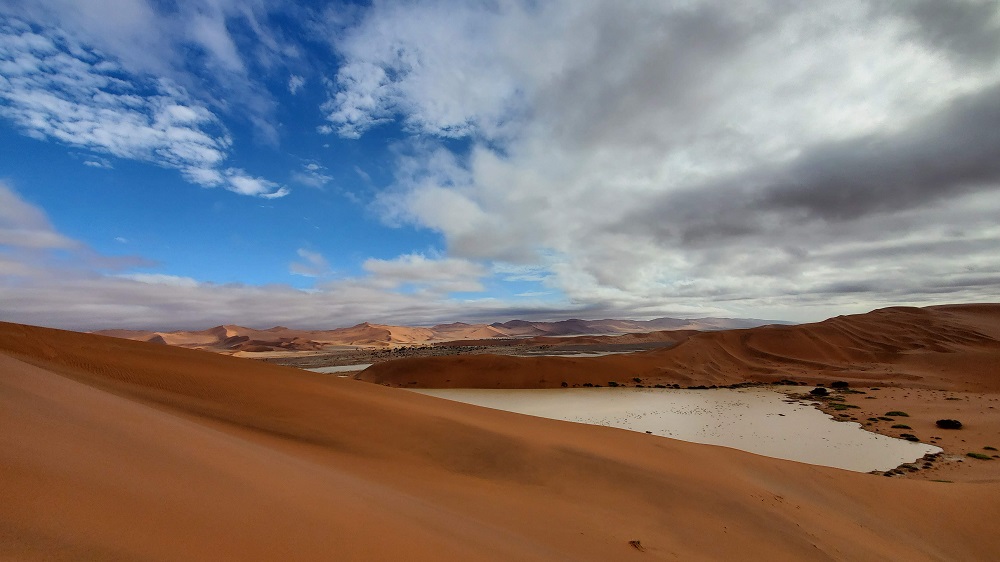
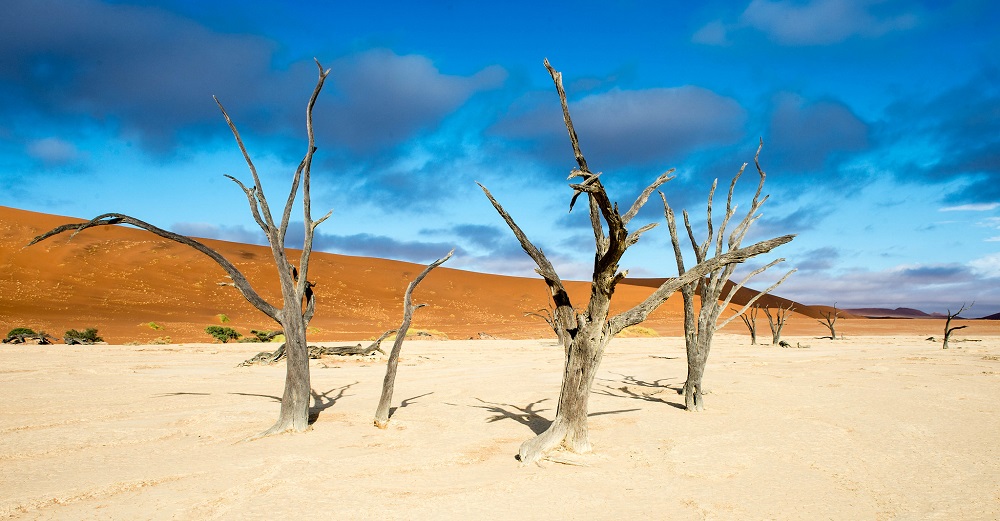
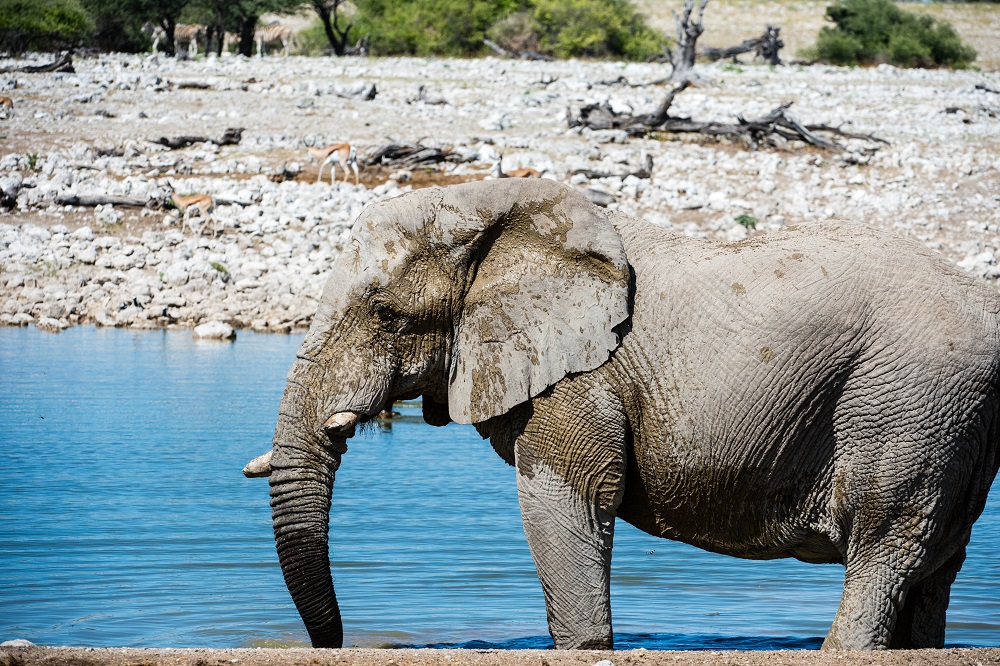
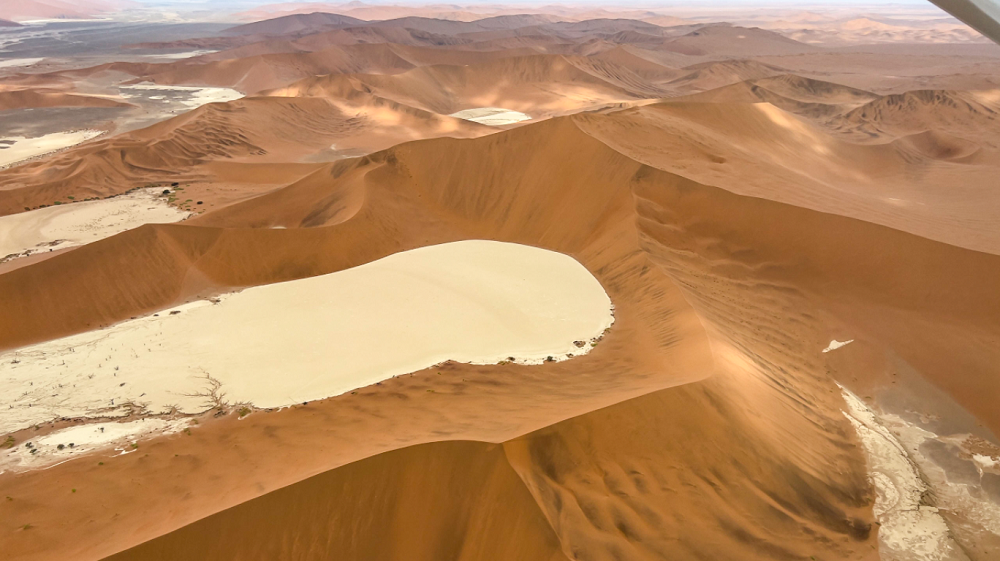
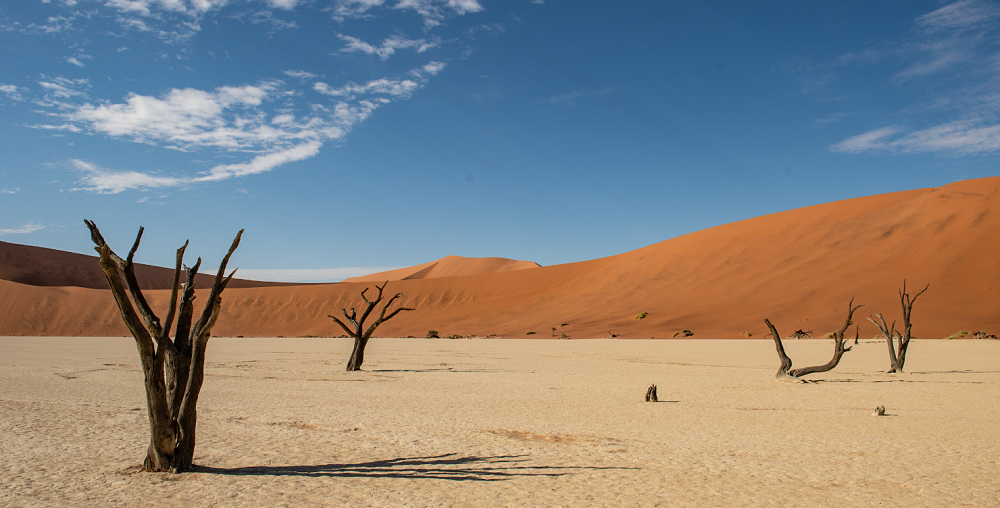
On an all-day trip into the massive Etosha National Park we observed several other mammal species – once seeing as many as eight different species at the same water hole. Inside Etosha, which is a public park, there was, predictably, more traffic. Mostly at water holes near Okaukuejo and Halali, two of the rest camps inside the park. The same was true at Sossusvlei – the setting of Namibia’s most popular concentration of gigantic red sand dunes.

Visiting Namibia is a multifaceted experience. As we saw in the Etosha area and elsewhere, the game viewing and bird watching experience often rivaled better known safari destinations such as Namibia’s southern and eastern neighbors South Africa and Botswana.

Namibia is so much more than a traditional safari location though. Its extraordinary desert and dune experience, its cultural and scenic diversity and seemingly inexhaustible range of unique activities put it firmly into the ‘one of a kind’ category. If Namibia were a living organism, it would be like the secretary bird – the only species in its own family. There’s simply nothing else like it. 

What makes Namibia, Namibia?

A prospective visitor to Namibia would do well to contemplate Namibia’s size before anything else. It is vast. About two and a half times the size of Germany, and bigger than twice the size of Texas, Namibia is huge. A roughly rectangular country, Namibia is about 600 miles deep, and between 300 to 450 miles wide. It has a long, narrow eastern extension in the north, the Zambezi Region, formerly called the Caprivi Strip. While it is possible to spend just a few days in the country – by visiting just Sossusvlei  and the Skeleton Coast for example – it is far from ideal. It really takes a full two weeks to get beyond just scratching the surface of this behemoth of a country .    

There are simply too many places to visit and things to see and do. Here are the top of the pops:

  • The Sossusvlei area with its magnificent red sand dunes, arguably Namibia’s signature sight. 
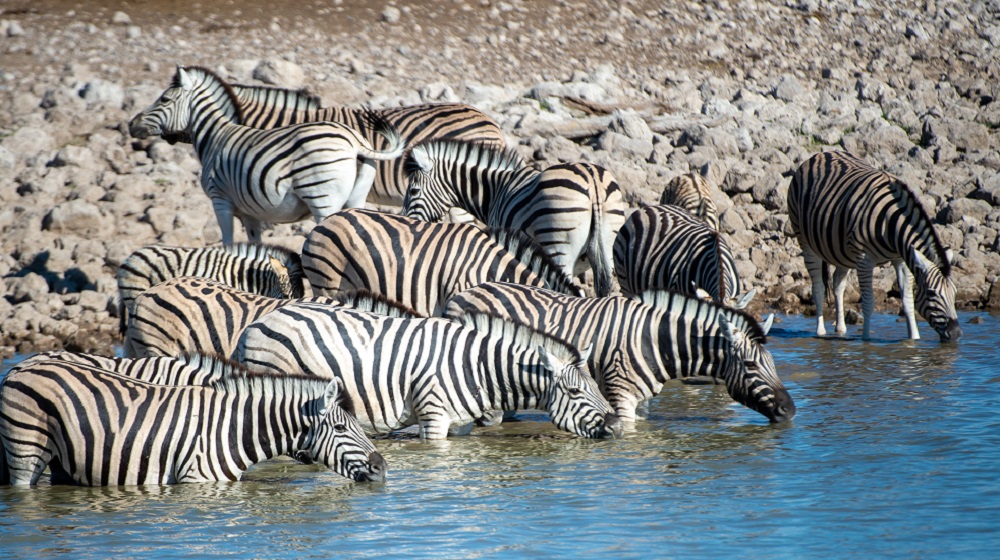
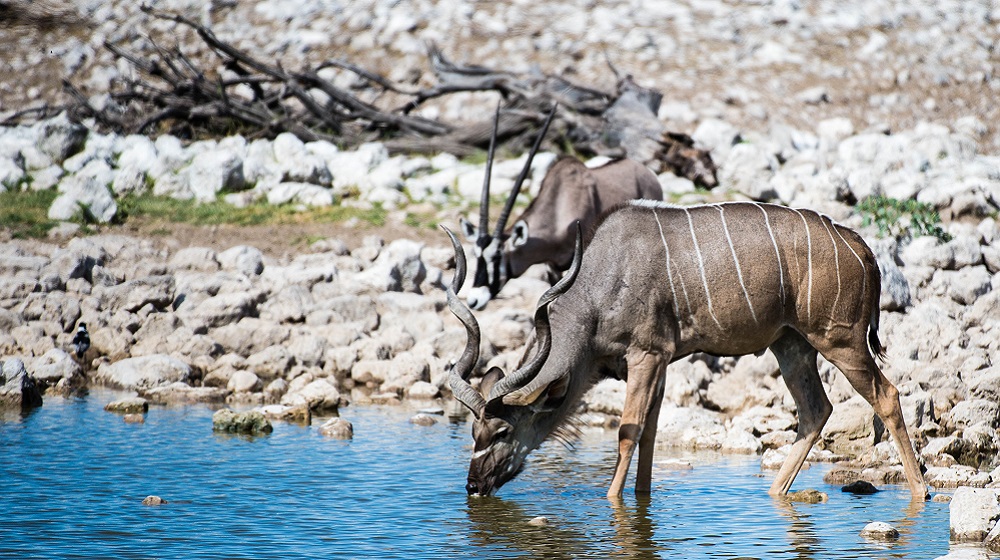
  • The vast Etosha National Park and surrounding private wildlife sanctuaries for their array of wildlife with elephants, rhinoceros, oryx, zebras, kudus and giraffes being some of the more prominent sightings.
  • Damaraland with its stark, rockstrewn landscapes and seemingly inhospitable surroundings, home to several desert-adapted animals including elephants and black rhinos.
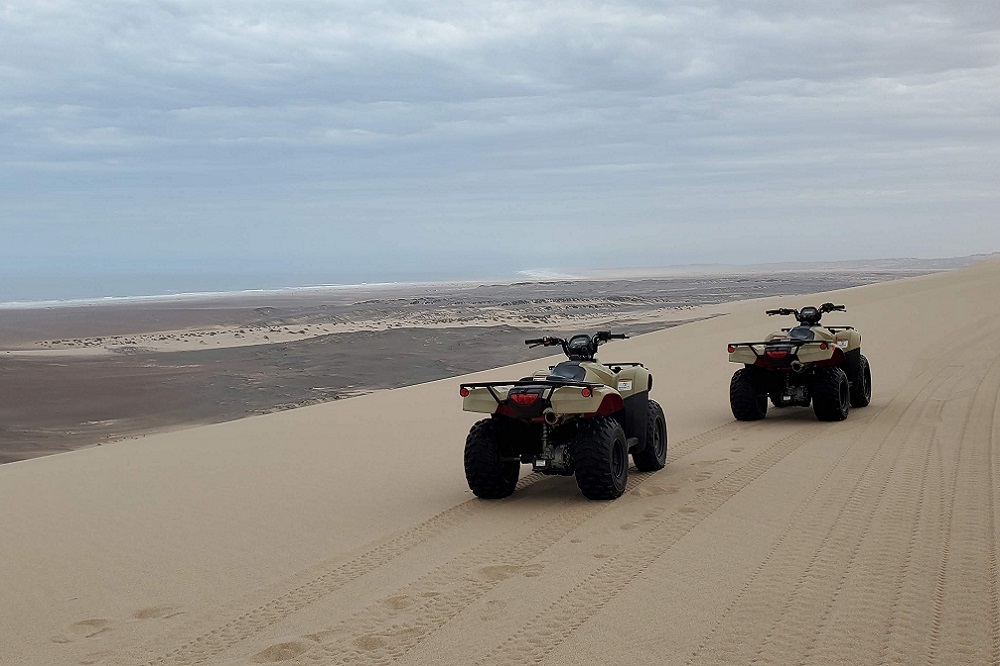
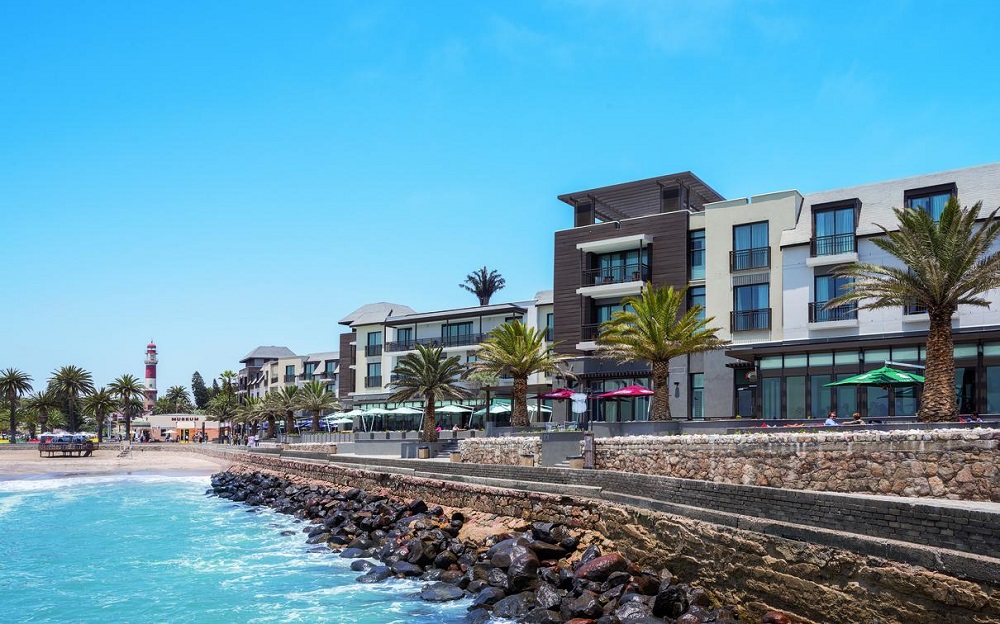
  • The quaint, laid back seaside town of Swakopmund with its many attractions ranging from its beach to restaurants to museums, desert excursions and adrenaline adventures including quad biking, sand boarding and skydiving.  
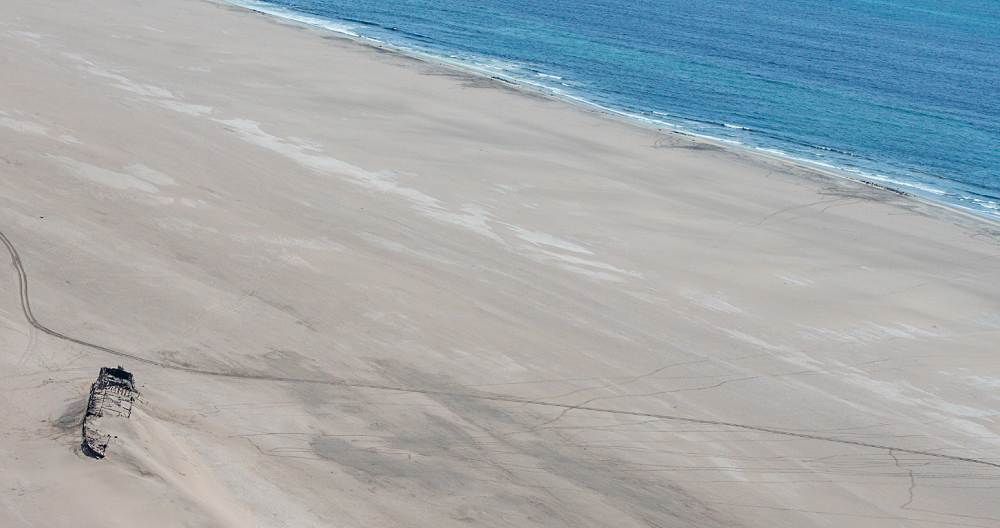
  • The remote and utterly fascinating Skeleton Coast National Park with its otherworldly scenic beauty, its incredible variety of dunes and other geological formations and a colorful history replete with tales of survival and disaster, of shipwrecks and rescue sagas.
  • Beyond these, there are many other areas which may profitably be included on a Namibia itinerary. The intriguing Fish River Canyon in the south, the old coastal diamond town of Luderitz, the game-rich Waterberg area and various spots in the Zambezi region which is similar to northern Botswana in many respects.   

A road trip

With its size and geological as well as habitat diversity and scenic wonders, much of Namibia lends itself to a road trip exploration. Around almost every corner, there’s something to see.  A notable exception?  The mostly flat, featureless and sparsely vegetated landscape along the main road leading north out of Windhoek. The road to Etosha. Many first time visitors to Namibia probably start second guessing their choice of destination after three uneventful hours of traversing this scrubby vastness.

With just three nondescript towns punctuating the  journey to the north – Okahandja, Otjiwaringo and Outjo – it is a relief to start seeing some wildlife as we did upon reaching the Etosha Heights private reserve.

Safarihoek Lodge, Etosha

Located on a ridge with an exceptionally good view over the wide open plains of far western Etosha National Park, Safarihoek and its sister property Mountain Lodge form a comfortable and well situated base for an exclusive wildlife experience, away from the hustle and bustle of Etosha National Park but with most of the same animals being present.

There are 9 large accommodation units at Safarihoek along a sturdy concrete walkway leading out from an attractive main lodge. They feature air-conditioned bedrooms, showers and baths (hot water available 24/7), ample storage space, good lighting, a fridge stocked with drinks and a tea and coffee making station. 

We enjoyed most of our meals al fresco, poolside. The food received mostly good but mixed reviews from the members of our party. The spacious and inviting lounge had several smaller seating areas with comfortable chairs and couches, a central bar area, and a counter where tea, coffee and other beverages as well as cookies and snacks were available at any time. 

Our game drives – in an open 4 wheel drive vehicle – essentially took us from one waterhole to the next. The entire concession was bone dry with hardly any vegetation to be seen, with the exception of the mopane trees which come into full leaf in October, rain or no rain. Occasionally dodging clouds of dust kicked up by our own vehicle – and just as often being engulfed by them – we were surprised by just how many mammals could survive in this inhospitable environment. Gemsbok, steenbok, impala, giraffe, kudu – the plains game species were certainly not uncommon. Of course we were thrilled to spot some black rhinos at the base of the dolomite hills, there were lions at the waterhole in front of camp, and we came upon a nice breeding herd of elephants, moving through the mopane like so many white ghosts, covered in dust.  

Mowani Camp

Right among a cluster of gigantic boulders in a setting which would have done the Flintstones proud, we sat down for a delicious lunch at the imposing camp Mowani. Literally built into a gigantic boulder field at the summit of a hill, most of the well appointed thatched rooms in this compact property have excellent views over distant hills and rocky outcrops, all eventually merging into the dusty distance. 

It had been a long yet not uninteresting journey from Etosha, observing the landscape around us slowly transform from well-vegetated savanna to the stark, rock-strewn hills and valleys of Damaraland. The drive ended just in time. Having driven up a hill through a series of bigger and bigger rocks, eventually squeezing between two tank-sized boulders, we realized that our new home for the day might be something special. From the welcoming chat to the selection of lunch items, Mowani Lodge made a good first impression. There was no subsequent letdown. Sundowners from an elevated lookout point, a dip in the pool and a tasty private dinner alongside a fire pit. What’s not to like! Everything was done nicely and tastefully and the staff were friendly to a fault. 

With a water feature attracting a variety of birds, a small waterhole a distance away from camp (where we noticed some Damara dik dik) and a small rock-enclosed pool, Mowani always has something to see or do. On the morning we left, we observed a bunch of rock dassies (also known as hyraxes) emerge from their sleeping area and clamber high up into a nearby tree like so many holiday ornaments, feeding from the leaves. 

The thatched rooms at Mowani had very comfortable beds with soft pillows, a separate shower and toilet, adequate lighting and enough space for storage. They were private and most had an elevated lookout point over the spectacular landscape.  Perfect? Not quite. For some reason there was a sizable step up from the bed level to the center of the room, resulting in several expletives being aired there as we –  predictably – stubbed our toes on it more than just once.

From Mowani we made two excursions:

Desert-adapted elephants

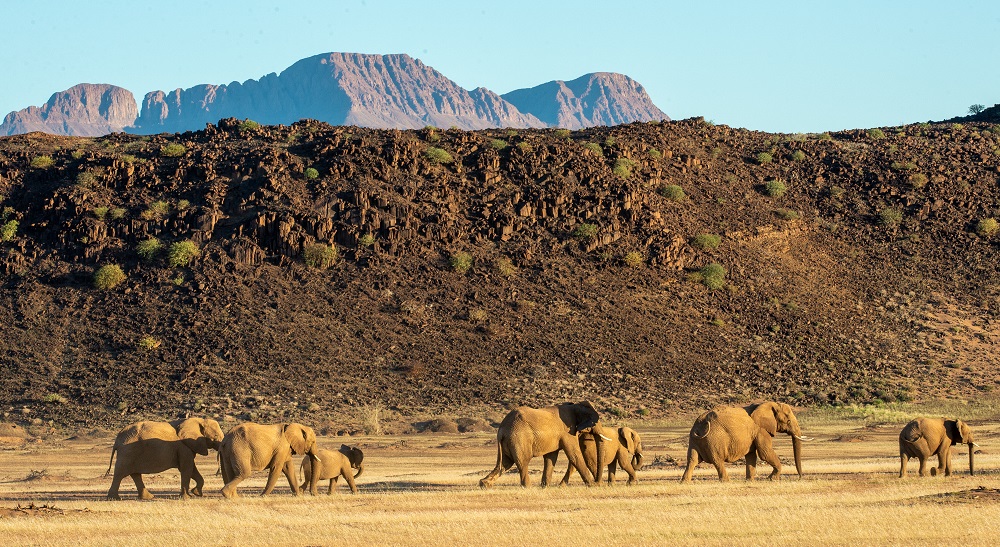
Several small herds of desert-adapted elephants are to be found along the watercourse of the mostly dry Aba Huab and Huab rivers. The elephants concentrate along these so-called linear oases where there is plenty for them to eat in the way of mopane trees, other shrubs and their foliage and particularly the seed pods of the Camelthorn trees. We tracked and subsequently found a small herd of about seven elephants. They were working their way from one source of food to the next, clearly quite comfortable with the presence of vehicles. Every now and then one would walk in front of a line of dunes as if to visually prove its status as a desert-adapted pachyderm. Photographs were duly taken. It was a fun outing and despite the presence of many other safari camps and lodges in the area, we saw only two other vehicles who also had desert elephants on their to-do list.

Twyfelfontein rock art

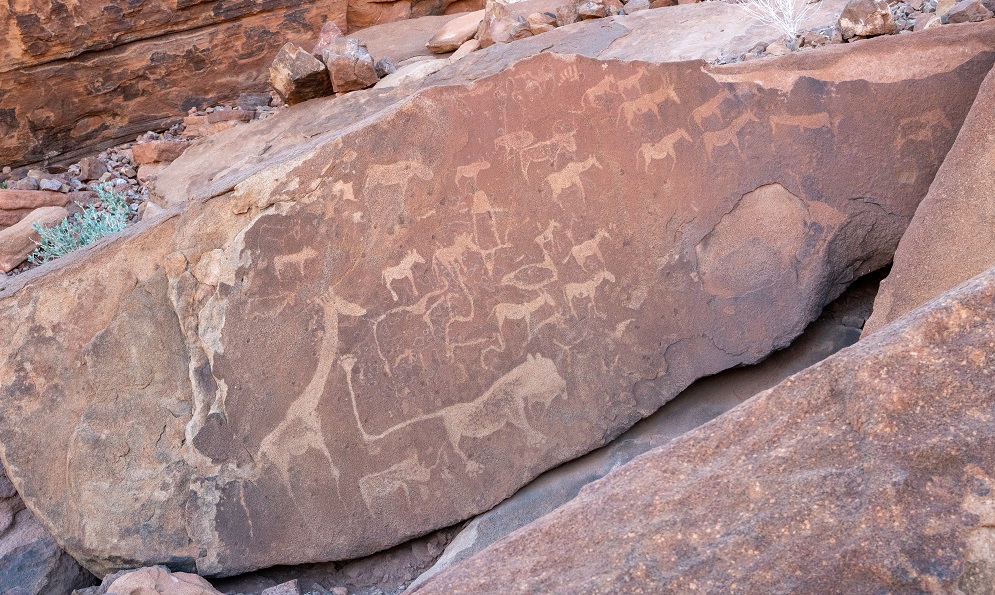
Walking with an interpreter guide through the collection of petroglyphs at Twyfelfontein – a World Heritage Site – invariably makes one think about the artistry and creativity of these long gone San hunter-gatherer people, as well as about their need to communicate beyond their own circle. It soon becomes evident that they wanted others to know about water holes and not just the location. Some were clearly designated (with a dot in the middle of a circle) as perennial and others as seasonal. The ancient rock scribes also wanted to spread the word about the wildlife to be found in the area. Right down to which ones potentially posed a threat to humans. Little did they know that their rock telegrams would reverberate through the ages and that some of their messaging would become truly timeless. Worth visiting? I think yes. Take some water; it’s a rather long and at times searingly hot and dusty walk to make it to the start of the trail. And wear sturdy shoes – there’s plenty in the way of uneven terrain and some light clambering involved. One thing that can and should be done? The truly abominable reception building should be razed to the ground and rebuilt. It is really a dump.

Hoanib Valley Camp

Our Namibia road trip took an adventurous turn the moment we took a left turn off the gravel road a few kilometers out of Sesfontein, a desert settlement in the Kaokoveld. Suddenly we found ourselves in what might have been a movie set for Indiana Jones or Mad Max (Mad Max – the Tom Hardy one – was filmed in Namibia). Driving helter-skelter through the desert, dodging patches of ominously thick sand, we were glad to have an experienced guide – Sebastiaan – behind the wheel. Someone who knew where he was going and who had the 4-wheel driving skills and experience to get us there. Not one of the rest of us could check any of those boxes. 

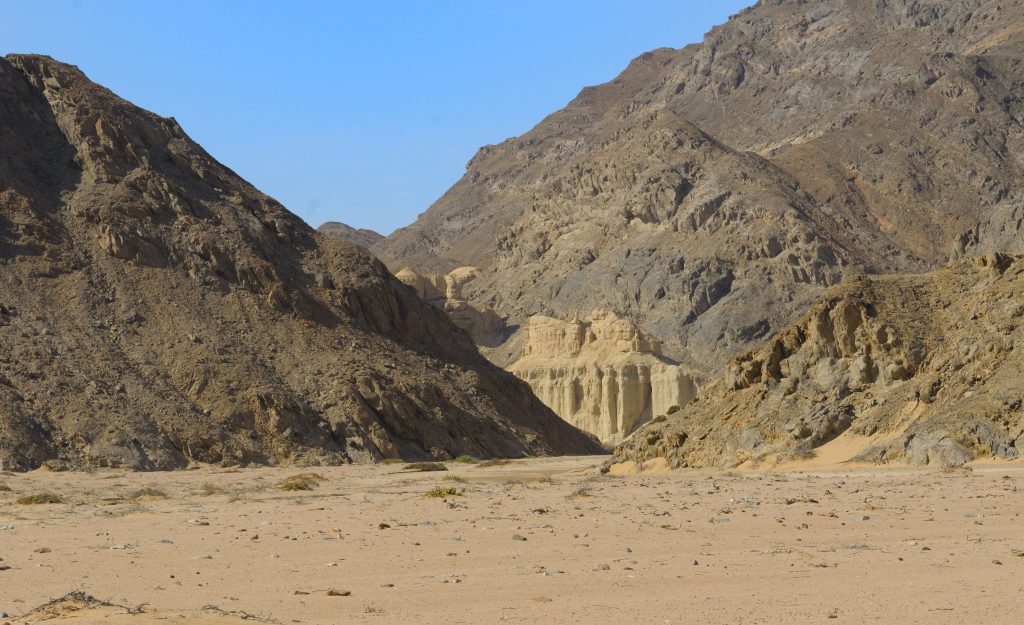
The sense of being in a remote special place became even more palpable as we dipped down into the dry riverbed of the Hoanib River. It was oppressively hot but our anticipation of what lay ahead trumped any discomfort we may have been experiencing. The sandy track wound its way ever further into what was as far away from a populated center as some of us may ever have been.

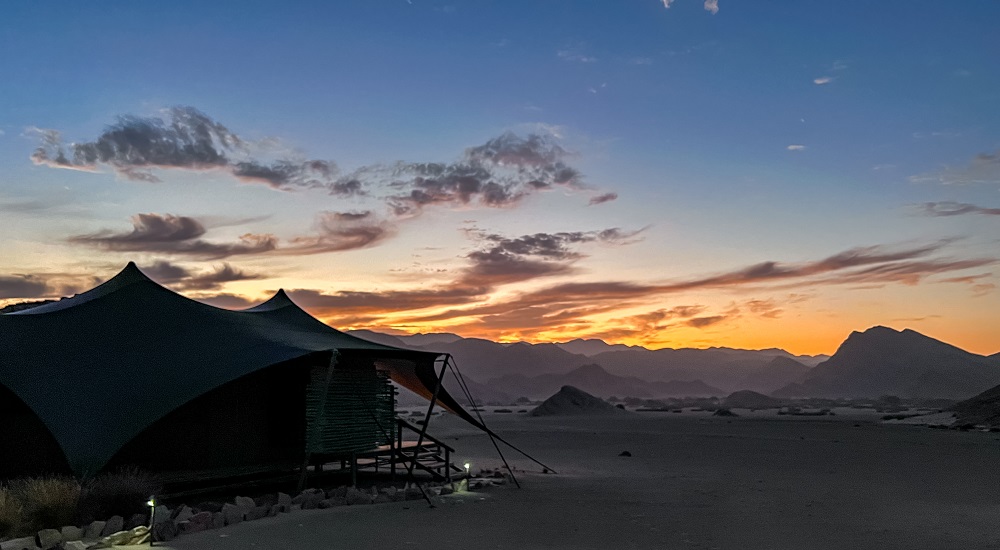
An hour or so after entering the Hoanib valley we turned right on a narrow track, followed a stone lined driveway for a bit before entering into a sheltered canyon through a narrow rocky gap. We were all mightily relieved to see structures – a semi-circle of tents facing down in the direction of the riverbed. Our base for the next three nights.

Minutes later we were being introduced to the vivacious manager of Natural Selection’s Hoanib Valley Camp – Petronella Daniels – and her team. Welcoming soft drink in hand, we marveled at the view over the valley sloping down gently to the Hoanib River. 

The six tented rooms at Hoanib River Valley camp are located to the left and right of a good sized lounge and dining room. The rooms are reachable along a paved, yet somewhat sand strewn walkway. I thought the rooms were rather too close to each other but it is a minor criticism as they are otherwise exceptionally comfortable and well designed. 

Our activities at Hoanib Valley Camp consisted of morning game drives traveling further west downstream along and in the Hoanib riverbed, afternoon sundowner drives, and a Himba village visit. With local guide Ramon Coetzee behind the wheel, we enjoyed the tandem services of two professional guides and it was fascinating to see him and Sebastiaan pool their knowledge and experience in search of the big cats. 

As was the case during our first visit to the Hoanib river valley some years ago, we were pleasantly surprised by the variety of wildlife. We encountered two different small herds of elephants – one of five and another one of nine – with three young babies between them. As well as lots of springbok, several giraffes, some gemsbok and steenbok. We also added a handful of new birds to our trip list. 

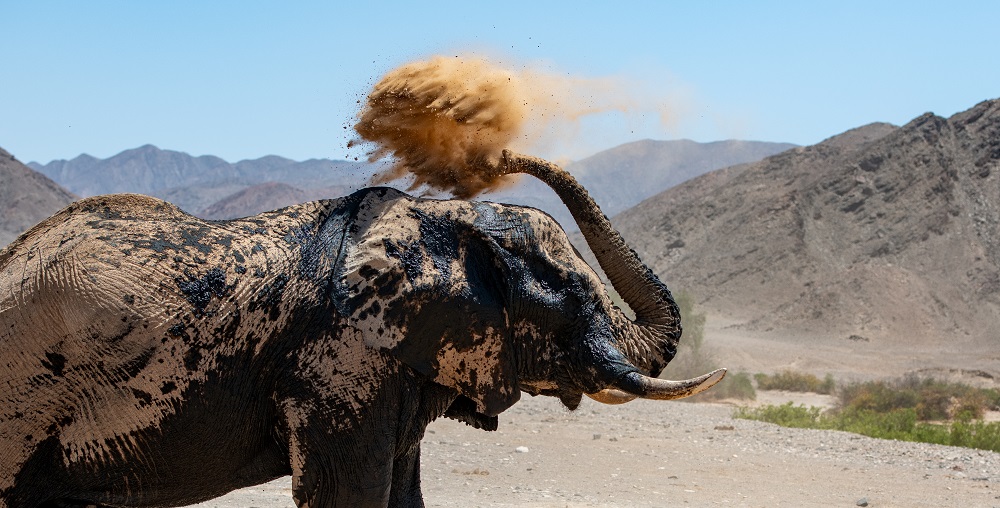
On separate occasions we encountered the two large bull elephants present in the area; 22-year-old Oliver and the undisputed big daddy of the Hoanib valley, Arnold, who has spent all of his 38 years under the hot Namibian sun. They were clearly masters of their domain, all but ignoring us and going about their daily routine which included voraciously feeding, drinking water, spraying themselves with water, then mud and finally dust. Incidentally, Arnold desperately needs a pedicure – his massive elephant feet and particularly his gigantic toenails are in pitiful condition.  

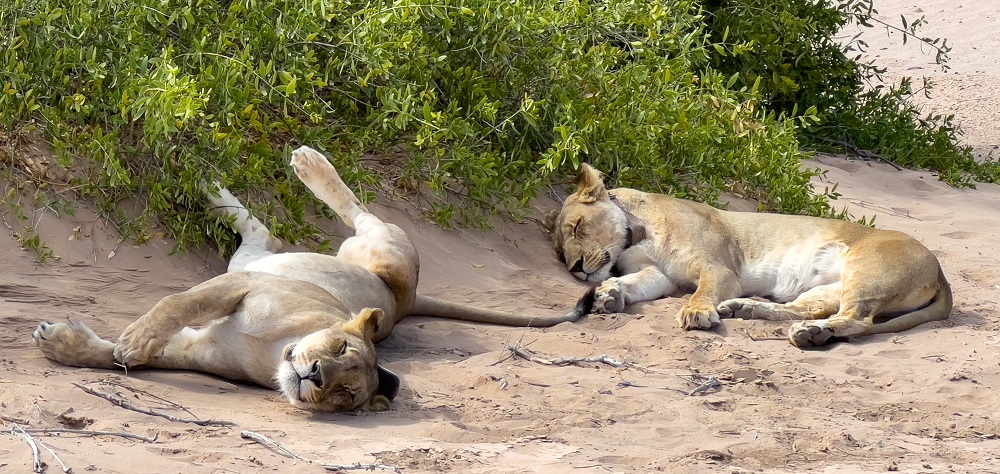
The most fascinating aspect of our two game drives was tracking two female desert lions. Ramon and Sebastiaan displayed their considerable skills as they tracked the lions from a waterhole along some small dunes and into an area well off the road where the two lions were getting ready to spend the day. 

The following day was essentially a repeat performance, this time tracking the two females from where we had seen them the previous day. By then, we knew that they were known as Alpha and Bravo. The two big cats had gone on a major walkabout since we had seen them last so Ramon and Sebastiaan had to bring their A game to find the ladies again. Which they did, but after a Herculean effort of driving in what felt like circles, doubling back a couple of times, tracing and retracing the lion paw-prints in the sand. All accompanied by lots of earnest conversation between the two guides, some head-shaking and the occasional raised eyebrows. And likely a few salty adjectives associated with the lions, discreetly uttered in the local Nama language.

There are about 70 or so desert lions present in the greater Skeleton Coast and Damaraland/Kaokoveld area. Due to human/animal conflict their continued presence is under severe threat. Skeleton Coast local Dr. Philip Stander, who resides in the coastal town of Mowe Bay when he is not in the field tracking the lions, is the  world’s foremost authority on desert lions. Read more about his work on the Desert Lion Conservation website.

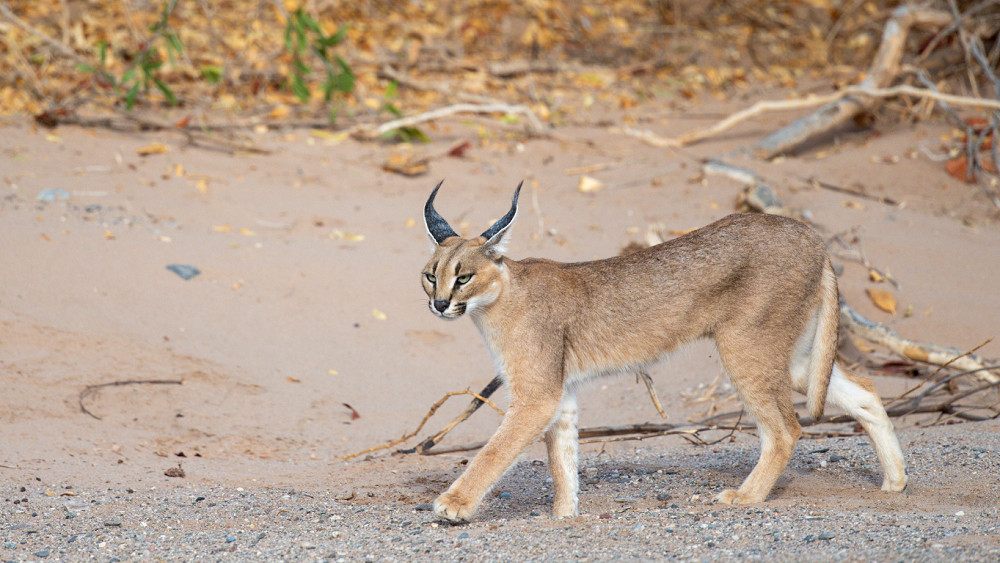
An unexpected mega sighting? A caracal crossed behind our vehicle at around 8 am one cool morning after an overnight shower had refreshed the area. It was clearly hunting, noticeably swiveling its prominent pointy ears as it stood dead still for a few seconds while surveying the area. Just once it turned its head to give us a cursory look. Even for our guides, who had spent decades in the area, it was a special sighting.

Himba village visit

Our afternoon visit to a small Himba village was fun in the old-fashioned sense of the word. I’m always a little bit apprehensive about ‘village visits’ of any kind. It can be awkward to simply show up – as a bunch of complete strangers – at someone’s home and interact with them in a meaningful manner. I need not have worried.  

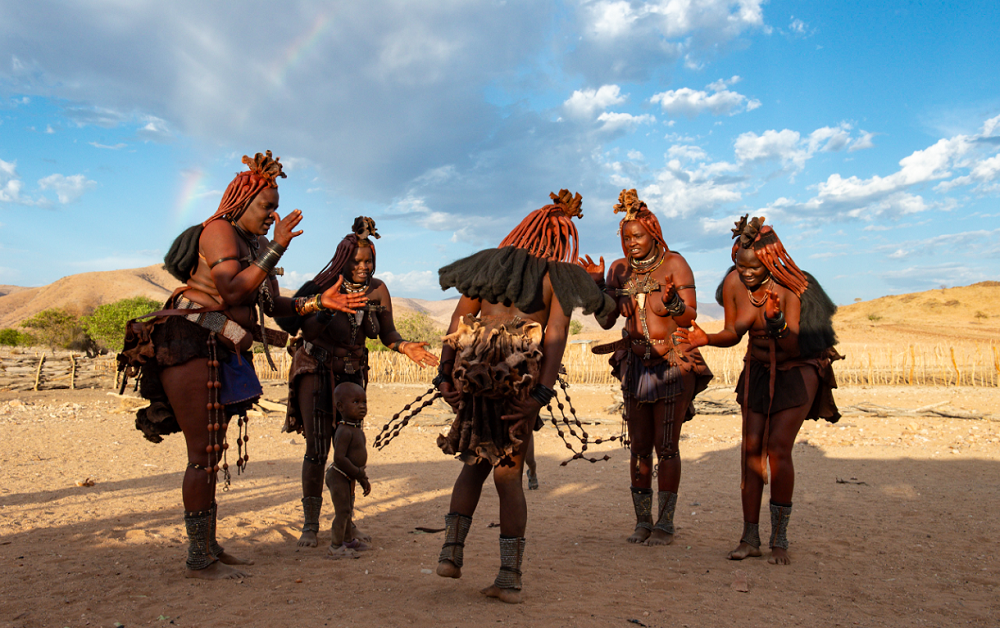
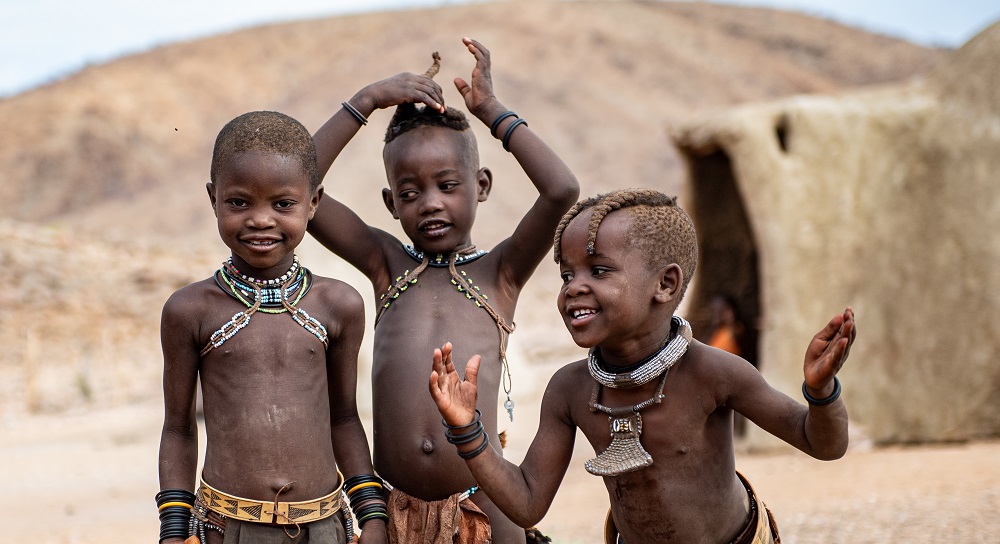
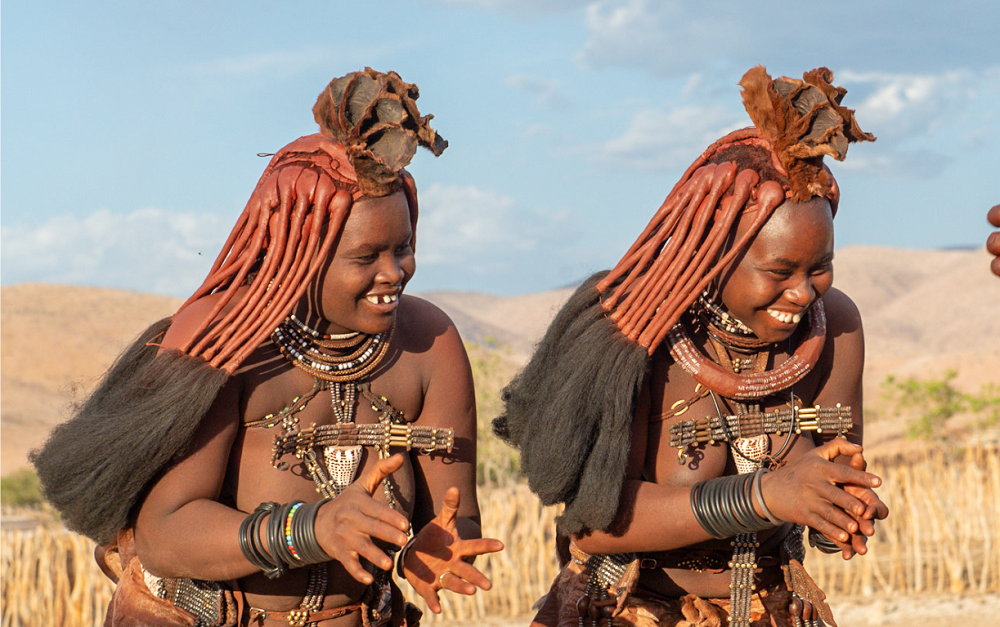
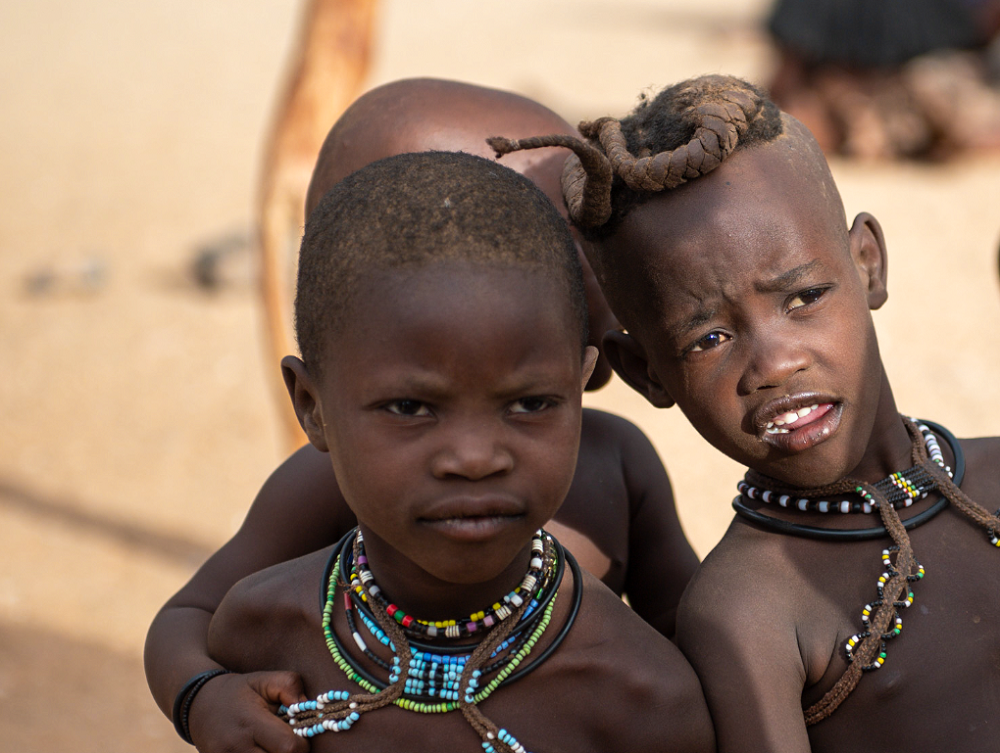
The six Himba women, seven or so young kids and lone Himba man which we met on the day made us feel welcome right off the bat. The ladies confidently bade us welcome on arrival and the kids acted as the perfect icebreaker. Upon seeing themselves reflected in our camera playback images, their unaffected expressions of delight and surprise, their pealing laughter and silly giggles just seemed so natural it removed any feeling of self-consciousness.  

Getting a glimpse into the life of a tiny Himba village, a look at the way of life of people living an existence which is diametrically different to ours, is sobering. Clearly evident? The utter lack of material things, modern conveniences, electricity and  plumbing of any kind – not even running water. It is just so hard for us to fathom living like that. Yet it was not difficult to relate to our Himba guests on a purely human level. I think we all marveled at their joie de vivre, and their wholly unaffected interaction with complete strangers. A lasting memory? Their pure joy when they were performing a farewell dance. A little improvisational at times but done with almost childlike enthusiasm and verve. We could all use a little bit more of that in our lives.

Shipwreck Lodge, Skeleton Coast National Park

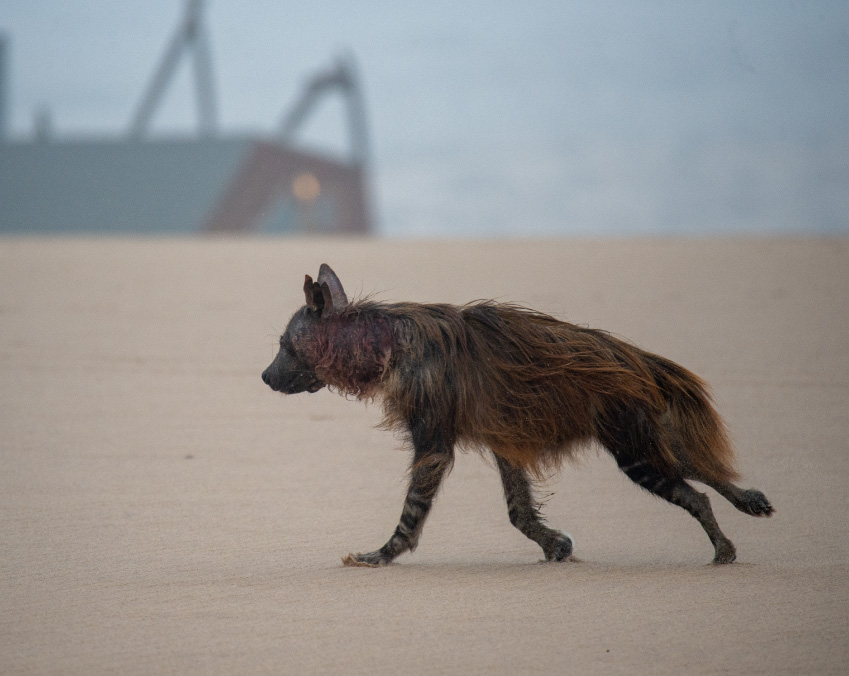
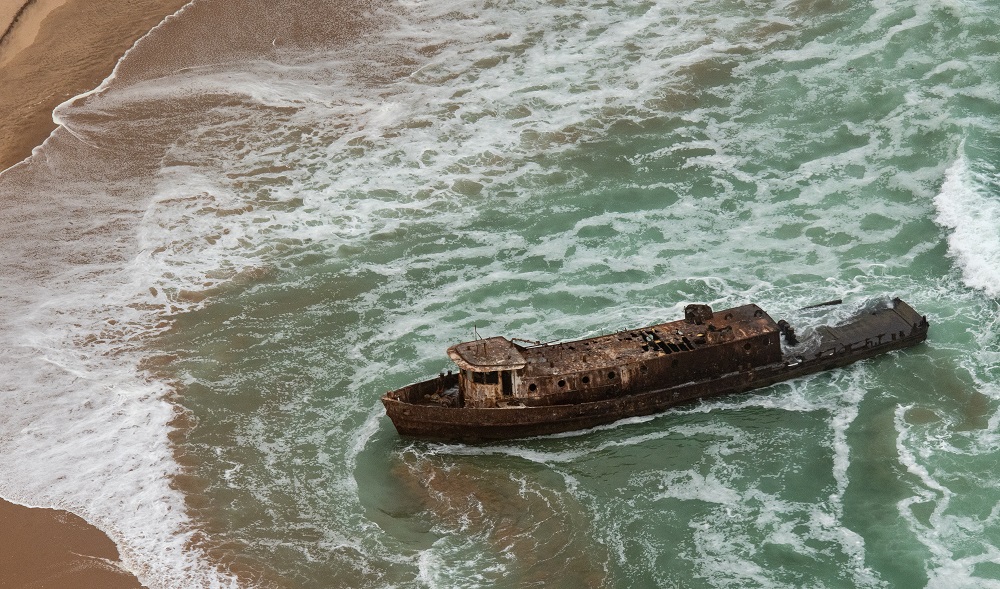
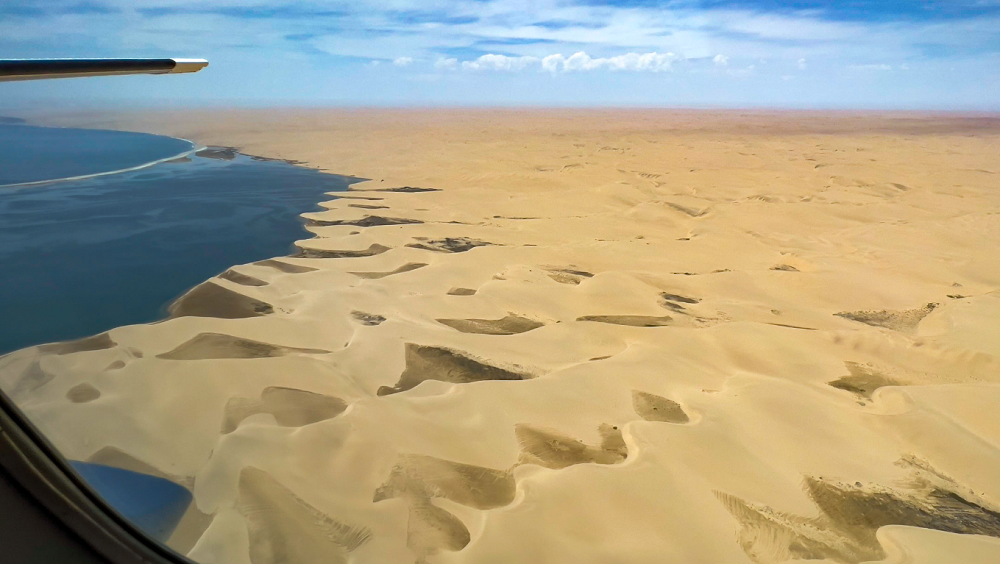
Roads? Where we’re going, there are no roads! A line from Back to the Future? Not quite, but certainly applicable to the remote northwestern Kaokoveld region of Namibia, where Shipwreck Lodge was built. Unfold a map of Namibia and trace the line on the map representing the road from Toscanini to Terrace Bay to Mowe Bay. It is a dotted line. From Mowe Bay further along the coast to the north, in the direction of Shipwreck Lodge? Nothing on the map. On the ground? Just a barely visible, winding sandy track, negotiable only by four wheel drive vehicles and prone to being obliterated by creeping barchan dunes.

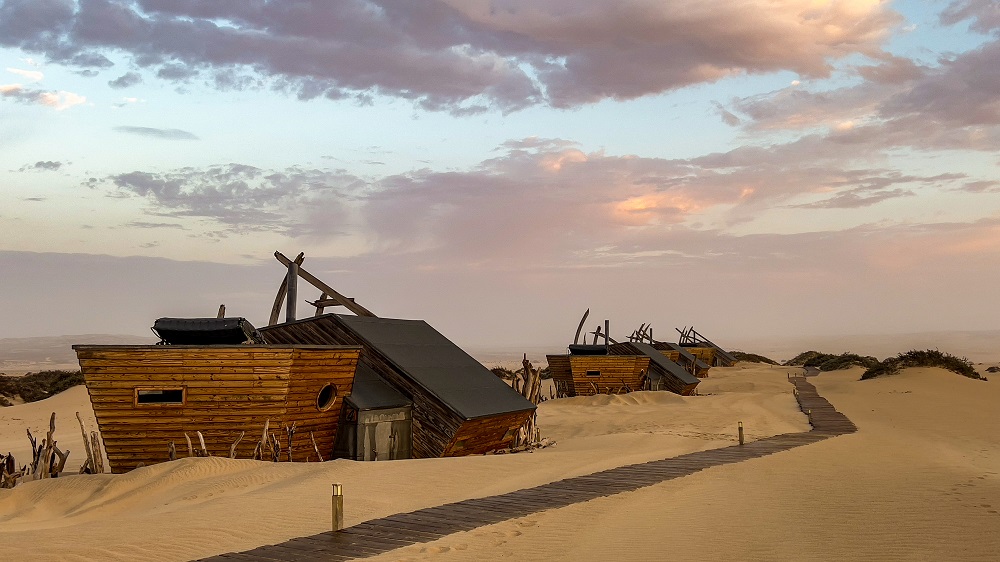
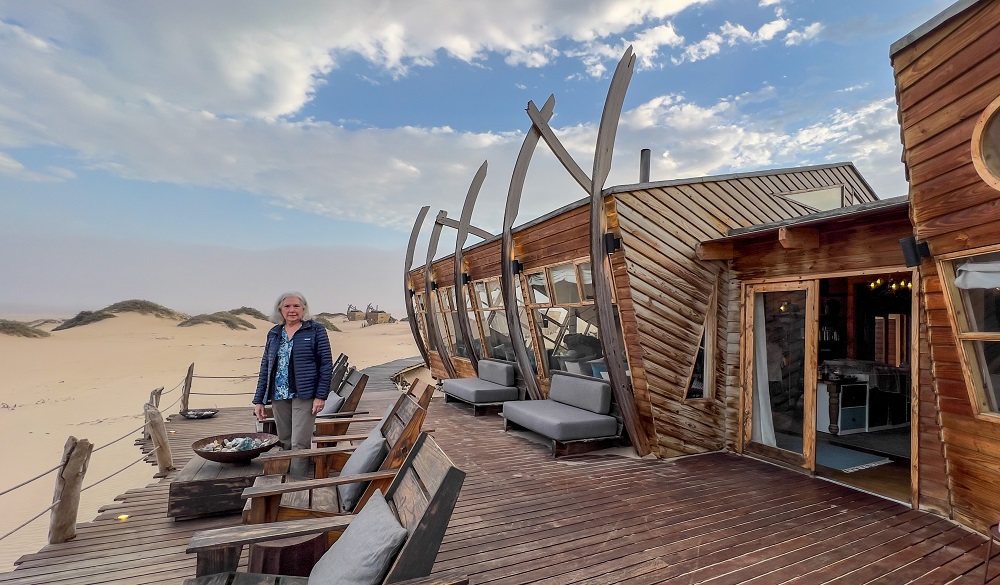
In the relatively short time it has been open, much praise has been heaped on Natural Selection’s Shipwreck Lodge, located on an elevated cluster of hummock dunes, overlooking the breakers of the Atlantic Ocean beach about a mile or so in the distance, directly in front of the camp.  

Listening to the muted roar of the waves while sitting on the front verandah at Shipwreck is time well spent. The ideal spot to enjoy the cool beach air and to reflect on the place and the environment. 

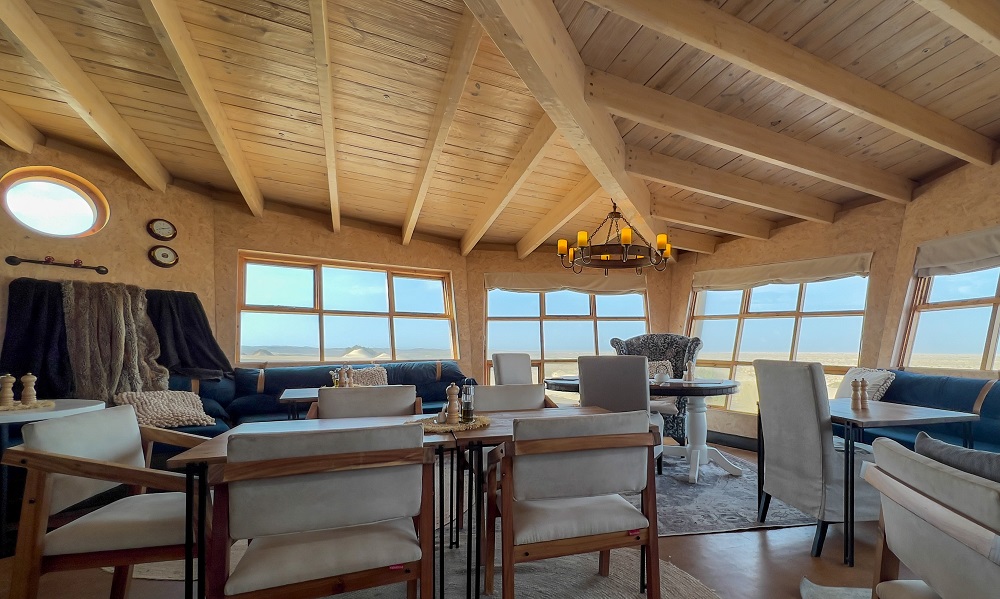
Rewinding the tape back a little to the previous day, we arrived at Shipwreck in the early afternoon in time for a late lunch. Located on the edge of a series of intricately patterned longitudinal dunes, the cozy lounge/dining room is a delightful place to spend some time, safely cocooned from the hazards of the Namib desert.   

A strong south wind was visibly sweeping handfuls of sand from the surrounding hummock dunes while we received our arrival briefing and room allocation. Four of the chalets – built in the style of ship’s cabins complete with portholes and sloped windows – are to the north and six to the south of the lodge. All are identical with bedrooms looking out over a desert landscape and beyond that, the edge of the Atlantic Ocean in the distance. The rooms were just the right size and shape for the desert environment, with the light nautical touches creating a fun and whimsical atmosphere.  A good strong shower, plenty of hot water, pretty good lighting – it checked all the boxes.

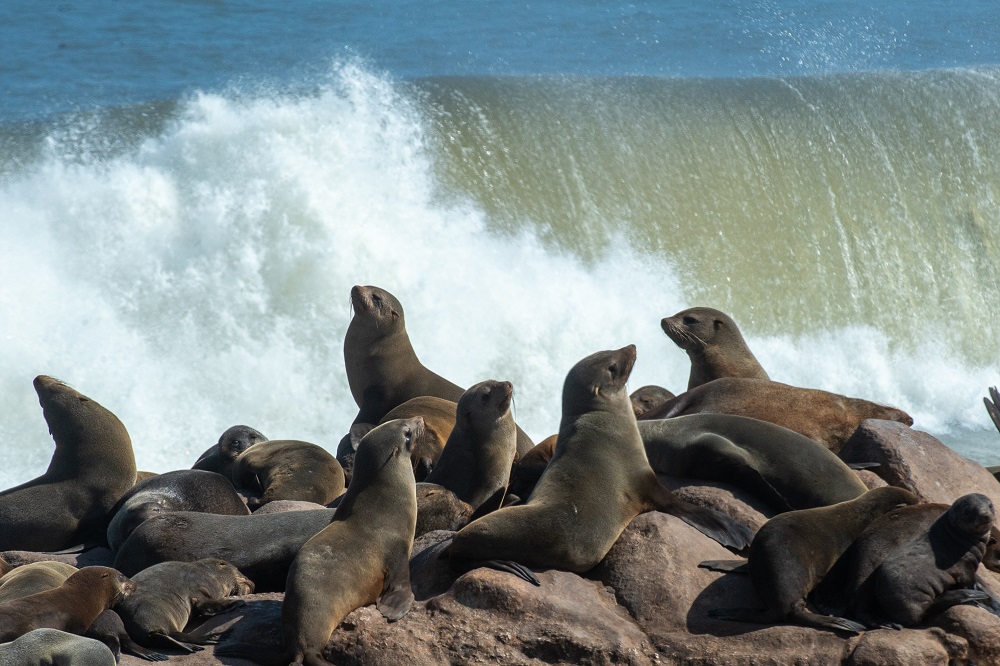
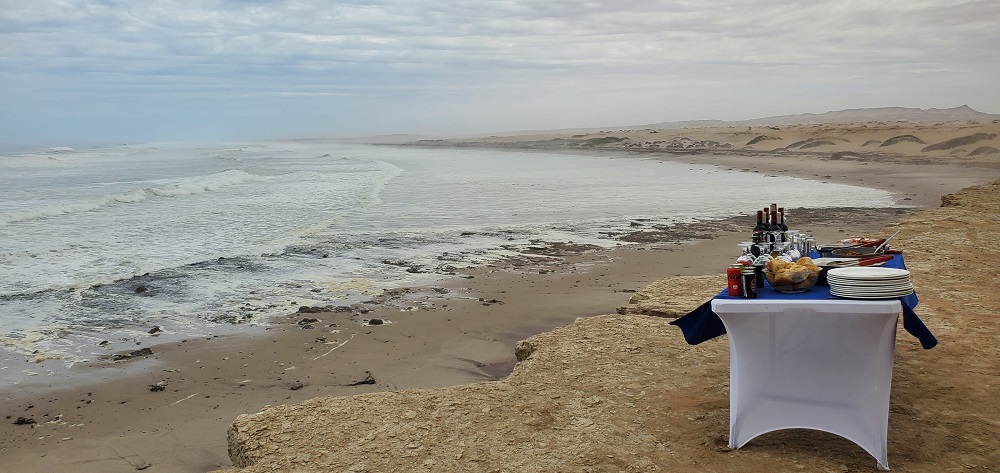
Activities include nature and dune drives, sand boarding and excursions on all terrain vehicles. We also made our way to Rocky Point on a sundowner excursion and enjoyed a lavish ‘braai’ just off the shoreline of the Atlantic Ocean, with various cuts of meat and some fish, grilled over coals. Walking from this spot just a few hundred meters in either direction imbues one with a sense of the true desolation of the area.  No fresh water, no signs of habitation, essentially no vegetation. Wind, crashing waves, a Cape fur seal scampering away and a few gulls, cormorants and shorebirds flying by. It’s not difficult to put oneself in the imaginary shoes of shipwreck victims. Your prospects? Dire.

The Skeleton Coast National Park north of Mowe Bay is extremely lightly visited and as was the case pretty much throughout our Namibia visit, there was practically no one else around. The scenery around the lodge defies description. It is a mix of gigantic longitudinal and hummock dunes, an endless expanse of moving sand with the afternoon southerly winds constantly changing the look of the place. Driving a little further to the north – towards Rocky Point – we came upon a series of bizarrely symmetrical barchan dunes which are marching their way across the Namib Desert at a rate of up to 20 meters per year. Change is a constant, and today’s road is buried under tomorrow’s incipient sand dune.

We very much enjoyed the time we spent with our charming local guide Bravo Kasupi who we first met about halfway to the lodge, at a handover spot below a high bluff, at Leylandsdrift, in the Hoarusib River. After some welcome refreshments (fruit kabobs, biltong, savory snacks and soft drinks) we set off down the course of the Hoarusib, eventually checking out the impressive ‘clay castle’ formations which tower over portions of the riverbed. And then slowly, slowly making our way to the lodge, doing some birdwatching en route, and spotting several oryx along the edges of the Hoarusib.

Swakopmund stopover

Swakopmund provides a refreshing change of pace on any Namibia trip. A popular Namibian summer beach resort for both locals and foreign visitors, Swakopmund is the place to take a breather from long drives and tight schedules. Walk out of the Strand Hotel right into the chilly water of the Atlantic which forms a breaker-free pool right alongside a jetty. You won’t be alone. Even in mid November, well before the start of the summer high season, there were almost always a few people on the beach. Swimming, playing volleyball or some other sport, or just hanging out with friends. 

Walk in a different direction along the palm-fringed promenade and you’ll soon get to The Tug, a popular and reliably good seafood restaurant. Always a good choice? One of the linefish or catch of the day items. The local aquarium is currently closed for ‘major’ renovations and it is likely to be shuttered indefinitely.

An hour or so spent in the Swakopmund museum can be quite fascinating and educational. Its surprisingly diverse range of exhibits, topics and artifacts showcase the region’s rich cultural and natural history. Highlights include exhibits on the indigenous Topnaar people, displays of marine life, artifacts from colonial times and a diverse collection of minerals. The museum provides insight into Namibia’s unique heritage and ecosystems.

A morning outing into the dunes along the Swakop River with a guide from Batis Birding tours illustrates the remarkable adaptations of various animals which thrive in this bone dry desert environment which gets essentially zero rainfall. What moisture there is comes in the way of mostly nighttime fog which is ingeniously captured and utilized by several desert organisms.

Over the course of a short 2-hour morning outing, we encountered and were able to get some good photographs of the peculiar Namib dune gecko, Namaqua chameleon, shovel-snouted lizard, horned adder and Fitzsimmon’s burrowing skink.

Strand Hotel, Swakopmund

Kathy and I had been planning to spend a night or two at the Strand Hotel since we walked by it on a previous visit. It was all about the location being right on the beach and seemingly ideally situated for a short walk into town. Which is the way it turned out to be. Add to that comfortable rooms with good lighting and a strong shower, and in our case – a view of the beach. The next morning we discovered the best reason to stay here. Breakfast. I can’t even begin to list the practically innumerable buffet and a la carte options at The Farmhouse Deli where breakfast is served. Get there early, it’s popular! Everything we tried was excellent. The two other Strand Hotel restaurants – Brewer & Butcher and Ocean Cellar – did not lag behind. The front office staff was unfailingly courteous and helpful. All around the hospitality was impeccable and we will definitely be using this property again.

Scenic flight Swakopmund to Sossusvlei

More than any other experience on our trip, the scenic flight from Swakopmund to Sossusvlei illustrated the immensity of the duneveld in south central Namibia. Our pilot from Swakopmund-based Scenic Air mentioned that it was the biggest expanse of tall dunes anywhere on planet Earth, rivaled only by the dunes of Mars. I believe it. The sight from the air is simply awesome. Hundreds of massive mounds  of windblown red sand stretching out in every direction like so many pebbles on a beach. Incredible. And it can only be seen from the air.  

While the visual of the duneveld was certainly the highlight of the flight, there were several other superb photo opportunities such as these: 

  • After taking off from Swakopmund in a Cessna 208 (Caravan) we flew past the Walvis Bay harbor, and then over the vividly colored salt pans just to its south.
  • We viewed the famous Sandwich Harbor wetland heading a bit further south,  past the Eduard Bohlen and Shawnee Shipwrecks.
  • Leaving the coast and entering the “Sea of Dunes” took us past the long-deserted Charlottenfelder diamond camps.  
  • At Sossusvlei and Dead Vlei our pilot made a comfortable shallow turn around the area for a view of the pans among the 1,000-foot-tall sand dunes. 

Sossusvlei dunes excursion

The massive red dunes at Sossusvlei attract a crowd pretty much every day of the year. They are also best photographed early, as soon as possible after first light. How to avoid the crowds and get to the dunes early? Stay inside the park and get to the dunes as close as possible to sunrise. Which was at 6:20 am in mid-November.

Driving in from outside the park – as we did from Ultimate’s Camp Sossus – was a fine experience overall but for someone intent on capturing the dunes at their most dramatic early morning moments, with sharply contrasting interplay of shadow and soft light, it doesn’t work very well. 

By the time we made it to Dead Vlei it was just too late. Almost 8:00 am and the sun was way high in the sky. Plus there were already bunches of other vehicles in the parking lot, with more arriving every minute. Just too many people wandering around to get that quintessential ‘isolated tree in front of a sand dune’ shot. 

We made the best of the situation nonetheless and captured a few nice images of the white gravel plains, semi-fossilized black tree stumps, apricot-colored dunes and crisp blue sky. 

It’s a 15-minute walk from the parking lot at Sossusvlei to Dead Vlei. Compared with earlier visits to the dunes just a few years ago, a considerable amount of sand has been blown over the trail. So come prepared with sturdy footwear. Flip flops? No. And take some water and sunscreen. The Namib sun is relentless and temperatures increase sharply from as early as 9 am. 

Camp Sossus

There’s a lot to like about this small hybrid tented camp which snuggles up to a rocky outcrop in the  Namib Tsaris Conservancy. To the front of camp a vegetated plain stretches far into the distance with portions of the Nubib and Zaris Mountains to be seen. Particularly early in the morning and in the late afternoon, the beautiful desert light – often suffused with fine dust particles – impart a surreal painting-like quality to the scenery.

Beyond the location, Camp Sossus was as peaceful and serene a place as we had ever spent a couple of nights. A bonus was being able to sleep in the open under the stars, which several of our party took advantage of. With very little in the way of light pollution the sky above your bed is ablaze with the proverbial million stars. Sweet dreams. 

The hybrid tented rooms are small with just enough room to fit two ¾ beds side by side, a tiny side table and an open space to hang a few garments. With an iron roof and cinder block casing, the tent was surprisingly cool and handled the desert heat admirably well. With a fan going it was just cool enough to doze off in the afternoon. Evenings were downright pleasant with the heat dissipating quickly as soon as the sun went down. 

The small bathroom had a flush toilet, hand basin with cold water and an enclosed shower with a low pressure (bucket) shower. Hot water for the shower was available on demand. The shower head was inadequate with just not enough of a stream; perhaps it was clogged. The lighting in the room and bathroom was good except that there was no reading light. 

The bottom line: Camp Sossus was a good choice to end our Namibia journey, representing of a lot of what makes the country special: the hauntingly beautiful scenery, the warm, friendly people and the sense of being away from it all in a relaxed, easy-going setting with few other people and vehicles around.  

Our Fish Eagle Safaris team is ready to assist you with your own customized Namibia trip so please call or email us for further information, at 1 800 513-5222 (our office in Houston) or bert@fisheaglesafaris.com.  We can also assist with scheduled small-group road trips in Namibia, along the lines of the trip on which this blog is based. 

YOU MIGHT ALSO BE INTERESTED IN

Destinations
Zambia

10th September 2021

Chindeni and the Bushcamp Company, Zambia

By late July we found ourselves at Chindeni, a small Bushcamp Company property
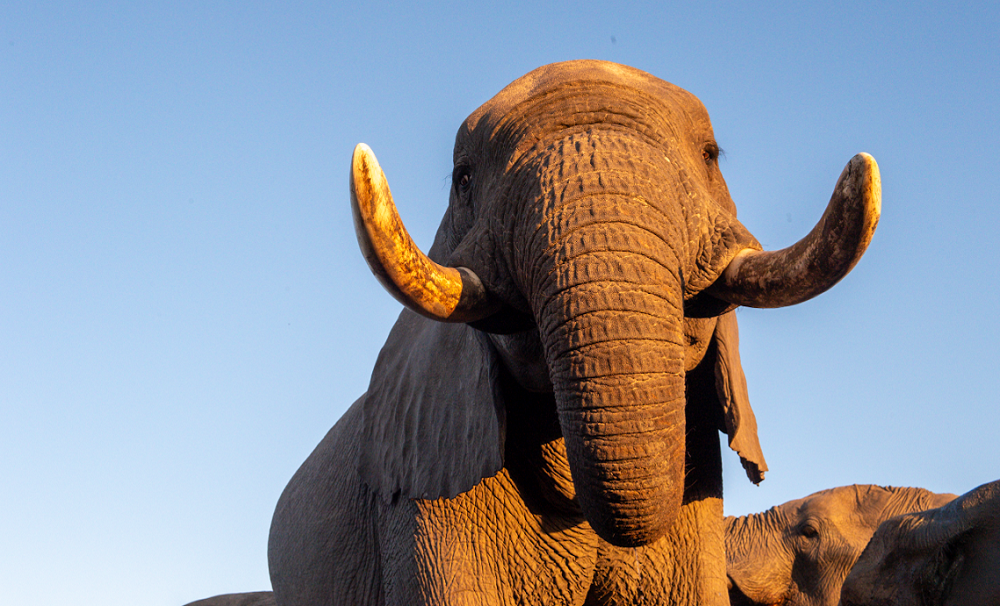
Read more
Botswana
Destinations
Okavango Delta

3rd October 2022

Camp Okavango, Botswana

Camp Okavango is in the heart of the permanent part of the Delta. In this idyllic setting there are no vehicles, and it is just a short walk

Read more
Area
Destinations
Nyerere National Park
Ruaha
Tanzania

14th October 2023

From My Safari Notebook: Wildlife Photography

Birds in flight and wildlife photographers have an uneasy relationship. Things go wrong as often as they go right. Getting focus-lock on a moving subject

Read more

SUBSCRIBE TO OUR NEWSLETTER

READERS FAVOURITES

Destinations
India

27th May 2023

India

India’s tiger, mammals and birds.

Read more
Botswana
Destinations

4th August 2022

On Safari At Belmond Eagle Island Lodge, Okavango Delta

What is the ‘secret sauce’ for an unforgettable few days on safari in Botswana? It starts with the animals, of course. The elephants, lions, giraffes, hippos

Read more
Destinations
Zambia

10th September 2021

Chindeni and the Bushcamp Company, Zambia

By late July we found ourselves at Chindeni, a small Bushcamp Company property
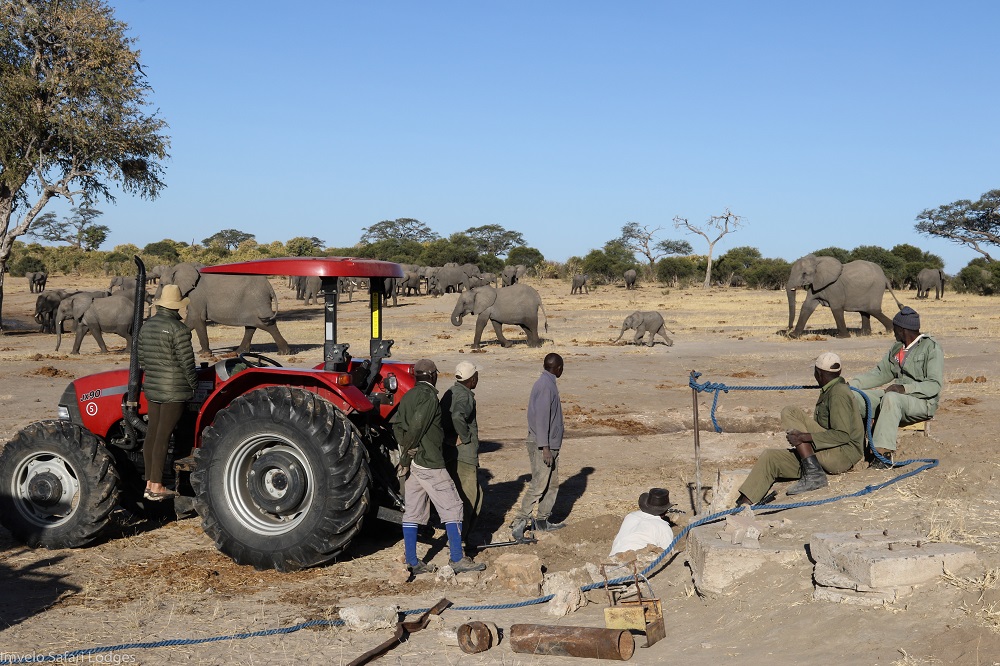
Read more

From My Safari Notebook: Wildlife Photography

14th October 2023

From My Safari Notebook: Wildlife Photography

Birds in flight

Birds in flight and wildlife photographers have an uneasy relationship. Things go wrong as often as they go right. Getting focus-lock on a moving subject is probably the most challenging aspect of the endeavor. And then getting a high enough shutter speed to stop the motion and avoid the dreaded blurry images… Lately I’ve been shooting birds in flight at around 1/1,250 shutter speed and f-8 with ISO set to auto with pretty decent results.  

African skimmers are my favorite birds to capture in flight, hands down. Or maybe I should say wings down? Kathy and I were fortunate to bump into a bunch of them on the banks of the Rufiji River in what is now Nyerere National Park (formerly Selous) a little more than a month or so ago in Tanzania.

Here are a few of the skimmer photos:

With a 500-mm lens it is possible to almost completely blur the background for a pleasing ‘bokeh’, which also makes the subject ‘pop’. Which is exactly what you want.

Sometimes it is a good idea to show some habitat; in this case the typical – beautiful – Nyerere (Selous) riverine forest along the truly magical Rufiji River where baobab trees often creep into the photos.  

I had never gotten a photo of an African skimmer while calling, until this time – when I captured two of them ‘talking’ at the same time! Skill or luck? I’d like to think a little bit of both.  

Symmetry is a photographer’s friend and capturing these two skimmers in similar positions, with their graceful wings pointed down, is what makes this an interesting shot. Background is always an important consideration when shooting birds in flight; a green leafy background is almost always better than anything else.  

What is better than one skimmer or two skimmers? A bunch of skimmers, obviously. When captured together in a flock – the tighter the better – almost all birds make an interesting photo. 

Adding drama to your photos

How does one add drama to a photograph? There’s several tried and trusted ways including motion blur, silhouettes, lighting effects, shadows and backlighting. Sometimes, nature itself supplies the drama, you just have to channel it. Take dust, smoke and fog for example. Each one of these can turn an ordinary wildlife situation into something special. I’ve seen it multiple times with wildebeest, elephants and rhinos. Elephants kicking up dust at Amboseli, rhinos shrouded in fog in the Masai Mara, a smoky background in the Okavango Delta, in the aftermath of a veld fire. Those are conditions that can turn your run of the mill photographs into little masterpieces. What might otherwise be a pretty ho-hum scene can become truly magical – with tons of drama – with just a little dust, smoke or fog. Of course, you have to be in the right spot at the right time. And have a plan. 

When we came upon a mixed group of vultures in Ruaha National Park recently, I was initially only mildly interested in the scene. Until we saw a fearless black-backed jackal almost recklessly charge right into the thick of the vulture pack, desperately trying to drive them off what remained of an impala carcass.  

Suddenly everything changed. There was dust everywhere as the jackal startled several of the birds into flight. I was ready for the second charge, with a high shutter speed at f/11, which would – I thought at the time – provide me with sufficient depth of field to get the jackal and some of the birds in focus. It worked. Maybe not 100% – I could have used even more depth of field – but keeping the lens focused on the birds and waiting for the jackal to rush into the frame had the desired outcome.  

Here are a few of the photographs:

On a morning game drive from Kigelia Ruaha camp in Ruaha National Park last August, we initially drove by this flock of vultures surrounding the carcass of an impala until we saw a black backed jackal rushing across the road, straight into the bunched up vultures.

Seemingly fearless, the relatively small jackal tore into the vultures, biting into their wings indiscriminately and chasing off several of them. The resulting commotion and ensuing dust is what ultimately turned the scene from a not-so-special sighting to a true spectacle. 

The jackal found itself facing overwhelming odds but it persevered, making several charges and finding itself right in the thick of the action more than once.

While I would have loved to have gotten a little better focus on the jackal in this photo (should have used maybe f/13 instead of f/11 for more depth of field) it nonetheless captures the essence of the conflict and the proximity of the jackal to the vultures. 

In the aftermath, with the dust settling and the vultures getting ready to consume what remains of the impala, there is a sense of a battle having been won, and of nature taking its course. 

Becoming a better photographer

Becoming a better photographer is an ongoing process, much like it is with any other skill. Early on, after buying my first semi-professional camera in 2008, I started with in-person and later online instruction. At the time there were lots of excellent instructional photography books available. Some were better than others. I do recall ‘Understanding Exposure’ by Bryan Peterson as being particularly helpful. Nowadays of course the internet is a treasure trove of instructional videos and e-books.  

How long does it take to get good at photography? It depends how much time and effort you put into it. If you get serious with your photography, it will take about two to three years to acquire competence to the point where you will be able to shoot confidently in the manual setting. Also, by then you should have a good understanding of the relationship between aperture, shutter speed and ISO, the three sides of the exposure triangle. You will be well on your way to understanding and using depth of field and you will know enough about composition (the rule of thirds and when to break it), to avoid the most common beginner’s mistake which is to center each and every object in the frame. You’ll also be able to read a histogram. It may take as long as ten to twelve years of study and work to really master the skill of photography. Fortunately, there are no age limits or expiration dates. So keep shooting, keep learning and keep enjoying making beautiful images! 

YOU MIGHT ALSO BE INTERESTED IN

Destinations
Zambia

10th September 2021

Chindeni and the Bushcamp Company, Zambia

By late July we found ourselves at Chindeni, a small Bushcamp Company property
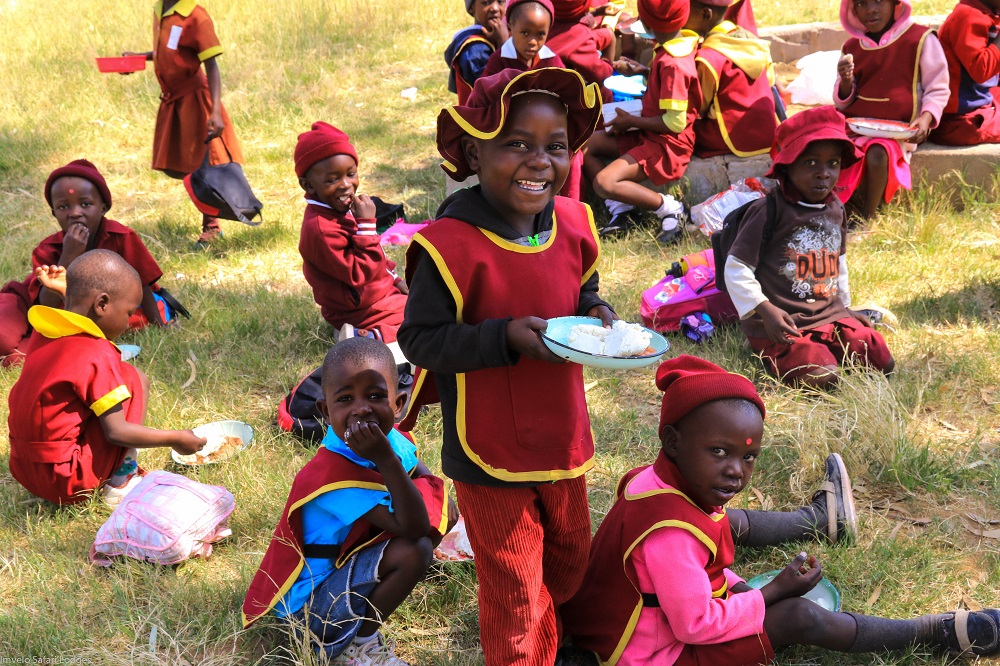
Read more
Botswana
Destinations
Okavango Delta

3rd October 2022

Camp Okavango, Botswana

Camp Okavango is in the heart of the permanent part of the Delta. In this idyllic setting there are no vehicles, and it is just a short walk

Read more
Destinations
Rwanda

26th March 2023

Photography on safari

Fish Eagle Safaris was an early adopter of digital photography. Company founder Bert somewhat fondly recalls using a first generation Sony Mavica

Read more

SUBSCRIBE TO OUR NEWSLETTER

READERS FAVOURITES

Destinations
India

27th May 2023

India

India’s tiger, mammals and birds.

Read more
Botswana
Destinations

4th August 2022

On Safari At Belmond Eagle Island Lodge, Okavango Delta

What is the ‘secret sauce’ for an unforgettable few days on safari in Botswana? It starts with the animals, of course. The elephants, lions, giraffes, hippos

Read more
Destinations
Zambia

10th September 2021

Chindeni and the Bushcamp Company, Zambia

By late July we found ourselves at Chindeni, a small Bushcamp Company property
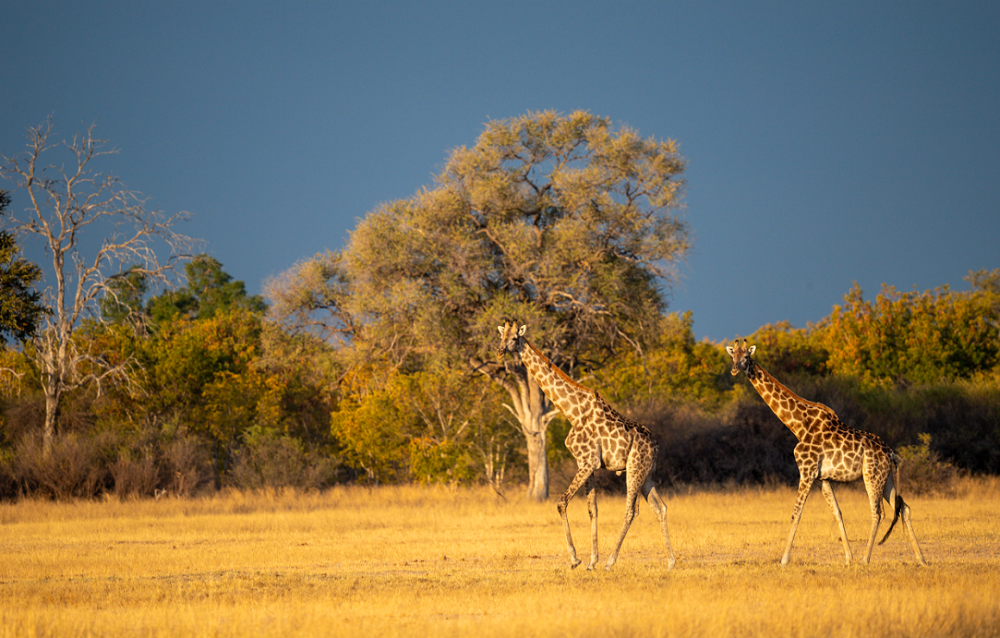
Read more

Zimbabwe & Botswana special offers – low-demand season 2023-2024

12th October 2023

Zimbabwe & Botswana low-demand season special offers – 2023/2024

We’ve got several special offers available for the coming low-demand season in both Zimbabwe and Botswana. The specials are available for a range of properties in both countries, from December (in some instances November 2023) through to March and April 2024. For a few camps the discounts extend right until the end of May. 

Zimbabwe

The best all around deals are available for the Imvelo Safaris camps in Hwange – namely Camelthorn, Bomani, Nehimba and Jozibanini. Here’s the lowdown:  

*Stay three nights/Pay two nights.
*Stay seven nights/Pay five nights.
*Children 18 and under stay free when sharing with an adult. Up to two children per adult. 
*No single supplement. 
*A free private vehicle will be included for groups of four or more.

Add a couple of nights in Victoria Falls, put it all together and you’re looking at a nine night/ten day fly-in safari at a price of around $5,200 per person sharing, with three nights at Nehimba and four at Bomani, and two nights at Pioneers Lodge in Victoria Falls.  

This price is valid for 1 January 2024 to 30 April 2024, and from 1 December 2024 to 31 December 2024. The rates will be extended to 31 May 2024 at Camelthorn and Nehimba, and to 31 July 2024 at Jozibanini.

What is included:

*2 nights in Victoria Falls on bed & breakfast basis
*7 nights on safari at two safari camps in central and southern Hwange
*All meals, soft drinks, beers, wines & local spirits on safari
*Bed & breakfast accommodation in Victoria Falls
*Laundry included at safari camps
*All road transfers and two scheduled light air transfers from and back to Victoria Falls  
*A sundowner cruise on the Zambezi
*A private guided tour of Victoria Falls
*Twice daily game viewing activities at both safari properties
*A Ngamo community experience, a Community Rhino Conservation Initiative (CRCI) talk and rhino viewing at Bomani and Camelthorn

Excluded:

*Gratuities
*Hwange National Park entry fee of $20.00 per person per day 
*Rhino Conservation and Community Levy – $150 per person
*Commercial flights from the USA to and back from VFA (Victoria Falls, Zimbabwe).

Safari notes:

*The CRCI rhino sanctuary has become an incredible guest experience at Bomani and Camelthorn and is available year-round.
*Mack Air has economical charter flight rates into and out of Hwange year-round (including the low demand season), which makes getting around a lot easier and more affordable than private charters.

About Hwange

Hwange National park is Zimbabwe’s premier wildlife destination. This huge national park is one of the most important elephant sanctuaries in Africa, with as many as 40,000 elephants resident in the greater Hwange area. We always include at least one Hwange property (mostly tented but not exclusively so) in an itinerary, often two. In addition to the elephants, Hwange has good populations of buffalo, giraffe, eland (largest antelope in Africa), zebra, wildebeest, and a variety of predators including lions, cheetahs, leopards and African painted dogs.

The safari experience in Hwange is very much like in South Africa, Botswana or for that matter Kenya. One difference: Zimbabwe has a couple of very special antelope not generally seen elsewhere, namely the majestic sable antelope and the equally attractive roan antelope. Plus literally thousands of impala and various other smaller mammals. The birdlife is superb with many birds of prey and colorful bee-eaters, rollers, shrikes, and dozens of other birds. Hwange is also an exceptionally good place for walking safaris, under the safe and capable supervision of a professional Zimbabwe guide.

Botswana in summer

There are few destinations in Southern Africa with quite the same appeal as Botswana in the low-demand season from December through the end of March. Even in years of good rainfall – not likely to be the case this coming summer – the precipitation is relatively low, hardly ever more than four inches average per month.  Most importantly, no part of the region is subject to the torrential rainfall which all too frequently affects the South African lowveld area (including much of the Kruger Park), from January through March, caused by tropical cyclones.  

With some rain – and the cooling effect of the cloudy weather – northern Botswana and the Kalahari (though still warm to hot in the afternoons) are much more pleasant than in the months of October and November. With even limited rainfall, the dry, dusty veld conditions seemingly change overnight, bursting with bright green vegetation, flowers and rich colors.

Conditions are ideal for photography. Beautifully soft morning and afternoon light. Crisp, clean air with minimal haze, and absolutely gorgeous sunrises and sunsets, almost always with some clouds around for added drama and color. I took some of my best ever leopard photographs in the Jao concession in Northern Botswana in March some years ago. Likewise in the Kwara area and at Duba in the northern Okavango Delta on two other February/March trips. Leopards, cheetahs, African painted dogs, giraffes, zebras – in perfect light, game drive after game drive.    

Include a few days in the Kalahari at Nxai Pan and discover an area simply teeming with life during the summer months when thousands of zebras migrate onto the open pans, in search of the fresh, emerging vegetation. Never too far behind? The impressive black-maned lions of the Kalahari and cheetahs clambering onto anthills or tree stumps on the lookout for springbok, steenbok or impala. In the summer months, there’s usually good numbers of big-tusked elephant bulls around, scattered groups of buffaloes and a variety of antelopes and abundant giraffes in the woodlands. On previous low-demand season trips to Northern Botswana we’ve gotten lucky with African painted dogs on several occasions, and there’s always a chance of seeing brown hyenas and African honey badgers.  

One of the best low-demand season offers for Botswana – available from January to March 2024 – is a “stay 8 nights, pay for 6 nights” deal from Desert & Delta at a price of less than $5,000 per person, including all internal charter flights from and back to Maun. The offer includes a 3-night stay at Leroo La Tau camp in the Kalahari. It is possible to include Chobe Game Lodge as well. This is what we would recommend:

*Two nights at Camp Okavango or Xugana Island Lodge. These typical Okavango Delta water camps offer the ultimate in relaxation in the heart of the Delta with unmatched walking, mokoro and boating activities.
*Three nights at Camp Moremi or Camp Xakanaxa. Here, on the edge of the Moremi Game reserve, guests can enjoy the perfect combination of prolific game viewing and motorized boat excursions into the Delta’s papyrus-choked channels exploring beautiful lagoons, small palm-fringed islands and patches of floodplain.
*Three nights at Leroo La Tau inclusive of a Nxai Pan day trip, a cultural experience and excellent photography opportunities along the Boteti River Valley.

This coming summer may be one of the best opportunities in many years to visit Botswana during the low demand season. With fewer travelers in the region, visitors will enjoy what is already a remote wilderness area, even more. For more details, please call our Houston office at 1-800-513-5222 during normal business hours, Monday to Friday, or email me at bert@fisheaglesafaris.com.

YOU MIGHT ALSO BE INTERESTED IN

Destinations
Zambia

10th September 2021

Chindeni and the Bushcamp Company, Zambia

By late July we found ourselves at Chindeni, a small Bushcamp Company property
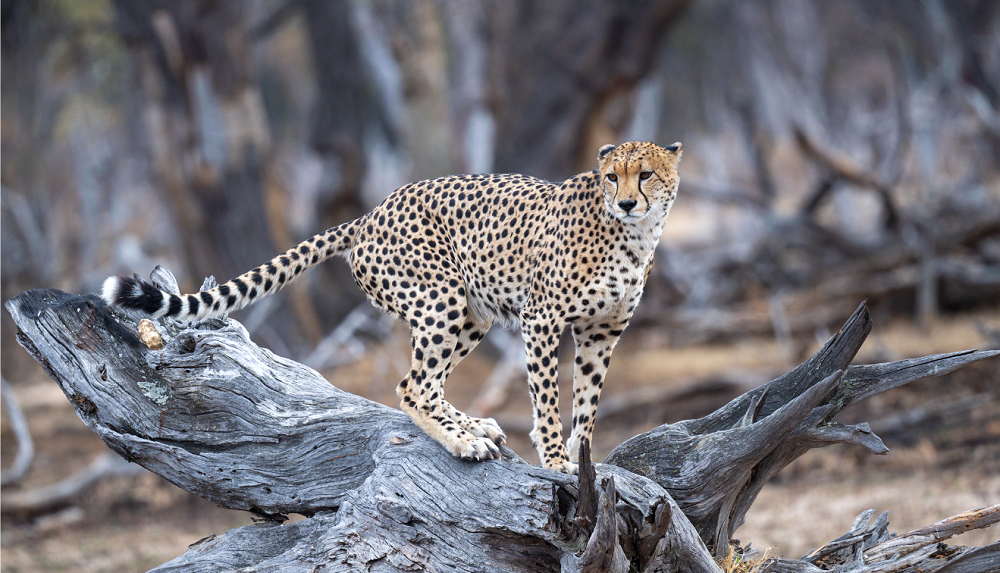
Read more
Botswana
Destinations
Okavango Delta

3rd October 2022

Camp Okavango, Botswana

Camp Okavango is in the heart of the permanent part of the Delta. In this idyllic setting there are no vehicles, and it is just a short walk

Read more
Destinations
Rwanda

26th March 2023

Photography on safari

Fish Eagle Safaris was an early adopter of digital photography. Company founder Bert somewhat fondly recalls using a first generation Sony Mavica

Read more

SUBSCRIBE TO OUR NEWSLETTER

READERS FAVOURITES

Destinations
India

27th May 2023

India

India’s tiger, mammals and birds.

Read more
Botswana
Destinations

4th August 2022

On Safari At Belmond Eagle Island Lodge, Okavango Delta

What is the ‘secret sauce’ for an unforgettable few days on safari in Botswana? It starts with the animals, of course. The elephants, lions, giraffes, hippos

Read more
Destinations
Zambia

10th September 2021

Chindeni and the Bushcamp Company, Zambia

By late July we found ourselves at Chindeni, a small Bushcamp Company property
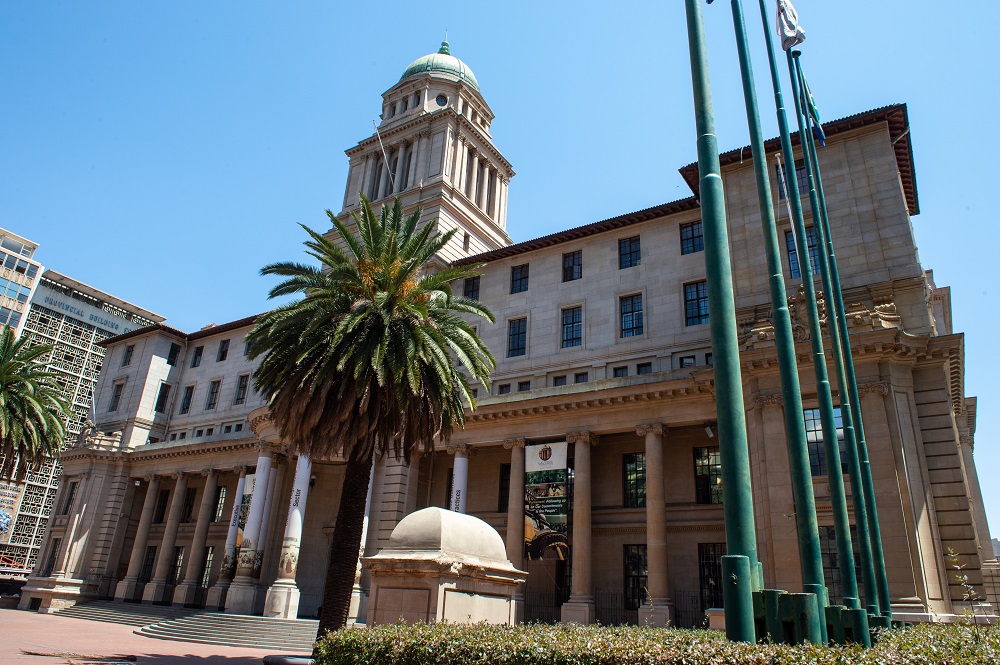
Read more
  • « Go to Previous Page
  • Page 1
  • Interim pages omitted …
  • Page 7
  • Page 8
  • Page 9
  • Page 10
  • Page 11
  • Interim pages omitted …
  • Page 21
  • Go to Next Page »

Footer

Design

  • About
  • Destinations
  • Blogs
  • FAQS
  • Team
  • Contact
All Rights Reserved ©Fish Eagle Safaris 2022 | Terms & Conditions | Privacy Policy
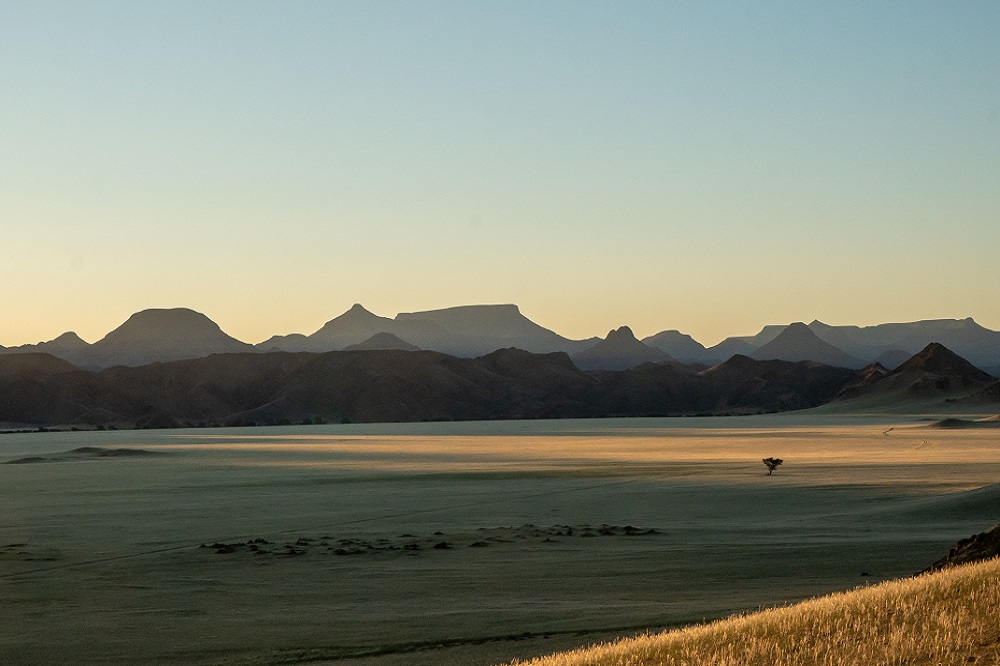
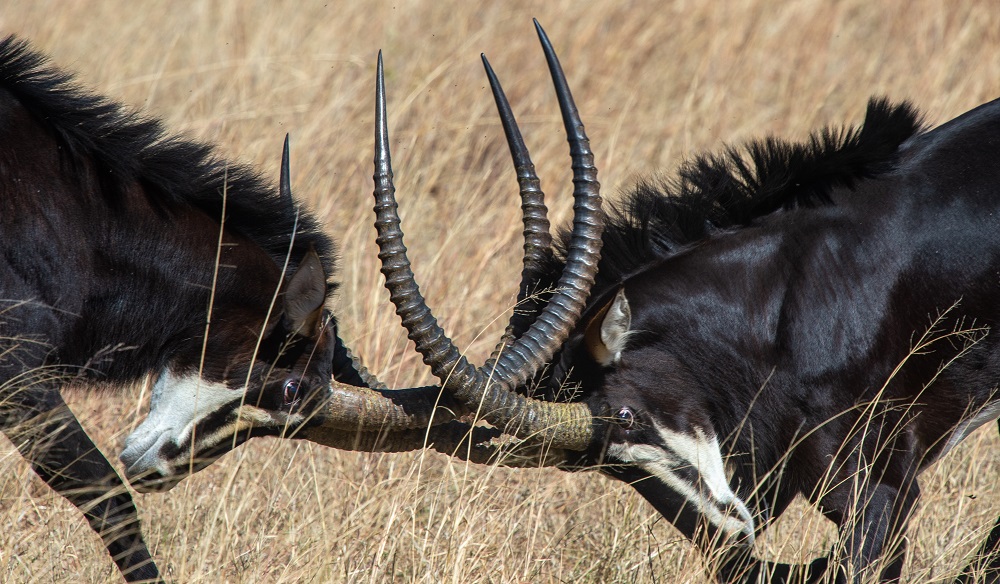
Designed & Developed by B Online

SUBSCRIBE TO OUR NEWSLETTER

SIGN-UP TO OUR NEWSLETTER

Subscribe Form

Footer Widget Header

Related Blogs