• Skip to primary navigation
  • Skip to main content
  • Skip to footer

Fish Eagle Safaris

Fish Eagle safaris

Contact

Logo
  • About
  • Destinations
  • Blogs
  • Newsletter
  • FAQS
  • Team
  • search
  • Contact
  • About
  • Destinations
  • Blogs
  • FAQS
  • Team
  • Contact

South Africa

A Return to Samara Karoo

31st July 2026

A Summer Winter in Africa: Part 7

A Return to Samara Karoo

A few of my Samara Karoo photos from our second (June 2026) visit to the stunning  Karoo Lodge looked like they were taken on Maui. The area had experienced abundant rainfall over the last several months which turned the ordinarily sparsely vegetated semi-desert area into a lush paradise, particularly along the rivers and streams. Even the shallowest of depressions turned into mini-lakes. 

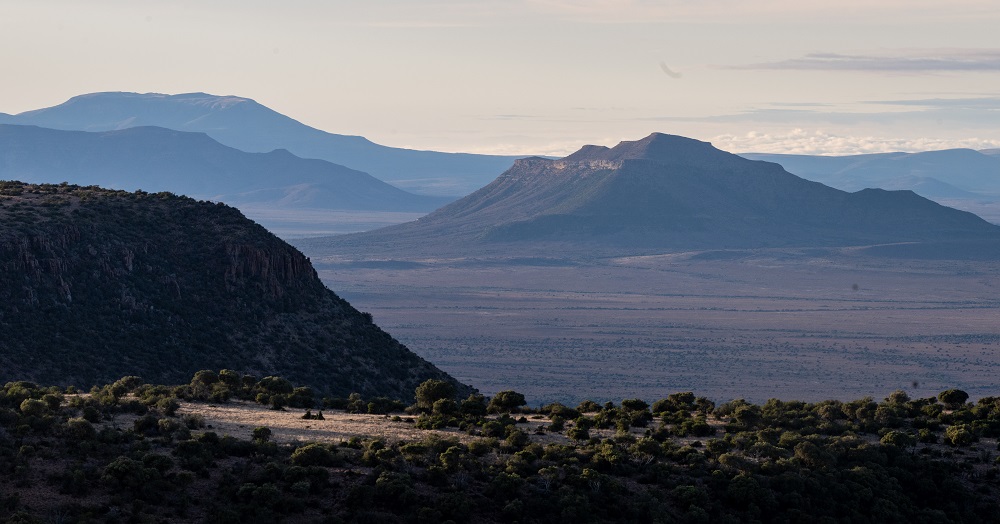
What really set the photos apart though, was the backdrop. The beautiful Camdeboo Mountains of the Great Karoo. Almost immediately I started seeing mammals with mountains in the background. Great big beautiful blue painting-worthy mountains just sitting there. There’s not more than a handful of other safari locations anywhere in Africa where photos and videos like these can be taken. Elephants, giraffes, oryx, waterbuck and – wait for it – cheetahs with mountains behind. Next time – lions.  

Cheetahs on foot

The signature Samara Karoo experience is seeing cheetahs on foot. On our first visit in 2024 we ran out the clock looking for them, the issues being too little time (a 2-night visit) and a particularly windy day which resulted in the cheetahs seeking cover in the hills. The second time was the charm. It took a couple of hours but our capable team of Mzi (naturalist guide) and Michael (tracker) located a female cheetah with six cubs along the far eastern edge of the reserve.  

Alighting from the Land Cruiser, we approached the cats on foot, quietly and slowly so as to not alarm or disturb them. The sun was already high in the sky so the light was quite harsh. Even so I managed a few captures of the mother and one or two of the 7-month old youngsters.  

Being on foot quite close to them was a novel experience. Cheetahs are pretty special cats to see under any circumstances and to be able to approach them like this was next level. Getting right down in the damp Karoo vegetation, I had several furry faces casually looking in my direction at their eye level. Mostly, to be sure, they ignored the camera and focused on being cheetahs in the Karoo. The activity is done in a circumspect manner so as not to alarm or displace them.
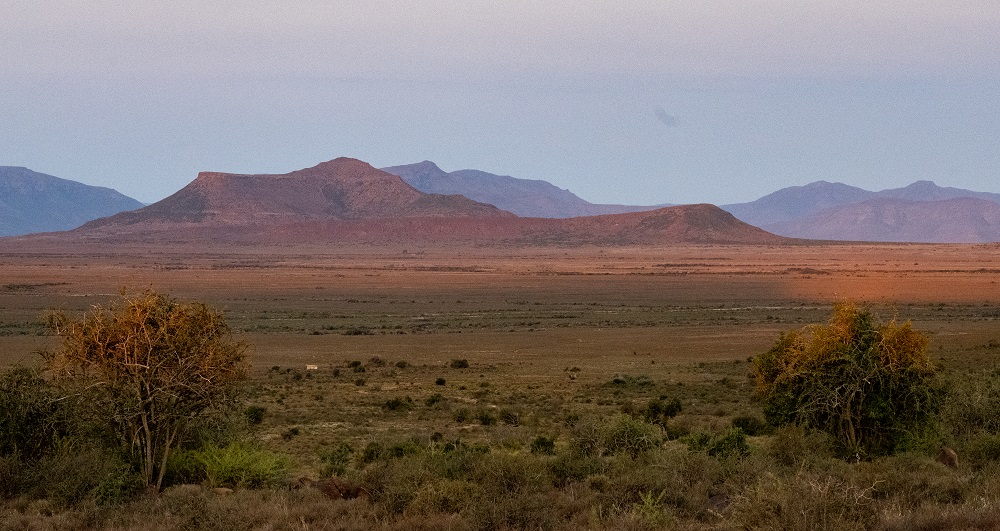
Picnic on the Kondoa Plateau

From the cheetahs on the Camdeboo plains we drove right up into the slopes of Kondoa Mountain along a gravelly, at times bumpy, track taking us about 2,000 feet up into a quite different habitat: montane grassland. Sometimes referred to as the Samara Mara, the Kondoa Plateau is a haven for animals such as the Cape mountain zebra, black wildebeest, eland, springbok and gemsbok. On a previous trip up to the same spot, we came upon a fresh lion kill (an eland) just off the mountain track. Not so this time, but we had several good sightings of the very special mountain zebras and black wildebeest.

Unbeknownst to us a culinary team from Samara had set up an elaborate al fresco lunch for us and all the other Samara guests, complete with tables and chairs, umbrellas, a wash-up station and a small bush loo. What they didn’t have to set up or bring from camp was the view. It was there and waiting in every direction. The most stupendous views one could ever hope to see, over the Camdeboo valley to the left and Honey Mountain in the far distance. The food was pretty good too: beef kabobs, curried chicken sandwiches, mini quiches, apple crumble mousse and a mixed green salad.

Walking with giraffes – and more cheetah photos

Back on the plains we bumped into a journey of nine giraffes. I was on a quest to get a few more Samara mammal images with mountains in the background and this looked like a good opportunity. To get the right angle, I asked Mzi to stop the vehicle and I hopped off, walking some 50 meters or so to the left of the track. The moment we got out of the vehicle, every single one of the giraffes stopped and turned their heads in our direction. I was quietly hoping that they would move closer together  which they promptly did. In the end I managed a few good exposures with more than just one long neck in the frame. And, as importantly, with mountains in the background!

After promptly dealing with a flat tire, we made our way back to where we’d last seen the family of cheetahs. This time around the late afternoon light was ideal. Spending almost an entire hour observing them with nobody else around was one of the highlights of our stay at Samara. While the cheetahs were not particularly active or highly mobile there were plenty of photo opportunities. As close as we were to them, we were able to truly appreciate the close bond between siblings and collectively with their mother. They were purring and snuggling up to each other and the strength of the familial bond was quite apparent.  

Lions in every direction

No African safari is truly complete without a lion sighting. On our second full day at Samara we were all geared up for a walking safari when two male lions caught our attention. They made it quite impossible for us to ignore them with a ‘competitive roaring’ display like none we’ve ever heard before. First the dominant black-maned Kalahari lion – which had the run of the reserve the last few years or so – started roaring not far from camp. This was shortly followed by an equally vociferous roaring display by an interloper, an equally impressive tawny male which had recently expanded his range. The new arrival was now challenging the established male for mating rights with the female lions, creating an ongoing conflict, which is what we inadvertently stumbled into. We promptly pivoted from walking to following roaring lions around. An easy decision. Anticipating a clash, we followed the dominant male as he stalked through the woodland, determinedly marking his territory. 

When the dominant male suddenly veered off in a different direction our focus shifted to the intruder. To be sure, this powerful male lion was not acting like an intruder at all. He was lying on a rocky slope in broad daylight, roaring away at the top of his clearly powerful lungs. It was a territorial roaring display for the ages. At one stage he was roaring and continued to do so while lying on his side and rolling over on his back. All of which were signals  to his rival that he was not about to back down. The saga continues.

A different group of cheetahs

On our final afternoon game drive at Samara, we came upon a different group of four subadult cheetah siblings. It ended up being an equally good sighting with the four cats moving from our right to our left in beautiful light, and with mountains in the background. Watching them gracefully move through the grass, barely glancing in our direction, was nature at its finest. Eventually they moved right by us toward an old brick structure, a relic from pre-Samara days when the area was a sheep farm. Clambering up the crumbling structure, the cheetahs did what cheetahs do: found a high spot to check for potential prey animals in the distance. It was getting dark so we left them behind and started the trip back to camp. It was the end of a great day on safari. 

A fence is not just a fence

Fences have been coming down in wildlife sanctuaries all over Africa and elsewhere for many years now. There is general agreement that wildlife does better and survives better when they can move around freely. When mammals are able to move from one area to another for grazing or browsing, it allows grasses and other vegetation to recover and it prevents long-term damage to the environment which can take decades to recover.  

At Samara, internal fences separating former livestock farms were likewise dismantled to allow seamless animal movement. The reserve’s high perimeter game fences – which visitors see when entering and leaving and occasionally during game drives – were erected to prevent human-wildlife conflict on neighboring livestock properties. If Samara’s wild lions or elephants were to make it onto neighboring farms, the consequences could be severe, perhaps even leading to retaliatory killing. In an environment like the Karoo and elsewhere, it makes effective conservation virtually impossible without perimeter separation. 

It’s understandable, even predictable, to instinctively dislike high fences in natural landscapes. Superficially, it creates an impression of a private enclosure which runs contrary to the idea of “wild” Africa. However, it is best to think of a fence as a temporary shield. Right now, in many places all over Africa, wildlife surrounded by farms or towns won’t survive without a border to stop poaching and retaliatory killing. These fenced reserves serve as safe refuges where ecosystems recover. The ultimate goal isn’t to lock the animals  in forever. Rather, the long-term objective is  to secure these pockets today so they can be linked into open corridors later.  

In an increasingly fragmented world, these protected, isolated pockets are a vital element in the future of conservation. Samara’s overarching vision is to establish ecological corridors connecting the reserve to three nearby national parks, namely Camdeboo, Mountain Zebra, and Karoo National Park. When this comes to fruition it will form a massive 1.3-million-acre protected area. Sufficient conservation space to restore historical wildlife migrations while allowing sustainable agriculture alongside protected wilderness.  
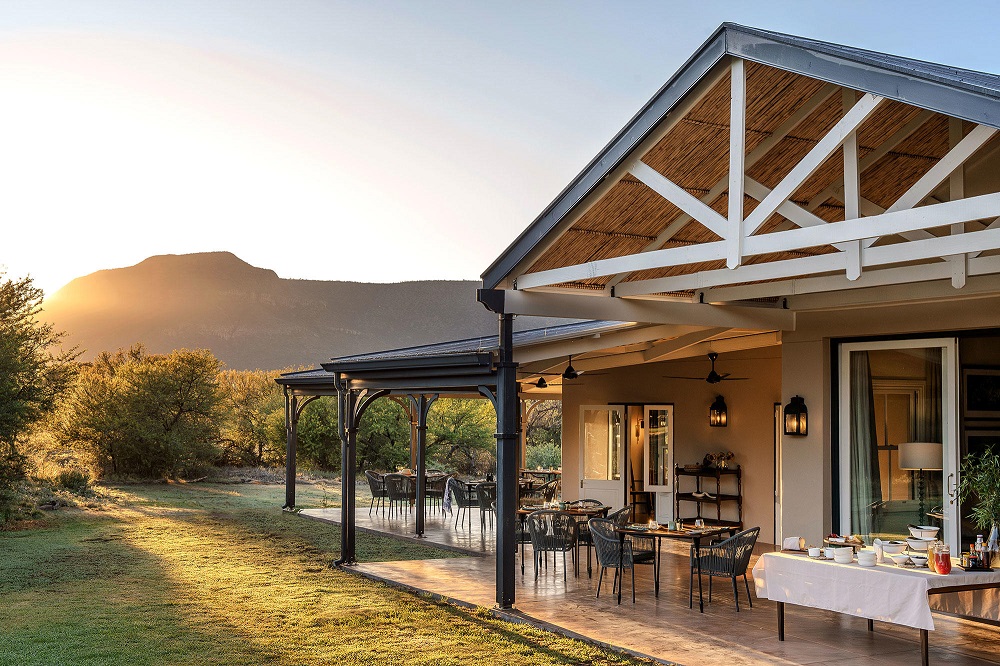
Breakfast with Samara GM Marnus Ochse

Over breakfast on the large covered stoep at Karoo Lodge with Samara’s genial General Manager Marnus Ochse, the discussion ranged from lion dynamics on the reserve (a hot topic during our stay), to Samara’s world class coffee offerings, to brown hyenas and leopards. Being an accomplished amateur photographer himself, Marnus and I had plenty of stories to share. From dropping cameras to getting lions framed with the Camdeboo Mountains in the background. 

Marnus also talked about the reserve’s core principles which broadly center around the global “4 C’s” framework (Conservation, Community, Culture and Commerce) and  Samara’s partnership with The Long Run. The bottom line: one cannot successfully run a luxury eco-tourism business or protect a landscape without actively integrating and supporting all four. 

Marnus was particularly proud of  the role of the Samara staff members, describing it as fundamental to its rewilding mission. He considers every team member – from management and guides to kitchen staff – to be equal parts of the mission. As we have noted during conversations with staff members on both our visits, everyone understands why the reserve exists and what it strives to accomplish.
In a previous blog post I wrote in some length about Samara’s history and about the Tompkins family who set this monumental conservation project in motion. Their ambitious aims for restoration of biodiversity in the Great Karoo are now a reality. Several large mammals long absent from the area, some for as many as 180 years, are now back and thriving. Wild lions, elephants, cheetahs and buffaloes once again roaming the Karoo. What’s next? If and when the reserve reaches 100,000 acres (it currently stands at 67,000 acres) one might expect to see a few African painted dogs  join the predator mix.  

Beyond the wildlife, Samara offers a consistently excellent guest experience all round. From its accommodation options (Karoo Lodge, Plains Camp and the exclusive-use Manor) to food and beverage offerings, activities and amenities. Even more so than during our first visit, the entire experience was flawless with every staff member being warm and approachable and making us  feel truly welcome. 

Samara is currently offering an attractive long-stay deal (Stay 3 nights, pay for 2) through the end of September 2026, as well as other special offers which include free commercial flights from and back to either Johannesburg or Cape Town, and inclusive of r/t road transfers from Port Elizabeth Airport to the Reserve. For more information about these or for recommendations regarding combining Samara with other South Africa safari properties such as Tswalu Kalahari or one of the Eastern Cape reserves like Kwandwe or Shamwari or Lalibela, contact Bert at bert@fisheaglesafaris.com or leave a message with our answering service at 1-800-513-5222 or 713-467-5222.

Property photo courtesy Samara Karoo

YOU MIGHT ALSO BE INTERESTED IN
Destinations
Zambia

10th September 2021

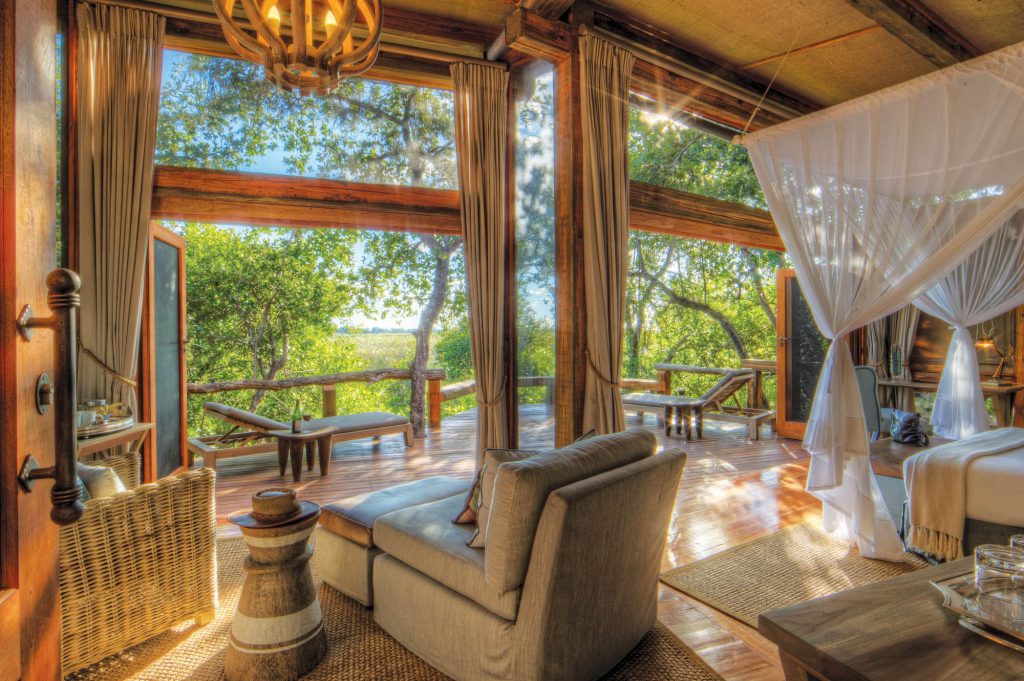
Chindeni and the Bushcamp Company, Zambia

By late July we found ourselves at Chindeni, a small Bushcamp Company property
Read more
Botswana
Destinations
Okavango Delta

3rd October 2022

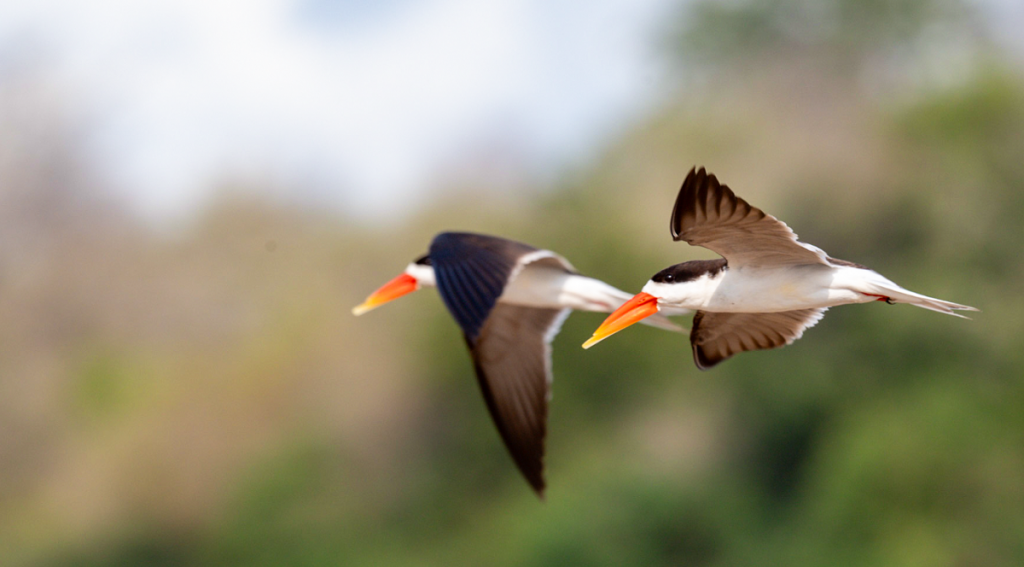
Camp Okavango, Botswana

Camp Okavango is in the heart of the permanent part of the Delta. In this idyllic setting there are no vehicles, and it is just a short walk
Read more
Area
Destinations
Nyerere National Park
Ruaha
Tanzania

14th October 2023

From My Safari Notebook: Wildlife Photography

Birds in flight and wildlife photographers have an uneasy relationship. Things go wrong as often as they go right. Getting focus-lock on a moving subject

Read more

SUBSCRIBE TO OUR NEWSLETTER

READERS FAVOURITES
Destinations
India

27th May 2023

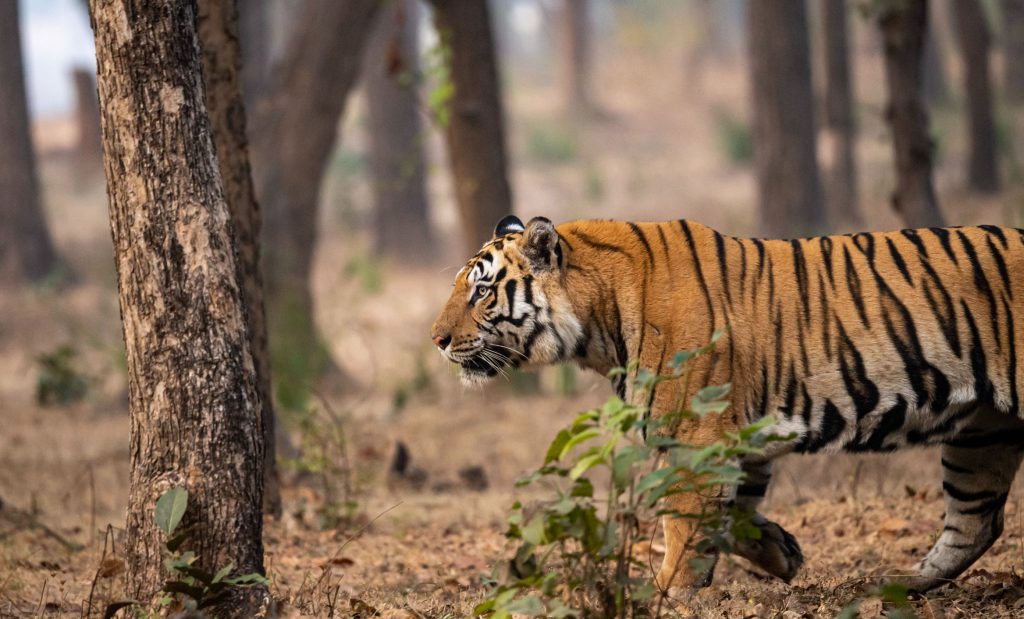
India

India’s tiger, mammals and birds.

Read more
Botswana
Destinations

4th August 2022

On Safari At Belmond Eagle Island Lodge, Okavango Delta

What is the ‘secret sauce’ for an unforgettable few days on safari in Botswana? It starts with the animals, of course. The elephants, lions, giraffes, hippos

Read more
Destinations
Zambia

10th September 2021

Chindeni and the Bushcamp Company, Zambia

By late July we found ourselves at Chindeni, a small Bushcamp Company property

Read more

Tswalu Kalahari: the Loapi Experience

29th July 2026

A Summer Winter in Africa: Part 6

Tswalu Kalahari: the Loapi experience

It was quiet in our open safari vehicle driving south out of Loapi Camp in Tswalu Kalahari on a cold morning in late June. It was also early and the four of us (guide Michaela, tracker Piet and Kathy and I) were still easing into a new day. Finishing up a mug of coffee to go, tugging on a hoodie to cut the bite of the Kalahari winter chill. Inserting a freshly charged battery in a camera.

As we drove along the red sandy track, the rising sun not quite cresting some hills on our left, our eyes adjusting to the steadily growing influx of light, we promptly fell under the spell of the Kalahari. Entranced by the soft dawn light, blue Korannaberg Mountains in the background and verdant expanse of acacia bush, sun-scorched grass and shepherd trees rippling away to the very limit of human sight. 

I think every one of us on the vehicle realized the near impossibility of being more away, more alone, more private than that. Just us and the wilderness at a perfect moment in time. Nothing and everything at the same time. 

Almost as if on cue, the fidgeting stopped. Conversation became superfluous. Nobody looked at each other. Yet we all sensed what had happened. The calmness and beauty of the surroundings had permeated our very core. Almost as if we had become one with nature. If it weren’t for the soft whining of the Landcruiser engine, the modern fabrics and our tech-laden devices, we might as well have been back in the late Pleistocene epoch some 20,000 years ago, when this part of Southern Africa transitioned from wetland to dry savanna.  

Achieving that feeling of being immersed in the environment, finding that place of peace and privacy and realizing that off-the-map experience is what we strive to include in every one of our customized Africa itineraries. To one degree or another. In a high adrenaline ‘Big Five’ wildlife setting it is not always achievable but in areas like Samara in the Great Karoo and at Tswalu in the northern Cape Kalahari, it is there, always. Waiting for you around every corner.

Wildlife at Tswalu 

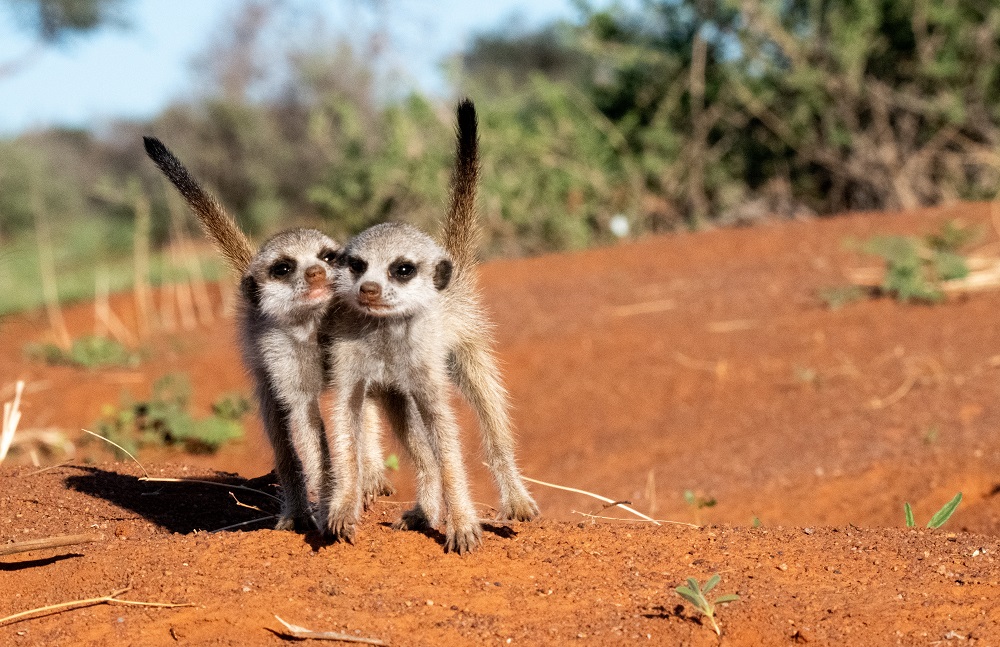
For the first 40 minutes or so on that morning drive, there was hardly an animal in sight but it did not matter. Clearly they were cold too and staying in thick cover. Then we started to see them. First giraffes, then mountain zebras, gemsbok, kudu and springbok. We were particularly thrilled to come across a non-habituated family of meerkats which stared at us from a distance in their own inimitable way, standing straight up on their hind legs. 

The previous day our afternoon game drive had started with a bang. Barely out of camp we bumped into two beautiful white rhino bulls, strutting around a salt lick,  their impressive horns perfectly intact. A major consideration nowadays with so many other South African reserves dehorning their rhinos. 

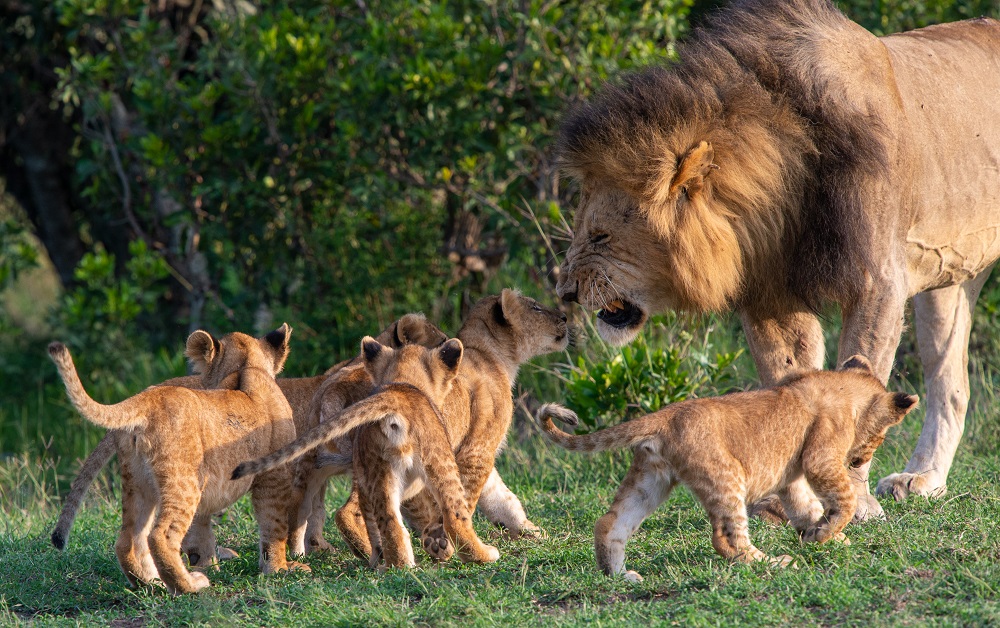
Twice during our short stay at Tswalu we came across lions. While different, the two experiences were equally fascinating and fulfilling from a wildlife viewing perspective. On the first afternoon we followed up on a pride of lions which had brought down an eland early that morning. We found all of the lions, and what was left of the eland. Not much, to be sure. Several of the lions continued feeding, either by themselves, and notably, an impressively maned male which uncharacteristically allowed a young cub to continue feeding in tandem. 

Our final morning drive delivered yet another excellent lion sighting when we followed the tracks and then eventually came across two female lions in hunting mode. They were checking the dense acacia thickets along a narrow track, poking their noses into the undergrowth to locate or flush one of the many antelopes hidden away there. Watching them walk right by our vehicle was a visual treat. Passing right by us with hardly a sidelong glance, their powerful back muscles rippled under the tawny coats. At around 4.5 years old, the two sisters were in their prime, projecting total confidence and competence. Clearly at the top of their game, each having left three cubs in a safe area while making this hunting sortie. 

Another highlight was spending some time with a female cheetah and her three sub-adult cubs. Initially lying down in the shade, they eventually got up and relocated, providing me with a brief yet useful opportunity to get a few more low level photographs. 

On previous trips to Tswalu we had also come across an aardvark, one of the property’s signature mammals. This time around they were much more difficult to find and observe, due to the rank vegetation prevalent at the time, following an exceptionally good rainy season. The same was true of black rhino.  

My best advice to future Tswalu guests is to spend a minimum of four nights there. It’s a massive reserve and to give yourself a realistic chance to find elusive species like black rhinos and largely nocturnal ones like aardvark, you will need time and patience. Due to the immense size of the reserve (118,000 hectares, equivalent to 292,000 acres) the animals at Tswalu are widely spread out. It’s not unusual for the guides to target only one signature species per outing. While it’s entirely possible to have several amazing sightings on one game drive, there are bound to be slow ones when the desired ‘signature’ sighting doesn’t materialize. Set your expectations accordingly. Fortunately all guests at Tswalu automatically get a private vehicle and guide so you can remain entirely flexible in terms of timing and duration of game drives, inclusion of night drives, a meerkat experience, horseback riding and more. 

Guiding and hospitality at Loapi

Tswalu is renowned for its consistently excellent hospitality with a high ratio of staff to guests, first class accommodation options and sophisticated food and beverage offerings. The guiding cadre is likewise top tier with a guiding stint at Tswalu being highly sought after. 

On our third visit to the property we spent a couple of nights at one of their deluxe Loapi units, essentially a mini private camp within a camp. Complete with a kitchen, coffee machine, milk frother, refrigerator, dishwasher, bar with stools, table for 4, a wet bar with wine fridge filled with wine and soft drinks, various spirits and mixers, an outdoor dining area, outdoor sala with heated splash pool, indoor and outdoor fireplace, private study with desk, living room with couch and chairs, guest toilet, separately air conditioned master bedroom with recessed daybed with window, a boomer-proof safe, two bedside tables and a chair, a bathroom with two sinks, walk-in shower and outdoor shower, and a dressing room with an ottoman, as well as a separate toilet. 

We hardly had enough time to look at, never mind experience all of these features and enhancements so I’m reluctant to be critical in any way. The one thing I would have liked to see either inside or outside the room is a standalone tub. In this setting and in a property of this quality, it seems like a no-brainer. I suspect that water conservation may have played a role in the decision to go with inside and outside showers only. 

The four one-bedroom and two two-bedroom Loapi suites each have a dedicated team of four staff members assisting guests. A professional guide and tracker team, a professional chef and an homathi (house manager). Our private chef Mathew prepared several sterling meals including a delicious oxtail and a fantastic breakfast on our day of departure. Our homathi Dries was as personable and delightful a person as one could wish to meet.  

Our Tswalu guide Michaela impressed us from the word go with her confidence and joie de vivre. She and tracker Piet made a formidable team and between them we didn’t miss a thing. Lion tracks, rhinos dragging their lower lips, ultra-distant kudus against the skyline, finding cheetahs in the thickets, the tiniest of birds – we got them all. It would not surprise us in the least to see Michaela take on a leadership role in her field. 

New developments at Tswalu 

We were fortunate to be shown around Tswalu’s original and best known lodge – the Motse – by ebullient GM Pietro Addis. At the time the Motse was just days away from reopening after a major, top-to-bottom architectural refashioning. Most graciously, despite being wanted in more than just one meeting at that very minute, Pietro focused on us to the exclusion of everything else. He gave us the insider’s view on every facet of the renovation from the state-of-the-art new workout equipment in the gym to the maps which once graced the canopy of the four poster beds. They’re gone.  

Over the preceding six months the camp’s main areas, shared outside spaces and rooms have been attractively and thoughtfully renovated and enhanced. Returning guests don’t have to worry: the Motse is still the classic safari camp which they’ve been visiting all these years. It’s just a little bit lighter all round with white tones inside and out. Some of the spaces in the main lounge and dining area have been reconfigured in a practical and we think most pleasing way. The front entrance also now works a lot better than before. Even more so than previously, the main area and the rooms harmonize beautifully with the surrounding Kalahari landscape.

Tswalu also completed a soft refurbishment of its exclusive-use Tarkuni homestead in April this year. The updates include redesigned open-plan lounge and dining areas, a new mezzanine lounge, and a refined outdoor retreat space. The five en-suite bedrooms and bathrooms were also updated with new linens, curtains, and tactile, natural materials. 

A fine dining experience at Boscia House

On our last night at Tswalu, at the conclusion of our afternoon game drive, Michaela dropped us off at a small homestead, with several prominent Boscia (shepherd’s trees) in the vicinity. Boscia House is a restored, century-old frontier farmhouse, formerly home to Michelin-starred chef Jan Hendrik van der Westhuizen’s Klein JAN dining experience. In its new, evolving iteration Boscia House is a quaint, peaceful setting for a multi-course dinner with expert local wine pairings. Dining here is a culinary adventure from start to finish. The seven-course tasting menu which we enjoyed incorporated several local ingredients, some of which are foraged, and it illustrates a deep respect for the area’s heritage foods and local culture. Tswalu’s guests get to enjoy one complimentary dinner at Boscia House during their stay, adding a unique dimension to a safari of a lifetime in the northern Cape Kalahari. 

Here are some notes about the courses in the order they were served, the wine pairing and a few photos. 

Brioche bread with marmite butter, rolled in biltong dust

This uber-South African flavor-bomb, served on a skewer in the style of a lollipop, appealed to the 7-year old small-town boy in me with the unmistakable slightly earthy, somewhat salty hint of Marmite blending beautifully with locally made butter in a brioche crumb square, rolled in fine biltong dust. Biltong being the ubiquitous South African dried meat snack. Food doesn’t get any more nostalgic than that, or more playful. The taste sensation of that single canape was worth coming all this way.   

Mopane worm and lemon butter with amagwinya 

Amagwinya (locally known as vetkoek which can be loosely translated as ‘fat cake’) is a humble South African comfort food. In many other parts of Africa, India and elsewhere similar ‘fried dough’ iterations serve as the basis of hundreds of varieties of delectable street food. On this evening at Boscia it was elevated into a mini work of art with the addition of a smear of aromatic-infused mopane worm paste and a dab of bright lemon butter. Like practically everything on the menu it was unusual, innovative and absolutely palate-pleasing.  

Spekboom gazpacho with frozen apple, melon, cucumber and goat cheese 

This highly visual, even theatrical take on a cold soup was my personal favorite of all the courses served. Mostly because of the textural variety and the totally unexpected yet exhilarating temperature contrast and interplay between the extremely thinly sliced frozen apple and melon with the other ingredients. In an ensemble with spekboom (a crisp, citrusy local succulent) and an exquisite local goat cheese, this gazpacho is the stuff of culinary dreams.  

Potato with leek, corn and mesquite bean

By this point in the meal, I was not surprised to experience the novel way in which such relatively humble ingredients – potato and corn – were transformed into a stunning mid-course dish. Again, the textural diversity was superb and the mesquite beans added a distinctly smoky, slightly sweet and nutty flavor.  

Ostrich medallions with baby corn, vanilla, saffron, cabbage 

Game meat (such as kudu, gemsbok loin or ostrich) is often the centerpiece of the main course at Boscia. The ostrich medallions on this night were perfectly seared and incredibly lean yet tender as can be. Paired with some savory cabbage it created a show-stopping main course which was satisfying and not at all heavy, as can sometimes be the case with game. 

Sago pudding with rooibos, soetkoekie and orange 

The dessert course at Boscia was a heritage-laden sago pudding; something which might have been served by one’s grandmother around a traditional coal stove in South Africa in years gone by. This particular sago pudding with cinnamon, tiny orange slices and crumbled cookie, was totally dreamy without being overly sugary or cloying. Just the right level of cinnamon and sweetness with a hint of rooibos tea, rekindling the familial warmth and kinship of the family dining table.  

Mesquite tree coffee with coconut sugar and an infused raisin.  

Kathy and I don’t habitually experiment much beyond decaf Americano and cappuccino so we had to be gently cajoled into ending the wonderful meal with a shot of mesquite tree coffee. Hearing that it was naturally caffeine-free helped. Just as well that we set our initial misgivings aside. The naturally sweet, nutty, and slightly caramelized flavors of the roasted mesquite pods were satisfyingly coffee-like while being completely new to our palate. It was served on a tiny bed of coconut sugar ‘Kalahari sand’ with an infused raisin as a faux springbok pellet, on the side. Storytelling and local culture intertwined in an entertaining and playful manner – the ideal end to our delightful dinner at Boscia House.   

The accompanying wine selection included the following:

  • Lowerland Vaalkameel 2024
  • Jan White Blend 2025
  • Koedoe Cabernet Sauvignon 2023
  • Jan Red Blend 2023
  • Die Mas Chardonnay 2023
  • Prins Ben Muratie Cape Ruby
  • Orange River Cellars Hanepoot

Planning a Tswalu Kalahari visit

We had not seen the Kalahari looking this good in a very long time. It did not come as a surprise, with as much as twice the average summer rainfall having been recorded in the northern Cape Kalahari this year. It augurs well for Tswalu for the remainder of this year and likely well into 2027, even if the next rainy season falls short of expectations. So if you want to experience the Kalahari at its best, this fall or next winter may be particularly good opportunities to head there.  

Beyond its fascinating mix of wildlife, superb accommodation, expert guiding, and as much privacy as you can imagine – and not forgetting its culinary prowess – Tswalu is also a visionary conservation project. Over the course of the past 31 years it has become the very model of ecological restoration in South Africa, protecting diverse habitats and fauna and flora, including many rare and endangered species. 

Email Bert at bert@fisheaglesafaris.com to find out more about traveling to Tswalu to experience its remarkable diversity and unique experiences and to become involved in the ongoing scientific research supported by the Oppenheimer family and Tswalu Foundation. 

Tswalu property photos provided by Tswalu.

YOU MIGHT ALSO BE INTERESTED IN

Destinations
Zambia

10th September 2021

Chindeni and the Bushcamp Company, Zambia

By late July we found ourselves at Chindeni, a small Bushcamp Company property

Read more
Botswana
Destinations
Okavango Delta

3rd October 2022

Camp Okavango, Botswana

Camp Okavango is in the heart of the permanent part of the Delta. In this idyllic setting there are no vehicles, and it is just a short walk

Read more
Area
Destinations
Nyerere National Park
Ruaha
Tanzania

14th October 2023

From My Safari Notebook: Wildlife Photography

Birds in flight and wildlife photographers have an uneasy relationship. Things go wrong as often as they go right. Getting focus-lock on a moving subject

Read more

SUBSCRIBE TO OUR NEWSLETTER

READERS FAVOURITES
Destinations
India

27th May 2023

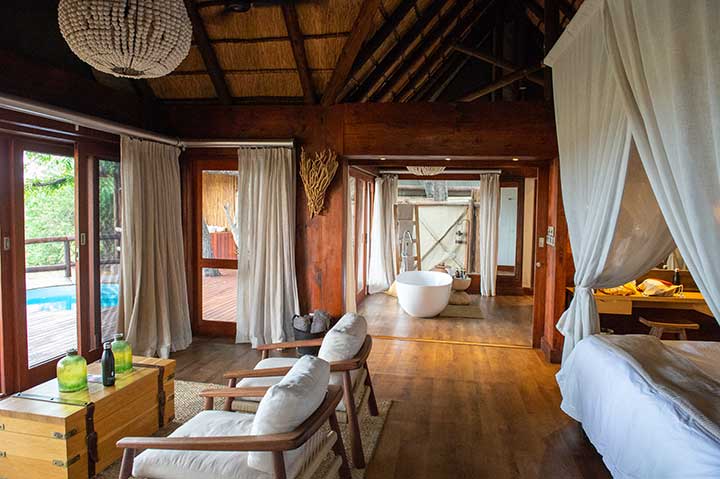
India

India’s tiger, mammals and birds.

Read more
Botswana
Destinations

4th August 2022

On Safari At Belmond Eagle Island Lodge, Okavango Delta

What is the ‘secret sauce’ for an unforgettable few days on safari in Botswana? It starts with the animals, of course. The elephants, lions, giraffes, hippos

Read more
Destinations
Zambia

10th September 2021

Chindeni and the Bushcamp Company, Zambia

By late July we found ourselves at Chindeni, a small Bushcamp Company property

Read more

Taking the Ferry to Robben Island, Cape Town

28th July 2026

A Summer Winter in Africa: Part 5

Taking the ferry to Robben Island, Cape Town

Taking a ferry from Cape Town to the Robben Island Maximum Security Complex rekindles memories – at least for South African born visitors – of a tumultuous time in the country’s history when Nelson Mandela was released from prison in February 1990. Four years later he would become South Africa’s first democratically elected leader.  

For Mr. Mandela to walk out of prison in a reconciliatory mood, having been incarcerated by the South African government for 27 years,  underscores what a remarkable man he was. His autobiography – A Long Walk to Freedom – covers his early years in a rural part of the Eastern Cape, his legal career and the long struggle against apartheid. It has fascinating yet stark, sobering details about his 18-year stay in the Robben Island Maximum Security Prison. Mandela’s memoir reads like a novel. At 700+ pages it’s quite the tome but if you’re not distracted by any movies you can read it in one sitting flying from Atlanta to Joburg. Or vice versa. 

The Robben Island excursion starts at the docks in Cape Town Harbor at the Nelson Mandela Gateway, just steps away from the Clock Tower. After a thorough security check, anywhere from 150 to 280 persons (depending on the day) board one of the two ferries operated by the Robben Island Museum. In the low season (May through August) there are usually three departures per day (9 am, 11 am and 1 pm), subject to weather conditions. In summer an additional fourth departure is added. The current price for a round trip ticket which includes a guided tour on a 52-seater bus and a guided walking tour of the Maximum Security Prison is ZAR600 or about $45 for foreign nationals. 

The 45-minute cruise from the harbor to the Robben Island jetty is worth the price of admission – if only for the stupendous views towards the city and Table Mountain in the background. So don’t forget to look back towards the city on your way out. You’ll get a second shot at taking that perfect, classic shot of Table Mountain and the city bowl – as well as Lions Head – on the way back. 

Once on the island, we were given a short briefing and then boarded three large buses for the first part of what ended up being a 2-hour tour. The bus tour route includes the graveyard of people who died from leprosy, the lime quarry, Robert Sobukwe’s house, the bluestone quarry, the army and navy bunkers and the Maximum Security Prison. At each stop the tour guide provided brief background information.  

With the exception of a 10-minute stop to buy some drinks or snacks and to use the restroom, there are no opportunities to disembark from the bus during the first part of the tour. While photography is allowed, it is awkward if not downright impossible to get more than a few snapshots during the bus ride. 

Every seat on the bus, which has a 2-3 seating layout, was taken. If you want to give yourself at least half a chance to take a few photographs, shoot for a window seat on either side. 

The visit to Robben Island culminates with a look at the tiny cell where Mandela spent 18 years essentially in isolation. There he secretly wrote – mostly late at night – several chapters of his autobiography, A Long Walk to Freedom. Edited with the help of fellow political prisoners like Walter Sisulu and Ahmed Kathrada, the manuscript was buried in the prison garden, wrapped in plastic, until it was eventually smuggled out of the facility. 

The second part of the tour – which is also the most interesting – is guided and narrated by a former inmate of Robben Island. In our instance someone who had spent six years there, having been convicted of sabotage. Which – as he told us – took the form of arson. He and a few of his friends thought it would be a good idea to torch their neighborhood rent collection office, thus destroying all records of who owed what. 

Unfortunately the guide had to essentially shout out the sometimes fascinating information he was trying to impart, due to the unwieldy group size of at least 50 persons. I can’t help but think that the entire Robben Island experience would be much better and more meaningful if the group sizes could be reduced.

Being inside one of the erstwhile prison’s large, depressingly institutional cell blocks, was the closest I personally came to imagining what the experience might have been like in real life. Yet it was a fleeting moment, the size of the crowd obliterating any possibility of proper interaction with the guide. An opportunity missed.  

The ferry trip back to the harbor was a little more adventurous with the ocean swell having increased to about two meters by then. There was an occasional squeal from a few youngsters (a French-speaking school group) but fortunately no one was affected too badly. The approximately 11 km (7 mile) trip back took just about 45 minutes and the total elapsed time for the entire excursion ended up being just shy of 4.5 hours. 

Public or private visit?

A visit to Robben Island is of course not about the bricks and mortar, the ferry ride itself, or the temperature on the day. Just like a visit to the Genocide Museum in Kigali, it is meant to be a reality check. A statement about a time when, and a place where, the human rights and political ambitions of thousands – even millions – of people were officially trampled and willfully oppressed. At great moral and material cost to both perpetrators and victims. And with sometimes horrific consequences including tragic loss of life and limb, banishment and imprisonment under unnecessarily harsh conditions. 

Seen from that perspective some visitors will no doubt overlook some of the glaring shortcomings of the public tour, as it currently unfolds. 

Our view is that guests should rather book a private tour of Robben Island. You will board the regular ferry (accompanied by your Cape Town guide), do the crossing, and will then be met on the island by a private vehicle and guide who will do the tour with you. At the end of the tour it’s back to Cape Town on the scheduled ferry. The cost will be considerably higher, in the region of $300 per person, but it will be a meaningful and memorable experience. There will be ample opportunities for one-on-one interaction with your knowledgeable Robben Island guides and for proper photographs to commemorate the experience. 

A few practical hints 

  • Book early. Particularly during the South African summer months and over the year-end holiday season, tickets sell out well in advance.  
  • At the Nelson Mandela Museum boarding point (close to the clock tower) you’ll need to produce a photo ID and your digital ticket for scanning. 
  • Cape Town weather is unpredictable so always pack a water resistant jacket. Maximum temperatures hover around mid 50’s to low 60’s F in winter. There’s bound to be a wind chill effect.  
  • Upper deck seating on the ferry has better views (and no windows) so make your way up there and – if they’re not wet from rain – select a seat closest to the railings for the best unobstructed views. 
  • The ocean swell of just less than 2 meters which we experienced is about average for the Cape Town waters. It can get worse. So if you’re prone to seasickness take your Dramamine in good time.  
  • The restrooms on the ferry (downstairs) are perfectly fine as are the ones close to the jetty, once you arrive on the island. It is probably best to schedule a pit stop prior to boarding the 45-minute bus ride. Reason being that the restroom stop which is scheduled towards the end of the bus ride is brief and both the men’s and women’s facilities each have just two stalls.

Bert can answer any questions you may have about visiting Robben Island. Please call our office at 713-467-5222 or 1-800-513-5222 and leave a message or email Bert at bert@fisheaglesafaris.com for more information.

YOU MIGHT ALSO BE INTERESTED IN

Destinations
Zambia

10th September 2021

Chindeni and the Bushcamp Company, Zambia

By late July we found ourselves at Chindeni, a small Bushcamp Company property

Read more
Botswana
Destinations
Okavango Delta

3rd October 2022

Camp Okavango, Botswana

Camp Okavango is in the heart of the permanent part of the Delta. In this idyllic setting there are no vehicles, and it is just a short walk

Read more
Area
Destinations
Nyerere National Park
Ruaha
Tanzania

14th October 2023

From My Safari Notebook: Wildlife Photography

Birds in flight and wildlife photographers have an uneasy relationship. Things go wrong as often as they go right. Getting focus-lock on a moving subject

Read more

SUBSCRIBE TO OUR NEWSLETTER

READERS FAVOURITES

Destinations
India

27th May 2023

India

India’s tiger, mammals and birds.

Read more
Botswana
Destinations

4th August 2022

On Safari At Belmond Eagle Island Lodge, Okavango Delta

What is the ‘secret sauce’ for an unforgettable few days on safari in Botswana? It starts with the animals, of course. The elephants, lions, giraffes, hippos

Read more
Destinations
Zambia

10th September 2021

Chindeni and the Bushcamp Company, Zambia

By late July we found ourselves at Chindeni, a small Bushcamp Company property

Read more

East or Southern Africa: your choice

8th February 2026

East or Southern Africa:  your choice

Choosing between East and Southern Africa for a safari is hardly ever an open and shut case, or a definitive ‘yes or no’ for one or the other. Time of the year is the best place to start. The best time for a southern Africa trip is from about April-May through September. From October onwards it can get uncomfortably hot in countries like Botswana and Zimbabwe, and the summer rains (what there is of it) start to fall around November onwards, peaking in Jan/Feb/March. 

On the topic of high temperatures, fortunately more and more Botswana, Zimbabwe and Zambia operators are beginning to acknowledge that heat is an issue and are installing eco-friendly ‘Evening Breeze’ evaporative coolers which cool down tent interiors to the point where guests can look forward to a good night’s sleep.

Likewise for East Africa (Kenya & Tanzania), the best time to travel is from June through October (roughly speaking the migration months), with the long rains falling from March through May and the short rains in November. January and February are also worth considering as they are both relatively dry months with a lot less visitor traffic than during the traditional migration season. January and February are also the best months for visiting the southern Serengeti in Tanzania, where the wildebeest herds are congregated for the calving season. In my opinion, this is one of the best times of any to visit Tanzania, combining the central and southern Serengeti.  

The choice between traveling to East Africa versus Southern Africa often comes down to the responses to a few of these questions:  

Wildebeest migration, yes or no?

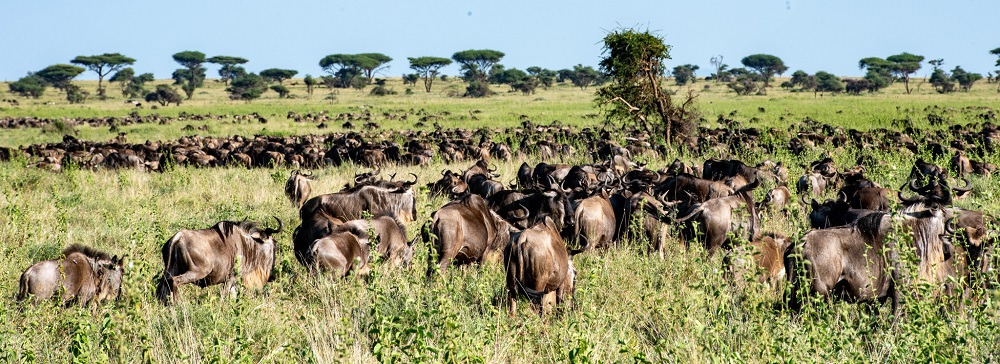
If you definitely want to witness or at least put yourself in an ideal spot for the annual zebra and wildebeest migration, then Tanzania’s northern Serengeti or Kenya’s Masai Mara are the best bets, from about July through October. That being said, we are not huge fans of the traditional high season ‘migration madness’ which often results in overcrowded conditions in the northern Serengeti and parts of the Masai Mara. A much better option is to travel to Tanzania in February-March, when the wildebeest herds are massed together in the southern Serengeti’s short grass plains in the greater Ndutu area for the calving season. Not nearly as many other vehicles around as in the north during the migration season, and awesome game viewing with the mixed herds of zebras and wildebeest often massing together and providing spectacular photographic opportunities. Predators are as active as they can be and it is not unusual at all to see more than one cat in a tree (both lions and leopards) on a single game drive.  

First safari?

If yes then my top suggestions are Kenya or South Africa. Simply because both of these countries have so much diversity of wildlife, scenery, activities and cultural experiences. Also, the tourism infrastructure in Kenya and South Africa are second to none. There are easy flight or road connections to just about every major area. Primarily though, it is about the abundance of wildlife in areas such as the greater Kruger Park in South Africa and the Masai Mara in Kenya. On a 10-day safari in Kenya you will see as many as 40+ different species of mammals, including the ‘Big Five’ – and in several places there it is not unusual to see as many as six or seven different large mammals at the same time. In South Africa various private game reserves like the Sabi Sands and Timbavati are renowned for their big cat sightings – notably leopards – and they are likewise Big Five destinations. Which means that over the course of a 3-night stay you are likely to see lions, leopards, buffalos, elephants and rhinos. Together with the other signature African plains game species like giraffes, zebra, various antelope and others. 

Active safari?

If yes then Southern Africa is the best choice as it has a much wider range of ‘out of the vehicle’ activities compared with most of East Africa. These range from walking to hiking and even canoeing and horseback riding just to name a few. Nothing beats a Zimbabwean ‘full pro’ guide pulling over the vehicle mid game drive to take you on foot and up close to some of these large mammals. Something like this happens organically in areas like Hwange National Park or in the Mana Pools all the time. Likewise in Zambia where the concept of ‘foot safaris’ first took hold and was popularized. This doesn’t imply that there are no active safari options in East Africa. Incorporating them into an East Africa trip just takes a bit more forethought and planning and they are rarely spontaneous events. 

Interaction with primates?

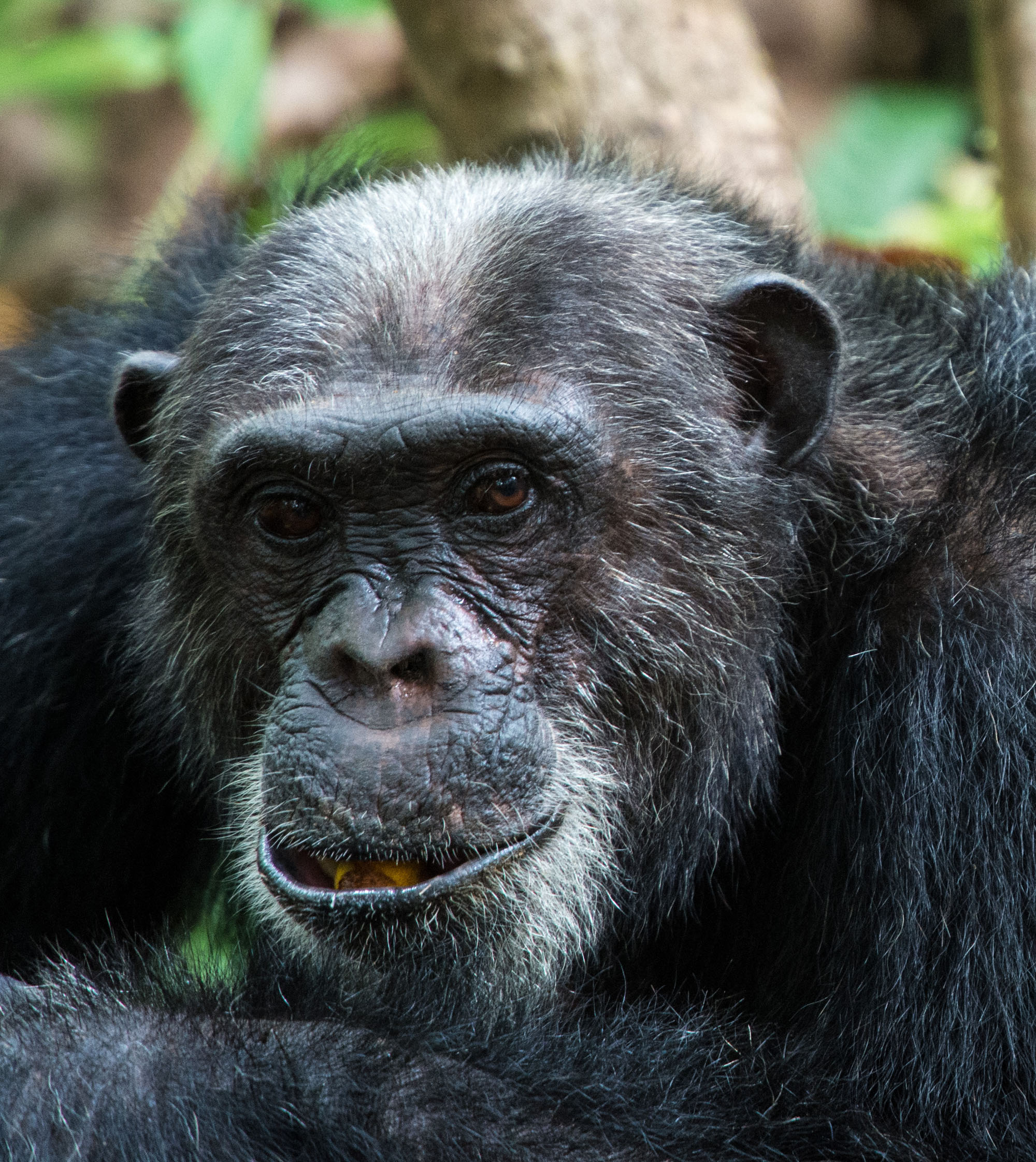
If you want to see gorillas and chimpanzees then Rwanda and Uganda are the ticket and a visit to either of these countries can quite easily combine with a more traditional East African safari. For a ‘primate specific’ trip Uganda is head and shoulders the best single destination, as visitors can combine chimp treks in Kibale with gorilla trekking in Bwindi Impenetrable Park. Over the years, we have personally observed the Kibale chimpanzee experience improve from being a ‘hit and miss’ event to now being much more reliable. We are hearing the same thing from other tour operators. 

A dark horse for chimpanzees is Greystoke Mahale Camp in the remote Mahale Mountains National Park in western Tanzania. The Mahale Mountains chimpanzees have been studied by Japanese scientists for more than 50 years now and a visit to Greystoke opens up an entire new world of chimpanzee behavior to guests. Some of it is simply astonishing, such as the fact that a propensity towards ‘evil,’ as we would describe it, seems to be an inborn trait in some of the chimps. Not learned behavior. We’re talking lethal aggression, murder, infanticide and gang-warfare. The fact that Greystoke Camp sits right on one of Africa’s most amazing lakes – Lake Tanganyika – adds another entire dimension to a trip to that spot. Greystoke and the Mahale Mountains can and should ideally be combined with a few days at another western Tanzania park – Katavi – for wildlife viewing. In the dry season it is superb and the wildlife sightings there can reach epic levels, such as when hundreds of hippos are jammed together in relatively small muddy pools, awaiting the first rains.  

If you’re considering either Southern or East Africa and are having a hard time deciding which it should be, by all means give us a call and leave a message with our service any time – you will get a call back. 713-467-5222 or 1-800-513-5222. Or contact Jason by email at jason@fisheaglesafaris.com.  

YOU MIGHT ALSO BE INTERESTED IN

Destinations
Zambia

10th September 2021

Chindeni and the Bushcamp Company, Zambia

By late July we found ourselves at Chindeni, a small Bushcamp Company property

Read more
Botswana
Destinations
Okavango Delta

3rd October 2022

Camp Okavango, Botswana

Camp Okavango is in the heart of the permanent part of the Delta. In this idyllic setting there are no vehicles, and it is just a short walk

Read more
Area
Destinations
Nyerere National Park
Ruaha
Tanzania

14th October 2023

From My Safari Notebook: Wildlife Photography

Birds in flight and wildlife photographers have an uneasy relationship. Things go wrong as often as they go right. Getting focus-lock on a moving subject

Read more

SUBSCRIBE TO OUR NEWSLETTER

READERS FAVOURITES

Destinations
India

27th May 2023

India

India’s tiger, mammals and birds.

Read more
Botswana
Destinations

4th August 2022

On Safari At Belmond Eagle Island Lodge, Okavango Delta

What is the ‘secret sauce’ for an unforgettable few days on safari in Botswana? It starts with the animals, of course. The elephants, lions, giraffes, hippos

Read more
Destinations
Zambia

10th September 2021

Chindeni and the Bushcamp Company, Zambia

By late July we found ourselves at Chindeni, a small Bushcamp Company property

Read more

A Classic Combo: Cape Town, Kruger Park and Victoria Falls

7th February 2026

A Classic Combo: Cape Town, Kruger Park and Victoria Falls

There’s more than one way to combine South Africa’s Cape Town and greater Kruger Park area and Victoria Falls (Zimbabwe or Zambia) in one trip. It’s usually a good idea to start in Cape Town – a perfect spot to get over jet lag and adjust to the new time zone before heading further north – but not always. If your Africa trip starts in August – for example – your best bet would be to spend some time on safari in the greater Kruger park area first. Next up? A couple of nights in Vic Falls with hopefully a few extra days on safari in Hwange in Zimbabwe (simply awesome elephant sightings in a reserve which has 45,000-plus of these fascinating behemoths), or in Zambia or northern Botswana’s Chobe or Okavango Delta. Then – and only then – by early September, set your sights on South Africa’s “Mother City,” Cape Town. 

Cape Town in winter

The wild card in this trip is always Cape Town and for one reason only: weather. The southwestern Cape Province (unlike all of the southern African interior all the way up to Victoria Falls and beyond) has a winter rainfall climate. Which is great for the wine grapes but not for the unsuspecting traveler waking up to gale force winds. It’s not always that bad but intermittent rain, cold and wind are par for the course in June, July and August. Call it Cape Town’s dirty little secret or just a quirk of geography – but beware of the tour operator who doesn’t mention this mixed in with all the usual Cape Town superlatives. 

Successfully integrating Cape Town and Victoria Falls into a Southern Africa trip is tricky but possible. The two best months for it are undoubtedly May and September. Before or after the often miserable Cape winter months. 

Which means that the safari portion of the trip is best planned for the August-September timeframe. Late in the dry season and before the worst heat sets in from mid-September through October and November, with the bulk of the interior rainy weather happening from December through March. 

August-September or May?

August and September are peak season safari months from a pricing perspective, so you will end up paying a good 20% or more compared with traveling in May. Which might just make the month of May the single best month to include Victoria Falls and Cape Town, with some time spent on safari. To make the most of a May trip,  start in Cape Town where you’ll have a good shot at some decent weather to perhaps hike to the summit of Table Mountain on a nice day (ask us about that), with some of the best views in Africa yours for the taking. Even if you do cheat a bit and use the cable car up and down. 

Another plus for May? The Zambezi is still in high flow stage in May, making the view of the Falls from the Zimbabwe side an incredible spectacle. With enough foam and spray to add lots of drama and romance. Sometimes so much foam and spray that a short 15-minute flight over the Falls becomes just short of a necessity to get any idea of the true grandeur of the entire Falls environment.

Northern Botswana in May from a safari point of view has many pluses and few negatives. Not quite as many travelers as in July, August and September, lower prices, and yet the crown jewel of Botswana – the Okavango Delta – just short of its best. With the annual flood already pushing deep into the central and eastern part of the Delta you will be able to see its glistening tentacles reach into far flung depressions and seasonal flood plains. 

The game viewing in May is likewise generally good to excellent with the animals in good condition with plenty of food available. Photographic conditions are excellent with plenty of pleasing green backgrounds to be found everywhere.

It becomes a matter of picking the right properties for that time of the year and of course that’s where we come in. We’ve traveled to pretty much every property worth considering in various seasons and we keep going back. We also have supremely knowledgeable local partners who go to great lengths to help us pick the perfect combination of camps for a specific set of guests. No cookie cutter proposals or itineraries, ever. 

Really the only downside in May is the chance of having some dense vegetation and tall grass in a few areas, depending on the timing of the last substantial rain, prior to one’s visit. There are lots of areas which are good year-round so it is not of overriding importance. It just means that later in the season visibility is better everywhere and more animals are drawn to remaining sources of water.

For specific camp recommendations and combinations for a May or September trip to Southern Africa – or any other time for that matter – feel free to reach out to one of our team members by leaving a message with our answering service at 800-513-5222 or emailing bert@fisheaglesafaris.com.  

YOU MIGHT ALSO BE INTERESTED IN

Destinations
Zambia

10th September 2021

Chindeni and the Bushcamp Company, Zambia

By late July we found ourselves at Chindeni, a small Bushcamp Company property

Read more
Botswana
Destinations
Okavango Delta

3rd October 2022

Camp Okavango, Botswana

Camp Okavango is in the heart of the permanent part of the Delta. In this idyllic setting there are no vehicles, and it is just a short walk

Read more
Area
Destinations
Nyerere National Park
Ruaha
Tanzania

14th October 2023

From My Safari Notebook: Wildlife Photography

Birds in flight and wildlife photographers have an uneasy relationship. Things go wrong as often as they go right. Getting focus-lock on a moving subject

Read more

SUBSCRIBE TO OUR NEWSLETTER

READERS FAVOURITES

Destinations
India

27th May 2023

India

India’s tiger, mammals and birds.

Read more
Botswana
Destinations

4th August 2022

On Safari At Belmond Eagle Island Lodge, Okavango Delta

What is the ‘secret sauce’ for an unforgettable few days on safari in Botswana? It starts with the animals, of course. The elephants, lions, giraffes, hippos

Read more
Destinations
Zambia

10th September 2021

Chindeni and the Bushcamp Company, Zambia

By late July we found ourselves at Chindeni, a small Bushcamp Company property

Read more

South Africa Trip Experiences: Katie & Jason

3rd November 2025

South Africa Trip Experiences: Katie & Jason

Fish Eagle Safaris Katie and Jason visited South Africa in the summer to spend some time with family (primarily for their son Kai to meet his great-grandmother Lida) and for Katie to experience her first safari. Here are their impressions.

Walker’s Plains Camp – The right mix

By Jason Duplessis

In 2025, Fish Eagle Safaris sent quite a few guests into the Timbavati area, a massive private reserve adjacent to the central portion of Kruger Park, with no fences between the park and the reserve. A good number of Fish Eagle Safaris clients visited Walker’s Plains Camp and the feedback has been excellent. Over the course of a short visit at the property, Katie and I learned why it has been such a successful property and it has reiterated to us what is really important to our clients.

From the moment we arrived we were welcomed with smiling faces and an amazing view over the plain at the back of the property. Overlooking a small pool, there are a few different locations where small groups can relax during the day and view wildlife that comes to the waterhole about 100 yards away from camp. The property has a low electric fence which keeps dangerous animals out and allows safe passage between the main area and your room – even at night. This allows the camp staff an opportunity to not have to stay up as late as the last guest in camp.

We were shown to our room which happened to be the family unit at the end of the property, not too far from the main area. The rooms were large, clean and comfortable with all of the amenities that you might need including a minibar and a bottle of wine or two. The rooms had a similar view over the waterhole with large sliding glass doors. We kept ours shut as it was still quite cold in the mornings and evenings, but in warmer months I could see myself stargazing on the patio in the evening.

All of these things are great, of course, but they’re somewhat standard in the safari world. Comfortable rooms and friendly staff are a vital part of the right mix that goes into a successful safari property. Over many years now, we’ve found that one of the key parts of that mix comes from having a great guide or guide/tracker team. Which was exactly how it turned out with our guide Millie and tracker Walter. They seemed to work together like peas and carrots. Millie would be sharing some information with the guests and without as much as a sound she would know that Walter had spotted something. A little bit of humor, a lot of kindness and a ton of knowledge. We really felt like we were in the right hands at Walker’s Plains Camp.

So if you’re looking for a surprisingly well priced safari in one of South Africa’s best safari areas, you really can’t go wrong with Walker’s Plains Camp. And if you’re interested in combining this property with one of many other such places with the right mix of hospitality, comfort and great guiding, let us know and we’ll put together the right trip for you.  

For more information about a South Africa trip incorporating Walker’s Plains Camp, please contact Jason at jason@fisheaglesafaris.com or leave a message with our answering service at 1-800-513-5222.

Property photos courtesy Walker’s Plains Camp

YOU MIGHT ALSO BE INTERESTED IN

Destinations
Zambia

10th September 2021

Chindeni and the Bushcamp Company, Zambia

By late July we found ourselves at Chindeni, a small Bushcamp Company property

Read more
Botswana
Destinations
Okavango Delta

3rd October 2022

Camp Okavango, Botswana

Camp Okavango is in the heart of the permanent part of the Delta. In this idyllic setting there are no vehicles, and it is just a short walk

Read more
Area
Destinations
Nyerere National Park
Ruaha
Tanzania

14th October 2023

From My Safari Notebook: Wildlife Photography

Birds in flight and wildlife photographers have an uneasy relationship. Things go wrong as often as they go right. Getting focus-lock on a moving subject

Read more

SUBSCRIBE TO OUR NEWSLETTER

READERS FAVOURITES

Destinations
India

27th May 2023

India

India’s tiger, mammals and birds.

Read more
Botswana
Destinations

4th August 2022

On Safari At Belmond Eagle Island Lodge, Okavango Delta

What is the ‘secret sauce’ for an unforgettable few days on safari in Botswana? It starts with the animals, of course. The elephants, lions, giraffes, hippos

Read more
Destinations
Zambia

10th September 2021

Chindeni and the Bushcamp Company, Zambia

By late July we found ourselves at Chindeni, a small Bushcamp Company property

Read more
  • Page 1
  • Page 2
  • Page 3
  • Interim pages omitted …
  • Page 8
  • Go to Next Page »

Footer

Design

  • About
  • Destinations
  • Blogs
  • FAQS
  • Team
  • Contact
All Rights Reserved ©Fish Eagle Safaris 2022 | Terms & Conditions | Privacy Policy
Designed & Developed by B Online

SUBSCRIBE TO OUR NEWSLETTER

SIGN-UP TO OUR NEWSLETTER

Subscribe Form

Footer Widget Header

Related Blogs