• Skip to primary navigation
  • Skip to main content
  • Skip to footer

Fish Eagle Safaris

Fish Eagle safaris

Contact

Logo
  • About
  • Destinations
  • Blogs
  • Newsletter
  • FAQS
  • Team
  • search
  • Contact
  • About
  • Destinations
  • Blogs
  • FAQS
  • Team
  • Contact

Destinations

Returning to Tanzania’s Serengeti National Park and Kenya’s Masai Mara – May 2024

23rd June 2024

Returning to Tanzania’s Serengeti National Park and Kenya’s Masai Mara – May 2024

In more than 30 years of regular visits to East Africa, Kathy and I had never seen it as wet as this last May. To say that it was exceptionally wet is an understatement. Every game drive was sloppy, every off-road excursion an adventure. Leading to a few tense moments when the 4-wheel drive vehicles (mostly Toyota Landcruisers but also a Landrover on one transfer drive) were pushed to the limit of their ability to negotiate unbelievably difficult terrain. The guides came through with flying colors and we only got stuck properly once. For maybe 20 minutes or so. No big deal.  

Beyond affecting our views of smaller mammals and cats like serval, leopards and cheetahs, the resulting tall grass and dense vegetation everywhere delayed the annual wildebeest migration by a month or so. If you’re a wildebeest, why would you leave one place for another if there’s still plenty of what you need in the way of vegetation and water right where you are. 

The high grass made game viewing super challenging. To the point that we didn’t have good views of any cheetahs in the Serengeti (so unusual!) and likewise leopards. On a couple of the game drives in the central Seronera area I hardly took my cameras out of the bag – never a good sign. All this of course will play into future decisions as to the best timing for visiting specific areas.  

Our experience at three of the four properties which we visited in the Serengeti was negatively impacted by  the presence of just too many tsetse flies. More than just once, we got hammered coming and going into and out of camp and on a few occasions, even  right inside the camp grounds. To the point where the usual enjoyment and fun associated with game drives were negatively affected by the tsetse fly threat.  

We will be paying close attention to this issue in order to provide prospective travelers with the right advice and guidance. The extraordinary long and heavy rainy season this year resulted in many areas having stagnant water which creates favorable conditions for tsetse fly breeding. Usually, when TANAPA (Tanzania Park Authority) conducts controlled burning of certain areas in the Serengeti, they eradicate a huge number of the tsetse flies in the process. Due to the much longer than usual duration of the long rains this year, there was no burning and the results are evident. Lots of thickets and overgrown grass and bushes – and plenty of tsetse flies.

The tsetses are not as much of an issue in the southern Serengeti; at least they weren’t the last time we were there, in February 2023. So we will continue to recommend to prospective travelers to travel there (short-grass plains in the Ndutu area) for the calving season and to combine their stay with a few days in the Seronera area. Where we will be  using properties where we know tsetse flies won’t be an issue. Likewise, there are usually a few pockets of dense forests in the northern Serengeti in the Kogatende area and elsewhere, where a few tsetse flies can be expected. Nothing that can’t be managed with a bit of caution and by wearing long sleeved shirts and protecting your ankles with long, thick socks and tucking in the trousers.

Getting there

Getting to Kilimanjaro Airport for the start of our Tanzania trip was not routine this time around. Anything but. It started on a catastrophic note when an inept airport employee at JFK crashed a jetway into the engine of our Kenya Airways Boeing 787 Dreamliner. Which, needless to say, caused an immediate cancellation of the flight. I won’t bore you with the details but this resulted in an arduous trip on Ethiopian Air via Abidjan, Addis Ababa and Nairobi. Where we arrived at one in the morning instead of 10 am the previous day. On a plus note, when we eventually made it to Tanzania on Monday May 13, we were first in the immigration line and we completed the process in less than 15 minutes, start to finish. A reminder: take your boarding pass with you when leaving your plane at JRO Airport; you will be asked for it upon entering the terminal building. 

Hamerkop House, Arusha

We enjoyed a peaceful overnight stay – much needed after the ordeal of getting there – at Lemala’s Hamerkop House, on the outskirts of Arusha. The property is clearly well run, with a great staff, and the food was excellent. The chef got it exactly right for me:  ugali and two sides. Those being beans in a coconut-based sauce (Maharagwe) and the local version of spinach with some onions. The road to get to Hamerkop House was not the best. Clearly, the property will be a good option for  guests who can fly out of the nearby Dolly airstrip the following morning, directly to the Serengeti.

Serengeti Safari Camp, Grumeti

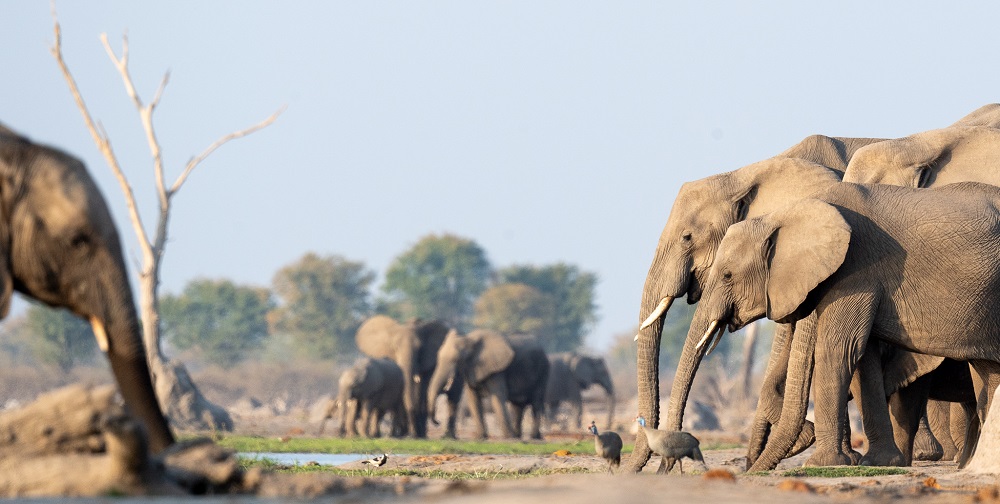
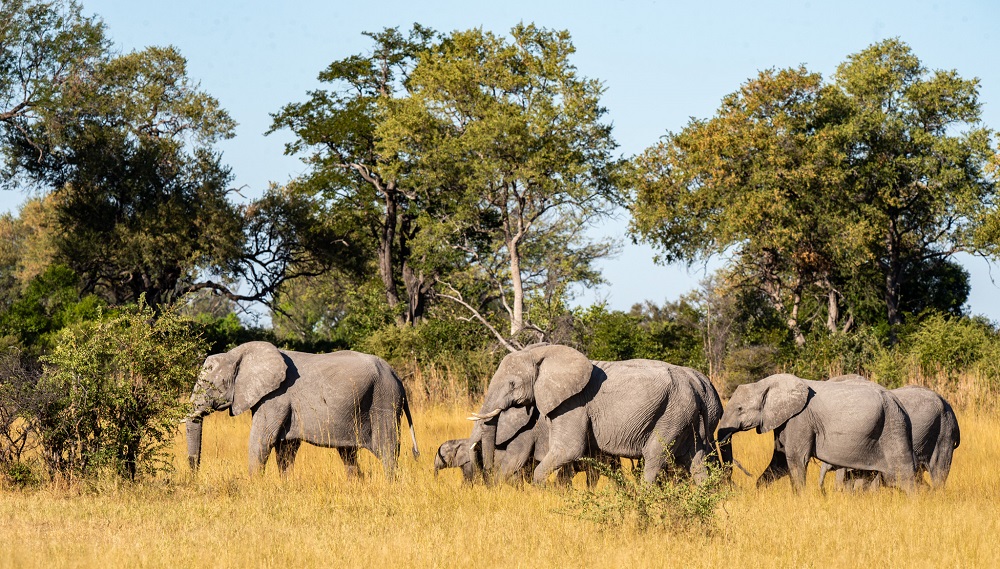
It took just about 50 minutes in a Cessna Caravan to fly from Arusha to Seronera with brief stops at Kilimanjaro Airport and at Lake Manyara. As before, it was exciting to take off from Lake Manyara with the earth literally dropping away precipitously as the aircraft reached the edge of the Rift Valley wall. Approaching the Seronera airstrip it was clear that the migration was not around – yet. Even so, the long road transfer to Nomad’s Serengeti Safari Camp delivered some surprisingly good game viewing under challenging conditions. Some of the highlights were lions in a tree, several breeding herds of elephants and large herds of zebra and other plains game.  

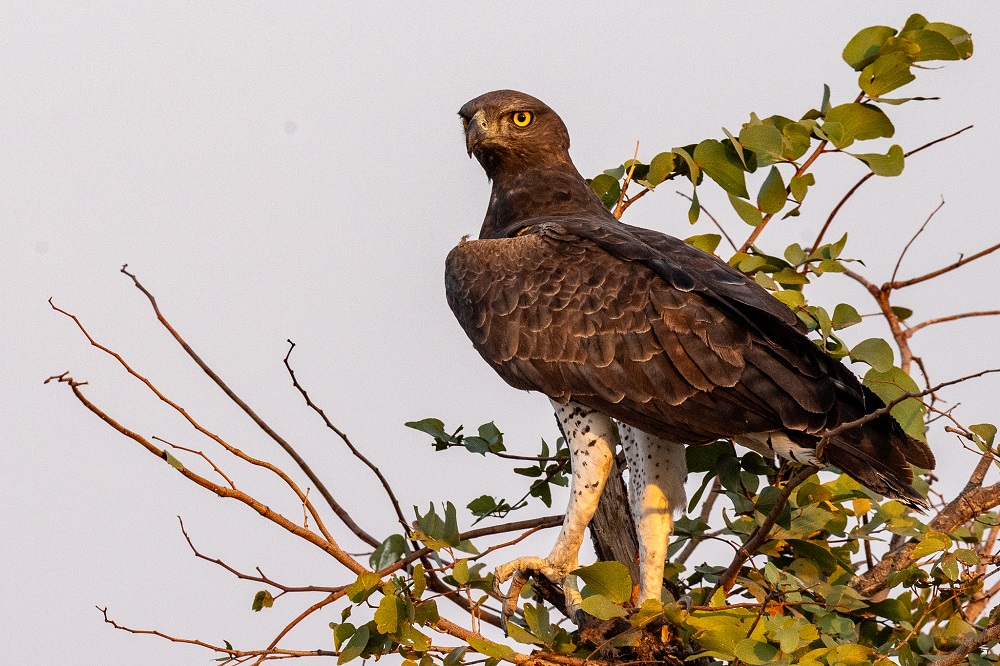
One thing which we noticed almost immediately at Serengeti Safari Camp: the quality and variety of the food and its presentation have improved markedly since the last time. Our Nomad guide Amos Noah was top-notch and did all the right things. Of the four guides we had in the Serengeti, he was also the only one who knew all the birds. So high marks on that.  

On our full day in the area, we headed across the Grumeti River towards the Grumeti Reserve. The area was about as spectacular as it gets anywhere in Africa. Rolling hills in so many shades of green. Trees silhouetted against the skyline. Vast open plains, endless vistas. Misty blue hills on the horizon.    

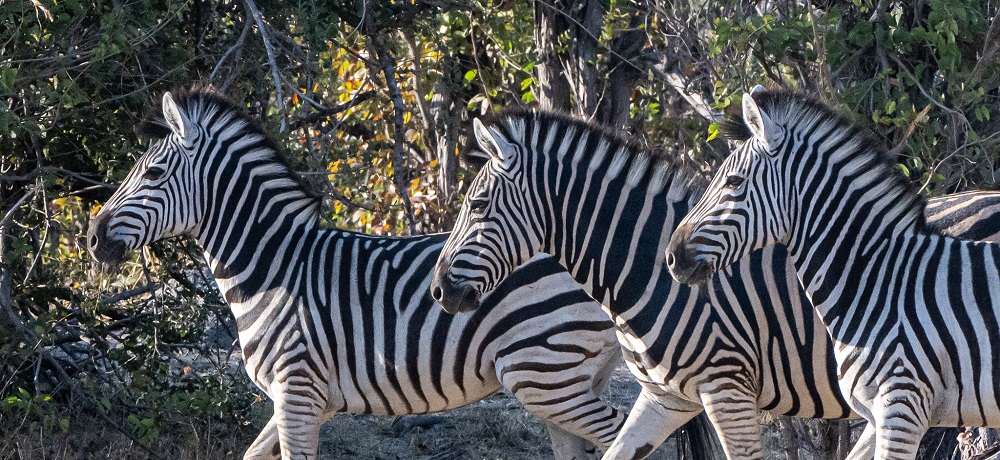
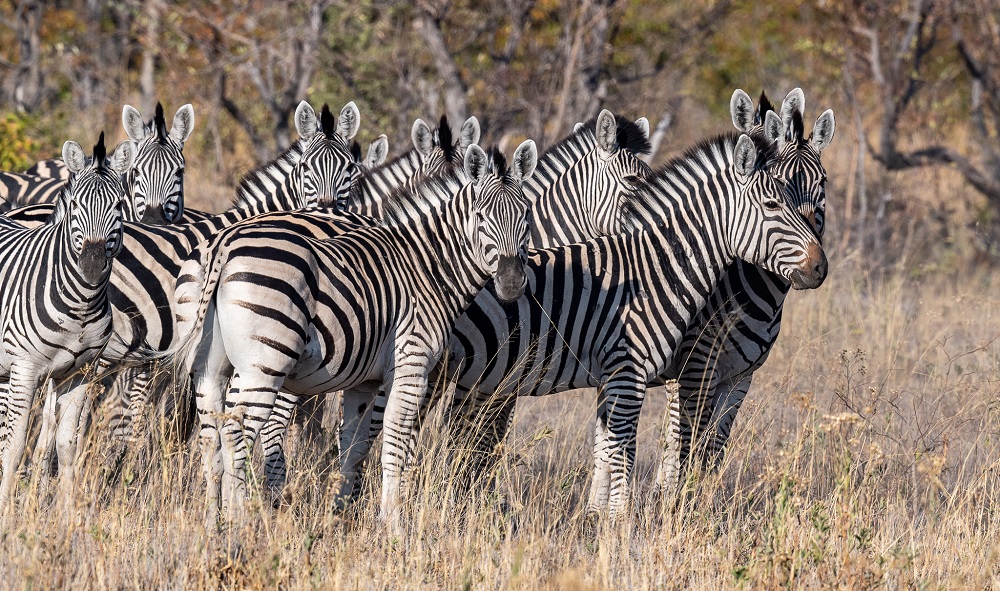
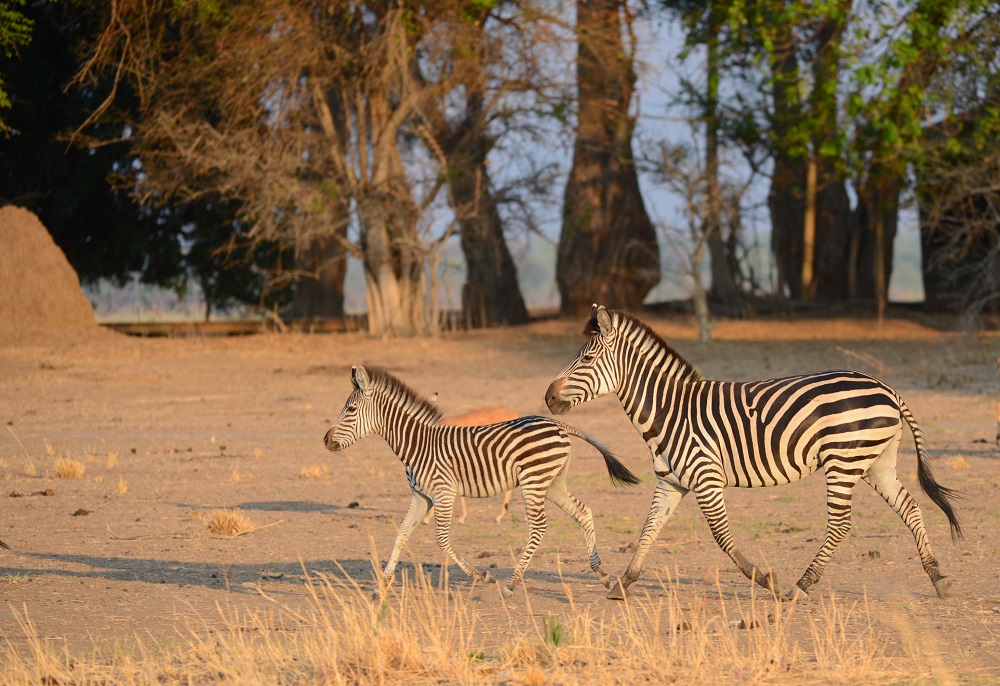
Just when you think you’ve seen pretty much everything in Africa, a morning outing in a new or unfamiliar setting will blow your socks off. As it did to us on this Tuesday morning in the Serengeti. Quite early this morning,  not far from Legendary’s Mila Tented Camp, we saw a migrating herd of at least 5,000 zebras slowly winding their way from our left to our right. Moving slowly and ever so quietly, lines of these dazzling black and white equines were making their way across the open plains, pausing to eat as they moved. It was mesmerizing to see so many of these sleek mammals following each other in a controlled but irregular manner, with groups lagging behind and others splintering off. Clearly, they were on the move. Zebras are often the harbingers of the great wildebeest migration, which we were to bump into a day or two later, a bit further south and east.

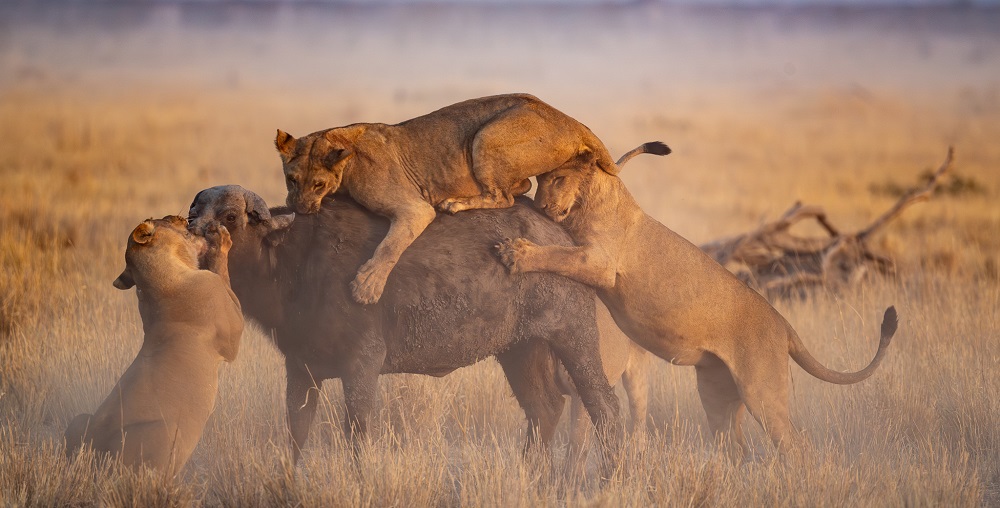
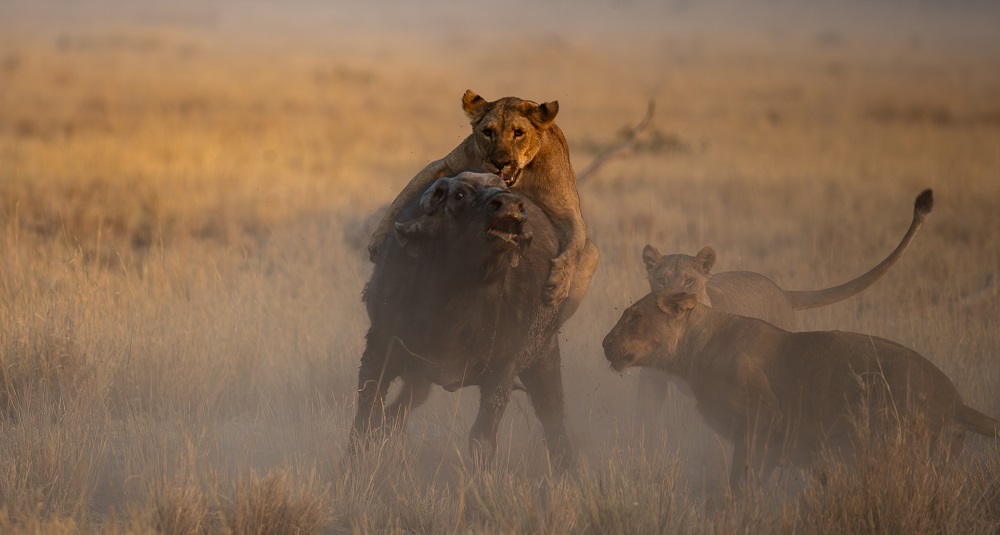
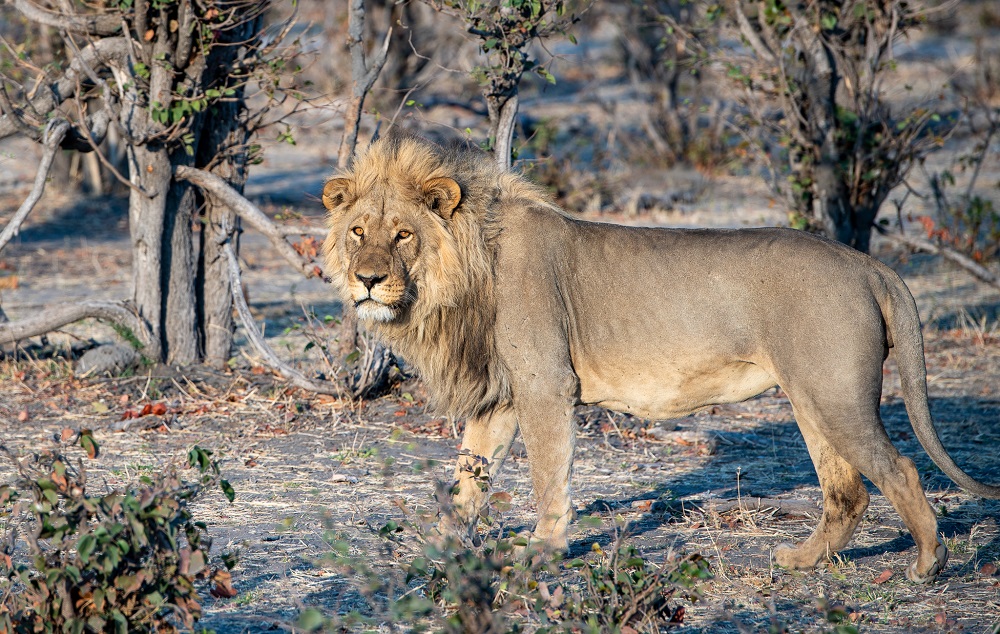
Not surprisingly, given the presence of so many zebras, we spotted first two and then three beautifully maned male lions and then four young females a little bit later that morning. There was more to come. Lots of elephants, including several good-sized herds. Also some large herds of buffalos and big mixed groups of topis, gazelles, impala and eland. 

The all-round hospitality at Serengeti Safari Camp could not have been better and we were more than well taken care of. There were a few shortcomings such as no fans in the rooms and a somewhat rickety low pressure shower which had clearly seen better days. We were glad to learn that flush toilets would be installed at the various Serengeti Safari Camps in June this year. 

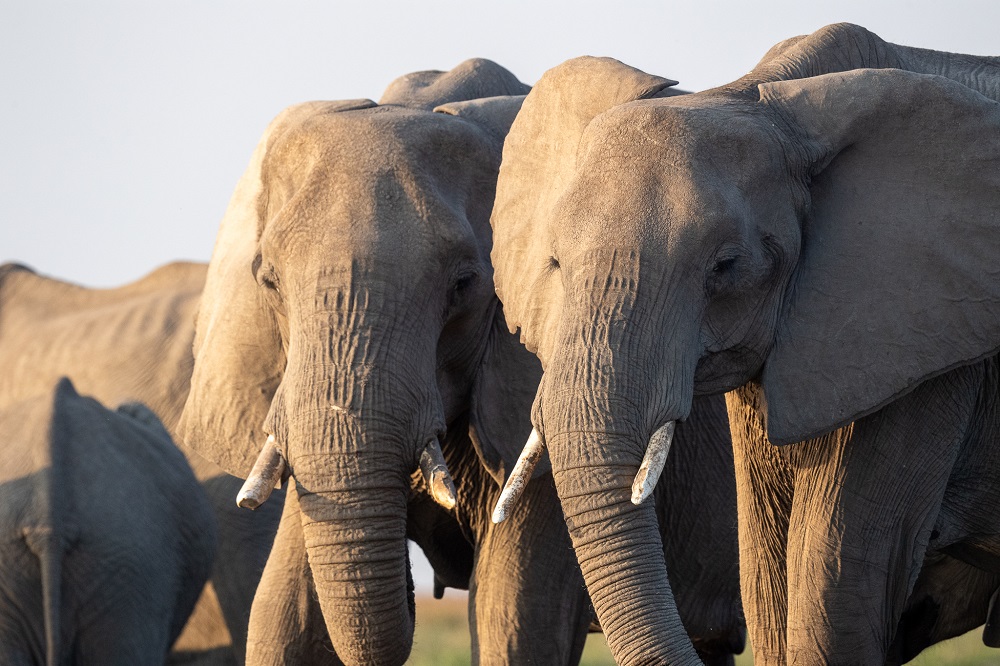
On our way back to Seronera on our last morning at SSC, we found several small herds of elephants and groups of zebras in good light. The photographs demonstrated the importance of being out early enough to take advantage of the ‘golden hour’ in the morning. If you ever find yourself in a safari camp where the morning routine is a little bit too leisurely with – for example – breakfast at 7 am and departure from camp at 7:30, don’t hesitate to push back and request an earlier departure for your game drives. This is of course easier with a private vehicle and guide, but can even be done as long as everyone in your vehicle is on the same wavelength.  

Wild Frontiers Serengeti Wilderness Camp

The road transfer from Seronera Airstrip to Wild Frontiers Serengeti Wilderness camp took about 45 minutes. For a good portion of the trip we found ourselves in a closed vehicle, with no air conditioning or proper ventilation, negotiating the tsetse fly belt. Not much fun. The camp itself was a spotlessly clean and very comfortable tented property with 12 rooms, as well as separate lounge and mess tents. There was pretty serviceable WiFi in the main area. The rooms are of a good size, clean and neat. Hot showers were available on demand. Lighting was on the dim side. The tent has a proper flush toilet. 

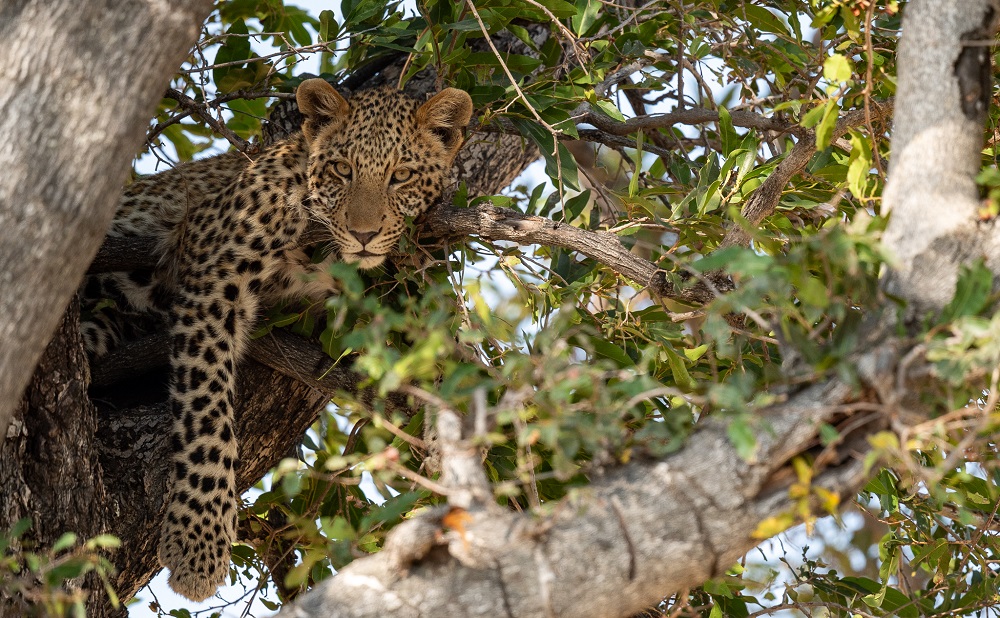
We soon found out that it took almost an hour from the camp to reach the productive game viewing areas. As it turned out, game drives from Wild Frontiers Serengeti Wilderness Camp were disappointing to say the least. Inexplicably, our guide seemed to persist in driving around in areas dominated by stands of excessively high, thick grass. Not surprisingly, we saw hardly anything of note with the exception of a leopard on a branch in a tree, viewed from a long distance away. Clearly this area is not at its best until June. We got stuck in the mud late one morning but fortunately the guide was able to extricate us. Kathy and I enjoyed an impromptu al fresco lunch so it wasn’t all bad.  

The food was tasty and ample, and the chef did a great job catering for my plant-based diet.  

Entara Olmara Camp, Seronera

It took about two hours on a shockingly bad road from Seronera Airstrip to make it to Entara Olmara camp. Our driver-guide Said Kotoku impressed us from the very first moment we were introduced. He knew the birds, was enthusiastic, talked about and expounded on identifying characteristics, and he was clearly knowledgeable and experienced. 

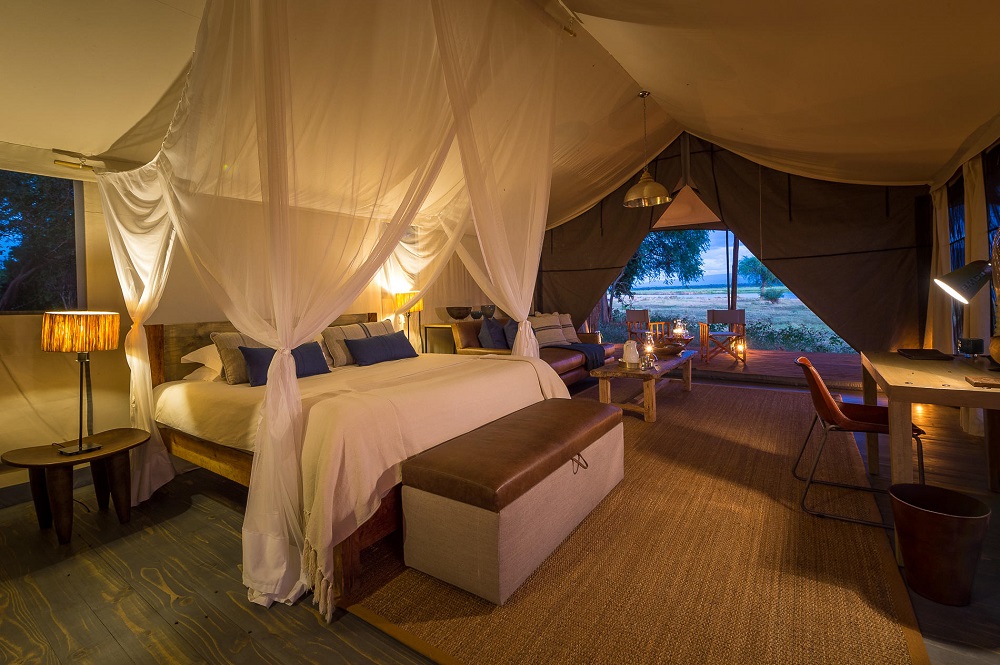
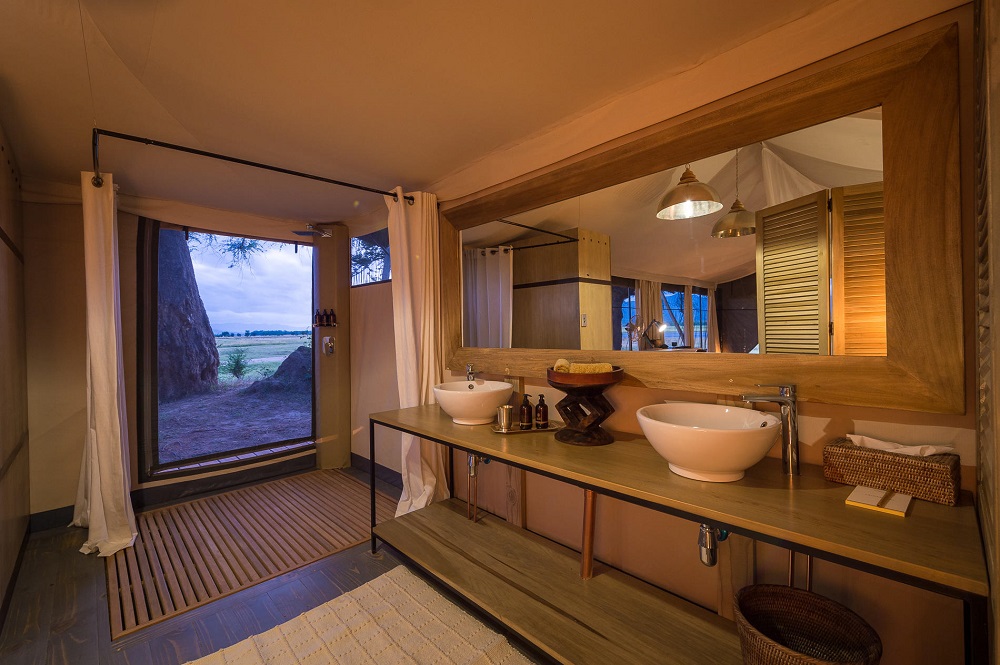
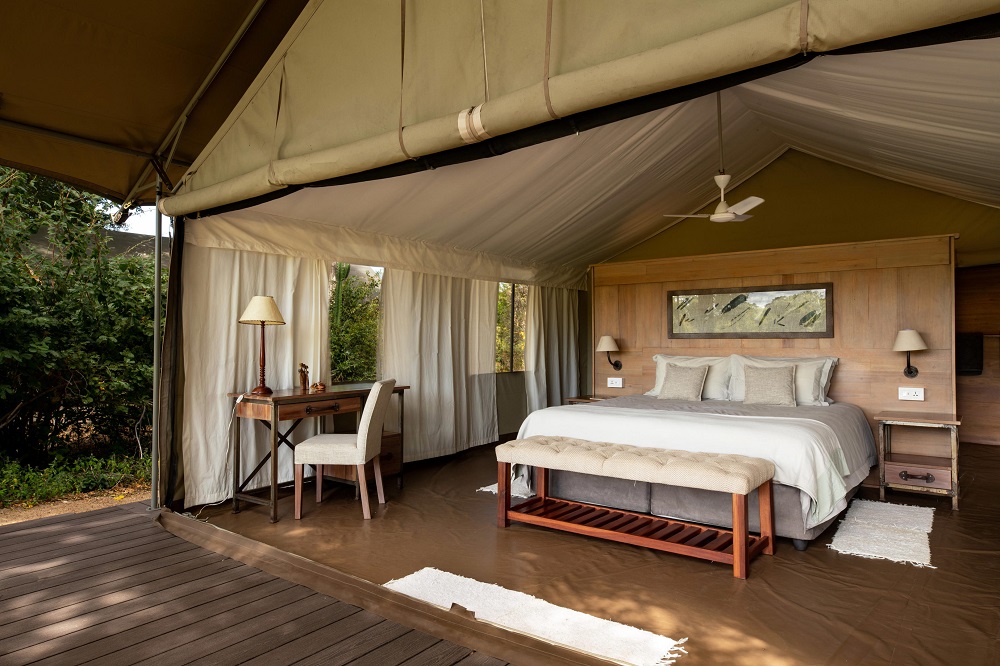
Olmara Camp itself makes a good impression, starting with a well-designed and slightly elevated lounge and dining areas with four spacious tents left and right. All rooms are in the process of being elevated as well. Four had been done and four were in progress at the time of our visit. Our room had a king-size bed with an effective mosquito net in a well insulated room. The bed was comfortable and there were several handy plug points. The shower at Olmara was one of the best I’ve seen on safari anywhere. The room had a flush toilet. The interior lighting was excellent. Packing space just so so. 

The food was consistently good and well presented, with lots of choices. The staff members were friendly and helpful and kept me on the straight and narrow with the plant-based food choices. No butter for you…

Game drives out of Olmara

During the wet season – which was much longer than usual this year because of the El Nino weather pattern – game drives take a solid hour to get to the productive areas and quite frankly, there was not much to be seen on the drive there and back. A lot of thick grass. 

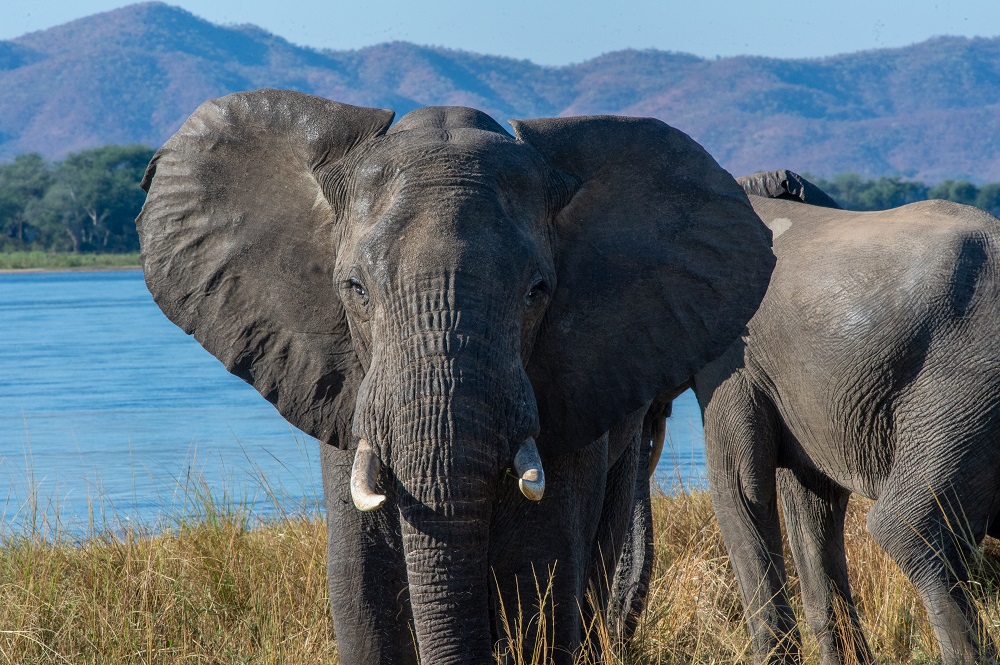
On our first afternoon we found a couple of large bull elephants on the way back into camp; a fortuitous combination of storm light and a clean, uncluttered background resulted in a memorable photograph. Reminder to my photographer self: don’t give up on less than ideal conditions. Photo opportunities will present themselves as long as you keep looking for them.

On our full day at Olmara, we embarked on what turned out to be a monster all day game drive, all the way out to the Gol Koppies and beyond. Said drove a huge distance, setting out on a semi-circular route which included many of the game hotspots. It worked. By mid-morning we were smack in the middle of the wildebeest migration. It was an amazing sighting. Literally thousands of wildebeest in every direction, all around us in a 360 degree arc. Doing what wildebeest do which seems to be a combination of eating grass, running around erratically and regularly grunt-calling to maintain contact with a friend or family member. And always succeeding in looking a bit goofy because of their peculiar physique (skipped hind leg days at the gym too often) and homeliest of homely faces, making them truly incapable of managing a thoughtful look.  

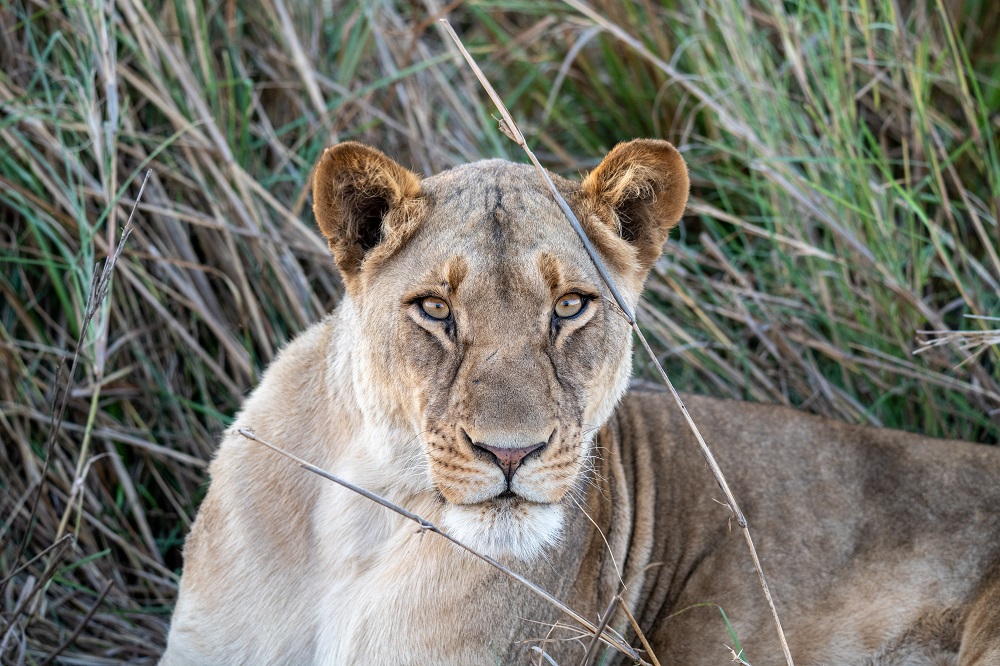
From late morning that day, we encountered one after another pride of lions. One group had several large males and a female with three cubs. Others were lying in thick grass at the base of rocky outcrops, or wedged into tree branches in an elevated spot with a view over the plains. We approached a coalition of three cheetahs in tall grass but for once I had to just ‘appreciate’ them – it was not a photo opportunity. Our mega day drive also produced hundreds, if not thousands of  zebras, gazelles, eland, topi and hartebeest. We added several new birds to our trip list. In fact we hit the 100 species mark that very afternoon.

An extraordinary sighting on the day was watching a simply massive black necked spitting cobra hunting for frogs. We were just too far away for photography, but it didn’t matter. Observing the animal slowly winding its way between a bush and a rocky outcrop and then suddenly perking up as it found – and tried to kill – its toad prey – was spellbinding. All of this we both observed through our respective pairs of quality Swarovski binoculars. Without good binos this would have been a nothing event, and likely borderline frustrating using a mediocre pair. 

Wilderness Usawa camp, Seronera

Our next and last stop in the Serengeti was Wilderness’ Usawa #2 tented camp, relatively close to Olmara. Due to some Byzantine Tanzania parks authorities rules, we had to drive all the way back to Seronera Airstrip from Olmara for the correct permits to be issued, and then back again (fortunately on a better road) to Usawa. A lot of seemingly wasteful energy expended in the process, not to mention further wear and tear on already dodgy roads.    

Usawa is an upscale mobile camp with innovative design features, attractive and extremely comfortable rooms with low pressure showers (on demand), WiFi in the common area and in the rooms. 

The camp is located in a good area for walking safaris, which is one of their specialties. The food was definitely a step above what we had experienced up to that point on the trip. Ambitious but well-executed and superbly presented. 

Like the other Seronera area camps, the Usawa location is  one hour plus from the best game viewing in the area at the time. Faced with the prospect of yet another lengthy drive – in an open vehicle – through areas with significant tsetse fly presence, we turned down the offer of another full day game drive.  

Our morning game drive – with our capable guide James – the following day turned out to be better than anticipated with lots of elephants, nice groups of buffaloes, dozens of giraffes, topi, hartebeest, impala, and some great birds.  

Saruni Wilderness and Saruni Leopard Hill, Naboisho

After a brief stopover in Nairobi with an overnight at House of Waine (excellent as always) in Karen, we flew with Safarilink from Wilson Airport to the Masai Mara.  

From the Ol Seki Airstrip in Naboisho, it was about a 30-minute drive to Saruni Wilderness, which would be our first stop – for lunch. Saruni Wilderness camp is quite intimate with just five rooms. It has a small yet cozy and inviting dining and lounge area. The camp is solar powered. The tented rooms – which we found to be quite attractive – have low-pressure (bucket) showers with hot water on demand. The camp offers game drives starting at 6:15 am and 4:30 pm. As well as foot safaris and night drives from 8:00 to 10:00 pm. Walking starts at 7:00 am from the camp, accompanied by a guide and armed game ranger. Saruni Wilderness has no WiFi connection. It’s a place where guests can purposefully disconnect from the many distractions – not the least of which is one’s smartphone – of an urban environment. The camp also offers bush dinners under the stars and bush breakfasts. The minimum age limit is 10 and for walking 12 and older. 

This was our second visit to Saruni Leopard Hill and there were no surprises this time around. The tents were still large and comfortable, with particularly good showers. The property has 8 rooms, 2 of which are suitable for families. There is a large lounge and dining room area – some of it uneven with quite a few steps to negotiate. 

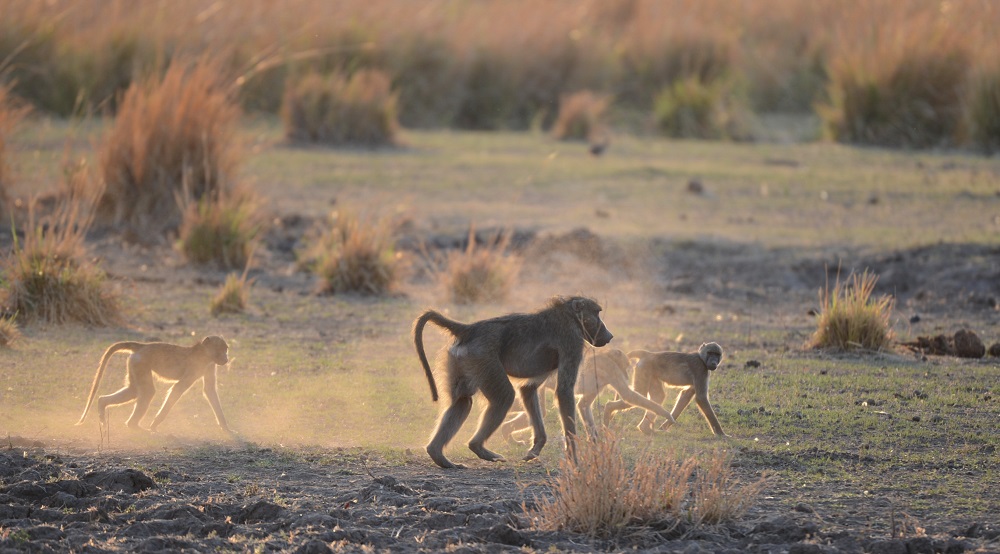
Game drives out of Saruni Leopard Hill were consistently good with animals literally all over the place. We observed hundreds of zebras, good sized groups of wildebeest, topi, warthog, giraffe, eland, Thomson’s and Grant’s gazelles, hyena, bat eared fox, black backed jackal vervet monkey, olive baboon, and lions on every outing. 

Compared with our previous visit, cheetahs were scarce in the Naboisho conservancy at the time – likely because of too much competition from lions. 

Hemingways Ol Seki Lodge

Our all too brief overnight stay at Hemingways Ol Seki Lodge was more than sufficient to firmly elevate this property onto our regular future rotation for the Mara. Our experience there was flawless from beginning to end. Starting with a warm welcome from camp manager Debbie Paul, we had a great introduction to the room and the property itself, a fantastic dinner (with a surprise birthday cake), and an absorbing game drive with our guide Isaac. We just missed seeing a female cheetah which was spotted walking in the direction of a nearby village earlier that afternoon.  

We were accommodated in a deluxe Nina room (#5) which was quite close to the reception area and also to the lounge and dining room. The heart of the property is its huge, elegantly appointed lounge and dining room, both elevated on a hill which overlooks a beautiful, typical Masai Mara landscape – a mix of open grassland and woodland with patches of riverine bush.   

There’s an inviting pool and plenty of outside terrace seating on more than one level. Guests can anticipate a high level of personal attention at Ol Seki, starting with the hands-on management style of Debbie Paul. Activities include game drives, walking and village visits. 

Ol Seki is closer to the Naboisho airstrip than some of the other properties in the Naboisho Conservancy. Something else that struck me while being driven around the area was the excellent road maintenance. Already, much of the road damage caused by the excessive long rains had been patched up; bridges were being prepared and gravel augmentation was in full swing. 

Saruni Mara Lodge

From Naboisho, we took off on the sloppiest of transfer drives to the far northern end of the huge Mara North conservancy. The second – and also the worst – half of the drive was in a Land Rover. Which as we know can go anywhere. Which we did.  So much mud!

Over the years we have used several Mara North properties on itineraries including Elephant Pepper and Karen Blixen. With our guide Jonathan and personal assistant James we had a great time at Saruni Mara, spending a couple of nights in their private villa – Nyati House. The Italian dishes which we enjoyed for lunch and dinner would be the envy of many an Italian restaurant anywhere in the world! Simply superb. We checked out the regular rooms at Saruni Mara and liked what we saw:  spacious, well-equipped, a good distance from each other and each with a nice verandah to contemplate the passing parade. Which here often includes elephants; some of which we heard rustling about that very afternoon.  

A game drive on the first afternoon to the nearby Mara Bush Houses delivered a superb range of plains game, with some unexpectedly good photo opportunities of elephants, zebras and olive baboons, among others. Jonathan mentioned that lions had been seen in the area just a couple of days ago and that a coalition of four cheetahs had walked right by Saruni Mara Camp just the previous day.  

The following day we embarked on yet another ‘big day’ outing, starting with a drive into the Lemek Conservancy where we saw many more – hundreds – of zebras as well as elephants, wildebeest, impalas, gazelles and a large breeding herd of buffaloes. 

Saruni Wild Camp – Lemek Conservancy

Prior to yet another excellent Italian-style lunch at Saruni Wild Camp, we site-inspected this 5-roomed tented camp which includes a family room. There’s WiFi, the entire camp is run on solar power and it is unfenced. Being only 20 minutes from the Mara North airstrip this property is easy to get to and out of.

The recommended activities at Saruni Wild are headlined by an early morning drive with a packed breakfast. Other activities on the roster include a sundowner drive with drinks and snacks and a’ holiday safari,’ which appropriately starts with a late breakfast in camp, a picnic lunch and sundowners back in camp. Clearly not the optimal choice for photographers but ‘regular’ visitors may enjoy this more leisurely approach. Additionally, Saruni Wild offers night drives which start after an early dinner. Guests then depart on the game drive, returning to camp around  10 pm. 

We were starting to build up a bit of resistance to mega game drives but our excellent guide Jonathan Nchoe convinced us that it would be worthwhile to take a swing through the Mara North Conservancy on our way back to camp that afternoon. Always listen to your guide. The drive paid off big time. 

A Cheetah in Mara North

Finally! A good look at a female cheetah. In a situation where being inside a national park would have not worked out at all. She briefly paused along the main road and then walked into the open savanna, eventually settling down in a shady spot under a tree. We followed along at a discreet distance and spent a good half hour or so simply observing the gorgeous animal. 

She spent most of the time in the shade, constantly surveying her surroundings as cheetahs habitually do. It was personally satisfying for me to predict the cheetah’s next move which was to pause on an elevated anthill, checking for signs of gazelles. We were ideally positioned when she made the walk to the elevated spot. Score!

Predictably the day’s activities were concluded back at camp with yet another good Italian meal at Saruni, this time with a delicious gnocchi starter. 

We had a few minor issues at Saruni Mara; nothing major – the interior lighting was poor and the hot water was not hot enough. Unfortunately the location of Saruni Mara is not suitable, in our opinion. It is just  too far from the best game viewing areas,  with a terrible, rocky road separating the camp and the most productive areas of Mara North. Trying to do a day drive into the Masai Mara would end up being a real mission. Saruni Mara’s  sister property – Saruni Wild – will definitely  find a spot in our rotation. 

Kicheche Mara, Mara North Conservancy

Kicheche Mara – where we spent just a single night – turned out to be property right up our alley. It has an ideal location in a secluded valley, right alongside a perennial stream which attracts wildlife year-round. There are 10 rooms as well as a large and uber comfortable common area with a dining and lounge tent, as well as a  photographic tent for uploading and editing. The game drive vehicles (best I’ve seen) were designed specifically for photography with an open roof, huge side ‘cutouts’, supports for cameras and bean bags. Most importantly, all guides at any of the Kicheche camps have (at minimum) a Kenya Professional Safari Guides Association  silver level qualification. For visitors, this is gold.  

How many other things impressed us about this camp? A live wire manager (Andrew Obaja) with whom we had a fascinating discussion about the advantages and pitfalls of the conservancy concept. An excellent plant-based lunch with salads, rice and lentil stew. Much faster WiFi in the room than any other camp so far. Being in a beautiful area with game viewing starting right out of camp

The morning game drive with our most capable guide Paul Kasaine was – to be honest – not the best one of the trip, but it didn’t matter. There were lots of animals around, including three large male elephants which apparently spend much of the dry season in a marshy area right out of camp. We also spotted a different male cheetah on the way out of camp. 

Il Moran and Little Governors Camp

Perhaps appropriately, our last Kenya stop was inside the magnificent Masai Mara National Park at Governors’ Il Moran camp. Accompanied and led by our effervescent guide Bernard Lodeki, we took several game drives into the Mara which was spectacular after all the recent rainfall. Green and lush like we’ve never seen before. Almost right away, we spotted several members of the Marsh (lion) pride on the way in. As well as sizable herds of elephants and lots of hippo. 

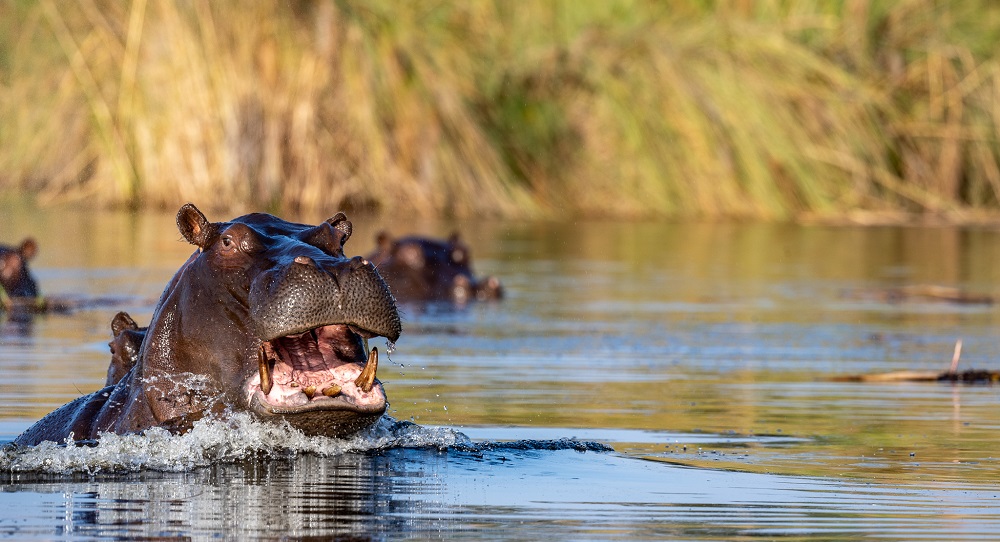
Kathy and I enjoyed lunch at Il Moran on the expansive deck area overlooking the Mara River which was still flowing strongly. There’s a huge pod of hippos, numbering as many as 50 in total, resident in the big bend in the Mara in front of camp. 

We’ve always enjoyed our stays at the Governors’ camps and this time around was no exception. They all have great locations with game drives possible into both the main part of the reserve as well as into the well-managed Mara Triangle. 

The large tented rooms at Il Moran overlook the Mara River and they are tucked into  a riverine forest where  several interesting bird species are to be found such as Ross’ turaco and double toothed barbet. Plus several striking species of butterflies including mocker and greenbanded swallowtails, various whites and blues and brushfooted butterflies.   

While the tented rooms were spacious and comfortable they were clearly coming to the end of their useful life. We were later advised that the entire camp was scheduled to be rebuilt at the end of the 2025 season. In the interim, Governors’ Private Camp will be rebuilt.

A brief site inspection visit to Little Governors’ Camp reminded us why we like this property as much as we do, and why we use it quite regularly for clients. It looked sparkling and well-maintained, with the staff being as friendly and welcoming as ever. The location of the camp – with rooms all fronting a large marshy area which attracts a variety of mammals and a dazzling array of birds – is simply the best. A minor negative about Little Governors’ is that the 17 tents are a little too close to each other.  

Our grande finale game drive in Kenya was an all-day excursion into the Mara Triangle which lived up to all our expectations. Spotlessly clean restrooms at the Oloololo Gate into the park, roads which were in better condition even than those  inside the private conservancies, drop dead gorgeous views and fascinating wildlife viewing. The Mara Triangle is the real deal. Even as we were approaching the gate, our guide Bernard spotted a trio of black rhinos in an open area, relatively close to the road. Within just minutes we were admiring them through the binoculars and eventually the camera lens, being reminded why they should be called hook-lipped rhino instead of black rhino. The remainder of our drive traversed some of the most spectacular landscapes to be found anywhere in Africa. There is no photograph or video which can start to do it justice. Each amazing vista is superseded by another equally impressive one just around the corner. Just when you think a tower of 12 giraffes is something, one of 17 shows up. We had not seen as many giraffes in one game drive as that day in the Mara, ever. And we’re unlikely to get even close again in the future. With large herds of buffaloes, big breeding herds of elephants and good numbers of general plains game, not to mention lions, it was about as complete a safari experience as one could hope for, anywhere. It did not matter that we dipped out on leopard, which would have made it a ‘Big Five in one day’ outing.  

For fresh information and observations and up to date recommendations for East Africa, please call our Houston office at  713-467-5222  or email Bert at bert@fisheaglesafaris.com.  

YOU MIGHT ALSO BE INTERESTED IN

Destinations
Zambia

10th September 2021

Chindeni and the Bushcamp Company, Zambia

By late July we found ourselves at Chindeni, a small Bushcamp Company property
Read more
Botswana
Destinations
Okavango Delta

3rd October 2022

Camp Okavango, Botswana

Camp Okavango is in the heart of the permanent part of the Delta. In this idyllic setting there are no vehicles, and it is just a short walk
Read more
Area
Destinations
Nyerere National Park
Ruaha
Tanzania

14th October 2023

From My Safari Notebook: Wildlife Photography

Birds in flight and wildlife photographers have an uneasy relationship. Things go wrong as often as they go right. Getting focus-lock on a moving subject

Read more

SUBSCRIBE TO OUR NEWSLETTER

READERS FAVOURITES
Destinations
India

27th May 2023

India

India’s tiger, mammals and birds.

Read more
Botswana
Destinations

4th August 2022

On Safari At Belmond Eagle Island Lodge, Okavango Delta

What is the ‘secret sauce’ for an unforgettable few days on safari in Botswana? It starts with the animals, of course. The elephants, lions, giraffes, hippos

Read more
Destinations
Zambia

10th September 2021

Chindeni and the Bushcamp Company, Zambia

By late July we found ourselves at Chindeni, a small Bushcamp Company property

Read more

Safari Lodge of the Month: Wilderness Mokete, Mababe

22nd June 2024

Safari Lodge of the Month: Wilderness Mokete, Mababe

Wilderness’ recently opened Mababe-area tented camp – Mokete – has catapulted to the top of many safari aficionados’ must-visit lists.  

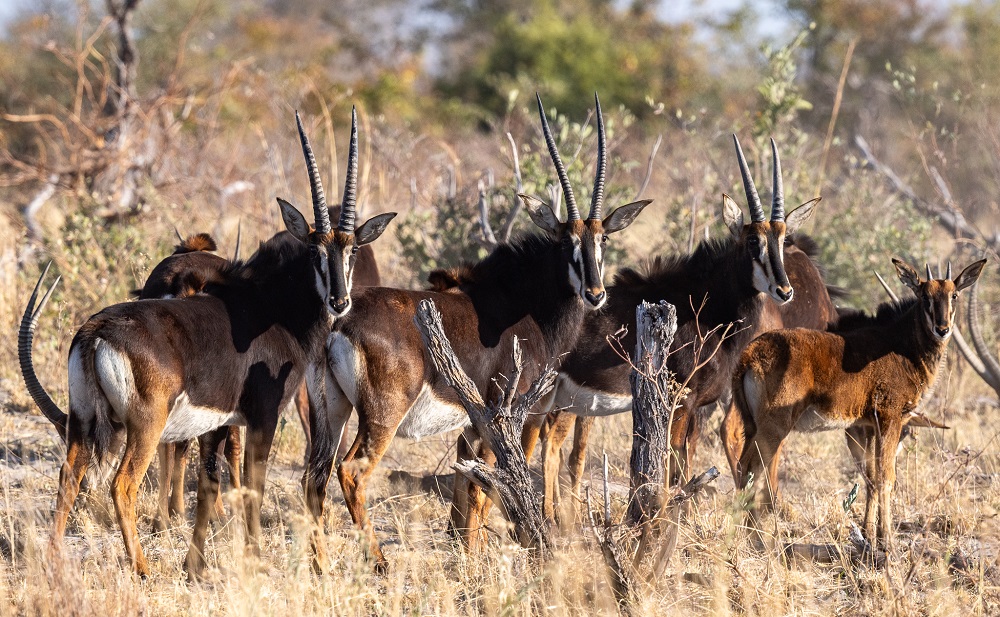
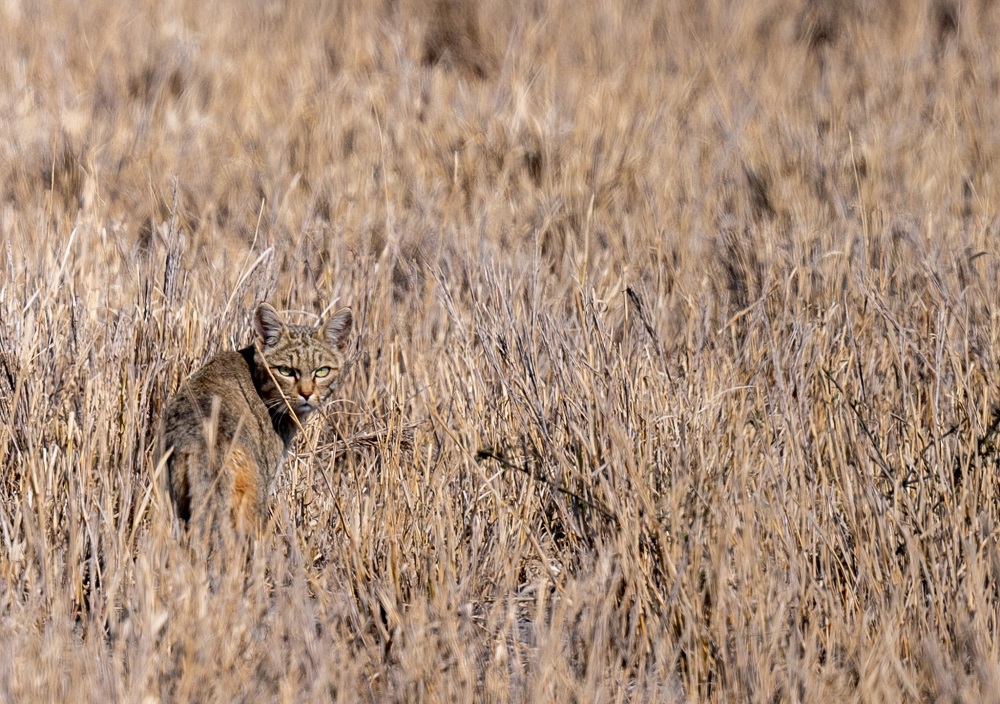
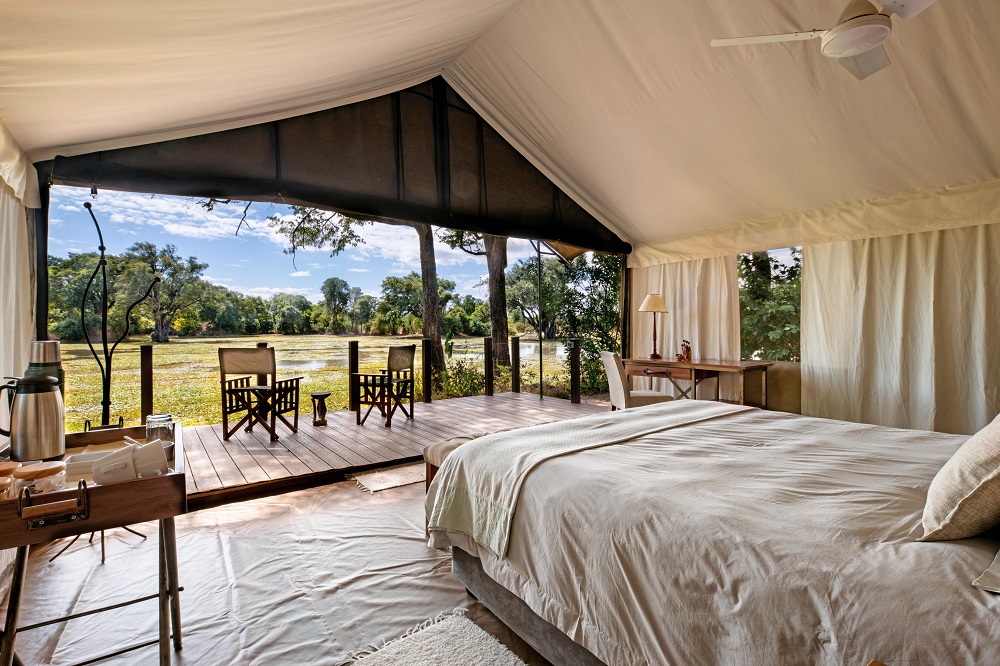
Game viewing at Wilderness Mokete is unmatched, renowned for the mega herds that make their way across this private wilderness with a constant supply of water, located on the eastern fringe of the Okavango Delta and the famed Moremi Game Reserve, to the south of Chobe National Park. With its three distinct habitats: grassland plains, mopane and acacia woodlands, and the marsh system fed by the Mababe River, Mokete is home to prides of lion, leopards, cheetahs, packs of wild dogs, bat-eared foxes, jackals, African wild cats and servals. All of which makes for an immersive, exclusive and thrilling safari. There are often huge herds of buffalo in the area, and there can also be huge herds of zebras. Also worth mentioning: two pretty special antelope, sable and roan. They have been seen around Mokete in the dozens if not hundreds. Unlike anywhere else.

The camp offers unconventional safari adventures, where time is dictated by nature, not the clock. In this part of Botswana, it’s not uncommon to see lions on the hunt on the plains during the day, which makes for exceptional photographic opportunities. Guests can choose to stay on a game drive as long as they please, or stop for a lazy bush picnic – or stay out with the predators late at night if they wish. Guided walks can be arranged, or guests may be tempted to spend an afternoon in the sunken hide, eye-to-toe with the elephants.

With only canvas between guests and nature, a stay at Mokete is an immersive feast for the senses. Due to the open layout and high density of wildlife, only guests 16 and older are permitted to stay. There is a swimming pool for warm afternoons and a star bed for cool evenings under the sky.

Fish Eagle Safaris’ Lyndon recently spent a couple of nights at Mokete. Here are some of his observations and his recommendations to make your stay at Mokete even more rewarding than it may otherwise be:

At Mokete there are a number of things that you will definitely want to do during your stay:

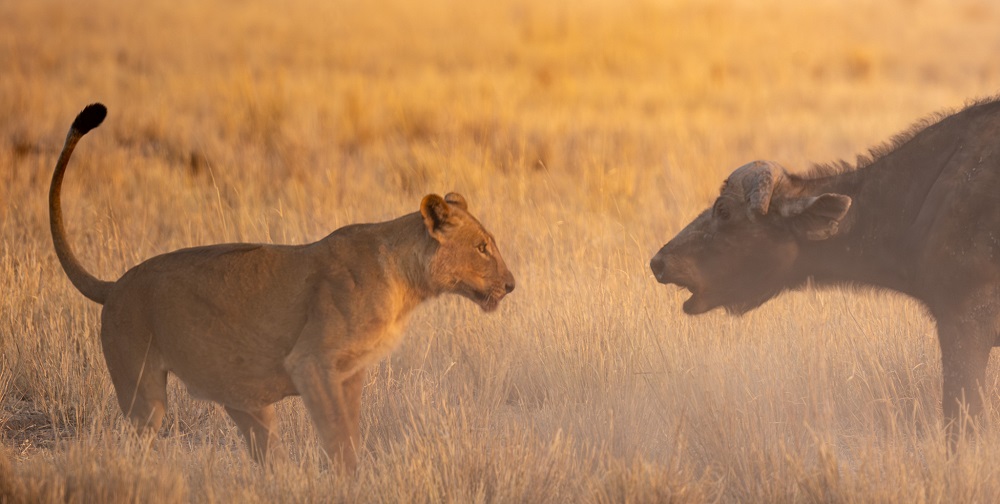
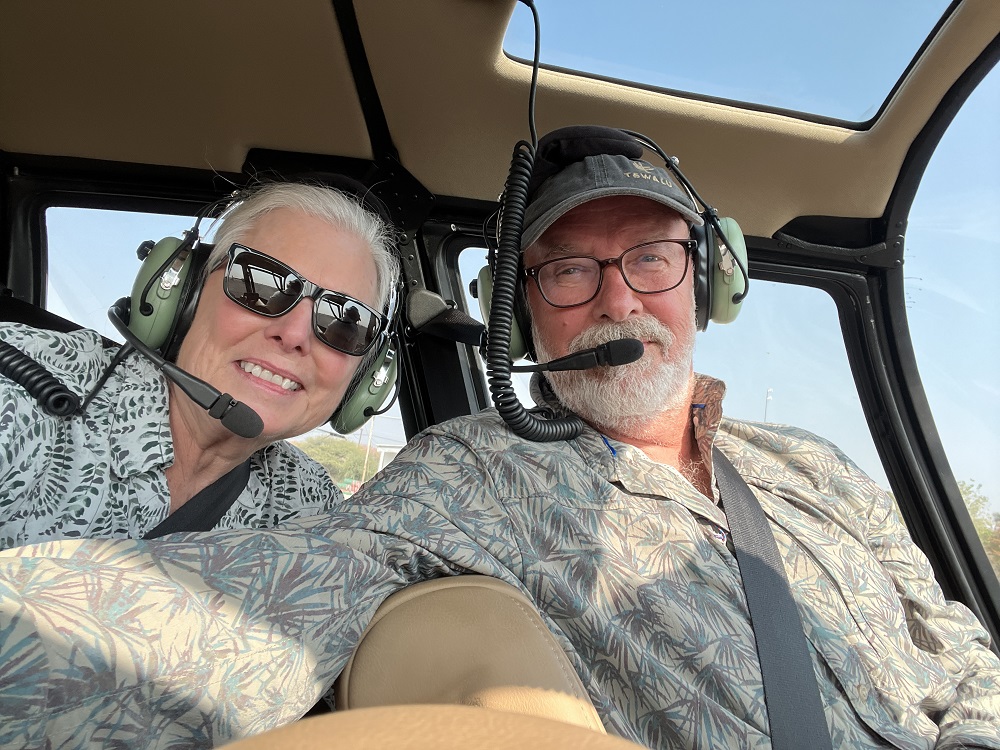
  1. Take some time to focus on the lion and buffalo interaction. The large lion prides have got a great setup and pretty much plant themselves between the buffalo herds and the water. Our guide told us they can easily feed a couple of times per day. We did not witness a hunt but every time I saw the lions they were eating something. We took a helicopter ride to the camp and en route we saw the recent aftermath of a hunt with about 12-13 lions feeding on the carcass of a buffalo.

  1. Visit the elephant hide. There is an area that is known as ‘elephant paradise’ and it attracts huge numbers of elephants, especially in the evenings when they come for water. The camp has a hide overlooking the water and we got to spend an evening there. It was fantastic and the number and sheer tonnage of elephants cycling in to drink before heading back into the wooded area was astounding. We went back to the area on our final night (not back to the hide) and it took a long time to drive through due to the high density of elephants. It was quite something combined with the sunset.

  1. Go on an after dinner night drive. I was told this can be requested upon arrival and we can also let the camp know in advance, if this is something you’d like to do. At the time of my visit there was a resident wildlife photographer/film-maker in camp. During one of our dinners he recommended we do this as a group because of all the amazing things he had been spotting during the night. It turned out even better than any of us could have hoped.

    Here’s what we know about night drives: they are very hit and miss. Nocturnal animals are difficult to find with a spotlight due to a narrow field of view and often the only thing you might see at a distance is the light’s reflection in the animal’s eyes. This leads to some premature excitement only to find out you are looking at and heading toward a herd of impala. Mokete is not immune to these annoyances but our night drive started with a bang right out of camp with a giant eagle owl flying and perching in a tree just next to the road. Not five minutes after this we had a splendid viewing of a porcupine. This would typically be a moderately successful night drive already but the real fun hadn’t yet begun.A few minutes later we caught a glimpse of the elusive aardvark. Actually, two. This was my first time seeing one so I experienced some elation as we sped over road and grass to get a better look. What a sighting! Shortly after this we saw a group of four bat eared foxes. Some time passed and we saw a third aardvark, this one alone and much less bothered by our presence than the previous two. We spent a good amount of time observing it as it jogged from one area to the next looking for a meal. They are so much more agile than I could have imagined, which makes sense having to survive in such an environment.

    Up ahead of this there was a large herd of buffalo. Seeing these at night is different because they were having trouble getting a good look at us. This caused them to stop moving completely and stand absolutely still before one gave the call to move and they ran off. Fascinating! Overall I still don’t know if this is what we can expect of a typical night drive at Mokete or if we had incredible luck. The way that the wildlife photographer spoke about what he would see at night leads me to believe that game drives like this might not be as lucky as they felt after all…

  1. Time permitting, visit the northern side of the park that borders the Chobe area. It takes a bit of time to get there but this is the area where we spotted two male cheetahs. The habitat is a bit different and there is enough of a distance from the main lion prides that cheetahs feel safe.

  1. Just general game drives exploring the different areas of the park. It is quite large so this would mainly be on the advice of the guides and what they have been noticing.I think a three or perhaps four night stay should be enough to accomplish most if not all of this.A couple extra notes. The sand there is fine and it can get very dusty. Later in the dry season (my visit was in early May) it  will be even more prominent I suspect. I would highly recommend at minimum bringing a buff or something to cover your mouth and nose (and something to protect camera equipment). The areas by the water where the lions camped out were very bumpy. The guides did not rush through so it wasn’t bad but it was slow going.  

Get in touch with us if you would like to visit Wilderness Mokete. We can be reached at 800-513-5222 in Houston, or email jason@fisheaglesafaris.com or lyndon@fisheaglesafaris.com

YOU MIGHT ALSO BE INTERESTED IN

Destinations
Zambia

10th September 2021

Chindeni and the Bushcamp Company, Zambia

By late July we found ourselves at Chindeni, a small Bushcamp Company property

Read more
Botswana
Destinations
Okavango Delta

3rd October 2022

Camp Okavango, Botswana

Camp Okavango is in the heart of the permanent part of the Delta. In this idyllic setting there are no vehicles, and it is just a short walk

Read more
Area
Destinations
Nyerere National Park
Ruaha
Tanzania

14th October 2023

From My Safari Notebook: Wildlife Photography

Birds in flight and wildlife photographers have an uneasy relationship. Things go wrong as often as they go right. Getting focus-lock on a moving subject

Read more

SUBSCRIBE TO OUR NEWSLETTER

READERS FAVOURITES
Destinations
India

27th May 2023

India

India’s tiger, mammals and birds.

Read more
Botswana
Destinations

4th August 2022

On Safari At Belmond Eagle Island Lodge, Okavango Delta

What is the ‘secret sauce’ for an unforgettable few days on safari in Botswana? It starts with the animals, of course. The elephants, lions, giraffes, hippos

Read more
Destinations
Zambia

10th September 2021

Chindeni and the Bushcamp Company, Zambia

By late July we found ourselves at Chindeni, a small Bushcamp Company property
Read more

Where in Africa to Go Next In 2024-2025

21st June 2024

Where in Africa to Go Next In 2024-2025

For me the most fun part of our business is designing itineraries. That’s where our 50 plus years of African experience and our team’s regular inspection and educational visits come into play. Rarely do we include a property which we haven’t been to ourselves and never is how often we include a property where guests may be forced into a middle seat on safari. 

Over the years we have gotten better at customizing itineraries to match a particular party’s interests and objectives. Without simply opting for the most expensive properties. 

So where would we go ourselves if we had to book an Africa trip this very minute, using mostly the properties which our Fish Eagle Safaris team checked out over the last couple of months? I asked the members of our Fish Eagle Safaris team to chime in.  

Here is what they had to say:

Lyndon: “I’d opt for a combination of Victoria Falls and Botswana and the trip would ideally include several days at Wilderness’ new Mababe concession camp, Mokete. On just one day there in late May we saw more animals in total, more different species and more rarities (how about aardvark, African wild cat and bat eared fox) than most visitors would see in a week on safari elsewhere.  

Consider taking a business class flight into Vic Falls, if only to get to the front of the line for the visa/immigration process which has lately proven to be quite challenging in terms of duration. Victoria Falls is a good starting point to shake off some jet lag and it acts as a buffer in case of any flight delays. It has many attractive accommodation options including Ilala Lodge, Pioneers, Palm River Hotel, The Victoria Falls Hotel and Stanley & Livingstone Hotel. Be sure to include a guided tour of the falls and a jet boat sundowner cruise.  

From there I’d head to Hwange for three or ideally four nights at one of the Imvelo or Wilderness properties such as Camelthorn, Bomani, Linkwasha, Little Makalolo, or Davison’s, depending on budget. I have a soft spot for Hwange and to date this year it has been producing some great game viewing. We’ve previously mentioned that the country is facing what could end up being a serious drought. Game viewing should continue to be good but young and weak, older elephants will be facing an uphill battle towards the end of the dry season.  

Ideally, end your safari with at least six nights in Botswana split between two camps. 

I would put Mokete right at the top of the list for the remainder of this season and likely into the future. It’s a unique Botswana property; on my recent visit there it felt a lot like visiting the Serengeti, somehow relocated to southern Africa. Mokete is really a  ‘must visit’ from now until probably November – and will likely be excellent until then.

With Mokete, I would add a few days at perhaps Karangoma and – for a true Okavango Delta experience at an affordable price point – two nights at a water camp like Setari.    

Our group had a fabulous time during our all too short 2-night stay at the brand new Karangoma. It is an intimate camp with only 6 tents, each one with just the right amount of luxury. The scenery in the north-eastern Okavango Delta is idyllic and the remoteness is unparalleled with a 10-minute helicopter flight required to reach camp.

Setari is also remote and requires a boat ride of about 45 minutes from the airstrip to reach camp. Located in the main artery of the Okavango Delta it has permanent water year-round and is a different, more laid back experience than many other Botswana camps. The perfect way to end a successful trip.

Jason: “One of our most successful offerings has always been a combination of South Africa, Victoria Falls and either Zimbabwe or Botswana. If I could book a trip for a client right now, that’s where I would try to focus my efforts.

With a night in Johannesburg, or a few in Cape Town at the start of the trip to try and mitigate jet lag, the trip would kick off with four nights in Sabi Sand at one of our favorite properties. Mala Mala, Savanna, Sabi Sabi, Leopard Hills and Cheetah Plains all make for excellent choices with varying degrees of luxury and price points. The Sabi Sand is a game-rich Big 5 location and has always produced for our guests.

Next, a light air flight to Kruger’s MQP international airport would connect with a commercial flight to Victoria Falls. Ideally, spend two nights here at properties like The Victoria Falls Hotel, Ilala Lodge or Batonka Guest Lodge. We typically recommend a tour of the falls, a sunset cruise and some free time to explore Victoria Falls Town. You could also fill time with adventure activities like scenic helicopter flights, gorge swings, swimming in Devil’s Pool right on the edge of the falls (time of year dependent) or cultural activities in nearby villages.

The last three to six nights on this type of itinerary would be in Botswana’s Okavango Delta where things can slow down a little bit. With a huge number of amazing safari camp offerings, it’s difficult to decide just where to go. But you can count on our knowledge of the camps and areas to select a combination that would work best for your needs. 

Want to see the highest concentration of wildlife? In that case you’d definitely want to spend some time at Wilderness’ Chitabe/Chitabe Lediba camps. It’s been delivering simply brilliant game viewing with guests treated to mesmerizing experiences involving leopards, cheetahs, lions and African painted dogs, day after day.

Want to relax on the water in a boat or mokoro? Stick with some of the Okavango Delta camps (in flood season) like Wilderness’ Kwetsani, Little Tubu or Jao or Great Plains’ Okavango Explorers Camp. 

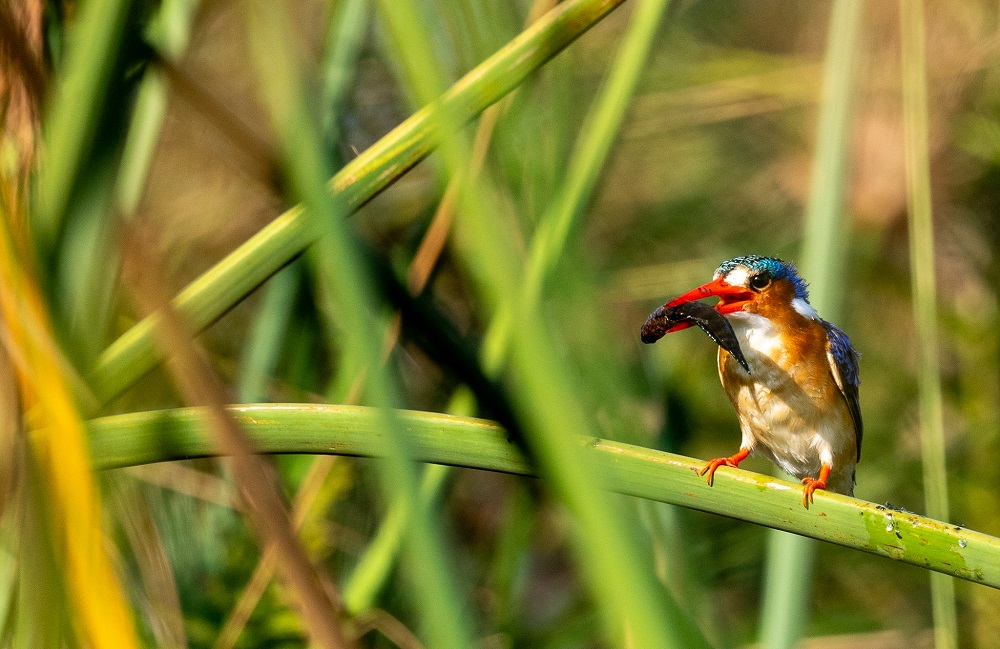
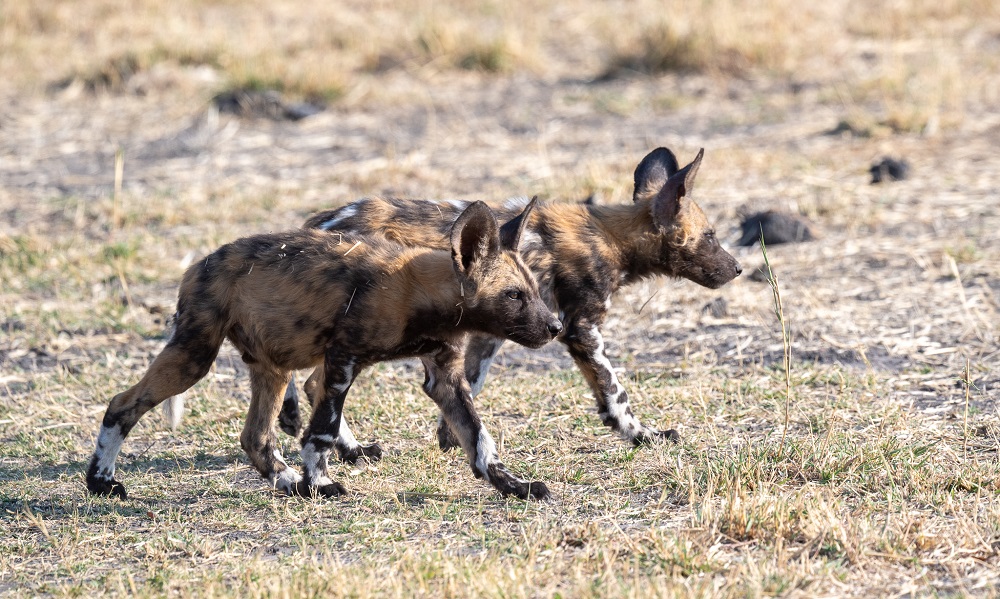
Want a combination of land and water activities? Machaba’s Gomoti Plains might be the answer. Even during droughts the Gomoti area has water year-round for mokoro rides and typically there is enough for boating as well. Plus it has plenty of open plains to explore on a traditional vehicle safari. On my recent trip, we found ourselves joining a hunt – bounding through the bush in an attempt to keep up with the effortlessly fast pace of a pack of painted dogs. Later that same morning we were on a mokoro attempting to photograph malachite kingfishers, African jacanas and red lechwe antelopes.

Bert:  We’ve always advised prospective travelers to Africa to  spend more time in fewer areas. Based on my experiences on our most recent trip I think visitors would do well to extend that principle into their day-to-day activities on safari. Ideally by including the services of a private guide and vehicle on at least part of their trip. 

This makes it possible to slow down game drives in order to spend less time actually driving, and more time experiencing. More time to observe, to record, and to learn.  Focusing on the details of specific sightings and not just bouncing around from animal to animal. 

Not trying to check everything off your list often results in unexpected but welcome developments. Mostly in the way of seeing something much more interesting than what you started off with.

Patience and perseverance almost always pays off in the wilderness. We’ve had painted dogs walk into an otherwise blah sighting, we’ve seen ‘stationary cheetah’ turn into ‘running cheetah on the hunt,’ and we’ve experienced baby leopards suddenly and unexpectedly join their mom, right in front of us.   

Where would I go right now, looking mostly at the properties which Kathy and I recently visited in East Africa? I would book my Kenya Airways non-stop flight from JFK to Nairobi, spend a couple of days in Nairobi (for a morning game drive in Nairobi National Park and a visit to the Sheldrick Elephant Orphanage) and then head to either Lewa or Laikipia for 4 nights. Few other places in East Africa or the rest of the continent for that matter, can match properties like Lewa Wilderness or Kicheche Laikipia in terms of diversity. They have all the usual plains game and the big cats, and on top of that a trio of superb near-endemics in the way of Grevy’s Zebra, reticulated giraffe and beisa oryx.  Plus healthy numbers of both black and white rhinos with their horns intact. 

And then I’d head straight to the Masai Mara, splitting my time there between a property in one of the conservancies to the north of the Mara, and ending with a few days in the Mara Triangle, in the north of the park. These two areas make a great combination, melding the freedom to go off-road inside the conservancy and the ability to drive at night, with the amazing grandeur and spectacle of the Mara Triangle. Inch for inch it is about as fascinating and rewarding an area as one could visit anywhere in Africa. The Mara Triangle is also one of Kenya’s most reliable areas to experience the great migration, within striking distance of several known crossing points. 

Kathy: On our recent visit to Kenya, I was amazed by the abundance of wildlife in three of the private conservancies to the north of the Masai Mara, namely Naboisho, Mara North and Lemek. Almost everywhere we looked, there were zebras in their hundreds. Plus masses of Thomson’s and Grant’s gazelles, topis, eland, buffaloes (some huge herds!), giraffes (so many!), tons of wildebeest, hippos wherever there was water,  elephants – and several prides of lions.  

I would recommend to prospective travelers to Africa to spend up to a week or so in the Masai Mara, split between two of the conservancies or by including an additional few days in a camp which does its game drives in the Mara Triangle, such as Olonana, Little Governors, or AndBeyond Bateleur Camp.   

In addition to the Mara, Kenya has several other superb safari destinations; call or email us and a member of the team will be happy to talk to you about Tsavo or Amboseli, Lewa, Meru or Samburu. We know them all really well and can give you just the right advice as to how they can fit in with a trip to the Mara.  

For now, I will concentrate on the three properties which we visited in the conservancies. Any one of these would be an ideal ‘anchor’ property for a Kenya safari. 

Saruni Leopard Hill – Mara Naboisho Conservancy

The female management team at Leopard Hill is very accommodating and they want to insure your comfort and enjoyment at their lovely little camp. The communal area is attached to the dining area and you will enjoy the view – beautiful fig trees surrounded by 3 waterholes. The dining/communal area is on a platform and there are steps leading to a small area where guests congregate around a small bonfire in the evenings.  

This camp has 6 tents. We were in tent #3. I really liked the generous size and layout of the tents. The rooms also have a skylight which you can open up at night to ‘sleep under the stars.’ Not advisable during the rainy season though. The rooms have a king-size bed, great pillows, desk, daybed/couch, double sinks and separate shower and toilet as well as an outdoor shower. Plenty of room for your gear and a great patio overlooking the game reserve. The rooms are spaced far enough apart for privacy. They also have a honeymoon tent with a nice lounge and a family tent – two tents next to each other with doors (instead of zippers) suitable for a family of 4 

A bonus at Leopard Hill is a complimentary 30-minute back and neck massage – don’t pass this up! The spa tent is in a nice, quiet area and the masseur is a man named Viki Geel who has 18 years’ experience. He is excellent! Viki also offers yoga and stretching. I am so glad I took advantage of this and if I had more time, I certainly would have spent more time at the Leopard Hill Spa!

We had a ‘surprise’ romantic dinner on our patio the second night – very well done.

Wake up – coffee/tea are brought to your room.

We had great game viewing and a bonus here – and in the other conservancies – is the off-roading which makes a big difference if you want to pull up close to a lioness with her cubs hidden in the bushes. As we did.  

Kicheche Camp:  Mara North Conservancy, Masai Mara

Andrew Obaga is the manager at Kicheche Mara and he and his very competent staff know how to make you feel comfortable and right at home. One is introduced to the camp after walking over a small bridge and up a short hill. At the top of the hill is an amazing and unexpected sight – a beautiful and well-maintained mowed lawn with communal dining and photography tents. Early the next morning there was a little family of three tiny dik-dik antelope on the edge of the lawn; humans are not the only ones who find it appealing. 

The camp: the first communal tent is a photographer’s dream tent offering the photographer access to WIFI, computers and more. The photographer’s tent has just about everything needed for safari photographers – a real bonus in the bush! Right next door is a restroom. Walk a few more feet and you will find the dining tent with a lovely patio – indoor/outdoor dining. Two more communal tents with nice lounges, bars and two more tented restrooms complete the communal area.

Kicheche Mara has a total of 10 guest tents including a family tent. They can make any of the tents into a triple. For example if you want to travel with your mom and sister – they would be happy to put 3 adults in one tent – no problem! The pathway to each tent is clearly labeled using Swahili animal names for the tents. We were in Punda Milia (zebra). Arriving at our tent, the main power switch is a handy pull-string at the front of the tent opening. The tents are very spacious and well-appointed with a daybed, a king-sized bed, desk, open closet for all your items, a bathroom with a separate toilet, two sinks and a nice shower. We had a comfy patio with chairs and a small table so we could watch for any activity at the river. 

Kicheche is a fabulous camp and well worth a 3-night visit. Tents on our side were:  Kiboko, Punda Milia, Topi, and Kanga. They are all a short walk to the main area. Andrew told us the ‘honeymoon tent’ is located quite a bit further from the main area. Wake up – coffee/tea is brought to your room.

The food was excellent at Kicheche. After each meal the chef checked on us to make sure we were satisfied.

As was the case at the other camps in the conservancies, game viewing at Kicheche Mara commenced right out of camp. Twice, driving into and out of the camp, there were three elephant bulls with huge tusks to be seen hanging out in a marshy area close to camp; apparently they spend much of the dry season in that spot.  

Hemingways Ol Seki Mara:  Naboisho Conservancy, Masai Mara

Hemingway’s Ol Seki camp in the Naboisho Conservancy in the Masai Mara represents complete luxury on safari. The highly accomplished manager, Debbie Paul, gave us a very warm welcome – she had clearly read the guest information form – and we felt like old friends right away. Debbie took us to our room, #5, which was the closest to the lodge. The rooms are equipped with everything you will need including an indoor and outdoor shower, a gorgeous bathtub – quite a luxury on safari – and a separate/private toilet. The room has a king-size bed, a day bed and desk and a spacious wrap around patio perfect for game viewing from your room. I really liked their early morning wake-up – complete with coffee/tea and a to-go insulated mug to take on your morning game drive. You don’t want to waste any time in the mornings, and this was an added bonus.

The dining area has views of the water hole and game viewing area which can be great entertainment while dining or enjoying the communal area. The lounge and bar are attached to the dining area and they overlook a tempting pool and deck with lounge chairs and umbrellas – it’s really hard to beat this view. Relaxing in the dining area or pool area and game viewing at the same time – don’t forget your binoculars.

If you are traveling with your family, you may want to consider the Simba or Chui Suites. Ideal for parties of around 4 to 6, they are exclusive use with a private vehicle and chef, a pool and in a beautiful setting.

At Ol Seki we enjoyed great food and service and a great spa – reasonable treatment prices too. Facials and massages are offered – a wonderful way to relax during the siesta time before the afternoon game drive. 

You won’t want to leave Ol Seki!

Saruni Wild – Lemek Conservancy, Masai Mara

One more Mara property which we checked out but did not overnight at, was Saruni Wild in the Lemek Conservancy. Saruni Wild is a beautiful and welcoming classic African bush camp. This small, tented camp has a great location in the Lemek Conservancy, right on the edge of the Mara North Conservancy, with access to both for game drives. What we both liked was the instant access to several excellent game viewing areas in the Mara. On our drive from Saruni Wild, we found a female cheetah and we were told that lions had been spotted in the area just the previous day.  

Saruni Wild has an ideal mix of features which will make it easy to send our guests there in future. Effective, hands-on management, friendly staff and well-designed, well-maintained common areas and tents. All tents have the same basic layout – a king-sized bed, desk, open closet, double sinks, separate toilet and shower area.  Tents are placed far enough away for great privacy. There is no age limit for this camp.

Contact us for more information

Our Fish Eagle Safaris Inc. team has visited various Zimbabwe, Zambia, Botswana, South Africa, Kenya and Tanzania properties over the last couple of months. Coming up soon: educational trips to Madagascar and Mozambique. We’d love to help you arrange your first or next trip to Africa to one of these or several other African destinations. We can be reached at 800-513-5222 in Houston, or email jason@fisheaglesafaris.com or lyndon@fisheaglesafaris.com

YOU MIGHT ALSO BE INTERESTED IN

Destinations
Zambia

10th September 2021

Chindeni and the Bushcamp Company, Zambia

By late July we found ourselves at Chindeni, a small Bushcamp Company property
Read more
Botswana
Destinations
Okavango Delta

3rd October 2022

Camp Okavango, Botswana

Camp Okavango is in the heart of the permanent part of the Delta. In this idyllic setting there are no vehicles, and it is just a short walk

Read more
Area
Destinations
Nyerere National Park
Ruaha
Tanzania

14th October 2023

From My Safari Notebook: Wildlife Photography

Birds in flight and wildlife photographers have an uneasy relationship. Things go wrong as often as they go right. Getting focus-lock on a moving subject

Read more

SUBSCRIBE TO OUR NEWSLETTER

READERS FAVOURITES

Destinations
India

27th May 2023

India

India’s tiger, mammals and birds.

Read more
Botswana
Destinations

4th August 2022

On Safari At Belmond Eagle Island Lodge, Okavango Delta

What is the ‘secret sauce’ for an unforgettable few days on safari in Botswana? It starts with the animals, of course. The elephants, lions, giraffes, hippos

Read more
Destinations
Zambia

10th September 2021

Chindeni and the Bushcamp Company, Zambia

By late July we found ourselves at Chindeni, a small Bushcamp Company property
Read more

Safari Lodge of the Month: Xigera

21st May 2024

Safari Lodge of the Month: Xigera

Until not too long ago, Xigera Safari Lodge in northern Botswana’s Okavango Delta was like a young artist just breaking into the crowded and hugely competitive pop music arena. Brilliant at times and with loads of talent but just not quite there yet. An opening act at best, and sometimes the ticket you settled for when all the other concerts were sold out. 

No more. Architect Anton De Kock and the Tollman family have turned this one-time Cinderella into a superstar, contending for the highest accolades one could possibly bestow in the panoply of elite safari lodge.  

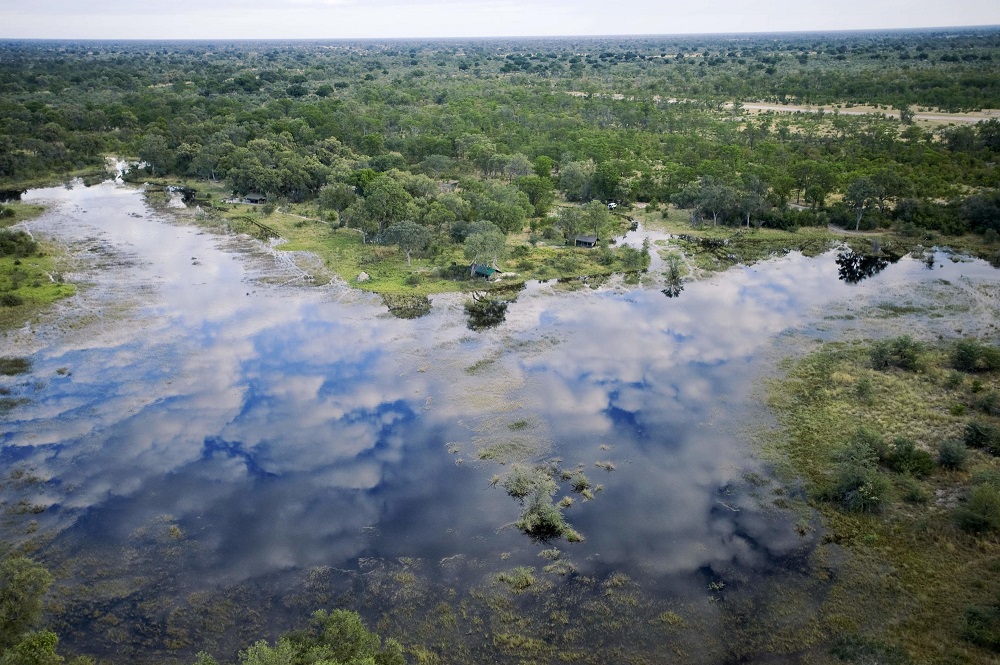
Xigera Safari Camp is currently and will likely remain – for the foreseeable future – the most impressive iteration of a safari lodge in Africa. At least that we know of. Twelve ultra-deluxe suites radiate out from a sumptuous central dining and lounge area, all elevated on a three meter high boardwalk.  

The rooms are nothing short of gargantuan in size; ours (#2) had a huge lounge area with large plate glass windows and doors with pretty views over the floodplain. The  large bedroom with a king size bed sported equally good views. The entire bedroom can be closed off by a simple but effective, electrically operated sliding mosquito net.  To the rear of the room, there’s a large walk-in closet with a make-up desk and magnifying mirror. The room has tons of storage space and clothes hanging space. And yes, there is a hair dryer.  

The cuisine at Xigera

During a recent visit to Xigera we found the food to be of the highest standard throughout, starting with lunch on our day of arrival. It was fun and exciting with  items like peri-peri wings, lamb sliders and a classic caesar salad with anchovies. Dinner was a multi-course affair, served outside in the boma under the African night sky. Does food taste better outside? Maybe not, but combining cutting-edge cuisine with fire and coals, smoke and heat, is never a bad idea. All the more so in the hands of the Xigera culinary team who does magical things with a fine lamb loin chop or a perfectly done portion of boerewors, firm to the bite but never tough, juicy and with a characteristic but understated note of coriander. Delicious served with plain mealiepap, known as sadza, ugali and nshima elsewhere in Africa. 

It ended up being an enchanted evening for guests and staff alike. Several of the guests were introduced to African dishes for the first time, much to their delight. A spirited dancing and singing performance by staff members concluded the night. 

The team was back at it quite early the next morning over breakfast. The Xigera eggs Benedict, with salmon, was particularly good and delicate, with a perfect Hollandaise sauce.  

Dinner that night was an outstanding 6-course tasting menu, a novel and sophisticated take on the traditional boma dinner. It retained the fire, coals and smoke of the boma, as well as the social nature, with guests, chef, and sommelier around a quadrangular outside area, with 3 small hibachi cookers providing the coals. 

Taking us through the first five courses, assistant chef Ollie Notes provided background and context to each dish. 

These included:

  • A smoked mozzarella with tomato relish and basil pesto
  • Grilled butternut with herb salt and local honey over a bed of butternut mousse
  • Salmon tostada with avocado wrapped in a freshly made corn tortilla
  • Twice-baked potato with onion and chevre and fresh goat cheese.
  • Grilled onion with a Gorgonzola reduction

Chef Branea from Cape Town put the finishing touches to the delectable ice cream dessert.  

Game viewing at Xigera

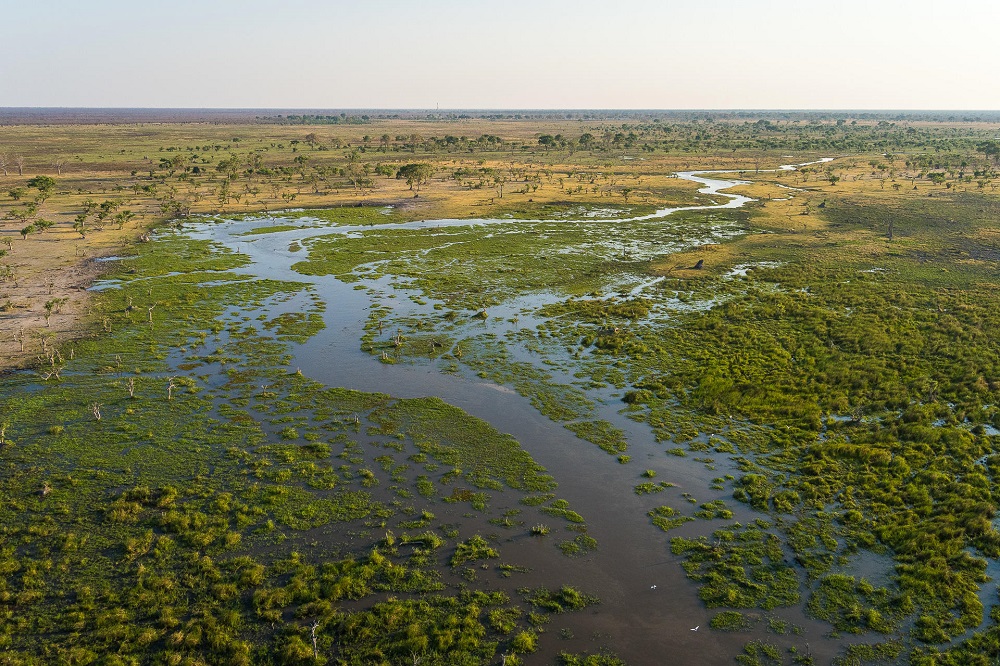
We’ve been on quite a few game drives in the Xigera area over the years and we have seen a definite uptrend. On our previous visit there we had our best view yet of a sitatunga on a mokoro outing, we bumped into some lions and we got some great leopard photos as well. 

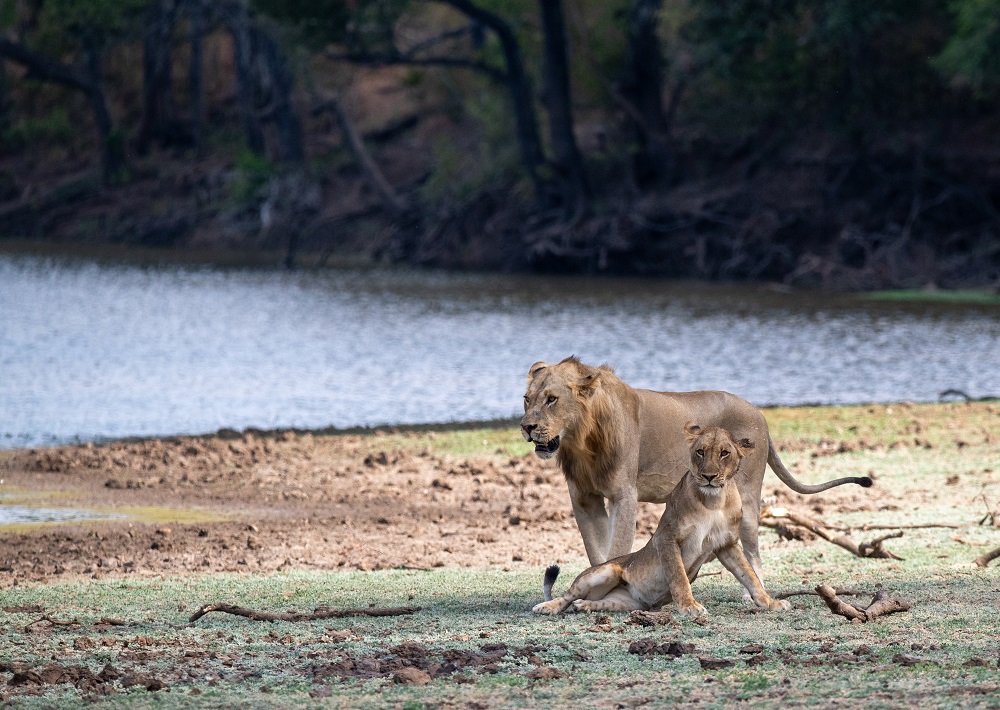
This time, more of the same. Right off the bat, Xigera surprised with a sighting of two good-sized male lions, in their prime, on a small island not far from the lodge. Not too far away – three female lions – all part of the same pride.  

Early mornings are when you want to be on safari in Botswana. That’s when some of the cats are still active as we found out on the following morning’s drive. There was a lot going on with a coalition of two young male lions – just coming into their prime – having just recently moved into the Xigera area at the time.

On this day, they were making no secret of their presence, loudly proclaiming being around with roaring – all while scent-marking everywhere. Of the two, the dominant male lion seemed to be keen to seek out the three females we had seen the previous day. That action would no doubt have serious consequences as the pair of dominant males would have been forced to react. That didn’t happen that day.

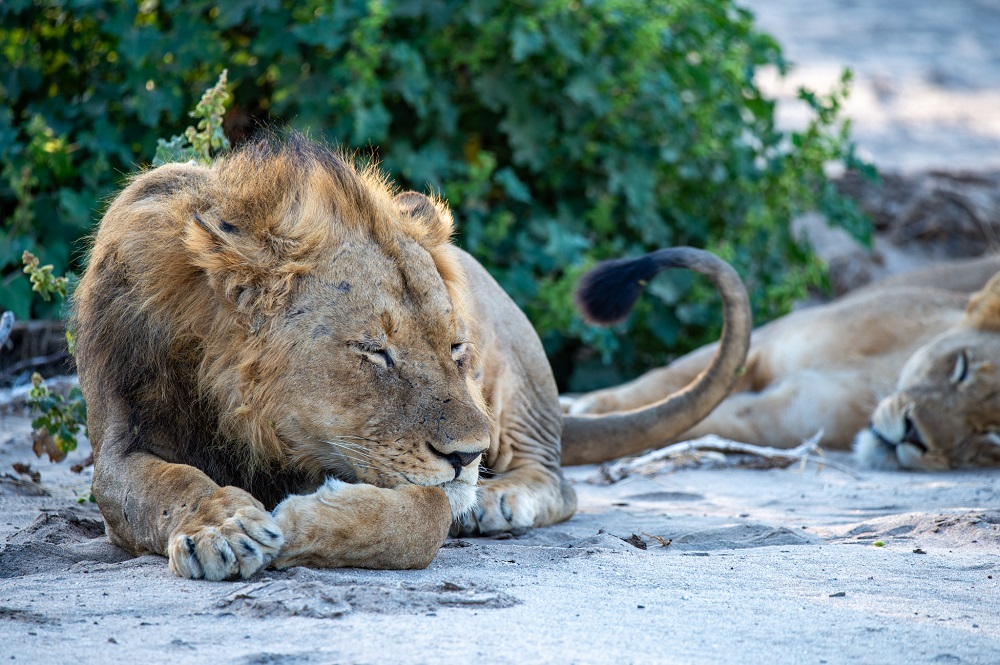
We left the two interlopers and located the dominant brothers who had also been roaring earlier that morning. They were clearly aware of the threat to their authority but were by no means cowed or nervous. They seemed very much at ease and in fact dozed off after they had found a shady spot to their liking.

What was clear at the time was that the lion pride dynamics at Xigera were poised for a sea change and guests at Xigera may be in for some surprising developments and titanic battles should the two younger males decide to take on the older, bigger, dominant males for control of the pride.

While we concentrated on the lion dynamics during the course of our stay, it became clear that the hit and miss game viewing which had characterized Xigera back in the day had matured. There was plenty of general plains game around in the way of zebras, lechwe, giraffes and kudus. Plus some solitary elephant bulls and a few small breeding herds. 

Combining Xigera with other Botswana camps

How does one ideally combine Xigera with other Botswana properties? We posed the question to Red Carnations’ Sally Gray who had an elegant and creative suggestion. Combine Xigera with Natural Selections’ Jacks Camp and Wilderness’ Mombo. 

Here is Sally’s take on the unique appeal of each of these properties and how they complement each other to create a perfect safari combination. One more piece of good advice from her:  “Be sure to end your stay at Xigera!”

Jack’s Camp

  • As with all lodges of this caliber – location is pivotal. Jack’s location is incredible – overlooking the Makgadikgadi pans.
  • Completely different ecosystem and landscape compared with anywhere else in Botswana.
  • Home to several unusual species of game, largely endemic to this region, such as brown hyena, black-maned lions, aardvark, oryx and springbok.
  • The experience of being able to sleep out in the salt pans – I have done this – possibly the best experience I have ever had.
  • Accompany the local San people on one of their bush walks – learning the secrets to their survival in such a harsh environment.
  • This area is also the home to one of the largest migrations of zebras in Africa – truly remarkable.
  • Similarly run to Xigera – Jack’s is family owned and run by Ralph Bousfield, who is hugely respected in the safari industry.
  • Jack’s Camp works well with Xigera as the two properties deliver a completely different experience.
  • Jack’s offers a wide variety of activities, so a 3-night stay is recommended.

Mombo

  • Iconic location on Chief’s Island in the Moremi Game Reserve.
  • It’s not for nothing that Mombo is known as the place of plenty – it is a game-viewing delight.
  • Made famous by the leopard named Legadema – beautifully captured in the wildlife documentary Eye of the Leopard. Her grandchildren and great-grandchildren are still at Mombo.
  • Dominated by cats, particularly lions and leopards.
  • Mombo offers game drives only, so it needs to be combined with another lodge for guests to get the full Botswana experience.
  • Mombo has a “hide” experience which allows you to get up and close with the animals.

Xigera Safari Lodge

  • Refurbished and revamped and opened in 2021.
  • 12 Suite lodge.
  • Fully air-conditioned which is a rarity in the Okavango Delta. Most of the other lodges have an airflow over the beds.
  • Xigera has as many as five different activities daily – four of them all year. Daily: game drives, mekoro outings, fishing, walking;  seasonal: boating.
  • A variety of activities calls for a longer stay – as there is so much more to experience.
  • Xigera is among the most sustainable lodges in Botswana – being 95% off the grid and having a sophisticated recycling program.
  • Incredible game experience. Intriguing species such as the rare African painted dog and cheetah have moved back into the region after a shift in the tectonic plates in Botswana in 2017.  This very minor earthquake has changed the face of this part of the Okavango Delta
  • Food is described as being “luscious.” All from local farmers supported by Xigera’s “Make Travel Matter” initiatives.

When you are ready to embark on what may very well be the ultimate safari combining Jack’s Camp, Mombo and Xigera Safari Lodge – give us a call at 1-800-513-5222 or email bert@fisheaglesafaris.com.   

YOU MIGHT ALSO BE INTERESTED IN

Destinations
Zambia

10th September 2021

Chindeni and the Bushcamp Company, Zambia

By late July we found ourselves at Chindeni, a small Bushcamp Company property
Read more
Botswana
Destinations
Okavango Delta

3rd October 2022

Camp Okavango, Botswana

Camp Okavango is in the heart of the permanent part of the Delta. In this idyllic setting there are no vehicles, and it is just a short walk

Read more
Area
Destinations
Nyerere National Park
Ruaha
Tanzania

14th October 2023

From My Safari Notebook: Wildlife Photography

Birds in flight and wildlife photographers have an uneasy relationship. Things go wrong as often as they go right. Getting focus-lock on a moving subject

Read more

SUBSCRIBE TO OUR NEWSLETTER

READERS FAVOURITES

Destinations
India

27th May 2023

India

India’s tiger, mammals and birds.

Read more
Botswana
Destinations

4th August 2022

On Safari At Belmond Eagle Island Lodge, Okavango Delta

What is the ‘secret sauce’ for an unforgettable few days on safari in Botswana? It starts with the animals, of course. The elephants, lions, giraffes, hippos

Read more
Destinations
Zambia

10th September 2021

Chindeni and the Bushcamp Company, Zambia

By late July we found ourselves at Chindeni, a small Bushcamp Company property
Read more

A Week in Hwange, Zimbabwe

21st May 2024

A Week in Hwange, Zimbabwe

When six inches of rain fell in less than 36 hours in Northern Hwange recently, it likely saved the lives of hundreds of vulnerable elephants, including many youngsters, from an untimely early death.  

That much rain in such a short time also has a significantly negative impact on game viewing. Literally from one day to the next, throngs of elephants and other animals at water holes vanish. Gone are the dramatic, dust-laden scenes with elephants vying for access to dwindling water. Gone are many of the chances for seeing predators stalking weakened prey animals. 

What to do? Keeping guests happy under those circumstances is why we rely so heavily on a handful of Africa-based partners. In this case Zimbabwe’s Imvelo Safaris, recently approved as a Safari Pros industry partner. 

Without skipping a beat, Imvelo amended the itinerary for some Fish Eagle Safaris guests in Hwange at the time. Instead of spending three nights in the rain-affected area around Nehimba, our guests were moved to Imvelo’s flagship property Camelthorn in the south. A private vehicle and guide were included at no additional cost. 

The results? Pretty spectacular. Over the course of their week in southern Hwange – with a strong professional guide in the person of Eric in charge – the guests experienced many excellent sightings. 

Here are the highlights, in the guest’s own words:

-Impalas and wildebeests running hard in the distance. Drove up to find a pack of 13 wild dogs inhaling an impala. Watched for over an hour as other scavengers arrived. Couldn’t leave until we saw that the jackals got something, and then watched one jackal leap up into the air and bite a vulture!

-Teenage elephant having a great mud wallow

-Two skinny cheetah brothers attempting a wildebeest chase

-An amazing walking safari to approach an elephant. Got within 20 feet before he knew we were there, then the guide had to whistle and clap his hands to get his attention. Heart-thumping!

-Two fat cheetah brothers napping in the shade. One got up to reposition and farted for us…we could ALL smell it!

-A lioness nursing her three cubs with her wildebeest catch stashed in the thicket

-Went back the next day to check on the lioness as she was lounging near her catch, and the two cheetah brothers came sniffing by. We were all very tense waiting to see what would happen…she leapt out of the thicket and it was cheetah scatter!

– Six younger elephants had a pool party at one of the watering holes, lots of swimming and splashing

-Large male lion guarding his kill in the thicket near a watering hole, could tell it was a young elephant! We had our nervous lunch nearby…

-A pride of four lions scattering a tower of giraffes

-Loved watching dung beetles rolling their dung balls

-Watched a snake and gecko battle it out…the snake won

Our guide Eric was the best! He provided tons of information, was great at meeting our needs and giving us great experiences.”

This guest experience underscores three crucial things we have come to recognize over the years as being essential to a good safari:

A good guide, someone to have your back and spending more time in fewer locations. 

That’s a short sentence with few words but they reach deeply into the essence of the African safari experience. 

A good guide

A competent guide interprets, amplifies and illuminates what you are seeing around you, adds his or her own perspective based on what may very well be decades of guiding. A good  guide anticipates and entertains. Gets you into just the right spot for a photo, makes you think and makes you laugh. They are a rare breed. 

Guides come and go and it is not always possible to request specific ones. Who to ask for? Perhaps the most energetic, enthusiastic member of the team, the one who is always first out and last back. Which is indicative of a love of one’s profession, usually accompanied by passion and just a little bit of a competitive instinct. All the better to get you out there in search of wonderful wilderness experiences.

Someone to have your back

Someone to have your back is probably the most overlooked aspect of safari travel due to the near ubiquitous electronic connectivity which we all enjoy nowadays. It’s almost as if you have a team at your disposal 24-7, irrespective of your or their physical location. 

Which is true most of the time but when the chips are down you need a reliable in-country back-up network. A team of professionals who can change you from one hotel to another if that is what it takes to salvage a trip. Who can quickly and effectively mobilize emergency health resources to come to your aid in a crisis.. 

I experienced this first hand just 10 days ago at the start of our Tanzania trip, in Arusha. I was sick as a dog. An upper respiratory infection had me by the throat – and lungs – and things were looking grim. That’s when someone having your back in Africa saved the day. All it took was a brief email to Nomad Tanzania, our destination management company partner – and literally 10 minutes later I was on a phone consultation with an MD. Not an hour later several medications were dropped off by a courier on a bike. 

Even with the best will in the world, it is not possible to adequately deliver these services remotely. If you travel with Fish Eagle Safaris you can rely on solid in-country support and you will never be left to fend for yourself. 

Spending more time in fewer locations 

Our recent Hwange guests did not plan on spending an entire week in the southern Hwange area. Yet when circumstances beyond anyone’s control resulted in exactly that, it turned out surprisingly well. 

Spending more time in fewer areas also affects the pace of a trip. Making it less rushed and more in keeping with the ambiance of a wilderness experience. With more time in an area you will be able to enjoy all or most of the available activities and find out what makes an area special or different. Spend three or four nights at a camp and invariably you will connect better with your guide(s) and camp staff and management. Which makes for a more meaningful and memorable trip.  

Haven’t been on a trip to Africa recently? Put us to the test and see for yourself what a difference it might make to work with us. Give us a call at 1 800 513 5222 during business hours Monday to Friday CDT or email Bert at bert@fisheaglesafaris.com 

YOU MIGHT ALSO BE INTERESTED IN

Destinations
Zambia

10th September 2021

Chindeni and the Bushcamp Company, Zambia

By late July we found ourselves at Chindeni, a small Bushcamp Company property
Read more
Botswana
Destinations
Okavango Delta

3rd October 2022

Camp Okavango, Botswana

Camp Okavango is in the heart of the permanent part of the Delta. In this idyllic setting there are no vehicles, and it is just a short walk

Read more
Area
Destinations
Nyerere National Park
Ruaha
Tanzania

14th October 2023

From My Safari Notebook: Wildlife Photography

Birds in flight and wildlife photographers have an uneasy relationship. Things go wrong as often as they go right. Getting focus-lock on a moving subject

Read more

SUBSCRIBE TO OUR NEWSLETTER

READERS FAVOURITES

Destinations
India

27th May 2023

India

India’s tiger, mammals and birds.

Read more
Botswana
Destinations

4th August 2022

On Safari At Belmond Eagle Island Lodge, Okavango Delta

What is the ‘secret sauce’ for an unforgettable few days on safari in Botswana? It starts with the animals, of course. The elephants, lions, giraffes, hippos

Read more
Destinations
Zambia

10th September 2021

Chindeni and the Bushcamp Company, Zambia

By late July we found ourselves at Chindeni, a small Bushcamp Company property
Read more

Kilimanjaro Lemosho Route – Trip Report

7th April 2024

Kilimanjaro Lemosho Route – Trip Report

Is climbing Kilimanjaro easy? I had posed this question to myself once or twice before in the aftermath of previous Kili climbs, which included the Machame, Rongai and Marangu routes. My answer hasn’t changed. You might be lulled into thinking that it is so by day five on several of the major routes. By which time you’ve successfully negotiated a few steep and sometimes rocky uphill stretches, a couple of glacial valleys and notably, the Barranco Wall. And you’ve mastered some long, grinding hikes at altitude. All in all, you’re thinking,  this is not going to be as hard as you had imagined it might be. Provided of course, that  you’re not suffering too badly from the effects of altitude sickness, you’re sleeping ok and not overly fatigued.  

And then everything changes. Somewhere between leaving base camp around midnight on summit day and getting down to the camp where you will be spending your last night on the mountain it becomes decidedly ‘not easy’. This is when you find out that Kilimanjaro is not a stroll in the park. In fact, most climbers are stretched to the very extreme of their limits over the span of about 14 hours, starting around midnight on summit day, which lasts well into the afternoon of the following day.  

My most recent and likely penultimate attempt to hike Kili, with just Umbwe to go to make it a nice round ‘5’ number, was the Lemosho Route in February 2023. It is the longest of the popular tourist routes and the one with the highest success ratio. The reason being self-evident: more time spent on the mountain at altitude prior to summit day leads to better acclimatization which leads to a less fatigued, more energized summit attempt.    

Just like the previous three times I had set out on a Kilimanjaro climb, day one on the Lemosho Route started with a drive from your Moshe or Arusha hotel. From where we spent the night, it was a 3-hour drive to the Londorossi Gate of Kilimanjaro National Park. The previous afternoon we had completed some formalities with the help of our lead guide Joseph Majuto, which meant that on our first day on the mountain we mostly had to wait in a tourist shelter with a lunch box, eating cookies and drinking boxed fruit juices. All while eyeing the other small groups of climbers doing the same thing. It takes longer than you might think – to get the permits ready – but you’ve got all day to get to the first campsite so no huge rush. Have another cookie.  

Thu 17 Feb:  Londorossi Gate to Big Tree – a rainforest stroll

Just as we were setting off, even before we had emerged from the cover of the shelter, some light and then intermittently heavy rain started to fall. An early opportunity for our three team members to put our rain gear to the test. My new Arcteryx Atom AR  shell handled the moisture admirably, although it was warmer than I had anticipated, with a good head of steam developing inside the jacket as we walked steadily uphill in moderately warm temperatures. My two team members were uber fit marathon runners and despite having done this a few times previously, I knew that I would have to bring my A-game to hang with the two women. 

The 7 km (just over 4 miles) hike from Londorossi Gate to the Mti Mkubwa campsite – better known as Big Tree – traverses a beautiful, dense, rainforest with majestic trees towering over the dense undergrowth, consisting of a profusion of vines, shrubs and other leafy plants. On one of the previous climbs, this is where our party got absolutely drenched in a torrential rainfall storm. Which is why you need to be wearing proper, waterproof boots for any Kilimanjaro climb.  

We arrived at the Big Tree campsite only to find that a surprisingly large number of tents had already been erected among the trees in a level area. I estimated that there were close to 50 tents spaced out in the woods. We dropped our stuff inside the tent and enjoyed some tea and popcorn while we waited for dinner. As if we hadn’t had enough of walking, we also took a stroll through the campsite. Then it was time for dinner: fish, potato croquettes, beans, a mixed salad and vegetable ‘sauce’. Pretty good. After doing the usual health questions (are you feeling dizzy, do you have a headache or difficulty breathing and a few others) and passing the pulse oximeter ‘test’ with flying colors, we called it a day. Nightlife? No such thing. Take your Kindle or a couple of books and rechargeable solar light.  

Fri 18 Feb:  Big Tree to Shira 1 – the hills get steep  and the rain intensifies 

We were up at 6:00 am for breakfast at 7:00 am, and departed just after 8:00 am. Even just three people can be slow getting ready, clearly. Right out of camp we encountered the first of two hills on the way. The first one was quite steep, followed by a fairly steep descent. The second hill seemed endless and presented us with the first real test on the hike. There wasn’t much in the way of switchbacks either, it was just up, up, up. Conditions were still quite warm and we were all sweating as we exited the rainforest, entering moorland habitat about an hour or so into the hike.  

From that point, it took at least another hour of steep uphill hiking over uneven terrain until we reached the crest of the ridge. From there the trail stretched along a relatively even area for the next 40 minutes or so.  

By now it had gotten really cold and a steady rain had started to come down. We had our rain gear on so we were ok but it was still pretty miserable and all three of us suffered from extremely cold hands.  

We reached Shira 1 campsite at just about 1:40 pm, cold and exhausted, and a cup of hot tea never tasted better. Ten minutes later, our assistant Davis served lunch, which consisted of spaghetti with a chicken sauce, fresh corn, and a pea, onion and tomato sauce. We tucked in and put a serious dent in the spaghetti. From there conditions improved considerably as the rain eventually abated and we enjoyed a couple of hours of partial sunshine.  

We spent some time in the mess tent where we warmed our frozen fingers. Taking a  walk through the campsite, we observed a Summits tent and met a couple of affable climbers from the UK, as well as a couple from Chapel Hill, NC. We took some photographs. Around 6:00 pm, hot water was delivered to the tent in a small basin for a sponge bath. Dinner was at 7:00 pm: rice, black beans and tomato sauce and fresh fruit. Again, it was early to bed, and I slept a solid 9 hours. That, in summary, is pretty much the nightly routine on a Kili climb, until summit day.

Sat 19 Feb – Shira 1 to Shira 2 – More rain, getting pelted in a sleet storm

To this point, this hike along the Lemosho Route was characterized by just one thing: rain. It rained every day without fail. Usually starting at around 11:00 am and invariably accompanied by heavy thunder. Fortunately, the thunder stayed high with no lighting bolts reaching the ground. At least not in our vicinity.  

Rain, hiking and camping in the open are not a good mix. Over the course of several days the dampness gets into almost everything. By day three the base of our tents was damp and some of the Goretex clothing items were starting to fail to repel the moisture.

More than that, the rain and sleet also impacted our activities and the day to day routine. Everything becomes more difficult and tedious when it is wet and muddy. Starting with simple things like getting in and out of the tents. Crouching down to duck into and out of the low opening with mud everywhere is annoying at the best of times, and downright frustrating in the wet.

The hiking is also substantially impacted by long periods of rain and sleet. It slows everything down, from having to stop repeatedly to add rain gear, to slowing down over wet terrain, having to dodge puddles and muddy spots, and having to be even more deliberate than usual traversing over wet rock.   

Another downside of chronically overcast weather: fewer opportunities to experience the scenery, which is one of the hallmarks of the Lemosho Route. We did have some good views of the Shira Plateau from Shira 1 camp, and great views of Kibo peak at the end of day 2 from Shira 1 and also from Shira 2. The second time around we could clearly see just how much more snow had accumulated in the previous 24 hours.

The hike from Shira 1 to 2 is about 10 km (6 miles) in distance and took us just about 4 hours, with a few rest stops, including one to don our rain gear.  

It didn’t only rain a lot. For the better part of 40 minutes plus we were in a heavy sleet storm, with icicles pelting us on the head. We were apprehensive about encountering a proper hail storm when good protection would have been impossible to find. Things are slightly grim when ‘just icicles’ is the good news.  

After an afternoon nap, we did a little walkabout, took a few more pictures and sat down for dinner at 6:30 pm. Homemade french fries, beef kabobs, and a bean stew, oranges and pineapple. And soup. We could not complain about the food. Earlier –  for lunch – we had veggie sandwiches, the Kili cook’s tasty take on pizza and a hot soup as a starter. Incidentally, despite all the 45 miles or so of hiking, I don’t think any one of us lost much weight. No surprise there.  

By nightfall – 8:oo pm – the sky had cleared and we could admire the starlit night sky, with the Milky Way and Orion being prominent.

Sun 20 Feb:  Shira 2 to Barranco – via Lava Tower at 15,000 feet above sea level

This was the longest day of the route so far, all of 7 hours and 20 minutes or so, from Shira 2 camp to Barranco Camp. How long and how tough a day was it? Somewhat like doing one of Colorado’s 14,000 foot peaks, all the way up and all the way down in just one day. We started at just before 8:00 am, after an eventful night. At around 2:00 am a heavy rainstorm moved across our campsite. It wasn’t brief and it was quite intense, adding to our existing concerns about dampness getting into our ground mattresses and potentially into our sleeping bags. To some degree it did, but not as badly as we had feared.

At 6:30 am, the sun was shining and it would continue to do so intermittently until about 1:00 pm when we reached Lava Tower at 15,000 feet above sea level. This was a new altitude record for two of the three of us.  

From the Lava Tower – which was the high point on the day’s hike – it was mostly downhill all the way to Barranco. Downhill doesn’t always translate to easy. It was heavy going pretty much all the way with rocks and boulders and steps up and steps down all the way. The area was still soaked from the previous day’s heavy precipitation, which made the footing slippery at times, and unpredictable.

The hike from Shira 2 to Lava Tower was no walk in the park either. Practically just meters out of camp, the rocky path started heading up and for the next two hours we walked steadily uphill, gaining considerable altitude. This portion of the hike culminates in a short ravine where we crested the hill, only to be confronted with more uphill in front.

At the sign pointing to Meyer’s Hut to the west we took a break, as did a few other hikers from Shira 2 who were enjoying a sitdown cup of tea. From there the trail winds steadily upward, across a saddle of sorts, and then links up with the Machame Trail a little further on.

Once the huge Lava Tower rocky outcrops came fully into view, we became more energized, our strength and energy having started to wane quite a bit. Understandably so, as at 15,000 feet the thin air does not deliver nearly as much oxygen as at sea level.  

We enjoyed a packed lunch at Lava Tower, regained our strength and then set off for Barranco.

Dinner tonight: cheesy potatoes, elbow pasta and a white bean stew. Served with the Kili version of ‘vetkoek’ (deep fried fritters), and some fresh pineapple. As always, the guides do their best to urge you on to eat more – nutrition is all-important, as is hydration. 

Mon 21 Feb:  Crossing the Barranco Wall to Karanga Camp

Late the previous day, we had looked across the campsite to the imposing, even somewhat intimidating Barranco Wall. If you take the Lemosho, Machame, or Umbwe route up Kilimanjaro, the only way to the top involves clambering up the Barranco Wall. The 900-foot cliff which towers over Barranco Camp, presents quite a challenge to the average hiker, with two particularly nerve-wracking spots. Fortunately, they are quite early in the ascent and within minutes of each other. The first one involves putting your weight on your left leg and swinging the right leg around to a rocky ledge. The other one is the well-known ‘kissing rock’ where you literally hug a big round rock as you try to stop yourself from toppling over backwards. Fortunately there’s always a guide close by to provide support.

From there on, the climb continues up steeply, with several spots where both hands and feet are needed to negotiate the rocks. Clambering in other words. With some stops for water and to let porters by, it took us a good two hours to make it to the top, where there were some nice views of Mt. Meru in the distance.  

From the top of the Barranco Wall it is another 2 hours to the next camp, Karanga, which overlooks a pretty valley.  

About an hour or so out of Karanga, when hikers first see the camp, it appears to be no more than a 20 minute hike away. Reality sets in when you advance another 200 meters or so, and the full picture becomes clear.  Before reaching camp, you have to hike down a steep, rocky, and in places, wet and muddy path, all the way down to a clear mountain stream, only to start up a steep, equally rocky path on the other side of the ravine. On the down side, there are many potentially dangerous spots where even a slight mistake, misjudgement, or a small lapse in concentration could have dire consequences. A fall could easily result in a serious injury, which would get you a one way ticket down the mountain in what would likely be an arduous and lengthy extraction process.

So my best advice is to prepare properly for the climb with significant attention to single leg strength and balance. Use your walking sticks, maintain a safe (slow) pace and pay close attention to where you plant your feet. Above all, never stray off the main trail for whatever reason. Short cuts or detours to get around slower hikes are to be avoided altogether. That is where accidents happen.  

Karanga camp is set on a slope with Kibo prominent to the north. Some hikers bypass Karanga and continue on to Barafu – another 3 hours of hiking – only to make their summit attempt starting later on the same day. I don’t think that is a good idea at all, considering the time and energy expended to make it from Barranco up the Barranco Wall and through the several steep valleys en route to Karanga. Starting off summit day with a sleep deficit, on depleted leg muscles and at considerable altitude, is just not the smart move.

We made it to Karanga Camp around noon, just in time for a hot lunch. In the afternoon we did a Kilimanjaro version of Wordle, took a hike around the campsite, and made use of a couple of intermittent periods of sunlight to put out some solar charging devices.  

All the while Kibo loomed in the background, a silent but very powerful reminder of what lay ahead of us the following day. 

Tue 22 Feb:  Karanga Camp to Barafu – Preparing for the summit attempt

After another good night of sleep – at least for yours truly – we went through the usual morning routine of getting ready for another day of camping on Mt. Kilimanjaro.

It starts with storing your sleeping bag and mattress, getting dressed, setting aside the items for your day pack, and packing everything else into your duffel bag. There’s fluids to be prepared such as using Steri tablets or adding Nuun or Gatorade powder to the supplied boiled water. Apply sunscreen, including a high SPF product for your lips, make sure your camera or smartphone is charged, get your hat and sticks and off you go.

On this day we had a relatively short hike ahead of us, of about 3 hours, from Karanga to Barafu, which would be the base camp for the actual summit attempt. Which would start late on the evening of 22 February hopefully culminating with the three of us reaching Uhuru Peak around 8:00 to 9:00 am on Wed 23 February.  

The walk to Barafu was steadily uphill through noticeable rocky terrain. If the gods of antiquity were petulant children who tossed around large and small boulders in helter-skelter fashion, this is what the end result would be. Rocks and boulders in every direction, with precious little in the way of vegetation and almost nothing green. This was true Alpine desert. The only climate zone left? The snow cap at the summit. The last uphill into Barafu is steep and rocky and at an altitude of around 15,000 feet above sea level. It was a formidable test.  

We reached Barafu fully ready for some food and a lot of rest. Which is exactly what we proceeded to do. We enjoyed probably one of the best lunches of the trip so far, a hearty and altogether delicious vegetable stew, with some white rice on the side. Just what the doctor ordered. By 2:00 pm we were ready to at least attempt to take a nap to recharge the batteries for the most demanding hike most of us would ever do. Eight or nine hours to go until we would set off on the climactic portion of our 9-day Kilimanjaro adventure. It was with a mix of anticipation, excitement and just a little nervousness that we retired to our tents that afternoon.  

By 6:00 pm (none of us actually having slept a wink), we were back in the mess tent for a light dinner. A light icy rain started to fall during dinner, perhaps not the best harbinger of things to come on summit day or rather night. Little did we know then how things would turn out.

Just like on my previous three successful climbs, I did not sleep at all, using the afternoon and early evening hours to rest and prepare. Getting ready for the summit attempt takes a lot of planning and selection of suitable gear. Other than one’s climbing boots, the choice of a waterproof shell is critical. This is the one garment without which a Kilimanjaro climb can quickly turn miserable if not unbearable. It is of paramount importance to stay warm and dry and for that you need a good shell.

I wore an Arcteryx Beta AR shell for the first time and it was the bomb. 100% waterproof, warm, and with tighteners at the sleeves to keep moisture out. Good pockets with zippers, a proper hood and lightweight to boot. The large size means it is roomy enough to fit comfortably over several other layers, including a heavy fleece.

A light breakfast was served just after 10:00 pm, and following that we made the usual final adjustments & preparations. Put on gaiters, checked on our water and Gatorade supply, made sure we had our sunglasses, suntan lotion and extra batteries for the headlamp. It turned out that my extra batteries had been left behind in a bag in Arusha. It would cost me dearly later the following day. Other important final checks? Have your liner and heavy gloves ready from the word go. Cold fingers and hands are no fun and can be distracting. My set of heavy REI skiing mittens worked well. In your backpack also include your camera and extra batteries (keep them warm) and a 30 + SPF lip balm. This is vital – so many people leave Kili with cracked, blistered lips – do not let it happen to you!

Wed 23 Feb:  Uhuru Summit attempt – Disaster strikes

Finally, around 11:00 pm, as a snow flurry came down, we started out of Barafu Camp. Having completed the Machame Route in 2016, I remembered that there was a rather nasty stretch of rocks and steep uphill right out of the gate leaving Barafu. Sure enough, we were huffing and puffing almost immediately. The treacherous, even dangerous uphill stretch was much worse than I had remembered. It was rough, with huge rock slabs to be negotiated under less than ideal (wet, icy, snowy) conditions.

If I were ever to climb this route again (which is unlikely), I would absolutely make Kosovo my final base camp, not Barafu. Kosovo is about an additional hour’s hike further up the mountain, past Barafu. Climbing out of Kosovo – which we did when we hiked the Machame Route – is the smart move. Of course, that means having to include the steep, hilly stretch (leading out of Barafu) as part of the hike from Karanga the previous day. Seeing as that hike is less than 3 hours, it makes eminently good sense. It makes your summit day attempt much less strenuous not having to contend with that awful, rocky hill first thing out of the gate.

Once we had negotiated the steep, nasty stretch, we made pretty good progress and I was starting to feel confident about summiting. Conditions were ideal with no wind or snow, and it wasn’t exceptionally cold. I was just thinking that we were well on our way, with the rocky stretch leading to Stella Point being the only really difficult portion ahead, when an event occurred which would change everything almost instantaneously.

One person in our party just said, “I’m feeling a little dizzy,” almost immediately started to wobble a bit and took a few steps to a large rock, where she lost consciousness. As it turned out, she would not be  able to recall any of the subsequent events until she reached about 12,000 feet elevation at Millenium Camp on the way back down.

Later on, we realized that our team mate was suffering from HACE – High Altitude Cerebral Edema. I was aware of HACE and its cousin HAPE – High Altitude Pulmonary Edema – having done extensive reading prior to my first Kili attempt. Unless and until one of them unfolds in front of your eyes these conditions remain theoretical constructs in your mind.  

It was scary experiencing it first-hand and seeing your friend go from walking normally to being completely out of it in a matter of less than two minutes. If untreated, HACE can be fatal. We all knew what had to be done: the climber had to get emergency oxygen and be rushed to a lower altitude.

That is exactly what happened. An oxygen tube was connected and the emergency descent was started practically immediately, with assistant guide Winford taking the lead and moving ahead of us downhill at a rapid pace, physically supporting the stricken hiker. The remaining two climbers followed – at a substantially slower pace – with head guide Joseph. We paused for a short while at Barafu where the decision was made to evacuate right out of the park, and to not overnight at Mweka which would ordinarily be the case.  

We still had not seen our friend but was told that she was feeling a lot better. The descent from Barafu to Mweka is a tough downhill slog of about 3 hours along an abysmally bad, substandard, rock-strewn track. Negotiating this dangerous descent after a successful summit – as I had done before – is tough, but doing it in the dark was crazy. It is pathetic that the Kilimanjaro authorities make that particular track the only option down for hikers completing the Machame, Lemosho or Umbwe summit attempts. Since 2016 – when I first hiked down along the road after a Machame climb – few if any improvements had been made. To make matters worse we were walking in near total darkness from 3:00 am until 6:30 am. Being without spare batteries, my headlamp petered out halfway down the track, which made every step more difficult than it should have been. Fortunately we made the hazardous trek without twisting an ankle or worse.

We were finally reunited with our friend at Mweka Campsite. She was feeling much better but clearly still the worse for wear,  groggy and fatigued. We had a long 10 km (6 mile) stretch of road ahead of us to the Mweka Gate. It took us the better part of 3 hours to complete the beautiful yet tiring walk through the rainforest. With dozens of porters passing us every mile or so, we took what felt like thousands of steps down to where the jeep track terminated. Relief was in sight! Minutes later we were bundled into a vintage ambulance and drove the last few miles to Mweka Gate.  

From there it was about 40 minutes back to our Moshi Hotel where we collected our valuables and left luggage, took a very mch overdue and welcome hot shower and handed over the gratuity to Joseph and Winford to be distributed among the team. It was time to say goodbye to our stalwart guides and to head back to Arusha for the night. The next day we said our own goodbyes and went on our way to Houston, San Antonio and Johannesburg, respectively. The trip didn’t end quite the way we would have liked it to, but it was a major achievement to have climbed as high as we did under really trying circumstances. 

Three common Kilimanjaro climb pitfalls to avoid

What are the three most common mistakes made in the planning and execution of a Kili climb?

#1: Not adding an additional acclimating day and opting for the minimum # of days on a climb

Unless you are a super-conditioned athlete – and even then – attempting the Lemosho route in just seven days instead of 8, the Machame Route in just six days or the Marangu Route in just five, is looking for trouble. Spending an additional day on the mountain at altitude makes a huge difference in the chance for a successful summit. So spend a bit more time in Tanzania and pay the extra money for one more day: it will be worth your while. This is even more important on the shorter routes like Marangu and Umbwe, both of which can theoretically be done in 5 days. Definitely add an extra night on these climbs; even then your body is going to have a tough time to adjust due to the short, rapid ascent.

#2: Flying into Kilimanjaro the night before starting your Kili climb

This is not a good idea, particularly if you live in a city close to sea level and you have to take one or more long flights crossing as many as 9 or 10 time zones to get to Tanzania. Departing from sea level, spending 30-plus hours on the journey, only getting to Tanzania the night before – and then setting out on the climb the very next day – is decidedly risky. Like asking your body to go from zero to 60 mph overnight.

On the other hand, spending 3 nights or so in Tanzania at around 1,500 meters above sea level, such as in the Arusha or Moshe area, can make a decisive difference for the better. You’ve already made a significant investment in time and money to get this far, so don’t risk it by starting up the mountain too soon. Spending a few nights at a lodge such as Ngare Sero, on the lower slopes of Mt. Meru just outside Arusha, will be hugely beneficial. There’s plenty of activities to keep you busy, including hiking on the lower slopes of Mt. Meru. Get over the jet lag, rest up a bit and give your body a chance to acclimate to the mile-high altitude before you pile on more altitude over the next few days. If you’re keen, we can even arrange a 3-day hike of Mt. Meru which would be the ideal fine-tuning of your Kilimanjaro preparation.

#3: Starting off at too fast a pace

You’ve done the training, you’re feeling fit and you want to get to the top. Fast. So off you go, charging up the mountain, right out of the gate. Big mistake. Kili is not a race and there is no special certificate for beating the pack. It takes 6 or 7 days or even more, and the real test only starts around midnight on summit day. That is when a Kili climb goes from relatively easy to sometimes super difficult, depending on the conditions. Not conserving your energy earlier on will cost you dearly then. Always mind your guide’s entreaties to go slowly. Pole pole.  

Of course, several other factors come into play including good physical preparation, proper equipment, picking the best time of the year for your climb, and having a competent head guide in charge.


How to improve your chances to summit Kilimanjaro: 

#1: Keep your feet happy and healthy

This starts with buying and wearing in a good pair of well-fitting waterproof boots. Do not scrimp on this purchase. The line between success and failure on Kilimanjaro is a thin one and developing debilitating blisters can easily tilt you in the wrong direction. Personal hygiene is a challenge on the mountain with no access to showers, except cold ones on the Marangu Route. Whatever you do or do not do in this arena, don’t neglect your feet. Take immediate and decisive action to treat a blister or hot spot right away, before it becomes problematic. Use an antifungal like Tinactin daily and apply a lubricant like Glide (get it from a running store) on and between your toes, on your heels and other potential problem areas, before every hike. Prevention is way more important than cure, particularly over the space of a few crucial days.

Proper socks are super important. I’ve had great results with a thin liner sock (like the REI store brand), together with a double-layered hiking sock such as the Wrightsock ‘Coolmesh’ type. Take enough socks to start with a clean pair (liner and regular socks) every day, plus 2 spare sets in case of unexpected heavy rain or other mishap.

#2: Follow your head guide’s instructions and requests

Your head guide has summited Kilimanjaro probably dozens and even hundreds of times. He knows what works, he can anticipate issues and pitfalls, help you avoid failure and inspire you to deliver your best. As long as you listen to him and let him lead. If the pace initially seems painfully slow, there is a reason. If the head guide wants you to do an afternoon climb to gain some more altitude after a long and perhaps punishing morning hike, do it. Don’t fret, don’t whine – you are paying good money for the chance to achieve something really special. So, shun all negativity from your mind and let your head guide help you realize your dream.

#3: Sleep when you can

Get some sleep at night or during the day, whenever the opportunity arises. Whether it’s a 15-minute nap or a 6-hour slumber, it all adds up and it is vital, in fact critical for success. Bring good earplugs, a comfy pillow, whatever it takes to get you in a sleep mode. Avoid caffeine and alcohol. A high quality sleeping bag which will keep you warm at temperatures as low as minus 20 degrees Fahrenheit is a good investment in more and better sleep. It means you can get into your sleeping bag with just a couple of layers of loose, comfortable sleepwear. To keep warm in a sleeping bag not designed for such low temperatures, you may end up having to wear multiple layers of clothing. This can be annoying, restrictive and not conducive at all to falling asleep easily and quickly. Plus of course being cold inside your sleeping is guaranteed to adversely affect your sleep duration and quality.

#4: Eat and drink regularly

The food on Kilimanjaro is typically bland and predictable: chicken and chips, a variety of stews, lots of vegetables and pasta. And soups. If you are lucky your cook will prepare some local foods like ugali (rustic polenta) and beans. Even the most creative of mountain cooks are stymied by the limited range and quantity of fresh ingredients which the porters can carry all the way up, so don’t expect something new and exciting every day. You must eat though, to replenish the thousands of calories burnt every day. So, while you may not always feel ravenously hungry, decent nourishment is vital. Be sure to bring some energy bars with you; on our last trek I tried the Luna brand Blueberry and Lemon Zest varieties and they both hit the spot! Be creative and experiment, just make sure that you get your calories in. It is ok to indulge in sugary treats for these few days so by all means tuck into candy bars, chocolates, snack food and trail mixes – anything you find palatable.

Your head guide will be checking regularly to make sure that you stay hydrated as that is of paramount importance. Whether you use a bladder system or individual Nalgene bottles – or both – make sure that you carry at least 3 to 4 liters of water on you; it is advisable to add some electrolytes to the bottled water.

#5: Take the Diamox

Don’t shy away from a twice daily dose of Diamox (Acetazolamide), a diuretic which helps to prevent and reduce the symptoms of altitude sickness. Most climbers take about 125 mg daily and up to 250 mg before summit day. Be sure to consult a physician before doing so. Taking Diamox is no guarantee of success, but it does help a lot of people. The most common side-effects include some tingling in the extremities and excessive urination. Not a bad trade-off for achieving your goal. Persons who have an allergy to Diamox or sulfa drugs should clearly not take this drug – again, be sure to consult a medical specialist before taking any prescription medication.

#6: Train, train, train

It is never too soon to start training for Kili but certainly you’d want to be on some kind of training regimen starting no less than 6 months prior to the summit date. Ideally of course, climb some mountains or hills with a backpack, with some weights. Start modestly and work your way up from a couple of days or so per week, increasing the distance and frequency as the climb approaches.

No hills? Find a levee wall or other decent sized hill or slope (steps if there is nothing else) and walk up and down with a weighted backpack for up to an hour or more, several times per week. Make this progressively harder and more challenging as the big day approaches. Be careful with weights on your back as too much can be dangerous, particularly if not carried high up and close to your upper torso. Even regular long hikes with your Kili boots and backpack (load it up progressively) will help with the preparation, hills or no hills.


In addition to, and in combination with hiking, I suggest a series of single leg exercises to increase your ability to handle the thousands of ‘up’ and then thousands of ‘down’ steps required to get to the top. And down again. The exercises which I personally do include these:

  • * Single leg step-ups 
  • * Single leg deadlifts 
  • * Single leg squats  
  • * Regular weighted squats
  • * Walking lunges       
  • * Calf lifts

It is a good idea to also include some aerobic distance exercises like running, biking or a rowing machine to build up endurance and good oxygen utilization. Maybe even some high intensity running like fartleks (speedplay) which can be done anywhere. Just warm up properly and don’t make any sudden or large increases in volume or intensity from one day or week to the next. Slowly slowly, just like the eventual ascent you are working towards!

There is no prohibition on including other training modalities and equipment like regular gym core and weight work, swiss ball, medicine ball, resistance bands or whatever you are already doing. And of course, if you already work with a personal trainer, that is your best-case scenario. A personal trainer will be able to customize your training program to get you into tip-top form for Kilimanjaro!

If you are ready to take on the challenge of Kilimanjaro, call our Houston office at 1-800-513-5222 any time during business hours, Monday to Friday, CDT or email me at bert@fisheaglesafaris.com. 

YOU MIGHT ALSO BE INTERESTED IN

Destinations
Zambia

10th September 2021

Chindeni and the Bushcamp Company, Zambia

By late July we found ourselves at Chindeni, a small Bushcamp Company property
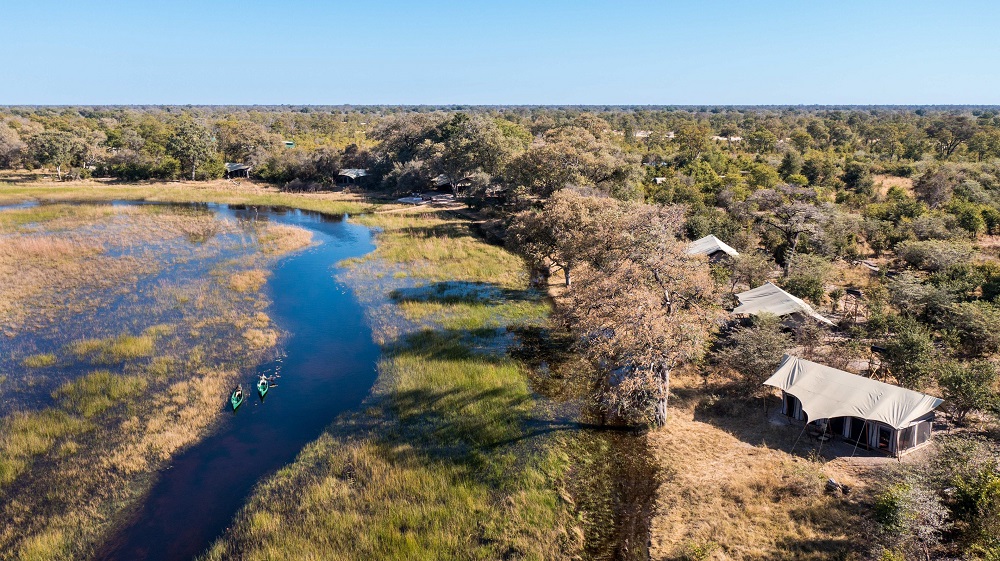
Read more
Botswana
Destinations
Okavango Delta

3rd October 2022

Camp Okavango, Botswana

Camp Okavango is in the heart of the permanent part of the Delta. In this idyllic setting there are no vehicles, and it is just a short walk

Read more
Area
Destinations
Nyerere National Park
Ruaha
Tanzania

14th October 2023

From My Safari Notebook: Wildlife Photography

Birds in flight and wildlife photographers have an uneasy relationship. Things go wrong as often as they go right. Getting focus-lock on a moving subject

Read more

SUBSCRIBE TO OUR NEWSLETTER

READERS FAVOURITES

Destinations
India

27th May 2023

India

India’s tiger, mammals and birds.

Read more
Botswana
Destinations

4th August 2022

On Safari At Belmond Eagle Island Lodge, Okavango Delta

What is the ‘secret sauce’ for an unforgettable few days on safari in Botswana? It starts with the animals, of course. The elephants, lions, giraffes, hippos

Read more
Destinations
Zambia

10th September 2021

Chindeni and the Bushcamp Company, Zambia

By late July we found ourselves at Chindeni, a small Bushcamp Company property
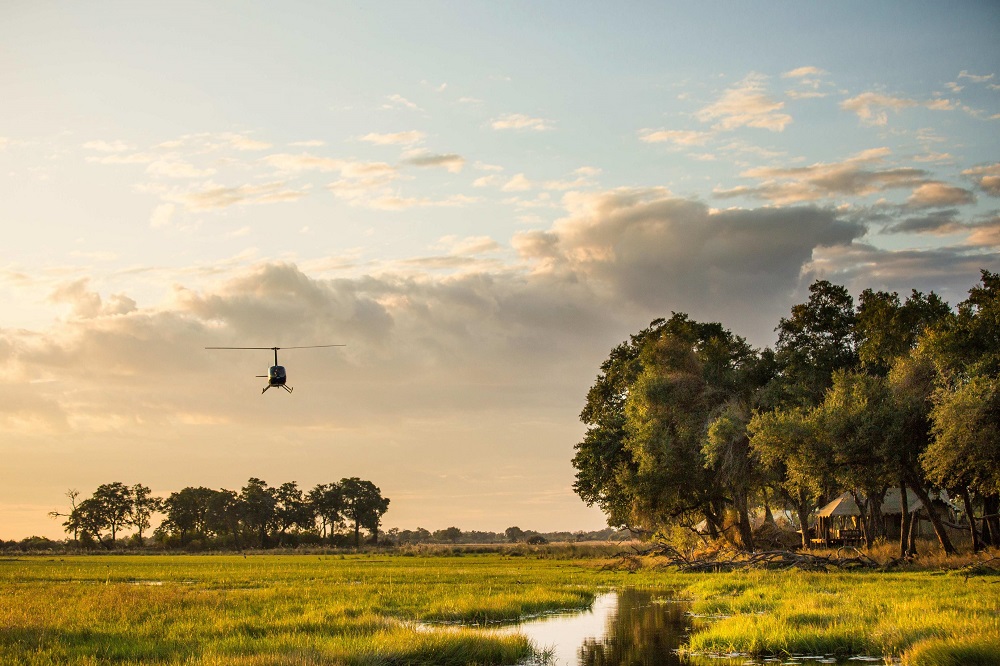
Read more
  • « Go to Previous Page
  • Page 1
  • Interim pages omitted …
  • Page 7
  • Page 8
  • Page 9
  • Page 10
  • Page 11
  • Interim pages omitted …
  • Page 28
  • Go to Next Page »

Footer

Design

  • About
  • Destinations
  • Blogs
  • FAQS
  • Team
  • Contact
All Rights Reserved ©Fish Eagle Safaris 2022 | Terms & Conditions | Privacy Policy
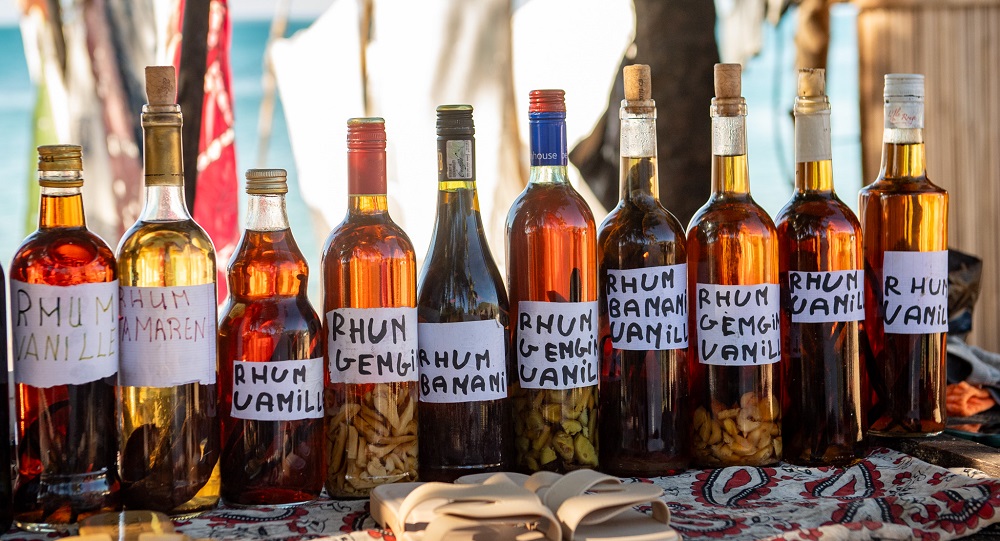
Designed & Developed by B Online

SUBSCRIBE TO OUR NEWSLETTER

SIGN-UP TO OUR NEWSLETTER

Subscribe Form

Footer Widget Header

Related Blogs