• Skip to primary navigation
  • Skip to main content
  • Skip to footer

Fish Eagle Safaris

Fish Eagle safaris

Contact

Logo
  • About
  • Destinations
  • Blogs
  • Newsletter
  • FAQS
  • Team
  • search
  • Contact
  • About
  • Destinations
  • Blogs
  • FAQS
  • Team
  • Contact

Destinations

Lyndon Visits South Africa’s Eastern Cape Province

19th April 2025

Lyndon Visits South Africa’s Eastern Cape Province

South Africa’s Eastern Cape game reserves are located in a spectacularly beautiful, malaria-free area just off the Indian Ocean coast, about 500 miles due east of Cape Town. The area is easily accessible by air from Johannesburg (1 hr 45 minutes) and Cape Town (1 hr 15 minutes). Its beautiful green rolling hills, temperate weather and abundance of wildlife with all of the ‘Big Five’ mammals being present (lions, leopards, buffalo, elephant and rhino) make it an attractive destination for visitors wanting to add a safari to a Cape Town stay. It is also a great option for families who don’t want to take their children into a malaria area, or who may simply want to explore a different safari area, having previously visited the Sabi Sands or Timbavati or another area in South Africa.  

Jason and Bert have visited the Eastern Cape reserves a total of four times between them; Lyndon recently made it there for the first time; here is his personal account:  
“I spent four nights in two different camps in South Africa’s Eastern Cape in the middle of March with my family. It was my first time in the area and I must say I really enjoyed it. The first stop was Lalibela Treetops. We flew in the morning from Johannesburg to Port Elizabeth (now Gqeberha) and had a road transfer of about an hour to the camp. 

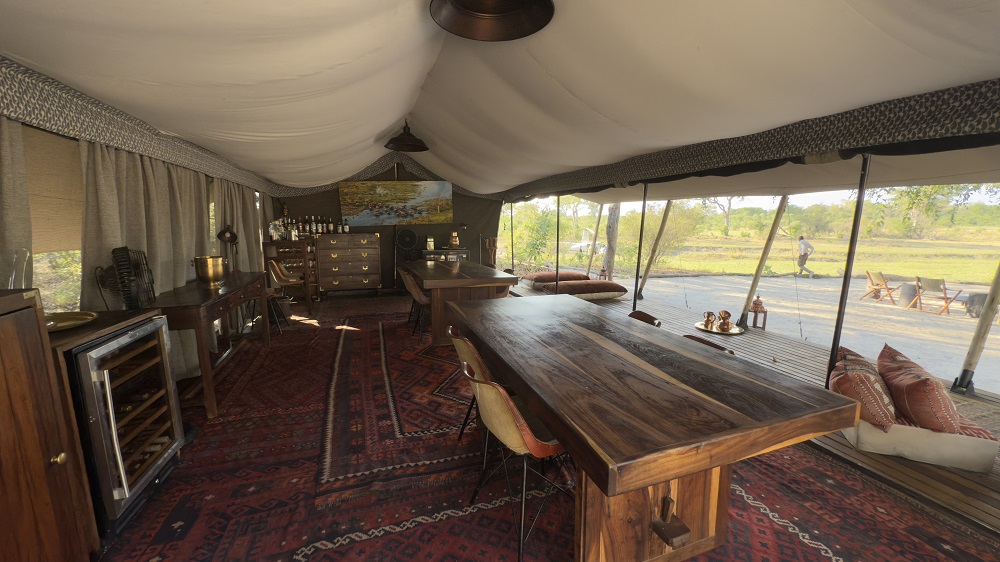
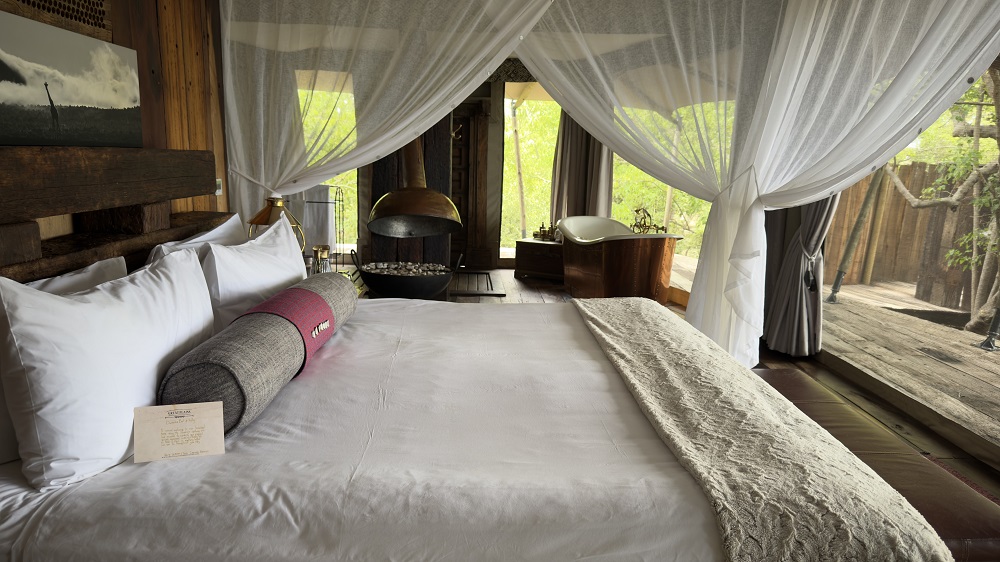
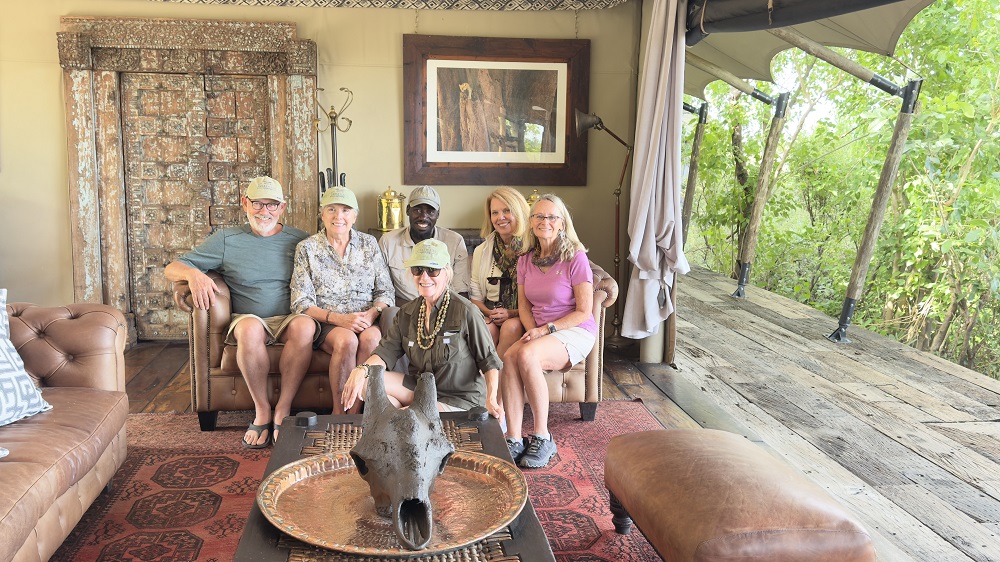
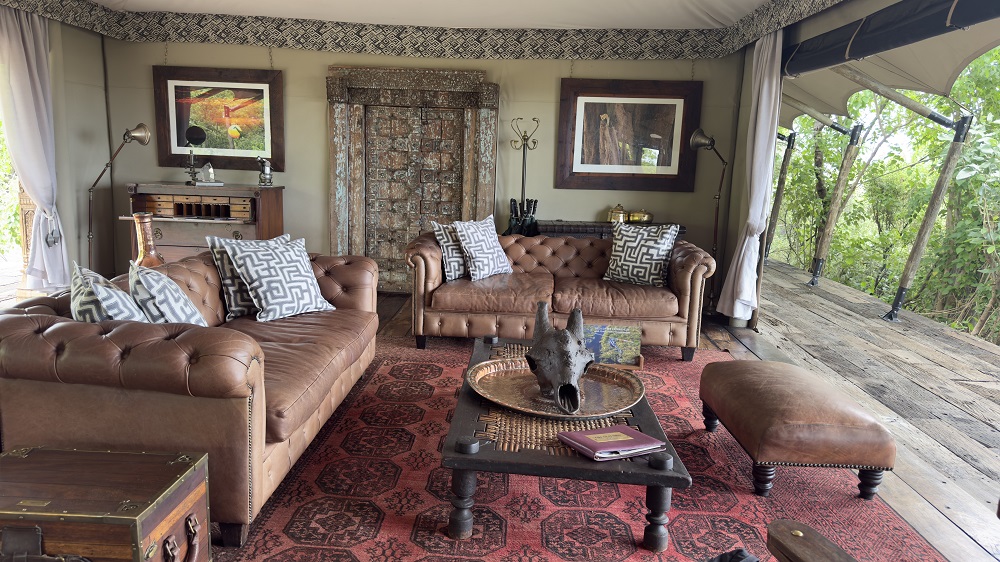
What were some of the highlights? I can start with the staff led by the manager Wynton Fortune – they were fantastic. Likewise our guide Desigan Naidoo – he goes by Des – was very engaging and skilled. The camp itself felt intimate and the rooms were canvas with a thatch roof. Plenty of room with all the necessities. Meals here are communal which is always fun.
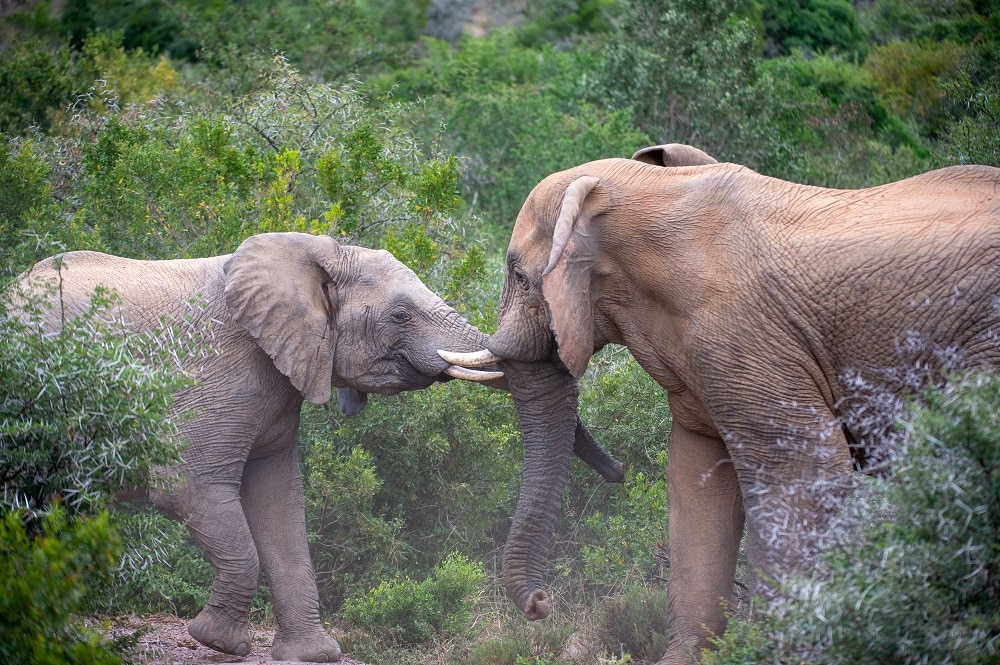
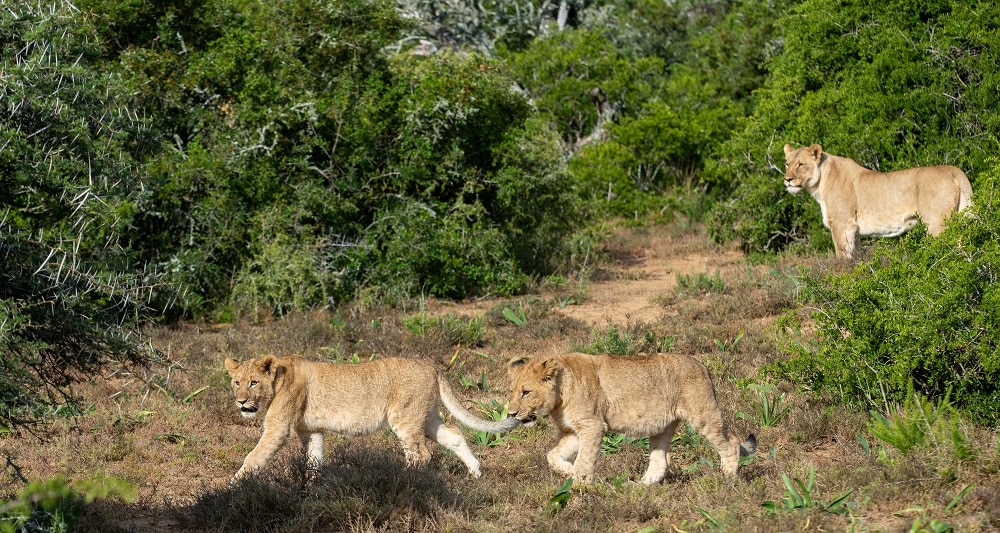
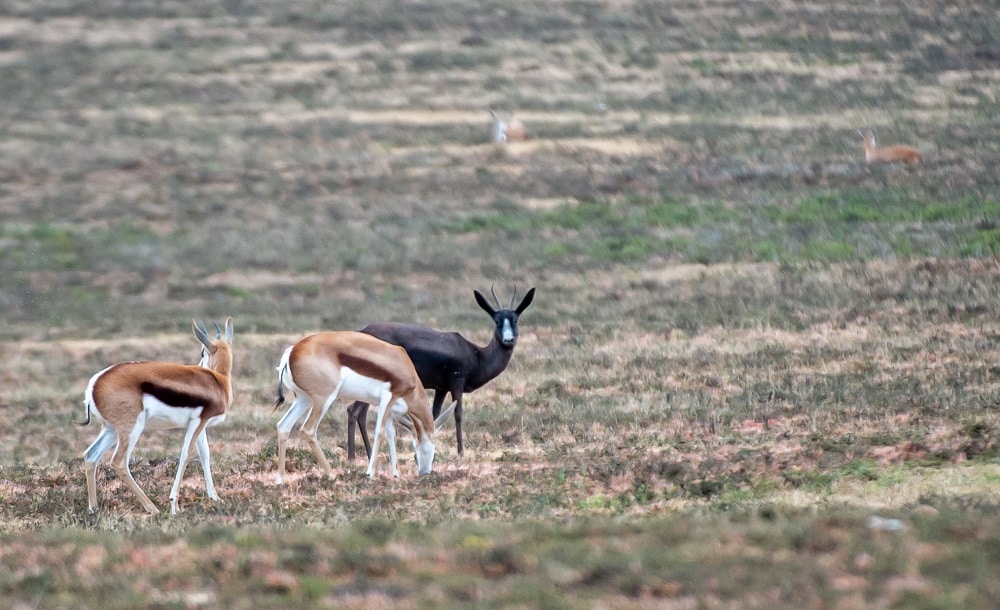
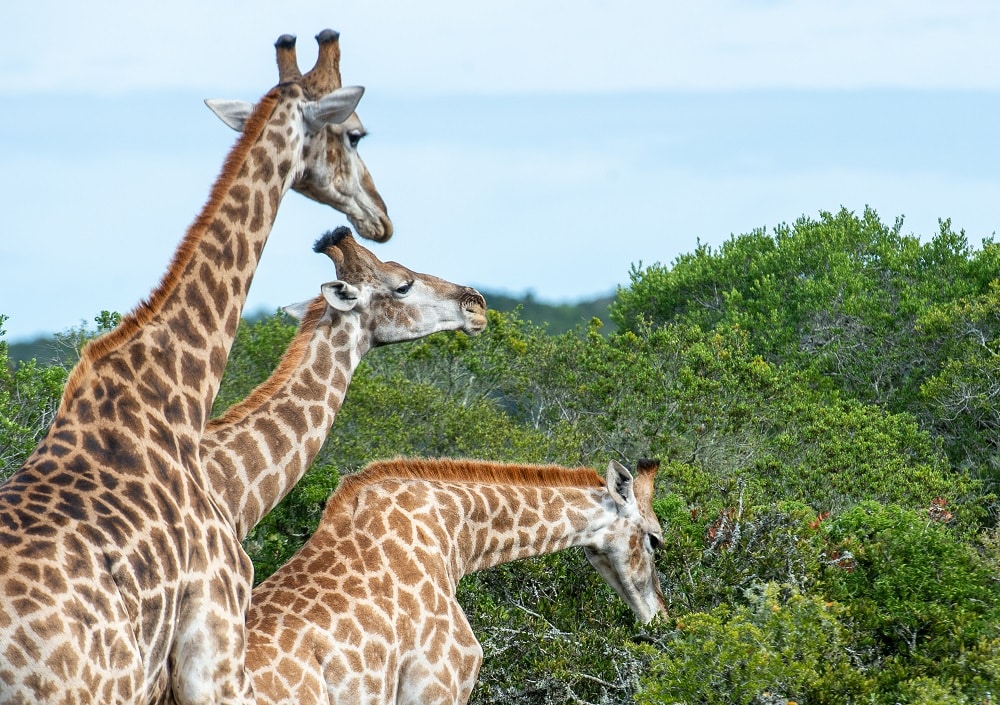
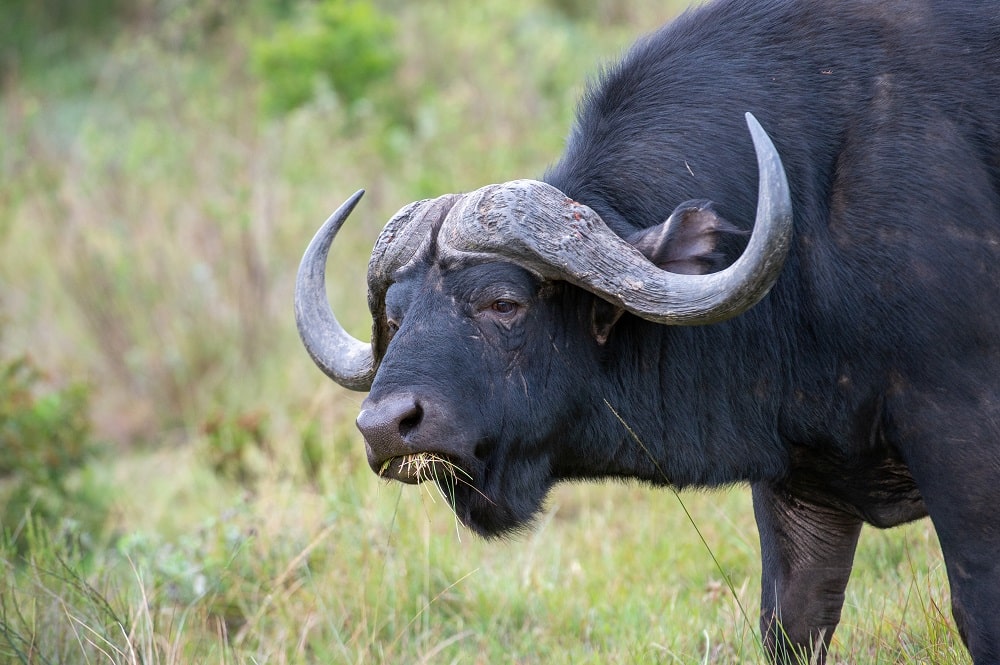
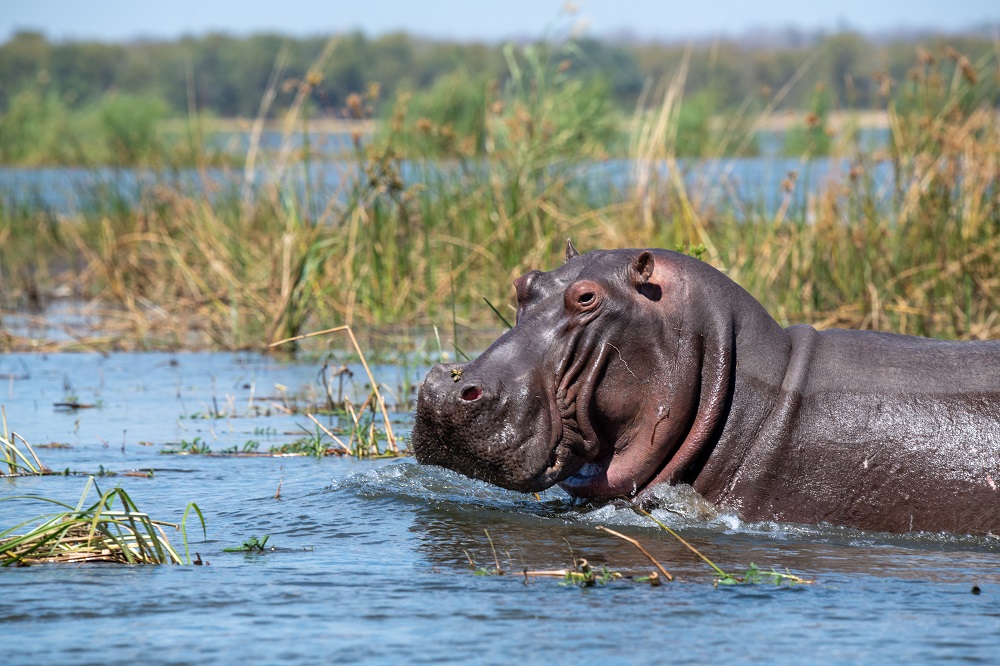
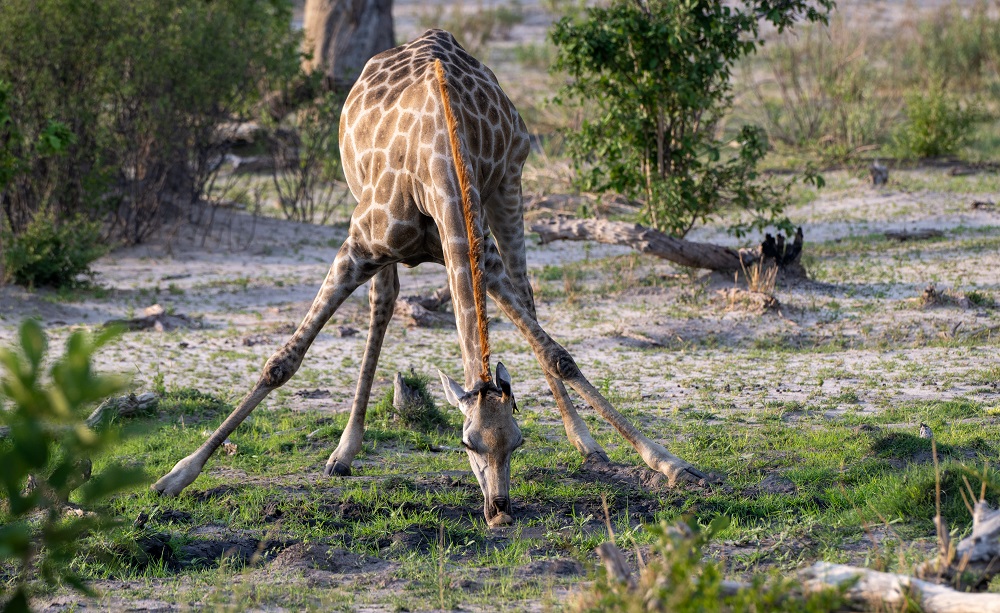
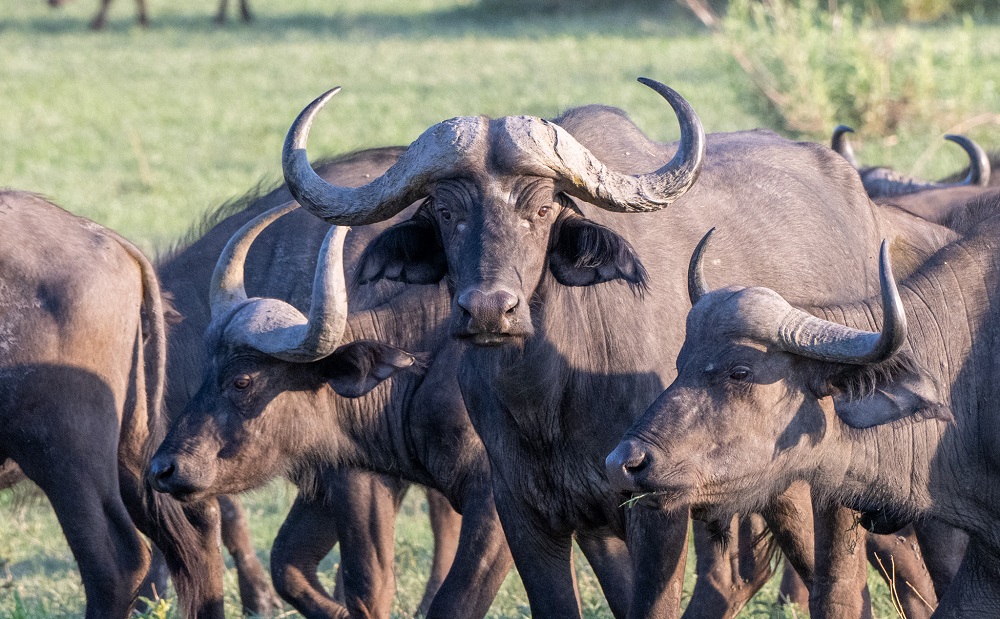
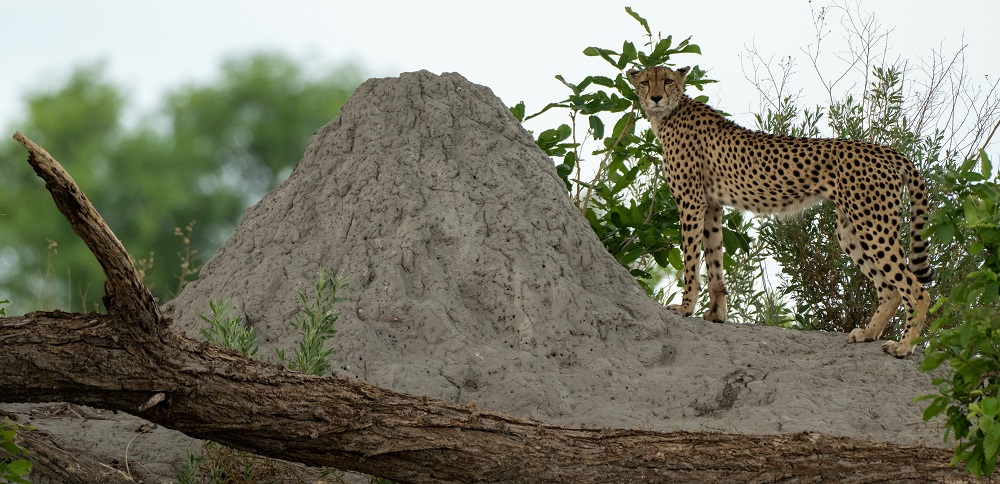
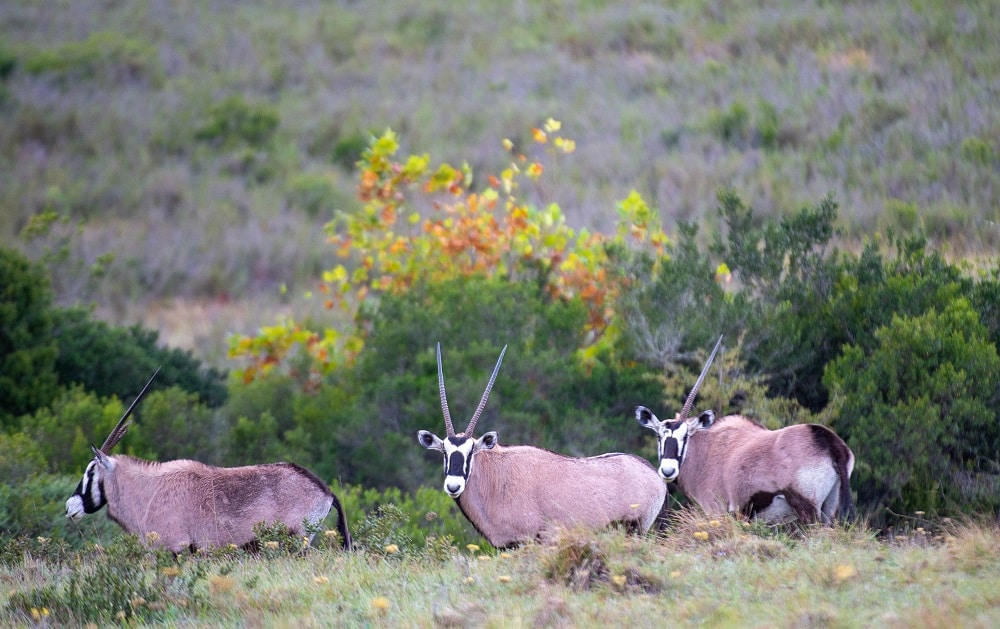
The area where you do your game drives is very interesting. The Eastern Cape is a Big Five destination but there’s no malaria which is great for families with kids, or just anybody who’s not keen on taking the malaria pills. The landscape is filled with rolling green hills with ample bushes and trees as well as open savannah. It very much reminded me of parts of Kenya, such as  Lewa and the Masai Mara. Lalibela has abundant plains game including blesbok, impala, zebra, wildebeest, nyala, amongst others. Also plenty of giraffes, good numbers of rhino and lion. We saw a herd of about 300 buffalo and on our last day we got a bit lucky and spent some time viewing a cheetah. There are probably about 50 elephants on the property as well.
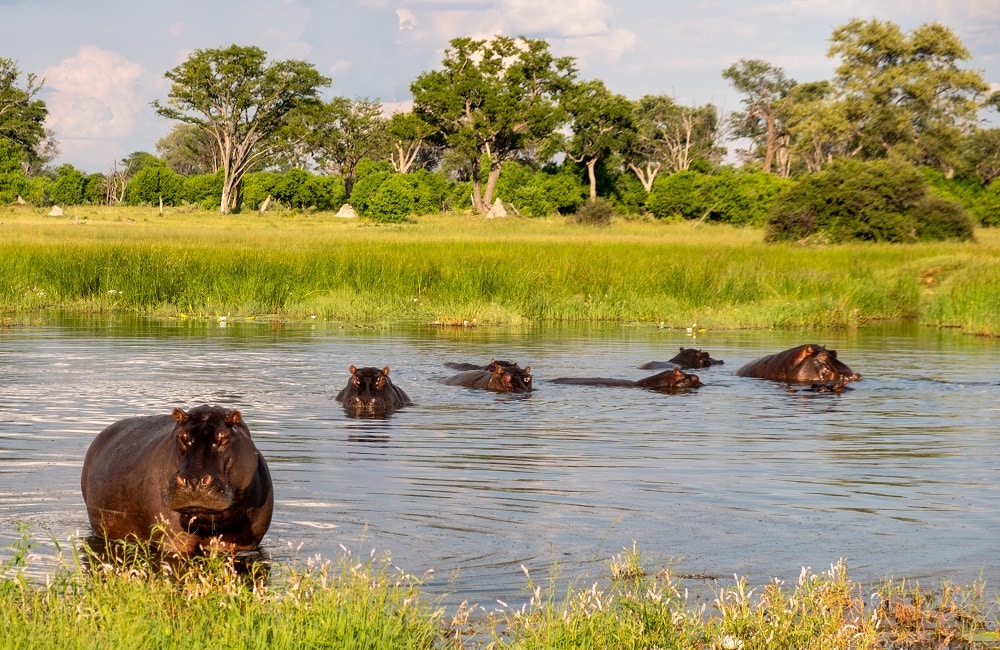
Lalibela is very interesting because it is essentially a conservation program being run as a safari destination. Their mission is to expand their acreage, rehabilitate the land, and then let the animals do their thing. It can be strange to be watching a pond full of hippos and then hearing a truck speed by on a nearby public road. I gave this some thought and although some people might find it distracting, I think it is commendable. Just as in Kenya where you’re likely to see the Maasai with their cattle grazing inside a conservancy or alongside a national park. Civilization is not something that can be easily contained but at the same time these wildlife sanctuaries can expand and thrive alongside human populated areas, creating more room for animals to inhabit. With the wildlife essentially repopulating the areas where they naturally occurred before humans displaced them.
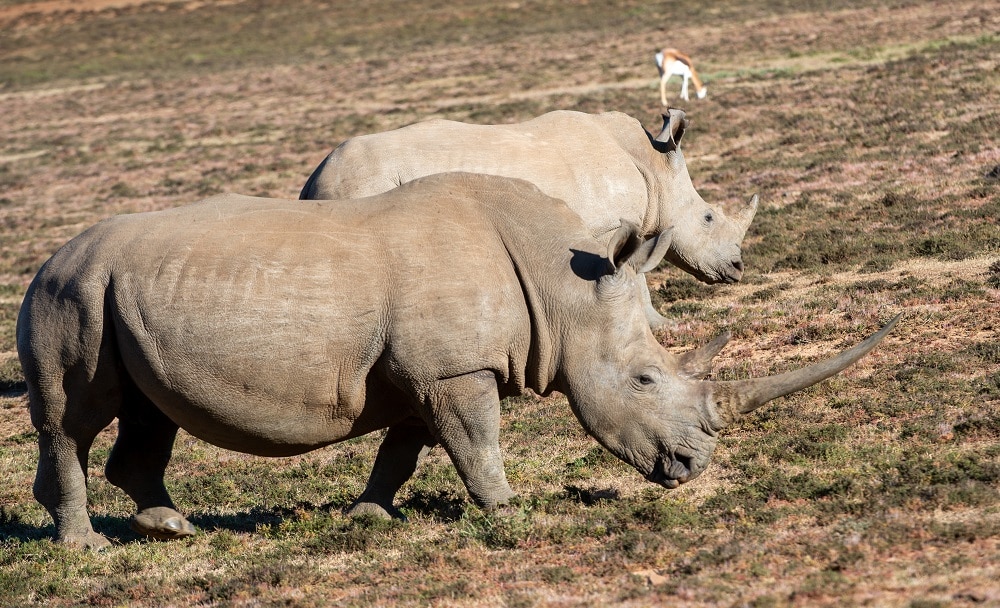
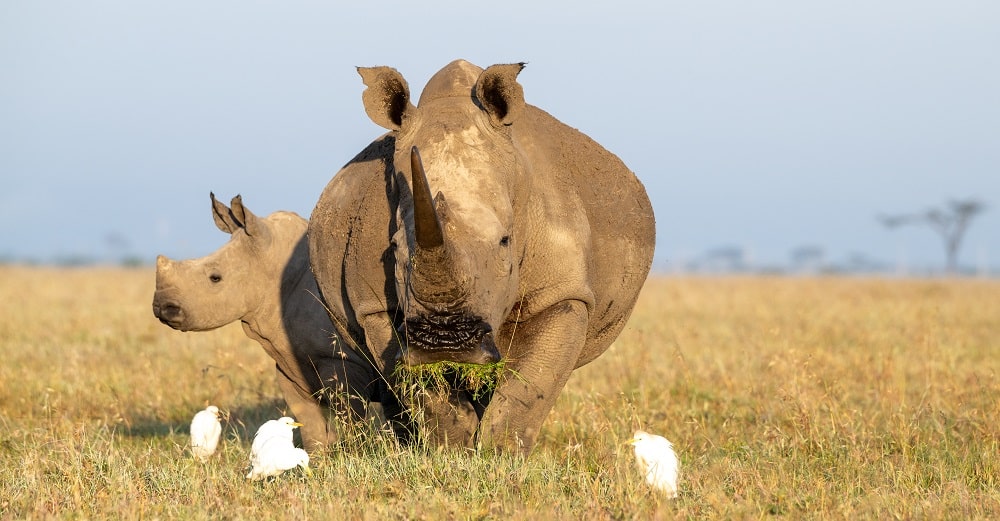
From Lalibela, we transferred by road to our next game reserve –  Kariega Ukhozi – and there were some distinct differences. Where Lalibela had rolling hills, Kariega had steep and mountainous ones. The relatively sparse bush and forest was replaced with dense, impassable sections. The open plains remained and just like at Lalibela, the wildlife were abundant. We had a great time with our guide Megan who really knew the area and the animals in it. On our first day we were able to see a mother rhino and her baby. The mother, Thandi, had survived a horrible poaching attempt some years ago. She still bore the scars of the incident but it hadn’t stopped her from giving birth to at least 6 (or maybe 7) calves. Some of whom have gone on to birth or father their own calves. That is the type of impact a place like Kariega can have. 
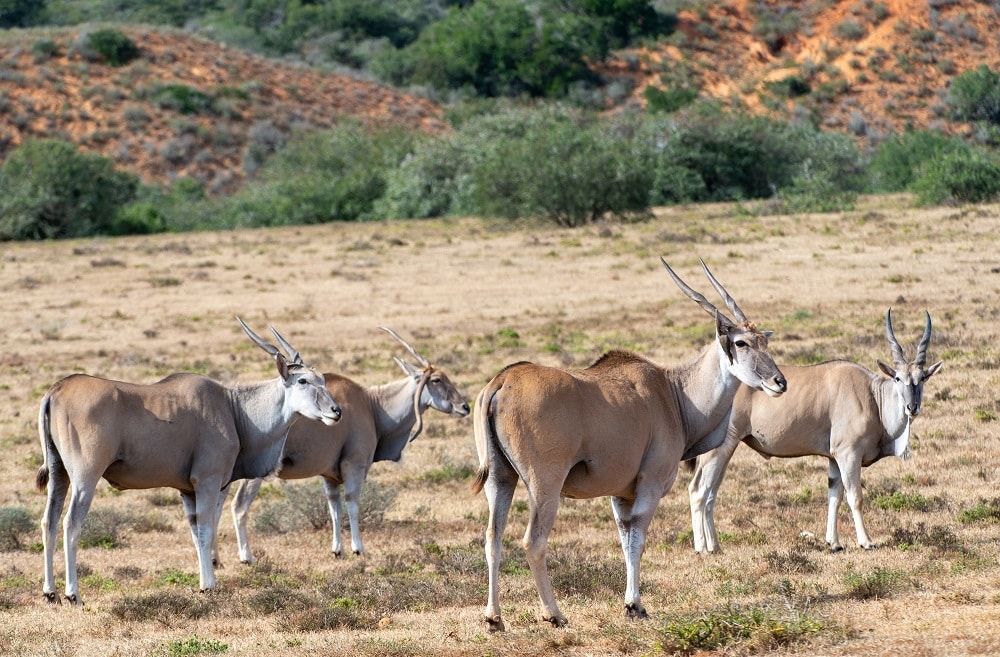
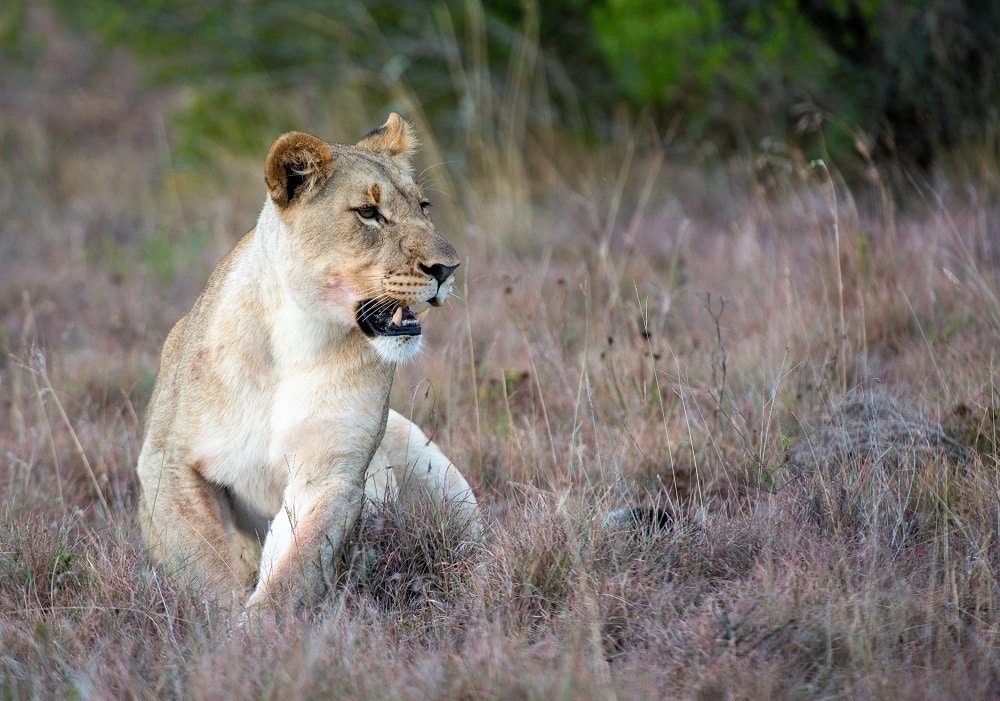
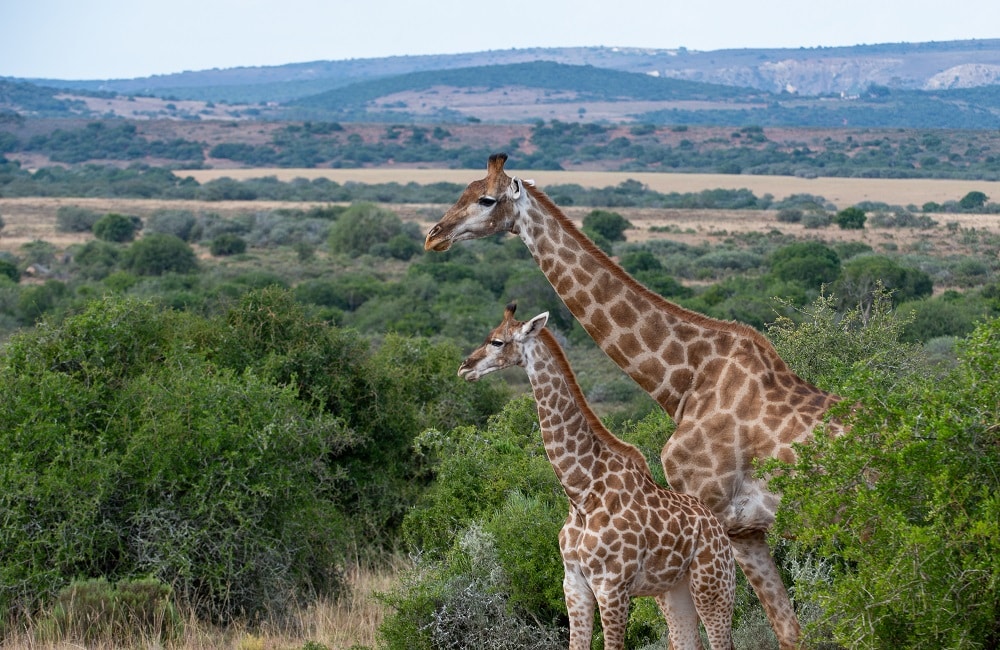
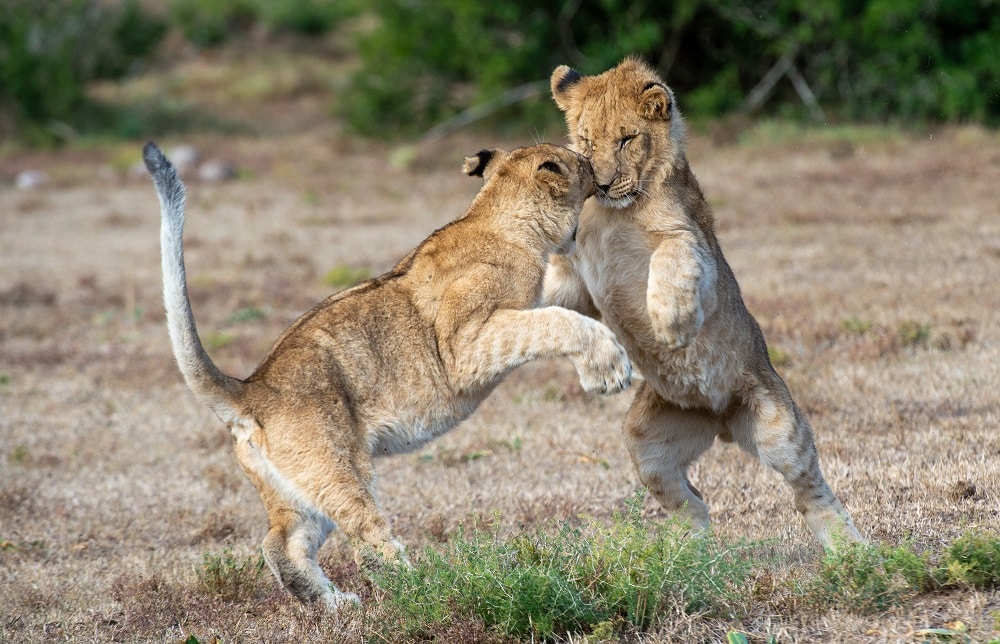
Just like Lalibela, Kariega was formerly farmland, devoid of many of the large mammals which have been thriving here for several decades now. At one point we were able to easily see at least eight different large mammal species from our game drive vehicle which is always a good sign. We saw plenty of kudu, nyala, blesbok, wildebeest, zebra, rhino, and probably more giraffes than I have seen anywhere else ever. We got to see lions a few times and the area, tucked between the Kariega and Bushman’s rivers, is possibly even more striking than Lalibela. 

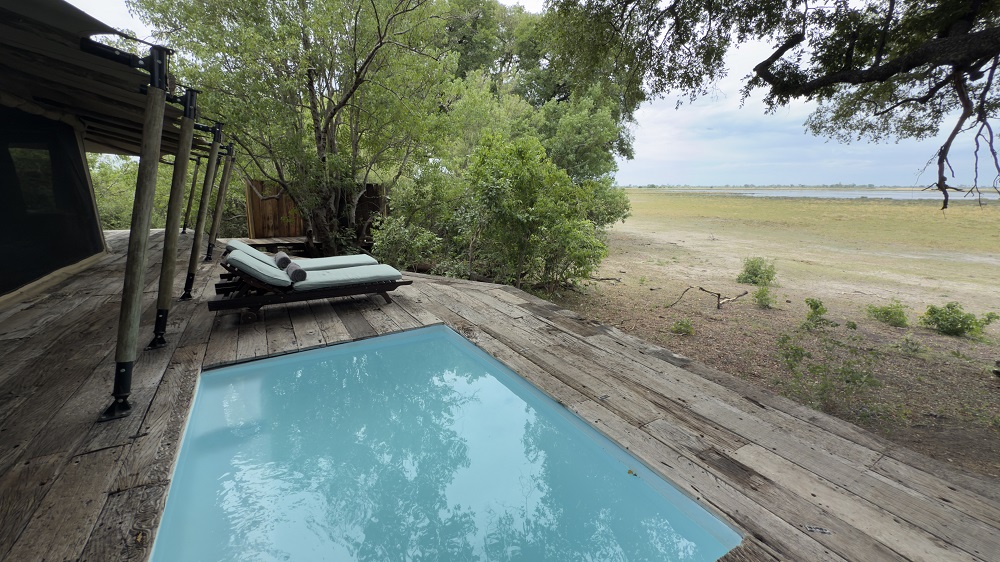
Your guide joins you for breakfast and every third night they do a traditional meal in the boma where your guide joins you again. The food was excellent and our rooms were very spacious and included a plunge pool amongst other niceties. Overall both camps and areas impressed me.”
Lyndon and Jason can both assist with more information and trip ideas for Southern Africa, incorporating a few days in the delightful Eastern Cape reserves. Email lyndon@fisheaglesafaris.com or jason@fisheaglesafaris.com or leave a message at 1-800-513-5222 and one of us will be sure to call you back. 
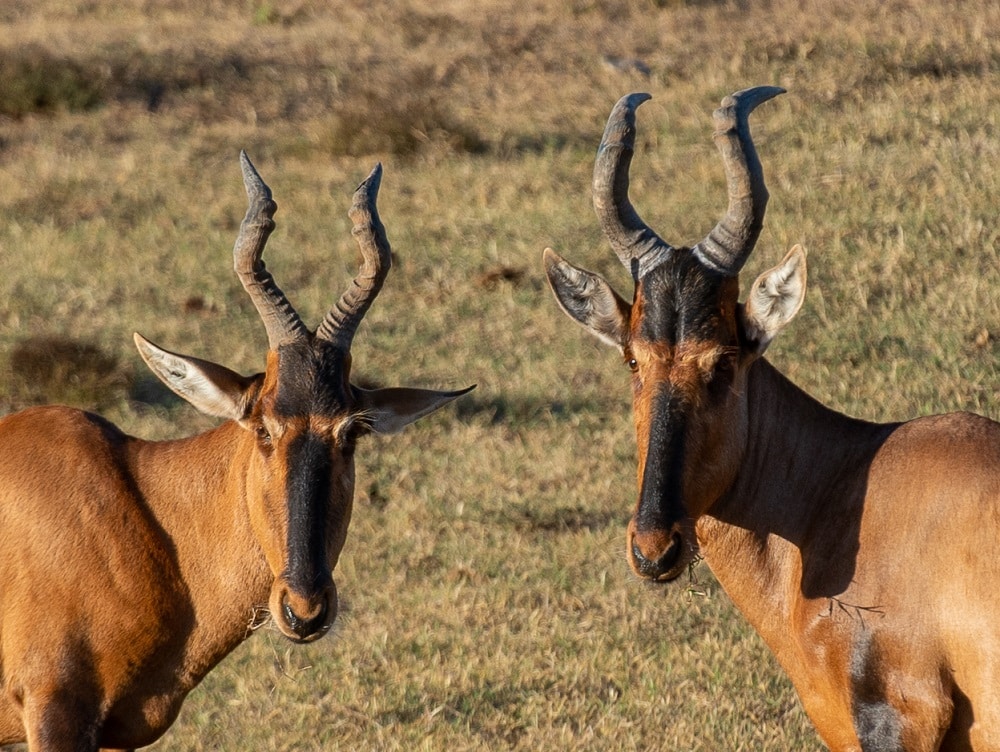
YOU MIGHT ALSO BE INTERESTED IN
Destinations
Zambia

10th September 2021

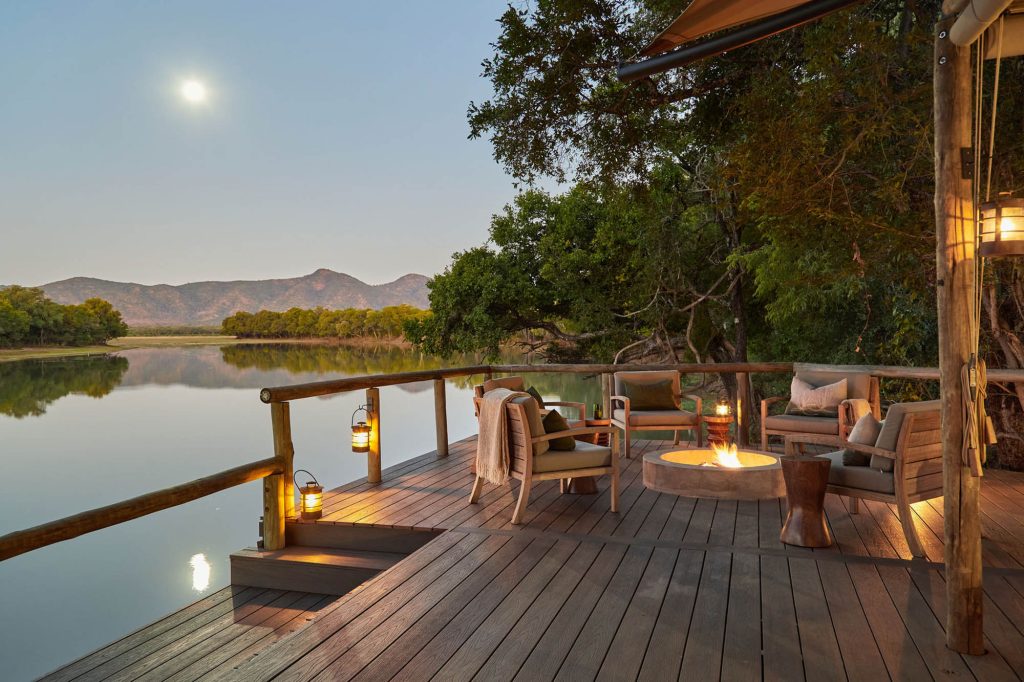
Chindeni and the Bushcamp Company, Zambia

By late July we found ourselves at Chindeni, a small Bushcamp Company property
Read more
Botswana
Destinations
Okavango Delta

3rd October 2022

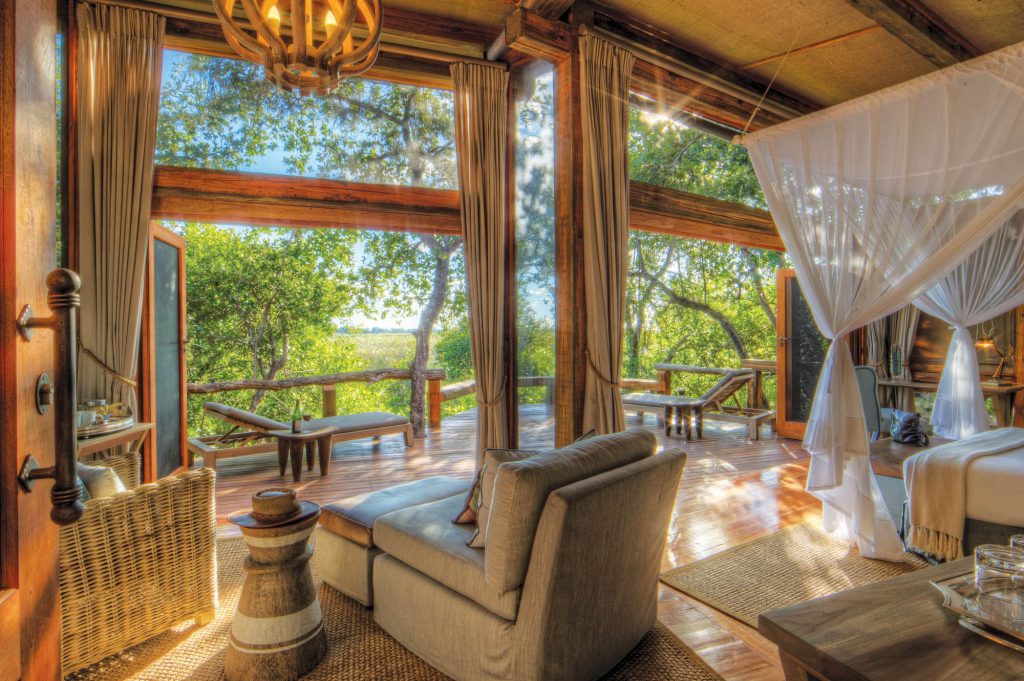
Camp Okavango, Botswana

Camp Okavango is in the heart of the permanent part of the Delta. In this idyllic setting there are no vehicles, and it is just a short walk
Read more
Area
Destinations
Nyerere National Park
Ruaha
Tanzania

14th October 2023

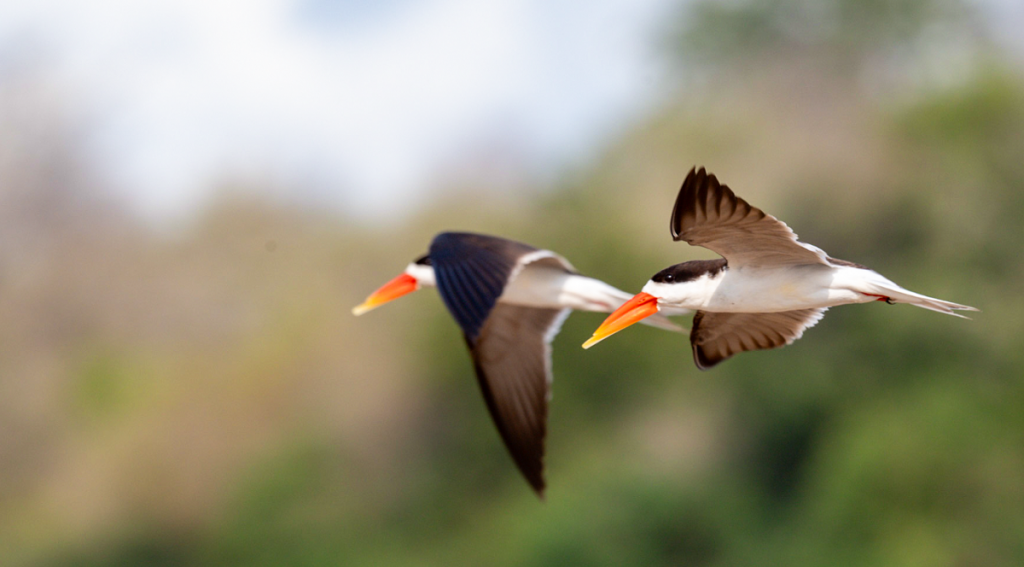
From My Safari Notebook: Wildlife Photography

Birds in flight and wildlife photographers have an uneasy relationship. Things go wrong as often as they go right. Getting focus-lock on a moving subject

Read more

SUBSCRIBE TO OUR NEWSLETTER

READERS FAVOURITES
Destinations
India

27th May 2023

India

India’s tiger, mammals and birds.

Read more
Botswana
Destinations

4th August 2022

On Safari At Belmond Eagle Island Lodge, Okavango Delta

What is the ‘secret sauce’ for an unforgettable few days on safari in Botswana? It starts with the animals, of course. The elephants, lions, giraffes, hippos

Read more
Destinations
Zambia

10th September 2021

Chindeni and the Bushcamp Company, Zambia

By late July we found ourselves at Chindeni, a small Bushcamp Company property

Read more

Making the Most of an Indian Tiger Safari

19th April 2025

Making the Most of an Indian Tiger Safari

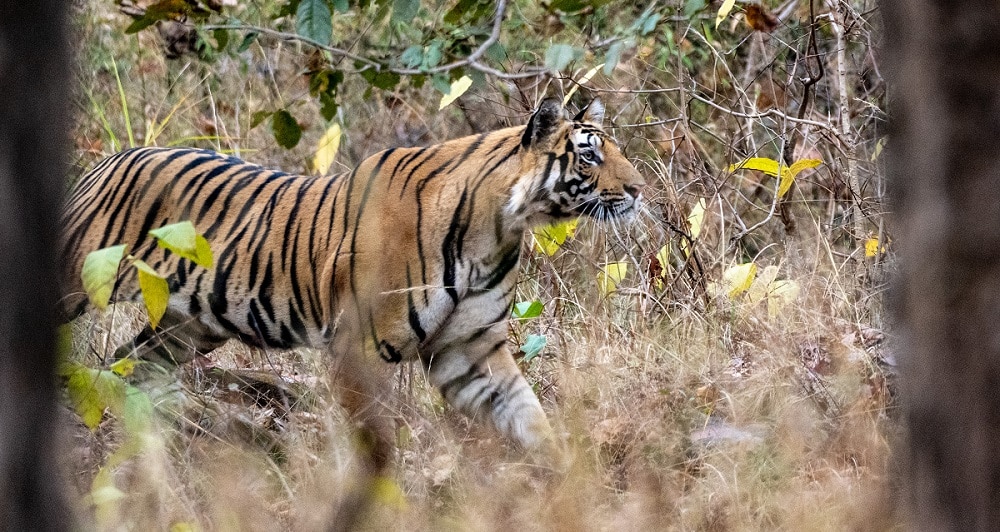
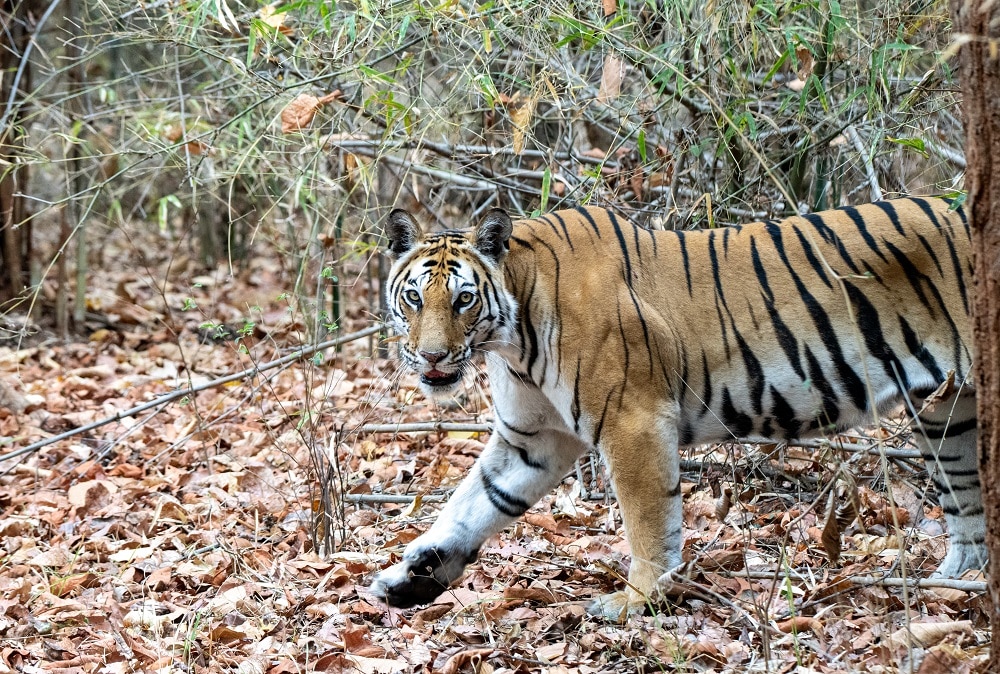
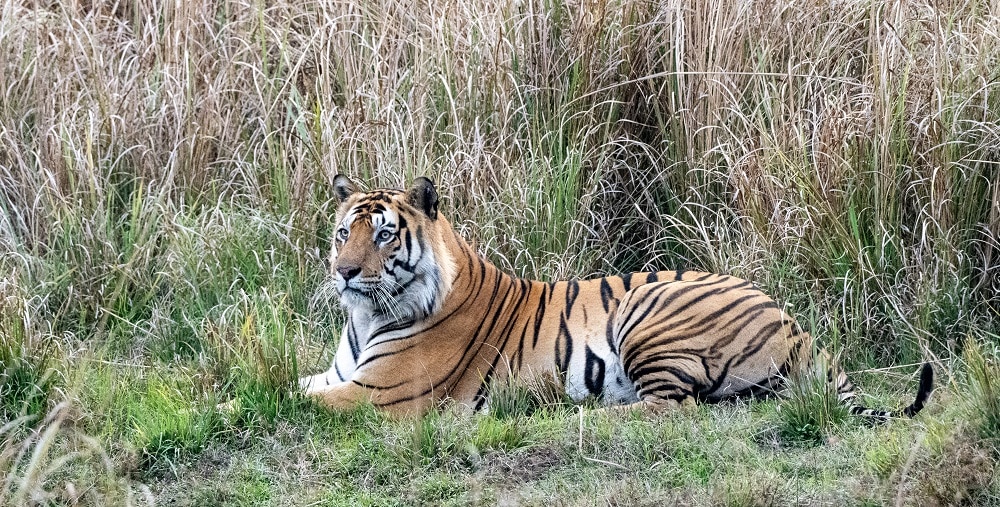
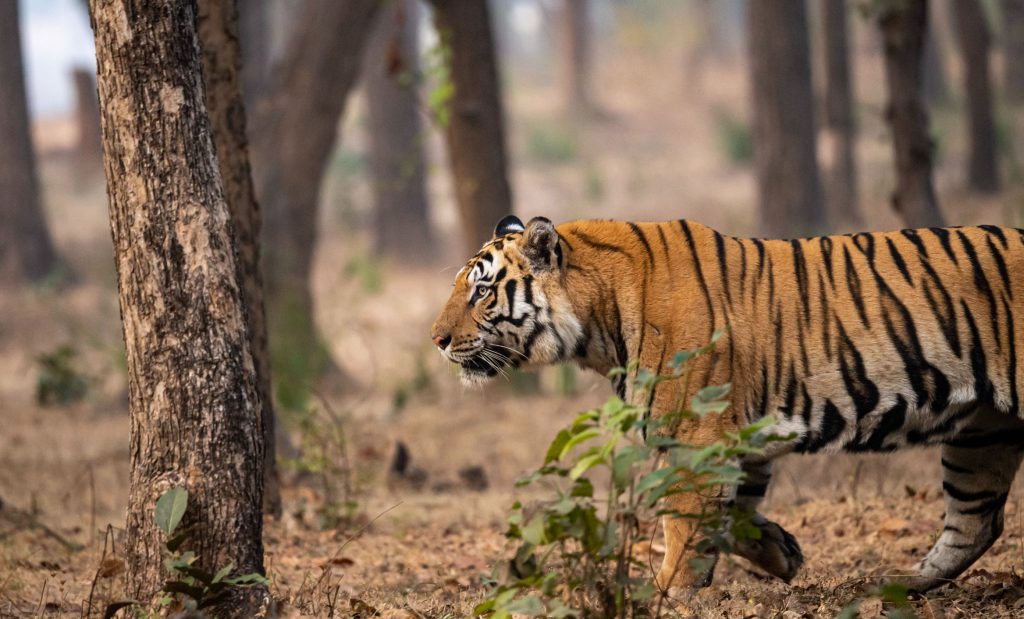
Tiger! Tiger! Tiger! A Bengal tiger sighting in India is almost always announced with this three word phrase, fraught with all of the excitement, wonder, admiration and sheer star power engendered by this magnificent creature. 

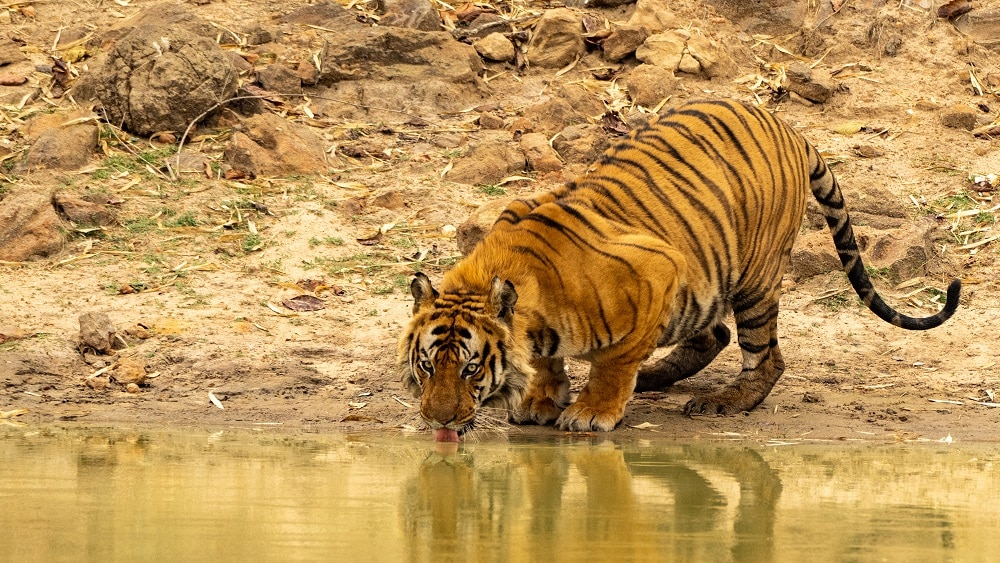
Looking for a tiger in a dense sal forest in Madhya Pradesh state is as much art as it is science. A mix of visible and audible clues, behavioral patterns, prediction, intuition and luck. Observing how the local guides and naturalists track and find tigers – by watching them at work – is part of the fun. The process involves sometimes long drives along invariably bumpy, dusty roads, often stopping – usually at crossroads – to listen for alarm calls of spotted and sambar deer and langur monkeys. The camp naturalist guide and the forest guide – as well as the driver – will look for and study tiger pug marks (paw prints) and analyse them. They will also gather intel from other guides encountered along the way and by way of text or phone messages. 

They will put all of this together within the context of recent sightings, established habits and movements of tigers known to be present in the area and seasonal patterns such as finding tigers close to and sometimes in water in the hotter months. And then, often suddenly and seemingly miraculously, it happens. Tiger! Tiger! Tiger!

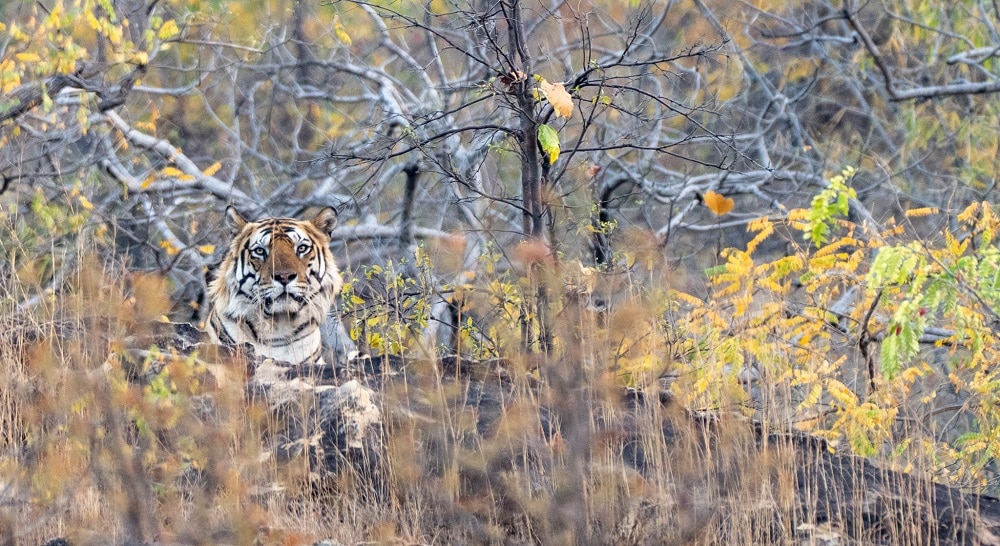
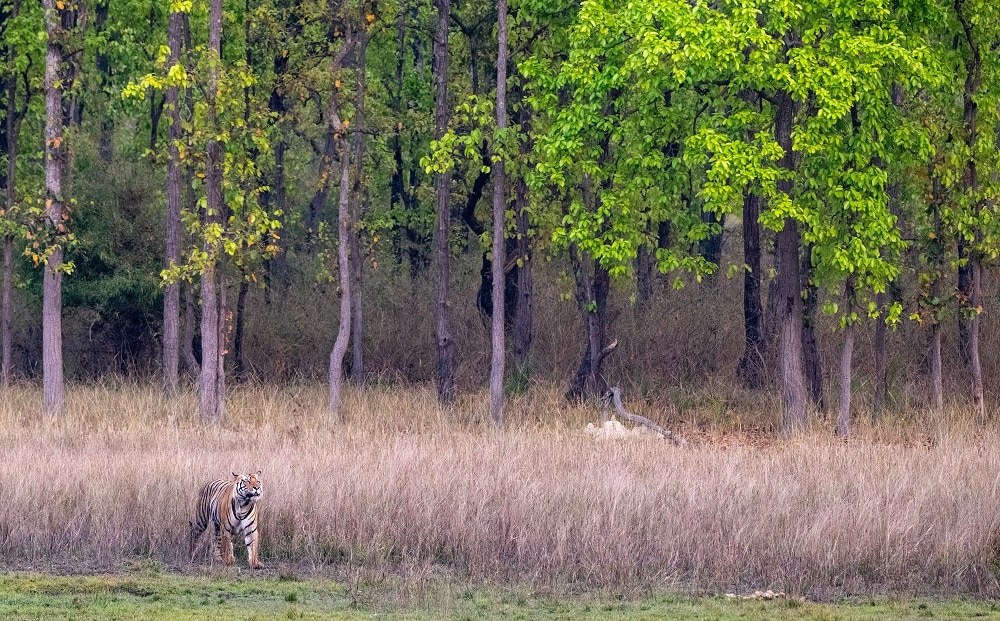
The participants on one of our small group trips in March experienced this in the most memorable and striking manner on their very first day in Bandhavgahr National Park. Seeing their first ever tiger in the most perfect manner. Initially we had just a glimpse of the large striped cat lying down in thick grass. I wondered if I should even take the big camera out of the bag. This was going to be a nothing event. Was I ever wrong!

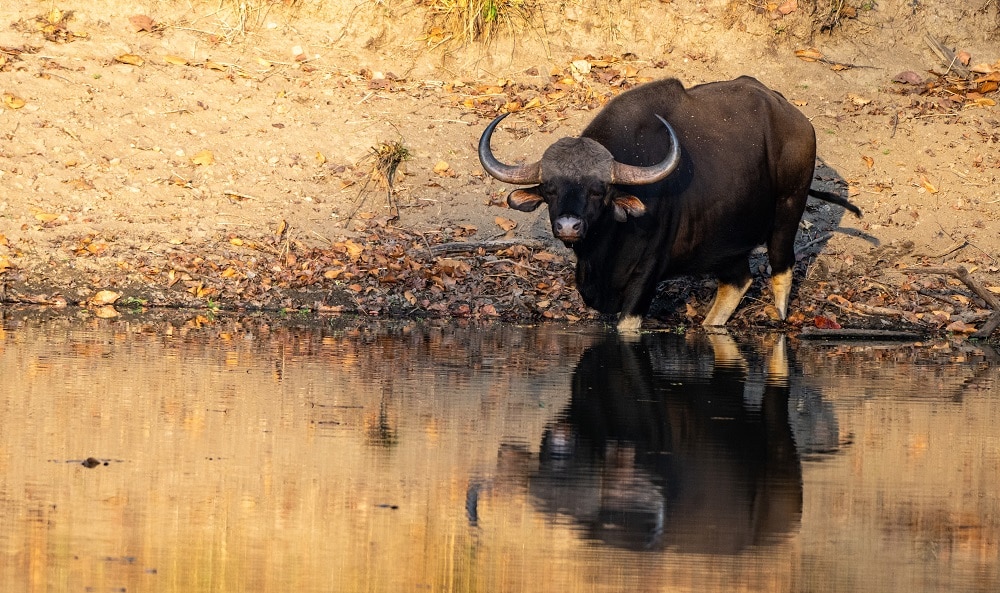
Everything changed in a matter of seconds when the tiger caught sight of and started stalking a huge male gaur, sometimes referred to as the Indian bison. Actually much bigger than a bison and equipped with an ominously dangerous looking set of horns, there was practically zero chance of the solitary tiger attacking and overpowering the gaur. At that moment, it didn’t matter. The tiger pretended to be deadly serious and we were only too happy to let it pretend. 

Watching the sinewy form of the tiger as it slowly crept in the direction of the guar was the stuff of wildlife documentaries. And we were in it with ringside seats. It almost didn’t matter when – predictably – the tiger gave up on the pursuit and started moving from our left to our right, still partially hidden in tall grass. 

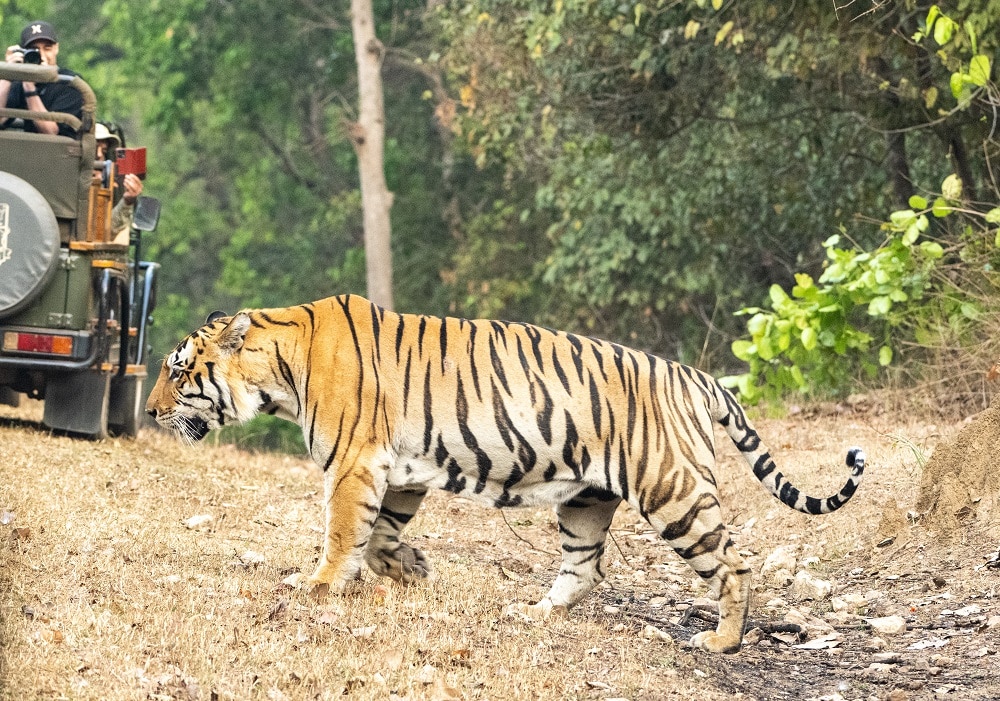
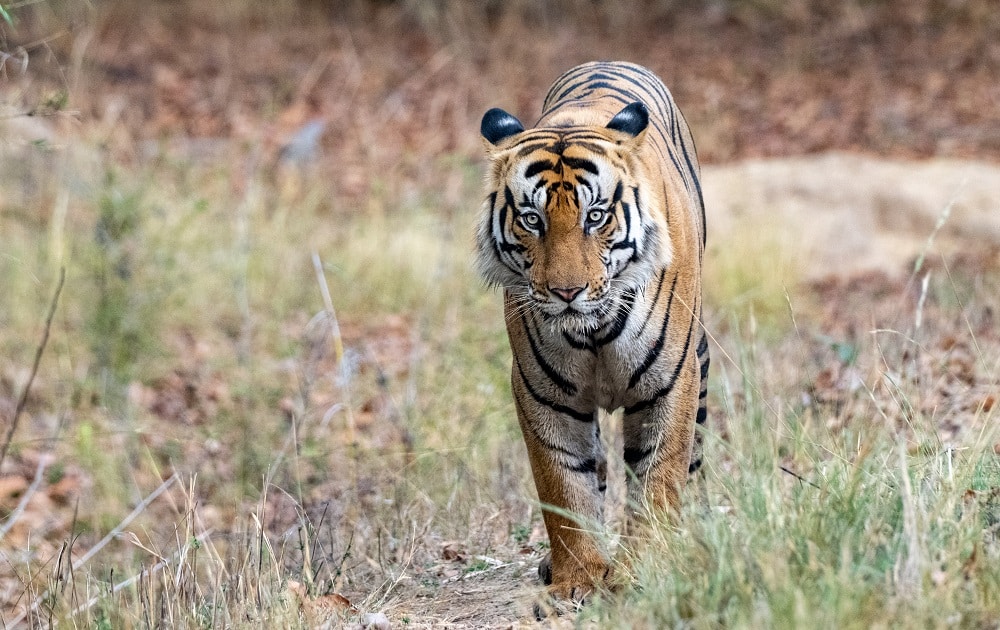
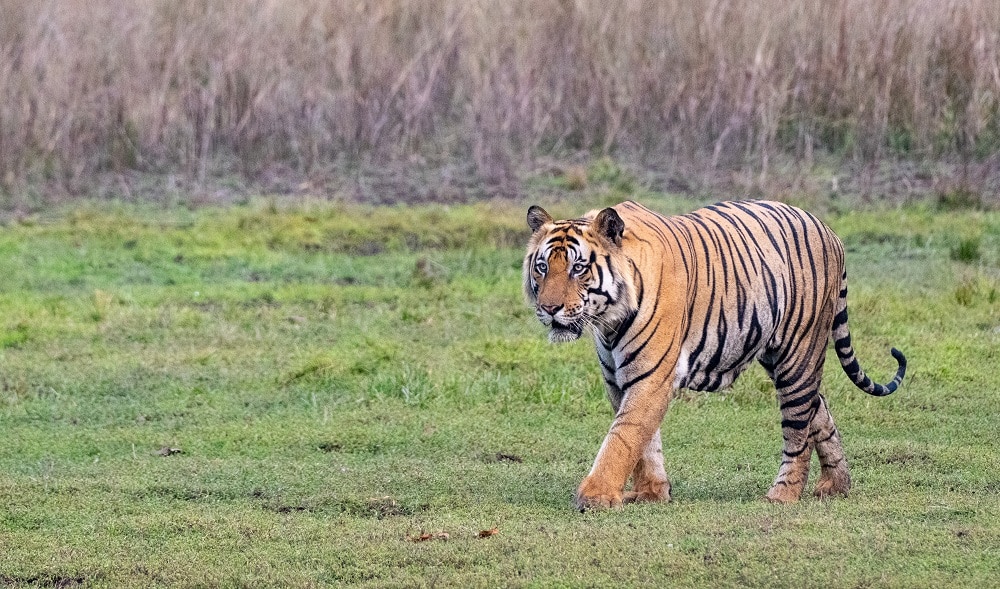
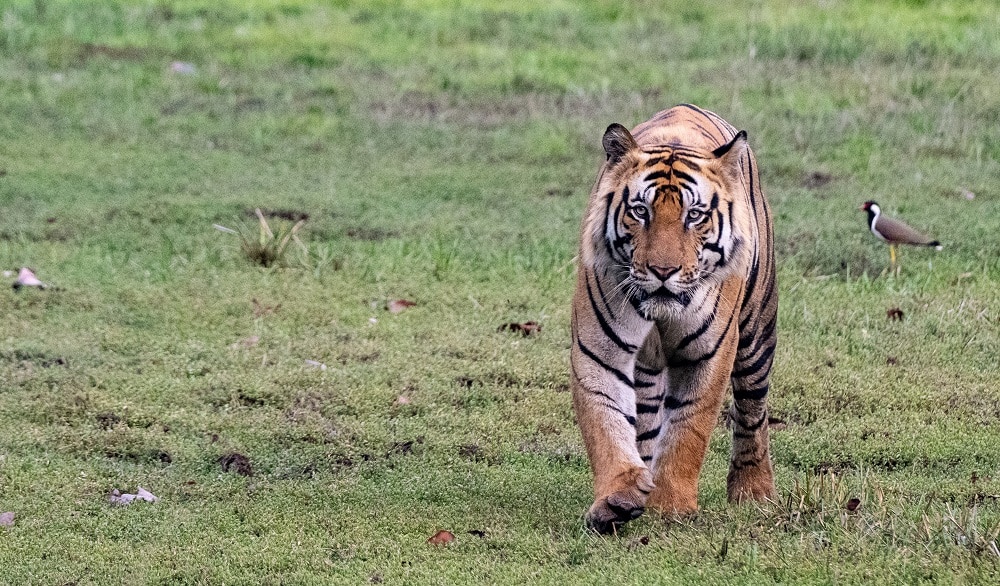
As if a dinner bell had been rung, all the safari vehicles took off in clouds of dust, with even the least experienced observer knowing exactly what would come next. The tiger was going to emerge in an open area perhaps a 100 meters or so further along the road. Not three minutes later, it happened. In full view  of practically everyone who had a permit for Zone 1 in Bandhavgarh that afternoon, one of the reserve’s superstar dominant males – Bajrang – emerged into the open, barely meters away from his awestruck observers. 

In near perfect ‘golden hour’ light the huge tiger majestically strode towards and then right by us. I was so excited I had to remind myself to keep the animal’s feet in the frame. And Bajrang was far from being my first tiger. Such is the impact these gorgeous creatures have on humans. As if one, the adoring crowd experienced the heart-stopping, mesmerizing moment with hardly a word being uttered. No one on our jeep – or anyone in the cars around us – will ever forget that moment, that animal, that experience. Out there in the jungle, confidently strolling around, master of its own domain, a tiger is so much bigger, stronger, more beautiful and more impressive than one could ever imagine. 

It is not going to be like Africa

Finding and seeing tigers in India is beyond thrilling, but an African safari it is not. At least not the version of the African safari we’ve grown accustomed to. Those being safaris operated in private game reserves with very few vehicles around, with a high degree of exclusivity and with practically all the guides operating within the constraints of a strict code of conduct. 

For example, on safari in Africa it is considered unethical at best to drive into someone’s photo shot. You apologize and get out of the way. In India’s tiger reserves in Madhya Pradesh state, you can bank on someone parking right in front of you if there is even the tiniest bit of space to squeeze into. Matter of fact, it happens quite often without so much as a sidelong glance. 

In Africa’s private game reserves and concessions observing and capturing photos and videos of a leopard is a quiet, almost hushed experience. In India? It’s a participation sport with constant and often loud banter between guides, drivers and guests. 

In most of the Madhya Pradesh tiger reserves a flotilla of small, open safari vehicles converge on high profile sightings, sometimes three deep and often just inches from each other. Fortunately the total number of vehicles is controlled with a finite number of permits being issued for specific zones per day. Some areas within tiger reserves – such as the Bori Wildlife Sanctuary bordering Satpura National Park – are further away from the tourist hotspots and offer a quieter, more relaxed wildlife-viewing experience. 

In most of the popular tiger reserves, the safari experience is boisterous and very much a free for all. Much like India itself. Stick around for a few minutes and a converted bus or truck with up to 18 excited passengers will show up, often filled with local family groups including young kids, all keen to see their first tiger in the wild. Such a wonderful harbinger for the future of wildlife in India. 

Noticeably, less than 10 percent of the visitors to the Indian tiger reserves are from abroad. The vast majority are Indian – both local residents of Madhya Pradesh state and from elsewhere such as Mumbai, Delhi and beyond. Straddling the entire spectrum of Indian society. Some speaking near perfect English, others engaging you with just their smiles or their curious glances. Indian tiger safaris are not just for the privileged few; the Madhya Pradesh State Tourism Department encourages locals to visit the parks with discounted permit fees (about half of what foreign visitors pay) and clearly they are succeeding. 

If you can embrace the egalitarian nature of the Indian tiger viewing experience, the give and take, the live and let live attitude which is at the heart of the Indian way of life, then by all means come along on our next trip to India next spring 2026. It’s not exclusive, it’s not private and it has its shortcomings. All of which vanish in a second when you see your first tiger in the wild. 

What you will soon realize once there, is that there is an unspoken agreement at work, even when you are ensconced in a scrum of small safari vehicles. Someone might abruptly cut in front of you, but he will be happy to reposition his vehicle to allow you an unobstructed view of the tiger or leopard or whatever may be the focus of attention. Information about sightings is routinely and immediately shared and vehicles (other than ones with full day permits) are required to relocate after 10 minutes. So everyone gets a chance, nobody is shut out and you’ll get some good views and photo opportunities. Not always from the absolute best spot and you might have to get creative to avoid vehicles in the background. As is the case anywhere in India, a bit of patience, a dollop of good will and a smile go a long way. 

There will be slow days on a tiger safari

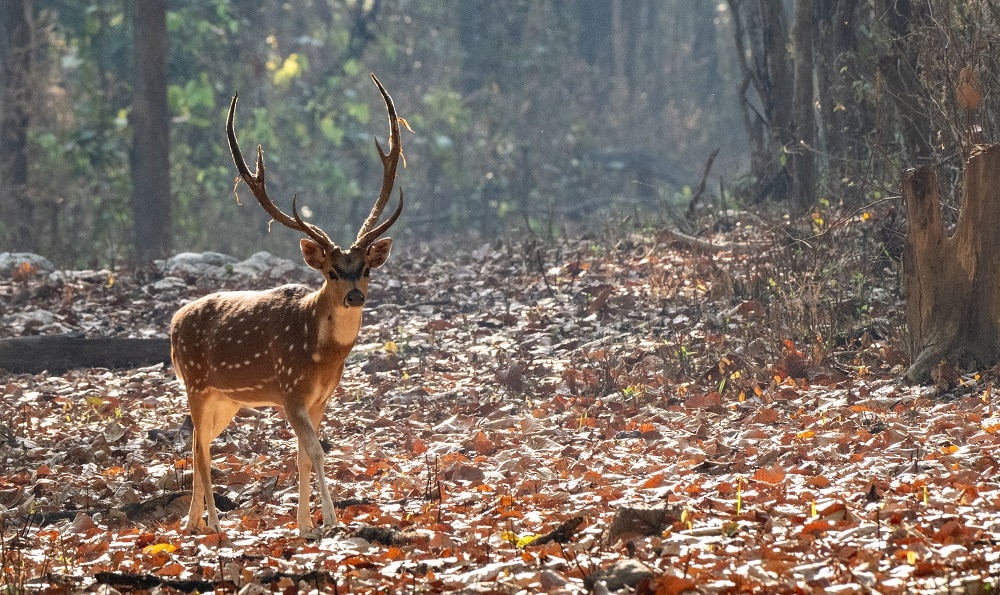
In Africa a slow day on safari is usually interspersed with some sightings of elephants or buffaloes or maybe giraffes and zebras and many different antelopes and gazelles. India’s tiger reserves have only five or six mammals which are common and seen regularly, namely spotted deer, sambar deer, gaur, wild boars and jackals. Barasinga deer, Nilgai antelope and barking deer are also seen in some areas. Compared with Africa, the total number of mammals is relatively low. 

So you will almost definitely experience days on safari in India where not much happens: mostly just a lot of driving along dusty, bumpy roads checking known tiger haunts and following up on recent sightings. The guides will stop to listen for alarm calls made by langur monkeys, spotted deer and sambar deer; they will check the terrain for tiger tracks (pug marks as they are referred to in India) and droppings. And they will constantly be exchanging information with other guides and drivers electronically. 

Despite their best efforts, some days are bound to be slow and tiger-less. Feeling disappointed is a natural reaction but it’s nobody’s fault and everyone is working as hard as they can to produce sterling sightings. Male tigers have huge territories and the animals move around in real time. Sometimes a thunderstorm or some other weather event or controlled burning (with workers on the edge of the roads) or a tiger census being underway or a bird count or some other unknown factor results in the tigers staying hunkered down. 

The payoff for not being overly critical and judgmental or expecting the process or the results to be just like they are in Africa is huge. It comes of course in the shape of a massive striped cat which has no rival in the animal kingdom in terms of sheer star power, visual impact and magnetic presence: the Bengal tiger. Getting a really good look at a tiger in its environment – perhaps in a sal forest in Bandhavgarh or emerging from a teak forest in Satpura, may very well be a life changing experience. One thing is certain: you’ll want to see another one.

People and conservation

A trip to India’s tiger reserves is mostly about seeing tigers and other wildlife but you’ll be sure to come back with memories and experiences well beyond that. Starting with the people. I’m constantly impressed by all the people working in the various reserves, so focused on protecting their wild spaces and the amazing fauna and flora around them. Starting with your dedicated Indian tour leader, you will experience many happy people loving what they do and wanting to share it with visitors.  

Our India partner – Encounters Asia – has been closely associated with the success story which is Project Tiger since its inception in 1973. Your presence in India will directly help to protect tigers, by growing the financial impact of responsible tourism in disadvantaged rural communities. Sustainable eco-tourism brings jobs, creates a demand for support services and grows local businesses. All of which act as an incentive for local communities to become engaged in protecting the wildlife and the wilderness.

Some practical hints:

Binoculars

Don’t even think of showing up in an Indian tiger reserve without your own pair of good binoculars – and don’t try to share a pair. Sightings of tigers and leopards are often at a relatively long distance. With good binoculars you’ll have more than satisfactory views, even if the animals are too far away for photographs. Without binoculars you will miss many of the sightings altogether. So buy a good pair of binoculars and familiarize yourself with using them before the trip so that you won’t be fumbling around with focusing or finding something quickly. On a tiger safari, sometimes just seconds can make a difference between seeing something truly spectacular – and missing it altogether.  

Photography

Keen photographers, take note: for the same reason as mentioned above (many long distance sightings) bring a long enough telephoto lens, at least 400mm and ideally up to 600mm and 800mm. A 180-600mm or 100-500mm zoom lens also works well.  

Be sure to pack a monopod as you’re likely to be shooting into shady forested spots in some reserves such as Bandhavgarh and Kanha, and you’ll need to support the camera to be able to reduce the shutter speed and keep the ISO as low as possible.

Game drive preparation

It will be dusty to very dusty, particularly if you travel from February through April. Take a buff to protect yourself and a bag or cover for your cameras and lenses. There will be water on the vehicles but take your own bottle if you want. Mornings – even as late as early April – can be chilly so be sure to have at least a light jacket or fleece handy. It warms up quickly and by 9 am you’re likely to start peeling off a layer or two. For winter travel – November through January – much more extensive layering is necessary and you’ll be glad to have a heavy, well-insulated hooded jacket, a puffy jacket, good quality gloves and a cold weather beanie at hand. 

Driving between national parks

There will be some long drives – mostly around four hours but up to five and a half hours – on asphalt roads to get from one tiger reserve to another. Comfortable compact air-conditioned SUV’s are used, with professional drivers, and top speeds rarely exceed 50 mph. Nonetheless it can be a disconcerting experience due to India’s free-wheeling driving practices, the constant honking, the often narrow, winding roads and the many obstacles and road hazards which have to be avoided. These include cows, domesticated buffalo, dogs, goats, motor bikes, bikes, pedestrians, trucks, buses, other livestock and random objects which may range from wheelbarrows to oxcarts. Comfort stops are made but they can be more than two hours apart. So limit your liquid intake. There are snacks and water in the vehicles. If you are prone to motion sickness, be sure to bring your Dramamine or other medication. The tight turns and repeatedly swaying left and right, with sudden jerks and bumps and unpredictable movement, can trigger nausea. So best to eat light before any road transfer.

Commercial flights

There’s likely to be at least two commercial flights on your tiger safari. On our last three trips the flights were from Delhi to Jabalpur and then Nagpur back to Delhi. Neither of the flights were much longer than an hour and generally speaking we’ve had no issues with the airports, check-in procedures (mostly quick, short lines) or in-flight service and baggage handling. Security is super-tight everywhere and it is important not to pack anything electronic (something which has a battery) in your checked luggage; specifically power banks or lithium-ion or similar batteries. All electronics including cameras, laptops, iPhones, tablets and similar have to be separated from your hand luggage for the pre-boarding security screening process.  Allow an additional 20 minutes in your schedule for that purpose. It’s all done in a very professional and courteous manner, but it can be time-consuming. 

Accommodation in tiger reserves

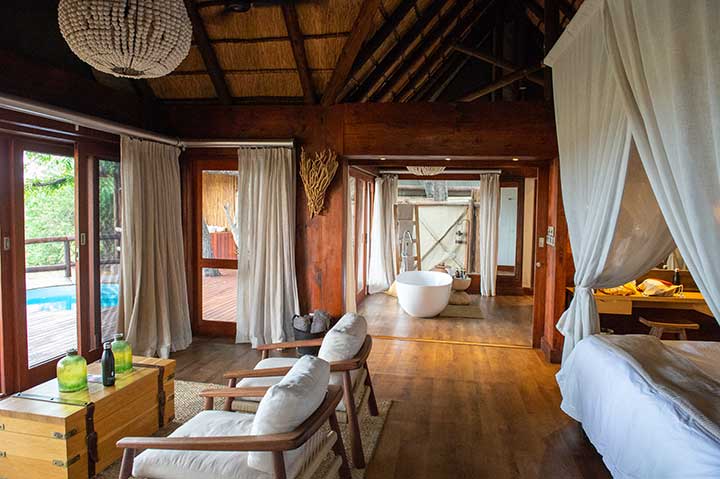
Your accommodation on a tiger safari will be in comfortable, effectively air-conditioned cottages with king size beds and showers with hot and cold water available 24-7. The rooms at Pench Safari Camp are tented. The eco-lodges are mostly located right on the edge of the national park core areas and the early morning drives to the gate usually don’t take much more than 10 minutes or so. Occasionally, when entering a reserve through a different gate (to be able to reach a different zone) or where the lodge is further away from the closest gate, it could take up to 30 minutes or so to reach the entrance. Be prepared for some early mornings with a few wake-up calls around 4:30 am – mostly a little later. 

It doesn’t take long to get used to the daily routine of a tiger safari. Suffice it to say that the schedule can be pretty demanding. Don’t anticipate a lot of downtime. After a light early morning snack with coffee and tea, you’ll head off to the park entry gate where vehicles line up for the 5:45 am gate opening. Opening times change during the year depending on sunrise. Morning safaris last for around 5 hours, inclusive of a picnic breakfast brought from camp and enjoyed in a designated area, usually served on a tablecloth spread on the hood of the safari vehicle. Breakfast starts with some freshly brewed coffee or tea and there’s usually sandwiches, hard-boiled eggs, a deep-fried treat of some kind or another, stuffed flatbread, a sweet item like muffins or a coconut & chocolate bar and some juice boxes. Some of the picnic sites have small tables and a few vendors preparing and selling typical Indian snack foods such as samosas, “Alikattas’s famous aloo bondas” (Pench), Bandhavgarh’s Maggi (spicy noodles), pakora and the like. For many tiger safari aficionados, these picnic breakfasts are an ideal opportunity to interact with some of the other guests and local visitors. Breakfasts are roughly taken around 9:00 am, a little earlier if you get lucky with a couple of good tiger sightings, later if you don’t.  

If breakfast runs late you may opt out of lunch, which is usually served around 1:00 pm in camp. Skip a meal at your peril. The food is generally delicious, expertly prepared and there is an abundance of choices which will satisfy even the most demanding visitors. The dinner menus are usually more elaborate with several starters individually served (chicken, fish and paneer tikka among others), followed by a lavish buffet dinner. Dessert is served at the table.  

Afternoon safaris follow the same pattern, starting around 3:00 pm and exiting the reserve right around 6:45 pm. As you will soon notice, the drivers like to play a little game with the on-board GPS device (carried by the forest guide) which monitors the vehicle’s speed and movement. The game? Exiting the gate right at the required time, not a second too soon. 

For more information about our next small group trip to India – or about custom travel to the subcontinent – contact Bert at bert@fisheaglesafaris.com or leave a message with our answering service at 1-800 513-5222 or 713-467-5222.

YOU MIGHT ALSO BE INTERESTED IN

Destinations
Zambia

10th September 2021

Chindeni and the Bushcamp Company, Zambia

By late July we found ourselves at Chindeni, a small Bushcamp Company property

Read more
Botswana
Destinations
Okavango Delta

3rd October 2022

Camp Okavango, Botswana

Camp Okavango is in the heart of the permanent part of the Delta. In this idyllic setting there are no vehicles, and it is just a short walk

Read more
Area
Destinations
Nyerere National Park
Ruaha
Tanzania

14th October 2023

From My Safari Notebook: Wildlife Photography

Birds in flight and wildlife photographers have an uneasy relationship. Things go wrong as often as they go right. Getting focus-lock on a moving subject

Read more

SUBSCRIBE TO OUR NEWSLETTER

READERS FAVOURITES
Destinations
India

27th May 2023

India

India’s tiger, mammals and birds.

Read more
Botswana
Destinations

4th August 2022

On Safari At Belmond Eagle Island Lodge, Okavango Delta

What is the ‘secret sauce’ for an unforgettable few days on safari in Botswana? It starts with the animals, of course. The elephants, lions, giraffes, hippos

Read more
Destinations
Zambia

10th September 2021

Chindeni and the Bushcamp Company, Zambia

By late July we found ourselves at Chindeni, a small Bushcamp Company property
Read more

A Warm Welcome at Royal Chundu, Victoria Falls Zambia

24th February 2025

A warm welcome at Royal Chundu, Victoria Falls Zambia

Listening to and soaking up the soft gurgling of the Zambezi River at 6.30 am on a cool summer morning last December at Royal Chundu Island Lodge in Zambia was about the best start to a day I’ve had in years. Adding to the sense of serenity and calmness which a setting like that engenders were the naturally soothing sounds of birdcalls. At least five or six different birds made it patently obvious that they liked being there that morning just as much as I did. 

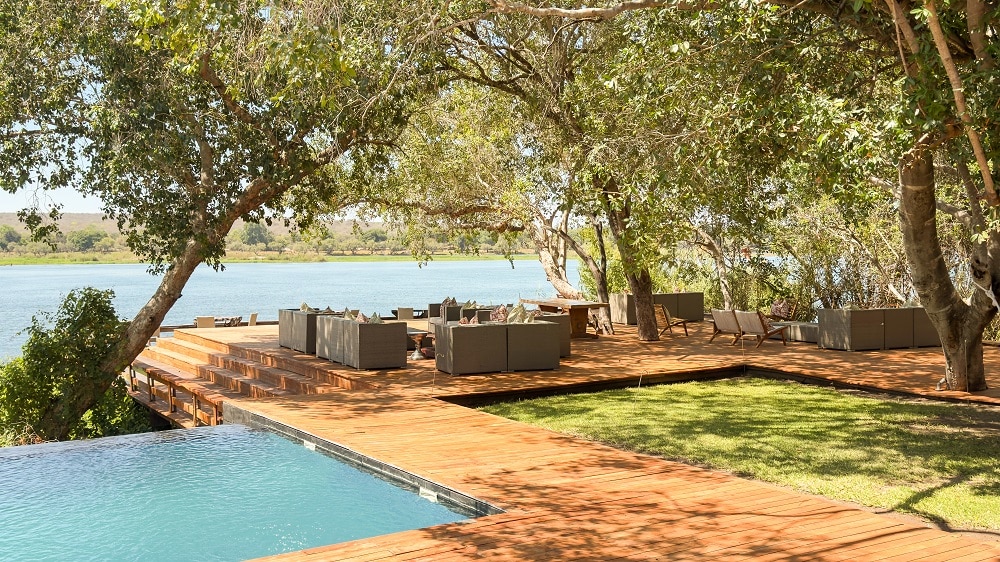
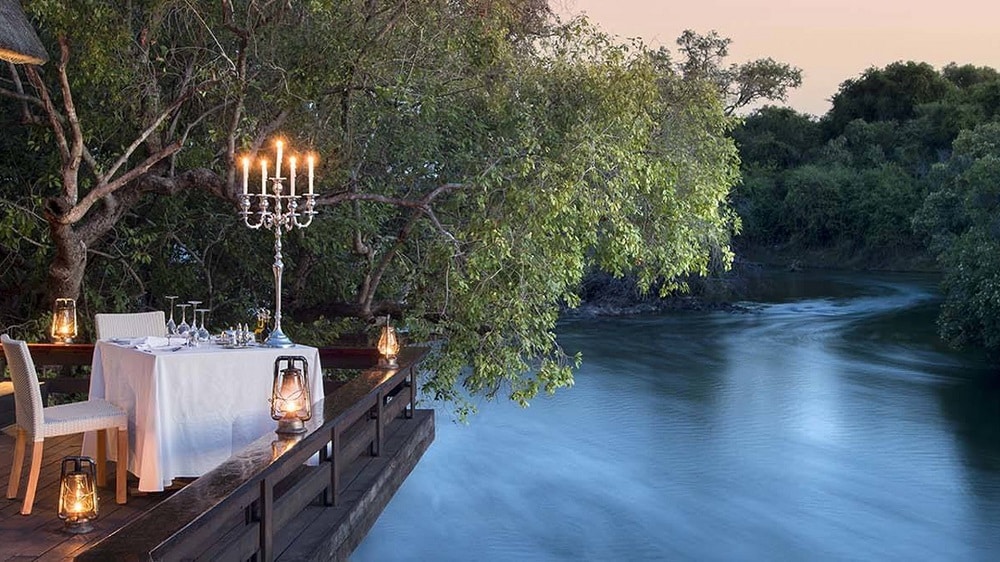
Few safari lodges anywhere in Africa look as good during the day as they do at night, when subtle lighting with locally made lanterns and candles can turn even a mediocre spot into a romantic getaway. Not so Royal Chundu. It looked great during the day and simply gorgeous at night. A lasting impression was the complete absence of distracting or otherwise bothering sounds. I heard the water – and the birds. And nothing else. Just the way it should be.  

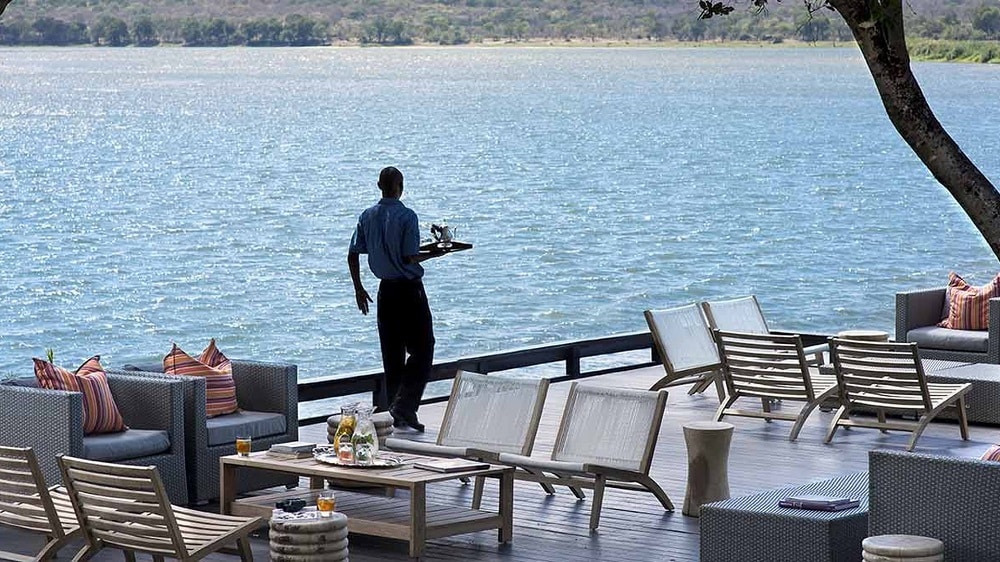
Our first stop at Royal Chundu was at River Lodge which has the most extraordinarily beautiful view over a broad stretch of the Zambezi with Zimbabwe on the other side. The Zambezi may have been at a low flow stage then (early December) but it was still one heck of a river, with a massive expanse of water in front of the lodge. Following our arrival briefing (which included some lovely iced tea and a much appreciated shoulder massage) we set off by boat to Royal Chundu Island Lodge. 

With just four elegant – air-conditioned – rooms tucked into a dense stretch of riverine forest, Royal Chundu Island Lodge is a veritable escape from reality. It felt like there was nobody else around and that happened to be the case on the day. We were in that rarest of rare places, our own island paradise. Travel dreams do come true.  

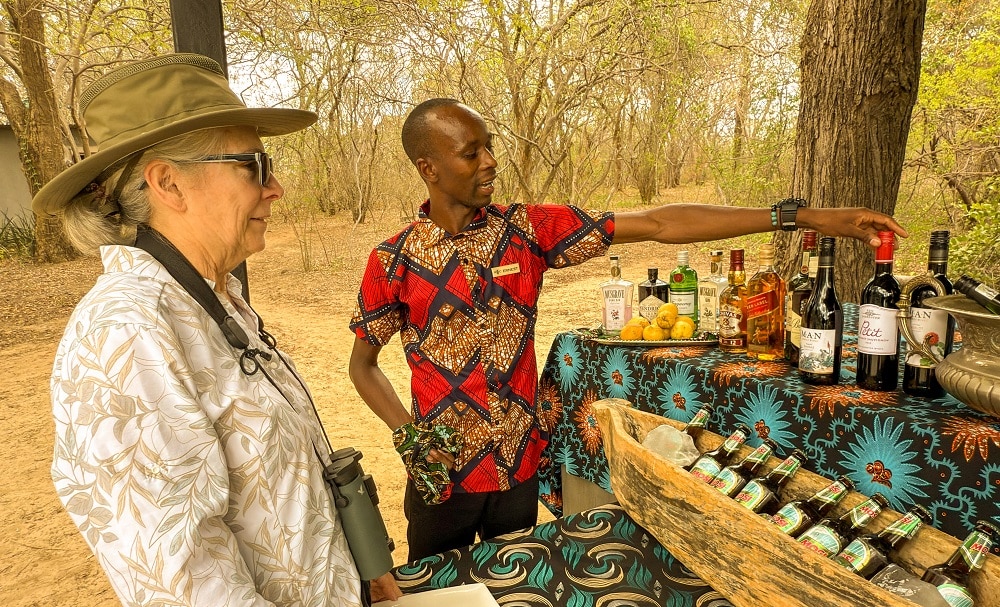
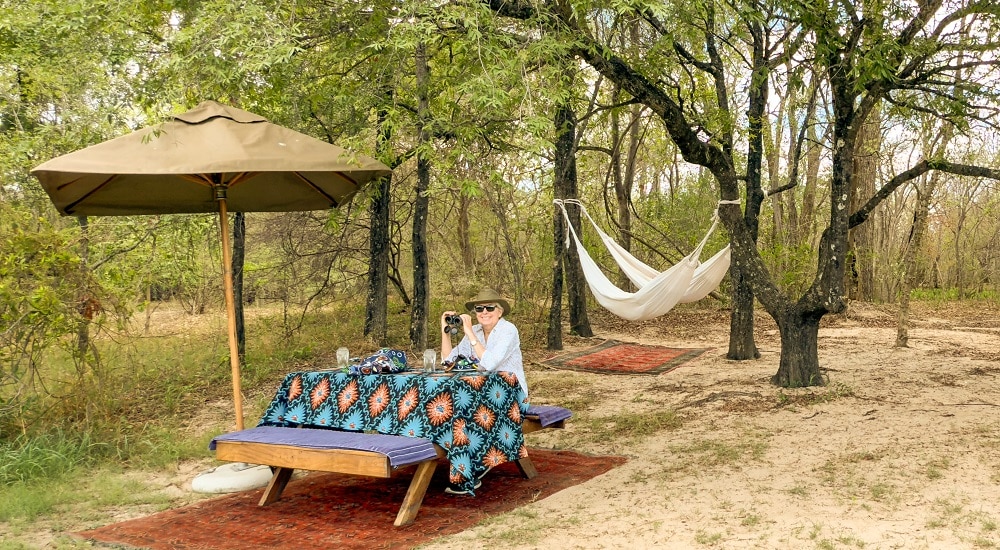
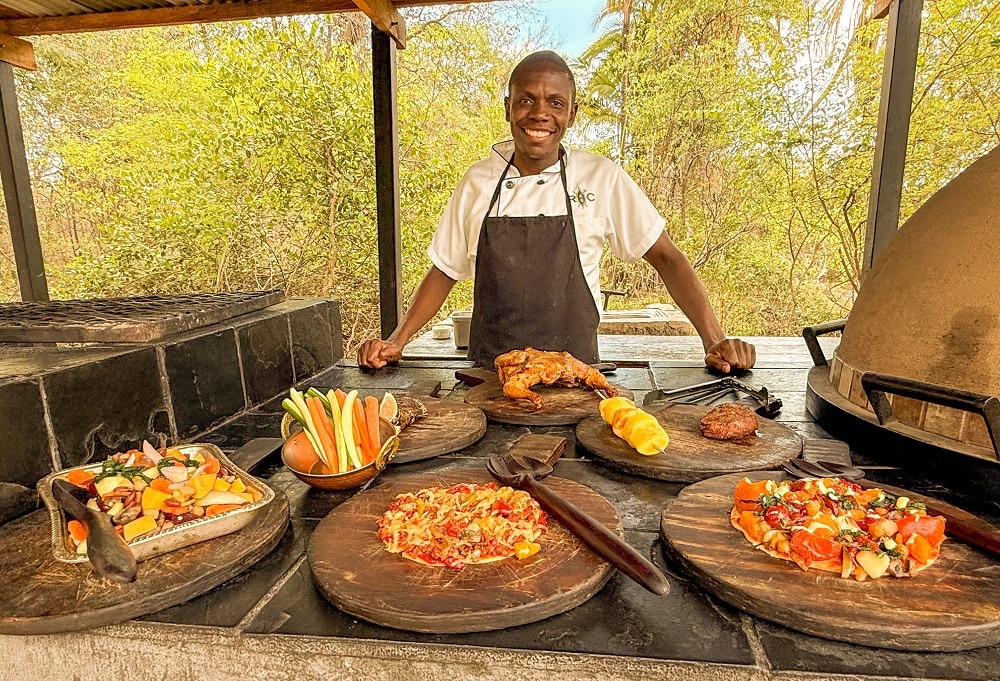
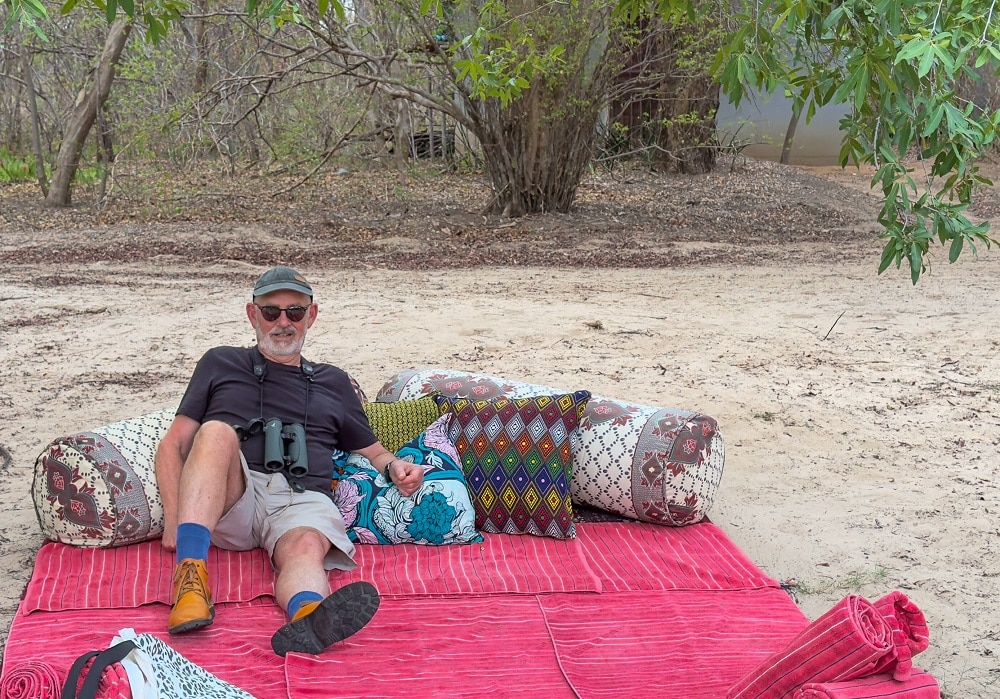
A short 10-minute walk took us to a lively picnic spot overlooking a set of rapids in the Zambezi. Just for the two of us the camp had set up what amounted to an adult playground. A picnic table with a couple of hammocks, a covered outdoor grilling and serving area with a well-stocked bar, a pizza oven and a large rug with soft, comfortable cushions. The perfect spot to enjoy a short siesta, the white noise of the Zambezi creating a near irresistible somnolescent effect. 

Irresistible also describes the tantalizing array of items for lunch. Chicken pizza, vegetable pizza, freshly grilled Zambezi caught bream. Fillet of beef and grilled chicken. A mixed bean and chickpea salad with carrots, cucumber, sautéed onion, grapes, mango and nuts. We gave it our best shot.

Royal Chundu village visit 

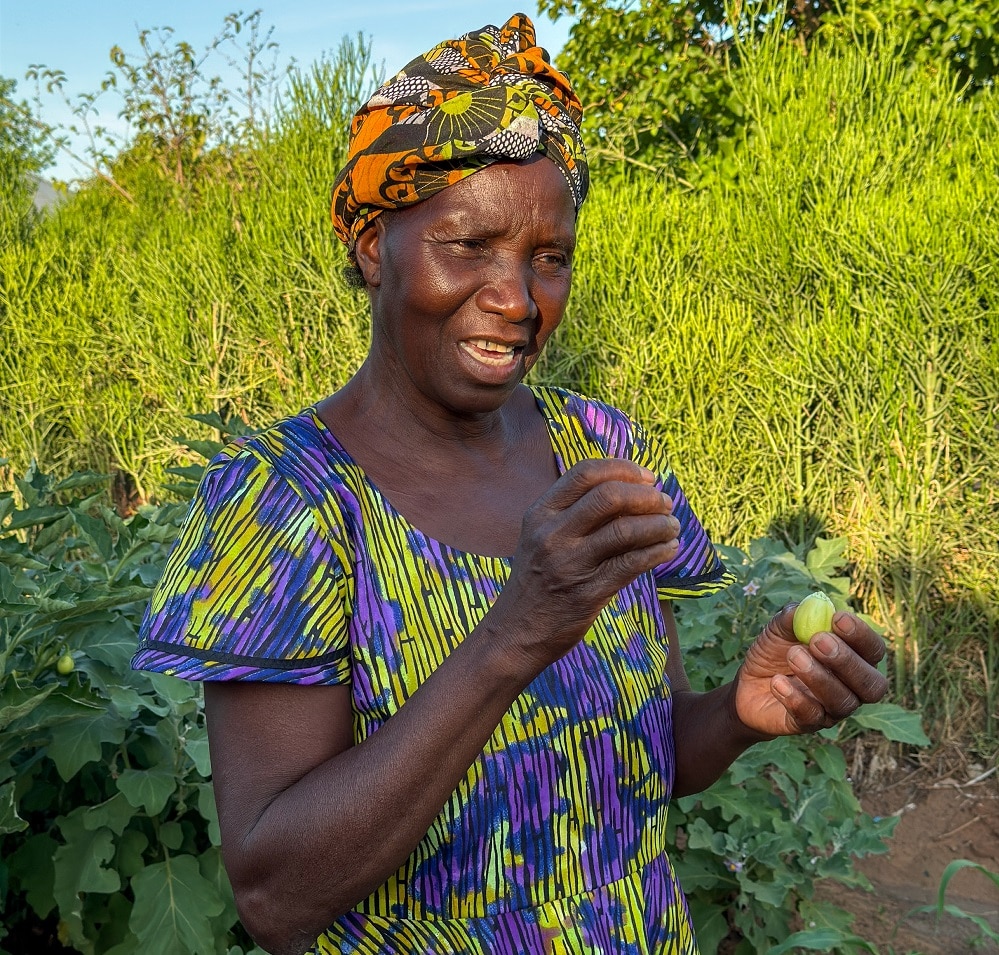
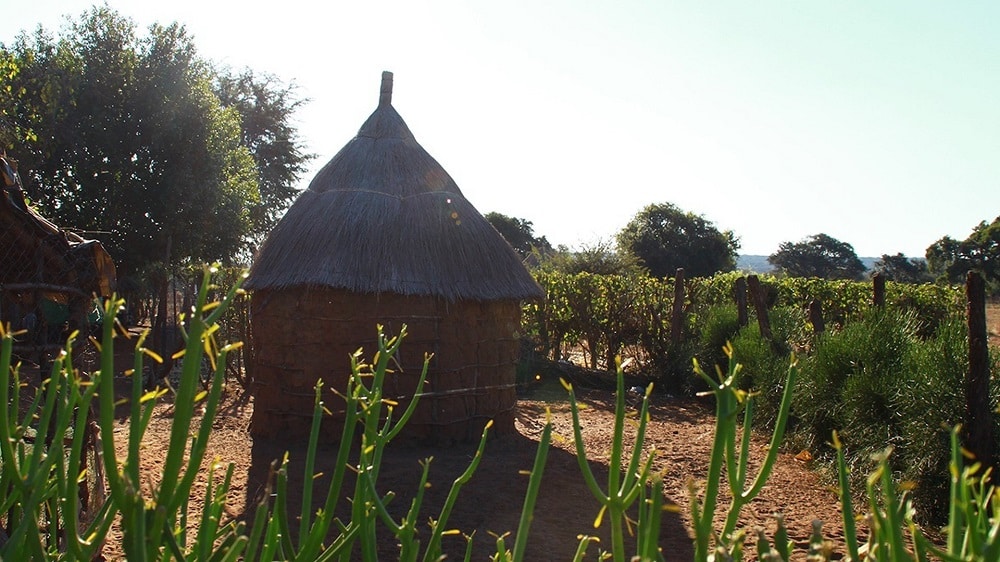
There are village visits and there are village visits. The not-so-great ones make you feel like an interloper, an alien checking out a strange new world. The good ones put you at ease right away, usually because of an exceptionally good local guide. We had just such a person show us around – Edith Mushekwa. By dint of her personality and leadership role in the village, Edith made the visit fun and we quickly realized that this village had taken organic gardening to the next level. Their cooperative organic garden, for example, utilizes cow dung, ashes and leaves for soil preparation. No fertilizer or chemicals whatsoever. Crop rotation enables them to maintain soil health and avoid the buildup of pests and diseases associated with specific types of plants.  

During our casual stroll through the village, we had a fascinating introduction into the medicinal and commercial use of local trees, such as using the seeds of the mokete tree for oil. The hardwood of the same tree is also used for carving. The village produces a natural dye from the bark of the brown ivory tree. Many of the villagers carve items from redundant pieces of Zimbabwean teak.

On the boat ride back from the village we did a little birding and we we got lucky with several good birds including African skimmer, lesser jacana, pygmy geese, comb duck, African fish eagle, rock pratincole and a close-up display of a black egret ‘tenting’ its wings, a hunting technique.  

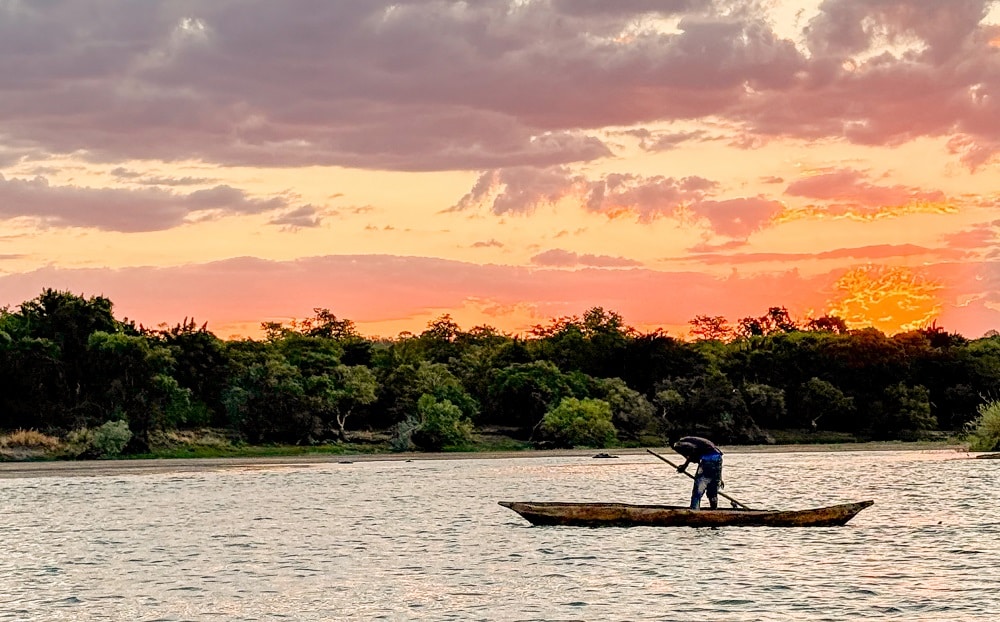
Our day – or at least the daylight portion of it – ended as peacefully as it had started,  drifting along the current of the Zambezi while being pushed by a cool breeze. It was cloudy so ‘sundowner cruise’ may not have been the best description. What it lacked in photo appeal it more than compensated with peace and quiet with not so much as another boat or even the sound of a boat anywhere. By 7 pm we were back at the jetty, ready to resume the eating safari. 

A traditional dinner 

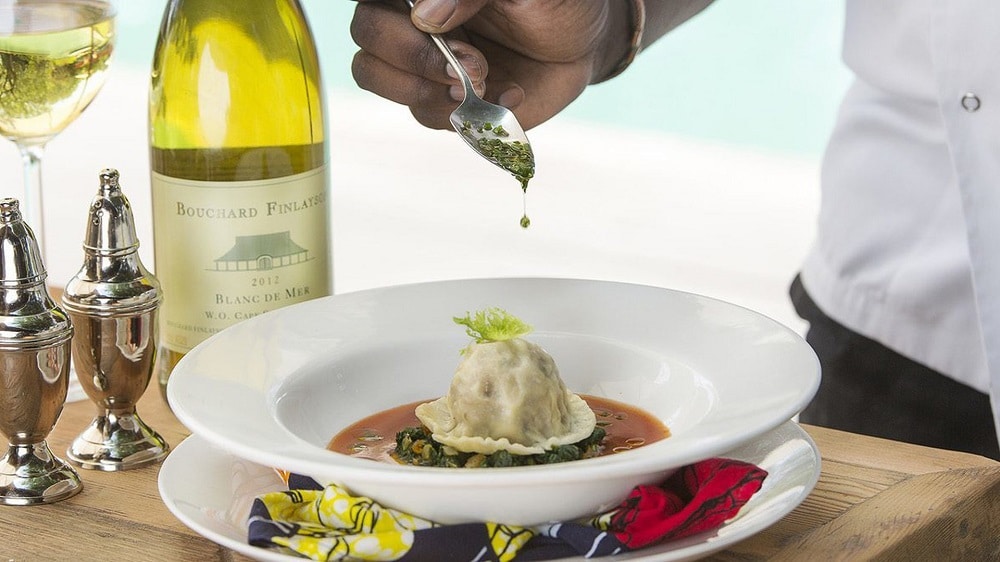
The chef in charge of the culinary team preparing our traditional tasting menu was Chef Peter and he and his team absolutely bowled us over with the sensational range of flavors, textures, colors and aromas associated with the extensive traditional tasting menu. Relais and Chateaux properties like Royal Chundu are known for their high-quality restaurants and this meal was certainly in the ‘one-of-a-kind’ category. 

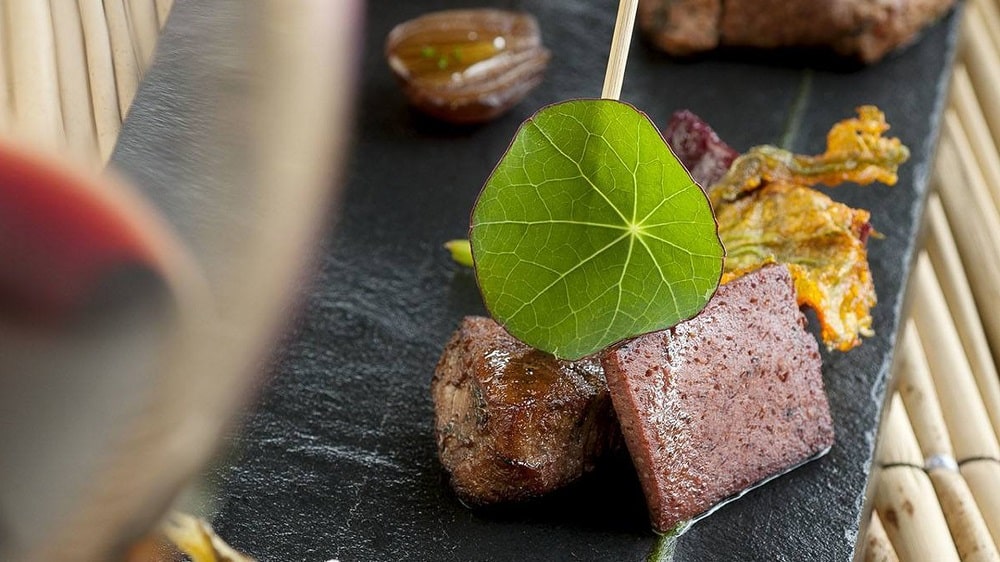
Right off the bat? A delicate veloute of Kabulangeti beans. The word means ‘small piece of blanket’ and the comfort food connection is not hard to guess. These small brownish beans tasted somewhat like black beans. Delicious. 

The second dish was dumplings with a dried fish filling; for the vegetarian in the party the chef had prepared a spinach wrap with mixed vegetable stuffing. Everything prepared from scratch and everything sourced locally. 

I skipped the meat and fish offerings but even the most ardent steak lover might have taken a second look at the array of vegetarian options:

  • Maize nshima (local version of polenta)
  • Millet nshima
  • Okra with sweet potato leaves
  • Aubergine impwa (‘egg’)
  • Spinach and ground nut melange 
  • Small local beans
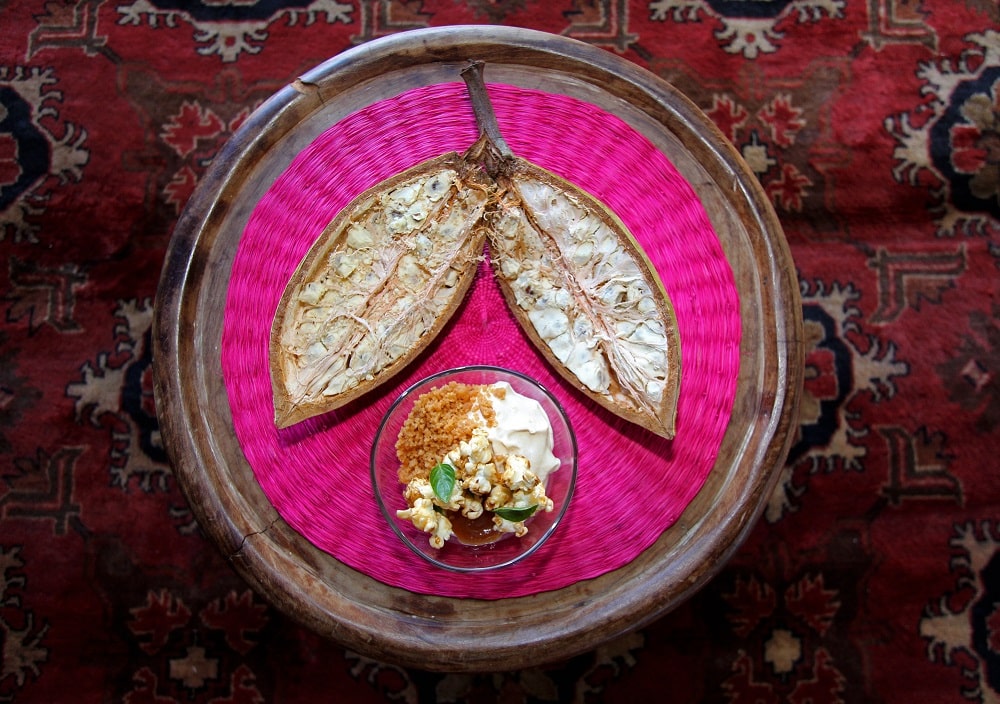
  • Masembe pudding, the local take on sago pudding   

We didn’t finish everything but went to bed happy in the knowledge that none of the buffet items would go to waste.

Breakfast overlooking the Zambezi 

Our culinary exploration at Royal Chundu didn’t end with dinner. We jumped right back into it the following morning, starting with an excellent decaf Americano, with a vanilla muffin or milk scone with strawberry preserve on the side. Your choice. Not to forget the locally-made peanut butter and orange marmalade with freshly made toast. Just like at dinner, all the fresh vegetables and herbs used in the preparation of the meal were supplied by neighboring villages or regional farms. 

We really didn’t know where to start – or end – with so many choices: 

  • A fresh fruit platter with delectable watermelon, pineapple and mango 
  • Choice of two types of creamy traditional porridge or oats, served with wild honey & toasted ground nuts
  • French toast or flapjacks
  • A traditional breakfast with eggs, bacon, tomatoes and mushrooms 
  • Eggs Benedict 
  • Eggs Florentine
  • A 3 egg omelette

A true community-run lodge

During an all too short site inspection at Royal Chundu River Lodge, general manager Aggie Banda filled us in on the remarkable manner in which the lodge – literally from day one when it opened in 2010 – has been community-run. Practically the entire Royal Chundu team are Zambians, including the managers. And most of the team members live in two nearby villages – Malambo and Muluka. Royal Chundu is a community-run lodge in the full sense of the word. The lodge provides training to the community, it sources its food from Zambia (mostly supplied by local fishermen and village gardens) and it supports the village gardeners through a Seed Project.   

To the extent possible, Royal Chundu looks to its own sphere for suppliers – such as seamstress work for their chitenge uniforms, cushion covers, doormats and dish covers; woodwork for their wooden doorbells; and artwork on the walls. The Royal Chundu staff have created spin-off businesses from the lodge, such as transfer services for guests as well as courier services delivering firewood and fertilizer.

Zambia in 2025 and 2026

Our short visit to Royal Chundu, which is of course on the Zambia side of the Zambezi River, reminded us that we may have been neglecting Zambia – as a safari destination – over the last few years.  

There are safari destinations which attract hundreds of thousands of visitors annually like Kenya, Tanzania and South Africa. And then there’s Zambia in central Southern Africa which attracts a relative handful, by comparison. 

Zambia is a large Southern Africa country (about the size of Texas) with every bit as much diversity as Kenya or South Africa. Which says a lot. It offers a multitude of activities, scenic highlights, wildlife viewing opportunities and cultural interaction. With several new and exciting safari options in the offing for the 2025 and 2026 seasons, we will definitely be paying closer attention to Zambia. So if you ask us for a Botswana itinerary suggestion you’ll get it, but you may get a Zambia one as well! 

Our Fish Eagle Safaris team have visited Zambia regularly over the years, and we’re ready to answer any questions you may have and to suggest a couple of Zambia safari itineraries. Perhaps in combination with one or more other areas in Southern or East Africa. Please leave a message at 713-467-5222 and someone will get back to you right away, or email Bert at bert@fisheaglesafaris.com.

Some photos courtesy Royal Chundu

YOU MIGHT ALSO BE INTERESTED IN

Destinations
Zambia

10th September 2021

Chindeni and the Bushcamp Company, Zambia

By late July we found ourselves at Chindeni, a small Bushcamp Company property
Read more
Botswana
Destinations
Okavango Delta

3rd October 2022

Camp Okavango, Botswana

Camp Okavango is in the heart of the permanent part of the Delta. In this idyllic setting there are no vehicles, and it is just a short walk

Read more
Area
Destinations
Nyerere National Park
Ruaha
Tanzania

14th October 2023

From My Safari Notebook: Wildlife Photography

Birds in flight and wildlife photographers have an uneasy relationship. Things go wrong as often as they go right. Getting focus-lock on a moving subject

Read more

SUBSCRIBE TO OUR NEWSLETTER

READERS FAVOURITES

Destinations
India

27th May 2023

India

India’s tiger, mammals and birds.

Read more
Botswana
Destinations

4th August 2022

On Safari At Belmond Eagle Island Lodge, Okavango Delta

What is the ‘secret sauce’ for an unforgettable few days on safari in Botswana? It starts with the animals, of course. The elephants, lions, giraffes, hippos

Read more
Destinations
Zambia

10th September 2021

Chindeni and the Bushcamp Company, Zambia

By late July we found ourselves at Chindeni, a small Bushcamp Company property
Read more

Kenya’s Laikipia Plateau: Ol Pejeta Private Conservancy

21st February 2025

Kenya’s Laikipia Plateau: Ol Pejeta Private Conservancy

Ol Pejeta is a Masai phrase which means ‘the place of burning,’ likely hearkening back to a time when pastoralist communities eradicated ticks by burning the grassy plains which dominate the area. During the course of a few days spent at four different safari camps in the Old Pejeta Conservancy in Kenya’s north-central Laikipia region, we fortunately experienced neither ticks nor fires. Rather, the visit highlighted a few key differences between Southern and East Africa and Botswana and Kenya in particular. 

For one thing, we started seeing rhinos, both black and white, right away. They are common, if not downright abundant, in several of Kenya’s private conservancies including Ol Pejeta and  Lewa-Borana. Elsewhere in Kenya, rhinos can also be seen in Loisaba Conservancy, in Meru National Park and Nairobi National Park, and there is a significant black rhino presence in the Ngulia Rhino Sanctuary within Tsavo West National Park. 

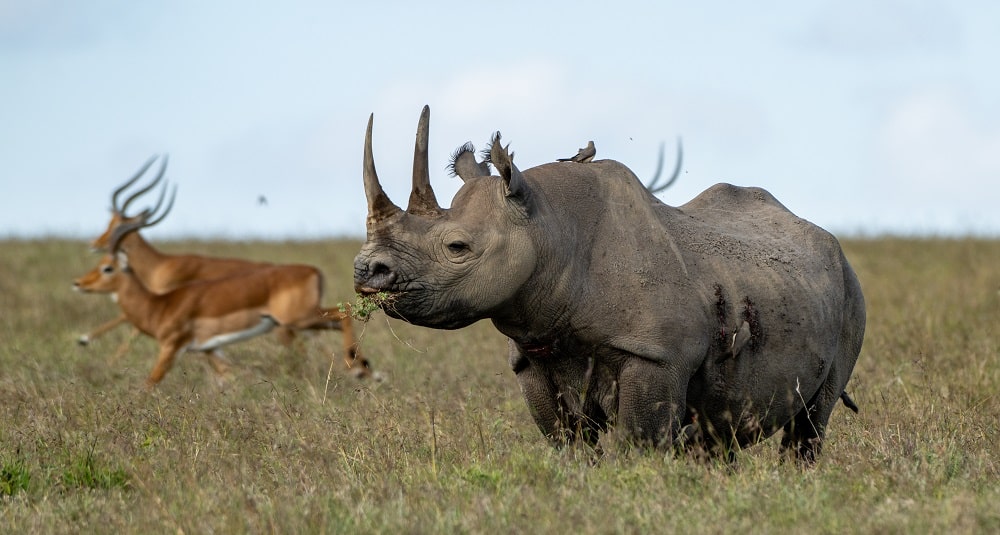
Unlike many of the game reserves in Southern Africa, the rhinos of Ol Pejeta, Lewa and other parts of  Kenya are not dehorned so you will see them running around with their completely intact, beautiful horns – ready to defend themselves when necessary. In most of the private conservancies in Kenya it is not unusual to see from five to seven or eight mammals at the same time. On more than one occasion we had rhino, buffalo, giraffe, gazelle, zebras and jackals in the same field of view. 

Just like the private concessions in Botswana, the Kenya conservancies offer a more exclusive safari experience as access is restricted and a wide range of activities are available including night drives, walking safaris and off-road driving. Where they  differ is the degree of community involvement. The Kenya conservancies operate as integrated conservation entities, managing a healthy habitat for wildlife and livestock. They work closely with surrounding communities in a manner which blends commercial income from tourism as well as agriculture.  

Another notable difference: on safari in Botswana it is often downright impossible to see signs of civilization as we know it anywhere in the private concessions in northern Botswana. No power lines, no fences, no water towers, towns or even villages. Not so in Kenya. Some of the private conservancies border on national parks while others are enclaves within populated areas. Take a few photos at Lewa or Ol Pejeta and invariably, there will be structures in the background. In essence, there is no difference in the safari experience whether you’re 5 miles or 50 miles from the nearest power line, but ‘civilization’ is all too visible in the East African conservancies.

It is of course part of the conservation model: a cooperative effort involving local communities to preserve suitable habitat for wildlife. To be successful, all the partners have to be winners. Which means there will be some agriculture going on, visible to the human eye mostly in the way of cattle herds or sometimes flocks of  sheep or goats. Beyond serving as the living livestock ‘banks’ for the local people (whose wealth is largely measured by livestock ownership) these animals contribute to the health of the habitat by keeping the grass short where and when needed and by supplying free natural fertilizer. Livestock – notably cattle- also provide an additional revenue stream for the conservancy.

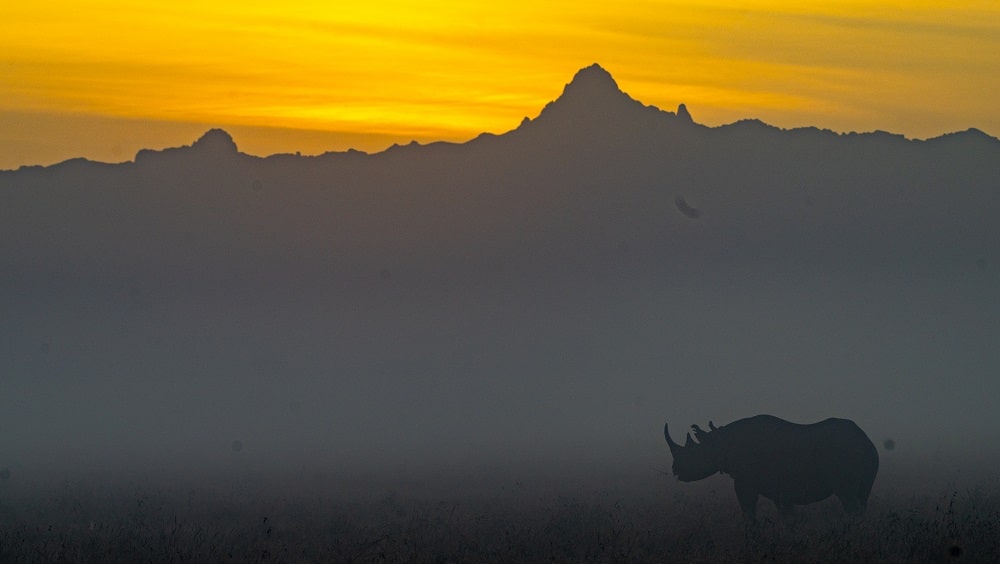
One other thing about Ol Pejeta that is practically impossible to miss is the looming presence of Mt. Kenya, Kenya’s highest mountain peak, often clearly visible to the south. Sometimes shrouded in mist, sometimes not, Mt Kenya is always there like a watching sentinel, a visible reminder of the landscape diversity which Kenya is fortunate to have. Over the course of four days in Ol Pejeta we had some great views of the mountain, with the single most memorable moment being observing some zebras in the foreground, with a misty mountain behind. My photography skills for once didn’t measure up to the challenge – silhouettes are always tricky!

Ol Pejeta Bush Camp

Our first stop in the conservancy, Ol Pejeta Bush Camp, felt comfortable and warm from the word go. Sitting out on the verandah overlooking the Ewaso Nyiro River while being given the usual arrival briefing, a good sized herd of elephants was grazing right on the opposite bank of the river. Later on, we saw several buffalos and hippos from the same spot, and other guests mentioned a leopard which was seen walking there. The delicious al fresco lunch on arrival set the tone for the quality of the meals. We also liked our tented room – one of only eight in this small, solar-powered camp.  

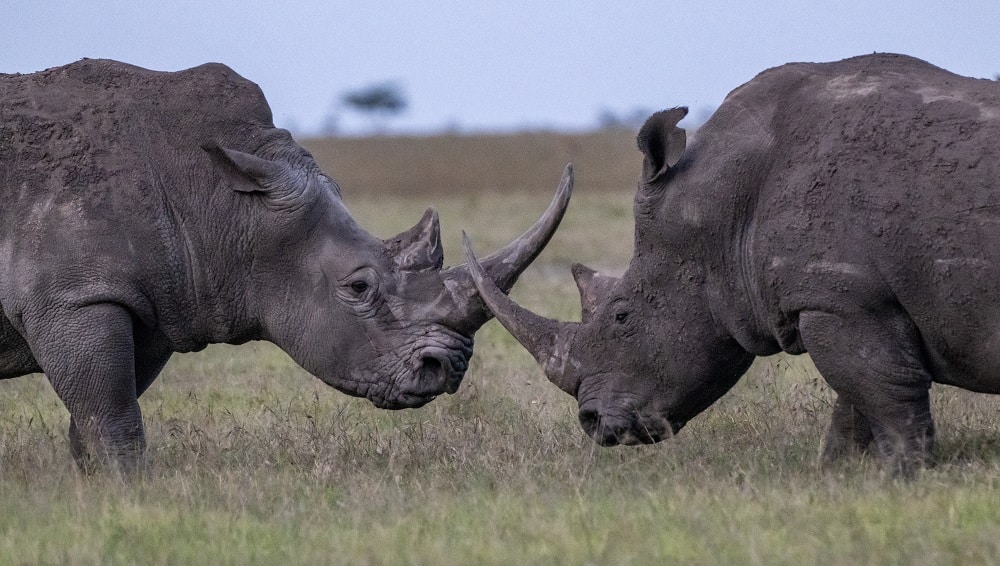
On our very first game drive in Ol Pejeta we encountered a remarkable number of rhinos including several black rhinos and one group of four white rhinos. It was no different the following morning and, without having to try too hard, I captured some of my best photos of both black and white rhinos in at least a decade. Over sundowners that afternoon a large male white rhinoceros appeared on the scene while we were watching four white rhinos grazing. The new arrival became agitated and ended up in an altercation with the largest individual in the group of four. As the light slowly faded, the two rhinos were still in a standoff, head to head, their massive horns just inches away from each other.

Kicheche Laikipia

What would be better than spending a few days at Kicheche Laikipia camp in Ol Pejeta? Combining it with a few days at a Kicheche property in the Masai Mara to qualify for Kicheche’s ‘stay 6, pay 5 nights’ special offer. Top-notch guiding, excellent all-around hospitality and thoughtfully designed rooms at all of the Kicheche properties make for a fun and absorbing safari experience with lots of animals and few other vehicles to be seen.  

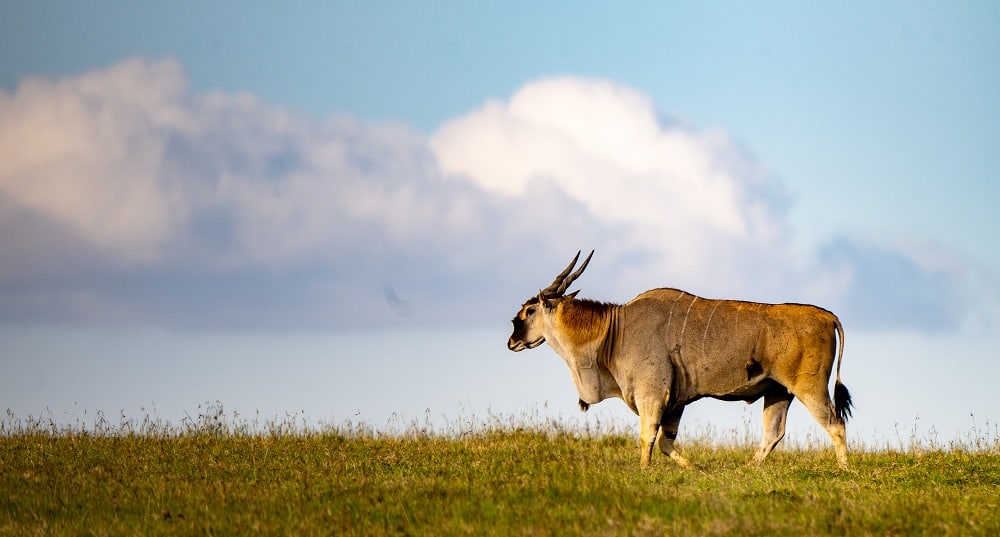
At Kicheche Laikipia we felt at home right away, with every member of the team doing whatever they could to make our short stay special. The attention to detail, the ‘make your own pizza’ lunch, the sense of privacy and exclusivity with just six rooms tucked away into a dense thicket. From the cozy dining tent we observed a good number of animals coming to drink at a pond, a hundred meters or so from camp. Among others we saw eland, buffalo, elephant, many birds, impalas and gazelles – all while enjoying Kicheche’s excellent food. 

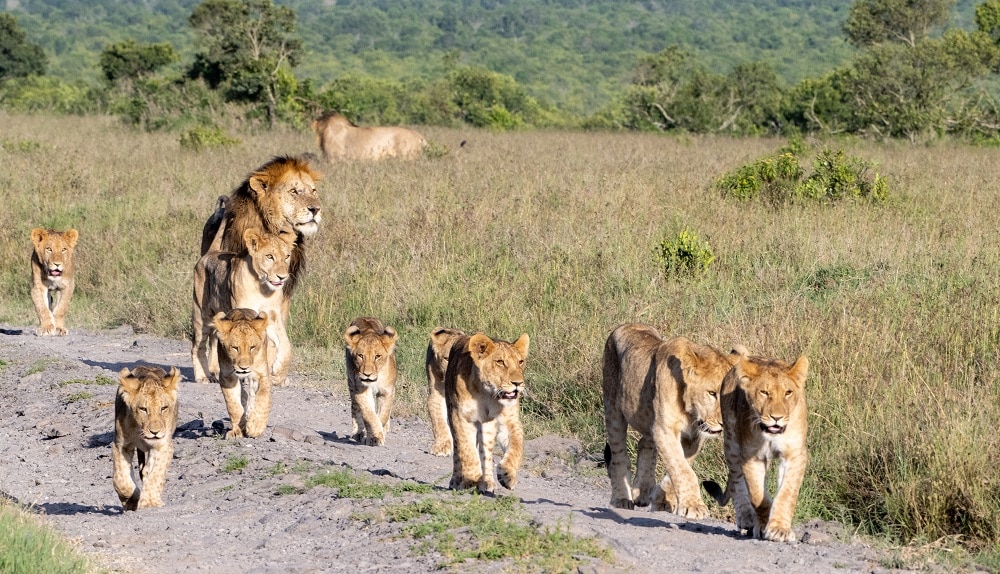
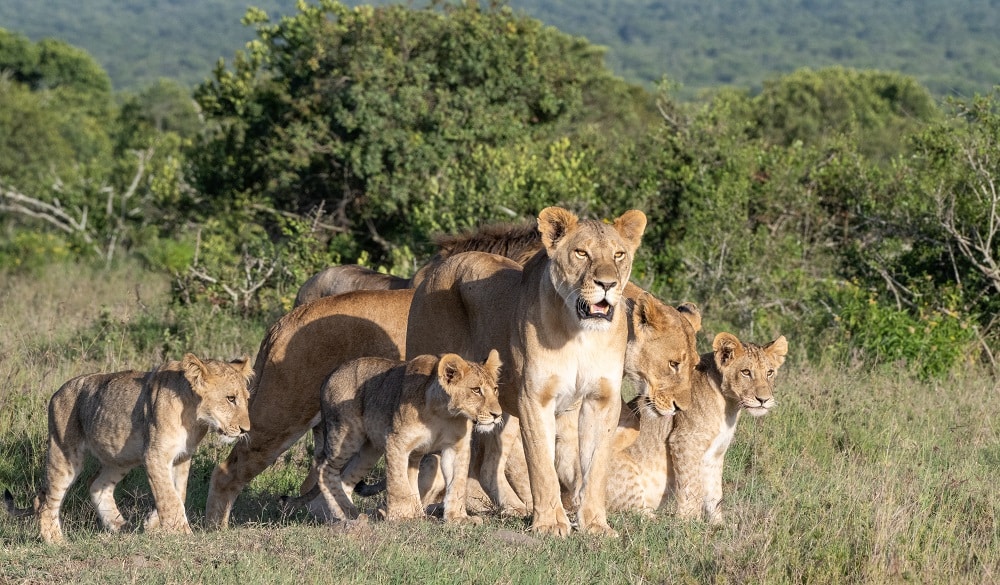
Our afternoon game drive out of Kicheche was another winner with several more excellent rhino sightings and finding a large pride of 26 lions – with lots of cubs of various ages. It was as entertaining and downright spectacular as any experience we’ve ever had with a group of big cats. Observing the youngsters ‘hunting’ each other, recognizing the affable attitude of particularly the adult females towards the young ones, letting the babies crawl all over them. Above all, seeing right there in front of us how cohesive they were as a pride, with muted contact calls and visual contact keeping them all moving as one, apparently all on their way to some predetermined spot. We were not unhappy to see the last couple of tails disappear into a thicket. We enjoyed our views and took our videos and photographs. It was time to let the lions be lions in private.

Sanctuary Tambarare

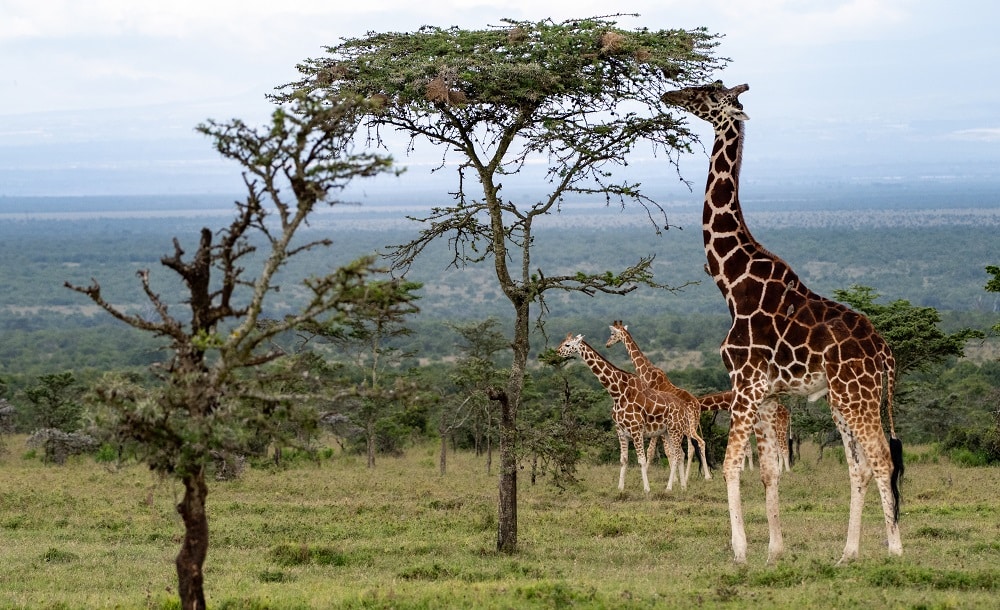
An extended game drive on our first day at Sanctuary’s Tambarare Camp illustrated just how diverse the Laikipia plateau can be. This beautiful expanse of broad, undulating plains, rolling hills and scattered rocky outcrops offers something new and interesting around every corner. Driving from the open savannah area into a huge whistling acacia thorn tree forest, we suddenly started seeing lots of small groups of the stunning reticulated giraffes. Without doubt my favorite of the giraffe species with their boldly delineated orange-red spots, separated by cream-colored lines.  

Later on during the same drive, we were watching a large pride of lions which had brought down a buffalo the previous night. As the sun was setting, several of them made their way to a watering point, one after the other. Just then, a black rhino started heading for the same trough and it initially made a mock charge towards one of the lions. When a couple of the other lions showed up the rhino figured that discretion was the better part of valor and it disappeared. Our guide didn’t think that the lions would actually have taken a serious interest in the rhino, but it certainly got us to pick up our binoculars.

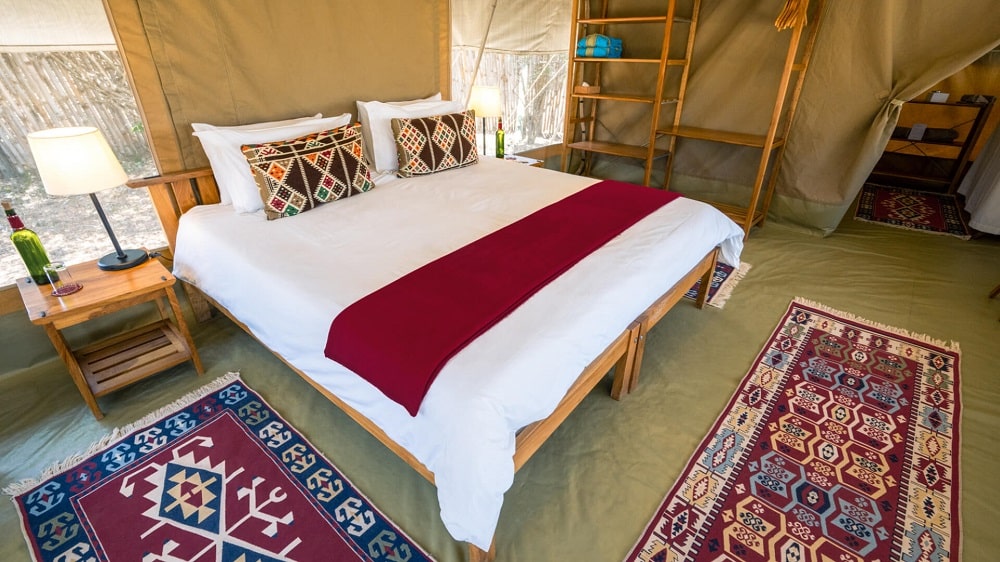
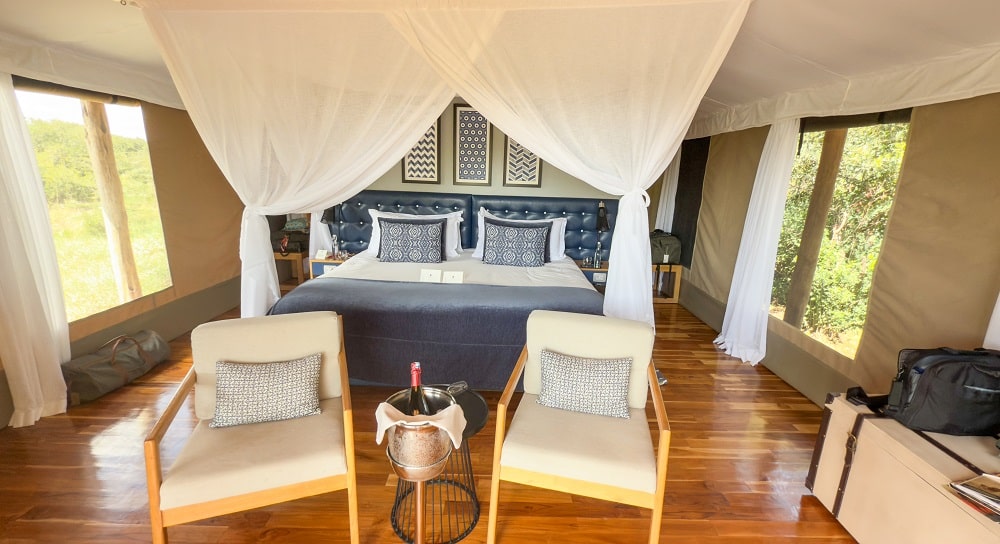
Our tented room at Tambarare was just about perfect. Elegantly appointed with just enough space, it had a separate shower and toilet, his and hers wash basins, ample luggage space, recharging points, and adequate lighting. And lo and behold, there was an electric blanket which we put to good use. The level of food and service at Tambarare was top-notch and we were totally spoiled with the choices and options. A specially prepared dish with ugali and maharagwe (essentially red beans in a coconut-based sauce) was outstanding!  

Being close to the equator, there are no wild swings between summer and winter days and summer and winter weather in much of Kenya. Altitude is generally a more important weather determinant than anything else. Being at an altitude of more than a mile high, Tambarare and for that matter all of Laikipia is always temperate and generally quite nice, with daytime highs around 80F and average lows rarely below 50F. 

Our team at Fish Eagle Safaris have been including a few days in the Laikipia region with several Kenya itineraries lately, with great success. If you’re considering an East Africa or Kenya trip, please reach out to Jason at jason@fisheaglesafaris.com for some suggestions on how – and when – Laikipia might best form a part of your trip. 

YOU MIGHT ALSO BE INTERESTED IN

Destinations
Zambia

10th September 2021

Chindeni and the Bushcamp Company, Zambia

By late July we found ourselves at Chindeni, a small Bushcamp Company property
Read more
Botswana
Destinations
Okavango Delta

3rd October 2022

Camp Okavango, Botswana

Camp Okavango is in the heart of the permanent part of the Delta. In this idyllic setting there are no vehicles, and it is just a short walk

Read more
Area
Destinations
Nyerere National Park
Ruaha
Tanzania

14th October 2023

From My Safari Notebook: Wildlife Photography

Birds in flight and wildlife photographers have an uneasy relationship. Things go wrong as often as they go right. Getting focus-lock on a moving subject

Read more

SUBSCRIBE TO OUR NEWSLETTER

READERS FAVOURITES

Destinations
India

27th May 2023

India

India’s tiger, mammals and birds.

Read more
Botswana
Destinations

4th August 2022

On Safari At Belmond Eagle Island Lodge, Okavango Delta

What is the ‘secret sauce’ for an unforgettable few days on safari in Botswana? It starts with the animals, of course. The elephants, lions, giraffes, hippos

Read more
Destinations
Zambia

10th September 2021

Chindeni and the Bushcamp Company, Zambia

By late July we found ourselves at Chindeni, a small Bushcamp Company property
Read more

A Few of Our Favorite Elephant Destinations

20th January 2025

A Few of Our Favorite Elephant Destinations

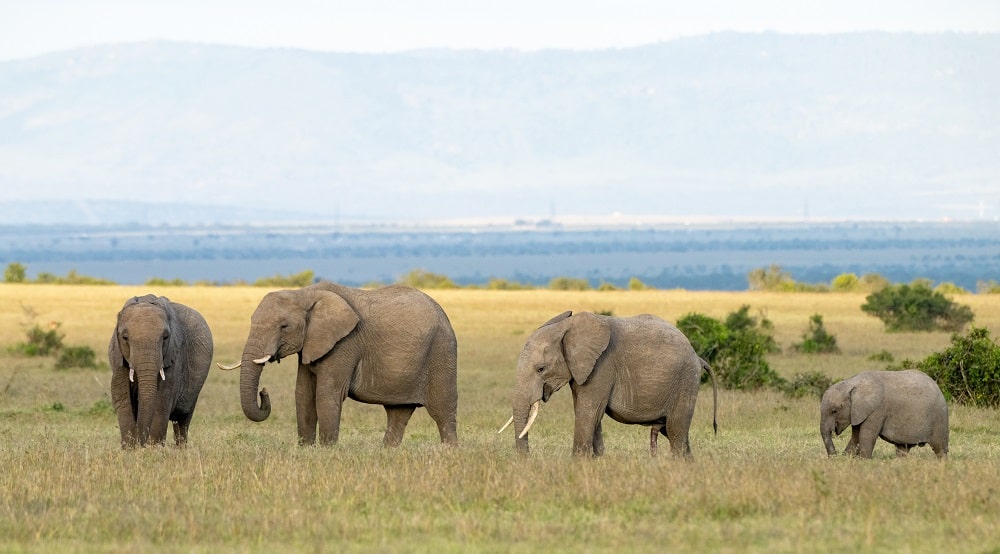
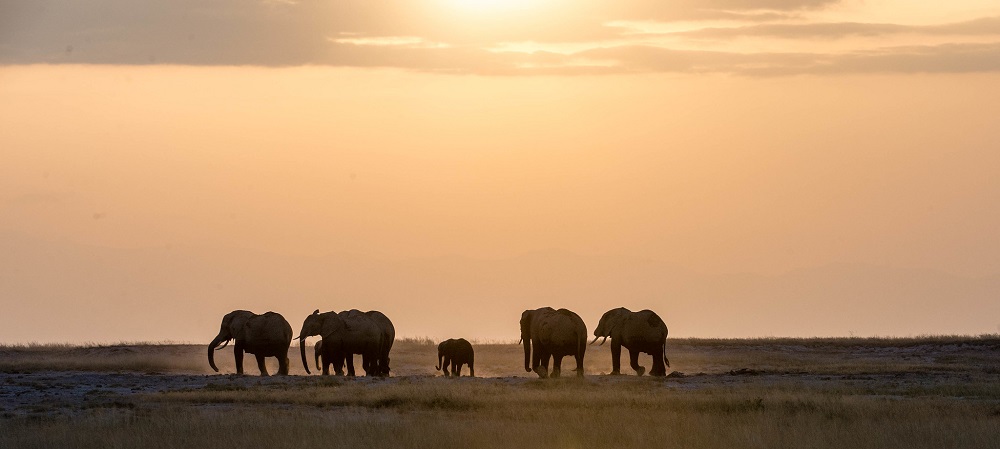
Over the last thirty years plus since Fish Eagle Safaris came into being, our team members have been fortunate to observe thousands of elephants. Even so, there is not one among us who will ever tire or become bored of finding and observing these amazing beasts. They are at the heart of a successful safari and like so many other passionate wildlife enthusiasts, we can and do watch them for hours on end. There are elephants in many areas of eastern and Southern Africa, but these five locations are standouts:

Amboseli National Park 

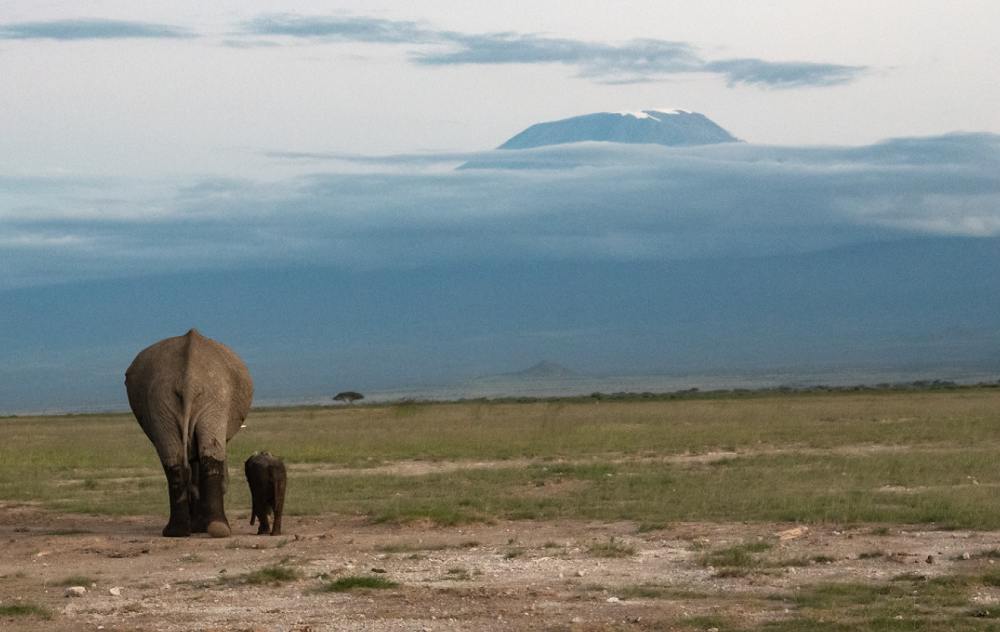
Two things elevate the elephants of Amboseli National Park into superstar status. The one is the fact that they – alone among all the many thousands of African elephants – are the only ones which live and breathe in the rain shadow of Mt Kilimanjaro. With a little bit of luck and skill – and a guide who will already be primed to do this – you too can take a photo putting the elephants between you and the mountain. It’s not too difficult and the results are stellar. 

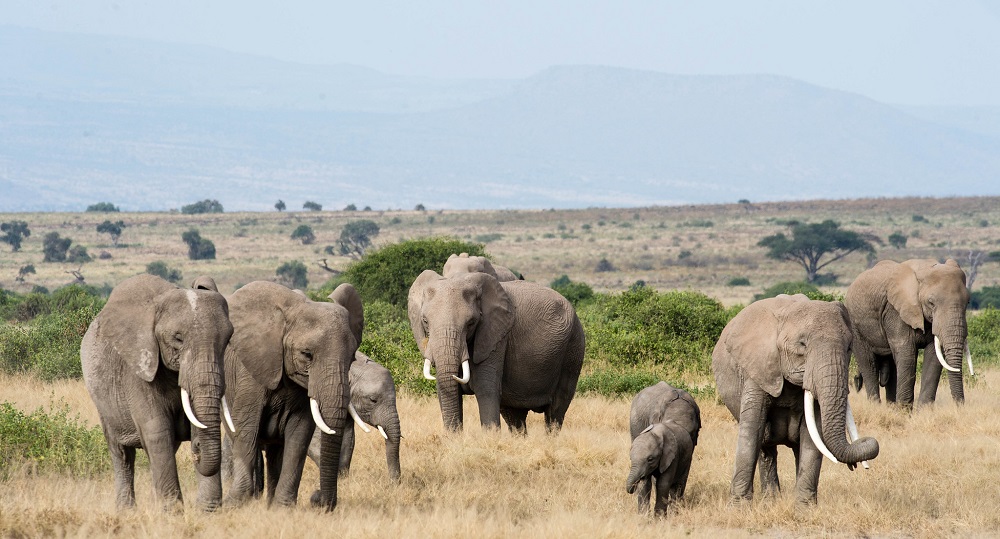
What is the other thing about Amboseli elephants which makes them special? Their white tusks. But don’t all elephants have white tusks? Indeed they do but if there were a dental whiteness standard for elephants as there is for human teeth, then the Amboseli tuskers would be practically off the charts on the bright side. The reason? Observe Amboseli’s elephants for a day or two and you’ll quickly figure it out. They are continuously moving between the woodlands and the swamps. In the swamps they practically submerge themselves while rooting around for edible plants. In the process undergoing a repeated and ongoing tusk cleanup, more effective than any giant elephant toothbrush ever could be. 

Chobe National Park, Botswana

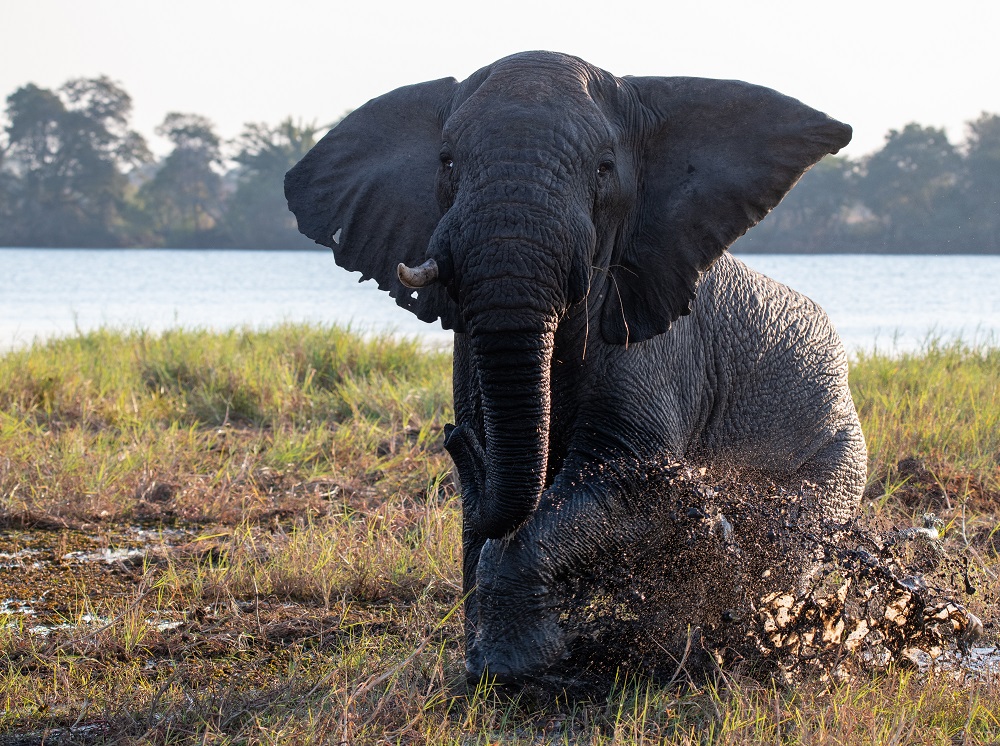
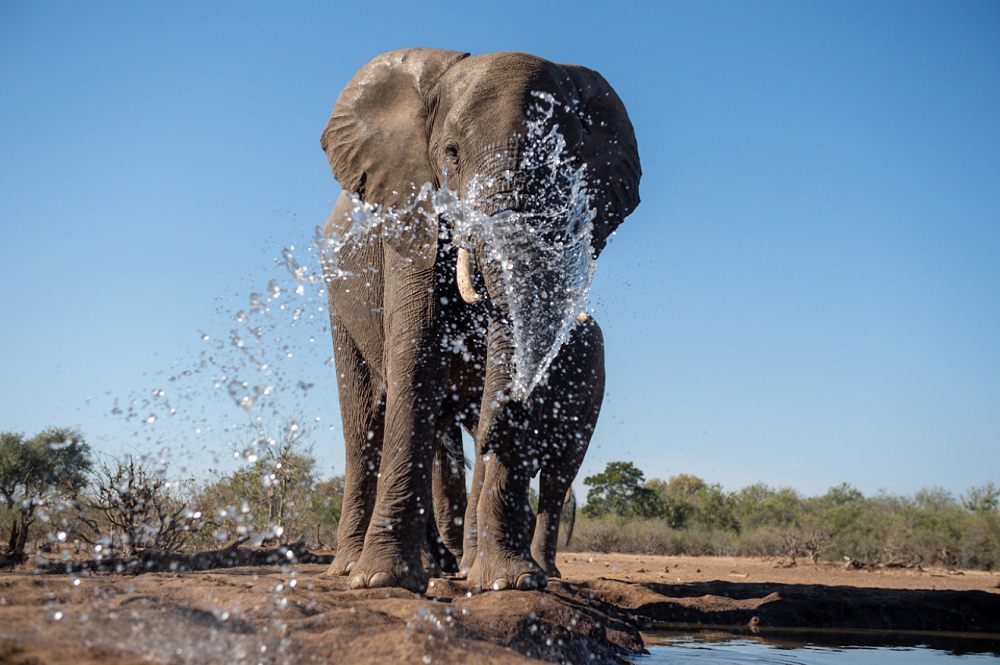
Botswana is a reliably good elephant destination and specifically so along the Chobe and Linyanti River, as well as along the Selinda Spillway and Savuti Channel. In those places, elephants gather in their hundreds and sometimes thousands during the dry season as they are dependent on water, having to drink at least once every couple of days or so. By June and through October, this is where they can be seen moving to the water, drinking from it and often getting into it. A Chobe and Linyanti highlight is to see small groups of elephants swimming to nearby islands or simply splashing around. Ideally visitors to the area should spend a good amount of time in the water themselves. On a boat, of course. 

The stable platform provided by a boat or skiff is ideal for photography in a spot which is invariably chockablock with subjects: not only the elephants  but also as many as three or four species of kingfishers; and several ducks, geese, egrets, cormorants, herons, bee-eaters and storks. Plus an abundance of hippos and Nile crocodiles. 

Tsavo East, Kenya 

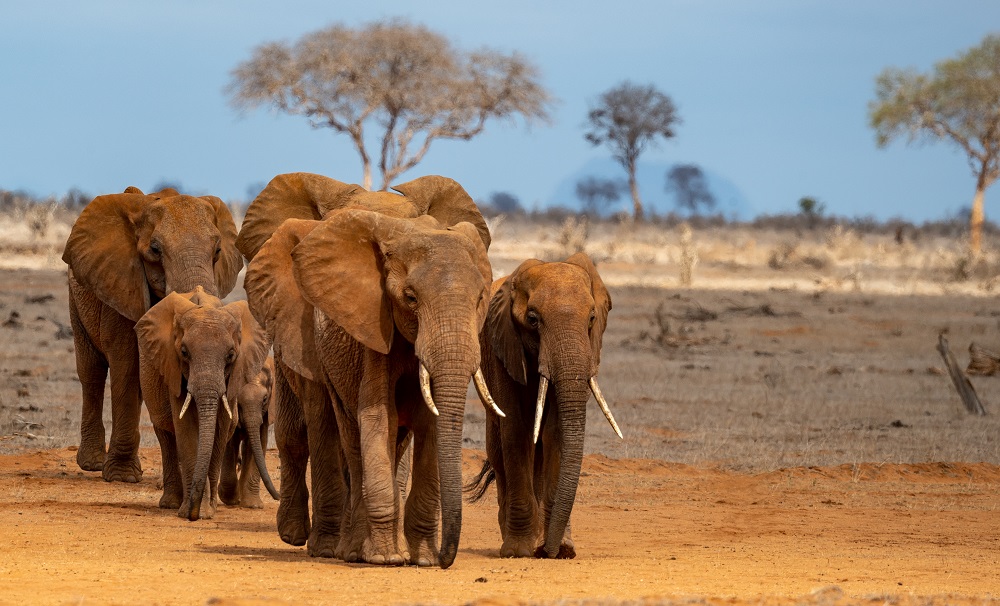
If I had to pick just one favorite spot in all of Kenya with its incredible diversity it would have to be Galdessa Camp on the Galana River, in Tsavo East. At the very base of the intriguing Yatta plateau – the remnant of the world’s longest lava flow – Galdessa is a simply magical spot. Spend half an hour gazing out over the usually tranquil Galana River, and you’ll almost certainly see some interesting birds and mammals in or close to it. Stick around a little longer and an elephant trunk is likely to be extended up and over the edge of the embankment, silently imploring you to roll a tasty doum palm fruit in its general direction. Several elephants habitually swing by the property to avail themselves of these free treats. 

The undisputed #1 activity from Galana – which is operated by Sheldrick Wildlife Trust – is a half day trip to the Voi Reintegration unit. This is where your fondest elephant dreams come true. Where you come face-to-face with several subadult elephant orphans being readied for release back into the wilderness. Observe their camaraderie, their unbridled joie de vivre, and reflect how every one of them initially made it to the Sheldrick elephant as orphans. Hungry, lonely, lost little souls, somehow separated from their mothers. Seeing them happy and content, feeding, drinking and playing with the other members of their peer group (they are usually released back into the wilderness together) is one of the most heartwarming, most inspirational, simply magical Africa experiences out there.

Mashatu, SE Botswana

Listen to a group of travelers talking about their upcoming trip to Botswana and you’ll hear them mention the Okavango Delta, Chobe, Moremi. Maybe Kalahari. What you won’t hear is Mashatu. Which is a pity as Mashatu is one of Botswana’s best destinations for elephants – and the big cats. Unquestionably, Mashatu private game reserve in the Tuli block in southeastern Botswana is a hugely underrated safari destination. 

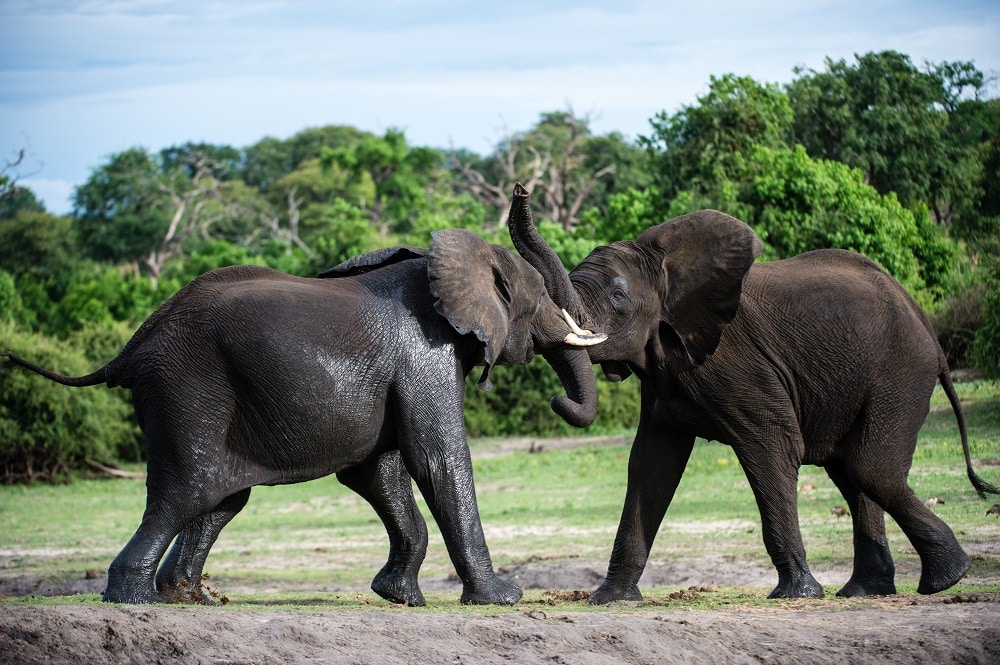
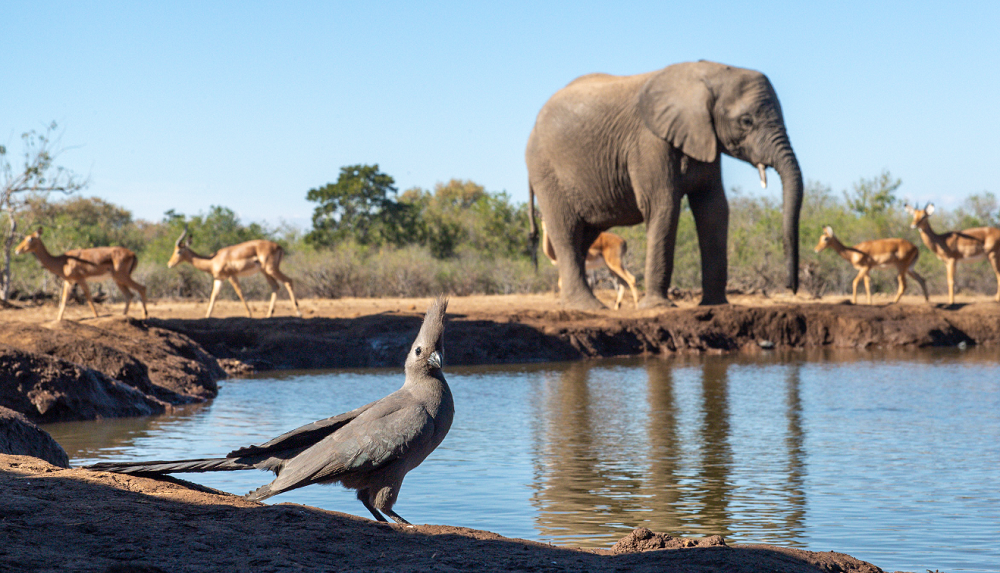
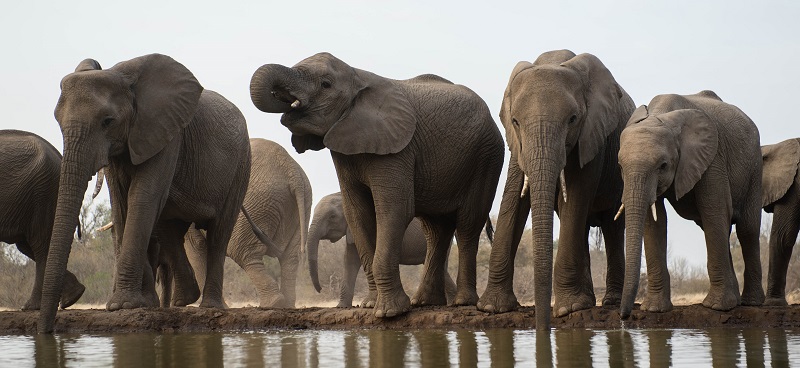
Over the course of several visits over the years we have experienced some amazing sightings at Mashatu, several revolving around elephants. The undisputed highlights were a couple of sessions at Mashatu’s Matebole elephant hide. Elephant aficionado heaven. Observe as one, two, a few and then an entire herd of elephants walk right into your field of view, just a few meters away. Put aside the telephoto lens – this is wide angle stuff. Youngsters pushing each other around, big bulls scaring everyone, tiny babies not knowing what their trunks are for. At the height of the dry season it can be an intense experience with even the observers sensing the desperation, sympathizing with the survival instincts so starkly on display there. 

While one can never get tired of watching elephants and elephant behavior, Mashatu has plenty of other things to see and do. Spend three or four nights there and you’re likely to see lots of plains game species as well as lions and leopards, and perhaps even cheetahs. They are not always present, but when they are, they are relatively easily seen being diurnal cats which roam around, hunt and kill during the day.  

Mashatu lends itself to foot safaris, which can be done in lieu of a game drive at no additional cost, or which can be added as an extra activity at nominal additional cost. At additional cost (not a lot) you can prebook a photographic session in the elephant hide, or embark on a mountain bike safari. If you’re a proficient horseback rider, you may wish to saddle up and go out into the wilderness on a horseback safari.

Hwange National Park, Zimbabwe

With more than 45,000 elephants resident in greater Hwange National Park, with some seasonal movements mostly within the park, Hwange is solidly in the top three best elephant destinations in Africa. Several of our most memorable elephant viewing experiences occurred at waterholes in Hwange, among others on outings from four Imvelo properties – Jozibanini, Camelthorn, Nehimba and Bomani – and from three Wilderness camps namely Davison’s, Little Makalolo and Linkwasha. In another blog post which can be found here, you can read more about Hwange and what makes it special, beyond the elephants.

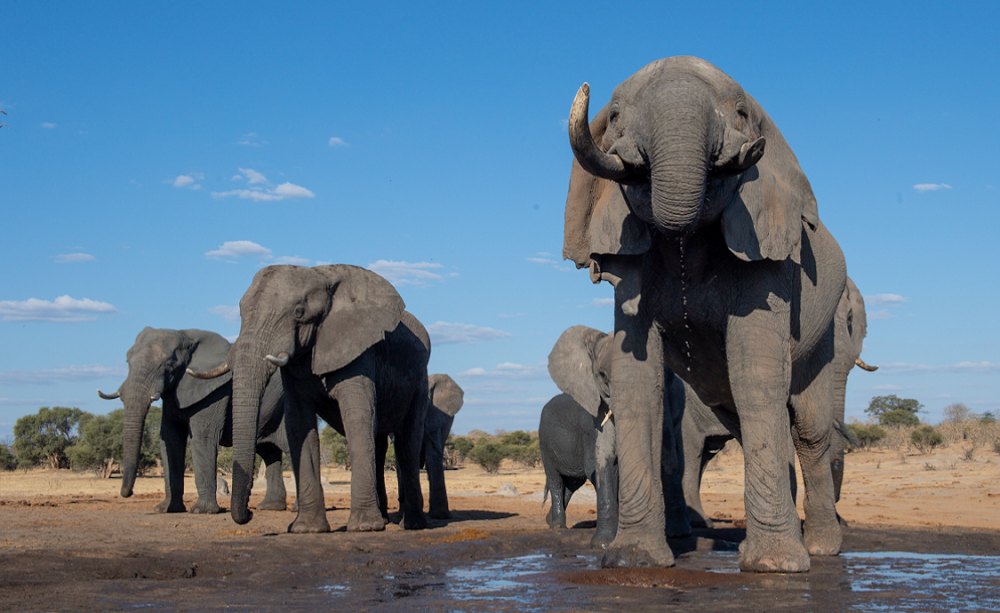
On a safari some years ago, Kathy and I were sitting just outside the vehicle on the side of the Makalolo Pan in southern Hwange late one afternoon, observing one after another herd of elephants coming to the water. It was early November and still bone dry, with no early rain having fallen. As a result, the stream of elephants coming to the waterhole was practically never-ending. Herd after herd after herd emerged from the edge of the woodland, the youngsters running ahead in boisterous fashion, all intent on quenching what is usually a substantial thirst in the dry season. We would watch as the elephants initially focused – almost exclusively – on just getting in as much water as fast as they could. Trunkful after trunkful, their huge heads and tusks would go up and down, sometimes in tandem with the other elephants around. Which was the cue for us to press the shutter release buttons on our cameras.  Getting a bit of synchronicity into a wildlife photo can be appealing.  

And then the unexpected happened. On that afternoon, Kathy and I each had a camera focused on the elephants. When the shutter release sound on her camera suddenly stopped, I wondered what was going on and looked to my right, where she was seated. She was looking directly at me, wide-eyed and used a small head movement to prompt me to look behind her. I immediately realized what was happening. A huge herd of elephants was in the process of approaching the waterhole from the side where we were parked. They split left and right of the vehicle, streaming past on our right and left, very close by. Hence the interrupted photography. We looked at our Wilderness guide who gave us a thumbs up sign, indicating that all was fine and that we were in no danger.  

For a few minutes there, we sat in awe of the huge beasts softly trundling past us in the direction of the water. Almost without a sound – the massive pads on their feet muffling the sounds of their footsteps – they glided right by us with no more than the occasional cautionary glance. In the late afternoon light they were beautifully lit and we could see the finest details on their massive heads and trunks, their gleaming tusks and finely rippled, charcoal grey hides. It was awesome in the old-fashioned sense of the word. I like to think that there was nothing we could have done to have improved on the experience. It was as perfect as an encounter with wild animals could be: the elephants were not displaced or distressed in any way, not scared or disturbed. Which is of course how one ideally wants every interaction with wild animals to go. Spellbinding and fascinating, yet not intrusive or disruptive.  

There are a myriad of safari options where one or more of these elephant havens can be included in a thoughtful and practical way. Particularly for a first safari but certainly not exclusively so – we think it is essential to include a really great elephant experience: Amboseli, the Chobe-Linyanti-Selinda corridor, Tsavo East, Mashatu and Hwange all fit the bill. So email Bert at bert@fisheaglesafaris.com to help you figure out a plan for your next trip to do just that. Or call us at
Fish Eagle Safaris Inc. at 1-800-513-5222 or 713-467-5222 any time; we will get back to you promptly. 

YOU MIGHT ALSO BE INTERESTED IN

Destinations
Zambia

10th September 2021

Chindeni and the Bushcamp Company, Zambia

By late July we found ourselves at Chindeni, a small Bushcamp Company property
Read more
Botswana
Destinations
Okavango Delta

3rd October 2022

Camp Okavango, Botswana

Camp Okavango is in the heart of the permanent part of the Delta. In this idyllic setting there are no vehicles, and it is just a short walk

Read more
Area
Destinations
Nyerere National Park
Ruaha
Tanzania

14th October 2023

From My Safari Notebook: Wildlife Photography

Birds in flight and wildlife photographers have an uneasy relationship. Things go wrong as often as they go right. Getting focus-lock on a moving subject

Read more

SUBSCRIBE TO OUR NEWSLETTER

READERS FAVOURITES

Destinations
India

27th May 2023

India

India’s tiger, mammals and birds.

Read more
Botswana
Destinations

4th August 2022

On Safari At Belmond Eagle Island Lodge, Okavango Delta

What is the ‘secret sauce’ for an unforgettable few days on safari in Botswana? It starts with the animals, of course. The elephants, lions, giraffes, hippos

Read more
Destinations
Zambia

10th September 2021

Chindeni and the Bushcamp Company, Zambia

By late July we found ourselves at Chindeni, a small Bushcamp Company property
Read more

A Grand Finale: Great Plains Conservation’s Selinda Explorers and Zarafa Camps

18th January 2025

A Grand Finale: Great Plains Conservation’s Selinda Explorers and Zarafa Camps

Big cats high on your list of animals to see on your next or first safari? Then I might suggest that you include the massive Selinda Concession in far northern Botswana in your trip itinerary. When designing an African safari, one always hopes that it will end on a highlight. We spent the last three nights of our early December 2024 safari in two Great Plains Conservation properties – Selinda Explorers and Zarafa Camp. While this was not actually the original plan – the sequence had to be changed due to a booking glitch – we could not have scripted the grand finale any better.  

Selinda Explorers Camp

By helicopter it took around 40 minutes to cover the approximately 80 miles from Tawana to Selinda Explorers camp, a tiny tented camp tucked into a riverine forest along the (then) dry Selinda channel. When we stepped out of the helicopter on what was another scorching hot day in northern Botswana, we had seen a lot on our trip to that point. But we had seen neither leopards nor cheetahs. So for those last three nights, our objective was two-fold: find these two (often) elusive members of the big cat family and try to see 111 different bird species in 72 hours. Which qualifies one for membership of Great Plains’ 111 club and scores you a nice cap in the process.

Selinda Explorers feels and is remote. For me personally it is the ideal iteration of a safari property. A truly classic tented camp, Selinda Explorer has three custom designed canvas guest tents and one 2-bedroom family tent. The main area consists of two inviting lounge and dining tents, with the entire camp exuding an atmosphere of warmth and genuine hospitality. A long day out in safari? This place, its people, and the manner in which they treat their guests will have you revived and re-energized in no time whatsoever. 

With our guide Esefa behind the wheel, our afternoon drive took us in a westerly direction along the mostly dry Selinda spillway. I don’t believe we were ever out of sight of what turned out to be an abundance of general game including zebra, kudu, tsessebe, buffalo, giraffe and more. And we started to set a good foundation with the bird list with many woodland species. 

Our dinner that night at Selinda Explorers was, I think, the most fun and enjoyable of any of our meals on safari. With just the six of us tucked in around a beautifully set table, it was as private as it could be and it felt like and sounded like we were in Africa. An approaching thunderstorm added a note of excitement as rain was on everyone’s mind. We would gladly have been drenched to the bone to see some relief for the wildlife and the environment. 

As it turned out the thunderstorm and rain held off until the wee hours of the next morning, and not without some concern on my part as to being safe from lightning. But first, it was time to just enjoy the delicious dinner prepared by the Great Plains chef. Dinners on safari are an opportunity to look back upon the day, recount some interesting or memorable sightings and to appreciate just how special it is to spend another night on safari.  

Zarafa Camp

For the last two nights of our Botswana safari, Great Plains Conservation upgraded our party to their Zarafa camp, a deluxe Relais and Chateaux property located in a great spot overlooking the Zibadianja Lagoon. Even after just one night, we had already grown quite fond of Selinda Explorers but the area was still in the grip of a heat wave, so the prospect of airconditioning in the sleeping areas at Zarafa made it an offer we couldn’t turn down. 

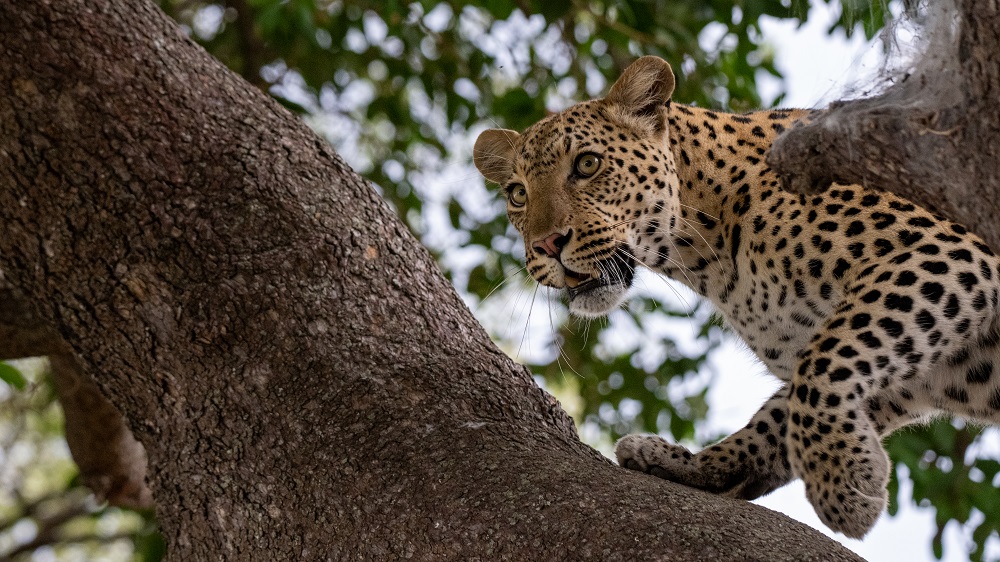
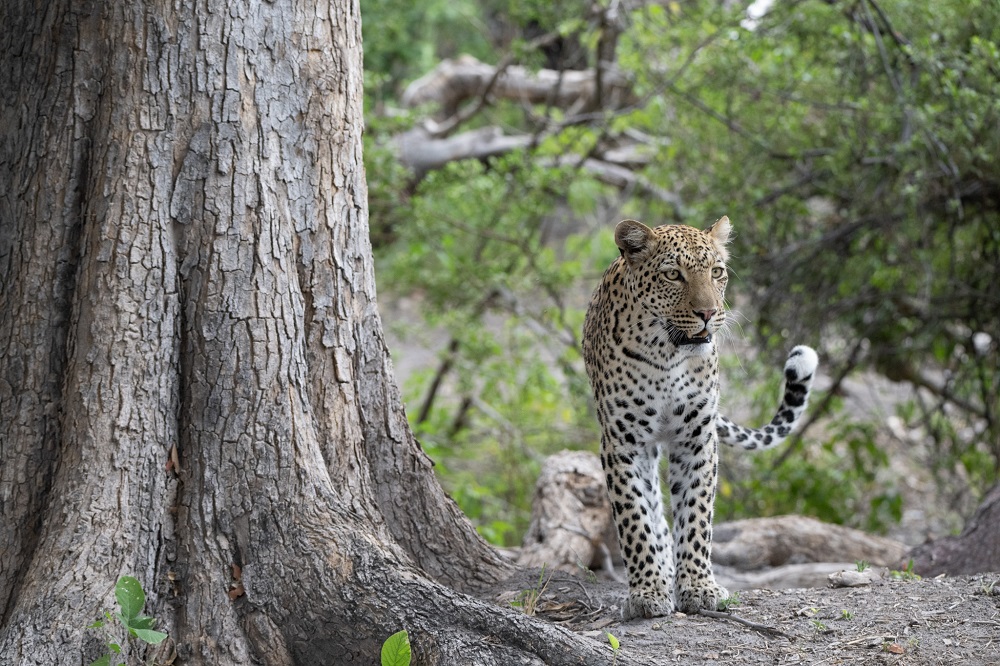
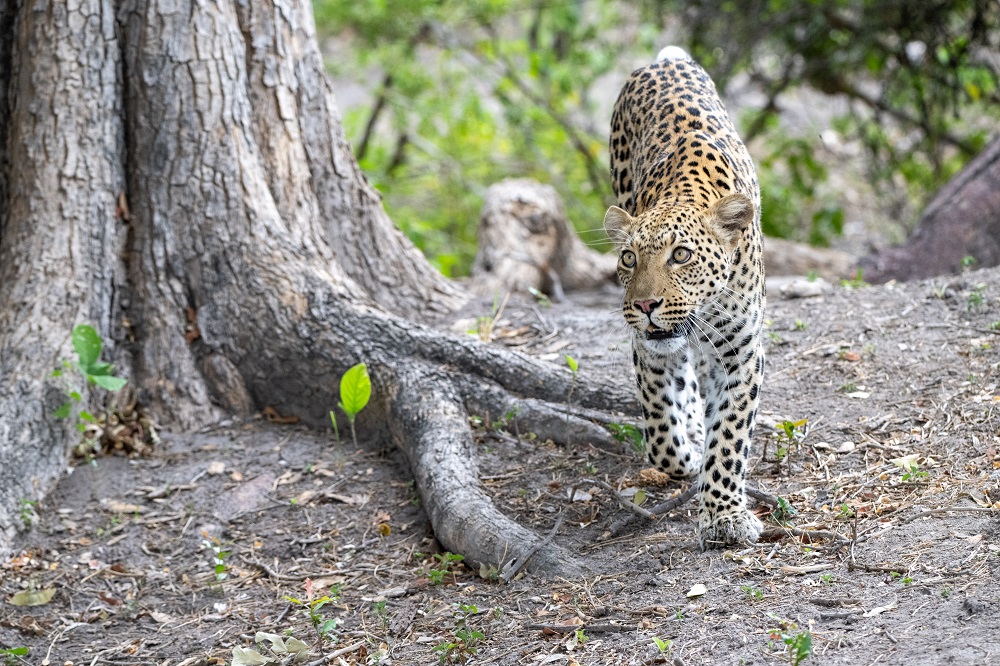
Highlights of our stay at Zarafa included extraordinarily good big cat viewing, starting with a male leopard on the way in, shortly to be followed by what turned out to be our only cheetah sighting of the entire trip. But first, the leopard sighting. It was an enthralling experience, from beginning to end. To start with, it was a miraculous effort by Esefa to spot the leopard in the first instance, as obscured as it was in a big tree, a good 30 meters or more off the road. Once we approached closer, the leopard twice relocated and each time we got a better view. Initially on a branch in the tree with a decent background (meaning not completely backlit) and then it climbed down. Walking straight towards our vehicle in really good light, the leopard then took a look at a nearby tree and, just meters away from us, clambered straight up. It was so close that we could hear the leopard’s claws scratching on the tree bark.  

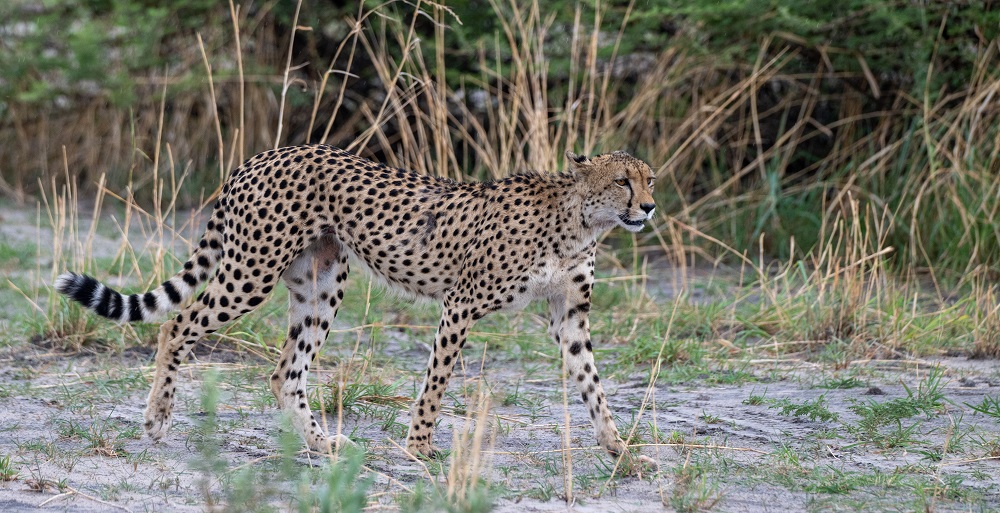
About 40 minutes after we had been admiring the leopard, we were looking at spots of a different kind, this time watching a sleek cheetah as it made its way across an open area, not far from the Selinda airstrip. The cheetah was not quite as obliging in terms of providing us with photo opportunities, but it didn’t really matter. It was a cheetah and for several persons in our group, the first one they had ever seen. Over the next couple of days we were to enjoy another fascinating sighting of a female leopard who had dragged her baby impala prey into a tree. Also, we were fortunate to bump into 10 more lions, among others, two of the best looking males we’ve seen in a long time, the so-called Army Boys. A big cat bonanza if ever there was one. 

Over the course of three days in the Selinda area we racked up 120 different bird species: with extensive wetlands as well as mixed woodland, riverine forest, open floodplain and acacia thickets, the area has significant habitat diversity which is what it takes to support such an abundance of species. Cracking the 111 species mark would not have happened without our guide Esefa’s enthusiasm and expertise. I think he liked chasing the 111 bird target as much as we did!

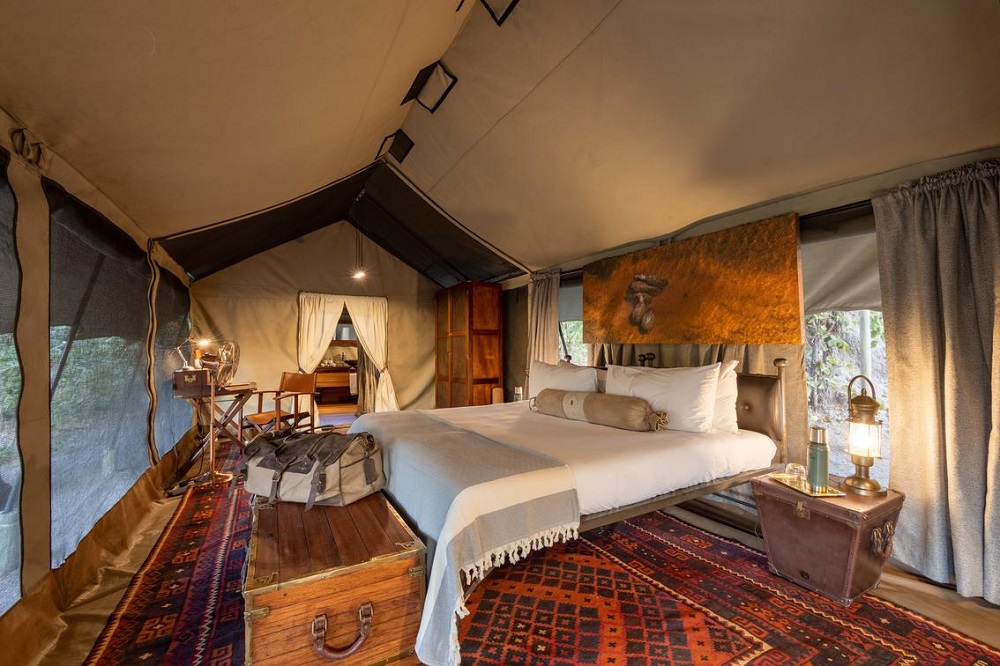
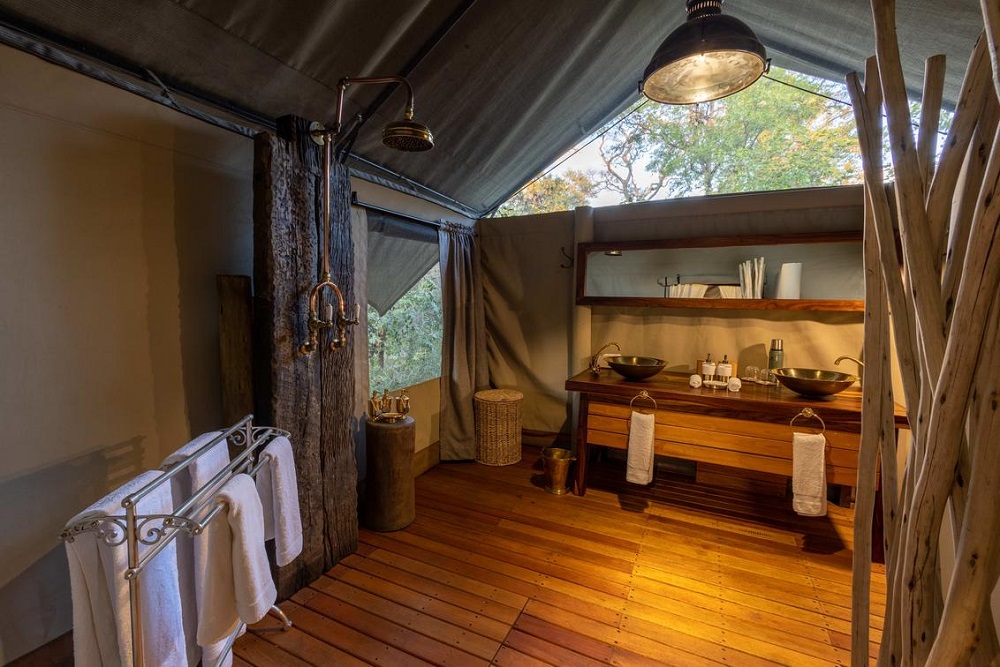
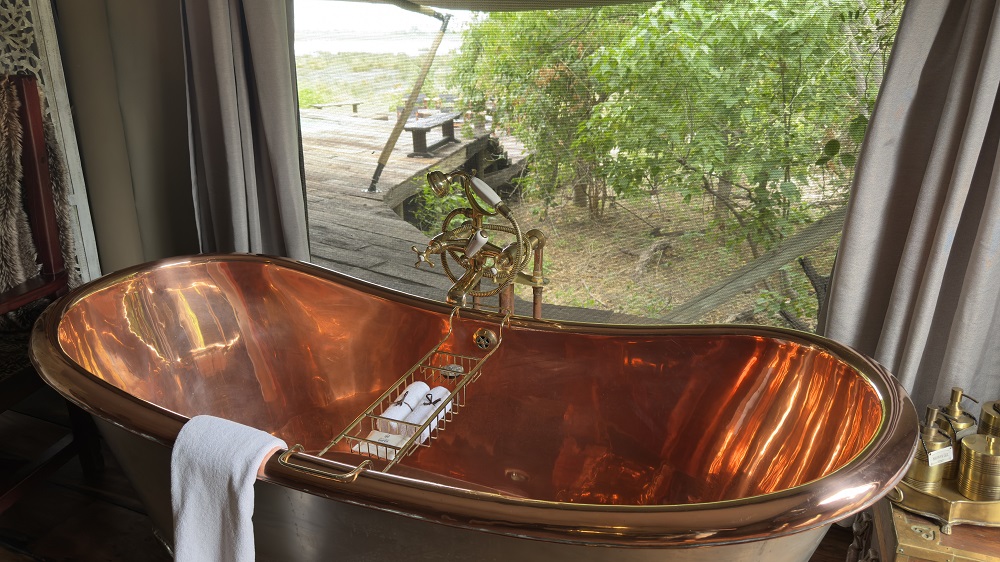
Zarafa is a property which delivers a superior wilderness experience on many levels. The under-canvas tented rooms are massive and make a few days on safari about as much fun as can be imagined. Chill out in the plunge pool on a hot day, soak away a dusty day on safari in the large tub or take a quick shower indoors or outdoors – my best advice is to do them all. The four huge guest suites consist of a lounge area which flows to a beautiful bedroom and an open layout indoor bathroom with a gas fireplace, shower and claw-foot bath. A hand-crafted Zanzibar door at the entrance sets the right tone: this is not a run-of-the-mill tent by any stretch of the imagination.  

Being on safari at a deluxe property like Zarafa is synonymous with being pampered and we certainly were. Get ready for the full treatment: delicious, elaborate and expertly prepared meals, served with panache and elegance. Select a fine wine – bubbly if you prefer – from the sizable private wine cellar, or request your favorite cocktails with or without alcohol. Spend a bit of time at the outdoor gym with expansive views over the Zibadianja lagoon.  

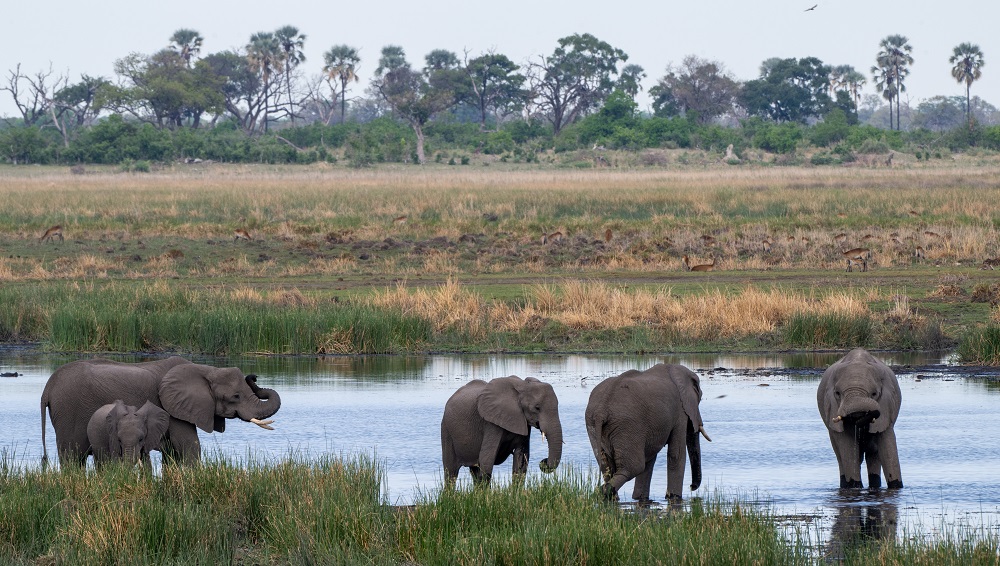
Even so, and despite the luxury surroundings, Zarafa is very much in the wilderness and you don’t have to go on a game drive to experience it. One of the best spots in the area is the large deck right in front of camp, overlooking the massive Zibadianja lagoon. At the time of our visit the lagoon was mostly dry, but the remaining water attracted many herds of elephants, which would slowly move into the water from out of the woodlands, quench their thirst and then just as peacefully as they arrived, wander off in another direction. At times there were close to a hundred elephants or more at the same time. Peering through a telescope on the deck, it was possible to pick out the matriarch – the one who keeps things together for the herd – and to take a closer look at the tiny baby elephants, usually seen just a few meters away from an adult female, and often shielded between several of them. 

On the morning on which we had to say our reluctant goodbyes at Zarafa, Kathy and I decided to go and have a quick look at the gym – on the extreme left hand side of the camp – and to take a few pictures from there. What we had not reckoned on or planned for was an ‘elephant delay’ which occurred when a solitary bull elephant quietly made his way right up to the gym as we were looking in a different direction. We knew better than to try to dart across in front of him. So we just waited for a few minutes, giving him some space. With one eye on us and very much aware of our presence, the bull elephant moved past the gym from our left to our right and walked away, using the same path which we had used to get to the gym. We sighed a small sigh of relief, looked at each other with raised eyebrows and walked in the steps of the elephant, back to the lodge. Our safari was over.  

Our colleague Lyndon has visited several Great Plains properties recently so he is well equipped to answer any questions you may have about combining some of Great Plains’ Reserve Collection or Explorers camps in your safari itinerary. Great Plains have a range of first-class properties in Kenya, Zimbabwe and Botswana. Lyndon can be reached at lyndon@fisheaglesafaris.com or by calling and leaving a message at 713-467-5222 or 1-800-513-5222.

YOU MIGHT ALSO BE INTERESTED IN

Destinations
Zambia

10th September 2021

Chindeni and the Bushcamp Company, Zambia

By late July we found ourselves at Chindeni, a small Bushcamp Company property
Read more
Botswana
Destinations
Okavango Delta

3rd October 2022

Camp Okavango, Botswana

Camp Okavango is in the heart of the permanent part of the Delta. In this idyllic setting there are no vehicles, and it is just a short walk

Read more
Area
Destinations
Nyerere National Park
Ruaha
Tanzania

14th October 2023

From My Safari Notebook: Wildlife Photography

Birds in flight and wildlife photographers have an uneasy relationship. Things go wrong as often as they go right. Getting focus-lock on a moving subject

Read more

SUBSCRIBE TO OUR NEWSLETTER

READERS FAVOURITES

Destinations
India

27th May 2023

India

India’s tiger, mammals and birds.

Read more
Botswana
Destinations

4th August 2022

On Safari At Belmond Eagle Island Lodge, Okavango Delta

What is the ‘secret sauce’ for an unforgettable few days on safari in Botswana? It starts with the animals, of course. The elephants, lions, giraffes, hippos

Read more
Destinations
Zambia

10th September 2021

Chindeni and the Bushcamp Company, Zambia

By late July we found ourselves at Chindeni, a small Bushcamp Company property

Read more
  • « Go to Previous Page
  • Page 1
  • Interim pages omitted …
  • Page 5
  • Page 6
  • Page 7
  • Page 8
  • Page 9
  • Interim pages omitted …
  • Page 29
  • Go to Next Page »

Footer

Design

  • About
  • Destinations
  • Blogs
  • FAQS
  • Team
  • Contact
All Rights Reserved ©Fish Eagle Safaris 2022 | Terms & Conditions | Privacy Policy
Designed & Developed by B Online

SUBSCRIBE TO OUR NEWSLETTER

SIGN-UP TO OUR NEWSLETTER

Subscribe Form

Footer Widget Header

Related Blogs