• Skip to primary navigation
  • Skip to main content
  • Skip to footer

Fish Eagle Safaris

Fish Eagle safaris

Contact

Logo
  • About
  • Destinations
  • Blogs
  • Newsletter
  • FAQS
  • Team
  • search
  • Contact
  • About
  • Destinations
  • Blogs
  • FAQS
  • Team
  • Contact

Serengeti Plains

Serengeti Safari Camp, Ndutu

26th March 2021

Serengeti Safari Camp, Ndutu


Image

Ngare Sero Lodge

Serengeti Safari Camp, Ndutu

Tanzania’s Serengeti National Park is one of Africa’s greatest wildlife sanctuaries. Massive in size – dwarfing Kenya’s Masai Mara which is part of the same ecosystem – it is high on the bucket list of many travelers.  And for good reason.  There’s nothing else like it.  Its vast undulating grassy plains, interspersed with rocky outcrops, patches of woodland and forest and riverine thickets, are well-watered and support literally millions of large mammals of as many as 70 species.

Image

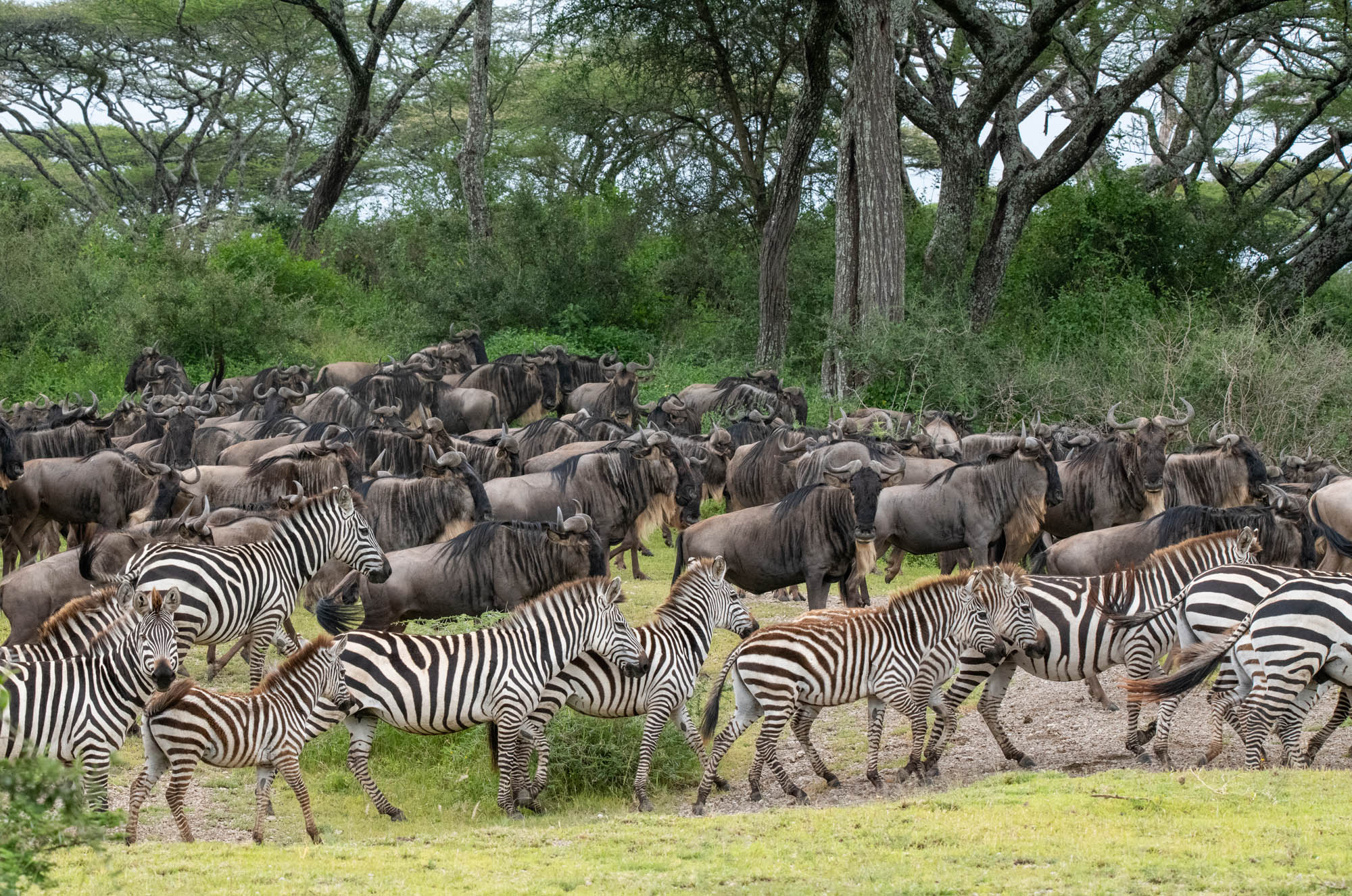
It also harbors more than 500 species of birds, from heavy flightless ostriches to tiny fire-finches, a wealth of birds of prey and some of Africa’s most colorful birds such as bee-eaters, rollers, shrikes and sunbirds.  Its annual wildebeest migration – when in excess of 1.5 million wildebeest move from the southern shortgrass plains of the Serengeti to the northernmost borders of the park along the Mara and Sand Rivers, as well as to the west into the Grumeti Reserve – is one of the world’s most celebrated natural phenomena.

Image

It has only been a couple of years since my last visit to the southern Serengeti, but it couldn’t have been more different than the previous time.  As the flight from Mwiba dipped lower and turned on short finals to line up with the runway at Ndutu airstrip, I knew right away that we had found the wildebeest migration.

Sanctuary Retreats

Image

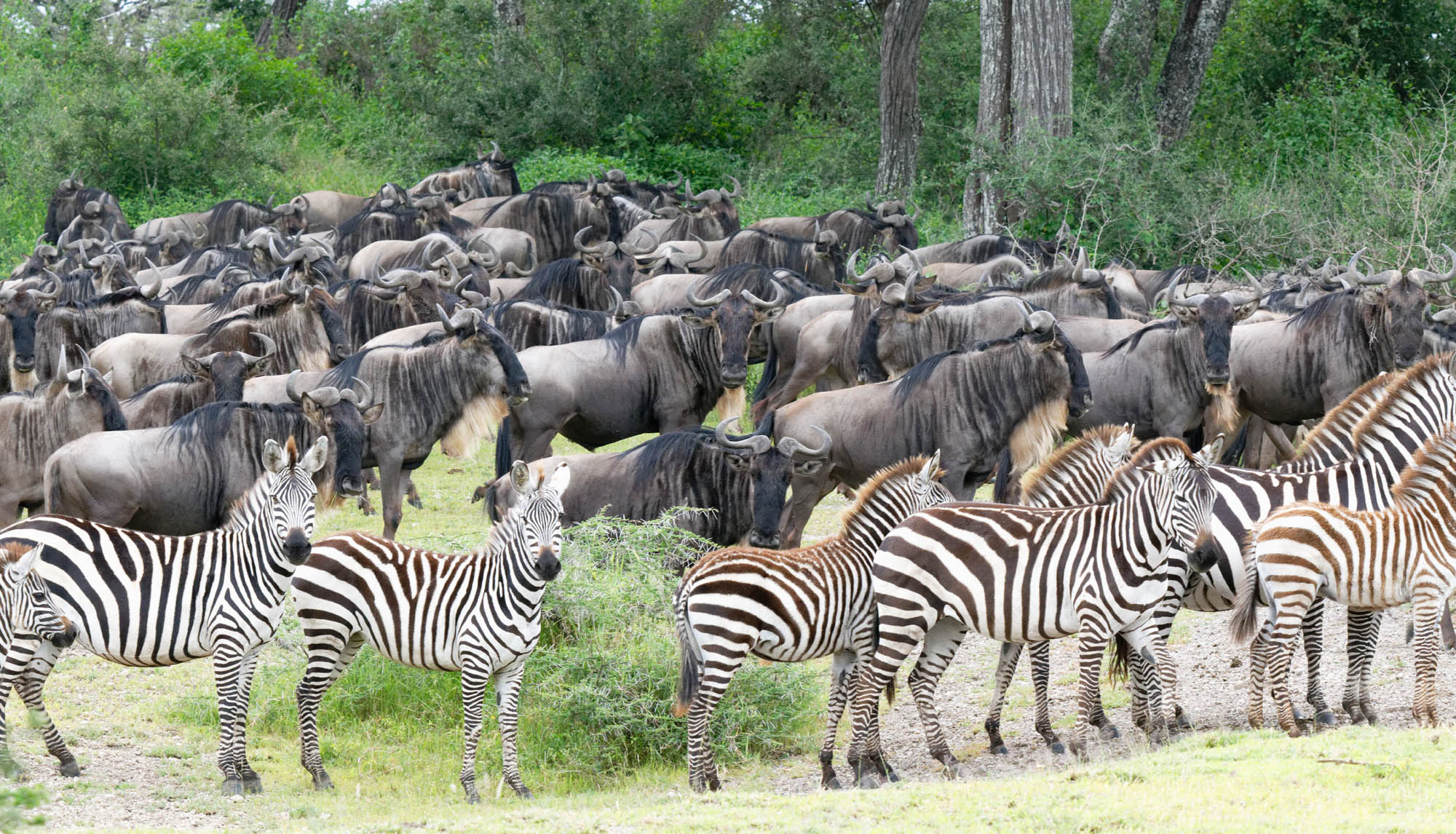
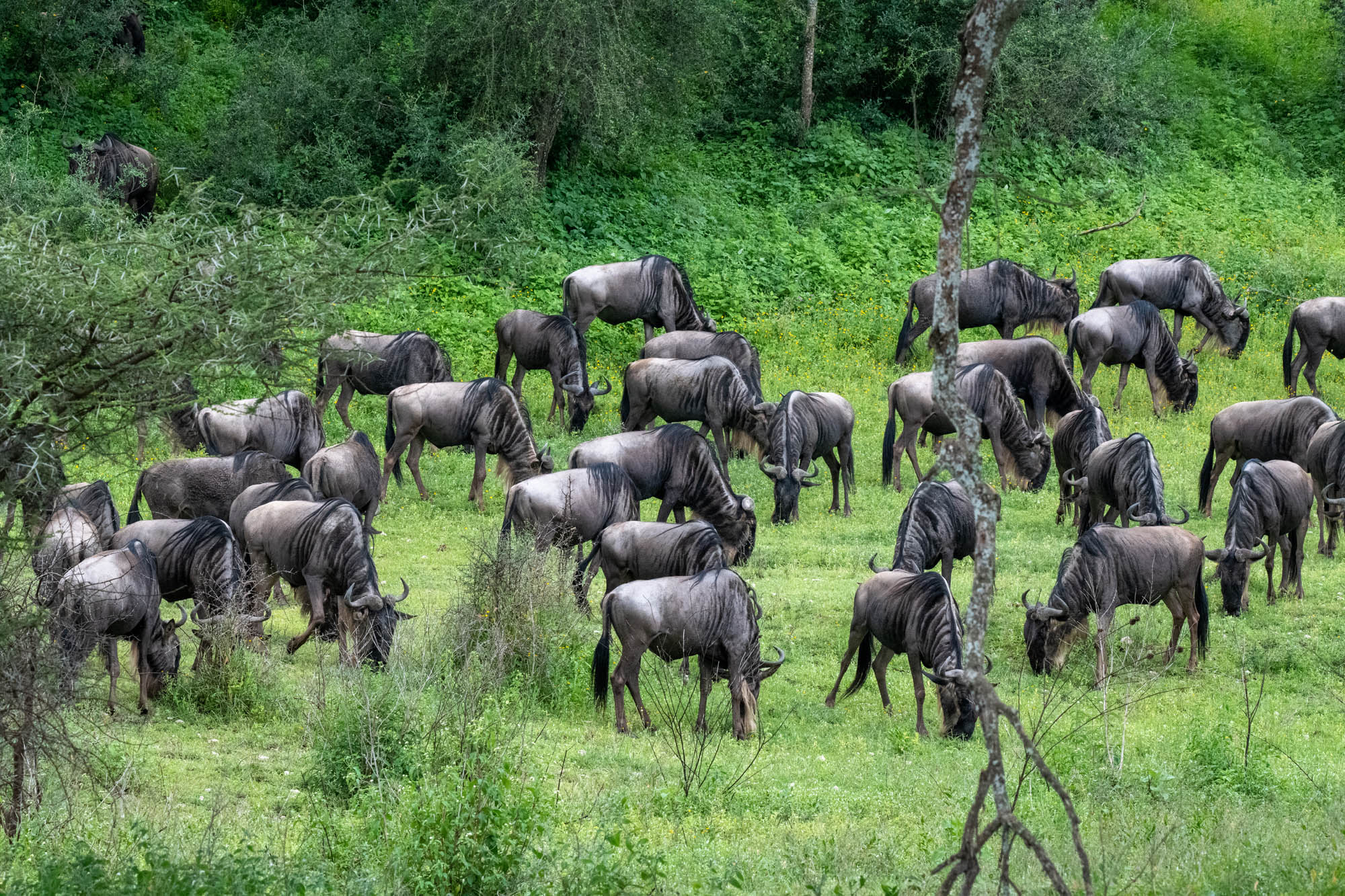
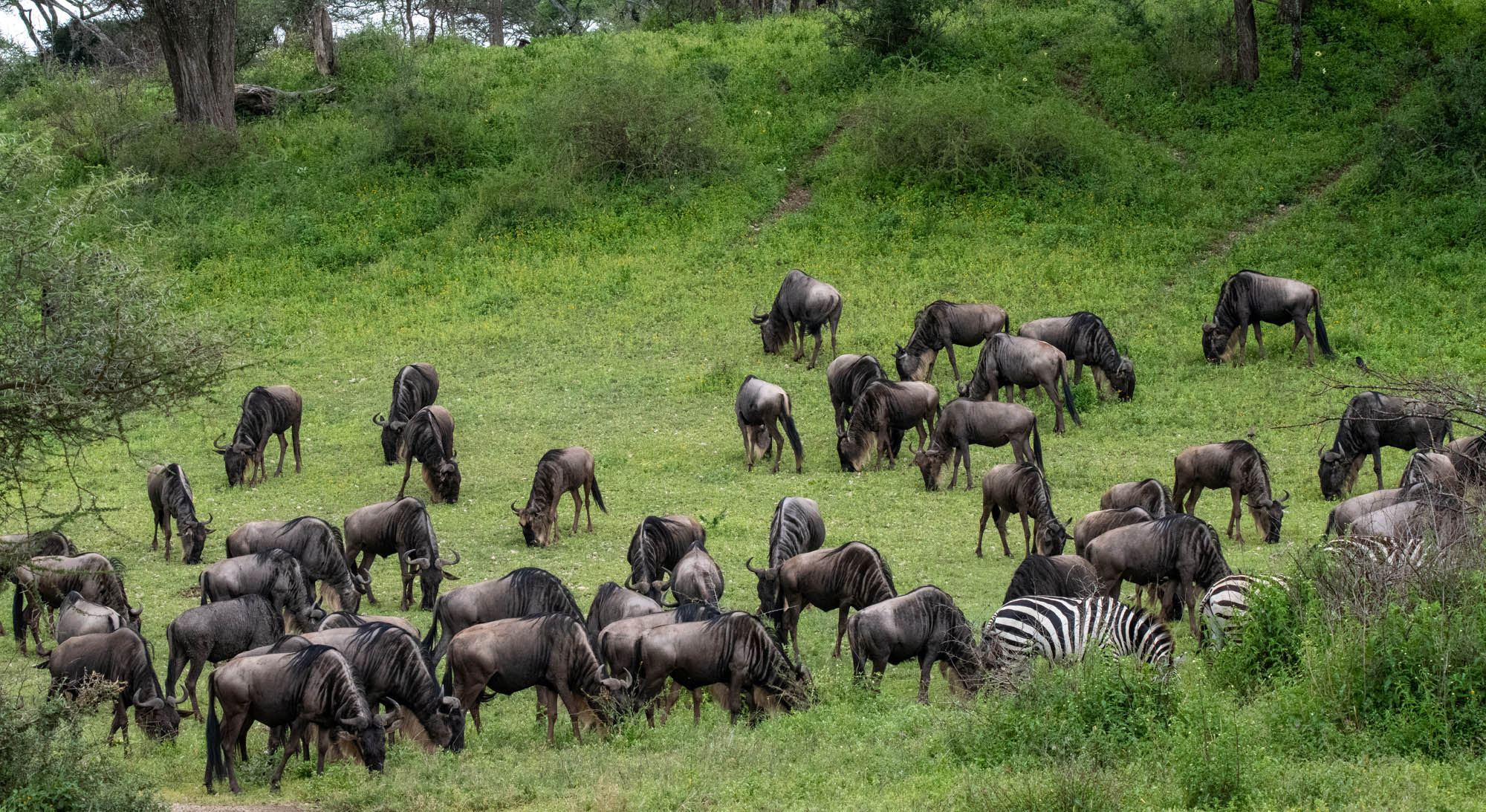
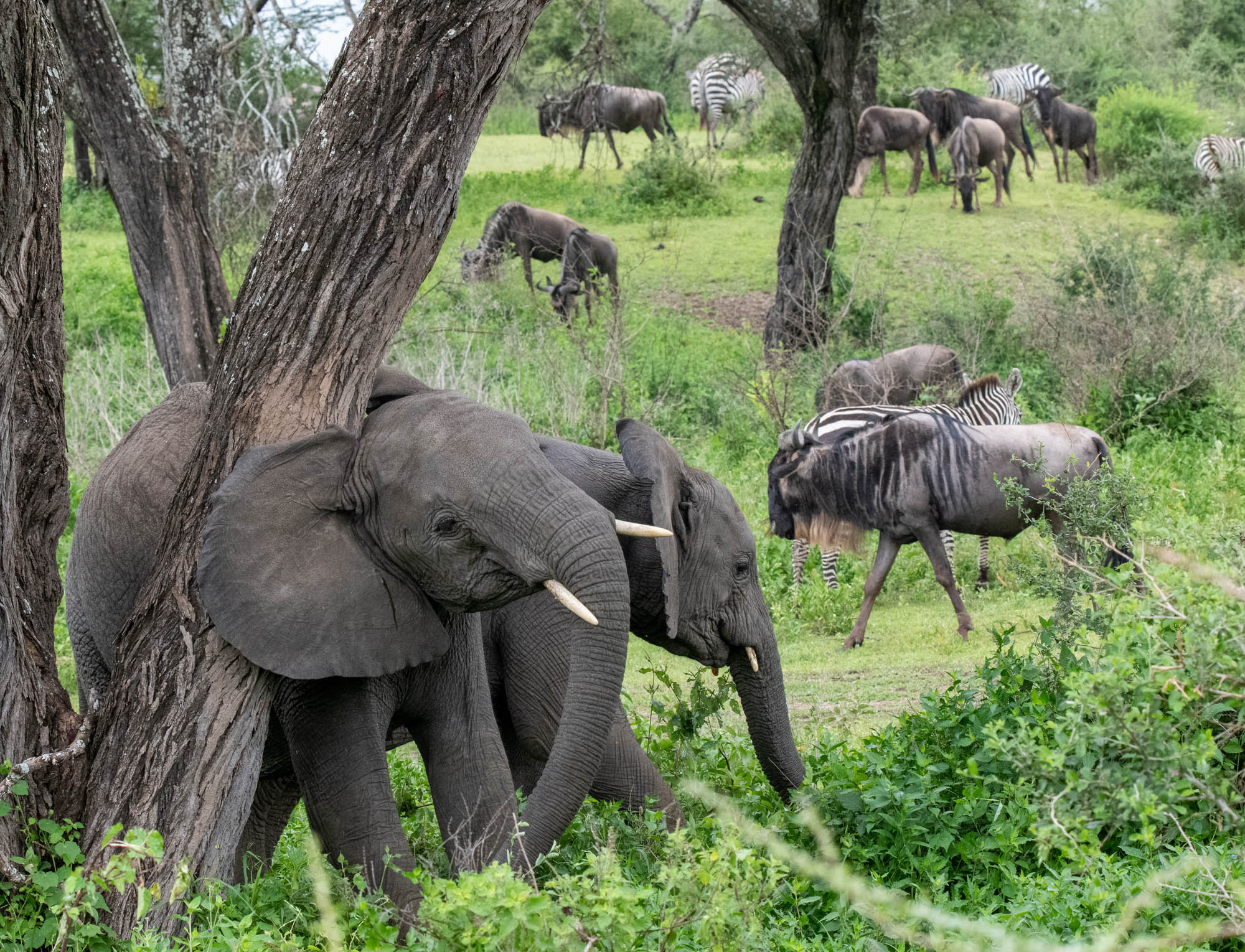
There were clusters of wildebeest visible all over the woodland, with herds of up to several hundred, with almost as many zebras mixed in with them, occupying every open area and grassy spot.  Sporadically, they would erupt into bursts of seemingly reverberating calls, as first one and then another and eventually many started to make their loud grunting contact calls.

Image

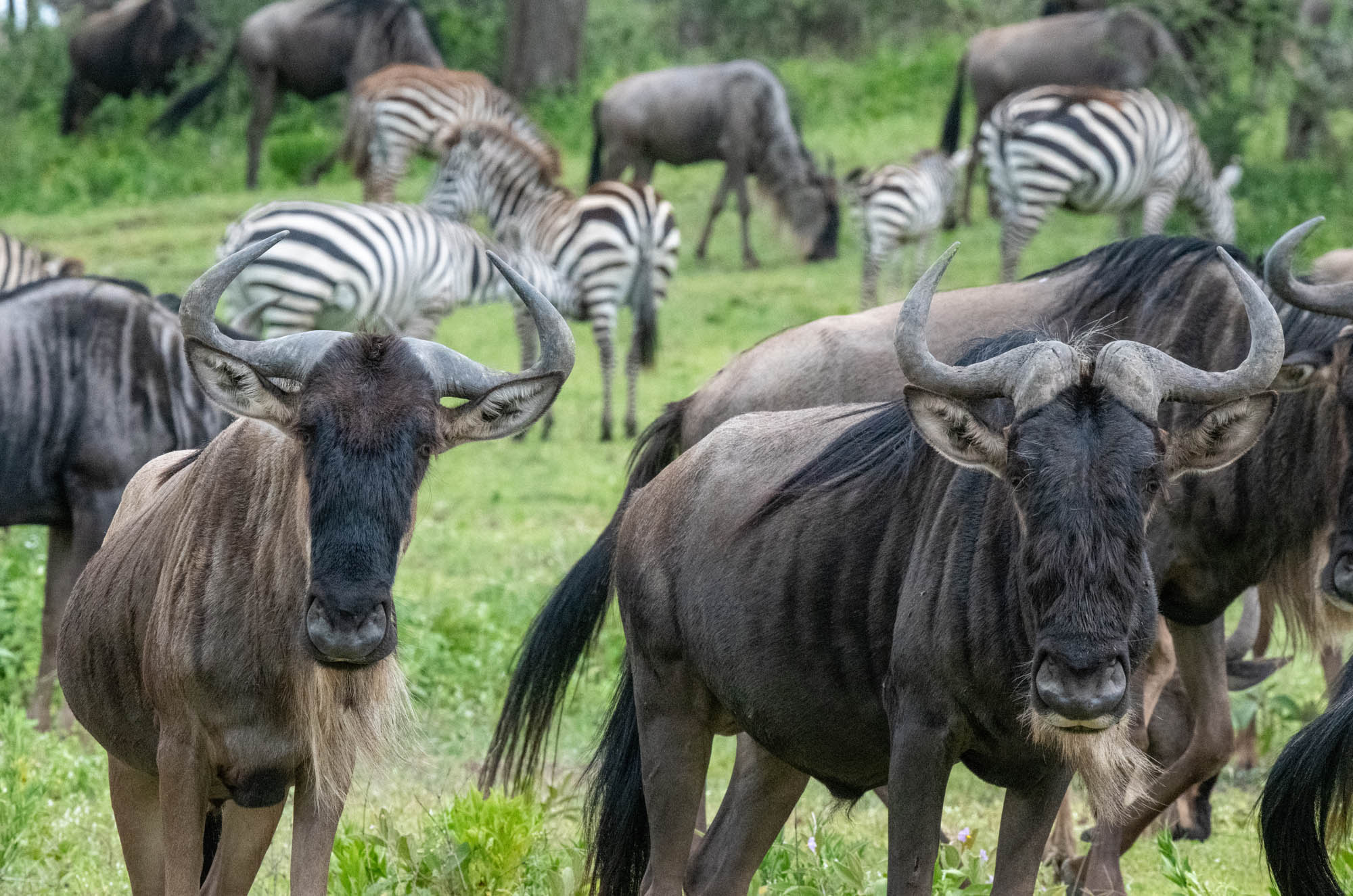
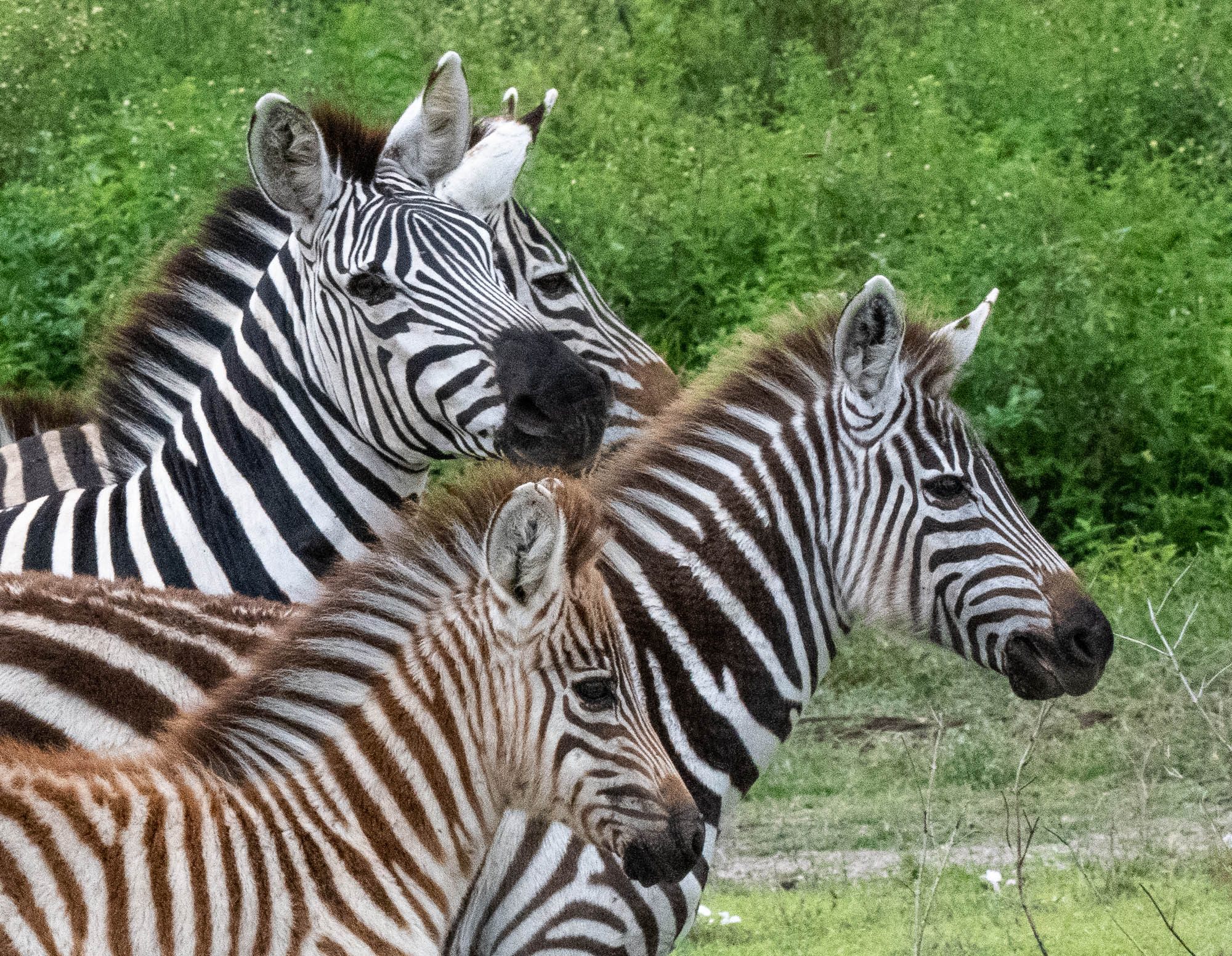
After I had been picked up by my guide Amos Noah from Nomad Tanzania, we went back into the woodland to closely observe the masses of wildebeest and zebra steadily making their way through the area.  They were clearly alert to our presence, staring at us momentarily before relaxing and slowly opening up a gap between themselves and the vehicle.

Image

At times, some of them got spooked and would take off in a random direction, sometimes causing a few others to bolt as well.  

In certain spots there were almost as many zebras as wildebeest, the animals being packed together tightly.  It was not an easy scene to photograph.  Frankly, a photograph simply does not transmit the scope and drama of the event.  I did later capture some of the motion on video, but even that is a pale imitation of being there, right then.

Image

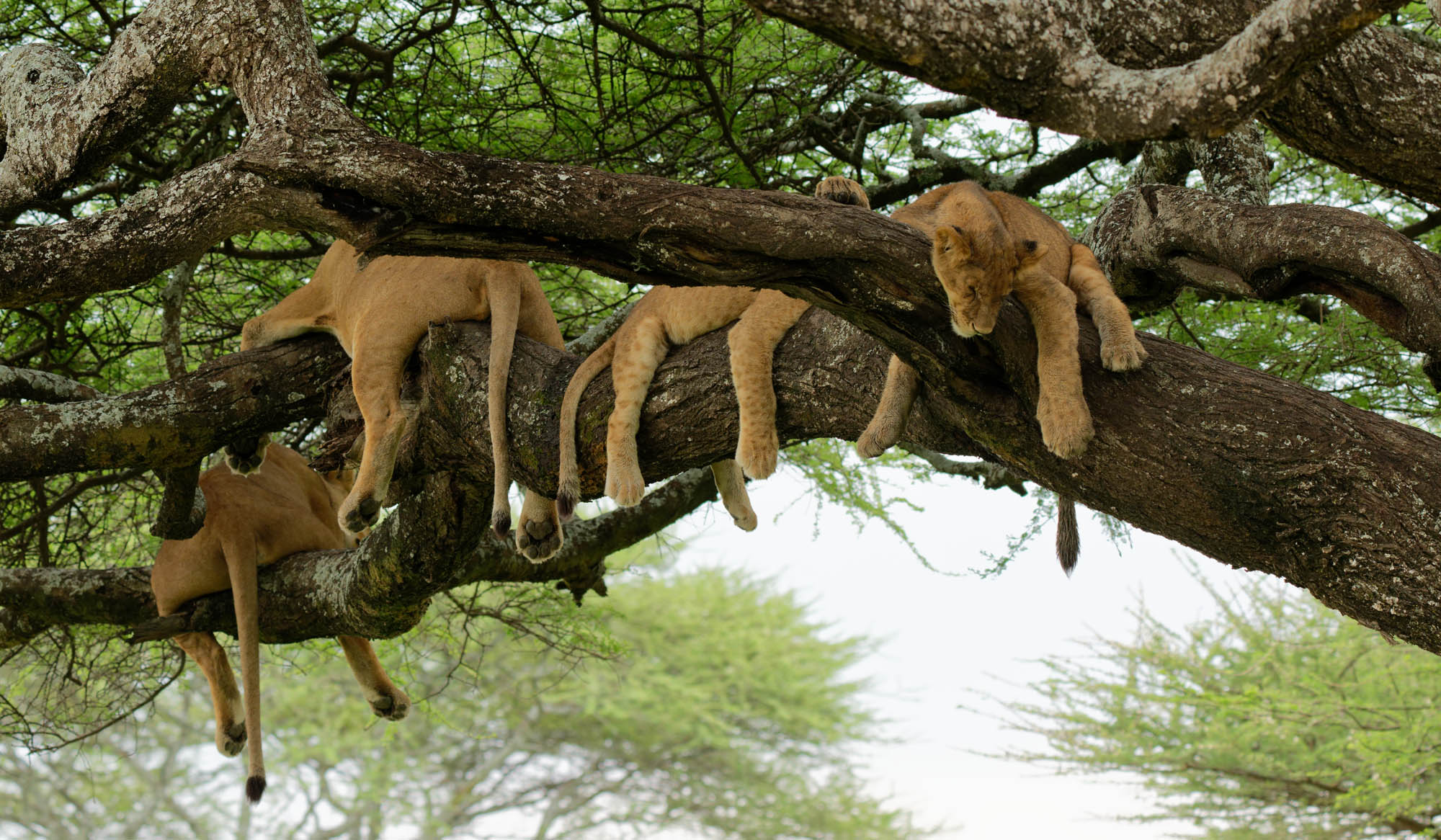
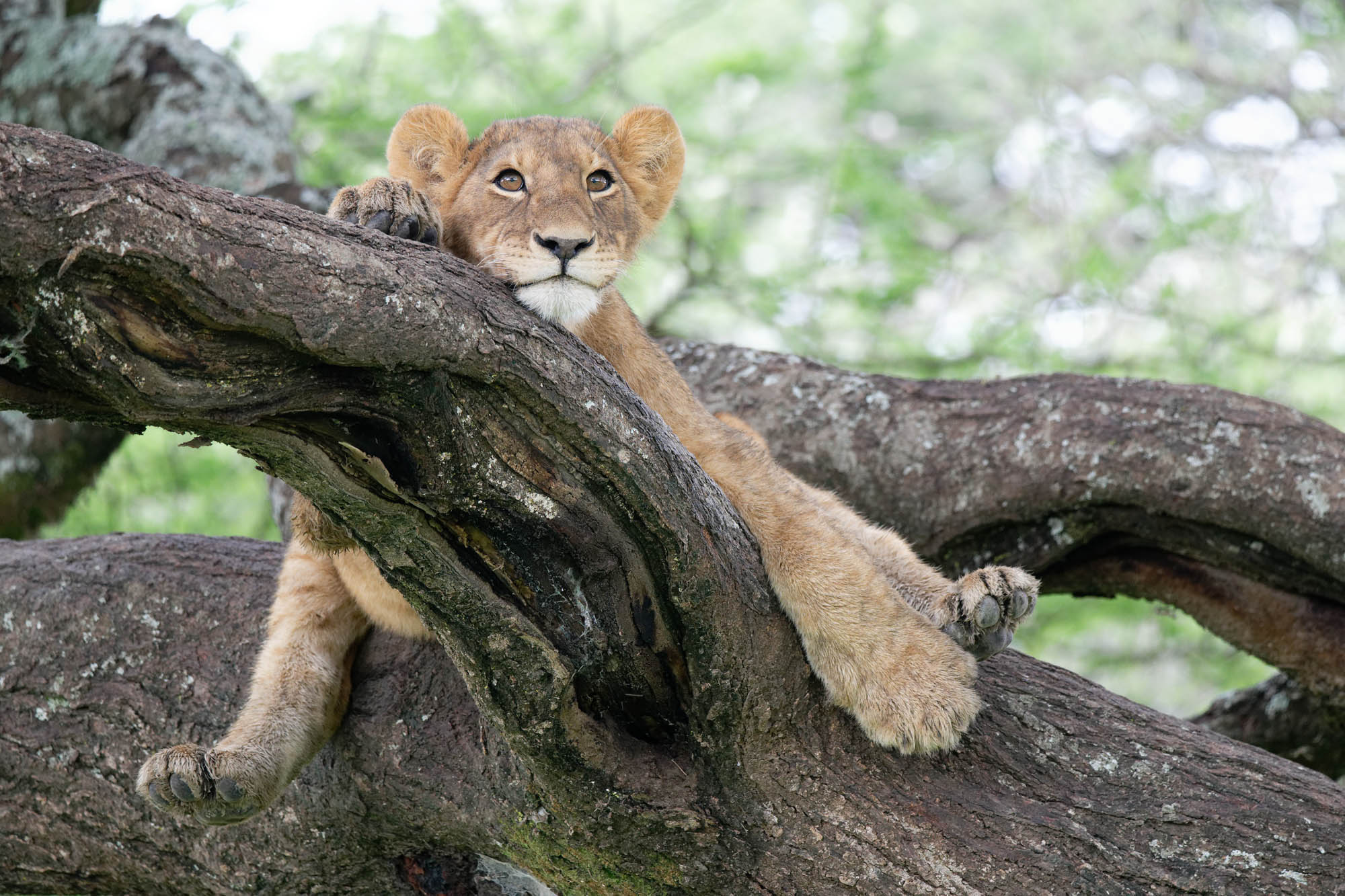
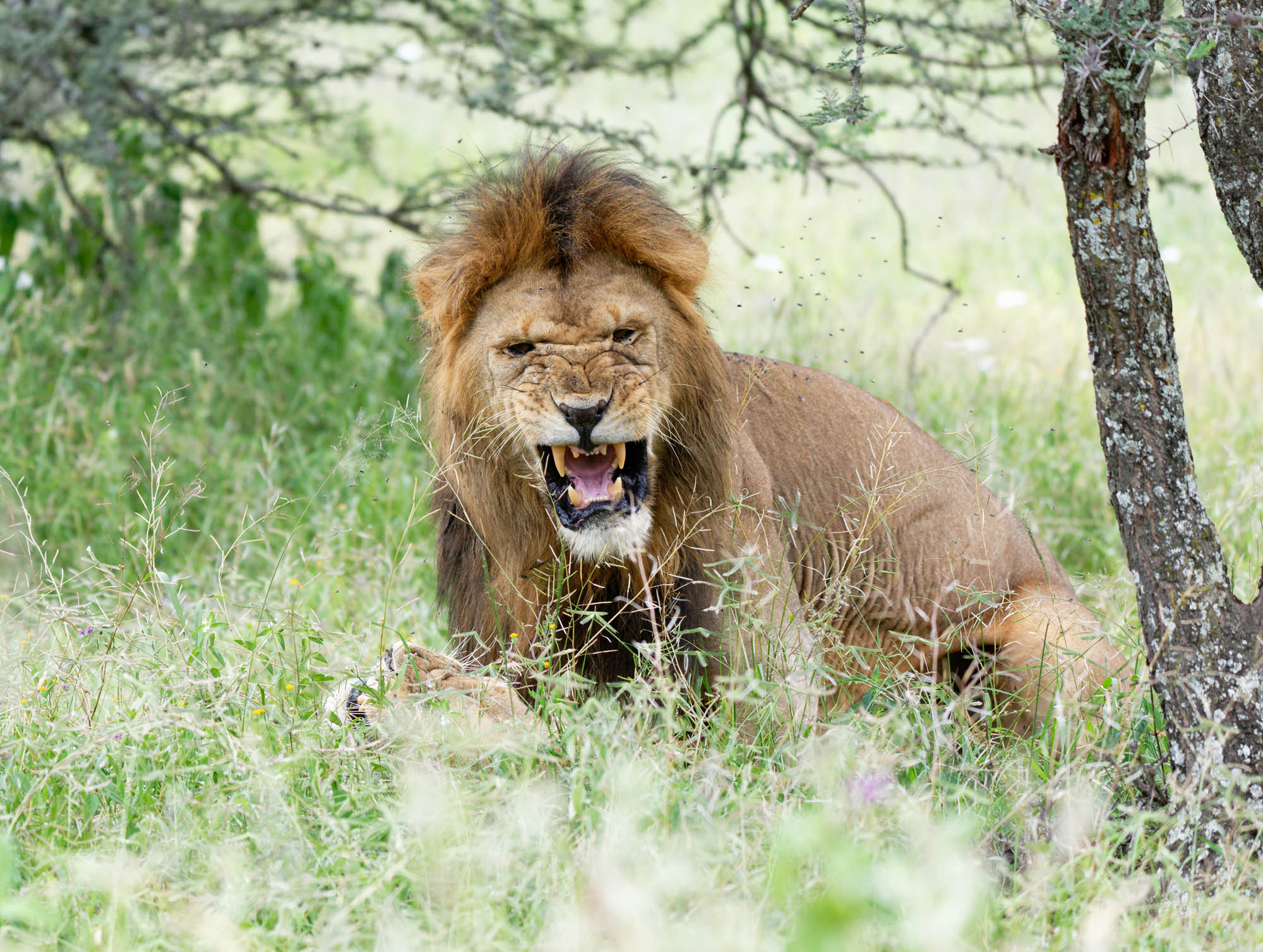
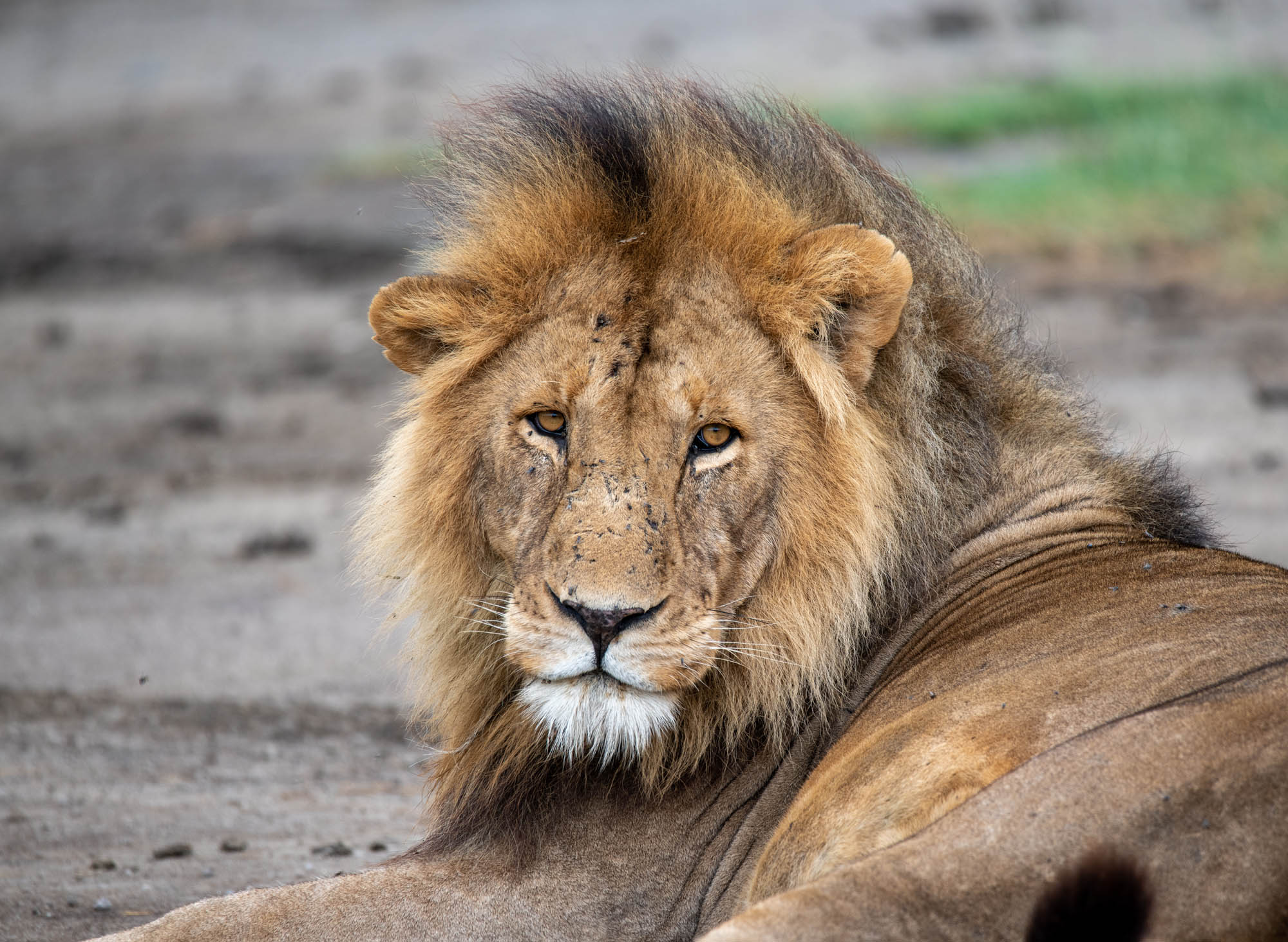
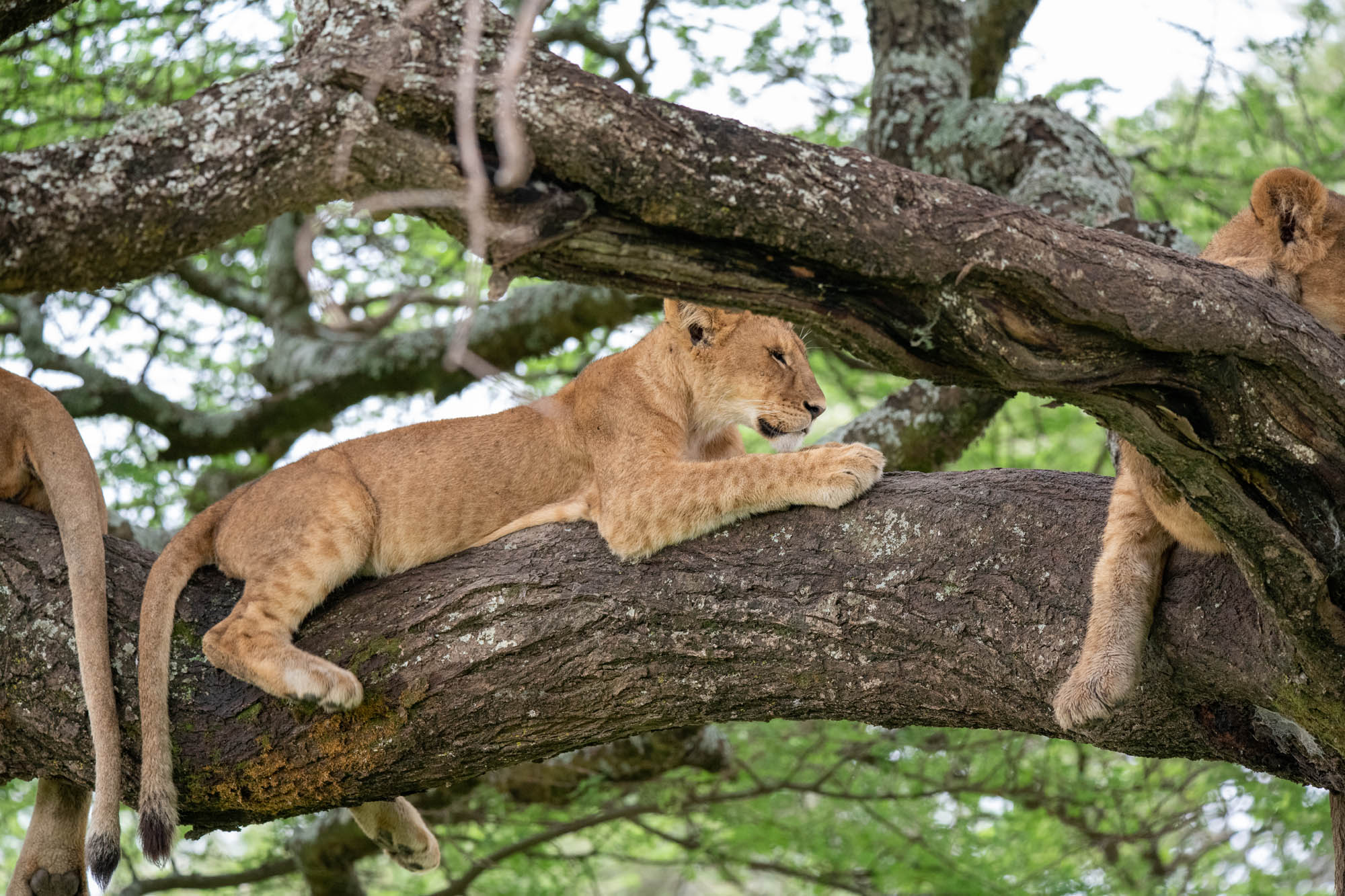
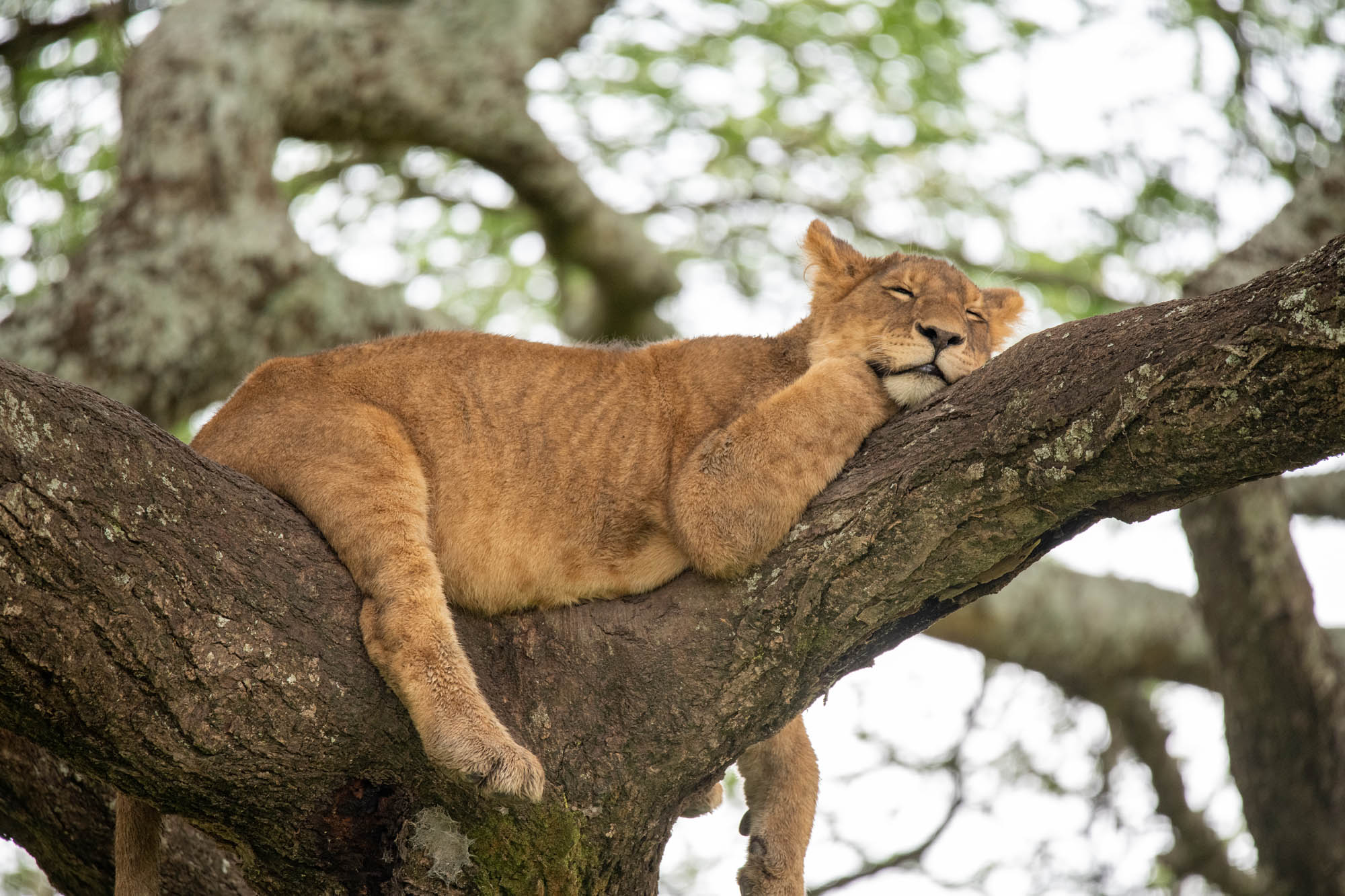
At nearby Lake Ndutu we came upon a pride of lions.  Three of them – including one handsome male – was doing what most lions do during the day:  find a comfortable spot and sleep.  The other five had taken their sleep behavior to the next level.  We found them high up in a huge acacia tortilis tree, stretched out on thick horizontal branches, seemingly quite comfortable with their legs and tails hanging down.

Image

Their heads were down and turned either to the left or right, changing position every now and then. In 30 years of being in the safari business, I had not seen this – ever.  Despite trying several times, I had never seen the tree-climbing lions of Lake Manyara National Park, or the ones known to do this in the Ishasha region of Queen Elizabeth National Park in Uganda.  Or anywhere else.

Image

So it was a really special sighting, particularly with just one or two other vehicles around.  Ordinarily – in a non-Covid year – a sighting like this would be surrounded by a dozen or more vehicles.   Once we had observed and photographed the dozing lions – who barely acknowledged our presence – we headed back into the woodland for even more ‘migration’ photos and views.

Legendary Lodge

Image

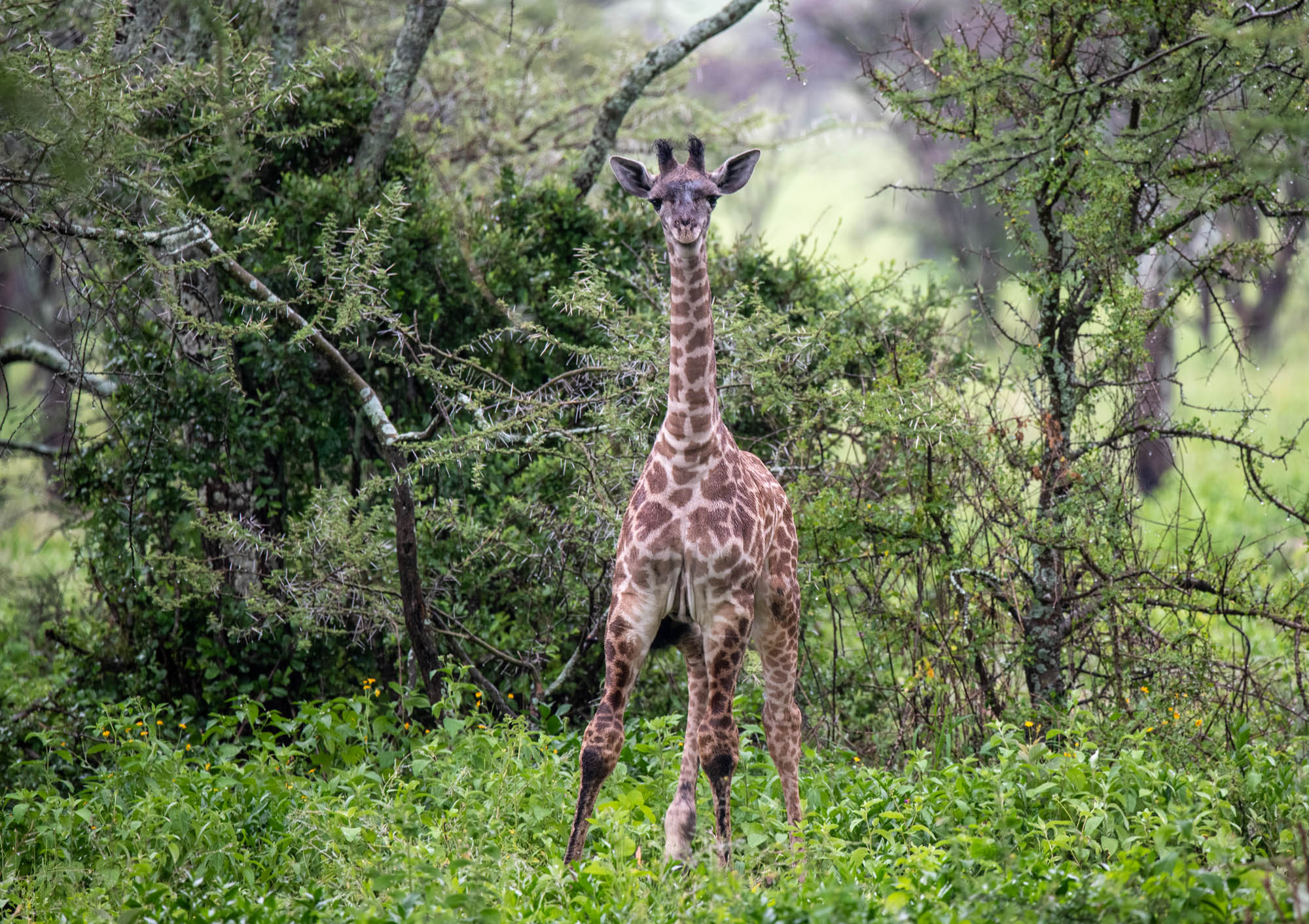
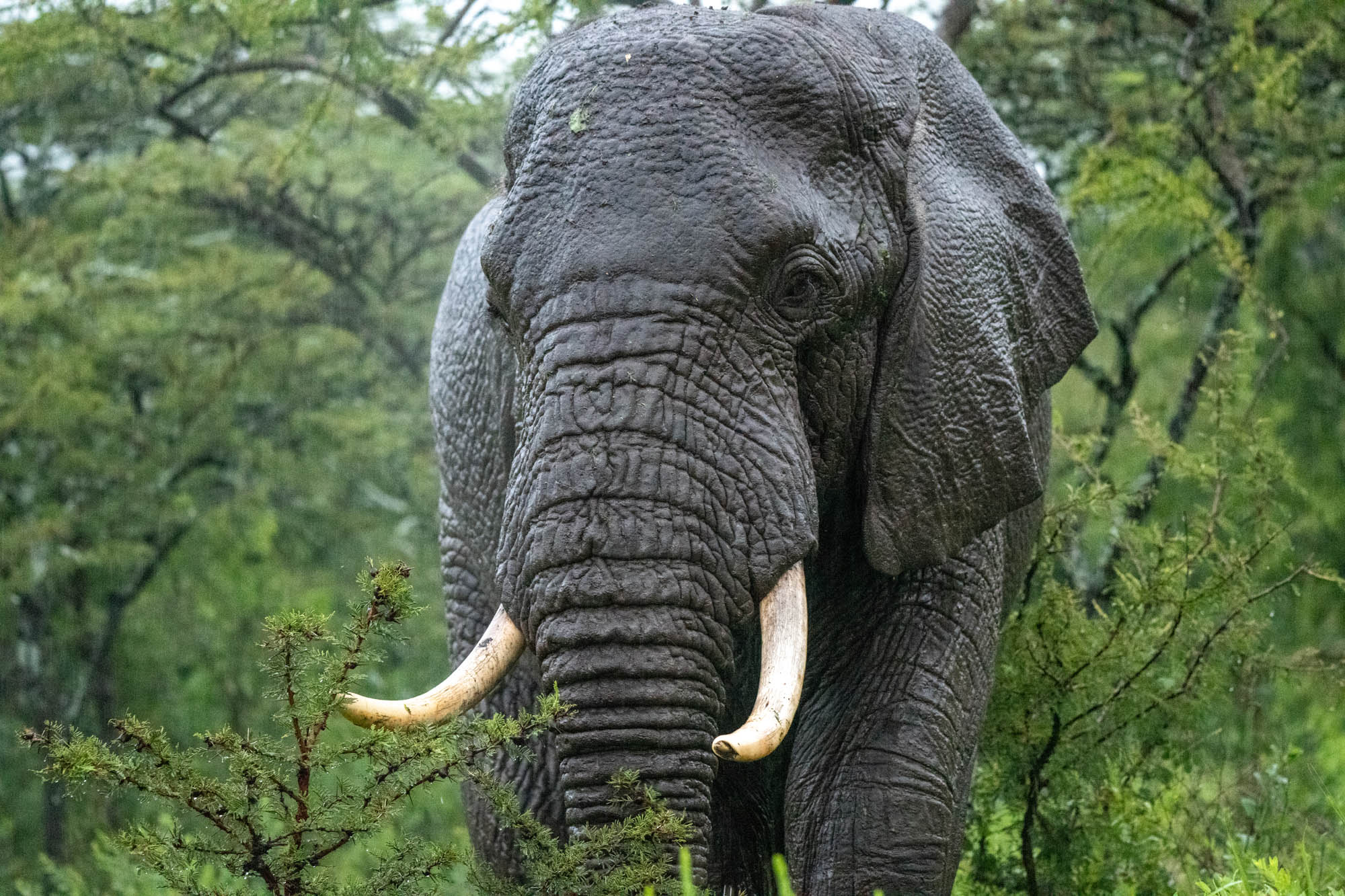
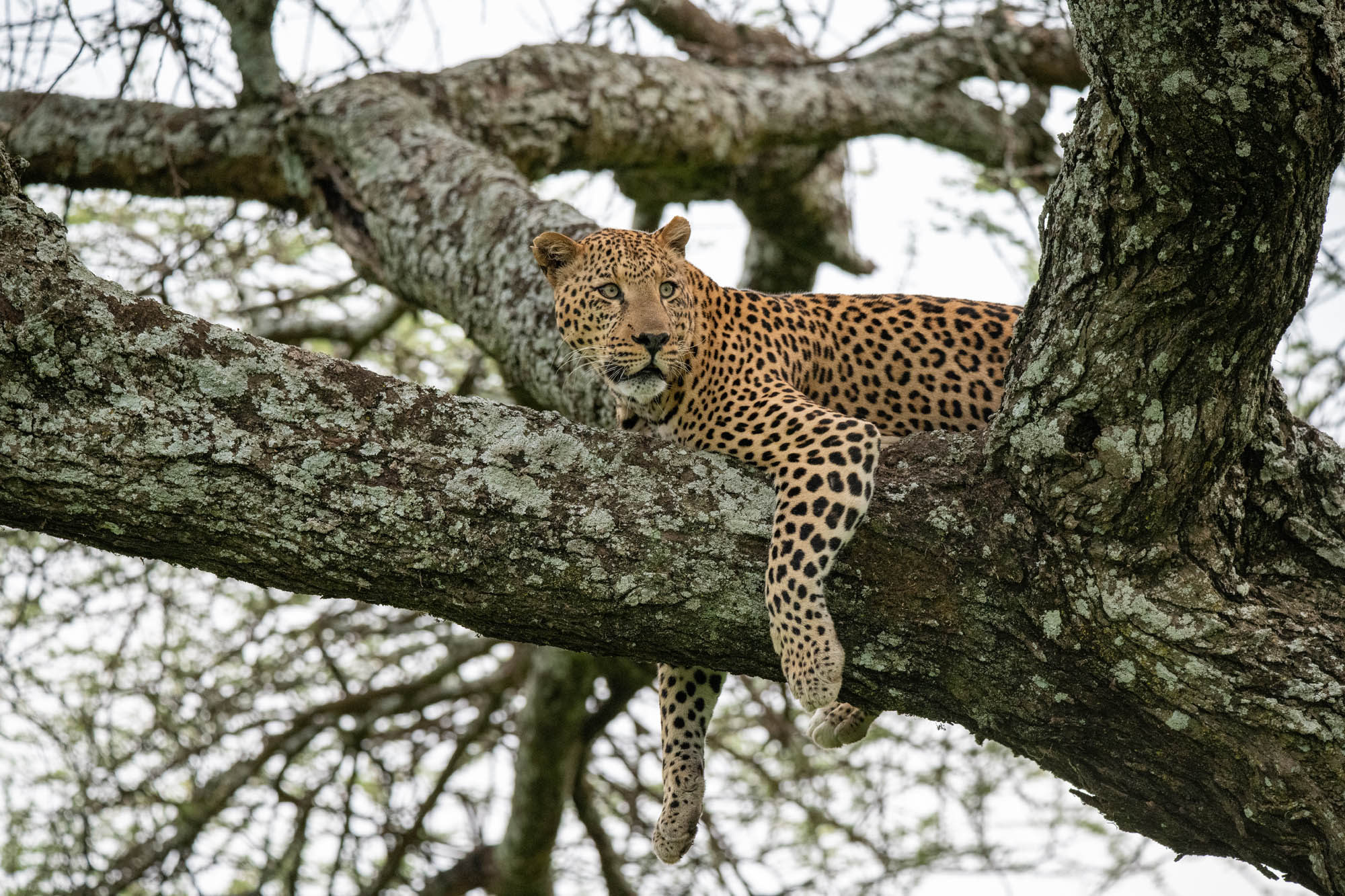
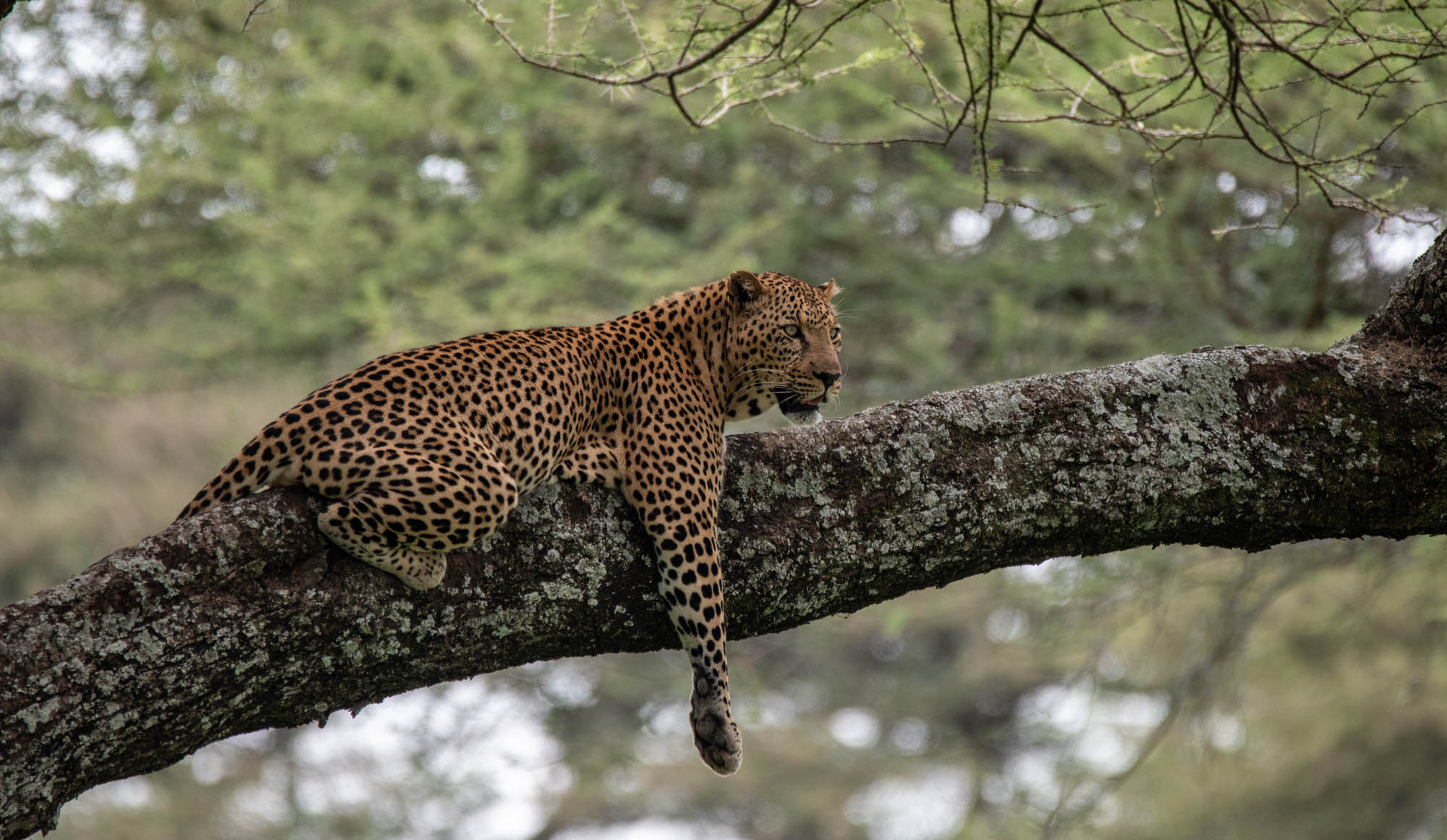
Next up was a big male leopard on a horizontal branch in a different tree, a couple of miles or so from the lake.  It had dragged a carcass of an impala up to the same branch.  Parking next to a vehicle with several professional photographers (we figured it out by the size of the lenses), we observed the leopard for quite a while.  Eventually we drove in another direction where we found what turned out  to be several dozen giraffes – there’s almost always more of them than you think – and a large herd of elephants.

Image

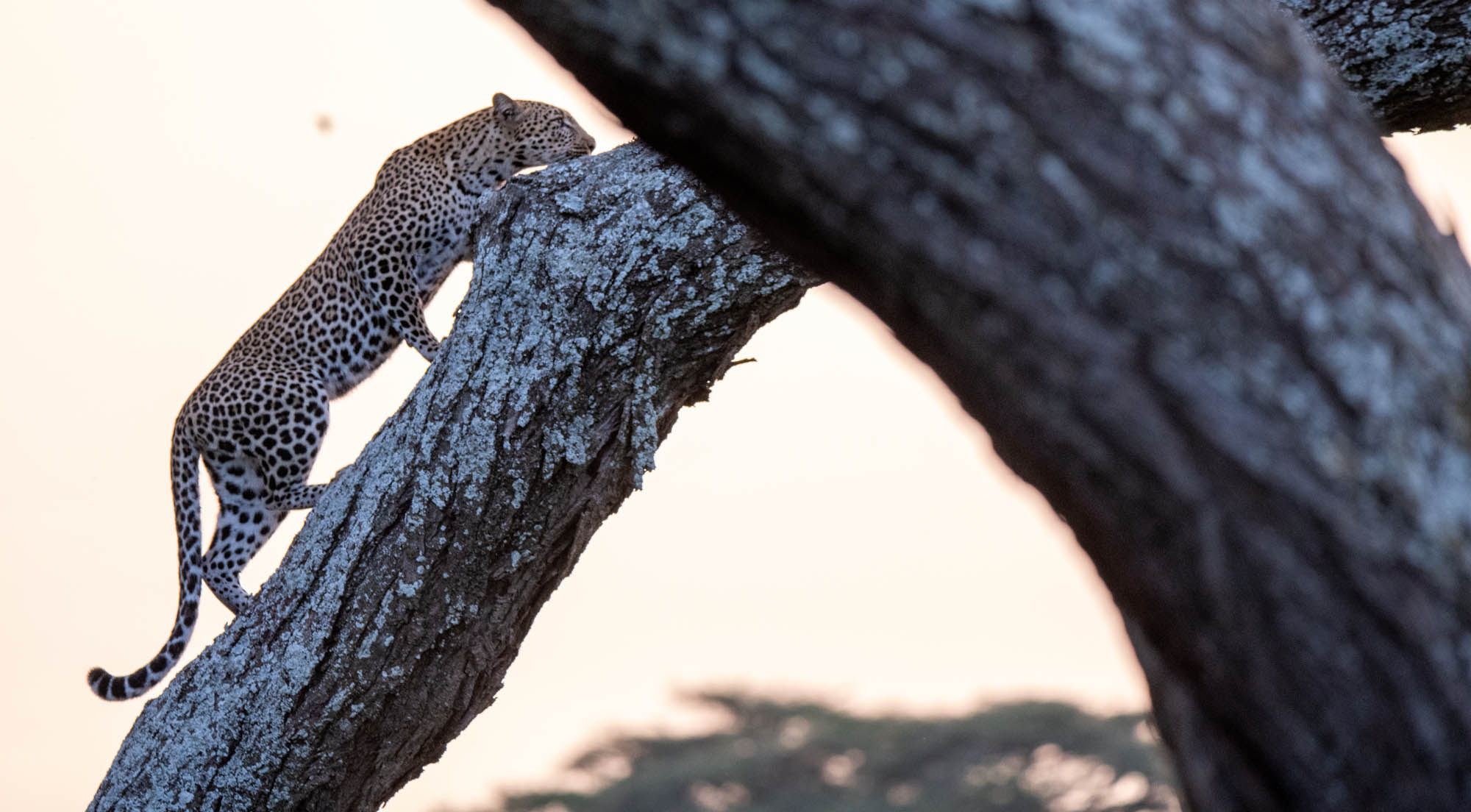
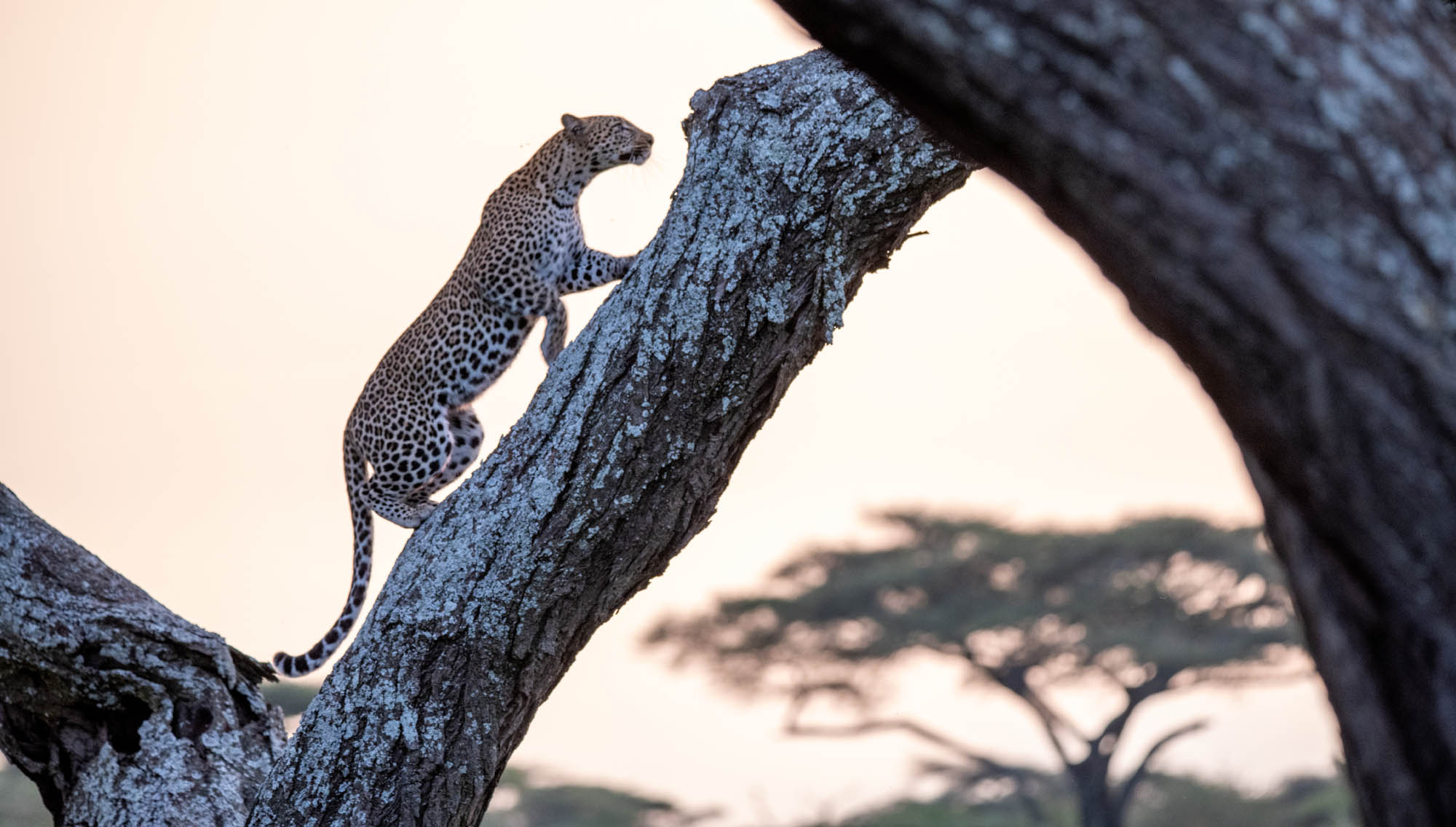
An hour or so later, we returned to the male leopard – which had relocated to a different branch in the tree – and caught a glimpse of a shy female leopard nearby.  We saw her again on our way back to camp.  Briefly stopping, we saw her first descend a tree and then climb right back up.  Light conditions (backlit) were unfortunately rather poor that late in the afternoon, so I ended up with a couple of ‘silhouette only’ pics.  Can’t win them all.

Legendary Lodge

Image

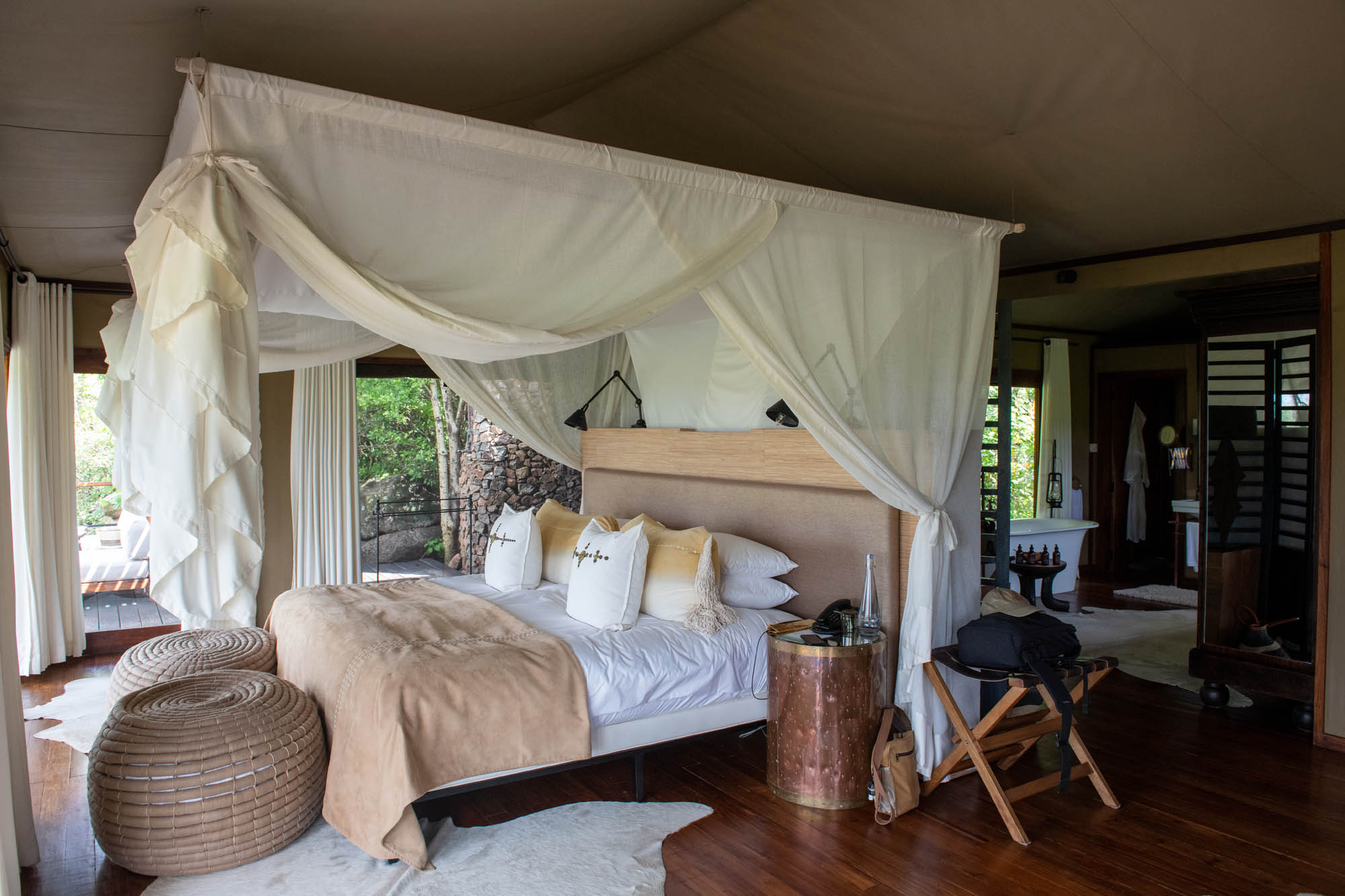
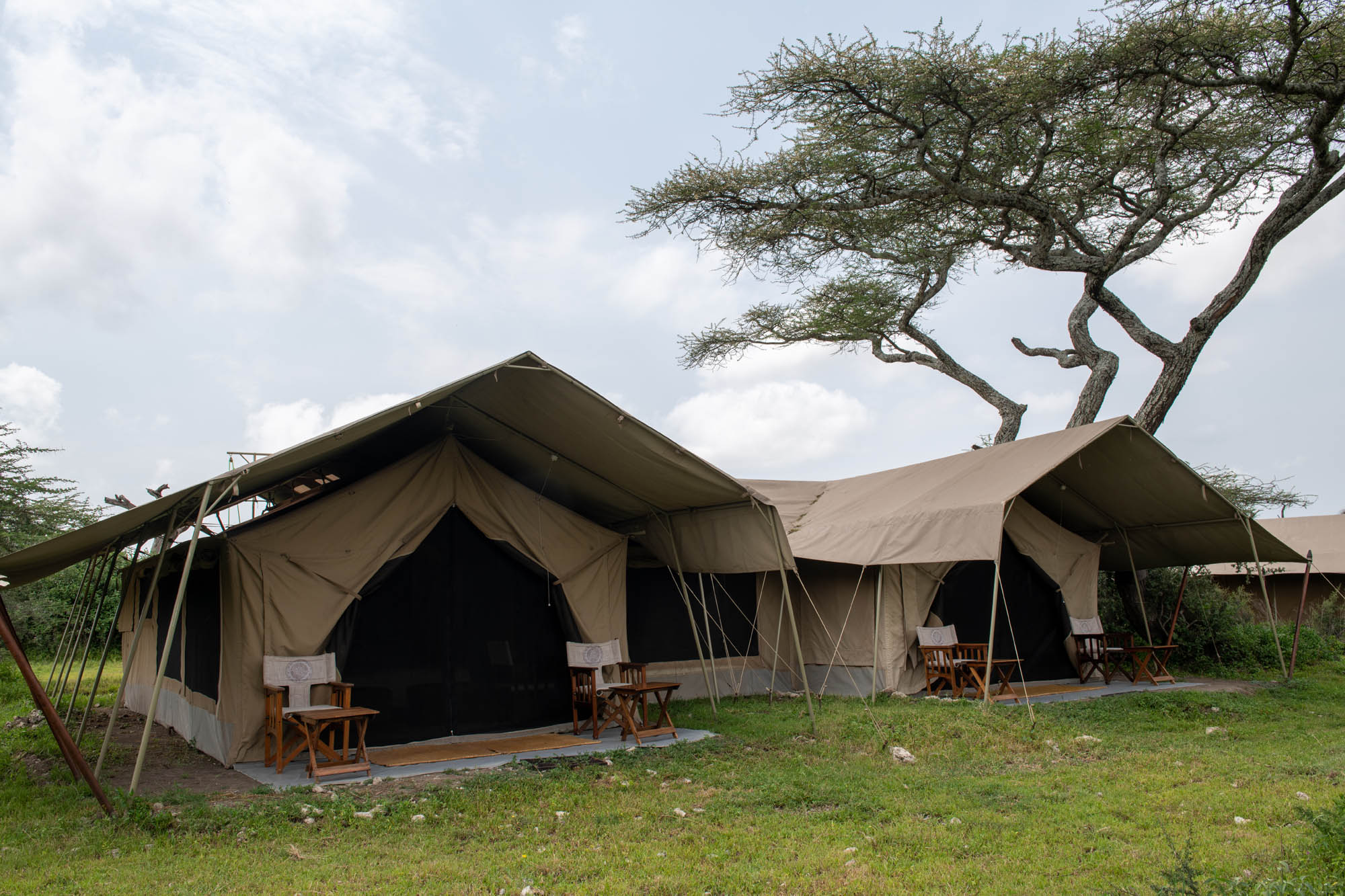
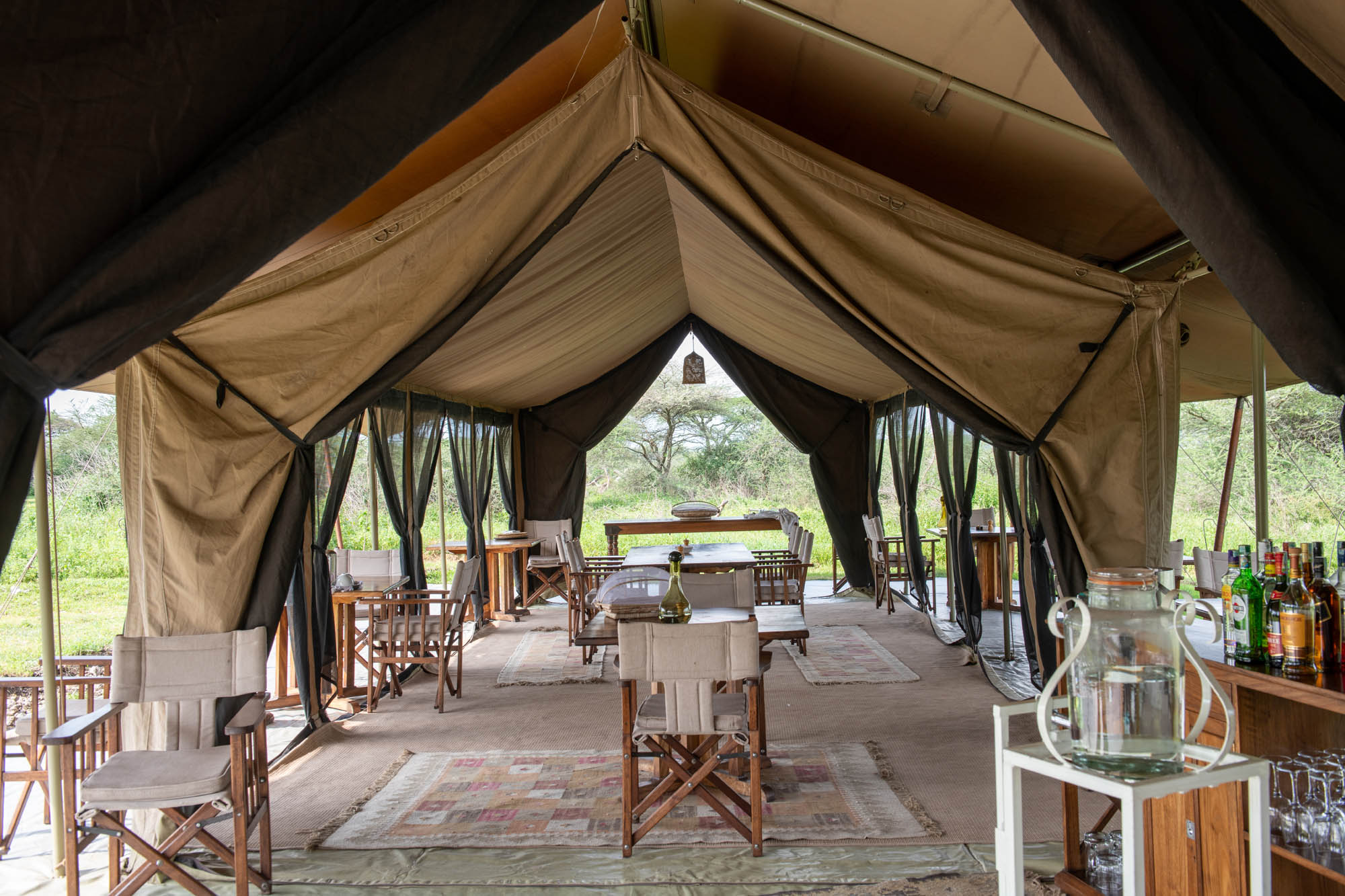
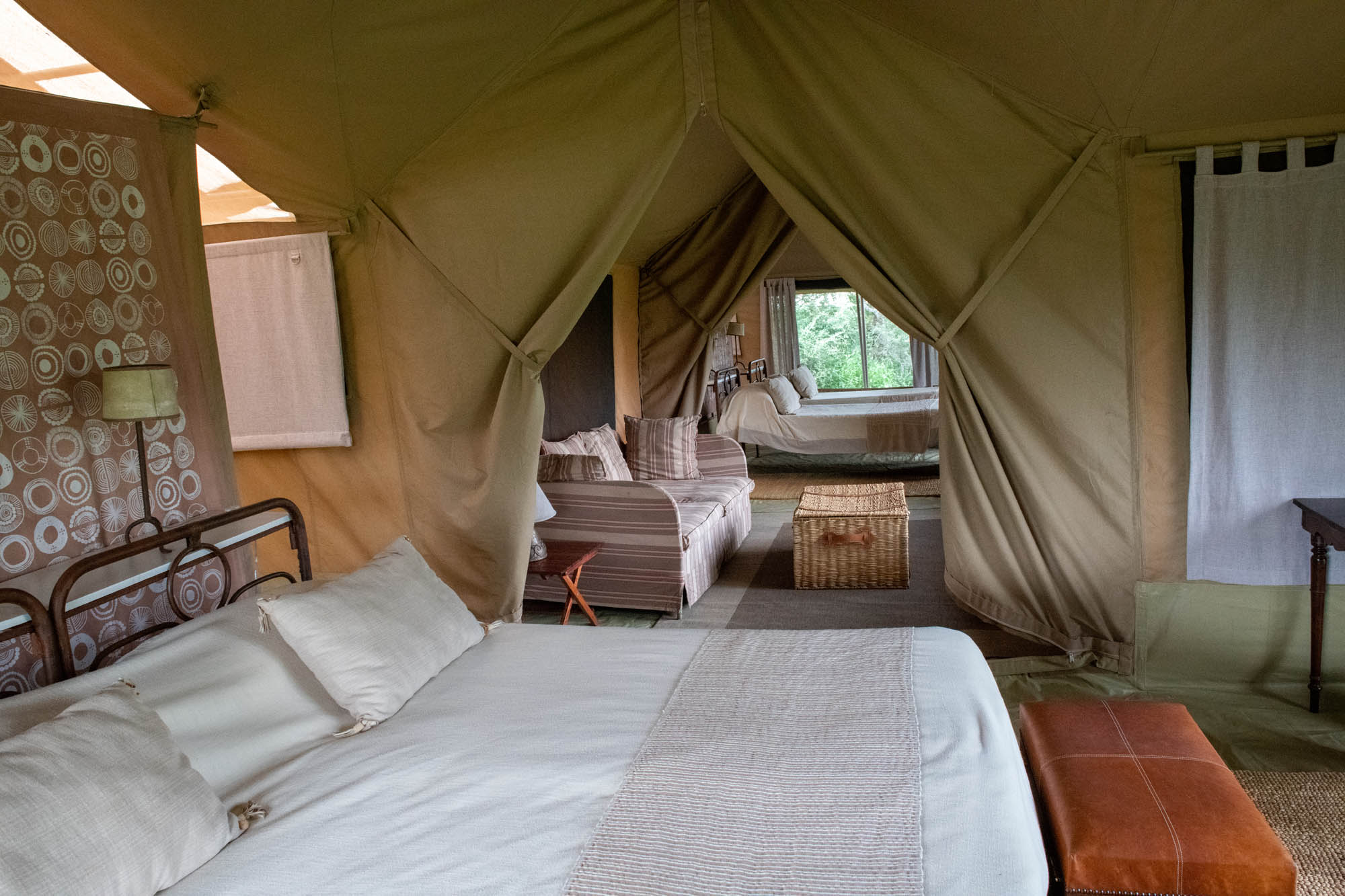
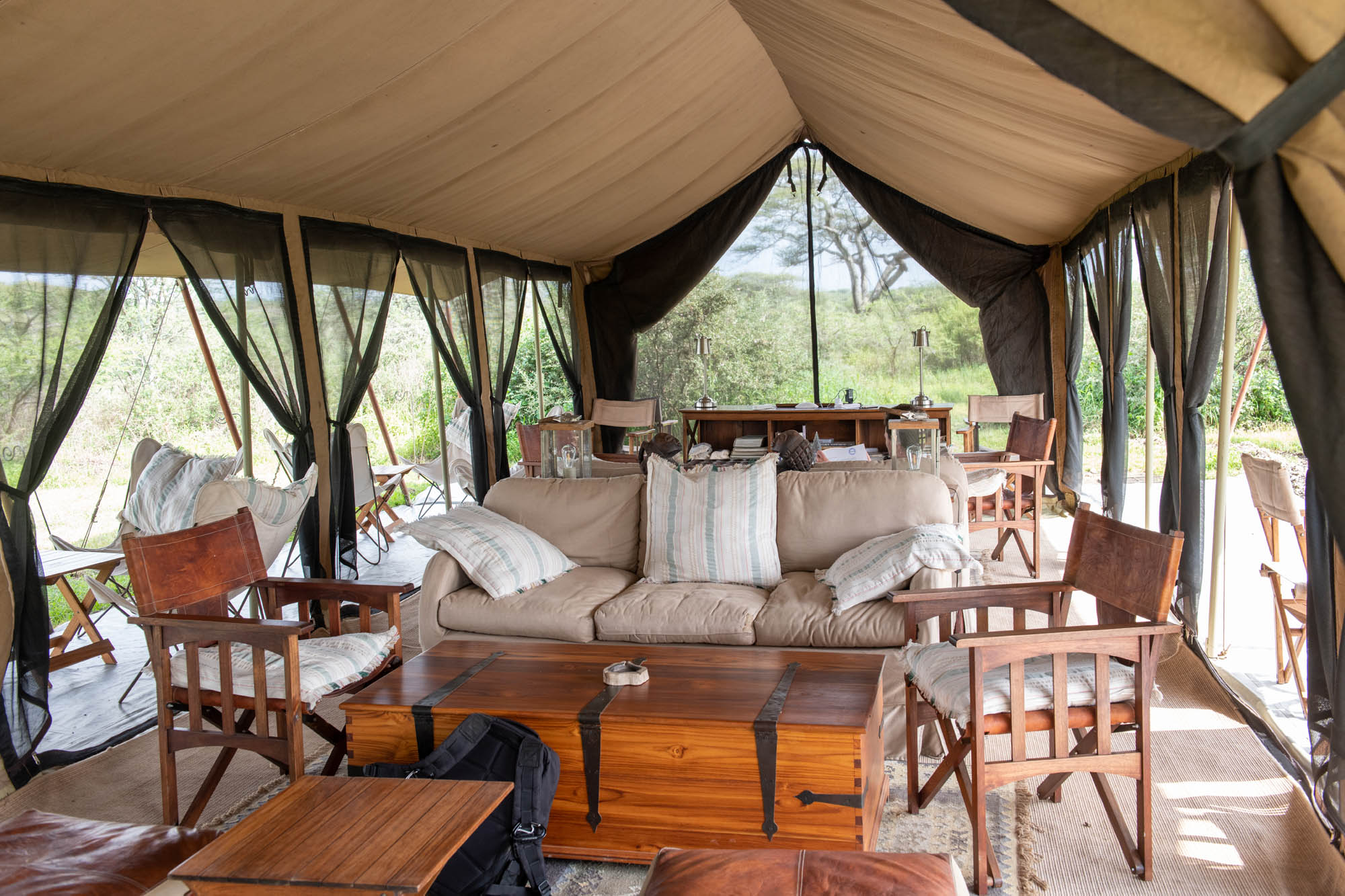
Soon thereafter, we arrived at Nomad Tanzania’s Serengeti Safari Camp #2.  This small mobile tented camp has 7 tents, including a family tent consisting of 2 adjoining tents.  There’s also a compact yet attractive mess tent and lounge tent with a small library, a device re-charging station and a small bar.

Villa Maua

Image

The tented rooms are quite simple yet perfectly adequate and they retain the essence of mobile tented camping, without turning into yet another ‘luxury’ camp.  So essentially a case of ‘just enough’ and ‘not too much’…  The interior lighting isn’t great but at least you don’t have to mess with lamps or lanterns or candles.  The flush toilet takes a bit of getting used to but it beats a ‘long drop’.  Some people blanch when they hear ‘bucket shower’ but in a setting like this one, it lends an authentic touch and it is of course much more environmentally friendly than an assemblage of pipes and wells.  All I had to do was indicate when I wanted to take a shower and at the agreed time, an attendant hooked up a large container with hot water, just outside the tent.  This time around I lingered a bit too long and ran out of water before I was quite ready.  Not an issue.  Another bucket was produced in short order.

Image

The food offerings at Serengeti Safari Camp were fresh and tasty and while there were not a huge amount of choices or options, it is definitely in the ‘solid’ category.  

What Nomad Tanzania admirably succeeds in doing, is retaining the essence of camping in the sense of staying connected with the wilderness.  You’re right in the middle of where it all happens.  I am personally never happier going to bed at night with the sounds of wildebeest contact calls and braying zebras filling the air.  We even heard – and a couple of staff members spotted it – a leopard right from the dinner table.

Image

The Serengeti Safari Camp staff were friendly and helpful, without exception.  The guiding – by Amos Noah – was excellent.  He knew where the tree-climbing lions were, found several leopards, got me into position for some flamingo shots, and was an agreeable and fun person to be with.

Image

After dinner – in the company of two other guests from England – I retired early and spent a peaceful night in my tent at Serengeti Safari Camp #2.  My only regret?  The brevity of the visit.  Up early the next morning, I enjoyed a hot breakfast before hitting the road once again, back to Ndutu Airstrip, off to a different spot in the southern Serengeti.

Image

In next week’s blog:  I move a bit further south and west to Sanctuary’s Kusini camp, a luxury tented property where I was the beneficiary of exceptionally good guiding and several obliging leopards.

More Info

Email bert@fisheaglesafaris.com

Email jason@fisheaglesafaris.com

@fisheaglesafarishouston

#FishEagleSafaris

YOU MIGHT ALSO BE INTERESTED IN

Destinations
Zambia

10th September 2021

Chindeni and the Bushcamp Company, Zambia

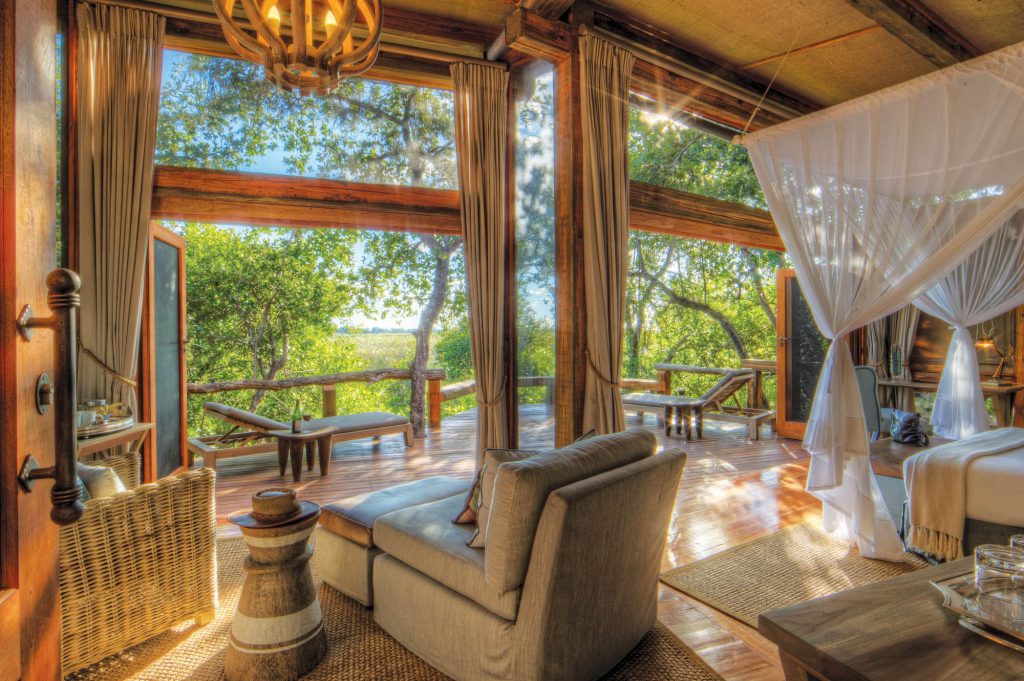
By late July we found ourselves at Chindeni, a small Bushcamp Company property
Read more
Botswana
Destinations
Okavango Delta

3rd October 2022

Camp Okavango, Botswana

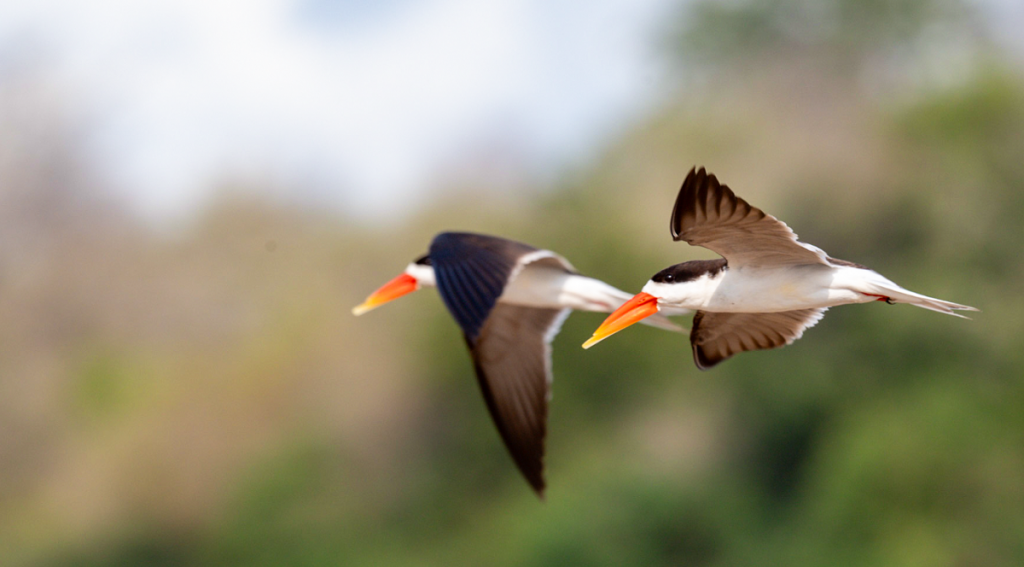
Camp Okavango is in the heart of the permanent part of the Delta. In this idyllic setting there are no vehicles, and it is just a short walk
Read more
Area
Destinations
Nyerere National Park
Ruaha
Tanzania

14th October 2023

From My Safari Notebook: Wildlife Photography

Birds in flight and wildlife photographers have an uneasy relationship. Things go wrong as often as they go right. Getting focus-lock on a moving subject

Read more

SUBSCRIBE TO OUR NEWSLETTER

READERS FAVOURITES

Destinations
Zambia

10th September 2021

Chindeni and the Bushcamp Company, Zambia

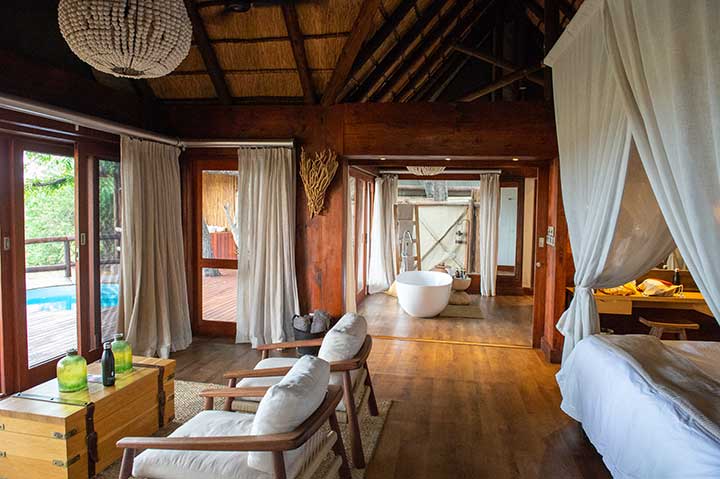
By late July we found ourselves at Chindeni, a small Bushcamp Company property
Read more
Botswana
Destinations

4th August 2022

On Safari At Belmond Eagle Island Lodge, Okavango Delta

What is the ‘secret sauce’ for an unforgettable few days on safari in Botswana? It starts with the animals, of course. The elephants, lions, giraffes, hippos
Read more
Destinations
India

27th May 2023

India

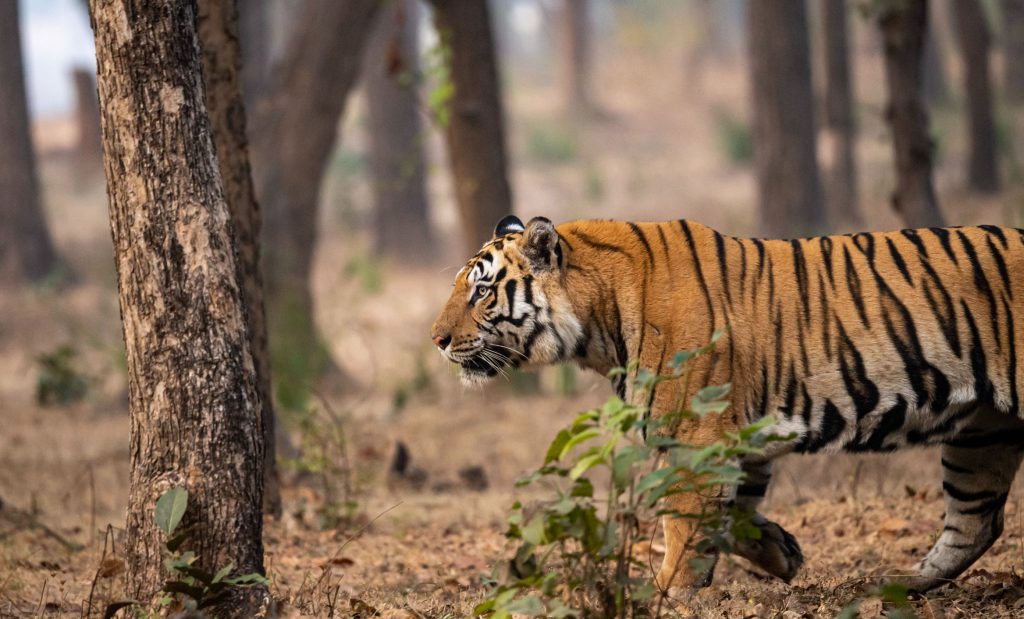
India’s tiger, mammals and birds.

Read more

Mwiba Lodge, Southern Serengeti, Tanzania

19th March 2021

Mwiba Lodge, Southern Serengeti, Tanzania


Image

Ngare Sero Lodge

Mwiba Lodge, Southern Serengeti, Tanzania

On my first night at the divine Mwiba Lodge in Tanzania’s Southern Serengeti, I was thoroughly jetlagged.  And craved sleep more than anything else.  Ten minutes after retiring to my room #6, all thoughts of an early night had been banished.  There was a large soaking tub – with a generous supply of scalding hot water.  And a cozy lounge area which simply screamed:  use me!  And so began my infatuation – which I hope will blossom into a long term relationship – with this  drop dead gorgeous safari camp.


Image

It’s easy to fall in love with Legendary Safaris’ Mwiba Lodge.  The place is impeccable from top to bottom.  Location, people, experiences.  A total of 10 rooms are perched on a rocky, boulder-strewn outcrop overlooking the Arugusinyai River.  When flowing – as it was at the time of my visit –  the water cascading over the rocks creates a soothing natural soundtrack to the place.  Occasionally interrupted with a variety of bird calls such as the loud and rather harsh Bare-faced Go-away bird to the much more mellifluous tones of a White-browed Robin-chat, a dawn chorus stalwart.


Image

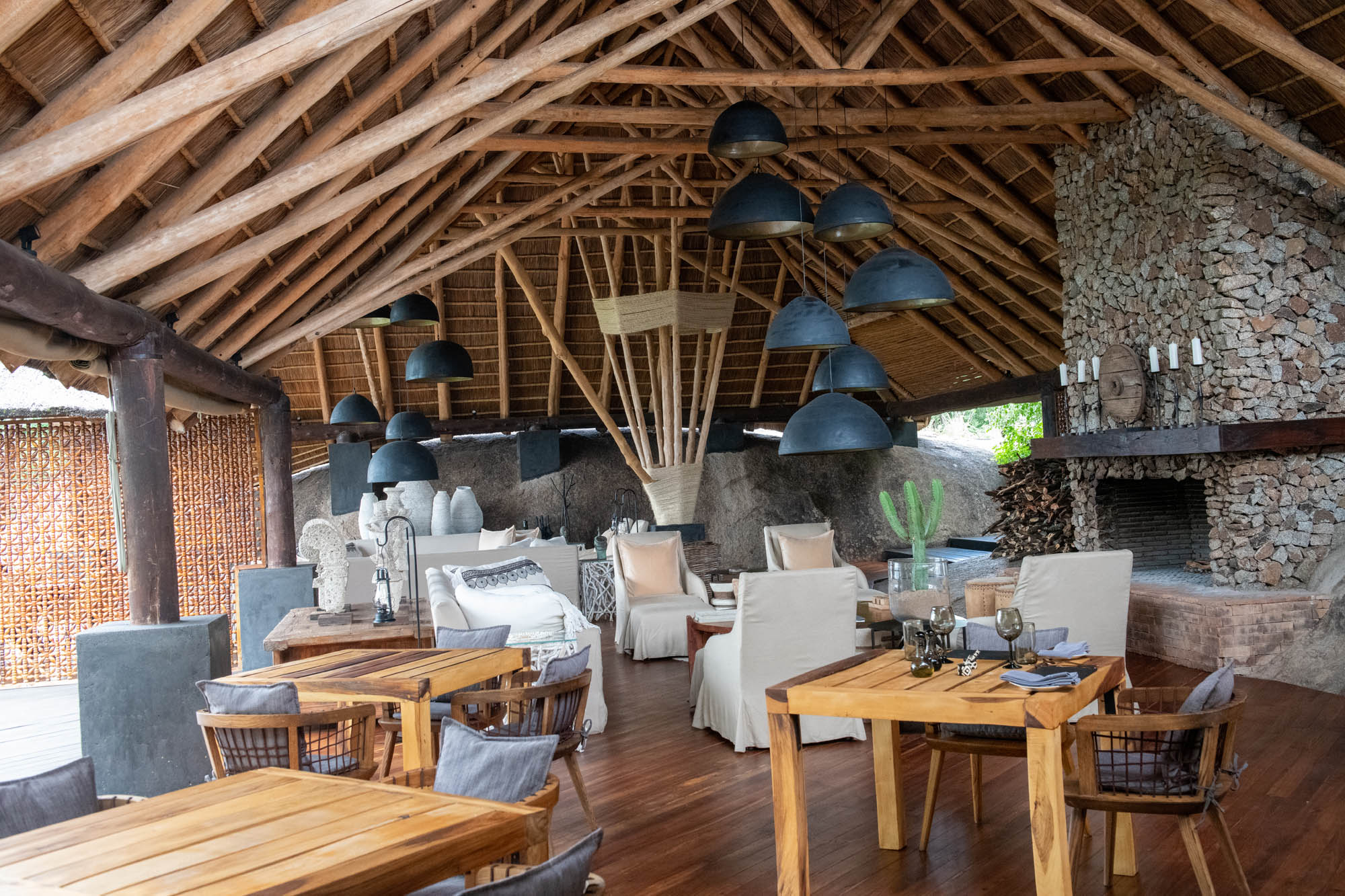
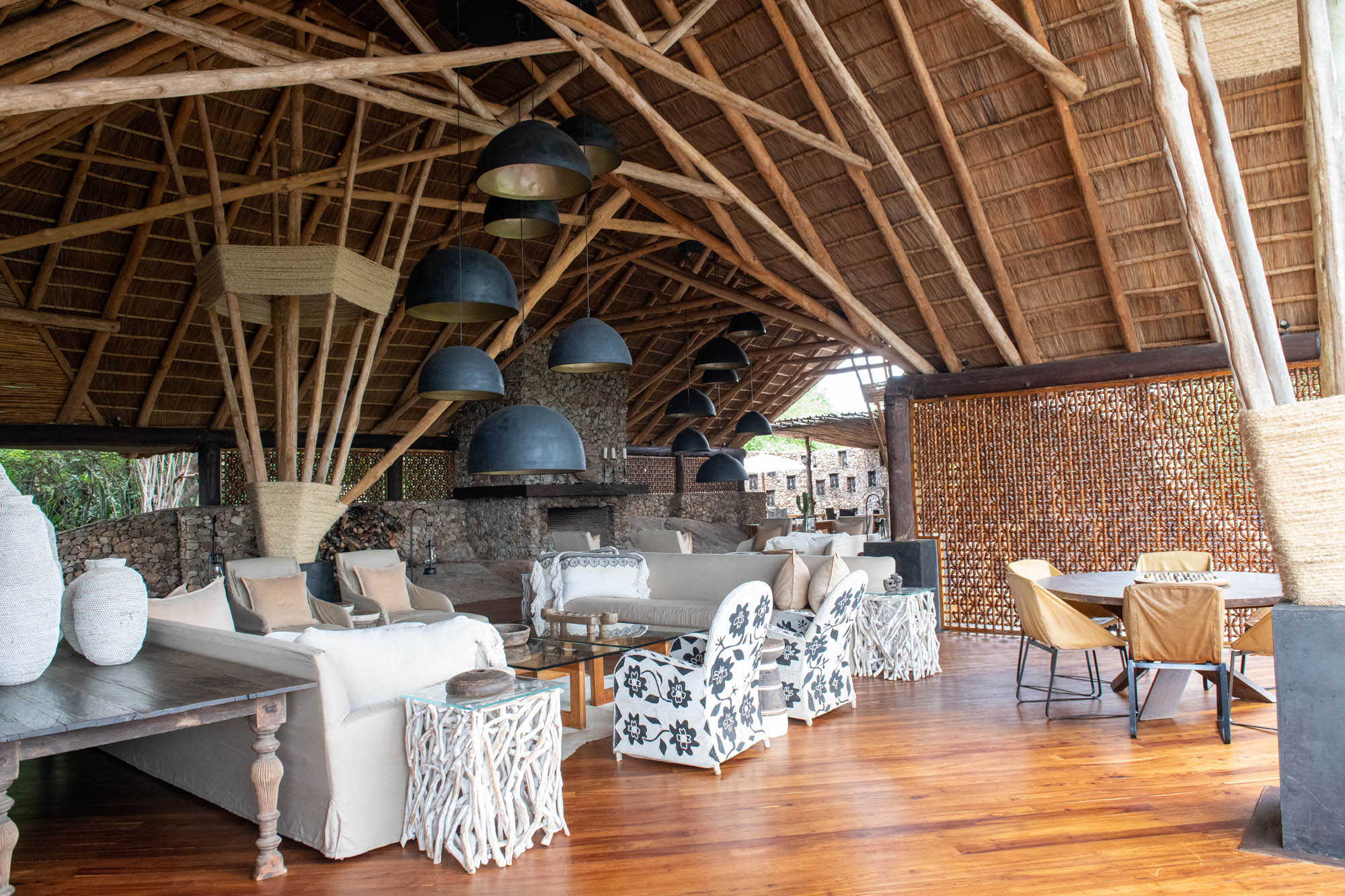
The main dining room and lounge area is an artful blend of natural material and fabrics (wood, thatch, rope, giant woven pots and linens), the actual rockface and handcrafted rock walls.   The whole of it creates a unique, intriguing setting which looks great, and works well.  Which is not always the case with safari properties where form sometimes obliterates function.

Sanctuary Retreats


Image

Not so at Mwiba.  The open design makes for effective airflow, a giant fireplace delivers heat when needed, and the bar area with its hardwood counter and recessed lamps create an environment where you positively want to sit down and relax for a while.  Even if your beverage of choice is a ‘mocktail’ and not the real thing.  True to Mwiba form, the pineapple juice used in my virgin pina colada was freshly squeezed on the spot.


Image

There is more.  This beautiful property also has some of the best trained staff I’ve ever encountered.  I was most impressed with the impeccable standard of hospitality – as good as any I’ve ever experienced in Africa.  Both my primary staff contacts were management material:  my guide Isaac as well as my personal waiter Bupolo.  They could not have been more professional or caring.


Image

It is easy to see why Mwiba is considered to be the undisputed top lodge in the greater southern Serengeti region of Tanzania.  Walk into this extraordinary property and there is a pleasant surprise around every corner: a different view, design element or visual focal point. The Zanzibari entrance door, the finely crafted stone walls, the beautiful natural wood bar counter, collectors item furniture pieces, the massive thatched roof and the stunning interiors – all artfully combining into a splendid whole.


Image

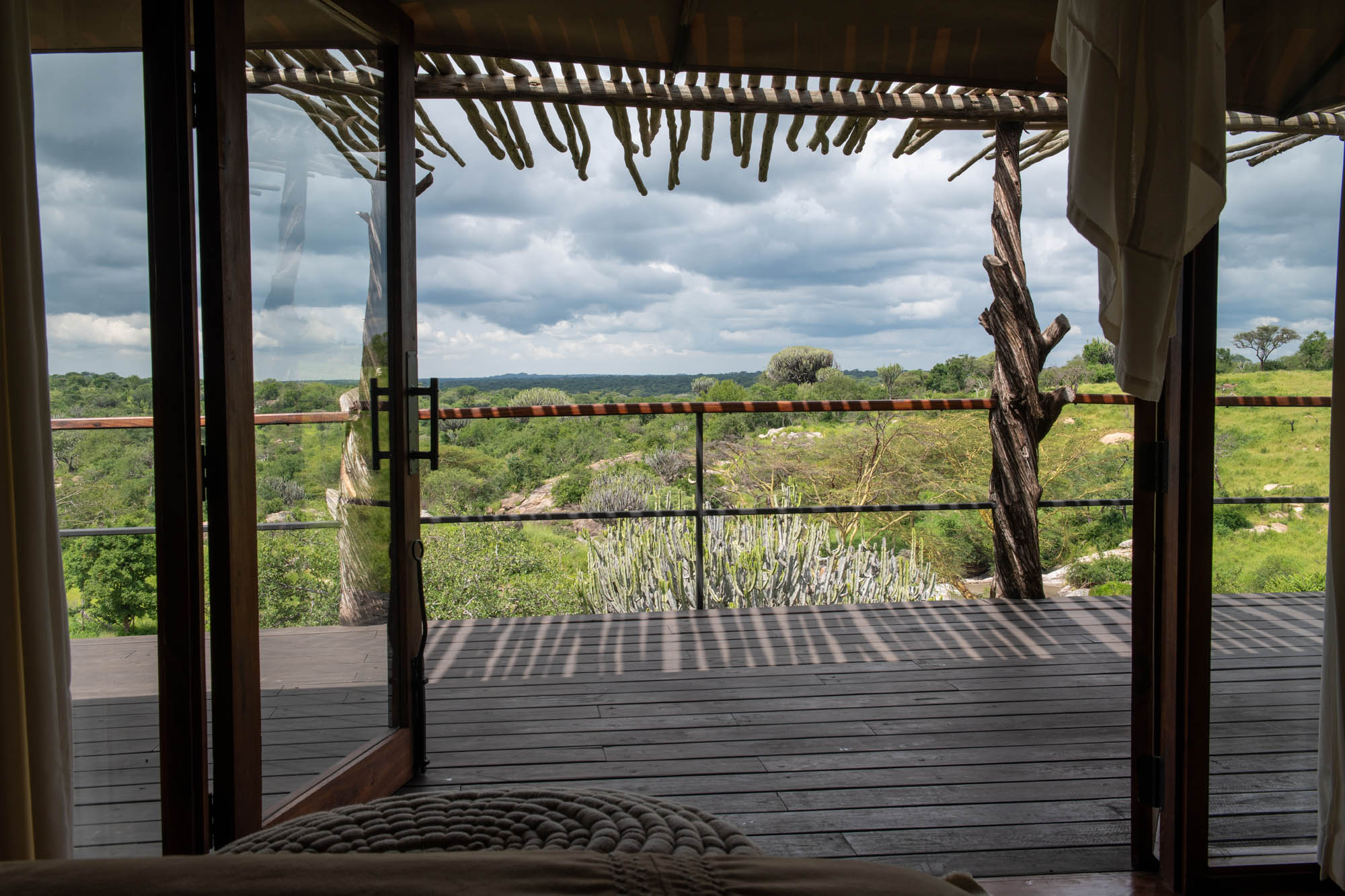
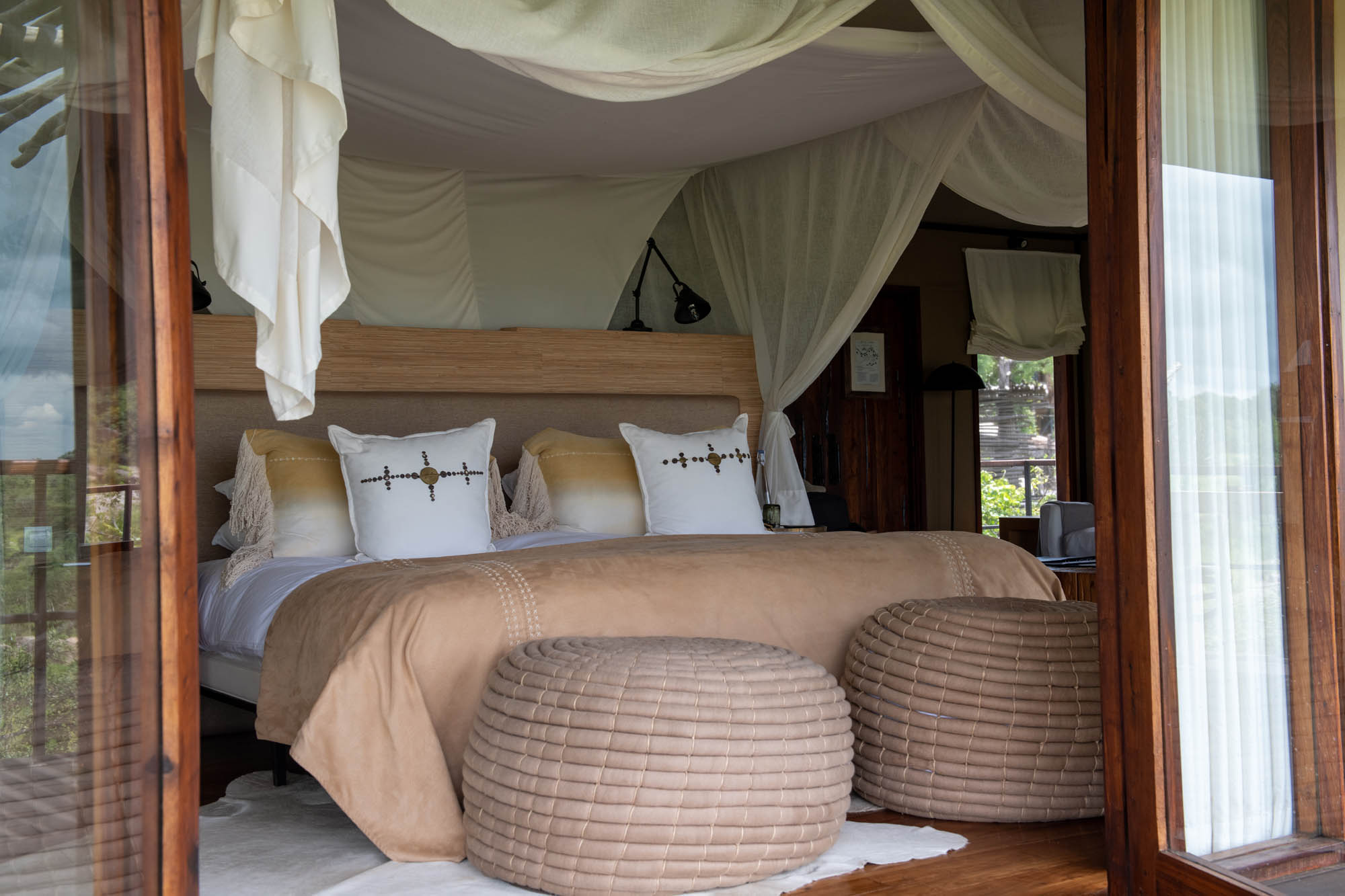
Sitting on top of a hill overlooking the Serengeti woodland, Mwiba has wide boardwalks leading to ultra-private rooms, all with beautiful views.  My room #6 was perched right on the edge of a large rock slab, with amazing views over the  Arugusinyai river and beyond.  It smacked of thoughtful design with ample packing/hanging space, a large soaking tub, a separate toilet, an outdoor shower, his and hers washbasins, a closet which lit up when opened and enough space to really spread out and get comfortable.


Image

Food at Mwiba

The food at Mwiba was a high point of my stay.  In fact everything I tried was consistently excellent, creative and presented with flair. Chef Jonathan came out to talk to me over lunch on my first day there, mentioning that he was planning to prepare some traditional African dishes for the following evening.  I was not quite expecting it to be the banquet which it turned out to be!

Starting with ugali – essentially the local version of polenta – the spread included chapati bread, kachumbari salad, chicken and beef mishkaki (kebabs), chachandu – a particularly good chili sauce – and coconut beans which I absolutely will have to try to recreate here in Texas.  And one or two other items which I forgot to write down.  On another day we had a starter of pear and blue cheese with arugula, Beef Wellington, and lemon tarts for dessert.  All delicious.

Legendary Lodge


Image

Activities in and around Mwiba

In addition to game drives, there’s plenty to do at Mwiba.  If you’re into cultural activities, Mwiba is known for its authentic Hadzabe experience.   Spend a morning in their world and be amazed at their stealth and agility, at the degree to which they are in tune with their environment,  and how they manage to survive largely untouched by Western civilization.


Image

Mwiba also offers some  good walking opportunities, enabling close-up sightings and experiences on foot, without distraction or interruption.  On an overnight fly-camp outing, you can experience the freedom of being totally off the grid in the wilderness, exploring your wild side on a truly personalized experience of Africa. White sheets, a quirky warm-water bucket shower and an eco-loo complete the experience. Wi-Fi?  No.   Silence and space?  Yes.

Legendary Lodge


Image

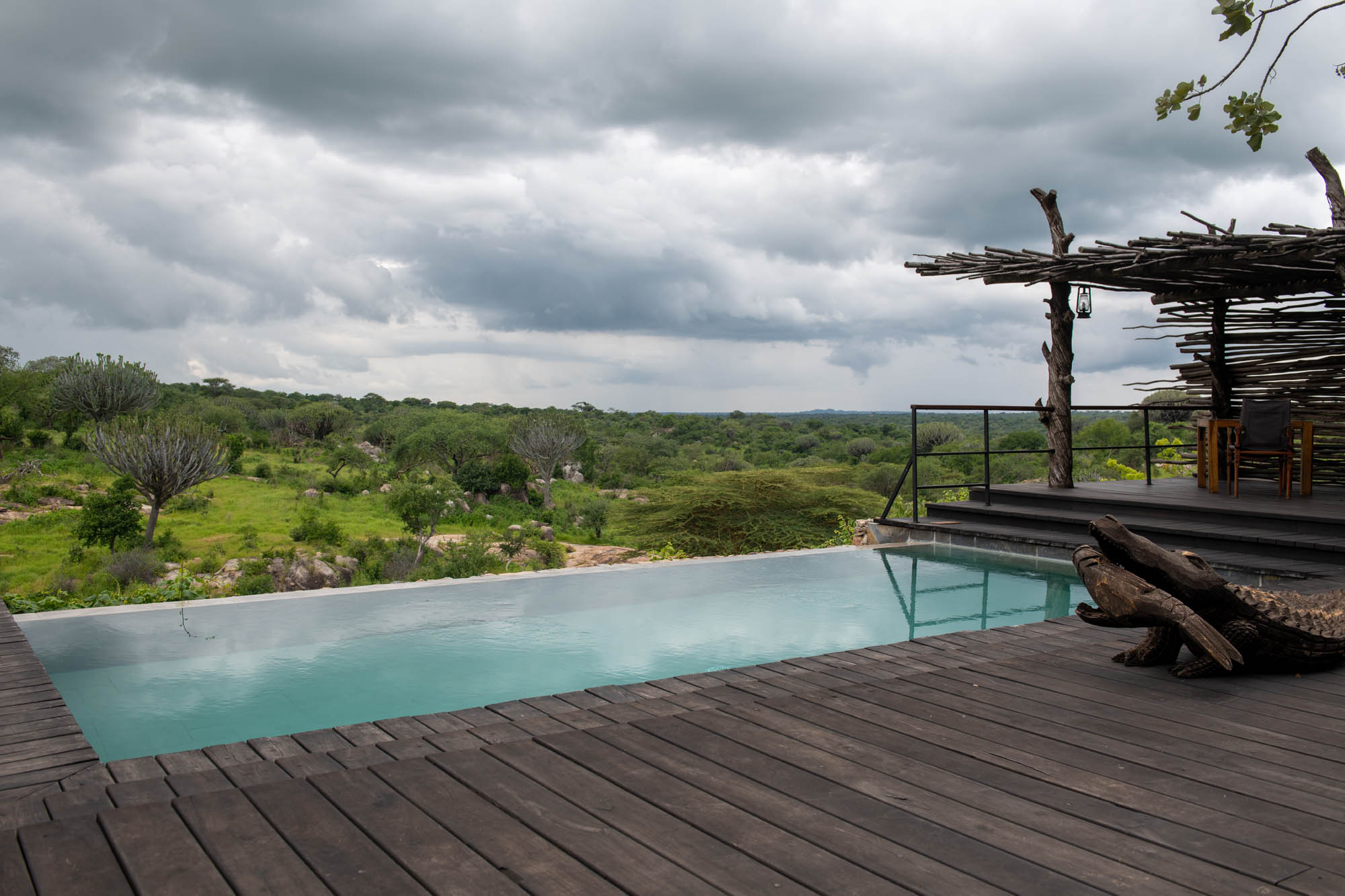
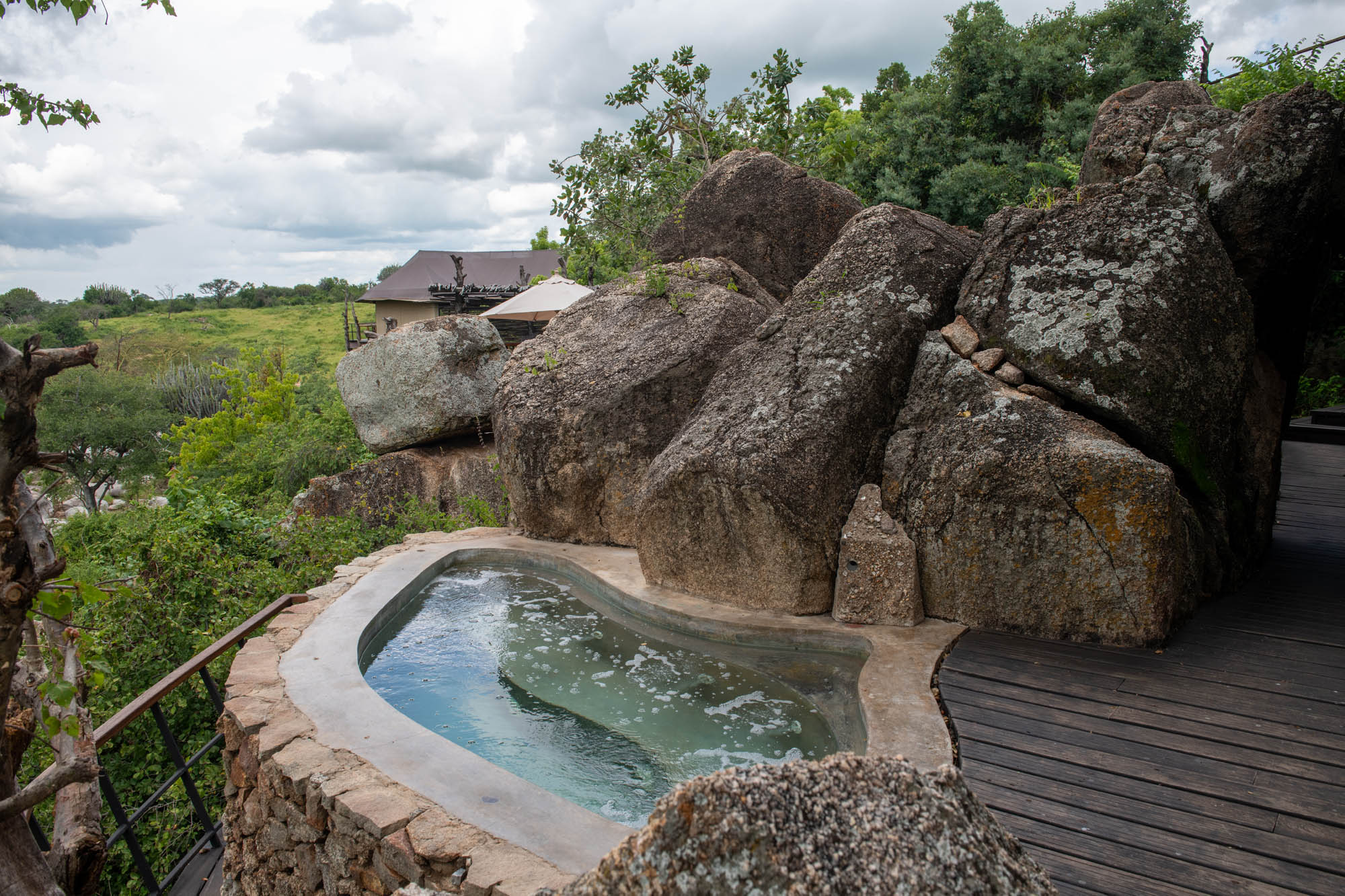
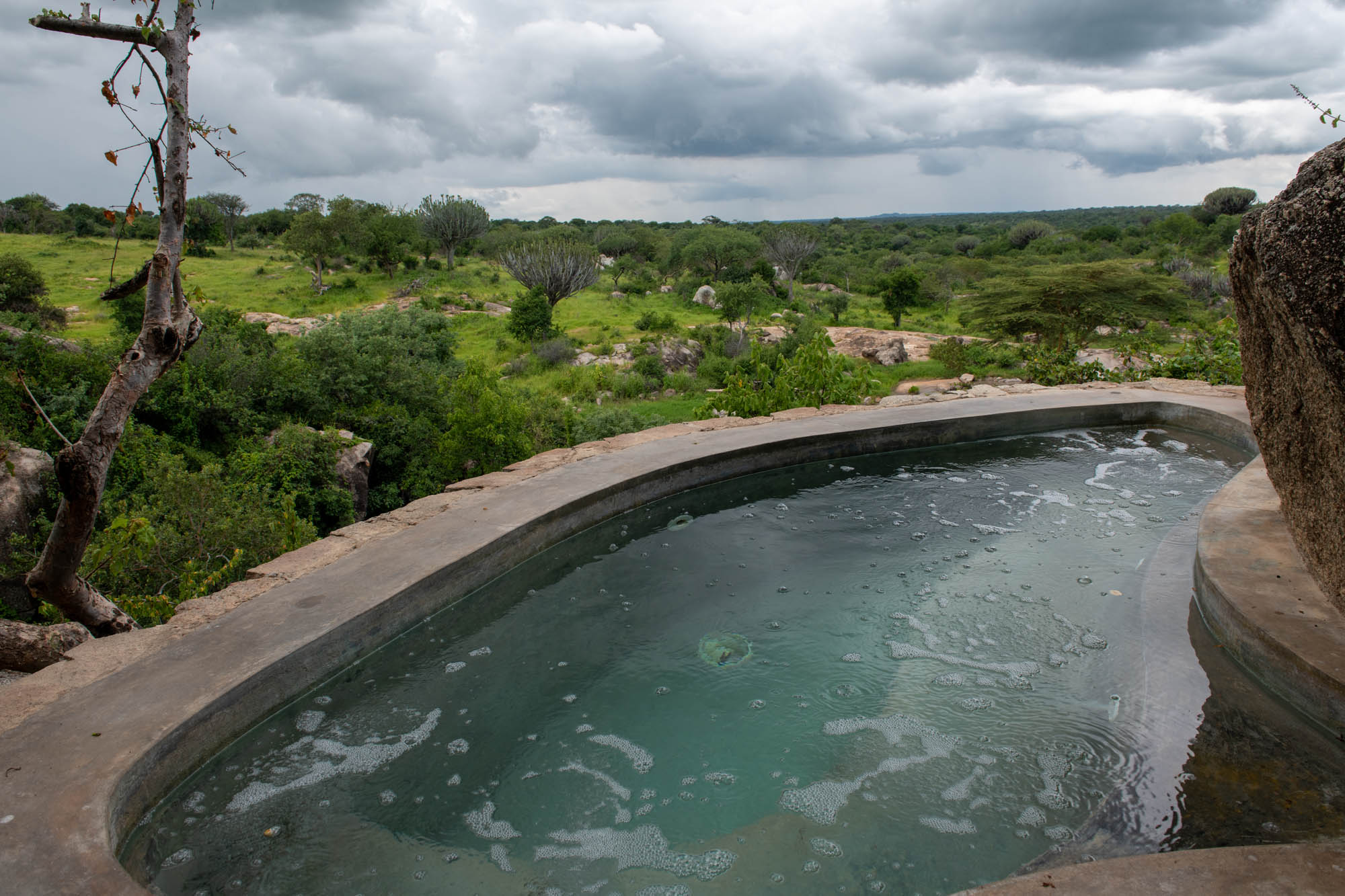
Right inside camp there’s a rejuvenating spa and gym and a cool wine cellar – not a bad spot for a private dinner. An expansive pool is set on a rocky outcrop overlooking a natural spring below.  In the dry season you may see some resident wildlife come to slake their thirst.  Walk in-between two massive rocks and around a corner and there is an inviting jacuzzi, seemingly carved out of the rockface, with beautiful views over the distant countryside.  Helicopter sight-seeing flights are available for side trips to Lake Eyasi or Lake Natron or beyond.

We would recommend spending at least 3 nights at Mwiba as there’s just too much to see and do, plus the lodge is perfect for re-connecting you with your inner explorer.  The one who wants to spend a bit of time around camp and not be in a vehicle 24-7…

Villa Maua


Image

Villa Maua

Game-viewing at Mwiba

If you do decide to tie the knot with Mwiba, just remember that it is through thick and thin, in sickness and health.  So if the wildebeest migration isn’t there in January, February or March, it’s nobody’s fault.  With the migration you can be in the right place at the right time and still miss it.  Which happened on my visit.  Even though conditions were ideal, with lots of rain and plenty of grass, the wildebeest herds were further north in the Ndutu area, where I would catch up with them a couple of days later.  They had been around Mwiba just days earlier and would likely be back the following week.


Image

Villa Maua

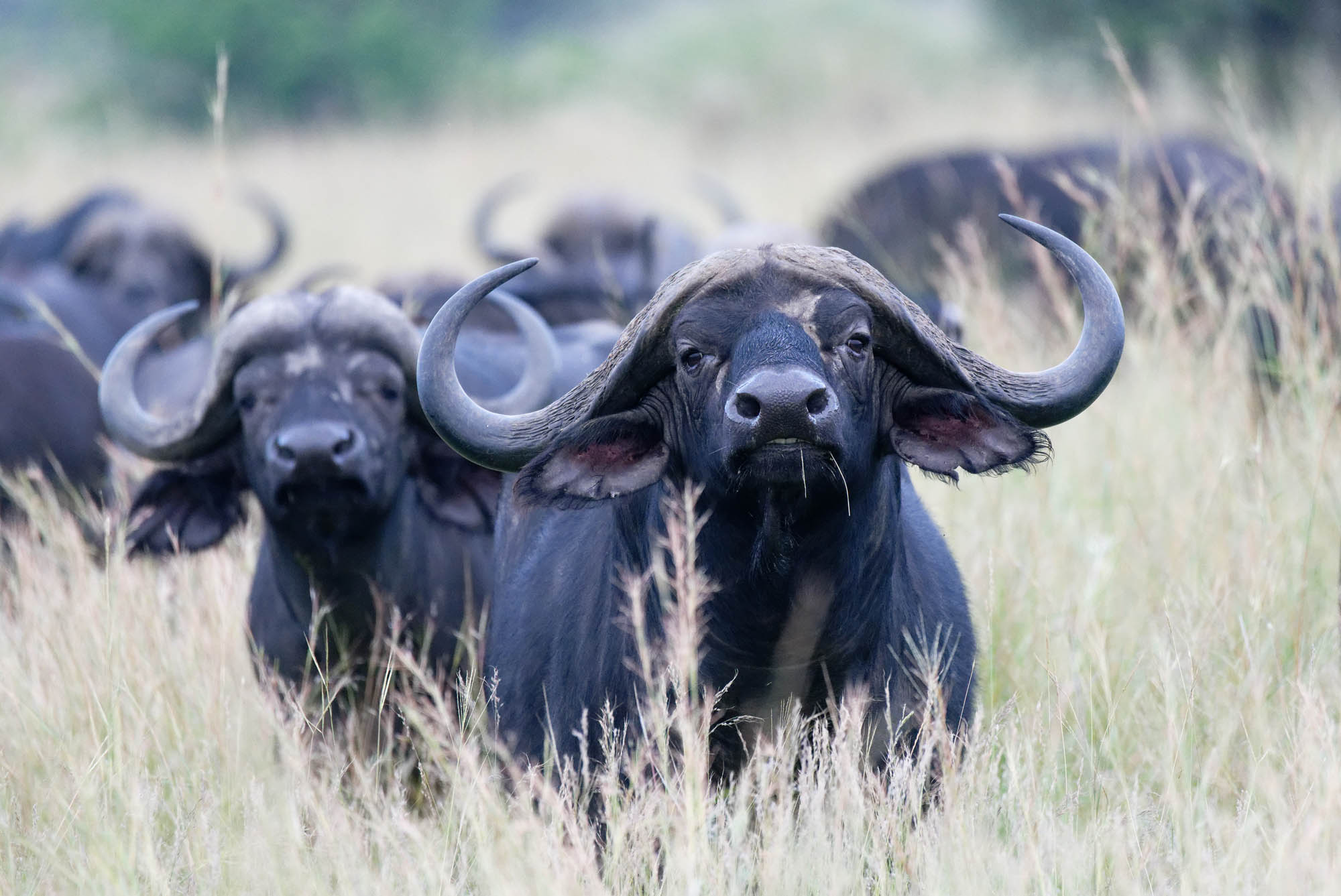
On our game drives in the area around the camp and further afield, we encountered good numbers of plains game, particularly zebras and giraffes.  Out on the plains we bumped into a group of 4 lions (2 females and their juvenile cubs); the two dominant males heading up the pride couldn’t have been far away.  The young cubs were seemingly fascinated by the vehicle, coming close to inspect it.  There were some elephants around as well, and the habitat in the Maswa Reserve – ideally visited on a full day outing from Mwiba – is ideal for cheetahs.  It appears to me that with as much water as there is right around Mwiba, it would also be a good dry season destination as many of the big game species like buffaloes are likely to move closer to remaining water sources then.


Image

I would not recommend Mwiba as the only game-viewing stop on a Tanzania trip, though. It would be best to combine it with at least one more camp in the Serengeti, Tarangire or elsewhere.  Mwiba would be perfect as perhaps the first or last stop on an East African trip.  A great introduction to the area and similarly, the perfect spot to wind down a trip, enjoying the setting and the lodge itself, and of course the people.


Image

Tsetse flies and what do to about them

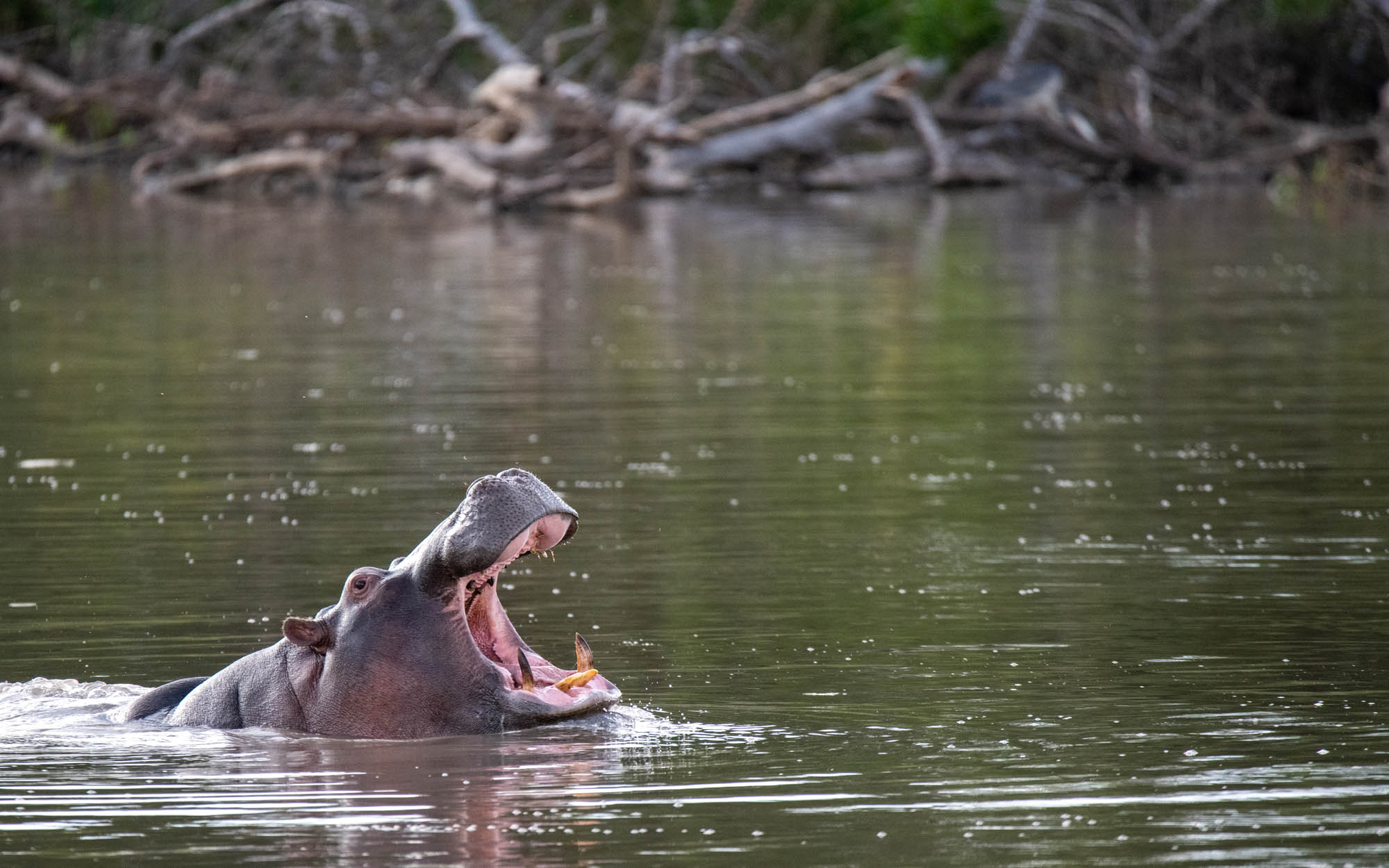
There’s something else which may challenge your relationship with Mwiba:  the presence of tsetse flies.  On a warm day in the rainy season, in the thickets and bush in the general area around the camp and down to the hippo pool, you will most likely experience at least a few bites from these pesky insects which are seemingly impervious to bug repellant of any kind.  In cooler, drier weather they are not nearly as much of a nuisance.


Image

After years of ‘running scared’ in the presence of tsetse flies, I’ve finally come to the realization that protection is the name of the game.  You simply have to cover up.  Start with a long-sleeved light-colored (white is fine) ‘fishing’ shirt.  Apparently the extremely finely woven fabric – thin as it may be – presents a significant barrier to the tsetse flies.  I did not get a single bite on my upper body or arms, alternating a Columbia Sportswear and practically identical Patagonia brand long sleeve shirt.


Image

In addition, wear a solid long brimmed hat like a Tilley or similar with a neck flap and cover your hands – a favored target of tsetse flies – with light leather gloves.  Wear sturdy long pants (denim would work) and protect your ankles with full length gaiters. Tsetse flies almost always bite through socks and ankles are a favored target. So cover them tightly with gaiters and your battle is half won even before you leave the lodge. One more suggestion:  have a light-colored kikoi blanket ready to drape over your head and shoulders if you find yourself in a tight spot.  And don’t relax too soon when you pull into camp:  the tsetses are known to take a ride in the vehicle so give them a minute or so to disperse, before you take your hat off.  It is best to avoid black and dark blue clothing when you are in a tsetse fly area; they seem to be attracted to these colors.


Image

In next week’s blog:  I take a very short flight to Ndutu, the epicenter of the short-grass plains of the Serengeti, in search of the wildebeest migration.

More Info

Email bert@fisheaglesafaris.com

Email jason@fisheaglesafaris.com

@fisheaglesafarishouston

#FishEagleSafaris

YOU MIGHT ALSO BE INTERESTED IN

Destinations
Zambia

10th September 2021

Chindeni and the Bushcamp Company, Zambia

By late July we found ourselves at Chindeni, a small Bushcamp Company property

Read more
Botswana
Destinations
Okavango Delta

3rd October 2022

Camp Okavango, Botswana

Camp Okavango is in the heart of the permanent part of the Delta. In this idyllic setting there are no vehicles, and it is just a short walk

Read more
Area
Destinations
Nyerere National Park
Ruaha
Tanzania

14th October 2023

From My Safari Notebook: Wildlife Photography

Birds in flight and wildlife photographers have an uneasy relationship. Things go wrong as often as they go right. Getting focus-lock on a moving subject

Read more

SUBSCRIBE TO OUR NEWSLETTER

READERS FAVOURITES

Destinations
Zambia

10th September 2021

Chindeni and the Bushcamp Company, Zambia

By late July we found ourselves at Chindeni, a small Bushcamp Company property

Read more
Botswana
Destinations

4th August 2022

On Safari At Belmond Eagle Island Lodge, Okavango Delta

What is the ‘secret sauce’ for an unforgettable few days on safari in Botswana? It starts with the animals, of course. The elephants, lions, giraffes, hippos
Read more
Destinations
India

27th May 2023

India

India’s tiger, mammals and birds.

Read more

Cheetahs, cheetahs, cheetahs

9th October 2020

Cheetahs, cheetahs, cheetahs


Image

Cheetahs, cheetahs, cheetahs

For many visitors to Africa, seeing the big cats is #1 on their wish list.  Nobody wants to go home only to have to say ‘no’ to the inevitable question about having seen lions.  Even though the total number of lions in Africa have dropped alarmingly over the last few decades – largely due to habitat loss – they are still relatively easily seen in most wilderness areas.  Lions are also prolific breeders under the right conditions – with enough prey animals around – so they bounce back quickly and predictably after setbacks such as prolonged droughts.  Which means that on your next – or first – trip to Africa, you will almost definitely bump into lions if you spend a few days in practically any major game reserve or national park.  In Southern or East Africa.  So, did you see lions?  Yes.


Image

Other big cats are less frequently seen.  Leopards are supremely adaptable creatures and they are common in almost any non-urban African habitat except true deserts.  What makes them difficult to find and observe is their naturally elusive, shy and mostly nocturnal nature.  They are mostly solitary and stealthy creatures of the night. That is when they are out and about in search of prey such as unsuspecting smaller antelope, monkeys, baboons and the like.  Consequently, visitors see them mostly very early in the mornings or in the late afternoon, when they start to get active after resting up.  In areas where they are habituated to the presence of vehicles, such as the Sabi Sand reserve in South Africa, in parts of the Masai Mara and the Serengeti, in private concessions in Northern Botswana and at Mashatu in south-eastern Botswana, they are more readily seen as they don’t conceal themselves at the first sign of vehicles, movement or humans.  


Image

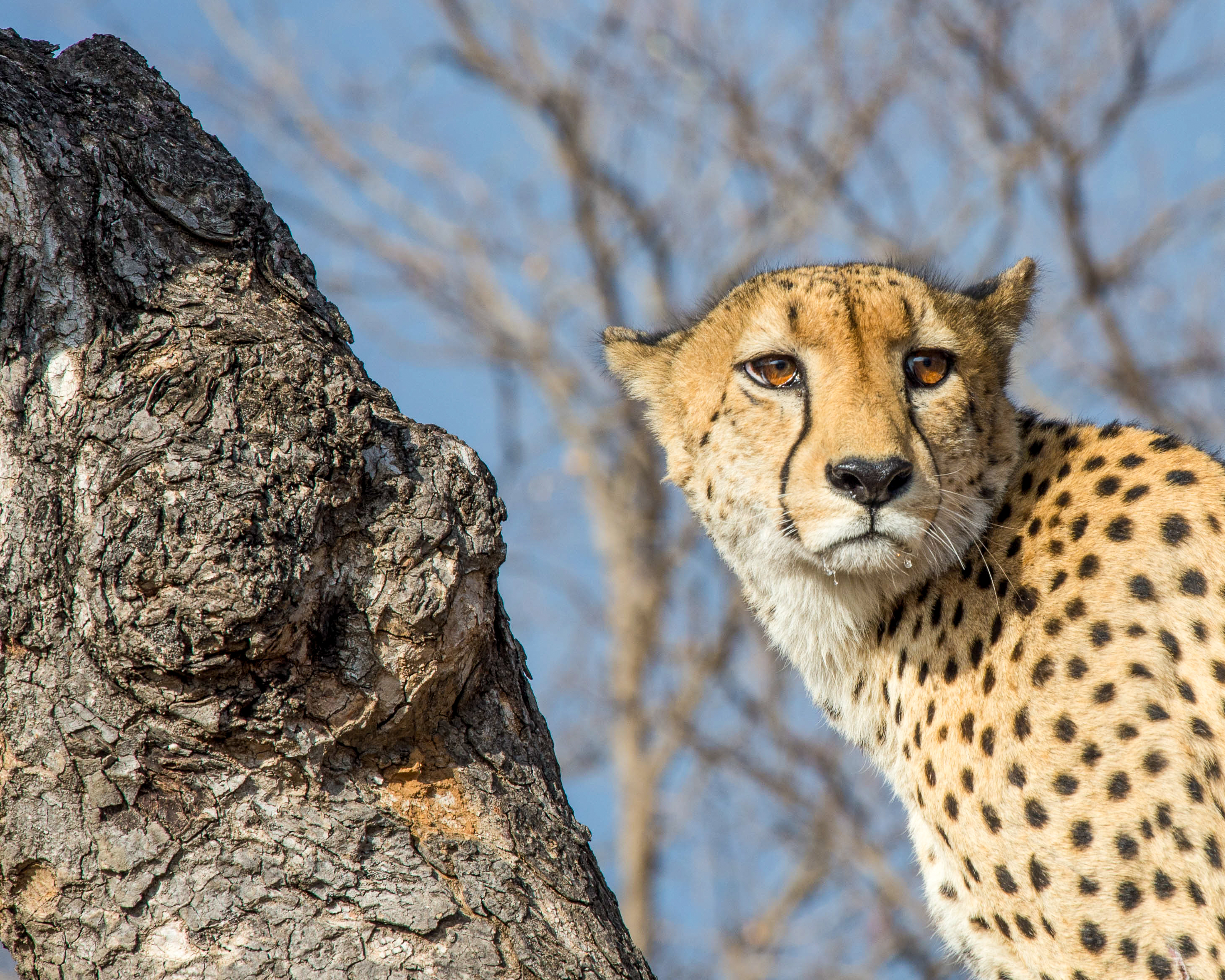
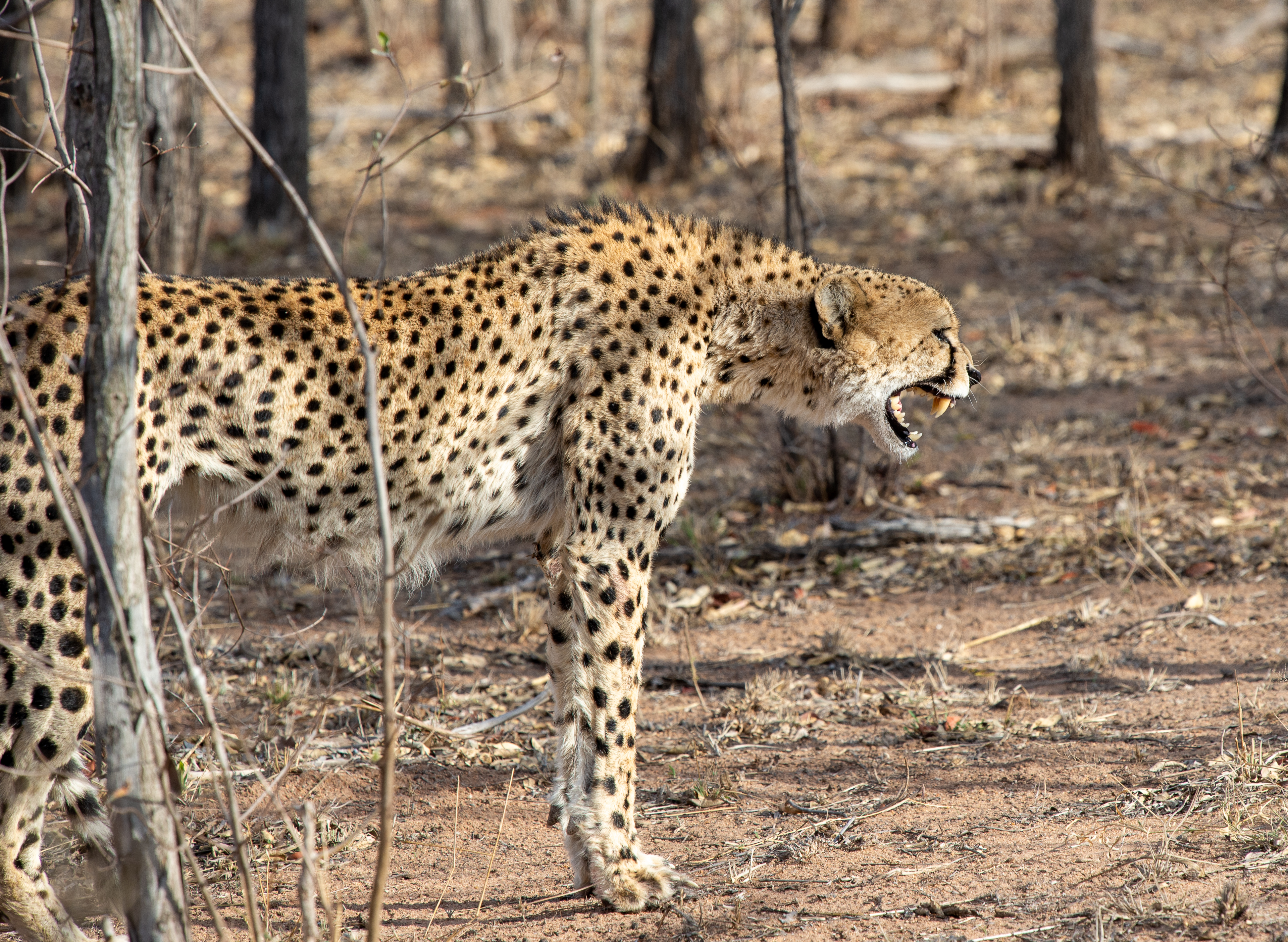
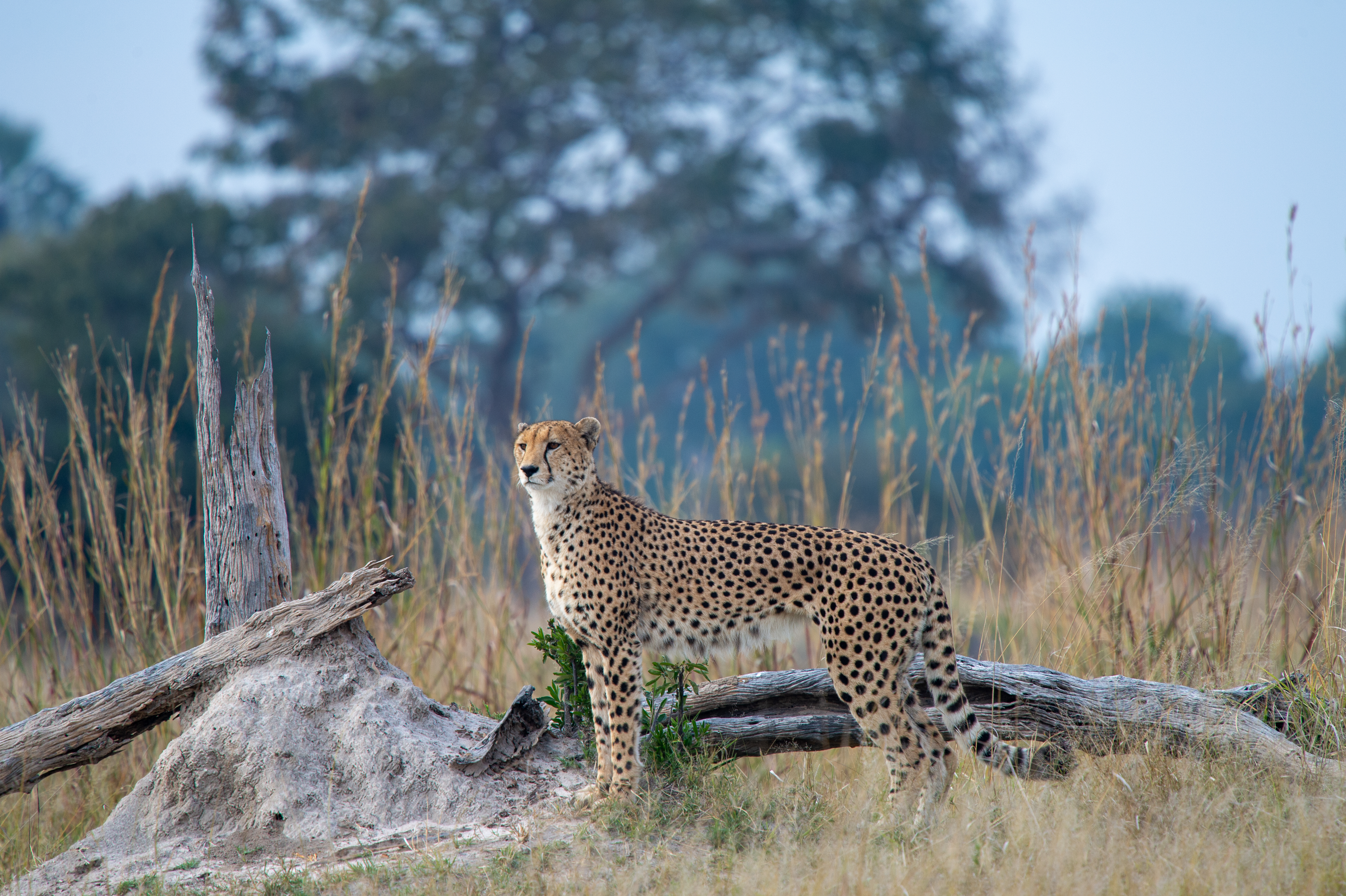
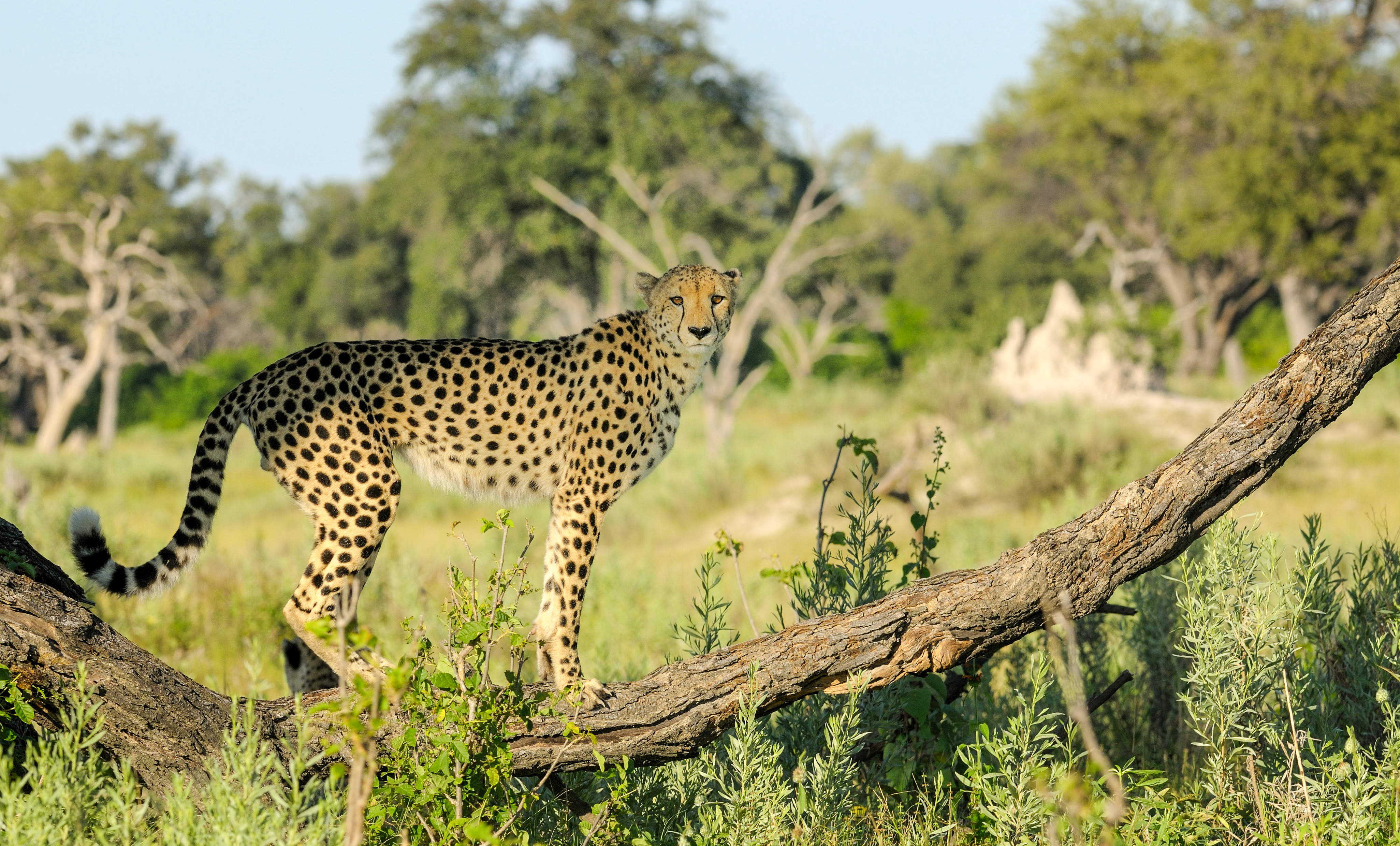
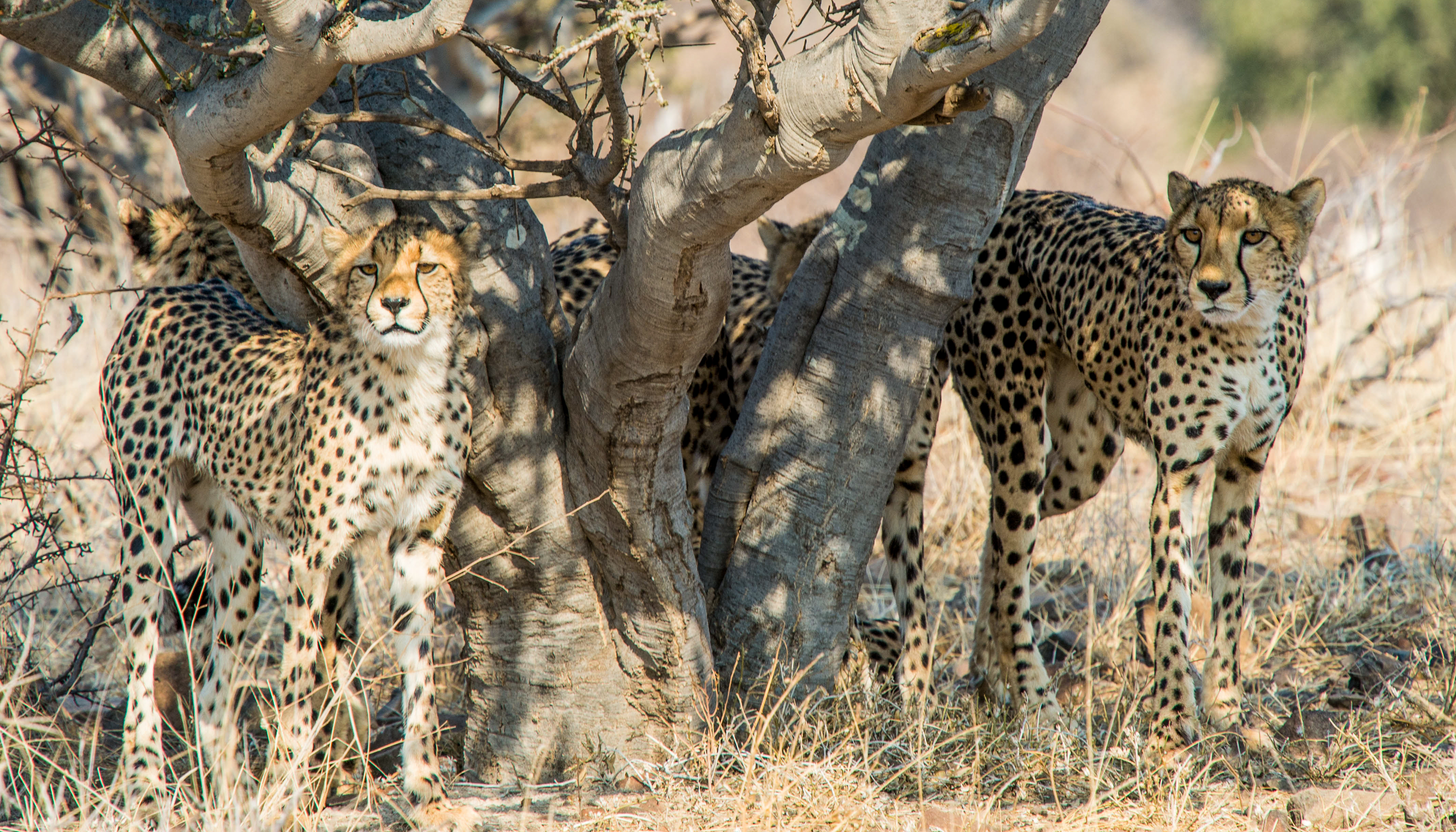
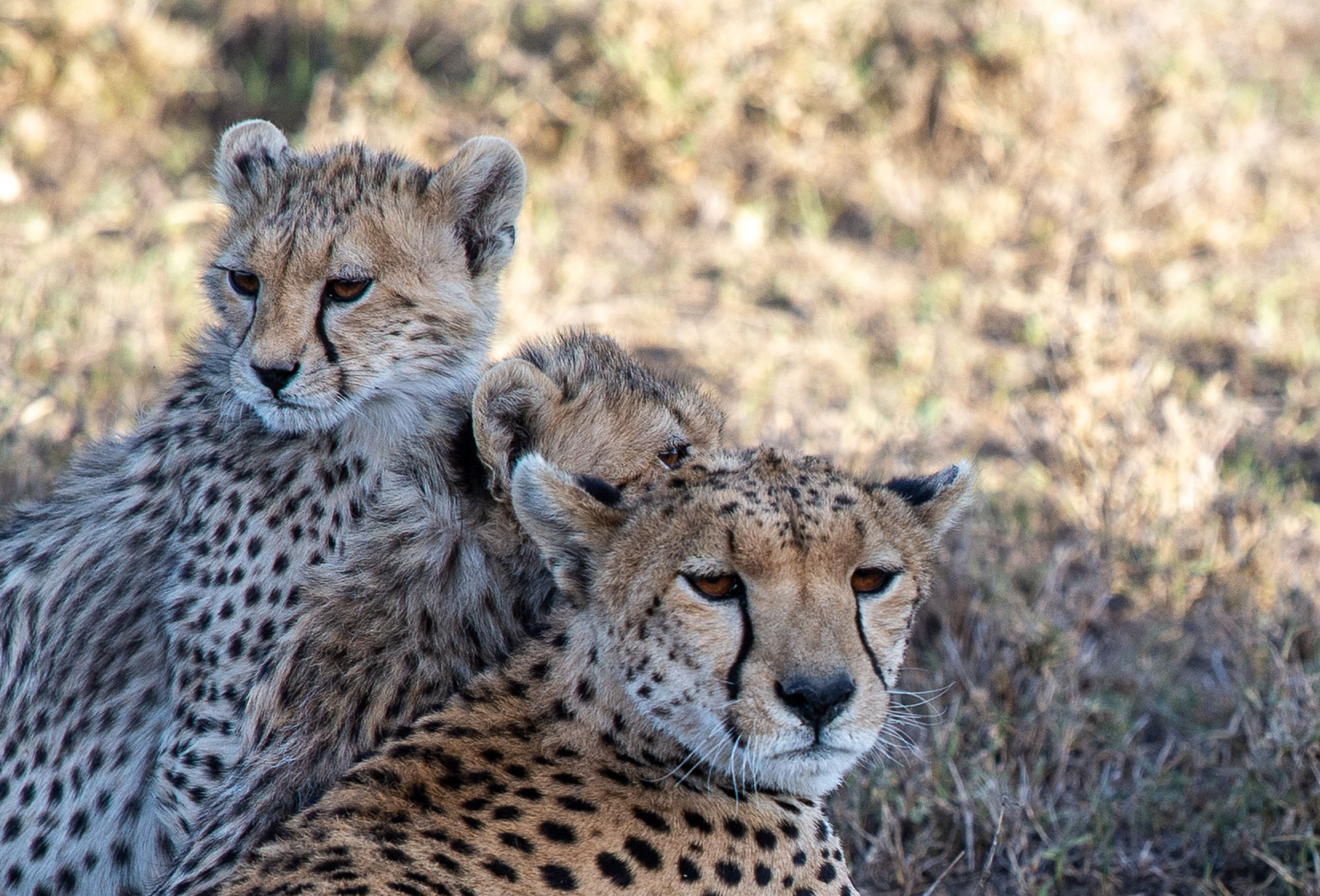
The other big African cat – the cheetah – is in a different league altogether.  It has a relatively tiny total population of about 7,000 in comparison with lions (approximately 25,000) and leopards (approximately 700,000).  Despite being as sparsely distributed as they are, cheetahs are quite visible where present, due to their diurnal nature and preferred habitat.  Cheetahs are adapted to hunt during the day which reduces competition from the nocturnal big cats, notably lions.  Cheetahs also prefer open terrain where they can use their amazing speed to its best advantage.  And they will often clamber onto anthills or stumps or other elevated spots to check out the area for potential prey – or danger.  Open terrain, broad daylight, a spotted cat perched on top of an anthill?  Bingo!  For me personally, a cheetah sighting is a highlight of any Africa trip.  They are just so rare, so beautiful and so special that even a brief glimpse of one of them will make your day.  

Here are some photos we took of cheetahs in six different areas in Southern and East Africa where they are regularly seen.  The captions summarize the back story about each photo and how it came to be.


Image

Selinda, Northern Botswana

This cheetah was part of a coalition of two brothers which used to move up and down along the Linyanti River in northern Botswana, spending weeks or sometimes months in an area.  For no apparent reason, they would then move along to a neighboring concession.  Less competition from lions or hyenas, more prey animals?  Who knows.  The reasons are hardly ever readily apparent.  The day on which we bumped into this particular cheetah and his brother, marked the first sighting of cheetahs on a game drive from Selinda, in several weeks.  So essentially, we got lucky. Being in the right habitat and spending enough time scanning open terrain along the Linyanti floodplain, just improved our luck somewhat.  We would get even luckier later that day, when we saw the cheetah coalition hunt and bring down an impala.  My advice to anyone wanting to see a cheetah kill?  Bring your best patience game as cheetahs take their time sizing up the area, the conditions and whatever their instinct dictates.  It took the brothers the better part of four hours to finally attempt a charge.  They were successful though.  Cheetahs are the most efficient of the big cats in terms of hunting success, bringing down about 40% to 50% of prey, as a percentage of total attempts.  By comparison leopards are successful about 30% to 40% of the time.  Lions bring up the rear in a significant way, being successful less than 20% of the time.  


Image

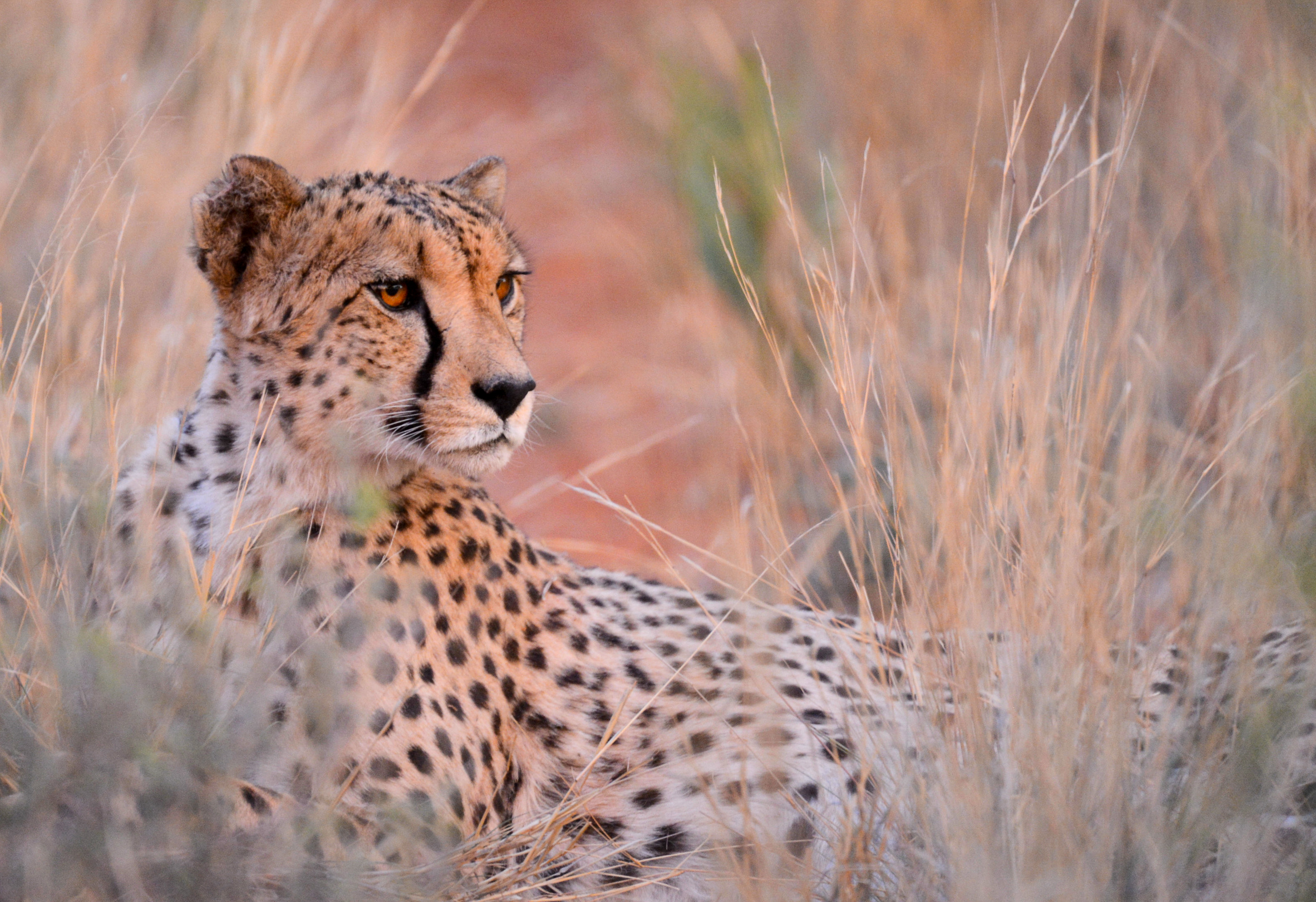
Tswalu, South Africa

Tswalu in the northern Cape Kalahari in South Africa is better known as one of the best places in Africa to see pangolins and aardvarks, but it is no slouch for some of the big cats, notably lions and cheetahs.  On our most recent visit to Tswalu (we will be returning this November) Kathy had set aside one afternoon to do some horseback riding.  We were at the stables and she was just about to set off into the veld with one of Tswalu’s beautiful steeds, when word came on the radio that a couple of cheetahs had been spotted.  Kathy and I looked at each other and there was no disagreement:  the horses would have to wait for another day.  It was a longish drive to get to the cheetahs, with the light fading fast by the time we pulled up to them.  Even so, the decision was the right one.  Looking in our direction in the gathering gloom, the cheetah’s ordinarily yellow eyes shone almost red.  The sighting would be brief but eminently memorable. 


Image

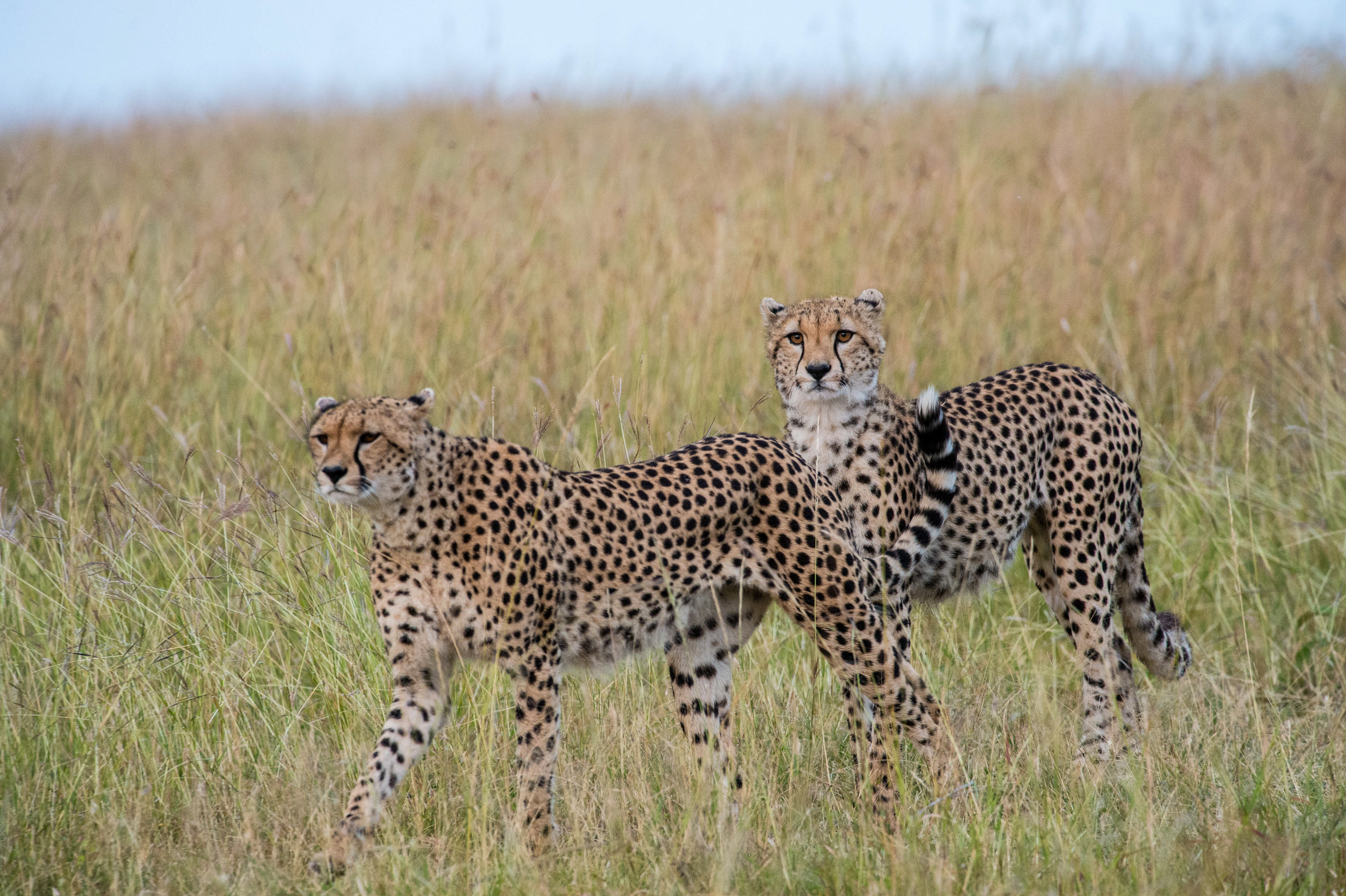
Masai Mara, Kenya

When I first saw these cheetahs on a game drive out of Mara Explorer Camp, one of the cheetahs had jumped on top of a game drive vehicle from Mara Intrepids.  I do not like to see behavior like that: it should have been prevented by the Mara Intrepids driver-guide.  The guides in the area are all aware of the propensity of some of the cheetahs to try to use the vehicle as an observation post.  And the guides know to avoid an incident, by staying clear of ‘known perpetrators’.  It is potentially dangerous for the guests and for the cheetahs.  Getting bitten or getting run over, respectively.  Too risky all round.  We left the scene, deciding to rather return early the next morning.  It made all the difference.  We had the cheetahs to ourselves for the better part of an hour, observing them walking around and getting onto anthills – not vehicles.  The way it should be.  


Image

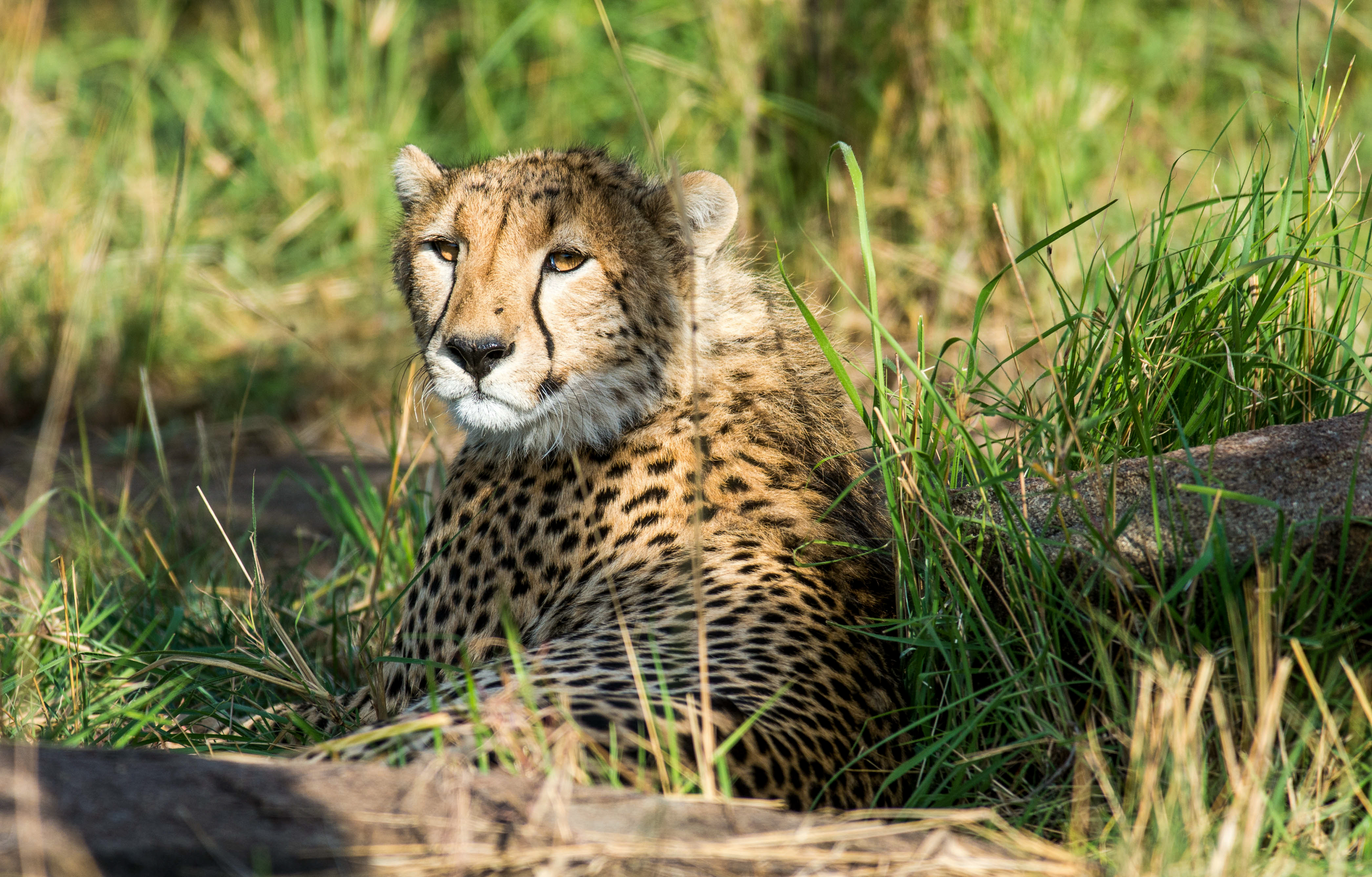
Serengeti Plains, Tanzania

Tanzania’s Serengeti Plains and its northernmost extension, the Masai Mara in Kenya, are likely Africa’s single best repository of cheetahs.  This is their habitat par excellence.  Open, rolling grassy plains with rocky outcrops, patches of woodland and riverine thickets, and plenty of prey in the form of Thomson’s gazelles and impala.  Irrespective of the status of the annual wildebeest migration, the Serengeti and the Mara are great for the big cats, who have territories to defend and who do not move around with the wildebeest and the zebras.  In fact, on the day we saw this cheetah on a game drive out of Nomad Tanzania’s Lamai Serengeti Camp, we experienced a rare big cat trifecta:  lions, leopards and a cheetah.  All in one game drive, not during the migration season.  Other parts of the Serengeti where we have experienced above-average cheetah sightings include the southern Serengeti (Kusini camp) and the western Seronera area (Namiri Plains camp). 


Image

Hwange, Zimbabwe

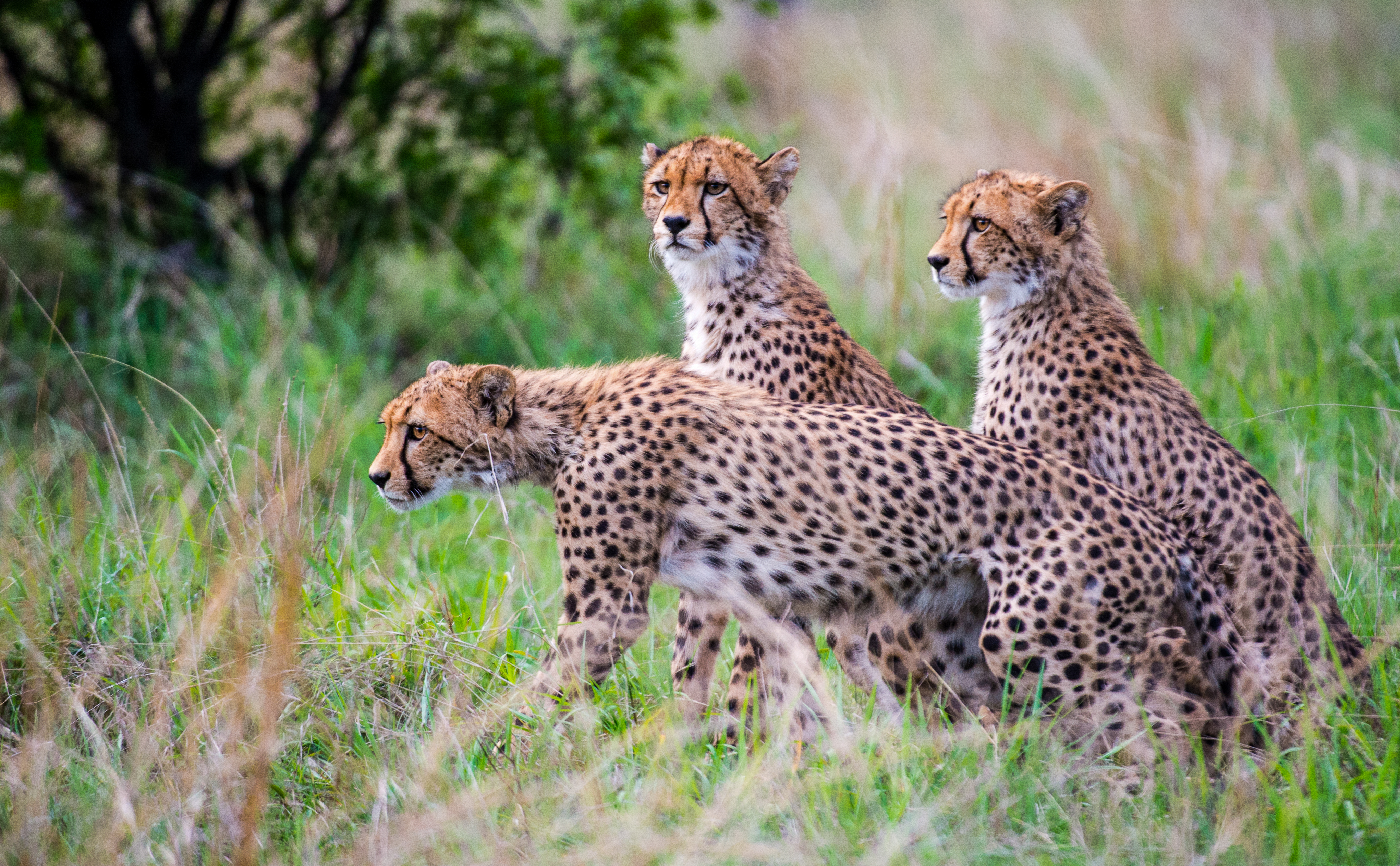
Since we regularly started visiting Hwange National Park in north-western Zimbabwe in the 1990’s, we’ve come to recognize it as a good and reliable area for cheetah sightings.  Just like elsewhere in Africa, the Hwange cheetahs move around and can’t always be seen in the same spots.  So if you’re keen on seeing cheetahs on a trip to Zimbabwe, we would suggest including two different camps, such as Somalisa or The Hide or Khulu Bush Camp, combined with Little Makalolo or Linkwasha or Camelthorn.  And give yourself plenty of time to find the cheetahs; five to six nights in the area would be ideal.  This trio of young cheetahs were following their mother around and getting a lesson in patience.  She wanted them to stay back and stay low while she approached some antelope.  It was not to be.  They kept showing themselves and following too closely behind her.  Which naturally spooked the antelope. All in a day of growing up.  


Image

Mashatu, Botswana

Mashatu Game Reserve in far south-eastern Botswana is currently one of the best big cat destinations in Southern Africa.   Spend three or better yet four nights there and you will most likely get to see lions, leopards and cheetahs.  And not furtive ‘drive-by’ sightings either.  On a recent September visit to the area, we had multiple good sightings of both lions and leopards, and notched up two different cheetah sightings in the course of a 3-night stay at Mashatu Tented Camp.  What makes Mashatu a particularly good bet for cheetahs – and other big cats – is the fact that off-road driving is allowed which means that you can get quite close to these magnificent cats.  For photographers this is a major advantage over many other areas where vehicles are not permitted off-road.  Also, compared with most other good big-cat destinations, the Mashatu properties namely Mashatu Lodge, Mashatu Tented Camp and Euphorbia are moderately priced – at about half the cost of camps of similar quality in northern Botswana.  We recommend combining a 3-night WalkMashatu foot safari with a few days at one of the Mashatu camps, to make the most of the area.  


Image

In our blog post next Friday, we will focus on one of the most popular and also instantly recognizable African mammals, the Giraffe.  There will be photographs, of course, as well as some information about places where they can be seen.  We will also review the various species you are likely to encounter in Southern and East Africa, and their conservation status.  

More Info

Email bert@fisheaglesafaris.com

Email jason@fisheaglesafaris.com

@fisheaglesafarishouston

#FishEagleSafaris

YOU MIGHT ALSO BE INTERESTED IN

Destinations
Zambia

10th September 2021

Chindeni and the Bushcamp Company, Zambia

By late July we found ourselves at Chindeni, a small Bushcamp Company property

Read more
Botswana
Destinations
Okavango Delta

3rd October 2022

Camp Okavango, Botswana

Camp Okavango is in the heart of the permanent part of the Delta. In this idyllic setting there are no vehicles, and it is just a short walk

Read more
Area
Destinations
Nyerere National Park
Ruaha
Tanzania

14th October 2023

From My Safari Notebook: Wildlife Photography

Birds in flight and wildlife photographers have an uneasy relationship. Things go wrong as often as they go right. Getting focus-lock on a moving subject

Read more

SUBSCRIBE TO OUR NEWSLETTER

READERS FAVOURITES

Destinations
Zambia

10th September 2021

Chindeni and the Bushcamp Company, Zambia

By late July we found ourselves at Chindeni, a small Bushcamp Company property

Read more
Botswana
Destinations

4th August 2022

On Safari At Belmond Eagle Island Lodge, Okavango Delta

What is the ‘secret sauce’ for an unforgettable few days on safari in Botswana? It starts with the animals, of course. The elephants, lions, giraffes, hippos
Read more
Destinations
India

27th May 2023

India

India’s tiger, mammals and birds.

Read more
  • « Go to Previous Page
  • Page 1
  • Page 2

Footer

Design

  • About
  • Destinations
  • Blogs
  • FAQS
  • Team
  • Contact
All Rights Reserved ©Fish Eagle Safaris 2022 | Terms & Conditions | Privacy Policy
Designed & Developed by B Online

SUBSCRIBE TO OUR NEWSLETTER

SIGN-UP TO OUR NEWSLETTER

Subscribe Form

Footer Widget Header

Related Blogs