• Skip to primary navigation
  • Skip to main content
  • Skip to footer

Fish Eagle Safaris

Fish Eagle safaris

Contact

Logo
  • About
  • Destinations
  • Blogs
  • Newsletter
  • FAQS
  • Team
  • search
  • Contact
  • About
  • Destinations
  • Blogs
  • FAQS
  • Team
  • Contact

Area

Chimpanzee trekking in Africa

5th November 2020

Chimpanzee trekking in Africa


Image

Chimpanzee trekking in Africa

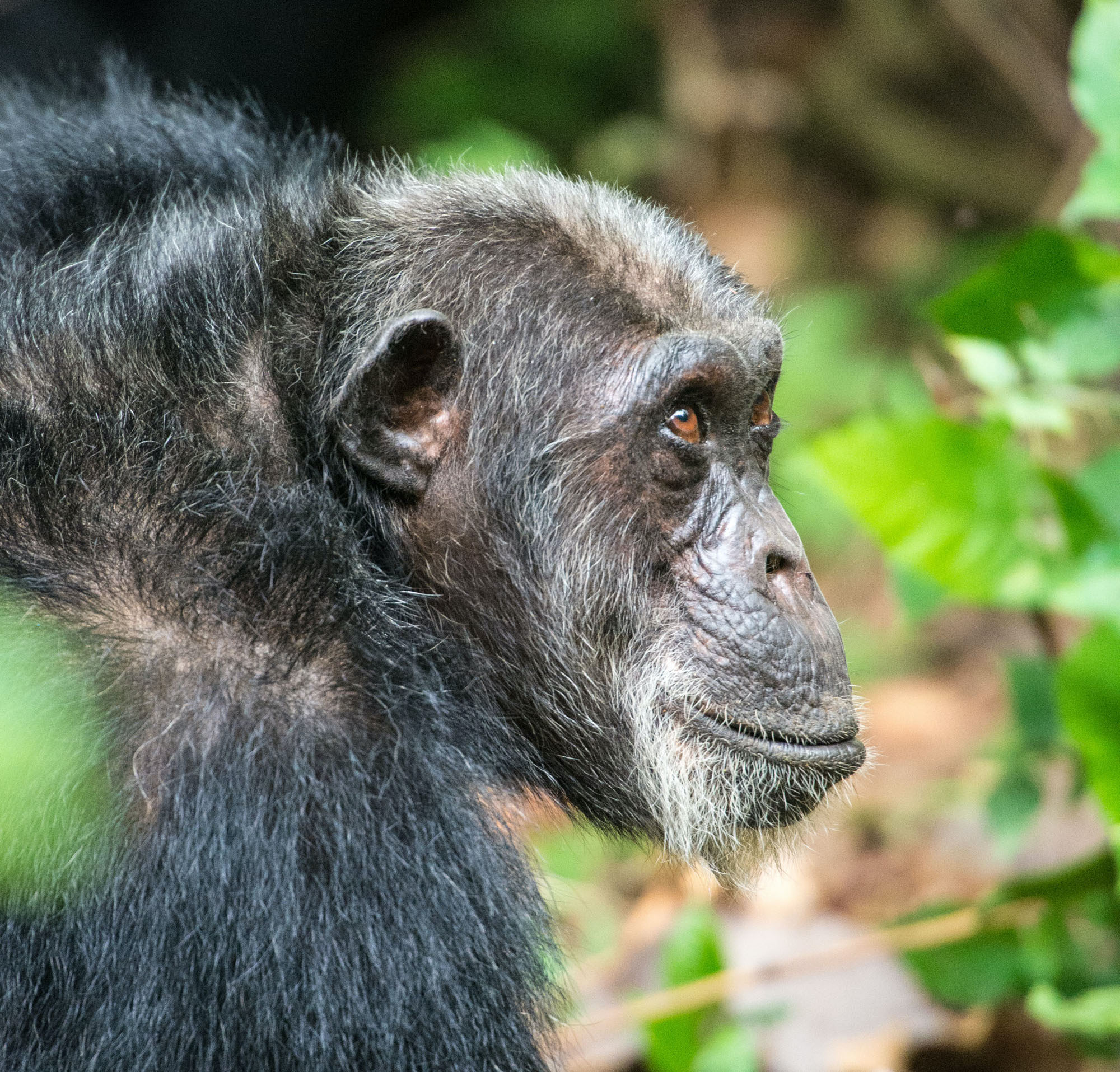
As a child growing up in South Africa I had no concept of chimpanzees as wild animals. Even well into my teens – by which time I had seen and admired many large mammals in the Kruger National Park – chimpanzees were at best caricatures of real, wild animals. They were movie stars or advertising props, or used to entertain gullible people at circuses or carnivals.

Image

It was not until many years later that I came to know that chimpanzees used in the entertainment industry are invariably babies or youngsters. Around age eight they become practically impossible to control and can no longer be relied upon to perform their unnatural learned tricks such as walking upright or riding a little tricycle. At that point their future becomes even more grim than their past.

Image

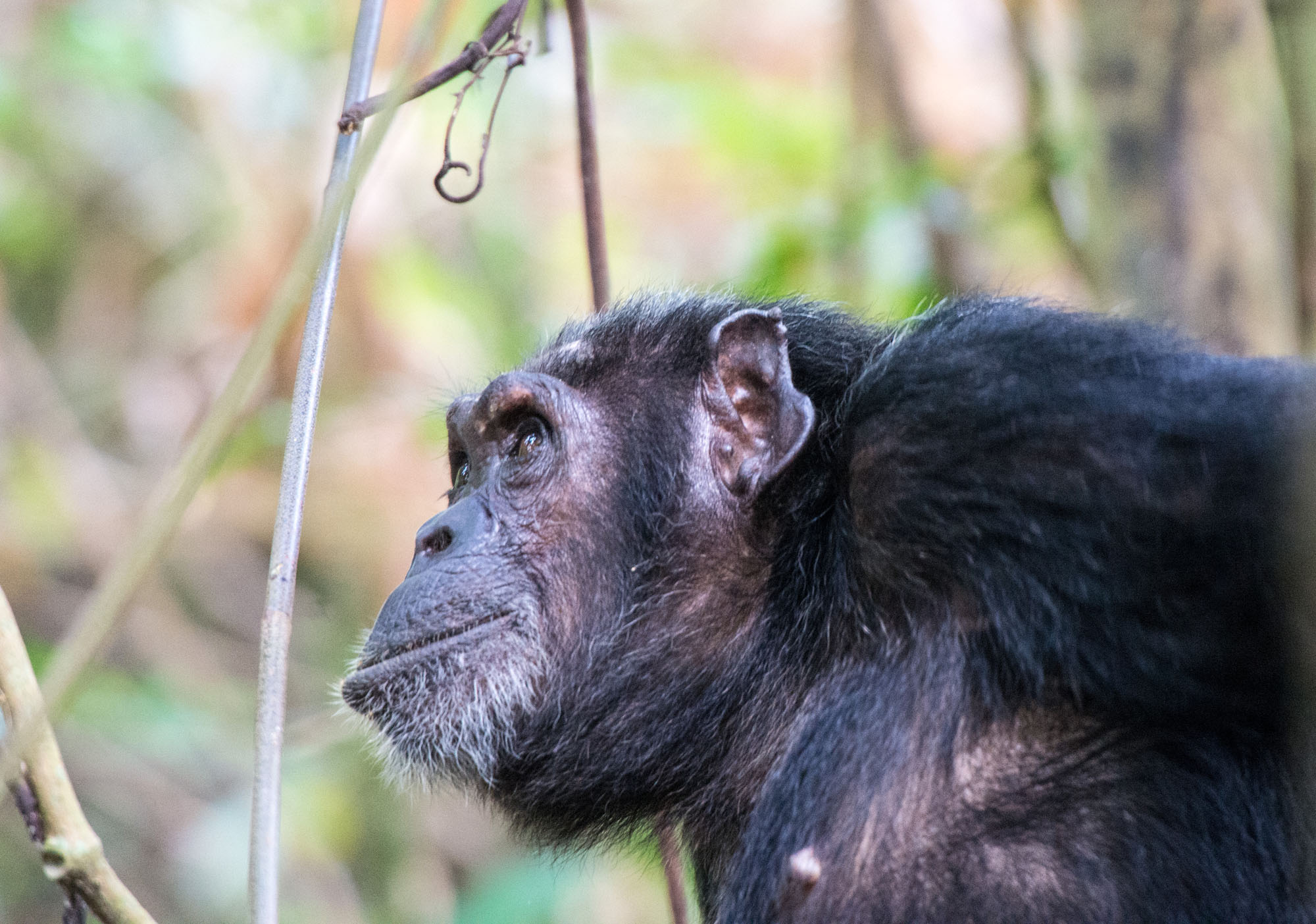
So when I saw my first wild chimpanzees in Uganda many years later, it was a jaw-dropping experience. I could hardly believe it. Chimpanzees were real. Here, right in front of me, were several of them practically tumbling down a high tree, crashing through the vegetation and unleashing the weirdest spectrum of noise and sound. The most telling moment was when one chimpanzee hopped onto an horizontal branch and looked straight at me.  Or maybe at the person next to me.  I felt an instant sense of connection, like locking eyes with another human being.  It felt strange and somewhat unsettling, but perhaps not surprising, given the  close relationship between chimpanzees and humans.   Humans share about 99% of our DNA with chimpanzees, making them our closest living relatives.

Image

Over the years, we’ve done several chimpanzee treks in Uganda (in three different areas), as well as in the Nyungwe Forest area in Rwanda, and most successfully of all, out of Greystoke Mahale in the Mahale Mountains National Park in western Tanzania.

Image

Budongo Forest Reserve, Uganda

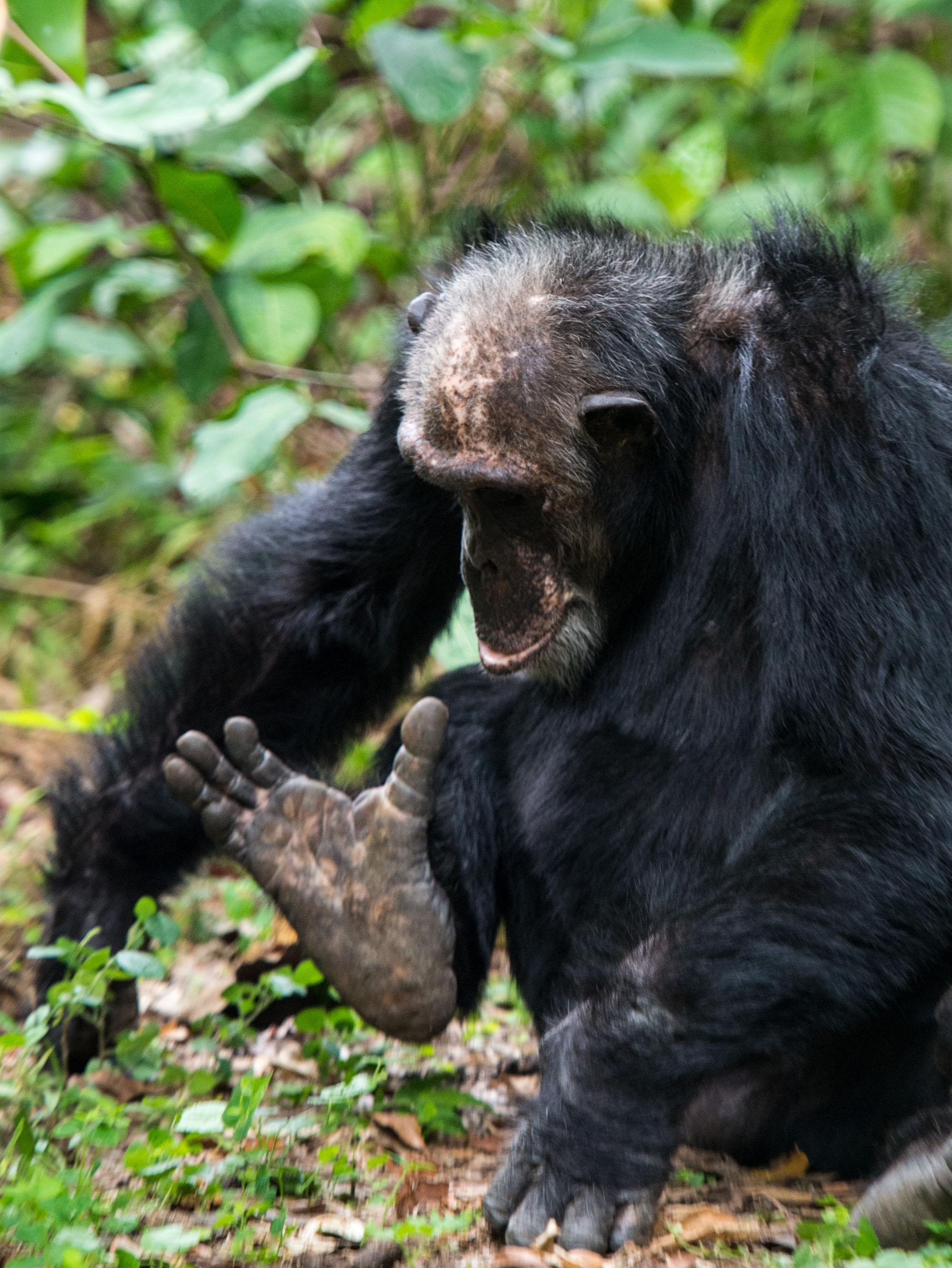
My very first chimpanzee trek was in Uganda’s Budongo Forest Reserve.  Budongo Forest Reserve is a beautiful rainforest location with incredible biodiversity,  including nine different species of primates, 360 species of birds, over 290 different types of butterflies and some of the oldest trees in Uganda. In retrospect, the chimp trek at Budongo seemed a lot less of an ‘effort’ than elsewhere.  Perhaps we were just lucky on the day.  After a walk of less than 2 miles over fairly even terrain, along a rudimentary trail, we came upon a small group of chimpanzees.  Hearing them before seeing them, as is almost always the case.   They  were initially up in the trees, but not for long.

Image

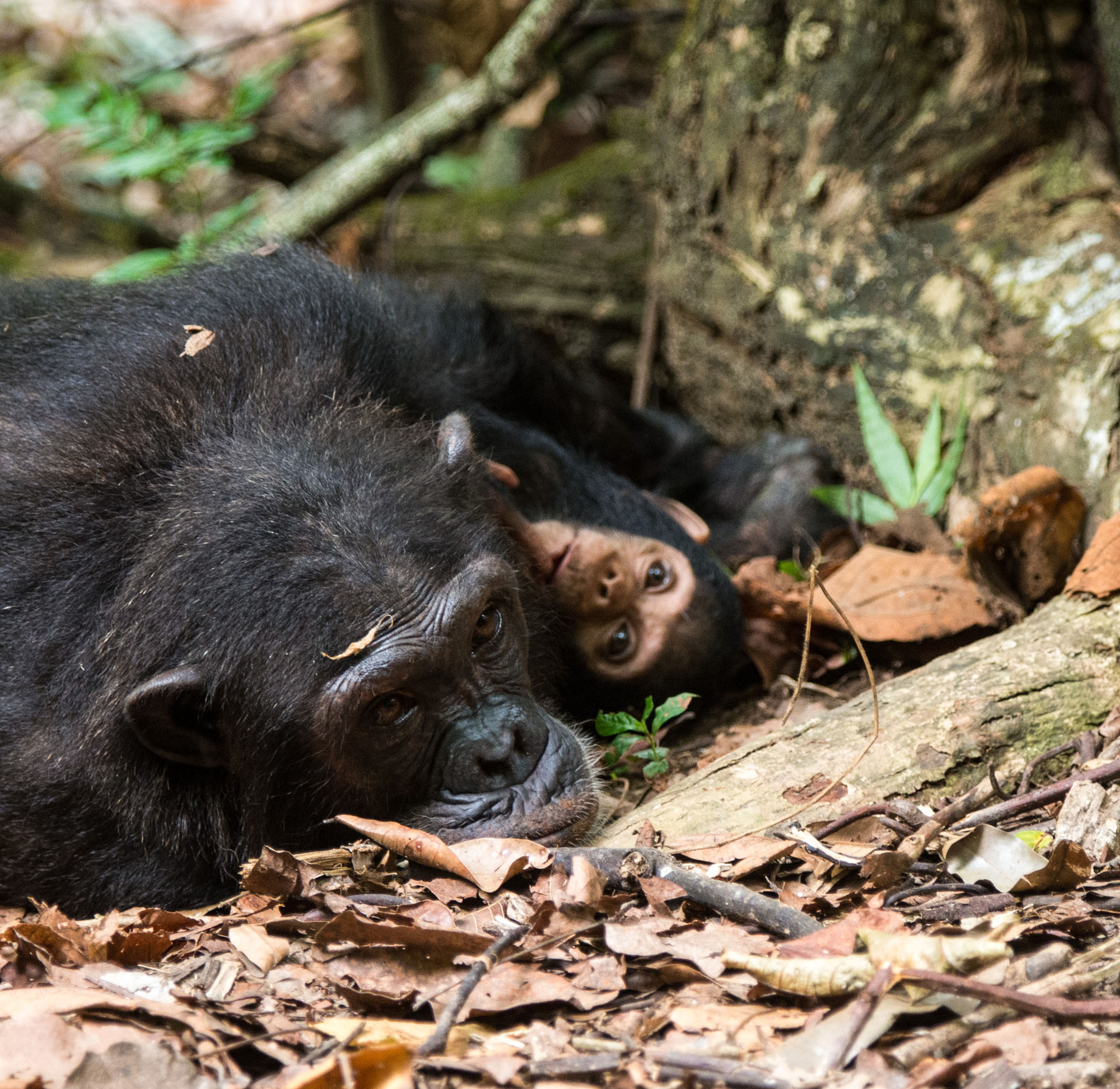
Soon enough, our small party of travelers were fortunate to see one individual seemingly posing for the cameras, on a horizontal branch in a small clearing. I did not have the right lens otherwise I might have had some really good chimp pics!  My short zoom lens was just not enough; a 70-200 or 100-400 zoom would both have been better choices.  At one stage several of the chimps literally ‘fell’ from the trees, grasping one or two seemingly flimsy twigs as they came crashing down. You don’t see that kind of stuff in the movies! It was simply awesome!

Image

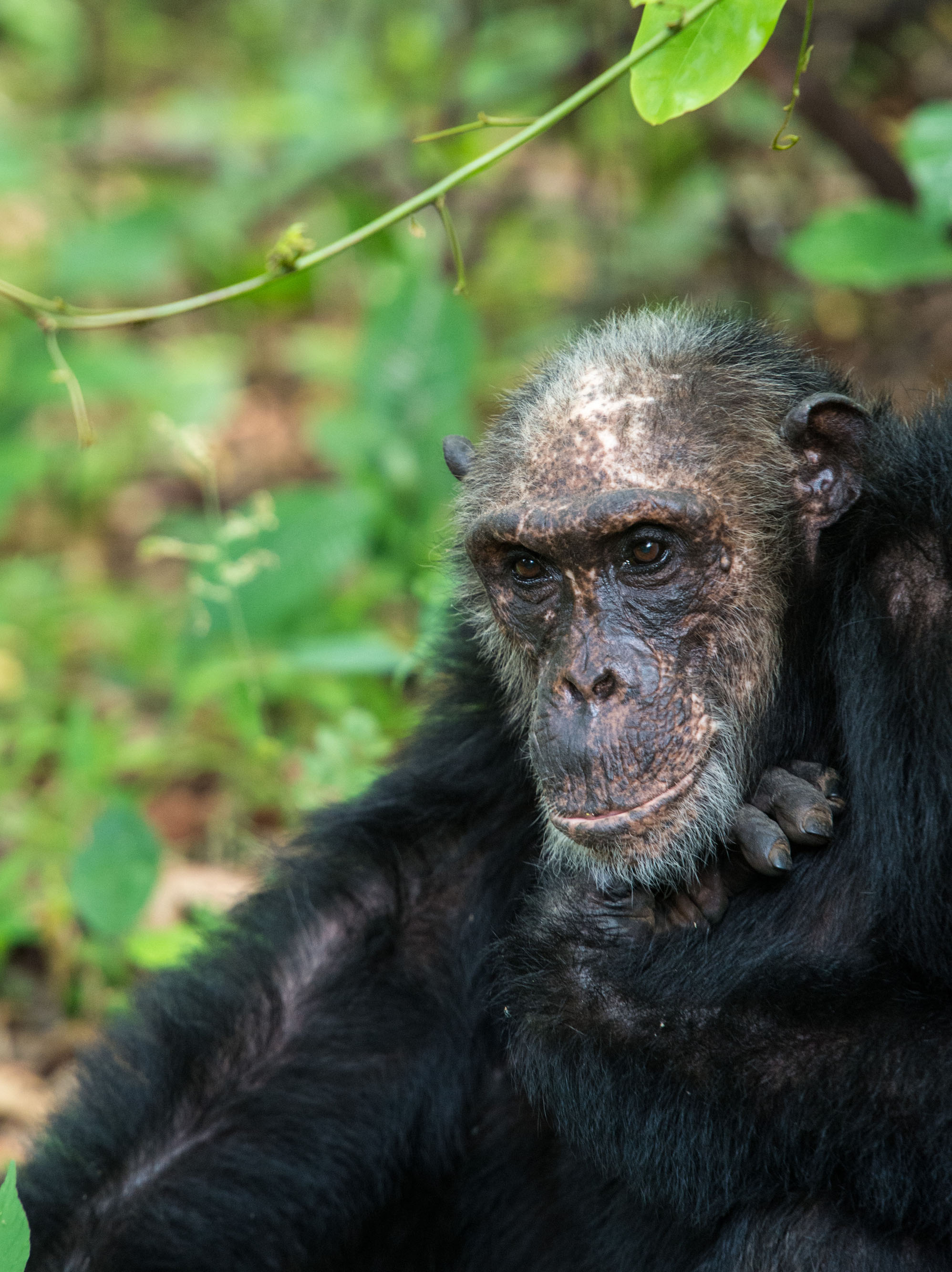
Budongo Forest can be included on any Murchison Falls itinerary, probably best at the end of the segment, before returning to Entebbe/Kampala. The night prior to the chimp trek at Budongo we slept at Budongo Eco Lodge, a very pleasant ‘no frills’ lodge right on the edge of the forest. The big advantage of staying here is that you can walk literally right out of the lodge, to the start of a chimpanzee trek or birdwatching outing. No additional driving involved.

Image

Kibale Forest, Uganda

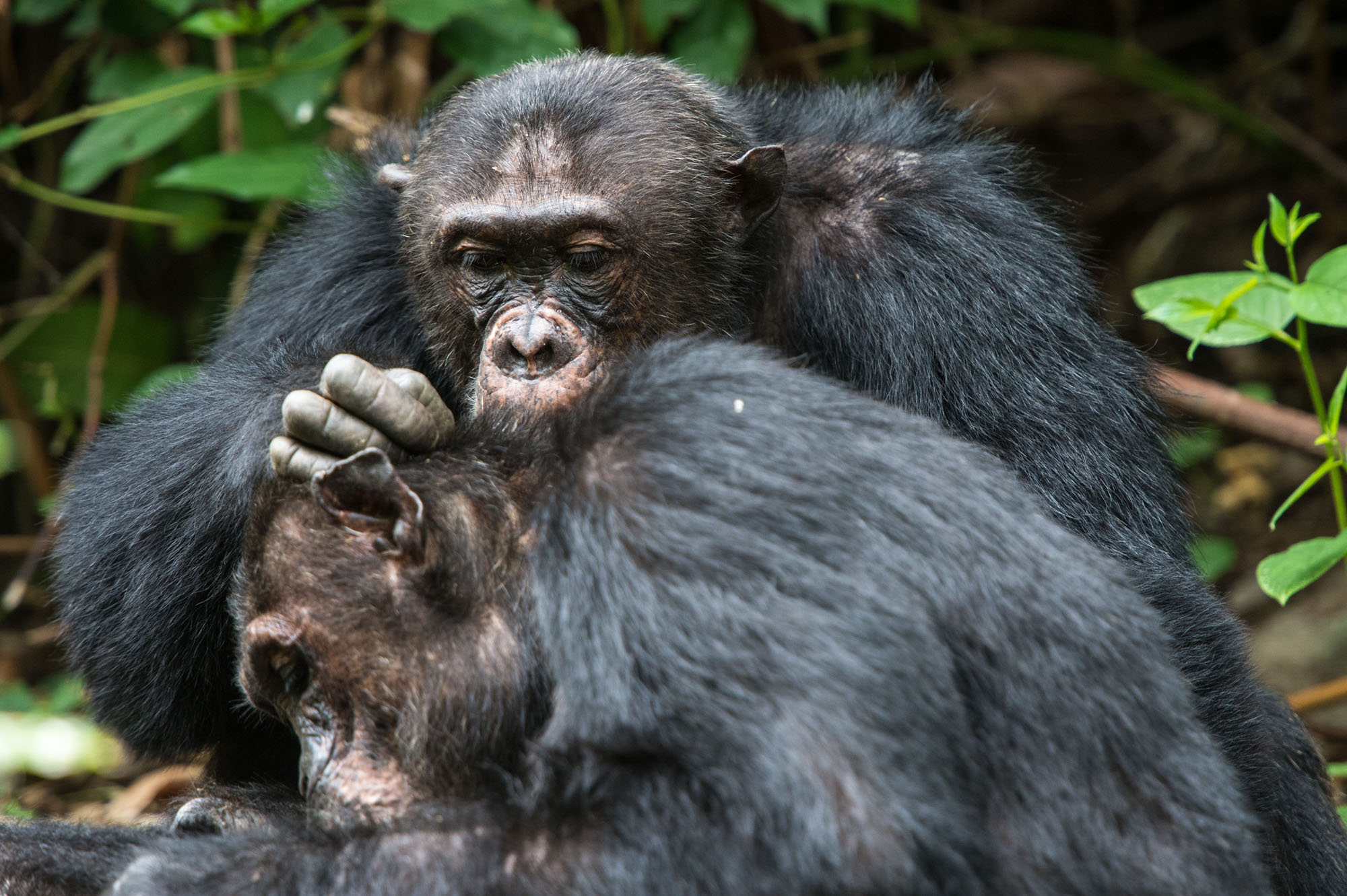
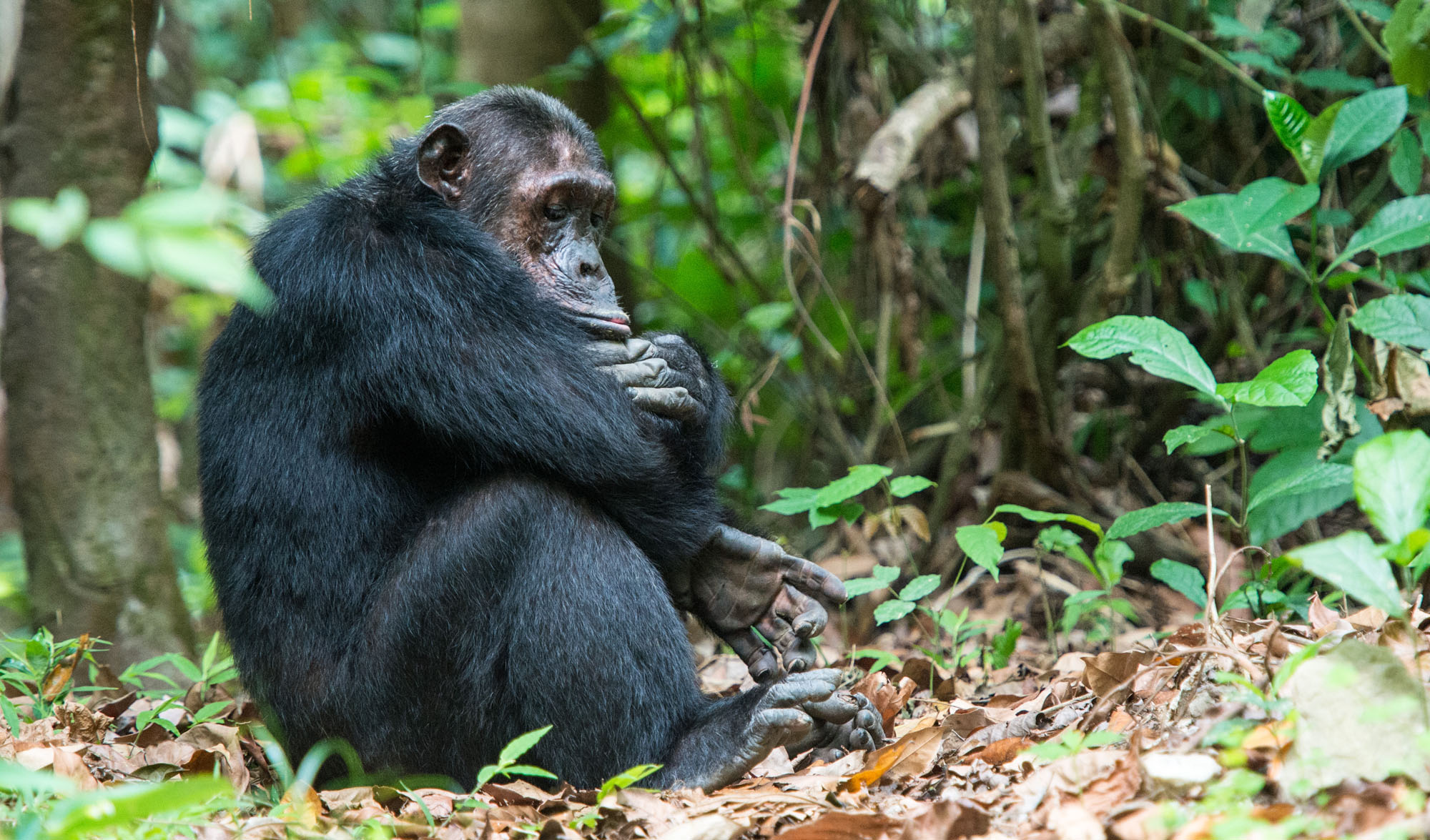
A day or so later, on the same Uganda trip, we trekked for chimps at Kibale Forest.  While the ‘success rate’ for seeing chimps at Kibali is quite high – more than 90% – chimpanzees are mostly arboreal and often fast-moving.  Which means that sometimes you will only catch a few glimpses of them as they  scurry from branch to branch, well hidden in thick vegetation, high in a tree.  Which is mostly what happened to us on this day.  It turned out to be a frustrating and ultimately rather disappointing outing. There was a lot of hiking involved. We trudged around this admittedly beautiful forest for nearly three hours without actually getting any really good looks at the chimps. There were a few of them scampering around the tree-tops but with no unobstructed views or any chance at photography, we all felt a bit  glum at the end of the proceedings.

Image

On the way back to the lodge – in the vehicles – we spotted some chimps in the trees and got some decent looks at several of them descending to the forest floor. We tried to get some better looks by following them into the undergrowth but it was not to be…

Image

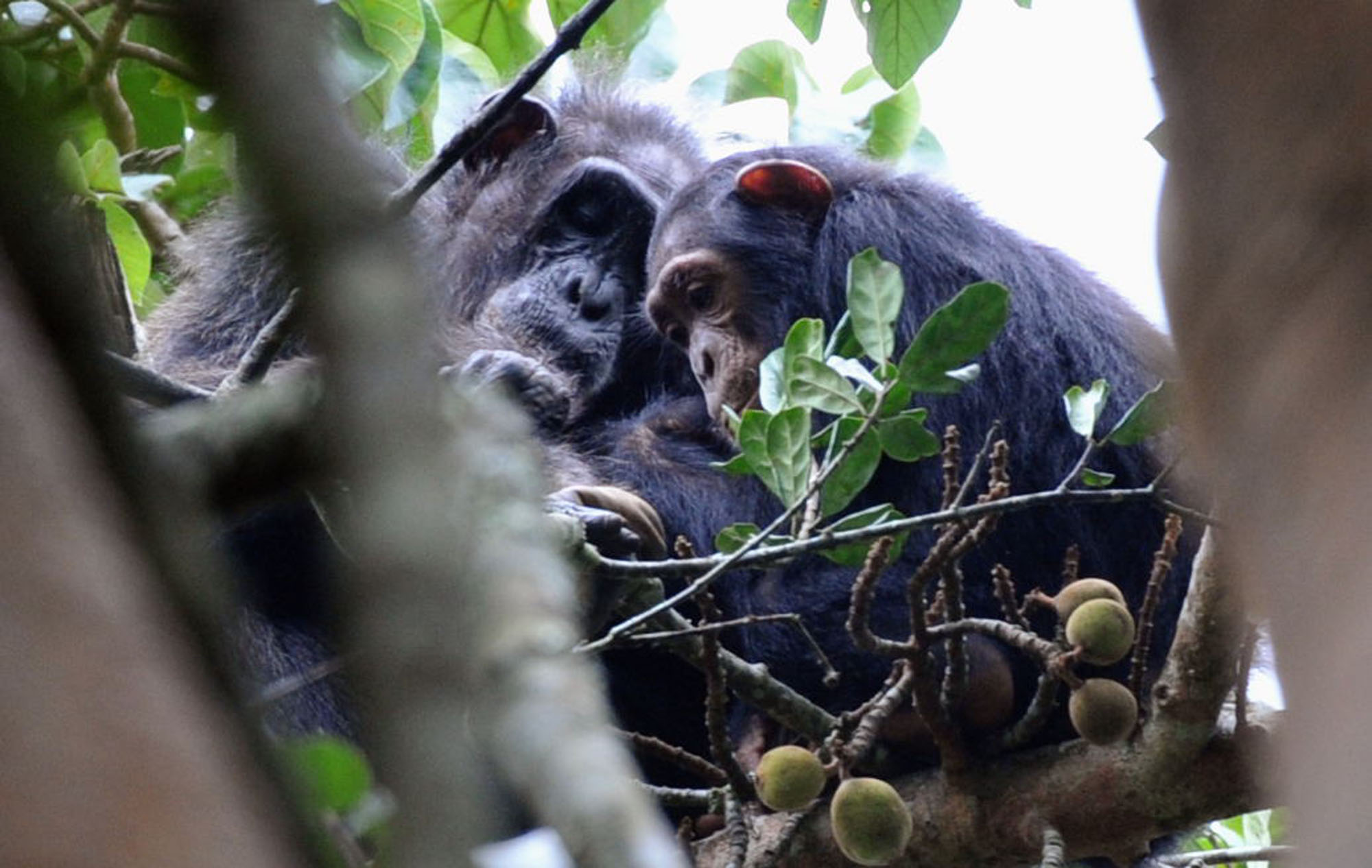
On a later visit to Kibale two members of the Fish Eagle Safaris team had only slightly better luck with the chimps.  The temperature was mild and we were fortunate to have some cloud cover. Upon entering the park, we met some of the guides for a pre-hike briefing. We learned a couple of useful tips, for example, that there are ants in the forest and it is highly recommended that you roll your socks over your pants to prevent the ants from biting your ankles while you’re looking up at  the chimps. On the day, there were two groups of 6 trekkers, each having one guide and any number of porters to carry your gear.  Getting a porter is highly recommended since you need to carry your own water. The forest itself was very thick but the paths were well defined and the terrain was quite flat and easy.

Image

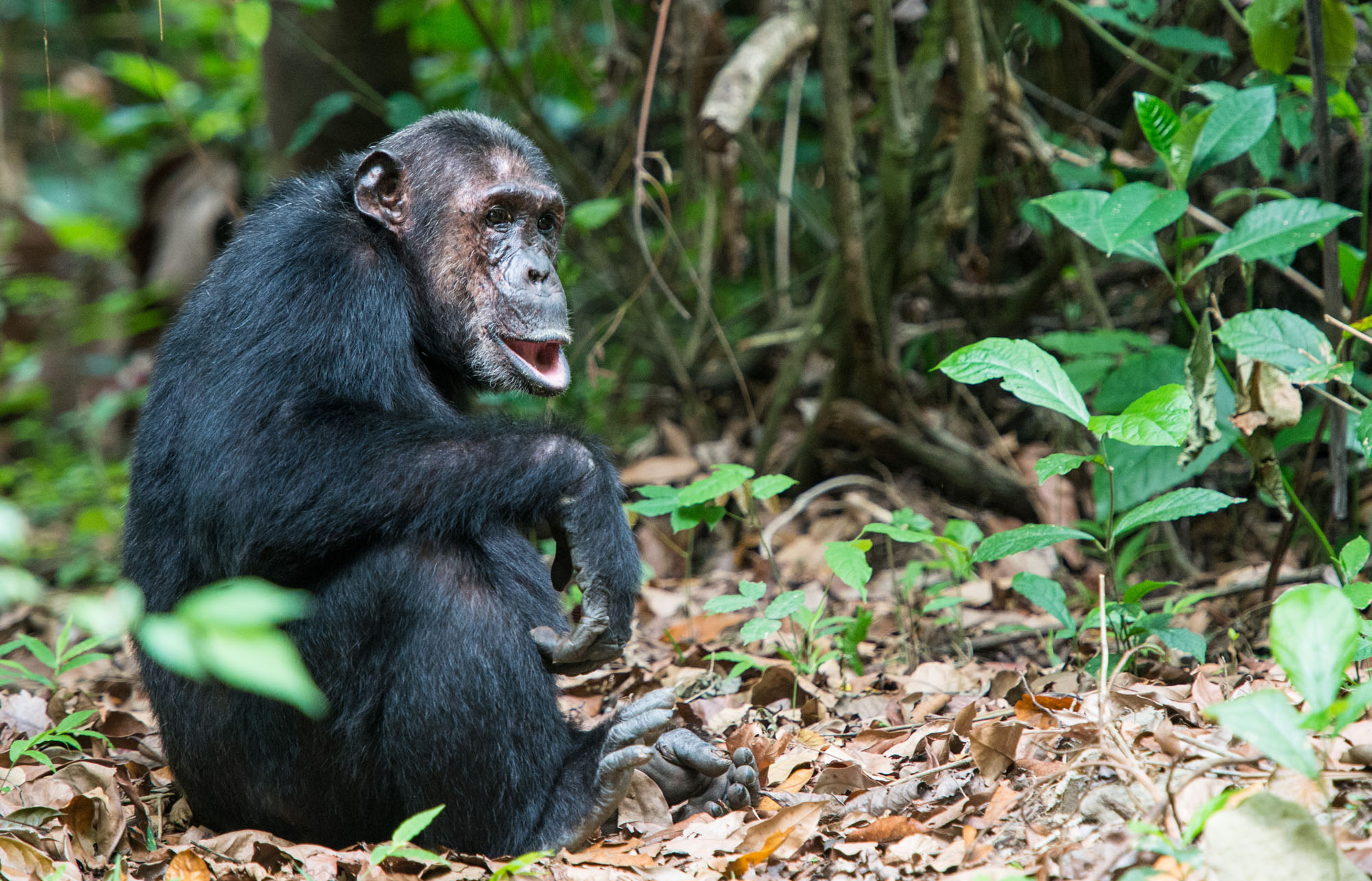
Almost immediately the guide spotted a female chimpanzee with a baby, high up in a tree. They were feeding on a fig tree but apparently the fruit was not quite ripe yet. The chimps were difficult to see at that height due to the dense foliage, and after a few minutes we moved on. The guide knew the location of other fig trees so we traveled to the edge of the forest to see if we couldn’t find a larger troupe. No luck there.  Fortunately, word came by radio that the other group had spotted some chimps a short distance away. Off we went.  Since the sun had not really come out during the day the chimps were still in the trees where it was cool. This made for poor visibility but with some patience we managed to get some useful photos. Overall the Kibale experience was good – the success rate for spotting chimps is quite high. Visitors are only allowed one hour with the chimps and it goes by fast.

Image

Kyambura Gorge, Uganda

Our third chimp trekking outing in Uganda was at Kyambura Gorge. At Kyambura the maximum group size is up to 8 and the guides are armed. There are fewer chimps in the gorge than at Kibale, but it is a much smaller area.  The success rate is solid – if not not quite as good as at Kibale.

Image

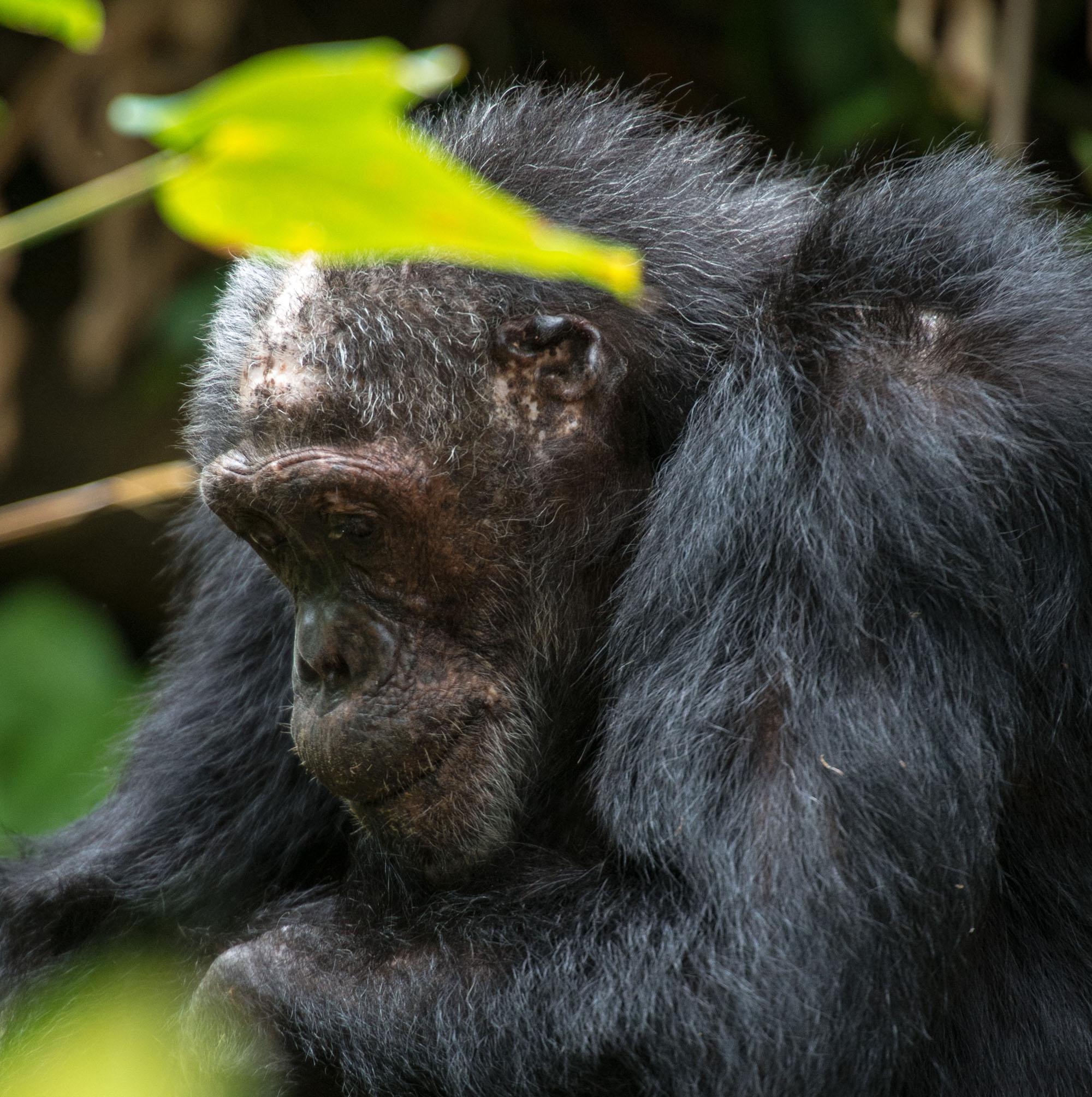
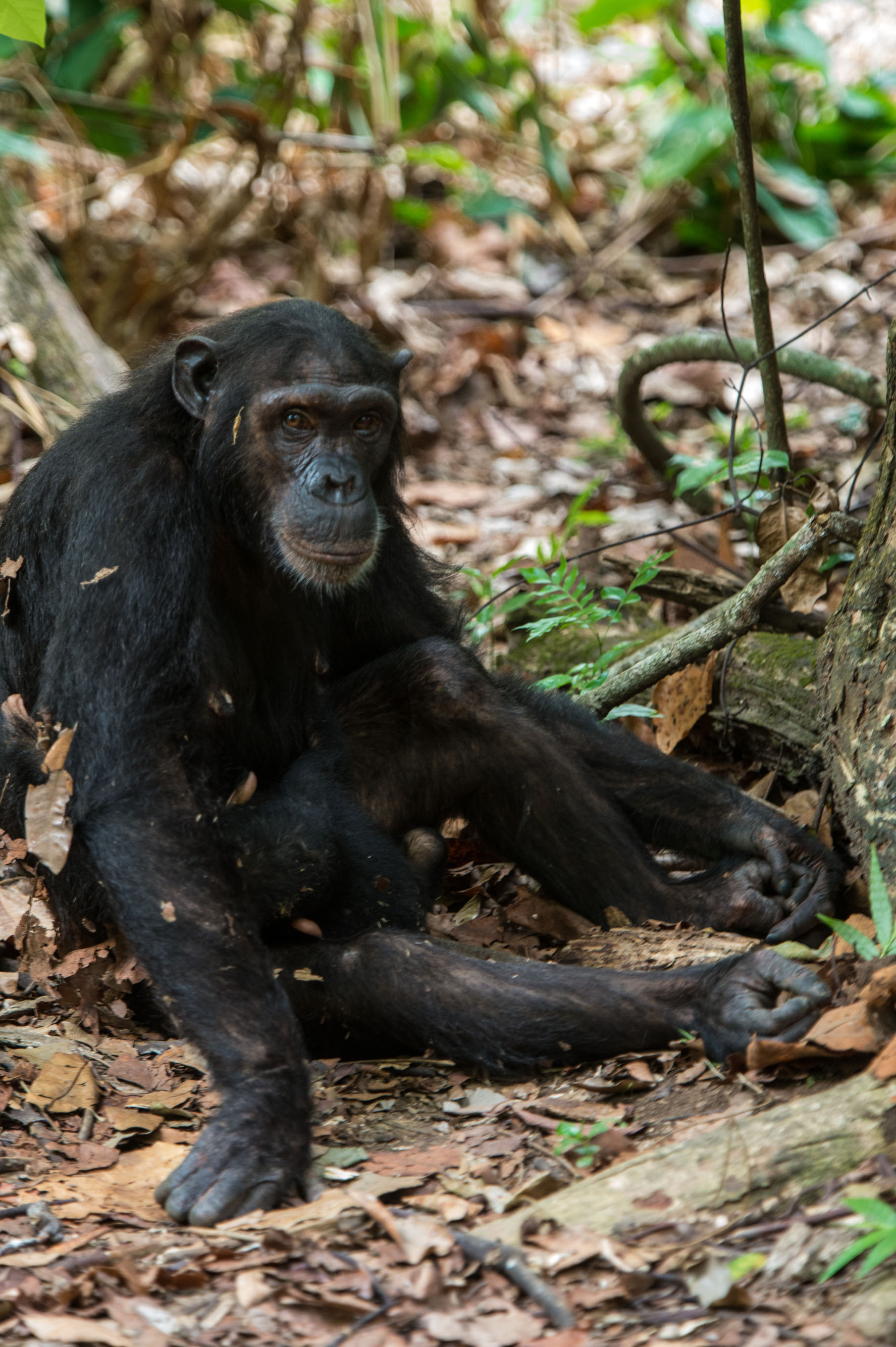
After another briefing from the guides we set off into the gorge. The decline is extremely sharp and you really need some good solid hiking boots. There is a river in the middle of the gorge with paths running along both shores and a bridge connecting them. Luckily for us when we got to the bottom we immediately heard the chimps and our guide lead us straight to them. We spotted a large 35 year old male on the ground and proceeded to follow him as best we could. He would walk for a while and stop and glance at us and then continue his walk. He wasn’t distressed at all by our presence. Eventually he stopped and our entire group caught up so we were all able to take photos. Strangely, though, the chimp doubled back and actually wound up walking past us at close range (about a foot) which worried our guide. Thankfully he just passed right on by.  It was an  incredible sighting.

Image

Mahale Mountains, Tanzania

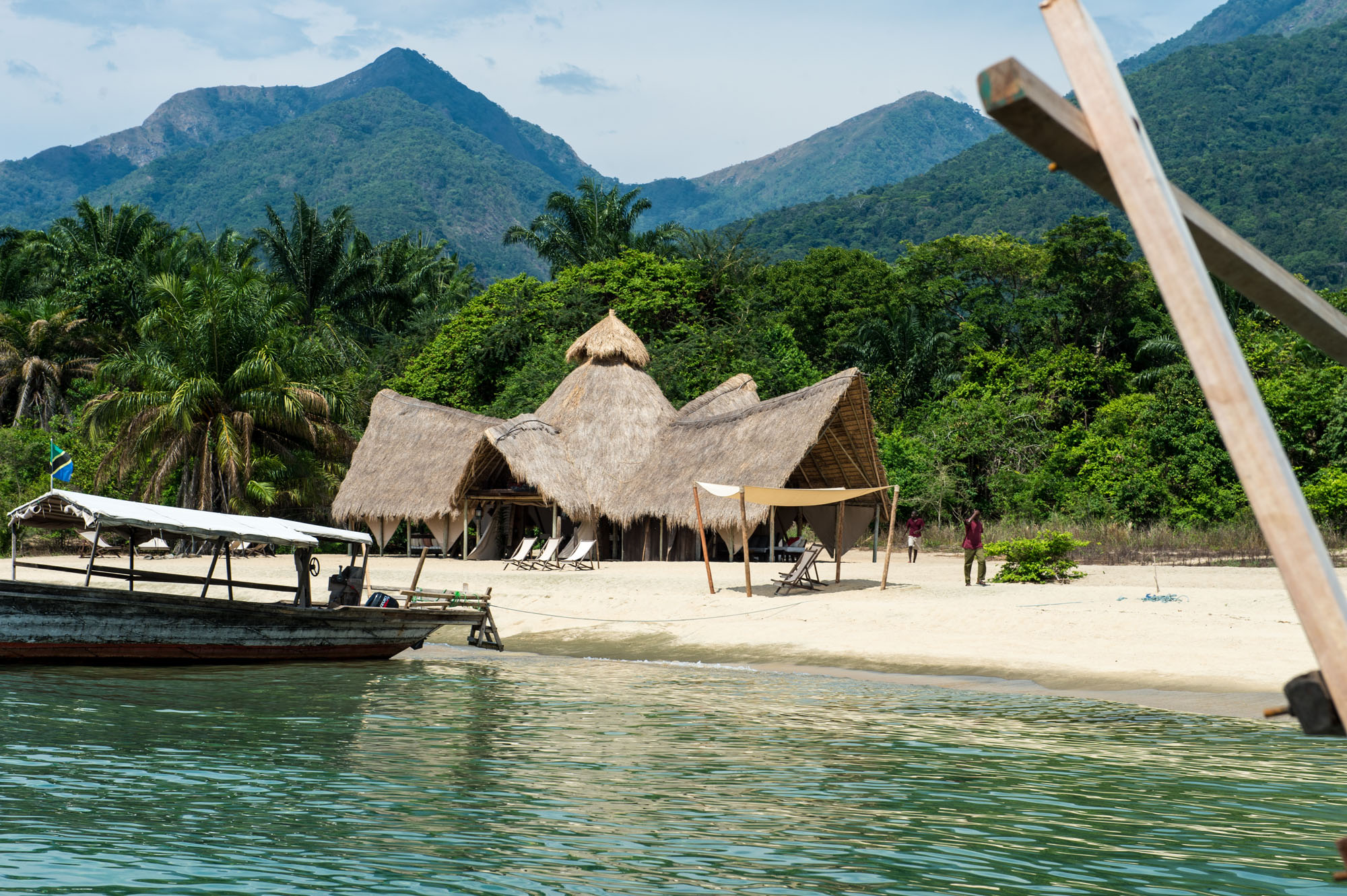
Greystoke Mahale is tucked into a narrow sandy strip along the edge of Lake Tanganyika, below the densely forested Mahale Mountains with the mountains of the Democratic Republic of Congo visible about 30 miles across the lake. The mountain and the lake.  Most people would be hard pressed to pick a favorite or decide which of the two is the most dominant feature. They are both equally impressive and both essential to the Greystoke experience.

Image

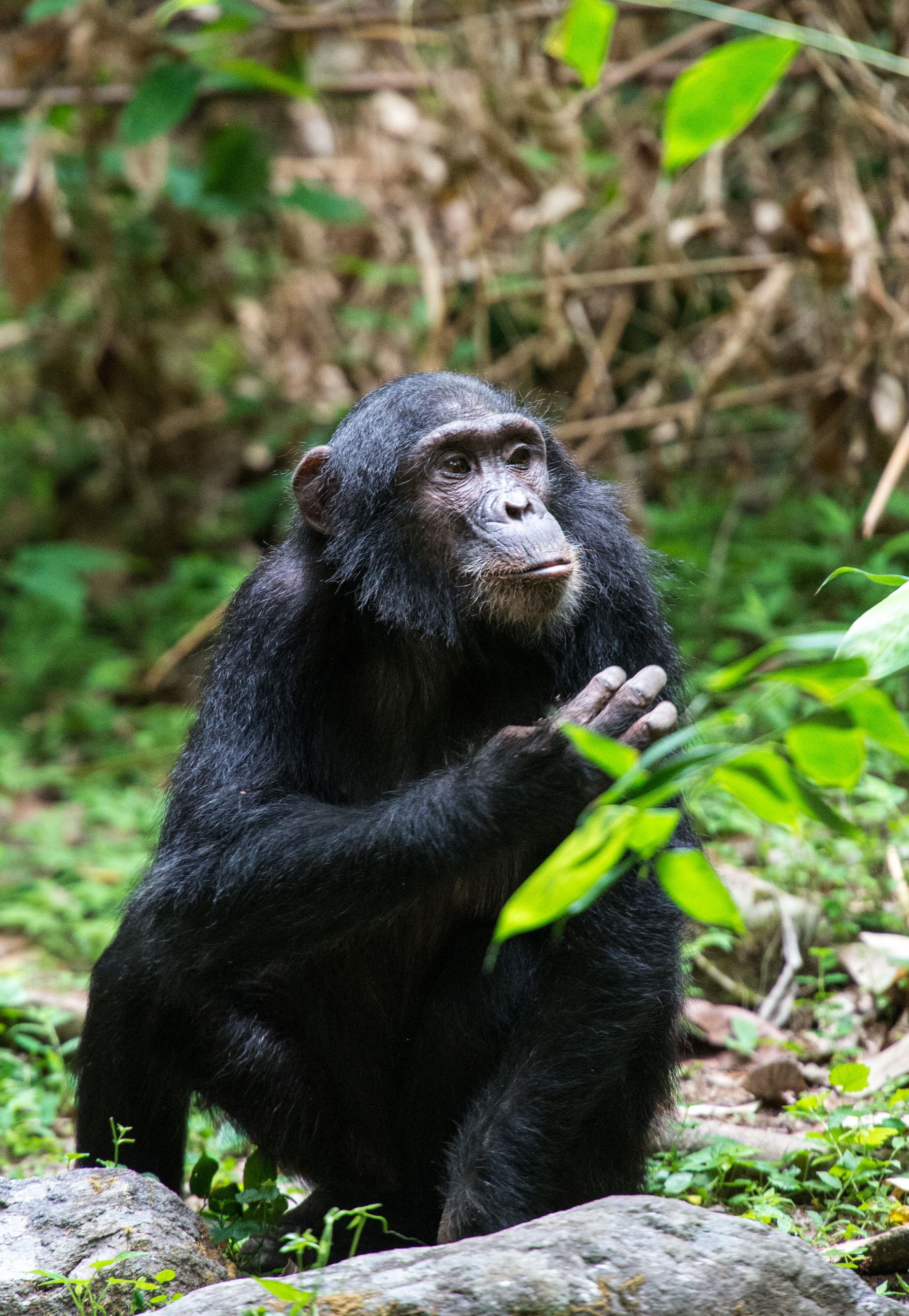
Mahale is best known as a sanctuary and research area for a group of about 60 habituated chimpanzees, plus several hundred more wild ones which inhabit the national park. Having trekked for chimpanzees previously in three different areas of Uganda I can say that the Mahale experience was by far the best I have experienced. The chimps are very well habituated and hence very tolerant of humans being close to them. The leafy ever-green forest habitat is superb and makes for a perfect backdrop. If you’ve never seen chimps before and want to do so, or if they are your favorite animals, a visit to the Mahale Mountains National Park should definitely be on your short list.

Image

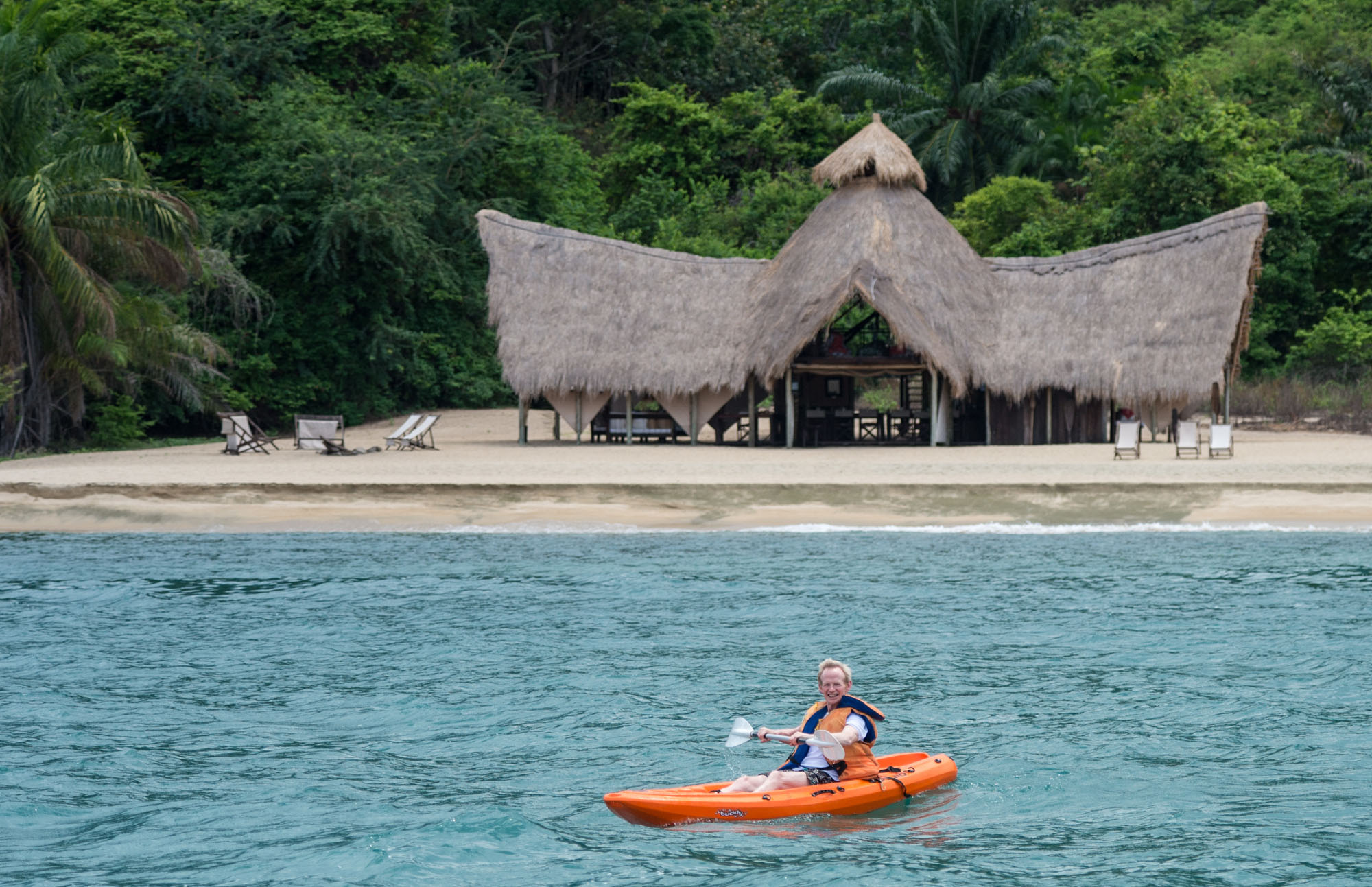
Even if there were no chimpanzees here it would be a more than worthwhile destination. Amazing views, the super deep-water swimming opportunities, fishing, kayaking, birding, hiking – the area has it all and more. We spent quite a bit of time boating (on a motorized dhow) but it is also possible to just relax and take it easy. The beach at Greystoke rivals many a coastal resort area, with the prettiest lake imaginable spilling out onto a white sandy beach. 

On our first afternoon we spent 30 minutes or so suspended in what is estimated to be 17% of all of the freshwater in the entire world. Lake Tanganyika is one of the world’s cleanest lakes due to the absence of industry, and that is not likely to change soon.

Image

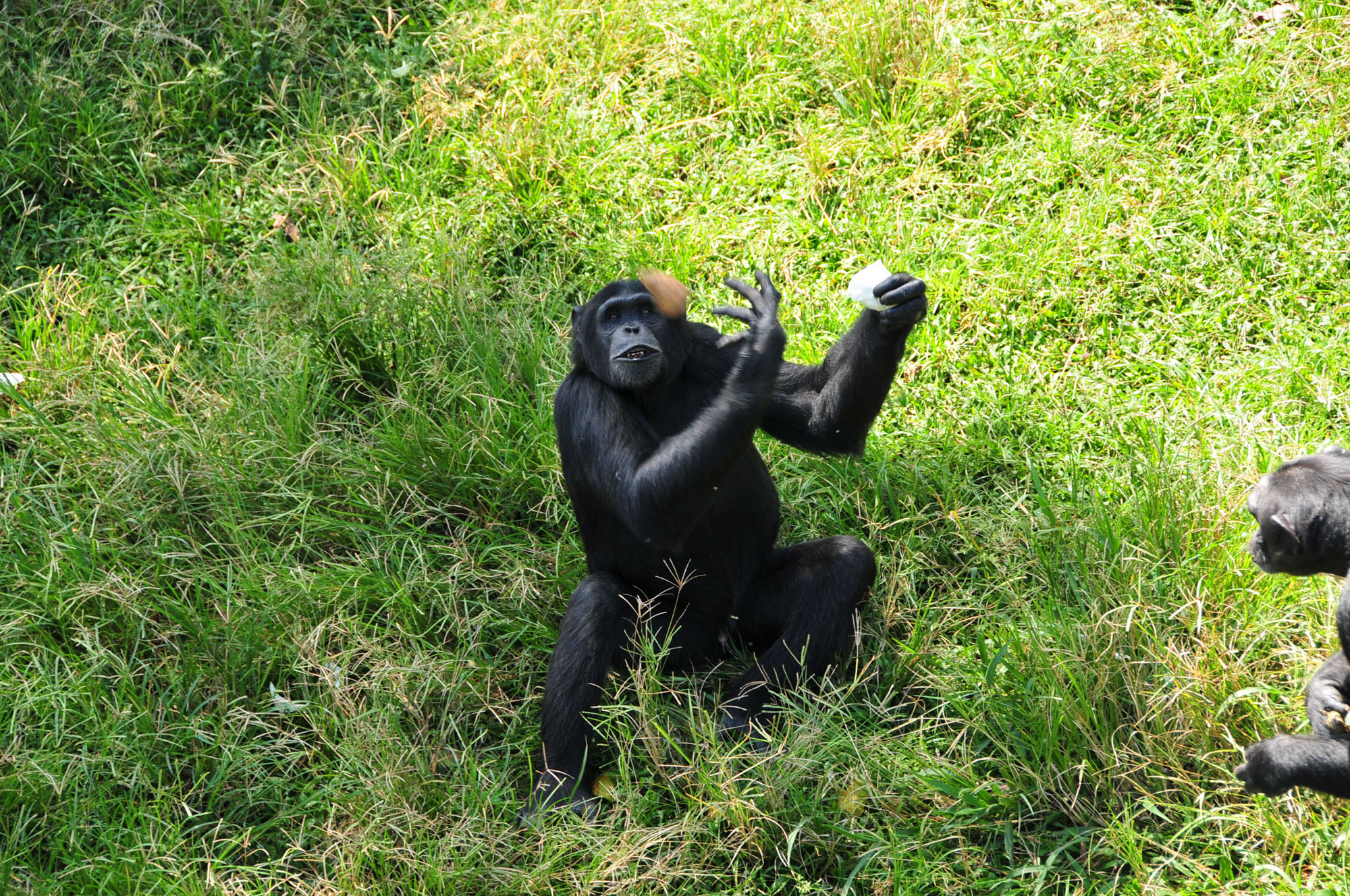
The following day we woke up to what promised to be another warm and rather muggy morning on the shore of Lake Tanganyika. And so it was.  At breakfast at 08:00A we were informed that the chimpanzees – our focus for the day – had been sighted and that they were about one hour’s ‘gentle walk’ away. So off we went single file into the forest up and down but mostly just up and often rather steeply so. We went through a couple of dry rocky streams with a little water here and there, sometimes scrambling up a slope, other times crouching beneath some low branches.

Image

We stopped a couple of times for water (you carry your own water bottle & the guides provide re-fills) and to take a breath of air. Without exception, we were sweating heavily and feeling the strain of two days’ worth of solid exercise.

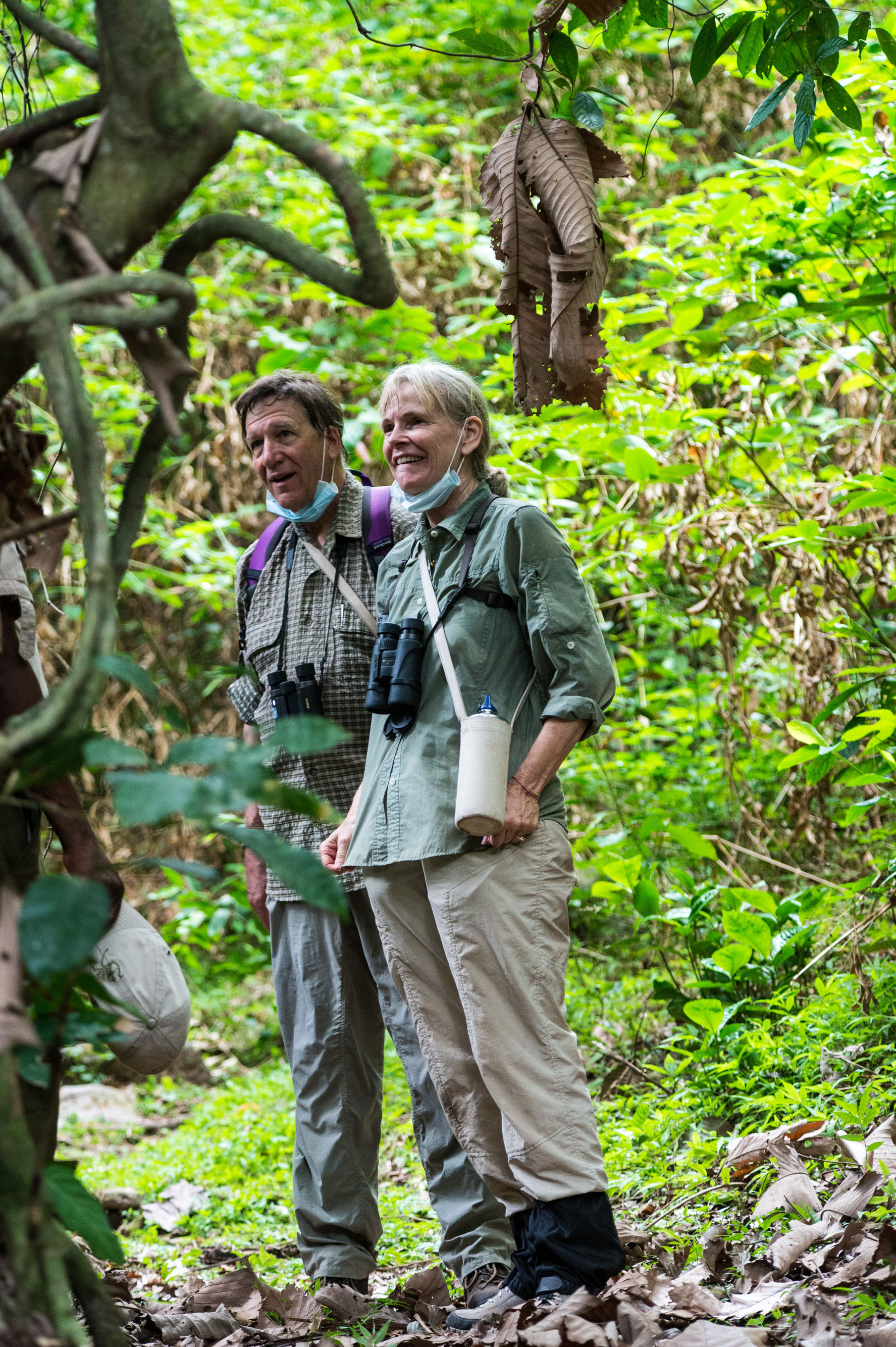
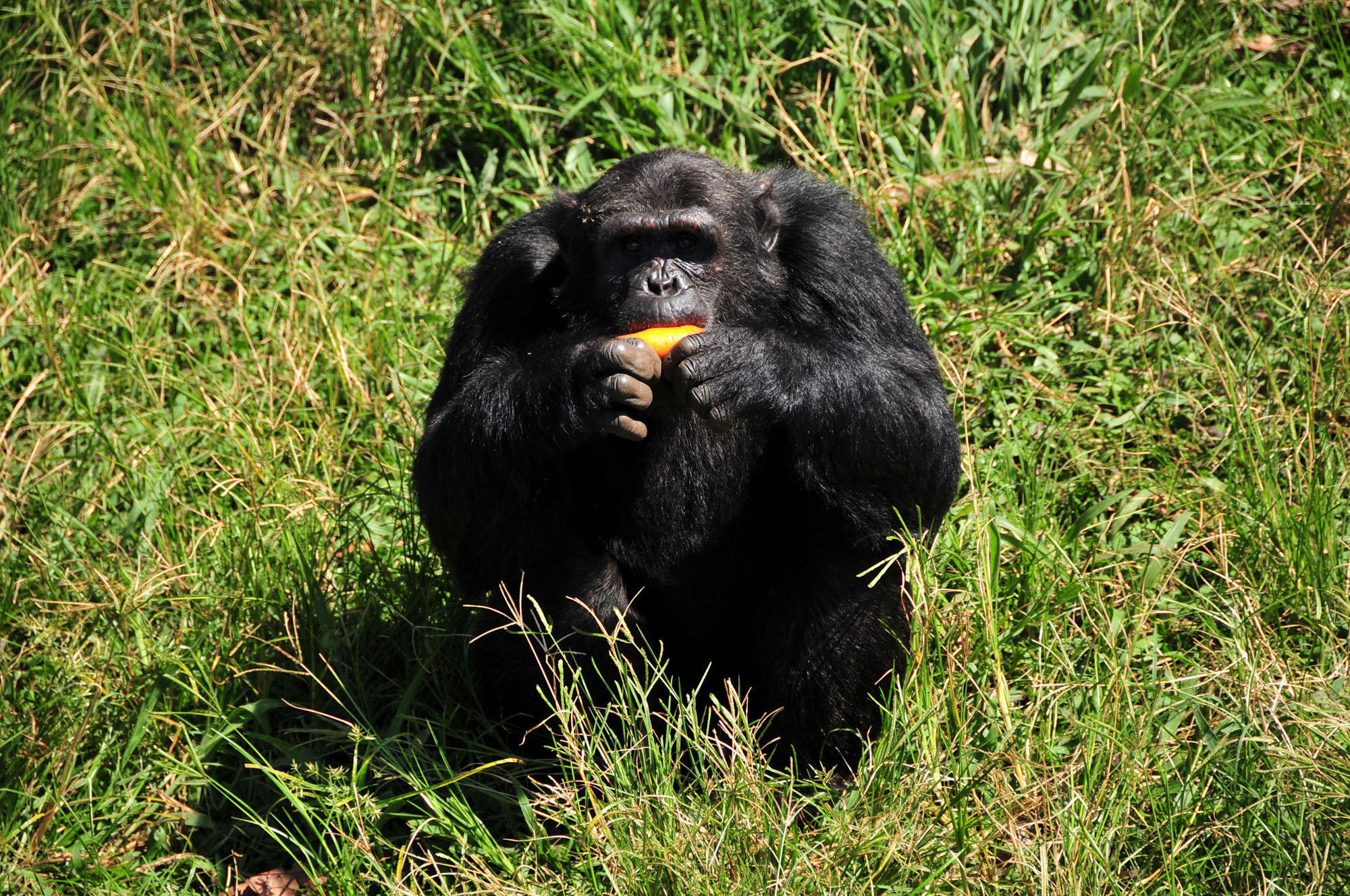
As we approached their position, we could hear the chimps long before we saw them. They were being very loud, making a range of sounds including some exuberant whoops and screams. And then, without much introduction, there they were. First one chimp high in a tree, then another one sliding down a tree stump and soon enough there were seven or eight of them visible in every direction.  By then we had donned surgical masks to prevent the transmission of colds and other human ailments to the chimps.

Image

Over the next hour or so we moved positions several times as the chimps either descended from or ascended into the trees. We observed quite a bit of interaction between individuals: young and old, they all apparently know their place and respect authority.

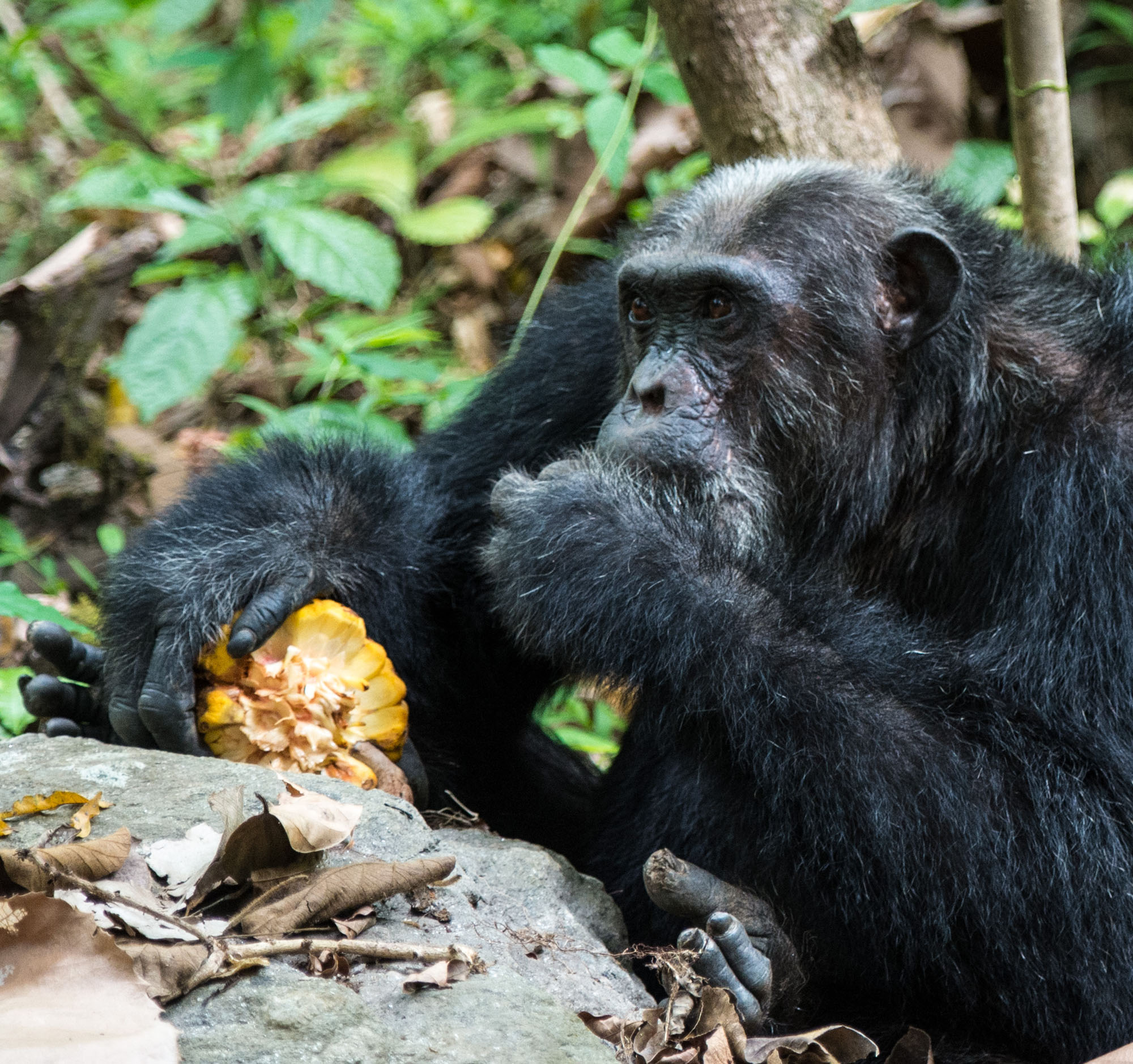
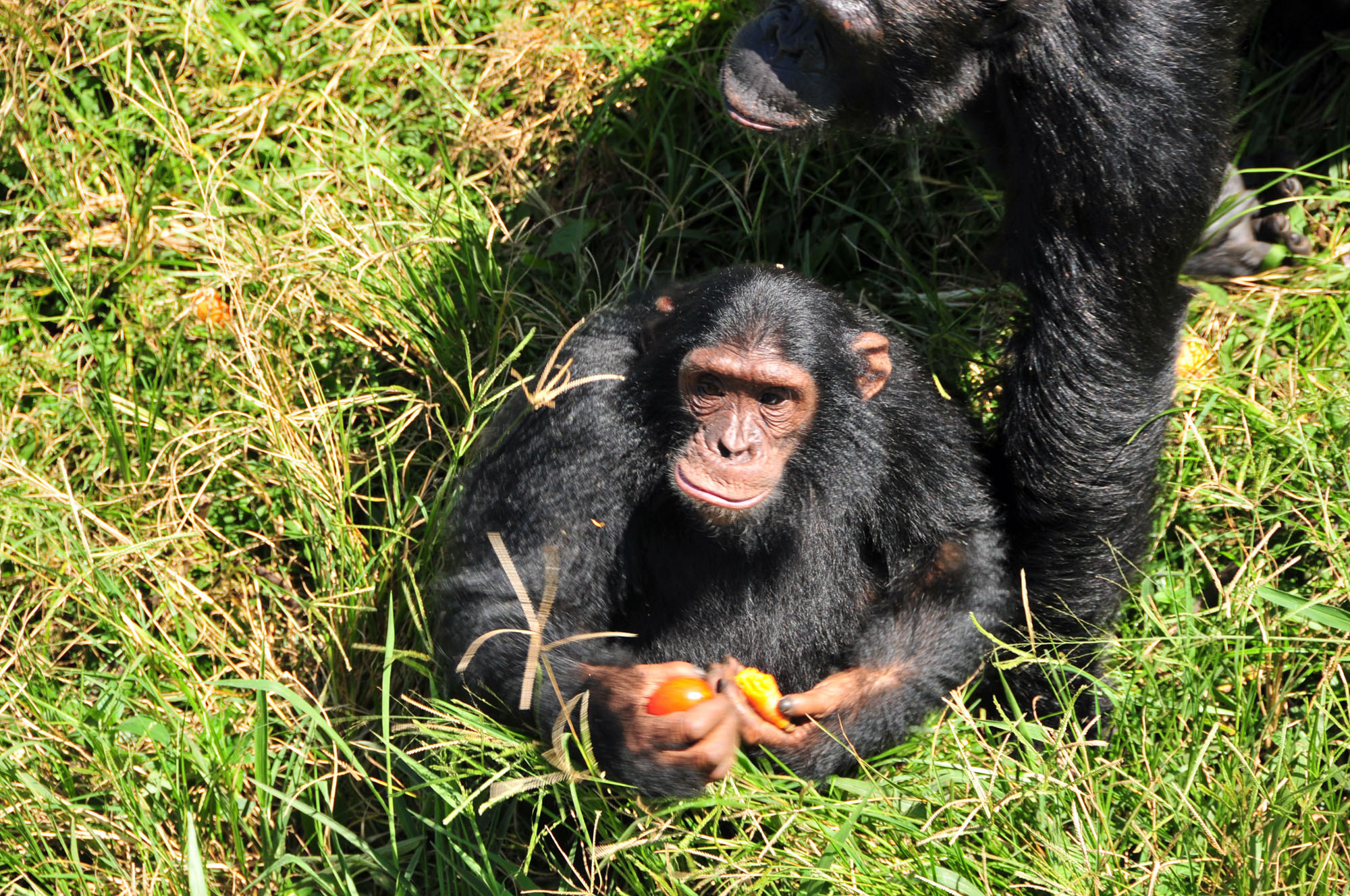
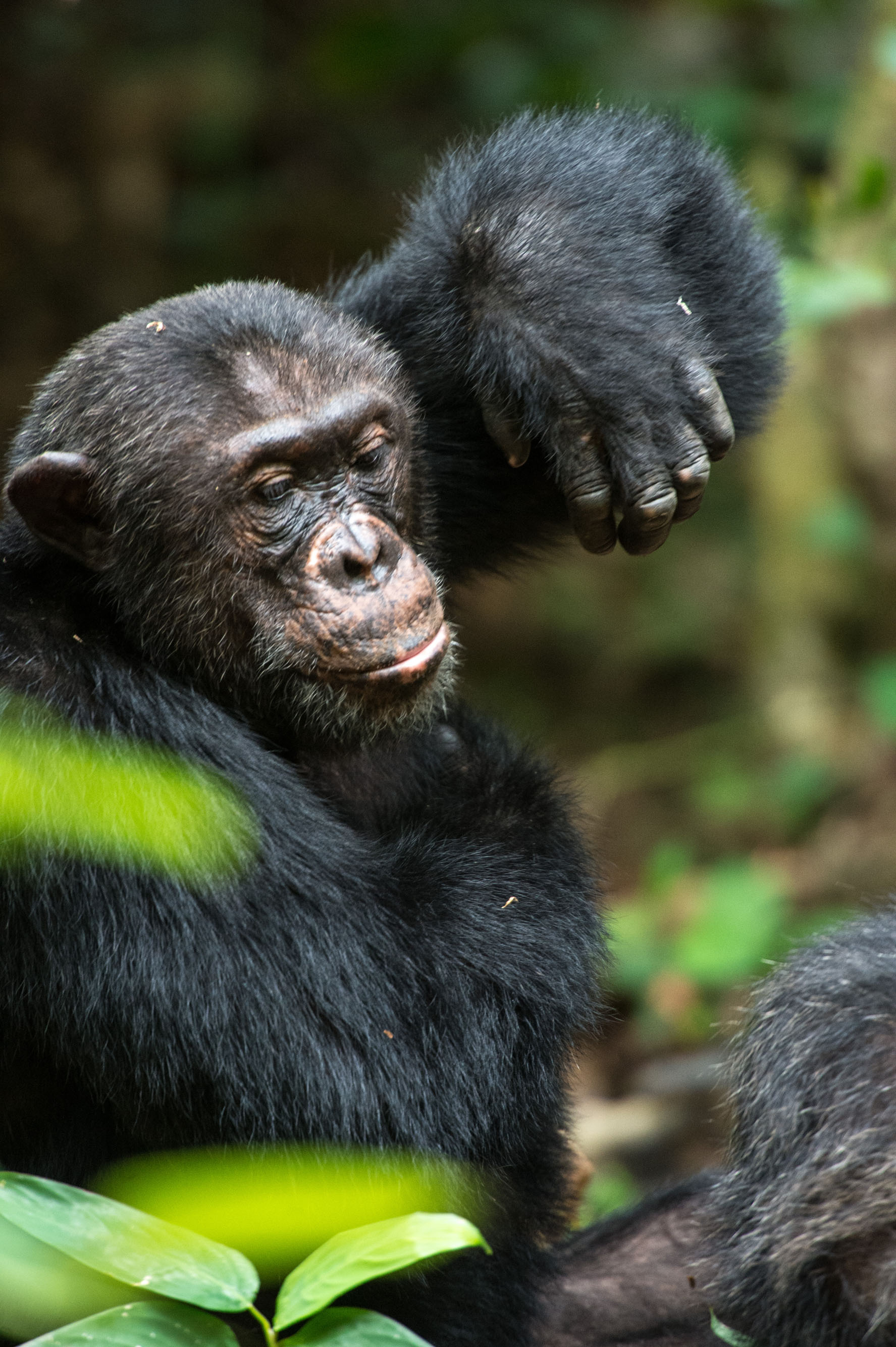
We could see the chimps very well but photographic conditions were not great. Low light inside the forest gallery, and severe backlighting issues against the bright sky. Several of the younger chimps did their best to show off their acrobatic skills but in the poor light and with limited visibility (too many leaves and twigs!) it was just about impossible to capture the action. I did manage a few decent portraits and some limited interaction, mostly feeding and grooming.

Image

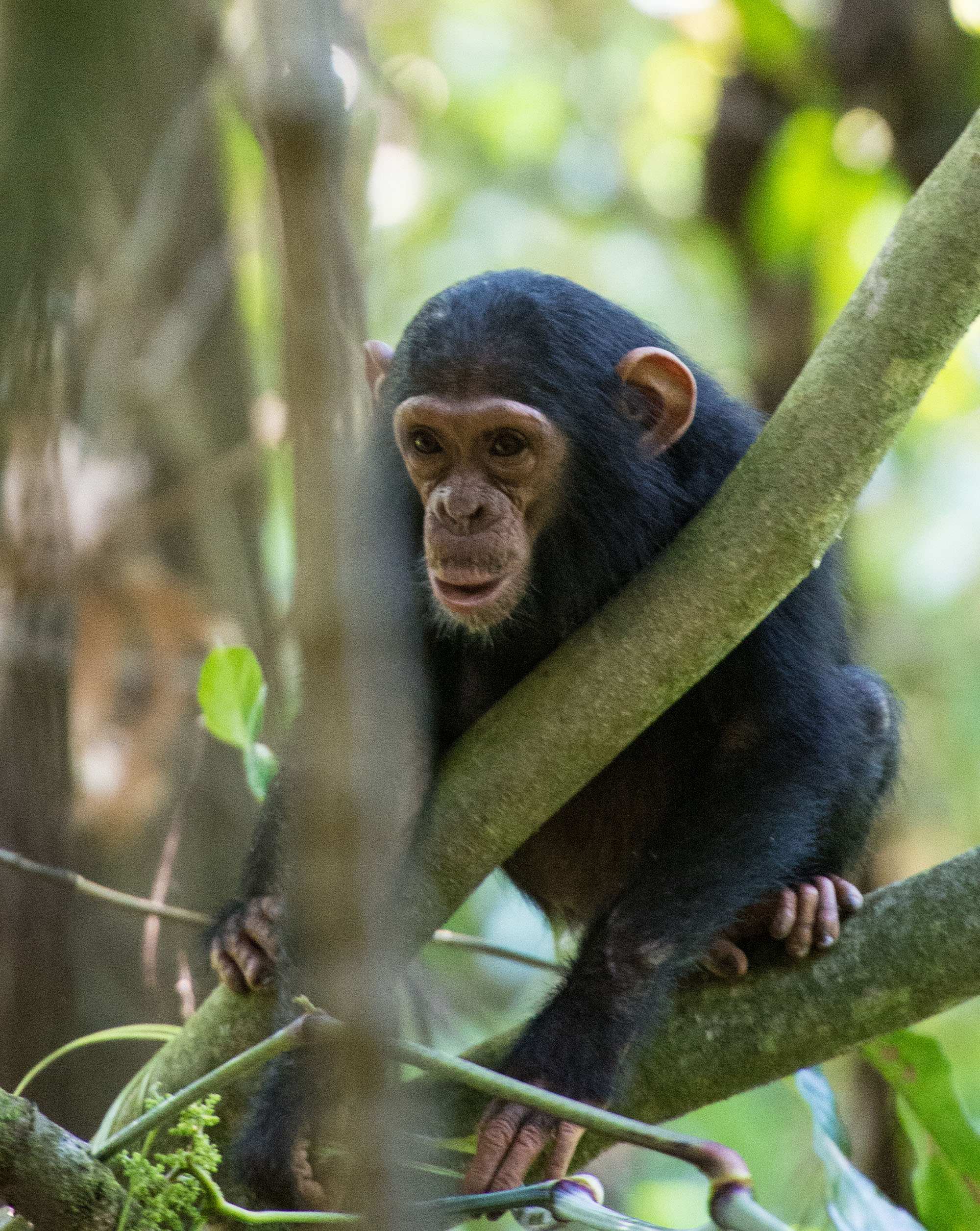
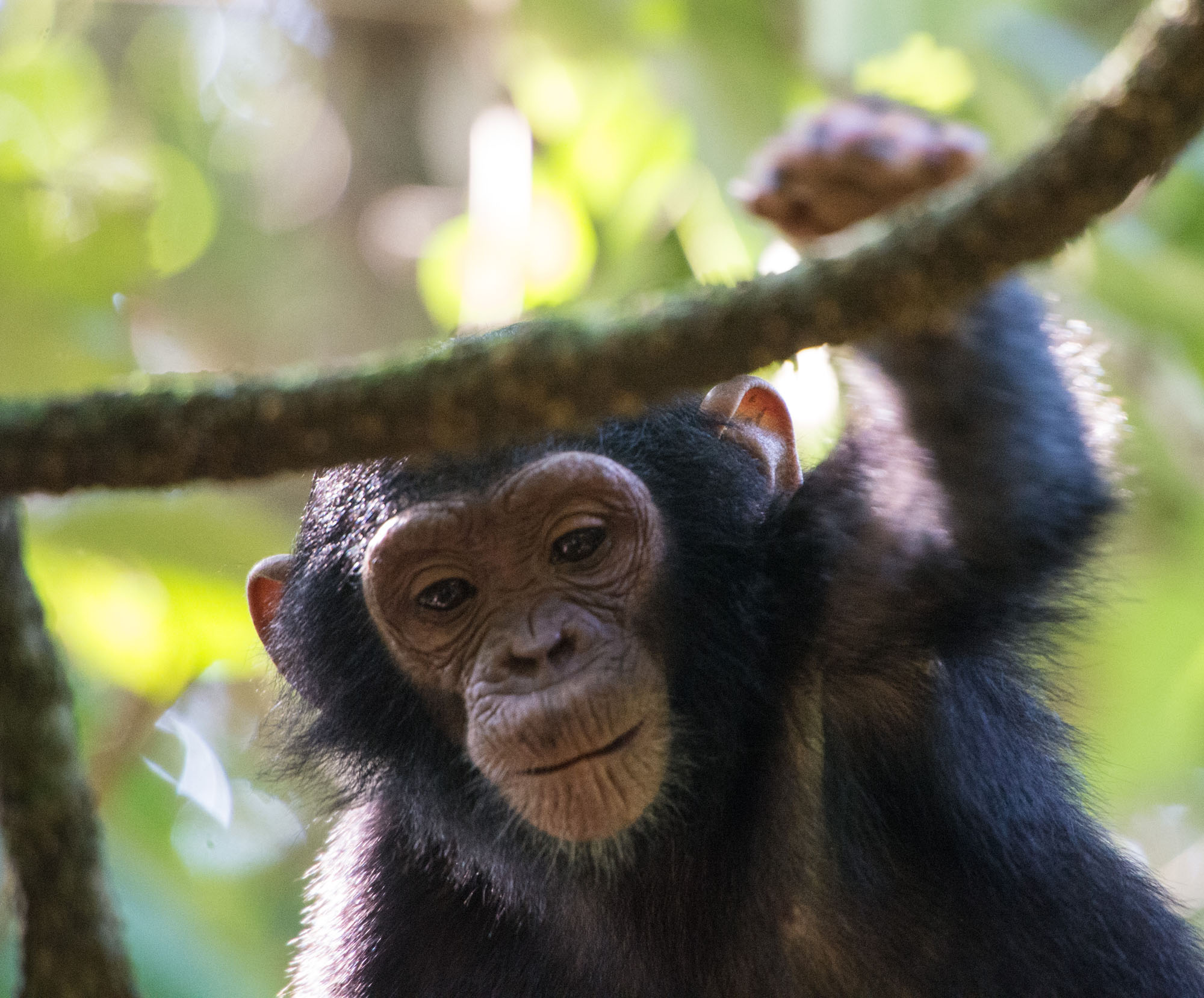
Every now and then we’d follow one or two of the chimps along one of the many footpaths in the forest. Our guide Robert knew all the chimps by name, sex, age and rank, and gave us ample warning when a ‘naughty’ individual was close by. We observed individuals of all ages ranging from about 6 months to well over 50 years. They were mostly quiet and not very demonstrative.

When our allotted 1-hour viewing time was over, we lowered the cameras, took a last look at the chimps who were moving into thicker bush and re-grouped a short distance away to have a drink of water. It was a happy group of campers who trudged back to the lodge. We were all very tired, perhaps even a bit dehydrated because of the heavy exertion in the hot humid conditions… Nobody cared – we had seen the chimps!

By the time we got back to the lodge just over 3 hours had elapsed since we first set out earlier that morning. It felt great to enjoy a cup of tea before we took the sandy path back to our respective rooms for a much-needed shower.

Image

Mahale Mountains NP, Tanzania – Trek #2

The following morning’s chimp trek was every bit as much fun and exciting as the previous day. Starting from the Japanese research station, the going was a bit easier than the previous day. Even so, by the time we got onto the chimps, a good 45 minutes had elapsed and it was deja vu all over again. We were hot and sweaty in the humid conditions. Being overcast, the temperature was several degrees lower than the previous day, which helped somewhat.
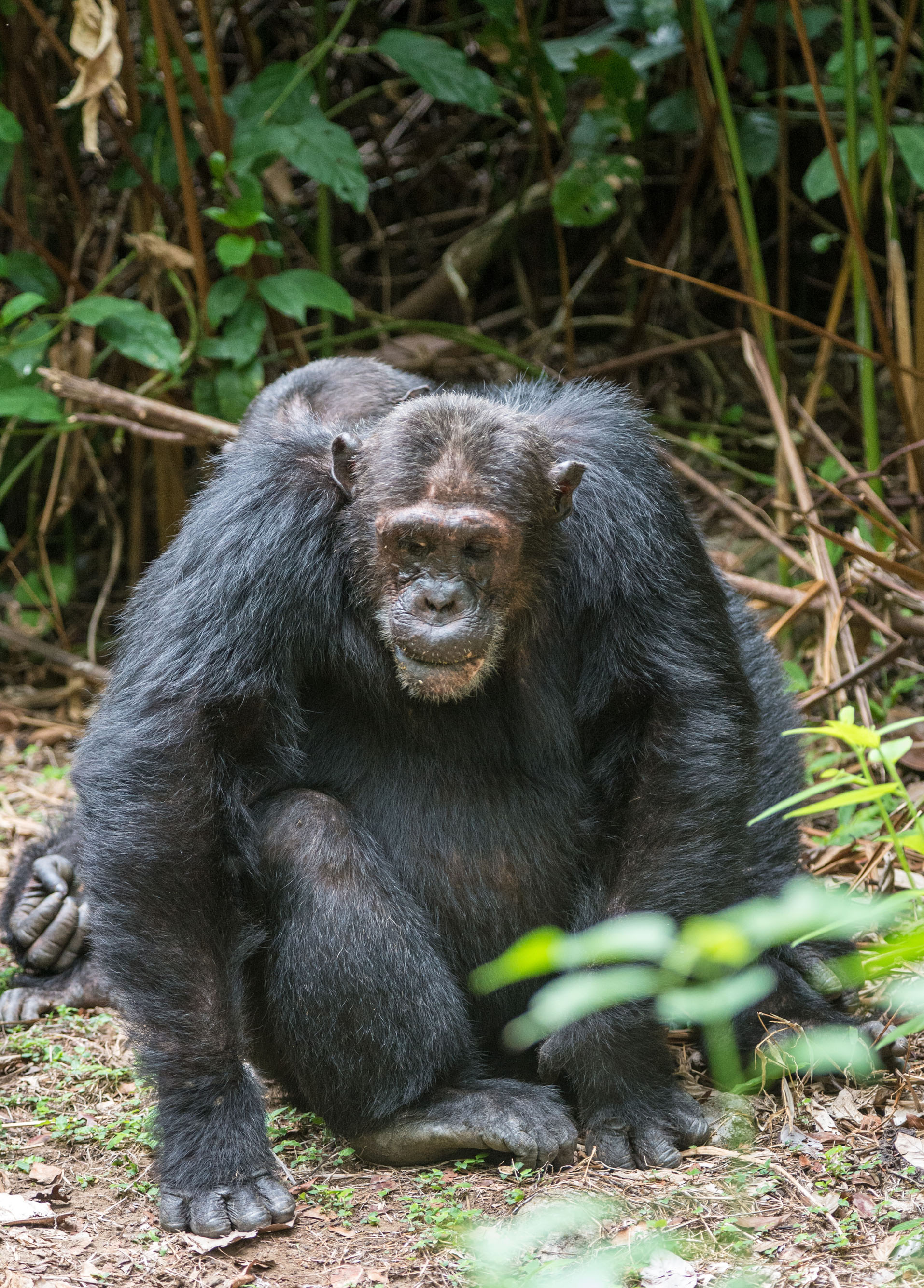
The following morning’s chimp trek was every bit as much fun and exciting as the previous day. Starting from the Japanese research station, the going was a bit easier than the previous day. Even so, by the time we got onto the chimps, a good 45 minutes had elapsed and it was deja vu all over again. We were hot and sweaty in the humid conditions. Being overcast, the temperature was several degrees lower than the previous day, which helped somewhat.


Image

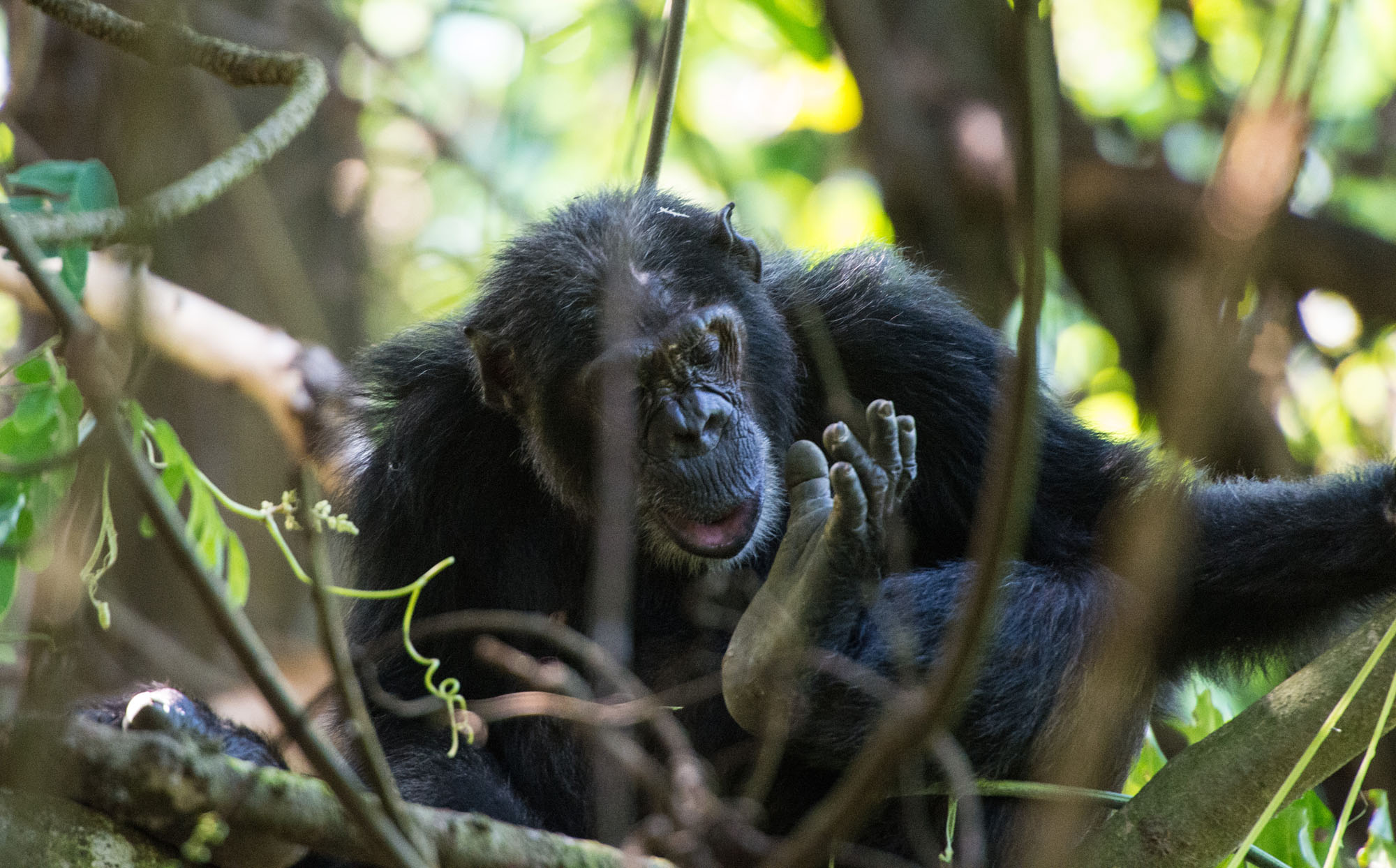
It turns out that despite their seemingly idyllic situation, the chimps were far from living in a cocoon of innocence. They are tangled up in political and sexual spats and fights on a never-ending basis, and the maneuvering and plotting can be Machiavellian. Imagine pretending to be removing ectoparasites from a rival, but not doing so in fact. Thus setting up the unwitting beneficiary/victim for a long-lasting negative outcome and potentially debilitating illness.

Image

For a while there, we became very much part of the troop of chimps, sitting around not far from them, and feeling their glances on us as they casually ambled by. We took great care not to get in the way of some of the ‘naughty boys’ such as Christmas, who is known to charge and scare an unsuspecting tourist every now and then.

An hour or so later we were all quite ready to take off our facemasks and to return to camp for some tea. Just like the previous day, the total duration of the excursion was just over 3 hours.

Here are a few pointers which might be useful for future Mahale chimp trekkers:

Image

Bert’s Mahale Mountains Chimp Trekking Hints

* It is definitely a good thing to be fit and relatively agile as there is some scrambling (up and down) and rock-stepping to be done.

* In the warmer months dress appropriately (long trousers to protect legs and lightweight long or short-sleeved shirts with good ventilation/absorption). There were no tsetse flies or other biting flies present within the forest interior.

* Good boots with grippy soles are 100% necessary. You could be in for a tough time with the wrong shoes. No flip-flops!

* Light is an issue in the forest interior so to get decent pics of the chimps, bring a fast (f2.8) lens in the 70-200 mm range, and preferably a camera that can produce acceptable images at a high ISO setting. Long telephoto lenses are not essential – you will get closer to the chimps than you might anticipate.

* Drink plenty of water before the start of the trek and also during. Dehydration is a major concern during the warmer months and it can sneak up on you with very little warning.

* Definitely go on more than just one chimp trek as they are all quite different & the chimp behaviour and interaction vary greatly day to day. If you’ve seen one you certainly haven’t seen them all.

Image

In our blog post next Friday we will be taking a closer look at the big cats of Mashatu Game Reserve in south-eastern Botswana.  This little-known area is nowadays one of the most reliable big cat destinations in Southern Africa with lions, leopards and cheetahs seen by most visitors who spend three or four nights in the area.

More Info

Email bert@fisheaglesafaris.com

Email jason@fisheaglesafaris.com

@fisheaglesafarishouston

#FishEagleSafaris

YOU MIGHT ALSO BE INTERESTED IN

Destinations
Zambia

10th September 2021

Chindeni and the Bushcamp Company, Zambia

By late July we found ourselves at Chindeni, a small Bushcamp Company property
Read more
Botswana
Destinations
Okavango Delta

3rd October 2022

Camp Okavango, Botswana

Camp Okavango is in the heart of the permanent part of the Delta. In this idyllic setting there are no vehicles, and it is just a short walk
Read more
Area
Destinations
Nyerere National Park
Ruaha
Tanzania

14th October 2023

From My Safari Notebook: Wildlife Photography

Birds in flight and wildlife photographers have an uneasy relationship. Things go wrong as often as they go right. Getting focus-lock on a moving subject

Read more

SUBSCRIBE TO OUR NEWSLETTER

READERS FAVOURITES

Destinations
Zambia

10th September 2021

Chindeni and the Bushcamp Company, Zambia

By late July we found ourselves at Chindeni, a small Bushcamp Company property
Read more
Botswana
Destinations

4th August 2022

On Safari At Belmond Eagle Island Lodge, Okavango Delta

What is the ‘secret sauce’ for an unforgettable few days on safari in Botswana? It starts with the animals, of course. The elephants, lions, giraffes, hippos
Read more
Destinations
India

27th May 2023

India

India’s tiger, mammals and birds.

Read more

In Search of Leopards

29th October 2020

In Search of Leopards


Image

In Search of Leopards

What is the only regret that many African safari travelers go home with?  Not seeing a leopard.  I know of several repeat visitors to Africa who have struck out on leopards more than just once.  Three, four trips even and including some known leopard haunts and – nothing.  Some animals are more equal than others, and among the much celebrated ‘Big Five’ mammals – lions, leopards, rhinos, elephants and buffaloes – leopards are clearly a standout.


Image

Not because they are rare – in fact they are more abundant than any of the African big cats – but because they are naturally evasive, skulking and mostly nocturnal.  Other than in a handful of places across Africa, leopards are rarely observed beyond perhaps a quick glimpse, a flash of spots disappearing into the green.


Image

When you do get lucky with a leopard sighting, it is always fodder for camp-fire talk, something to casually mention over dinner back in camp.  The reaction being a predictable mix of envy and admiration. Suddenly, you’re the most interesting person in the room. There will be an invitation to provide more details and the conversation will probably meander into reminiscing about old but not forgotten leopard sightings.  Memories of this sleek, beautiful cat – pound for pound the most powerful of any of its kind – barely fade with time.


Image

Prod any safari aficionado a bit and they will tell you about seeing a leopard practically run up a tree in Samburu in Kenya, the warm body of a good sized impala firmly clamped in its jaws.  Or the time they saw a leopard stalk and kill a careless blackbacked jackal in Etosha National Park in Namibia, in the middle of the day.  There are lots of good leopard stories out there.  And almost just as many places and opportunities to experience this most memorable of animals, and start working on your own stories.  Here are some notes on a few of these special places, with some of our favorite leopard photographs.


Image

Hunda Island, Okavango Delta Botswana

Hunda Island is a large, well-wooded island in the Jao concession in the western part of the Okavango Delta.  The Jao concession is exactly what one might anticipate the Okavango Delta looking like, even before you’ve ever been there.  A stunningly beautiful mosaic of small, palm-fringed islands, meandering channels and pretty lagoons with sizable stands of reeds and papyrus.  When the annual flood is in, large expanses of the Jao floodplain become inundated, creating a water wonderland like no other. Hunda Island is a few feet higher than the surrounding plains, so it stays dry year round.  There is no lack of trees though and plenty of game including impalas, baboons, hares, warthogs and rodents.  Leopard food, all. Some of the leopards to be seen on Hunda Island are quite relaxed – as the guides will say – being habituated to the presence of vehicles.  Which means they can see and smell you – but they don’t care.


Image

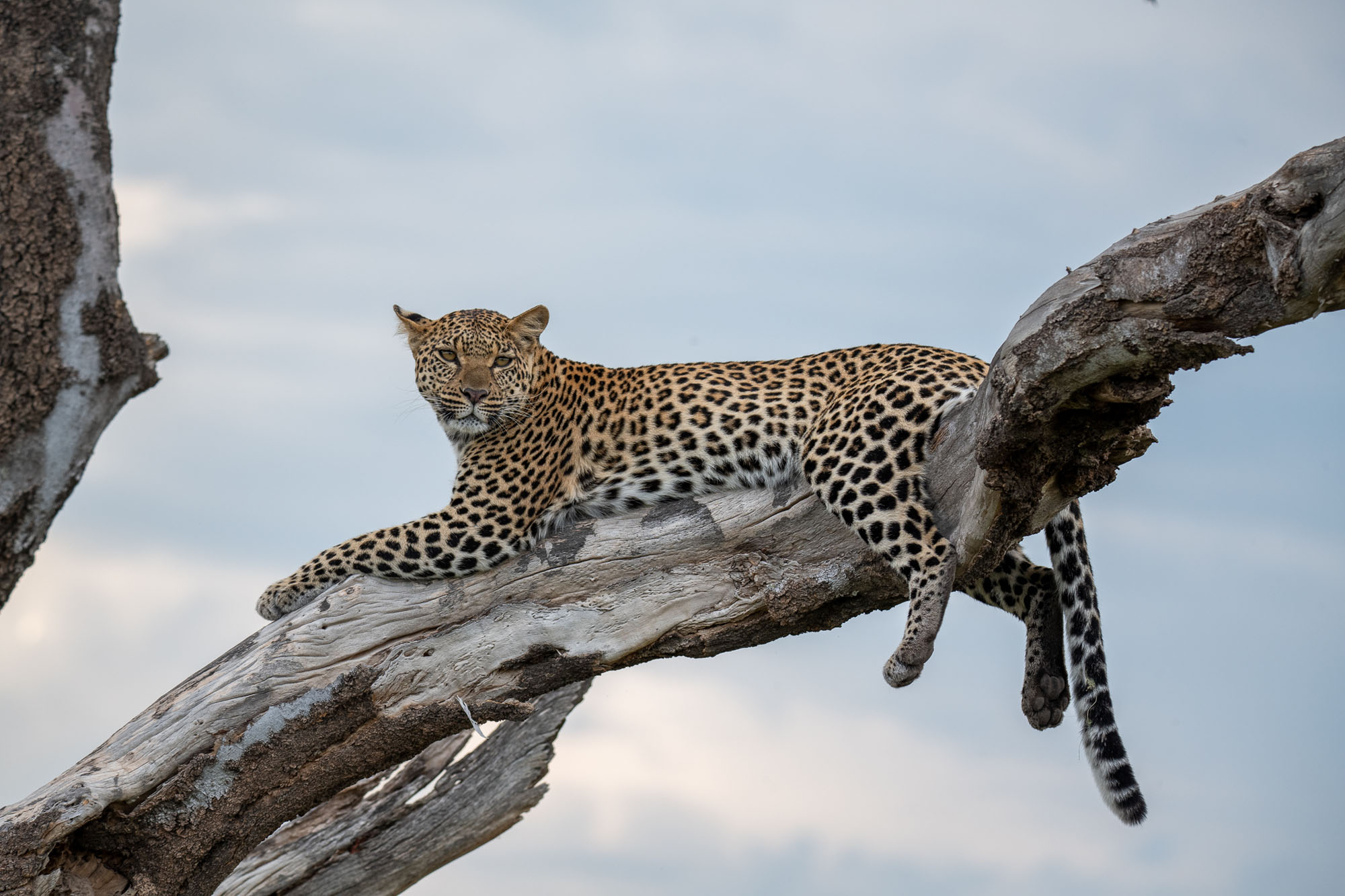
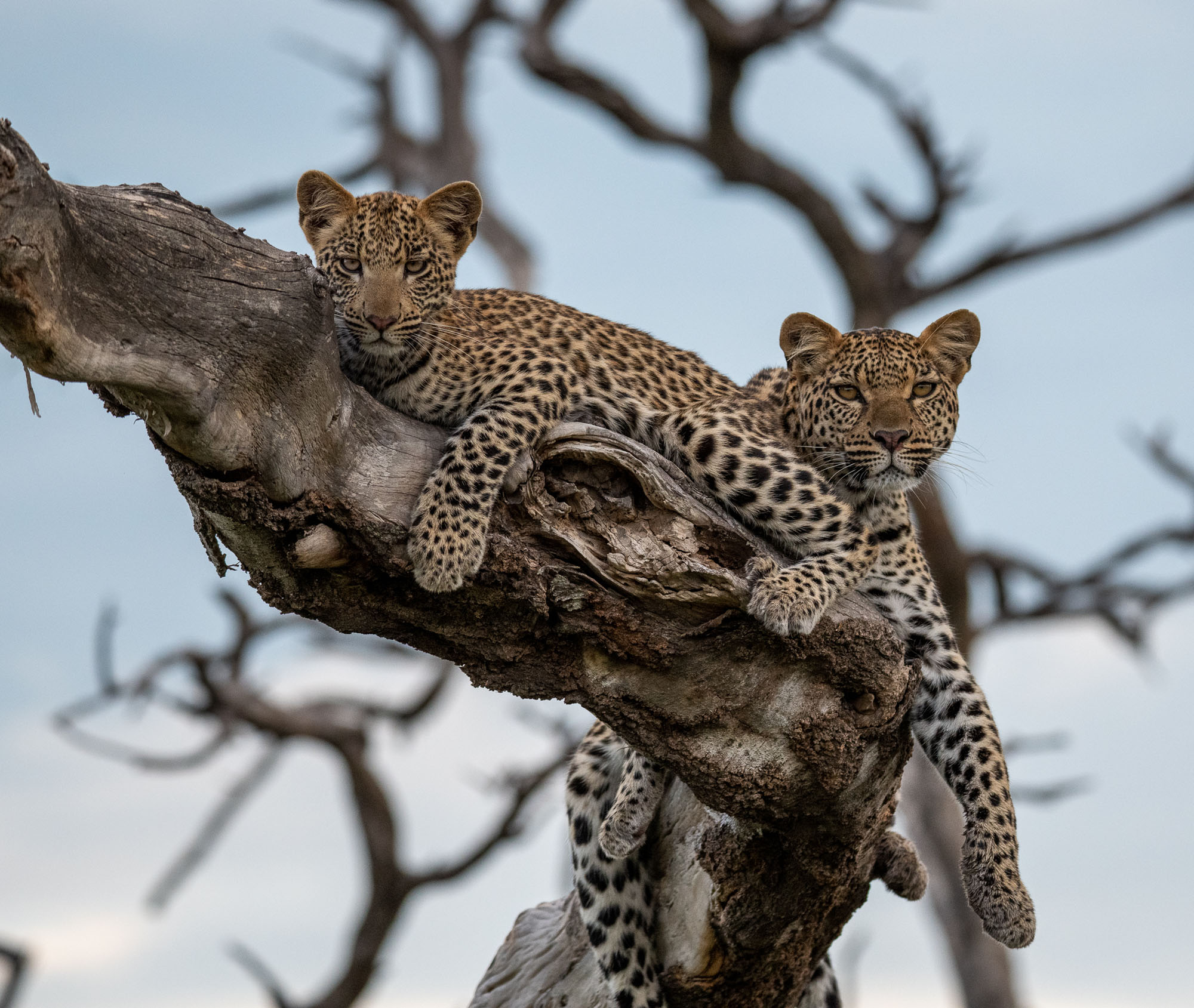
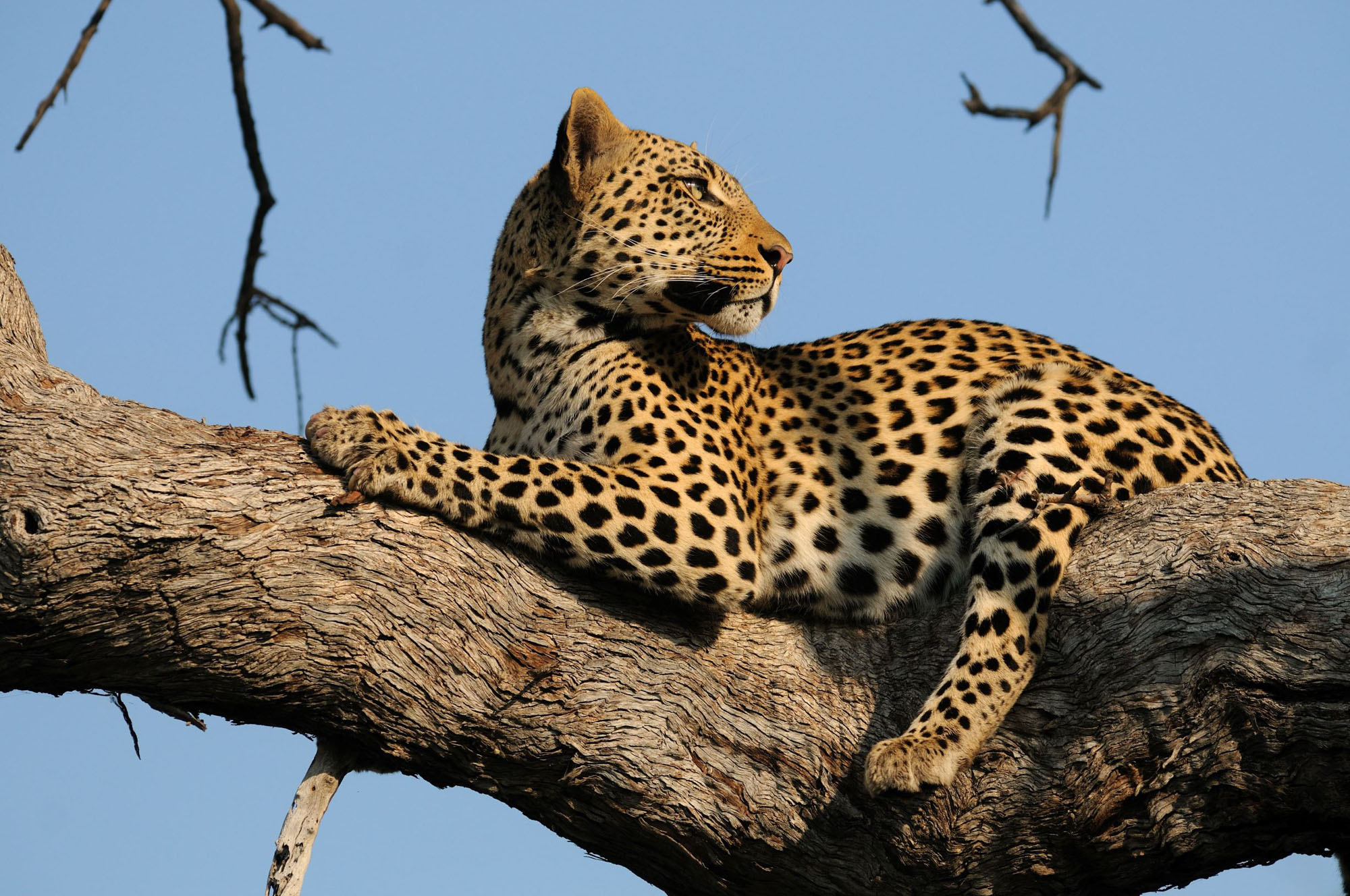
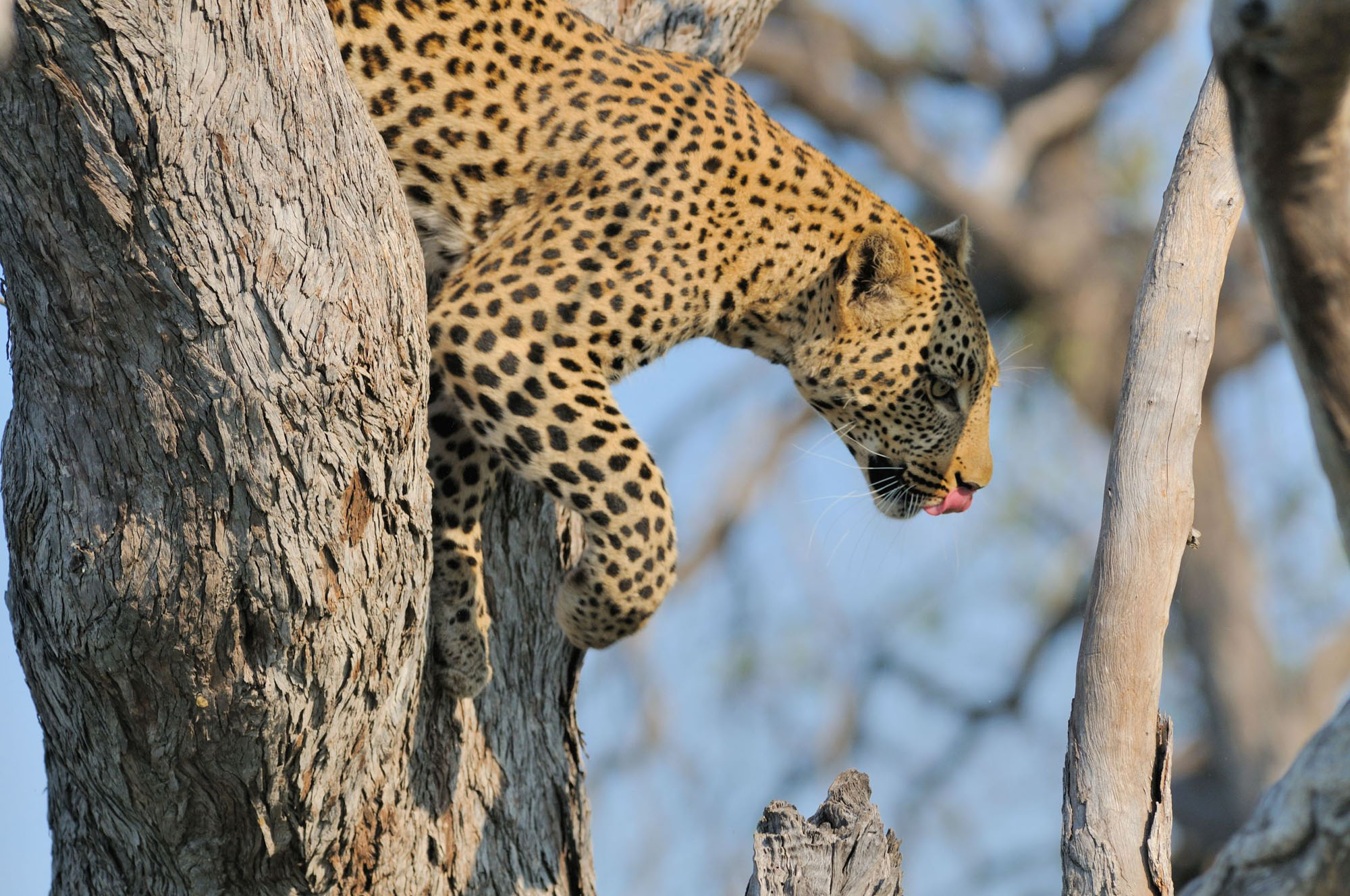
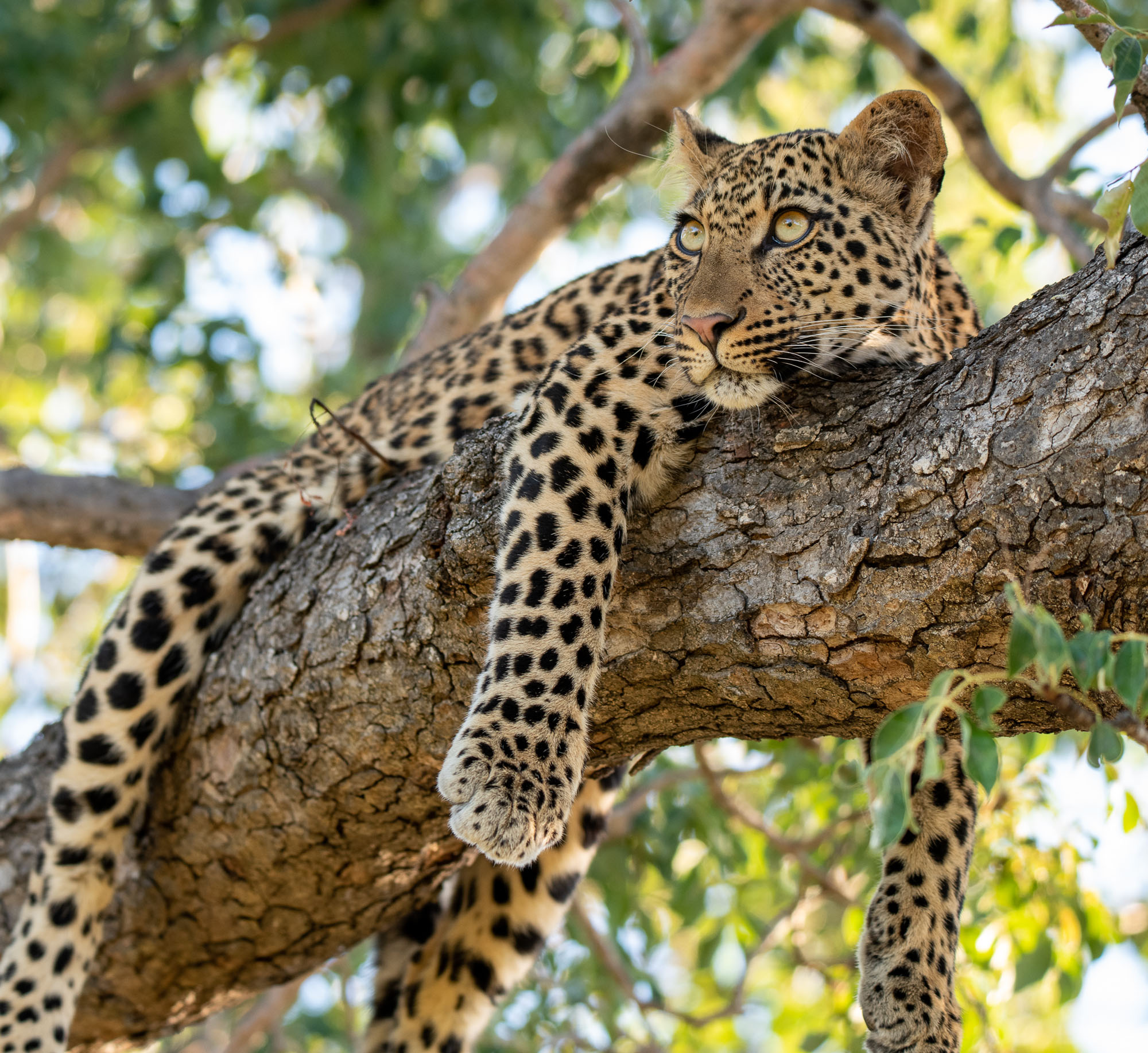
More than once, I’ve seen a leopard in a tree on Hunda Island.  Which is a photographer’s potential dream shot – and also his or her biggest challenge.  The issue being the dreaded ‘bright sky’ background which messes up the exposure, resulting in either an underexposed (dark) leopard or a totally blown out, overly bright sky background.  On the day that I managed to get this shot of a leopard in a tree on Hunda Island, this very same animal had been in another tree just minutes earlier, with ‘just sky’ in the background.  With zero chance of getting a nicely balanced exposure.  I was beyond myself.  Only to have the leopard calmly clamber down that tree, and into another one, with – halleluja – green foliage in the background.  Leopard in a tree shot?  Check.  My advice is to be patient and to stick around.  Things change, and often for the better.  If you’re really keen on getting some great leopard shots, spend more time on Hunda Island (like four nights instead of three) and stay at Tubu or Little Tubu camp.  They are right on Hunda Island and you won’t be wasting time getting there.


Image

MalaMala Game Reserve, Sabi Sand Reserve, South Africa

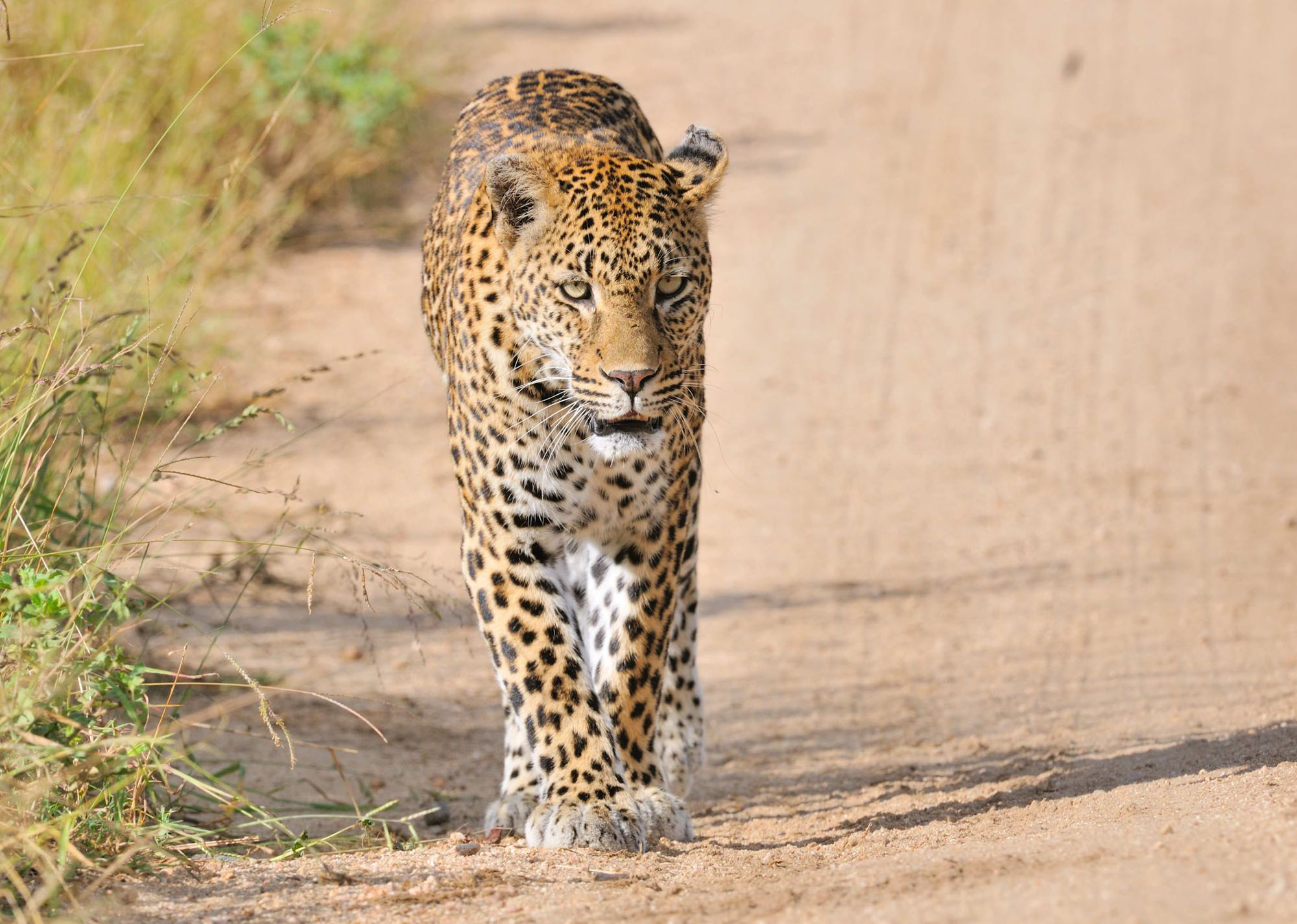
I always think of MalaMala as a place where leopards can be seen strolling down a track at 11 in the morning.  It is that kind of a place.  The consistency with which leopards are seen at MalaMala is simply astonishing.  Practically not a day goes by without a leopard sighting, week in and week out.  There were a total of 1,216 sightings in 2019,  an average of 3.3 sightings per day.  Leopard sightings are measured on a per day basis, so if the Island Female is seen on the morning drive and again in the afternoon, that is counted as one sighting. The record high number for different leopards being seen at MalaMala on one day is no less than fifteen.  So if you absolutely, positively ‘have’ to see some leopards on your next or first Africa trip, MalaMala needs to be on your itinerary. You can thank me later.


Image

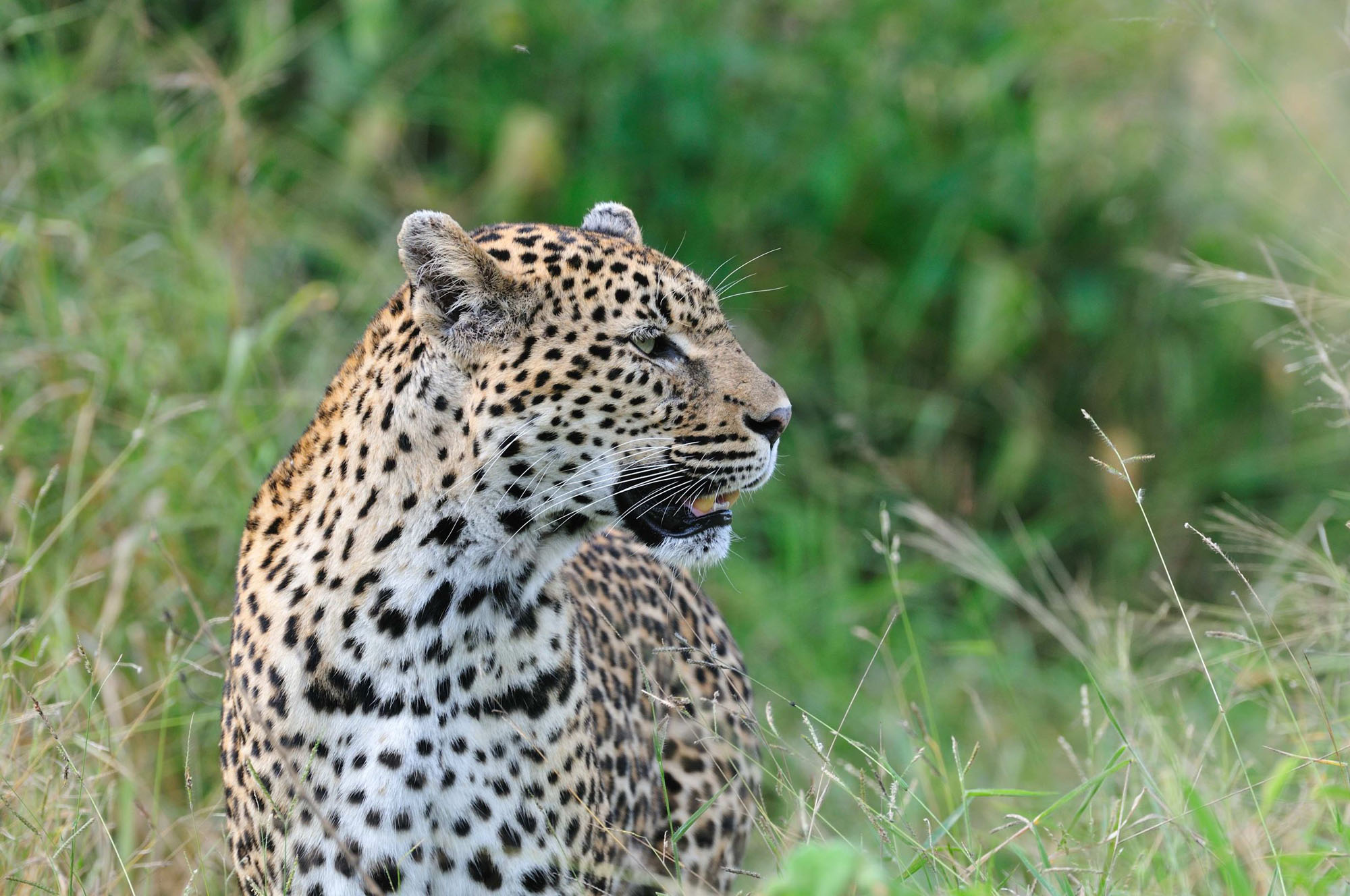
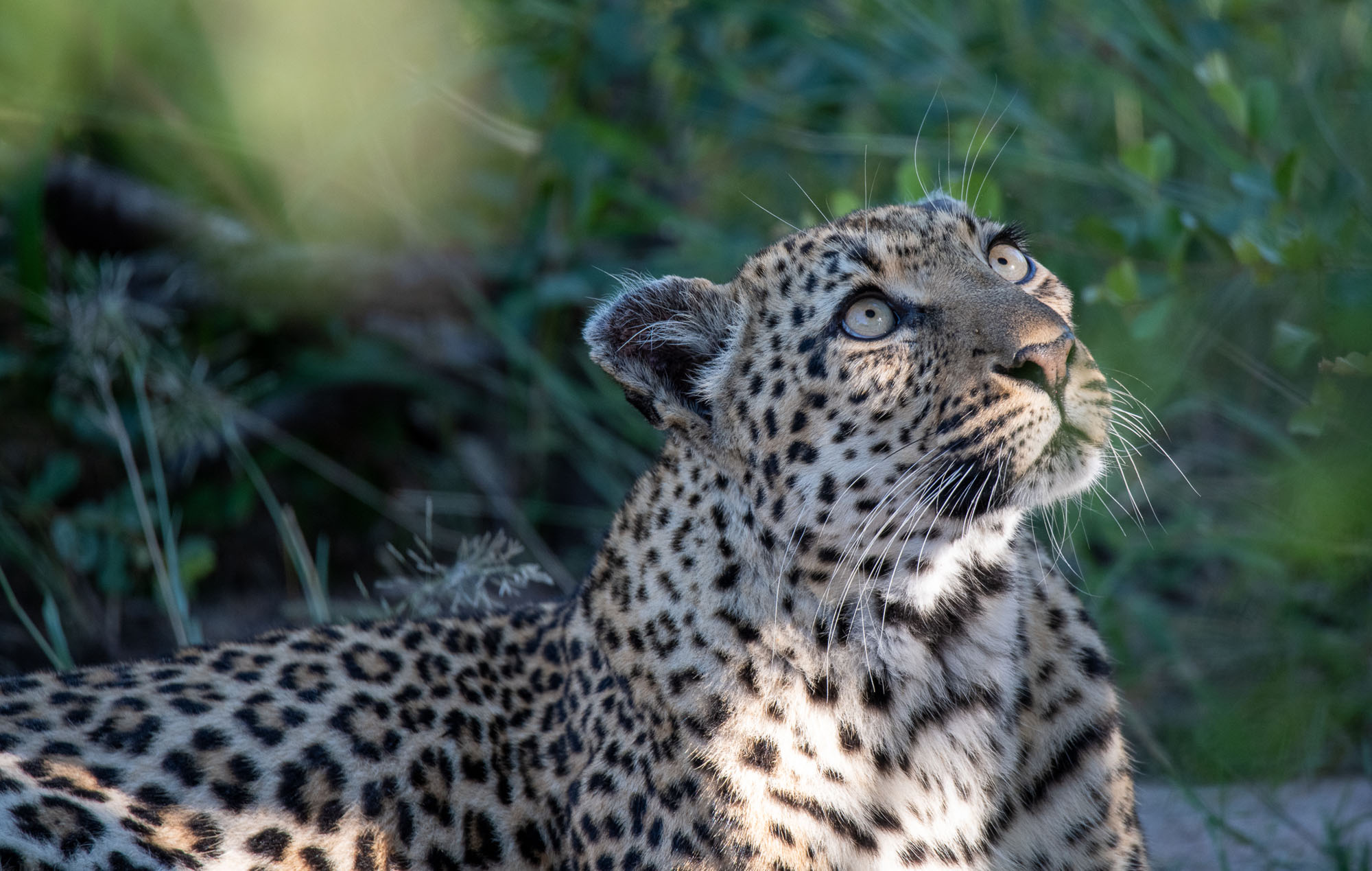
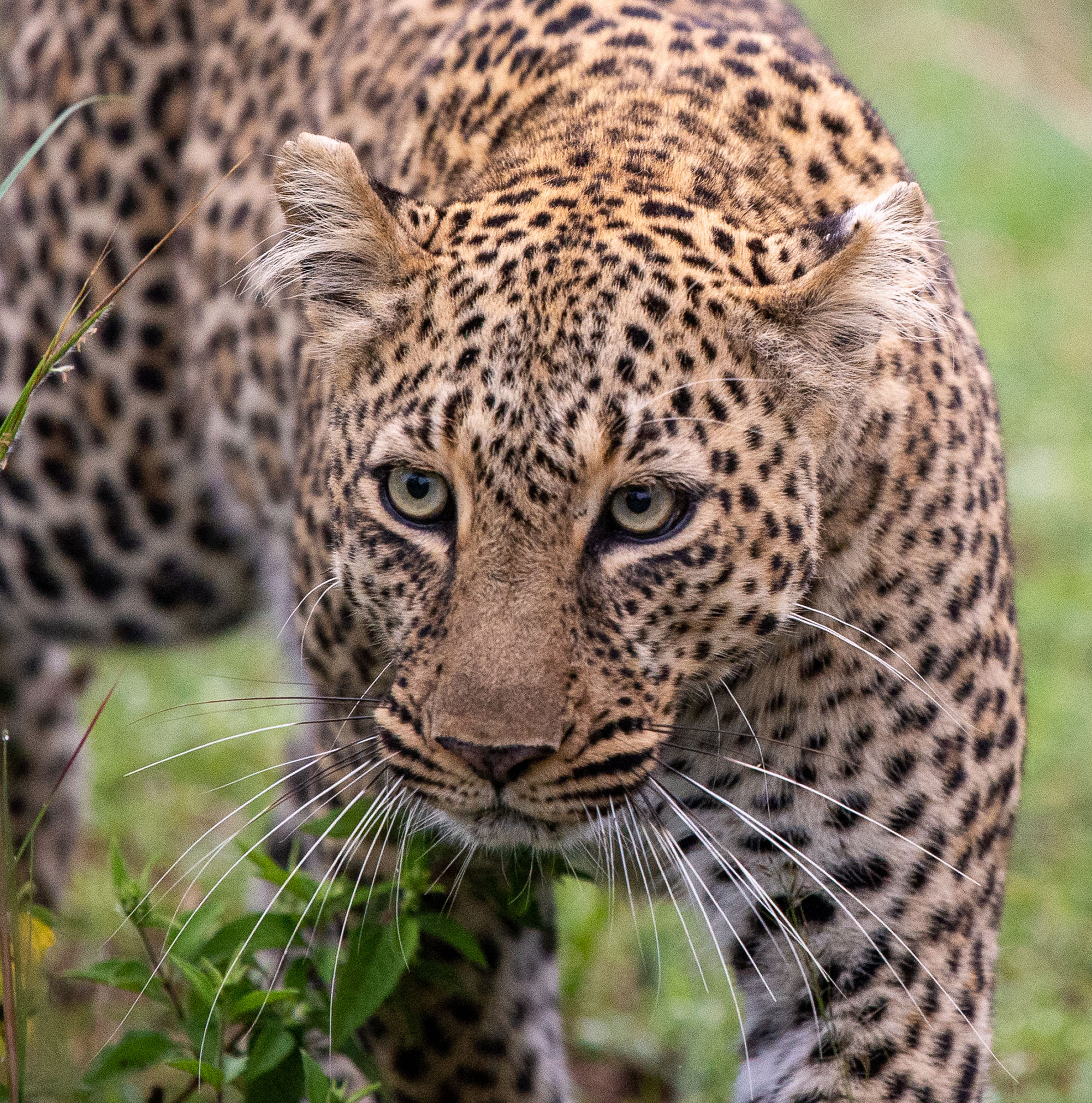
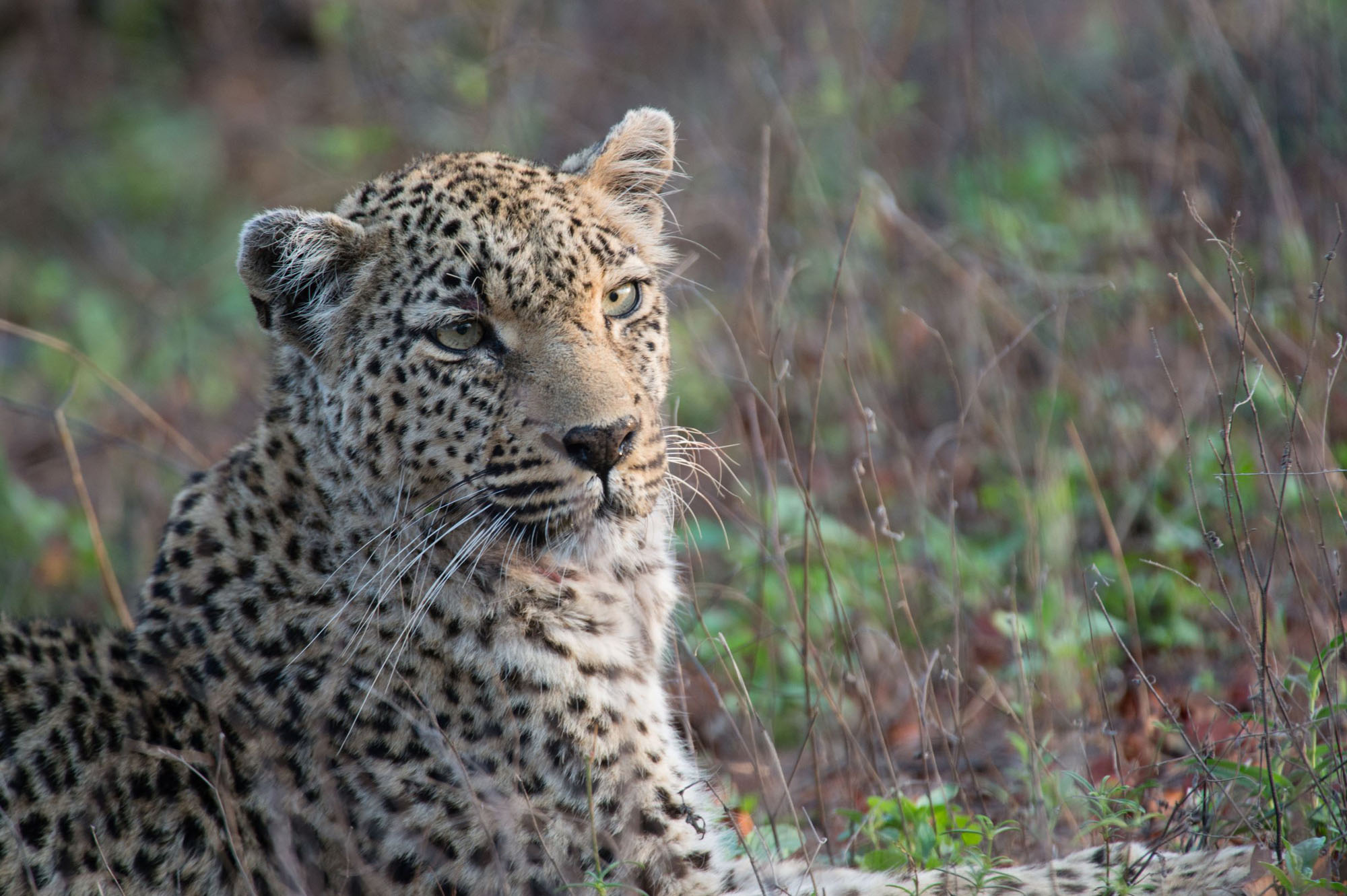
If you’ve been there recently or are planning a trip, names like the Piccadilly Female, the aforementioned Island Female, the Nkoveni Female, the Split Rock Male or the Maxim’s Male may either be familiar to you, or soon will be.   The most widely accepted method of leopard identification is by using spot patterns.  A spot pattern refers to the uppermost row of spots on the leopard’s cheeks, above the upper line of whiskers. Probably best to get a good close-up shot of the leopard first, and check the spots later…


Image

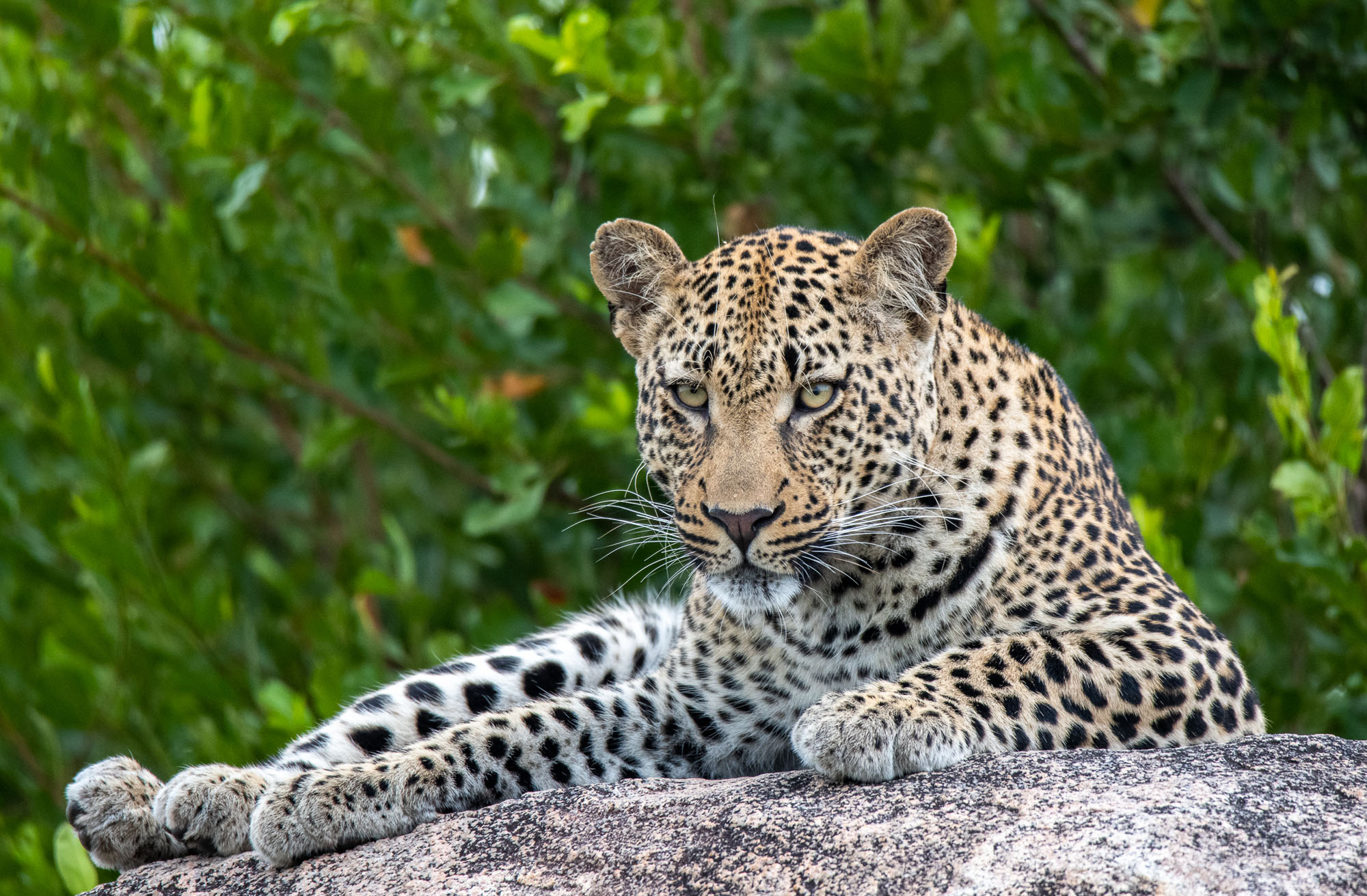
This photo of a young male leopard was taken on our most recent trip to MalaMala in June last year.  What made it special was that we spent nearly an hour observing him walking around, patrolling the area and checking for the scent or signs of any intruders into his territory.  He was completely relaxed and did not so much as look at the vehicle, despite walking right by it on a couple of occasions.  Eventually, he selected one of his favorite spots on a flat rock and stretched out.  We were one of only two vehicles to enjoy this sighting, the first vehicle leaving the scene within minutes of us arriving.


Image

Mashatu, south-eastern Botswana

Likely the most underrated of any Southern African wildlife sanctuary, Botswana’s Mashatu Game Reserve delivers big cat sighting after big cat sighting to match any other wildlife area in Africa.  With no exceptions.  Lions, cheetahs, leopards.  All three can currently be seen there consistently.  On a recent September trip, we enjoyed two different cheetah sightings and three different leopard sightings in the course of a relatively short stay at Mashatu Tented Camp.  Unlike the true ‘bushveld’ regions of Southern Africa, Mashatu is relatively arid with less in the way of impenetrable thickets and dense riverine bush.  While there’s plenty of cover for leopards in the way of mopane scrub, woodland, craggy terrain and rocky outcrops, visibility is generally quite good and I’ve had more unobstructed views of leopards and other cats here, than practically anywhere else.  Except perhaps for the Serengeti/Mara complex in East Africa.


Image

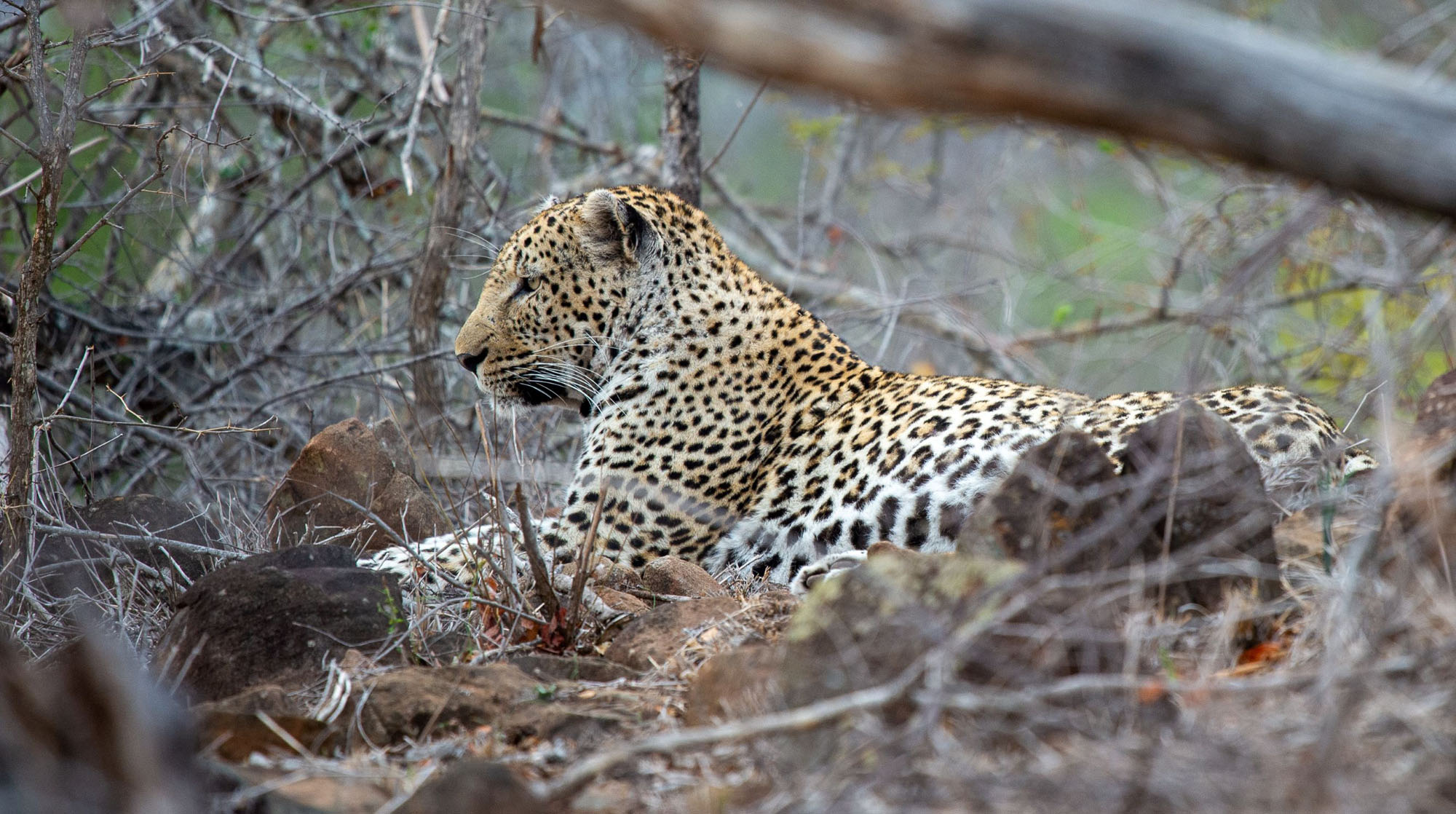
This photo of a leopard at Mashatu was the culmination of a guiding clinic, of sorts.  Initially, our guide – and tracker – had spotted some fresh leopard tracks in one of the dry ephemeral rivers in the reserve.  Following the tracks down into a gully, we had every expectation of bumping into the leopard. Soon.  It was nowhere to be seen.  The tracks had petered out in a gravelly patch.  We circled around a bit and just when I had pretty much given up on the sighting, the guides heard the alarm call of a helmeted guineafowl.  Looping around a few bushes, we approached the loudly protesting bird which was practically pointing at a nearby bush.  If a bird could point.  Sure enough, not seconds later, a leopard emerged from the bush. It gave us the barest of glances and calmly crossed the dry riverbed, prompting a torrent of machine gun-like shutter clicks from my Nikon D4 at nine frames per second.  Success!


Image

Mombo Camp, Chief’s Island Botswana

Wilderness Safaris’ Mombo Camp has gained a worldwide reputation and recognition for all-round excellence.  Hospitality, guiding, game-viewing, atmosphere, food – there are no shortcomings. On first arriving at the Mombo airstrip many years ago, we were given the choice of proceeding to a cheetah kill or a Martial Eagle which had just taken down an impala. Of course we did both, and they were both phenomenal.  The photos, much to my regret, were lost in a subsequent hard drive failure.  I know.  Back up on the cloud…  The following day we experienced the first of many leopard sightings at Mombo, a streak which remains unbroken over the course of several return visits.  As recently as March 2020 we were on a fantastic sighting of a female leopard in a tree – with her cub – within fifteen minutes on our first game drive.  So Mombo.


Image

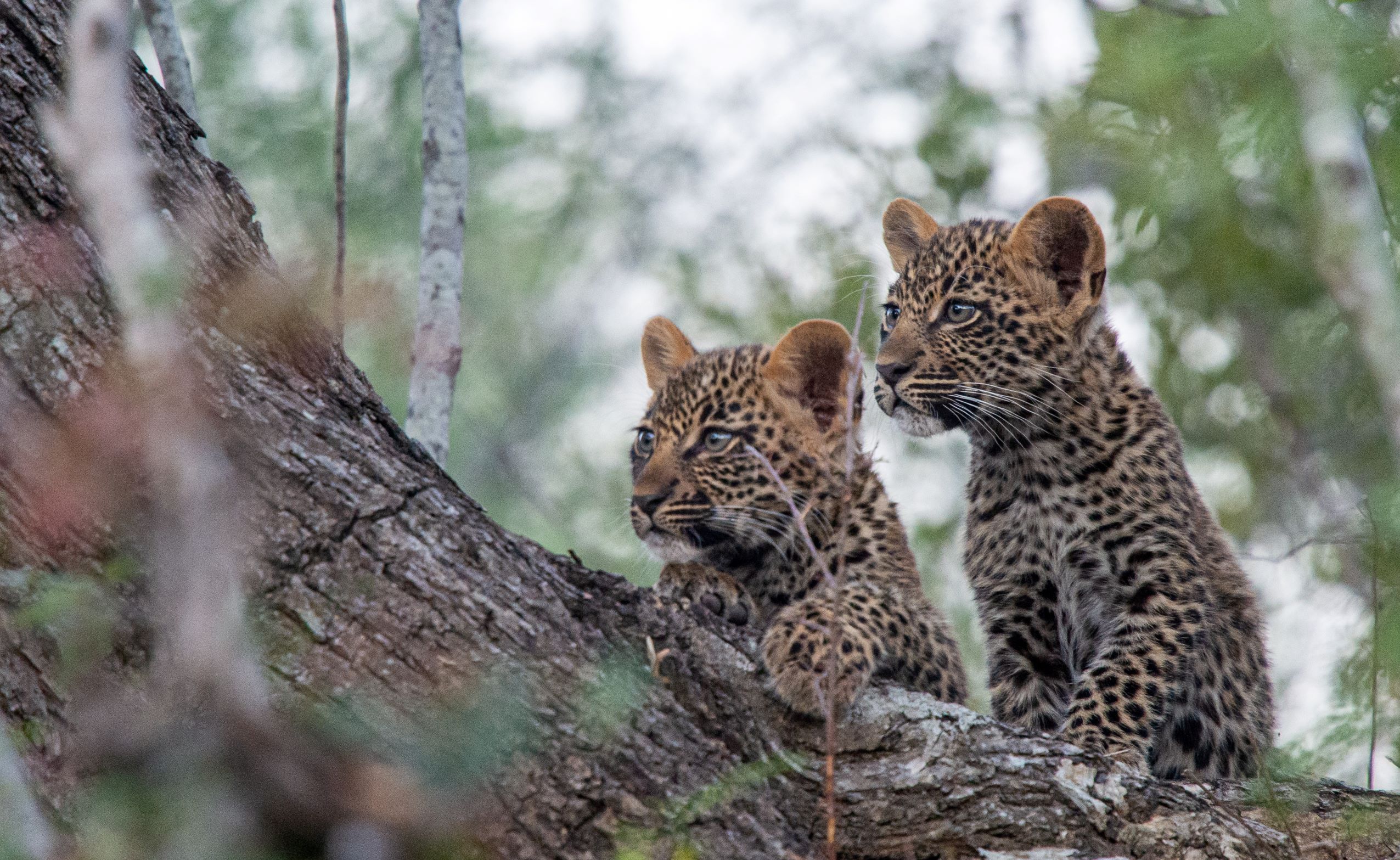
One of the most legendary of Mombo leopards was Legadima, which Kathy and I were fortunate to see more than once.  She was truly a ‘movie star’ leopard, featured in Dereck and Beverly Joubert’s ‘Eye of the Leopard’.  It followed every step of her life, as the cub of Tortilis, from just eight days to three years old.  Two of Legadima’s cubs namely Pula and Maru then became Mombo favorites, as did Phefu, the daughter of Maru.  Currently a young male leopard named Tladi – the son of Phefu – is being seen all around Mombo, walking on the boardwalk and clambering onto the roofs of the guest tents.  At just 14 months Tladi successfully hunted a full-grown kudu – quite an achievement for such a young predator.  The Legadima legacy lives on.


Image

Kaingo Camp, South Luangwa Zambia

Zambia’s South Luangwa National Park is known as good leopard habitat, and there’s no reason not to anticipate seeing one or more at practically any of the camps in the reserve, over the course of 3 days or so.  Some South Luangwa camps do have an edge though, as does Shenton Safaris’ Kaingo Camp.  It definitely belongs in the top echelon of safari properties where you are likely to see and properly photograph a leopard.  On our first visit to the camp we witnessed an extraordinary spectacle one evening when we were out on a night drive, checking for predator action in some open floodplain terrain, along the South Luangwa River.


Image

It wasn’t long before we had the spotlight on a big male leopard walking into the arena, as it were, checking around for what might be available for dinner.  And then, just minutes later, from stage left, a female lion dashed into the picture, going straight for the leopard.  To her instant regret, our guide had inadvertently lit up one predator for another. She later told us that she would have felt awful if the lion had been successful in getting to the leopard.  In the end the leopard made a successful getaway, scampering to the safety of some nearby trees.


Image

Another interesting phenomenon which we first observed at Kaingo involved hyenas and leopards.  In this part of Zambia – and likely elsewhere – hyenas often follow leopards around at night, instinctively realizing that they may benefit if and when the leopard makes a kill.  Either by appropriating the carcass for themselves – which we have witnessed on Hunda Island – or by scavenging for leftovers.  So on every subsequent night drive, whenever we would see or hear hyenas, we’d be thinking and looking around for leopards.  More often than not, that is how it turned out.


Image

Kaingo is exceptionally well attuned to the needs of serious photographers, from the way the vehicles are equipped to the abundance of photographic hides, the kind of advice you get and the ability of the guides to anticipate behavior and movement and get you in the right position for a pro shot, time after time.


Image

Kirkmans Kamp, Sabi Sand Reserve

AndBeyond’s Kirkmans Kamp and its younger, deluxe sibling Tengile, are leopard mainstays.  On three different visits here the professional guides at both camps have found leopards for us every time without fail.  And not just your common, garden variety of leopard sightings.  We’re talking leopards in trees, leopards just a few hundred meters from lions, and most recently a ‘leopard alert’ where I was cautioned to stay in my room early one morning, waiting for a leopard to walk out of camp.  We’re talking adrenaline-pumping, action-packed sightings which add 200 shots to your photo count in a hurry.


Image

Despite some back-lighting issues, I managed to get a couple of decent exposures of the leopard that had walked into and then out of the camp, a little while later.  It had climbed into a tree to survey the area.  For whatever reason it was not happy about having the vehicle to the side of the tree, and snarled at us a couple of times.  Uncharacteristic behavior for a leopard, in my experience.  

In our blog post next Friday we will take a look at the where, why and when of chimpanzee trekking in Uganda, Rwanda and Tanzania.

More Info

Email bert@fisheaglesafaris.com

Email jason@fisheaglesafaris.com

@fisheaglesafarishouston

#FishEagleSafaris

YOU MIGHT ALSO BE INTERESTED IN

Destinations
Zambia

10th September 2021

Chindeni and the Bushcamp Company, Zambia

By late July we found ourselves at Chindeni, a small Bushcamp Company property

Read more
Botswana
Destinations
Okavango Delta

3rd October 2022

Camp Okavango, Botswana

Camp Okavango is in the heart of the permanent part of the Delta. In this idyllic setting there are no vehicles, and it is just a short walk

Read more
Area
Destinations
Nyerere National Park
Ruaha
Tanzania

14th October 2023

From My Safari Notebook: Wildlife Photography

Birds in flight and wildlife photographers have an uneasy relationship. Things go wrong as often as they go right. Getting focus-lock on a moving subject

Read more

SUBSCRIBE TO OUR NEWSLETTER

READERS FAVOURITES

Destinations
Zambia

10th September 2021

Chindeni and the Bushcamp Company, Zambia

By late July we found ourselves at Chindeni, a small Bushcamp Company property

Read more
Botswana
Destinations

4th August 2022

On Safari At Belmond Eagle Island Lodge, Okavango Delta

What is the ‘secret sauce’ for an unforgettable few days on safari in Botswana? It starts with the animals, of course. The elephants, lions, giraffes, hippos
Read more
Destinations
India

27th May 2023

India

India’s tiger, mammals and birds.

Read more

Elephants: Everybody’s Favorite

23rd October 2020

Elephants: Everybody’s Favorite


Image

Elephants: Everybody’s Favorite

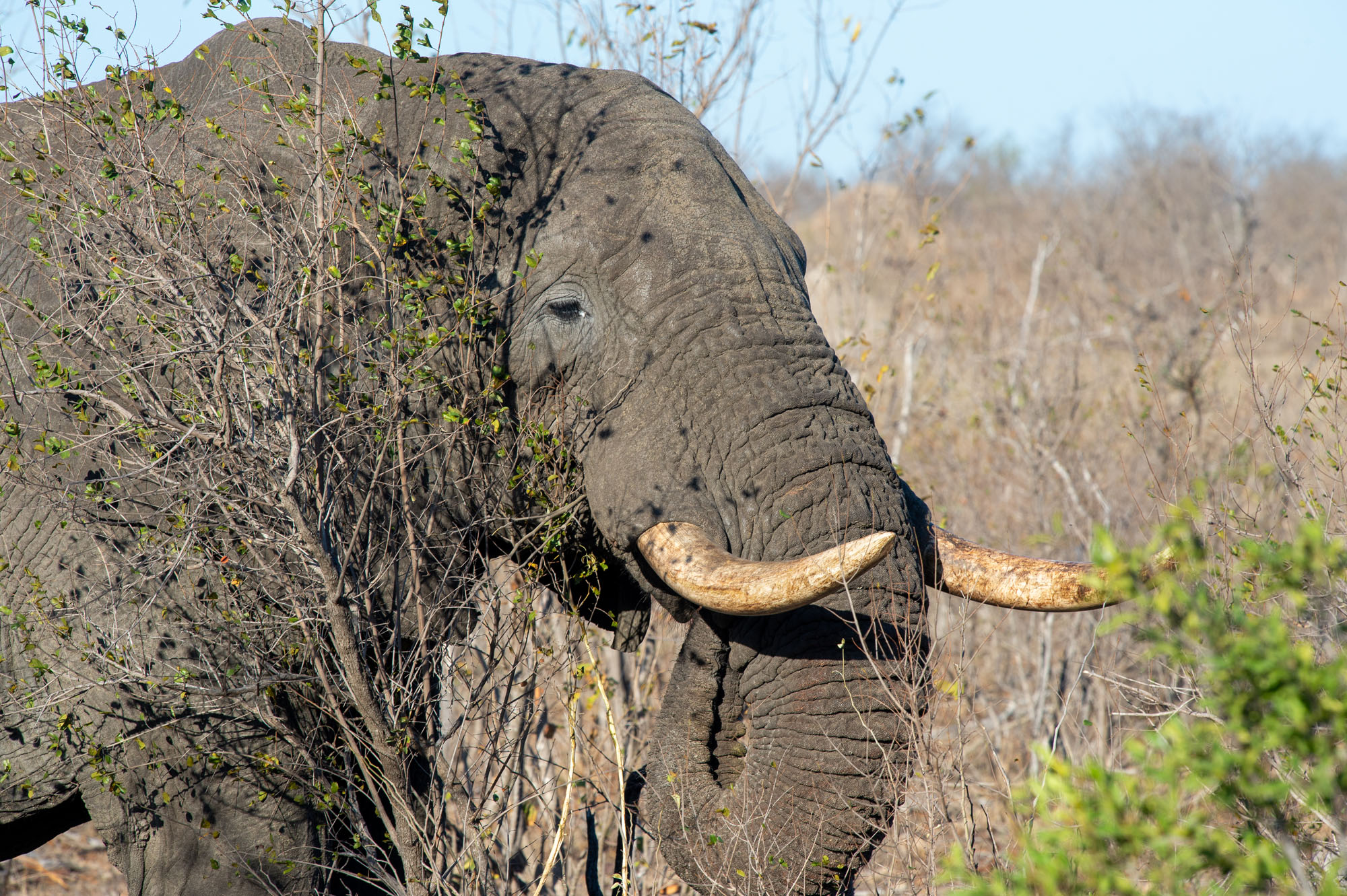
As a native of South Africa and someone who was fortunate enough to start going on safari as a child, I probably saw my first elephant in the wild before I was even 5 years old.  As kids in the back of the VW Bus driving in the Kruger Park in South Africa, my sister and my brothers and I would literally shriek with delight when we came across a herd of elephants.  We would stare at their giant tusks in awe, comment on their amazing ears, marvel at their versatile trunks, laugh at their antics, coo over the little ones, and just generally be delighted to be in their company.


Image

Having seen literally thousands of them since then all over Africa, one thing remains the same.  Every elephant sighting remains special.  It is never ‘just another elephant’, or’ more elephants’, no matter how abundant they may be where I find myself.  Elephants are fascinating creatures on so many levels and they have an almost visceral impact when you see them in the wild, especially close up.


Image

Of course, there’s the sheer size of them, their massive bodies making an unequivocal statement as to who is the real king of the African wilderness.  Hint:  it is not the lion.  I’ve seen enraged, trumpeting – sometimes even shrieking – elephants scare off lions many a time.  Given a certain set of circumstances elephants are afraid of nothing and very little will stop them.


Image

Mostly though elephants are adorable, much loved creatures who are always busy doing something.  Mostly eating.  The leaves on trees, shrubs, grass, bark, fruit, seed pods –  pretty much any edible plant material.  Another favorite elephant pastime:  drinking.  It is endlessly entertaining to watch elephants drink.  They cannot go without water for extended periods of time and are almost always to be found within striking distance of a known (to them) source of water.  Which means that on safari in Africa, one of the best places to find them – particularly in the dry season – is at a water hole, along a river, in a dam, a swamp or marsh.


Image

Over the years, we have experienced many particularly interesting or satisfying elephant viewings, and every now and then have gotten lucky with a photograph.  Here are a few of them with some of our notes and recollections.


Image

Chyulu Hills, Kenya

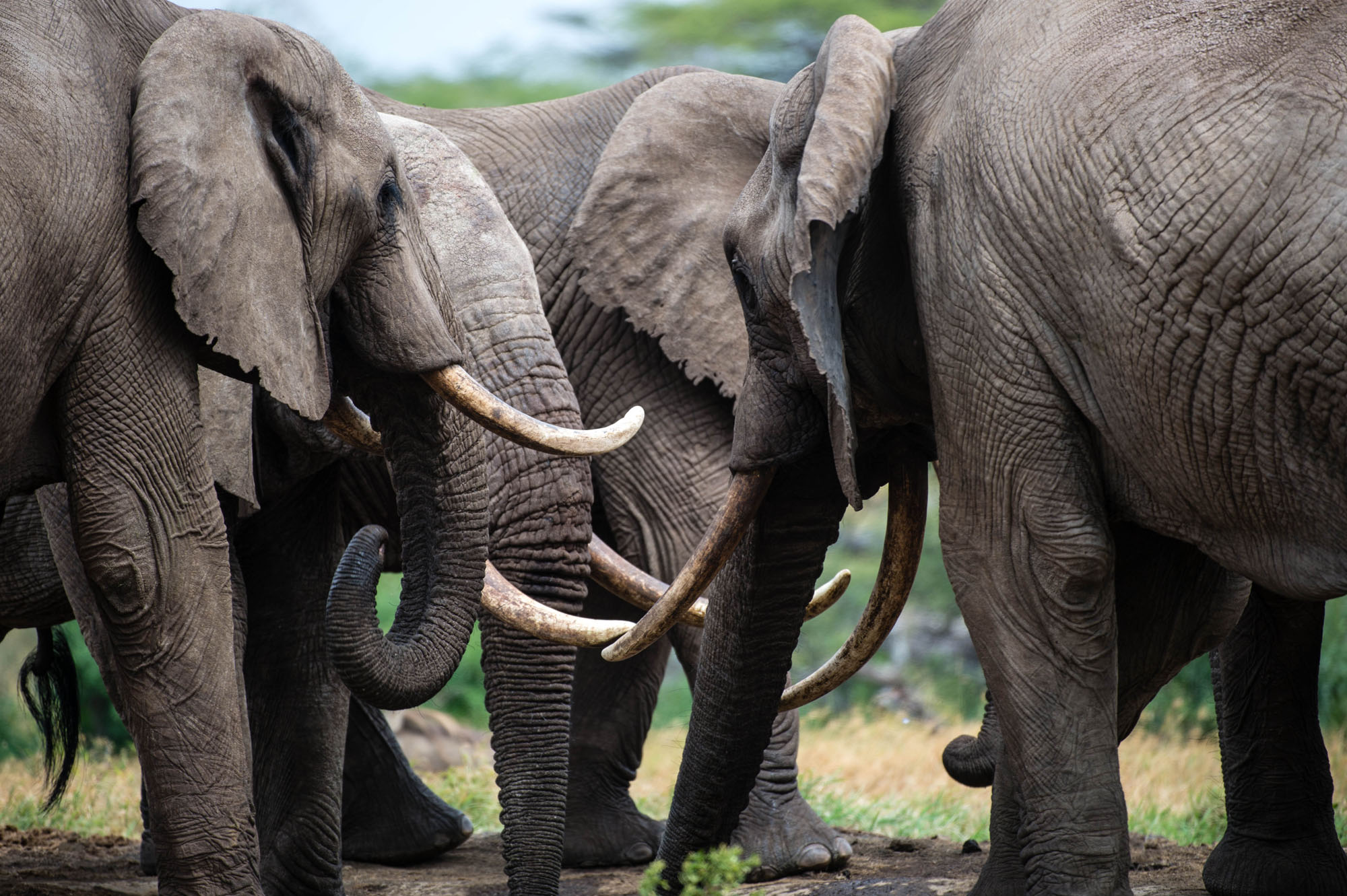
One of my personal favorite elephant photographs is this one, taken of several elephant bulls at a small water hole right below Ol Donyo Lodge in Kenya’s Chyulu Hills.  What made it special to me at the time – and what I tried to capture – was the seemingly invisible turf battle going on.  These big bulls were in fact barely tolerating each other’s presence.  Their ‘togetherness’ was simply the result of none of them being substantially bigger or more powerful than the others.  Reluctantly, by the looks of it, they granted each other just enough room to get some water, and then move on.  Nobody dominated, and everybody benefited.


Image

Amboseli Swamps, Kenya

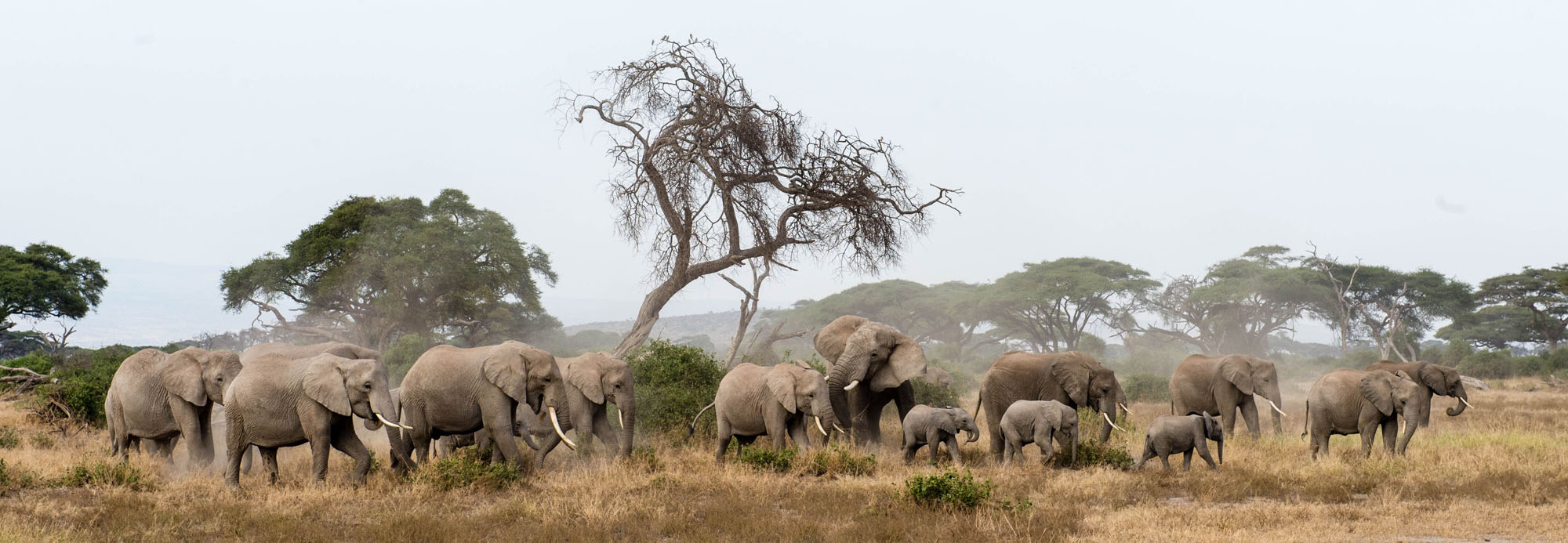
Amboseli is one of the best places in Africa to see elephants.  Amboseli is a small national park which is famous for its elephants and its perfect view (cloud cover permitting) of Mt. Kilimanjaro.  The Amboseli elephants are special because of the size of their tusks, their approachability, and their daily pattern of walking out of the woodlands to the swamps and then back.  It is an arid area so they almost always kick up some dust which makes for atmospheric photos and awesome views.  It happened to take me three visits to Amboseli to get some really good photographs of elephants with Kili in the background, but it’s mostly a matter of luck.  Good or bad.  On my third (successful) visit there were several first-time visitors in the vehicle with me…  You just never know.  This photo of a herd of elephants walking toward the swamps early in the morning, was made special by a relatively small but critical element:  the one big elephant looking back.  Just that.  Without it, it’s a nicely lit and atmospheric shot of elephant walking, kicking up some dust.  With the one elephant looking in the other direction?  You can judge for yourself.


Image

Hoanib Skeleton Coast Camp, Namibia

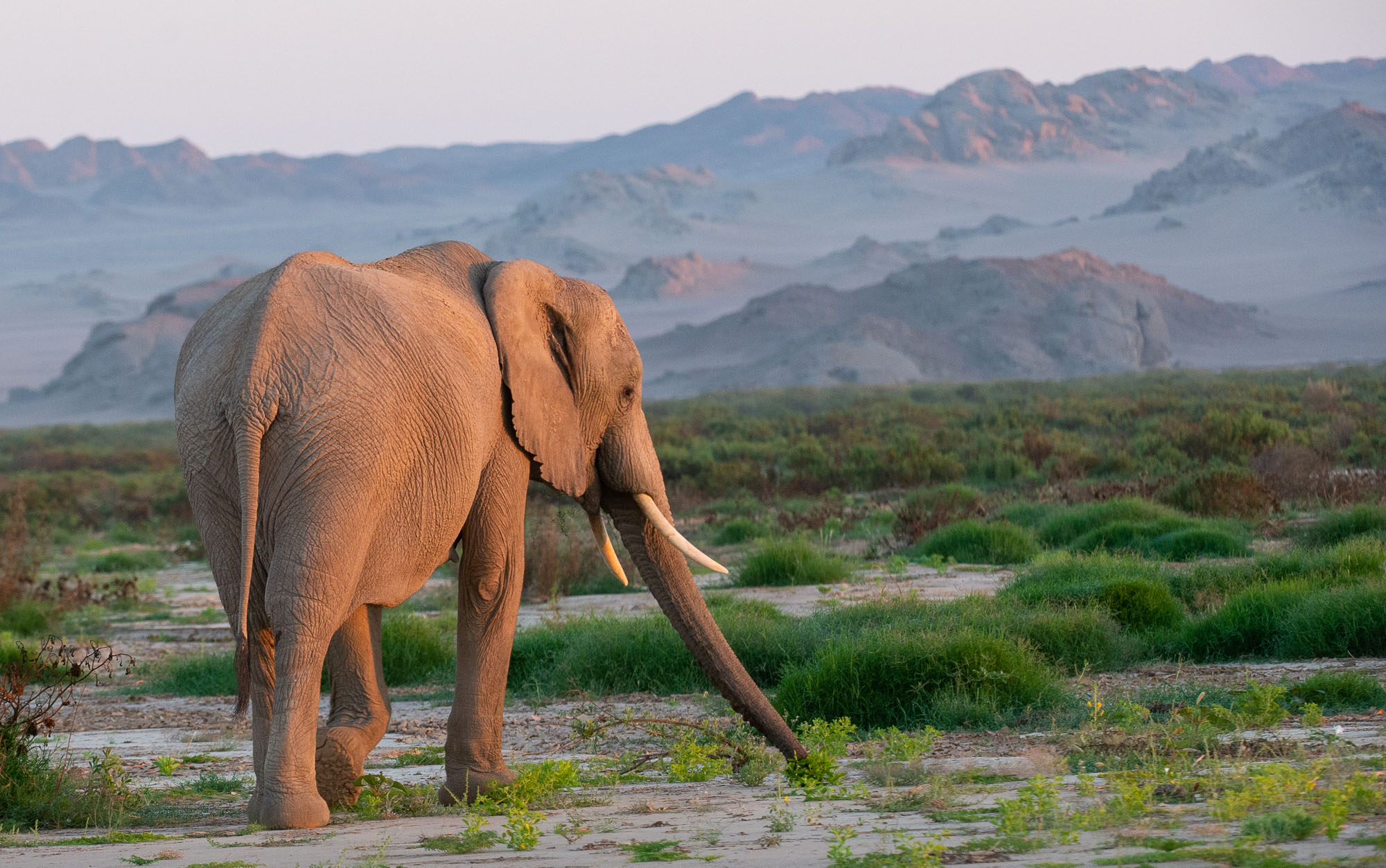
Photography is all about light.  Many professional wildlife photographers rarely attempt capturing anything beyond the morning and afternoon ‘golden hour’ window, when near horizontal light beams cast a flattering glow on practically everything it illuminates.  Including elephants.  Digital photography – which allows considerable manipulation of exposure levels in post-processing – has opened up a somewhat bigger photography window.  Even so, few serious photographers expect a good outcome for photos taken in bright light in the middle of the day.  The exaggerated shadows and washed out colors associated with harsh midday light, make it a poor choice.  This photo of a desert-adapted elephant taken on a game drive from Wilderness Safaris’ Hoanib Skeleton Coast camp, is a good example.  The soft morning light adds depth and drama and makes the photo ‘pop’.   Take this same shot at noon and all the warmth is gone.  It may in fact work better as a black and white image, then.


Image

Hwange National Park, Zimbabwe

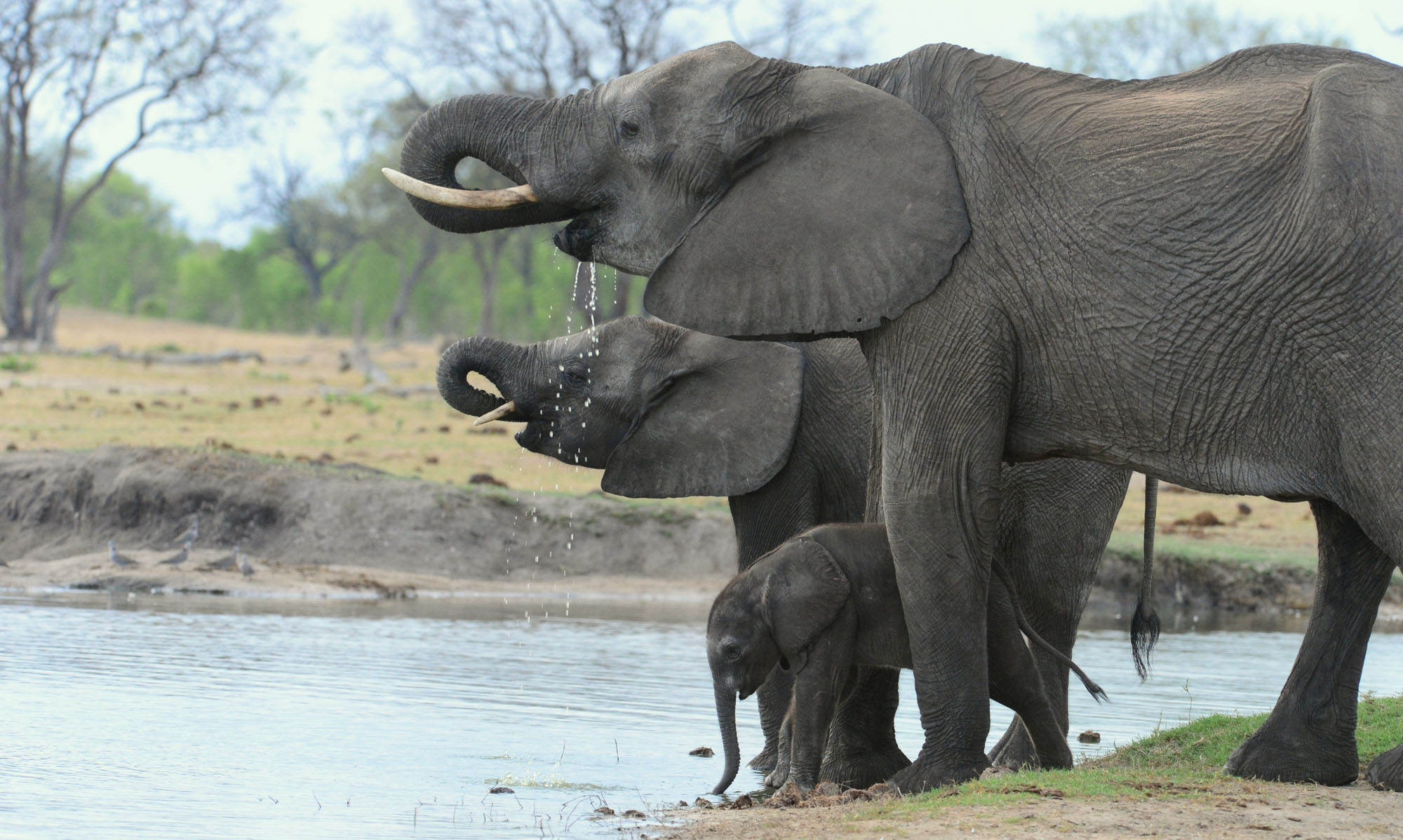
Hwange’s 30,000-plus elephants are wonderful photographic subjects, particularly in the dry season when hundreds and sometimes thousands of them congregate around the many artificially pumped water holes scattered throughout the park.  I will never tire of watching a herd of elephants approach a water hole, particularly after a long and dusty, thirsty walk out of the woodland.  As they emerge from the trees, they start to walk faster and faster still.  The young ones run ahead, excitedly, to get to the water first.  Then, almost solemnly, and with serious intent, they all start to drink, practically simultaneously.  They fill their trunks with one deliberate deep draft of water after another, squirting several gallons of water forcefully into their mouths.  Again and again.  Not until their thirst is quenched, do the elephants start to relax, look around at the other herd members, and begin to interact.  Elephants lined up at a water source make fantastic photo subjects, as did these three at the Little Makalolo water hole in Hwange.  As is the case  with giraffe necks and heads, there are often patterns or symmetry – or for that matter asymmetry – to be observed and captured.  Look for it and incorporate it into your shots to tell a story and add drama.


Image

Odzala Kokoua National Park, Republic of Congo

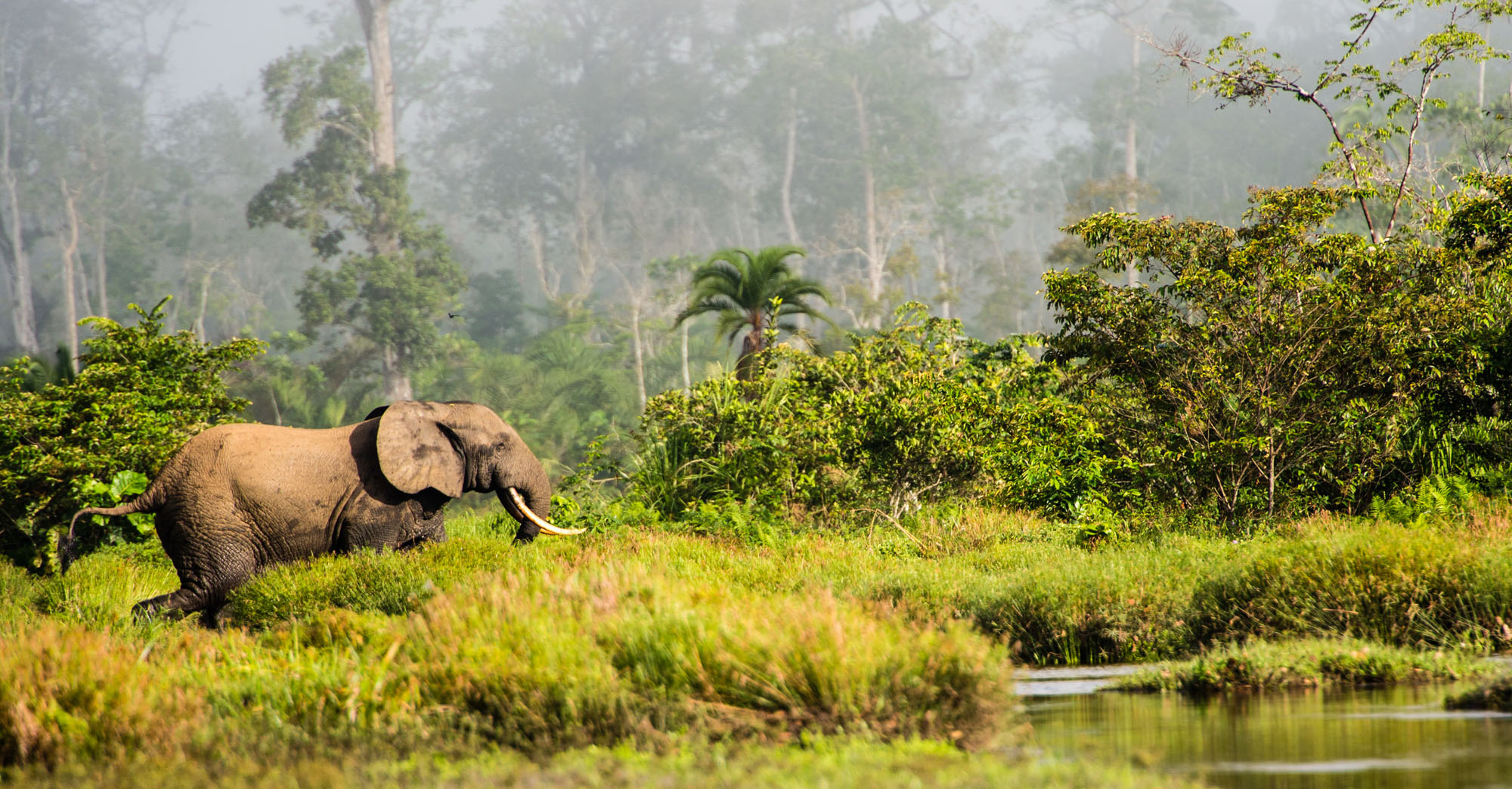
By the time I made it to Odzala-Kokoua National Park in the Republic of Congo, I had seen and photographed many an African elephant in dozens of places in Southern and East Africa.  I had never seen or photographed a Forest elephant though.  As it happened, we had fantastic luck with seeing and photographing Western Lowland Gorillas at Odzala.  But not much luck with Forest elephants.  A few glimpses and some far-off sightings, but nothing worth capturing with the big camera. Until we went on a walk down a small tributary of the Congo River.  As we were approaching a clearing, a solitary Forest elephant emerged abruptly from the thick bush to our left.  As startled as we were, it gave us a side-long glance and hurried across the opening, splashing through the water and disappearing into the thick bush on the other side, moments later. It’s for ‘can’t miss’ moments like these that wildlife photographers have to be ready for anything, with a camera set to freeze motion.  Not ending up with a blurry photo is the overarching objective.  With wildlife, there is often very little advance warning before things happen.  And sometimes just moments to capture an instant in time which you may never experience again.  I’m unlikely to ever again see a Forest elephant dash across a clearing in the Congo, but this image will forever be proof that it actually happened.


Image

Madikwe Game Reserve, South Africa

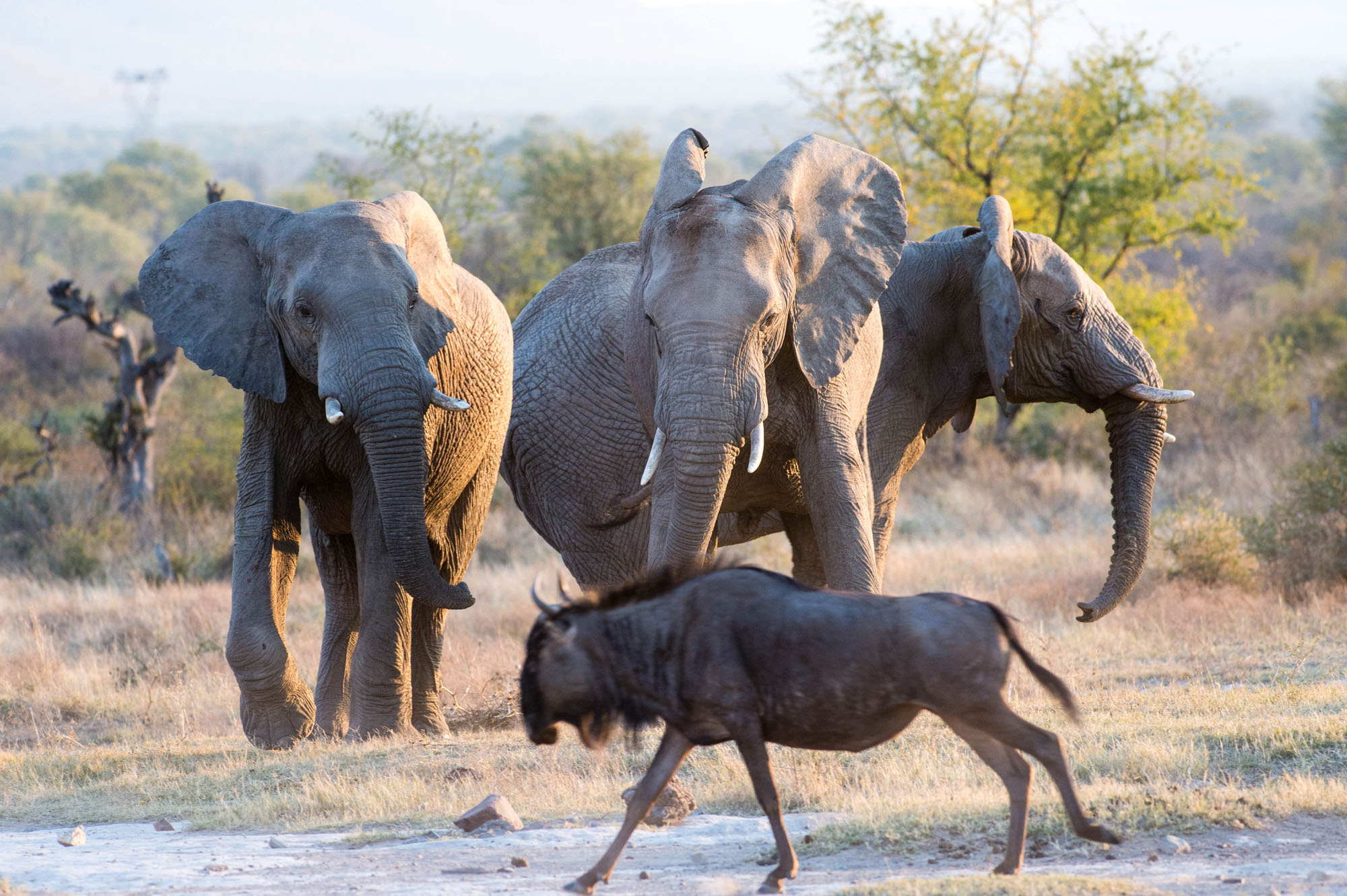
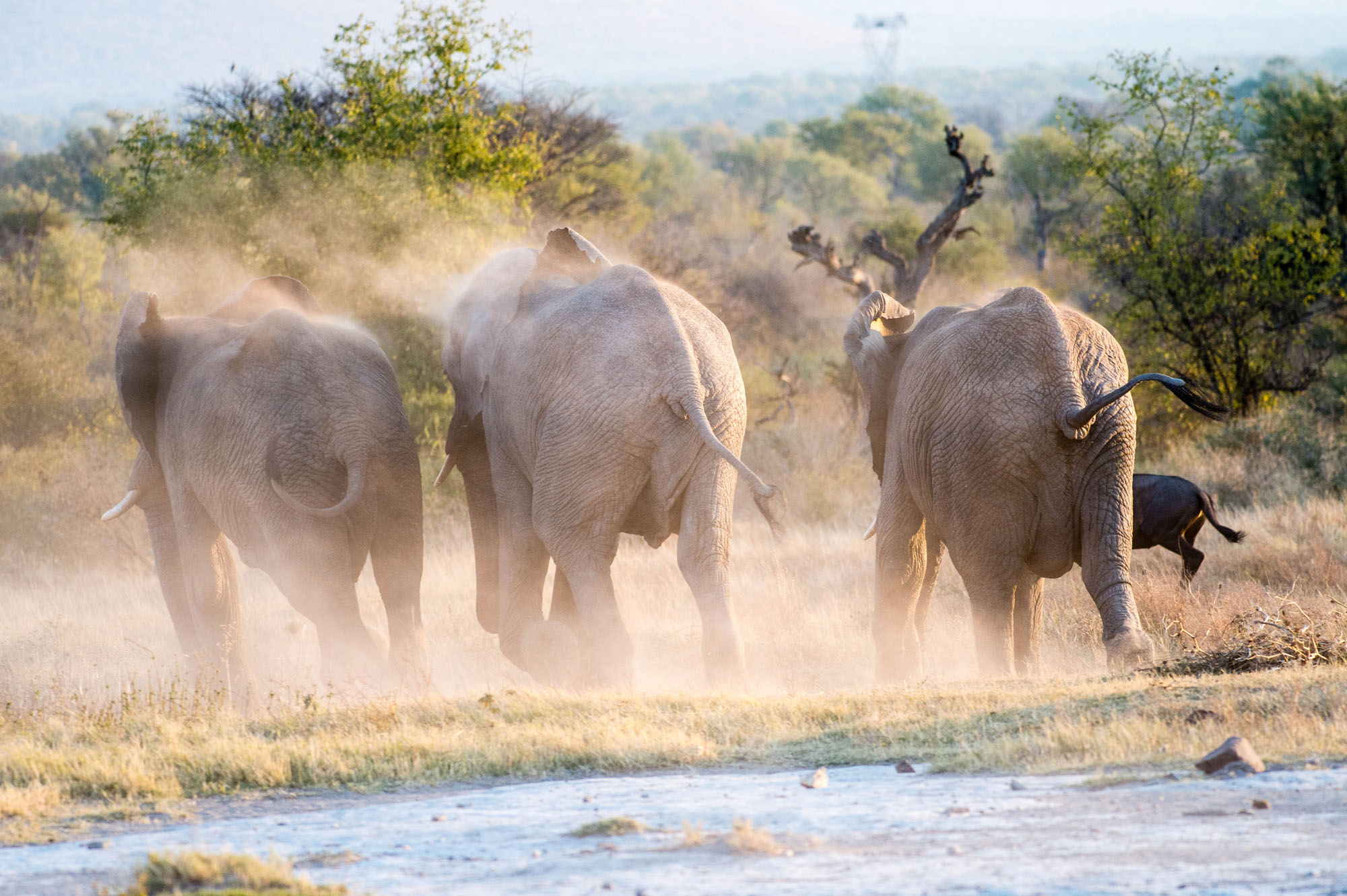
It is easy to believe that elephants are afraid of nothing and indeed they are – most of the time.  Under certain circumstances though, they can easily be spooked, with sometimes unpredictable results.  These photographs, taken in South Africa’s  Madikwe Game Reserve, illustrate such an event.  These three young elephants were slowly walking towards a water hole when a solitary running wildebeest set them off.


Image

They wheeled on the spot and rushed off in the direction they came from, kicking up a cloud of dust.   I’ve seen similar behavior elsewhere such as when a herd of elephants (in the Okavango Delta) started stampeding for no apparent reason.  Ordinarily, this is not an issue to a casual observer, when you are in a vehicle.  When you are on foot though, it can be most worrisome; you’d want to get away from the elephants as fast as possible and seek shelter.


Image

Chobe-Linyanti, Botswana

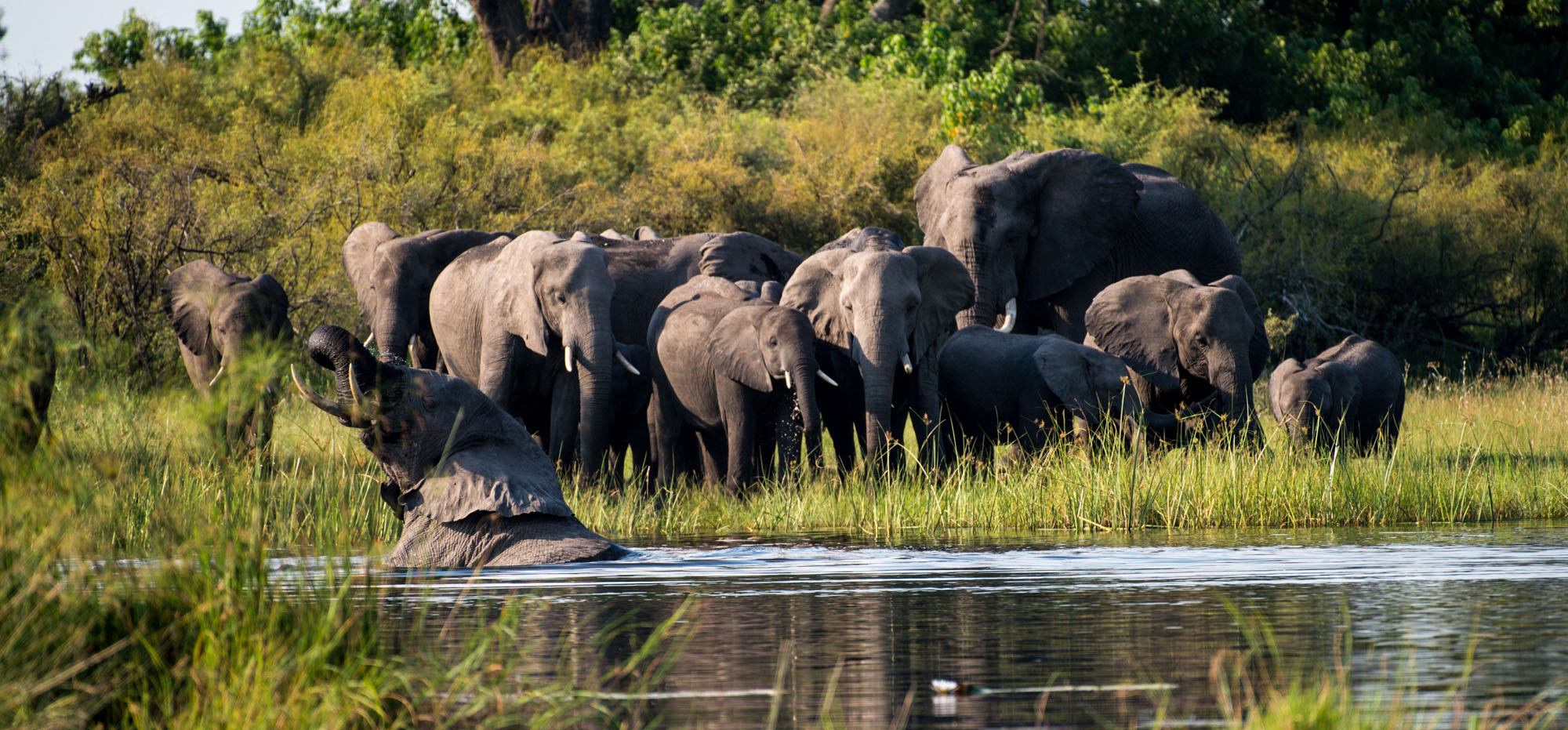
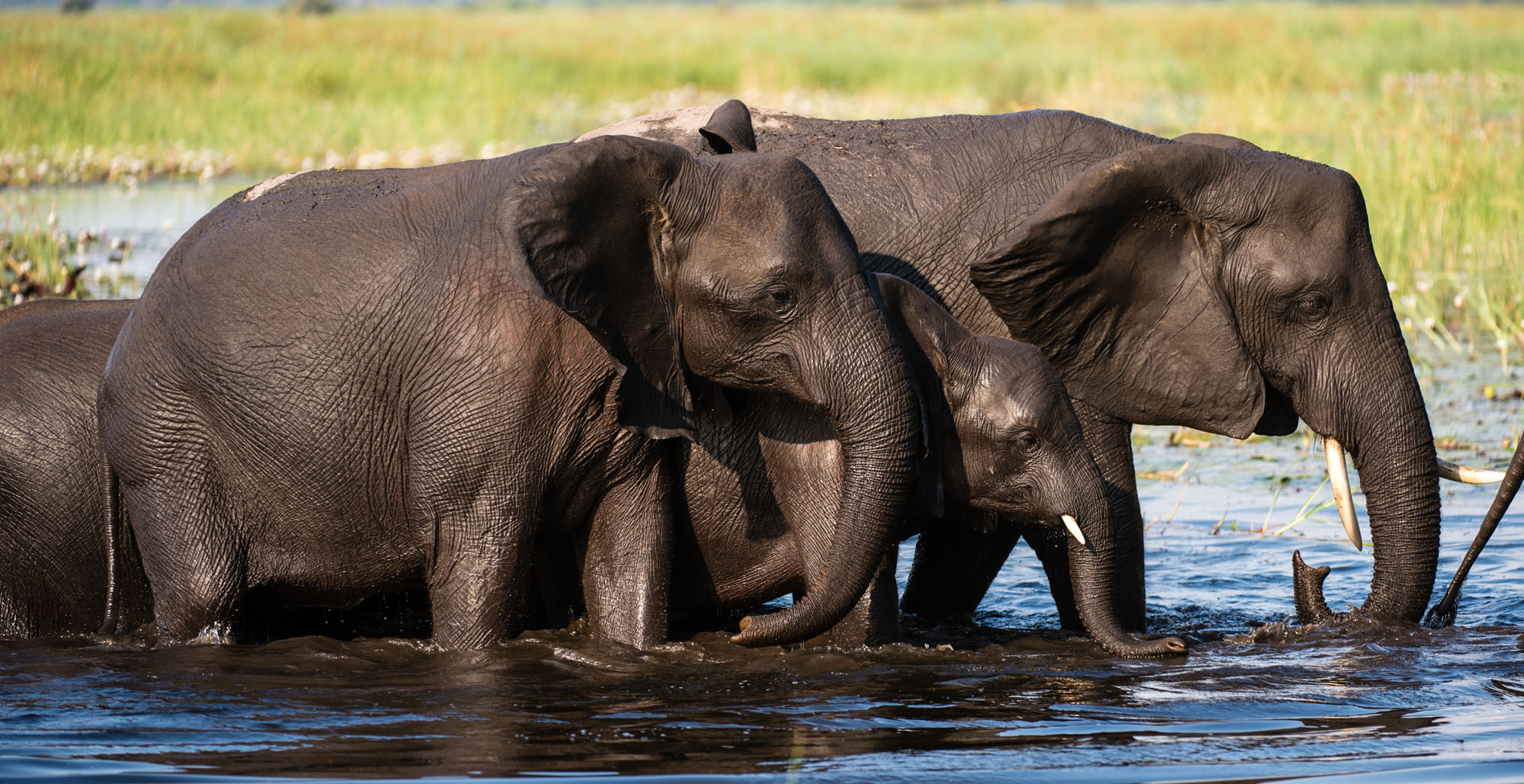
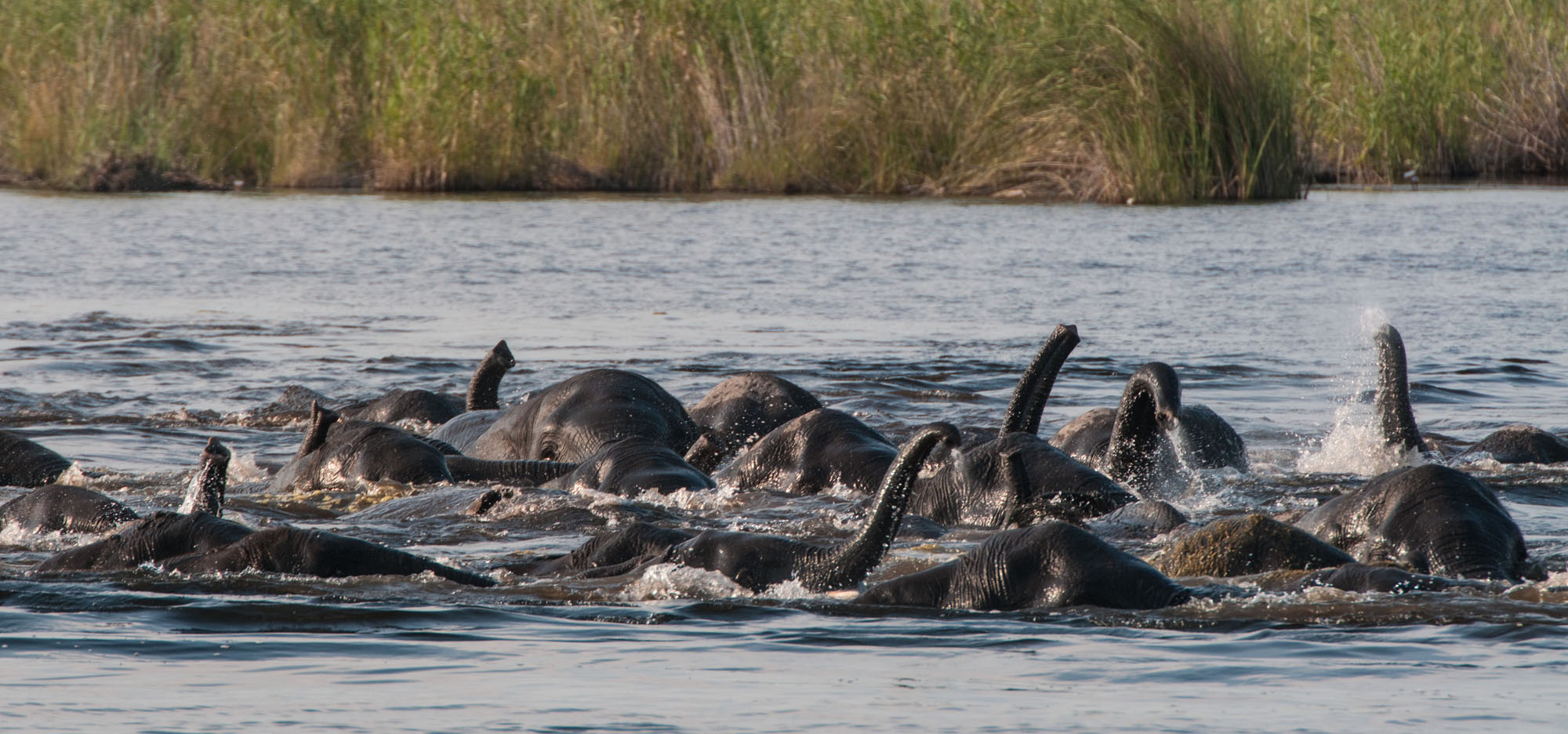
Elephants love water and habitually enter rivers, lakes and ponds to cool off, play and seemingly just enjoy being submerged.


Image

They are natural-born swimmers and can stay afloat for hours if need be.  We’ve seen them swimming – with youngsters in the herd – clear across the Zambezi River.


Image

This sequence of photographs shows elephants close to the Linyanti River in northern Botswana, walking in the river and also ‘snorkelling’ as they make their way through deeper water.


Image

Mashatu, Botswana

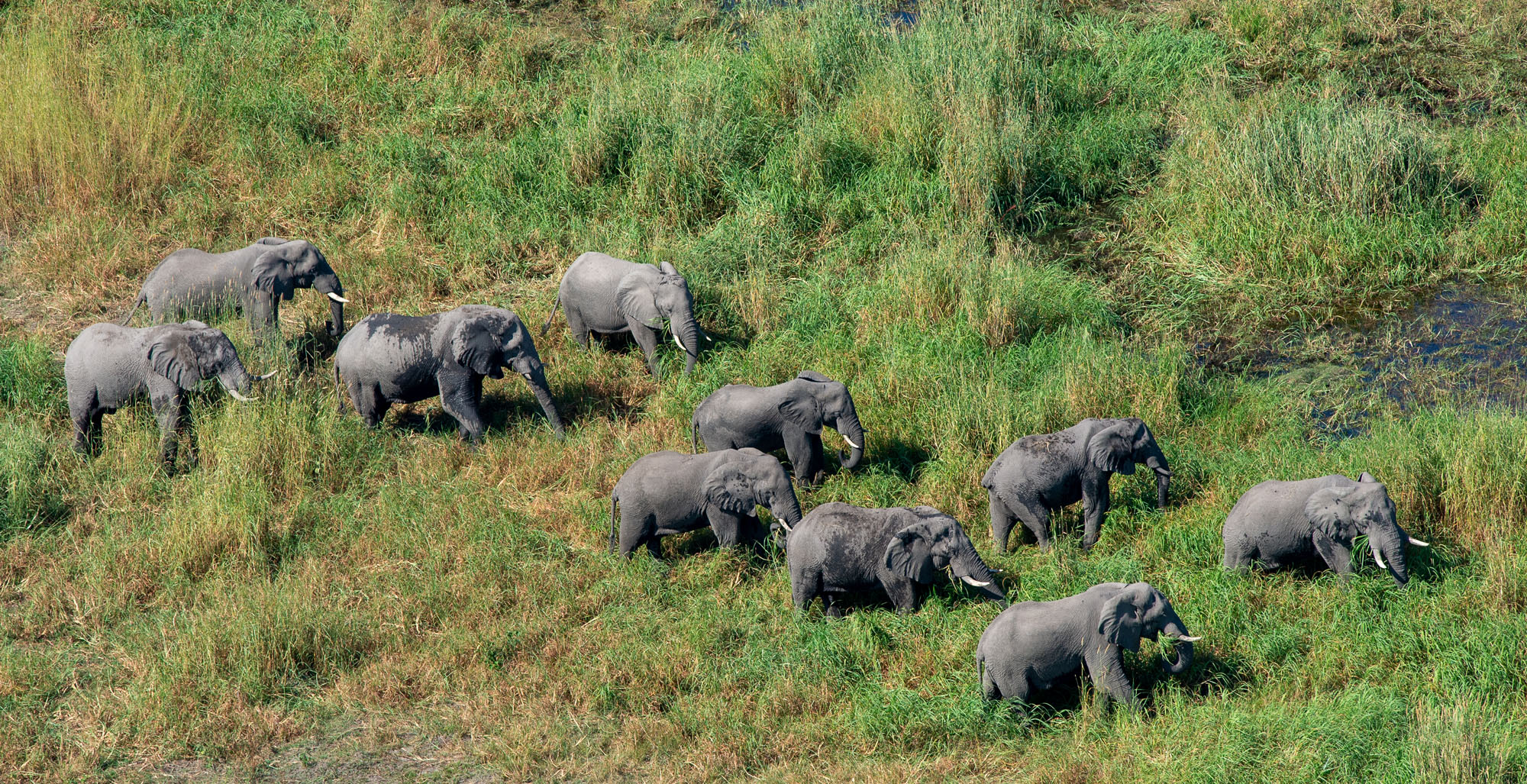
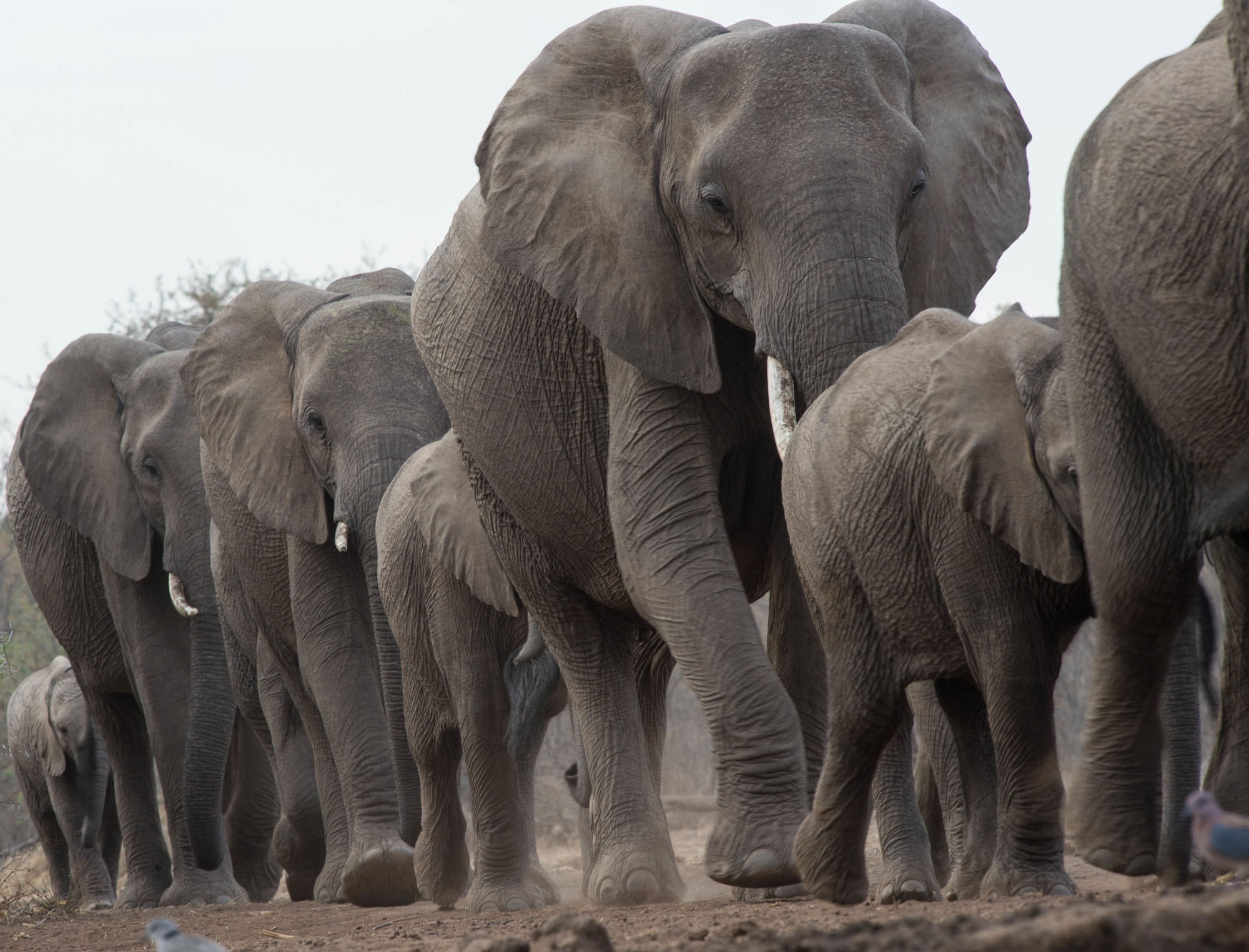
Mashatu Game Reserve in southeastern Botswana is one of our favorite big cat destinations, but it also has great elephants.  The Mashatu ellies are among the most approachable of any and will literally walk right by the game drive vehicles, just a few meters beyond touching distance.  Which is awesome to experience – every time.  Mashatu also has a specially constructed sunken elephant hide where photographers can get the most amazing shots of elephants coming to drink.  This photo was taken of a herd of elephants approaching the sunken hide at Mashatu.  They were moving towards the water in an almost businesslike fashion at a good clip, intent on getting there quickly and efficiently.  We did manage to capture some great shots on the day and Mashatu’s resident professional photographer helped us improve our photo skills, regardless of our level of expertise.  For any dry-season visit to Mashatu, a morning or afternoon spent in the hide is a most worthwhile addition to one’s program there.


Image

Sheldrick Elephant Sanctuary, Nairobi

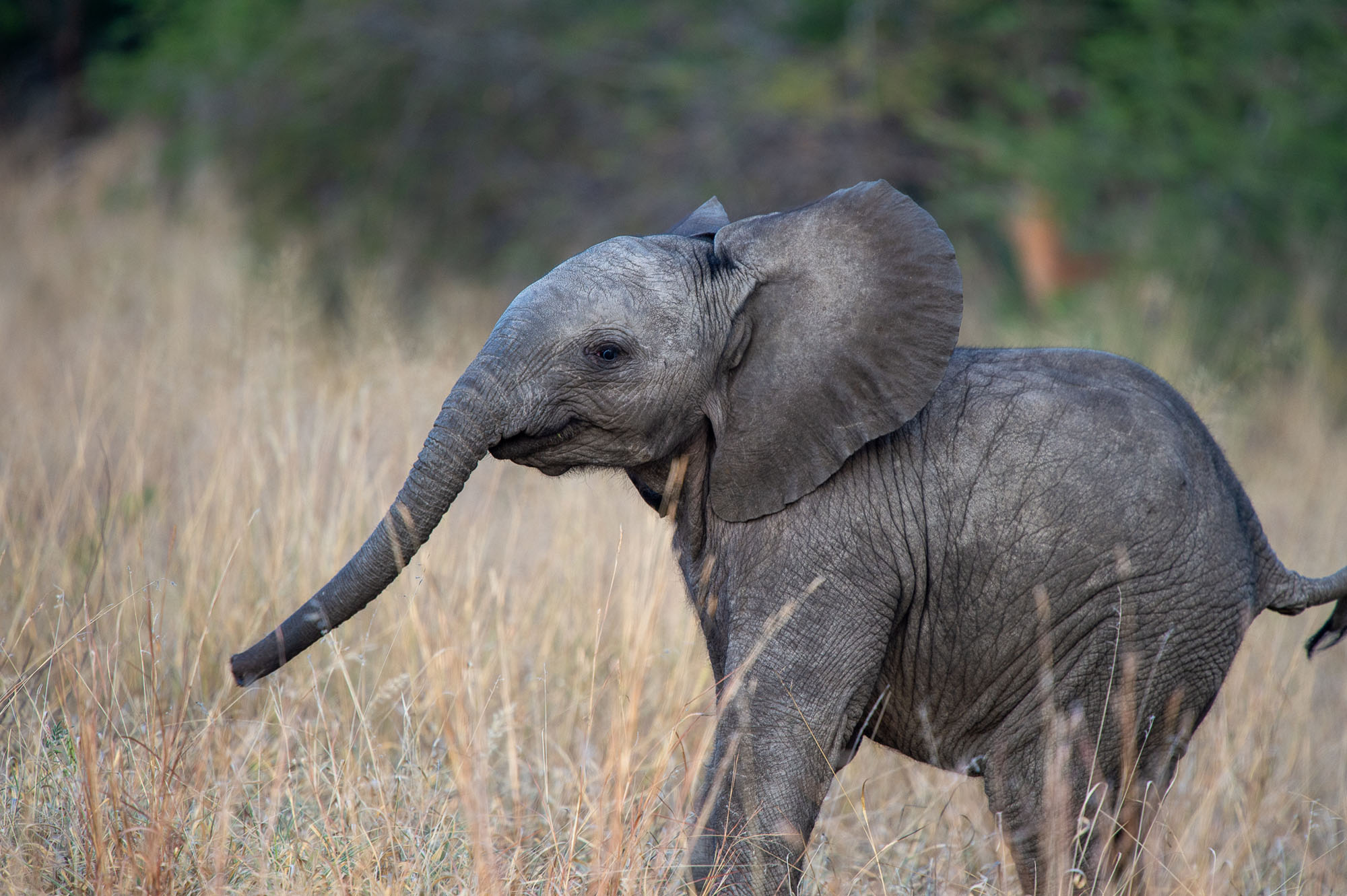
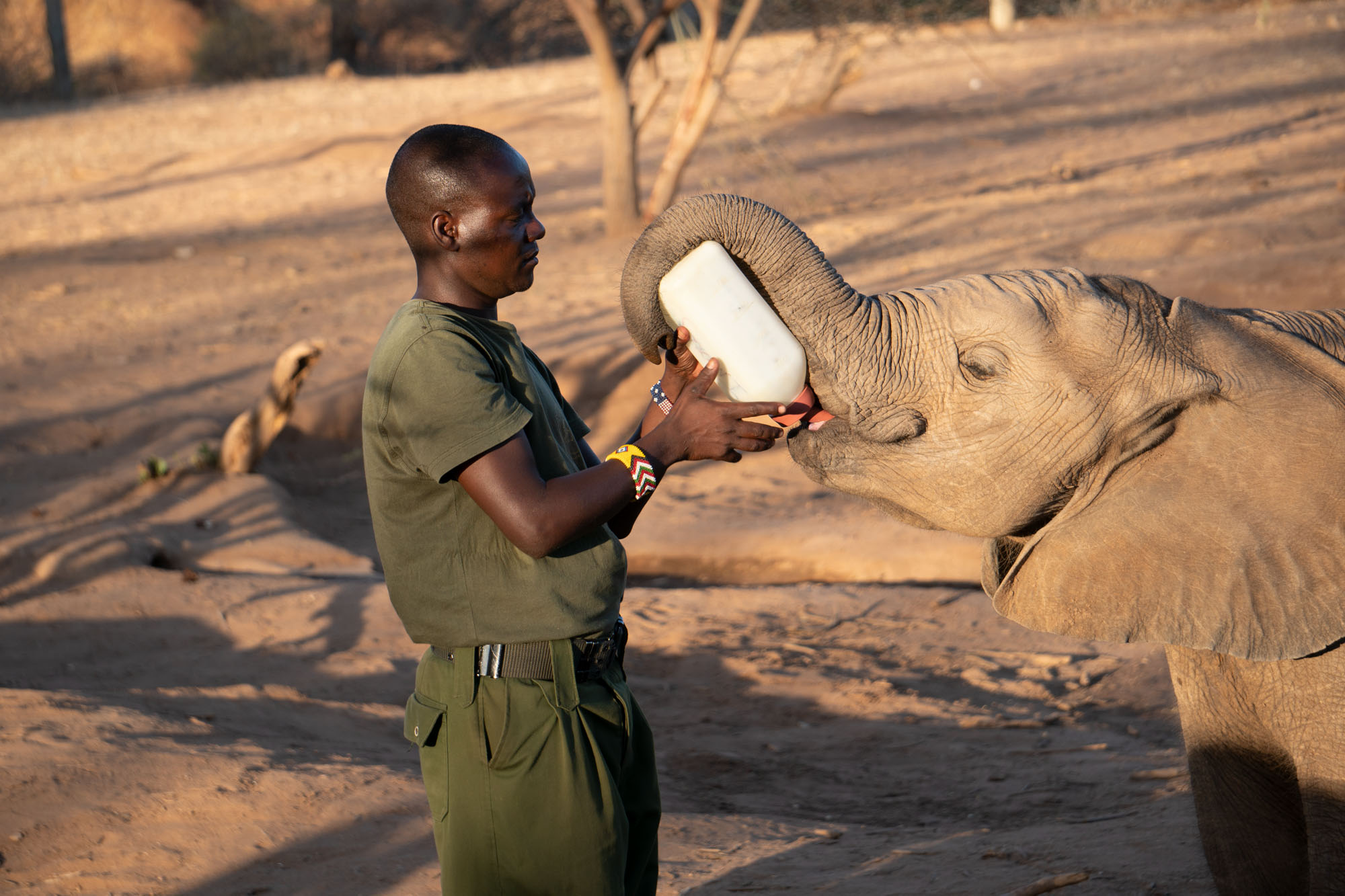
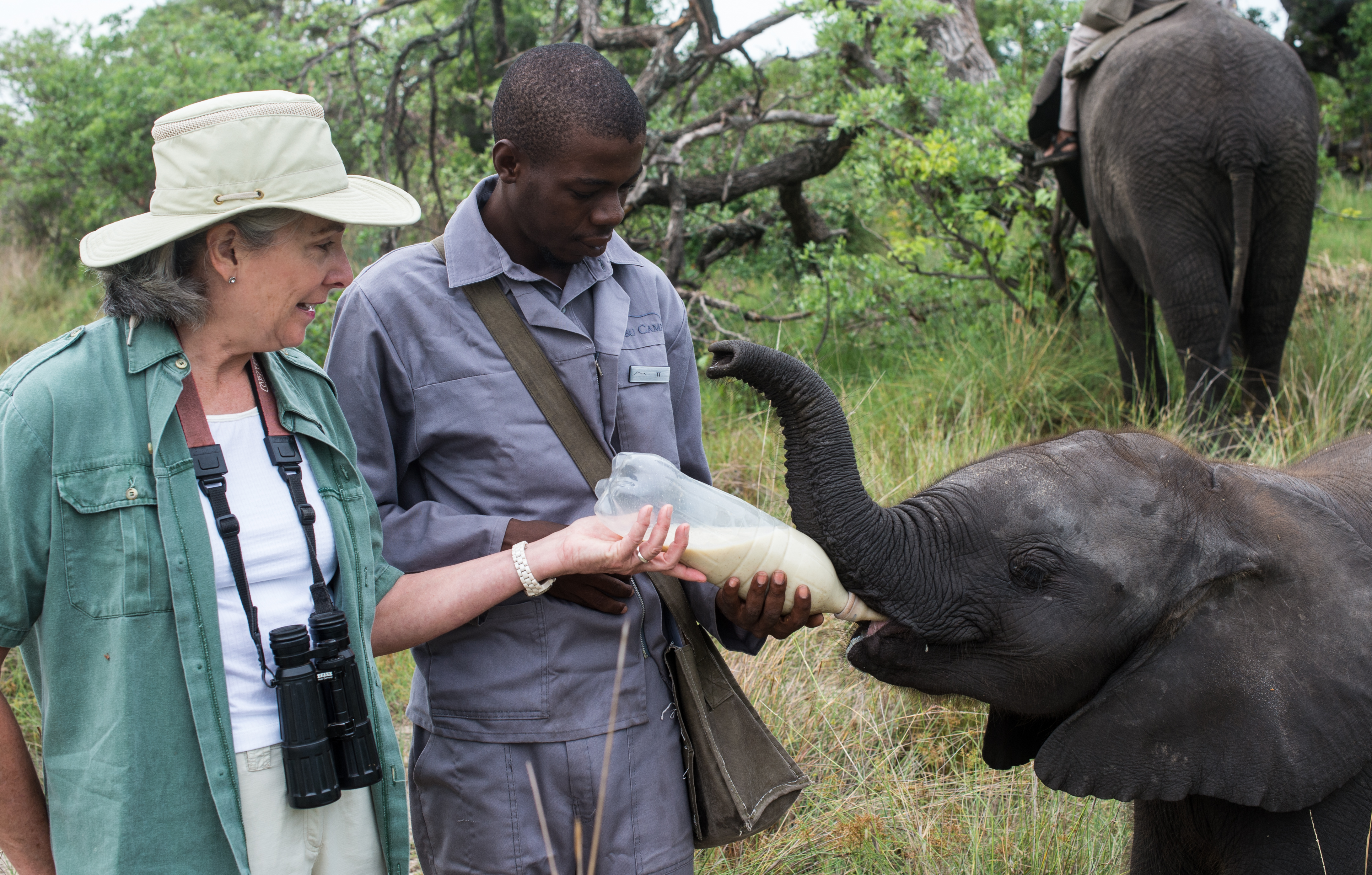
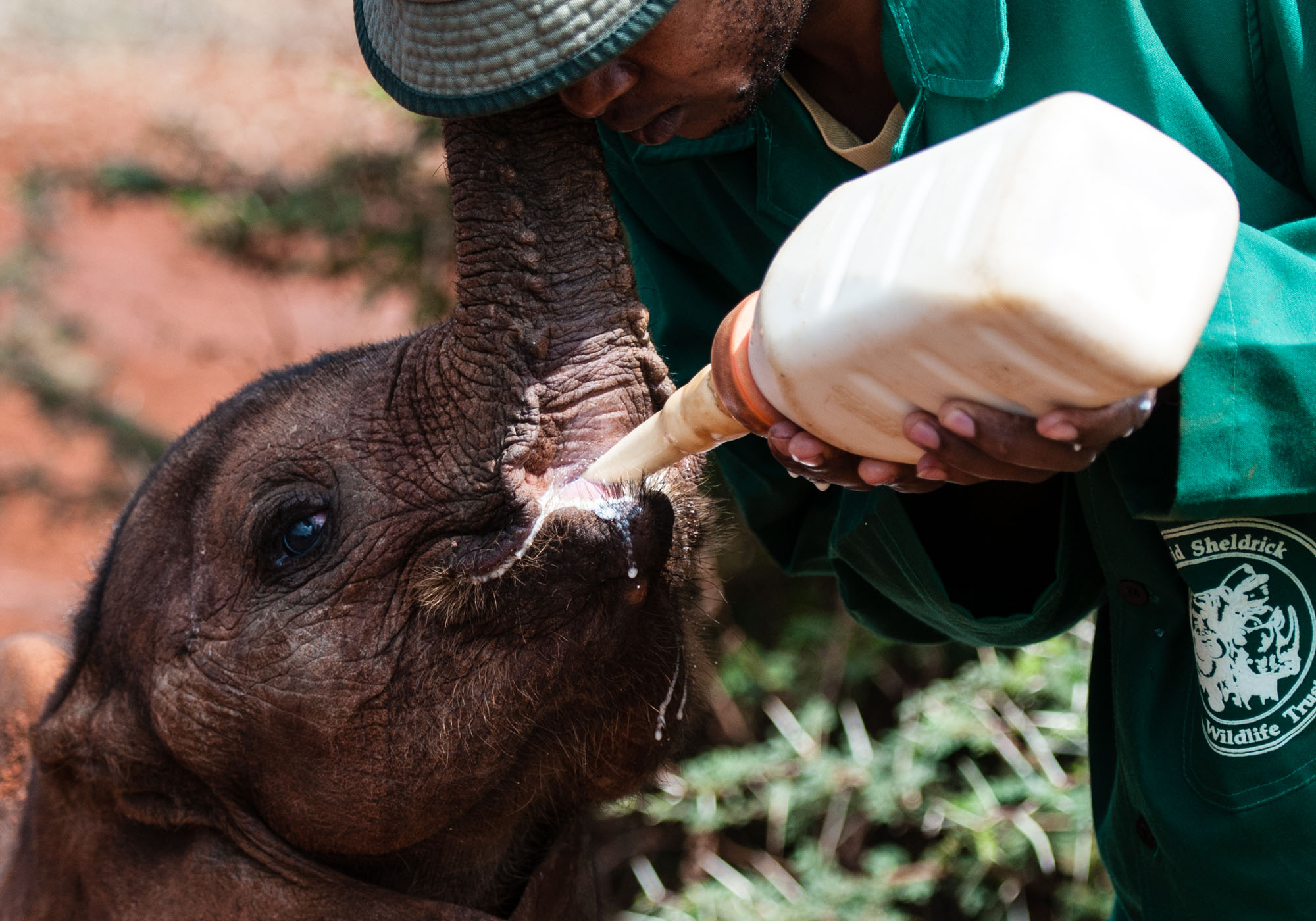
Since 1977, the David Sheldrick Elephant Orphanage in Nairobi has cared for and fostered hundreds of elephant calves from all over Kenya.  Every morning at 11:00 a.m. there is a public feeding, where visitors can observe the elephants being fed, and learn a bit more about the challenges facing elephants all over Africa.  Assistants help to dispense a special milk formula for the babies, and there’s some leaves and shrubs for the older ones.  And sometimes a mud-bath on a warm day.  The young elephants are housed in a safe stable environment until they are able to survive in the wilderness, when they are moved to Tsavo National Park for possible reintroduction with wild herds of elephants.  This photograph of a tiny baby elephant happily drinking its milk formula encapsulates to me, just how vulnerable they are and how dependent they are on us – humans – for assistance.  We cannot change the past but we can help to undo some of the negative fallout of poaching and human-animal conflict.  Visitors or interested persons who adopt a baby elephant have the option of scheduling a more private afternoon visit, for foster parents only.  

Next week’s blog post will focus on the most elusive of the ‘Big Five’ African mammals – the leopard.  Much more common than one might think, but rarely seen due to their mostly nocturnal existence.  We will look at a handful of places where leopards can be seen and photographed relatively easily and consistently.

More Info

Email bert@fisheaglesafaris.com

Email jason@fisheaglesafaris.com

@fisheaglesafarishouston

#FishEagleSafaris

YOU MIGHT ALSO BE INTERESTED IN

Destinations
Zambia

10th September 2021

Chindeni and the Bushcamp Company, Zambia

By late July we found ourselves at Chindeni, a small Bushcamp Company property

Read more
Botswana
Destinations
Okavango Delta

3rd October 2022

Camp Okavango, Botswana

Camp Okavango is in the heart of the permanent part of the Delta. In this idyllic setting there are no vehicles, and it is just a short walk

Read more
Area
Destinations
Nyerere National Park
Ruaha
Tanzania

14th October 2023

From My Safari Notebook: Wildlife Photography

Birds in flight and wildlife photographers have an uneasy relationship. Things go wrong as often as they go right. Getting focus-lock on a moving subject

Read more

SUBSCRIBE TO OUR NEWSLETTER

READERS FAVOURITES

Destinations
Zambia

10th September 2021

Chindeni and the Bushcamp Company, Zambia

By late July we found ourselves at Chindeni, a small Bushcamp Company property

Read more
Botswana
Destinations

4th August 2022

On Safari At Belmond Eagle Island Lodge, Okavango Delta

What is the ‘secret sauce’ for an unforgettable few days on safari in Botswana? It starts with the animals, of course. The elephants, lions, giraffes, hippos
Read more
Destinations
India

27th May 2023

India

India’s tiger, mammals and birds.

Read more

Seeing and photographing Giraffes on safari in Africa

14th October 2020

Seeing and photographing Giraffes on safari in Africa


Image

Seeing and photographing Giraffes on safari in Africa

As long-time safari planners and regular African travelers, giraffes are often on our minds, or in front of our camera lenses.  Other than perhaps elephants, it is the one mammal that we get the  most questions about.  Everybody wants to see giraffes on safari.   Just like the big cats, these quintessential African mammals are high on everyone’s must see list. It is easy to see why.  They are simply spectacular in so many ways.  There’s the sheer size of them, their stilt-like elongated necks and unmistakable ‘horned’ heads literally towering above the landscape and everything else.  There’s the way they feed, drink, stare at you and run.  Pretty much everything about a giraffe is weird and worth a second look.


Image

Linyanti floodplain, Botswana

This photo, taken in the Linyanti area in Northern Botswana, illustrates a couple of things about giraffes and about getting useful images of them.  Be ready with the right lens.  If all you have available is a big telephoto lens, this is all you might get.  A portion of a giraffe.  Legs.  Or a head, maybe a neck and head.  So either shoot them at a good distance where they can fill the frame or use a shorter zoom lens to frame them properly.  On this day I was fortunate to have a yellow-billed oxpecker bail me out of the tight photo spot.  These birds have a symbiotic relationship with giraffes, helping them to get rid of disease-carrying ticks, food for the birds.  Even ill-equipped photographers can be the beneficiaries of symbiosis, with a bit of luck. 


Image

Kwara concession, Okavango Delta

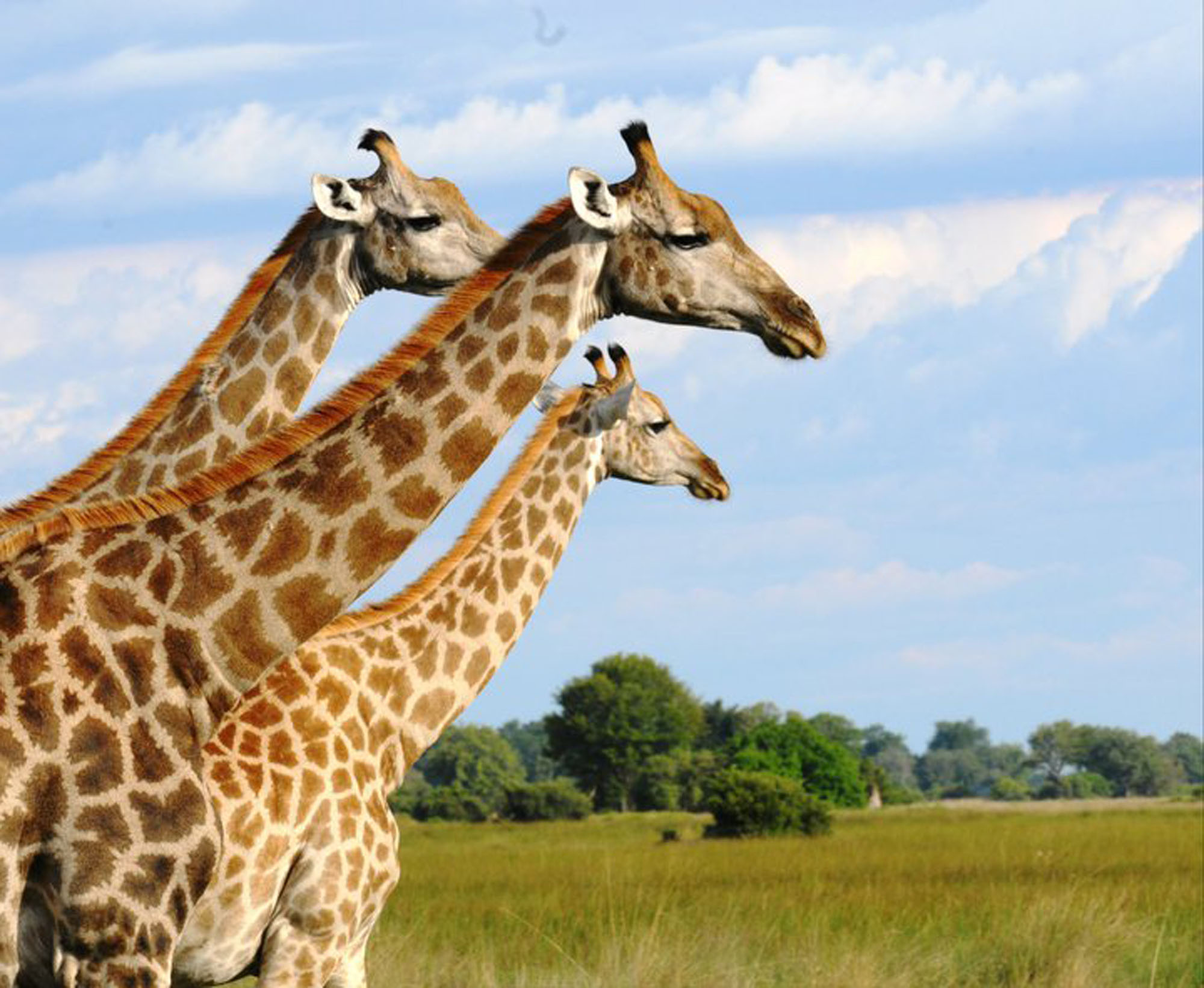
When it is not possible to get the entire giraffe – or more than one – inside the frame, consider grouping together a few giraffe necks, heads or upper bodies.  Sometimes, you can get lucky and three giraffes will be facing in the same direction, with a nice cloudy background.  It doesn’t happen all the time but keep looking for such an opportunity to present itself.  Some years ago in the Kwara concession in Botswana’s Okavango Delta, I did just that, got lucky and succeeded in getting a visually pleasing shot of these three giraffes.


Image

Kwandwe Game Reserve, Eastern Cape

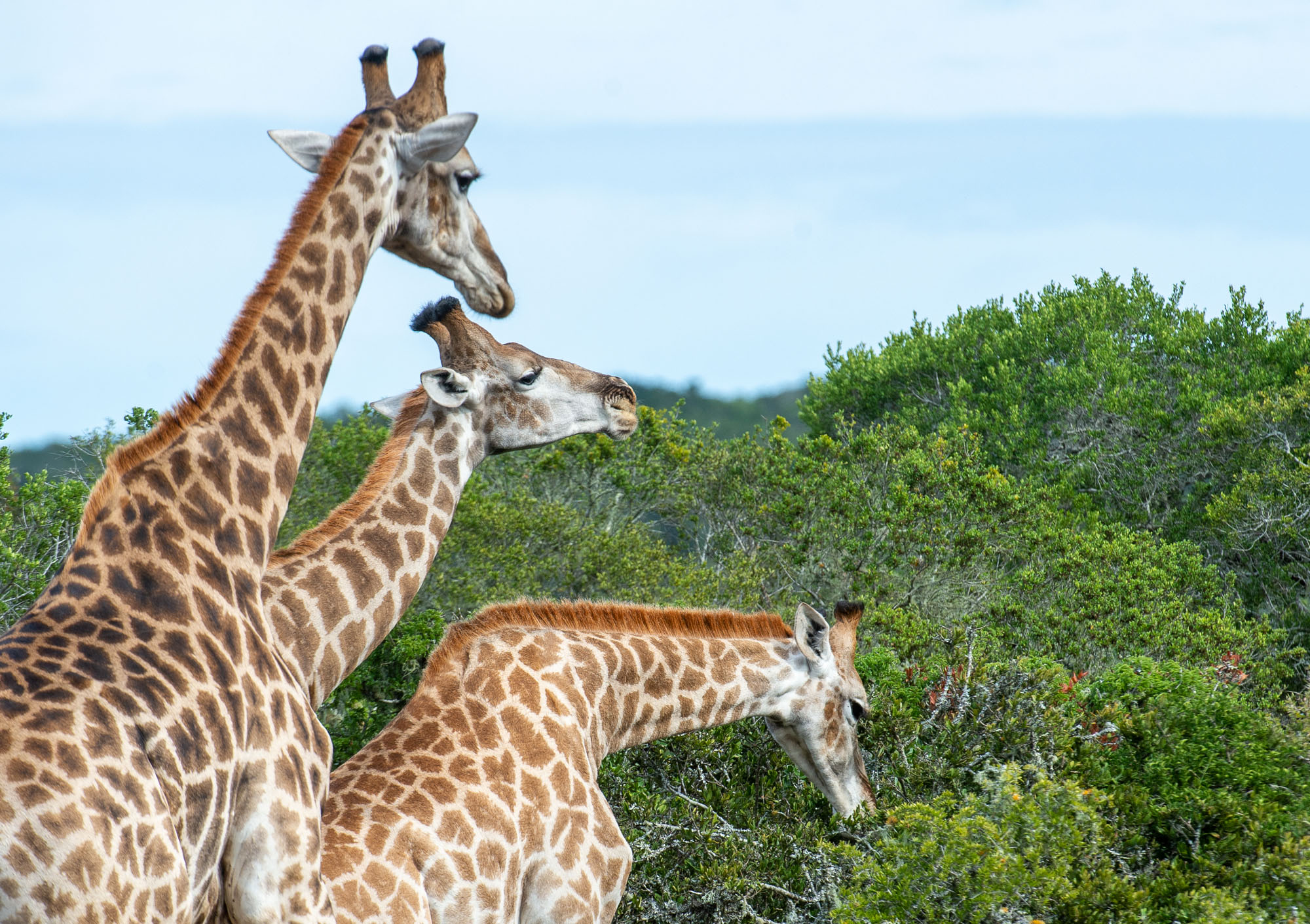
I captured this photograph of three plains giraffes feeding at Kwandwe in the Eastern Cape Province of South Africa.  It is another example of framing more than one giraffe in the same photograph, by isolating their necks and heads.  The more giraffes, the better.  Four necks may even be better than three; I’ve just not come across a suitable opportunity to try that!


Image

Samburu region, Kenya

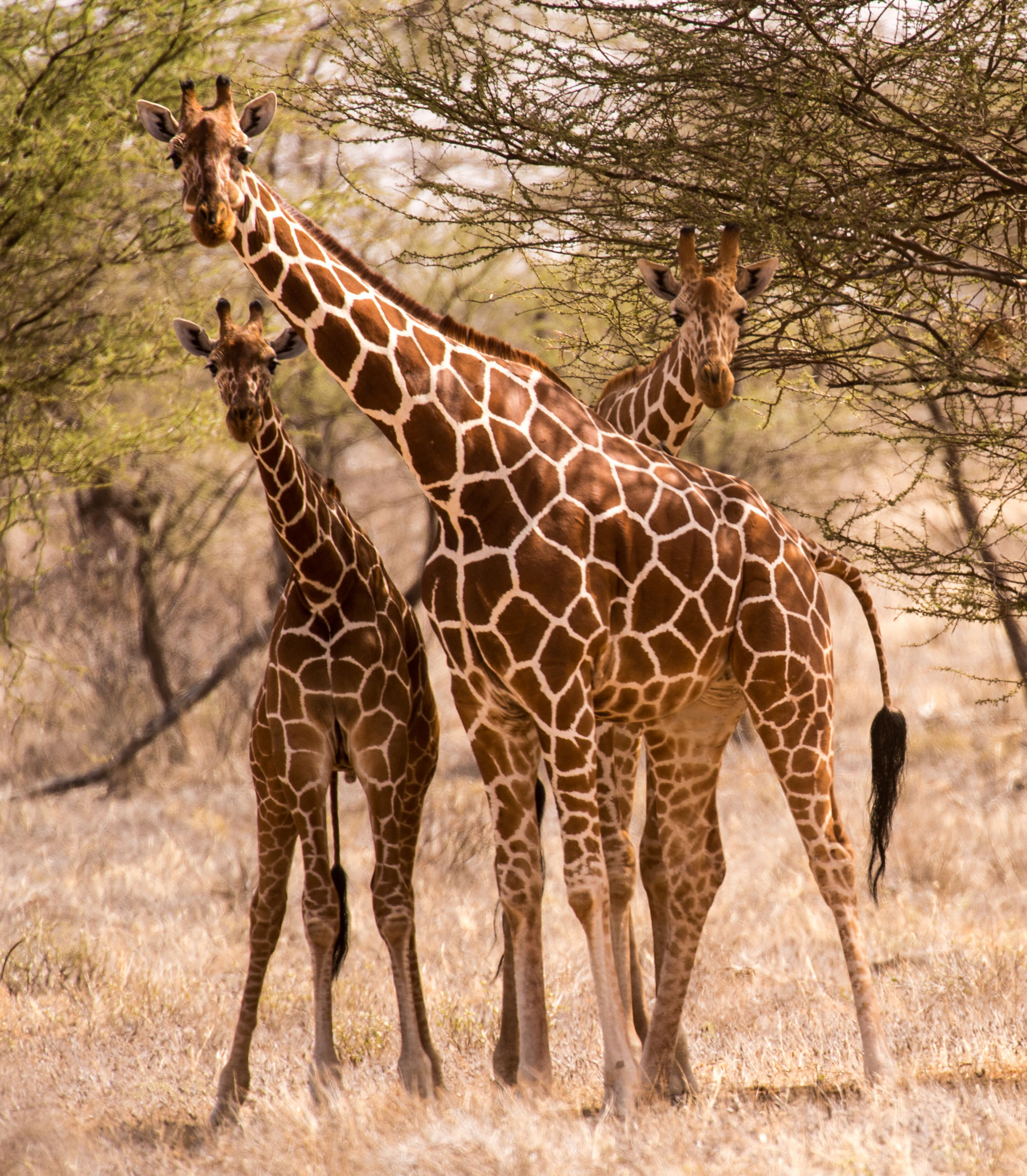
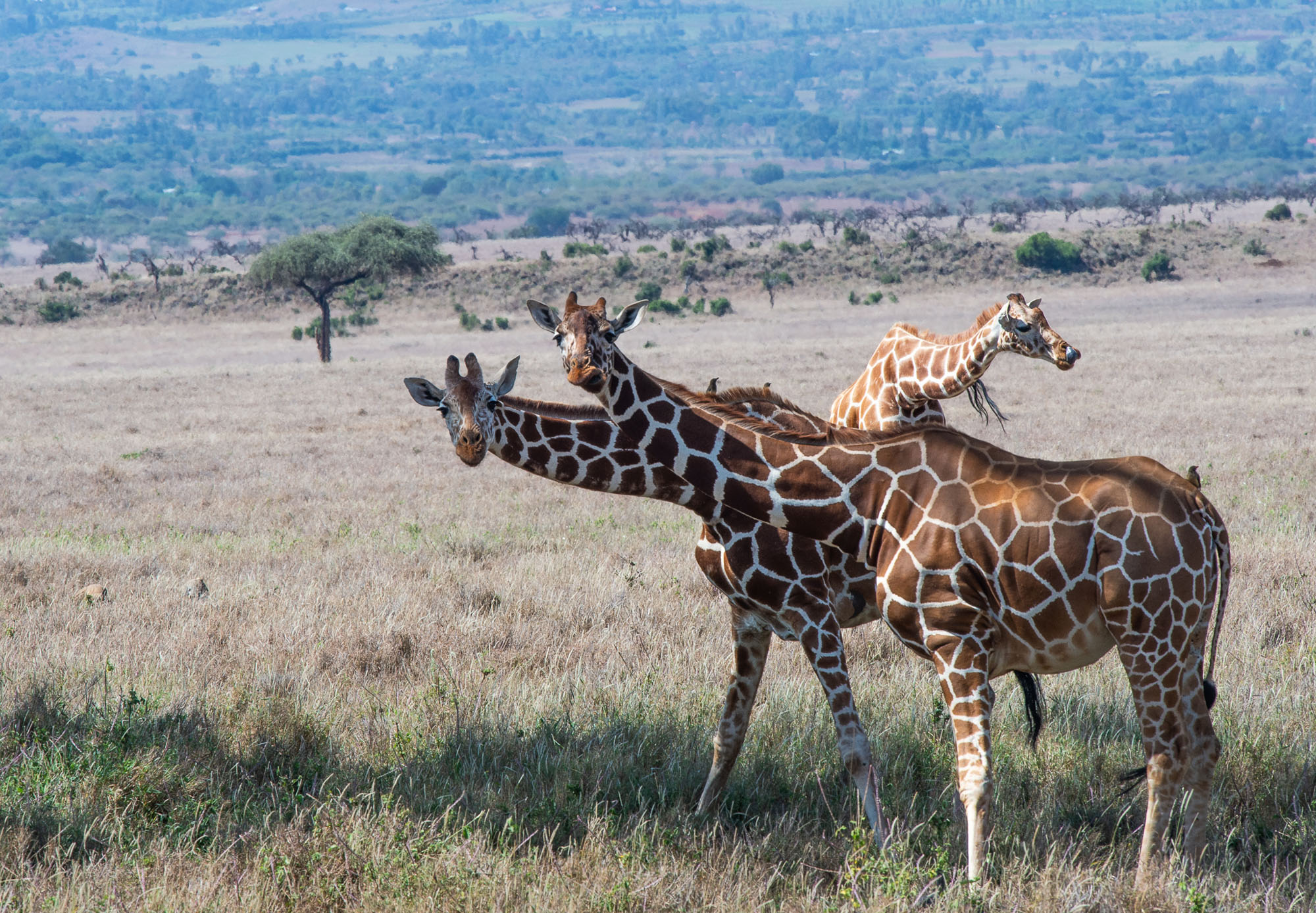
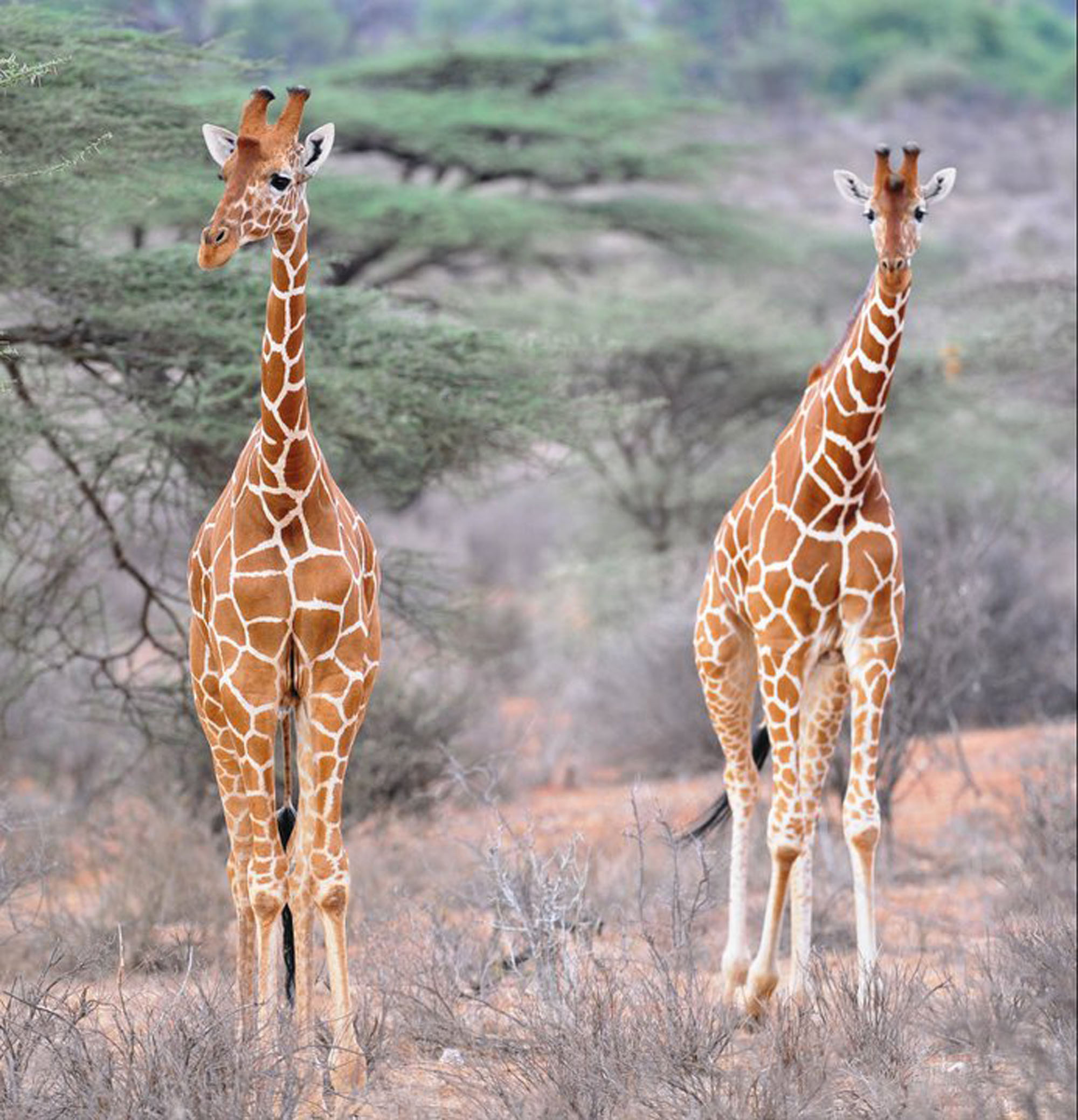
There are several species of giraffe in Africa.  The three photos above have been of the most common of these, the Southern giraffe.  In north-eastern Kenya one finds what I consider to be the most handsome of the giraffe species, the Reticulated giraffe.  This photo of a few of them was taken in Samburu, a mostly stark, arid area where a good number of these endangered animals co-exist with a couple of other northern Kenyan endemics such as Grevy’s zebra and Beisa oryx. I’ve always described the Reticulated giraffe as the oil painting of giraffes, compared with the more washed out – ‘watercolor’ – Southern giraffe.  If you’ve seen Reticulated giraffes in nature, I think you will agree.  Their spots are a vivid, dark burnt orange which make the white stripes stand out even more.  Another good place to find and observe Reticulated giraffes is the Lewa Wildlife Conservancy. 


Image

Lewa Wildlife Conservancy, Kenya

Taken in the Lewa Conservancy in northern Kenya, this photo of three Reticulated giraffes also illustrates their striking color pattern.  And my penchant for trying to get  several giraffe necks and heads in the same photo…


Image

Lake Nakuru National Park, Kenya

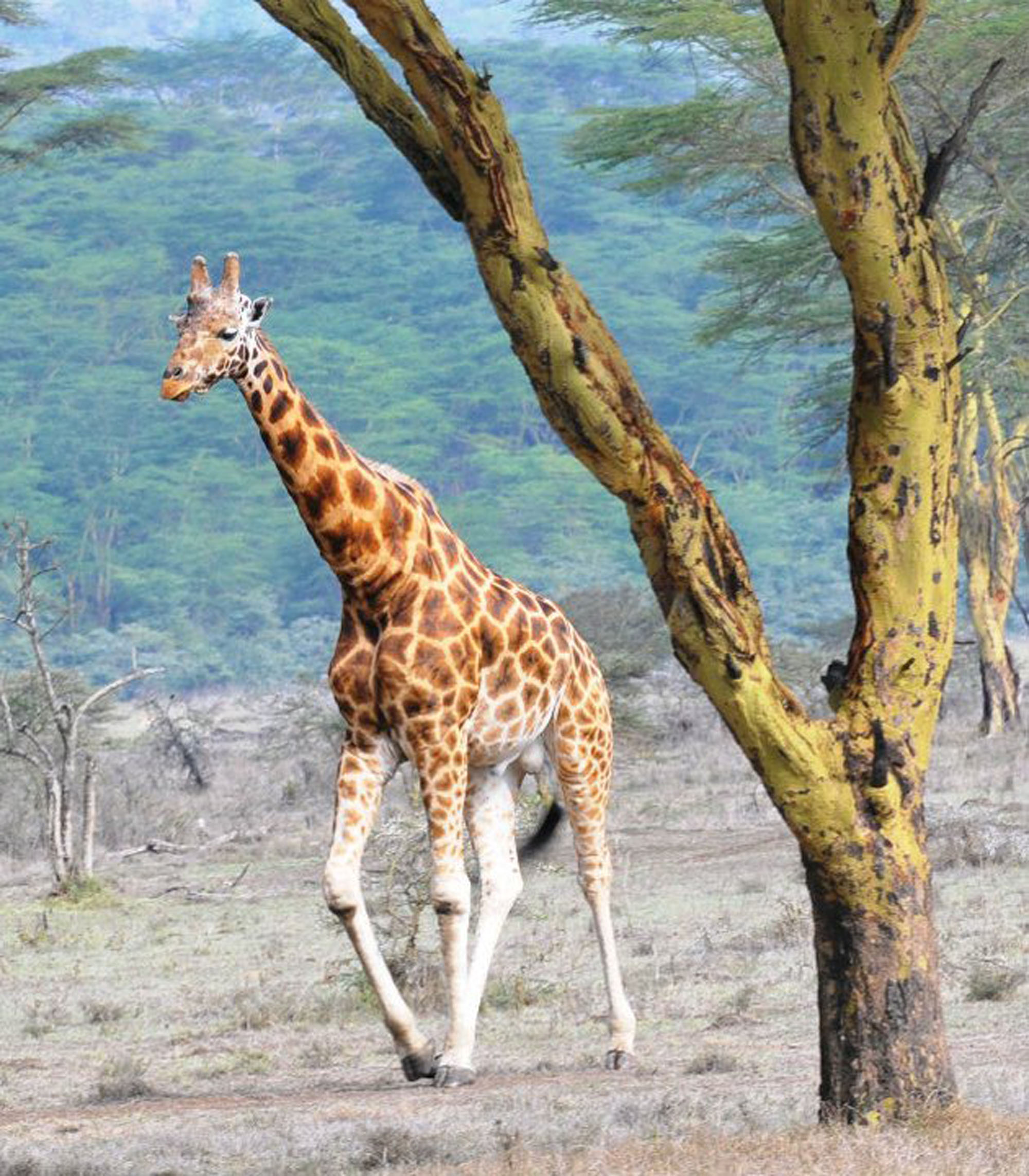
There is considerable disagreement among scientists as to the specific number of giraffe species.  Some maintain that there’s only one ‘giraffe’ with several subspecies.  Others contend that there are as many as eight distinct species.  A giraffe that is widely considered to be a subspecies is the Rothschild’s or Nubian giraffe.  I photographed this one walking in a yellow-barked acacia forest on the edge of Lake Nakuru in Kenya.  Full species or not, it is certainly a handsome beast with its characteristic white ‘sox’.


Image

Giraffe Center, Nairobi

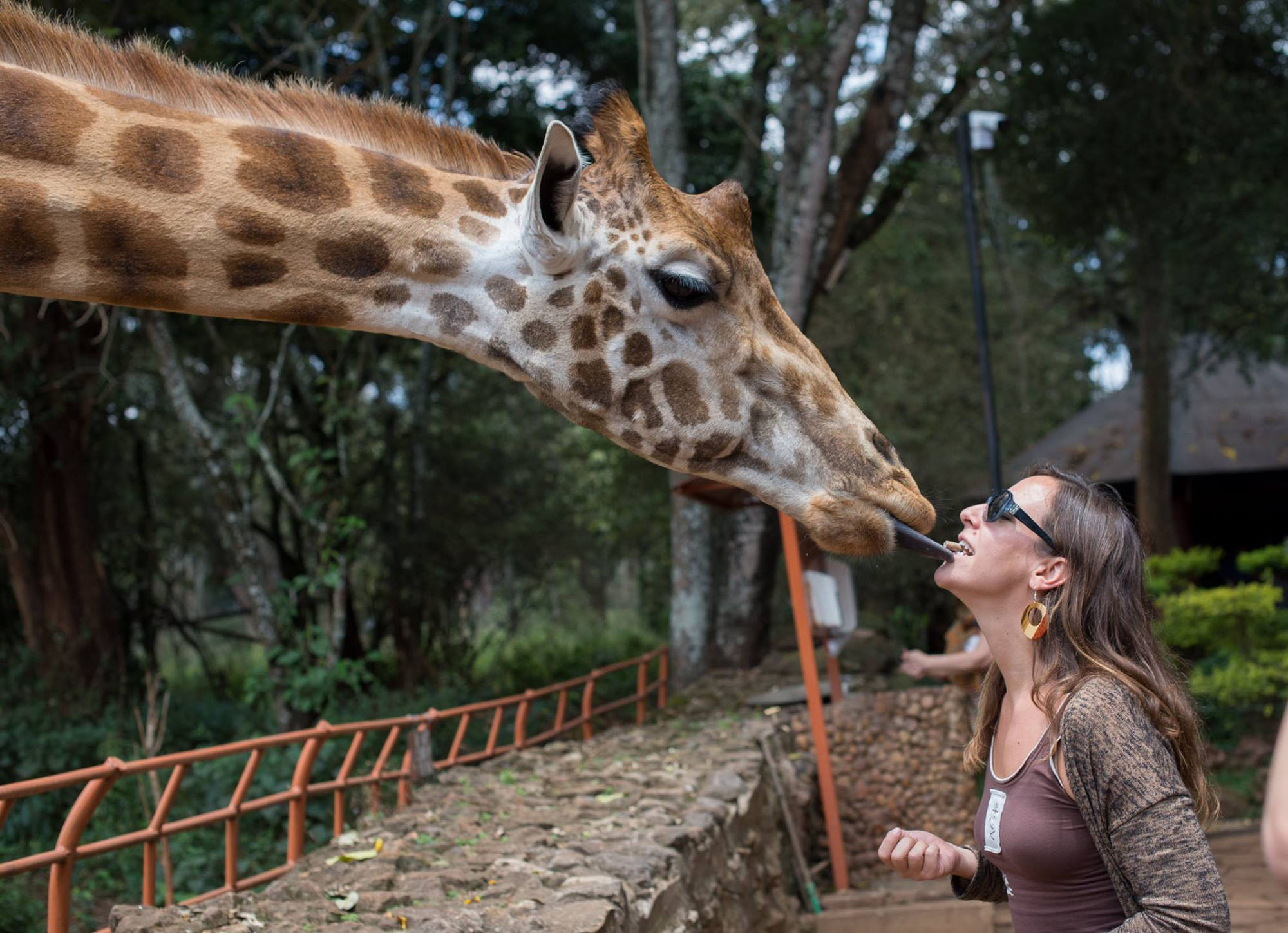
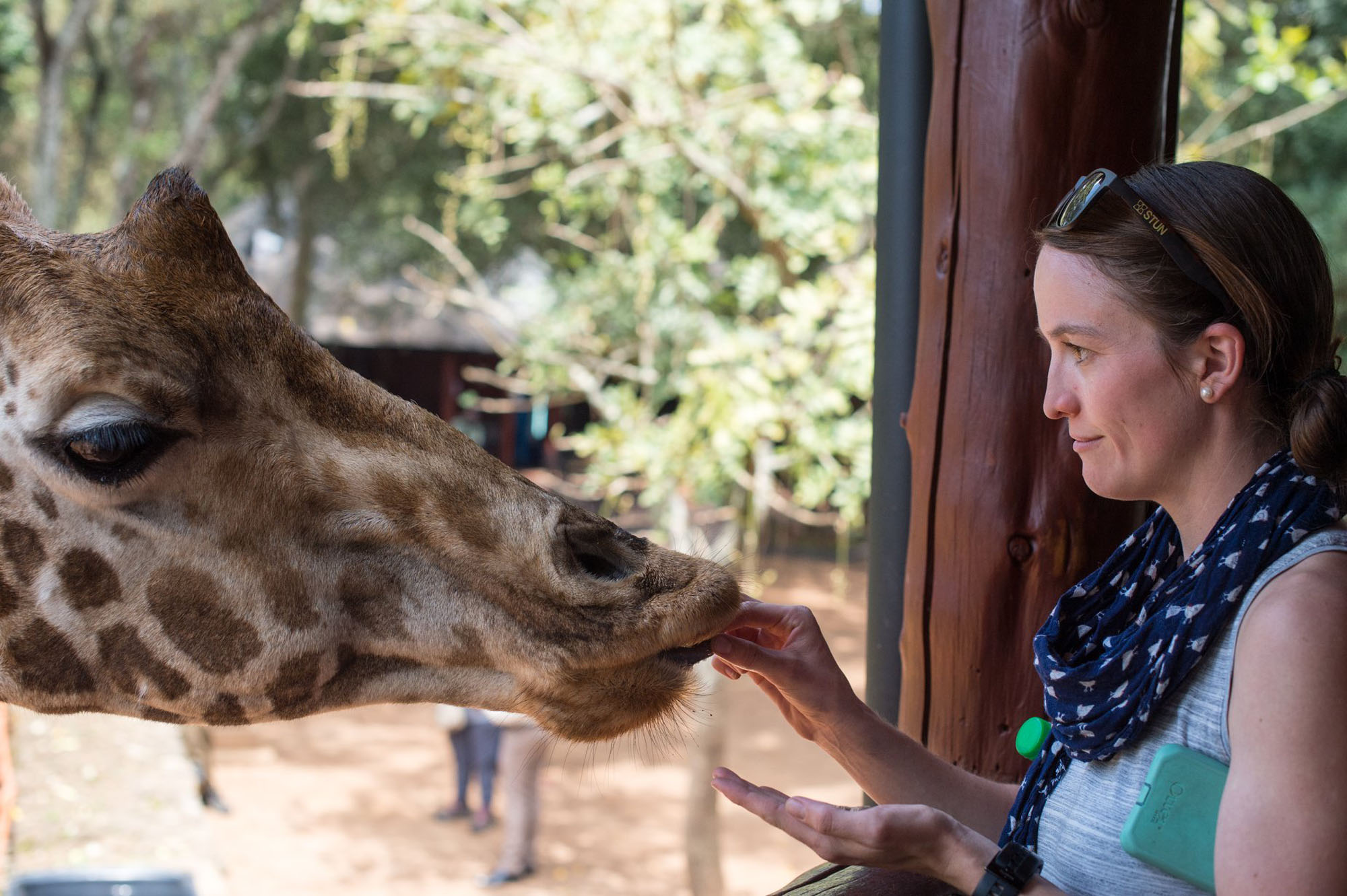
There are several Rothschild’s giraffes at the popular Giraffe Center in Nairobi, Kenya.  The Giraffe Center is operated by the African Fund for Endangered Wildlife, to educate Kenyan youth about the country’s wildlife and environment and to provide visitors an opportunity to come into close contact with the giraffes. ‘Armed’ with a handful of giraffe pellets, visitors walk up a ramp to a balcony from where they can feed the giraffes at eye-level.  The giraffes know the game.  Whenever there are visitors, there are giraffes ready to stick out their crazy long tongues to retrieve a treat and be photographed.  All for a good cause.  Funds raised by the Giraffe Center have helped with efforts to re-establish the endangered Rothschild giraffe in several wilderness areas elsewhere in Kenya.


Image

Royal Malewane, Thornybush Reserve – South Africa

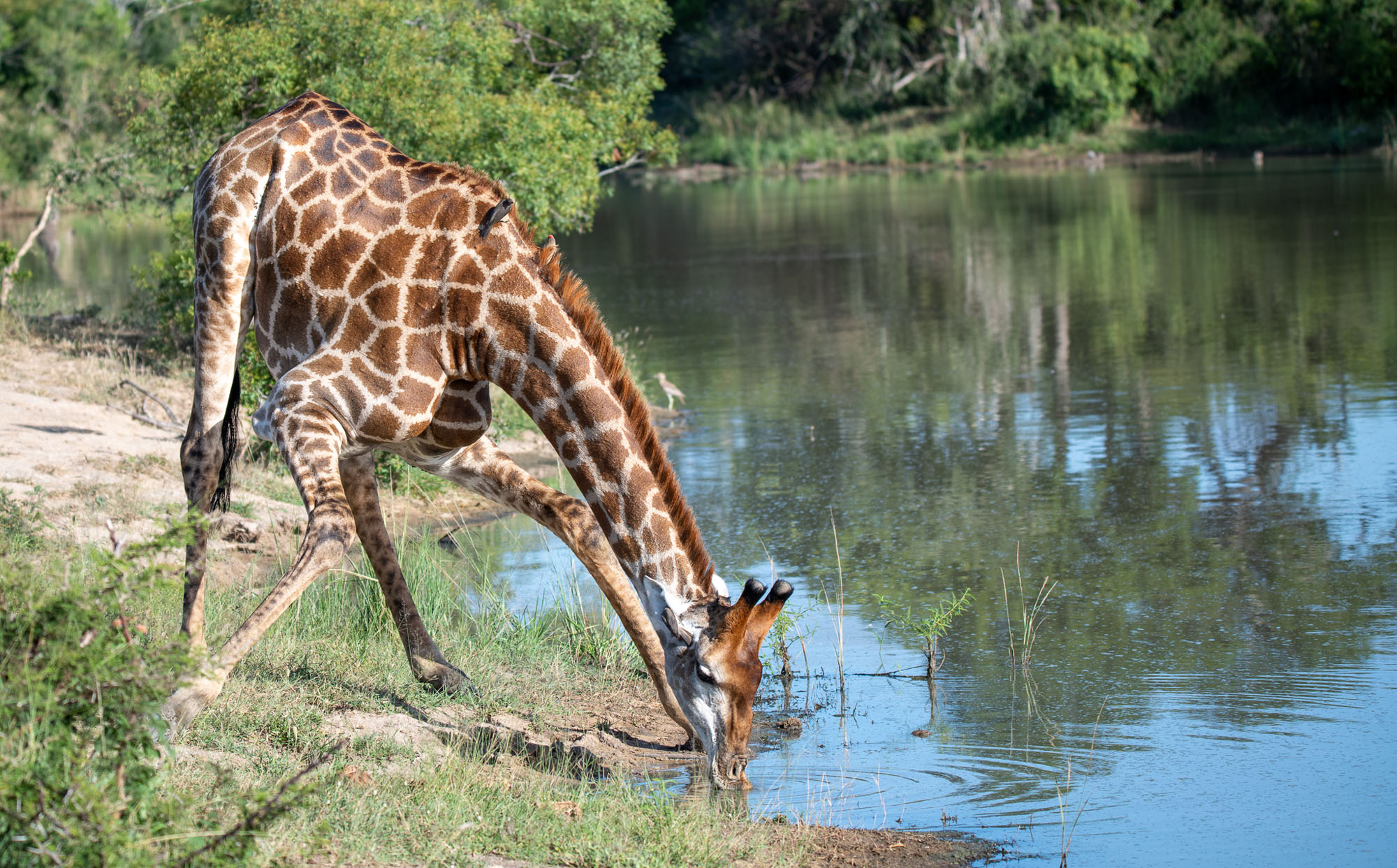
A giraffe drinking is quite a sight to behold.  This photo which I took on a game drive from Royal Malewane in South Africa illustrates the peculiar posture which a giraffe has to adopt in order to get its mouth down low enough to drink water from a pond or river.  The exact mechanism by which a giraffe gets enough water in its mouth and up its massively long neck, isn’t entirely clear. What is clear is that  giraffes are vulnerable to predation when they are drinking and they are always careful to look around for lions, before assuming the position.


Image

Skeleton Coast area, Namibia

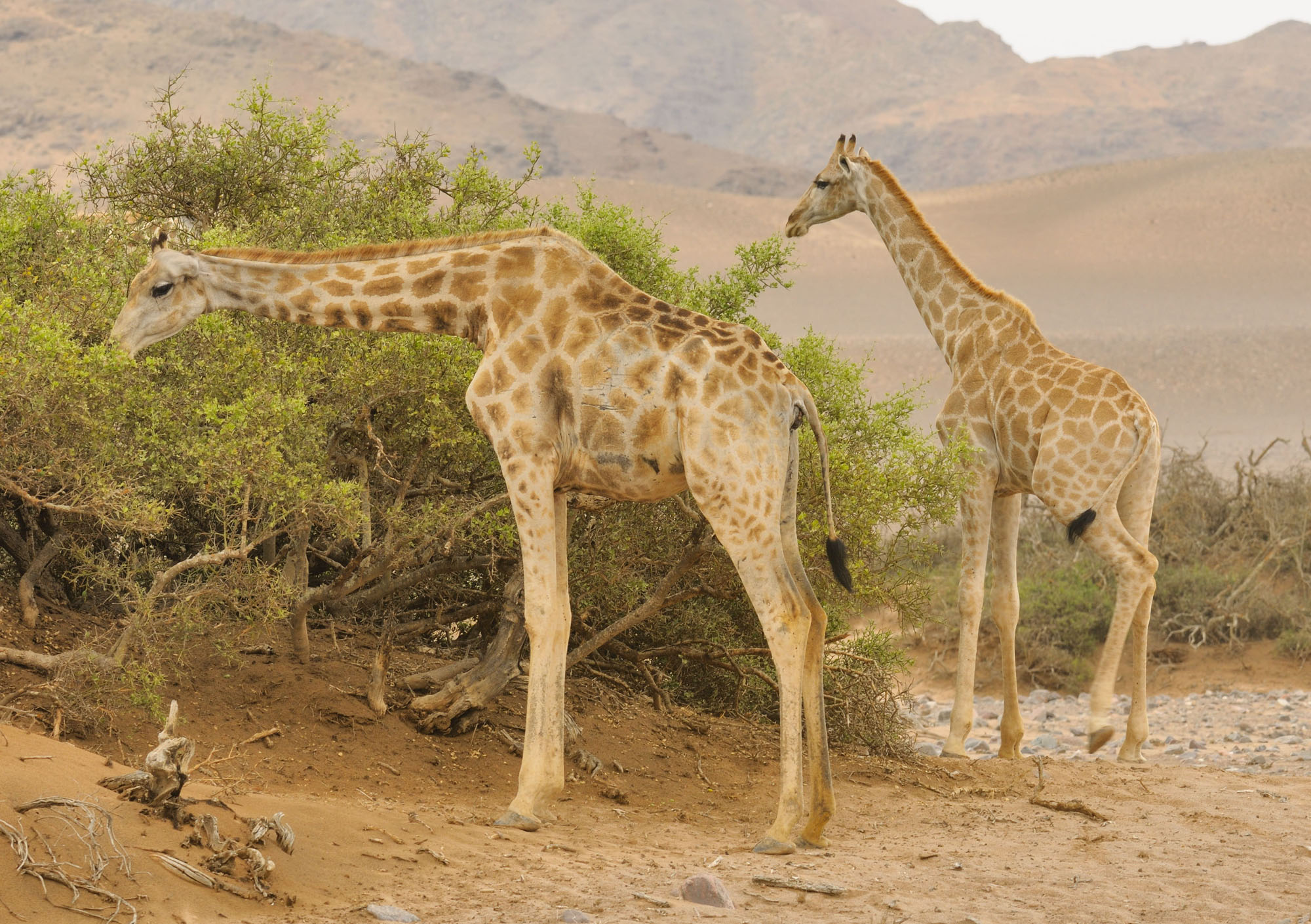
A little known fact about giraffes is just how adaptable they are. As a result giraffes are widely distributed in most habitats throughout Africa, even in some areas which are inhospitable to many life-forms. On two separate visits to Namibia’s Skeleton Coast we saw several groups of desert-adapted Angolan giraffe, a sub-species concentrated around ephemeral or seasonal rivers such as the Hoarusib, Huab and Hoanib.  Wherever you see groves of acacia albida (Ana) and acacia erioloba (Camelthorn) trees, you can expect to find these giraffes.  This photo was taken on a game drive out of Wilderness Safaris’ Hoanib Skeleton Coast Camp.


Image

Okavango Delta, Botswana

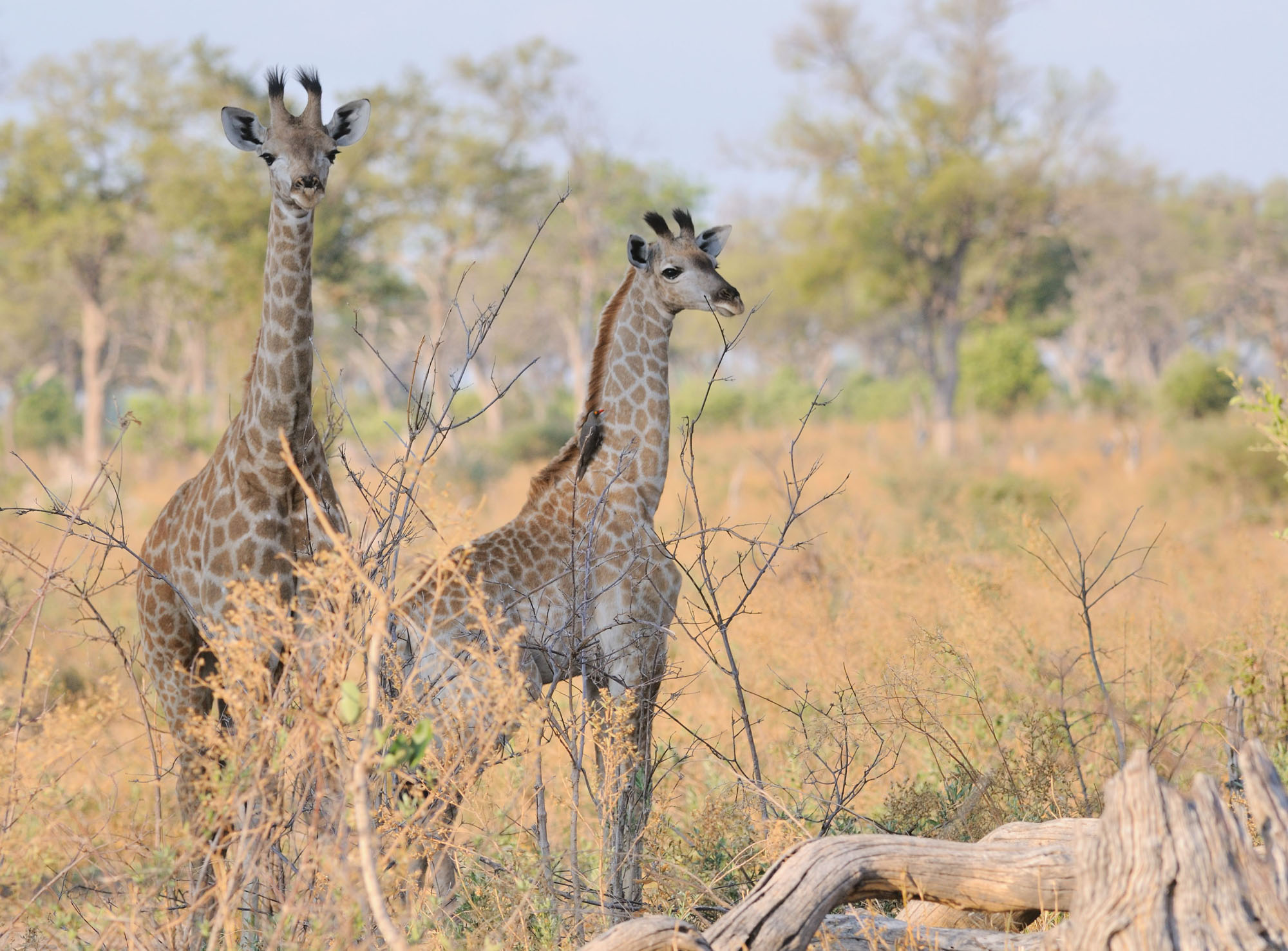
Baby giraffes are cute.  Like most other animals.  These two youngsters were photographed on a game drive out of Wilderness Safaris’ Abu Camp in Botswana’s Okavango Delta.  Even at a young age, giraffes adopt the typical habits of the species like being inquisitive and observant.  They can see you long before you can see them, and they fully utilize their special advantage,  always looking and staring.  When safari guides are out on game drives searching for predators, they make a point of checking out where the giraffes are looking.  If giraffes are standing still and staring consistently in the same direction, it is always a good indication that a predator is around.


Image

Samburu, Kenya

Giraffes are relatively common in many areas in Africa.  We always expect to see some – and sometimes many – in places like Mashatu in south-eastern Botswana, in Zimbabwe’s Hwange National Park, pretty much all over northern Botswana, the north-eastern lowveld of South Africa including all but the far northern part of Kruger Park, and in most East African parks and game reserves.  While it is still fairly easy to see giraffes on a trip to Africa, it is a disturbing reality that giraffe numbers have decreased by 30% over the last three decades, with about  110,000 remaining.  Even though giraffes as a species are not endangered, they are considered threatened and the situation could get worse, if current trends persist.  Mostly, their numbers are dropping because of habitat loss, which happens when woodlands are converted into farms and ranches. Trophy hunting and poaching also play a role in their steady demise.  Some of the species – or subspecies – such as the Reticulated Giraffe are in fact endangered, with their numbers down more than 90% compared with earlier times.  These Reticulated giraffes photographed in Samburu in northern Kenya are nowadays found mostly in a few wildlife sanctuaries, with less than 10,000 of them surviving.

In our blog post next week, we will take a look at Africa’s signature mammal:  the African elephant.  With plenty of photographs and a few of our most indelible memories of interacting with these behemoths in all parts of Africa over the years.  

More Info

Email bert@fisheaglesafaris.com

Email jason@fisheaglesafaris.com

@fisheaglesafarishouston

#FishEagleSafaris

YOU MIGHT ALSO BE INTERESTED IN

Destinations
Zambia

10th September 2021

Chindeni and the Bushcamp Company, Zambia

By late July we found ourselves at Chindeni, a small Bushcamp Company property

Read more
Botswana
Destinations
Okavango Delta

3rd October 2022

Camp Okavango, Botswana

Camp Okavango is in the heart of the permanent part of the Delta. In this idyllic setting there are no vehicles, and it is just a short walk

Read more
Area
Destinations
Nyerere National Park
Ruaha
Tanzania

14th October 2023

From My Safari Notebook: Wildlife Photography

Birds in flight and wildlife photographers have an uneasy relationship. Things go wrong as often as they go right. Getting focus-lock on a moving subject

Read more

SUBSCRIBE TO OUR NEWSLETTER

READERS FAVOURITES

Destinations
Zambia

10th September 2021

Chindeni and the Bushcamp Company, Zambia

By late July we found ourselves at Chindeni, a small Bushcamp Company property

Read more
Botswana
Destinations

4th August 2022

On Safari At Belmond Eagle Island Lodge, Okavango Delta

What is the ‘secret sauce’ for an unforgettable few days on safari in Botswana? It starts with the animals, of course. The elephants, lions, giraffes, hippos
Read more
Destinations
India

27th May 2023

India

India’s tiger, mammals and birds.

Read more

Cheetahs, cheetahs, cheetahs

9th October 2020

Cheetahs, cheetahs, cheetahs


Image

Cheetahs, cheetahs, cheetahs

For many visitors to Africa, seeing the big cats is #1 on their wish list.  Nobody wants to go home only to have to say ‘no’ to the inevitable question about having seen lions.  Even though the total number of lions in Africa have dropped alarmingly over the last few decades – largely due to habitat loss – they are still relatively easily seen in most wilderness areas.  Lions are also prolific breeders under the right conditions – with enough prey animals around – so they bounce back quickly and predictably after setbacks such as prolonged droughts.  Which means that on your next – or first – trip to Africa, you will almost definitely bump into lions if you spend a few days in practically any major game reserve or national park.  In Southern or East Africa.  So, did you see lions?  Yes.


Image

Other big cats are less frequently seen.  Leopards are supremely adaptable creatures and they are common in almost any non-urban African habitat except true deserts.  What makes them difficult to find and observe is their naturally elusive, shy and mostly nocturnal nature.  They are mostly solitary and stealthy creatures of the night. That is when they are out and about in search of prey such as unsuspecting smaller antelope, monkeys, baboons and the like.  Consequently, visitors see them mostly very early in the mornings or in the late afternoon, when they start to get active after resting up.  In areas where they are habituated to the presence of vehicles, such as the Sabi Sand reserve in South Africa, in parts of the Masai Mara and the Serengeti, in private concessions in Northern Botswana and at Mashatu in south-eastern Botswana, they are more readily seen as they don’t conceal themselves at the first sign of vehicles, movement or humans.  


Image

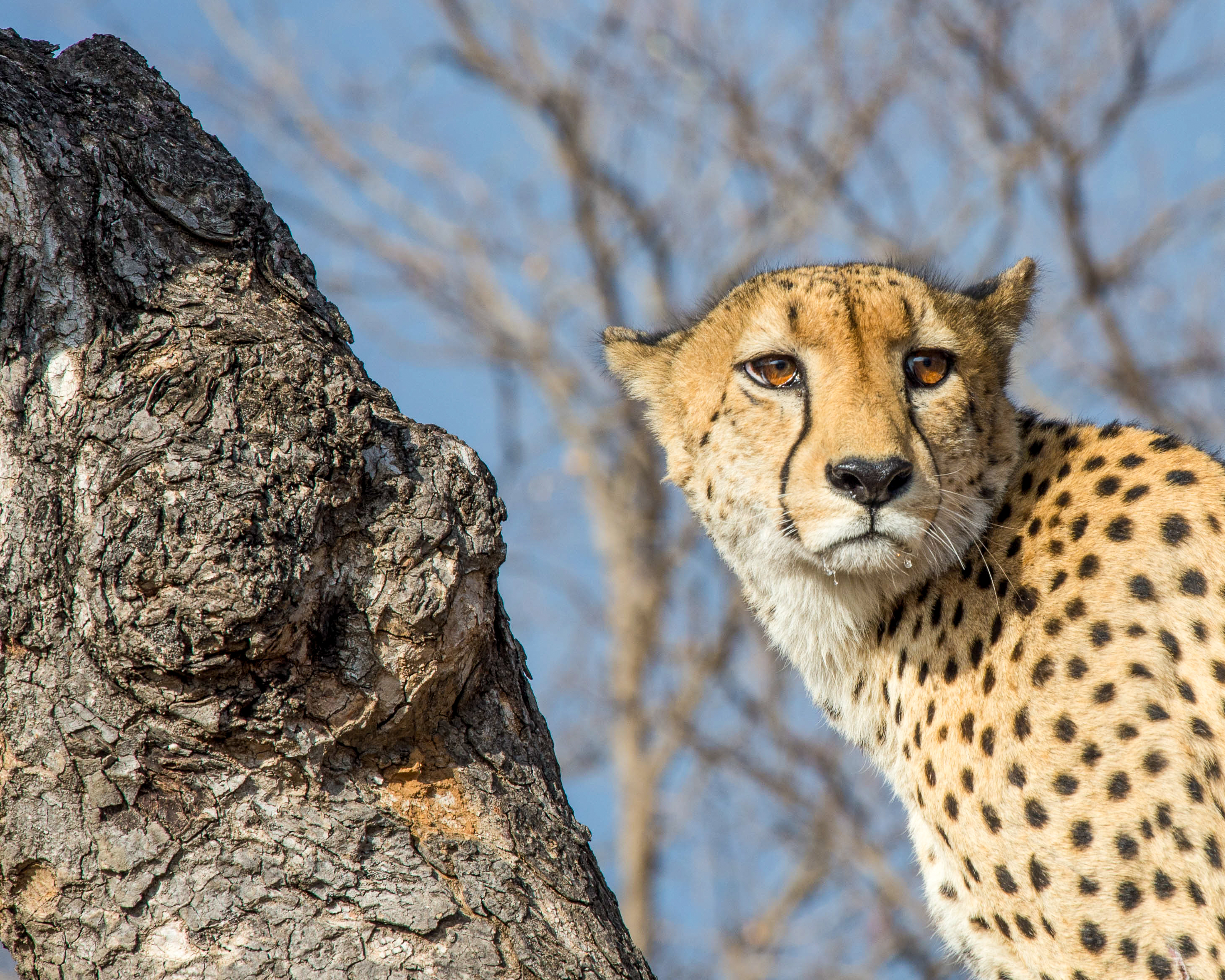
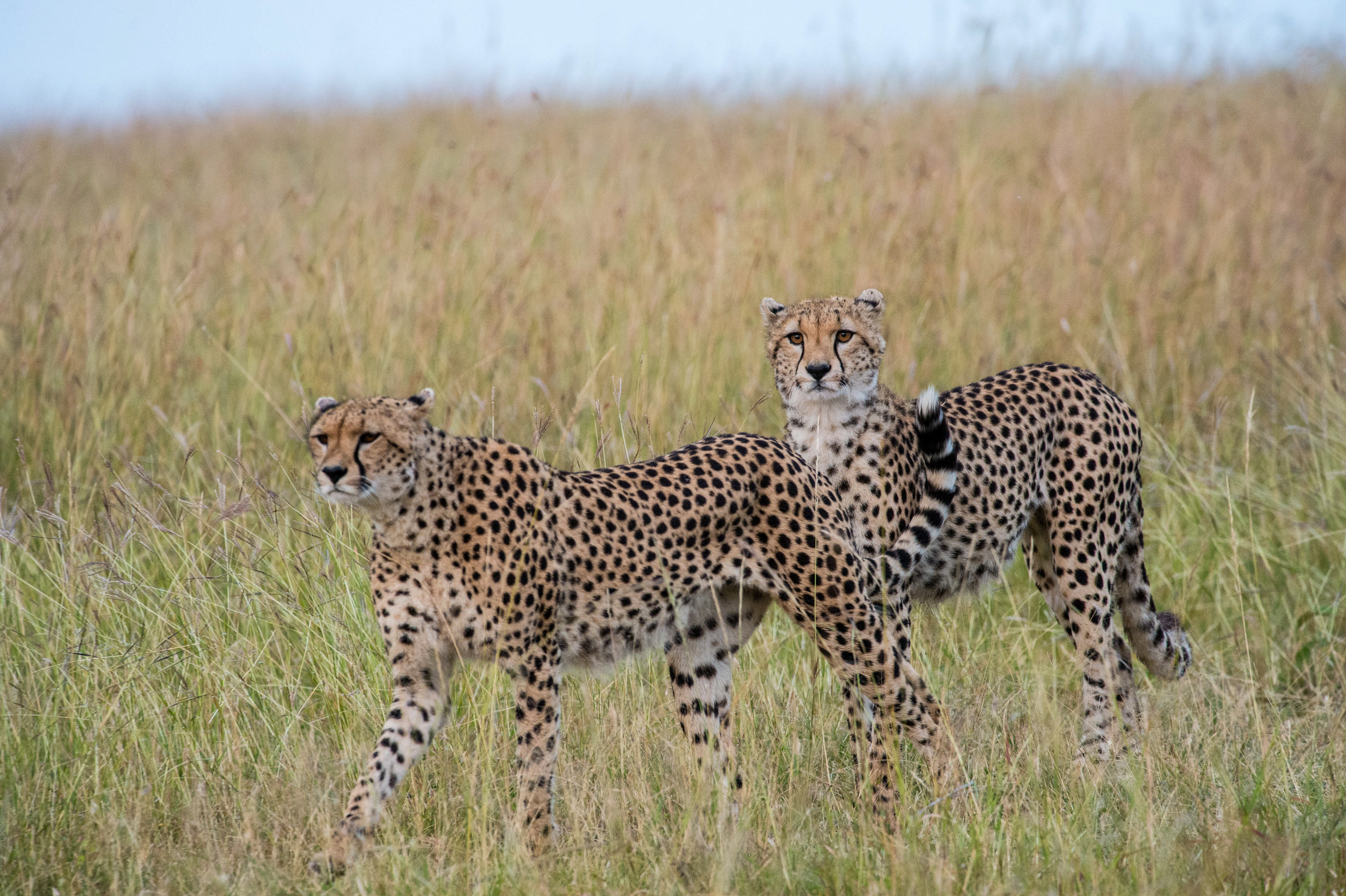
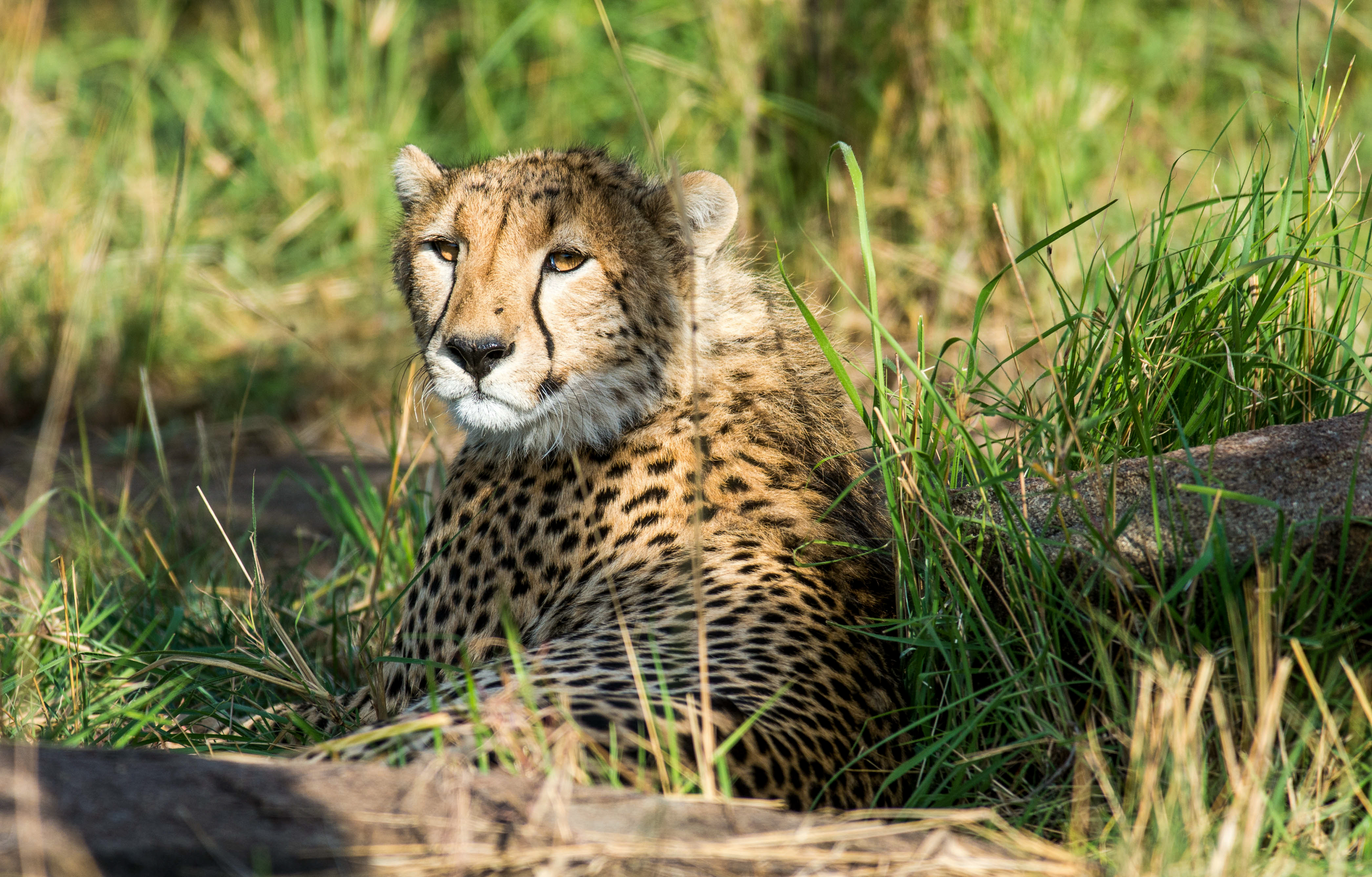
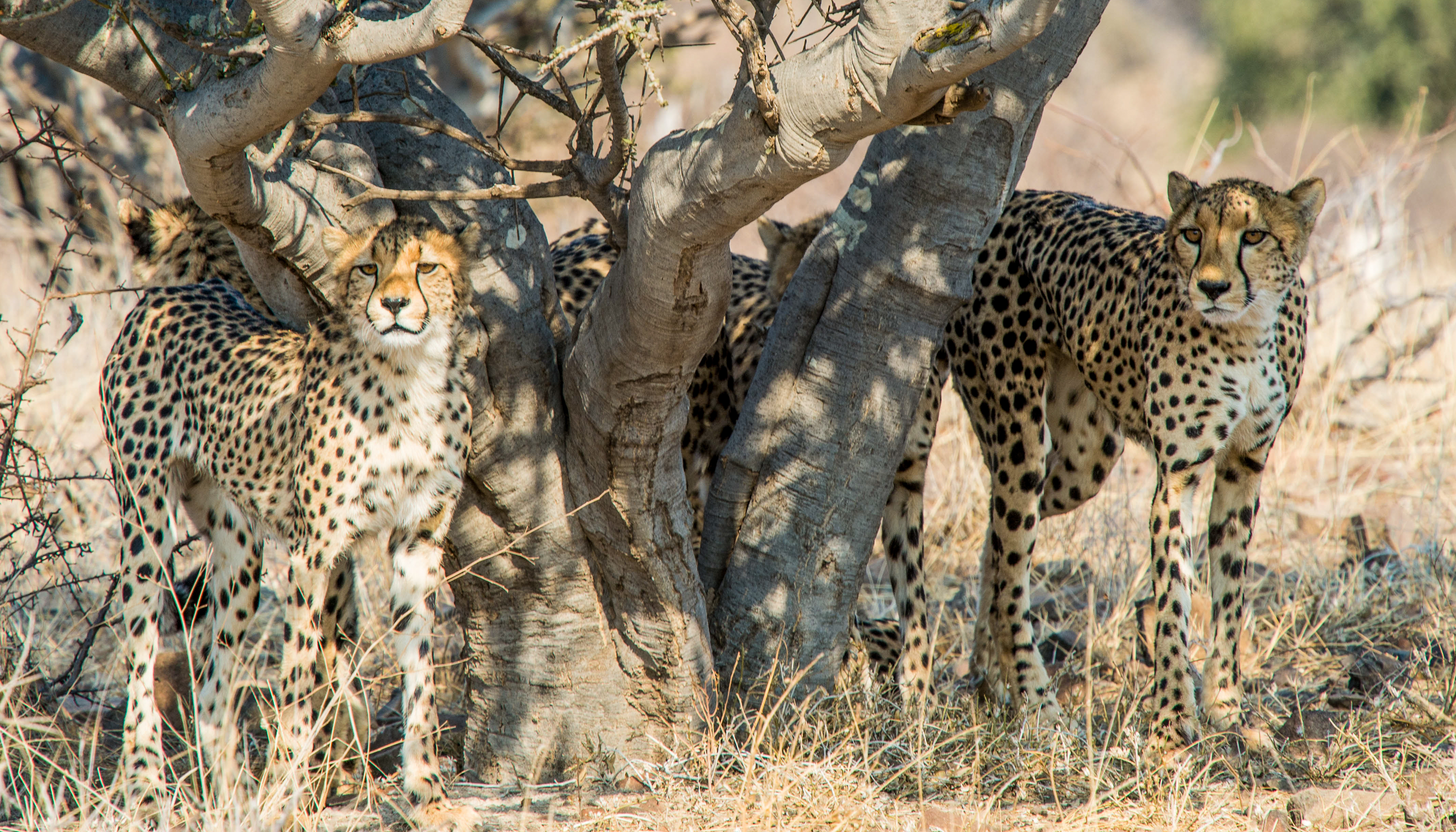
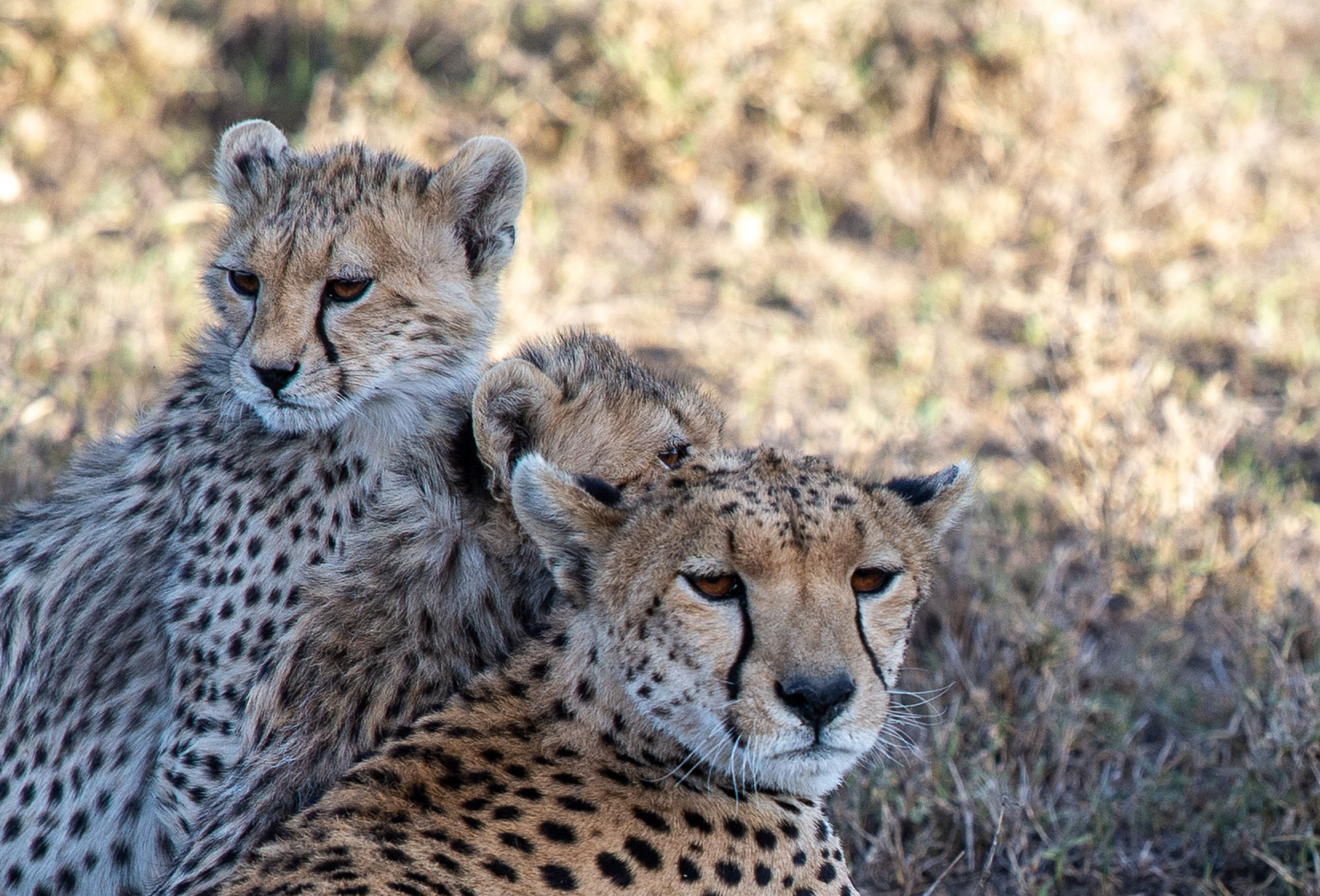
The other big African cat – the cheetah – is in a different league altogether.  It has a relatively tiny total population of about 7,000 in comparison with lions (approximately 25,000) and leopards (approximately 700,000).  Despite being as sparsely distributed as they are, cheetahs are quite visible where present, due to their diurnal nature and preferred habitat.  Cheetahs are adapted to hunt during the day which reduces competition from the nocturnal big cats, notably lions.  Cheetahs also prefer open terrain where they can use their amazing speed to its best advantage.  And they will often clamber onto anthills or stumps or other elevated spots to check out the area for potential prey – or danger.  Open terrain, broad daylight, a spotted cat perched on top of an anthill?  Bingo!  For me personally, a cheetah sighting is a highlight of any Africa trip.  They are just so rare, so beautiful and so special that even a brief glimpse of one of them will make your day.  

Here are some photos we took of cheetahs in six different areas in Southern and East Africa where they are regularly seen.  The captions summarize the back story about each photo and how it came to be.


Image

Selinda, Northern Botswana

This cheetah was part of a coalition of two brothers which used to move up and down along the Linyanti River in northern Botswana, spending weeks or sometimes months in an area.  For no apparent reason, they would then move along to a neighboring concession.  Less competition from lions or hyenas, more prey animals?  Who knows.  The reasons are hardly ever readily apparent.  The day on which we bumped into this particular cheetah and his brother, marked the first sighting of cheetahs on a game drive from Selinda, in several weeks.  So essentially, we got lucky. Being in the right habitat and spending enough time scanning open terrain along the Linyanti floodplain, just improved our luck somewhat.  We would get even luckier later that day, when we saw the cheetah coalition hunt and bring down an impala.  My advice to anyone wanting to see a cheetah kill?  Bring your best patience game as cheetahs take their time sizing up the area, the conditions and whatever their instinct dictates.  It took the brothers the better part of four hours to finally attempt a charge.  They were successful though.  Cheetahs are the most efficient of the big cats in terms of hunting success, bringing down about 40% to 50% of prey, as a percentage of total attempts.  By comparison leopards are successful about 30% to 40% of the time.  Lions bring up the rear in a significant way, being successful less than 20% of the time.  


Image

Tswalu, South Africa

Tswalu in the northern Cape Kalahari in South Africa is better known as one of the best places in Africa to see pangolins and aardvarks, but it is no slouch for some of the big cats, notably lions and cheetahs.  On our most recent visit to Tswalu (we will be returning this November) Kathy had set aside one afternoon to do some horseback riding.  We were at the stables and she was just about to set off into the veld with one of Tswalu’s beautiful steeds, when word came on the radio that a couple of cheetahs had been spotted.  Kathy and I looked at each other and there was no disagreement:  the horses would have to wait for another day.  It was a longish drive to get to the cheetahs, with the light fading fast by the time we pulled up to them.  Even so, the decision was the right one.  Looking in our direction in the gathering gloom, the cheetah’s ordinarily yellow eyes shone almost red.  The sighting would be brief but eminently memorable. 


Image

Masai Mara, Kenya

When I first saw these cheetahs on a game drive out of Mara Explorer Camp, one of the cheetahs had jumped on top of a game drive vehicle from Mara Intrepids.  I do not like to see behavior like that: it should have been prevented by the Mara Intrepids driver-guide.  The guides in the area are all aware of the propensity of some of the cheetahs to try to use the vehicle as an observation post.  And the guides know to avoid an incident, by staying clear of ‘known perpetrators’.  It is potentially dangerous for the guests and for the cheetahs.  Getting bitten or getting run over, respectively.  Too risky all round.  We left the scene, deciding to rather return early the next morning.  It made all the difference.  We had the cheetahs to ourselves for the better part of an hour, observing them walking around and getting onto anthills – not vehicles.  The way it should be.  


Image

Serengeti Plains, Tanzania

Tanzania’s Serengeti Plains and its northernmost extension, the Masai Mara in Kenya, are likely Africa’s single best repository of cheetahs.  This is their habitat par excellence.  Open, rolling grassy plains with rocky outcrops, patches of woodland and riverine thickets, and plenty of prey in the form of Thomson’s gazelles and impala.  Irrespective of the status of the annual wildebeest migration, the Serengeti and the Mara are great for the big cats, who have territories to defend and who do not move around with the wildebeest and the zebras.  In fact, on the day we saw this cheetah on a game drive out of Nomad Tanzania’s Lamai Serengeti Camp, we experienced a rare big cat trifecta:  lions, leopards and a cheetah.  All in one game drive, not during the migration season.  Other parts of the Serengeti where we have experienced above-average cheetah sightings include the southern Serengeti (Kusini camp) and the western Seronera area (Namiri Plains camp). 


Image

Hwange, Zimbabwe

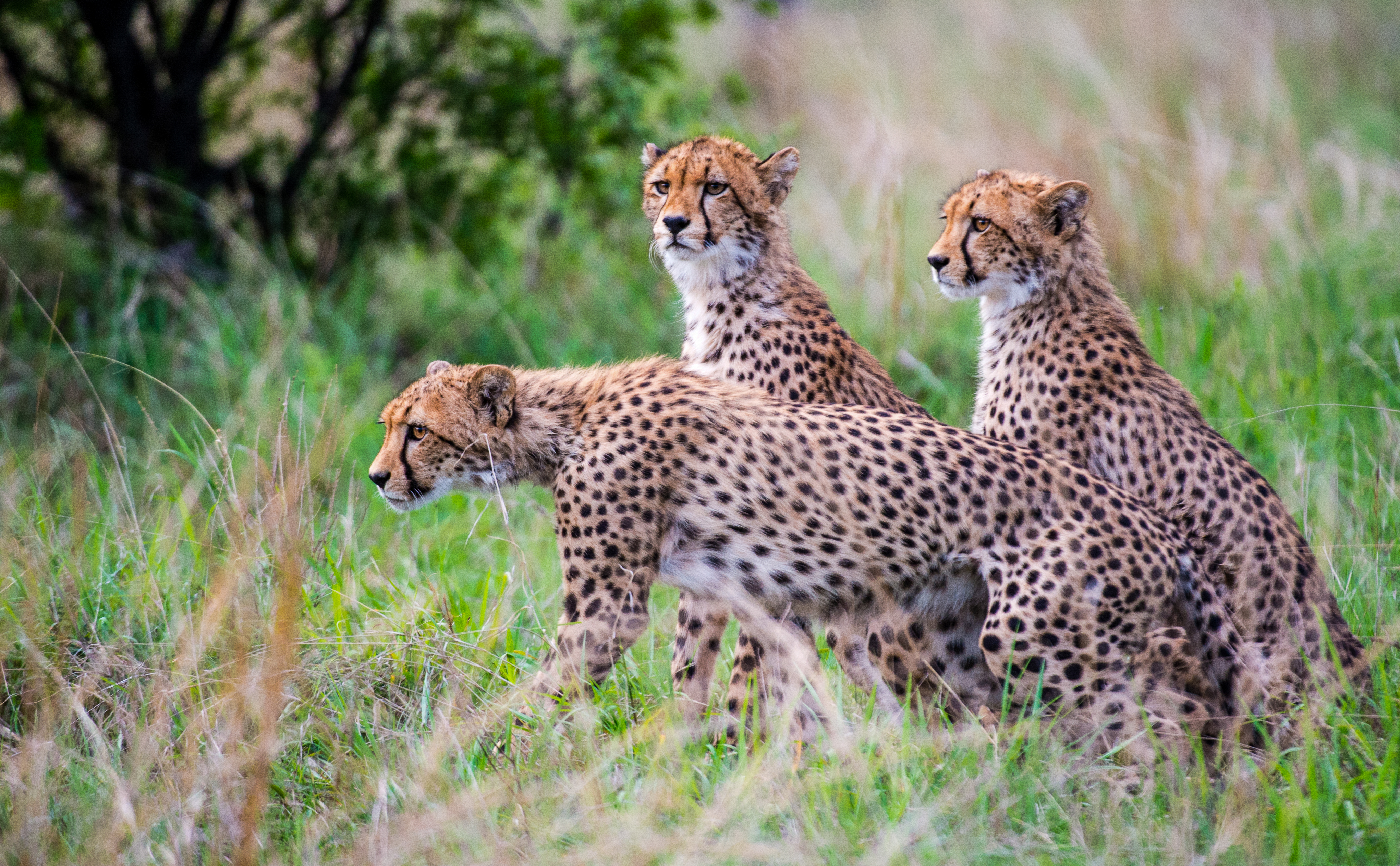
Since we regularly started visiting Hwange National Park in north-western Zimbabwe in the 1990’s, we’ve come to recognize it as a good and reliable area for cheetah sightings.  Just like elsewhere in Africa, the Hwange cheetahs move around and can’t always be seen in the same spots.  So if you’re keen on seeing cheetahs on a trip to Zimbabwe, we would suggest including two different camps, such as Somalisa or The Hide or Khulu Bush Camp, combined with Little Makalolo or Linkwasha or Camelthorn.  And give yourself plenty of time to find the cheetahs; five to six nights in the area would be ideal.  This trio of young cheetahs were following their mother around and getting a lesson in patience.  She wanted them to stay back and stay low while she approached some antelope.  It was not to be.  They kept showing themselves and following too closely behind her.  Which naturally spooked the antelope. All in a day of growing up.  


Image

Mashatu, Botswana

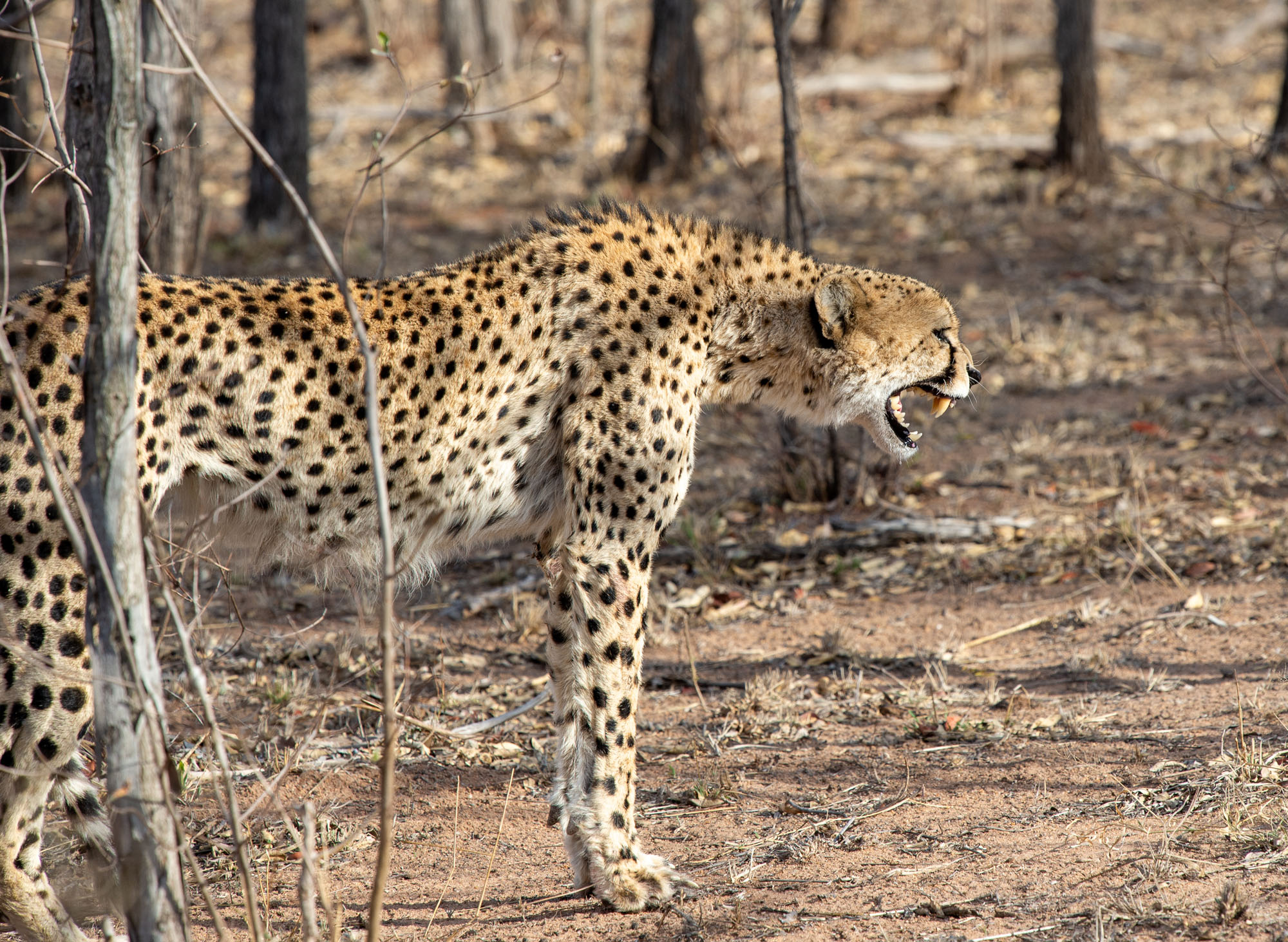
Mashatu Game Reserve in far south-eastern Botswana is currently one of the best big cat destinations in Southern Africa.   Spend three or better yet four nights there and you will most likely get to see lions, leopards and cheetahs.  And not furtive ‘drive-by’ sightings either.  On a recent September visit to the area, we had multiple good sightings of both lions and leopards, and notched up two different cheetah sightings in the course of a 3-night stay at Mashatu Tented Camp.  What makes Mashatu a particularly good bet for cheetahs – and other big cats – is the fact that off-road driving is allowed which means that you can get quite close to these magnificent cats.  For photographers this is a major advantage over many other areas where vehicles are not permitted off-road.  Also, compared with most other good big-cat destinations, the Mashatu properties namely Mashatu Lodge, Mashatu Tented Camp and Euphorbia are moderately priced – at about half the cost of camps of similar quality in northern Botswana.  We recommend combining a 3-night WalkMashatu foot safari with a few days at one of the Mashatu camps, to make the most of the area.  


Image

In our blog post next Friday, we will focus on one of the most popular and also instantly recognizable African mammals, the Giraffe.  There will be photographs, of course, as well as some information about places where they can be seen.  We will also review the various species you are likely to encounter in Southern and East Africa, and their conservation status.  

More Info

Email bert@fisheaglesafaris.com

Email jason@fisheaglesafaris.com

@fisheaglesafarishouston

#FishEagleSafaris

YOU MIGHT ALSO BE INTERESTED IN

Destinations
Zambia

10th September 2021

Chindeni and the Bushcamp Company, Zambia

By late July we found ourselves at Chindeni, a small Bushcamp Company property

Read more
Botswana
Destinations
Okavango Delta

3rd October 2022

Camp Okavango, Botswana

Camp Okavango is in the heart of the permanent part of the Delta. In this idyllic setting there are no vehicles, and it is just a short walk

Read more
Area
Destinations
Nyerere National Park
Ruaha
Tanzania

14th October 2023

From My Safari Notebook: Wildlife Photography

Birds in flight and wildlife photographers have an uneasy relationship. Things go wrong as often as they go right. Getting focus-lock on a moving subject

Read more

SUBSCRIBE TO OUR NEWSLETTER

READERS FAVOURITES

Destinations
Zambia

10th September 2021

Chindeni and the Bushcamp Company, Zambia

By late July we found ourselves at Chindeni, a small Bushcamp Company property

Read more
Botswana
Destinations

4th August 2022

On Safari At Belmond Eagle Island Lodge, Okavango Delta

What is the ‘secret sauce’ for an unforgettable few days on safari in Botswana? It starts with the animals, of course. The elephants, lions, giraffes, hippos
Read more
Destinations
India

27th May 2023

India

India’s tiger, mammals and birds.

Read more

Kruger Park & Sabi Sand Reserve South Africa (Continued)

17th September 2020

Kruger Park & Sabi Sand Reserve South Africa (Continued)


Image

Kruger Park & Sabi Sand Reserve South Africa (Continued)

I wrapped up an extensive educational trip in Kruger Park and in the northern, western and southern sections of the Sabi Sand Reserve, notching up multiple big cat sightings (lions, leopards and cheetahs), some of which rank among my best ever, from a photography perspective.  I was also fortunate to find another big pack of African painted dogs one afternoon, on a drive in the western part of the Sabi Sand reserve.  The four properties visited during the last week of the trip were Mbali Mbali, Savanna Lodge, Singita Boulders and Chitwa Chitwa.


Image

MBALI MBALI LODGE, KRUGER PARK

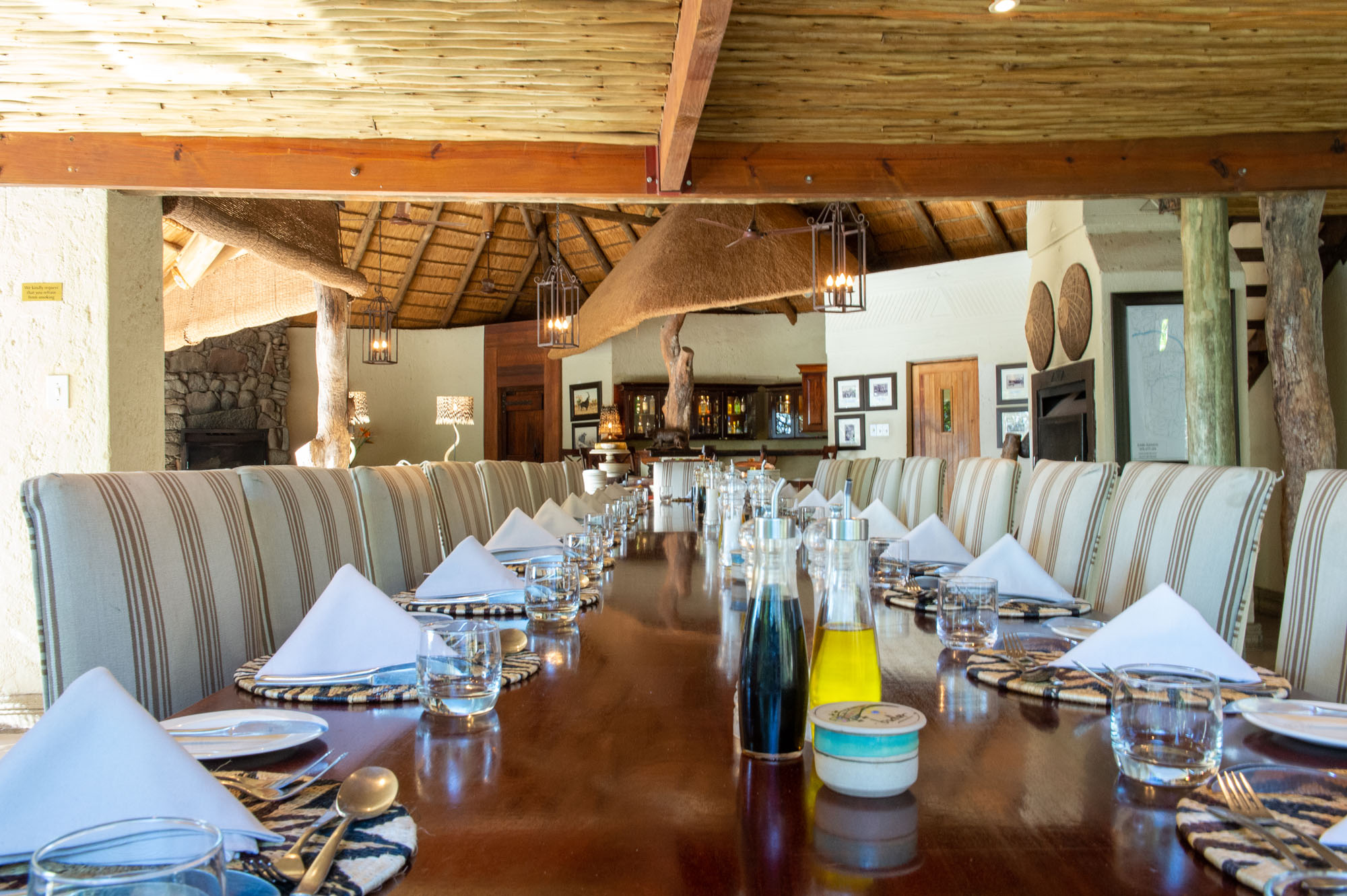
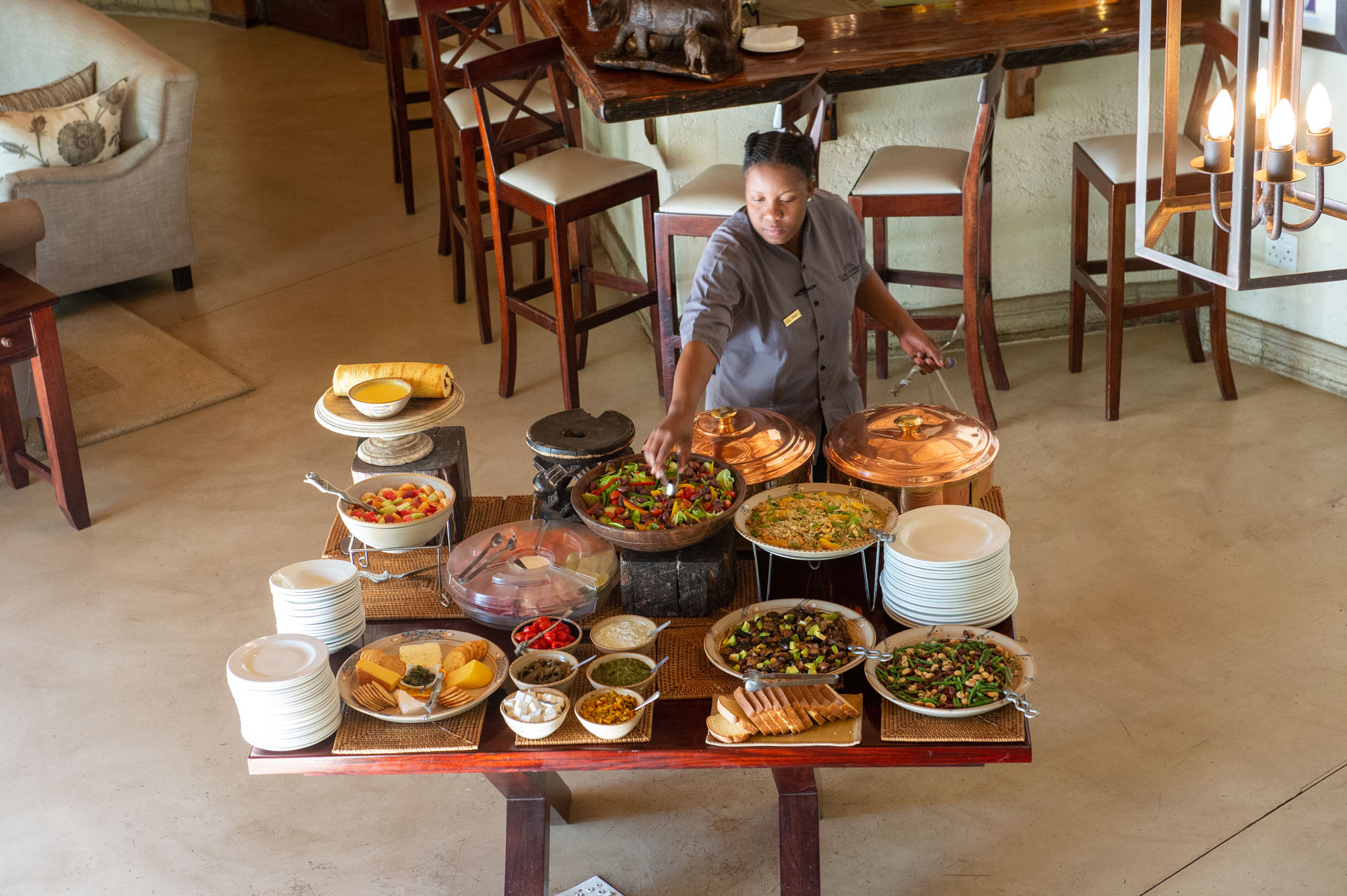
Continuing where we left off on a recent late September trip, I was up a little bit later than usual on this day, at Hamilton’s Camp.  After a solid English breakfast I collected my things and was driven to the nearby Mbali Mbali camp which sleeps 24 people in 12 rooms. This thatched property has a large lounge and dining room with a high vaulted ceiling.   Mbali Mbali appears to be quite suitable for families and small groups in search of a moderately priced safari experience. Several of the guests were on self-drive safaris which reduce the overall cost even further. I arrived in time for lunch which was a self-service buffet with choices ranging from leg of lamb to chickpea salad, slices of pizza and couscous. None of it was gourmet fare but it was tasty and plentiful.


Image

The afternoon and early evening game drive which lasted from about 4 pm until just after 7 pm was predictably quiet. It was simply too windy and unseasonably cold for many of the mammals to be active, and birding was practically impossible under the conditions. Even so, the game drive was not without its highlights. First off, we went in pursuit of a few sable antelope which had been spotted nearby. It took a while but we eventually located the small herd of about six or so sable antelope moving steadily from our right to our left in fairly thick woodland. I never could get a decent capture of one of the magnificent males which was too bad. Nonetheless seeing and following them for the next 20 minutes or so was quite exciting. In South Africa sable antelope are particularly rare and very seldomly seen.


Image

Our last significant sighting of the day was a seemingly abandoned buffalo carcass, being fed on by five or so whitebacked vultures.  We looked around for predators, expecting at least some hyenas to be present, but there were none. This was true for only a few minutes though because three hyenas did eventually show up, sniffed around and loped off into the bush again soon after.

Then it was back to the lodge for a plated three-course dinner which was served at 7:30 pm. It was quite good, inclusive of a chicken salad starter, impala fillet for the main course, and malva pudding to end. The highlight of the day was definitely discovering the high-speed broadband at Mbali Mbali.  What a pleasure to be able to check email without being totally frustrated by glacially slow data transfer speeds like those at practically all the other camps to this point.  


Image

SAVANNA LODGE, SABI SAND RESERVE

After catching up on some work and taking a few bird and small antelope photos around the grounds of Mbali Mbali, I did a site inspection of nearby Hoyo Hoyo. It is a quaint, small camp with six rooms in a traditional African or Tonga style. The lodge had been recently updated with an enlarged deck and extra seating/dining options.  It is known for reliably good game-viewing – we saw quite a few elephants close to camp – and is a popular, moderately priced accommodation option.

From inside Kruger Park, it took about three hours by road to get back to the western part of the Sabi Sand Reserve, where my capable and friendly driver from Sable Tours dropped me off at Savanna Lodge.  My first impression of Savanna Lodge was mixed due to the proximity of a village, close to the western edge of the Sabi Sand reserve.  As I was to see and experience during my stay there, it was not an issue. In fact if visitors want to, they can be taken on a village visit to meet and interact with some of the local people.  Savanna has great rooms and amenities.  I happily took them up on an offer of ‘emergency’ laundry service and the few items I handed over were back in my room, washed, dried and neatly folded, before dinner.  Speaking of which, the meals at Savanna were terrific, served family style. Lots of choices, an abundance of fresh salads and produce, and a convivial atmosphere.  


Image

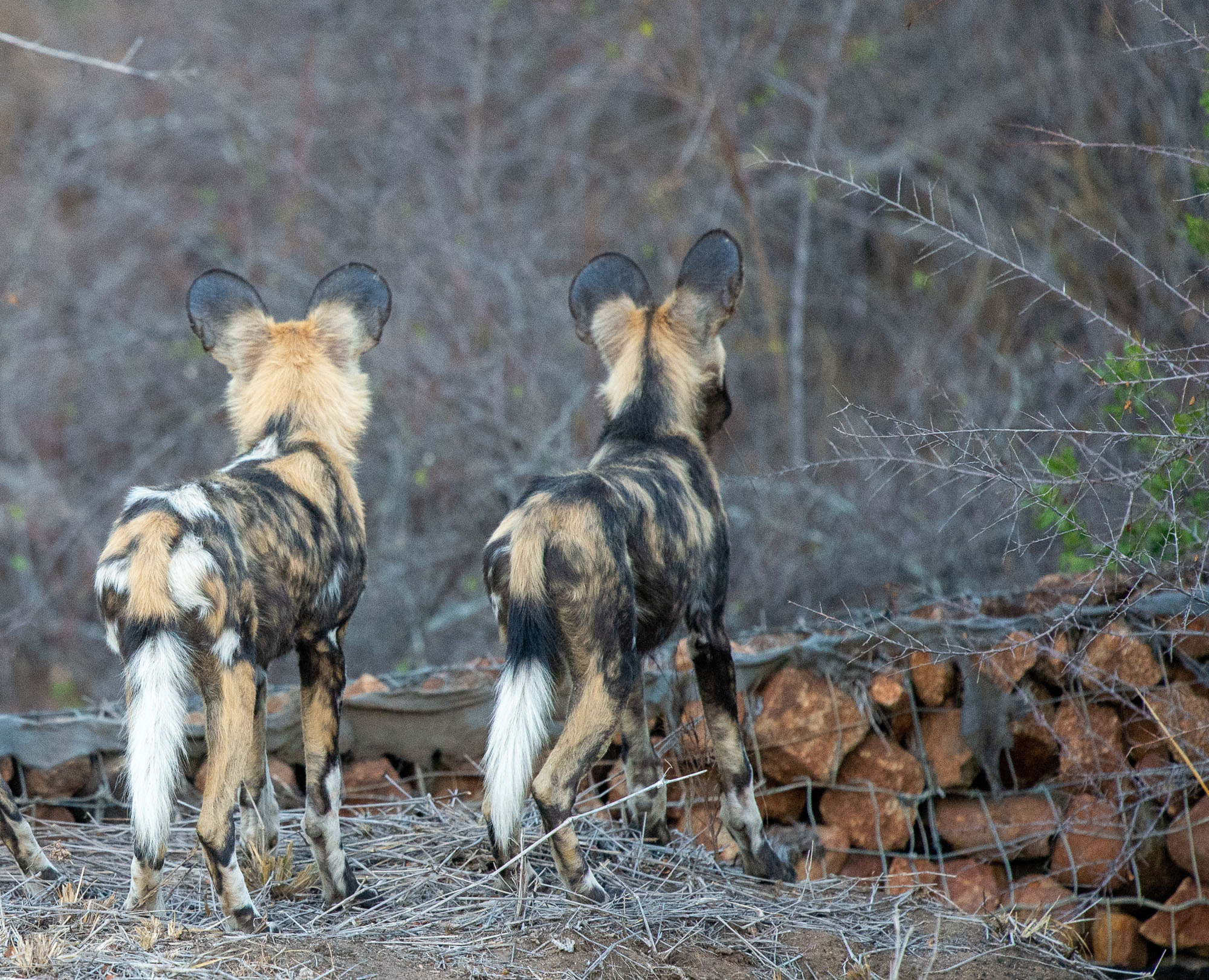
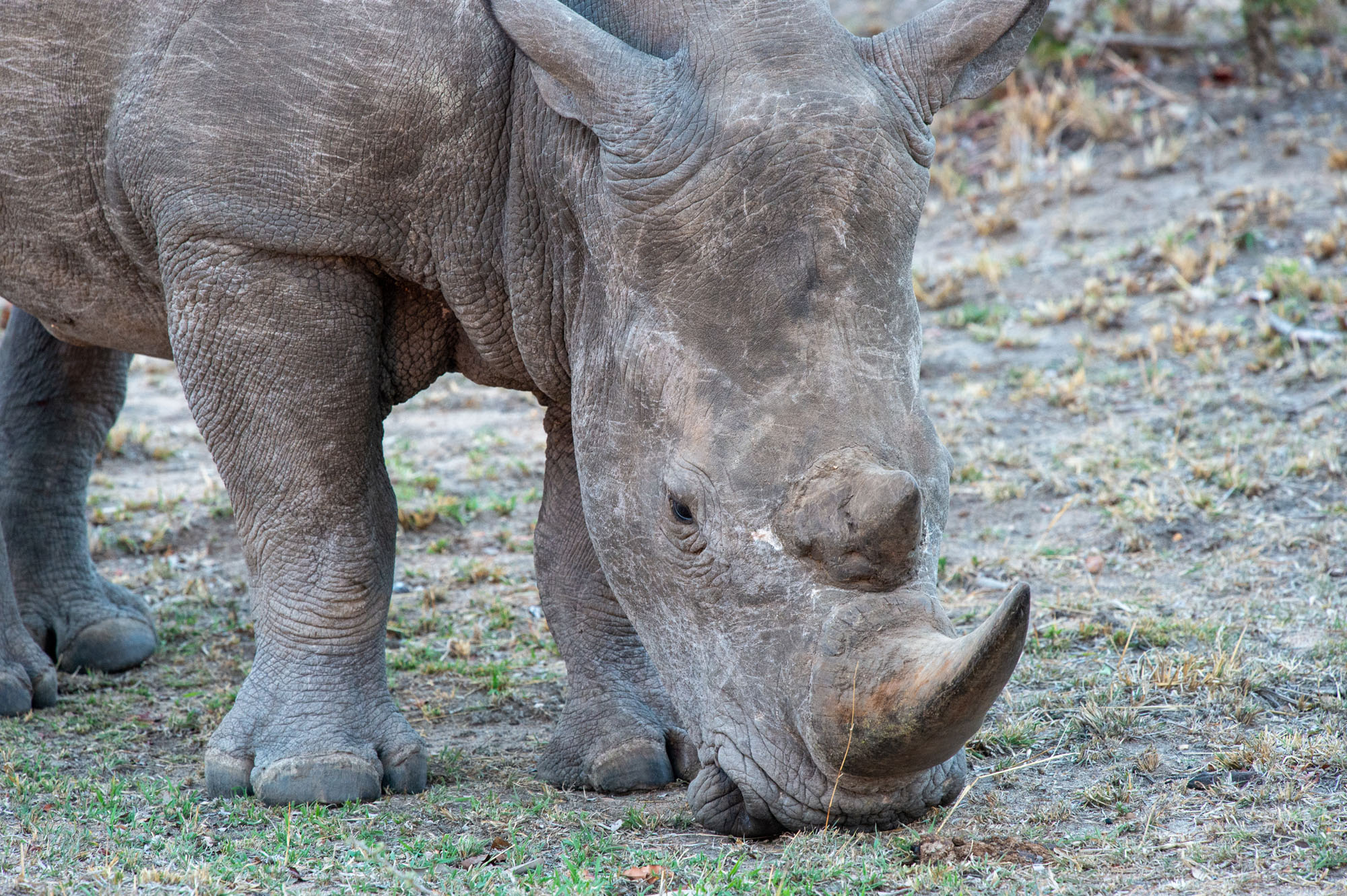
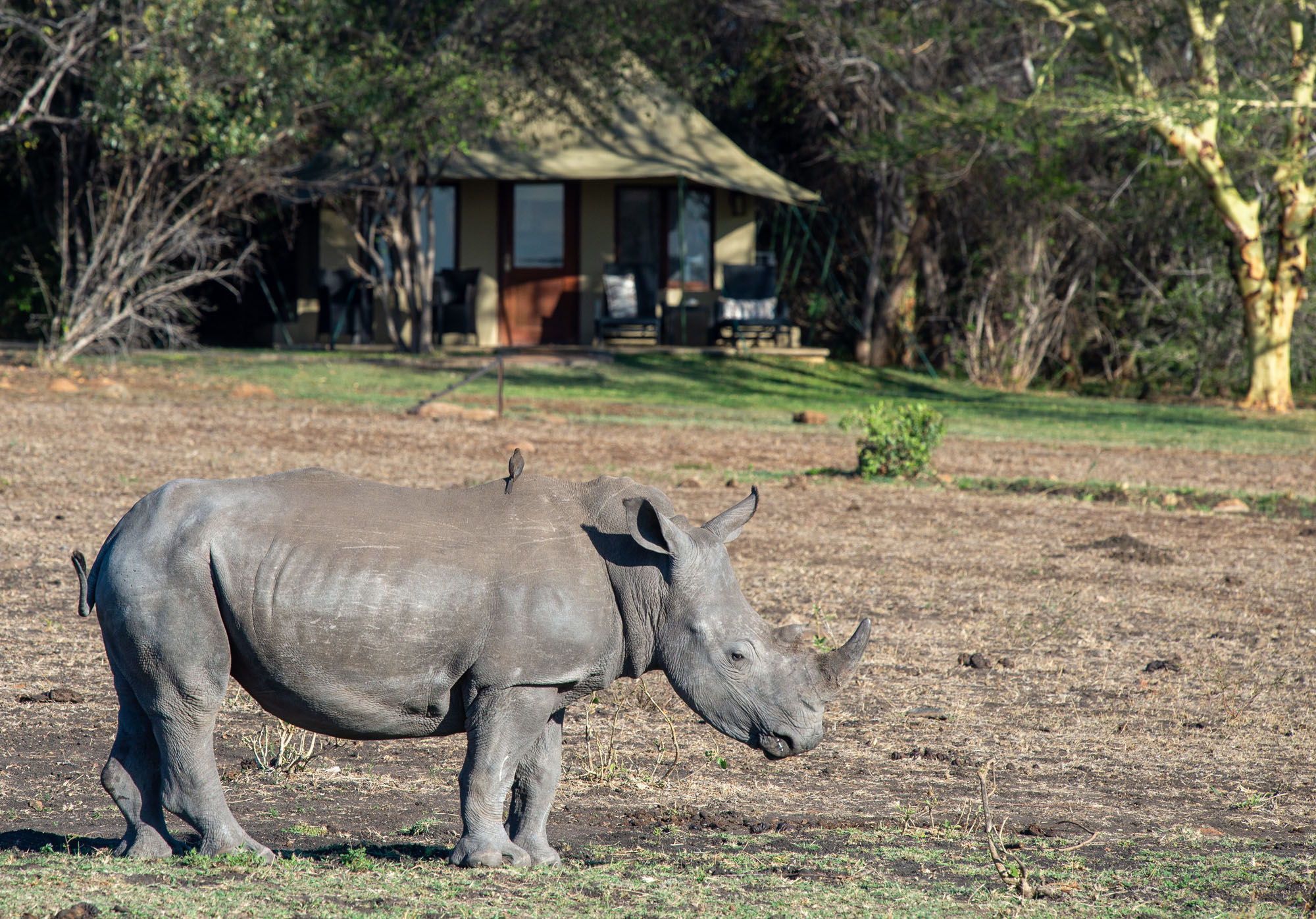
That afternoon’s game drive started on a high note with close-up views of several white rhinos and quickly reached ‘fever pitch’ with the sighting of a pack of about 20 African painted dogs.  We followed and observed them for the better part of an hour, with young ones running around all over the place.  For a moment there it looked like they might try to take on a zebra but it was not to be.  The reaction of one of the zebras was pretty interesting though! 

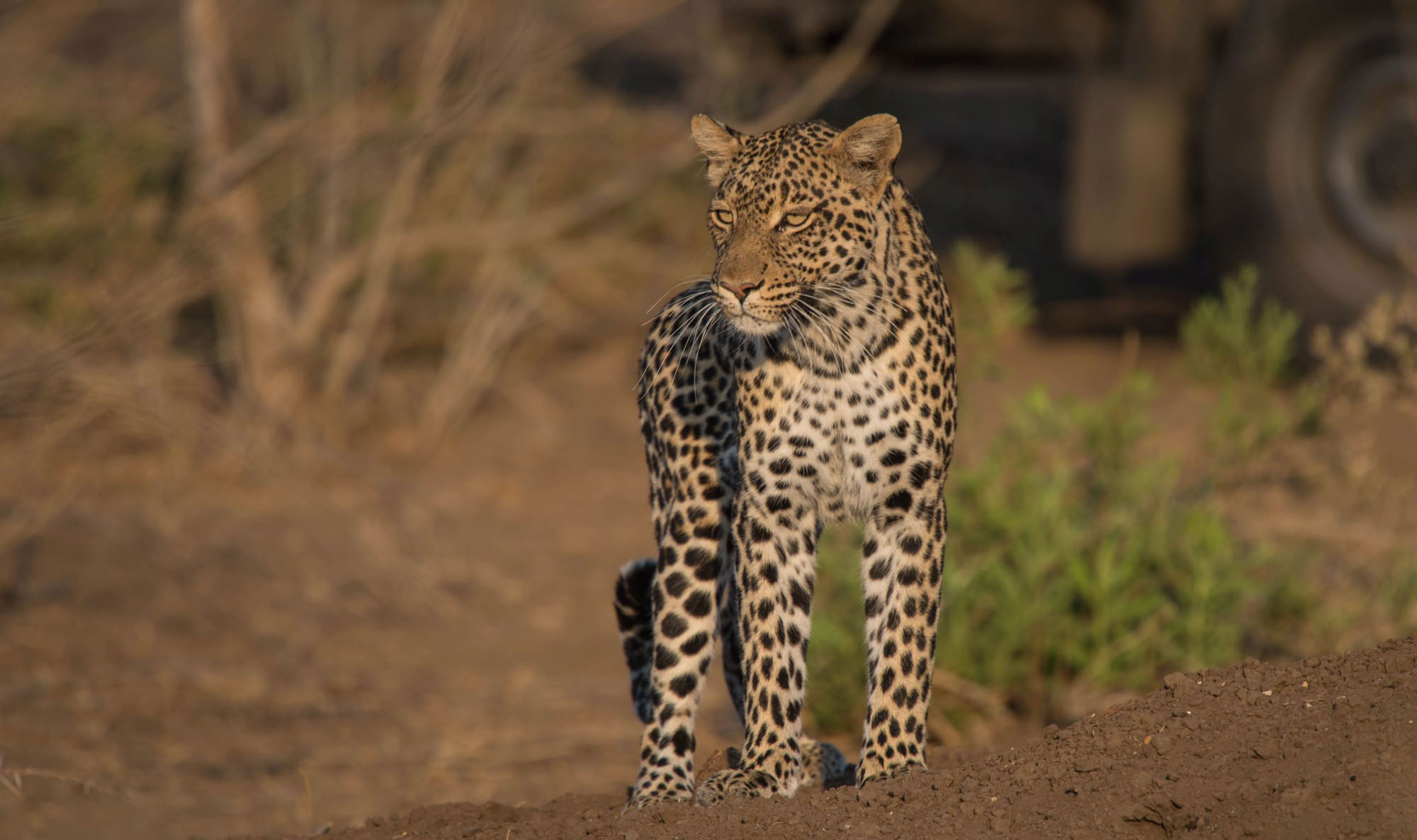
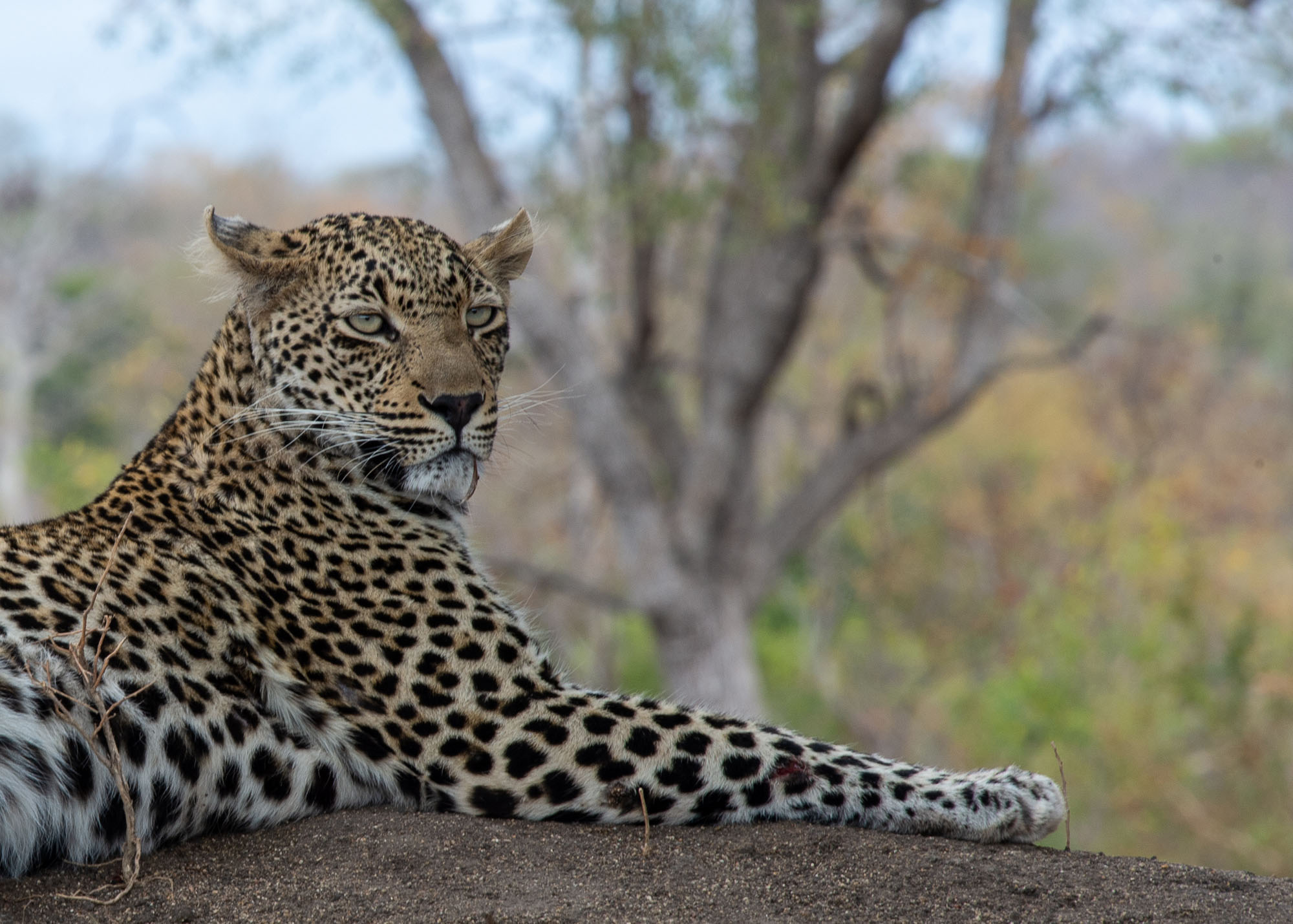
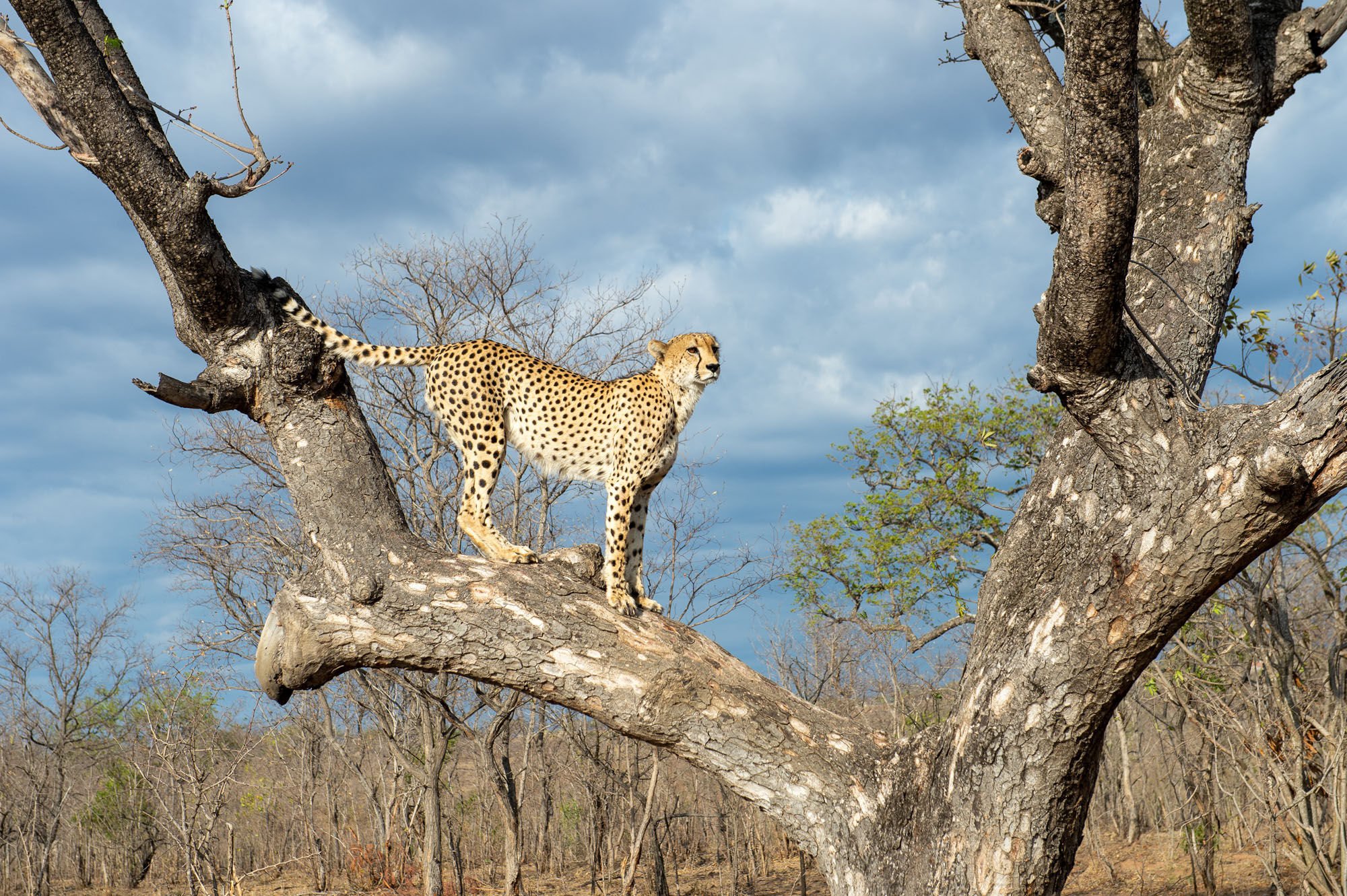
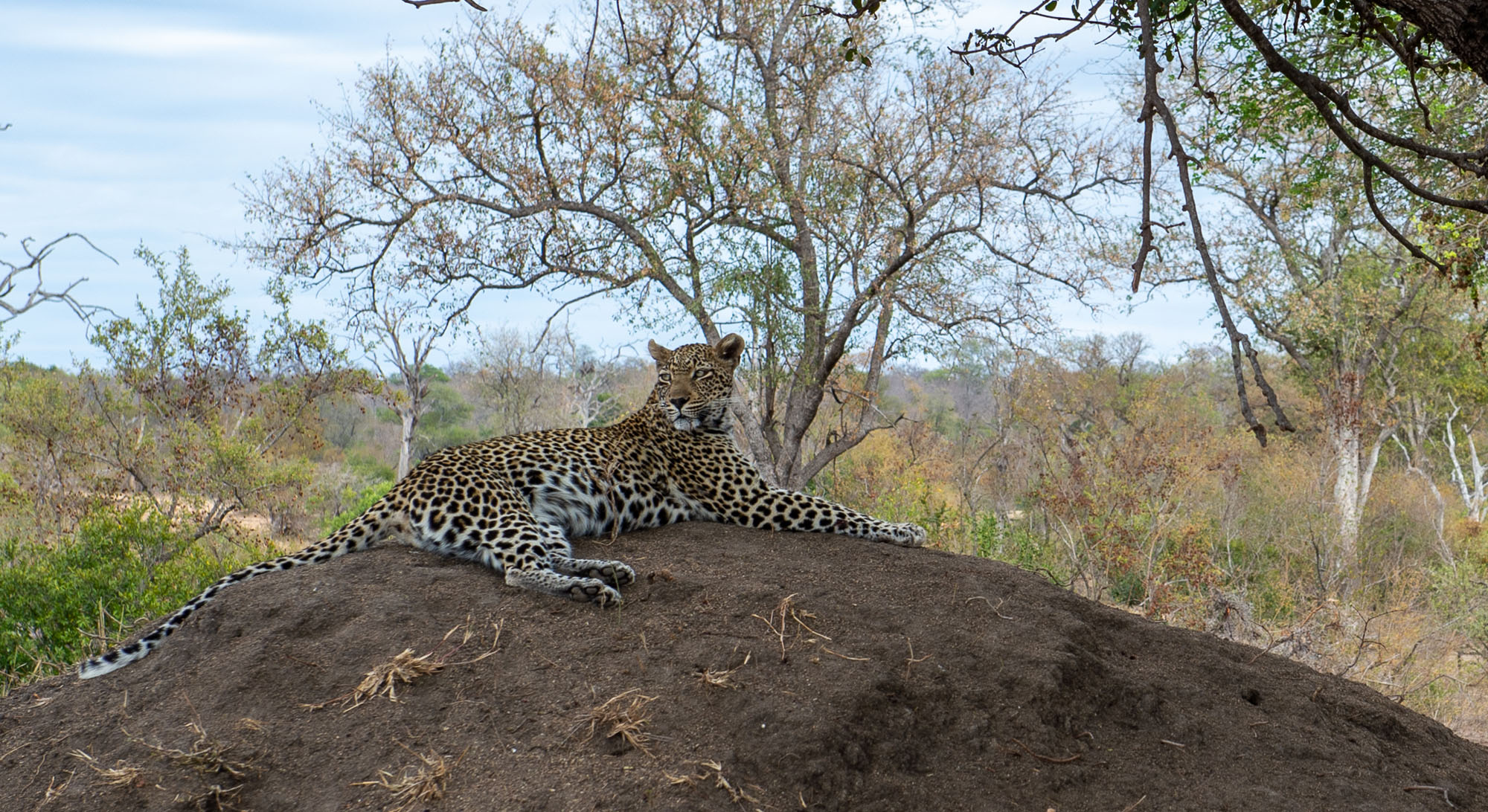
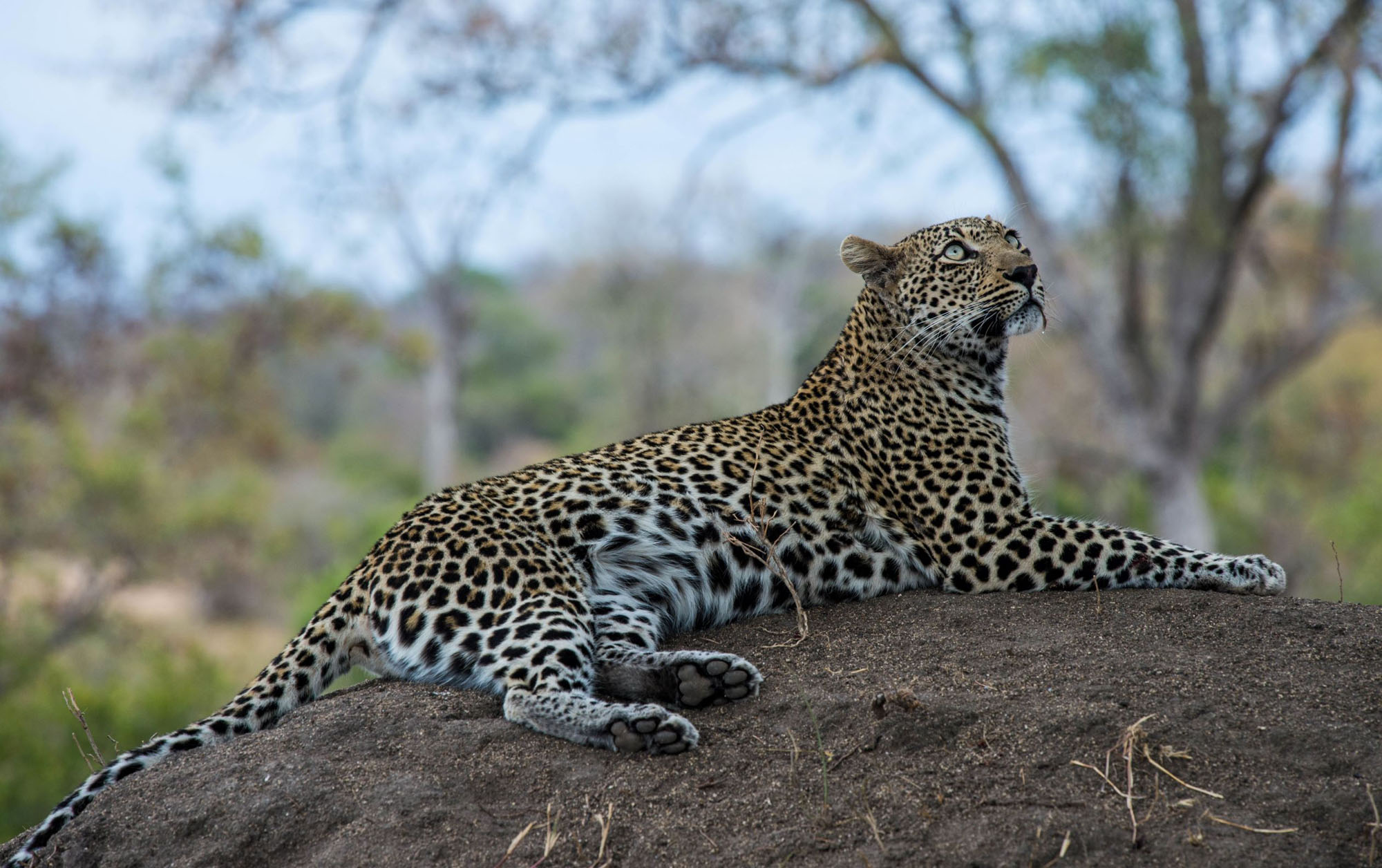
The following morning’s game drive with camp manager Paddy was simply brilliant.  It started with a  singularly good cheetah sighting with a male cheetah jumping into a tree and just about posing for us – so close to the vehicle that I had to switch to a 24-70mm zoom lens.  There was a nice dark blue sky background, so for once no burn out issues in what might easily have been another backlit conundrum. Shortly afterward, the male cheetah – by now down from the tree – got into an altercation with a hyena.  This time, I missed the shot, not having enough time to change out the telephoto lens.  Note to self:  always have a second camera handy for this type of situation.  Even an iPhone would have done the job admirably.  From there, we had another look at the painted dog pack – by then mostly sleeping.  The day wasn’t over yet, though.  It ended on another highlight, being a great sighting of a female leopard close to Dulini Camp,  posing for us on top of a mound of dirt.   If I hadn’t gotten a good photograph of that obliging leopard, I probably would have dumped my photo gear right there and then…


Image

SINGITA BOULDERS CAMP

By 11 am I was on the road again, this time fortunately just a short drive from Savanna to Singita Boulders.  I was shown around by Nicole who was friendly and informative and witty – in fact one of the best front of house people I’ve encountered in a long while. Unquestionably, Singita stands at the pinnacle of the photographic safari experience in Africa.  It’s all on display at Singita Boulders:  exceptional quality architecture and a luxury safari vibe, fine dining from morning until night (there always seemed to be something else delicious to eat) and impeccable service. Pretty much the ultimate safari experience – admittedly at a price.


Image

My wine-tasting experience at Singita underscored the level of sophistication of the operation.  For this experience, I was driven a few minutes across to Singita Ebony, the other Singita Sabi Sands property.  The young sommelier did a wonderful job introducing a few of us to some fine South African wines including a particularly nice Pinotage blend.  One of the guests present was not overly impressed with the selection of wine tasting options and almost jokingly said, “Where is the Rust en Vrede Estate?”  Singita being Singita, the sommelier disappeared into a doorway and re-appeared minutes later, brandishing a bottle of Rust en Vrede Estate.   Everyone was blown away by the depth and complexity of this Bordeaux style blend.  Incidentally, Rust en Vrede was chosen by President Nelson Mandela to be served at the Nobel Peace Prize dinner.  Rust en Vrede is produced by winemaker Jean Englebrecht in the Stellenbosch area.


Image

Our game viewing outings from Singita Boulders were on the quiet side, compared with what I had experienced over the previous few days. Even so we (I shared a vehicle with a family from Sweden) saw more Cape buffalo in the area close to the lodge than anywhere else in the Sabi Sands. We also had some excellent rhino sightings in addition to the usual plains game. Guests who spend several days – we would recommend a minimum of three nights – in the Sabi Sands would of course have multiple opportunities to see all of the ‘Big Five’ species and much more.  My Singita guide was a stand-out: fun to be with, knowledgeable and able to impart information in a credible manner without lecturing or sounding forced. Clearly in love with her job in the hospitality and wildlife conservation field. All of the other guests on the vehicle remarked on that.


Image

CHITWA CHITWA CAMP

By 11 am the following morning I was on my way to Chitwa Chitwa. This would be the last overnight stop on my lengthy trip.  Fortunately, it did not disappoint. The room and lounge layout and design were stylish and creative, without being extravagant. Chitwa Chitwa has massive rooms with air conditioning, indoor bath and shower, and an outdoor shower.  It is squarely in the deluxe category, on every level. I liked the wide and gently sloping pathways and the entertaining yet thorough arrival briefing.  A rambling, overly long or unnecessarily pedantic camp introduction can be off-putting, but this one was spot-on.  Brief, to-the-point and light-hearted, yet touching on all the important safety stuff.


Image

The game drive that afternoon started off on a rather shaky note, with more backlit photos of a leopard against a bright sky background.   My guide displayed considerable patience and guiding acumen and somewhat to my surprise (I should have known better), the afternoon ended on a high note when we spent the last hour observing and photographing a couple of baby leopards, in the fading light.  They had been secreted by their mother while she was away hunting, but their curiosity overcame their fear and they started to show themselves – barely – peeking out at us from the undergrowth.  A magical experience which I will never forget.  


Image

On my last game drive of the trip, I was up at 5 a.m, ready to go.  If there’s one requirement for a job in the photographic safari business, it is to embrace the routine of getting out of bed super early – often in the dark and when it is cold – day after day.   It turned out to be a nice sunny morning, a bit breezy and colder than what one may expect for the South African bushveld in early October. It was yet another productive game drive and perhaps not unsurprisingly, we saw more big cats.  I had to stop myself from getting blasé about cat sightings.  They are just too rare and too special for anyone to be indifferent about seeing them.  Initially, things were quiet but then picked up with a great buffalo sighting. We spent some quality time with a herd of about 50 or 60 Cape buffalo, getting photos of them from a variety of angles in very nice if somewhat bright morning light.  And then things got really interesting when the guide spotted a female leopard and her sub adult cub walking through the open woodland, eventually jumping into a tree very close to us. Again, I was caught with too much lens:  the fixed 300 mm lens on my D4 was not ideal for the close up action which followed.  This is the type of situation where one should ideally have two cameras on hand:  one with a shorter zoom lens such as a 70-200 mm.  Fortunately the advent of lighter and smaller mirrorless cameras is making this less of an issue than it had been up to now, because of weight restrictions.  


Image

My brief stay at Chitwa Chitwa turned out to be one of the highlights of the entire trip. It was friendly, everyone seemed to enjoy working there and every facet of the experience was excellent. The food was a highlight: the dinner starter – a grilled prawn (shrimp) salad – was one of the best I had had in many years.  The perfectly cooked lamb loin chops were just as praise-worthy, and ditto for the malva pudding dessert, simply divine.  


Image

At the time of my visit, a serious drought was affecting much of the greater Kruger Park area.  One of the worst droughts in many years, in fact.  It had a serious impact on grazing species such as hippos and buffaloes, many of which died or moved out of the area, either because of a lack of food or as a result of being pursued by lions.  There were no issues with the overall quality of the game viewing, in fact it was stellar.  Clearly, the predators were having a field day. In 40-plus  years of game-viewing, I had simply never seen and photographed such an abundance of big cats and other predators, in one extended trip. Not soon to be repeated either.  

In next week’s blog we look at the first of a couple of walking safari options, this one being the WalkMashatu trail in the Tuli block of Botswana.

More Info

Email bert@fisheaglesafaris.com

Email jason@fisheaglesafaris.com

@fisheaglesafarishouston

#FishEagleSafaris

YOU MIGHT ALSO BE INTERESTED IN

Destinations
Zambia

10th September 2021

Chindeni and the Bushcamp Company, Zambia

By late July we found ourselves at Chindeni, a small Bushcamp Company property

Read more
Botswana
Destinations
Okavango Delta

3rd October 2022

Camp Okavango, Botswana

Camp Okavango is in the heart of the permanent part of the Delta. In this idyllic setting there are no vehicles, and it is just a short walk

Read more
Area
Destinations
Nyerere National Park
Ruaha
Tanzania

14th October 2023

From My Safari Notebook: Wildlife Photography

Birds in flight and wildlife photographers have an uneasy relationship. Things go wrong as often as they go right. Getting focus-lock on a moving subject

Read more

SUBSCRIBE TO OUR NEWSLETTER

READERS FAVOURITES

Destinations
Zambia

10th September 2021

Chindeni and the Bushcamp Company, Zambia

By late July we found ourselves at Chindeni, a small Bushcamp Company property

Read more
Botswana
Destinations

4th August 2022

On Safari At Belmond Eagle Island Lodge, Okavango Delta

What is the ‘secret sauce’ for an unforgettable few days on safari in Botswana? It starts with the animals, of course. The elephants, lions, giraffes, hippos
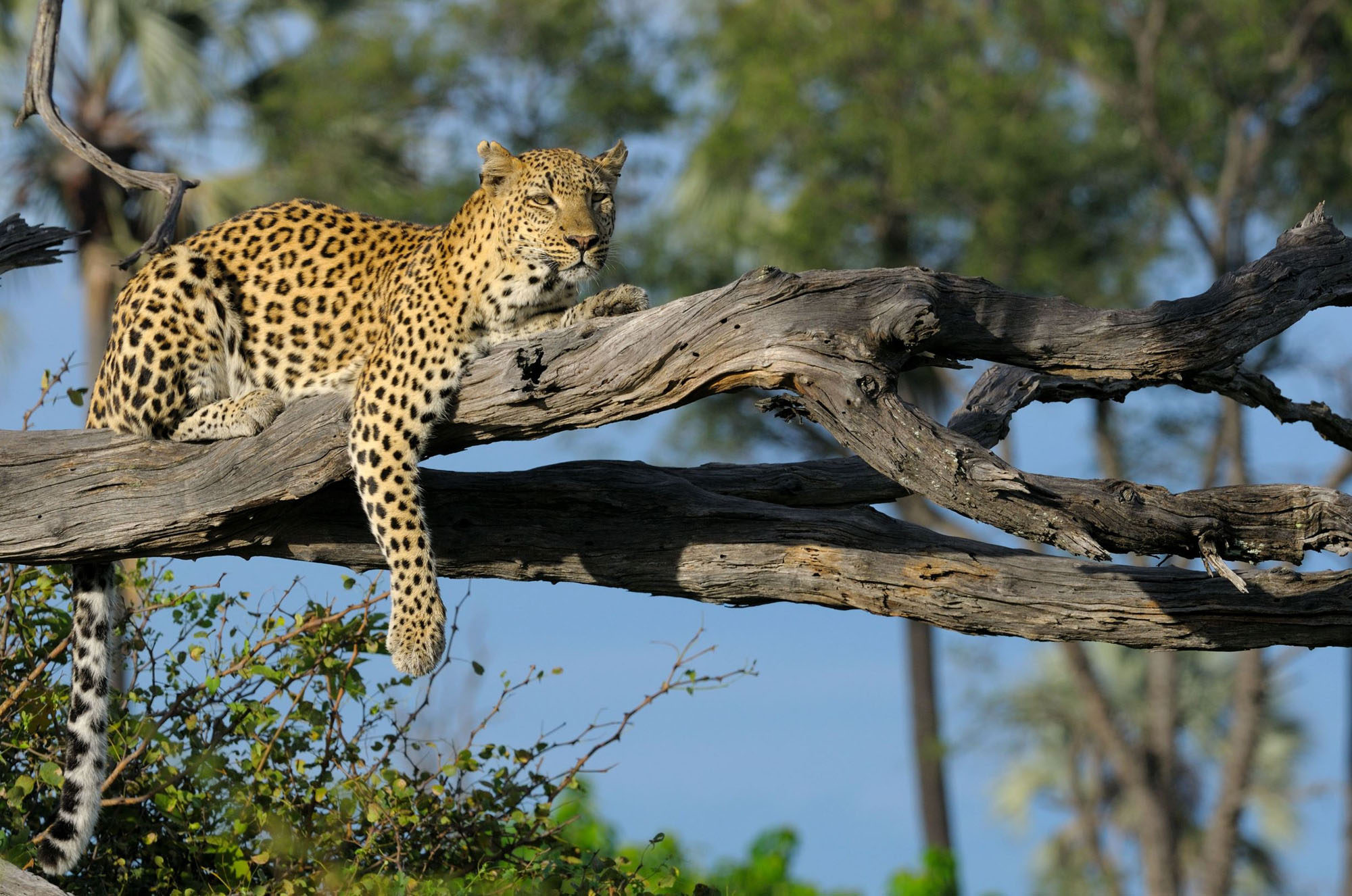
Read more
Destinations
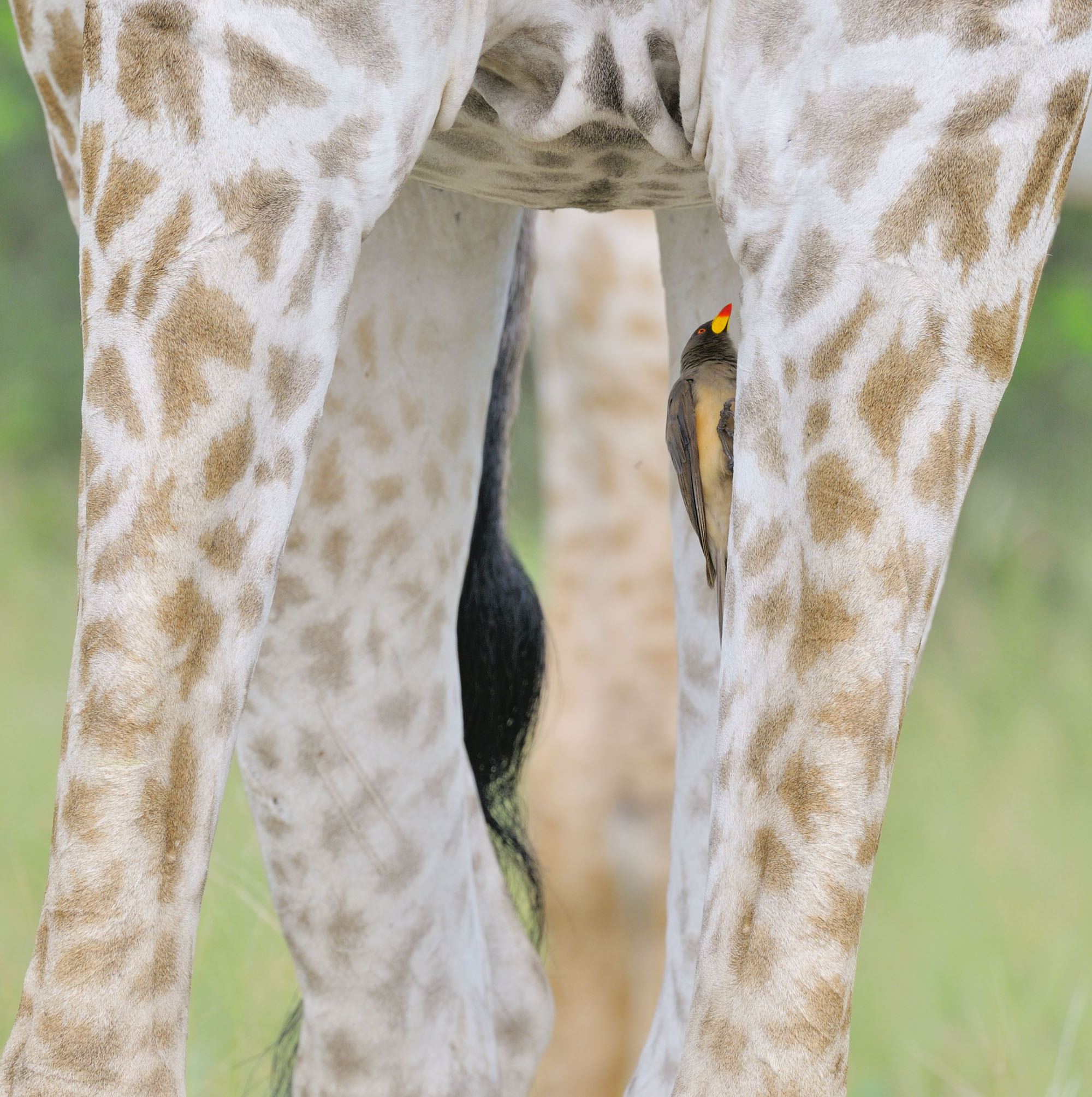
India

27th May 2023

India

India’s tiger, mammals and birds.

Read more
  • « Go to Previous Page
  • Page 1
  • Interim pages omitted …
  • Page 14
  • Page 15
  • Page 16
  • Page 17
  • Page 18
  • Page 19
  • Go to Next Page »

Footer

Design

  • About
  • Destinations
  • Blogs
  • FAQS
  • Team
  • Contact
All Rights Reserved ©Fish Eagle Safaris 2022 | Terms & Conditions | Privacy Policy
Designed & Developed by B Online

SUBSCRIBE TO OUR NEWSLETTER

SIGN-UP TO OUR NEWSLETTER

Subscribe Form

Footer Widget Header

Related Blogs