• Skip to primary navigation
  • Skip to main content
  • Skip to footer

Fish Eagle Safaris

Fish Eagle safaris

Contact

Logo
  • About
  • Destinations
  • Blogs
  • Newsletter
  • FAQS
  • Team
  • search
  • Contact
  • About
  • Destinations
  • Blogs
  • FAQS
  • Team
  • Contact

India

Great Indian Tiger Safari – March/April 2025

12th October 2023

Great Indian Tiger Safari – March/April 2025

With one departure sold out, we now have a second ‘Great Indian Tiger Safari’ in place for late March/early April 2025. You can find the full trip itinerary here, with Encounters Asia as the destination management company.

The second of the two back-to-back departures will start in Delhi on March 29, 2025 and will end back there on April 10. A full 10 days will be split between three tiger reserves, namely Bandhavgarh (4 nights), Kanha (4 nights) and Pench (2 nights). There will be multiple morning and afternoon outings for our expert local guides to find the tigers’ pug marks, look for fresh scat and most revealingly, pick up on alarm calls made by sambar deer and other tiger prey species.
On one day we will have a special ‘full day’ permit to spend the entire day inside a core area in a tiger reserve, arriving earlier and departing later than everyone else. In addition to the tigers, we will keep our eyes peeled for the many other fascinating mammal species present in these three magnificent reserves such as sloth bears, wild dogs and leopards.

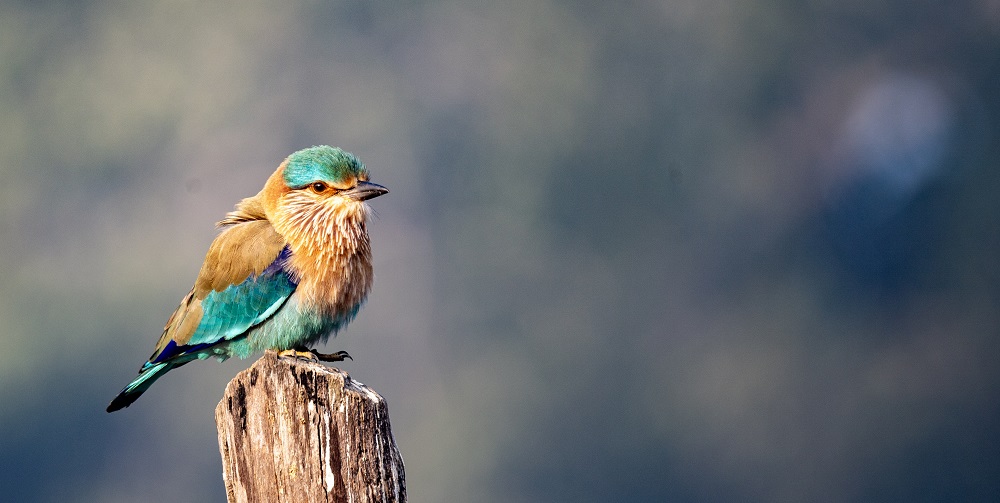
The bird-watching in the Indian forests is epic and a keen birder can probably increase his or her life list with a good 80 to 100 new species over the course of the trip. Among the striking birds we will be looking out for are the Malabar pied hornbill, brown fish owl, coppersmith barbet, scarlet minivet, Indian roller, Indian paradise flycatcher, golden oriole, racket tailed drongo, ruddy shelduck and green bee eater.
It won’t be all tigers and wildlife, all the time. We will be spending a couple of days in Delhi before the safari for some Northern Indian food, culture and history, and there will be an optional pre-safari outing to experience the majesty of the Taj Mahal in Agra. 

Want to add one more extraordinary wildlife experience? Join up for the optional 2-night extension to Kaziranga National Park, home to more than 90% of India’s rare greater one-horned rhinos.
Here’s why late March/early April is a particularly good time to be in India in search of tigers:

*By late March, which is towards the end of the dry season, the vegetation is less dense and water is scarce, forcing the animals to congregate around remaining water sources. This makes it easier to spot tigers as they come to drink water.
*March is also at the end of the peak tourist season in India, with fewer tourists in the national parks. Hopefully fewer disturbances and distractions should improve our chances of spotting tigers – and other wildlife.
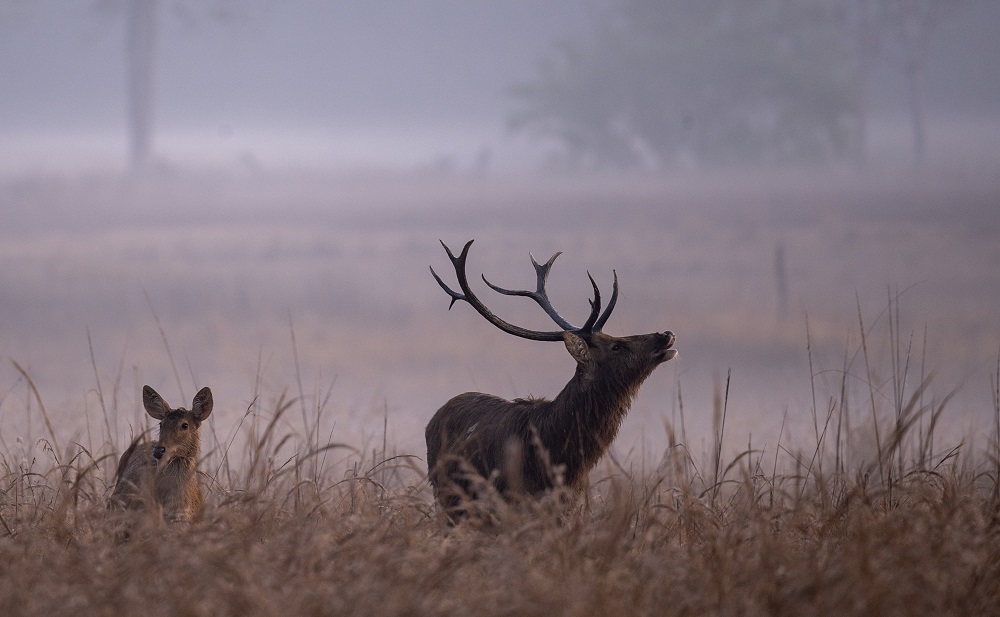
*By March, tigers start to become more active in preparation for the breeding season which typically starts in April. During this period, the males become more territorial and vocal, making it easier to track them down.
I will be personally accompanying the group, together with a tour leader/escort from Encounters Asia. The weather on this specific departure – with the visits to the tiger reserves taking place in early April – will be hot during the day, with maximum temperatures reaching the high 90’s and cooling off to around 75F at night. While it gets very hot, the relative humidity is low, ranging between 20% to 25%. April and May are considered two of the best months for tiger viewing as there is very little water around and the tigers concentrate around remaining sources of water; they will even get into the water to cool off.  

It is a very small group trip, with a maximum of 6 guests. Guests will be seated in two rows with 2 persons each in the open 4-wheel drive vehicles used for the tiger safaris. So no middle seating. The entire trip will be photo-centered so we will be looking for many different subjects to shoot, both on safari and elsewhere. 
Seeing a tiger in the wild

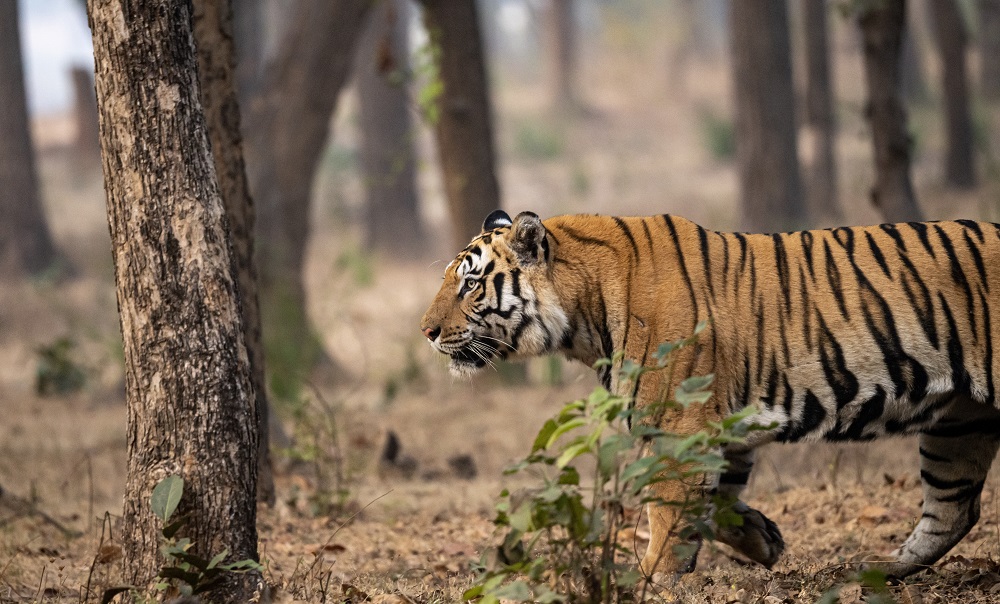
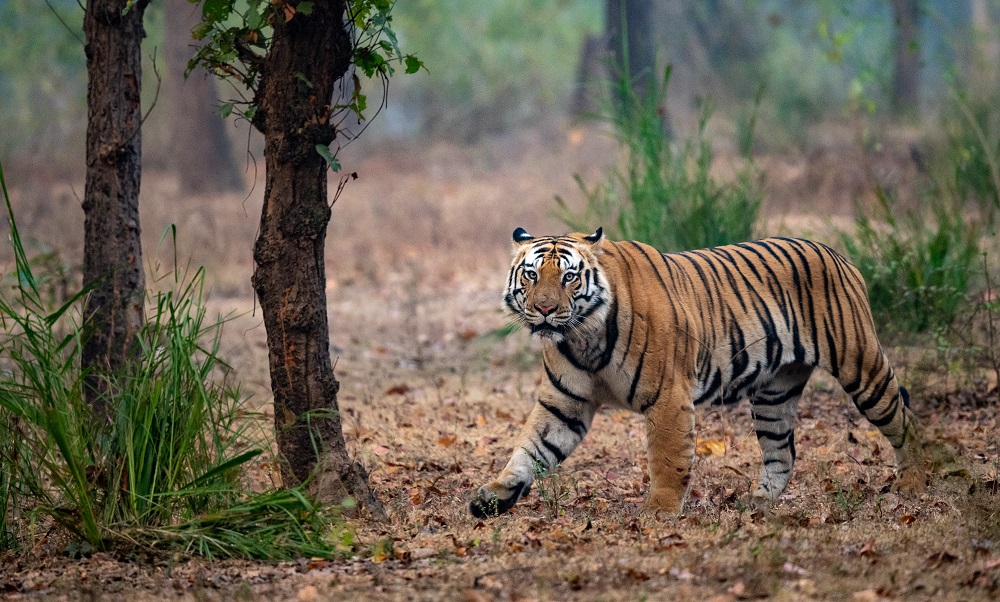
On our second day in Bandhavgarh in January this year, I saw my first tiger, together with Lyndon. It was a large male – and he was walking away from the road we were on. Initially my reaction was one of disappointment. ‘Oh no’, I thought, ‘it’s walking away…’ I need not have worried. Fortune smiled on us that day and the tiger re-emerged from the edge of the forest a few minutes later, allowing us several opportunities to observe and photograph it.  

I could never have imagined what an impact my first tiger sighting would have on me. A Bengal tiger is just so awesome and jaw-droppingly gorgeous an animal. I wanted time to stand still so that I could fully appreciate the beauty and majesty of it. Massive in every way, it stalked seemingly purposefully in one direction and then another, showing off its gleaming burnt orange coat slashed with white and black stripes which, of course, is what makes a tiger a tiger.

For several minutes we were simply mesmerized by this most awesome of big cats as it crossed the road and headed back into the forest. Supremely confident and a true master of its domain.  
The last time I experienced a similar raft of emotions was upon seeing my first ever great white shark on a cage diving outing in the Indian Ocean at Gansbaai in South Africa. A mix of awe, a bit of disbelief and utter amazement.  

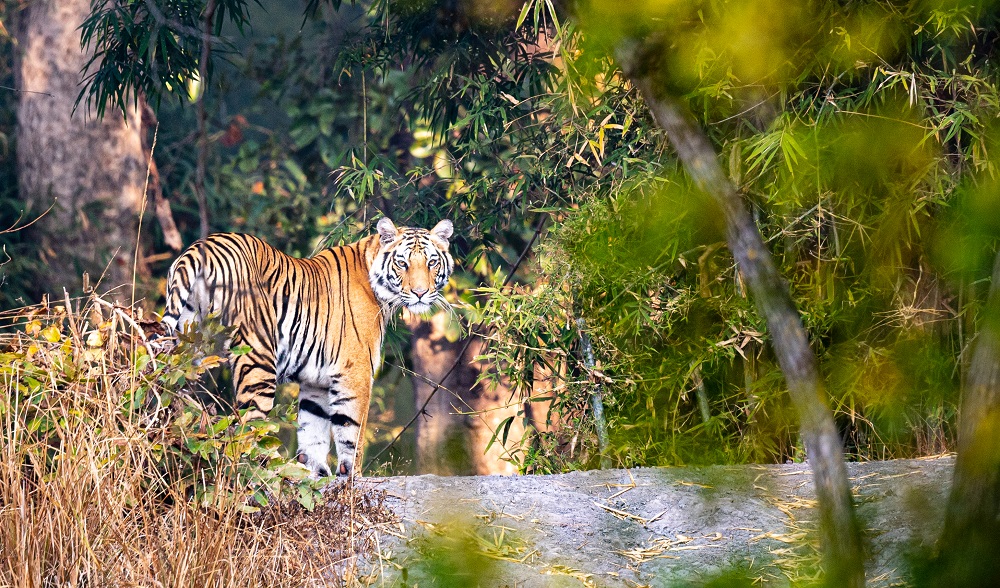
We were fortunate to experience two additional tiger sightings last January; a second one in Bandhavgarh when our eagle-eyed guiding crew spotted a female tiger on an embankment, and yet another male at Kanha, crossing the road right in front of us.  
One really extraordinary tiger sighting truly made the trip and I can hardly wait to return to India and to the jungles of Madya Pradesh for more exciting tiger encounters. And for whatever else might come our way in the way of mammals, birds and the wonderful people of India.  

Call our office in Houston at 1-800 513-5222 or email me directly at bert@fisheaglesafaris.com to secure your spot on this trip.  

YOU MIGHT ALSO BE INTERESTED IN
Destinations
Zambia

10th September 2021

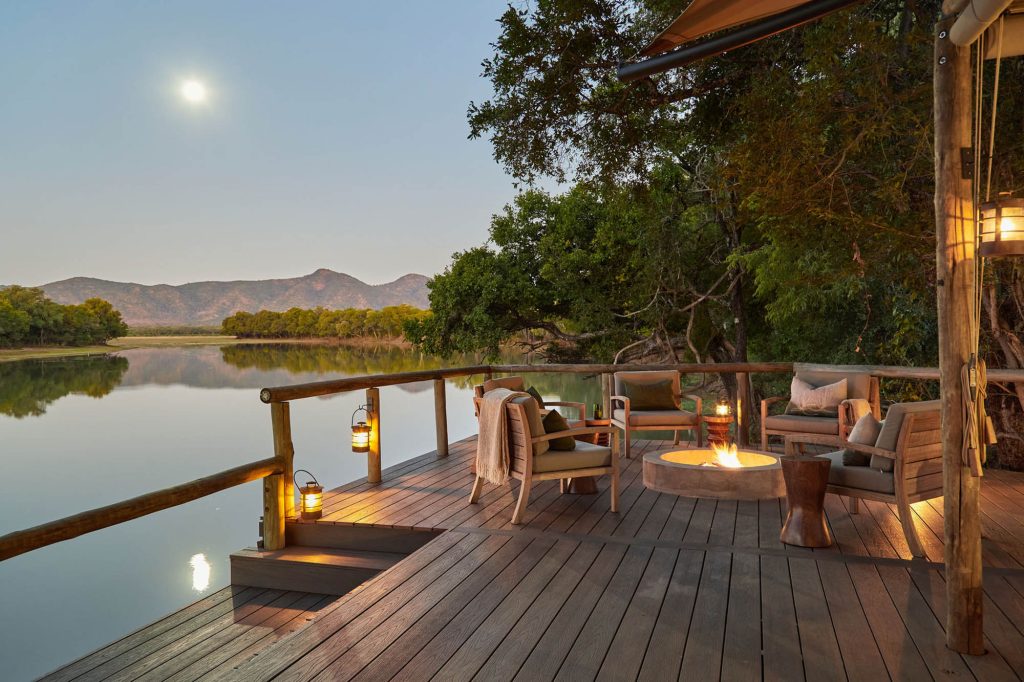
Chindeni and the Bushcamp Company, Zambia

By late July we found ourselves at Chindeni, a small Bushcamp Company property
Read more
Botswana
Destinations
Okavango Delta

3rd October 2022

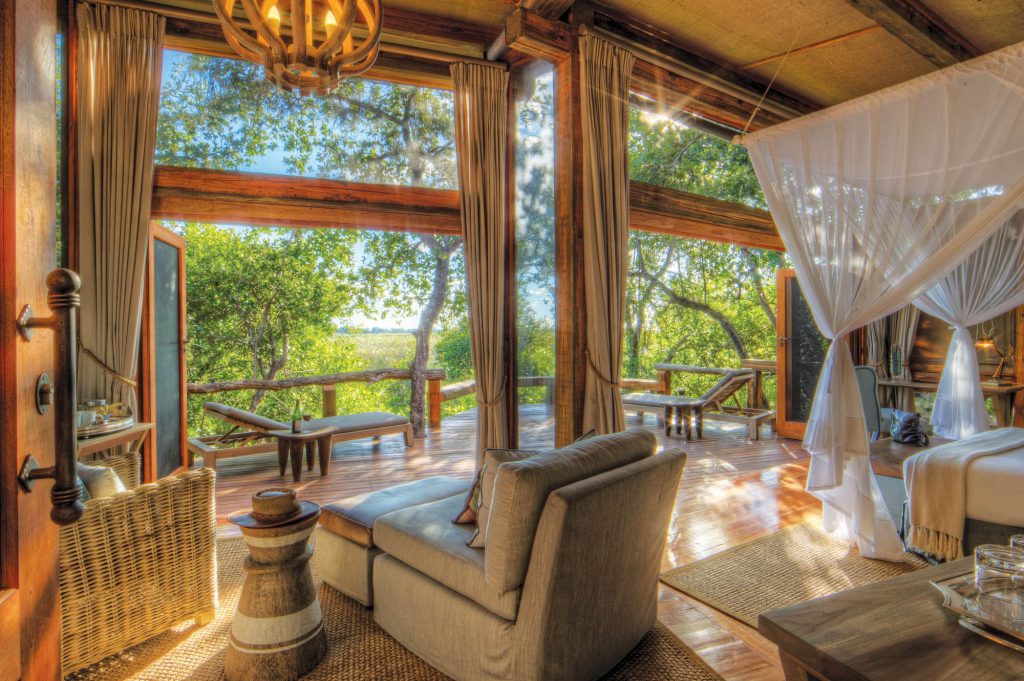
Camp Okavango, Botswana

Camp Okavango is in the heart of the permanent part of the Delta. In this idyllic setting there are no vehicles, and it is just a short walk
Read more
Area
Destinations
Nyerere National Park
Ruaha
Tanzania

14th October 2023

From My Safari Notebook: Wildlife Photography

Birds in flight and wildlife photographers have an uneasy relationship. Things go wrong as often as they go right. Getting focus-lock on a moving subject

Read more

SUBSCRIBE TO OUR NEWSLETTER

READERS FAVOURITES
Destinations
India

27th May 2023

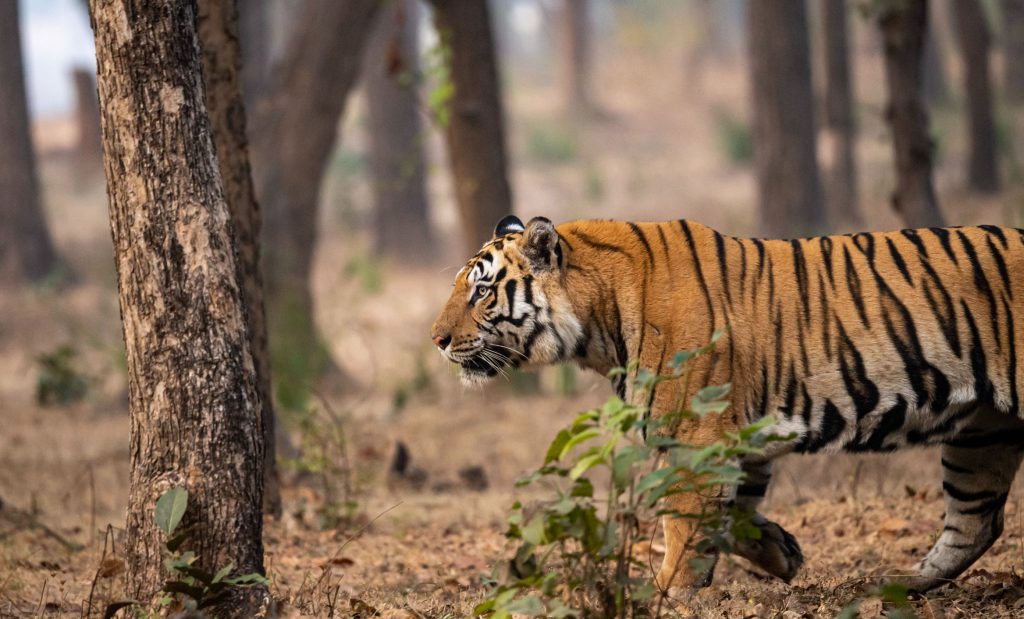
India

India’s tiger, mammals and birds.

Read more
Botswana
Destinations

4th August 2022

On Safari At Belmond Eagle Island Lodge, Okavango Delta

What is the ‘secret sauce’ for an unforgettable few days on safari in Botswana? It starts with the animals, of course. The elephants, lions, giraffes, hippos

Read more
Destinations
Zambia

10th September 2021

Chindeni and the Bushcamp Company, Zambia

By late July we found ourselves at Chindeni, a small Bushcamp Company property

Read more

India

27th May 2023

India’s tiger, mammals and birds.

Tiger12
With a tiger population of more than 60, Bandhavgarh is one of the best of all of the tiger reserves in India, and it is also one of India’s most beautiful parks with a mix of tropical forests, rocky hills and valleys.  Chance of seeing tigers over the course of three to four days?  High.
Over the course of 6 nights total in three Indian national parks (Bandhavgarh, Kanha and Pensch) we had three different tiger sightings.  One sighting of a large male, early one morning, was by far the best.  He emerged from the sal forest in good light; was completely unfussed by the presence of a few vehicles and strolled right by us with barely a look in our direction.
Tiger9
Tiger8
Tiger7
On this trip, we traveled to India during the cool winter season which stretches from November to February.  While that made for a pleasant traveling experience, the ideal time for tiger photography is later in the dry season, from late March to May when the tigers - and other wildlife - are concentrated closer to remaining water sources.
Tiger5
Tiger4
Tiger3
There is no off-road driving allowed in the national parks in India and you never know exactly how close you may get to a tiger - or other predator - so it is advisable to have a long telephoto lens of up to 500mm or 600 mm available, the faster the better.  Otherwise a good medium zoom lens in the 100-400 mm range would also work.  For closer up photos, I rely heavily on my 70-200 mm stabilized f/2.8 lens.  If you don’t own a fast lens, it may be a good idea to rent one for your first India wildlife experience.
You never know when a tiger is going to walk out of the bush and into the road right in front - or behind you.  So be ready at all times and never put your camera away to where you have to extricate it from a bag, switch it on, etc.  To get this shot of the tiger walking across the road, I literally had less than 4 seconds from lifting the camera to when it disappeared into the bush on the right.
Wild boar
The beautiful Chital (or Spotted Deer) are exceedingly common in many of India’s national parks, with large numbers to be seen grazing - or browsing - in forests and in open grasslands.  The beautiful Chital (or Spotted Deer) are exceedingly common in many of India’s national parks, with large numbers to be seen grazing - or browsing - in forests and in open grasslands.  The beautiful Chital (or Spotted Deer) are exceedingly common in many of India’s national parks, with large numbers to be seen grazing - or browsing - in forests and in open grasslands.  The beautiful Chital (or Spotted Deer) are exceedingly common in many of India’s national parks, with large numbers to be seen grazing - or browsing - in forests and in open grasslands.  The beautiful Chital (or Spotted Deer) are exceedingly common in many of India’s national parks, with large numbers to be seen grazing - or browsing - in forests and in open grasslands.  The beautiful Chital (or Spotted Deer) are exceedingly common in many of India’s national parks, with large numbers to be seen grazing - or browsing - in forests and in open grasslands.
On any of our India trips, there will be a maximum of four guests in two rows in the small open Maruti Suzuki jeeps used for game drives.  The vehicles are highly maneuverable which is a distinct advantage over the heavier Toyota Land Cruisers used by some of the camps, which appear to be almost too large for the narrow tracks.
The Nilgai (or Blue Bull) is one of the world’s largest antelopes, widely spread across the northern Indian subcontinent.
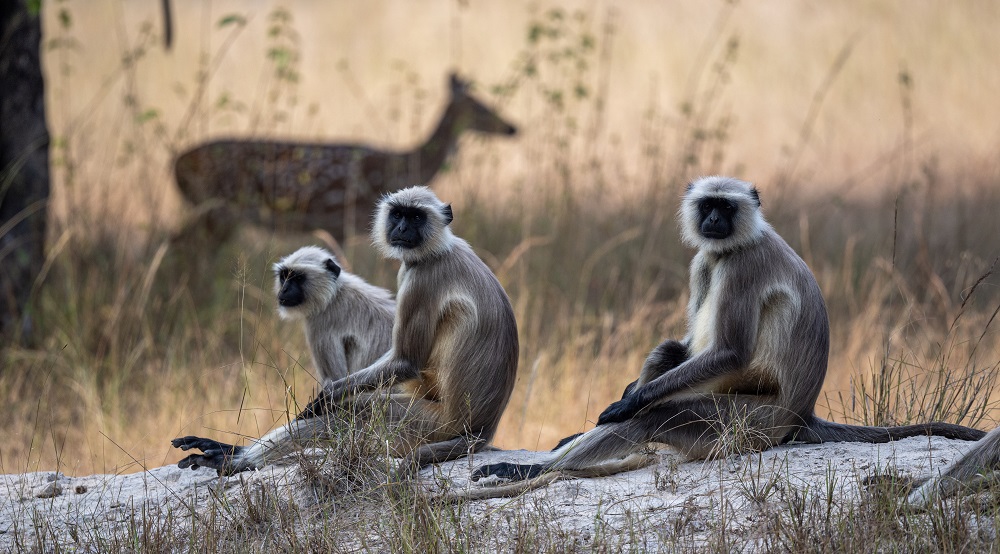
The Grey Langur is one of two monkey species which we saw in India, the other one being the Rhesus Macaque which has also adapted to living commensally with humans, in various cities in India.
Langur
On the vehicle with you on safari in India, there will be an expert local guide attached to the lodge where you will be staying, as well as an official registered guide, provided by the park authorities.  These guides are experienced trackers and in addition to listening for audible clues (mostly alarm calls, particularly those made by sambar deer) they will be scanning the road and road perimeter for pug marks (tracks), signs of fresh scat or urine, and fresh scratch marks on trees along the route.
Golden Jackals were quite common and are clearly widely distributed.  Despite the name, they are not closely related to the African jackals, being closer to wolves and coyotes.  Over the course of a week or so on safari in India, bird-watchers can expect to rack up anything from 70 or so to well over a hundred species of birds.  Many of the species are endemic to the sub-continent
Among the commonly seen mammals in many of the Indian tiger reserves are the huge Gaur (Indian Bison)
Photography conditions in India were enhanced by the presence of fog in the early mornings, which added drama to several of our shots, notably those of the barasingha (swamp deer)
Barasingha
Crested Serpent Eagle
Greater Coucal
Jungle Owlet
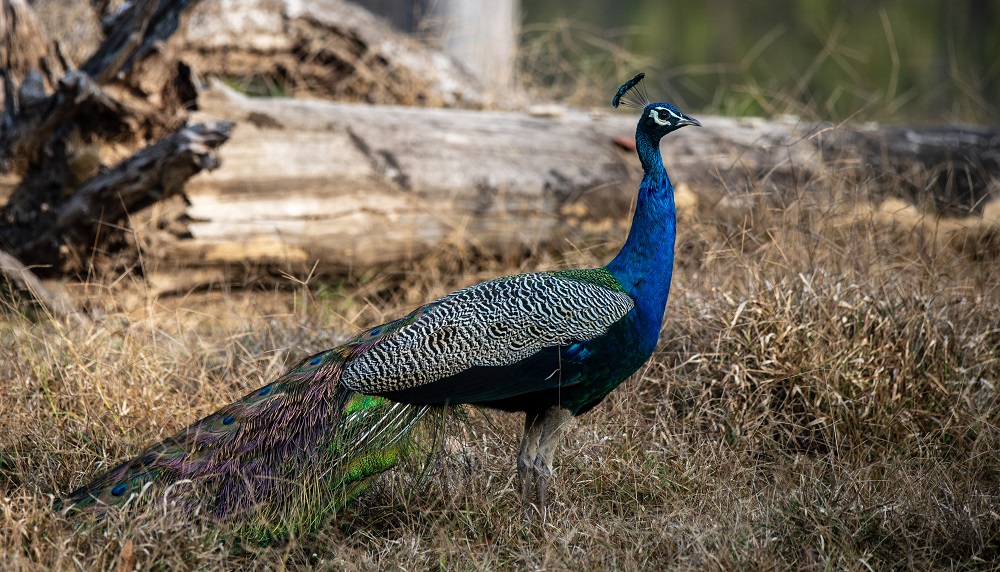
Indian Peafowl
Indian Pond-Heron
Indian Roller(1)
Indian roller(2)
Indian Roller
Jungle Owlet
Oriental Magpie Robin
owl3
Red-wattled Lapwing
Ruddy Shelduck
Spotted Owlet
Whitenaped Woodpecker
White-throated Kingfisher
Woodpecker2

YOU MIGHT ALSO BE INTERESTED IN

Destinations
Zambia

10th September 2021

Chindeni and the Bushcamp Company, Zambia

By late July we found ourselves at Chindeni, a small Bushcamp Company property

Read more
Botswana
Destinations
Okavango Delta

3rd October 2022

Camp Okavango, Botswana

Camp Okavango is in the heart of the permanent part of the Delta. In this idyllic setting there are no vehicles, and it is just a short walk

Read more
Area
Destinations
Nyerere National Park
Ruaha
Tanzania

14th October 2023

From My Safari Notebook: Wildlife Photography

Birds in flight and wildlife photographers have an uneasy relationship. Things go wrong as often as they go right. Getting focus-lock on a moving subject

Read more

SUBSCRIBE TO OUR NEWSLETTER

READERS FAVOURITES
Botswana
Destinations
Savuti
Savuti Channel

3rd October 2022

Savute Safari Lodge, Botswana

If you were to look at a time-lapse photography sequence taken from Savute Safari Lodge between 2008 and the present, the one thing that will stand out

Read more
Botswana
Destinations

4th August 2022

On Safari At Belmond Eagle Island Lodge, Okavango Delta

What is the ‘secret sauce’ for an unforgettable few days on safari in Botswana? It starts with the animals, of course. The elephants, lions, giraffes, hippos

Read more
Destinations
Zambia

10th September 2021

Chindeni and the Bushcamp Company, Zambia

By late July we found ourselves at Chindeni, a small Bushcamp Company property
Read more
  • « Go to Previous Page
  • Page 1
  • Page 2

Footer

Design

  • About
  • Destinations
  • Blogs
  • FAQS
  • Team
  • Contact
All Rights Reserved ©Fish Eagle Safaris 2022 | Terms & Conditions | Privacy Policy
Designed & Developed by B Online

SUBSCRIBE TO OUR NEWSLETTER

SIGN-UP TO OUR NEWSLETTER

Subscribe Form

Footer Widget Header

Related Blogs