Revisiting South Africa’s Eastern Cape Reserves: Part 2 - Kwandwe
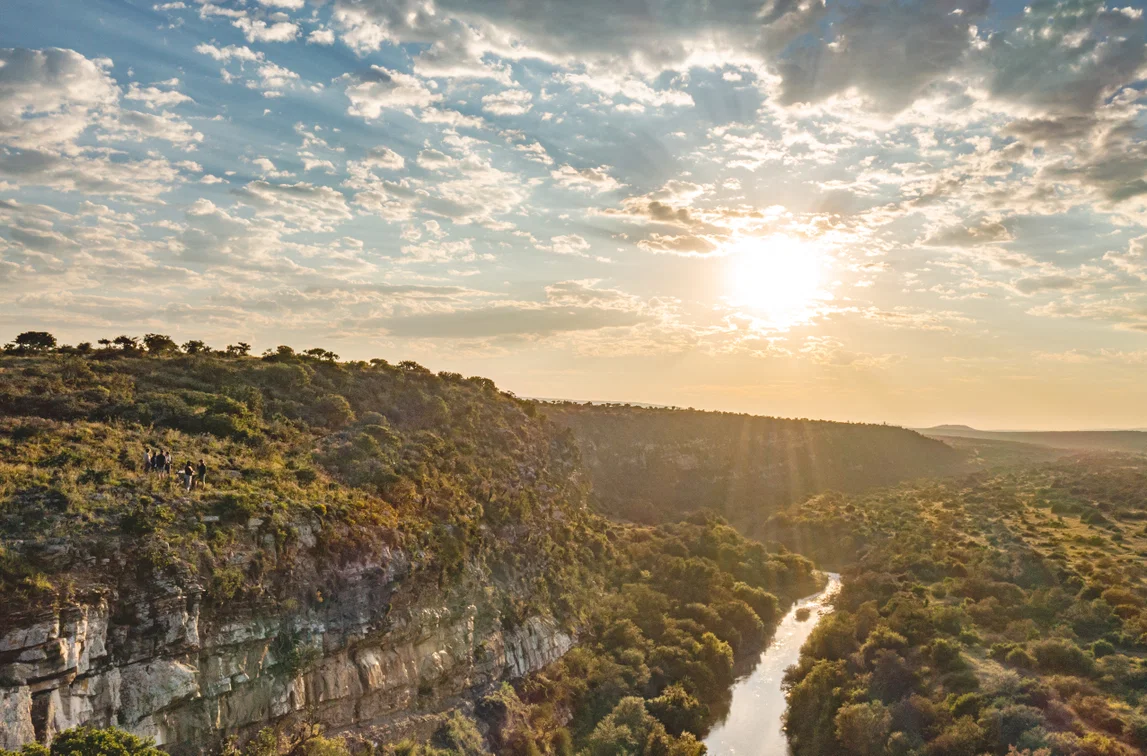
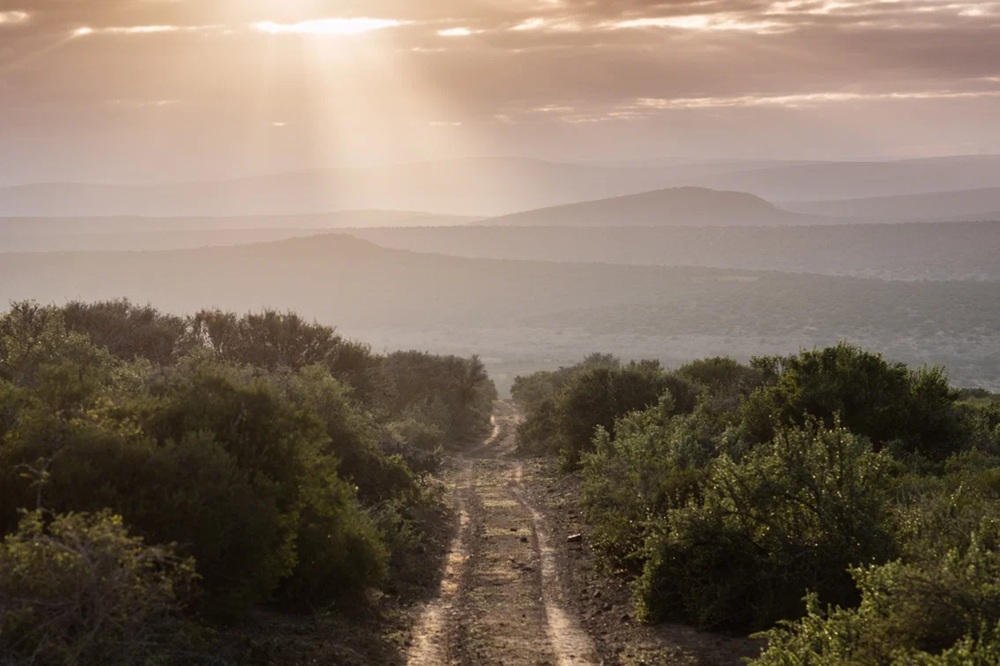
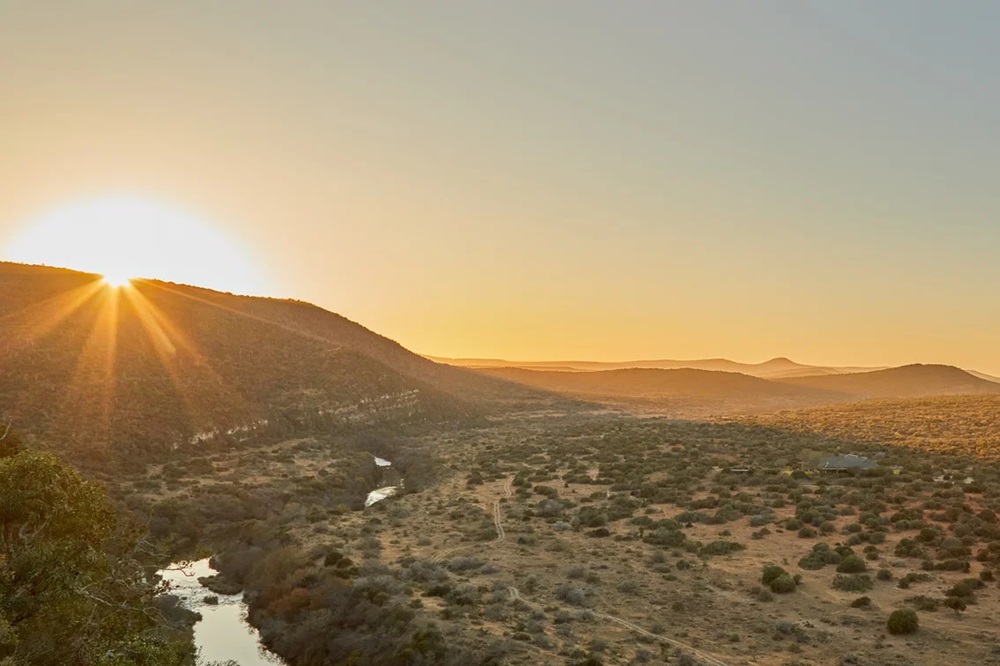
Of all the areas we visited in the Eastern Cape last summer and previously, Kwandwe was the most beautiful with scenery as spectacular as one can only imagine. It is also one of the largest of the reserves in the Eastern Cape, covering a whopping 74,000 acres. On what was our third visit to the reserve, we once again marveled at its size and evocative landscapes. We also caught a glimpse of one of Africa’s rarest and most sought after small cats.
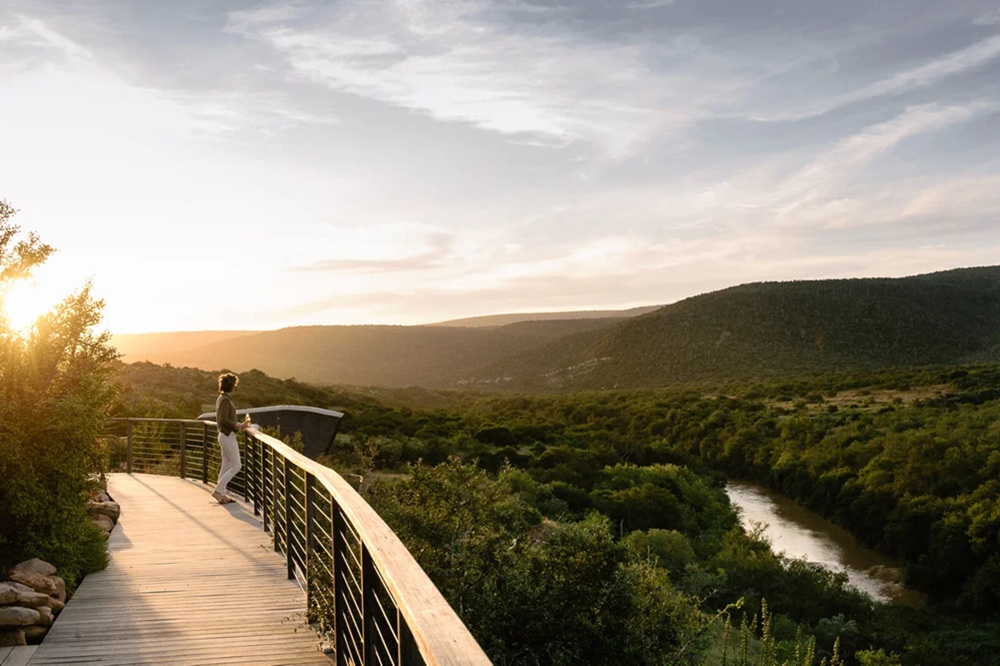
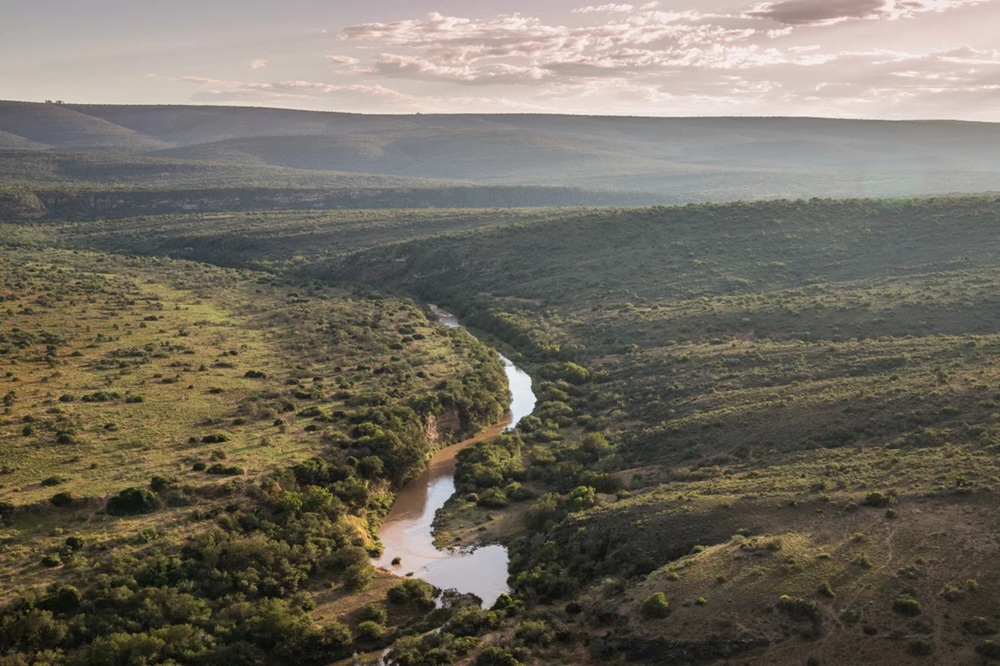
Adding to the grandeur of the Kwandwe setting is the Great Fish River which has cut a massive ravine right down the center of the reserve. Kwandwe’s flagship property – the Great Fish River Lodge – is located right on the edge of the Great Fish River with superb views from every room.
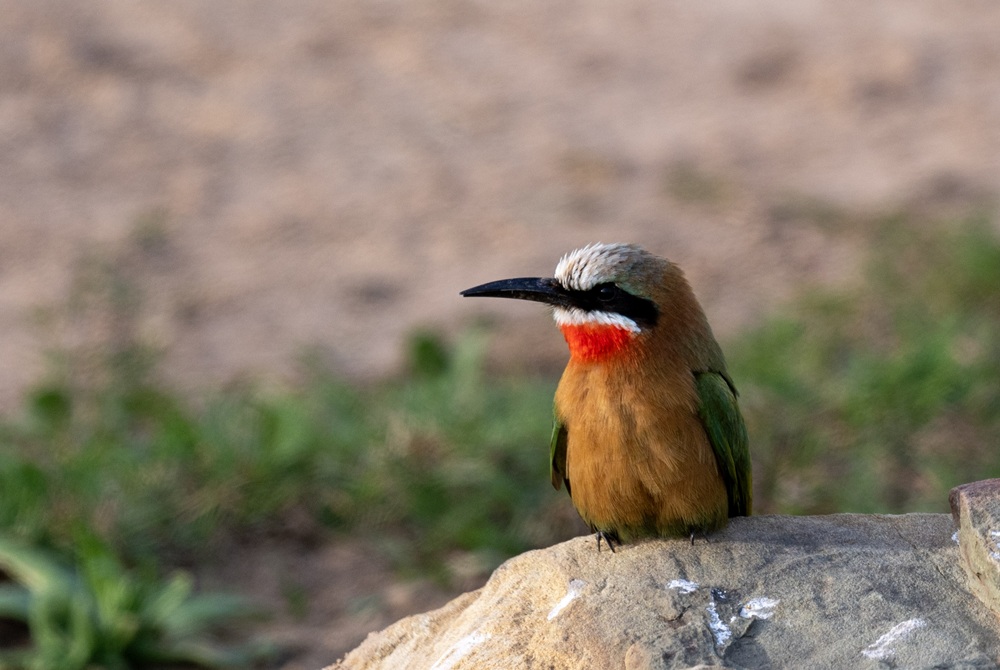
Elements of six of South Africa’s seven recognised biomes come together across Kwandwe, creating habitats for an unrivaled range of species – from the Big 5 to cheetah, brown hyena, aardwolf, bat-eared fox, meerkat, gemsbok, red hartebeest and more than 300 bird species. To be sure, Kwandwe is extraordinarily diverse on every level: habitat, wildlife and experiences.
Wildlife Viewing at Kwandwe
At first glance, it’s easy to assume that wildlife viewing at Kwandwe is going to be challenging. In early last August, the mostly thick brush on rolling hills was even more dense than usual, due to record breaking rain having fallen in the preceding weeks and months. Fortunately a few really exceptional sightings in good light compensated for the relatively low density of plains game.
I have personally seen lions, cheetahs, leopards, and white and black rhino at Kwandwe, and on a previous visit we racked up the Big 5 within 48 hours. That is not always going to be the case so definitely my best advice is to spend several days there. Most of the time, you’re simply not going to see everything in a day or two.
It is only with the luxury of time – and not having to rush around from one sighting to another – that a reserve like Kwandwe reveals its hidden appeal. Kwandwe is a treat that is best savored slowly. So just like Samara in the Karoo and Tswalu in the Kalahari, we recommend a 4-night stay to increase one’s chances of encountering some of the scarce or elusive or rare species.
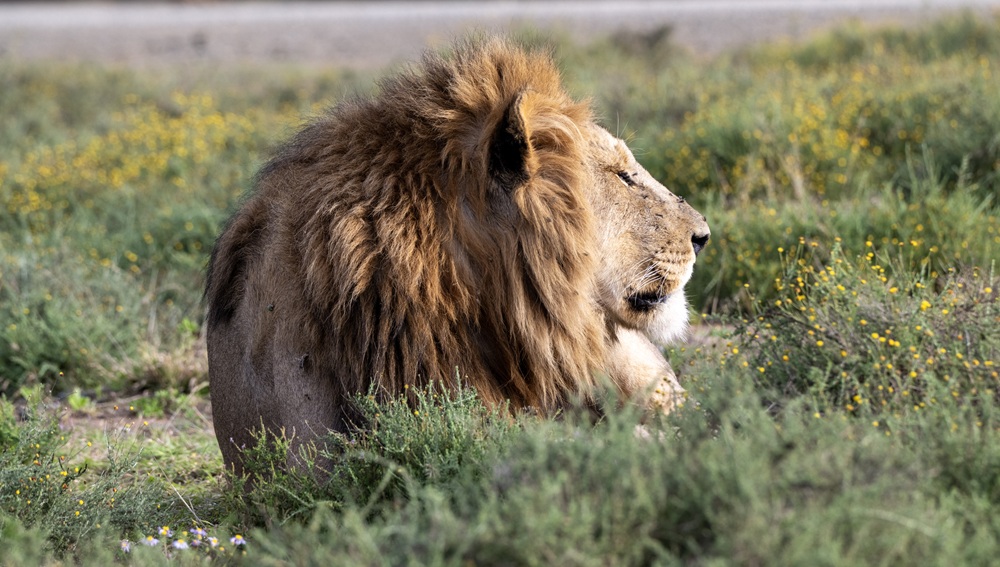
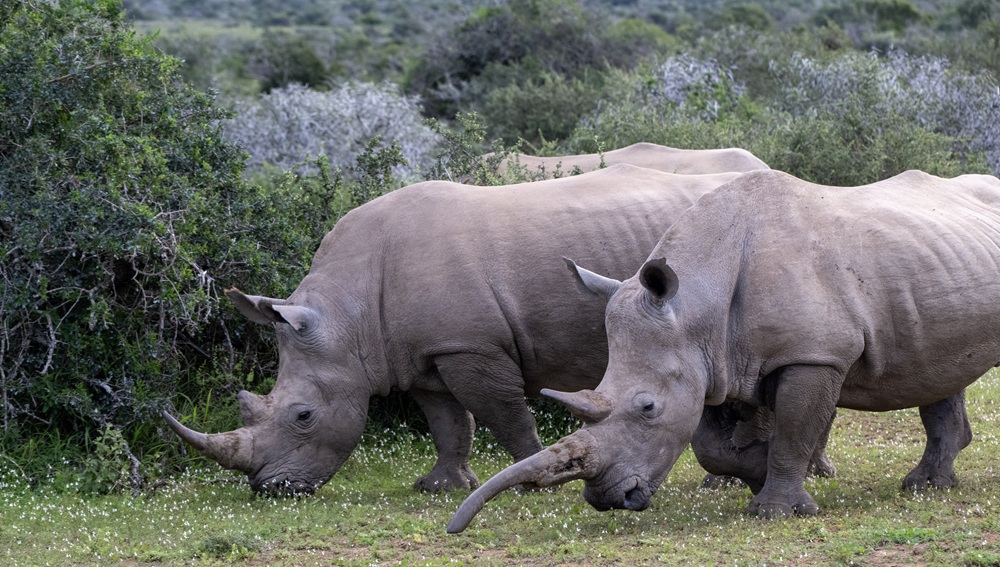
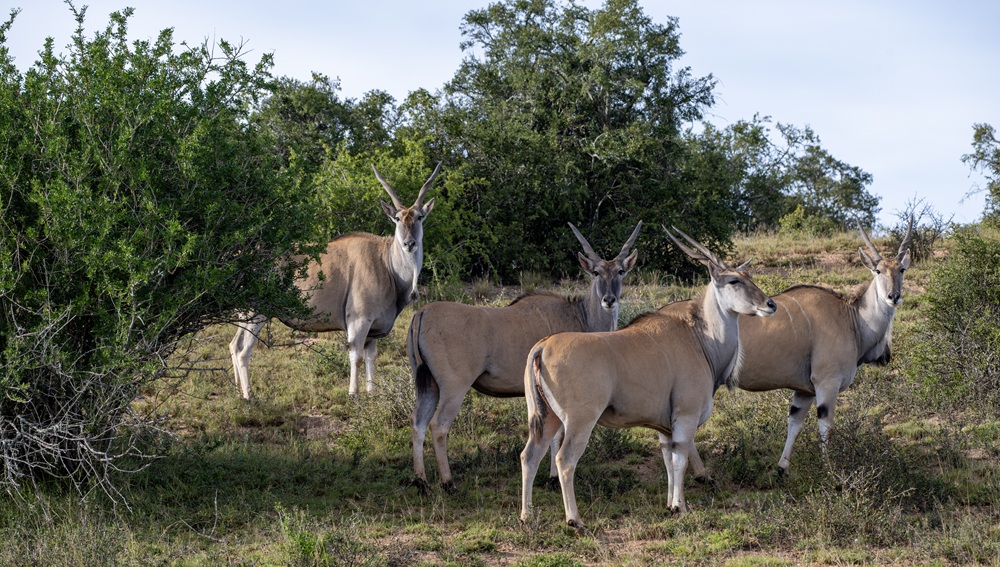
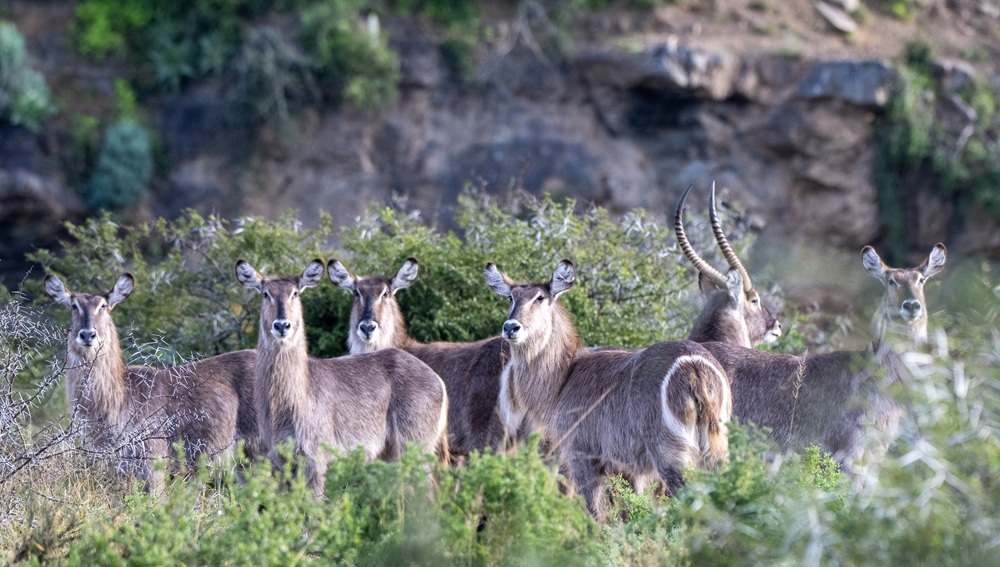
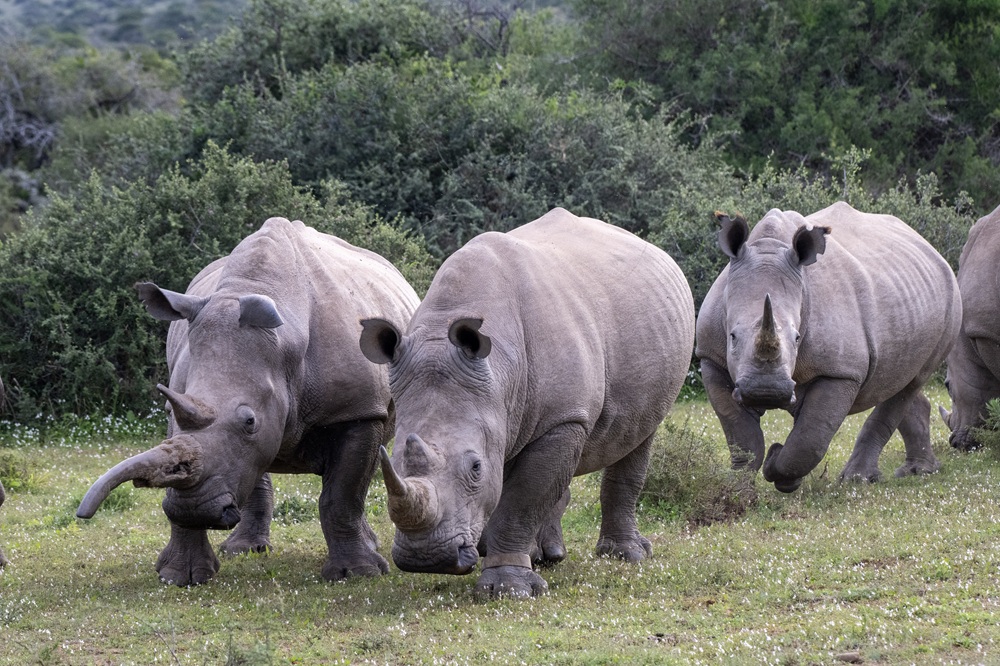
On this visit, we enjoyed some great views of lions and several white and black rhinos with their horns intact. We got extremely lucky with a brief glimpse of a blackfooted cat, managed to get the binocs pointed at some wild meerkats, and enjoyed good views of a few elephant bulls, some eland, bat-eared foxes, waterbuck, bushbuck, steenbok, gemsbok and red hartebeest. One afternoon we sat and watched a large herd of springbok jumping and pronking. Pronking is behavior where gazelles and springbok leap high into the air with stiff legs, an arched back, and a lowered head. Animals pronk to signal fitness and indicate to predators they are too fast to catch.
Privacy and Exclusivity
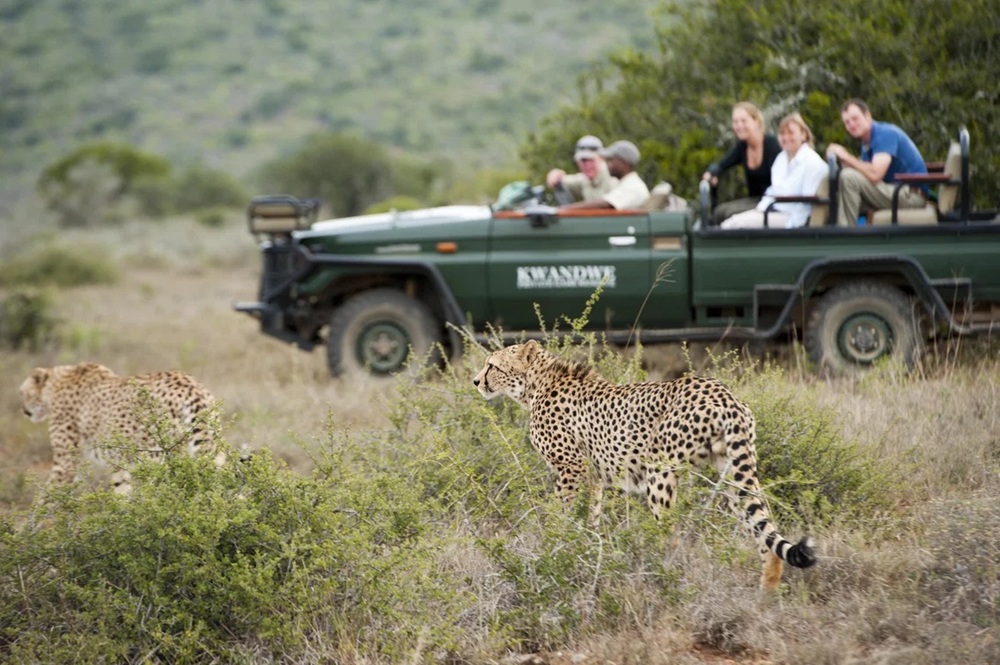
There was one thing missing from all of our Kwandwe wildlife encounters: other vehicles. With only 26 rooms spread across its succulent-studded landscape, Kwandwe has one of the highest land-to-guest ratios in South Africa. With both intimate, tranquil lodges and exclusive-use villas, there are options to suit families, couples, groups of friends and solo travellers.
With a maximum of just 52 guests at any one time, all guests enjoy an unrivaled sense of privacy. At Kwandwe, the difference between a reserve hosting dozens of guests and one hosting several hundred is palpable. You sense it early on and soon enough the absence of other vehicles out on game drives becomes just another part of the experience.
Size comparisons are notoriously difficult to get across on paper. Kwando’s 74,000 acres represent a wilderness area roughly the size of five Manhattans or the entire city of Las Vegas, which spans roughly 113 to 116 square miles. All of it shared by just 52 guests. That’s the scale of Kwandwe. As we personally experienced one morning searching for a coalition of male lions, literally hours can pass without seeing another vehicle.
It didn’t take any of us very long to realize that for a while at least, the wilderness was ours alone to explore and enjoy.
Lodge Facilities and Hospitality
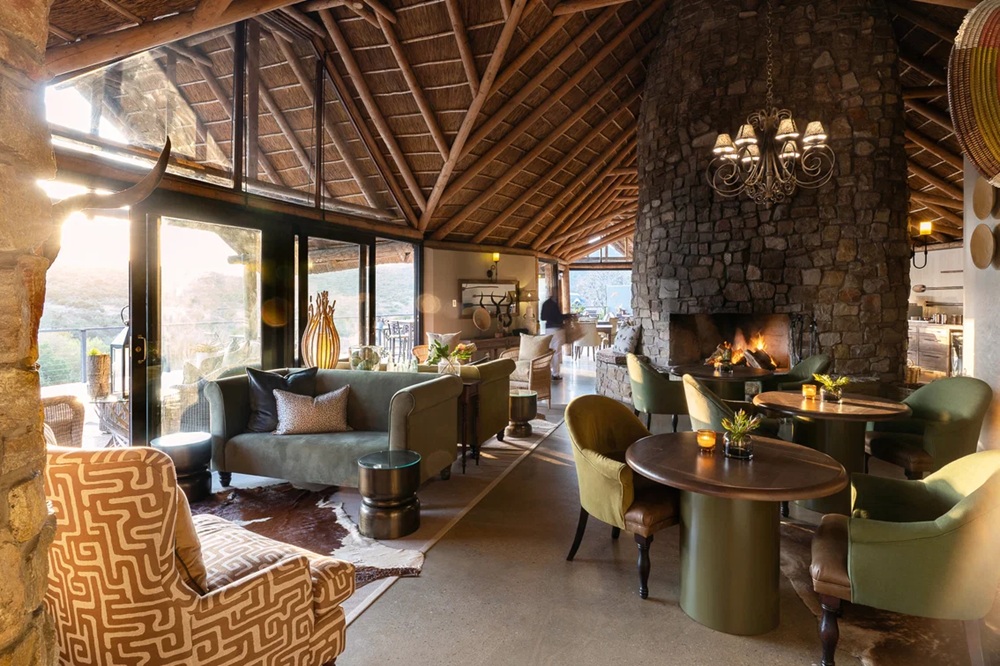
Kwandwe has two luxury lodge options being their Great Fish River Lodge and Ecca Lodge. It also has several exclusive villas which are available on a private, sole-use basis. These homesteads include Uplands Homestead, Melton Manor and Fort House. For exclusive-use bookings at the villas and at the Ecca Lodge private vehicle suites, guests can design their own safari timetables, with no minimum age restrictions, including game drives at flexible times of the day. Clearly ideal for families.
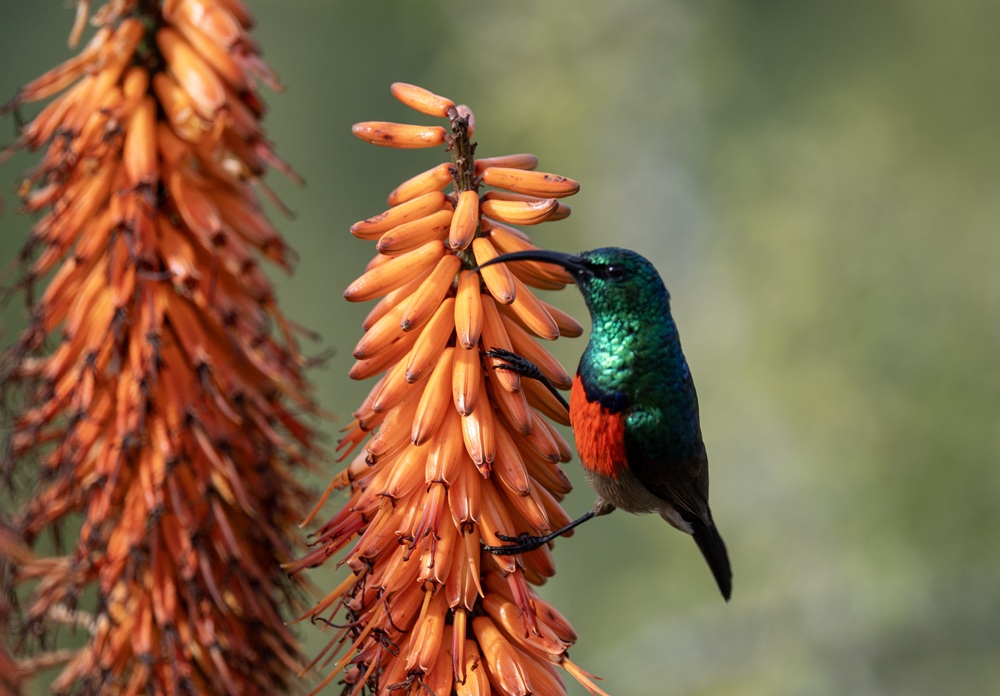
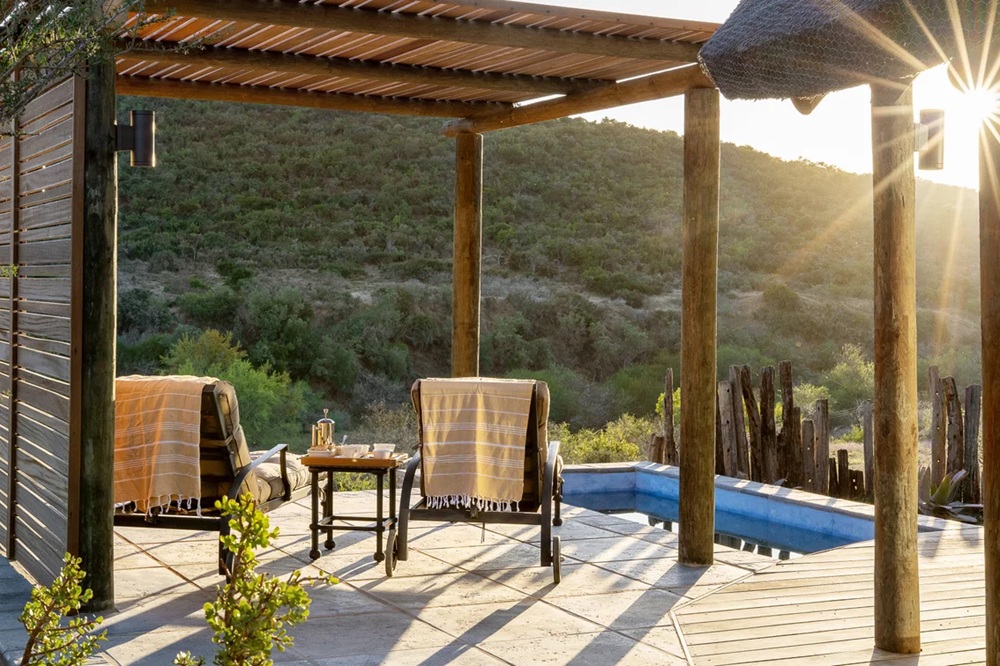
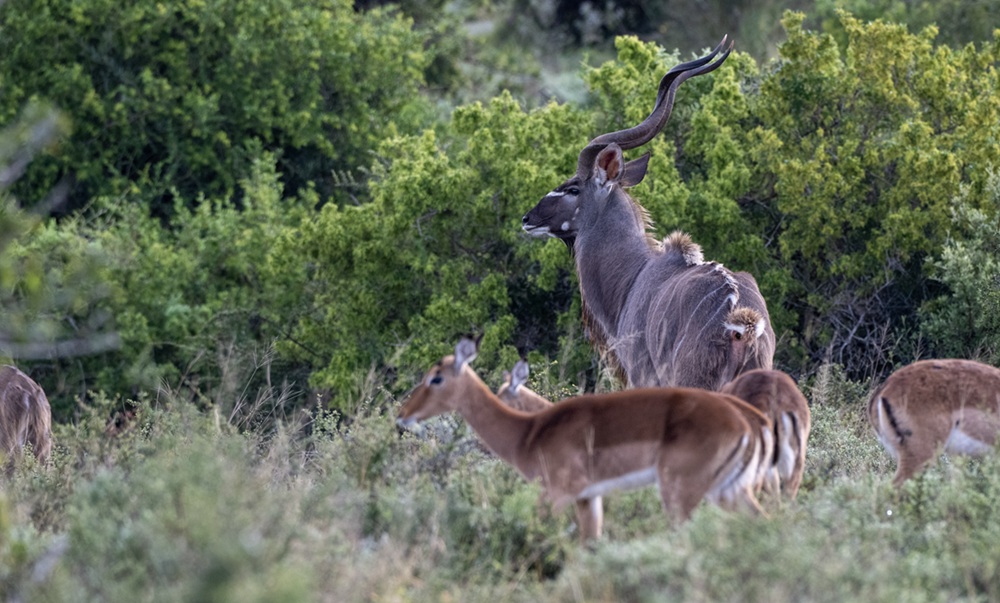
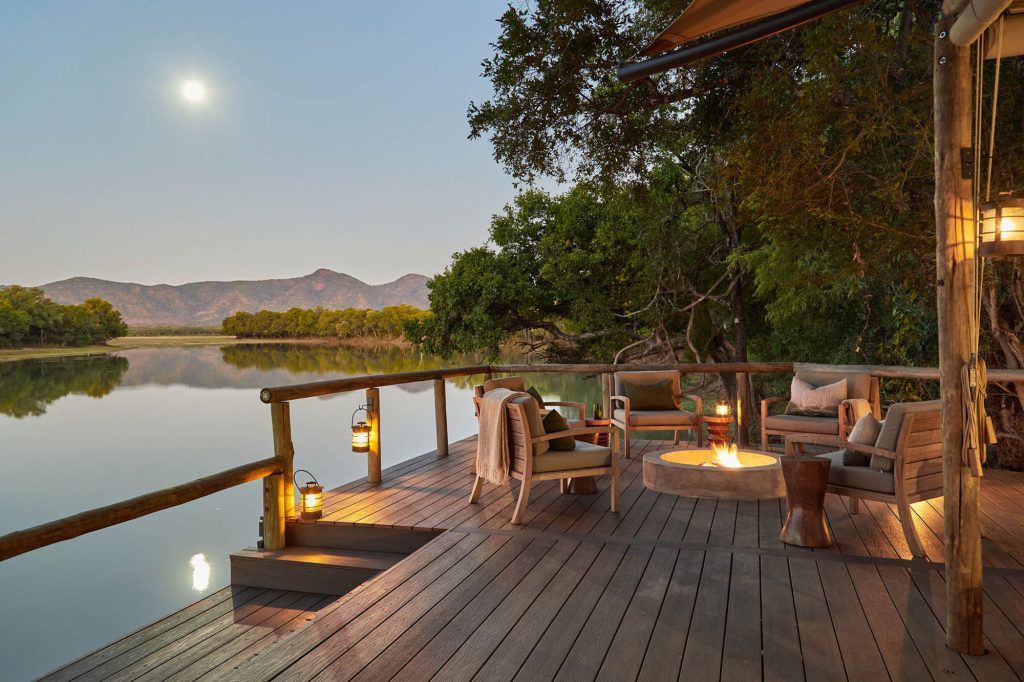
At Great Fish River Lodge, where we spent a couple of nights, one of the first things we noticed were the large viewing decks that allow for a fully immersive experience. Spend a bit of time there and you’ll be imperceptibly drawn into the surrounding nature. Stay still and you’ll notice a majestic kudu meandering down to the river for a drink, or observe a sunbird flitting by from one aloe inflorescence to another.
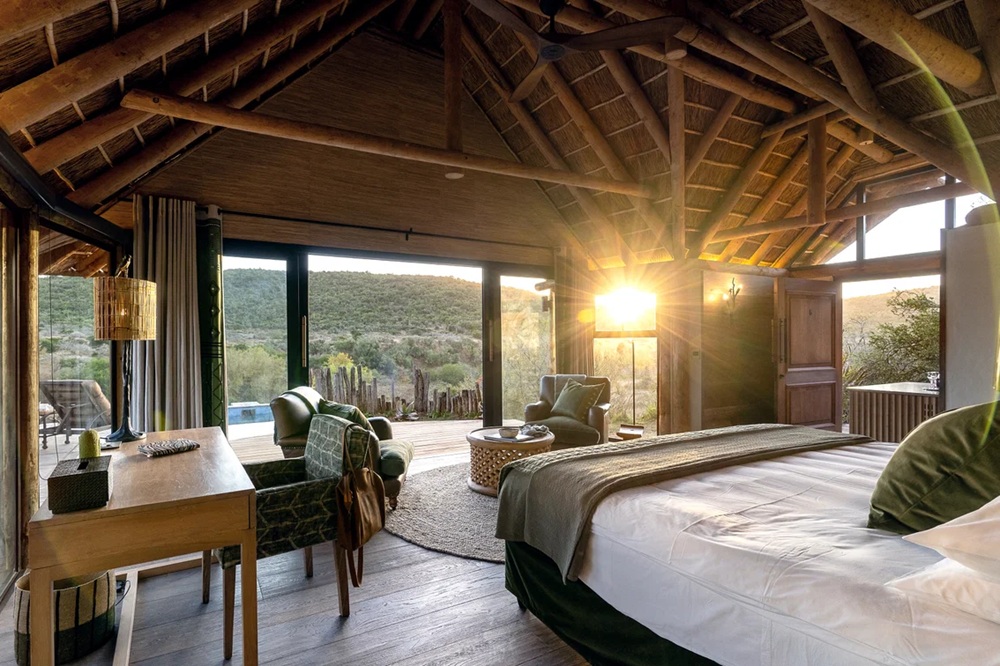
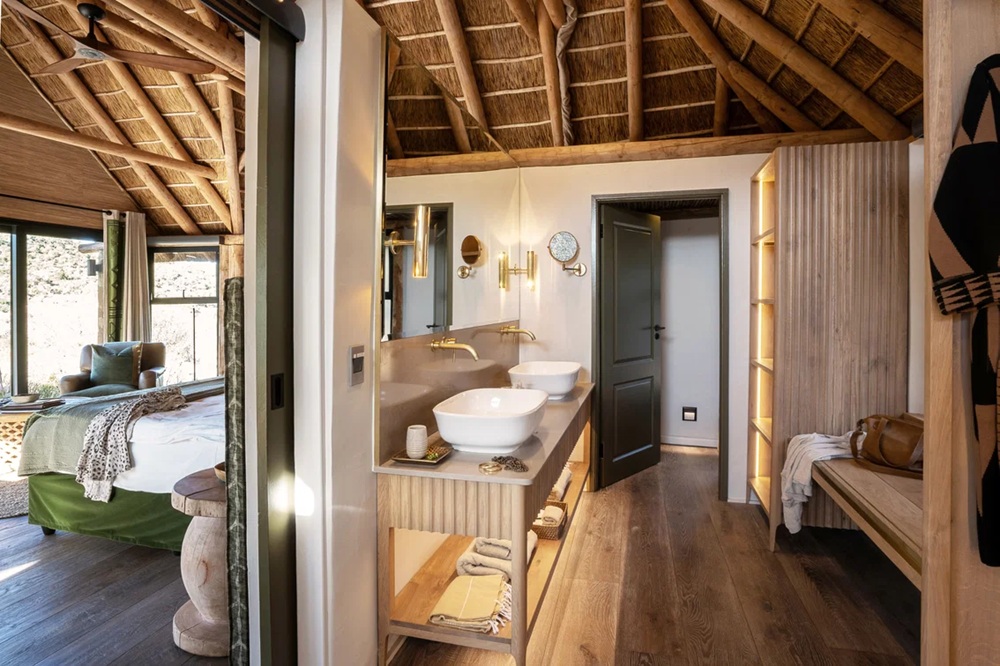
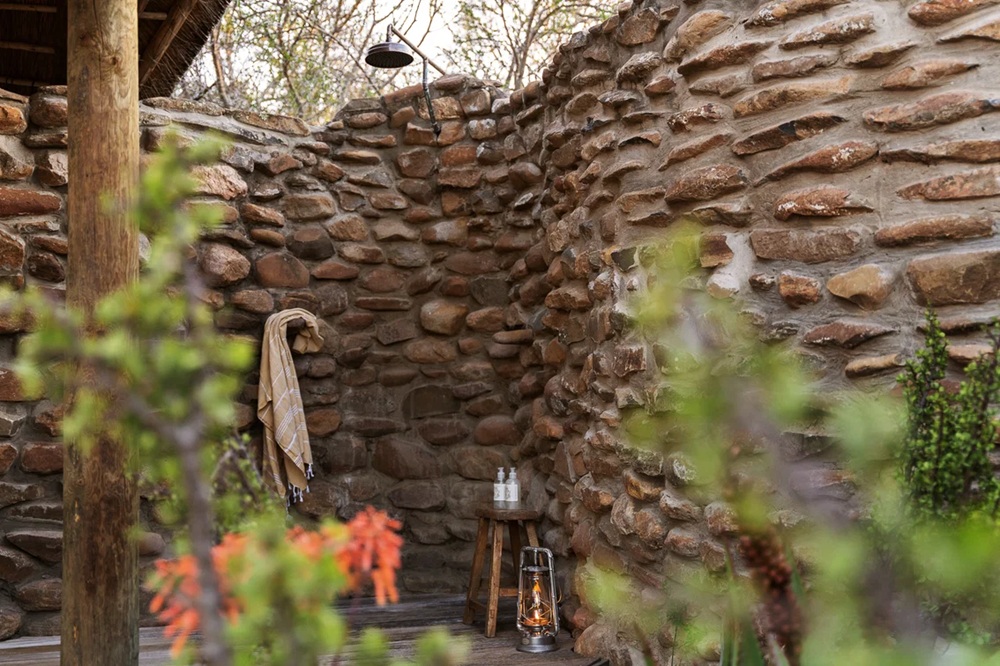
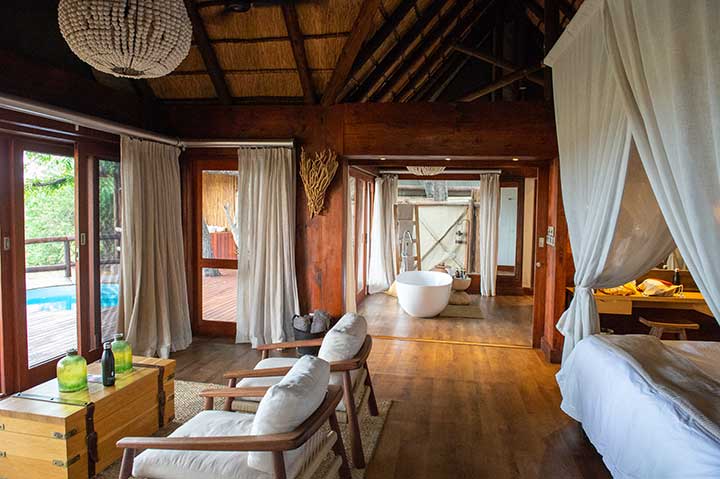
The room itself was large and thoughtfully designed. There was plenty of (un)packing space, the lighting was well above average and the ensuite bathroom featured both an inside and outside shower. There was also a large tub with plenty of hot water on tap. The small fridge is ready to be stocked with beverages of your choice.
Kwandwe’s style is classic but with contemporary touches; elegant, yet subtly so, with earthy tones mirroring the environment. Great Fish River Lodge is all about tranquillity and solitude. The nine spacious suites feature floor-to-ceiling glass doors, reflecting and opening up to the surrounding pristine wilderness. At the main area, you can relax on the outdoor deck, curl up in the library, and enjoy delicious African-inspired meals in the candlelit dining room or in the boma.
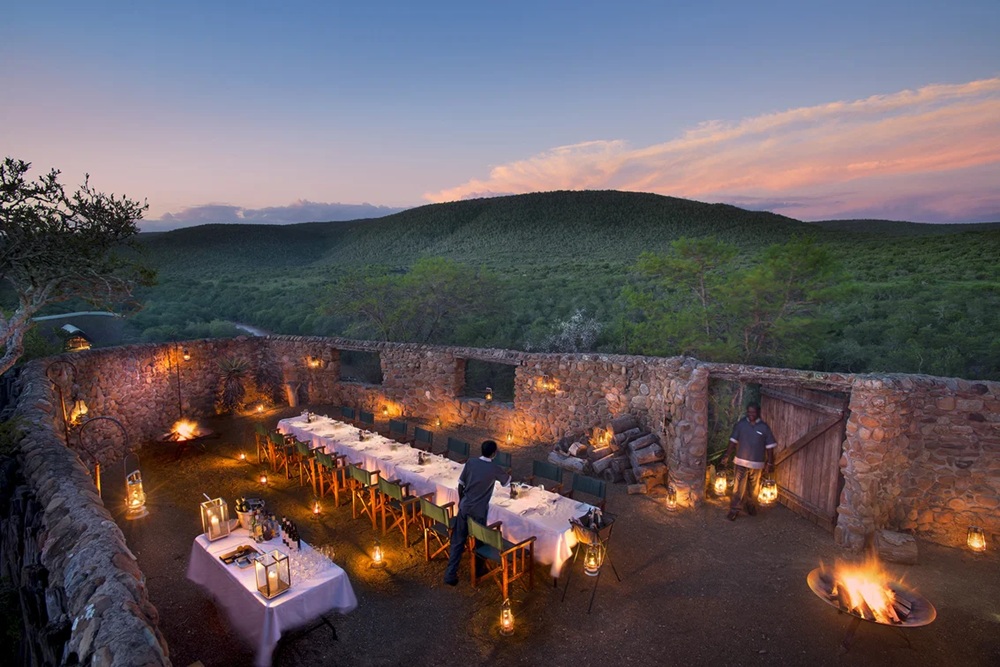
Our dining experience at Kwandwe was first class from the word go. Even before we’d seen our room, we tucked into a delicious venison cheeseburger and fries. Other options included pan-seared line fish and a sesame roasted butternut, broccoli and garlic salad. Followed by homemade ice cream for dessert.
The lodge menus change daily with fresh, seasonal, and pan-African or European-inspired ingredients. During our stay a notable main course was roast pork belly served over roasted pears and cauliflower with a creamy mustard-sherry sauce and crackling. On our last night we were treated to beef fillet medallions accompanied by charred leeks, roasted pearl onions, and a cognac-green peppercorn jus.
Wildlife Highlights
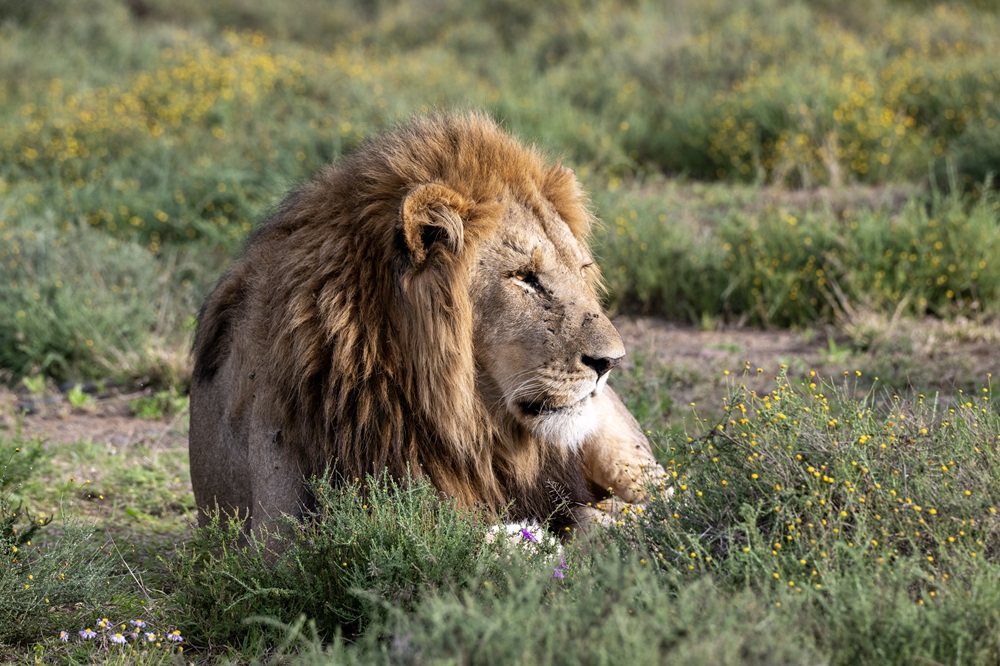
- Our very first sighting was two handsome male lions right along the road. They weren’t mobile but gave us just enough attention to keep things interesting.
- A group of seven white rhinos, which is unusual as they are not really social animals. As our guide Vincent pointed out, these were young rhinos in need of companionship, no longer being welcome to hang around their mother. So they did what any respectable young rhino would do: latch onto a familiar older female rhino, a grandmother well into her 30’s. She knows all the good spots for grazing, she walks at a nice, steady – slow – pace and she knows if a situation is threatening – or not.
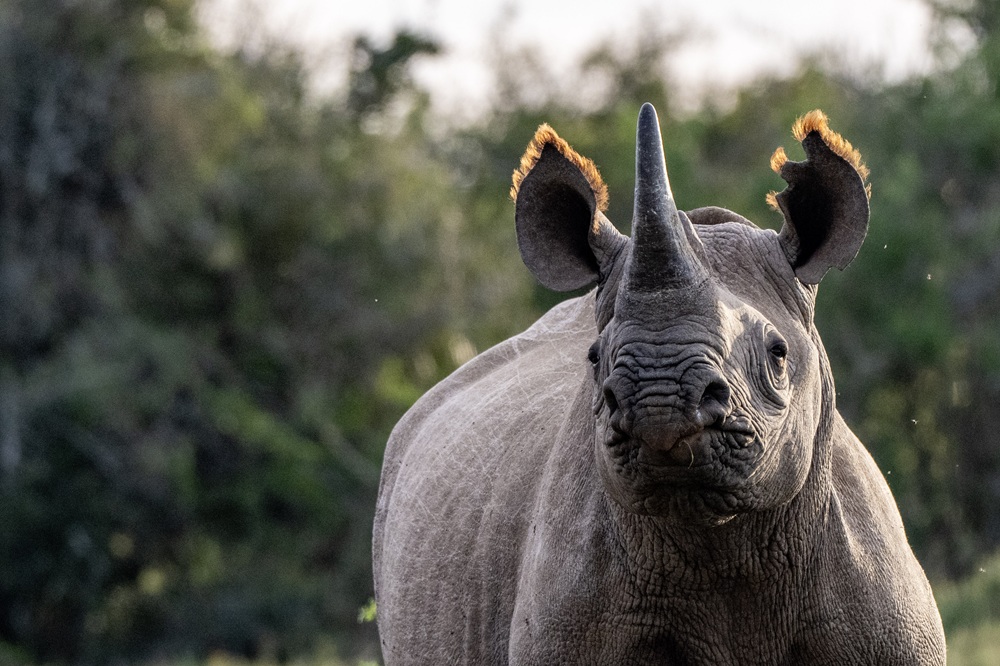
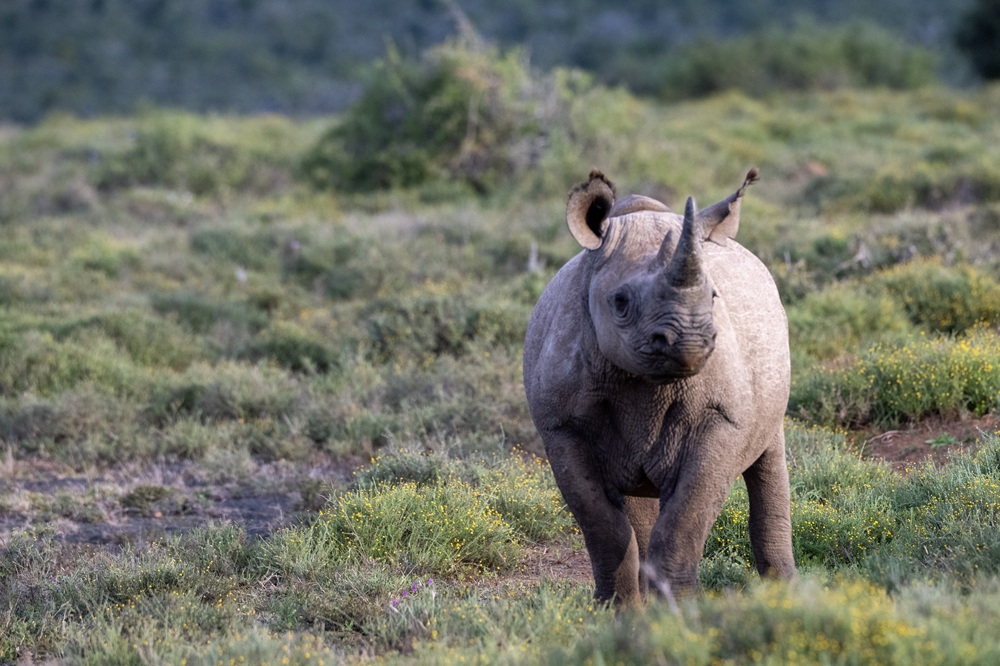
- A solitary young male black rhino. This individual was curious and approached us quite closely, in good light. Kwandwe has a biologically significant population of black rhinos making the reserve one of the most important black rhino conservation areas in Africa.
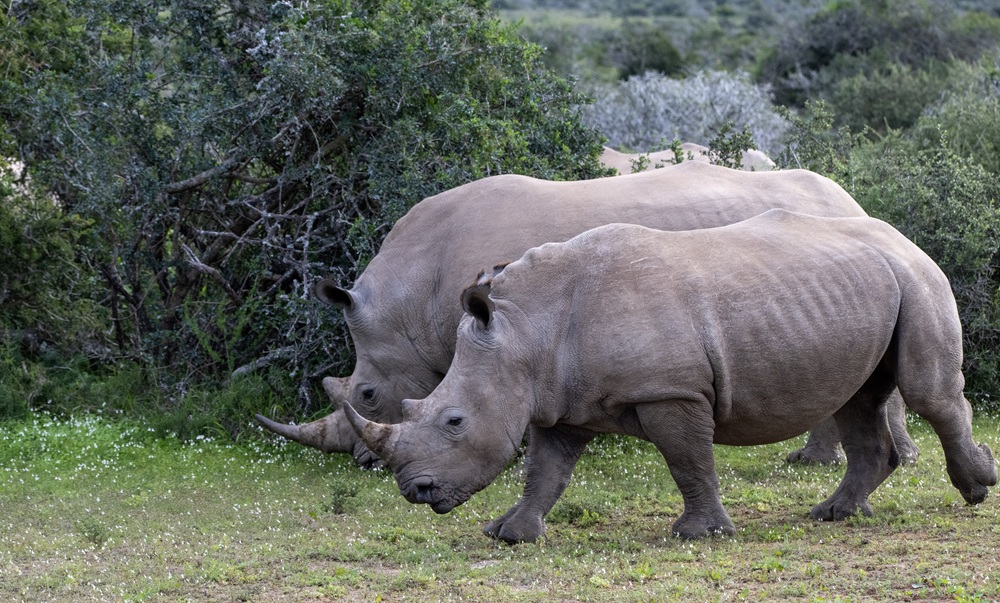
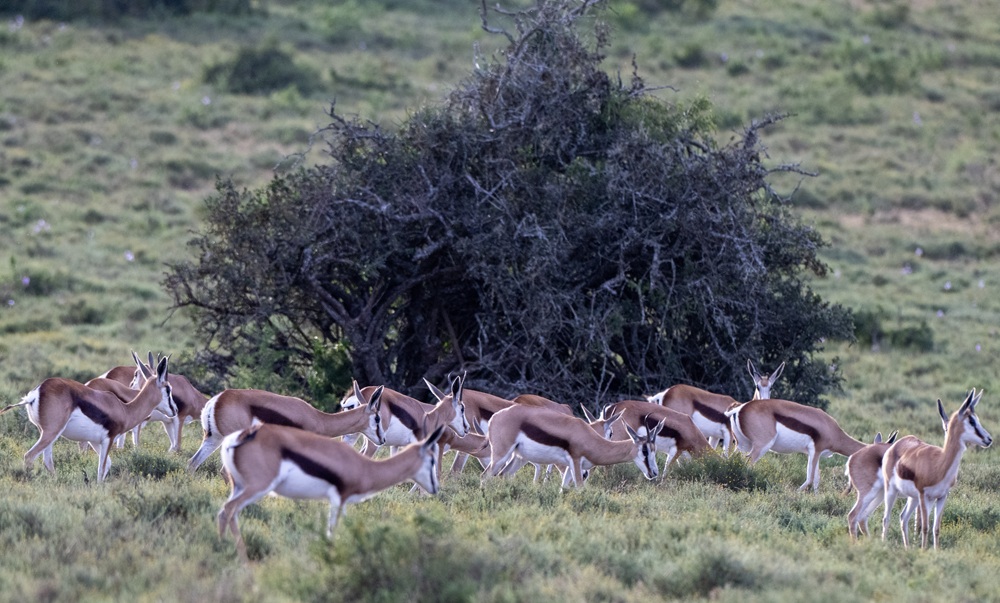
- In quick succession, a couple of elephant bulls, and several more white and black rhinos. Also eland – at a distance – bat-eared foxes and a herd of springbok jumping and pronking.
- Most interestingly, when looking for cheetahs in the eastern part of the reserve, we observed the tracks of several young cheetahs walking with their mother, their tiny footprints captured in the drying mud. Even without actually seeing them, we started to conjure up images of what might have happened at that very spot a few days prior. A small family party of cheetahs following the muddy pathway, the mother stopping to listen intently, checking around for signs of leopards or lions. Only when she felt safe, she crossed the track. Babies following along.
- On a morning game drive we saw several white rhinos, a couple of meerkats in the distance and the telltale signs of brown hyenas.
- At the conclusion of an afternoon game, driving back to camp in the gathering dusk, our very capable guide Vincent spotted a small-spotted cat just off the road at the base of a clump of vegetation. Also known as the black-footed cat, this tiny cat – the smallest of its kind in Africa – is known as one of the world’s most successful and deadliest hunters. It is also exceedingly rare.
In the spotlight we could make out the outline of a small feline but unfortunately the sighting ended up in the BVD category: better view desired. We will have to leave that for our next trip to Kwandwe. To be sure, we were super excited to just have caught a glimpse of this enigmatic cat. Guests travel to Kwandwe and spend multiple days there with the sole purpose being a sighting of this extreme rarity.
The Kwandwe Conservation Ethos
Kwandwe is a restoration story, start to finish. Once degraded farmland has been transformed back into thriving habitat, with species carefully reintroduced over time. Within living memory, this same landscape was farmland. Today, it stands as one of South Africa’s largest private Big 5 reserves, home to more than 300 bird species and an extraordinary diversity of wildlife.
Kwandwe’s ultimate purpose as a tourism conservation entity is to contribute sustainably to the environment, protect the incredible biodiversity of the Eastern Cape and positively impact their surrounding communities. A stay at Kwandwe contributes directly to that process and to the ongoing process of renewal and restoration which happens there day after day.
It is Kwandwe’s aim that every guest understands their ethos and leaves knowing that they have actively participated in a shared vision.
Angus Sholto-Douglas, (Managing Director of Kwandwe), had this to say about the reserve’s history and conservation growth:
“The animals were here first, so it’s only right that they’re the priority… We brought in three white rhinos at the start, I can still remember the nerves and the adrenaline. Then we got braver and brought in a black rhino from one of the most poached game reserves in the country… Moving these animals around the country is actually very important for their conservation, so that heavily poached areas can be relieved.“
On the topic of Kwandwe’s landscapes and wildlife diversity, Angus’s views encapsulate that which makes the property the jewel that it is:
“While I’ve cherished experiences in renowned areas like the Sabi Sands and northern Botswana, the allure of the Great Fish River Valley now captivates me. Here, elusive leopards roam at their whim, while robust populations of black rhinos coexist with springbok, oryx and bat-eared foxes. Yet, it’s the shy bushbuck, the elusive forest weaver, the mysterious brown hyena, and the enigmatic aardvark that truly define this landscape. And those vistas? They’re simply unparalleled.”
Why Kwandwe, Why the Eastern Cape?
We came away from our visit to Kwandwe and two other Eastern Cape reserves with a much better understanding of the reasons behind its growing popularity, and why we will be urging our clients to consider the Eastern Cape for a safari trip:
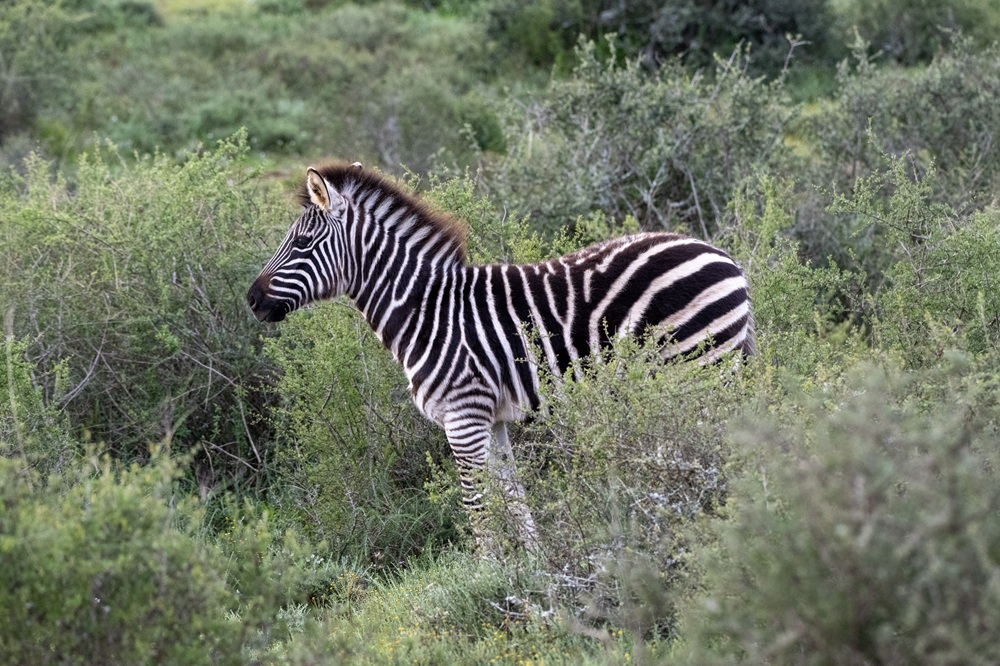
- It has lots of animals and birds and more diversity than anywhere else in South Africa. Readily seen animals include elephants, buffaloes, rhinos, lions, giraffes, zebras, kudus, impala and even cheetah, springbok, eland and gemsbok in some reserves like Kwandwe.
- The Eastern Cape is one of the best places in South Africa to see both black and white rhinos with their horns 100% intact.
- The Eastern Cape scenery is spectacular, with sometimes amazing views of hills, valleys and ravines. The vegetation ranges from Karoo scrubland to dense montane forest, Cape fynbos, dense thickets and areas of open savannah and grasslands.
- The entire area is malaria-free which makes it ideal for families with children, pregnant women and for anybody who does not want to take antimalarial drugs.
- The Eastern Cape reserves are easy to get to, just over an hour from either Johannesburg or Cape Town by air. Around two hours by road from Port Elizabeth Airport and also within drivable distance from Cape Town along the Garden Route. No need to spend an entire day traveling to yet another country – with more forms to complete and visas to obtain – to spend time on safari.
- Compared with destinations like Botswana and the private reserves along the Kruger National Park, the Eastern Cape reserves offer excellent value for money, particularly in the cooler winter months from May through August and September.
- The area is quite unlike anything you may have experienced in Botswana, Zimbabwe, Namibia or the ‘bushveld’ region of South Africa, notably the Kruger Park. The Eastern Cape landscapes are mostly undulating, often with patches of thick bush which provide cover for animals such as leopards and black rhinos.
Next month: we wrap up our three-part series about Eastern Cape reserves with our experiences at Shamwari’s Long Lee Manor.
Several members of our Fish Eagle Safaris team have visited the Eastern Cape reserves recently. Please reach out to any of us for assistance with putting together your own South Africa itinerary to include Kwandwe, Lalibela or Shamwari. Lyndon can be reached at lyndon@fisheaglesafaris.com and Jason at jason@fisheaglesafaris.com. We are always happy to get on a phone call or Zoom meeting, so please leave a message with our answering service at 1-800-513-5222 or 713-467-5222 and we will call you back at your convenience.
Kwandwe River photos, vehicle photo, landscape photos and property photos courtesy Kwandwe Private Game Reserve
YOU MIGHT ALSO BE INTERESTED IN
10th September 2021
Chindeni and the Bushcamp Company, Zambia
By late July we found ourselves at Chindeni, a small Bushcamp Company property
3rd October 2022
Camp Okavango, Botswana
Camp Okavango is in the heart of the permanent part of the Delta. In this idyllic setting there are no vehicles, and it is just a short walk
14th October 2023
From My Safari Notebook: Wildlife Photography
Birds in flight and wildlife photographers have an uneasy relationship. Things go wrong as often as they go right. Getting focus-lock on a moving subject

SUBSCRIBE TO OUR NEWSLETTER
READERS FAVOURITES
4th August 2022
On Safari At Belmond Eagle Island Lodge, Okavango Delta
What is the ‘secret sauce’ for an unforgettable few days on safari in Botswana? It starts with the animals, of course. The elephants, lions, giraffes, hippos
10th September 2021
Chindeni and the Bushcamp Company, Zambia
By late July we found ourselves at Chindeni, a small Bushcamp Company property