Madagascar’s Magical Masoala Peninsula
Last August Kathy and I made our way back to Madagascar, a country which by now we feel very comfortable traveling in, despite its persistent shortcomings in the way of dilapidated everything and – shall we say – general mal-administration. Madagascar can be challenging and even exasperating at times, but perseverance and curiosity are amply rewarded. Stay a while, make an effort to get to a couple of the more remote areas and you will soon find out, as we have every time, that Madagascar is a massive jewel box of nature with many endemic pearls and even a few diamonds right out there for the taking. It may be a particularly striking lemur, a rare or beautiful bird or a fully grown chameleon which fits into a shot glass, with room to spare. For a keen naturalist or really anyone who appreciates all living creatures, Madagascar is a lavish buffet of natural wonders – but without the Ritz price tag.
Our trip to Andasibe-Mantadia and the Masoala Peninsula last summer – for example – on a mostly fully inclusive basis except for a couple of meals, some drinks and commercial flights to Tana – had a price tag of about $750 per person per day. Staying in best available lodging and with extensive personal guiding, two charter flights and a string of included activities. A recent November 2025 customized trip which we put together for just two persons traveling – also with guided activities included throughout and making use of mid-level accommodation – was priced at just under $450 per person per day.

Can you picture yourself observing weird and wonderful creatures, being kayaked down or wading in a crystal-clear mountain stream, or hiking in a forest which will leave you breathless in more ways than one? If yes, then a Madagascar trip should really be on your list of places to see and things to do. And maybe more specifically – the Masoala Peninsula.

First impressions and day-to-day activities
After an interesting and not unduly stressful transfer from Tana (more about that below), we spent a quiet first afternoon exploring the main Masoala Forest Lodge and our tented room. Literally just meters off the beach, its #1 feature is the mesmerizing and near omnipresent sound of the waves. Speaking only for myself, that made our tent at Masoala the easiest place ever to take a nap – and to get a good night’s sleep. If your sleep hygiene requires both darkness and no or little ambient sound – dare I say noise – the best you can do is one for two. So bring some effective earplugs. There are several Madagascar scops owls in the forest around the lodge and sometimes they are louder than the waves at night. A bonus for some, but not everyone. Don’t forget the earplugs. You know ‘who’ you are.

We practically immediately found our favorite spot close to the lodge when we were invited to our first afternoon tea (hot or iced) on the sea deck. With the surf noisily surging and sometimes crashing into and over and around the rocks right alongside and under the deck, and the beautiful ocean vistas stretching out left and right, this spot is just perfect. Don’t feel bad about simply wanting to linger there doing nothing. Everyone does.
To be sure, it can be a minor adventure to get to the sea deck, depending on the status of the tide. Low tide? No problem. At high tide, you try to judge the pattern and interval between incoming waves and make a quick dash along the edge of the beach to the base of the ramp leading to the deck. Not feeling particularly agile or adventurous? There’s a short, easy detour trail through the forest which will also get you to the deck, without having to impersonate King Canute.

The food at Masoala was consistently excellent and often flat-out superb. More about that later. The snacks – not so much. The plantain chips and roasted peanuts were fine, but by day three they were getting old and I don’t mean stale. A little more variety would have been great.
There was always an interesting cocktail of the day which was also offered sans alcohol, for those of us who prefer alcohol-free beverages. I’m not expecting a zero alcohol Madagascar beer to be produced any time soon. Madagascar is not known for setting or following trends.
Some of us with a bit of Madagascar history renewed our affection for a locally made soft drink: YouZou. Very tasty. Unlike the situation a few years ago when Coca-Cola products were not available in Madagascar at all, you can now again indulge in your favorite fizzy cola drink. Just don’t ask for Diet Coke – it appears not to be available anywhere in Madagascar. Worth trying is World Cola, the locally-produced Madagascar version of regular Coke. World Cola is less expensive and slightly less sweet than traditional Coca-Cola. A winner.

At sunset many of the guests, a couple of camp hosts, and sometimes a visitor or two, gather around a beach bonfire for drinks. Even if drinks are not your thing you wouldn’t want to miss this. For one thing, this is where we were first introduced to the co-owner Maria Bester. She and her husband Pierre have been operating Masoala Forest Lodge with a team of local Malagasy and expat staff members for many years. Maria is a delightful person with the sunniest of dispositions and a deeply-seated passion for all things Madagascar and Masoala. Ask her about driving from Germany to Cape Town, South Africa – solo.
Camp manager Kate Grehl – who was in charge of food and catering among others – was also often around and she was right at the legal limit of being fun, personable and easy to talk to. At around the cocktail hour some of the resident white-fronted brown lemurs resident in the forest tend to come quite close to the lodge on the way to their nighttime sleeping sites. We were fortunate to see several of these pretty lemurs early one evening.

Mornings, breakfasts and more activities at Masoala
Early mornings are blissful in the Masoala Peninsula. Waking up to the sound of waves gently crashing maybe 30 feet away from your pillow was nothing short of Robinson Crusoe-esque. For a moment there it was just us, a deserted beach and some bird calls punctuating the white noise. Every morning for an entire week.
We think that pending a couple of room modifications which we believe are in the pipeline, Masoala Forest Lodge will be a strong contender to join our short Groundhog Day list of properties. Places where you could wake up every day for the rest of your life – and be happy.
Breakfast – accompanied by some strong local coffee – was excellent by any standard. Served on the sea deck – of course – you’re presented with a huge range of options with multiple variations of crepes, eggs and more. An ingenious numbering system – you write down a number for every component of your meal – ensures you get exactly what you want without anything being lost in translation or misinterpretation. There was no number for decaf coffee; I don’t think it officially exists in Madagascar. Also I will bet a dollar that you’ll soon have the #’s for crepes and croissants memorized.
One morning there I opted for an excellent omelette and lingered on the sea deck at our most favored table, a specific one with a great view over the surf rushing in and the calm ocean in the background. To be sure, to claim this prime spot, get there early. Everyone figures this out. Over more than just two good sized mugs of excellent locally-sourced coffee, the breakfast turned into my most chill work session ever, answering a few emails and getting these notes started. Thanks to a strong and reliable WiFi connection – Starlink of course – you’re never further away from family, friends and colleagues than your cellphone. At least that is the case in the main area. Of course, nothing prevents you from totally disconnecting for a few days. It’s just good to have the option and not having to fret about satellite issues or generally dodgy internet reception like we used to.


That morning, most of the other camp guests made an excursion with Maria and our guide Pascal Ellison to the nearby village of Ambodiforaha, which is walking distance from the lodge. The village is known for its traditional Betsimisaraka culture, with residents often providing performances, crafts, and slice-of-life moments for guests. It was no different this time and the outing turned out to be a memorable visit across the board. En route to the village a stopover at the preschool (which is materially and financially supported by Masoala Forest Lodge) turned out to be quite entertaining with several of the children joining in on some impromptu singing. At an enclosure in the village, the visitors were treated to even more spirited dancing and drumming and they supported the local economy with some crafts shopping.
On another morning Kathy and I tried snorkeling in the area right in front of camp. I bailed out rather quickly due to less than ideal visibility but Kathy and camp manager Jessie Jordan went a little deeper towards a buoy and saw some colorful fish and starfish. Kathy was thrilled to also spot a giant sand dollar – massive even by Texas standards – at around six inches in diameter. To be sure, water conditions were not ideal due to some local rainfall which results in increased turbidity associated with fresh river water flowing into the ocean. Jessie is also the camp’s artist-in-residence, and her stunning paintings and artwork have been widely published, among others in Masoala Forest Lodge’s brilliant pocket identification guides for the coastal and primary forests.

Other activities and meals at Masoala
We opted for the 7-night Sunday to Sunday stay at Masoala Forest Lodge which I would highly recommend as the best of the package choices which dovetail with the scheduled light air transfers from and back to Tana. There’s just so much to do, experience and learn during a stay at Masoala Forest Lodge that anything less than six full days seems inadequate. If your Masoala stay is part of a first trip to Madagascar and you want to include an additional remote destination in a completely different area then the 4-night stay would suffice.
Over the course of the week we managed to fit in most of the available activities – but not all. Some of the ones we had time for – in addition to the activities which I’ve already mentioned – were these:


- An afternoon sunset cruise which involves being boated out into the gentle waves – in a motorized dugout outrigger canoe – heading essentially in a southwesterly direction and then drifting back gently with the sea current pushing us right back to the beach in front of camp just around sunset to enjoy a cool beverage of your choice. It was a perfectly relaxing outing. And yes you have to actually don your life jacket. No lax standards here on personal safety.
- On another afternoon activity we went for a quiet traditional canoe ride of around an hour or so along the Tampolo river. It’s a truly serene setting with pure clean mountain water and thick vegetation lining both banks. Lots of bird calls, but not many birds. There’s tough birding and then there’s forest birding…
- I tried my luck one afternoon on a fishing outing just offshore from the lodge and a bit further along the coast. While the trip in an outrigger dugout canoe into the ocean, beyond the worst swells, was a novel experience, we did not get any bites so no fish. My Malagasy language proficiency is essentially zero (and this was the local Betsimisaraka dialect) so the skipper and I resorted to time tested yes and no nods and head shakes and a few rudimentary hand signals. On a fishing trip without fish that’s all we really needed. Again, water conditions were not ideal.
- Towards the end of our stay we set out on a kayak outing along a mangrove river, a pristine and untouched destination. The initial 15-minute or so boat ride from the lodge to the river mouth was quite spectacular, passing by hidden coves and rocky outcrops interspersed with small sandy beaches. The river itself proved to be a formidable navigational challenge as the guides had to maneuver their kayaks between rocks, half-submerged trees and lots of other plants. Meanwhile we were taking in the beautiful green scenery along the river. At the end of the outing, after some snacks back at the river mouth (hello again my old friends plantain chips and peanuts), we slowly walked back to the lodge. The trail winds through coastal forest and along the beach for a distance of about 3 miles. All-round I thought it was one of the best excursions available.


Meals at Masoala Forest Lodge are a combination of traditional Malagasy and European-style menus. Over the course of a week there, we certainly had our share of fresh fish and shellfish (and excellent they were too!), as well as some beef, rice, fresh fruit and a good selection of vegetables and salads. The lodge has its own salad and herb garden. My vegetarian diet was provided for in a most creative and tasty way.
A typical lunch would consist of coconut-crusted prawns (or vegetables) with rice and a vegetable relish. Served with either a sweet-and-sour, peanut or spicy dressing. With a delicious dessert to follow.
One evening we enjoyed a perfectly wonderful traditional Malagasy meal with an array of local dishes including fish, samosas, rice of course, and several side dishes including beans. For dessert: a vanilla coconut pudding.
Fresh coconut was available in several forms, from drinking coconut water straight out of its natural source, to the coconut flesh itself, all the way to a rich coconut cream.

The unicorn of lemurs – on a night walk in Masoala
If you’ve been on safari with me ever, you’ll know that I’m not a night drive or night walk kind of a person. If only because nighttime is not great for photography. It’s simply a matter of not having the right equipment or training or experience for night photography which is in the same category as forest birding. Tough, challenging, unforgiving. . .
Fortunately on our first night at Masoala Forest Lodge, I reluctantly donned my waterproof shell, slung my binoculars around my neck and stuck my iPhone in a pocket. I would have felt really bad to disappoint our guide Pascal who was just raring to show us all kinds of interesting things. And boy did he! As an aside, it is worth keeping in mind that eight of the ten lemur species in Masoala are nocturnal, so a night walk (ideally as many as you can fit in) is an essential part of the Masoala Forest Lodge experience.


In about an hour of trudging around in the dark forest interior that evening, we all but cleaned up on the local endemic lemurs. Masoala sportive lemurs, Masoala mouse lemur, Masoala woolly lemur, plus a sleeping Malagasy malachite kingfisher, a giant leaf-tailed gecko, and we heard the unmistakable call of a Madagascar scops owl. It was a successful night walk by any measure.
Then, in the blink of an eye, the night walk took on epic status when Pascal spotted an aye aye lemur. This rarely seen creature is in the stratosphere of wildlife sightings due to its limited distribution, decimated numbers due to habitat loss and of course its strictly nocturnal behavior.

The aye aye was feeding on the nuts of a Canarium tree. It was quite high up in the tree but easily identifiable by its whitish face, extraordinarily long bushy tail and its almost bizarrely long nails. We spent a good 15 minutes watching it move around the tree, often upside down and several times hanging by its hind legs. Altogether a most amazing sighting. Note to future visitors: this is where your good quality binoculars and your experience and adroitness using them under all conditions, change everything. With the naked eye at night an aye aye is a dark furry animal. Seen through a pair of quality binocs, it is an enigma materialized, the unicorn of lemurs.
The following day we experienced yet another good night walk. With more, and in some cases even better sightings of mouse lemurs, sportive lemurs, woolly lemurs and a new species for us: a Madagascar dwarf lemur. Our excellent guide Pascal also managed to find some leaf-tailed geckos and several species of – naturally – area–endemic frogs and moths.

The primary rainforest and the redfronted lemurs
Three times during our stay I joined a small party of guests on a morning outing to the primary forest in Masoala, mostly in search of the extraordinarily striking and rare red-ruffed lemurs which are present there in relatively good numbers. Both half and full-day primary rainforest hikes are available. The duration of the two options is 4-5 hours and around 6 hours+, respectively. Strap on your best water-resistant hiking boots, wear long pants and take a rain jacket of sorts as the area is subject to occasional showers pretty much year-round, just more so in the higher rainfall months.
Our first hike was pretty typical. At 8:30 am we departed for the forest. From the beach in front of the lodge, it is an adventurous 10-15 minute boat ride, with several good bird species to be observed along the way, to a sandy, rock strewn beach. Best to travel to this point in shoes you don’t mind wading in. Once on the beach you can take five and get most of the sand off your feet before getting your hiking socks and boots on.
From there it takes maybe 15 minutes or so to the actual trailhead. The hike is heavy-going from the get go, and we would recommend it only for persons with good mobility and at least average stamina. The trail is steep in places with lots of steps up and down, some slippery loose rocks, roots, and many muddy wet spots. There’s also a couple of stream crossings which may look intimidating after some rain but are actually pretty easy to negotiate if you take your time and test stepping stones before committing. Personally I think carrying a walking stick for this hike is an excellent idea particularly for us older, veteran wildlife enthusiasts.
Eventually we made it to around 1,000 meters above sea level. We all love forests and this one ranks among the most beautiful I’ve seen anywhere. On this first hike we did manage a couple of sightings of the signature Masoala lemur species, the red-ruffed lemurs. They were high up in the canopy. High high: I would estimate 15 to 25 meters, or about 50 to 80 feet. Our first views of these pretty red lemurs – again making use of the binocs – were great, but photographic conditions were far from ideal. All in all it was a worthwhile outing just to experience the amazing Masoala forest environment. It was impossible not to be impressed by the giant hardwood trees and the majestic tree ferns.

Our second hike into the rainforest was initially slow with intermittent rain. The humidity was super high and one guest who had glasses on could barely see out of them due to the incessant fogging. Take a few pairs of contact lenses; doing so saved my photographic bacon on this trip. A bit later that morning the sky cleared up and with it came better interior forest visibility. Just then, Pascal heard the alarm calls of what turned out to be a group of three red-ruffed lemurs. It was touch and go getting them framed but I eventually managed to capture some decent photos of one of the lemurs. We also had some good close up views of a pygmy flycatcher and pretty useful views of another local special, Bernier’s vanga. We were also lucky to find and photograph a couple of the tiny Brookesia chameleons and a giant millipede.

A third trip into the rainforest turned out to be the one during which I finally got lucky and captured some good shots of the critically endangered red-ruffed lemurs. They were still high up in the trees but in an opening and for once they were looking at us. Bingo. So my best advice for getting a few half decent red-ruffed lemur shots is to be patient, be prepared to return to the forest more than just once and take a long lens of at least 400mm. Birding highlights on this outing included the stunning blue vanga and a gorgeous velvet asity with its telltale green brow. High on the list for our return trip to Masoala? The helmet vanga, of course.

Getting there
Getting to Masoala from Antananarivo is not as difficult as one might assume. Our trip started with a 7: 30 am departure out of Tana’s Ivato Airport, making use of the domestic terminal, previously the main airport building. We were more than comfortable in a Cessna 208 (Caravan) outfitted in VIP configuration with just six seats. There are scheduled charter flights on Sundays and Wednesdays between Ivato and Maraonsetra. The 90-minute flight is followed by a 40-minute road transfer to the jetty at Maraonsetra and a approximately 2-hour boat transfer across Antongil Bay. Masoala Forest Lodge packages typically include these transfers for 3, 4, 7, 10 or 11-night stays.
On the day, we detoured via Ile Sainte Marie to Maraonsetra. The duration was 1 hr 40 minutes to Ile Ste Marie and 1 hr 15 minutes to Maraonsetra. The unexpected detour via Ile Ste Marie was a last minute change to pick up a stranded traveler whose Air Madagascar flight to Tana had been canceled. It turned out to be a bonus for us as we had stunning views of the island (known for whale watching) as we were coming in to land and again after taking off.
After some formalities and a last bathroom stop in Maraonsetra, we boarded the Blue Fin, a sturdy 12 passenger motorized craft which plies the route from Maraonsetra to Masoala twice a week on Wednesday and Sunday. The trip, which typically lasts from about 90 minutes to 2 hours depending on the current and the tides, was mildly interesting with some good views of Nosy Mangabe island on the way out. There were some fair size swells so if you are prone to seasickness, don’t forget your Dramamine. On the return journey, we had to transfer from the Blue Fin into a smaller boat with a more shallow draft on the approach into Maroantsetra harbor. The tide was low, with exposed – and submerged – sand banks everywhere. Thank goodness for experienced and careful skippers!

In conclusion
Superficially, Masoala Forest Lodge is a fun, exciting holiday destination with tons of diversity but beneath the surface one finds its true purpose: conservation. Deforestation and habitat fragmentation have reached epidemic proportions all over Madagascar. Masoala Forest Lodge established and is busy reforesting a private forest which acts as a buffer for Masaola Forest itself. It’s a great example of private enterprise stepping up to help counteract the seemingly inexorable path towards greater habitat loss. The purpose at the core of the lodge’s existence is to develop a sustainable ecotourism model that helps demonstrate a value to government and local people of intact natural ecosystems.
While we think everybody should try to visit Masoala at the first best opportunity, we would be foolish to actually recommend that. To make the most of the trip to Masoala entails taking at least one and better yet several hikes into the primary forests, for the red-ruffed lemurs. It is not an easy hike and may be just a bit too much to handle for mobility-challenged guests. While there are so many other worthwhile and fun things to do, see and experience at Masoala Forest Lodge, seeing (or not seeing) the red-ruffed lemurs is of primary importance for many visitors. While we were at Masoala Forest Lodge – to illustrate the point – another group of four or so guests who had planned on spending a week there, abruptly left after their second day. The reason being that due to an unanticipated mobility issue one of the guests could not even consider the hike into the primary forest.

Please note: four of the seven rooms at Masoala Forest Lodge are located literally on the beach, just meters away from the ocean’s edge and lulling (or not) wave sounds. The other three tents are set slightly further back in the forest, but each one has private, direct access to the beach. As far as we know there are plans afoot to change the current split-level construction of the rooms. Currently the bedrooms are one level up from separate bathrooms (with shower and toilet) with a flight of stairs to get from one to the other.
For recommendations and suggestions for Madagascar please email Bert at bert@fisheaglesafaris.com or call and leave a message at 1-800-513-5222 any time of the day or night. Bert would be happy to discuss all things Madagascar with you, whether it’s Masoala Forest Lodge or Anjajavy or Tsara Komba, Miavana, the Andasibe-Mantadia area, Ranomafana National Park, Montagne D’Arbre, the great south road, Berenty or Anakao or the intriguing small patch of spiny forest near Kirindy in the southwest. Catch a glimpse of the amazing long-tailed ground roller there and you may become a birder for life.

Canoeing, scops owl, sea deck, food, bonfire, tent exterior, Ambodiforaha village shots, snorkeling, kayaking, leaf-tailed gecko, Masoala mouse lemur, Beechcraft airplane and Masoala tent interor courtesy Dana Allen. First kayaking and forest walk photos courtesy Louis Jasper. Brookesia chameleon courtesy Hans Pumpel.
YOU MIGHT ALSO BE INTERESTED IN
10th September 2021
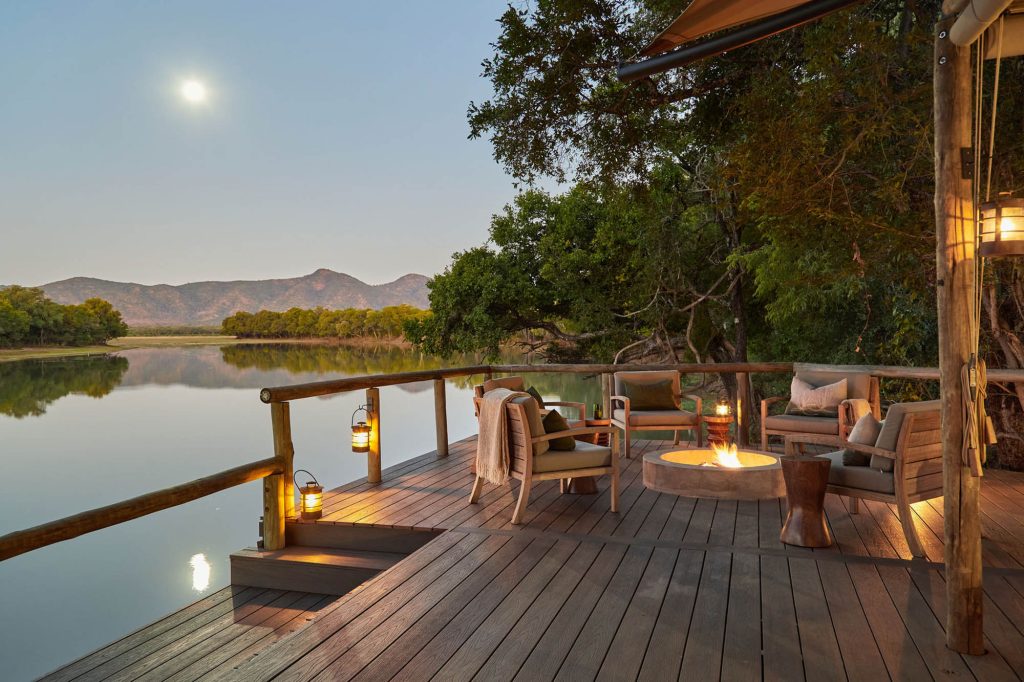
Chindeni and the Bushcamp Company, Zambia
By late July we found ourselves at Chindeni, a small Bushcamp Company property
3rd October 2022
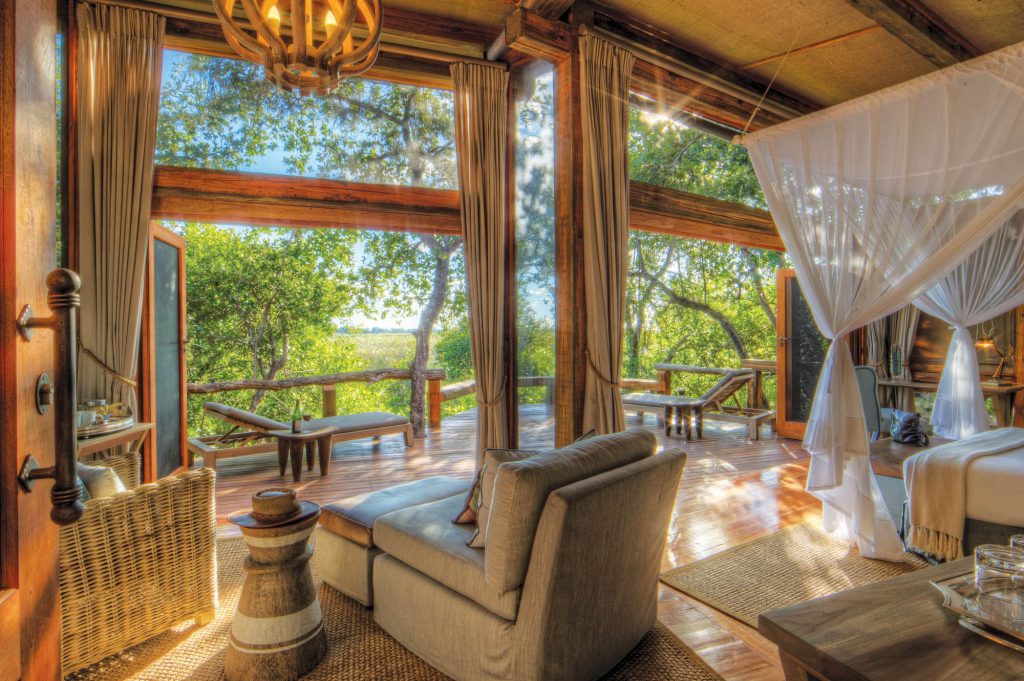
Camp Okavango, Botswana
Camp Okavango is in the heart of the permanent part of the Delta. In this idyllic setting there are no vehicles, and it is just a short walk
14th October 2023
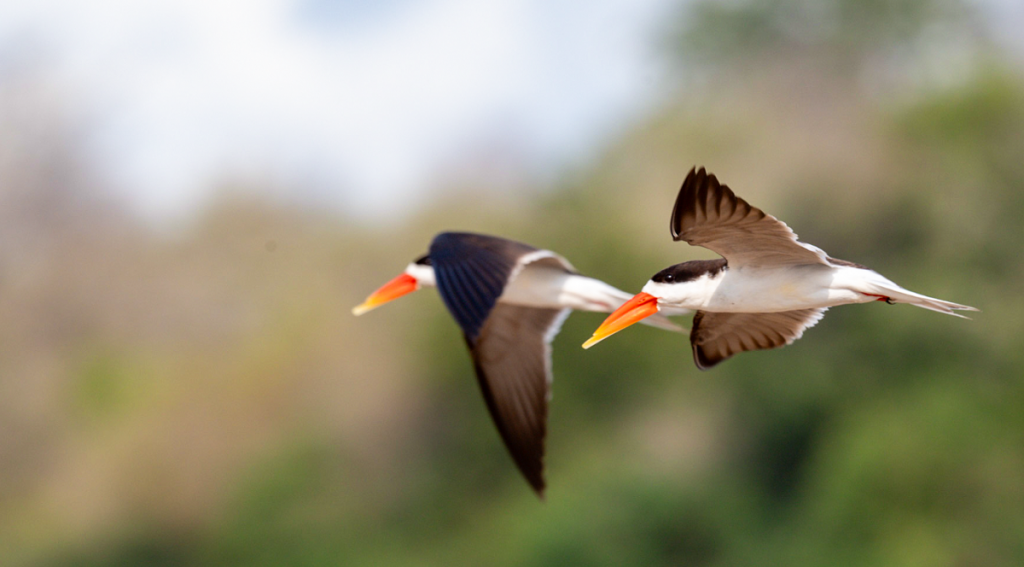
From My Safari Notebook: Wildlife Photography
Birds in flight and wildlife photographers have an uneasy relationship. Things go wrong as often as they go right. Getting focus-lock on a moving subject

SUBSCRIBE TO OUR NEWSLETTER
READERS FAVOURITES
4th August 2022
On Safari At Belmond Eagle Island Lodge, Okavango Delta
What is the ‘secret sauce’ for an unforgettable few days on safari in Botswana? It starts with the animals, of course. The elephants, lions, giraffes, hippos
10th September 2021
Chindeni and the Bushcamp Company, Zambia
By late July we found ourselves at Chindeni, a small Bushcamp Company property