Exploring Kenya’s Masai Mara and Watamu: Part 1
Nairobi’s Wilson Airport
For many first time safari travelers, Wilson Airport in Nairobi is where the safari experience gets real. It’s where they wait, in the somewhat cramped Safarilink departure lounge with a coffee counter and a couple of scales behind a busy desk, to board their first small plane flight.
During the height of the safari season, Wilson Airport gets as busy as a Houston freeway in rush hour. It may look a little daunting as you enter the crowded room after a perfunctory security check, but Fish Eagle Safaris’ clients don’t need to stress. Your Origins representative will check you in for the correct flight and with an extra weight allowance there’s no panic over a few extra pounds.
Get yourself a cup of Spring Valley Kenyan coffee or Kericho Gold tea and look around. Flying in small planes is an integral part of the safari experience and you may as well make the most of it. There will be other first time safari travelers around, their crisp new khaki gear being the dead giveaway. You’ll also spot some expats, NGO and government types – often in animated conversation with someone on a cell phone – and private guides setting the safari scene for their clients.

By your third or fourth visit to Wilson you’ll feel like an old Africa hand. At which point you’ll realize that the airport is like a youngster who has seemingly outgrown all their clothes. It is a patchwork quilt of arrivals and departure lounges, parking lots, restaurants and coffee kiosks, security checkpoints, airport offices, hangars and other nondescript structures jammed helter skelter into more space than there is.
Once known as Nairobi West Aerodrome, Wilson started off with just one Gipsy Moth aircraft and a single pilot in 1929. Today, it is a massive regional hub with two asphalt runways, handling roughly 120,000 landings and take-offs per year, making it one of Africa’s busiest airports for light aircraft. Other than simply acting as a conveyor belt for thousands of tourists and travel-trade workers and supplies, Wilson serves as a global base for AMREF Flying Doctors and the UN World Food Program, handling many lifesaving missions on a regular basis.
Wilson Airport is not without problems which include the encroachment of high-rise buildings around the airport, deteriorating runways, rudimentary baggage handling facilities and unreliable power supplies. The Kenya government is addressing the issues.


Off to the Mara
In March this year, Jason and Katie flew out of and into Wilson a couple of times. Like most of us, they found the Safarilink lounge experience to be perfectly fine. Arriving a bit more than an hour before their scheduled departure time, they had quite a while to cool their heels after the brief security check.
Then it was time to go. Color-coded boarding pass in hand, they made their way to a waiting Safarilink Cessna 208 for their flight to the Mara. Flying at about 8,500 feet above sea level at a cruising speed of around 165 mph, it took about 60 minutes nonstop to Olkiombo airstrip where Jason and Katie met up with their Origins guide – Edwin Selempo. Jason had first met Edwin in 2002 when he volunteered at the Taita Discovery Center as a high school junior. At the time Edwin was a project coordinator and researcher at TDC.

Mara Intrepids
Jason Duplessis takes up the narrative from here. “While we were thrilled to see Edwin again, the update he had on local conditions was not the best. We learned that most of our access points were flooded or damaged due to the rains. Site inspections of Rekero and Mara Ngenche had been canceled and we headed off to Mara Intrepids instead, where we had lunch.
Intrepids had been rebuilt since it was flooded in 2024’s flash floods. Fortunately this year the camp fared better. The property actually looked quite nice, with reasonably sized, comfortable tents. Mara Intrepids – with 30 rooms total – is larger than most safari camps we use. Even so, it is a good moderately priced option for guests who want to be right where the action is.


Mara Intrepids sits directly on the Talek River in an area known for its abundance of plains game and big cats and it is a reliable spot for river crossings during the annual zebra and wildebeest migration. Hippos? There’s plenty of them in the Talek River and to be sure, they’re likely to wake you up early some mornings when they get back into the water after a nocturnal grazing foray.
In keeping with the trend which had its start in COVID times, Mara Intrepids now do plated dinners instead of buffets. Breakfasts are still served buffet-style. It’s a mixed bag for lunch which is still mostly buffet but not always. We had a plated lunch with several main course options and we liked both our choices.


Entim Mara
Washed out roads and bridges turned what should have been an easy 30-minute transfer into a 3 hour slog to get to Entim Mara. Set along a bend in the Mara River, the main area at Entim looks out over the river from an elevated spot. We arrived too late for an afternoon game drive so we relaxed in the main area watching the wildlife pass by. Heavy rains meant that many of the animals had dispersed and were spread out. We saw a large bull elephant checking out the raging river – likely thinking about crossing – before turning back to the safety of the bush. We also saw a hippo out of water (Katie’s first!) as darkness set in. Facing west, we might have been treated to a beautiful sunset if it weren’t for all of the cloud cover.
The main area at Entim Mara has a few different seating options for small groups to visit separately or together. Some ‘indoor’ seating under the canvas and some outdoor on the deck overlooking the Mara River. Rooms are Meru style but a little more on the spacious side. The tents seemed to have been recently updated and are clearly well maintained.
I inspected Entim Private as well, which is not an exclusive use camp despite the name. It is just a smaller and slightly more upscale version of Entim Mara. I think all things considered, Entim Private would be an excellent choice. It is somewhat newer with slightly larger rooms.

In the morning we did a balloon safari with Hot Air Africa Eco Adventures, organized by Wilder Group. It’s an early start with a 4:00am wake up and 4:30am pickup to arrive at the balloon site by 6:00 for a 6:30am lift-off. Only one balloon took off that morning, captained by their Chief Pilot Riz Jiwa. Overall it was an amazing experience even without the migration being so present. Plenty of safety information was followed by lots of laughs as Riz was quite a character. Low flying, high flying, game viewing – all facets of the experience were excellent. Our Champagne breakfast was also very pleasant with the rest of the group from the balloon. The only potential negative was that the ‘memories’ captured by their GoPro cameras ended up costing an additional $50 after the fact.
We were reunited with Edwin just afterwards for our transfer to Tangulia. A ‘worst case’ 7 or 8 hour transfer ended up being ‘only’ 3 hours in duration due to a specific crossing point being open. After checking with several driver-guides traveling in the opposite direction, one vehicle finally confirmed the route was safe. From there we successfully made it through Aitong and into the Mara North, eventually arriving at Tangulia.


Tangulia
We stayed in the smaller exclusive-use property – Tangulia Ndogo. This property has just 3 tents (one of which is a family unit) taking a maximum of 8 guests. Tangulia Mara next door isn’t much larger with 7 tents (one family unit) accommodating a maximum of 17 guests.
Each property has a nice view to the Mara River just south of the Mara Bridge. The Tangulia guides typically traverse their own small private area along with Musiara Swamp and they have access to the Mara Triangle.
The manager Dan was very pleasant. He informed us that the property is entirely Maasai owned and operated and, from what I understand, it was the first property in the Mara that could claim that. Typically one of the owners Jackson Looseyia or Dominic Nchoe would be there to host but they were attending a Bush & Beyond summit.
The Tangulia property is quite well priced, provides great service, and staying there is just enough of an adventure without sacrificing comfort. Their Ndogo camp has newer tents with slightly more space (particularly head room) so if at all possible I would recommend the Ndogo property. The Tangulia main camp has a better view of the salt lick in front of the camp and game viewing during the drier months would be better from there.

Tangulia has a resident lion pride with young cubs, but we didn’t manage to see them. Overall things were a bit quiet as we didn’t have much time for game viewing. Even so we managed to locate one of the female lions in the evening and had an interesting hippo encounter in the morning before we left for the Mara North Conservancy.


Mara North Conservancy
Offbeat Ndoto
Fish Eagle Safaris guests heading to Offbeat Ndoto this summer are going to love it! The camp has a distinctive boutique feel. One side has 4 tents that have access to their main area which is quietly hidden alongside the Olare Orok River in the southern part of the Mara North Conservancy. Open, easily negotiable pathways lead to the rooms which each have a small sitting area in the front where a third bed can be placed for triple share accommodation. The tents are quite new, spacious and comfortable.
There is a family unit/suite in the back of the property which is typically booked on an exclusive use basis. It has 2 bedrooms, 2 bathrooms and a small inside sitting area with its own bar. Guests can enjoy inside or outside dining utilizing a private lookout point above the house on a hill. The lookout point can be accessed by low mobility guests by vehicle. The suite also has its own arrival car park so guests are dropped off at their doorstep, and they have their own staff, guide and chef. We think it is perfect for families or couples traveling together.
Offbeat Mara
Offbeat Mara is currently undergoing some refurbishment and a minor rebuild of the tents. Half to be completed this season and half next season, to upgrade their accommodation. Currently all units have safari style showers but when the new tents are built they will be fully plumbed with hot and cold water. After the rebuild, Offbeat Mara could be a hidden gem at a lower price point than most of our other options in the Mara North.


Kicheche Mara
Kicheche Mara features strongly in our Kenya camp rotation. The location, the quality of the guiding, the design of the game drive vehicles – there’s a lot to like about Kicheche. When combined with Kicheche Laikipia in the rhino-rich Ol Pejeta reserve, Kicheche offers a ‘stay 6 nights, pay for 5 nights’ discount year-round.
The camp itself is lovely. There’s a nice view to the river from the main area. Dining options include alfresco under the trees or inside. The guest tents are spacious and well laid out, a bit unique compared to most we’ve seen. Kicheche Mara has a photography center where guests can download and edit their photos or videos with provided computers and Adobe Lightroom. Very fast Starlink WiFi in the rooms makes sharing those photos a snap.
The only potential negative I could see at this property was the entrance – each time you drive in or out you pass the garage and car park for safari vehicles. It almost seems like you’re entering the ‘back of house’ way.


Elephant Pepper
Set under a small forest of Elephant Pepper trees, the camp has a view over an open plain and guests often see wildlife from their rooms or from the main area. Rooms were slightly larger than normal Meru style tents. The WiFi was fast enough in the rooms but not in the main area. The check in process was new – a QR code to scan and input all of your details including a photo of your passport biometric page.
At Elephant Pepper, we were joined by 2 guests from Switzerland during our game drives with Sammy. Edwin joined along as an additional guide and spotter, taking some time off from driving which was surely nice for him. Both game drives were a bit quiet due to all of the rain but we had some fun experiences with elephants nursing, what seemed like an emerging super tusker named Fred, and some hyenas walking just past the vehicle. On previous visits by other Fish Eagle team members to Elephant Pepper they experienced consistently good lion, leopard and cheetah sightings.
We also had a lovely bush breakfast before departure. As we’ve come to know, Elewana rarely puts a foot wrong. The two other guests filled us in on all the amazing sightings they had experienced over the preceding few days. Even though our two drives were quiet, the Mara North Conservancy was still pumping in the middle of heavy rains and nearby flooding events.

Jason & Katie’s Mara trip report will be continued in our July newsletter. Contact Jason at jason@fisheaglesafaris.com if you are considering Kenya for a safari, or if you have any questions about an upcoming trip to the area.

All photos provided by their respective properties unless otherwise noted. Balloon safari photo courtesy Hot Air Africa Eco Adventures.
YOU MIGHT ALSO BE INTERESTED IN
10th September 2021
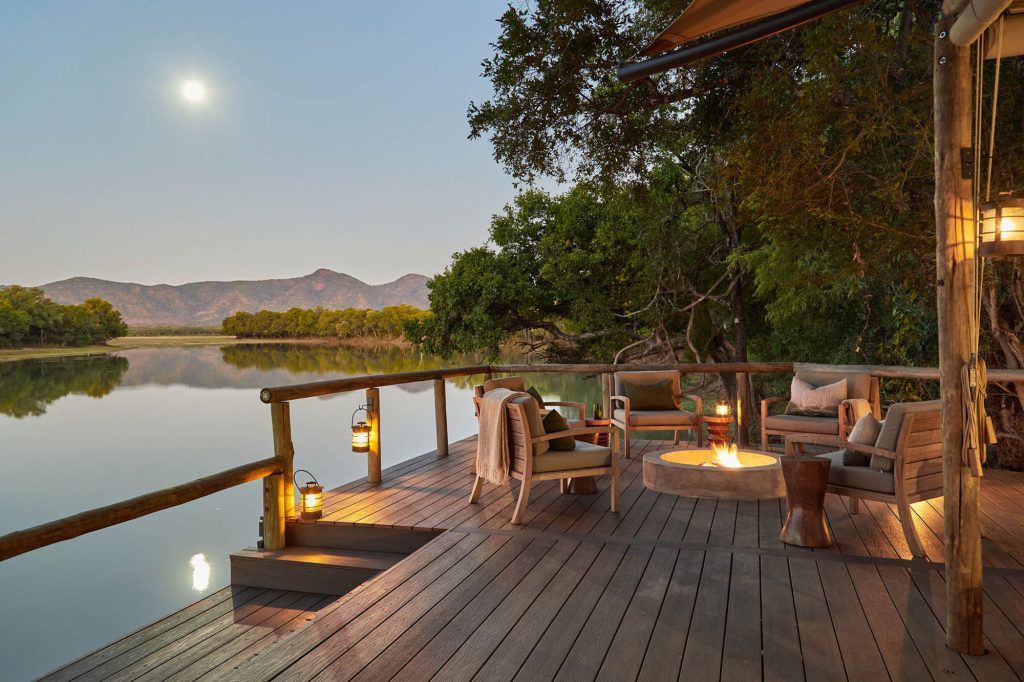
Chindeni and the Bushcamp Company, Zambia
By late July we found ourselves at Chindeni, a small Bushcamp Company property
3rd October 2022
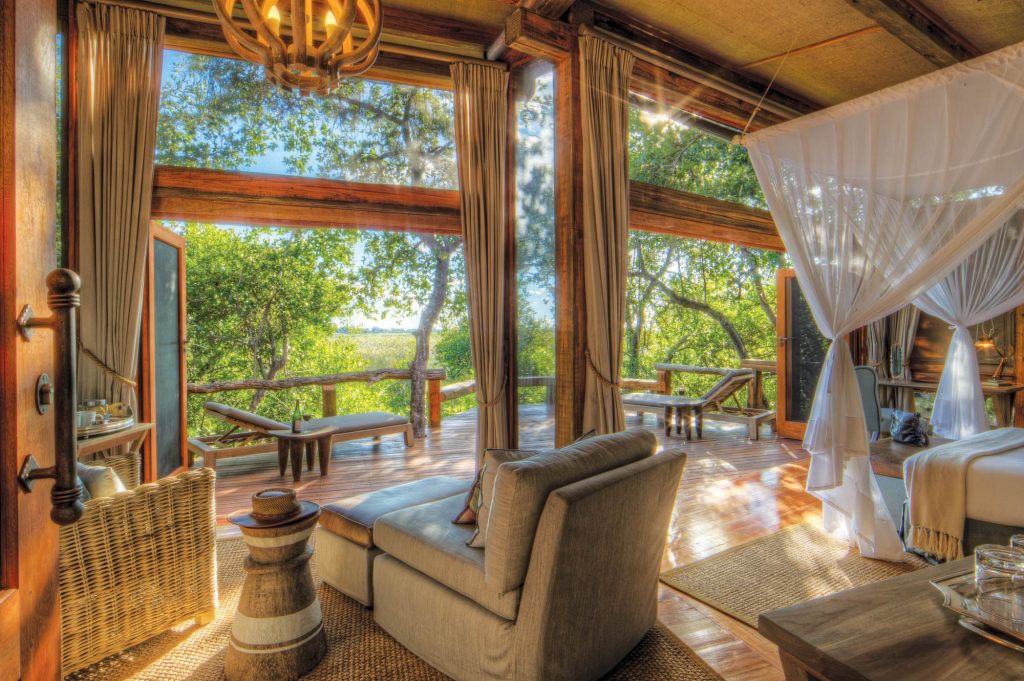
Camp Okavango, Botswana
Camp Okavango is in the heart of the permanent part of the Delta. In this idyllic setting there are no vehicles, and it is just a short walk
14th October 2023
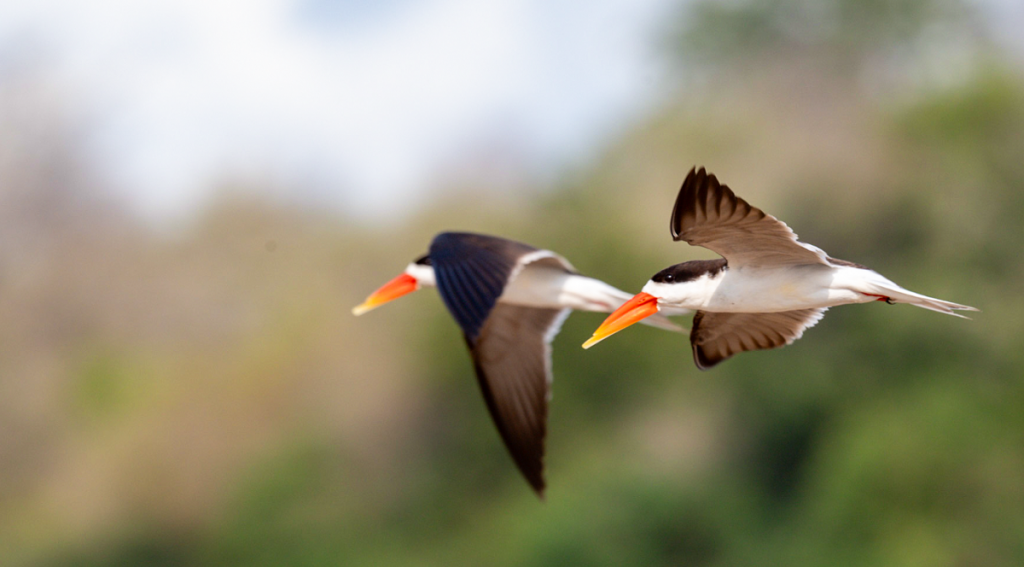
From My Safari Notebook: Wildlife Photography
Birds in flight and wildlife photographers have an uneasy relationship. Things go wrong as often as they go right. Getting focus-lock on a moving subject

SUBSCRIBE TO OUR NEWSLETTER
READERS FAVOURITES
4th August 2022
On Safari At Belmond Eagle Island Lodge, Okavango Delta
What is the ‘secret sauce’ for an unforgettable few days on safari in Botswana? It starts with the animals, of course. The elephants, lions, giraffes, hippos
10th September 2021
Chindeni and the Bushcamp Company, Zambia
By late July we found ourselves at Chindeni, a small Bushcamp Company property