• Skip to primary navigation
  • Skip to main content
  • Skip to footer

Fish Eagle Safaris

Fish Eagle safaris

Contact

Logo
  • About
  • Destinations
  • Blogs
  • Newsletter
  • FAQS
  • Team
  • search
  • Contact
  • About
  • Destinations
  • Blogs
  • FAQS
  • Team
  • Contact

Samburu

A Fresh Perspective on Lewa and Samburu

19th April 2026

A Fresh Perspective on Lewa and Samburu

We’ve been sending our guests to the northern and north-central region of Kenya for many years, and fortunately most of them have enjoyed the area and what it offers as much as we do. Depending on exactly where you find yourself in the area, the views hardly ever disappoint. If it’s not the striking sight of Ololokwe, the sacred mountain of the Samburu, it could be the craggy ridge of Mt. Kenya or just blue hills fading into nothingness. Distinctively ‘out of Africa’, unquestionably romantic, and often quite mesmerizing in the early morning and late afternoon golden light. This huge swath of northern Kenya has a lot else to offer visitors, notably fascinating people and culture, some extraordinary endemic mammals and birds, and an all-round safari experience that often exceeds expectations. 

Lewa Wilderness

Our long-time friend and expert Origins guide Edwin Selempo picked us up after we flew from Nairobi to Lewa. Having spent some time with him already in the Mara (more about that in our June newsletter), we jumped right into a new area with his invaluable assistance. Edwin knew what we had already experienced and helped show us something new whenever possible. We stopped by Lewa Wilderness for an inspection and lunch. The property is right near the top of the options in Lewa. Great location including being the hub for horse and camel activities in the area.

The property itself is well hidden in a small protected forested area (protected from elephants). Part of the main area still serves as a private home to the owners, and each cottage has its own beautiful view of the surrounding area. During our inspection we saw elephants and rhino on the nearby hillside, so game viewing can be done without setting foot in a safari vehicle.

Lunches are mostly served family style at Lewa Wilderness, so group dining is somewhat typical. Private dining is possible if requested but it’s typically quite nice to get to know other guests at the camp. We bumped into some guests that saw some of the same things we saw while we were in the Mara as they stayed at a neighboring safari camp in Naboisho. Small world!

Lewa House

Slightly more centrally located within Lewa, Lewa House is also family owned and operated. Calum and his wife Sophie have owned the property since 2012 and essentially all guests are hosted by one or both of them. Previously there were two-bedroom cottages and one-bedroom ‘Earth Pods’, but the cottages are being removed and turned into two-bedroom Earth Pods which will no doubt be wildly popular. They make sense for couples traveling together or families of 4 or slightly more. Plenty of room and tons of comfort. The pods themselves aren’t the best for Wi-Fi connectivity, so the best (and sometimes only) signal is available in the central living area of the two-bedroom units or the main bedroom for one bedroom units.

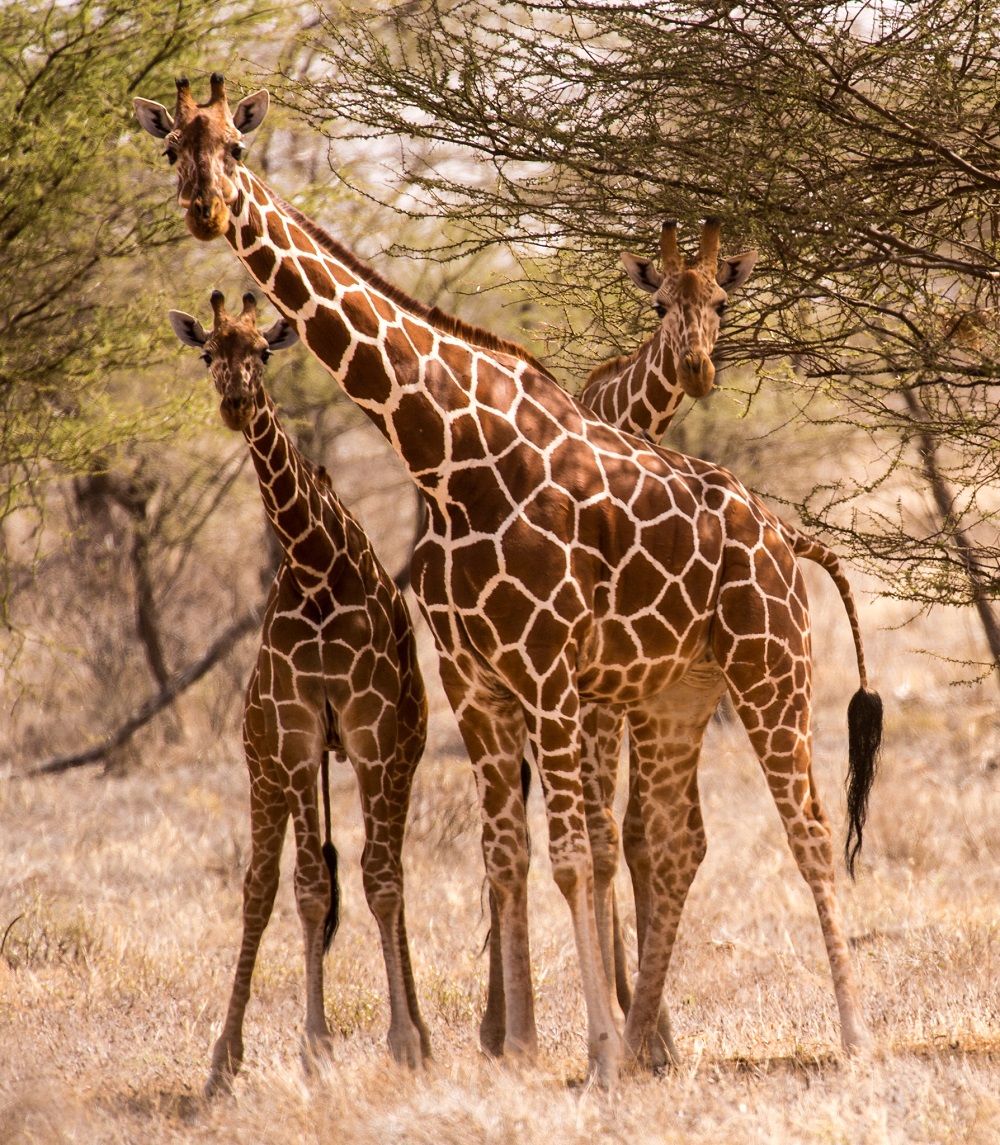
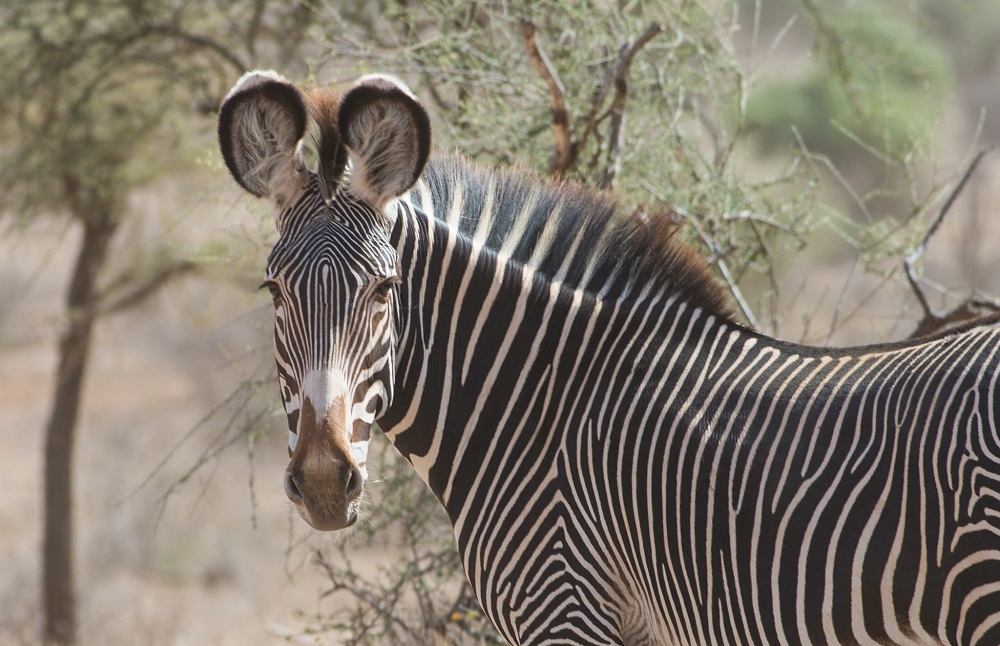
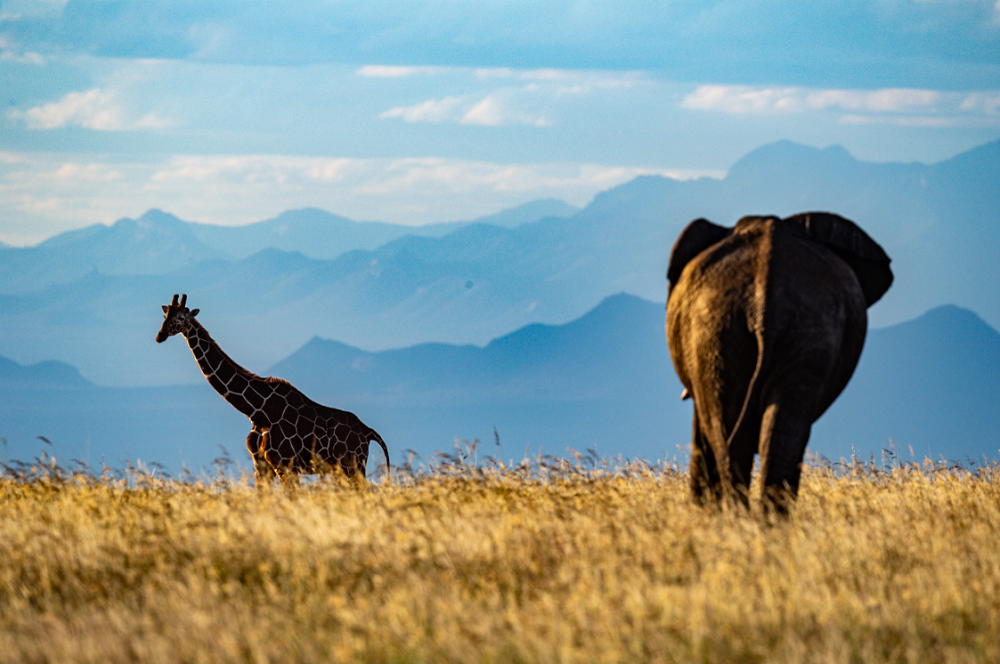
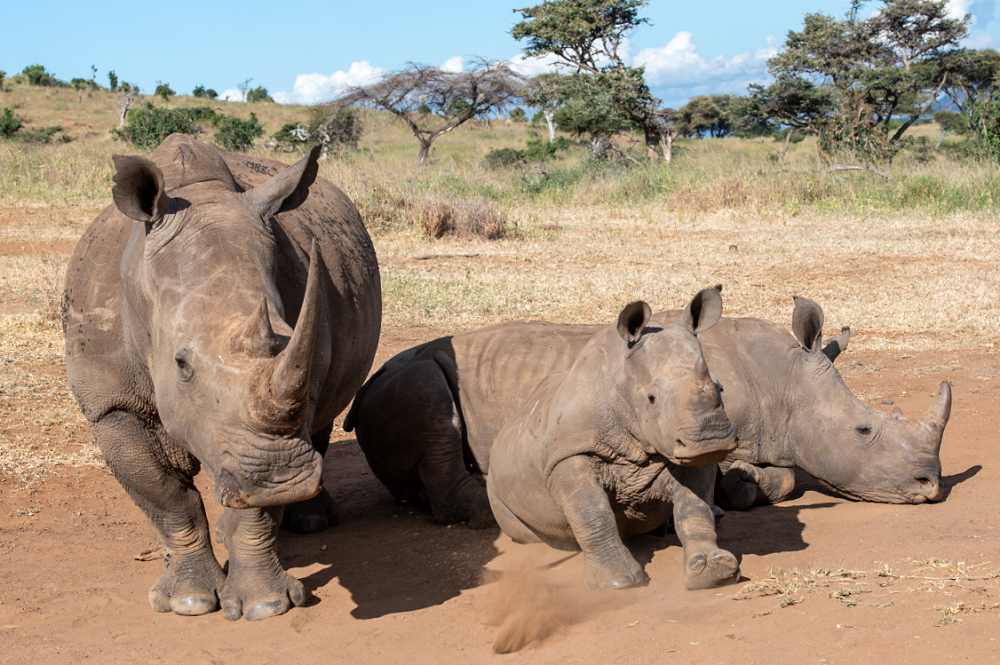
The quality of the wildlife viewing in Lewa is its major attraction, particularly because of the presence of several superb endemic mammals which include the stunning reticulated giraffe, the distinctive – and endangered – Grevy’s zebra as well as Beisa oryx and Somali ostrich. Lewa is also one of several private conservancies in Kenya where both black and white rhinos are thriving and where they can be seen with their horns intact.  

If Lewa is the first location for a safari, guests will see more giraffes, zebras, elephants and rhinos than they can imagine. There are a couple prides of lions, quite a few leopards and a healthy population of cheetahs as well. During our 2-night stay in Lewa we managed to see several lions and we had one fleeting viewing of a single leopard.  

Beyond traditional game drives, visitors to Lewa can explore the landscape on guided walking safaris, horseback riding, or unique camel treks. Adventurous guests may enjoy scenic flights or visits to the Ngare Ndare Forest for a canopy walk and waterfall swim. Cultural immersion includes Maasai village tours, while conservation enthusiasts can meet tracker dogs or visit local schools and healthcare clinics.

Sirikoi

During a site inspection of Sirikoi we were wildly impressed by both the camp itself and the back of house tour. We fully recommend a tour to see their workshop and garden to get an idea of just how much goes into running a safari camp like Sirikoi. They are fully self-sufficient. They recycle everything: from food leftovers to wine bottles. Sirikoi also has  one of the largest avocado trees we’ve ever seen – absolutely loaded with fruit.

On a previous visit, we found Sirikoi to be an oasis like few others, from location to accommodation and management. The tented rooms, main lounge and dining room areas are stylish and immaculately maintained, and the food and beverage service is of an exemplary quality. With its mix of four luxury tents and two exclusive use houses (with 2 and 3 bedrooms, respectively), Sirikoi caters for discerning guests who like and enjoy comfort and luxury, but in an elegant, understated fashion. There is nothing over the top or extravagant about Sirikoi. It strikes a perfect balance between being luxurious and stylish, yet retaining the essence of a true Kenyan retreat. Sirikoi’s location right alongside the Sirikoi stream, on the edge of a large swamp, results in wildlife often entering the property and being visible from the open dining deck in front of the camp.

For any slightly larger groups, we’d recommend one of their family cottages or the private house.

Kifaru House

Kifaru House is a lovely, purposefully ‘old school’ safari property in Lewa. Each of the cottages are built with wood and stone with a king sized bed plus a sitting room and extra twin bed. Even with the extra furniture, there is plenty of room to move around. The restroom is also quite large with fantastic water pressure. Entry into the room is through double doors, although we only ever opened one of the doors. With just one door open, the entry way was quite narrow. You’ll also be asked to use a key to lock the door anytime you aren’t in the room as the property has a few naughty monkeys around who have learned how to open doors.

During breakfast and lunch for guests, some extra bread and seeds are put out in front of the dining area where dozens of birds and small animals come to eat. A bit of a meal and a show. The food from Elewana continued to impress, with some of our favorite meals on the trip being served at Elephant Pepper in the Mara and Kifaru House.

Basecamp Samburu

We were pleasantly surprised with every part of our experience at the new Basecamp Samburu. Saruni/Basecamp have a winning combination of a great view, amazing staff, delicious food, slightly spartan accommodations with the most comfortable mattress on our trip, and good game viewing between their private conservancy and Samburu National Park which is about an hour away. Guests can leave early in the morning to arrive in Samburu by sunrise to enjoy the wildlife viewing along the Ewaso Nyiro River. Heading back by late morning, they can then spend the afternoon in the Kalama Conservancy itself. Within Kalama, Basecamp and Saruni have a sunken hide near a waterhole which can be an interesting spot for game viewing during the dry season.

Saruni Samburu

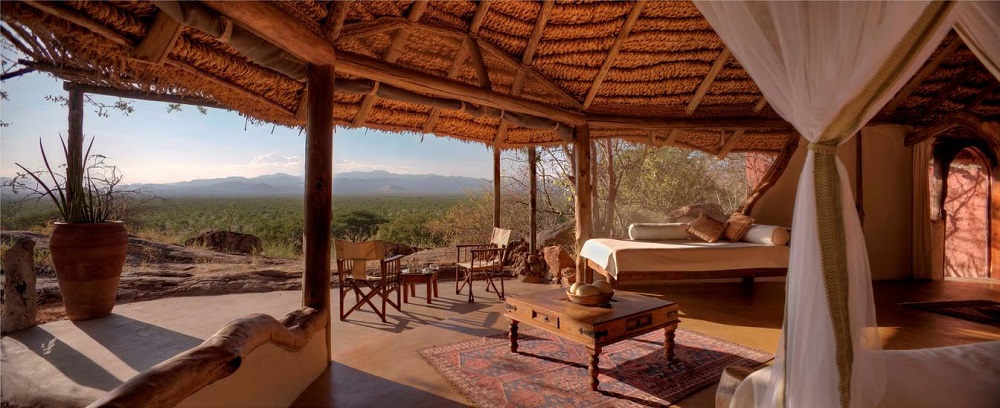
Unlike the many riverside lodges in the region, Saruni Samburu is perched high atop a volcanic rocky outcrop within the Kalama Conservancy, offering breathtaking, panoramic views of the Northern Frontier District. Its dramatic architecture and eco-chic luxury appeal to travelers seeking total privacy and isolation. The lodge’s dramatic cliffside setting requires steep, strenuous uphill walks between villas and the main area and in the sometimes intense Samburu heat it can be a challenge. A  long, bumpy drive of 45 minutes to an hour is required to reach the prime riverside game-viewing areas in the main Samburu Reserve. Even so, many guests find the spectacular views and exclusivity of Saruni Samburu well worth the longer transit into the park.  

We liked the location as much as Basecamp Samburu, but prospective visitors need to be aware of the many steps and long walks between your rooms and the main area and to the upper infinity pool which has unbelievable views of Ololokwe and Samburu. Saruni Samburu is shortly undergoing some minor renovations with new paint and new furniture.

Elephant Bedroom Camp

Like a few other properties, EBC is planning some renovations including a rebuild of their main area. We’ll see how that turns out, but at the moment it works quite well with great views of the Ewaso Nyiro River. The Elephant Bedroom tents are spacious and comfortable, although you will need an escort to and from your room both day and night because of frequent  elephant activity within the camp. There are at least 6 named male elephants that regularly visit, including Obama (a docile elephant) and Mang’ati who is quite the opposite.

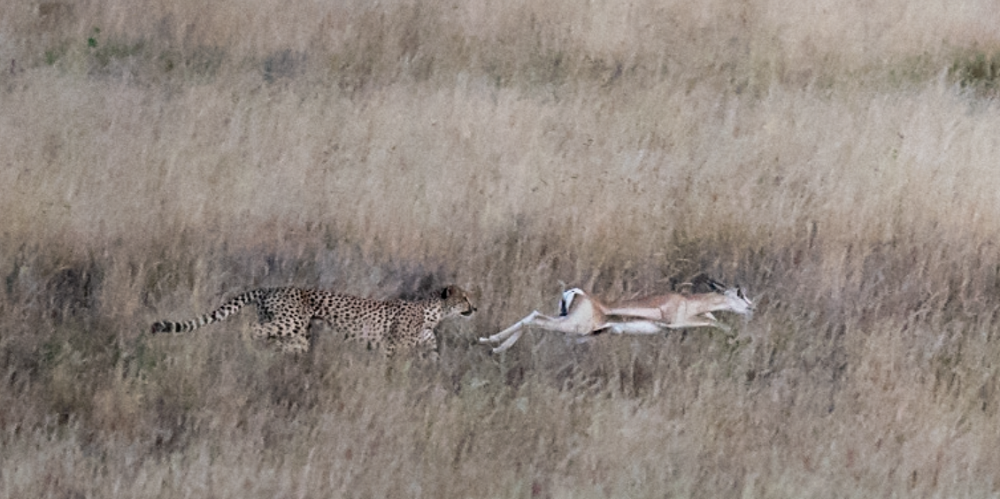
The area near Elephant Bedroom Camp is also consistently one of the hot spots for all of the wildlife in Samburu. So even though you might not be driving too far if you stay somewhere else, you’ll probably end up somewhere near this camp during a game drive. On a previous visit a couple of years ago, Bert and Kathy witnessed a female cheetah taking down a young Grant’s gazelle less than half a mile from the entrance to the camp. The female cheetah had some hungry cubs to feed. On that same day leopards, lions and African painted dogs were all seen at one time or another in the same area. 

Samburu Intrepids

Samburu Intrepids, very similar in terms of style and size to its sister property Mara Intrepids, could be an option for guests and groups that are looking for a safari experience at a lower price point. Even though the property is larger than most with 28 rooms strung out along the Ewaso Nyiro, guests generally rate it favorably in terms of  offering an authentic wilderness experience. Guests frequently praise the attentive, “above and beyond” staff and the camp’s pretty riverside location, which allows for wildlife viewing from one’s own private deck. On previous visits, we’ve noticed consistently good management, generally excellent food offerings and highly experienced safari guides.

Soroi Larsens Camp Samburu

The new Soroi Larsens Camp is well located along the Ewaso Nyiro River in Samburu. It is quite central in the park with quick access to the west or the east depending on where wildlife is spotted. The western area has a ridge where leopards are often seen and the eastern area has some slightly more open areas with more lion and cheetah sightings. During our short stay, we managed to see lions, cheetah (mother and cubs with a kill), and a striped hyena along with all of the traditional plains game.

The camp itself is quite uniquely laid out compared with others along the same river. Winding concrete pathways lead you to all of the different areas and tents. The spa and pool are set back a bit, away from the river. The main dining area and most of the rooms are set a bit closer to the river. We were upgraded to the deluxe rooms all the way at the end of the property which has its own car park in case guests don’t want to walk all the way. The walkway to the last two units is also no longer in the shade of the large trees along the river. In Samburu things can get quite hot, so staying in the shade is important when possible.

Food, comfort, and staff at Larsens were all excellent. The standard rooms are significantly larger than most tented rooms we’ve seen during the trip. This would make a perfect option for all guests visiting Samburu – families, couples, and small groups.  

For some fresh, up-to-date information and advice about traveling to Lewa and Samburu, reach out to Jason at jason@fisheaglesafaris.com or leave a message with our answering service any time – day or night – at 1-800-513-5222 or 713-467-5222 and one of us will call you back.  

All photos provided by their respective properties unless otherwise noted.

YOU MIGHT ALSO BE INTERESTED IN
Destinations
Zambia

10th September 2021

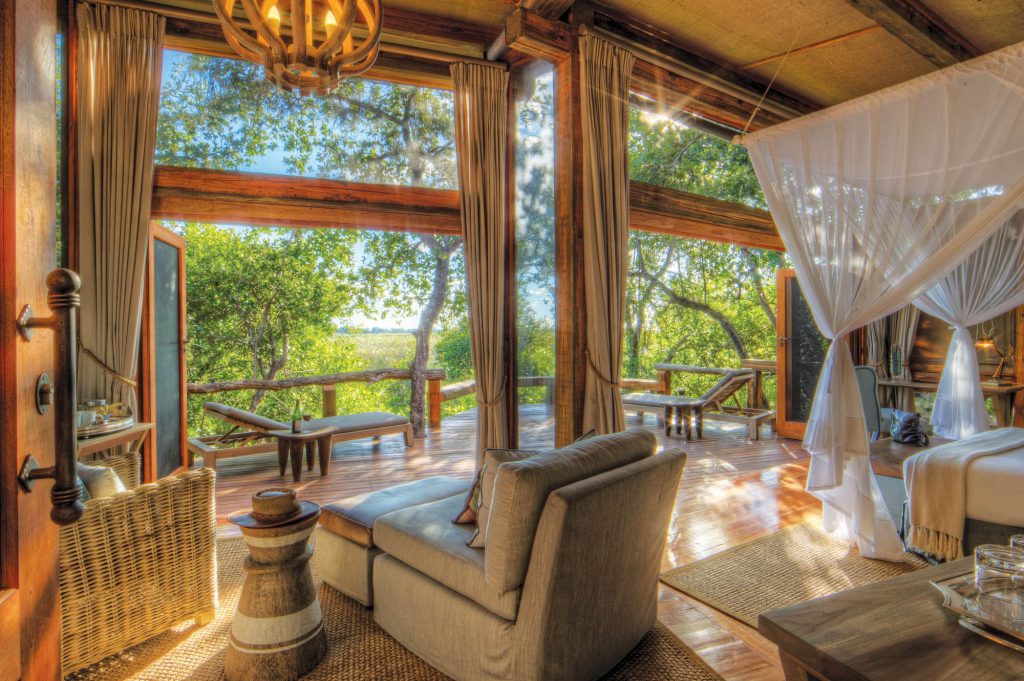
Chindeni and the Bushcamp Company, Zambia

By late July we found ourselves at Chindeni, a small Bushcamp Company property
Read more
Botswana
Destinations
Okavango Delta

3rd October 2022

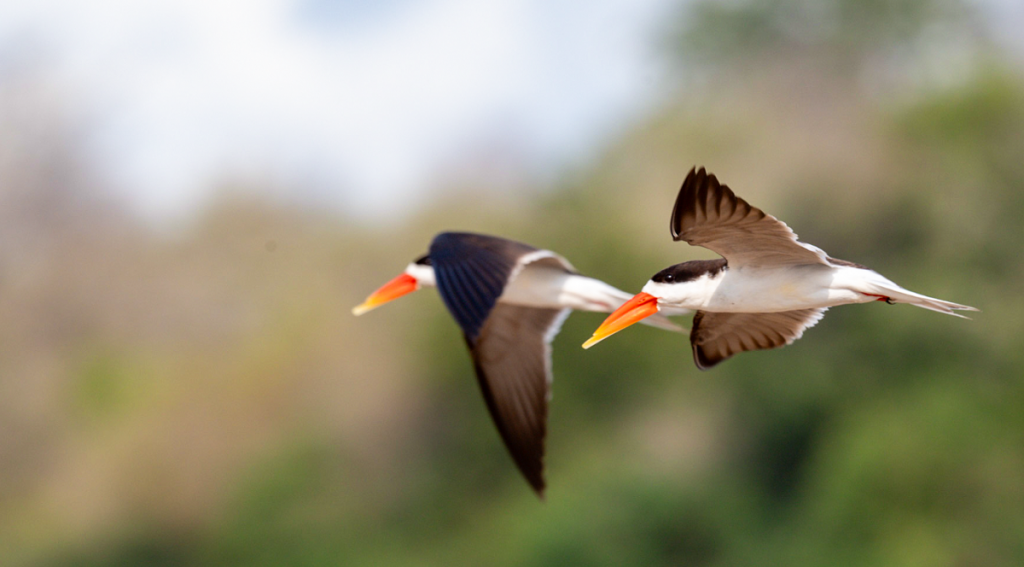
Camp Okavango, Botswana

Camp Okavango is in the heart of the permanent part of the Delta. In this idyllic setting there are no vehicles, and it is just a short walk
Read more
Area
Destinations
Nyerere National Park
Ruaha
Tanzania

14th October 2023

From My Safari Notebook: Wildlife Photography

Birds in flight and wildlife photographers have an uneasy relationship. Things go wrong as often as they go right. Getting focus-lock on a moving subject

Read more

SUBSCRIBE TO OUR NEWSLETTER

READERS FAVOURITES
Destinations
India

27th May 2023

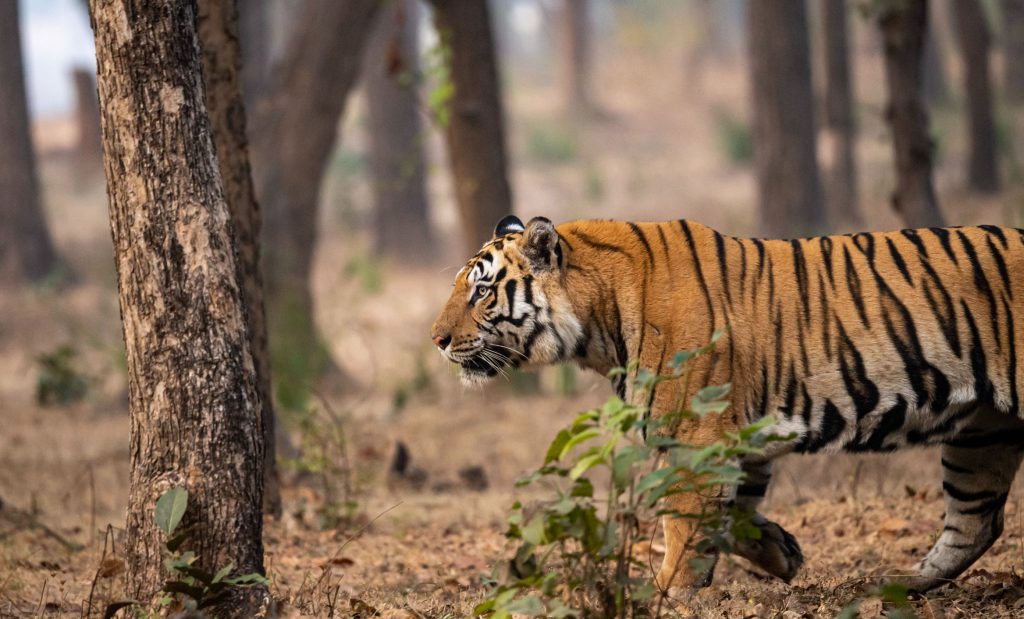
India

India’s tiger, mammals and birds.

Read more
Botswana
Destinations

4th August 2022

On Safari At Belmond Eagle Island Lodge, Okavango Delta

What is the ‘secret sauce’ for an unforgettable few days on safari in Botswana? It starts with the animals, of course. The elephants, lions, giraffes, hippos

Read more
Destinations
Zambia

10th September 2021

Chindeni and the Bushcamp Company, Zambia

By late July we found ourselves at Chindeni, a small Bushcamp Company property

Read more

Kenya: What a Difference the Equator Makes

3rd April 2026

Kenya: What a Difference the Equator Makes

If you’ve read some of my older blog posts about Kenya, you’ll know that I am a big fan – for many reasons – but mostly because of the country’s incredible diversity. From the point of view of a photographer of any level of competency and experience – or anyone who wants to light up social media with a great image – Kenya is the shutter that keeps on clicking. 

Thinking back over many Kenya trips starting 30 years ago, these are some of the reasons which keep me going back again and again and recommending Kenya as the #1 option for a first, an only and a repeat safari.

The elephants

We’ve long been firm believers that any really good African safari itinerary should have at least one signature elephant experience. One day, one game drive, one elephant experience, one photograph which you will remember forever. To be sure, Kenya has more than just one area where the elephant experience will blow your socks off. 

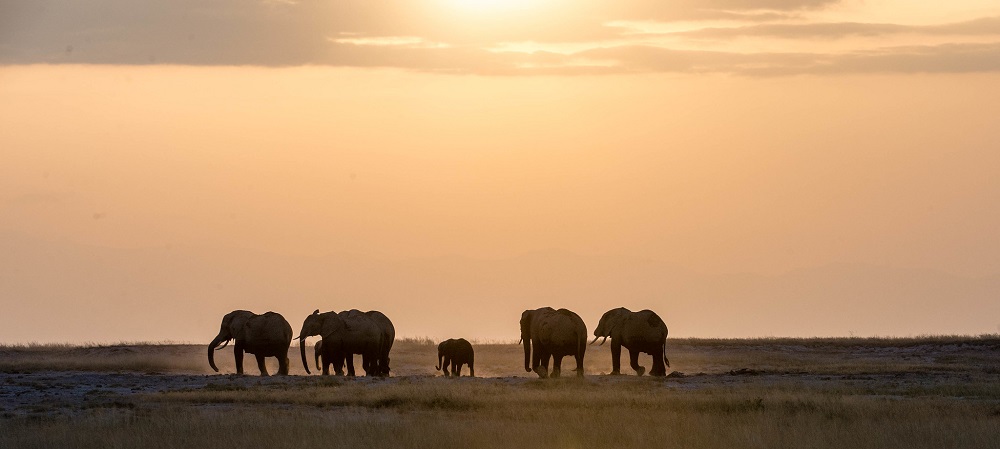
Amboseli is one. It’s where I took what might still be my most liked elephant photo. One morning on a game drive from Tortilis Camp we were watching a herd of elephants move through the woodland. A herd of elephants moving down to the swamps, kicking up some dust, is always worth watching so we stopped. I soon had a 400mm lens pointed in their direction. 100 different photos of elephants walking in good light in Amboseli would all be nice shots, but none would have stood out.

Nothing would have distinguished any one of them from a 1,000 similar photos taken at Amboseli every day of the year. Except this time, something clicked. The matriarch paused for barely a second, and turned her massive head to check on the herd. It changed everything. When I later checked the images on the computer, this one and only this one stood out. It was not ‘just’ elephants walking. The one turned head created an arresting moment, an artfully captured scene. A scene which speaks volumes about elephants. About their herd behavior, how they instinctively protect their young and above all: who’s in charge.  

Another great Kenya elephant experience awaits visitors to Tsavo East, particularly in the dry season when small breeding herds kick up the telltale red Tsavo dust, creating drama and pathos. Even the most dispassionate of observers, analyzing the scene purely in terms of its photographic potential, cannot help but to be moved by the experience. It becomes impossible not to sense and empathize with the elephants’ barely suppressed distress. You cannot look away when their struggle for survival in this harsh environment is as  clear as if it were written in the Tsavo dust.  

Ideally I think everyone who comes back from a Kenya trip should have  a dozen or so of those once-in-a-lifetime elephant images locked away in memory. The baby orphan elephants being bottle-fed at Sheldrick in Nairobi. The startlingly white tusks of Amboseli’s swamp-feeding elephants – and their daily, dusty marches back into the woodlands. The unmistakable red clay colored elephants of Samburu, and their equally dusty Tsavo cousins. The joie de vivre of the young elephants being readied for reintroduction into the wilderness at the Sheldrick reintegration units at Ithumba and Galdessa. They’re all special, all precious and infinitely fascinating and you could spend a lifetime observing and admiring them and never tire of it. 

The mammal and bird diversity

In a single Kenya trip, you can observe and photograph as many as 45 different species of mammals and over 100 different kinds of birds. Among these, some standouts are three type of giraffes (Rothchilds, plains and reticulated giraffes), two species of zebras (Burchells and Grevy’s zebra), two different ostriches (common and Somali ostriches) and both white and black rhinos with their horns intact. Even if you spend just a week in Kenya, you’ll also see at least two, likely three different big cats – lions, cheetahs and leopards. Plus several other predators including spotted hyenas, black-backed jackals, and with a bit of good fortune, a sighting of bat-eared foxes, servals or caracals.  

Kenya’s mammals and birds are generally easy to see, often present in large numbers in open terrain such as the grassy plains of the Masai Mara. Where it is not unusual to see as many as six or seven different large mammals all at the same time. 

I personally look forward to every return trip to Kenya knowing that so much of what I will be seeing and experiencing will be new and exciting. Every time. It’s a slightly different recipe, but still your favorite dish. Your most beloved opera with a particularly callous Pinkerton. All the same glorious notes and melodies but fresh like newborn gazelles finding their feet. 

Is there a best and definitive cheetah sighting? Can you ever see enough giraffes in one tower? Is one super tusker very much like another one? No, no and no. There’s no magic potion for reverse aging but seeing Origins Safaris’ Lydia Mwangi’s big, warm smile upon exiting Nairobi Airport after a long transatlantic flight makes me feel a lot younger every time. Which is why Kathy and I will be returning to Kenya again – soon. And why I think everyone should consider traveling there.

The people and an efficient tourism infrastructure 

In a world where crossing international borders has become more than just a nuisance factor, Kenya is the ‘easy button’ option for a safari. You arrive on one international flight on day 1 and leave on another one on day 12 or whatever. Visiting three very different areas, north and south of the equator, all without having to take even one additional commercial flight with all its attendant irritations and inconveniences.

A well functioning tourism infrastructure may not be the sexiest reason to pick one safari destination over another but it may be the savviest. Losing hours and even days because of delayed or cancelled flights or having to spend hours on horrendously bad roads is not a feature of Kenyan safaris. Where it makes sense to drive (on transfers of not more than three hours or so) there are serviceable main asphalt roads. Where it doesn’t –  you fly. Safely and at a reasonable cost with first class charter operators like Safarilink.

In the 2025 Conde Nast Traveller Readers’ Choice Awards, Kenya was named the world’s friendliest country, scoring an impressive 98%. Voters highlighted Kenyan safari guides’ warmth, its welcoming culture and all-round hospitality. The poll confirmed what we’ve known all along. From the cabin crew on Kenya Airways to the chef at your safari camp, Kenyans positively, actively want you to have a great time in their country. Learn a few words and phrases of Swahili (start by rewatching the Lion King) and you will be making lifelong friends.

The equator 

Because of its  proximity to the equator, there’s not much difference in the duration of summer versus winter days in Kenya. Their longest summer day is only 9 minutes longer than their shortest winter day. Which results in no great swings between summer and winter temperatures. Also, many of the safari areas such as the Masai Mara, the Mt. Kenya area, the Aberdares and Laikipia/Lewa are at generally higher elevation with a reliable cooling effect. So it comes as no surprise that over the course of many trips to Kenya, we’ve rarely experienced any dreadfully hot or exceedingly cold days. Which makes it a  true year-round destination – outside of maybe a couple of months during the ‘long rains’ in March and April.  Just don’t be looking forward to even one long summer night on your Kenya trip. It’s not going to happen. It’s dark right around 7 pm – every day of the year. And it takes barely 25 minutes to go from broad daylight to dark night. 

In sharp contrast, Southern Africa’s higher latitude leads to distinct seasonal shifts. With extremely cold winters and scorching summers. Spend a few days in Zambia’s South Luangwa National Park in late October and you’ll know exactly what I’m talking about.  

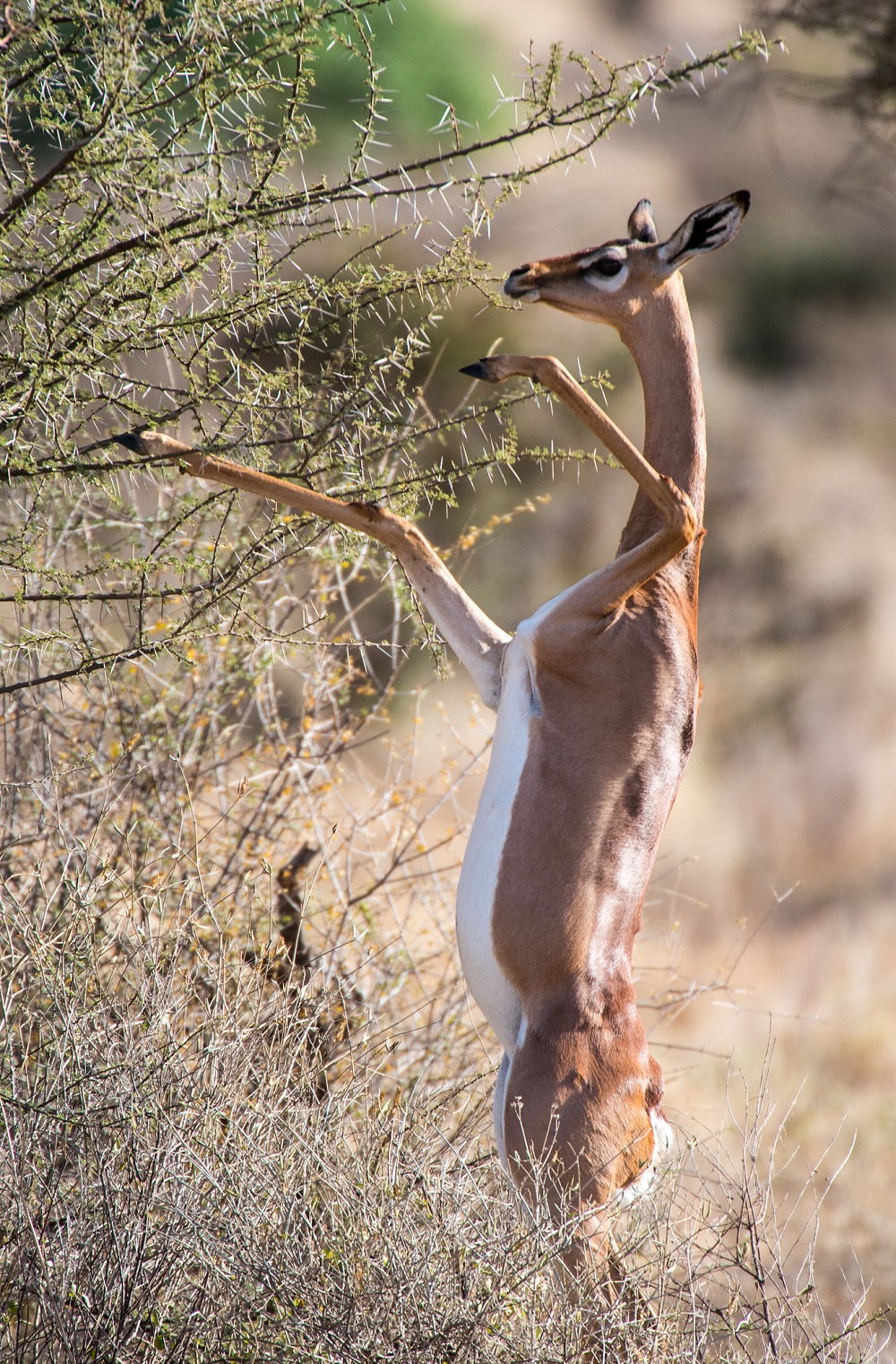
Even so, Kenyan safari areas to the north or ‘above’ the equator, and in lower lying areas such as Tsavo East can be harsh, hot and dry at certain times of the year. Paradoxically, for photographers and visitors in general, this just adds to the appeal of the country. The invisible equatorial line creates a north and a south which can hardly be more different. North of the equator areas such as Samburu feature arid, rugged landscapes where several special endemic mammals such as  the reticulated giraffe and Grevy’s zebra can be observed, together with other arid-area specialties such as the peculiar gerenuk and the ubiquitous Kirk’s dikdik.  

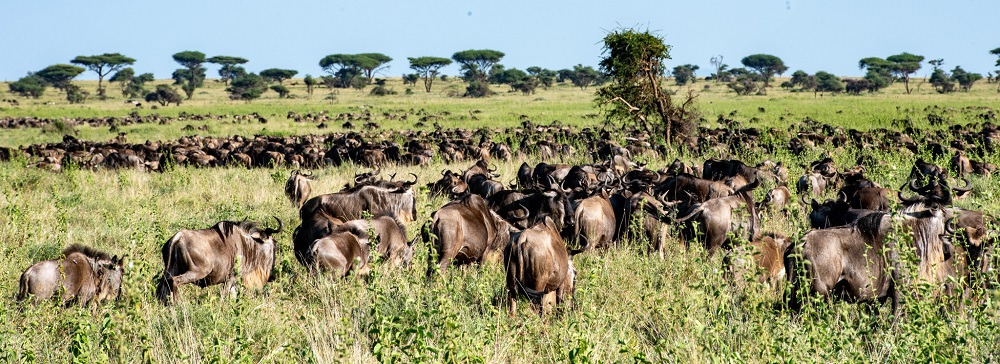
By contrast, the predator-rich Masai Mara south of the equator offers iconic, vast grasslands which are  seasonally overrun by massive herds of wildebeest and zebra. The Great Migration. Sitting at the northern edge of the Serengeti plains, the Mara offers consistently good viewing of lions, leopards, and cheetahs. One of the reasons why we almost always schedule guests’ last few days on safari in the Mara. 

The wildebeest and zebra migration

Any seasoned East Africa tour operator or advisor knows better than to promise guests a migration experience. Even with the best laid plans the migration is a natural phenomenon which is largely weather-driven and as a result devilishly difficult to predict. In broad strokes we all know where the migration is likely to be at any specific time of the year but there’s just too many factors which can and does throw it off by weeks, or stop it in its tracks.   

When fortune smiles on you and you find yourself witnessing thousands of wildebeest and zebras spread out around you in a 360-degree arc, it can be magical. Even more so when you’re witnessing hundreds or even thousands of them plunging into a swollen river, risking life and limb just to get to the other side.  

As magical as the July–October migration can be, we’ve taken some of our best photographs around the time of the short rains in November. The Mara becomes green, textured, and alive and mornings can bring the most exquisite of photographic opportunities such as a rhino or a journey of giraffes emerging from a dense fog bank. From January through March, it’s the calving season – yet another gift for photographers.  

Jason and Katie are  just back from a long Kenya trip so send Jason an email at jason@fisheaglesafaris.com for fresh news and updates about conditions there, and for assistance planning your next trip there or elsewhere in East Africa.  

YOU MIGHT ALSO BE INTERESTED IN

Destinations
Zambia

10th September 2021

Chindeni and the Bushcamp Company, Zambia

By late July we found ourselves at Chindeni, a small Bushcamp Company property

Read more
Botswana
Destinations
Okavango Delta

3rd October 2022

Camp Okavango, Botswana

Camp Okavango is in the heart of the permanent part of the Delta. In this idyllic setting there are no vehicles, and it is just a short walk

Read more
Area
Destinations
Nyerere National Park
Ruaha
Tanzania

14th October 2023

From My Safari Notebook: Wildlife Photography

Birds in flight and wildlife photographers have an uneasy relationship. Things go wrong as often as they go right. Getting focus-lock on a moving subject

Read more

SUBSCRIBE TO OUR NEWSLETTER

READERS FAVOURITES
Destinations
India

27th May 2023

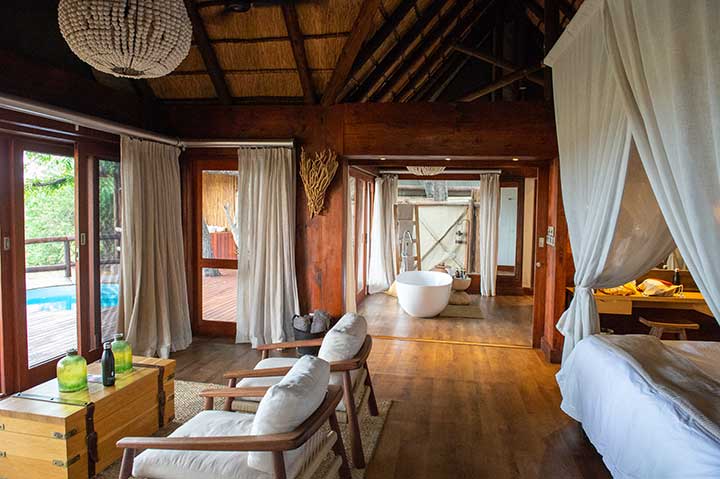
India

India’s tiger, mammals and birds.

Read more
Botswana
Destinations

4th August 2022

On Safari At Belmond Eagle Island Lodge, Okavango Delta

What is the ‘secret sauce’ for an unforgettable few days on safari in Botswana? It starts with the animals, of course. The elephants, lions, giraffes, hippos

Read more
Destinations
Zambia

10th September 2021

Chindeni and the Bushcamp Company, Zambia

By late July we found ourselves at Chindeni, a small Bushcamp Company property

Read more

Letter from Kenya

1st June 2023

Letter from Kenya

The best destination for a first safari? The ideal country for a ‘one and done’ safari? The classic of all classic safari areas in Africa? Kenya, Kenya and Kenya. 

For the last 10 days, Kathy and I have been revisiting four areas in Kenya which help make it what it is: an astonishingly diverse, breathtakingly beautiful country. A country which lives up to even the most elevated of expectations for a safari. Lots of animals which are easy to see. The friendliest of people. And a well functioning tourism infrastructure with accommodation choices to suit everyone’s taste and budget. 

Early on, at Elewana’s Tortilis Camp in Amboseli, we rediscovered the feelings and emotions which go hand in hand with being on safari. The feeling of being in the right place. The pervasive sense of being connected with your surroundings. Almost as if Africa is where you belong and where you’re meant to be.

It is not unusual to experience deja vu while on safari in Kenya. On just our second night at Amboseli with Mt. Kilimanjaro slowly disappearing as the last light faded to black, I felt oddly at home. Or maybe I never really left the last time. The distinct feeling of having lived that precise moment already – of having the same experience again – was as palpable as the evening breeze on my skin. As many times as this has happened to me and other people I know, I’ve almost come to expect it in Africa. Maybe it is just a memory of a dream. Or something buried deep in our subconscious mind, hearkening back to our progenitors who spread out into the world from this very area. Africa. It’s good to be back.  

All an Africa aficionado has to do is to enunciate four words out loud and something magical happens… Amboseli. Meru. Samburu. Lewa. The mind lights up with visions of elephants wallowing in an idyllic swamp setting. With images of one of East Africa’s best safari lodges, its rooms carefully tucked in among giant granite boulders. With pictures of a Samburu warrior – dressed to the hilt in ceremonial garb – straddling a boda-boda noisily taking its owner to the weekly market. With recollections of conservation work encompassing habitat, wildlife and the local community – rivaled by none. 

Traveling within Kenya in the typical ‘safari cocoon’ – where everything is taken care of and you literally just have to show up each morning – we were once again wowed by the country’s dazzling diversity of animals, landscapes and experiences. All without setting foot in the Masai Mara, its crown jewel.  

In just 9 nights on safari – with quite a bit of time taken up with site inspections – we tallied 36 mammal species and 145 bird species. The numbers – even as impressive as they are – become almost meaningless in the light of specific experiences. Here are a few:

Incredibly, two cheetah kills on the same day. Both kills made by female cheetahs taking down young Grant’s gazelles. One in Samburu, practically within sight of Elephant Bedroom Camp and the other one in Lewa on a game drive from Lewa Wilderness Lodge. We watched, spellbound, awestruck by the cheetahs’ amazing turn of speed as they ran down the overmatched gazelles.

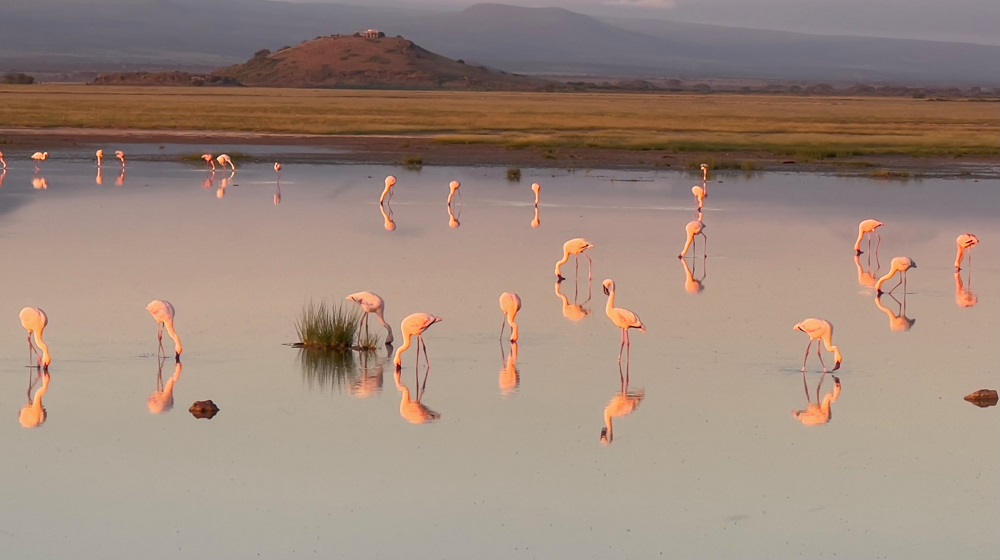
Several hundred strikingly beautiful lesser flamingos reflected in the glassy surface of Lake Amboseli, superimposed with the reflection of Mt Kilimanjaro. An abundance of riches.

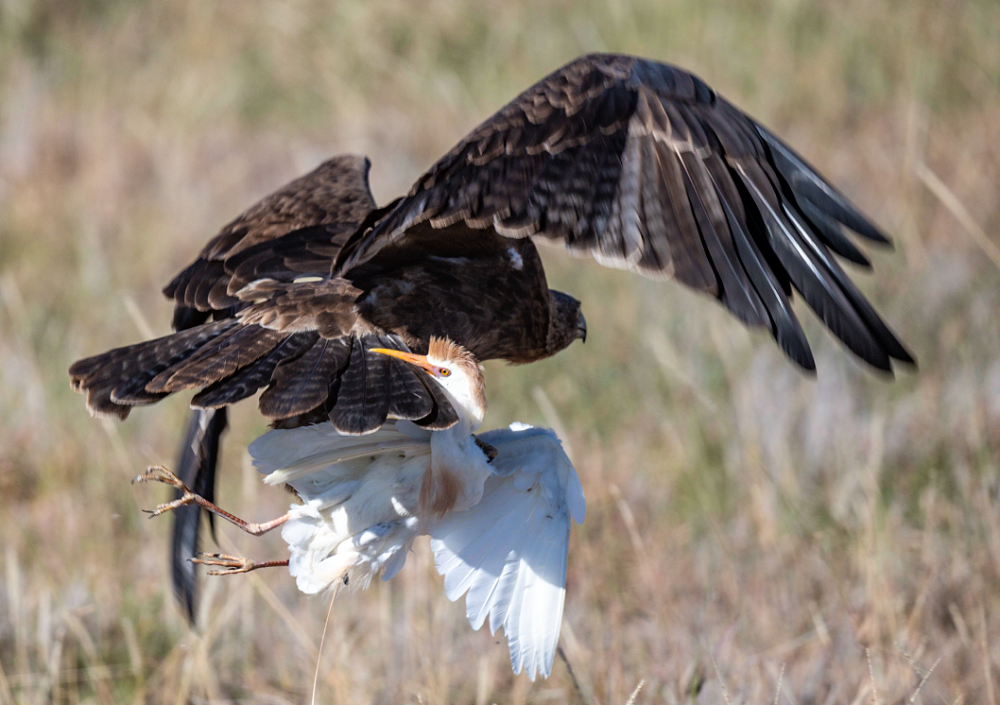
A powerful tawny eagle striking a cattle egret midair and downing it. Upon our approach, the eagle took off right in front of us. With the unfortunate egret gripped tightly in its talons, the eagle made its way to a distant copse of trees. Ironically, the dead egret’s immaculate white plumage shone like a beacon against the eagle’s chocolate brown feathers.

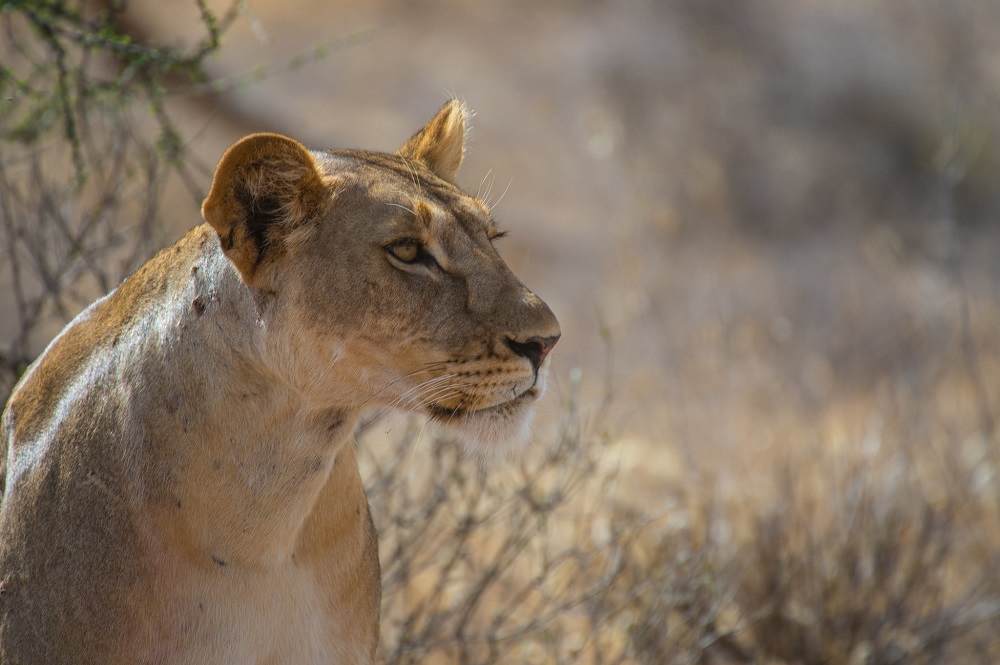
Two female lions walking along a track in Samburu, their ultra-lean appearance telling a story of hardship among plenty. Tall grasses creating ideal cover for herbivores whose numbers had plunged due to a long and only recently broken drought. The result? Hard times for lions.

A kaleidoscope of vividly colored reticulated giraffes, their rich orange-brown pattern creating the most stunning of natural tapestries. Converging and separating, their extraordinarily long necks jutting out in every direction – they were nothing short of Daliesque.

All of these extraordinary sightings came courtesy of our outstanding guides – John Njoroge in Amboseli, Joel Gachora in Meru and Francis Mayetu at Lewa. We also reconnected with our long-time friend Edwin Selempo, head guide of Origins Safaris, our Kenya destination management company for the last 20-plus years. In his usual inimitable way, Edwin capably guided us in Samburu. As always, he wowed us with his amazing birding skills, the easy and almost unobtrusive way in which he imparts information and his sunny disposition. Witty repartee? Better have it ready when traveling with Edwin.

AMBOSELI

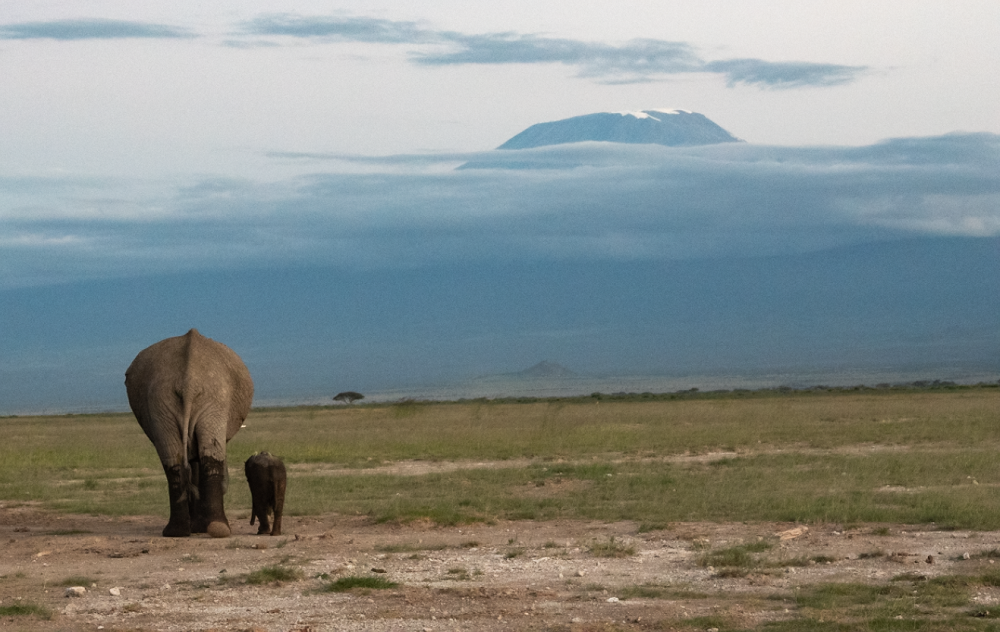
Tanzania has the mountain and Kenya has the view.  All too true when said about Kilimanjaro when viewed from Amboseli National Park. Amboseli is the spot from where you can see Kilimanjaro like you’ve always imagined it: a great big looming mountain abruptly jutting out of the open plains, surrounded by nothing. Which makes it, as the guidebooks say, the world’s highest freestanding mountain.  

The perfect Amboseli photo opportunity? Having a few of Amboseli’s strikingly white-tusked elephants in between you and the mountain… Beyond needing a bit of luck for that, you’ll need a competent guide who understands the movements of the elephants into and out of the swamps and who can anticipate where they will be at specific times of the day. Plus of course the mountain has to be visible, which is not always the case. 

As massive as it is, Kilimanjaro is as evanescent as an image on an Etch-A-Sketch. One minute there, the next minute – gone. Your best chance to see it is usually early in the morning or late in the afternoon during the wetter part of the year, from about November through May. During the dry season from June through October, the mountain often disappears completely, hidden behind a hazy curtain of clouds, fog, dust and smoke.  

Did we see the mountain? Did we ever! Kili was out from our arrival to our departure, morning until night. If we never see Kilimanjaro again, that amazingly evocative picture will be emblazoned in our memories forever. The incredible snow-capped bulk of it, its overwhelming presence transforming a nice corner of Africa into a place you simply have to see and experience.

MERU

Meru National Park is Kenya’s forgotten secret. The park gained a measure of fame – and lots of visitors – in the late 1960’s after the release of  ‘Born Free,’ a movie about Elsa, an orphaned lion cub. Elsa was hand-raised by Joy Adamson and her game-warden husband George, right in Meru. Ironically – and often omitted from the tale – George had to shoot Elsa’s mother in self-defense when the lioness attacked him while trying to protect her cubs. Elsa, one of three surviving cubs, was successfully released back into the Meru wilderness a couple of years later. After being away in England for more than a year, the Adamsons returned to Meru and found Elsa – who still remembered them – with three cubs of her own.

Then the story of Meru took a turn for the worse. Invading bandits and poachers from Somalia decimated the wildlife for much of the late 1980’s and 90’s. Visitors stopped coming and the park fell into neglect. It wasn’t until 2000 when the Kenya Wildlife Service, under the leadership of Richard Leakey and with the financial support of private conservation groups, was able to invest substantial amounts of money into combating poaching and restoring the park to its former glory.

Current day Meru is once again a showcase park, famous for its striking African savanna landscapes and its diversity, with the park containing an extraordinarily high number of different mammals and birds. Even so, the park is still lightly visited compared with most of Kenya’s others. On one occasion we spent the better part of 40 minutes observing a lone female lion beneath a tree on the edge of a stream without so much as one other vehicle driving by. Some 13 perennial streams flow through Meru from west to east, defining the landscape of the park. The rivers – which are part of the Tana River basin – act as magnets for wildlife, particularly in the dry season which stretches from June through September.  

We simply love Elsa’s Kopje where we rested our weary heads for a couple of nights in Meru. This stunning property is considered by many to be one of the most spectacular locations and lodge designs in Africa. In addition to its splendid location, with its individually designed rooms artfully obscured by vegetation and rocks on the slope of an inselberg, Elsa’s has a charming central area overlooking an infinity pool, and a solid reputation for good food, great hospitality and top-notch management. 

SAMBURU

Samburu is Africa right down to its ubiquitous red dust which gives its many elephants their telltale cinnamon brown appearance. It can be a harsh and unforgiving place, particularly in times of drought which can last for months, even years. Dry or not, Samburu is always dramatic. If it’s not the striking vegetation – dominated by massive stands of doum palms – it’s the glimpses of far-off mountains like Ololokwe, the sacred mountain of the Samburu.

Be on the lookout for the unique gerenuk antelope in this area; it is easily recognized by its long thin neck, its tendency to stand on its hind legs to browse and its peculiar ‘ET’-like facial features. While visiting Samburu we recommend taking some time to visit a local manyatta. Squeeze into one of the smoky, bare-bones huts and observe the near total absence of so many material things we take for granted. 

Elephant Bedroom Camp, where we spent two nights, is a small camp hidden among the riverine forest on the banks of the Ewaso Nyiro River. The camp is right in the heart of the best game viewing area of Samburu and guests don’t have to drive miles and miles (as is the case from some other camps) to see the wildlife. Guests from other camps drive here. Over the course of our 3-night stay there were lions, leopards, cheetahs and African painted dogs seen within a mile from the camp. Also an aardwolf.

LEWA

Every once in a while on my African travels I discover a place which immediately appeals to me. Bonus? When I realize that our guests will enjoy and appreciate it as well. The Lewa Wildlife Conservancy is one of those places. Lewa is special on many levels. Back when I first visited in the late 1990’s, it struck me as being almost sublimely ‘Out of Africa.’ It was no different this time around. Mostly, the place just shouts ‘Africa.’ Standing there on a clear day on an elevated spot, you can see the jagged peaks of Mt. Kenya to the south. If you turn around 180 degrees, on the horizon to the north looms the sacred mountain of the Samburu – Mt. Ololokwe. Mountains, valleys, vast open grassy plains and the gray-blue horizon seemingly reaching up to the clouds.

Other ways in which Lewa is special? It harbors and actively protects more rhinos (white and black) than any other conservancy in East Africa. Lewa’s rhino population has grown from an initial 15 rhinos to around 255 rhinos currently, a significant percentage of all rhinos in Kenya. Lewa also has a great mix of endemic species including Grevy’s zebra, beisa oryx and reticulated giraffe. Some of these animals – like the Grevy’s zebras – are rare and endangered and they are all spectacularly beautiful. Lewa has an enviable record as a hugely successful wildlife conservation entity and for effectively involving the surrounding community and mobilizing their support. 

So what is a keen safari enthusiast to do? If you’ve never been to Kenya, give us a call at 1 800 513-5222 or email me (bert@fisheaglesafaris.com) to discuss some options and let’s get you on a flight to Nairobi. With the possible exception of April and May, Kenya is a true year-round destination. For the wildebeest & zebra migration, July through October are the best months but there’s much to be said for November through March as well. Been to Kenya before? No reason not to go back. Kenya is the most diverse safari destination of all and there is always somewhere new to explore, or a different time of the year to visit. Take a few friends and book one of the exclusive use properties at Ithumba or Galdessa for the most amazing orphan elephant experience of a lifetime!

YOU MIGHT ALSO BE INTERESTED IN

Destinations
Zambia

10th September 2021

Chindeni and the Bushcamp Company, Zambia

By late July we found ourselves at Chindeni, a small Bushcamp Company property

Read more
Botswana
Destinations
Okavango Delta

3rd October 2022

Camp Okavango, Botswana

Camp Okavango is in the heart of the permanent part of the Delta. In this idyllic setting there are no vehicles, and it is just a short walk

Read more
Area
Destinations
Nyerere National Park
Ruaha
Tanzania

14th October 2023

From My Safari Notebook: Wildlife Photography

Birds in flight and wildlife photographers have an uneasy relationship. Things go wrong as often as they go right. Getting focus-lock on a moving subject

Read more

SUBSCRIBE TO OUR NEWSLETTER

READERS FAVOURITES

Destinations
India

27th May 2023

India

India’s tiger, mammals and birds.

Read more
Botswana
Destinations

4th August 2022

On Safari At Belmond Eagle Island Lodge, Okavango Delta

What is the ‘secret sauce’ for an unforgettable few days on safari in Botswana? It starts with the animals, of course. The elephants, lions, giraffes, hippos

Read more
Destinations
Zambia

10th September 2021

Chindeni and the Bushcamp Company, Zambia

By late July we found ourselves at Chindeni, a small Bushcamp Company property

Read more

Seeing and photographing Giraffes on safari in Africa

14th October 2020

Seeing and photographing Giraffes on safari in Africa


Image

Seeing and photographing Giraffes on safari in Africa

As long-time safari planners and regular African travelers, giraffes are often on our minds, or in front of our camera lenses.  Other than perhaps elephants, it is the one mammal that we get the  most questions about.  Everybody wants to see giraffes on safari.   Just like the big cats, these quintessential African mammals are high on everyone’s must see list. It is easy to see why.  They are simply spectacular in so many ways.  There’s the sheer size of them, their stilt-like elongated necks and unmistakable ‘horned’ heads literally towering above the landscape and everything else.  There’s the way they feed, drink, stare at you and run.  Pretty much everything about a giraffe is weird and worth a second look.


Image

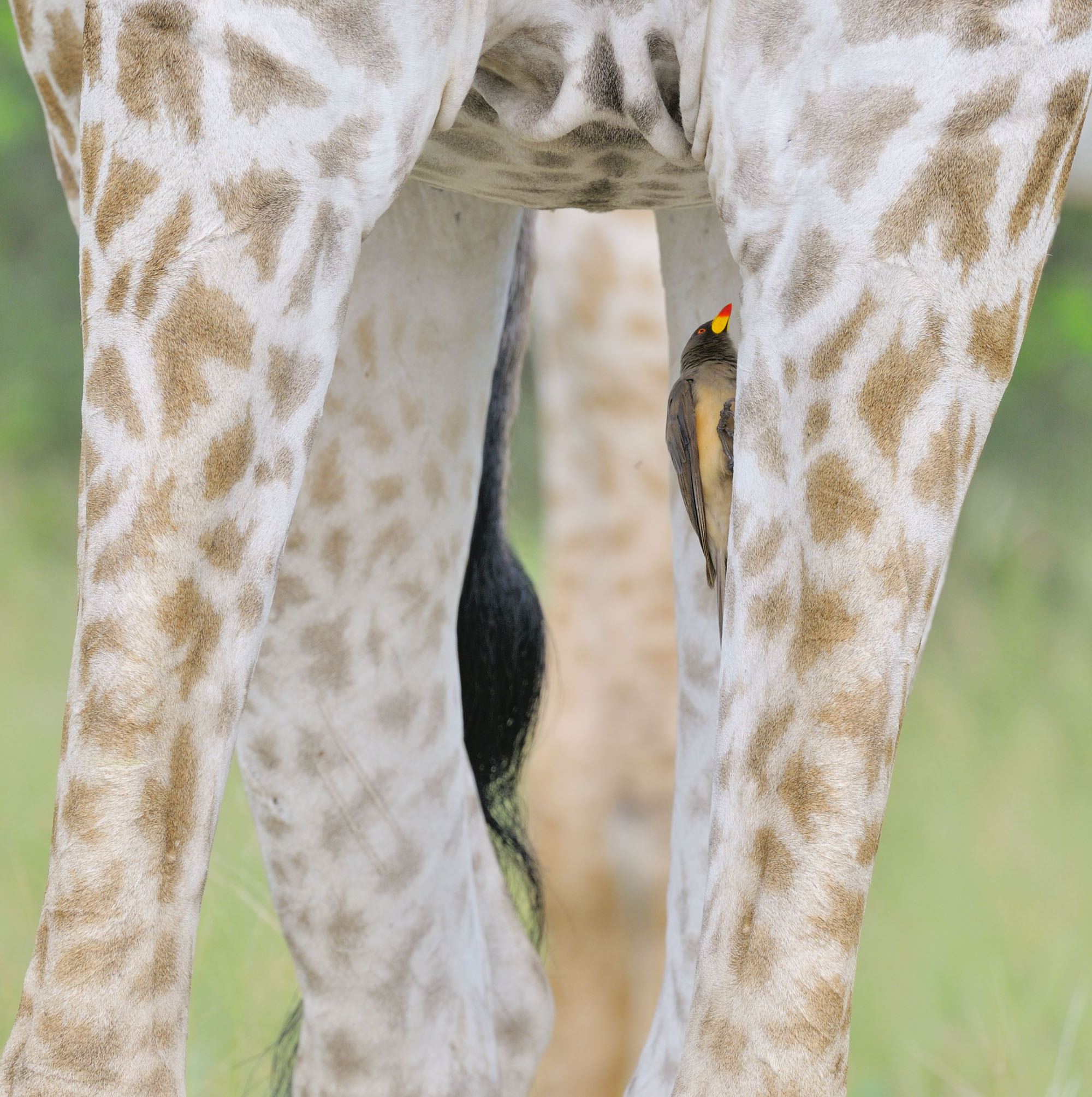
Linyanti floodplain, Botswana

This photo, taken in the Linyanti area in Northern Botswana, illustrates a couple of things about giraffes and about getting useful images of them.  Be ready with the right lens.  If all you have available is a big telephoto lens, this is all you might get.  A portion of a giraffe.  Legs.  Or a head, maybe a neck and head.  So either shoot them at a good distance where they can fill the frame or use a shorter zoom lens to frame them properly.  On this day I was fortunate to have a yellow-billed oxpecker bail me out of the tight photo spot.  These birds have a symbiotic relationship with giraffes, helping them to get rid of disease-carrying ticks, food for the birds.  Even ill-equipped photographers can be the beneficiaries of symbiosis, with a bit of luck. 


Image

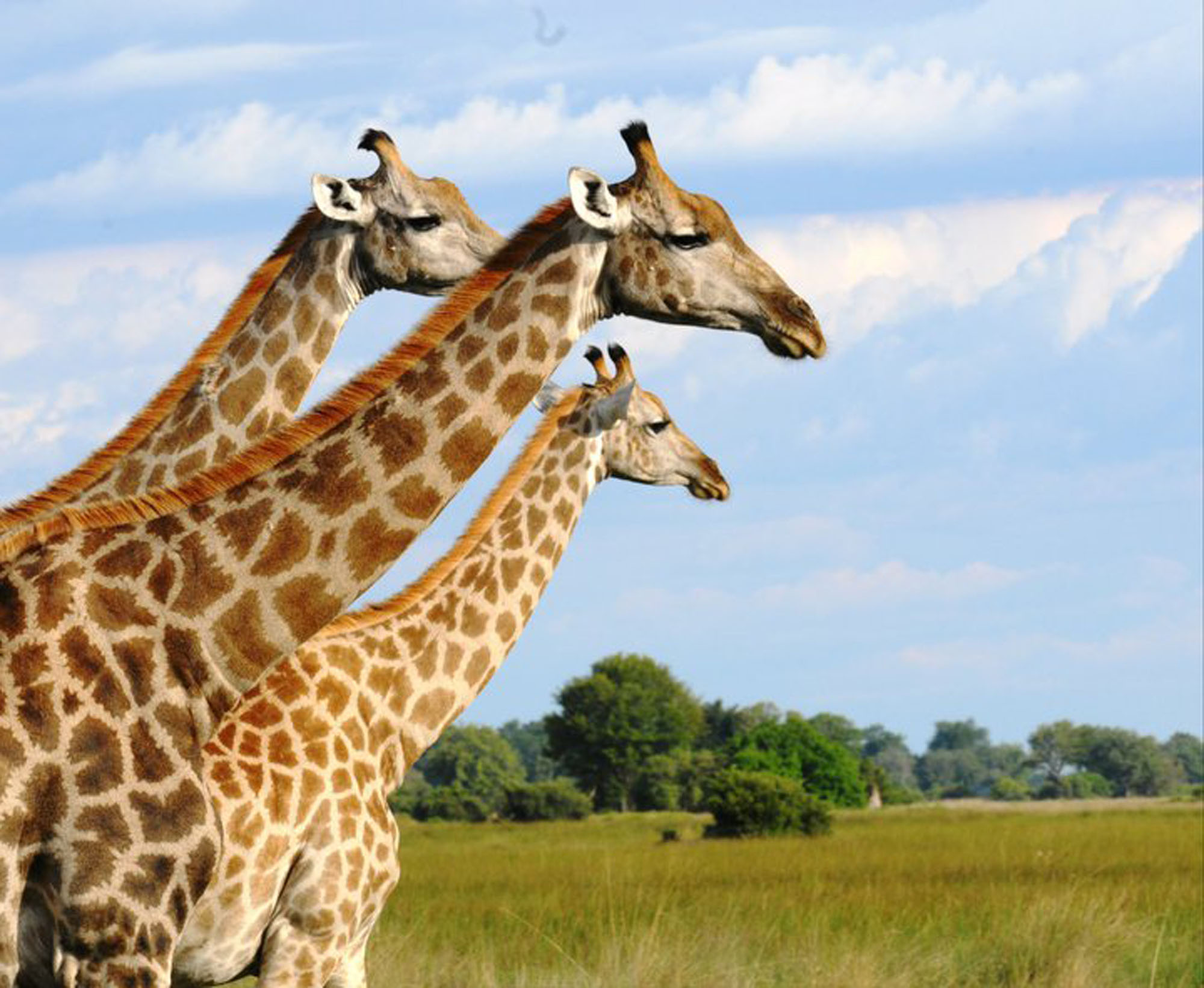
Kwara concession, Okavango Delta

When it is not possible to get the entire giraffe – or more than one – inside the frame, consider grouping together a few giraffe necks, heads or upper bodies.  Sometimes, you can get lucky and three giraffes will be facing in the same direction, with a nice cloudy background.  It doesn’t happen all the time but keep looking for such an opportunity to present itself.  Some years ago in the Kwara concession in Botswana’s Okavango Delta, I did just that, got lucky and succeeded in getting a visually pleasing shot of these three giraffes.


Image

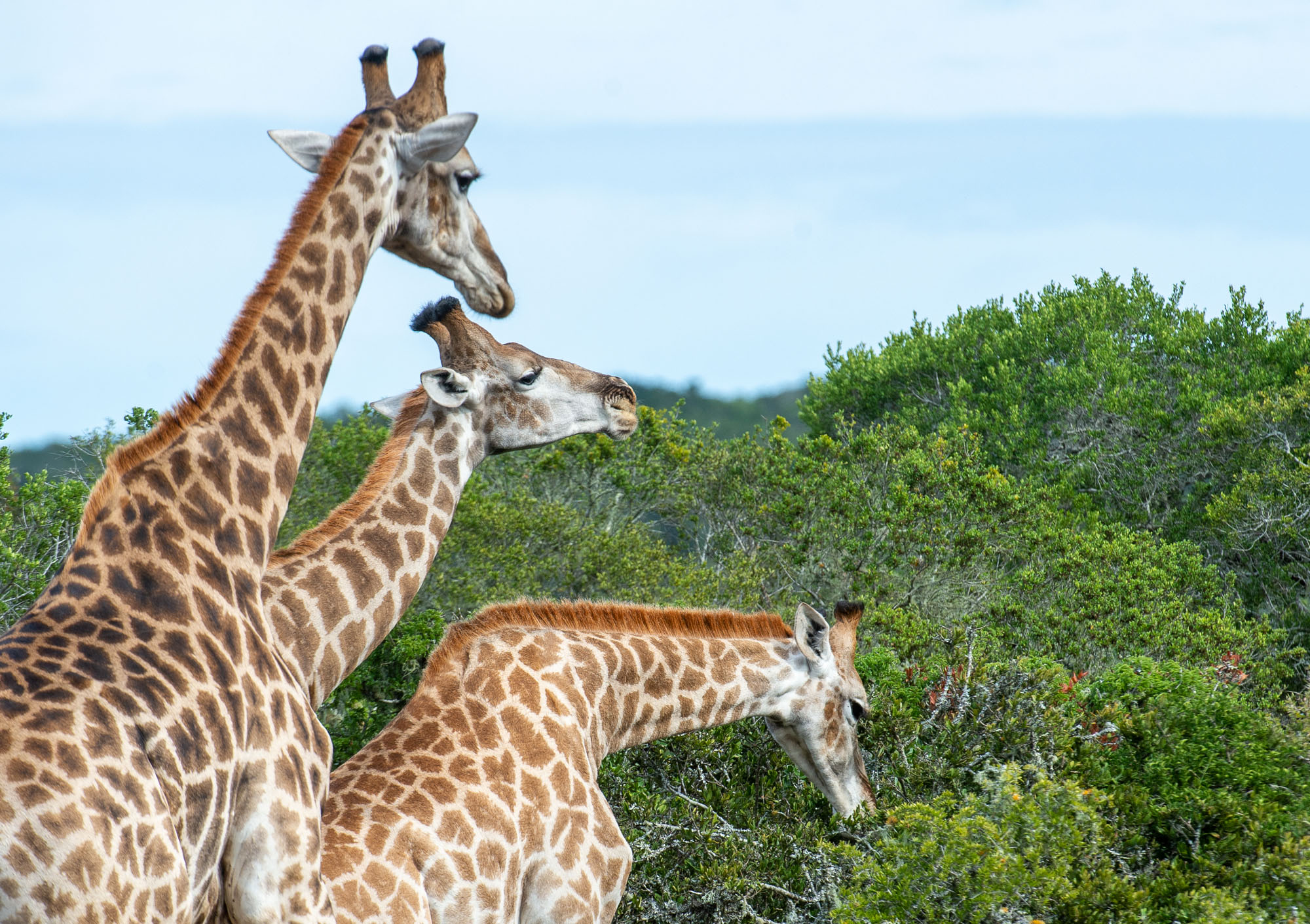
Kwandwe Game Reserve, Eastern Cape

I captured this photograph of three plains giraffes feeding at Kwandwe in the Eastern Cape Province of South Africa.  It is another example of framing more than one giraffe in the same photograph, by isolating their necks and heads.  The more giraffes, the better.  Four necks may even be better than three; I’ve just not come across a suitable opportunity to try that!


Image

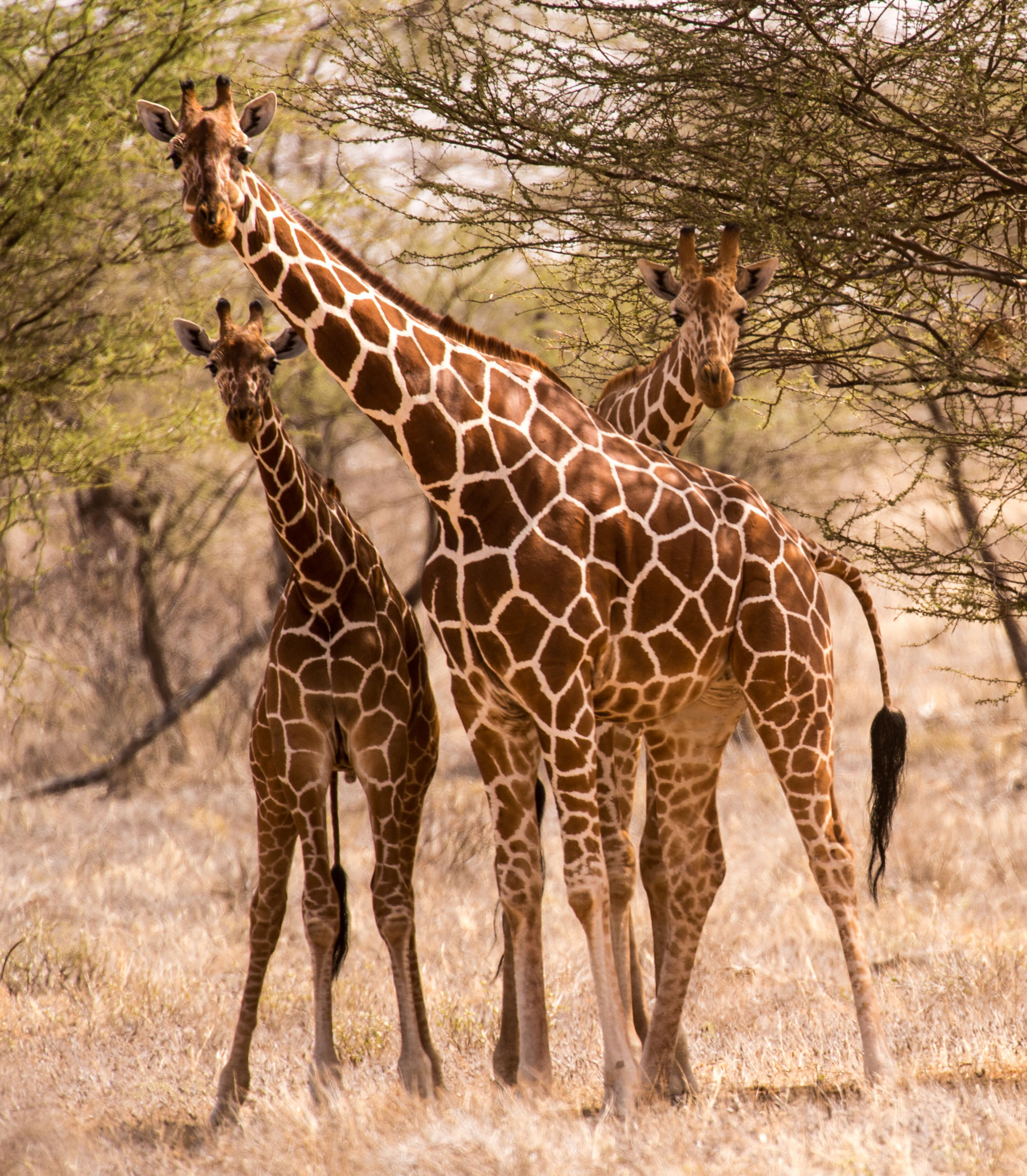
Samburu region, Kenya

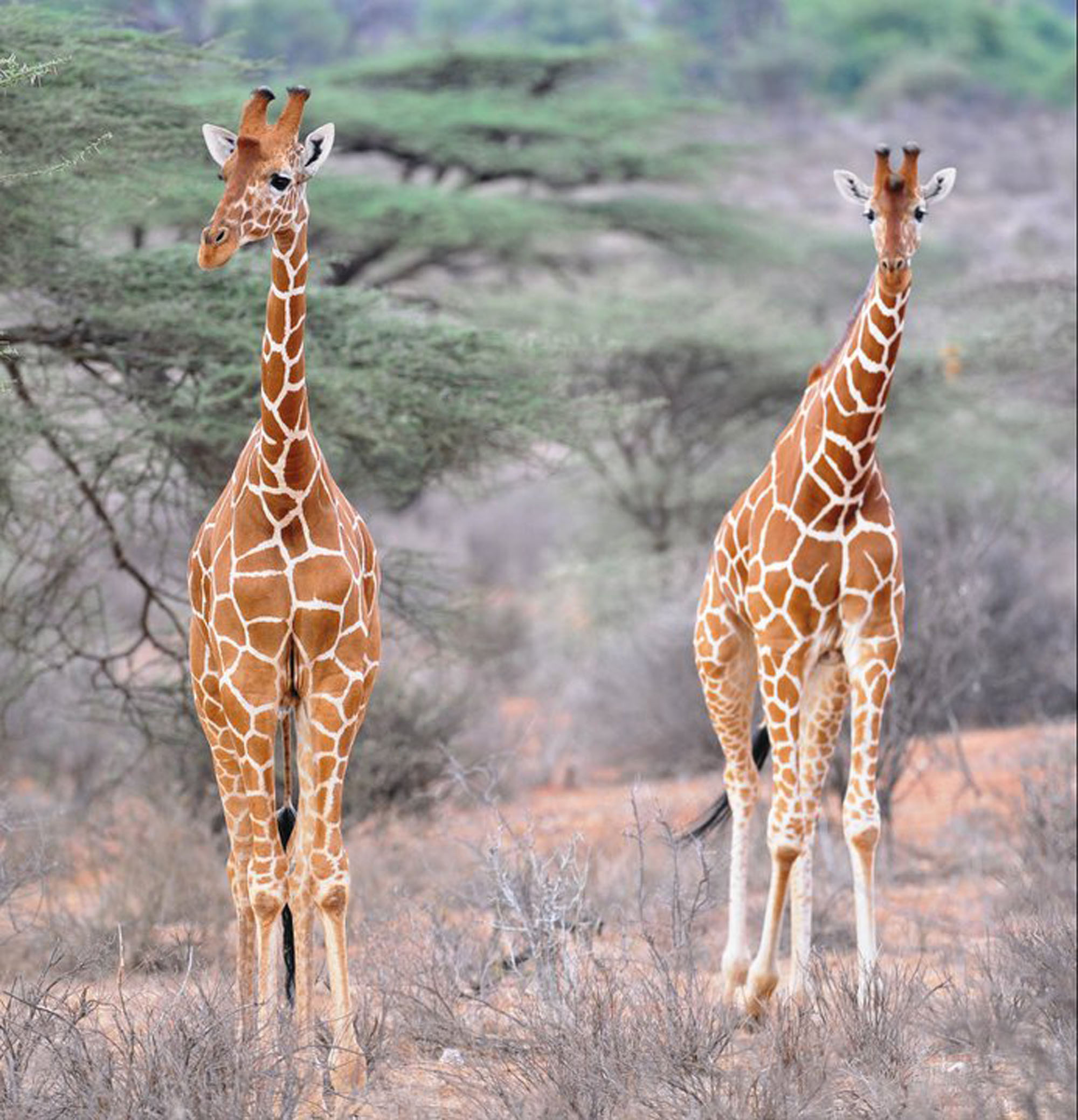
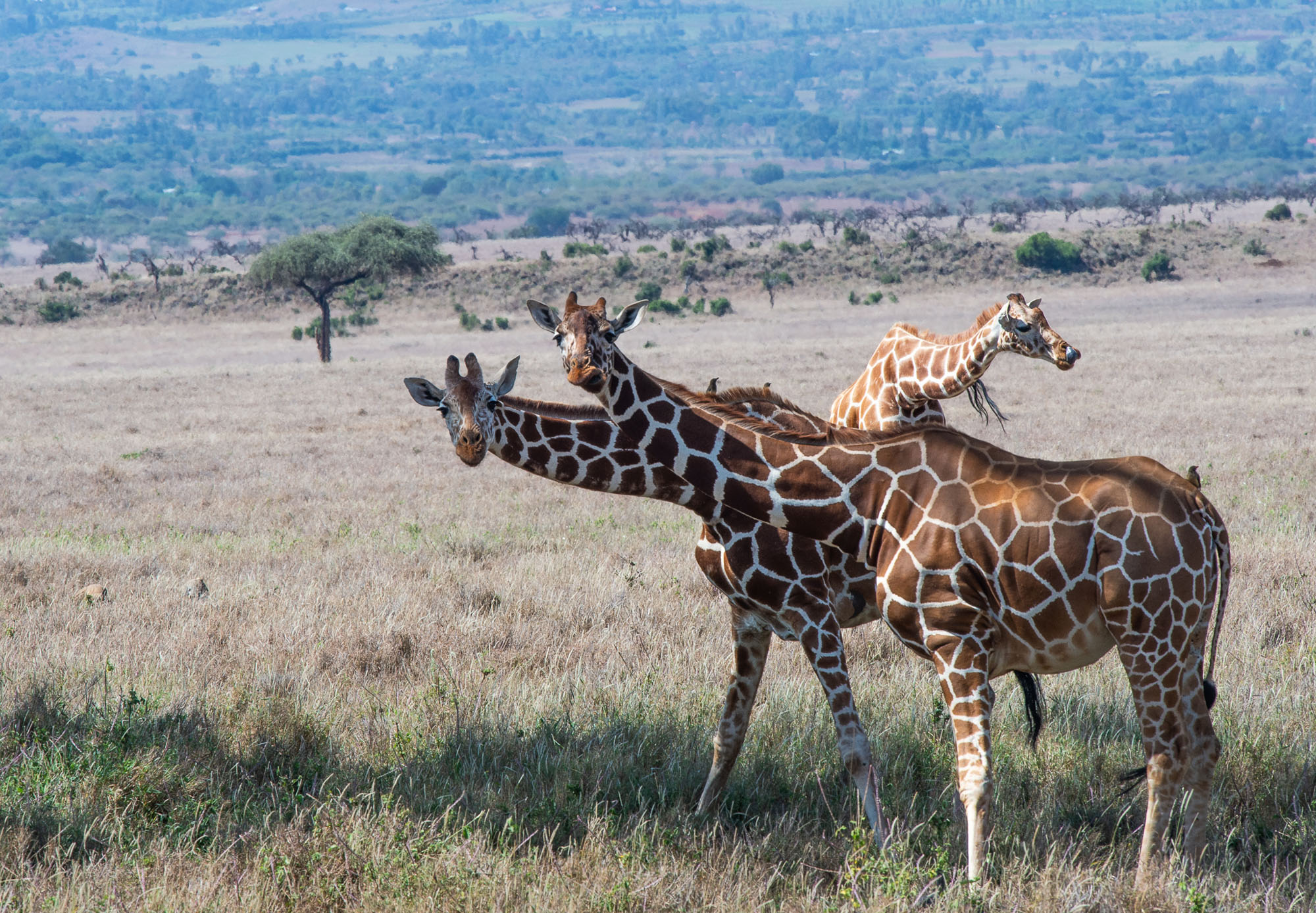
There are several species of giraffe in Africa.  The three photos above have been of the most common of these, the Southern giraffe.  In north-eastern Kenya one finds what I consider to be the most handsome of the giraffe species, the Reticulated giraffe.  This photo of a few of them was taken in Samburu, a mostly stark, arid area where a good number of these endangered animals co-exist with a couple of other northern Kenyan endemics such as Grevy’s zebra and Beisa oryx. I’ve always described the Reticulated giraffe as the oil painting of giraffes, compared with the more washed out – ‘watercolor’ – Southern giraffe.  If you’ve seen Reticulated giraffes in nature, I think you will agree.  Their spots are a vivid, dark burnt orange which make the white stripes stand out even more.  Another good place to find and observe Reticulated giraffes is the Lewa Wildlife Conservancy. 


Image

Lewa Wildlife Conservancy, Kenya

Taken in the Lewa Conservancy in northern Kenya, this photo of three Reticulated giraffes also illustrates their striking color pattern.  And my penchant for trying to get  several giraffe necks and heads in the same photo…


Image

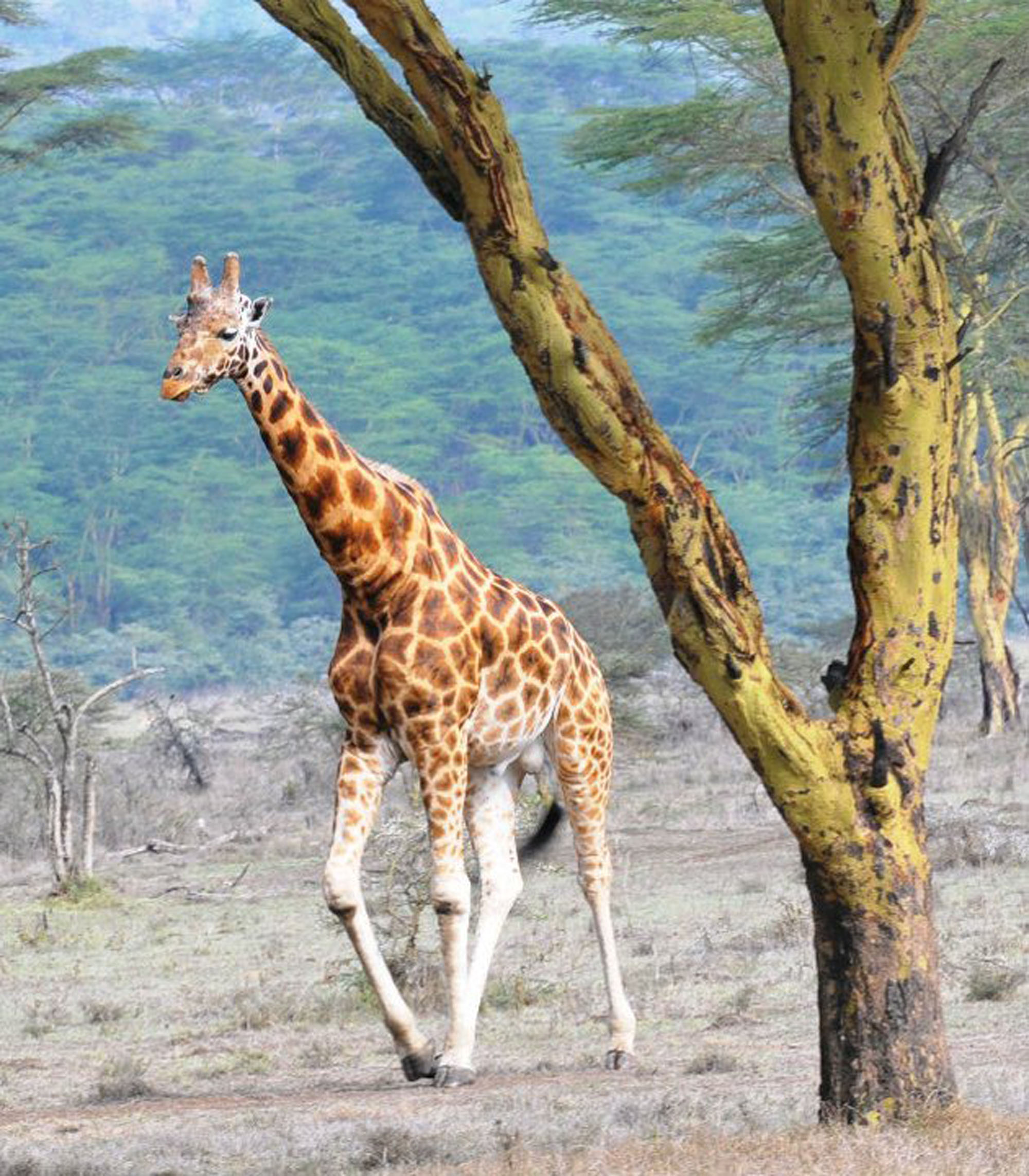
Lake Nakuru National Park, Kenya

There is considerable disagreement among scientists as to the specific number of giraffe species.  Some maintain that there’s only one ‘giraffe’ with several subspecies.  Others contend that there are as many as eight distinct species.  A giraffe that is widely considered to be a subspecies is the Rothschild’s or Nubian giraffe.  I photographed this one walking in a yellow-barked acacia forest on the edge of Lake Nakuru in Kenya.  Full species or not, it is certainly a handsome beast with its characteristic white ‘sox’.


Image

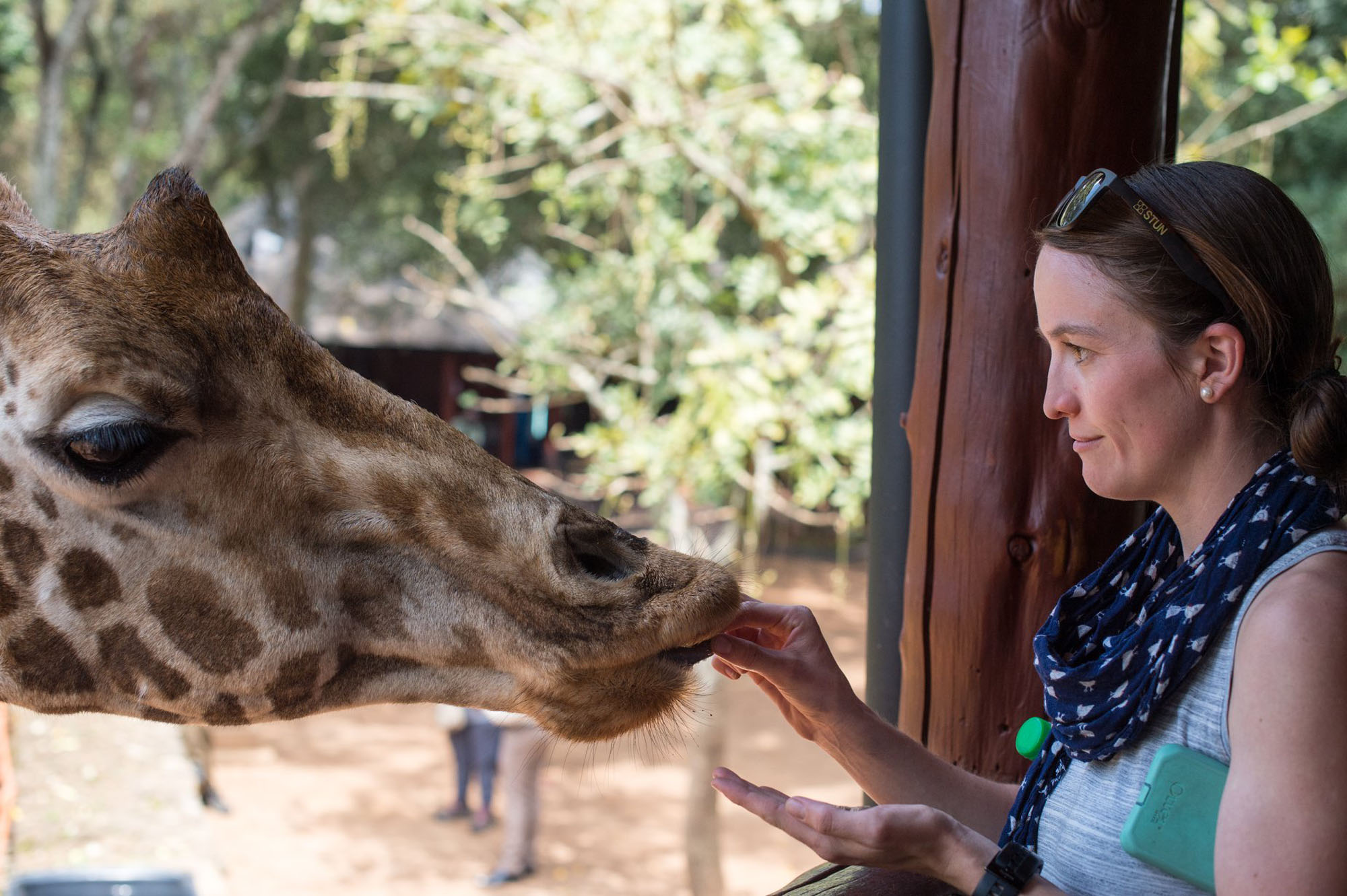
Giraffe Center, Nairobi

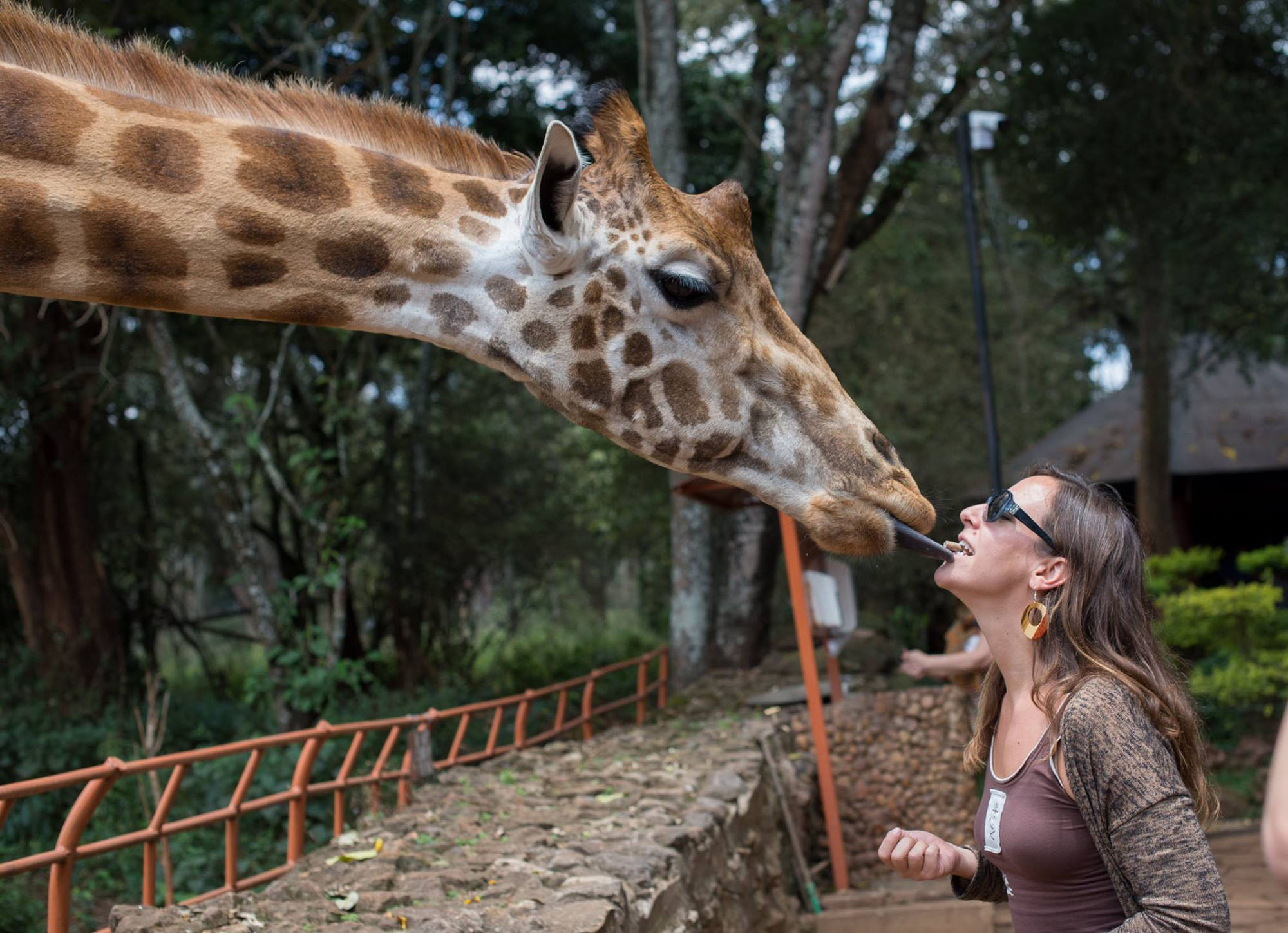
There are several Rothschild’s giraffes at the popular Giraffe Center in Nairobi, Kenya.  The Giraffe Center is operated by the African Fund for Endangered Wildlife, to educate Kenyan youth about the country’s wildlife and environment and to provide visitors an opportunity to come into close contact with the giraffes. ‘Armed’ with a handful of giraffe pellets, visitors walk up a ramp to a balcony from where they can feed the giraffes at eye-level.  The giraffes know the game.  Whenever there are visitors, there are giraffes ready to stick out their crazy long tongues to retrieve a treat and be photographed.  All for a good cause.  Funds raised by the Giraffe Center have helped with efforts to re-establish the endangered Rothschild giraffe in several wilderness areas elsewhere in Kenya.


Image

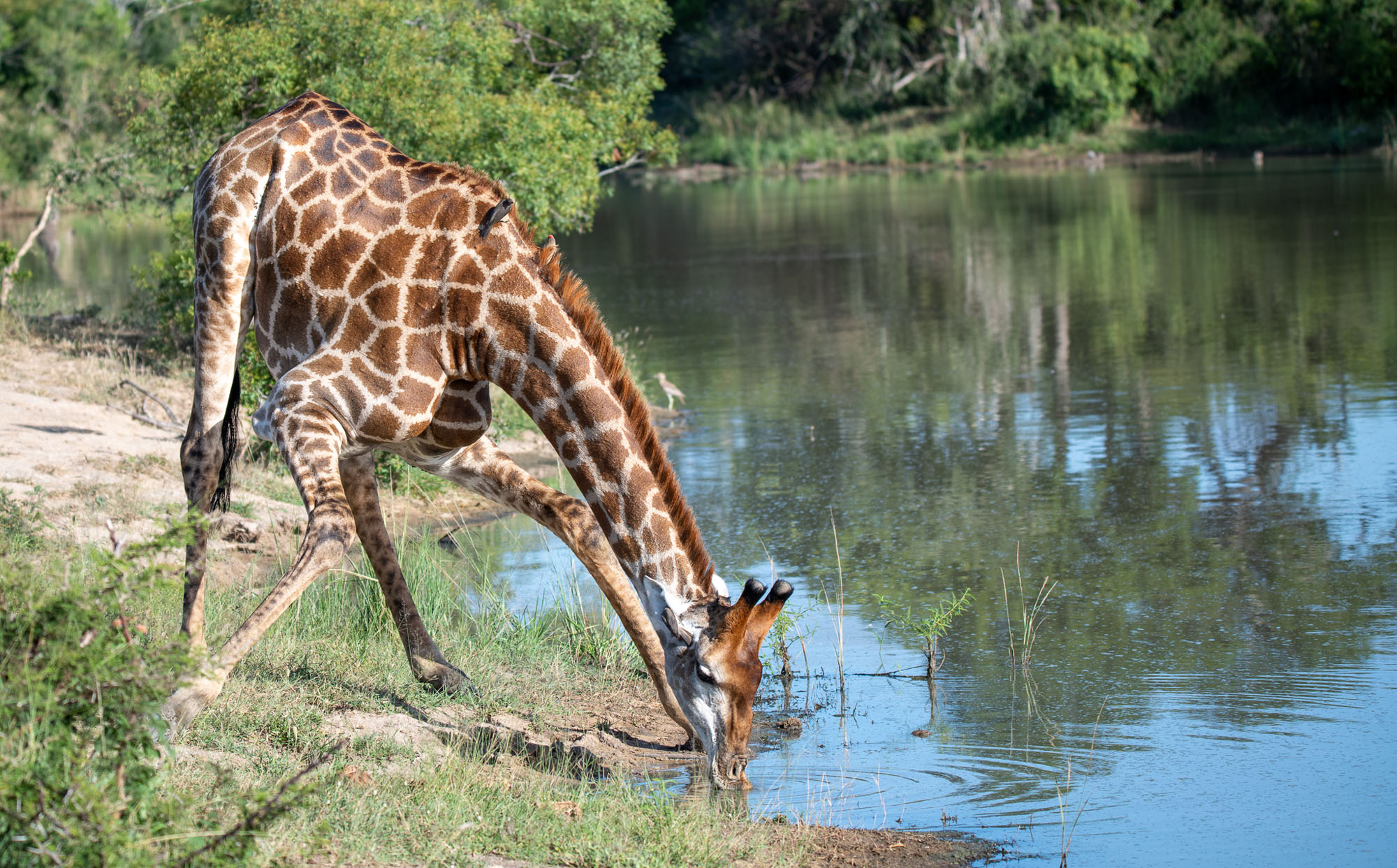
Royal Malewane, Thornybush Reserve – South Africa

A giraffe drinking is quite a sight to behold.  This photo which I took on a game drive from Royal Malewane in South Africa illustrates the peculiar posture which a giraffe has to adopt in order to get its mouth down low enough to drink water from a pond or river.  The exact mechanism by which a giraffe gets enough water in its mouth and up its massively long neck, isn’t entirely clear. What is clear is that  giraffes are vulnerable to predation when they are drinking and they are always careful to look around for lions, before assuming the position.


Image

Skeleton Coast area, Namibia

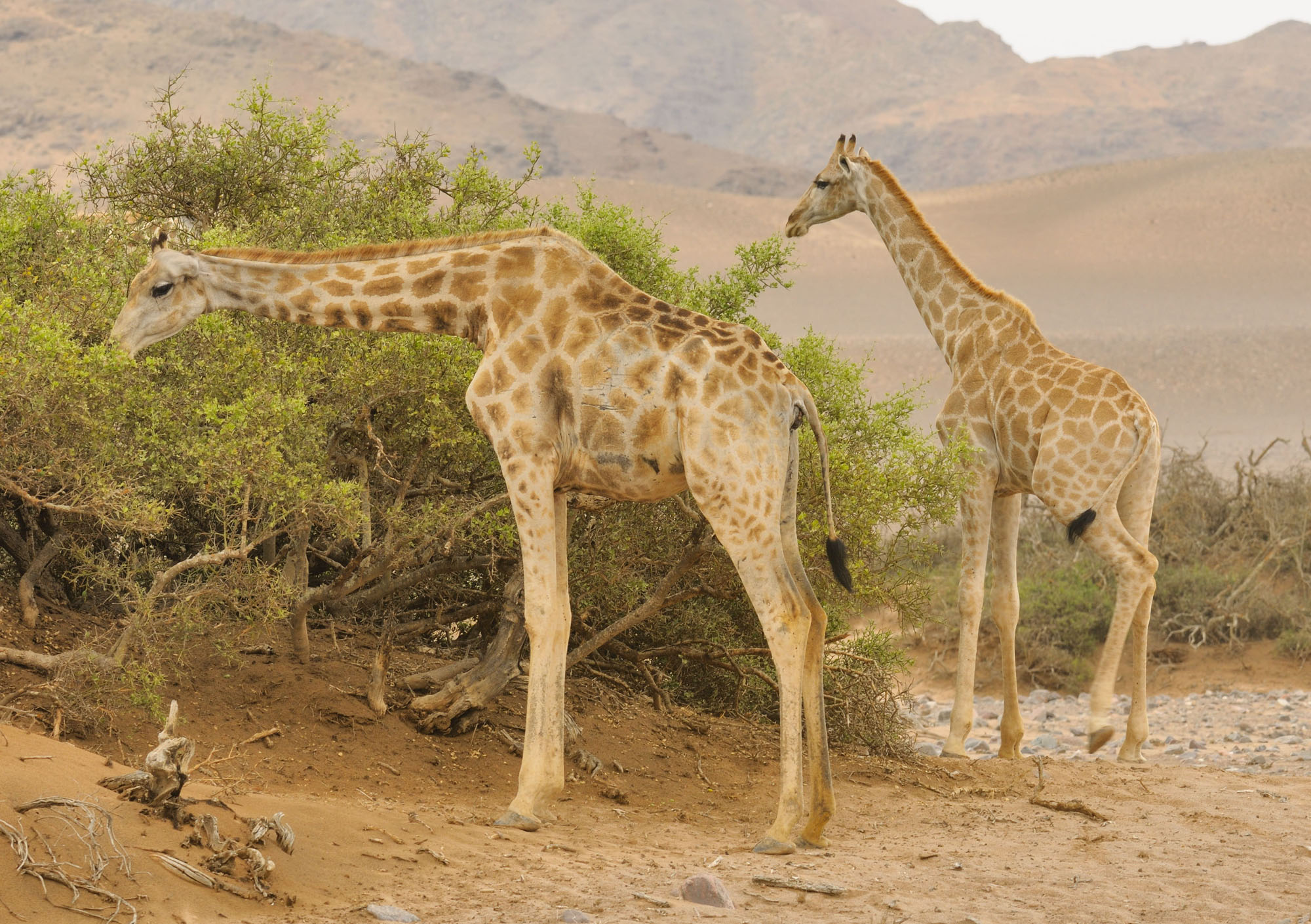
A little known fact about giraffes is just how adaptable they are. As a result giraffes are widely distributed in most habitats throughout Africa, even in some areas which are inhospitable to many life-forms. On two separate visits to Namibia’s Skeleton Coast we saw several groups of desert-adapted Angolan giraffe, a sub-species concentrated around ephemeral or seasonal rivers such as the Hoarusib, Huab and Hoanib.  Wherever you see groves of acacia albida (Ana) and acacia erioloba (Camelthorn) trees, you can expect to find these giraffes.  This photo was taken on a game drive out of Wilderness Safaris’ Hoanib Skeleton Coast Camp.


Image

Okavango Delta, Botswana

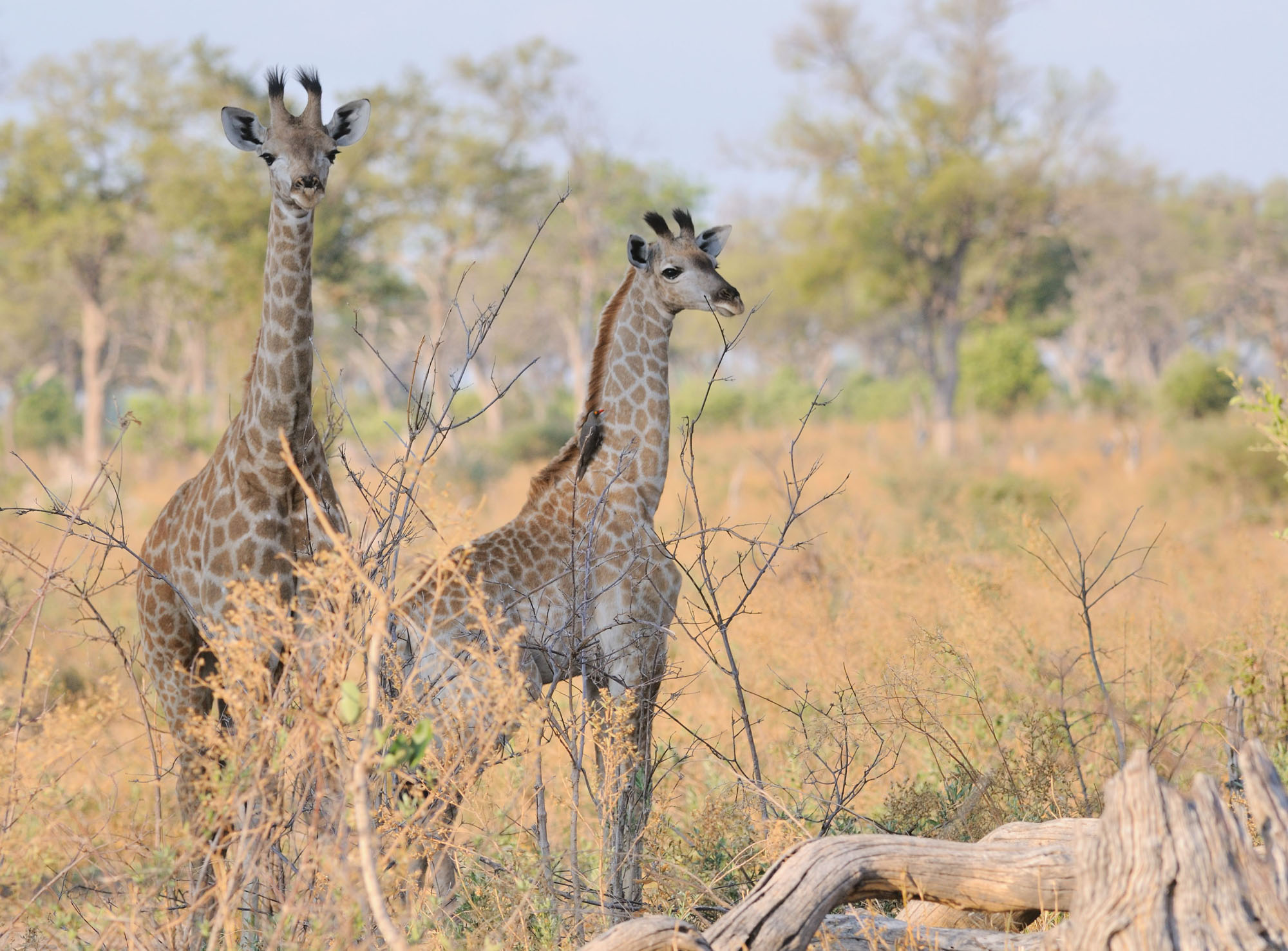
Baby giraffes are cute.  Like most other animals.  These two youngsters were photographed on a game drive out of Wilderness Safaris’ Abu Camp in Botswana’s Okavango Delta.  Even at a young age, giraffes adopt the typical habits of the species like being inquisitive and observant.  They can see you long before you can see them, and they fully utilize their special advantage,  always looking and staring.  When safari guides are out on game drives searching for predators, they make a point of checking out where the giraffes are looking.  If giraffes are standing still and staring consistently in the same direction, it is always a good indication that a predator is around.


Image

Samburu, Kenya

Giraffes are relatively common in many areas in Africa.  We always expect to see some – and sometimes many – in places like Mashatu in south-eastern Botswana, in Zimbabwe’s Hwange National Park, pretty much all over northern Botswana, the north-eastern lowveld of South Africa including all but the far northern part of Kruger Park, and in most East African parks and game reserves.  While it is still fairly easy to see giraffes on a trip to Africa, it is a disturbing reality that giraffe numbers have decreased by 30% over the last three decades, with about  110,000 remaining.  Even though giraffes as a species are not endangered, they are considered threatened and the situation could get worse, if current trends persist.  Mostly, their numbers are dropping because of habitat loss, which happens when woodlands are converted into farms and ranches. Trophy hunting and poaching also play a role in their steady demise.  Some of the species – or subspecies – such as the Reticulated Giraffe are in fact endangered, with their numbers down more than 90% compared with earlier times.  These Reticulated giraffes photographed in Samburu in northern Kenya are nowadays found mostly in a few wildlife sanctuaries, with less than 10,000 of them surviving.

In our blog post next week, we will take a look at Africa’s signature mammal:  the African elephant.  With plenty of photographs and a few of our most indelible memories of interacting with these behemoths in all parts of Africa over the years.  

More Info

Email bert@fisheaglesafaris.com

Email jason@fisheaglesafaris.com

@fisheaglesafarishouston

#FishEagleSafaris

YOU MIGHT ALSO BE INTERESTED IN

Destinations
Zambia

10th September 2021

Chindeni and the Bushcamp Company, Zambia

By late July we found ourselves at Chindeni, a small Bushcamp Company property

Read more
Botswana
Destinations
Okavango Delta

3rd October 2022

Camp Okavango, Botswana

Camp Okavango is in the heart of the permanent part of the Delta. In this idyllic setting there are no vehicles, and it is just a short walk

Read more
Area
Destinations
Nyerere National Park
Ruaha
Tanzania

14th October 2023

From My Safari Notebook: Wildlife Photography

Birds in flight and wildlife photographers have an uneasy relationship. Things go wrong as often as they go right. Getting focus-lock on a moving subject

Read more

SUBSCRIBE TO OUR NEWSLETTER

READERS FAVOURITES

Destinations
Zambia

10th September 2021

Chindeni and the Bushcamp Company, Zambia

By late July we found ourselves at Chindeni, a small Bushcamp Company property

Read more
Botswana
Destinations

4th August 2022

On Safari At Belmond Eagle Island Lodge, Okavango Delta

What is the ‘secret sauce’ for an unforgettable few days on safari in Botswana? It starts with the animals, of course. The elephants, lions, giraffes, hippos

Read more
Destinations
India

27th May 2023
India

India’s tiger, mammals and birds.

Read more

Footer

Design

  • About
  • Destinations
  • Blogs
  • FAQS
  • Team
  • Contact
All Rights Reserved ©Fish Eagle Safaris 2022 | Terms & Conditions | Privacy Policy
Designed & Developed by B Online

SUBSCRIBE TO OUR NEWSLETTER

SIGN-UP TO OUR NEWSLETTER

Subscribe Form

Footer Widget Header

Related Blogs