• Skip to primary navigation
  • Skip to main content
  • Skip to footer

Fish Eagle Safaris

Fish Eagle safaris

Contact

Logo
  • About
  • Destinations
  • Blogs
  • Newsletter
  • FAQS
  • Team
  • search
  • Contact
  • About
  • Destinations
  • Blogs
  • FAQS
  • Team
  • Contact

Laikipia

Kenya: What a Difference the Equator Makes

3rd April 2026

Kenya: What a Difference the Equator Makes

If you’ve read some of my older blog posts about Kenya, you’ll know that I am a big fan – for many reasons – but mostly because of the country’s incredible diversity. From the point of view of a photographer of any level of competency and experience – or anyone who wants to light up social media with a great image – Kenya is the shutter that keeps on clicking. 

Thinking back over many Kenya trips starting 30 years ago, these are some of the reasons which keep me going back again and again and recommending Kenya as the #1 option for a first, an only and a repeat safari.

The elephants

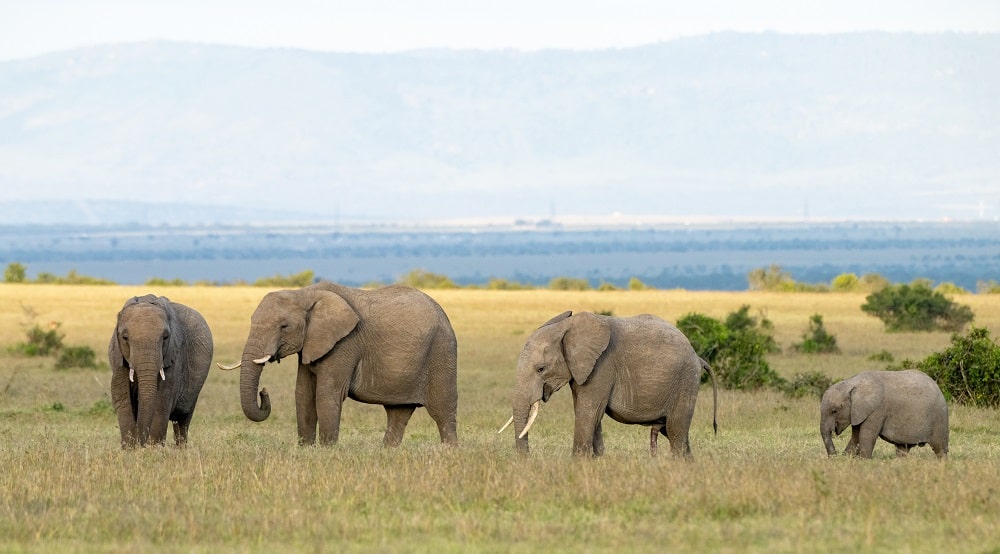
We’ve long been firm believers that any really good African safari itinerary should have at least one signature elephant experience. One day, one game drive, one elephant experience, one photograph which you will remember forever. To be sure, Kenya has more than just one area where the elephant experience will blow your socks off. 

Amboseli is one. It’s where I took what might still be my most liked elephant photo. One morning on a game drive from Tortilis Camp we were watching a herd of elephants move through the woodland. A herd of elephants moving down to the swamps, kicking up some dust, is always worth watching so we stopped. I soon had a 400mm lens pointed in their direction. 100 different photos of elephants walking in good light in Amboseli would all be nice shots, but none would have stood out.

Nothing would have distinguished any one of them from a 1,000 similar photos taken at Amboseli every day of the year. Except this time, something clicked. The matriarch paused for barely a second, and turned her massive head to check on the herd. It changed everything. When I later checked the images on the computer, this one and only this one stood out. It was not ‘just’ elephants walking. The one turned head created an arresting moment, an artfully captured scene. A scene which speaks volumes about elephants. About their herd behavior, how they instinctively protect their young and above all: who’s in charge.  

Another great Kenya elephant experience awaits visitors to Tsavo East, particularly in the dry season when small breeding herds kick up the telltale red Tsavo dust, creating drama and pathos. Even the most dispassionate of observers, analyzing the scene purely in terms of its photographic potential, cannot help but to be moved by the experience. It becomes impossible not to sense and empathize with the elephants’ barely suppressed distress. You cannot look away when their struggle for survival in this harsh environment is as  clear as if it were written in the Tsavo dust.  

Ideally I think everyone who comes back from a Kenya trip should have  a dozen or so of those once-in-a-lifetime elephant images locked away in memory. The baby orphan elephants being bottle-fed at Sheldrick in Nairobi. The startlingly white tusks of Amboseli’s swamp-feeding elephants – and their daily, dusty marches back into the woodlands. The unmistakable red clay colored elephants of Samburu, and their equally dusty Tsavo cousins. The joie de vivre of the young elephants being readied for reintroduction into the wilderness at the Sheldrick reintegration units at Ithumba and Galdessa. They’re all special, all precious and infinitely fascinating and you could spend a lifetime observing and admiring them and never tire of it. 

The mammal and bird diversity

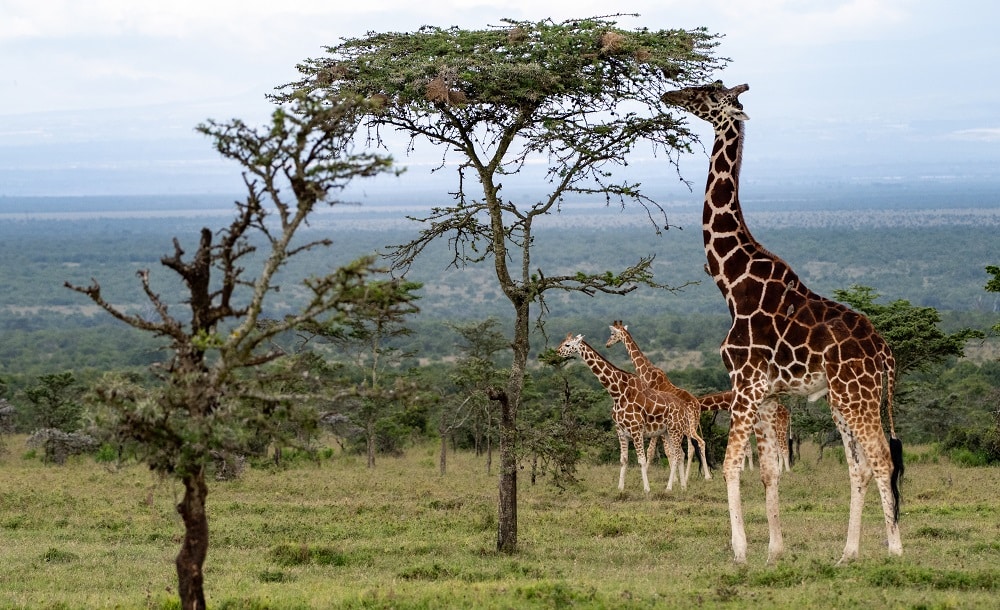
In a single Kenya trip, you can observe and photograph as many as 45 different species of mammals and over 100 different kinds of birds. Among these, some standouts are three type of giraffes (Rothchilds, plains and reticulated giraffes), two species of zebras (Burchells and Grevy’s zebra), two different ostriches (common and Somali ostriches) and both white and black rhinos with their horns intact. Even if you spend just a week in Kenya, you’ll also see at least two, likely three different big cats – lions, cheetahs and leopards. Plus several other predators including spotted hyenas, black-backed jackals, and with a bit of good fortune, a sighting of bat-eared foxes, servals or caracals.  

Kenya’s mammals and birds are generally easy to see, often present in large numbers in open terrain such as the grassy plains of the Masai Mara. Where it is not unusual to see as many as six or seven different large mammals all at the same time. 

I personally look forward to every return trip to Kenya knowing that so much of what I will be seeing and experiencing will be new and exciting. Every time. It’s a slightly different recipe, but still your favorite dish. Your most beloved opera with a particularly callous Pinkerton. All the same glorious notes and melodies but fresh like newborn gazelles finding their feet. 

Is there a best and definitive cheetah sighting? Can you ever see enough giraffes in one tower? Is one super tusker very much like another one? No, no and no. There’s no magic potion for reverse aging but seeing Origins Safaris’ Lydia Mwangi’s big, warm smile upon exiting Nairobi Airport after a long transatlantic flight makes me feel a lot younger every time. Which is why Kathy and I will be returning to Kenya again – soon. And why I think everyone should consider traveling there.

The people and an efficient tourism infrastructure 

In a world where crossing international borders has become more than just a nuisance factor, Kenya is the ‘easy button’ option for a safari. You arrive on one international flight on day 1 and leave on another one on day 12 or whatever. Visiting three very different areas, north and south of the equator, all without having to take even one additional commercial flight with all its attendant irritations and inconveniences.

A well functioning tourism infrastructure may not be the sexiest reason to pick one safari destination over another but it may be the savviest. Losing hours and even days because of delayed or cancelled flights or having to spend hours on horrendously bad roads is not a feature of Kenyan safaris. Where it makes sense to drive (on transfers of not more than three hours or so) there are serviceable main asphalt roads. Where it doesn’t –  you fly. Safely and at a reasonable cost with first class charter operators like Safarilink.

In the 2025 Conde Nast Traveller Readers’ Choice Awards, Kenya was named the world’s friendliest country, scoring an impressive 98%. Voters highlighted Kenyan safari guides’ warmth, its welcoming culture and all-round hospitality. The poll confirmed what we’ve known all along. From the cabin crew on Kenya Airways to the chef at your safari camp, Kenyans positively, actively want you to have a great time in their country. Learn a few words and phrases of Swahili (start by rewatching the Lion King) and you will be making lifelong friends.

The equator 

Because of its  proximity to the equator, there’s not much difference in the duration of summer versus winter days in Kenya. Their longest summer day is only 9 minutes longer than their shortest winter day. Which results in no great swings between summer and winter temperatures. Also, many of the safari areas such as the Masai Mara, the Mt. Kenya area, the Aberdares and Laikipia/Lewa are at generally higher elevation with a reliable cooling effect. So it comes as no surprise that over the course of many trips to Kenya, we’ve rarely experienced any dreadfully hot or exceedingly cold days. Which makes it a  true year-round destination – outside of maybe a couple of months during the ‘long rains’ in March and April.  Just don’t be looking forward to even one long summer night on your Kenya trip. It’s not going to happen. It’s dark right around 7 pm – every day of the year. And it takes barely 25 minutes to go from broad daylight to dark night. 

In sharp contrast, Southern Africa’s higher latitude leads to distinct seasonal shifts. With extremely cold winters and scorching summers. Spend a few days in Zambia’s South Luangwa National Park in late October and you’ll know exactly what I’m talking about.  

Even so, Kenyan safari areas to the north or ‘above’ the equator, and in lower lying areas such as Tsavo East can be harsh, hot and dry at certain times of the year. Paradoxically, for photographers and visitors in general, this just adds to the appeal of the country. The invisible equatorial line creates a north and a south which can hardly be more different. North of the equator areas such as Samburu feature arid, rugged landscapes where several special endemic mammals such as  the reticulated giraffe and Grevy’s zebra can be observed, together with other arid-area specialties such as the peculiar gerenuk and the ubiquitous Kirk’s dikdik.  

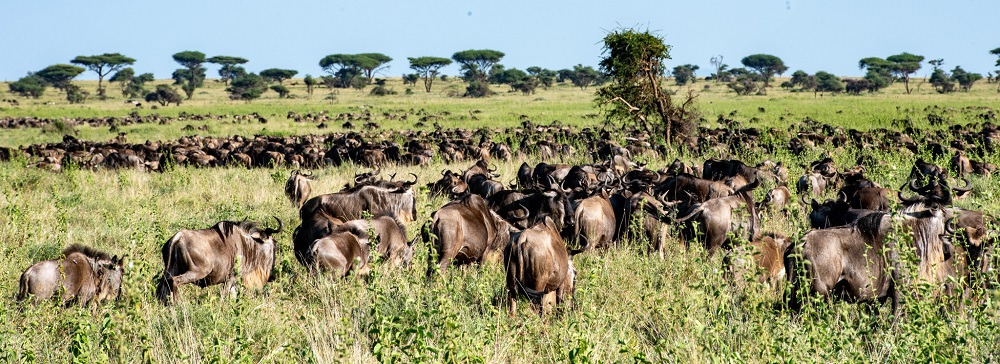
By contrast, the predator-rich Masai Mara south of the equator offers iconic, vast grasslands which are  seasonally overrun by massive herds of wildebeest and zebra. The Great Migration. Sitting at the northern edge of the Serengeti plains, the Mara offers consistently good viewing of lions, leopards, and cheetahs. One of the reasons why we almost always schedule guests’ last few days on safari in the Mara. 
The wildebeest and zebra migration

Any seasoned East Africa tour operator or advisor knows better than to promise guests a migration experience. Even with the best laid plans the migration is a natural phenomenon which is largely weather-driven and as a result devilishly difficult to predict. In broad strokes we all know where the migration is likely to be at any specific time of the year but there’s just too many factors which can and does throw it off by weeks, or stop it in its tracks.   

When fortune smiles on you and you find yourself witnessing thousands of wildebeest and zebras spread out around you in a 360-degree arc, it can be magical. Even more so when you’re witnessing hundreds or even thousands of them plunging into a swollen river, risking life and limb just to get to the other side.  

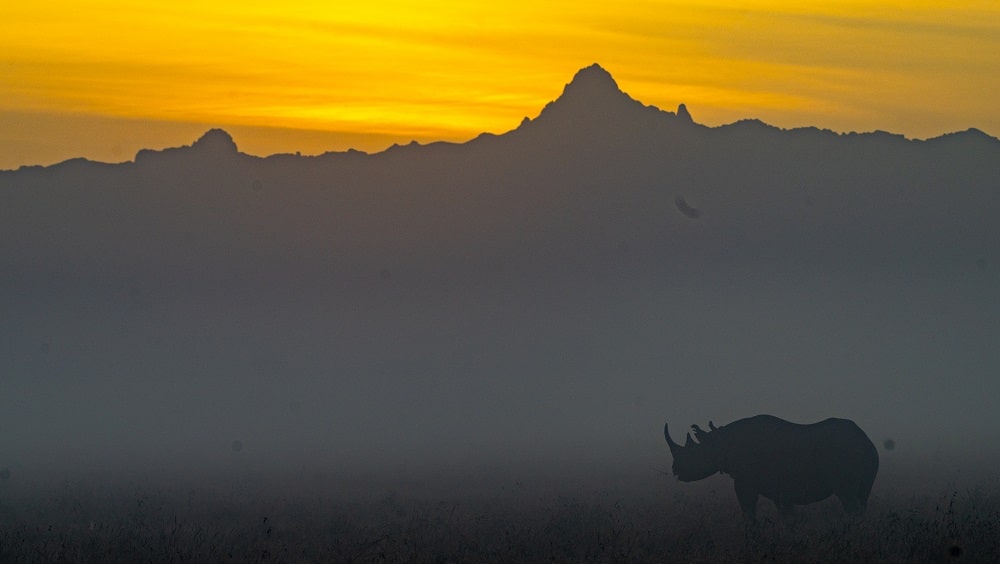
As magical as the July–October migration can be, we’ve taken some of our best photographs around the time of the short rains in November. The Mara becomes green, textured, and alive and mornings can bring the most exquisite of photographic opportunities such as a rhino or a journey of giraffes emerging from a dense fog bank. From January through March, it’s the calving season – yet another gift for photographers.  

Jason and Katie are  just back from a long Kenya trip so send Jason an email at jason@fisheaglesafaris.com for fresh news and updates about conditions there, and for assistance planning your next trip there or elsewhere in East Africa.  

YOU MIGHT ALSO BE INTERESTED IN
Destinations
Zambia

10th September 2021

Chindeni and the Bushcamp Company, Zambia

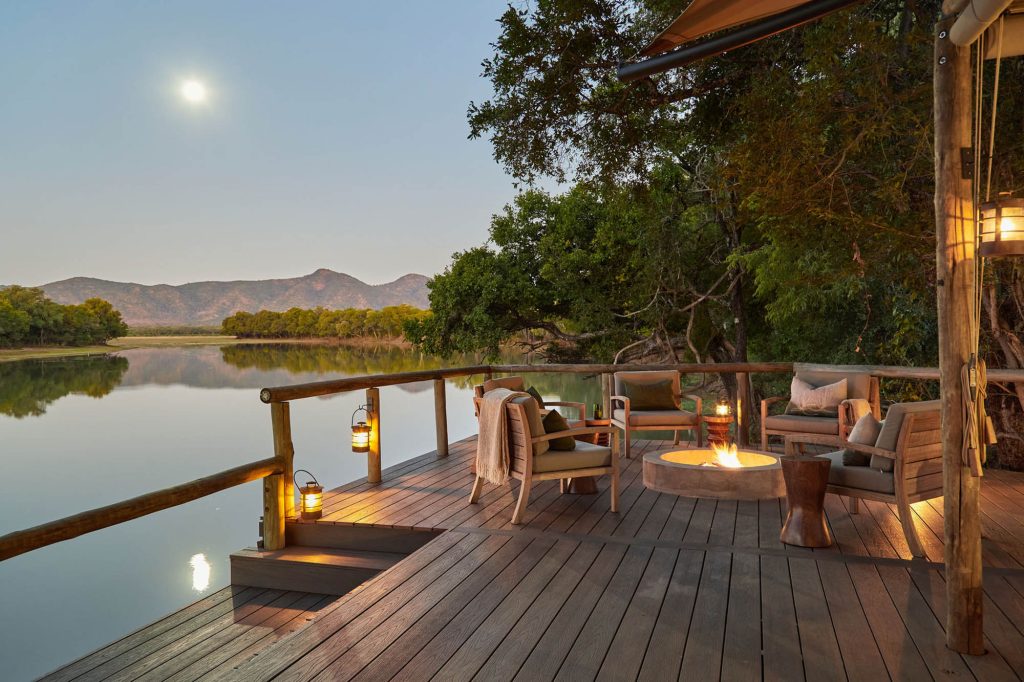
By late July we found ourselves at Chindeni, a small Bushcamp Company property
Read more
Botswana
Destinations
Okavango Delta

3rd October 2022

Camp Okavango, Botswana

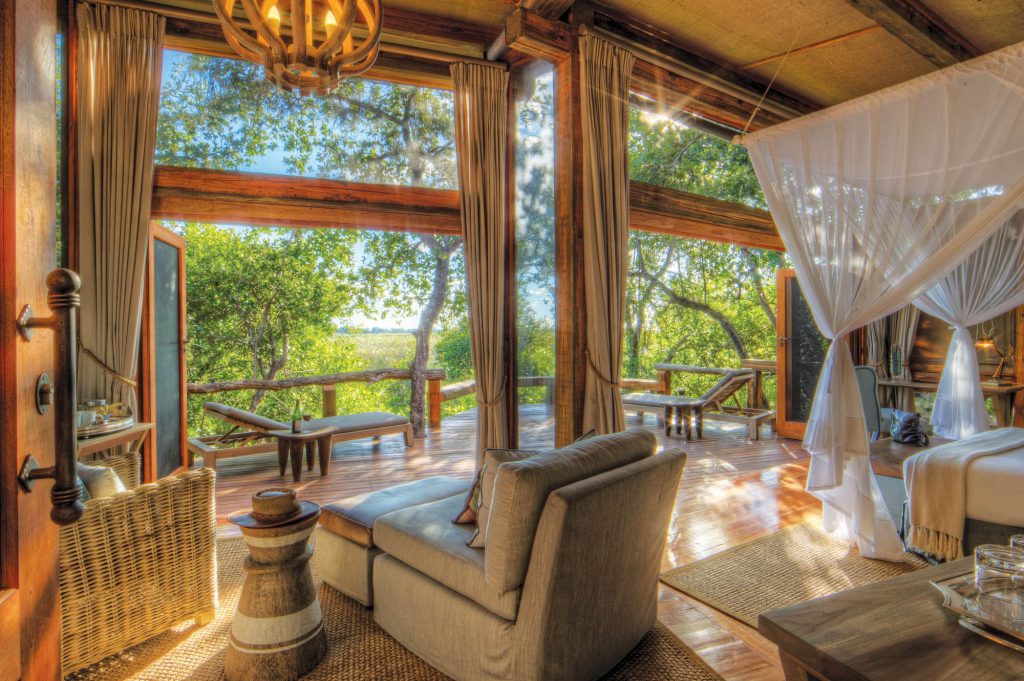
Camp Okavango is in the heart of the permanent part of the Delta. In this idyllic setting there are no vehicles, and it is just a short walk
Read more
Area
Destinations
Nyerere National Park
Ruaha
Tanzania

14th October 2023

From My Safari Notebook: Wildlife Photography

Birds in flight and wildlife photographers have an uneasy relationship. Things go wrong as often as they go right. Getting focus-lock on a moving subject

Read more

SUBSCRIBE TO OUR NEWSLETTER

READERS FAVOURITES
Destinations
India

27th May 2023

India

India’s tiger, mammals and birds.

Read more
Botswana
Destinations

4th August 2022

On Safari At Belmond Eagle Island Lodge, Okavango Delta

What is the ‘secret sauce’ for an unforgettable few days on safari in Botswana? It starts with the animals, of course. The elephants, lions, giraffes, hippos

Read more
Destinations
Zambia

10th September 2021

Chindeni and the Bushcamp Company, Zambia

By late July we found ourselves at Chindeni, a small Bushcamp Company property

Read more

The Leopards of Laikipia Wilderness

18th September 2025

The Leopards of Laikipia Wilderness

Hardly ten days after it happened, I am still trying to process the experience of seeing a rare black leopard – Giza – practically launch itself across a small dirt track in a private conservancy in north-central Kenya, straight at a hapless Gunther’s dikdik, then moments afterwards lifting up its head with the tiny antelope hanging from its jaws, lifeless. It’s rare to see a leopard kill, let alone a black leopard kill.    

This event took place in near total darkness, dimly illuminated only by the light of the moon (a day away from being full) and red-filtered spotlights trained on it by the specialist guides from Laikipia Wilderness Camp, where Kathy and I spent a couple of nights in early September.  

Even more remarkable was that we had seen Giza the previous night as well. As we were to learn during the course of our visit, Giza enters the Laikipia Wilderness conservancy most evenings after dark, to hunt (mostly dikdiks of which there are seemingly thousands in the area, but also impala), and if successful she takes the carcass into the adjacent Mpala ranch where she currently has two cubs secured in a rocky outcrop.  

For those of you considering visiting this camp in Laikipia in search of a black leopard, my best advice would be to plan on spending at least four or five nights – even a week. The black leopard situation is fluid at all times and may change literally overnight. To improve your chances, you can pay extra for a Black Leopard Private Vehicle or Black Leopard Shared Vehicle so that you will be given a priority slot at a black leopard sighting. To be sure, none of this guarantees a black leopard sighting as Giza is a wild animal.  

What guests at Laikipia Wilderness can look forward to with more certainty than seeing Giza hunting dikdiks, is a comfortable stay in a cozy tented camp and superb hospitality from a team of young managers and hosts, as well as a squad of talented chefs. The food was exceptionally good and the desserts absolutely impossible to turn down. Lunch on day one set the scene: choice of a vegetarian or chicken roll with a beetroot and grapefruit salad as well as a tomato, olive, onion and feta cheese salad. With focaccia bread on the side. Dinner was delicious with a perfectly cooked fillet of beef with peppercorn sauce, Yorkshire pudding, mashed potato, green beans and sautéed cauliflower. The vegetarian option was a mushroom Wellington. Dessert was the chef’s take on a South African classic – malva pudding. 

On our recent visit we had the best time ever with camp managers Louis and Sophie and hosts Amelia and Duke. Our guiding team of Patrick and Stephen were enthusiastic, didn’t miss a thing (we were the only vehicle with an unobstructed view of the black leopard kill) and they quickly picked up on our birding interest, helping us to rack up some 50 or so species without really going out of our way.  

First impressions of the camp were favorable: there was a good staff dynamic, the property had a real ‘home away from home’ feel with several friendly (albeit a bit dusty) dogs around. There is a spacious elevated lounge and dining area with a large verandah. Be sure to plan some time just sitting there – maybe with a cup of tea or something – looking out over the rugged Laikipia landscape. We often had elephants visible in the far background.  

The tents (there are 7) are fairly basic but quite comfortable with a good sized (brick enclosed) bathroom with a shower and flush toilet. The double bed had soft cushions and there is a small covered patio with two comfortable wicker chairs. 

Clearly Laikipia Wilderness comes into its own with the activities. Our very first afternoon game drive set the scene. It was nothing short of phenomenal with sightings of a striped hyena, shortly followed by an extraordinary sighting of three leopards (two of which were a mating pair). More than once the two adult leopards were less than ten feet from us. Even while mating.  

Our afternoon drive morphed into a night drive. Minutes after spotting a common genet we experienced the ultimate sighting of our entire trip: Giza, the black leopard referred to earlier. On the first night we observed her hunting, rapidly slinking through the grass, stopping briefly once or twice to smell something.  

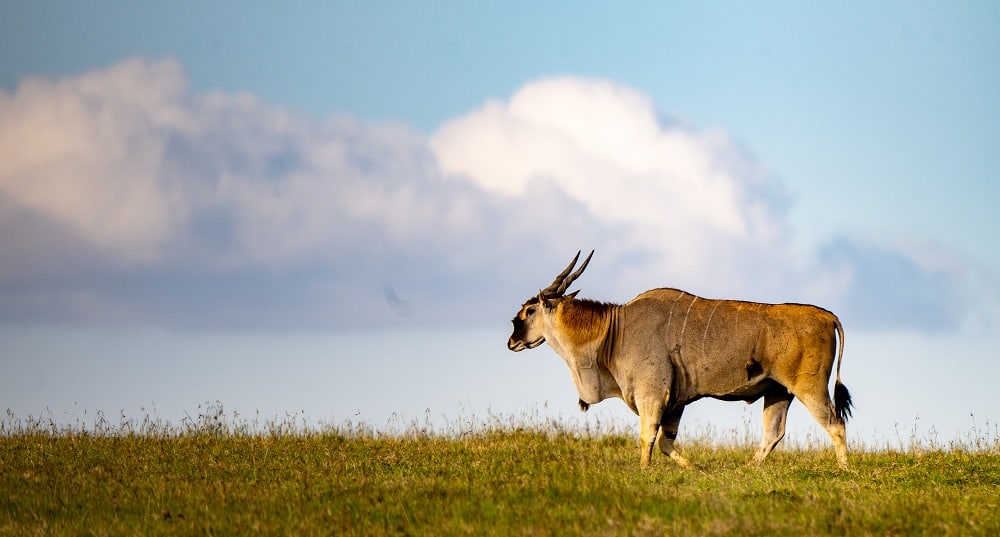
General wildlife viewing in the conservancy was pretty good too with exceptionally good numbers of elephants around, lots of Burchell’s and a few Grevy’s zebra, plenty of reticulated giraffe, some Cape buffalo, impala, Beisa oryx, eland, spotted hyena and jackal. On our very last drive on the morning of our departure back to the USA, we came across two young leopard cubs tussling over the remains of a carcass. Our guides were as excited as we were to observe the two youngsters as it was the first time that they had seen them too! The guides were aware of the young leopards’ presence, but this was the first ‘public’ viewing. It augurs well for the future of the conservancy. There’s a new generation of leopards in the process of being habituated so future guests can enjoy the same sense of awe and appreciation which we experienced at Laikipia Wilderness during our stay. I think it was most fitting that the last few photos on my card were of leopards; they are clearly at the heart of the Laikipia Wilderness experience.

About photographing Giza: I’ve always known that night photography is not my forte and this visit reconfirmed it. Despite giving it considerable effort, I came up with exactly zero good or even decent photographs. A moving pitch black object in a mostly dark environment is a wildlife photographer’s nightmare. Next time, I will take a different camera and a shorter, faster lens.  

For information on how to best include a few days at Laikipia Wilderness on your next – or first – Kenya trip, call us at 1-800-513-5222 or email Bert at bert@fisheaglesafaris.com.

Header photo courtesy Laikipia Wilderness Camp

YOU MIGHT ALSO BE INTERESTED IN

Destinations
Zambia

10th September 2021

Chindeni and the Bushcamp Company, Zambia

By late July we found ourselves at Chindeni, a small Bushcamp Company property

Read more
Botswana
Destinations
Okavango Delta

3rd October 2022

Camp Okavango, Botswana

Camp Okavango is in the heart of the permanent part of the Delta. In this idyllic setting there are no vehicles, and it is just a short walk

Read more
Area
Destinations
Nyerere National Park
Ruaha
Tanzania

14th October 2023

From My Safari Notebook: Wildlife Photography

Birds in flight and wildlife photographers have an uneasy relationship. Things go wrong as often as they go right. Getting focus-lock on a moving subject

Read more

SUBSCRIBE TO OUR NEWSLETTER

READERS FAVOURITES
Destinations
India

27th May 2023

India

India’s tiger, mammals and birds.

Read more
Botswana
Destinations

4th August 2022

On Safari At Belmond Eagle Island Lodge, Okavango Delta

What is the ‘secret sauce’ for an unforgettable few days on safari in Botswana? It starts with the animals, of course. The elephants, lions, giraffes, hippos

Read more
Destinations
Zambia

10th September 2021

Chindeni and the Bushcamp Company, Zambia

By late July we found ourselves at Chindeni, a small Bushcamp Company property

Read more

Kenya’s Laikipia Plateau: Ol Pejeta Private Conservancy

21st February 2025

Kenya’s Laikipia Plateau: Ol Pejeta Private Conservancy

Ol Pejeta is a Masai phrase which means ‘the place of burning,’ likely hearkening back to a time when pastoralist communities eradicated ticks by burning the grassy plains which dominate the area. During the course of a few days spent at four different safari camps in the Old Pejeta Conservancy in Kenya’s north-central Laikipia region, we fortunately experienced neither ticks nor fires. Rather, the visit highlighted a few key differences between Southern and East Africa and Botswana and Kenya in particular. 

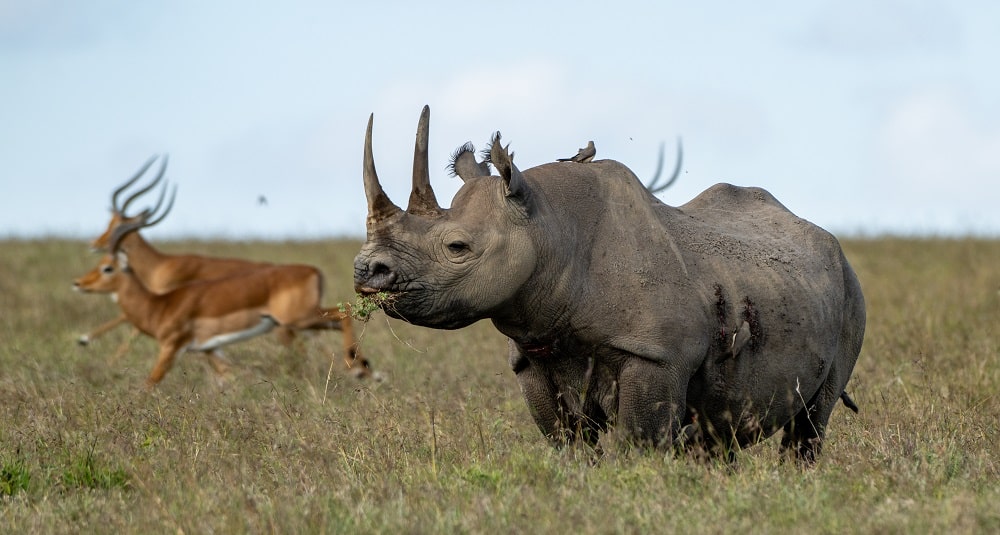
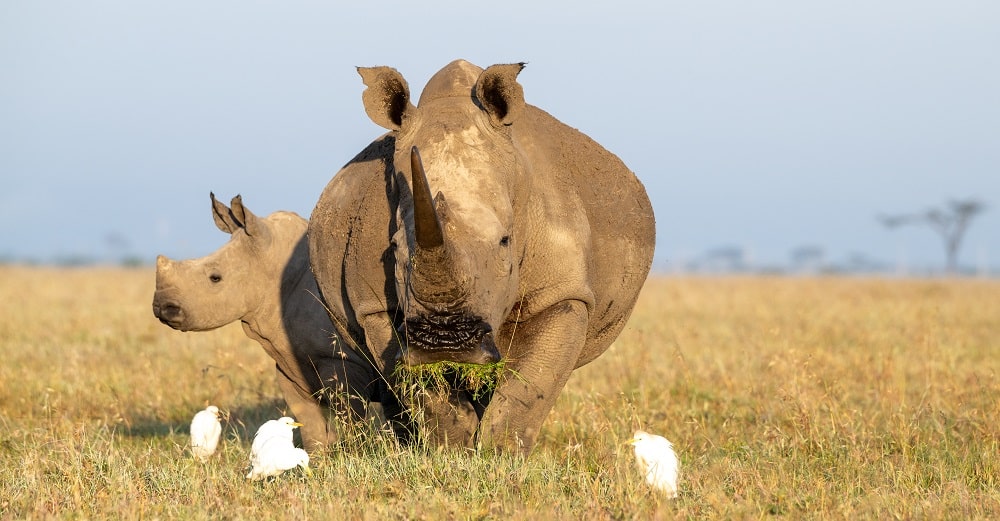
For one thing, we started seeing rhinos, both black and white, right away. They are common, if not downright abundant, in several of Kenya’s private conservancies including Ol Pejeta and  Lewa-Borana. Elsewhere in Kenya, rhinos can also be seen in Loisaba Conservancy, in Meru National Park and Nairobi National Park, and there is a significant black rhino presence in the Ngulia Rhino Sanctuary within Tsavo West National Park. 

Unlike many of the game reserves in Southern Africa, the rhinos of Ol Pejeta, Lewa and other parts of  Kenya are not dehorned so you will see them running around with their completely intact, beautiful horns – ready to defend themselves when necessary. In most of the private conservancies in Kenya it is not unusual to see from five to seven or eight mammals at the same time. On more than one occasion we had rhino, buffalo, giraffe, gazelle, zebras and jackals in the same field of view. 

Just like the private concessions in Botswana, the Kenya conservancies offer a more exclusive safari experience as access is restricted and a wide range of activities are available including night drives, walking safaris and off-road driving. Where they  differ is the degree of community involvement. The Kenya conservancies operate as integrated conservation entities, managing a healthy habitat for wildlife and livestock. They work closely with surrounding communities in a manner which blends commercial income from tourism as well as agriculture.  

Another notable difference: on safari in Botswana it is often downright impossible to see signs of civilization as we know it anywhere in the private concessions in northern Botswana. No power lines, no fences, no water towers, towns or even villages. Not so in Kenya. Some of the private conservancies border on national parks while others are enclaves within populated areas. Take a few photos at Lewa or Ol Pejeta and invariably, there will be structures in the background. In essence, there is no difference in the safari experience whether you’re 5 miles or 50 miles from the nearest power line, but ‘civilization’ is all too visible in the East African conservancies.

It is of course part of the conservation model: a cooperative effort involving local communities to preserve suitable habitat for wildlife. To be successful, all the partners have to be winners. Which means there will be some agriculture going on, visible to the human eye mostly in the way of cattle herds or sometimes flocks of  sheep or goats. Beyond serving as the living livestock ‘banks’ for the local people (whose wealth is largely measured by livestock ownership) these animals contribute to the health of the habitat by keeping the grass short where and when needed and by supplying free natural fertilizer. Livestock – notably cattle- also provide an additional revenue stream for the conservancy.

One other thing about Ol Pejeta that is practically impossible to miss is the looming presence of Mt. Kenya, Kenya’s highest mountain peak, often clearly visible to the south. Sometimes shrouded in mist, sometimes not, Mt Kenya is always there like a watching sentinel, a visible reminder of the landscape diversity which Kenya is fortunate to have. Over the course of four days in Ol Pejeta we had some great views of the mountain, with the single most memorable moment being observing some zebras in the foreground, with a misty mountain behind. My photography skills for once didn’t measure up to the challenge – silhouettes are always tricky!

Ol Pejeta Bush Camp

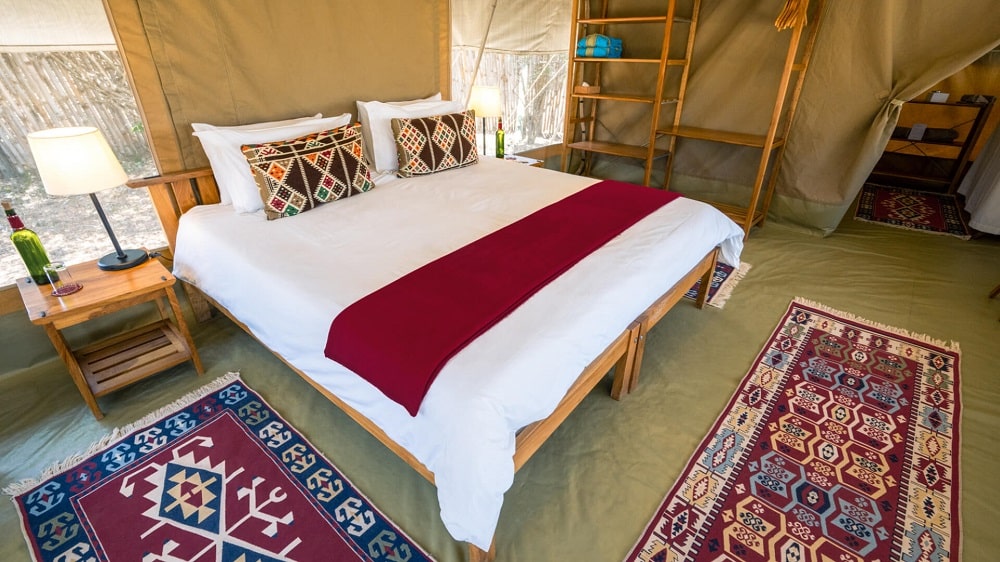
Our first stop in the conservancy, Ol Pejeta Bush Camp, felt comfortable and warm from the word go. Sitting out on the verandah overlooking the Ewaso Nyiro River while being given the usual arrival briefing, a good sized herd of elephants was grazing right on the opposite bank of the river. Later on, we saw several buffalos and hippos from the same spot, and other guests mentioned a leopard which was seen walking there. The delicious al fresco lunch on arrival set the tone for the quality of the meals. We also liked our tented room – one of only eight in this small, solar-powered camp.  

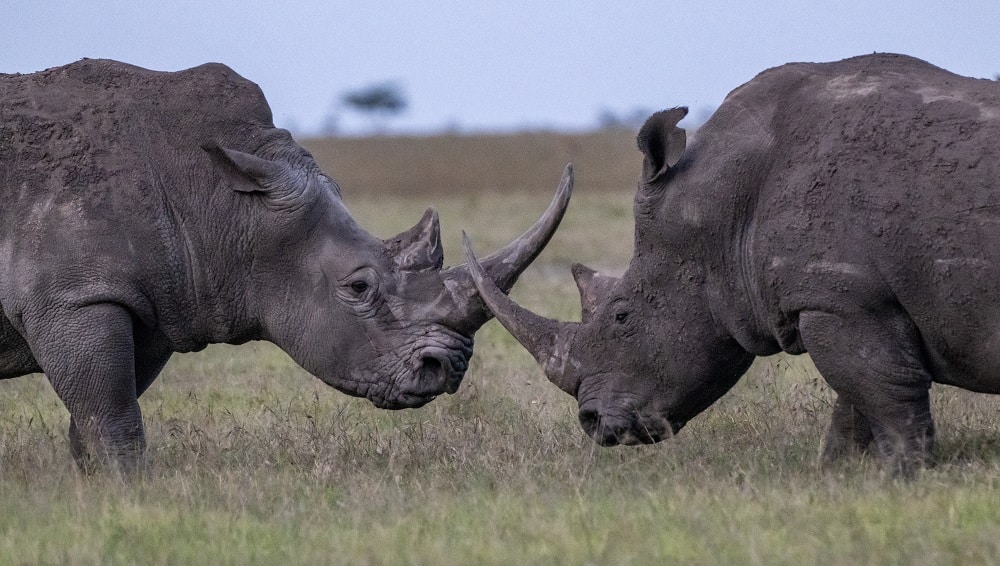
On our very first game drive in Ol Pejeta we encountered a remarkable number of rhinos including several black rhinos and one group of four white rhinos. It was no different the following morning and, without having to try too hard, I captured some of my best photos of both black and white rhinos in at least a decade. Over sundowners that afternoon a large male white rhinoceros appeared on the scene while we were watching four white rhinos grazing. The new arrival became agitated and ended up in an altercation with the largest individual in the group of four. As the light slowly faded, the two rhinos were still in a standoff, head to head, their massive horns just inches away from each other.

Kicheche Laikipia

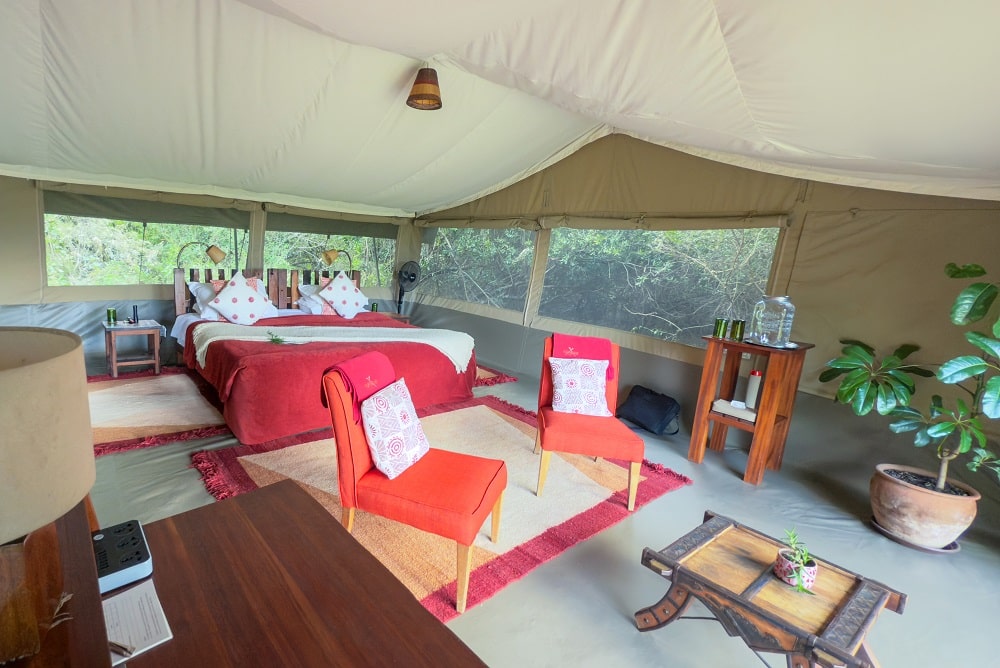
What would be better than spending a few days at Kicheche Laikipia camp in Ol Pejeta? Combining it with a few days at a Kicheche property in the Masai Mara to qualify for Kicheche’s ‘stay 6, pay 5 nights’ special offer. Top-notch guiding, excellent all-around hospitality and thoughtfully designed rooms at all of the Kicheche properties make for a fun and absorbing safari experience with lots of animals and few other vehicles to be seen.  

At Kicheche Laikipia we felt at home right away, with every member of the team doing whatever they could to make our short stay special. The attention to detail, the ‘make your own pizza’ lunch, the sense of privacy and exclusivity with just six rooms tucked away into a dense thicket. From the cozy dining tent we observed a good number of animals coming to drink at a pond, a hundred meters or so from camp. Among others we saw eland, buffalo, elephant, many birds, impalas and gazelles – all while enjoying Kicheche’s excellent food. 

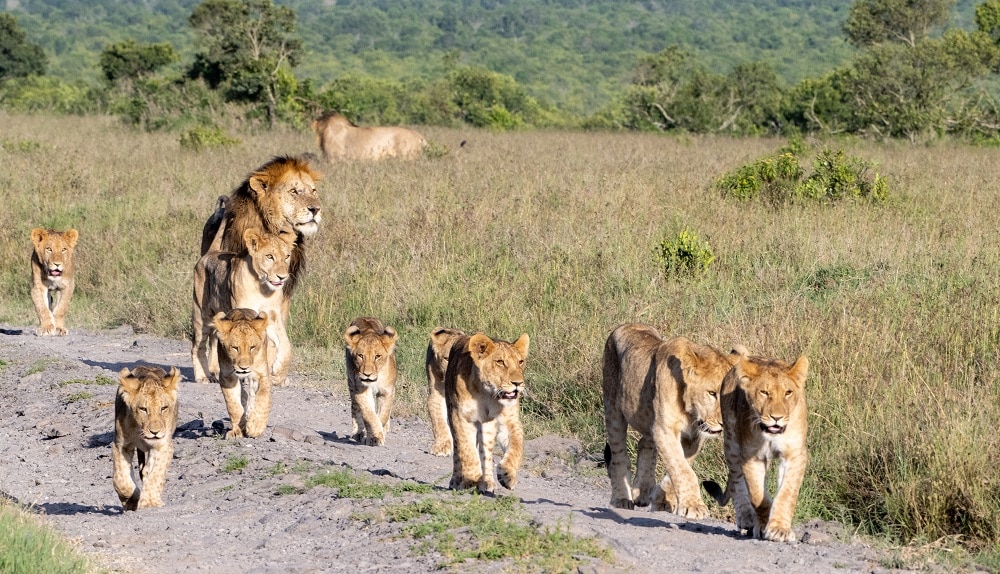
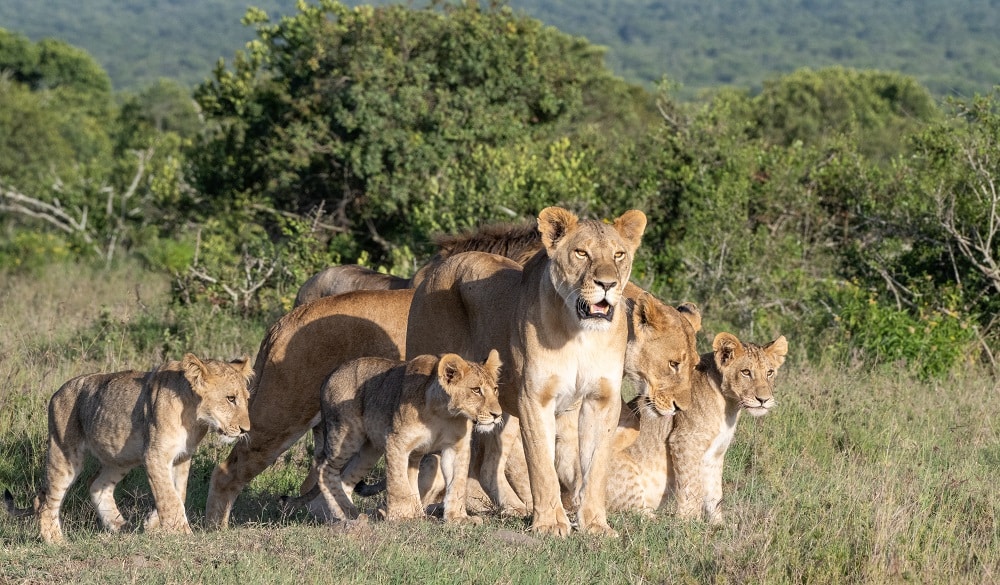
Our afternoon game drive out of Kicheche was another winner with several more excellent rhino sightings and finding a large pride of 26 lions – with lots of cubs of various ages. It was as entertaining and downright spectacular as any experience we’ve ever had with a group of big cats. Observing the youngsters ‘hunting’ each other, recognizing the affable attitude of particularly the adult females towards the young ones, letting the babies crawl all over them. Above all, seeing right there in front of us how cohesive they were as a pride, with muted contact calls and visual contact keeping them all moving as one, apparently all on their way to some predetermined spot. We were not unhappy to see the last couple of tails disappear into a thicket. We enjoyed our views and took our videos and photographs. It was time to let the lions be lions in private.

Sanctuary Tambarare

An extended game drive on our first day at Sanctuary’s Tambarare Camp illustrated just how diverse the Laikipia plateau can be. This beautiful expanse of broad, undulating plains, rolling hills and scattered rocky outcrops offers something new and interesting around every corner. Driving from the open savannah area into a huge whistling acacia thorn tree forest, we suddenly started seeing lots of small groups of the stunning reticulated giraffes. Without doubt my favorite of the giraffe species with their boldly delineated orange-red spots, separated by cream-colored lines.  

Later on during the same drive, we were watching a large pride of lions which had brought down a buffalo the previous night. As the sun was setting, several of them made their way to a watering point, one after the other. Just then, a black rhino started heading for the same trough and it initially made a mock charge towards one of the lions. When a couple of the other lions showed up the rhino figured that discretion was the better part of valor and it disappeared. Our guide didn’t think that the lions would actually have taken a serious interest in the rhino, but it certainly got us to pick up our binoculars.

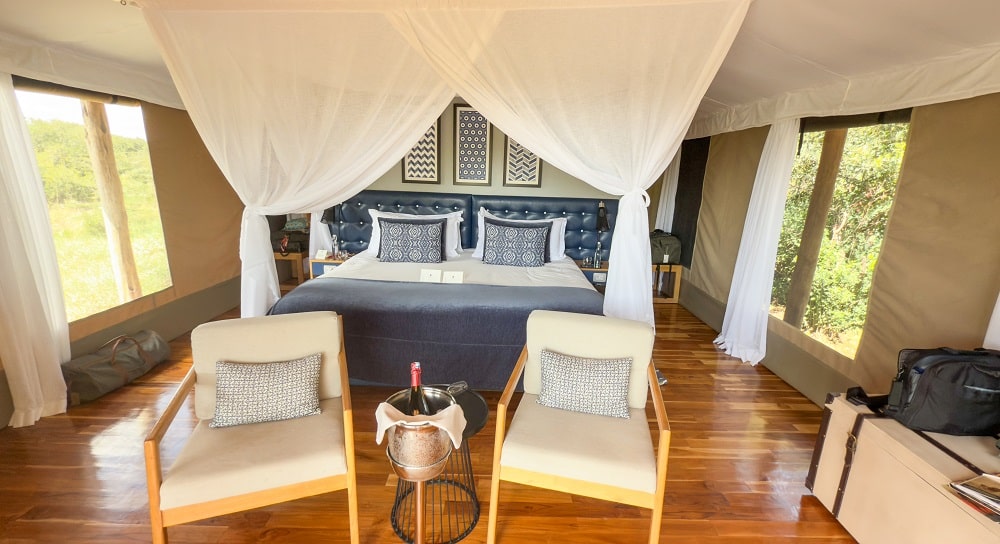
Our tented room at Tambarare was just about perfect. Elegantly appointed with just enough space, it had a separate shower and toilet, his and hers wash basins, ample luggage space, recharging points, and adequate lighting. And lo and behold, there was an electric blanket which we put to good use. The level of food and service at Tambarare was top-notch and we were totally spoiled with the choices and options. A specially prepared dish with ugali and maharagwe (essentially red beans in a coconut-based sauce) was outstanding!  

Being close to the equator, there are no wild swings between summer and winter days and summer and winter weather in much of Kenya. Altitude is generally a more important weather determinant than anything else. Being at an altitude of more than a mile high, Tambarare and for that matter all of Laikipia is always temperate and generally quite nice, with daytime highs around 80F and average lows rarely below 50F. 

Our team at Fish Eagle Safaris have been including a few days in the Laikipia region with several Kenya itineraries lately, with great success. If you’re considering an East Africa or Kenya trip, please reach out to Jason at jason@fisheaglesafaris.com for some suggestions on how – and when – Laikipia might best form a part of your trip. 

YOU MIGHT ALSO BE INTERESTED IN

Destinations
Zambia

10th September 2021

Chindeni and the Bushcamp Company, Zambia

By late July we found ourselves at Chindeni, a small Bushcamp Company property

Read more
Botswana
Destinations
Okavango Delta

3rd October 2022

Camp Okavango, Botswana

Camp Okavango is in the heart of the permanent part of the Delta. In this idyllic setting there are no vehicles, and it is just a short walk

Read more
Area
Destinations
Nyerere National Park
Ruaha
Tanzania

14th October 2023

From My Safari Notebook: Wildlife Photography

Birds in flight and wildlife photographers have an uneasy relationship. Things go wrong as often as they go right. Getting focus-lock on a moving subject

Read more

SUBSCRIBE TO OUR NEWSLETTER

READERS FAVOURITES

Destinations
India

27th May 2023

India

India’s tiger, mammals and birds.

Read more
Botswana
Destinations

4th August 2022

On Safari At Belmond Eagle Island Lodge, Okavango Delta

What is the ‘secret sauce’ for an unforgettable few days on safari in Botswana? It starts with the animals, of course. The elephants, lions, giraffes, hippos

Read more
Destinations
Zambia

10th September 2021

Chindeni and the Bushcamp Company, Zambia

By late July we found ourselves at Chindeni, a small Bushcamp Company property

Read more

Footer

Design

  • About
  • Destinations
  • Blogs
  • FAQS
  • Team
  • Contact
All Rights Reserved ©Fish Eagle Safaris 2022 | Terms & Conditions | Privacy Policy
Designed & Developed by B Online

SUBSCRIBE TO OUR NEWSLETTER

SIGN-UP TO OUR NEWSLETTER

Subscribe Form

Footer Widget Header

Related Blogs