A Return to Samara Karoo

A Return to Samara Karoo
A few of my Samara Karoo photos from our second (June 2026) visit to the stunning Karoo Lodge looked like they were taken on Maui. The area had experienced abundant rainfall over the last several months which turned the ordinarily sparsely vegetated semi-desert area into a lush paradise, particularly along the rivers and streams. Even the shallowest of depressions turned into mini-lakes.
What really set the photos apart though, was the backdrop. The beautiful Camdeboo Mountains of the Great Karoo. Almost immediately I started seeing mammals with mountains in the background. Great big beautiful blue painting-worthy mountains just sitting there. There’s not more than a handful of other safari locations anywhere in Africa where photos and videos like these can be taken. Elephants, giraffes, oryx, waterbuck and – wait for it – cheetahs with mountains behind. Next time – lions.


Cheetahs on foot
The signature Samara Karoo experience is seeing cheetahs on foot. On our first visit in 2024 we ran out the clock looking for them, the issues being too little time (a 2-night visit) and a particularly windy day which resulted in the cheetahs seeking cover in the hills. The second time was the charm. It took a couple of hours but our capable team of Mzi (naturalist guide) and Michael (tracker) located a female cheetah with six cubs along the far eastern edge of the reserve.
Alighting from the Land Cruiser, we approached the cats on foot, quietly and slowly so as to not alarm or disturb them. The sun was already high in the sky so the light was quite harsh. Even so I managed a few captures of the mother and one or two of the 7-month old youngsters.
Being on foot quite close to them was a novel experience. Cheetahs are pretty special cats to see under any circumstances and to be able to approach them like this was next level. Getting right down in the damp Karoo vegetation, I had several furry faces casually looking in my direction at their eye level. Mostly, to be sure, they ignored the camera and focused on being cheetahs in the Karoo. The activity is done in a circumspect manner so as not to alarm or displace them.

Picnic on the Kondoa Plateau
From the cheetahs on the Camdeboo plains we drove right up into the slopes of Kondoa Mountain along a gravelly, at times bumpy, track taking us about 2,000 feet up into a quite different habitat: montane grassland. Sometimes referred to as the Samara Mara, the Kondoa Plateau is a haven for animals such as the Cape mountain zebra, black wildebeest, eland, springbok and gemsbok. On a previous trip up to the same spot, we came upon a fresh lion kill (an eland) just off the mountain track. Not so this time, but we had several good sightings of the very special mountain zebras and black wildebeest.
Unbeknownst to us a culinary team from Samara had set up an elaborate al fresco lunch for us and all the other Samara guests, complete with tables and chairs, umbrellas, a wash-up station and a small bush loo. What they didn’t have to set up or bring from camp was the view. It was there and waiting in every direction. The most stupendous views one could ever hope to see, over the Camdeboo valley to the left and Honey Mountain in the far distance. The food was pretty good too: beef kabobs, curried chicken sandwiches, mini quiches, apple crumble mousse and a mixed green salad.


Walking with giraffes – and more cheetah photos
Back on the plains we bumped into a journey of nine giraffes. I was on a quest to get a few more Samara mammal images with mountains in the background and this looked like a good opportunity. To get the right angle, I asked Mzi to stop the vehicle and I hopped off, walking some 50 meters or so to the left of the track. The moment we got out of the vehicle, every single one of the giraffes stopped and turned their heads in our direction. I was quietly hoping that they would move closer together which they promptly did. In the end I managed a few good exposures with more than just one long neck in the frame. And, as importantly, with mountains in the background!
After promptly dealing with a flat tire, we made our way back to where we’d last seen the family of cheetahs. This time around the late afternoon light was ideal. Spending almost an entire hour observing them with nobody else around was one of the highlights of our stay at Samara. While the cheetahs were not particularly active or highly mobile there were plenty of photo opportunities. As close as we were to them, we were able to truly appreciate the close bond between siblings and collectively with their mother. They were purring and snuggling up to each other and the strength of the familial bond was quite apparent.

Lions in every direction
No African safari is truly complete without a lion sighting. On our second full day at Samara we were all geared up for a walking safari when two male lions caught our attention. They made it quite impossible for us to ignore them with a ‘competitive roaring’ display like none we’ve ever heard before. First the dominant black-maned Kalahari lion – which had the run of the reserve the last few years or so – started roaring not far from camp. This was shortly followed by an equally vociferous roaring display by an interloper, an equally impressive tawny male which had recently expanded his range. The new arrival was now challenging the established male for mating rights with the female lions, creating an ongoing conflict, which is what we inadvertently stumbled into. We promptly pivoted from walking to following roaring lions around. An easy decision. Anticipating a clash, we followed the dominant male as he stalked through the woodland, determinedly marking his territory.
When the dominant male suddenly veered off in a different direction our focus shifted to the intruder. To be sure, this powerful male lion was not acting like an intruder at all. He was lying on a rocky slope in broad daylight, roaring away at the top of his clearly powerful lungs. It was a territorial roaring display for the ages. At one stage he was roaring and continued to do so while lying on his side and rolling over on his back. All of which were signals to his rival that he was not about to back down. The saga continues.

A different group of cheetahs
On our final afternoon game drive at Samara, we came upon a different group of four subadult cheetah siblings. It ended up being an equally good sighting with the four cats moving from our right to our left in beautiful light, and with mountains in the background. Watching them gracefully move through the grass, barely glancing in our direction, was nature at its finest. Eventually they moved right by us toward an old brick structure, a relic from pre-Samara days when the area was a sheep farm. Clambering up the crumbling structure, the cheetahs did what cheetahs do: found a high spot to check for potential prey animals in the distance. It was getting dark so we left them behind and started the trip back to camp. It was the end of a great day on safari.

A fence is not just a fence
Fences have been coming down in wildlife sanctuaries all over Africa and elsewhere for many years now. There is general agreement that wildlife does better and survives better when they can move around freely. When mammals are able to move from one area to another for grazing or browsing, it allows grasses and other vegetation to recover and it prevents long-term damage to the environment which can take decades to recover.
At Samara, internal fences separating former livestock farms were likewise dismantled to allow seamless animal movement. The reserve’s high perimeter game fences – which visitors see when entering and leaving and occasionally during game drives – were erected to prevent human-wildlife conflict on neighboring livestock properties. If Samara’s wild lions or elephants were to make it onto neighboring farms, the consequences could be severe, perhaps even leading to retaliatory killing. In an environment like the Karoo and elsewhere, it makes effective conservation virtually impossible without perimeter separation.

It’s understandable, even predictable, to instinctively dislike high fences in natural landscapes. Superficially, it creates an impression of a private enclosure which runs contrary to the idea of “wild” Africa. However, it is best to think of a fence as a temporary shield. Right now, in many places all over Africa, wildlife surrounded by farms or towns won’t survive without a border to stop poaching and retaliatory killing. These fenced reserves serve as safe refuges where ecosystems recover. The ultimate goal isn’t to lock the animals in forever. Rather, the long-term objective is to secure these pockets today so they can be linked into open corridors later.
In an increasingly fragmented world, these protected, isolated pockets are a vital element in the future of conservation. Samara’s overarching vision is to establish ecological corridors connecting the reserve to three nearby national parks, namely Camdeboo, Mountain Zebra, and Karoo National Park. When this comes to fruition it will form a massive 1.3-million-acre protected area. Sufficient conservation space to restore historical wildlife migrations while allowing sustainable agriculture alongside protected wilderness.

Breakfast with Samara GM Marnus Ochse
Over breakfast on the large covered stoep at Karoo Lodge with Samara’s genial General Manager Marnus Ochse, the discussion ranged from lion dynamics on the reserve (a hot topic during our stay), to Samara’s world class coffee offerings, to brown hyenas and leopards. Being an accomplished amateur photographer himself, Marnus and I had plenty of stories to share. From dropping cameras to getting lions framed with the Camdeboo Mountains in the background.
Marnus also talked about the reserve’s core principles which broadly center around the global “4 C’s” framework (Conservation, Community, Culture and Commerce) and Samara’s partnership with The Long Run. The bottom line: one cannot successfully run a luxury eco-tourism business or protect a landscape without actively integrating and supporting all four.
Marnus was particularly proud of the role of the Samara staff members, describing it as fundamental to its rewilding mission. He considers every team member – from management and guides to kitchen staff – to be equal parts of the mission. As we have noted during conversations with staff members on both our visits, everyone understands why the reserve exists and what it strives to accomplish.

In a previous blog post I wrote in some length about Samara’s history and about the Tompkins family who set this monumental conservation project in motion. Their ambitious aims for restoration of biodiversity in the Great Karoo are now a reality. Several large mammals long absent from the area, some for as many as 180 years, are now back and thriving. Wild lions, elephants, cheetahs and buffaloes once again roaming the Karoo. What’s next? If and when the reserve reaches 100,000 acres (it currently stands at 67,000 acres) one might expect to see a few African painted dogs join the predator mix.
Beyond the wildlife, Samara offers a consistently excellent guest experience all round. From its accommodation options (Karoo Lodge, Plains Camp and the exclusive-use Manor) to food and beverage offerings, activities and amenities. Even more so than during our first visit, the entire experience was flawless with every staff member being warm and approachable and making us feel truly welcome.

Samara is currently offering an attractive long-stay deal (Stay 3 nights, pay for 2) through the end of September 2026, as well as other special offers which include free commercial flights from and back to either Johannesburg or Cape Town, and inclusive of r/t road transfers from Port Elizabeth Airport to the Reserve. For more information about these or for recommendations regarding combining Samara with other South Africa safari properties such as Tswalu Kalahari or one of the Eastern Cape reserves like Kwandwe or Shamwari or Lalibela, contact Bert at bert@fisheaglesafaris.com or leave a message with our answering service at 1-800-513-5222 or 713-467-5222.

Property photo courtesy Samara Karoo
YOU MIGHT ALSO BE INTERESTED IN
10th September 2021
Chindeni and the Bushcamp Company, Zambia
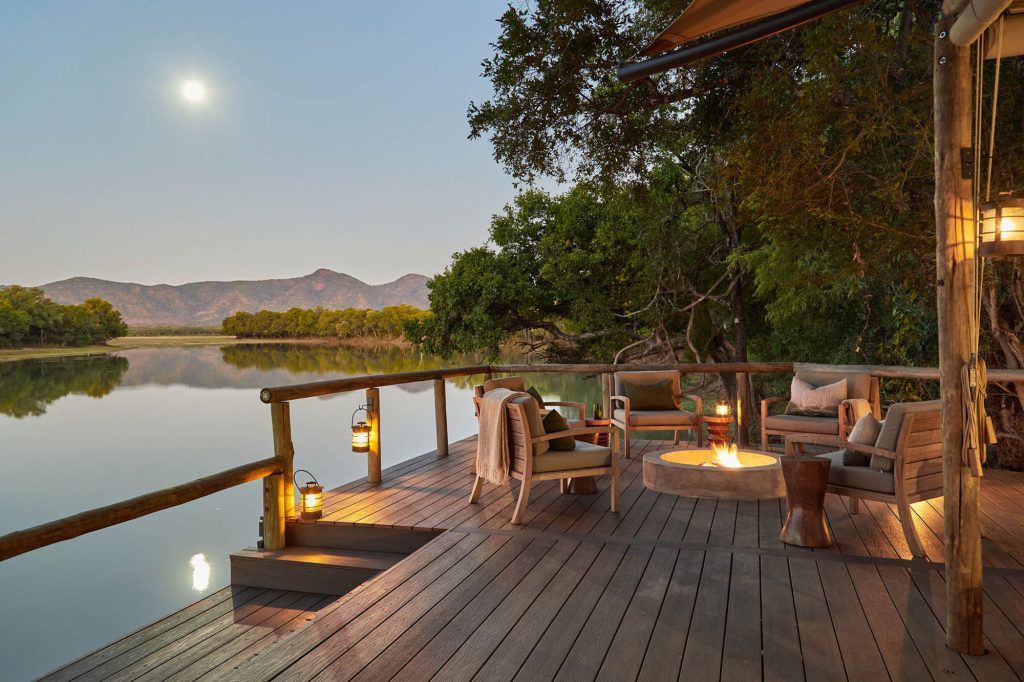
By late July we found ourselves at Chindeni, a small Bushcamp Company property
3rd October 2022
Camp Okavango, Botswana
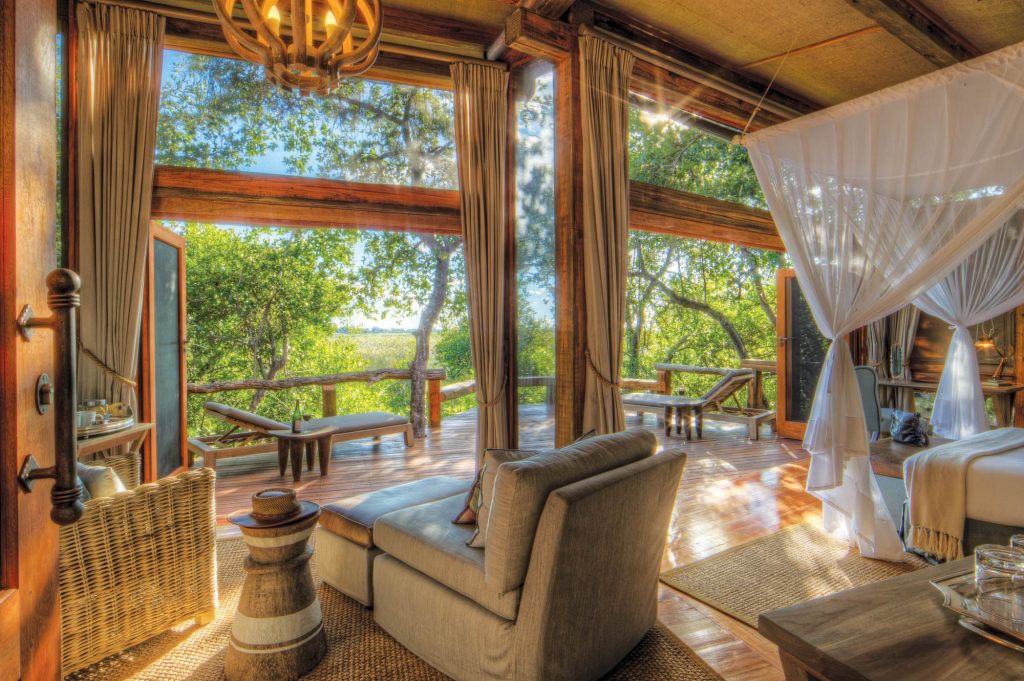
Camp Okavango is in the heart of the permanent part of the Delta. In this idyllic setting there are no vehicles, and it is just a short walk
14th October 2023
From My Safari Notebook: Wildlife Photography
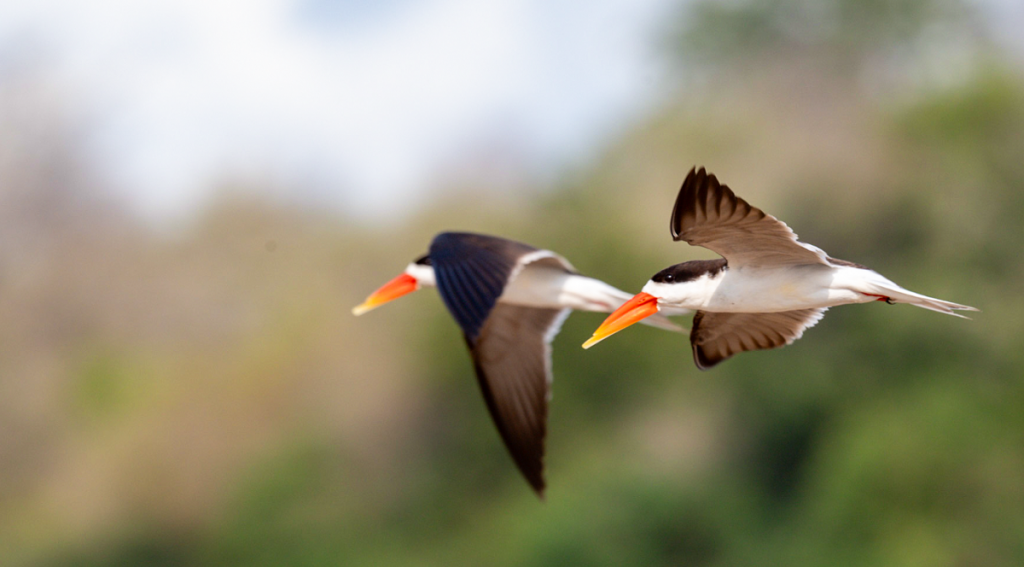
Birds in flight and wildlife photographers have an uneasy relationship. Things go wrong as often as they go right. Getting focus-lock on a moving subject

SUBSCRIBE TO OUR NEWSLETTER
READERS FAVOURITES
4th August 2022
On Safari At Belmond Eagle Island Lodge, Okavango Delta
What is the ‘secret sauce’ for an unforgettable few days on safari in Botswana? It starts with the animals, of course. The elephants, lions, giraffes, hippos
10th September 2021
Chindeni and the Bushcamp Company, Zambia
By late July we found ourselves at Chindeni, a small Bushcamp Company property