The 2025-2026 Safari Landscape
Our recent safari experiences in East and Southern Africa as well as in Madagascar have reinforced some long held beliefs and recommendations which we use as guidelines for designing itineraries.
Spending more time in fewer areas
Above all, we recommend spending more time in fewer areas so as not to rush around exchanging one camp and area for another every couple of days. It is exhausting, expensive, counter-productive and just flat out doesn’t make sense. Our Africa, India and Madagascar destinations lend themselves to ‘slow travel’ in the positive sense of the word, in keeping with the natural, relaxed pace of the wilderness.

Limit cross-border travel
In the same vein, we recommend limiting the number of international border crossings on any trip. They often lead to delays, problems associated with obtaining visas or electronic travel authorization and lost time traveling between countries. In longer itineraries clearly that is unavoidable to a certain extent.
Include a buffer night on arrival
Yet another consideration is building in a buffer day at the start of trips to avoid unwanted repercussions of delays departing from the USA caused by flight schedule changes or flight cancellations. Better to miss a night in Nairobi or Joburg than to show up a day late at your first safari stop. Plus you’ll feel a lot better by day three starting your safari, as you will be at least partially recovered from the effects of skipping over multiple time zones.
Based on our recent trips and personal experiences, here are some thoughts from our team at Fish Eagle Safaris about five of our key destinations. Why we think they are worth visiting, what to expect, and a few insights and recommendations.

Kenya
Kenya has as much diversity as any safari country in Africa with a multitude of habitats, climate zones and vegetation types, resulting in an equally diverse safari experience. Nowhere else are you likely to see as wide a variety of big game and other mammals, birds and reptiles as easily. Much of the terrain is open and easily accessible, so game viewing is generally productive and enjoyable with excellent photo opportunities. Observing and experiencing culture in the way of interacting with people like the Maasai and the Samburu is an integral part of the Kenya experience. Kenya also has some beautiful Indian Ocean beaches so consider spending a few days at a resort like Kinondo Kwetu, Almanara in Diani Beach, or Cardamon House in the Vipingo area, for some rest and relaxation at the end of your safari. While it’s not a traditional beach destination, the town of Lamu and nearby village of Shela have much to offer as well.

Not a year goes by for us without a Kenya trip as we use Nairobi as a stopover en route to South Africa. Here’s what has impressed us most on our last couple of visits:
* One of the best things we ever did in Kenya (twice) was to visit two of the reintegration units where the Sheldrick elephant orphans are released back into the wilderness. First at Ithumba and then Galdessa. Ithumba is the best choice for anyone wanting a complete ‘morning, noon and night’ orphan elephant immersion. Galdessa has an inspired location right on the Galana River, at the base of the Yatta Plateau. Spend a few days there – including a day trip to visit the Voi reintegration unit and interacting with the large group of orphan elephants there – and you may never want to leave.
* We pretty much fell in love with the Peponi Hotel in Shela at first sight. The location, the people, the food! We could have had the stuffed crab every day. Come to think of it, we did… Using the Peponi as a base for a couple of days or so, you can immerse yourself into the Swahili culture and customs, among others, with a cooking lesson in a private home. Take a guided walk in the quaint village of Shela, have some kikoi pants tailored just for you, go on a sundowner dhow cruise, and take a dip in the Indian Ocean. It is the perfect area to kick back a little bit, take in what is happening right around you and soak in the atmosphere of this very different area, a world away from the Mara or Samburu. Relaxing yet fascinating, with some new (and something really, really old) around every corner.


* Many people want to see rhinos on their African safari and understandably so, as these prehistoric-looking behemoths are one of the ‘Big Five’ mammals, and several rhino species – including the African black rhino – are critically endangered. Contrary to the situation in some other African countries – where rhinos are routinely de-horned in order to make them less attractive to poachers – this disfiguring practice is not prevalent in Kenya. You can visit private conservancies like Lewa or Ol Pejeta and observe dozens of black and white rhinos – there’s lots of them – all with their beautiful horns perfectly intact.
* On every visit to Kenya, we discover something new or special; some facet of the wilderness experience which elevates it from interesting to extraordinary. Going off-road in Tsavo East with researchers from the Tsavo Trust, looking for and finding a super tusker elephant (one with more than 100 pounds of ivory on each side) was such an experience. Another was sleeping on a raised platform inside a black rhino sanctuary in Tsavo West and watching their ghostly white shapes – generated by a thermal camera – move into and out of a waterhole at night. Together with several other mammals including elephants and the occasional predator. Witnessing a black leopard kill in Laikipia was our top addition to our personal Kenyan ‘hall of fame’ safari experiences. With more surely to come.

Botswana
Botswana is one of Africa’s top safari destinations because of its combination of great game viewing, beautiful natural surroundings and the presence of the unique Okavango Delta. Many Botswana safari camps operate in private concessions where there are few other vehicles and people around.
In the private concessions off-road driving and night drives are allowed, and the vehicles are open-sided, with good visibility. Botswana is a fully functioning democracy and is considered to be one of the safest countries in all of Africa.

Here’s what we’ve done and experienced in Botswana lately – you may be able to incorporate some of this in your own Botswana trip:
* On a trip this last July, we rediscovered the pure safari experience associated with a mobile tented camp in the heart of the wilderness. Having a huge elephant bull enjoying the vegetation in a small swamp right in front of our camp (albeit at a safe distance) was exhilarating and made us feel just a little bit vulnerable, even though the elephant hardly took notice of our presence. Trying to figure out all the night sounds, wondering about that crunching sound outside the tent (a hippo?) and trying to guess how far the roaring lions were from us (very far) was fun and made it easy to switch off the Kindle. The next morning we checked outside the tent and sure enough, the tell-tale footprints of a hippo confirmed our suspicions.
* It took us too long but we finally made it onto a Chobe River cruise for a peaceful, yet activity-filled three days on the Chobe Princess. While it’s a perfectly fine experience for a couple, the ideal arrangements would be to do the cruise on an exclusive use basis for your own small group of friends or family. We were pleasantly surprised at just how many different animals and birds we saw from the small boats on outings, notably of course elephants and hippos (safely). Enjoying several of the on board meals as we were slowly cruising up the Chobe River, and enjoying some of the most peaceful nights ever in our cozy cabin, were high points too. We’d do it again!

* Our two most recent Botswana trips reminded us just how remote and private the Botswana safari experience can be, particularly inside the private concessions. Sometimes days went by without seeing so much as one or two other vehicles on safari, even when we were on a predator sighting. Community areas like in Khwai do get a little busy – as does Chobe – but hardly ever to the point of distraction. There’s lots of room to drive to a different location.
* While many of the deluxe or premier camps in the Okavango Delta and surrounding areas are eye-wateringly expensive, particularly in the high season (from about June through October), our destination management companies who help us put together itineraries have become quite adept at finding long-stay offers, shoulder and green season rates, camp opening specials, package deal discounts, free flight inclusions and other cost-saving measures. So don’t give up on Botswana because of perceived high prices. There are ways and means – from traveling in off-peak times to including more moderately priced properties and areas (such as Mashatu in southeastern Botswana) – to keep a Botswana trip affordable.

Zimbabwe
Zimbabwe is a first-class safari destination with several prime safari areas, all offering a classic safari experience at a price point which can be as little as half the cost of other comparable safari destinations. The country is particularly well known for its abundance of elephants, with as many as 30,000 to 40,000 in greater Hwange National Park. Zimbabwe is ideal for a single country trip with exceptional diversity including Victoria Falls and several options for safaris, some of which, like Mana Pools, are considered to be among the finest in Africa.
Zimbabwe has some truly remote and lightly traveled areas to be explored such as Gonarezhou National Park, which is as wild as it gets, and the Matobo, which is all about history, culture and spirituality. The views of Victoria Falls from the Zimbabwe side of the Zambezi are simply the best and the area around the Falls offers a growing range of adventure activities including helicopter flights over the falls, white-water rafting, bungee jumping, sundowner cruises and many others.


Keep these camps and places in mind for your own customized Zimbabwe trip:
* Victoria Falls is the ideal gateway to a Zimbabwe (or even a Botswana or Zambia) safari. Spend your first two nights there, enjoy a peaceful sundowner cruise on the Zambezi (complete with hot canapes while you scan for hippos) and take a nice long walk along the edge of the Falls on the Zimbabwe side with a local guide. There’s nowhere better to give your body a bit of time to get over jet lag before you set off on your first game drive.
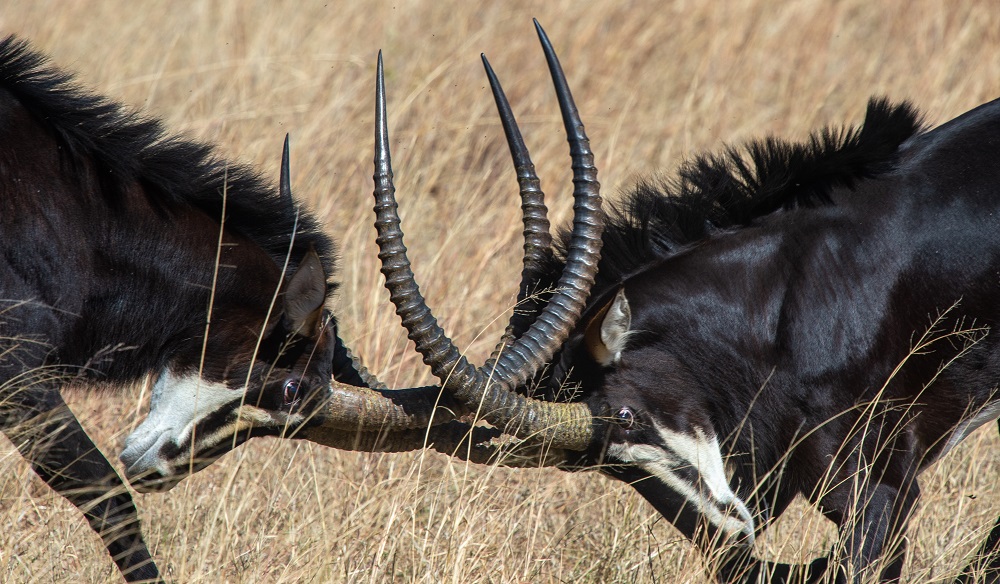
* The grassy pans in the southern part of Hwange National Park – and notably the greater Ngamo area – can be surprisingly good for game viewing in the green or low-demand season. With the onset of the rain in December and January, the fresh emerging grass on the open pans acts like a magnet for the herbivores. It’s not unusual at all to see as many as six species of ungulates at the same time, including wildebeest, giraffe, zebra, impala, roan, sable, eland and buffalo. Predictably this abundance of prey animals leads to increased predator activity with cheetahs and lions – as well as hyenas and leopards in some spots – taking notice. The low-demand season offers the most affordable rates of any time of the year. The sunrises and sunsets are gorgeous and the baby animals outnumber the people and vehicles by a factor of hundreds to one. For the birdwatchers, there are many birds in colorful – even extravagant – breeding plumage and lots of intra-African and Palearctic migrants in place.

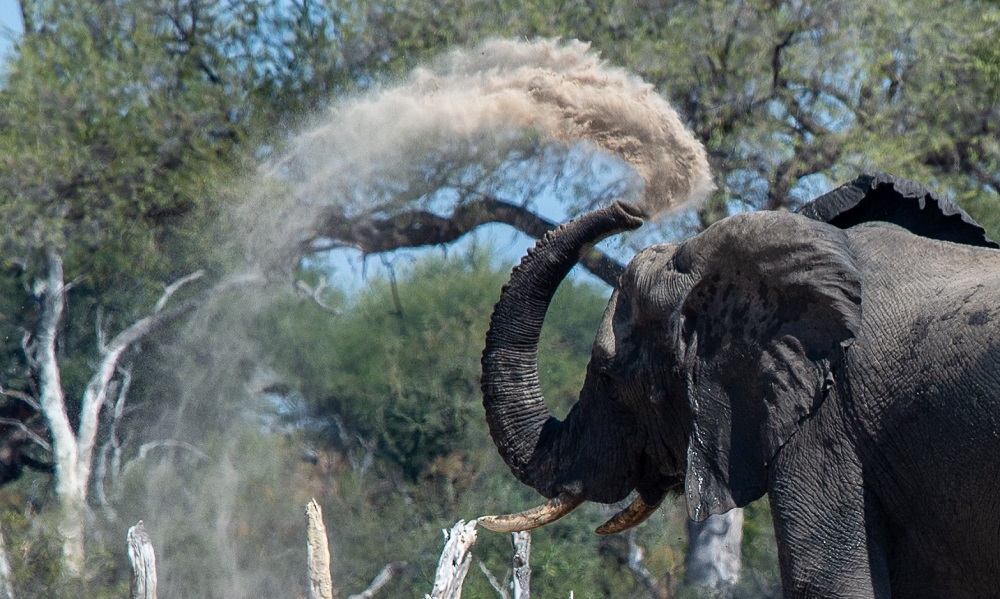
* Most of the Zimbabwean parks are ideal for walking safaris, notably Mana Pools and Hwange. What we’ve done on several occasions lately is to embark on a game drive and then to hop off the vehicle on foot when a suitable opportunity presents itself. For example, to move close to a small breeding herd of elephants, when wind and other conditions are favorable. Zimbabwe guides are among the best in Africa and their ‘full pro’ guide’s licence – which takes as long as five to seven years to obtain – sets the gold standard for the rest of the continent.
* One of our most memorable recent Zimbabwe experiences was to learn more about the reintroduction of white rhinos into the Hwange area, and to spend time with some of these gentle giants while staying at camps such as Camelthorn and Bomani. Visiting the Ngamo Rhino Sanctuary and learning about the Community Rhino Conservation Initiative was fascinating. Even more so – walking with the rhinos and getting close to them in a safe, controlled environment. On one occasion a couple of them took a nap inside the Camelthorn Lodge grounds while we were enjoying lunch. Lately they’ve even been seen using the main entrance to the lodge, much like any other visitor would!

Tanzania
Tanzania is a huge and diverse country with several prominent safari destinations which are among the top choices in Africa, such as the vast Serengeti National Park and Ngorongoro Crater. The Serengeti has indeed become practically synonymous with the annual zebra and wildebeest migration, unfortunately leading to some degree of congestion in the central and northern Serengeti in the peak season.
Other safari areas like Tarangire in the north, Nyerere and Ruaha in the south and Katavi and the Mahale Mountains National Parks in the west, may not be as well known but are no less exciting to visit. Together with its Indian Ocean beach destinations and nearby Zanzibar, Tanzania is an ideal all-round safari destination where one can easily combine game viewing, adventure, cultural interaction and a beach or resort experience. For keen hikers, successfully reaching the summit of Tanzania’s Mt. Kilimanjaro is a bucket list item. At 19,341 feet above sea level, Kilimanjaro is the highest peak in Africa and also the highest single free-standing mountain in the world.
Fish Eagle Safaris founder Bert has climbed four of the five major Kilimanjaro routes so reach out to him for advice, recommendations and inspiration.

Over the last few years we’ve been visiting Tanzania at least once every year. Here are some of our observations:
* If there’s one place in Africa where we recommend spending some time in a mobile tented camp, it’s the Serengeti. Particularly during the migration season but really on any safari. It evokes the Africa of old, with expedition style accommodation and furnishings, maybe even a traditional ‘bucket’ shower. More importantly a mobile tented camp opens up the entire night to your imagination. You will hear lions roaring, hyenas and jackals calling, the chirping of African scops owls, hopefully wildebeest grunting and – my favorite – the hauntingly beautiful, evocative braying of the zebra stallions, reverberating over the savannah.
* Tanzania is the best ‘migration’ destination in East Africa so if you want to maximize your chances to experience this awesome phenomenon, then by all means plan on spending some time in the Serengeti. While it is possible to include both the Serengeti (Tanzania) and the Masai Mara (Kenya) in one itinerary, it is somewhat of a duplication as the two reserves are part of the same ecosystem. The Masai Mara is simply the northernmost extension of the Serengeti. So you’ll be seeing the same mammals and birds, same general environment, same scenery.

* Instead of the more traditional northern Serengeti migration safari from July through October, consider traveling to Tanzania in the (US) winter months, particularly from January through the end of March. This is when the zebra and wildebeest herds find themselves in the southern Serengeti – often congregated in the short-grass plains of the greater Ndutu area – for the calving season. While there won’t be any river crossings, observing thousands of wildebeest and zebra – sometimes in every direction of the compass – can be just as fascinating. Groups will often erupt into motion and start to run in a single direction causing a chain reaction with hundreds of animals running full speed not to fall behind, and then abruptly slowing down or even stopping, all with no apparent rhyme or reason.
* We have been checking out a few moderately priced safari camp options in both the central and northern Serengeti which we think maximize the game viewing potential, along with superb guiding and great vehicles but without having to pay a super premium price. Ask any one of us for more information or a cost estimate.


India
India is a huge and incredibly diverse country – more like a continent really – with a complex and fascinating history, as well as stunning cultural, religious and linguistic diversity. Visiting India is akin to experiencing literally everything and anything simultaneously. It is a riot of color and experiences like no other and can be a bit daunting for inexperienced travelers. Rest assured that the highly experienced team at Encounters Asia – our India partners – will be there 24-7 to assist you personally as needed. So that you can focus 100% on the experience and not have to worry about any of the logistics. From a pre-allocated seat on the Gathimaan Express train from Delhi to Agra to extra luggage allowance on all domestic and regional flights, everything has been taken care of. All you have to do is enjoy the food, the people, the landscapes, the wildlife, the architecture and everything else that makes up the incredible India experience.
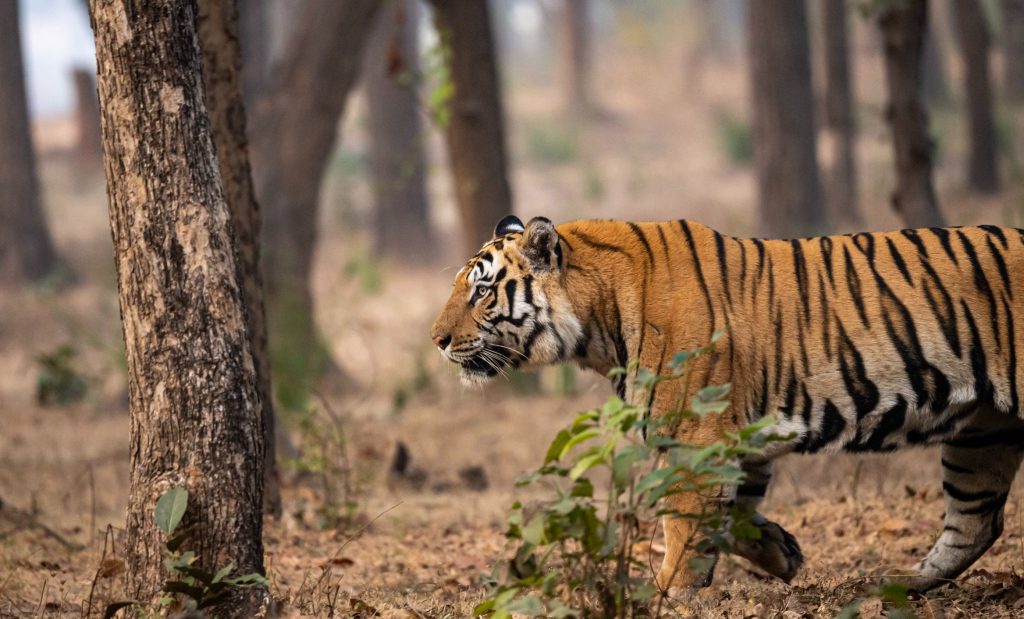
On the trips we design, clearly finding and seeing Bengal Tigers and other fascinating Indian mammals such as sloth bears, Indian leopards, Asian elephants, guar (Indian bison), and the one-horned rhinos of Kaziranga in the far eastern state of Assam, is a priority. Beyond that, we think absolutely everyone should include a short visit to Agra to experience the Taj Mahal. If you do want to explore the amazing cultural and religious diversity and rich history of India beyond just Delhi or Mumbai and Agra, we’re ready with advice and recommendations for cities like Jaipur (the pink city) and Varanasi – for an incredible immersion into the Hindu way of life.
India has almost 1.5 billion inhabitants so yes, you can anticipate some traffic, pollution and congestion. I think my best advice is not to fight it, just embrace it. Adjust your attitude and roll with it. Do that and you will find wonderful, interesting people literally around every corner. People who are genuinely keen to meet and interact with complete strangers. Never will you be asked to pose for as many selfies with strangers as in India.

Our passion for India keeps growing apace and our lengthy March-April 2025 trip added considerably to our knowledge base. Here are a few thoughts and suggestions :
* If there’s one tiger reserve you absolutely cannot leave off your India itinerary, it has to be Bandhavgarh in Madhya Pradesh. So many tigers, so much adventure! Look no further than Bandhavgarh Jungle Lodge where general manager Sadhvi Singh and her team (including her husband Harsh) will turn you into a tiger aficionado in no time!
* Satpura National Park is fast turning into one of the best overall and certainly most diverse tiger reserves, with fewer visitors around and more opportunities for undisturbed moments than many of the ‘big name’ reserves. Look for the sloth bears – and don’t be fooled by the ‘sloth’ in the name. Those are real bears.

* I don’t think I’m the only person around who liked Mumbai more than Delhi as the starting point for a tiger-focused trip. Maybe it was the sea breeze or the stunning views from Mumbai’s Arabian Sea coastline, or its cosmopolitan, lively atmosphere.
* For the love of everything holy, don’t leave the Taj Mahal off your India itinerary. It’s a mesmering sight. Even if there’s a thousand people there on the day of your visit, it will not matter one whit. You will be amazed.

In part two of this country round-up (in our October newsletter), we will take a look at Zambia, South Africa, Namibia, Rwanda and Uganda. Our team at Fish Eagle Safaris is ready to assist you with your Africa, India and Madagascar travel plans so please contact Lyndon at lyndon@fisheaglesafaris.com or Jason at jason@fisheaglesafaris.com for more information, or leave a message with our answering service at 1-800-513-5222.

YOU MIGHT ALSO BE INTERESTED IN
10th September 2021
Chindeni and the Bushcamp Company, Zambia
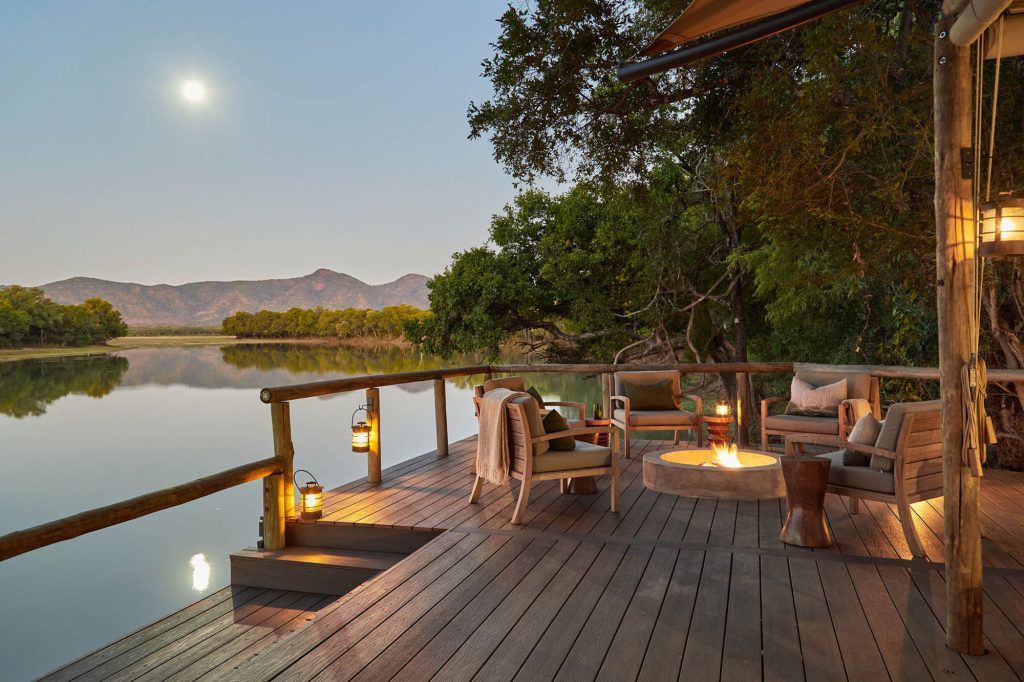
By late July we found ourselves at Chindeni, a small Bushcamp Company property
3rd October 2022
Camp Okavango, Botswana
Camp Okavango is in the heart of the permanent part of the Delta. In this idyllic setting there are no vehicles, and it is just a short walk
14th October 2023
From My Safari Notebook: Wildlife Photography
Birds in flight and wildlife photographers have an uneasy relationship. Things go wrong as often as they go right. Getting focus-lock on a moving subject

SUBSCRIBE TO OUR NEWSLETTER
READERS FAVOURITES
4th August 2022
On Safari At Belmond Eagle Island Lodge, Okavango Delta
What is the ‘secret sauce’ for an unforgettable few days on safari in Botswana? It starts with the animals, of course. The elephants, lions, giraffes, hippos
10th September 2021
Chindeni and the Bushcamp Company, Zambia
By late July we found ourselves at Chindeni, a small Bushcamp Company property